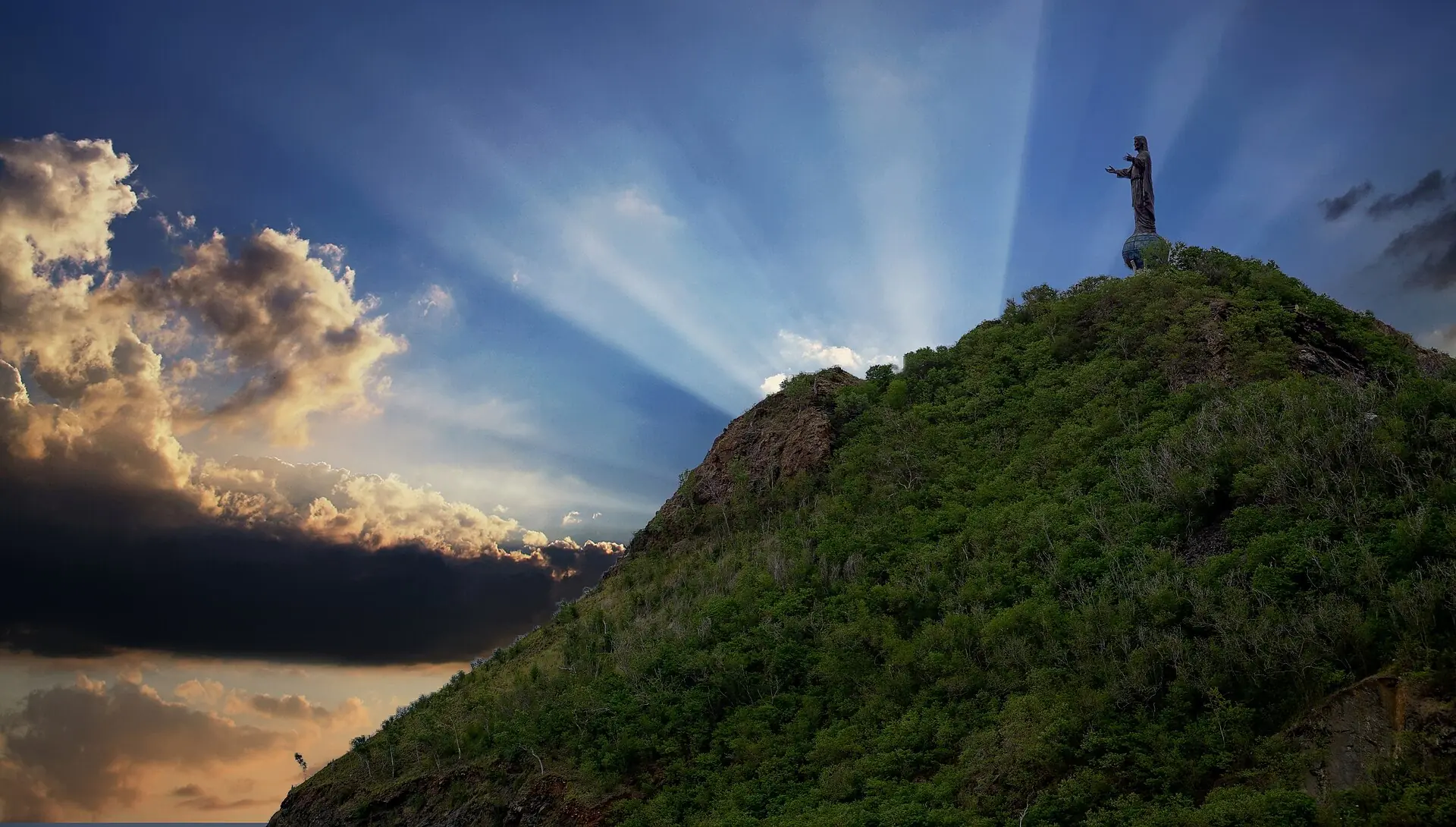
Dili
Díli
Code DL · 4 walking zones
Dili is a morning city: do the waterfront, the market and the memorial sites before the heat, rest indoors at midday, take a car for everything after dark — and carry small US dollars.
Our quick read of Dili, scored 1–5 (friction is out of 100). Cash need: how often you still need notes. Heat risk: how hot days get. Stroller: how easy wheels are. Friction: overall effort for a first visit. Desk judgements, so check before relying on them.
- Local time
- --:--
- Weather
- forecast below
- Currency
- USD
- Best months
- May · Jun · Jul · Aug · Sep · Oct
- Airport
- Presidente Nicolau Lobato (DIL)
Walking zones: the 4 areas this guide plans a day around. Each is a district you can cover on foot, so you do one zone per half-day and ride the train between them. The code (DL 01, DL 02…) is just the zone's number on the Dili line; the line under each name says how bags fare there and how much time it needs.
Map of Dili
Use the switches to show or hide each kind of pin. A switch that is on shows its pins on the map; tap it again to hide them. "Show only" keeps just the pins that match (for example, places that fit a suitcase). Tap any pin for its name and a link to its page.
- Where to sleep
- Walking clusters
- Rest stops
From the airport Nicolau Lobato (DIL) to your bed
Tap a pin for its card. Places without their own coordinates are shown by their walking cluster.
Why Dili
Dili is hot all year, the pavements are broken or missing, taxis are few and cash machines are unreliable. The sights are simple and spread along one coast road. Four clusters cover a first visit; a hired car joins them, and the wet season decides whether the road to Cristo Rei is open.
See first
- 1
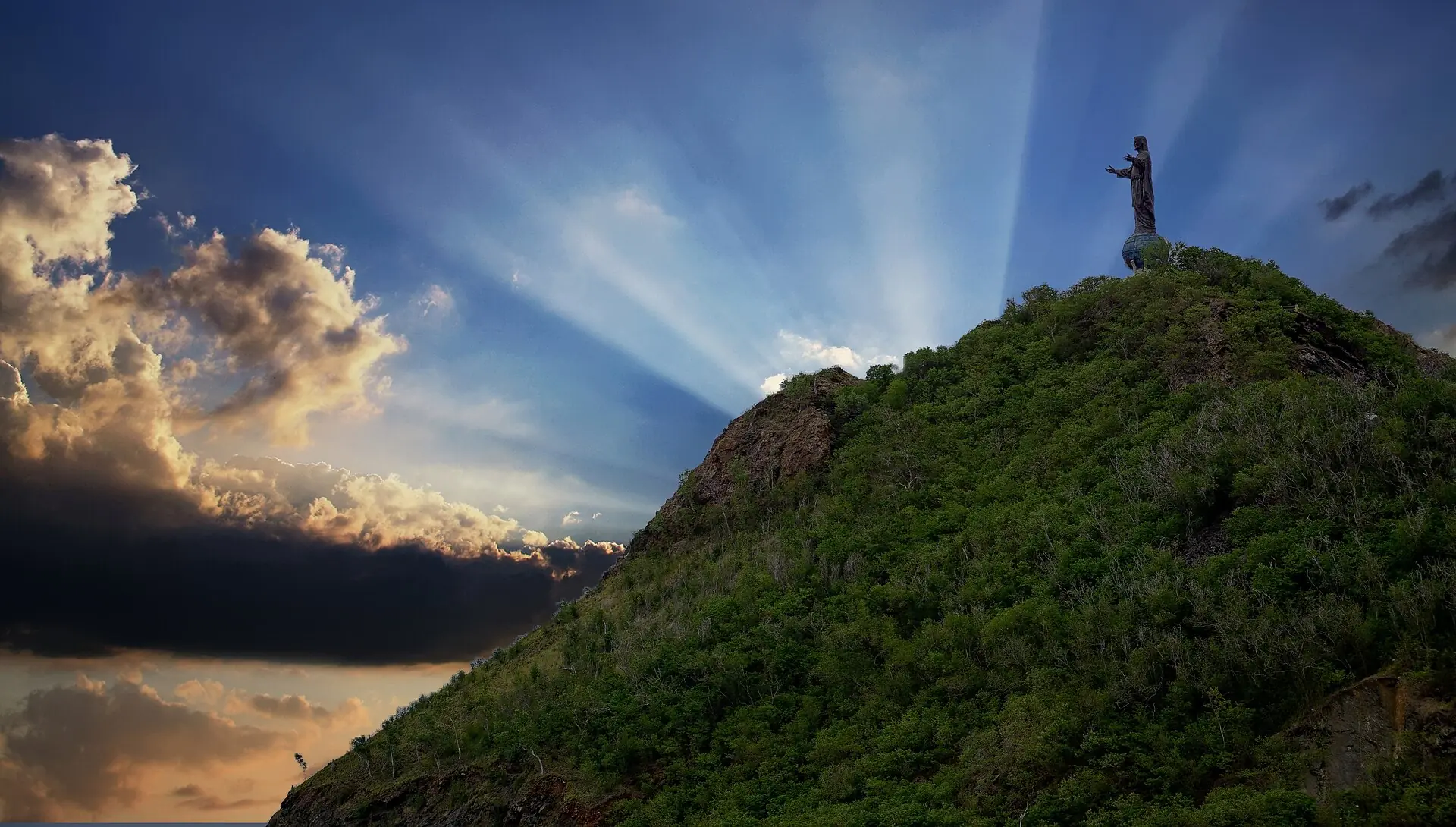 Cristo Rei at opening · 1.5–2 h
- 2
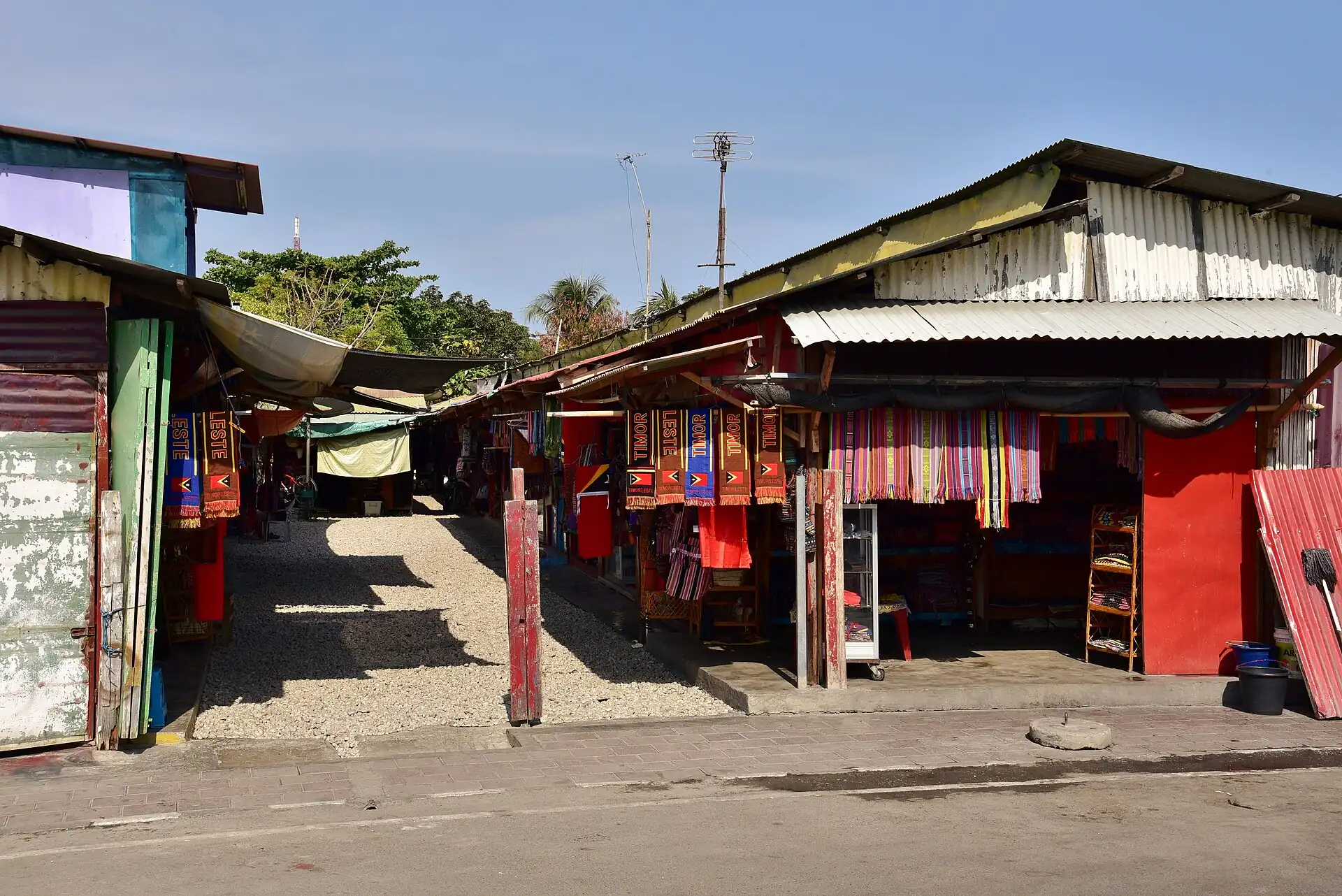 Tais market · 30–45 min
- 3Resistance museum · 1–1.5 h
- 4
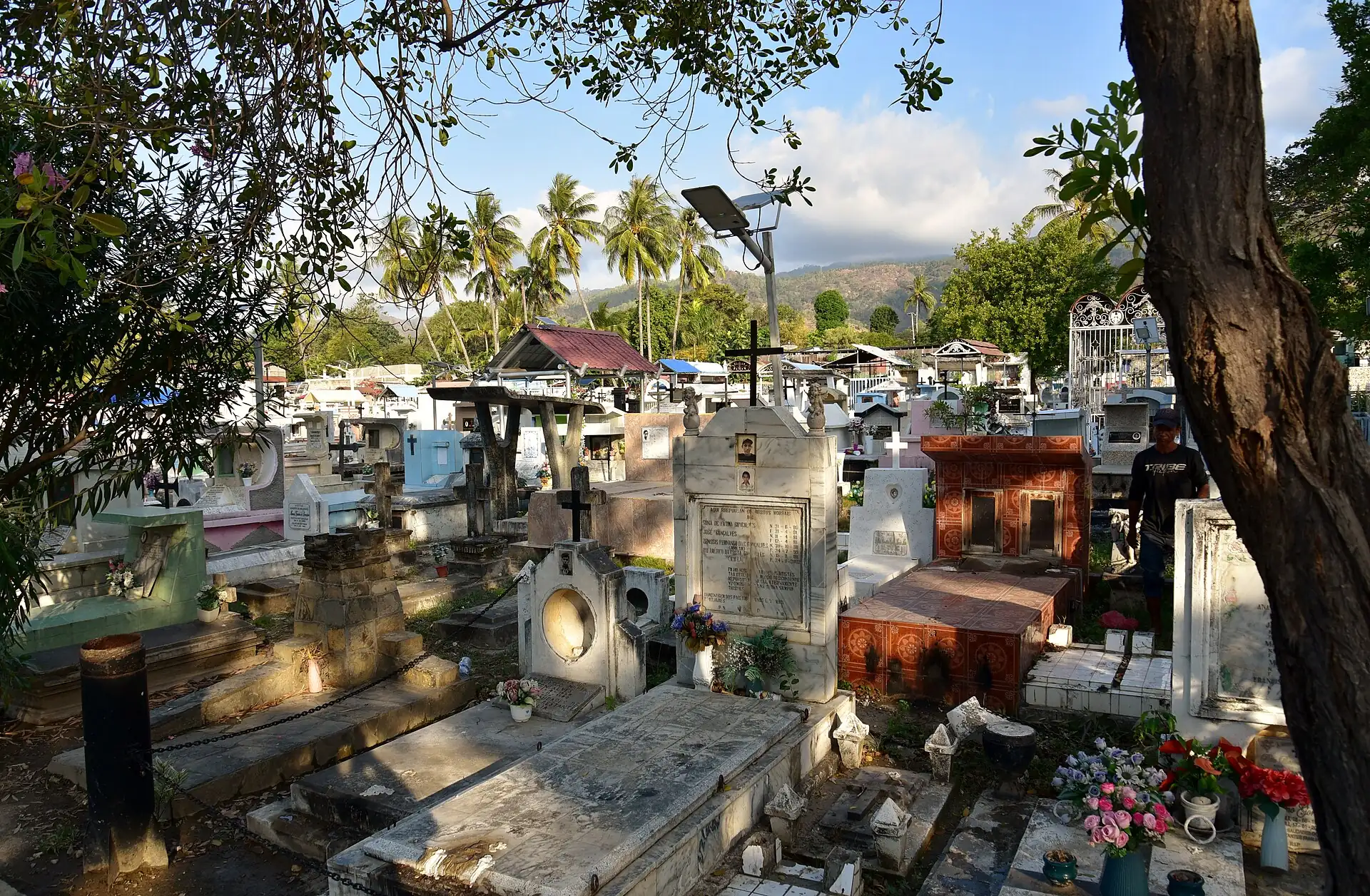 Santa Cruz cemetery · 20–30 min
- 5
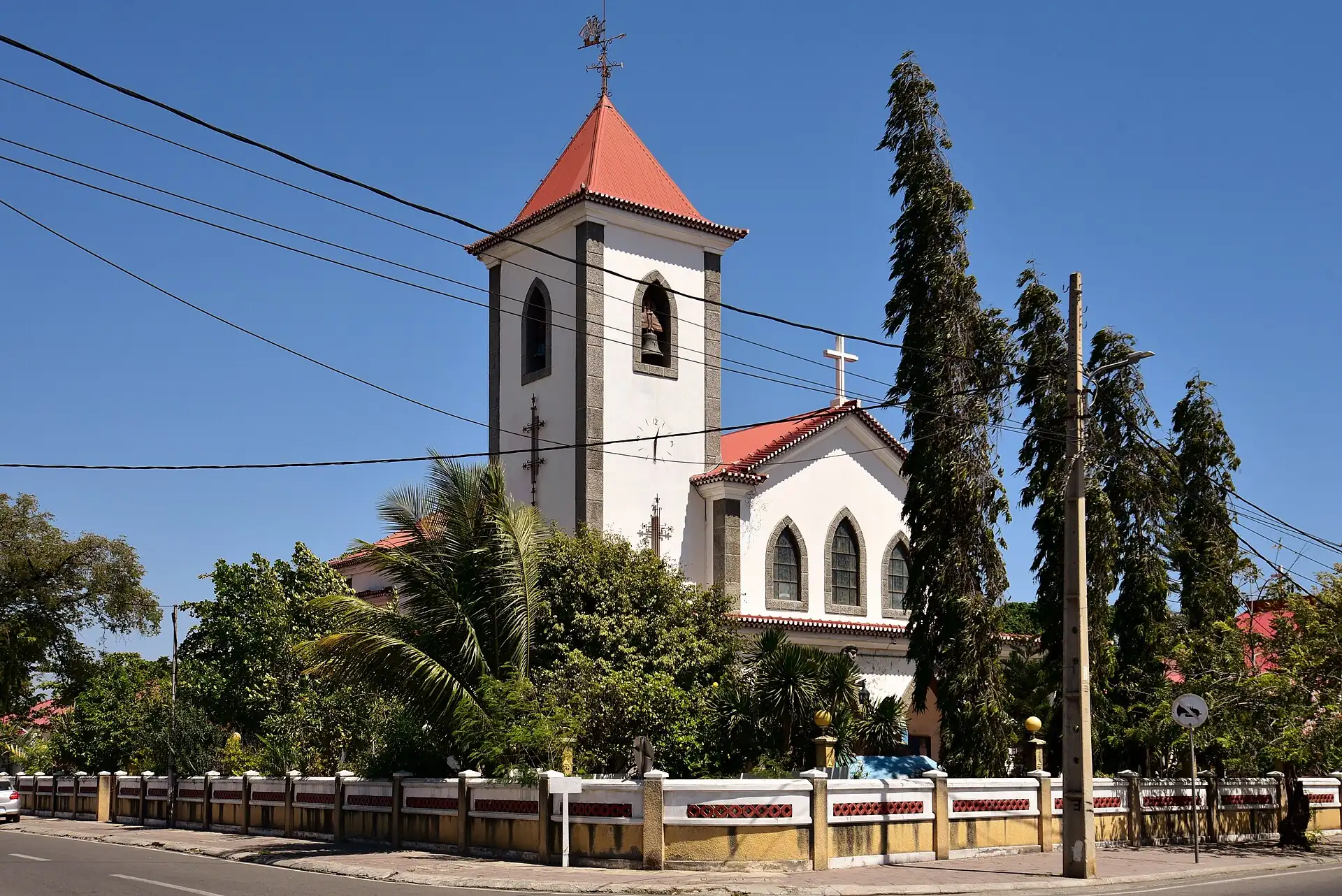 Motael church · 15–25 min
Fits
- Short quiet stays
- Divers
- Travellers who arrange a driver
Does not fit
- Strollers and wheelchairs (pavements)
- Travellers who need cards and cash machines
- Midday walkers
How long
- 2 daysWaterfront and market, Cristo Rei
- 3 daysFour clusters, mornings and evenings only
- 5 daysFour clusters + a dive or island day + one slow day
Good for
- First timers
- Budget
- Couples
- Families
- Wheelchair
About Dili
Dili is the capital of Timor-Leste and its only city of any size, a coast road strip between the sea and dry hills. Portuguese traders arrived in the sixteenth century, Portugal moved its administration to Dili in 1769, and the city was governed as a colonial port until 1975.
The recent past shapes almost every stop: Indonesian invasion in December 1975, nearly twenty-four years of occupation, the Santa Cruz massacre of 12 November 1991, the UN-run vote of 30 August 1999 and independence on 20 May 2002. Memorial sites here are working places of grief, so the rules of a visit are quiet dress, low voices and no selfies at graves.
It is also a hot, small, cash-based city. Most of what a visitor does fits in the morning, and the rest of the day is for shade, a coffee and a car home.
Good to know
- Dili is both the capital and the district; the sights here are on the coast strip, not in the mountains behind it.
- Ask your hotel first: it is the most reliable place to confirm opening days, a driver and ferry times.
- The national tourism office is listed on the official tourism website; check current contact details before relying on a walk-in.
Go deeper 14 min read · 7 chapters
Dili is a small capital with a heavy recent past. Most of what you see on the coast road, the cemetery, the church forecourts and the museum is less than fifty years old, and much of it exists because of a long struggle that ended in 1999 and 2002. This deep dive reads the city through that history, then through its food, its daily life and its calendar, so that a morning on the waterfront carries more than a list of stops. Dates and figures are the widely reported ones; where a detail changes, confirm it locally.
1Portuguese Timor to the Second World War2 min
Portuguese traders and Dominican friars reached the island of Timor in the early sixteenth century, drawn by sandalwood. For a long time the presence was thin: a few coastal posts, a Catholic mission, and alliances with local rulers known as liurai, each holding a kingdom of villages. The Portuguese administration moved its seat from Lifau on the north-west coast to Dili in 1769, after repeated conflict, and Dili has been the capital of the eastern half of the island ever since.
The border with the Dutch-held west was fixed only in stages. Treaties in the nineteenth century and an arbitration in the early twentieth century left Portuguese Timor as the eastern half plus the Oecusse enclave on the western side. Portugal governed lightly and cheaply. Roads, schools and health care stayed limited, and revolts by local rulers were put down more than once. The coffee plantations that still matter to the economy grew out of this period.
The Second World War arrived in 1942. Timor was nominally neutral Portuguese territory, but Australian and Dutch troops landed to deny it to Japan, and Japanese forces then occupied the island. Timorese villagers gave food, guides and shelter to a small Allied guerrilla force and paid heavily for it. Estimates of Timorese deaths from famine, forced labour and reprisals during the occupation are commonly given as tens of thousands, in a population of well under half a million. Dili was bombed and its older buildings suffered.
After 1945 Portugal returned and governed as a colony for three more decades. Dili in those years was a modest port town with a governor's palace, a cathedral, a seafront avenue and a mix of Portuguese, Timorese, Chinese and Arab-descended families. Some of the seafront layout, the church of Motael and the colonial-era government buildings behind the waterfront date from this time. If you walk the promenade in the early morning with these facts in mind, the shape of the old town is easier to see under the newer concrete.
The end of Portuguese rule came suddenly. After the 1974 revolution in Lisbon, the new government moved to leave its overseas territories. In Timor that opened a short and violent period between local political parties in 1975, and then a much larger event: the Indonesian invasion of Dili in December 1975. That is where the next chapter starts.
- Portuguese arrival
- Early 16th century
- Capital moved to Dili
- 1769
- Japanese occupation
- 1942 to 1945
- Portuguese withdrawal
- 1975
2Occupation, resistance and how Dili remembers it2 min
Indonesian forces invaded Dili on 7 December 1975, days after the Fretilin movement had declared independence. Indonesia annexed the territory in 1976 and governed it as a province for nearly twenty-four years. The occupation was resisted in the mountains by guerrillas and in the towns by a clandestine network of students, church workers and families. The death toll from fighting, famine and disease over the period is widely estimated in the low hundreds of thousands, a very large share of a small population, though exact figures are disputed and you should treat any single number with care.
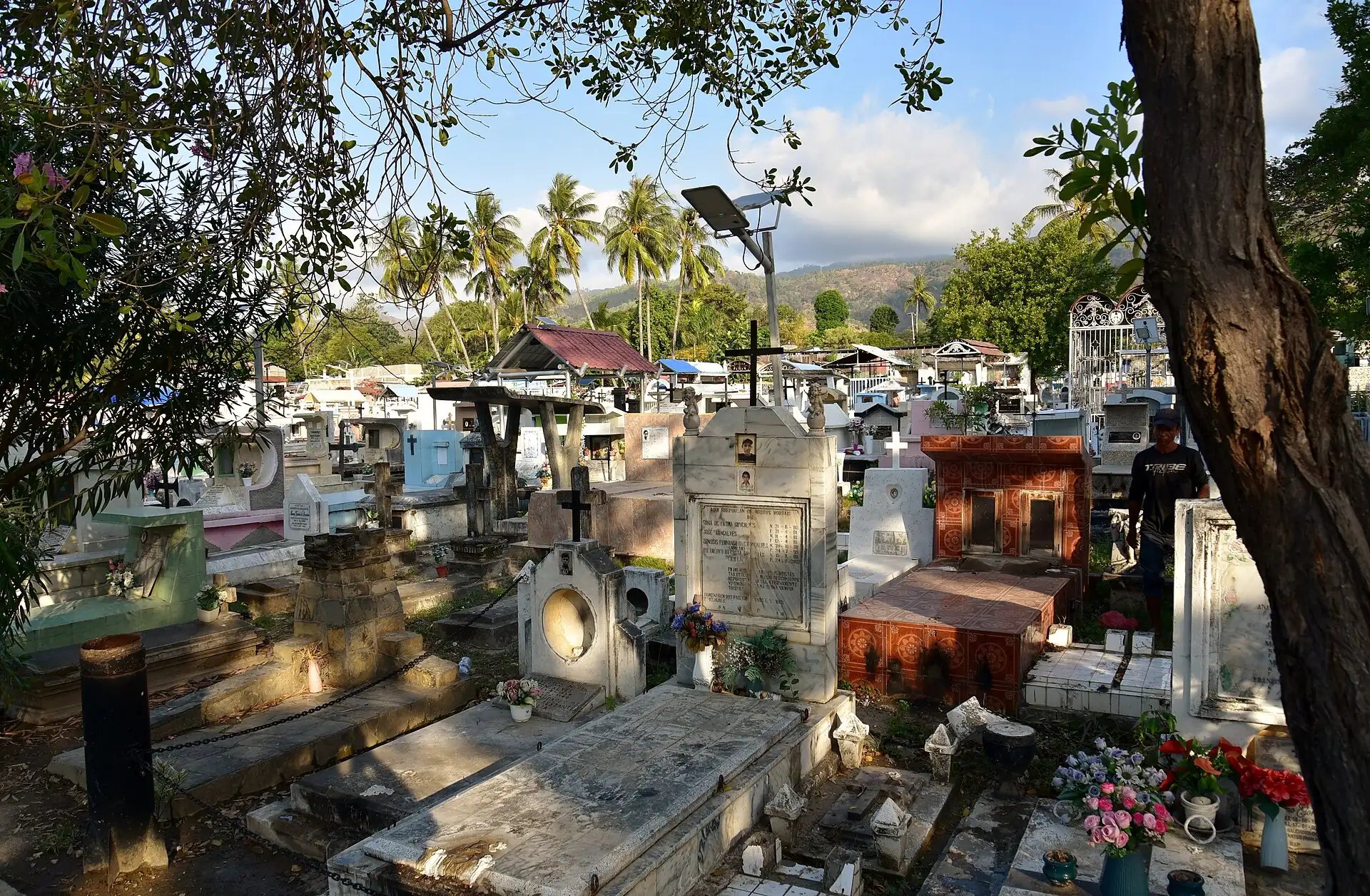
Dili's best-known single event of that time happened on 12 November 1991. A funeral procession for Sebastião Gomes, a young man shot by security forces at the Motael church, walked to the Santa Cruz cemetery. Indonesian troops opened fire on the crowd inside and outside the cemetery. Foreign journalists filmed part of it, and the footage reached television abroad within days. The massacre did not end the occupation, but it changed how the world saw it, and it is the reason the cemetery is now a national memorial.
The resistance produced two names that reached beyond Timor. Bishop Carlos Ximenes Belo and José Ramos-Horta shared the 1996 Nobel Peace Prize. Xanana Gusmão, the guerrilla commander captured in 1992, later became the first president and then prime minister. Their names appear on street signs, murals and speeches, and Timorese hosts will often mention them without being asked.
Memory is handled in several places, each with a different tone. The Resistance museum gathers documents, photographs and objects about the clandestine and armed struggle. The Santa Cruz cemetery is a place of grief and family visits, not a photo stop. The former Comarca prison at Balide, now a memorial and archive of the truth commission's work, holds the story of detention and torture; check its opening hours and rules before you go. Read the ground rules in each place: cover shoulders and knees, keep your voice down, do not pose for selfies at graves, and ask before photographing people.
The city is also open about what it does not resolve. Many families lost members, and some of the events of 1999 and earlier are still argued about in Timor and abroad. A visitor gains more by listening than by asking pointed questions about who was responsible. If someone tells you their story, thank them and let them decide where it ends.
- Indonesian invasion of Dili
- 7 December 1975
- Santa Cruz massacre
- 12 November 1991
- Nobel Peace Prize (Belo, Ramos-Horta)
- 1996
- Occupation ends
- 1999 to 2002 transition
3The 1999 vote, the aftermath and independence2 min
In 1998 the fall of Indonesia's long-time president opened a door. In January 1999 Jakarta agreed to let Timorese vote on special autonomy inside Indonesia or a path to independence. The United Nations organised the ballot for 30 August 1999. Turnout was very high, and roughly four in five voters rejected autonomy. The result was announced in early September.
The reaction was severe. Pro-Indonesian militias, with support from parts of the Indonesian military, attacked civilians, burned buildings and forced hundreds of thousands of people from their homes. Much of Dili was burned. People fled to the hills or were moved across the border to West Timor. An Australian-led international force, INTERFET, landed in Dili in late September 1999 and restored order. A UN transitional administration then governed the territory until formal independence.
Timor-Leste became independent on 20 May 2002, a date still marked as a national holiday. The country adopted Tetum and Portuguese as official languages, and kept the US dollar, which had been introduced during the UN period. The small centavo coins you may receive as change are local, and only in small values; notes are American.
The first decade was uneven. A crisis in 2006 sent tens of thousands into camps in Dili and led to a new international deployment. The UN mission finally ended in 2012. Since then the state has relied heavily on income from offshore oil and gas fields, held in a petroleum fund, while trying to build roads, water supply, schools and health care. Dili has changed: new government buildings, a shopping mall, better paved main roads. Away from the centre you still see the gaps the money has not yet closed.
For a visitor this history shows up as practical details. Expect patchy pavements, few cash machines, generators in some hotels, and a hospitality trade that is small, cash-oriented and still learning the mechanics of tourism. It also shows up in pride. Timorese people will often say, with quiet emphasis, that they voted and that they won. That is a good place to begin a conversation.
- Popular Consultation
- 30 August 1999
- INTERFET arrives
- September 1999
- Restoration of independence
- 20 May 2002
- Currency
- US dollar, with local centavo coins
4Food and coffee2 min
Timorese food sits between Southeast Asian and Pacific habits and a layer of Portuguese influence. Rice is the everyday staple in town, alongside maize, cassava, sweet potato and taro in the hills. Fish is the main protein along the coast, grilled over charcoal and served with rice and a hot chilli paste. In the Lecidere grill stalls, that is what you eat: a whole fish, rice, a little vegetable, and a bottle of water.
Several dishes are worth knowing by name. Batar da'an is a stew of maize, pumpkin and beans, eaten across the country and often made at home. Fish cooked with herbs and a sour or spicy broth appears in some canteens; ask what the day's fish dish is called. Water spinach cooked with garlic is common, and tomato and chilli sambals are on nearly every table. Portuguese habits show up in the bread, in the coffee, in the occasional pastry counter and in menus written in Portuguese. Ask what the day's dish is instead of expecting a printed menu.
Coffee deserves its own paragraph. Arabica grown in the hills around Ermera and Maubisse is the main non-oil export, mostly small-holder and organic-by-default rather than certified. Brought to Timor in the nineteenth century, the plant is now the livelihood of a large share of rural families. In Dili, several cafes roast and serve local beans. A cup costs a dollar or two, and a bag of beans is one of the best things to take home. Check that the bag is sealed and dated, and ask which district it comes from.
The practical part: eat where turnover is high, choose fish and meat that are cooked to order, drink bottled water and skip ice unless it comes from a hotel or larger restaurant you trust. Vegetarian choices are limited outside hotels; ask for vegetable dishes and eggs, and say clearly what you cannot eat. Alcohol is available in restaurants and hotels, and beer is served cold; ask before drinking in public spaces, and never near churches or memorials.
Prices in Dili are higher than in nearby Indonesia, because most food and goods are imported. A local canteen meal may be a few dollars, a hotel restaurant main course two or three times that, and a coffee somewhere in between. Bring small US notes: change is a real problem, and nobody wants to break a fifty.
- Everyday staples
- Rice, maize, cassava, fish
- Named dish to try
- Batar da'an
- Main non-oil export
- Coffee, from the hill districts
- Cash
- US notes; small denominations
5Daily life, language and manners2 min
Dili runs on a small number of habits that a visitor sees within an hour. Days start early because the heat builds. Markets and government offices open early, and by midday the streets are quiet. The evening is when people walk the seafront, eat at stalls and meet friends. Sundays are for church, and the city is quieter still. Plan your day the same way: outdoors before 10:00, indoors or in shade at midday, and back out at the end of the afternoon.
Language is layered. Tetum is the national lingua franca and Portuguese is co-official; many older people also speak Indonesian, and English is spreading among younger people and hotel staff. A few words in Tetum earn warmth: bondia for good morning, botarde for good afternoon, bonoite for good evening, obrigadu if you are a man and obrigada if you are a woman for thank you, and halo favor for please. Timorese use maun and mana, older brother and older sister, as polite terms of address, and outsiders are commonly called malae. It is not meant as an insult.
Religion is central. Timor-Leste is overwhelmingly Catholic, and the Church played a large role in the resistance by sheltering people and documenting abuses. Motael church and the churches across the city fill on Sundays and holidays. Beside Catholic practice, older beliefs about the sacred, called lulik, remain strong: certain houses, stones, trees and objects are lulik, and you do not touch, photograph or disturb them without asking. This is not a superstition to be smiled at. It is a set of rules that hold family and land relations together.
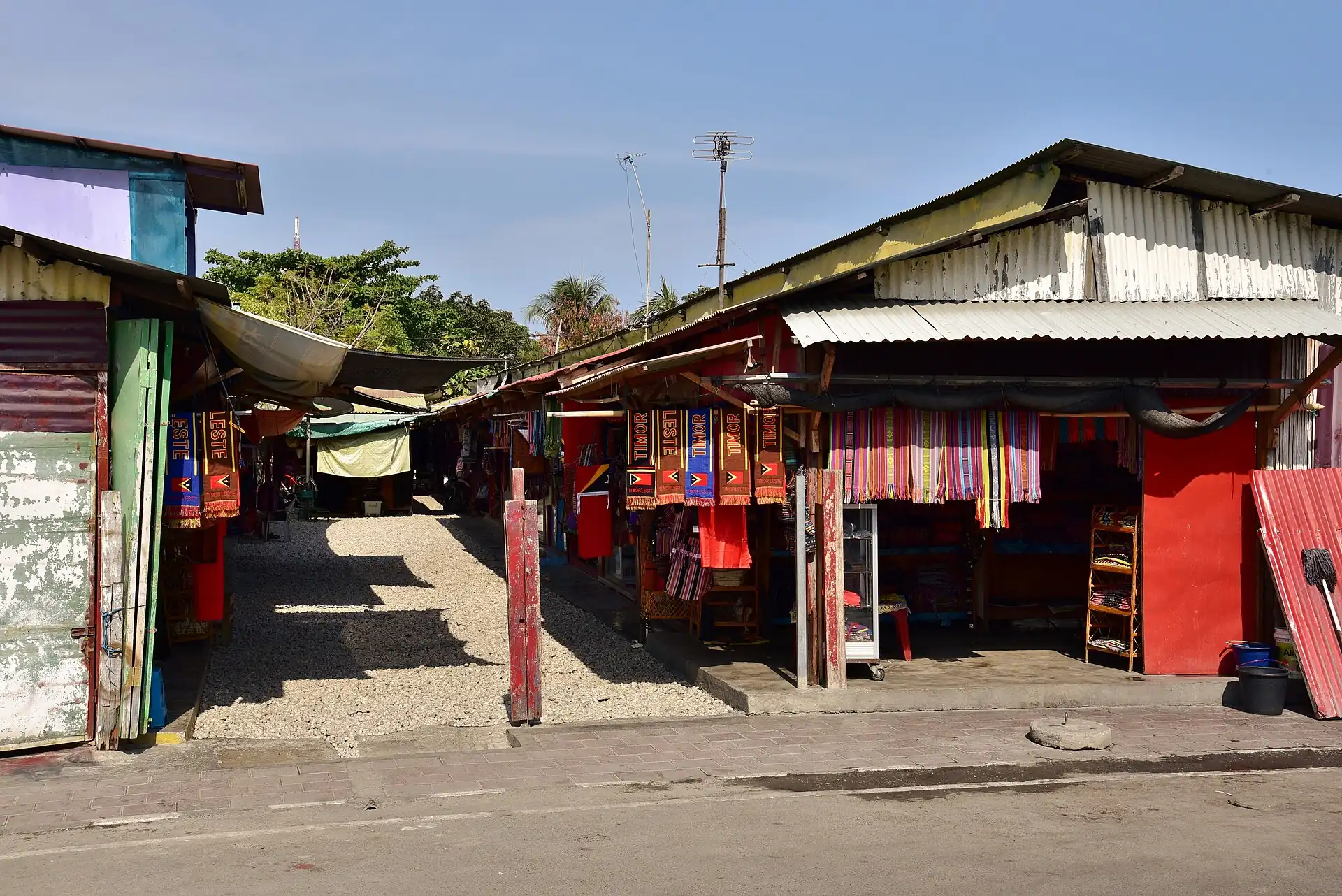
Textiles carry that tradition. Tais, hand-woven cloth, comes in patterns that differ by region and are used in ceremonies, gifts and formal dress. At the Tais market you can see how the colours, motifs and weaves differ. Ask where a piece was woven and by whom, whether the dyes are natural, and how long it took. Real hand-woven cloth is priced for the weeks of work it needs; a very cheap price usually means a machine-made copy.
Getting around is part of the culture too. Microlets, the small coloured minibuses that run set routes with numbers, carry most people, and fares are small. They can be crowded and are hard for a first-time visitor to read, so many travellers use a hotel car or a taxi booked ahead. Traffic drives on the left. Crossing the road takes patience, and after dark you should ride, not walk, between clusters.
Dress is modest by default. Shoulders and knees covered in church and memorial sites, shirts on away from the beach, and swimwear stays at the water. Ask before photographing people, and do not photograph government buildings, police or the military. Bargain lightly and kindly, and pay in small notes.
- Languages
- Tetum and Portuguese; Indonesian and English widely used
- Religion
- Mostly Catholic, with strong lulik traditions
- Traffic
- Drives on the left (check)
- Transit
- Microlet minibuses, taxis, hotel cars
6Sea, hills and crocodiles2 min
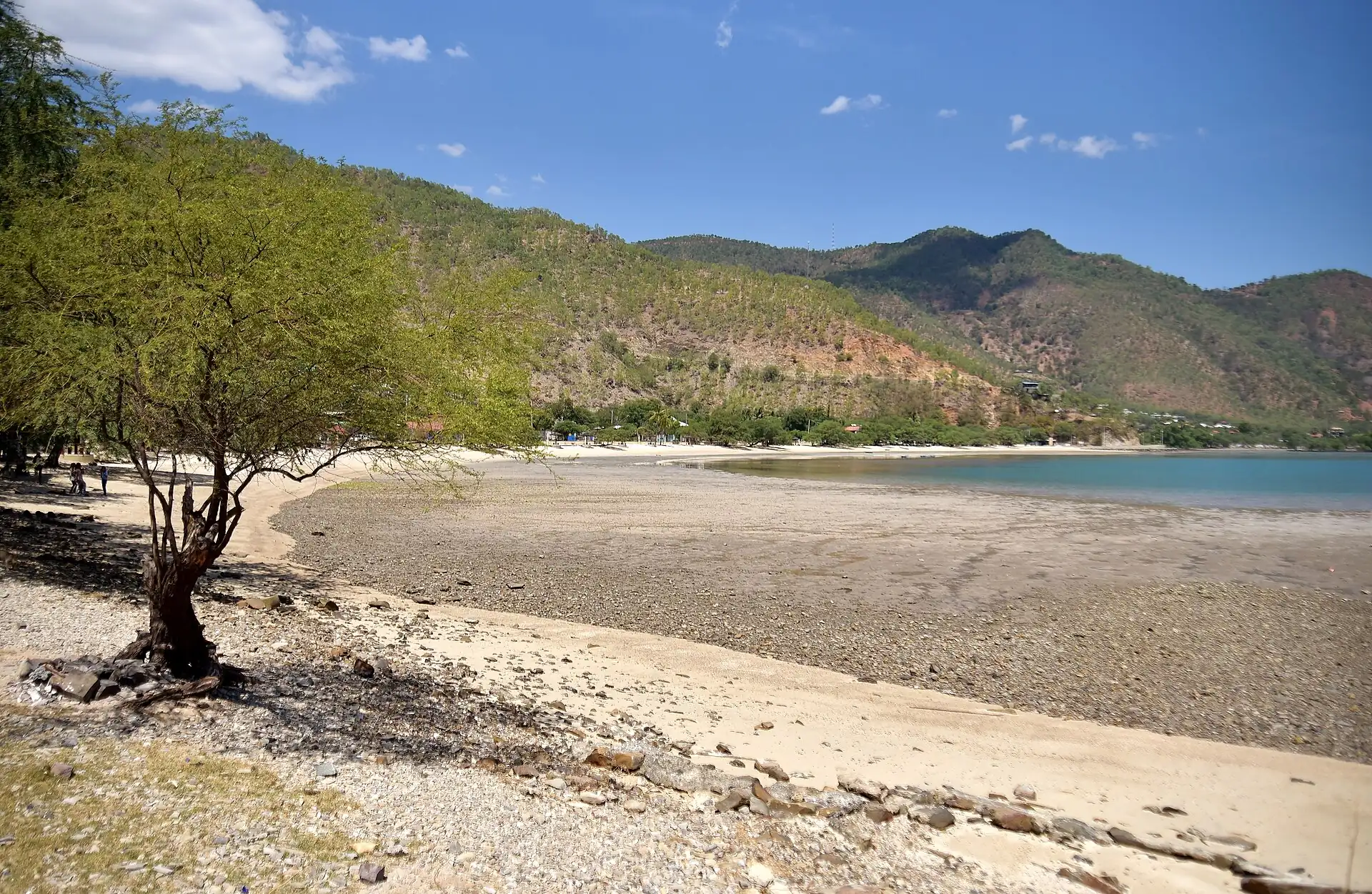
Dili sits on a narrow coastal strip between a deep sea and steep dry hills. The coast is short of shade, and the hills behind the city are bare and brown in the dry season. Offshore, the sea floor drops away quickly, which is why divers and snorkellers come. Reefs close to shore, wall dives and clear water are the main reasons many visitors add Dili to a trip, even more than the city itself.
Timorese tradition says the island itself is a crocodile. In the story a crocodile carried a boy across the sea, and when it grew old it became the island, with the mountain ridge as its back. The animal is called lafaek in Tetum and is respected rather than feared as a monster. In real life crocodiles do live in the sea and in some rivers and mangroves along the coast. Local advice is simple: swim only where locals swim, avoid river mouths and mangroves, and take notice of warning signs. Do not treat the beaches below Cristo Rei as a place to swim without asking your hotel first.
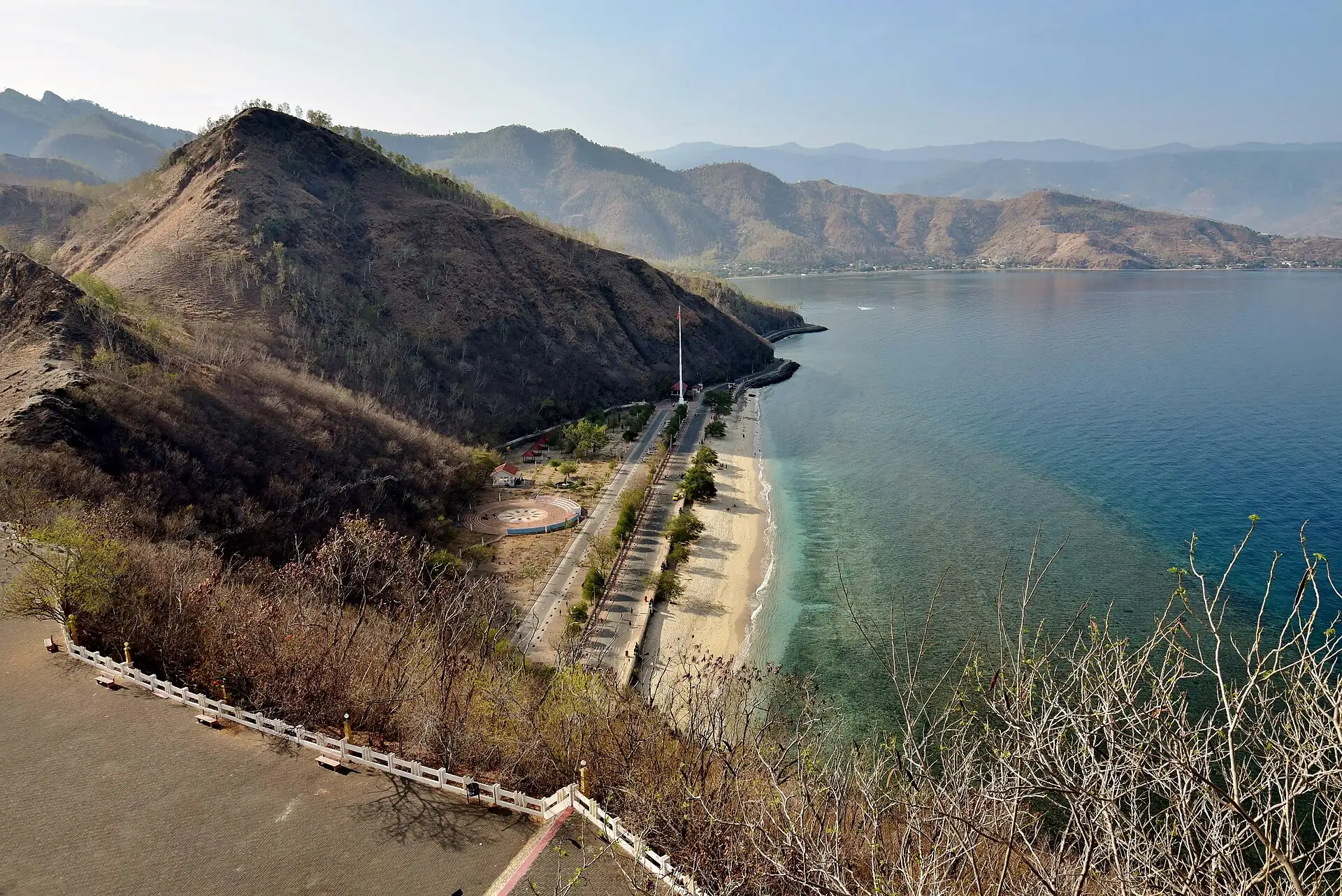
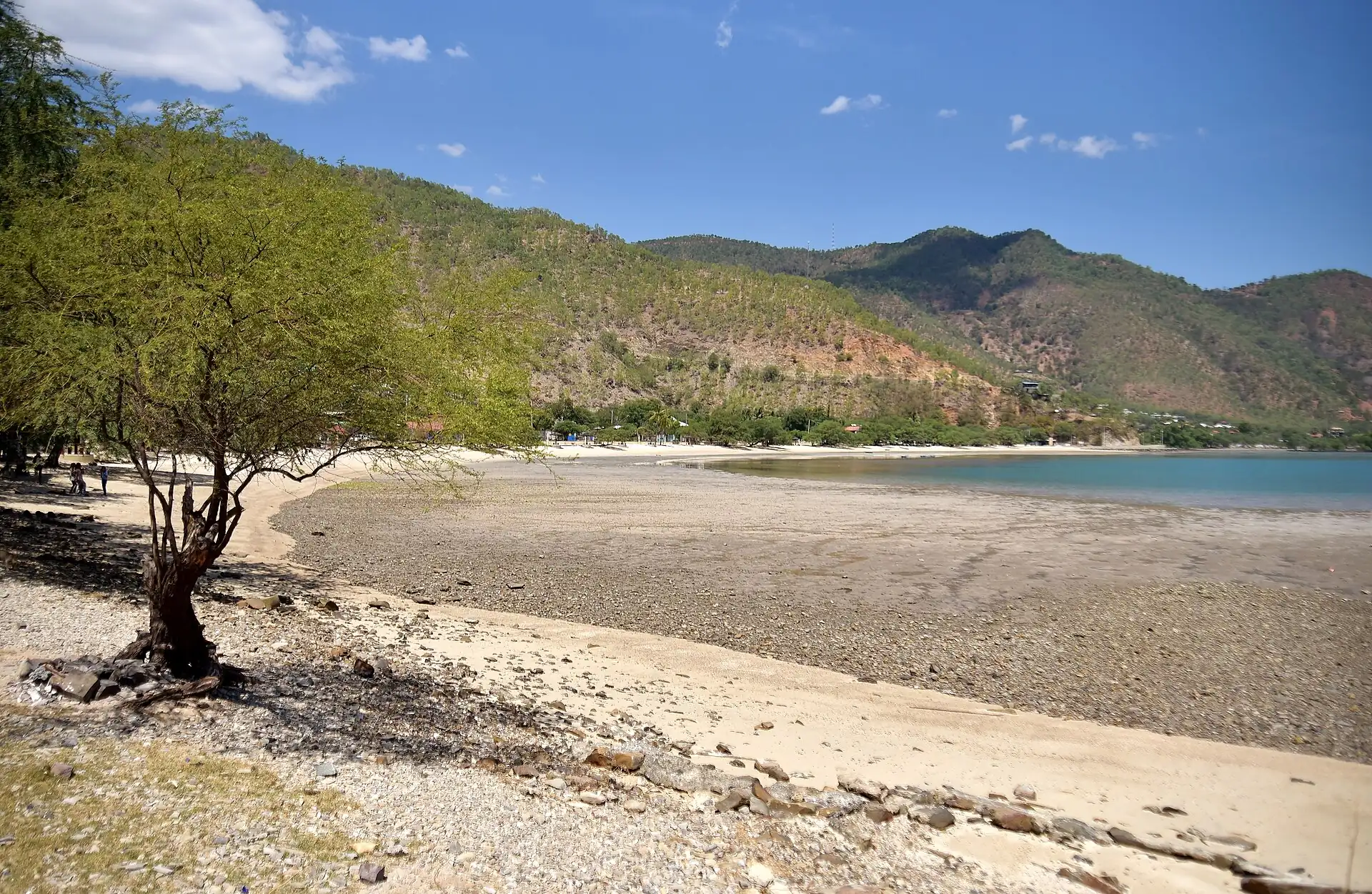
The statue of Cristo Rei stands on a headland at the eastern end of the bay. It was a gift from Indonesia in 1996, and it is a strange monument: a Catholic figure built by the occupying government, now used freely by Timorese as a place of prayer, walking and sea views. The climb is about five hundred steps and is best done at dawn. The beach at its foot, Areia Branca, has white sand and a few small stalls.
Beyond the city there are two easy contrasts. To the north, the island of Atauro sits across the strait and can be reached by ferry or fast boat for a night or two. It is known for clear water, simple guesthouses and coral reef. To the south, the mountains rise to Mount Ramelau, the highest point in the country, reached by a long drive and a pre-dawn walk for sunrise. Both need planning, cash and a driver or a tour operator; check current schedules and road conditions, especially in the wet season.
Weather decides much of this. From about December to March the rains can flood roads, close the coast route and cancel boats. From May to October the days are dry, hot and bright, and the sea is calm. October is the turning month, when the heat peaks and the first showers arrive. Plan accordingly, and keep the schedule loose in the wet season.
- Cristo Rei climb
- About 500 steps
- Wet season
- Roughly December to March
- Sea advice
- Swim only where locals do; crocodiles occur
- Easy offshore trip
- Atauro island, by ferry or fast boat (check)
7Holidays and the year2 min
The calendar in Dili mixes church days with national days that mark the independence story. Not every date is a public holiday every year, and some move, so confirm before planning around one. The ones that matter most to a visitor are those that close roads, fill hotels or change what is open.
20 May marks the restoration of independence and is the biggest civic day of the year: parades, speeches, music and crowded waterfront areas. 30 August commemorates the 1999 popular consultation. 12 November honours the Santa Cruz massacre and is a day of memorials and youth gatherings, with services at the cemetery and Motael church; treat it as a day of mourning rather than a sightseeing opportunity. 28 November recalls the 1975 declaration of independence. 2 November, All Souls, brings families to cemeteries with flowers and candles, and the Santa Cruz cemetery is very full.
Church holidays are also public holidays. Holy Week is the most solemn stretch, with processions and closures around Good Friday and Easter. Christmas and the days around it are family time. Corpus Christi is marked with a procession in Dili. If you travel in these weeks, book transport and beds early, and expect shops and restaurants to open late or close.
The weather calendar interacts with all this. A wet-season Christmas can mean flooded roads and cancelled boats; a dry-season independence day means big heat and long, exposed events. Carry water, hats and small notes, and leave an hour of slack around any event on the coast road, where security closures are common.
Sport and culture add smaller events. Football, cycling and running events appear on the calendar in the dry months, often at short notice; ask your hotel or check local notices. Music and dance performances are part of many civic days, and weaving groups sometimes show their work at markets. Treat all these dates as checks, not fixtures.
- Independence restored
- 20 May (public holiday)
- Popular Consultation
- 30 August (check)
- Santa Cruz remembrance
- 12 November
- Proclamation of independence
- 28 November (check)
Read, watch, wordsReading · Watching · Glossary · Sources
Reading
- East Timor's Unfinished Struggle — Constâncio Pinto and Matthew Jardine (check current editions)A first-hand account of the clandestine resistance in Dili during the occupation.
- Chega! Report of the Commission for Reception, Truth and Reconciliation — CAVR (check the current edition)The Timorese truth commission's own account of 1974 to 1999.
Watching
- Sebastião Gomes funeral footage and documentary coverage of 12 November 1991 — Various broadcasters (check availability)The footage that carried the Santa Cruz massacre abroad.
Glossary
| Term | Local | Meaning |
|---|---|---|
| Tetum | Tetun | The national lingua franca. |
| Liurai | liurai | A traditional local ruler of a kingdom or district. |
| Lulik | lulik | Sacred or forbidden; applies to houses, objects and places. |
| Malae | malae | Foreigner; usually said without malice. |
| Tais | tais | Hand-woven cloth with regional patterns. |
| Lafaek | lafaek | Crocodile; the island's founding animal in tradition. |
| Microlet | mikrolet | A small coloured minibus running a set route. |
| Fretilin | Fretilin | The resistance-era political movement that declared independence in 1975. |
| Batar da'an | batar da'an | A stew of maize, pumpkin and beans. |
Read for this deep dive
Background reading only: the text above is written by Voykit, not copied from these pages.
Photos
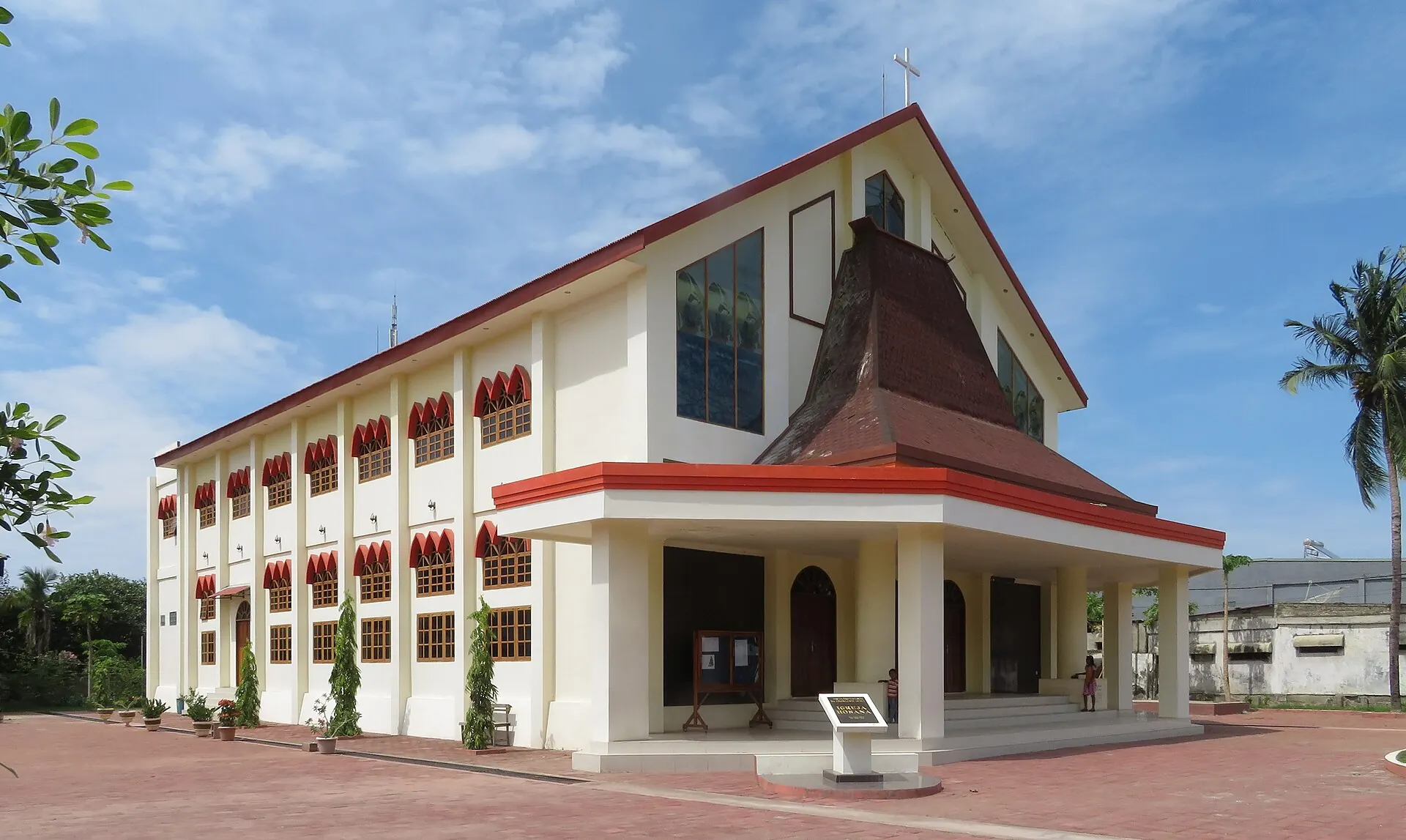
Dili temple Photo: Bahnfrend, CC BY-SA 4.0
View of the Maloa River in Dili, East Timor, looking upstream from the Rua D Photo: Bahnfrend, CC BY-SA 4.0
Rules in force · 6Drug trafficking can carry the death penalty in Singapore…
- Southeast Asia ↗Drug trafficking can carry the death penalty in Singapore, Malaysia, Indonesia, Vietnam, Laos, Thailand, Brunei and Myanmar; never carry a bag or parcel for anyone.
- Southeast Asia ↗Carry a passport valid for at least six months from entry with two blank pages; airlines refuse boarding on less.
- Timor-Leste ↗Check entry rules and visa-on-arrival conditions on official Timor-Leste government sources only; fees and rules change.
- Timor-Leste ↗The currency is the US dollar. Carry small notes (1, 5, 10 and 20); change for a 50 or 100 is often not available.
- Timor-Leste ↗Medical care is limited: carry travel insurance that covers evacuation.
- Dili coast ↗In the wet season (Nov–Apr) coast roads flood and landslide: keep the day flexible.
Entry rules depend on your passport. Full visa guide
Emergency numbers for Dili112 ▾
- Police112
Tap a number to call from your phone. These are the numbers listed in this guide; a row marked check has not been verified.
Planning is the full guide. I'm here keeps what is open and the cheat card.
Right now
Checking the weather…
Working out what is open near you…
What is open nowclock, closures, places open
Now in Dili
Local time in Dili
--:--
Loads in your browser · Asia/Dili
This month
Month verdict appears here.
Closed today
See the weekly grid below.
| Weekly closure | Mon | Tue | Wed | Thu | Fri | Sat | Sun |
|---|---|---|---|---|---|---|---|
| Resistance museumcheckMuseums may shut or shorten on Sunday; ask your hotel to call. | · | · | · | · | · | · | ✕ |
| Government quartercheckOffices shut; the promenade is open. | · | · | · | · | · | ✕ | ✕ |
If today is a closure day: Check whether your dates fall on 20 May, 30 August, 12 November or 28 November: roads, memorial sites and hotels change on those days.
Closure patterns are desk estimates; confirm with your hotel.
Cheat cardthe pocket version
Cheat card
The essentials on one card: save it as an image for your phone, share it, or print it.
Dili
Díli
- Money
- Bring most of your cash in small US notes; withdraw at bank machines inside banks in daylight and keep a reserve.
- SIM
- Buy a local SIM at the airport or in town with your passport, or install an eSIM before you fly if your phone supports…
- Ride app
- Hotel desk
- Emergency
- 112 police (not 911, 999 or 000)
- Plugs
- Sockets C/E/F/I. US/Canada (A/B): adapter · UK/Ireland (G): adapter · Australia/NZ (I): fits. 230 V: US 120 V-only devices (hair dryers) need a converter; most chargers are dual-voltage.
Top 5
- Cristo Rei at opening
- Tais market
- Resistance museum
- Santa Cruz cemetery
- Motael church
EssentialsQuick answers, what things cost and how to get around
Essentials
Quick answers, what things cost and how to get around
Quick answers
The questions people ask first about Dili, one line each. Tap a card for the full answer.
- Cash or card?US dollars are the currency; small local centavo coins are used for change.
- SIM or eSIMcheckBuy a local SIM at the airport or in town with your passport, or install an eSIM before you fly if your phone supports the local networks (check).
- Ride-hailing appHotel desk.
- Tap waterDo not drink the tap water; buy sealed bottles and skip ice unless the kitchen is one you trust.
- TippingNot expected; a round-up or 10% at a hotel restaurant is fine.
- Plugs & powerSockets C/E/F/I. US/Canada (A/B): adapter · UK/Ireland (G): adapter · Australia/NZ (I): fits. 230 V: US 120 V-only devices (hair dryers) need a converter; most chargers are dual-voltage.
Show all 14 answers
- Safe at night?Take more care after dark in Waterfront and Tais market, Lecidere and the lighthouse, Motael and Santa Cruz and more.
- What to wearCover up, hats off, and no photos during Mass.
- Emergency numbers112 police (not 911, 999 or 000)
- Your embassycheckAustralia embassies listed with addresses (check before you go).
- Closed which day?Sun: 2 on our list shut · Sat: 1 on our list shut.
- Sundays & holidaysGovernment offices and markets open early and shut in the afternoon; many shops close on Sunday.
- Rainy-day plancheckIn the wet season, rain can be heavy and roads can flood: keep the plan indoors-friendly and check whether the coast road is open.
- Landing lateDIL: pre-booked hotel pickup or airport taxi to the door runs all night.
Cost cheat-sheetwhat everyday things cost
Cost cheat-sheet
Typical prices for the everyday things, as ranges. Change the currency right here; the local price stays first.
2026 desk estimate · check
- CoffeeCoffee at a caféUS$1–3.5
- Sit-down mealRestaurant dinner, main courseUS$9–16
- Taxi, about 5 km (3 mi)Taxi, about 3 mi (5 km)Taxi across townUS$3–8 (agree first)
- SIM or eSIM, a weekLocal SIM, about a week of dataUS$5–12
- Budget bedHotel double room, a night, per roomUS$55
- Mid-range bedHotel double room, a night, per roomUS$95
- High-end bedHotel double room, a night, per roomUS$170
A day, not counting the bed: Budget US$35 · Mid US$75 · High US$160
Prices in local money; change the currency in the header to see yours next to them. Every price and the budget calculator →
Source: Prices in Dili
Draft
Written from desk research. Not yet compared with the official source.
No official source is recorded for this figure.
Prices are 2026 desk estimates, not yet compared with an official source. Check on the day.
Not checked in the last 12 months (no check date on file).
DecideWho it suits, the trade-offs and when to go
Decide
Who it suits, the trade-offs and when to go
Best months at a glance
The guide's verdict for each month
Jan
Care
32°C (90°F)90°F (32°C)
Feb
Care
32°C (90°F)90°F (32°C)
Mar
Care
32°C (90°F)90°F (32°C)
Apr
Care
33°C (91°F)91°F (33°C)
May
Best
32°C (90°F)90°F (32°C)
Jun
Best
31°C (88°F)88°F (31°C)
Jul
Best
30°C (86°F)86°F (30°C)
Aug
Best
31°C (88°F)88°F (31°C)
Sep
Best
32°C (90°F)90°F (32°C)
Oct
Best
33°C (91°F)91°F (33°C)
Nov
Care
33°C (91°F)91°F (33°C)
Dec
Care
32°C (90°F)90°F (32°C)
Best: May–Oct. Mixed: Nov–Apr. Month by month →
Warmest Apr (33°C (91°F)91°F (33°C)), coolest Jul (22°C (72°F)72°F (22°C) low), wettest Jan (14 rain days), driest Jul (2). Averages, not a forecast.
Dili across the year
Best-looking months for Dili: May, Jun, Jul.
| Measure | Jan | Feb | Mar | Apr | May | Jun | Jul | Aug | Sep | Oct | Nov | Dec |
|---|---|---|---|---|---|---|---|---|---|---|---|---|
| Weather | Mixed (care) | Mixed (care) | Mixed (care) | Mixed (care) | Great (good) | Great (good) | Great (good) | Great (good) | Great (good) | Great (good) | Mixed (care) | Mixed (care) |
| Crowds | Low (good) | Low (good) | Low (good) | Low (good) | Low (good) | Medium (ok) | Medium (ok) | Medium (ok) | Medium (ok) | Medium (ok) | Low (good) | Low (good) |
| Prices | Low (good) | Low (good) | Low (good) | Low (good) | Medium (ok) | Medium (ok) | Medium (ok) | Medium (ok) | Medium (ok) | Medium (ok) | Medium (ok) | Low (good) |
| Events | None listed (ok) | None listed (ok) | None listed (ok) | None listed (ok) | 1 event (ok) | None listed (ok) | None listed (ok) | 1 event (ok) | None listed (ok) | None listed (ok) | 3 events (ok) | 1 event (ok) |
Green is good news, amber needs planning, red is a month to avoid; dashed grey with a question mark means our data does not say. Open the year heatmap →
Not checked in the last 12 months (no check date on file).
Source: Months, temperatures and crowds
Draft
Written from desk research. Not yet compared with the official source.
Monthly highs, rain and crowd levels are climate averages and desk estimates for the city, not a forecast.
Understand the cityUnderstand · Districts
Orientation & districts
Dili is a strip along one coast road. A first visit uses four clusters and one bed near the waterfront; a car joins them.
Clusters are approximate desk boxes, not survey lines; confirm addresses with your driver.
Shaded shapes: walking areas (click one). Black pins: sleep areas. Grey dots: places. Round badges: arrivals. Click the map to turn on scroll-wheel zoom.
Hover, tap or tab to an area to see what it is like. Pins are sleep areas; arrows at the edge point to the airport.
Off the map: Presidente Nicolau Lobato International Airport (DIL) (15–35 min by the usual route).
Not drawn yet (no coordinates in this guide): Comoro and the airport side. They are in the neighbourhood cards below.
Where’s what, as a list:
- Waterfront and Tais market (Dili centre): Flat but with little shade; the base for most trips. Suits: First visit, morning walks, cafés. Price band $$.
- Lecidere and the lighthouse (Lecidere / Farol): A short car ride from the centre; take a car home after dark. Suits: Sea-side evenings and grilled fish. Price band $$.
- Motael and Santa Cruz (Motael): Morning cluster; car between stops in the heat. Suits: Memorial sites and church quarter.
- Cristo Rei and Areia Branca (Cristo Rei): About 35 minutes by car; about 500 steps to the statue. Suits: Sea view and beach, early morning.
- Comoro and the airport side: Near the airport; not a sightseeing base. Suits: Arrival and departure.
- Sleep area Lecidere: suits Sea-side evenings and grilled fish, price band $$.
- Sleep area Waterfront centre: suits First visit, morning walks, cafés, price band $$.
- Presidente Nicolau Lobato International Airport (DIL), 15–35 min by the usual route.
Neighbourhoods at a glance
One tab per area, pulled together from this guide’s districts table, area notes, sleep-area scores and place pages. Scores are desk judgements (1–5); prices are estimates, check before you book.
Waterfront and Tais market
$$Dili centre
Flat but with little shade; the base for most trips.
- Suits:
- First visit, morning walks, cafés
- Best time:
- Early morning
- Rooms:
- US$130+ (from the sleep guide)
Pick this if: First visits
Watch out for: Midday sun
- Quiet nights3/5 Medium
- Nightlife3/5 Medium
- Families3/5 Medium
- Late arrival4/5 High
Why these scores
- Quiet nights: Road noise by day, calm at night.
- Nightlife: Bars and restaurants are a short walk or a car ride.
- Families: Flat and central, but pavements are broken.
- Late arrival: Airport is a short drive; ask the hotel to book the car.
Getting around from here
- Car west: about 10 min to Lecidere & Farol coast road
- Car east: about 12 min to Motael, Santa Cruz & resistance sites
- Car east: about 35 min to Cristo Rei & Areia Branca
Lecidere and the lighthouse
$$Lecidere / Farol
A short car ride from the centre; take a car home after dark.
- Suits:
- Sea-side evenings and grilled fish
- Best time:
- 17:30–20:005:30 PM–8:00 PM
Pick this if: Evenings
Watch out for: Walking home after dark
- Quiet nights4/5 High
- Nightlife3/5 Medium
- Families3/5 Medium
- Late arrival4/5 High
Why these scores
- Quiet nights: Quieter sea-side streets.
- Nightlife: Grill stalls and bars nearby; take a car home.
- Families: Quiet but with few pavements.
- Late arrival: Close to the airport road.
Getting around from here
- Car east: about 10 min to Waterfront, Tais market & government quarter
Motael and Santa Cruz
Motael
Morning cluster; car between stops in the heat.
- Suits:
- Memorial sites and church quarter
- Best time:
- Morning
Pick this if: Memorial visits
Watch out for: Selfies and loud voices
Getting around from here
- Car west: about 12 min to Waterfront, Tais market & government quarter
Cristo Rei and Areia Branca
Cristo Rei
About 35 minutes by car; about 500 steps to the statue.
- Suits:
- Sea view and beach, early morning
- Best time:
- Before 08:30Before 8:30 AM
Pick this if: Early risers
Watch out for: Midday and swimming without advice
Getting around from here
- Car west: about 35 min to Waterfront, Tais market & government quarter
Comoro and the airport side
Near the airport; not a sightseeing base.
- Suits:
- Arrival and departure
Decide
The honest trade-off: what you will enjoy, what will wear you down.
You will like
- Coastline and diving
- Memorial sites
- Quiet roads by day
You will hate
- Heat
- No public transport plan
- Few cash machines
Similar citiesif this one is not quite right
Similar cities
If Dili does not fit your dates or budget, these match it on season, cost and feel.
- Funafuti
Tuvalu
- Good in the same months: May, Jun, Jul, Aug and 2 more
- A mid-range day costs about the same (≈US$72 vs US$75, excl. bed)
- A similar climate through the year
- Alofi
Niue
- Good in the same months: May, Jun, Jul, Aug and 2 more
- A mid-range day costs about the same (≈US$76 vs US$75, excl. bed)
- Yaren
Nauru
- Good in the same months: May, Jun, Jul, Aug and 2 more
- A mid-range day costs about the same (≈US$79 vs US$75, excl. bed)
- A similar climate through the year
When
Best months: May, Jun, Jul, Aug, Sep, Oct. Month-by-month verdicts below, with the live forecast first. When to go, month by month →
Dili: next 7 days
Loading forecast…
Forecast: Open-Meteo (CC BY 4.0), model data for this point.
Air quality
Loading…
Model estimate (CAMS via Open-Meteo), not a street-level station; readings near busy roads run higher.
Month by month, all 12best May, Jun, Jul, Aug, Sep, Oct
Wet season; heavy rain, floods.
Wet season; road closures.
Wet season tail; roads may close.
Drying out; Easter closures.
Dry season begins; May 20 holiday.
Dry, hot.
Dry; good diving.
Dry; Aug 30 remembrance events.
Dry, hot.
Hot; rains start late in the month.
Wet season begins; Nov 12 and 28 holidays.
Wet; road and boat cancellations.
Climate, calendar and eventsClimate · Calendar · Events · Packing by season
Climate
| Jan | Feb | Mar | Apr | May | Jun | Jul | Aug | Sep | Oct | Nov | Dec | |
|---|---|---|---|---|---|---|---|---|---|---|---|---|
| High | 32°C (90°F)90°F (32°C) | 32°C (90°F)90°F (32°C) | 32°C (90°F)90°F (32°C) | 33°C (91°F)91°F (33°C) | 32°C (90°F)90°F (32°C) | 31°C (88°F)88°F (31°C) | 30°C (86°F)86°F (30°C) | 31°C (88°F)88°F (31°C) | 32°C (90°F)90°F (32°C) | 33°C (91°F)91°F (33°C) | 33°C (91°F)91°F (33°C) | 32°C (90°F)90°F (32°C) |
| Low | 24°C (75°F)75°F (24°C) | 24°C (75°F)75°F (24°C) | 24°C (75°F)75°F (24°C) | 24°C (75°F)75°F (24°C) | 24°C (75°F)75°F (24°C) | 23°C (73°F)73°F (23°C) | 22°C (72°F)72°F (22°C) | 22°C (72°F)72°F (22°C) | 23°C (73°F)73°F (23°C) | 24°C (75°F)75°F (24°C) | 25°C (77°F)77°F (25°C) | 25°C (77°F)77°F (25°C) |
| Rain days | 14 | 14 | 13 | 8 | 4 | 3 | 2 | 2 | 2 | 3 | 6 | 10 |
| Verdict |
- May to October is the dependable window: dry, bright and calm seas for diving and boats.
- December to March brings heavy rain, flooded roads and cancelled boats; keep the plan loose.
- Every month is hot at midday: plan outdoor stops before 10:00 and after 16:00.Every month is hot at midday: plan outdoor stops before 10:00 AM and after 4:00 PM.
Events by month
Restoration of Independence Day
holiday20 May · Dili
Parades and a crowded waterfront.
Popular Consultation Day
holiday30 August · Dili(check dates)
Remembrance events.
Santa Cruz remembrance
holiday12 November · Santa Cruz cemetery and Motael
Services and gatherings; visit as a mourner.
Independence Proclamation Day
holiday28 November · Dili(check dates)
A national day with events.
All Souls Day
holiday2 November · Cemeteries(check dates)
Families visit graves with flowers and candles; Santa Cruz is very full.
Christmas
holiday25 December · Islandwide
Family day; most places closed.
Festivals and events that change the plan
| When | What | Effect on your plan |
|---|---|---|
| 20 May | Restoration of Independence Day | Parades and crowded waterfront; road closures near the government quarter. |
| 30 August | Popular Consultation Day | Remembrance events; expect some closures. |
| 12 November | Santa Cruz remembrance | Services at the cemetery and Motael church; visit as a mourner, not a sightseer. |
| Holy Week and Christmas | Church holidays | Processions, shops and restaurants closed or shortened. |
What to pack, by season
From Dili’s own climate table: the coldest, warmest and wettest three months, and what to bring for each.
Coldest months
Jun–Aug
22° to 31°
Light layers; evenings can still feel cool.
Warmest months
Oct–Dec
25° to 33°
Light, breathable clothes, a sun hat and sunscreen; plan midday indoors and carry water.
Wettest months
Jan–Mar
14 rain days a month
A compact umbrella or rain jacket and shoes that can get wet.
Arrive & moveGetting in, getting around, and your bags
Arrive & move
Getting in, getting around, and your bags
I land at…
Enter your landing time: what still runs from the airport, where you can eat when you get in, and which areas let you check in that late.
Presidente Nicolau Lobato International Airport (DIL)
Out of the airport about 23:5511:55 PM (01:05 (next day)1:05 AM (next day) if immigration and bags are slow); in town about 00:10 (next day)12:10 AM (next day).
Transport from the airport
- Any hourPre-booked hotel pickup or airport taxi to the door. Runs all night.
- Last resortOvernight near the airport. If nothing else works.
Places to eat open when you get in
We have no confirmed hours for the places to eat here yet. Plan on a convenience store or your hotel. What is open late →
Where to sleep with a late arrival
- Lets you inLecidere Desk hours not confirmed: message the hotel with your flight number. Close to the airport road.
- Lets you inWaterfront centre 24-hour desk. Airport is a short drive; ask the hotel to book the car.
Typical times from our airport data, not a timetable: check the last departure on the day. Full airport-to-bed plan for Presidente Nicolau Lobato International Airport (DIL) →
Arrive
Each gateway has its own airport-to-bed page with timings and the last safe connection.
Getting in, in detailGet in
Get in by rail and road
| Station | Mode | Serves | Where | To the centre |
|---|---|---|---|---|
| Dili airportuse | airport | Regional flights to a few hubs | West of the centre | About 10–15 min by taxi or hotel carFlights are few: book early and reconfirm. |
| Land border with Indonesiacheck | land | Overland from West Timor | West and south of Dili | Many hours by roadCheck current rules and road conditions; not a quick option. |
Move
The default way around, when a pass pays off, and when the last trains go.
- Default
- Walk inside a cluster by day; a taxi or hired car between clusters and after dark.
- Passes
- No pass. Agree the fare before you get in; hire a driver by the hour for coast trips.
- Last trains
- No rail. Taxis are few after dark: ask the hotel to book the ride back before you go out.desk estimate
- Other modes
- Other modes (Rome2Rio) ↗
Getting around, in detailGet around · Connect
Get around
Walk inside a cluster by day; take a hotel car or a taxi between clusters and after dark; microlets are cheap but hard for a first visit.
| Mode | Verdict | Fare | Use it for | What breaks |
|---|---|---|---|---|
| Walking | use | Free | Inside the waterfront cluster in the morning | Broken pavement, little shade. |
| Taxi | use | US$3–8 across town (agree first) | Between clusters, after dark | Few taxis; ask the hotel to book. |
| Hired car and driver | use | About US$60–100 a day (check) | Cristo Rei, day trips | The easiest way to cover the coast. |
| Microlet | caution | About US$0.25–0.5 (check) | Short hops if you can read the route | Crowded, numbered routes, no printed map. |
| Scooter | caution | Check locally | Experienced riders only | Traffic and roads are rough; wear a helmet. |
Taxis and ride-hailing
Hotel-booked cars
fixed
Ask for a fixed price and a return time.
More on getting around
Traffic keeps left. Cross patiently and expect potholes and stray animals on the coast road.
Connect
| Option | Verdict | What breaks |
|---|---|---|
| Local SIM at the airport or in town | use | Passport needed; compare current data plans. |
| eSIM bought before you fly | check | Only if the provider lists coverage for Timor-Leste. |
Hotel desk
Taxis, tours, boats, phone calls
The most reliable way to arrange anything here.
- Wi-Fi
- Hotels and cafés usually have it; speeds vary and power cuts happen. Ask before relying on it for work.
Luggage
Where big bags are a problem, and how to get rid of them for the day.
Rule
- Lockers
- No public lockers; hotels hold bags after check-out.
- Forwarding
- No forwarding culture; keep the big bag at the Dili hotel.
- Dead zone
- Late flights: ask the hotel to hold bags and for a room to shower.
Bags, area by area
4 walking areas rated
- Bags forbidden
Motael, Santa Cruz & resistance sitesCristo Rei & Areia Branca
- Bags painful
Waterfront, Tais market & government quarterLecidere & Farol coast road
Lockers, forwarding and the gap between check-out and check-in are covered once, under Luggage.
See & doWalking clusters, day plans and the places worth the time
See & do
Walking clusters, day plans and the places worth the time
Clusters
Plan by cluster: each is a walkable area with a rescue point and a bag rule.
Morning cluster: the waterfront promenade and the Tais market before the heat; flat, little shade.
rescue 100% · max p90 5.6′ · half
Evening cluster: sea-side stalls and grilled fish at dusk, a short car ride from the centre; take a car home.
rescue 100% · max p90 5.6′ · 90m
Morning cluster: memorial sites and the church quarter; quiet and covered dress; car between stops in the heat.
rescue 100% · max p90 5.6′ · half
Early-morning cluster: the statue on the headland after the climb, beach at its foot; go before 08:30 for cooler steps.
rescue 100% · max p90 6.1′ · half
Days
Ready-made day plans, timed against opening hours and walking distances.
How long are you staying?
Loose outlines: mornings for outdoors, midday for shade, evening by car.
1 day
A stopover between flights
- 07:30Tais market — Tais market and the promenade
- 09:30Resistance museum — Resistance museum
- 12:00Timorese canteens (rumah makan) — Lunch at a canteen or café
- 13:00AC rest at the hotel
- 17:30Lecidere waterfront grill stalls — Grilled fish at Lecidere, car home
Skip: Cristo Rei: it needs an early start and about 35 minutes each way.
Dili in 3 days
3 daysWaterfront and market in the morning, Cristo Rei early on the second day, memorial sites on the last; every long leg is a car, and the last day ends with the bag already in it.
Day by day
Day 1 — Waterfront, Tais market, a 12:30 lunch table
- 07:30Tais market
- Government quarter and promenade (optional)
- 12:30Lunch table 12:30 (waterfront)
Day 2 — Cristo Rei at 07:00
Day 3 — Memorial sites, car to the airport at 12:00
- 08:00Resistance museum
- Motael church (optional)
- Santa Cruz cemetery (optional)
- 12:00Car to the airport at 12:00
Places
“Best time” is when to arrive for the fewest crowds, for example “before 08:30”; “Go any time” means the hour makes little difference. More sights follow under “More sights and museums”.
7 places. Filters use the guide’s own ratings; a place with no rating is left out when a filter is on.
Tours, classes and shows in Dili →
If you do ten things in Dili
Ranked for a first visit of one to three days. Prices are 2026 estimates in US dollars.
- 1
Sea view from a headland; cooler air before 08:30.Sea view from a headland; cooler air before 8:30 AM.
- Time
- 1.5–2 h
- Best
- 06:30–08:30
- Cost
- Free
- 2
Hand-woven cloth and a lesson in regional patterns.
- Time
- 30–45 min
- Best
- Morning
- Cost
- Free to browse
- 3
The clearest single account of the occupation.
- Time
- 1–1.5 h
- Best
- Morning
- Cost
- Check on site
- 4
- 5
A church tied to the 1991 events; Mass on Sunday.
- Time
- 15–25 min
- Best
- Morning or Sunday
- Cost
- Free
- 6
- 7
Government quarter and promenade
The easiest early walk for the shape of the city.
- Time
- 15–30 min
- Best
- Before 08:30
- Cost
- Free
Good for…
Verdict is how well Dili works for that traveller, not how nice it is.
Simple if you use a car and start early; harder on your own without a plan.
- 1Waterfront, Tais market & government quarter — the bed close to the market and the promenade.
- 2Dili in 3 days — the 3-day plan already builds around heat and memorial sites.
Canteens and bakeries are cheap; beds and cars are not.
- 1Timorese canteens (rumah makan) — a full plate for under US$4.
Quiet sea evenings and a sunrise view.
- 1Castaway Bar & Restaurant — a seafront table.
- 2Cristo Rei of Dili — the sunrise climb.
Heat, broken pavements and sea hazards make it harder with small children.
- 1Tais market — short and covered.
Pavements and steps are the strain; a car helps.
- 1Government quarter and promenade — flat, but check the pavement.
Tours and classes: book or skip
Book through your hotel or an operator with written inclusions. Prices per person, 2026 estimate.
| Tour or class | Verdict | Typical price | Why | Check before paying |
|---|---|---|---|---|
| Dive or snorkel trip | book | Check the operator | The main reason many visitors come; the reef is close to shore. | Boat safety, briefing, gear and cancellation policy. |
| Atauro island trip | book | Check the operator | Clear water and a quiet stay; the boat is the hard part. | Boat type, schedule and return time. |
| Coffee farm day trip | maybe | Check the operator | Cool hills and a farm visit. | Road conditions, farm access and lunch. |
| City tour with a guide | maybe | Check the operator | A guide explains the memorial sites better than a book. | Whether the guide is licensed and speaks your language. |
What each season brings
Wet season
Dec-Mar
Green hills and fewer visitors.
Watch: Flooded roads, cancelled boats and dengue.
Dry season
May-Oct
Bright, calm seas and reliable roads.
Watch: Heat and dust; book beds in advance for national days.
Transition
Apr and Nov
Shoulder weeks with lower prices.
Watch: Rains can arrive early or late.
Photo spots and the light
Light times are for clear days.
| Spot | Best light | Tip |
|---|---|---|
| Cristo Rei at sunrise | 06:30–08:00 | Photograph the sea from the path, not people at prayer. |
| Tais market | 08:00–10:00 | Ask before photographing weavers and stall owners. |
| Areia Branca beach | Morning | Keep a safe distance from the water. |
Dili travel FAQ
Answers are 2026 desk estimates; fares and hours marked (check) change.
Is Dili safe?
Yes for most visitors in daylight; use a car after dark, keep phones and cash out of sight, and do not swim without local advice.
What currency is used?
The US dollar. Carry small notes, since change is scarce.
Can I use cards?
At some hotels and larger restaurants; cash is the safer plan.
Is the water safe to drink?
No. Drink sealed bottled water and skip ice from unknown sources.
How do I get around?
Walk inside a cluster by day, and use a hotel car or taxi between clusters and after dark.
When should I go?
May to October is the dependable dry window; December to March brings heavy rain and road closures.
Are there crocodiles?
Crocodiles occur in the sea and rivers along the coast; swim only where locals do.
More to see and doSee & do · Learn & work · Rain & heat · Free things · Wheelchair and stroller
Free things to do
Sights in Dili that cost nothing to enter. Each is described under Places or More sights; extra costs inside are marked there.
Wheelchair and stroller, place by place
How each place in this guide works for wheels, from its own page. Ratings are desk estimates unless a page says it was checked on the ground.
| Place | Step-free | Wheelchair | Stroller | What to know |
|---|---|---|---|---|
| Areia Branca beach | no | check | check | Sand and steps; not suited to wheelchairs. |
| Motael church | check | check | check | A few steps at the entrance; confirm on the day. |
| Government quarter and promenade | partial | check | check | Flat, but cracked and missing pavement in places. |
| Resistance museum | check | check | check | Ground-floor access is likely but not confirmed; ask before you go. |
| Santa Cruz cemetery | check | check | check | Uneven ground and little shade; a car to the gate is the practical option. |
See & do
13 of 13
- monument
A statue on a headland reached by about 500 steps; go at opening for the cool air and the view.
Cristo Rei
- Markets
Hand-woven cloth and crafts; morning, small US notes.
Waterfront
- Museums
The clearest single account of the occupation and the independence struggle.
Motael
- memorial
The 1991 massacre memorial; quiet, covered, no selfies.
Santa Cruz
- church
A church tied to the 1991 events; Mass on Sunday.
Motael
- beach
White sand below the statue; look, do not swim without advice.
Cristo Rei
Government quarter and promenade
Citadel & old cityThe seafront promenade and government buildings, viewed from outside.
Waterfront
Chega! memorial and archive (former Balide prison)
memorialDetention and truth-commission history; check opening hours and rules.
Balide(check)
Diving and snorkelling off the coast
ActiveReefs and walls close to shore; book with a dive operator and ask for a boat briefing.
Dili coast(check)
Day or overnight on Atauro island
ActiveBoat from the waterfront, clear water and simple guesthouses.
Atauro(check)
Coffee farm visit in the hills
Food toursA driver and half or full day; ask for a farm that welcomes visitors.
Ermera or Maubisse(check)
Sunrise climb of Cristo Rei
ActiveAbout 500 steps in cool air; bring water.
Cristo Rei(check)
Weaving visit
cultureAsk the Tais market or your hotel about a weaver who takes visitors.
Dili or nearby villages(check)
Learn & work
| What | Where | Cost | Note |
|---|---|---|---|
| A few words of Tetum | Phrases in this guide and your hotel staff | Free | Bondia and obrigadu/obrigada go a long way. |
| Timor-Leste history | Resistance museum and the deep dive | Small entry (check) | Read a short summary before you go. |
Working here
- Tourist entry
- A visitor visa or permit does not allow paid work; check current rules.
- Volunteering and NGOs
- Organisations in Dili work on health, education and development; arrange a proper visa before starting.
Rain-day and heat-day plan
Rain day
In the wet season, rain can be heavy and roads can flood: keep the plan indoors-friendly and check whether the coast road is open.
- 01Resistance museum — Indoor and a good wet-weather stop.
- 02A café on the waterfront — Wait out a shower with a coffee.
Heat day
Do everything outdoors before 10:00 or after 16:00; use AC and water in between.
- 06:30Cristo Rei of Dili — Coolest hour for the climb.
- 08:00Tais market — Market before the heat.
- 12:30Hotel or AC café — Rest through the peak.
- 17:30Lecidere at dusk — Grilled fish once the air cools; take a car home.
Day-trips and nearby
Places you can reach from Dili in a day or with one night away, with the route and what it costs. Door to door, not ride time.
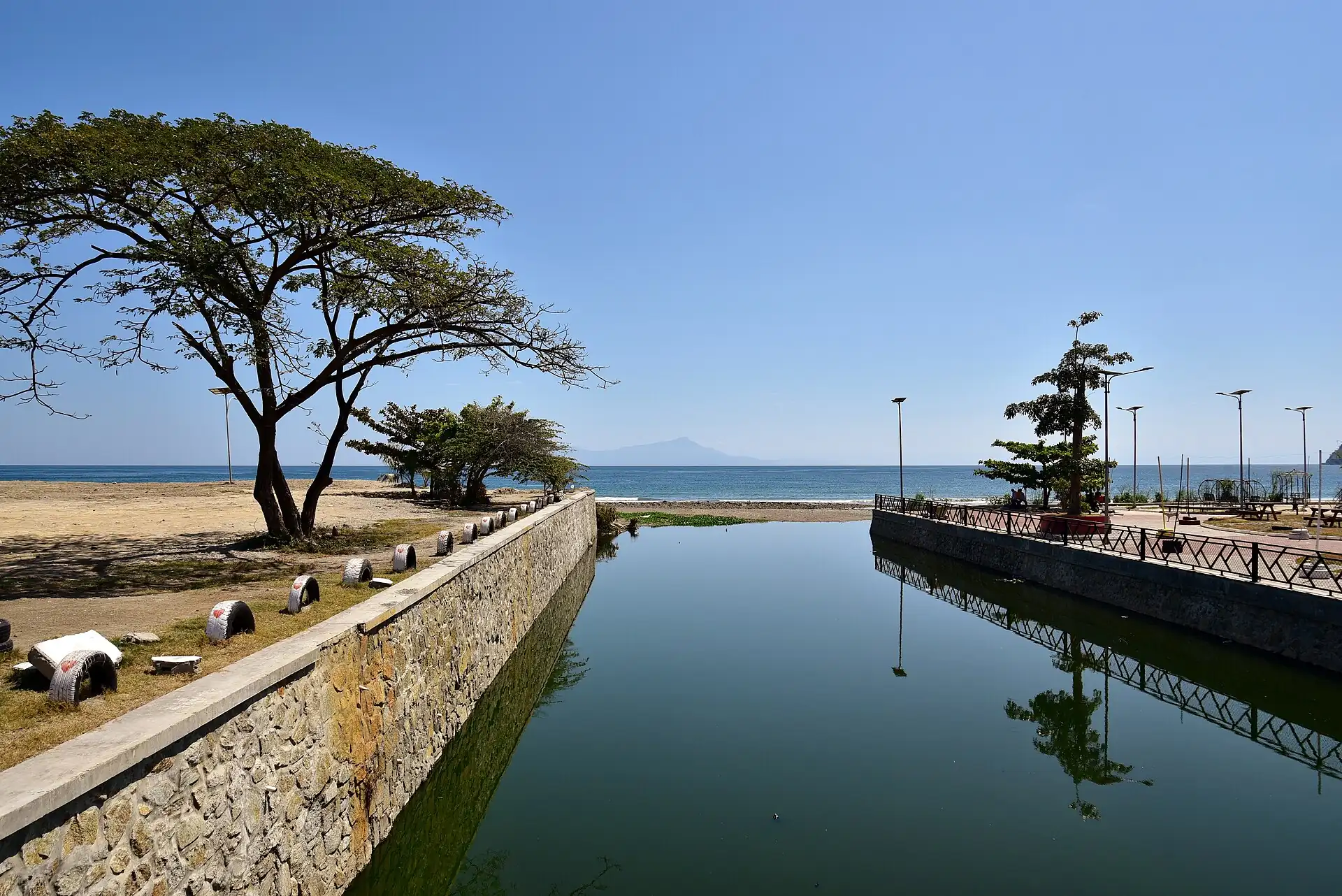 Photo: Bahnfrend, CC BY-SA 4.0
Atauro island
overnightFerry or fast boat from the Dili waterfront; check the current timetable
Clear water and simple guesthouses; book a bed before you go and keep dates flexible in the wet season.
- Door to door
- About 1–3 h each way by boat (check)
Tibar Bay and the west coast
goHired car or microlet west along the coast road
A quiet coast for a half-day; swim only where locals do.
- Door to door
- About 45 min each way (check)
Maubisse and the coffee hills
overnightHired car with a driver
Cool air and coffee farms; roads are winding and can close in the wet season.
- Door to door
- About 2–3 h each way, longer after rain
Mount Ramelau
overnightHired car and a guide
Sunrise from the country's highest peak; go in the dry season with a guide.
- Door to door
- About 4–5 h each way plus a pre-dawn walk
Go next
Baucau and the east
overnightDoor to door: About 3–4 h each way (check)
Hired car with a driver
A longer drive; the old town and coast beaches.
Eat & sleepWhere to eat and which area to sleep in
Eat & sleep
Where to eat and which area to sleep in
Eat
A short list of places worth crossing the city for, each with how to get a seat.
Restaurant finder: filter every place to eat in Dili →
Vegetarian-friendly score
2.0 / 5 · Workable
- Country diet noteOur country guide rates vegetarian eating as mixed.0.75 / 2
- Places to eat in this guide2 of 5 places with a known answer are vegetarian-friendly, 3 partly.1.05 / 1.5
- Budget eating lines0 vegetarian lines in "Eat by budget".0 / 0.6
- Meat-free national dishes5 meat-free dishes in the country food list.0.4 / 0.4
- Dedicated vegetarian kitchens0 mentions of vegetarian restaurants, Buddhist or fasting kitchens.0 / 0.5
Country note: Vegetable dishes exist; ask for no meat.
Vegetarian places near me →Make a diet card →
How we score
- Country diet note (up to 2): easy 2, workable 1, mixed 0.75, hard 0; no note 0.5.
- City places to eat (up to 1.5): 1.5 × (vegetarian-friendly + half of partly friendly) ÷ places with a known answer; needs 3 or more known places.
- Budget eating lines marked vegetarian (up to 0.6): 0.2 each.
- Meat-free national dishes (up to 0.4): 0.1 each.
- Dedicated vegetarian kitchens mentioned — Buddhist chay, shōjin ryōri, Jain, fasting food, vegan cafés (up to 0.5): 0.1 each.
- Total rounded to the nearest half point, 0 to 5. Built from our own pages only, not from reviews.
Eating and drinking guideEat by budget · Drink
Before you sit down to eat
Short version; full text linked
- Queues and hours
- Per person, one dish or one meal, 2026 estimate. More →
Eat by budget
Under US$5 a meal
| Where | Order | Area | Price | Note |
|---|---|---|---|---|
| Timorese canteens (rumah makan) | Rice with fish or chicken and vegetables | Centre | US$2–4 | Go at lunch; point and pay small notes. |
| Bakeries and pastry counters | Bread and a pastry | Centre | US$0.5–2 | Go early. |
Dishes to know
| Dish | What it is | Where to look | When | Price |
|---|---|---|---|---|
| Batar da'an | A stew of maize, pumpkin and beans | Timorese canteens | Lunch | US$2–3 |
| Grilled fish | Whole fish over charcoal with rice and chilli paste | Lecidere stalls and seafront restaurants | Dinner | US$4–15 |
| Timor coffee | Arabica from the hill districts | Cafés | Morning | US$1–3.5 |
| Pastry and bread | Bakery items with a Portuguese influence | Bakeries | Breakfast | US$0.5–2 |
- Eat where turnover is high and food is cooked to order; drink bottled water.
- Vegetarian choices are limited outside hotels; ask for vegetables and eggs.
Drink & nightlife
| Where | What | Until | Note |
|---|---|---|---|
| Castaway Bar & Restaurant | Seafront bar and restaurant | Evening (check) | A sunset drink; confirm hours. |
| Hotel bars | Bar | Late evening | The safest choice after dark; ask your hotel. |
Rules that bite
- Do not drink near churches, memorials or in crowds during national days.
- Ask your hotel for a car home before you order the second drink.
Sleep
Pick the area first: it decides your walk home at night and your first morning.
Which neighborhood fits you
Three questions, one recommendation, with the reasons.
Your best fit
- Tais market and the promenade are on foot; the other clusters are a car ride.
- Airport is a short drive; ask the hotel to book the car.
Next best: Lecidere
Built from our 1–5 desk scores per area; your answers stay in this browser.
More on sleepingSleep by budget · Your area · With kids
Sleep by budget
| Band | Price | Where | Room types | What to expect |
|---|---|---|---|---|
| budget | US$30–60 | Centre and Lecidere | Guesthouses | Basic rooms, fan or AC; confirm hot water and power backup. |
| mid | US$60–130 | Waterfront | Small hotels | AC, breakfast, a car service; central. |
| high | US$130+ | Waterfront | Larger hotels | Better generators, pool, restaurants. |
Booking checks
- Ask whether the room has AC, Wi-Fi and a generator; power cuts happen.
- Book a room near the waterfront so the market and promenade are on foot.
Which area is yours
| If you are | Sleep in | Because |
|---|---|---|
| First visit, short stay | Waterfront centre | The market, promenade and café stops are close; every other stop is a short car ride. |
| Quiet sea-side evening | Lecidere | Grilled fish and sea air on the doorstep. |
First-timers: the market and the promenade are a short walk; choose a hotel with a 24-hour desk, a generator and a car door.
02Lecidere
Sea-side, closer to the airport and the grill stalls; a car ride from the market and Cristo Rei.
Areas are in our default order until you tick a priority.
Scores are 1-5 desk judgements per priority (2026).
With kids
- Short mornings work best: waterfront and market before 10:00, then AC and water.Short mornings work best: waterfront and market before 10:00 AM, then AC and water.
- Pavements are broken: bring a carrier, not a stroller.
- Keep children out of the sea unless local staff say a spot is used for swimming: crocodiles occur on this coast.
- Memorial sites need quiet: tell children the rules beforehand.
PracticalMoney, essentials, safety and the pocket card
Practical
Money, essentials, safety and the pocket card
Money
What a day costs at three comfort levels, and how to pay.
- Budget
- US$25–45 excl. bed / day
- Mid
- US$45–100 excl. bed / day
- High
- US$100+ excl. bed / day
- Transit card
- No transit card: taxis, hotel cars and walking short distances.
- Cash rule
- Bring most of your cash in small US notes; withdraw at bank machines inside banks in daylight and keep a reserve.
More on moneyCosts · Budget · Buy
What things cost
- Rice plate at a local canteenUS$2–4
- Bottle of water, shopUS$0.5–1
- Microlet minibus, single rideAbout US$0.25–0.5 (check)
Trip budget
| Hotel double room1 × 3 nights × US$95 | US$285 |
| Food, local transport, entries2 × 3 days × US$75 | US$450 |
| Airport taxi, both ways1 × US$20 | US$20 |
| Hired car and driver, one day1 × US$80 | US$80 |
| Local SIM2 × US$8 | US$16 |
| Buffer 15%Price creep, a taxi you did not plan, one splurge | US$128 |
| Trip total≈ US$163 per person per day, bed included | US$979 |
2026 estimate in US dollars; flights and tours excluded.
Prices of common things
| Rice plate at a canteen | US$2–4 |
| Bottled water | US$0.5–1 |
| Hired car and driver, one day | About US$60–100 (check) |
2026 estimate; check locally.
Buy
- Bargaining
- Bargain lightly and kindly at the Tais market; start about 20 to 30% below the ask and stop when both sides smile. Shops with tags are fixed.
- Fixed-price check
- Hand-woven tais takes weeks to make; a very low price usually means machine-made cloth. Ask who wove it and where.
Markets and shopping streets
| Where | What | When | Haggle | Note |
|---|---|---|---|---|
| Tais market | Hand-woven cloth, scarves, bags and small crafts | Morning is best; hours vary by stall | yes | Small US notes; ask before photographing weavers. |
Shops by what they sell
| For | Where | Hours | Note |
|---|---|---|---|
| Timor coffee beans | Timor coffee cafés and gift counters | Daytime | Check that the bag is sealed and dated, and ask which district. |
| Groceries and imported goods | Supermarkets and small shops in the centre | Long daytime hours; short on Sunday | Most goods are imported and cost more than in neighbouring countries. |
Changing money
| Where | Verdict | Why |
|---|---|---|
| Bank counters | use | Fair rate and receipt; office hours only. |
| Street changers | avoid | Not needed: the currency is the US dollar. |
ATMs
- Where
- Bank machines inside or beside banks, in daylight; some are empty or fussy about foreign cards, so keep a reserve.
- Notes
- Machines may give US$20 notes; carry US$1 and US$5 notes for taxis and stalls.
Essentials and accessEssentials · Access
Essentials
- Plugs & power
- 230 V, 50 Hz; sockets take types C, E, F and I in different buildings (check); bring a universal adapter.
- Toilets
- Hotels, cafés and the few malls; carry tissue and small notes.
- Health
- Heat, dengue, stomach upsets and sea hazards; bring travel insurance with medical evacuation cover. Care in Dili is limited.
- Accessibility
- Broken or missing pavements; few step-free buildings outside hotels.
- Laundry
- Hotels and a few laundries; agree the price first.
- Emergency numbers
- 112 for police (response is slow); ask your hotel for the ambulance number and a reliable clinic.
Pack
- Light long sleeves and trousers for memorial sites and church
- Hat, sunscreen and a refillable bottle
- Small US notes, and a printed copy of your hotel address
- Insect repellent and a light rain jacket
Accessibility
Dili is mostly flat but pavements are broken or missing, kerbs are high and few buildings are step-free outside hotels.
- Pavements
- Cracked, narrow or missing; roads are shared with traffic.
- Getting around
- A hired car is the step-free option; microlets have steps.
- Toilets
- Accessible toilets are not guaranteed outside larger hotels.
Sights, step-free or not
| Tais market | step-free | Flat, but crowded and uneven at the edges. |
| Government quarter and promenade | with help | Flat, but pavement is cracked. |
| Resistance museum | with help | Steps at the entrance; check. |
| Cristo Rei of Dili | no | About 500 steps. |
| Areia Branca beach | no | Sand and steps. |
Survive
Safety basics, the lines not to cross, and practical habits that save the day.
Safety
- Petty theft: keep phones and cash out of sight; use a car after dark.
- Heat: AC stop every 60–90 minutes; drink bottled water.
- Crocodiles occur in the sea and rivers: swim only where locals do.
- Emergency: 112 (response is slow; confirm local numbers with your hotel).
Red lines
- Memorial sites: quiet, covered dress, no selfies at graves.
- Do not photograph police, military or government buildings.
- Ask before photographing people.
Practical
- Toilets: hotels, cafés and the few malls.
- Tap water is not for drinking.
More on staying safeStay safe · Stay healthy · Safety map · Solo & women · Etiquette · Cope · Scams
After dark, by area
4 flagged areas
- Avoid after dark
- Avoid after dark
- Take care
- Take care
Day = daylight hours. What to watch in each area, day and night →
Scams and red flags
Walk away if you see these
- Taxi fares agreed after the ride: agree the price before you get in, and have small notes ready.
- Change problems: a large note is met with 'no change'; carry US$1 and US$5 notes.
- Souvenir cloth sold as hand-woven that is machine-made: ask who wove it and how long it took.
Stay safe
Hustles specific to this city
| Hustle | Where | The tell | What to do |
|---|---|---|---|
| Taxi fare | Street | Fare fixed after the ride | Agree the price before you get in. |
| Change | Shops and stalls | No change for a big note | Carry US$1 and US$5 notes. |
- Police
- 112. Response is slow; ask your hotel for local numbers.
- Sea
- Crocodiles occur on the coast and in rivers; swim only where locals do.
- Traffic
- Cross patiently; scooters and potholes are the main hazard.
Stay healthy
- Heat
- Drink bottled water, wear a hat and rest indoors from 11:00 to 15:00.Drink bottled water, wear a hat and rest indoors from 11:00 AM to 3:00 PM.
- Dengue
- Mosquito-borne; use repellent, especially at dawn and dusk.
- Stomach upsets
- Choose hot food; avoid tap water and unsealed ice.
- Medical
- Care is limited; carry travel insurance with evacuation cover and your regular medicines.
Hospitals and clinics: see Cope.
Safety by area and hour
| Area | Day | Night | What to watch |
|---|---|---|---|
| Waterfront and Tais market | fine | caution | Phones and cash out of sight; take a car after dark. |
| Lecidere and the lighthouse | fine | caution | Unlit road edge; ride, do not walk. |
| Motael and Santa Cruz | fine | avoid | Empty streets and poor lighting; daytime only. |
| Cristo Rei and Areia Branca | fine | avoid | Crocodile risk in the water; daytime only. |
- Traffic and sea hazards hurt more visitors than crime: watch scooters, cross patiently, do not swim without local advice.
- Take a car door to door after dark.
Solo, women and LGBTQ+ travellers
Solo
- Small and friendly by day: hotel staff and drivers will help you plan.
- Evenings are quiet: use a car and arrange the ride back before you go.
Women
- Dress modestly to avoid attention: covered shoulders and knees away from the beach.
- Take a booked car after dark and avoid walking alone at night.
LGBTQ+
- Timor-Leste is a strongly Catholic society; discretion in public is the safer default.
- Same-sex relationships are not criminalised, but public affection draws attention (check current context).
Etiquette in Dili
- Memorial sites
- Quiet voices, covered shoulders and knees, no selfies at graves.
- Church
- Cover up, hats off, and no photos during Mass.
- Photos
- Ask before photographing people; never photograph police, military or government buildings.
- Lulik
- Sacred houses, objects and places are not touched or photographed without permission.
- Greetings
- A handshake and a 'bondia' go a long way; use a soft voice.
- Dress
- Covered shoulders and knees in town; swimwear at the water only.
Cope
Hospitals and clinics that handle foreigners
| Where | Area | Use it for |
|---|---|---|
| Hospital and private clinics | Dili | Care is limited and the main hospital is basic; ask your hotel for the trusted clinic and check that your insurance covers medical evacuation. |
| Pharmacies | Dili centre | A few pharmacies; stock varies, so bring your own regular medicines. |
Visa extensions
- Office
- Immigration handles visa extensions; check current office hours and requirements.
- Visa
- Many nationalities can get a visa on arrival for a short stay; check the current rules and fee before you fly.
Embassies and consulates
| Country | Address | Phone | Note |
|---|---|---|---|
| Australia | Embassy in Dili (check current address) | — | (check) |
| Portugal | Embassy in Dili (check current address) | — | (check) |
| Other countries | Several embassies operate in Dili; others are covered from Jakarta or Canberra (check) | — | (check) |
- Lost passport
- Report to the police, then contact your embassy; allow several working days.
- Lost card
- Cards are little used here; call your bank from a hotel line and rely on the cash you carried.
Apps and offline kitOffline kit
Offline kit
Set up before you leave, so Dili still works with no signal or a dead roaming plan.
On your phone
- Maps: open the city in Google Maps, tap the place name, then Download offline map (or use an offline-maps app).
- Data: install an eSIM or buy a local SIM before the first taxi; the apps in this guide depend on it.
- Translation: download the local language for camera translation.
- Screenshots: booking confirmations, hotel address in the local script, and the emergency numbers.
This guide
Save the Dili guide and its pages on this device; it opens without a connection.
Phrases that do the work
Greeting
Good morning
Bondia
bon-DEE-ah
Greeting
Good afternoon
Botarde
bo-TAR-deh
Greeting
Good evening
Bonoite
bo-NOY-teh
Thanks
Thank you (man / woman)
Obrigadu / Obrigada
oh-bree-GAH-doo / oh-bree-GAH-dah
Please
Please
Halo favór
HAH-lo fah-VOR
Price
How much is this?
Ida-ne'e hira?
EE-dah neh HEE-rah
Yes
Yes / No
Sim / Lae
seem / lie
Pocket card
Fill in, then print or save as PDF
Stays in this browser only; nothing is sent anywhere.
DiliDíli
Pocket card · Voykit
My bed tonight
—
—
—
Show the hotel name and address on paperPlease take me to this hotel
Emergency
- Police112
Embassy
Note your embassy's line before you travel.
My embassy: —
Fare anchors (2026 estimate)
- Airport to the centre, taxi: US$5–10 (check), about 10–15 minutes
- Microlet minibus: About US$0.25–0.5 a ride (check)
Carry US$1 and US$5 notes, a printed hotel address and water.
Deep diveHistory, reading, photos and every source
Deep dive
History, reading, photos and every source
Sources
- officialTimor-Leste tourism (official)
- secondaryWikivoyage — Dili
Ask about Dili
Loading…
Was this useful?