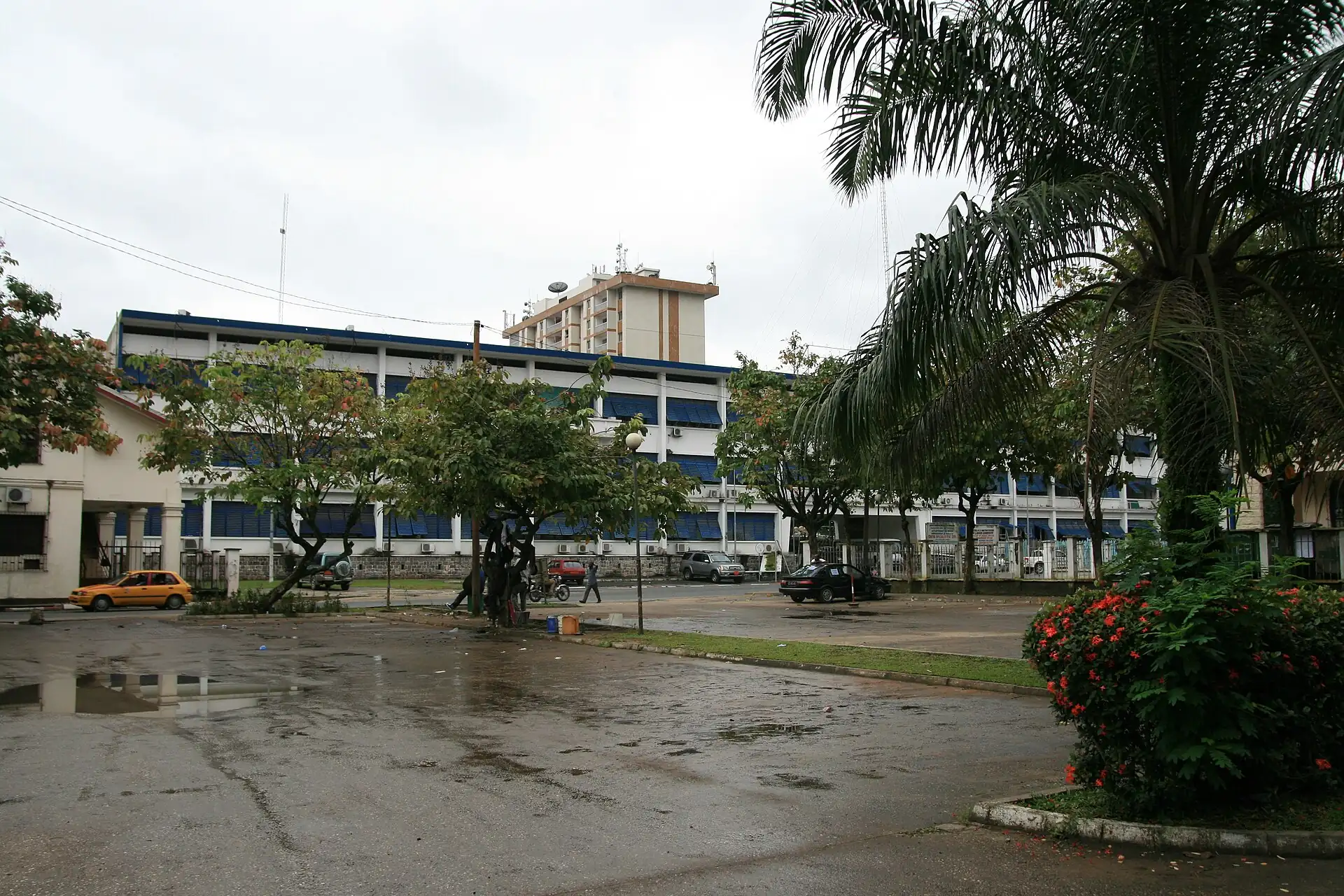
Douala
Code CA · 4 walking zones
Douala is a morning city: do Bonanjo before the heat, treat the afternoon as an indoor slot, take a hotel-arranged car for every long leg — and plan around the rain, which decides how the streets behave.
Our quick read of Douala, scored 1–5 (friction is out of 100). Cash need: how often you still need notes. Heat risk: how hot days get. Stroller: how easy wheels are. Friction: overall effort for a first visit. Desk judgements, so check before relying on them.
- Local time
- --:--
- Weather
- forecast below
- Currency
- XAF
- Best months
- Jan · Feb · Dec
- Airport
- Douala (DLA)
Walking zones: the 4 areas this guide plans a day around. Each is a district you can cover on foot, so you do one zone per half-day and ride the train between them. The code (CA 01, CA 02…) is just the zone's number on the Douala line; the line under each name says how bags fare there and how much time it needs.
Map of Douala
Use the switches to show or hide each kind of pin. A switch that is on shows its pins on the map; tap it again to hide them. "Show only" keeps just the pins that match (for example, places that fit a suitcase). Tap any pin for its name and a link to its page.
- Where to sleep
- Walking clusters
- Rest stops
From the airport Douala (DLA) to your bed
Tap a pin for its card. Places without their own coordinates are shown by their walking cluster.
Why Douala
Douala is Cameroon's port and its largest city: hot, humid and among the wettest cities in Africa in July–September. The sights are a short list in the old administrative quarter, Bonanjo, and the traffic between districts is slow and unpredictable. The trips that go wrong walk long distances in the heat, carry cash and phones in the open, or move around at night. Four clusters cover a first visit; a car joins them.
See first
- 1
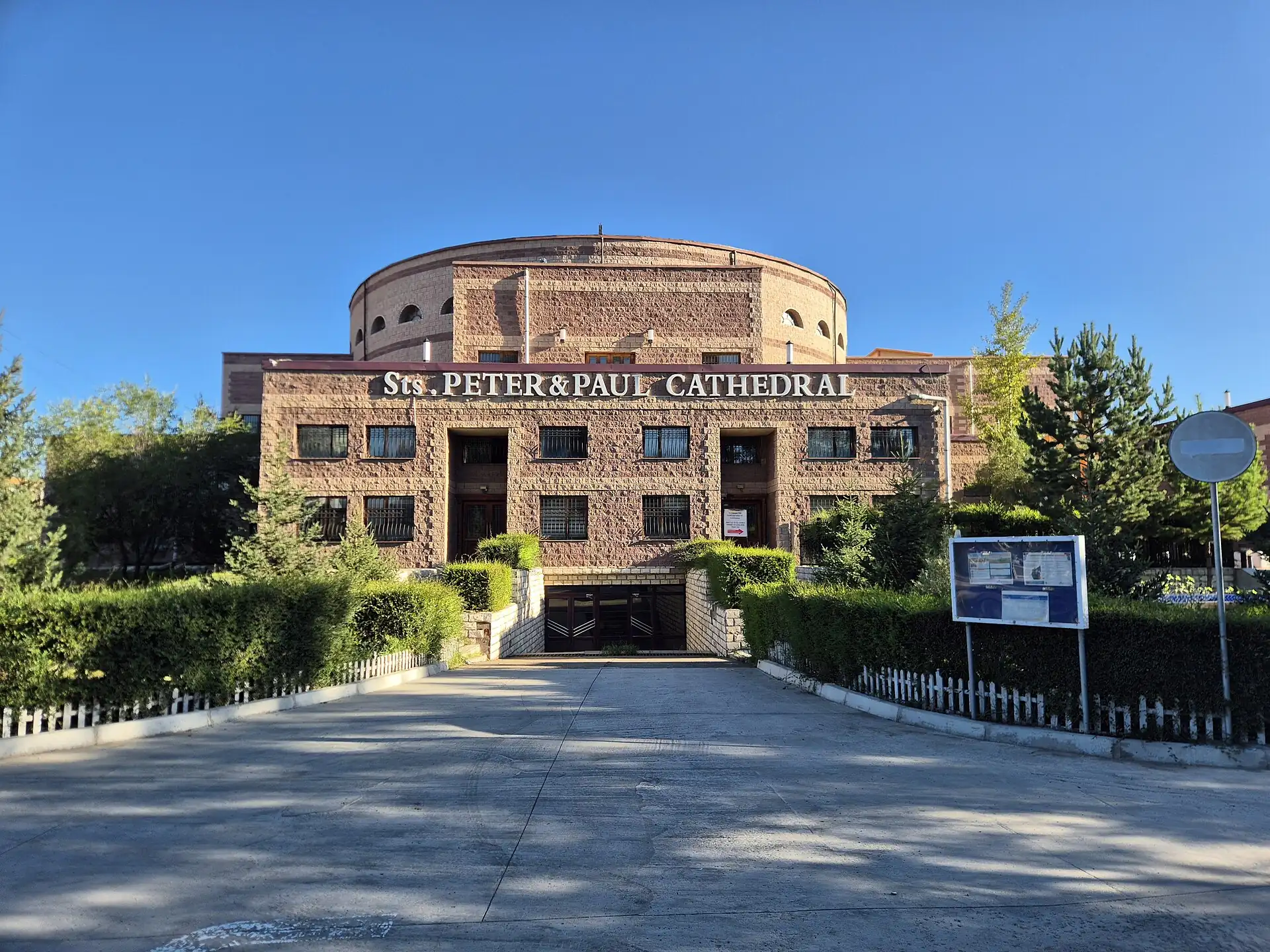 Cathedral of St Peter and St Paul · 20–30 min
- 2
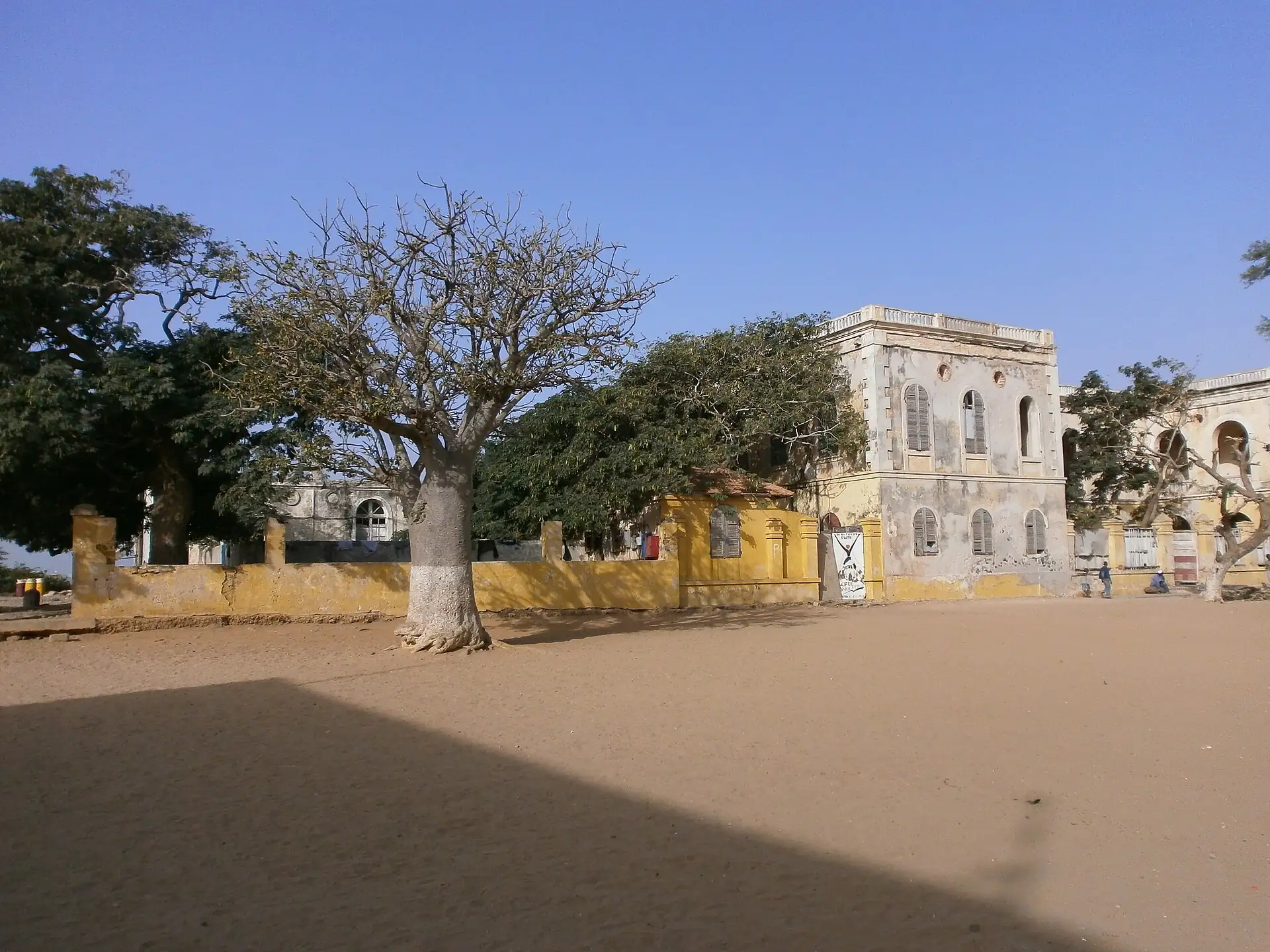 Place du Gouvernement · 10–20 min
- 3doual'art · 45–60 min
- 4Bell royal palace · 20–30 min
- 5Douala Maritime Museum · 45–60 min
Fits
- Short city stays before the coast
- Travellers who arrange a driver
- Art and colonial-era buildings
Does not fit
- Strollers and wheelchairs (pavements)
- Travellers who want to walk between districts
- Rainy-season sightseers
How long
- 2 daysBonanjo morning, Mboppi market
- 3 daysFour clusters, mornings only, cars between them
- 5 daysThree days here + a day to Kribi or the coast by car + one slow day
Good for
- First timers
- Foodies
- Budget
- Couples
- Families
- Luxury
About Douala
Douala sits on the estuary of the Wouri River, where the Duala (Sawa) people were trading with Europeans long before colonial rule. It is Cameroon's economic capital, its main port and its largest city, with a metropolitan population in the low millions (estimate), while the political capital, Yaoundé, is inland.
In 1884 the Duala chiefs signed a treaty with German agents, and Douala became the base of German Kamerun. The Germans laid out the old administrative quarter, Bonanjo, on land taken from the local Bell lineage; the resistance of Rudolf Douala Manga Bell to that expropriation ended with his execution in 1914, and he is remembered as an early anti-colonial figure.
Good to know
- Douala is the economic capital and the port; Yaoundé, inland, is the political capital.
- No dedicated tourist information office is confirmed in central Douala; hotel desks are the practical first stop for drivers, tours and maps.
- Ask your hotel for a written price for any driver or tour before you agree.
Go deeper 9 min read · 5 chapters
Douala is Cameroon's port, its largest city and its commercial engine, built on the estuary of the Wouri River. It is hot, wet and loud, and its sights are few and easy to miss. What makes it worth reading about is layering: a Duala trading coast, a German administrative grid, a French port, and an art and music scene that grew up in the gaps. This deep dive follows the river, the neighbourhoods, the buildings, the food and the daily rhythm, and explains why a good Douala day is decided by rain, traffic and a booked car.
1History2 min
Before any colonial flag, the Wouri estuary was a trading coast. The Duala, part of the wider Sawa coastal peoples, lived in lineages around the river mouth, and chiefs such as the Bell and Akwa families dealt with European ship captains who came for palm oil, ivory and, earlier, enslaved people. The Duala position as middlemen between the ships and the interior gave their chiefs real wealth and a long habit of negotiating with outsiders. The district names Bonanjo, Akwa, Deido and New Bell still carry those lineages and quarters.
In July 1884 chiefs of the Duala signed a treaty with German agents, and Douala became the base of German Kamerun. The Germans built a port, a rail line inland and an administrative quarter, and they wanted the best riverside land for it. The plan meant moving the Duala away from their own shore. Rudolf Douala Manga Bell, a Bell chief educated in Germany, protested in writing, sent representatives to Berlin and organised resistance among other African peoples. In 1914, with the First World War beginning, the German authorities accused him of treason and hanged him. He is remembered today as an early anti-colonial figure, and his story is the one to keep in mind when you stand in Bonanjo.
The Germans left in 1916, when Allied forces took the colony. Kamerun was divided between France and Britain, and Douala became the main port of the French zone. French rule, then a period of trusteeship, brought new buildings, a larger port and a growing population of workers and traders from across the territory. Douala was also a centre of union and political activity in the years before independence, which came for French Cameroun in 1960; the British-administered south joined the country in 1961.
After independence the political capital stayed inland at Yaoundé, while Douala kept the port and the money. That split still explains the city: it is where goods arrive, where banks and companies have their offices and where people from every region come to make a living. Growth has been fast and largely unplanned, and the pavements, drains and roads have not kept pace. The northern and western regions of the country have been affected by armed conflict in recent years, and that has raised the cost of travel and the number of displaced people in the city, so check current government advice before you plan a trip.
None of this is presented in a museum you can simply walk into. History in Douala is read through streets, family names, a palace gate, a cathedral and the gaps between them. Ask your hotel to phone ahead for the palace and the museums, and treat each as a short, respectful stop rather than a big visit.
2Neighbourhood stories2 min
Douala is best understood as a set of districts that do different jobs, and the useful question is which job a district does at what hour. Bonanjo is the old administrative quarter, laid out in the German era and kept by the French. It holds the cathedral, the Place du Gouvernement, government offices, some banks and, tucked into its streets, the art centre. It is quiet, and it is the one part of the city that works on foot on a weekday morning. After the offices close it empties, and the advice to go by car applies even here.
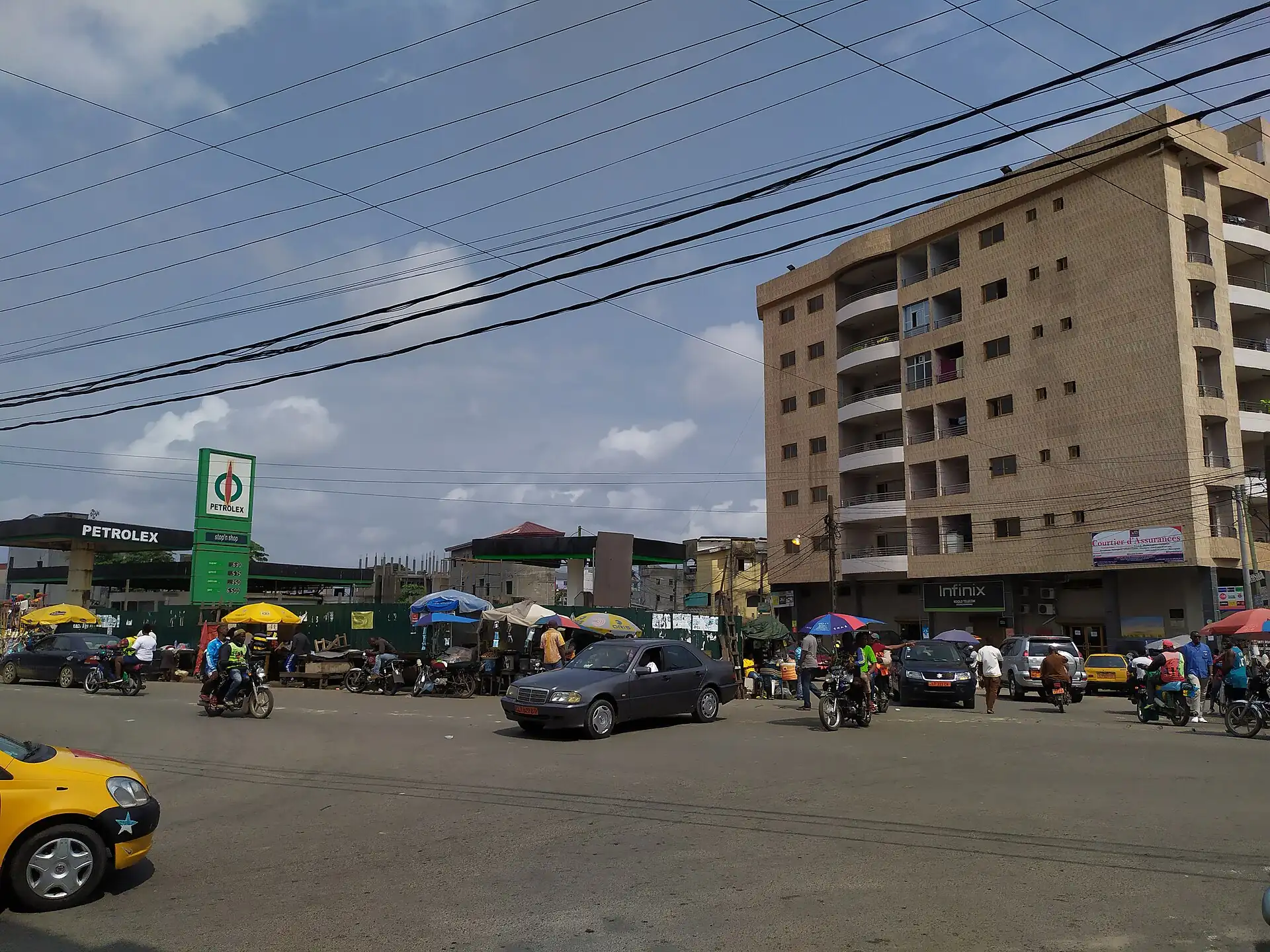
Akwa, to the north-east, is the commercial centre. The Boulevard de la Liberté and the streets around it carry hotels, banks, restaurants, supermarkets and most of the visitor infrastructure. It is busy, noisy and full of small businesses, and it is where most first-time visitors sleep. The trade-off is that the pavements are bad, the traffic is heavy and the evening can feel exposed; a hotel with a 24-hour desk and a car at the door matters more than a nice room.
Bonapriso lies south of Akwa and is the leafy, residential district: villas, consulates, restaurants and a few good hotels. It is calmer, and it is where you go for dinner by car. There is little to visit, and that is the point; it is the district for a quieter night and a proper table.
East of the centre are Mboppi and New Bell, dense market districts where the city's trade, rather than its offices, is on show. Mboppi market is large and crowded, and visitors treat it as an early-morning trip with a driver, small notes and nothing valuable on show. New Bell is older and more local, and it is not a place to go without a contact.
Deido, on the river, is one of the old Duala quarters, and Bonabéri lies across the Wouri bridge to the north. Both matter to the story of the city, but neither is set up for a first visit. Further out, Bonamoussadi and Makepe are newer residential districts with restaurants and bars, far from the centre and reachable only by car.
A useful rule is one district per outing. Douala's distances look small on a map but the traffic makes them long. Plan Bonanjo on one morning, a market on another, and dinner in Akwa or Bonapriso on the evening, always with the ride home booked before you sit down.
3Architecture and art2 min
Douala does not have a skyline or a set of famous monuments, and visitors who arrive expecting one leave disappointed. What it has is a scattering of colonial-era buildings in Bonanjo, a modern commercial core in Akwa and, increasingly, contemporary art that has made the city known beyond Cameroon.
The cathedral of Saints Peter and Paul is the main landmark of Bonanjo, a Catholic church that anchors the administrative quarter's streets. Nearby, the Place du Gouvernement gives the district its centre, a formal green surrounded by government buildings you should not photograph. The Bell royal palace, associated with the family of Rudolf Douala Manga Bell, is part of the same story; whether visitors are received inside is not something to assume, so ask your hotel to phone ahead and treat it as an exterior stop unless confirmed. Where you can, look at the scale of the buildings and the tree-lined streets, which show what the German plan intended.
The art is the newer story. doual'art, a contemporary art centre in Bonanjo, has organised exhibitions and public projects in the city for years and is the organiser of SUD, the Salon Urbain de Douala, a triennial that puts art in streets, markets and neighbourhoods rather than only in galleries. The first edition took place in the mid-2000s, and later editions have brought international and Cameroonian artists to work with residents. The idea behind it is simple: a city that grows without much planning can still be shaped by what people put in it.
The centre also works as a small anchor for a wider scene. Galleries, cultural centres such as the French institute and independent spaces come and go, so the honest advice is to check what is on before you go. A visit to the art centre, one or two exhibitions and a conversation with the staff will tell you more about contemporary Cameroon than most of the guidebook sights.
A note on photography. Government buildings, the port, bridges, airports, soldiers and police are not for photographing, and getting it wrong can cost you time and money at a checkpoint. Ask before you photograph people, works and stalls. In practice this means the cathedral forecourt, the art centre and the market lanes, with permission, are where your camera is welcome.
4Food history2 min
Douala's food is Cameroonian first and coastal second. The country's cooking draws on dozens of regional traditions, and the port has brought them together: the Bassa mbongo tchobi, the Duala and Sawa fish and plantain dishes, the peanut and bitterleaf of ndolé, and the Bamiléké celebratory dishes from the West. If you are going to eat one thing sitting down, make it ndolé.
Ndolé is often called the national dish. It is made from bitterleaf, washed and boiled to take out the sharpness, then stewed with ground peanuts, and cooked with meat, fish or shrimp, and it is served with plantain, bâton de manioc (steamed cassava sticks, also called miondo) or rice. The taste is deep, slightly bitter and rich, and it is a heavy lunch. Take it at a sit-down place at midday and plan the afternoon around an air-conditioned rest.
Poulet DG, the Director General's chicken, is a celebration dish: chicken fried with ripe plantain, carrot, green beans and peppers. The story behind the name is that it was first served to a senior executive, and whatever the truth, it is a dish for a special table rather than a street corner. Order it at a Bonapriso restaurant for lunch or an early dinner, and share a portion.
Poisson braisé, whole fish grilled over charcoal with pepper sauce and served with plantain or bâton de manioc, is the city's default lunch, and it is a strong reason to visit a proper grill. Soya, spiced grilled beef skewers, are the street counterpart: buy them from a busy stand with a hot fire in daylight or the early evening, eat on the spot and go back by car. For breakfast, beignets-haricots-bouillie is fried dough, beans and a maize or millet porridge, sold from roadside stalls until it runs out.
The practical rules are the ones that apply to any hot, wet city. Eat where the turnover is fast and the food comes off the fire hot. Drink sealed water. Carry small notes, because change is a chore. And ask the price where there is no menu. Beer is a large part of the social scene, with local lagers such as 33 Export, Castel and Mutzig on every table, and the price is worth checking before you order.
5City life2 min
Douala's daily life runs on three things: rain, traffic and cash. Rain arrives between March and November and peaks between July and September, when the city is among the wettest large cities in Africa. A storm can flood a street in minutes and turn a fifteen-minute drive into an hour, so residents plan around it and so should you: outdoors before midday, indoors after.
Traffic is the second constraint. The main roads and the bridge to Bonabéri jam morning and evening, and motorbike taxis, known as benskin, weave through it with a high accident rate that makes them a poor choice for visitors. The sensible pattern is a hotel-arranged car or an agreed private taxi between districts and a short walk inside Bonanjo by day. Shared taxis run fixed routes for a few hundred francs a seat, and they suit residents better than visitors with bags.
Cash comes third. Markets, street food, taxis and many restaurants take only Central African francs, and change is scarce, so carry small notes. Cards work in larger hotels and some restaurants, and a bank machine inside a bank in daylight is the safe way to withdraw. Mobile money is everywhere among residents and needs a local SIM.
Music and celebration are the fourth pillar. Cameroon's makossa and bikutsi rhythms come out of these coastal and southern cultures, and Douala's bars and clubs keep them alive. The Sawa communities hold the Ngondo festival, a gathering with a water ceremony on the Wouri, usually in December; dates and venues move, so check before you plan around it. Public holidays such as Youth Day on 11 February and National Day on 20 May bring parades and road closures.
The last piece is judgement. Douala is a city that can be handled, and it rewards visitors who accept its terms. Do the sights in the morning, keep the afternoon for the hotel, book the night car from the table, carry a certified copy of your passport and ask before photographing anything with a uniform in it. Check your government's travel advice for the whole country, especially the North-West, South-West and Far North regions, and give every plan more time than the map suggests.
Rules in force · 9Nine African countries on this site have no trip line bec…Sort the visa before the flight
- Africa ↗When a route touches a yellow-fever country — even a transit of 12 hours or more — keep the original yellow card (ICVP) in your hand luggage; health desks and airlines can refuse boarding or entry without it.
- Africa ↗Nine African countries on this site have no trip line because governments advise against travel; several others have no-go regions. Read your government's advice for every country on the route before paying deposits.
- Central Africa ↗Sort the visa before the flight: none of the seven countries reliably issues tourist visas on arrival to Western passports, and e-visas here are tied to named airports.
- Central Africa ↗Carry the original yellow fever vaccination certificate in your hand luggage; health desks at every Central African airport ask for it, and a missing card can mean refusal or a jab at the desk.
- Central Africa ↗Before booking anything in or near the DRC, read the WHO Ebola situation page and your own government's health notice: the 2026 outbreak brought quarantine and boarding rules for people who have been in the DRC.
- Cameroon ↗Apply for the Cameroon e-visa on evisacam.cm and fly into Douala or Yaoundé; arrivals by land or sea need a visa stamped by an embassy beforehand.
- Cameroon ↗Check your government's advice region by region: the Far North, North-West and South-West regions, Bakassi and strips along the Nigeria, Chad and CAR borders carry advice against all travel.
- Cameroon ↗Book a travel-clinic visit several weeks ahead: malaria prevention is needed everywhere in Cameroon, all year.
- Douala and the Littoral ↗Advice differs by region: stay within the parts of the Littoral and the south that your own government's advice allows.
Entry rules depend on your passport. Full visa guide
Emergency numbers for Doualaopen ▾
- Police117 (check)
- Hotel front deskWrite your hotel's number here
- Your embassyWrite your 24-hour line here
Tap a number to call from your phone. These are the numbers listed in this guide; a row marked check has not been verified.
Planning is the full guide. I'm here keeps what is open and the cheat card.
Right now
Checking the weather…
Working out what is open near you…
What is open nowclock, closures, places open
Now in Douala
Local time in Douala
--:--
Loads in your browser · Africa/Douala
This month
Month verdict appears here.
Closed today
See the weekly grid below.
If today is a closure day: Douala is at its best in the dry months from December to February; in the wet months, do the outdoor stop before midday, then move indoors, and give every drive twice the time on the map.
Public holidays and parades can close streets; check government travel advice, including for the country's conflict-affected regions, before you go.
Cheat cardthe pocket version
Cheat card
The essentials on one card: save it as an image for your phone, share it, or print it.
Douala
- Money
- Keep XAF 20,000 in small notes; withdraw at bank machines inside banks in daylight…
- SIM
- Buy an MTN or Orange SIM from a branded boutique or the airport counter with your passport; registration is required…
- Ride app
- Yango (check coverage)
- Emergency
- 117 (check) police · Write your hotel's number here Hotel front desk · Write your 24-hour line here Your embassy (not 911, 999 or 000)
- Plugs
- Sockets C/E. US/Canada (A/B): adapter · UK/Ireland (G): adapter · Australia/NZ (I): adapter. 220 V: US 120 V-only devices (hair dryers) need a converter; most chargers are dual-voltage.
Top 5
- Cathedral of St Peter and St Paul
- Place du Gouvernement
- doual'art
- Bell royal palace
- Douala Maritime Museum
EssentialsQuick answers, what things cost and how to get around
Essentials
Quick answers, what things cost and how to get around
Quick answers
The questions people ask first about Douala, one line each. Tap a card for the full answer.
- Cash or card?Cash (XAF) for markets, street food, taxis and most restaurants; cards in larger hotels and a few restaurants and supermarkets, and they can fail…
- SIM or eSIMBuy an MTN or Orange SIM from a branded boutique or the airport counter with your passport; registration is required, so avoid street sellers.
- Ride-hailing appcheckYango (check coverage).
- Tap watercheckDo not drink tap water; buy sealed bottled water and check the seal.
- TippingNot expected at street stalls.
- Plugs & powerSockets C/E. US/Canada (A/B): adapter · UK/Ireland (G): adapter · Australia/NZ (I): adapter. 220 V: US 120 V-only devices (hair dryers) need a converter; most chargers are dual-voltage.
Show all 14 answers
- Safe at night?Take more care after dark in Bonanjo, Akwa, Bonapriso and more.
- What to wearShoulders and knees covered; speak softly and ask before photographing.
- Emergency numberscheck117 (check) police · Write your hotel's number here Hotel front desk · Write your 24-hour line here Your embassy (not 911, 999 or 000)
- Your embassycheckUS, UK embassies listed with addresses (check before you go).
- Sundays & holidayscheckPublic holidays and parades can close streets; check government travel advice, including for the country's conflict-affected regions, before you go.
- Late at nightNo formal curfew; bars and lounges in Akwa and Bonapriso run late at weekends.
- Rainy-day planFrom March to November, storms can flood streets for an hour or more: do the outdoor stop before midday, then move indoors…
- Landing lateDLA: pre-booked hotel pickup or airport taxi to the door runs all night.
Cost cheat-sheetwhat everyday things cost
Cost cheat-sheet
Typical prices for the everyday things, as ranges. Change the currency right here; the local price stays first.
2026 desk estimate · check
- CoffeeCoffee (café or hotel)XAF 500–1,500
- Sit-down mealNdolé with plantain at a sit-down restaurantXAF 3,000–6,000
- Street or quick mealBeignets-haricots breakfastXAF 500–1,000
- BeerBeer (33 Export, Castel, Mutzig), bar or restaurantXAF 800–1,500
- Taxi, about 5 km (3 mi)Taxi, about 3 mi (5 km)Shared taxi seatCash; hop-in, hop-out on fixed routes.XAF 300–500
- SIM or eSIM, a weekTourist SIM, about a weekXAF 2,000–5,000
- Museum or sight ticketMuseum or gallery entryXAF 1,000–3,000
- Budget bedBudget guesthouse room, a night, per roomXAF 15,000
- Mid-range bedHotel double room, a night, per roomXAF 60,000
- High-end bedHotel double room, a night, per roomXAF 130,000
A day, not counting the bed: Budget XAF 15,000 · Mid XAF 35,000 · High XAF 80,000
Local prices, with USD next to them (rates 2026-09 (approximate); change it in the header). Ranges are desk estimates: check locally. Every price and the budget calculator →
Source: Prices in Douala
Draft
Written from desk research. Not yet compared with the official source.
No official source is recorded for this figure.
Prices are 2026 desk estimates, not yet compared with an official source. Check on the day.
Not checked in the last 12 months (no check date on file).
DecideWho it suits, the trade-offs and when to go
Decide
Who it suits, the trade-offs and when to go
Best months at a glance
The guide's verdict for each month
Jan
Best
31°C (88°F)88°F (31°C)
Feb
Best
32°C (90°F)90°F (32°C)
Mar
Care
32°C (90°F)90°F (32°C)
Apr
Care
31°C (88°F)88°F (31°C)
May
Care
30°C (86°F)86°F (30°C)
Jun
Avoid
29°C (84°F)84°F (29°C)
Jul
Avoid
28°C (82°F)82°F (28°C)
Aug
Avoid
28°C (82°F)82°F (28°C)
Sep
Avoid
28°C (82°F)82°F (28°C)
Oct
Care
29°C (84°F)84°F (29°C)
Nov
Care
30°C (86°F)86°F (30°C)
Dec
Best
31°C (88°F)88°F (31°C)
Best: Dec–Feb. Mixed: Mar–May, Oct–Nov. Avoid: Jun–Sep. Month by month →
Warmest Feb (32°C (90°F)90°F (32°C)), coolest Jul (22°C (72°F)72°F (22°C) low), wettest Aug (27 rain days), driest Jan (4). Averages, not a forecast.
Douala across the year
Best-looking months for Douala: Jan, Feb, Dec. Rated avoid: Jun, Jul, Aug, Sep.
| Measure | Jan | Feb | Mar | Apr | May | Jun | Jul | Aug | Sep | Oct | Nov | Dec |
|---|---|---|---|---|---|---|---|---|---|---|---|---|
| Weather | Great (good) | Great (good) | Mixed (care) | Mixed (care) | Mixed (care) | Avoid (avoid) | Avoid (avoid) | Avoid (avoid) | Avoid (avoid) | Mixed (care) | Mixed (care) | Great (good) |
| Crowds | Medium (ok) | Medium (ok) | Low (good) | Low (good) | Low (good) | Low (good) | Low (good) | Low (good) | Low (good) | Low (good) | Medium (ok) | High (care) |
| Prices | Medium (ok) | Medium (ok) | Medium (ok) | Low (good) | Low (good) | Low (good) | Low (good) | Low (good) | Low (good) | Low (good) | Medium (ok) | High (care) |
| Events | 1 event (ok) | 1 event (ok) | None listed (ok) | 1 event (ok) | 2 events (ok) | 1 event (ok) | 1 event (ok) | 1 event (ok) | None listed (ok) | None listed (ok) | None listed (ok) | 2 events (ok) |
Green is good news, amber needs planning, red is a month to avoid; dashed grey with a question mark means our data does not say. Open the year heatmap →
Not checked in the last 12 months (no check date on file).
Source: Months, temperatures and crowds
Draft
Written from desk research. Not yet compared with the official source.
Monthly highs, rain and crowd levels are climate averages and desk estimates for the city, not a forecast.
Understand the cityUnderstand · Districts
Orientation & districts
Bonanjo (the old administrative quarter, the cathedral and the government streets) lies south-west near the river; Akwa (hotels, banks, restaurants) is the commercial centre to its north-east; Bonapriso is the quieter residential district to the south; Mboppi and New Bell lie east and are busy market districts; Bonabéri is across the Wouri bridge.
Addresses work by quartier and landmark more than by house number: tell the driver the district and a nearby landmark, and keep a screenshot of a map pin.
Shaded shapes: walking areas (click one). Black pins: sleep areas. Grey dots: places. Round badges: arrivals. Click the map to turn on scroll-wheel zoom.
Hover, tap or tab to an area to see what it is like. Pins are sleep areas; arrows at the edge point to the airport.
Off the map: Douala International Airport (DLA) (30–60 min by the usual route).
Not drawn yet (no coordinates in this guide): Deido, Bonabéri, Bonamoussadi and Makepe. They are in the neighbourhood cards below.
Where’s what, as a list:
- Bonanjo: The colonial-era administrative quarter: cathedral, Place du Gouvernement, the palace and the art centre. Quiet after offices close. Suits: A morning of sights.
- Akwa: Hotels, banks, supermarkets and restaurants along the Boulevard de la Liberté; busy and noisy, and best left by car after dark. Suits: First-time visitors, business trips. Price band $$.
- Bonapriso: Leafy residential streets with restaurants, embassies and consulates; a quieter place to sleep, though everything else is a car ride. Suits: A calmer base and dinners. Price band $$$.
- Mboppi and New Bell: Large, crowded market districts east of the centre; go early with a car, leave valuables at the hotel. Suits: Market trips with a driver.
- Deido: An old Duala quarter by the river; not set up for first-time visitors, go only with a local contact. Suits: Local life, Sawa heritage.
- Bonabéri: Across the Wouri bridge; traffic-choked and a transport point rather than a sightseeing stop. Suits: Road links north.
- Bonamoussadi and Makepe: Newer residential districts with restaurants and bars, far from the centre; a car ride with traffic risk. Suits: Residents and long stays.
- Sleep area Akwa: suits First-time visitors, business trips, price band $$.
- Sleep area Bonapriso: suits A calmer base and dinners, price band $$$.
- Douala International Airport (DLA), 30–60 min by the usual route.
Neighbourhoods at a glance
One tab per area, pulled together from this guide’s districts table, area notes, sleep-area scores and place pages. Scores are desk judgements (1–5); prices are estimates, check before you book.
Bonanjo
The colonial-era administrative quarter: cathedral, Place du Gouvernement, the palace and the art centre. Quiet after offices close.
- Best time:
- 07:30–11:00 weekdays7:30 AM–11:00 AM weekdays
Pick this if: A morning of sights
Watch out for: Photographing government buildings.
Getting around from here
- Car north-east: about 15 min to Akwa (hotels and Boulevard de la Liberté)
- Car east: about 22 min to Mboppi market
Akwa
$$Hotels, banks, supermarkets and restaurants along the Boulevard de la Liberté; busy and noisy, and best left by car after dark.
- Suits:
- First-time visitors, business trips
- Best time:
- Any time by car
- Rooms:
- XAF 15,000–30,000 (from the sleep guide)
Pick this if: First-time bases, business
Watch out for: Walking between venues after dark.
- Quiet nights2/5 Low
- Nightlife4/5 High
- Families2/5 Low
- Late arrival5/5 Very high
Why these scores
- Quiet nights: Busy and noisy along the main boulevards; ask for a room away from the street.
- Nightlife: Bars and lounges close at hand; get home by booked car.
- Families: Noisy, with poor pavements and heavy traffic.
- Late arrival: Business hotels keep 24-hour desks and can book late cars.
Getting around from here
- 28–40 min walk to Bonanjo (old administrative quarter)
- Car east: about 18 min to Mboppi market
- Car south: about 18 min to Bonapriso (residential, restaurants)
Bonapriso
$$$Leafy residential streets with restaurants, embassies and consulates; a quieter place to sleep, though everything else is a car ride.
- Suits:
- A calmer base and dinners
- Best time:
- Evening by car
- Rooms:
- XAF 40,000–90,000 (from the sleep guide)
Pick this if: Dinner and a quieter bed
Watch out for: Walking home.
- Quiet nights4/5 High
- Nightlife3/5 Medium
- Families4/5 High
- Late arrival4/5 High
Why these scores
- Quiet nights: Calmer residential streets; the quietest nights of the two bases.
- Nightlife: Restaurants and lounges nearby; livelier Akwa is a ride away.
- Families: Space and calm, but few kid-friendly activities within a short walk.
- Late arrival: Check the desk hours; smaller guesthouses may not staff a night desk.
Getting around from here
- Car north: about 18 min to Akwa (hotels and Boulevard de la Liberté)
Mboppi and New Bell
Large, crowded market districts east of the centre; go early with a car, leave valuables at the hotel.
- Suits:
- Market trips with a driver
- Best time:
- 07:00–09:007:00 AM–9:00 AM
Pick this if: Early market trips with a driver
Watch out for: Carrying valuables loosely.
Getting around from here
- Car west: about 18 min to Akwa (hotels and Boulevard de la Liberté)
Deido
An old Duala quarter by the river; not set up for first-time visitors, go only with a local contact.
- Suits:
- Local life, Sawa heritage
Bonabéri
Across the Wouri bridge; traffic-choked and a transport point rather than a sightseeing stop.
- Suits:
- Road links north
Bonamoussadi and Makepe
Newer residential districts with restaurants and bars, far from the centre; a car ride with traffic risk.
- Suits:
- Residents and long stays
Decide
The honest trade-off: what you will enjoy, what will wear you down.
You will like
- Colonial-era Bonanjo
- Contemporary art
- Grilled fish and plantain
You will hate
- Heat and humidity
- Traffic jams
- Heavy rain
Similar citiesif this one is not quite right
Similar cities
If Douala does not fit your dates or budget, these match it on season, cost and feel.
- Granada
Nicaragua
- Good in the same months: Jan, Feb, Dec
- A similar climate through the year
- Abidjan
Côte d'Ivoire
- Good in the same months: Jan, Feb, Dec
- Works well for food trips
- A similar climate through the year
- Malabo
Equatorial Guinea
- Good in the same months: Jan, Feb, Dec
- A similar climate through the year
When
Best months: Jan, Feb, Dec. Month-by-month verdicts below, with the live forecast first. When to go, month by month →
Douala: next 7 days
Loading forecast…
Forecast: Open-Meteo (CC BY 4.0), model data for this point.
Air quality
Loading…
Model estimate (CAMS via Open-Meteo), not a street-level station; readings near busy roads run higher.
Month by month, all 12best Jan, Feb, Dec
Dry season; hot, hazy from Harmattan dust.
Dry; Feb 11 Youth Day holiday.
Rains begin; hot and humid.
Wet; storms in the afternoon.
Wet; May 20 National Day parades and closures.
Heavy rain and street flooding.
Among the wettest months; roads flood.
Very wet; Aug 15 holiday.
Very wet; floods slow every trip.
Rains ease late in the month.
Rain tapering; humid.
Dry season begins; hot; Christmas closures.
Climate, calendar and eventsClimate · Calendar · Events · Packing by season
Climate
| Jan | Feb | Mar | Apr | May | Jun | Jul | Aug | Sep | Oct | Nov | Dec | |
|---|---|---|---|---|---|---|---|---|---|---|---|---|
| High | 31°C (88°F)88°F (31°C) | 32°C (90°F)90°F (32°C) | 32°C (90°F)90°F (32°C) | 31°C (88°F)88°F (31°C) | 30°C (86°F)86°F (30°C) | 29°C (84°F)84°F (29°C) | 28°C (82°F)82°F (28°C) | 28°C (82°F)82°F (28°C) | 28°C (82°F)82°F (28°C) | 29°C (84°F)84°F (29°C) | 30°C (86°F)86°F (30°C) | 31°C (88°F)88°F (31°C) |
| Low | 23°C (73°F)73°F (23°C) | 24°C (75°F)75°F (24°C) | 24°C (75°F)75°F (24°C) | 24°C (75°F)75°F (24°C) | 24°C (75°F)75°F (24°C) | 23°C (73°F)73°F (23°C) | 22°C (72°F)72°F (22°C) | 22°C (72°F)72°F (22°C) | 22°C (72°F)72°F (22°C) | 23°C (73°F)73°F (23°C) | 23°C (73°F)73°F (23°C) | 23°C (73°F)73°F (23°C) |
| Rain days | 4 | 6 | 12 | 16 | 20 | 23 | 26 | 27 | 25 | 23 | 11 | 4 |
| Verdict |
- One long wet season from about March to November, with July to September the wettest; December to February is the drier stretch, still hot and humid.
- Even in the dry season expect harmattan haze and dust in January and February on some days.
- The rain, not the heat, decides the streets: flooding and traffic jams can turn a 15-minute drive into an hour.
Events by month
New Year
1 January · Nationwide
Public holiday; shops closed.
Youth Day
11 February · Nationwide
Public holiday; parades and traffic diversions.
Easter
religiousMoves yearly · Churches citywide
Good Friday and Easter Sunday services; shops close.
Labour Day
1 May · Nationwide
Public holiday; most shops close.
National Day
20 May · Nationwide, with parades in the centre
Public holiday; parades and road closures in the centre.
Assumption
15 August · Churches
Public holiday.
Eid al-Adha
religiousIslamic calendar, moves yearly · Mosques citywide(check dates)
Public holiday; some shops close.
Ngondo festival of the Sawa people
festivalMoves yearly, check · Wouri riverside and Sawa communities(check dates)
Cultural gathering with a water ceremony; check the dates and venues.
Christmas
25 December · Churches, especially the cathedral
Public holiday; large congregations.
Festivals and events that change the plan
| When | What | Effect on your plan |
|---|---|---|
| Dec (moves yearly) | Ngondo festival of the Sawa people | A water ceremony and cultural gathering of the coastal Sawa (Duala) communities on the Wouri; check the year's dates and venues before you plan around it. |
| Feb 11 | Youth Day | Public holiday; parades in the morning, some closures and traffic diversions. |
| May 20 | National Day | Public holiday with parades and road closures in the centre; plan around it. |
| Every three years (check) | SUD, Salon Urbain de Douala | A city-wide contemporary art triennial run by doual'art; exhibitions and interventions across the centre in the year it runs. |
| Variable (Islamic calendar) | Eid al-Fitr and Eid al-Adha | Public holidays; some shops close. |
What to pack, by season
From Douala’s own climate table: the coldest, warmest and wettest three months, and what to bring for each.
Coldest months
Jul–Sep
22° to 28°
Light layers; evenings can still feel cool.
Warmest months
Feb–Apr
24° to 32°
Light, breathable clothes, a sun hat and sunscreen; plan midday indoors and carry water.
Wettest months
Jul–Sep
26 rain days a month
A compact umbrella or rain jacket and shoes that can get wet.
Arrive & moveGetting in, getting around, and your bags
Arrive & move
Getting in, getting around, and your bags
I land at…
Enter your landing time: what still runs from the airport, where you can eat when you get in, and which areas let you check in that late.
Douala International Airport (DLA)
Out of the airport about 00:15 (next day)12:15 AM (next day) (01:55 (next day)1:55 AM (next day) if immigration and bags are slow); in town about 00:45 (next day)12:45 AM (next day).
Transport from the airport
- Any hourPre-booked hotel pickup or airport taxi to the door. Runs all night.
- Last resortOvernight near the airport. If nothing else works.
Places to eat open when you get in
We have no confirmed hours for the places to eat here yet. Plan on a convenience store or your hotel. What is open late →
Where to sleep with a late arrival
Typical times from our airport data, not a timetable: check the last departure on the day. Full airport-to-bed plan for Douala International Airport (DLA) →
Arrive
Each gateway has its own airport-to-bed page with timings and the last safe connection.
Getting in, in detailGet in
Get in by rail and road
| Station | Mode | Serves | Where | To the centre |
|---|---|---|---|---|
| Douala International Airport (DLA)use | Air | International and domestic flights | About 8–10 km south-east of Akwa | Hotel car 25–60 minPre-book the hotel car and ignore airport touts. |
| Camrail station (Douala)use | Train | Trains to Yaoundé and beyond; check timetables | Central Douala (check) | Car 10–20 minBook first-class seats in advance; check the timetable and the station address.(check) |
| Bus and minibus agenciescaution | Bus | Yaoundé, Kribi, Bafoussam and other cities | Agency yards across the city (check) | Car 15–40 minUse a named agency with a fixed departure and take a car to the yard; avoid unmarked minibuses. |
- Long-distance travel by road is slow and can be risky at night: leave in the morning.
- For a trip to Kribi or Edéa, a hired driver for the day is usually simpler than public buses.
Move
The default way around, when a pass pays off, and when the last trains go.
- Default
- Walk inside a cluster by day; a hotel-arranged car or a taxi between districts and after dark.
- Passes
- No pass. Agree the fare before you get in; hire a driver by the hour for a morning of sights.
- Last trains
- No rail in the city. Taxis are plentiful by day but rarer and riskier after dark: ask the hotel to book the ride back before you go out.desk estimate
- Other modes
- Other modes (Rome2Rio) ↗
Getting around, in detailGet around · Connect
Get around
Walk inside a cluster by day; use a hotel-arranged car or a private taxi between districts and always after dark. Rain and traffic set the schedule.
| Mode | Verdict | Fare | Use it for | What breaks |
|---|---|---|---|---|
| Walking | use | Free | Inside Bonanjo by day | Pavements are broken and traffic is aggressive; stay alert and keep bags secure. |
| Hotel-arranged car | use | XAF 2,000–5,000 across the centre, agreed first | Between clusters, night, bags | The default for most visitors; ask the hotel for the price before you go. |
| Ride-hailing app (check coverage) | ok | Fare shown in the app | Between clusters | Check it works for you before you rely on it. |
| Private taxi (dépôt) | caution | Agree first: XAF 1,500–3,000 for a short ride | When the hotel cannot book | Agree the price before you get in; avoid after dark. |
| Shared taxi | caution | XAF 300–500 per seat on a fixed route | Short local hops if you know the route | Cheap but crowded, and not set up for visitors with bags. |
| Moto-taxi (benskin) | avoid | XAF 200–500 | Not recommended | High accident risk; best avoided. |
| Rented car with driver | use | XAF 30,000–60,000 a day (check) | Day trips and a morning of sights | Book through your hotel with a written price. |
Taxis and ride-hailing
Hotel-named driver
private
Ask for the driver's name and number.
Yellow shared taxis
shared
Fixed routes; do not hail one at night.
On foot and car-free hours
| Where | When | Note |
|---|---|---|
| Bonanjo streets between the cathedral, the Place du Gouvernement and the art centre | Early morning | The one stretch that works on foot, in daylight. |
More on getting around
Traffic is the constraint: give any cross-town trip 45–90 minutes in the rush hours (roughly 07:00–09:30 and 16:30–19:30) and more when it rains. Plan one district per outing.
Addresses work by quartier and landmark: tell the driver the district and a nearby landmark, and screenshot a map pin.
Connect
| Option | Verdict | What breaks |
|---|---|---|
| MTN or Orange boutique in the city | use | Passport needed for mandatory registration; the best choice of data bundles. |
| Airport counter | ok | Convenient after a late arrival; check the price. |
| Street SIM sellers | avoid | A SIM not registered to your own passport can be cut off. |
Yango (check coverage)
Cars
A ride-hailing app that has operated in Cameroon's main cities; check it works for you before you rely on it.
Hotel-arranged car
Night, bags, airport
The default for a first visit: fixed price, driver named.
MTN MoMo / Orange Money
Mobile payments
Widely used locally; needs a registered local SIM.
Google Maps
Addresses, pins
Coverage is patchy off the main roads; confirm the pin with your driver.
- Wi-Fi
- Available in most hotels and some cafés; slower during rain and power cuts.
Luggage
Where big bags are a problem, and how to get rid of them for the day.
Rule
- Lockers
- No public lockers; hotels hold bags after check-out.
- Forwarding
- No forwarding culture; keep the big bag at the Douala hotel.
- Dead zone
- Late flights: ask the hotel to hold bags and for a room to shower.
Bags, area by area
4 walking areas rated
- Bags forbidden
- Bags painful
Bonanjo (old administrative quarter)Akwa (hotels and Boulevard de la Liberté)Bonapriso (residential, restaurants)
Lockers, forwarding and the gap between check-out and check-in are covered once, under Luggage.
See & doWalking clusters, day plans and the places worth the time
See & do
Walking clusters, day plans and the places worth the time
Clusters
Plan by cluster: each is a walkable area with a rescue point and a bag rule.
Morning cluster: the cathedral, the Place du Gouvernement and the art centre in the old administrative quarter, best before 11:00.
rescue 100% · max p90 5.7′ · half
Base cluster: hotels, banks and restaurants along the Boulevard de la Liberté; sleep here, then go out by car.
rescue 100% · max p90 5.4′ · 90m
Half-morning cluster: one of the city's large markets; go early, take a car both ways and leave bags and valuables at the hotel.
rescue 100% · max p90 5.4′ · half
Evening and sleep cluster: quieter streets, restaurants and hotels south of Akwa; nothing to visit, a calmer place for dinner by car.
rescue 100% · max p90 5.4′ · 90m
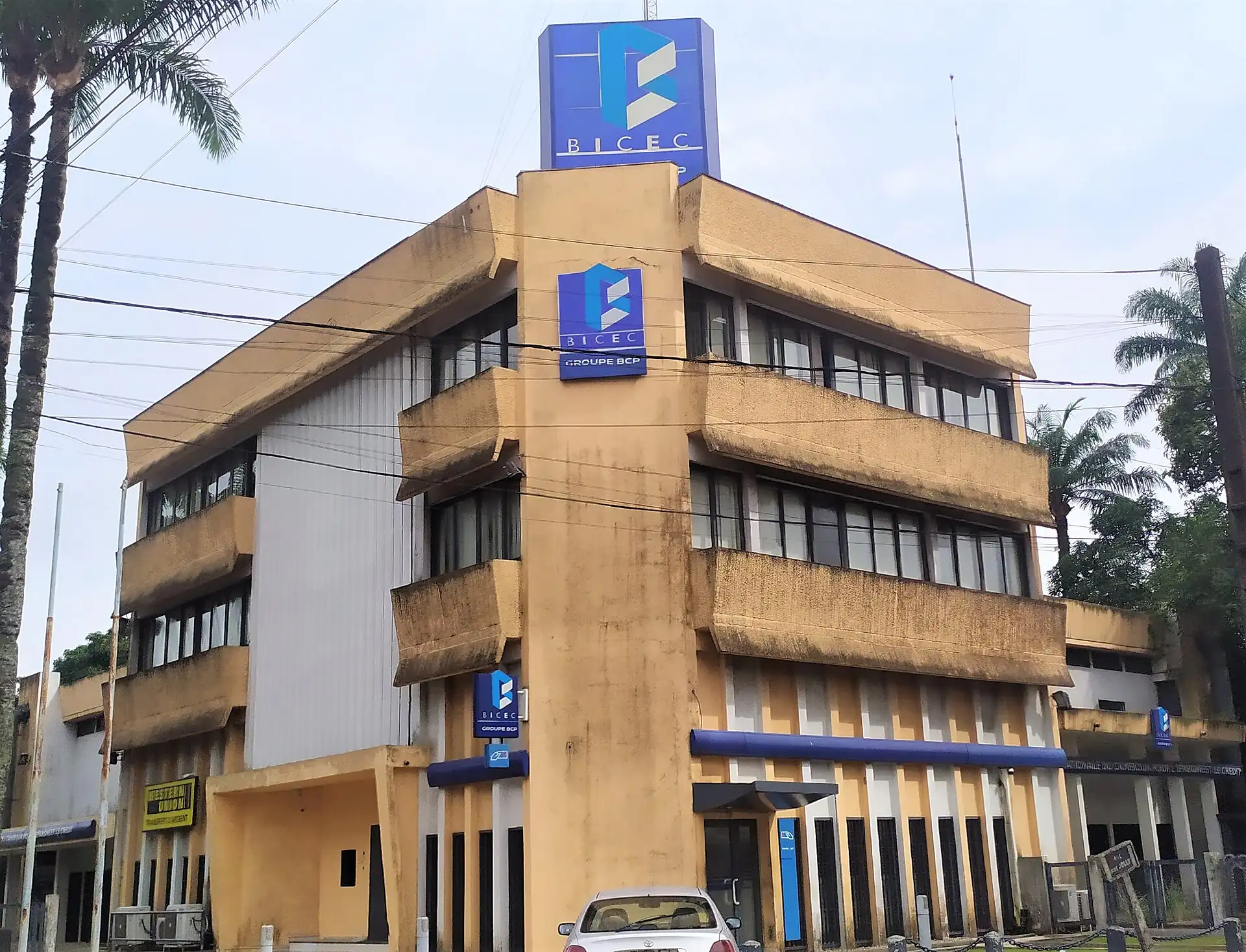
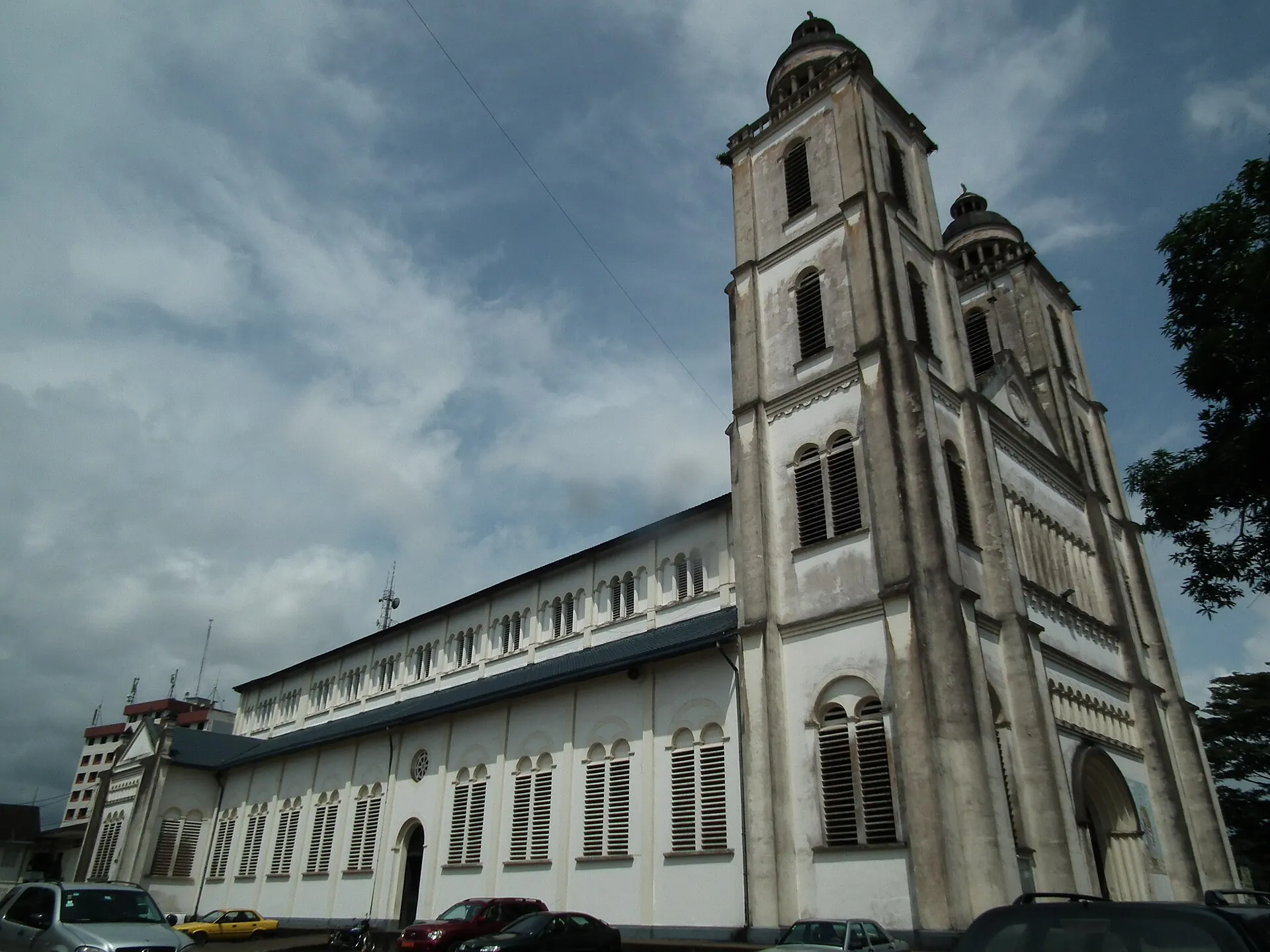
Days
Ready-made day plans, timed against opening hours and walking distances.
How long are you staying?
Loose outlines in the city's rhythm: outdoors in the morning, indoors at midday, cars in between.
1 day
A stopover between flights or before the coast
- 07:30Cathedral of St Peter and St Paul — Cathedral
- 08:30Place du Gouvernement — Place du Gouvernement
- 09:15Bell royal palace (Palais du Roi Bell) — Bell royal palace
- 10:00doual'art contemporary art centre — doual'art
- 12:30Ndolé at an Akwa restaurant — Ndolé lunch in Akwa
- 14:00AC rest at the hotel
Skip: Mboppi market: needs an early start and a car of its own.
Douala in 3 days
3 daysBonanjo in the first morning, the market early on the second, the art centre on the last; every leg is a car, and the last day ends with the bags already in it.
Day by day
Day 1 — Bonanjo: cathedral and Place du Gouvernement, a 12:30 lunch table
- 07:30Cathedral of St Peter and St Paul
- Place du Gouvernement (optional)
- Bell royal palace (Palais du Roi Bell) (optional)
- 12:30Lunch table 12:30 (Akwa)
Day 2 — Mboppi market early, grilled fish in Bonapriso
Day 3 — the art centre, car to the airport at 12:00
- 08:30Beignets-haricots breakfast, Bonanjo (optional)
- doual'art contemporary art centre
- Douala Maritime Museum (optional)
- 12:00Car to the airport at 12:00
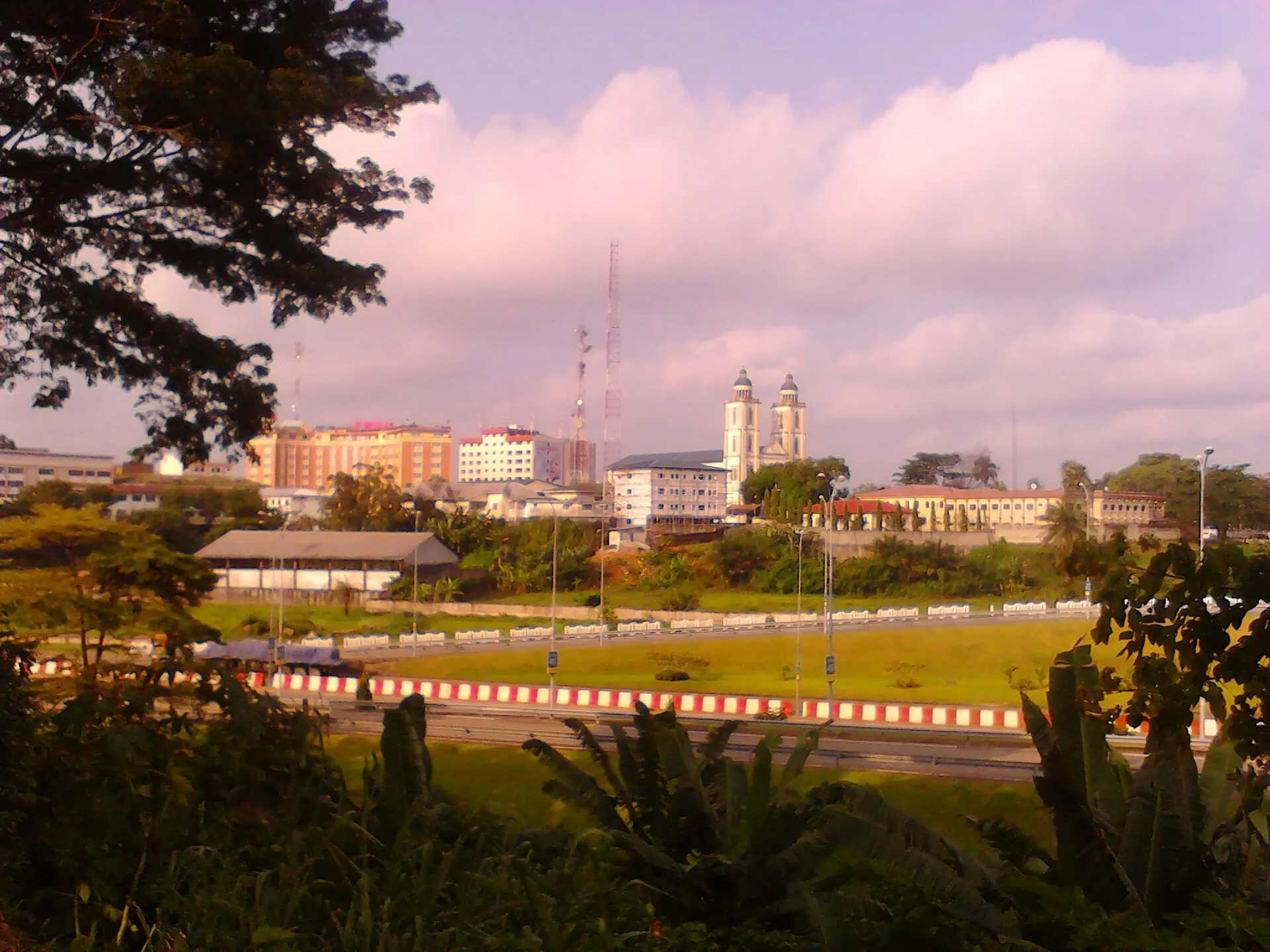
Places
“Best time” is when to arrive for the fewest crowds, for example “before 08:30”; “Go any time” means the hour makes little difference. More sights follow under “More sights and museums”.
If you do ten things in Douala
Ranked for a first visit of 2–3 days. Prices are 2026 estimates in XAF.
- 1
Cathedral of St Peter and St Paul
The main landmark of Bonanjo, a quiet morning stop.
- Time
- 20–30 min
- Best
- Morning
- Cost
- Free
- 2
The colonial-era heart of the administrative quarter.
- Time
- 10–20 min
- Best
- Morning
- Cost
- Free
- 3
The city's contemporary art centre and home of the SUD triennial.
- Time
- 45–60 min
- Best
- Morning
- Cost
- Free or small fee (check)
- 4
The link to Rudolf Douala Manga Bell and the story of resistance to German rule.
- Time
- 20–30 min
- Best
- Morning
- Cost
- Free from outside
- 5
The river and port history, if open.
- Time
- 45–60 min
- Best
- Morning
- Cost
- Small fee (check)
- 6
The everyday commercial life of the city.
- Time
- 30–45 min
- Best
- Early morning
- Cost
- Free to browse
- 7
The national dish, sat down and unhurried.
- Time
- 60 min
- Best
- 12:00–14:00
- Cost
- XAF 3,000–6,000
- 8
Grilled fish and plantain, the city's default lunch.
- Time
- 60 min
- Best
- Lunch
- Cost
- XAF 3,000–8,000
- 9
A celebration dish worth one meal.
- Time
- 60 min
- Best
- Lunch or early dinner
- Cost
- XAF 5,000–10,000
- 10
Kribi
Beaches and the Lobé waterfalls, 3–4 hours south; a night beats a day.
- Time
- Overnight
- Best
- Dry season
- Cost
- Driver and hotel, ask your hotel
Good for…
Verdict is how well Douala works for that traveller, not how nice it is.
Rewarding on a car-based rhythm and with a fixed budget for rides.
- 1Bonanjo (old administrative quarter) — the one walkable morning cluster.
- 2A hotel-booked driver — removes fare and traffic stress.
Ndolé, poulet DG, poisson braisé and soya are reasons enough.
- 1Ndolé at an Akwa restaurant — the national dish at a sit-down table.
- 2Grilled fish (poisson braisé) in Bonapriso — grilled fish, plantain and pepper sauce.
- 3Soya (grilled beef skewers), Akwa — skewers from a busy grill.
Street breakfasts and soya are cheap; rides and beds are not.
- 1Beignets-haricots breakfast, Bonanjo — a full breakfast for a few hundred XAF.
- 2Free sights — the cathedral, the Place du Gouvernement and the palace exterior cost nothing.
- 1Poulet DG in Bonapriso — a proper table at a Bonapriso restaurant.
- 2doual'art contemporary art centre — an art visit together.
Kids are welcomed, but heat, rain, malaria risk and traffic are real limits.
- 1French Institute of Douala — an air-conditioned stop with events.
- 1An international hotel in Akwa or Bonapriso — reliable backup power, pool and a booked car.
- 2A private driver for the whole trip — removes traffic and fare stress.
Broken pavements and few kerb cuts almost everywhere; plan by car.
- 1A large hotel in Akwa — a lift and car-to-door drop-off.
Tours and classes: book or skip
Book through the hotel or a licensed operator with written inclusions and a cancellation policy. Prices per person, group tour unless stated.
| Tour or class | Verdict | Typical price | Why | Check before paying |
|---|---|---|---|---|
| Driver and car for a morning of sights | book | XAF 15,000–30,000 (check) | Solves the traffic and fare problem in one booking. | Which stops are included and whether waiting time is charged. |
| Kribi overnight by car | book | XAF 60,000–120,000 for the car, plus a room (check) | Transport is the hurdle; a driver solves it. | The return time and whether the driver waits. |
| Wouri river boat trip | maybe | Negotiate | A different view of the city; only with a licensed operator. | Life jackets and the route, and do not photograph the port. |
| Art gallery visits | maybe | Varies | Useful if you want a guide to the contemporary scene. | Group size and which spaces are included. |
What each season brings
Dry season
Dec–Feb
The least rain, though still hot and humid; harmattan haze on some days.
Watch: Dust and reduced visibility on some days.
Rains begin
Mar–May
Afternoon storms build; green and warm.
Watch: Flooded streets after storms.
Heavy rains
Jun–Sep
The wettest stretch; cooler and cloudier.
Watch: Street flooding and slow traffic every day.
Rains ease
Oct–Nov
Fewer downpours towards the end of November.
Watch: Unpredictable storms.
Photo spots and the light
Light times are for clear days. Never photograph government buildings, the port, bridges, soldiers or police.
| Spot | Best light | Tip |
|---|---|---|
| Cathedral forecourt | 07:30–09:00 | Soft morning light on the facade; ask before photographing people. |
| The art centre | Morning | Ask before photographing works and staff. |
| Market lanes | 07:00–09:00 | The quietest aisles; ask before photographing stall owners. |
| Roadside grills | Late afternoon | Warm light and smoke; ask first. |
Douala travel FAQ
Answers are 2026 desk estimates; fares and rules marked (check) change.
Is Douala safe for visitors?
It is manageable with care by day; the common problems are bag and phone snatching, traffic and overcharging. Move by booked car after dark, and check your government's travel advice for the whole country before you go.
Do I need a visa?
Most visitors need a visa or e-visa before travel, plus a yellow-fever certificate; check current rules for your nationality.
Do I need cash?
Yes. Markets, street food, taxis and many restaurants take cash (XAF) only; cards work in larger hotels.
Is tap water safe to drink?
No. Drink sealed bottled or filtered water.
When is the best time to visit?
December to February is the driest stretch. July to September is the wettest, and streets flood.
How many days do I need?
Two to three days covers the four clusters at an easy pace; add a night for Kribi if you want a beach.
What should I wear to the cathedral and the palace?
Shoulders and knees covered; speak softly and ask before photographing.
Ride-hailing app or street taxi?
A hotel-arranged car or a checked ride-hailing app: fixed price and a named driver. If you take a taxi, agree the fare first, and not after dark.
Is malaria a risk?
Yes, year-round citywide. See a travel clinic for prophylaxis and use repellent from dusk.
What is the best area to stay?
Akwa for a first visit, with banks and restaurants close; Bonapriso for a calmer, longer stay.
More to see and doSee & do · Learn & work · Rain & heat · Free things
Free things to do
Sights in Douala that cost nothing to enter. Each is described under Places or More sights; extra costs inside are marked there.
See & do
11 of 11
The Catholic cathedral of the old administrative quarter; a short morning stop outside services.
Bonanjo · Day hours; Mass times · Free
- square
The green at the heart of Bonanjo, surrounded by government buildings you should not photograph.
Bonanjo · Always open · Free
The city's contemporary art centre and the organiser of the SUD triennial; phone ahead.
Bonanjo · Check before you go · Free or small fee (check)(check)
Bell royal palace (Palais du Roi Bell)
Citadel & old cityThe Bell royal palace, tied to Rudolf Douala Manga Bell and the story of resistance to German rule.
Bonanjo · Check · Free from outside(check)
- Museums
A museum on the river and port history, if open.
Bonanjo · Check · Small fee (check)(check)
- Markets
One of the city's large markets; go early with a car and small notes.
Mboppi · Early morning to mid-afternoon · Free to browse
- culture
The French cultural centre, an air-conditioned stop with films, music and exhibitions.
Akwa (check) · Programme hours · Varies(check)
Sit-down ndolé lunch and a Cameroonian menu crawl
Food toursOrder ndolé, poulet DG and poisson braisé at different places; book the car home.
Akwa and Bonapriso · Lunch and early dinner · XAF 3,000–10,000
Contemporary art visit
cultureThe city's art scene centres on doual'art and its programme; check what is on.
Bonanjo · Check · Free or small fee (check)
Music and dance evening (check venues)
NightCameroon's makossa and bikutsi scene is heard in bars and clubs; ask the hotel for a safe venue and book the ride.
Akwa and Bonapriso · From about 20:00From about 8:00 PM · Varies
Wouri river boat trip (check operators)
ActiveRiverside and mangrove views from the water; ask the hotel for a licensed operator and do not photograph the port.
Wouri estuary · Day hours · Negotiate
- Booking
- Drivers, boat trips and art visits are best arranged a day or two ahead through the hotel.
Learn & work
| What | Where | Cost | Note |
|---|---|---|---|
| French language classes | French Institute of Douala or private tutors (check) | Check current fees | Short courses and conversation groups are usually available. |
| Cameroonian cooking class | Hotels or private cooks (check operator) | XAF 15,000–30,000 (check) | Learn ndolé and poulet DG; book through the hotel. |
| Traditional music and dance | Cultural centres and artists (check) | Varies | Ask the hotel or a gallery for a teacher or a workshop. |
Working here
- Tourist entry
- Most visitors need a visa or e-visa before travel; check current requirements and the yellow-fever certificate rule for your nationality. Tourist entry does not allow paid work.
- Work permit
- Legal work needs an employer-sponsored permit and residence formalities; expect legalised documents from home.
- Remote work
- No digital-nomad visa is confirmed; working remotely on a tourist visa is a grey area, so check current rules before a long stay.
Rain-day and heat-day plan
Rain day
From March to November, storms can flood streets for an hour or more: do the outdoor stop before midday, then move indoors, and give every drive twice the time on the map.
- 01doual'art contemporary art centre — An indoor gallery; about an hour, check opening.
- 02Douala Maritime Museum — Indoor displays if open; check first.
- 03French Institute of Douala — Air-conditioned, with a programme of films, music and exhibitions; check the calendar.
Heat day
Above 30 °C with high humidity: outdoor stops before 11:00, air-conditioning in the middle of the day, water every hour.
- 07:30Cathedral of St Peter and St Paul — Cooler morning air; done by 08:30.Cooler morning air; done by 8:30 AM.
- 08:30Place du Gouvernement — A short, shaded pause before the sun climbs.
- 09:30doual'art contemporary art centre — Indoors and air-conditioned as the heat rises.
- 12:30Ndolé at an Akwa restaurant — A sit-down lunch and an AC break.
Day-trips and nearby
Places you can reach from Douala in a day or with one night away, with the route and what it costs. Door to door, not ride time.
Kribi (beaches and Lobé waterfalls)
overnightCar about 3–4 h south on the coast road
The main beach escape from Douala. Swim only where locals are in the water and check the currents; a night there beats a day of driving.
- Time
- Full day, better as one night
Edéa and the Sanaga
maybeCar about 1–1.5 h east
A river town on the Sanaga with a dam and falls; check what is open and take a driver.
- Time
- Half to full day
Yaoundé (political capital)
overnightCar or Camrail train about 4–5 h
The inland capital; a night at least. Book a seat in advance on the train and check timetables.
- Time
- Overnight
Limbe and Mount Cameroon area
checkCar about 1.5–2.5 h west
Lies in the South-West Region, where government travel advice is strict because of armed conflict. Read the current advice before you consider it.
- Time
- Check advisories
Eat & sleepWhere to eat and which area to sleep in
Eat & sleep
Where to eat and which area to sleep in
Eat
A short list of places worth crossing the city for, each with how to get a seat.
Restaurant finder: filter every place to eat in Douala →
Vegetarian-friendly score
1.5 / 5 · Hard work
- Country diet noteOur country guide rates vegetarian eating as mixed.0.75 / 2
- Places to eat in this guide0 of 5 places with a known answer are vegetarian-friendly, 5 partly.0.75 / 1.5
- Budget eating lines0 vegetarian lines in "Eat by budget".0 / 0.6
- Meat-free national dishes2 meat-free dishes in the country food list.0.2 / 0.4
- Dedicated vegetarian kitchens0 mentions of vegetarian restaurants, Buddhist or fasting kitchens.0 / 0.5
Country note: Meat, fish and crayfish powder season most sauces, but beans, koki, plantain and BHB are easy.
Vegetarian places near me →Make a diet card →
How we score
- Country diet note (up to 2): easy 2, workable 1, mixed 0.75, hard 0; no note 0.5.
- City places to eat (up to 1.5): 1.5 × (vegetarian-friendly + half of partly friendly) ÷ places with a known answer; needs 3 or more known places.
- Budget eating lines marked vegetarian (up to 0.6): 0.2 each.
- Meat-free national dishes (up to 0.4): 0.1 each.
- Dedicated vegetarian kitchens mentioned — Buddhist chay, shōjin ryōri, Jain, fasting food, vegan cafés (up to 0.5): 0.1 each.
- Total rounded to the nearest half point, 0 to 5. Built from our own pages only, not from reviews.
Eating and drinking guideEat by budget · Drink
Before you sit down to eat
Short version; full text linked
Eat by budget
Under XAF 2,000 a meal
| Where | Order | Area | Price | Note |
|---|---|---|---|---|
| Beignets-haricots breakfast, Bonanjo | Beignets-haricots-bouillie | Bonanjo | XAF 500–1,000 | Breakfast, before the mid-morning sell-out. |
| Soya (grilled beef skewers), Akwa | Soya (grilled beef skewers) | Akwa | XAF 500–1,500 | Busy grill, daylight or early evening. |
| Roadside stalls | Rice with sauce, plantain or bâton de manioc | Any main road | XAF 800–2,000 | Point at the sauce you want; eat where it is hot. |
Dishes to know
| Dish | What it is | Where to look | When | Price |
|---|---|---|---|---|
| Ndolé | Bitterleaf stewed with ground peanuts and meat or shrimp, often with plantain or bâton de manioc | Sit-down restaurants | Lunch, dinner | XAF 3,000–6,000 |
| Poulet DG | Chicken fried with ripe plantain, carrot, green beans and peppers | Restaurants | Lunch, dinner | XAF 5,000–10,000 |
| Poisson braisé | Whole grilled fish with pepper sauce, plantain or bâton de manioc | Roadside grills and restaurants | Lunch, early dinner | XAF 3,000–8,000 |
| Soya | Spiced grilled beef skewers | Roadside grills | Late afternoon, evening | XAF 500–1,500 |
| Beignets-haricots-bouillie | Fried dough, beans and a maize or millet porridge | Roadside stalls | Breakfast | XAF 500–1,000 |
| Mbongo tchobi | A black, spiced fish or meat stew from the Bassa and coastal cooking | Cameroonian restaurants | Lunch, dinner | XAF 3,000–7,000 |
| Koki | Steamed black-eyed bean pudding, often with plantain | Local restaurants | Lunch | XAF 1,000–2,500 |
| Bâton de manioc (miondo) | Steamed cassava sticks, the usual side to ndolé and fish | Restaurants and stalls | Any meal | XAF 200–1,000 |
- Eat where the turnover is fast and the food is hot.
- Where there is no posted menu, ask the price before you order.
- Cash in small notes at most stalls and restaurants.
Drink & nightlife
| Where | What | Until | Note |
|---|---|---|---|
| Akwa bars and lounges (check names with your hotel) | Bars, hotel terraces | Late, especially Fri–Sat | The main after-dark area; get out by booked car, not on foot. |
| Bonapriso restaurants and lounges | Cocktails, terraces | About midnight | Quieter and a better choice for a drink with dinner. |
| Roadside bars and maquis-style terraces | Beer and grilled snacks | Late | Fine in company and by car; not a place to walk to alone at night. |
By style
| Style | What | Where | Price | Until |
|---|---|---|---|---|
| Beer | 33 Export, Castel, Mutzig and other local lagers at bars and restaurantsThe default drink; ask the price of the bottle before you order. | Everywhere | XAF 800–1,500 | Late |
| Fresh juice and ginger drinks | Bissap (hibiscus), ginger and fresh fruit juices from stalls and cafésUse bottled or filtered water in the mix; ask for no ice if unsure. | Street stalls and cafés | XAF 300–1,000 | Daytime |
| Palm wine | Fermented palm sap, sold informallyA regional drink; strength and hygiene vary, so try it with a local companion. | Roadside sellers | Varies | Daytime |
| Cocktails | International-style bars in hotels | Akwa and Bonapriso hotels | XAF 4,000–8,000 plus service | About midnight |
Rules that bite
- Book the car home before you order the first drink.
- Do not leave a drink unattended and do not accept a drink from a stranger.
Sleep
Pick the area first: it decides your walk home at night and your first morning.
Which neighborhood fits you
Three questions, one recommendation, with the reasons.
More on sleepingSleep by budget · Your area · With kids
Sleep by budget
| Band | Price | Where | Room types | What to expect |
|---|---|---|---|---|
| budget | XAF 15,000–30,000 | Akwa guesthouses | Guesthouses and budget hotels | Simple rooms, fan or basic AC, limited breakfast, no generator. |
| mid | XAF 40,000–90,000 | Akwa, Bonapriso | 3–4 star business and boutique hotels | Lift, breakfast, AC, generator backup. |
| splurge | XAF 100,000–250,000+ | Akwa, Bonapriso international hotels | 5-star hotels | Pools, doorstep drop-off, backup power and water. |
Booking checks
- Ask about a backup generator and hot water: power cuts happen.
- Confirm the airport transfer before you fly; arriving without a booked car after dark is the riskiest part of the trip.
- The hotel will register your passport; it may photocopy it but should return the original promptly.
Which area is yours
| If you are | Sleep in | Because |
|---|---|---|
| First visit, business or a short stay | Akwa | Banks, restaurants and hotels close together; leave everything else to a car. |
| Families, longer stays, a quieter base | Bonapriso | Calmer streets and good restaurants; budget a car for every outing. |
| Late arrival or early flight | Akwa | 24-hour desks and booked cars are easier to arrange. |
01Akwa
First-timers: banks, restaurants and hotels are close, but choose a hotel with a 24-hour desk, a generator and a car-accessible door, and go out only by car.
Quieter residential streets with restaurants; a car ride from Bonanjo and Akwa.
Areas are in our default order until you tick a priority.
Scores are 1–5 desk judgements per priority (2026).
With kids
- Pavements are broken and traffic is heavy: a carrier works better than a stroller outside hotel grounds.
- Heat, rain and traffic are the limit on days out; two short outings with an AC break in between work best.
- Ride-hailing and hotel cars rarely have child seats: bring a travel booster or ask the hotel to arrange a car with one.
- Malaria prevention needs a doctor's advice before travel; use repellent and sleep under a net or AC.
PracticalMoney, essentials, safety and the pocket card
Practical
Money, essentials, safety and the pocket card
Money
What a day costs at three comfort levels, and how to pay.
- Budget
- XAF 10,000–20,000 excl. bed / day
- Mid
- XAF 20,000–50,000 excl. bed / day
- High
- XAF 50,000+ excl. bed / day
- Transit card
- No transit card: hotel cars, taxis and walking short distances.
- Cash rule
- Keep XAF 20,000 in small notes; withdraw at bank machines inside banks in daylight, not from street machines after dark, and carry euros as backup.
More on moneyCosts · Budget · Buy
What things cost
- Beignets-haricots breakfast at a street stallXAF 500–1,000
- Soya (grilled beef skewers), per skewer or small portionXAF 500–1,500
- Poisson braisé (grilled fish) with plantain or bâton de maniocXAF 3,000–8,000
- Poulet DG at a restaurantXAF 5,000–10,000
- Large bottle of waterXAF 500–800
- Driver and car for a morning of sightsXAF 15,000–30,000
Trip budget
| Hotel double room1 × 3 nights × XAF 60,000 | XAF 180,000 |
| Food, local transport, entries2 × 3 days × XAF 35,000 | XAF 210,000 |
| Airport car, both ways1 × XAF 20,000 · one car per 4 people | XAF 20,000 |
| Driver for a morning of sights1 × XAF 20,000 · one car per 4 people | XAF 20,000 |
| Tourist SIM, about a week2 × XAF 3,500 | XAF 7,000 |
| Buffer 15%Price creep, a taxi you did not plan, one splurge | XAF 65,600 |
| Trip total≈ XAF 83,800 per person per day, bed included | XAF 502,600 |
2026 estimate in XAF; flights, visas and tours excluded. Your choices stay in this browser.
Prices of common things
| Soya (grilled beef skewers) | XAF 500–1,500 |
2026 estimate; check locally.
Buy
- Bargaining
- In markets the first price to a foreigner is often two to three times the local price: counter at about half, settle around 60–70%, and walk away politely if it does not move. Do not bargain in supermarkets or shops with printed tags.
- Fixed-price check
- Check the price of fabric, coffee or spices in a supermarket before you buy the same thing in a market; that is your ceiling.
Markets and shopping streets
| Where | What | When | Haggle | Note |
|---|---|---|---|---|
| Marché Mboppi | Fabric, produce, household goods | Early morning to mid-afternoon (check) | hard | Big and crowded; go early with a driver, small notes and no valuables. |
| Marché du Congo (check) | Everyday goods, fabric, food | Daytime (check) | hard | One of the central markets; ask your hotel whether it is a sensible stop and how to get there. |
| New Bell and Deido markets | Local produce and goods | Daytime | hard | Not set up for first-time visitors; go only with a local contact. |
| Artisan and craft stalls near hotels (check) | Carvings, beads, fabrics, bags | Shop hours | hard | Prices start high and quality varies; buy only what you can identify. |
| Supermarkets in Akwa and Bonapriso | Packaged food, toiletries, fixed-price essentials | About 08:00–20:00 (check)About 8:00 AM–8:00 PM (check) | no | Your fixed-price reference and an air-conditioned break. |
Shops by what they sell
| For | Where | Hours | Note |
|---|---|---|---|
| Wax-print fabric (pagne) and tailoring | Market fabric lanes and tailors near your hotel | Shop hours | Buy the cloth, then take it to a tailor your hotel recommends; allow a day or two. |
| Carvings, masks, beadwork | Craft stalls and gallery shops | — | Ask where a piece is from and whether it can be exported without a permit; do not buy ivory or protected wildlife items. |
| Coffee, cocoa and spices from Cameroonian producers | Supermarkets and specialist shops | Shop hours | A good, portable gift; check the label for the producer. |
Changing money
| Where | Verdict | Why |
|---|---|---|
| Bank branches | use | Fair official rate; passport needed; office hours only. |
| Hotel front desk | ok | Convenient for a small amount at a weaker rate. |
| Airport booths | ok | Change only enough for the ride and the first day. |
| Street money-changers | avoid | Short-changing and counterfeit notes; not licensed. |
ATMs
- Per withdrawal
- Bank ATMs cap foreign cards at an amount shown on the screen (check); take the maximum to limit fees.
- Fees
- A local fee plus your own bank's foreign-transaction fee.
- Where
- Machines inside banks or hotel lobbies, in daylight, never street machines after dark.
- Cards
- Visa is more widely accepted than Mastercard; carry euros in cash as a back-up.
Essentials and accessEssentials · Access
Essentials
- Plugs & power
- 220 V; two-pin European sockets (type C/E). Bring a universal adapter and a power bank for outages.
- Toilets
- Hotels, cafés and larger restaurants; carry tissues, as paper is not always supplied.
- Opening hours
- Offices and banks run roughly 07:30–15:30 or 08:00–17:00 on weekdays with a lunch break; markets open at dawn and thin out by late afternoon.Offices and banks run roughly 7:30 AM–3:30 PM or 8:00 AM–5:00 PM on weekdays with a lunch break; markets open at dawn and thin out by late afternoon.
- Health
- Malaria risk citywide year-round (take prophylaxis and use repellent from dusk); yellow-fever vaccination is required for entry, so carry the certificate. Travel insurance with medical evacuation cover is strongly advised.
- Accessibility
- Pavements are broken, high-kerbed or missing; step-free access exists mainly in newer hotels and some restaurants.
- Laundry
- Hotels charge by the item; ask the front desk for an independent option.
- Emergency numbers
- 117 police (confirm with your hotel; response is slow); ask the hotel for the ambulance and fire numbers and save them with your embassy and insurer lines.
Pack
- Light, breathable clothes and a compact umbrella or rain shell, essential from March to November
- Something to cover shoulders and knees for the cathedral and the palace
- Closed, quick-drying shoes for wet, broken streets
- A dry bag or waterproof pouch for phones and documents
- A certified copy of your passport for checkpoints
Accessibility
Douala is hard going on wheels. Pavements are broken, high-kerbed or absent, and step-free access exists mainly in newer hotels and some restaurants. Plan door-to-door car rides and pick a hotel with a lift.
- Pavements
- Broken, high kerbs, open drains in places; the road edge is often the walking route.
- Getting around
- Hotel cars and private taxis are the step-free option; shared taxis and benskin are not.
- Hotels
- Larger hotels in Akwa have lifts and some accessible rooms on request; smaller guesthouses often do not.
- Toilets
- Accessible toilets in larger hotels; rare elsewhere.
- Crossings
- Few signalled crossings and heavy traffic; cross with a local or hotel staff.
Sights, step-free or not
| Cathedral of St Peter and St Paul | with help | Paved forecourt; a few steps at the doors. |
| Place du Gouvernement | step-free | Level, paved and short; watch the traffic. |
| doual'art contemporary art centre | with help | Check the access for the building you visit. |
| Bell royal palace (Palais du Roi Bell) | with help | Exterior stop; uneven ground near the gate. |
| Douala Maritime Museum | with help | Check access before you go. |
| Mboppi market | hard | Narrow, crowded, uneven, muddy in rain. |
Survive
Safety basics, the lines not to cross, and practical habits that save the day.
Safety
- Street crime and bag-snatching: keep phones and cash out of sight; use a hotel-arranged car after dark.
- Traffic: cross roads with care; motorbike taxis (benskin) carry a high accident risk and are best avoided.
- Heat and humidity: AC stop every 60–90 minutes; drink bottled water.
- Emergency: police are 117 (confirm with your hotel; response is slow); save your hotel's, driver's, insurer's and embassy's numbers.
Red lines
- Do not photograph government buildings, soldiers, police, the port or the airport.
- Carry a certified copy of your passport; checkpoints ask for ID.
- Ask before photographing people.
Practical
- Toilets: hotels, cafés and the few malls.
- Tap water is not for drinking.
- Power cuts happen: carry a power bank.
More on staying safeStay safe · Stay healthy · Safety map · Solo & women · Etiquette · Cope · Scams
After dark, by area
5 flagged areas
- Avoid after dark
Deido and Bonabéri
Avoid after dark- Take care
- Take care
- Take care
Day = about 07:00–18:00. What to watch in each area, day and night →
Scams and red flags
Walk away if you see these
- Airport touts offering a ride or 'help' with bags: go only with the driver your hotel named, and agree nothing at the kerb.
- Street money-changers: short-changing and counterfeit notes are common; use a bank or the hotel desk.
- Taxi fares quoted at a 'foreigner price': agree the price before you get in, or ask your hotel what the ride should cost.
- Unofficial 'photo permits' or 'fines' demanded near government buildings, the port or bridges: stay polite, do not hand over cash or your passport, and ask to go to the station or call your hotel; better still, do not take the photo.
- Fake or pushy guides at markets: decline, or agree a price first.
Stay safe
Crossing the road
- 01Traffic is fast and drivers rarely yield: cross at a clear gap, preferably with a local, and do not assume right of way.
- 02Broken pavements and open drains often push you into the road edge; watch for traffic from both directions.
Hustles specific to this city
| Hustle | Where | The tell | What to do |
|---|---|---|---|
| Airport tout | DLA arrivals | Someone offers a ride or 'help' with your bags unasked | Go only with the driver your hotel named. |
| Street money-changer | Near banks and hotels | Offers a better rate than the bank | Use a bank or the hotel desk. |
| 'Foreigner price' taxi fare | Anywhere | A fare well above the local rate | Ask the hotel what the ride should cost and agree first. |
| Checkpoint or 'photo fine' | Near government buildings, the port, bridges | An official-looking demand for cash after a photo | Stay polite, carry a certified copy of your passport, call your hotel, and do not hand over the original. |
- Police
- Report theft at the nearest commissariat; bring hotel staff to help translate. Insurers need the written report.
- Bag and phone snatching
- Most common at markets and in traffic jams; keep bags to the front and phones off the window side.
- Night
- Move by booked car after dark; do not walk between districts.
- Regional advice
- The North-West and South-West regions and the Far North are affected by armed conflict and banditry; government travel advice is strict there. Douala is in the Littoral Region, but check the current advice for the whole country.
Stay healthy
- Malaria
- Present year-round citywide: take prophylaxis as advised by a travel clinic, sleep under a net or with AC and screens, and use repellent from dusk.
- Yellow fever
- Vaccination is required for entry; carry the certificate.
- Heat
- Shade and AC every 60–90 minutes, drink bottled water, avoid midday exertion.
- Food and water
- Bottled or filtered water only; busy stalls with fast turnover are generally safer than quiet ones.
- Travel clinics
- See a travel clinic at home 6–8 weeks before you fly for vaccines and prophylaxis.
Hospitals and clinics: see Cope.
Safety by area and hour
| Area | Day | Night | What to watch |
|---|---|---|---|
| Bonanjo | fine | caution | Empties out after offices close; go by car. |
| Akwa | fine | caution | Busy, with pickpockets and snatchers; do not walk between venues after dark. |
| Bonapriso | fine | caution | Calmer, but still book the ride home. |
| Mboppi and New Bell | caution | avoid | Pickpockets and snatchers in the crowd; go early, by car, with no valuables. |
| Deido and Bonabéri | caution | avoid | Not set up for first visits; go only with a local contact. |
- Keep phones and bags out of sight in traffic; snatching from a car window at a jam happens.
- Use a hotel-arranged car after dark and do not hail street taxis.
Solo, women and LGBTQ+ travellers
Solo
- Manageable with care: use a hotel-arranged car, keep valuables out of sight, and avoid walking between districts.
- A hotel-named driver is safer than one who approaches you in the street.
Women
- Street attention and comments are common; a firm 'non merci' and continuing to walk usually ends it.
- Dress modestly at churches and the palace; elsewhere clothes are relaxed in Akwa and Bonapriso, more conservative in the older quarters.
LGBTQ+
- Same-sex relations are criminalised in Cameroon, and attitudes are conservative; public displays of affection of any kind are best avoided. Check current advice from your government and LGBTQ travel groups before you go.
Etiquette in Douala
- Greetings
- Always greet with 'bonjour' before asking a question or starting a transaction; skipping it reads as rude.
- Right hand
- Give and receive money, food and objects with the right hand or both hands.
- Churches and the palace
- Shoulders and knees covered; speak softly and ask before photographing.
- Photos
- Ask before photographing people, and never photograph government buildings, soldiers, police, the port, bridges or the airport.
- Paying and haggling
- Haggle at markets with a smile; never at restaurants or shops with printed prices.
- Dress
- Casual and light is fine; avoid showing valuables and keep shorts and vests for the hotel.
Cope
Hospitals and clinics that handle foreigners
| Where | Area | Use it for |
|---|---|---|
| Hôpital Laquintinie | Douala | A large public hospital; crowded. Ask your insurer where to go. |
| Hôpital Général de Douala | Douala | A large public hospital; standards vary. Check before relying on it. |
| Private clinics in Bonanjo, Akwa and Bonapriso | Central districts | Smaller private clinics used by expats; pay upfront, claim later. Ask your hotel or insurer for a current recommendation. |
Visa extensions
- Office
- Immigration and police services in Douala keep weekday hours; check the address and hours before going.
- Extending
- Visa extensions and questions are handled by the immigration authorities or a licensed agent; ask the hotel for a trusted name.
- Overstay
- Fines and delays at the exit point; resolve a visa problem well before the airport.
Embassies and consulates
| Country | Address | Phone | Note |
|---|---|---|---|
| France | Consulate in Douala (check) | — | (check) |
| United States | Embassy in Yaoundé | — | (check) |
| United Kingdom | High Commission in Yaoundé | — | (check) |
| Germany | Embassy in Yaoundé | — | (check) |
| Nigeria | Consulate in Douala (check) | — | (check) |
- Lost passport
- Police report from the nearest commissariat, then your embassy in Yaoundé for an emergency document; budget a few working days.
- Pharmacies
- Pharmacies with a green cross across every district; a rota covers nights and Sundays, ask your hotel which is on duty.
- Gyms and pools
- Day passes at larger hotels, roughly XAF 5,000–15,000 (2026 estimate).
- Co-working
- A small number of co-working spaces and hotel lobbies tolerate laptops; check before you plan to work.
- Laundry
- Hotels charge by the item; ask for a cheaper independent option.
Apps and offline kitOffline kit
Offline kit
Set up before you leave, so Douala still works with no signal or a dead roaming plan.
On your phone
- Maps: open the city in Google Maps, tap the place name, then Download offline map (or use an offline-maps app).
- Data: install an eSIM or buy a local SIM before the first taxi; the apps in this guide depend on it.
- Translation: download the local language for camera translation.
- Screenshots: booking confirmations, hotel address in the local script, and the emergency numbers.
This guide
Save the Douala guide and its pages on this device; it opens without a connection.
Phrases that do the work
Greeting
Hello
Bonjour
bon-zhoor
Thanks
Thank you
Merci
mair-see
Market
How much is this?
C'est combien?
say kom-bee-yan
Food
Not too spicy, please
Pas trop piquant, s'il vous plaît
pah troh pee-kahn seel voo play
Café
The bill, please
L'addition, s'il vous plaît
lad-dee-syon seel voo play
Taxi
Please take me to this address
Emmenez-moi à cette adresse, s'il vous plaît
ahm-nay mwah ah set ah-dress
Taxi
Stop here, please
Arrêtez ici, s'il vous plaît
ah-reh-tay ee-see seel voo play
Everyday
Excuse me / pardon
Excusez-moi
ex-koo-zay mwah
Pocket card
Fill in, then print or save as PDF
Stays in this browser only; nothing is sent anywhere.
DoualaDouala
Pocket card · Voykit
My bed tonight
—
—
—
Emmenez-moi à cette adresse, s'il vous plaîtPlease take me to this address
Emergency
- Police117 (check)
- Hotel front deskWrite your hotel's number here
- Your embassyWrite your 24-hour line here
Embassy
Most embassies are in Yaoundé; write your own embassy's 24-hour line above.
My embassy: —
Fare anchors (2026 estimate)
- Airport → Akwa or Bonanjo, hotel car or agreed taxi: XAF 5,000–15,000, 25–60 minutes depending on traffic
- Short private taxi ride, centre: XAF 1,500–3,000, agreed first
Give your driver the district and a landmark, not just a street name.
Deep diveHistory, reading, photos and every source
Deep dive
History, reading, photos and every source
Sources
- secondaryWikivoyage — Douala
- officialUK FCDO travel advice — Cameroon
Ask about Douala
Loading…
Was this useful?