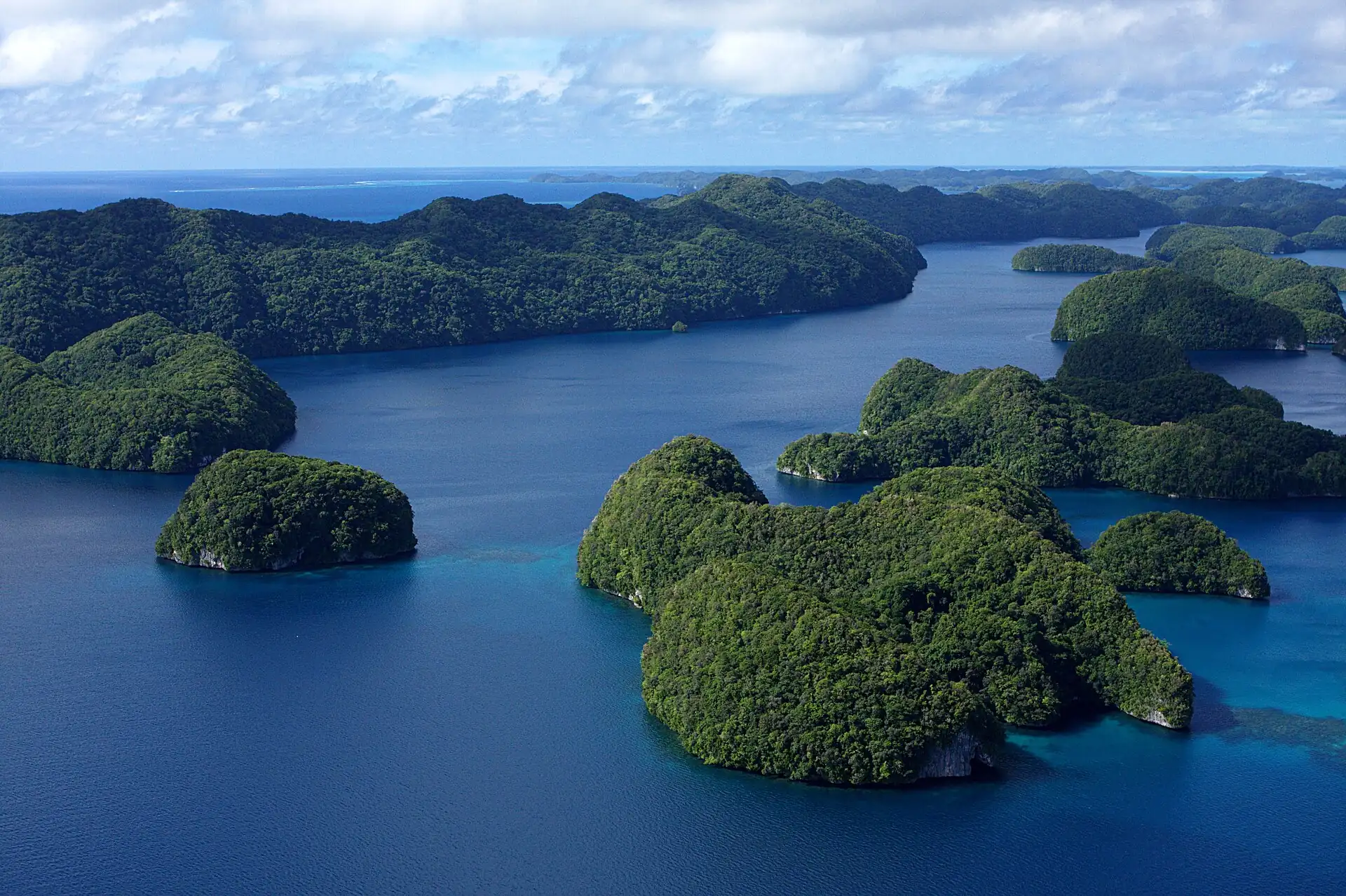
Koror
Code PL · 4 walking zones
Koror is a base, not a destination: the good days are on the water. Sleep here, book your boat and dive days first, use the town for a museum morning and an evening meal, and keep the last 24 hours before a flight free of diving.
Our quick read of Koror, scored 1–5 (friction is out of 100). Cash need: how often you still need notes. Heat risk: how hot days get. Stroller: how easy wheels are. Friction: overall effort for a first visit. Desk judgements, so check before relying on them.
- Local time
- --:--
- Weather
- forecast below
- Currency
- USD
- Best months
- Jan · Feb · Mar · Apr · Nov · Dec
- Airport
- Roman Tmetuchl (ROR)
Walking zones: the 4 areas this guide plans a day around. Each is a district you can cover on foot, so you do one zone per half-day and ride the train between them. The code (PL 01, PL 02…) is just the zone's number on the Koror line; the line under each name says how bags fare there and how much time it needs.
Map of Koror
Use the switches to show or hide each kind of pin. A switch that is on shows its pins on the map; tap it again to hide them. "Show only" keeps just the pins that match (for example, places that fit a suitcase). Tap any pin for its name and a link to its page.
- Where to sleep
- Places
- Eat
- Walking clusters
- Rest stops
From the airport Roman Tmetuchl (ROR) to your bed
Tap a pin for its card. Places without their own coordinates are shown by their walking cluster.
Why Koror
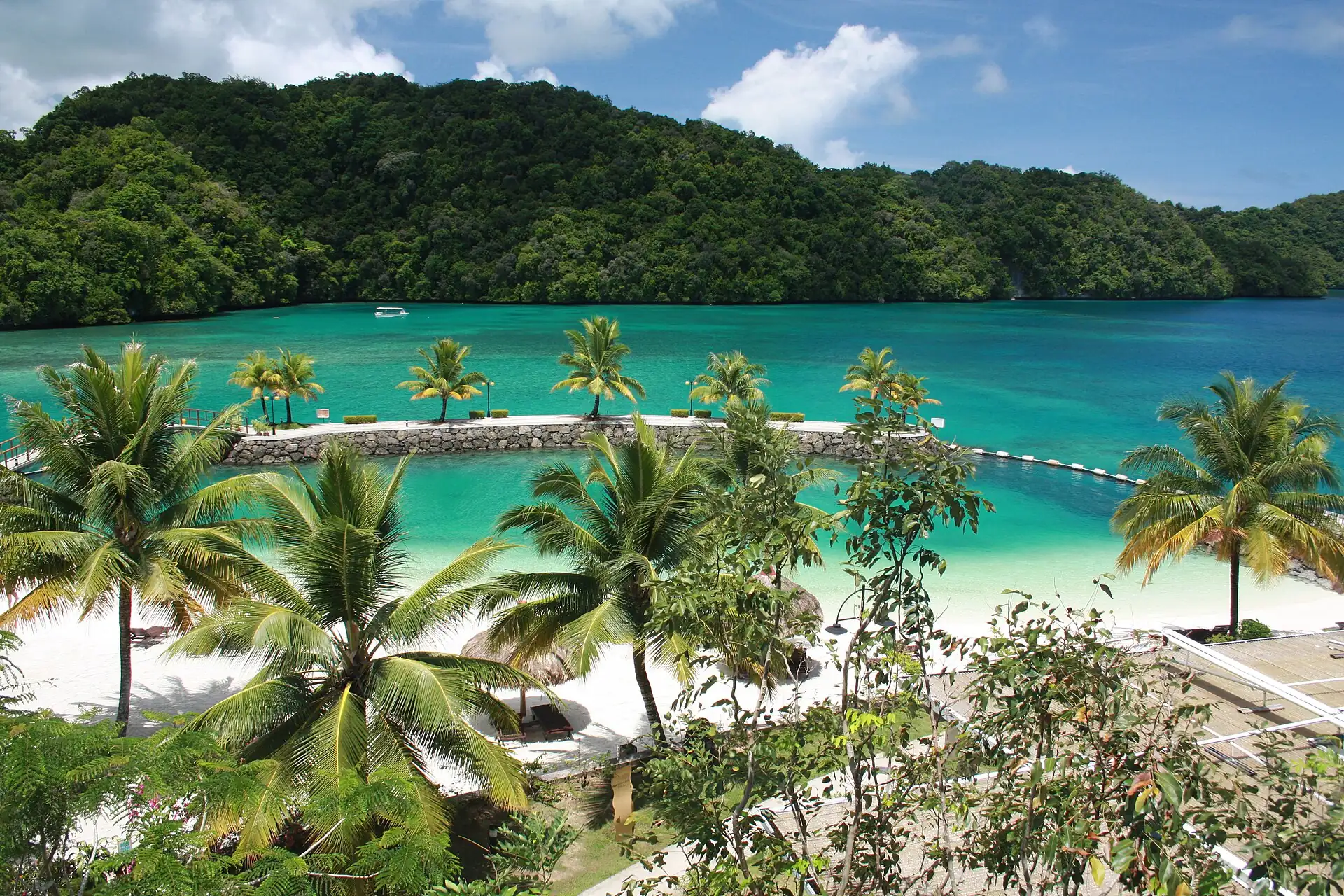
Koror is a small island town linked by bridge to the mainland. The Rock Islands, the dive walls and Jellyfish Lake (when open) are all reached by boat from the Malakal docks, so the trips that go wrong are the ones without a booked boat, a permit or a spare day. Four short clusters cover the town; a taxi or your hotel's shuttle joins them.
See first
- 1Rock Islands boat day · Full day
- 2A dive day at Blue Corner or German Channel · Full day
- 3Jellyfish Lake, when open · Half day
- 4
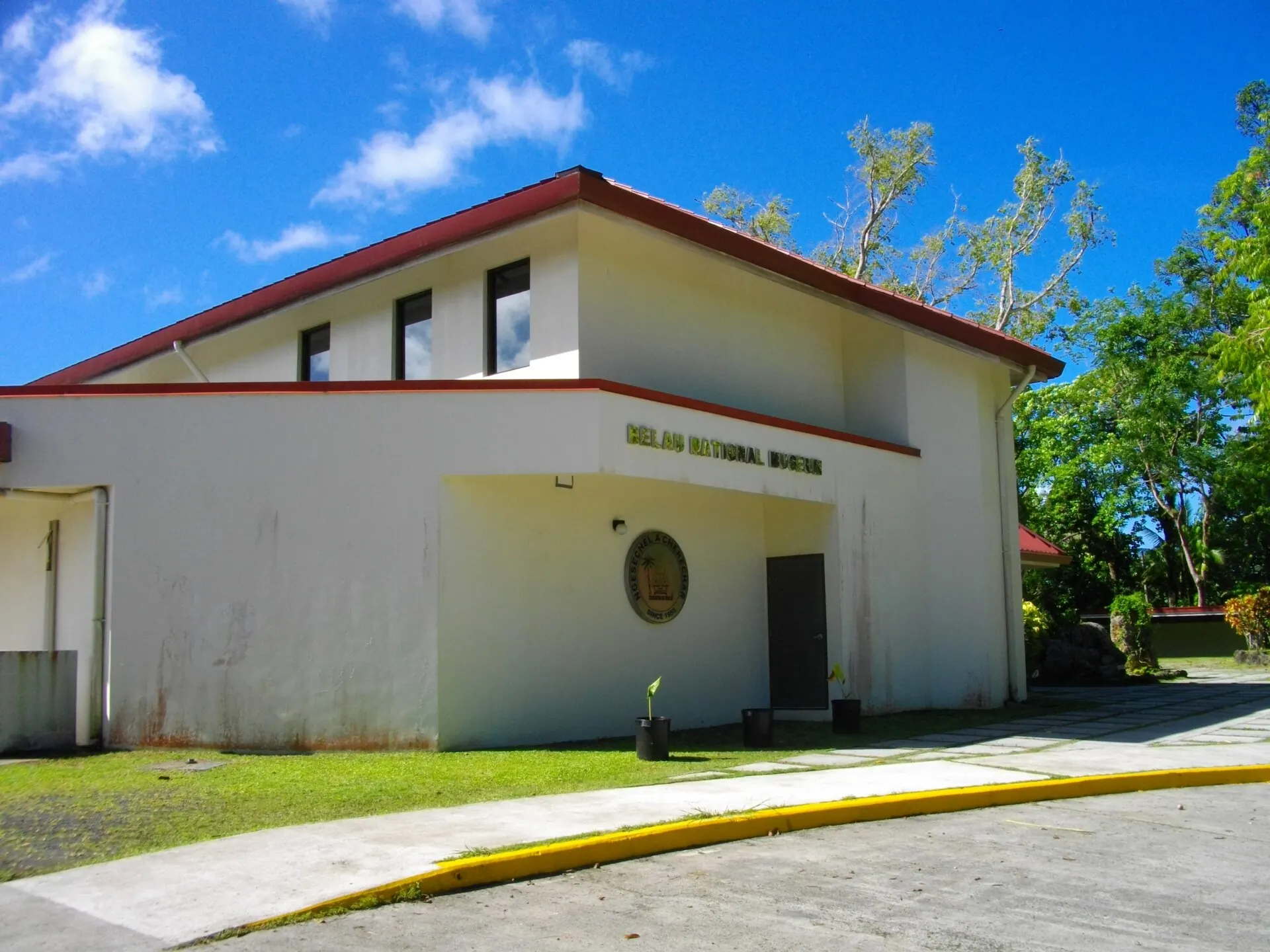 Belau National Museum · 1.5 h
- 5
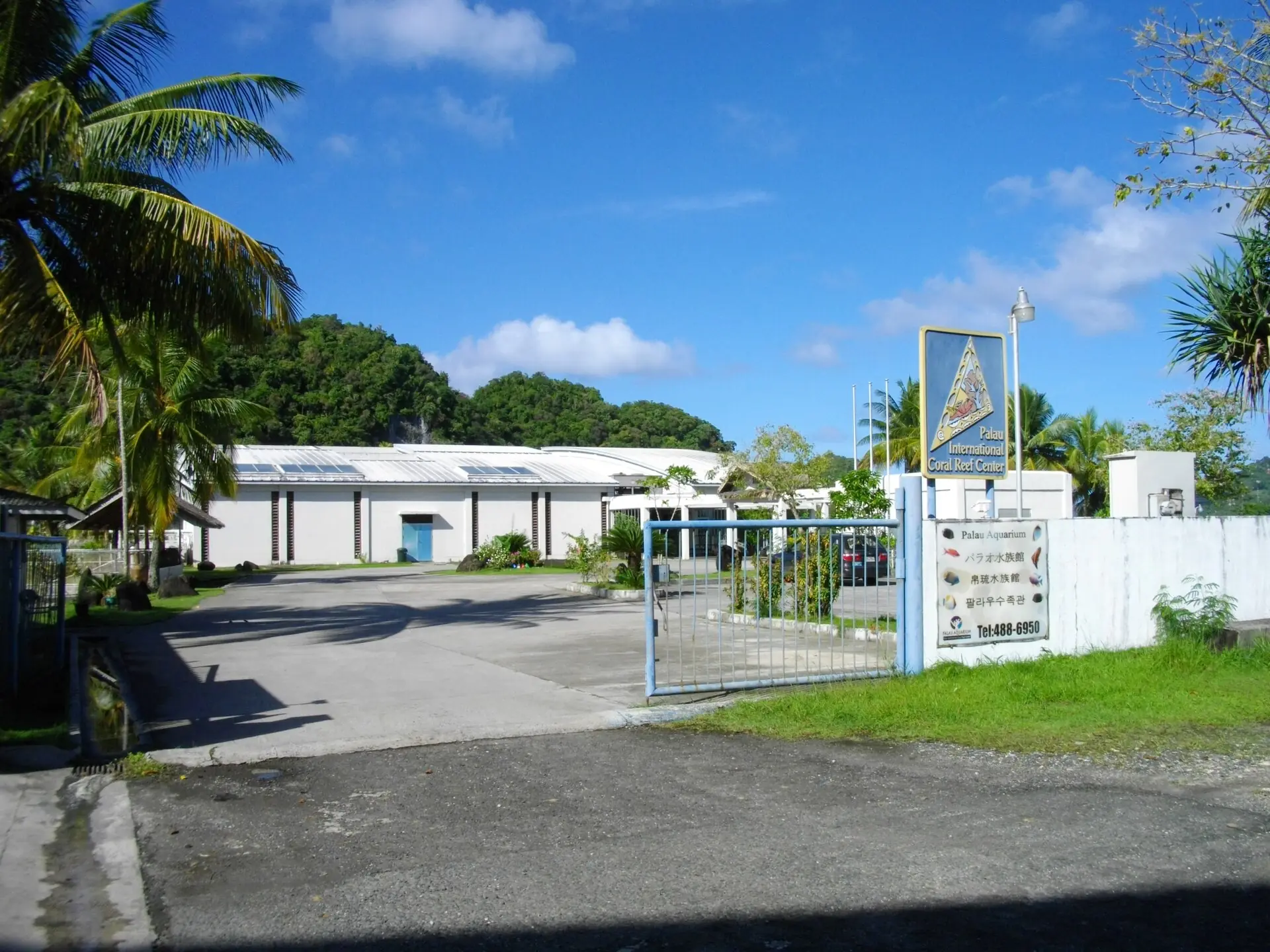 Palau International Coral Reef Center · 1 h
Fits
- Divers and snorkellers
- Boat-day trips
- Short island stays
Does not fit
- Travellers who will not book boats or a car
- Nightlife trips
- Budget-only trips (prices are US-level)
How long
- 2 daysOne boat day + a museum morning
- 3 daysMuseum morning, Rock Islands boat day, town evening
- 5 daysThree days here + a second boat or dive day + a Babeldaob car day
Good for
- First timers
- Foodies
- Budget
- Couples
- Families
- Luxury
About Koror
Palau is an archipelago of more than 300 islands in the western Pacific, about 800 km east of the Philippines. Its people have lived here for roughly three thousand years, organised in villages and clans, with chiefs, titles and a system of matrilineal descent that still shapes family and land. Koror, the main town, sits on a small island joined by bridge to Babeldaob, the largest of the islands, where the airport and the capital are.
Good to know
- Koror is the main town on its own small island; the capital Ngerulmud and the airport are on Babeldaob, across the bridge.
- The Palau Visitors Authority runs the official tourism information; ask your hotel where to pick up maps and where to buy the Rock Islands permit.
- Dive shops and licensed boat operators are the practical first stop for booking Rock Islands trips.
Go deeper 11 min read · 6 chapters
Koror is a small, low-key town that most visitors treat as a base, but it has a story that explains the islands around it: a long Palauan tradition of clans, chiefs and stories carved in wood; a Japanese colonial capital with tens of thousands of residents; a wartime battlefield next door; and, now, a country that has turned reef protection into national policy. This deep dive follows how Palauan society is organised, how Koror became a colonial capital, what the war left, what the Rock Islands are and why they are protected, and what is on the plate. Use it to plan a visit that fits the place.
1History2 min
The first settlers reached Palau roughly three thousand years ago and built villages on the larger islands and on the limestone Rock Islands. Over centuries they developed a society of villages and clans linked by titles, obligations and a system of money made of beads and pottery. Descent runs through the mother's line, and women hold significant authority over land and titles, which still shapes family life. Villages were led by chiefs, and their meeting houses, the bai, decorated with painted and carved stories, were the centres of community life.
European contact was slow. British traders arrived in the 18th century, and in 1783 a British ship, the Antelope, was wrecked on a reef, an event that led to a famous friendship between its crew and a Koror chief. Spain claimed the Carolines in 1885, after an arbitration by the Pope between Spain and Germany, and Germany bought the islands from Spain in 1899. Under both, Palau was a distant possession with little investment.
Japan took over in 1914 and transformed the islands. Under a League of Nations mandate, Koror became the administrative centre of the Japanese South Seas Mandate, and Japan built roads, wharves, a hospital, schools and shops. Tens of thousands of Japanese and Okinawan settlers arrived, farming, fishing and trading, and at its peak Koror was a bustling town with a population several times the Palauan population. Many older Palauans still have Japanese names, speak some Japanese, and remember the era in a mix of admiration and hardship.
The Second World War brought destruction. In September 1944 US forces landed on Peleliu, and after weeks of fierce fighting in which thousands of soldiers died, the island was taken. Koror was bombed and the Japanese population was repatriated. After the war the United States administered Palau as a Trust Territory, and Palau became independent on 1 October 1994 under a Compact of Free Association with the United States. The national capital moved from Koror to a new site at Ngerulmud, in Melekeok on Babeldaob, in 2006.
- First settlement
- About 3,000 years ago
- Japanese administration
- 1914–1945
- Battle of Peleliu
- September–November 1944
- Independence
- 1 October 1994
- Capital moved from Koror
- 2006, to Ngerulmud
2Clans, chiefs and storyboards2 min
Palauan society is built on clans and titles. Every person belongs to a clan through the mother, and each village has a ranked structure of chiefs, with a paramount chief at the top. Land, titles and obligations are inherited through the clan, and a group of senior women, the ourrot, hold important powers, including the right to name and remove chiefs. This is not a folk tradition but a working system that shapes politics, property and marriage, and it is why sites, beaches and lagoons often belong to specific villages or clans.
The bai is the most striking expression of the tradition. This is a traditional meeting house with a steeply pitched thatched roof and a facade of painted and carved beams that show stories, legends and morals. Only men traditionally met in the bai; today it is used for ceremonies, and some are built or restored as cultural centres. The Belau National Museum has one in its grounds, and the oldest surviving bai, at Airai on Babeldaob, is a common stop on a car tour. Ask before entering any bai; some are still used for ceremonies.
Storyboards, carved wooden panels that tell a story in pictures, are the craft that grew from the bai's painted beams. In the 1930s, a Palauan carver was asked by a Japanese anthropologist to reproduce the pictures on a smaller board, and the form took off as an art and a souvenir. A good storyboard is signed, shows a named legend, and is carved from local wood. They are on sale in craft shops and museum shops, and the carvers are proud to explain what each scene shows.
Traditional money, known as udoud, is made of glass and ceramic beads whose value depends on their age and origin, and it is still used for ceremonies and compensation. You will not spend it, but you may see it in a museum, and it is a good way to learn how obligations are counted in Palau.
- Descent
- Through the mother's line
- Meeting house
- The bai
- Craft
- Storyboards
- Traditional money
- Udoud (beads)
3Koror under Japan2 min
For thirty years Koror was the capital of Japan's Pacific empire, and the town looked it. Japan built a grid of streets with shops, a hospital, a school, a fish market and public offices, and the population grew to tens of thousands, most of them Japanese and Okinawan. Koror had cinemas, restaurants, bars and a busy port, and it was a stop for Japanese scientists, artists and writers who came to study or draw the Pacific.
The legacy is still visible if you know where to look. A few concrete buildings from the period survive, some scarred by the war. Palauans of an older generation speak Japanese and eat Japanese-style food, and many family names are Japanese. Sashimi, noodles and rice are part of daily eating, and Japanese is still the most widely spoken foreign language after English. Many Japanese visitors come to Palau to visit relatives' places, to dive, and to visit war memorials.
The most vivid trace is on the islands themselves. Rusting tanks, caves and bunkers on Peleliu and Angaur, and wrecks in the lagoon, reflect the fighting of 1944, and the wrecks are now dive sites and home to marine life. The Peleliu memorials to the Japanese and American dead sit in jungle on a quiet island, and a visit is best done with a guide who can explain the battle and the ground.
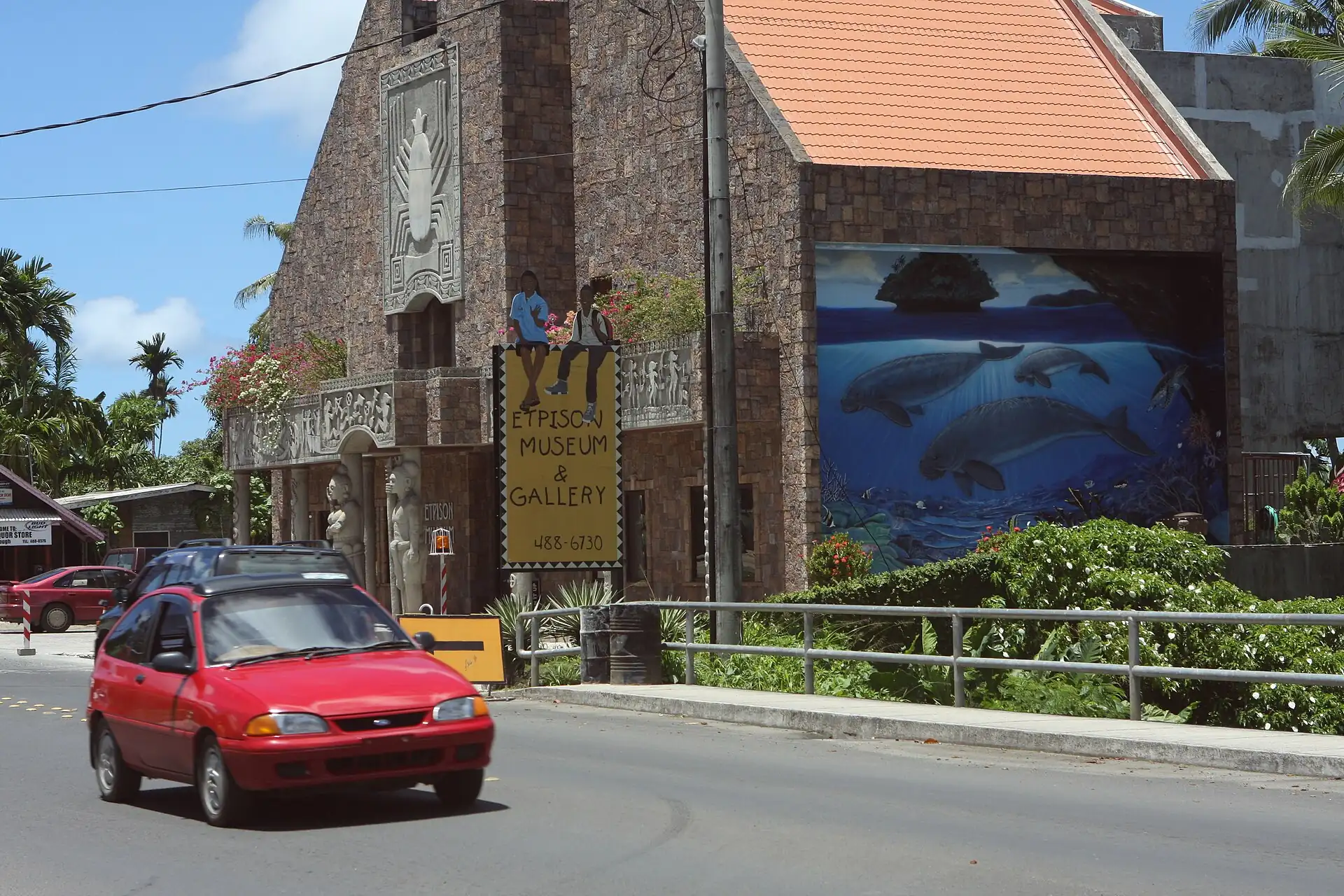
The Etpison Museum in downtown Koror collects objects and stories from this period and from earlier, in a compact space. It is a small stop, but it pairs well with the Belau National Museum, and a short conversation with staff often adds detail you will not find on a label. For a deeper look, ask your operator about a Peleliu day trip with a guide.
Whatever you see, treat the war sites with respect: they are graves and memorials for people from several nations, and Palauan communities were caught in the fighting too. Stay on marked paths, do not remove objects, and ask your guide before photographing memorials or human remains.
- Capital of the Japanese South Seas Mandate
- Koror
- Peleliu landing
- September 1944
- Widely spoken foreign language
- Japanese (after English)
- Kitchen legacy
- Sashimi, noodles and rice
4The Rock Islands and the protected lagoon2 min
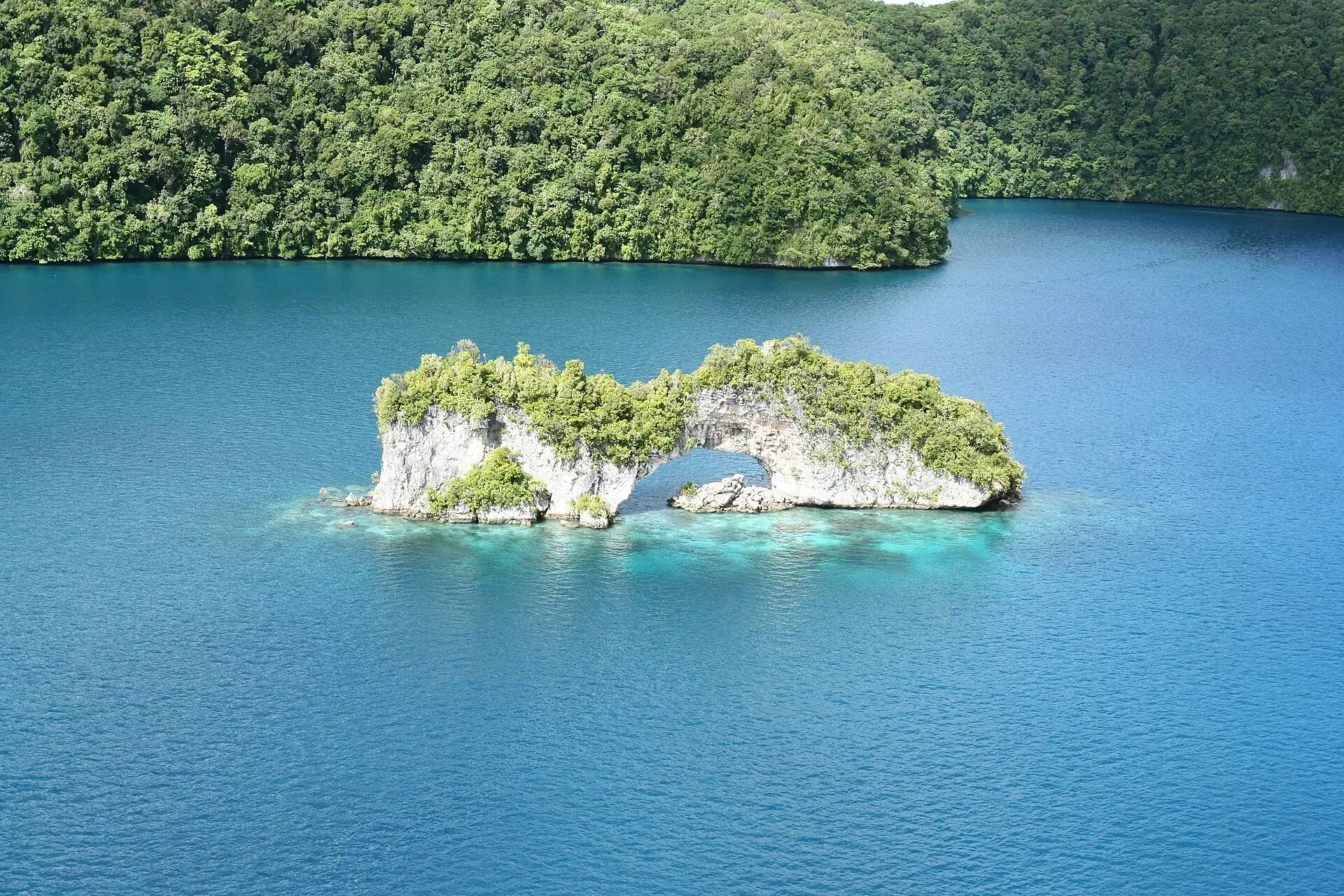
The Rock Islands are more than three hundred small limestone islands south of Koror, uplifted from an ancient reef and eroded by the sea into mushroom shapes. Most are covered in dense green forest that grows straight from the rock, and at low water their undercut bases show a thin, dark line where the sea has eaten in. They are uninhabited, and the lagoon around them is a set of channels, sandbars, coral gardens and sheltered bays, with clear water in the dry season.
The lagoon is protected. The Rock Islands Southern Lagoon was inscribed on the UNESCO World Heritage List in 2012 for both its natural values, including the reef, marine lakes and endemic species, and its cultural remains, including old village sites, stone monuments and burial caves. The islands are also home to marine lakes, isolated saltwater lakes connected to the sea through cracks in the limestone. The most famous, Jellyfish Lake on Eil Malk, holds millions of golden jellyfish that have lost most of their sting, and visitors can snorkel among them when it is open. Jellyfish numbers rise and fall, and the lake has closed in dry years, so ask your operator before you plan around it.
Palau has made protection part of its national identity. It created the world's first national shark sanctuary in 2009, banned reef-toxic sunscreen, and in 2017 introduced the Palau Pledge, a promise stamped into every visitor's passport to treat the islands with care. In 2020, it set aside most of its ocean as a marine sanctuary closed to commercial fishing. The Rock Islands permit you buy is part of the same system: the fee funds ranger patrols and management by Koror State.
For a visitor, the practical advice is simple. Use an established operator, follow the guide's briefing, wear a rash vest and use only reef-safe sunscreen. Do not touch or stand on coral, feed fish, or take shells. Bring your own water and a small dry bag. If you dive, carry your certification and logbook, and keep the last 24 hours before a flight free of diving.
- Rock Islands
- More than 300 limestone islands
- UNESCO listing
- 2012 (mixed site)
- First national shark sanctuary
- 2009
- Palau Pledge
- Since 2017
5Diving, currents and what to expect2 min
Palau is one of the world's top dive destinations, and the reason is the mix of walls, channels and currents that bring big fish close. Blue Corner is a reef wall where divers hook in and watch sharks, barracuda and other big fish ride the current. German Channel, a cut through the reef, is known for manta rays that clean at set stations in the dry season. Ulong Channel, Chandelier Cave and the wrecks of Japanese ships add variety, and there are gentler sites for new divers in the sheltered lagoons.
The currents are the main risk. Palau's famed sites are drift or current dives where conditions change with the tide, and a dive that is a pleasant float on one day is a hard fight on another. Established operators plan around the tide, brief carefully, and use reef hooks and surface markers. Follow the briefing, ask about the current, and turn back if you feel uncomfortable. Diving is safe with care, but accidents have happened.
The season matters. The calmest seas and best visibility are usually from about November to May, with the busiest boats in February to April. In the wetter months some outer sites are rough or closed, and boats cancel more often. Book with an operator who has a clear weather policy and a spare day built in.
The last rule is about the flight. Do not dive for at least 24 hours before flying, because nitrogen in the blood expands at altitude. Koror has a hyperbaric chamber for diving injuries, but the aim is never to need it. If you do not dive, snorkelling and kayaking give a fine taste of the lagoon, and a boat day with a sandbar lunch is enough for many people.
Bring less than you think you need onto the boat, but do pack the basics: a rash vest, reef-safe sunscreen, a hat, a towel, a change of dry clothes and any seasickness medication. Eat a light breakfast, drink water before you go, and tell the crew about any medical condition. On the first morning, choose the easiest dive site your operator offers, even if you are experienced, so that you get used to the current and the local routines.
- Famous wall dive
- Blue Corner
- Manta cleaning cut
- German Channel
- Calmest season
- About November to May
- Before a flight
- No diving for 24 hours
6What is on the plate2 min
Palauan cooking centres on the sea and the garden. Reef and lagoon fish are grilled, fried or boiled, and served with taro, the starchy root known as kukau, and tapioca, the local word for cassava. Coconut appears as milk, cream and oil, and fruit such as papaya, banana and pineapple is sold in season. Tuna and other pelagic fish are eaten raw as sashimi, a Japanese legacy that is now part of Palauan eating.
Older traditions include foods for feasts. At a celebration, families prepare large quantities of taro, fish, pork and fruit, and pass them through the clan, and the size of a feast shows the standing of the family. Some traditional foods, such as certain reef creatures and coconut crab, are protected or seasonal today, so ask before ordering and follow local rules. Fruit bat soup, once a delicacy, is a sensitive subject given the conservation status of bats, and it is not a dish visitors need to seek out.
Modern Koror has a mix of restaurants. Japanese and Korean places sit beside Filipino canteens, Chinese restaurants and cafes serving American-style breakfasts. Prices are US-level or higher because almost everything is imported. A local plate lunch is the best value, and a sashimi dinner is the best splurge. Dive boats usually provide a picnic lunch on a beach or sandbar, and the food is simple: grilled fish or chicken, rice, fruit and water.
Kitchens close early, often by 21:00, and small places close on Sundays. Eat early, book dinner in the high season, and carry small US bills for small eateries. Tap water in Koror is treated, but many visitors prefer bottled water. If you are diving, keep hydrated and avoid heavy meals before a dive.
When you are invited to a Palauan home or a village event, arrive on time, bring a small gift of fruit or something from the shop, and let the elders and hosts begin. Accept what is offered, take small helpings of everything, and do not photograph the food or guests without asking. Leaving some food on the plate is polite, and thanking the cook with 'sulang' is always welcome.
- Starchy staples
- Taro (kukau) and tapioca
- Japanese legacy
- Sashimi and noodles
- Kitchen hours
- Often close by 21:00Often close by 9:00 PM
- Currency
- US dollar
Read, watch, wordsGlossary · Sources
Glossary
| Term | Local | Meaning |
|---|---|---|
| Bai | Bai | A traditional meeting house with a painted and carved facade. |
| Storyboard | Storyboard | A carved wooden panel that tells a Palauan story. |
| Kukau | Kukau | Taro, a starchy root eaten boiled or pounded. |
| Udoud | Udoud | Traditional bead money. |
| Alii | Alii | Hello. |
| Sulang | Sulang | Thank you. |
| Palau Pledge | Palau Pledge | The promise stamped in every visitor's passport to act with care toward the islands. |
| Rock Islands | Rock Islands | Limestone islands south of Koror, a UNESCO World Heritage site. |
Read for this deep dive
Background reading only: the text above is written by Voykit, not copied from these pages.
Rules in force · 8
- Oceania ↗Oceania's island states guard their farms and reefs at the border: tick 'yes' on the arrival card for any food, plant, animal product, soil or used outdoor gear, and let the officer decide.
- Oceania ↗Across the tropical South Pacific, cyclones are possible from November to April: choose insurance that covers weather delays and keep one spare night before a long-haul departure.
- Micronesia ↗Micronesia runs on a handful of weekly flights, so one cancellation can cost several days: build slack into every connection between islands.
- Palau ↗Entry rules are Palau's own, not US rules: check the Palau Bureau of Immigration or a Palau embassy for your passport before booking.
- Palau ↗You sign the Palau Pledge (a promise to protect the environment) in your passport on arrival; the pledge is enforced by law.
- Palau ↗Reef-toxic sunscreens are banned and can be confiscated: bring reef-safe sunscreen and a rash vest.
- Palau ↗The Rock Islands Southern Lagoon needs a permit (sold by tour operators); Jellyfish Lake opens or closes depending on jellyfish numbers.
- Koror and the Rock Islands ↗The Rock Islands Southern Lagoon needs a permit, usually sold by your tour operator; book operator and permit before you fly.
Entry rules depend on your passport. Full visa guide
Emergency numbers for Kororopen ▾
- Emergency911 (confirm with your hotel)
- Hotel front deskSave on arrival
- Your embassyWrite the 24-hour line here before you go
- Insurer or dive-accident lineSave before you fly
Tap a number to call from your phone. These are the numbers listed in this guide; a row marked check has not been verified.
Planning is the full guide. I'm here keeps what is open and the cheat card.
Right now
Checking the weather…
Working out what is open near you…
What is open nowclock, closures, places open
Now in Koror
Local time in Koror
--:--
Loads in your browser · Pacific/Palau
This month
Month verdict appears here.
Closed today
See the weekly grid below.
If today is a closure day: Book the Rock Islands boat day and any dive days first, buy the permits through your operator, and keep the day before a flight free of diving.
Weekly closures come from our place pages; public holidays, weather and permit rules can add closures not shown here. Ask your operator about the sea forecast and the permit status.
Cheat cardthe pocket version
Cheat card
The essentials on one card: save it as an image for your phone, share it, or print it.
Koror
- Money
- Cards work at hotels and dive shops.
- SIM
- Buy a SIM at a local carrier's shop with your passport; coverage is good in Koror and thins out on the Rock Islands.
- Emergency
- 911 (confirm with your hotel) emergency · Save on arrival Hotel front desk · Write the 24-hour line here before you go Your embassy (not 911, 999 or 000)
- Plugs
- Sockets A/B. US/Canada (A/B): fits · UK/Ireland (G): adapter · Australia/NZ (I): adapter. 120 V: UK and AU 230 V-only devices need a converter; most chargers are dual-voltage.
Top 5
- Rock Islands boat day
- A dive day at Blue Corner or German Channel
- Jellyfish Lake, when open
- Belau National Museum
- Palau International Coral Reef Center
EssentialsQuick answers, what things cost and how to get around
Essentials
Quick answers, what things cost and how to get around
Quick answers
The questions people ask first about Koror, one line each. Tap a card for the full answer.
- Cash or card?US dollars.
- Cash & ATMsCards work at hotels and dive shops.
- SIM or eSIMBuy a SIM at a local carrier's shop with your passport; coverage is good in Koror and thins out on the Rock Islands.
- Tap waterTap water is treated in Koror, but many visitors drink bottled water; ask your hotel.
- TippingNot expected, though 10–15% in sit-down restaurants and a tip for a boat crew or guide after a good day are common.
- Plugs & powerSockets A/B. US/Canada (A/B): fits · UK/Ireland (G): adapter · Australia/NZ (I): adapter. 120 V: UK and AU 230 V-only devices need a converter; most chargers are dual-voltage.
Show all 14 answers
- Safe at night?Take more care after dark in Downtown Koror, Belau National Museum area, Culture centre and reef centre and more.
- What to wearCover swimwear in town and villages; swimwear stays on boats and beaches.
- RestroomsHotels, cafes, shops and the museums; carry small bills and wet wipes for boats and beaches.
- Emergency numbers911 (confirm with your hotel) emergency · Save on arrival Hotel front desk · Write the 24-hour line here before you go Your embassy (not 911, 999 or 000)
- Your embassycheckUS, Australia embassies listed with addresses (check before you go).
- Sundays & holidaysShops open about 08:00–18:00, with short hours on Sunday; restaurants fill 18:00–20:00 and many kitchens close by 21:00.Shops open about 8:00 AM–6:00 PM, with short hours on Sunday; restaurants fill 6:00 PM–8:00 PM and many kitchens close by 9:00 PM.
- Rainy-day planShowers come at any time and pass quickly: keep a rain jacket and a dry bag, and plan an indoor stop for the heaviest downpours.
- Landing lateROR: pre-booked hotel shuttle or airport taxi to the door runs all night.
Cost cheat-sheetwhat everyday things cost
Cost cheat-sheet
Typical prices for the everyday things, as ranges. Change the currency right here; the local price stays first.
2026 desk estimate · check
- CoffeeCoffee (cafe or hotel)US$3–6
- Sit-down mealPlate lunch at a local eateryUS$8–16
- BeerLocal beer, bar or restaurantUS$4–7
- Taxi, about 5 km (3 mi)Taxi, about 3 mi (5 km)Taxi across KororAgree first.US$5–12
- SIM or eSIM, a weekLocal SIM, about a weekUS$15–30
- Museum or sight ticketMuseum entryUS$5–20
- Budget bedFamily room or suite (up to 4), a night, per roomUS$150
- Mid-range bedHotel double room, a night, per roomUS$180
- High-end bedHotel double room, a night, per roomUS$320
A day, not counting the bed: Budget US$100 · Mid US$190 · High US$350
Prices in local money; change the currency in the header to see yours next to them. Every price and the budget calculator →
Source: Prices in Koror
Draft
Written from desk research. Not yet compared with the official source.
No official source is recorded for this figure.
Prices are 2026 desk estimates, not yet compared with an official source. Check on the day.
Not checked in the last 12 months (no check date on file).
DecideWho it suits, the trade-offs and when to go
Decide
Who it suits, the trade-offs and when to go
Best months at a glance
The guide's verdict for each month
Jan
Best
30°C (86°F)86°F (30°C)
Feb
Best
30°C (86°F)86°F (30°C)
Mar
Best
30°C (86°F)86°F (30°C)
Apr
Best
31°C (88°F)88°F (31°C)
May
Care
31°C (88°F)88°F (31°C)
Jun
Care
31°C (88°F)88°F (31°C)
Jul
Care
30°C (86°F)86°F (30°C)
Aug
Care
30°C (86°F)86°F (30°C)
Sep
Care
30°C (86°F)86°F (30°C)
Oct
Care
30°C (86°F)86°F (30°C)
Nov
Best
30°C (86°F)86°F (30°C)
Dec
Best
30°C (86°F)86°F (30°C)
Best: Nov–Apr. Mixed: May–Oct. Month by month →
Warmest Apr (31°C (88°F)88°F (31°C)), coolest Jan (25°C (77°F)77°F (25°C) low), wettest Jul (22 rain days), driest Feb (13). Averages, not a forecast.
Koror across the year
Best-looking months for Koror: Feb, Mar, Apr.
| Measure | Jan | Feb | Mar | Apr | May | Jun | Jul | Aug | Sep | Oct | Nov | Dec |
|---|---|---|---|---|---|---|---|---|---|---|---|---|
| Weather | Good (good) | Great (good) | Great (good) | Great (good) | Mixed (care) | Mixed (care) | Mixed (care) | Mixed (care) | Mixed (care) | Mixed (care) | Good (good) | Good (good) |
| Crowds | Medium (ok) | High (care) | Medium (ok) | Medium (ok) | High (care) | Low (good) | Medium (ok) | Medium (ok) | Low (good) | Low (good) | Low (good) | Medium (ok) |
| Prices | Medium (ok) | High (care) | Medium (ok) | Medium (ok) | High (care) | Low (good) | Medium (ok) | Medium (ok) | Low (good) | Low (good) | Medium (ok) | High (care) |
| Events | 1 event (care) | 2 events (care) | 3 events (ok) | 2 events (care) | 2 events (care) | None listed (ok) | 1 event (ok) | None listed (ok) | None listed (ok) | 1 event (ok) | 1 event (ok) | 1 event (ok) |
Green is good news, amber needs planning, red is a month to avoid; dashed grey with a question mark means our data does not say. Open the year heatmap →
Not checked in the last 12 months (no check date on file).
Source: Months, temperatures and crowds
Draft
Written from desk research. Not yet compared with the official source.
Monthly highs, rain and crowd levels are climate averages and desk estimates for the city, not a forecast.
Understand the cityUnderstand · Districts
Orientation & districts
Koror is a small island town about 5 km long. Downtown Koror, with the main street, shops, cafes and the Etpison Museum, is in the middle; the Belau National Museum is a short taxi ride east; the culture centre and coral reef centre are on the west side; Malakal harbour and the dive docks are on the southern tip. The airport is on Babeldaob, about 30–50 minutes away by car over the Japan–Palau Friendship Bridge.
Addresses are informal: give the driver the place name and a landmark such as the museum, the hospital or the dock.
Shaded shapes: walking areas (click one). Black pins: sleep areas. Grey dots: places. Round badges: arrivals. Click the map to turn on scroll-wheel zoom.
Hover, tap or tab to an area to see what it is like. Pins are sleep areas; arrows at the edge point to the airport.
Off the map: Roman Tmetuchl International Airport (ROR) (30–50 min by the usual route).
Not drawn yet (no coordinates in this guide): Airai and Babeldaob, Ngerulmud. They are in the neighbourhood cards below.
Where’s what, as a list:
- Downtown Koror: The main street, the Etpison Museum, supermarkets and most restaurants; flat and easy on foot in the evening. Suits: First stays, cafes, shops, an evening walk. Price band $$$.
- Belau National Museum area: The national museum, its grounds and a traditional meeting house; a short taxi ride from downtown. Suits: A morning of culture.
- Culture centre and reef centre: The Ngarachamayong Cultural Center and the coral reef centre on the west side; one taxi run covers both. Suits: A rainy-day or family morning.
- Malakal harbour: The docks where dive and Rock Islands boats load, with hotels and dive shops nearby. Suits: Divers, early boat departures. Price band $$.
- Airai and Babeldaob: The airport, the capital at Ngerulmud, waterfalls and monoliths; reached by bridge and car. Suits: The airport, a car day.
- Ngerulmud: The national capital in Melekeok on Babeldaob since 2006; a government complex on a hill, not a visitor site. Suits: A drive-by.
- Rock Islands Southern Lagoon: The limestone islands, lagoons and dive sites reached by boat from Malakal. Suits: Boat days.
- Sleep area Downtown Koror: suits First stays, cafes, shops, an evening walk, price band $$$.
- Sleep area Malakal: suits Divers, early boat departures, price band $$.
- Roman Tmetuchl International Airport (ROR), 30–50 min by the usual route.
Neighbourhoods at a glance
One tab per area, pulled together from this guide’s districts table, area notes, sleep-area scores and place pages. Scores are desk judgements (1–5); prices are estimates, check before you book.
Downtown Koror
$$$The main street, the Etpison Museum, supermarkets and most restaurants; flat and easy on foot in the evening.
- Suits:
- First stays, cafes, shops, an evening walk
- Best time:
- 07:00–20:007:00 AM–8:00 PM
- Rooms:
- US$80–130 (from the sleep guide)
Pick this if: Meals, errands, the museum
Watch out for: Expecting nightlife after 22:00.
- Quiet nights3/5 Medium
- Nightlife3/5 Medium
- Families3/5 Medium
- Late arrival3/5 Medium
Why these scores
- Quiet nights: Quiet at night; some road noise by day.
- Nightlife: A few bars and restaurants within walking distance.
- Families: Restaurants and shops close by; few playgrounds.
- Late arrival: Small hotels may have no night desk; confirm arrival.
Getting around from here
- Car or taxi: about 9 min to Ngarachamayong Culture Center & Coral Reef Center
- Car or taxi: about 8 min to Belau National Museum district
- Car or taxi: about 14 min to Malakal harbour & dive docks
Belau National Museum area
The national museum, its grounds and a traditional meeting house; a short taxi ride from downtown.
- Best time:
- Morning
Pick this if: A morning of culture
Watch out for: Midday sun.
Getting around from here
- Car or taxi: about 8 min to Downtown Koror
- Car or taxi: about 8 min to Ngarachamayong Culture Center & Coral Reef Center
- Car or taxi: about 12 min to Malakal harbour & dive docks
Culture centre and reef centre
The Ngarachamayong Cultural Center and the coral reef centre on the west side; one taxi run covers both.
- Suits:
- A rainy-day or family morning
- Best time:
- Morning
Pick this if: A rainy-day or family visit
Watch out for: Walking; take a taxi.
Getting around from here
- Car or taxi: about 9 min to Downtown Koror
- Car or taxi: about 8 min to Belau National Museum district
- Car or taxi: about 10 min to Malakal harbour & dive docks
Malakal harbour
$$The docks where dive and Rock Islands boats load, with hotels and dive shops nearby.
- Suits:
- Divers, early boat departures
- Best time:
- Early morning or late afternoon
- Rooms:
- US$130–230 (from the sleep guide)
Pick this if: Boat departures and sunset drinks
Watch out for: Standing in the loading area.
- Quiet nights4/5 High
- Nightlife3/5 Medium
- Families3/5 Medium
- Late arrival3/5 Medium
Why these scores
- Quiet nights: Harbour views and quiet at night.
- Nightlife: Bars and grills nearby, mostly for divers.
- Families: Space and views; few things to do on foot.
- Late arrival: Hotels near the docks keep staffed desks; confirm.
Getting around from here
- Car or taxi: about 14 min to Downtown Koror
- Car or taxi: about 10 min to Ngarachamayong Culture Center & Coral Reef Center
- Car or taxi: about 12 min to Belau National Museum district
Airai and Babeldaob
The airport, the capital at Ngerulmud, waterfalls and monoliths; reached by bridge and car.
- Suits:
- The airport, a car day
Ngerulmud
The national capital in Melekeok on Babeldaob since 2006; a government complex on a hill, not a visitor site.
- Suits:
- A drive-by
Rock Islands Southern Lagoon
The limestone islands, lagoons and dive sites reached by boat from Malakal.
- Suits:
- Boat days
- Best time:
- Early morning or late afternoon
Pick this if: Boat departures and sunset drinks
Watch out for: Standing in the loading area.
Getting around from here
- Car or taxi: about 14 min to Downtown Koror
- Car or taxi: about 10 min to Ngarachamayong Culture Center & Coral Reef Center
- Car or taxi: about 12 min to Belau National Museum district
Decide
The honest trade-off: what you will enjoy, what will wear you down.
You will like
- Diving and snorkelling
- Boat days
- Quiet evenings
You will hate
- Heat
- Booking boats in advance
- No public transport plan
Similar citiesif this one is not quite right
Similar cities
If Koror does not fit your dates or budget, these match it on season, cost and feel.
- Garapan (Saipan)
Northern Mariana Islands
- Good in the same months: Jan, Feb, Mar, Apr, Dec
- A mid-range day costs about the same (≈US$170 vs US$190, excl. bed)
- Works well for first-timers, couples, families
- A similar climate through the year
- Marigot
Saint-Martin
- Good in the same months: Jan, Feb, Mar, Apr, Dec
- A mid-range day costs about the same (≈US$163 vs US$190, excl. bed)
- Works well for first-timers, families
- A similar climate through the year
- George Town, Grand Cayman
Cayman Islands
- Good in the same months: Jan, Feb, Mar, Apr, Dec
- Works well for first-timers, couples, families
- A similar climate through the year
When
Best months: Jan, Feb, Mar, Apr, Nov, Dec. Month-by-month verdicts below, with the live forecast first. When to go, month by month →
Koror: next 7 days
Loading forecast…
Forecast: Open-Meteo (CC BY 4.0), model data for this point.
Air quality
Loading…
Model estimate (CAMS via Open-Meteo), not a street-level station; readings near busy roads run higher.
Month by month, all 12best Jan, Feb, Mar, Apr, Nov, Dec
Drier and calmer; good visibility.
Dry season; calm seas.
Dry season; calm seas.
Still drier; heat builds.
Rain increases; some showers every day.
Wetter; boats can be rough.
Wet season; heavy showers.
Wet season; rough days for boats.
Wet; Independence Day on Oct 1 closes offices.
Wet; Oct 1 is a public holiday.
Rain easing; good diving returns.
Drier; busy around Christmas and New Year.
Climate, calendar and eventsClimate · Calendar · Events · Packing by season
Climate
| Jan | Feb | Mar | Apr | May | Jun | Jul | Aug | Sep | Oct | Nov | Dec | |
|---|---|---|---|---|---|---|---|---|---|---|---|---|
| High | 30°C (86°F)86°F (30°C) | 30°C (86°F)86°F (30°C) | 30°C (86°F)86°F (30°C) | 31°C (88°F)88°F (31°C) | 31°C (88°F)88°F (31°C) | 31°C (88°F)88°F (31°C) | 30°C (86°F)86°F (30°C) | 30°C (86°F)86°F (30°C) | 30°C (86°F)86°F (30°C) | 30°C (86°F)86°F (30°C) | 30°C (86°F)86°F (30°C) | 30°C (86°F)86°F (30°C) |
| Low | 25°C (77°F)77°F (25°C) | 25°C (77°F)77°F (25°C) | 25°C (77°F)77°F (25°C) | 25°C (77°F)77°F (25°C) | 25°C (77°F)77°F (25°C) | 25°C (77°F)77°F (25°C) | 25°C (77°F)77°F (25°C) | 25°C (77°F)77°F (25°C) | 25°C (77°F)77°F (25°C) | 25°C (77°F)77°F (25°C) | 25°C (77°F)77°F (25°C) | 25°C (77°F)77°F (25°C) |
| Rain days | 17 | 13 | 14 | 14 | 18 | 20 | 22 | 21 | 20 | 20 | 18 | 19 |
| Verdict |
- It is hot and humid all year; the difference is between a drier season from about February to April and a wetter one from about June to October.
- The dry months bring the calmest seas and the best visibility; the wetter months bring rougher boat days and more cancellations, especially in the outer sites.
- Palau lies south of the usual typhoon belt but is occasionally affected by storms, mainly from July to November; ask your operator about the forecast.
Events by month
Dry-season peak
Feb–Apr · Rock Islands and dive sites
Calmest seas and busiest boats; book early.
Youth Day (check)
Check · Citywide
Some offices close.
Senior Citizens' Day (check)
Check · Citywide
Some events and closures.
Constitution Day
9 July · Citywide
Public holiday; offices and shops close.
Independence Day
1 October · Citywide
Public holiday; parades and closures.
Thanksgiving
Fourth Thursday · Citywide
Some businesses close.
Christmas and New Year
25 December · Citywide
Peak travel season; book early.
Festivals and events that change the plan
| When | What | Effect on your plan |
|---|---|---|
| Oct 1 | Independence Day | Public holiday; parades, offices closed, and some restaurants and dive shops shorten hours. |
| Nov (fourth Thursday) | Thanksgiving | US holiday observed in Palau; some businesses close. |
| Mar | Youth Day and other local days (check) | Some offices close; check with your hotel. |
| Jul 9 | Constitution Day | Public holiday; offices and many shops close. |
| Dec 25 | Christmas and New Year | Peak travel and dive season; book boats and rooms ahead. |
| Feb–Apr | Dry-season peak | The calmest seas and busiest boats; book operators early. |
What to pack, by season
From Koror’s own climate table: the coldest, warmest and wettest three months, and what to bring for each.
Coldest months
Jan–Mar
25° to 30°
Light layers; evenings can still feel cool.
Warmest months
Apr–Jun
25° to 31°
Light, breathable clothes, a sun hat and sunscreen; plan midday indoors and carry water.
Wettest months
Jun–Aug
21 rain days a month
A compact umbrella or rain jacket and shoes that can get wet.
Arrive & moveGetting in, getting around, and your bags
Arrive & move
Getting in, getting around, and your bags
I land at…
Enter your landing time: what still runs from the airport, where you can eat when you get in, and which areas let you check in that late.
Roman Tmetuchl International Airport (ROR)
Out of the airport about 23:5511:55 PM (01:05 (next day)1:05 AM (next day) if immigration and bags are slow); in town about 00:25 (next day)12:25 AM (next day).
Transport from the airport
- Any hourPre-booked hotel shuttle or airport taxi to the door. Runs all night.
- Last resortOvernight near the airport. If nothing else works.
Places to eat open when you get in
We have no confirmed hours for the places to eat here yet. Plan on a convenience store or your hotel. What is open late →
Where to sleep with a late arrival
- Lets you inDowntown Koror 24-hour desk. Small hotels may have no night desk; confirm arrival.
- Call aheadMalakal Desk hours not confirmed: message the hotel with your flight number. Hotels near the docks keep staffed desks; confirm.
Typical times from our airport data, not a timetable: check the last departure on the day. Full airport-to-bed plan for Roman Tmetuchl International Airport (ROR) →
Arrive
Each gateway has its own airport-to-bed page with timings and the last safe connection.
Getting in, in detailGet in
Get in by rail and road
| Station | Mode | Serves | Where | To the centre |
|---|---|---|---|---|
| Roman Tmetuchl International AirportAirportuse | Air | Flights from Guam, Manila and regional hubs (check schedules) | Babeldaob, across the Japan–Palau Friendship Bridge | Taxi or shuttle 30–50 minFlights are few and can land late at night; book your airport car and hotel in advance. |
| Malakal harbourMalakaluse | boat | Dive and Rock Islands boats, some island transfers | South of Koror | Taxi 10–15 minThe starting point for every boat day. |
- There is no public bus network for visitors: taxis, hotel shuttles and rental cars are the way.
- Flights are infrequent and delays happen: leave a buffer day before a connection.
Move
The default way around, when a pass pays off, and when the last trains go.
- Default
- Walk inside a cluster in the morning or evening; a taxi or hotel shuttle between clusters.
- Passes
- No pass. Agree the taxi fare before you get in, or use your hotel's shuttle and the boat operator's pickup.
- Last trains
- No rail. Taxis are few late at night: ask the hotel to book the ride back before you go out.desk estimate
- Other modes
- Other modes (Rome2Rio) ↗
Getting around, in detailGet around · Connect
Get around
Walk inside a cluster in the morning or evening; take a taxi or hotel shuttle between clusters and to the docks and airport. There is no public bus or rail, and taxis are few late at night.
| Mode | Verdict | Fare | Use it for | What breaks |
|---|---|---|---|---|
| Walking | use | Free | Downtown Koror and the museum grounds | Patchy pavements and strong sun; carry water. |
| Taxi | use | US$5–12 in town | Between clusters, the docks, the airport | Agree the fare before you get in and carry small bills. |
| Hotel or dive-shop shuttle | use | Often free or small fee | The docks and the airport | Book ahead; ask your operator for pick-up. |
| Rental car | use | US$50–90 a day (check) | Babeldaob day trips | Drive on the right; roads are narrow and wet. |
| Boat with a licensed operator | use | US$120–200 per person for a day | Rock Islands, dive sites, Peleliu | Use an established operator with life jackets, a briefing and a weather plan. |
Taxis and ride-hailing
Street and hotel-booked taxis
street
Agree the fare and carry small bills; few late at night.
Hotel and dive-shop shuttles
private
The reliable option for the docks and the airport.
On foot and car-free hours
| Where | When | Note |
|---|---|---|
| Downtown main street | Morning or early evening | Flat and easy once the heat drops. |
| Museum grounds | Morning | Shaded paths and a traditional bai. |
More on getting around
Koror's roads are few and simple: a main road through the centre, a loop to the west and a road to the docks in the south. Drivers know the landmarks; give them the name of the hotel, museum or dock and a time to come back.
Boats leave early, so book a taxi or shuttle the night before and keep a spare pair of dry clothes in a dry bag.
Connect
| Option | Verdict | What breaks |
|---|---|---|
| Local carrier shop (check) | use | Bring your passport and an unlocked phone; ask about data plans for a week. |
| Hotel front desk | ok | Some hotels can help with a SIM. |
Google Maps
Rough orientation
Coverage is basic; confirm places with your hotel.
WhatsApp or Messenger
Operators and guides
Many operators use them; save numbers before you go.
- Wi-Fi
- Hotels and some cafes; speeds vary and it can be slow.
- Coverage
- Mobile coverage is good in Koror and thins out on the Rock Islands and Babeldaob.
Luggage
Where big bags are a problem, and how to get rid of them for the day.
Rule
- Lockers
- No public lockers; hotels and dive shops hold bags after check-out.
- Forwarding
- No forwarding culture; keep the big bag at the Koror hotel.
- Dead zone
- Late flights: ask the hotel to hold bags and for a room to shower.
Bags, area by area
4 walking areas rated
- Bags forbidden
- Bags painful
Downtown KororNgarachamayong Culture Center & Coral Reef CenterBelau National Museum district
Lockers, forwarding and the gap between check-out and check-in are covered once, under Luggage.
See & doWalking clusters, day plans and the places worth the time
See & do
Walking clusters, day plans and the places worth the time
Clusters
Plan by cluster: each is a walkable area with a rescue point and a bag rule.
Evening cluster: the main street, shops and cafés, the Etpison Museum and the church; flat and easy on foot once the heat drops.
rescue 100% · max p90 6.1′ · half
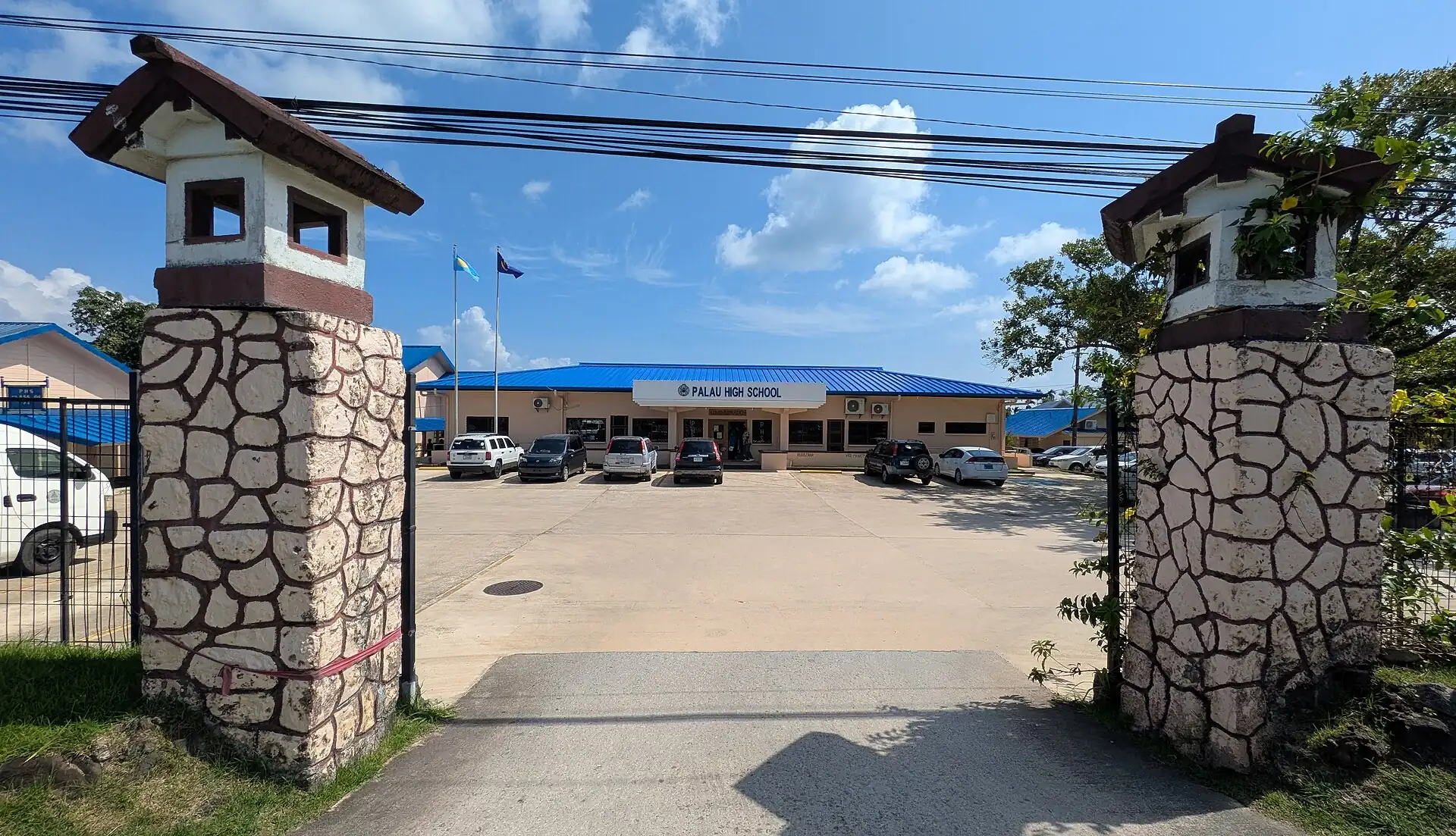
Morning cluster: the culture centre, the public library and the reef centre on the west side of Koror; a short taxi ride from downtown.
rescue 100% · max p90 6.1′ · half
Morning cluster: the national museum and its grounds; go before the heat and take a taxi from downtown.
rescue 100% · max p90 6.1′ · half
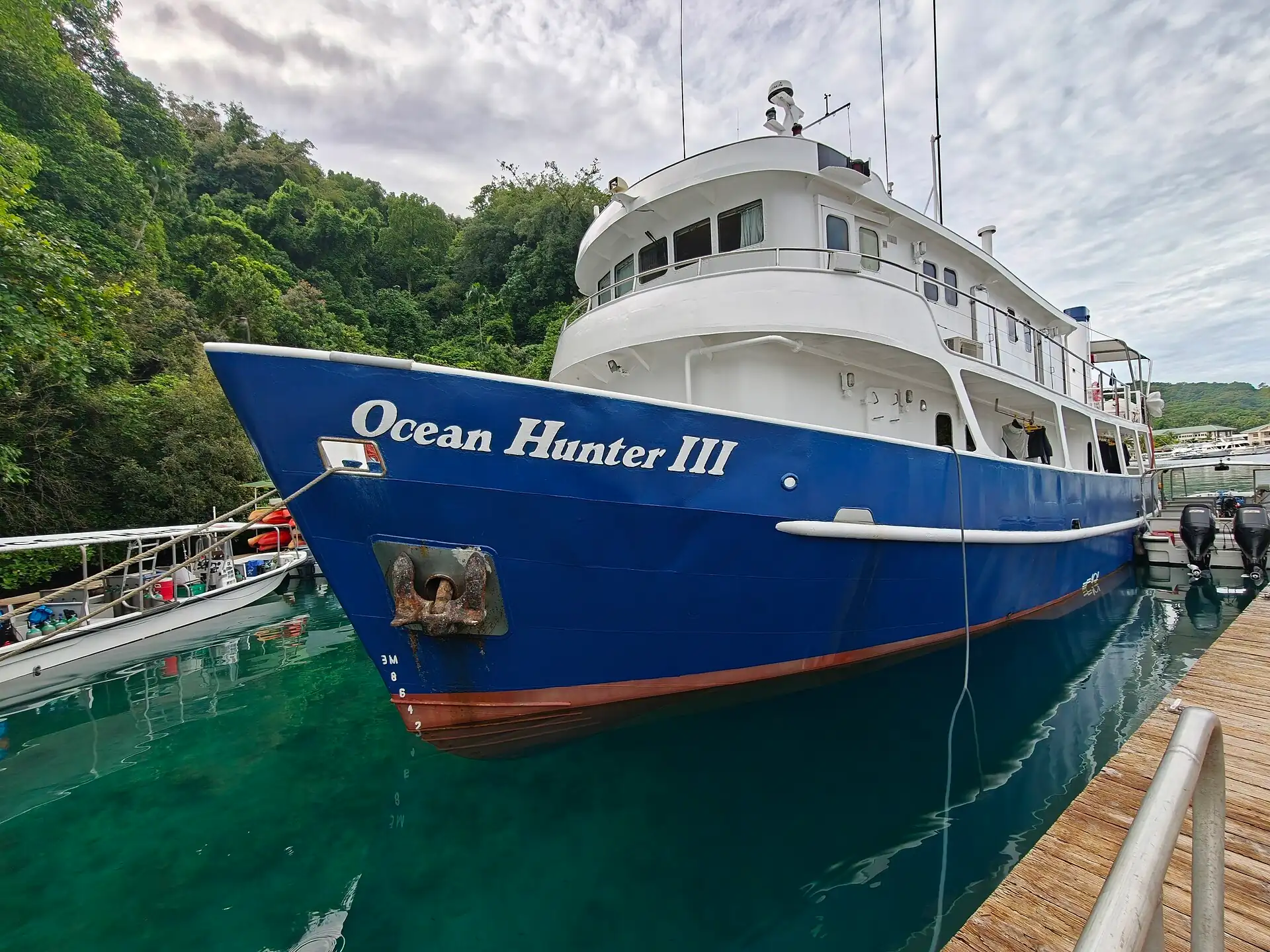
Early cluster: the docks where dive and Rock Islands boats load; be there at your operator's check-in time and leave the big bag at the hotel.
rescue 100% · max p90 6.1′ · half
Days
Ready-made day plans, timed against opening hours and walking distances.
How long are you staying?
Loose outlines that follow the island's rhythm: on the water in the morning, indoors in the middle of the day, and an early dinner.
1 day
A stopover between flights
- 08:30Belau National Museum — Belau National Museum
- 11:00Palau International Coral Reef Center — Reef centre
- 12:30Local plate: reef fish, taro and tapioca — Local plate lunch
- 15:00Etpison Museum — Etpison Museum
- 18:00Sashimi and fresh fish, downtown Koror — Sashimi dinner
Skip: The Rock Islands: they need their own full day.
Koror in 3 days
3 daysThe museum in the morning, a Rock Islands boat day early on the second day, downtown and the Etpison Museum on the last; every longer leg is a car, and the last day ends with the bag already in it and no diving.
Day by day
Day 1 — Belau National Museum, a 12:30 lunch table downtown
- 08:30Belau National Museum
- Ngarachamayong Cultural Center (optional)
- 12:30Lunch table 12:30 (downtown Koror)
Day 2 — Rock Islands boat day, first departure
Day 3 — Main street and the Etpison Museum, car to the airport at 12:00
- Etpison Museum (optional)
- 12:00Car to the airport at 12:00
Places
“Best time” is when to arrive for the fewest crowds, for example “before 08:30”; “Go any time” means the hour makes little difference. More sights follow under “More sights and museums”.
6 places. Filters use the guide’s own ratings; a place with no rating is left out when a filter is on.
Tours, classes and shows in Koror →
If you do ten things in Koror
Ranked for a first visit of 3–5 days. Prices are 2026 estimates in US dollars.
- 1
Limestone islands, lagoons and snorkelling; the reason to come.
- Time
- Full day
- Best
- Dry season, first departure
- Cost
- US$120–200 plus permits
- 2
A dive day at Blue Corner or German Channel
World-class diving with sharks and big fish, with a certified operator.
- Time
- Full day
- Best
- Nov–May
- Cost
- US$180–260
- 3
Jellyfish Lake, when open
Snorkel among millions of stingless jellyfish.
- Time
- Half day
- Best
- Morning
- Cost
- About US$100 permit plus the boat
- 4
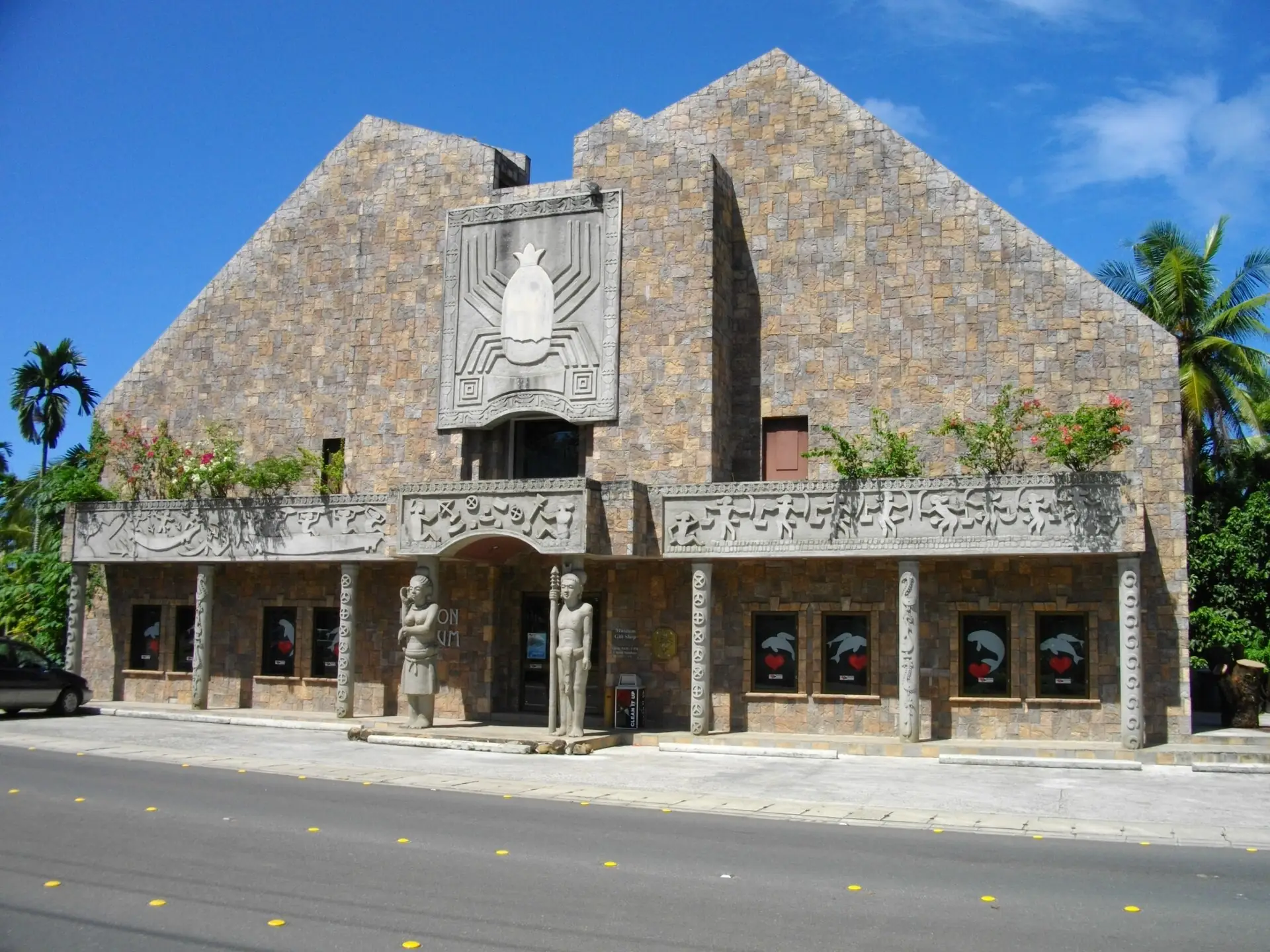
The story of Palau in one place, with a traditional bai in the grounds.
- Time
- 1.5 h
- Best
- Weekday morning
- Cost
- US$10–20
- 5
Palau International Coral Reef Center
A primer on the reef, with live fish; strong for children and rainy days.
- Time
- 1 h
- Best
- Weekday morning or rainy afternoon
- Cost
- US$10–20
- 6
Fresh tuna and reef fish, a Japanese-era legacy.
- Time
- 1 h
- Best
- Early dinner
- Cost
- US$15–35
- 7
- 8
Peleliu battlefield
A 1944 WWII battlefield with tanks, caves and memorials.
- Time
- Full day
- Best
- Calm dry-season day
- Cost
- US$120–200
- 9
Babeldaob waterfall and bai day
Waterfalls, a traditional meeting house and stone monoliths.
- Time
- Full day
- Best
- Rainy day
- Cost
- US$60–120 with a driver
- 10
A local plate of reef fish, taro and tapioca
The island's own cooking.
- Time
- 45 min
- Best
- Lunch
- Cost
- US$8–16
Good for…
Verdict is how well Koror works for that traveller, not how nice it is.
Easy and welcoming; book the boat day and permits first.
- 1Rock Islands boat day — the reason to come.
- 2Belau National Museum — context for what you see on the water.
Fresh fish and Japanese-influenced seafood are good; menus are short and prices high.
- 1Sashimi and fresh fish, downtown Koror — fresh tuna and reef fish.
- 2Local plate: reef fish, taro and tapioca — the island's own plate.
Prices are US-level and the boats are the main cost.
- 1Cafe breakfast, downtown Koror — a cheap start.
- 2Free sights — the docks, the main street and the museum grounds cost little.
- 1Rock Islands boat day — lagoons and quiet beaches.
- 2A sunset dinner in Malakal — harbour views and an early table.
Calm water and a reef centre suit school-age children who can swim.
- 1Palau International Coral Reef Center — live fish and a cool visit.
- 2A family boat day — a sandbar lunch and snorkelling with life jackets.
- 1A resort in Malakal — sea views and organised tours.
- 2A private boat charter — your own schedule on the lagoon.
Boat steps, sand and patchy pavements; plan by car and ask operators about access.
- 1Hotels with ground-floor rooms — confirmed on request.
Tours and classes: book or skip
Book through the hotel or a licensed operator with written inclusions and a cancellation policy. Prices are per person unless stated.
| Tour or class | Verdict | Typical price | Why | Check before paying |
|---|---|---|---|---|
| Rock Islands full-day boat tour with lunch and permits | book | US$120–200 plus permit (check) | The main event, with the permit, the guide and the lunch stop handled. | Whether the permit and lunch are included, the weather policy and the return time. |
| Two-tank dive day at Blue Corner or German Channel | book | US$180–260 (check) | Current diving needs an experienced operator. | Certification requirements, group size and the weather policy. |
| Jellyfish Lake half day | maybe | About US$100 permit plus boat (check) | A highlight, but open or closed depending on jellyfish numbers. | Whether the lake is open today and the permit price. |
| Peleliu WWII day tour | maybe | US$120–200 (check) | A serious history day, with a guide and a boat. | The boat time, the guide's background and the sea conditions. |
| Babeldaob waterfall and bai day | maybe | US$60–120 with a driver (check) | A good wet-weather alternative. | Which stops, the entry fees and the time. |
What each season brings
Dry season
Feb–Apr
The calmest seas and best visibility; the busiest boats.
Watch: Book early; still showers.
Early wet
May–Jun
Lush, quieter and cheaper.
Watch: More rain; some rough days.
Wet season
Jul–Oct
Fewer visitors and lower prices.
Watch: Rougher boat days and more cancellations; typhoon risk is low but not zero.
Late wet and early dry
Nov–Jan
Rain eases; good diving returns.
Watch: Busy around Christmas and New Year.
Photo spots and the light
Light times are for clear days. Ask before photographing people and follow the reef rules.
| Spot | Best light | Tip |
|---|---|---|
| The Rock Islands from a boat | 08:00–10:00 | Soft light and calm water; keep your camera in a dry bag. |
| Malakal at sunrise or sunset | 06:30–07:30 or 17:30–18:30 | Boats and clouds over the harbour. |
| The bai in the museum grounds | Morning | Ask before photographing the interior. |
Koror travel FAQ
Answers are 2026 desk estimates; fares and rules marked (check) change.
Is Koror safe for visitors?
Yes; the main risks are sun, sea and dive accidents. Petty theft occurs, so lock valuables away and book your ride home at night.
Do I need a visa?
Many visitors can enter for a limited stay; check current requirements for your passport and the environmental fee.
Do I need cash?
Some. The currency is the US dollar; cards work at hotels, dive shops and larger restaurants, but small eateries and taxis want small bills.
Is tap water safe to drink?
It is treated in Koror, but many visitors drink bottled water; ask your hotel.
How far is the airport?
About 30–50 minutes by car across the bridge; book your ride ahead.
How many days do I need in Koror?
Three to five days: one for the museum and town, one or two on the water, and a spare for weather.
What sunscreen can I use?
Only reef-safe sunscreen; reef-toxic products are banned and may be confiscated.
Do I need a permit for the Rock Islands?
Yes; buy the Rock Islands permit through your operator or the state office, plus a separate permit for Jellyfish Lake when it is open.
When can I dive before a flight?
Not within 24 hours; keep the last day free.
Where should I stay?
Downtown Koror for walking and restaurants; Malakal for early boats and dive shops.
More to see and doSee & do · Learn & work · Rain & heat · Wheelchair and stroller
Wheelchair and stroller, place by place
How each place in this guide works for wheels, from its own page. Ratings are desk estimates unless a page says it was checked on the ground.
| Place | Step-free | Wheelchair | Stroller | What to know |
|---|---|---|---|---|
| Etpison Museum | check | check | ok | Confirm step-free access with the museum. |
| Malakal harbour and dock walk | partial | caution | ok | Flat quay, but boat steps. |
| Ngarachamayong Cultural Center | check | check | ok | Confirm step-free access before you go. |
| Palau International Coral Reef Center | yes | ok | ok | A modern building; confirm step-free access. |
See & do
13 of 13
- Museums
Palau's national museum, with objects, a traditional bai and the story of the islands.
Koror · Weekday day hours (check) · US$10–20(check)
- Museums
A compact private museum with artefacts, storyboards and Japanese-era history.
Downtown · Weekday day hours (check) · US$5–15(check)
A reef research centre and aquarium; a strong family and rainy-day stop.
West Koror · Weekday day hours (check) · US$10–20(check)
A cultural centre with a traditional-style meeting house and events.
West Koror · Weekday day hours (check) · Free or a donation(check)
The Rock Islands Southern Lagoon: limestone islands, lagoons and snorkelling, and the main reason to visit.
Malakal · Early departure · US$120–200 plus permits
The working docks where boats load; a short look at the start or end of a boat day.
Malakal · Open harbour · Free
Jellyfish Lake
natureA marine lake with millions of stingless jellyfish; open or closed depending on jellyfish numbers.
Eil Malk, Rock Islands · By boat with permit, when open · About US$100 permit (check)(check)
Peleliu battlefield
Citadel & old cityA 1944 WWII battlefield with tanks, caves and memorials; go with a guide.
Peleliu, by boat · Day trip · US$120–200 (check)(check)
Rock Islands boat day with snorkelling
boatSnorkel, swim and lunch on a beach; the day everyone comes for.
Malakal · Full day, early departure · US$120–200 per person plus permits
Dive Blue Corner, German Channel or Ulong Channel
SportSome of the world's best diving, with current, sharks and big fish; only with a certified operator.
Rock Islands, by boat · Two-tank day · US$180–260 (check)
Milky Way lagoon
natureA lagoon with white limestone mud that visitors smear on their skin; a common stop.
Rock Islands · Part of a boat day · Included in some trips
Babeldaob waterfall and bai day
day tripNgardmau Falls, the Airai bai and the Badrulchau monoliths; a rainy-day alternative to the boats.
Babeldaob · Full day · US$60–120 with a driver (check)
Kayak the Rock Islands
ActivePaddle among the mushroom islands with a guide; wind and tide decide the route.
Rock Islands, guided · Half or full day · US$100–180 (check)
- Booking
- Boat days, dives and permits are best booked a week or more ahead in the dry season; buy the Rock Islands permit through your operator and confirm the Jellyfish Lake status.
Learn & work
| What | Where | Cost | Note |
|---|---|---|---|
| Diving and reef ecology courses | Dive shops and the coral reef centre (check) | US$100–500 (check) | Open-water and advanced courses are common; ask about the conservation talks at the reef centre. |
| Palauan language and culture | Cultural centres and community groups (check) | Check | Ask your hotel to introduce a teacher; a few phrases go a long way. |
| Storyboard carving | Craft workshops (check) | Check | Some carvers take visitors in short sessions; ask at the museum shop. |
Working here
- Tourist entry
- Many visitors can enter for a limited stay; check current requirements for your passport and the environmental fee. Tourist entry does not allow paid work.
- Work permit
- Legal work needs an employer-sponsored permit and immigration processing.
- Remote work
- No digital-nomad visa is confirmed; connectivity is slower than at home, so check rules and hotel Wi-Fi before you rely on it.
Rain-day and heat-day plan
Rain day
Showers come at any time and pass quickly: keep a rain jacket and a dry bag, and plan an indoor stop for the heaviest downpours.
- 01Palau International Coral Reef Center — An indoor hour with live fish.
- 02Belau National Museum — A morning in the national museum.
- 03Etpison Museum — A short indoor visit.
- 04Cafe breakfast, downtown Koror — A dry seat and coffee while the shower passes.
Heat day
The heat is steady and the sun is strong: outdoor stops before 11:00 and after 16:00, shade and water at midday, and a rash vest on the water.
- 07:30Rock Islands boat day — The best light and calmest water are in the morning.
- 09:00Belau National Museum — A cooler morning for the grounds.
- 12:30Local plate: reef fish, taro and tapioca — A covered lunch.
- 17:00Sashimi and fresh fish, downtown Koror — Early dinner before the kitchens close.
Day-trips and nearby
Places you can reach from Koror in a day or with one night away, with the route and what it costs. Door to door, not ride time.
Peleliu and the WWII battlefield
goBoat about 1–1.5 h each way with an operator (check)
The site of a 1944 battle, with rusting tanks, caves and memorials; go with a guide, in the dry season and on a calm day.
- Time
- Full day
Babeldaob island loop (Ngardmau Falls, Airai bai, Badrulchau monoliths)
goRental car or driver, about 30–60 min to each stop
Waterfalls, a traditional meeting house and a field of stone monoliths; a good rainy-day alternative to the boats.
- Time
- Full day
Kayangel atoll
overnightBoat about 1.5–2 h each way (check)
A small northern atoll with a quiet beach; weather-dependent, so keep a spare day.
- Time
- Full day or overnight
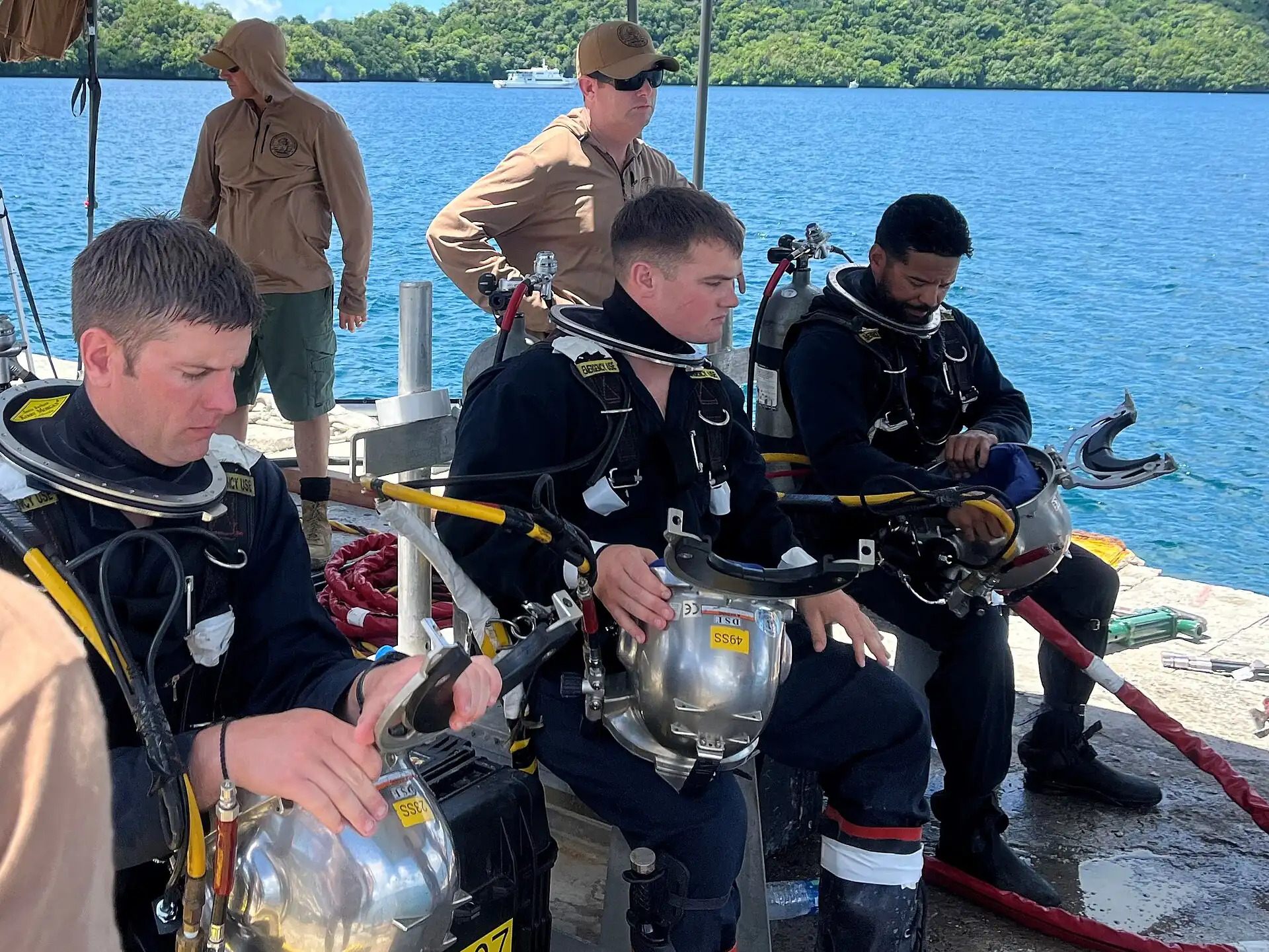
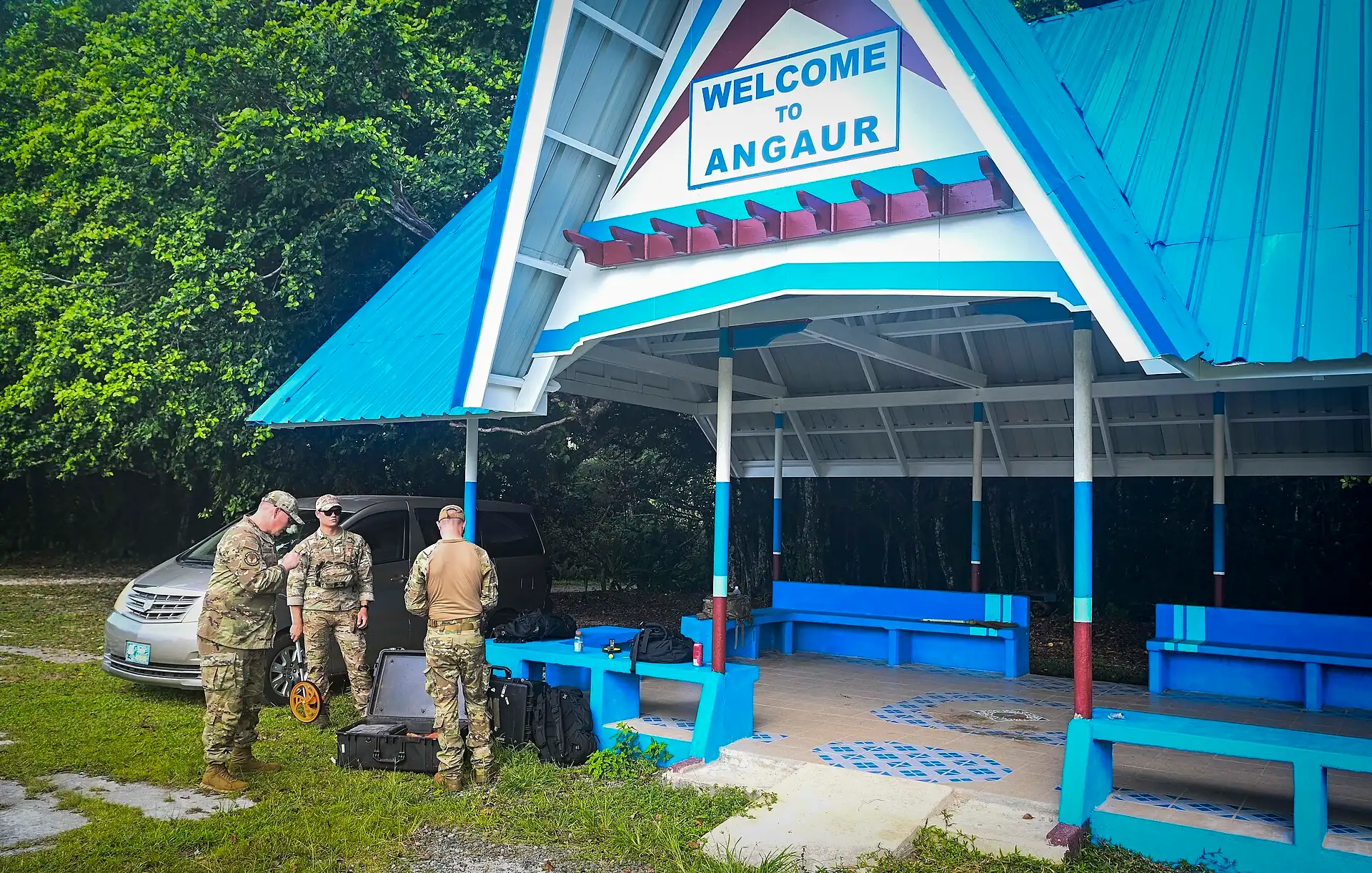 Photo: U.S. Air Force photo by Staff Sgt. Divine Cox, Public domain
Angaur
cautionBoat (check)
A quiet southern island with WWII remains and a macaque colony; check schedules and weather with your operator.
- Time
- Full day or overnight
Go next
Guam or Manila
cautionDoor to door: Half a day
Flight, several times a week (check)
The main onward connections; flights are few, so book early and keep a buffer.
Eat & sleepWhere to eat and which area to sleep in
Eat & sleep
Where to eat and which area to sleep in
Eat
A short list of places worth crossing the city for, each with how to get a seat.
Restaurant finder: filter every place to eat in Koror →
Vegetarian-friendly score
2.0 / 5 · Workable
- Country diet noteOur country guide rates vegetarian eating as mixed.0.75 / 2
- Places to eat in this guide1 of 5 places with a known answer are vegetarian-friendly, 4 partly.0.9 / 1.5
- Budget eating lines0 vegetarian lines in "Eat by budget".0 / 0.6
- Meat-free national dishes4 meat-free dishes in the country food list.0.4 / 0.4
- Dedicated vegetarian kitchens0 mentions of vegetarian restaurants, Buddhist or fasting kitchens.0 / 0.5
Country note: Taro, tapioca and breadfruit help; restaurants cater on request.
Vegetarian places near me →Make a diet card →
How we score
- Country diet note (up to 2): easy 2, workable 1, mixed 0.75, hard 0; no note 0.5.
- City places to eat (up to 1.5): 1.5 × (vegetarian-friendly + half of partly friendly) ÷ places with a known answer; needs 3 or more known places.
- Budget eating lines marked vegetarian (up to 0.6): 0.2 each.
- Meat-free national dishes (up to 0.4): 0.1 each.
- Dedicated vegetarian kitchens mentioned — Buddhist chay, shōjin ryōri, Jain, fasting food, vegan cafés (up to 0.5): 0.1 each.
- Total rounded to the nearest half point, 0 to 5. Built from our own pages only, not from reviews.
Eating and drinking guideEat by budget · Drink
Before you sit down to eat
Short version; full text linked
House rules to know
- Eat early: many kitchens close by 21:00.
Eat by budget
Under US$12 a meal
| Where | Order | Area | Price | Note |
|---|---|---|---|---|
| Cafe breakfast, downtown Koror | Coffee and a pastry | Downtown | US$5–14 | Breakfast and a rain refuge. |
| Local plate: reef fish, taro and tapioca | Reef fish, taro and tapioca plate | Downtown | US$8–16 | The island's own plate. |
| Koror main street eateries | Plate lunches and noodles | Main street | US$8–14 | Many small places; ask your hotel. |
Dishes to know
| Dish | What it is | Where to look | When | Price |
|---|---|---|---|---|
| Sashimi | Raw tuna and reef fish with soy and wasabi; a Japanese-era legacy | Downtown restaurants | Lunch, dinner | US$15–30 |
| Grilled reef fish | The day's catch, grilled, with rice or root vegetables | Restaurants and boats | Lunch, dinner | US$15–28 |
| Taro (kukau) and tapioca | Starchy roots, boiled or pounded | Local eateries | Lunch | US$3–6 |
| Coconut rice and fresh fruit | Papaya, pineapple, banana and coconut | Cafes and markets | Any time | US$3–8 |
| Poke and fish salads | Diced marinated fish with rice or greens | Cafes and restaurants | Lunch | US$12–20 |
| Local beer | Local and imported beer | Bars and restaurants | Any time | US$4–7 |
- Ask what is fresh; the choice depends on the catch and the boats.
- Eat early: many kitchens close by 21:00.Eat early: many kitchens close by 9:00 PM.
- Carry small US bills for small eateries; cards work at larger places.
- Coconut crab and some reef fish are protected or seasonal: ask before ordering and follow local rules.
Drink & nightlife
| Where | What | Until | Note |
|---|---|---|---|
| Malakal bars and grills | Bars, grills, seafood | Around 23:00 (check)Around 11:00 PM (check) | The main evening strip for divers; go by taxi and book the ride home. |
| Downtown restaurants and bars | Bars and restaurants | About 22:00About 10:00 PM | Small and quiet; eat early. |
| Hotel bars | Bars, lounges | About 22:00About 10:00 PM | Safe and easy for a drink after a boat day. |
By style
| Style | What | Where | Price | Until |
|---|---|---|---|---|
| Beer | Local and imported beerAlcohol is legal and available; many venues stop serving by 23:00.Alcohol is legal and available; many venues stop serving by 11:00 PM. | Bars and restaurants | US$4–7 | Late |
| Cocktails and wine | Cocktails and imported winePricey because everything is imported. | Hotel bars | US$8–14 | About 22:00 |
| Coconut water and fresh juice | Coconut water and juiceA safe non-alcoholic option. | Cafes and stalls | US$2–5 | Daytime |
Rules that bite
- Do not dive or take a boat after drinking; the next dive day depends on it.
- Book your taxi home before you go out; few cars run late.
Sleep
Pick the area first: it decides your walk home at night and your first morning.
Which neighborhood fits you
Three questions, one recommendation, with the reasons.
Next best: Malakal
Built from our 1–5 desk scores per area; your answers stay in this browser.
More on sleepingSleep by budget · Your area · With kids
Sleep by budget
| Band | Price | Where | Room types | What to expect |
|---|---|---|---|---|
| budget | US$80–130 | Downtown guesthouses | Guesthouses and small hotels | Simple rooms, AC, limited breakfast. |
| mid | US$130–230 | Downtown and Malakal | 3-star hotels and dive lodges | AC, breakfast, Wi-Fi and shuttles to the docks. |
| splurge | US$230–450+ | Malakal and beach resorts | Resorts with pools | Sea views, restaurants and organised tours. |
Booking checks
- Book early in the dry season: rooms and boats fill months ahead.
- Ask for an airport pick-up and confirm your arrival time; flights land at odd hours.
- Ask about a dive-shop shuttle and a rinse area for gear.
Which area is yours
| If you are | Sleep in | Because |
|---|---|---|
| First visit, 2–3 nights, sights first | Downtown Koror | Walk to cafes and the museum; taxi to the boats. |
| Divers with early boat departures | Malakal | Walk to the dock and skip the morning taxi. |
| Families and couples | Downtown Koror | More restaurants and shops within walking distance. |
First-timers: restaurants, shops and the museum are a short taxi ride; choose a hotel with a 24-hour desk and book the airport pickup.
02Malakal
Close to the dive docks and the early boats; a taxi ride from the Koror restaurants and the museum.
Areas are in our default order until you tick a priority.
Scores are 1–5 desk judgements per priority (2026).
With kids
- Palau is child-friendly: the reef centre, calm beaches and a boat day with a lunch stop suit school-age children who can swim.
- Life jackets and a rash vest are essential on boats; ask the operator about age limits for snorkelling and diving.
- Jellyfish Lake is a highlight for children when open, but the rules and the permit are strict; check before you promise it.
- Sun and dehydration are the main health risks for children: shade, water and a hat on every outing.
PracticalMoney, essentials, safety and the pocket card
Practical
Money, essentials, safety and the pocket card
Money
What a day costs at three comfort levels, and how to pay.
- Budget
- US$80–130 excl. bed / day
- Mid
- US$130–250 excl. bed / day
- High
- US$250+ excl. bed / day
- Transit card
- No transit card: taxis, hotel shuttles and the dive-shop van.
- Cash rule
- Cards work at hotels and dive shops. Carry US bills for taxis, small shops and permits; ATMs are in Koror.
More on moneyCosts · Budget · Buy
What things cost
- Bottle of water, shopUS$1–2
- Rock Islands boat day with lunch (operator price)US$120–200 per person
- Rock Islands permit (check)About US$50 per visitor, valid several days
- Jellyfish Lake permit, when open (check)About US$100 per visitor
- Two-tank dive dayUS$180–260 per person
Trip budget
| Hotel double room1 × 4 nights × US$180 | US$720 |
| Food, local transport, entries2 × 4 days × US$190 | US$1,520 |
| Airport taxi, both ways1 × US$80 · one car per 4 people | US$80 |
| Rock Islands boat day with lunch2 × US$150 | US$300 |
| Rock Islands permit (check)2 × US$50 | US$100 |
| Jellyfish Lake permit, when open (check)2 × US$100 | US$200 |
| Buffer 15%Price creep, a taxi you did not plan, one splurge | US$438 |
| Trip total≈ US$420 per person per day, bed included | US$3,358 |
2026 estimate in US dollars; flights and the airfare environmental fee are excluded. Your choices stay in this browser.
Buy
- Bargaining
- Prices are fixed at shops and supermarkets, and bargaining is not the habit. For a boat, a dive or a guide, compare two written quotes and check what is included before you pay.
- Fixed-price check
- Imported goods are pricey; compare prices in a supermarket before you buy the same thing at a tourist shop, and check labels for where an item was made.
Markets and shopping streets
| Where | What | When | Haggle | Note |
|---|---|---|---|---|
| Koror supermarkets and general stores | Groceries, water, sunscreen, snacks and basics | About 08:00–20:00 (check)About 8:00 AM–8:00 PM (check) | no | The place for supplies before a boat day; shorter hours on Sunday. |
| Souvenir and craft shops | Storyboards, wood carvings, shell jewellery and Palauan crafts | Daytime (check) | no | Ask who made an item; storyboards are carved wooden panels that tell Palauan stories. |
| Weekend produce and craft stalls (check) | Local fruit, vegetables and crafts | Weekend mornings (check) | no | Ask your hotel where and when they run. |
Shops by what they sell
| For | Where | Hours | Note |
|---|---|---|---|
| Storyboards | Craft shops and the museum shop | — | A carved wooden panel with a Palauan story: a distinctive and legitimate souvenir. |
| Dive and reef gear | Dive shops | — | Rash vests, reef-safe sunscreen and masks, at higher prices than at home. |
| Palauan beads and jewellery | Craft shops | — | Traditional beads have cultural meaning; avoid anything made from coral or turtle shell. |
Changing money
| Where | Verdict | Why |
|---|---|---|
| Not needed | use | The currency is the US dollar; there is no need to change. |
| Bank branches (check) | ok | For foreign currency, cash advances and travellers' needs; office hours. |
| Street changers | avoid | Not a thing here; do not accept an offer. |
ATMs
- Availability
- ATMs at banks and some shops in Koror; they can run out of cash at weekends.
- Fees
- Your bank's foreign fee plus a local fee; take a larger amount less often.
- Where
- Inside or at a bank branch or a supermarket, in daylight.
- Cards
- Accepted at hotels, dive shops and most restaurants; carry small US bills for taxis and small eateries.
Essentials and accessEssentials · Access
Essentials
- Paying
- US dollars. Cards work at hotels, dive shops, larger restaurants and supermarkets; carry small bills for taxis, small eateries and markets. ATMs are in Koror.
- Plugs & power
- 120 V, 60 Hz; US-style two-pin sockets (types A and B). Bring an adapter if you need one.
- Health
- Sun, heat, dengue, coral cuts and dive-related problems; the only hyperbaric chamber is in Koror. Carry insurance with medical evacuation cover.
- Accessibility
- Pavements are patchy; boat steps and sand limit access on the Rock Islands. A few hotels have accessible rooms.
- Laundry
- Hotels; a few coin or drop-off laundries in Koror.
- Emergency numbers
- 911 (confirm local numbers with your hotel on arrival).
Pack
- Reef-safe sunscreen only (reef-toxic products are banned) and a long-sleeved rash vest
- Quick-dry clothes, a rain jacket and a dry bag for boats
- Reef shoes or sandals with a strap; a hat and polarised sunglasses
- Snorkel gear if you have your own; dive certification card and logbook
Accessibility
Koror is manageable by car but hard on wheels: pavements are patchy and kerbs are high, and boat trips and beaches involve steps and sand. Plan door-to-door taxis and choose a ground-floor room.
- Pavements
- Patchy, with open drains in places; the main street is the best stretch.
- Getting around
- Taxis and hotel shuttles are the step-free option; boats need steps.
- Hotels
- Some hotels have accessible rooms; confirm before you book.
- Toilets
- Hotels, cafes and the museums; rare on the islands.
Sights, step-free or not
| Belau National Museum | with help | A few steps; confirm with the museum. |
| Etpison Museum | check | Confirm step-free access. |
| Palau International Coral Reef Center | step-free | A modern building; confirm. |
| Ngarachamayong Cultural Center | check | Confirm step-free access. |
| Rock Islands boat day | hard | Boat steps and beach landings. |
Survive
Safety basics, the lines not to cross, and practical habits that save the day.
Safety
- Diving: strong currents at Blue Corner and German Channel; dive with an established operator and follow the briefing.
- Do not dive in the 24 hours before your flight; a decompression chamber exists in Koror, but carry insurance with evacuation cover.
- Sun: strong UV; rash vest and reef-safe sunscreen.
- Saltwater crocodiles live in some mangroves: ask before swimming.
- Emergency: 911 (confirm local numbers with your hotel).
Red lines
- Follow the Palau Pledge: take nothing, touch no coral, feed no fish.
- Ask before photographing people or entering a bai (traditional meeting house).
- Dress modestly in town; swimwear only on boats and beaches.
Practical
- Toilets: hotels, cafés and the museum.
- Tap water: ask your hotel; many visitors drink bottled water.
More on staying safeStay safe · Stay healthy · Safety map · Solo & women · Etiquette · Cope · Scams
After dark, by area
4 flagged areas
- Take care
- Take care
Culture centre and reef centre
Take care- Take care
Day = about 07:00–19:00. What to watch in each area, day and night →
Scams and red flags
Walk away if you see these
- Boat or tour sellers who take a deposit and give no receipt or written inclusions: book through your hotel or an established operator and keep the paperwork.
- Unagreed taxi fares: agree the price before you get in, or use your hotel's shuttle.
- 'Permits' sold at the dock by people who are not connected to Koror State: the Rock Islands permit is bought from the state office or through a licensed operator.
- Souvenirs sold as 'Palauan' but made abroad, or made from coral or turtle shell, which cannot be exported: buy from known shops and ask where an item was made.
Stay safe
Crossing the road
- 01Traffic is light but roads are narrow with no pavements in places: walk facing traffic and carry a light at night.
- 02Take care on boat steps and wet docks; slips are common.
Hustles specific to this city
| Hustle | Where | The tell | What to do |
|---|---|---|---|
| Deposits without receipts | Boat and tour sellers | A cash deposit with no paperwork | Book through your hotel or an established operator and keep the receipt. |
| Unagreed taxi fare | Anywhere | A price given only after the ride | Agree the fare before you get in. |
- Police
- Report thefts to the police with your hotel's help; insurers need a written report.
- Sea and currents
- Blue Corner, German Channel and Ulong Channel have strong currents: dive only with an established operator, follow the briefing and carry a surface marker.
- Crocodiles
- Saltwater crocodiles live in some mangroves: ask before swimming and keep out of mangrove channels.
- Sun and heat
- Strong UV: rash vest, a hat and reef-safe sunscreen; drink water often.
Stay healthy
- Dengue
- Present in the Pacific: use repellent from dawn to dusk and sleep in a screened or AC room.
- Sun and heat
- Strong UV and humid heat: sunscreen, a hat, a rash vest and plenty of water.
- Diving
- Do not dive within 24 hours of a flight; a hyperbaric chamber exists in Koror, but carry insurance that covers diving and evacuation.
- Coral and sea life
- Coral cuts infect easily: clean and cover them at once; do not touch jellyfish or lionfish outside Jellyfish Lake.
- Food and water
- Tap water is treated in Koror, but many visitors drink bottled water; eat fresh, hot food from busy places.
- Vaccination and clinics
- Ask a travel clinic several weeks before you travel; the hospital is basic, and serious cases go abroad.
Hospitals and clinics: see Cope.
Safety by area and hour
| Area | Day | Night | What to watch |
|---|---|---|---|
| Downtown Koror | fine | caution | Quiet at night; watch for drunken groups near bars. |
| Belau National Museum area | fine | caution | Few pavements; use a taxi after dark. |
| Culture centre and reef centre | fine | caution | Quiet at night; use a taxi. |
| Malakal harbour | fine | caution | Dark roads and few taxis; book a ride home. |
- Do not leave valuables in a car or on a beach; thefts from parked cars and boats happen.
- Keep passports and cards in the hotel safe and carry a copy.
Solo, women and LGBTQ+ travellers
Solo
- Easy and generally safe: the town is small and friendly, and dive shops and boats are social. Book your ride home and tell your hotel where you are going.
- Join a group boat day or dive trip to meet people.
Women
- Palau is relaxed about swimwear on boats and beaches, but cover up in town and in villages.
- Attention is usually polite; a firm no works.
LGBTQ+
- Same-sex relationships are legal in Palau, but social attitudes are conservative; discretion is wise.
- Check your government's travel advice before you go.
Etiquette in Koror
- Palau Pledge
- You sign it on arrival: take nothing, kill nothing, and act with care toward the islands and their people.
- Greetings
- Say 'Alii' and smile; a friendly greeting matters more than fast business.
- Dress
- Cover swimwear in town and villages; swimwear stays on boats and beaches.
- Reef
- Do not touch or stand on coral, feed fish or take shells or coral; use only reef-safe sunscreen.
- Bai and sacred places
- Ask before entering a bai (traditional meeting house) or a village site; some are for men only or for ceremonies.
- Photos
- Ask before photographing people and ceremonies.
- Sunday
- Sunday is a day of church and rest; many shops close.
Cope
Hospitals and clinics that handle foreigners
| Where | Area | Use it for |
|---|---|---|
| Belau National Hospital | Koror | The main hospital, with a hyperbaric chamber for diving injuries; confirm current services. |
| Private clinics | Koror (check) | Small clinics for routine care; pay upfront and claim later. |
| Medical evacuation | By air ambulance | Serious cases go to Guam, the Philippines or Hawaii; carry cover that includes evacuation and diving. |
Visa extensions
- Office
- The Palau Bureau of Immigration is in Koror; weekday office hours. Check the address before going.
- Extending
- Visitor extensions go through immigration; do it before your current stay ends.
- Overstay
- Fines and delays at exit; resolve any problem before the airport.
Embassies and consulates
| Country | Address | Phone | Note |
|---|---|---|---|
| United States | Koror (check) | — | (check) |
| Japan | Koror (check) | — | (check) |
| Taiwan | Koror (check) | — | (check) |
| Australia | Check | — | (check) |
- Lost passport
- Report to the police and your embassy; the nearest full-service mission may be in Guam or Manila, so start early.
- Pharmacies
- A few pharmacies and supermarkets with limited stock; bring your regular medication.
- Laundry
- Hotels and a few drop-off laundries; ask the front desk.
- Gyms and pools
- Some hotels have pools; a few gyms sell day passes (check).
Apps and offline kitOffline kit
Offline kit
Set up before you leave, so Koror still works with no signal or a dead roaming plan.
On your phone
- Maps: open the city in Google Maps, tap the place name, then Download offline map (or use an offline-maps app).
- Data: install an eSIM or buy a local SIM before the first taxi; the apps in this guide depend on it.
- Translation: download the local language for camera translation.
- Screenshots: booking confirmations, hotel address in the local script, and the emergency numbers.
This guide
Save the Koror guide and its pages on this device; it opens without a connection.
Phrases that do the work
Greeting
Hello
Alii
ah-LEE
Greeting
How are you?
Ke ua ngerang?
keh oo-ah ng-eh-RAHNG
Thanks
Thank you
Sulang
soo-LAHNG
Reply
Good, fine
Ungil
OO-ngil
Reply
No
Ng diak
ng dee-AK
Taxi
How much?
How much?
how much
Pocket card
Fill in, then print or save as PDF
Stays in this browser only; nothing is sent anywhere.
KororKoror
Pocket card · Voykit
My bed tonight
—
—
—
Please take me to this place (English is widely understood)Please take me to this place
Emergency
- Emergency911 (confirm with your hotel)
- Hotel front deskSave on arrival
- Your embassyWrite the 24-hour line here before you go
- Insurer or dive-accident lineSave before you fly
Embassy
Few embassies are in Palau; write your own embassy's 24-hour line below and keep a paper copy.
My embassy: —
Fare anchors (2026 estimate)
- Airport to Koror, taxi or shuttle: US$25–50 per car, about 30–50 minutes
- Short taxi ride, Koror: US$5–12
- Rock Islands boat day, with lunch: US$120–200 per person plus permits
Give the driver the place name and a landmark; addresses are informal.
Deep diveHistory, reading, photos and every source
Deep dive
History, reading, photos and every source
Sources
- officialPalau Visitors Authority (official)
- secondaryWikivoyage — Koror
Ask about Koror
Loading…
Was this useful?