Cluster · Kyoto
Higashiyama (south)
Half-day on foot, before 08:00 if you can; 28-inch bags forbidden; three rescue anchors along the slope.Half-day on foot, before 8:00 AM if you can; 28-inch bags forbidden; three rescue anchors along the slope.
Key facts
- 28″ bags
- forbidden
- Time budget
- half
- Rescue coverage
- 99% ≤7′
- max p90 6.9′
- Places
- 3
- 2 sleep areas in reach
Rules in force · 8Large suitcases on Kyoto city buses
- East Asia ↗Every border in East Asia is a full international border, Hong Kong and Macau included: an entry permission for one never covers the next.
- East Asia ↗Ferries between Korea, Japan and China cancel in rough seas and typhoons; keep a flight or a spare day behind every sea leg.
- Japan ↗IC cards (ICOCA/Suica) are topped up with cash at station machines.
- Japan ↗Smoking while walking is banned in most city centres; use designated areas.
- Japan ↗Shinkansen bags 160–250 cm (L+W+H) need a seat reserved with the oversized-baggage area.
- Kansai ↗ICOCA is the default IC card; Suica works too.
- Kyoto ↗Large suitcases on Kyoto city buses: do not. Buses are crowded and oversized bags are refused or block aisles.
- Kyoto ↗Kyoto accommodation tax is often collected in cash at the front desk.
More
Map to the centre
Add your hotel to get directions from it. · stays in this browser; shared with the pocket card.
Area covered
0 km² (0 sq mi)0 sq mi (0 km²)
Route length
about 1.5 km (0.9 mi)about 0.9 mi (1.5 km)
Walking time
25–35 min
With stops
2–3 h
Height change
about 60 m down
Stairs
stone steps, downhill
Crowd peak
10:00–16:0010:00 AM–4:00 PM
Quiet window
before 08:00before 8:00 AM
Crowd on the lanes by hour
quietlightbusyheavypacked· desk estimate for an ordinary weekday; blossom and leaf weeks run one level higher all day
Walking weather, next 5 days
Loading forecast…
Forecast: Open-Meteo (CC BY 4.0), model data for this point.
Plan
How the ground walks, and what is here
Bound and physics
Walking corridor from Kiyomizu-dera down Sannenzaka/Ninenzaka to Yasaka Shrine — not the ward boundary.
- Slope
- steep
- Stairs
- Stone steps on Sannenzaka/Ninenzaka (~380 down from Kiyomizu toward Yasaka)
- Shade
- low
- Surface
- stone + cobble
- Sleep here or visit
- visit
Best for
| Who | Fit | Why |
|---|---|---|
| First-timers | good | Kiyomizu-dera, the old lanes and Yasaka in one downhill line. |
| Photographers | good | Empty lanes and the Yasaka pagoda before 08:00; after 10:00 every frame has a crowd.Empty lanes and the Yasaka pagoda before 8:00 AM; after 10:00 AM every frame has a crowd. |
| Crafts and snacks | good | Pottery, pickles, tea and sweets shops line the slopes from about 09:00.Pottery, pickles, tea and sweets shops line the slopes from about 9:00 AM. |
| Sit-down meals | caution | Mostly snack and tea shops; for a proper meal walk on to Gion. |
| Night | poor | Temples shut and shops close by 18:00; lanes are dim. Yasaka Shrine is the exception.Temples shut and shops close by 6:00 PM; lanes are dim. Yasaka Shrine is the exception. |
| Kids | caution | Fine downhill in the early morning; midday crowds and steps are hard with small children. |
| Rain | caution | Wet stone steps are slippery; keep to Kiyomizu-zaka and cut the walk short. |
| Wheelchairs and strollers | poor | Steps with no ramps on Sannenzaka and Ninenzaka. |
Best route, stop by stop
| # | Stop | Walk in | Time there | Stairs | Opens | Note |
|---|---|---|---|---|---|---|
| 01 | Kiyomizu-dera | start | 45′ | about 40 up to the gate | 06:00 (gate) · out by 17:306:00 AM (gate) · out by 5:30 PM | Enter at opening; stage and Okunoin view. |
| 02 | Sannenzaka | 5′ | 15′ | steps down | 09:00 (shops)9:00 AM (shops) | Steepest steps of the walk; hold the rail when wet. |
| 03 | Ninenzaka | 3′ | 10′ | steps down | 09:00 (shops)9:00 AM (shops) | Anchor B café seating is here if you need a seat. |
| 04 | Hōkan-ji (Yasaka pagoda) | 5′ | 5′ | slope | — | Photo from the lane below; the pagoda interior opens only on some days (check). |
| 05 | Ishibe-kōji laneoptional | 5′ | 5′ | flat | — | Narrow stone lane between Nene-no-michi and Shimogawara; residents' street, keep voices low. |
| 06 | Kōdai-ji / Nene-no-michi | 5′ | 10′ | flat | — | Stone-paved lane; the Kōdai-ji garden is a paid extra of about 45 min. |
| 07 | Maruyama Parkoptional | 5′ | 10′ | flat | — | Shade, benches and toilets before the last stop. |
| 08 | Yasaka Shrine | 5′ | 15′ | flat, steps down to Shijō | — | End of the walk; grounds never close. Gion and the Shijō buses and trains below. |
Time your walk
Done by 09:039:03 AM · 123 min total (23 walking, 100 at stops) · worst crowd: light
- 07:007:00 AMKiyomizu-deraquiet
- 07:507:50 AMSannenzaka · shops open from 09:00quiet
- 08:088:08 AMNinenzaka · shops open from 09:00light
- 08:238:23 AMHōkan-ji (Yasaka pagoda)light
- 08:338:33 AMKōdai-ji / Nene-no-michilight
- 08:488:48 AMYasaka Shrinelight
Crowd levels are a desk estimate by hour.
Morning, afternoon, evening
| When | Do | Avoid |
|---|---|---|
| 06:00–08:306:00 AM–8:30 AM | Kiyomizu-dera at opening, then the lanes while shops are shut and the steps are empty. | Waiting for shops or cafés: most open around 09:00.Waiting for shops or cafés: most open around 9:00 AM. |
| 08:30–10:008:30 AM–10:00 AM | Finish the downhill half; coffee on the Yasaka pagoda lane before the queue builds. | Starting the walk now from the top: you meet the tour groups coming up. |
| 10:00–16:0010:00 AM–4:00 PM | Only the flat north half (Nene-no-michi, Maruyama, Yasaka), or swap to Kennin-ji. | Kiyomizu-zaka and Sannenzaka: shoulder to shoulder, slow and hot in summer. |
| 16:00–18:004:00 PM–6:00 PM | Late light on the pagoda; shops closing means lanes clear quickly. | Planning a temple entry: last admissions come early and move by season. |
| After 18:00After 6:00 PM | Yasaka Shrine lanterns, then dinner in Gion. | The upper lanes: dark, shut and uneven underfoot. |
Eat and drink here
Coffee stand on the Yasaka slope: takeaway only, go before 09:00 or skip the queue.Coffee stand on the Yasaka slope: takeaway only, go before 9:00 AM or skip the queue.
from about 09:00from about 9:00 AM
Tea houses on Kiyomizu-zaka and Sannenzaka
Matcha and wagashi, seated: the proper way to rest on the slope (eating while walking is discouraged here).
lunch · 8′ from the route
Gion OkaruCurry udon counter in Gion; go before 12:00.Curry udon counter in Gion; go before 12:00 PM.
Shopping streets
| Street | What sells here | Hours | Note |
|---|---|---|---|
| Kiyomizu-zaka | Kiyomizu-yaki pottery, sweets (yatsuhashi), souvenirs | about 09:00–18:00check | Busiest street of the walk; shops close earlier in winter. |
| Sannenzaka | Crafts, pickles, tea, chopsticks | about 09:00–18:00check | Buy on the way down; you will not want to climb back. |
| Ninenzaka | Townhouse shops, cafés, small galleries | about 09:00–18:00check | Slightly calmer than Sannenzaka. |
| Nene-no-michi | Few shops; the lane itself is the draw | — | Flat and easy with a stroller. |
Getting there and away
| Stop or station | Type | Serves | Walk to route | Last service | Note |
|---|---|---|---|---|---|
| Gojō-zaka bus stop | bus | City bus 206 and the EX100 sightseeing express from Kyoto Station (check) | 10 min uphill to Kiyomizu | around 22:00check | Start point for the downhill route. |
| Kiyomizu-michi bus stop | bus | City buses from Kyoto Station and Shijō-Kawaramachi (206, 207, check) | 10 min uphill to Kiyomizu | around 22:00check | Buses up the slope fill from 09:00.Buses up the slope fill from 9:00 AM. |
| Kiyomizu-Gojō station | rail | Keihan main line | 25 min uphill to Kiyomizu | around 23:30check | Taxi from here if you do not want the climb. |
| Gion-Shijō station | rail | Keihan main line (to Osaka) | 8 min from Yasaka Shrine | around 23:30check | End point: the easiest way out. |
| Kyoto-Kawaramachi station | rail | Hankyu line (to Osaka Umeda) | 12 min from Yasaka Shrine | around 23:30check | Downtown hotels are a short walk from here. |
| Taxi to Gojō-zaka | taxi | From Kyoto Station, about 15 min | 10 min uphill | any hour | About ¥1,500–2,000 (≈ US$11–14) per car (2026 estimate). Split four ways it rivals the bus. |
On the ground
Where to rest, how to leave, where to sleep nearby
Rescue anchors
A rescue anchor is a spot where you can stop and recover if the walk goes wrong: a bench, a café, a toilet. Every letter on the map is one anchor, and each has a card below. We check that any point in the cluster is within about 7 minutes’ walk of one, so you are never far from somewhere to sit down.
Lettered circles: rescue anchors (green works in any conditions, amber only on hot days). Dashed outline: the cluster. Red dots: spots more than 7 min from any anchor. Drag to move; click the map, then scroll to zoom.
Kiyomizu side: seated rest + WC near Kiyomizu-michi
Place to sit · Toilet · works in any conditions
Ninenzaka/Kōdai-ji: café seating + WC
Place to sit · Toilet · Food & drink · works in any conditions
Yasaka/Gion side: shrine rest area + convenience store
Place to sit · Toilet · Shelter from rain · works in any conditions
heat only: department-store food hall at Shijō-Kawaramachi (AC)
ac · Place to sit · Toilet · Food & drink · works in hot days
99% of the cluster is within 7 min of an anchor in any conditions (slowest walker, worst cell 7.2 min) · 99% on hot days
Nodes in this cluster
- Go at opening (06:00); 45 min is the minimum worthwhile visit; leave the slope before 10:00.Go at opening (6:00 AM); 45 min is the minimum worthwhile visit; leave the slope before 10:00 AM.
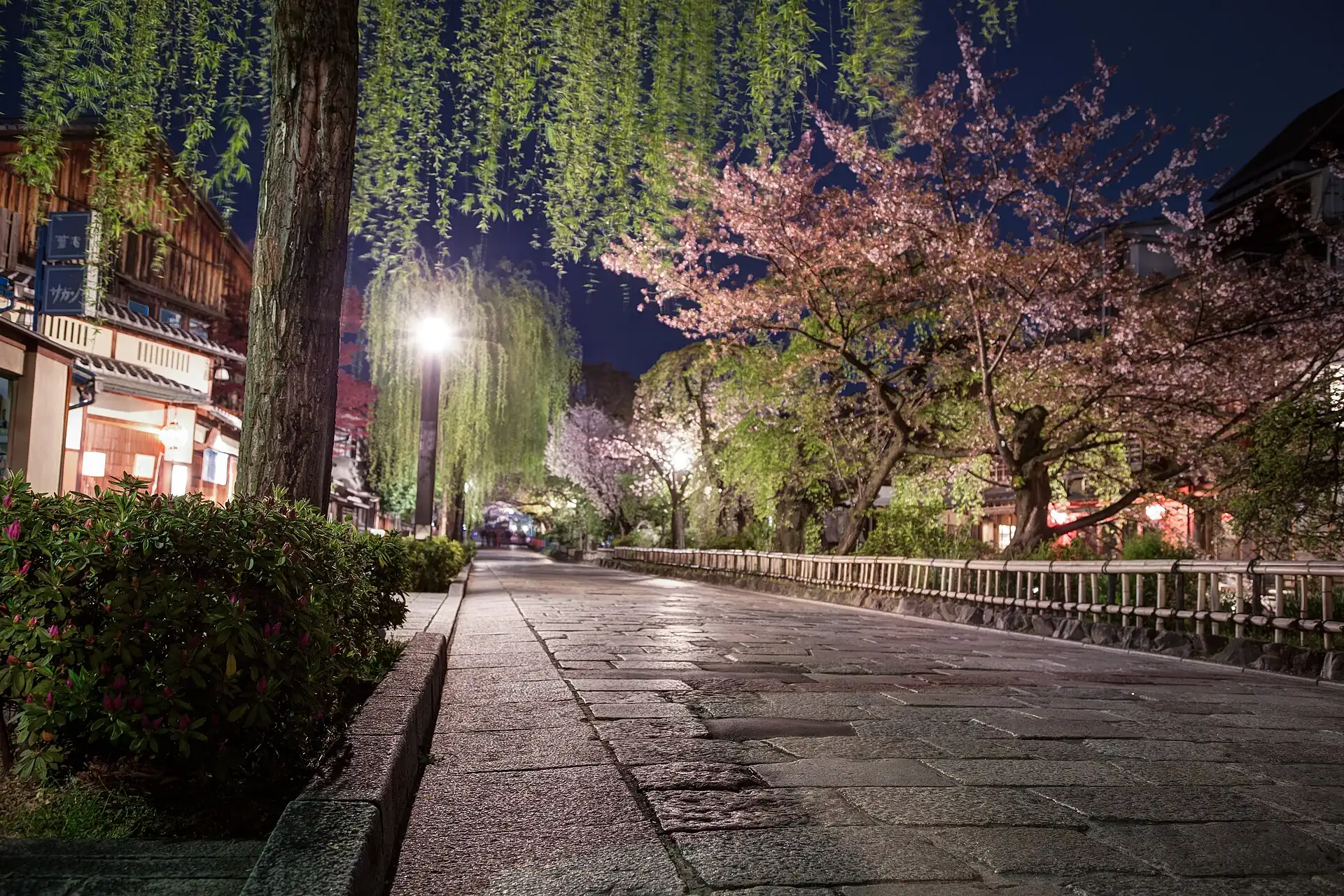
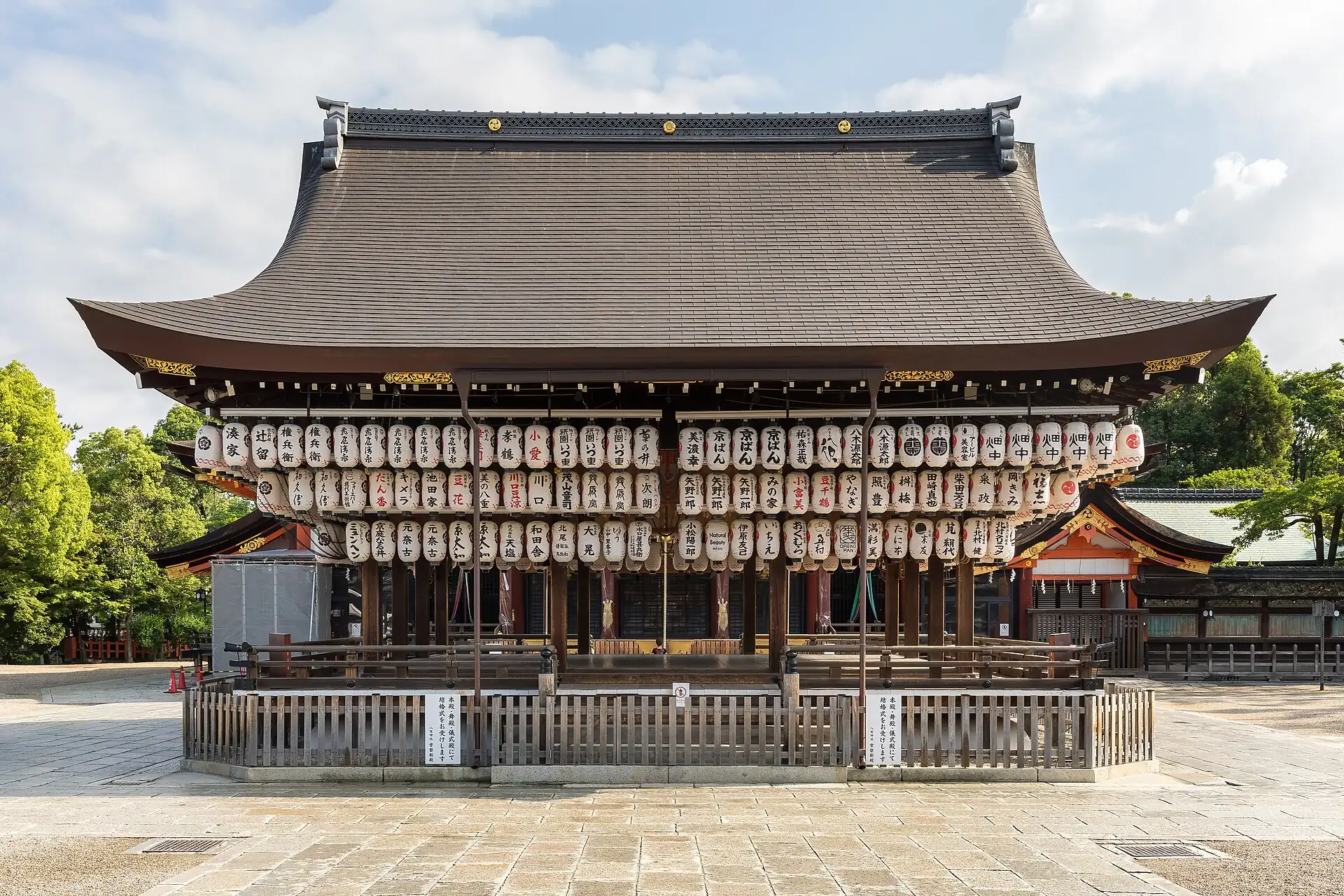
- The grounds never close: use it as the free end of the Higashiyama walk, at dawn or after dark when the lanterns are lit.
- Kyoto's best rain-day sight: one long indoor hall of 1,001 statues, 30–40 minutes, shoes off; combine with the National Museum across the road.
Edges out
| To | How | p50 | Climb |
|---|---|---|---|
| Gion | Downhill walk via Yasaka | ~12 min | 30 m (98 ft)98 ft (30 m) down |
| Fushimi (Inari) | Taxi or Keihan from Gion-Shijō | ~25 min | flat |
Sleep within reach
- Kawaramachi / Sanjō — 25–32 min
- Kyoto Station area — 30–40 min
Red lines here
- No eating while walking where signed on the temple approaches.
After dark, rain, kids, toiletsAfter dark · Rain plan · With kids · Toilets and water
After dark
- still open
- Yasaka Shrine grounds (no gate hours), a few bars and restaurants at the Gion end, convenience stores on Higashiōji-dōri.
- closed
- Temples outside special illumination dates; most Sannenzaka and Ninenzaka shops close around 17:00–18:00.Temples outside special illumination dates; most Sannenzaka and Ninenzaka shops close around 5:00 PM–6:00 PM.
- watch
- Safe streets but dim lanes and uneven stone steps — use a phone light going down; the last buses up the slope fill early.
Rain plan
| If | Do this |
|---|---|
| Light rain | Keep the walk; the stone steps are slippery — take the Kiyomizu-zaka slope down instead of the Sannenzaka steps. |
| Heavy rain | Swap to Sanjūsangen-dō (indoor hall) and the Kyoto National Museum (check its closed day, usually Monday). |
| Storm warning | Temples may close the stage; stay downtown in the covered arcades. |
With kids
- Steps and crowds: carrier, not stroller.
- Plan the walk downhill (Kiyomizu → Yasaka) so small legs are not climbing.
- Snack stops every 10 minutes on Sannenzaka; eat at the shop, not walking.
Toilets and water
| What | Where | Note |
|---|---|---|
| Toilets | Kiyomizu-dera entrance area and near Otowa | Free. |
| Toilets | Kōdai-ji car park / Nene-no-michi public toilet | Free; the middle of the walk. |
| Toilets | Maruyama Park and Yasaka Shrine | Free; also open after dark. |
| Drinks | Vending machines every block | ¥130–200 (≈ US$1–2) a bottle; no drinking fountains to rely on. |
| Benches | Kiyomizu-dera near Otowa, Kōdai-ji approach, Maruyama Park | Few benches on Sannenzaka/Ninenzaka themselves; buy a seat in a tea house. |
Deep dive
Questions people ask
How long does the Higashiyama walk take?
25–35 minutes of walking for about 1.5 km (0.9 mi). With Kiyomizu-dera and short stops plan 2–3 hours; the planner on this page times it for your start and pace.25–35 minutes of walking for about 0.9 mi (1.5 km). With Kiyomizu-dera and short stops plan 2–3 hours; the planner on this page times it for your start and pace.
Should I walk it uphill or downhill?
Downhill: start at Kiyomizu-dera and finish at Yasaka Shrine. The stone steps are easier going down and you end next to Gion's trains and buses.
When is it least crowded?
Before 08:00. From 10:00 to 16:00 the upper lanes are packed, more so in blossom and autumn-leaf weeks.Before 8:00 AM. From 10:00 AM to 4:00 PM the upper lanes are packed, more so in blossom and autumn-leaf weeks.
Can I walk it with a suitcase?
No. The lanes are steps with no ramps and there are no lockers on the route; leave bags at Kyoto Station or the hotel first.
Is it worth walking at night?
Only the lower end: Yasaka Shrine is open and lit all night. The upper lanes are closed up and dim by 18:00.Only the lower end: Yasaka Shrine is open and lit all night. The upper lanes are closed up and dim by 6:00 PM.
Where can I eat on the route?
Tea houses and snack shops from about 09:00; eat seated in the shop. For a full meal walk on to Gion after Yasaka.Tea houses and snack shops from about 9:00 AM; eat seated in the shop. For a full meal walk on to Gion after Yasaka.
Around this cluster
Straight-line distance; walk time adds 30% for streets.
- Eat% Arabica Higashiyama180 m · 3 min walk
- PlaceKiyomizu-dera490 m · 8 min walk
- PlaceYasaka Shrine660 m · 11 min walk
- ClusterGionnearest point: Hanamikoji south: convenience store + bench740 m · 12 min walk
- PlaceKennin-ji790 m · 13 min walk
- ClusterDowntown (Nishiki / Pontochō)nearest point: Shijō-Kawaramachi department store (AC, WC)1.2 km · 20 min walk