Libreville
Code GA · 4 walking zones
Libreville is a two-night base: see the sea front and the market before 10:30, rest indoors at midday, use hotel-arranged cars after dark — and settle the park transfer before you leave the city.Libreville is a two-night base: see the sea front and the market before 10:30 AM, rest indoors at midday, use hotel-arranged cars after dark — and settle the park transfer before you leave the city.
Our quick read of Libreville, scored 1–5 (friction is out of 100). Cash need: how often you still need notes. Heat risk: how hot days get. Stroller: how easy wheels are. Friction: overall effort for a first visit. Desk judgements, so check before relying on them.
- Local time
- --:--
- Weather
- forecast below
- Currency
- XAF
- Best months
- Jan · Jun · Jul · Aug · Dec
- Airport
- Léon Mba (LBV)
Walking zones: the 4 areas this guide plans a day around. Each is a district you can cover on foot, so you do one zone per half-day and ride the train between them. The code (GA 01, GA 02…) is just the zone's number on the Libreville line; the line under each name says how bags fare there and how much time it needs.
Map of Libreville
Use the switches to show or hide each kind of pin. A switch that is on shows its pins on the map; tap it again to hide them. "Show only" keeps just the pins that match (for example, places that fit a suitcase). Tap any pin for its name and a link to its page.
- Where to sleep
- Places
- Eat
- Walking clusters
- Rest stops
From the airport Léon Mba (LBV) to your bed
Tap a pin for its card. Places without their own coordinates are shown by their walking cluster.
Why Libreville
Libreville is spread along the Estuary coast, prices are high for the region and the walkable pieces are small. The trips that go wrong walk long stretches in midday heat, carry cash into the Mont-Bouët market crowd, or arrive with no car booked. Four clusters cover a first visit; the parks are reached by plane, boat or the Transgabonais train, so keep the Libreville bed on both sides of the park.
See first
- 1National Museum of Arts and Traditions · 45–60 min
- 2Sea-front promenade · 45 min
- 3
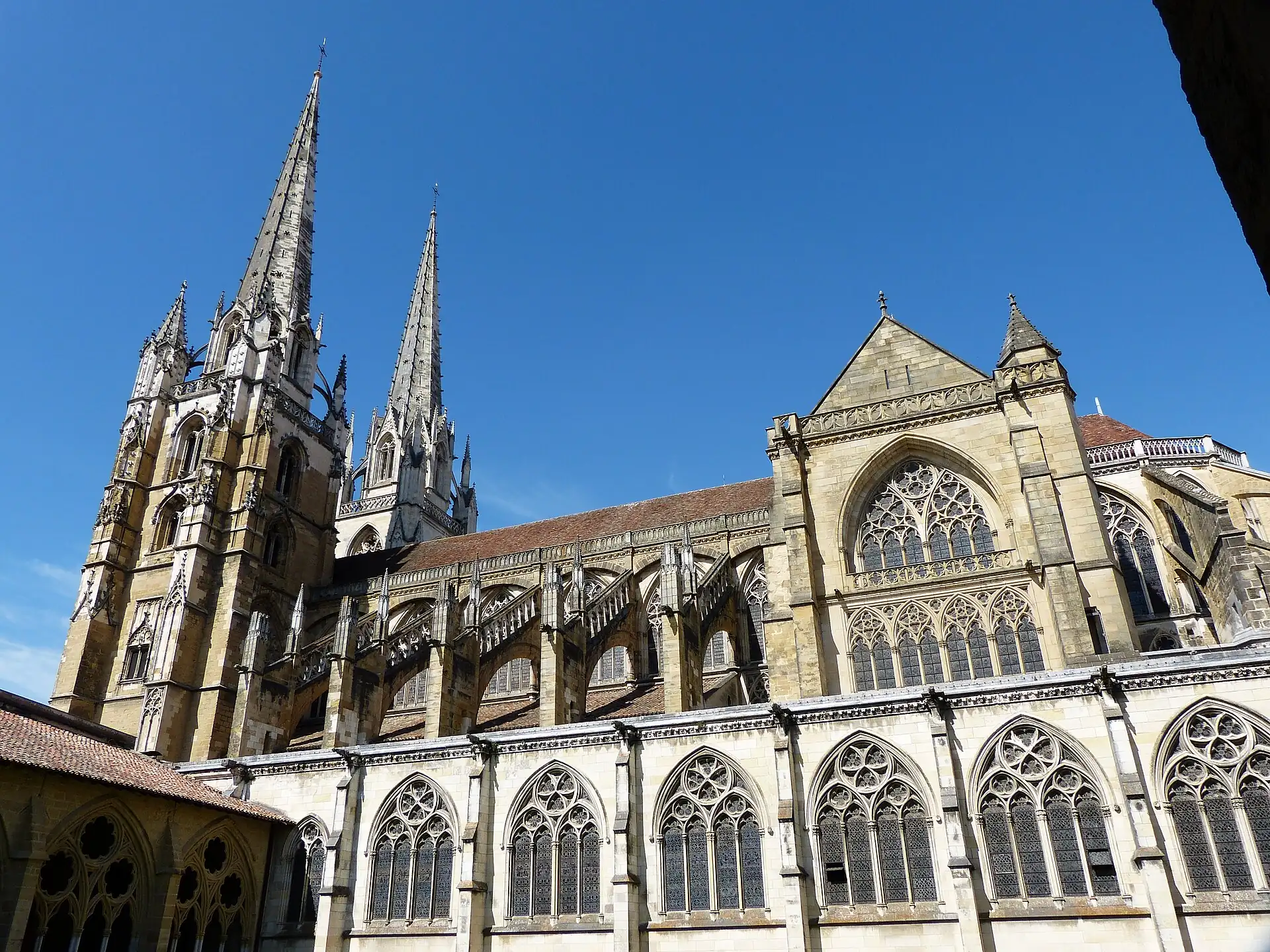 Sainte-Marie Cathedral · 15–30 min
- 4Mont-Bouët market · 30–45 min
- 5Saint-Michel church, Nkembo · 20–30 min
Fits
- Short stays before or after a park trip
- Travellers who book cars through a hotel
- Early risers
Does not fit
- Strollers and wheelchairs (pavements)
- Travellers on a tight budget
- Midday walkers
How long
- 2 daysBord de Mer and the museum, Mont-Bouët market morning
- 3 daysFour clusters, mornings and evenings only
- 5 daysFour clusters + Pongara across the water or a park transfer day + one slow day
Good for
- First timers
- Nature lovers
- Solo
- Families
About Libreville
Libreville sits on the north shore of the Gabon Estuary, where the Komo river meets the Atlantic. Coastal Mpongwe (Myene) communities lived here when European traders began to call in the 16th century, and Portuguese sailors named the estuary Gabão, after the shape of a hooded cloak.
In 1849 the French settled a group of people freed from a slave ship on the shore and named the settlement Libreville, the free town, on the model of Freetown in Sierra Leone. It became capital of the French colony of Gabon and, at independence on 17 August 1960, the capital of the new republic.
Good to know
- Libreville is the capital on the Estuary coast; the rainforest parks (Loango, Lopé, Pongara) are a plane, boat or train ride away.
- No walk-in tourist office worth planning around: your hotel and the Gabon tourism board website are the practical sources.
- Book park trips, boats and drivers through a licensed operator or your hotel, a few days ahead in the peak season.
Go deeper 10 min read · 6 chapters
Libreville is a capital on an estuary, at the edge of one of the most forested countries on earth. It was founded as a settlement for freed people, grew rich on timber and oil, and now serves as the gateway to Gabon's parks. This deep dive reads the city through its founding, its districts, its buildings, its cultures, its forests and its food.
1History2 min
The Gabon Estuary, where the Komo and Mbé rivers meet the Atlantic, was a trading place long before Libreville existed. Coastal Mpongwe (Myene) communities lived along its shore and dealt with European ships from the 16th century, when Portuguese sailors gave the estuary the name Gabão, after the shape of a hooded cloak. Ivory, timber and enslaved people were the main goods, and the coastal clans grew wealthy as go-betweens with the peoples of the interior.
France arrived in force in the 1840s. A treaty with a leading Mpongwe chief in 1839 gave the French a foothold, and in 1849 they landed a group of people freed from a captured slave ship on the north shore of the estuary. They named the settlement Libreville, the free town, on the model of Freetown in Sierra Leone. It became the seat of a French colony, and in 1910 it was the capital of Gabon inside French Equatorial Africa, whose overall capital was Brazzaville.
Gabon gained independence on 17 August 1960, with Léon M'ba as its first president. After a coup attempt in 1964, French paratroopers restored M'ba, and when he died in 1967 Omar Bongo took over. Bongo led the country for more than four decades, and his rule saw oil pay for roads, hospitals and grand buildings while also concentrating power. Multiparty politics were introduced in the early 1990s after a national conference and unrest, but the Bongo family remained dominant.
Omar Bongo died in 2009 and his son Ali Bongo succeeded him. Disputed elections in 2016 led to unrest, and in August 2023 the military ended the family's rule; a transition led to a new presidential election in 2025. Visitors should check current advice before travelling, because political events have brought curfews and restrictions in recent years. The city itself today is calm by day, and most of the history is visible in its names, its churches and its long sea road.
A useful way to read the layers is by the road names and the buildings along the shore: mission churches from the first decades, ministries from the oil years, and new towers from the last twenty. Each generation has built on the same narrow strip between the water and the hills, which is why the city feels stretched rather than centred.
- Estuary name
- Gabão, from Portuguese, after a hooded cloak
- Libreville founded
- 1849, for people freed from a slave ship
- Independence
- 17 August 1960
- Omar Bongo in power
- 1967–2009
- Military takeover
- August 2023
2Neighbourhood stories2 min
Libreville is a long, narrow city stretched along the northern shore of the estuary, with the sea on one side and hilly forest on the other. The centre, on the shore, holds the sea road known as the Bord de Mer, the cathedral, the National Museum, the main hotels and many government buildings, and it is the easiest place to start. Because the city has grown along a few main roads, the districts are strung out rather than gathered, and getting from one to the next is a matter of a car and some patience.
Mont-Bouët, inland to the east, is the city's big market district and the busiest part of town. The market spills across several streets, with food, fabric, household goods and crafts, and it is loud, hot and crowded. It is also one of the best places to see everyday life, if you go early with a driver who waits and leave before the crowds build and the heat makes it hard work. Pickpockets work the crowds, so leave the passport at the hotel.
Nkembo, north of the centre, is a mostly residential quarter best known for its wooden church with painted decoration. Sablière, to the south along the shore, is a quieter area of hotels, seaside restaurants and residential streets, and a pleasant place for a dusk walk and dinner. Further afield are Owendo, the port and the starting point for the Transgabonais railway; Akanda, with the mangrove park to the north; and the airport suburbs on the road out of the city.
For a visitor the useful rule is to base yourself in the centre or Sablière and treat Mont-Bouët and Nkembo as morning visits by car. The distances are short on a map, but the rush hours and the rain slow everything, so leave early and be back at the hotel before the afternoon traffic.
Almost every address is given by a landmark, a junction or a quarter, not a house number, so agree the destination by name with your driver and keep a map pin as backup. Taxis are shared and unmetered, so settle the fare before you get in.
- Clusters of a first visit
- Bord de Mer, Mont-Bouët, Nkembo, Sablière
- Airport
- Léon-M'ba, about 11 km (6.8 mi) north of the centreLéon-M'ba, about 6.8 mi (11 km) north of the centre
- Port and railway station
- Owendo, south of the centre
3Architecture2 min
The oldest surviving buildings in Libreville are colonial: churches, missions and a few administrative villas of wood and brick built by the French and by missionaries in the second half of the 19th and early 20th centuries. The tropical climate has destroyed many of them, and the ones that remain are worth seeing for what they show about the first city, a mission station and trading post at the water's edge. Sainte-Marie Cathedral, the main Catholic church in the centre, is the most visible example.
The wooden church at Nkembo, Saint-Michel, is a different kind of building: a timber church whose interior is known for painted decoration, and one of the best small examples of how Gabonese craft and Catholic architecture met. It is a short visit and repays a driver who waits, since the area has few other sights.
The oil years reshaped the sea front. From the 1970s the state built ministries, hotels, a national assembly and presidential buildings along the shore road in a confident modernist and concrete style, often with outside help, and later governments added stadiums and conference halls. Many of these are off limits for photography, so keep the camera down near anything official. More recent private towers and hotels on the shore show a city that is still building upward.
Away from the centre, most homes are low concrete and wood, colourful and improvised, on steep streets that climb the hills. A drive along the estuary road at the start or end of the day is the best way to take in the mix of old wood, new glass and forest edge that gives Libreville its look.
When you photograph, choose churches, the shore and street scenes, and avoid anything with a guard post, a flag or a uniform in the frame. The best light on the sea front is early morning and the hour before sunset, and the best views of the estuary are from a hotel terrace or a shore restaurant. Rain can turn a good morning grey within minutes, so keep a covered alternative such as the museum in mind.
- Main church
- Sainte-Marie Cathedral, in the centre
- Painted wooden church
- Saint-Michel, Nkembo
- Oil-era style
- Concrete ministries and hotels along the sea road
4Forest, coast and the parks2 min
More than four-fifths of Gabon is covered in forest, and the country's identity is tied to it. In 2002 the government created thirteen national parks covering about a tenth of the territory, after surveys of the forest by conservationists showed how much intact rainforest remained. Loango, Lopé, Ivindo, Pongara and Akanda are among the best known, and together they protect forest elephants, gorillas, chimpanzees, mandrills, hippos on beaches and nesting sea turtles.
Libreville is the base for most of them, and two are close enough for a day trip. Pongara National Park lies across the estuary and is reached by boat from the sea front, with a coast of mangroves and beaches where leatherback turtles nest from roughly November to February; Pointe-Denis, the small beach community on the opposite shore, is the usual landing. Akanda National Park, north of the city, protects mangroves and a large number of migrating birds. Further away, Lopé is reached by the Transgabonais train or a flight, and Loango by air and boat from Port-Gentil.
Nature travel here is expensive and needs planning: lodges are few, transport is by boat, plane or a long train ride, and the rains and the sea decide the schedule. Book a licensed operator, allow buffer days at both ends and keep your Libreville bed for the return. Between June and September, humpback whales pass the coast, and boat trips are offered in season.
The forest also shapes the city. The Arboretum Raponda Walker, a forest reserve near the northern edge, is named for a Gabonese priest, botanist and ethnologist who recorded the plants and languages of the country, and it offers an easy taste of the woods without a long journey. Ask about access before you go, and do not buy bushmeat, ivory or other animal products, whatever is offered.
Park visits also bring rules: stay on paths, keep your distance from wildlife, follow your guide and never feed animals. Malaria prophylaxis, repellent and a yellow fever certificate are part of the packing list for any trip beyond the city.
- National parks created
- 13, in 2002
- Turtle nesting
- Roughly November to February at Pongara
- Whale season
- Roughly July to September
5Masks, music and everyday culture2 min
Gabon is home to more than forty ethnic groups, among them the Fang, the largest, and the Myene, Punu, Kota, Tsogho and Teke. Their art is best known for masks and reliquary figures: the white-faced masks of the Punu, the elongated Fang masks and the metal-covered Kota guardian figures placed on baskets of ancestral bones. Early 20th-century European artists collected such pieces, and they are often said to have influenced modernist painting and sculpture.
The National Museum of Arts and Traditions in Libreville shows masks, figures and everyday objects from these peoples, and is the best single introduction. Labels can be sparse, so a guide or a good book adds a lot. Craft sellers on the sea front and near the market offer masks and carvings, but quality and origin vary, and antique or ritual pieces may be subject to export rules; ask before you buy and never buy anything made from ivory or protected animals.
Religion in Gabon mixes Christianity, especially Catholicism, with older traditions. Among the Fang and Tsogho, the Bwiti religion uses music, dance and the root bark of the iboga plant in all-night ceremonies. It is a serious tradition, not a tourist show, and visitors should not attempt to attend without a proper introduction. Church on Sunday is a more accessible way to see community life: families dressed in their best, choirs and long services.
Popular music in Libreville draws on Central African rumba and Congolese soukous, on Cameroonian makossa and on Gabonese artists who mix traditional instruments such as the harp-like ngombi with guitars and drums. Football is the passion of the streets, and matches and bar televisions draw crowds. French is the language of daily life, with Fang and other local languages heard everywhere; a greeting in one of them, such as mbolo, earns a smile.
The best way to meet these traditions is slowly: an hour in the museum, a conversation with a craft seller who knows where a piece was made, and a Sunday morning near a church.
- Largest ethnic group
- Fang
- Traditional religion
- Bwiti, using music, dance and iboga
- Working language
- French
6Food history2 min
Gabonese cooking draws on the forest, the river and the sea, with a layer of French influence in the cities. The everyday starch is manioc, prepared as bâton de manioc, a fermented cassava paste steamed in a leaf, or as flour and leaves. Plantain, taro and yam fill the same role, and rice is common in town. Sauces are built on palm oil, peppers, onions and groundnuts, and most meals arrive with a plate of something spicy on the side.
The national dish is poulet nyembwe, chicken stewed in a sauce made from the pulp of the palm nut, thick, rich and slightly bitter, served with manioc or rice. It is a slow dish and best ordered ahead or at a sit-down restaurant. Poisson braisé, whole fish grilled over charcoal with pepper and onion and served with fried plantain, is the city's evening food, sold at open-air stalls along the sea road and in the neighbourhoods. Peanut sauces, smoked fish and greens cooked with palm oil round out the home menu.
French colonial influence shows in the bakeries, where baguettes, croissants and coffee are morning staples, and in the large Lebanese and West African communities whose restaurants and shops add shawarma, grills and other dishes. Prices in Libreville are high for the region, especially in hotels and sit-down restaurants, so a mix of stalls, bakeries and one good dinner is the best value.
Local beers, such as Régab and Castel, are brewed in the country, and palm wine is drunk in local bars. In markets and some restaurants you may be offered bushmeat, meat from wild animals; some species are protected, and it carries real health risks, so it is best avoided. Drink bottled water only, and eat at busy places where the food is cooked hot in front of you.
Ask for the price of fish and specials before anything is cooked, keep small notes for stalls, and expect to pay more for the same dish on the sea front than in a neighbourhood stall.
- Everyday starch
- Bâton de manioc (fermented cassava)
- National dish
- Poulet nyembwe (palm-nut chicken)
- Evening food
- Poisson braisé (grilled fish)
- Local beers
- Régab, Castel
Photos
Libreville park Photo: Val Traveler, CC BY-SA 4.0
Immeuble Gabon Mining Logistics au Centre-ville de Libreville Photo: Delrick Trevor, CC BY-SA 4.0
Rules in force · 9Nine African countries on this site have no trip line bec…Sort the visa before the flight
- Africa ↗When a route touches a yellow-fever country — even a transit of 12 hours or more — keep the original yellow card (ICVP) in your hand luggage; health desks and airlines can refuse boarding or entry without it.
- Africa ↗Nine African countries on this site have no trip line because governments advise against travel; several others have no-go regions. Read your government's advice for every country on the route before paying deposits.
- Central Africa ↗Sort the visa before the flight: none of the seven countries reliably issues tourist visas on arrival to Western passports, and e-visas here are tied to named airports.
- Central Africa ↗Carry the original yellow fever vaccination certificate in your hand luggage; health desks at every Central African airport ask for it, and a missing card can mean refusal or a jab at the desk.
- Central Africa ↗Before booking anything in or near the DRC, read the WHO Ebola situation page and your own government's health notice: the 2026 outbreak brought quarantine and boarding rules for people who have been in the DRC.
- Gabon ↗Apply for the Gabon e-visa only on evisa.dgdi.ga; it is valid for arrival at Libreville's Léon Mba airport, so any land entry needs an embassy visa.
- Gabon ↗Book a travel-clinic visit several weeks ahead: malaria prevention is needed in every part of Gabon, including Libreville.
- Gabon ↗Visits to national parks are arranged through licensed lodges or operators; park fees are set by the national parks agency, so confirm what your package includes.
- Libreville area ↗Sleep in Libreville the night before any onward flight; small planes and the train run late or cancel.
Entry rules depend on your passport. Full visa guide
Emergency numbers for Librevilleopen ▾
- Policecheck locally
- Hotel front desksave on arrival
Tap a number to call from your phone. These are the numbers listed in this guide; a row marked check has not been verified.
Planning is the full guide. I'm here keeps what is open and the cheat card.
Right now
Checking the weather…
Working out what is open near you…
What is open nowclock, closures, places open
Now in Libreville
Local time in Libreville
--:--
Loads in your browser · Africa/Libreville
This month
Month verdict appears here.
Closed today
See the weekly grid below.
If today is a closure day: Check your government's advice for Gabon and any curfew or election news on the morning you plan to go out; conditions can change and are not tracked live here.
This page gives a first-visit structure, not live status. Check locally before any trip outside the centre.
Cheat cardthe pocket version
Cheat card
The essentials on one card: save it as an image for your phone, share it, or print it.
Libreville
- Money
- Bring euros in cash as a reserve and keep XAF 20,000 in small notes…
- SIM
- Buy a SIM (Airtel Gabon or Moov Africa) at a shop or the airport with your passport; data works well in the city.
- Emergency
- check locally police · save on arrival Hotel front desk (not 911, 999 or 000)
- Plugs
- Sockets C/E. US/Canada (A/B): adapter · UK/Ireland (G): adapter · Australia/NZ (I): adapter. 240 V: US 120 V-only devices (hair dryers) need a converter; most chargers are dual-voltage.
Top 5
- National Museum of Arts and Traditions
- Sea-front promenade
- Sainte-Marie Cathedral
- Mont-Bouët market
- Saint-Michel church, Nkembo
EssentialsQuick answers, what things cost and how to get around
Essentials
Quick answers, what things cost and how to get around
Quick answers
The questions people ask first about Libreville, one line each. Tap a card for the full answer.
- Cash or card?Cash (XAF) for taxis, markets and stalls; cards work at hotels, supermarkets and a few restaurants.
- Cash & ATMsBring euros in cash as a reserve and keep XAF 20,000 in small notes; withdraw only at bank machines inside banks or big hotels in daylight.
- SIM or eSIMBuy a SIM (Airtel Gabon or Moov Africa) at a shop or the airport with your passport; data works well in the city.
- Tap watercheckDo not drink tap water; use sealed bottled water and check the seal.
- TippingNot fixed.
- Plugs & powerSockets C/E. US/Canada (A/B): adapter · UK/Ireland (G): adapter · Australia/NZ (I): adapter. 240 V: US 120 V-only devices (hair dryers) need a converter; most chargers are dual-voltage.
Show all 14 answers
- Safe at night?Take more care after dark in Centre and Bord de Mer, Mont-Bouët, Nkembo and more.
- What to wearModest, neat dress at churches and markets; Sunday best is common on Sundays.
- RestroomsHotels, cafés and shopping centres; carry tissues.
- Emergency numberscheckcheck locally police · save on arrival Hotel front desk (not 911, 999 or 000)
- Your embassycheckUS embassies listed with addresses (check before you go).
- Sundays & holidaysSome restaurants close on Sundays.
- Rainy-day planWet seasons (Feb–May, Oct–Dec) bring heavy afternoon downpours: plan outdoor stops before noon, keep an indoor fallback for the afternoon…
- Landing lateLBV: pre-booked hotel car to the door runs all night.
Cost cheat-sheetwhat everyday things cost
Cost cheat-sheet
Typical prices for the everyday things, as ranges. Change the currency right here; the local price stays first.
2026 desk estimate · check
- CoffeeBaguette sandwich or croissant and coffeeXAF 1,500–4,000
- Sit-down mealPoulet nyembwe at a sit-down restaurantXAF 8,000–18,000
- Street or quick mealGrilled fish plate at a stallXAF 3,000–8,000
- BeerLocal beer, bottleXAF 1,000–2,500
- Taxi, about 5 km (3 mi)Taxi, about 3 mi (5 km)Taxi across the centreXAF 1,500–4,000
- SIM or eSIM, a weekLocal SIM with data, about a weekXAF 3,000–8,000
- Museum or sight ticketMuseum entryFree–XAF 3,000
- Budget bedFamily or larger room, a night, per roomXAF 60,000
- Mid-range bedHotel double room, a night, per roomXAF 85,000
- High-end bedHotel double room, a night, per roomXAF 200,000
A day, not counting the bed: Budget XAF 25,000 · Mid XAF 55,000 · High XAF 120,000
Local prices, with USD next to them (rates 2026-09 (approximate); change it in the header). Ranges are desk estimates: check locally. Every price and the budget calculator →
Source: Prices in Libreville
Draft
Written from desk research. Not yet compared with the official source.
No official source is recorded for this figure.
Prices are 2026 desk estimates, not yet compared with an official source. Check on the day.
Not checked in the last 12 months (no check date on file).
DecideWho it suits, the trade-offs and when to go
Decide
Who it suits, the trade-offs and when to go
Best months at a glance
The guide's verdict for each month
Jan
Best
31°C (88°F)88°F (31°C)
Feb
Care
31°C (88°F)88°F (31°C)
Mar
Care
32°C (90°F)90°F (32°C)
Apr
Care
32°C (90°F)90°F (32°C)
May
Care
31°C (88°F)88°F (31°C)
Jun
Best
29°C (84°F)84°F (29°C)
Jul
Best
27°C (81°F)81°F (27°C)
Aug
Best
28°C (82°F)82°F (28°C)
Sep
Care
29°C (84°F)84°F (29°C)
Oct
Avoid
30°C (86°F)86°F (30°C)
Nov
Avoid
30°C (86°F)86°F (30°C)
Dec
Best
30°C (86°F)86°F (30°C)
Best: Jun–Aug, Dec–Jan. Mixed: Feb–May, Sep. Avoid: Oct–Nov. Month by month →
Warmest Mar (32°C (90°F)90°F (32°C)), coolest Jul (21°C (70°F)70°F (21°C) low), wettest Nov (21 rain days), driest Jul (1). Averages, not a forecast.
Libreville across the year
Best-looking months for Libreville: Jun, Jul, Aug. Rated avoid: Oct, Nov.
| Measure | Jan | Feb | Mar | Apr | May | Jun | Jul | Aug | Sep | Oct | Nov | Dec |
|---|---|---|---|---|---|---|---|---|---|---|---|---|
| Weather | Good (good) | Mixed (care) | Mixed (care) | Mixed (care) | Mixed (care) | Great (good) | Great (good) | Great (good) | Mixed (care) | Avoid (avoid) | Avoid (avoid) | Good (good) |
| Crowds | Low (good) | Low (good) | Low (good) | Low (good) | Low (good) | Medium (ok) | High (care) | High (care) | Medium (ok) | Low (good) | Low (good) | Medium (ok) |
| Prices | Medium (ok) | Medium (ok) | Low (good) | Low (good) | Low (good) | High (care) | High (care) | High (care) | Medium (ok) | Low (good) | Low (good) | Medium (ok) |
| Events | 2 events (ok) | 1 event (ok) | None listed (ok) | None listed (ok) | None listed (ok) | None listed (ok) | 1 event (ok) | 2 events (ok) | 1 event (ok) | None listed (ok) | 1 event (ok) | 3 events (ok) |
Green is good news, amber needs planning, red is a month to avoid; dashed grey with a question mark means our data does not say. Open the year heatmap →
Not checked in the last 12 months (no check date on file).
Source: Months, temperatures and crowds
Draft
Written from desk research. Not yet compared with the official source.
Monthly highs, rain and crowd levels are climate averages and desk estimates for the city, not a forecast.
Understand the cityUnderstand · Districts
Orientation & districts
The centre and sea front (Bord de Mer) sit on the shore, with the cathedral and museum close together. Mont-Bouët, the big market district, lies inland to the east. Nkembo, with its church, is north of the centre. Sablière, a residential and hotel area, runs along the shore to the south. Owendo, the port, lies further south; the airport is north.
Street addresses are given by landmark or quarter, not house number. Agree destinations with your driver by name and keep a pin on your phone.
Shaded shapes: walking areas (click one). Black pins: sleep areas. Grey dots: places. Round badges: arrivals. Click the map to turn on scroll-wheel zoom.
Hover, tap or tab to an area to see what it is like. Pins are sleep areas; arrows at the edge point to the airport.
Off the map: Léon Mba International Airport (LBV) (30–60 min by the usual route).
Not drawn yet (no coordinates in this guide): Owendo and the port. They are in the neighbourhood cards below.
Where’s what, as a list:
- Centre and Bord de Mer: Sea front, cathedral, museum and the main hotels; the easiest base for a short stay. Suits: First visit, hotel-based stays. Price band $$$.
- Mont-Bouët: The biggest market in the city; crowded and hot, so go early with a driver who waits. Suits: One market morning.
- Nkembo: A painted wooden church and residential streets north of the centre; go with a driver. Suits: One church visit.
- Sablière: Hotels, restaurants and a shore walk; a car to everything else. Suits: Seaside evenings, quieter nights. Price band $$.
- Owendo and the port: A working district; not a base for a first visit. Suits: The Transgabonais train station and the port.
- Sleep area City centre and Bord de Mer: suits First visit, hotel-based stays, price band $$$.
- Sleep area Sablière: suits Seaside evenings, quieter nights, price band $$.
- Léon Mba International Airport (LBV), 30–60 min by the usual route.
Neighbourhoods at a glance
One tab per area, pulled together from this guide’s districts table, area notes, sleep-area scores and place pages. Scores are desk judgements (1–5); prices are estimates, check before you book.
Centre and Bord de Mer
$$$Sea front, cathedral, museum and the main hotels; the easiest base for a short stay.
- Suits:
- First visit, hotel-based stays
- Best time:
- Morning and early evening
- Rooms:
- XAF 140,000+ (from the sleep guide)
Pick this if: First-time visitors, business travellers
Watch out for: Photographing government buildings and the palace.
- Quiet nights3/5 Medium
- Nightlife3/5 Medium
- Families3/5 Medium
- Late arrival4/5 High
Why these scores
- Quiet nights: Traffic noise by day; calmer at night.
- Nightlife: Hotel bars and a few restaurants.
- Families: Manageable with a car for every outing.
- Late arrival: 24-hour desks at the bigger hotels.
Getting around from here
- Car east: about 14 min to Mont-Bouët market
- Car north: about 12 min to Nkembo & Saint-Michel
- Car south: about 14 min to Sablière shore
Mont-Bouët
The biggest market in the city; crowded and hot, so go early with a driver who waits.
- Suits:
- One market morning
- Best time:
- 07:00–10:007:00 AM–10:00 AM
Pick this if: A guided early market morning
Watch out for: Afternoons and big bags.
Getting around from here
- Car west: about 14 min to Bord de Mer & city centre
- Car north-west: about 14 min to Nkembo & Saint-Michel
Nkembo
A painted wooden church and residential streets north of the centre; go with a driver.
- Suits:
- One church visit
- Best time:
- Morning, outside services
Pick this if: A short church visit
Watch out for: Walking after the driver leaves.
Getting around from here
- Car south: about 12 min to Bord de Mer & city centre
- Car south-east: about 14 min to Mont-Bouët market
Sablière
$$Hotels, restaurants and a shore walk; a car to everything else.
- Suits:
- Seaside evenings, quieter nights
- Best time:
- Dusk
- Rooms:
- XAF 60,000–120,000 (from the sleep guide)
Pick this if: Evenings and quieter nights
Watch out for: Walking on the dark shore road.
- Quiet nights4/5 High
- Nightlife3/5 Medium
- Families4/5 High
- Late arrival3/5 Medium
Why these scores
- Quiet nights: Quieter, residential and close to the shore.
- Nightlife: Seaside restaurants and hotel bars.
- Families: More space and the shore; a car for outings.
- Late arrival: Confirm your ride back.
Getting around from here
- Car north: about 14 min to Bord de Mer & city centre
Owendo and the port
A working district; not a base for a first visit.
- Suits:
- The Transgabonais train station and the port
Decide
The honest trade-off: what you will enjoy, what will wear you down.
You will like
- Sea front and estuary light
- Markets and street grills
- A base for the parks
You will hate
- Heat and humidity
- High prices
- Traffic at rush hour
Similar citiesif this one is not quite right
Similar cities
If Libreville does not fit your dates or budget, these match it on season, cost and feel.
- Entebbe
Uganda
- Good in the same months: Jan, Jun, Jul, Aug, Dec
- A similar climate through the year
- São Tomé
São Tomé and Príncipe
- Good in the same months: Jan, Jun, Jul, Aug
- A similar climate through the year
- Kinshasa
Democratic Republic of the Congo
- Good in the same months: Jun, Jul, Aug
- A similar climate through the year
When
Best months: Jan, Jun, Jul, Aug, Dec. Month-by-month verdicts below, with the live forecast first. When to go, month by month →
Libreville: next 7 days
Loading forecast…
Forecast: Open-Meteo (CC BY 4.0), model data for this point.
Air quality
Loading…
Model estimate (CAMS via Open-Meteo), not a street-level station; readings near busy roads run higher.
Month by month, all 12best Jan, Jun, Jul, Aug, Dec
Short dry spell; hot, some showers.
Rains return; humid.
Rainy season; storms.
Rainy season; storms.
Rains ease late in the month.
Long dry season begins; cooler, cloudy.
Dry, cloudy; coolest weeks.
Dry; Aug 17 Independence Day.
Dry season ends; rains build.
Heavy rain and flooded streets.
Heaviest rain.
Short dry spell; hot.
Climate, calendar and eventsClimate · Calendar · Events · Packing by season
Climate
| Jan | Feb | Mar | Apr | May | Jun | Jul | Aug | Sep | Oct | Nov | Dec | |
|---|---|---|---|---|---|---|---|---|---|---|---|---|
| High | 31°C (88°F)88°F (31°C) | 31°C (88°F)88°F (31°C) | 32°C (90°F)90°F (32°C) | 32°C (90°F)90°F (32°C) | 31°C (88°F)88°F (31°C) | 29°C (84°F)84°F (29°C) | 27°C (81°F)81°F (27°C) | 28°C (82°F)82°F (28°C) | 29°C (84°F)84°F (29°C) | 30°C (86°F)86°F (30°C) | 30°C (86°F)86°F (30°C) | 30°C (86°F)86°F (30°C) |
| Low | 23°C (73°F)73°F (23°C) | 23°C (73°F)73°F (23°C) | 23°C (73°F)73°F (23°C) | 23°C (73°F)73°F (23°C) | 23°C (73°F)73°F (23°C) | 22°C (72°F)72°F (22°C) | 21°C (70°F)70°F (21°C) | 21°C (70°F)70°F (21°C) | 22°C (72°F)72°F (22°C) | 22°C (72°F)72°F (22°C) | 22°C (72°F)72°F (22°C) | 23°C (73°F)73°F (23°C) |
| Rain days | 12 | 13 | 17 | 18 | 14 | 3 | 1 | 2 | 8 | 20 | 21 | 15 |
| Verdict |
- June to August is the long dry season: cooler, often overcast, with little rain. The best months for the sea front and for whale watching.
- October and November are the wettest: heavy downpours flood streets, and boats and roads slow down.
- Humidity is high year-round, so plan indoor breaks in the afternoon.
Events by month
Independence Day
holiday17 August · Citywide, sea front
Public holiday; parades and road closures.
Christmas and New Year
holiday24 Dec – 1 Jan · Churches, homes, hotels
Churches full; hotel prices can rise.
Leatherback turtle nesting
festivalRoughly November to February (check) · Pongara beaches across the estuary(check dates)
Night walks with guides; book ahead.
Humpback whale season
festivalRoughly July to September (check) · Estuary and coast(check dates)
Boat trips offered in season.
Festivals and events that change the plan
| When | What | Effect on your plan |
|---|---|---|
| 17 August | Independence Day | Public holiday; parades and road closures along the sea front. |
| 1 January | New Year | Family gatherings; restaurants close early and prices rise. |
| 24–25 December | Christmas | Churches full; the cathedral holds midnight mass. |
| November–February | Leatherback turtle nesting at Pongara | Turtles nest on the beaches across the estuary; best from the Pointe-Denis side. |
| July–September | Humpback whale season off the coast | Boat trips from the estuary are offered in season; check the operator. |
What to pack, by season
From Libreville’s own climate table: the coldest, warmest and wettest three months, and what to bring for each.
Coldest months
Jun–Aug
21° to 28°
Light layers; evenings can still feel cool.
Warmest months
Feb–Apr
23° to 32°
Light, breathable clothes, a sun hat and sunscreen; plan midday indoors and carry water.
Wettest months
Oct–Dec
19 rain days a month
A compact umbrella or rain jacket and shoes that can get wet.
Arrive & moveGetting in, getting around, and your bags
Arrive & move
Getting in, getting around, and your bags
I land at…
Enter your landing time: what still runs from the airport, where you can eat when you get in, and which areas let you check in that late.
Léon Mba International Airport (LBV)
Out of the airport about 00:00 (next day)12:00 AM (next day) (01:25 (next day)1:25 AM (next day) if immigration and bags are slow); in town about 00:30 (next day)12:30 AM (next day).
Transport from the airport
- Any hourPre-booked hotel car to the door. Runs all night.
- Last resortOvernight near the airport. If nothing else works.
Places to eat open when you get in
We have no confirmed hours for the places to eat here yet. Plan on a convenience store or your hotel. What is open late →
Where to sleep with a late arrival
- Lets you inCity centre and Bord de Mer 24-hour desk. 24-hour desks at the bigger hotels.
- Call aheadSablière Desk hours not confirmed: message the hotel with your flight number. Confirm your ride back.
Typical times from our airport data, not a timetable: check the last departure on the day. Full airport-to-bed plan for Léon Mba International Airport (LBV) →
Arrive
Each gateway has its own airport-to-bed page with timings and the last safe connection.
Getting in, in detailGet in
Get in by rail and road
| Station | Mode | Serves | Where | To the centre |
|---|---|---|---|---|
| Léon-M'ba International Airport (LBV)Aéroport international Léon-M'bause | Air | International and domestic flights | About 11 km north of the centre | Hotel car 20–40 minUse a hotel-arranged pickup; do not photograph the terminal. |
| Owendo station (Transgabonais)limited | Train | Train to Lopé and Franceville | Owendo, south of the city | Car 30–45 minBook tickets ahead and check the schedule.(check) |
| Estuary boat landingscheck | Ferry | Pointe-Denis and Pongara | Sea-front jetties | Car to the jettyUse a licensed operator; conditions change with the tide and wind.(check) |
- Arrange your airport pickup with the hotel in advance and confirm the driver's name and car.
- Keep your passport or a copy accessible for checkpoints on any road trip.
Move
The default way around, when a pass pays off, and when the last trains go.
- Default
- Walk inside a cluster by day; a taxi or hotel-arranged car between clusters and after dark.
- Passes
- No pass. Agree the fare before you get in; hire a driver by the half-day for several stops.
- Last trains
- No rail in the city. Taxis thin out after dark: ask the hotel to book the ride back before you go out.desk estimate
- Other modes
- Other modes (Rome2Rio) ↗
Getting around, in detailGet around · Connect
Get around
Walk inside a cluster in daylight only; use a hotel-arranged or agreed-fare taxi for everything else, especially after dark.
| Mode | Verdict | Fare | Use it for | What breaks |
|---|---|---|---|---|
| Hotel-arranged car | use | XAF 25,000–50,000 for a half day | Between clusters and after dark | Agree the hours and fare in advance. |
| Taxi (street hail) | caution | XAF 1,500–4,000 across the centre | Daytime hops | Agree the fare before you get in; shared and unmetered. |
| Walking | caution | Free | Inside a cluster, daylight only | Uneven pavements, heat and little shade. |
| Minibus (taxi-bus) | skip | Cheap | Locals only | Crowded and confusing; not for visitors with bags. |
More on getting around
There is no metro or dependable public bus network for visitors. Addresses are by landmark, so agree the destination by name with your driver and keep a map pin as a backup. Traffic is heaviest at 07:00–09:00 and 16:00–19:00, and rain slows everything.
Connect
| Option | Verdict | What breaks |
|---|---|---|
| Airport or shop (Airtel Gabon, Moov Africa) | use | Passport needed; buy data on the spot. |
| Hotel-arranged SIM | ok | Convenient but sometimes marked up. |
Hotels, drivers, operators
The default channel: get your driver's number before you need it.
Google Maps
Orientation
Coverage is thinner than in big cities; confirm addresses by landmark.
- Wi-Fi
- Available at most mid-range and upmarket hotels; speeds vary and drop during power cuts.
Luggage
Where big bags are a problem, and how to get rid of them for the day.
Rule
- Lockers
- No public lockers; hotels hold bags after check-out.
- Forwarding
- No forwarding service; keep the big bag at the hotel for trips away.
- Dead zone
- Late check-out flights: ask the hotel to hold bags and for a shower room.
Bags, area by area
4 walking areas rated
Lockers, forwarding and the gap between check-out and check-in are covered once, under Luggage.
See & doWalking clusters, day plans and the places worth the time
See & do
Walking clusters, day plans and the places worth the time
Clusters
Plan by cluster: each is a walkable area with a rescue point and a bag rule.
Morning cluster: the sea front, the museum and the cathedral within a short car ride of each other; go before 10:30 and take the sea breeze.
rescue 100% · max p90 3.8′ · half
Early-morning cluster: the big market at its busiest before 09:00; go with a driver waiting, carry little, and leave by 10:30.
rescue 100% · max p90 3.8′ · half
Morning cluster: the painted wooden church and the neighbourhood around it, a short car ride north of the centre.
rescue 100% · max p90 3.8′ · half
Evening cluster: the Sablière shore and its restaurants at dusk, a car ride south of the centre; take a car home.
rescue 100% · max p90 3.8′ · half
Days
Ready-made day plans, timed against opening hours and walking distances.
How long are you staying?
Loose outlines in the city's rhythm: outdoors before the midday heat, a car for everything between clusters.
1 day
A stopover before or after a park trip
- 07:30Sea-front promenade (Bord de Mer) — Sea-front walk
- 09:00National Museum of Arts and Traditions — National Museum of Arts and Traditions
- 10:30Sainte-Marie Cathedral — Sainte-Marie Cathedral
- 12:30Sit-down lunch on the Bord de Mer — Lunch in the centre
- 14:00Rest indoors through the heat
- 17:30Grilled fish stalls on the sea front — Grilled fish at dusk
Skip: Mont-Bouët on a one-day stop: it needs a slow, early morning.
Libreville in 3 days
3 daysSea front and museum in the morning, the market at opening on the second day, the painted church on the last; every long leg is a car, and the last day ends with the bags already in it.
Day by day
Day 1 — Museum, cathedral, a 12:30 lunch table
- 08:00Sea-front promenade (Bord de Mer) (optional)
- National Museum of Arts and Traditions
- Sainte-Marie Cathedral (optional)
- 12:30Lunch table 12:30 (Bord de Mer)
Day 2 — Mont-Bouët market at opening, grilled fish at dusk
Day 3 — Nkembo church, car to the airport at 12:00
- 08:00Saint-Michel church, Nkembo
- Arboretum Raponda Walker (optional)
- Restaurant serving poulet nyembwe (Sablière) (optional)
- 12:00Car to the airport at 12:00
Places
“Best time” is when to arrive for the fewest crowds, for example “before 08:30”; “Go any time” means the hour makes little difference. More sights follow under “More sights and museums”.
Tours, classes and shows in Libreville →
Things to do in Libreville: shows, nightlife and activities →
If you do ten things in Libreville
Ranked for a first visit of 2–3 days. Prices are 2026 estimates in CFA francs; hours marked (check) still need confirmation.
- 1
National Museum of Arts and Traditions
Gabon's masks and figures in one indoor stop.
- Time
- 45–60 min
- Best
- Morning
- Cost
- Free–XAF 3,000
- 2
The easiest, coolest hour in the city.
- Time
- 45 min
- Best
- 07:00 or early evening
- Cost
- Free
- 3
- 4
The city's biggest market and its liveliest street life.
- Time
- 30–45 min
- Best
- 07:30
- Cost
- Free to browse
- 5
A painted wooden church north of the centre.
- Time
- 20–30 min
- Best
- Morning, outside services
- Cost
- Free
- 6
- 7
A green break with forest walks near the city.
- Time
- 1–2 h
- Best
- Morning
- Cost
- Small fee or free (check)
- 8
The national dish, with a car booked home.
- Time
- 1.5 h
- Best
- Dinner
- Cost
- XAF 8,000–18,000
Good for…
Verdict is how well Libreville works for that traveller, not how good the city is.
A calm, structured two- or three-day stop if the hotel arranges every car.
- 1National Museum of Arts and Traditions — an easy, cool first stop.
- 2Hotel-arranged driver for the whole stay — solves transport and heat.
The best base for Pongara, Akanda and the forest parks.
- 1Pongara and Pointe-Denis boat trip — mangroves and, in season, turtles.
- 2Arboretum Raponda Walker — a forest walk near the city.
Manageable with a trusted driver and a plan; not for improvising after dark.
Heat, traffic and limited facilities make it a poor family stop; a park trip works better.
Tours and classes: book or skip
Book through your hotel or a licensed operator; get the price and what is included in writing.
| Tour or class | Verdict | Typical price | Why | Check before paying |
|---|---|---|---|---|
| Half-day city tour with a driver-guide | book | XAF 25,000–50,000 | Solves transport, heat and photo rules in one booking. | That the price covers the car for the whole half day. |
| Pongara and Pointe-Denis boat day | book | XAF 40,000–100,000 | The best nature day near Libreville. | Licensed operator, life jackets, and sea conditions on the day. |
| Lopé or Loango park trip | maybe | Varies; check | The forest and wildlife the country is known for. | Lodge availability, transport and the season; plan weeks ahead. |
What each season brings
Long dry season
Jun–Aug
Cooler, mostly rain-free mornings; whale season.
Watch: Skies are often overcast.
Short dry spell and rains
Sep–Dec
Warmer; turtle nesting starts in November.
Watch: Heaviest rain in October and November.
Long rains
Jan–May
Green and quiet.
Watch: Storms in March and April; street flooding.
Photo spots and the light
Never photograph government buildings, the presidential palace, soldiers or police, even from these spots.
| Spot | Best light | Tip |
|---|---|---|
| Sea front at sunrise or sunset | Morning or golden hour | Frame the estuary; keep the camera away from palace and security posts. |
| Painted interior of the Nkembo church | Mid-morning | Ask before photographing worshippers or inside. |
| Sablière shore at dusk | Golden hour | Do not leave the car unattended. |
Libreville travel FAQ
Answers are 2026 desk estimates; facts marked (check) still need confirmation.
Is Libreville safe for visitors?
It is manageable with a hotel-arranged driver and a plan for each day. The main risks are petty theft, traffic and roadside cash demands. Avoid walking after dark and check your government's advice, including any curfew news.
Can I photograph the sea front?
General views are usually fine, but never photograph government buildings, the presidential palace, soldiers or police. Ask locally if unsure.
Do I need cash?
Yes. Cards work at hotels and supermarkets, but terminals fail; carry XAF and euros to change at a bank.
How many days do I need?
Two to three days covers the sea front, museum, market and Nkembo; add a day for Pongara and Pointe-Denis.
When is the best time?
June to August is dry and cooler and the whale season; October and November are the wettest. Turtle nesting runs from about November to February.
More to see and doSee & do · Learn & work · Rain & heat · Free things · Wheelchair and stroller
Free things to do
Sights in Libreville that cost nothing to enter. Each is described under Places or More sights; extra costs inside are marked there.
Wheelchair and stroller, place by place
How each place in this guide works for wheels, from its own page. Ratings are desk estimates unless a page says it was checked on the ground.
| Place | Step-free | Wheelchair | Stroller | What to know |
|---|---|---|---|---|
| Arboretum Raponda Walker | no | check | check | Forest paths, roots and mud; not step-free. |
| Sainte-Marie Cathedral | partial | check | check | Steps at the entrance; ask about a side access. |
| Saint-Michel church, Nkembo | partial | check | check | Steps at the door; uneven street outside. |
| Mont-Bouët market | no | check | check | Crowded, uneven and not step-free. |
| National Museum of Arts and Traditions | partial | check | check | Ground-floor galleries; ask about steps. |
| Sablière shore | partial | check | check | Sand and steps at many places. |
| Sea-front promenade (Bord de Mer) | partial | check | check | A paved shore road, but uneven pavements and few ramps. |
See & do
10 of 10
Masks, figures and everyday objects from Gabon's peoples.
Centre · Free–XAF 3,000(check)
- church
The city's main Catholic church.
Centre · Free(check)
Sea-front promenade (Bord de Mer)
waterfrontThe shore road and walkway along the estuary; best in the morning and early evening.
Centre · Free(check)
- Markets
The biggest market in Libreville, for food, fabric and street life.
Mont-Bouët · Free to browse(check)
A wooden church known for its painted decoration.
Nkembo · Free(check)
- waterfront
A shore walk and dinner by the sea at dusk.
Sablière · Free(check)
- nature
A forest reserve named for a Gabonese priest and naturalist.
North of the centre · Small fee or free (check)(check)
Sea-front walk at 07:00
ActiveThe easiest, coolest hour in the city; keep the driver close.
Centre · Morning or early evening · Free
Pongara and Pointe-Denis boat trip
natureMangroves, beaches and turtles in season, with a licensed operator.
Across the estuary · Full day · XAF 40,000–100,000 (check)
Buy carved masks and fabric with a guide
CraftsAsk about origin and export rules before you buy.
Sea front and Mont-Bouët · Daytime · Varies; bargain
- Booking
- Almost everything is arranged through your hotel or a licensed operator; confirm plans a day ahead.
Learn & work
| What | Where | Cost | Note |
|---|---|---|---|
| French language | Institut français du Gabon runs courses | Check current fees | French is the working language; a few phrases go a long way.(check) |
| Fang and Myene basics | Best learned informally from a guide or driver | Free–small tip | A greeting in a local language earns a smile. |
Working here
- Tourist entry
- Most visitors need a visa arranged in advance; it does not permit paid work.
- Work permit
- Legal work needs an employer-sponsored permit; expect a slow process.
- Remote work
- No digital-nomad visa; hotel Wi-Fi and cafés work, but power and cost limit long stays.
Rain-day and heat-day plan
Rain day
Wet seasons (Feb–May, Oct–Dec) bring heavy afternoon downpours: plan outdoor stops before noon, keep an indoor fallback for the afternoon, and add time to every transfer.
- 01National Museum of Arts and Traditions — Indoor collection of masks and figures; about 45 minutes.
- 02Sainte-Marie Cathedral — A dry, quiet interior when it is open.
- 03Hotel lobby or café — AC and a table while a storm passes.
Heat day
Middays are hot and humid even in the dry season: keep outdoor time to the morning and rest in AC from noon to 15:00.
- 08:00Sea-front promenade (Bord de Mer) — Sea breeze and shade before the sun is high.
- 13:00National Museum of Arts and Traditions — Indoors and cooler.
Day-trips and nearby
Places you can reach from Libreville in a day or with one night away, with the route and what it costs. Door to door, not ride time.
Pongara National Park and Pointe-Denis
goBoat across the estuary, about 30–45 min
Mangroves, beaches and, from November to February, nesting leatherback turtles; book a licensed operator and check sea conditions.
- Time
- Full day or overnight
Cap Estérias and the northern beaches
maybeCar about 30–45 min north
Beaches and small seaside restaurants; go with a driver and check road conditions.
- Time
- Half to full day
 Photo: U.S. Air Force photo by Senior Airman Makensie Cooper, Public domain
Akanda National Park
maybeCar and boat, about 45–90 min
Mangroves and migrating birds on the estuary edge; a guided visit only.
- Time
- Half day
 Photo: ITM PMT MS, CC BY-SA 4.0
Lambaréné
overnightCar about 3–4 h, or a short flight
The town of Albert Schweitzer's hospital; check the road, which can be slow in the rains.
- Time
- Overnight
Go next
Port-Gentil
goDoor to door: About 3 h with airport transfers
Flight about 40 min
Gabon's oil city and gateway to Loango National Park by boat or air.
Lopé National Park
overnightDoor to door: About 6–8 h by train
Transgabonais train, or flight to the park
Forest and savanna with elephants and primates; book a lodge and the train in advance.
Douala
goDoor to door: About 5 h with transfers
Flight about 1 h 30 min
The Cameroon coastal hub; a common onward hop.
Eat & sleepWhere to eat and which area to sleep in
Eat & sleep
Where to eat and which area to sleep in
Eat
A short list of places worth crossing the city for, each with how to get a seat.
Restaurant finder: filter every place to eat in Libreville →
Vegetarian-friendly score
2.0 / 5 · Workable
- Country diet noteOur country guide rates vegetarian eating as mixed.0.75 / 2
- Places to eat in this guide0 of 5 places with a known answer are vegetarian-friendly, 5 partly.0.75 / 1.5
- Budget eating lines0 vegetarian lines in "Eat by budget".0 / 0.6
- Meat-free national dishes3 meat-free dishes in the country food list.0.3 / 0.4
- Dedicated vegetarian kitchens0 mentions of vegetarian restaurants, Buddhist or fasting kitchens.0 / 0.5
Country note: Sauces use fish or meat; plantain, cassava and atanga are safe; Libreville's French and Lebanese restaurants help.
Vegetarian places near me →Make a diet card →
How we score
- Country diet note (up to 2): easy 2, workable 1, mixed 0.75, hard 0; no note 0.5.
- City places to eat (up to 1.5): 1.5 × (vegetarian-friendly + half of partly friendly) ÷ places with a known answer; needs 3 or more known places.
- Budget eating lines marked vegetarian (up to 0.6): 0.2 each.
- Meat-free national dishes (up to 0.4): 0.1 each.
- Dedicated vegetarian kitchens mentioned — Buddhist chay, shōjin ryōri, Jain, fasting food, vegan cafés (up to 0.5): 0.1 each.
- Total rounded to the nearest half point, 0 to 5. Built from our own pages only, not from reviews.
Eating and drinking guideEat by budget · Drink
Before you sit down to eat
Short version; full text linked
Eat by budget
Under XAF 5,000 a meal
| Where | Order | Area | Price | Note |
|---|---|---|---|---|
| Street food at Mont-Bouët | Manioc stick, fried dough and skewers | Mont-Bouët | XAF 1,000–3,000 | |
| Grilled fish stalls on the sea front | Grilled fish with rice or plantain | Sea front | XAF 3,000–8,000 | |
| Baguette and omelette | Baguette sandwiches | Bakeries citywide | XAF 1,000–3,000 |
Dishes to know
| Dish | What it is | Where to look | When | Price |
|---|---|---|---|---|
| Poulet nyembwe | Chicken stewed in a palm-nut sauce, often with manioc or rice | Sit-down restaurants | Lunch, dinner | XAF 8,000–18,000 |
| Poisson braisé | Grilled whole fish with pepper and onion, served with plantain or manioc | Sea-front stalls | Dusk | XAF 3,000–8,000 |
| Bâton de manioc | Fermented cassava steamed in a leaf, the everyday starch | Markets, street stalls | Any meal | XAF 500–1,500 |
| Beignets and baguettes | Fried dough and French bread, from the city's bakeries | Bakeries, street stalls | Breakfast | XAF 500–2,000 |
| Bananes plantain | Fried or boiled plantain, served with almost anything | Everywhere | Any meal | XAF 500–2,000 |
- Eat where the turnover is fast and the food is hot.
- Do not order bushmeat; it is illegal for endangered species and a health risk.
Drink & nightlife
| Where | What | Until | Note |
|---|---|---|---|
| Hotel bars on the sea front | Beer and cocktails with a view | Late evening | The easiest evening option; the hotel arranges the car. |
| Sablière seaside restaurants | Seafood and cold beer | Evening | Go at dusk and book the ride back before you go. |
By style
| Style | What | Where | Price | Until |
|---|---|---|---|---|
| Local lager | Régab and Castel, brewed in GabonServed very cold. | Bars and restaurants citywide | XAF 1,000–2,500 | Evening |
| Palm wine | Fermented palm sapFreshness varies. | Local bars, less common in the centre | Cheap | — |
| Hotel cocktails | Imported spirits and mixers | Sea-front hotels | XAF 5,000–10,000 | Late evening |
Rules that bite
- Arrange the car both ways before you go out.
- Keep phones out of sight on the walk from car to door.
Sleep
Pick the area first: it decides your walk home at night and your first morning.
Which neighborhood fits you
Three questions, one recommendation, with the reasons.
Your best fit
- Museum, cathedral and the sea front are a short ride or hot walk away.
- 24-hour desks at the bigger hotels.
Watch out: Mid-range and upmarket; few cheap rooms.
Next best: Sablière
Built from our 1–5 desk scores per area; your answers stay in this browser.
More on sleepingSleep by budget · Your area · With kids
Sleep by budget
| Band | Price | Where | Room types | What to expect |
|---|---|---|---|---|
| budget | XAF 30,000–55,000 | Side streets off the centre | Guesthouses | Simple rooms; check for AC and a reliable lock. |
| mid | XAF 60,000–120,000 | Centre and Sablière | Mid-range hotels | AC, breakfast, generator backup and a car-to-door arrangement. |
| splurge | XAF 140,000+ | Sea front and Sablière | International hotels | Pool, restaurants, reliable Wi-Fi and power. |
Booking checks
- Ask about generator backup, Wi-Fi and airport pickup before booking.
- Book park lodges and the Transgabonais train ahead if you plan a trip.
Which area is yours
| If you are | Sleep in | Because |
|---|---|---|
| First visit, 2–3 nights | City centre and Bord de Mer | Closest to the museum, cathedral and sea front, and the easiest car pickups. |
| Seaside evenings, quieter nights | Sablière | The shore and dinner are on your doorstep. |
First-timers: the museum, cathedral and sea front are a short car ride away; choose a hotel with a 24-hour desk, a generator and a car door.
02Sablière
Sea-side and quieter at night; a car ride from the market and the centre, closer to the dinner restaurants.
Areas are in our default order until you tick a priority.
Scores are 1–5 desk judgements per priority (2026).
With kids
- Libreville is a short cultural stop for older children more than a family holiday: heat, traffic and few public play spaces.
- The beaches on the estuary and hotel pools are the easiest way to cool off; do not swim where currents are strong.
- Bring your own car seat; hotel cars rarely have them.
- The Pongara and Pointe-Denis boat trip suits children who like nature, if the sea is calm.
PracticalMoney, essentials, safety and the pocket card
Practical
Money, essentials, safety and the pocket card
Money
What a day costs at three comfort levels, and how to pay.
- Budget
- XAF 15,000–30,000 excl. bed / day
- Mid
- XAF 30,000–70,000 excl. bed / day
- High
- XAF 70,000+ excl. bed / day
- Transit card
- No transit card: taxis, hotel cars and walking short distances.
- Cash rule
- Bring euros in cash as a reserve and keep XAF 20,000 in small notes; withdraw only at bank machines inside banks or big hotels in daylight.
More on moneyCosts · Budget · Buy
What things cost
- Grilled fish (poisson braisé) with plantain or rice at a stallXAF 3,000–8,000
- Bottled water, 1.5 LXAF 500–1,000
Trip budget
| Hotel double room1 × 3 nights × XAF 85,000 | XAF 255,000 |
| Food, local transport, entries2 × 3 days × XAF 55,000 | XAF 330,000 |
| Airport car, both ways1 × XAF 25,000 · one hotel-arranged car | XAF 25,000 |
| Local SIM with data2 × XAF 6,000 | XAF 12,000 |
| Buffer 15%Price creep, a taxi you did not plan, one splurge | XAF 93,300 |
| Trip total≈ XAF 119,200 per person per day, bed included | XAF 715,300 |
2026 estimate in CFA francs; flights and visas excluded. Your choices stay in this browser.
Prices of common things
| Bottled water, 1.5 L | XAF 500–1,000 |
2026 estimate; check locally.
Buy
- Bargaining
- In markets the first price to a visitor is high: counter at about half, settle around two-thirds, and stay friendly. Do not bargain in supermarkets, hotels or restaurants.
- Fixed-price check
- Supermarkets and hotel shops post prices, a useful check before you bargain.
Markets and shopping streets
| Where | What | When | Haggle | Note |
|---|---|---|---|---|
| Marché de Mont-Bouët | Food, fabric, household goods, crafts | Daytime, roughly 07:00–17:00Daytime, roughly 7:00 AM–5:00 PM | hard | The biggest market; go early with a driver who waits. Keep phones and bags in front. |
| Craft stalls near the sea front | Masks, carvings, fabrics | Daytime | hard | Quality and origin vary: ask where a piece comes from. |
Shops by what they sell
| For | Where | Hours | Note |
|---|---|---|---|
| Fabrics (wax prints, pagnes) | Mont-Bouët and small tailors | Daytime | Buy the cloth and have it tailored quickly at a nearby stall. |
| Supermarkets (imported goods, water) | Central Libreville and Sablière | Roughly 08:00–20:00 | Fixed prices and card acceptance; higher prices than markets. |
| Carvings and masks | Craft stalls and the National Museum shop (check) | Daytime | Ask about export rules for old pieces and for wood; do not buy ivory or animal products. |
Changing money
| Where | Verdict | Why |
|---|---|---|
| Bank branches | use | Official rate and a receipt; passport needed; weekday hours only. |
| Hotel front desk | ok | Convenient for euros; check the rate. |
| Street money-changers | avoid | Short-change and counterfeit risk. |
ATMs
- Availability
- ATMs inside banks and hotels work best; machines can be empty on weekends.
- Bring cash
- Carry euros in cash to change, and keep XAF 20,000 in small notes.
- Cards
- Visa cards work at hotels and supermarkets; terminals fail, so keep cash.
Essentials and accessEssentials · Access
Essentials
- Tipping
- Not fixed. Round up for drivers; 5–10% in restaurants if no service charge is shown.
- Plugs & power
- 220–240 V; two-pin European sockets (types C and E). Bring an adapter; outages happen and better hotels run generators.
- Opening hours
- Shops and offices run roughly 08:00–17:00 with a midday break; markets open early and thin out by afternoon. Some restaurants close on Sundays.Shops and offices run roughly 8:00 AM–5:00 PM with a midday break; markets open early and thin out by afternoon. Some restaurants close on Sundays.
- Health
- Malaria risk year-round: take prophylaxis and use repellent and AC or a net. A yellow fever certificate is required for entry. Bring your own medicines.
- Accessibility
- Pavements are broken or missing on many streets and the heat is heavy; step-free access exists mainly in newer hotels and malls. Plan by car.
- Laundry
- Hotels offer laundry by the piece; some neighbourhood laundries exist.
- Emergency numbers
- Emergency numbers vary and may not always connect: save your hotel's, driver's and insurer's numbers and confirm local numbers on arrival.
Pack
- Light, breathable clothes; a rain jacket for the wet seasons
- Copies of your passport, visa and yellow fever certificate, kept separate from the originals
- Repellent, a power bank and a torch for outages
- Euros in cash for changing, and small XAF notes
Accessibility
Libreville is hard on wheels: pavements are broken or missing, distances are long, and step-free access exists mainly in newer hotels and malls. Plan every outing by car.
- Pavements
- Uneven or absent outside a few streets.
- Getting around
- A hotel-arranged car is the only reliable step-free option.
- Hotels
- Larger hotels confirm lifts and adapted rooms; ask before booking.
- Toilets
- Accessible toilets are rare outside hotels and malls.
Survive
Safety basics, the lines not to cross, and practical habits that save the day.
Safety
- Petty theft happens in markets and on the sea front: leave passports and spare cash at the hotel and carry a copy.
- Use hotel-arranged cars after dark; do not walk between clusters.
- Emergency numbers vary and may not always connect: save your hotel's, driver's and insurer's numbers, and check your government's advice page.
- Heat and rain: plan AC stops every 60–90 minutes and keep a rain layer in the wet months.
Red lines
- Do not photograph government buildings, the presidential palace, soldiers or police.
- Ask before photographing people at the market.
Practical
- Toilets: hotels and larger cafés; carry tissues.
- Tap water is not for drinking; buy sealed bottles.
- French is the working language: greet people first, then ask.
More on staying safeStay safe · Stay healthy · Safety map · Solo & women · Etiquette · Cope · Scams
After dark, by area
5 flagged areas
- Avoid after dark
- Take care
- Take care
- Take care
Outside the city
Not checked
Day = roughly 07:00–18:00. What to watch in each area, day and night →
Scams and red flags
Walk away if you see these
- Unofficial airport porters and taxi touts: they grab bags and quote a high fixed price. Wait for your named hotel driver.
- Street money-changers at the market or sea front: short-change and counterfeit notes are common. Change euros at a bank or hotel.
- Officials or people in uniform asking for cash at a roadside stop: stay calm and polite, ask for a receipt and an ID, and call your hotel.
- A helper at the Mont-Bouët market who guides you and then demands a fee, or works with pickpockets: shop with your driver waiting.
- Photography traps near government buildings: people warn you, then ask for money. Just do not photograph them.
Stay safe
Crossing the road
- 01Drivers do not always stop: cross only with a local or at a marked crossing, and keep to daylight.
Hustles specific to this city
| Hustle | Where | The tell | What to do |
|---|---|---|---|
| Airport touts | Léon-M'ba arrivals | Someone grabs your bag or quotes a fixed high fare | Wait for your named hotel driver. |
| Roadside cash demands | Roads in and out of the city | A request for cash with no receipt | Stay calm, ask for an ID and a receipt, and involve your driver. |
- Photography
- Never photograph government buildings, the presidential palace, soldiers or police.
- After dark
- Do not walk after dark; use a hotel-arranged or agreed car door to door.
- Political events
- Curfews and protests have occurred: read your government's advice and follow local news.
Stay healthy
- Malaria
- Risk year-round; take prophylaxis as advised by a travel clinic and use repellent and AC or a net.
- Yellow fever
- A certificate is required for entry and vaccination is recommended; carry it.
- Food and water
- Bottled water only; eat hot, freshly cooked food at busy places.
- Sun and heat
- Drink water, wear a hat and plan indoor breaks; the sun is strong even when overcast.
- Medical evacuation
- Facilities are limited for serious problems; travel insurance with evacuation cover is strongly recommended.
Hospitals and clinics: see Cope.
Safety by area and hour
| Area | Day | Night | What to watch |
|---|---|---|---|
| Centre and Bord de Mer | fine | caution | Petty theft on the sea front; do not photograph the presidential palace or government buildings. |
| Mont-Bouët | caution | avoid | Dense crowds and pickpockets; go early with a driver who waits. |
| Nkembo | fine | caution | Residential streets; go by car and keep to daylight. |
| Sablière | fine | caution | Take a car after dark; the shore road is dark and uneven. |
| Outside the city | check | check | Check current advice for any road trip; roads are slow in the rains. |
- Carry a copy of your passport, not the original, and keep phones out of sight.
- Never photograph government buildings, the presidential palace, soldiers or police.
Solo, women and LGBTQ+ travellers
Solo
- Manageable with a hotel-arranged driver and a plan for each day; do not walk alone after dark.
- Share your itinerary and register with your embassy if one operates in the country.
Women
- Dress modestly in markets and churches; expect attention but harassment is more often verbal than physical.
- Avoid walking alone after dark; use a driver you trust.
LGBTQ+
- Same-sex relations were decriminalised in 2020, but attitudes are conservative and there is little visible scene: keep a low profile (check current law).
Etiquette in Libreville
- Greetings
- Say bonjour before any request; a handshake and a few words matter more than speed.
- Photos
- Ask before photographing people; never photograph government buildings, the presidential palace, soldiers or police.
- Dress
- Modest, neat dress at churches and markets; Sunday best is common on Sundays.
- Paperwork
- Carry a copy of your passport; stay calm and polite at checkpoints.
- Wildlife
- Do not buy bushmeat or ivory; keep away from wild animals on park trips.
Cope
Hospitals and clinics that handle foreigners
| Where | Area | Use it for |
|---|---|---|
| Private clinics in central Libreville | Centre and Sablière | Better equipped for routine care; pay upfront and claim later. |
| Centre Hospitalier Universitaire de Libreville | Centre | The main public hospital; for anything serious, contact your insurer about evacuation. |
Visa extensions
- Office
- The immigration police (DGDI) handle visa and stay questions; ask your hotel for the current address and hours.
- Visas
- Most visitors need a visa, often an e-visa arranged before arrival; check the official requirements well ahead.
- Overstay
- Fix any visa problem before your flight; airport fines and delays are reported.
Embassies and consulates
| Country | Address | Phone | Note |
|---|---|---|---|
| France | Centre, Libreville | — | (check) |
| United States | Libreville | — | (check) |
- Lost passport
- Report to the police, then your embassy or consulate; budget several working days for an emergency document.
- Pharmacies
- Common in the centre; check expiry dates and stick to well-known brands.
Apps and offline kitOffline kit
Offline kit
Set up before you leave, so Libreville still works with no signal or a dead roaming plan.
On your phone
- Maps: open the city in Google Maps, tap the place name, then Download offline map (or use an offline-maps app).
- Data: install an eSIM or buy a local SIM before the first taxi; the apps in this guide depend on it.
- Translation: download the local language for camera translation.
- Screenshots: booking confirmations, hotel address in the local script, and the emergency numbers.
This guide
Save the Libreville guide and its pages on this device; it opens without a connection.
Phrases that do the work
Greeting
Hello
Bonjour
bohn-zhoor
Greeting (Fang and Myene)
Hello, widely understood
Mbolo
m-boh-loh
Thanks
Thank you
Merci
mehr-see
Market
How much is this?
C'est combien?
seh kom-byen
Food
Not spicy, please
Pas piquant, s'il vous plaît
pah pee-kon, seel voo pleh
Café
The bill, please
L'addition, s'il vous plaît
lah-dee-syon, seel voo pleh
Taxi
Please take me to this address
Conduisez-moi à cette adresse, s'il vous plaît
kon-dwee-zay mwah ah set ah-dress
Taxi
Stop here, please
Arrêtez ici, s'il vous plaît
ah-reh-tay ee-see, seel voo pleh
Pocket card
Fill in, then print or save as PDF
Stays in this browser only; nothing is sent anywhere.
LibrevilleLibreville
Pocket card · Voykit
My bed tonight
—
—
—
Conduisez-moi à cette adresse, s'il vous plaîtPlease take me to this address
Emergency
- Policecheck locally
- Hotel front desksave on arrival
Embassy
Confirm your own embassy's address and 24-hour line before you travel.
My embassy: —
Fare anchors (2026 estimate)
- Léon-M'ba airport → centre, hotel car: XAF 8,000–15,000, 20–40 min
- Taxi across the centre: XAF 1,500–4,000
Emergency numbers can fail: your hotel and driver's numbers are your real safety net.
Deep diveHistory, reading, photos and every source
Deep dive
History, reading, photos and every source
Sources
- officialUK FCDO travel advice — Gabon
- secondaryWikivoyage — Libreville
Ask about Libreville
Loading…
Was this useful?