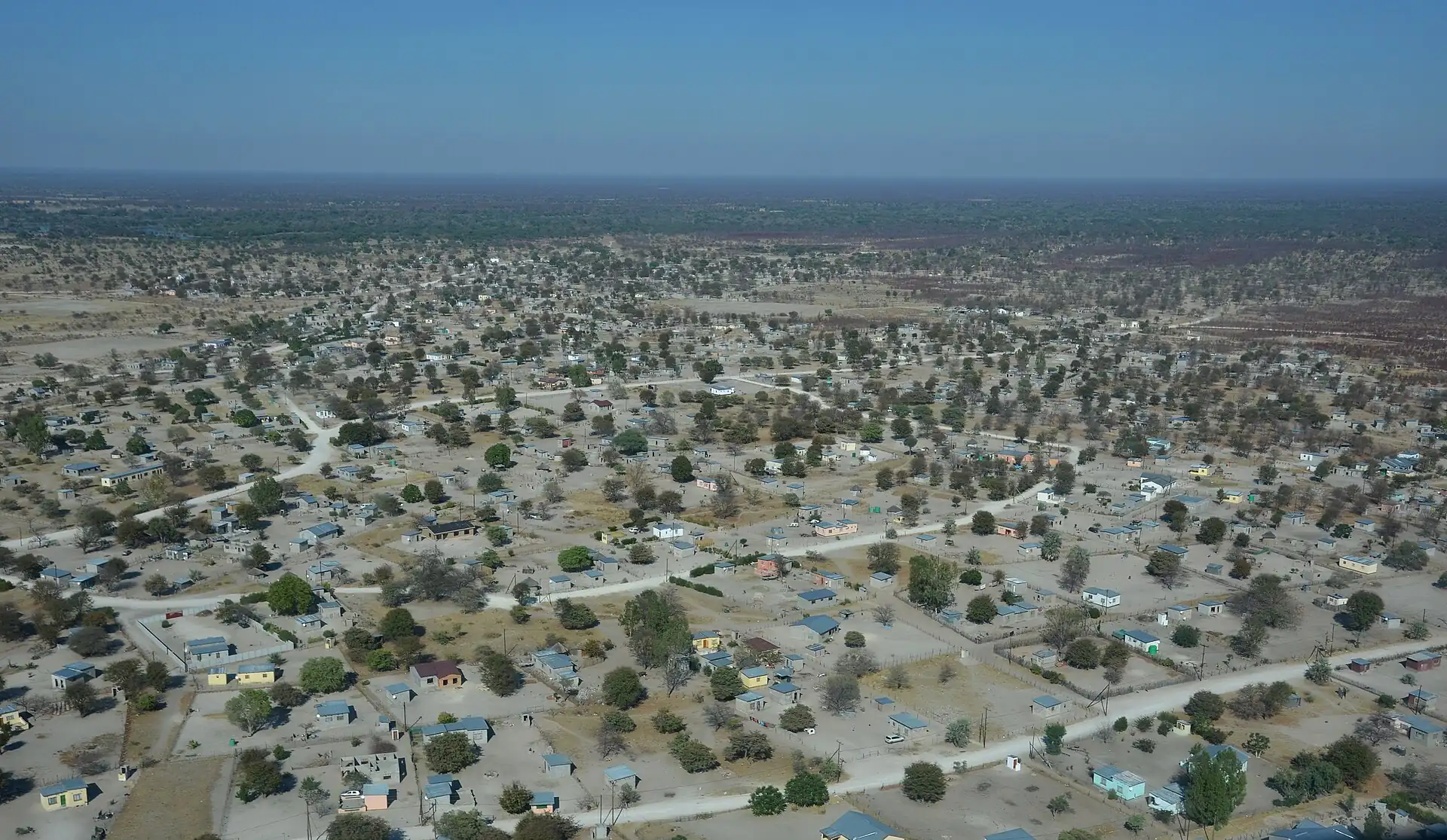
Maun
Code BO · 4 walking zones
Maun is a one-night gateway: cash, supplies and a shower on arrival; the river at sunset if you have light; then fly to the Delta with a soft bag inside the weight limit.
Our quick read of Maun, scored 1–5 (friction is out of 100). Cash need: how often you still need notes. Heat risk: how hot days get. Stroller: how easy wheels are. Friction: overall effort for a first visit. Desk judgements, so check before relying on them.
- Local time
- --:--
- Weather
- forecast below
- Currency
- BWP
- Best months
- Apr · May · Jun · Jul · Aug · Sep
- Airport
- Maun (MUB)
Walking zones: the 4 areas this guide plans a day around. Each is a district you can cover on foot, so you do one zone per half-day and ride the train between them. The code (BO 01, BO 02…) is just the zone's number on the Maun line; the line under each name says how bags fare there and how much time it needs.
Map of Maun
Use the switches to show or hide each kind of pin. A switch that is on shows its pins on the map; tap it again to hide them. "Show only" keeps just the pins that match (for example, places that fit a suitcase). Tap any pin for its name and a link to its page.
- Where to sleep
- Places
- Eat
- Walking clusters
- Rest stops
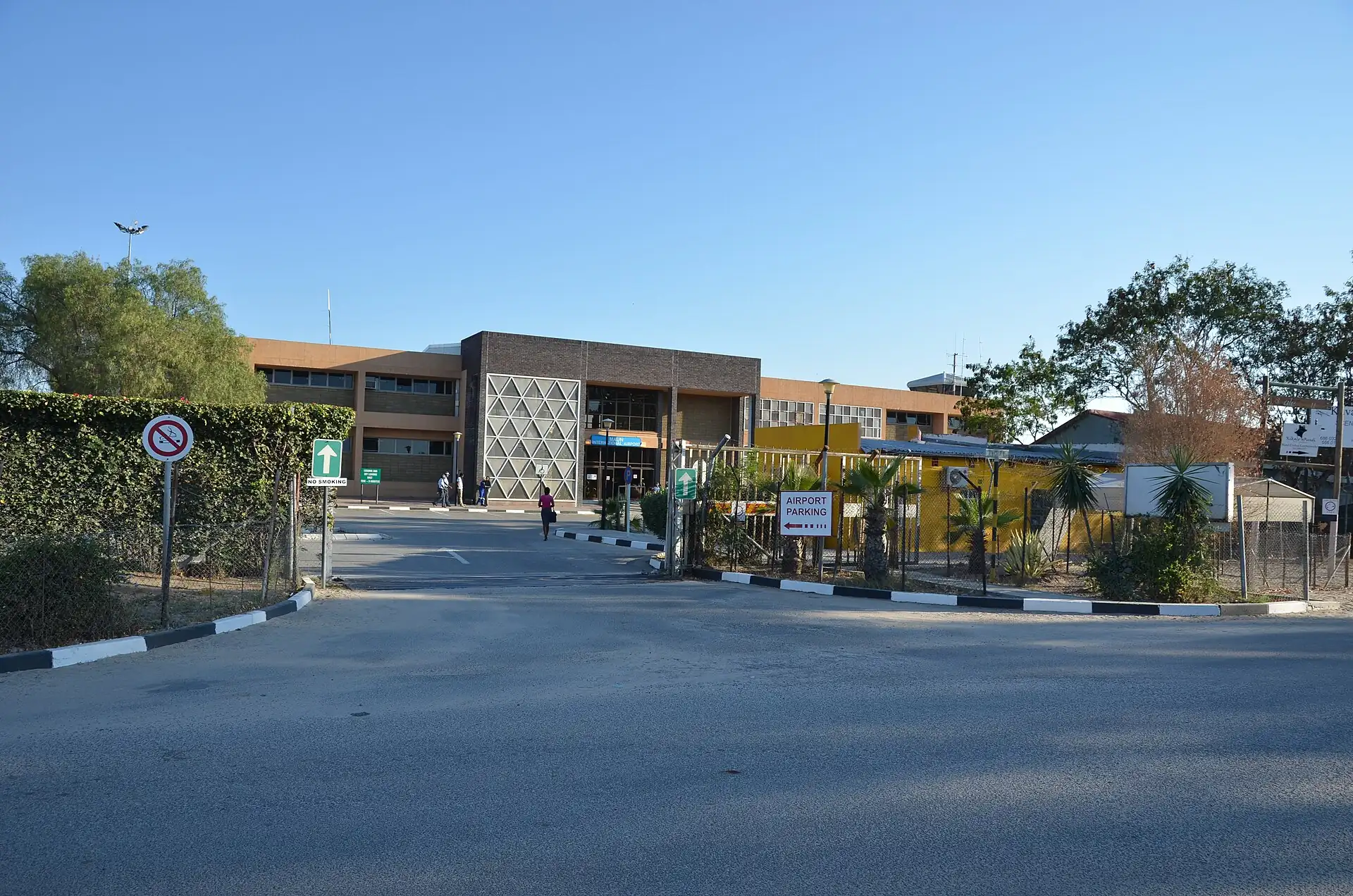
From the airport Maun (MUB) to your bed
Tap a pin for its card. Places without their own coordinates are shown by their walking cluster.
Why Maun
Maun is a small, flat, spread-out town on the Thamalakane river, and its work is to send visitors to camps. The trips that go wrong are the ones with a hard suitcase over the weight limit, a connecting flight that does not meet the camp transfer, or a walk on the riverbank at dusk. Four small areas cover a stay of one to three nights; the Delta camps are reached by light aircraft.
See first
- 1Scenic flight over the Delta · 45–60 min plus check-in
- 2Main Mall errands · 45–90 min
- 3River sunset at the old bridge · 45–60 min
- 4Birding on the Thamalakane · 1–2 h
- 5Nhabe Museum · 45–60 min
Fits
- Safari trips starting in the Delta
- Short stays before a camp flight
- Bird-watchers
Does not fit
- City-break travellers
- Late-night arrivals with no lodge desk
- Anyone with a hard suitcase over the weight limit
How long
- 1 daysMain Mall errands, museum, river at sunset
- 2 daysErrands, museum, river; the next day a camp flight
- 3 daysFour small clusters, then a camp flight
Good for
- First timers
- Foodies
- Budget
- Couples
- Families
- Luxury
About Maun
Maun sits on the Thamalakane River at the south-western edge of the Okavango Delta. The Batawana, a Tswana people, made it their capital in the early 20th century (check the exact date), and the name Maun is often said to come from a Sesarwa (San) word for the reeds along the river. It stayed a cattle town for most of the 20th century.
Tourism changed it. Once Botswana became independent in 1966, the country's government and diamond economy kept the state stable, and the Okavango was opened to safari camps and light-aircraft charters from the 1970s and 1980s. Maun grew as the supply base for those camps: fuel, food, guides, mechanics and pilots all pass through it.
Good to know
- Maun is the town and the airport gateway; the Okavango Delta lies to the north and is reached by light aircraft or a long sand track.
- No single, confirmed tourist information desk to rely on: ask your lodge or your safari operator for maps, road conditions and the current state of the Delta water.
- The Botswana Tourism Organisation publishes lists of registered accommodation and operators; compare a written quote from at least two before paying a deposit.
Go deeper 12 min read · 7 chapters
Maun is a small river town at the edge of one of the largest inland deltas on Earth. This deep dive follows how the town grew from a cattle capital into the gateway of the Okavango, how a flood that starts in the Angolan highlands shapes life in Ngamiland months later, who lives here and what they make, what people eat, and how to visit in a way that leaves the place and its animals better off.
1History2 min
The country around Maun has been home to hunter-gatherer and herding peoples for a very long time. The San, often called Basarwa in Botswana, lived by hunting and gathering across the Kalahari and the Delta margins. Bayei and Hambukushu communities settled along the river channels, fishing, farming the floodplains and poling dugout canoes. In the late 18th century a Tswana group under Tawana moved into the region and founded the Batawana chiefdom, which came to control the area. Maun itself became the Batawana capital in the early 20th century; sources give dates around 1915, and it is worth checking the exact year before you quote it.
Botswana was then the Bechuanaland Protectorate, a British arrangement that began in 1885 and was meant to keep the territory out of German and Boer hands. Ngamiland was remote from the rail line to the south and depended on cattle, hunting and trade. In 1904 many Herero people fled from German colonial violence in what is now Namibia and settled in Ngamiland. Their descendants still live around Maun, and Herero women in long, layered dresses and horned headwear are one of the most striking sights in town.
Botswana became independent on 30 September 1966 under Seretse Khama, then one of the poorest countries in Africa. The discovery of diamonds at Orapa in 1967 changed its prospects, and steady politics and careful spending turned it into one of the region's stable democracies. For Maun, the change came through tourism. From the 1970s and 1980s safari camps and light-aircraft charters opened the Delta to visitors, and the town became the place where supplies, pilots and guides come together. Botswana's later policy of high-value, low-volume tourism shaped who comes here and what a camp costs.
Growth has not been painless. Fences built to control cattle disease have cut some wildlife routes. Water use upstream, farming and climate change are all watched closely by people who depend on the flood. Even so, the town remains small and low-rise, and much of its life still runs on the calendar of the river and the rains.
- Bechuanaland Protectorate
- 1885 to 1966
- Botswana independence
- 30 September 1966
- Batawana capital moved to Maun
- Around 1915 (check)
- Herero arrive in Ngamiland
- After 1904
- First president
- Seretse Khama
2The Delta and the water2 min
The Okavango is one of the few large rivers that does not reach the sea. It starts as rain in the highlands of Angola, gathers in the Cubango and Cuito rivers, crosses the Caprivi strip in Namibia and enters Botswana at Mohembo. There it spreads into a fan of channels, lagoons and islands across sand that was once a lake bed. Most of the water evaporates or is taken up by plants, and the rest drains slowly south towards Maun and the Thamalakane River.
The timing is the surprise. The rain that feeds the Delta falls in Angola between roughly December and March. The flood then takes months to travel down the river and across the Delta, so it reaches the lower reaches around Maun in June to August, during the local dry, cold winter. That is why the best time to see water and game is often the driest time of year. It also means that the water level you see depends on rain in another country and on how much the previous years have filled the system.
The Delta is a shifting mosaic. Papyrus and reed beds, palm islands, floodplains that dry to grassland, and channels that change course over decades all sit side by side. Islands are often built up by termite mounds, which lift the ground above the flood and let trees take root. Sitatunga, a shy antelope with long splayed hooves, and red lechwe, which run through shallow water, are two Delta specialists. Birders come for Pel's fishing owl, slaty egret, African skimmer and many kingfishers.
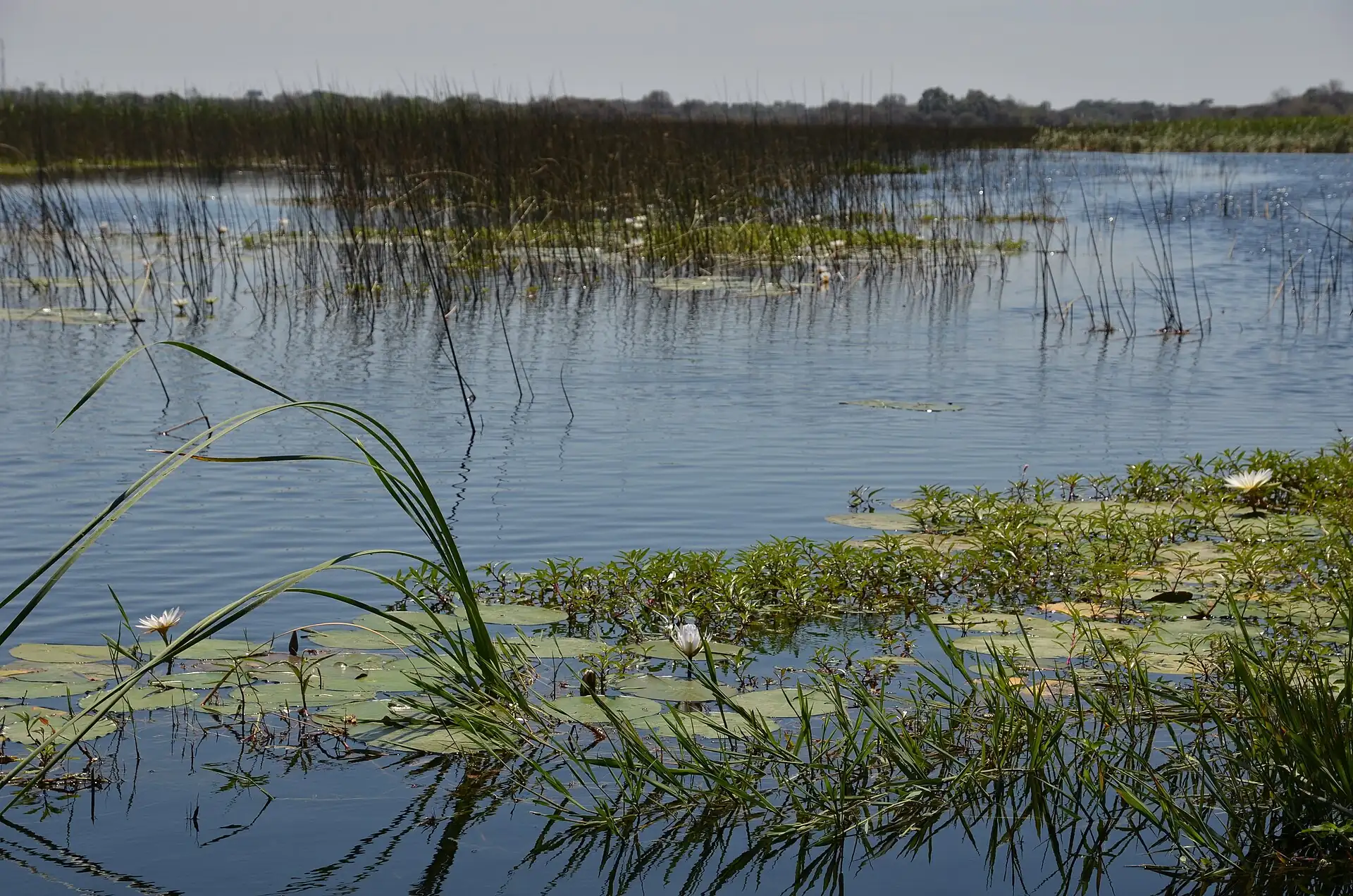
UNESCO inscribed the Okavango Delta on the World Heritage List in 2014 as the 1,000th site. Around Maun the practical consequences are simple. Some years the Thamalakane runs full and you can watch hippos in it, and in dry years it can be low. Ask your camp or operator what the water is doing before you choose between a mokoro trip, a boat or a game drive. A scenic flight from Maun shows the pattern of channels and islands better than any description.
- Source of the water
- Highlands of Angola
- Rain in Angola
- Roughly Dec to Mar
- Flood reaches Maun area
- Roughly Jun to Aug
- UNESCO World Heritage listing
- 2014
- Type of delta
- Inland, does not reach the sea
3People and languages1 min
Botswana is often described as a country of Batswana, but Ngamiland is more mixed than that. Setswana is the national language and English the official one, and both are used daily in Maun. Alongside them you hear Otjiherero, Thimbukushu, Ikalanga and San languages. Many people speak three or four languages without thinking of it as unusual.
Three ideas help make sense of daily manners. Botho is a Setswana word for the quality of being a good person, with generosity, respect and courtesy at its core, and it is a stated national principle. The kgotla is the traditional village meeting place where a chief and community discuss matters in the open, and the idea of consulting before deciding runs through local politics. And Pula means rain, which is the national motto and the currency's name, because rain is the thing that decides a harvest, a herd and a season.
Greetings matter. A visitor who says dumela rra or dumela mma and asks how someone is before making a request is received differently from one who does not. Take your time, offer a right hand or two, and expect to be asked where you are from and where you are going. Do not photograph people without asking, and do not take pictures of police, soldiers or official buildings.
Communities near the Delta have their own cultures. Bayei and Hambukushu people are known for river skills and for baskets. San communities have long knowledge of plants and animals and have faced pressure over land and rights, so choose any San cultural visit with care and check that it is run by the community and shares income. Herero communities keep cattle and a distinctive dress. The lesson is to treat each group as a living culture with its own voice rather than as a set of sights.
- Official language
- English
- National language
- Setswana
- Greeting
- Dumela rra (to a man), dumela mma (to a woman)
- Key value
- Botho, courtesy and generosity
4Food and drink2 min
Botswana's food is built on cattle and grain. Beef is a matter of national pride, and much of the country's meat has long been exported. The staple is pap, called phaleche, a stiff maize porridge that is eaten with almost everything. Its softer cousin, bogobe, is made from sorghum or maize and is often eaten at breakfast, sometimes fermented and sour.
Seswaa is the dish for celebrations. Beef, goat or another meat is boiled for hours with salt until it falls apart, then pounded and served with pap. It is simple and salty, and it is what you would be served at a wedding or a funeral gathering. Morogo, wild or cultivated greens cooked with onion and tomato, is the usual side. Magwinya, deep-fried dough balls sold from stalls, are the everyday snack, and tea with milk and sugar is offered everywhere.
Some foods surprise visitors. Phane, the caterpillars of the mopane moth, are collected in the mopane woodlands in the wet season, dried or fried and eaten as a protein-rich snack. Wild fruit and melons also matter in the dry season, and fish from the river is part of the Delta's traditional diet. In restaurants and lodges you will find the South African influence of the braai, with grilled meat, sausage called boerewors and salads.
Drinks range from tea and rooibos to commercial lager. Traditional sorghum beer, sold in cartons as Chibuku and brewed at home in the older way, is a working drink for many people. St Louis and Castle lager are the common bottled beers. If you are offered a homemade brew, accept politely, take a small sip and do not feel obliged to finish it. Avoid drinking and driving: the roads have animals, and police checks are common. Non-drinkers are never pressed for long; a soft drink or a cup of tea is an entirely ordinary choice, and hosts will simply offer it to you with the same warmth.
- Staple
- Pap (phaleche), maize porridge
- Celebration dish
- Seswaa, pounded boiled meat
- Everyday snack
- Magwinya, fried dough balls
- Seasonal delicacy
- Phane, mopane caterpillars
5Baskets and craft2 min
The best-known craft of the Okavango is basketry. Hambukushu and Bayei women in villages such as Gumare and Etsha weave coiled baskets from the fibre of the makalani palm, coloured with dyes made from roots, bark and leaves. Traditional patterns have names, such as the tears of the giraffe and the forehead of the zebra, and each carries a link to the surrounding landscape and animals.
A good basket has a tight, even coil, clear colours and a flat base that sits well. The price reflects the time taken, because a large piece can take weeks. Ask who made it and where, and if the seller cannot tell you, look elsewhere. Buy at shops or stalls that pay makers fairly. Baskets are bulky, so ask the seller to flat-pack if you are flying, and check airline size limits.
Other crafts include beadwork, carved wooden bowls, ostrich-shell jewellery and leatherwork. Do not buy ivory, horn, skin or any wildlife product: export of these can be a criminal offence and it feeds the trade that harms animals. If in doubt, leave it. Bargain politely at stalls, not at shops with price tags, and never treat haggling as a game with someone who depends on the sale.
Craft is one of the ways that money from visitors reaches households around the Delta. It is also a good way to slow down and ask questions. A basket that you can trace to a maker is worth more than one that could have come from anywhere.
Plan for how the piece will travel. A rigid basket can be crushed in a soft duffel, and a camp flight has a strict weight limit, so buy on your way out rather than on your way in. Many shops will wrap and flat-pack, and some will post items home for a fee, which is worth asking about if you are buying a large piece. Keep any receipt with the maker's name, since it helps if a customs officer asks where the item came from, and it is a good memory of the person behind it.
- Main fibre
- Makalani palm
- Main weaving groups
- Hambukushu and Bayei
- Time for a large basket
- Days to weeks
- Do not buy
- Ivory, horn, skins or other wildlife products
6Wildlife and conservation2 min
Botswana has the world's largest elephant population, with well over a hundred thousand animals in the north, and the Okavango region is one of the best places in Africa to see them. Lion, leopard, cheetah, African wild dog, hippo, crocodile, buffalo and a long list of antelope share the same country. Rhinos have been reintroduced in protected areas, and the animals' whereabouts are kept quiet for their safety. Smaller creatures matter as much as the big ones: the Delta holds hundreds of bird species, plus frogs, fish such as tigerfish and bream, and reeds and lilies that anchor the whole system.
The Moremi Game Reserve, in the eastern Delta, was set up in 1963 by the Batawana chiefdom and named after a former chief. It remains one of the main destinations reached from Maun. Beyond Moremi are private concessions, where camps lease land from communities or the state and control how many visitors come. This is the meaning of low-volume tourism: fewer guests, higher prices, and money that supports conservation and local jobs.
Wildlife policy is contested. Botswana banned commercial hunting in 2014 and lifted the ban again in 2019, and the argument about how to live with large numbers of elephants continues. Veterinary fences intended to protect cattle from disease also affect wildlife movement. You do not have to resolve any of this on a trip, but it helps to ask your camp how it works with neighbouring villages and what happens to the money.
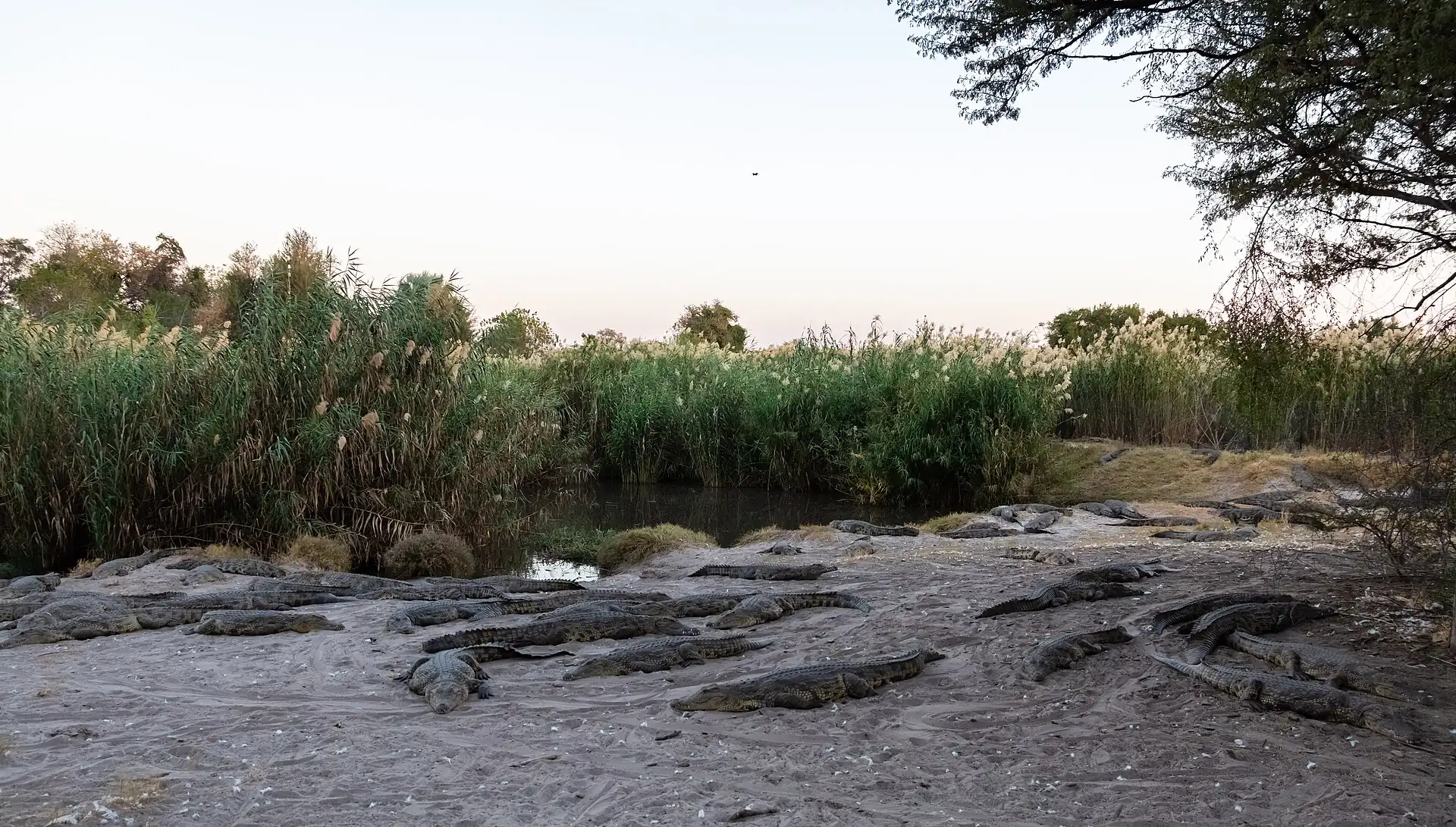
Practical rules protect both you and the animals. Keep quiet on game drives, stay in the vehicle, and follow your guide. Do not approach animals on foot, do not feed them and never use flash at night. In town, treat the riverbank as wild: hippos, crocodiles and elephants use it, especially after dark. If a lodge staff member tells you to go inside, do it. Ask your guide questions, too: the best ones can tell you which birds are calling, why a termite mound matters to a tree, and how the flood has changed from one year to the next, and that knowledge is a large part of what you are paying for.
- Elephant population
- The largest in the world (well over 100,000)
- Moremi Game Reserve
- Established 1963 by the Batawana
- Hunting policy
- Banned 2014, reintroduced 2019 (check current rules)
- Do not
- Approach on foot, feed animals or walk the riverbank at night
7Visiting well2 min
Maun works best when you treat it as a base with a purpose. Arrive with cash in small notes, a soft bag under the camp-flight weight limit and your onward transfers confirmed in writing. Book camps and scenic flights with registered operators, and be wary of anyone who approaches you at the airport or in the street with a very low price.
Seasons change what you can do. From May to October the Delta has water and the weather is dry, with cold mornings and warm days. From November to March it is green, humid and cheaper, with storms and the best bird life. The hottest weeks are September and October, when afternoons can reach 35 degrees. Malaria risk is highest from about November to May. Ask a travel clinic well before you fly.
Behave as a guest. Greet people, ask before you photograph them, and carry small notes for tips. Choose camps that publish how they treat staff and neighbours. Take your rubbish with you, drink filtered water from refill points and avoid single-use plastic. Keep a respectful distance from animals, even from the ones that look calm. In town, buy from local shops and craftspeople so that some of your money stays close to the Delta.
Finally, leave space in your plan for the unplanned. Flights move, storms close airstrips and a road can be slow after rain. A spare day at the start or end of a Delta trip is the cheapest insurance. Confirm your camp transfer the day before, keep a phone number for your operator, and treat the hours at the Main Mall and the museum as things to check, since small-town opening times change with the season and the public holiday calendar. The reward for planning lightly is a town that runs to the rhythm of water and rain, which is the rhythm of the whole region.
- Best dry-season window
- May to October
- Hottest months
- September and October
- Highest malaria risk
- About November to May
- Camp flight weight limit
- Commonly around 20 kg (44 lb) (confirm with the operator)Commonly around 44 lb (20 kg) (confirm with the operator)
Read, watch, wordsReading · Watching · Glossary · Sources
Reading
- When Rain Clouds Gather — Bessie HeadA novel set in a Botswana village in the 1960s, about drought, farming and a stranger's arrival; a classic of the country's literature.
- The No. 1 Ladies' Detective Agency — Alexander McCall SmithA gentle, popular series set in Gaborone, with a warm view of Setswana manners and the idea of botho.
- Cry of the Kalahari — Delia and Mark OwensA field memoir of living with lions and hyenas in the Central Kalahari; useful context on Botswana's wild places.
Watching
- A United Kingdom — Amma Asante, 2016A drama about Seretse Khama and Ruth Williams and the road to Botswana's independence.
- The Gods Must Be Crazy — Jamie Uys, 1980A comedy set in the Kalahari; its portrayal of San people is dated and contested, so watch it with that in mind.
Glossary
| Term | Local | Meaning |
|---|---|---|
| Dumela | Dumela | Hello; add rra for a man and mma for a woman. |
| Pula | Pula | Rain, and the name of the national currency. |
| Botho | Botho | The quality of being a good person, with courtesy, generosity and respect. |
| Kgotla | Kgotla | The traditional meeting place where a chief and community discuss matters in public. |
| Mokoro | Mokoro | A dugout canoe, now often made of fibreglass, poled through Delta channels. |
| Ngashi | Ngashi | The long pole used to move a mokoro. |
| Seswaa | Seswaa | Boiled, pounded meat, the dish for celebrations. |
| Phaleche | Phaleche | Stiff maize porridge, known elsewhere as pap. |
| Makalani | Makalani | A palm whose fibre is used for baskets. |
Read for this deep dive
- Wikipedia — Maun ↗
- UNESCO — Okavango Delta ↗
- Wikipedia — Okavango Delta ↗
- Botswana Tourism Organisation ↗
Background reading only: the text above is written by Voykit, not copied from these pages.
Rules in force · 8Nine African countries on this site have no trip line bec…Across the subregion, plan every road leg to arrive befor…
- Africa ↗When a route touches a yellow-fever country — even a transit of 12 hours or more — keep the original yellow card (ICVP) in your hand luggage; health desks and airlines can refuse boarding or entry without it.
- Africa ↗Nine African countries on this site have no trip line because governments advise against travel; several others have no-go regions. Read your government's advice for every country on the route before paying deposits.
- Southern Africa ↗A rental car may leave its home country only with the rental company's cross-border letter, the registration papers and paid road taxes at each post; driving into Zambia, Zimbabwe, Mozambique or Angola without them ends at the border.
- Southern Africa ↗Across the subregion, plan every road leg to arrive before sunset: livestock, wildlife, pedestrians and unlit trucks make night driving the main cause of serious visitor accidents.
- Botswana ↗Check visa and entry rules for your passport on official Botswana government sources before booking; most Western passports are visa-exempt, others use the Botswana e-visa.
- Botswana ↗Light-aircraft transfers limit luggage by weight and require soft bags; confirm the limit with your camp or operator before packing.
- Botswana ↗Self-driving in Moremi, Chobe and the Central Kalahari needs a properly equipped 4x4, booked campsites and experience in sand driving.
- Okavango Delta ↗Light-aircraft transfers limit luggage by weight and require soft bags; confirm the limit with your camp or operator before packing.
Entry rules depend on your passport. Full visa guide
Emergency numbers for Maunopen ▾
- Police999 (check)
- Ambulance997 (check)
- Fire998 (check)
Tap a number to call from your phone. These are the numbers listed in this guide; a row marked check has not been verified.
Planning is the full guide. I'm here keeps what is open and the cheat card.
Right now
Checking the weather…
Working out what is open near you…
What is open nowclock, closures, places open
Now in Maun
Local time in Maun
--:--
Loads in your browser · Africa/Gaborone
This month
Month verdict appears here.
Closed today
See the weekly grid below.
If today is a closure day: Fix your camp flight and bag weight first, then build the Maun day around it: cash and supplies in the morning, the museum in the heat, the river before the light goes.
Weekly closures come from our place pages; public holidays and the state of the road can add closures not shown here. Check the Delta water level with your camp.
Cheat cardthe pocket version
Cheat card
The essentials on one card: save it as an image for your phone, share it, or print it.
Maun
- Money
- Keep BWP 500 in small notes for tips and taxis; use ATMs inside the Main Mall or a bank branch, not on the street.
- SIM
- Mascom, Orange and beMobile sell SIMs at branded shops and in the Main Mall; bring your passport.
- Ride app
- Ride-hailing apps
- Emergency
- 999 (check) police · 997 (check) ambulance · 998 (check) fire (not 911, 999 or 000)
- Plugs
- Sockets D. US/Canada (A/B): adapter · UK/Ireland (G): adapter · Australia/NZ (I): adapter. 230 V: US 120 V-only devices (hair dryers) need a converter; most chargers are dual-voltage.
Top 5
- Scenic flight over the Delta
- Main Mall errands
- River sunset at the old bridge
- Birding on the Thamalakane
- Nhabe Museum
EssentialsQuick answers, what things cost and how to get around
Essentials
Quick answers, what things cost and how to get around
Quick answers
The questions people ask first about Maun, one line each. Tap a card for the full answer.
- Cash or card?Cards work in the Main Mall supermarkets, at lodges and in most restaurants; cash (BWP, or South African rand at some shops) for taxis…
- SIM or eSIMMascom, Orange and beMobile sell SIMs at branded shops and in the Main Mall; bring your passport.
- Ride-hailing appRide-hailing apps.
- Tap waterDrink bottled or filtered water.
- TippingAbout 10% in restaurants if service is not added; small notes for a taxi driver or a porter.
- Plugs & powerSockets D. US/Canada (A/B): adapter · UK/Ireland (G): adapter · Australia/NZ (I): adapter. 230 V: US 120 V-only devices (hair dryers) need a converter; most chargers are dual-voltage.
Show all 14 answers
- Safe at night?Take more care after dark in Main Mall and town centre, Old Maun, Thamalakane riverfront and more.
- What to wearModest in town and villages (shoulders and knees); casual bush clothes at camps.
- Emergency numberscheck999 (check) police · 997 (check) ambulance · 998 (check) fire (not 911, 999 or 000)
- Your embassycheckUK, US embassies listed with addresses (check before you go).
- Sundays & holidaysShops roughly 08:00–17:30 on weekdays and 08:00–13:00 on Saturday; many close early on Sunday.Shops roughly 8:00 AM–5:30 PM on weekdays and 8:00 AM–1:00 PM on Saturday; many close early on Sunday.
- Late at nightNo formal curfew; lodge bars and a few restaurants stay open late.
- Rainy-day planNovember to March storms can turn sand roads slow; fix a Plan B for camp transfers and keep your outdoor stops before noon.
- Landing lateMUB: pre-booked lodge transfer to the door runs all night.
Cost cheat-sheetwhat everyday things cost
Cost cheat-sheet
Typical prices for the everyday things, as ranges. Change the currency right here; the local price stays first.
2026 desk estimate · check
- CoffeeCoffee (café or lodge)BWP 30–60
- Sit-down mealMain course in a sit-down restaurantBWP 120–260
- Street or quick mealMagwinya (fat cake), each, from a stallBWP 3–8
- BeerBeer (St Louis or Castle), bar or lodgeBWP 25–50
- Taxi, about 5 km (3 mi)Taxi, about 3 mi (5 km)Short taxi rideAgree first; a night ride costs more.BWP 40–100
- SIM or eSIM, a weekTourist SIM, about a weekBWP 60–200
- Museum or sight ticketMuseum entryCheck at the gate.BWP 30–80
- Budget bedBackpacker bed or campsite, a night, per personBWP 200
- Mid-range bedLodge or hotel double room, a night, per roomBWP 1,600
- High-end bedLodge or hotel double room, a night, per roomBWP 3,400
A day, not counting the bed: Budget BWP 450 · Mid BWP 1,000 · High BWP 2,400
Local prices, with USD next to them (rates 2026-09 (approximate); change it in the header). Ranges are desk estimates: check locally. Every price and the budget calculator →
Source: Prices in Maun
Draft
Written from desk research. Not yet compared with the official source.
No official source is recorded for this figure.
Prices are 2026 desk estimates, not yet compared with an official source. Check on the day.
Not checked in the last 12 months (no check date on file).
DecideWho it suits, the trade-offs and when to go
Decide
Who it suits, the trade-offs and when to go
Best months at a glance
The guide's verdict for each month
Jan
Care
33°C (91°F)91°F (33°C)
Feb
Care
32°C (90°F)90°F (32°C)
Mar
Care
32°C (90°F)90°F (32°C)
Apr
Best
31°C (88°F)88°F (31°C)
May
Best
28°C (82°F)82°F (28°C)
Jun
Best
25°C (77°F)77°F (25°C)
Jul
Best
25°C (77°F)77°F (25°C)
Aug
Best
28°C (82°F)82°F (28°C)
Sep
Best
32°C (90°F)90°F (32°C)
Oct
Care
35°C (95°F)95°F (35°C)
Nov
Care
35°C (95°F)95°F (35°C)
Dec
Care
34°C (93°F)93°F (34°C)
Best: Apr–Sep. Mixed: Oct–Mar. Month by month →
Warmest Oct (35°C (95°F)95°F (35°C)), coolest Jul (6°C (43°F)43°F (6°C) low), wettest Jan (9 rain days), driest May (0). Averages, not a forecast.
Maun across the year
Best-looking months for Maun: May, Jun, Jul.
| Measure | Jan | Feb | Mar | Apr | May | Jun | Jul | Aug | Sep | Oct | Nov | Dec |
|---|---|---|---|---|---|---|---|---|---|---|---|---|
| Weather | Mixed (care) | Mixed (care) | Mixed (care) | Good (good) | Great (good) | Great (good) | Great (good) | Great (good) | Great (good) | Mixed (care) | Mixed (care) | Mixed (care) |
| Crowds | Low (good) | Low (good) | Low (good) | Medium (ok) | Medium (ok) | High (care) | High (care) | High (care) | High (care) | Medium (ok) | Low (good) | Low (good) |
| Prices | Low (good) | Low (good) | Low (good) | Medium (ok) | Medium (ok) | High (care) | High (care) | High (care) | High (care) | High (care) | Medium (ok) | Low (good) |
| Events | 2 events (ok) | None listed (ok) | 1 event (ok) | 1 event (ok) | None listed (ok) | 2 events (ok) | 5 events (ok) | 3 events (ok) | 3 events (ok) | 4 events (ok) | 1 event (ok) | 1 event (ok) |
Green is good news, amber needs planning, red is a month to avoid; dashed grey with a question mark means our data does not say. Open the year heatmap →
Not checked in the last 12 months (no check date on file).
Source: Months, temperatures and crowds
Draft
Written from desk research. Not yet compared with the official source.
Monthly highs, rain and crowd levels are climate averages and desk estimates for the city, not a forecast.
Understand the cityUnderstand · Districts
Orientation & districts
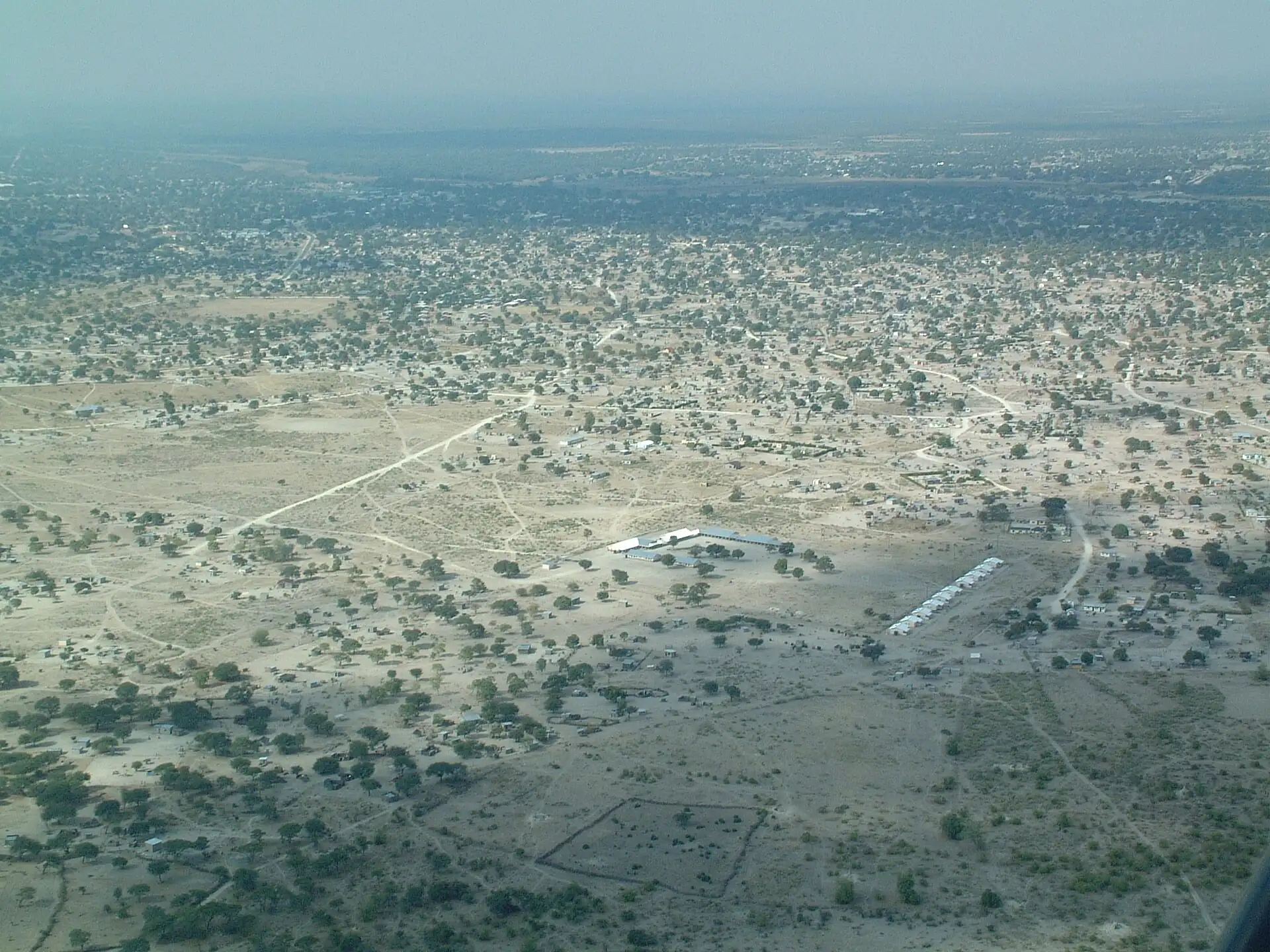
Maun is a long, flat town along the Thamalakane River. The Main Mall and the shops are in the middle; Old Maun and its museum are to the west; the riverside lodges are along the river; the airport road runs east. Most lodges are 5–15 minutes by car from each other.
Streets are hard to walk and signs are few: give your driver a lodge name or a landmark, and expect to take a car between areas.
Shaded shapes: walking areas (click one). Black pins: sleep areas. Grey dots: places. Round badges: arrivals. Click the map to turn on scroll-wheel zoom.
Hover, tap or tab to an area to see what it is like. Pins are sleep areas; arrows at the edge point to the airport.
Off the map: Maun Airport (MUB) (15–35 min by the usual route).
Not drawn yet (no coordinates in this guide): Matlapaneng and the bridge area (north-east), Villages along the Delta edge. They are in the neighbourhood cards below.
Where’s what, as a list:
- Main Mall and town centre: Banks, supermarkets, a pharmacy and the taxi rank; the practical heart of town. Suits: Cash, supplies, first and last nights. Price band $$.
- Old Maun: Older buildings and the Nhabe Museum; a short car ride from the Main Mall. Suits: The museum and a slower look at the old town.
- Thamalakane riverfront: Riverside lodges, the old bridge and the braai restaurants; go before dark. Suits: Sunset, birds and a quiet bed. Price band $$.
- Airport road: Coffee shops, charter desks and the airport; a good last stop before a flight. Suits: The last morning and scenic flights.
- Matlapaneng and the bridge area (north-east): Backpackers, campsites and lodges on the Shorobe road; you need a car or a lodge transfer. Suits: Lodges and campsites on the river, about 10 km out (check).
- Villages along the Delta edge: Reached on sand roads; go with an operator, not on your own. Suits: Local life, mokoro stations.
- Sleep area Thamalakane riverside: suits Sunset, birds and a quiet bed, price band $$.
- Sleep area Town centre: suits Cash, supplies, first and last nights, price band $$.
- Maun Airport (MUB), 15–35 min by the usual route.
Neighbourhoods at a glance
One tab per area, pulled together from this guide’s districts table, area notes, sleep-area scores and place pages. Scores are desk judgements (1–5); prices are estimates, check before you book.
Main Mall and town centre
$$Banks, supermarkets, a pharmacy and the taxi rank; the practical heart of town.
- Suits:
- Cash, supplies, first and last nights
- Best time:
- 08:00–17:30 weekdays8:00 AM–5:30 PM weekdays
- Rooms:
- BWP 350–800 (from the sleep guide)
Pick this if: Errands and first or last nights
Watch out for: Walking around after dark.
- Quiet nights3/5 Medium
- Nightlife2/5 Low
- Families3/5 Medium
- Late arrival4/5 High
Why these scores
- Quiet nights: Some traffic noise on the main road.
- Nightlife: A few bars; little to walk to after dark.
- Families: Pools at some lodges; roads are not walkable.
- Late arrival: Desks are usually staffed; confirm before you fly.
Getting around from here
- 19–25 min walk to Old Maun and the museum
- 24–31 min walk to Thamalakane riverfront
- 25–32 min walk to Airport road
Old Maun
Older buildings and the Nhabe Museum; a short car ride from the Main Mall.
- Suits:
- The museum and a slower look at the old town
- Best time:
- Weekday mornings
Pick this if: A slow look at the town
Watch out for: Going without a car.
Getting around from here
- Walk to Main Mall: about 20 min to Main Mall
- Car to Thamalakane riverfront: about 11 min to Thamalakane riverfront
- Car to Airport road: about 12 min to Airport road
Thamalakane riverfront
$$Riverside lodges, the old bridge and the braai restaurants; go before dark.
- Suits:
- Sunset, birds and a quiet bed
- Best time:
- Dawn and late afternoon
- Rooms:
- BWP 1,000–2,500 (from the sleep guide)
Pick this if: Sunset and quiet beds
Watch out for: The riverbank after dark.
- Quiet nights5/5 Very high
- Nightlife2/5 Low
- Families3/5 Medium
- Late arrival3/5 Medium
Why these scores
- Quiet nights: River sounds and birds; the quietest bed in town.
- Nightlife: A lodge bar; a car for anything else.
- Families: Space and pools, but keep children away from the bank and the lodge edges after dark.
- Late arrival: Arrange a late transfer in advance; reception staffing varies.
Getting around from here
- 27–35 min walk to Main Mall
- 31–40 min walk to Old Maun and the museum
Airport road
Coffee shops, charter desks and the airport; a good last stop before a flight.
- Best time:
- Early morning
Pick this if: The last morning and scenic flights
Watch out for: Leaving the pick-up to the last minute.
Getting around from here
- Walk to Main Mall: about 23 min to Main Mall
- Car to Old Maun and the museum: about 12 min to Old Maun and the museum
Matlapaneng and the bridge area (north-east)
Backpackers, campsites and lodges on the Shorobe road; you need a car or a lodge transfer.
- Suits:
- Lodges and campsites on the river, about 10 km out (check)
Villages along the Delta edge
Reached on sand roads; go with an operator, not on your own.
- Suits:
- Local life, mokoro stations
Decide
The honest trade-off: what you will enjoy, what will wear you down.
You will like
- Quiet river evenings
- Bird life and wildlife close to town
- Easy logistics before a camp
You will hate
- Heat in October
- Few sights in town
- Distances that need a taxi
Similar citiesif this one is not quite right
Similar cities
If Maun does not fit your dates or budget, these match it on season, cost and feel.
- Livingstone
Zambia
- Good in the same months: Apr, May, Jun, Jul and 2 more
- Works well for first-timers, couples, comfort
- A similar climate through the year
- Victoria Falls
Zimbabwe
- Good in the same months: Apr, May, Jun, Jul and 2 more
- Works well for first-timers, couples
- A similar climate through the year
- Papeete
French Polynesia
- Good in the same months: Apr, May, Jun, Jul and 2 more
- Works well for first-timers, couples
- A similar climate through the year
When
Best months: Apr, May, Jun, Jul, Aug, Sep. Month-by-month verdicts below, with the live forecast first. When to go, month by month →
Maun: next 7 days
Loading forecast…
Forecast: Open-Meteo (CC BY 4.0), model data for this point.
Air quality
Loading…
Model estimate (CAMS via Open-Meteo), not a street-level station; readings near busy roads run higher.
Month by month, all 12best Apr, May, Jun, Jul, Aug, Sep
Green season; hot with storms.
Hot; heavy rain spells.
Rains ending; humid.
Green and warm; the Delta floods arrive later.
Cooler and dry; start of peak season.
Dry, cool mornings.
Peak season; book early.
Peak; dusty and warm.
Warming; busy.
Hottest month; rains near.
First storms; humid.
Hot and wet.
Climate, calendar and eventsClimate · Calendar · Events · Packing by season
Climate
| Jan | Feb | Mar | Apr | May | Jun | Jul | Aug | Sep | Oct | Nov | Dec | |
|---|---|---|---|---|---|---|---|---|---|---|---|---|
| High | 33°C (91°F)91°F (33°C) | 32°C (90°F)90°F (32°C) | 32°C (90°F)90°F (32°C) | 31°C (88°F)88°F (31°C) | 28°C (82°F)82°F (28°C) | 25°C (77°F)77°F (25°C) | 25°C (77°F)77°F (25°C) | 28°C (82°F)82°F (28°C) | 32°C (90°F)90°F (32°C) | 35°C (95°F)95°F (35°C) | 35°C (95°F)95°F (35°C) | 34°C (93°F)93°F (34°C) |
| Low | 21°C (70°F)70°F (21°C) | 21°C (70°F)70°F (21°C) | 19°C (66°F)66°F (19°C) | 16°C (61°F)61°F (16°C) | 11°C (52°F)52°F (11°C) | 7°C (45°F)45°F (7°C) | 6°C (43°F)43°F (6°C) | 9°C (48°F)48°F (9°C) | 14°C (57°F)57°F (14°C) | 19°C (66°F)66°F (19°C) | 21°C (70°F)70°F (21°C) | 21°C (70°F)70°F (21°C) |
| Rain days | 9 | 8 | 5 | 2 | 0 | 0 | 0 | 0 | 0 | 1 | 4 | 7 |
| Verdict |
- May to August is dry with warm days and cold mornings: bring a fleece for game drives and the early flights, since a camp morning can start near freezing in June and July.
- September to October is the hottest and driest stretch before the rains; afternoons can reach 35 degrees or more and the light aircraft can be bumpy.
- The rains run roughly November to March, with the heaviest storms in January and February: green, humid, cheaper and quieter, but some sand roads become slow.
Events by month
Delta flood and peak dry season
seasonJun–Aug · The Delta
Water in the channels and cold mornings; best game viewing as animals gather near water.
Sir Seretse Khama Day and President's Day
holiday1 Jul; third Mon and Tue of Jul · Nationwide
Public holidays; peak-season demand.
Independence Day
holiday30 Sep – 1 Oct · Nationwide
Public holidays; a busy time on the roads and at airstrips.
Hot, dry build-up
seasonOct–Nov · Maun and the Delta
Hot afternoons and the first storms; fewer visitors, lower rates.
Christmas and New Year
holiday25–26 Dec, 1–2 Jan · Nationwide
Public holidays; transfers and flights fill.
Easter
religiousMoves yearly · Nationwide(check dates)
Public holidays and demand for road trips.
Festivals and events that change the plan
| When | What | Effect on your plan |
|---|---|---|
| 1–2 Jan | New Year | Public holidays; shops and many offices closed; transfers and flights are fully booked in the days before. |
| Easter (moves yearly) | Good Friday to Easter Monday | Public holidays; road traffic and lodge demand rise. |
| 1 Jul | Sir Seretse Khama Day | Public holiday; the President's Day holidays follow later in July. |
| Third Monday and Tuesday of Jul | President's Day | Public holidays; a busy week in peak season. |
| 30 Sep – 1 Oct | Botswana Independence Day | Public holidays; some shops shut and roads to the Delta gates are busy. |
| Jun–Aug | Okavango flood reaches the Delta's lower reaches | Water arrives months after the Angolan rains; mokoro routes and camps change with the water level, so confirm what your camp can offer. |
| Jul–Oct | Peak safari season | Fly-in camps, flights and lodges fill; book six to twelve months ahead for the best camps. |
| Dec | Christmas and year-end | Public holidays on 25 and 26 December; many operators close for a few days. |
What to pack, by season
From Maun’s own climate table: the coldest, warmest and wettest three months, and what to bring for each.
Coldest months
Jun–Aug
7° to 26°
A warm coat and layers.
Warmest months
Oct–Dec
20° to 35°
Light, breathable clothes, a sun hat and sunscreen; plan midday indoors and carry water.
Wettest months
Dec–Feb
8 rain days a month
A compact umbrella.
Arrive & moveGetting in, getting around, and your bags
Arrive & move
Getting in, getting around, and your bags
I land at…
Enter your landing time: what still runs from the airport, where you can eat when you get in, and which areas let you check in that late.
Maun Airport (MUB)
Out of the airport about 23:5011:50 PM (00:45 (next day)12:45 AM (next day) if immigration and bags are slow); in town about 00:05 (next day)12:05 AM (next day).
Transport from the airport
- Any hourPre-booked lodge transfer to the door. Runs all night.
- Any hourLicensed taxi from the rank (agree the fare first). Any hour.
Places to eat open when you get in
We have no confirmed hours for the places to eat here yet. Plan on a convenience store or your hotel. What is open late →
Where to sleep with a late arrival
- Lets you inTown centre 24-hour desk. Desks are usually staffed; confirm before you fly.
- Call aheadThamalakane riverside Desk hours not confirmed: message the hotel with your flight number. Arrange a late transfer in advance; reception staffing varies.
Typical times from our airport data, not a timetable: check the last departure on the day. Full airport-to-bed plan for Maun Airport (MUB) →
Arrive
Each gateway has its own airport-to-bed page with timings and the last safe connection.
Getting in, in detailGet in
Get in by rail and road
| Station | Mode | Serves | Where | To the centre |
|---|---|---|---|---|
| Maun bus rankMaun bus stationcaution | Bus | Coach and minibus services to Nata, Gaborone (via Francistown), Ghanzi and villages (check) | Central Maun (check) | Car 5–10 minLong, slow routes; go straight to a marked operator counter and confirm the timetable. |
| Long-distance coach operatorsok | Coach | Gaborone and Francistown routes (check) | Town centre (check) | Already thereA cheap but very long journey; a flight is the usual choice. |
| Lodge or operator pick-upsuse | Coach | Airport, camp airstrips and Delta-edge stations | Your lodge door | Already thereThe easiest and safest way to move when you have soft bags and a camp flight. |
- Most visitors fly in and out; the road to Nata and beyond is long and animals are on it, especially at dusk and after dark.
- If you drive, fuel up in town, carry water and a spare, and do not drive after dark.
Move
The default way around, when a pass pays off, and when the last trains go.
- Default
- Taxi or lodge car between areas; walk only inside a cluster and only in daylight.
- Passes
- No pass. Agree the fare before you get in a taxi; short rides in town are cheap.
- Last trains
- No fixed late-night limit; taxi supply drops after dark, so book a lodge car for a late arrival.desk estimate
- Other modes
- Other modes (Rome2Rio) ↗
Getting around, in detailGet around · Connect
Get around
Maun is spread out and lightly served. Use a lodge car or a known taxi between areas, walk only within a cluster in daylight, and hire a car with a driver for anything outside town.
| Mode | Verdict | Fare | Use it for | What breaks |
|---|---|---|---|---|
| Walking | caution | Free | Inside the Main Mall area by day | Sand, no pavements in places, and wildlife at dusk; avoid the riverbank after dark. |
| Taxi (local cabs) | use | BWP 40–100 in town | Between clusters, the airport and lodges | Agree the fare first; carry small notes; ask your lodge for a trusted driver. |
| Lodge or operator car | use | Included or BWP 60–150 | Airport transfers, camp pick-ups | Book with your lodge; a must on arrival. |
| Minibus taxi (combi) | caution | BWP 5–15 | Local routes if you know them | Crowded and hard to read; watch your bag. |
| Rented 4x4 (self-drive) | ok | BWP 1,400–2,600 a day (check) | Moremi, the Delta edge, Nata and Chobe | Sand driving skills and a spare tyre; rent from a reputable company and check the insurance. |
| Light aircraft | use | Included in camp packages; charter extra (check) | Camps and scenic flights | Soft bags under the weight limit; be at the airstrip when told. |
Taxis and ride-hailing
Lodge and hotel cars
hotel
The safe default for arrivals and night.
Local cabs at the airport and Main Mall
street
Agree the fare first.
On foot and car-free hours
| Where | When | Note |
|---|---|---|
| Main Mall and its shops | Weekday morning | Short walks between shops; watch the traffic and the sun. |
| Riverside lodge paths | Morning and late afternoon | Stay on marked paths and never walk near the bank after dark. |
More on getting around
Roads outside the centre are single-carriageway and animals cross them, especially at dusk. Speed limits are strict on the highways, and police checks are common.
Addresses are by lodge or landmark. Ask your lodge to text you a pin, and share it with your driver. Camps and operators send exact pick-up times by message; confirm the night before.
Connect
| Option | Verdict | What breaks |
|---|---|---|
| Mascom, Orange or beMobile shop in the Main Mall | use | Passport needed for registration; data bundles are cheap. |
| Airport kiosk | ok | Handy on arrival; choose a data bundle and check it works before you leave. |
| Roadside SIM sellers | avoid | Registration is required; an unregistered SIM can be cut off. |
Google Maps
Town roads
Works in town; roads and lodges outside are patchy, so screenshot directions and your lodge's phone number.
Lodges, operators, drivers
The normal way to confirm pick-ups and camp transfers.
Ride-hailing apps
Cars
Not something to rely on in Maun (check); use lodge cars and known local taxis.
Offline map (Maps.me, Google offline)
Self-drive
Download the Maun and Delta-edge area before you lose signal.
- Wi-Fi
- Available at most lodges and cafés, slower at busy times; absent or limited at camps.
- Signal
- Good in town, patchy on the Shorobe and Moremi roads, and none in most of the Delta.
Luggage
Where big bags are a problem, and how to get rid of them for the day.
Rule
- Lockers
- No public lockers; lodges and operators hold bags while you are at camp.
- Forwarding
- Operators and lodges usually store a big bag while you are at camp; ask when you book.
- Dead zone
- Late check-out flights: ask the lodge to hold bags and give you a shower room.
Bags, area by area
4 walking areas rated
Lockers, forwarding and the gap between check-out and check-in are covered once, under Luggage.
See & doWalking clusters, day plans and the places worth the time
See & do
Walking clusters, day plans and the places worth the time
Clusters
Plan by cluster: each is a walkable area with a rescue point and a bag rule.
The errands cluster: ATMs, groceries, SIM cards and phone shops; do it on arrival day before you fly to a camp, not on the way out.
rescue 100% · max p90 6.4′ · 90m
Evening cluster on the river: lodges, bird life and sunset; walk only in daylight, since hippos and crocodiles use the banks after dark.
rescue 100% · max p90 6.4′ · half
The operators' strip: safari offices, charter-flight desks and coffee shops between the town and the airport; the last stop before a camp flight.
rescue 100% · max p90 6.4′ · 90m
A quiet, shaded cluster with the local museum and craft shops: a good mid-day stop when the heat peaks.
rescue 100% · max p90 6.4′ · 90m
Days
Ready-made day plans, timed against opening hours and walking distances.
How long are you staying?
Loose outlines in the town's rhythm: errands in the cool morning, museums or rest in the heat, the river at dusk, and no walking after dark.
1 day
A transit day before a camp flight
- 08:30Main Mall and grocery stops — Cash and supplies at the Main Mall
- 10:30Magwinya and tea, morning stall — Coffee or magwinya, then rest
- 12:30Seswaa and pap lunch, local canteen — Seswaa and pap lunch
- 16:30Thamalakane river and the old bridge — River at the old bridge
- 18:00Riverside braai restaurant — Braai dinner on the river, then a car back
Skip: Moremi and the Delta trips: they need their own day.
Maun in 3 days
3 daysErrands first, the museum in the heat, the river in the last light; the final day ends with the bags in the car for the flight.
Day by day
Day 1 — Cash and supplies, the museum at midday
Day 2 — River, then an early dinner
Day 3 — Coffee, then the camp flight or the car to Maun airport
- 07:30Coffee shop on the airport road
- Craft shops and basket sellers (optional)
- 09:30Car to Maun airport at 09:30
Places
“Best time” is when to arrive for the fewest crowds, for example “before 08:30”; “Go any time” means the hour makes little difference. More sights follow under “More sights and museums”.
6 places. Filters use the guide’s own ratings; a place with no rating is left out when a filter is on.
Tours, classes and shows in Maun →
If you do ten things in Maun
Ranked for a one-to-three night stay before or after a camp. Prices are 2026 estimates in BWP.
- 1
The one thing that explains the Delta in an hour: channels, islands, elephants and hippo pools from the air.
- Time
- 45–60 min plus check-in
- Best
- Morning or late afternoon
- Cost
- BWP 2,500–4,500 (check)
- 2
Cash, supplies, repellent and a SIM before you leave the grid.
- Time
- 45–90 min
- Best
- Weekday morning
- Cost
- Free to browse
- 3
River sunset at the old bridge
A calm end to a travel day with birds and warm light.
- Time
- 45–60 min
- Best
- Late afternoon
- Cost
- Free
- 4
Kingfishers, herons and fish eagles within minutes of town.
- Time
- 1–2 h
- Best
- Dawn to 09:30
- Cost
- Free to BWP 200
- 5
A short, indoor introduction to the people and wildlife of the Okavango.
- Time
- 45–60 min
- Best
- Midday
- Cost
- BWP 30–80
- 6
Woven baskets and beadwork are the best local souvenirs.
- Time
- 30–45 min
- Best
- Morning
- Cost
- Free to browse
- 7
A relaxed grilled dinner on the river before an early flight.
- Time
- 1.5 h
- Best
- 17:30–19:30
- Cost
- BWP 150–300
- 8
The national comfort food, eaten where locals eat it.
- Time
- 45 min
- Best
- 12:00–13:30
- Cost
- BWP 45–90
- 9
A mokoro trip at a Delta-edge station
The quiet, close-up way to see the reeds and lilies.
- Time
- Half day
- Best
- Morning
- Cost
- BWP 700–1,500 (check)
- 10
Moremi day or overnight
The best-known game reserve in the Delta, reached by 4x4 or aircraft.
- Time
- Full day
- Best
- Jun–Oct
- Cost
- Operator price, ask your lodge
Good for…
Verdict is how well Maun works for that traveller, not how nice it is.
Easy if you have a camp booked; plan cash, bags and a guide before you arrive.
- 1Okavango Delta scenic flight — the clearest view of the Delta.
- 2Main Mall and grocery stops — errands in one place.
Simple, hearty food rather than a food scene: braai, seswaa and pap.
- 1Seswaa and pap lunch, local canteen — the local plate.
- 2Riverside braai restaurant — a grill on the river.
Town is cheap; camps and flights are not.
- 1Magwinya and tea, morning stall — a few pula for breakfast.
- 2Supermarket deli and picnic packs — cheap supplies.
- 1Thamalakane river and the old bridge — a quiet sunset.
- 2Riverside braai restaurant — a river dinner.
Great for older children who like animals; malaria and camp age limits apply.
- 1Thamalakane riverside birding — easy, close, free.
- 2Okavango Delta scenic flight — a big adventure in a short time.
- 1A fly-in camp — the reason to come; book early.
- 2A riverside lodge night — a private deck and river views.
Level ground but sand, steps and small aircraft; plan with your operator.
- 1Ground-floor lodges with ramps — confirm before booking.
Tours and classes: book or skip
Book through a registered operator or your lodge with written inclusions and a cancellation policy. Prices per person, group tour unless stated.
| Tour or class | Verdict | Typical price | Why | Check before paying |
|---|---|---|---|---|
| Delta scenic flight (45 min) | book | BWP 2,500–4,500 (check) | The best view of the Delta for the time. | Whether park fees are included, the weight limit, and the cancellation terms if the weather turns. |
| Mokoro half or full day from a Delta-edge station | maybe | BWP 700–1,500 (check) | A quiet, close-up experience without a fly-in camp. | Water level, poler and guide numbers, and whether lunch and transport are included. |
| Moremi Game Reserve day trip by 4x4 | maybe | BWP 2,500–4,500 plus park fees (check) | Big game if you cannot stay overnight. | Hours on the road, the entry fees and whether a guide is included. |
| Fly-in camp package (2–3 nights) | book | USD 700–3,500 per person (check) | The core Delta experience: game drives, mokoro and quiet nights. | Flight and weight rules, all-inclusive items, cancellation and evacuation cover. |
What each season brings
Dry, cool season
May–Aug
Clear skies, comfortable days, water in the Delta and good game viewing.
Watch: Cold mornings on game drives; peak prices and full camps.
Hot, dry build-up
Sep–Oct
Hot but productive game viewing as animals gather at water; fewer crowds.
Watch: Afternoons above 35 degrees, dust and bush fires.
Green rains
Nov–Mar
Green landscapes, birds and lower prices.
Watch: Storms, humidity and malaria risk; some roads and camps are harder to reach.
Shoulder
Apr
Dry and warm; the water rises later in the Delta.
Watch: Some camps open only from May (check).
Photo spots and the light
Light times are for clear days; dust and smoke in Aug–Oct soften contrast.
| Spot | Best light | Tip |
|---|---|---|
| Old bridge at sunset | Late afternoon | Warm light on the water and birds on the wires; stay off the bank after dark. |
| River birds in the early light | 06:00–08:30 | A long lens helps; keep to marked paths. |
| Channels from the air | Morning or late afternoon | Sit by the window on the shady side, wear dark clothes to cut reflections and ask the pilot for turns. |
| Baobabs and mopane along the roads | Golden hour | Stop only at safe pull-outs; watch for traffic and animals. |
Maun travel FAQ
Answers are 2026 desk estimates; fares and rules marked (check) change.
How many nights do I need in Maun?
One night before a camp flight is enough; two or three if you want a scenic flight, birding and a mokoro day.
What is the luggage limit for camp flights?
Commonly around 20 kg (44 lb) per person including hand luggage, in a soft bag with no wheels or frame. Confirm the exact limit with your operator.Commonly around 44 lb (20 kg) per person including hand luggage, in a soft bag with no wheels or frame. Confirm the exact limit with your operator.
Do I need a visa?
Many visitors need no visa for short stays and others need one; check current requirements for your passport.
Is Maun safe?
Generally yes by day. The main risks are wildlife after dark, heat, road travel and petty theft; use lodge cars at night and keep away from the riverbank in the dark.
Do I need malaria tablets?
Ngamiland is a malaria area, highest from about November to May. Ask a travel clinic before you go.
Can I drink the tap water?
Bottled or filtered water is the safe choice for visitors.
Do I need cash?
Some. Cards work at malls, lodges and many restaurants; cash for taxis, stalls, craft sellers and tips.
When is the best time for the Delta?
May to October for water and game viewing; July to October is peak. Green season (Nov–Mar) is cheaper and good for birds.
Can I self-drive to Moremi?
Yes with a 4x4, a spare tyre and sand-driving experience; book park entry and campsites early. Do not drive after dark.
Taxi, lodge car or hire car?
Lodge cars and known taxis for town; a hire 4x4 only if you are confident on sand and have time to spare.
More to see and doSee & do · Learn & work · Rain & heat · Free things · Wheelchair and stroller
Free things to do
Sights in Maun that cost nothing to enter. Each is described under Places or More sights; extra costs inside are marked there.
Wheelchair and stroller, place by place
How each place in this guide works for wheels, from its own page. Ratings are desk estimates unless a page says it was checked on the ground.
| Place | Step-free | Wheelchair | Stroller | What to know |
|---|---|---|---|---|
| Okavango Delta scenic flight | no | poor | poor | Steps into a small aircraft and tight seats; tell the operator about mobility needs when you book. |
| Craft shops and basket sellers | partial | ok | ok | Flat shop floors with a step at some doors (check). |
| Main Mall and grocery stops | yes | ok | ok | Level mall floors; kerbs and sand in the car park. |
| Nhabe Museum | partial | caution | ok | Steps at the entrance (check). |
| Thamalakane riverside birding | partial | caution | caution | Sand and gravel paths; a few lodges have level decks and ramps (ask). |
| Thamalakane river and the old bridge | partial | caution | caution | Sand and uneven ground; the bridge is level. |
See & do
12 of 12
A 45-minute flight over channels, islands and game; the best single view of how the Delta is made.
Airport road · Morning and late afternoon flights (check) · BWP 2,500–4,500(check)
Herons, kingfishers and fish eagles on the river; keep to daylight and lodge paths.
Riverfront · Dawn to mid-morning; late afternoon · Free to BWP 200 with a guide (check)
The river at the old bridge; a calm sunset spot with birds.
Riverfront · Daylight · Free
- Museums
Local exhibits on the people and wildlife of the Okavango.
Old Maun · Weekday day hours (check) · BWP 30–80(check)
- Markets
Banks, supermarkets and a pharmacy; where to get cash and supplies before a camp.
Town centre · About 08:00–17:30About 8:00 AM–5:30 PM · Free to browse
Woven baskets, beadwork and carvings; the best souvenirs are local and legal.
Airport road and lodges · Shop hours (check) · Free to browse
Riverside lodge sundowner
riverSunset over the Thamalakane from a lodge deck; be off the bank before dark.
Riverfront · From about 16:30From about 4:30 PM · BWP 40–90 a drink
Camp flight to the Delta
day tripThe core Maun experience: a light-aircraft hop to a camp; keep bags soft and under the weight limit.
Airport road · Morning (fixed by the camp) · Included in camp packages
Mokoro trip from a Delta-edge station
ActiveA quiet dugout or fibreglass canoe poled through the reeds; book with a registered operator.
Delta edge (by road, check) · Half or full day · BWP 700–1,500 (check)
Moremi day or overnight game drive
natureBig game and floodplains; a long day by road, better as a night in camp.
Moremi Game Reserve · Early start · Operator price plus park fees (check)
Birding at the river
natureSome of the best easy birding near a town in southern Africa.
Riverfront · Dawn · Free to BWP 200
Cultural evening or braai
foodA relaxed grilled dinner at a river lodge; go before dark and use a car back.
Riverfront · From about 17:30From about 5:30 PM · BWP 150–350 (check)
- Booking
- Scenic flights, mokoro trips and Moremi day trips need a booking a day or two ahead; camps need months in peak season.
Learn & work
| What | Where | Cost | Note |
|---|---|---|---|
| Setswana basics | Language schools in Gaborone; short phrase lessons at lodges (check) | Check current fees | A few phrases go a long way; greetings matter most. |
| Basket weaving and beadwork | Craft groups near the Delta and at some lodges (check) | BWP 150–400 (check) | Ask your lodge about a short workshop with a local weaver. |
| Guiding and field-skills courses | Field-guide schools and lodges (check) | Varies | Longer professional courses exist; check accreditation. |
Working here
- Tourist entry
- Many visitors need no visa for short stays and others need one; check current requirements for your passport. Tourist entry does not allow paid work.
- Work permit
- Legal work needs an employer-sponsored permit and residence formalities.
- Remote work
- No digital-nomad visa is confirmed; remote work on a tourist entry is a grey area, so check current rules before relying on it.
Rain-day and heat-day plan
Rain day
November to March storms can turn sand roads slow; fix a Plan B for camp transfers and keep your outdoor stops before noon.
- 01Nhabe Museum — Indoor exhibits; about an hour.
- 02Main Mall and grocery stops — Errands under cover while the shower passes.
- 03Supermarket deli and picnic packs — A covered meal or supplies stop.
Heat day
From September to March the midday heat builds: outdoor stops before 10:30 and after 16:00, shade or AC in between, and water every hour.
- 07:30Thamalakane riverside birding — Cool air and the best bird activity.
- 11:00Nhabe Museum — Indoor for the rising heat.
- 13:00 — Lunch and a rest under a fan or AC.
- 17:00Thamalakane river and the old bridge — Warm light and the river before dusk.
Day-trips and nearby
Places you can reach from Maun in a day or with one night away, with the route and what it costs. Door to door, not ride time.
Okavango Delta mokoro trip from a Delta-edge station
goRoad transfer about 1.5–2.5 h each way, then a mokoro (check operator)
The easiest way into the Delta without a fly-in camp; book with a registered operator and check what the water level allows.
- Time
- Full day or 2–3 nights
Moremi Game Reserve (South Gate)
overnight4x4 about 2–3 h each way on sand tracks, or a light aircraft
A long day by road; an overnight or a fly-in camp gives you the game drives instead of the drive.
- Time
- Full day or overnight
Makgadikgadi Pans and Nxai Pan
overnightRoad via Nata, about 3–4 h to Nata, or a light aircraft
Salt pans and zebra herds in the green season; a separate trip, not a day trip.
- Time
- 2–3 nights
Chobe National Park and Kasane
overnightLong road via Nata, or a flight
More than 8 hours by road; fly or plan it as a route, not a day trip.
- Time
- 2–3 nights
Go next
Gaborone or Johannesburg
goDoor to door: 1.5–2.5 h in the air
Scheduled flights from Maun airport (check operators)
The usual onward links; book early in peak season.
Eat & sleepWhere to eat and which area to sleep in
Eat & sleep
Where to eat and which area to sleep in
Eat
A short list of places worth crossing the city for, each with how to get a seat.
Restaurant finder: filter every place to eat in Maun →
Vegetarian-friendly score
2.0 / 5 · Workable
- Country diet noteOur country guide rates vegetarian eating as mixed.0.75 / 2
- Places to eat in this guide1 of 3 places with a known answer are vegetarian-friendly, 2 partly.1 / 1.5
- Budget eating lines0 vegetarian lines in "Eat by budget".0 / 0.6
- Meat-free national dishes5 meat-free dishes in the country food list.0.4 / 0.4
- Dedicated vegetarian kitchens0 mentions of vegetarian restaurants, Buddhist or fasting kitchens.0 / 0.5
Country note: Camps cater well with notice; town restaurants have options.
Vegetarian places near me →Make a diet card →
How we score
- Country diet note (up to 2): easy 2, workable 1, mixed 0.75, hard 0; no note 0.5.
- City places to eat (up to 1.5): 1.5 × (vegetarian-friendly + half of partly friendly) ÷ places with a known answer; needs 3 or more known places.
- Budget eating lines marked vegetarian (up to 0.6): 0.2 each.
- Meat-free national dishes (up to 0.4): 0.1 each.
- Dedicated vegetarian kitchens mentioned — Buddhist chay, shōjin ryōri, Jain, fasting food, vegan cafés (up to 0.5): 0.1 each.
- Total rounded to the nearest half point, 0 to 5. Built from our own pages only, not from reviews.
Eating and drinking guideEat by budget · Drink
Before you sit down to eat
Short version; full text linked
- Queues and hours
- Per person, one dish or one meal, 2026 estimate. More →
Eat by budget
Under BWP 100 a meal
| Where | Order | Area | Price | Note |
|---|---|---|---|---|
| Magwinya and tea, morning stall | Magwinya and tea | Main Mall | BWP 10–30 | A filling breakfast for a few pula. |
| Seswaa and pap lunch, local canteen | Seswaa with pap and greens | Old Maun and the town centre | BWP 45–90 | Go at lunch; the pot empties. |
| Supermarket deli and picnic packs | Deli plate or picnic pack | Main Mall | BWP 30–90 | The safe, fast option before a flight. |
Dishes to know
| Dish | What it is | Where to look | When | Price |
|---|---|---|---|---|
| Seswaa | Beef or goat pounded until shredded, often served at celebrations | Local canteens and restaurants | Lunch | BWP 45–110 |
| Pap (phaleche) and stew | Stiff maize porridge with beef, chicken or goat stew | Canteens and lodges | Lunch, dinner | BWP 40–100 |
| Bogobe | Sorghum or maize porridge, sometimes fermented and sour | Home-style places | Breakfast | BWP 15–40 |
| Morogo | Wild or cultivated leafy greens cooked with onion and tomato | Canteens | Lunch | BWP 15–35 |
| Magwinya (fat cakes) | Fried dough balls, plain or filled with mince | Stalls and bakeries | Morning, snack | BWP 3–8 |
| Phane (mopane worms) | Dried or fried caterpillars, protein-rich, eaten as a snack or relish | Local shops and homes (season: roughly Dec–Mar, check) | Snack | BWP 15–40 |
| Braai (barbecue) | Grilled beef, lamb, boerewors sausage and chicken | Lodges and restaurants | Dinner | BWP 90–250 |
| Rooibos and Five Roses-style tea | Hot tea with milk and sugar; widely offered | Everywhere | Any time | BWP 10–30 |
- Eat where the food is hot and freshly cooked; busy stalls have fast turnover.
- Drink bottled or filtered water and avoid ice in small stalls.
- Tell your camp about allergies and diets at booking; they plan menus in advance.
Drink & nightlife
| Where | What | Until | Note |
|---|---|---|---|
| Riverside lodge bars | Sundowner decks, braai restaurants | About 22:00About 10:00 PM | The classic evening: watch the light, keep repellent on, and take a car back. |
| Airport-road cafés and sports bars | Coffee by day, beer in the evening | Varies | Casual; useful for a quiet drink before an early flight. |
| Town bars and shebeens | Local drinking spots | Late | Go with a local contact or a driver; keep valuables out of sight. |
By style
| Style | What | Where | Price | Until |
|---|---|---|---|---|
| Beer and braai | St Louis or Castle lager with grilled meatThe default evening out. | Lodges and town restaurants | BWP 25–50 a beer | About 22:00 |
| Sundowner | A gin and tonic or a beer on a river deckBe off the bank before dark. | Riverside lodges | BWP 40–90 | Dusk |
| Rooibos and coffee | Hot drinks in a caféA calm start to a camp-flight morning. | Airport road and Main Mall | BWP 25–50 | Daytime |
Rules that bite
- Do not walk home along the river or through open ground after dark: hippos and elephants use these routes.
- Drink water with alcohol in the heat; at altitude and in the dry season dehydration comes fast.
- Do not drink and drive: police checks are common, and the roads have animals.
Sleep
Pick the area first: it decides your walk home at night and your first morning.
Which neighborhood fits you
Three questions, one recommendation, with the reasons.
Your best fit
- Most of the budget guesthouses and mid-range hotels.
- Desks are usually staffed; confirm before you fly.
Next best: Thamalakane riverside
Built from our 1–5 desk scores per area; your answers stay in this browser.
More on sleepingSleep by budget · Your area · With kids
Sleep by budget
| Band | Price | Where | Room types | What to expect |
|---|---|---|---|---|
| budget | BWP 350–800 | Town centre, campsites and backpackers | Guesthouses, campsites and backpacker lodges | Simple rooms or tents, fan or basic AC, shared bathrooms in some. |
| mid | BWP 1,000–2,500 | Town centre and riverside | River lodges and hotels | Pool, breakfast, AC, generator or backup power, an airport transfer on request. |
| splurge | BWP 3,000+ | Upmarket riverside lodges and fly-in camps | Luxury lodges and camps | All meals and drinks, guided activities and transfers; often priced in USD. |
Booking checks
- Ask what happens to your bags while you are at camp: most lodges store one large bag free.
- Confirm airport pick-up in writing; taxis at night are thin.
- Ask about power cuts and water: many lodges have a generator or solar.
Which area is yours
| If you are | Sleep in | Because |
|---|---|---|
| One night before a camp flight | Town centre | Cash, supplies and a shower close to the transfer. |
| Two or three nights, birds and quiet | Thamalakane riverside | A river bed with sunsets; budget a car for every outing. |
| Self-driving to Moremi or Chobe | Thamalakane riverside | Space to pack the car and an early start on the north road. |
First-timers: a hotel or lodge near the Main Mall with a 24-hour desk, close to the ATMs and shops; most camp transfers collect here.
River-side lodge or guesthouse for a quieter first night, 10–15 minutes by car from the airport; ask about the late-arrival rule and the night lighting.
Areas are in our default order until you tick a priority.
Scores are 1–5 desk judgements per priority (2026).
With kids
- Camps set their own minimum ages for game drives and walking (often 6 to 12); check before you book.
- Malaria: talk to a doctor before travelling with young children; prevention advice is age-specific.
- Small planes have weight limits and few seats: check baby and child luggage rules with your operator.
- Keep children close and away from the riverbank and lodge grounds' edges after dark.
PracticalMoney, essentials, safety and the pocket card
Practical
Money, essentials, safety and the pocket card
Money
What a day costs at three comfort levels, and how to pay.
- Budget
- BWP 300–600 excl. bed / day
- Mid
- BWP 600–1,500 excl. bed / day
- High
- BWP 1,500+ excl. bed / day
- Transit card
- No transit card: taxis, lodge cars and your operator's transfers. Camps are usually paid in advance.
- Cash rule
- Keep BWP 500 in small notes for tips and taxis; use ATMs inside the Main Mall or a bank branch, not on the street.
More on moneyCosts · Budget · Buy
What things cost
- Pap and stew or seswaa plate at a local canteenBWP 45–90
- Large bottle of water, supermarketBWP 10–25
- Hire car, small 4x4, per day (check)BWP 1,400–2,600
- Delta scenic flight, 45 min, per person (check)BWP 2,500–4,500
- Mokoro half-day at a Delta-edge station, per person (check)BWP 700–1,500
- Fly-in camp, per person per night, all-inclusive (check)USD 350–1,200 (about BWP 4,700–16,000)
Trip budget
| Lodge or hotel double room1 × 2 nights × BWP 1,600 | BWP 3,200 |
| Food, local transport, entries2 × 2 days × BWP 1,000 | BWP 4,000 |
| Airport car, both ways1 × BWP 300 · one car per 4 people | BWP 300 |
| Museum entry2 × BWP 60 | BWP 120 |
| Tourist SIM, about a week2 × BWP 120 | BWP 240 |
| Buffer 15%Price creep, a taxi you did not plan, one splurge | BWP 1,179 |
| Trip total≈ BWP 2,260 per person per day, bed included | BWP 9,039 |
2026 estimate in BWP; flights, camps, visas and tours excluded. Your choices stay in this browser.
Prices of common things
| Pap and stew plate | BWP 45–90 |
| Airport car to town | BWP 80–150 |
2026 estimate; check locally.
Buy
- Bargaining
- Supermarkets and shops have fixed prices. At craft stalls the first price to a visitor is often well above the local price: counter at about two-thirds, settle around 70–80%, and walk away politely if it does not move.
- Fixed-price check
- Check the price of a basket or a carving at a shop with a tag before you buy the same item at a stall; that is your ceiling.
Markets and shopping streets
| Where | What | When | Haggle | Note |
|---|---|---|---|---|
| Main Mall supermarkets (Choppies, Spar, Sefalana, Woolworths, check) | Groceries, snacks, toiletries, batteries, sunscreen, repellent | About 08:00–19:00 (check)About 8:00 AM–7:00 PM (check) | no | Your fixed-price reference and the place to stock up before a camp or a self-drive. |
| Craft and curio sellers along the main roads | Baskets, carvings, beadwork, jewellery | Daytime | light | Prices vary a lot; look at two stalls before you buy. |
| Local market stalls near the Main Mall | Fruit, vegetables, fat cakes and snacks | Morning to mid-afternoon | light | Cash only; small notes help. |
| Safari outfitters and camping shops (check) | Camp stoves, cooler boxes, bush hats, spare parts | Weekday day hours | no | Handy if you are self-driving; ask for a written price. |
Shops by what they sell
| For | Where | Hours | Note |
|---|---|---|---|
| Okavango baskets (Hambukushu and Bayei weaving) | Craft shops on the airport road and lodge shops | Shop hours | Traditionally woven baskets are a well-known local craft; ask who made it and check the weave is tight. |
| Beadwork, wood carvings, ostrich-shell jewellery | Craft stalls and lodge shops | — | Do not buy ivory, horn or any wildlife product; export of these is illegal. |
| Safari clothing and sun gear | Main Mall shops and outfitters | — | Cheaper here than at a camp shop. |
Changing money
| Where | Verdict | Why |
|---|---|---|
| Bank branches (First National Bank, Standard Chartered, Absa, Stanbic; check) | use | Fair rate; passport needed; weekday and Saturday-morning hours. |
| Hotel or lodge front desk | ok | Small amounts only; weaker rate. |
| Airport or bureau desks | ok | Enough for the first day, then use a bank or ATM. |
| Street changers | avoid | Not licensed; counterfeit and short-change risk. |
ATMs
- Per withdrawal
- ATMs cap withdrawals at a set amount per day; the screen shows the limit. Take what you need for camp tips and taxis.
- Fees
- A local fee plus your own bank's foreign fee; one larger withdrawal costs less than several small ones.
- Where
- Machines inside the Main Mall or at bank branches, in daylight; avoid street-side machines after dark.
- Conversion
- If a terminal offers to charge you in your home currency, decline and pay in BWP.
Essentials and accessEssentials · Access
Essentials
- Plugs & power
- 230 V, 50 Hz; sockets are type D (three round pins) and type G (three flat pins). Bring an adapter and a power bank for camps.
- Toilets
- Cafés, lodges and the Main Mall; carry tissues. Public toilets are rare.
- Health
- Malaria risk in Ngamiland, highest from about November to May; ask a travel clinic about prophylaxis, use repellent from dusk, and wear long sleeves in the evening. Carry your own supplies for camps.
- Accessibility
- Roads are level but sandy shoulders and open drains are common; small aircraft have steps and tight cabins.
- Laundry
- Lodges and camps offer laundry by the item; some independent laundries in town.
- Emergency numbers
- 999 police, 997 ambulance, 998 fire; for camps rely on your operator's evacuation plan, and check local numbers on arrival.
Pack
- A soft duffel that fits the camp-flight weight limit, commonly around 20 kg (44 lb) including hand luggage (confirm with your operator)A soft duffel that fits the camp-flight weight limit, commonly around 44 lb (20 kg) including hand luggage (confirm with your operator)
- Neutral colours (khaki, olive, brown); avoid bright white and dark blue, which attract insects
- Warm layers for winter mornings and evenings (Jun–Aug can drop near freezing before sunrise)
- Sun hat, sunglasses, sunscreen, repellent and a head torch
- Binoculars and spare camera batteries; there is little charging on a mokoro
Accessibility
Maun is flat, but pavements are patchy, sand covers many shoulders, and light aircraft have steps and narrow cabins. Book a lodge with ground-floor rooms and ask camps about boarding help.
- Pavements
- Short stretches near the Main Mall; sand and gravel elsewhere.
- Getting around
- Lodge cars and taxis are the step-free option; minibuses are not.
- Lodges
- Some have ramped paths and accessible rooms (ask before booking).
- Aircraft
- Light aircraft need a few steps and a folded frame; tell your operator when you book.
Sights, step-free or not
| Main Mall and grocery stops | step-free | Level malls with a few kerbs. |
| Nhabe Museum | with help | Steps at the entrance (check). |
| Thamalakane river and the old bridge | with help | Uneven ground and sand. |
| Okavango Delta scenic flight | with help | Steps into a small aircraft; ask the operator. |
Survive
Safety basics, the lines not to cross, and practical habits that save the day.
Safety
- After dark, stay off the riverbank and out of open ground: elephants, hippos and crocodiles move through town.
- Heat (Sep–Nov): AC stop every 60–90 minutes; drink bottled water.
- Malaria risk: see a travel clinic before you fly.
- Emergency: 999 police, 997 ambulance, 998 fire; for remote camps rely on your operator and evacuation cover.
Red lines
- Do not approach wildlife, and never feed animals.
- Ask before photographing people.
- Follow your guide's and camp's rules about walking after dark.
Practical
- Toilets: cafés and the Main Mall; carry tissues.
- Tap water: drink bottled or filtered water.
- Greet before you ask: dumela is appreciated.
More on staying safeStay safe · Stay healthy · Safety map · Solo & women · Etiquette · Cope · Scams
After dark, by area
4 flagged areas
- Avoid after dark
- Take care
- Take care
- Take care
Day = about 06:30–18:30. What to watch in each area, day and night →
Scams and red flags
Walk away if you see these
- Unlicensed 'operators' at the airport or on the street who sell Delta trips: book through a registered operator or your lodge, and get the inclusions and cancellation terms in writing.
- Taxis quoting a fare after you are moving: agree the price before you get in, and carry small notes.
- Requests to pay a camp or operator in full by transfer to a personal account: pay to a business account named on the operator's website, and check it by phone.
- Roadside offers of a 'shortcut' or a paid guide at a wildlife area: entry fees are paid at the gate, not to a person on the road.
- Curio sellers who quote a high first price to a foreigner: counter politely; walk away if the price does not move.
Stay safe
Crossing the road
- 01Cross roads at a clear gap: drivers can be fast, and animals share the edges.
- 02In the dark, avoid unlit roads and stay close to lodge grounds.
Hustles specific to this city
| Hustle | Where | The tell | What to do |
|---|---|---|---|
| Fake operator | Airport, town, street | Someone sells a Delta trip at a very low price or asks for a full payment by transfer | Book with a registered operator or your lodge; check their website and phone number. |
| Taxi price change | Airport road, Main Mall | A fare quoted or changed once you are moving | Agree the price first, or ask your lodge for a car. |
| Roadside 'permit' fee | Wildlife areas | A person asks for cash to enter or park | Pay fees only at the gate or office and keep the receipt. |
- Police
- Report thefts at the nearest police station with your passport; insurers need the written report.
- Wildlife
- Elephants, hippos and crocodiles use the river and can enter lodge grounds; follow staff instructions and never approach an animal.
- Roads
- Animals on the road and long distances; do not drive after dark.
- Heat
- Shade, hat and water; avoid strenuous walks at midday from September to March.
Stay healthy
- Malaria
- Present in Ngamiland; take prophylaxis as advised by a travel clinic, use repellent from dusk, and cover up in the evening. The risk is highest from about November to May.
- Yellow fever
- A vaccination certificate may be required if you arrive from an endemic country; check before you fly.
- Heat and sun
- Hat, sunscreen, shade every hour, and water; dehydration is a common cause of feeling ill in the dry season.
- Food and water
- Bottled or filtered water; eat hot, fresh food; wash hands before eating.
- Medical care
- Basic care in Maun; serious cases mean evacuation to Gaborone or South Africa. Travel insurance with medical evacuation cover is essential.
- Bilharzia
- Some slow-moving fresh water in the region carries bilharzia; do not swim in rivers or pools of unknown status (ask your guide).
Hospitals and clinics: see Cope.
Safety by area and hour
| Area | Day | Night | What to watch |
|---|---|---|---|
| Main Mall and town centre | fine | caution | Keep phones and bags out of sight; take a taxi after dark. |
| Old Maun | fine | caution | Quiet streets; go by car. |
| Thamalakane riverfront | fine | avoid | Hippos, crocodiles and elephants use the bank after dark; stay inside lodge grounds and take a car. |
| Airport road | fine | caution | Unlit roads and few pavements. |
- Stay away from the riverbank and lodge grounds' edges after dark, and follow lodge staff instructions.
- Use a lodge car or a known taxi at night rather than walking.
Solo, women and LGBTQ+ travellers
Solo
- Manageable and friendly: use lodge cars after dark, tell staff where you are going, and book a small-group camp rather than a private one for company.
- Solo supplements at camps can be high: ask for the single rate when you book.
Women
- Generally comfortable in the lodge and tourist areas; dress modestly in town and greet politely, and use a lodge car rather than walking at night.
- Unwanted attention is uncommon but possible in bars; keep drinks in sight.
LGBTQ+
- Same-sex relationships were decriminalised by a court ruling in 2019, but social attitudes are conservative and public displays of affection are best avoided.
- Check your government's travel advice before you go.
Etiquette in Maun
- Greetings
- Say dumela and ask how someone is before any question or request; skipping the greeting reads as rude.
- Right hand
- Give and receive with the right hand, or both hands, and a slight nod.
- Photos
- Ask before photographing people; never photograph the president's convoy, police, soldiers or government buildings.
- Wildlife
- Keep your distance, do not feed animals, and follow your guide's instructions exactly.
- Dress
- Modest in town and villages (shoulders and knees); casual bush clothes at camps.
- Tipping
- Follow the camp's guidance and tip in cash at the end of your stay.
- Bargaining
- A friendly counter-offer at craft stalls; not in shops with prices.
Cope
Hospitals and clinics that handle foreigners
| Where | Area | Use it for |
|---|---|---|
| Letsholathebe II Memorial Hospital | Maun | The main public hospital in Maun; check services and arrangements for foreign patients. |
| Private clinics and doctors in the town centre | Main Mall area | Used by visitors and expats; pay upfront and claim later; check services. |
| Medical evacuation provider (through your operator or insurer) | Delta camps | Serious problems at camps mean an air evacuation: confirm your insurer's cover and the camp's procedure before you go. |
Visa extensions
- Office
- The Department of Immigration and Citizenship has an office in Maun; weekday hours. Check the address before going.
- Extending
- Entry stamps usually allow a stay up to a set number of days; extensions and residence questions go through the immigration office.
- Overstay
- Overstaying can lead to a fine or worse: resolve it before you leave.
Embassies and consulates
| Country | Address | Phone | Note |
|---|---|---|---|
| United Kingdom | Gaborone (check) | — | (check) |
| United States | Gaborone (check) | — | (check) |
| South Africa | Gaborone (check) | — | (check) |
| Germany | Gaborone (check) | — | (check) |
- Lost passport
- Police report from the local station, then your embassy in Gaborone for an emergency document; budget several working days and a domestic flight.
- Pharmacies
- In the Main Mall and along the main road; opening hours vary, and prescription-only items need a doctor's note.
- Gyms and pools
- Some lodges sell day use of a pool for a small fee (check).
- Co-working
- No established co-working space to rely on (check); lodge lounges and cafés with Wi-Fi are the fallback.
- Laundry
- Lodges charge by the item; ask reception for a local laundry if you need it cheaper.
Apps and offline kitOffline kit
Offline kit
Set up before you leave, so Maun still works with no signal or a dead roaming plan.
On your phone
- Maps: open the city in Google Maps, tap the place name, then Download offline map (or use an offline-maps app).
- Data: install an eSIM or buy a local SIM before the first taxi; the apps in this guide depend on it.
- Translation: download the local language for camera translation.
- Screenshots: booking confirmations, hotel address in the local script, and the emergency numbers.
This guide
Save the Maun guide and its pages on this device; it opens without a connection.
Phrases that do the work
Greeting
Hello (to a man)
Dumela, rra
doo-meh-la rah
Greeting
Hello (to a woman)
Dumela, mma
doo-meh-la mah
Greeting
How are you?
O tlhotse jang?
o tlo-tseh jang
Thanks
Thank you
Ke a leboga
keh ah leh-bo-ga
Market
How much is it?
Ke bokae?
keh bo-kai
Everyday
Fine, OK
Go siame
ho see-ah-meh
Farewell
Go well (to the one leaving)
Tsamaya sentle
tsa-ma-ya sen-tleh
Farewell
Stay well (to the one staying)
Sala sentle
sa-la sen-tleh
Food
Water, please
Ke kopa metsi
keh ko-pa met-see
Fun
Rain (also the name of the currency)
Pula
poo-la
Pocket card
Fill in, then print or save as PDF
Stays in this browser only; nothing is sent anywhere.
MaunMaun
Pocket card · Voykit
My bed tonight
—
—
—
Ke kopa o mpitse kwa lodge enoPlease take me to this lodge
Emergency
- Police999 (check)
- Ambulance997 (check)
- Fire998 (check)
Embassy
Embassies are in Gaborone; write your own embassy's 24-hour line below.
My embassy: —
Fare anchors (2026 estimate)
- Airport to a town lodge, taxi or lodge car: BWP 80–150, 10–20 min
- Short taxi ride in town: BWP 40–100
- Town to the riverside lodges: BWP 60–120, 10–15 min
Give the driver the lodge name and a landmark, not just a street.
Deep diveHistory, reading, photos and every source
Deep dive
History, reading, photos and every source
Sources
- officialBotswana Tourism Organisation
- officialCivil Aviation Authority of Botswana
- officialUK FCDO travel advice — Botswana
- secondaryWikivoyage — Maun
Ask about Maun
Loading…
Was this useful?