Route
Hanoi to Ho Chi Minh City
Go north to south with two flights and one night train: Hanoi → Huế → Hội An → Đà Lạt → Ho Chi Minh City in 14 days, three nights per main base; cut Huế and Đà Lạt if you have 10.
More
Stops
6
Legs
5
1 overnight
In transit
26 h 30
p50, all legs
The line is about 1,700 km by road and the fastest train takes around 30 hours end to end, so nobody should ride it in one go. Split it into legs of four hours or one night: fly the long gaps, take the train or a car where the coast is the point (Huế to Đà Nẵng over the Hải Vân Pass), and use the sleeper bus only when nothing else runs. Direction matters less than season: the central coast floods in October and November, the south is wet from May to November.
Decide
The order, how many nights, and when to go
Route line
The order that works, with nights per stop. Tap a stop for its own guide.
Written north → south; every leg works in reverse. Start at whichever end your cheaper long-haul flight lands.
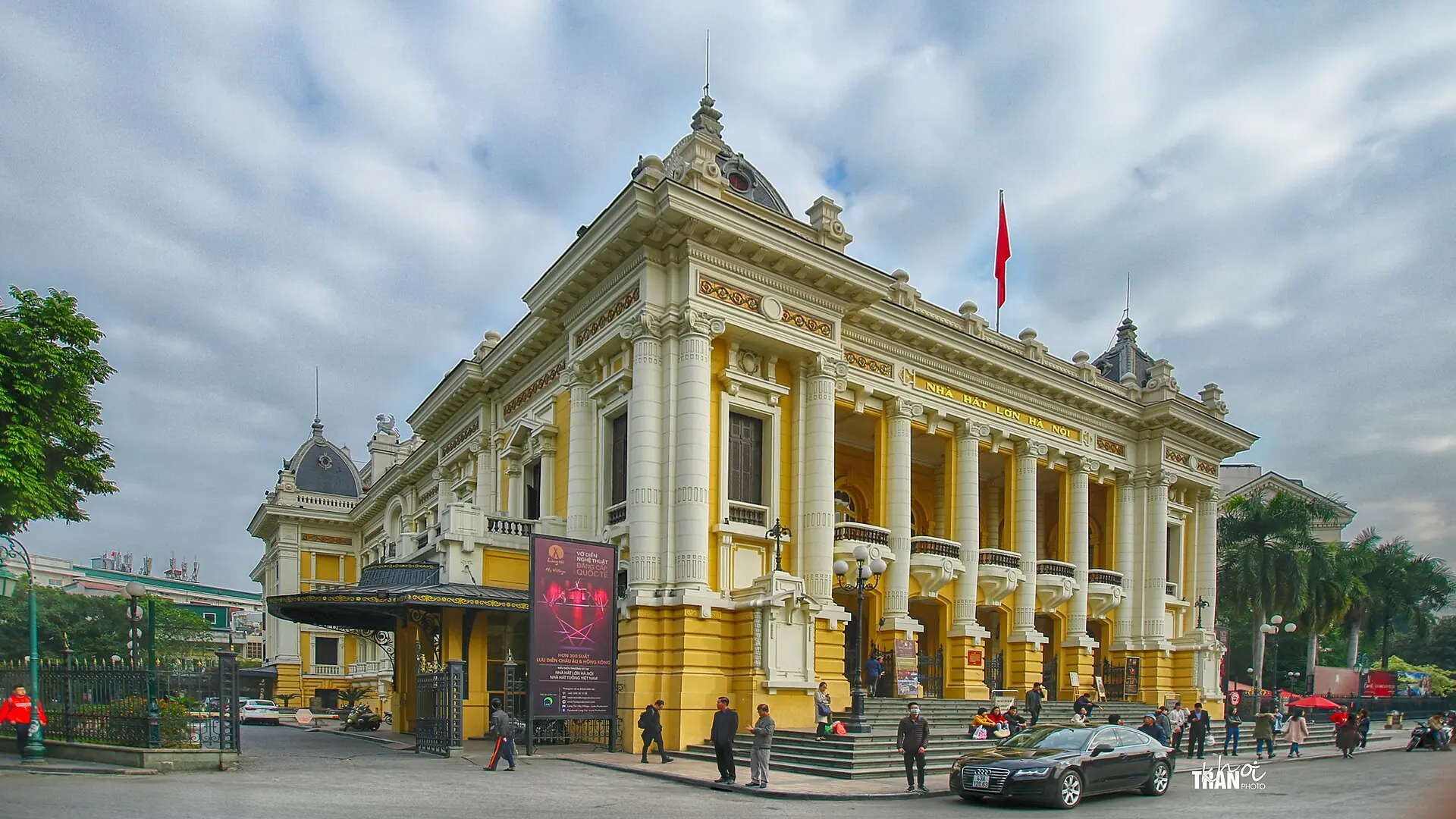 Stop 1 · 3–4 nightsHanoi
Photo: Khoitran1957, CC BY-SA 4.0
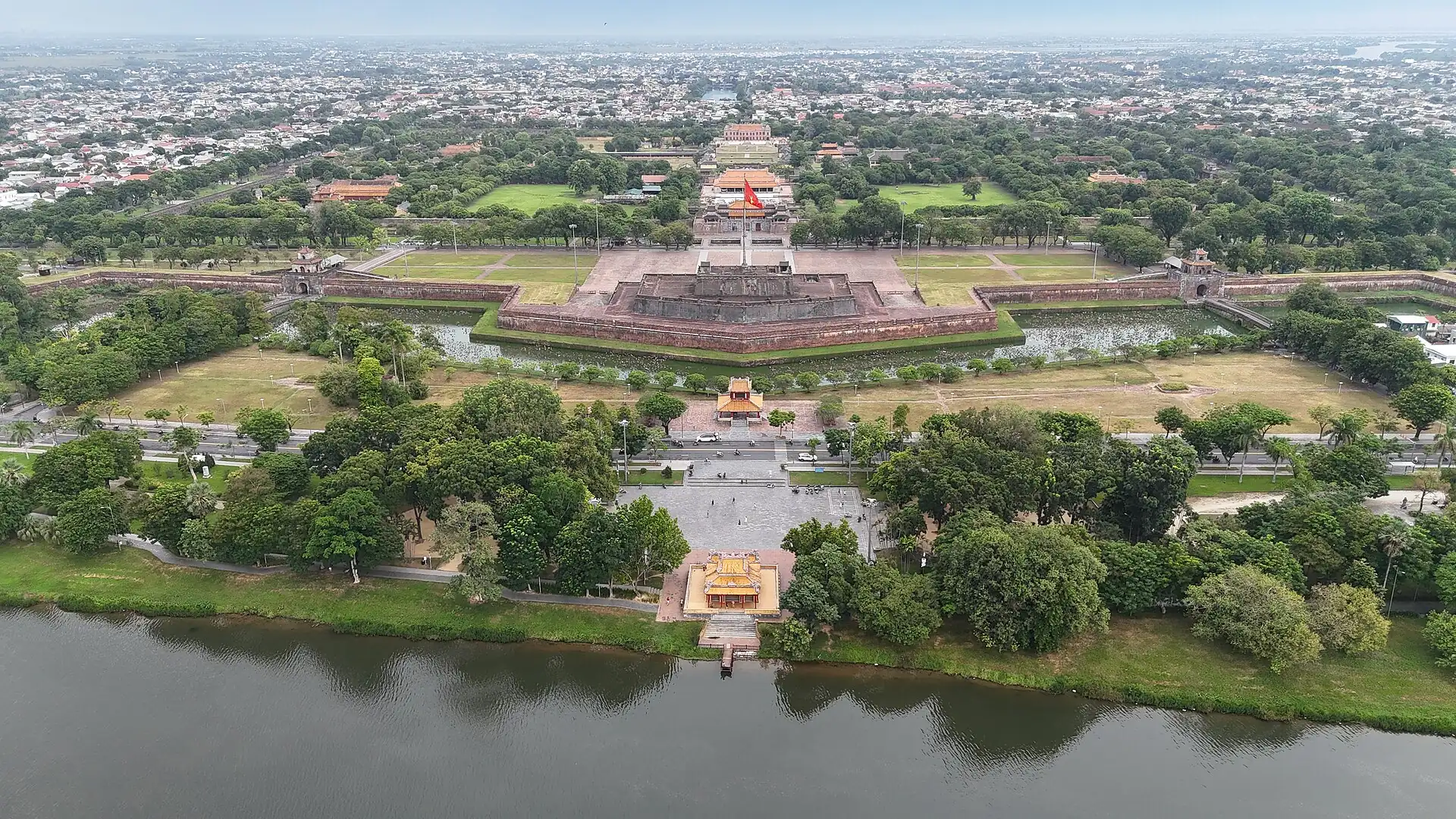 Stop 2 · 2 nightsHuế
Photo: Gaodanielbo, CC BY 4.0
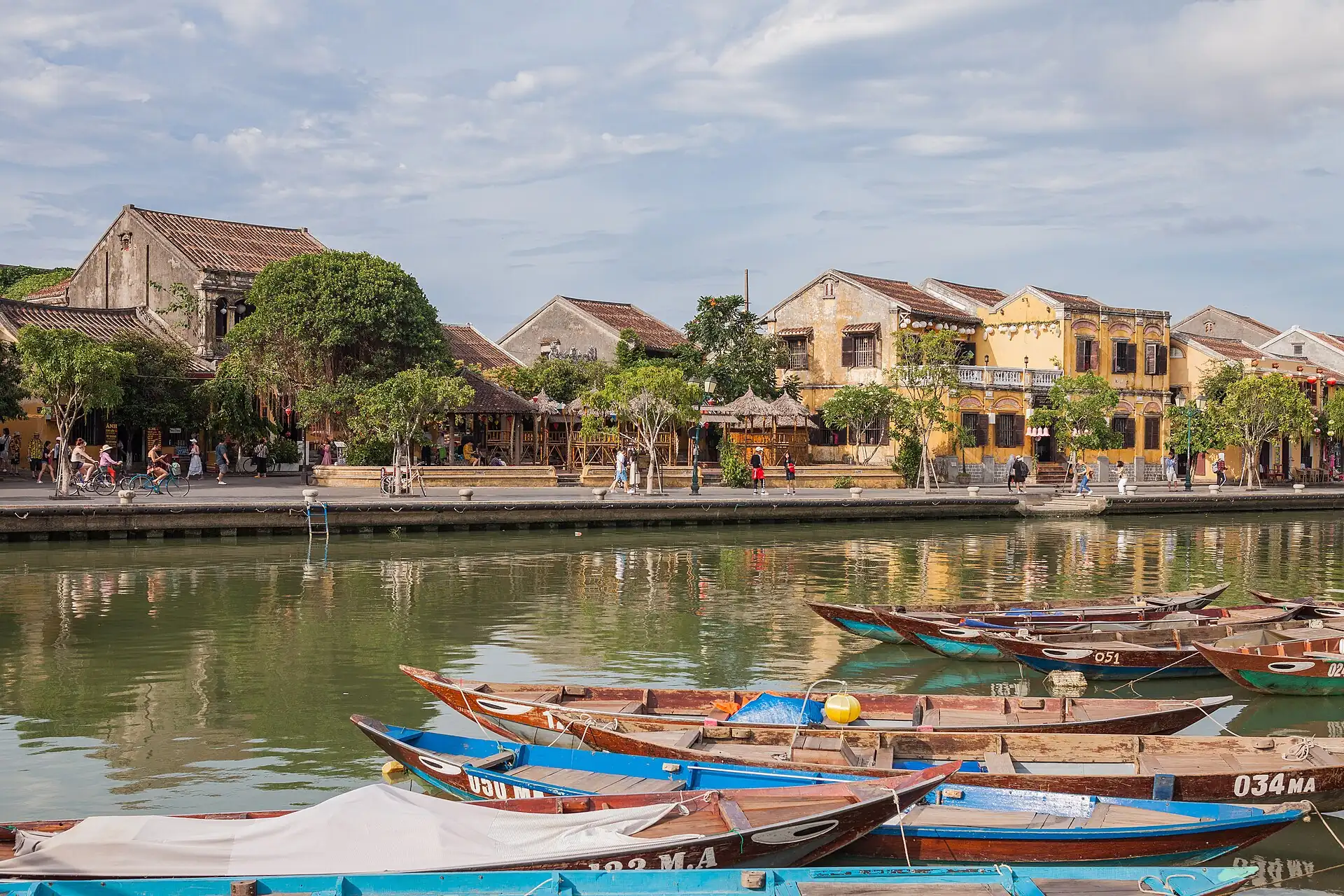 Stop 3 · 3 nightsHội An
Photo: This Photo was taken by Supanut Arunoprayote . Feel free to use any of my images, but please mention me as the author and may send me a mess, CC BY 4.0
 Stop 4 · 0–2 nightsNha Trang
Photo: Kaz Ish, CC BY-SA 3.0
Show 2 sectionsHideVariants, When
Variants
Fast
10 days · 9 nightsTwo flights (HAN → DAD, DAD → SGN). Hạ Long as a day cruise from Hanoi only if the forecast is clear.
Standard
14 days · 14 nights- Hanoi3n
- Hạ Long Bay (boat)1n
- Huế2n
- Hội An3n
- Night train1n
- Đà Lạt2n
- Ho Chi Minh City2n
The train lands in Nha Trang early; continue to Đà Lạt the same morning. The long day is the price of skipping a flight.
Slow
21 days · 21 nightsAdds Ninh Bình and a beach stop; still one move every two to four nights. Add the Mekong Delta (Cần Thơ, 1–2 nights) at the end if you have more.
When
Feb (after Tết) to Apr is the only window that is good along the whole line. In Oct–Nov, shorten the central coast and give the nights to the north.
| Region | Best | Wet / risky | Note |
|---|---|---|---|
| North (Hanoi, Hạ Long) | Oct–Apr | Jun–Sep hot, storms at sea | Dec–Feb cool and grey. |
| Central coast (Huế, Hội An) | Feb–Aug | Sep–Dec; floods peak Oct–Nov | Hội An's old town floods most years; Huế gets the heaviest rain. |
| Nha Trang | Jan–Aug | Oct–Dec | Sea too rough for boat trips in the wet months. |
| Đà Lạt (highlands) | Dec–Apr | May–Oct afternoon rain | Cool all year; mountain passes close after heavy rain. |
| South (Ho Chi Minh City) | Dec–Apr | May–Nov, afternoon downpours | Rain rarely lasts all day. |
Blackout weeks
- Tết (late Jan–Feb; 2027 around 6 Feb — check)
- Trains and flights sell out a month ahead; many family businesses close for 3–7 days.
- Apr 30 – May 1, Sep 2
- National holidays: coast and Đà Lạt full, fares up.
- Jun – Aug
- Domestic school holidays: beach towns and night trains book early.
Arrive & move
Every leg: best mode, time, fare and what to book
Show LegsHide
Legs
| Leg | Best mode | p50 | Fare | Alternative | Book ahead | Bags | Night |
|---|---|---|---|---|---|---|---|
| Hanoi → Huế | Fly HAN → HUI (1 h 15 in the air) | 4 h | ₫1,200,000–2,800,000 (≈ US$50–110) (2026 estimate) | Night train, soft 4-berth cabin, 12–14 h, ₫900,000–1,600,000 (≈ US$35–65) | 1–2 weeks; 4+ weeks near holidays | Yes — check the fare includes a hold bag | day |
| Huế → Hội An | Private car over the Hải Vân Pass with stops | 4 h | ₫1,300,000–2,000,000 (≈ US$50–80) per car (2026 estimate) | Train Huế → Đà Nẵng (2 h 30–3 h, ₫100,000–300,000 (≈ US$4–12)) + car to Hội An (45 min, ₫350,000–450,000 (≈ US$14–18)) | 1 day | Yes | day |
| Hội An → Nha Trang | Car to Đà Nẵng station, night train (9–10 h) | 11 h | ₫800,000–1,400,000 (≈ US$35–55) soft berth (2026 estimate) | Fly DAD → CXR (1 h 10), then 45 min north by car; ₫1,000,000–2,200,000 (≈ US$40–85) | 1–2 weeks | Yes — under the lower berth | night |
| Nha Trang → Đà Lạt | Limousine van (9 seats) via the Khánh Lê pass | 4 h | ₫250,000–350,000 (≈ US$10–14) (2026 estimate) | Private car, ₫1,500,000–2,200,000 (≈ US$60–85) | 1–2 days | One case per seat | day |
| Đà Lạt → Ho Chi Minh City | Fly DLI → SGN (55 min in the air) | 3 h 30 | ₫800,000–2,000,000 (≈ US$35–80) (2026 estimate) | Limousine or sleeper bus, 7–9 h, ₫300,000–500,000 (≈ US$12–20) | 1 week | Yes — check the fare includes a hold bag | day |
p50 is door to door for the best mode, hotel to hotel, including airport transfers and check-in. Fares are one way per person unless marked per car.
Book these first
Legs ordered by how far ahead the guide says to book them. Do the top of the list first.
1.Hanoi → Huế1–2 weeks ahead
1–2 weeks; 4+ weeks near holidays
Vietnam Railways (official tickets) ↗Vietnam Airlines ↗VietJet Air ↗
2.Hội An → Nha Trang1–2 weeks ahead · night leg
1–2 weeks
3.Đà Lạt → Ho Chi Minh City7 days ahead
1 week
4.Nha Trang → Đà Lạt1–2 days ahead
1–2 days
5.Huế → Hội An1 day ahead
1 day
If a leg fails
For each leg, the alternative and the operators the guide names. Operators change: (check) means confirm before you rely on it.
Hanoi → Huế
Main plan: Fly HAN → HUI (1 h 15 in the air)
Plan B: Night train, soft 4-berth cabin, 12–14 h, ₫900,000–1,600,000 (≈ US$35–65)
- air: Vietnam Airlines, VietJet Air; Bamboo Airways has cut routes (check)
- rail: Vietnam Railways SE-series Reunification trains; private carriages on some trains
Huế → Hội An
Main plan: Private car over the Hải Vân Pass with stops
Plan B: Train Huế → Đà Nẵng (2 h 30–3 h, ₫100,000–300,000 (≈ US$4–12)) + car to Hội An (45 min, ₫350,000–450,000 (≈ US$14–18))
- car: Hotel-booked drivers, ride-hailing apps (Grab, Xanh SM), 'Hải Vân Pass' tour cars with stops at Lăng Cô and the pass top
- rail: Vietnam Railways SE trains and the Huế–Đà Nẵng heritage-style daytime train (check the timetable)
- bus: Tourist open-bus companies and limousine vans (tunnel route)
Hội An → Nha Trang
Main plan: Car to Đà Nẵng station, night train (9–10 h)
Plan B: Fly DAD → CXR (1 h 10), then 45 min north by car; ₫1,000,000–2,200,000 (≈ US$40–85)
- rail: Vietnam Railways SE trains
- air: Vietnam Airlines, VietJet Air (DAD → CXR, not daily on every carrier — check)
Nha Trang → Đà Lạt
Main plan: Limousine van (9 seats) via the Khánh Lê pass
Plan B: Private car, ₫1,500,000–2,200,000 (≈ US$60–85)
- van: Limousine van companies (Phương Trang/FUTA, Thành Bưởi and others — compare recent reviews)
- car: Hotel-booked private cars
Đà Lạt → Ho Chi Minh City
Main plan: Fly DLI → SGN (55 min in the air)
Plan B: Limousine or sleeper bus, 7–9 h, ₫300,000–500,000 (≈ US$12–20)
- air: Vietnam Airlines, VietJet Air
- bus: FUTA (Phương Trang), Thành Bưởi and other limousine and sleeper companies
See & do
Where to go from the end of the line
Show Go nextHide
Go next
Phnom Penh (Cambodia)
Bus from Ho Chi Minh City via the Mộc Bài – Bavet border, 6–7 h
₫350,000–600,000 (≈ US$14–25) (2026 estimate)
Check Cambodian entry rules before you go; the official Cambodian e-visa site is evisa.gov.kh. Stay on your bus's side of the border process.
Mekong Delta (Cần Thơ)
Bus or car from Ho Chi Minh City, 3 h 30 – 4 h
₫200,000–300,000 (≈ US$8–12) by bus (2026 estimate)
1–2 nights; floating markets start at dawn.
Luang Prabang (Laos)
Fly from Hanoi before you start south
check
Add it at the Hanoi end, not after Saigon.
Practical
What to sort before you go, and the traps leg by leg
Show 2 sectionsHidePrepare, Per-leg traps
Prepare
- E-visa: apply on the official portal (evisa.gov.vn) at least a week ahead; the name must match your passport exactly.
- Train: book on the official Vietnam Railways site (dsvn.vn). Resellers add a fee; cabins are "soft 4-berth" (khoang 4) or "hard 6-berth" (khoang 6). Take the soft 4-berth for night legs.
- Flights: low-cost fares often exclude the hold bag; add it when booking, not at the airport.
- Sleeper bus reality: bunks about 1.7 m long, shoes off at the door, bags in the hold, roadside toilet stops, arrival often 04:00–05:00.Sleeper bus reality: bunks about 1.7 m long, shoes off at the door, bags in the hold, roadside toilet stops, arrival often 4:00 AM–5:00 AM.
- Keep one ride-hailing app working for arrivals at stations and piers.
- Leave one spare night before the international flight out; storms and floods move schedules.
Per-leg traps
Any sleeper bus
Any night train
Any night train
Huế → Hội An
Hội An → Nha Trang
Nha Trang → Đà Lạt
Hội An
Deep dive
History, reading and every source
Show the detailsHide
Deep dive
Vietnam is long and thin, and almost everything that crosses it runs along one strip of coast: the railway, Highway 1, the old mandarin road before them, and the monsoon that sets the calendar. This deep dive reads the line as one story, from the track that took 40 years to finish to the three regions that still argue about which bowl of noodles is correct.
1The Reunification Express and Highway 12 min
Before the railway there was the Mandarin Road, a royal courier route linking Hà Nội, Huế and Saigon. Relay stations sat roughly a day apart, and imperial messages could cross the country in about two weeks. Much of today's Highway 1 follows its line, which is why so many market towns sit exactly where the road meets a river.
French Indochina built the railway in pieces. The short Hà Nội–Hải Phòng and Saigon–Mỹ Tho lines came first; the coastal Transindochinois was only joined up in 1936, when the last gap between Nha Trang and Tourane (Đà Nẵng) closed. A trip that had taken weeks by road now took under three days.
War cut the line almost as soon as it was finished. The 1954 partition severed it at the Bến Hải River, and American bombing in the north and sabotage in the south left over a thousand bridges and hundreds of stations damaged. After 1975 the new government made repairing it a symbol: the first through train left Hà Nội on 31 December 1976 and was named the Thống Nhất, the Reunification Express.
The track is still metre gauge and mostly single, so trains wait in sidings for each other and the fastest service takes around 30 hours end to end. Highway 1, widened into an expressway in stages since the 2010s, now carries most freight and most sleeper buses. A high-speed line was approved by the National Assembly in 2024, with construction planned to start around the end of the decade; treat opening dates as political targets (check).
For a traveller the useful fact is that the railway hugs the coast for long stretches the road leaves. The Hải Vân Pass section north of Đà Nẵng, where the train crawls along the cliff above the sea, is the best two hours of rail on the line.
- Line length
- About 1,726 km (1,072 mi), Hà Nội to Sài Gòn stationAbout 1,072 mi (1,726 km), Hà Nội to Sài Gòn station
- Gauge
- Metre gauge, mostly single track
- Through line completed
- 1936
- Reunification Express first run
- 31 December 1976
- High-speed line
- Approved 2024; opening target 2030s (check)
2Three regions: north, centre, south1 min
Vietnamese people talk about the country in three parts, Bắc, Trung and Nam, and the differences are real. The north around the Red River Delta is the oldest Vietnamese heartland: Confucian, formal, proud of its literature and wary of flash. Hà Nội accents are the broadcast standard, and older northerners still judge a family by its home village.
The centre is the narrow waist, squeezed between mountains and sea and hit by typhoons almost every year. It was Champa territory until the Vietnamese expansion south, and Huế was the royal capital from 1802 to 1945. The result is a region of court ritual, Buddhist devotion and hard living; central people are known for frugality, strong accents and the spiciest food in the country.
The south was settled last, mostly from the 17th and 18th centuries, on land that had been Khmer. It absorbed Chinese traders, Khmer farmers and a century of direct French rule in Cochinchina. Southerners have a reputation for being open, informal and commercial, and Hồ Chí Minh City still calls itself Sài Gòn in daily speech.
You will hear the differences before you see them. The same word for 'no' sounds different in each region, the south drops some tones the north keeps, and the menu changes: sweeter in the south, saltier in the north, hotter in the centre. Asking someone where they are from, and then which dish is better, is one of the safest conversations you can start.
- Regions
- Bắc Bộ (north), Trung Bộ (centre), Nam Bộ (south)
- Nguyễn capital at Huế
- 1802–1945
- Former colonial units
- Tonkin, Annam, Cochinchina
- Southern expansion reaches the Mekong
- Late 17th–18th centuries
3Food along the coast1 min
The line is also a noodle map. Hà Nội makes the clear, restrained phở bò and bún chả, grilled pork in a sweet-sour broth. Food here leans on fish sauce, herbs and balance rather than heat, and many of the best places sell one dish only.
Huế's court tradition produced dozens of small rice cakes, steamed or wrapped in leaves, and bún bò Huế, a beef and lemongrass soup with a chilli-oil slick. Hội An has cao lầu, thick chewy noodles said to need water from one old well, and mì Quảng, a turmeric noodle with little broth, from the surrounding province.
South of Đà Nẵng, fish dominates. Nha Trang eats bún chả cá, fish-cake noodle soup, and the fish-sauce town of Phan Thiết is a short drive away. Đà Lạt's cool climate grows the vegetables, strawberries and artichokes sold across the country, and its night market specialises in grilled rice paper.
In the south, dishes get sweeter and bigger: cơm tấm, broken rice with grilled pork chop, hủ tiếu noodle soup with Chinese and Khmer roots, and plates of fresh herbs that come free with everything. The Mekong Delta adds fruit, river fish and coconut in savoury food.
A simple rule works everywhere: eat where it is busy with locals, at the time locals eat that dish. Phở and bún bò are breakfasts; bún chả is lunch; seafood and snails are evening food.
- Hà Nội
- Phở bò, bún chả, chả cá Lã Vọng
- Huế
- Bún bò Huế, bánh bèo, bánh khoái
- Hội An / Quảng Nam
- Cao lầu, mì Quảng, cơm gà
- Nha Trang
- Bún chả cá, nem nướng Ninh Hòa
- Hồ Chí Minh City
- Cơm tấm, hủ tiếu, bánh xèo
4War history along the route1 min
The line runs through every phase of Vietnam's 20th-century wars. In Hà Nội, Hỏa Lò Prison was built by the French for Vietnamese political prisoners and later held captured American airmen. The B-52 wreck in Hữu Tiệp pond and the air-defence museum recall the December 1972 bombing.
The former Demilitarised Zone lies between Huế and Đông Hà, along the Bến Hải River. Day trips from Huế visit the Hiền Lương bridge, the Vịnh Mốc tunnels where villagers lived underground for years, and the Khe Sanh combat base. Huế itself was the scene of the longest urban battle of the 1968 Tết Offensive, and the citadel still shows repaired damage.
South of Đà Nẵng, the Sơn Mỹ memorial marks the Mỹ Lai massacre of March 1968. It is a quiet, hard site a short detour from Quảng Ngãi, and seldom on tour itineraries.
In Hồ Chí Minh City, the War Remnants Museum shows the war from the Vietnamese side, including the effects of Agent Orange. Independence Palace is preserved as it was on 30 April 1975, when a tank broke through its gate. The Củ Chi tunnels, north-west of the city, give a sense of the underground network used by southern guerrillas.
Museums present the official narrative, and the language is direct. Most people you meet were born long after 1975; they will answer questions politely but talk more readily about the present.
- Geneva partition line
- 17th parallel, Bến Hải River, 1954
- Battle of Huế
- January–March 1968
- Mỹ Lai (Sơn Mỹ)
- 16 March 1968
- Fall of Saigon
- 30 April 1975
5Monsoon and seasons1 min
Vietnam spans about 15 degrees of latitude, and two monsoons reach it at different times. The south-west monsoon from about May to October brings the wet season to the south and the highlands. The north-east monsoon from about October to March brings cool, grey drizzle to the north and heavy rain to the central coast.
The central coast is the odd one out. The Trường Sơn mountains block the summer rain, so Huế and Hội An are hot and dry from May to August; then from September the north-east winds and typhoons drive rain against the mountains, and Huế becomes one of the wettest cities in Southeast Asia. October and November floods are part of life in Hội An's old town, where shops mark past water levels on their walls.
Typhoons form in the western Pacific and the South China Sea from about June to November and strike the north and centre most often. Typhoon Yagi in September 2024 hit Quảng Ninh and Hà Nội hard. Forecasts give a few days' warning; flights, trains and Hạ Long cruises are suspended when one approaches.
The practical lesson is that no single month is perfect along the whole line, but February to April comes closest. Travellers in autumn should shift nights to the north and south; travellers in summer should give the centre more time.
- Wettest region
- Central coast, Sep–Dec
- Typhoon season
- About Jun–Nov
- Coolest
- Hà Nội Dec–Feb, lows around 12–15°C (54–59°F)Hà Nội Dec–Feb, lows around 54–59°F (12–15°C)
- Best whole-line window
- Feb–Apr
Read, watch, wordsReading · Watching · Glossary · Sources
Reading
- The Sorrow of War — Bảo NinhA northern soldier's novel of the war and after.
- Catfish and Mandala — Andrew X. PhamA Vietnamese-American cycles the length of the country.
- Vietnam: Rising Dragon — Bill HaytonHow the country works today.
- Dispatches — Michael HerrReporting from Huế and Khe Sanh, 1968.
Watching
- The Vietnam War — Ken Burns and Lynn NovickLong documentary with Vietnamese voices from both sides.
- The Scent of Green Papaya — Trần Anh HùngEveryday Saigon life in the 1950s.
Glossary
| Term | Local | Meaning |
|---|---|---|
| Thống Nhất | Tàu Thống Nhất | Reunification; the name of the north–south trains |
| Soft berth | khoang 4 giường nằm mềm | Four-bed air-conditioned sleeper cabin |
| Quốc lộ 1 | QL1A | Highway 1, the north–south trunk road |
| Bắc, Trung, Nam | North, centre and south — the three regions | |
| Tết | Lunar New Year; the country's biggest holiday and travel peak |
Read for this deep dive
- Vietnam Railways ↗
- Wikipedia — North–South railway (Vietnam) ↗
- Wikipedia — Climate of Vietnam ↗
- UNESCO — Complex of Huế Monuments ↗
Background reading only: the text above is written by Voykit, not copied from these pages.
Sources
Ask about Hanoi to Ho Chi Minh City
Loading…
Was this useful?