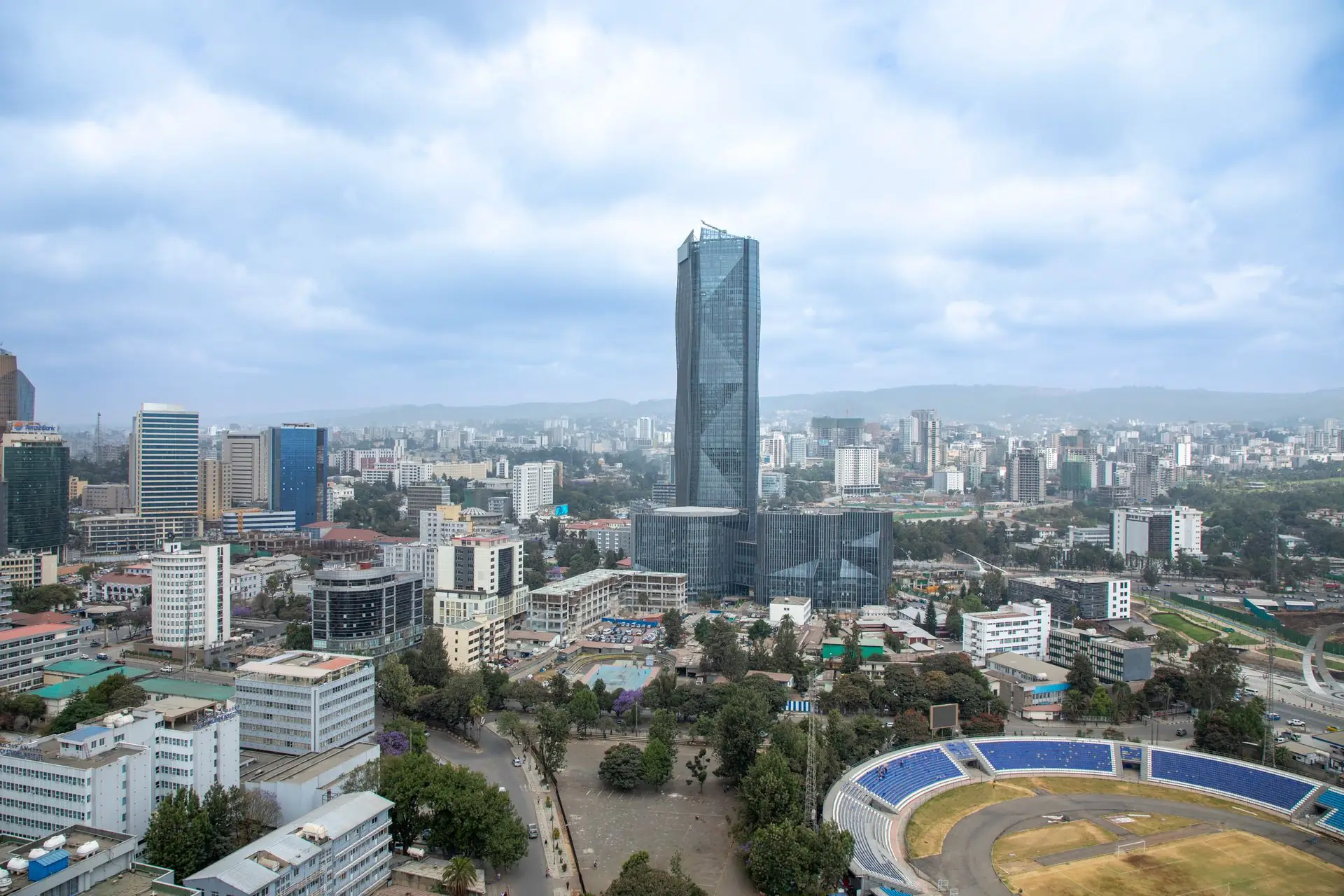
Addis Ababa
አዲስ አበባ
Code ET · 4 walking zones
Addis Ababa is a big, high-altitude capital with heavy traffic: give it two full days for the National Museum, Merkato and a coffee-house afternoon, sleep near Meskel Square or Bole, and keep every cross-town hop to one per half-day.
Our quick read of Addis Ababa, scored 1–5 (friction is out of 100). Cash need: how often you still need notes. Heat risk: how hot days get. Stroller: how easy wheels are. Friction: overall effort for a first visit. Desk judgements, so check before relying on them.
- Local time
- --:--
- Weather
- forecast below
- Currency
- ETB
- Best months
- Jan · Feb · May · Oct · Nov · Dec
- Airport
- Addis Ababa Bole (ADD)
Walking zones: the 4 areas this guide plans a day around. Each is a district you can cover on foot, so you do one zone per half-day and ride the train between them. The code (ET 01, ET 02…) is just the zone's number on the Addis Ababa line; the line under each name says how bags fare there and how much time it needs.
Map of Addis Ababa
Use the switches to show or hide each kind of pin. A switch that is on shows its pins on the map; tap it again to hide them. "Show only" keeps just the pins that match (for example, places that fit a suitcase). Tap any pin for its name and a link to its page.
- Where to sleep
- Places
- Walking clusters
- Rest stops
From the airport Ababa Bole (ADD) to your bed
Tap a pin for its card. Places without their own coordinates are shown by their walking cluster.
Why Addis Ababa
Addis sits at about 2,350 m and sprawls along ring roads that clog at rush hour. The trips that go wrong are the rushed ones: altitude on the first afternoon, a cross-town taxi at 17:00, cash carried into Merkato, and a flight day started too late. Four clusters cover the centre, and a base near Meskel Square or Bole keeps the airport within 30–60 minutes. Ride-hailing apps and hotel cars are your last-service plan.
See first
- 1
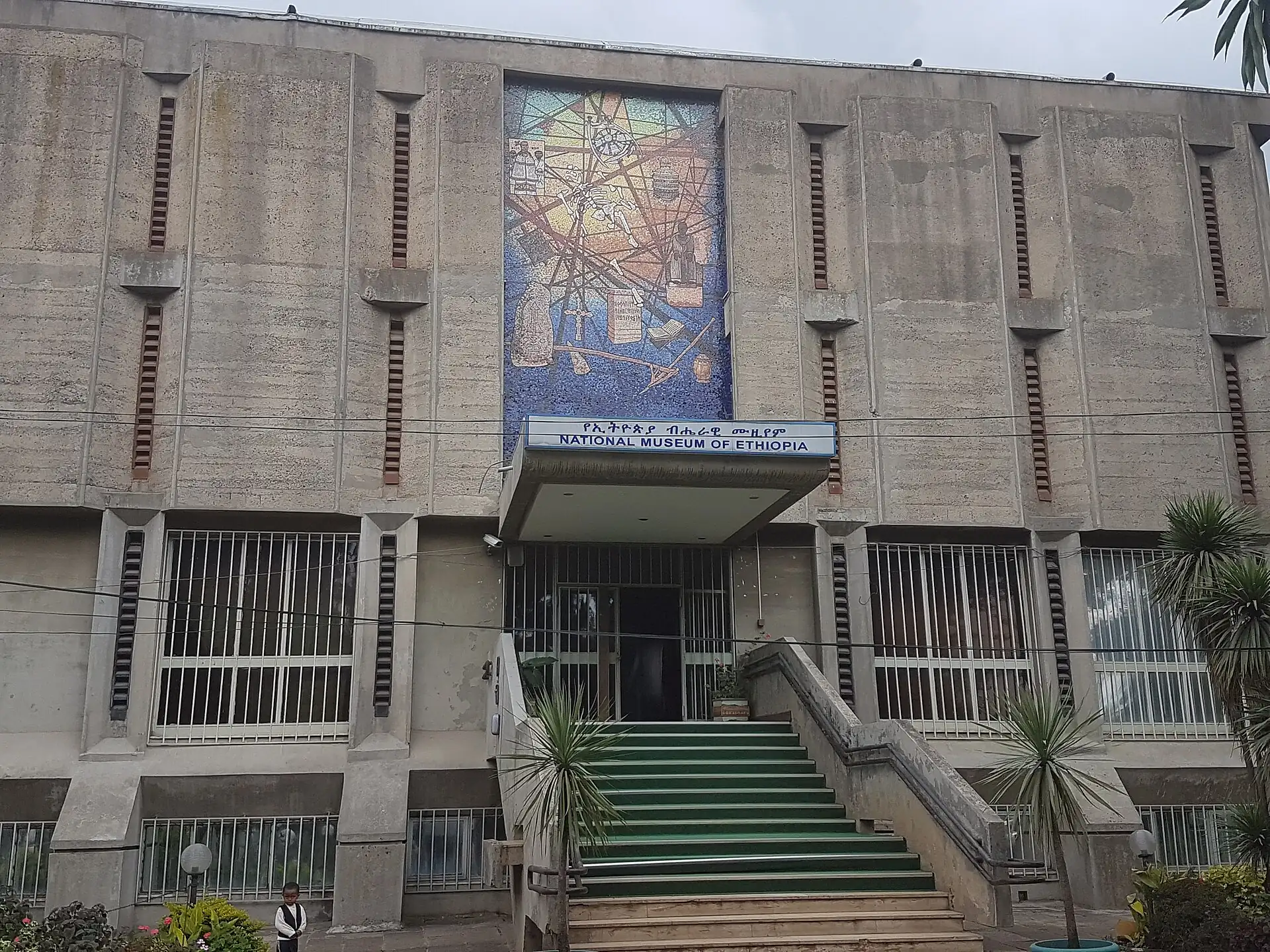 National Museum of Ethiopia · 1.5–2 h
- 2
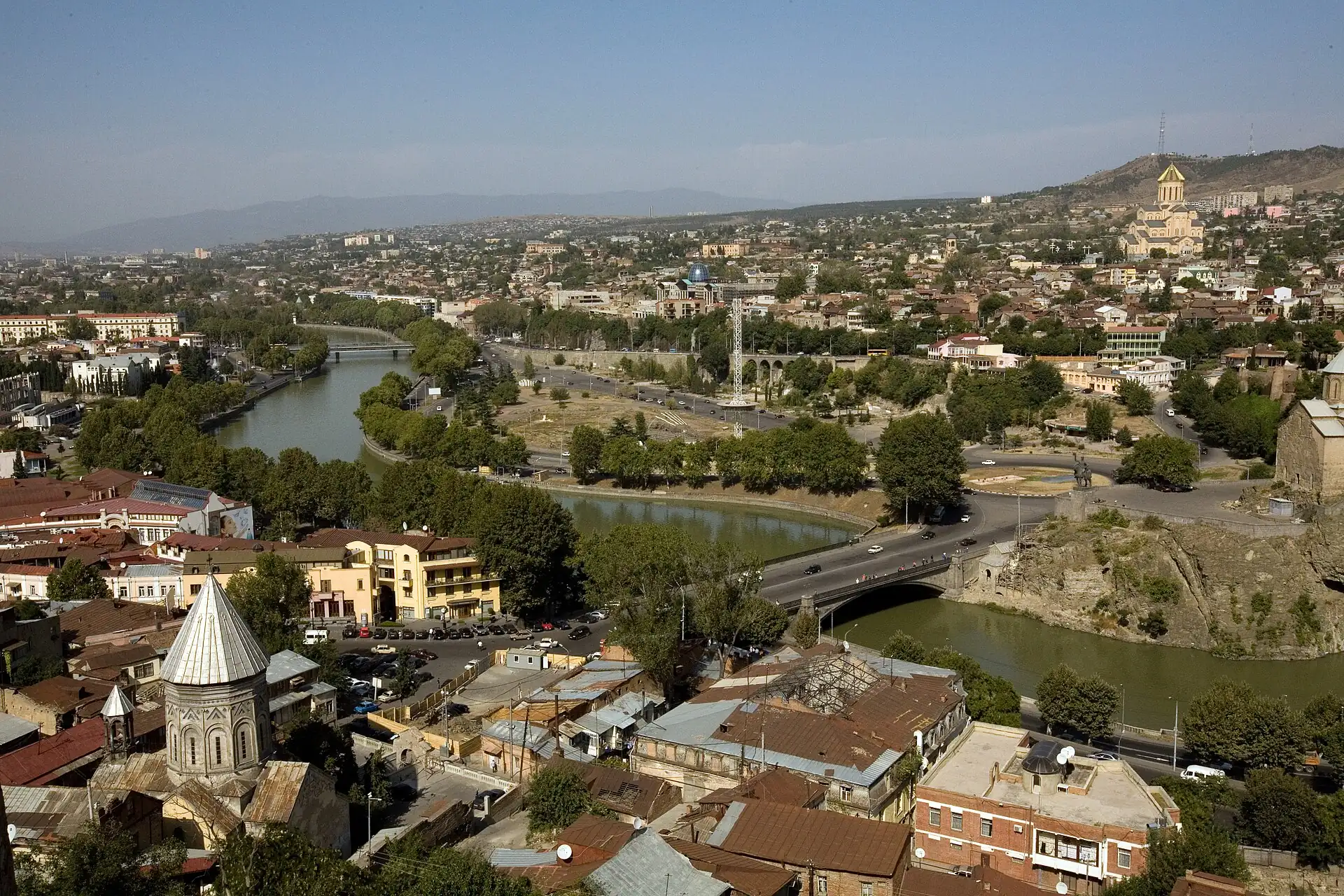 Holy Trinity Cathedral · 45–60 min
- 3
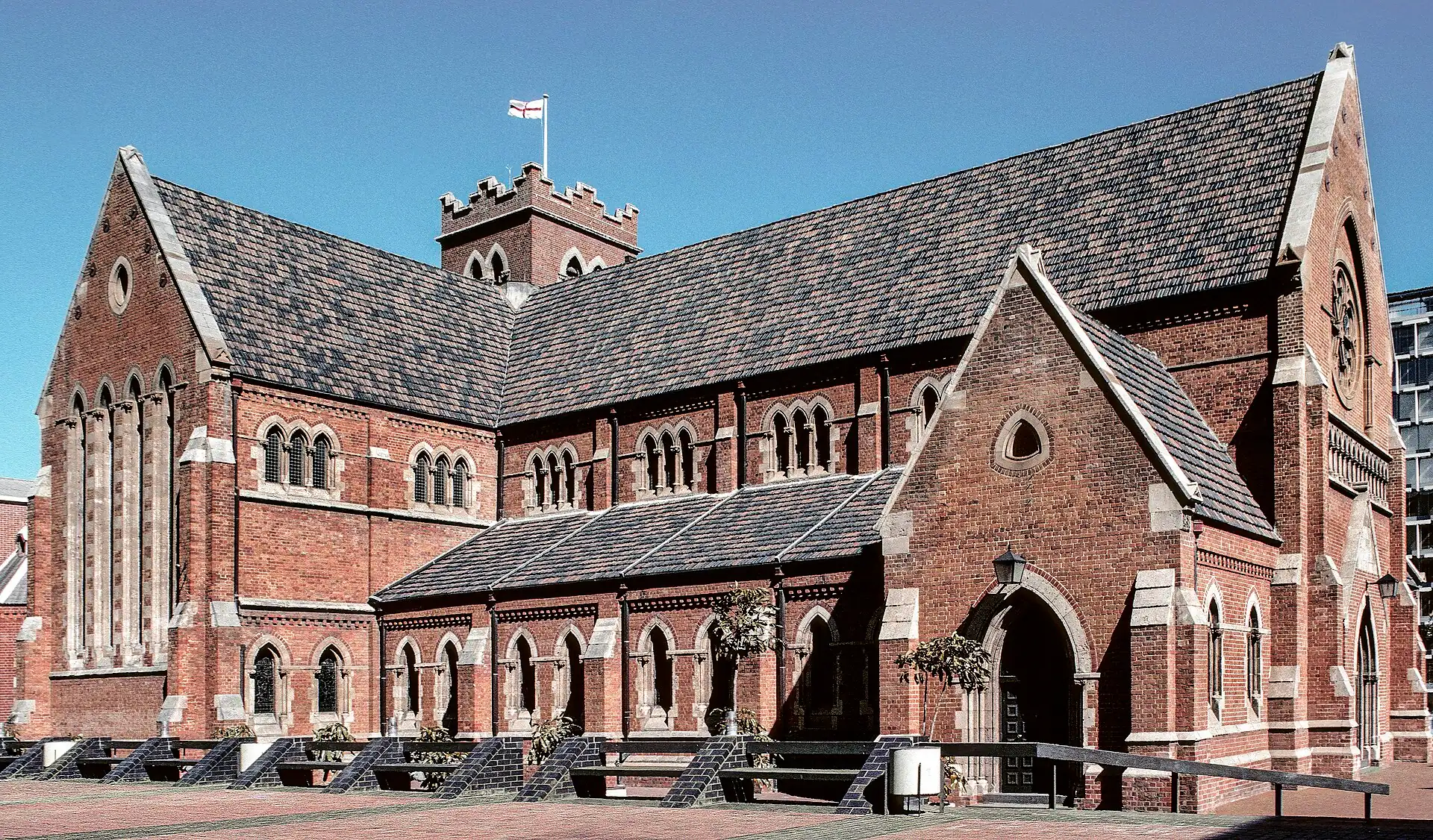 St George's Cathedral and museum · 45–60 min
- 4
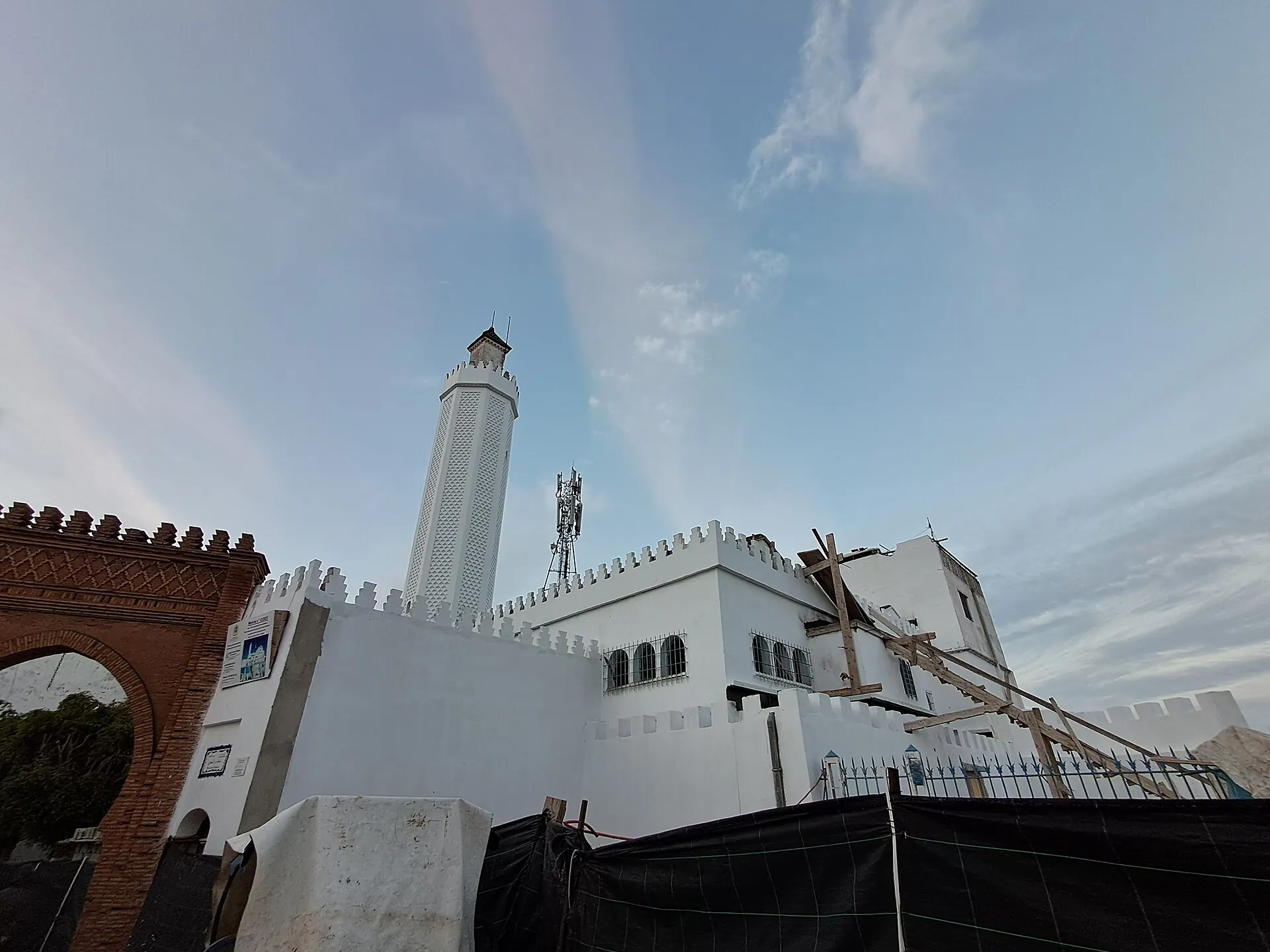 Anwar Mosque · 20–30 min
- 5Kitfo lunch or dinner · 1–1.5 h
Fits
- Museum and coffee-house days
- Hub stop before domestic flights
- Markets and church visits
Does not fit
- Travellers who need quick cross-town transport
- Anyone who cannot rest at altitude
- Unplanned visits to areas under government advisories
How long
- 2 daysNational Museum and Holy Trinity one morning; Merkato and Piazza the next
- 3 daysFour clusters at an easy pace, plus Entoto by car
- 5 daysAddis 3 + a domestic flight to the north or the Rift Valley 2
Good for
- First timers
- History
- Foodies
- Budget
- Families
- Wheelchair
About Addis Ababa
Addis Ababa ('New Flower' in Amharic) was founded in 1886 by Emperor Menelik II, whose wife Empress Taytu Betul chose the site's hot springs for a residence; the settlement grew fast as the imperial court, initially semi-nomadic between highland capitals, put down roots for good. The eucalyptus trees that now shade much of the city were deliberately introduced in the 1890s to solve a firewood shortage that threatened to force the capital to move again.
Ethiopia's history as the only African country never colonised (aside from a brief Italian occupation, 1936–1941) gives Addis Ababa a distinct political weight on the continent: it is headquarters to the African Union and a hub for Pan-African diplomacy, a status visible in the diplomatic quarter around Bole and the AU's own compound near Meskel Square.
Good to know
- Addis Ababa is the capital and flight hub; Lalibela, Gondar and the south are separate domestic flights, not day trips.
- The Ethiopian Tourism Organisation has information points, but hotel front desks remain the most practical source for maps, licensed guides and driver recommendations.
- Licensed guides can be arranged through your hotel or the National Museum; agree the fee and duration before starting.
Go deeper 11 min read · 6 chapters
Addis Ababa is young by the standards of old capitals: it was founded in 1886, on a highland plateau chosen for its hot springs and view over the Rift Valley escarpment. In just over a century it grew from a royal camp of tents and eucalyptus groves into a continental capital, headquarters of the African Union, and a city of about five million people. This deep dive traces that fast growth, from Empress Taytu's bathhouse to today's light rail and glass towers.
1History2 min
Addis Ababa was founded in 1886, and the story usually credited is that Empress Taytu Betul, wife of the future Emperor Menelik II, chose the site for its hot mineral springs (Filwoha) and pitched her tent there while the court was still based on the cooler, windier hill of Entoto to the north. Menelik joined her, and the settlement below Entoto took the Amharic name Addis Ababa, new flower. Entoto had served as a temporary capital in the early 1880s, but its supply lines were difficult, and the new site on the plain had water, firewood in the surrounding hills, and room to grow.
Menelik II declared the town his capital and began giving land grants, rist, to nobles and soldiers who built compounds around his palace, the Gebbi. A fuel crisis nearly ended the experiment: the surrounding hills were being stripped of wood for building and cooking. The solution, on the advice of foreign advisers, was to import eucalyptus seedlings from Australia in the 1890s; they grew fast in the highland climate and still cover the hillsides and fill many compounds today, giving the city part of its skyline and its smell after rain.
The early 20th century brought the railway from Djibouti (completed to Addis Ababa in 1917), the country's first cars, telephones and a slowly expanding street grid. Emperor Haile Selassie I, crowned in 1930, built ministries, schools and a modern palace, and it was from Addis Ababa that he made his 1936 appeal to the League of Nations after Italy invaded. Italian forces occupied the city from 1936 to 1941, and their five-year rule left roads, some administrative buildings and the Piazza district's grid, even as it displaced residents and imposed racial segregation.
After liberation in 1941 Haile Selassie returned, and Addis Ababa became a base for pan-African diplomacy: the Organisation of African Unity was founded here in 1963 and its successor, the African Union, still has its headquarters on the site. The Derg military government (1974 to 1991) that overthrew Haile Selassie brought the Red Terror of the late 1970s, when thousands of Addis residents were killed in political violence, and a command economy that stalled private building. Since the 1991 change of government the city has grown fast, absorbing surrounding farmland, running a light rail from 2015, and, since 2018, pushing large corridor development projects that have widened roads and rebuilt whole streets in the centre.
- City founded
- 1886, Empress Taytu and Emperor Menelik II
- Name meaning
- Addis Ababa, new flower
- Railway from Djibouti reached the city
- 1917
- Italian occupation
- 1936 to 1941
- OAU founded here
- 1963
- Population
- About 5 million (city proper, 2020s estimate)
2Neighbourhood stories2 min
Piazza grew as the commercial quarter the Italians built during the occupation, with arcaded shopfronts, a grid of streets and the country's first cinemas and hotels. Its formal name, Arada, is older still. It refers to a pre-1886 market and meeting place, and Aradas, people of Arada, came to mean streetwise Addis Ababans in general. Piazza kept its role as a retail and nightlife district through the 20th century; many of its buildings are now faded but still stand, and a slow restoration effort has begun on a handful of them.
Merkato, west of Piazza, was created by the Italian administration in the late 1930s when Ethiopian and other African traders were pushed out of the city centre under racial segregation and resettled on open ground to the west. The market outgrew its origin and is now commonly described as the largest open-air market in Africa, spreading across dozens of specialised sections, spices, grain, textiles, scrap metal, secondhand clothing, each with its own lanes and porters. It is dense, cash-based and, by local warning, a common site for pickpocketing, which is why guides recommend a local companion and a light bag.
Meskel Square, an open plaza south-east of Piazza, was built as Abiyot Adebay Ba'edat Square, Revolution Square, under the Derg, with a reviewing stand for military parades. Its older and now official name refers to Meskel, the September festival that fills the square with bonfires and crowds each year; the name shift traces the country's political turns in a single place. Kazanchis and the area around Meskel are a hub of government offices, the UN Economic Commission for Africa compound and mid-range hotels.
Bole, in the south-east, grew up around the airport that opened there in the 1960s and has become the newest and most built-up district, with glass office towers, shopping malls, international restaurants and most of the city's newer apartment blocks. It is where the light rail's eastern branch runs and where returning diaspora Ethiopians often invest, and it feels closer in pace and architecture to a Gulf business district than to Piazza a few kilometres away.
- Piazza's older name
- Arada
- Merkato relocation
- Late 1930s, under Italian administration
- Meskel Square earlier name
- Revolution Square, Derg era
- Bole airport opened
- 1960s
3Architecture2 min
Ethiopian Orthodox churches are usually round or octagonal, built in three concentric rings, an outer ambulatory, an inner nave for the congregation, and a screened-off inner sanctuary, the qidist qidusan, that holds the tabot, a replica of the Ark of the Covenant, and is entered only by priests. Holy Trinity Cathedral, consecrated in 1942 to mark liberation from Italian rule, breaks from that round plan and uses a cross-shaped, more European layout with stained glass and carved stone, reflecting its role as a national monument as much as a parish church; Emperor Haile Selassie and his wife are buried there. St George's Cathedral, older and closer to the traditional octagonal form, was built to commemorate the 1896 victory over Italy at the Battle of Adwa.
The eucalyptus-lined compound with a corrugated-iron-roofed house is the vernacular unit of the older city: a walled plot, a tin-roofed main house, outbuildings and a share of trees for fuel and building poles. Grander Menelik-era houses in wood and stone survive around the old Gebbi and in a few Piazza streets. The Italian occupation added modernist and rationalist civic buildings in Piazza and around Arat Kilo, low blocks with arcades, some now housing shops or offices, alongside monuments the Italians erected to their own dead, several later removed or altered after liberation.
After 1963 the pan-African role produced its own architecture: Africa Hall, completed in 1961 for the founding of the OAU, has a stained-glass mural by Ethiopian artist Afewerk Tekle inside, and later AU buildings, including a tower funded and built by China and opened in 2012, sit on the same expanding compound. The Derg era added heavy concrete monuments, the Tiglachin (Derg) monument on Meskel Square approach roads among them, built with North Korean help in a socialist-realist style similar to monuments elsewhere in the former Eastern bloc.
Since the 2000s the skyline has filled with glass-and-concrete towers in Bole and along the new corridor roads, built fast and often by Chinese or Gulf-linked contractors, while government-backed corridor development since 2018 has widened boulevards, added landscaped medians and rebuilt facades along central streets, in some cases demolishing older informal housing and small shops. The contrast between a tin-roofed compound, a Derg-era concrete block and a new tower can appear within a single city block.
- Holy Trinity Cathedral
- Consecrated 1942
- St George's Cathedral
- Commemorates the 1896 Battle of Adwa
- Africa Hall
- Completed 1961
- AU tower
- Built with Chinese funding, opened 2012
4Food history2 min
Coffee's most repeated origin story is Ethiopian: a goatherd named Kaldi, in the south-western Kaffa region, is said to have noticed his goats dancing after eating red coffee cherries, and brought them to a monastery where monks first tried the brew. Whatever the tale's age, Ethiopia is a genuine centre of coffee's natural range, and the coffee ceremony, buna, remains a daily social ritual: green beans are roasted over coals in front of guests, ground by hand, brewed in a clay pot, the jebena, and served in three rounds, each round with its own name and meaning, over the burning of frankincense.
Injera, a spongy flatbread fermented for a few days and cooked on a wide clay or metal griddle, the mitad, is the base of most meals, made from teff, a tiny highland grain grown almost nowhere else at scale. Dishes, wat, are stews of meat, lentils or vegetables in spice pastes, the best known being doro wat, chicken in a dark berbere-chilli sauce with a hard-boiled egg, traditionally a dish for celebrations. Kitfo, minced raw or lightly warmed beef seasoned with spiced clarified butter and berbere, is a specialty strongly associated with Addis Ababa's Gurage-run restaurants.
The Ethiopian Orthodox calendar sets much of the city's eating pattern: on Wednesdays, Fridays and during extended fasting periods before Easter and Christmas, observant Orthodox Christians eat vegan food, injera with lentil, chickpea and vegetable dishes, and restaurants across the city post fasting menus, sega bét (meat house) or tsom bét (fasting house), on those days. Tej, a honey wine flavoured with the bitter leaves of gesho, is drunk from rounded flasks in tej houses, some dating back generations, and is strongest and sweetest versions are often homemade rather than commercial.
Italian occupation left a food trace out of proportion to its five years: pasta, and especially a spiced version sometimes called Italian-influenced, is a common lunch item across the city, and espresso-style macchiato coffee, poured over milk in small glasses, is ordered by name in cafes that otherwise serve the coffee ceremony's own brew. The two food traditions sit side by side rather than merging, a spiced pasta lunch followed by a buna ceremony being an entirely ordinary combination.
- Coffee ceremony rounds
- Three, named abol, tona and baraka
- Injera grain
- Teff, an Ethiopian highland cereal
- Orthodox fasting days
- Wednesdays and Fridays, plus extended fasts
- Tej flavouring
- Gesho leaves
5Festivals2 min
Meskel, on 27 September (17 Meskerem in the Ethiopian calendar), marks the finding of the True Cross by Empress Helena in the fourth century, by tradition, and is celebrated at Meskel Square with a bonfire, the demera, built from tall branches and yellow Meskel daisies, lit at dusk in front of large crowds after a procession of clergy in ceremonial robes. UNESCO listed the festival as intangible cultural heritage in 2013. Yellow daisies bloom across the city in the weeks before, a seasonal marker as much as a decoration.
Timkat, Ethiopian Epiphany, falls on 19 January (or 20 January in leap years) and commemorates the baptism of Jesus. On the eve, priests carry the tabot from each church, wrapped in cloth and carried on the head, in procession to a body of water; crowds follow with drums and chanting, and camp near the water overnight. At dawn the water is blessed and worshippers are sprinkled or step into it to renew their baptismal vows, followed by more procession and celebration back to the church.
Enkutatash, the Ethiopian New Year, falls on 11 September (12 in leap years before the Gregorian leap year), close to the end of the rainy season, when yellow daisies again bloom across the highlands; children present bunches of flowers door to door and receive small gifts, and the day marks the start of the Ethiopian calendar, which runs about seven to eight years behind the Gregorian calendar depending on the month. Irreecha, an Oromo thanksgiving festival held around late September or early October at Lake Hora outside the city, has grown into a major gathering in recent years, drawing large crowds in white traditional dress to give thanks at the water's edge.
The city's Muslim community, a significant minority concentrated partly around Merkato and the Anwar Mosque, observes Ramadan with evening iftar gatherings and marks Eid al-Fitr and Eid al-Adha with prayers at the city's mosques and family visits; Ethiopia has weekend, national holidays for the two Eids alongside the Christian calendar's own feasts, which is unusual outside the country and reflects a long history of a mixed Christian and Muslim population.
- Meskel
- 27 September, UNESCO-listed 2013
- Timkat (Epiphany)
- 19 January
- Enkutatash (New Year)
- 11 September
- Irreecha
- Late September or early October, Lake Hora
6City life2 min
Addis Ababa sits at about 2,350 metres, one of the higher capitals in the world, which keeps daytime temperatures mild year-round, usually 20 to 25 degrees Celsius, with cold mornings and evenings; new arrivals often feel short of breath or tired for a day or two and are advised to rest and drink water rather than push straight into sightseeing. The altitude also means strong midday sun even when the air feels cool, so a hat and sunscreen matter more than the temperature suggests.
Traffic has become the city's defining daily friction as car ownership and construction have outpaced road capacity; the light rail, Sub-Saharan Africa's first modern system when it opened in 2015, eased some routes but does not reach most of the city, and rush hours, roughly 7:30 to 9:30 in the morning and 4:30 to 7:00 in the evening, can turn a short cross-town trip into an hour or more. Ride-hailing apps have made getting a fair fare easier than the older system of negotiating with blue-and-white taxis on the street.
Church and mosque life still set a good deal of the daily rhythm: Orthodox churches hold services from before dawn, and it is common to see people bowing and kissing the outer walls of a church as they pass, whatever their errand. Coffee remains a social anchor rather than a quick stop, a full ceremony at home or at a small stall can take the better part of an hour, and offering or accepting one is a basic courtesy between neighbours, colleagues and guests.
The city is also changing fast and unevenly. Corridor development since 2018 has rebuilt central streets with wider pavements, new lighting and landscaping, moving informal vendors and, in some cases, whole neighbourhoods to make way for the work, which has been welcomed for its improvements to public space and criticised for the disruption and displacement it has caused. Rents in newly upgraded areas have risen quickly, and long-time residents of some central neighbourhoods have moved to the outskirts as the centre is rebuilt around them.
- Altitude
- About 2,350 m
- Light rail opened
- 2015, first in Sub-Saharan Africa
- Rush hours
- 07:30 to 09:30 and 16:30 to 19:007:30 AM to 9:30 AM and 4:30 PM to 7:00 PM
- Corridor development
- Under way since 2018
Read, watch, wordsReading · Watching · Glossary · Sources
Reading
- Addis Ababa: History, Modernity and the Making of a Diverse City — Various (ed. compilations, urban studies journals)Overviews of the city's fast growth from royal camp to metropolis.
- The Ethiopians: A History — Richard PankhurstA broad history of Ethiopia that gives Addis Ababa's founding and 20th-century growth their context.
- Notes from the Hyena's Belly — Nega MezlekiaA memoir of growing up under the Derg, with scenes of Addis Ababa street and school life.
- Cutting for Stone — Abraham VergheseA novel set partly at a fictional Addis Ababa mission hospital, evoking the city's mid-20th-century texture.
Watching
- Difret — Zeresenay Mehari, 2014An Ethiopian legal drama that opens and closes in Addis Ababa's courts and streets.
- Lamb — Yared Zeleke, 2015A rural-to-city story that includes scenes of highland Ethiopian life feeding into the capital.
Glossary
| Term | Local | Meaning |
|---|---|---|
| buna | ቡና | Coffee, and the coffee ceremony itself. |
| injera | እንጀራ | Fermented flatbread made from teff, the base of most meals. |
| wat | ወጥ | A stew of meat, lentils or vegetables served over injera. |
| tej | ጠጅ | Honey wine flavoured with gesho leaves. |
| tabot | ታቦት | A replica of the Ark of the Covenant, kept in the sanctuary of each Orthodox church. |
| gebbi | ግቢ | Palace compound; used for Menelik II's original royal enclosure. |
| demera | ደመራ | The bonfire built and lit for the Meskel festival. |
| arada | አራዳ | Piazza's older name; also used for a streetwise Addis Ababan. |
Read for this deep dive
- Wikipedia — Addis Ababa ↗
- Wikipedia — History of Addis Ababa ↗
- UNESCO Intangible Cultural Heritage — Meskel ↗
- Wikipedia — Ethiopian cuisine ↗
Background reading only: the text above is written by Voykit, not copied from these pages.
Rules in force · 10Nine African countries on this site have no trip line bec…Carry the yellow fever certificate on every leg of a mult…
- Africa ↗When a route touches a yellow-fever country — even a transit of 12 hours or more — keep the original yellow card (ICVP) in your hand luggage; health desks and airlines can refuse boarding or entry without it.
- Africa ↗Nine African countries on this site have no trip line because governments advise against travel; several others have no-go regions. Read your government's advice for every country on the route before paying deposits.
- East Africa ↗Carry the yellow fever certificate on every leg of a multi-country trip: Uganda and Burundi check it for all arrivals, and a stop in Kenya or Ethiopia makes the next border ask for it.
- East Africa ↗Advice for Ethiopia, Somaliland, Eritrea, Somalia, South Sudan and the Congo border areas can change within days; read your government's page the week you fly and before every regional flight.
- East Africa ↗Price park, reserve and permit fees before comparing lodges: they are charged per person per day, often with VAT, and are fixed whatever bed you choose.
- Ethiopia ↗Apply for the Ethiopian e-visa only on the official portal before you fly; visas on arrival have been suspended for most foreign visitors (check the current status for your passport).
- Ethiopia ↗Check your government's advice zone by zone before booking any domestic flight; in 2026 the UK and US advise against all travel to Amhara and Tigray, and the US also to Afar.
- Ethiopia ↗Book a travel-clinic visit several weeks ahead; ask about malaria prevention below about 2,000 m, altitude, and yellow fever — Ethiopia is itself a yellow fever risk country, so your next destination may ask for the certificate.
- Ethiopia ↗Confirm times in writing: local 'Ethiopian time' counts hours from about 6 am, so 2 o'clock local can mean 8 am.
- Addis Ababa area ↗Check your own government's travel advice before booking domestic flights: some regions carry warnings or restrictions that change quickly.
Entry rules depend on your passport. Full visa guide
Emergency numbers for Addis Ababa991 ▾
Tap a number to call from your phone. These are the numbers listed in this guide; a row marked check has not been verified.
Planning is the full guide. I'm here keeps what is open and the cheat card.
Right now
Checking the weather…
Working out what is open near you…
What is open nowclock, closures, places open
Now in Addis Ababa
Local time in Addis Ababa
--:--
Loads in your browser · Africa/Addis_Ababa
This month
Month verdict appears here.
Closed today
See the weekly grid below.
If today is a closure day: Avoid cross-town trips 07:30–09:30 and 16:30–19:00 — see the addis_taxi policy above. Rest on the first afternoon to adjust to the altitude before a full day of sightseeing.
Weekly closures come from our place pages; the Ethiopian calendar's own holidays and occasional demonstrations can add closures not shown here — check your government's travel advice before you go.
Open now
The sights and places to eat on our list that are open at this moment, in the city's time, nearest first from where you are staying.
Loads in your browser with the city's local time.
Hours marked (check) are typical, not confirmed. Walking times are straight-line estimates. Open at another time →
Cheat cardthe pocket version
Cheat card
The essentials on one card: save it as an image for your phone, share it, or print it.
Addis Ababa
አዲስ አበባ
- Money
- Use ATMs inside banks or hotels in daylight; foreign cards can fail…
- SIM
- Buy an Ethio Telecom or Safaricom Ethiopia SIM at the airport or a branded shop with your passport…
- Ride app
- Ride · Feres
- Emergency
- 991 police · 939 fire · 907 ambulance (not 911, 999 or 000)
- Plugs
- Sockets C/E. US/Canada (A/B): adapter · UK/Ireland (G): adapter · Australia/NZ (I): adapter. 220 V: US 120 V-only devices (hair dryers) need a converter; most chargers are dual-voltage.
Top 5
- National Museum of Ethiopia
- Holy Trinity Cathedral
- St George's Cathedral and museum
- Merkato
- Red Terror Martyrs Memorial Museum
EssentialsQuick answers, what things cost and how to get around
Essentials
Quick answers, what things cost and how to get around
Quick answers
The questions people ask first about Addis Ababa, one line each. Tap a card for the full answer.
- Cash or card?Cash (birr) for local restaurants, markets and taxis; cards in international hotels and some Bole restaurants.
- SIM or eSIMBuy an Ethio Telecom or Safaricom Ethiopia SIM at the airport or a branded shop with your passport; registration is required.
- Ride-hailing appRide · Feres.
- Tap waterDo not drink tap water; buy sealed bottled water.
- TippingRound up taxis; 5–10% in restaurants that don't add a service charge; small change for coffee-ceremony hosts is appreciated but not required.
- Plugs & powerSockets C/E. US/Canada (A/B): adapter · UK/Ireland (G): adapter · Australia/NZ (I): adapter. 220 V: US 120 V-only devices (hair dryers) need a converter; most chargers are dual-voltage.
Show all 14 answers
- Safe at night?Take more care after dark in Piazza, Merkato.
- What to wearShoulders and knees covered; women should carry a headscarf for Orthodox churches.
- RestroomsHotels, cafés and museums; carry tissues, as paper is not always supplied.
- Emergency numbers991 police · 939 fire · 907 ambulance (not 911, 999 or 000)
- Your embassycheckUS, UK embassies listed with addresses (check before you go).
- Sundays & holidaysWeekly closures come from our place pages; the Ethiopian calendar's own holidays and occasional demonstrations can add closures not shown here…
- Rainy-day planMain rains (Jun–Sep) can bring days of steady rain: plan indoor sights and museums for this window, and carry a light rain layer year-round.
- Landing lateADD: hotel car or ride-hailing car to the door runs all night.
Cost cheat-sheetwhat everyday things cost
Cost cheat-sheet
Typical prices for the everyday things, as ranges. Change the currency right here; the local price stays first.
2026 desk estimate · check
- CoffeeCoffee ceremony (full)ETB 100–300
- Sit-down mealSit-down restaurant meal, per personETB 400–900
- BeerBeer (St George or Dashen), barETB 80–150
- Taxi, about 5 km (3 mi)Taxi, about 3 mi (5 km)Short ride-hailing or taxi rideRain and rush hour push fares up.ETB 150–400
- SIM or eSIM, a weekTourist SIM, about a weekETB 300–600
- Museum or sight ticketMuseum or church entryETB 100–300
- Budget bedBudget guesthouse bed, a night, per personETB 600
- Mid-range bedHotel double room, a night, per roomETB 4,000
- High-end bedHotel double room, a night, per roomETB 9,000
A day, not counting the bed: Budget ETB 2,500 · Mid ETB 5,000 · High ETB 11,000
Local prices, with USD next to them (rates 2026-09 (approximate); change it in the header). Ranges are desk estimates: check locally. Every price and the budget calculator →
Source: Prices in Addis Ababa
Draft
Written from desk research. Not yet compared with the official source.
No official source is recorded for this figure.
Prices are 2026 desk estimates, not yet compared with an official source. Check on the day.
Not checked in the last 12 months (no check date on file).
DecideWho it suits, the trade-offs and when to go
Decide
Who it suits, the trade-offs and when to go
Best months at a glance
The guide's verdict for each month
Jan
Best
23°C (73°F)73°F (23°C)
Feb
Best
24°C (75°F)75°F (24°C)
Mar
Care
25°C (77°F)77°F (25°C)
Apr
Care
24°C (75°F)75°F (24°C)
May
Best
24°C (75°F)75°F (24°C)
Jun
Avoid
22°C (72°F)72°F (22°C)
Jul
Avoid
20°C (68°F)68°F (20°C)
Aug
Avoid
20°C (68°F)68°F (20°C)
Sep
Care
21°C (70°F)70°F (21°C)
Oct
Best
22°C (72°F)72°F (22°C)
Nov
Best
22°C (72°F)72°F (22°C)
Dec
Best
22°C (72°F)72°F (22°C)
Best: May, Oct–Feb. Mixed: Mar–Apr, Sep. Avoid: Jun–Aug. Month by month →
Warmest Mar (25°C (77°F)77°F (25°C)), coolest Dec (5°C (41°F)41°F (5°C) low), wettest Jul (24 rain days), driest Jan (1). Averages, not a forecast.
Addis Ababa across the year
Best-looking months for Addis Ababa: Jan, Feb, Nov. Rated avoid: Jun, Jul, Aug.
| Measure | Jan | Feb | Mar | Apr | May | Jun | Jul | Aug | Sep | Oct | Nov | Dec |
|---|---|---|---|---|---|---|---|---|---|---|---|---|
| Weather | Great (good) | Great (good) | Mixed (care) | Mixed (care) | Good (good) | Avoid (avoid) | Avoid (avoid) | Avoid (avoid) | Mixed (care) | Good (good) | Great (good) | Great (good) |
| Crowds | High (care) | Medium (ok) | Medium (ok) | Medium (ok) | Low (good) | Low (good) | Low (good) | Low (good) | Medium (ok) | Medium (ok) | Medium (ok) | High (care) |
| Prices | High (care) | Medium (ok) | Medium (ok) | Medium (ok) | Low (good) | Low (good) | Low (good) | Low (good) | Medium (ok) | Medium (ok) | Medium (ok) | High (care) |
| Events | 2 events (ok) | None listed (ok) | 3 events (ok) | 3 events (care) | 4 events (care) | None listed (ok) | None listed (ok) | None listed (ok) | 2 events (ok) | None listed (ok) | None listed (ok) | None listed (ok) |
Green is good news, amber needs planning, red is a month to avoid; dashed grey with a question mark means our data does not say. Open the year heatmap →
Not checked in the last 12 months (no check date on file).
Source: Months, temperatures and crowds
Draft
Written from desk research. Not yet compared with the official source.
Monthly highs, rain and crowd levels are climate averages and desk estimates for the city, not a forecast.
Understand the cityUnderstand · Districts
Orientation & districts
A first visit covers a rough triangle: the Museum Quarter and Meskel Square in the south, Piazza to the north-west (the old Italian-era commercial heart), and Merkato further west. Bole, the airport and diplomatic district, sits south-east and is mainly for sleeping and flights, not sightseeing.
Addis addresses work by landmark and sub-city (kifle ketema) rather than a reliable house-number system: give your driver the district and a nearby landmark.
Shaded shapes: walking areas (click one). Black pins: sleep areas. Grey dots: places. Round badges: arrivals. Click the map to turn on scroll-wheel zoom.
Hover, tap or tab to an area to see what it is like. Pins are sleep areas; arrows at the edge point to the airport.
Not drawn yet (no coordinates in this guide): Entoto hills. They are in the neighbourhood cards below.
Where’s what, as a list:
- Museum Quarter (around the National Museum): National Museum, Holy Trinity Cathedral and university-area streets; walkable but hilly in places. Suits: A first morning of history.
- Meskel Square and Kazanchis: The city's civic heart and a major transport hub; the Red Terror memorial and many hotels are here. Suits: Central base, business travellers. Price band $$.
- Piazza: The old Italian-era commercial quarter: Churchill Avenue, St George's Cathedral, coffee houses and tej bars. Suits: History, coffee culture, a walking morning.
- Merkato: Said to be one of the largest open-air markets in Africa; go with bags left at the hotel and cash in a front pocket. Suits: Market trips.
- Bole: The airport and diplomatic district: international hotels, malls and restaurants; every sightseeing outing is a ride. Suits: Airport convenience, business travellers, longer stays. Price band $$$.
- Entoto hills: The original 19th-century capital site above the modern city; church, viewpoint and eucalyptus forest. Suits: A half-day of views and history.
- Sleep area Bole (near the airport road): suits Airport convenience, business travellers, longer stays, price band $$$.
- Sleep area Meskel Square and Kazanchis: suits Central base, business travellers, price band $$.
- Addis Ababa Bole International Airport (ADD), about 7 km (4.3 mi)4.3 mi (7 km) from the centre, 35–65 min by the usual route.
Neighbourhoods at a glance
One tab per area, pulled together from this guide’s districts table, area notes, sleep-area scores and place pages. Scores are desk judgements (1–5); prices are estimates, check before you book.
Museum Quarter (around the National Museum)
National Museum, Holy Trinity Cathedral and university-area streets; walkable but hilly in places.
- Suits:
- A first morning of history
- Best time:
- Morning
Pick this if: A morning of history
Watch out for: Rushing: the cathedral and museum both reward slow visits.
Getting around from here
- Short taxi ride: about 23 min to Meskel Square & Kazanchis
- Short taxi ride: about 16 min to Piazza & Churchill Avenue
- Short taxi ride: about 22 min to Merkato
Meskel Square and Kazanchis
$$The city's civic heart and a major transport hub; the Red Terror memorial and many hotels are here.
- Suits:
- Central base, business travellers
- Best time:
- Any time
- Rooms:
- ETB 1,500–3,000 (from the sleep guide)
Pick this if: A central base
Watch out for: Expecting quiet: it's a major junction.
- Quiet nights2/5 Low
- Nightlife3/5 Medium
- Families3/5 Medium
- Late arrival4/5 High
Why these scores
- Quiet nights: A major transport hub and civic square: busy and noisy at most hours.
- Nightlife: Hotel bars nearby; Piazza and Bole are short rides for more options.
- Families: Central but traffic-heavy; not especially stroller-friendly.
- Late arrival: Larger hotels keep 24-hour desks.
Getting around from here
- 52–72 min walk to National Museum & Holy Trinity
- 52–73 min walk to Piazza & Churchill Avenue
- Short taxi ride: about 25 min to Merkato
Piazza
The old Italian-era commercial quarter: Churchill Avenue, St George's Cathedral, coffee houses and tej bars.
- Suits:
- History, coffee culture, a walking morning
- Best time:
- Morning to early evening
Pick this if: History and coffee culture
Watch out for: Some streets after dark: use a car.
Getting around from here
- Short taxi ride: about 16 min to National Museum & Holy Trinity
- Short taxi ride: about 23 min to Meskel Square & Kazanchis
- Short taxi ride: about 15 min to Merkato
Merkato
Said to be one of the largest open-air markets in Africa; go with bags left at the hotel and cash in a front pocket.
- Suits:
- Market trips
- Best time:
- Morning
Pick this if: Market trips with care
Watch out for: Carrying valuables loosely; leave your passport at the hotel.
Getting around from here
- Short taxi ride: about 22 min to National Museum & Holy Trinity
- Short taxi ride: about 25 min to Meskel Square & Kazanchis
- Short taxi ride: about 15 min to Piazza & Churchill Avenue
Bole
$$$The airport and diplomatic district: international hotels, malls and restaurants; every sightseeing outing is a ride.
- Suits:
- Airport convenience, business travellers, longer stays · Families · Older travellers
- Rooms:
- ETB 3,500–7,000 (from the sleep guide)
Getting around from here
- 52–72 min walk to Meskel Square & Kazanchis
- ADD: about 2 km (1.2 mi) in a straight line (arrival ride 35–65 min)ADD: about 1.2 mi (2 km) in a straight line (arrival ride 35–65 min)
Entoto hills
The original 19th-century capital site above the modern city; church, viewpoint and eucalyptus forest.
- Suits:
- A half-day of views and history
Decide
The honest trade-off: what you will enjoy, what will wear you down.
You will like
- Coffee culture
- Markets
- Cool highland air
You will hate
- Traffic
- Altitude
- Rain in June–September
Similar citiesif this one is not quite right
Similar cities
If Addis Ababa does not fit your dates or budget, these match it on season, cost and feel.
- Mexico City
Mexico
- Good in the same months: Jan, Feb, Oct, Nov, Dec
- Works well for food trips, tight budgets
- A similar climate through the year
- Antigua Guatemala
Guatemala
- Good in the same months: Jan, Feb, Nov, Dec
- Works well for food trips, tight budgets
- A similar climate through the year
- Asmara
Eritrea
- Good in the same months: Jan, Feb, May, Oct and 2 more
- A similar climate through the year
When
Best months: Jan, Feb, May, Oct, Nov, Dec. Month-by-month verdicts below, with the live forecast first. When to go, month by month →
Addis Ababa: next 7 days
Loading forecast…
Forecast: Open-Meteo (CC BY 4.0), model data for this point.
Air quality
Loading…
Model estimate (CAMS via Open-Meteo), not a street-level station; readings near busy roads run higher.
Month by month, all 12best Jan, Feb, May, Oct, Nov, Dec
Dry and sunny; Timkat (Epiphany) around 19 Jan brings crowds.
Dry and clear.
Short rains begin; warm.
Showers on many afternoons.
Warm, drier.
Main rains begin; heavy afternoon downpours.
Wettest month; roads flood.
Heavy rain.
Rain easing; Meskel around 27 Sep brings crowds in Meskel Square.
Dry and green after the rains.
Dry, clear and cool.
Dry; cold mornings.
Climate, calendar and eventsClimate · Calendar · Events · Packing by season
Climate
| Jan | Feb | Mar | Apr | May | Jun | Jul | Aug | Sep | Oct | Nov | Dec | |
|---|---|---|---|---|---|---|---|---|---|---|---|---|
| High | 23°C (73°F)73°F (23°C) | 24°C (75°F)75°F (24°C) | 25°C (77°F)77°F (25°C) | 24°C (75°F)75°F (24°C) | 24°C (75°F)75°F (24°C) | 22°C (72°F)72°F (22°C) | 20°C (68°F)68°F (20°C) | 20°C (68°F)68°F (20°C) | 21°C (70°F)70°F (21°C) | 22°C (72°F)72°F (22°C) | 22°C (72°F)72°F (22°C) | 22°C (72°F)72°F (22°C) |
| Low | 6°C (43°F)43°F (6°C) | 8°C (46°F)46°F (8°C) | 9°C (48°F)48°F (9°C) | 10°C (50°F)50°F (10°C) | 10°C (50°F)50°F (10°C) | 10°C (50°F)50°F (10°C) | 11°C (52°F)52°F (11°C) | 11°C (52°F)52°F (11°C) | 10°C (50°F)50°F (10°C) | 8°C (46°F)46°F (8°C) | 6°C (43°F)43°F (6°C) | 5°C (41°F)41°F (5°C) |
| Rain days | 1 | 3 | 8 | 10 | 8 | 15 | 24 | 23 | 14 | 4 | 1 | 1 |
| Verdict |
- The main rains (kiremt) run June–September, heaviest in July–August, when the city can be grey and wet for days at a stretch.
- Oct–Feb is the long dry season with cool, clear mornings (sometimes near freezing) and mild, sunny days — the best window for walking and viewpoints.
- Even in the warmest months, evenings at altitude are cool: pack a layer year-round.
Events by month
Ethiopian Christmas (Genna)
religious7 January (6 January in some years) · Churches citywide
Overnight services; some restaurants reduce hours.
Timkat (Epiphany)
festival19 January (18 in leap years) · Jan Meda and churches citywide
The year's biggest religious festival: processions, replica Arks of the Covenant carried to water, huge crowds.
Adwa Victory Day
holiday1 March · Nationwide
Public holiday marking the 1896 victory over Italy.
Ethiopian Easter (Fasika)
religiousMoves yearly, often later than Western Easter · Churches citywide(check dates)
Preceded by a long fast (no meat or dairy for observant Orthodox Christians); big family meals to break it.
Eid al-Fitr
religiousIslamic calendar, moves yearly · Mosques citywide, including Anwar Mosque(check dates)
Public holiday; mosques busy.
Patriots' Victory Day
holiday5 May · Nationwide
Public holiday marking the 1941 liberation from Italian occupation.
Ethiopian New Year (Enkutatash)
festival11 September (12 in leap years) · Citywide
Yellow daisies (adey abeba) bloom around this time; families gather, songs and new clothes.
Meskel
festival27 September (26 in leap years) · Meskel Square
A huge bonfire (Demera) and procession the evening before, in the square that takes its name from the festival.
Festivals and events that change the plan
| When | What | Effect on your plan |
|---|---|---|
| 6–7 Jan | Ethiopian Christmas (Genna) | Churches hold overnight services; some restaurants close or reduce hours. |
| 19 Jan (18 Jan in leap years) | Timkat (Epiphany) | Major processions and crowds around churches, especially Jan Meda; the single biggest religious festival to see if your dates align. |
| 27 Sep (or 26 Sep in leap years) | Meskel (Finding of the True Cross) | A huge bonfire and procession at Meskel Square, the square's namesake festival; book accommodation ahead if visiting for it. |
| Variable (Ethiopian Orthodox calendar) | Ethiopian Easter (Fasika) | Preceded by a long fasting period observed by many; big church services and family meals. |
| 1 Mar | Adwa Victory Day | Public holiday marking the 1896 defeat of Italian forces; flags and some events. |
What to pack, by season
From Addis Ababa’s own climate table: the coldest, warmest and wettest three months, and what to bring for each.
Coldest months
Nov–Jan
6° to 22°
A warm coat and layers.
Warmest months
Mar–May
10° to 24°
Light clothes, sunglasses and sunscreen; a thin layer for air conditioning.
Wettest months
Jun–Aug
21 rain days a month
A compact umbrella or rain jacket and shoes that can get wet.
Arrive & moveGetting in, getting around, and your bags
Arrive & move
Getting in, getting around, and your bags
I land at…
Enter your landing time: what still runs from the airport, where you can eat when you get in, and which areas let you check in that late.
Addis Ababa Bole International Airport (ADD)
Out of the airport about 00:13 (next day)12:13 AM (next day) (01:45 (next day)1:45 AM (next day) if immigration and bags are slow); in town about 00:48 (next day)12:48 AM (next day).
Transport from the airport
- Any hourHotel car or ride-hailing car to the door. Runs all night.
- Any hourLicensed taxi arranged through your hotel or agreed at the rank. Any hour.
Places to eat open when you get in
We have no confirmed hours for the places to eat here yet. Plan on a convenience store or your hotel. What is open late →
Where to sleep with a late arrival
- Lets you inBole (near the airport road) 24-hour desk.
- Lets you inMeskel Square and Kazanchis 24-hour desk. Larger hotels keep 24-hour desks.
Typical times from our airport data, not a timetable: check the last departure on the day. Full airport-to-bed plan for Addis Ababa Bole International Airport (ADD) →
Arrive
Each gateway has its own airport-to-bed page with timings and the last safe connection.
Getting in, in detailGet in
Get in by rail and road
| Station | Mode | Serves | Where | To the centre |
|---|---|---|---|---|
| Autobus Terra / Meskel Square bus areaAutobus Terracaution | Bus | Domestic long-distance routes across Ethiopia | Near Meskel Square / Piazza | Car 10–15 minBusy and crowded; go straight to the operator's counter. |
| Hotel or operator pick-upsuse | Coach | Debre Libanos, Rift Valley lake tours | Your hotel door | Already thereThe easiest option for day trips: book through the hotel or a licensed operator. |
- For longer domestic trips (Lalibela, Gondar, Bahir Dar), flying with Ethiopian Airlines is far faster than the road and often the only practical option in the time most visitors have.
- A hired car with driver for the day is the simplest way to reach Debre Libanos or the Rift Valley lakes.
Move
The default way around, when a pass pays off, and when the last trains go.
- Default
- Walk inside a cluster; hotel car or ride-hailing between clusters.
- Passes
- No pass. Ride-hailing fares are shown before you book; street taxis need a fare agreed first.
- Last trains
- The light rail runs on two lines and is not a reliable link to most sights; ride-hailing and hotel cars are the last-service plan.desk estimate
- Other modes
- Other modes (Rome2Rio) ↗
Getting around, in detailGet around · Connect
Get around
Walk inside a cluster by day; use a ride-hailing app or a hotel car between clusters, and always after dark. Traffic and hilly terrain both slow things down.
| Mode | Verdict | Fare | Use it for | What breaks |
|---|---|---|---|---|
| Walking | use | Free | Inside the Museum Quarter, Piazza and Meskel Square by day | Uneven pavements and some steep streets; the altitude can make hills feel harder than expected on day one. |
| Ride-hailing car (Ride, Feres) | use | ETB 150–500 across the centre | Between clusters, bags, night | Fare shown before you ride; the default choice for most visitors. |
| Hotel car | use | Often pricier than ride-hailing, booked through the front desk | Airport transfers, day trips, evenings | A reliable, no-haggling option worth the premium for peace of mind. |
| Blue-and-white taxi (unmetered) | caution | Agree first: ETB 150–350 for a short ride | When apps are slow | Meters are rarely used; agree the fare before you get in. |
| Minibus (line taxi) | caution | ETB 10–30 | Local hops if you know the route | Cheap but crowded and not marked in English; a weyala (conductor) calls the route. |
| Addis Ababa Light Rail | limited | ETB 2–6 (check) | Two lines through parts of the city | Useful for some routes, but does not reach most first-visit sights directly; crowded at peak times. |
Taxis and ride-hailing
Ride
app
A widely used local ride-hailing app; fare fixed before you ride.
Feres
app
Another local ride-hailing option; check coverage in your area.
On foot and car-free hours
| Where | When | Note |
|---|---|---|
| Piazza streets around Churchill Avenue | Daytime | A walkable, historic quarter; watch for uneven pavement. |
| Museum Quarter near the university | Daytime | Walkable between the National Museum and Holy Trinity Cathedral. |
More on getting around
Addresses work by landmark and sub-city (kifle ketema) more than by house number: tell a driver the district and a nearby landmark, and screenshot a map pin if you have one.
Rush hours are roughly 07:30–09:30 and 16:30–19:00; add 20–30 minutes to any cross-town trip in those windows, and remember the altitude and hills can make a short walking distance feel longer than it looks on a map.
Connect
| Option | Verdict | What breaks |
|---|---|---|
| Ethio Telecom booth at the airport | use | Passport needed for mandatory registration; buy only at the branded counter. |
| Safaricom Ethiopia shop in the city | use | A newer alternative carrier; similar registration process. |
| Street SIM sellers | avoid | SIMs must be registered to your own passport. |
Ride
Cars
A widely used local ride-hailing app in Addis; fare shown before you ride.
Feres
Cars
Another local ride-hailing option; coverage and pricing vary by area.
Telebirr
Mobile payments
Ethiopia's dominant mobile-money app, used everywhere between locals.
Google Maps
Walking, addresses
Coverage is decent on main roads; confirm the pin with your driver off them.
- Wi-Fi
- Available in most hotels and cafés; can be slow or intermittent — a local SIM with data is a useful backup.
Luggage
Where big bags are a problem, and how to get rid of them for the day.
Rule
- Lockers
- No public lockers; hotels hold bags after check-out.
- Forwarding
- No luggage forwarding; leave the big bag at the hotel before domestic flights.
- Dead zone
- Early domestic flights: check out the night before and arrange the car; traffic is light before 06:00.Early domestic flights: check out the night before and arrange the car; traffic is light before 6:00 AM.
Bags, area by area
4 walking areas rated
- Bags forbidden
- Bags painful
National Museum & Holy TrinityMeskel Square & KazanchisPiazza & Churchill Avenue
Lockers, forwarding and the gap between check-out and check-in are covered once, under Luggage.
See & doWalking clusters, day plans and the places worth the time
See & do
Walking clusters, day plans and the places worth the time
Clusters
Plan by cluster: each is a walkable area with a rescue point and a bag rule.
Morning cluster: the National Museum (home of the Lucy fossil display) and Holy Trinity Cathedral within a short walk; go early, before the traffic.
rescue 100% · max p90 5.2′ · half
Base cluster: the big square, hotels and restaurants around it; flat and central, and where every taxi knows to go.
rescue 100% · max p90 5.2′ · half
Afternoon cluster: the old Italian-era centre, coffee houses and Churchill Avenue; go by car and walk between the cafés.
rescue 100% · max p90 5.2′ · half
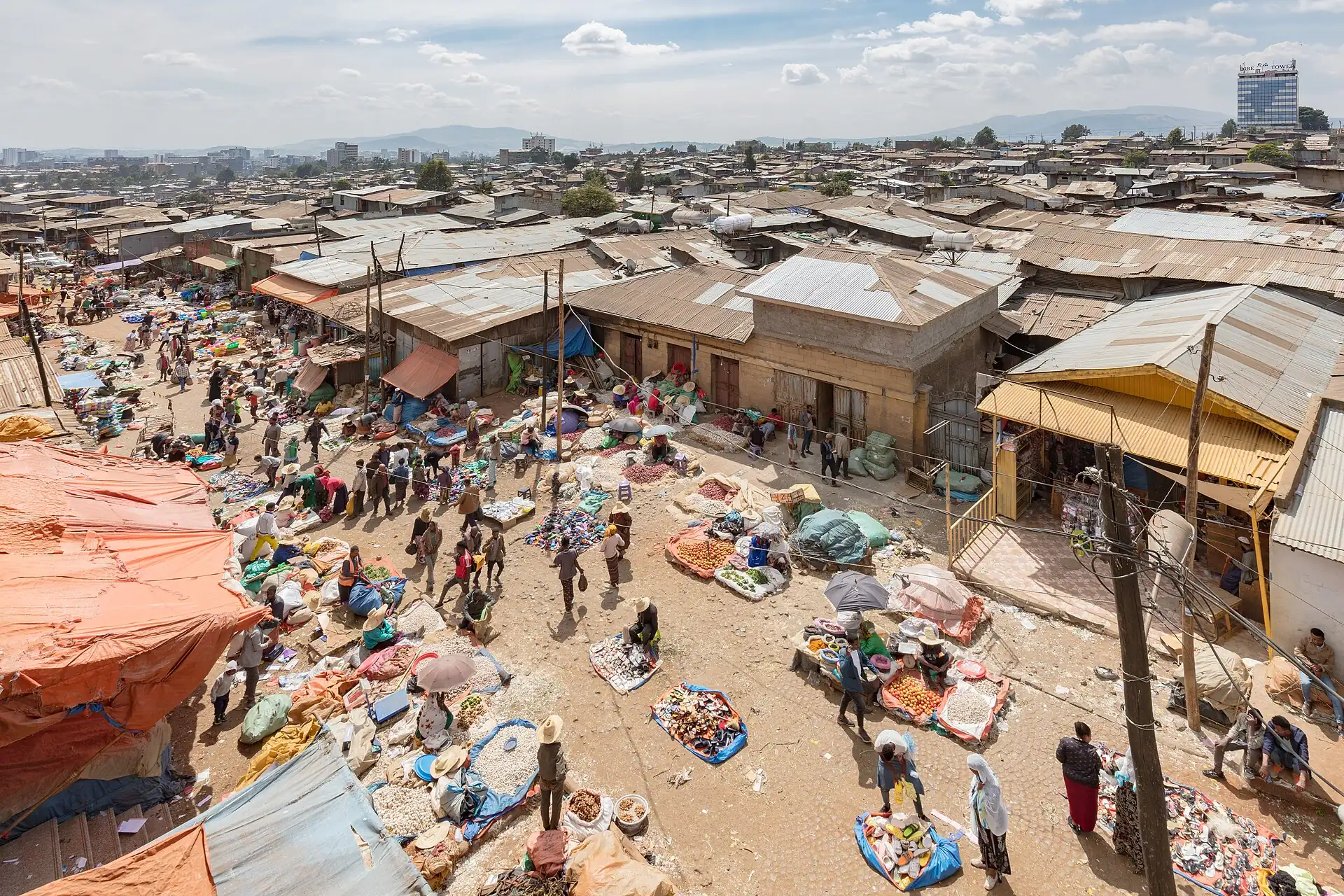
Half-morning cluster: Merkato, one of Africa's largest open markets; go early with a guide or a driver, take no valuables, and leave before noon.
rescue 100% · max p90 5.2′ · 90m
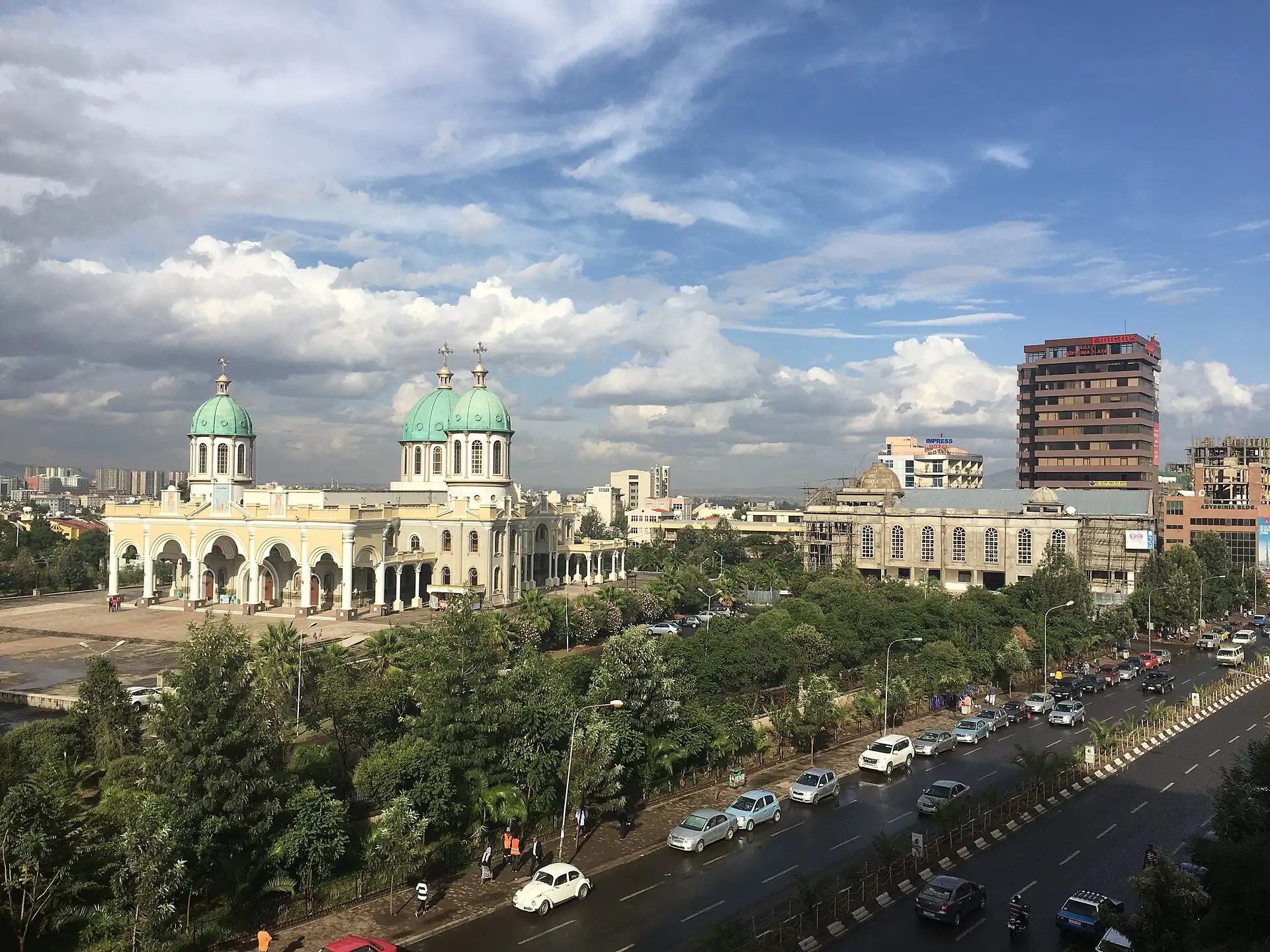
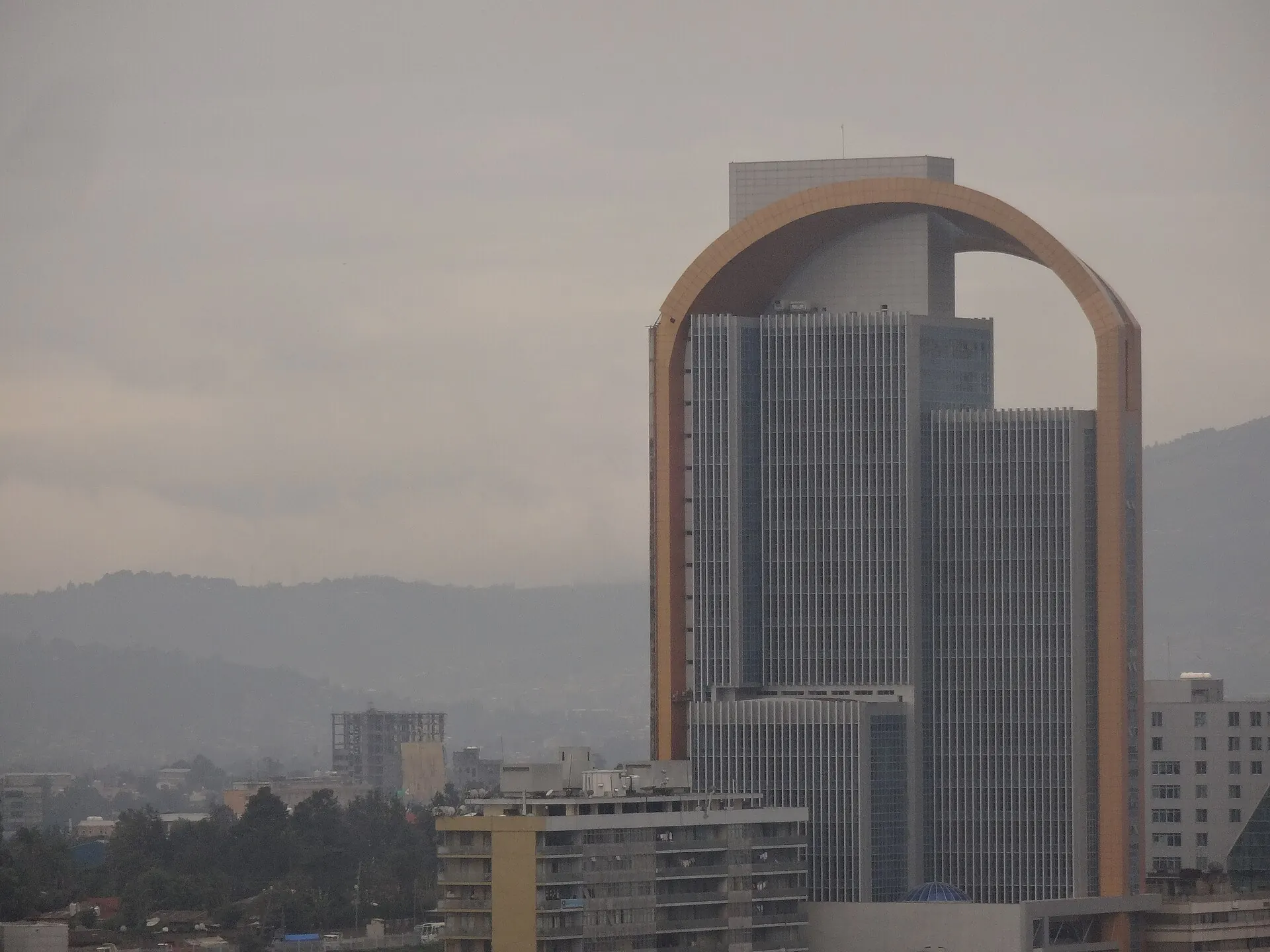
Days
Ready-made day plans, timed against opening hours and walking distances.
How long are you staying?
Loose outlines in the city's rhythm: rest on arrival day for altitude, mornings for churches and museums, afternoons for markets and coffee.
1 day
A stopover between flights
- 09:00National Museum of Ethiopia — National Museum
- 11:00Holy Trinity Cathedral — Holy Trinity Cathedral
- 13:00Kitfo house, Museum Quarter — Kitfo lunch
- 15:00Coffee house and lunch on Piazza (field-verify) — Coffee ceremony in Piazza
- 17:00St George's Cathedral — St George's Cathedral
Skip: Merkato and Entoto: both deserve their own half day.
Addis Ababa in 3 days
3 daysA slow first morning for the altitude, Piazza coffee and lunch after the museum, Entoto and Merkato on day two, and the last day ends with the bags already in the car to Bole.
Day by day
Day 1 — National Museum, Churchill Avenue, a 12:30 lunch on Piazza
- 09:00National Museum of Ethiopia
- 12:30Lunch 12:30 (Piazza)
Day 2 — Entoto Maryam viewpoint, then Merkato
Day 3 — Holy Trinity Cathedral, car to the airport
- 10:00Car to the airport 10:00 (your flight time decides; leave 4 h before it in daytime traffic)
Places
“Best time” is when to arrive for the fewest crowds, for example “before 08:30”; “Go any time” means the hour makes little difference. More sights follow under “More sights and museums”.
6 places. Filters use the guide’s own ratings; a place with no rating is left out when a filter is on.
Tours, classes and shows in Addis Ababa →
Things to do in Addis Ababa: shows, nightlife and activities →
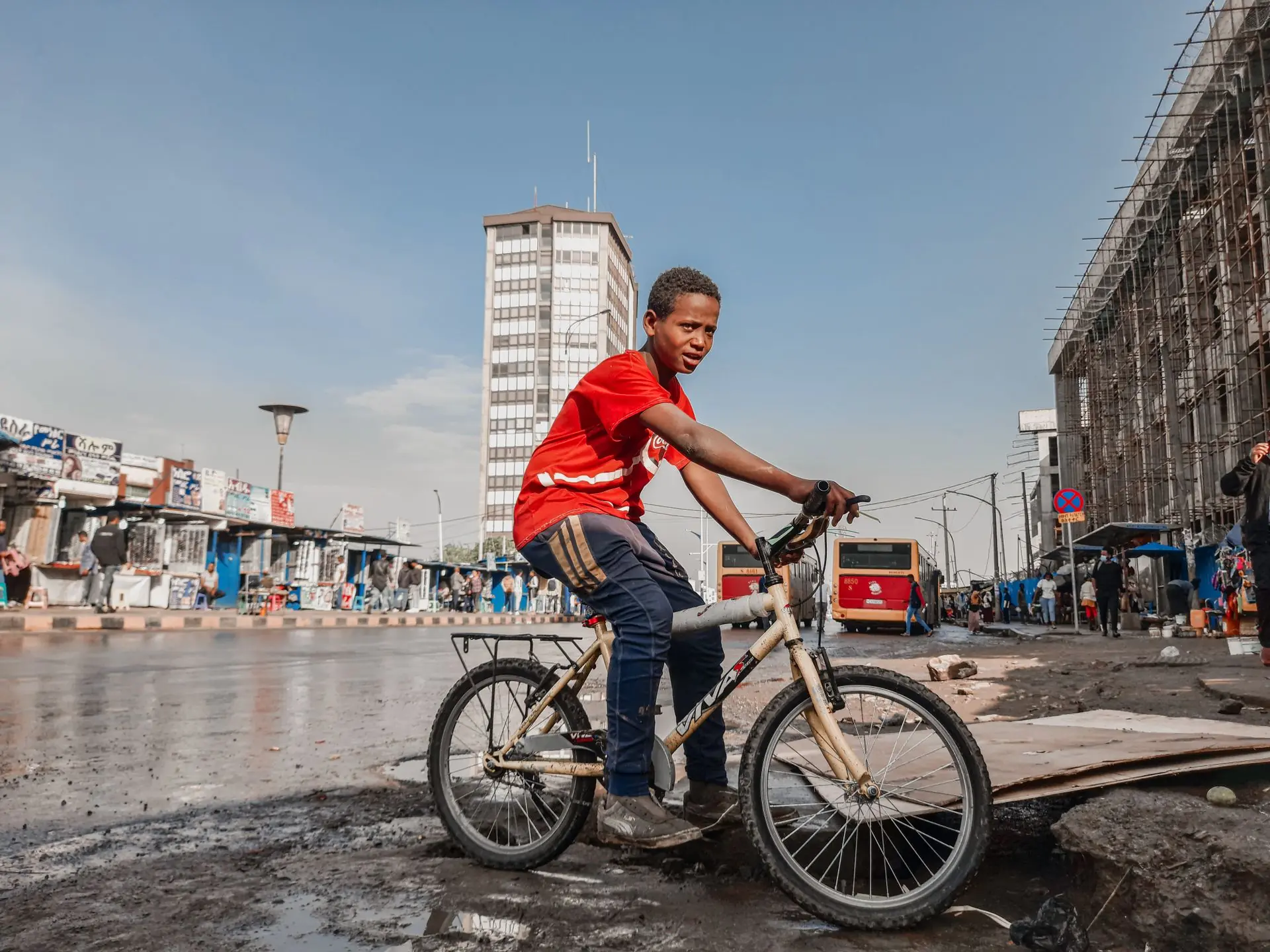
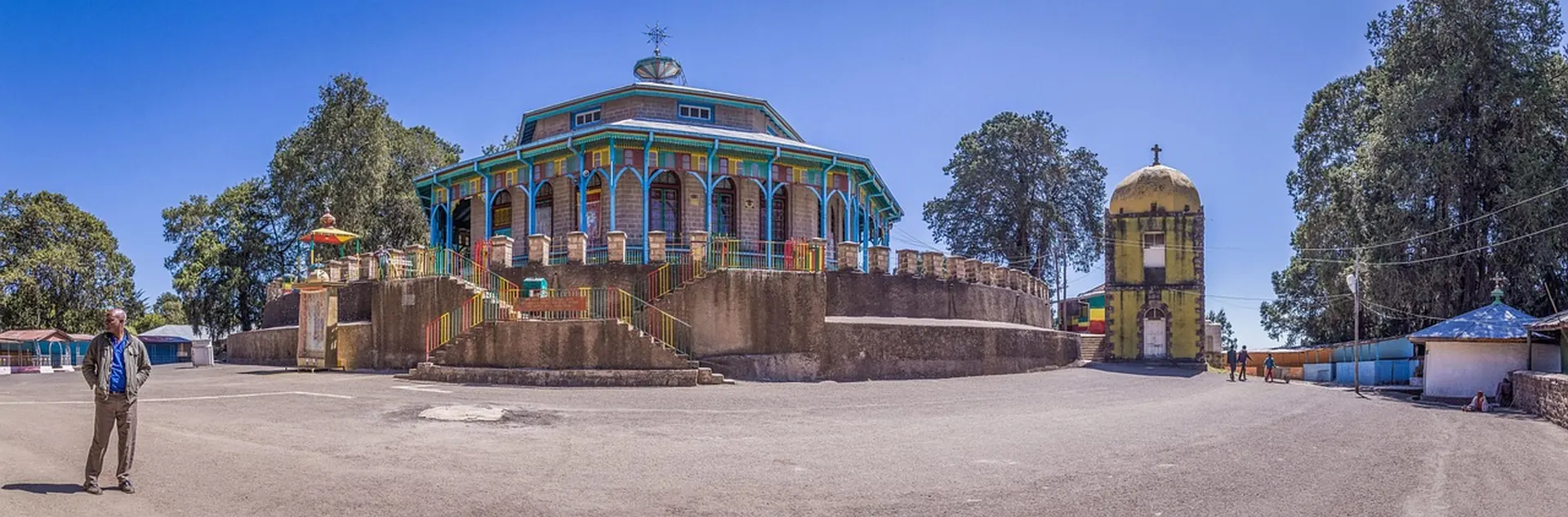
If you do ten things in Addis Ababa
Ranked for a first visit of 2–3 days. Prices are 2026 estimates in ETB.
- 1
Home to a cast of 'Lucy', the 3.2-million-year-old hominid fossil, plus imperial regalia and modern Ethiopian art.
- Time
- 1.5–2 h
- Best
- Morning
- Cost
- ETB 100–200
- 2
Ethiopia's grandest Orthodox cathedral and the burial place of Emperor Haile Selassie.
- Time
- 45–60 min
- Best
- Morning
- Cost
- ETB 100–200
- 3
St George's Cathedral and museum
Built to mark the 1896 victory at Adwa; a small museum on Ethiopian coronation history.
- Time
- 45–60 min
- Best
- Morning
- Cost
- ETB 100–200
- 4
One of the largest open-air markets in Africa; coffee, spices and everyday Addis commerce.
- Time
- 1–1.5 h
- Best
- Morning, with care
- Cost
- Free to browse
- 5
Red Terror Martyrs Memorial Museum
A sobering, important museum on the Derg regime's Red Terror campaign.
- Time
- 45–60 min
- Best
- Any time
- Cost
- Free; donations welcome
- 6
Ethiopia's largest mosque, on the edge of Merkato.
- Time
- 20–30 min
- Best
- Outside prayer times
- Cost
- Free; donations welcome
- 7
Ethiopia's answer to steak tartare; a defining local dish.
- Time
- 1–1.5 h
- Best
- Lunch or dinner
- Cost
- ETB 350–600
- 8
The full roast-grind-brew ritual, not just a drink.
- Time
- 30–45 min
- Best
- Afternoon
- Cost
- ETB 100–300
- 9
Entoto hills viewpoint
The original 19th-century capital site, with a church and city views.
- Time
- Half day
- Best
- Clear morning
- Cost
- Small entry fee
- 10
Debre Libanos monastery
A cliffside monastery, gorge views and Gelada baboons, 2–2.5 h north.
- Time
- Full day
- Best
- Weekday
- Cost
- Car hire or tour, ask your hotel
Good for…
Verdict is how well Addis Ababa works for that traveller, not how nice it is.
Rewarding but altitude and traffic both slow the pace; rest on arrival day.
- 1meskel-kazanchis — central, with the museum and memorial within reach.
- 2A hotel-booked driver for the first two days — removes altitude fatigue and fare-haggling from the equation.
Imperial, Pan-African and Derg-era history are all close together and well documented.
- 1National Museum of Ethiopia — prehistoric fossils to imperial regalia in one museum.
- 2
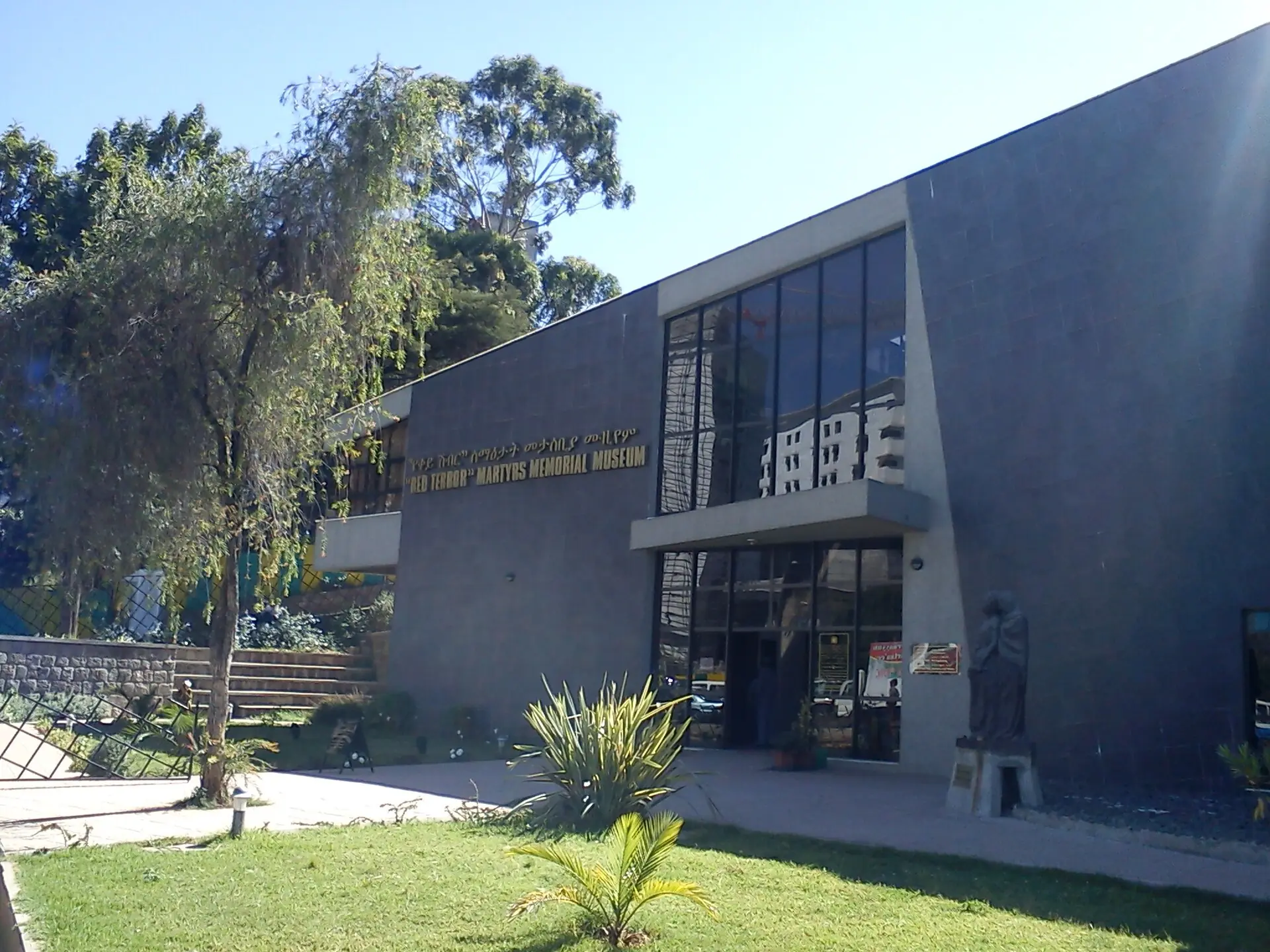 Red Terror Martyrs Memorial Museum — a sobering, important counterpoint to the older history.
- 3Holy Trinity Cathedral — Haile Selassie's burial place and the country's grandest church.
Injera, kitfo and the coffee ceremony are reason enough to come.
- 1Kitfo house, Museum Quarter — Ethiopia's defining dish, done properly.
- 2Coffee house and lunch on Piazza (field-verify) — the full coffee ceremony, not just a cup.
- 3Tej house, Piazza — honey wine and, often, live azmari music.
Local meals under ETB 250 and coffee for a few hundred birr.
- 1Street food, Merkato — sambusa and shiro for a few hundred birr.
- 2Free sights — the mosque, cathedrals and Meskel Square cost little or nothing to look at.
Kids are welcomed, but altitude, uneven pavements and cool evenings are real planning constraints.
- 1Entoto hills — space to run and a gentler pace than the market streets.
- 2National Museum of Ethiopia — the Lucy exhibit engages most children.
Uneven, often under-construction pavements almost everywhere; plan by car.
- 1Large Bole or Kazanchis hotels — confirmed accessible rooms and car-to-door drop-off.
- 2National Museum of Ethiopia — level gallery floors once inside.
Tours and classes: book or skip
Book through the hotel or a licensed operator with written inclusions and a cancellation policy. Prices per person, group tour unless stated.
| Tour or class | Verdict | Typical price | Why | Check before paying |
|---|---|---|---|---|
| City history tour (museum, cathedrals, memorial) | book | ETB 1,500–3,000 (check) | A guide ties together imperial, religious and Derg-era history that is easy to miss alone. | Which sights and entry fees are included. |
| Debre Libanos day tour | book | ETB 3,000–5,000 (check) | Transport and a guide solve the logistics for this half-day-plus trip. | Whether lunch and the monastery entry are included. |
| Azmari bet evening | maybe | Cover plus food and drink, ETB 300–800 | A lively, participatory introduction to Ethiopian traditional music. | Group size and whether it's a tourist-oriented or a local venue. |
What each season brings
Long dry season
Oct–Feb
Clear, cool mornings and mild, sunny days; the best window for walking and viewpoints.
Watch: Cold mornings and evenings, sometimes near freezing in December.
Short rains and belg
Mar–May
Occasional showers, warming days; wildflowers on the hills.
Watch: Afternoon downpours become more frequent through May.
Main rains (kiremt)
Jun–Sep
Green, lush landscapes; the countryside at its most dramatic.
Watch: Heavy, sustained rain, especially Jul–Aug; plan indoor days.
New Year and Meskel season
Sep
Yellow daisies bloom, the rains ease, and Enkutatash (New Year) and Meskel bring major festivals.
Watch: Accommodation can fill around Meskel (27 Sep).
Photo spots and the light
Light times are for clear days; the dry season (Oct–Feb) gives the clearest skies.
| Spot | Best light | Tip |
|---|---|---|
| Holy Trinity Cathedral grounds | 08:00–09:30 | Morning light on the stonework and stained glass; check for services before you go. |
| St George's Cathedral | Morning | The octagonal exterior and surrounding gardens photograph well in soft morning light. |
| Entoto viewpoint | Clear mornings | The best wide view over the whole city; go on a dry-season day for clarity. |
| Merkato lanes | 08:00–10:00 | Morning light and the least crowded aisles; ask before photographing people. |
Addis Ababa travel FAQ
Answers are 2026 desk estimates; fares and rules marked (check) change.
Is Addis Ababa safe for visitors?
Generally yes for the main clusters by day; the common problems are pickpocketing (especially in Merkato) and overcharging, not violent crime. Move by booked car after dark.
Do I need a visa?
Most visitors need an e-visa arranged before travel; check current requirements for your nationality.
How do I handle the altitude?
Rest on the first afternoon, drink plenty of water, and go easy on alcohol and exertion the first night. Mild headache or breathlessness usually passes within a day or two.
Do I need cash?
Yes. Local restaurants, markets and minibuses take cash (birr) only. Cards work in international hotels and some Bole restaurants; foreign cards can be unreliable, so carry a reserve.
Is tap water safe to drink?
No. Drink bottled or filtered water.
What is the Ethiopian calendar and clock?
Ethiopia uses its own calendar (about 7–8 years behind the Gregorian one) and a clock that counts from sunrise, so 'Ethiopian 1 o'clock' is roughly 7am Western time. Always confirm which system a quoted time means.
How many days do I need in Addis?
Two to three days covers the four clusters at an easy pace, with rest built in for the altitude.
What should I wear to churches and mosques?
Shoulders and knees covered; women should carry a headscarf for Orthodox churches; shoes off for mosques and some church interiors.
Ride-hailing app or street taxi?
Ride-hailing (Ride, Feres) where available: fixed fare shown before you ride. If you take a street taxi, agree the fare first.
What is the best area to stay?
Meskel Square or Kazanchis for a central first visit, Bole for airport convenience and international-standard hotels.
More to see and doSee & do · Learn & work · Rain & heat · Free things · Wheelchair and stroller
Free things to do
Sights in Addis Ababa that cost nothing to enter. Each is described under Places or More sights; extra costs inside are marked there.
Wheelchair and stroller, place by place
How each place in this guide works for wheels, from its own page. Ratings are desk estimates unless a page says it was checked on the ground.
| Place | Step-free | Wheelchair | Stroller | What to know |
|---|---|---|---|---|
| Anwar Mosque | partial | caution | caution | Level prayer-hall floor; a few steps at some entrances. |
| Holy Trinity Cathedral | partial | caution | caution | Steps at the main entrance; the grounds are mostly level. |
| Red Terror Martyrs Memorial Museum | partial | caution | ok | Level gallery floors; a few steps at the entrance (check). |
| St George's Cathedral | partial | caution | caution | Steps at the entrance and an uneven courtyard; the octagonal nave floor is level. |
See & do
11 of 11
- Museums
Home to the 3.2-million-year-old hominid fossil 'Lucy' (a cast; the original is usually kept in secure storage) and Ethiopia's prehistoric and imperial history.
Museum Quarter · Daily, day hours (check) · ETB 100–200
- church
Ethiopia's grandest Orthodox cathedral and the burial place of Emperor Haile Selassie and Empress Menen.
Museum Quarter · Daily, day hours; Mass times · ETB 100–200
- church
Octagonal cathedral built to mark the 1896 victory at Adwa; its small museum covers Ethiopian coronation and church history.
Piazza · Daily, day hours; Mass times · ETB 100–200
- mosque
Ethiopia's largest mosque, at the edge of Merkato; modest dress and shoes off.
Merkato · Daily outside prayer times (check) · Free; donations welcome
A sobering museum documenting the Derg regime's 1977–1978 Red Terror campaign.
Meskel Square · Daily except Monday, day hours (check) · Free; donations welcome
- Markets
Said to be one of the largest open-air markets in Africa; coffee, spices, textiles and more.
Merkato · Daytime · Free to browse
Entoto hills and viewpoint
ViewsThe original 19th-century capital site; a church, a city viewpoint and eucalyptus forest.
Outer Addis (north) · Day hours · Small entry fee at Entoto Maryam (check)
Coffee ceremony experience
ClassesWatch (or take part in) the full roast-grind-brew ritual over three rounds; ask any café if they offer it.
Piazza, or a café citywide · 30–45 min · ETB 100–300
Azmari bet evening (traditional music)
Shows & musicLive call-and-response singing with a one-string masenqo fiddle; lively and interactive.
Piazza, or a dedicated azmari house · Evening, 2–3 h · Cover charge plus food and drink, ETB 300–800
Ethiopian cooking class
ClassesLearn injera, shiro and wat preparation with a local cook.
Check operator · Half day · ETB 1,000–2,000 (check)
Entoto hike and viewpoint
ActiveGentle trails through eucalyptus forest with city views; cooler than the centre.
Entoto hills · Half day · Small entry fee (check)
- Booking
- Cooking classes and azmari evenings are best booked a day or two ahead through your hotel.
Learn & work
| What | Where | Cost | Note |
|---|---|---|---|
| Amharic language classes | Language schools and some cultural centres (check current options) | Varies | Short conversational courses are the most useful for a visit. |
| Ethiopian cooking classes | Check operator | ETB 1,000–2,000 (check) | Half-day sessions covering injera, shiro and wat. |
| Coffee-ceremony workshops | Piazza cafés and some hotels | ETB 200–500 (check) | A hands-on version of the everyday ceremony. |
Working here
- Tourist entry
- Most visitors need an e-visa before travel; check current requirements for your nationality. Tourist entry does not allow paid work.
- Work permit
- Legal work needs an employer-sponsored work permit and residence formalities; expect a criminal-record check and legalised documents from home.
- Remote work
- No dedicated digital-nomad visa is confirmed; working remotely for a foreign employer on a tourist e-visa is a grey area — check current rules before relying on it for a long stay.
Rain-day and heat-day plan
Rain day
Main rains (Jun–Sep) can bring days of steady rain: plan indoor sights and museums for this window, and carry a light rain layer year-round.
- 01National Museum of Ethiopia — Indoor galleries; about 1.5–2 h.
- 02Holy Trinity Cathedral — Indoor nave and museum section.
- 03Edna Mall or Dembel City Center, Bole — AC, cafés and a cinema for a washed-out afternoon.
Heat day
Addis rarely gets hot by tropical standards, but UV is strong at altitude even on mild days: sun protection matters more than shade-seeking.
- 09:00National Museum of Ethiopia — Cool morning air; indoor anyway.
- 11:00Holy Trinity Cathedral — Grounds and nave, a mix of sun and shade.
- 14:00Coffee house and lunch on Piazza (field-verify) — A slow coffee-ceremony break out of the midday sun.
Day-trips and nearby
Places you can reach from Addis Ababa in a day or with one night away, with the route and what it costs. Door to door, not ride time.
Debre Libanos monastery and the Portuguese Bridge
goCar about 2–2.5 h north
A cliffside monastery, gorge views and Gelada baboon troops on the way.
- Time
- Full day
Lake Ziway or the Rift Valley lakes
goCar about 1.5–2 h south
Birdlife and lake scenery; an easier first taste of the Rift Valley than a longer trip.
- Time
- Full day
Debre Zeit (Bishoftu) crater lakes
goCar about 45 min–1 h south-east
A cluster of volcanic crater lakes close enough for a half-day out.
- Time
- Half day
Sodere hot springs
cautionCar about 2 h south-east
A popular local weekend spot; very crowded on weekends and holidays.
- Time
- Full day
Go next
Door to door: About 2 h airport to airport
Flight about 1 h
UNESCO rock-hewn churches; two nights minimum to see them properly.
Door to door: 1–1.5 h by air to Gondar
Flight about 1 h to Gondar, then a road transfer to the mountains
Royal castles and, further out, some of Africa's most dramatic trekking country.
Door to door: About 1.5 h
Flight about 1 h
Island monasteries on Lake Tana and the Blue Nile Falls nearby.
Door to door: 4 h by road; under 1 h by air
Car about 4 h south, or a short flight
Lakeside town with a lively fish market and easy access to Rift Valley scenery.
Eat & sleepWhere to eat and which area to sleep in
Eat & sleep
Where to eat and which area to sleep in
Eat
A short list of places worth crossing the city for, each with how to get a seat.
Restaurant finder: filter every place to eat in Addis Ababa →
Vegetarian-friendly score
4.5 / 5 · Easy
- Country diet noteOur country guide rates vegetarian eating as easy.2 / 2
- Places to eat in this guide4 of 5 places with a known answer are vegetarian-friendly.1.2 / 1.5
- Budget eating lines3 vegetarian lines in "Eat by budget".0.6 / 0.6
- Meat-free national dishes4 meat-free dishes in the country food list.0.4 / 0.4
- Dedicated vegetarian kitchens1 mention of vegetarian restaurants, Buddhist or fasting kitchens.0.1 / 0.5
Country note: Easy: fasting food (ye-tsom migib) is fully vegan and on every menu on Wednesdays, Fridays and in fasting seasons.
Vegetarian places near me →Make a diet card →
How we score
- Country diet note (up to 2): easy 2, workable 1, mixed 0.75, hard 0; no note 0.5.
- City places to eat (up to 1.5): 1.5 × (vegetarian-friendly + half of partly friendly) ÷ places with a known answer; needs 3 or more known places.
- Budget eating lines marked vegetarian (up to 0.6): 0.2 each.
- Meat-free national dishes (up to 0.4): 0.1 each.
- Dedicated vegetarian kitchens mentioned — Buddhist chay, shōjin ryōri, Jain, fasting food, vegan cafés (up to 0.5): 0.1 each.
- Total rounded to the nearest half point, 0 to 5. Built from our own pages only, not from reviews.
Eating and drinking guideEat by budget · Drink
Before you sit down to eat
Short version; full text linked
- Queues and hours
- Per person, one dish or one meal, 2026 estimate. More →
Eat by budget
Under ETB 250 a meal
| Where | Order | Area | Price | Note |
|---|---|---|---|---|
| Street food, Merkato | Sambusa or shiro wat with injera | Merkato | ETB 100–200 | |
| Coffee house and lunch on Piazza (field-verify) | Coffee ceremony with a light lunch | Piazza | ETB 150–300 | |
| Fasting-day vegetarian platter (yetsom beyaynetu)veg | Mixed vegetable and legume stews with injera | Any local restaurant, especially on Wed/Fri fasting days | ETB 150–250 |
Dishes to know
| Dish | What it is | Where to look | When | Price |
|---|---|---|---|---|
| Injera | A large, spongy sourdough flatbread made from teff, the base of almost every meal | Everywhere | Every meal | Included with most dishes |
| Shiro wat | A spiced chickpea-flour stew, the everyday vegetarian staple | Any local restaurant | Lunch, dinner | ETB 100–200 |
| Doro wat | Chicken stew in a deep red berbere-spiced sauce with a boiled egg | Local and mid-range restaurants | Lunch, dinner, especially on Sundays and holidays | ETB 250–450 |
| Kitfo | Finely minced raw or lightly warmed beef mixed with spiced butter and chili powder | Dedicated kitfo houses | Lunch, dinner | ETB 350–600 |
| Tibs | Sautéed or pan-fried meat cubes with onion, pepper and rosemary | Any local or mid-range restaurant | Lunch, dinner | ETB 250–450 |
| Yetsom beyaynetu | A mixed platter of vegetarian and legume stews, especially popular on Orthodox fasting days (Wed and Fri) | Any local restaurant | Lunch, dinner | ETB 150–300 |
| Sambusa | Fried pastry triangles filled with spiced lentils or meat | Street stalls, especially Merkato | Snack | ETB 15–30 each |
- Eating with your right hand, tearing injera to scoop the stew, is the norm; cutlery is offered but not expected.
- Fasting days (Wednesday and Friday, plus longer Orthodox fasting periods) mean many restaurants serve a meat-free menu by default — an easy day to eat vegetarian.
- Cash is the safer default outside hotels and Bole restaurants.
Drink & nightlife
| Where | What | Until | Note |
|---|---|---|---|
| Piazza tej houses (azmari bets and tej bets) | Honey wine, live traditional music | Late evening | Tej (honey wine) served in rounded flasks (berele); some venues have azmari (bard) performances with call-and-response singing. |
| Bole bars and lounges | Cocktail bars, international-style lounges | About midnight | Pricier and more international; popular with expats and diplomats. |
| Kazanchis and Meskel Square hotel bars | Hotel bars | About midnight | Convenient if you're staying nearby; check the price list before ordering. |
By style
| Style | What | Where | Price | Until |
|---|---|---|---|---|
| Coffee ceremony | Green beans roasted, ground and brewed fresh in a jebena (clay pot), served in three roundsA genuine cultural ritual, not just a drink; allow 30–45 minutes for the full ceremony. | Cafés and homes citywide, especially Piazza | ETB 100–300 | Any time |
| Tej (honey wine) | Fermented honey wine, mild to strong depending on the houseTraditionally served in a rounded glass flask called a berele. | Piazza tej houses | ETB 80–200 a flask | Late evening |
| Local beer | St George, Dashen, Walia and other Ethiopian lagersSt George is the oldest brewery in the country, founded in 1922. | Bars and restaurants citywide | ETB 80–150 | Late |
| Cocktails | International-style bars in Bole and top hotels | Bole, Meskel Square hotels | ETB 300–600 plus service | About midnight |
Rules that bite
- Alcohol is generally avoided around religious fasting periods by observant Orthodox Christians and Muslims; expect some venues to be quieter.
- Agree or check the price of anything at a tej house before you start; not every menu is posted.
Sleep
Pick the area first: it decides your walk home at night and your first morning.
More on sleepingSleep by budget · Your area · With kids
Sleep by budget
| Band | Price | Where | Room types | What to expect |
|---|---|---|---|---|
| budget | ETB 1,500–3,000 | Kazanchis, Piazza guesthouses | Budget hotels and guesthouses | Simple rooms, basic heating (nights are cool), limited breakfast. |
| mid | ETB 3,500–7,000 | Meskel Square, Bole | 3–4 star business hotels | Lift, breakfast, reliable hot water and backup power. |
| splurge | ETB 10,000–25,000+ | Bole international chains | 5-star hotels | Pools, spas, doorstep drop-off, reliable backup power. |
Booking checks
- Ask about hot water and heating: nights at this altitude are cool year-round, and not every budget room has reliable hot water.
- Confirm airport transfer arrangements in advance, especially for early domestic flights (traffic is lightest before 06:00).Confirm airport transfer arrangements in advance, especially for early domestic flights (traffic is lightest before 6:00 AM).
Which area is yours
| If you are | Sleep in | Because |
|---|---|---|
| First visit, 2–3 nights | Meskel Square and Kazanchis | Central, close to the museum and Red Terror memorial, easy rides to Piazza and Merkato. |
| Business travellers, early flights | Bole (near the airport road) | Closest sleep area to the airport, with international-standard hotels and malls. |
| History and coffee-culture focus | Meskel Square and Kazanchis | Shortest rides to Piazza's coffee houses and the Museum Quarter's churches. |
First-timers: a hotel near Meskel Square or Kazanchis, with a staffed desk and a road-side door a car can reach; central, and 30–45 minutes from the airport.
Areas are in our default order until you tick a priority.
Scores are 1–5 desk judgements per priority (2026). Bole has no sleep-area page yet; it links to the districts table.
With kids
- Uneven pavements and altitude mean a slower pace with young children; allow extra rest time on day one.
- The National Museum's Lucy replica and prehistoric exhibits are an easy, engaging stop for curious children.
- Entoto's hills and viewpoint give kids space to run that a busy city street doesn't.
- Malls in Bole (Edna Mall, Dembel City Center) have AC, cafés and some play areas for a cold or rainy afternoon.
PracticalMoney, essentials, safety and the pocket card
Practical
Money, essentials, safety and the pocket card
Money
What a day costs at three comfort levels, and how to pay.
- Budget
- ETB 2,000–4,000 excl. bed / day
- Mid
- ETB 4,000–9,000 excl. bed / day
- High
- ETB 9,000+ excl. bed / day
- Transit card
- No transit card for visitors: private cars, ride-hailing and walking. Pay in birr cash for taxis and markets.
- Cash rule
- Use ATMs inside banks or hotels in daylight; foreign cards can fail, so carry a reserve in US dollars to change at a bank or authorised exchange.
More on moneyCosts · Budget · Buy
What things cost
- Injera with shiro or wat at a local restaurantETB 100–250
- Kitfo (minced beef) at a kitfo houseETB 300–600
- Bottled waterETB 30–60
- Car from Bole airport to Meskel/KazanchisETB 500–1,200
Trip budget
| Hotel double room1 × 3 nights × ETB 4,000 | ETB 12,000 |
| Food, local transport, entries2 × 3 days × ETB 5,000 | ETB 30,000 |
| Airport car, both ways1 × ETB 2,000 · one car per 4 people | ETB 2,000 |
| Tourist SIM, about a week2 × ETB 400 | ETB 800 |
| Buffer 15%Price creep, a taxi you did not plan, one splurge | ETB 6,720 |
| Trip total≈ ETB 8,590 per person per day, bed included | ETB 51,520 |
2026 estimate in ETB; flights, visas and tours excluded. Your choices stay in this browser.
Prices of common things
| Injera with shiro or wat | ETB 100–250 |
2026 estimate; check locally.
Buy
- Bargaining
- In markets and craft stalls the first price to a foreigner is often two to three times the local price: counter at about half, settle around 60–70%, walk away politely if it does not move. Do not bargain in shops with printed tags or supermarkets.
- Fixed-price check
- Check the price of coffee, textiles or spices in a supermarket or a fixed-price craft shop before buying the same item at Merkato — that is your ceiling.
Markets and shopping streets
| Where | What | When | Haggle | Note |
|---|---|---|---|---|
| Merkato | Wholesale everything: coffee, spices, textiles, household goods, gold | Daytime (check) | hard | Vast and disorienting; go early, keep bags close, and consider a guide for a first visit. |
| Shiro Meda market (near Piazza) | Traditional woven clothing (habesha kemis), scarves | Daytime | hard | The place for handwoven Ethiopian cotton clothing. |
| Piazza craft and antique shops | Crosses, icons, old coins, curios | Shop hours | hard | Genuine antiques require an export permit; ask the shop before buying anything old-looking. |
| Supermarkets (Shoa, Fantu) | Packaged food, toiletries, fixed-price essentials | About 08:00–21:00About 8:00 AM–9:00 PM | no | Your fixed-price reference. |
Shops by what they sell
| For | Where | Hours | Note |
|---|---|---|---|
| Coffee (green or roasted beans) | Merkato coffee section, Piazza shops | Shop hours | Ethiopia is coffee's birthplace; buy from a shop that can tell you the growing region (Yirgacheffe, Sidamo, Harar). |
| Habesha kemis (traditional woven dress) and scarves | Shiro Meda, Piazza | Shop hours | Handwoven cotton with coloured borders; quality and price vary widely. |
| Silver crosses and religious icons | Piazza antique shops, Merkato | Shop hours | Old pieces need an export permit; ask before buying. |
| Malls (AC, cafés, supermarkets) | Bole area (Edna Mall, Dembel City Center) | About 09:00–21:00 | Fixed prices; useful on a cold or rainy afternoon. |
Changing money
| Where | Verdict | Why |
|---|---|---|
| Bank branches (Commercial Bank of Ethiopia, Dashen, Awash) | use | Official rate; passport needed; office hours only. |
| Bole airport booths | ok | Change enough for the ride and the first day, then use a bank. |
| Hotel front desk | ok | Convenient for a small amount; weaker rate than a bank. |
| Street money-changers | avoid | Illegal and risky; short-changing and counterfeit notes. |
ATMs
- Per withdrawal
- ATMs often cap a foreign card at a low amount and can decline outright: carry a cash reserve, ideally US dollars to change at a bank.
- Fees
- Local and card-issuer fees apply; take larger withdrawals where the machine allows to limit repeat fees.
- Where
- Machines inside bank branches, malls or hotels, in daylight.
Essentials and accessEssentials · Access
Essentials
- Plugs & power
- 220 V; European two-pin sockets (type C/E). Bring a universal adapter.
- Opening hours
- Offices and shops run roughly 08:30–17:30; the local Ethiopian calendar and clock (see below) can confuse booking times — always confirm which system is meant.Offices and shops run roughly 8:30 AM–5:30 PM; the local Ethiopian calendar and clock (see below) can confuse booking times — always confirm which system is meant.
- Health
- Altitude (about 2,350 m) can cause mild breathlessness or headache on arrival; rest on day one. Malaria risk is low in Addis itself but relevant for lowland side trips. Travel insurance with medical cover is strongly advised.
- Accessibility
- Pavements are uneven and often under construction; step-free access exists mainly in newer hotels and malls.
- Laundry
- Hotels offer priced-by-the-item laundry; ask the front desk for a nearby independent option.
- Emergency numbers
- 991 police, 907 ambulance, 939 fire (confirm current numbers with your hotel).
Pack
- A warm layer for cool mornings and evenings at altitude, even though days are mild
- Something to cover shoulders and knees for churches and mosques
- Comfortable shoes for uneven pavements
- A light rain layer for the wet season (Jun–Sep)
Accessibility
Addis Ababa is hard going on wheels. Pavements are uneven, often under construction, and step-free access exists mainly in newer hotels and malls. Plan door-to-door car rides and pick a hotel with a lift.
- Pavements
- Uneven, sometimes missing or mid-construction as the city's infrastructure projects continue.
- Getting around
- App cars (Ride, Feres) are the step-free option. Minibus 'line taxis' are not step-free.
- Hotels
- International-standard hotels in Bole and Kazanchis have lifts and accessible rooms on request; smaller guesthouses often do not.
- Toilets
- Accessible toilets in Bole malls and larger hotels; rare elsewhere.
Sights, step-free or not
| National Museum of Ethiopia | step-free | Level gallery floors; a few steps at the entrance. |
| Holy Trinity Cathedral | with help | Steps at the main entrance; grounds are mostly level. |
| St George's Cathedral | with help | Steps and uneven courtyard stones. |
| Anwar Mosque | with help | Level prayer hall; shoes-off area and a few steps at entrances. |
| Merkato | hard | Crowded, uneven lanes. |
Survive
Safety basics, the lines not to cross, and practical habits that save the day.
Safety
- Bag and phone snatching is common in Merkato and at crowded corners: keep valuables out of sight and leave your passport in the hotel safe.
- Demonstrations can happen with little notice: avoid crowds and check your own government's advice before you go.
- Check your own government's travel advice for other regions before you book domestic flights.
- Emergency: 991 police, 907 ambulance, 939 fire; ask your hotel to confirm the numbers on arrival.
Red lines
- No photos of government buildings, military sites or officials.
- Cover shoulders and knees and take shoes off at churches.
- Use the right hand for giving and receiving, and do not pull away from someone who greets you with a shoulder bump.
Practical
- Toilets: hotels, cafés and museums; carry tissues.
- Tap water: bottled or filtered water only.
- Ethiopia's clock counts from sunrise: 7:00 local time is 1:00 on a Western clock. Ask which is meant when you book.Ethiopia's clock counts from sunrise: 7:00 AM local time is 1:00 AM on a Western clock. Ask which is meant when you book.
More on staying safeStay safe · Stay healthy · Safety map · Solo & women · Etiquette · Cope · Scams
After dark, by area
2 flagged areas
Day = about 07:00–19:00. What to watch in each area, day and night →
Scams and red flags
Walk away if you see these
- Self-appointed 'guides' who attach themselves at the museum or Merkato and demand payment after showing you around: agree nothing, or decline politely and firmly.
- Street money-changers offering a better rate than banks: short-changing and fake notes are a real risk — use a bank or hotel desk.
- Coffee-ceremony 'invitations' from strangers that end with a high bill for you alone: fine at an established café with posted prices, riskier as a spontaneous street invitation.
- Overcharging on unmetered taxis: agree the fare before you get in, or use a ride-hailing app where available.
Stay safe
Crossing the road
- 01Traffic is fast and drivers do not always yield to pedestrians: cross at a clear gap and do not assume right of way.
- 02Uneven or under-construction pavements mean you often walk in the road edge — watch for traffic from both directions.
Hustles specific to this city
| Hustle | Where | The tell | What to do |
|---|---|---|---|
| Self-appointed guide | National Museum, Merkato | Someone attaches themselves to 'help' unasked | Decline firmly and walk on, or agree a price up front in writing if you want the help. |
| Street money-changer | Near banks and hotels | Offers a better rate than the bank | Use a bank or your hotel desk instead. |
| Unmetered taxi overcharge | Anywhere without a ride-hailing app | A fare quoted well above the local rate once you're recognised as a foreigner | Ask a local the going rate first, or use a ride-hailing app where available. |
- Police
- Report thefts at the nearest station with your passport; bring hotel staff to help translate if needed.
- Bag and phone snatching
- Most common in crowded Merkato lanes; keep bags zipped to the front and leave your passport at the hotel.
- Night
- The main risks are traffic, theft and scams, not violent crime against visitors; still move by booked car after dark.
Stay healthy
- Altitude
- About 2,350 m: rest on the first afternoon, drink water, and go easy on alcohol and exertion the first night. Mild headache or breathlessness is common and usually passes within a day or two.
- Malaria
- Low risk in Addis itself due to the altitude, but relevant for lower-altitude side trips (Rift Valley lakes, Bahir Dar); ask a travel clinic about prophylaxis for those legs.
- Food and water
- Bottled or filtered water only; busy local restaurants with fast turnover are generally safer than quiet ones.
- Sun
- UV is strong at altitude even on mild, cool-feeling days: sunscreen and a hat matter more than the temperature suggests.
Hospitals and clinics: see Cope.
Safety by area and hour
| Area | Day | Night | What to watch |
|---|---|---|---|
| Museum Quarter | fine | fine | Generally calm; still avoid unlit side streets alone at night. |
| Meskel Square | fine | fine | Busy transport hub; keep valuables secure in crowds. |
| Piazza | fine | caution | Busy by day; some streets quieten and feel less safe after dark — use a car. |
| Merkato | caution | avoid | Pickpocketing and bag-snatching risk in the crowded lanes; leave your passport at the hotel and carry only what you need. |
| Bole | fine | fine | The calmest of the main areas; still use a car after dark. |
- Leave your passport in the hotel safe for Merkato visits; carry a photocopy instead.
- Demonstrations can occur with little notice: avoid crowds and check your own government's advice before you go.
Solo, women and LGBTQ+ travellers
Solo
- Manageable with some care: keep valuables out of sight, use ride-hailing apps after dark, and agree fares before a street taxi.
- Hotel desks and licensed guides are the safer route to a driver or guide than someone who approaches you at a sight.
Women
- Street harassment is relatively uncommon; the more likely issue is persistent vendors and self-appointed guides at markets and monuments.
- Dress modestly at churches and mosques; a headscarf is expected for women entering an Orthodox church.
LGBTQ+
- Same-sex relations are criminalised and social attitudes are conservative: keep a low public profile and avoid any public displays of affection.
Etiquette in Addis Ababa
- Churches and mosques
- Shoulders and knees covered; women should carry a headscarf for Orthodox churches. Shoes off before entering a mosque prayer hall and some church interiors.
- Right hand
- Give and receive money, food and objects with the right hand or both hands, not the left alone.
- Greetings
- A handshake with a slight bow or a shoulder bump (for closer acquaintances) is common; do not pull away from either.
- Photos
- Ask before photographing people, especially at churches and Merkato; never photograph government buildings, military sites or police.
- Coffee ceremony
- If invited to a coffee ceremony, accepting all three rounds (abol, tona, baraka) is polite, though declining is understood too.
Cope
Hospitals and clinics that handle foreigners
| Where | Area | Use it for |
|---|---|---|
| Bethzatha Hospital | Near Meskel Square | A well-regarded private hospital used by many expats; ask your insurer about direct billing. |
| Nordic Medical Centre | Bole | Private clinic geared to international visitors and expats; pay upfront by card, claim later. |
| Black Lion (Tikur Anbessa) Hospital | Near the university, Museum Quarter | The largest public teaching hospital; slower and more crowded than the private options above. |
Visa extensions
- Office
- Main Immigration and Citizenship Service office; weekday hours. Check the address before going.
- Extending
- Visa extensions and questions go through the immigration office; allow several working days.
- Overstay
- Fines are assessed at the exit point; resolve any visa problem before you get to the airport.
Embassies and consulates
| Country | Address | Phone | Note |
|---|---|---|---|
| United States | Entoto Road, Addis Ababa | — | (check) |
| United Kingdom | Comoros Street, Addis Ababa | — | (check) |
| France | Addis Ababa | — | (check) |
| Kenya | Addis Ababa | — | (check) |
| Djibouti | Addis Ababa | — | (check) |
- Lost passport
- Police report from the nearest station, then your embassy for an emergency document: budget several working days.
- Pharmacies
- Pharmacies across every district; larger chains post prices.
- Altitude
- Rest on the first afternoon, drink water, and go easy on alcohol the first night; mild headache or breathlessness is common and usually passes within a day or two.
- Gyms and pools
- Day passes at larger hotel gyms in Bole and Kazanchis, roughly ETB 300–800 (2026 estimate).
Apps and offline kitOffline kit
Offline kit
Set up before you leave, so Addis Ababa still works with no signal or a dead roaming plan.
On your phone
- Maps: open the city in Google Maps, tap the place name, then Download offline map (or use an offline-maps app).
- Data: install an eSIM or buy a local SIM before the first taxi; the apps in this guide depend on it.
- Translation: download the local language for camera translation.
- Screenshots: booking confirmations, hotel address in the local script, and the emergency numbers.
This guide
Save the Addis Ababa guide and its pages on this device; it opens without a connection.
Phrases that do the work
Greeting
Hello
Selam
seh-lahm
Thanks
Thank you
Ameseginalehu
ah-meh-seh-gih-nah-leh-hoo
Market
How much is this?
Sint no?
sint noh
Food
Not spicy, please
Yalkeberekem
yahl-keh-beh-reh-kem
Café
The bill, please
Bill / Ansteyen
bill
Taxi
Please take me to this address
Wede zih adrasha wesdegn
weh-deh zih ad-rah-sha wess-degn
Everyday
It's fine / no problem
Chigir yellem
chig-uhr yeh-lem
Pocket card
Fill in, then print or save as PDF
Stays in this browser only; nothing is sent anywhere.
Addis Ababaአዲስ አበባ
Pocket card · Voykit
My bed tonight
—
—
—
Wede zih adrasha wesdegnPlease take me to this address
Emergency
- Police991
- Fire939
- Ambulance907
Embassy
Most embassies are scattered across Bole and Old Airport areas; write your own embassy's 24-hour line below.
My embassy: —
Fare anchors (2026 estimate)
- Bole airport → Meskel/Kazanchis, app car: ETB 500–1,200, 20–40 min depending on traffic
- Short ride-hailing ride, centre: ETB 150–400
Give your driver the district and a landmark — Addis addresses are unreliable by house number alone.
Deep diveHistory, reading, photos and every source
Deep dive
History, reading, photos and every source
Sources
- officialEthiopia e-visa portal (official)
- officialUK FCDO travel advice — Ethiopia
- officialEthiopian Airlines (national carrier)
- secondaryWikivoyage — Addis Ababa
Ask about Addis Ababa
Loading…
Was this useful?