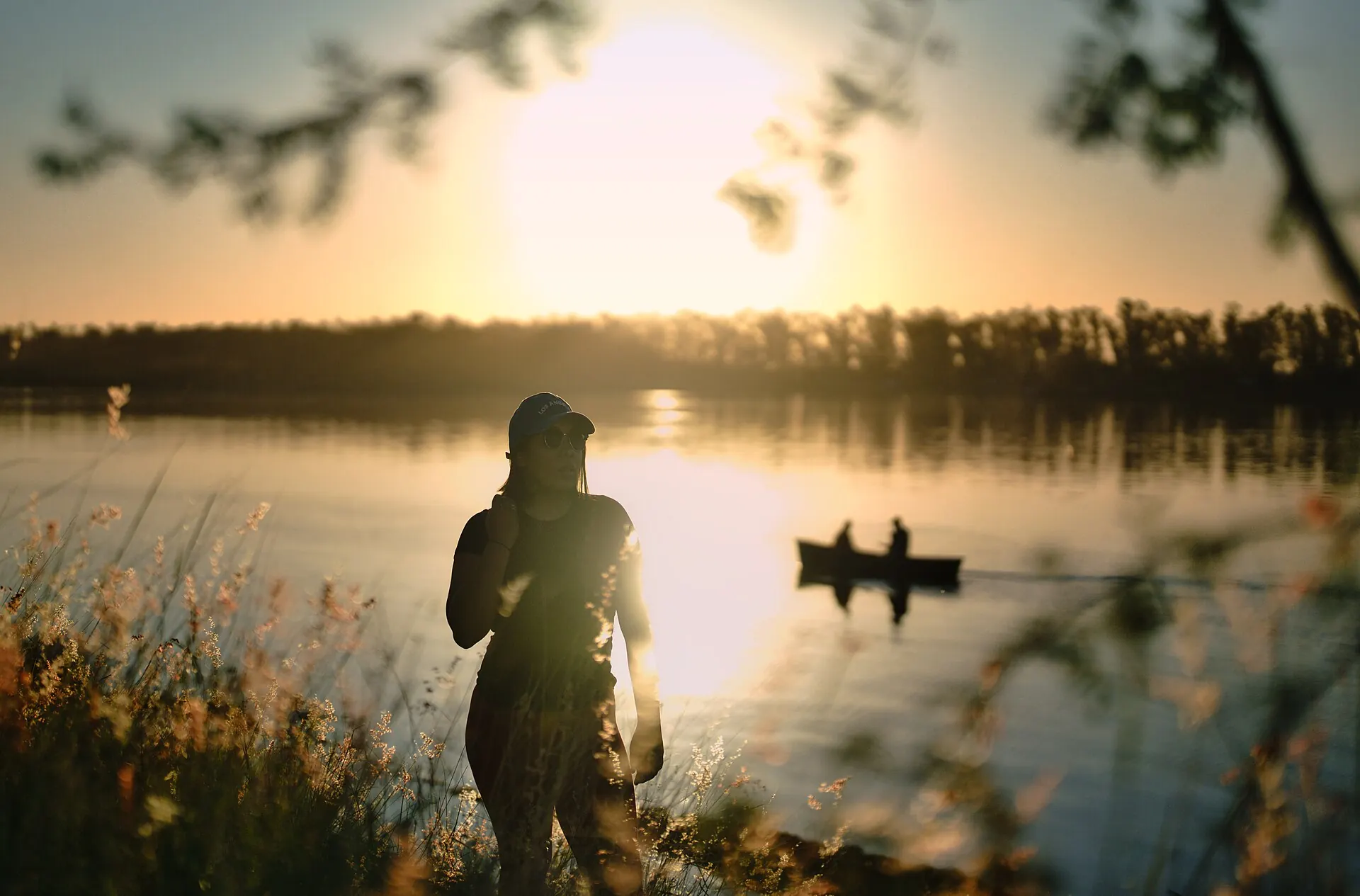
Asunción
Code PR · 4 walking zones
Asunción is a short, slow city: the historic centre and river in two mornings, indoors by midday, and never in December to February heat.
Our quick read of Asunción, scored 1–5 (friction is out of 100). Cash need: how often you still need notes. Heat risk: how hot days get. Stroller: how easy wheels are. Friction: overall effort for a first visit. Desk judgements, so check before relying on them.
- Local time
- --:--
- Weather
- forecast below
- Currency
- PYG
- Best months
- Apr · May · Jun · Jul · Aug · Sep
- Airport
- Silvio Pettirossi (ASU)
Walking zones: the 4 areas this guide plans a day around. Each is a district you can cover on foot, so you do one zone per half-day and ride the train between them. The code (PR 01, PR 02…) is just the zone's number on the Asunción line; the line under each name says how bags fare there and how much time it needs.
Map of Asunción
Use the switches to show or hide each kind of pin. A switch that is on shows its pins on the map; tap it again to hide them. "Show only" keeps just the pins that match (for example, places that fit a suitcase). Tap any pin for its name and a link to its page.
- Where to sleep
- Walking clusters
- Rest stops
From the airport Silvio Pettirossi (ASU) to your bed
Tap a pin for its card. Places without their own coordinates are shown by their walking cluster.
Why Asunción
Asunción is a low-rise river capital that runs hot for half the year and closes at midday. The trips that go wrong walk the centre at 14:00 in January, plan a museum on its closed day, or use the Costanera after dark. Four areas cover a first visit; one kept bed in the centre or Villa Morra, and a car between them.
See first
- 1
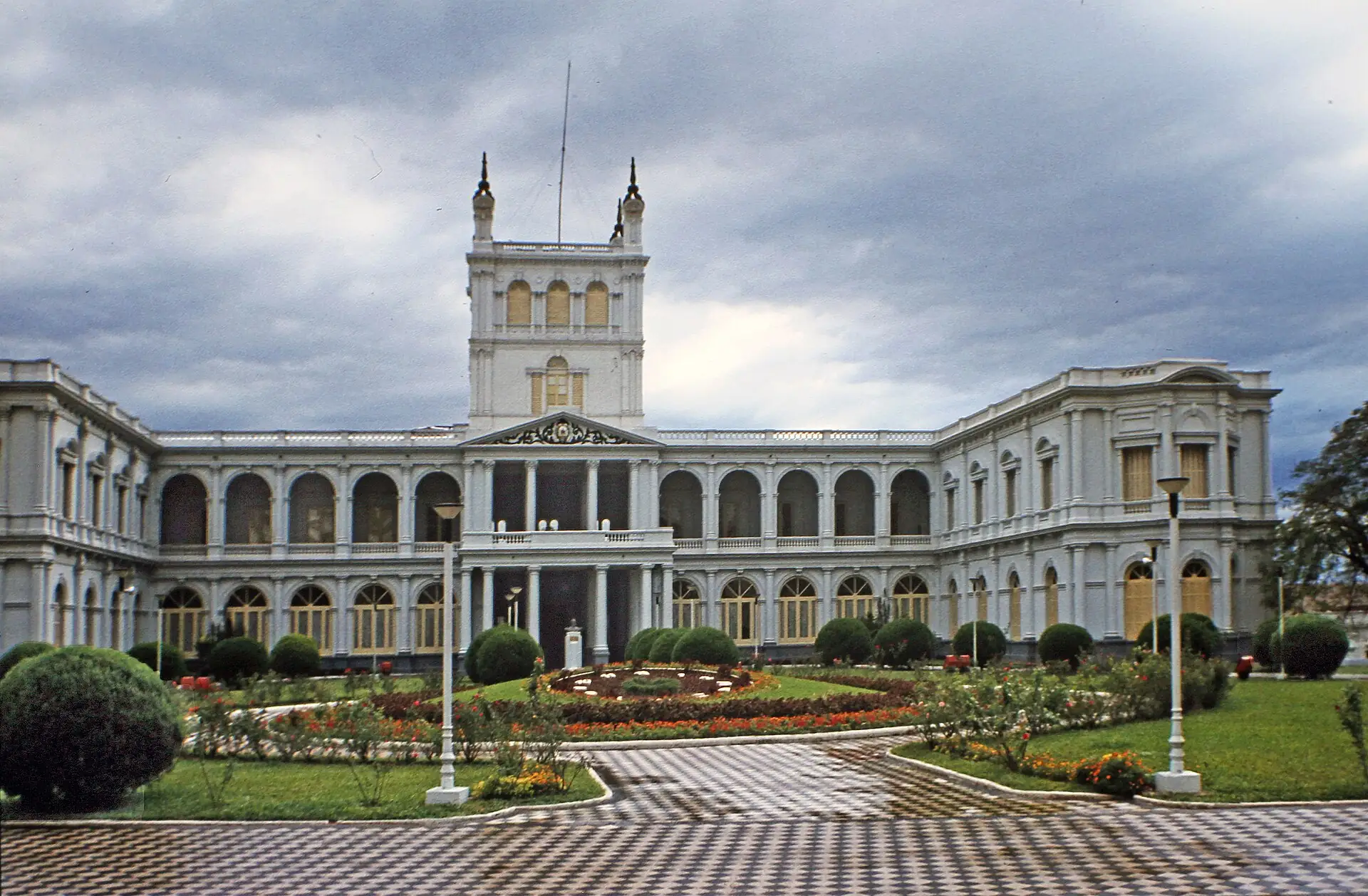 Palacio de los López in the morning · 30-45 min
- 2The Costanera at evening · 45-90 min
- 3Lunch at Lido Bar · 45-60 min
- 4
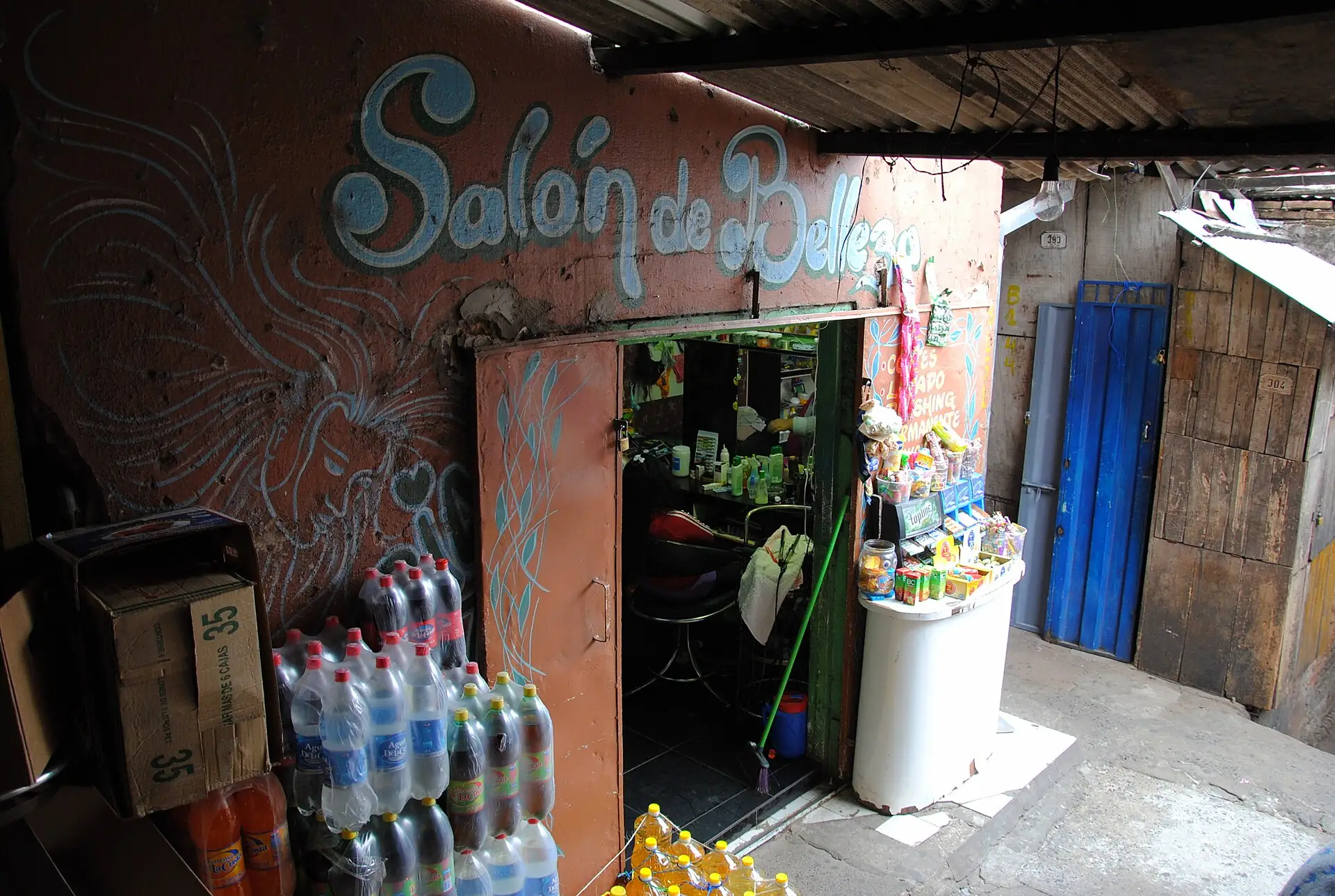 A supervised walk through Mercado 4 · 30-60 min
- 5Tereré in the shade · 20-30 min
Fits
- Short stops before Iguazú or the missions
- Travellers who like small museums and local food
- Winter travel (June–August)
Does not fit
- Travellers who cannot handle heat
- Anyone who wants a big-city nightlife scene
- Strollers and wheelchairs (uneven pavements)
How long
- 1 daysHistoric centre in one morning, lunch at Plaza de los Héroes
- 2 daysCentre one morning, the Costanera and Recoleta the next
- 3 daysTwo-day loop + Areguá or Itauguá half day
Good for
- First timers
- Foodies
- Budget
- Families
- Wheelchair
About Asunción
Asunción was founded in 1537 and calls itself the 'Mother of Cities': expeditions launched from here founded Santa Fe, Corrientes and a refounded Buenos Aires. Its importance came from the river, the only practical road into the interior, not from silver, which never showed up in the quantities the first Spanish arrivals hoped for.
The 19th-century López family rulers tried to build a modern European-facing capital — a railway, a shipyard, the unfinished Palacio de los López — before the War of the Triple Alliance (1864-1870) devastated the country and left much of that ambition half-built. What you see downtown today is a mix of that interrupted 19th-century grandeur and later, plainer construction.
Alfredo Stroessner's 1954-1989 dictatorship, one of the longest in Latin America, shaped modern Asunción's administrative buildings and patronage projects; the city has been under elected civilian government since the 1989 coup that removed him.
Good to know
- Asunción is the capital, on the river; the international airport is in Luque, 15 km east of the centre; Ciudad del Este, 330 km away, is the border city for Iguazú.
- SENATUR (national tourism board) has an information point in the historic centre; hours and exact location change, so confirm with your hotel.
- Hotel front desks are the most reliable source for current opening hours, since many centre sights do not publish them online.
Go deeper 9 min read · 6 chapters
Asunción is one of the oldest cities in South America, and it wears that age quietly: low colonial-era buildings next to 20th-century blocks, a river port that made and unmade the country's fortunes, and a street life built around shade, tereré and family. This deep dive reads the city through its founding, its wars, its buildings, its food and its festivals, so a walk through the historic centre carries more than the plaza names.
1History2 min
Asunción was founded on 15 August 1537 by Spanish conquistador Juan de Salazar de Espinosa, on the site of an earlier fort, as part of the push up the Río de la Plata and Paraguay river system in search of a route to Andean silver. It grew quickly into the region's main Spanish settlement and earned the nickname 'Mother of Cities' because expeditions launched from here founded Santa Fe, Corrientes and a refounded Buenos Aires further south. Its early importance owed more to the river — the easiest road into the interior — than to any mineral wealth, which never appeared in the quantities the conquistadors hoped for.
After independence from Spain in 1811, Paraguay turned inward under a line of strongman rulers. José Gaspar Rodríguez de Francia, dictator from 1814 to 1840, sealed the country off from its neighbours and built a self-sufficient, isolated state; his successors Carlos Antonio López and his son Francisco Solano López modernised the capital with a rail line, a shipyard and grand public buildings, while also drawing Paraguay into the catastrophic War of the Triple Alliance (1864–1870) against Argentina, Brazil and Uruguay. The war killed a large share of the country's population, foreign troops occupied Asunción, and the unfinished Palacio de los López and Panteón Nacional de los Héroes still stand as monuments to that era's ambitions and its collapse.
The 20th century brought further conflict and long periods of authoritarian rule. The Chaco War against Bolivia (1932–1935) over the arid Chaco region cost tens of thousands of lives on both sides and is commemorated across the city. Alfredo Stroessner ruled from 1954 to 1989, one of the longest dictatorships in Latin America, with Asunción as its administrative centre; secret police, censorship and patronage building projects shaped the city for a generation. Stroessner was overthrown in a 1989 coup, and Paraguay has held civilian, elected governments since, with Asunción as the seat of a still-developing democracy.
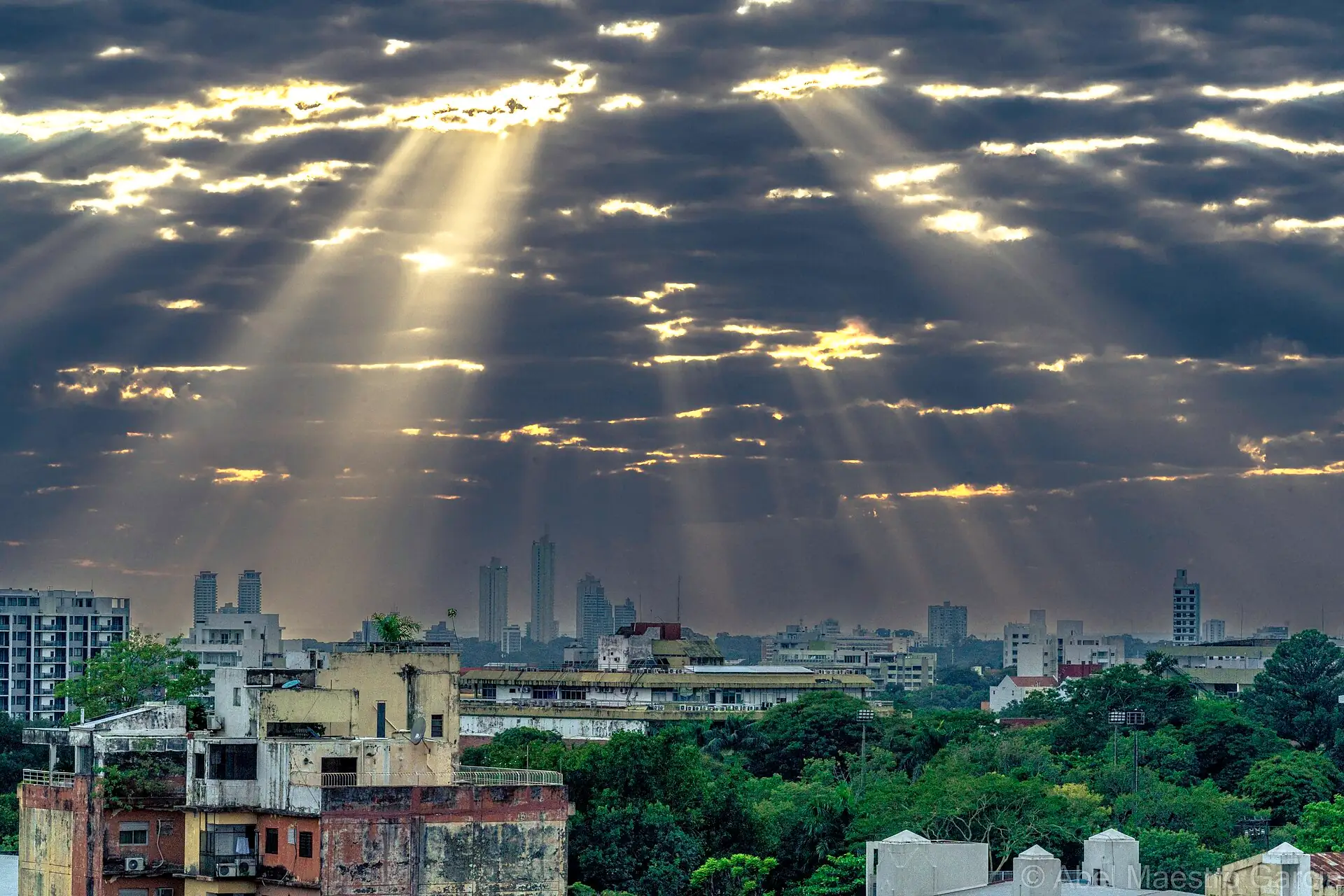
Today Asunción is a low-rise capital of roughly half a million people in the city proper and well over two million in the wider metropolitan area, the political and commercial centre of a country whose economy still leans on agriculture, hydropower and the river trade that first drew Spanish ships up from Buenos Aires.
- Founded
- 15 August 1537, Juan de Salazar de Espinosa
- Nickname
- 'Mother of Cities' (Madre de Ciudades)
- War of the Triple Alliance
- 1864–1870; occupied by foreign troops after 1869
- Stroessner dictatorship
- 1954–1989
- Population (city proper)
- Roughly half a million; over 2 million metro area (2026 estimate, check)
2Neighbourhood stories1 min
The centro histórico (microcentro) grew along the riverbank as the original colonial town, a grid of low buildings around Plaza de los Héroes, Plaza de la Independencia and Plaza de la Democracia. It holds most of the surviving 19th-century public buildings, the government palace and the cathedral, and by day is dense with offices, street vendors and buses; by evening it empties out, and visitors are steered toward Villa Morra or their hotel rather than an after-dark walk through downtown streets.
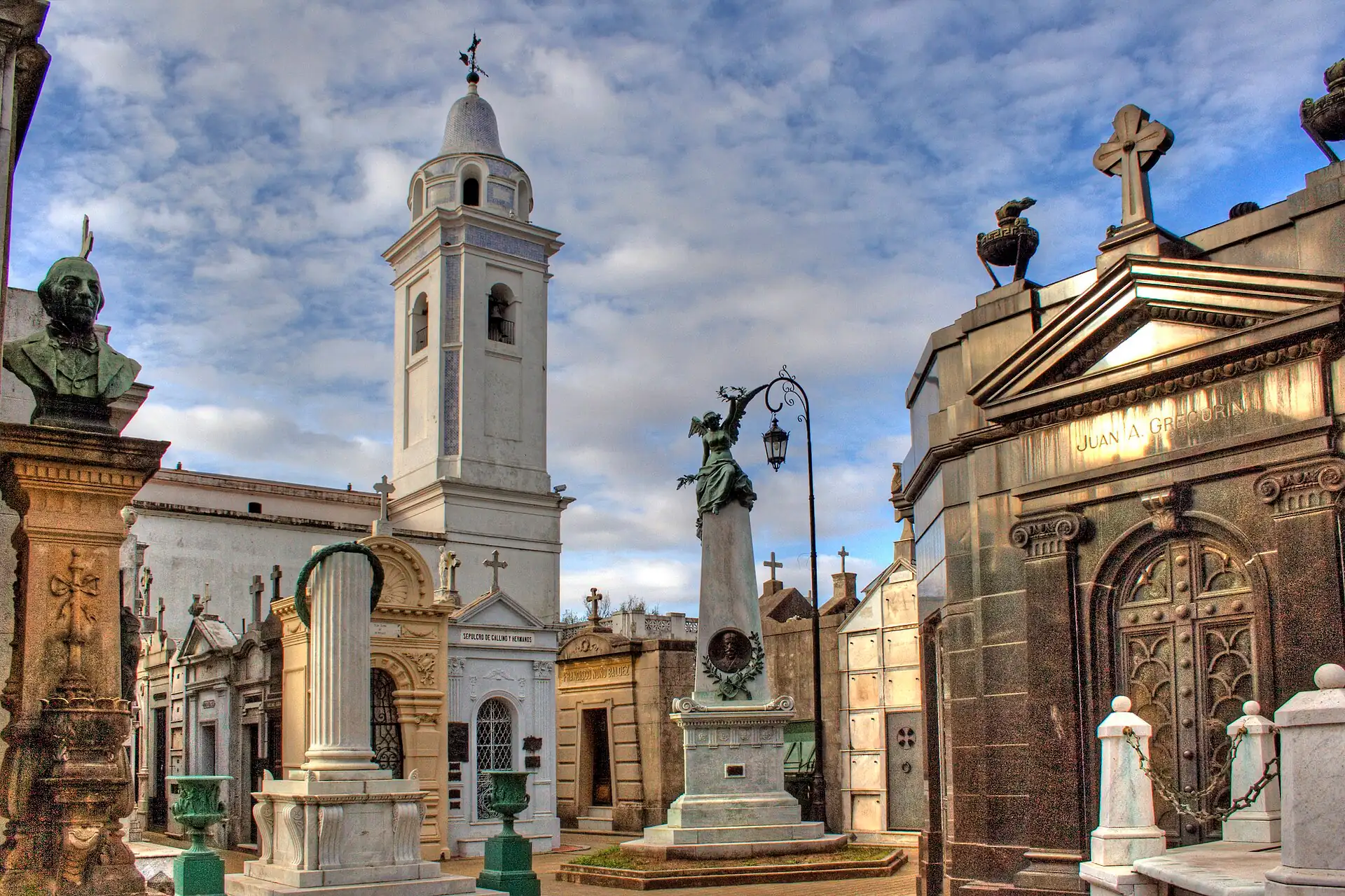
Recoleta, just east of the centre, is an older residential district best known for its cemetery of family mausoleums and statuary, a smaller and less famous cousin of Buenos Aires's La Recoleta. Around it are quiet streets of older houses, some restored, some faded, that show what middle-class Asunción looked like before the newer districts drew development away from the river.
Villa Morra and neighbouring Carmelitas, further from the river, are the modern face of the city: shopping malls, glass office towers, international chain restaurants and the gated apartment blocks of Asunción's professional class. This is where most longer-term expatriates and business travellers end up staying, and where the evening restaurant and bar scene is concentrated, a deliberate contrast with the older, quieter centre.
Loma San Jerónimo, on a hillside close to the centre, is one of the city's oldest working-class barrios, known for brightly painted houses on steep, narrow lanes and community-led mural projects. It sits near, but is distinct from, the bañados — the low-lying riverside neighbourhoods that flood seasonally and are not visitor areas — a distinction worth understanding before planning any walk near the river's edge away from the Costanera promenade itself.
- Centro histórico
- Colonial-era grid around Plaza de los Héroes
- Recoleta cemetery
- Family mausoleums, 19th–20th century
- Villa Morra
- Modern malls, offices and restaurants
- Loma San Jerónimo
- Historic hillside barrio, painted houses
3Architecture1 min
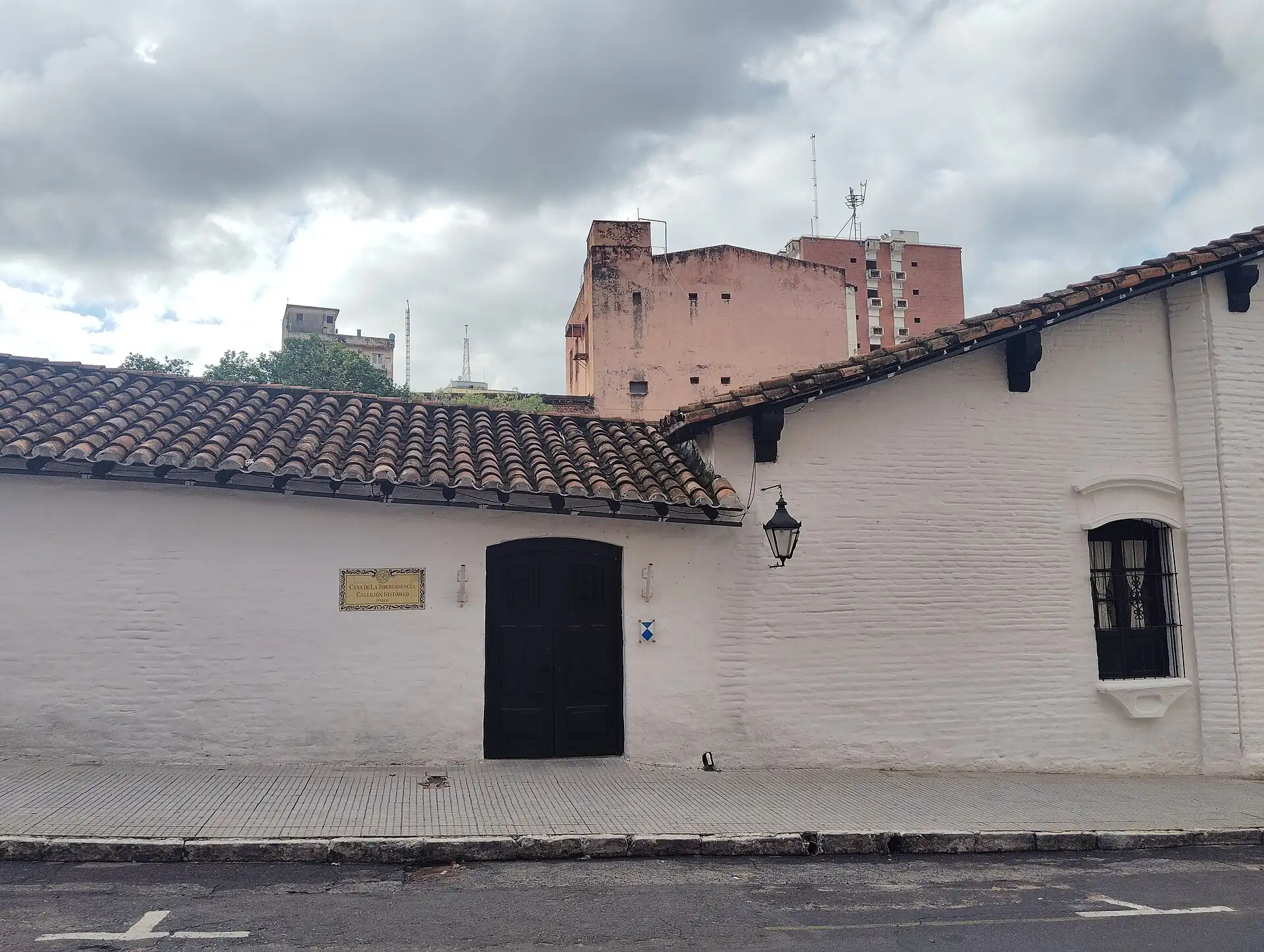
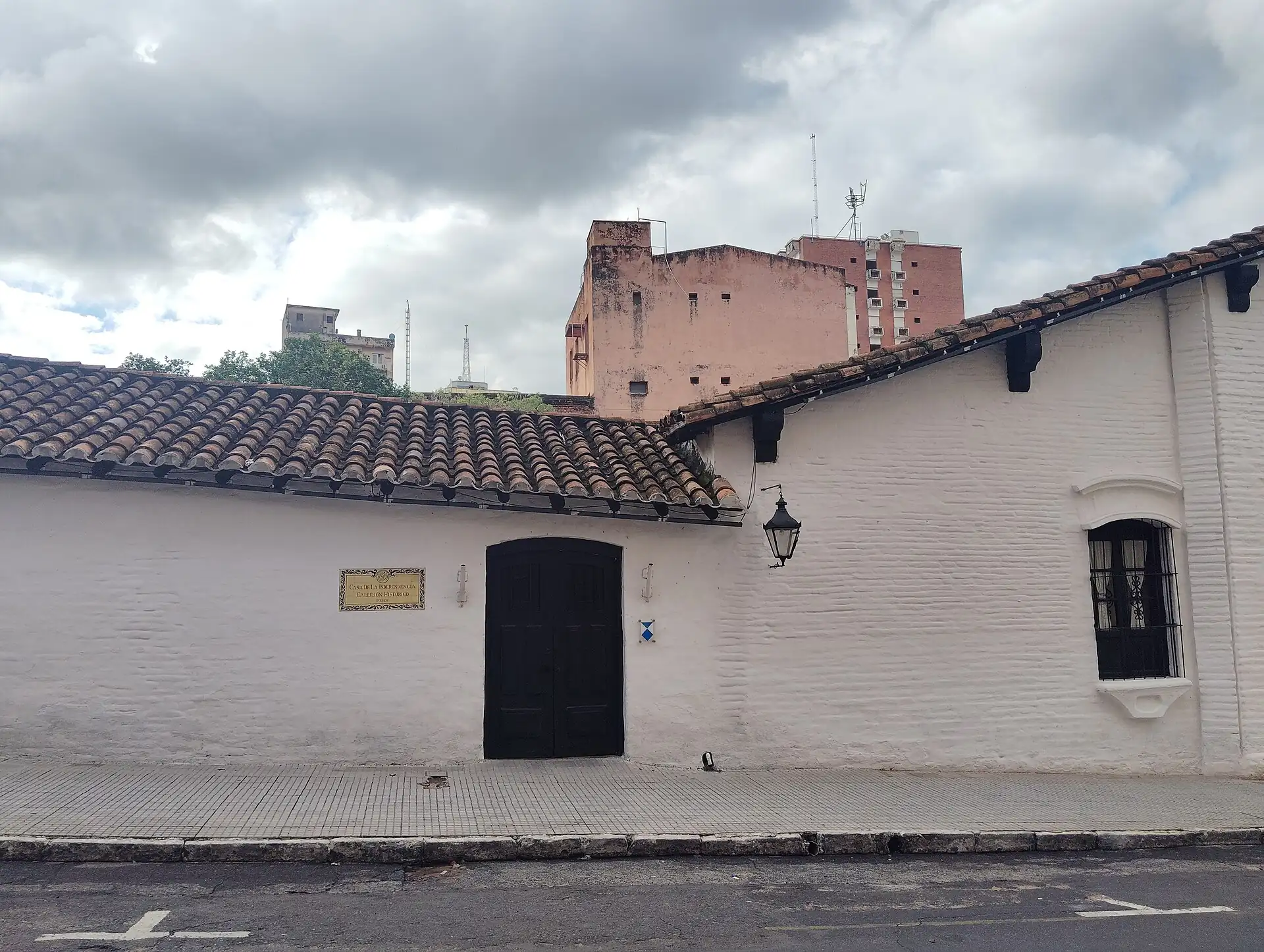
Little survives from the earliest colonial period: Asunción's original wood-and-adobe buildings were vulnerable to fire and flood, and later development replaced most of them. Casa de la Independencia is one of the few colonial-era houses still standing largely as built, with adobe walls, a tiled roof and a small interior courtyard typical of Spanish colonial domestic architecture in the region.
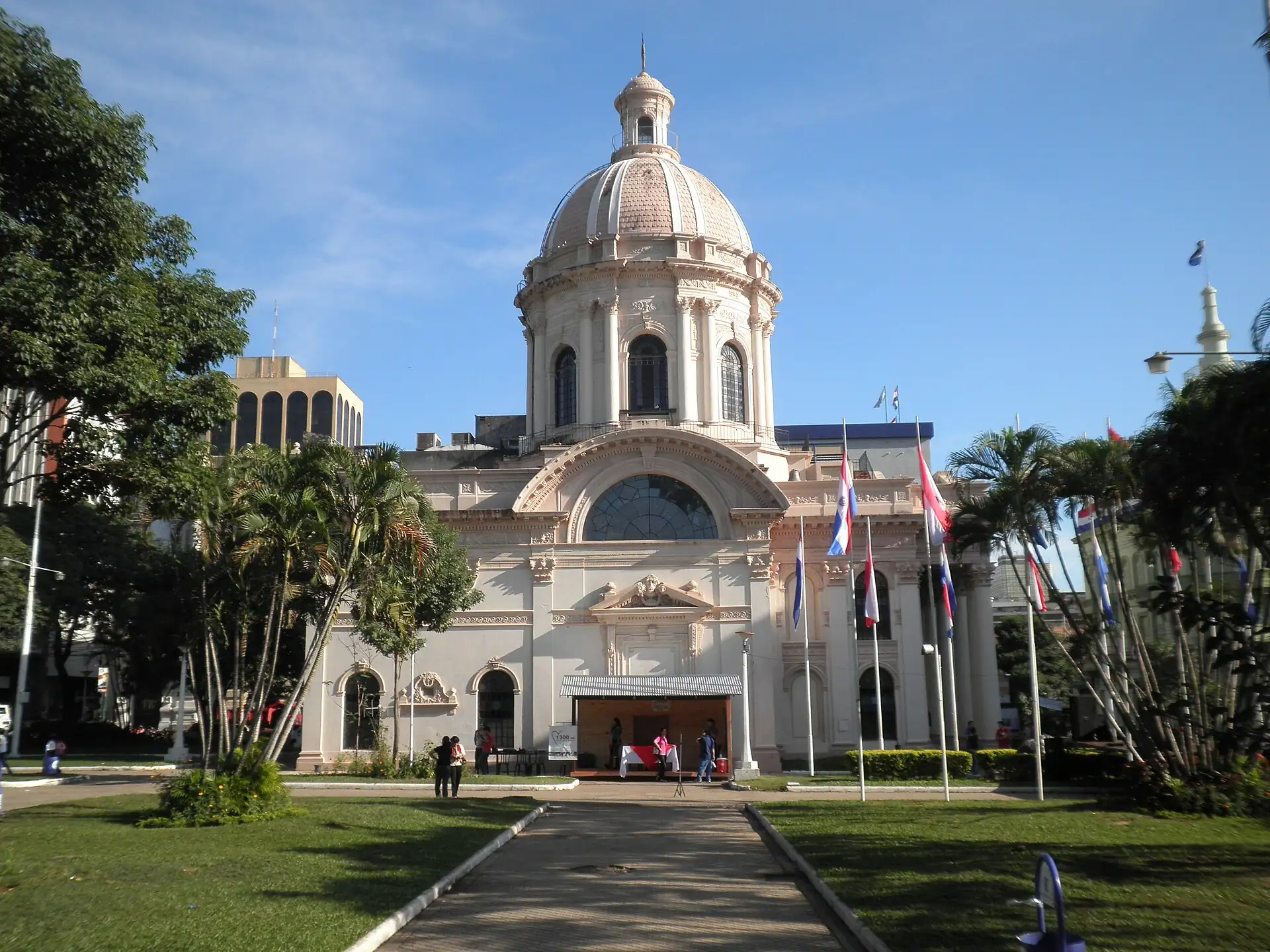
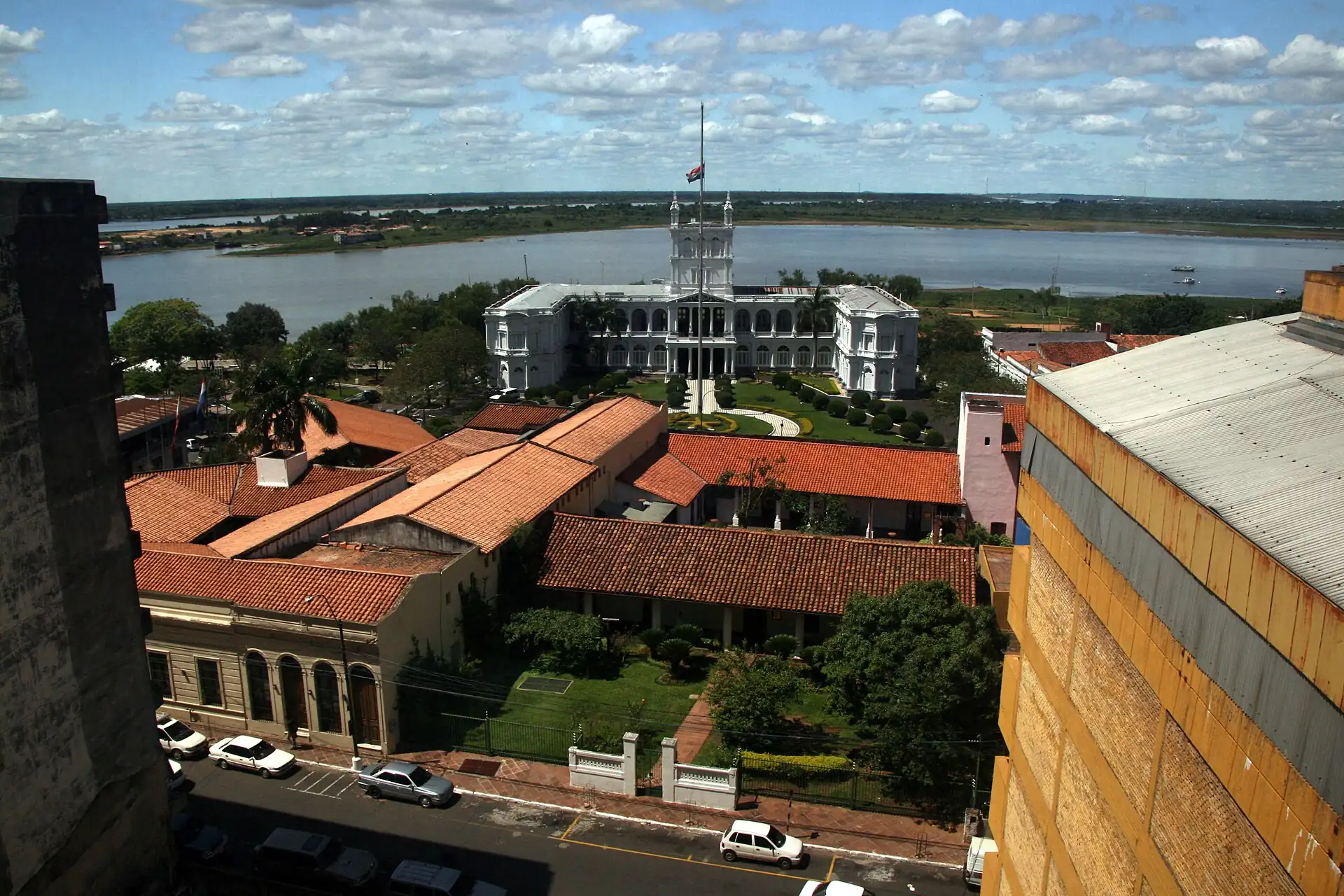
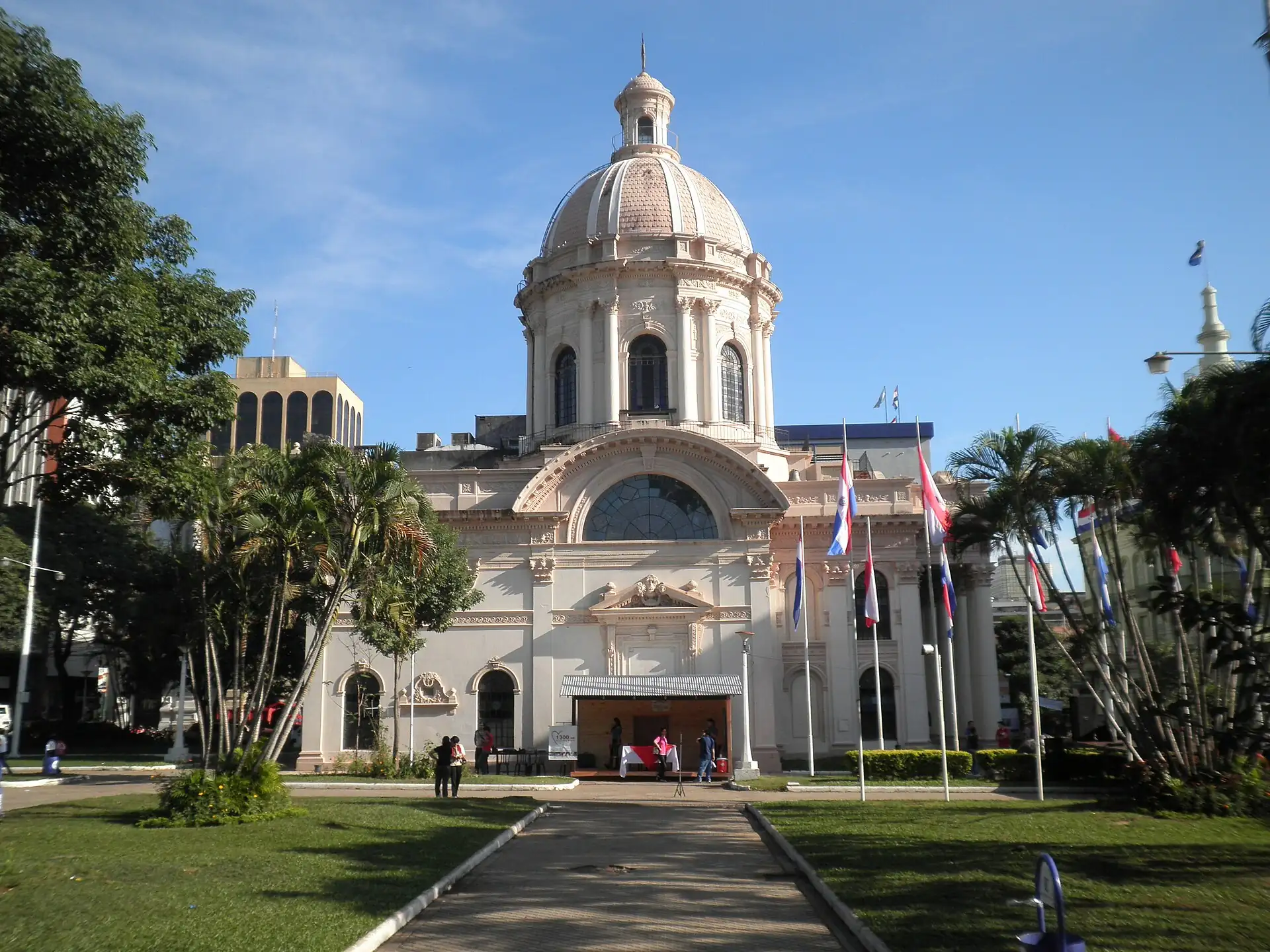
The 19th-century López era left the city its grandest public buildings, built with French and Italian-trained architects and European materials shipped up the river. The Palacio de los López, begun under Francisco Solano López before the War of the Triple Alliance interrupted construction, mixes neoclassical proportions with a riverside setting meant to project a modern, European-facing state; the Panteón Nacional de los Héroes, modelled loosely on Paris's Les Invalides, was finished only decades later and now holds the remains of independence and war figures under a low white dome.
The railway station and the old customs house on the waterfront reflect the same 19th-century ambitions for a modern, connected Paraguay, complete with the country's first railway line to the interior. Much of this riverside infrastructure fell into disrepair through the 20th century's wars and dictatorships, and a slow restoration and public-space effort along the Costanera has only partly reclaimed the waterfront for public use.
Newer Asunción, especially Villa Morra and the areas around Avenida Aviadores del Chaco, is glass-and-concrete mid-rise, similar to comparable districts in Buenos Aires or São Paulo but on a smaller scale — a visible contrast with the low, colonial-scaled centre a short drive away.
- Palacio de los López
- Begun under Francisco Solano López, mid-19th century
- Panteón Nacional de los Héroes
- Modelled loosely on Les Invalides, Paris
- Casa de la Independencia
- One of the few original colonial-era houses standing
- Costanera de Asunción
- Riverside public-space and flood-control project, ongoing restoration
4Food history1 min
Paraguayan food is built on cassava (mandioca), corn and dairy, reflecting a Guaraní agricultural base adapted with Spanish colonial ingredients. Chipa, a baked cheese-and-cassava-starch bread, is the everyday staple: sold from baskets on street corners, baked in quantity for Easter week, and eaten at any hour. Sopa paraguaya, despite the name, is not a soup but a dense corn-and-cheese bread, traditionally explained by a cook's kitchen mistake that became a national dish; it is standard alongside grilled meat at any asado.
Tereré — yerba mate infused with cold water and herbs, drunk through a metal straw from a shared cup — is closer to a daily ritual than a drink: offices, market stalls and family gatherings run on a shared guampa and thermos of ice water through the hot months, while the hot version (mate) takes over in cooler weather. Learning the passing etiquette (the same cup circulates; you drink your portion and hand it back) is a quick way into local social rhythm.
Beef and the asado grill sit alongside this cassava-and-corn base, reflecting Paraguay's cattle-ranching interior and shared River Plate grilling culture with Argentina and Uruguay. Mbeju, a griddle-cooked cassava-starch flatbread, and empanadas fried or baked with beef, chicken or cheese fillings round out the everyday street-food list found in markets like Mercado 4.
Asunción's restaurant scene split over the 20th century between old-guard, formal institutions in the historic centre — some dating to the mid-1900s — and a newer wave of parrillas and international restaurants that followed the city's professional class out to Villa Morra. Both traditions still coexist: a set lunch in a decades-old centre café and a grilled-beef dinner in a modern Villa Morra restaurant tell two different, equally current stories about how the city eats.
- Chipa
- Cheese-and-cassava bread, everyday and Easter-week staple
- Sopa paraguaya
- Dense corn-and-cheese bread, not a soup
- Tereré
- Cold yerba mate infusion, a daily social ritual
- Mbeju
- Griddle-cooked cassava-starch flatbread
5Festivals1 min
Semana Santa (Holy Week), which falls in March or April and moves every year, is the country's biggest traditional observance outside the capital: many Asunceños travel to smaller towns for it, but the week still slows the city itself, with reduced services, closed offices and family gatherings built around large batches of chipa baked specifically for the holiday. Visitors in the city during Semana Santa should expect a quieter, more closed-down centre rather than a citywide street festival.
8 December, the Virgen de Caacupé pilgrimage, draws enormous crowds to the town of Caacupé about 50 km east of the capital, and the roads out of Asunción jam for the days around it; the effect on the city itself is mostly logistical — avoid driving out that way — rather than a festival happening in Asunción proper.
15 August marks both the city's founding anniversary (1537) and a national holiday, with civic events and gatherings concentrated in the historic centre around the plazas and the Panteón. 14–15 May, Independence Day, brings parades and official ceremonies to the same downtown core, with the Palacio de los López and Plaza de la Independencia as natural focal points.
Ñandutí lace, a fine circular spiderweb-pattern lace introduced during the colonial period and strongly associated with the town of Itauguá east of the capital, is sold in Asunción's craft markets and is a recurring feature of national cultural celebrations and craft fairs through the year; a day trip to Itauguá is the way to see it made rather than just sold.
- Semana Santa
- March/April, dates move yearly
- Virgen de Caacupé pilgrimage
- 8 December, roads east of the city jam
- Founding of Asunción
- 15 August (1537)
- Independence Day
- 14–15 May
6City life2 min
Asunción runs on heat management for half the year. From roughly October to March, high temperatures and humidity push daily life toward early mornings and evenings: offices and shops commonly close for a long midday break from around noon to 3 or 4pm, reopening into the cooler evening. Visitors who try to sightsee through that midday window find the historic centre largely shuttered; locals are indoors, in air conditioning, or under shade with a tereré.
The tereré circle — colleagues, friends or family sharing a thermos and a single guampa through the afternoon — is less a drink break than the city's default social format, visible in office courtyards, market stalls and riverside benches alike. In the cooler months of June to August, the same ritual shifts to hot mate, and evenings turn genuinely cool enough for a jacket, a contrast with the tropical image many visitors expect of Paraguay.
Public transport leans on a bus network supplemented by a newer Metrobús rapid-transit corridor along the city's main avenues; most visitors, though, default to ride-hailing apps or taxis, since routes and fares for the bus system are not well documented for newcomers and stops are not always clearly marked. Traffic and heat together make short car rides between the centre, Recoleta, the Costanera and Villa Morra the practical way most visits are actually run, rather than a single long walking day.
Street safety concerns in Asunción centre on opportunistic theft — motorbike snatch-thefts of phones held near the kerb, and pickpocketing in dense markets like Mercado 4 — rather than violent crime targeting tourists; the standard local advice of keeping phones out of sight at the roadside and avoiding the bañado riverside neighbourhoods after dark reflects a city that is more inconvenient than dangerous for a careful visitor.
- Midday closures
- Roughly 12:00–15:00 or 16:00, most of the yearRoughly 12:00 PM–3:00 PM or 4:00 PM, most of the year
- Tereré
- The city's default daily social ritual
- Metrobús
- Bus rapid-transit corridor on main avenues
- Main visitor safety issue
- Opportunistic theft, not violent crime
Read, watch, wordsReading · Watching · Glossary · Sources
Reading
- Paraguay (Bradt Travel Guide series) — Various editionsGeneral-interest background on Paraguayan history and travel context.
- At the Tomb of the Inflatable Pig — John GimletteA widely read travel-writing account of Paraguay covering Asunción and the wider country's history and character.
Watching
- Documentaries on the War of the Triple Alliance and the Stroessner era — VariousBackground on the two events that most shaped the modern city; titles and availability vary — check current streaming options.
Glossary
| Term | Local | Meaning |
|---|---|---|
| tereré | tereré | Cold yerba mate infusion drunk through a metal straw, shared from one cup. |
| mate | mate | Hot yerba mate infusion, the cooler-season counterpart to tereré. |
| chipa | chipa | Baked cheese-and-cassava-starch bread, an everyday and Easter-week staple. |
| sopa paraguaya | sopa paraguaya | Dense corn-and-cheese bread, despite the name not a soup. |
| mbeju | mbeju | Griddle-cooked cassava-starch flatbread. |
| ñandutí | ñandutí | Fine circular spiderweb-pattern lace, associated with Itauguá. |
| bañado | bañado | Low-lying riverside neighbourhood subject to seasonal flooding; not a visitor area. |
| guampa | guampa | The cup, traditionally a hollowed horn or wood, used for tereré and mate. |
Read for this deep dive
- Wikipedia — Asunción ↗
- Wikipedia — History of Paraguay ↗
- Wikipedia — Paraguayan cuisine ↗
- Wikivoyage — Asunción ↗
Background reading only: the text above is written by Voykit, not copied from these pages.
Rules in force · 7Above 2,500 m (Bogotá, Quito, Cusco, La Paz) keep the fir…
- South America ↗Above 2,500 m (Bogotá, Quito, Cusco, La Paz) keep the first day light; sleep lower where you can (Sacred Valley before Cusco) and descend if headache comes with vomiting or confusion.
- South America ↗A yellow fever certificate is required on arrival in French Guiana, and asked for on some routes into Bolivia, Paraguay, Suriname and Guyana, or when arriving from Amazon areas — vaccinate at least 10 days before travel and carry the card.
- South America ↗Overnight buses are the norm in Argentina, Chile and Peru, but pick top-tier companies and keep valuables on your body; on-board thefts from overhead racks are the common loss.
- Paraguay ↗Check entry rules for your passport with Paraguay's migration authority or a Paraguayan consulate; get your passport stamped at land borders, as some crossings let you pass without it.
- Paraguay ↗The Chaco is remote with few services; travel with a guide or experienced operator and carry water and fuel.
- Paraguay ↗Paraguay can require a yellow fever certificate from travellers arriving from risk countries such as Brazil, Bolivia, Peru and Colombia — check the current list and vaccinate at least 10 days before you travel.
- Asunción and surroundings ↗December to February is very hot: keep outings to the early morning.
Entry rules depend on your passport. Full visa guide
Emergency numbers for Asunción911 ▾
Tap a number to call from your phone. These are the numbers listed in this guide; a row marked check has not been verified.
Planning is the full guide. I'm here keeps what is open and the cheat card.
Right now
Checking the weather…
Working out what is open near you…
What is open nowclock, closures, places open
Now in Asunción
Local time in Asunción
--:--
Loads in your browser · America/Asuncion
This month
Month verdict appears here.
Closed today
See the weekly grid below.
If today is a closure day: Plan the historic centre for the morning and keep the afternoon (roughly 12:00-15:00 or 16:00) for the hotel, a mall or an air-conditioned café: most museums and shops close for a midday break.
- check Casa de la Independencia: Confirm the current weekday closure day, if any.
- check Most historic-centre museums: Midday closure roughly 12:00-15:00/16:00 is the main pattern; weekly closure days vary by venue.
Weekly closures come from our place pages; Semana Santa, 8 December and state events add closures not shown here.
Cheat cardthe pocket version
Cheat card
The essentials on one card: save it as an image for your phone, share it, or print it.
Asunción
- Money
- Keep Gs 200,000 in small notes; use ATMs inside banks or malls, and not on the street at night.
- SIM
- Install an eSIM before you fly, or buy a tourist SIM at the airport counters (passport needed).
- Ride app
- Uber · Bolt
- Emergency
- 911 police · 911 ambulance
- Plugs
- Sockets C. US/Canada (A/B): adapter · UK/Ireland (G): adapter · Australia/NZ (I): adapter. 220 V: US 120 V-only devices (hair dryers) need a converter; most chargers are dual-voltage.
Say it
- Hello: Buenos días (BWEH-nos DEE-as)
- Thank you: Gracias (GRAH-syas)
- How much is this?: ¿Cuánto cuesta? (KWAN-toh KWES-ta)
- The bill, please: La cuenta, por favor (la KWEN-ta por fah-VOR)
- Please take me to this address: Lléveme a esta dirección (YEH-veh-meh ah ES-ta dee-rek-SYON)
Top 5
- Palacio de los López in the morning
- Panteón Nacional de los Héroes
- Manzana de la Rivera
- The Costanera at evening
- Lunch at Lido Bar
EssentialsQuick answers, what things cost and how to get around
Essentials
Quick answers, what things cost and how to get around
Quick answers
The questions people ask first about Asunción, one line each. Tap a card for the full answer.
- Cash or card?Cards in hotels, malls and larger restaurants; cash for markets, taxis, small cafés and museums.
- SIM or eSIMInstall an eSIM before you fly, or buy a tourist SIM at the airport counters (passport needed).
- Ride-hailing appUber · Bolt.
- Tap waterUse bottled or filtered water; ice in established restaurants is usually made from treated water.
- TippingAbout 10% in restaurants if service is not added; round up for drivers.
- Plugs & powerSockets C. US/Canada (A/B): adapter · UK/Ireland (G): adapter · Australia/NZ (I): adapter. 220 V: US 120 V-only devices (hair dryers) need a converter; most chargers are dual-voltage.
Show all 14 answers
- Safe at night?Take more care after dark in Historic centre, Costanera de Asunción, Recoleta and more.
- What to wearCasual and modest; beachwear stays at the pool, not in the street.
- Emergency numbers911 police · 911 ambulance
- Your embassycheckUS embassies listed with addresses (check before you go).
- Sundays & holidayscheckMany places close 12:00–15:00 or 16:00 and on Sundays; check each venue.Many places close 12:00 PM–3:00 PM or 4:00 PM and on Sundays; check each venue.
- Late at nightBars and clubs in Villa Morra and the centre commonly run past midnight on weekends…
- Rainy-day planStorms arrive fast and heavy; wait them out under cover rather than walking through one.
- Landing lateASU: ride-hailing car or official taxi to the door runs all night.
Cost cheat-sheetwhat everyday things cost
Cost cheat-sheet
Typical prices for the everyday things, as ranges. Change the currency right here; the local price stays first.
2026 desk estimate · check
- CoffeeCoffee in a caféGs 15,000-30,000
- Sit-down mealSit-down restaurant meal, per personGs 90,000-200,000
- Street or quick mealSet lunch (menu)Gs 40,000-80,000
- BeerLocal beerGs 15,000–30,000
- Taxi, about 5 km (3 mi)Taxi, about 3 mi (5 km)Ride-hailing car across the centreGs 15,000-40,000
- SIM or eSIM, a weekTourist SIM or eSIM, about a weekGs 50,000–150,000
- Museum or sight ticketMuseum ticketGs 10,000-40,000
- Budget bedFamily room or apartment (up to 4), a night, per roomPYG 400,000
- Mid-range bedHotel double room, a night, per roomPYG 500,000
- High-end bedHotel double room, a night, per roomPYG 1,200,000
A day, not counting the bed: Budget PYG 150,000 · Mid PYG 400,000 · High PYG 800,000
Local prices, with USD next to them (rates 2026-09 (approximate); change it in the header). Ranges are desk estimates: check locally. Every price and the budget calculator →
Source: Prices in Asunción
Draft
Written from desk research. Not yet compared with the official source.
No official source is recorded for this figure.
Prices are 2026 desk estimates, not yet compared with an official source. Check on the day.
Not checked in the last 12 months (no check date on file).
DecideWho it suits, the trade-offs and when to go
Decide
Who it suits, the trade-offs and when to go
Best months at a glance
The guide's verdict for each month
Jan
Avoid
34°C (93°F)93°F (34°C)
Feb
Avoid
33°C (91°F)91°F (33°C)
Mar
Care
31°C (88°F)88°F (31°C)
Apr
Best
27°C (81°F)81°F (27°C)
May
Best
24°C (75°F)75°F (24°C)
Jun
Best
21°C (70°F)70°F (21°C)
Jul
Best
22°C (72°F)72°F (22°C)
Aug
Best
24°C (75°F)75°F (24°C)
Sep
Best
27°C (81°F)81°F (27°C)
Oct
Care
30°C (86°F)86°F (30°C)
Nov
Care
32°C (90°F)90°F (32°C)
Dec
Avoid
33°C (91°F)91°F (33°C)
Best: Apr–Sep. Mixed: Mar, Oct–Nov. Avoid: Dec–Feb. Month by month →
Warmest Jan (34°C (93°F)93°F (34°C)), coolest Jun (11°C (52°F)52°F (11°C) low), wettest Oct (10 rain days), driest Jul (5). Averages, not a forecast.
Asunción across the year
Best-looking months for Asunción: Apr, Aug, Sep. Rated avoid: Jan, Feb, Dec.
| Measure | Jan | Feb | Mar | Apr | May | Jun | Jul | Aug | Sep | Oct | Nov | Dec |
|---|---|---|---|---|---|---|---|---|---|---|---|---|
| Weather | Avoid (avoid) | Avoid (avoid) | Mixed (care) | Great (good) | Great (good) | Good (good) | Good (good) | Great (good) | Great (good) | Mixed (care) | Mixed (care) | Avoid (avoid) |
| Crowds | Low (good) | Low (good) | Low (good) | Low (good) | Medium (ok) | Low (good) | Low (good) | Low (good) | Low (good) | Low (good) | Low (good) | Medium (ok) |
| Prices | Low (good) | Low (good) | Low (good) | Low (good) | Low (good) | Low (good) | Low (good) | Low (good) | Low (good) | Low (good) | Low (good) | Low (good) |
| Events | None listed (ok) | None listed (ok) | 1 event (ok) | 1 event (ok) | 1 event (ok) | None listed (ok) | None listed (ok) | 1 event (ok) | None listed (ok) | None listed (ok) | None listed (ok) | 2 events (ok) |
Green is good news, amber needs planning, red is a month to avoid; dashed grey with a question mark means our data does not say. Open the year heatmap →
Not checked in the last 12 months (no check date on file).
Source: Months, temperatures and crowds
Draft
Written from desk research. Not yet compared with the official source.
Monthly highs, rain and crowd levels are climate averages and desk estimates for the city, not a forecast.
Understand the cityUnderstand · Districts
Orientation & districts
A first visit fits in four areas: the historic centre (centro histórico / microcentro) by the river, Recoleta just east of it, the Costanera promenade along the water, and Villa Morra further out for evenings and malls. Everything else is a car ride.
Street addresses in the centre are walkable; outside it, plan every trip as a ride-hailing car, not a walk.
Shaded shapes: walking areas (click one). Black pins: sleep areas. Grey dots: places. Round badges: arrivals. Click the map to turn on scroll-wheel zoom.
Hover, tap or tab to an area to see what it is like. Pins are sleep areas; arrows at the edge point to the airport.
Off the map: Silvio Pettirossi International Airport (ASU) (40–65 min by the usual route).
Not drawn yet (no coordinates in this guide): Loma San Jerónimo. They are in the neighbourhood cards below.
Where’s what, as a list:
- Centro histórico (microcentro) (Centro histórico): Dense with offices and street vendors by day, quiet and best avoided on foot after dark. Suits: First visit, government and colonial-era sights. Price band $$.
- Recoleta: Residential district a short ride from the centre; not a sleep base. Suits: A morning at the cemetery and quiet older streets.
- Costanera de Asunción: Do not wander off the promenade into the riverside bañado neighbourhoods. Suits: River views, an evening or morning walk on the promenade itself.
- Villa Morra / Carmelitas: 20 minutes by car from the centre; the base most business travellers and expats choose. Suits: Evenings, malls, modern restaurants, longer stays. Price band $$$.
- Loma San Jerónimo: Historic working-class hillside barrio near the centre; go with a guide or as part of a tour, not alone at will. Suits: A short guided walk through painted-house lanes.
- Mercado 4 area: Paraguay's largest popular market; keep bags close and go in the morning. Suits: A supervised market walk-through.
- Sleep area Historic centre: suits First visit, government and colonial-era sights, price band $$.
- Sleep area Villa Morra: suits Evenings, malls, modern restaurants, longer stays, price band $$$.
- Silvio Pettirossi International Airport (ASU), 40–65 min by the usual route.
Neighbourhoods at a glance
One tab per area, pulled together from this guide’s districts table, area notes, sleep-area scores and place pages. Scores are desk judgements (1–5); prices are estimates, check before you book.
Centro histórico (microcentro)
$$Centro histórico
Dense with offices and street vendors by day, quiet and best avoided on foot after dark.
- Suits:
- First visit, government and colonial-era sights · Sightseeing mornings
- Best time:
- 07:00-noon7:00 AM-noon
- Rooms:
- Gs 400,000–900,000 per room per night (mid-range)
Pick this if: First visits, walking to the palace and plazas
Skip this if: You want evening dining and shops on your doorstep
- Quiet nights2/5 Low
- Nightlife2/5 Low
- Families2/5 Low
- Late arrival3/5 Medium
Why these scores
- Quiet nights: Daytime traffic and vendors; quiet but empty at night.
- Nightlife: Thin after dark; Villa Morra is the evening-out area.
- Families: Uneven pavements are hard with a stroller.
- Late arrival: Streets are quiet and best avoided on foot late at night; use a car.
Getting around from here
- Car north-west: about 12 min to Costanera and the bay
- Car east: about 18 min to Recoleta
Recoleta
Residential district a short ride from the centre; not a sleep base.
Feels: Quiet older residential streets around the cemetery
- Suits:
- A morning at the cemetery and quiet older streets
- Best time:
- Morning
Pick this if: A slow morning
Watch out for: Evenings, when it is quiet and dark.
Getting around from here
- Car west: about 18 min to Historic centre
Costanera de Asunción
Do not wander off the promenade into the riverside bañado neighbourhoods.
- Suits:
- River views, an evening or morning walk on the promenade itself
- Best time:
- 16:30-19:004:30 PM-7:00 PM
Pick this if: Evening walks
Watch out for: Wandering off the promenade into the bañado.
Getting around from here
- Car south-east: about 12 min to Historic centre
Villa Morra / Carmelitas
$$$20 minutes by car from the centre; the base most business travellers and expats choose.
- Suits:
- Evenings, malls, modern restaurants, longer stays · Evenings and longer stays
- Best time:
- Evening
- Rooms:
- Gs 500,000–1,000,000 per room per night (mid-range to high)
Pick this if: Business trips, families, shorter transfers on the Luque side
Skip this if: You want to walk to the historic sights
- Quiet nights4/5 High
- Nightlife4/5 High
- Families4/5 High
- Late arrival4/5 High
Why these scores
- Quiet nights: Residential and commercial streets, calmer at night than the centre by day.
- Nightlife: Restaurants and bars concentrated here.
- Families: Malls, flatter pavements, more modern infrastructure.
- Late arrival: Hotel desks and restaurants keep later hours than the centre.
Eat
Getting around from here
- Car west: about 20 min to Historic centre
Loma San Jerónimo
Historic working-class hillside barrio near the centre; go with a guide or as part of a tour, not alone at will.
- Suits:
- A short guided walk through painted-house lanes
Mercado 4 area
Paraguay's largest popular market; keep bags close and go in the morning.
- Suits:
- A supervised market walk-through
- Best time:
- 07:00-noon7:00 AM-noon
Pick this if: Sightseeing mornings
Watch out for: Walking alone after dark.
Getting around from here
- Car north-west: about 12 min to Costanera and the bay
- Car east: about 18 min to Recoleta
Decide
The honest trade-off: what you will enjoy, what will wear you down.
You will like
- Small museums
- River views
- Local food and tereré
You will hate
- Summer heat and humidity
- Midday closures
- Uneven pavements
Similar citiesif this one is not quite right
Similar cities
If Asunción does not fit your dates or budget, these match it on season, cost and feel.
- Maputo
Mozambique
- Good in the same months: Apr, May, Jun, Jul and 2 more
- Works well for first-timers, food trips, tight budgets
- A similar climate through the year
- Victoria Falls
Zimbabwe
- Good in the same months: Apr, May, Jun, Jul and 2 more
- Works well for first-timers
- A similar climate through the year
- Lilongwe
Malawi
- Good in the same months: Apr, May, Jun, Jul and 2 more
- A similar climate through the year
When
Best months: Apr, May, Jun, Jul, Aug, Sep. Month-by-month verdicts below, with the live forecast first. When to go, month by month →
Asunción: next 7 days
Loading forecast…
Forecast: Open-Meteo (CC BY 4.0), model data for this point.
Air quality
Loading…
Model estimate (CAMS via Open-Meteo), not a street-level station; readings near busy roads run higher.
Month by month, all 12best Apr, May, Jun, Jul, Aug, Sep
Hottest month; storms and humidity.
Very hot, humid; Carnival dates move.
Hot; storms.
Warm; Semana Santa some years.
Mild; May 14–15 holidays.
Cool days; cold nights and fronts.
Coolest; occasional cold snaps.
Mild; Aug 15 city anniversary.
Warm; warming quickly.
Hot; storms begin.
Hot and humid; heavy storms.
Very hot; Dec 8 Caacupé pilgrimage jams roads.
Climate, calendar and eventsClimate · Calendar · Events · Packing by season
Climate
| Jan | Feb | Mar | Apr | May | Jun | Jul | Aug | Sep | Oct | Nov | Dec | |
|---|---|---|---|---|---|---|---|---|---|---|---|---|
| High | 34°C (93°F)93°F (34°C) | 33°C (91°F)91°F (33°C) | 31°C (88°F)88°F (31°C) | 27°C (81°F)81°F (27°C) | 24°C (75°F)75°F (24°C) | 21°C (70°F)70°F (21°C) | 22°C (72°F)72°F (22°C) | 24°C (75°F)75°F (24°C) | 27°C (81°F)81°F (27°C) | 30°C (86°F)86°F (30°C) | 32°C (90°F)90°F (32°C) | 33°C (91°F)91°F (33°C) |
| Low | 22°C (72°F)72°F (22°C) | 22°C (72°F)72°F (22°C) | 20°C (68°F)68°F (20°C) | 17°C (63°F)63°F (17°C) | 14°C (57°F)57°F (14°C) | 11°C (52°F)52°F (11°C) | 11°C (52°F)52°F (11°C) | 13°C (55°F)55°F (13°C) | 15°C (59°F)59°F (15°C) | 18°C (64°F)64°F (18°C) | 20°C (68°F)68°F (20°C) | 21°C (70°F)70°F (21°C) |
| Rain days | 8 | 8 | 9 | 8 | 7 | 6 | 5 | 6 | 8 | 10 | 9 | 9 |
| Verdict |
- Dec-Mar highs above 33 degC with high humidity make midday walking genuinely hard; the historic centre's midday closures follow this heat, not the clock.
- Jun-Aug brings cool days and cold snaps (cold fronts, sometimes called friagem locally, can drop nights toward 5-10 degC): pack a warm layer even though Paraguay reads as tropical on a map.
- Rain falls in short, heavy storms rather than steady drizzle; a storm can flood streets for an hour, then clear.
Events by month
Semana Santa (Holy Week)
holidayMarch or April, moves yearly · Citywide; many locals travel to smaller towns(check dates)
Reduced services, many offices and shops closed; families bake large batches of chipa.
Independence Day
holiday14-15 May · Historic centre
Parades and closures around the Palacio and Plaza de la Independencia.
Founding of Asunción
culture15 August · Historic centre
Civic events and gatherings around the plazas.
Virgen de Caacupé pilgrimage
festival8 December · Roads east toward Caacupé
Huge pilgrimage 50 km (31 mi) away; avoid driving east that day.Huge pilgrimage 31 mi (50 km) away; avoid driving east that day.
Festivals and events that change the plan
| When | What | Effect on your plan |
|---|---|---|
| Apr (Easter week, dates move) | Semana Santa | National holiday; services reduced and many shops closed. |
| May 14–15 | Independence Day | Parades and closures in the centre. |
| Aug 15 | Founding of Asunción | Festivities and closures in the historic centre. |
| Dec 8 | Virgin of Caacupé pilgrimage | Huge pilgrimage 50 km east; roads out of the city jam. |
What to pack, by season
From Asunción’s own climate table: the coldest, warmest and wettest three months, and what to bring for each.
Coldest months
Jun–Aug
12° to 22°
A light jacket and a sweater.
Warmest months
Dec–Feb
22° to 33°
Light, breathable clothes, a sun hat and sunscreen; plan midday indoors and carry water.
Wettest months
Oct–Dec
9 rain days a month
A compact umbrella.
Arrive & moveGetting in, getting around, and your bags
Arrive & move
Getting in, getting around, and your bags
I land at…
Enter your landing time: what still runs from the airport, where you can eat when you get in, and which areas let you check in that late.
Silvio Pettirossi International Airport (ASU)
Out of the airport about 23:4511:45 PM (00:52 (next day)12:52 AM (next day) if immigration and bags are slow); in town about 00:25 (next day)12:25 AM (next day).
Transport from the airport
- Any hourRide-hailing car or official taxi to the door. Runs all night.
- Any hourOfficial airport taxi desk or a hotel-arranged transfer. Any hour.
Places to eat open when you get in
We have no confirmed hours for the places to eat here yet. Plan on a convenience store or your hotel. What is open late →
Where to sleep with a late arrival
- Lets you inHistoric centre 24-hour desk. Streets are quiet and best avoided on foot late at night; use a car.
- Lets you inVilla Morra 24-hour desk. Hotel desks and restaurants keep later hours than the centre.
Typical times from our airport data, not a timetable: check the last departure on the day. Full airport-to-bed plan for Silvio Pettirossi International Airport (ASU) →
Arrive
Each gateway has its own airport-to-bed page with timings and the last safe connection.
Getting in, in detailGet in
Get in by rail and road
| Station | Mode | Serves | Where | To the centre |
|---|---|---|---|---|
| Terminal de Ómnibus de Asunción (EMBOA)Terminal de Ómnibususe | Bus | Long-distance domestic and international buses (Argentina, Brazil, Bolivia) | About 5 km east of the centre | Car 15-25 min, Gs 30,000-60,000Buy tickets at the operator counters inside; avoid touts in the forecourt. |
- International buses to Buenos Aires or São Paulo run overnight and take a full day or more; a flight is often worth it for time.
Move
The default way around, when a pass pays off, and when the last trains go.
- Default
- Walk inside the centre; ride-hailing car between areas.
- Passes
- No pass. Rides are cheap; check the fare in the app.
- Last trains
- No rail service; ride-hailing runs late, but cancellations rise in heavy rain.desk estimate
- Other modes
- Other modes (Rome2Rio) ↗
Getting around, in detailGet around · Connect
Get around
Walk inside the historic centre by day; ride-hail between clusters and after dark. City buses and the Metrobús corridor are cheap but not well documented for visitors.
| Mode | Verdict | Fare | Use it for | What breaks |
|---|---|---|---|---|
| Walking | use | Free | Inside the historic centre by day | Pavements are uneven; watch your footing more than in most capitals. |
| Ride-hail car | use | Gs 15,000-40,000 across the centre | Between clusters, bags, night | Fare fixed in the app. |
| Metered taxi | ok | Agree or check the meter first | Street hail when apps are slow | Confirm the fare before getting in if the meter looks fast or missing. |
| Metrobús (BRT) | limited | Gs 3,500-5,000 (check) | Main avenues, not well signed for visitors | Cash or card system varies; ride-hailing is simpler for a short visit. |
| City bus | caution | Gs 3,000-5,000 (check) | Locals' daily commute | Routes are not well documented for visitors; slow and can be crowded. |
Taxis and ride-hailing
Uber
app
Fare fixed before you ride; card in-app.
Radio taxi companies
metered
Book by phone through your hotel for a known fleet.
More on getting around
Rush hours are roughly 07:00-09:00 and 17:00-19:00; add time to any car ride then. Heavy storms can flood some streets for an hour: wait it out rather than wading through.
Connect
| Option | Verdict | What breaks |
|---|---|---|
| Tourist eSIM bought before you fly | use | No counter, no queue. |
| Carrier counters at the airport (Tigo, Personal, Claro) | use | Passport needed for registration; 15-30 minutes. |
| Carrier store in the city | use | Same registration process; board prices. |
| SIM from an unofficial street seller | avoid | SIMs must be registered to your own passport. |
Uber
Cars
Operates in Asunción; fare fixed before you ride.
Bolt
Cars
Alternative ride-hailing app, coverage varies (check).
Google Maps
Walking, addresses
Reliable for the centre and main avenues.
- Wi-Fi
- Free in most hotels, cafés and malls.
Luggage
Where big bags are a problem, and how to get rid of them for the day.
Rule
- Lockers
- Few public lockers; hotels hold bags after check-out.
- Forwarding
- No forwarding service culture; leave the big bag at the hotel for trips out of town.
- Dead zone
- Late check-out flights: ask the hotel to hold bags and for a shower room.
Bags, area by area
4 walking areas rated
- Bags forbidden
- Bags painful
Lockers, forwarding and the gap between check-out and check-in are covered once, under Luggage.
See & doWalking clusters, day plans and the places worth the time
See & do
Walking clusters, day plans and the places worth the time
Clusters
Plan by cluster: each is a walkable area with a rescue point and a bag rule.
Morning cluster: the palace, the Panteón and Plaza de los Héroes by foot; shut by 12:00; keep phones out at the kerb.
rescue 93% · max p90 7′ · half
Early-morning or late-afternoon cluster: the riverside promenade and the bay; open, hot at noon, unsafe after dark.
rescue 93% · max p90 7′ · 90m
Morning cluster: one cemetery with monuments and a residential district; a car ride from the centre.
rescue 93% · max p90 7′ · 90m
Evening and mall cluster: restaurants, shops and quiet streets in the modern part of the city; a 20-minute car ride from the centre.
rescue 93% · max p90 7′ · half
Days
Ready-made day plans, timed against opening hours and walking distances.
How long are you staying?
Loose outlines in the city's rhythm: outdoors early and late, indoors at midday.
1 day
A stopover before Iguazú or the missions
- 07:30Palacio de los López — Palacio de los López
- 08:15Panteón Nacional de los Héroes — Panteón Nacional de los Héroes
- 09:00Manzana de la Rivera — Manzana de la Rivera
- 12:00Lido Bar — Lunch at Lido Bar
- 13:00Rest at the hotel through the midday heat
- 16:30Costanera de Asunción — Costanera walk
Skip: Mercado 4 and Recoleta: both need more time than a one-day stop allows.
Asunción in 3 days
3 daysMornings outside, midday indoors, evenings in Villa Morra or the centre; the last day ends with the bags already in the car.
Day by day
Day 1 — Palace and Panteón, a 12:00 lunch table
- 07:30Palacio de los López
- Panteón Nacional de los Héroes (optional)
- 12:00Lunch table 12:00 (centre)
Day 2 — The Costanera, then lunch at Lido Bar
Day 3 — Recoleta morning, car to Silvio Pettirossi at 12:00
- 08:30Cementerio de la Recoleta
- 12:00Car to Silvio Pettirossi at 12:00
Places
“Best time” is when to arrive for the fewest crowds, for example “before 08:30”; “Go any time” means the hour makes little difference. More sights follow under “More sights and museums”.
Show 2 more placesShow fewer
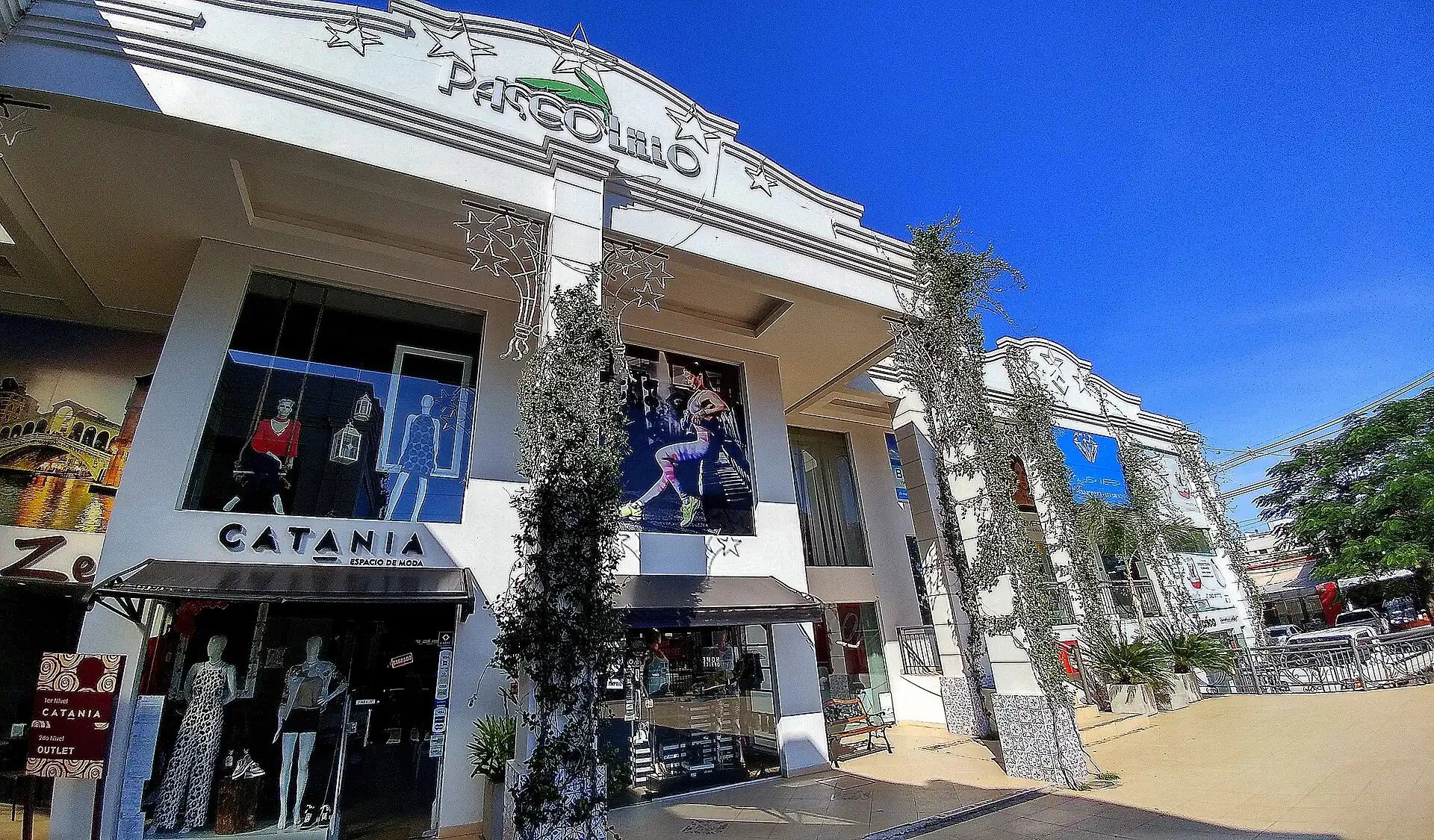
If you do ten things in Asunción
Ranked for a first visit of 2-3 days. Prices are 2026 estimates in guaraníes; hours marked (check) still need confirmation.
- 1
Palacio de los López in the morning
The riverside government palace and the walk along Avenida Colón.
- Time
- 30-45 min
- Best
- 07:30-09:30
- Cost
- Free
- 2
Panteón Nacional de los Héroes
Low white-domed mausoleum for independence and war figures, a five-minute walk from the palace.
- Time
- 20-30 min
- Best
- Morning
- Cost
- Free
- 3
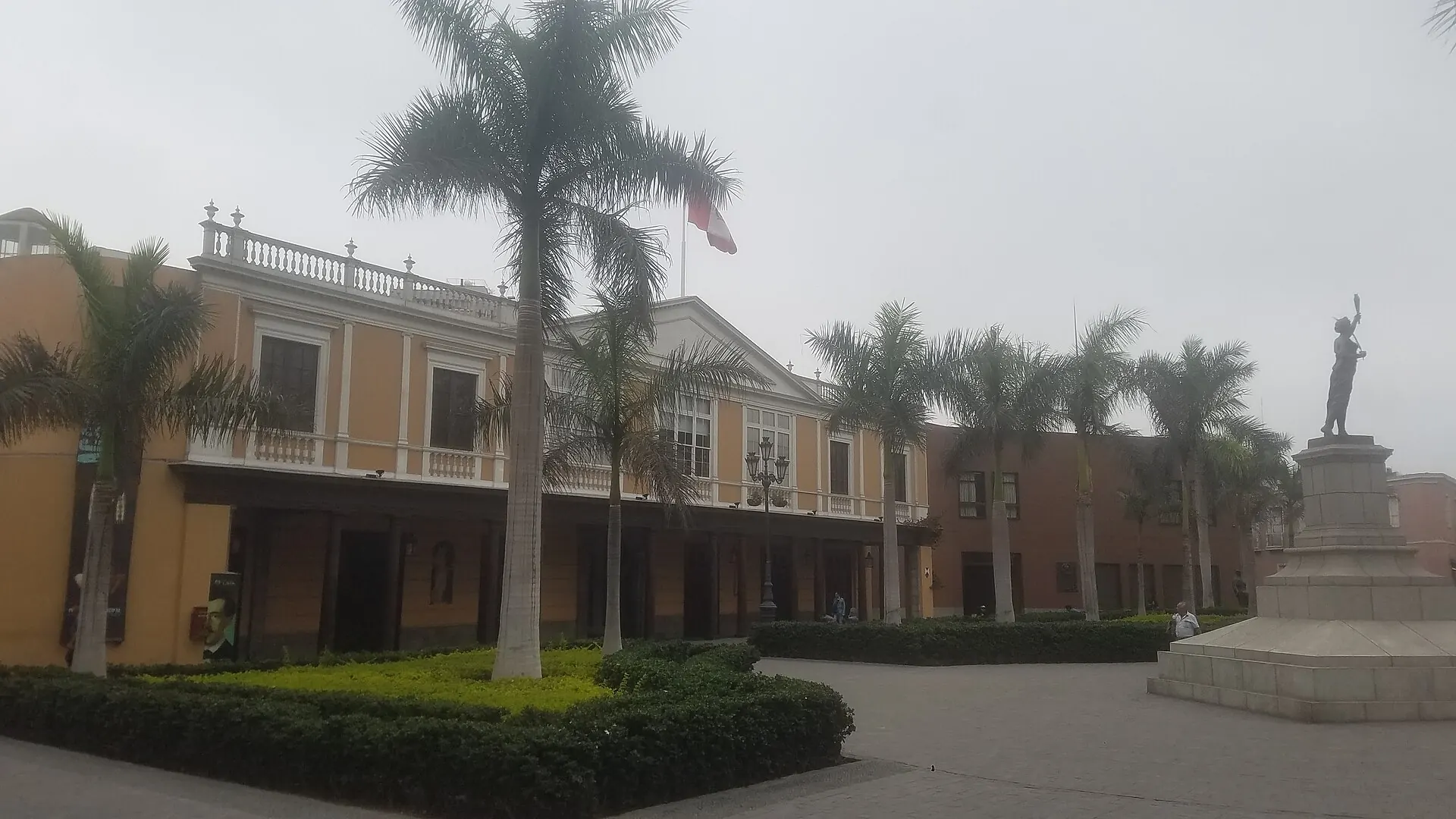
Restored colonial block turned city-history museum; the best indoor midday option.
- Time
- 45-60 min
- Best
- Morning or midday
- Cost
- Gs 10,000-20,000
- 4
River views and the coolest air of the day.
- Time
- 45-90 min
- Best
- 16:30-18:30
- Cost
- Free
- 5
A long-running counter and dining room on Plaza de los Héroes.
- Time
- 45-60 min
- Best
- Before 12:30 or after 14:00
- Cost
- Gs 40,000-90,000
- 6
Family mausoleums and statuary in a quiet residential district.
- Time
- 45-60 min
- Best
- Morning
- Cost
- Free
- 7
Free, short, and the clearest single stop for the 1811 independence story.
- Time
- 30-45 min
- Best
- Morning
- Cost
- Free
- 8
A supervised walk through Mercado 4
The realest market experience in the city, if you keep valuables close.
- Time
- 30-60 min
- Best
- Morning
- Cost
- Free
- 9
Tereré in the shade
Join or watch the shared-cup ritual that runs the city's afternoons.
- Time
- 20-30 min
- Best
- Afternoon
- Cost
- Free-low
- 10
Itauguá day trip for ñandutí lace
See the lace made at source rather than just sold in the centre.
- Time
- Half day
- Best
- Weekday morning
- Cost
- Car about 40 min each way
Good for…
Verdict is how well Asunción works for that traveller, not how nice it is.
Compact centre, short list of sights, easy with ride-hailing apps.
- 1Sleep in the historic centre — everything on the list is a walk or a short ride.
- 2Asunción in 3 days — the 3-day plan already checks the midday closures.
Chipa, asado and tereré at every price point.
- 1Tío Lucas — a proper asado spread in Villa Morra.
- 2Mercado 4 food stalls — market chipa and empanadas for a few thousand guaraníes.
Street snacks under Gs 15,000 and set lunches under Gs 80,000.
- 1Mercado 4 food stalls — the cheapest hot food in the city.
- 2Free sights — the palace, Panteón and Costanera cost nothing.
Kids are welcomed; heat and uneven pavements are the hard parts.
- 1
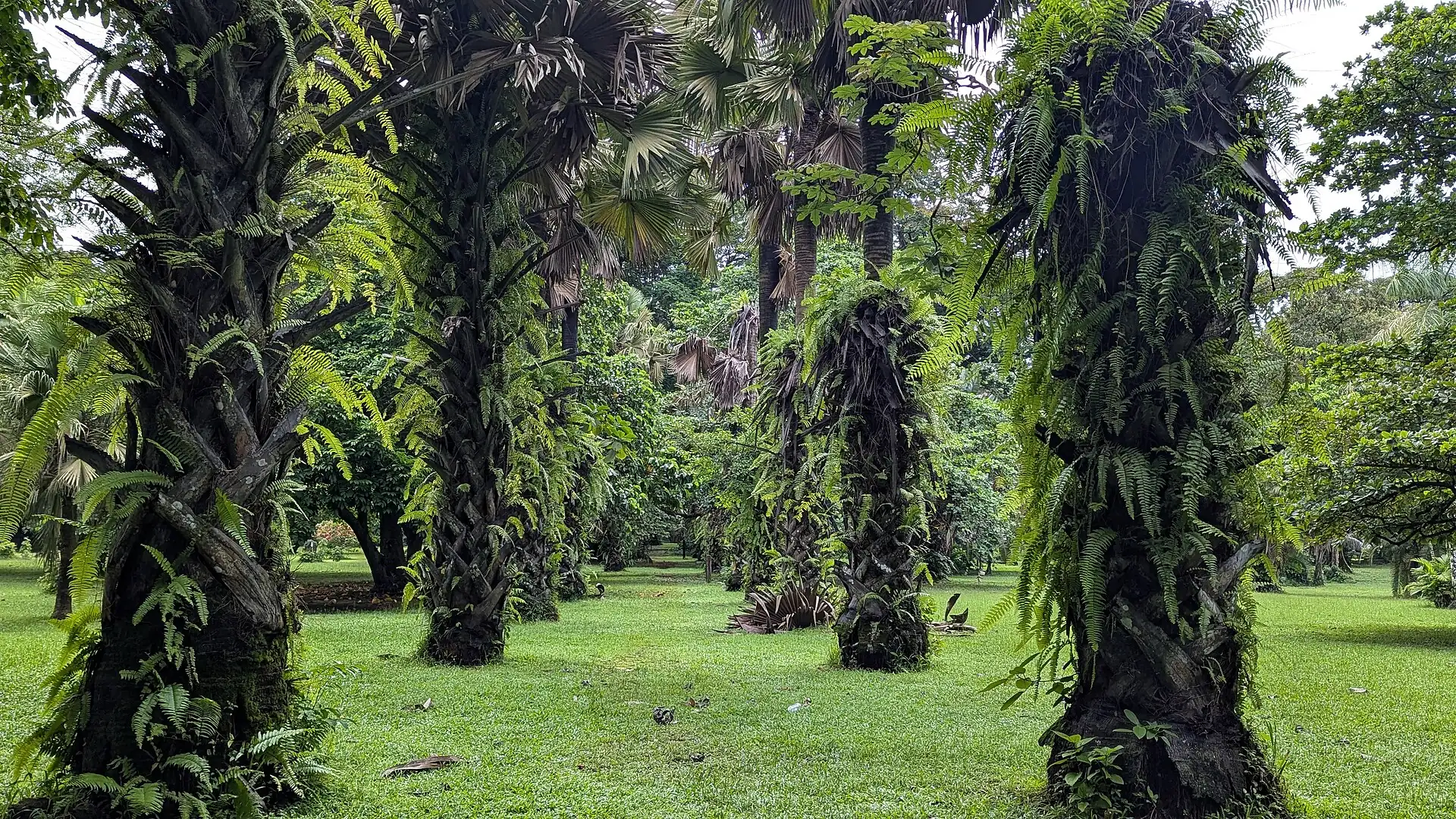 Jardín Botánico y Zoológico — space to run, though the zoo itself is dated.
Uneven pavements and few ramps; plan by car.
- 1Villa Morra hotels and malls — the most reliably step-free option.
Tours and classes: book or skip
Book through the hotel or an operator with written inclusions. Prices per person, group tour unless stated.
| Tour or class | Verdict | Typical price | Why | Check before paying |
|---|---|---|---|---|
| Historic-centre walking tour | book | Gs 100,000-250,000 (check) | Covers the palace, Panteón and Manzana de la Rivera with context. | Group size and whether entry fees are included. |
| Mercado 4 guided visit | book | Gs 100,000-200,000 (check) | A local guide is the easiest way to see the market without the theft risk of going alone. | That the guide stays with you the whole time. |
| Itauguá / Areguá day tour | book | Gs 200,000-400,000 (check) | Transport and context for the ñandutí lace and pottery towns. | Which towns are included and whether lunch is. |
What each season brings
Summer
Dec-Feb
Long evenings, river breeze on the Costanera after dark.
Watch: 34 degC heat; midday indoors only.
Autumn
Mar-May
Cooling temperatures; Semana Santa in some years.
Watch: Semana Santa closures if your dates overlap.
Winter
Jun-Aug
The most comfortable walking weather; cool evenings.
Watch: Occasional cold fronts; pack a jacket.
Spring
Sep-Nov
Warming days, green parks.
Watch: Storms build toward summer.
Photo spots and the light
Light times are for clear days.
| Spot | Best light | Tip |
|---|---|---|
| Palace façade from Avenida Colón | Morning | Do not photograph the guards up close. |
| River view at sunset | 17:30-18:30 | Best from the open promenade stretches. |
| Colonial courtyard | Morning | Check whether flash is restricted near exhibits. |
Asunción travel FAQ
Is Asunción safe for tourists?
The main risks are opportunistic theft (phone and bag snatching) and heat, not violent crime. Keep valuables close in Mercado 4, avoid the bañado neighbourhoods, and use ride-hailing apps at night.
How many days do I need in Asunción?
Two to three days covers the historic centre, Recoleta, the Costanera and a Villa Morra evening; longer trips add a day trip to Itauguá or Areguá.
What is tereré?
A cold yerba mate infusion with herbs, drunk through a metal straw from a shared cup — the everyday social ritual of Paraguay.
When should I avoid visiting?
December to February is very hot and humid; 8 December brings heavy traffic on roads east of the city for the Caacupé pilgrimage.
More to see and doSee & do · Learn & work · Rain & heat · Free things
Free things to do
Sights in Asunción that cost nothing to enter. Each is described under Places or More sights; extra costs inside are marked there.
See & do
10 of 10
- monument
The neoclassical government palace on the river side of the centre; exterior and a short tour where offered.
Centro histórico · Free
Panteón Nacional de los Héroes
monumentLow white-domed mausoleum for independence and war figures, modelled loosely on Les Invalides.
Centro histórico · Free
- Museums
A block of restored colonial and 19th-century houses turned into a small city-history museum.
Centro histórico · Gs 10,000-20,000
- Museums
One of the few original colonial houses left; the 1811 independence plot's setting.
Centro histórico · Free
- Lakes & parks
Riverside promenade and park, best in the cooler evening hours.
Costanera · Free
- monument
Family mausoleums and statuary in a residential district.
Recoleta · Free
- Markets
Paraguay's largest popular market; go in the morning, watch your bag.
Centro histórico (south edge) · Free
- Lakes & parks
Large shaded park with old trees and a dated small zoo; go for the grounds.
North side (Costanera area) · Gs 5,000-15,000 (check)
Tereré with a local host or guide
ActiveJoin a shared tereré circle; the closest thing to Asunción's daily social ritual for a visitor to try.
Any park or the Costanera · Afternoon · Free-low
Riverside walk or run on the Costanera
ActiveFlat, paved and the coolest air in the city at those hours.
Costanera · Early morning or evening · Free
- Booking
- Few advance-booking activities exist in Asunción; most sights are walk-up.
Learn & work
| What | Where | Cost | Note |
|---|---|---|---|
| Spanish language classes | Language schools in the centre and Villa Morra | Varies (check) | Guaraní, the co-official language, is widely spoken alongside Spanish; a few Guaraní phrases go a long way locally. |
Working here
- Tourist entry
- Most visitors enter visa-free or with an e-visa depending on nationality (check current rules); tourist entry does not allow paid work.
- Remote work
- No dedicated digital-nomad visa is widely publicised (check); working for a foreign employer on a tourist stay is a grey area.
Rain-day and heat-day plan
Rain day
Storms arrive fast and heavy; wait them out under cover rather than walking through one.
- 01Manzana de la Rivera — Indoor museum rooms; about an hour.
- 02Shopping del Sol or Paseo La Galería — Malls with food courts for a washed-out afternoon.
Heat day
Above 33 degC (Oct-Mar): outdoor sights before 10:00 and after 16:30, air-conditioning in between, water every hour.
- 07:30Palacio de los López — Before the heat and the midday closures.
- 09:00Panteón Nacional de los Héroes — Short visit, little shade around it.
- 16:30Costanera de Asunción — River breeze and cooler air for an evening walk.
Day-trips and nearby
Places you can reach from Asunción in a day or with one night away, with the route and what it costs. Door to door, not ride time.
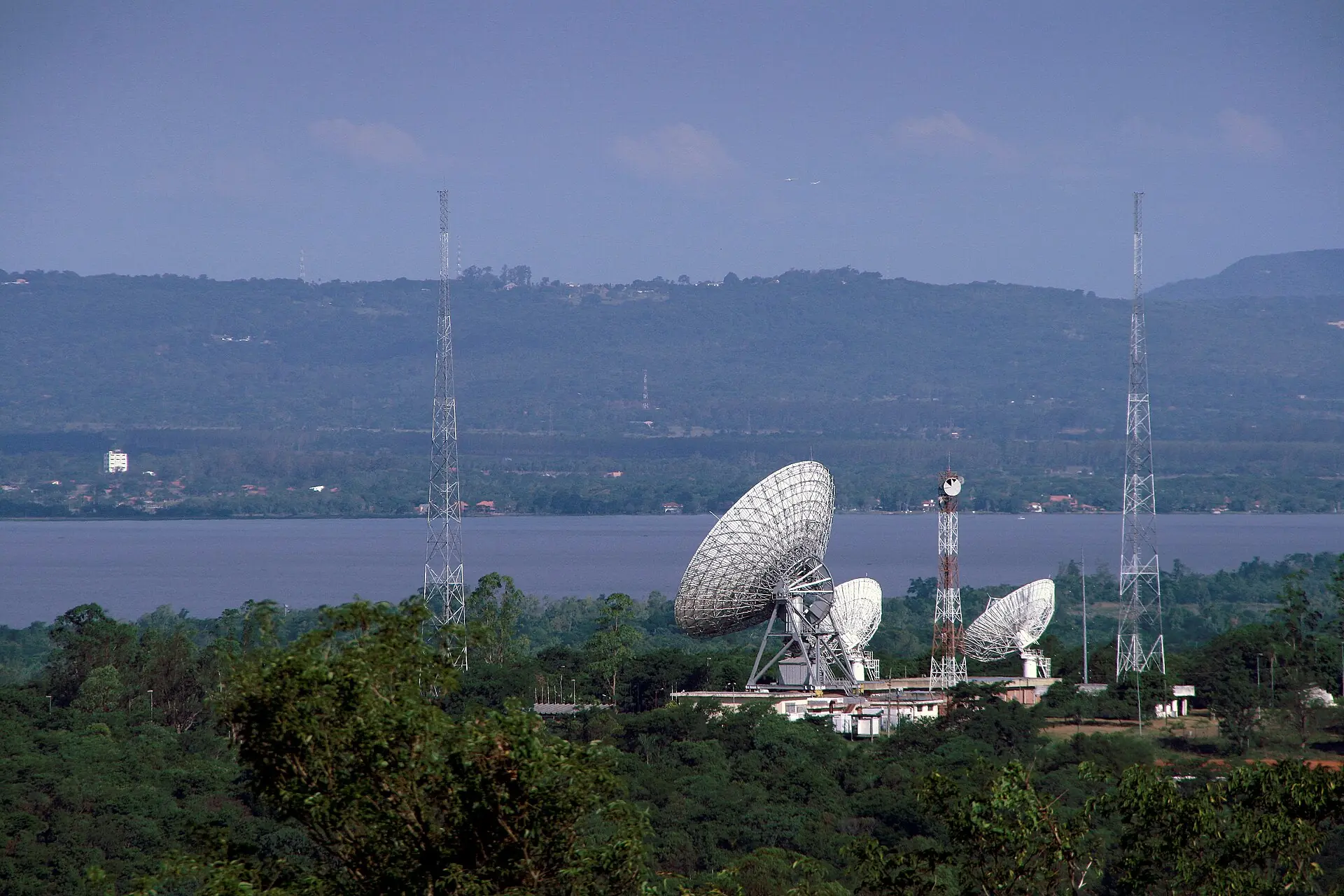 Photo: Cmasi, CC BY-SA 4.0
Areguá
goCar or bus about 45 min each way
Lakeside town with pottery shops and a train line; go on a weekday morning.
- Time
- Half day
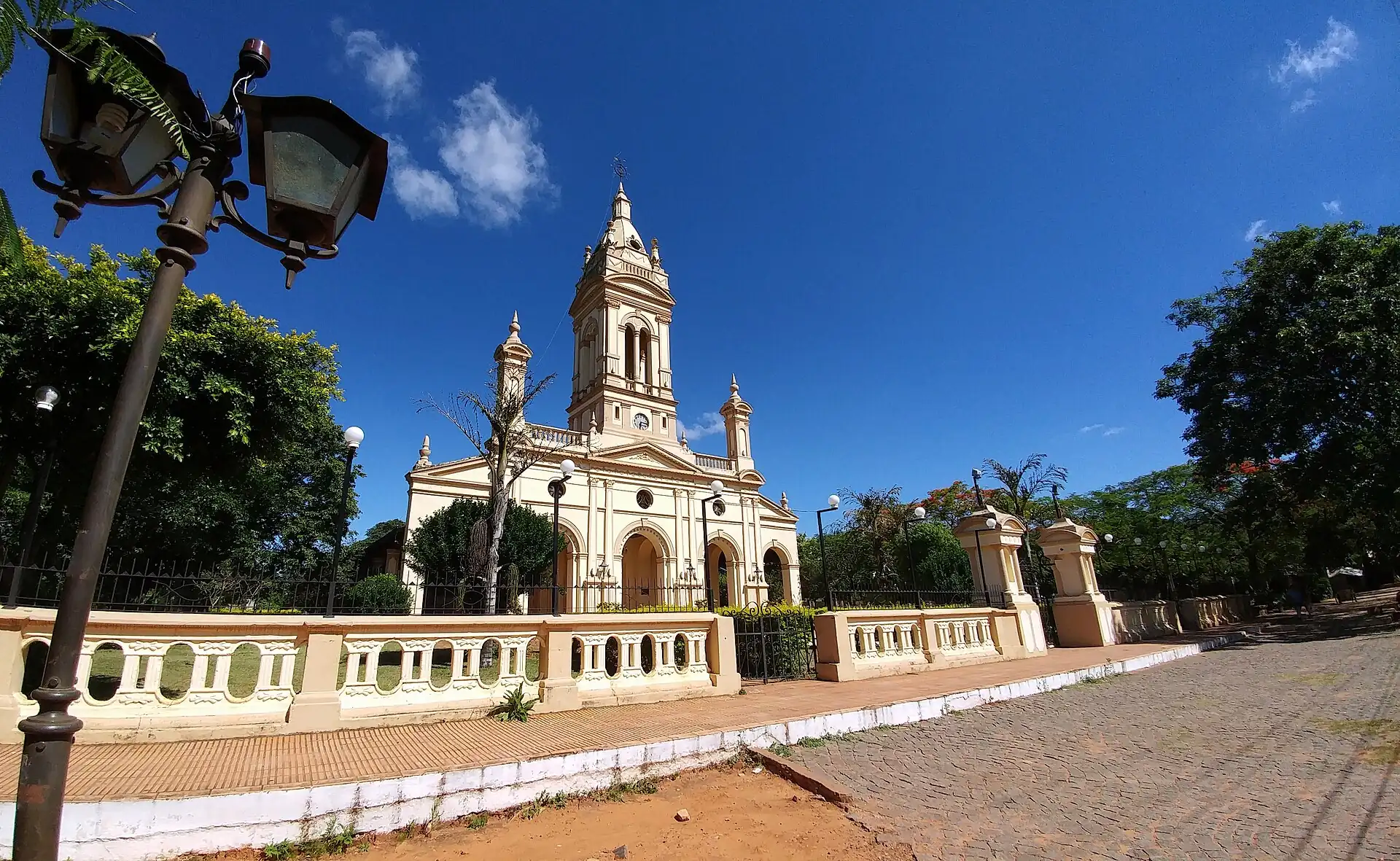 Photo: Cmasi, CC BY-SA 4.0
Itauguá
goCar about 40 min each way
Ñandutí lace town; combine with Areguá.
- Time
- Half day
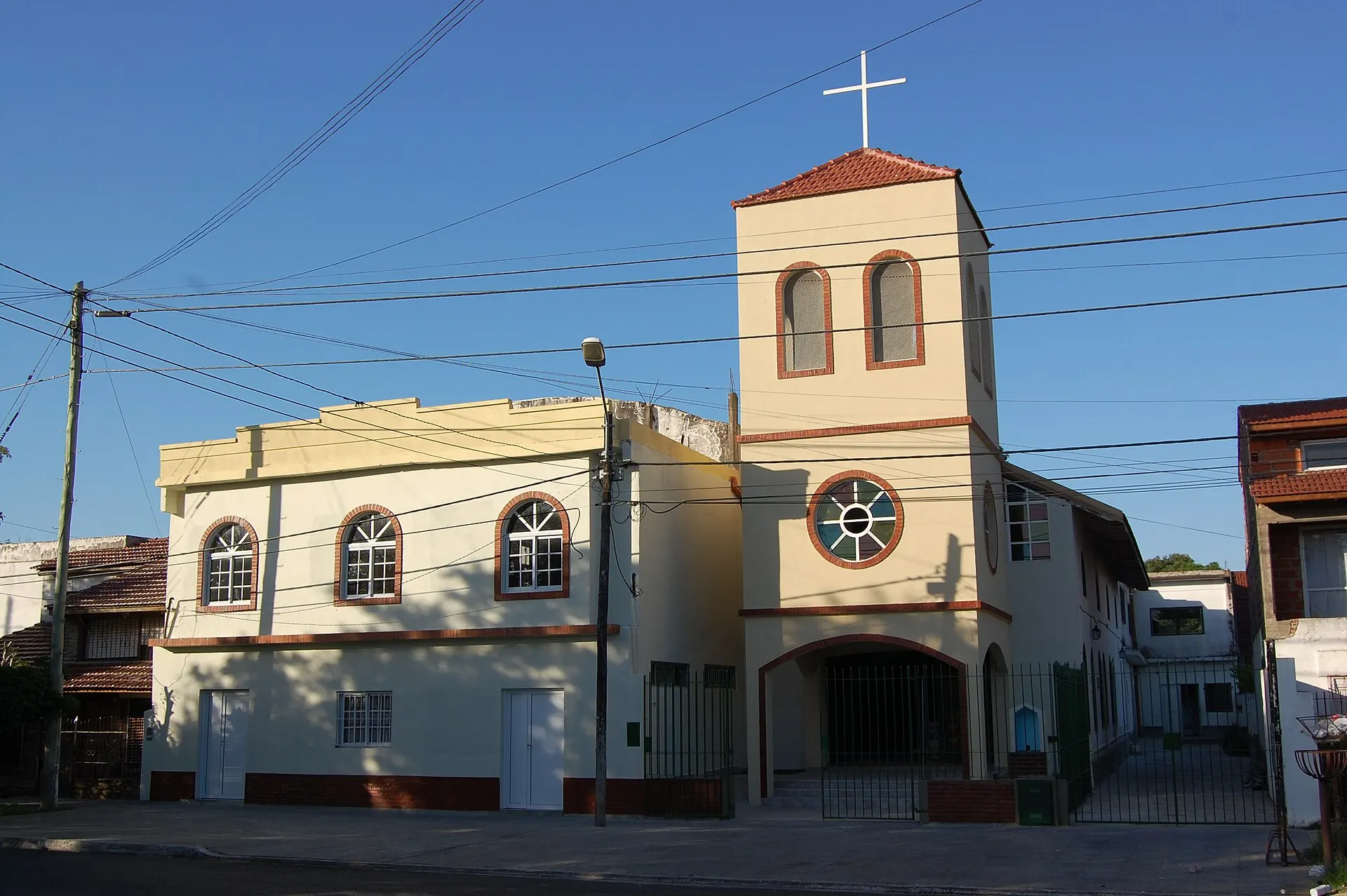 Photo: Robertomario56, CC BY-SA 3.0
Caacupé
go off seasonCar about 1 h each way
Basilica; avoid the Dec 8 pilgrimage if you dislike crowds.
- Time
- Half day
Go next
Door to door: About 6-7 h by road
Flight to Ciudad del Este about 1 h, or bus/car about 5 h, then a short ride to the falls
The falls themselves are mostly on the Argentine and Brazilian sides; Ciudad del Este is the Paraguayan border city.
Door to door: 5-6 h
Car or bus about 5-6 h south-east
UNESCO-listed ruins; a night in Encarnación makes the trip comfortable.
Door to door: 4-5 h
Bus or car about 4-5 h south
River town, beaches on the Paraná in summer, gateway to the Jesuit missions.
Door to door: 3-4 h, hotel to hotel
Flight about 1 h 20 min
Short flight; a common add-on to an Asunción trip.
Eat & sleepWhere to eat and which area to sleep in
Eat & sleep
Where to eat and which area to sleep in
Eat
A short list of places worth crossing the city for, each with how to get a seat.
Restaurant finder: filter every place to eat in Asunción →
Vegetarian-friendly score
1.0 / 5 · Hard work
- Country diet noteOur country guide rates vegetarian eating as hard.0 / 2
- Places to eat in this guide0 of 4 places with a known answer are vegetarian-friendly, 4 partly.0.75 / 1.5
- Budget eating lines0 vegetarian lines in "Eat by budget".0 / 0.6
- Meat-free national dishes6 meat-free dishes in the country food list.0.4 / 0.4
- Dedicated vegetarian kitchens0 mentions of vegetarian restaurants, Buddhist or fasting kitchens.0 / 0.5
Country note: Many corn-and-cheese dishes are meat-free; vegan is hard.
Vegetarian places near me →Make a diet card →
How we score
- Country diet note (up to 2): easy 2, workable 1, mixed 0.75, hard 0; no note 0.5.
- City places to eat (up to 1.5): 1.5 × (vegetarian-friendly + half of partly friendly) ÷ places with a known answer; needs 3 or more known places.
- Budget eating lines marked vegetarian (up to 0.6): 0.2 each.
- Meat-free national dishes (up to 0.4): 0.1 each.
- Dedicated vegetarian kitchens mentioned — Buddhist chay, shōjin ryōri, Jain, fasting food, vegan cafés (up to 0.5): 0.1 each.
- Total rounded to the nearest half point, 0 to 5. Built from our own pages only, not from reviews.
Eating and drinking guideEat by budget · Drink
Before you sit down to eat
Short version; full text linked
- Queues and hours
- Per person, one dish or one meal, 2026 estimate. More →
Eat by budget
Under Gs 80,000 a meal
| Where | Order | Area | Price | Note |
|---|---|---|---|---|
| Mercado 4 food stalls | Chipa, empanadas, mbeju | Mercado 4 | Gs 5,000-15,000 | Standing snacks; morning only. |
| Cơm-style menú del día stalls | Set lunch over rice or noodles | Any office street | Gs 40,000-70,000 | The cheapest full sit-down meal. |
Dishes to know
| Dish | What it is | Where to look | When | Price |
|---|---|---|---|---|
| Chipa | Cheese-and-cassava bread, everyday and Easter-week staple | Street corners, Mercado 4 | All day | Gs 5,000-10,000 |
| Sopa paraguaya | Dense corn-and-cheese bread, not a soup | Any traditional restaurant | Lunch, dinner | Gs 12,000-25,000 |
| Mbeju | Griddle-cooked cassava-starch flatbread | Markets, traditional eateries | Breakfast, snack | Gs 8,000-15,000 |
| Asado | Grilled beef and sausages | Parrillas across the city | Lunch, dinner | Gs 70,000-140,000 |
| Tereré | Cold yerba mate infusion with herbs | Shared everywhere | Daytime | Free if shared; Gs 10,000-25,000 for herbs |
- Eat where turnover is fast and the food is visibly hot; that applies at market stalls as much as anywhere.
- Prices are usually on a printed menu; ask first where there is none.
Drink & nightlife
| Where | What | Until | Note |
|---|---|---|---|
| Villa Morra bars and restaurants | Cocktails, craft beer, wine bars | About 00:00-01:00 weekendsAbout 12:00 AM-1:00 AM weekends | The main evening-out area; take a car there and back. |
| Hotel bars (centre and Villa Morra) | Cocktails | About 23:00-00:00About 11:00 PM-12:00 AM | Reliable, air-conditioned option. |
By style
| Style | What | Where | Price | Until |
|---|---|---|---|---|
| Tereré | Cold yerba mate infusion with herbs, shared from one cupHot mate replaces it in the cooler months (Jun-Aug). | Everywhere: offices, parks, the Costanera, homes | Free if shared; Gs 10,000-25,000 for herbs to take away | Daytime social ritual, not a bar drink |
| Local beer (Pilsen, Brahma) | LagerServed very cold. | Any bar or restaurant | Gs 15,000-30,000 | Bar closing |
| Cocktails | Standard cocktail list | Villa Morra bars, hotel bars | Gs 40,000-80,000 | About 00:00-01:00 |
Sleep
Pick the area first: it decides your walk home at night and your first morning.
Which neighborhood fits you
Three questions, one recommendation, with the reasons.
Your best fit
- Palace, Panteón, Manzana de la Rivera and the Costanera all within walking distance.
- The widest spread of budget and mid-range hotels.
Watch out: Daytime traffic and vendors; quiet but empty at night.
Next best: Villa Morra
Built from our 1–5 desk scores per area; your answers stay in this browser.
More on sleepingSleep by budget · Your area · With kids
Sleep by budget
| Band | Price | Where | Room types | What to expect |
|---|---|---|---|---|
| budget | Gs 150,000-300,000 | Centro histórico | Budget hotels and guesthouses | Small rooms; some older buildings without a lift. |
| mid | Gs 400,000-900,000 | Centro histórico and Villa Morra | Mid-range hotels, business hotels | Lift, breakfast, AC, 24-h desk in most. |
| splurge | Gs 1,200,000+ | Villa Morra and centre landmark hotels | International chains and upscale local hotels | Pools, gyms, doorstep car drop-off. |
Booking checks
- Ask for a room with AC that works well; summer nights (Oct-Mar) stay hot.
- The hotel should register your passport at check-in.
Which area is yours
| If you are | Sleep in | Because |
|---|---|---|
| First visit, 2-3 nights, sightseeing focus | Historic centre | Everything on the list is a walk; accept a quiet evening. |
| Longer stay, evenings out, business travel | Villa Morra | Restaurants and malls on the doorstep; budget a car ride for the historic sights. |
First-timers: the palace, Panteón and restaurants are a walk away; choose a hotel with a 24-hour desk and a drop-off at the door.
Modern hotels, malls and restaurants in a quieter, greener district; a 20-minute ride from the centre.
Areas are in our default order until you tick a priority.
Scores are 1-5 desk judgements per priority (2026).
With kids
- Uneven pavements make a stroller hard work in the centre; a carrier is more practical.
- Jardín Botánico y Zoológico gives space to run, though the zoo enclosures are dated: set expectations before you go.
- Heat (Oct-Mar) means outdoor time before 10:00 or after 16:00, with an indoor midday break at the hotel or a mall.Heat (Oct-Mar) means outdoor time before 10:00 AM or after 4:00 PM, with an indoor midday break at the hotel or a mall.
- Ride-hailing cars rarely carry child seats: bring a travel booster or ask the hotel to arrange one.
PracticalMoney, essentials, safety and the pocket card
Practical
Money, essentials, safety and the pocket card
Money
What a day costs at three comfort levels, and how to pay.
- Budget
- Gs 150,000–300,000 excl. bed / day
- Mid
- Gs 300,000–700,000 excl. bed / day
- High
- Gs 700,000+ excl. bed / day
- Transit card
- No transit card needed: ride-hailing cars, taxis and walking inside the centre. City buses take cash or a local card and are slow for visitors.
- Cash rule
- Keep Gs 200,000 in small notes; use ATMs inside banks or malls, and not on the street at night.
More on moneyCosts · Budget · Buy
What things cost
- Chipa or empanadaGs 5,000–15,000
- Bottle of water, shopGs 5,000–10,000
- Car from the airport to the centreGs 100,000–160,000
Trip budget
| Hotel double room1 × 3 nights × PYG 500,000 | PYG 1,500,000 |
| Food, local transport, entries2 × 3 days × PYG 400,000 | PYG 2,400,000 |
| Airport car, both ways1 × PYG 260,000 · one car per 4 people | PYG 260,000 |
| eSIM or tourist SIM2 × PYG 100,000 | PYG 200,000 |
| Buffer 10%Price creep, a taxi you did not plan, one splurge | PYG 436,000 |
| Trip total≈ PYG 799,000 per person per day, bed included | PYG 4,796,000 |
2026 estimate in guaraníes; flights and tours excluded.
Prices of common things
| Chipa or empanada | Gs 5,000-15,000 |
2026 estimate; check locally.
Buy
- Bargaining
- Fixed prices are the norm in shops and malls. Light bargaining is possible at Mercado 4 stalls and craft markets for handicrafts, not for food or transport.
- Fixed-price check
- Supermarkets and mall shops post fixed prices; use them as your reference before buying similar items at a market stall.
Markets and shopping streets
| Where | What | When | Haggle | Note |
|---|---|---|---|---|
| Mercado 4 | Produce, herbs, tereré supplies, clothes, household goods | Daytime (check) | light | Paraguay's largest popular market; go in the morning, watch your bag. |
| Mercado Municipal (centre) | Smaller produce and food stalls | Daytime (check) | light | Calmer than Mercado 4; a gentler introduction. |
| Supermarkets (Superseis, Stock, Salemma) | Groceries, toiletries, snacks | Long daytime hours | no | Your fixed-price reference. |
Shops by what they sell
| For | Where | Hours | Note |
|---|---|---|---|
| Ñandutí lace | Craft shops in the centre; made at source in Itauguá | Shop hours | A day trip to Itauguá lets you see it made, not just sold. |
| Leather goods and ao po'i (hand-embroidered cotton) | Centre craft shops | Shop hours | Check whether embroidery is hand- or machine-done before paying a hand-made price. |
| Yerba mate and tereré herbs | Supermarkets, Mercado 4 | Shop hours | Cheap, packable, and part of daily local life rather than a tourist souvenir. |
| Malls (AC, food courts) | Shopping del Sol, Paseo La Galería, Mariscal López Shopping (Villa Morra area) | About 10:00-21:00 (check) | The heat-day and rain-day refuge. |
Changing money
| Where | Verdict | Why |
|---|---|---|
| Casas de cambio (exchange houses) in the centre and malls | use | Better rates than the airport; count notes at the counter. |
| Bank branches | use | Fair rate; passport needed; office hours only. |
| Silvio Pettirossi airport counters | ok | Change enough for the ride and first day; rate is worse than in town. |
| Hotel front desk | avoid | Convenient, poor rate. |
| Street money-changers | avoid | Short-changing risk; use a licensed casa de cambio instead. |
ATMs
- Where
- ATMs inside banks or malls; avoid free-standing street machines, especially at night.
- Fees
- Local fee plus your bank's own fee applies per withdrawal (2026 estimate, shown on screen).
- Conversion
- If the ATM offers to charge in your home currency, decline and pay in guaraníes.
Essentials and accessEssentials · Access
Essentials
- Plugs & power
- 220 V; type C sockets (two round pins), and some type A. Bring an adapter.
- Toilets
- Cafés, malls, hotels and museums; carry tissues.
- Health
- Heat and humidity, mosquitoes (dengue is present), sun. Travel insurance with medical cover.
- Accessibility
- Pavements are uneven and blocked by parked cars and stalls; step-free access is poor outside hotels and malls.
- Laundry
- Hotels do same- or next-day laundry, priced by the item or kilo.
- Emergency numbers
- 911.
Pack
- Light, breathable clothes and a hat
- A warm layer for June–August evenings
- A rain jacket for storms
- Repellent for evenings
Accessibility
Asunción is hard going on wheels. Pavements are uneven, narrow and sometimes missing tiles; step-free access exists mainly in malls, newer hotels and museums. Plan door-to-door car rides.
- Pavements
- Uneven, cracked, sometimes blocked by parked cars; the Costanera promenade is the smooth exception.
- Getting around
- App cars are the step-free option; buses are not easily accessible for wheelchair users.
- Hotels
- Newer Villa Morra hotels are the safer bet for lifts and accessible rooms; ask for photos of the entrance.
- Toilets
- Accessible toilets in malls and larger hotels; rare elsewhere.
Sights, step-free or not
| Palacio de los López | with help | Exterior viewing is flat; interior access depends on tours. |
| Manzana de la Rivera | with help | Historic building with some steps between rooms. |
| Mercado Cuatro | hard | Crowded, uneven, narrow lanes. |
Survive
Safety basics, the lines not to cross, and practical habits that save the day.
Safety
- Do not use a phone at the kerb: snatch thefts from motorbikes happen on main roads.
- Do not walk the Costanera or the streets around the Bañado Sur after dark.
- Heat (Oct–Mar): AC stop every 60–90 minutes; drink bottled water.
- Emergency: 911.
Red lines
- Do not photograph soldiers, police posts or the presidential palace up close.
- Do not walk in the Bañado neighbourhoods by the river; they are not visitor areas.
- Ask before photographing people.
Practical
- Toilets: cafés, malls and museums; carry tissues.
- Tap water is treated in the city but many visitors use bottled water.
More on staying safeStay safe · Stay healthy · Safety map · Solo & women · Etiquette · Cope · Scams
After dark, by area
5 flagged areas
Mercado 4
Avoid after darkBañado neighbourhoods (riverside)
Avoid after dark- Take care
- Take care
- Take care
Day = about 07:00-19:00. What to watch in each area, day and night →
Scams and red flags
Walk away if you see these
- Street taxis that quote a high price without a meter: use a ride-hailing app or agree the total first.
- Unofficial 'guides' at the palace who ask for money afterwards: decline or agree the price first.
- Airport touts offering a 'cheap' ride inside arrivals: use the official taxi counter or your app.
- Phone snatching from motorbikes: keep it out of sight at the kerb.
Stay safe
Crossing the road
- 01Cross at marked crossings where they exist; drivers do not reliably stop for pedestrians.
- 02Watch for motorbikes weaving between cars, especially at junctions.
Hustles specific to this city
| Hustle | Where | The tell | What to do |
|---|---|---|---|
| Unmetered street taxi | Citywide | Driver quotes a high flat price with no meter | Use a ride-hailing app or agree the total first. |
| Unofficial palace 'guides' | Palacio de los López | Someone offers a tour then asks for payment afterwards | Agree the price first or decline. |
| Airport arrival touts | Silvio Pettirossi arrivals | Offers of a 'cheap' ride inside the terminal | Use the official taxi counter or your app. |
- Police
- 911. Report thefts at the nearest police station with your passport; bring hotel staff to help if needed.
- Phone snatching
- The most common visitor theft; keep phones out of sight at the kerb and in Mercado 4.
Stay healthy
- Heat
- Oct-Mar: shade and AC every 60-90 minutes, bottled water, no midday walks.
- Dengue
- Mosquito-borne; present year-round with peaks in the warmer months. Repellent by day as well as dusk.
- Food and water
- Bottled or filtered water is the safer default; tap water is treated in the city but many visitors still choose bottled.
Hospitals and clinics: see Cope.
Safety by area and hour
| Area | Day | Night | What to watch |
|---|---|---|---|
| Historic centre | fine | caution | Phone snatching from motorbikes; empties out after dark. |
| Costanera de Asunción | fine | caution | Stick to the lit, busy promenade; do not walk into the bañado neighbourhoods. |
| Recoleta | fine | caution | Quiet residential streets; use a car after dark. |
| Villa Morra | fine | fine | The most reliably lively area after dark; still watch bags in busy restaurants. |
| Mercado 4 | caution | avoid | Pickpocketing and bag-snatching risk in the crowded lanes; go in the morning, not alone at night. |
| Bañado neighbourhoods (riverside) | avoid | avoid | Not visitor areas; flood-prone and outside the standard safety picture. |
- Do not use a phone at the kerb: motorbike snatch-thefts happen on main roads.
- Late at night, use a ride-hailing app rather than hailing a car on the street.
Solo, women and LGBTQ+ travellers
Solo
- Manageable alone in the centre by day; use ride-hailing apps after dark rather than walking or street-hailing.
- Mercado 4 is better with company on a first visit.
Women
- Harassment is not the main concern; bag and phone snatching is. Wear a cross-body bag on the side away from traffic.
- Dress is relaxed; no specific religious-site dress code as in some other destinations.
LGBTQ+
- Same-sex relations are legal; public attitudes are more conservative than in Buenos Aires. Public affection is low-key everywhere in the country.
- Same-sex marriage is not recognised nationally (check current status).
Etiquette in Asunción
- Tereré
- If offered a shared cup, it is normal to drink your portion and hand it back; declining is fine too, just say so.
- Greetings
- A handshake or a light cheek kiss (one side) between people who know each other; a handshake is safe with strangers.
- Photos
- Ask before photographing people, and never photograph soldiers or police posts up close.
- Tipping
- About 10% in restaurants if service is not added; round up for drivers.
- Dress
- Casual and modest; beachwear stays at the pool, not in the street.
Cope
Hospitals and clinics that handle foreigners
| Where | Area | Use it for |
|---|---|---|
| Hospital de Clínicas | San Lorenzo (metro area) | Large public teaching hospital. |
| Hospital Bautista | Centro | Private hospital used by many visitors; ask your insurer about direct billing. |
| Sanatorio Migone Battilana | Centro | Private hospital, central location. |
| IPS hospitals and private clinics | Citywide | Coverage varies; a private clinic or hospital is the practical choice for visitors. |
Visa extensions
- Office
- Dirección General de Migraciones (immigration department); confirm the current office address and hours before going.
- Extending
- Tourist stays can sometimes be extended at the immigration office; requirements change, so check current rules ahead of your trip.
- Overstay
- Fines can apply at exit; resolve any overstay before heading to the airport.
Embassies and consulates
| Country | Address | Phone | Note |
|---|---|---|---|
| United States | Avenida Mariscal López 1776 | — | (check) |
| Argentina | Avenida España 1974 | — | (check) |
| Brazil | Avenida General Genes | — | (check) |
- Lost passport
- Police report first, then your embassy; budget several working days for a replacement or emergency document.
- Pharmacies
- Farmacias on most main streets in the centre and Villa Morra; many chains keep long hours.
Apps and offline kitOffline kit
Offline kit
Set up before you leave, so Asunción still works with no signal or a dead roaming plan.
On your phone
- Maps: open the city in Google Maps, tap the place name, then Download offline map (or use an offline-maps app).
- Data: install an eSIM or buy a local SIM before the first taxi; the apps in this guide depend on it.
- Translation: download the local language for camera translation.
- Screenshots: booking confirmations, hotel address in the local script, and the emergency numbers.
This guide
Save the Asunción guide and its pages on this device; it opens without a connection.
Phrases that do the work
Greeting
Hello
Buenos días
BWEH-nos DEE-as
Greeting
Hello (Guaraní)
Mba'éichapa
mbah-EH-ee-CHAH-pah
Thanks
Thank you
Gracias
GRAH-syas
Thanks
Thank you (Guaraní)
Aguyje
ah-GOO-yeh
Market
How much is this?
¿Cuánto cuesta?
KWAN-toh KWES-ta
Café
The bill, please
La cuenta, por favor
la KWEN-ta por fah-VOR
Taxi
Please take me to this address
Lléveme a esta dirección
YEH-veh-meh ah ES-ta dee-rek-SYON
Pocket card
Fill in, then print or save as PDF
Stays in this browser only; nothing is sent anywhere.
AsunciónAsunción
Pocket card · Voykit
My bed tonight
—
—
—
Lléveme a esta direcciónPlease take me to this address
Emergency
- Police911
- Ambulance911
Embassy
My embassy: —
Fare anchors (2026 estimate)
- Silvio Pettirossi to the centre, app car: Gs 100,000-160,000, about 25-40 min
- App car across the centre: Gs 15,000-40,000
Say or show
- Buenos días — Hello (BWEH-nos DEE-as)
- Gracias — Thank you (GRAH-syas)
- ¿Cuánto cuesta? — How much is this? (KWAN-toh KWES-ta)
- La cuenta, por favor — The bill, please (la KWEN-ta por fah-VOR)
- Lléveme a esta dirección — Please take me to this address (YEH-veh-meh ah ES-ta dee-rek-SYON)
Show the address written out for the driver; Asunción street numbering can be inconsistent outside the centre.
Deep diveHistory, reading, photos and every source
Deep dive
History, reading, photos and every source
Sources
- officialSENATUR — Paraguay tourism
- officialDINAC — civil aviation authority
- secondaryWikivoyage — Asunción
Ask about Asunción
Loading…
Was this useful?