Buenos Aires
Code AR · 4 walking zones
Buenos Aires runs late: do Recoleta, Plaza de Mayo and San Telmo on foot in the morning, rest through the afternoon, start dinner at 21:00 or later, and give the airport an hour by road rather than a train.Buenos Aires runs late: do Recoleta, Plaza de Mayo and San Telmo on foot in the morning, rest through the afternoon, start dinner at 9:00 PM or later, and give the airport an hour by road rather than a train.
Our quick read of Buenos Aires, scored 1–5 (friction is out of 100). Cash need: how often you still need notes. Heat risk: how hot days get. Stroller: how easy wheels are. Friction: overall effort for a first visit. Desk judgements, so check before relying on them.
- Local time
- --:--
- Weather
- forecast below
- Currency
- ARS
- Best months
- Mar · Apr · May · Jun · Jul · Aug · Sep · Oct · Nov
- Airports
- Ministro Pistarini (EZE) · Aeroparque Jorge Newbery (AEP)
Walking zones: the 4 areas this guide plans a day around. Each is a district you can cover on foot, so you do one zone per half-day and ride the train between them. The code (AR 01, AR 02…) is just the zone's number on the Buenos Aires line; the line under each name says how bags fare there and how much time it needs.
Map of Buenos Aires
Use the switches to show or hide each kind of pin. A switch that is on shows its pins on the map; tap it again to hide them. "Show only" keeps just the pins that match (for example, places that fit a suitcase). Tap any pin for its name and a link to its page.
- Where to sleep
- Places
- Eat
- Walking clusters
- Rest stops
From the airport Ministro Pistarini (EZE) to your bed · Jorge Newbery (AEP) to your bed
Tap a pin for its card. Places without their own coordinates are shown by their walking cluster.
Why Buenos Aires
The city is big, flat and made for long lunches and late dinners. The trips that go wrong hail unmarked cars at the airport, walk with a phone in hand on busy pavements, or plan a museum for a Monday or a protest day. Four barrios cover a first visit; Colonia in Uruguay and the day trips are a ferry away from one kept bed.
See first
- 1
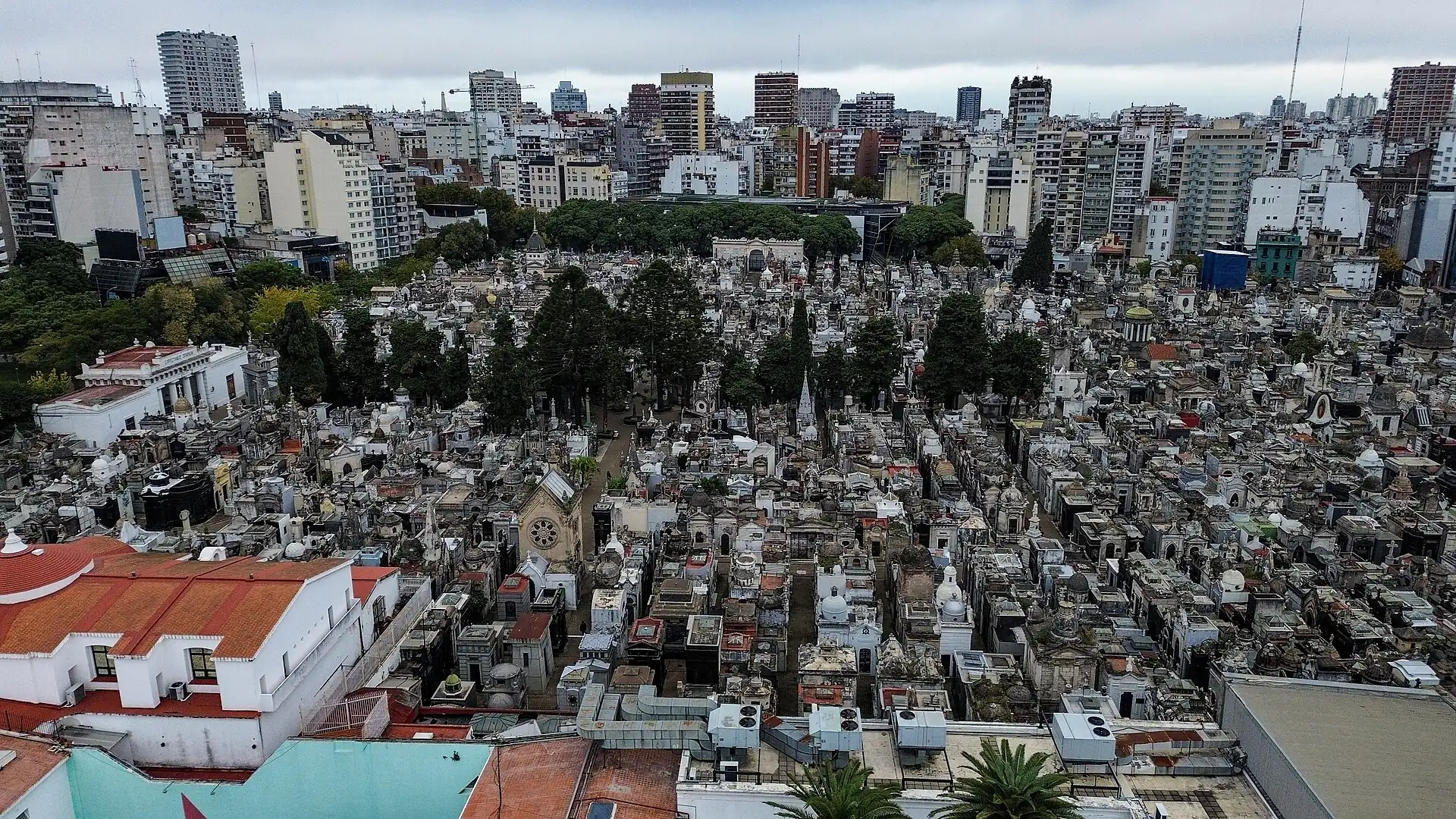
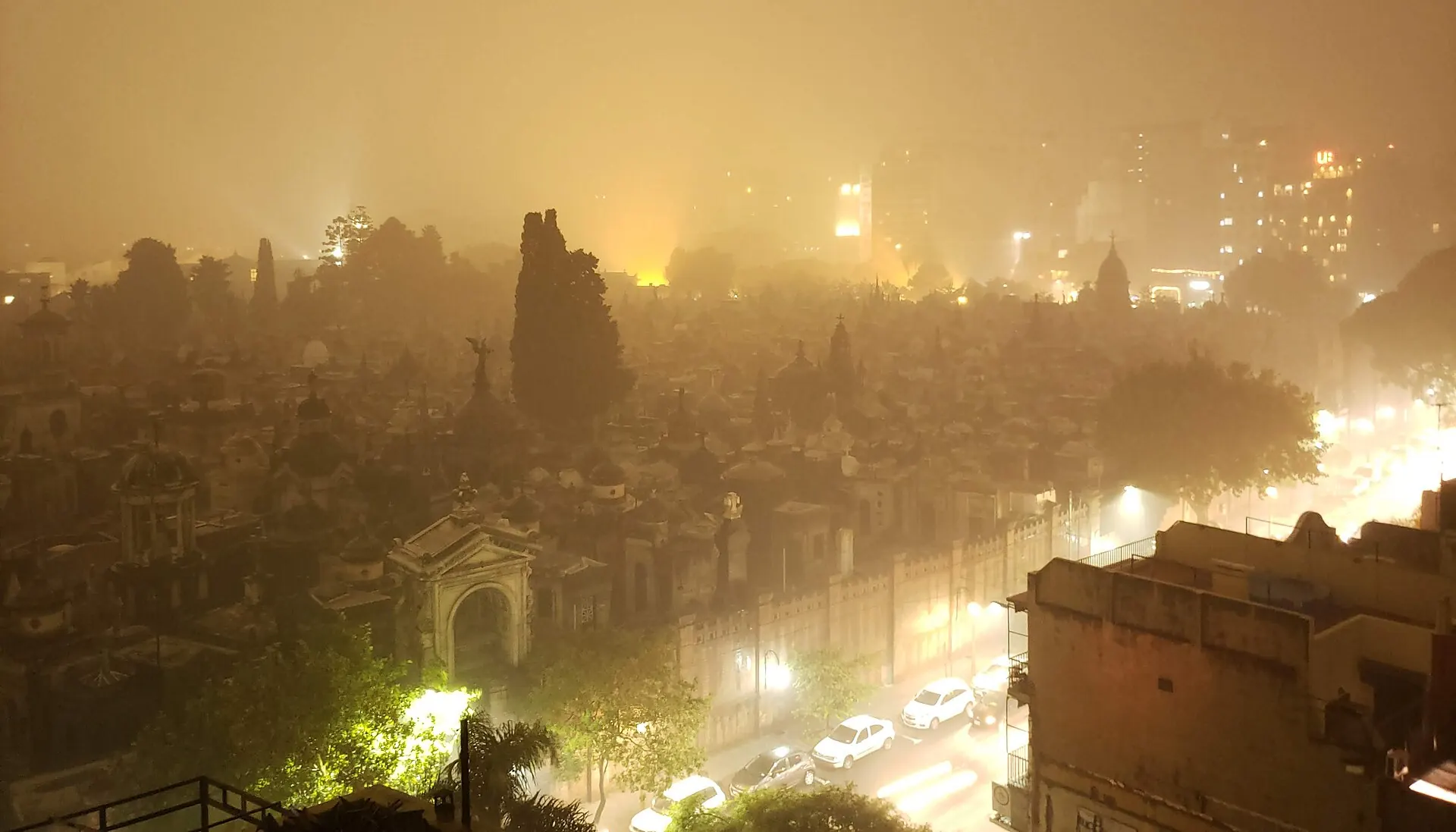 Recoleta Cemetery at opening · 45-75 min
- 2
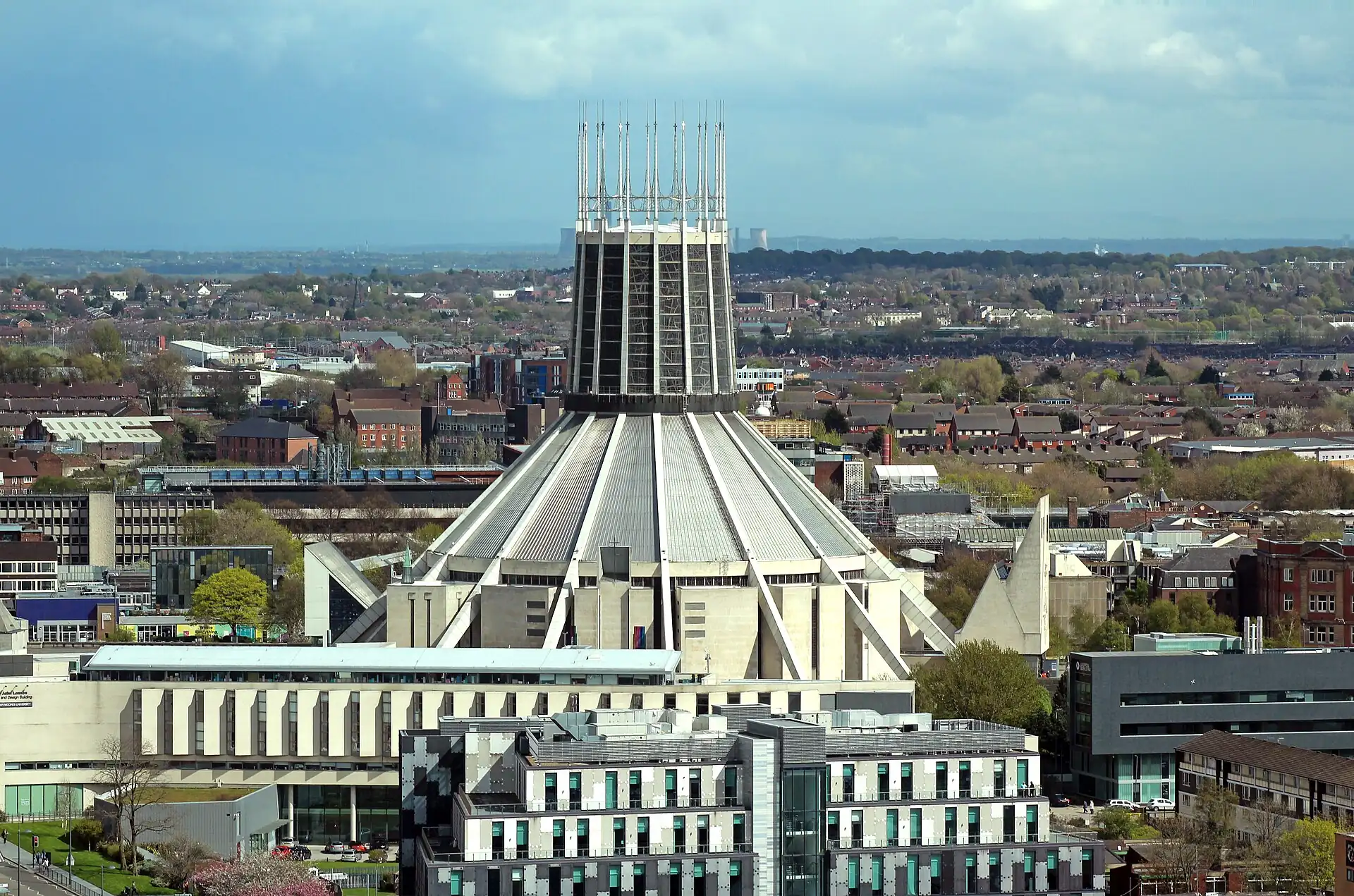 Plaza de Mayo and the Metropolitan Cathedral · 20-40 min
- 3
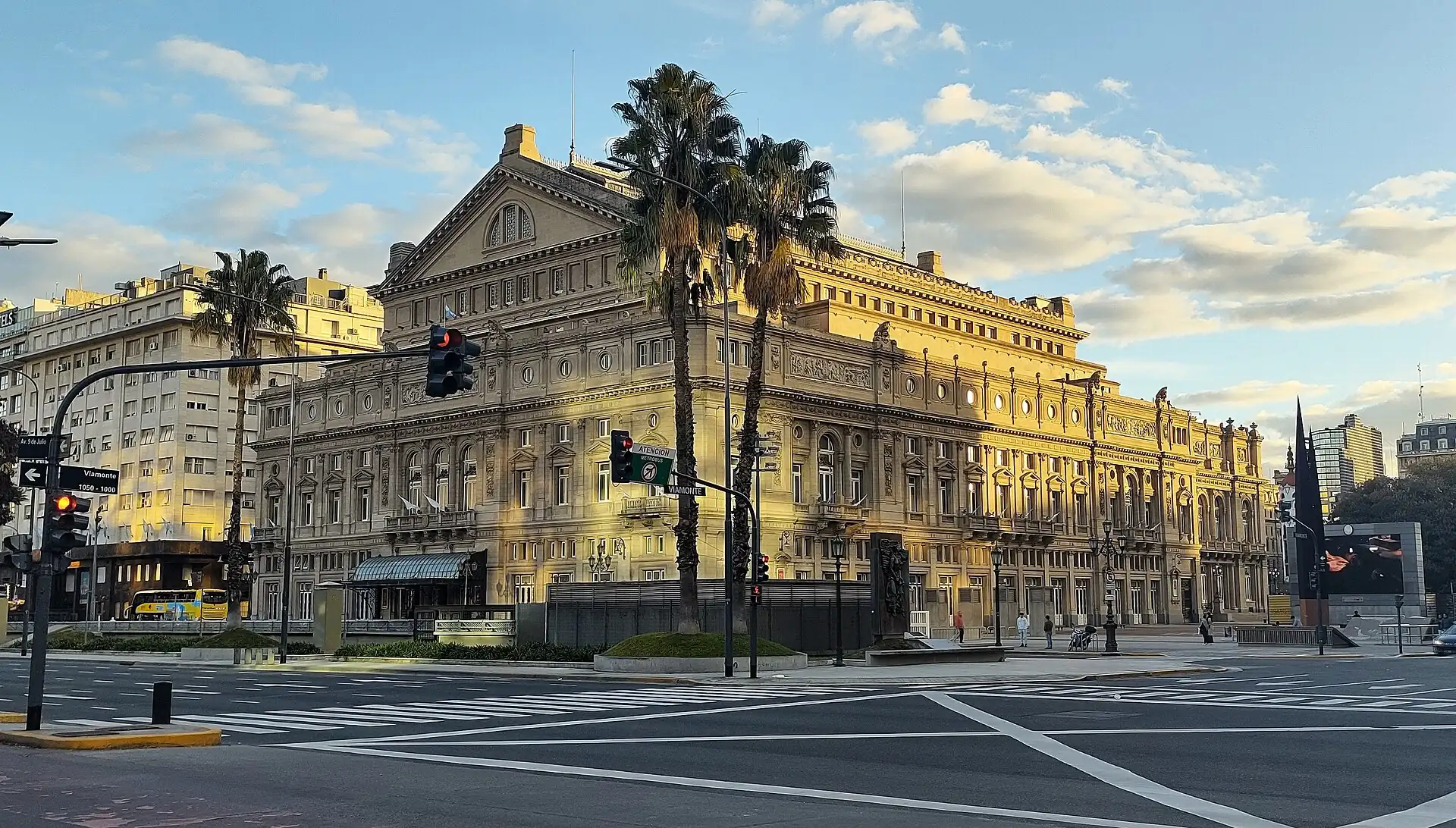 Teatro Colón guided tour · About 50 min
- 4Caminito and La Boca's football history · 1-1.5 h
- 5
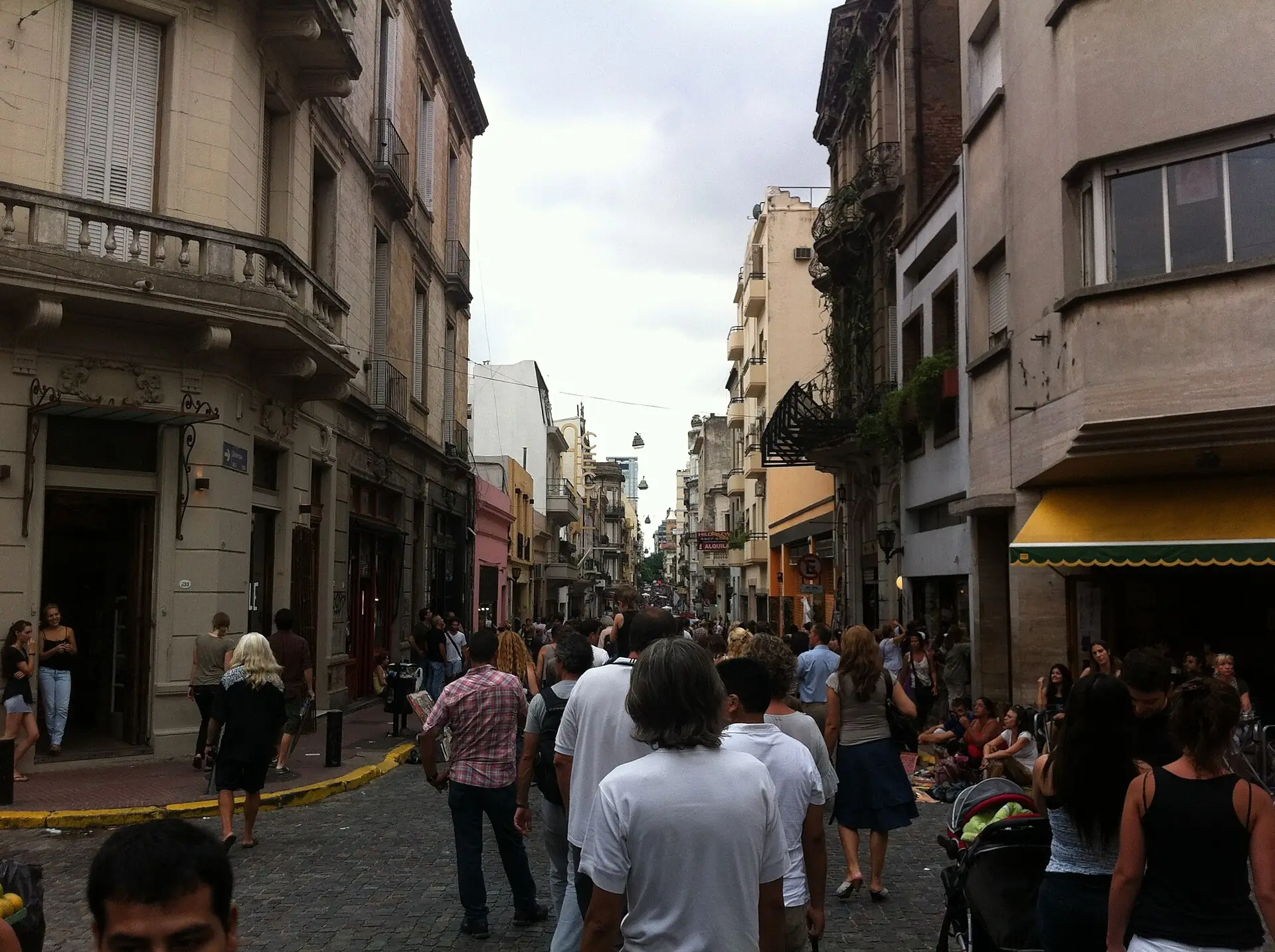 San Telmo Market and the Sunday street fair · 30-75 min
Fits
- Café and walking trips
- Late diners
- First trips to Argentina
Does not fit
- Early-to-bed travellers (dinner starts at 21:00)Early-to-bed travellers (dinner starts at 9:00 PM)
- Strollers on cobbles
- Travellers who cannot leave their phone in a pocket
How long
- 2 daysRecoleta morning, Plaza de Mayo and Café Tortoni, San Telmo afternoon
- 3 daysFour barrios, mornings on foot and dinners after 21:00
- 5 daysFour barrios + a Tigre or Colonia day trip + one slow day
Good for
- First timers
- Foodies
- Budget
- Couples
- Solo
- Families
About Buenos Aires
Buenos Aires is a city of immigrants twice over. A first, small settlement (1536) was abandoned; the permanent founding in 1580 stayed a backwater until 1776, when Spain made it capital of the Viceroyalty of the Río de la Plata. The wealth that followed came from grain and beef exported through the port, and it paid for the European-style buildings you walk past today.
Between the 1880s and the 1930s, millions of migrants (mostly Italian and Spanish) arrived through the port. They filled tenement houses (conventillos) in La Boca and San Telmo, brought the accent and slang (lunfardo) porteños still use, and, in those same tenements, tango took shape as a dance of the poor before it became a symbol of the city.
Good to know
- EZE (Ezeiza) is the main international airport, about an hour from the city; AEP (Aeroparque) is in the city and takes most domestic flights.
- Buenos Aires City runs tourist information kiosks in Retiro, Puerto Madero, Recoleta and other spots; check current locations and hours on the city tourism site.
- Your hotel desk is a reliable source for current opening hours, protest-day advice and same-day football tickets.
Go deeper 11 min read · 6 chapters
Buenos Aires built its wide avenues and grand facades on export wealth, then spent the next century absorbing immigrants, populist politics and repeated economic collapse. This deep dive reads the city through six threads — its founding and growth, the barrios immigration shaped, tango, the asado table, the peso's long instability, and the football rivalry that still empties the streets on match day — so a walk from Recoleta to San Telmo carries some of the history behind it.
1History2 min
Buenos Aires was founded twice. Pedro de Mendoza's 1536 settlement on the Río de la Plata was abandoned within years, driven out by hunger and conflict with local groups. Juan de Garay re-founded the city permanently in 1580, on roughly the same site, and it stayed a minor colonial port for two centuries — Spain ran its South American empire from Lima and Potosí, not from the Plata estuary.
That changed in 1776, when Madrid created the Viceroyalty of the Río de la Plata and made Buenos Aires its capital, giving the port formal control of trade routes that had long been smuggled anyway. The years that followed brought the 1806 and 1807 British invasions, both repelled by local militia rather than Spanish troops — a fact independence leaders later pointed to as proof the city could govern itself. On 25 May 1810, a week of public meetings on the square now called Plaza de Mayo forced the Spanish viceroy out and installed a local governing junta; formal independence followed in 1816, declared at a congress in Tucumán, but the 25 May revolution is the date Buenos Aires marks as its own.
The city's wealthiest period came between the 1880s and the 1930s, powered by beef and grain exports to Europe and by millions of immigrants — overwhelmingly Italian and Spanish — who arrived through the port and reshaped the population. Argentina ranked among the world's richest countries per head by some measures in this period, and the money paid for the European-style buildings, wide boulevards and grand public works (Teatro Colón opened in 1908) that still define the centre and the north of the city.
The 20th century after that was volatile: Juan and Eva Perón's populist decades from 1946, a military dictatorship from 1976 to 1983 that killed and disappeared an estimated 30,000 people, a return to democracy in 1983, and a banking and economic collapse in 2001 so severe that Argentina cycled through five presidents in two weeks. High inflation and currency instability have recurred since, most recently through the 2020s, and shape daily life — and this guide's money advice — more than any other single fact about the modern city.
- First founding
- 1536, Pedro de Mendoza (abandoned)
- Permanent founding
- 1580, Juan de Garay
- Viceroyalty capital
- From 1776
- May Revolution
- 25 May 1810
- Teatro Colón opened
- 1908
- 2001 economic collapse
- Five presidents in two weeks
2Immigration and the barrios2 min
Between the 1880s and the 1930s, several million migrants arrived through the port of Buenos Aires, most from Italy and Spain, with smaller numbers from France, Eastern Europe and the Middle East. Many settled first in conventillos — subdivided tenement houses, originally built as single-family mansions, that packed dozens of families into shared courtyards. La Boca and San Telmo held the densest concentrations, and the accent, gestures and slang (lunfardo) that outsiders now think of as distinctly porteño largely trace back to this period of overcrowded, multilingual streets.
La Boca, at the mouth of the Riachuelo river, was the poorest and roughest of these immigrant districts, built around the docks and the meatpacking trade. Caminito, the short street of corrugated-metal houses painted in bright leftover ship paint, commemorates that working-class port culture, though today it functions as an open-air tourist attraction rather than a lived-in street. The barrio is also home to Boca Juniors, the football club founded by Italian immigrants in 1905, whose stadium sits a few blocks from Caminito.
Recoleta tells the opposite story: as the wealthy fled a yellow fever epidemic that hit the south of the city hard in 1871, they resettled in the north, building the mansions, wide streets and the elaborate cemetery that still mark Recoleta as the address of old and new money alike. San Telmo, once itself a wealthy colonial neighbourhood before those same residents moved north, became working-class and immigrant instead — which is why it now holds both colonial-era buildings and the tenement layouts of the immigration decades, along with the antiques trade that grew from families selling off what the mansions left behind.
Palermo, by contrast, was mostly parkland and market gardens until the 20th century, developed later and more deliberately than the older barrios. Today it is informally divided by locals and estate agents into Palermo Soho, Palermo Hollywood, Palermo Chico and other sub-areas, each with a different character but no fixed official boundary — a reminder that Buenos Aires' barrio map is a living, argued-over thing, not a government survey.
- Peak immigration period
- 1880s-1930s
- Main origin countries
- Italy, Spain
- Boca Juniors founded
- 1905, by Italian immigrants
- Yellow fever epidemic
- 1871, drove wealth north to Recoleta
3Tango2 min
Tango was born in the same conventillos and dockside bars that housed the immigration wave, sometime in the 1880s-1890s, as a dance and music form mixing African-influenced candombe rhythms, Cuban habanera, European waltz and polka, and the lyrics of Argentine and Uruguayan popular song. It started as entertainment in brothels and low-status dance halls, danced mostly among men waiting their turn with the neighbourhood's few women, which is part of why the close embrace and improvised lead-and-follow structure developed the way it did.
For decades, tango was considered disreputable by Buenos Aires' upper classes — until it became a sensation in Paris in the years before the First World War. Porteño high society, seeing Europeans embrace the dance, reluctantly accepted it at home too, and tango's golden age followed from roughly the 1920s to the 1950s, when orchestras led by figures like Carlos Gardel and later Aníbal Troilo and Ástor Piazzolla filled ballrooms across the city and tango records sold worldwide. Piazzolla's later fusion of tango with jazz and classical structures (nuevo tango) split traditionalists but is now as central to the genre's reputation abroad as the golden-age orchestras.
Tango nearly died out under the military dictatorships of the mid-20th century, when large gatherings were restricted and the culture around dance halls (milongas) thinned out; it revived from the 1980s onward, helped by touring stage shows and a new generation of dancers and musicians. Today the scene splits cleanly into two experiences: milongas, where porteños dance socially on a set floor with their own codes (a nod across the room, cabeceo, is still how many invitations to dance are made), and staged tango shows aimed at visitors, usually paired with dinner, which trade the social ritual for a polished, easier-to-follow performance.
August's Buenos Aires Tango Festival and World Cup (Mundial de Tango) is the clearest annual expression of the culture's continued weight in the city: two weeks of free classes, concerts and a televised championship that fills milongas and draws dancers from across the world, alongside the daily, unglamorous milongas that run in church halls and dance studios the other fifty weeks of the year.
- Emerged
- 1880s-1890s, in port-district conventillos and bars
- Paris breakthrough
- Pre-First World War
- Golden age
- About 1920s-1950s
- Key figures
- Carlos Gardel, Aníbal Troilo, Ástor Piazzolla
- Tango Festival and World Cup
- Every August
4Food and the asado table2 min
Argentina's beef culture goes back to the colonial cattle herds that ran semi-wild across the Pampas, and to the gaucho horsemen who worked them; the asado — meat grilled slowly over wood coals or charcoal, often for hours — descends directly from gaucho cooking methods rather than any restaurant tradition. A proper asado is as much a social occasion as a meal: an asador (grill master) tends the fire for the group, cuts are served in a set order, and the whole event can run for several hours on a weekend afternoon.
Italian immigration shaped Buenos Aires food as much as Spanish colonisation did, which is why pizza, pasta and ice cream (helado) sit alongside beef as everyday food rather than imports. Buenos Aires pizza took its own direction from the Italian original: a thicker, cheese-heavy crust, best known in the fugazzeta (onion and cheese) style, eaten standing at a counter in century-old pizzerias on Avenida Corrientes rather than as a thin, individual pie.
Dulce de leche, a caramelised milk spread, is arguably the country's most identity-bound food product, used in alfajores (filled sandwich biscuits), cakes, pancakes and simply spread on toast; Argentines and Uruguayans each claim to have invented it, an argument neither side is likely to concede. Mate, a bitter infusion of yerba leaves drunk hot through a metal straw from a shared gourd, is less a beverage you order than a ritual you're invited into — offered round a group, refilled and passed back in silence, with thanks (gracias) traditionally meaning you're finished rather than a polite word said after every sip.
Wine completes the table: Mendoza's Malbec, a French grape variety that struggled in its native Cahors but thrived in Argentina's high-altitude vineyards, became the country's signature red over the last few decades and now dominates restaurant wine lists in Buenos Aires, sold by the glass at prices that are often better value than the equivalent bottle would be in Europe or North America.
- Asado origin
- Gaucho cattle-herding culture, colonial Pampas
- Fugazzeta pizza
- Buenos Aires original, onion and cheese
- Signature wine grape
- Malbec, from Mendoza
- Mate
- Shared ritual drink, not a café order
5The peso and the blue-dollar economy2 min
No single fact shapes a Buenos Aires trip's practical planning more than Argentina's long, recurring history of currency instability. Hyperinflation in 1989 wiped out savings and toppled a president mid-term; the 1991-2001 policy of pegging the peso one-to-one with the US dollar collapsed in the 2001 crisis, wiping out bank deposits (the corralito) and triggering Argentina's largest sovereign default at the time. Inflation has returned repeatedly since, and by the 2020s had reached levels that made everyday price-setting — in restaurants, shops and hotels — a constant, visible act rather than a rare event.
Out of that instability grew the informal 'blue dollar' (dólar blue) market: a parallel, unofficial cash exchange rate for US dollars, traded openly despite periods when currency controls made it technically restricted or illegal. During years when the official bank exchange rate lagged well behind economic reality, the blue-dollar rate could be dramatically more favourable for anyone changing hard currency into pesos — which is why long-time visitors to Argentina often mention bringing cash dollars and changing them informally, rather than using an ATM or a card at the bank rate.
This situation is genuinely fluid: which government is in power, what currency controls exist, how wide the gap between official and informal rates runs, and even whether the practice is openly tolerated or restricted, have all changed multiple times across the 2010s and 2020s, including under the government elected in late 2023, which campaigned partly on dismantling currency controls. Any specific exchange-rate figure or legal status printed in a guidebook is likely to be stale within months, which is why this guide deliberately avoids quoting one and instead flags every peso-denominated price as a rough 2026 estimate to confirm locally.
For a visitor, the practical upshot is simple even when the mechanism is complicated: research the current, legal way to get the best rate for your cash and cards before you fly, expect prices in pesos to look large and to change fast, and treat any number in this guide — meal prices, transport fares, hotel rates — as a band to sanity-check on arrival rather than a fixed quote.
- 1989 hyperinflation
- Toppled a president mid-term
- 2001 collapse
- Bank deposits frozen (corralito); sovereign default
- Dólar blue
- Informal parallel cash exchange rate
- Government change
- 2023, campaigned on ending currency controls
6Football and city life2 min
Buenos Aires is one of the most football-dense cities in the world, home to five clubs that have won Argentina's top division, and the rivalry between Boca Juniors (founded in the immigrant dockside barrio of La Boca in 1905) and River Plate (founded the same year, now based in the wealthier northern barrio of Núñez) is regularly cited among the fiercest club rivalries anywhere. The 'Superclásico' fixture between them can shut down surrounding streets and dominates local news for days beforehand, whichever half of the city you happen to be standing in.
The class geography behind the rivalry is part of the story: Boca's roots in a working-class immigrant port district against River's move, in the 1920s, to a much wealthier neighbourhood earned the clubs their enduring nicknames — Boca as 'los xeneizes' (a lunfardo word for people from Genoa, reflecting the barrio's Italian immigrant base) and River as 'los millonarios', a jab at the money behind their move north. Both identities are still felt as strongly by supporters today as they were a century ago.
For foreign visitors, actually getting to a match usually means booking through an official club channel or an organised match-day tour rather than buying a ticket at the gate, partly for straightforward ticketing reasons and partly because stadium sections are informally divided by fan allegiance in ways a first-time visitor won't know how to navigate safely alone. It is worth doing anyway: the noise, the chanting sections (hinchada) and the intensity of a Buenos Aires match day are unlike almost anything else the city offers a visitor.
Beyond football, the city's rhythm runs on its own late clock: lunch from roughly 13:00, dinner rarely before 21:00, and nightlife that can still be getting started at 01:00 on a weekend. That schedule, along with the outdoor café culture, the mate ritual in every park, and a Sunday afternoon that empties the streets in favour of family asados, says as much about daily porteño life as any single monument does.
- Boca Juniors founded
- 1905, La Boca
- River Plate founded
- 1905, moved to Núñez in the 1920s
- Clásico
- Boca vs River, one of football's fiercest rivalries
- Typical dinner start
- 21:00 or later9:00 PM or later
Read, watch, wordsReading · Watching · Glossary · Sources
Reading
- Buenos Aires: A Cultural History — Jason WilsonA readable single-city history covering the port, immigration and the literary and tango cultures it produced.
- And the Money Kept Rolling In (and Out) — Paul BlusteinA detailed account of Argentina's 2001 economic collapse, useful background for the money and inflation chapter.
- Tango: The Art History of Love — Robert Farris ThompsonA cultural history of tango's African, Cuban and European roots and its rise from the conventillos to world fame.
- On Heroes and Tombs — Ernesto SábatoA mid-20th-century Buenos Aires novel that captures the city's political anxieties of the period.
Watching
- Evita — Alan Parker, 1996A dramatised but widely seen account of Eva Perón's rise, useful for the Recoleta Cemetery visit.
- The Official Story (La historia oficial) — Luis Puenzo, 1985An Argentine Academy Award-winning film set during the dictatorship years, essential context for the Plaza de Mayo marches.
- Wild Tales (Relatos salvajes) — Damián Szifron, 2014A darkly comic portrait of contemporary Argentine frustration, much of it recognisably Buenos Aires.
Glossary
| Term | Local | Meaning |
|---|---|---|
| Porteño / porteña | porteño/a | A person from the port — how Buenos Aires residents refer to themselves. |
| Conventillo | conventillo | A subdivided tenement house that housed immigrant families from the 1880s onward. |
| Lunfardo | lunfardo | Buenos Aires slang, partly born from immigrant languages mixing in the tenements. |
| Milonga | milonga | A social tango dance hall, as opposed to a staged tourist show. |
| Cabeceo | cabeceo | A nod across the room used to invite someone to dance at a milonga. |
| Asado | asado | Slow-grilled meat, and the social occasion built around it. |
| Dólar blue | dólar blue | The informal parallel cash exchange rate for US dollars. |
| Boliche | boliche | A nightclub; also an old term for a corner store or bar. |
| Che | che | A very common Argentine interjection meaning roughly 'hey' or 'mate' — the source of Che Guevara's nickname. |
| Xeneize | xeneize | Lunfardo for someone from Genoa; a nickname for Boca Juniors and its fans. |
Read for this deep dive
- Wikipedia — Buenos Aires ↗
- Wikipedia — Tango ↗
- Wikipedia — Argentine peso ↗
- Wikipedia — Argentine Primera División ↗
Background reading only: the text above is written by Voykit, not copied from these pages.
Photos
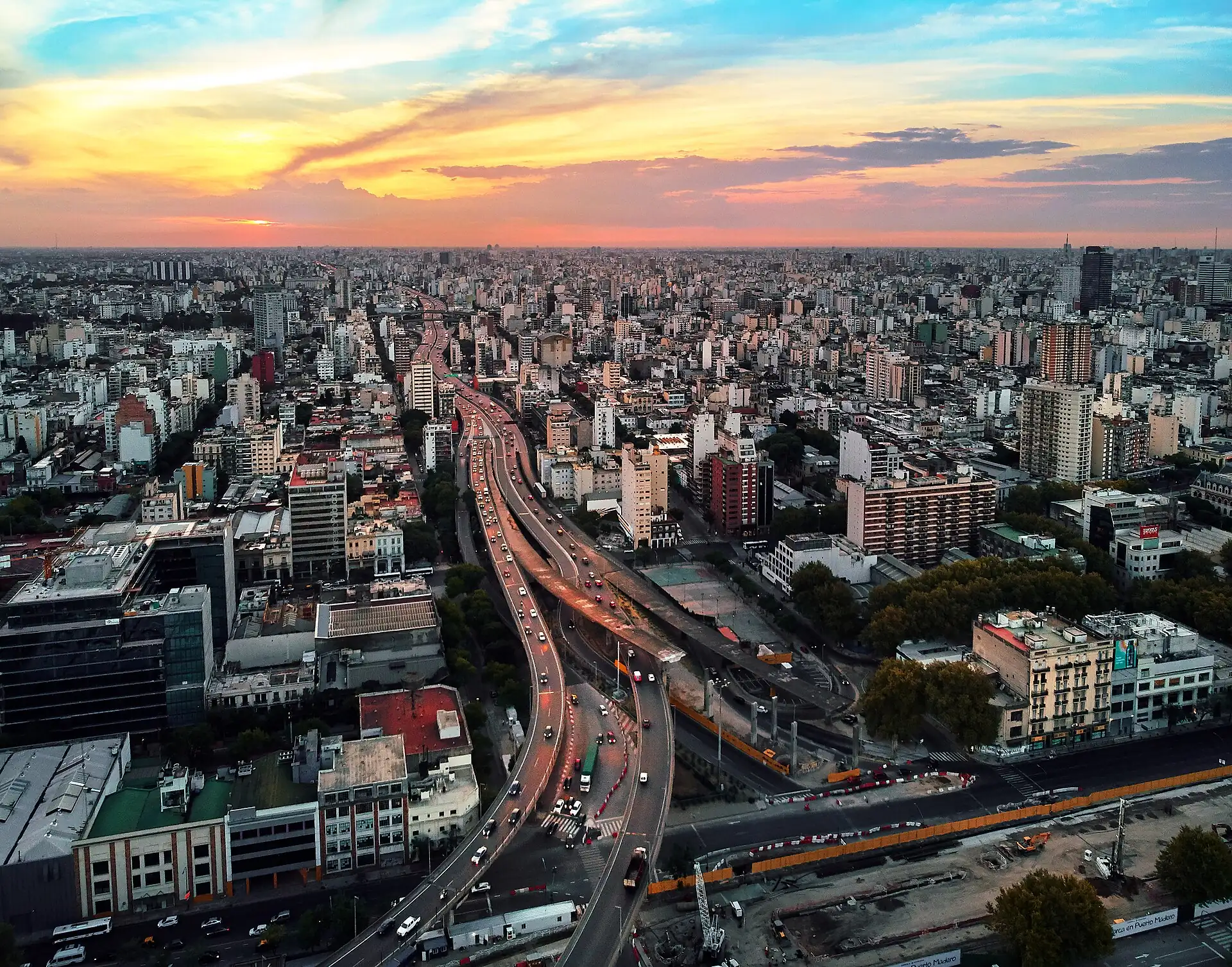
Buenos Aires skyline Photo: Flopy307, CC BY-SA 4.0
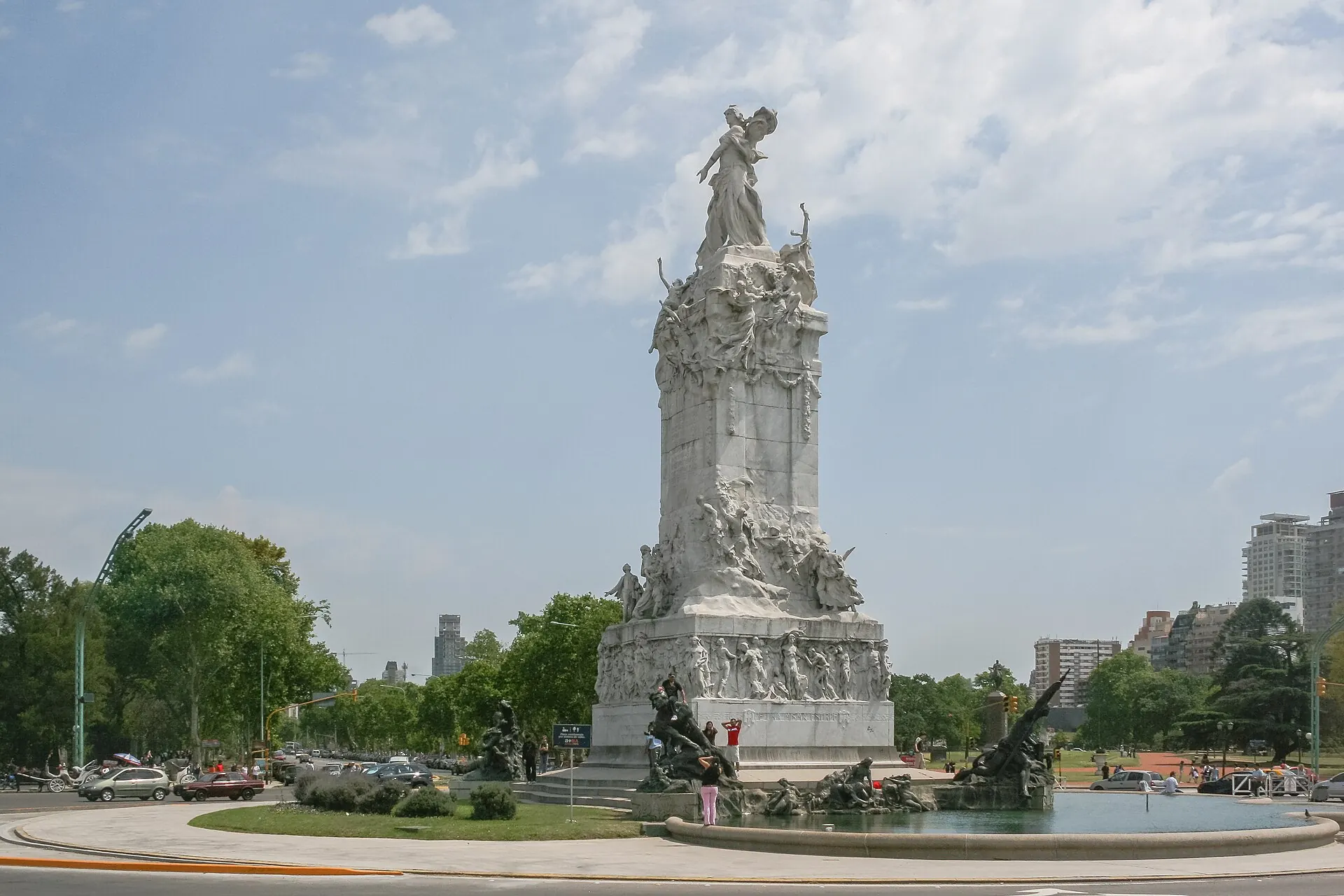
Statue of Bartolomé Mitre, Buenos Aires, Argentina Photo: Diego Delso, CC BY-SA 3.0
Front of Pulpería Quilapán, San Telmo, Buenos Aires, Argentina Photo: Ezarate, CC BY-SA 4.0
Buenos Aires waterfront Photo: Rodrigo Menezes, CC BY-SA 3.0
Vista parcial del barrio de Recoleta de la ciudad de Buenos Aires, Argentina - tomada desde Av Photo: Luciajimena1990, CC BY-SA 4.0
Buenos Aires skyline Photo: Flopy307, CC BY-SA 4.0
Rules in force · 8Above 2,500 m (Bogotá, Quito, Cusco, La Paz) keep the fir…
- South America ↗Above 2,500 m (Bogotá, Quito, Cusco, La Paz) keep the first day light; sleep lower where you can (Sacred Valley before Cusco) and descend if headache comes with vomiting or confusion.
- South America ↗A yellow fever certificate is required on arrival in French Guiana, and asked for on some routes into Bolivia, Paraguay, Suriname and Guyana, or when arriving from Amazon areas — vaccinate at least 10 days before travel and carry the card.
- South America ↗Overnight buses are the norm in Argentina, Chile and Peru, but pick top-tier companies and keep valuables on your body; on-board thefts from overhead racks are the common loss.
- Argentina ↗Check entry rules for your passport with Argentina's National Migration Directorate (Migraciones) or an Argentine consulate before booking.
- Argentina ↗Since April 2025 the official, MEP and street ('blue') dollar rates sit within a few percent of each other; a foreign card is usually the best-value way to pay, while ATM withdrawals carry high fixed fees. Rules have changed often — check before you fly.
- Argentina ↗Patagonia (El Calafate, El Chaltén, Ushuaia) is a November–March trip; in winter many services close and hiking is limited.
- Argentina ↗Since August 2026 non-resident foreigners must show insurance or pay for non-urgent care at nationally run public hospitals, and Buenos Aires City, Mendoza, Salta, Jujuy and Santa Cruz charge visitors for scheduled care; emergencies are still treated. Travel with medical insurance — check the current rules.
- Buenos Aires area ↗For Colonia by ferry, carry your passport and check the ferry's check-in time and the return on your ticket.
Entry rules depend on your passport. Full visa guide
Emergency numbers for Buenos Aires911 ▾
Tap a number to call from your phone. These are the numbers listed in this guide; a row marked check has not been verified.
Planning is the full guide. I'm here keeps what is open and the cheat card.
Right now
Checking the weather…
Working out what is open near you…
What is open nowclock, closures, places open
Now in Buenos Aires
Local time in Buenos Aires
--:--
Loads in your browser · America/Argentina/Buenos_Aires
This month
Month verdict appears here.
Closed today
See the weekly grid below.
If today is a closure day: January and February see many restaurants, and some smaller museums, take a summer break or run reduced hours while porteños themselves are on holiday at the coast; check ahead if you are visiting a specific spot in high summer.
Open every day: Caminito and La Boca, El Ateneo Grand Splendid, Palermo parks and the Japanese Garden, Metropolitan Cathedral (Plaza de Mayo), Puerto Madero waterfront, Recoleta Cemetery, San Telmo Market, Teatro Colón.
- check Caminito and La Boca: Always accessible in daylight; some stalls and the smaller museums close on Mondays — check locally.
- check El Ateneo Grand Splendid: No weekly closure reported; open daily as a bookshop.
- check Palermo parks and the Japanese Garden: No weekly closure reported for the Japanese Garden; confirm locally.
- check Metropolitan Cathedral (Plaza de Mayo): No fixed weekly closure reported beyond service times; confirm locally.
- check Puerto Madero waterfront: Promenade always open; the nature reserve has its own daily closing time at dusk.
- check Recoleta Cemetery: No fixed weekly closure reported; confirm current hours before a special trip.
- check San Telmo Market: The covered hall is generally open daily; individual stall hours vary and some close on Mondays.
- check Teatro Colón: No fixed weekly closure reported for tours; some days shift to rehearsal-only access — check before you book.
- check Teatro Colón guided tours: Tour schedules shift around the southern-hemisphere summer recess and rehearsal periods; check before booking.
Weekly closures come from our place pages; political marches and one-off closures around Plaza de Mayo and Congreso are not shown here and change day to day.
Open now
The sights and places to eat on our list that are open at this moment, in the city's time, nearest first from where you are staying.
Loads in your browser with the city's local time.
Hours marked (check) are typical, not confirmed. Walking times are straight-line estimates. Open at another time →
Cheat cardthe pocket version
Cheat card
The essentials on one card: save it as an image for your phone, share it, or print it.
Buenos Aires
- Money
- Check current exchange and ATM rules before you fly; carry some pesos in small notes for cafés, kiosks and taxis…
- SIM
- Buy an eSIM before you fly, or a SIM from a carrier store (Movistar, Claro, Personal) with your passport.
- Ride app
- Uber / Cabify / DiDi · SUBE
- Emergency
- 911 police · 107 ambulance (same) · 100 fire
- Plugs
- 220V; mostly Type C and Type I sockets (the three-flat-pin type used in Argentina).
Top 5
- Recoleta Cemetery at opening
- Plaza de Mayo and the Metropolitan Cathedral
- Teatro Colón guided tour
- Caminito and La Boca's football history
- San Telmo Market and the Sunday street fair
EssentialsQuick answers, what things cost and how to get around
Essentials
Quick answers, what things cost and how to get around
Quick answers
The questions people ask first about Buenos Aires, one line each. Tap a card for the full answer.
- Cash or card?Cards are widely accepted in restaurants, hotels and shops; cash (pesos, and often US dollars) is still useful given how currency rules and exchange…
- SIM or eSIMBuy an eSIM before you fly, or a SIM from a carrier store (Movistar, Claro, Personal) with your passport.
- Ride-hailing appUber / Cabify / DiDi · SUBE.
- Tap waterTap water is generally safe to drink in the city; ask your hotel if unsure.
- TippingAround 10% in restaurants, appreciated but not automatic or obligatory; round up for taxis and tour guides.
- Plugs & power220V; mostly Type C and Type I sockets (the three-flat-pin type used in Argentina).
Show all 14 answers
- Safe at night?Take more care after dark in Plaza de Mayo / Microcentro, San Telmo, La Boca (Caminito strip).
- What to wearDress modestly and keep your voice down in the cathedral and Recoleta Cemetery; do not touch or lean on tombs.
- Emergency numbers911 police · 107 ambulance (same) · 100 fire
- Your embassycheckUS, UK embassies listed with addresses (check before you go).
- Sundays & holidaysDía de la Memoria (dictatorship remembrance): A large march to Plaza de Mayo; road closures around the square.
- Late at nightThere is no fixed closing time culture the way some cities have one; bars and boliches (nightclubs) often do not fill until after midnight and can…
- Rainy-day planRain can arrive in any season without a strong pattern; keep a compact umbrella and have an indoor backup (a museum, El Ateneo…
- Landing lateEZE: official taxi or remise to the door runs all night.
Cost cheat-sheetwhat everyday things cost
Cost cheat-sheet
Typical prices for the everyday things, as ranges. Change the currency right here; the local price stays first.
2026 desk estimate · check
- CoffeeCoffee (café con leche at a café)2026 estimate; confirm locally
- Sit-down mealAsado or parrilla main course2026 estimate; confirm locally
- Taxi, about 5 km (3 mi)Taxi, about 3 mi (5 km)Short taxi or ride-hail ride across a barrio2026 estimate; confirm locally
- Metro or bus rideSubte or bus ride (SUBE card)2026 estimate; confirm locally
- SIM or eSIM, a weekTourist eSIM or SIM, about a week2026 estimate; confirm locally
- Museum or sight ticketMuseum or theatre-tour entry2026 estimate; confirm locally
- Budget bedHostel dorm bed, a night, per personARS 15,000
- Mid-range bedHotel double room, a night, per roomARS 90,000
- High-end bedHotel double room, a night, per roomARS 250,000
A day, not counting the bed: Budget ARS 40,000 · Mid ARS 100,000 · High ARS 220,000
Local prices, with USD next to them (rates 2026-09 (approximate); change it in the header). Ranges are desk estimates: check locally. Every price and the budget calculator →
Source: Prices in Buenos Aires
Draft
Written from desk research. Not yet compared with the official source.
No official source is recorded for this figure.
Prices are 2026 desk estimates, not yet compared with an official source. Check on the day.
Not checked in the last 12 months (no check date on file).
DecideWho it suits, the trade-offs and when to go
Decide
Who it suits, the trade-offs and when to go
Best months at a glance
The guide's verdict for each month
Jan
Care
30°C (86°F)86°F (30°C)
Feb
Care
29°C (84°F)84°F (29°C)
Mar
Best
26°C (79°F)79°F (26°C)
Apr
Best
22°C (72°F)72°F (22°C)
May
Best
18°C (64°F)64°F (18°C)
Jun
Best
15°C (59°F)59°F (15°C)
Jul
Best
14°C (57°F)57°F (14°C)
Aug
Best
16°C (61°F)61°F (16°C)
Sep
Best
18°C (64°F)64°F (18°C)
Oct
Best
21°C (70°F)70°F (21°C)
Nov
Best
25°C (77°F)77°F (25°C)
Dec
Care
28°C (82°F)82°F (28°C)
Best: Mar–Nov. Mixed: Dec–Feb. Month by month →
Warmest Jan (30°C (86°F)86°F (30°C)), coolest Jun (7°C (45°F)45°F (7°C) low), wettest Mar (9 rain days), driest Jun (7). Averages, not a forecast.
Buenos Aires across the year
Best-looking months for Buenos Aires: Mar, Apr, Oct.
| Measure | Jan | Feb | Mar | Apr | May | Jun | Jul | Aug | Sep | Oct | Nov | Dec |
|---|---|---|---|---|---|---|---|---|---|---|---|---|
| Weather | Mixed (care) | Mixed (care) | Great (good) | Great (good) | Good (good) | Good (good) | Good (good) | Good (good) | Good (good) | Great (good) | Great (good) | Mixed (care) |
| Crowds | High (care) | High (care) | Medium (ok) | Medium (ok) | Low (good) | Low (good) | Medium (ok) | Low (good) | Low (good) | Medium (ok) | Medium (ok) | High (care) |
| Prices | High (care) | High (care) | Medium (ok) | Medium (ok) | Low (good) | Low (good) | Medium (ok) | Low (good) | Medium (ok) | Medium (ok) | Medium (ok) | High (care) |
| Events | 2 events (ok) | 1 event (care) | 4 events (care) | 3 events (care) | 2 events (ok) | None listed (ok) | 2 events (care) | 1 event (ok) | 1 event (ok) | 1 event (ok) | 2 events (ok) | 2 events (ok) |
Green is good news, amber needs planning, red is a month to avoid; dashed grey with a question mark means our data does not say. Open the year heatmap →
Not checked in the last 12 months (no check date on file).
Source: Months, temperatures and crowds
Draft
Written from desk research. Not yet compared with the official source.
Monthly highs, rain and crowd levels are climate averages and desk estimates for the city, not a forecast.
Understand the cityUnderstand · Districts
Orientation & districts
A first visit works out of two or three barrios: Recoleta and Palermo for sleeping and evenings, Plaza de Mayo/Microcentro and San Telmo for history and mornings. La Boca is a half-day visit, not a base. The city is flat and laid out on a grid, so walking inside a barrio is easy; moving between barrios is a taxi, ride-hail or subte ride.
Barrio boundaries are informal and overlap in daily use (Palermo alone is commonly split into Palermo Soho, Palermo Hollywood, Palermo Chico and Las Cañitas); this table uses the names locals and drivers use.
Shaded shapes: walking areas (click one). Black pins: sleep areas. Grey dots: places. Round badges: arrivals. Click the map to turn on scroll-wheel zoom.
Hover, tap or tab to an area to see what it is like. Pins are sleep areas; arrows at the edge point to the airport.
Off the map: Aeroparque Jorge Newbery (AEP) (25–45 min by the usual route).
Not drawn yet (no coordinates in this guide): Congreso, Belgrano. They are in the neighbourhood cards below.
Where’s what, as a list:
- Recoleta: Grand apartment buildings, the cemetery, wide avenues; a 15-20 minute taxi from the historic centre. Suits: First visit, quiet nights, museums and cafés. Price band $$$.
- Palermo (Soho / Hollywood / Chico): The city's biggest barrio by far; Soho and Hollywood are the restaurant-and-bar sub-areas, Chico is quieter and leafier, the parks (Bosques de Palermo) are further north-west. Suits: Restaurants, nightlife, parks, longer stays. Price band $$.
- Plaza de Mayo / Microcentro: Casa Rosada, the cathedral, Avenida de Mayo's old cafés; busy on weekdays and empty at night, and the usual site of political marches. Suits: A morning of history, banks, the theatre district.
- San Telmo: Cobbled colonial streets; lively and crowded on Sundays, quieter and cheaper the rest of the week. Suits: Antiques, tango bars, the Sunday street fair.
- La Boca: Stick to the few blocks around Caminito and the stadium area: the barrio beyond the tourist strip has a reputation for street crime, day and night. Go by taxi or organised tour, not a long walk from San Telmo. Suits: A two-to-three-hour visit for Caminito and football history.
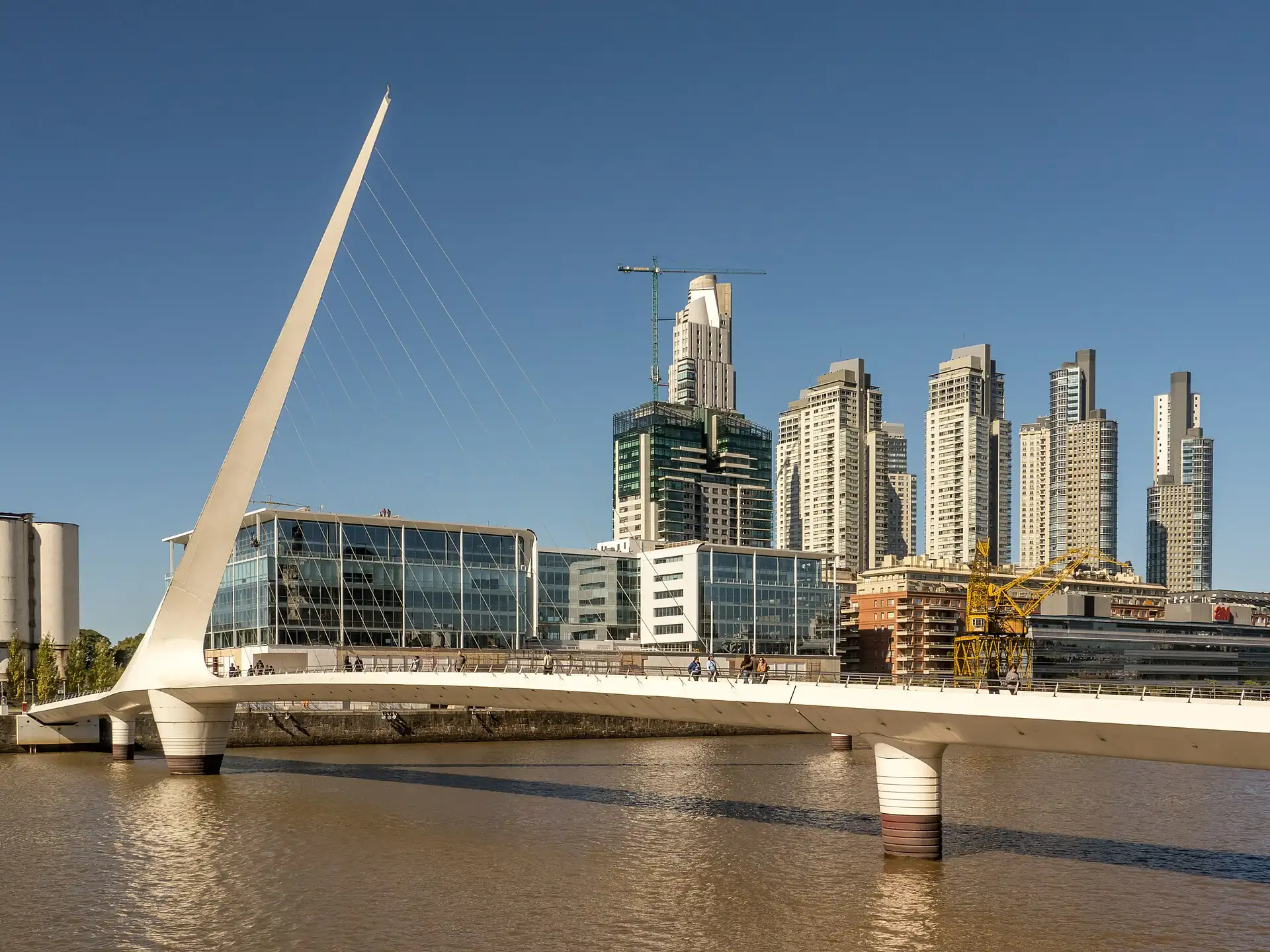
- Puerto Madero: The newest barrio, converted docklands with glass towers and the Puente de la Mujer footbridge; safe and well-lit but expensive and short on things to do beyond the walk and a meal. Suits: An evening walk, a smart dinner.
- Congreso: Palacio del Congreso, the Barolo Palace and budget hotels; walkable from Plaza de Mayo along Avenida de Mayo. Suits: The Congress building and Avenida de Mayo's western end.
- Belgrano: 20-30 minutes north of the centre by taxi or train; not a first-visit priority. Suits: A quieter, more residential afternoon; the city's small Chinatown (Barrio Chino).
- Sleep area Palermo Soho: suits Restaurants, nightlife, parks, longer stays, price band $$.
- Sleep area Recoleta: suits First visit, quiet nights, museums and cafés, price band $$$.
- Aeroparque Jorge Newbery (AEP), 25–45 min by the usual route.
- Ministro Pistarini International Airport (EZE, Ezeiza), about 28 km (17 mi)17 mi (28 km) from the centre, 55–90 min by the usual route.
Neighbourhoods at a glance
One tab per area, pulled together from this guide’s districts table, area notes, sleep-area scores and place pages. Scores are desk judgements (1–5); prices are estimates, check before you book.
Recoleta
$$$Grand apartment buildings, the cemetery, wide avenues; a 15-20 minute taxi from the historic centre.
- Suits:
- First visit, quiet nights, museums and cafés
- Best time:
- Morning for the cemetery, evening for café terraces
- Rooms:
- 2026 estimate; confirm locally (from the sleep guide)
Pick this if: Couples, museums, a quiet base
Watch out for: Expecting late nightlife on the doorstep.
- Quiet nights4/5 High
- Nightlife2/5 Low
- Families4/5 High
- Late arrival4/5 High
Why these scores
- Quiet nights: The calmest of the main sleep areas; few late bars on the doorstep.
- Nightlife: Cafés and a few restaurants; Palermo's bars are a taxi ride away.
- Families: Wide, walkable pavements and a park nearby.
- Late arrival: Larger hotels keep a night desk; confirm for smaller ones.
Getting around from here
- 40–55 min walk to Plaza de Mayo and Avenida de Mayo
- 50–65 min walk to Palermo Soho
- 70–90 min walk to San Telmo
Palermo (Soho / Hollywood / Chico)
$$The city's biggest barrio by far; Soho and Hollywood are the restaurant-and-bar sub-areas, Chico is quieter and leafier, the parks (Bosques de Palermo) are further north-west.
- Suits:
- Restaurants, nightlife, parks, longer stays
- Best time:
- Evening onward; mornings are quiet
- Rooms:
- 2026 estimate; confirm locally (from the sleep guide)
Pick this if: Food trips, nightlife, longer stays
Watch out for: Expecting an early dinner — kitchens fill from 21:00.
- Quiet nights2/5 Low
- Nightlife5/5 Very high
- Families3/5 Medium
- Late arrival5/5 Very high
Why these scores
- Quiet nights: Restaurants and bars run late on the same streets you sleep on.
- Nightlife: The centre of the city's dinner, bar and late-night scene.
- Families: Lively but walkable; fewer big open spaces than Recoleta.
- Late arrival: Restaurants and bars stay open well past midnight most nights.
Getting around from here
- 50–65 min walk to Recoleta Cemetery and Plaza Francia
- 80–100 min walk to Plaza de Mayo and Avenida de Mayo
- 100–120 min walk to San Telmo
Plaza de Mayo / Microcentro
Casa Rosada, the cathedral, Avenida de Mayo's old cafés; busy on weekdays and empty at night, and the usual site of political marches.
- Suits:
- A morning of history, banks, the theatre district
- Best time:
- Weekday mornings
Pick this if: A morning of history
Watch out for: Evenings, and any day a march is scheduled.
Getting around from here
- Walk south: about 18 min to San Telmo
- EZE: about 28 km (17 mi) in a straight line (arrival ride 55–90 min)EZE: about 17 mi (28 km) in a straight line (arrival ride 55–90 min)
San Telmo
Cobbled colonial streets; lively and crowded on Sundays, quieter and cheaper the rest of the week.
- Suits:
- Antiques, tango bars, the Sunday street fair
- Best time:
- Weekday mornings for quiet, Sunday for the fair
Pick this if: History, budget stays, the Sunday fair
Watch out for: Loose bags in the Sunday crowd.
Getting around from here
- Walk north: about 18 min to Plaza de Mayo and Avenida de Mayo
- EZE: about 27 km (17 mi) in a straight line (arrival ride 55–90 min)EZE: about 17 mi (27 km) in a straight line (arrival ride 55–90 min)
La Boca
Stick to the few blocks around Caminito and the stadium area: the barrio beyond the tourist strip has a reputation for street crime, day and night. Go by taxi or organised tour, not a long walk from San Telmo.
- Suits:
- A two-to-three-hour visit for Caminito and football history
- Best time:
- Weekday mornings for quiet, Sunday for the fair
Pick this if: History, budget stays, the Sunday fair
Watch out for: Loose bags in the Sunday crowd.
Getting around from here
- Walk north: about 18 min to Plaza de Mayo and Avenida de Mayo
- EZE: about 27 km (17 mi) in a straight line (arrival ride 55–90 min)EZE: about 17 mi (27 km) in a straight line (arrival ride 55–90 min)
Puerto Madero
The newest barrio, converted docklands with glass towers and the Puente de la Mujer footbridge; safe and well-lit but expensive and short on things to do beyond the walk and a meal.
- Best time:
- Late afternoon into evening
Pick this if: An evening walk, a smart dinner
Watch out for: Expecting historic character — it is all new.
Getting around from here
- Walk south: about 18 min to San Telmo
- EZE: about 28 km (17 mi) in a straight line (arrival ride 55–90 min)EZE: about 17 mi (28 km) in a straight line (arrival ride 55–90 min)
Congreso
Palacio del Congreso, the Barolo Palace and budget hotels; walkable from Plaza de Mayo along Avenida de Mayo.
- Suits:
- The Congress building and Avenida de Mayo's western end
Belgrano
20-30 minutes north of the centre by taxi or train; not a first-visit priority.
- Suits:
- A quieter, more residential afternoon; the city's small Chinatown (Barrio Chino)
Ward by ward
4 area guides. Open one for the short answer, the key facts and what the area is like; the full guide is linked inside. Prices marked (check) are estimates.
CentroBest for: First-timers who want sights, theatres and transport on foot
Stay in Centro if you want to walk to Plaza de Mayo, the Obelisco and Avenida Corrientes theatres, and reach both airports and the Retiro bus terminal easily. Skip it if you want quiet nights, green streets or a local neighborhood feel — Palermo and Recoleta do that better. It works best for 2–3 nights of a first trip.
- Best for:
- First-timers who want sights, theatres and transport on foot
- Skip if:
- You want quiet nights, trees and café culture — choose Palermo or Recoleta
- Walk to:
- Plaza de Mayo, Casa Rosada, Obelisco, Teatro Colón, Avenida Corrientes
- Subte:
- Lines A, B, C, D and E all cross the centre; Line A runs from Plaza de Mayo
- Airport bus:
- Buses 33 and 45 link Retiro with Aeroparque Jorge Newbery
- Ezeiza (EZE):
- About 30–50 min by taxi or shuttle depending on traffic (check)
- Safety:
- Busy by day; keep phones out of sight and take a taxi or app car after dark
- Cash:
- Bring pesos for small cafés and buses; cards work in hotels and larger restaurants
- Tipping:
- About 10% in restaurants, preferably cash
What Centro is like
Centro is the historic and administrative core of Buenos Aires, a dense grid of office towers, banks, government buildings and old cafés. It covers the Microcentro downtown, the Plaza de Mayo area, Congreso and Tribunales, and it borders San Telmo, Retiro and Puerto Madero. Most of the city's headline sights sit inside it or a short walk away, which is why so many first trips start here.
Days are busy with commuters and shoppers; evenings thin out fast once offices close, except along Avenida Corrientes, where theatres, bookshops and pizza places keep going late. San Telmo, on the southern edge, keeps colonial houses, cobblestones and a stronger nightlife. Puerto Madero, east of the centre, is the renovated dockland with newer restaurants and hotels.
Expect noise, traffic on Avenida 9 de Julio and a lot of walking on hard pavement. Streets are gridded and easy to read, and the Subte gets you across the centre quickly.
Full Centro guideShould you stay here
Stay in Centro if your priority is covering the classic sights on foot and moving easily to the rest of the country. It is the most practical base for a short first visit: you can walk to Plaza de Mayo in the morning, see the Teatro Colón, eat on Corrientes and be at Retiro for a bus or at Aeroparque within a short ride.
Skip it if you want a residential feel, leafy streets, independent cafés and quieter nights. Palermo and Recoleta are better for that, and many travellers split their stay: two or three nights in Centro for the sights, then the rest in Palermo. San Telmo suits people who want colonial streets and nightlife; Puerto Madero suits those who want newer hotels and riverside walks.
Within Centro, pick your block carefully. The area around Plaza de Mayo and Avenida de Mayo is central and busy; Tribunales and Congreso are quieter at night; the streets immediately south of Avenida de Mayo toward San Telmo vary block by block. Ask your hotel which door to use after dark and take a taxi or app car for late returns.
La Boca & BarracasBest for: A daytime half-day: Caminito, La Bombonera, the old transporter bridge
Stay elsewhere and visit La Boca as a daytime half-day: Caminito, La Bombonera and the Riachuelo waterfront are worth 3–4 hours, then leave before dark. Barracas is quieter and safer but thin on sights. Book a hotel in Centro or Palermo and come south by taxi or bus 29 or 64.
- Best for:
- A daytime half-day: Caminito, La Bombonera, the old transporter bridge
- Stay here?:
- No for a first trip; base in Centro or Palermo and visit
- Time needed:
- 3–4 hours, daylight only
- Get in:
- No subte; bus 29 or 64, or a taxi/ride-hail from Centro (20–30 min)
- Roca line train to Hipólito Yrigoyen:
- Station closed for repairs since 2024, no reopening date announced (check)
- Safety:
- Tourist blocks are busy by day; crime rises sharply a street or two outside them and after dark
- Match days:
- Boca Juniors at La Bombonera: go with an organized group and a grandstand (Platea) ticket
- Costs:
- 2026 estimate: taxi from Centro about ARS 12,000–18,000; bus fare a few hundred pesos
What the area is like
La Boca sits at the mouth of the Riachuelo, the channel that separates Buenos Aires from Avellaneda. It grew as a working port district of Italian and Spanish immigrants, and its identity is still football (Boca Juniors), painted sheet-metal houses and the pedestrian strip of Caminito. The colour is real, but it is concentrated in a few blocks that exist largely for visitors.
Barracas lies just west and north of La Boca, along the same river. It is a residential district of low houses, old warehouses and a growing cluster of galleries and cafés, with far fewer tourists and a calmer feel. Calle Lanín, a short street of mosaic-covered façades, is its one small set piece.
The two districts are not a sightseeing pair you walk end to end. Treat La Boca as the destination and Barracas as an optional add-on if you have a spare afternoon.
Full La Boca & Barracas guideShould you stay here?
For a first or second trip to Buenos Aires, no. The hotel stock is small, the streets empty out after dark, and you would be taking a taxi every time you wanted a restaurant, a café or a tango show. Most visitors do better in Centro for transport and sights, or in Palermo and Recoleta for food, parks and nightlife.
The exception is a football trip. If you are in Buenos Aires specifically for a Boca Juniors match and want to be close to La Bombonera, one or two nights nearby is workable — but plan your evenings elsewhere and use taxis after the match.
Barracas is the more comfortable of the two for sleeping, and it is 15–20 minutes by taxi from Centro. It suits a repeat visitor who has already done the classic neighborhoods and wants a quieter base.
Outskirts
Stay in the outskirts only if you want a local, residential Buenos Aires and cheaper beds: Belgrano for calm streets and Chinatown, Almagro or Caballito for food and parks. Skip it for a first trip of three nights — Centro, Palermo and Recoleta put the sights within walking distance.
- Who it suits:
- Repeat visitors, longer stays, budget beds, football and tango locals
- Best barrios to base in:
- Belgrano (calm, safe, Chinatown), Almagro and Caballito (central, cheap food)
- Getting in:
- Subte lines B, D and E reach several barrios; buses are dense; taxi or app for the rest
- Airport:
- Ezeiza (EZE) about 30 km (19 mi) south; Aeroparque (AEP) close to the north sideEzeiza (EZE) about 19 mi (30 km) south; Aeroparque (AEP) close to the north side (check)
- Typical dorm bed:
- 2026 estimate: USD 12–25 in the outskirts, less than Palermo (check)
- River Plate stadium:
- Avenida Figueroa Alcorta 7597, Belgrano; museum and tour, price check (check)
- Safety:
- Residential barrios are generally calm by day; keep normal big-city care at Once and Plaza Miserere
What the area is like
"Outskirts" here means the residential communes outside the tourist core: Belgrano, Almagro, Boedo, Caballito, Once (part of Balvanera), Urquiza and the parks around them. They are where porteños actually live, shop and eat, so the streets are quieter, the rents lower and the food cheaper than in Palermo or Recoleta.
Belgrano is the easiest one for a visitor: leafy streets, low-rise houses next to apartment blocks, museums, and Barrio Chino, a five-block commercial strip of Chinese, Taiwanese, Japanese and Thai shops and restaurants. Almagro is middle-class and central, with cheap empanadas, Chinese supermarkets, greengrocers and parrillas, plus Parque Centenario, which turns into a market on Sundays. Caballito is a busy residential and commercial hub with parks and shops; some of its avenues are crowded and unpredictable, so pick your block. Boedo is a historic tango quarter with cafés, cultural centres and milongas. Once, around Plaza Miserere, is the immigrant and market district — always busy, good for cheap shopping, less good for a quiet base. Urquiza, in the north, is quiet residential streets with a few fast avenues and two classic milonga halls.
This is not a sightseeing district in the guidebook sense. You come for daily life: a long breakfast, a football match, a Sunday market, a milonga where locals dance.
Full Outskirts guideShould you stay here or not
Stay if you have already done the Centro–Palermo circuit, if you are in Buenos Aires for a week or more, or if you want a cheaper bed and a neighbourhood that feels lived-in. Belgrano is the safest bet for a first stay outside the core: it is calm, well connected and has its own restaurants and museums. Almagro and Caballito work if you want to be near the middle of the city without tourist prices.
Skip it on a first trip of three or four nights. The classic sights — Plaza de Mayo, San Telmo, Recoleta cemetery, Palermo's restaurants — are 20–40 minutes away by subte or bus, and you will spend that time twice a day. Also skip Once and the Plaza Miserere blocks if you want quiet evenings or are travelling with children.
A middle option: split the stay. Two nights in Palermo or Centro for the sights, then two or three in Belgrano or Almagro to slow down.
Palermo & RecoletaBest for: Cafés, restaurants, museums, evening walks; Recoleta for first trips, Palermo for longer stays
Stay in Palermo or Recoleta if you want cafés, parrillas, museums and safe evening walks within a few blocks of your hotel; Recoleta suits first trips and short stays, Palermo suits longer stays and nightlife. Skip both if you want Plaza de Mayo at your door — that is Centro.
- Best for:
- Cafés, restaurants, museums, evening walks; Recoleta for first trips, Palermo for longer stays
- Not for:
- Travellers who want the Plaza de Mayo, Casa Rosada and Sunday markets on foot from the hotel
- Subte:
- Line D (green) to Plaza Italia and Scalabrini Ortiz for Palermo; Line D to Callao or Facultad de Medicina for Recoleta
- Walk times:
- Recoleta Cemetery to Museo de Bellas Artes about 10 minutes; Plaza Italia to Palermo Soho about 15 minutes
- Recoleta Cemetery entry:
- AR$22,600 (2026 estimate); check current price and hours
- Museo Nacional de Bellas Artes:
- Free entry; closed Mondays (check)
- Airport transfer:
- Ezeiza (EZE) to Palermo or Recoleta by taxi or remis roughly 45–70 minutes, AR$40,000–60,000 (2026 estimate); check
- Safety:
- Both are among the safer central areas; normal big-city care at night and on the Subte
What the area is like
Palermo and Recoleta sit north of the centre and are usually treated as one decision because they share the same travel pattern: you sleep, eat and walk there, and take the Subte or a taxi south when you want the historic core.
Recoleta is the older, more formal half. French-style apartment blocks, embassies, the Recoleta Cemetery, the Museo Nacional de Bellas Artes and El Ateneo Grand Splendid bookstore sit within a few blocks of each other, with the wide green space of Plaza Francia between them. It is quiet at night and easy to navigate on foot.
Palermo is larger and looser. Palermo Soho and Palermo Hollywood are the restaurant and bar clusters; Palermo Chico and the parks around Plaza Italia are greener and calmer. Palermo Viejo keeps the low houses and the older street pattern. Distances inside Palermo are longer than they look on a map, so pick your sub-area before booking.
Both areas are residential first and tourist second, which is why they work for a 3–4 night Buenos Aires stay rather than a single afternoon.
Full Palermo & Recoleta guideShould you stay here or not
Stay in Recoleta if this is your first trip, you have two or three nights, or you are travelling with people who want museums, cafés and a short walk home after dinner. Stay in Palermo if you have more time, care about restaurants and bars, or want a base for a week or more.
Choose Centro instead if your priority is the Plaza de Mayo, Casa Rosada, the Sunday San Telmo market and the historic core on foot. Choose the Outskirts if you are visiting on a local connection or want a quieter, cheaper base away from the tourist grid.
The trade-off is simple: Palermo and Recoleta cost more per night than Centro for the same standard, and you will use the Subte or taxis to reach the historic sights. In exchange you get better food, safer late evenings and a more liveable neighbourhood.
Decide
The honest trade-off: what you will enjoy, what will wear you down.
You will like
- Cafés and old buildings
- Late dinners
- Walkable barrios
You will hate
- Phone snatchers
- Cobbled pavements
- Protest-day closures
Similar citiesif this one is not quite right
Similar cities
If Buenos Aires does not fit your dates or budget, these match it on season, cost and feel.
- Sydney
Australia
- Good in the same months: Mar, Apr, May, Jun and 5 more
- Works well for first-timers, food trips
- A similar climate through the year
- Montevideo
Uruguay
- Good in the same months: Mar, Apr, May, Sep and 2 more
- Works well for first-timers, food trips, tight budgets
- A similar climate through the year
- Santiago
Chile
- Good in the same months: Mar, Apr, May, Sep and 2 more
- Works well for first-timers, food trips, tight budgets
- A similar climate through the year
When
Best months: Mar, Apr, May, Jun, Jul, Aug, Sep, Oct, Nov. Month-by-month verdicts below, with the live forecast first. When to go, month by month →
Buenos Aires: next 7 days
Loading forecast…
Forecast: Open-Meteo (CC BY 4.0), model data for this point.
Air quality
Loading…
Model estimate (CAMS via Open-Meteo), not a street-level station; readings near busy roads run higher.
Month by month, all 12best Mar, Apr, May, Jun, Jul, Aug, Sep, Oct, Nov
Hot and humid; many locals away.
Hot and humid.
Warm; a good month.
Mild and dry; good for walking.
Cool and pleasant.
Cool and dry.
Cold and dry; winter holidays busy.
Cool, sometimes damp.
Spring; jacaranda and mild weather.
Warm; a good month.
Warm; storms possible.
Hot; holiday crowds.
Climate, calendar and eventsClimate · Calendar · Events · Packing by season
Climate
| Jan | Feb | Mar | Apr | May | Jun | Jul | Aug | Sep | Oct | Nov | Dec | |
|---|---|---|---|---|---|---|---|---|---|---|---|---|
| High | 30°C (86°F)86°F (30°C) | 29°C (84°F)84°F (29°C) | 26°C (79°F)79°F (26°C) | 22°C (72°F)72°F (22°C) | 18°C (64°F)64°F (18°C) | 15°C (59°F)59°F (15°C) | 14°C (57°F)57°F (14°C) | 16°C (61°F)61°F (16°C) | 18°C (64°F)64°F (18°C) | 21°C (70°F)70°F (21°C) | 25°C (77°F)77°F (25°C) | 28°C (82°F)82°F (28°C) |
| Low | 20°C (68°F)68°F (20°C) | 20°C (68°F)68°F (20°C) | 17°C (63°F)63°F (17°C) | 14°C (57°F)57°F (14°C) | 10°C (50°F)50°F (10°C) | 7°C (45°F)45°F (7°C) | 7°C (45°F)45°F (7°C) | 8°C (46°F)46°F (8°C) | 10°C (50°F)50°F (10°C) | 12°C (54°F)54°F (12°C) | 15°C (59°F)59°F (15°C) | 18°C (64°F)64°F (18°C) |
| Rain days | 8 | 8 | 9 | 8 | 8 | 7 | 7 | 7 | 8 | 9 | 9 | 9 |
| Verdict |
- Dec-Feb is hot and humid, often above 30C with little relief overnight; many porteños leave the city in January.
- Jun-Aug is cool and sometimes damp but rarely freezing; light rain is possible any month, so pack a compact umbrella year-round.
- Sep-Nov (spring) is the standout season: mild days, jacaranda trees in purple bloom, and the best light for walking.
Events by month
Día Nacional de la Memoria por la Verdad y la Justicia
culture24 March (public holiday) · Plaza de Mayo and citywide(check dates)
A large annual march remembering the 1976-1983 dictatorship; expect road closures around the square.
Buenos Aires International Festival of Independent Cinema (BAFICI)
cultureApril (check) · Cinemas citywide(check dates)
A major film festival with screenings across the city.
Feria del Libro (Buenos Aires Book Fair)
cultureLate April into May (check) · La Rural exhibition centre, Palermo(check dates)
One of the largest Spanish-language book fairs in the world; busy with school groups on weekdays.
Revolution Day (25 de Mayo)
holiday25 May (public holiday) · Plaza de Mayo
Marks the 1810 May Revolution; events and flags around the square.
Independence Day (9 de Julio)
holiday9 July (public holiday) · Citywide, especially Avenida 9 de Julio
Public holiday with flags and some events; many shops close.
Buenos Aires Tango Festival and World Cup (Tango BA)
festivalAugust (check) · Citywide, main venues and milongas(check dates)
Two weeks of tango classes, shows and the world championship; hotel prices and milonga crowds rise.
Jacaranda bloom
seasonSpring, peaking around October-November (weather dependent) · Recoleta, Palermo and tree-lined streets citywide
Purple-flowering trees line many streets; a favourite season for photography and walking.
Buenos Aires Pride (Marcha del Orgullo)
festivalNovember (check) · Plaza de Mayo to Congreso(check dates)
A large march and festival atmosphere along the route.
Christmas, New Year and summer holidays
holiday24-25 December, 31 December-1 January · Citywide
Fireworks (largely unofficial and widespread) on Christmas Eve and New Year's Eve; many restaurants close for part of January as locals holiday at the coast.
Festivals and events that change the plan
| When | What | Effect on your plan |
|---|---|---|
| 24 March | Día de la Memoria (dictatorship remembrance) | A large march to Plaza de Mayo; road closures around the square. |
| 25 May | Revolution Day | Public holiday with events around Plaza de Mayo. |
| 9 July | Independence Day | Public holiday; many shops close, some events on Avenida 9 de Julio. |
| August (check) | Buenos Aires Tango Festival and World Cup | Two weeks of tango events citywide; hotel and milonga demand rises. |
| Late Dec-early Jan | Christmas and New Year | Widespread informal fireworks on the two eves; many restaurants close for part of January as locals holiday at the coast. |
What to pack, by season
From Buenos Aires’s own climate table: the coldest, warmest and wettest three months, and what to bring for each.
Coldest months
Jun–Aug
7° to 15°
A warm coat and layers.
Warmest months
Dec–Feb
19° to 29°
Light clothes, sunglasses and sunscreen; a thin layer for air conditioning.
Wettest months
Oct–Dec
9 rain days a month
A compact umbrella.
Arrive & moveGetting in, getting around, and your bags
Arrive & move
Getting in, getting around, and your bags
I land at…
Enter your landing time: what still runs from the airport, where you can eat when you get in, and which areas let you check in that late.
Out of the airport about 00:05 (next day)12:05 AM (next day) (01:20 (next day)1:20 AM (next day) if immigration and bags are slow); in town about 01:00 (next day)1:00 AM (next day).
Transport from the airport
- Any hourOfficial taxi or remise to the door. Runs all night.
- Any hourAirport shuttle bus to a city terminal, then a short taxi (check the operator and the last departure). Any hour.
- Last resortOvernight near the airport. If nothing else works.
Places to eat open when you get in
We have no confirmed hours for the places to eat here yet. Plan on a convenience store or your hotel. What is open late →
Where to sleep with a late arrival
- Lets you inPalermo Soho 24-hour desk. Restaurants and bars stay open well past midnight most nights.
- Lets you inRecoleta 24-hour desk. Larger hotels keep a night desk; confirm for smaller ones.
Typical times from our airport data, not a timetable: check the last departure on the day. Full airport-to-bed plan for Ministro Pistarini International Airport (EZE, Ezeiza) →
Arrive
Each gateway has its own airport-to-bed page with timings and the last safe connection.
Getting in, in detailGet in
Get in by rail and road
| Station | Mode | Serves | Where | To the centre |
|---|---|---|---|---|
| Retiro long-distance bus terminal (Terminal de Ómnibus de Retiro)use | Bus | Long-distance buses to destinations across Argentina and neighbouring countries | Retiro, near the northern edge of the centre | Short taxi or subte (Line C) ride to the historic centreOne of the largest bus terminals in South America; buy tickets at the company counter, not from touts in the hall. |
| Retiro railway stationuse | Train | Commuter and regional trains north to the suburbs and Tigre | Adjacent to the bus terminal | Short taxi or subte ride |
| Constitución stationuse | Train | Commuter trains south, including to La Plata | South of the centre | Taxi or subte (Line C) recommended over walking with bags |
| Puerto Madero / Dársena Norte ferry terminalsuse | Ferry | Ferries to Colonia del Sacramento and Montevideo, Uruguay (Buquebus and other operators) | Puerto Madero | Walkable to much of the centre; taxi with bagsCheck in well ahead of a ferry departure; this is a common way to cross into Uruguay. |
- Buy long-distance bus tickets at the operator's own counter or a reputable travel agency rather than from someone approaching you in the terminal.
- Overnight ("cama" or "semi-cama") buses are a common, comfortable way to reach Mendoza, Bariloche or Iguazú without flying; book a few days ahead in high season.
Move
The default way around, when a pass pays off, and when the last trains go.
- Default
- Walk inside a barrio; taxi or ride-hailing between barrios; the subte for Plaza de Mayo in the daytime.
- Passes
- No pass; a SUBE card is only worth it for several subte rides. Taxis have meters: check the fare and the route.
- Last trains
- The subte closes around 22:00–23:00 (check the line); taxis and ride-hailing run all night.desk estimate
- Other modes
- Other modes (Rome2Rio) ↗
Getting around, in detailGet around · Connect
Get around
Walk inside a barrio; take the subte, a bus (colectivo) or a taxi/ride-hail car between them. The subte is fast in the centre and north but does not reach every barrio; buses cover the gaps but are slower in traffic.
| Mode | Verdict | Fare | Use it for | What breaks |
|---|---|---|---|---|
| Walking | use | Free | Inside Recoleta, Palermo, San Telmo and the historic centre | The grid layout makes walking easy; watch for uneven pavements and traffic that does not always yield to pedestrians. |
| Subte (underground) | use | 2026 estimate; confirm locally, paid with a SUBE card | Fast trips along the main lines, especially Line D through Recoleta and Palermo | Opened in 1913, the oldest underground system in Latin America; six lines (A-E and H). Runs roughly 05:00-23:00 (check exact hours per line).Opened in 1913, the oldest underground system in Latin America; six lines (A-E and H). Runs roughly 5:00 AM-11:00 PM (check exact hours per line). |
| Colectivo (bus) | use | 2026 estimate; confirm locally, paid with a SUBE card | Routes the subte does not reach, including La Boca and Puerto Madero | An extensive network with frequent services; a journey-planning app or the BA Cómo Llego tool helps with routes. |
| Taxi | use | Metered; 2026 estimate, confirm locally | Late nights, bags, door-to-door trips | Black-and-yellow metered cabs; hailing on a busy street is normal by day, a radio taxi or ride-hailing app is the safer choice late at night. |
| Ride-hailing (Uber, Cabify, DiDi) | use | Fixed in the app | The same trips as a taxi, with a recorded fare and driver | Widely used despite an unsettled regulatory history; card payment in-app avoids a cash negotiation. |
| SUBE card | use | Rechargeable at kiosks and stations | Subte, bus and some train fares | A single card covers subte, bus and suburban train; check current rules for a tourist/visitor SUBE card versus a standard one. |
| Suburban trains (Mitre, Sarmiento, Roca, Belgrano lines) | ok | 2026 estimate; confirm locally | Day trips to Tigre, La Plata and other suburbs | Cheap and useful for specific day trips; not needed for the four core barrios. |
More on getting around
The centre and north (Recoleta, Palermo, Puerto Madero, the historic centre) are the easiest parts of the city to move around on foot and by subte. San Telmo and La Boca sit further south and are best reached by taxi, ride-hail or bus rather than a long walk, especially with bags.
Connect
| Option | Verdict | What breaks |
|---|---|---|
| Tourist eSIM bought before you fly | use | No counter, no queue; check coverage and data allowance for Argentina specifically. |
| Carrier store in the city (Movistar, Claro, Personal) | use | Bring your passport; registration is required. |
| Airport kiosk | caution | Convenient on arrival but often a smaller data allowance for the price; compare against an eSIM bought in advance. |
Uber / Cabify / DiDi
Cars
All three operate in Buenos Aires; card in-app avoids a cash negotiation.
BA Cómo Llego
Public transport routing
The city's own journey planner for subte, bus and train.
SUBE
Loading the transit card
Check the current app or website for balance and recharge points.
Google Maps
Walking and driving directions
Generally reliable for the grid layout of the centre and north.
- Wi-Fi
- Free in most cafés, hotels and some public squares; ask for the password with your order.
Luggage
Where big bags are a problem, and how to get rid of them for the day.
Rule
- Lockers
- Few public lockers; hotels hold bags after check-out.
- Forwarding
- No forwarding culture; keep the big bag at the hotel for day trips.
- Dead zone
- Late-night flights: ask the hotel to hold bags and for a shower room.
Bags, area by area
4 walking areas rated
- Bags forbidden
- Bags painful
Recoleta Cemetery and Plaza FranciaPlaza de Mayo and Avenida de MayoPalermo Soho
Lockers, forwarding and the gap between check-out and check-in are covered once, under Luggage.
See & doWalking clusters, day plans and the places worth the time
See & do
Walking clusters, day plans and the places worth the time
Clusters
Plan by cluster: each is a walkable area with a rescue point and a bag rule.
Morning cluster: the cemetery at opening, then the church, the weekend craft fair and café terraces around Plaza Francia; flat, shaded and 10 minutes from your bed if you sleep here.
rescue 100% · max p90 4.5′ · half
Historic-centre cluster: the square, the cathedral, the pink palace and the old cafés of Avenida de Mayo; go on a weekday morning, and avoid the square on protest days.
rescue 100% · max p90 4.5′ · half
Cobbled old-town cluster: the covered market, antique shops and Plaza Dorrego; best on a weekday morning or the Sunday street fair, when it is also at its most crowded.
rescue 100% · max p90 4.5′ · half
Evening cluster: restaurants, bars and shops around Plaza Serrano from 20:00; dinner starts at 21:00 or later, and mornings are quiet.
rescue 100% · max p90 4.5′ · half
Days
Ready-made day plans, timed against opening hours and walking distances.
How long are you staying?
Loose outlines in the city's rhythm — mornings for sights, a long midday break, dinner from 21:00.
1 day
A stopover between flights or before heading onward
- 09:00Metropolitan Cathedral (Plaza de Mayo) — Plaza de Mayo and the cathedral
- 10:30Café Tortoni — Café Tortoni for coffee and churros
- 12:30San Telmo Market — San Telmo Market and Plaza Dorrego
- 15:30Recoleta Cemetery — Recoleta Cemetery
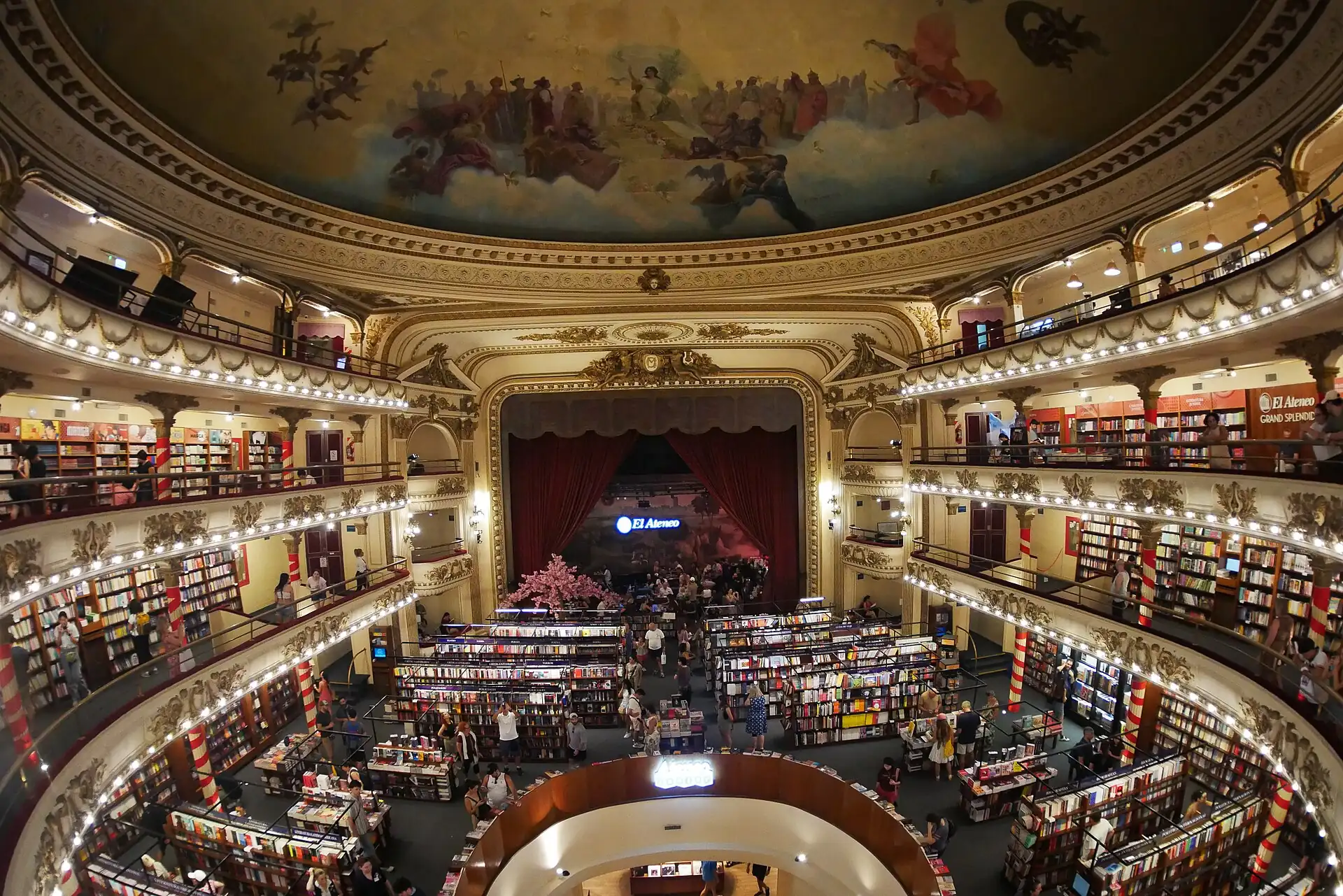
- 17:30El Ateneo Grand Splendid — El Ateneo Grand Splendid
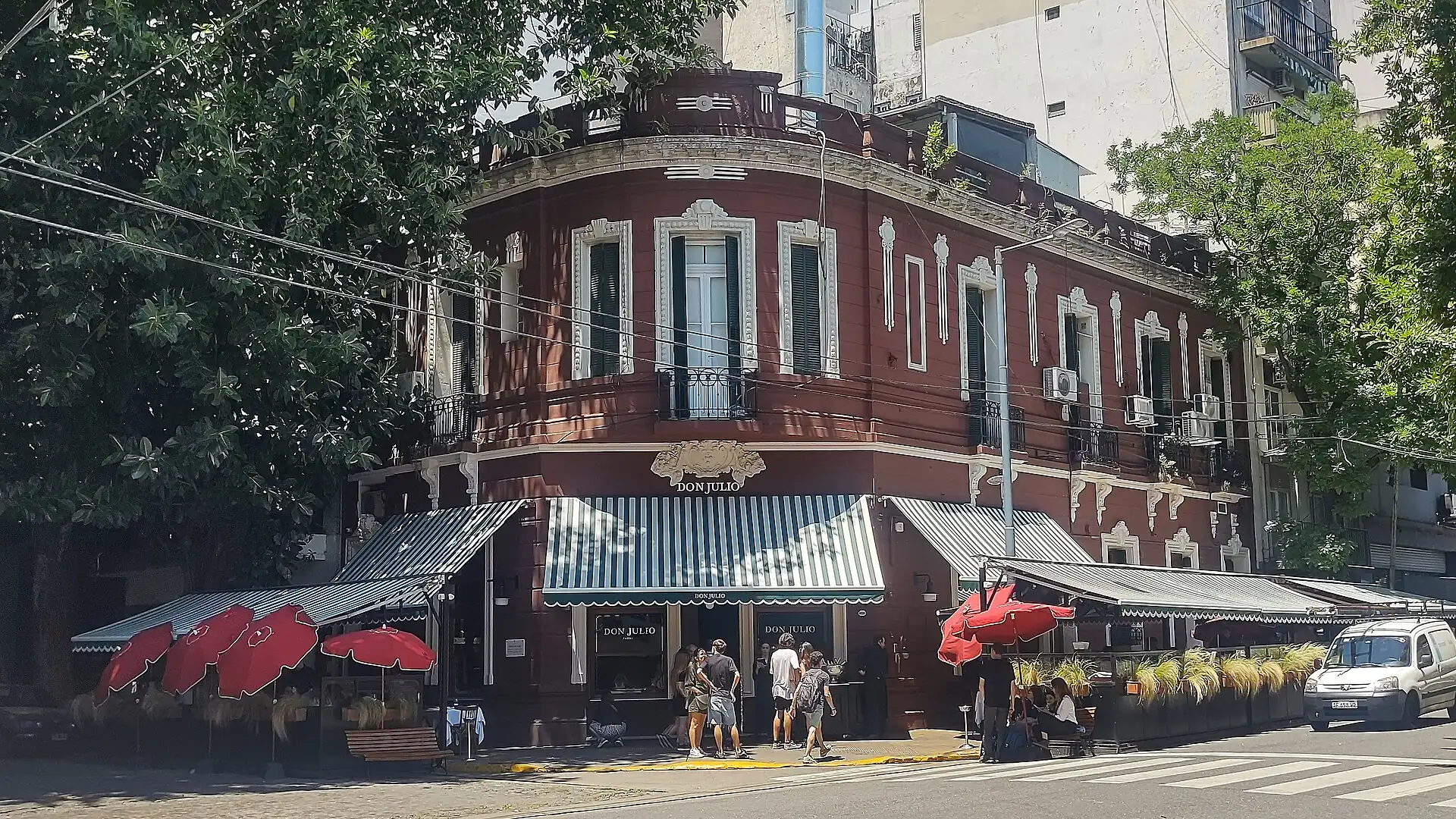
- 21:00Don Julio — Dinner in Palermo Soho
Skip: La Boca and Puerto Madero — both need a dedicated slot, not a rushed add-on.
Buenos Aires in 3 days
3 daysMornings on foot in the historic barrios, a long lunch and a rest through the afternoon, dinner after 21:00; the last day ends with the bags already in the car.
Day by day
Day 1 — Recoleta Cemetery at opening, a 13:00 lunch table
- 09:00Recoleta Cemetery
- 13:00Lunch table 13:00 (Recoleta)
Day 2 — Plaza de Mayo and Café Tortoni
Day 3 — San Telmo market, car to Ezeiza at 12:00
- 08:30San Telmo Market
- 12:00Car to Ezeiza at 12:00
Places
“Best time” is when to arrive for the fewest crowds, for example “before 08:30”; “Go any time” means the hour makes little difference. More sights follow under “More sights and museums”.
8 places. Filters use the guide’s own ratings; a place with no rating is left out when a filter is on.
Show 2 more placesShow fewer
Tours, classes and shows in Buenos Aires →
Things to do in Buenos Aires: shows, nightlife and activities →
If you do ten things in Buenos Aires
Ranked for a first visit of 2-4 days. Prices are 2026 estimates in pesos and should be confirmed locally.
- 1
Marble mausoleums in narrow lanes, including Eva Perón's grave, before the tour groups arrive.
- Time
- 45-75 min
- Best
- At opening
- Cost
- Free
- 2
Plaza de Mayo and the Metropolitan Cathedral
The square where Argentine history keeps happening, plus the church where Pope Francis served as archbishop.
- Time
- 20-40 min
- Best
- Weekday morning
- Cost
- Free
- 3
One of the world's noted opera houses, still close to its 1908 original condition.
- Time
- About 50 min
- Best
- Book a slot a day or two ahead
- Cost
- 2026 estimate; confirm locally
- 4
Caminito and La Boca's football history
Colourful immigrant-era houses steps from Boca Juniors' stadium.
- Time
- 1-1.5 h
- Best
- Daytime, staying within the tourist blocks
- Cost
- Free to walk; stadium tour extra
- 5
San Telmo Market and the Sunday street fair
A cast-iron 1897 market hall, at its liveliest (and most crowded) on Sunday.
- Time
- 30-75 min
- Best
- Weekday morning for quiet, Sunday for the fair
- Cost
- Free to browse
- 6
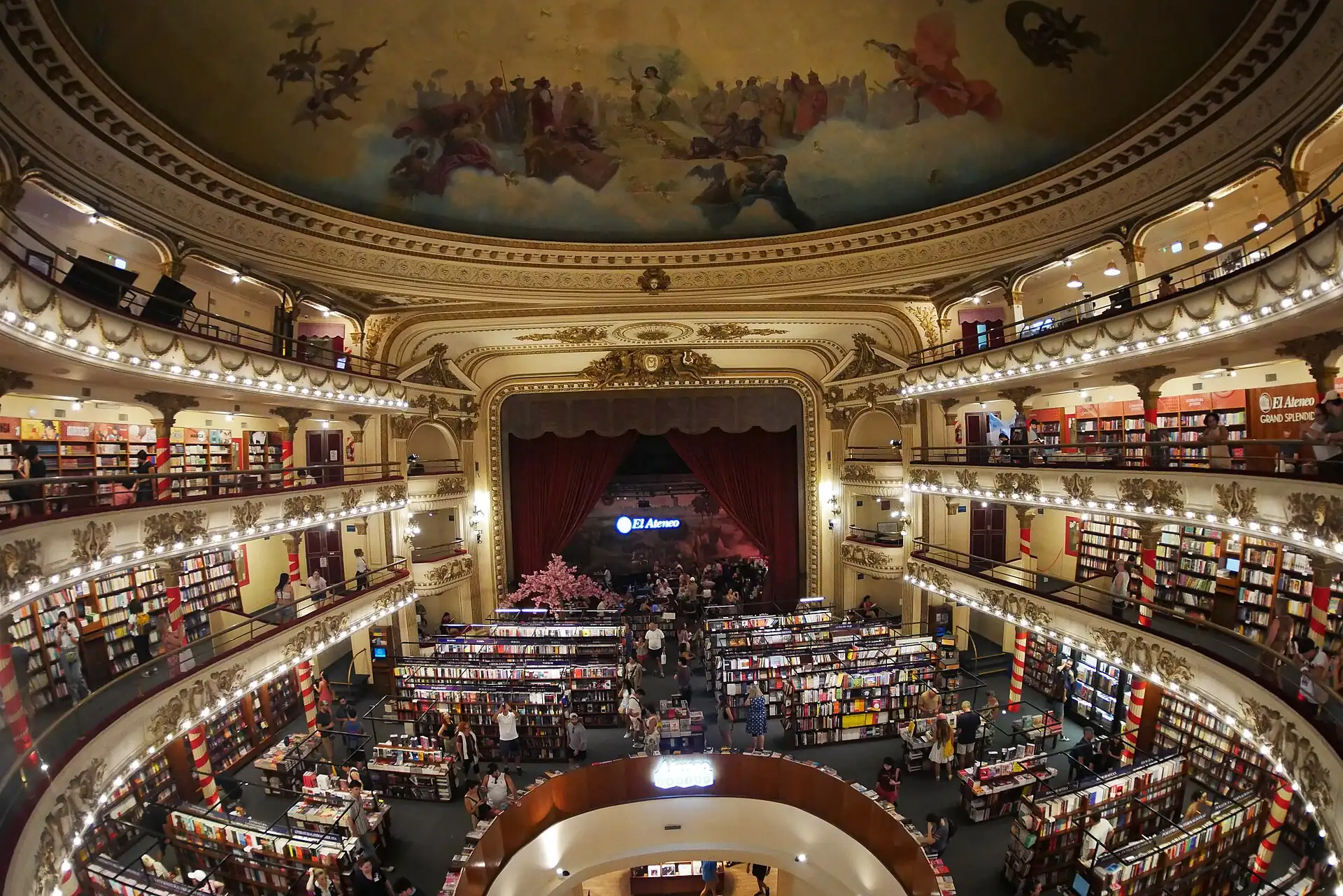
A 1919 theatre converted into a bookshop, stage curtain and boxes intact.
- Time
- 20-30 min
- Best
- Any time
- Cost
- Free to browse
- 7
Converted docks, glass towers and the Puente de la Mujer footbridge.
- Time
- 30-60 min
- Best
- Late afternoon into evening
- Cost
- Free
- 8
Palermo parks and the Japanese Garden
The city's biggest green space, with a calm formal garden inside it.
- Time
- 45-90 min
- Best
- Morning or late afternoon
- Cost
- 2026 estimate for the garden; the wider parks are free
- 9
An asado dinner
The centrepiece of Argentine food culture, best eaten late and unhurried.
- Time
- 1.5-2.5 h
- Best
- From 21:00
- Cost
- 2026 estimate; confirm locally
- 10
A milonga or tango show
Either watch a polished dinner show or see porteños actually dance tango at a social milonga.
- Time
- 1.5-3 h
- Best
- Evening
- Cost
- 2026 estimate; confirm locally
Good for…
Verdict is how well Buenos Aires works for that traveller, not how nice it is.
Walkable barrios, flat streets and a grid layout make orientation easy.
- 1Sleep in Recoleta — quiet, central, walkable to two of the top sights.
- 2Buenos Aires in 3 days — the 3-day plan already covers the four core barrios.
- 3Official taxi counter from the airport — fixed process, no haggling on night one.
A serious steak, pizza and café culture, cheap relative to many capitals when the exchange rate favours visitors.
- 1Don Julio — a well-known Palermo Soho parrilla, book ahead.
- 2Güerrín — century-old Corrientes pizzeria, Buenos Aires-style thick crust.
- 3Café Tortoni — the city's oldest café, coffee and churros.
Meals and transit are inexpensive when the informal exchange rate favours foreign cash, though this moves fast — confirm locally.
- 1Empanada shops — a cheap, filling meal almost anywhere.
- 2SUBE-card subte and buses — cheap fares against a taxi for the same trip.
- 3Free sights — Plaza de Mayo, Caminito's street itself, the parks and El Ateneo's ground floor cost nothing to see.
- 1A Recoleta or Palermo boutique hotel — quiet or lively, depending which you choose.
- 2A late asado dinner — the city's dinner hour rewards a slow, unhurried meal.
- 3A milonga — watching, or trying, a tango lesson together.
- 1A free walking tour on day one — fast orientation and other travellers to compare notes with.
- 2San Telmo hostels — social and central.
- 3A milonga beginner class — an easy way to meet people and try the dance.
Parks and a Tigre day trip work well; late dinners and cobbled streets are the harder parts.
- 1Palermo parks and the Japanese Garden — green space and a calm garden kids can walk through.
- 2Tigre delta boat trip — a full family day out with a fixed-fee amusement park nearby.
- 3Ask restaurants for an earlier table — 21:00 dinners are late for small children; many kitchens will seat you earlier if you ask.9:00 PM dinners are late for small children; many kitchens will seat you earlier if you ask.
Flat streets in the north are easy going; cobbles in San Telmo and long walks in the heat are the strain.
- 1A Recoleta base — wide, flat streets and walkable sights.
- 2Recoleta Cemetery — flat paved lanes, best at opening before crowds and heat build.
- 3Taxi between barrios rather than walking every leg — keeps the day manageable without cutting sights.
- 1A Puerto Madero or Recoleta five-star hotel — door-to-door drop-off and quiet nights.
- 2Don Julio — a destination parrilla worth the higher price and the wait.
- 3A private guide for San Telmo and La Boca — local knowledge on which blocks to skip.
The north of the city is manageable by car and on wide pavements; San Telmo's cobbles and most subte stations are not.
- 1
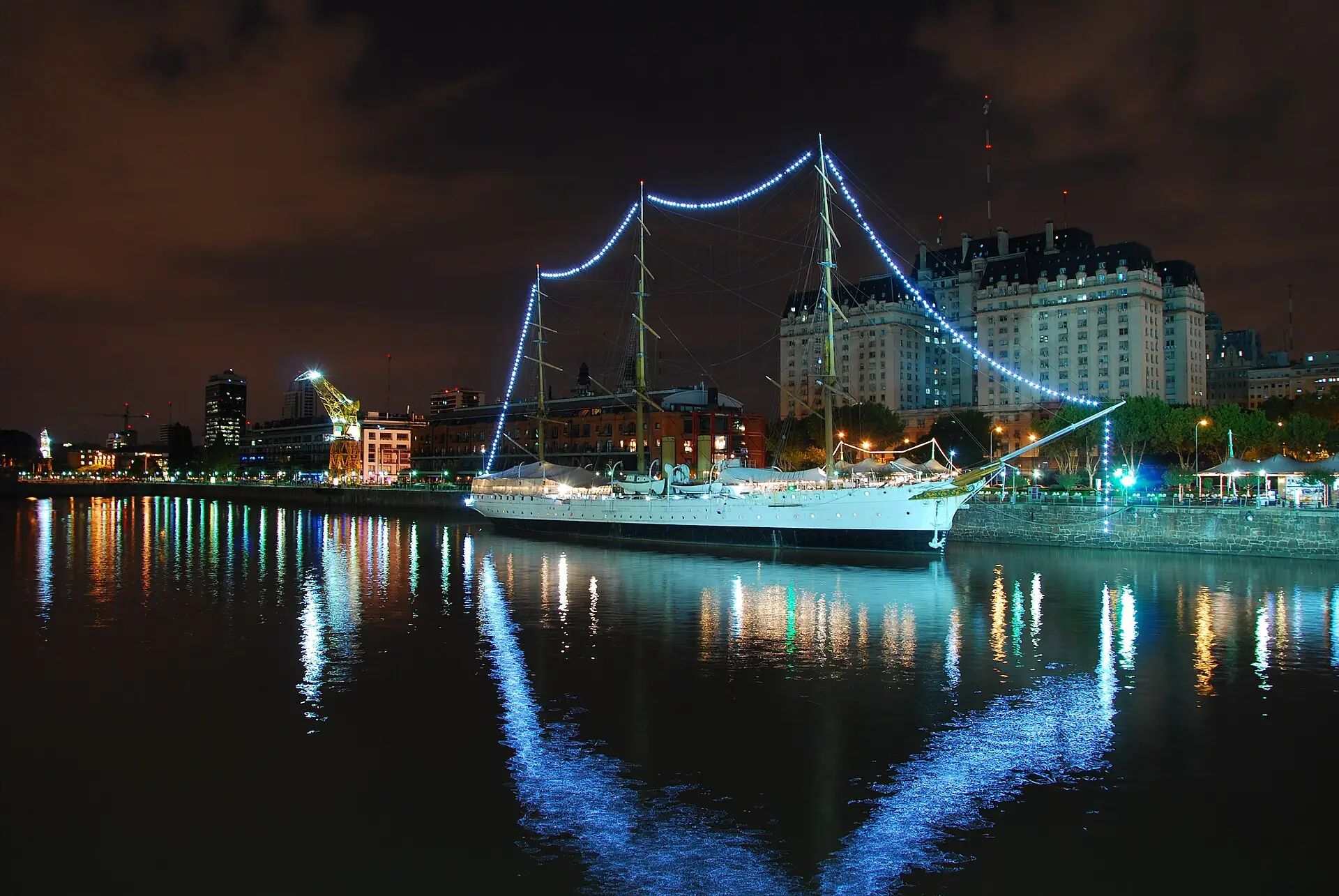 Puerto Madero waterfront — the flattest, most modern paving in the city.
- 2Taxi or ride-hail between every stop — more reliable than the subte, which has step-free access at only some stations.
- 3A large hotel in Recoleta or Puerto Madero — more likely to have a confirmed accessible room and lift.
Tours and classes: book or skip
Book through your hotel or an operator with written inclusions and a cancellation policy. Prices per person, group tour unless stated.
| Tour or class | Verdict | Typical price | Why | Check before paying |
|---|---|---|---|---|
| Free walking tour, historic centre | book | Free, tip-based | Fast orientation on day one, including the money and safety questions everyone has. | Group size and the tip expectation before you go. |
| Football match tour (Boca or River) | book | 2026 estimate; confirm locally | Solves the ticket-access problem for foreigners and adds safe transport for higher-tension fixtures. | Which stadium, transport included, and the operator's safety record. |
| Tango show with dinner | maybe | 2026 estimate; confirm locally | A polished, easy introduction to tango for a first-timer. | Whether dinner quality matches the show price; some venues separate show-only tickets. |
| Milonga with a beginner class | book | 2026 estimate; confirm locally | The real, social version of tango rather than a staged performance. | Whether the class is included or a separate fee, and the dress code. |
| Wine tasting | book | 2026 estimate; confirm locally | An easy, unhurried way to try Argentine wine beyond the restaurant list. | Number of wines poured and whether food is included. |
| Tigre delta boat tour | book | 2026 estimate; confirm locally | A change of pace from the city; easy as a half or full day. | Train ticket included or separate. |
| La Boca / San Telmo guided walk | maybe | 2026 estimate; confirm locally | Local knowledge on exactly which blocks to see and which to skip. | The guide covers both barrios or just one. |
What each season brings
Spring
Sep-Nov
Mild days, jacaranda trees in purple bloom across Recoleta and Palermo; the best walking season.
Watch: Some rain; book ahead around any spring public holiday.
Summer
Dec-Feb
Long evenings, an outdoor café culture at its peak.
Watch: Heat and humidity above 30C; many locals leave the city and some restaurants close for part of January.
Autumn
Mar-May
Mild, pleasant weather similar to spring; fewer crowds.
Watch: Days shorten quickly by May; a light layer for evenings.
Winter
Jun-Aug
Cool and mild rather than cold; the Tango Festival falls in August.
Watch: Damp, grey stretches; pack a warm layer, not a heavy coat.
Photo spots and the light
Light times are for clear days.
| Spot | Best light | Tip |
|---|---|---|
| Caminito's painted houses | Morning, before the crowds build | Shoot down the narrow street itself rather than a single house front. |
| Puente de la Mujer, Puerto Madero | Late afternoon into blue hour | The white cable-stayed footbridge reflects well off the dock water at dusk. |
| El Ateneo's stage and boxes | Any time, indoor | Shoot from the upper boxes looking down at the stage-turned-café. |
| Statues and mausoleum lanes | Morning, soft light through the narrow lanes | Respect mourners and tour groups; do not touch the tombs for a photo. |
| Obelisco at dusk | Blue hour | Shoot from the pedestrian islands on Avenida 9 de Julio, not from the traffic lanes. |
| Palacio Barolo's lighthouse level | Sunset | A 360-degree view over the historic centre; book the tour slot for late afternoon. |
Buenos Aires travel FAQ
Answers are 2026 desk estimates; fares, prices and currency rules marked "confirm locally" change fast.
Is Buenos Aires safe?
Generally yes for violent crime; the common problems are phone and bag snatching, pickpocketing in crowds and taxi overcharging. La Boca outside the Caminito tourist strip is the clearest area to avoid.
What is the "blue dollar" and does it matter for my trip?
It refers to an informal cash exchange rate for US dollars that has, at various times, differed sharply from the official bank rate, driven by Argentina's high inflation and currency controls. Rules and the size of the gap change with government policy, so check the current situation close to your travel dates rather than relying on older advice.
Do I need cash in Buenos Aires?
Cards work in most restaurants, hotels and shops, but carrying some cash (pesos and often US dollars) is common advice given how currency rules have shifted; check the current recommendation before you fly.
Is tap water safe to drink?
Generally yes within the city; ask your hotel if you are ever unsure.
What time do people eat dinner?
Rarely before 21:00, and often later; restaurants that look empty at 19:30 are just early for the local rhythm.Rarely before 9:00 PM, and often later; restaurants that look empty at 7:30 PM are just early for the local rhythm.
How many days do I need in Buenos Aires?
Two full days cover the four core barrios at a fast pace; three is more comfortable, and five adds a day trip to Tigre or Colonia, Uruguay.
Tango show or milonga — which should I do?
A tango show (often with dinner) is a polished, easy-to-book performance for a first visit. A milonga is where locals actually dance socially, sometimes with a beginner class first — go to watch or try a lesson if you want the real thing.
Can I get football tickets as a visitor?
Usually through official club channels or an organised match-day tour rather than at the gate; book ahead, especially for River Plate versus Boca Juniors.
How much should I tip?
Around 10% in restaurants is appreciated but not always expected or automatically added; round up for taxis.
Is La Boca safe to visit?
The few blocks around Caminito and the stadium are a normal daytime tourist stop; the surrounding barrio has a reputation for street robbery and is best avoided, especially on foot and after dark.
What is the best area to stay?
Recoleta for a quiet, central first visit; Palermo Soho or Hollywood for restaurants and nightlife; San Telmo for budget stays close to the historic centre.
Is Buenos Aires good value?
It depends heavily on the current exchange-rate situation, which has swung a great deal in recent years; confirm current pricing rather than assuming an old guidebook's numbers still apply.
More to see and doSee & do · Learn & work · Rain & heat · Free things · Wheelchair and stroller
Free things to do
Sights in Buenos Aires that cost nothing to enter. Each is described under Places or More sights; extra costs inside are marked there.
Wheelchair and stroller, place by place
How each place in this guide works for wheels, from its own page. Ratings are desk estimates unless a page says it was checked on the ground.
| Place | Step-free | Wheelchair | Stroller | What to know |
|---|---|---|---|---|
| Caminito and La Boca | yes | ok | caution | Flat pedestrian street; cobbles in places. No barriers to a wheelchair on the main stretch. |
| El Ateneo Grand Splendid | partial | caution | caution | A few steps at the entrance and between levels; ask staff about the easiest route if using a wheelchair. |
| Palermo parks and the Japanese Garden | yes | ok | ok | Flat gravel and paved paths throughout both the Japanese Garden and the wider parks. |
| Metropolitan Cathedral (Plaza de Mayo) | partial | caution | ok | A few steps at the main entrance; the interior floor is flat. |
| Puerto Madero waterfront | yes | ok | ok | Flat, paved promenade throughout; the Women's Bridge has a ramp as well as steps. |
| Recoleta Cemetery | partial | caution | caution | Paved but uneven lanes between mausoleums, with a few steps at the main gate. |
| San Telmo Market | partial | caution | caution | Level floor inside the hall; the surrounding streets are cobbled. |
| Teatro Colón | partial | caution | caution | Lifts serve the main levels; some backstage areas on the technical tour involve stairs — ask for the step-free route when booking. |
See & do
25 of 25
The cathedral where Pope Francis served as archbishop before 2013, on the square where Argentine history keeps happening.
Plaza de Mayo
Casa Rosada (presidential palace)
governmentThe pink presidential palace behind Plaza de Mayo, famous from Evita's balcony speeches.
Plaza de Mayo · Free to view from outside; some guided tours of the interior on weekends (check)(check)
Cabildo
Citadel & old cityThe colonial town-hall building where the 1810 revolution's events unfolded; a small museum inside.
Plaza de Mayo · 2026 estimate; confirm locally(check)
- theatre
One of the world's noted opera houses; visit on a guided tour or, better, a performance.
Plaza de Mayo
- cemetery
Marble mausoleums packed into narrow lanes; Eva Perón is buried in the Duarte family tomb.
Recoleta
A 1919 theatre converted into a bookshop, stage and boxes intact.
Recoleta
A quiet garden inside the larger Palermo parks (Bosques de Palermo); the Rosedal rose garden and the planetarium are close by.
Palermo
Rosedal (rose garden)
parkA large rose garden inside the Palermo parks, with a small lake and Greek-style bridge.
Palermo · Free
MALBA
MuseumsLatin American art collection in a modern building; the city's leading art museum.
Palermo · 2026 estimate; confirm locally(check)
- Neighbourhoods
Colourful corrugated-metal houses on a short pedestrian street, steps from Boca Juniors' stadium.
La Boca
Estadio Alberto J. Armando ("La Bombonera")
SportBoca Juniors' stadium; the museum and tour run even on non-match days, a safer way to see it than wandering the surrounding streets alone.
La Boca · Museum and stadium tour, 2026 estimate; confirm locally(check)
- Markets
A cast-iron 1897 market hall; quiet on weekdays, packed with the antiques fair on Sundays.
San Telmo
- waterfront
Converted dockside warehouses and glass towers around the Puente de la Mujer footbridge.
Puerto Madero
Congreso Nacional (Palacio del Congreso)
governmentThe domed national congress building, facing the Plaza del Congreso and its monument.
Congreso · Free to view from outside; interior tours some days (check)(check)
Palacio Barolo
Citadel & old cityA Dante-themed early-20th-century tower on Avenida de Mayo; the tour climbs to a lighthouse-level view over the city.
Congreso · Guided tour, 2026 estimate; confirm locally(check)
Centro Cultural Kirchner (CCK)
cultureA former central post office turned into one of the largest cultural centres in Latin America.
Retiro · Often free; check current exhibitions and any ticketed events(check)
Obelisco and Avenida 9 de Julio
landmarkThe city's best-known monument, on an avenue often described as among the widest in the world.
Microcentro · Free
Football match (Boca Juniors or River Plate)
SportTickets for foreigners are usually sold through official club channels or organised match-day tour packages rather than at the gate; book ahead and travel with the tour for the "Superclásico" and other high-tension fixtures.
La Boca / Núñez · 2026 estimate; confirm locally(check)
Tango show (dinner show)
Shows & musicA staged, polished performance aimed at visitors, usually with dinner included; the easiest way to see tango danced well in one evening.
San Telmo / Abasto · 2026 estimate; confirm locally
Milonga (social tango dance hall)
danceWhere porteños actually dance tango; some run beginner classes before the floor opens to experienced dancers. A different experience from a tourist dinner show — go to watch or to try a lesson.
San Telmo, Almagro and elsewhere · Entry, 2026 estimate; confirm locally
Asado or parrilla dinner
foodThe centrepiece of Argentine food culture: grilled beef, often several cuts over one meal, eaten late.
Palermo and citywide · 2026 estimate; confirm locally
Wine tasting
drinkVinotecas and wine bars run tastings focused on Mendoza Malbec and other Argentine regions.
Palermo and citywide · 2026 estimate; confirm locally
Tigre delta boat trip
natureA short train ride to a river town, then a boat through the delta's channels and stilt houses.
Tigre (day trip) · Train fare plus boat ticket, 2026 estimate; confirm locally
Free walking tour
tourA common way to get oriented on day one; confirm the meeting point and tip expectation before you go.
Historic centre · Free, tip-based
Feria de Mataderos (gaucho folklore fair)
cultureFolk dancing, horse displays and regional food in a working-class barrio outside the centre; go by organised transport.
Mataderos (outer barrio) · Free to enter; food and crafts extra(check)
- Booking
- Tango shows, football match packages and popular restaurants can sell out around holidays and the August Tango Festival; book a few days ahead where possible.
Learn & work
| What | Where | Cost | Note |
|---|---|---|---|
| Spanish language schools | Concentrated in Palermo, Recoleta and San Telmo | 2026 estimate; confirm locally | Group and private classes are widely available; many schools also offer tango or cooking add-ons. |
| Tango classes | Dance studios and milongas citywide, especially San Telmo and Almagro | 2026 estimate; confirm locally | Many milongas run a beginner class before the social dancing starts. |
| Cooking classes (asado, empanadas) | Cooking schools in Palermo and Recoleta | 2026 estimate; confirm locally |
Working here
- Tourist entry
- Visa-free entry length varies by nationality and has changed over time; check current rules for your passport before you fly. Tourist entry does not permit paid work.
- Digital nomad / remote-work visa
- Argentina has introduced a visa category aimed at remote workers; requirements and current status change, so check the latest rules if this applies to you.
- Work permit
- Legal employment needs an employer-sponsored process; expect document legalisation requirements similar to other South American countries.
Rain-day and heat-day plan
Rain day
Rain can arrive in any season without a strong pattern; keep a compact umbrella and have an indoor backup (a museum, El Ateneo, a mall) ready for any outdoor plan.
- 01El Ateneo Grand Splendid — A former theatre turned bookshop; browsing works well as a wet-weather stop.
- 02Teatro Colón — The guided tour is entirely indoors.
- 03MALBA (Museo de Arte Latinoamericano de Buenos Aires) — Latin American art collection in Palermo; a solid rain-day museum.
Heat day
Above about 30C (Dec-Feb): plan outdoor sights before 11:00 and after 17:00, with an air-conditioned break at midday.
- 09:00Recoleta Cemetery — Shaded lanes and quiet before the day heats up.
- 11:00El Ateneo Grand Splendid — Air-conditioned indoor break for the hottest hours.
- 17:30Puerto Madero waterfront — A breeze off the water as the heat eases.
Day-trips and nearby
Places you can reach from Buenos Aires in a day or with one night away, with the route and what it costs. Door to door, not ride time.
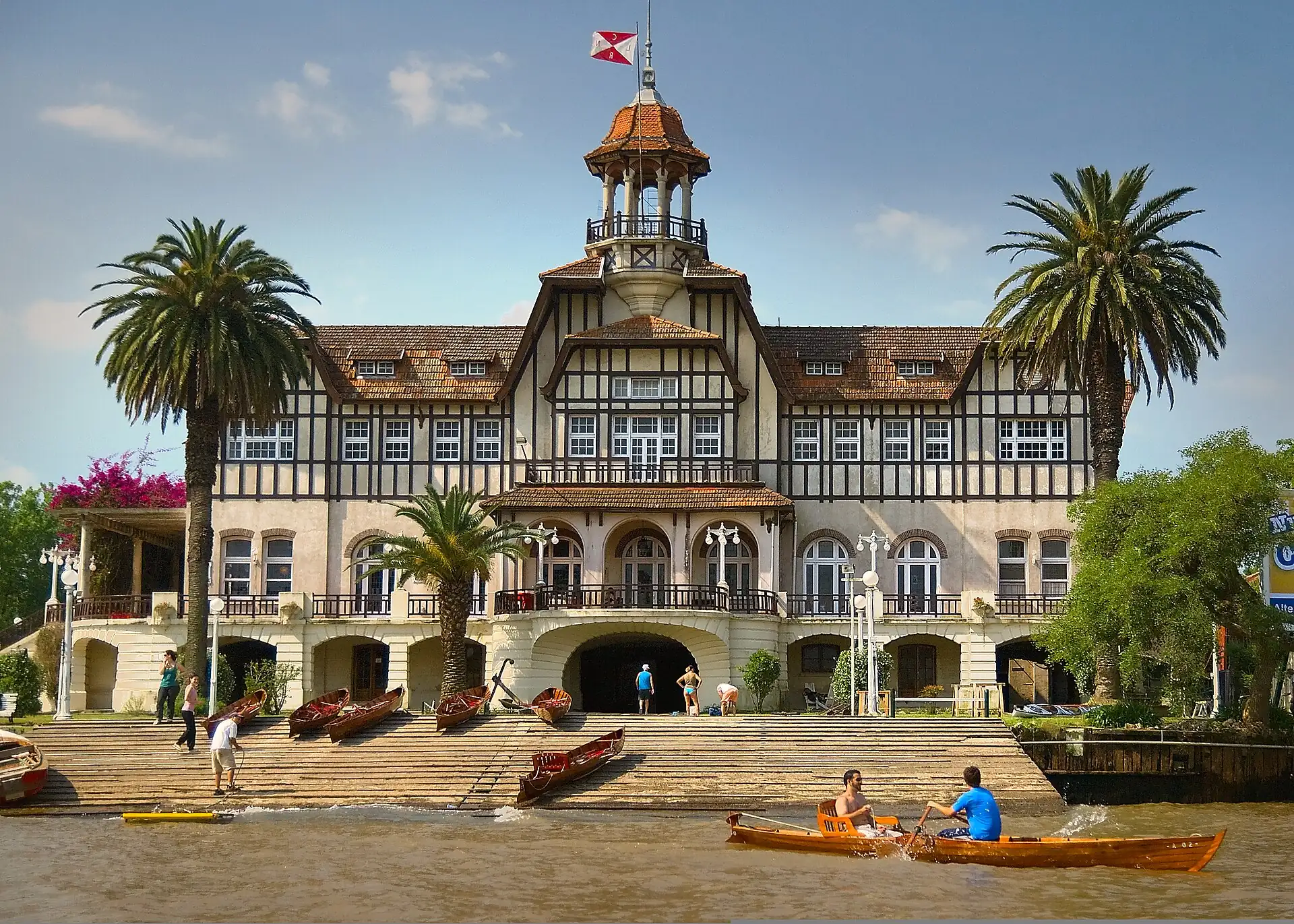 Photo: longhorndave (David), CC BY 2.0
Tigre delta
goSuburban train, about 1 hour, then a boat
River channels, stilt houses and a fixed-fee amusement park; an easy change of pace from the city.
- Time
- Half or full day
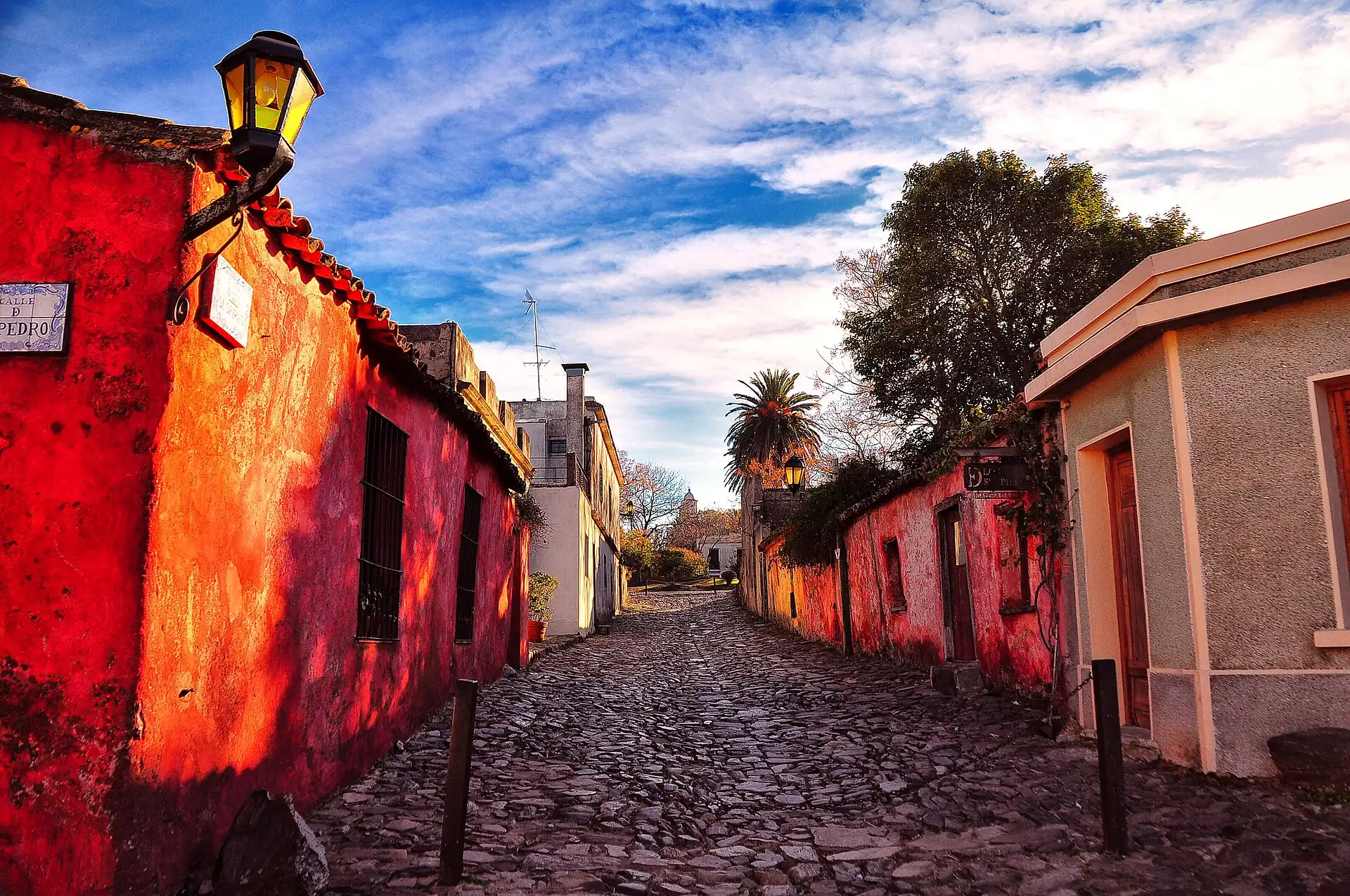 Photo: Rod Waddington from Kergunyah, Australia, CC BY-SA 2.0
Colonia del Sacramento, Uruguay
goFast ferry from Puerto Madero, about 1 hour
A UNESCO-listed colonial old town; check current passport and entry requirements for crossing into Uruguay.
- Time
- Full day or overnight
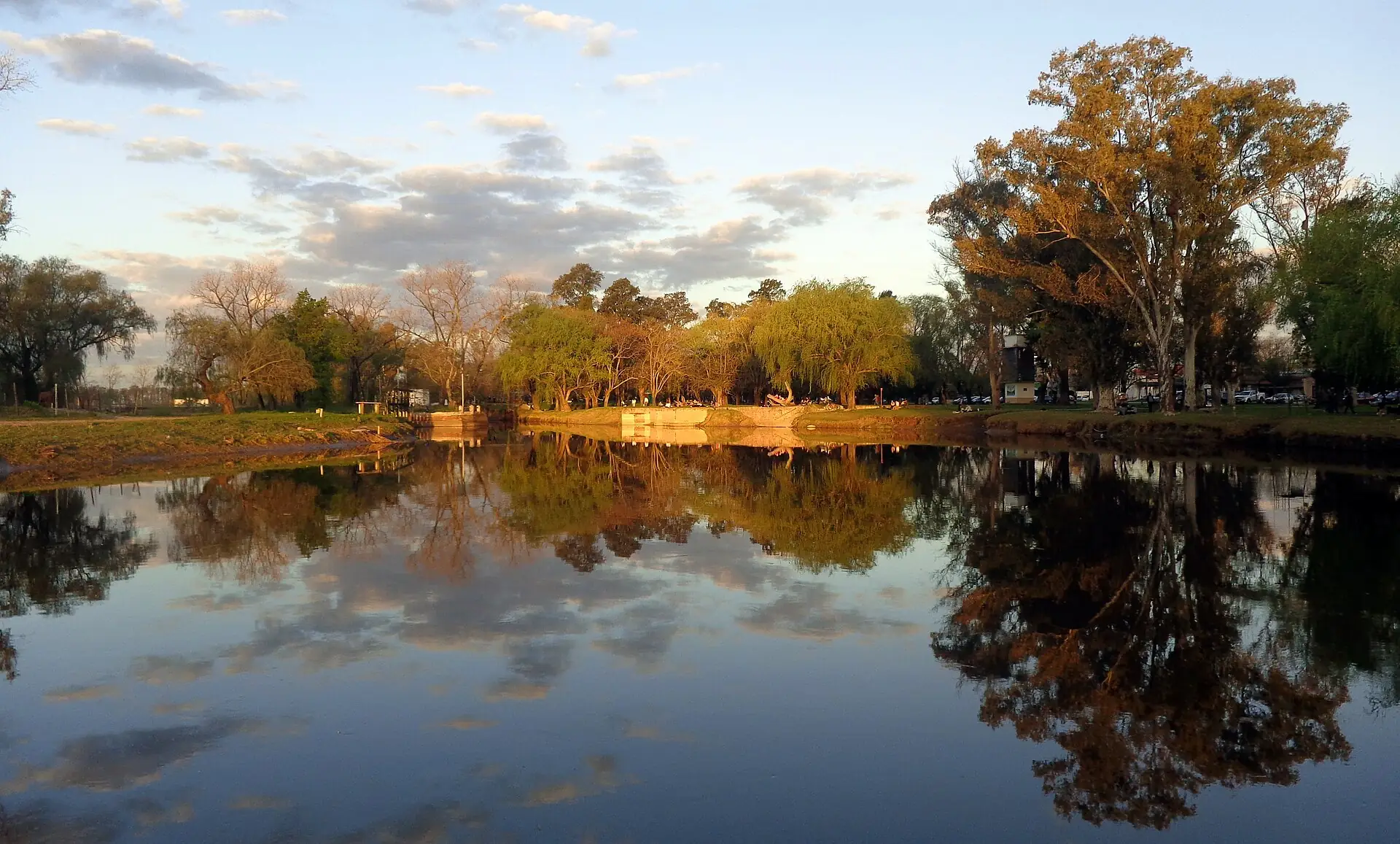 Photo: Roberto Fiadone, CC BY-SA 4.0
San Antonio de Areco
goCar or bus, about 2 hours
A gaucho (cowboy) heritage town with silversmiths and a traditional atmosphere; better with a car or an organised tour.
- Time
- Full day
La Plata
goTrain or car, about 1-1.5 hours
The provincial capital, with a notable cathedral and a well-regarded natural-history museum.
- Time
- Full day
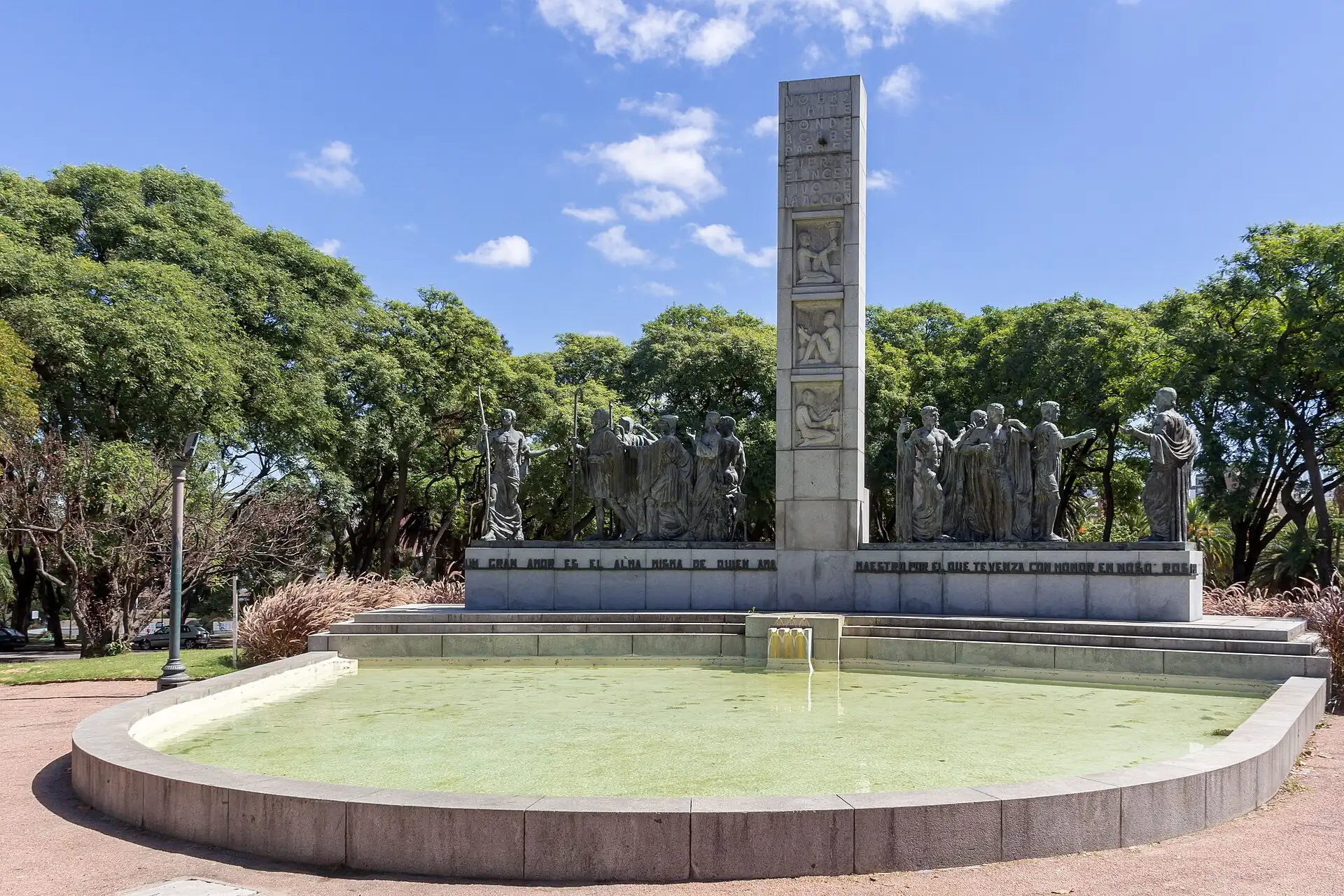 Photo: Photograph by Mike Peel ( www.mikepeel.net )., CC BY-SA 4.0
Montevideo, Uruguay
overnightDirect ferry, about 2-3 hours, or ferry-plus-bus via Colonia
Uruguay's capital; combine with Colonia if you have more than a day.
- Time
- Best as an overnight, not a rushed day trip
Go next
Door to door: About 3-3.5 h airport to falls
Flight, about 2 h
One of the largest waterfall systems in the world; needs at least two nights to see both the Argentine and Brazilian sides.
Door to door: About 3 h
Flight, about 2 h
The source of most of the Malbec on Buenos Aires wine lists; wineries need a car or a tour.
Door to door: About 3.5 h
Flight, about 2-2.5 h
Lake district and mountains; a different country in feel from Buenos Aires, worth several nights.
Eat & sleepWhere to eat and which area to sleep in
Eat & sleep
Where to eat and which area to sleep in
Eat
A short list of places worth crossing the city for, each with how to get a seat.
Restaurant finder: filter every place to eat in Buenos Aires →
Vegetarian-friendly score
1.5 / 5 · Hard work
- Country diet noteOur country guide rates vegetarian eating as hard.0 / 2
- Places to eat in this guide3 of 5 places with a known answer are vegetarian-friendly, 2 partly.1.2 / 1.5
- Budget eating lines0 vegetarian lines in "Eat by budget".0 / 0.6
- Meat-free national dishes5 meat-free dishes in the country food list.0.4 / 0.4
- Dedicated vegetarian kitchens0 mentions of vegetarian restaurants, Buddhist or fasting kitchens.0 / 0.5
Country note: Harder outside Buenos Aires; parrillas have salads and provoleta (grilled cheese).
Vegetarian places near me →Make a diet card →
How we score
- Country diet note (up to 2): easy 2, workable 1, mixed 0.75, hard 0; no note 0.5.
- City places to eat (up to 1.5): 1.5 × (vegetarian-friendly + half of partly friendly) ÷ places with a known answer; needs 3 or more known places.
- Budget eating lines marked vegetarian (up to 0.6): 0.2 each.
- Meat-free national dishes (up to 0.4): 0.1 each.
- Dedicated vegetarian kitchens mentioned — Buddhist chay, shōjin ryōri, Jain, fasting food, vegan cafés (up to 0.5): 0.1 each.
- Total rounded to the nearest half point, 0 to 5. Built from our own pages only, not from reviews.
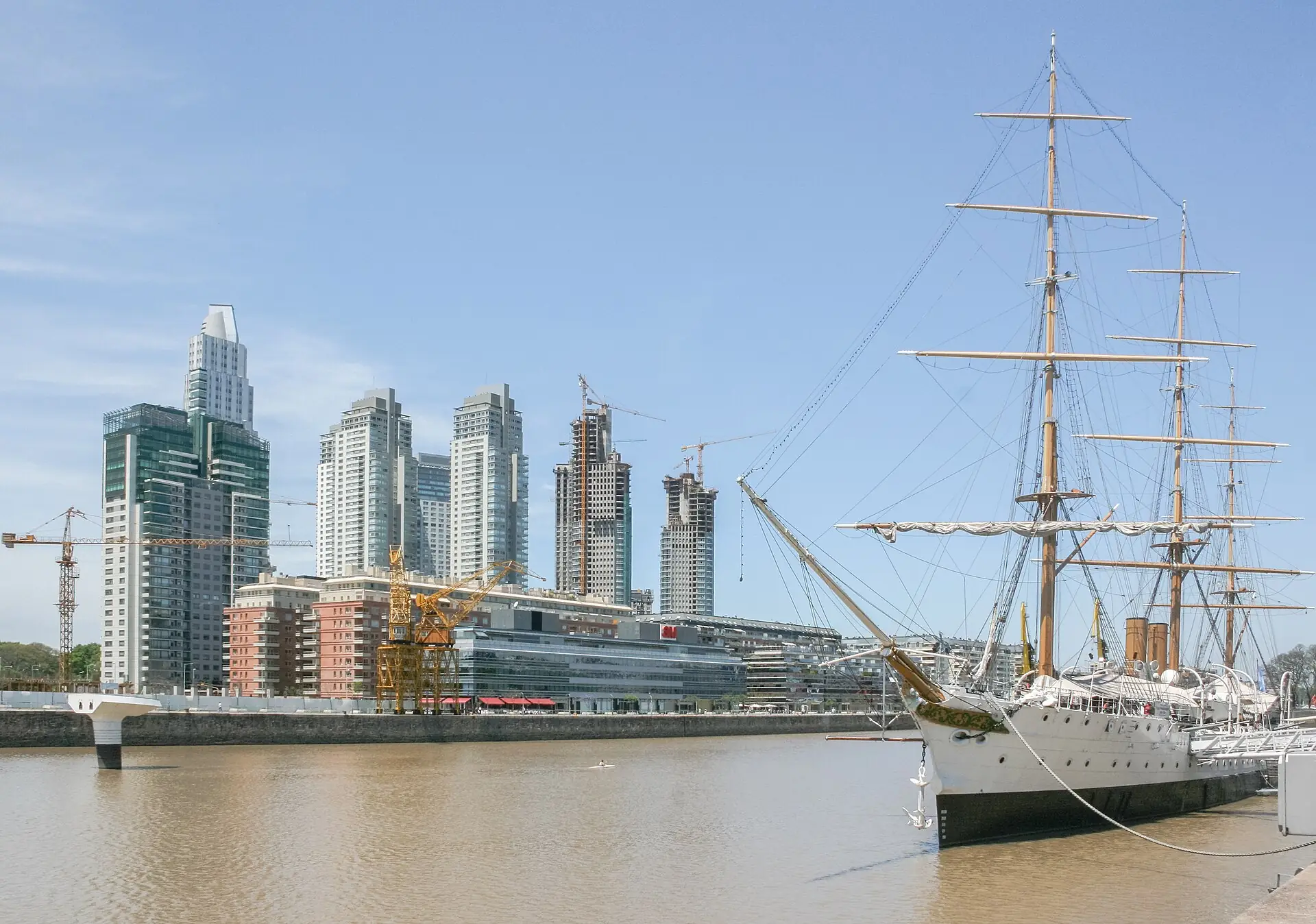
Eating and drinking guideEat by budget · Drink
Eat by budget
2026 estimate; confirm locally
| Where | Order | Area | Price | Note |
|---|---|---|---|---|
| Güerrín | Muzzarella or fugazzeta pizza slice | Avenida Corrientes | 2026 estimate; confirm locally | Eat standing at the counter for the fastest, cheapest option. |
| Empanada shops and bakeries | Empanadas (beef, chicken, ham and cheese) | Citywide | 2026 estimate; confirm locally | A reliable cheap lunch anywhere in the city. |
| El Sanjuanino | Empanadas and tamales | Recoleta | 2026 estimate; confirm locally | |
| Choripán stands | Choripán (grilled sausage sandwich) | Street stalls, parks, football match days | 2026 estimate; confirm locally | A quick standing snack, often sold from a cart. |
Dishes to know
| Dish | What it is | Where to look | When | Price |
|---|---|---|---|---|
| Asado / parrilla | Grilled beef, often several cuts over a long meal | Parrillas citywide | Lunch or, more often, a late dinner | 2026 estimate; confirm locally |
| Empanadas | Baked or fried pastry parcels, usually beef, chicken, or ham and cheese | Bakeries and empanada shops everywhere | Any time | 2026 estimate; confirm locally |
| Milanesa | A breaded, fried cutlet (beef or chicken), often served "a caballo" with a fried egg on top | Almost any casual restaurant | Lunch or dinner | 2026 estimate; confirm locally |
| Fugazzeta | Thick-crust onion-and-cheese pizza, a Buenos Aires original | Pizzerias on Avenida Corrientes and citywide | Any time | 2026 estimate; confirm locally |
| Dulce de leche | Caramelised milk spread, used in alfajores, cakes and on toast | Everywhere, from bakeries to supermarkets | Any time | 2026 estimate; confirm locally |
| Alfajores | Two soft biscuits sandwiching dulce de leche, often coated in chocolate | Bakeries, kiosks, supermarkets | Any time | 2026 estimate; confirm locally |
| Mate | A bitter herbal infusion drunk from a shared gourd through a metal straw; more a ritual than a café order | A home or park ritual rather than something you typically buy in a café | Any time, especially afternoons in a park | A bag of yerba mate from a supermarket, 2026 estimate; confirm locally |
- Dinner rarely starts before 21:00; a restaurant that looks empty at 19:30 is not necessarily bad, it is just early.Dinner rarely starts before 9:00 PM; a restaurant that looks empty at 7:30 PM is not necessarily bad, it is just early.
- Bread and a cover charge ("cubierto") are sometimes added automatically to the bill; check the menu or ask before you assume it is free.
- Ask "me traés la carta de vinos?" for the wine list; a good glass of Malbec is affordable relative to many other capitals.
Drink & nightlife
| Where | What | Until | Note |
|---|---|---|---|
| Palermo Soho and Palermo Hollywood bars | Cocktail bars, craft beer, late dinners | Late; weekends run past 02:00Late; weekends run past 2:00 AM | The densest concentration of bars and restaurants in the city. |
| San Telmo tango bars and cafés | Wine, beer, live tango on some nights | Varies by venue | Mix of tourist-oriented and neighbourhood spots; check which before committing to a dinner show. |
| Recoleta cafés (La Biela and others) | Coffee, wine, an old-money atmosphere | Evening | Quieter and more expensive than Palermo. |
| Puerto Madero waterfront bars | Cocktails with a view | Late | Smart-casual and pricier than elsewhere; a pleasant evening walk either way. |
By style
| Style | What | Where | Price | Until |
|---|---|---|---|---|
| Fernet con Coca | Fernet-Branca (a bitter Italian digestif) mixed with cola, the city's signature drinkAn acquired, strongly bitter taste; order it once to say you did even if you do not finish it. | Almost any bar | 2026 estimate; confirm locally | Evening onward |
| Malbec and other Argentine wine | Mendoza reds dominate the list; whites and sparkling from other regions also commonGood wine by the glass is affordable relative to many other capitals; ask staff for a by-the-glass recommendation. | Vinotecas, wine bars, most restaurants | 2026 estimate; confirm locally | Any time |
| Café con leche and medialunas | Milky coffee with small sweet croissants, the standard breakfastA café can be sat in for hours without pressure to order more; a Buenos Aires habit, not a tourist trap. | Any café | 2026 estimate; confirm locally | Morning through afternoon |
| Craft beer | A growing scene of independent breweries | Palermo, Chacarita, some Belgrano spots | 2026 estimate; confirm locally | — |
Rules that bite
- Drink-driving limits are low in Argentina; use a taxi or ride-hailing car rather than driving after drinking.
- Nightlife runs very late by international standards; pace yourself if you also want an early museum morning.
Sleep
Pick the area first: it decides your walk home at night and your first morning.
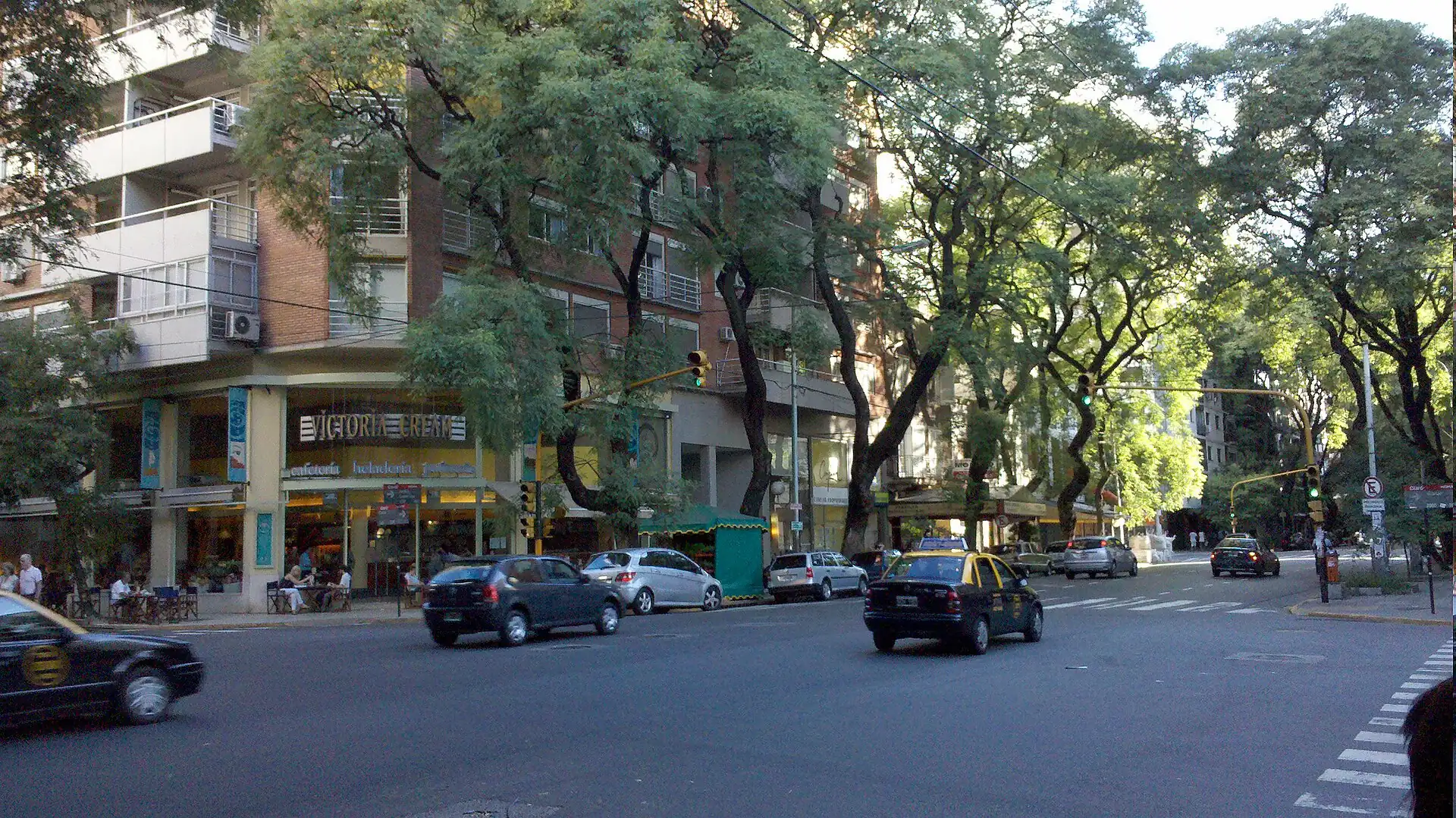
Which neighborhood fits you
Three questions, one recommendation, with the reasons.
Your best fit
- Cemetery, Plaza Francia, El Ateneo and La Biela all within walking distance.
- The calmest of the main sleep areas; few late bars on the doorstep.
- Larger hotels keep a night desk; confirm for smaller ones.
Watch out: Mostly mid-range and upmarket; few budget beds.
Next best: San Telmo · Palermo Soho
Built from our 1–5 desk scores per area; your answers stay in this browser.
More on sleepingSleep by budget · Your area · With kids
Sleep by budget
| Band | Price | Where | Room types | What to expect |
|---|---|---|---|---|
| budget | 2026 estimate; confirm locally | San Telmo, Congreso | Hostels, budget guesthouses | Cobbled or busy streets, mixed room quality; check reviews for noise. |
| mid | 2026 estimate; confirm locally | Recoleta | Apartment-style hotels, 3-4 star chains | Wide streets, lifts, breakfast included at many properties. |
| mid | 2026 estimate; confirm locally | Palermo Soho / Hollywood | Boutique and design hotels, serviced apartments | The best base for restaurants and nightlife; some properties are small buildings with stairs. |
| splurge | 2026 estimate; confirm locally | Recoleta, Puerto Madero | International chains, design hotels | Pools, spas, door-to-door drop-off. |
Booking checks
- Ask whether breakfast and Wi-Fi are included; some budget properties charge extra for both.
- Confirm whether the hotel or host can accept payment in the currency and method you plan to use, given how currency rules have shifted in recent years.
- Upper floors in Palermo Soho can be noisy on weekend nights; ask for a back-facing room if you want quiet.
Which area is yours
| If you are | Sleep in | Because |
|---|---|---|
| First visit, want quiet nights and museums | Recoleta | Walkable to the cemetery and El Ateneo, a short taxi from everything else. |
| Restaurants, bars, a longer stay | Palermo Soho | The widest choice of places to eat and drink, at the cost of quiet nights. |
| Budget travellers, antiques and tango bars | San Telmo | Cheaper beds and close to the historic centre, busiest on Sundays. |
01Recoleta
Leafy, safe-feeling and central: the cemetery is a walk, the subte and taxis are close, and hotels here have a 24-hour desk; the price is higher than San Telmo.
Restaurants, bars and shops at the door; livelier at night, so ask for a room away from the street.
Cobbled streets are hard on wheels; car to the door still works.
Areas are in our default order until you tick a priority.
Scores are 1-5 desk judgements per priority (2026). San Telmo and La Boca have no sleep-area page yet; they link to the districts table.
With kids
- Cobbled streets in San Telmo and parts of Recoleta are hard on a stroller; a soft carrier travels better.
- Palermo's parks, the Japanese Garden and the Rosedal (rose garden) are the easiest outdoor spaces for children.
- The planetarium (Planetario Galileo Galilei) in Palermo is a popular rainy-day stop for families; check current show times.
- Tigre, a short train ride north, has a fixed-fee amusement park (Parque de la Costa) and river-boat rides that work well as a family day out.
- Dinner starting at 21:00 is a late night for small children; many restaurants are used to earlier family dinners too, so ask.Dinner starting at 9:00 PM is a late night for small children; many restaurants are used to earlier family dinners too, so ask.
PracticalMoney, essentials, safety and the pocket card
Practical
Money, essentials, safety and the pocket card
Money
What a day costs at three comfort levels, and how to pay.
- Budget
- ARS 40,000–80,000 excl. bed (prices move fast) / day
- Mid
- ARS 80,000–180,000 excl. bed (prices move fast) / day
- High
- ARS 180,000+ excl. bed (prices move fast) / day
- Transit card
- Subte and buses use a SUBE card; taxis and ride-hailing cover the rest, and walking covers each barrio.
- Cash rule
- Check current exchange and ATM rules before you fly; carry some pesos in small notes for cafés, kiosks and taxis, and use ATMs inside banks, not on the street.
More on moneyBudget · Buy
Trip budget
| Hotel double room1 × 4 nights × ARS 90,000 | ARS 360,000 |
| Food, local transport, entries2 × 4 days × ARS 100,000 | ARS 800,000 |
| Airport car, both ways1 × ARS 140,000 · One car per 4 people; confirm the current fare before you fly. | ARS 140,000 |
| eSIM or tourist SIM2 × ARS 15,000 | ARS 30,000 |
| Buffer 15%Price creep, a taxi you did not plan, one splurge | ARS 199,500 |
| Trip total≈ ARS 191,200 per person per day, bed included | ARS 1,529,500 |
2026 estimate in Argentine pesos (ARS); confirm locally given Argentina's inflation and the gap between official and informal exchange rates. Flights, visas and tours excluded. Your choices stay in this browser.
Prices of common things
| Empanada (each) | 2026 estimate; confirm locally |
2026 estimate; check locally.
Buy
- Bargaining
- Shops and supermarkets have fixed prices; light haggling is normal only at flea markets like San Telmo's Sunday fair, and mostly on multiple items, not a single souvenir.
- Fixed-price check
- Leather goods, wine and mate gear are sold at similar prices across many shops; compare two or three before buying anything expensive.
Markets and shopping streets
| Where | What | When | Haggle | Note |
|---|---|---|---|---|
| Feria de San Telmo (Defensa street and Plaza Dorrego) | Antiques, tango records, leather, crafts, street performers | Sundays, roughly 10:00-17:00 (check)Sundays, roughly 10:00 AM-5:00 PM (check) | light | The single most visited street fair; also the most watched-for pickpockets, so keep bags in front. |
| Feria de Mataderos | Gaucho crafts, folklore music and dance, regional food | Weekends, afternoon into evening (check) | light | A working-class barrio well outside the centre; go by organised transport or taxi, not on foot. |
| Plaza Francia craft fair (Recoleta) | Handmade jewellery, leather, art | Weekends (check) | light | Steps from the cemetery; easy to combine with a Recoleta morning. |
| Palermo Hollywood/Soho weekend fairs | Design, clothing, jewellery from local makers | Weekends (check) | no | Smaller and more design-focused than San Telmo's fair. |
Shops by what they sell
| For | Where | Hours | Note |
|---|---|---|---|
| Leather goods (jackets, bags, wallets) | Florida street (Microcentro), Recoleta, and dedicated leather districts (check current locations) | Typically 10:00-20:00 | Quality and price vary widely; a known chain store is a safer bet than a street tout offering a "factory price". |
| Wine (mostly Mendoza Malbec) | Specialist wine shops (vinotecas) in Palermo and Recoleta; supermarkets for everyday bottles | Shop hours | Export-quality bottles are often cheaper here than abroad; a vinoteca clerk will steer you by budget. |
| Mate gear (gourd, bombilla, yerba) | Souvenir shops and supermarkets citywide | Shop hours | A supermarket bag of yerba mate is a cheap, easy souvenir; the gourd and metal straw sets range widely in price and quality. |
| Malls (AC, fixed prices) | Galerías Pacífico (Microcentro), Alto Palermo, Patio Bullrich (Recoleta) | About 10:00-21:00 or 22:00 | The rain-day and heat-day option; Galerías Pacífico is worth a look for the painted dome alone. |
Changing money
| Where | Verdict | Why |
|---|---|---|
| Banks and licensed exchange houses (casas de cambio) | use | The legal, traceable option; rates and rules around currency exchange have changed repeatedly in recent years, so check the current situation before you fly and again on arrival. |
| Cards and card-linked apps | caution | Some cards get a poor "official" conversion rate that lags well behind cash rates; research which cards or apps give a competitive rate for Argentina before travelling (2026 estimate, confirm locally given how fast this changes with inflation). |
| Street or informal cash changers ("arbolitos", "cuevas") | caution | Historically offered a much better rate than banks during periods of currency controls (the informal "blue dollar" rate); legality and the gap to the official rate change with policy, so this needs a current, local check rather than advice from an old guidebook. If you use one, count every note before handing over cash and expect counterfeit-note risk. |
| Hotel front desk | caution | Convenient but usually a worse rate than a bank or licensed exchange house. |
ATMs
- Per withdrawal
- Peso ATM limits are often set low relative to prices because of inflation, so you may need several withdrawals for one outing; the screen shows the maximum (2026 estimate, confirm locally).
- Fees
- Local ATM fees plus your home bank's foreign-transaction fee can add up fast; bringing some US dollars in cash as a backup is common advice for Argentina, but check current rules on declaring cash at the border.
- Where
- Machines inside banks or malls are safer than street-facing machines; avoid using an ATM alone late at night.
Essentials and accessEssentials · Access
Essentials
- Toilets
- Cafés, malls, museums and hotels; carry tissues as a backup.
- Opening hours
- Shops typically run 10:00-20:00 or later; restaurants for lunch 13:00-15:00 and dinner from 21:00 onward; many smaller places close on Mondays.Shops typically run 10:00 AM-8:00 PM or later; restaurants for lunch 1:00 PM-3:00 PM and dinner from 9:00 PM onward; many smaller places close on Mondays.
- Health
- Heat and humidity Dec-Feb, seasonal dengue risk in warmer months (confirm current advisories), otherwise low tropical-disease risk. Travel insurance with medical cover is recommended.
- Accessibility
- The north of the city (Recoleta, Palermo, Puerto Madero) is relatively easy on wide, mostly flat pavements; San Telmo's cobbles and most subte stations are not step-free.
- Laundry
- Hotels offer laundry service; ask about self-service laundromats if your hotel does not have one.
Pack
- Layers for a climate with no true dry season and a wide temperature swing between summer and winter
- Something smart-casual for a parrilla dinner or a tango show
- A compact umbrella
- Comfortable shoes for cobbled streets in San Telmo
Accessibility
Buenos Aires is a mixed picture. The grid layout and wide pavements in the north (Recoleta, Palermo, Puerto Madero) are relatively easy going; the colonial cobbles of San Telmo and much of the subte network are not.
- Pavements
- Generally wide but uneven in places, with cobbled streets in San Telmo; Puerto Madero and parts of Palermo are the smoothest.
- Subte lifts
- Only some, mostly newer or renovated, stations have lifts; many older stations are stairs-only — check the specific station before relying on it.
- Getting around
- Taxis and ride-hailing cars are the most reliable step-free option; ask for a larger car if you need room for a folding wheelchair.
- Buses
- Many colectivos now run low-floor accessible buses, but not all routes or all times — confirm locally if this matters for your trip.
- Hotels
- Newer hotels in Recoleta, Palermo and Puerto Madero are more likely to have lifts and accessible rooms than small guesthouses in older buildings.
- Toilets
- Accessible toilets in malls, larger hotels and some museums; less common in cafés and older buildings.
Sights, step-free or not
| Puerto Madero waterfront | step-free | Flat, wide, modern paving along the whole waterfront. |
| Recoleta Cemetery | with help | Paved but uneven lanes between mausoleums; a few steps at the gate. |
| San Telmo Market | with help | Cobbled streets outside the covered market hall itself. |
| Teatro Colón | with help | Lifts serve the main levels; some backstage tour areas involve stairs. |
| Caminito and La Boca | with help | Level ground but crowded and uneven paving on busy days. |
Survive
Safety basics, the lines not to cross, and practical habits that save the day.
Safety
- Phone and bag snatching happens from passing mopeds and in crowds: keep the phone out of hand and bags in front.
- Watch for the spilled-liquid or mustard scam: a stranger points out a stain while another takes your bag.
- Use official taxis or ride-hailing apps; do not accept a driver who approaches you in the hall.
- Emergency: 911; ambulance 107 in the city; fire 100.
Red lines
- Do not photograph police, soldiers or protests at close range.
- Be quiet and dress modestly in churches and at the cemetery.
- Do not leave phones, bags or cameras on café tables or chairs near the street.
Practical
- Toilets: cafés and museums; carry tissues.
- Tap water is generally drinkable in the city; ask your hotel.
More on staying safeStay safe · Stay healthy · Safety map · Solo & women · Etiquette · Cope · Scams
After dark, by area
3 flagged areas
- Take care
- Take care
- Take care
Day = about 08:00-20:00. What to watch in each area, day and night →
Scams and red flags
Walk away if you see these
- Mustard or ketchup "accident" on your clothing followed by a helpful stranger — walk away and check your bag rather than stopping to clean up.
- Distraction pickpocket teams at the San Telmo Sunday fair and on crowded buses and subte carriages — keep bags zipped and in front.
- Street or informal cash-exchange offers that sound too good — use a licensed exchange house or bank and count every note.
- Taxis that quote a flat "special" fare instead of using the meter, or take a needlessly long route — use the official airport taxi/remise counter, or a ride-hailing app with a fixed fare.
- ATM "helpers" who offer to assist with a machine on the street — decline and use a machine inside a bank or mall.
Stay safe
Crossing the road
- 01Buenos Aires drivers do not always yield to pedestrians at unsignalled crossings; wait for a clear gap rather than assuming right of way.
- 02Cross with the flow of a group where possible, especially on the wide avenues (9 de Julio, Córdoba, Santa Fe).
Hustles specific to this city
| Hustle | Where | The tell | What to do |
|---|---|---|---|
| Mustard or ketchup "accident" | Busy pavements and near café terraces | A stranger points out a stain on your clothing or bag while an accomplice takes something from you | Walk away without stopping to clean up; check your bag is still zipped and with you. |
| Distraction pickpocket teams | Crowded fairs (San Telmo Sunday market), buses, subte | Someone bumps into you, asks for directions, or creates a small commotion nearby | Keep your bag in front and zipped in crowds; be wary of anyone who gets unusually close. |
| Fake or "helpful" money changers | Anywhere offering an off-the-street cash exchange | A rate that sounds better than a bank's, paid in an alley or a side room | Use a licensed exchange house or bank; count every note in front of the person, and be alert to counterfeit bills. |
| Unmetered or long-route taxis | Tourist areas, airport pickups outside the official counter | A driver who quotes a flat "special" price instead of using the meter, or who takes an unnecessarily long route | Use the official taxi or remise counter at the airport, or a ride-hailing app with a fixed, recorded fare. |
| ATM "helpers" | Street-facing ATMs | A stranger offers to help you with a "difficult" machine | Decline and use a machine inside a bank or mall instead. |
- Police
- 911. Report thefts at the nearest police station; bring your passport and, if possible, someone who speaks Spanish or English fluently.
- Political marches
- Common around Plaza de Mayo and Congreso; generally peaceful but can close streets and delay transport with little warning.
- Night
- Violent crime against tourists is uncommon in the main visitor barrios; the exceptions are La Boca outside the Caminito strip and unlit, empty streets late at night anywhere.
Stay healthy
- Tap water
- Generally safe to drink in the city (CABA); ask your hotel if you are ever unsure.
- Heat
- Dec-Feb: shade and hydration in the hottest hours, and plan outdoor sights for morning or early evening.
- Dengue
- Argentina has recorded seasonal dengue outbreaks in recent years, worse in warmer months; use mosquito repellent, especially Dec-Apr, and see a doctor promptly for a sudden high fever.
- Pharmacies
- Common and well-stocked (farmacias); ask any one which is the 24-hour "de turno" pharmacy that night.
- Travel insurance
- Recommended for all visitors; public hospitals treat emergencies but private care and repatriation are not free.
Hospitals and clinics: see Cope.
Safety by area and hour
| Area | Day | Night | What to watch |
|---|---|---|---|
| Recoleta | fine | fine | Phone and bag snatching from passing mopeds near café terraces and the cemetery gate. |
| Palermo Soho / Hollywood | fine | fine | Busy restaurant streets are generally fine; keep bags in front on quieter side streets late at night. |
| Plaza de Mayo / Microcentro | fine | caution | Political marches can close streets with little notice; the square empties out and feels quieter after office hours. |
| San Telmo | fine | caution | Pickpocket teams work the crowded Sunday fair; quieter streets at night deserve normal city caution. |
| La Boca (Caminito strip) | fine | caution | Stay within the few tourist blocks around Caminito and the stadium; the surrounding barrio has a reputation for street robbery and is not somewhere to wander, day or night. |
| Puerto Madero | fine | fine | Well-lit and heavily used in the evening; among the calmer areas at night. |
- Snatch theft from passing mopeds is the most common visitor complaint: keep the phone out of hand near kerbs and café tables facing the street.
- Political marches (piquetes) can block roads with little warning, most often around Plaza de Mayo and Congreso: check local news and be ready to change your route.
Solo, women and LGBTQ+ travellers
Solo
- Buenos Aires is an easy city to explore alone: cafés, walking tours and milongas (tango dance halls) are all social settings for a solo traveller.
- Use taxis or ride-hailing apps rather than walking alone late at night, especially around Plaza de Mayo and San Telmo after dark.
Women
- Catcalling (piropos) happens but is generally more a nuisance than a threat; most visitors report the city as comfortable to walk in during the day.
- Cross-body bags worn to the front are standard advice given the snatch-theft risk from passing mopeds.
LGBTQ+
- Argentina was the first country in Latin America to legalise same-sex marriage (2010) and is broadly considered one of the region's most LGBTQ-friendly countries.
- Palermo and San Telmo have visible gay-friendly bars and venues; Buenos Aires Pride (Marcha del Orgullo) usually runs in November — check current dates.
Etiquette in Buenos Aires
- Greetings
- One kiss on the cheek is the normal greeting between acquaintances, including between men in some circles; a handshake is fine if you are unsure.
- Meal times
- Lunch runs 13:00-15:00 and dinner rarely starts before 21:00; turning up at 19:00 for dinner often means an empty restaurant or a kitchen not yet open.Lunch runs 1:00 PM-3:00 PM and dinner rarely starts before 9:00 PM; turning up at 7:00 PM for dinner often means an empty restaurant or a kitchen not yet open.
- Mate
- If someone offers you a sip of mate from their shared gourd and straw, it is a social gesture — drink, say nothing, and pass it back; do not say "gracias" until you are finished with it, as that traditionally signals you are done.
- Tipping
- A tip (propina) of around 10% is appreciated in restaurants but not obligatory or always added automatically; round up for taxis.
- Language
- Argentine Spanish uses "vos" instead of "tú" and a distinctive "sh" sound for "ll" and "y"; locals are used to visitors using standard Spanish and will understand either.
- Churches and the cemetery
- Dress modestly and keep your voice down in the cathedral and Recoleta Cemetery; do not touch or lean on tombs.
Cope
Hospitals and clinics that handle foreigners
| Where | Area | Use it for |
|---|---|---|
| Public hospitals (e.g. Hospital Fernández, Hospital Durand) | Various | Emergency care is provided even to foreign visitors without upfront payment in genuine emergencies, though facilities and waits vary; travel insurance is still strongly recommended. |
| Private hospitals with international patient services (e.g. Hospital Italiano, Hospital Alemán, British Hospital) | Various | Higher standard of comfort and English-speaking staff; pay upfront and claim from your insurer, confirm current billing practice. |
Visa extensions
- Office
- Dirección Nacional de Migraciones handles visa and entry questions; check the current address and hours before going.
- Extending a stay
- Tourist entry length and extension rules vary by nationality and change from time to time; check current rules for your passport before you fly.
Embassies and consulates
| Country | Address | Phone | Note |
|---|---|---|---|
| United States | Palermo (check current address) | — | (check) |
| United Kingdom | Recoleta (check current address) | — | (check) |
| Other nationalities | Most embassies are in Palermo or Recoleta | — | Write your own embassy's contact details here before you fly.(check) |
- Lost passport
- Report the loss to the local police, then contact your embassy; budget several working days for an emergency travel document.
- Pharmacies (farmacias)
- Common on most streets, often open long hours; some operate 24 hours on a rota basis (farmacia de turno) — ask any pharmacy which one is open tonight.
- Laundry
- Hotels offer laundry service; self-service laundromats (lavaderos) exist but are less common than in some cities — ask your hotel.
Apps and offline kitOffline kit
Offline kit
Set up before you leave, so Buenos Aires still works with no signal or a dead roaming plan.
On your phone
- Maps: open the city in Google Maps, tap the place name, then Download offline map (or use an offline-maps app).
- Data: install an eSIM or buy a local SIM before the first taxi; the apps in this guide depend on it.
- Translation: download the local language for camera translation.
- Screenshots: booking confirmations, hotel address in the local script, and the emergency numbers.
This guide
Save the Buenos Aires guide and its pages on this device; it opens without a connection.
Phrases that do the work
Greeting
Hello
Hola
OH-la
Thanks
Thank you
Gracias
GRA-syas
Market
How much is this?
Cuánto sale esto?
KWAN-to SA-le ES-to
Food
Not spicy, please
No picante, por favor
no pee-KAN-te por fa-VOR
Food
Delicious!
Qué rico!
keh REE-ko
Café
The bill, please
La cuenta, por favor
la KWEN-ta por fa-VOR
Taxi
Please take me to this address
Lléveme a esta dirección, por favor
SHEH-veh-meh a ES-ta dee-rek-see-OHN por fa-VOR
Taxi
Stop here, please
Pare acá, por favor
PA-reh a-KA por fa-VOR
Pocket card
Fill in, then print or save as PDF
Stays in this browser only; nothing is sent anywhere.
Buenos AiresBuenos Aires
Pocket card · Voykit
My bed tonight
—
—
—
Lléveme a esta dirección, por favorPlease take me to this address
Emergency
- Police911
- Ambulance (SAME)107
- Fire100
Embassy
Most embassies are in Palermo or Recoleta; write your own embassy's 24-hour line below.
My embassy: —
Fare anchors (2026 estimate)
- EZE to Recoleta or Palermo, official taxi/remise: About an hour by road (2026 estimate; confirm the current fare at the counter)
- Taxi or ride-hail across a barrio: 2026 estimate; confirm locally
Show the address written out; drivers and ride-hail apps work from the street name and number.
Deep diveHistory, reading, photos and every source
Deep dive
History, reading, photos and every source
Sources
- officialBuenos Aires City tourism
- officialArgentina — national tourism site
- secondaryWikivoyage — Buenos Aires
Ask about Buenos Aires
Loading…
Was this useful?