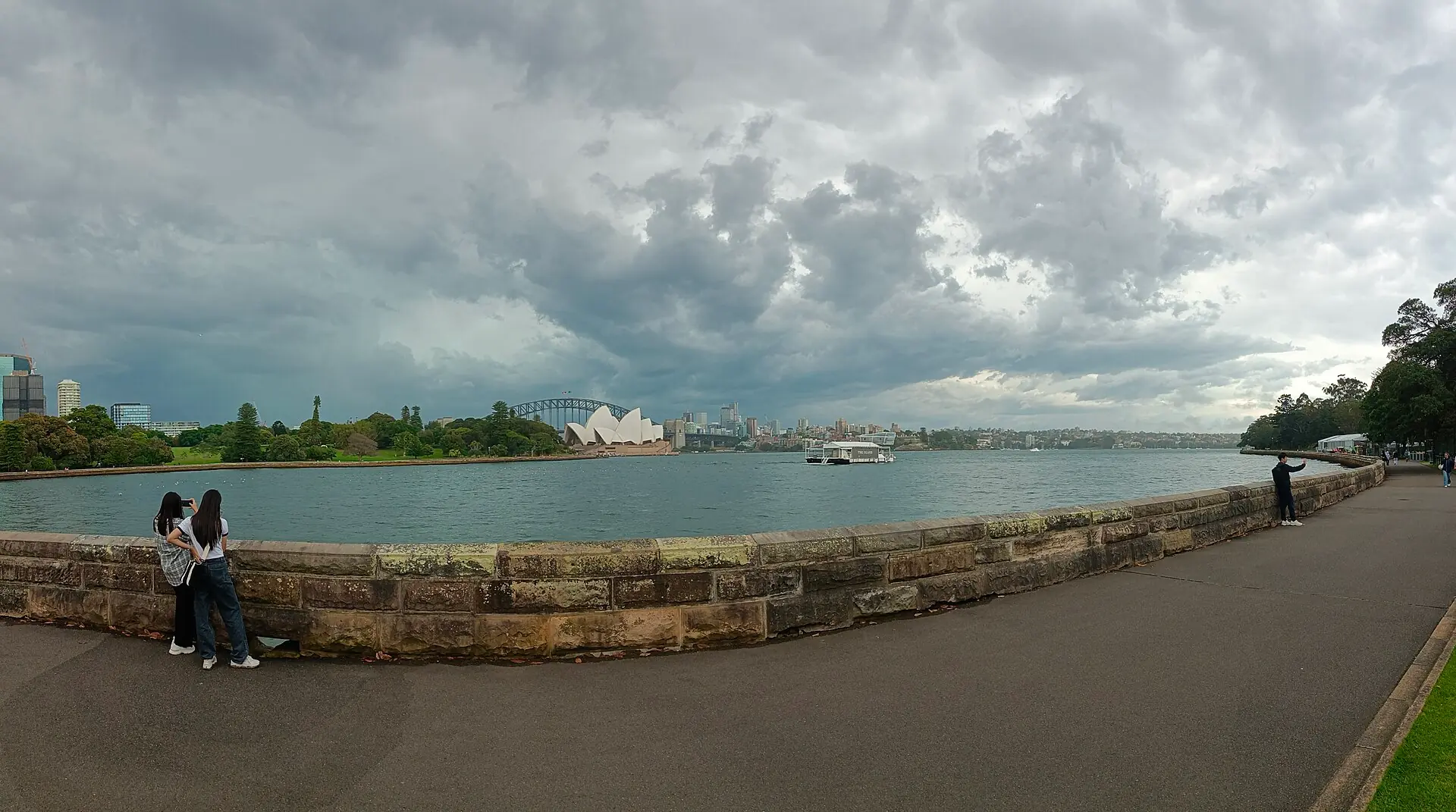
Sydney
Code UA · 4 walking zones
Sydney is a harbour city built for walking in the morning and taking the train or ferry after: do the Opera House and the Botanic Garden before the sun is high, keep the middle of the day for shade or a museum, and treat every beach trip as a separate half day.
Our quick read of Sydney, scored 1–5 (friction is out of 100). Cash need: how often you still need notes. Heat risk: how hot days get. Stroller: how easy wheels are. Friction: overall effort for a first visit. Desk judgements, so check before relying on them.
- Local time
- --:--
- Weather
- forecast below
- Currency
- AUD
- Best months
- Mar · Apr · May · Jun · Jul · Aug · Sep · Oct · Nov
- Airport
- Sydney Kingsford Smith (SYD)
Walking zones: the 4 areas this guide plans a day around. Each is a district you can cover on foot, so you do one zone per half-day and ride the train between them. The code (UA 01, UA 02…) is just the zone's number on the Sydney line; the line under each name says how bags fare there and how much time it needs.
Map of Sydney
Use the switches to show or hide each kind of pin. A switch that is on shows its pins on the map; tap it again to hide them. "Show only" keeps just the pins that match (for example, places that fit a suitcase). Tap any pin for its name and a link to its page.
- Where to sleep
- Places
- Eat
- Walking clusters
- Rest stops
From the airport Kingsford Smith (SYD) to your bed
Tap a pin for its card. Places without their own coordinates are shown by their walking cluster.
Why Sydney
Sydney's sights sit on a few kilometres of harbour shore, joined by trains and ferries that run to a timetable. The trips that go wrong are the ones that fight the sun and the distances: noon walks in January, a Bondi round trip squeezed between check-out and a flight, or a hotel picked for the view that is a long uphill walk from a station. Four walking clusters cover a first visit; Manly, the Blue Mountains and the beaches are trips from one kept bed.
See first
- 1
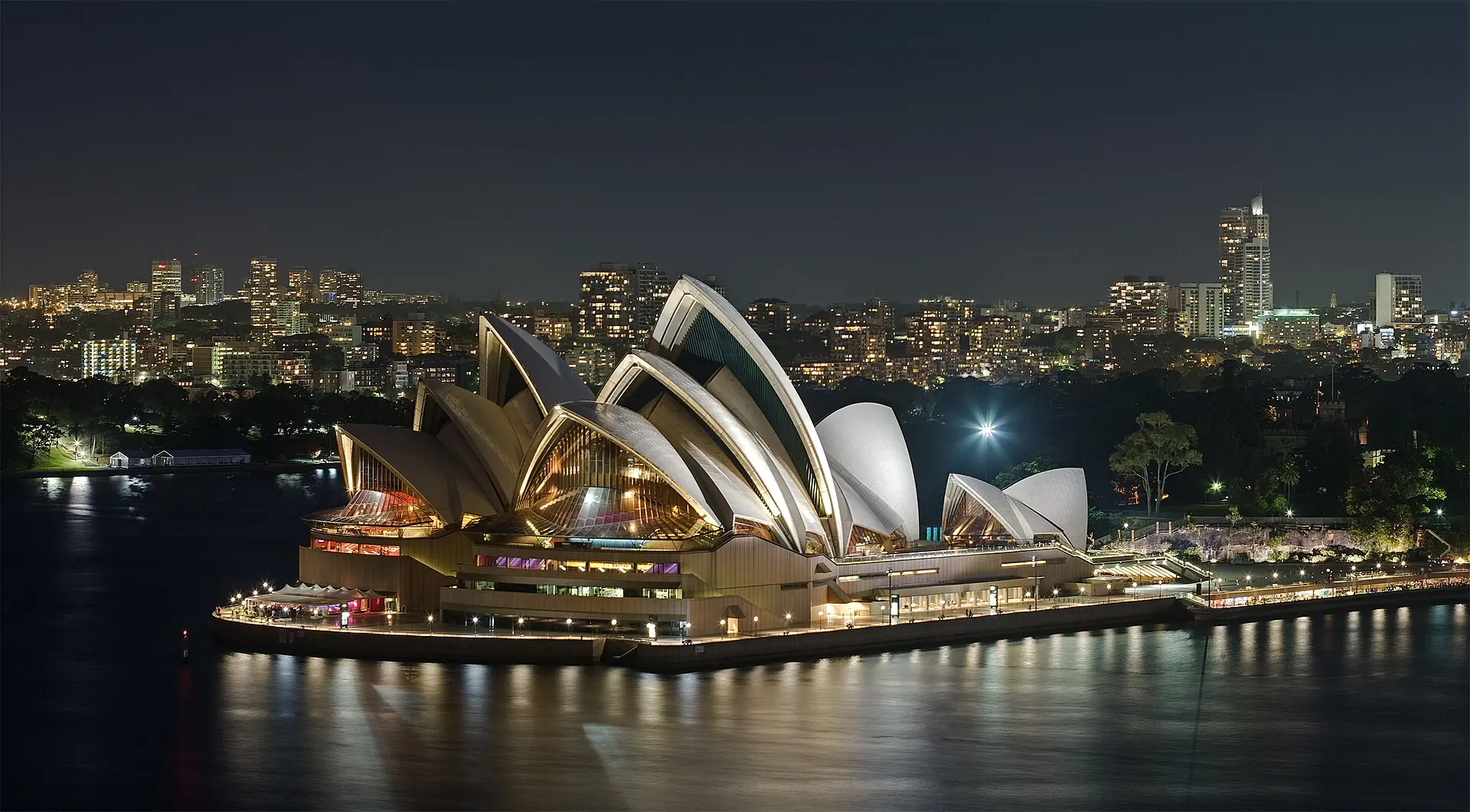 Sydney Opera House · 45-75 min
- 2
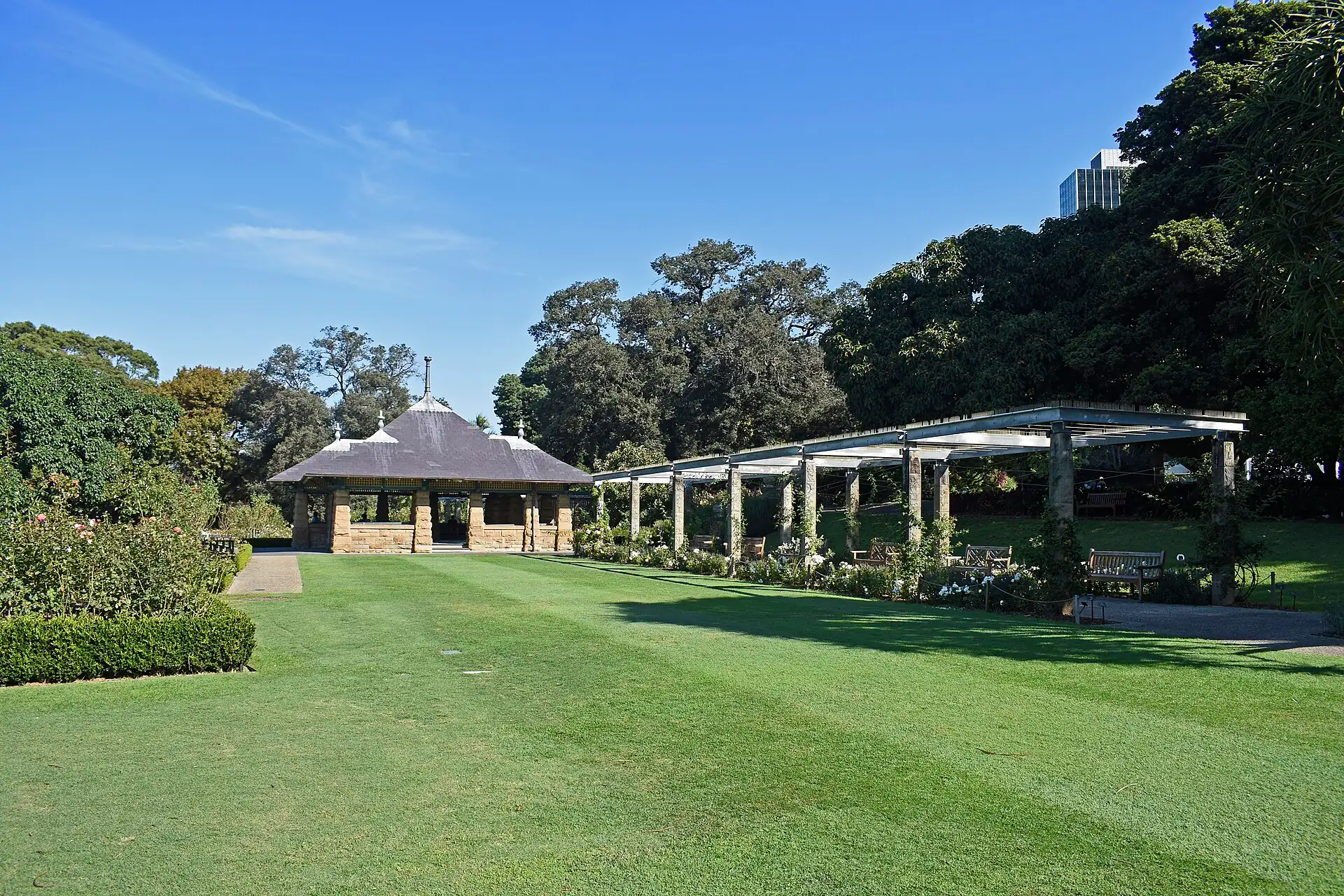 Royal Botanic Garden Sydney · 45-90 min
- 3
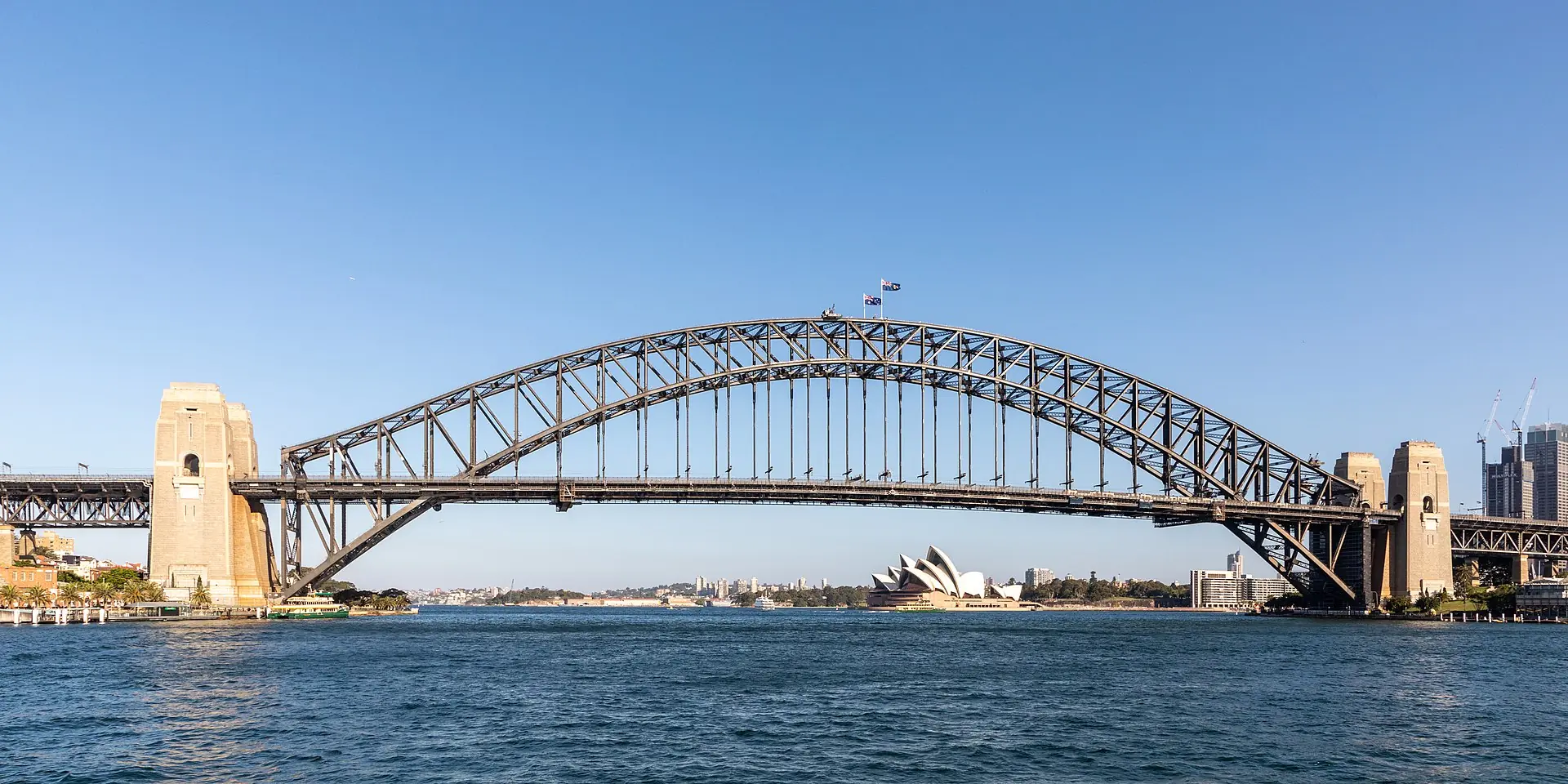 Sydney Harbour Bridge and Pylon Lookout · 45-75 min
- 4Manly ferry · Half day
- 5
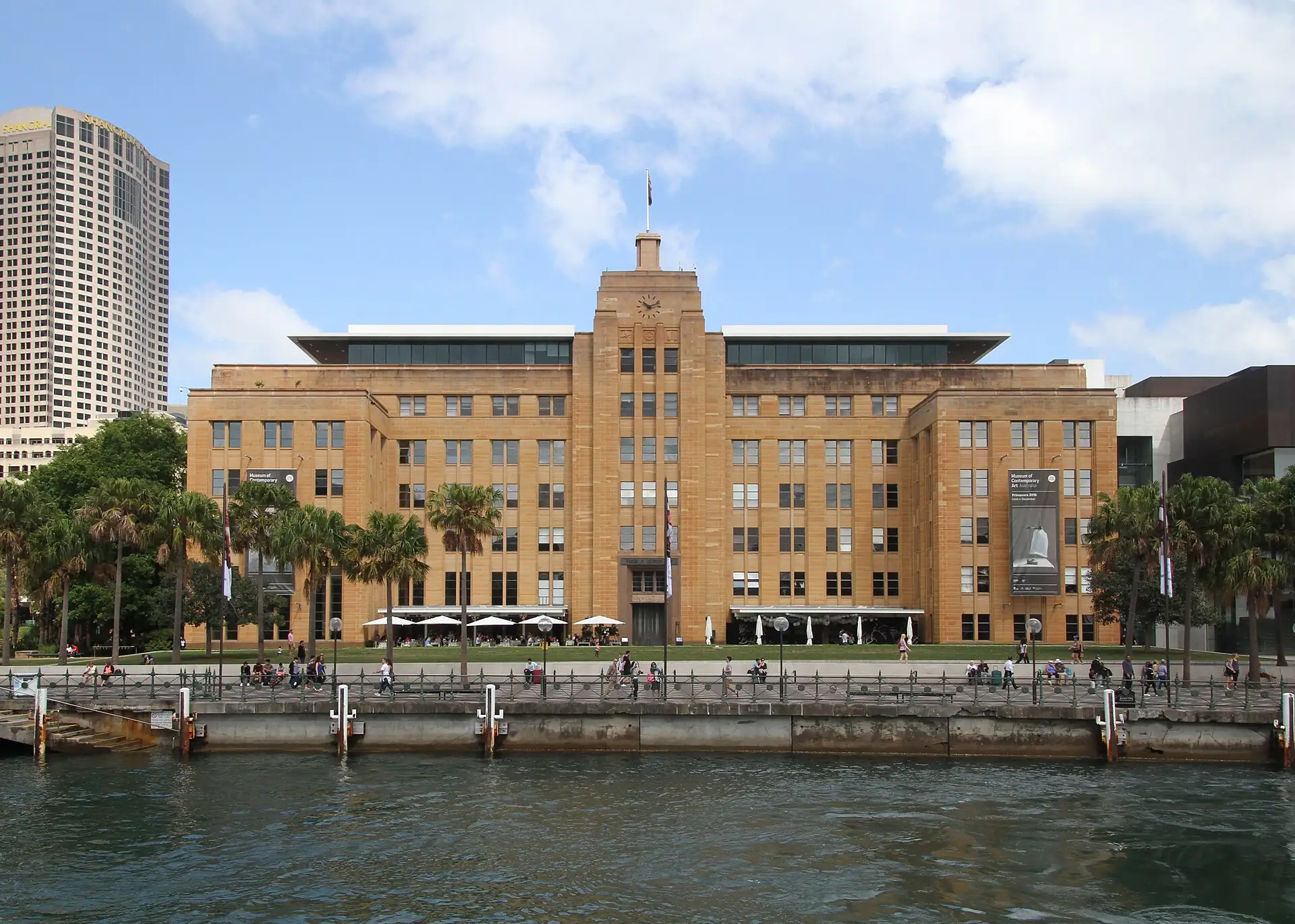 Museum of Contemporary Art · 60-90 min
Fits
- First visits
- Ferry and walking trips
- Food and harbour views
Does not fit
- Travellers who want to drive between every sight
- Anyone planning one day for Sydney, the Blue Mountains and Bondi together
- Midday walkers in summer
How long
- 2 daysCircular Quay, Opera House and the Botanic Garden; the CBD and Haymarket
- 3 daysFour clusters, harbour morning first, then the CBD and Haymarket
- 5 daysFour clusters + Manly ferry + Blue Mountains day-trip + one beach afternoon
Good for
- First timers
- Families
- Foodies
- Art lovers
- Budget
- Wheelchair users
About Sydney
Sydney sits on a drowned river valley, and almost everything you will do in it comes back to the water. The Gadigal people of the Eora nation have lived on the south shore of the harbour for many thousands of years; Warrane is their name for Sydney Cove, now Circular Quay. The British landed the First Fleet there on 26 January 1788 and made it a convict settlement.
For its first century Sydney was a port and a penal colony that grew into a merchant city. The Rocks, the sandstone lanes just west of the quay, is where the first convicts, sailors and traders lived. The 1850s gold rush, the 1901 federation of the Australian colonies and the 1932 opening of the Harbour Bridge built the modern skyline and the transport system that still joins the two shores.
Good to know
- Sydney Harbour is one body of water with many ferry stops; Circular Quay is the main one, not the whole harbour. The CBD is the grid of streets south of it.
- Sydney has visitor information at Circular Quay and in the Rocks; hours change, so check the Destination NSW page before you go.
- The Opal and Transport for NSW trip-planner apps are the best sources for live train, ferry and bus times.
Go deeper 12 min read · 6 chapters
Sydney is a harbour first and a city second. The water shaped where people settled, where the roads run and why so many trips are a ferry ride. This deep dive reads the city through six lenses: its history, its layout, its two icons, its food, its beaches and its transport, so that a walk from Circular Quay becomes a walk through 240 years of Sydney.
1History2 min
Sydney begins long before 1788. The Gadigal people of the Eora nation lived on the south shore of the harbour for many thousands of years, fishing from bark canoes, gathering shellfish and burning the bush in a managed cycle. Their name for the cove that became Circular Quay is Warrane. Neighbouring clans, including the Wangal and Cammeraygal, held other shores of the harbour. Shell middens found around the harbour are the physical record of that long occupation, and the Rocks Discovery Museum shows how the harbour looked and sounded before the British arrived.
The First Fleet, eleven ships carrying convicts, marines and officers under Captain Arthur Phillip, reached Botany Bay in January 1788, judged it poor, and moved a few days later to Sydney Cove, where fresh water ran into a deep anchorage. The colony was named after Lord Sydney, the British home secretary. For its first years it nearly starved: the soil near the cove was thin, supplies were late and the settlers did not know the land. Relations with the Eora were violent as well as curious. Phillip captured a Wangal man called Bennelong in 1789 and, over time, the two men became an uneasy pair of intermediaries. The point where the Opera House stands is named for him.
In the early nineteenth century Governor Lachlan Macquarie turned the tents and huts into a town with streets, a hospital, a barracks and Hyde Park. Free settlers, ex-convicts and merchants grew a port that exported wool. The 1850s gold rushes brought people from Britain, Ireland, China and the United States, and the city grew fast. Federation in 1901 joined the colonies into the Commonwealth of Australia; Sydney stayed the largest city and the main harbour, and the Harbour Bridge in 1932 tied the north shore to the centre.
The twentieth century added migration. After the Second World War, Greeks, Italians, Lebanese and later Vietnamese, Chinese, Indians and Koreans settled in different suburbs, which is why the best noodles, souvlaki and baklava are often a train ride from the centre. The Rocks itself was saved by the green bans of the early 1970s, when unions refused to work on demolition. The old lanes you walk today exist because of that decision.
- First people
- The Gadigal of the Eora nation; the cove is Warrane
- Founding
- First Fleet landed at Sydney Cove on 26 January 1788
- Federation
- 1901; Sydney remains the largest city
- Green bans
- Early 1970s union action that saved the Rocks from demolition
2The harbour and how the city is laid out2 min
Sydney Harbour is a drowned river valley, formally called Port Jackson. Sea level rose after the last ice age and flooded a maze of sandstone valleys, leaving a long, branching bay with hundreds of coves and headlands that make the shoreline more than 200 kilometres long. The city grew around the first cove, and the harbour still decides where roads, trains and ferries can go. That is why so many trips are a ferry ride rather than a drive, and why the north shore feels like a separate city.
On the south shore the centre is a line. Circular Quay is at the water, the Rocks is just west, and the central business district (the CBD) fans south along George Street to Town Hall, then Central Station and Haymarket. The Domain, the Botanic Garden and the Opera House sit east of the quay, on a green fringe of the harbour. This is why a first visit works as four walking clusters: harbour, Opera House and garden, CBD, and Haymarket. Each is about 1 to 1.5 kilometres across, flat in the middle and steeper at the edges.
The north shore is a different rhythm: Kirribilli, Milsons Point and Neutral Bay sit a ferry or train away, then Manly at the mouth of the harbour, about 30 minutes from the quay. The eastern beaches are on the Pacific side, reached by bus from the Bondi Junction interchange. West of the CBD the harbour narrows into the Parramatta River, and the historic suburbs of Glebe and Balmain sit on small peninsulas.
A practical way to read the map is by transport. Central Station is the rail hub. Circular Quay is the ferry and light-rail hub. Town Hall and Wynyard are the main city stations. The Metro line, opened in 2024, runs under the harbour and gives a fast north-south link. Streets in the CBD are a grid with a few long diagonals, so you will rarely be lost for long; the challenge is hills and heat. The slopes on the way to the Rocks and the stairs up to the Harbour Bridge are the parts that surprise visitors.
The sandstone under the city explains the shape of the streets, the colour of the buildings and the coves you see from the ferries. It also explains why deep tunnels are expensive and why a lot of roads wind around the water rather than crossing it. If you take one ferry, take the Manly service: it crosses the whole harbour and lets you see the Opera House, the bridge and the heads in a single ride.
- Harbour name
- Port Jackson; a drowned river valley
- Centre
- Circular Quay to Central Station is about 3 km (1.9 mi)Circular Quay to Central Station is about 1.9 mi (3 km)
- Ferry to Manly
- About 30 minutes on the classic ferry
- Metro
- A line under the harbour opened in 2024; check the current stations
3The Opera House and the Harbour Bridge2 min
The Harbour Bridge came first. Work began in 1923 and the bridge opened on 19 March 1932, after workers built a steel arch of about 503 metres from both shores until the two halves met. It carries trains, cars, cyclists and pedestrians, stands about 134 metres above the water and used roughly six million rivets. Locals call it the Coathanger. It was built during the Depression, and the opening day is remembered for a horseman who cut the ribbon before the premier could.
The Opera House is a later, more controversial story. In 1957 the Danish architect Jørn Utzon won an international competition with a sketch of white shells beside the water. The geometry took years to solve, the cost climbed from A$7 million to A$102 million, and in 1966 Utzon left the project after a change of government and disputes over fees. The interiors were finished by other architects, and the building opened in 1973. Utzon never returned to Sydney, but he was later reconciled with the building, and it became a UNESCO World Heritage site in 2007.
Both structures are best understood by moving around them. The Opera House looks different from the western forecourt steps, from the water on a ferry and from the Botanic Garden at Farm Cove. About a million tiles cover the sails, in two shades that change with the light. A guided tour explains how the halls were shaped and why the acoustics are difficult.
The Harbour Bridge invites more than a photo. You can walk across on the east footway for free, climb about 200 steps inside the south-east pylon for a view at a low price, or pay for a BridgeClimb up the arch. The Pylon Lookout and the free footway give most of the view. The bridge is not a place to hurry: the steel radiates heat in summer and the wind can be strong on the span. Go in the morning, and try to see both icons from a ferry at the end of the day.
- Harbour Bridge
- Opened 19 March 1932; arch span about 503 m; about 134 m high
- Opera House
- Opened 1973; designed by Jørn Utzon; World Heritage in 2007
- Pylon Lookout
- About 200 steps; about A$20 (2026 estimate, check)
- BridgeClimb
- About A$200 or more (2026 estimate, check)
4Food and coffee2 min
Sydney eats through its migration story. Cantonese cooks arrived in the gold rush years and settled around Haymarket, where Chinatown is now. After the Second World War, Greeks and Italians opened cafes and delis and brought espresso, and by the 1970s the city had a taste for good coffee that Melbourne shares and argues about. Lebanese, Vietnamese, Korean, Thai and Indian communities followed and settled in the western and south-western suburbs. The result is a city where the best-value meal is often not on the harbour.
Coffee is the daily test. A flat white, espresso with a thin layer of steamed milk, is the standard order and costs about A$4.50 to 6. A long black is an espresso over hot water, and a magic is a small, strong milk coffee that Melbourne likes. Cafes open early, often at 06:30, and serve a breakfast that can be avocado on toast, eggs or a bacon and egg roll. Many cafes close mid-afternoon, so lunch is the meal most likely to disappoint if you leave it late.
Seafood is the harbour dish. Sydney rock oysters are small and salty, and the local barramundi and snapper are common on menus. A seafood platter on the quay looks dramatic and costs a lot; a plate of oysters and a glass of wine gives the same view for less. Pubs are another rhythm. A counter meal, a chicken parmigiana or fish and chips, is the cheap sit-down option, and you order and pay at the bar.
Street food is more modest than in Asia, but markets and Chinatown fill the gap. The Rocks Markets on weekends offer gozleme, dumplings and churros, and the Friday night market on Dixon Street sells skewers and bubble tea. A meat pie with peas and mash from a pie cart, such as the one at Woolloomooloo Wharf, is the late-night classic.
Rules to know: tipping is not expected, and prices include the goods and services tax. Public holidays add a surcharge of 10 to 15 percent in many restaurants and cafes, and it appears on the menu. Alcohol is served in licensed venues and you will be asked for ID. BYO wine is allowed in some restaurants, with a corkage fee. Tap water is free and safe; ask for it instead of buying a bottle.
- Coffee
- Flat white A$4.50-6; long black; magic
- Oysters
- Sydney rock oysters; about A$4-7 each
- Pub counter meal
- A$25-40 for a main; order at the bar
- Holiday surcharge
- 10-15 percent on many bills; check the menu
5Sun, surf and staying safe2 min
Beaches are part of the city, not a separate trip. Bondi, Coogee, Manly and about 100 others are within an hour of the centre. The Bondi Surf Bathers' Life Saving Club, formed in 1907, is often described as the oldest surf lifesaving club in the world, and the culture of lifeguards, flags and patrols shapes how swimming works. The rule that matters most is simple: swim between the red and yellow flags, and only when a lifeguard is on duty.
The flags mark the safest patch of water, where lifeguards watch and where the sea floor is checked. Outside them, rip currents are the main danger. A rip is a channel of water pulling out to sea; it often looks calm and dark between breaking waves. If you are caught, do not swim against it: float, signal for help and swim sideways to the breakers. Signs on each beach give the day's conditions, and lifeguards will move you if you drift.
Sun is the other risk. The ultraviolet index is extreme from October to March and can burn fair skin in 10 to 15 minutes. Australia's public campaigns have used the phrase slip, slop, slap for decades: slip on a shirt, slop on sunscreen, slap on a hat. Add sunglasses and seek shade between 11:00 and 15:00. Sunscreen should be SPF 50 or higher and reapplied every two hours. Cloud does not stop the burn.
Sea life is less dramatic than its reputation. Shark nets protect some beaches, and sharks are rare near patrolled beaches. Bluebottles, a stinging jellyfish-like creature, wash in during onshore winds in summer; the sting is painful but treatable with hot water. Ask a lifeguard for first aid. Ocean baths, tidal pools cut into the rocks at Bondi, Coogee and Bronte, are a calm alternative to the surf.
The best way to see the coast without swimming is the Bondi to Coogee coastal walk, about 6 kilometres of cliffs, beaches and baths. It takes two to three hours and is busy on weekends. Carry water and a hat, and start early in summer. Check the daily beach and weather notices before any coastal walk.
- Flags
- Swim between the red and yellow flags; a lifeguard patrol is on duty
- Rips
- Float, signal, swim sideways; do not fight the current
- UV
- Extreme from October to March; SPF 50 or higher
- Walk
- Bondi to Coogee is about 6 km (3.7 mi); 2-3 hoursBondi to Coogee is about 3.7 mi (6 km); 2-3 hours
6Getting around like a local2 min
Sydney runs on a single tap. Trains, Metro, ferries, light rail and buses all accept a contactless bank card, a phone or an Opal card. You tap on at the start and tap off at the end, with the same card, so the system can calculate the fare. If you forget to tap off, you are charged the maximum. Daily and weekly caps apply automatically, and Sunday has a low daily cap, so you rarely need to plan around a ticket.
Trains are the backbone. The City Circle loop covers Central, Museum, St James, Circular Quay, Wynyard and Town Hall, and lines run out to the airport, Bondi Junction, the Blue Mountains and the beaches. Ferries are both transport and sightseeing: the Manly ferry from Circular Quay, the Taronga Zoo ferry and the Watsons Bay ferry each show a different side of the harbour. Light rail links Central and Circular Quay, and buses cover the eastern suburbs, including the route to Bondi Beach from Bondi Junction.
A few habits help. Stand on the left on escalators and walk on the right. Check the platform and the wharf number before you board: several ferries leave from adjacent wharves. Trackwork on weekends can replace trains with buses, so check the Transport for NSW site or app. Trains run late, but the gaps widen after midnight, and taxis or ride-hail are the sensible choice after that.
Walking is the best mode in each cluster, but plan for heat, sun and slopes. In summer, walk in the morning and after 16:00, use air-conditioned malls and museums in the middle of the day, and carry water. Cycling is possible on dedicated paths, but hills and traffic make it more work than in flat cities.
Airports and bags need a plan. The airport train reaches Central in about 15 minutes and costs A$20 to 25, including an access fee. A taxi or ride-hail costs A$50 to 75. Hotels will hold bags after checkout, and Central has left-luggage services. With luggage, stay near Central and avoid the cobbled Rocks lanes.
- Tap system
- Tap on and off with the same card or phone
- Airport train
- About 15 minutes to Central; A$20-25
- Ferries
- Manly, Taronga Zoo and Watsons Bay from Circular Quay
- Late transport
- Trains run late; gaps widen after midnight
Read, watch, wordsGlossary · Sources
Glossary
| Term | Local | Meaning |
|---|---|---|
| Arvo | Afternoon. | |
| Flat white | Espresso with a thin layer of steamed milk; the standard coffee. | |
| Schooner | A mid-size beer glass, about 285 ml, the standard in New South Wales. | |
| Snag | A sausage; a sausage sizzle is a sausage in bread. | |
| Servo | A petrol station. | |
| Thongs | Flip-flops (not underwear). | |
| Bottle shop | A shop that sells alcohol to take away. | |
| Tap on | Touch a card or phone to the reader at the start of a trip; tap off at the end. |
Read for this deep dive
Background reading only: the text above is written by Voykit, not copied from these pages.
Photos
Sydney NSW 2000, Australia Photo: Maksym Kozlenko, CC BY-SA 3.0
Rules in force · 8
- Oceania ↗Oceania's island states guard their farms and reefs at the border: tick 'yes' on the arrival card for any food, plant, animal product, soil or used outdoor gear, and let the officer decide.
- Oceania ↗Across the tropical South Pacific, cyclones are possible from November to April: choose insurance that covers weather delays and keep one spare night before a long-haul departure.
- Australia and New Zealand ↗Both countries drive on the left, with long distances between fuel stops in the outback and on New Zealand's back roads; fatigue causes more visitor crashes than speed.
- Australia ↗Almost every visitor needs a visa or an electronic authorisation (ETA or eVisitor, depending on passport) before boarding: apply only through the official Department of Home Affairs site or the official AustralianETA app, and check the rules for your passport.
- Australia ↗Declare all food, plant material, seeds, wood and animal products on your arrival declaration; undeclared items can bring on-the-spot fines or visa cancellation. When unsure, declare it.
- Australia ↗Drive on the left. An overseas licence in English (or with an official translation or International Driving Permit) is accepted for visitors; check the state rules and your rental contract.
- Australia ↗Swim between the red and yellow flags on patrolled beaches; rip currents cause most beach drownings.
- New South Wales ↗Bushfire season runs through summer: check the NSW Rural Fire Service before driving or hiking outside the city.
Entry rules depend on your passport. Full visa guide
Emergency numbers for Sydneyopen ▾
- Police, fire, ambulance000 (112 from a mobile)
- Police non-emergency131 444
- Poisons information13 11 26
- Healthdirect (nurse advice)1800 022 222
Tap a number to call from your phone. These are the numbers listed in this guide; a row marked check has not been verified.
Planning is the full guide. I'm here keeps what is open and the cheat card.
Right now
Checking the weather…
Working out what is open near you…
What is open nowclock, closures, places open
Now in Sydney
Local time in Sydney
--:--
Loads in your browser · Australia/Sydney
This month
Month verdict appears here.
Closed today
See the weekly grid below.
If today is a closure day: From October to March wear a hat and sunscreen even on cloudy days; book the Opera House tour and the Pylon Lookout ahead in school holidays and Vivid weeks.
Open every day: Art Gallery of New South Wales, Chinatown and Dixon Street, Hyde Park and the Anzac Memorial, Museum of Contemporary Art Australia, Queen Victoria Building, The Rocks Discovery Museum, Royal Botanic Garden Sydney, Sydney Harbour Bridge, Sydney Opera House.
Weekly closures come from our place pages; public holidays and major events can change hours and transport. Check the Transport for NSW site for trackwork on weekends.
Cheat cardthe pocket version
Cheat card
The essentials on one card: save it as an image for your phone, share it, or print it.
Sydney
- Money
- Cards are accepted almost everywhere; carry A$50 in notes for markets and small cafes…
- SIM
- Install an eSIM before you fly, or buy a prepaid SIM at the airport or a phone shop in the CBD (passport needed).
- Ride app
- Uber, DiDi, 13cabs
- Emergency
- 000 (112 from a mobile) police, fire, ambulance · 131 444 police non-emergency · 13 11 26 Poisons information (not 911, 999 or 000)
- Plugs
- Sockets I. US/Canada (A/B): adapter · UK/Ireland (G): adapter · Australia/NZ (I): fits. 230 V: US 120 V-only devices (hair dryers) need a converter; most chargers are dual-voltage.
Say it
- Which platform for Circular Quay?: Which platform for Circular Quay? (which platform for circular key)
Top 5
- Sydney Opera House
- Royal Botanic Garden Sydney
- Sydney Harbour Bridge and Pylon Lookout
- Manly ferry
- Museum of Contemporary Art
EssentialsQuick answers, what things cost and how to get around
Essentials
Quick answers, what things cost and how to get around
Quick answers
The questions people ask first about Sydney, one line each. Tap a card for the full answer.
- Cash or card?Contactless cards and phones work almost everywhere, including public transport; some cafes are card-only.
- SIM or eSIMInstall an eSIM before you fly, or buy a prepaid SIM at the airport or a phone shop in the CBD (passport needed).
- Ride-hailing appUber, DiDi, 13cabs.
- Tap waterTap water is safe to drink; refill a bottle from public fountains.
- TippingNot expected.
- Plugs & powerSockets I. US/Canada (A/B): adapter · UK/Ireland (G): adapter · Australia/NZ (I): fits. 230 V: US 120 V-only devices (hair dryers) need a converter; most chargers are dual-voltage.
Show all 14 answers
- Safe at night?Take more care after dark in Kings Cross.
- What to wearHat, sunglasses and high-SPF sunscreen
- RestroomsTrain stations, shopping centres and parks; the Circular Quay concourse has public toilets.
- Emergency numbers000 (112 from a mobile) police, fire, ambulance · 131 444 police non-emergency · 13 11 26 Poisons information (not 911, 999 or 000)
- Your embassycheckUS, UK, Canada, NZ, Ireland embassies listed with addresses (check before you go).
- Sundays & holidaysMuseums are often closed one weekday and on public holidays.
- Rainy-day planShowers pass quickly, but storms can flood streets for an hour.
- Landing lateSYD: ride-hail car or taxi to the door runs all night.
Cost cheat-sheetwhat everyday things cost
Cost cheat-sheet
Typical prices for the everyday things, as ranges. Change the currency right here; the local price stays first.
2026 desk estimate · check
- Sit-down mealBreakfast or lunch at a cafeA$18-30 (≈ US$12–20)
- Street or quick mealBreakfast or lunch at a cafe, per personA$18–30 (≈ US$12–20)
- BeerPint or schooner of beer at a pubA$9-13 (≈ US$6–9)
- Metro or bus rideTrain, ferry or bus trip in the centreTap on and off; daily and weekly caps apply automatically.A$4-9 (≈ US$3–6)
- SIM or eSIM, a weekTourist eSIM, about a weekA$10-25 (≈ US$7–17)
- Budget bedHostel dorm bed, a night, per personA$45 (≈ US$30)
- Mid-range bedHotel double room, a night, per roomA$290 (≈ US$200)
- High-end bedHotel double room, a night, per roomA$560 (≈ US$400)
A day, not counting the bed: Budget A$95 (≈ US$65) · Mid A$180 (≈ US$120) · High A$350 (≈ US$250)
Local prices, with USD next to them (rates 2026-09 (approximate); change it in the header). Ranges are desk estimates: check locally. Every price and the budget calculator →
Source: Prices in Sydney
Draft
Written from desk research. Not yet compared with the official source.
No official source is recorded for this figure.
Prices are 2026 desk estimates, not yet compared with an official source. Check on the day.
Not checked in the last 12 months (no check date on file).
DecideWho it suits, the trade-offs and when to go
Decide
Who it suits, the trade-offs and when to go
Best months at a glance
The guide's verdict for each month
Jan
Care
26°C (79°F)79°F (26°C)
Feb
Care
26°C (79°F)79°F (26°C)
Mar
Best
25°C (77°F)77°F (25°C)
Apr
Best
22°C (72°F)72°F (22°C)
May
Best
19°C (66°F)66°F (19°C)
Jun
Best
17°C (63°F)63°F (17°C)
Jul
Best
16°C (61°F)61°F (16°C)
Aug
Best
18°C (64°F)64°F (18°C)
Sep
Best
21°C (70°F)70°F (21°C)
Oct
Best
23°C (73°F)73°F (23°C)
Nov
Best
24°C (75°F)75°F (24°C)
Dec
Care
26°C (79°F)79°F (26°C)
Best: Mar–Nov. Mixed: Dec–Feb. Month by month →
Warmest Jan (26°C (79°F)79°F (26°C)), coolest Jul (8°C (46°F)46°F (8°C) low), wettest Mar (13 rain days), driest Aug (8). Averages, not a forecast.
Sydney across the year
Best-looking months for Sydney: Mar, Apr, Oct.
| Measure | Jan | Feb | Mar | Apr | May | Jun | Jul | Aug | Sep | Oct | Nov | Dec |
|---|---|---|---|---|---|---|---|---|---|---|---|---|
| Weather | Mixed (care) | Mixed (care) | Great (good) | Great (good) | Good (good) | Good (good) | Good (good) | Good (good) | Good (good) | Great (good) | Great (good) | Mixed (care) |
| Crowds | High (care) | Medium (ok) | Medium (ok) | Medium (ok) | Low (good) | Medium (ok) | High (care) | Medium (ok) | Medium (ok) | Medium (ok) | Medium (ok) | High (care) |
| Prices | High (care) | Medium (ok) | Medium (ok) | Medium (ok) | Medium (ok) | Medium (ok) | High (care) | Medium (ok) | Medium (ok) | Medium (ok) | Medium (ok) | High (care) |
| Events | 5 events (care) | 2 events (ok) | 2 events (care) | 2 events (care) | 1 event (ok) | 1 event (ok) | None listed (ok) | 1 event (ok) | None listed (ok) | 1 event (ok) | 1 event (ok) | 4 events (care) |
Green is good news, amber needs planning, red is a month to avoid; dashed grey with a question mark means our data does not say. Open the year heatmap →
Not checked in the last 12 months (no check date on file).
Source: Months, temperatures and crowds
Draft
Written from desk research. Not yet compared with the official source.
Monthly highs, rain and crowd levels are climate averages and desk estimates for the city, not a forecast.
Understand the cityUnderstand · Districts
Orientation & districts
A first visit sits on the south shore of the harbour in a line about 4 km long: Circular Quay and the Rocks at the water, the CBD grid south of them, and Haymarket and Chinatown beside Central Station. The Opera House and the Botanic Garden are east of the quay. The north shore, the eastern beaches and the Blue Mountains are trips from that base.
Ferries, trains and light rail all run from Circular Quay; Central and Town Hall are the main rail hubs.
Shaded shapes: walking areas (click one). Black pins: sleep areas. Grey dots: places. Round badges: arrivals. Click the map to turn on scroll-wheel zoom.
Hover, tap or tab to an area to see what it is like. Pins are sleep areas; arrows at the edge point to the airport.
Not drawn yet (no coordinates in this guide): Darling Harbour and Barangaroo, Surry Hills, Darlinghurst and Kings Cross, Bondi and the eastern beaches, Manly and the north shore. They are in the neighbourhood cards below.
Where’s what, as a list:
- Circular Quay and The Rocks: Ferries, sandstone lanes and the Discovery Museum; the Rocks Market runs on weekends. Cobbled slopes are hard with luggage. Suits: A first morning of sights and harbour views. Price band $$$.
- Opera House and Botanic Garden: The Opera House, the Royal Botanic Garden and the Art Gallery of NSW in the Domain. Suits: Morning walks and photographs.
- CBD and Martin Place: The Queen Victoria Building, Hyde Park and the Pitt Street malls; quiet on weekends outside the shops. Suits: Midday shade, shopping and cafes.
- Haymarket and Chinatown: Dixon Street, Market City and yum cha halls; a short train from the harbour. Suits: A base by Central Station and cheap food. Price band $$.
- Darling Harbour and Barangaroo: A short walk west of the CBD; a mix of tourist attractions and restaurants. Suits: Waterfront walks and museums.
- Surry Hills, Darlinghurst and Kings Cross: The best cafes and small restaurants sit east of Central; Kings Cross is loud at night. Suits: Restaurants, cafes and nightlife.
- Bondi and the eastern beaches: A train and bus, or a ride-hail car; not a base for a short first visit. Suits: A beach half day.
- Manly and the north shore: The classic ferry from Circular Quay; a beach, a coastal walk and an easy lunch. Suits: A ferry half day.
- Sleep area Haymarket / Central: suits A base by Central Station and cheap food, price band $$.
- Sleep area The Rocks: suits A first morning of sights and harbour views, price band $$$.
- Sydney Kingsford Smith Airport (SYD), about 9 km (5.6 mi)5.6 mi (9 km) from the centre, 30–50 min by the usual route.
Neighbourhoods at a glance
One tab per area, pulled together from this guide’s districts table, area notes, sleep-area scores and place pages. Scores are desk judgements (1–5); prices are estimates, check before you book.
Circular Quay and The Rocks
$$$Ferries, sandstone lanes and the Discovery Museum; the Rocks Market runs on weekends. Cobbled slopes are hard with luggage.
- Suits:
- A first morning of sights and harbour views
- Best time:
- Before 10:00Before 10:00 AM
- Rooms:
- A$450-900+ (from the sleep guide)
Pick this if: First mornings, weekend markets
Watch out for: Weekend afternoons on the quay.
- Quiet nights3/5 Medium
- Nightlife4/5 High
- Families3/5 Medium
- Late arrival3/5 Medium
Why these scores
- Quiet nights: Quiet mornings; noisy weekends near pubs.
- Nightlife: Pubs and harbour bars at the door.
- Families: Walkable harbour, but slopes and crowds.
- Late arrival: Boutique hotels may have limited desk hours.
Getting around from here
- 15–22 min walk to Opera House & Botanic Garden
- Walk south on George Street: about 18 min to CBD & Martin Place
- SYD: about 9 km (5.6 mi) in a straight line (arrival ride 30–50 min)SYD: about 5.6 mi (9 km) in a straight line (arrival ride 30–50 min)
Opera House and Botanic Garden
The Opera House, the Royal Botanic Garden and the Art Gallery of NSW in the Domain.
- Suits:
- Morning walks and photographs
- Best time:
- Opening to 10:00Opening to 10:00 AM
Pick this if: Morning walks, photos
Watch out for: Midday sun in summer.
Getting around from here
- Walk west round the quay: about 12 min to Circular Quay & The Rocks
- Walk south up Macquarie Street: about 15 min to CBD & Martin Place
- SYD: about 9 km (5.6 mi) in a straight line (arrival ride 30–50 min)SYD: about 5.6 mi (9 km) in a straight line (arrival ride 30–50 min)
CBD and Martin Place
The Queen Victoria Building, Hyde Park and the Pitt Street malls; quiet on weekends outside the shops.
- Suits:
- Midday shade, shopping and cafes
- Best time:
- Weekdays
Pick this if: Midday shade and shops
Watch out for: Sunday evenings when it is empty.
Getting around from here
- Train or walk north: about 18 min to Circular Quay & The Rocks
- Walk south on George Street: about 12 min to Haymarket & Chinatown
- SYD: about 8 km (5 mi) in a straight line (arrival ride 30–50 min)SYD: about 5 mi (8 km) in a straight line (arrival ride 30–50 min)
Haymarket and Chinatown
$$Dixon Street, Market City and yum cha halls; a short train from the harbour.
- Suits:
- A base by Central Station and cheap food · Cheap dinners, a transport base
- Best time:
- Evening
- Rooms:
- A$180–350 per room per night (mid-range); more during Vivid, Christmas and New Year
Pick this if: Arrivals by train, first visits, food in Chinatown
Skip this if: You want a harbour view or a quiet street at the door
- Quiet nights3/5 Medium
- Nightlife3/5 Medium
- Families4/5 High
- Late arrival5/5 Very high
Why these scores
- Quiet nights: Busy roads and trains; ask for a high floor.
- Nightlife: Chinatown and Surry Hills are close; the bars of the Rocks are a train ride.
- Families: Good rooms and easy transit.
- Late arrival: Central has late trains and 24-hour desks.
Getting around from here
- 12–18 min walk to CBD & Martin Place
- Train from Central: about 12 min to Circular Quay & The Rocks
- SYD: about 7 km (4.3 mi) in a straight line (arrival ride 30–50 min)SYD: about 4.3 mi (7 km) in a straight line (arrival ride 30–50 min)
Darling Harbour and Barangaroo
A short walk west of the CBD; a mix of tourist attractions and restaurants.
- Suits:
- Waterfront walks and museums
Surry Hills, Darlinghurst and Kings Cross
The best cafes and small restaurants sit east of Central; Kings Cross is loud at night.
- Suits:
- Restaurants, cafes and nightlife
Bondi and the eastern beaches
A train and bus, or a ride-hail car; not a base for a short first visit.
- Suits:
- A beach half day
Manly and the north shore
The classic ferry from Circular Quay; a beach, a coastal walk and an easy lunch.
- Suits:
- A ferry half day
Ward by ward
12 area guides. Open one for the short answer, the key facts and what the area is like; the full guide is linked inside. Prices marked (check) are estimates.
Botany BayBest for: Airport nights, Brighton-le-Sands beach, Greek food, plane-spotting, outlet shopping at Alexandria
Stay in Botany Bay only if you want the airport, the beach at Brighton-le-Sands, or cheaper suburban rooms; it is 20–35 minutes by train from the CBD and has little nightlife. Most first-time visitors should sleep in the city and visit the foreshore as a half-day. Choose it for a late flight or a Greek seafood dinner by the water.
- Best for:
- Airport nights, Brighton-le-Sands beach, Greek food, plane-spotting, outlet shopping at Alexandria
- Not for:
- First-timers wanting harbour views, nightlife or walkable sightseeing
- Train to Central:
- About 15–25 minutes from Mascot or Rockdale on the T8 line (check)
- Airport to CBD:
- About 15 minutes by train; station access fee applies (2026 estimate)
- Beach:
- Brighton-le-Sands on the bay: calm, no surf, swimming and windsurfing
- Foreshore walk:
- About 10 km (6.2 mi) shared path from Kyeemagh to Dolls PointAbout 6.2 mi (10 km) shared path from Kyeemagh to Dolls Point
- Tap water:
- Safe to drink throughout Sydney
- Getting around:
- Trains plus buses 303, 320 and 478/479; a car helps for the bay's edges
What the area is like
Botany Bay is not one neighbourhood but a ring of suburbs around the airport and the bay's northern and western shores: Mascot, Alexandria, Green Square, Rockdale, Brighton-le-Sands and Botany itself. Historically light industrial, it is now a mix of warehouses, new apartment towers and old shopping strips. Green Square has been rebuilt around its train station with high-density housing and a library, though parts still feel empty between the buildings.
The bay is the reason to come. Captain Cook landed here in 1770 and praised it; the First Fleet arrived 18 years later, found sandy soil and no fresh water, and moved on to Sydney Harbour. Container terminals, the airport and industry took much of the foreshore, but the water is still used for swimming and windsurfing, and a memorial to the First Fleet stands on the shore.
Brighton-le-Sands is the centre of Sydney's Greek community, with cafés, yum cha and ice cream by the water running late. Rockdale and Mascot keep traditional suburban shopping strips that much of Sydney has lost to malls.
Full Botany Bay guideShould you stay here or not
Stay if your trip is built around the airport, if you want a calm bay beach without surf, or if you want a cheaper room with a train line into the city. The trade-off is time: you will ride into the CBD for the Opera House, The Rocks and the ferries, and come back to a quiet street.
Do not stay if this is your first visit and you want to walk out of your hotel into Sydney's sights. Base yourself in the city or Darling Harbour and treat Botany Bay as an afternoon. Also skip it if you want bars and late-night food within walking distance.
A practical middle path: one or two nights near Mascot at the start or end of a trip, when an early flight or a late arrival makes the airport the priority.
BrooklynBest for: Boating, river views, bushwalking, a slow overnight stop on the Great North Walk
Stay in Brooklyn only if you want a quiet Hawkesbury River base for boating, the Great North Walk or a Dangar Island ferry trip; it is 65 minutes by train from Sydney Central and has very little after dark. Most first-time Sydney visitors should base in the city and visit Brooklyn as a day trip.
- Best for:
- Boating, river views, bushwalking, a slow overnight stop on the Great North Walk
- Not for:
- Nightlife, shopping, first-time Sydney sightseeing, travellers without a car or train plan
- Train from Sydney Central:
- About 65 minutes on the Central Coast & Newcastle line; some express services skip Hawkesbury River station (check)
- Parking:
- Very hard on weekends and public holidays; a larger car park sits about 10 minutes' walk from town (check)
- Dangar Island ferry:
- Roughly hourly; about A$9 each way adult, children half price (2026 estimate) (check)
- Food after dark:
- Very limited; check opening hours before you arrive (check)
- Getting around:
- CDC NSW route 592 runs Monday to Saturday, excluding public holidays (check)
What Brooklyn is like
Brooklyn is a small fishing and boating town on the south bank of the Hawkesbury River, at the northern edge of Sydney. It sits in the Hornsby local government area, but miles of bushland separate it from the suburban sprawl to the south, and the Ku-ring-gai Chase National Park begins directly behind it.
The town is built around the water. Boat ramps, yachts, kayaks and hire boats fill the riverfront, and on a summer weekend the place is busy with people heading out on the water or onto a houseboat. On a weekday in winter it is very quiet.
Two things give Brooklyn its reason to exist for visitors: it is a stop on the 250 km (155 mi) Great North Walk between Sydney and Newcastle, and it is the departure point for ferries to Dangar Island and Little Wobby. Hawkesbury River station sits in the middle of town despite its name.Two things give Brooklyn its reason to exist for visitors: it is a stop on the 155 mi (250 km) Great North Walk between Sydney and Newcastle, and it is the departure point for ferries to Dangar Island and Little Wobby. Hawkesbury River station sits in the middle of town despite its name.
Full Brooklyn guideShould you stay here or not
Stay if your trip is about the river: a houseboat weekend, a kayak or fishing day, a Dangar Island visit, or an overnight on the Great North Walk. It also works for travellers driving the M1 between Sydney and Newcastle who want to break the trip somewhere green.
Do not stay if this is your first time in Sydney. The Opera House, the harbour, the beaches and the museums are all an hour or more away by train, and Brooklyn has almost nothing open in the evening. Base in the city and come out here for a day.
A car helps but is not essential: the train runs from Central, and route 592 covers the western part of town on weekdays and Saturdays. If you are staying overnight, check whether your accommodation has food, because options after dark are limited.
City SouthBest for: Budget and mid-range hotels, Chinatown food, late suppers, transport links
Stay in City South if you want Sydney's cheapest central beds, late-night food and Chinatown, with Central station on the doorstep. Skip it if you want harbour views or quiet streets. Base here for 2–3 nights, walk to Darling Harbour in about 20 minutes, and use the light rail or train for everything else.
- Best for:
- Budget and mid-range hotels, Chinatown food, late suppers, transport links
- Not for:
- Harbour views, quiet evenings, families wanting space
- Main stations:
- Central (trains, light rail, buses) and Town Hall, both on George St
- Walk to Darling Harbour:
- About 20 minutes from Chinatown via Tumbalong Park
- Late food:
- Chinatown and Haymarket stay open later than most of central Sydney
- Parking:
- Parking around Darling Harbour and at Market City; rates change, check current prices (2026 estimate, check)
- Watch out:
- Light rail runs along George St; streets are congested at weekends and peak hour
What the area is like
City South covers Haymarket and Chinatown, sitting south of the City Centre, east of Darling Harbour and City West, and adjoining City East and the Eastern Suburbs on its eastern side. Three streets run through it north to south: Pitt Street, George Street and Sussex Street. If you arrive in Sydney by long-distance bus or train, this is where you get dropped off.
Chinatown moved to Haymarket in the 1920s and was formally recognised in 1980, when the community funded the traditional archways at each end of pedestrianised Dixon Street. It is the largest Chinatown in Australia, and it has spread well past its old edges with later immigration from Hong Kong and mainland China. Smaller communities sit alongside it: a Spanish quarter on Liverpool Street, Thai Town on Campbell Street, and a Koreatown around Pitt and Liverpool streets.
The result is a district that is busy, practical and open later than most of central Sydney. Expect discount shopping, markets, internet cafes, pubs and a lot of restaurants at prices below the harbour side of town.
Full City South guideShould you stay here
Stay here if price and transport matter more than a view. City South has some of the cheapest hotels in central Sydney, and Central station puts the whole train network, the light rail and long-distance coaches within a few minutes' walk. You can eat well after 10pm, which is not true of much of the city.
Skip it if you want to wake up looking at the harbour, if you need quiet streets at night, or if you are travelling with young children who need space and calm. The Rocks and Darling Harbour give you water and quieter evenings at higher prices; the Northern Beaches give you coast and a longer commute.
A workable plan: two or three nights here at the start of a Sydney trip, using the savings on food and beds, then move to a harbour or beach base if that is the trip you came for.
Darling HarbourBest for: Families, first-timers, convention and event visitors
Stay in Darling Harbour if you want the aquarium, museums and waterfront dining on your doorstep and don't mind paying for it; skip it if you want neighbourhood character, cheap eats or easy beach access. It suits families and first-timers on a 2–3 night city stay, and works best when you walk to the CBD rather than drive.
- Best for:
- Families, first-timers, convention and event visitors
- Skip if:
- You want local neighbourhood feel, budget food or quick beach access
- Walk to CBD:
- 10–20 minutes from Town Hall or Central via Market St or Chinatown
- Light rail:
- L1 serves the western side (The Star, Fish Market); Central to The Star runs 24/7 (check)
- Ferry:
- Circular Quay wharf 5 to Barangaroo or Pyrmont Bay, about every 20 minutes (check)
- Parking:
- Expensive; up to about A$30 a day, cheaper near Ultimo (check)
- Swimming:
- Barangaroo has two coves for harbour swimming (check)
What the area is like
Darling Harbour is a small inlet ringed by boardwalks, attractions and waterfront restaurants, rebuilt for the 1988 Bicentenary on what was the working port. Almost everything here is entertainment and tourism: the National Maritime Museum, Sydney Aquarium, Wildlife World and a Madame Tussauds sit within a few minutes of each other, along with playgrounds, fountains and open lawns.
The Pyrmont Bridge, a wide pedestrian and cycle swing bridge, crosses the inlet and links the two sides into a loop walk. North of it, Barangaroo has grown into a business district bookended by Crown Sydney, the 271 m tower locals call Packer's Pecker. Beyond the water's edge, Pyrmont and Ultimo keep some of the old pubs and terraces from the dock-working years, which is where the area starts to feel like a normal Sydney suburb.
It is busy in daylight with visitors, city workers and convention crowds, heaviest on summer weekends and school holidays. Weeknights are calmer and good for a waterside dinner; Friday and Saturday nights bring club crowds and get loud.
Full Darling Harbour guideShould you stay here?
Yes, if your trip is short and you want the harbour, museums and family attractions within a five-minute walk, and you value a hotel with a view over street life. No, if you want to eat cheaply, wander a residential neighbourhood, or be close to Bondi and the eastern beaches.
The trade-off is price and character. Hotels here are mostly large and mid-to-upper range, and the dining is priced for visitors. Staying in the Rocks or the southern CBD puts you closer to Circular Quay ferries and the Opera House; staying in Surry Hills or Newtown gets you better food and a local feel for less, at the cost of a bus or train ride.
For a first Sydney trip of 4–5 nights, two nights here plus two or three in the Rocks or CBD works well. Families with young children get the most out of it.
Harbour Islands
No — do not book a hotel here: the harbour islands have no hotel accommodation, and only Cockatoo Island offers camping and heritage houses (check availability). Stay in The Rocks or Darling Harbour and visit as a day trip. Go to Cockatoo by ferry for convict history and harbour views; skip Fort Denison unless you pre-book a tour.
- Stay overnight:
- No hotels; Cockatoo Island has camping and heritage houses — confirm current availability (check) (check)
- Best island for a first visit:
- Cockatoo Island: largest, no admission fee, ferry about hourly (check timetable) (check)
- Ferry from Circular Quay:
- Sydney Ferries F3 Parramatta or F8 Cockatoo Island service; F3 stops at Cockatoo only on some services — check the live timetable (check)
- Fort Denison access:
- Matilda/Captain Cook ferry from Circular Quay wharf 6; tours normally booked about 24 hours ahead — confirm current access (check) (check)
- Garden Island:
- Working naval base; only naval personnel may disembark outside museum hours — confirm current hours (check) (check)
- Goat Island:
- Closed to visitors (check) (check)
- Mooring a private boat:
- Allowed only at Cockatoo Island, fee applies (check) (check)
What the area is like
The Harbour Islands are not a neighbourhood in the usual sense. They are a handful of small islands inside Sydney Harbour — Cockatoo, Fort Denison, Garden, Shark, Clark and Rodd among them — reached only by ferry, water taxi or private boat. There are no streets, no shops and almost no residents, so the area works as a set of day trips rather than a place to base yourself.
Cockatoo Island is the big one: a former penal colony and shipyard, now part of the Australian Convict Sites World Heritage listing, with dry docks, tunnels and industrial buildings you can walk through. Fort Denison is the small fortified island off the Opera House side, with a tower and a cafe. Garden Island is a working naval base, so access is limited to the museum and its opening hours. Shark, Clark and Rodd are tiny, mostly visited on organised tours or by private boat.
Expect harbour views, sailing boats and picnic spots, and expect them to be quiet: outside event weekends and sunny Sundays, the islands can feel empty.
Full Harbour Islands guideShould you stay here or not
Do not plan a hotel stay on the islands. There is no hotel accommodation on them. The only overnight option is Cockatoo Island, which has camping and heritage houses; both suit a specific kind of traveller and need booking ahead (check current availability).
Base yourself on the mainland instead. The Rocks puts you a short walk from Circular Quay, where the island ferries leave. Darling Harbour is convenient for Matilda/Captain Cook services and for families. Both give you restaurants, transport and a bed after a day on the water.
Choose the islands as a day trip if you like convict history, industrial archaeology or a picnic with a harbour view. Skip them if you have only two days in Sydney and want beaches, the Opera House and the Botanic Garden — the ferry time is better spent elsewhere.
MacarthurBest for: Car-based trips to the outer south-west, botanic garden and national park; budget beds near the train line
Stay in Macarthur only if you want a car-based base for the outer south-west, the Australian Botanic Garden and Dharawal National Park, or cheap accommodation with a train line into the city. Most first-time visitors should stay closer to the centre and day-trip out.
- Best for:
- Car-based trips to the outer south-west, botanic garden and national park; budget beds near the train line
- Not for:
- A first Sydney trip, nightlife, harbour views, walkable sightseeing
- Train to Central:
- About 55–70 minutes on the T8 from Macarthur or Campbelltown (check)
- Drive from the CBD:
- About 50–70 minutes via the M5 and M31; can triple at peak (check)
- Car needed:
- Yes for the parks, wineries and Thirlmere; the train covers the town centres only
- Tap-on fare:
- About A$6–9 from the city on Opal (2026 estimate)
What Macarthur is like
Macarthur is the residential south-western edge of Sydney, built around Campbelltown, Camden and Narellan, with Mount Annan and the Wollondilly villages behind them. It is part suburb, part farmland: housing estates and shopping centres on one side, the Nepean River, horse paddocks and the escarpment on the other.
This is not a sightseeing district in the way the Rocks or Darling Harbour are. There is no harbour, no dense bar strip and little within walking distance of the hotels. What it does have is space, cheaper rooms, a fast road and rail corridor, and the Australian Botanic Garden at Mount Annan, which is the single strongest reason a visitor comes this far out.
Distances are large. Campbelltown to Camden is about 12 km (7.5 mi), Campbelltown to Picton about 20 km (12 mi), and the botanic garden sits between them. Plan on driving between stops rather than walking.Distances are large. Campbelltown to Camden is about 7.5 mi (12 km), Campbelltown to Picton about 12 mi (20 km), and the botanic garden sits between them. Plan on driving between stops rather than walking.
Full Macarthur guideShould you stay here or not
Choose Macarthur if you have a car, want to explore the south-west and Southern Highlands, or need a cheaper bed on a train line into the city. Skip it if this is your first trip to Sydney, if you plan to walk to dinner and drinks, or if you want the harbour, beaches and inner-city neighbourhoods on your doorstep.
The commute is the deciding factor. Trains run from Macarthur and Campbelltown into Central on the T8, but the trip is roughly an hour each way, and the M5 into the city is one of Sydney's worst peak-hour corridors. Staying here to save A$50 a night rarely pays back in time.
A middle option works well: base in the city or South West and treat Macarthur as a day trip by train or car.
Northern BeachesBest for: Beach days, surfing, coastal walks, families with a car
Stay in the Northern Beaches only if you want beach days, surf and a slower base: Manly for ferry access and restaurants, Dee Why or Mona Vale for cheaper rooms and a car. Skip it for a first Sydney trip of 3–4 nights, when the Rocks, City South or Darling Harbour put the harbour, museums and transport within walking distance.
- Best for:
- Beach days, surfing, coastal walks, families with a car
- Skip if:
- First trip of 3–4 nights, or you want nightlife and museums on foot
- Ferry from Circular Quay to Manly:
- About 30 minutes, roughly every 15–30 minutes (check)
- Bus B1 city to Mona Vale:
- About 54–60 minutes depending on traffic (check)
- Rail:
- None to the beaches; bus, ferry or car only
- Car:
- Useful north of Manly; beach parking is paid and fills on summer weekends
- Swim:
- Between the red and yellow flags; ocean currents and rips are common
What the area is like
The Northern Beaches is the strip of ocean-facing suburbs running north from Manly and North Head to Palm Beach and Broken Bay, cut off from the rest of Sydney by harbour, ridges and bush. Locals call it the Peninsula. Behind the beach suburbs, the hillier Forest District is mostly national park and quiet residential streets.
Manly is the busy southern end: a harbour beach and an ocean beach joined by the Corso, with shops, cafés and the ferry wharf. North of it, Freshwater, Curl Curl, Dee Why, Narrabeen, Mona Vale, Newport, Avalon and Palm Beach each have their own character and crowd level. The further north you go, the fewer visitors and the more you need a car or a long bus ride.
This is a family-oriented, outdoors area. Expect early mornings, surf schools, coastal walks and fish and chips rather than late-night bars. Summer weekends are the pinch point: beaches, car parks and the Spit Bridge all fill.
Full Northern Beaches guideShould you stay here or not
Stay if the beach is the point of your trip, or if you are adding two or three relaxed days to a Sydney visit and want surf, coastal walks and a quieter evening. Manly works without a car because the ferry runs to Circular Quay and the Corso has the restaurants and bars. Dee Why, Mona Vale and further north suit travellers with a car and a lower room budget.
Do not base a short first trip here. Sydney's headline sights, museums, markets and most of its restaurants sit around the harbour and CBD, and the Northern Beaches has no train line. Commuting in and out for three days costs you an hour or more each way. Use a city base and visit the beaches as a day trip instead.
Also skip it if you want nightlife, late dining or easy access to the airport. The trade-off is real: you gain sand and space, you lose convenience.
Outer WestBest for: Families, wildlife parks, Olympic venues, Blue Mountains stopovers, cheaper beds
No for a first Sydney trip: the harbour, beaches and nightlife sit 45–60 minutes east by train. Stay here only if you have a reason — Featherdale Wildlife Park, the Olympic whitewater and regatta venues, a Blacktown or Penrith family base, or a cheaper bed before driving to the Blue Mountains. Otherwise book closer in.
- Best for:
- Families, wildlife parks, Olympic venues, Blue Mountains stopovers, cheaper beds
- Not for:
- First-timers wanting harbour, beaches and nightlife on foot
- Train to Central:
- About 45–60 minutes from Blacktown or Penrith (check)
- Main centres:
- Blacktown, Mount Druitt, St Marys, Penrith
- Drive in:
- M4 from the city; M2 and M7 carry tolls
- Featherdale Wildlife Park:
- Adults A$29, children A$15.50 (2026 estimate)
- Museum of Fire:
- Adults A$12, concession A$9, children A$6 (2026 estimate)
- Tap water:
- Safe to drink across Sydney
What the area is like
The Outer West is the sprawl of suburbs between about Blacktown and Penrith, roughly 35–55 km (22–34 mi) west of the city centre. It began as land set aside for Aboriginal people — the name Blacktown comes from that history — and today about half of residents were born overseas, with large Indian, Filipino, Chinese and Brazilian communities. That mix shows up in the food courts and shopping strips.The Outer West is the sprawl of suburbs between about Blacktown and Penrith, roughly 22–34 mi (35–55 km) west of the city centre. It began as land set aside for Aboriginal people — the name Blacktown comes from that history — and today about half of residents were born overseas, with large Indian, Filipino, Chinese and Brazilian communities. That mix shows up in the food courts and shopping strips.
Penrith and Blacktown are the two business and nightlife centres, each with a train station, a Westfield-style mall and a grid of ordinary streets around it. Between them the area is mostly low-rise housing, big roads and parkland along the Nepean River. It is not a sightseeing district; it is where a lot of Sydney lives.
Two things pull visitors out here. The first is the 2000 Olympics legacy around Penrith — the regatta centre, the whitewater course and the rowing lake. The second is Featherdale Wildlife Park, one of the easiest places near Sydney to feed a kangaroo and see a koala.
Full Outer West guideShould you stay here or not
Stay if your trip has a western anchor: a family visit, a day at Featherdale or the Penrith venues, a night before driving the Great Western Highway into the Blue Mountains, or a budget that goes further here than in the city. Blacktown and Penrith stations give you a direct train line, so a car is not essential.
Skip it if this is your first time in Sydney and you want the Opera House, the Rocks, Darling Harbour and the beaches. You would spend 1.5–2 hours a day on trains and pay for the privilege. The same money buys a hostel or motel closer in, and the evenings are yours.
A middle option: one night here on the way west, then move back to the city or Parramatta for the rest of the trip.
ParramattaBest for: Second or longer Sydney stay, budget rooms, Western Sydney work, families with a car
Stay in Parramatta if you want Sydney's second CBD as a base: cheaper rooms than the harbour, a 30-minute T1 train to Central, and Church Street dining. Skip it for a first visit of 3–4 nights, when Circular Quay, The Rocks and Darling Harbour put the sights within walking distance.
- Distance to Sydney CBD:
- About 24 km (15 mi) west; 30 minutes by T1 trainAbout 15 mi (24 km) west; 30 minutes by T1 train
- Train fare from the City:
- A$4.95 peak single with Opal (2026 estimate) (check)
- Ferry from Circular Quay:
- RiverCat to Parramatta Wharf, about A$7.35 one way (2026 estimate); slower than the train (check)
- Best for:
- Second or longer Sydney stay, budget rooms, Western Sydney work, families with a car
- Not for:
- First-timers with 3–4 nights who want the Opera House, The Rocks and beaches on foot
- Walk to the wharf:
- About 5 minutes from Parramatta Wharf to the centre
- Summer heat:
- A few degrees warmer than the coast; the sea breeze does not reach this far inland
What the area is like
Parramatta sits on the upper Parramatta River, 24 km (15 mi) west of the CBD, and is treated as Sydney's second CBD: state government offices, corporate headquarters and a growing apartment skyline around the transport interchange. The traditional owners are the Barramatugal people of the Darug nation, and the name comes from that language. Europeans settled here within weeks of the First Fleet, calling it Rose Hill; for a time it was the governors' preferred home and the harbour settlement existed mainly to serve it.Parramatta sits on the upper Parramatta River, 15 mi (24 km) west of the CBD, and is treated as Sydney's second CBD: state government offices, corporate headquarters and a growing apartment skyline around the transport interchange. The traditional owners are the Barramatugal people of the Darug nation, and the name comes from that language. Europeans settled here within weeks of the First Fleet, calling it Rose Hill; for a time it was the governors' preferred home and the harbour settlement existed mainly to serve it.
The heritage stock is deeper than most visitors expect — more heritage-listed buildings than The Rocks quarter. Church Street is the spine: restaurants, cafés and bars that fill up at night, with the river and Parramatta Park a short walk away. The Powerhouse Museum is being rebuilt on the riverbank as a new cultural anchor (check opening).
Climate runs a few degrees warmer in summer and cooler in winter than coastal Sydney, with slightly less rain. On a 35 °C (95 °F) day in the city, expect closer to 38 °C (100 °F) here.Climate runs a few degrees warmer in summer and cooler in winter than coastal Sydney, with slightly less rain. On a 95 °F (35 °C) day in the city, expect closer to 100 °F (38 °C) here.
Full Parramatta guideShould you stay here or not
Stay if you have already done the harbour, if you are in Sydney for a week or more, if you are working in Western Sydney, or if you are driving and want cheaper parking than the inner city. Hotel rates here are usually well below Circular Quay or Darling Harbour for the same standard of room (2026 estimate).
Skip it on a first trip of three or four nights. You would spend 60 minutes a day on trains, and the things you came for — the Opera House, the Harbour Bridge, The Rocks, the ferry to Manly — are all clustered around the CBD and harbour. Parramatta also thins out at night outside Church Street, and the blocks between the station and the river are quiet after dark.
A middle option: base in the city and give Parramatta one half-day, arriving by RiverCat and returning by train.
South WestBest for: Vietnamese and Chinese food in Cabramatta, Lebanese food in Bankstown, cheap motels with parking
South West Sydney is a residential, multicultural area best for travellers who want cheap motel-style stays with parking and easy driving access to the Hume Highway, or who want Sydney's best Vietnamese and Lebanese food in Cabramatta and Bankstown. It is not a sightseeing base: trains to the city take about an hour, so stay only if food or a road trip is the point.
- Best for:
- Vietnamese and Chinese food in Cabramatta, Lebanese food in Bankstown, cheap motels with parking
- Skip if:
- You want harbour views, beaches or a short walk to the Opera House
- Train to city:
- About 1 hour from Liverpool to Central on the T3 line
- Main road in:
- M5 motorway; travel times can triple at peak
- Summer heat:
- Warmer and drier than the CBD; a few days near 40 °C (104 °F)Warmer and drier than the CBD; a few days near 104 °F (40 °C)
- Winter nights:
- Noticeably cooler than the coast
- Free bus:
- City Connect bus runs limited days in parts of the area
What the area is like
South West Sydney is a large residential belt south and west of the city centre, covering Cabramatta, Liverpool, Fairfield and the Canterbury-Bankstown suburbs. It sits off the standard tourist route, and most visitors only pass through on the Hume Highway between Sydney, Canberra and Melbourne.
The draw is food and culture rather than landmarks. Cabramatta has one of the largest Vietnamese-born communities in Australia, with restaurants, bakeries and Asian groceries along the shopping streets. Bankstown and nearby Lakemba lean Lebanese, with bakeries and charcoal grills. Fairfield has a long-established Assyrian community and its own commercial strip.
The area is the traditional land of the Cabrogal-Gandangara people. Summer is hotter and drier than the CBD because the district sits inland, with a few days pushing 40 °C (104 °F), while winter nights run cooler than the coast.The area is the traditional land of the Cabrogal-Gandangara people. Summer is hotter and drier than the CBD because the district sits inland, with a few days pushing 104 °F (40 °C), while winter nights run cooler than the coast.
Full South West guideShould you stay here
Stay in South West Sydney if you are driving, want a motel room with parking at a lower price than the inner suburbs, and treat the city as a day trip. It also works if your main interest is eating: Cabramatta and Bankstown reward a full day, and staying nearby means you are not rushing back on a late train.
Do not stay here for a first Sydney visit. The harbour, the Opera House, The Rocks and the beaches are all 45–60 minutes away by train or car, and you will spend the trip commuting. If you want a cheaper base with better access, look at Parramatta or City South instead.
One practical trap: if you are flying out early and plan to sleep 20 minutes short of the airport to save money, the M5 can be bumper-to-bumper at peak. Paying the toll helps, but the saving may not be worth the risk.
Sydney Olympic ParkBest for: Event nights, stadium concerts, the Royal Easter Show (April), parkland walks and cycling
Stay here only if an event is your reason: a game, concert or the Royal Easter Show in April, when the area is busy and hotel rates spike. Otherwise it is a quiet 15 km (9.3 mi) west of the CBD with few restaurants and no nightlife. Day-trippers should visit the parklands and leave by evening.Stay here only if an event is your reason: a game, concert or the Royal Easter Show in April, when the area is busy and hotel rates spike. Otherwise it is a quiet 9.3 mi (15 km) west of the CBD with few restaurants and no nightlife. Day-trippers should visit the parklands and leave by evening.
- Distance from Sydney CBD:
- About 15 km (9.3 mi) west, on the Parramatta RiverAbout 9.3 mi (15 km) west, on the Parramatta River
- Best for:
- Event nights, stadium concerts, the Royal Easter Show (April), parkland walks and cycling
- Worst for:
- Nightlife, casual dining, first-time sightseeing from a base
- Getting there:
- T7 train from Lidcombe every 10 minutes; direct trains from Central and Parramatta on major event days
- Ferry:
- F3 Parramatta River to Sydney Olympic Park wharf at Wentworth Point, about 2 km (1.2 mi) from the stadiumF3 Parramatta River to Sydney Olympic Park wharf at Wentworth Point, about 1.2 mi (2 km) from the stadium
- Event parking:
- Multi-storey car parks up to A$25; free 4-hour parking in Bicentennial Park on weekdays
- Metro West station:
- Planned for the precinct, now slated for 2032
- Quietest time:
- Weekday evenings with no event; Olympic Boulevard is nearly empty around 6pm
What the area is like
Sydney Olympic Park was built for the 2000 Olympic Games on the western edge of Sydney Harbour, and it still reads as an event precinct first and a neighbourhood second. Stadium Australia, the aquatic centre, the athletics track, hockey and tennis venues sit within a few minutes' walk of each other along Olympic Boulevard, with the train station in the middle.
Between events the place is quiet, sometimes startlingly so. Offices, hotels and apartment blocks fill the gaps, and the wide boulevards were designed to move crowds, not to feel lived-in. Around the edges, though, the suburb turns green: Bicentennial Park, Wentworth Common, Blaxland Riverside Park and the Newington Armoury sit on the Parramatta River with mangrove boardwalks, picnic lawns and a long cycling and walking loop.
The wider area covered by this guide includes Wentworth Point, Newington, Rhodes and the northern edge of Homebush around the DFO outlet centre. Those pockets have their own shops and cafés, but they are a bus or a walk away from the stadium cluster.
Full Sydney Olympic Park guideShould you stay here or not
Stay if your trip is built around a specific event: a concert, a football or cricket match, the Royal Easter Show in April, or an athletics meet. Being able to walk back to a room after the final whistle beats a late train into the city, and event nights are when the precinct has any atmosphere at all.
Skip it for a normal Sydney visit. The harbour, the Opera House, the Rocks and the beaches are all 30–45 minutes away by train, and you would be paying city-adjacent hotel prices for a base with almost no restaurants, bars or evening life. Most first-timers are better off in the CBD, Darling Harbour or the Rocks, and treating Olympic Park as a half-day trip.
A middle option: stay one night if you have an event, then move. Families sometimes like the parklands and the quieter hotels, but the trade-off is a long commute for everything else.
The RocksBest for: First-time visitors, short stays, harbour and bridge access on foot
Stay in The Rocks if you want the harbour, the bridge and Circular Quay within a 10-minute walk and you accept city-centre prices; skip it if you want quiet nights, cheap food or easy parking. It suits first-time visitors on a short Sydney stop, not budget travellers or families with a car.
- Best for:
- First-time visitors, short stays, harbour and bridge access on foot
- Worst for:
- Budget travellers, light sleepers, anyone driving in
- Walk to Circular Quay:
- 5–10 minutes from most of the precinct
- Walk to Sydney Opera House:
- About 15 minutes around Circular Quay
- Nearest stations:
- Circular Quay (T2, T3, T8) and Wynyard (T1, T9), plus L2/L3 light rail
- Weekday parking:
- Over A$50 a day in The Rocks and Barangaroo (2026 estimate) (check)
- Night character:
- Pub-heavy; weekends are loud on the main lanes
- Terrain:
- Flat by the water, steep stairs and lanes inland
What the area is like
The Rocks sits on the western side of Sydney Cove, immediately north of the CBD and directly under the southern end of the Sydney Harbour Bridge. This is where the First Fleet set up the first convict settlement in 1788, and the sandstone terraces, pubs and warehouses that survive give the precinct a different feel from the glass offices a few streets south.
It is small and walkable. George Street and the waterfront are flat; move inland towards Observatory Hill and you hit steep lanes and staircases. By day it is museums, markets and harbour views; by night the pubs along the main lanes fill up and the area gets busy and noisy.
The population is tiny — a few hundred residents — so this is a place people visit and stay in, not a normal residential suburb.
Full The Rocks guideShould you stay here
Yes, if your trip is short and harbour-side. You can walk to Circular Quay ferries, the Opera House, the Museum of Contemporary Art and the bridge walkway without touching a train, which saves time on a 2–4 night Sydney stop. It is the strongest base for a first visit.
No, if you are watching the budget, want quiet, or have a car. Hotel rates here run above most of the CBD, food and drink are priced for tourists, and parking is expensive and limited. Travellers who want cheaper beds and better value eating usually do better around Central or in the inner west and ride the train in.
A middle option: stay one or two nights here for the harbour, then move to a cheaper neighbourhood for the rest of the trip.
Decide
The honest trade-off: what you will enjoy, what will wear you down.
You will like
- Harbour on foot and by ferry
- Ready transit on contactless
- Beaches within a train-and-bus ride
You will hate
- Summer sun and humidity
- High hotel prices
- Queues at the big sights on weekends
Similar citiesif this one is not quite right
Similar cities
If Sydney does not fit your dates or budget, these match it on season, cost and feel.
- Saint-Gilles
Réunion
- Good in the same months: Apr, May, Jun, Jul and 4 more
- A mid-range day costs about the same (≈US$122 vs US$118, excl. bed)
- Works well for first-timers, families
- Rio de Janeiro
Brazil
- Good in the same months: Apr, May, Jun, Jul and 3 more
- A mid-range day costs about the same (≈US$120 vs US$118, excl. bed)
- Works well for first-timers, families
- Buenos Aires
Argentina
- Good in the same months: Mar, Apr, May, Jun and 5 more
- Works well for first-timers, food trips
- A similar climate through the year
When
Best months: Mar, Apr, May, Jun, Jul, Aug, Sep, Oct, Nov. Month-by-month verdicts below, with the live forecast first. When to go, month by month →
Sydney: next 7 days
Loading forecast…
Forecast: Open-Meteo (CC BY 4.0), model data for this point.
Air quality
Loading…
Model estimate (CAMS via Open-Meteo), not a street-level station; readings near busy roads run higher.
Month by month, all 12best Mar, Apr, May, Jun, Jul, Aug, Sep, Oct, Nov
Hot and humid; school holidays; book ahead.
Hot; thunderstorms and humid nights.
Warm; sea still warm; fewer crowds.
Mild; Easter and Anzac Day crowds.
Mild days; cool evenings.
Cool and mostly dry; Vivid festival late May to June.
Coolest month; bring a jacket.
Cool and dry; wind on the harbour.
Spring warms up; light rain.
One of the best months; long weekend crowds.
Warm; UV high.
Peak prices, New Year's Eve closures around the harbour.
Climate, calendar and eventsClimate · Calendar · Events · Packing by season
Climate
| Jan | Feb | Mar | Apr | May | Jun | Jul | Aug | Sep | Oct | Nov | Dec | |
|---|---|---|---|---|---|---|---|---|---|---|---|---|
| High | 26°C (79°F)79°F (26°C) | 26°C (79°F)79°F (26°C) | 25°C (77°F)77°F (25°C) | 22°C (72°F)72°F (22°C) | 19°C (66°F)66°F (19°C) | 17°C (63°F)63°F (17°C) | 16°C (61°F)61°F (16°C) | 18°C (64°F)64°F (18°C) | 21°C (70°F)70°F (21°C) | 23°C (73°F)73°F (23°C) | 24°C (75°F)75°F (24°C) | 26°C (79°F)79°F (26°C) |
| Low | 19°C (66°F)66°F (19°C) | 19°C (66°F)66°F (19°C) | 18°C (64°F)64°F (18°C) | 15°C (59°F)59°F (15°C) | 12°C (54°F)54°F (12°C) | 9°C (48°F)48°F (9°C) | 8°C (46°F)46°F (8°C) | 9°C (48°F)48°F (9°C) | 12°C (54°F)54°F (12°C) | 14°C (57°F)57°F (14°C) | 16°C (61°F)61°F (16°C) | 18°C (64°F)64°F (18°C) |
| Rain days | 12 | 12 | 13 | 12 | 12 | 11 | 10 | 8 | 9 | 10 | 11 | 11 |
| Verdict |
- Summer (Dec to Feb) is warm and humid, with high UV and afternoon storms; the harbour is at its busiest.
- Autumn and spring (Mar to May, Sep to Nov) are the easiest months: mild days, warm sea in March, fewer crowds outside school holidays.
- Winter (Jun to Aug) is cool, not cold: coats are needed in the evening and on the harbour, and the sky is often clear.
- Bushfire smoke can affect air quality in some summers; check the air-quality report before a Blue Mountains day.
Events by month
Sydney Festival
festivalMost of January · Citywide(check dates)
Concerts and free events; crowds in the CBD.
Australia Day
holiday26 January · Circular Quay and the harbour
Public holiday; harbour ferries and fireworks; very crowded.
Lunar New Year festival
festivalMoves yearly · Chinatown and Darling Harbour(check dates)
Lanterns and parades; heavy crowds.
Sydney Gay and Lesbian Mardi Gras
festivalLate February or early March · Oxford Street(check dates)
Parade and parties; road closures.
Anzac Day
holiday25 April · Martin Place and Hyde Park
Dawn service and march; many shops close in the morning.
Vivid Sydney
festivalLate May to mid June · Circular Quay, the Rocks, Opera House(check dates)
Light installations; evenings are packed.
City2Surf run
eventMid August · CBD to Bondi(check dates)
Road closures in the morning.
Sculpture by the Sea
festivalLate October to early November · Bondi to Tamarama coastal walk(check dates)
Crowded coastal path.
Christmas and New Year's Eve
holiday25 Dec, 31 Dec · Harbour
Fireworks and foreshore closures; transport crowded.
Festivals and events that change the plan
| When | What | Effect on your plan |
|---|---|---|
| Jan 26 | Australia Day | Public holiday; harbour ferries and fireworks crowd Circular Quay. |
| Late May–mid June | Vivid Sydney | Light installations around the harbour; evenings at Circular Quay are packed. |
| Dec 31 | New Year's Eve | Harbour foreshores close to walk-ups; transport is crowded and hotels sell out. |
What to pack, by season
From Sydney’s own climate table: the coldest, warmest and wettest three months, and what to bring for each.
Coldest months
Jun–Aug
9° to 17°
A light jacket and a sweater.
Warmest months
Dec–Feb
19° to 26°
Light clothes, sunglasses and sunscreen; a thin layer for air conditioning.
Wettest months
Jan–Mar
12 rain days a month
A compact umbrella or rain jacket and shoes that can get wet.
Arrive & moveGetting in, getting around, and your bags
Arrive & move
Getting in, getting around, and your bags
I land at…
Enter your landing time: what still runs from the airport, where you can eat when you get in, and which areas let you check in that late.
Sydney Kingsford Smith Airport (SYD)
Out of the airport about 00:00 (next day)12:00 AM (next day) (01:15 (next day)1:15 AM (next day) if immigration and bags are slow); in town about 00:30 (next day)12:30 AM (next day).
Transport from the airport
- Any hourRide-hail car or taxi to the door. Runs all night.
- GoneAirport Link train to Central, then a short walk or car. Stops about 23:45.Stops about 11:45 PM.
- Last resortOvernight near the airport. If nothing else works.
Places to eat open when you get in
We have no confirmed hours for the places to eat here yet. Plan on a convenience store or your hotel. What is open late →
Where to sleep with a late arrival
- Lets you inHaymarket / Central 24-hour desk. Central has late trains and 24-hour desks.
- Lets you inThe Rocks 24-hour desk. Boutique hotels may have limited desk hours.
Typical times from our airport data, not a timetable: check the last departure on the day. Full airport-to-bed plan for Sydney Kingsford Smith Airport (SYD) →
Arrive
Each gateway has its own airport-to-bed page with timings and the last safe connection.
Getting in, in detailGet in
Get in by rail and road
| Station | Mode | Serves | Where | To the centre |
|---|---|---|---|---|
| Central StationCentraluse | Train | Intercity and suburban trains, light rail, coaches, Metro at Central (check) | Haymarket, south end of the CBD | Train or walk 5-20 minThe main hub for the Blue Mountains, Newcastle and the airport line. |
| Circular Quayuse | Ferry | Harbour ferries to Manly, Taronga Zoo, Watsons Bay and Parramatta | Circular Quay | At the harbourFerries, trains and light rail meet here. |
| Sydney Airportuse | Air | International and domestic flights | Mascot, about 8 km south | Train 15 min or car 20-30 minThe airport train is the cheapest way to Central. |
- Tap on and off with a contactless card at the airport gates; the airport station access fee is charged automatically.
- Late arrivals: trains run into the early hours but wait times grow; ride-hail costs about A$50-75 (≈ US$35–50) to the CBD.
Move
The default way around, when a pass pays off, and when the last trains go.
- Default
- Walk inside a cluster; train or ferry between clusters; a taxi or ride-hail car for bags and late nights.
- Passes
- No pass. Daily and weekly caps apply automatically on the same card, so you do not need to plan around a ticket.
- Last trains
- Trains run late but with wider gaps after midnight; check the last service for your line before you go out.desk estimate
- Other modes
- Other modes (Rome2Rio) ↗
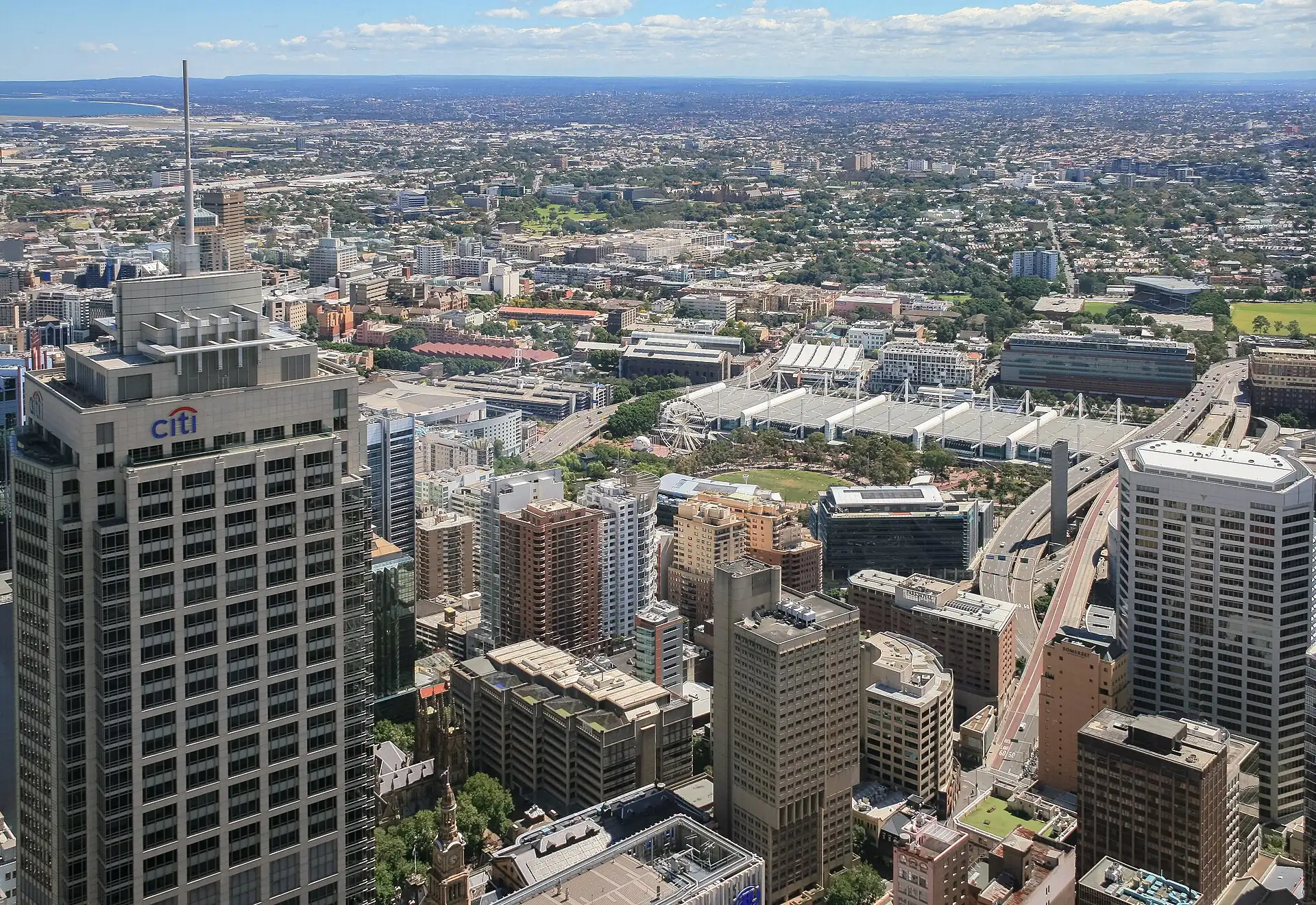
Getting around, in detailGet around · Connect
Get around
Walk inside a cluster; take the train, ferry or light rail between clusters; use a ride-hail or taxi for bags and late nights. Tap on and off with a contactless card or phone.
| Mode | Verdict | Fare | Use it for | What breaks |
|---|---|---|---|---|
| Walking | use | Free | Inside each cluster | Flat in the CBD; cobbles in the Rocks; take shade breaks in summer. |
| Train (Sydney Trains and Metro) | use | A$4-9 (≈ US$3–6) per trip in the centre, daily cap about A$18-20 (≈ US$12–14) (2026 estimate) | Central, Town Hall, Circular Quay, Bondi Junction | Fast and frequent; check trackwork on weekends. |
| Ferry | use | A$6-10 (≈ US$4–7) per trip | Manly, Taronga Zoo, Watsons Bay | Wharf number matters; check the sign before you board. |
| Light rail | ok | A$4-9 (≈ US$3–6) | Central, Circular Quay, Darling Harbour, Randwick | Slower than trains but useful between Central and Circular Quay. |
| Bus | ok | A$3-5 (≈ US$2–4) per trip | Bondi Junction to Bondi Beach, harbour-side suburbs | Tap on and off; check the number. |
| Taxi or ride-hail | use | A$12-25 (≈ US$8–17) across the CBD; A$50-75 (≈ US$35–50) from the airport | Bags, late nights, groups | Fare shown in the app; surge pricing after big events. |
| Rental bike or scooter | maybe | A$3-10 (≈ US$2–7) per ride | Short hops on cycleways | Helmets are compulsory; follow local rules. |
Taxis and ride-hailing
Uber
app
Fare shown before you ride.
DiDi
app
Often cheaper; check the fare.
13cabs and licensed taxis
taxi
Use the airport rank and metered taxis; card accepted.
On foot and car-free hours
| Where | When | Note |
|---|---|---|
| Circular Quay to the Opera House and Botanic Garden | Morning | Flat and easy; the best walk in the city. |
| The Rocks lanes | Before 10:00Before 10:00 AM | Cobbled and sloping; watch for weekend crowds. |
| George Street through the CBD | Any daytime | A straight walk of about 25 minutes from Circular Quay to Town Hall. |
More on getting around
Daily and weekly fare caps apply automatically to the same card or phone. Trains and ferries run late, but the gaps widen after midnight; check the last service before you go out.
Connect
| Option | Verdict | What breaks |
|---|---|---|
| eSIM installed before you fly | use | About A$10-25 (≈ US$7–17) for a week (2026 estimate); no queue at the airport. |
| Telstra, Optus or Vodafone at the airport or a shop in the CBD | use | Bring your passport; prepaid SIMs are registered by law. |
| Convenience-store or supermarket prepaid SIM | ok | Cheaper; activate with your passport. |
Opal Travel
Trains, ferries, buses
Check balances and plan trips; you can also just tap a contactless card or phone.
Transport for NSW Trip Planner
Live times
The best source for delays and last services.
Uber, DiDi, 13cabs
Cars
Fare is shown before you ride; taxis and ride-hail are both common.
Google Maps or Apple Maps
Walking and transit
Reliable across the city.
- Wi-Fi
- Free in libraries, many cafes and shopping centres; hotel Wi-Fi is common but can be slow.
Luggage
Where big bags are a problem, and how to get rid of them for the day.
- Lockers
- Left-luggage services exist near Central and Circular Quay; hotels also hold bags after check-out.
- Forwarding
- No forwarding culture; keep the big bag at the hotel for trips away.
- Dead zone
- Late check-out flights: ask the hotel to hold bags; many do free for guests.
Bags, area by area
4 walking areas rated
- Bags painful
Circular Quay & The RocksOpera House & Botanic GardenCBD & Martin PlaceHaymarket & Chinatown
Lockers, forwarding and the gap between check-out and check-in are covered once, under Luggage.
See & doWalking clusters, day plans and the places worth the time
See & do
Walking clusters, day plans and the places worth the time
Clusters
Plan by cluster: each is a walkable area with a rescue point and a bag rule.
Ferry-and-history cluster: Circular Quay station, the Rocks' lanes and the Discovery Museum; sloping cobbles, shade in the lanes, busy weekends.
rescue 100% · max p90 4.7′ · half
Sunrise-to-noon cluster: Bennelong Point at opening, then the Botanic Garden lawns and the harbour path; flat, open, little shade on the point.
rescue 100% · max p90 6.3′ · 90m
Indoor-friendly cluster: Martin Place, the Pitt Street shopping streets and the Queen Victoria Building; use it at midday when the sun is high.
rescue 100% · max p90 6.1′ · half
Evening and transit cluster: Central station, Dixon Street food and Paddy's Market; flat, bright, busiest after 18:00.
rescue 100% · max p90 5.5′ · half
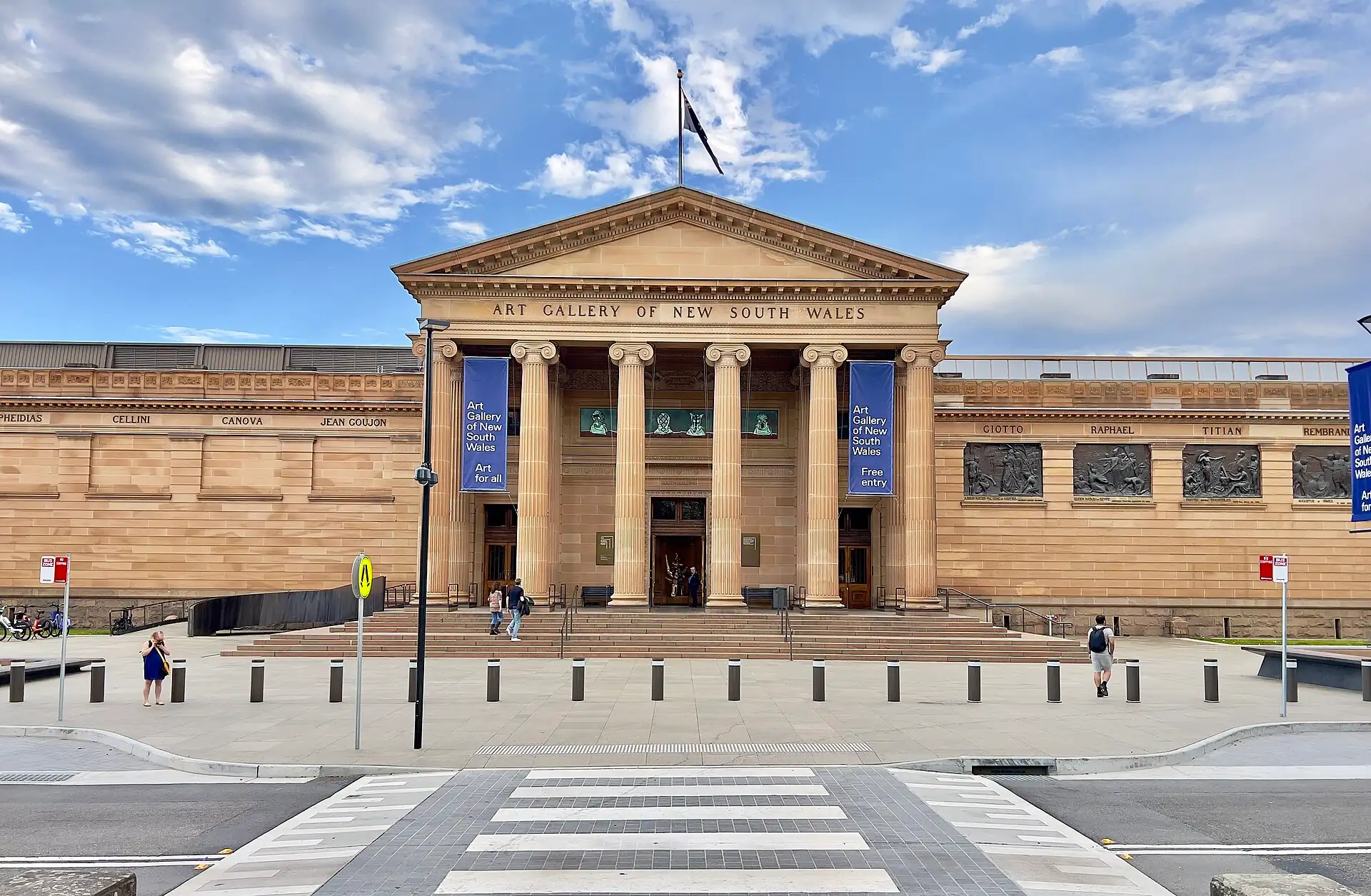
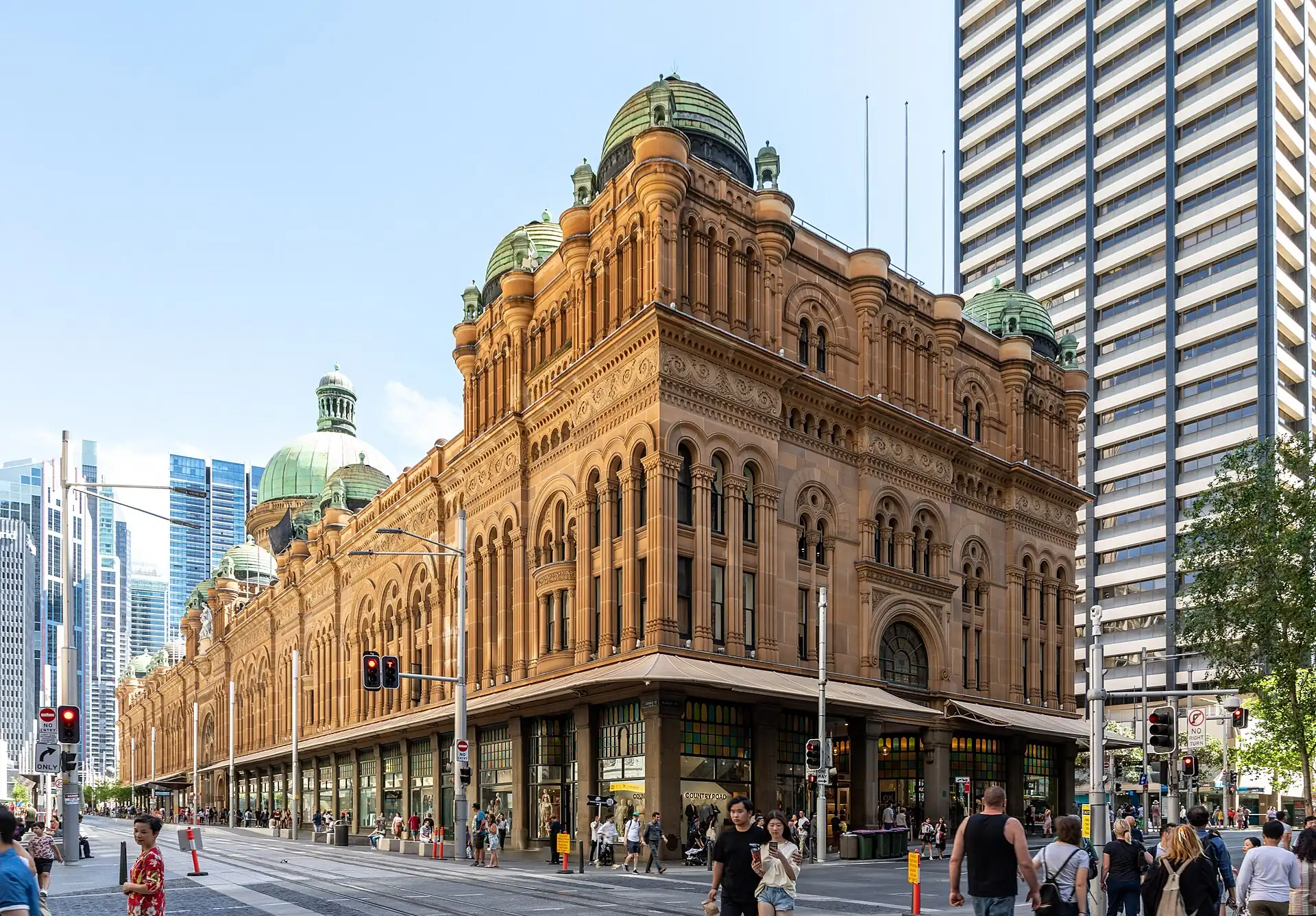
Days
Ready-made day plans, timed against opening hours and walking distances.
How long are you staying?
Loose outlines in the city's rhythm: outdoors in the cooler morning and late afternoon, indoors at midday, ferries at the end of the day.
1 day
A stopover or a cruise-ship day
- 08:00Sydney Opera House — Opera House forecourt
- 09:00Royal Botanic Garden Sydney — Botanic Garden walk
- 11:30Museum of Contemporary Art Australia — Museum of Contemporary Art
- 13:00Historic pub counter meal, The Rocks (confirm venue locally) — Lunch at the Rocks
- 14:30Sydney Harbour Bridge — Harbour Bridge east footway
- 17:00Ferry to Manly or a drink on the quay
Skip: Bondi and the Blue Mountains: each needs its own half or full day.
Sydney in 3 days
3 daysHarbour in the morning, the CBD when the sun is high, the Rocks last; every day ends before the heat peaks or on a train back.
Day by day
Day 1 — Opera House and Botanic Garden, a 12:30 lunch table
- 08:30Sydney Opera House
- Royal Botanic Garden Sydney (optional)
- 12:30Lunch table 12:30 (Circular Quay)
Day 2 — Queen Victoria Building, then oysters on the quay
Day 3 — The Rocks, car to the airport at 12:00
- 08:30The Rocks Discovery Museum
- Sydney Harbour Bridge (optional)
- 12:00Car to the airport at 12:00
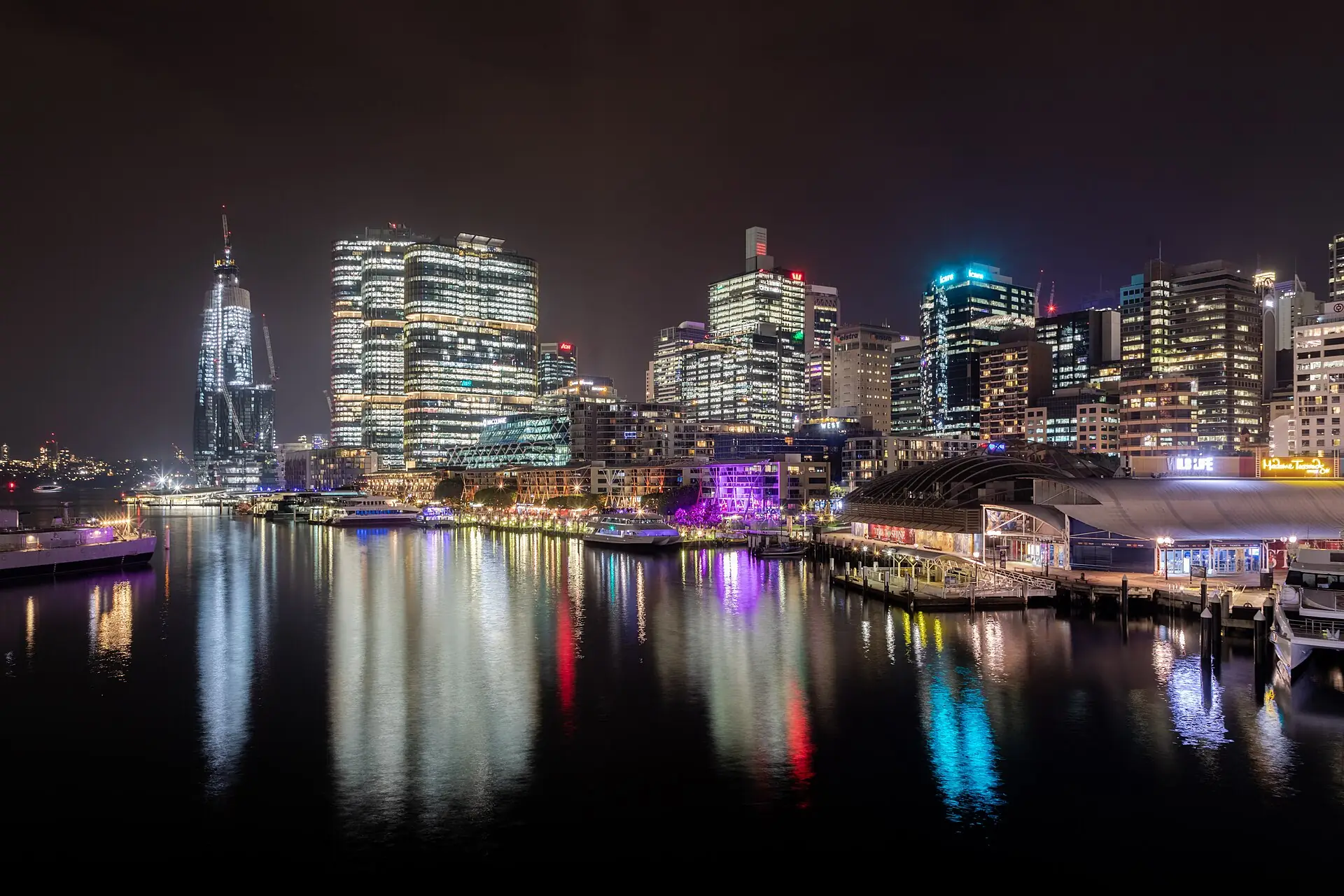
Places
“Best time” is when to arrive for the fewest crowds, for example “before 08:30”; “Go any time” means the hour makes little difference. More sights follow under “More sights and museums”.
9 places. Filters use the guide’s own ratings; a place with no rating is left out when a filter is on.
Show 3 more placesShow fewer
Tours, classes and shows in Sydney →
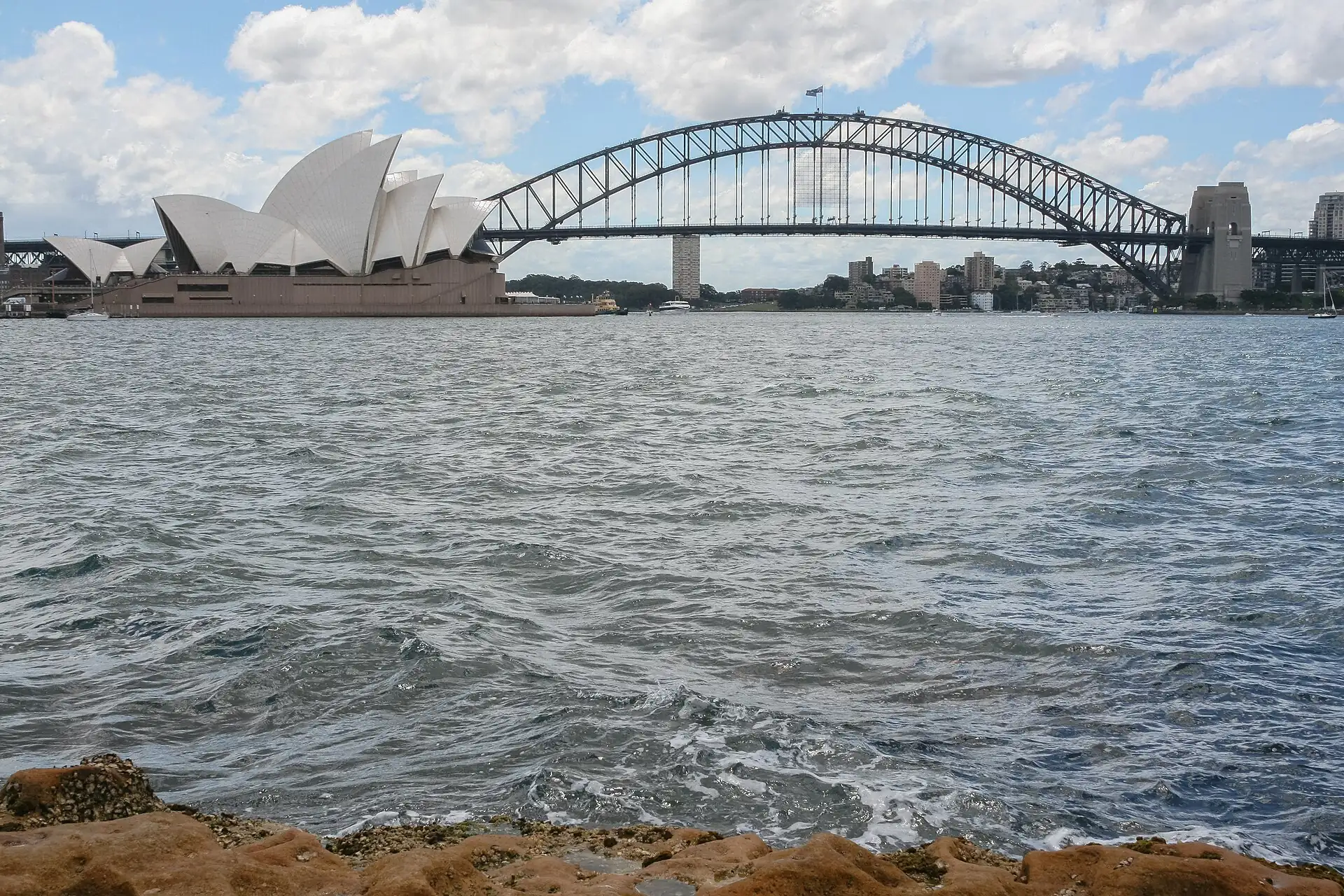
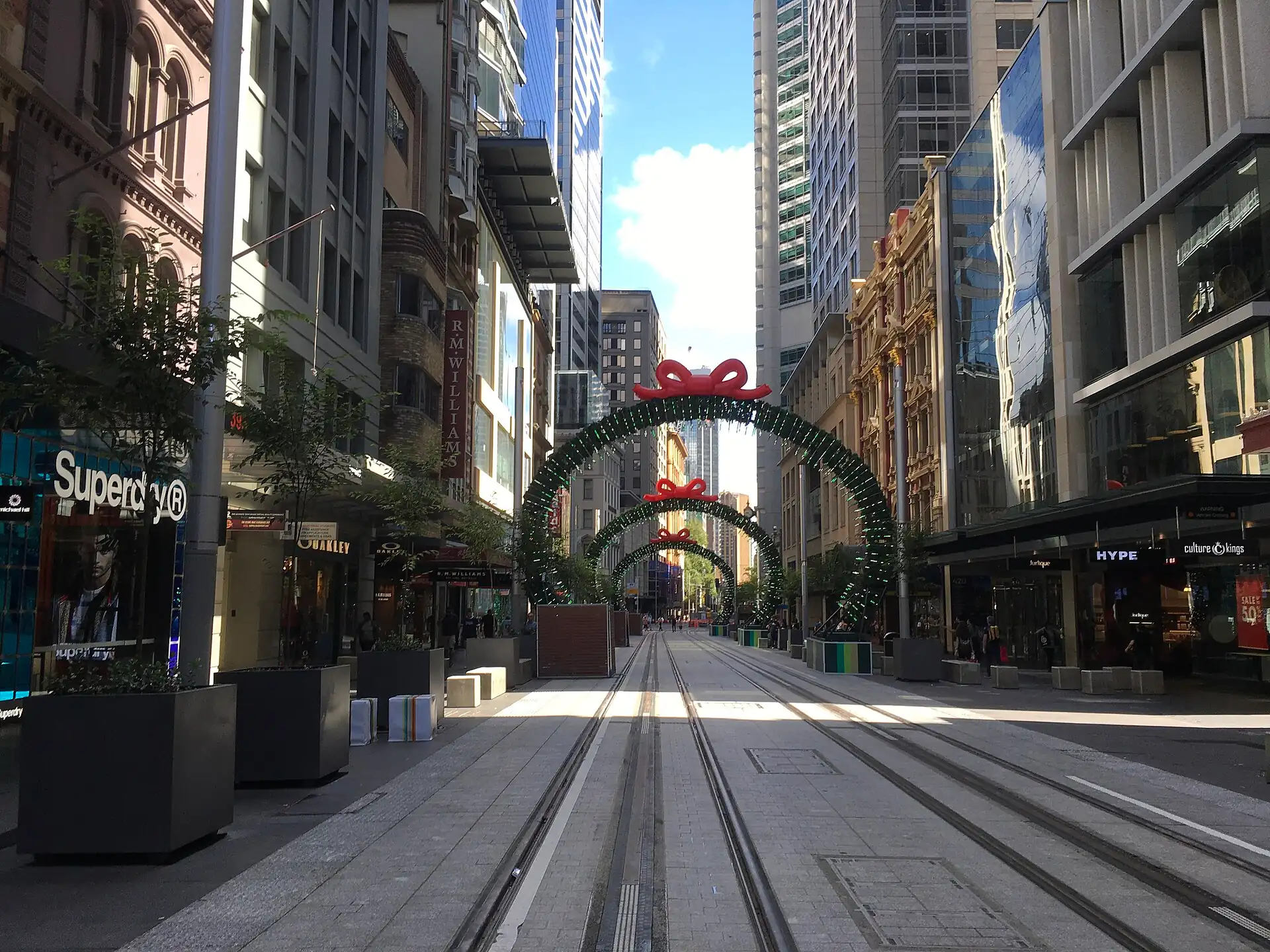
If you do ten things in Sydney
Ranked for a first visit of 2-3 days. Prices are 2026 estimates in AUD.
- 1
The image of the city, free to walk and worth a tour.
- Time
- 45-75 min
- Best
- Opening or late afternoon
- Cost
- Free to walk; tour from A$45 (≈ US$30)
- 2
Shaded harbour walks with views back at the Opera House.
- Time
- 45-90 min
- Best
- Morning
- Cost
- Free
- 3
Sydney Harbour Bridge and Pylon Lookout
A free walk across and a cheap climb for the view.
- Time
- 45-75 min
- Best
- Morning
- Cost
- Free; Pylon about A$20 (≈ US$14)
- 4
Manly ferry
The best harbour ride, ending at a beach.
- Time
- Half day
- Best
- Late morning
- Cost
- A$16-20 (≈ US$11–14) return
- 5
Free art on the waterfront in the air conditioning.
- Time
- 60-90 min
- Best
- Midday
- Cost
- Free
- 6
The city's best rain plan in two buildings.
- Time
- 90-120 min
- Best
- Any day
- Cost
- Free collection
- 7
- 8
Cheap food and lights; the Friday night market.
- Time
- 60 min
- Best
- Evening
- Cost
- A$12-45 (≈ US$8–30) for food
- 9
Free context for the oldest part of the city.
- Time
- 30-45 min
- Best
- Midday
- Cost
- Free
- 10
Bondi to Coogee coastal walk
Cliffs, beaches and ocean baths.
- Time
- 2-3 h
- Best
- Morning
- Cost
- Free
Good for…
Verdict is how well Sydney works for that traveller, not how nice it is.
Easy transit, free sights and a compact centre.
- 1Sydney Opera House — The image of the city and a short walk from the quay.
- 2Sydney Harbour Bridge — Free footway and a cheap Pylon view.
Ferries, parks and beaches suit children.
- 1Royal Botanic Garden Sydney — Lawns and paths for strollers.
- 2Manly ferry — A beach and a boat ride.
Asian food, seafood and coffee culture.
- 1Haymarket yum cha hall (confirm venue locally) — Yum cha in Haymarket.
- 2Sydney Cove Oyster Bar — Oysters on the quay.
Free major galleries.
- 1
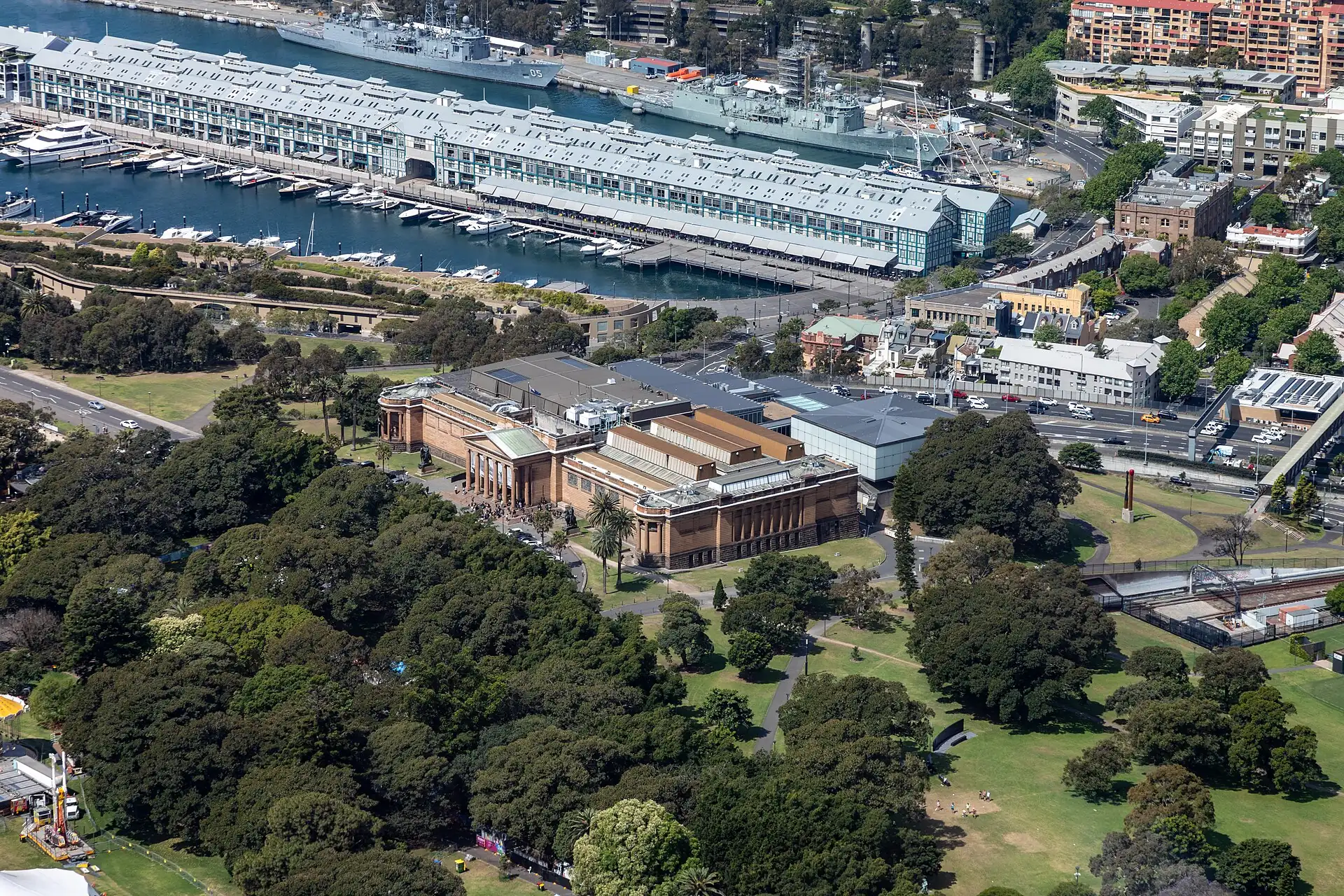 Art Gallery of New South Wales — Two buildings.
- 2Museum of Contemporary Art Australia — Contemporary work on the waterfront.
Expensive beds and food; free sights help.
- 1Royal Botanic Garden Sydney — Free.
- 2Museum of Contemporary Art Australia — Free.
Good transit and step-free harbour paths; Rocks slopes and some pubs are hard.
- 1Sydney Opera House — Step-free routes.
- 2
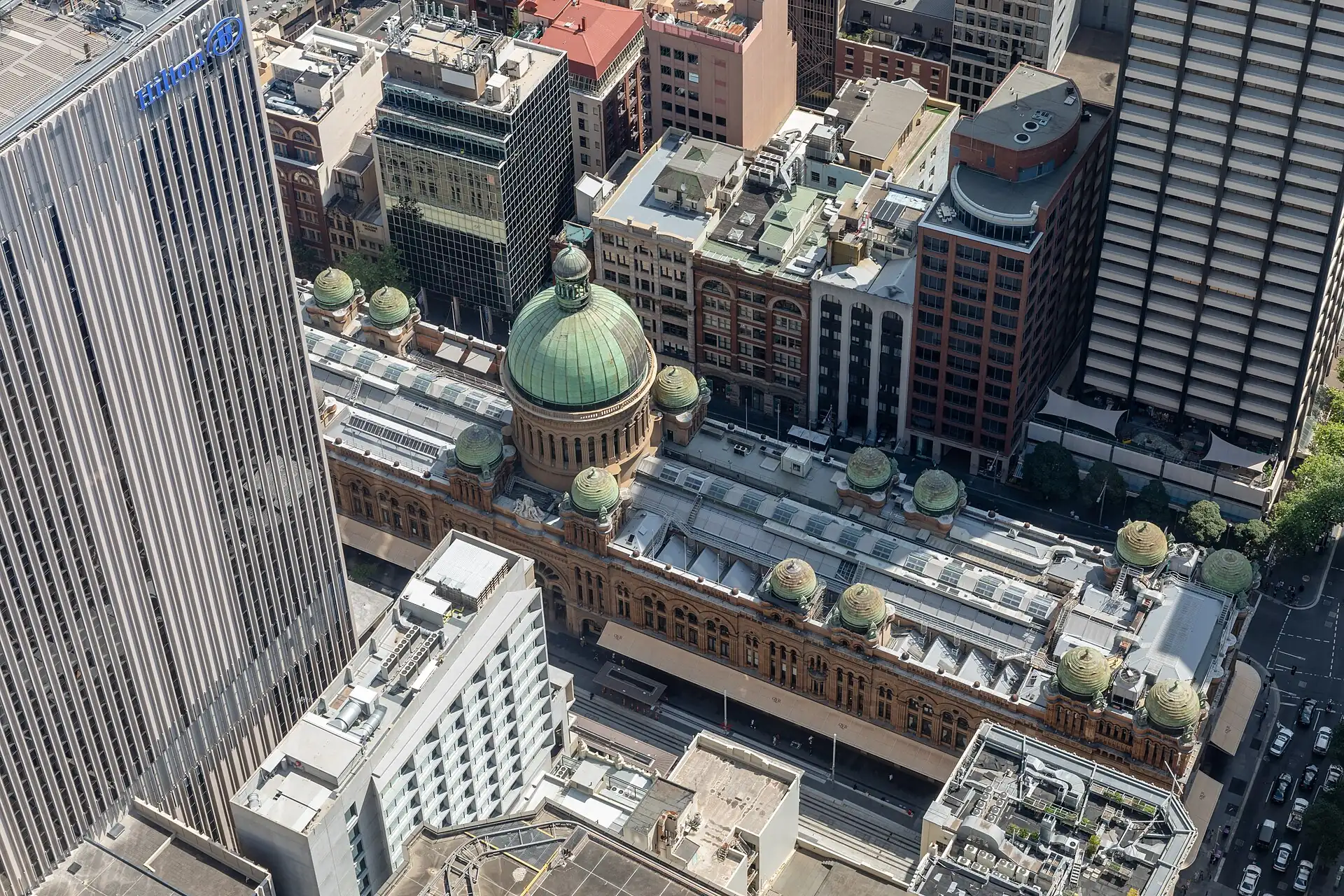 Queen Victoria Building — Lifts.
Bondi, Coogee and Manly are a train, bus or ferry away.
- 1Bondi to Coogee walk — Beaches and baths.
Tours and classes: book or skip
Book through the operator's site or the hotel with written inclusions and a cancellation policy. Prices per person, group tour unless stated.
| Tour or class | Verdict | Typical price | Why | Check before paying |
|---|---|---|---|---|
| Opera House guided tour | book | A$45-60 (≈ US$30–40) (check) | The only way inside without a ticket to a show. | Which halls are included and the language. |
| Harbour Bridge Pylon Lookout | book | A$20 (≈ US$14) (check) | Cheap and gives the Opera House view. | Opening hours and wind closures. |
| BridgeClimb | maybe | A$200 (≈ US$140)+ (check) | A once-off experience if you want the arch. | Safety briefing, age and weight limits. |
| Blue Mountains day tour | maybe | A$120-200 (≈ US$80–140) (check) | Solves transport and gives a guide. | Whether lookouts, cable car and lunch are included. |
| Hunter Valley wine tour | maybe | A$150-250 (≈ US$100–170) (check) | No designated driver needed. | Which wineries and tasting fees. |
| Aboriginal cultural walk | book | A$50-90 (≈ US$35–60) (check) | Local voices at the Rocks and the Botanic Garden. | Community-led operator. |
What each season brings
Summer
Dec-Feb
Warm, humid days, long light and beach weather.
Watch: High UV, storms, school holidays and peak prices.
Autumn
Mar-May
Mild days, warm sea in March, fewer crowds.
Watch: Easter and Anzac Day crowds.
Winter
Jun-Aug
Cool, clear days and Vivid Sydney.
Watch: Wind on the harbour and cool evenings.
Spring
Sep-Nov
Warming days, flowers and one of the best times to visit.
Watch: Occasional rain and long weekend crowds.
Photo spots and the light
Light times are for clear days.
| Spot | Best light | Tip |
|---|---|---|
| Opera House western steps | Morning | The sails against the morning sky with few people. |
| Farm Cove with the Opera House behind | Early or late | Stay on the path. |
| Pylon Lookout | Morning | Opera House and the bridge in one frame. |
| Mrs Macquarie's Chair | Sunset | The bridge and the Opera House together; crowded. |
| Manly ferry deck | Late afternoon | Sit on the right for the Opera House. |
Sydney travel FAQ
Answers are 2026 desk estimates; fares and rules marked (check) change.
How many days do I need in Sydney?
Three days cover the four walking clusters. Add one day for Manly or Bondi and another for the Blue Mountains.
Do I need an Opal card?
No. Tap a contactless bank card or phone on the reader at trains, ferries, buses and light rail. Tap on and off with the same card.
Is Sydney expensive?
Yes for beds and restaurants. Many top sights are free: the Botanic Garden, the MCA, the Art Gallery of NSW and the Harbour Bridge footway.
Do I need a visa?
Most visitors need an electronic visa or ETA before travel; check the Home Affairs site for your passport.
Do I tip?
Not expected. Round up for good service if you wish.
Is the tap water safe?
Yes. Carry a bottle and refill at fountains.
When is the best time to visit?
March to May and September to November are the easiest. Summer is hot and humid; winter is cool and clear.
How do I get from the airport to the city?
The airport train reaches Central in about 15 minutes for A$20-25 (≈ US$14–17); a taxi or ride-hail costs A$50-75 (≈ US$35–50).
Is it safe to swim?
Yes between the red and yellow flags on a patrolled beach. Ignore no-swimming signs and rips.
What is Vivid Sydney?
A light festival from late May to mid June with installations around Circular Quay and the Rocks; book hotels early.
More to see and doSee & do · Learn & work · Rain & heat · Free things · Wheelchair and stroller
Free things to do
Sights in Sydney that cost nothing to enter. Each is described under Places or More sights; extra costs inside are marked there.
Wheelchair and stroller, place by place
How each place in this guide works for wheels, from its own page. Ratings are desk estimates unless a page says it was checked on the ground.
| Place | Step-free | Wheelchair | Stroller | What to know |
|---|---|---|---|---|
| Art Gallery of New South Wales | yes | good | good | Few. |
| Chinatown and Dixon Street | yes | ok | ok | Steps at some restaurants. |
| Hyde Park and the Anzac Memorial | yes | good | good | A few at the memorial with ramps alongside. |
| Museum of Contemporary Art Australia | yes | good | good | Few. |
| Queen Victoria Building | yes | good | good | Minimal. |
| The Rocks Discovery Museum | yes | ok | ok | Few. |
| Royal Botanic Garden Sydney | yes | good | good | A few steps at some gates; ramps alongside. |
| Sydney Harbour Bridge | partial | caution | poor | About 200 steps inside the Pylon; the Cumberland Street steps are long. |
| Sydney Opera House | yes | ok | ok | Wide forecourt steps have a lift alternative. |
See & do
15 of 15
- monument
The Opera House forecourt and a guided tour; go at opening.
Circular Quay East · Forecourt open daily; tours by timetable · Free to walk; tour from about A$45 (≈ US$30)
- Gardens
Free harbour-side gardens between the Opera House and Mrs Macquarie's Chair.
Farm Cove · Daily, season-based · Free
- monument
The east footway is free; the Pylon is the cheap way up.
The Rocks · Footway daily; Pylon by day (check) · Free to walk; Pylon about A$20 (≈ US$14)
Free contemporary art on the waterfront.
Circular Quay West · Daily, about 10:00-17:00 (check)Daily, about 10:00 AM-5:00 PM (check) · Free
- Museums
Gadigal and convict history in a small museum.
The Rocks · Daily (check) · Free
- Markets
An 1898 arcade for coffee and a midday rest.
CBD · Shop hours; Thu later · Free
The city's main art museum in two buildings.
The Domain · Daily, one late night (check) · Free collection
A shaded avenue and the Art Deco memorial.
CBD · Park all day; memorial by day (check) · Free
Food, lights and the Friday night market.
Haymarket · Evening best · Free to walk
Manly ferry round trip
ActiveA 30-minute harbour ride to a beach town; the best view in the city for the price.
Circular Quay to Manly · Daytime and evening · A$16-20 (≈ US$11–14) return
Bondi to Coogee coastal walk
ActiveAbout 6 km (3.7 mi) of cliffs, beaches and ocean baths; allow 2 to 3 hours and bring water.About 3.7 mi (6 km) of cliffs, beaches and ocean baths; allow 2 to 3 hours and bring water.
Eastern beaches · Daylight · Free
Taronga Zoo by ferry
familyA 12-minute ferry and a zoo with harbour views.
Mosman · Daytime · Entry about A$50-60 (≈ US$35–40) (check)
Rocks Markets on a weekend
MarketsFood and crafts in the lanes.
The Rocks · Sat-Sun · Free to walk
Blue Mountains day trip
day tripA scenic train ride and lookouts; needs a full day.
Katoomba · Full day · Train fare plus lookout fees (check)
Late-night food run
foodA pie cart at Woolloomooloo Wharf or dumplings in Chinatown after the shows.
Woolloomooloo and Chinatown · After 21:00After 9:00 PM · A$10-25 (≈ US$7–17)
- Booking
- Book the Opera House tour, the Pylon Lookout and the Blue Mountains day trip a day or two ahead in busy months; ferries and beaches need no booking.
Learn & work
| What | Where | Cost | Note |
|---|---|---|---|
| Surf lessons | Bondi, Manly and Cronulla surf schools | About A$60-100 (≈ US$40–70) for a beginner group lesson (check) | Wetsuits and boards are included; pick a school with lifeguard-trained instructors. |
| Aboriginal cultural walks | The Rocks and the Botanic Garden (check operators) | About A$50-90 (≈ US$35–60) (check) | Look for guides from the local community; book ahead. |
| Cooking classes | CBD and Haymarket cooking schools (check operator) | About A$100-160 (≈ US$70–110) | Half-day sessions on Asian, seafood or Australian dishes. |
Working here
- Tourist entry
- Most visitors need an electronic visa or ETA before travel; check the Home Affairs site. A visitor visa does not allow paid work.
- Work permit
- Legal work needs a work visa and often employer sponsorship; a Working Holiday visa is available to eligible young travellers.
- Remote work
- Working remotely for a foreign employer on a visitor visa is a grey area; check current rules before a long stay.
Rain-day and heat-day plan
Rain day
Showers pass quickly, but storms can flood streets for an hour. Have a ready indoor plan and use trains, which run under cover.
- 01Art Gallery of New South Wales — Free galleries; two hours.
- 02Museum of Contemporary Art Australia — Free and waterfront.
- 03Queen Victoria Building — Covered arcade and Town Hall station link.
- 04The Rocks Discovery Museum — A short indoor history stop.
Heat day
Above 30 C or a high UV forecast: outdoor sights before 10:30 and after 16:00, air-conditioning and shade between, water every hour.
- 08:00Sydney Opera House — Forecourt before the crowds and sun.
- 09:30Royal Botanic Garden Sydney — Shaded paths near Farm Cove.
- 12:00Queen Victoria Building — Air-conditioned lunch break.
- 16:30Sydney Harbour Bridge — The footway when the steel cools.
Day-trips and nearby
Places you can reach from Sydney in a day or with one night away, with the route and what it costs. Door to door, not ride time.
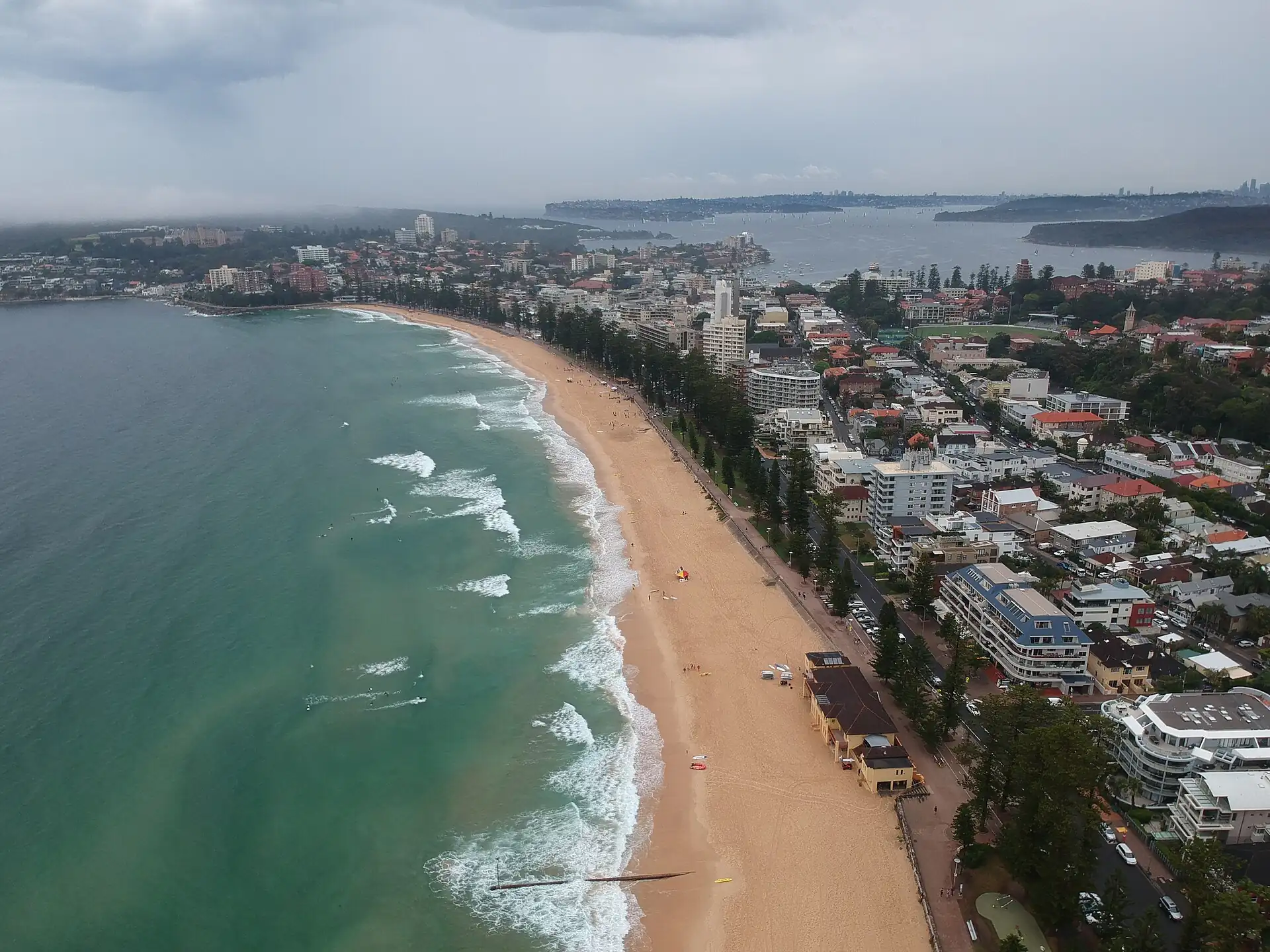 Photo: Maksym Kozlenko, CC BY-SA 4.0
Manly
goFerry from Circular Quay, about 30 min
Beach and coastal walk; last ferry is in the evening, check the timetable.
- Time
- Half day
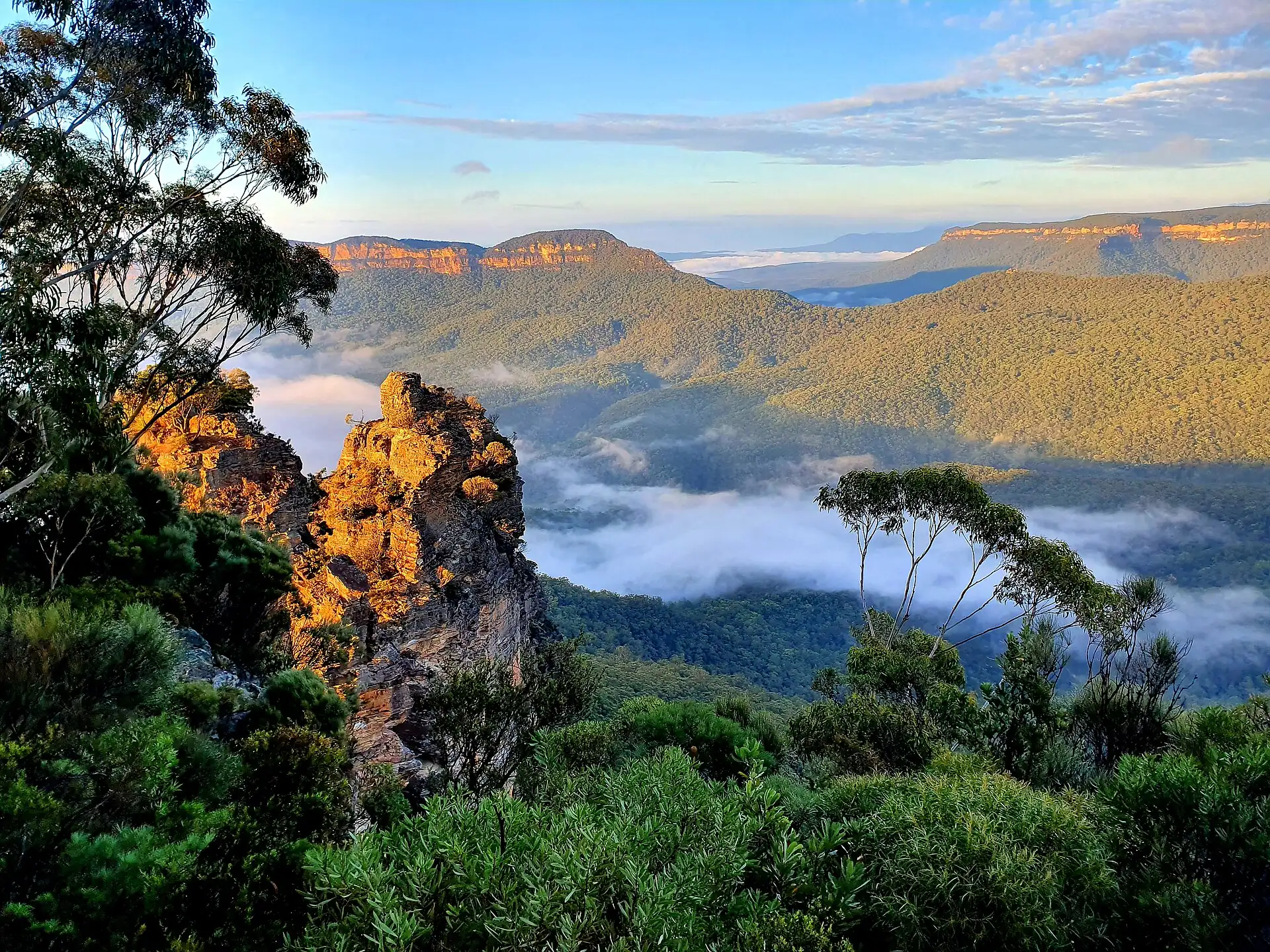 Photo: Abracadebra68, CC BY-SA 4.0
Blue Mountains (Katoomba)
goTrain from Central, about 2 h each way
Lookouts and bush walks; weather can close trails.
- Time
- Full day
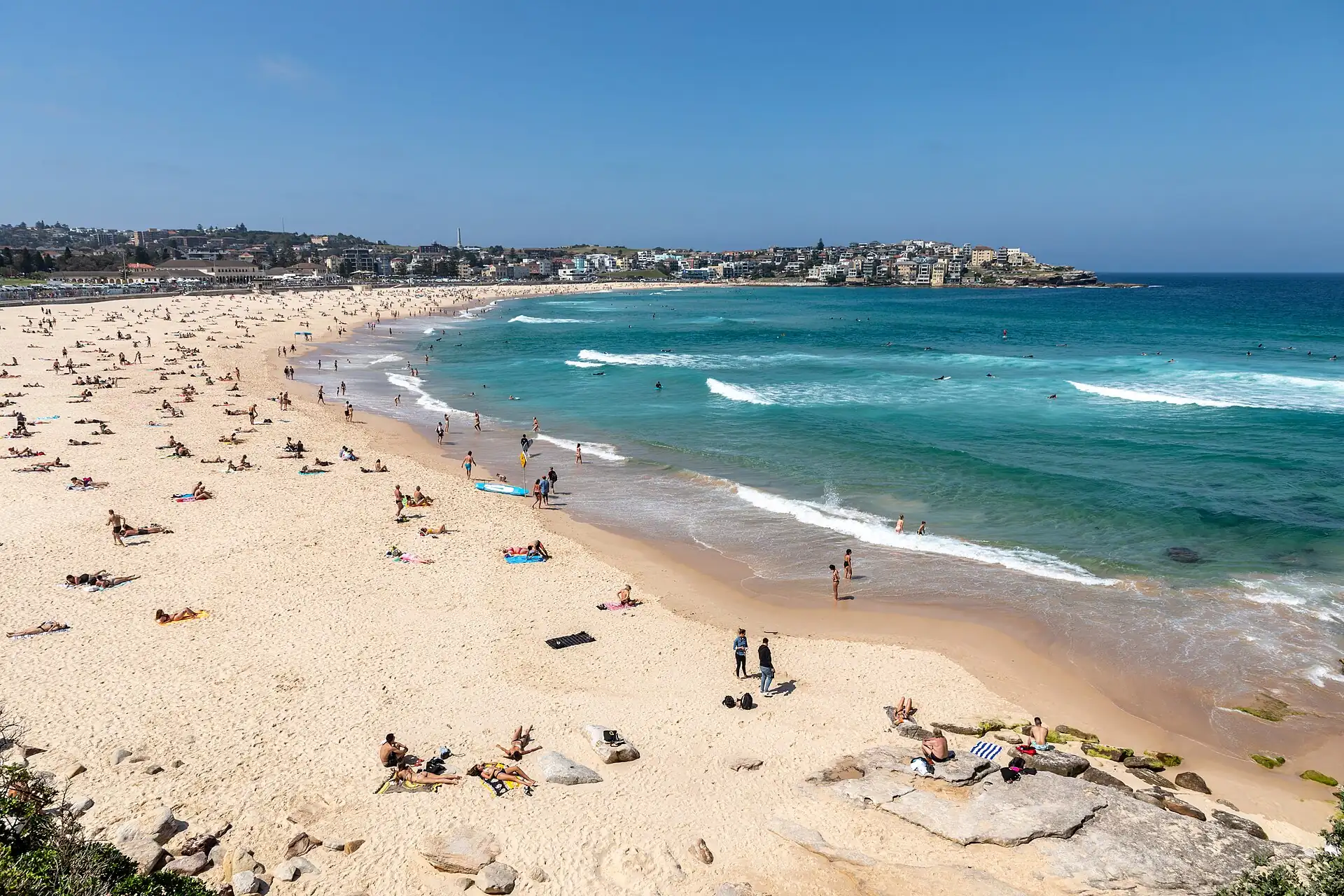 Photo: Dietmar Rabich, CC BY-SA 4.0
Bondi Beach
goTrain and bus, about 40 min from the CBD
Busy on summer weekends; swim between the flags.
- Time
- Half day
Go next
Hunter Valley
overnightDoor to door: 2.5-3 h
Car about 2.5 h; tours from Sydney
Wine country; tours make it easy without a designated driver.
Royal National Park
maybeDoor to door: 1-1.5 h
Train to Cronulla or Sutherland, then walks
Coastal walks; check trail and weather notices.
Eat & sleepWhere to eat and which area to sleep in
Eat & sleep
Where to eat and which area to sleep in
Eat
A short list of places worth crossing the city for, each with how to get a seat.
Restaurant finder: filter every place to eat in Sydney →
Vegetarian-friendly score
3.5 / 5 · Good
- Country diet noteOur country guide rates vegetarian eating as easy.2 / 2
- Places to eat in this guide3 of 7 places with a known answer are vegetarian-friendly, 4 partly.1.07 / 1.5
- Budget eating lines0 vegetarian lines in "Eat by budget".0 / 0.6
- Meat-free national dishes5 meat-free dishes in the country food list.0.4 / 0.4
- Dedicated vegetarian kitchens0 mentions of vegetarian restaurants, Buddhist or fasting kitchens.0 / 0.5
Country note: Easy in cities: every café menu has several options, and Indian, Thai and Middle Eastern places add many more.
Vegetarian places near me →Make a diet card →
How we score
- Country diet note (up to 2): easy 2, workable 1, mixed 0.75, hard 0; no note 0.5.
- City places to eat (up to 1.5): 1.5 × (vegetarian-friendly + half of partly friendly) ÷ places with a known answer; needs 3 or more known places.
- Budget eating lines marked vegetarian (up to 0.6): 0.2 each.
- Meat-free national dishes (up to 0.4): 0.1 each.
- Dedicated vegetarian kitchens mentioned — Buddhist chay, shōjin ryōri, Jain, fasting food, vegan cafés (up to 0.5): 0.1 each.
- Total rounded to the nearest half point, 0 to 5. Built from our own pages only, not from reviews.
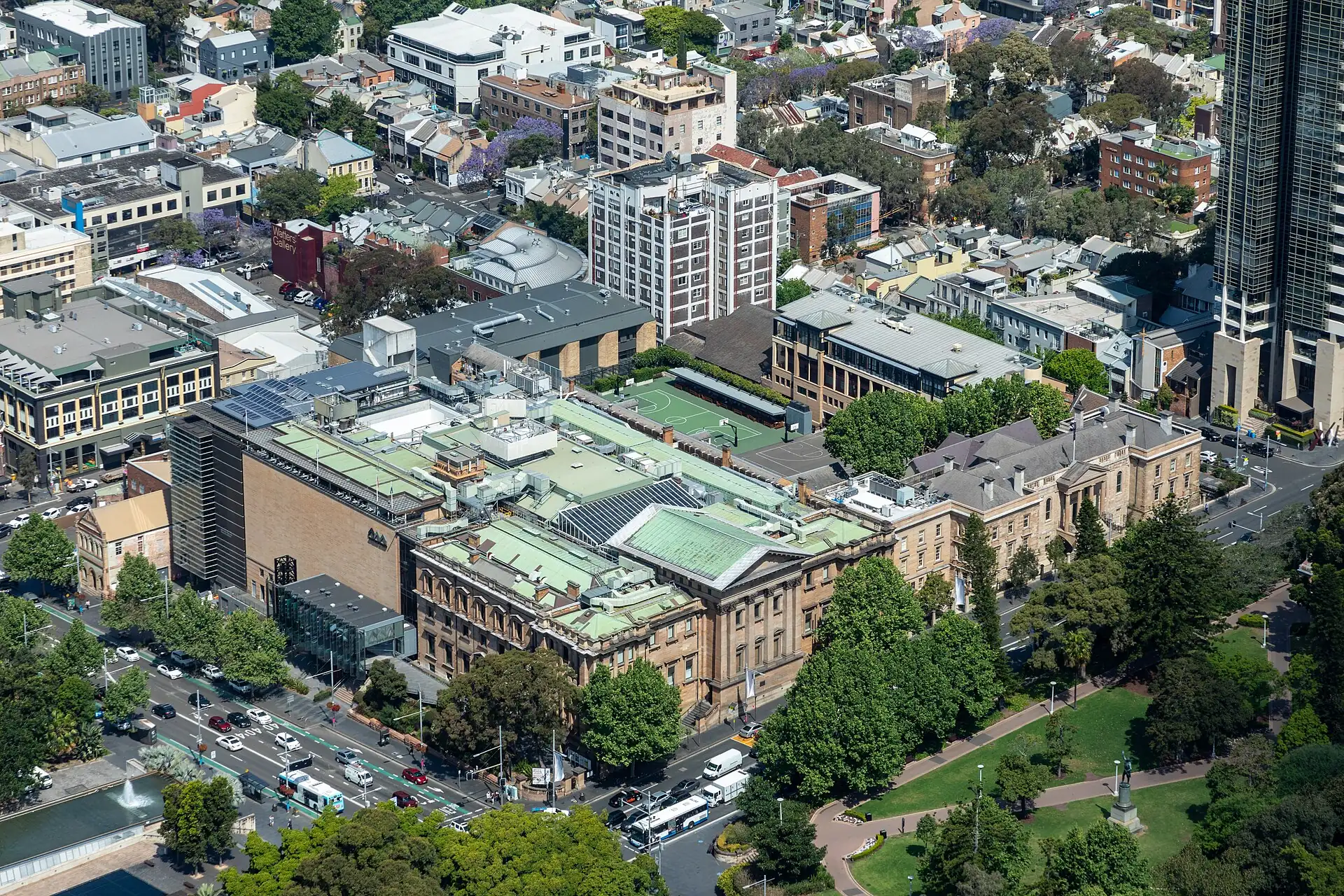
Eating and drinking guideEat by budget · Drink
Before you sit down to eat
Short version; full text linked
Eat by budget
Under A$18 (≈ US$12) a meal
| Where | Order | Area | Price | Note |
|---|---|---|---|---|
| Harry's Cafe de Wheels | Meat pie with peas and mash | Woolloomooloo | A$10-18 (≈ US$7–12) | Also a late-night food stop. |
| The Rocks Markets stalls | Gozleme, dumplings or churros | The Rocks | A$10-25 (≈ US$7–17) | Weekend stalls. |
| Chinatown night market stalls | Skewers and dumplings | Haymarket | A$12-25 (≈ US$8–17) | Friday evenings. |
| Supermarket sandwich or salad | Ready-made lunch | Any Woolworths or Coles | A$6-12 (≈ US$4–8) | The cheapest full lunch. |
Dishes to know
| Dish | What it is | Where to look | When | Price |
|---|---|---|---|---|
| Meat pie | Minced beef in pastry, often with peas and mash. | Bakeries, pie carts and pubs | Any time | A$6-18 (≈ US$4–12) |
| Flat white | Espresso with textured milk; the standard coffee. | Every cafe | Morning | A$4.50-6 (≈ US$3–4) |
| Sydney rock oyster | The local oyster; small and salty. | Seafood restaurants | Lunch | A$4-7 (≈ US$3–5) each |
| Barramundi | A local white fish, grilled or battered. | Seafood restaurants | Lunch, dinner | A$28-45 (≈ US$19–30) |
| Chicken parma | A schnitzel with cheese and tomato sauce. | Pubs | Lunch, dinner | A$25-34 (≈ US$17–25) |
| Yum cha | Small dishes with tea; Cantonese dim sum. | Haymarket | Lunch | A$30-45 (≈ US$20–30) |
| Lamington and Anzac biscuit | Sponge cake with coconut and an oat biscuit. | Bakeries | Any time | A$3-6 (≈ US$2–4) |
- Cafes and pubs often stop serving hot food at 15:00 and 21:00; kitchens close earlier than bars.Cafes and pubs often stop serving hot food at 3:00 PM and 9:00 PM; kitchens close earlier than bars.
- Late-night food: pie carts, Chinatown noodle shops and convenience stores stay open after the pubs close.
- A public holiday surcharge of 10 to 15 percent appears on many bills; check the menu.
- BYO is allowed at some restaurants; corkage is A$5-15 (≈ US$4–10) a bottle.
Drink & nightlife
| Where | What | Until | Note |
|---|---|---|---|
| The Rocks pubs | Heritage pubs | About 23:00-midnightAbout 11:00 PM-midnight | Good for a schooner and a meal; busy after work. |
| Circular Quay and Opera Quays bars | Harbour bars | Late on weekends | Expensive but with a view. |
| Surry Hills and Darlinghurst small bars | Wine and cocktail bars | About midnight | A short train or ride-hail from Central. |
| Kings Cross | Late-night venues | Late | Loud and crowded; keep bags close. |
By style
| Style | What | Where | Price | Until |
|---|---|---|---|---|
| Pub beer | Schooner (285 ml) or pint of lager, pale ale or craft beerA schooner is the standard glass in New South Wales; ask for a pint if you want a larger one. | Any pub | A$9-13 (≈ US$6–9) | Late |
| Australian wine | By the glass or bottle; Hunter Valley and Barossa are the big namesBYO is allowed at some restaurants; check the corkage. | Bars and restaurants | A$12-20 (≈ US$8–14) a glass | Late |
| Coffee and flat whites | Coffee culture is strong; flat white, long black, magicNot a place for drip coffee; ask for a filter if you want one. | Cafes everywhere | A$4.50-6 (≈ US$3–4) | Day |
Rules that bite
- Carry a passport or Australian licence: venues check ID and can refuse service without it.
- Drinking in public parks and on streets is restricted in many areas; check signs.
- Do not drive after drinking; random breath tests are frequent and penalties are severe.
Sleep
Pick the area first: it decides your walk home at night and your first morning.
Which neighborhood fits you
Three questions, one recommendation, with the reasons.
Your best fit
- Circular Quay, the Opera House and the Bridge on foot.
Watch out: Among the most expensive areas.
Next best: Haymarket / Central
Built from our 1–5 desk scores per area; your answers stay in this browser.
More on sleepingSleep by budget · Your area · With kids
Sleep by budget
| Band | Price | Where | Room types | What to expect |
|---|---|---|---|---|
| budget | A$45-150 (≈ US$30–100) | Haymarket, Central | Hostels and small hotels | Shared or basic rooms; check noise and the lift. |
| mid | A$220-400 (≈ US$150–300) | Haymarket, CBD | 3-4 star hotels and serviced apartments | Lift, breakfast options, air conditioning. |
| splurge | A$450-900 (≈ US$300–600)+ | The Rocks, Circular Quay | 5-star and boutique harbour hotels | Views, service, and a short walk to the water. |
Booking checks
- Book early for Vivid, New Year's Eve and school holidays; hotel prices double.
- Ask about resort or destination fees; check whether taxes are included.
- Haymarket and Central give the cheapest access to the airport train and the harbour.
Which area is yours
| If you are | Sleep in | Because |
|---|---|---|
| First visit, 3 nights, transit-first | Haymarket / Central | Central Station and the CBD; cheaper and easy from the airport. |
| Harbour views and walking mornings | The Rocks | Pay more for the walk to the quay and the Opera House. |
| Families with luggage | Haymarket / Central | Step-free trains and larger rooms. |
First-timers: a 24-hour desk next to Central station, a train to the harbour in 10 minutes and the CBD a short walk north.
Harbour mornings on foot: Circular Quay, the Opera House and the Botanic Garden within 15 minutes; pricier, with cobbled slopes for bags.
Areas are in our default order until you tick a priority.
Scores are 1-5 desk judgements per priority (2026).
With kids
- Sydney is easy with children: flat shore paths, ferries as an adventure, and free playgrounds. Bring a hat, sun cover and sunscreen from October to March.
- The Botanic Garden lawns, the Domain and Darling Harbour playgrounds are good breaks; strollers can go on trains and ferries.
- Manly by ferry is a half-day treat; children under 16 pay half fare with an Opal child card, and children under 4 ride free (check current rules).
- Rain plan: the Australian Museum, Powerhouse Museum and Queen Victoria Building are all indoors.
- Ride-hail and taxis need a child restraint by law for children up to 7; ask the company or bring a booster.
PracticalMoney, essentials, safety and the pocket card
Practical
Money, essentials, safety and the pocket card
Money
What a day costs at three comfort levels, and how to pay.
- Budget
- A$70–120 (≈ US$50–80) excl. bed / day
- Mid
- A$120–250 (≈ US$80–170) excl. bed / day
- High
- A$250 (≈ US$170)+ excl. bed / day
- Transit card
- No card to buy: tap a contactless bank card or phone on the reader at every train, ferry, bus and light-rail gate.
- Cash rule
- Cards are accepted almost everywhere; carry A$50 (≈ US$35) in notes for markets and small cafes, and use bank ATMs rather than standalone ones with high fees.
More on moneyCosts · Budget · Buy
What things cost
- Bottle of water, convenience storeA$3–4.50 (≈ US$2–3)
- Train from the airport to CentralA$20–25 (≈ US$14–17)
- Taxi or ride-hail from the airport to the CBDA$50–75 (≈ US$35–50)
- Opera House guided tourA$45–60 (≈ US$30–40)
Trip budget
| Hotel double room1 × 3 nights × A$290 | A$870 |
| Food, local transport, entries2 × 3 days × A$180 | A$1,080 |
| Airport train, both ways2 × A$46 · includes the station access fee | A$92 |
| Tourist eSIM, about a week2 × A$18 | A$36 |
| Buffer 15%Price creep, a taxi you did not plan, one splurge | A$312 |
| Trip total≈ A$398 per person per day, bed included | A$2,390≈ US$1,600 |
2026 estimate in AUD; flights, visas and tours excluded. Your choices stay in this browser.
Prices of common things
| Manly ferry, one waySunday and daily caps apply. | A$8-10 (≈ US$6–7) |
| Airport train to CentralIncludes the airport station access fee. | A$20-25 (≈ US$14–17) |
| Taxi or ride-hail from the airport to the CBD | A$50-75 (≈ US$35–50) |
| Opera House guided tour | A$45-60 (≈ US$30–40) |
2026 estimate; check locally.
Buy
- Bargaining
- Prices in shops, cafes and supermarkets are fixed and include the 10 percent goods and services tax (GST). Do not haggle, except a little at weekend markets for bulk buys.
- Fixed-price check
- Check the price of a bottle of water, a flat white or a souvenir in a supermarket or a chain shop first; that is your ceiling for a tourist-area shop.
Markets and shopping streets
| Where | What | When | Haggle | Note |
|---|---|---|---|---|
| The Rocks Markets | Crafts, food stalls, gifts | Saturday and Sunday, about 10:00-17:00 (check)Saturday and Sunday, about 10:00 AM-5:00 PM (check) | no | Under a canopy along George Street; busy after 12:00.Under a canopy along George Street; busy after 12:00 PM. |
| Paddy's Markets, Haymarket | Cheap clothes, souvenirs, fruit and vegetables | Check days and hours | light | Bulk souvenir buying; watch bags. |
| Chinatown night market (Friday, check) | Street food and stalls | Friday evening (confirm locally) | no | Go early. |
| Supermarkets (Woolworths, Coles) | Packaged food, toiletries, snacks | About 06:00-23:00About 6:00 AM-11:00 PM | no | Your fixed-price reference; the cheapest lunch is a supermarket sandwich or salad. |
Shops by what they sell
| For | Where | Hours | Note |
|---|---|---|---|
| Australian wool, sheepskin and outdoor clothing | CBD and the Rocks | Shop hours | Prices vary a lot; compare two shops. |
| First Nations art | Galleries and museum shops (ask about provenance) | Shop hours | Buy from galleries that pay the artists and list the community; ask for a certificate. |
| Malls (AC, cinemas, supermarkets) | Westfield Sydney, Pitt Street Mall, Market City | About 09:30-17:30, later on Thursday | Fixed prices; the rain-day and heat-day refuge. |
Changing money
| Where | Verdict | Why |
|---|---|---|
| Bank ATM | use | Use a bank-branded ATM; decline the dynamic-currency option and pay in AUD. |
| Your bank card (contactless) | use | Accepted almost everywhere; small foreign-transaction fees may apply. |
| Airport currency booths | ok | Weaker rates; change only a small amount. |
| Street or Chinatown exchange booths | avoid | Poor rates and high fees; use an ATM. |
ATMs
- Per withdrawal
- Bank ATMs typically allow a foreign card A$1,000 (≈ US$700) or less per day; the screen shows the limit.
- Fees
- Fee-free ATMs are common at big banks; independent ATMs in convenience stores can charge A$3-5 (≈ US$2–4).
- Where
- Machines in bank branches, malls and train stations; avoid those on quiet streets late at night.
- Conversion
- If a terminal offers to charge in your home currency, decline and pay in AUD.
Essentials and accessEssentials · Access
Essentials
- Tipping
- Not expected. Round up for good service in restaurants if you wish.
- Plugs & power
- 230 V; type I sockets (three flat pins). Bring an Australian adapter.
- Opening hours
- Shops open around 09:00–17:30, later on Thursday; many cafes open from 06:30. Museums are often closed one weekday and on public holidays.Shops open around 9:00 AM–5:30 PM, later on Thursday; many cafes open from 6:30 AM. Museums are often closed one weekday and on public holidays.
- Health
- Sun and heat in summer; stinging jellyfish in some warm months; travel insurance with medical cover is advised.
- Accessibility
- Trains and ferries are step-free at many stops; the Rocks has cobbled streets and slopes; Opera House steps have lift options.
- Laundry
- Hotel laundry or coin-operated laundromats near Central and Kings Cross.
- Emergency numbers
- 000 for police, fire and ambulance.
Pack
- Hat, sunglasses and high-SPF sunscreen
- A light layer for the harbour wind and winter evenings
- Comfortable shoes for the Rocks' slopes and cobbles
- A universal adapter for type I sockets
Accessibility
Sydney is reasonably accessible: many trains, all ferries and light rail are step-free with help, and the harbour paths are flat. Older parts of the Rocks, some heritage pubs and many beach access points have steps.
- Pavements
- Mostly smooth in the CBD; cobbles and slopes in the Rocks.
- Trains
- Step-free at many stations; check the Transport for NSW accessibility map. Central, Town Hall and Circular Quay have lifts.
- Ferries
- Most Circular Quay ferries have ramps or level boarding; ask staff.
- Toilets
- Accessible toilets in stations, shopping centres and the Opera House.
- Taxis
- Wheelchair-accessible taxis and ride-hail vehicles can be booked; expect a wait.
Sights, step-free or not
| Sydney Opera House | step-free | Step-free routes and lifts; book accessible seating and tours. |
| Royal Botanic Garden Sydney | step-free | Sealed paths; some slopes. |
| Queen Victoria Building | step-free | Lifts and wide aisles. |
| Sydney Harbour Bridge | with help | Steps at most approaches; lift route on the north side (check). |
| Art Gallery of New South Wales | step-free | Level access and lifts. |
Survive
Safety basics, the lines not to cross, and practical habits that save the day.
Safety
- Emergency: 000 for police, fire and ambulance (112 from a mobile).
- Sun: UV is extreme in summer; reapply sunscreen every two hours.
- Beaches: swim between the red and yellow flags; rips are the main risk.
Red lines
- Do not climb on the Opera House sails or the harbour rocks past the barriers.
- Do not fly a drone near the harbour, airport or crowds without checking the rules.
- Declare food and plant items at the border: fines are issued on the spot.
Practical
- Tap water is safe to drink.
- Toilets: shopping centres, train stations and public parks; the Opera House and Circular Quay have public toilets.
More on staying safeStay safe · Stay healthy · Safety map · Solo & women · Etiquette · Cope · Scams
After dark, by area
1 flagged area
Kings Cross
Take care
Day = about 07:00-19:00. What to watch in each area, day and night →
Scams and red flags
Walk away if you see these
- Unlicensed drivers offering airport transfers inside arrivals: use the taxi rank or a ride-hail app instead.
- Street-level currency exchange booths with poor rates: use a bank ATM or your card.
- Ticket resale offers near the Opera House: buy from the Opera House site only.
Stay safe
Crossing the road
- 01Look right, then left: traffic drives on the left.
- 02Cross at signals; pedestrians must wait for the green.
- 03Cyclists and e-scooters share some paths.
Hustles specific to this city
| Hustle | Where | The tell | What to do |
|---|---|---|---|
| Unlicensed airport driver | Arrivals hall | Offers a ride without a meter or app | Use the official rank or a ride-hail app. |
| Ticket resale near landmarks | Opera House and Circular Quay | Unofficial sellers | Buy only from the official site. |
| Street exchange booths | Tourist areas | Poor rate and high fees | Use an ATM or your card. |
| Fake charity collectors | CBD | Unbadged collectors with clipboards | Decline or ask for identification. |
- Police
- Call 000 in an emergency; 131 444 for non-urgent reports such as theft.
- Theft
- Report thefts to the police and get a report number for insurance.
- Sun
- UV is extreme October to March; reapply every two hours and use shade at midday.
Stay healthy
- Sun
- Burn time is short in summer; hat, sunglasses and sunscreen SPF 50+.
- Surf
- Swim between the flags; rips are the main danger.
- Water
- Tap water is safe; carry a bottle.
- Insects
- Mosquitoes are a nuisance near water; spiders and snakes are rare in the city, more common on bush trails.
- Insurance
- Public hospitals bill foreign visitors; buy travel insurance with medical cover.
Hospitals and clinics: see Cope.
Safety by area and hour
| Area | Day | Night | What to watch |
|---|---|---|---|
| Circular Quay and The Rocks | fine | fine | Busy with tourists; keep bags in front on the quay and on ferries. |
| Opera House and Botanic Garden | fine | fine | Quiet and dark on the garden paths late at night; use the main harbour path. |
| CBD and Martin Place | fine | fine | Fine; quiet on weekends and late at night. |
| Haymarket and Chinatown | fine | fine | Pickpockets in crowds around Central and the Friday night market. |
| Kings Cross | fine | caution | Loud and rowdy on weekend nights; drinks spiking and fights happen; avoid late walks alone. |
- Keep your phone and wallet out of back pockets on trains and in crowds.
- Swim only between the red and yellow flags and only when a lifeguard is on duty.
Solo, women and LGBTQ+ travellers
Solo
- Sydney is easy solo: safe, walkable, and full of cafes and ferries. Stay in Haymarket or the Rocks for late transit.
- Kings Cross is loud at night; use a ride-hail or taxi for the ride home.
Women
- Women travel alone widely. Use ride-hail or licensed taxis late at night and share your trip with a friend.
- Dress is relaxed; sun protection matters more than modesty.
LGBTQ+
- Sydney has one of the largest LGBTQ scenes in the region; Oxford Street in Darlinghurst is the centre, and Mardi Gras happens in February-March.
- Same-sex marriage is legal and public attitudes are open; standard travel care applies.
Etiquette in Sydney
- Queueing
- Queue in order, on the left on escalators; stand left and walk on the right.
- Tipping
- Not expected. Round up for good service if you want to; service is not added to the bill.
- Tapping on and off
- Tap on and tap off with the same card or phone at trains and ferries; a missed tap-off is charged the maximum fare.
- Sun and swimming
- Swim between the red and yellow flags; follow lifeguard signs and rip warnings.
- Alcohol
- Carry ID; drink only in licensed places or where signs allow; do not drive after drinking.
- Indigenous places
- Ask before photographing ceremonies and follow signs at sacred sites.
- Greetings
- A friendly "hi" or "g'day" is normal; people are informal.
- Rubbish
- Use bins and recycling; fines apply for littering.
Cope
Hospitals and clinics that handle foreigners
| Where | Area | Use it for |
|---|---|---|
| St Vincent's Hospital | Darlinghurst | Public hospital with a 24-hour emergency department near the CBD. |
| Royal Prince Alfred Hospital | Camperdown | Large public teaching hospital; a short drive from the CBD. |
| After-hours GP clinics and pharmacies | CBD and Haymarket | Walk-in clinics for minor problems; pay upfront and claim on travel insurance. |
Visa extensions
- Visa
- Most visitors need an electronic visa or eTA before travel; check the Home Affairs site for your passport.
- Extending
- Visitor visas can sometimes be extended online; apply before your current visa ends.
- Overstay
- Overstaying can lead to a ban on returning; resolve problems before you go to the airport.
Embassies and consulates
| Country | Address | Phone | Note |
|---|---|---|---|
| United States | Consulate-General, Sydney CBD | — | (check) |
| United Kingdom | Consulate-General, Sydney CBD | — | (check) |
| Canada | Consulate in Sydney; high commission in Canberra | — | (check) |
| New Zealand | Consulate-General, Sydney | — | (check) |
| Ireland | Consulate-General, Sydney | — | (check) |
- Lost passport
- Report to the police for a report, then contact your consulate for an emergency document; allow several working days.
- Pharmacies
- Chemists are on most streets; some are open late or 24 hours in the CBD (check). Some medicines need a local prescription.
- Gyms and pools
- Public pools and ocean baths cost about A$5-10 (≈ US$4–7) for a swim (2026 estimate); hotels often have small gyms.
- Co-working
- Day desks in the CBD start around A$40-60 (≈ US$30–40) (check); libraries and cafes tolerate laptops.
- Laundry
- Coin laundromats near Central and Kings Cross; hotels charge by the item.
Apps and offline kitOffline kit
Offline kit
Set up before you leave, so Sydney still works with no signal or a dead roaming plan.
On your phone
- Maps: open the city in Google Maps, tap the place name, then Download offline map (or use an offline-maps app).
- Data: install an eSIM or buy a local SIM before the first taxi; the apps in this guide depend on it.
- Translation: download the local language for camera translation.
- Screenshots: booking confirmations, hotel address in the local script, and the emergency numbers.
This guide
Save the Sydney guide and its pages on this device; it opens without a connection.
Phrases that do the work
Greeting
Hello
G'day
guh-DAY
Thanks
Thank you
Cheers
cheerz
Cafe
A flat white, please
Flat white, thanks
flat white thanks
Directions
Which platform for Circular Quay?
Which platform for Circular Quay?
which platform for circular key
Pocket card
Fill in, then print or save as PDF
Stays in this browser only; nothing is sent anywhere.
SydneySydney
Pocket card · Voykit
My bed tonight
—
—
—
Can you take me to this address, please?Please take me to this address
Emergency
- Police, fire, ambulance000 (112 from a mobile)
- Police non-emergency131 444
- Poisons information13 11 26
- Healthdirect (nurse advice)1800 022 222
Embassy
Most consulates are in the CBD; write your own consulate's 24-hour line below.
My embassy: —
Fare anchors (2026 estimate)
- Airport train to Central: A$20-25 (≈ US$14–17), about 15 min
- Ferry to Manly: A$8-10 (≈ US$6–7), about 30 min
- Taxi or ride-hail across the CBD: A$12-25 (≈ US$8–17)
Say or show
- Which platform for Circular Quay? — Which platform for Circular Quay? (which platform for circular key)
Sydney addresses use street numbers; give the driver the suburb and street number.
Deep diveHistory, reading, photos and every source
Deep dive
History, reading, photos and every source
Sources
- officialDestination NSW — Sydney (official)
- officialTransport for NSW — Opal
- secondaryWikivoyage — Sydney
Ask about Sydney
Loading…
Was this useful?