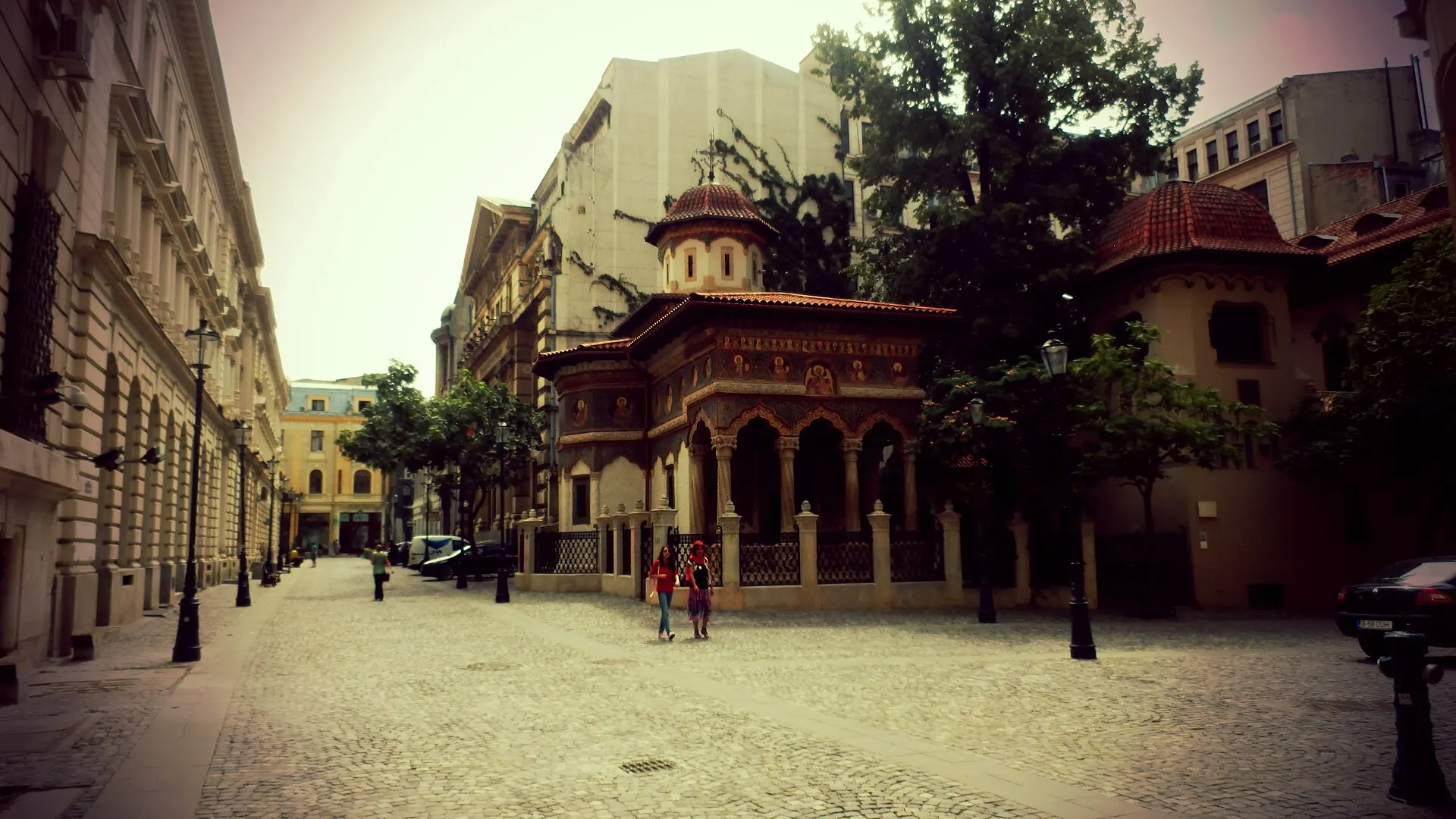
Bucharest
București
Code RO · 4 walking zones
Bucharest is a spread-out city of big boulevards and a small old core: do the Old Town on foot, book the Parliament tour ahead, and use ride-hailing between clusters.
Our quick read of Bucharest, scored 1–5 (friction is out of 100). Cash need: how often you still need notes. Heat risk: how hot days get. Stroller: how easy wheels are. Friction: overall effort for a first visit. Desk judgements, so check before relying on them.
- Local time
- --:--
- Weather
- forecast below
- Currency
- RON
- Best months
- Mar · Apr · May · Jun · Sep · Oct · Dec
- Airport
- Bucharest Henri Coandă (OTP)
Walking zones: the 4 areas this guide plans a day around. Each is a district you can cover on foot, so you do one zone per half-day and ride the train between them. The code (RO 01, RO 02…) is just the zone's number on the Bucharest line; the line under each name says how bags fare there and how much time it needs.
Map of Bucharest
Use the switches to show or hide each kind of pin. A switch that is on shows its pins on the map; tap it again to hide them. "Show only" keeps just the pins that match (for example, places that fit a suitcase). Tap any pin for its name and a link to its page.
- Where to sleep
- Places
- Eat
- Walking clusters
- Rest stops
From the airport Henri Coandă (OTP) to your bed
Tap a pin for its card. Places without their own coordinates are shown by their walking cluster.
Why Bucharest
Bucharest's sights are scattered along wide boulevards with heavy traffic, uneven pavements and parked cars. The trips that go wrong are the ones that turn up at the Palace of the Parliament without a booked tour and a passport, walk between clusters in July heat, or take an airport taxi from a tout. Four clusters cover a first visit; Brașov and Sinaia are trips away, usually with a change of base.
See first
- 1
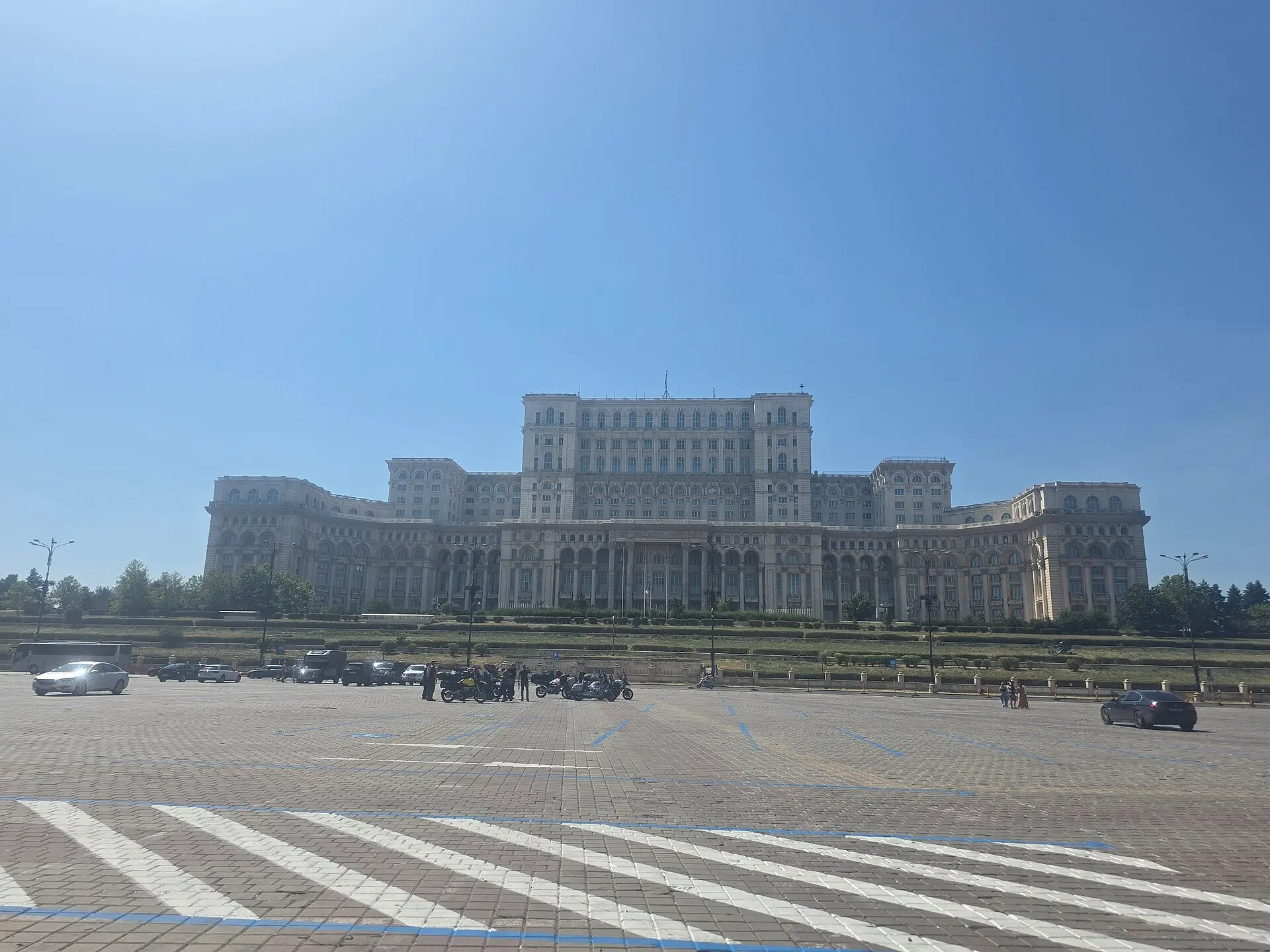 The Palace of the Parliament guided tour · 60–90 min
- 2
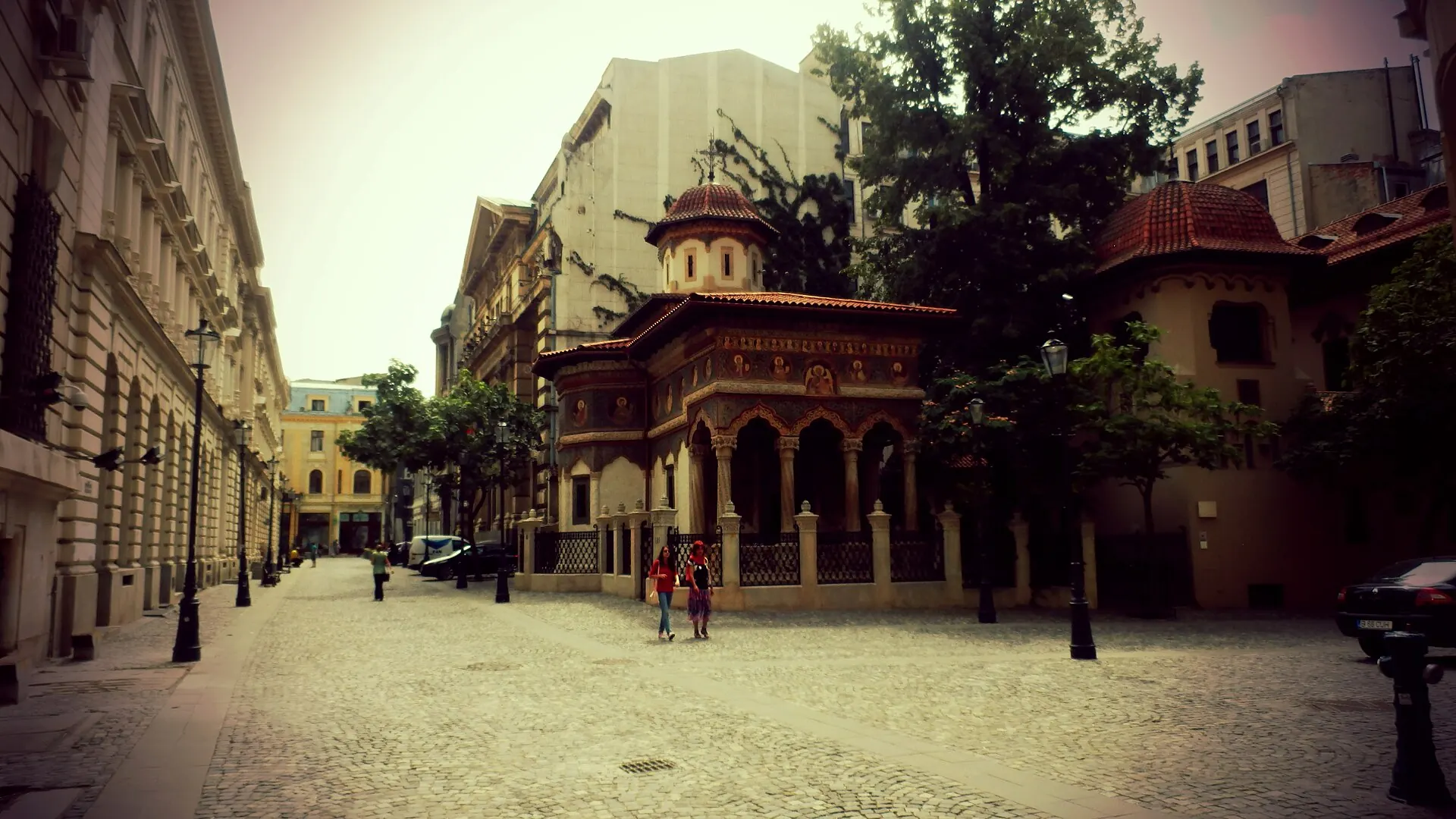 Stavropoleos Monastery and the Old Town · 2–3 h with a meal
- 3
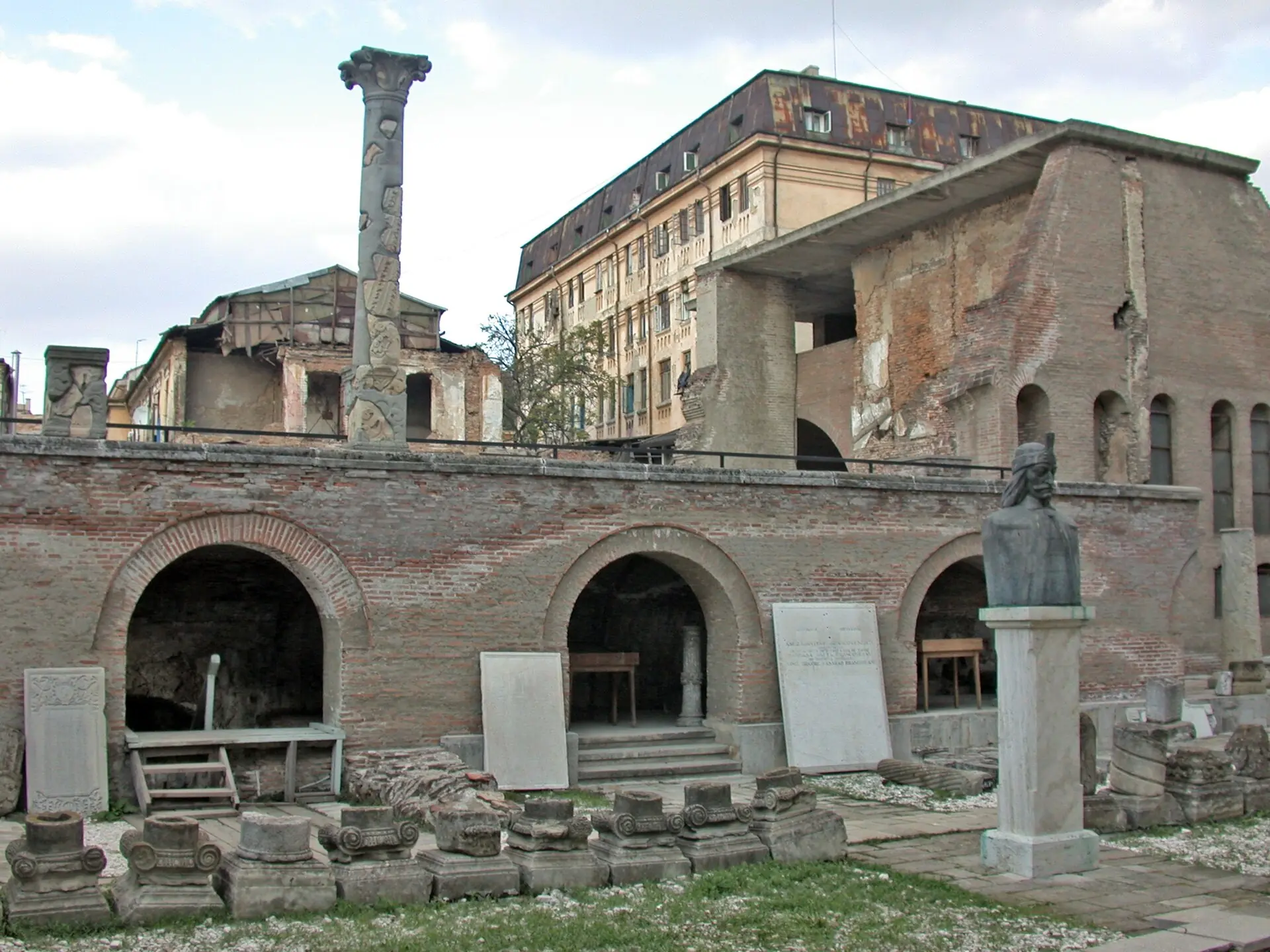 Old Princely Court (Curtea Veche) · 20–30 min
- 4
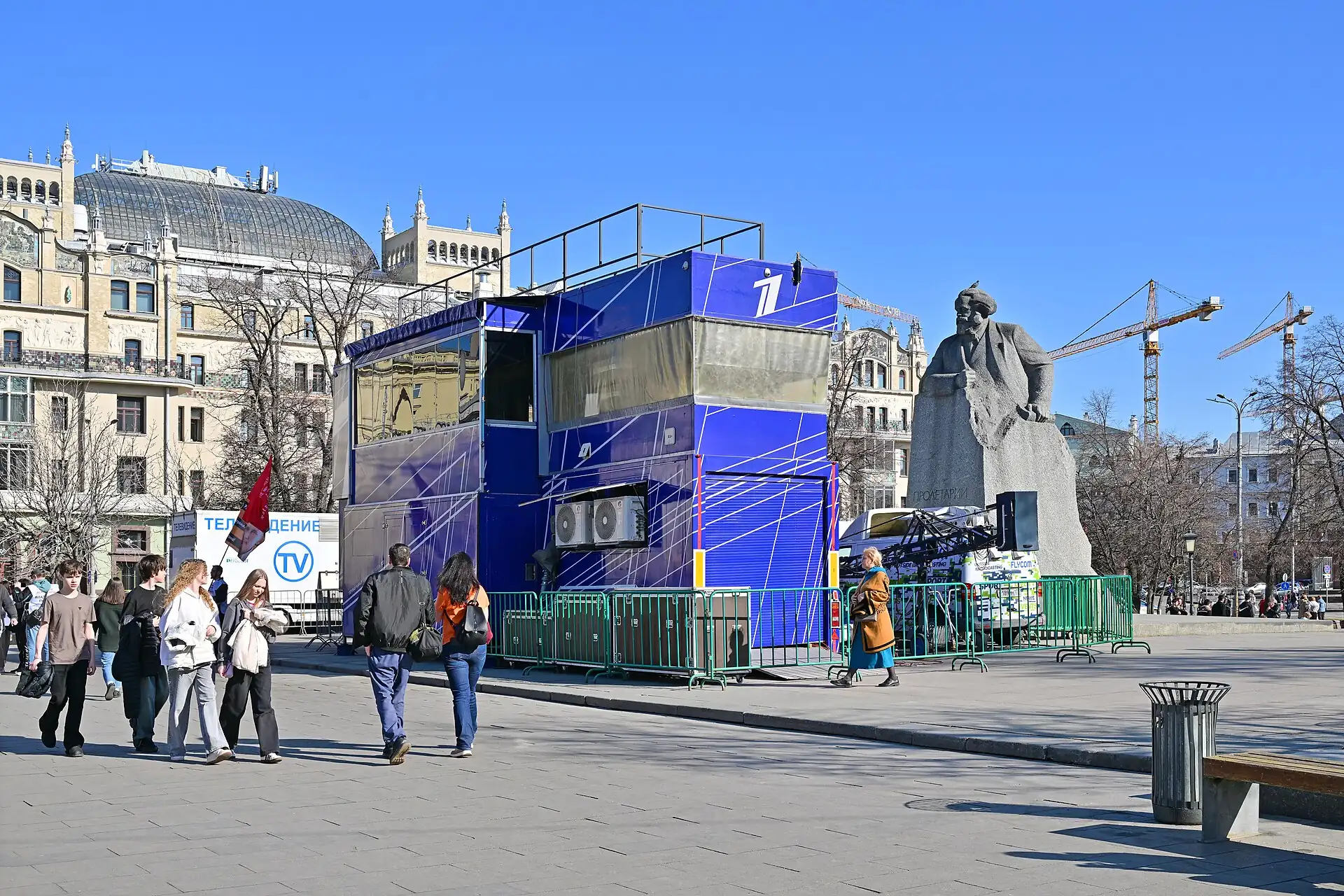 Revolution Square · 15–30 min
- 5
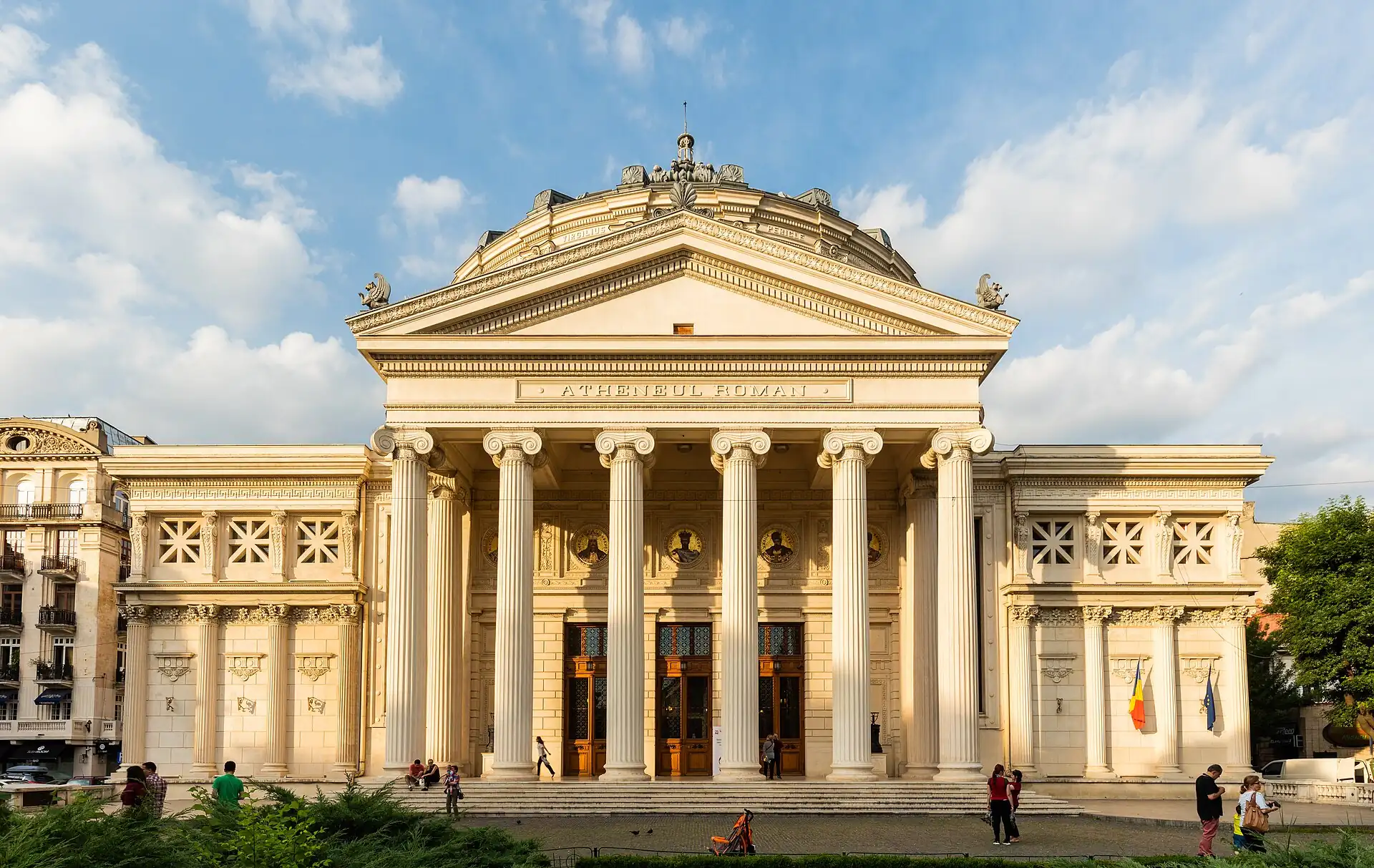 Romanian Athenaeum · 20–45 min, or an evening for a concert
Fits
- City breaks on a budget
- History and communist-era architecture
- Cafés, cellars and nightlife
Does not fit
- Travellers who want a walkable, compact capital
- Strollers and wheelchairs on broken pavements
- Midday walkers in July and August
How long
- 2 daysOld Town, Victoriei and the Parliament tour
- 3 daysFour clusters, one per half-day, with a car between them
- 5 daysFour clusters + Snagov or Sinaia day-trip + one slow day
Good for
- First timers
- History
- Budget
- Couples
- Families
- Wheelchair
About Bucharest
Bucharest grew from a 15th-century princely court on the Dâmbovița river (first documented under Vlad the Impaler in 1459) into the capital of Wallachia, then of a unified Romania from 1862. The small, dense Old Town (Lipscani) is what survives of that pre-modern city.
Between the world wars, Bucharest earned the nickname 'Little Paris' for its Belle Époque boulevards, French-trained architects and café society along Calea Victoriei. Much of that fabric survives north of the Old Town, alongside grand 19th-century institutions like the Athenaeum and the former Royal Palace.
Communist rule (1947–1989) reshaped the south-west of the centre: entire historic neighbourhoods were demolished from the early 1980s to build the Civic Centre and the Palace of the Parliament, the world's heaviest building. The 1989 revolution against Nicolae Ceaușescu began at what is now Revolution Square and ended his rule within days.
Good to know
- The Old Town (Lipscani) is the small historic core; Calea Victoriei runs north from it to Revolution Square, and the Palace of the Parliament is 2 km south-west.
- Bucharest City Hall runs tourist information points; check current locations and hours before relying on one.
- Shopfronts advertising 'tourist information' in the Old Town are mostly tour-selling agencies, not the official office.
Go deeper 9 min read · 6 chapters
Bucharest wears three histories on top of each other: a small Orthodox princely capital from the 1400s, a self-styled 'Little Paris' from the 1860s to the 1940s, and a communist showcase bulldozed into the centre from the 1980s. This deep dive reads the city layer by layer, so that a walk from the Old Town to the Palace of the Parliament becomes a walk through all three.
1History2 min
The first written mention of Bucharest dates to 20 September 1459, in a document issued by Vlad III, better known as Vlad the Impaler (Vlad Țepeș), confirming a court on the Dâmbovița river. Local tradition also credits a shepherd or prince named Bucur as the source of the city's name, though the story has no firm documentary basis. The Old Princely Court (Curtea Veche), whose ruined cellars survive today, was the seat of Wallachian princes for the next three centuries.
Bucharest became the permanent capital of Wallachia in 1659, and grew as a merchant town on the trade routes between the Ottoman Empire and Central Europe. Guild streets filled the area now called Lipscani, named for merchants trading goods from Leipzig. The Ottomans held loose suzerainty over Wallachia through this period; princes paid tribute and were frequently replaced by the Sublime Porte, which kept the city's institutions weaker than a fully sovereign capital's.
In 1859 Wallachia and Moldavia united under Alexandru Ioan Cuza, and in 1862 Bucharest became the capital of the new Romania. The following decades, especially the reign of King Carol I from 1866, brought French-trained architects, a building boom along Calea Victoriei and the boulevards radiating from it, and the nickname 'Micul Paris', Little Paris. Independence from the Ottomans was recognised internationally in 1878.
The 20th century brought earthquakes, war and revolution. A major 1940 earthquake and a devastating one in 1977 (which killed over 1,500 people) damaged or destroyed interwar buildings. Nicolae Ceaușescu, in power from 1965, demolished roughly a fifth of the historic centre from the early 1980s to build the Civic Centre and the Palace of the Parliament. His rule ended in December 1989: a rally at the Central Committee building on 21 December turned against him live on television, and he and his wife Elena were captured and executed on 25 December. Romania joined NATO in 2004 and the European Union in 2007.
- First documentary mention
- 20 September 1459
- Capital of Wallachia
- From 1659
- Capital of unified Romania
- From 1862
- 1977 earthquake deaths
- Over 1,500
- Ceaușescu executed
- 25 December 1989
- EU membership
- 2007
2Neighbourhood stories1 min
Lipscani, the Old Town, grew as the commercial quarter outside the princely court: narrow lanes named after the goods sold on them or the merchants who traded there, echoing the guild-street pattern found in many Central European trading towns. The area declined through the socialist period and into the 1990s and 2000s, when many buildings stood empty or crumbling behind scaffolding. A pedestrianisation and restoration drive from around 2011 turned it into the dense bar and restaurant district visitors see today, though a handful of buildings still await renovation.
North of the Old Town, Calea Victoriei was laid out as the spine of the new capital after 1862 and took its name from the Wallachian victory in the 1877–78 War of Independence. It became the address for banks, the Royal Palace, the Athenaeum and grand hotels; walking it today from the Old Town to Revolution Square is effectively walking the story of the 'Little Paris' decades.
Kiseleff, the boulevard running north from the Arcul de Triumf past the Village Museum, is named for Count Pavel Kiselyov, the Russian governor who administered Wallachia in the 1830s and laid out the road as a promenade. Villas along it and the surrounding streets became embassy row in the 20th century, which is why the area still feels leafy, quiet and slightly removed from the rest of the centre.
The Civic Centre, south-west of the Old Town, is the newest and most contested neighbourhood story: an entire district of churches, houses and workshops was cleared from the early 1980s to build Bulevardul Unirii and the Palace of the Parliament. Several historic churches were moved on rails to save them from demolition rather than destroyed outright, a fact still cited in debates over the era.
- Lipscani name origin
- Merchants trading goods from Leipzig
- Old Town restoration drive
- From around 2011
- Kiseleff boulevard
- Named for Count Pavel Kiselyov, 1830s governor
- Civic Centre clearance
- From the early 1980s
3Architecture1 min
The oldest visible layer is ecclesiastical: small Orthodox churches like Stavropoleos (1724), tucked behind later buildings, with carved stone porches and dense interior painting typical of Wallachian religious architecture under Ottoman-era influence. Many such churches survive only as isolated pockets, hemmed in by later development, because church land was harder to build over than ordinary plots.
The Belle Époque and neo-Romanian styles dominate the late 19th and early 20th centuries. French-trained architects designed grand banks and public buildings, of which the domed CEC Palace (1900) and the Romanian Athenaeum (1888) are the best known, while the neo-Romanian style, developed by architects such as Ion Mincu, mixed Western Beaux-Arts planning with Wallachian and Byzantine decorative details, visible in many villas north of the centre.
The interwar decades added Art Deco and early modernist buildings along the same boulevards, and Bucharest's skyline briefly held some of Europe's tallest buildings for their time. The 1940 and especially the 1977 earthquake then reshaped the cityscape, both by destroying older buildings directly and by triggering new safety-driven regulations that changed how the city rebuilt.
Communist-era architecture peaks in the Palace of the Parliament, begun in 1984 and still, by most measures, the heaviest administrative building on Earth: a vast neoclassical-socialist structure of marble, wood panelling and chandeliers built largely by conscripted labour and cost more of the city's historic fabric than any single project before or since. Ordinary residential architecture of the same decades survives in the cranked concrete apartment blocks that ring the centre, functional and now mostly renovated with insulation and balcony enclosures.
- Stavropoleos Monastery built
- 1724
- CEC Palace
- 1900
- Romanian Athenaeum
- 1888
- Palace of the Parliament begun
- 1984
- 1977 earthquake magnitude
- About 7.4
4Food history2 min
Romanian cooking on the Wallachian plain draws on centuries of Ottoman, Balkan and Central European contact: grilled meats close to the region's kebab traditions, stuffed vegetables shared with much of the former Ottoman sphere, and pickling and preserving techniques suited to a continental climate with cold winters. Mici, small grilled rolls of minced beef, pork and lamb seasoned with garlic and spices and served without a casing, are said to have been improvised in a 19th-century Bucharest inn when the cook ran out of sausage casings and simply grilled the seasoned meat mixture directly — a story repeated often enough locally to function as the dish's founding myth, whether or not it is literally true.
Sarmale, cabbage or vine leaves stuffed with minced pork and rice and simmered slowly, is the closest thing Romania has to a national dish, appearing at Christmas, weddings and Sunday lunches alike; the dish's roots trace to Ottoman-era stuffed-vegetable cooking found across the Balkans and the Middle East, adapted to Romanian ingredients and served with polenta and sour cream rather than yoghurt-based sauces.
Bucharest's beer-hall culture, exemplified by Caru' cu Bere (opened 1879, in its current neo-Gothic building from 1899), reflects the same 'Little Paris' period as the city's boulevards: a German- and Austrian-influenced drinking-hall format adopted wholesale by a city eager to look Western European, filled with Romanian food rather than German. Coffee culture arrived later and more slowly, tied to the Ottoman-era coffeehouse tradition until a specialty-coffee wave from the 2010s reshaped the Old Town's cafés along more international lines.
Communist-era shortages left a lasting mark: rationing and queuing for meat, sugar and cooking oil through the 1980s made some dishes, sarmale especially, into markers of prosperity and hospitality precisely because they had once been hard to make well. Since 1990, a wave of restaurants reviving 'grandmother's cooking' (mâncare ca la mama acasă) has grown alongside international and modern-Romanian openings, so a single street can now run from a decades-old beer hall to a tasting-menu bistro reworking the same core ingredients.
- Caru' cu Bere opened
- 1879 (current building 1899)
- Mici
- Grilled minced-meat rolls, no casing
- Sarmale
- Stuffed cabbage or vine leaves, the closest dish to a national one
- Specialty coffee wave
- From the 2010s
5Festivals1 min
The George Enescu International Festival, held for about three weeks in late summer every odd-numbered year since 1958, is Bucharest's major cultural event, named for the Romanian composer and violinist George Enescu. It fills the Romanian Athenaeum and other venues with orchestras and soloists from around the world, and hotel prices and concert tickets both rise sharply for the duration.
Orthodox Easter (Paștele), whose date can fall weeks after Western Easter under the Julian calendar calculation the Romanian Orthodox Church uses, is the year's major religious festival: a midnight Saturday service ends with parishioners carrying lit candles home, and the following days bring family meals built around lamb and painted eggs, with many restaurants and shops closing for part of the long weekend.
National Day on 1 December marks the 1918 union of Transylvania with the Kingdom of Romania and is marked in Bucharest with a military parade near the Arcul de Triumf; the same boulevard the parade uses, Kiseleff, is otherwise a quiet embassy-lined promenade the rest of the year.
The Christmas market in Piața Constituției, in front of the Palace of the Parliament, runs from late November through December with stalls, mulled wine and light installations, drawing crowds that spill into Old Town restaurants in the evenings; the Revolution Square anniversary ceremonies on 21–22 December, marking the 1989 events, fall in the same season and close the square to traffic.
- George Enescu Festival
- About three weeks, late summer, odd-numbered years since 1958
- Orthodox Easter
- Date varies, often later than Western Easter
- National Day
- 1 December, marking the 1918 union with Transylvania
- Christmas market
- Piața Constituției, late November–December
6City life2 min
Bucharest wakes later and moves slower in the morning than some European capitals: cafés fill from about 8:00, and the metro and boulevards carry the heaviest traffic from about 7:30 to 9:30. Summer days push outdoor life into the evenings, when Old Town terraces and Cișmigiu's paths fill after the day's heat breaks, while winter compresses the sociable hours into shorter, colder windows around Christmas lights and mulled wine stalls.
The wide, flat boulevards that define much of the centre, especially Calea Victoriei and Bulevardul Unirii, are a direct legacy of two building booms sixty years apart: the 'Little Paris' avenues of the 1860s–1930s and the Ceaușescu-era boulevard leading to the Palace of the Parliament. Both were designed for grandeur rather than intimacy, which is part of why the city can feel more spread out on foot than its size on a map suggests, and why residents and visitors alike lean on the metro and ride-hailing apps for anything beyond a single cluster.
Café society and terrace culture are genuinely central to daily life rather than a tourist performance: Romanians linger over a single coffee for an hour without pressure to order more, a habit that shapes how busy a café can look at any given time regardless of turnover. The same unhurried pace shows in restaurant service, which can feel slow to visitors used to a faster table-turn culture.
Communist-era apartment blocks, khrushchevka-style low-rise buildings and taller 1970s–80s towers, house most of the city's population outside the historic centre; many have been renovated with insulation panels and enclosed balconies since 2000, funded partly by EU programmes, which is why the same building type can look freshly painted on one block and unrenovated on the next. The contrast between these residential districts and the boulevards of the centre is part of what makes Bucharest read as several different cities layered on one street plan.
- Morning rush hour
- About 07:30–09:30About 7:30 AM–9:30 AM
- Terrace season
- About April to October
- Post-2000 block renovation
- Partly EU-funded insulation and balcony programmes
Read, watch, wordsReading · Watching · Glossary · Sources
Reading
- Bucharest: The Paris of the East — Mihail Sebastian (essays); various historiansA common shorthand for the interwar 'Little Paris' identity, useful as a starting point before checking specific histories.
- Journal 1935–1944: The Fascist Years — Mihail SebastianA Bucharest writer's diary through the interwar and wartime years, with a close view of the city's intellectual and Jewish life before the Holocaust.
- Bucharest: Portrait of a City in Ruins and Concrete — Various contemporary essays and guidesA useful frame for reading the Ceaușescu-era demolitions and what replaced them; look for recent English-language editions.
Watching
- 12:08 East of Bucharest — Corneliu Porumboiu, 2006A comedy that circles the 1989 revolution and how ordinary Romanians remember, or misremember, their part in it.
- The Death of Mr. Lăzărescu — Cristi Puiu, 2005A landmark of the Romanian New Wave, following one night through Bucharest's ambulance and hospital system.
Glossary
| Term | Local | Meaning |
|---|---|---|
| Curtea Veche | Curtea Veche | Old Princely Court, the 15th-century seat of Wallachian rulers. |
| Lipscani | Lipscani | The Old Town's core streets, named for Leipzig-trading merchants. |
| mici | mici | Grilled minced-meat rolls without a casing, the classic Romanian grill dish. |
| sarmale | sarmale | Cabbage or vine leaves stuffed with minced pork and rice. |
| mămăligă | mămăligă | Polenta, the standard starch side for stews and sarmale. |
| țuică | țuică | Plum brandy, drunk as a shot before or with a meal. |
| Micul Paris | Micul Paris | 'Little Paris', the city's interwar nickname. |
| Paștele | Paștele | Orthodox Easter, the year's major religious festival. |
Read for this deep dive
- Wikipedia — Bucharest ↗
- Wikipedia — History of Bucharest ↗
- Wikipedia — Romanian Revolution of 1989 ↗
- Wikipedia — Palace of the Parliament ↗
Background reading only: the text above is written by Voykit, not copied from these pages.
Rules in force · 8Non-EU visitors get 90 days in any rolling 180-day window…Mine-suspected land still exists in Bosnia and Herzegovin…
- Europe ↗Non-EU visitors get 90 days in any rolling 180-day window, counted across all 29 Schengen states together — not per country; the Entry/Exit System now logs each crossing, so an overstay is detected automatically.
- Europe ↗On the first Schengen entry since EES began, non-EU travellers give four fingerprints and a face photo at the border instead of a passport stamp; there is nothing to apply for or pay in advance.
- Balkans ↗Mine-suspected land still exists in Bosnia and Herzegovina and in pockets of Croatia's former front line: outside towns keep to tarmac and waymarked paths, and treat red triangle signs and taped-off fields as absolute.
- Balkans ↗Serbia refuses onward entry to travellers who reached Kosovo from a third country and then try to cross straight into Serbia; route Kosovo–Serbia legs through North Macedonia or Montenegro, or start the loop in Serbia.
- Balkans ↗Hire cars need written permission from the rental company and valid insurance for every country on the line; Kosovo sells its own border insurance and some contracts exclude Albania, Kosovo or Bosnia outright.
- Romania ↗Romania is in the EU and the Schengen area; the EU Entry/Exit System applies to non-EU visitors. Check the official EU and Romanian sources for your passport.
- Romania ↗Drivers need an electronic road vignette (rovinieta) on national roads; rental cars normally include it, but check.
- Romania ↗Brown bears live in the Carpathians and sometimes enter towns and roadsides: never feed or approach them, and follow local warnings.
Entry rules depend on your passport. Full visa guide
Emergency numbers for Bucharest112 ▾
- Police, fire, ambulance112
Tap a number to call from your phone. These are the numbers listed in this guide; a row marked check has not been verified.
Planning is the full guide. I'm here keeps what is open and the cheat card.
Right now
Checking the weather…
Working out what is open near you…
What is open nowclock, closures, places open
Now in Bucharest
Local time in Bucharest
--:--
Loads in your browser · Europe/Bucharest
This month
Month verdict appears here.
Closed today
See the weekly grid below.
| Weekly closure | Mon | Tue | Wed | Thu | Fri | Sat | Sun |
|---|---|---|---|---|---|---|---|
| Old Princely CourtMuseum closure day not fully confirmed — check locally; the ruins are visible from the street at any time. | ✕ | · | · | · | · | · | · |
| National Museum of Art of RomaniacheckConfirm before a special trip; some wings keep different hours. | ✕ | ✕ | · | · | · | · | · |
| Old Princely Court museum (Curtea Veche)check | ✕ | · | · | · | · | · | · |
If today is a closure day: Monday: several municipal museums close, including likely the Old Princely Court museum — walk the ruins from the street and move museum time to another day.
Open every day: Cișmigiu Gardens, Herăstrău Park, Revolution Square, Romanian Athenaeum.
- check Cișmigiu Gardens: No weekly closure; a public park.
- check Herăstrău Park: No weekly closure; a public park.
- check Revolution Square: No weekly closure; an open square.
- check Romanian Athenaeum: No fixed weekly closure identified; rehearsal access varies — check the day before.
Weekly closures come from our place pages; national holidays and state events add closures not shown here.
Open now
The sights and places to eat on our list that are open at this moment, in the city's time, nearest first from where you are staying.
Loads in your browser with the city's local time.
Hours marked (check) are typical, not confirmed. Walking times are straight-line estimates. Open at another time →
Cheat cardthe pocket version
Cheat card
The essentials on one card: save it as an image for your phone, share it, or print it.
Bucharest
București
- Money
- Keep RON 100–200 in small notes for cafés and tips; use bank ATMs in banks or malls and decline dynamic currency…
- SIM
- Install an eSIM before you fly, or buy a SIM at the airport shops (passport needed).
- Ride app
- Bolt · Uber
- Emergency
- 112 police, fire, ambulance (not 911, 999 or 000)
- Plugs
- Sockets F. US/Canada (A/B): adapter · UK/Ireland (G): adapter · Australia/NZ (I): adapter. 230 V: US 120 V-only devices (hair dryers) need a converter; most chargers are dual-voltage.
Say it
- Good day: Bună ziua (BOO-na ZEE-wa)
- Thank you: Mulțumesc (mool-tsoo-MESK)
- How much is it?: Cât costă? (kuht KOHS-tuh)
- The bill, please: Nota, vă rog (NOH-ta vuh rohg)
- To this address, please: La această adresă, vă rog (la ah-CHAS-tuh ah-DRESS-uh vuh rohg)
Top 5
- The Palace of the Parliament guided tour
- Stavropoleos Monastery and the Old Town
- Old Princely Court (Curtea Veche)
- Revolution Square
- Romanian Athenaeum
EssentialsQuick answers, what things cost and how to get around
Essentials
Quick answers, what things cost and how to get around
Quick answers
The questions people ask first about Bucharest, one line each. Tap a card for the full answer.
- Cash or card?Cards and contactless work in most cafés, shops and restaurants; carry RON for small vendors, markets, tips and some taxis.
- SIM or eSIMInstall an eSIM before you fly, or buy a SIM at the airport shops (passport needed).
- Ride-hailing appBolt · Uber.
- Tap waterTap water is treated and generally safe; many visitors prefer bottled.
- TippingRound up or leave about 10% in restaurants if service is not included.
- Plugs & powerSockets F. US/Canada (A/B): adapter · UK/Ireland (G): adapter · Australia/NZ (I): adapter. 230 V: US 120 V-only devices (hair dryers) need a converter; most chargers are dual-voltage.
Show all 14 answers
- Safe at night?Take more care after dark in Palace of the Parliament / Civic Centre, Gara de Nord (train station), Metro platforms and cars.
- Emergency numbers112 police, fire, ambulance (not 911, 999 or 000)
- Your embassycheckUS, UK, Australia, Canada embassies listed with addresses (check before you go).
- Closed which day?Mon: 3 on our list shut · Tue: 1 on our list shut.
- Sundays & holidaysWeekly closures come from our place pages; national holidays and state events add closures not shown here.
- Late at nightRestaurants stay open late; many museums close on Mondays.
- Rainy-day planSummer storms can be sudden and heavy: do the outdoor cluster before early afternoon, then move indoors.
- Landing lateOTP: ride-hailing car to the door runs all night.
Cost cheat-sheetwhat everyday things cost
Cost cheat-sheet
Typical prices for the everyday things, as ranges. Change the currency right here; the local price stays first.
2026 desk estimate · check
- CoffeeCoffee at a caféRON 12–22
- Sit-down mealSit-down dinner, per personRON 70–150
- BeerLocal draught beer, 0.5 LRON 12–22
- Taxi, about 5 km (3 mi)Taxi, about 3 mi (5 km)Bolt/Uber, 5 km (3.1 mi) across the centreBolt/Uber, 3.1 mi (5 km) across the centreRush hour and rain push fares up.RON 15–35
- Metro or bus rideMetro single ticket (2 trips)RON 5–8
- SIM or eSIM, a weekTourist eSIM, about a weekRON 40–80 (2026 estimate)
- Museum or sight ticketMuseum or monastery entryRON 20–60
- Budget bedHostel dorm bed, a night, per personRON 40
- Mid-range bedHotel double room, a night, per roomRON 350
- High-end bedHotel double room, a night, per roomRON 900
A day, not counting the bed: Budget RON 200 · Mid RON 350 · High RON 700
Local prices, with USD next to them (rates 2026-09 (approximate); change it in the header). Ranges are desk estimates: check locally. Every price and the budget calculator →
Source: Prices in Bucharest
Draft
Written from desk research. Not yet compared with the official source.
No official source is recorded for this figure.
Prices are 2026 desk estimates, not yet compared with an official source. Check on the day.
Not checked in the last 12 months (no check date on file).
DecideWho it suits, the trade-offs and when to go
Decide
Who it suits, the trade-offs and when to go
Best months at a glance
The guide's verdict for each month
Jan
Care
2°C (36°F)36°F (2°C)
Feb
Care
5°C (41°F)41°F (5°C)
Mar
Best
11°C (52°F)52°F (11°C)
Apr
Best
18°C (64°F)64°F (18°C)
May
Best
23°C (73°F)73°F (23°C)
Jun
Best
27°C (81°F)81°F (27°C)
Jul
Care
29°C (84°F)84°F (29°C)
Aug
Care
29°C (84°F)84°F (29°C)
Sep
Best
24°C (75°F)75°F (24°C)
Oct
Best
17°C (63°F)63°F (17°C)
Nov
Care
10°C (50°F)50°F (10°C)
Dec
Best
4°C (39°F)39°F (4°C)
Best: Mar–Jun, Sep–Oct, Dec. Mixed: Jan–Feb, Jul–Aug, Nov. Month by month →
Warmest Jul (29°C (84°F)84°F (29°C)), coolest Jan (−5°C (23°F)23°F (−5°C) low), wettest May (12 rain days), driest Aug (7). Averages, not a forecast.
Bucharest across the year
Best-looking months for Bucharest: May, Jun, Oct.
| Measure | Jan | Feb | Mar | Apr | May | Jun | Jul | Aug | Sep | Oct | Nov | Dec |
|---|---|---|---|---|---|---|---|---|---|---|---|---|
| Weather | Mixed (care) | Mixed (care) | Good (good) | Good (good) | Great (good) | Great (good) | Mixed (care) | Mixed (care) | Great (good) | Great (good) | Mixed (care) | Good (good) |
| Crowds | Low (good) | Low (good) | Low (good) | Medium (ok) | Medium (ok) | Medium (ok) | High (care) | High (care) | Medium (ok) | Low (good) | Low (good) | Medium (ok) |
| Prices | Low (good) | Low (good) | Low (good) | Medium (ok) | Medium (ok) | Medium (ok) | High (care) | High (care) | Medium (ok) | Medium (ok) | Low (good) | Medium (ok) |
| Events | 2 events (ok) | None listed (ok) | 1 event (ok) | 1 event (ok) | 3 events (ok) | 2 events (ok) | 1 event (ok) | 2 events (ok) | 1 event (ok) | None listed (ok) | 2 events (ok) | 6 events (care) |
Green is good news, amber needs planning, red is a month to avoid; dashed grey with a question mark means our data does not say. Open the year heatmap →
Not checked in the last 12 months (no check date on file).
Source: Months, temperatures and crowds
Draft
Written from desk research. Not yet compared with the official source.
Monthly highs, rain and crowd levels are climate averages and desk estimates for the city, not a forecast.
Understand the cityUnderstand · Districts
Orientation & districts
The visitor centre sits in a rough triangle: the Old Town (Lipscani) in the south, Calea Victoriei running north to Revolution Square and the Athenaeum, and the Palace of the Parliament 2 km south-west of the Old Town. Herăstrău and the Village Museum are a further ride north. Nothing is truly walkable end to end in summer heat.
Bucharest uses sectors (1–6) as administrative zones, but nobody navigates by sector number: use street names and the neighbourhood names in this table, as drivers and apps do.
Shaded shapes: walking areas (click one). Black pins: sleep areas. Grey dots: places. Round badges: arrivals. Click the map to turn on scroll-wheel zoom.
Hover, tap or tab to an area to see what it is like. Pins are sleep areas; arrows at the edge point to the airport.
Off the map: Bucharest Henri Coandă International Airport (OTP) (35–60 min by the usual route).
Not drawn yet (no coordinates in this guide): Dorobanți / Floreasca, Gara de Nord. They are in the neighbourhood cards below.
Where’s what, as a list:
- Old Town (Lipscani) (Centrul Vechi): Partly pedestrian, cobbled and uneven; car to the door with bags. Loud with bars into the night. Suits: First visit, 2–3 nights, nightlife and history together. Price band $$.
- Calea Victoriei & Revolution Square (Calea Victoriei): Wide boulevard, flat pavements, big hotels; 10–15 min walk to the Old Town. Suits: Museums, architecture, quieter nights. Price band $$$.
- Civic Centre & Palace of the Parliament: Uniform 1980s boulevard (Bulevardul Unirii) leading to the Palace; little to eat nearby, do not sleep here. Suits: One half-day for the tour.
- Kiseleff & Herăstrău: Leafy and quiet, embassies and villas along Kiseleff; 20–25 min by metro or car from the Old Town. Suits: A half-day out for the Village Museum and the lake.
- Dorobanți / Floreasca: Residential streets north-east of Victoriei with cafés, restaurants and newer apartments; every outing to the Old Town is a ride. Suits: Longer stays, a quieter modern base.
- Gara de Nord: The main train station area; not a place to linger, thinner on sights and reported pickpocketing. Suits: Arriving or leaving by train only.
- Sleep area Old Town (Lipscani): suits First visit, 2–3 nights, nightlife and history together, price band $$.
- Sleep area Calea Victoriei & Cișmigiu: suits Museums, architecture, quieter nights, price band $$$.
- Bucharest Henri Coandă International Airport (OTP), 35–60 min by the usual route.
Neighbourhoods at a glance
One tab per area, pulled together from this guide’s districts table, area notes, sleep-area scores and place pages. Scores are desk judgements (1–5); prices are estimates, check before you book.
Old Town (Lipscani)
$$Centrul Vechi
Partly pedestrian, cobbled and uneven; car to the door with bags. Loud with bars into the night.
- Suits:
- First visit, 2–3 nights, nightlife and history together · History, nightlife, first visits
- Best time:
- Late afternoon into the night
- Rooms:
- RON 350–800 per room per night (mid-range)
Pick this if: Cafés, cellars and walking; short stays
Skip this if: You are a light sleeper or arrive very late with large bags
- Quiet nights1/5 Very low
- Nightlife5/5 Very high
- Families2/5 Low
- Late arrival4/5 High
Why these scores
- Quiet nights: Bars and cellars run late; ask for a room off the main streets or bring earplugs.
- Nightlife: The densest concentration of bars and beer halls in the city, on the doorstep.
- Families: Cobbles and evening noise make it a harder base with small children.
- Late arrival: Many hotels have 24-hour desks given the nightlife trade.
Getting around from here
- 20–28 min walk to Calea Victoriei & Revolution Square
- 25–35 min walk to Palace of the Parliament & Izvor
Calea Victoriei & Revolution Square
$$$Calea Victoriei
Wide boulevard, flat pavements, big hotels; 10–15 min walk to the Old Town.
- Suits:
- Museums, architecture, quieter nights · Museum days, quieter nights, architecture
- Best time:
- Morning to early evening
- Rooms:
- RON 400–900 per room per night
Pick this if: Quieter nights, gardens, museums
Skip this if: You want cellar bars at the door
- Quiet nights4/5 High
- Nightlife3/5 Medium
- Families4/5 High
- Late arrival4/5 High
Why these scores
- Quiet nights: Calmer than the Old Town at night, though still a main traffic artery.
- Nightlife: Hotel bars and a scattering of wine bars; the Old Town is a 10–15 minute walk or short ride.
- Families: Flat pavements and Cișmigiu Gardens nearby make it an easier base with kids.
- Late arrival: Larger hotels keep 24-hour desks.
Getting around from here
- 22–30 min walk to Old Town (Lipscani)
- 28–38 min walk to Palace of the Parliament & Izvor
- Metro or car north: about 20 min to Kiseleff & Herăstrău
Civic Centre & Palace of the Parliament
Uniform 1980s boulevard (Bulevardul Unirii) leading to the Palace; little to eat nearby, do not sleep here.
Feels: Uniform 1980s boulevard leading to one enormous building
- Suits:
- One half-day for the tour
- Best time:
- Morning, by day only
Pick this if: One booked tour
Watch out for: Walking the boulevard after dark.
Getting around from here
- Car north-east: about 12 min to Old Town (Lipscani)
Kiseleff & Herăstrău
Leafy and quiet, embassies and villas along Kiseleff; 20–25 min by metro or car from the Old Town.
- Suits:
- A half-day out for the Village Museum and the lake
- Best time:
- Morning to sunset
Pick this if: A half-day out, families
Watch out for: The unlit far shore after dark.
Getting around from here
- Metro or car south: about 20 min to Calea Victoriei & Revolution Square
Dorobanți / Floreasca
Residential streets north-east of Victoriei with cafés, restaurants and newer apartments; every outing to the Old Town is a ride.
- Suits:
- Longer stays, a quieter modern base
- Best time:
- Any time
Pick this if: Longer stays, remote workers
Watch out for: Looking for major sights: there are few.
Gara de Nord
The main train station area; not a place to linger, thinner on sights and reported pickpocketing.
- Suits:
- Arriving or leaving by train only
Decide
The honest trade-off: what you will enjoy, what will wear you down.
You will like
- Old-town cafés and courtyards
- Big monumental buildings
- Low prices
You will hate
- Traffic and horns
- Uneven pavements
- Summer heat
Similar citiesif this one is not quite right
Similar cities
If Bucharest does not fit your dates or budget, these match it on season, cost and feel.
- Budapest
Hungary
- Good in the same months: Mar, Apr, May, Jun and 3 more
- Works well for first-timers, tight budgets, couples
- Belgrade
Serbia
- Good in the same months: Mar, Apr, May, Jun and 2 more
- Works well for first-timers, tight budgets, couples
- A similar climate through the year
- Zagreb
Croatia
- Good in the same months: Mar, Apr, May, Jun and 2 more
- Works well for first-timers, tight budgets, couples
- A similar climate through the year
When
Best months: Mar, Apr, May, Jun, Sep, Oct, Dec. Month-by-month verdicts below, with the live forecast first. When to go, month by month →
Bucharest: next 7 days
Loading forecast…
Forecast: Open-Meteo (CC BY 4.0), model data for this point.
Air quality
Loading…
Model estimate (CAMS via Open-Meteo), not a street-level station; readings near busy roads run higher.
Month by month, all 12best Mar, Apr, May, Jun, Sep, Oct, Dec
Cold and grey; snow some years.
Cold; short days.
Mild, some rain; museums quiet.
Warm; terraces open.
Warm and green; good month.
Warm; long evenings, occasional storms.
Hot afternoons; cluster indoors midday.
Hottest; many locals away.
Warm and calm; best month for walking.
Mild and golden.
Cold and grey; early dusk.
Cold; Christmas market and lights.
Climate, calendar and eventsClimate · Calendar · Events · Packing by season
Climate
| Jan | Feb | Mar | Apr | May | Jun | Jul | Aug | Sep | Oct | Nov | Dec | |
|---|---|---|---|---|---|---|---|---|---|---|---|---|
| High | 2°C (36°F)36°F (2°C) | 5°C (41°F)41°F (5°C) | 11°C (52°F)52°F (11°C) | 18°C (64°F)64°F (18°C) | 23°C (73°F)73°F (23°C) | 27°C (81°F)81°F (27°C) | 29°C (84°F)84°F (29°C) | 29°C (84°F)84°F (29°C) | 24°C (75°F)75°F (24°C) | 17°C (63°F)63°F (17°C) | 10°C (50°F)50°F (10°C) | 4°C (39°F)39°F (4°C) |
| Low | −5°C (23°F)23°F (−5°C) | −3°C (27°F)27°F (−3°C) | 1°C (34°F)34°F (1°C) | 6°C (43°F)43°F (6°C) | 11°C (52°F)52°F (11°C) | 15°C (59°F)59°F (15°C) | 17°C (63°F)63°F (17°C) | 16°C (61°F)61°F (16°C) | 12°C (54°F)54°F (12°C) | 7°C (45°F)45°F (7°C) | 2°C (36°F)36°F (2°C) | −2°C (28°F)28°F (−2°C) |
| Rain days | 10 | 9 | 10 | 10 | 12 | 11 | 8 | 7 | 7 | 8 | 9 | 10 |
| Verdict |
- Dec–Feb is genuinely cold, sometimes well below freezing at night: pack a proper winter coat, not just a layer.
- Jul–Aug highs of 27–29 °C (81–84 °F) are dry heat rather than tropical humidity, but afternoon walks on unshaded boulevards are still hard going.Jul–Aug highs of 81–84 °F (27–29 °C) are dry heat rather than tropical humidity, but afternoon walks on unshaded boulevards are still hard going.
- May, Jun, Sep and Oct are the comfortable walking months; terraces open from April and close around October.
Events by month
New Year
holiday1–2 January (public holidays) · Citywide
Many restaurants and shops close for a day or two; fireworks over Revolution Square and Constitution Square at midnight on 31 December.
Unification Day (Union of the Principalities)
holiday24 January · Citywide
A public holiday with some ceremonies; most shops stay open.
Orthodox Easter (Paștele)
holidayDate varies yearly; often later than Western Easter · Citywide, especially churches(check dates)
A long family weekend; many restaurants and shops close for a day or two, and midnight Saturday services fill churches with candlelit processions.
Labour Day
holiday1 May · Citywide
Public holiday; many locals leave the city for a long weekend.
București Jazz Festival and other spring festivals
cultureVariable, spring · Various venues(check dates)
Concerts add evening options; check current listings.
Summer terrace season
seasonAbout May to September · Old Town, Cișmigiu, Herăstrău
Outdoor seating everywhere; beer gardens open in the parks.
George Enescu International Festival
festivalOdd-numbered years, about three weeks in late summer · Romanian Athenaeum and other venues(check dates)
The country's major classical-music festival; book tickets and hotels well ahead.
National Day
holiday1 December · Arcul de Triumf and central boulevards
Military parade; road closures near the Arc and museums are busy.
Christmas market
festivalLate November to late December · Piața Constituției, other squares
Stalls, mulled wine and lights; crowded Old Town restaurants in the evenings.
Revolution anniversary
culture21–22 December · Revolution Square
Ceremonies and road closures around the square.
Christmas and New Year
holiday25 December – 1 January · Citywide
Many restaurants and some museums close for part of the period; hotel prices rise.
Festivals and events that change the plan
| When | What | Effect on your plan |
|---|---|---|
| Dec 1 | National Day | Military parade near the Arcul de Triumf; roads close and museums are busy. |
| Orthodox Easter (date varies) | Easter | Long family weekend; many shops and restaurants close for a day or two. |
| Dec 21–22 | Revolution anniversary | Ceremonies at Revolution Square; the area is closed to traffic. |
| Late Nov–Dec | Christmas market | Stalls in Piața Constituției; crowded evenings and busy Old Town restaurants. |
What to pack, by season
From Bucharest’s own climate table: the coldest, warmest and wettest three months, and what to bring for each.
Coldest months
Dec–Feb
-3° to 4°
Warm coat, hat, gloves and a thermal layer.
Warmest months
Jun–Aug
16° to 28°
Light clothes, sunglasses and sunscreen; a thin layer for air conditioning.
Wettest months
Apr–Jun
11 rain days a month
A compact umbrella.
Arrive & moveGetting in, getting around, and your bags
Arrive & move
Getting in, getting around, and your bags
I land at…
Enter your landing time: what still runs from the airport, where you can eat when you get in, and which areas let you check in that late.
Bucharest Henri Coandă International Airport (OTP)
Out of the airport about 23:5311:53 PM (00:55 (next day)12:55 AM (next day) if immigration and bags are slow); in town about 00:28 (next day)12:28 AM (next day).
Transport from the airport
- Any hourRide-hailing car to the door. Runs all night.
- GoneExpress Line 780 bus to the city centre (Piața Unirii or Victoriei stops). Stops about 23:00.Stops about 11:00 PM.
- Last resortOvernight near the airport. If nothing else works.
Places to eat open when you get in
We have no confirmed hours for the places to eat here yet. Plan on a convenience store or your hotel. What is open late →
Where to sleep with a late arrival
- Lets you inOld Town (Lipscani) 24-hour desk. Many hotels have 24-hour desks given the nightlife trade.
- Lets you inCalea Victoriei & Cișmigiu 24-hour desk. Larger hotels keep 24-hour desks.
Typical times from our airport data, not a timetable: check the last departure on the day. Full airport-to-bed plan for Bucharest Henri Coandă International Airport (OTP) →
Arrive
Each gateway has its own airport-to-bed page with timings and the last safe connection.
Getting in, in detailGet in
Get in by rail and road
| Station | Mode | Serves | Where | To the centre |
|---|---|---|---|---|
| Gara de NordGara de Norduse | Train | All domestic lines and international trains (Sinaia, Brașov, and connections onward) | North-west of the centre | Car 10–15 min, RON 20–35; metro to the centre in about 10–15 minBuy tickets on the CFR Călători site or app, or at the station counters; watch bags and ignore unofficial 'help' with luggage. |
| Otopeni international bus/coach stopsok | Bus | Some international coach routes | Near Henri Coandă airport | Car or express bus to the centre(check) |
| Autogara Militari and other bus terminalscaution | Bus | Domestic and some regional international routes | Various, west and south of the centre | Car 15–30 minBucharest's bus terminals are scattered and less organised than the train station; confirm the exact terminal on your ticket. |
- Sinaia and Brașov trains get busy on weekend mornings and around Easter; buy ahead online in high season.
- Keep RON 20–50 notes for a car from the station: drivers may not have change for a large note.
Move
The default way around, when a pass pays off, and when the last trains go.
- Default
- Walk inside a cluster; ride-hailing car between clusters; metro for the north (Victoriei, Aviatorilor).
- Passes
- No pass needed; short rides in the centre are cheap.
- Last trains
- The metro closes around 23:00; ride-hailing runs all night.desk estimate
- Other modes
- Other modes (Rome2Rio) ↗
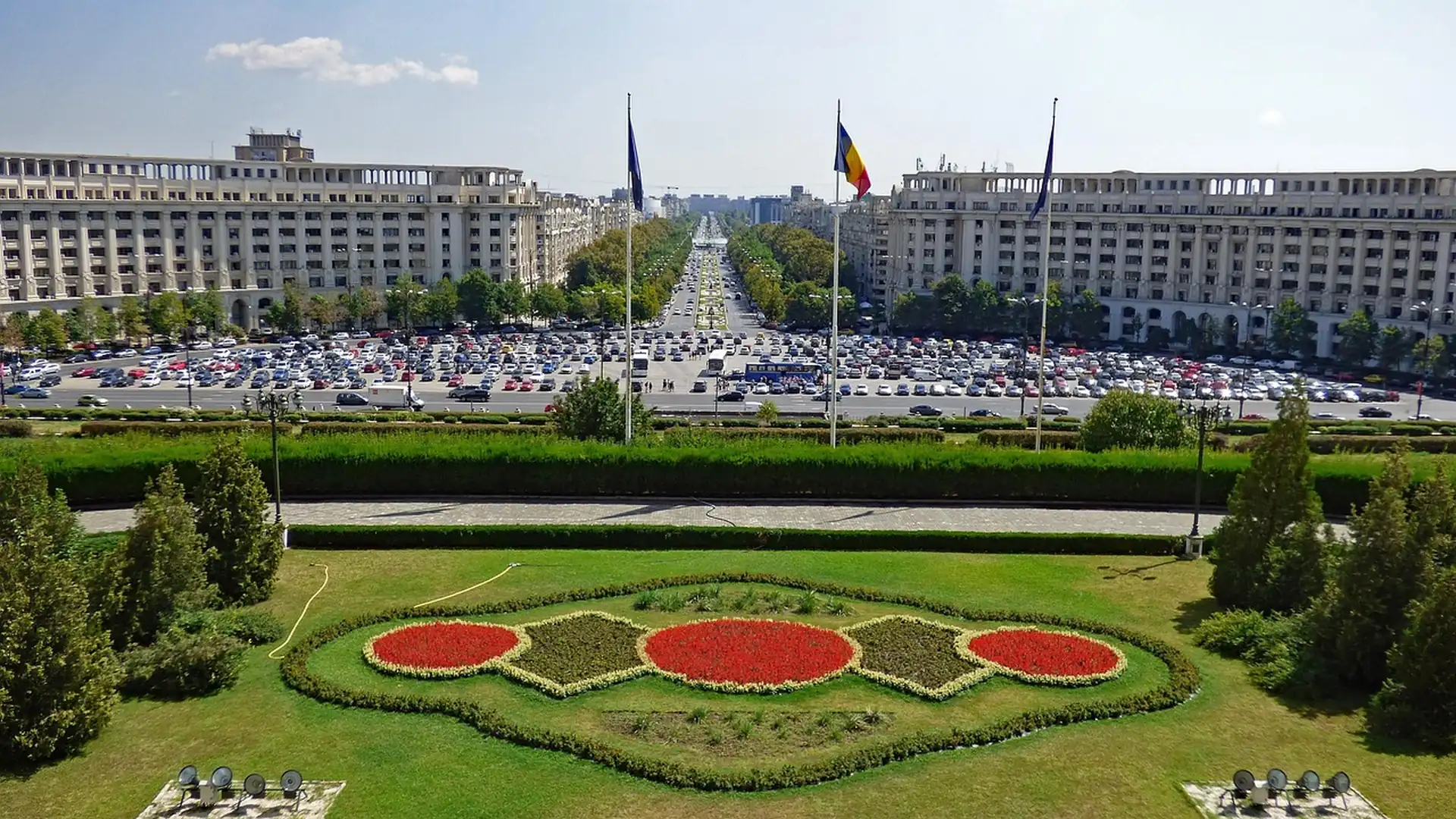
Getting around, in detailGet around · Connect
Get around
Walk inside a cluster, ride-hail (Bolt or Uber) between them. The metro is useful for Victoriei and the north; trams and buses are cheap but slower in traffic.
| Mode | Verdict | Fare | Use it for | What breaks |
|---|---|---|---|---|
| Walking | use | Free | Inside the Old Town, Victoriei and the parks | The Old Town's cobbles and pedestrian streets are uneven; wear comfortable shoes. |
| Ride-hail car (Bolt, Uber) | use | RON 15–35 across the centre | Between clusters, bags, night | Price shown before you ride; rain and rush hour (07:30–09:30, 17:00–19:00) raise fares and waits.Price shown before you ride; rain and rush hour (7:30 AM–9:30 AM, 5:00 PM–7:00 PM) raise fares and waits. |
| Metro | use | RON 5–8 per two trips; check the current fare table | Victoriei, Aviatorilor (for Herăstrău), Gara de Nord | Buy a rechargeable card or a single ticket at the machine; closes around 23:00.Buy a rechargeable card or a single ticket at the machine; closes around 11:00 PM. |
| Tram and trolleybus | ok | RON 3–5 per ride (check) | Routes the metro does not cover | Buy a ticket at a kiosk or in the STB app before boarding; validate it on board. |
| Metered taxi | caution | Flag fall plus per-km rate shown on the door | Street hail when apps are slow | Only use branded fleets with the tariff sticker visible; insist on the meter. |
| Bicycle share | ok | Check current city bike-share pricing | Herăstrău Park loop, quieter mornings | Avoid the centre's traffic at rush hour. |
Taxis and ride-hailing
Bolt
app
The most-used app in the city; fare fixed before you ride.
Uber
app
Widely available; compare with Bolt.
Branded metered fleets
metered
Check the company name and phone number on the door and the tariff sticker; avoid unmarked cars offering rides at the station.
On foot and car-free hours
| Where | When | Note |
|---|---|---|
| Old Town pedestrian streets (parts of Lipscani, Strada Șelari, Strada Covaci) | Evenings especially | Car-free; the densest concentration of bars. |
| Cișmigiu Gardens loop | Any time | Flat, shaded, about a 20-minute full loop. |
| Herăstrău lakeside path | Any time; best morning or early evening | About 4 km (2.5 mi) around the lake.About 2.5 mi (4 km) around the lake. |
More on getting around
Addresses: street name plus number is how everyone navigates; put the full address in the ride-hailing app and screenshot the map pin for the driver if signal is weak.
Rush hours are about 07:30–09:30 and 17:00–19:00; add extra time to any car journey then. Summer storms can flood low-lying streets briefly; wait it out in a café rather than wading through.
Connect
| Option | Verdict | What breaks |
|---|---|---|
| Tourist eSIM bought before you fly | use | No airport queue; EU roaming on a Romanian or other EU SIM also covers most home plans at no extra charge for EU/EEA travellers. |
| Carrier shop at Henri Coandă or in the city (Orange, Vodafone, Telekom) | use | Passport needed; 10–20 minutes. |
| SIM from a street kiosk | avoid | Registration and support are unreliable outside carrier shops. |
Bolt
Cars, food delivery
The most-used ride app in Bucharest; fare shown before you ride.
Uber
Cars
Also widely available; compare the fare with Bolt.
STB Bucharest
Bus, tram and trolleybus tickets and times
Buy a ticket in the app to skip the machine at the stop.
Google Maps
Walking, addresses, transit
Works well for both walking routes and public transport.
- Wi-Fi
- Free in most cafés and hotels; ask staff for the password.
Luggage
Where big bags are a problem, and how to get rid of them for the day.
Rule
- Lockers
- Left-luggage at Gara de Nord and in some Old Town hostels; hotels hold bags after check-out.
- Forwarding
- No forwarding culture: leave the big bag at the Bucharest hotel for trips to Brașov or Sinaia.
- Dead zone
- Late flights: ask the hotel to hold bags after check-out.
Bags, area by area
4 walking areas rated
- Bags forbidden
- Bags painful
Old Town (Lipscani)Calea Victoriei & Revolution SquareKiseleff & Herăstrău
Lockers, forwarding and the gap between check-out and check-in are covered once, under Luggage.
See & doWalking clusters, day plans and the places worth the time
See & do
Walking clusters, day plans and the places worth the time
Clusters
Plan by cluster: each is a walkable area with a rescue point and a bag rule.
Evening-first cluster: cellars, courtyards and cafés packed into a dozen streets; wander from 17:00, and do Stavropoleos and Caru' cu Bere before the crowds.
rescue 100% · max p90 6.3′ · half
Morning-to-afternoon cluster: the boulevard of palaces and museums, Revolution Square and the Athenaeum; flat, shady and easy on bags.
rescue 100% · max p90 7′ · half
Half-day cluster on wide boulevards: the booked palace tour, then Izvor Park; long open stretches with little shade.
rescue 98% · max p90 6.7′ · half
Shaded morning cluster in the north: the Arcul de Triumf, the leafy Kiseleff boulevard and the Village Museum by the lake; easy on the legs, far from the centre.
rescue 97% · max p90 7′ · half
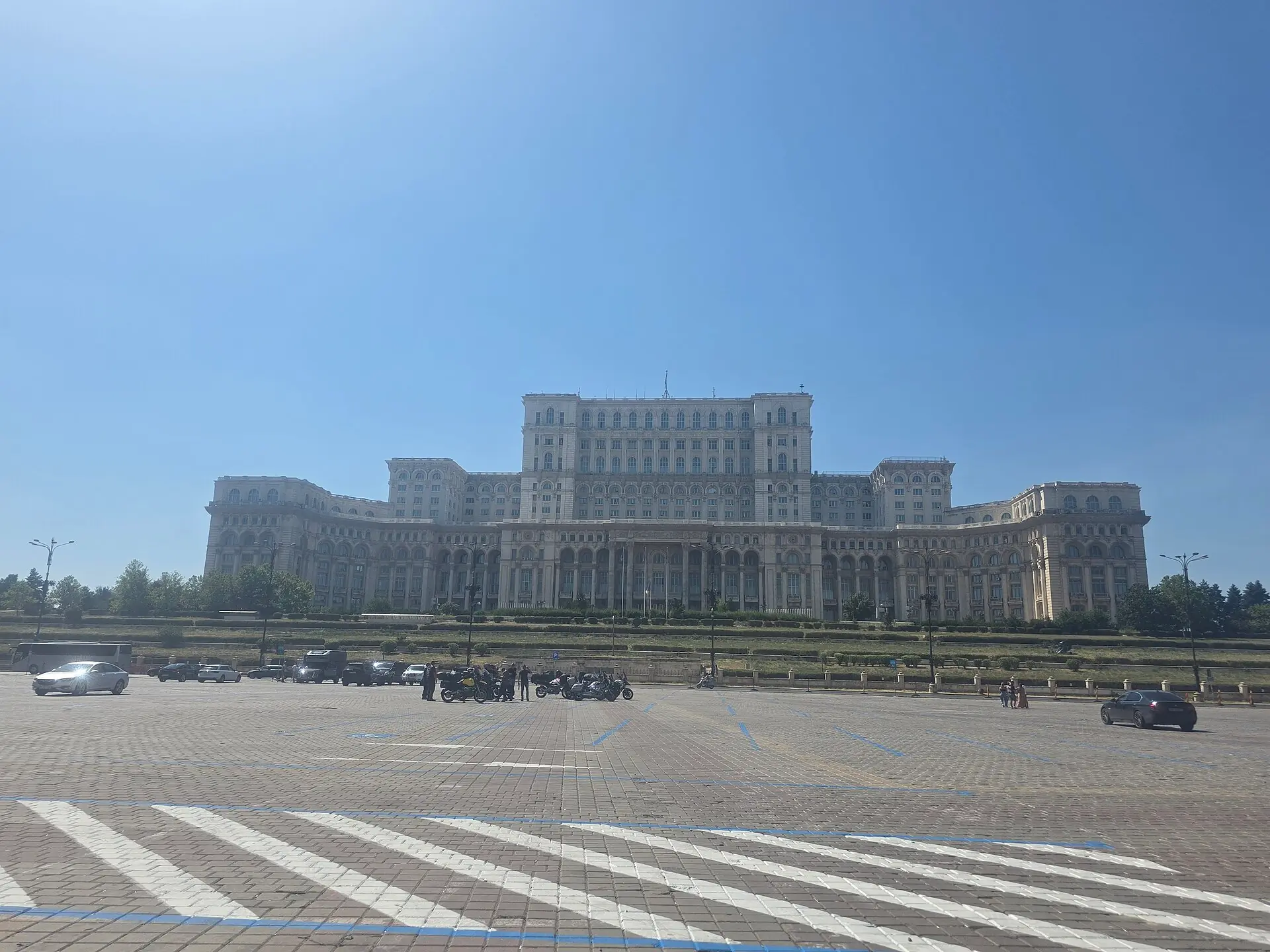
Days
Ready-made day plans, timed against opening hours and walking distances.
How long are you staying?
Loose outlines in the city's rhythm: clusters in the morning and evening, indoors or parks at midday heat. The timed day plan checks opening days and booking cutoffs.
1 day
A stopover before or after a Transylvania trip
- 09:00Stavropoleos Monastery — Stavropoleos Monastery and a walk through the Old Town
- 10:00Old Princely Court — Curtea Veche ruins
- 11:30Revolution Square — Walk or ride north to Revolution Square
- 12:00Romanian Athenaeum — Romanian Athenaeum lobby
- 13:00Caru' cu Bere — Lunch in the Old Town
- 15:00Cișmigiu Gardens — Cișmigiu Gardens, a rest in the shade
- 18:30Old Town cellars and dinner
Skip: The Palace of the Parliament and Herăstrău: both need a booked tour or a longer ride and do not fit a single day well.
Bucharest in 3 days
3 daysOld Town on foot with a lunch table, the booked Parliament tour on day 2, and the Village Museum before a car to the airport on day 3.
Day by day
Day 1 — Old Town and Stavropoleos, a 13:00 lunch table
- 09:30Stavropoleos Monastery
- Hanul lui Manuc (optional)
- 13:00Lunch table 13:00 (Old Town)
Day 2 — Palace of the Parliament tour, then Izvor Park
Day 3 — Village Museum, car to the airport at 13:00
- 09:00Dimitrie Gusti National Village Museum
- 13:00Car to the airport at 13:00
Places
“Best time” is when to arrive for the fewest crowds, for example “before 08:30”; “Go any time” means the hour makes little difference. More sights follow under “More sights and museums”.
8 places. Filters use the guide’s own ratings; a place with no rating is left out when a filter is on.
Show 2 more placesShow fewer
Tours, classes and shows in Bucharest →
Things to do in Bucharest: shows, nightlife and activities →
If you do ten things in Bucharest
Ranked for a first visit of 2–3 days. Prices are 2026 estimates in RON; hours marked (check) in the linked pages still need confirmation.
- 1
The Palace of the Parliament guided tour
The world's heaviest building and Ceaușescu's most divisive project; a 60–90 minute tour explains the scale and the history.
- Time
- 60–90 min
- Best
- Morning, booked ahead
- Cost
- RON 50–100
- 2
Stavropoleos Monastery and the Old Town
A quiet early-18th-century church, then the packed bar streets around it.
- Time
- 2–3 h with a meal
- Best
- Late afternoon into evening
- Cost
- Free monastery; RON 70–150 for a meal
- 3
Old Princely Court (Curtea Veche)
The ruined 15th-century seat of Vlad the Impaler and the origin point of the city.
- Time
- 20–30 min
- Best
- Any time, quieter mornings
- Cost
- RON 10–20
- 4
Where the 1989 revolution against Ceaușescu began; the balcony and the Memorial of Rebirth in 20 minutes.
- Time
- 15–30 min
- Best
- Any time
- Cost
- Free
- 5
A domed 1888 concert hall; look inside by day or come back for a concert.
- Time
- 20–45 min, or an evening for a concert
- Best
- Late morning, or an evening performance
- Cost
- Free lobby; RON 40–150 for a concert
- 6
The oldest public park in the centre, a shaded lake loop and a rest stop between clusters.
- Time
- 20–45 min
- Best
- Any time, especially hot afternoons
- Cost
- Free
- 7
Village Museum and Herăstrău Park
Relocated farmhouses and churches beside the biggest lake park in the centre-north.
- Time
- 2–3 h combined
- Best
- Weekday morning
- Cost
- RON 20–40 museum; park free
- 8
A neo-Gothic beer hall with painted ceilings, the most photographed restaurant interior in the city.
- Time
- 1.5–2 h
- Best
- Before 12:00 or after 15:00 to dodge tour groups
- Cost
- RON 80–150
- 9
National Museum of Art of Romania
Romanian medieval and modern art inside the former Royal Palace, facing Revolution Square.
- Time
- 1.5–2 h
- Best
- Weekday morning
- Cost
- RON 20–40
- 10
A fairy-tale royal castle in the Carpathian foothills, 1.5–2 h by train; the best day out from Bucharest.
- Time
- Full day
- Best
- Weekday, leave before 08:00
- Cost
- RON 200–350 including train and castle ticket
Good for…
Verdict is how well Bucharest works for that traveller, not how nice it is.
Cheap, easy with ride-hailing apps, and a manageable size for a 2–3 day stay.
- 1Sleep in the Old Town — everything on the shortlist is a walk or a short ride.
- 2Bucharest in 3 days — the 3-day plan already checks the Palace of the Parliament booking and the Sinaia train.
- 3Bolt from the airport — fixed fare shown before you ride, no haggling.
Layers of princely, Belle Époque and communist history within a short ride of each other.
- 1Old Princely Court — the 15th-century origin point of the city.
- 2Revolution Square — the 1989 revolution site, still a living memory for many residents.
- 3Palace of the Parliament — the largest single monument to the communist era anywhere in Europe.
Meals under RON 40 and beer under RON 25 outside the tourist restaurants.
- 1Mici stands — a filling lunch for RON 20–35.
- 2Free sights — Cișmigiu, Herăstrău, Revolution Square and the Athenaeum lobby all cost nothing.
- 3Metro across town — RON 5–8 against RON 20–35 for a car ride.
- 1A Victoriei hotel — quiet rooms, walkable to the Athenaeum and Cișmigiu.
- 2Lacrimi și Sfinți — a modern sit-down dinner away from the Old Town crowds.
- 3A rowing boat at Cișmigiu — a slow half hour in the middle of the city.
Parks and the Village Museum work well; Old Town cobbles and traffic are the hard parts.
- 1
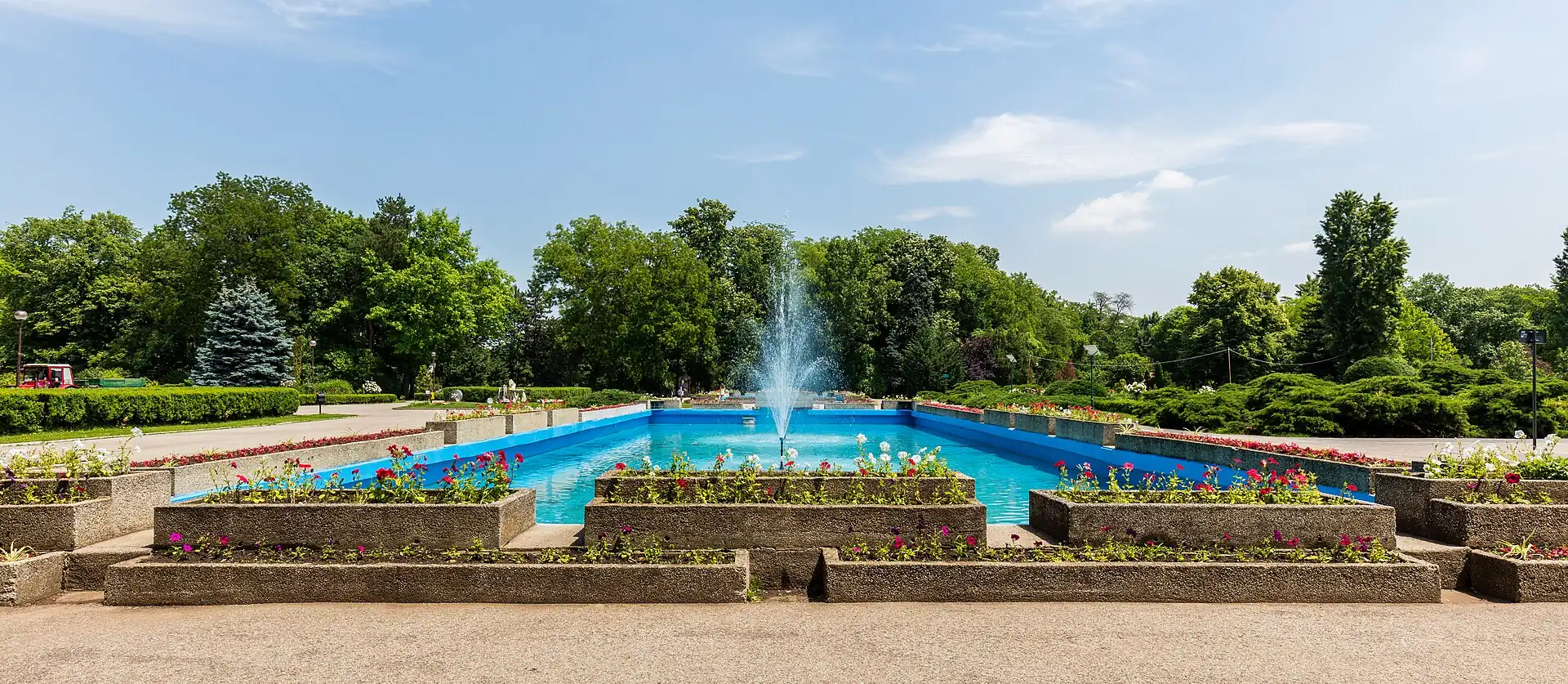 Herăstrău Park — space to run, bike hire and pedal boats.
- 2
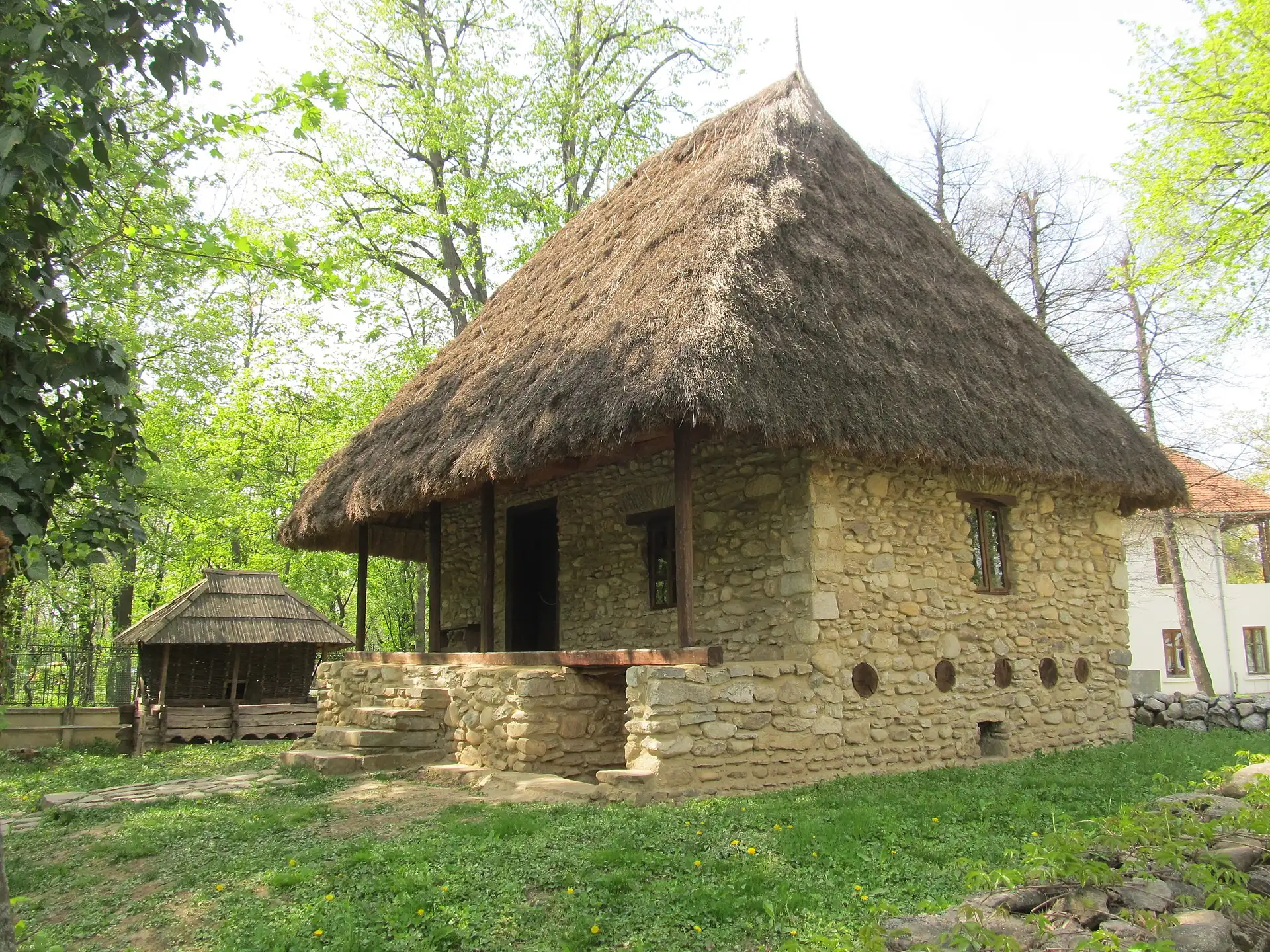 Dimitrie Gusti National Village Museum — walk-in farmhouses kids can explore.
- 3
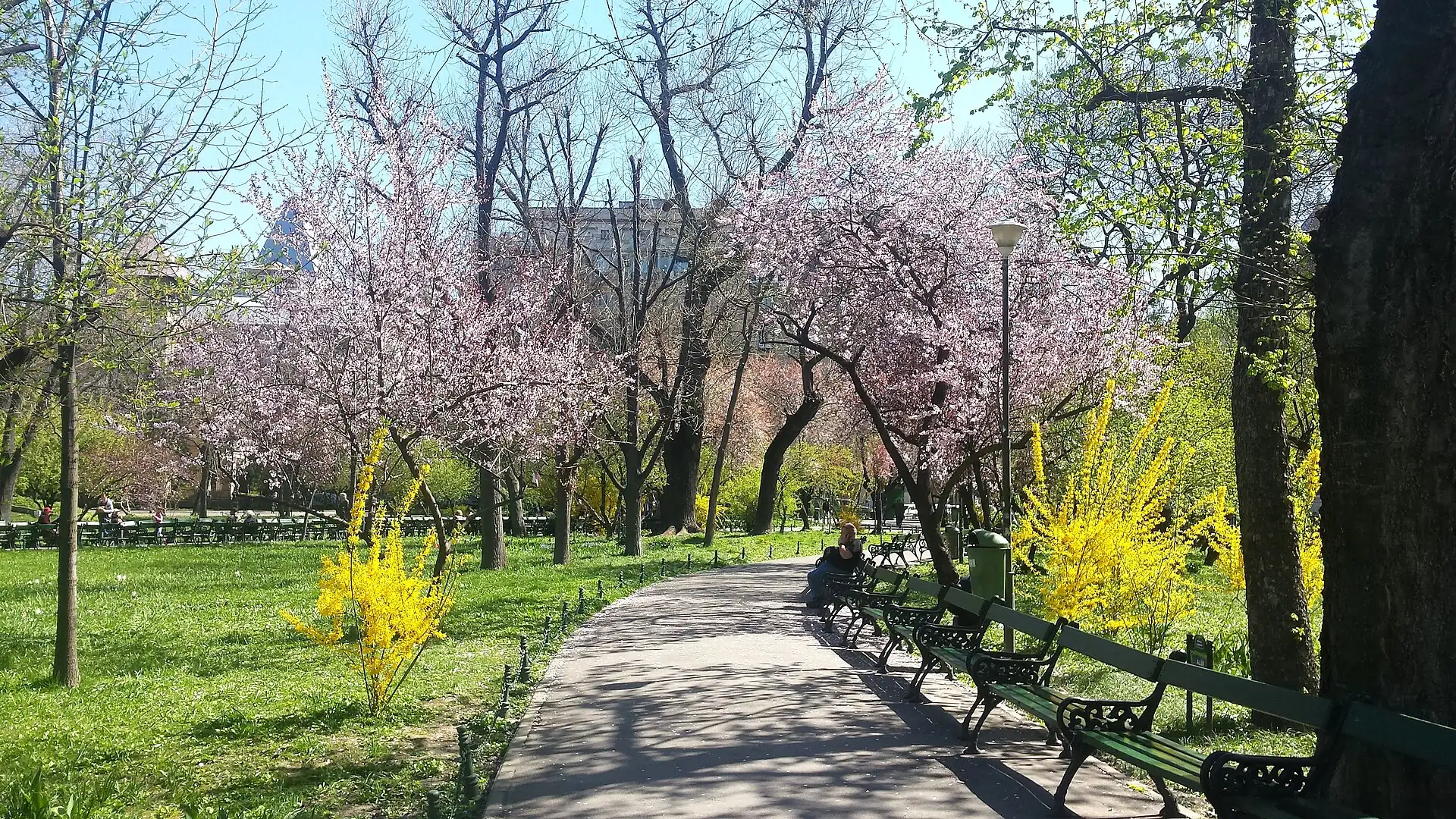 Cișmigiu Gardens — a playground and step-free paths in the centre.
Old Town cobbles and patchy metro lifts make parts of the centre hard going; the parks and Victoriei are much easier.
- 1A Victoriei hotel with a confirmed accessible room — flat pavements and car-to-door drop-off.
- 2Cișmigiu Gardens — flat paved paths throughout.
- 3Herăstrău Park — the longest step-free walk in the centre-north.
Tours and classes: book or skip
Book through the hotel or an operator with written inclusions and a cancellation policy. Prices per person, group tour unless stated.
| Tour or class | Verdict | Typical price | Why | Check before paying |
|---|---|---|---|---|
| Palace of the Parliament guided tour | book | RON 50–100 | The only way inside; a guide is included in the standard visit. | Bring your passport; confirm the language of the tour. |
| Old Town walking tour (free-tip-based) | maybe | Free; tip RON 30–60 | A quick orientation on day one, from a guide who works for tips. | Group size and whether it covers Curtea Veche and the revolution sites, not just bars. |
| Communist-era Bucharest tour | book | RON 150–350 | Context for the Palace, the Civic Centre demolitions and Revolution Square that a self-guided walk will miss. | Guide's own sourcing and whether it includes the Palace interior or exterior only. |
| Sinaia (Peleș Castle) day tour | maybe | RON 300–500 | Solves the train and castle-ticket logistics, though the train alone is simple enough to do yourself. | Whether Peleș entry and a guide inside the castle are included. |
| Romanian cooking class | book | RON 250–450 | Hands-on and useful for the rest of the trip; a good rain-day plan. | Hands-on stations per person, not a demonstration. |
| 'No commission' currency exchange stops on a tour | skip | n/a | Not an official tour product, but some Old Town walking guides steer groups to a paid partner exchange booth. | Decline and use a bank ATM instead. |
What each season brings
Spring
Mar–May
Terraces reopen, Cișmigiu's flower beds bloom, and the weather is mild for walking between clusters.
Watch: Orthodox Easter closures; a rainy week is common.
Summer
Jun–Aug
Long evenings, beer gardens in Herăstrău, and the George Enescu Festival in odd-numbered years.
Watch: 27–29 °C highs with little shade on the wide boulevards; sudden storms.
Autumn
Sep–Oct
The best walking weather: warm days, cool evenings, quieter museums.
Watch: Days shorten quickly through October.
Winter
Nov–Feb
The Christmas market in Piața Constituției and festive lights along Calea Victoriei.
Watch: Genuinely cold, sometimes well below freezing; short daylight hours.
Photo spots and the light
Light times are for clear days.
| Spot | Best light | Tip |
|---|---|---|
| Athenaeum portico from the garden | Morning | Shoot from across the small garden for the full colonnade. |
| Former Central Committee balcony | Any time | A wide lens captures the balcony and the memorial column together. |
| Palace façade from Bulevardul Unirii | Late afternoon | Walk back along the boulevard's central fountains for the full-width view. |
| Lake and island bridge | Late afternoon | Shoot from the south bank toward the pavilion for the reflection. |
| Lakeside path near the Village Museum | Late afternoon | Shoot across the water toward the skyline. |
| CEC Palace dome | Morning | Shoot from across Calea Victoriei for the full dome and portico. |
Bucharest travel FAQ
Answers are 2026 desk estimates; fares and rules marked (check) change.
Is Bucharest safe?
Yes for violence; the common problems are pickpocketing in crowds, unbooked-taxi overcharging and unpriced Old Town menus. Use Bolt or Uber and check restaurant prices before ordering.
How much is a taxi from Henri Coandă to the Old Town?
About RON 70–120 by Bolt or Uber, 30–45 minutes depending on traffic. Avoid drivers who approach you before the official rank or app pickup point.
Do I need cash?
Cards and contactless work in most cafés, shops and restaurants; carry some RON for small vendors, markets and a few taxis. Euros are not accepted as everyday currency.
Is tap water safe to drink?
Yes, it is treated and generally safe, though many visitors still prefer bottled.
What should I wear to churches?
Shoulders and knees covered; men remove hats. A light scarf and trousers or a longer skirt solve it.
How many days do I need in Bucharest?
Two full days for the city, three with a Sinaia day trip.
Do I need to book the Palace of the Parliament ahead?
Yes — it is visited on a booked guided tour only, and you need your passport or ID card.
Bolt or Uber?
Either; compare the fare shown in each app before you book. Both are safer and cheaper than a street-hailed taxi.
Is Bucharest good in winter?
Yes if you pack for real cold: December to February is often below freezing, with the Christmas market and festive lights along Calea Victoriei as a reward.
How much should I tip?
Round up or about 10% in restaurants if service is not included; nothing extra expected at cafés.
What is the best area to stay?
Old Town for nightlife and a first visit, Calea Victoriei for quiet and museums.
Do people speak English?
Widely in hotels, restaurants and with younger people in the centre; Romanian's Latin roots also make some signs guessable.
Is Bucharest part of the Schengen area?
Romania's Schengen status has changed in recent years; check the current rules for your nationality before planning entry and exit stamps.
More to see and doSee & do · Learn & work · Rain & heat · Free things · Wheelchair and stroller
Free things to do
Sights in Bucharest that cost nothing to enter. Each is described under Places or More sights; extra costs inside are marked there.
Wheelchair and stroller, place by place
How each place in this guide works for wheels, from its own page. Ratings are desk estimates unless a page says it was checked on the ground.
| Place | Step-free | Wheelchair | Stroller | What to know |
|---|---|---|---|---|
| Cișmigiu Gardens | yes | ok | ok | Flat gravel and paved paths throughout; one of the easiest walks in the centre for a wheelchair or stroller. |
| Old Princely Court | no | poor | check | Uneven ruin surfaces and a few museum steps; view from the street railing if steps are a problem. |
| Herăstrău Park | yes | ok | ok | Flat paved and gravel paths around the lake; one of the easiest long walks in the city for wheelchairs and strollers. |
| Revolution Square | yes | ok | ok | Flat open square; the easiest heritage stop in the centre for wheelchairs and strollers. |
| Romanian Athenaeum | partial | caution | check | A short flight of steps to the main door; ask at the box office about an accessible entrance for concerts. |
See & do
17 of 17
- palace
The world's heaviest building and Ceaușescu's largest project; book ahead with your passport.
Civic Centre · Booked tours; check the official site · RON 50–100
Relocated farmhouses and churches from across Romania in an open-air museum by the lake.
Herăstrău · Daily, day hours (check) · RON 20–40
- church
A small early-18th-century church with carved stone and icon painting, a quiet pocket of the Old Town.
Old Town · Daily, day hours (check) · Free
- Citadel & old city
Ruined foundations of Vlad the Impaler's 15th-century court, the origin of the city.
Old Town · Day hours; closed Mon (check) · RON 10–20
- monument
The domed 1888 concert hall, home of the George Enescu Philharmonic.
Victoriei · Varies; check concert programme · Free lobby; concerts extra
- monument
Where the 1989 revolution against Ceaușescu began; the balcony and the Memorial of Rebirth.
Victoriei · Always open · Free
National Museum of Art of RomaniaMuzeul Național de Artă al României
MuseumsRomanian medieval and modern art plus a European gallery, inside the former Royal Palace on Revolution Square.
Victoriei · Day hours; closed Mon–Tue (check) · RON 20–40(check)
National Museum of Romanian HistoryMuzeul Național de Istorie a României
MuseumsCoins, treasures and a plaster cast of Trajan's Column, on Calea Victoriei near the Old Town.
Old Town edge · Day hours; closed Mon (check) · RON 20–40(check)
- park
The oldest public park in the centre, laid out around a lake in the 1840s.
Victoriei · Early morning to late evening · Free
- park
The largest park in the centre-north, ringing Lake Herăstrău.
Herăstrău · Early morning to late evening · Free
Arcul de Triumf
monumentA 1930s triumphal arch modelled on Paris's, at the start of Kiseleff boulevard.
Kiseleff · Grounds always visible; interior viewing platform sometimes open (check) · Free from outside
CEC Palace
ColonialThe domed 1900 former savings-bank headquarters, one of the grandest Belle Époque façades on the boulevard.
Old Town edge · Exterior always visible; interior by appointment (check) · Free outside
The only way inside; book ahead and bring a passport.
Civic Centre · Booked slots · RON 50–100
Old Town pub crawl or cellar hop
NightLipscani's cellar bars and courtyards are close enough to hop between on foot.
Old Town · Evenings · Free to join; pay for drinks
Romanian cooking class
ClassesLearn sarmale, mici and mămăligă from a local host; book a day or two ahead.
Various · Half day · RON 250–450 (check)
The easiest outdoor activity in the city on a clear day.
Herăstrău · Daytime, warmer months · RON 15–40 an hour
George Enescu Festival concert
Shows & musicThe country's major classical-music event; book well ahead if your trip lands in festival weeks.
Victoriei · Evening performances, odd-numbered years · RON 40–150
- Booking
- Palace of the Parliament tours and festival concerts sell out ahead; cooking classes need a day or two of notice.
Learn & work
| What | Where | Cost | Note |
|---|---|---|---|
| Romanian with a private tutor | Online platforms and language schools in the centre | RON 60–120 an hour (check) | Romanian's Latin roots make basic vocabulary easier to pick up than for most Eastern European languages. |
| Cooking courses | Small culinary schools and home hosts | RON 250–450 a session (check) | See Do; a good rain-day option. |
| Icon painting and folk-craft workshops | Occasional workshops linked to monasteries and the Village Museum | Varies | Check current listings; not a year-round fixture. |
Working here
- Tourist entry
- EU/EEA citizens need no visa; many other nationalities enter visa-free for up to 90 days under Schengen rules (Romania joined the Schengen area in 2024/2025 — check current status for your nationality). Tourist entry does not permit paid work.
- Work permit
- Non-EU nationals need an employer-sponsored work permit and a residence right; expect document legalisation and a criminal-record check.
- Remote work
- Romania has a digital-nomad visa route for non-EU remote workers earning above a set income threshold (check current requirements); EU citizens can simply live and work remotely as residents.
Rain-day and heat-day plan
Rain day
Summer storms can be sudden and heavy: do the outdoor cluster before early afternoon, then move indoors.
- 01Dimitrie Gusti National Village Museum — Many house interiors and porches give some cover; check for a rain policy on the day.
- 02Palace of the Parliament — Entirely indoors once the tour starts.
- 03National Museum of Art of Romania — On Revolution Square; several indoor floors.
- 04Cărturești Carousel of Light bookshop — A striking white interior on Lipscani; browse for 20–30 minutes.
- 05AFI Cotroceni or Băneasa Shopping City — Food courts, cinemas and play areas for a washed-out afternoon.
Heat day
Above 30 °C: outdoor sights before 11:00 and after 17:00, indoors or shaded parks in between, water every hour.
- 09:00Stavropoleos Monastery — Shaded courtyard; done before the midday sun.
- 10:30Cișmigiu Gardens — Mature trees give the best shade cover in the centre.
- 13:00Palace of the Parliament — Air-conditioned tour route for the hottest hours.
- 17:30Herăstrău Park — Lakeside breeze and the cooler part of the day.
Day-trips and nearby
Places you can reach from Bucharest in a day or with one night away, with the route and what it costs. Door to door, not ride time.
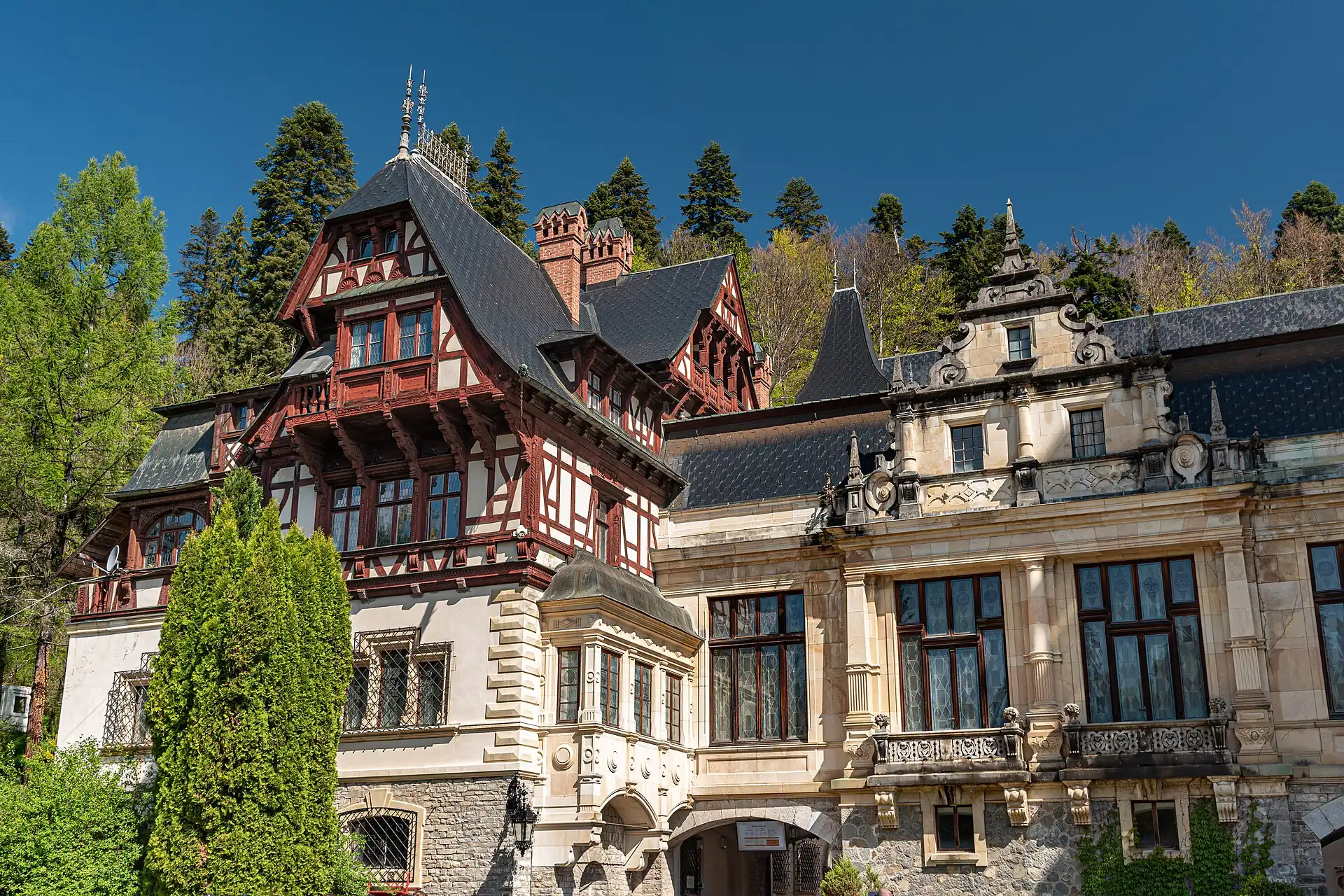 Photo: Jorge Franganillo, CC BY 2.0
Sinaia (Peleș Castle)
goTrain from Gara de Nord about 1.5–2 h each way
Peleș is closed on Mondays and Tuesdays in some seasons: check first.
- Time
- Full day — leave before 08:00Full day — leave before 8:00 AM
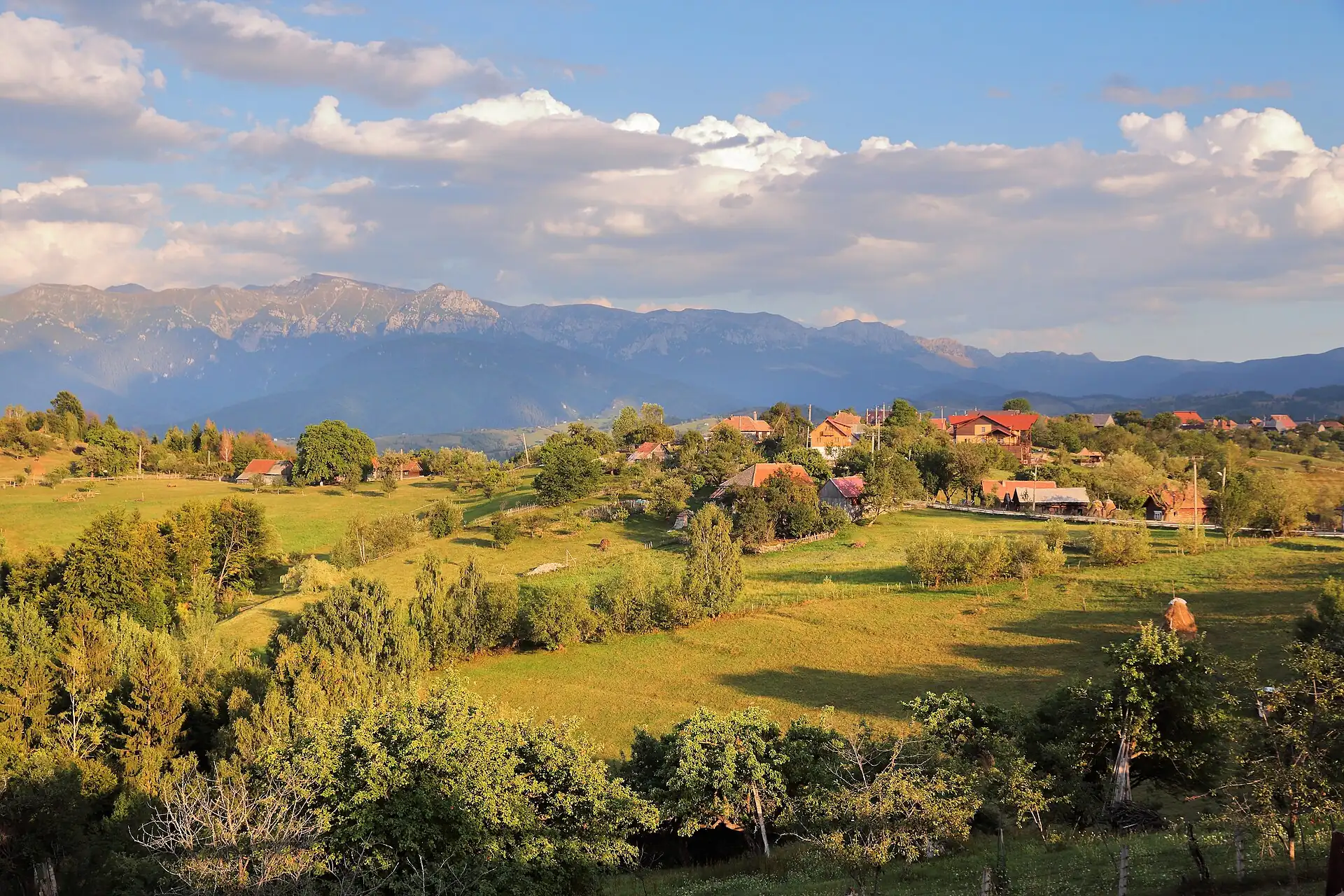 Photo: Marek Ślusarczyk ( Tupungato ) Photo gallery, CC BY 3.0
Brașov
overnightTrain about 2.5–3 h each way
Sleep in Brașov if you have the nights.
- Time
- Very long as a day-trip; better as a base change
Snagov Lake and monastery
go off seasonCar or taxi about 45 min each way
Crowded on summer weekends; go on a weekday.
- Time
- Half day
Go next
Door to door: Multi-day
Train or car, several days
The natural next stop after Bucharest for most first-time visitors to Romania.
Eat & sleepWhere to eat and which area to sleep in
Eat & sleep
Where to eat and which area to sleep in
Eat
A short list of places worth crossing the city for, each with how to get a seat.
Restaurant finder: filter every place to eat in Bucharest →
Vegetarian-friendly score
2.5 / 5 · Workable
- Country diet noteOur country guide rates vegetarian eating as workable.1 / 2
- Places to eat in this guide1 of 5 places with a known answer are vegetarian-friendly, 4 partly.0.9 / 1.5
- Budget eating lines1 vegetarian line in "Eat by budget".0.2 / 0.6
- Meat-free national dishes6 meat-free dishes in the country food list.0.4 / 0.4
- Dedicated vegetarian kitchens1 mention of vegetarian restaurants, Buddhist or fasting kitchens.0.1 / 0.5
Country note: Easier than it looks: Orthodox fasting (post) dishes are vegan and appear on many menus, especially in Lent and Advent.
Vegetarian places near me →Make a diet card →
How we score
- Country diet note (up to 2): easy 2, workable 1, mixed 0.75, hard 0; no note 0.5.
- City places to eat (up to 1.5): 1.5 × (vegetarian-friendly + half of partly friendly) ÷ places with a known answer; needs 3 or more known places.
- Budget eating lines marked vegetarian (up to 0.6): 0.2 each.
- Meat-free national dishes (up to 0.4): 0.1 each.
- Dedicated vegetarian kitchens mentioned — Buddhist chay, shōjin ryōri, Jain, fasting food, vegan cafés (up to 0.5): 0.1 each.
- Total rounded to the nearest half point, 0 to 5. Built from our own pages only, not from reviews.
Eating and drinking guideEat by budget · Drink
Before you sit down to eat
Short version; full text linked
- Queues and hours
- Per person, one dish or one meal, 2026 estimate. More →
Eat by budget
Under RON 40 a meal
| Where | Order | Area | Price | Note |
|---|---|---|---|---|
| Mici stand (street or market) | Mici with mustard and bread | Any market or festival stall | RON 20–35 | Order five or more; a light lunch on their own. |
| Covrigi stand | Covrigi (soft pretzel-bread rings) | Street kiosks citywide | RON 4–8 | The city's grab-and-go breakfast. |
| Simple ciorbă counters | Ciorbă de burtă or de legume | Old Town and office-street lunch spots | RON 20–35 | |
| Origo Coffee Shop | Coffee and a pastry | Old Town | RON 25–35 | |
| Bakery lunch (covrigărie or patiserie)veg | Savoury pastry and a drink | Any neighbourhood | RON 20–35 | |
| Supermarket deli counter | Cold cuts, cheese, bread for a picnic in Cișmigiu or Herăstrău | Mega Image, Carrefour | RON 15–30 |
Dishes to know
| Dish | What it is | Where to look | When | Price |
|---|---|---|---|---|
| MiciMici | Grilled minced-meat rolls, garlicky, no casing; the national grill food | Any grill spot, festivals, Casa Doina | Lunch, dinner, any season | RON 20–40 a portion |
| Sarmale | Cabbage rolls stuffed with minced pork and rice, simmered slowly, served with polenta and sour cream | Caru' cu Bere, Hanul lui Manuc, Casa Doina | Lunch, dinner, especially winter and holidays | RON 45–65 |
| Ciorbă de burtă | Sour tripe soup with sour cream and garlic, a hangover classic | Traditional restaurants | Lunch | RON 25–45 |
| MămăligăMămăligă | Polenta, the standard starch side for stews and sarmale, sometimes layered with cheese and sour cream | Everywhere | Any | Usually included as a side |
| Covrigi | Soft, slightly sweet pretzel-shaped bread rings sold from street kiosks | Kiosks citywide, near metro stations | Breakfast, any time | RON 4–8 |
| Papanași | Fried or boiled doughnuts with sour cream and jam, the classic dessert | Traditional restaurants | Dessert | RON 25–40 |
| ȚuicăȚuică | Plum brandy, drunk as a shot before or with a meal | Traditional restaurants, bars | Any | RON 10–20 a shot |
- Ask for the bread-basket price before eating it: some Old Town restaurants charge per piece.
- Prices are on the menu; there is no street-food haggling culture like a market.
Drink & nightlife
| Where | What | Until | Note |
|---|---|---|---|
| Old Town cellars and courtyards (Lipscani, Strada Șelari, Strada Covaci) | Beer halls, cocktail bars, cellar clubs | Late; weekends past 02:00Late; weekends past 2:00 AM | Loud and crowded; check drink prices before ordering at a promoter-fronted bar. |
| Calea Victoriei rooftop and hotel bars | Cocktails with a view | About 00:00–01:00About 12:00 AM–1:00 AM | Quieter and pricier than the Old Town. |
| Cișmigiu-area cafés | Coffee, wine bars | About 22:00–23:00About 10:00 PM–11:00 PM | A calmer alternative to the Old Town in the evening. |
By style
| Style | What | Where | Price | Until |
|---|---|---|---|---|
| Craft beer and beer halls | Romanian and imported craft beer, plus Caru' cu Bere's own historic brewsCaru' cu Bere and neighbouring cellars are the classic stop. | Old Town | RON 12–25 a glass | Late |
| Wine bars | Romanian wine by the glass (Fetească Neagră, Fetească Albă) | Old Town and Calea Victoriei | RON 20–35 a glass | About 23:00–00:00 |
| Cocktails | Bars with local spirits (țuică, palincă) in modern cocktails | Old Town, Calea Victoriei | RON 35–55 | About 01:00–02:00 on weekends |
| Rooftops | Hotel and tower bars with skyline views | Calea Victoriei, city-centre hotels | RON 40–70 a drink | About 00:00–01:00 |
| Țuică and palincă | Plum or fruit brandy, drunk as a shotHome-distilled bottles from unknown sources carry the same risk as anywhere: buy sealed, labelled bottles. | Traditional restaurants, some bars | RON 10–20 a shot | — |
Rules that bite
- Zero alcohol limit for drivers: do not drink and drive, including the morning after a late night.
- Old Town promoters offering a 'free shot' to bring you into a bar are a sales tactic, not a scam exactly, but check drink prices before you sit.
Sleep
Pick the area first: it decides your walk home at night and your first morning.
Which neighborhood fits you
Three questions, one recommendation, with the reasons.
Your best fit
- Stavropoleos, Curtea Veche, Hanul lui Manuc and Caru' cu Bere all inside a 10-minute walk.
- A wide range of hostels and mid-range hotels.
- Many hotels have 24-hour desks given the nightlife trade.
Watch out: Bars and cellars run late; ask for a room off the main streets or bring earplugs.
Next best: Calea Victoriei & Cișmigiu
Built from our 1–5 desk scores per area; your answers stay in this browser.
More on sleepingSleep by budget · Your area · With kids
Sleep by budget
| Band | Price | Where | Room types | What to expect |
|---|---|---|---|---|
| budget | RON 40–90 dorm bed · RON 150–300 double | Old Town | Hostels, small guesthouses | Small rooms, some stairs, street noise until late. Breakfast sometimes included. |
| mid | RON 350–700 | Old Town edge, Calea Victoriei | 3–4 star hotels, boutique properties | Lift, breakfast, 24-hour desk. Quieter rooms face away from the boulevard. |
| splurge | RON 900–2,500+ | Calea Victoriei, city-centre international chains | Grand hotels, international chains | Pools, spas, doorstep drop-off; VAT is usually included in the quoted rate, unlike some other European cities. |
Booking checks
- Ask for a room off the main street in the Old Town: cheap rooms facing the bar streets are loud until late.
- Confirm whether breakfast and city tax are included in the quoted rate.
- The George Enescu Festival (odd years, late summer) and the Christmas market weeks are the two periods to book hotels well ahead.
Which area is yours
| If you are | Sleep in | Because |
|---|---|---|
| First visit, 2–3 nights, nightlife and history | Old Town (Lipscani) | Everything is a walk; accept the noise and pick a room off the main street. |
| Families, light sleepers, museum-focused trips | Calea Victoriei & Cișmigiu | Flat, quieter, Cișmigiu Gardens on the doorstep, still walkable to the Old Town. |
First-timers on a short stay: the historic core is a walk from cafés and cellars, but choose a hotel with a 24-hour desk and a room on a side street — bars are loud until 03:00.
Quieter, leafier nights beside Cișmigiu Gardens with the metro and main sights on the doorstep; a 25-minute walk to the Old Town.
Areas are in our default order until you tick a priority.
Scores are 1–5 desk judgements per priority (2026).
With kids
- Cismigiu Gardens has a playground and boat hire in summer; the easiest stroller-friendly park in the centre.
- Herăstrău Park and the Village Museum work well together: open space plus walk-in farmhouses for kids to explore.
- The Old Town's cobbles and uneven pavements are hard on a stroller; bring a carrier for that cluster.
- Rain or heat: AFI Cotroceni or Băneasa Shopping City malls have indoor play areas and cinemas.
- Ride-hailing cars rarely carry child seats: ask the hotel to arrange one or bring a travel booster.
PracticalMoney, essentials, safety and the pocket card
Practical
Money, essentials, safety and the pocket card
Money
What a day costs at three comfort levels, and how to pay.
- Budget
- RON 150–250 excl. bed / day
- Mid
- RON 250–450 excl. bed / day
- High
- RON 450+ excl. bed / day
- Transit card
- No transit card needed for a short stay: ride-hailing, walking and the occasional metro ticket bought at the machine.
- Cash rule
- Keep RON 100–200 in small notes for cafés and tips; use bank ATMs in banks or malls and decline dynamic currency conversion.
More on moneyCosts · Budget · Buy
What things cost
- Ciorbă (soup) lunch, per personRON 30–55
- Mici (grilled rolls) portionRON 25–45
- Bottle of water, shopRON 3–8
- Ride-hailing car across the centreRON 15–35
- Car from Henri Coandă to the Old TownRON 70–120
- Palace of the Parliament guided tourRON 50–100
Trip budget
| Hotel double room1 × 3 nights × RON 350 | RON 1,050 |
| Food, local transport, entries2 × 3 days × RON 350 | RON 2,100 |
| Airport car, both ways1 × RON 200 · one car per 4 people | RON 200 |
| eSIM or tourist SIM2 × RON 40 | RON 80 |
| Buffer 10%Price creep, a taxi you did not plan, one splurge | RON 343 |
| Trip total≈ RON 629 per person per day, bed included | RON 3,773 |
2026 estimate in RON; flights and tours excluded. Your choices stay in this browser.
Prices of common things
| Ciorbă (soup) lunch | RON 30–55 |
2026 estimate; check locally.
Buy
- Bargaining
- Fixed prices in shops, malls and cafés; light haggling only at flea markets and with street antique sellers, and never at a restaurant or a metered taxi.
- Fixed-price check
- Check a supermarket (Mega Image, Carrefour, Kaufland) price for coffee, spirits or sweets before buying the same thing as a souvenir in the Old Town.
Markets and shopping streets
| Where | What | When | Haggle | Note |
|---|---|---|---|---|
| Obor Market | Fresh produce, cheese, flowers, household goods | Daytime (check) | light | A working local market, not a tourist stop; interesting for food photography. |
| Old Town craft and souvenir stalls | Painted eggs, ceramics, magnets, T-shirts | Shop hours, later on weekend evenings | light | Mostly fixed price; quality varies stall to stall. |
| Christmas market, Piața Constituției | Ornaments, mulled wine, food stalls | Late Nov–Dec, evenings | no | Fixed prices; the busiest evenings are weekends. |
| Supermarkets (Mega Image, Carrefour, Kaufland) | Wine, spirits, sweets, everyday goods | Long hours; some 24 h | no | Your fixed-price reference; also the easiest place to buy a local wine or țuică to take home. |
Shops by what they sell
| For | Where | Hours | Note |
|---|---|---|---|
| Romanian wine | Wine shops on Calea Victoriei and in malls | Shop hours | Ask for a Fetească Neagră or a Dealu Mare red as a starting point. |
| Ceramics and folk textiles | Village Museum shop, Old Town craft stalls | Shop hours | Museum-shop pieces are usually better made than street-stall equivalents. |
| Books and maps | Cărturești bookshops (the Carousel of Light branch is a sight in itself) | About 09:00–21:00 | English-language sections in the larger branches. |
| Malls (AC, cinemas, food courts) | AFI Cotroceni, Băneasa Shopping City, Promenada Mall | About 10:00–22:00 | The rain-day and heat-day refuge; fixed prices. |
Changing money
| Where | Verdict | Why |
|---|---|---|
| Bank branches | use | Fair rate and a receipt; passport needed; office hours only. |
| 'No commission' exchange booths in the Old Town | avoid | Poor effective rates hidden in the spread; a known tourist-trap pattern in this city. |
| Hotel front desk | avoid | Convenient, poor rate. |
| ATM withdrawal in RON | use | Usually the best rate; decline any on-screen offer to convert to your home currency (dynamic currency conversion). |
ATMs
- Per withdrawal
- Most bank ATMs cap a foreign card at RON 1,000–2,500 per withdrawal; the screen shows the limit.
- Fees
- Local fee about RON 10–25 per withdrawal (2026 estimate) plus your own bank's fee.
- Conversion
- Always choose to be charged in RON (lei), not your home currency, when the machine or a card terminal asks.
- Where
- Machines inside bank branches or malls are the safest; avoid stand-alone Old Town booths with high advertised rates.
Essentials and accessEssentials · Access
Essentials
- Plugs & power
- 230 V; two-pin round sockets (type F, also C).
- Toilets
- Cafés, malls and museums; carry small coins for a few public toilets.
- Health
- Summer heat and winter cold; travel insurance with medical cover. EU/EEA visitors carry their health card.
- Accessibility
- Uneven pavements, kerbs and parked cars; step-free access is patchy outside malls and newer hotels.
- Laundry
- Self-service laundries in the centre; hotels offer next-day service.
- Emergency numbers
- 112 for police, fire and ambulance.
Pack
- Comfortable shoes for uneven pavements
- A warm layer for December–February
- Something that covers shoulders and knees for churches
- Sun hat and water bottle in summer
Accessibility
Bucharest is patchy on wheels. The Old Town's cobbles and pedestrian zones are hard going; Calea Victoriei, Cișmigiu and Herăstrău are flat and far easier. Step-free access is best in malls, newer hotels and the parks.
- Pavements
- Uneven, cracked or missing in places, with cars often parked on them; the Old Town's cobbles are the hardest stretch.
- Metro
- Newer stations have lifts; older central stations often rely on stairs and escalators only — check the station before relying on it.
- Getting around
- App cars (Bolt, Uber) are the step-free option; request a larger car for a folding wheelchair.
- Hotels
- Larger hotels on Calea Victoriei and near the Old Town's edge have lifts; small boutique Old Town hotels may not.
- Toilets
- Accessible toilets in malls and larger hotels; patchy elsewhere.
- Parks
- Cișmigiu Gardens and Herăstrău Park have flat, paved paths and are the easiest long walks in the city.
Sights, step-free or not
| Cișmigiu Gardens and Herăstrău Park | step-free | Flat paved paths throughout. |
| Revolution Square | step-free | Flat open square. |
| Palace of the Parliament | with help | Long tour route with many stairs; some lifts — ask when booking. |
| Stavropoleos Monastery | with help | A few low steps into the courtyard and church. |
| Old Princely Court | hard | Uneven ruin surfaces and museum steps; view from the street railing instead. |
Survive
Safety basics, the lines not to cross, and practical habits that save the day.
Safety
- Cross at signalled crossings and watch for turning cars; pavements are uneven and cars park on them.
- Pickpockets work the metro, Gara de Nord and the Old Town at night: keep phone and wallet in front pockets.
- Do not take unbooked airport taxis; book a car in the app or use the official rank.
- Emergency: 112.
Red lines
- Orthodox churches: cover shoulders and knees, men remove hats, no flash during services.
- Do not photograph inside the Palace of the Parliament except where the guide allows it.
Practical
- Toilets: cafés, malls and metro-adjacent malls; carry small coins.
- Tap water is treated and generally safe, but many visitors prefer bottled.
More on staying safeStay safe · Stay healthy · Safety map · Solo & women · Etiquette · Cope · Scams
After dark, by area
3 flagged areas
Gara de Nord (train station)
Take careMetro platforms and cars
Take care
Day = about 07:00–20:00. What to watch in each area, day and night →
Scams and red flags
Walk away if you see these
- Unbooked taxis at the airport and Gara de Nord quote fixed high fares: book in an app or use the official rank and check the tariff on the door.
- Old Town restaurants that hand over a menu without prices: ask for the price of each dish before you order.
- Money changers with 'no commission' boards give poor rates: use a bank ATM or a bank branch.
- Distraction thefts on the metro and at crossings: keep bags closed and in front.
Stay safe
Crossing the road
- 01Use signalled crossings on wide boulevards; drivers do not reliably yield to pedestrians at unsignalled crossings.
- 02Watch for cars turning right on green even when your signal shows walk.
- 03Trams have priority; look both ways on tram-line crossings even on a one-way street.
Hustles specific to this city
| Hustle | Where | The tell | What to do |
|---|---|---|---|
| Old Town restaurant with no printed prices | Old Town | A menu with dishes but no numbers, or a separate 'tourist' menu | Ask the price of every dish before ordering, or choose a restaurant with a posted, priced menu. |
| Unbooked airport or station taxi | Henri Coandă airport, Gara de Nord | A driver approaches you before you reach the rank or app pickup point | Walk past to the official taxi rank or book Bolt/Uber; never agree a fare with someone who approaches you first. |
| 'No commission' currency exchange | Old Town | A board advertising a headline rate with no visible commission | The spread is the hidden cost: use a bank ATM instead. |
| Distraction theft on the metro | Metro cars and platforms, crowded stops | Someone bumps you or creates a distraction while a companion works a bag or pocket | Keep bags closed and in front in crowds; a cross-body bag is safer than a shoulder bag. |
- Police
- 112 for all emergencies (police, fire, ambulance). Report thefts at the nearest police station with your passport; insurers need the written report.
- Night
- Violent crime against visitors is rare; the risks are pickpocketing, taxi overcharging and unlit streets outside the centre.
Stay healthy
- Heat
- Jul–Aug: shade and water breaks on unshaded boulevards; midday walks on Bulevardul Unirii or Kiseleff are harder than they look given the width and lack of shade.
- Cold
- Dec–Feb regularly drops below freezing at night: pack a proper coat, hat and gloves, not just a layer.
- Food and water
- Tap water is treated and generally safe; many visitors still prefer bottled. Street food (mici, covrigi) from busy stalls is generally fine.
- EU health cover
- EU/EEA visitors should carry their European Health Insurance Card; others need travel insurance with medical cover, as for any non-EU trip to Romania.
- Pharmacies
- Catena, Sensiblu and Help Net chains are widespread with English-speaking staff common in central branches.
Hospitals and clinics: see Cope.
Safety by area and hour
| Area | Day | Night | What to watch |
|---|---|---|---|
| Old Town (Lipscani) | fine | fine | Pickpockets in bar crowds late at night; unpriced menus at a few restaurants. |
| Calea Victoriei & Revolution Square | fine | fine | Generally calm; watch for fast turning traffic at wide crossings. |
| Palace of the Parliament / Civic Centre | fine | caution | Empty and poorly lit boulevards after dark; go by day. |
| Kiseleff & Herăstrău | fine | fine | Unlit stretches of the lake path after dark; keep to the busier shore in the evening. |
| Gara de Nord (train station) | caution | caution | Reported pickpocketing and aggressive touts; keep bags in front and use the official taxi rank. |
| Metro platforms and cars | fine | caution | Distraction theft in crowded cars; keep bags closed and in front. |
- Crossing wide boulevards: use signalled crossings and still watch for cars turning right on green.
- At night, use Bolt or Uber rather than a street-hailed taxi outside the app system.
Solo, women and LGBTQ+ travellers
Solo
- Easy city alone: cafés and the Old Town are social, and solo dining is normal.
- Book Sinaia or Brașov train tickets yourself at Gara de Nord or online; no tour needed for either.
- Use Bolt or Uber after dark rather than a street-hailed taxi.
Women
- Harassment is uncommon; bag snatching and pickpocketing in crowds are the more likely problems.
- Cover shoulders and knees for churches and monasteries; elsewhere dress is relaxed and similar to Western Europe.
LGBTQ+
- Same-sex relations are legal; public attitudes are more conservative than in Western Europe and Romania does not recognise same-sex marriage or civil partnerships.
- Public affection of any kind is low-key generally; same-sex couples may draw more attention outside a few central, more liberal venues.
- Bucharest Pride usually runs in early summer (check dates); a small LGBTQ+ scene exists in the centre.
Etiquette in Bucharest
- Orthodox churches
- Shoulders and knees covered, men remove hats, no flash during a service; keep to the sides if a service is in progress.
- Shoes
- Not usually removed in churches (unlike some Asian temples); look for local cues at smaller sites.
- Queues
- Loose but generally respected; stand your ground politely at counters and ticket windows.
- Tipping
- Round up or leave about 10% in restaurants if service is not included; not expected at cafés for a coffee.
- Paying and bargaining
- Fixed prices almost everywhere; light bargaining only at flea markets and with street antique sellers.
- Greetings
- A handshake is standard; close friends may exchange cheek kisses. 'Bună ziua' (good day) is the polite greeting for shopkeepers and staff.
- Photos
- Ask before photographing people up close; avoid close-up shots of the Interior Ministry building on Revolution Square.
Cope
Hospitals and clinics that handle foreigners
| Where | Area | Use it for |
|---|---|---|
| Regina Maria private hospitals and clinics | Several locations across the city | Private, English-speaking staff common; ask your insurer about direct billing. |
| Medlife private hospitals and clinics | Several locations | Private network, walk-in and appointment clinics. |
| Emergency Clinical Hospital (Spitalul de Urgență) | Central | Main public emergency hospital; for serious emergencies, call 112 rather than travelling yourself. |
Visa extensions
- Office
- Romanian Immigration Office (Inspectoratul General pentru Imigrări); weekday office hours. Check the current address before going.
- Extending
- Visa and stay-extension rules follow Romania's Schengen-area status; a short tourist stay is usually not extendable without a specific reason — check current EU/Schengen rules for your nationality.
- Overstay
- Can mean a fine and complications on your next Schengen entry: track your allowed days carefully.
Embassies and consulates
| Country | Address | Phone | Note |
|---|---|---|---|
| United States | Bulevardul Dr. Liviu Librescu 4–6 | — | (check) |
| United Kingdom | Strada Jules Michelet 24 | — | (check) |
| Australia | — | No embassy in Bucharest; nearest coverage is elsewhere in Europe (check the current arrangement)(check) | |
| Canada | Strada Tuberozelor 1–3 | — | (check) |
| France | Strada Biserica Amzei 13–15 | — | (check) |
| Germany | Strada Cpt. Av. Gheorghe Demetriade 6–8 | — | (check) |
- Lost passport
- Police report at the local station, then your embassy for an emergency document; budget a few working days.
- Pharmacies
- Widespread chains (Catena, Sensiblu, Help Net) with English-speaking staff common; many medicines are sold without a prescription — check the active ingredient.
- Laundry
- Self-service laundries in the centre; hotels charge more per item for next-day service.
Apps and offline kitOffline kit
Offline kit
Set up before you leave, so Bucharest still works with no signal or a dead roaming plan.
On your phone
- Maps: open the city in Google Maps, tap the place name, then Download offline map (or use an offline-maps app).
- Data: install an eSIM or buy a local SIM before the first taxi; the apps in this guide depend on it.
- Translation: download the local language for camera translation.
- Screenshots: booking confirmations, hotel address in the local script, and the emergency numbers.
This guide
Save the Bucharest guide and its pages on this device; it opens without a connection.
Phrases that do the work
Greeting
Good day
Bună ziua
BOO-na ZEE-wa
Thanks
Thank you
Mulțumesc
mool-tsoo-MESK
Market
How much is it?
Cât costă?
kuht KOHS-tuh
Café
The bill, please
Nota, vă rog
NOH-ta vuh rohg
Taxi
To this address, please
La această adresă, vă rog
la ah-CHAS-tuh ah-DRESS-uh vuh rohg
Food
Delicious
Delicios
deh-lee-CHOHS
Help
Excuse me
Scuzați-mă
skoo-ZAHTS-uh-muh
Greeting
Goodbye
La revedere
la reh-veh-DEH-reh
Pocket card
Fill in, then print or save as PDF
Stays in this browser only; nothing is sent anywhere.
BucharestBucurești
Pocket card · Voykit
My bed tonight
—
—
—
La această adresă, vă rogTo this address, please
Emergency
- Police, fire, ambulance112
Embassy
Most embassies are north of Victoriei; write your own embassy's 24-hour line below.
My embassy: —
Fare anchors (2026 estimate)
- Henri Coandă → Old Town, app car: RON 70–120, 30–45 min
- Henri Coandă → centre, express bus 780: about RON 5–8 (check)
- App car across the centre: RON 15–35
Say or show
- Bună ziua — Good day (BOO-na ZEE-wa)
- Mulțumesc — Thank you (mool-tsoo-MESK)
- Cât costă? — How much is it? (kuht KOHS-tuh)
- Nota, vă rog — The bill, please (NOH-ta vuh rohg)
- La această adresă, vă rog — To this address, please (la ah-CHAS-tuh ah-DRESS-uh vuh rohg)
- Scuzați-mă — Excuse me (skoo-ZAHTS-uh-muh)
Show the address in Romanian with street name and number; drivers search that.
Deep diveHistory, reading, photos and every source
Deep dive
History, reading, photos and every source
Sources
- officialRomania Tourism (official)
- officialBucharest tourism (official city portal)
- secondaryWikivoyage — Bucharest
Ask about Bucharest
Loading…
Was this useful?