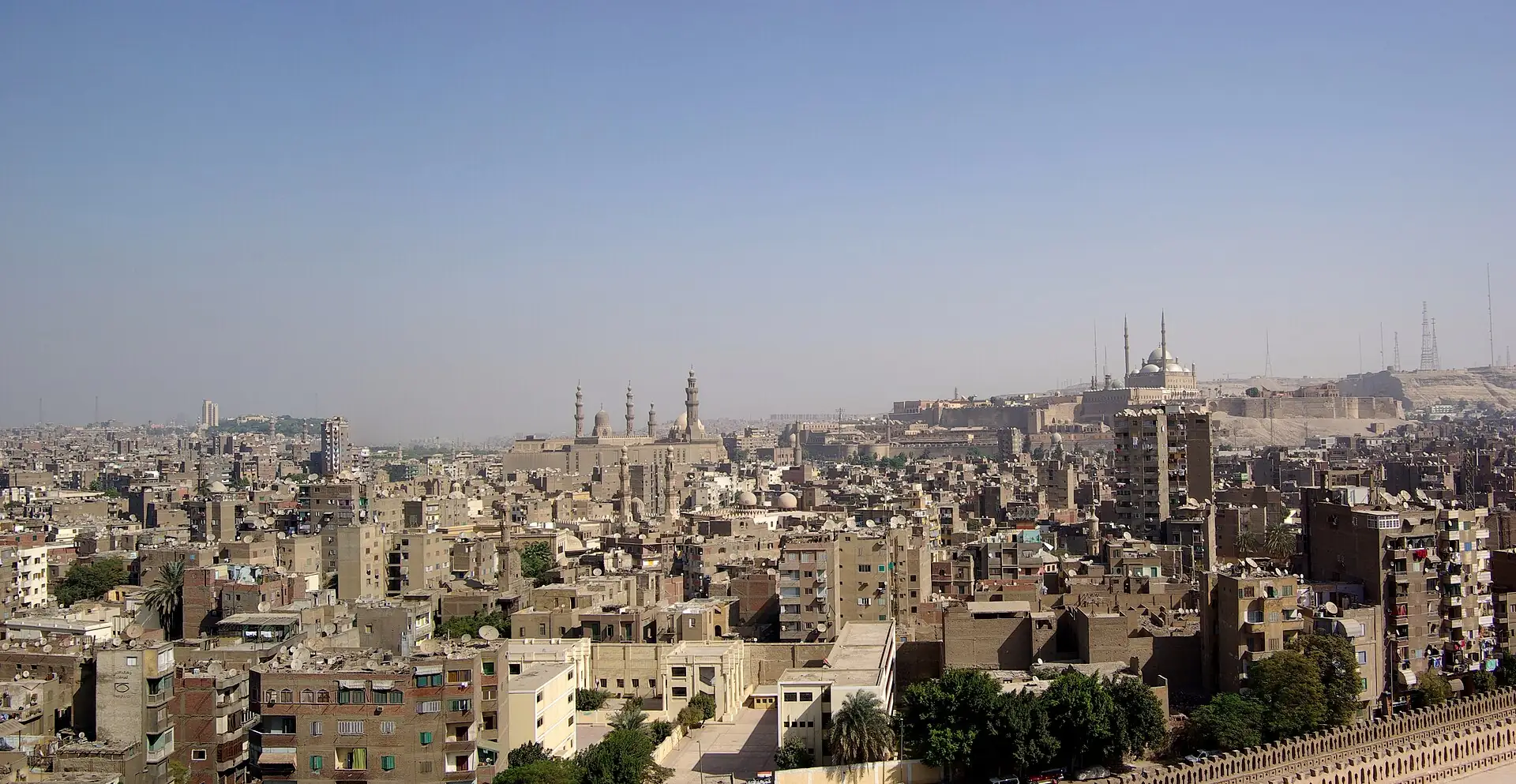
Cairo
القاهرة
Code EG · 5 walking zones
Cairo is an early-start city: be at the pyramids or the Khan at opening, sit indoors from noon to 16:00, eat late, and fix every price (taxi, camel, guide) before you start.Cairo is an early-start city: be at the pyramids or the Khan at opening, sit indoors from noon to 4:00 PM, eat late, and fix every price (taxi, camel, guide) before you start.
Our quick read of Cairo, scored 1–5 (friction is out of 100). Cash need: how often you still need notes. Heat risk: how hot days get. Stroller: how easy wheels are. Friction: overall effort for a first visit. Desk judgements, so check before relying on them.
- Local time
- --:--
- Weather
- forecast below
- Currency
- EGP
- Best months
- Jan · Feb · Mar · Apr · Oct · Nov · Dec
- Airport
- Cairo (CAI)
Walking zones: the 5 areas this guide plans a day around. Each is a district you can cover on foot, so you do one zone per half-day and ride the train between them. The code (EG 01, EG 02…) is just the zone's number on the Cairo line; the line under each name says how bags fare there and how much time it needs.
Map of Cairo
Use the switches to show or hide each kind of pin. A switch that is on shows its pins on the map; tap it again to hide them. "Show only" keeps just the pins that match (for example, places that fit a suitcase). Tap any pin for its name and a link to its page.
- Where to sleep
- Places
- Eat
- Walking clusters
- Rest stops
From the airport Cairo (CAI) to your bed
Tap a pin for its card. Places without their own coordinates are shown by their walking cluster.
Why Cairo
Cairo sprawls across the Nile and the Giza plateau, and the distances between sights are measured in traffic, not kilometres. The trips that go wrong are the ones that try three districts in a day, arrive at the pyramids at 11:00 in summer, or accept a stranger's offer of a lift, a tour or a shop. Five walking clusters cover a first visit; Saqqara, Alexandria and the Nile Valley are trips away from one kept bed.
See first
- 1
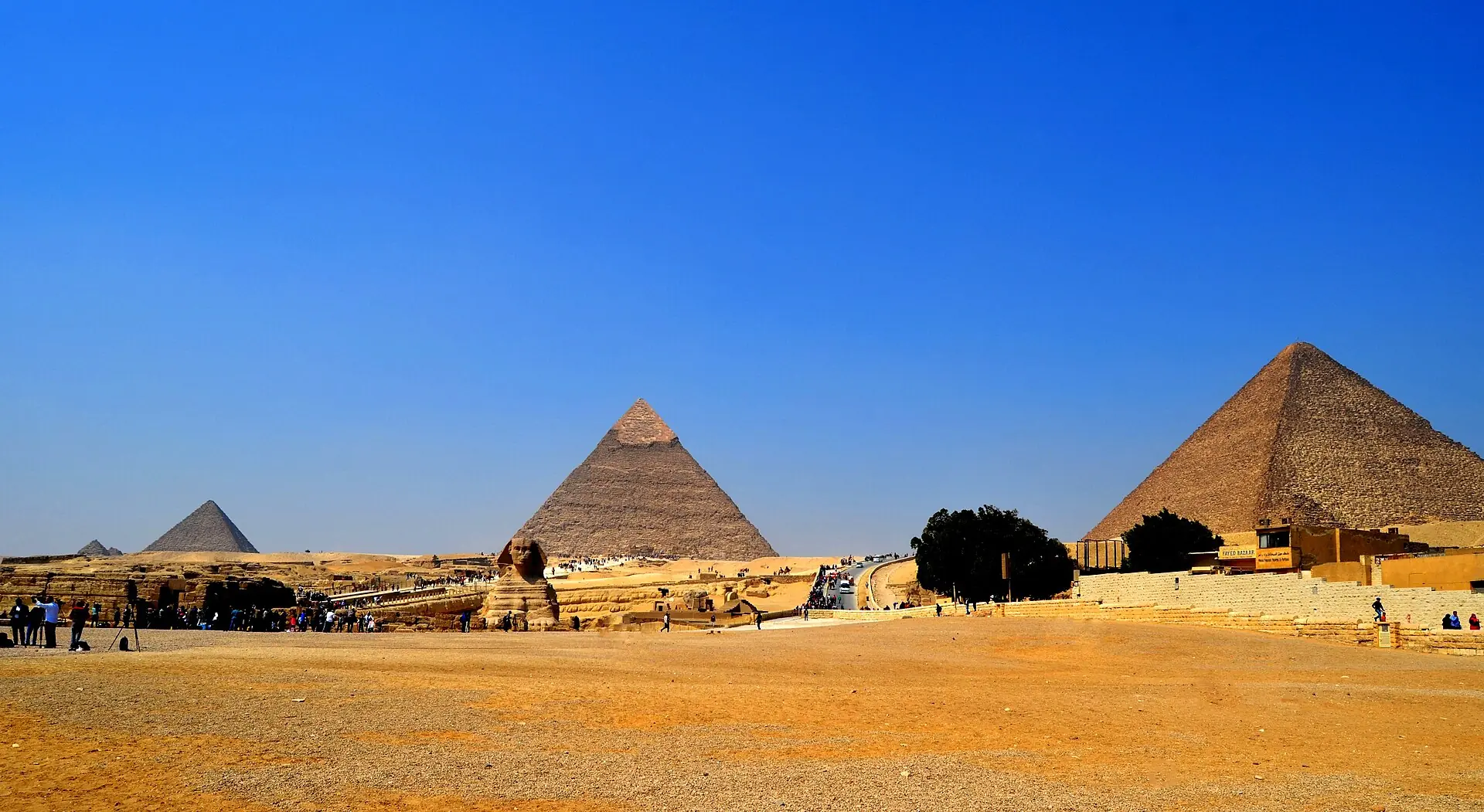 Pyramids of Giza and the Sphinx at opening · 2–3.5 h
- 2
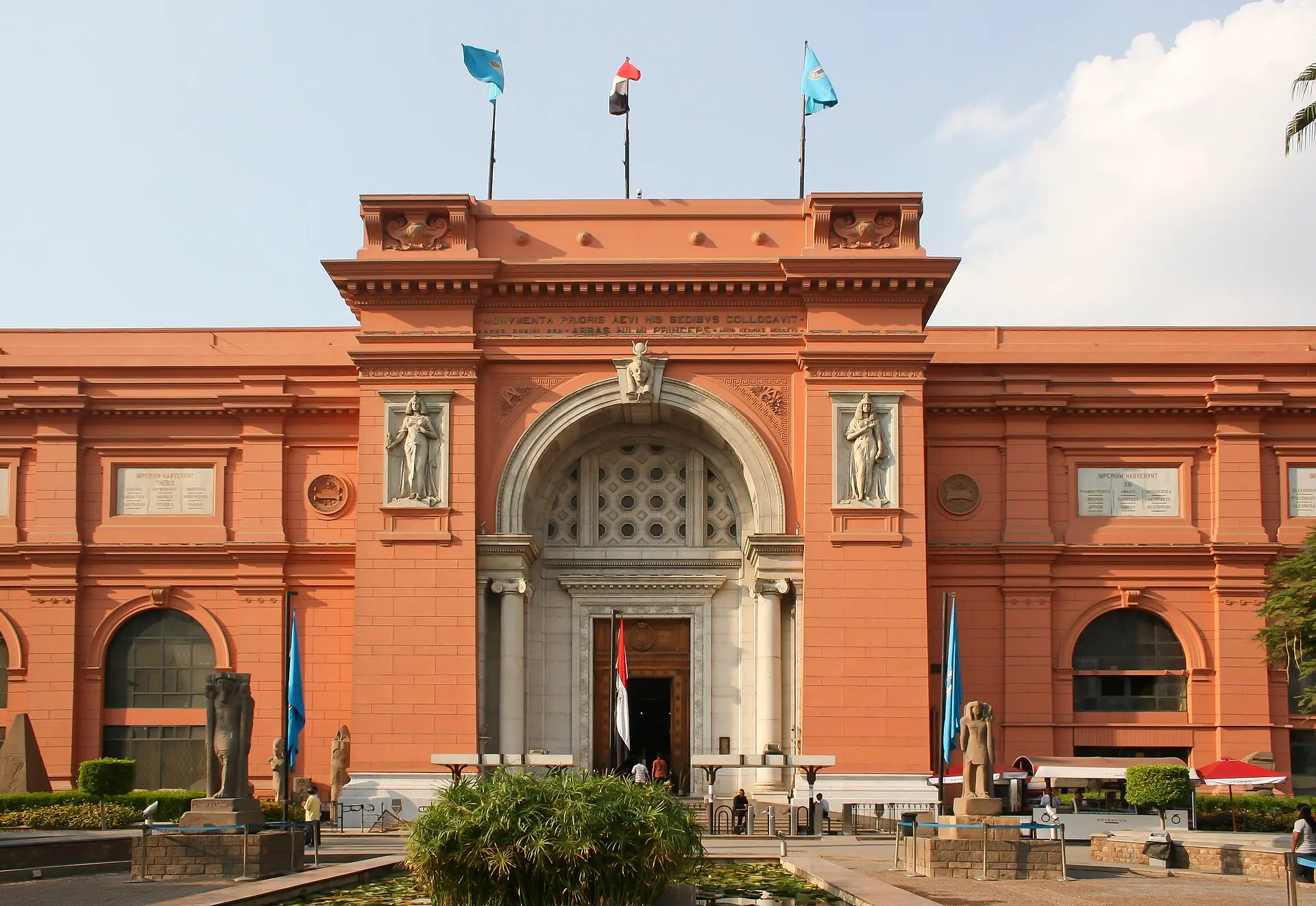 Egyptian Museum, Tahrir · 1.5–2.5 h
- 3
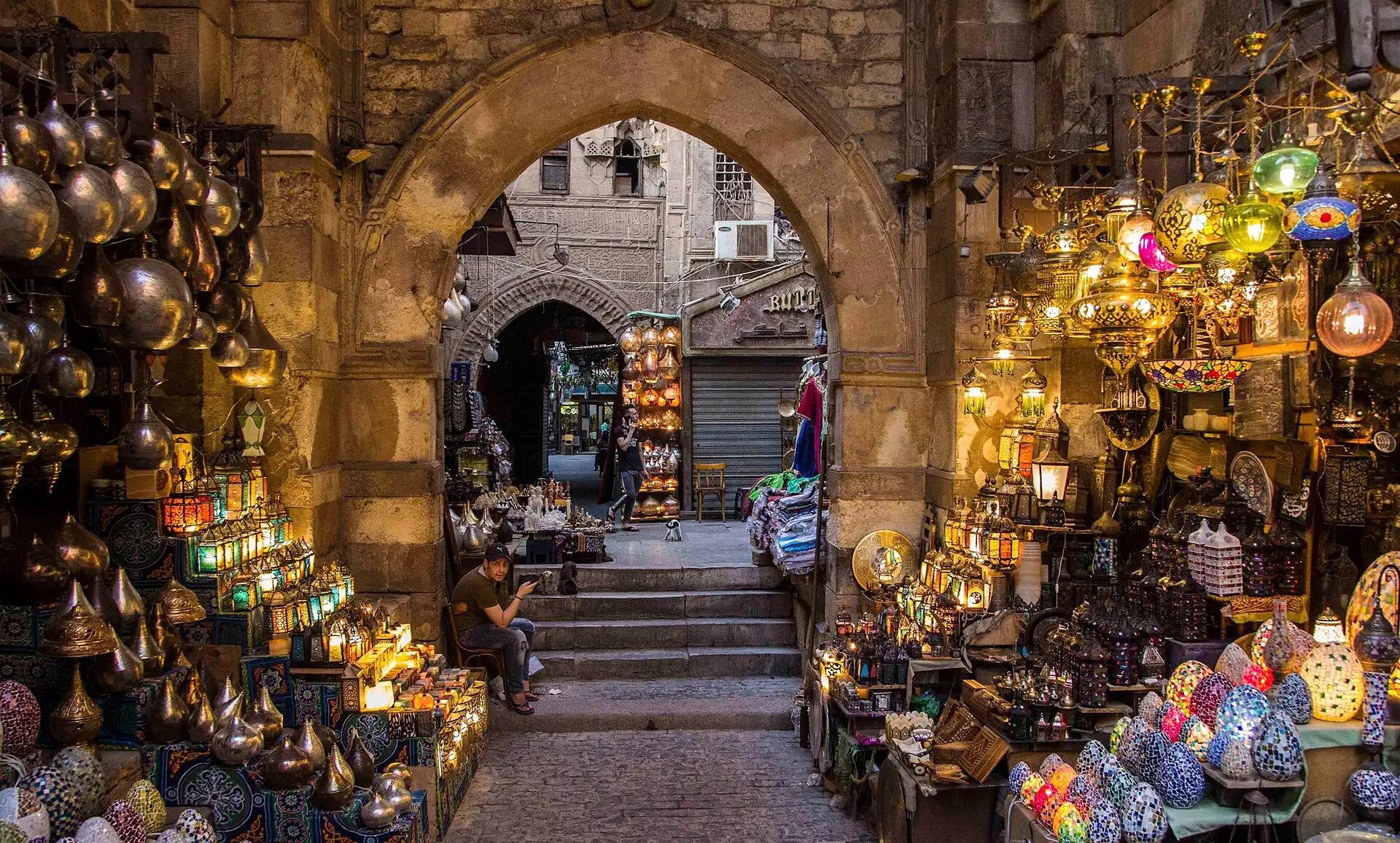 Khan el-Khalili bazaar · 1.5–2.5 h
- 4
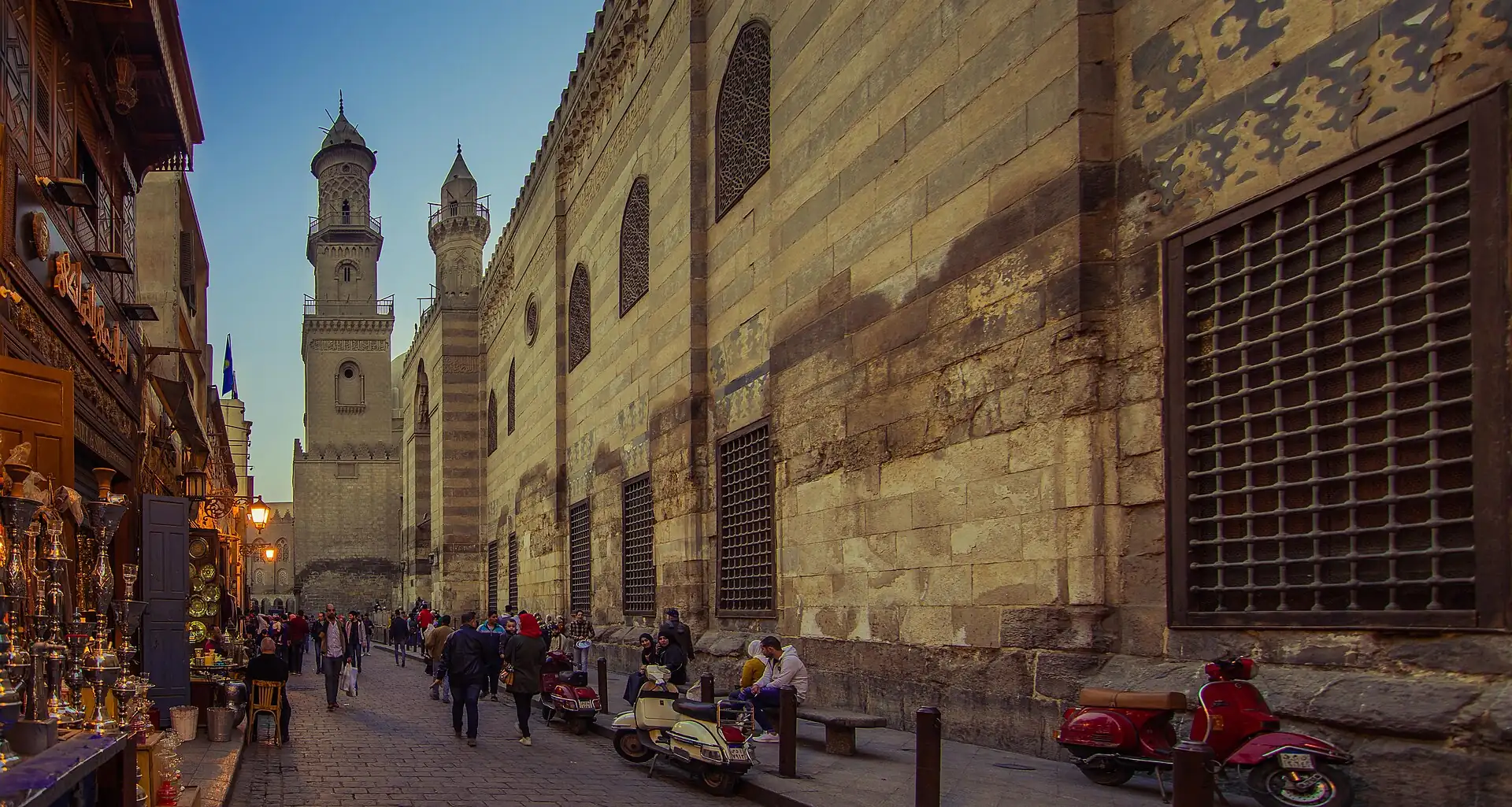 Al-Muizz Street · 1.5–2 h
- 5
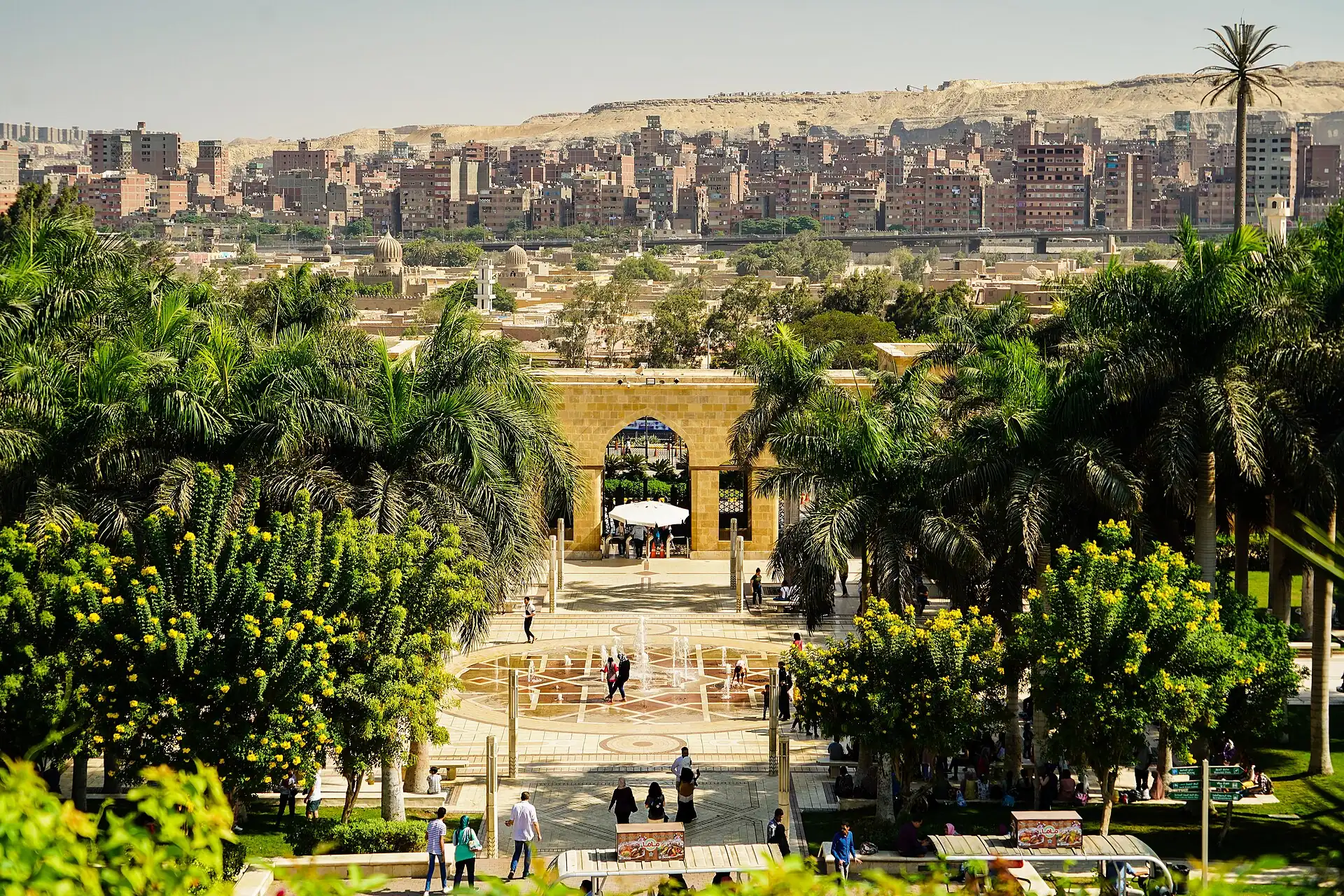 Al-Azhar Park at sunset · 1–1.5 h
Fits
- History-first trips
- Short city breaks with a guide
- Travellers who like street food and late evenings
Does not fit
- Strollers and wheelchairs (pavements and steps)
- Midday walkers in summer
- Travellers who dislike being approached by touts
How long
- 2 daysGiza plateau at opening, Islamic Cairo in the evening
- 3 daysFive clusters, one per half-day, mornings and evenings only
- 5 daysFive clusters + Saqqara or Alexandria day-trip + one slow day
Good for
- First timers
- History buffs
- Budget
- Couples
- Solo
- Families
About Cairo
Cairo is not one old city but several capitals stacked on top of each other. Ancient Memphis, the pharaonic capital, sat just south at what is now Saqqara and Mit Rahina; the Roman fortress of Babylon-in-Egypt became Coptic Cairo; the Islamic city grew from Fustat (641 CE) and was renamed al-Qahira ('the victorious') by the Fatimids in 969 CE, a name Europeans turned into Cairo.
Islamic Cairo — the walled Fatimid, Ayyubid, Mamluk and Ottoman city — is where mosque-building went on almost without a break for 600 years: hundreds of minarets survive in a few square kilometres, which is why the area is dense with sights within short walks of each other, not spread out like the modern city.
Good to know
- The Egyptian Museum in Tahrir Square and the Grand Egyptian Museum at Giza are two separate museums with separate tickets; the pyramids are on the Giza plateau, about 45–90 minutes from downtown.
- Egyptian Tourism Authority desks exist at the airport and a few central points; hours and exact locations change — ask your hotel first.
- Anyone in plain clothes who approaches you offering 'free' information near a sight is working for a shop or a guide fee, not the ministry.
Go deeper 14 min read · 7 chapters
Cairo carries more than five thousand years of Egyptian history inside one sprawling metropolitan area, from the pyramids of the Old Kingdom to a Fatimid walled city to the belle-époque boulevards of the Suez Canal era. This deep dive reads the city layer by layer, from the desert plateau at its edge to the traffic-choked streets at its centre, so a visit adds up to more than a checklist of monuments.
1History3 min
The story starts south of the modern city. Around 3100 BCE, tradition holds that King Narmer unified Upper and Lower Egypt and founded Memphis as his capital, on the west bank of the Nile a few kilometres from where central Cairo now stands. Memphis served as a royal and religious capital for most of the Old Kingdom, the period that built the pyramids at Giza and Saqqara. Almost nothing of the ancient city survives above ground today — its stone was quarried for later building projects for centuries — but the open-air museum at Mit Rahina holds a colossal fallen statue of Ramesses II and an alabaster sphinx.
Cairo itself is younger. When Rome and then Byzantium ruled Egypt, a fortress called Babylon stood on the Nile's east bank, roughly where Coptic Cairo is today; its round towers are still visible, partly buried by rising ground level. In 641 CE, an Arab army under Amr ibn al-As took the fortress and founded Fustat just north of it, Egypt's first Islamic capital and, for a time, one of the largest cities in the world. Successive dynasties added their own new towns alongside Fustat rather than replacing it, a pattern that shaped how the old city grew.
The name Cairo comes from the Fatimid dynasty, Shia rulers from Tunisia who conquered Egypt in 969 CE and built a new walled palace-city, al-Qahira, 'the victorious', just north of Fustat. It was originally a closed royal enclosure, not a public city, centred on the mosque-university of al-Azhar. Subsequent rulers — the Ayyubids under Salah ad-Din (Saladin), who built the Citadel in the 1170s and 80s, and then the Mamluk sultans from 1250 to 1517 — opened the walled city to ordinary residents and filled it with the mosques, madrasas and mausolea that still line al-Muizz street.
The Ottomans took Egypt in 1517 and ruled it as a province for nearly three centuries, with Cairo remaining the region's largest and wealthiest city even as political power shifted to Istanbul. Muhammad Ali Pasha, an Ottoman military commander who seized control in 1805, effectively founded modern Egypt: he modernised the army and the economy, and his family ruled — first as pashas, later as khedives and kings — until the 1952 revolution. His grandson Khedive Ismail rebuilt a slice of the city on a European plan for the 1869 opening of the Suez Canal; that plan is Downtown Cairo today.
The 20th century brought the end of the monarchy in 1952, the Nasser era's Arab nationalism and industrial expansion, and a population boom that turned Cairo from a city of a few million into a metropolitan area of more than 20 million. In January and February 2011, mass protests centred on Tahrir Square led to the resignation of President Hosni Mubarak after nearly 30 years in power, a moment that remains part of how the square is read today even though it now functions as an ordinary traffic roundabout. In the 2020s, the government has been shifting its ministries to a new capital city east of Cairo, while the Grand Egyptian Museum near Giza has opened as the largest archaeological museum built for a single civilisation.
- Memphis founded
- c. 3100 BCE, traditionally by King Narmer
- Fustat founded
- 641 CE, Amr ibn al-As
- Cairo (al-Qahira) founded
- 969 CE, the Fatimid dynasty
- Citadel built
- 1176–1183, Salah ad-Din
- Ottoman conquest
- 1517
- Suez Canal opens / Downtown rebuilt
- 1869
- Population (metro area)
- More than 20 million (2020s estimate)
2The Pyramids and the Giza plateau2 min
The Giza plateau holds three main pyramids, built as royal tombs across roughly a century during Egypt's Fourth Dynasty (about 2600–2500 BCE). The Great Pyramid, built for King Khufu, was the tallest human-made structure on Earth for around 3,800 years, until the completion of Lincoln Cathedral's spire in the 14th century CE. It was originally cased in polished white limestone, most of which was later stripped for building material in medieval Cairo — a little of the original casing survives near the top of the neighbouring pyramid of Khafre, which is why that pyramid looks capped.
The Sphinx, carved from a single outcrop of bedrock, is generally attributed to Khafre and shows a lion's body with a pharaoh's head, likely his own. Its nose is missing — popular legend blames Napoleon's soldiers for target practice, but earlier written and drawn sources already show the nose gone, and most Egyptologists attribute the damage to deliberate destruction in the medieval period, possibly religiously motivated vandalism sometime around the 14th century.
How the pyramids were built remains debated in its specifics — the general picture involves a large, organised, paid workforce of skilled labourers (not slaves, as evidence from workers' villages and cemeteries near Giza indicates), ramps or levers to move and raise the stone blocks, and a level of surveying precision that still impresses engineers: the Great Pyramid's base is nearly perfectly square and oriented close to true north.
In 1954, workers clearing sand beside the Great Pyramid uncovered a pit containing Khufu's disassembled funerary boat — a full-size cedar vessel, buried in pieces to carry the king through the afterlife, that had lain untouched for about 4,500 years. It was painstakingly reassembled and is now on display, either in its original setting or the new museum nearby depending on when you visit.
The Grand Egyptian Museum, built on the plateau's edge over more than a decade and opened in the 2020s, is now the primary home for the full Tutankhamun collection — more than 5,000 objects, most never displayed together before — as well as galleries covering the whole span of ancient Egyptian civilisation. It sits alongside, not instead of, the older Egyptian Museum in Tahrir Square, which still holds the Royal Mummy Room and a large general collection.
- Great Pyramid height
- About 138 m today; originally about 146.6 m
- Built for
- Khufu, Khafre and Menkaure, Fourth Dynasty, c. 2600–2500 BCE
- Tallest structure record
- Held for roughly 3,800 years
- Khufu's solar boat found
- 1954, buried beside the Great Pyramid
- Grand Egyptian Museum
- Opened in the 2020s; holds the full Tutankhamun collection
3Islamic Cairo and its mosques2 min
Islamic Cairo is not a single monument but a walled quarter of the city that grew almost continuously from 969 to the Ottoman period, leaving one of the densest concentrations of medieval Islamic architecture anywhere in the world — several hundred registered monuments inside a few square kilometres. Al-Muizz street, the old city's main north–south axis, strings together mosques, madrasas (religious schools), sabils (public water fountains) and mausolea built by a run of Fatimid, Ayyubid, Mamluk and Ottoman patrons who each wanted a monument on the most prestigious street in the empire.
Ibn Tulun Mosque, finished in 879 CE, is the oldest mosque in Cairo to survive in something close to its original form — built before the Fatimid city even existed, for a semi-independent governor who wanted a capital to rival Baghdad's. Its vast, spare courtyard and distinctive spiral minaret, modelled on the Great Mosque of Samarra in Iraq, are unlike anything built in Cairo afterwards; visitors can climb the minaret for a rooftop view over the old city.
Al-Azhar Mosque, founded by the Fatimids in 970 CE at the same time as the city itself, has functioned for over a thousand years as one of the Islamic world's most important centres of learning; the university attached to it is often cited as among the oldest continuously operating in the world. Its architecture layers additions from nearly every era of Cairo's history, since successive rulers added their own gates, minarets and halls to the original core.
The Citadel, begun by Salah ad-Din in 1176 as a defensive fortress against the Crusaders, became the seat of Egypt's rulers for nearly 700 years. Its skyline is dominated by the Mosque of Muhammad Ali, built in the 1830s–40s in an Ottoman style with soaring domes and twin minarets, faced in alabaster that gives it a pale glow at sunset — it is sometimes called the Alabaster Mosque for that reason, and it remains the most photographed silhouette in the city.
Two Fatimid-era gates, Bab Zuweila to the south and Bab al-Futuh to the north, still mark the old city's original walls along al-Muizz street. Bab Zuweila's twin minarets, added later by a Mamluk sultan, can be climbed for one of the best rooftop views over the old quarter's forest of minarets and domes — a view that shows just how dense the surviving medieval fabric still is.
- Registered monuments in Islamic Cairo
- Several hundred, inside a few square kilometres
- Ibn Tulun Mosque
- Completed 879 CE; Cairo's oldest intact mosque
- Al-Azhar Mosque and university
- Founded 970 CE
- Citadel founded
- 1176, Salah ad-Din
- Mosque of Muhammad Ali
- Built 1830s–1840s
4The Nile and river life2 min
Cairo exists because of the Nile: without the river's annual flood, which for millennia deposited fertile silt across the valley before the Aswan High Dam tamed it in the 1960s and 70s, none of Egypt's cities could have supported the populations they did. The river splits around two large islands inside the city, Zamalek and Roda, and the Corniche — the riverside road and promenade that runs along both banks — is where much of the city comes to walk, sit and watch the water in the evening.
The felucca, a traditional wooden sailboat with a large triangular (lateen) sail and no engine, has carried goods and passengers on the Nile for centuries and is now mostly a tourist and leisure craft in Cairo, though working feluccas still operate further south around Aswan and Luxor. A sunset sail is one of the few genuinely quiet things to do in the city: no traffic noise, no touts, just wind and water.
The Nilometer on the southern tip of Roda island is one of the oldest surviving pieces of Islamic-era engineering in Cairo, built in the 9th century to measure the annual flood level, which determined tax rates for the coming year — a low flood meant famine, a high one meant flooding, and officials needed advance warning of both. Similar devices existed elsewhere in Egypt, but Roda's is among the best preserved.
The Aswan High Dam, completed in 1970 far to the south, ended the annual flood cycle that had shaped Egyptian agriculture and religion for thousands of years. It also created Lake Nasser and, controversially, required the international relocation of the Abu Simbel temples to save them from the rising water — a UNESCO-led engineering project that became a template for later heritage rescues elsewhere in the world. In Cairo itself, the dam's most visible effect is a river that no longer floods: the water level is managed year-round, and much of the riverside land once given over to farmland is now built up.
River pollution and the loss of riverside green space are ongoing concerns for a city this size on a single river; recent development along both banks has focused on corniche promenades, cafés and pedestrian access rather than heavy industry, at least within the central city, with more industrial activity further from the Nile-side core.
- Aswan High Dam completed
- 1970
- Nilometer on Roda island
- 9th century CE
- Nile islands in Cairo
- Zamalek and Roda
- Felucca rig
- Lateen (triangular) sail, no engine
5Street food and coffeehouse culture2 min
Koshari is Cairo's dish more than any other: a layered bowl of rice, brown lentils, small macaroni and chickpeas, topped with crisp fried onions and a spiced tomato-vinegar sauce, often with a garlicky vinegar and a chilli sauce on the side to add to taste. Its exact origins are debated — theories point to Indian and Italian influences arriving through 19th- and early-20th-century trade and migration — but it has been thoroughly Egyptianised into a cheap, filling, vegetarian-friendly staple sold from dedicated koshari houses across the city.
Ful medames, slow-cooked fava beans mashed with oil, lemon and cumin, is Egypt's breakfast, eaten since antiquity in some form — beans have been a staple of the Nile Valley diet for millennia. Ta'meya, Egypt's version of falafel, is made from fava beans rather than the chickpeas used in the Levant, giving it a greener colour and a different texture; Egyptians consider it the original version of the dish, a claim that features in regional food debates.
The ahwa, or traditional coffeehouse, is a Cairo institution going back centuries, though the classic Ottoman-style coffeehouse culture of low stools, backgammon and dominoes reached its most famous form in the 19th and 20th centuries. El Fishawy, in the heart of Khan el-Khalili, has operated continuously since around 1773 by most accounts, making it one of the oldest continuously running coffeehouses in the city; it stays open into the small hours and mixes locals with visitors under mirrored walls hung with old photographs.
Sheesha (water-pipe smoking), sweetened tea, and karkade — a tart, deep-red hibiscus tea served hot or iced — round out the ahwa experience. Karkade in particular has a long history as an Egyptian drink and is often served as a welcome drink or at celebrations; it is naturally caffeine-free, which makes it a common alternative to coffee in a culture where the coffeehouse itself is as much about the seat as the drink.
Ramadan reshapes eating patterns citywide for a lunar month: the fast-breaking meal, iftar, turns into a nightly feast after sunset, with special foods like qatayef (stuffed sweet pancakes) appearing only during this period, and streets that were quiet by day fill with food stalls and shared tables well past midnight.
- Koshari
- Rice, lentils, pasta, chickpeas, fried onion, spiced tomato sauce
- El Fishawy coffeehouse
- Operating since around 1773
- Ta'meya
- Fava-bean based, distinct from chickpea falafel
- Karkade
- Hibiscus tea, hot or iced, caffeine-free
6Navigating Cairo traffic2 min
Cairo's traffic is not incidental to the city; it is one of the central facts of daily life for a metropolitan area of more than 20 million people built mostly before mass car ownership was imagined. Streets in the old quarters were laid out for pedestrians, animals and carts, not multi-lane car traffic, and even the wide 19th-century boulevards of Downtown now carry far more vehicles than they were designed for. A 5 km trip can take 15 minutes at 06:00 or well over an hour at 18:00.
Lane markings exist but function more as suggestions than rules in much of the city; drivers negotiate space by inches, horn use is constant and largely informational rather than aggressive, and pedestrians cross multi-lane roads by stepping into gaps and letting traffic flow around them — a skill that visitors pick up by watching and walking beside a local rather than by reading a rule.
The Cairo Metro, Africa's first metro system, opened its first line in 1987 and has since expanded to three lines carrying well over a million riders a day. It remains far cheaper and, on its own tracks, faster than a car in heavy traffic, though its coverage does not reach every tourist site directly — Giza has no metro stop directly at the plateau, for instance. Women-only carriages, usually marked on the platform, offer an option for women travelling alone who want to avoid crowded mixed carriages.
Ride-hailing apps (Uber and the regional Careem) transformed getting around for visitors in the 2010s by fixing the price before the ride starts and removing the fare negotiation that once accompanied every taxi trip. They do not remove the traffic itself, and app estimated times can be wildly optimistic during rush hour or around Ramadan iftar, when the whole city is trying to get home before sunset at once.
Plans for a new administrative capital roughly 45 km east of central Cairo, intended to take pressure off the old city's infrastructure by relocating much of the government there, have been underway since the 2010s and continue into the 2020s. Whether this substantially eases central Cairo's traffic over the coming years remains to be seen; for now, the practical rule for a visitor is the same one that has applied for decades — plan one district per half-day and build in the extra time traffic will take.
- Cairo Metro opened
- 1987, Africa's first metro system
- Metro lines
- Three, carrying well over a million riders a day
- Peak traffic hours
- About 07:30–10:00 and 15:00–20:00About 7:30 AM–10:00 AM and 3:00 PM–8:00 PM
- New Administrative Capital
- About 45 km (28 mi) east, under development since the 2010sAbout 28 mi (45 km) east, under development since the 2010s
7Day trips from Cairo2 min
Saqqara, about 30 km south of central Cairo, holds the Step Pyramid of Djoser — generally considered the world's earliest large-scale cut-stone building, designed by the official and architect Imhotep around 2670 BCE. Its stepped, layered form represents an intermediate stage between earlier flat-topped mastaba tombs and the smooth-sided pyramids that followed at Giza a century later. Saqqara remained a burial ground for the Memphis region for more than 3,000 years afterwards, and new tombs and artefacts are still being excavated and announced there regularly.
Dahshur, just south of Saqqara, holds two pyramids built for King Sneferu, Khufu's father, that together document the engineering trial-and-error that led to the true pyramid shape. The Bent Pyramid changes angle partway up its face, apparently after builders realised the original steep angle was structurally unstable; the nearby Red Pyramid, built at a shallower, corrected angle, is generally considered the first successful true smooth-sided pyramid — predating the Great Pyramid at Giza by roughly a generation. Both sites see a fraction of Giza's visitor numbers.
Memphis itself survives mainly as an open-air museum at Mit Rahina, near Saqqara, holding a colossal limestone statue of Ramesses II, lying on its back under a shelter, and an alabaster sphinx. Almost everything else of the ancient capital has vanished, quarried away or buried under Nile silt and later villages — a useful reminder of how much of ancient Egypt survives only where the desert, not agriculture, protected it.
Alexandria, on the Mediterranean coast about 220 km north-west of Cairo, makes a longer but worthwhile day trip or overnight by fast train from Ramses Station. Founded by Alexander the Great in 331 BCE and famous in antiquity for its Great Library and its Pharos lighthouse, one of the Seven Wonders of the Ancient World, the modern city's main draws are the Bibliotheca Alexandrina — a striking modern library built in tribute to the ancient one — the Qaitbay Citadel (built partly from the fallen lighthouse's stone), and Greco-Roman catacombs and museums that show a very different, more Mediterranean side of Egypt.
- Step Pyramid of Djoser
- c. 2670 BCE, designed by Imhotep
- Bent and Red Pyramids
- Dahshur, built for King Sneferu
- Alexandria founded
- 331 BCE, by Alexander the Great
- Distance to Alexandria
- About 220 km (137 mi) north-west of CairoAbout 137 mi (220 km) north-west of Cairo
Read, watch, wordsReading · Watching · Glossary · Sources
Reading
- The Cairo Trilogy — Naguib MahfouzThe Nobel laureate's family saga set in early-20th-century Cairo, following one household through the city's political and social upheavals.
- Cairo: The City Victorious — Max RodenbeckA widely read single-volume history and portrait of the city from a long-time resident journalist.
- The Yacoubian Building — Alaa Al AswanyA modern novel set in a real Downtown Cairo apartment block, following residents across social classes.
- The Rise and Fall of Ancient Egypt — Toby WilkinsonA readable overview of the pharaonic period for context before visiting Giza and Saqqara.
Watching
- Cairo Station (Bab el Hadid) — Youssef Chahine, 1958A classic of Egyptian cinema set around Cairo's main railway station, still recognisable today.
- Egypt's Golden Empire — PBS, 2002A documentary overview of the New Kingdom period that underpins much of what is displayed in Cairo's museums.
Glossary
| Term | Local | Meaning |
|---|---|---|
| al-Qahira | القاهرة | Cairo's Arabic name, 'the victorious', given by the Fatimids in 969 CE. |
| ahwa | قهوة | Traditional coffeehouse, or the coffee itself. |
| khamsin | خماسين | Hot, dusty southerly wind, common March–May. |
| baksheesh | بقشيش | Tip or small gratuity, expected widely in daily transactions. |
| iftar | إفطار | The meal breaking the Ramadan fast at sunset. |
| felucca | فلوكة | Traditional lateen-rigged sailboat used on the Nile. |
| sabil | سبيل | A public drinking-water fountain, common in Islamic Cairo's monuments. |
| mashrabiya | مشربية | Carved wooden lattice screen used on windows for shade and privacy. |
| karkade | كركديه | Hibiscus tea, served hot or cold. |
Read for this deep dive
- Wikipedia — Cairo ↗
- Wikipedia — Great Pyramid of Giza ↗
- Wikipedia — Islamic Cairo ↗
- Wikipedia — Egyptian cuisine ↗
- Wikipedia — Cairo Metro ↗
Background reading only: the text above is written by Voykit, not copied from these pages.
Photos
old man back to home bring some food during hard rainy day in cairo Photo: Mohamed Hozyen, CC BY-SA 4.0
Cairo at night Photo: Faris El-Gwely, CC BY-SA 4.0
Cairo street scene Photo: Anton Nikiforov, CC BY 3.0
Cairo waterfront Photo: Warren LeMay from Chicago, IL, United States, CC0
Nasr City from the plane, Cairo, Egypt Photo: Faris El-Gwely, CC BY-SA 4.0
Rules in force · 9Nine African countries on this site have no trip line bec…
- Africa ↗When a route touches a yellow-fever country — even a transit of 12 hours or more — keep the original yellow card (ICVP) in your hand luggage; health desks and airlines can refuse boarding or entry without it.
- Africa ↗Nine African countries on this site have no trip line because governments advise against travel; several others have no-go regions. Read your government's advice for every country on the route before paying deposits.
- North Africa ↗Plan links between North African countries by air or by ferry via Europe; the only regularly usable land borders for visitors are Tunisia–Algeria and Morocco–Mauritania via Western Sahara.
- North Africa ↗Book Saharan nights (dunes, desert camps, oasis tours) between October and April; from May to September desert day temperatures regularly exceed 40 °C and many tours stop.
- Egypt ↗Check visa rules for your passport on the official Egypt e-visa portal before flying; visa on arrival availability depends on nationality and can change.
- Egypt ↗Drones need prior permission and are routinely confiscated on arrival; leave them at home.
- Egypt ↗Do not photograph military sites, police, bridges or government buildings; some museums and tombs charge for or ban photography.
- Egypt ↗During Ramadan, avoid eating, drinking or smoking in public in daylight; hotels and tourist restaurants still serve.
- Cairo and Giza ↗Cross-city rides can take 90 minutes at rush hour; plan one district per half-day.
Entry rules depend on your passport. Full visa guide
Emergency numbers for Cairo122 ▾
Tap a number to call from your phone. These are the numbers listed in this guide; a row marked check has not been verified.
Planning is the full guide. I'm here keeps what is open and the cheat card.
Right now
Checking the weather…
Working out what is open near you…
What is open nowclock, closures, places open
Now in Cairo
Local time in Cairo
--:--
Loads in your browser · Africa/Cairo
This month
Month verdict appears here.
Closed today
See the weekly grid below.
If today is a closure day: Friday midday: mosques are busy with communal prayers and some close to non-worshippers for an hour or two around noon — plan the Citadel's mosque and al-Azhar for another time slot on Fridays, or go early morning.
- check Egyptian Museum, Tahrir: Open daily in normal years, but hours shorten in Ramadan — confirm before you go.
- check Mosque of Muhammad Ali (the Citadel): Closes to visitors during Friday prayers, roughly midday to early afternoon — check the exact window locally.
Weekly and prayer-time closures come from our place pages; Ramadan and Eid add closures and shortened hours not shown here — check dates for your travel month.
Open now
The sights and places to eat on our list that are open at this moment, in the city's time, nearest first from where you are staying.
Loads in your browser with the city's local time.
Hours marked (check) are typical, not confirmed. Walking times are straight-line estimates. Open at another time →
Cheat cardthe pocket version
Cheat card
The essentials on one card: save it as an image for your phone, share it, or print it.
Cairo
القاهرة
- Money
- Keep EGP 1,000 in small notes for tips (baksheesh), toilets and small purchases…
- SIM
- Buy a tourist SIM (Orange, Vodafone, Etisalat or WE) at the airport arrivals hall or a city shop with your passport…
- Ride app
- Uber · Careem
- Emergency
- 122 police · 123 ambulance · 126 tourist police (not 911, 999 or 000)
- Plugs
- Sockets C/F. US/Canada (A/B): adapter · UK/Ireland (G): adapter · Australia/NZ (I): adapter. 220 V: US 120 V-only devices (hair dryers) need a converter; most chargers are dual-voltage.
Say it
- Hello: أهلاً (ahlan)
- Thank you: شكراً (shukran)
- How much is this?: بكام ده؟ (bikam da)
- Too expensive: غالي أوي (ghaali awi)
- The bill, please: الحساب لو سمحت (el-hesab law samaht)
Top 5
- Pyramids of Giza and the Sphinx at opening
- Egyptian Museum, Tahrir
- Khan el-Khalili bazaar
- Cairo Citadel and the Mosque of Muhammad Ali
- Al-Muizz Street
EssentialsQuick answers, what things cost and how to get around
Essentials
Quick answers, what things cost and how to get around
Quick answers
The questions people ask first about Cairo, one line each. Tap a card for the full answer.
- Cash or card?Cash (Egyptian pounds) for stalls, tips, markets and most taxis; cards work in hotels, malls and larger restaurants.
- SIM or eSIMBuy a tourist SIM (Orange, Vodafone, Etisalat or WE) at the airport arrivals hall or a city shop with your passport…
- Ride-hailing appUber · Careem.
- Tap watercheckDo not drink tap water; use bottled or filtered water and check the seal is intact.
- TippingBaksheesh is expected everywhere: EGP 10–20 for a bag carried, a toilet attendant or someone who points you somewhere…
- Plugs & powerSockets C/F. US/Canada (A/B): adapter · UK/Ireland (G): adapter · Australia/NZ (I): adapter. 220 V: US 120 V-only devices (hair dryers) need a converter; most chargers are dual-voltage.
Show all 14 answers
- Safe at night?Take more care after dark in Khan el-Khalili and Islamic Cairo, Coptic Cairo, Giza plateau.
- What to wearShoulders, arms and legs covered for everyone; women cover their hair with a scarf and a robe is sometimes provided at the door…
- Emergency numbers122 police · 123 ambulance · 126 tourist police (not 911, 999 or 000)
- Your embassycheckUS, UK, Australia, Canada embassies listed with addresses (check before you go).
- Sundays & holidaysRamadan: Many restaurants close by day and open after sunset (iftar); some sights keep shorter hours; expect a livelier…
- Late at nightMany shops open late morning and stay open into the evening; museums and sites typically run 08:00 or 09:00 to 16:00–17:00.Many shops open late morning and stay open into the evening; museums and sites typically run 8:00 AM or 9:00 AM to 4:00 PM–5:00 PM.
- Rainy-day planRain is rare and light (mostly Dec–Feb): it is not a planning factor most of the year.
- Landing lateCAI: ride-hailing or hotel car to the door runs all night.
Cost cheat-sheetwhat everyday things cost
Cost cheat-sheet
Typical prices for the everyday things, as ranges. Change the currency right here; the local price stays first.
2026 desk estimate · check
- CoffeeCoffee or tea at an ahwaEGP 25–60
- Sit-down mealSit-down restaurant meal, per personEGP 250–600
- Street or quick mealFul or ta'meya sandwich from a stallEGP 15–35
- BeerLocal beer, barEGP 80–200
- Taxi, about 5 km (3 mi)Taxi, about 3 mi (5 km)5 km (3.1 mi) ride-hailing car3.1 mi (5 km) ride-hailing carRush hour and rain push app fares up.EGP 60–150
- Metro or bus rideMetro rideEGP 8–25 by zone
- SIM or eSIM, a weekTourist SIM, about a weekEGP 300–600
- Museum or sight ticketMuseum or major site entryEGP 300–1,100 (foreigner rate; check)
- Budget bedHostel dorm bed, a night, per personEGP 350
- Mid-range bedHotel double room, a night, per roomEGP 2,500
- High-end bedHotel double room, a night, per roomEGP 7,000
A day, not counting the bed: Budget EGP 1,200 · Mid EGP 2,800 · High EGP 6,000
Local prices, with USD next to them (rates 2026-09 (approximate); change it in the header). Ranges are desk estimates: check locally. Every price and the budget calculator →
Source: Prices in Cairo
Draft
Written from desk research. Not yet compared with the official source.
No official source is recorded for this figure.
Prices are 2026 desk estimates, not yet compared with an official source. Check on the day.
Not checked in the last 12 months (no check date on file).
DecideWho it suits, the trade-offs and when to go
Decide
Who it suits, the trade-offs and when to go
Best months at a glance
The guide's verdict for each month
Jan
Best
19°C (66°F)66°F (19°C)
Feb
Best
21°C (70°F)70°F (21°C)
Mar
Best
24°C (75°F)75°F (24°C)
Apr
Best
29°C (84°F)84°F (29°C)
May
Care
33°C (91°F)91°F (33°C)
Jun
Avoid
35°C (95°F)95°F (35°C)
Jul
Avoid
35°C (95°F)95°F (35°C)
Aug
Avoid
35°C (95°F)95°F (35°C)
Sep
Care
33°C (91°F)91°F (33°C)
Oct
Best
30°C (86°F)86°F (30°C)
Nov
Best
25°C (77°F)77°F (25°C)
Dec
Best
20°C (68°F)68°F (20°C)
Best: Oct–Apr. Mixed: May, Sep. Avoid: Jun–Aug. Month by month →
Warmest Jun (35°C (95°F)95°F (35°C)), coolest Jan (9°C (48°F)48°F (9°C) low), wettest Jan (2 rain days), driest May (0). Averages, not a forecast.
Cairo across the year
Best-looking months for Cairo: Mar, Apr, Oct. Rated avoid: Jun, Jul, Aug.
| Measure | Jan | Feb | Mar | Apr | May | Jun | Jul | Aug | Sep | Oct | Nov | Dec |
|---|---|---|---|---|---|---|---|---|---|---|---|---|
| Weather | Good (good) | Good (good) | Great (good) | Great (good) | Mixed (care) | Avoid (avoid) | Avoid (avoid) | Avoid (avoid) | Mixed (care) | Great (good) | Great (good) | Good (good) |
| Crowds | High (care) | High (care) | Medium (ok) | Medium (ok) | Low (good) | Low (good) | Low (good) | Medium (ok) | Low (good) | Medium (ok) | High (care) | High (care) |
| Prices | High (care) | High (care) | Medium (ok) | Medium (ok) | Medium (ok) | Low (good) | Low (good) | Medium (ok) | Medium (ok) | Medium (ok) | High (care) | High (care) |
| Events | 2 events (ok) | 2 events (ok) | 4 events (care) | 3 events (ok) | 2 events (care) | 1 event (ok) | None listed (ok) | None listed (ok) | None listed (ok) | None listed (ok) | 1 event (ok) | None listed (ok) |
Green is good news, amber needs planning, red is a month to avoid; dashed grey with a question mark means our data does not say. Open the year heatmap →
Not checked in the last 12 months (no check date on file).
Source: Months, temperatures and crowds
Draft
Written from desk research. Not yet compared with the official source.
Monthly highs, rain and crowd levels are climate averages and desk estimates for the city, not a forecast.
Understand the cityUnderstand · Districts
Orientation & districts
A first visit works in three geographic pieces: the Nile-side core (Downtown, Garden City, Zamalek) where you sleep and eat; the walled old city (Islamic Cairo and Coptic Cairo) where you sightsee on foot; and Giza, across the river, for the plateau. Each piece is a car ride from the others.
Cairo addresses are informal — building number and street name, cross-street and landmark ('behind the mosque', 'next to the bank') matter more than postcodes. Ride-hailing apps work from a pinned map location.
Shaded shapes: walking areas (click one). Black pins: sleep areas. Grey dots: places. Round badges: arrivals. Click the map to turn on scroll-wheel zoom.
Hover, tap or tab to an area to see what it is like. Pins are sleep areas; arrows at the edge point to the airport.
Not drawn yet (no coordinates in this guide): Garden City, Maadi, Heliopolis, Nasr City and New Cairo. They are in the neighbourhood cards below.
Where’s what, as a list:
- Zamalek: An island in the Nile with tree-lined streets, cafés and embassies; a car ride to every sight but the most liveable base. Suits: First visit, calm nights, families. Price band $$$.
- Downtown and Tahrir: Grid of faded belle-époque buildings around Talaat Harb; the Egyptian Museum and Tahrir Square anchor it. Thin and quiet at night outside a few streets. Suits: Museum morning, 1920s architecture, cheap eats.
- Garden City: Curved colonial streets and embassies south of Tahrir; mostly residential, little to detain you beyond the walk. Suits: A quiet walk between Downtown and the river.
- Islamic Cairo: The walled Fatimid–Mamluk–Ottoman city: Khan el-Khalili, al-Muizz street, the Citadel. Dense, uneven underfoot, not stroller-friendly. Suits: A full day of mosques, markets and medieval streets.
- Coptic Cairo (Old Cairo): Churches, the old synagogue and Amr ibn al-As mosque inside the Roman walls; quiet, mostly indoor, a relief from the heat. Suits: Two to three hours on the churches and the Roman fortress.
- Giza plateau: The pyramids, the Sphinx and the Grand Egyptian Museum sit at the edge of the desert, against the city's western sprawl. Some hotels have rooftop pyramid views. Suits: Pyramid mornings, hotels with a view. Price band $$.
- Maadi: Leafy southern suburb popular with resident foreigners; little for a first-time sightseer. Suits: Long stays, expat life.
- Heliopolis: Belle-époque suburb near the airport; useful only for an early flight or a stopover night. Suits: Airport-adjacent stopover.
- Nasr City and New Cairo: Modern eastern districts with malls and gated compounds; not part of a sightseeing trip. Suits: Malls, not sights.
- Sleep area Giza hotels near the pyramids: suits Pyramid mornings, hotels with a view, price band $$.
- Sleep area Zamalek hotels: suits First visit, calm nights, families, price band $$$.
- Cairo International Airport (CAI), about 19 km (12 mi)12 mi (19 km) from the centre, 55–100 min by the usual route.
Neighbourhoods at a glance
One tab per area, pulled together from this guide’s districts table, area notes, sleep-area scores and place pages. Scores are desk judgements (1–5); prices are estimates, check before you book.
Zamalek
$$$An island in the Nile with tree-lined streets, cafés and embassies; a car ride to every sight but the most liveable base.
- Suits:
- First visit, calm nights, families
- Best time:
- Any time; evenings on the Corniche
- Rooms:
- EGP 2,500–5,500 (from the sleep guide)
Pick this if: Calm nights, couples, families
Watch out for: Expecting sights on the doorstep.
- Quiet nights4/5 High
- Nightlife4/5 High
- Families4/5 High
- Late arrival4/5 High
Why these scores
- Quiet nights: Leafy island streets, quieter than Downtown or the Khan.
- Nightlife: The most reliable bars and lounges outside hotels.
- Families: Calm streets, cafés and a walkable riverside promenade.
- Late arrival: Most hotels keep a 24-hour desk.
Getting around from here
- 30–40 min walk to Downtown and Tahrir
- Car east: about 30 min to Islamic Cairo and Khan el-Khalili
- CAI: about 20 km (12 mi) in a straight line (arrival ride 55–100 min)CAI: about 12 mi (20 km) in a straight line (arrival ride 55–100 min)
Downtown and Tahrir
Grid of faded belle-époque buildings around Talaat Harb; the Egyptian Museum and Tahrir Square anchor it. Thin and quiet at night outside a few streets.
- Suits:
- Museum morning, 1920s architecture, cheap eats
- Best time:
- Morning for the museum; quieter after dark than by day
Pick this if: Museum morning, architecture fans, budget travellers
Watch out for: Assuming every street is walkable after dusk.
Getting around from here
- Car north-west: about 15 min to Zamalek
- Car east: about 25 min to Islamic Cairo and Khan el-Khalili
- CAI: about 19 km (12 mi) in a straight line (arrival ride 55–100 min)CAI: about 12 mi (19 km) in a straight line (arrival ride 55–100 min)
Garden City
Curved colonial streets and embassies south of Tahrir; mostly residential, little to detain you beyond the walk.
- Suits:
- A quiet walk between Downtown and the river
- Best time:
- Daytime
Pick this if: A calm walk between Downtown and the river
Watch out for: Expecting sights: it is a walk-through, not a destination.
Islamic Cairo
The walled Fatimid–Mamluk–Ottoman city: Khan el-Khalili, al-Muizz street, the Citadel. Dense, uneven underfoot, not stroller-friendly.
- Suits:
- A full day of mosques, markets and medieval streets
- Best time:
- Late afternoon into the evening for al-Muizz Street
Pick this if: History-first trips, photographers
Watch out for: Midday heat on stone streets with no shade.
See
Getting around from here
- Car west: about 25 min to Downtown and Tahrir
- Car west: about 30 min to Zamalek
- CAI: about 17 km (11 mi) in a straight line (arrival ride 55–100 min)CAI: about 11 mi (17 km) in a straight line (arrival ride 55–100 min)
Coptic Cairo (Old Cairo)
Churches, the old synagogue and Amr ibn al-As mosque inside the Roman walls; quiet, mostly indoor, a relief from the heat.
- Suits:
- Two to three hours on the churches and the Roman fortress
- Best time:
- Morning
Pick this if: A calm couple of hours away from the crowds
Watch out for: Expecting shops or restaurants inside the walls.
Getting around from here
- Car north: about 25 min to Downtown and Tahrir
- Car south-west: about 35 min to Giza plateau
- CAI: about 21 km (13 mi) in a straight line (arrival ride 55–100 min)CAI: about 13 mi (21 km) in a straight line (arrival ride 55–100 min)
Giza plateau
$$The pyramids, the Sphinx and the Grand Egyptian Museum sit at the edge of the desert, against the city's western sprawl. Some hotels have rooftop pyramid views.
Feels: Desert edge meets city sprawl; the pyramids rise right out of the suburbs
- Suits:
- Pyramid mornings, hotels with a view
- Best time:
- Opening hour, then again at sunset from a rooftop
Pick this if: Pyramid mornings, photographers, families
Watch out for: Arriving without a fixed price for any ride offered on the way in.
- Quiet nights3/5 Medium
- Nightlife1/5 Very low
- Families3/5 Medium
- Late arrival3/5 Medium
Why these scores
- Quiet nights: Quieter than central Cairo at night, but tour-bus traffic by day.
- Nightlife: Little beyond hotel bars and the evening Sound and Light show.
- Families: Camel and horse touts are persistent near the plateau edge; otherwise workable.
- Late arrival: Fewer late-night options than central Cairo; confirm the desk hours.
Getting around from here
- 45–70 min walk to Coptic Cairo
- Car north-east: about 45 min to Zamalek
- CAI: about 31 km (19 mi) in a straight line (arrival ride 55–100 min)CAI: about 19 mi (31 km) in a straight line (arrival ride 55–100 min)
Maadi
Leafy southern suburb popular with resident foreigners; little for a first-time sightseer.
- Suits:
- Long stays, expat life
Heliopolis
Belle-époque suburb near the airport; useful only for an early flight or a stopover night.
- Suits:
- Airport-adjacent stopover
Nasr City and New Cairo
Modern eastern districts with malls and gated compounds; not part of a sightseeing trip.
- Suits:
- Malls, not sights
Ward by ward
9 area guides. Open one for the short answer, the key facts and what the area is like; the full guide is linked inside. Prices marked (check) are estimates.
Dokki and MohandiseenBest for: Restaurants, cafés, shopping, nightlife, mid-range hotels
Stay in Mohandiseen if you want modern Cairo: restaurants, cafés, shops and nightlife at mid-range prices, with taxis to Tahrir in about 15–25 minutes. Dokki suits metro users and Cairo University visitors. Skip both if your trip is pyramids-and-museums only and you want to walk to sights.
- Best for:
- Restaurants, cafés, shopping, nightlife, mid-range hotels
- Metro:
- Dokki station on Line 2, two stops west of Sadat (Tahrir); Mohandiseen has no metro yet
- Taxi from Tahrir:
- Roughly EGP 60–120 in 2026 (check); 15–25 min depending on traffic
- Walkability:
- Poor: long blocks, fast traffic, few crossings — plan on taxis or metro
- Sights on the doorstep:
- Few; Giza Zoo and Orman Botanical Garden sit south of Dokki
- Noise:
- Gamet el-Dewal al-Arabia and 26 July St are loud; side streets are quieter
- Airport:
- Cairo International (CAI) by taxi, 45–75 min (check)
What the area is like
Dokki and Mohandiseen are two adjoining districts on the west bank of the Nile, in Giza governorate but part of Greater Cairo. They are not the historic city: no medieval lanes, no pyramids, no Nile corniche. What they offer is ordinary, functioning, middle-class Cairo — the part of the city where people live, eat and shop rather than pose for photographs.
Mohandiseen is the more upmarket of the two. Its spine is Gamet el-Dewal al-Arabia Street, running from Sphinx Square in the northeast toward Al-Nasr Square and the Shooting Club area, lined with shops, restaurants and modern coffee chains. A handful of embassies sit near Al-Nasr Square. Dokki is denser and more workaday, centred on Amman Square near the Shooting Club and along Tahrir Street; Cairo University, the Giza Zoological Garden and the Orman Botanical Garden lie just to its south. Embassies in Dokki include Russia, Syria, Jordan and Pakistan.
The two districts run together in practice. You can walk from one to the other in 20–30 minutes, though most people take a taxi for the longer hops.
Full Dokki and Mohandiseen guideShould you stay here
Choose Dokki or Mohandiseen if food, cafés and a normal neighbourhood matter more to you than being able to walk to the sights. Mohandiseen in particular has a wide spread of mid-range hotels and apartment rentals, plus the best concentration of restaurants in west Cairo. Dokki is the practical pick if you want the metro: Dokki station on Line 2 is two stops west of Sadat at Tahrir Square, which puts Downtown, the Egyptian Museum area and the interchange to other lines within a few minutes.
Look elsewhere if your days are built around the pyramids and the Grand Egyptian Museum — Giza has the shorter commute — or if you want to step out of your hotel into Islamic Cairo, Old Cairo or the Nile-side streets of Zamalek and Garden City. Dokki and Mohandiseen are also poor for walking: blocks are long, traffic is fast and crossings are scarce, so budget for taxis even for short trips.
A reasonable compromise is to base in Mohandiseen for the food and nightlife and take the metro from Dokki for daytime sightseeing, or split your Cairo nights between here and a more central district.
DowntownBest for: First-timers who want a central base, budget hotels and metro access
Stay in Downtown if you want the Egyptian Museum, Tahrir Square and the metro on your doorstep and a wide choice of budget-to-mid hotels; skip it if you want quiet nights or pyramid views. Base here for 2–3 nights, then move to Giza or Islamic Cairo for what those areas do better.
- Best for:
- First-timers who want a central base, budget hotels and metro access
- Not for:
- Light sleepers, drivers, anyone wanting pyramid views from the room
- Metro:
- Sadat (Tahrir), Mohamed Naguib, Gamal Abdel Nasser, Al-Shohadaa at Ramses
- Walk:
- Sadat to Talaat Harb Street about 10 minutes; Ramses station to Tahrir about 25 minutes
- Egyptian Museum:
- On the north edge of Tahrir Square; many pieces moved to the GEM in Giza (check)
- Traffic:
- Heavy all day; cross with care and allow extra time for any taxi ride
- Prices:
- 2026 estimate; budget rooms from about EGP 1,200 a night (check)
What the area is like
Downtown is the commercial heart of modern Cairo, laid out in the late 19th century under Ismail with wide boulevards modelled on Paris. The buildings are still grand but often dusty and worn, and the streets carry a constant load of traffic, shops and offices.
The district runs from Midan Tahrir in the south to Midan Ataba in the east, with Midan Talaat Harb at its centre where Talaat Harb Street crosses Qasr El-Nil. Talaat Harb Street was called Soliman Pasha Street before 1964, and locals still use both names.
This is a working city centre, not a sight in itself. You come here for location: the Egyptian Museum, the metro, travel agencies, cheap eats and a dense choice of hotels within a few blocks.
Full Downtown guideShould you stay here
Yes for a first visit of two or three nights, especially if you plan to use the metro and want to walk to the museum. Rooms are cheaper than Zamalek or Garden City for the same central position, and you can reach most of Cairo by metro or a short taxi ride.
No if you need quiet. Traffic and horns run late, and street-facing rooms in the cheaper hotels get the full noise. It is also the wrong base if the pyramids are your priority: that is a long, slow drive across the river, so stay in Giza instead.
A common split works well: two nights Downtown for the museum and Islamic Cairo, then move to Giza for the pyramids and the Grand Egyptian Museum.
EastBest for: Airport nights, early flights, New Cairo hotels, malls and business addresses
Stay in East Cairo only if the airport or a New Cairo hotel or business address is your reason: Heliopolis is 10–20 minutes from Cairo International Airport, but 30–60 minutes from the pyramids and Islamic Cairo. Choose Downtown, Giza or Gezira for sightseeing; pick East for a late arrival, early flight or a planned New Cairo stay.
- Best for:
- Airport nights, early flights, New Cairo hotels, malls and business addresses
- Worst for:
- Pyramids, the Grand Egyptian Museum and Islamic Cairo sightseeing — 30–60 minutes each way
- Airport transfer:
- Heliopolis 10–20 min; Downtown 30–45 min; Giza 45–75 min (2026 estimate, traffic-dependent)
- Metro:
- Line 3 reaches Heliopolis and Adly Mansour; most of New Cairo has no metro
- Walkability:
- Low outside Korba; New Cairo is car-dependent
- Main sights:
- Baron Empain Palace, Korba, Basilica of Notre Dame, 6th of October Panorama
- Taxi or ride-hailing:
- Use an app; agree the fare before a street taxi (check)
What East Cairo is like
East Cairo is not one district but a chain of planned communities built east of the historic centre: Heliopolis (Masr el-Gedida), Nasr City and New Cairo. Heliopolis is the oldest, laid out from 1905–07 by the Belgian Baron Empain, with a tram line that once linked it to central Cairo; the tram was removed in 2015. Its old core, Korba, keeps Andalusian-style buildings, churches and cultural centres from the cosmopolitan years of the early 20th century.
Nasr City was built from the 1960s as a would-be new capital that never developed as planned. It is now a dense, mixed neighbourhood and a shopping and business centre with several malls. New Cairo, started in 2000, spreads across the far east with gated compounds, international schools, malls and hotels; it is planned for a much larger population than it holds today.
Cairo International Airport sits just east of Heliopolis, which is the single fact that shapes most travellers' decisions here. The area is car-dependent, traffic jams are common, and the Ring Road is usually the fastest way in or out.
Full East guideShould you stay in East Cairo?
Yes, for a short list of reasons: a late arrival or early departure at Cairo International Airport, a hotel or meeting in New Cairo, or a trip built around malls and compounds rather than monuments. Heliopolis gives you the shortest airport run and a quieter, greener base than Downtown, with cafés and restaurants around Korba.
No, if this is your first visit and you are here for the pyramids, the Grand Egyptian Museum and Islamic Cairo. Those sit on the west and central-east side of the city, and the cross-town trip from Heliopolis or New Cairo can take 30–60 minutes each way, longer at peak times. Most first-timers are better off in Downtown, Giza or Gezira, and should treat East Cairo as an airport-night option.
A workable compromise is two bases: one or two nights in East Cairo at the start or end of the trip, and the sightseeing nights on the other side of the city.
Garden CityBest for: Nile-view hotels, embassy-area calm, walking distance to Tahrir and the Egyptian Museum
Stay in Garden City if you want a quiet, leafy, high-security pocket 10–15 minutes' walk from Tahrir Square, with embassies and Nile-front hotels. Skip it if you want street life, cheap eats or a metro stop at your door — there is little to do here and you will taxi or walk for everything.
- Best for:
- Nile-view hotels, embassy-area calm, walking distance to Tahrir and the Egyptian Museum
- Not for:
- Budget travellers, nightlife, street-food density, anyone wanting a metro station outside the door
- Walk to Tahrir Square:
- 10–15 minutes north along Qasr el-Aini Street
- Nearest metro:
- Sadat (Lines 1 and 2) at Tahrir; Saad Zaghloul and Sayeda Zeinab (Line 1) are closer to some hotels but the curving streets make them harder to use
- Taxi landmark:
- Say "Qasr el-Aini Street" rather than a hotel name — hotel names invite a higher quote
- Felucca from the Corniche:
- Boats wait in front of the Four Seasons; about EGP 50 per hour is a reasonable starting point (2026 estimate, negotiate) (check)
- Safety:
- Heavily guarded embassy district; expect checkpoints and ID checks near missions
What the area is like
Garden City is a planned residential district immediately south of Tahrir Square, laid out in 1905 by the agricultural architect Jose Lamba for the Nile Land and Agricultural Company. He drew curved roads and small triangles rather than a grid, so streets loop back on themselves — pleasant to walk, easy to get lost in.
It was the elite address of 1930s and 1940s Cairo and still reads as prosperous: embassies (including the British and American missions), the Vatican as the largest single landowner, and large Nile-front hotels along the Corniche el-Nil. Qasr el-Aini Street runs through the middle of the district from the south up to Tahrir.
The trade-off is that there is very little to see or do inside the district itself. You stay here for quiet, trees and proximity, not for the neighbourhood.
Full Garden City guideShould you stay here
Yes, if your trip is built around the Egyptian Museum, Tahrir, Downtown and Zamalek, and you want to come back at night to a calm, guarded street. The Nile-front hotels give river views and a Corniche walk at the door.
No, if you want cheap food, hostels, late-night noise or a metro station within two minutes. Garden City has almost no budget accommodation and few everyday restaurants; most travellers eat in Downtown or Zamalek and taxi back.
A practical middle option: stay here for two or three nights at the start of a Cairo trip, then move to Giza if the pyramids and the Grand Egyptian Museum are your priority.
GeziraBest for: Couples and first-timers who want calm evenings, walkable streets and restaurants
Stay in Gezira (Zamalek) if you want a quiet, walkable, tree-lined base 10–20 minutes by taxi from Downtown and the Egyptian Museum, with good restaurants and galleries. Skip it if you want to walk to the Pyramids or Islamic Cairo, or if you need the cheapest beds in the city. Book ahead in October–April.
- Best for:
- Couples and first-timers who want calm evenings, walkable streets and restaurants
- Not for:
- Budget backpackers, and anyone planning to walk to Giza or Islamic Cairo
- Taxi to Downtown:
- 10–20 min, EGP 50–100 (2026 estimate)
- Metro:
- Opera (Line 2) at the south tip; Safaa Hegazy (Line 3) at the north end
- Walkability:
- Zamalek itself is small enough to cross on foot in about 20 minutes
- Cairo Tower entry:
- Ticket for non-Egyptians, higher than the Egyptian rate; expect queues (check current price) (check)
- Quietest nights:
- Side streets off Sharia 26 July; the main road carries traffic late (check)
What Gezira is like
Gezira is the Arabic word for island, and this district covers the southern part of the Nile island inside Cairo. It shares the island with Zamalek to the north, the residential quarter most visitors mean when they say Gezira. The two names blur in practice: hotels, galleries and restaurants sit on both sides of the line.
Zamalek is affluent, low-rise and quieter than the rest of central Cairo. Embassies, old apartment blocks and a large expatriate population mean English is widely understood, pavements exist, and you can walk to dinner without crossing a motorway. Sharia 26 July cuts across the island from southeast to northwest, linking Bulaq with Mohandiseen in Giza over two bridges, and carries most of the traffic.
The southern tip is different: the Cairo Opera House, the El Borg convention area and the Gezira Sheraton sit near Opera metro station, a long walk from the main Zamalek streets. The Cairo Tower, 187 m and finished in 1961, stands between the two, with a revolving café and restaurant at the top and views over central Cairo toward the Pyramids on a clear day.
Full Gezira guideShould you stay here?
Yes, for a first or second trip where you want a calm base with restaurants on your doorstep and a short taxi ride to the sights. Zamalek suits couples, older travellers and anyone who values sleep over nightlife. It is also the easiest part of Cairo to wander in the evening without a plan.
No, if your priority is walking out to the Pyramids or spending your days in Islamic Cairo — both are a drive away, and traffic decides how long that takes. Budget travellers will find cheaper beds in Downtown, and people who want the buzz of the old city should base themselves there instead.
Rates run higher than Downtown for the same standard, and the island has few cheap eats. If you are in Cairo for two nights only and want maximum sightseeing per hour, Downtown or Giza is the more efficient choice.
Islamic CairoBest for: Medieval mosques, Khan el-Khalili market, al-Mu'izz Street on foot
Stay in Islamic Cairo only if you want medieval streets, Khan el-Khalili and al-Mu'izz Street on foot and accept few good hotels, heavy traffic and constant noise. Most first-timers should base in Downtown or Garden City and visit Islamic Cairo as a half-day or full-day trip, arriving early before the crowds and heat.
- Best for:
- Medieval mosques, Khan el-Khalili market, al-Mu'izz Street on foot
- Not for:
- Quiet nights, easy taxis, hotel choice, families with strollers
- Time needed:
- Half a day minimum; a full day covers al-Mu'izz Street plus the Citadel area
- Best hours:
- 8am–11am for monuments; al-Mu'izz Street is pedestrian-only 8am–11pm
- Metro:
- Bab El-Shaaria on line 2, just northeast of the district
- Taxi or Uber:
- Avoid pickup on Al Azhar Street and at Khan el-Khalili in peak hours; walk out first (check)
- Entry fees:
- Several houses and complexes charge around EGP 180 for non-Egyptians (2026 estimate) (check)
- Dress:
- Cover shoulders and knees; women may want a scarf for working mosques
What the area is like
Islamic Cairo is the medieval core of the city, the quarter the Fatimids laid out from 969 onward, north of older Fustat (today's Old Cairo). It is not a museum zone: families live in and around the monuments, shops open onto Mamluk facades, and the call to prayer, deliveries and school runs all happen between the minarets.
The spine is al-Mu'izz Street, running roughly north–south from Bab al-Futuh to Bab Zuweila, with the Khan el-Khalili market spilling off it near al-Azhar Street. The Citadel sits on the hill to the southeast. Expect narrow lanes, uneven pavement, few crossings, and a lot of walking in sun or dust.
It is a working, crowded, sometimes poor district. That is the appeal and also the reason it is tiring: you are sightseeing inside a busy neighbourhood, not a walled attraction.
Full Islamic Cairo guideShould you stay here or not
Stay here if the point of your Cairo trip is the Islamic monuments and the market, and you want to walk out of your door into them at 8am before the tour buses. A small number of boutique conversions and mid-range hotels sit in restored merchant houses or near Midan Hussein; book early and check the exact lane, because a map pin can be 200 m of alley from the door.
Do not stay here if you want quiet, a pool, reliable taxis at the door or an easy walk to the Grand Egyptian Museum or the pyramids. Traffic around Al Azhar Street and Khan el-Khalili is heavy for much of the day, and drivers often cannot stop where you are standing.
For most first trips, base in Downtown or Garden City, or on Gezira for calm and Nile views, and give Islamic Cairo one full morning plus a return visit at night. If you do stay, two nights is usually enough, and you will still want a driver for the Citadel and for anything west of the ring road.
Ma'adiBest for: Longer stays, families, expats, quiet nights, everyday food
Stay in Ma'adi if you want a calm, green, residential base with Metro line 1 into central Cairo and cheap, good food on Road 9 — best for longer stays, families and repeat visitors. Skip it on a 2–3 night first trip: sights are 25–40 minutes away by metro or car.
- Best for:
- Longer stays, families, expats, quiet nights, everyday food
- Skip if:
- First trip of 2–3 nights, or you want to walk to the pyramids or Islamic Cairo
- Metro:
- Line 1: Hadayeq El-Maadi, Maadi, Sakanat El-Maadi
- To central Cairo by metro:
- About 25–35 minutes to Sadat (Tahrir), plus walking (check)
- To the pyramids:
- Car or taxi, roughly 40–60 minutes depending on traffic (check)
- Main food street:
- Road 9 (Sharia 9), plus the Corniche for Nile-side fish
- Main sight:
- Wadi Degla Protected Area, a desert valley for walking and cycling
- Character:
- Leafy, low-rise, established 1904 as a railway suburb south of the centre
What Ma'adi is like
Ma'adi sits on the east bank of the Nile, south of central Cairo, and grew up as a garden suburb after a railway to Helwan was pushed through in 1904. The result is a low-rise, tree-lined grid of villas, embassies, schools and apartment blocks, with newer extensions such as Degla and New Maadi spreading east. It feels less dense and less noisy than Downtown, and the streets are walkable in a way much of Cairo is not.
The trade-off is distance. Ma'adi has almost no Pharaonic or Islamic monuments of its own, so every big sight is a trip: the metro north to Tahrir and Islamic Cairo, or a car west across the river to Giza. What it does have is daily life — bakeries, greengrocers, cafés, a farmer's market behind the metro station, and a large resident expat and Egyptian middle-class population that keeps the food and services good.
The Nile Corniche runs along the western edge of the district, with river views, a few restaurants and boat traffic. Evenings are quiet by Cairo standards, which is the point for many people who stay here.
Full Ma'adi guideShould you stay in Ma'adi?
Yes if you are in Cairo for a week or more, travelling with children, working remotely, or returning to the city and tired of the centre. Ma'adi gives you space, calmer nights, supermarkets, laundries and a wide choice of ordinary restaurants at local prices, with the metro doing the heavy lifting into the tourist core.
No if this is your first visit and you have two or three nights. The pyramids, the Grand Egyptian Museum, the Egyptian Museum and Khan el-Khalili are all elsewhere, and you will spend an hour or more a day in transit. For a short trip, base in Downtown, Giza or Garden City and visit Ma'adi for dinner if you want.
A middle option: split the stay. Do the sight-heavy nights in the centre, then move to Ma'adi for the slower end of the trip.
NorthBest for: Airport stopovers, visiting family, Heliopolis residents
Skip North as a base for a first Cairo trip: it is a huge residential sprawl with almost no sights, and you would add 30–60 minutes each way to the pyramids or Islamic Cairo. Stay here only if you need Heliopolis for the airport, a family address or a specific hotel.
- Decision:
- Skip as a base; use Heliopolis for airport nights only
- Best for:
- Airport stopovers, visiting family, Heliopolis residents
- Worst for:
- First-timers, pyramid days, walkable sightseeing
- Main sights:
- Obelisk of Senusret I at Midan al-Misallah; Mohamed Ali Summer Palace in Shubra (often under restoration)
- Metro:
- Line 1 and line 2 northern branches; El-Matareyya on line 1 for the obelisk
- Airport:
- Cairo International (CAI) sits at the eastern edge of Heliopolis; 10–20 min by car to Heliopolis hotels, 45–75 min to Downtown or Giza (check traffic)
- Walkability:
- Low outside a few Heliopolis streets; pavements are uneven and crossings are informal
- Typical hotel range:
- 2026 estimate: budget EGP 900–1,800; mid EGP 2,500–5,000; international five-star EGP 7,000+
What the area is like
North Cairo is the city's residential mass: Shubra, Rod El Farag, El-Matareyya, Zeitoun, Heliopolis (Misr El Gedida) and the newer compounds pushing toward the airport. It has no old-quarter lanes and no museum cluster. What it has is people, traffic, workshops, cafés and a lot of ordinary city life.
The ancient city of Heliopolis once stood here, and almost all of it is buried under El-Matareyya. The one relic you can still see is the Obelisk of Senusret I at Midan al-Misallah, roughly 1900 BC, from the same temple that supplied Cleopatra's Needle in London and the obelisk in New York's Central Park. Modern Heliopolis is a different place: a planned early-20th-century suburb a few km east, with wide tree-lined streets, villas and a café culture that locals use in the evening.
Distances are the real issue. North Cairo is not one neighbourhood but a region the size of a small city, and the ring road and airport road cut through it. A hotel in Heliopolis can be 20 minutes from the airport and 60 minutes from the Egyptian Museum on a bad afternoon.
Full North guideShould you stay here
For a normal Cairo trip, no. The sights that bring you to Cairo — the Grand Egyptian Museum and the pyramids at Giza, Islamic Cairo, Coptic Old Cairo, the Nile corniche — sit west, south and east of the centre, and North adds a commute to every one of them. If your plan is three nights of pyramids and mosques, base yourself in Downtown, Garden City or Gezira instead.
There are three cases where North works. First, a long layover or an early flight: Heliopolis hotels are the closest comfortable beds to Cairo International, and you avoid crossing the city at 4am. Second, visiting family or work in Shubra, Heliopolis or the airport district. Third, a specific hotel or a quiet, cheaper room with a pool, accepting that you will use taxis and the metro rather than walk to sights.
If you do stay, pick a hotel within a few blocks of a metro station or on a main Heliopolis street, not deep inside a residential block. Agree the fare or use a ride-hailing app before you get in, and keep the hotel's address in Arabic on your phone for the driver.
Old CairoBest for: Coptic Cairo, Babylon Fortress, NMEC Royal Mummies Hall, quiet streets
Stay in Old Cairo only if Coptic churches, the Mosque of Amr ibn al-As and the NMEC mummies are your priority and you want a quiet, low-rise base on Metro Line 1. Most first-timers should sleep in Downtown or Giza and visit Old Cairo as a half-day; pick it for a night or two if you value calm over nightlife.
- Best for:
- Coptic Cairo, Babylon Fortress, NMEC Royal Mummies Hall, quiet streets
- Worst for:
- Nightlife, restaurant choice, walkable evening scene
- Metro:
- Mar Girgis station (Line 1) sits at the Coptic Cairo entrance
- Metro fare:
- About EGP 2–10 depending on distance (2026 estimate, check)
- Coptic Museum:
- Daily 9am–5pm, LE280, card only, no cash (check)
- NMEC:
- Daily 9am–5pm, LE550, students LE300 (check)
- Time needed:
- Half a day for Coptic Cairo; a full day with NMEC
- Getting there from Tahrir:
- Metro Line 1 south, direction Helwan, about 15–20 minutes
What the area is like
Old Cairo (Masr al-Qadima) is the southern strip of the city running from the edge of Garden City down to Coptic Cairo. It is the historic heart of Egypt's Coptic Christian community, whose church traces its founding to Saint Mark in the 1st century. Egypt still has roughly 12 million Copts, and this quarter keeps a distinct feel: narrow lanes, low buildings, church bells and far less traffic noise than central Cairo.
The district holds two separate clusters. Coptic Cairo is the walled precinct around the Babylon Fortress, with the Hanging Church, the Church of St Sergius, the Ben Ezra Synagogue and the Coptic Museum packed into a few alleys. Further north, around Midan Amr ibn al-As, stand the Mosque of Amr ibn al-As — Cairo's first mosque, founded in 642 — and the National Museum of Egyptian Civilization (NMEC), whose underground Royal Mummies Hall is the main draw.
This is a residential, working district rather than a tourist zone. Expect simple local restaurants, few bars, and streets that empty after dark. That quiet is the point for some travellers and a deal-breaker for others.
Full Old Cairo guideShould you stay here?
Stay in Old Cairo if your trip is short and church-and-museum focused, if you want a calm base with Metro access, or if you are travelling with older family members who prefer quiet streets. Two nights is usually enough to cover Coptic Cairo, the mosque and NMEC without rushing.
Skip it if this is your first Cairo trip and you plan to spend most days at the pyramids, the Grand Egyptian Museum or Islamic Cairo. Those sit far to the north and east, and you would spend an hour or more each way. Downtown, Giza or Islamic Cairo put you closer to the headline sights and to evening food.
A middle path works well: sleep in Downtown or Giza, then ride Metro Line 1 down for a half-day in Coptic Cairo. If you want the mummies at NMEC as well, give it a full day or move here for one night.
Decide
The honest trade-off: what you will enjoy, what will wear you down.
You will like
- Khan el-Khalili at night
- Koshari and street food
- Pyramids at opening
You will hate
- Touts and overcharging
- Traffic and noise
- Midday heat
Similar citiesif this one is not quite right
Similar cities
If Cairo does not fit your dates or budget, these match it on season, cost and feel.
- Marrakech
Morocco
- Good in the same months: Jan, Feb, Mar, Apr and 3 more
- Works well for first-timers, tight budgets, couples
- A similar climate through the year
- Hanoi
Vietnam
- Good in the same months: Jan, Mar, Apr, Oct and 2 more
- Works well for first-timers, tight budgets, couples
- A similar climate through the year
- Macau Peninsula
Macau
- Good in the same months: Jan, Mar, Apr, Oct and 2 more
- Works well for first-timers, tight budgets, couples
- A similar climate through the year
When
Best months: Jan, Feb, Mar, Apr, Oct, Nov, Dec. Month-by-month verdicts below, with the live forecast first. When to go, month by month →
Cairo: next 7 days
Loading forecast…
Forecast: Open-Meteo (CC BY 4.0), model data for this point.
Air quality
Loading…
Model estimate (CAMS via Open-Meteo), not a street-level station; readings near busy roads run higher.
Month by month, all 12best Jan, Feb, Mar, Apr, Oct, Nov, Dec
Cool, some rain; good month.
Cool and dry.
Warm; dust winds are possible.
Warm; dust storms are possible.
Hot from mid-morning.
Very hot; sights at dawn only.
Hottest month.
Very hot and humid.
Still hot.
Warm; best walking weather starts.
Comfortable.
Cool; year-end peak season.
Climate, calendar and eventsClimate · Calendar · Events · Packing by season
Climate
| Jan | Feb | Mar | Apr | May | Jun | Jul | Aug | Sep | Oct | Nov | Dec | |
|---|---|---|---|---|---|---|---|---|---|---|---|---|
| High | 19°C (66°F)66°F (19°C) | 21°C (70°F)70°F (21°C) | 24°C (75°F)75°F (24°C) | 29°C (84°F)84°F (29°C) | 33°C (91°F)91°F (33°C) | 35°C (95°F)95°F (35°C) | 35°C (95°F)95°F (35°C) | 35°C (95°F)95°F (35°C) | 33°C (91°F)91°F (33°C) | 30°C (86°F)86°F (30°C) | 25°C (77°F)77°F (25°C) | 20°C (68°F)68°F (20°C) |
| Low | 9°C (48°F)48°F (9°C) | 10°C (50°F)50°F (10°C) | 13°C (55°F)55°F (13°C) | 16°C (61°F)61°F (16°C) | 19°C (66°F)66°F (19°C) | 21°C (70°F)70°F (21°C) | 22°C (72°F)72°F (22°C) | 23°C (73°F)73°F (23°C) | 21°C (70°F)70°F (21°C) | 18°C (64°F)64°F (18°C) | 14°C (57°F)57°F (14°C) | 10°C (50°F)50°F (10°C) |
| Rain days | 2 | 1 | 1 | 1 | 0 | 0 | 0 | 0 | 0 | 1 | 1 | 2 |
| Verdict |
- Dec–Feb is the comfortable window: cool mornings, mild days, sweater-worthy evenings. This is also the peak season for bookings and prices.
- Mar–Apr can bring khamsin: hot, dusty southerly winds that reduce visibility for a day or two at a time.
- May–Sep is punishing at midday, 33–35 °C (91–95 °F) in dry desert heat: be at outdoor sights at opening and retreat indoors from about 11:00 to 16:00.May–Sep is punishing at midday, 33–35 °C (91–95 °F) in dry desert heat: be at outdoor sights at opening and retreat indoors from about 11:00 AM to 4:00 PM.May–Sep is punishing at midday, 91–95 °F (33–35 °C) in dry desert heat: be at outdoor sights at opening and retreat indoors from about 11:00 to 16:00.May–Sep is punishing at midday, 91–95 °F (33–35 °C) in dry desert heat: be at outdoor sights at opening and retreat indoors from about 11:00 AM to 4:00 PM.
Events by month
Coptic Christmas
festival7 January · Coptic churches, including Coptic Cairo
Church services; a religious, not a citywide, event.
Revolution Day / Police Day
holiday25 January · Nationwide; occasional Tahrir Square gatherings(check dates)
Public holiday; check the news for the current year's mood before walking through Tahrir.
Khamsin dust-storm season
seasonMarch–May, scattered days · Citywide(check dates)
Hot, dusty southerly winds reduce visibility and air quality for a day or two at a time.
Sham el-Nessim
holidayThe Monday after Coptic Easter · Parks, the Corniche, the zoo(check dates)
National outdoor-picnic holiday; green spaces and the riverside are packed.
Ramadan
holidayMoves yearly; check this year's dates · Citywide(check dates)
Shorter shop and museum hours by day, restaurants closed until sunset, then a livelier city until late; no eating or drinking in public by day.
Cairo International Film Festival
cultureLate November, dates vary · Downtown and Zamalek cinemas(check dates)
Screenings and red-carpet events; some cinema closures to the public during sessions.
Festivals and events that change the plan
| When | What | Effect on your plan |
|---|---|---|
| Movable — check the Islamic calendar | Ramadan | Many restaurants close by day and open after sunset (iftar); some sights keep shorter hours; expect a livelier, later city at night and a quieter one by day. |
| Movable, end of Ramadan | Eid al-Fitr | Public holiday of several days; many shops close, parks and the Corniche fill with families. |
| Movable, about 70 days after Eid al-Fitr | Eid al-Adha | Public holiday; some meat markets and streets near mosques are busy with sacrifice-related trade. |
| Jan 7 | Coptic Christmas | Coptic Cairo churches hold services; a quiet, not a citywide, event. |
| Jan 25 | Revolution Day / Police Day | Public holiday; occasional gatherings around Tahrir Square in some years — check the news before walking through. |
| Movable, spring, the Monday after Coptic Easter | Sham el-Nessim | A national outdoor-picnic holiday; parks, the zoo and the Corniche are packed. |
| Late Nov (dates vary) | Cairo International Film Festival | Screenings and events around Downtown and Zamalek cinemas. |
What to pack, by season
From Cairo’s own climate table: the coldest, warmest and wettest three months, and what to bring for each.
Coldest months
Dec–Feb
10° to 20°
A light jacket and a sweater.
Warmest months
Jun–Aug
22° to 35°
Light, breathable clothes, a sun hat and sunscreen; plan midday indoors and carry water.
Wettest months
Nov–Jan
2 rain days a month
Showers are occasional: a light shell is enough.
Arrive & moveGetting in, getting around, and your bags
Arrive & move
Getting in, getting around, and your bags
I land at…
Enter your landing time: what still runs from the airport, where you can eat when you get in, and which areas let you check in that late.
Cairo International Airport (CAI)
Out of the airport about 00:10 (next day)12:10 AM (next day) (01:45 (next day)1:45 AM (next day) if immigration and bags are slow); in town about 01:05 (next day)1:05 AM (next day).
Transport from the airport
- Any hourRide-hailing or hotel car to the door. Runs all night.
- Any hourLicensed airport taxi with the fare agreed first, or a car sent by your hotel. Any hour.
Places to eat open when you get in
We have no confirmed hours for the places to eat here yet. Plan on a convenience store or your hotel. What is open late →
Where to sleep with a late arrival
- Lets you inGiza hotels near the pyramids 24-hour desk. Fewer late-night options than central Cairo; confirm the desk hours.
- Lets you inZamalek hotels 24-hour desk. Most hotels keep a 24-hour desk.
Typical times from our airport data, not a timetable: check the last departure on the day. Full airport-to-bed plan for Cairo International Airport (CAI) →
Arrive
Each gateway has its own airport-to-bed page with timings and the last safe connection.
Getting in, in detailGet in
Get in by rail and road
| Station | Mode | Serves | Where | To the centre |
|---|---|---|---|---|
| Ramses Stationمحطة رمسيسuse | Train | Alexandria, the Delta, Upper Egypt (Luxor/Aswan sleeper and day trains) | Downtown, about 2 km north of Tahrir · Downtown | Car 10–15 min; metro Line 1 or 2 to Mubarak/Ramses stationBuy tickets at the counter with your passport, or through a licensed agent for the sleeper train to Luxor/Aswan. |
| Turgoman bus station (Cairo Gateway)موقف تحرير الجديد/الترجمانuse | Bus | Alexandria, the Red Sea coast, Siwa, most long-distance routes (Go Bus, Blue Bus) | Downtown-adjacent, west of Ramses · Downtown | Car 10–15 minBook online or at the counter; several operators run from the same terminal. |
| Almaza bus stationok | Bus | Sinai (Dahab, Sharm El Sheikh), the Suez Canal cities | Heliopolis, north-east Cairo · Heliopolis | Car 25–40 min(check) |
- Overnight sleeper trains to Luxor/Aswan (Watania/Abela) book out around holidays; buy several days ahead if you can.
- Long-distance buses are air-conditioned and comfortable on the main routes (Cairo–Alexandria, Cairo–Sinai); confirm the departure terminal, since some operators use more than one.
Move
The default way around, when a pass pays off, and when the last trains go.
- Default
- Walk inside a cluster; ride-hailing car (Uber or Careem) between clusters.
- Passes
- No pass. Ride-hailing shows the fare first; agree a metered or fixed price before a street taxi moves.
- Last trains
- The metro stops around midnight; ride-hailing runs all night. Cross-city rides are slow at rush hour.desk estimate
- Other modes
- Other modes (Rome2Rio) ↗
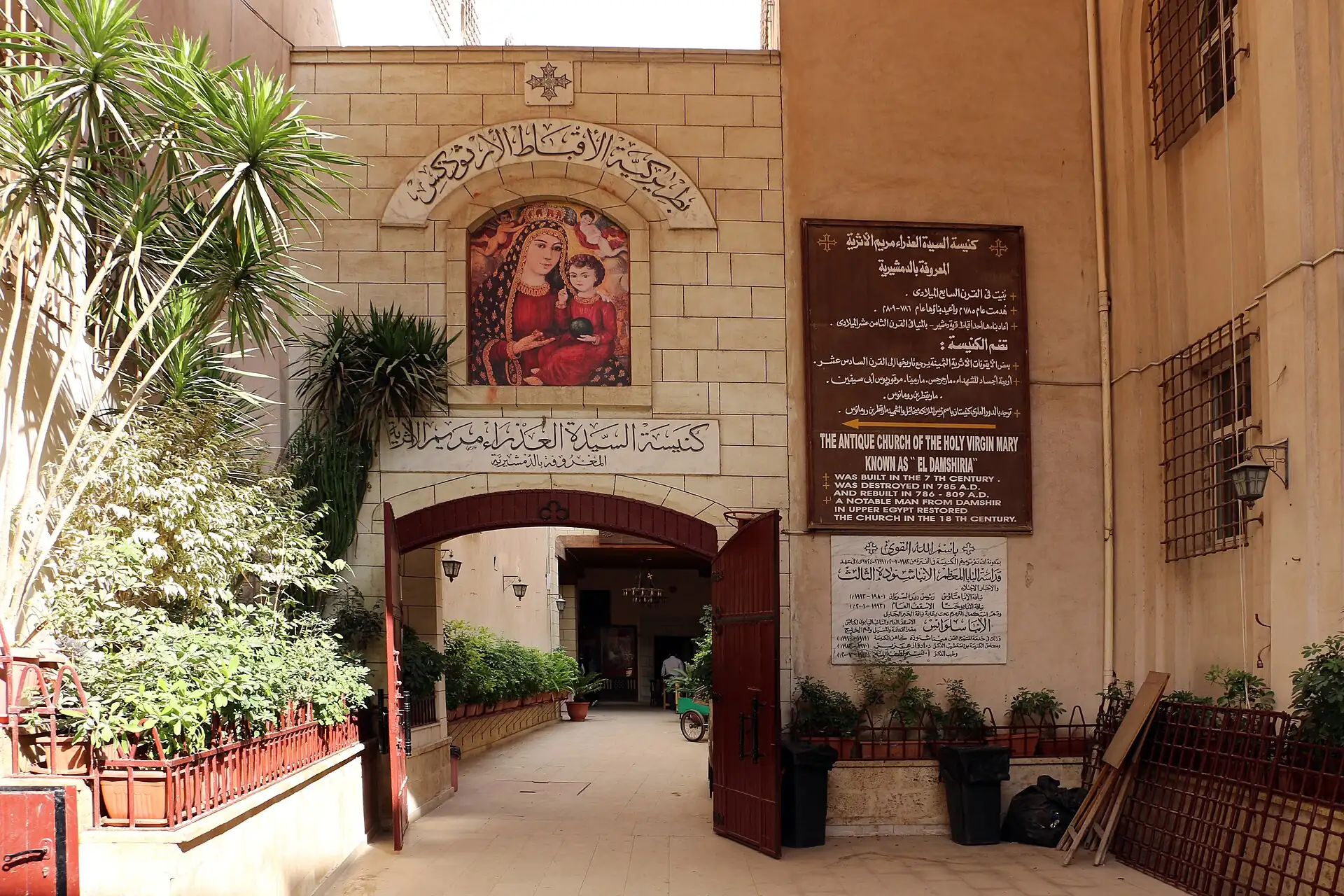
Getting around, in detailGet around · Connect
Get around
Walk inside a cluster, ride-hail between clusters. The metro is cheap and useful for a few specific routes; street taxis need the fare agreed before you move.
| Mode | Verdict | Fare | Use it for | What breaks |
|---|---|---|---|---|
| Walking | use | Free | Inside Islamic Cairo, Coptic Cairo, Zamalek, Downtown | Uneven pavements and heavy traffic; cross with locals and expect to walk in the road at times. |
| Ride-hail car (Uber/Careem) | use | EGP 60–180 across the centre; EGP 350–600 to/from Giza | Between clusters, bags, night | Price fixed in the app before you ride; heavy traffic (roughly 07:30–10:00 and 15:00–20:00) raises both fare estimates and wait times.Price fixed in the app before you ride; heavy traffic (roughly 7:30 AM–10:00 AM and 3:00 PM–8:00 PM) raises both fare estimates and wait times. |
| Metro | ok | EGP 8–25 by number of zones | Sadat/Tahrir, Ramses Station, some Giza-area lines | Three lines; look for the women-only carriage (marked) if travelling as a woman alone. Bags are screened at station entrances. |
| White (metered) taxi | caution | Insist on the meter or agree a fare first | Street hails when apps are slow | Meters are sometimes 'broken' by choice; agree the price before the car moves if the meter is not used. |
| Microbus | avoid | Very cheap | Locals' cross-city minibus network | No fixed stops or schedule in English; not set up for visitors. |
| Nile river taxi / water bus | ok | Low fixed fare | A scenic alternative along the river on a few routes | |
| Felucca (sailboat) | use | Agree an hourly rate before boarding, about EGP 150–350 an hour for the boat | A sunset or evening sail, not point-to-point transport | No engine, so timing depends on the wind; agree the length and price first. |
Metro and rail lines
Three lines meet at a few interchange stations; useful mainly for Ramses Station, Sadat (Tahrir) and some Giza-side stops.
Line 1
openHelwan (south) to New El-Marg (north), through Sadat (Tahrir) and Mar Girgis (Coptic Cairo)
The oldest line; Mar Girgis station puts you right by Coptic Cairo's gate.
Line 2
openShubra to Giza, through Ramses and Sadat
Useful for Ramses Station and a Giza-side approach, though not directly to the plateau.
Line 3
openWest Cairo (Airport-adjacent areas) through Downtown and toward the west bank
Expanding; check the current western terminus before relying on it for Giza.
Taxis and ride-hailing
Uber
app
Cars; fare fixed before you ride; card or cash in-app depending on setting.
Careem
app
Same model as Uber; strong regional driver coverage.
White taxis
metered
Newer metered fleet; insist on the meter or agree the fare first.
Black-and-white taxis
unmetered
Older street taxis, usually no working meter; agree the fare before the door closes.
On foot and car-free hours
| Where | When | Note |
|---|---|---|
| Al-Muizz Street | Pedestrianised; busiest evenings | The old city's main axis, closed to cars along its historic stretch. |
| Zamalek's 26th of July Street and side streets | Any time | Tree-lined and comparatively calm for Cairo. |
| Corniche el-Nil | Evenings | Riverside promenade; popular for an evening stroll, though traffic runs alongside it. |
More on getting around
Traffic is the single biggest planning variable in Cairo: a 5 km ride can take 15 minutes or an hour depending on the time of day. Heavy periods run roughly 07:30–10:00 and 15:00–20:00, worse on Thursday evenings (the start of the weekend) and around Ramadan iftar time, when everyone is racing to get home before sunset.
Addresses are informal: give the driver a cross-street or a landmark as well as the street name, and pin the destination on the map in the app rather than reading out an address.
Connect
| Option | Verdict | What breaks |
|---|---|---|
| Tourist eSIM bought before you fly | use | No counter, no queue; data-only on most plans. |
| Carrier counter in CAI arrivals (Orange, Vodafone, Etisalat, WE) | use | Straightforward with your passport; compare the data package before paying. |
| Carrier store in the city | use | Same options, sometimes a shorter queue than the airport. |
| SIM from a street kiosk | caution | Registration to your own passport is required by law; buy from a branded shop, not an informal reseller. |
Uber
Cars
Fare shown before you ride; the default for the airport and cross-city trips.
Careem
Cars and some deliveries
Regional app, works the same way as Uber; often has more drivers at peak times.
Google Maps
Walking, addresses
Reasonably accurate in central Cairo; pin the destination rather than typing an address.
Messaging
Hotels, guides and drivers commonly coordinate through it.
- Wi-Fi
- Free in most hotels and cafés; ask for the password with your order.
Luggage
Where big bags are a problem, and how to get rid of them for the day.
Rule
- Lockers
- No public lockers; hotels hold bags after check-out.
- Forwarding
- No forwarding culture; keep the big bag at the Cairo hotel for a Nile trip or a day out.
- Dead zone
- Late check-out flights: ask the hotel to hold bags and for a shower room; many do for a small fee.
Bags, area by area
5 walking areas rated
- Bags forbidden
- Bags painful
Lockers, forwarding and the gap between check-out and check-in are covered once, under Luggage.
See & doWalking clusters, day plans and the places worth the time
See & do
Walking clusters, day plans and the places worth the time
Clusters
Plan by cluster: each is a walkable area with a rescue point and a bag rule.
Morning cluster: the Egyptian Museum, Tahrir and the downtown cafés; go at opening and leave by 13:00.
rescue 100% · max p90 5.5′ · half
Calm-side cluster: tree-lined streets, cafés and galleries on the island; a quieter base and an easy evening walk.
rescue 100% · max p90 5.5′ · 90m
Evening cluster: the bazaar and the old streets; go after 17:00 when the heat drops, and leave bags at the hotel.
rescue 100% · max p90 5.5′ · half
Quiet half-day cluster: churches, a museum and a synagogue in one walled area; a good indoor pair for the hot afternoon.
rescue 100% · max p90 5.5′ · 90m
Opening-time cluster: the pyramids and the Sphinx; be at the gate at opening and off the open plateau by 10:00 in summer.
rescue 100% · max p90 5.5′ · half
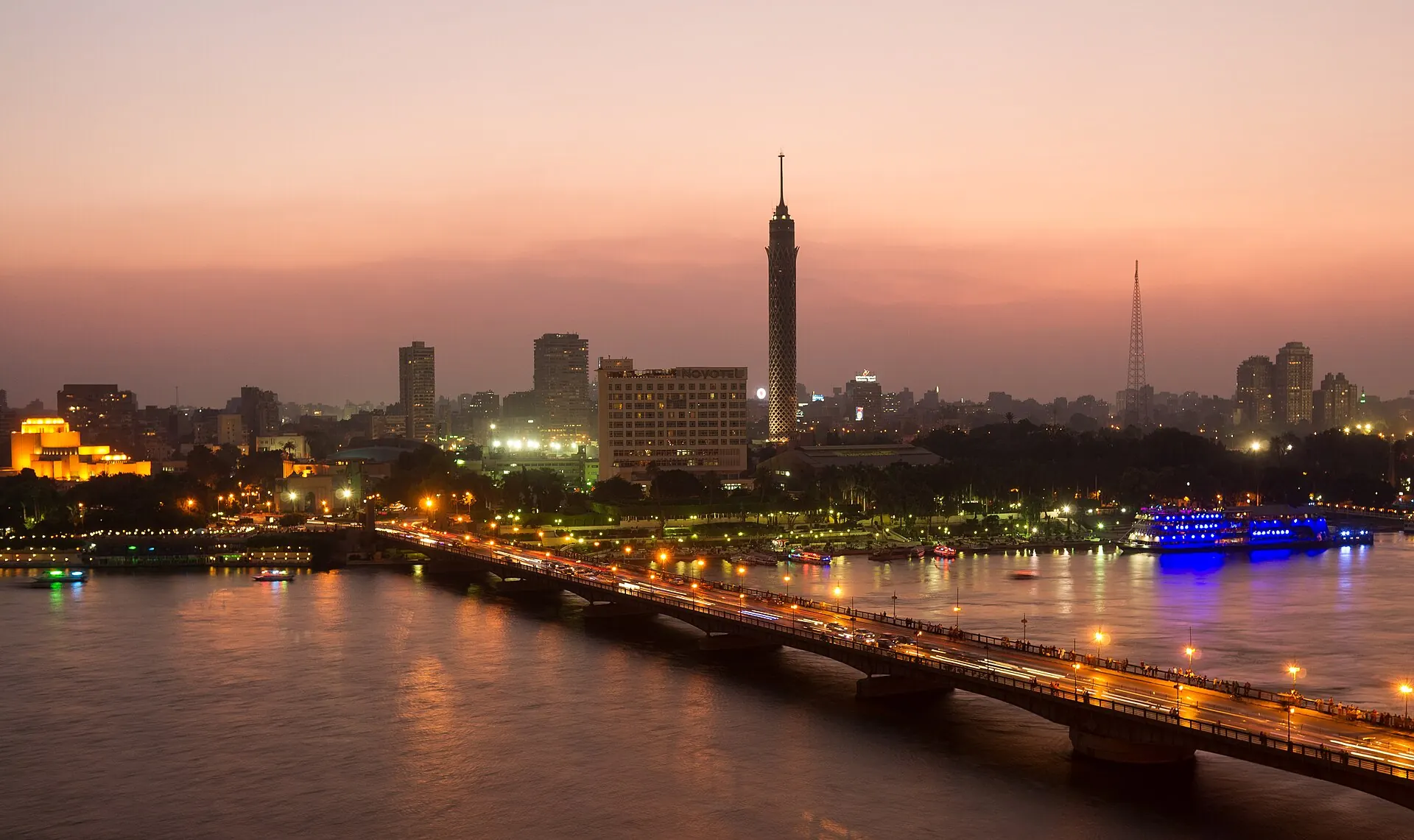
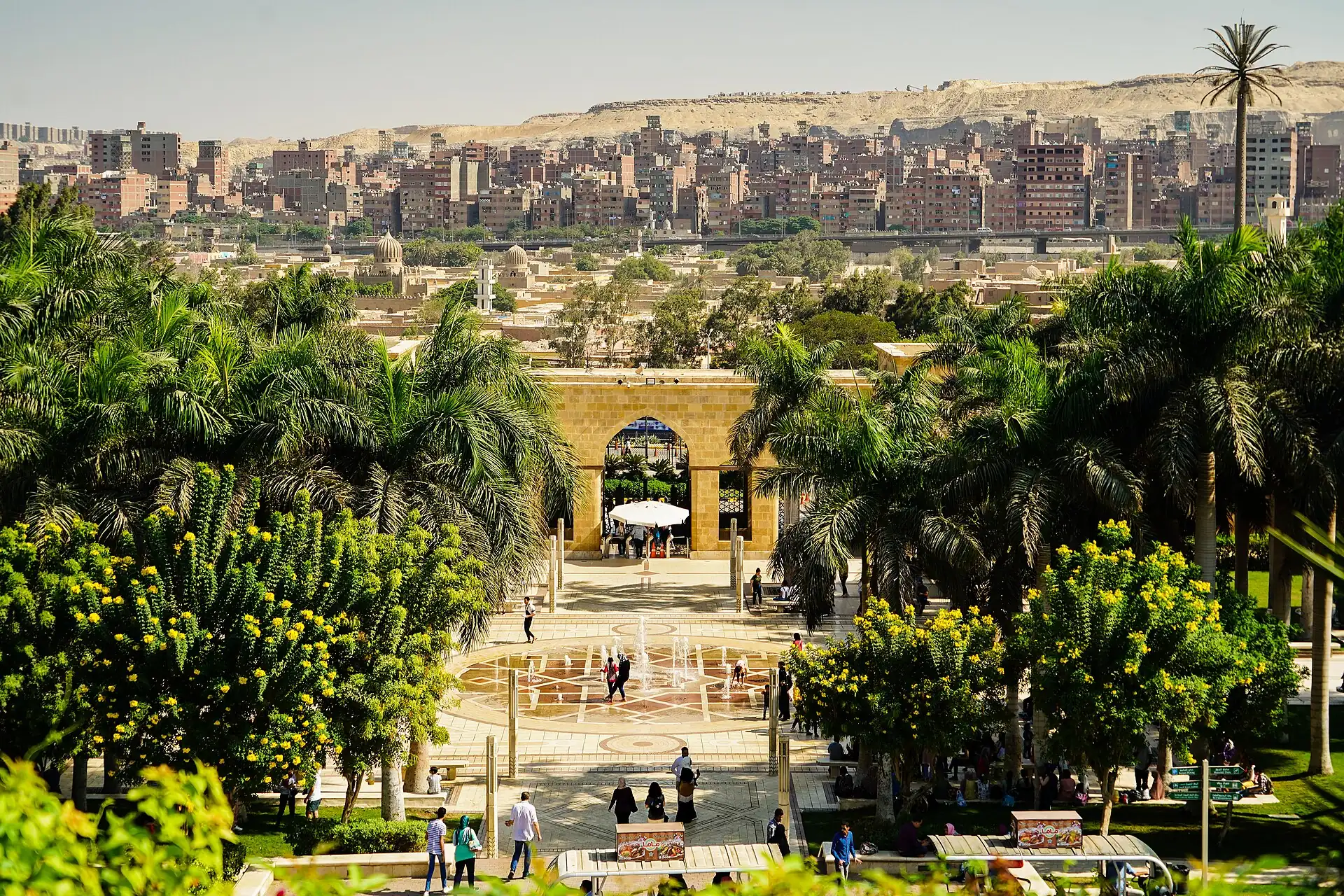
Days
Ready-made day plans, timed against opening hours and walking distances.
How long are you staying?
Loose outlines in the city's rhythm: outdoors early, indoors at midday, one district per half-day. The timed day plan (ref: '3') checks opening days and traffic.
1 day
A stopover or a single day between other Egypt legs
- 07:00Pyramids of Giza and the Sphinx — Pyramids and the Sphinx at opening
- 10:30Lunch near the Giza plateau — Lunch at the plateau edge
- 12:30Egyptian Museum, Tahrir — Car to Downtown, indoors for the heat
- 16:00El Fishawy café (Khan el-Khalili) — Khan el-Khalili and tea at El Fishawy
Skip: Islamic Cairo's mosques and Coptic Cairo: both need their own half-day.
Cairo in 3 days
3 daysMornings at the big sights, middays indoors, evenings in the bazaar; the last day ends with the bags already in the car.
Day by day
Day 1 — Egyptian Museum at opening, Khan el-Khalili at dusk
Day 2 — Pyramids at opening, lunch at the plateau edge
Day 3 — Coptic Cairo, car to the airport at 15:00
- 09:30Hanging Church and Coptic Cairo
- 15:00Car to the airport at 15:00
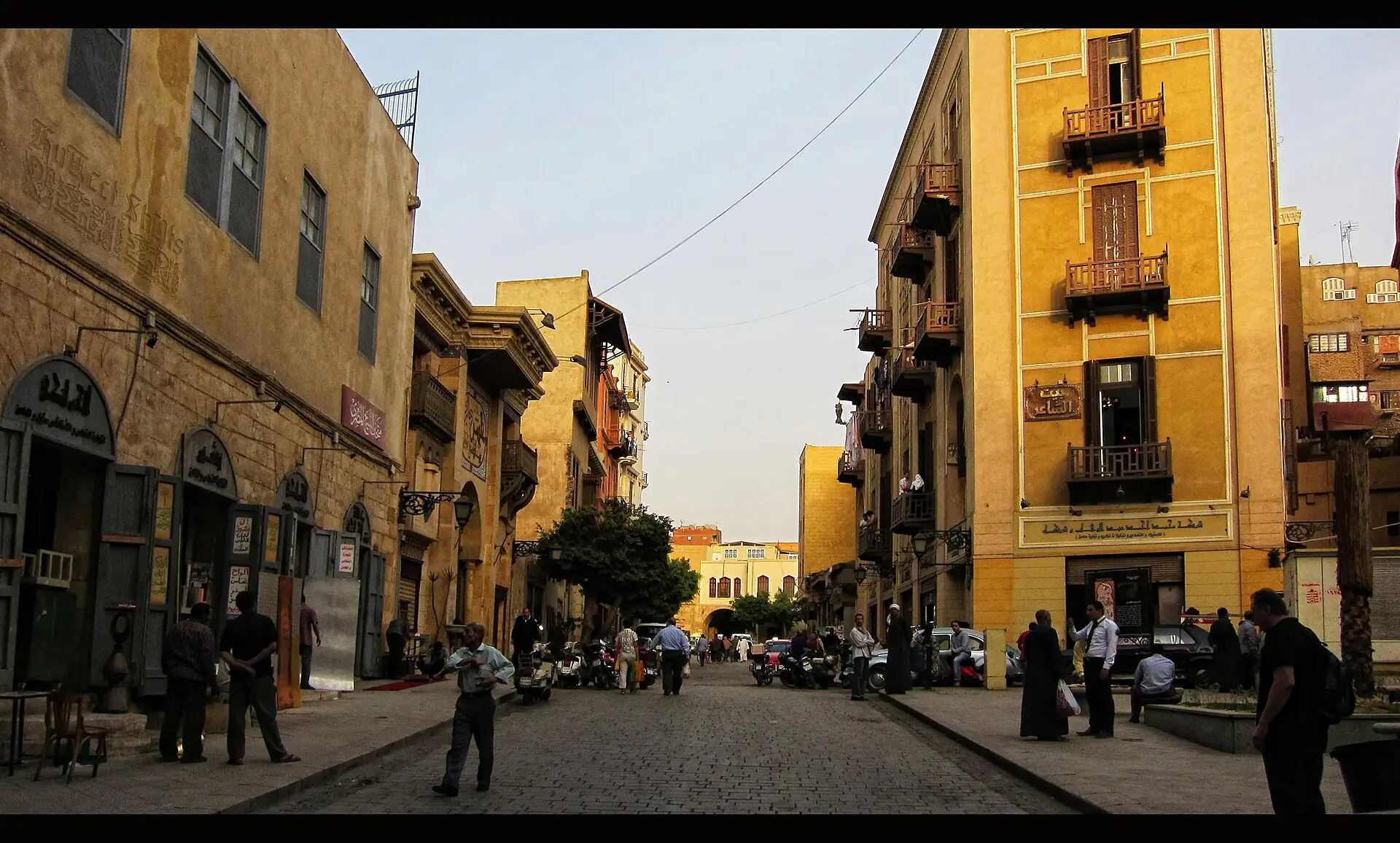
Places
“Best time” is when to arrive for the fewest crowds, for example “before 08:30”; “Go any time” means the hour makes little difference. More sights follow under “More sights and museums”.
8 places. Filters use the guide’s own ratings; a place with no rating is left out when a filter is on.
Show 2 more placesShow fewer
Tours, classes and shows in Cairo →
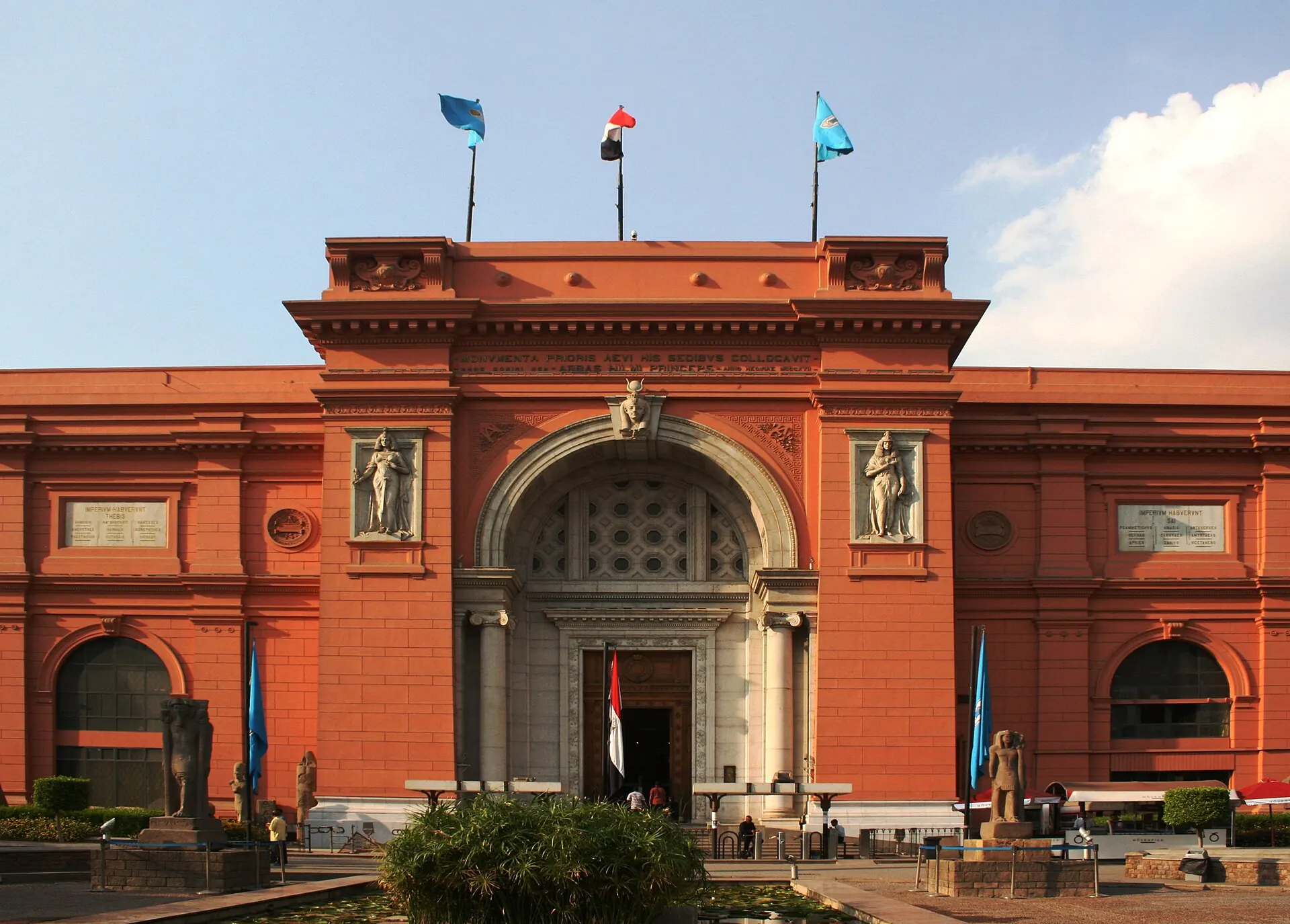
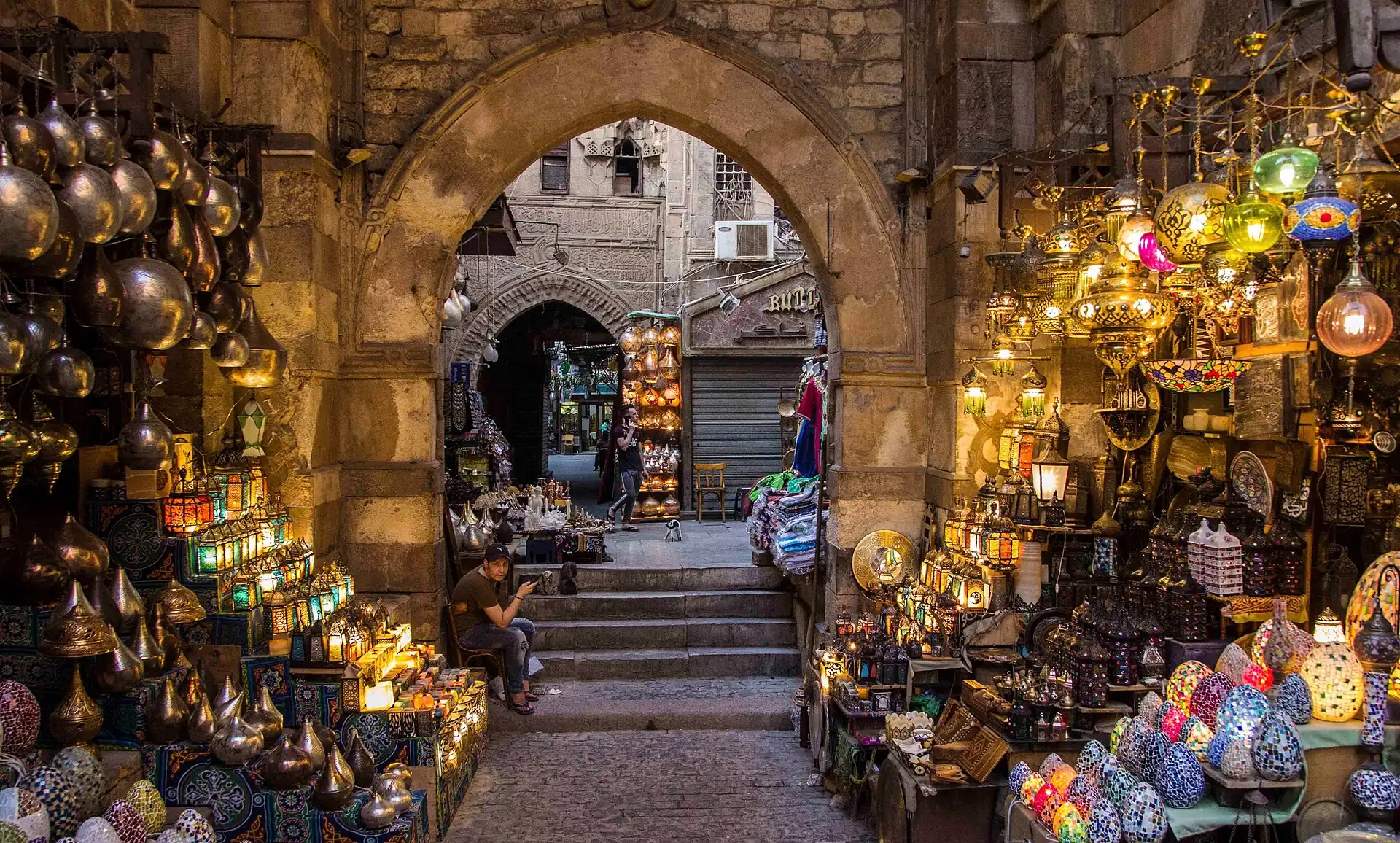
If you do ten things in Cairo
Ranked for a first visit of 2–4 days. Prices are 2026 estimates in Egyptian pounds; hours marked (check) in the linked pages still need confirmation.
- 1
Pyramids of Giza and the Sphinx at opening
The last surviving Wonder of the Ancient World; go at the gate's opening to beat the heat and the tour buses.
- Time
- 2–3.5 h
- Best
- 07:00–10:00
- Cost
- EGP 800–1,100
- 2
Tutankhamun's treasures and the Royal Mummy Room; still worth a morning even as the collection splits with the new Giza museum.
- Time
- 1.5–2.5 h
- Best
- 09:00–11:30
- Cost
- EGP 550–750
- 3
Medieval lanes of gold, spice and souvenirs; go once by day to shop, once at night for the lit-up atmosphere.
- Time
- 1.5–2.5 h
- Best
- Late afternoon into the evening
- Cost
- Free to browse
- 4
Cairo Citadel and the Mosque of Muhammad Ali
Saladin's fortress and Muhammad Ali's alabaster mosque, with a view over the whole city.
- Time
- 1.5–2 h
- Best
- Morning, avoiding Friday midday prayers
- Cost
- EGP 450–600
- 5
A run of Fatimid, Mamluk and Ottoman monuments in half a kilometre; the best-kept stretch of the old walled city.
- Time
- 1.5–2 h
- Best
- Late afternoon, cooler and pedestrianised
- Cost
- Free to walk
- 6
Hanging Church and Coptic Cairo
Roman fortress walls, the Hanging Church, the old synagogue and Amr ibn al-As mosque, all inside one small quarter.
- Time
- 1.5–2 h
- Best
- Morning
- Cost
- Free
- 7
The best skyline view of the Citadel and Islamic Cairo, from a landscaped park built on an old rubbish dump.
- Time
- 1–1.5 h
- Best
- 16:30–18:30
- Cost
- EGP 50–100
- 8
Grand Egyptian Museum
The new flagship museum by the pyramids, with the full Tutankhamun collection shown together for the first time.
- Time
- 2.5–4 h
- Best
- Morning, on a separate day from the plateau
- Cost
- EGP 1,000–1,700
- 9
A 200-year-old coffeehouse in the heart of the Khan; sit, people-watch, order a second tea.
- Time
- 30–60 min
- Best
- Any time, atmospheric after dark
- Cost
- EGP 40–120
- 10
Nile felucca sunset sail
A silent, engine-free hour on the river; the calmest part of a Cairo day.
- Time
- About 1 h
- Best
- Around sunset
- Cost
- EGP 150–350 for the boat
Good for…
Verdict is how well Cairo works for that traveller, not how nice it is.
The pyramids alone justify the trip; pair with a guide to cut through the touts.
- 1Sleep in Zamalek — calm nights and a car ride to everything on the list.
- 2Cairo in 3 days — the 3-day plan already sequences the traffic-heavy clusters.
- 3A licensed Egyptologist guide for Giza and the museum — headers off the tout problem and adds real context.
Five thousand years of layered history inside one metropolitan area.
- 1Pyramids of Giza and the Sphinx — the reason most people come to Egypt at all.
- 2Al-Muizz Street (Islamic Cairo's old spine) — 600 years of Islamic architecture in half a kilometre.
- 3Saqqara and Memphis day trip — the Step Pyramid and the original capital, with a fraction of the Giza crowds.
Street food and local transport are cheap even as hotel prices climb in peak season.
- 1Koshari and ta'meya meals — a full meal for under EGP 100 almost anywhere.
- 2Metro rides — EGP 8–25 against EGP 60–180 for a car.
- 3Free mosque and church visits — al-Azhar Mosque and the Coptic Cairo churches cost nothing to enter.
- 1A Zamalek hotel — quiet streets and river walks, close to bars and restaurants.
- 2Nile felucca sunset sail — an hour of quiet away from the traffic and crowds.
- 3Rooftop dinner with a pyramid or Nile view — book a window table a day ahead.
Manageable, more so for men; solo women should plan around street harassment.
- 1A day tour with a licensed guide — removes the constant tout negotiation at Giza and the museums.
- 2Ride-hailing apps after dark — a logged driver and route instead of a hailed street taxi.
Kids often love the pyramids and mummies; heat and traffic are the hard parts.
- 1Al-Azhar Park — space to run and shade, rare in the old city.
- 2Camel ride at Giza — a memorable photo if the price is fixed first.
- 3
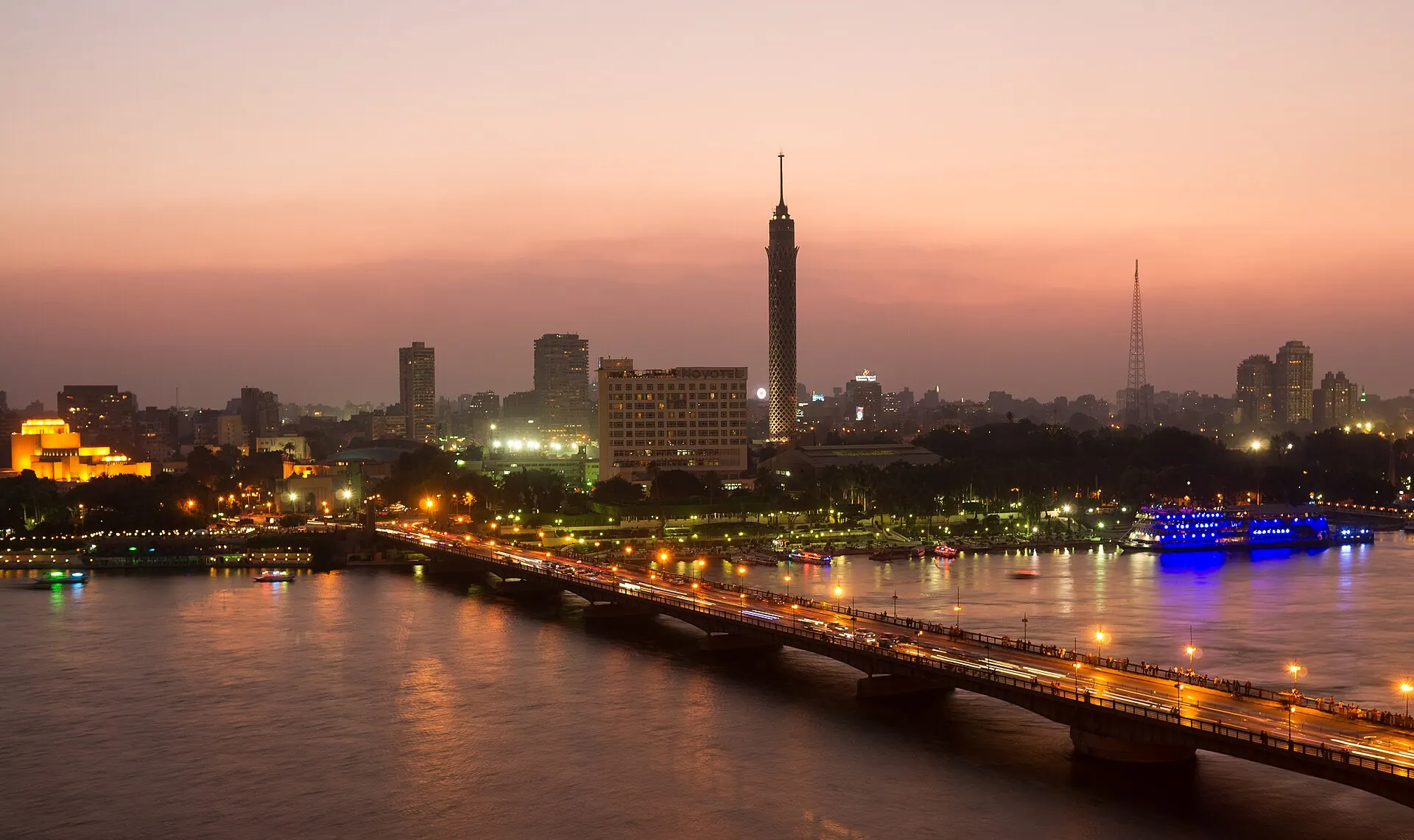 Cairo Tower — an easy, air-conditioned way to see the whole city at once.
Fine with a private car and a guide; walking tours over uneven stone are the strain.
- 1Private car and guide for Giza and Islamic Cairo — door-to-door, no queues to negotiate alone.
- 2Egyptian Museum, Tahrir — mostly flat, indoor, air-conditioned.
- 3Zamalek — calmer streets than Downtown or the Khan for a base.
- 1A Giza-plateau hotel with a pyramid-view room — wake up looking at the pyramids; confirm the exact room view.
- 2A private Egyptologist for the full stay — skip every queue and tout conversation.
- 3A Nile-corniche five-star with a river-view suite — the classic Cairo splurge base.
Uneven pavements, stairs at old sites and sandy ground at Giza make this hard going.
- 1Grand Egyptian Museum and the Egyptian Museum, Tahrir — the two most step-free major sights.
- 2A private accessible-vehicle transfer service — confirm accessible-vehicle availability with your hotel before you fly.
Tours and classes: book or skip
Book through the hotel or an operator with written inclusions and a cancellation policy. Prices per person unless stated.
| Tour or class | Verdict | Typical price | Why | Check before paying |
|---|---|---|---|---|
| Giza plateau guided tour | book | EGP 800–2,000 | Cuts through the tout negotiation entirely and adds real history. | Licensed Egyptologist credential; group size; entry tickets included or not. |
| Egyptian Museum guided tour | book | EGP 600–1,200 | The collection has little English labelling; a guide makes it make sense. | Whether the Tutankhamun galleries and mummy room are included (separate tickets). |
| Islamic Cairo walking tour | book | EGP 800–1,800 | Gets you inside mosques respectfully and explains a dense old city fast. | Which mosques are included; modest dress required. |
| Saqqara/Dahshur/Memphis day tour | book | EGP 1,200–2,500 | Transport and a guide solve a day that is otherwise a lot of driving between sites. | Whether Memphis is included or an easy add-on. |
| Nile dinner cruise with show | maybe | EGP 900–1,800 | A fun one-off evening, food is average, the show is the point. | Set menu contents; whether alcohol is included or extra. |
| Felucca sunset sail | book | EGP 150–350 an hour for the boat | Cheap, calm, no engine noise. | Total price for the boat (not per person) and the sail length, agreed before boarding. |
| Sound and Light show at Giza | maybe | EGP 400–700 | Dated but atmospheric; a different way to see the pyramids after dark. | Language/session time for the night you want. |
| Alexandria day trip | maybe | EGP 1,500–3,000 | A long day (5–6 h on the road round trip) for a half-day in Alexandria. | Whether an overnight instead suits your pace better. |
What each season brings
Winter
Dec–Feb
The comfortable season: cool mornings, mild days, the best walking weather of the year.
Watch: Peak season pricing and the busiest queues at Giza and the museum.
Spring
Mar–May
Warming quickly; Sham el-Nessim brings families out to parks and the Corniche.
Watch: Khamsin dust storms can reduce visibility and air quality for a day or two.
Summer
Jun–Aug
Long, hot, dry days; dawn starts at the pyramids and the museum's air conditioning become the whole strategy.
Watch: 33–35 °C by early afternoon; avoid the open plateau after about 11:00.
Autumn
Sep–Nov
Cooling steadily; a good compromise season with smaller crowds than winter.
Watch: Still hot through September; book Ramadan-adjacent trips around the calendar.
Photo spots and the light
Light times are for clear days; Cairo's haze softens most shots by midday.
| Spot | Best light | Tip |
|---|---|---|
| The pyramids and the Sphinx | 07:00–08:30 | Shoot from the Panorama viewpoint on the plateau's southern edge for all three pyramids in one frame. |
| City skyline from Cairo Tower | Sunset into night | The revolving café level gives a full 360° pass without moving. |
| Al-Azhar Park | 16:30–18:00 | Frame the Citadel and Muhammad Ali Mosque across the park's lake. |
| Al-Muizz Street (Islamic Cairo's old spine) | Golden hour, about 16:00–17:30 | The minarets catch warm light best from the street's northern stretch near Bab al-Futuh. |
| Corniche el-Nil at dusk | Sunset | Boats, bridges and the skyline together; busiest and best-lit near the Zamalek bridges. |
| Khan el-Khalili lanterns at night | After dark | Handheld, not tripod — the lanes are too crowded and narrow for a tripod. |
Cairo travel FAQ
Answers are 2026 desk estimates; fares and rules marked (check) change.
Is Cairo safe?
Violent crime against visitors is rare. The real risks are traffic, persistent touts and scams around major sights, and street harassment of women. Use ride-hailing apps at night and agree every price in advance.
How much is a taxi from Cairo airport to Zamalek?
About EGP 350–600 by Uber or Careem, 45–100 minutes depending on traffic. A pre-arranged hotel car costs about the same and removes the price-negotiation step.
Do I need cash in Cairo?
Yes. Street food, markets, tips and many taxis take cash only; keep small notes. Cards work in hotels, malls and larger restaurants, and increasingly at ticket gates.
Is tap water safe to drink?
No. Drink bottled or filtered water. Ice in hotels and established restaurants is usually fine; be more careful at street stalls.
What should I wear at mosques and churches?
Shoulders, arms and legs covered; women cover their hair at mosques with a scarf (often provided at the door) and sometimes at churches too. Shoes off before the prayer carpet in mosques.
How many days do I need in Cairo?
Two full days covers the pyramids and the main museum; three lets you add Islamic and Coptic Cairo properly; four or more allows a day trip to Saqqara or Alexandria.
Can I go inside a pyramid?
Yes, with a separate interior ticket at the gate, usually limited in number per day. The passages are steep, narrow and hot; skip it if you have mobility or claustrophobia concerns.
Uber/Careem or a street taxi?
Ride-hailing apps: fixed fare shown before you ride, logged driver and route. If you take a street taxi, agree the fare before the door closes — meters are often 'broken' by choice.
How do I deal with touts at the pyramids?
Buy your ticket only at the official gate, agree any ride's total price before you move, and keep walking past anyone who says a site is 'closed' and offers an alternative.
Is Cairo good in summer?
Workable but demanding: 33–35 °C (91–95 °F) by midday, dry desert heat. Plan outdoor sights before 10:00 and after 16:30, and treat midday as indoor/AC time.Workable but demanding: 33–35 °C (91–95 °F) by midday, dry desert heat. Plan outdoor sights before 10:00 AM and after 4:30 PM, and treat midday as indoor/AC time.Workable but demanding: 91–95 °F (33–35 °C) by midday, dry desert heat. Plan outdoor sights before 10:00 and after 16:30, and treat midday as indoor/AC time.Workable but demanding: 91–95 °F (33–35 °C) by midday, dry desert heat. Plan outdoor sights before 10:00 AM and after 4:30 PM, and treat midday as indoor/AC time.
How much should I tip?
Small notes (EGP 10–20) for bag handling, toilet attendants and small services; about 10% in restaurants if service is not already added; EGP 100–300 for a full-day private guide.
Can women travel alone in Cairo?
Yes, with more caution than for men: expect street comments and staring, dress modestly, and use ride-hailing apps rather than walking alone after dark. The metro has women-only carriages.
What is the best area to stay?
Zamalek for calm nights and easy river walks; the Giza plateau for one night to be at the pyramids at opening; Downtown for the cheapest beds and the museum on foot.
Do people speak English?
In hotels, at major sights and with younger people in tourist areas, yes. Drivers and market stallholders often work with numbers on a phone; a few Arabic phrases go a long way.
Is Ramadan a bad time to visit?
Not bad, but different: daytime restaurant hours shrink and you cannot eat or drink in public before sunset, but evenings after iftar are lively with food and lights. Some travellers plan around it; others enjoy the atmosphere.
More to see and doSee & do · Learn & work · Rain & heat · Wheelchair and stroller
Wheelchair and stroller, place by place
How each place in this guide works for wheels, from its own page. Ratings are desk estimates unless a page says it was checked on the ground.
| Place | Step-free | Wheelchair | Stroller | What to know |
|---|---|---|---|---|
| Al-Azhar Park | partial | caution | ok | Paved paths with gentle slopes through most of the park; some garden terraces are stepped. |
| Cairo Citadel and the Mosque of Muhammad Ali | partial | caution | caution | Uphill approach on paved ramps and some steps; the mosque courtyard itself is flat. |
| Cairo Tower | ok | ok | ok | Lift access makes this one of the more accessible viewpoints in the city; confirm wheelchair space in the lift car. |
| Hanging Church and Coptic Cairo | poor | poor | poor | The Hanging Church is built over the old Roman gate and reached by a flight of steps; the surrounding lanes are narrow and part-cobbled. |
| Egyptian Museum, Tahrir | partial | ok | ok | Mostly flat galleries on two floors; a lift serves the upper floor (check it is working on the day). Display cases in some rooms sit clos… |
| Khan el-Khalili | poor | poor | poor | Narrow, crowded, unevenly paved lanes; not workable for a wheelchair at busy hours and hard going even for a stroller. |
| Al-Muizz Street (Islamic Cairo's old spine) | partial | caution | caution | Uneven old paving and some steps into individual monuments; the main street itself is flat. |
| Pyramids of Giza and the Sphinx | caution | caution | caution | The plateau itself is flat but sandy and uneven; the pyramid interiors are reached by steep, narrow, low passages not suited to limited m… |
See & do
23 of 23
- Museums
The old Egyptian Museum: Tutankhamun's treasures and the Royal Mummy Room remain here even as more moves to Giza.
Downtown/Tahrir · Daily 09:00–17:00 (check)Daily 9:00 AM–5:00 PM (check) · EGP 550–750 (foreigner rate; check)
Grand Egyptian Museum (GEM)
MuseumsThe new flagship museum by the pyramids, opened in the 2020s; the full Tutankhamun collection displayed together for the first time.
Giza plateau · Daily, day hours (check) · EGP 1,000–1,700 (foreigner rate; check)(check)
- Markets
Medieval bazaar of gold, spice and souvenir lanes; go once in daylight for shopping, once at night for the atmosphere.
Islamic Cairo · About 10:00–22:00About 10:00 AM–10:00 PM · Free to browse
Saladin's hilltop fortress and Muhammad Ali's alabaster mosque, with a view over the whole city.
Islamic Cairo · Daily 08:00–17:00 (check)Daily 8:00 AM–5:00 PM (check) · EGP 450–600 (foreigner rate; check)
Ibn Tulun Mosque
mosqueCairo's oldest intact mosque (879 CE), vast and spare, with a spiral minaret you can climb for a rooftop view.
Islamic Cairo (Sayyida Zeinab) · Daily, day hours · Free or a small entry fee (check)(check)
Al-Azhar Mosque
mosqueFounded in 970 CE alongside the Fatimid city; still one of the Islamic world's leading seats of learning.
Islamic Cairo · Daily outside prayer times · Free
Al-Muizz Street (Islamic Cairo's old spine)
heritage streetThe old city's spine: a run of Fatimid, Mamluk and Ottoman mosques, sabils and mausolea in half a kilometre.
Islamic Cairo · Street always open; some monuments 09:00–17:00Street always open; some monuments 9:00 AM–5:00 PM · Free to walk; individual monuments ticketed
- park
A modern landscaped park built on an old rubbish dump, with the best sunset view of the Citadel and the old city skyline.
Islamic Cairo · Daily, about 09:00–23:00 (check)Daily, about 9:00 AM–11:00 PM (check) · EGP 50–100 (check)
Built over a Roman gate tower; the old synagogue and Amr ibn al-As mosque are a short walk inside the same walls.
Coptic Cairo · Daily, day hours; quieter outside Sunday services · Free
Ben Ezra Synagogue
Citadel & old cityEgypt's oldest synagogue, on the site where tradition says Moses was found in the reeds.
Coptic Cairo · Day hours (check) · Free or a small fee (check)(check)
Pyramids of Giza and the Sphinx
monumentThe last of the Seven Wonders of the Ancient World still standing; be at the gate at opening.
Giza plateau · Daily 08:00–17:00 (check; extended in summer)Daily 8:00 AM–5:00 PM (check; extended in summer) · EGP 800–1,100 (foreigner rate; check)
Solar Boat Museum / boat pits
MuseumsKhufu's reassembled funerary boat, buried beside the Great Pyramid for 4,500 years.
Giza plateau · Day hours (check) · Included with some plateau tickets or separate (check)(check)
- Views
1961 lattice tower on Gezira island; a revolving café near the top and the best all-round city view.
Zamalek · Daily, about 09:00–24:00 (check)Daily, about 9:00 AM–12:00 AM (check) · EGP 300–420 (check)
Cairo Opera House
cultureEgypt's national opera and ballet house, rebuilt in the 1980s after the old Khedivial Opera House burned down.
Zamalek (Gezira) · Performance evenings · Free outside; tickets from about EGP 150
Manial Palace
Citadel & old cityAn early-20th-century prince's palace and garden mixing Ottoman, Moorish and European styles; quiet and easy to have to yourself.
Roda island · Day hours (check) · EGP 200–350 (check)(check)
Sound and Light show at the Pyramids
Shows & musicNarrated history projected onto the pyramids after dark; dated in style but a good way to see them lit up.
Giza plateau · Evening shows, times vary by language night · EGP 400–700 (check)(check)
Nile felucca sunset sail
activityA silent, engine-free sail on traditional lateen-rigged boats; the calmest hour of a Cairo day.
Zamalek/Garden City corniche · About 1 h around sunset · EGP 150–350 an hour for the boat, agree first
Nile dinner cruise with show
activityDinner, live music and a belly-dancing or tanoura (whirling) show on a moving boat; touristy but a fun one-off.
Corniche, several operators · Evening, about 2–3 h · EGP 900–1,800 (check)
Islamic Cairo walking tour with a guide
tourA licensed guide gets you past mosque etiquette and locked doors, and explains what you are looking at street by street.
Islamic Cairo · 3–4 h · EGP 800–1,800 per person (check)
Egyptian cooking class
ClassesKoshari, molokhia and stuffed vegetables, cooked and eaten; good for a rain-free but very hot afternoon indoors.
Zamalek or a home kitchen · 3–4 h · EGP 900–1,600 (check)
Day trip to Saqqara, Dahshur and Memphis
day tourThe Step Pyramid and the smooth-sided Bent and Red Pyramids, far fewer crowds than Giza.
South of Giza · Half or full day · EGP 1,200–2,500 with a car and guide (check)
Camel or horse ride on the Giza plateau
activityThe classic pyramid photo; fix the price, the route and the dismount fee before you get on.
Giza plateau · 30 min to a few hours · Agree the total first; EGP 300–1,000 is a rough band (check)
Cairo Opera or ballet performance
Shows & musicFormal dress code in some halls; check the season's programme.
Zamalek (Gezira) · Evening performances · From about EGP 150
- Booking
- Guided tours, felucca sails and the Sound and Light show are easiest booked a day ahead through your hotel; walk-up works outside December–February peak season.
Learn & work
| What | Where | Cost | Note |
|---|---|---|---|
| Egyptian Arabic (language school) | Language centres in Zamalek, Mohandiseen and Downtown | A few hundred US dollars a term (check) | Egyptian colloquial Arabic differs from Modern Standard Arabic taught in most textbooks. |
| Private Arabic tutor | Language centres and online platforms | EGP 300–700 an hour (check) | Ask for Egyptian dialect specifically if that is what you want. |
| Egyptology short courses | The American University in Cairo and a few private institutes | Varies widely (check) | Range from single lectures to multi-week evening courses. |
| Cooking classes | Zamalek and home-kitchen operators | EGP 900–1,600 a session | See Do; a practical way to learn the food while you are here. |
Working here
- Tourist entry
- Tourist e-visas and visas on arrival typically allow 30 days; extensions are possible at an immigration office. Neither permits paid work.
- Work permit
- Legal employment needs an employer-sponsored work permit and residence status; expect degree verification and legalised documents from home.
- Teaching English
- A common route for newcomers, especially with a TEFL certificate; schools vary widely in how they handle visas — get it in writing.
- Remote work
- No dedicated digital-nomad visa as of 2026 (check); working for a foreign employer on a tourist visa is a grey area in practice, common but not formally sanctioned.
Rain-day and heat-day plan
Rain day
Rain is rare and light (mostly Dec–Feb): it is not a planning factor most of the year. If it does rain, streets and traffic slow down noticeably — build in extra time for a car.
- 01Egyptian Museum, Tahrir — Indoor, several hours if you want it; the obvious wet-day anchor.
- 02Hanging Church and Coptic Cairo — Mostly indoor churches; a quiet couple of hours.
- 03City Stars or another large mall — Food court, cinema, AC; the wet or dusty-day refuge.
Heat day
May–Sep, above about 33 °C: outdoor sights at opening (before 10:00) and again after 16:30; indoors or AC in between; water constantly, more than you think you need.
- 06:30Pyramids of Giza and the Sphinx — Gate opens early; the plateau is brutal by 11:00 in summer.Gate opens early; the plateau is brutal by 11:00 AM in summer.
- 09:30Egyptian Museum, Tahrir — Indoor and air-conditioned for the hottest hours.
- 13:00Hanging Church and Coptic Cairo — Shaded, mostly indoor churches for the worst of the afternoon.
- 16:30Al-Azhar Park — Shade and a breeze return; good for a slow walk and the Citadel view.
Go next
Door to door: 2–3.5 h
Train from Ramses Station, about 2–2.5 h; or a car on the desert road, about 2.5–3 h
A full day or an overnight on the Mediterranean; the Bibliotheca Alexandrina and the Roman catacombs are the draws.
Door to door: Half or full day
Car or tour, about 45–60 min each way from Giza
The Step Pyramid, the Bent and Red Pyramids, and the Memphis open-air museum — quieter than Giza and often combined in one day.
Door to door: About 2 h door to door by air
Flight about 1 h 15 min; or an overnight train, about 9–10 h
The Valley of the Kings and Karnak need at least two full days; fly unless the sleeper train is the point.
Door to door: About 2.5 h by air
Flight about 1 h 30 min; combine with Luxor by Nile cruise or road
Nubian villages, Philae Temple and the gateway to Abu Simbel.
Door to door: About 2 h by air
Flight about 1 h; or a car about 5–6 h
Diving and beach time; a clean break from the city.
Door to door: Full travel day each way
Long-distance bus or car, about 8–10 h from Cairo
Remote desert oasis; worth it only with several spare days.
Eat & sleepWhere to eat and which area to sleep in
Eat & sleep
Where to eat and which area to sleep in
Eat
A short list of places worth crossing the city for, each with how to get a seat.
Restaurant finder: filter every place to eat in Cairo →
Vegetarian-friendly score
3.5 / 5 · Good
- Country diet noteOur country guide rates vegetarian eating as easy.2 / 2
- Places to eat in this guide1 of 3 places with a known answer are vegetarian-friendly, 2 partly.1 / 1.5
- Budget eating lines0 vegetarian lines in "Eat by budget".0 / 0.6
- Meat-free national dishes5 meat-free dishes in the country food list.0.4 / 0.4
- Dedicated vegetarian kitchens1 mention of vegetarian restaurants, Buddhist or fasting kitchens.0.1 / 0.5
Country note: Easy: koshari, ful, ta'ameya and Coptic fasting food (siyami) are meat- and dairy-free.
Vegetarian places near me →Make a diet card →
How we score
- Country diet note (up to 2): easy 2, workable 1, mixed 0.75, hard 0; no note 0.5.
- City places to eat (up to 1.5): 1.5 × (vegetarian-friendly + half of partly friendly) ÷ places with a known answer; needs 3 or more known places.
- Budget eating lines marked vegetarian (up to 0.6): 0.2 each.
- Meat-free national dishes (up to 0.4): 0.1 each.
- Dedicated vegetarian kitchens mentioned — Buddhist chay, shōjin ryōri, Jain, fasting food, vegan cafés (up to 0.5): 0.1 each.
- Total rounded to the nearest half point, 0 to 5. Built from our own pages only, not from reviews.
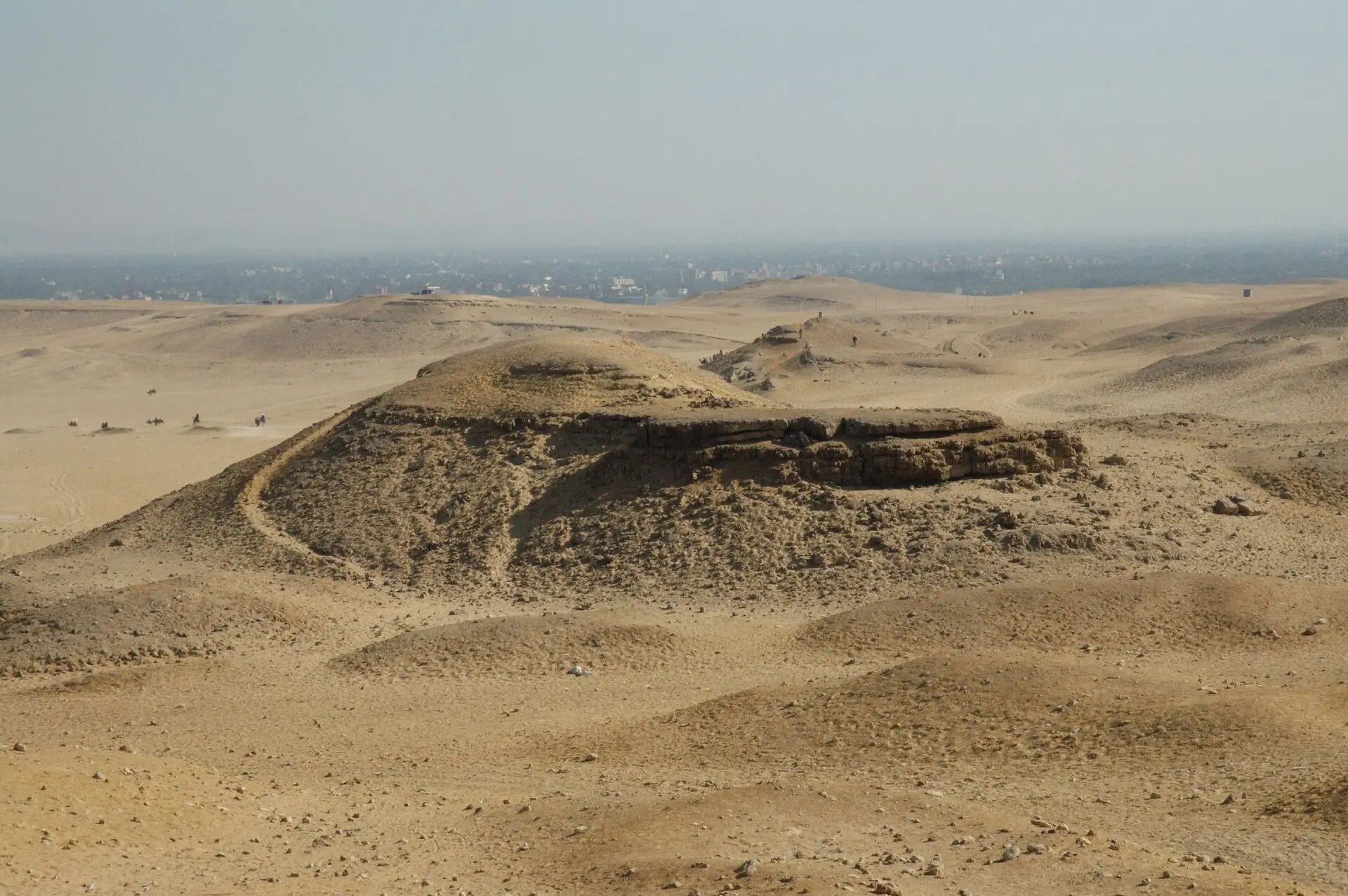
Eating and drinking guideEat by budget · Drink
Before you sit down to eat
Short version; full text linked
- Queues and hours
- Per person, one dish or one meal, 2026 estimate. More →
Eat by budget
Under EGP 100 a meal
| Where | Order | Area | Price | Note |
|---|---|---|---|---|
| Koshari Abou Tarek (Downtown) | Koshari (rice, lentils, pasta, fried onion, spiced tomato sauce) | Downtown | EGP 40–90 | Egypt's national comfort dish; eat where the pot turns over fast. |
| Ta'meya (Egyptian falafel) stand | Fava-bean falafel in bread with salad and tahini | Any neighbourhood | EGP 15–35 | Egyptian ta'meya is fava-bean based, not the chickpea falafel found elsewhere in the region. |
| Ful medames cart | Slow-cooked fava beans, oil, lemon, cumin | Any neighbourhood, mornings | EGP 20–40 | The classic Egyptian breakfast, often eaten in flatbread. |
| El Fishawy café (Khan el-Khalili) | Tea, coffee, sheesha | Khan el-Khalili | EGP 40–120 with a sheesha | An ahwa experience more than a meal; a stop, not a full dinner. |
Dishes to know
| Dish | What it is | Where to look | When | Price |
|---|---|---|---|---|
| Koshari | Rice, brown lentils, macaroni, chickpeas, crispy fried onion and a spiced tomato-vinegar sauce | Koshari specialists citywide | Lunch, dinner | EGP 40–90 |
| Ful medames | Slow-cooked fava beans mashed with oil, lemon and cumin | Street carts, mornings | Breakfast | EGP 20–40 |
| Ta'meya | Fried fava-bean patties, Egypt's version of falafel | Street stands, sandwich shops | Any time | EGP 15–35 |
| Molokhia | Jute-leaf stew, garlicky and slightly gelatinous, over rice with chicken or rabbit | Home-style restaurants | Lunch | EGP 250–450 |
| Mahshi | Vegetables (courgette, vine leaves, peppers) stuffed with spiced rice | Home-style restaurants, some street vendors | Lunch, dinner | EGP 150–350 |
| Feteer meshaltet | Flaky layered pastry, savoury or sweet, torn and shared | Feteer specialists, often open late | Any time | EGP 100–250 for a shareable one |
| Om Ali | Warm bread-and-milk pudding with nuts and raisins, Egypt's signature dessert | Most Egyptian restaurants | Dessert | EGP 60–150 |
| Shawarma | Spit-roasted meat in bread with garlic sauce and pickles | Stands citywide | Any time | EGP 50–120 |
| Hawawshi | Spiced minced-meat baked inside flatbread | Butcher-bakeries and street stands | Lunch, dinner | EGP 60–150 |
| Karkade | Hibiscus tea, hot or cold | Everywhere | Any time | EGP 15–40 |
- Eat where the pot or the grill has fast turnover; a queue of locals is a good sign, not a bad one.
- Ask the price of anything without a printed menu before you order, especially at tourist-area cafés near major sights.
- Bread and a small side (tahini, pickles) often arrive unasked and are usually free — but confirm if unsure, especially at tourist-facing places.
Drink & nightlife
| Where | What | Until | Note |
|---|---|---|---|
| Zamalek bars and lounges | Cocktails, imported and local beer | About 01:00–02:00About 1:00 AM–2:00 AM | The most reliable alcohol-serving scene outside hotels. |
| Hotel rooftop and Nile-view bars | Cocktails with a river view | About 01:00About 1:00 AM | Often the best skyline views; check the minimum spend. |
| Khan el-Khalili ahwas (coffeehouses) | Tea, coffee, sheesha — no alcohol | Late, often past midnight | El Fishawy is the best-known; alcohol-free by tradition. |
| Nile felucca or dinner-boat evenings | BYO or a boat bar | The length of the sail, often 1–2 h | Ask before boarding whether drinks are sold on board. |
By style
| Style | What | Where | Price | Until |
|---|---|---|---|---|
| Ahwa (traditional coffeehouse) | Turkish-style coffee, tea, karkade (hibiscus), sheeshaShisha adds EGP 50–150 to the bill; agree the price of a refill before you order one. | Every neighbourhood; El Fishawy in the Khan is the tourist-known one | EGP 25–70 | Late |
| Karkade and fresh juice stalls | Hibiscus tea (hot or cold), sugarcane, mango and guava juice by seasonA good cold, non-alcoholic option in summer heat. | Street stalls everywhere | EGP 15–40 | Evening |
| Local beer | Stella and Sakara lagerNot served at most ordinary local restaurants. | Hotel bars, Zamalek bars, a few Downtown spots (Stella locali), liquor stores | EGP 80–200 in a bar; less from a liquor store | Bar hours |
| Cocktails | International-style bars | Zamalek, Nile-view hotels | EGP 250–600 plus service | About 01:00–02:00 |
Rules that bite
- Public intoxication is frowned on and, technically, drinking in the street is not permitted: keep alcohol to licensed venues.
- During Ramadan, eating, drinking (including water) and smoking in public by day is illegal for everyone, tourists included, even if you are not fasting; wait for cafés and restaurants to reopen after sunset, or eat in your hotel room.
Sleep
Pick the area first: it decides your walk home at night and your first morning.
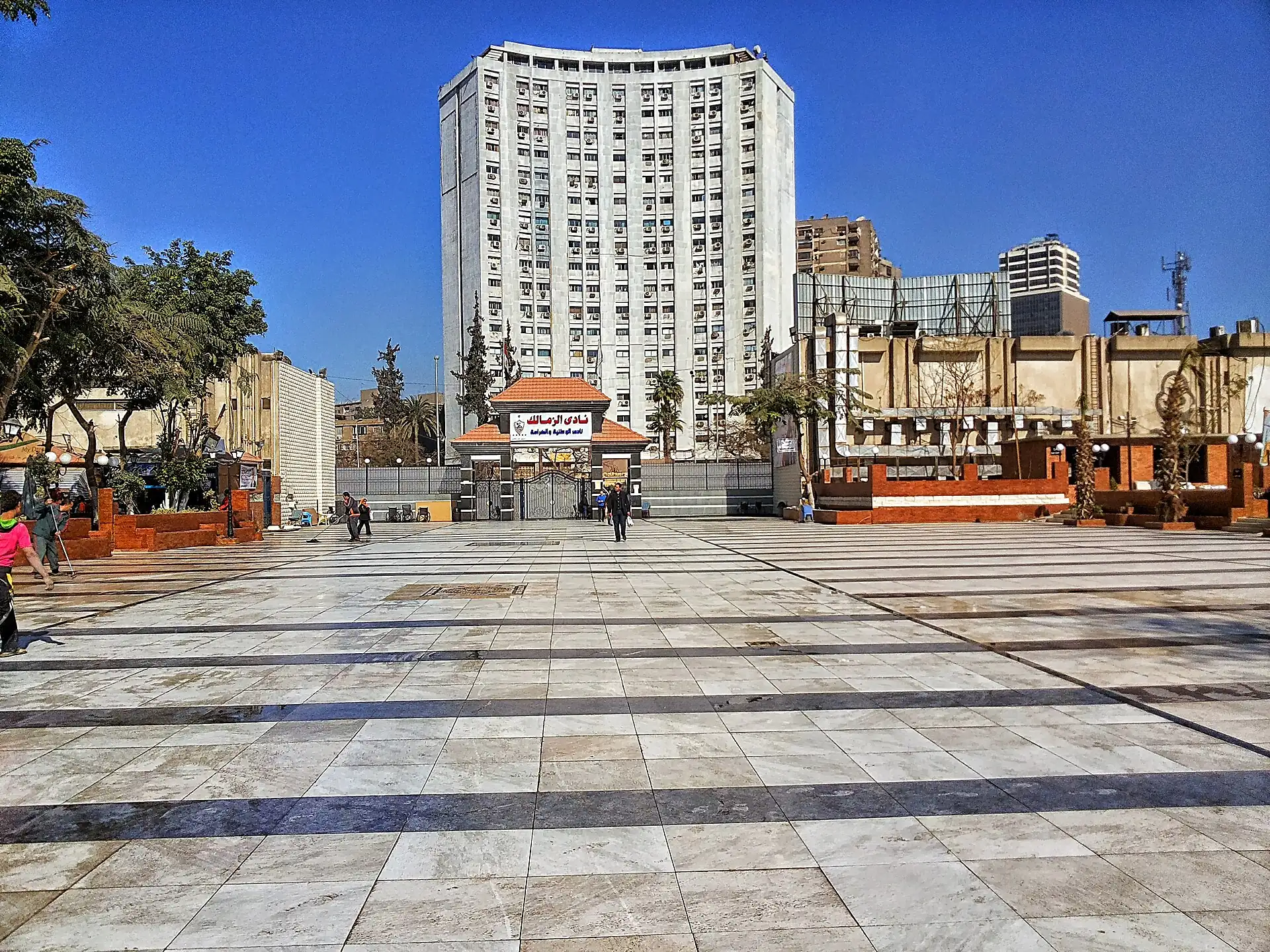
Which neighborhood fits you
Three questions, one recommendation, with the reasons.
Your best fit
- You wake up next to the pyramids: the reason to sleep here for one night.
Next best: Downtown and Tahrir · Zamalek hotels
Built from our 1–5 desk scores per area; your answers stay in this browser.
More on sleepingSleep by budget · Your area · With kids
Sleep by budget
| Band | Price | Where | Room types | What to expect |
|---|---|---|---|---|
| budget | EGP 500–1,000 dorm bed · EGP 900–1,800 double | Downtown | Hostels, budget hotels | Small rooms, mixed lift quality, street noise. Cheapest beds in central Cairo. |
| mid | EGP 2,500–5,500 | Zamalek, Giza plateau | 3–4 star hotels, boutique properties | Lift, breakfast, 24-h desk. Giza-plateau mid-range rooms sometimes have a partial pyramid view. |
| splurge | EGP 8,000–25,000+ | Nile-corniche towers, Giza-plateau resorts | International chains, resort-style hotels | Pools, spas, rooftop pyramid or Nile views; service charge and VAT often added to the quoted rate. |
Booking checks
- For a Giza-plateau hotel, ask for photos of the actual pyramid view from your specific room — 'view' can mean a rooftop restaurant only.
- Book a hotel with a genuine 24-hour desk if your flight lands late: check-in staff can thin out overnight at smaller properties.
- Upmarket Cairo hotels often quote '++' (plus service and tax): compare the final total, not the headline rate.
Which area is yours
| If you are | Sleep in | Because |
|---|---|---|
| First visit, calm nights, families | Zamalek hotels | Quiet island streets and a walkable riverside; accept a car ride to every sight. |
| One night to be at the pyramids for opening | Giza hotels near the pyramids | Walk or a five-minute ride to the gate instead of 45–90 minutes in traffic. |
| Tight budget, museum-focused | Downtown and Tahrir | Cheapest beds, the museum on foot; expect more street noise. |
First-timers wanting calm: a hotel with a 24-hour desk on the island, a car ride from every sight.
Pyramid-first trips: sleep near the plateau so you are at the gate at opening; the rest of Cairo is an hour away.
Older buildings, mixed lift quality; check before booking.
Areas are in our default order until you tick a priority.
Scores are 1–5 desk judgements per priority (2026 estimate). Downtown has no dedicated sleep-area page yet; it links to the districts table.
With kids
- Uneven pavements and traffic make a stroller hard work outside malls and hotel grounds; a carrier works better for Islamic Cairo and the Khan.
- Camel and horse rides at the Giza plateau are popular with children but come with the same price-agreement rules as for adults: fix the total before mounting.
- Al-Azhar Park has grass, shade and space to run — the easiest outdoor break for younger children in the old city area.
- The Egyptian Museum and the Grand Egyptian Museum both reward kids who like mummies and treasure; go early before the galleries fill.
- Heat: plan outdoor time before 10:00 and after 16:00 with children May–September, and carry water and sun hats.Heat: plan outdoor time before 10:00 AM and after 4:00 PM with children May–September, and carry water and sun hats.
PracticalMoney, essentials, safety and the pocket card
Practical
Money, essentials, safety and the pocket card
Money
What a day costs at three comfort levels, and how to pay.
- Budget
- EGP 800–1,500 excl. bed / day
- Mid
- EGP 1,500–4,000 excl. bed / day
- High
- EGP 4,000+ excl. bed / day
- Transit card
- No transit card needed: ride-hailing cars, metered taxis and walking; the metro is cheap but crowded.
- Cash rule
- Keep EGP 1,000 in small notes for tips (baksheesh), toilets and small purchases; withdraw at ATMs inside banks or hotels. Exchange rates have moved fast, so check the rate before you trust a price.
More on moneyCosts · Budget · Buy
What things cost
- Koshari at a downtown spotEGP 40–90
- Bottle of water, kioskEGP 10–20
- Ride-hailing car across central CairoEGP 60–180
- Car from CAI to ZamalekEGP 350–600
Trip budget
| Hotel double room1 × 4 nights × EGP 2,500 | EGP 10,000 |
| Food, local transport, entries2 × 4 days × EGP 2,800 | EGP 22,400 |
| Airport car, both ways1 × EGP 900 · one car per 4 people | EGP 900 |
| Tourist SIM, about a week2 × EGP 400 | EGP 800 |
| Buffer 12%Price creep, a taxi you did not plan, one splurge | EGP 4,090 |
| Trip total≈ EGP 4,770 per person per day, bed included | EGP 38,190 |
2026 estimate in Egyptian pounds; flights, visas and tours excluded. Your choices stay in this browser.
Prices of common things
| Koshari (a full bowl) | EGP 40–90 |
2026 estimate; check locally.
Buy
- Bargaining
- In Khan el-Khalili and any souvenir stall, the first price to a foreigner is often two to four times a fair price: counter low, expect to settle around 40–60% of the opening ask, and be ready to walk away — a lower offer often follows you out the door. Do not bargain in malls, supermarkets, or restaurants with a printed menu.
- Fixed-price check
- Government-run outlets (the Khan el-Khalili crafts centre, Egyptian cotton and antiquities-replica shops with a ministry seal) post fixed prices — a useful ceiling before you bargain elsewhere for the same item.
Markets and shopping streets
| Where | What | When | Haggle | Note |
|---|---|---|---|---|
| Khan el-Khalili | Gold, silver, spices, perfume oils, brassware, papyrus, souvenirs | About 10:00–22:00; quieter mid-afternoon in summerAbout 10:00 AM–10:00 PM; quieter mid-afternoon in summer | hard | The tourist-facing bazaar; prices start high. Real papyrus and real perfume oil exist here but so do fakes — ask to see the maker's method. |
| Al-Muizz Street stalls | Lanterns, textiles, spices, sweets | Shop hours; busiest in the evening | light | Mixed local and tourist trade; a calmer bargain than the Khan. |
| Wekalet al-Balah (textile market) | Fabric, clothing by the piece | Daytime | hard | A working local market on Rhoda island; few tourists, no English signage. |
| City Stars and other malls | International and Egyptian brands, food courts | About 10:00–23:00About 10:00 AM–11:00 PM | no | The AC refuge on a very hot or dusty day. |
| Supermarkets (Spinneys, Carrefour, Metro Market) | Snacks, drinks, toiletries | Long hours, some late | no | Your fixed-price reference for tea, spices and dates. |
Shops by what they sell
| For | Where | Hours | Note |
|---|---|---|---|
| Cotton and textiles | Downtown and Khan el-Khalili shops with a Egyptian-cotton label | Shop hours | Egyptian long-staple cotton is genuinely good; ask for the thread count and check it is woven, not printed. |
| Spices and perfume oils | Khan el-Khalili spice lanes | Shop hours | Buy from a stall with visible turnover, not one that walks you to a back room. |
| Papyrus paintings | Government-licensed papyrus institutes (Giza, Cairo) | Shop hours | Ask for a demonstration of the reed-strip method; a genuine sheet does not tear like paper when wet. |
| Alabaster and stone carvings | Khan el-Khalili and Giza-area shops | Shop hours | Weight is a rough honesty check on real stone; very light 'alabaster' is often resin. |
| Books and prints | Downtown bookshops around Talaat Harb | Shop hours | English-language Egyptology titles and old prints, worth a browse on a hot afternoon. |
Changing money
| Where | Verdict | Why |
|---|---|---|
| Bank branches (NBE, CIB, Banque Misr) | use | Official rate and a receipt; passport needed; weekday hours. |
| CAI airport exchange counters | ok | Slightly worse rate; change enough for the ride and the first day. |
| Hotel front desk | caution | Convenient, usually a worse rate than a bank. |
| Street money-changers | avoid | Not licensed; short-changing risk. |
ATMs
- Per withdrawal
- Most bank ATMs cap a foreign card at EGP 5,000–10,000 per withdrawal (screen shows the maximum); try another bank's machine if you need more.
- Fees
- Local fee plus your own bank's fee applies to every withdrawal (2026 estimate) — take the cap, not small amounts.
- Conversion
- If an ATM or card terminal offers to charge in your home currency (dynamic currency conversion), decline and pay in Egyptian pounds.
- Where
- Machines inside bank branches, malls and larger hotels; avoid free-standing machines on quiet streets after dark.
Essentials and accessEssentials · Access
Essentials
- Plugs & power
- 220 V; two-round-pin sockets (type C/F, European style). Bring a universal adapter.
- Toilets
- Hotels, malls and cafés; carry small notes and tissues for attendants at public and site toilets.
- Health
- Heat (May–Sep), dust and air pollution, traveller's diarrhoea from food and water. Travel insurance with medical cover.
- Accessibility
- Uneven pavements, high kerbs and stairs at older sites; the Grand Egyptian Museum and newer malls are the accessible exceptions. Plan by car.
- Laundry
- Hotels offer next-day laundry, priced by the piece or the kilo; few self-service laundromats.
Pack
- Light, loose, breathable clothes; a light layer for winter evenings and air-conditioned interiors
- A scarf or shawl to cover shoulders, arms and hair for mosques and churches
- Sun protection: hat, sunglasses, high-SPF sunscreen — the desert sun is strong year-round
- Comfortable closed shoes for the Giza plateau and Islamic Cairo's uneven stone streets
Accessibility
Cairo is hard going on wheels: old pavements are cracked and high-kerbed, and step-free access is mainly in malls, newer museums (the Grand Egyptian Museum) and higher-end hotels. Older sites in Islamic and Coptic Cairo have stairs, thresholds and uneven stone underfoot. Plan door-to-door car rides.
- Pavements
- Cracked, high kerbs, parked cars and vendor stalls force pedestrians into the road in older districts.
- Metro
- Some newer stations have lifts; older central stations often do not (check per station).
- Getting around
- Ride-hailing cars are the practical step-free option; agree a larger vehicle in the app note if you need one for a folding wheelchair.
- Sites
- The Grand Egyptian Museum and the Egyptian Museum in Tahrir are the most accessible major sights; the Citadel, Khan el-Khalili and Coptic Cairo have stairs and uneven stone.
- Toilets
- Accessible toilets in malls and larger hotels; rare at older sites and in the bazaar.
Sights, step-free or not
| Egyptian Museum, Tahrir | step-free | Mostly flat galleries; some older display cases sit close together. |
| Pyramids of Giza and the Sphinx | with help | Flat but sandy and uneven ground on the plateau; going inside a pyramid means steep, narrow passages — skip the interior if mobility is limited. |
| Cairo Citadel and the Mosque of Muhammad Ali | with help | Courtyards are mostly flat; the mosque interior has a raised threshold and some steps. |
| Hanging Church and Coptic Cairo | hard | The church is built over the old Roman gate and reached by steps; narrow lanes throughout the quarter. |
| Khan el-Khalili | hard | Narrow, crowded, uneven lanes; not workable for a wheelchair at busy hours. |
Survive
Safety basics, the lines not to cross, and practical habits that save the day.
Safety
- Touts and unsolicited helpers at Giza, the Khan and stations quote one price and demand more: buy tickets at the official gate and agree everything in advance.
- Crossing Cairo streets: cross with locals, slowly and steadily; use ride-hailing at night.
- Heat (May–Sep): carry water, cover your head and plan midday indoors.
- Emergency: 122 police, 123 ambulance, 126 tourist police.
Red lines
- Do not photograph military sites, police, bridges or government buildings.
- Cover shoulders and knees, and cover your head to enter a mosque as a woman; remove shoes at the door.
- Ask before photographing people; expect to be asked for a tip.
Practical
- Toilets: hotels and cafés; carry tissues and small notes for attendants.
- Drink bottled water.
- Many sights now take cards only at the gate: carry a card and cash.
More on staying safeStay safe · Stay healthy · Safety map · Solo & women · Etiquette · Cope · Scams
After dark, by area
3 flagged areas
Khan el-Khalili and Islamic Cairo
Take care- Take care
- Take care
Day = about 08:00–19:00. What to watch in each area, day and night →
Scams and red flags
Walk away if you see these
- Papyrus shops selling banana-leaf 'papyrus' as the real reed-paper product at a high price: buy only where a museum or a known dealer can show the plant strip method, and expect to pay accordingly.
- Perfume and essence-oil shops with a 'free' tour that ends in high-pressure selling; a taxi or guide who insists on taking you there earns a commission.
- At the Giza plateau, unofficial 'guides' claim the ticket office is closed or that you need a guide to enter; buy your ticket only at the official window.
- Camel and horse rides quoted per photo or per short distance, then re-billed for a longer ride or a return fee to get off the animal: agree the total price, the route and the drop-off point before you mount, in writing if possible.
- A friendly stranger who is suddenly a tour guide, a student, or 'just wants to practise English' and steers you toward a shop or a papyrus 'museum' that is a shop.
- Fake or resold tickets outside museums and sites: buy only at the official gate or the official online portal.
- A taxi meter that is 'broken': agree the fare before the car moves, or use Uber or Careem, where the price is fixed on the screen.
Stay safe
Crossing the road
- 01Cairo drivers rarely stop for pedestrians at anything but a red light with traffic backed up: cross with a group or beside a local who knows the gaps.
- 02Walk at a steady pace once you commit to crossing; do not stop halfway or run back.
- 03Multi-lane roads without a signal (common on bridges and the Corniche) are crossed in stages, lane by lane — wait on the painted median line if there is one.
Hustles specific to this city
| Hustle | Where | The tell | What to do |
|---|---|---|---|
| Papyrus 'gift' | Near the museum and major sites | A stranger hands you a 'free' papyrus bookmark or painting | Decline and keep walking; accepting it usually leads to a payment demand. |
| 'The site is closed today' | Giza plateau, other sites | Someone outside the official gate says the ticket office is shut and offers an alternative entrance or a private tour | Ignore it and walk to the official ticket window yourself. |
| Camel/horse re-billing | Giza plateau | A ride agreed at one price is re-billed at the end, or you are told there is a fee to dismount | Agree the total, the route and the dismount point before mounting; pay only that amount. |
| Perfume/essential-oil hard sell | Khan el-Khalili and 'perfume institutes' | A free tour or a taxi detour ends in high-pressure selling | Decline politely and leave; you are not obliged to buy anything you are shown. |
| 'My uncle has a shop' | Anywhere near a major sight | A friendly local guide, student or fellow traveller steers conversation toward a specific shop | Choose your own shops; a spontaneous new friend with a shop recommendation is working for a commission. |
| Broken taxi meter | Street taxis | The driver says the meter is broken as you get in | Agree the fare before the door closes, or use Uber/Careem instead. |
- Police
- 122; tourist police 126 for scam and overcharging disputes, often with English-speaking officers stationed at major sites.
- Pickpocketing
- Occurs in crowded markets and on public transport; keep valuables in a front pocket or a zipped bag worn in front.
- Night
- Violent crime against visitors is rare; the real risks are traffic, overcharging and, for women, street harassment.
Stay healthy
Air quality by month
| Jan | Feb | Mar | Apr | May | Jun | Jul | Aug | Sep | Oct | Nov | Dec |
|---|---|---|---|---|---|---|---|---|---|---|---|
| mixed | mixed | poor | poor | mixed | mixed | mixed | mixed | mixed | mixed | mixed | mixed |
Cairo's air quality is often poor year-round from traffic and dust, worsening during khamsin wind events (Mar–May) and on still winter days. Check a live AQI app if you have respiratory sensitivities.
- Heat
- May–Sep: shade and AC every 60–90 minutes, water constantly, no midday walks on the Giza plateau. Heat exhaustion is the most common visitor illness.
- Food and water
- Bottled or filtered water only; traveller's diarrhoea ('Pharaoh's revenge') is common — eat at busy stalls with fast turnover, avoid raw salads of uncertain provenance early in the trip.
- Rabies
- Stray dogs and cats are common; do not pet them. After any bite or scratch, seek same-day medical care for a rabies assessment.
- Sun
- Strong desert sun year-round; sunscreen, a hat and shade breaks matter even in winter.
- Pharmacies
- Seif and El Ezaby chains for over-the-counter remedies and basic first aid; ask the pharmacist, many speak some English.
Hospitals and clinics: see Cope.
Safety by area and hour
| Area | Day | Night | What to watch |
|---|---|---|---|
| Zamalek | fine | fine | Generally calm; the main hazard is crossing the bridges on foot. |
| Downtown and Tahrir | fine | fine | Pickpocketing in crowds; avoid any political gathering near Tahrir Square. |
| Khan el-Khalili and Islamic Cairo | fine | caution | Touts and the papyrus/perfume-shop steer; quieter side alleys are dim after dark — stick to the lit lanes. |
| Coptic Cairo | fine | caution | Fairly quiet at night; go by day for the churches, which keep day hours anyway. |
| Giza plateau | caution | caution | Persistent touts for camel and horse rides and 'guide' services right at the gate; agree nothing verbally without a fixed total. |
| Garden City | fine | fine | Quiet embassy district; well-policed. |
- Crossing Cairo streets: cross with a local or in a small group, watch for gaps rather than expecting cars to stop, and never assume a green light protects you.
- Women travelling alone report more street harassment (comments, staring, occasional unwanted contact) than physical danger: dressing modestly and using ride-hailing apps after dark both help.
Solo, women and LGBTQ+ travellers
Solo
- Manageable alone, especially for men; solo women should expect more attention and plan taxis after dark rather than walking.
- Book a licensed Egyptologist guide or a group tour through your hotel or an operator with written inclusions for Giza and the museums — it heads off the tout problem entirely.
- Ride-hailing apps log the driver and route: use them over a hailed street taxi, especially at night.
Women
- Street harassment (comments, staring, occasional following) is common enough to plan around; modest dress — covered shoulders and knees, looser clothing — reduces but does not eliminate it.
- The Cairo metro has women-only carriages, usually the middle one or two cars, marked on the platform and the car itself.
- A firm, public refusal ('la shukran' and keep walking) works better than ignoring an unwanted approach.
LGBTQ+
- There is no explicit law against same-sex relations, but morality and 'debauchery' laws have been used to prosecute LGBTQ+ people, including via dating-app entrapment; this is a genuinely higher-risk destination.
- Public affection of any kind, opposite-sex or same-sex, is uncommon and best avoided.
- Keep dating apps and any LGBTQ+-related conversation off public Wi-Fi and out of public view; research current advisories before you travel.
Etiquette in Cairo
- Mosques
- Shoulders, arms and legs covered for everyone; women cover their hair with a scarf and a robe is sometimes provided at the door; shoes off before the prayer carpet.
- Churches (Coptic Cairo)
- Modest dress; some ask women to cover their heads — carry a scarf just in case.
- Ramadan
- Do not eat, drink or smoke in public during daylight hours even if you are not fasting; it is illegal, not just impolite.
- Right hand
- Eat, pay and hand things over with the right hand or both hands; the left is considered unclean by tradition.
- Photos
- Ask before photographing people, especially women; never photograph police, military sites, bridges or government buildings.
- Tipping (baksheesh)
- Small tips are expected widely — for a bag carried, a toilet attendant, a site guard who points something out. It is a normal part of daily transactions, not begging.
- Bargaining
- Expected in bazaars, not in shops with printed prices. Stay friendly; raised voices or visible frustration make the price worse, not better.
Cope
Hospitals and clinics that handle foreigners
| Where | Area | Use it for |
|---|---|---|
| As-Salam International Hospital | Maadi / Corniche | Large private hospital with English-speaking staff; ask your insurer about direct billing. |
| Cleopatra Hospital | Heliopolis | Private hospital; emergency and specialists. |
| Anglo-American Hospital | Zamalek (Gezira) | Private, close to the Zamalek sleep area; English-speaking. |
| Dar Al Fouad Hospital | 6th of October City (outer) | Well-regarded private hospital, further from the centre. |
Visa extensions
- Office
- Passport and Immigration Administration (Mogamma-successor offices, addresses have moved in recent years); check the current address before going.
- Extending
- Tourist visas can usually be extended at an immigration office with a passport photo and a fee; allow a working day.
- e-Visa
- Most nationalities can apply online in advance or get a visa on arrival at CAI in cash (USD or EUR); check your nationality's requirement before flying.
- Overstay
- A grace period of a few days is often tolerated with a fee at the airport; longer overstays can delay your flight — resolve it before departure day if possible.
Embassies and consulates
| Country | Address | Phone | Note |
|---|---|---|---|
| United States | 5 Tawfik Diab Street, Garden City | +20 2 2797 3300 | (check) |
| United Kingdom | 7 Ahmed Ragheb Street, Garden City | +20 2 2791 6000 | (check) |
| Australia | World Trade Centre, Corniche el-Nil, Boulac | +20 2 2770 6000 | (check) |
| Canada | 26 Kamal El Din Salah Street, Garden City | +20 2 2791 8700 | (check) |
| France | 29 Charles de Gaulle Avenue, Giza | +20 2 3567 3200 | (check) |
| Germany | 8B Hassan Sabry Street, Zamalek | +20 2 2728 2000 | (check) |
- Lost passport
- Police report from the local police station, then your embassy for an emergency travel document; bring photocopies of your passport and visa if you have them.
- Pharmacies
- Seif and El Ezaby chains are widespread and post prices; many medicines are sold without a prescription — check the active ingredient and dose.
- Tourist police
- 126, or the tourist police desk at major sites; useful for scam and overcharging disputes.
- Laundry
- Hotels charge per piece or by the kilo, next-day service; ask the price before handing bags over.
Apps and offline kitOffline kit
Offline kit
Set up before you leave, so Cairo still works with no signal or a dead roaming plan.
On your phone
- Maps: open the city in Google Maps, tap the place name, then Download offline map (or use an offline-maps app).
- Data: install an eSIM or buy a local SIM before the first taxi; the apps in this guide depend on it.
- Translation: download the local language for camera translation.
- Screenshots: booking confirmations, hotel address in the local script, and the emergency numbers.
This guide
Save the Cairo guide and its pages on this device; it opens without a connection.
Phrases that do the work
Greeting
Hello
أهلاً
ahlan
Thanks
Thank you
شكراً
shukran
Market
How much is this?
بكام ده؟
bikam da
Bargaining
Too expensive
غالي أوي
ghaali awi
Food
No sugar, please
من غير سكر
min gheir sukkar
Café
The bill, please
الحساب لو سمحت
el-hesab law samaht
Taxi
Please take me to this address
من فضلك وديني هنا
min fadlak wadeeni hena
Everyday
No, thank you (declining a tout)
لا شكراً
la shukran
Pocket card
Fill in, then print or save as PDF
Stays in this browser only; nothing is sent anywhere.
Cairoالقاهرة
Pocket card · Voykit
My bed tonight
—
—
—
من فضلك وديني هناPlease take me to this address
Emergency
- Police122
- Ambulance123
- Tourist police126
Embassy
Most embassies are in Garden City and Zamalek (US and UK: Garden City). Write your own embassy's line below.
My embassy: —
Fare anchors (2026 estimate)
- CAI → Zamalek, app car: EGP 350–600, 45–100 min depending on traffic
- App car across central Cairo: EGP 60–180
- Metro single ride: EGP 8–25 by zone
Say or show
- أهلاً — Hello (ahlan)
- شكراً — Thank you (shukran)
- بكام ده؟ — How much is this? (bikam da)
- غالي أوي — Too expensive (ghaali awi)
- الحساب لو سمحت — The bill, please (el-hesab law samaht)
Show the address in Arabic if you have it; drivers and apps work best from a pinned map location, not a spoken address.
Deep diveHistory, reading, photos and every source
Deep dive
History, reading, photos and every source
Sources
- officialUK FCDO foreign travel advice: Egypt
- officialEgypt e-visa portal (official)
- secondaryWikivoyage — Cairo
Ask about Cairo
Loading…
Was this useful?