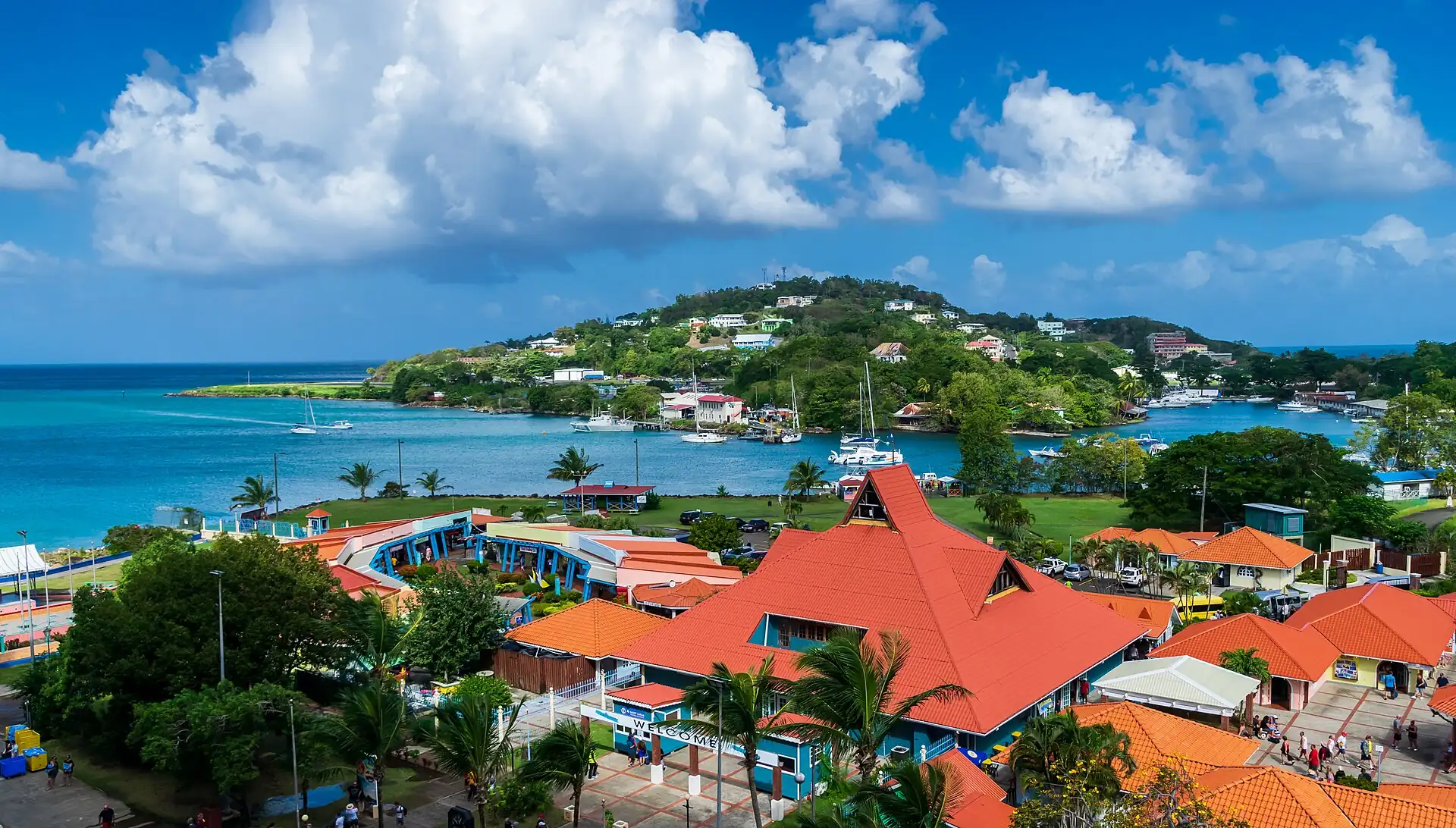
Castries
Code SL · 4 walking zones
Castries is a half-day capital: market and Derek Walcott Square in the morning, Morne Fortune's forts by taxi, and a beach evening at Vigie; sleep at Rodney Bay if you want a resort.
Our quick read of Castries, scored 1–5 (friction is out of 100). Cash need: how often you still need notes. Heat risk: how hot days get. Stroller: how easy wheels are. Friction: overall effort for a first visit. Desk judgements, so check before relying on them.
- Local time
- --:--
- Weather
- forecast below
- Currency
- XCD
- Best months
- Jan · Feb · Mar · Apr · Dec
- Airports
- Hewanorra (UVF) · George F. L. Charles (SLU)
Walking zones: the 4 areas this guide plans a day around. Each is a district you can cover on foot, so you do one zone per half-day and ride the train between them. The code (SL 01, SL 02…) is just the zone's number on the Castries line; the line under each name says how bags fare there and how much time it needs.
Map of Castries
Use the switches to show or hide each kind of pin. A switch that is on shows its pins on the map; tap it again to hide them. "Show only" keeps just the pins that match (for example, places that fit a suitcase). Tap any pin for its name and a link to its page.
- Where to sleep
- Places
- Eat
- Walking clusters
- Rest stops
From the airport Hewanorra (UVF) to your bed · F. L. Charles (SLU) to your bed
Tap a pin for its card. Places without their own coordinates are shown by their walking cluster.
Why Castries
Castries is a working harbour town with a busy market, a cathedral and hill forts; few visitors stay here more than a night or two. What goes wrong is the transfer: the long drive from Hewanorra, steep hill roads, Sunday closures and cruise-day crowds. Four areas cover the capital; the Pitons and the beaches are trips from one kept bed.
See first
- 1
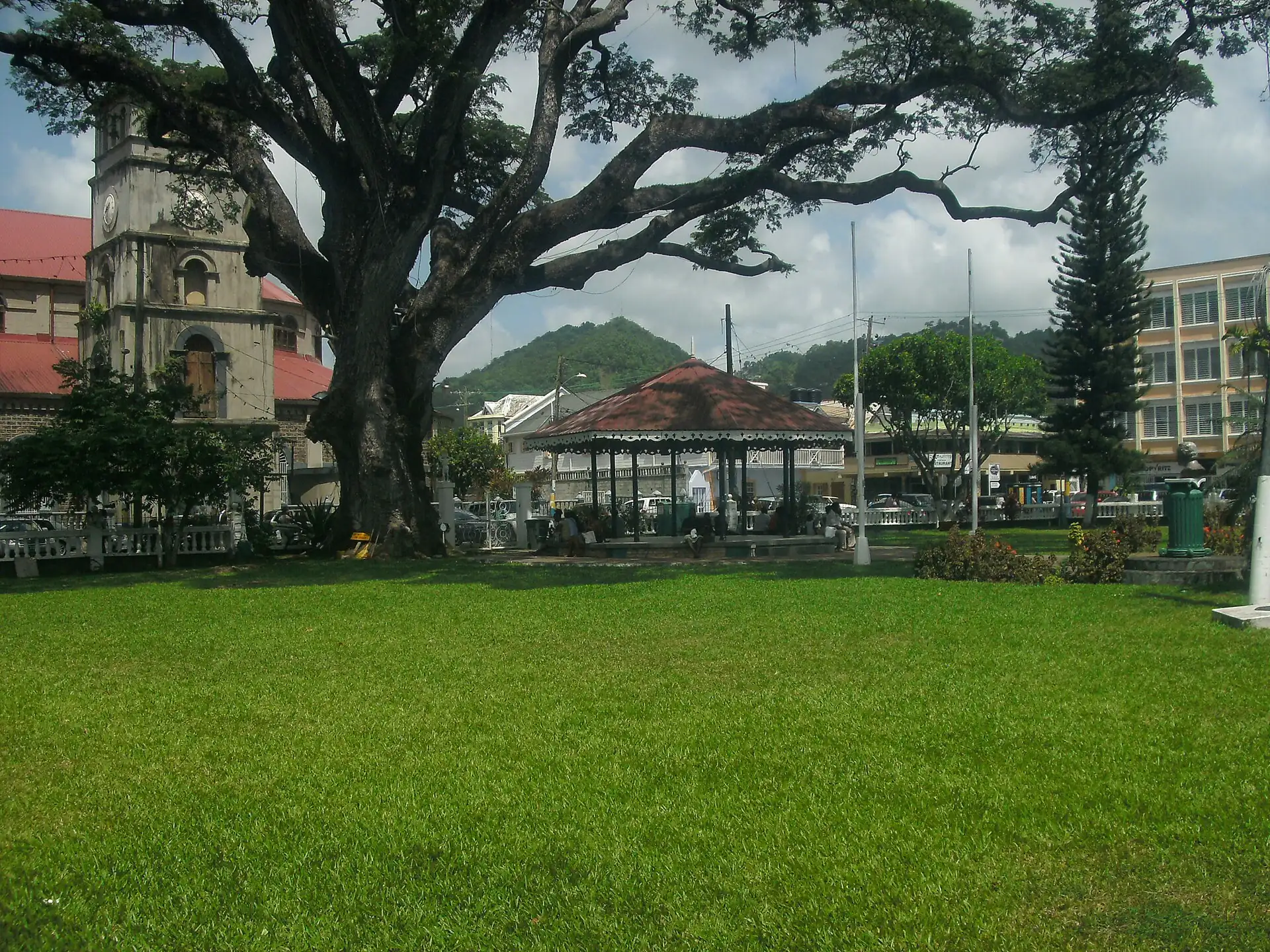 Derek Walcott Square in the morning · 15–25 min
- 2Fort Charlotte and the Morne Fortune view · 40–60 min
- 3
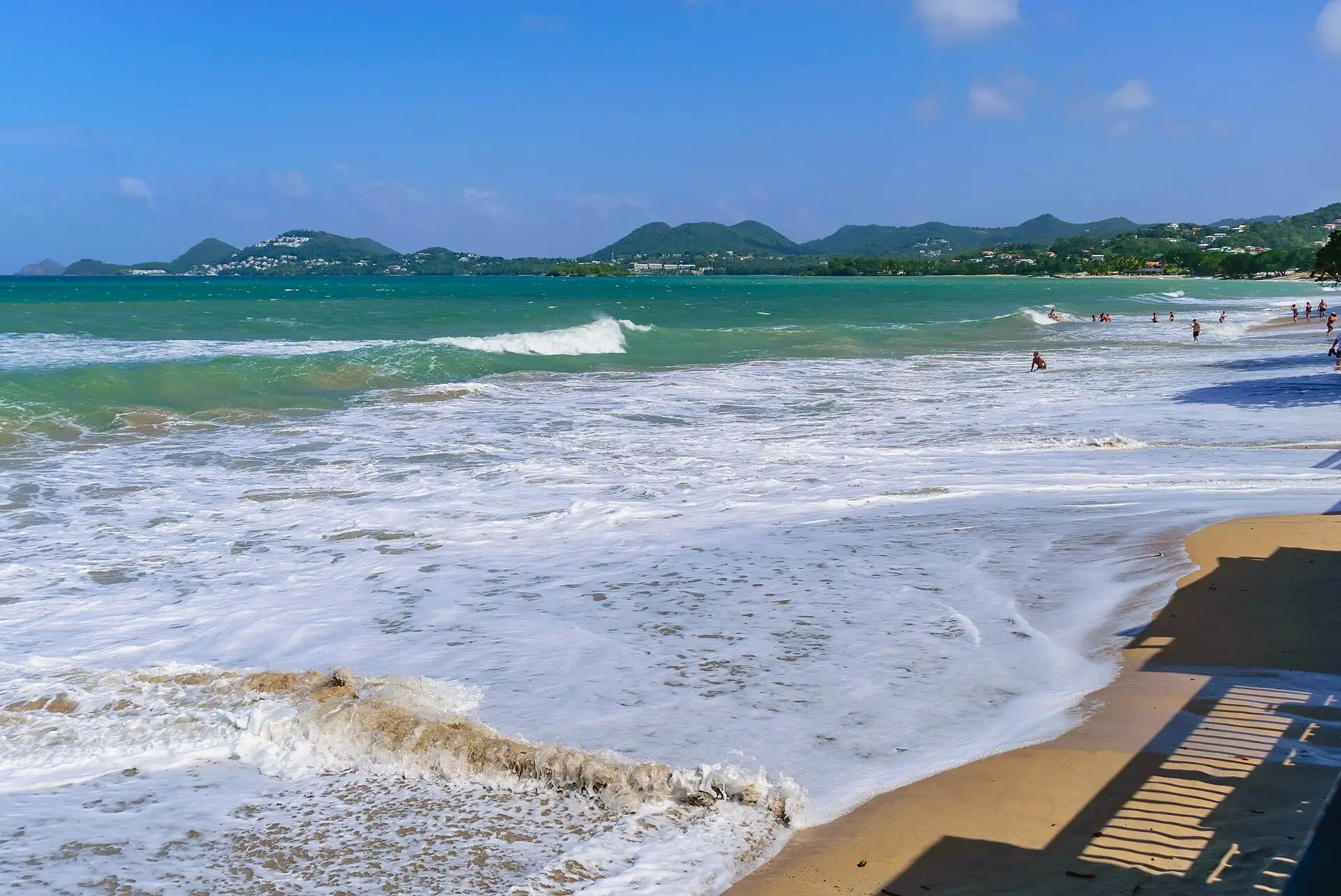 Vigie Beach for a swim or a sunset walk · 45–90 min
- 4Soufrière and the Pitons · Full day
Fits
- Short capital stays
- History and market days
- Cruise or flight connections
Does not fit
- Beach-only holidays
- Nightlife seekers
- Travellers who dislike winding roads
How long
- 1 daysDerek Walcott Square, market, then Fort Charlotte by taxi
- 3 daysFour areas at an easy pace, plus one beach day at Vigie or Rodney Bay
- 5 daysCastries 2 + Soufrière or Rodney Bay 3
Good for
- Short capital stopovers
- History and market interest
- Beach-only holidays
- Wheelchair users
About Castries
Castries is a harbour town first and a capital second. The deep natural harbour, not history or scenery, decided the site: French settlers moved the seat of government here from Soufrière in the 1760s because ships could shelter close to shore, and the port has driven the town's shape ever since — banana boats and container ships until the 1990s, cruise ships now.
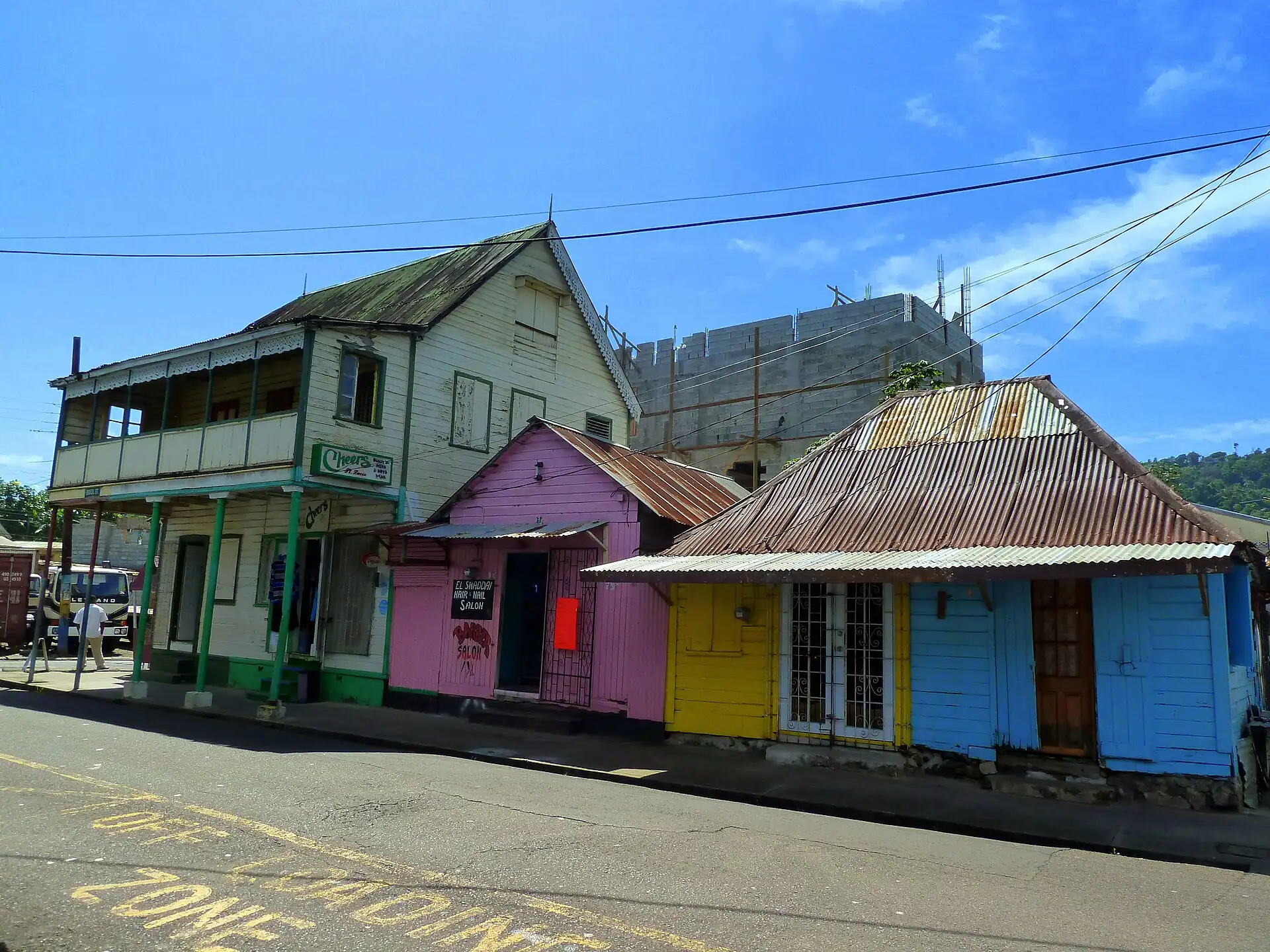
Fire, not war, is why so little old Castries survives. Four major fires (1785, 1796, 1948 and a smaller one in 1927) burned most of the wooden town to the ground; almost every building you see downtown dates from after the 1948 fire, in concrete and corrugated iron rather than the gingerbread wood of Soufrière or the French islands.
Good to know
- Most beach hotels are at Rodney Bay, about 10 km north; the main international airport, Hewanorra (UVF), is about 1.5 hours south.
- Saint Lucia Tourism Authority has a visitor information point near the harbour front and at Pointe Seraphine on cruise days; hours vary with ship schedules (check).
- Hotel front desks book taxis, the Soufrière/Pitons day trip and Pigeon Island tickets; compare one operator's quote before paying.
Go deeper 9 min read · 5 chapters
Castries is a harbour before it is a capital. A deep, sheltered anchorage under a ring of green hills decided where the town would sit, and that harbour — banana boats, then containers, now cruise ships — has shaped almost everything about how the town looks, works and empties out at night. This deep dive reads Castries through that harbour, through the fires that erased its old buildings, and through the island culture that visitors mostly meet at one remove, on a day trip out to Soufrière or a Friday night in Gros Islet.
1History2 min
Saint Lucia's early colonial capital was Soufrière, on the south-west coast near the Pitons, but Soufrière's open roadstead gave ships poor shelter. Castries' harbour — a deep, almost landlocked basin behind a narrow entrance — was better protected, and French settlers moved the seat of government there in the 1760s, naming the new town after Charles Eugène Gabriel de La Croix, Marquis de Castries, a French naval minister of the period.
For the next half-century Saint Lucia changed hands between France and Britain repeatedly — historians usually count seven or more transfers of control — largely because of the value of that same harbour to whichever navy held it. Morne Fortune, the steep hill immediately south of the town, was fortified and refortified by both sides; the fort buildings visible today layer French and British work from several building campaigns between the 1760s and the early 1800s. Britain secured the island for good under the 1814 Treaty of Paris, after the Napoleonic Wars, and Saint Lucia stayed a British colony until independence in 1979.
Slavery underpinned the island's plantation economy — sugar, then later bananas — until abolition took effect across the British Caribbean in 1834, with a transitional 'apprenticeship' period that most historians treat as ending by 1838. Emancipation Day, 1 August, is a public holiday. The population of Castries and the island today descends overwhelmingly from that history: enslaved West and Central Africans, brought to work plantations, whose descendants make up the great majority of Saint Lucians.
Castries has been rebuilt more often by fire than by war. Major fires in 1785, 1796 and 1948 (plus a smaller one in 1927) each destroyed most of the town's wooden buildings; the 1948 fire in particular took out nearly the entire commercial centre. That is the direct reason Castries looks the way it does today — concrete and corrugated iron rather than the wooden gingerbread architecture that survives in Soufrière and on islands that escaped comparable fires.
Independence came in 1979, within the Commonwealth, with Castries remaining the capital. Saint Lucia's economy shifted over the following decades from bananas — long the dominant export under a protected UK market — toward tourism, as banana prices fell and EU trade preferences were phased out through the 1990s and 2000s. The 1992 Nobel Prize in Literature, awarded to Castries-born poet and playwright Derek Walcott, gave the town a cultural landmark it later used to rename its central square.
- Original capital
- Soufrière, until the 1760s
- Town founded
- 1768, named for the Marquis de Castries
- Changes of control, French/British
- At least seven, 18th–early 19th century
- Slavery abolished (British Caribbean)
- 1834, apprenticeship to 1838
- Independence
- 1979
- Major fires
- 1785, 1796, 1927, 1948
2The harbour and cruise-ship days2 min
Everything about how Castries feels on a given day traces back to whether a ship is in port. From roughly November to April, one, two or occasionally three cruise ships call most days, each unloading anywhere from a few hundred to several thousand passengers into a town whose permanent population is well under 100,000. By mid-morning the market, Derek Walcott Square and the harbour front fill with tour groups, taxi drivers work a rehearsed set of fixed-price excursions, and vendors set up extra stalls that pack away again by late afternoon.
On a day with no ship — more common in the June–November wet season, when some lines reroute away from hurricane risk — the same streets are markedly quieter. Half the craft stalls at Pointe Seraphine may not open, some restaurants near the harbour keep shorter hours, and the town reverts to its working character: a market serving locals rather than tourists, government offices and banks going about ordinary business, and a much thinner crowd around the square by noon.
This is not a minor scheduling detail — it is close to the single most useful piece of planning information for a Castries day. A traveller who wants a lively, browseable market and shopping atmosphere should check that a ship is in port; a traveller who wants a calm, unhurried town to photograph and wander should aim for a no-ship day. Hotels and the tourism authority can usually confirm the week's cruise schedule.
The harbour's commercial life predates tourism by more than a century. Castries was a major coaling station for steamships crossing the Atlantic in the late 19th and early 20th centuries, and later a key port for banana exports to Britain under the Windward Islands banana trade, which peaked in the mid-20th century and supported much of the island's rural economy until preferential EU access was phased out from the late 1990s. Cruise tourism, concentrated at Pointe Seraphine (opened in the 1990s) and the adjacent berths, has largely replaced that trade as the harbour's main economic driver.
- Cruise season
- Roughly November–April, most days
- Historic trade
- Coaling station, then banana exports to the UK
- Pointe Seraphine
- Opened 1990s, for cruise-passenger shopping
- Banana trade decline
- From the late 1990s, as EU preferences phased out
3Kwéyòl and island culture2 min
English is Saint Lucia's official language — the language of government, schools and virtually all tourism business — but most Saint Lucians also speak Kwéyòl (Saint Lucian Creole, closely related to the Creole spoken in Martinique, Dominica and Guadeloupe). It is a French-lexicon Creole: much of its vocabulary derives from French, but its grammar is substantially shaped by West African languages carried by enslaved people, making it a distinct language rather than a simplified dialect of French. A visitor will get by entirely in English, but a greeting in Kwéyòl — Sa ka fèt? (how's it going?) — is noticed and generally welcomed.
The language's French roots are a direct legacy of the colonial back-and-forth: Saint Lucia was under longer or more continuous French cultural influence than most of the English-speaking Caribbean, even after Britain secured permanent control in 1814, because the enslaved and free coloured population that most shaped everyday culture had been Francophone for generations. Jounen Kwéyòl (Creole Day), usually held in late October, is a national celebration of this heritage with food, music and dress, held partly in Castries and partly in designated village hosts around the island.
Music and festival culture run on their own calendar. The Saint Lucia Jazz and Arts Festival each May draws international acts to Pigeon Island and other venues near Rodney Bay; Carnival, usually held in July on Saint Lucia (unlike the pre-Lenten timing common elsewhere in the Caribbean), fills Castries' streets with costume bands, soca music and road closures. Neither event is primarily a Castries-town affair — both spill across the northern part of the island — but both visibly reshape the capital's streets and hotel availability while they run.
A quieter, weekly version of the same culture is the Gros Islet Friday night street party, north of Rodney Bay: grilled fish and chicken stalls, rum shacks and sound systems fill the small town's main street every Friday evening. It is not inside Castries and needs a taxi, but it is the closest thing on the island to an ordinary, recurring local celebration that visitors can simply turn up to.
- Official language
- English
- Widely spoken
- Kwéyòl (Saint Lucian Creole, French-lexicon)
- Jounen Kwéyòl
- Late October, national Creole-heritage day
- Carnival timing
- Usually July, unlike pre-Lenten Carnivals elsewhere
4Geography and the Pitons day trip2 min
Saint Lucia is small — about 27 miles (43 km) north to south — but volcanically formed and steep almost everywhere outside the coastal flats, which is why Castries itself is compact and why so much of the island is reached by winding, hill-hugging roads rather than straight highways. The interior holds rainforest, the Barre de l'Isle ridge separating the windward Atlantic side from the leeward Caribbean side, and Saint Lucia's dormant volcanic complex above Soufrière, whose drive-in sulphur springs are marketed as 'the world's only drive-in volcano' — a description of the road access, not literal truth, since visitors still walk the final stretch to the viewing area.
The Pitons — Gros Piton and Petit Piton, twin volcanic spires rising directly from the sea near Soufrière — are Saint Lucia's defining image and a UNESCO World Heritage Site. From Castries they are a half-day to full-day excursion, reachable either by the winding West Coast Road (roughly 1.5–2 hours' drive, with considerable elevation change and switchbacks that trouble some travellers) or by boat along the coast (a similar time, gentler on the stomach, and often paired with a stop to snorkel near Anse Chastanet). Most visitors do this as a single big day trip from a Castries or Rodney Bay bed rather than relocating.
The road option usually combines the Pitons viewpoint with the Sulphur Springs Park (the volcano), the Diamond Falls botanical gardens and mineral baths, and time in Soufrière town itself, which — unlike Castries — kept much of its wooden 18th- and 19th-century architecture, since it largely escaped the fires that levelled the capital. The contrast is worth noting when planning: Castries is where the history happened administratively and where the harbour still runs the show, while Soufrière is where the older buildings and the postcard landscape survive.
Hurricane season, roughly June to November and peaking August to October, is the main planning risk for this trip: heavy rain can make the West Coast Road hazardous and can cancel the boat option outright. Travellers visiting in that window should keep a flexible day for Soufrière rather than a fixed one, and buy travel insurance that covers storm-related cancellations.
- Island length
- About 43 km (27 miles) north–southAbout 27 miles (43 km) north–south
- The Pitons
- UNESCO World Heritage Site since 2004
- Soufrière road trip
- About 1.5–2 h each way from Castries
- Hurricane season
- June–November, peak August–October
5Food2 min
Saint Lucia's national dish is green fig and saltfish: green (unripe) bananas, boiled and served with salted, dried cod that has been soaked and cooked with onions, peppers and seasoning. It reflects the same colonial food economy found across the former British Caribbean — cheap salted fish shipped from the North Atlantic fisheries to feed enslaved and later free plantation populations, paired with a starchy local staple. It remains a common breakfast or lunch dish at local restaurants and market food stalls in Castries today, not a dish revived only for visitors.
Creole cooking on Saint Lucia blends West African, French and later East Indian and British influences (indentured labourers from India arrived after emancipation, as on several Caribbean islands, though in smaller numbers than in Trinidad or Guyana). Callaloo soup, made from leafy greens such as dasheen or amaranth with coconut milk, and lambi (conch, prepared curried, grilled or as a fritter) are both widely available, the latter especially at the seafood restaurants clustered around Vigie Cove marina near Castries.
Saint Lucia distils its own rum — Saint Lucia Distillers, based at Roseau in the south, produces several well-regarded brands — and rum, not beer, is the default spirit in a Creole meal or a rum punch. Piton, the island's own lager, is the standard local beer. Both are cheaper and arguably better value than imported alternatives, and a supermarket shelf price is a useful reference before buying either at a duty-free counter or a tourist-priced bar.
As at any cruise port, restaurant character shifts with the harbour: some harbour-front and market-area eateries are geared to fast turnover on ship days, while the marina restaurants at Vigie Cove — further from the cruise terminal and requiring a taxi — keep a steadier, more locally oriented crowd and a slower pace, making them the better choice for a relaxed dinner rather than a quick lunch.
- National dish
- Green fig and saltfish
- Local rum producer
- Saint Lucia Distillers, Roseau
- Local beer
- Piton
- East Indian influence
- From post-emancipation indentured labour, smaller-scale than Trinidad
Read, watch, wordsReading · Glossary · Sources
Reading
- The Star-Apple Kingdom — Derek WalcottPoetry collection by the Castries-born Nobel laureate; a way into the Caribbean landscape and history in his own voice.
- Another Life — Derek WalcottWalcott's autobiographical long poem, set largely in Castries and Saint Lucia in the mid-20th century.
- A History of Saint Lucia — Harold F. C. Breen (ed.) / various island historiansGeneral island history covering the French–British contest, slavery, emancipation and independence; check current edition and availability.
Glossary
| Term | Local | Meaning |
|---|---|---|
| Kwéyòl | Kwéyòl | Saint Lucian Creole, a French-lexicon language widely spoken alongside English. |
| Sa ka fèt? | Sa ka fèt? | How's it going? — a common Kwéyòl greeting. |
| Jounen Kwéyòl | Jounen Kwéyòl | Creole Day, a late-October national celebration of Creole heritage. |
| Green fig | green fig | Unripe banana, boiled and used as a starch — the base of the national dish with saltfish. |
| Lambi | lambi | Conch, a common Caribbean shellfish. |
| Morne | morne | Hill — from French; used across Saint Lucia's place names (Morne Fortune, Morne Coubaril). |
Read for this deep dive
- Wikipedia — Castries ↗
- Wikipedia — Saint Lucia ↗
- Wikipedia — Saint Lucian Creole ↗
- Wikipedia — Pitons Management Area ↗
- Wikipedia — Derek Walcott ↗
Background reading only: the text above is written by Voykit, not copied from these pages.
Rules in force · 7Several islands (Turks and Caicos above all, also the Bah…
- Caribbean ↗Several islands (Turks and Caicos above all, also the Bahamas and Jamaica) jail visitors for a single stray bullet or cartridge in their luggage; empty every bag and pocket before you pack.
- Caribbean ↗From August to October keep a free last day before your flight home and check the national hurricane centre daily; airports close when a named storm approaches.
- Caribbean ↗Wearing camouflage clothing is illegal for civilians in several islands, including Barbados, Antigua, Saint Lucia, Saint Vincent, Grenada, Dominica, Trinidad and Tobago and Jamaica; leave it at home, children's clothes included.
- Saint Lucia ↗Check entry rules for your passport on official Saint Lucia government sources before you fly.
- Saint Lucia ↗Camouflage-pattern clothing is illegal for civilians: leave it at home.
- Saint Lucia ↗Check which airport your flight uses: long-haul flights land at Hewanorra (UVF) in the south, regional ones at George F. L. Charles (SLU) in Castries.
- The north (Rodney Bay, Gros Islet, Castries) ↗June to November is hurricane season with the peak in August to October: buy flexible fares and insurance that covers storm cancellations.
Entry rules depend on your passport. Full visa guide
Emergency numbers for Castries911 ▾
Tap a number to call from your phone. These are the numbers listed in this guide; a row marked check has not been verified.
Planning is the full guide. I'm here keeps what is open and the cheat card.
Right now
Checking the weather…
Working out what is open near you…
What is open nowclock, closures, places open
Now in Castries
Local time in Castries
--:--
Loads in your browser · America/St_Lucia
This month
Month verdict appears here.
Closed today
See the weekly grid below.
| Weekly closure | Mon | Tue | Wed | Thu | Fri | Sat | Sun |
|---|---|---|---|---|---|---|---|
| Castries Central MarketClosed or reduced to a handful of stalls. | · | · | · | · | · | · | ✕ |
If today is a closure day: No cruise ship in port: the market, the square and the harbour front are calm and easy — good for photos and unhurried browsing, but a few duty-free shops at Pointe Seraphine may not bother opening. Check the day's ship schedule with your hotel before planning around it.
- check Cathedral Basilica of the Immaculate Conception: Open outside mass times most days; Sunday mornings are given over to services.
- check Pointe Seraphine shops: Many stay closed or keep short hours on days with no cruise ship in port.
Weekly closures come from our place pages; hurricane-season storm warnings add closures not shown here.
Open now
The sights and places to eat on our list that are open at this moment, in the city's time, nearest first from where you are staying.
Loads in your browser with the city's local time.
Hours marked (check) are typical, not confirmed. Walking times are straight-line estimates. Open at another time →
Cheat cardthe pocket version
Cheat card
The essentials on one card: save it as an image for your phone, share it, or print it.
Castries
- Money
- Keep EC$100 in small notes; use ATMs at banks or shopping centres in daylight.
- SIM
- Install an eSIM before you fly, or ask about a local SIM in town (passport needed).
- Emergency
- 911 or 999 police / fire / ambulance (not 911, 999 or 000)
- Plugs
- Sockets G. US/Canada (A/B): adapter · UK/Ireland (G): fits · Australia/NZ (I): adapter. 230 V: US 120 V-only devices (hair dryers) need a converter; most chargers are dual-voltage.
Say it
- Good morning: Bonjou (bon-zhoo)
- Thank you: Mèsi (meh-see)
- How are you?: Koman ou yé? (koh-mahn oo yay)
- What is the fare to the hotel?: What is the fare to the hotel? (English is official; ask before you get in)
Top 5
- Derek Walcott Square in the morning
- Castries Central Market
- Fort Charlotte and the Morne Fortune view
- Cathedral Basilica of the Immaculate Conception
- Vigie Beach for a swim or a sunset walk
EssentialsQuick answers, what things cost and how to get around
Essentials
Quick answers, what things cost and how to get around
Quick answers
The questions people ask first about Castries, one line each. Tap a card for the full answer.
- Cash or card?Cards work in hotels and larger restaurants; carry cash for minibuses, market stalls and beach bars.
- SIM or eSIMInstall an eSIM before you fly, or ask about a local SIM in town (passport needed).
- Tap watercheckTap water is treated, but many visitors drink bottled water; check with your hotel.
- TippingcheckCheck whether a service charge (often 10%) is already on the bill; otherwise 10–15% in restaurants.
- Plugs & powerSockets G. US/Canada (A/B): adapter · UK/Ireland (G): fits · Australia/NZ (I): adapter. 230 V: US 120 V-only devices (hair dryers) need a converter; most chargers are dual-voltage.
- Safe at night?Take more care after dark in Derek Walcott Square and town centre, Market and harbour front, Vigie Beach and marina and more.
Show all 14 answers
- What to wearShoulders and knees covered in the cathedral; keep quiet and do not walk in front of anyone praying.
- RestroomsCafés, shopping centres, the market and hotels.
- Emergency numbers911 or 999 police / fire / ambulance (not 911, 999 or 000)
- Your embassycheckUS, UK, Canada embassies listed with addresses (check before you go).
- Closed which day?Sun: 1 on our list shut.
- Sundays & holidaysShops close early and are shut on Sunday; the market is busiest on Saturday morning.
- Rainy-day planWet-season showers (Jun–Nov) are usually short and heavy: wait them out under cover rather than walking through one, then continue.
- Landing lateUVF: pre-booked transfer or airport taxi to the door runs all night.
Cost cheat-sheetwhat everyday things cost
Cost cheat-sheet
Typical prices for the everyday things, as ranges. Change the currency right here; the local price stays first.
2026 desk estimate · check
- CoffeeCoffee or juiceEC$8–16
- Sit-down mealSit-down restaurant meal, per personEC$60–140
- BeerPiton beerEC$8–14
- Taxi, about 5 km (3 mi)Taxi, about 3 mi (5 km)Taxi across townEC$15–35
- SIM or eSIM, a weekTourist eSIM, about a weekEC$30–70
- Museum or sight ticketFort or museum ticketEC$10–30
- Budget bedHotel double room, town centre, a night, per roomXCD 250
- Mid-range bedHotel double room, town centre, a night, per roomXCD 450
- High-end bedHotel double room, town centre, a night, per roomXCD 900
A day, not counting the bed: Budget XCD 150 · Mid XCD 300 · High XCD 550
Local prices, with USD next to them (rates 2026-09 (approximate); change it in the header). Ranges are desk estimates: check locally. Every price and the budget calculator →
Source: Prices in Castries
Draft
Written from desk research. Not yet compared with the official source.
No official source is recorded for this figure.
Prices are 2026 desk estimates, not yet compared with an official source. Check on the day.
Not checked in the last 12 months (no check date on file).
DecideWho it suits, the trade-offs and when to go
Decide
Who it suits, the trade-offs and when to go
Best months at a glance
The guide's verdict for each month
Jan
Best
29°C (84°F)84°F (29°C)
Feb
Best
29°C (84°F)84°F (29°C)
Mar
Best
30°C (86°F)86°F (30°C)
Apr
Best
30°C (86°F)86°F (30°C)
May
Care
31°C (88°F)88°F (31°C)
Jun
Care
31°C (88°F)88°F (31°C)
Jul
Care
31°C (88°F)88°F (31°C)
Aug
Avoid
31°C (88°F)88°F (31°C)
Sep
Avoid
31°C (88°F)88°F (31°C)
Oct
Avoid
31°C (88°F)88°F (31°C)
Nov
Care
30°C (86°F)86°F (30°C)
Dec
Best
29°C (84°F)84°F (29°C)
Best: Dec–Apr. Mixed: May–Jul, Nov. Avoid: Aug–Oct. Month by month →
Warmest May (31°C (88°F)88°F (31°C)), coolest Jan (22°C (72°F)72°F (22°C) low), wettest Jul (21 rain days), driest Feb (12). Averages, not a forecast.
Castries across the year
Best-looking months for Castries: Jan, Feb, Apr. Rated avoid: Aug, Sep, Oct.
| Measure | Jan | Feb | Mar | Apr | May | Jun | Jul | Aug | Sep | Oct | Nov | Dec |
|---|---|---|---|---|---|---|---|---|---|---|---|---|
| Weather | Great (good) | Great (good) | Great (good) | Great (good) | Mixed (care) | Mixed (care) | Mixed (care) | Avoid (avoid) | Avoid (avoid) | Avoid (avoid) | Mixed (care) | Good (good) |
| Crowds | High (care) | High (care) | High (care) | Medium (ok) | Medium (ok) | Low (good) | Medium (ok) | Low (good) | Low (good) | Low (good) | Medium (ok) | High (care) |
| Prices | High (care) | High (care) | High (care) | High (care) | Medium (ok) | Low (good) | Medium (ok) | Low (good) | Low (good) | Low (good) | Medium (ok) | High (care) |
| Events | 1 event (ok) | 2 events (ok) | 1 event (ok) | 1 event (ok) | 1 event (ok) | 1 event (ok) | 2 events (care) | 1 event (ok) | None listed (ok) | None listed (ok) | 2 events (ok) | 5 events (care) |
Green is good news, amber needs planning, red is a month to avoid; dashed grey with a question mark means our data does not say. Open the year heatmap →
Not checked in the last 12 months (no check date on file).
Source: Months, temperatures and crowds
Draft
Written from desk research. Not yet compared with the official source.
Monthly highs, rain and crowd levels are climate averages and desk estimates for the city, not a forecast.
Understand the cityUnderstand · Districts
Orientation & districts
Castries proper is small: the town centre around Derek Walcott Square, the market and harbour front, and the Vigie peninsula (beach, airport and marina) all sit within about 2 km of each other, with Morne Fortune rising steeply just south. Rodney Bay, the island's main resort strip, is a separate town about 10 km north and is where most visitors who want a beach actually sleep.
Street numbers are inconsistent and many buildings are known by name rather than address; taxi drivers navigate by landmark, so give the hotel or restaurant name, not just a street.
Shaded shapes: walking areas (click one). Black pins: sleep areas. Grey dots: places. Round badges: arrivals. Click the map to turn on scroll-wheel zoom.
Hover, tap or tab to an area to see what it is like. Pins are sleep areas; arrows at the edge point to the airport.
Off the map: George F. L. Charles Airport (SLU) (12–25 min by the usual route); Hewanorra International Airport (UVF) (80–115 min by the usual route).
Not drawn yet (no coordinates in this guide): Marchand, Conway, Ciceron (residential hills), Gros Islet. They are in the neighbourhood cards below.
Where’s what, as a list:
- Derek Walcott Square and town centre: Everything downtown is walkable; quiet and a little empty after dark and on Sunday. Suits: A night or two before a flight, market mornings, history. Price band $.
- Market and harbour front: Busy and loud when ships are in; thin and sleepy when they are not. Suits: A market morning, cruise-day people-watching.
- Vigie: Beach, marina restaurants and the small in-town airport share the same short peninsula; planes pass low overhead. Suits: A beach afternoon, marina dinners, a bed close to the airport.
- Morne Fortune: Steep, narrow, no pavement in places: a taxi stop, not a place to walk to or stay. Suits: One taxi trip for the fort and the view.
- Marchand, Conway, Ciceron (residential hills): Ordinary Castries neighbourhoods on the hills around the centre; interesting to pass through by taxi, not a place to plan a stop. Suits: Not a visitor base.
- Rodney Bay: The main resort strip, about a 25–50 minute taxi from Castries; pick it for the sea, not for walking to the capital's sights. Suits: Beach holidays, families, longer stays. Price band $$$.
- Gros Islet: North of Rodney Bay; loud and crowded on Friday evenings, quiet the rest of the week. Suits: The Friday-night street party.
- Sleep area Castries centre (harbour and Derek Walcott Square): suits A night or two before a flight, market mornings, history, price band $.
- Sleep area Rodney Bay (beach and marina): suits Beach holidays, families, longer stays, price band $$$.
- George F. L. Charles Airport (SLU), 12–25 min by the usual route.
- Hewanorra International Airport (UVF), 80–115 min by the usual route.
Neighbourhoods at a glance
One tab per area, pulled together from this guide’s districts table, area notes, sleep-area scores and place pages. Scores are desk judgements (1–5); prices are estimates, check before you book.
Derek Walcott Square and town centre
$Everything downtown is walkable; quiet and a little empty after dark and on Sunday.
- Suits:
- A night or two before a flight, market mornings, history
- Rooms:
- EC$300–700 per room per night (mid-range); more in winter
Pick this if: Market mornings, early boats, a night before a flight
Skip this if: You want a beach or a resort pool
- Quiet nights2/5 Low
- Nightlife1/5 Very low
- Families3/5 Medium
- Late arrival3/5 Medium
Why these scores
- Quiet nights: Harbour and market traffic by day; quiet and a little empty at night and on Sundays.
- Nightlife: Almost none inside the centre; a taxi to Rodney Bay is the usual fix.
- Families: Fine for a night or two; no pool culture like the resort strip.
- Late arrival: Check the desk hours before booking; some smaller properties are not staffed all night.
Getting around from here
- 8–12 min walk to Central Market and the harbour front
- Taxi south: about 10 min to Morne Fortune and Fort Charlotte
- Taxi north: about 10 min to Vigie Beach and Vigie Cove
Market and harbour front
Busy and loud when ships are in; thin and sleepy when they are not.
- Suits:
- A market morning, cruise-day people-watching
Getting around from here
- Walk south: about 10 min to Derek Walcott Square and the cathedral
- Taxi north: about 8 min to Vigie Beach and Vigie Cove
Vigie
Beach, marina restaurants and the small in-town airport share the same short peninsula; planes pass low overhead.
- Suits:
- A beach afternoon, marina dinners, a bed close to the airport
Getting around from here
- Taxi south: about 8 min to Central Market and the harbour front
Morne Fortune
Steep, narrow, no pavement in places: a taxi stop, not a place to walk to or stay.
- Suits:
- One taxi trip for the fort and the view
Getting around from here
- Taxi down: about 10 min to Derek Walcott Square and the cathedral
Marchand, Conway, Ciceron (residential hills)
Ordinary Castries neighbourhoods on the hills around the centre; interesting to pass through by taxi, not a place to plan a stop.
- Suits:
- Not a visitor base
Rodney Bay
$$$The main resort strip, about a 25–50 minute taxi from Castries; pick it for the sea, not for walking to the capital's sights.
- Suits:
- Beach holidays, families, longer stays · Families · Older travellers
- Rooms:
- EC$450–1,400 per room per night (mid-range); more in winter
Pick this if: Beach days, families, resort stays
Skip this if: You want to walk to the capital's market and forts
Getting around from here
- 30–45 min walk to Derek Walcott Square and the cathedral
Gros Islet
North of Rodney Bay; loud and crowded on Friday evenings, quiet the rest of the week.
- Suits:
- The Friday-night street party
Decide
The honest trade-off: what you will enjoy, what will wear you down.
You will like
- Market mornings
- Views over the harbour
- Short walking areas
You will hate
- Cruise crowds
- Steep winding roads
- Sunday closures
Similar citiesif this one is not quite right
Similar cities
If Castries does not fit your dates or budget, these match it on season, cost and feel.
- Oranjestad
Sint Eustatius
- Good in the same months: Jan, Feb, Mar, Apr, Dec
- A similar climate through the year
- Santo Domingo
Dominican Republic
- Good in the same months: Jan, Feb, Mar, Apr, Dec
- A similar climate through the year
- Kingston
Jamaica
- Good in the same months: Jan, Feb, Mar, Apr, Dec
- A similar climate through the year
When
Best months: Jan, Feb, Mar, Apr, Dec. Month-by-month verdicts below, with the live forecast first. When to go, month by month →
Castries: next 7 days
Loading forecast…
Forecast: Open-Meteo (CC BY 4.0), model data for this point.
Air quality
Loading…
Model estimate (CAMS via Open-Meteo), not a street-level station; readings near busy roads run higher.
Month by month, all 12best Jan, Feb, Mar, Apr, Dec
Dry season, warm and breezy; busiest and dearest.
Dry season; good beach weather.
Dry and sunny; Easter and school breaks fill hotels.
Last of the dry season; hot afternoons.
Wetter and hotter; some restaurants and hotels close for low season.
Hurricane season starts; heavy showers.
Hot, humid and stormy; storms can cancel ferries and small flights.
Peak hurricane risk; many businesses on short hours.
Peak hurricane risk; fewest visitors.
Peak hurricane risk continues; heavy rain.
Season ends; showers, then reopening for winter.
Dry season begins; festive and busy from mid-month.
Climate, calendar and eventsClimate · Calendar · Events · Packing by season
Climate
| Jan | Feb | Mar | Apr | May | Jun | Jul | Aug | Sep | Oct | Nov | Dec | |
|---|---|---|---|---|---|---|---|---|---|---|---|---|
| High | 29°C (84°F)84°F (29°C) | 29°C (84°F)84°F (29°C) | 30°C (86°F)86°F (30°C) | 30°C (86°F)86°F (30°C) | 31°C (88°F)88°F (31°C) | 31°C (88°F)88°F (31°C) | 31°C (88°F)88°F (31°C) | 31°C (88°F)88°F (31°C) | 31°C (88°F)88°F (31°C) | 31°C (88°F)88°F (31°C) | 30°C (86°F)86°F (30°C) | 29°C (84°F)84°F (29°C) |
| Low | 22°C (72°F)72°F (22°C) | 22°C (72°F)72°F (22°C) | 23°C (73°F)73°F (23°C) | 23°C (73°F)73°F (23°C) | 24°C (75°F)75°F (24°C) | 24°C (75°F)75°F (24°C) | 24°C (75°F)75°F (24°C) | 24°C (75°F)75°F (24°C) | 24°C (75°F)75°F (24°C) | 24°C (75°F)75°F (24°C) | 24°C (75°F)75°F (24°C) | 23°C (73°F)73°F (23°C) |
| Rain days | 16 | 12 | 12 | 12 | 14 | 18 | 21 | 21 | 19 | 20 | 21 | 18 |
| Verdict |
- Dec–Apr is the dry season and the busy, expensive season: reliable sun, the lowest rain-day counts, and cruise ships most days.
- Jun–Nov is hurricane season, peaking Aug–Oct: expect short, heavy tropical showers most days rather than all-day rain, but also the real risk of a storm disrupting flights, ferries or the Pitons boat trip. Travel insurance with storm cover matters more here than in most destinations.
- Temperatures barely change across the year (roughly 22–31 °C (72–88 °F)); what changes is rain and humidity, not heat.Temperatures barely change across the year (roughly 72–88 °F (22–31 °C)); what changes is rain and humidity, not heat.
Events by month
Independence Day
holiday22 February · Citywide, main events at Derek Walcott Square
Public holiday; parades and closures in the town centre.
Saint Lucia Jazz and Arts Festival
festivalTwo weeks, dates vary · Mostly Rodney Bay and Pigeon Island, some Castries venues(check dates)
Hotels fill across the island; book beds and flights early.
Carnival
festivalUsually July · Castries streets(check dates)
Parades, costume bands and road closures through the town centre; hotels fill.
Emancipation Day
holiday1 August · Citywide
Public holiday marking the end of slavery in 1838.
Cruise season builds
seasonFrom November · Harbour and market
More ship days, busier mornings at the market and Pointe Seraphine.
Saint Lucia National Day and festive season
holiday13 December, then Christmas–New Year · Citywide(check dates)
Flags, decorations and the year's busiest, priciest weeks.
Festivals and events that change the plan
| When | What | Effect on your plan |
|---|---|---|
| Late Feb | Independence Day | Public holiday; parades and closures in Castries. |
| May | Saint Lucia Jazz and Arts Festival | Hotels fill, mostly around Rodney Bay and Pigeon Island. |
| July | Carnival | Parades and road closures in Castries; hotels fill. |
| Nov–Apr (most days) | Cruise ship days | The harbour and market are crowded from mid-morning. |
What to pack, by season
From Castries’s own climate table: the coldest, warmest and wettest three months, and what to bring for each.
Coldest months
Dec–Feb
22° to 29°
Light layers; evenings can still feel cool.
Warmest months
May–Jul
24° to 31°
Light, breathable clothes, a sun hat and sunscreen; plan midday indoors and carry water.
Wettest months
Jul–Sep
20 rain days a month
A compact umbrella or rain jacket and shoes that can get wet.
Arrive & moveGetting in, getting around, and your bags
Arrive & move
Getting in, getting around, and your bags
I land at…
Enter your landing time: what still runs from the airport, where you can eat when you get in, and which areas let you check in that late.
Out of the airport about 00:00 (next day)12:00 AM (next day) (01:22 (next day)1:22 AM (next day) if immigration and bags are slow); in town about 01:20 (next day)1:20 AM (next day).
Transport from the airport
- Any hourPre-booked transfer or airport taxi to the door. Runs all night.
- Last resortOvernight near the airport in Vieux Fort. If nothing else works.
Places to eat open when you get in
We have no confirmed hours for the places to eat here yet. Plan on a convenience store or your hotel. What is open late →
Where to sleep with a late arrival
- Lets you inCastries centre (harbour and Derek Walcott Square) 24-hour desk. Check the desk hours before booking; some smaller properties are not staffed all night.
- Lets you inRodney Bay (beach and marina) 24-hour desk.
Typical times from our airport data, not a timetable: check the last departure on the day. Full airport-to-bed plan for Hewanorra International Airport (UVF) →
Arrive
Each gateway has its own airport-to-bed page with timings and the last safe connection.
Getting in, in detailGet in
Get in by rail and road
| Station | Mode | Serves | Where | To the centre |
|---|---|---|---|---|
| Castries cruise and ferry harbouruse | Ferry | Cruise ships; occasional inter-island ferry links (status varies, check) | Central harbour, beside the market | Walking distance to Derek Walcott Square(check) |
| George F. L. Charles Airport (SLU)use | Air | Regional flights (Barbados, Martinique, other OECS islands) | Vigie peninsula | Taxi 10–20 min |
- There is no scheduled passenger rail or long-distance bus network on Saint Lucia; minibuses (route taxis) and private taxis cover all road travel.
Move
The default way around, when a pass pays off, and when the last trains go.
- Default
- Walk inside the town; taxi between areas, and always for Morne Fortune and the airport.
- Passes
- No pass. Taxi fares are set by zone: ask the fare before you get in.
- Last trains
- Minibuses (the buses) stop early in the evening, so book a taxi back.desk estimate
- Other modes
- Other modes (Rome2Rio) ↗
Getting around, in detailGet around · Connect
Get around
Walk inside the town centre; taxi for the market's far end, Vigie, Morne Fortune and anywhere outside Castries. Minibuses run the main coast roads cheaply but stop early in the evening.
| Mode | Verdict | Fare | Use it for | What breaks |
|---|---|---|---|---|
| Walking | use | Free | Derek Walcott Square, the cathedral, the market | Narrow, uneven pavements; fine for the flat town centre, not for Morne Fortune. |
| Taxi | use | EC$15–35 across town; EC$220–300 to Hewanorra | Morne Fortune, Vigie, the airport, night trips | Not metered: agree the fare before you get in. Fares are set by zone. |
| Minibus (route taxi) | ok | EC$2.50–5 on the main road | Budget travel along the coast to Rodney Bay or Gros Islet | Privately run vans, numbered by route; flag one down and pay the conductor. Stop running by early evening. |
| Rental car | caution | From about EC$150–250 a day (2026 estimate) | Day trips to Soufrière or Marigot Bay if you are confident on narrow, winding roads | Drive on the left; an International Driving Permit or a local temporary licence is required. |
Taxis and ride-hailing
Hotel-booked taxi
fixed fare
The easiest option: ask the front desk to call and confirm the fare.
St Lucia Taxi Association drivers
metered or fixed
Rank at the harbour, the market and hotels; agree the fare first.
More on getting around
There is no rail network and no citywide bus system with fixed timetables: minibuses are privately run, numbered by route, and leave when reasonably full rather than on a schedule. For anywhere off the main coast road — including Morne Fortune — a taxi is the only practical option.
Connect
| Option | Verdict | What breaks |
|---|---|---|
| Tourist eSIM bought before you fly | use | No counter, no queue; data only on most plans. |
| Flow or Digicel counter at the airport or in town | use | Local carriers; bring your passport to register a SIM. |
| SIM from an unofficial reseller | avoid | SIMs are registered to the buyer's ID; buy from the carrier's own counter or store. |
Messaging drivers, tour operators and hotels
The default way Saint Lucian businesses communicate with visitors.
Google Maps
Driving and walking routes
Reliable for the main roads; some rural and hill roads are mapped loosely.
- Wi-Fi
- Common in hotels, cafés and restaurants; patchy or absent in the hills and on the Soufrière road.
Luggage
Where big bags are a problem, and how to get rid of them for the day.
Rule
- Lockers
- No public lockers; hotels hold bags after check-out.
- Forwarding
- No forwarding culture; keep the big bag at your hotel for trips away.
- Dead zone
- Late flights: ask the hotel to hold bags and a shower room.
Bags, area by area
4 walking areas rated
- Bags forbidden
- Bags painful
Derek Walcott Square and the cathedralCentral Market and the harbour frontVigie Beach and Vigie Cove
Lockers, forwarding and the gap between check-out and check-in are covered once, under Luggage.
See & doWalking clusters, day plans and the places worth the time
See & do
Walking clusters, day plans and the places worth the time
Clusters
Plan by cluster: each is a walkable area with a rescue point and a bag rule.
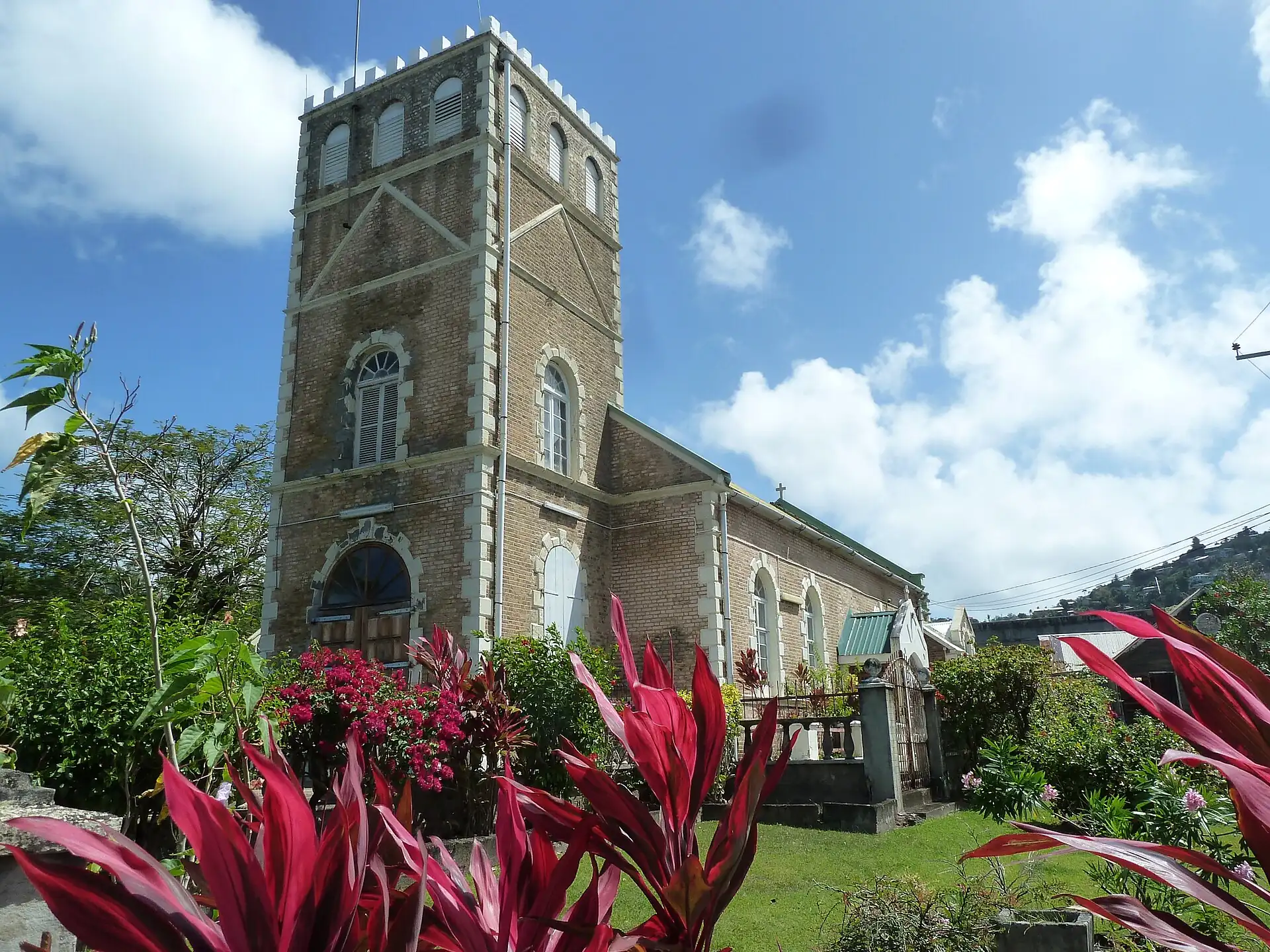
Morning cluster: the square, the cathedral and the streets around it; go before the heat and before the cruise crowds, and skip it on Sunday.
rescue 100% · max p90 4.6′ · half
Morning-only cluster: the market, the harbour and the streets of the northern town centre; go early on a weekday or Saturday, avoid Sunday.
rescue 100% · max p90 4.6′ · half
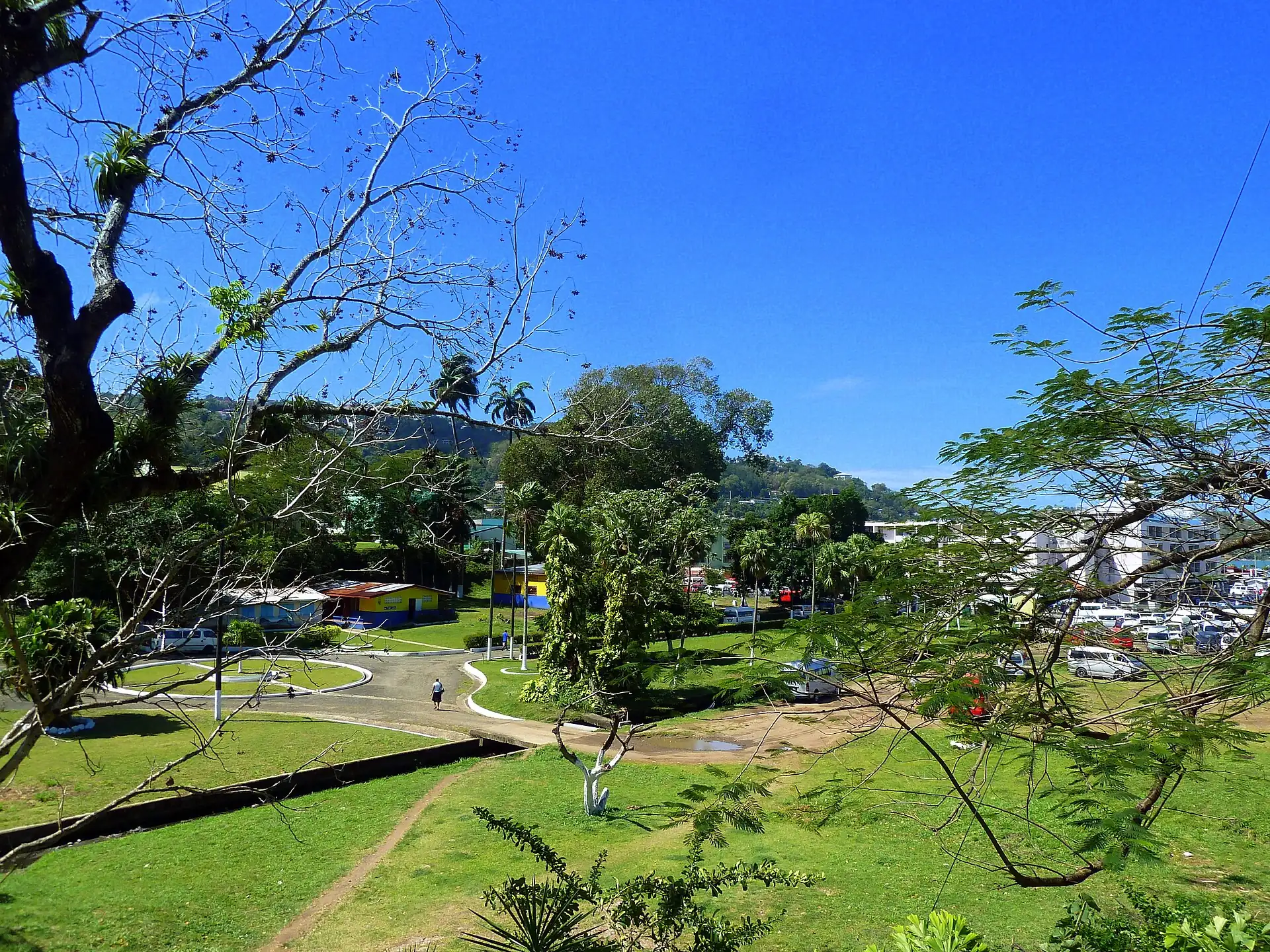
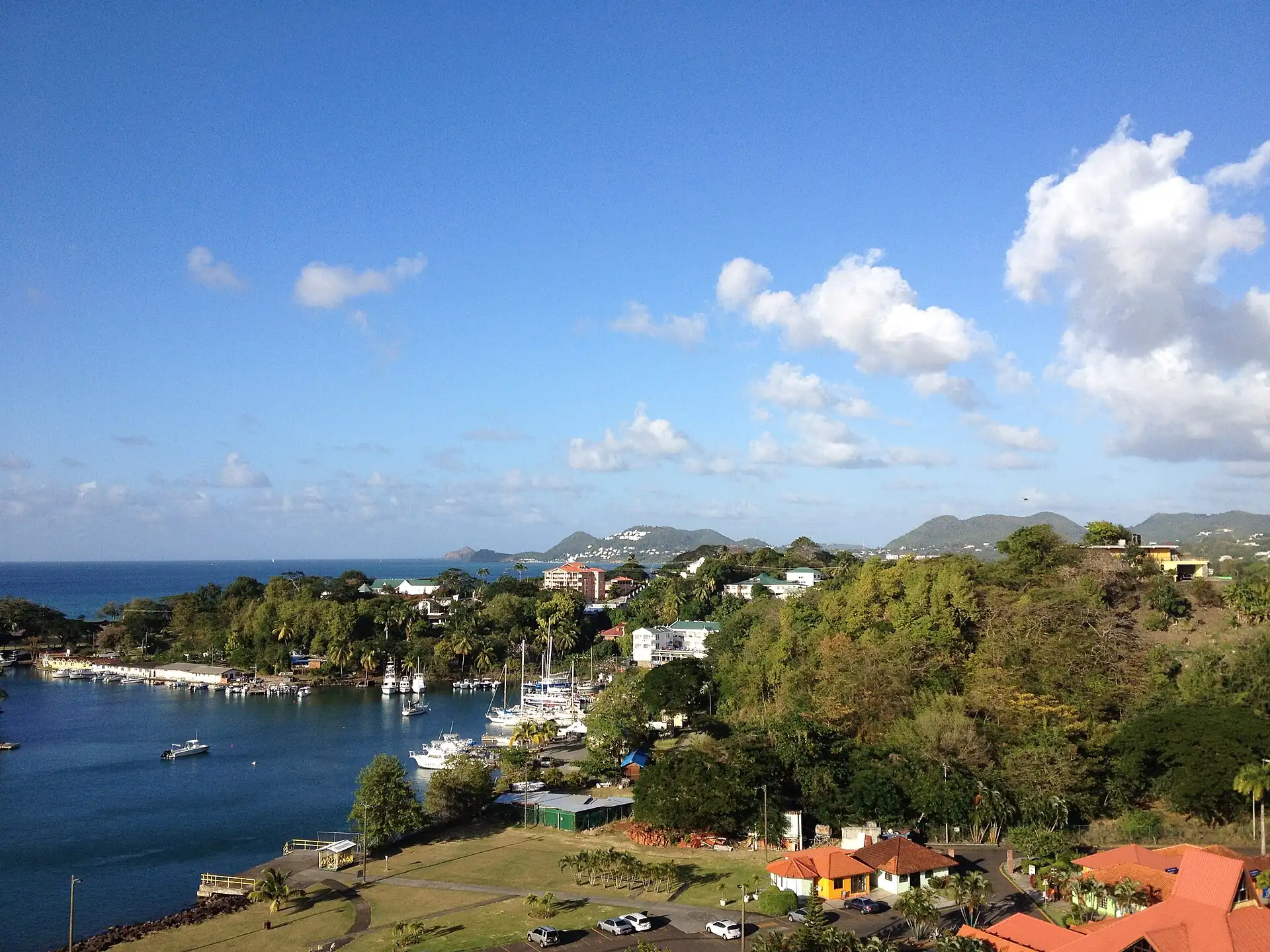
Evening cluster: the beach and marina at the airport end of town, for a swim and an early dinner; planes pass low overhead.
rescue 100% · max p90 4.6′ · half
Taxi cluster: the hill above the town with the old fort and views over the harbour; go by taxi in the morning, and ask the driver to wait.
rescue 100% · max p90 4.6′ · half
Days
Ready-made day plans, timed against opening hours and walking distances.
How long are you staying?
1 day
Derek Walcott Square and the cathedral, then the market, then Fort Charlotte by taxi before an afternoon flight or transfer.
Castries in 3 days
3 daysMornings in town and on the hill, middays in shade or on the beach, evenings quiet; the last day ends with the bags already in the car.
Day by day
Day 1 — Derek Walcott Square and the cathedral, a 12:30 lunch table
- 08:30Derek Walcott Square
- Cathedral Basilica of the Immaculate Conception (optional)
- Café Olé (optional)
- 12:30Lunch table 12:30 (town centre)
Day 2 — Fort Charlotte by taxi, then dinner at Vigie Cove
Day 3 — Central Market, car to the airport at 12:00
- 08:00Castries Central Market
- Market food stalls (optional)
- Pointe Seraphine (optional)
- 12:00Car to the airport at 12:00
Places
“Best time” is when to arrive for the fewest crowds, for example “before 08:30”; “Go any time” means the hour makes little difference. More sights follow under “More sights and museums”.
7 places. Filters use the guide’s own ratings; a place with no rating is left out when a filter is on.
Tours, classes and shows in Castries →
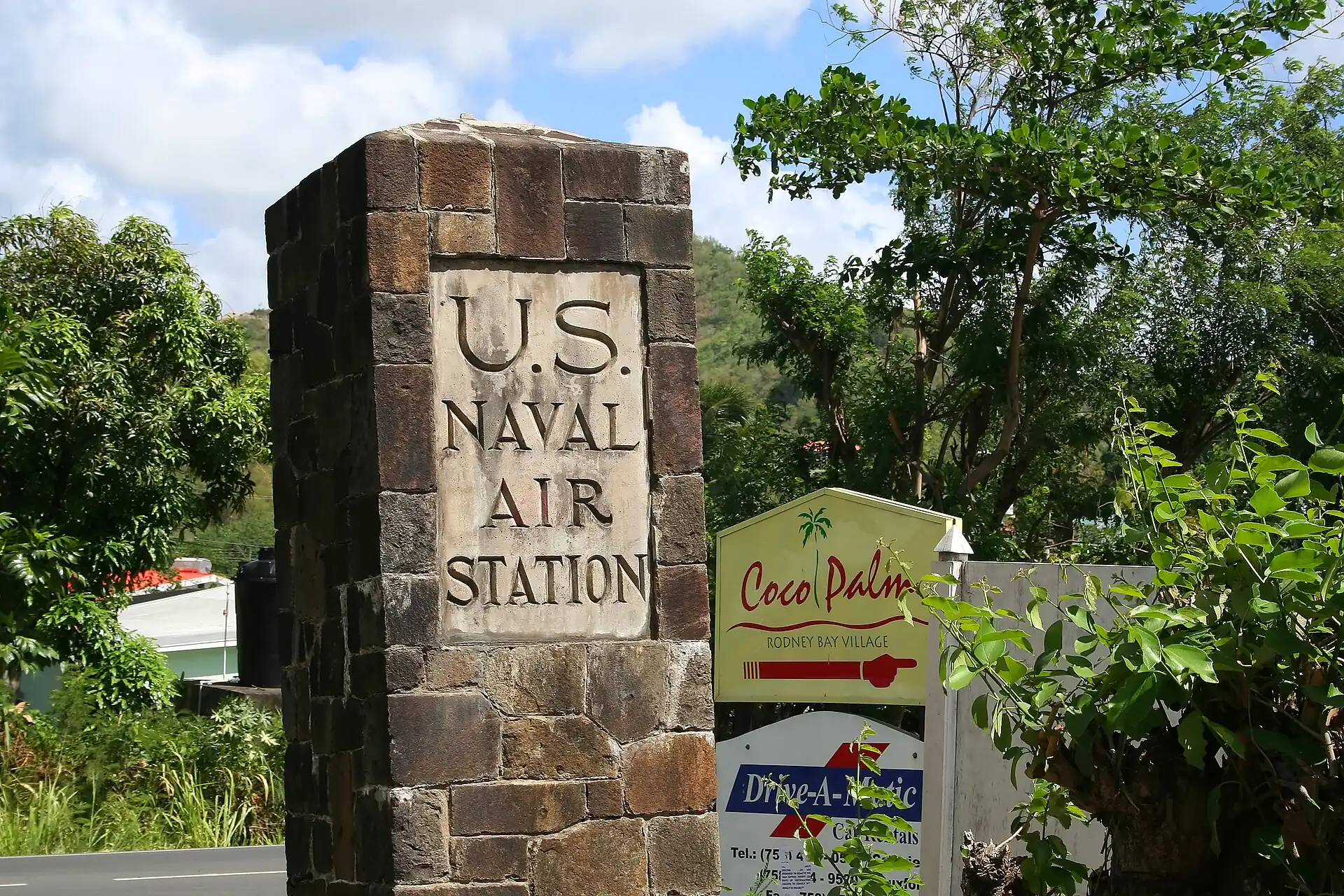
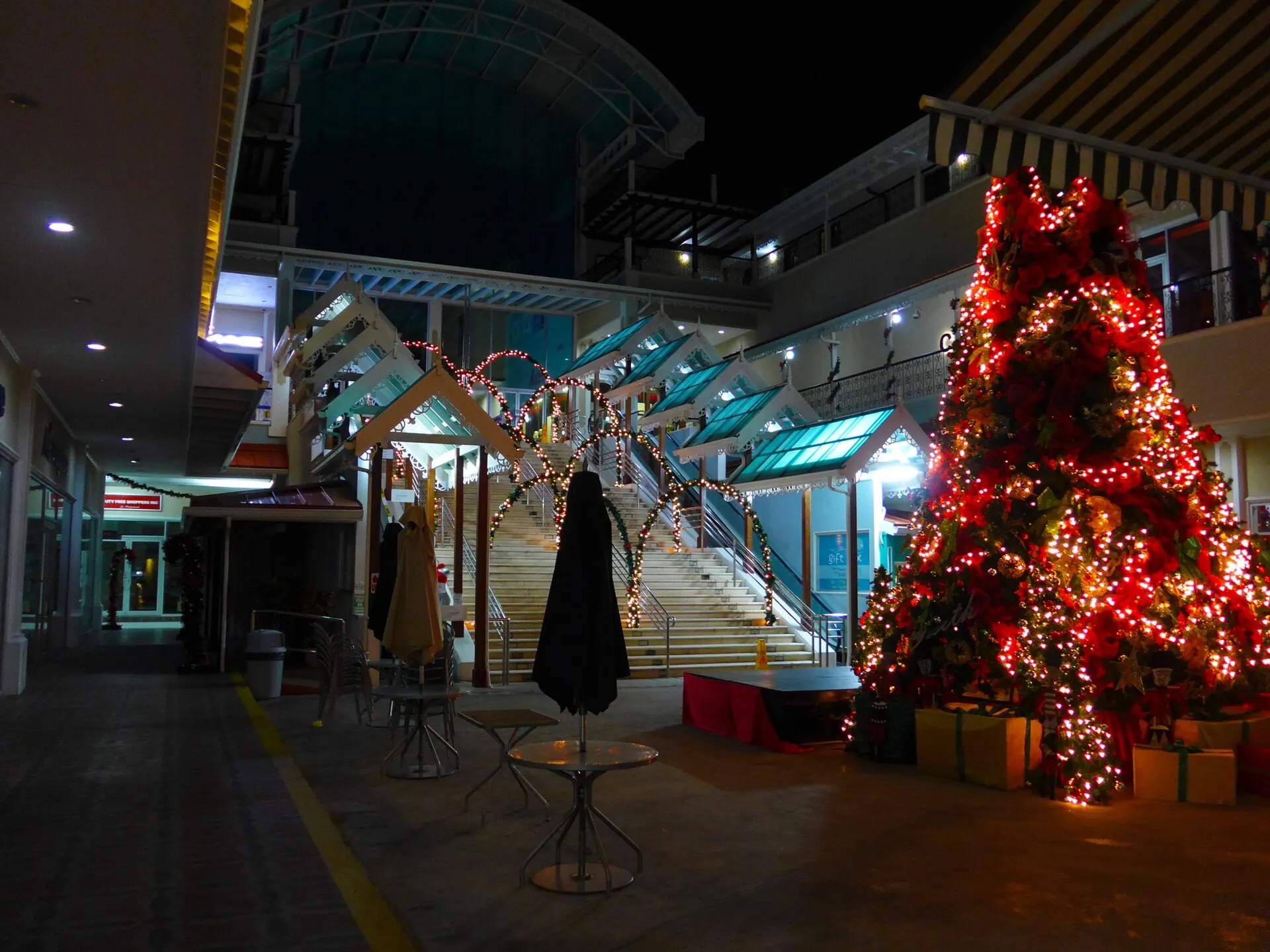
If you do ten things in Castries
Ranked for a short first visit of 1–3 days. Prices are 2026 estimates in EC dollars; hours marked (check) in the linked pages still need confirmation.
- 1
Derek Walcott Square in the morning
Shade, the cathedral opposite, and the town's calmest window before cruise crowds build.
- Time
- 15–25 min
- Best
- 08:00–09:30
- Cost
- Free
- 2
Spices, crafts and produce in a working market, not a tourist reconstruction.
- Time
- 30–45 min
- Best
- Saturday morning, or any weekday before 11:00
- Cost
- Free to browse
- 3
Fort Charlotte and the Morne Fortune view
The widest view over Castries harbour, plus 18th-century cannons and barracks.
- Time
- 40–60 min
- Best
- Morning, before the heat
- Cost
- Free grounds; taxi EC$25–40 return
- 4
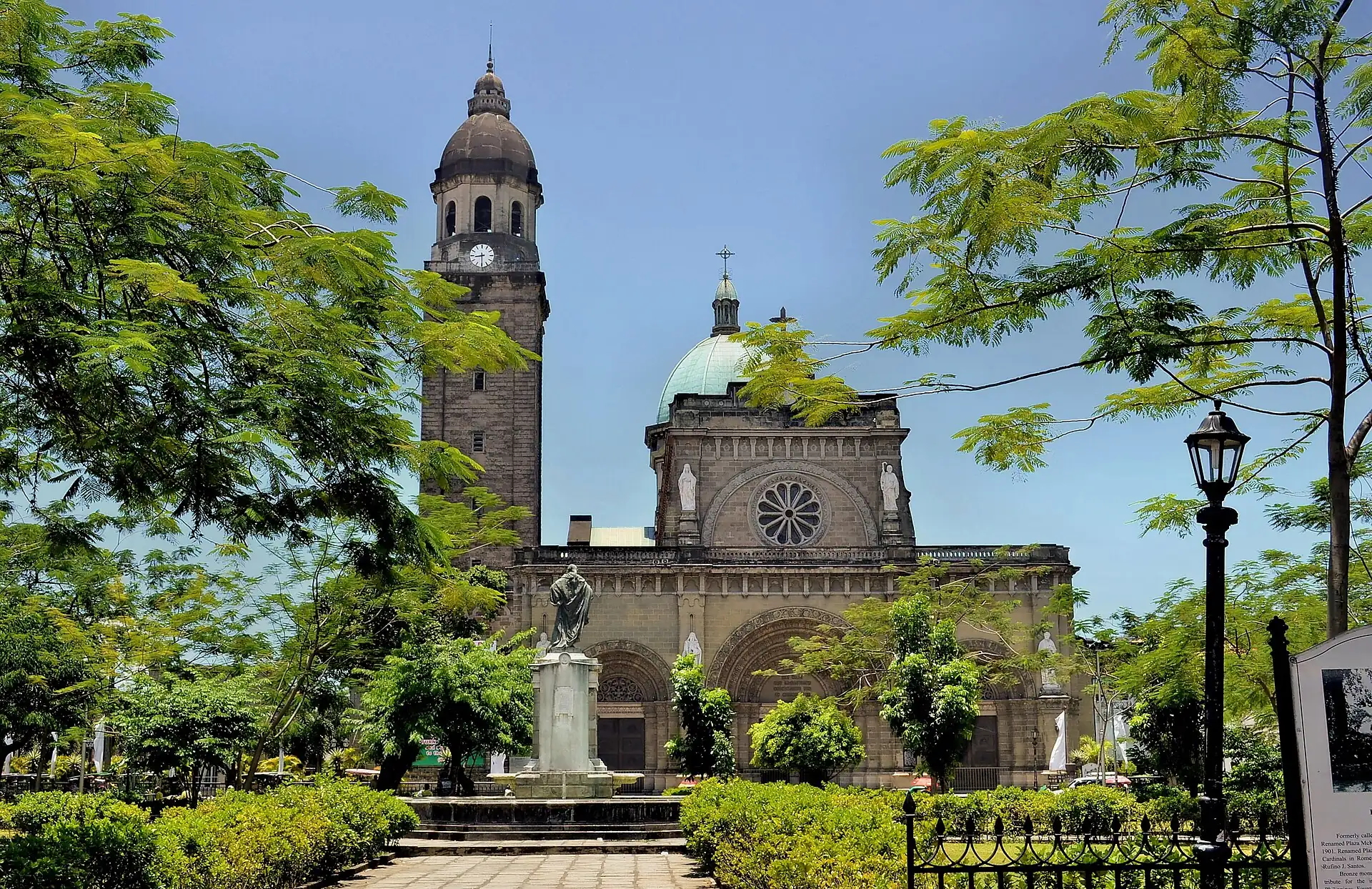
Cathedral Basilica of the Immaculate Conception
A brightly painted cathedral interior two minutes from the square.
- Time
- 20–30 min
- Best
- Weekday, outside mass
- Cost
- Free
- 5
Vigie Beach for a swim or a sunset walk
The easiest beach close to the centre, with planes passing low overhead on approach.
- Time
- 45–90 min
- Best
- Late afternoon
- Cost
- Free
- 6
Soufrière and the Pitons
St Lucia's defining landscape, a half-day trip by boat or road.
- Time
- Full day
- Best
- Leave early; go by boat if prone to motion sickness on the road
- Cost
- EC$150–350 per person
- 7
The most step-free, air-conditioned shopping stop in town, best on a cruise day.
- Time
- 20–40 min
- Best
- When a ship is in port
- Cost
- Free to browse
Good for…
Neighbourhoods in one line
| Area | Feel | Suits | Go | Avoid |
|---|---|---|---|---|
Tours and classes: book or skip
| Tour or class | Verdict | Typical price | Why | Check before paying |
|---|---|---|---|---|
What each season brings
Dry season (Dec–May)
Wet / hurricane season (Jun–Nov)
Photo spots and the light
| Spot | Best light | Tip |
|---|---|---|
Castries travel FAQ
Is Castries worth more than a day?
For most visitors, one full day covers the square, cathedral, market and Fort Charlotte comfortably. A second day makes sense if you add Soufrière and the Pitons or want an unhurried pace; beach time is better spent at Rodney Bay or the south-west coast.
Do I need to worry about cruise ships?
Only in that they change the town's character: on a multi-ship day the square, market and harbour front are crowded from mid-morning and taxi and craft prices firm up. Check the day's schedule with your hotel and plan an early or a non-cruise day if you want it quiet.
Can I see the Pitons from Castries?
No — the Pitons are near Soufrière, about 1.5–2 hours away by road or boat. Castries itself has hill views from Morne Fortune, not the twin-peaks view.
Is it safe to walk around at night?
The town centre is quiet and poorly lit after dark; use a taxi rather than walking back to your hotel at night, especially around the harbour and market.
More to see and doSee & do · Learn & work · Rain & heat · Free things · Wheelchair and stroller
Free things to do
Sights in Castries that cost nothing to enter. Each is described under Places or More sights; extra costs inside are marked there.
Wheelchair and stroller, place by place
How each place in this guide works for wheels, from its own page. Ratings are desk estimates unless a page says it was checked on the ground.
| Place | Step-free | Wheelchair | Stroller | What to know |
|---|---|---|---|---|
| Castries Central Market | partial | caution | caution | A few steps at some entrances; ask staff for the flattest way in. |
| Derek Walcott Square | yes | ok | ok | None inside the square; low kerbs at the crossings. |
| Fort Charlotte, Morne Fortune | no | poor | poor | Multiple flights within the fort area; the road itself has no pavement in places. |
| Cathedral Basilica of the Immaculate Conception | partial | caution | caution | About 4–6 steps at the main entrance. |
| Pointe Seraphine | yes | ok | ok | None of note. |
| Vigie Beach | yes | caution | caution | None on the approach road. |
| Vigie Point Lighthouse | no | poor | poor | No formal steps, but a rough, sloped surface for part of the climb. |
See & do
11 of 11
- square
Shady square named for the Nobel-winning poet; the town's natural first stop.
Town centre · Always open · Free
Brightly painted cathedral interior on the square's east side.
Town centre · Daytime outside mass (check) · Free
- Markets
Spices, crafts and produce; busiest Saturday morning.
Harbour front · About 06:00–17:00 Mon–SatAbout 6:00 AM–5:00 PM Mon–Sat · Free to browse
- shopping
Duty-free shopping built for cruise passengers; quiet with no ship in port.
Harbour front · About 08:30–17:00 on cruise daysAbout 8:30 AM–5:00 PM on cruise days · Free to browse
18th-century hill fort with the best harbour view in town.
Morne Fortune · Daytime (check) · Free grounds
- beach
Town beach beside the airport runway; calm at the sheltered end.
Vigie · Always open, go by daylight · Free
A short uphill walk from the beach to a harbour-approach view.
Vigie · Daylight only · Free
Soufrière and the Pitons day trip
excursionThe island's signature volcano-and-twin-peaks view; go by boat if you get seasick on winding roads.
West coast · Full day · Boat or car tour EC$150–350 per person (2026 estimate, check)
Pigeon Island half day
excursionFort ruins and a beach on a causeway-linked islet north of Rodney Bay.
Rodney Bay area · Half day · Small entry fee (check)
Harbour and coastline boat trip
ActiveA calmer way to see Morne Fortune and the coast than the winding roads.
Castries harbour · Half day · EC$80–200 per person (2026 estimate, check)
Cooking or rum-tasting session
ClassesLocal rum and Creole cooking; ask your hotel for a current operator.
Hotels and a few operators · Varies · EC$100–250 (2026 estimate, check)
- Booking
- Book the Soufrière/Pitons trip and any boat tour a day or two ahead in the Dec–Apr high season; storms can cancel boat trips in the Jun–Nov wet season, so keep a backup day.
Learn & work
| What | Where | Cost | Note |
|---|---|---|---|
| Kwéyòl (Saint Lucian Creole) basics | Informal — ask locally; no fixed visitor school confirmed | — | Most short visits pick up a handful of Kwéyòl greetings from staff and drivers rather than a class (check for any current course). |
| Cooking classes | Hotels and a few independent operators | EC$100–250 (2026 estimate, check) | See Do; ask your hotel for a current recommendation. |
Working here
- Tourist entry
- Most visitors are admitted for a set period on arrival (commonly up to 6 weeks — confirm your nationality's allowance); this does not permit paid work.
- Work permit
- Legal work needs an employer-sponsored work permit; expect paperwork and processing time before you can start.
- Remote work
- Saint Lucia has no dedicated long-stay remote-work visa confirmed at time of writing (check); working for a foreign employer on a tourist entry is a grey area handled informally by many visitors.
Rain-day and heat-day plan
Rain day
Wet-season showers (Jun–Nov) are usually short and heavy: wait them out under cover rather than walking through one, then continue.
- 01Pointe Seraphine — Covered, air-conditioned shopping; the most reliable indoor stop in town.
- 02Cathedral Basilica of the Immaculate Conception — A quiet indoor half hour if it is open.
- 03Shopping-centre food court — AC and a meal while a shower passes.
Heat day
Outdoor sights before 10:30 and after 16:00; AC or shade in between; water every hour, especially at Fort Charlotte and Morne Fortune, which have little shade.
- 07:30Derek Walcott Square — Coolest part of the day; quiet before cruise crowds.
- 09:00Castries Central Market — Best light and the freshest produce, before the midday heat and crowds.
- 10:00Fort Charlotte, Morne Fortune — Go early; the fort has little shade by midday.
- 16:00Vigie Beach — Cooler swim and sunset light at the sheltered end.
Day-trips and nearby
Places you can reach from Castries in a day or with one night away, with the route and what it costs. Door to door, not ride time.
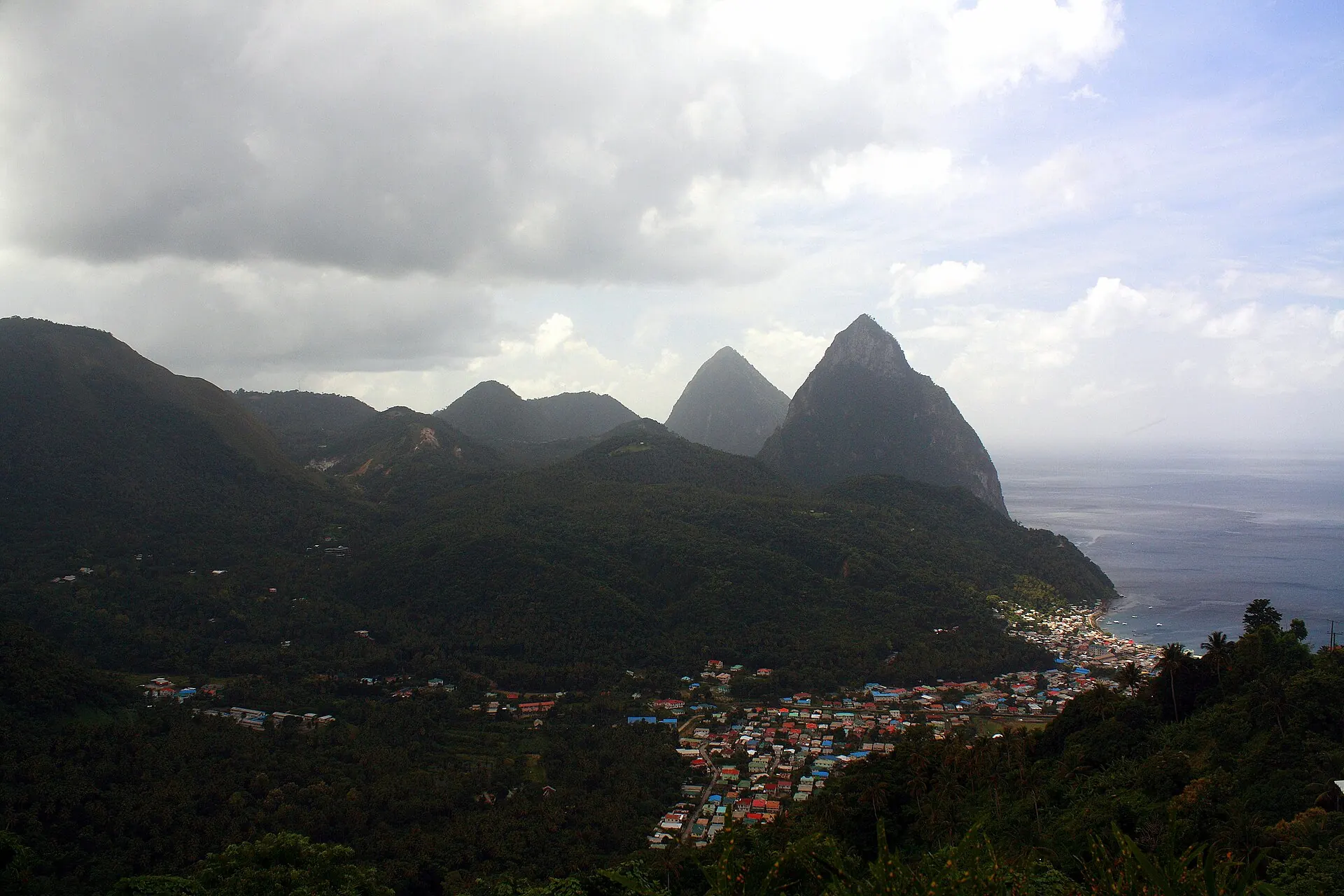 Photo: Shawn from Airdrie, Canada, CC BY-SA 2.0
Soufrière and the Pitons
goBoat or car about 1.5 h each way
Winding road; a boat is easier on the stomach. Leave early.
- Time
- Full day
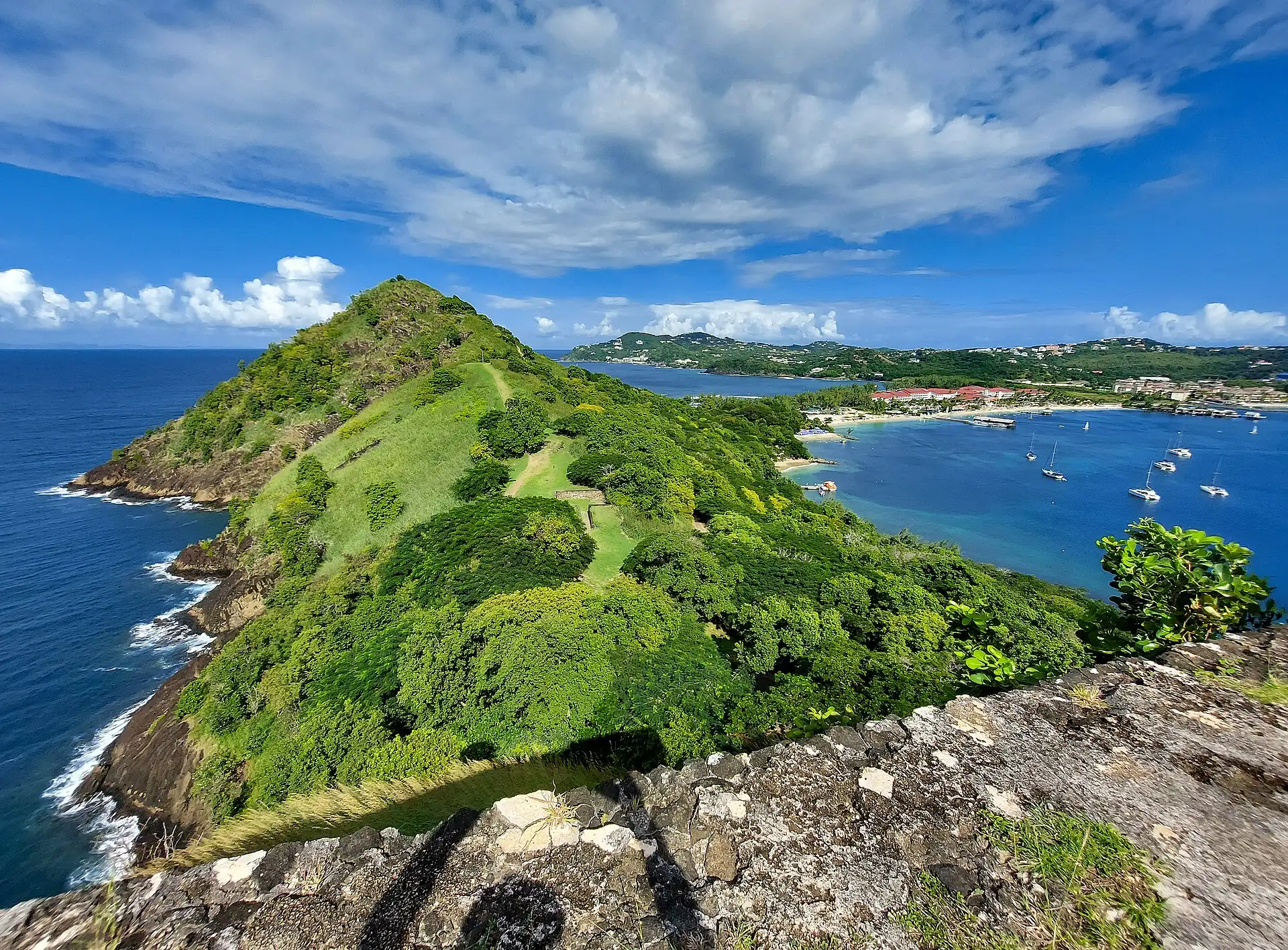 Photo: P. Hughes, CC BY-SA 4.0
Pigeon Island
goTaxi or minibus about 35 min
Fort and beach; less shade in the middle of the day.
- Time
- Half day
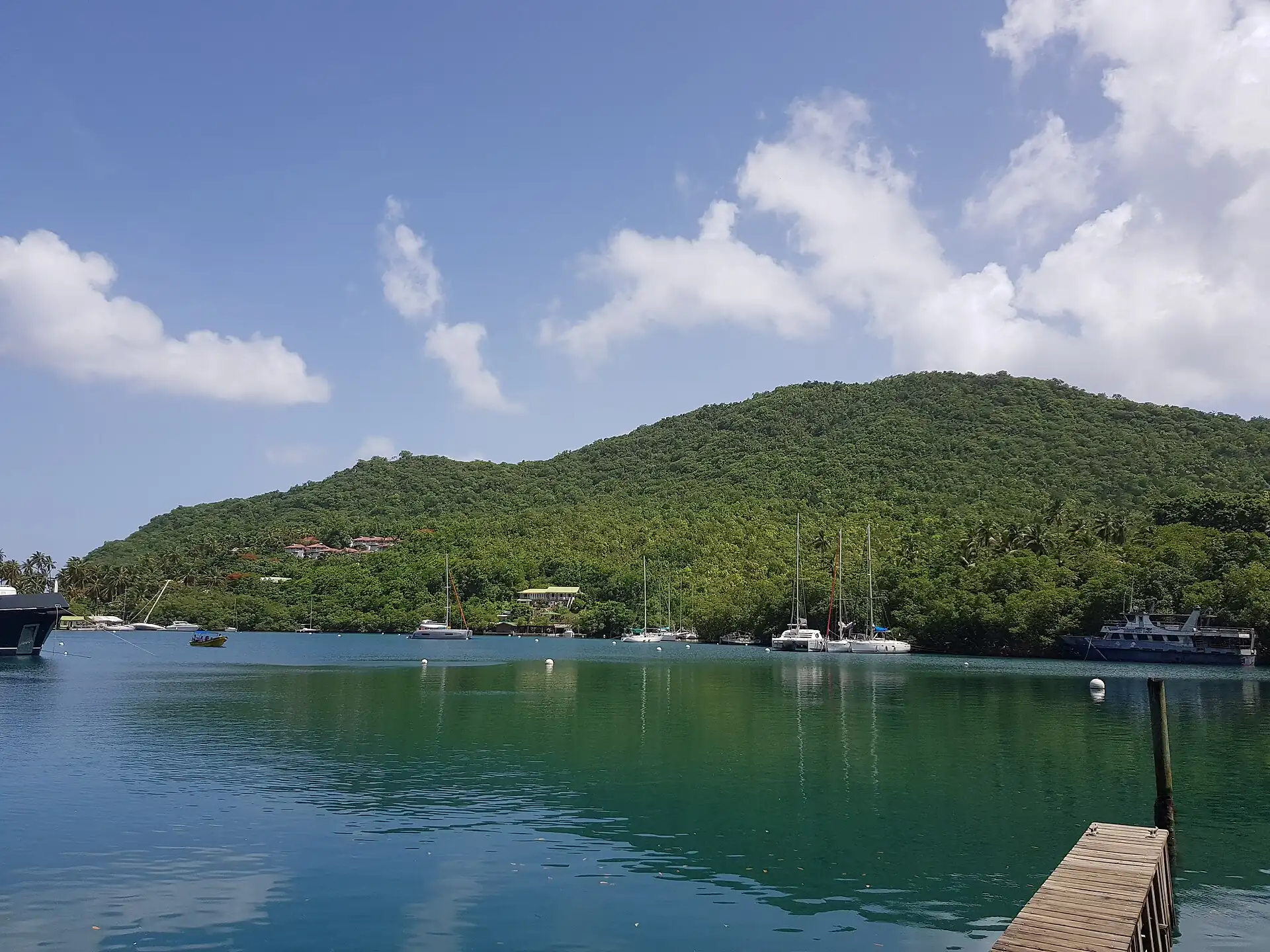 Photo: Enrevseluj, CC BY-SA 4.0
Marigot Bay
goTaxi about 20–25 min
Sheltered bay; lunch and a boat taxi across.
- Time
- Half day
Gros Islet Friday street party
go at hourTaxi about 30 min
Crowded and loud; book a taxi back before you go.
- Time
- Evening
Go next
Rodney Bay and Pigeon Island
goDoor to door: 25–40 min
Taxi about 25–40 min
Beaches, restaurants and the Friday Gros Islet street party; the easiest add-on from Castries.
Anse Chastanet and Anse Mamin (near Soufrière)
goDoor to door: As part of a Soufrière day
Combine with a Soufrière day trip
Snorkelling beaches at the foot of the Pitons; pair with the volcano and botanical gardens.
Barbados
goDoor to door: About 2–3 h airport to airport
Flight about 45 min from Hewanorra (UVF) or George F. L. Charles (SLU)
The easiest inter-island hop if you want a second Caribbean stop.
Eat & sleepWhere to eat and which area to sleep in
Eat & sleep
Where to eat and which area to sleep in
Eat
A short list of places worth crossing the city for, each with how to get a seat.
Restaurant finder: filter every place to eat in Castries →
Vegetarian-friendly score
1.0 / 5 · Hard work
- Country diet noteOur country guide rates vegetarian eating as mixed.0.75 / 2
- Places to eat in this guideToo few places with a known answer (1) to judge; 4 not yet checked.0 / 1.5
- Budget eating lines0 vegetarian lines in "Eat by budget".0 / 0.6
- Meat-free national dishes2 meat-free dishes in the country food list.0.2 / 0.4
- Dedicated vegetarian kitchens1 mention of vegetarian restaurants, Buddhist or fasting kitchens.0.1 / 0.5
Country note: Provisions and roti help; soups often have meat.
Vegetarian places near me →Make a diet card →
How we score
- Country diet note (up to 2): easy 2, workable 1, mixed 0.75, hard 0; no note 0.5.
- City places to eat (up to 1.5): 1.5 × (vegetarian-friendly + half of partly friendly) ÷ places with a known answer; needs 3 or more known places.
- Budget eating lines marked vegetarian (up to 0.6): 0.2 each.
- Meat-free national dishes (up to 0.4): 0.1 each.
- Dedicated vegetarian kitchens mentioned — Buddhist chay, shōjin ryōri, Jain, fasting food, vegan cafés (up to 0.5): 0.1 each.
- Total rounded to the nearest half point, 0 to 5. Built from our own pages only, not from reviews.
Eating and drinking guideEat by budget · Drink
Before you sit down to eat
Short version; full text linked
- Queues and hours
- Per person, one meal, 2026 estimate. More →
Eat by budget
Under EC$45 a meal
| Where | Order | Area | Price | Note |
|---|---|---|---|---|
| Market food stalls | Local lunch plate | Market and harbour front | EC$25–45 | Go before 13:00 on a weekday.Go before 1:00 PM on a weekday. |
| Café Olé | Coffee and a pastry or sandwich | Derek Walcott Square | EC$15–30 | |
| Bakeries and snackettes | Bakes, patties, rotis | Town centre streets | EC$5–20 | The cheapest hot food in town; look for a queue of local workers. |
Dishes to know
| Dish | What it is | Where to look | When | Price |
|---|---|---|---|---|
| Green fig and saltfish | Saint Lucia's national dish: boiled green banana with salted, cooked cod, onions and peppers | Local restaurants and the market food stalls | Breakfast or lunch | EC$25–45 |
| Bakes and saltfish | Fried dough with salted cod | Bakeries, market stalls | Breakfast | EC$10–25 |
| Callaloo soup | Leafy-green soup, often with coconut milk | Restaurants across town | Lunch, dinner | EC$15–30 |
| Lambi (conch) | Curried, grilled or fritter-style conch | Seafood restaurants, Vigie Cove | Lunch, dinner | EC$50–120 |
| Piton beer | The island's own lager | Everywhere | Any | EC$8–14 |
- Ask whether a service charge (often 10%) is already added before tipping again.
- Book waterfront dinner tables a day or two ahead in the Dec–Apr high season.
Drink & nightlife
| Where | What | Until | Note |
|---|---|---|---|
| Hotel bars, Castries centre and Vigie | Rum cocktails, beer | About 22:00–23:00About 10:00 PM–11:00 PM | The main after-dark option inside Castries itself. |
| Vigie Cove marina restaurants | Dinner with a drink, harbour view | About 22:00About 10:00 PM | The Coal Pot and Jacques Waterfront Dining both serve into the evening. |
| Rodney Bay strip | Bars, live music, later nights | Late | A 25–50 minute taxi from Castries; the island's main nightlife area. |
| Gros Islet Friday street party | Street food, music, dancing | Late | Weekly event, not a Castries venue; book a taxi back in advance. |
By style
| Style | What | Where | Price | Until |
|---|---|---|---|---|
| Local rum | Saint Lucia Distillers' rums, neat or in a rum punchAsk for a local brand rather than an imported spirit for the best value. | Bars and restaurants islandwide | EC$8–16 a drink (2026 estimate) | Varies by venue |
| Piton beer | The island's own lager | Everywhere | EC$8–14 | Varies by venue |
| Hotel and marina bars | Cocktails, wine | Castries centre and Vigie Cove | EC$15–30 | About 22:00–23:00 |
Rules that bite
- Drink-driving laws apply on Saint Lucia's roads as elsewhere; if you plan to drive back from Gros Islet or Rodney Bay, agree who is not drinking before you go.
- Camouflage-pattern clothing, including swimwear, is illegal for civilians and can be confiscated; leave it at home.
Sleep
Pick the area first: it decides your walk home at night and your first morning.
Which neighborhood fits you
Three questions, one recommendation, with the reasons.
Your best fit
Castries centre (harbour and Derek Walcott Square)
- The square, cathedral, market and harbour front all inside a 10-minute walk.
- The most affordable beds in the Castries area, without a beach.
Watch out: Harbour and market traffic by day; quiet and a little empty at night and on Sundays.
Next best: Rodney Bay
Built from our 1–5 desk scores per area; your answers stay in this browser.
More on sleepingSleep by budget · Your area · With kids
Sleep by budget
| Band | Price | Where | Room types | What to expect |
|---|---|---|---|---|
| budget | EC$250–450 | Castries centre | Small hotels and guesthouses | Simple rooms, a fan or basic AC, walkable to the sights; check the night-desk hours. |
| mid | EC$450–900 | Castries centre, Vigie | Mid-range hotels | AC, breakfast, closer to the marina restaurants. |
| splurge | EC$900–2,000+ | Rodney Bay | Beach resorts | Pools, beach access, restaurants on site; budget a taxi for every trip to Castries. |
Booking checks
- Ask whether the hotel has a 24-hour desk if you are landing at Hewanorra (UVF) after a long transfer.
- Rooms away from the main road are quieter in the town centre, which carries harbour and market traffic by day.
Which area is yours
| If you are | Sleep in | Because |
|---|---|---|
| One or two nights before a flight, or a history-and-market focus | Castries centre (harbour and Derek Walcott Square) | Everything walkable, cheapest beds in the area, but no beach on the doorstep. |
| A beach-first holiday with a day in the capital | Rodney Bay | Sea, pools and nightlife; budget a taxi for every trip into Castries. |
Short stays for the market, the cathedral and early boats: everything in town is a walk, but pick a hotel with a 24-hour desk and a car-accessible door.
Resort driveways take a car to the door.
Areas are in our default order until you tick a priority.
Scores are 1–5 desk judgements per priority (2026).
With kids
- Vigie Beach's sheltered southern end is the easiest swim spot close to the centre; ask locally which stretch is calm that day.
- Fort Charlotte's cannons and views are a hit with older children; steep steps and low walls need close supervision with toddlers.
- The market is short, colourful and a good five minutes with younger kids before the crowds build.
- Heat or rain: a shopping-centre food court or a hotel pool is the fallback; Castries has no dedicated indoor children's attraction.
- Few taxis carry child seats; bring a travel booster if you plan to use taxis with a young child.
PracticalMoney, essentials, safety and the pocket card
Practical
Money, essentials, safety and the pocket card
Money
What a day costs at three comfort levels, and how to pay.
- Budget
- EC$120–220 excl. bed / day
- Mid
- EC$220–450 excl. bed / day
- High
- EC$450+ excl. bed / day
- Transit card
- No transit card: taxis, minibuses and walking.
- Cash rule
- Keep EC$100 in small notes; use ATMs at banks or shopping centres in daylight. US dollars are widely taken, but change comes back in EC dollars.
More on moneyCosts · Budget · Buy
What things cost
- Local lunch plateEC$25–45
- Bottle of waterEC$3–6
- Minibus fare on the main roadEC$2.50–5
Trip budget
| Hotel double room, town centre1 × 2 nights × XCD 450 | XCD 900 |
| Food, local transport, entries2 × 2 days × XCD 300 | XCD 1,200 |
| Airport transfer, UVF to Castries, one way1 × XCD 260 · One car for up to 4 people | XCD 260 |
| eSIM or local SIM2 × XCD 50 | XCD 100 |
| Buffer 10%Price creep, a taxi you did not plan, one splurge | XCD 246 |
| Trip total≈ XCD 677 per person per day, bed included | XCD 2,706 |
2026 estimate in Eastern Caribbean dollars (EC$); flights and day tours excluded. Your choices stay in this browser.
Prices of common things
| Local lunch plate | EC$25–45 |
2026 estimate; check locally.
Buy
- Bargaining
- Prices are fixed at the market for food and in shops with tags. On craft stalls, especially at Pointe Seraphine and around the market on cruise days, a modest counter-offer on multiple items is normal; walk away politely if it does not move.
- Fixed-price check
- Supermarkets (Massy Stores, JQ's) give a fair reference price for rum, spices, coffee and snacks before you shop at a craft stall or cruise-terminal shop.
Markets and shopping streets
| Where | What | When | Haggle | Note |
|---|---|---|---|---|
| Castries Central Market | Produce, spices, hot sauces, baskets and wood carvings | About 06:00–17:00 Mon–Sat, closed or thin on Sun (check)About 6:00 AM–5:00 PM Mon–Sat, closed or thin on Sun (check) | light | Food prices are fixed; a little room to negotiate on crafts. |
| Vendors Arcade (beside the market) | T-shirts, souvenirs, jewellery | Shop hours; busiest on cruise days | light | Compare a few stalls before buying; similar goods, varying first prices. |
| Pointe Seraphine | Duty-free jewellery, rum, liquor, souvenirs | About 08:30–17:00 on cruise-ship days; reduced otherwise (check)About 8:30 AM–5:00 PM on cruise-ship days; reduced otherwise (check) | no | Fixed prices; bring your passport and travel documents for duty-free purchases. |
Shops by what they sell
| For | Where | Hours | Note |
|---|---|---|---|
| Rum and local spirits | Supermarkets, duty-free at Pointe Seraphine | Shop hours | St Lucia distils its own rum; compare the duty-free price with a supermarket shelf price before assuming a saving. |
| Spices and hot sauce | Central Market | About 06:00–17:00 Mon–Sat | Bay leaf, cinnamon, nutmeg and cocoa sticks travel well; cheap and genuinely local. |
| Batik and craft souvenirs | Vendors Arcade, Pointe Seraphine, Eudovic Art Studio (outside the centre) | Shop hours | Prices firm up on cruise days; a calmer non-cruise afternoon gives more room to negotiate. |
| Supermarkets (groceries, sun cream, basics) | Massy Stores and JQ's, on the edge of the centre | About 08:00–20:00, shorter on Sunday | Fixed prices; the cheapest sun cream and bottled water in town. |
Changing money
| Where | Verdict | Why |
|---|---|---|
| Bank branches (Bank of Saint Lucia, Republic Bank) | use | Fair rate and a receipt; weekday hours, sometimes a Saturday morning. |
| ATMs at banks and shopping centres | use | The easiest way to get EC dollars; use machines in daylight at a bank or mall, not an isolated street ATM. |
| Hotel front desk | caution | Convenient, a weaker rate. |
| US dollars in cash | ok | Widely accepted for purchases; change usually comes back in EC dollars, so know the rough exchange rate (about EC$2.70 per US$1). |
ATMs
- Where
- Bank-operated ATMs in the town centre and at shopping centres are the most reliable; some charge a local fee on top of your own bank's fee.
- Per withdrawal
- Typical caps run EC$500–1,500 per withdrawal (2026 estimate); the screen shows the limit.
- Conversion
- If a card machine or ATM offers to charge in your home currency, decline and pay in EC dollars.
Essentials and accessEssentials · Access
Essentials
- Plugs & power
- 230 V, 50 Hz; sockets are mostly type G (UK style): bring an adapter and check appliance voltage.
- Health
- Strong sun, mosquitoes at times, and hurricane season. Travel insurance with medical and storm cover.
- Accessibility
- Pavements are narrow and steep in places; few places are step-free.
- Laundry
- Hotels do laundry by the item.
Pack
- Light, breathable clothes and a cover-up for town
- Reef-safe sunscreen, hat and a refillable bottle
- A rain jacket and a dry bag for boat days
- Sturdy shoes for the forts
Accessibility
Castries is hard going on wheels. The town centre and harbour front are mostly flat but the pavements are narrow and uneven, and every other sight — Morne Fortune above all — needs a car and involves steps or slopes. Step-free access is strongest at Pointe Seraphine and weakest at the fort.
- Pavements
- Narrow, cracked and occasionally missing in the town centre; wider and better paved at Pointe Seraphine.
- Getting around
- Taxis are the practical step-free option for anywhere outside the flat town centre; ask for a larger vehicle if you need extra room for a wheelchair.
- Hotels
- Larger hotels and Rodney Bay resorts have lifts and step-free rooms; smaller town-centre guesthouses often do not — ask for photos of the entrance.
- Toilets
- Accessible toilets are most reliable at shopping centres and larger hotels; rare elsewhere.
- Crossings
- Few signalled crossings; cross with a local where the traffic is fast.
Sights, step-free or not
| Derek Walcott Square | step-free | Flat, paved square; the surrounding pavements are narrower. |
| Pointe Seraphine | step-free | The most step-free sight in town, built for cruise foot traffic. |
| Castries Central Market | with help | Narrow, crowded aisles; go early for more room. |
| Cathedral Basilica of the Immaculate Conception | with help | A handful of steps at the main door; level floor inside. |
| Vigie Beach | with help | Flat approach road; soft sand on the beach itself. |
| Fort Charlotte, Morne Fortune | hard | Steep approach road and stepped paths throughout. |
Survive
Safety basics, the lines not to cross, and practical habits that save the day.
Safety
- Traffic drives on the left; roads are steep, narrow and winding, with fast minibuses.
- Use licensed taxis and agree the fare first; avoid walking outside the centre after dark.
- Emergency: 911 or 999 (police, fire, ambulance).
Red lines
- Do not wear camouflage-pattern clothing: it is illegal for civilians.
- Beachwear is for the beach: cover up in town and in the cathedral.
Practical
- Toilets: cafés, the market, shopping centres and hotels.
- Tap water is treated but many visitors buy bottled water.
More on staying safeStay safe · Stay healthy · Safety map · Solo & women · Etiquette · Cope · Scams
After dark, by area
4 flagged areas
Derek Walcott Square and town centre
Take care- Take care
- Take care
- Take care
Day = about 07:00–19:00. What to watch in each area, day and night →
Scams and red flags
Walk away if you see these
- Taxi drivers who do not name a fare: agree the total in EC or US dollars before you get in.
- Unlicensed guides at the harbour and at the forts: use a tour desk or a guide with a tourism-authority badge.
Stay safe
Crossing the road
- 01Traffic drives on the left: look right first, then left, before crossing.
- 02Roads are narrow and winding with fast minibuses; do not assume a car will stop.
Hustles specific to this city
| Hustle | Where | The tell | What to do |
|---|---|---|---|
| No-fare taxi rides | Harbour, market, hotels | A driver who avoids naming a price until you arrive | Agree the total in EC or US dollars before you get in. |
| Unlicensed tour guides | Harbour front, Morne Fortune | Someone offers a tour or 'help' without a visible tourism-authority badge | Use a hotel tour desk or a licensed guide only. |
- Police
- 911 or 999. The main Castries police station is in the town centre.
- Night
- Violent crime against visitors is uncommon but not unheard of; avoid walking alone after dark outside your hotel, especially around the harbour and market.
Stay healthy
- Sun
- Strong, near-equatorial sun year-round: high-SPF, reef-safe sunscreen, a hat and shade breaks, especially at the market, the square and Fort Charlotte.
- Mosquitoes
- Present, with some dengue risk reported regionally; use repellent, especially at dawn and dusk and after rain.
- Hurricane season
- Jun–Nov: watch the forecast, keep a flexible day for the Soufrière boat trip, and buy travel insurance with storm cover.
- Food and water
- Tap water is treated, but many visitors drink bottled water; busy market stalls with fast turnover are a safer bet than a quiet, empty one.
Hospitals and clinics: see Cope.
Safety by area and hour
| Area | Day | Night | What to watch |
|---|---|---|---|
| Derek Walcott Square and town centre | fine | caution | Quiet and poorly lit after dark; take a taxi rather than walking back to your hotel at night. |
| Market and harbour front | fine | caution | Busy and safe by day; empties out and is best avoided on foot after the market closes. |
| Vigie Beach and marina | fine | caution | Fine for an evening meal at the marina restaurants; the beach itself is unlit at night. |
| Morne Fortune | fine | caution | No pavement in places; go and return by taxi, not on foot, at any hour. |
- Agree a taxi fare before you get in; drivers work to set zone fares, not a meter.
- Keep bags zipped and in front in the market and around the harbour on cruise-ship days, when crowds are thickest.
- Traffic drives on the left on narrow, winding roads: look right first when crossing.
Solo, women and LGBTQ+ travellers
Solo
- Castries is workable alone for a day or two; evenings are quiet, so plan dinner before dark or take a taxi both ways.
- Book the Soufrière/Pitons trip through a hotel or a licensed operator with written inclusions; solo supplements can apply on boat tours.
Women
- Harassment is uncommon but street comments happen, as across the region; a confident, brief response usually ends it.
- Cover up away from the beach; camouflage-pattern clothing is illegal for civilians.
- Avoid walking alone after dark outside your hotel; use a taxi.
LGBTQ+
- Saint Lucia's laws and social attitudes are conservative; public displays of affection of any kind are best kept low-key, and this applies especially to same-sex couples.
- Resort areas (Rodney Bay in particular) are generally relaxed in practice; smaller local establishments may be less so.
Etiquette in Castries
- Greetings
- Say good morning or good afternoon before asking a question, in a shop, a taxi or on the street; skipping the greeting reads as rude.
- Church
- Shoulders and knees covered in the cathedral; keep quiet and do not walk in front of anyone praying.
- Beachwear
- For the beach only — cover up to walk through town, the market or a restaurant.
- Camouflage clothing
- Illegal for civilians, including children's clothing and swimwear; it can be confiscated at customs or by police.
- Photos
- Ask before photographing vendors, fishermen or anyone up close.
- Tipping
- Check whether a service charge (often 10%) is already on the bill; otherwise 10–15% in restaurants, and round up for taxi drivers and guides.
Cope
Hospitals and clinics that handle foreigners
| Where | Area | Use it for |
|---|---|---|
| Victoria Hospital | Castries centre | The main public hospital; 24-hour emergency department. |
| Tapion Hospital | La Toc, just south of the centre | Private hospital; ask your insurer about direct billing. |
| Pharmacies (Clarke's, M&C, Williams) | Town centre and shopping centres | Common brands and prescriptions; carry your prescription details from home. |
Visa extensions
- Office
- Immigration Department, Castries; weekday office hours. Confirm the address and hours before going (check).
- Extending a stay
- Most visitors are admitted for a set period on arrival; ask immigration at the airport what your stamp allows, and apply to extend before it expires if needed.
- Overstay
- Can mean a fine or trouble at departure: sort it out at the immigration office, not at the airport.
Embassies and consulates
| Country | Address | Phone | Note |
|---|---|---|---|
| United States | Consular agency, Castries area | — | The nearest full embassy is in Barbados; check the current consular arrangement.(check) |
| United Kingdom | High Commission, Castries | — | (check) |
| Canada | Consulate, Castries | — | (check) |
- Lost passport
- Police report first, then your embassy or the nearest regional mission (several countries cover Saint Lucia from Barbados): budget extra days for a replacement or travel document.
- Police
- 911 or 999; the main Castries station is in the town centre.
- Laundry
- Hotels charge by the item; a few dry-cleaners operate in the town centre on weekday hours.
Apps and offline kitOffline kit
Offline kit
Set up before you leave, so Castries still works with no signal or a dead roaming plan.
On your phone
- Maps: open the city in Google Maps, tap the place name, then Download offline map (or use an offline-maps app).
- Data: install an eSIM or buy a local SIM before the first taxi; the apps in this guide depend on it.
- Translation: download the local language for camera translation.
- Screenshots: booking confirmations, hotel address in the local script, and the emergency numbers.
This guide
Save the Castries guide and its pages on this device; it opens without a connection.
Phrases that do the work
Greeting
Good morning
Bonjou
bon-zhoo
Thanks
Thank you
Mèsi
meh-see
Greeting
How are you?
Koman ou yé?
koh-mahn oo yay
Taxi
What is the fare to the hotel?
What is the fare to the hotel?
English is official; ask before you get in
Pocket card
Fill in, then print or save as PDF
Stays in this browser only; nothing is sent anywhere.
CastriesCastries
Pocket card · Voykit
My bed tonight
—
—
—
English is official; ask before you get inWhat is the fare to the hotel?
Emergency
- Police / Fire / Ambulance911 or 999
Embassy
Most nations cover Saint Lucia from a neighbouring island (often Barbados); write your own embassy's number below before you fly.
My embassy: —
Fare anchors (2026 estimate)
- UVF → Castries, taxi: EC$220–300, about 1.5 h
- SLU → Castries, taxi: EC$25–45, 10–20 min
- Taxi across town: EC$15–35
Say or show
- Bonjou — Good morning (bon-zhoo)
- Mèsi — Thank you (meh-see)
- Koman ou yé? — How are you? (koh-mahn oo yay)
- What is the fare to the hotel? — What is the fare to the hotel? (English is official; ask before you get in)
Agree the taxi fare in EC or US dollars before you get in; fares are set by zone, not metered.
Deep diveHistory, reading, photos and every source
Deep dive
History, reading, photos and every source
Sources
- officialSaint Lucia Tourism Authority
- officialGovernment of Saint Lucia
- secondaryWikivoyage — Castries
Ask about Castries
Loading…
Was this useful?