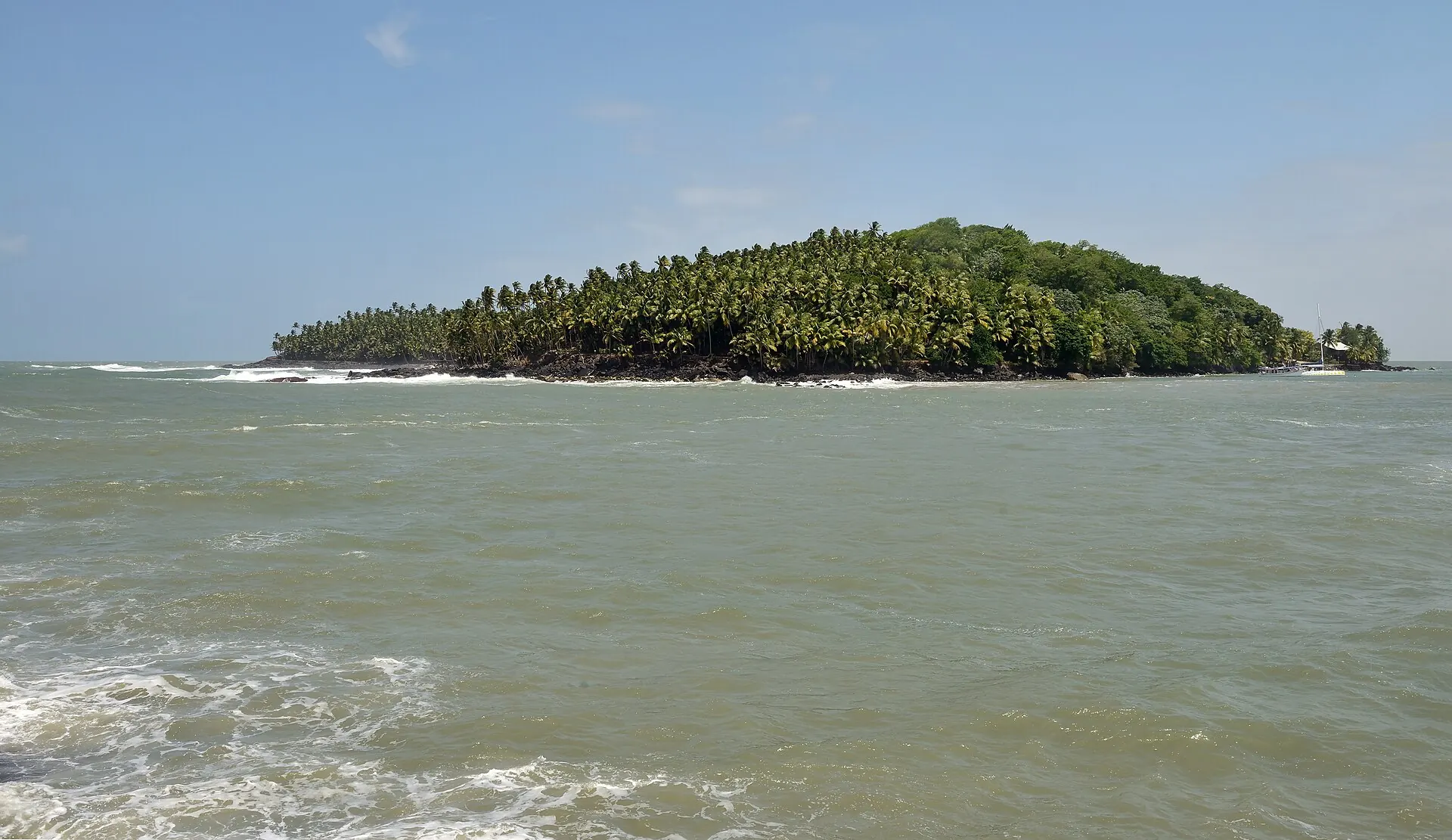
Cayenne
Code FR · 4 walking zones
Cayenne is a hot, low-rise colonial capital on a peninsula: do the streets in the cool morning, take the afternoon indoors, and rent a car only if you go on to Kourou or Saint-Laurent.
Our quick read of Cayenne, scored 1–5 (friction is out of 100). Cash need: how often you still need notes. Heat risk: how hot days get. Stroller: how easy wheels are. Friction: overall effort for a first visit. Desk judgements, so check before relying on them.
- Local time
- --:--
- Weather
- forecast below
- Currency
- EUR
- Best months
- Aug · Sep · Oct · Nov
- Airport
- Félix Eboué (CAY)
Walking zones: the 4 areas this guide plans a day around. Each is a district you can cover on foot, so you do one zone per half-day and ride the train between them. The code (FR 01, FR 02…) is just the zone's number on the Cayenne line; the line under each name says how bags fare there and how much time it needs.
Map of Cayenne
Use the switches to show or hide each kind of pin. A switch that is on shows its pins on the map; tap it again to hide them. "Show only" keeps just the pins that match (for example, places that fit a suitcase). Tap any pin for its name and a link to its page.
- Where to sleep
- Places
- Eat
- Walking clusters
- Rest stops
From the airport Félix Eboué (CAY) to your bed
Tap a pin for its card. Places without their own coordinates are shown by their walking cluster.
Why Cayenne
Cayenne fits in two easy days on foot: Place des Palmistes, the central market, the old port and Fort Cépérou. Trips go wrong on heat at midday, on Sunday closures, and on leaving without a car when the only useful sights are on the coast road. Four small areas cover the town; keep one bed and add Kourou or Saint-Laurent as separate stays.
See first
- 1
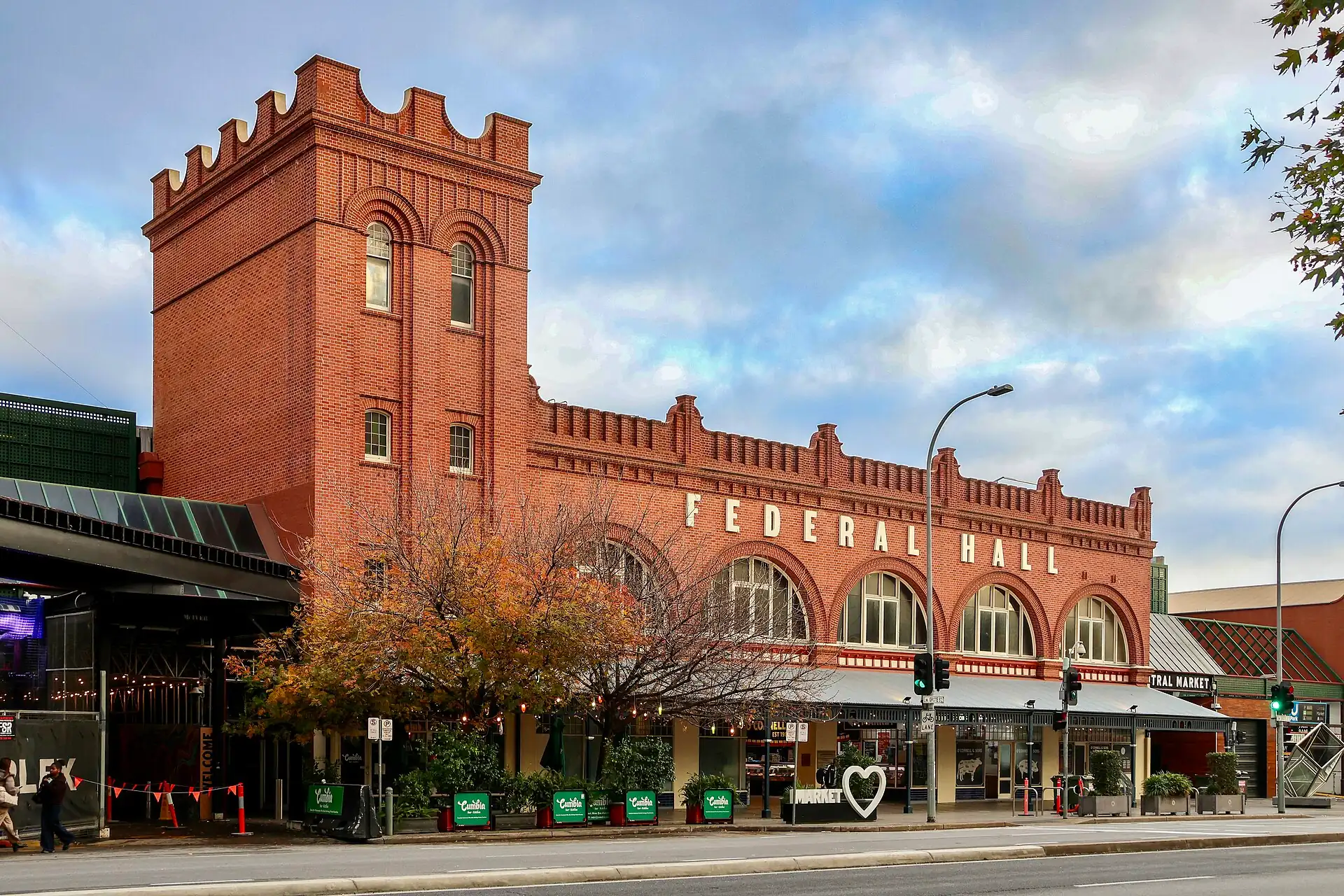 Marché Central in the cool morning · 1–1.5 h
- 2
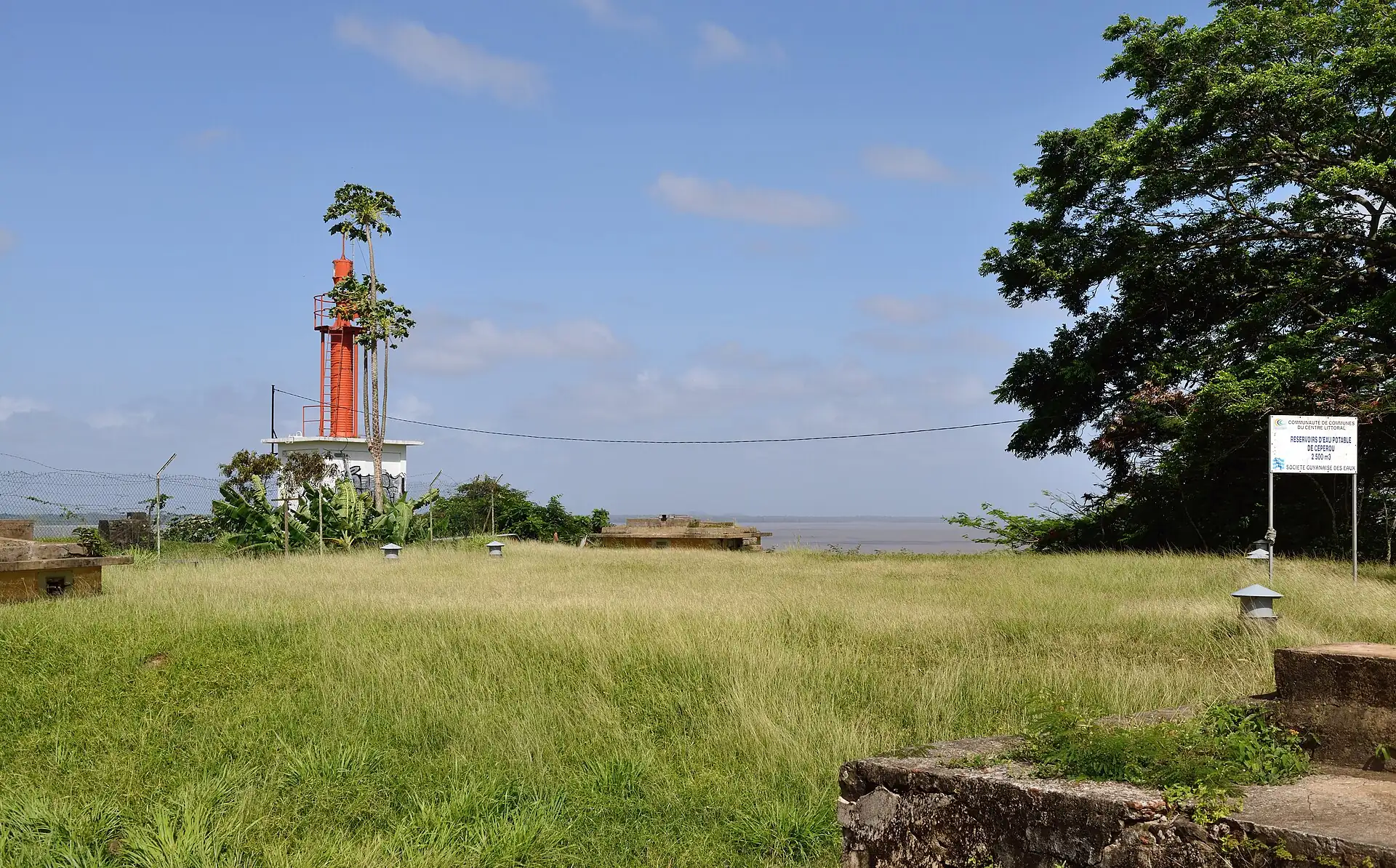 Fort Cépérou at sunset · 30–45 min
- 3
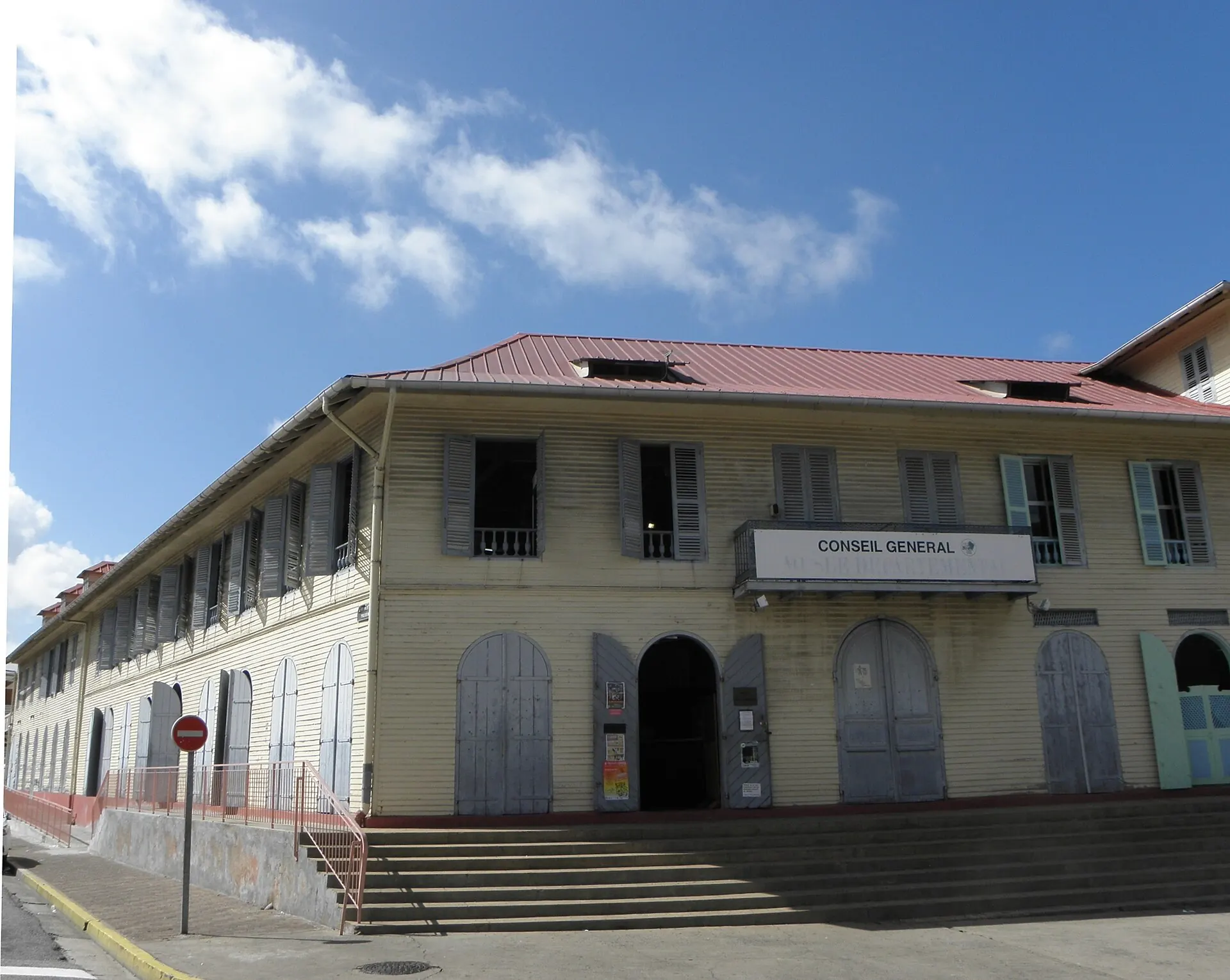 Musée Franconie for natural history · 45 min–1 h
- 4A half-day at Rémire-Montjoly beach · 2–3 h
- 5Evening food trucks at the old port · 1–1.5 h
Fits
- Slow travellers
- First-time visitors before Kourou or Saint-Laurent
- Culture and market trips
Does not fit
- Beach-only trips
- Nightlife seekers
- Anyone without a plan for getting around the coast
How long
- 2 daysPalmistes and market in the morning; Fort Cépérou and the old port at dusk
- 3 daysTown at an easy pace plus Rémire-Montjoly beach by taxi or bus
- 5 daysCayenne 3 + Kourou 2 by rental car
Good for
- First timers
- Foodies
- Budget
- Couples
- Families
- Seniors
About Cayenne
Cayenne sits on a peninsula-like point where the Cayenne and Mahury rivers meet the Atlantic. French colonists founded the settlement in 1643, and it has been fought over by the Dutch, English and Portuguese as well as the French before France held it for good in the 19th century.
France abolished slavery in its colonies in 1848 after a long campaign led by Victor Schoelcher; Cayenne and the surrounding plantations had run on enslaved labour until then. From 1852 to 1953 France used French Guiana, administered from Cayenne, as a penal colony — the 'bagne' — sending convicts to Cayenne, Saint-Laurent-du-Maroni and the Îles du Salut, including the offshore Île du Diable (Devil's Island). That history still shapes how the territory is seen from outside, even though the prisons closed decades ago.
Good to know
- Cayenne is the capital on an island-like peninsula; the airport is in Matoury, about 16 km away, and Kourou (space centre) is about an hour by road.
- Guyane tourism board office in central Cayenne: maps and event dates (confirm the current address and hours before you go).
- Your hotel desk is the most reliable source for taxi numbers, boat schedules to the Îles du Salut and tour operators for Kourou and the interior.
Go deeper 12 min read · 7 chapters
Cayenne is the capital of a French department the size of Portugal, almost all of it rainforest, sitting on the Atlantic edge of South America. Founded by French settlers in 1643, fought over for two centuries, built on slave labour until 1848 and then on convict labour until 1953, and now administered exactly like a town in mainland France while surrounded by Amazon forest, this deep dive reads Cayenne through the layers that still show in its streets: colonial grid, penal-colony memory, Creole market culture, and a European space programme an hour up the coast.
1History2 min
French colonists first settled the site of Cayenne in 1643, drawn by the point where the Cayenne and Mahury rivers meet the sea, a natural anchorage on an otherwise difficult stretch of coast. Control of the settlement changed hands repeatedly over the following two centuries: Dutch, English and Portuguese forces each held or raided it at different points, and French Guiana was even under joint French-Portuguese administration for a period in the early 19th century following the Napoleonic wars, before France's hold was confirmed by treaty in 1817. Fort Cépérou, on the hill above the old port, was rebuilt and expanded across this contested period and is the closest thing Cayenne has to a founding monument.
The colony's economy through the 18th and early 19th centuries ran on plantation agriculture worked by enslaved Africans, brought in large numbers to grow sugar, then coffee and other cash crops on estates around Cayenne and along the coast. France abolished slavery in its colonies on 27 April 1848, after a long abolitionist campaign led by Victor Schoelcher; the change did not come easily or without resistance from planters, and its anniversary is marked regionally on 10 June, the date usually cited for when the news reached and took effect in French Guiana.
From 1852 to 1953 France used French Guiana as a penal colony, sending convicts — and, controversially, political prisoners including Alfred Dreyfus — to institutions run from Cayenne: the transportation camp at Saint-Laurent-du-Maroni, forced-labour camps in the interior, and the offshore Îles du Salut, where Île du Diable (Devil's Island) held political prisoners in strict isolation. Conditions were harsh enough that the system became a byword for punitive exile in French popular culture, and closing it in 1953 was, in part, a response to the reputational damage it did to the department. That history is now told at the Musée des cultures guyanaises in Cayenne and more fully on-site in Saint-Laurent-du-Maroni and on the islands themselves.
French Guiana became a full overseas department of France (a DOM) in 1946, putting it on the same constitutional footing as a department in mainland France, with French law, the French school system and, later, the euro. In 1968 the Guiana Space Centre opened at Kourou, about an hour up the coast from Cayenne, chosen for its equatorial location and clear eastward flight path over open ocean; it has since become the primary launch site for Ariane and Vega rockets and the economic anchor of the whole department, employing thousands and reshaping the coastal towns around it.
- Settlement founded
- 1643, by French colonists
- French control confirmed
- 1817, by treaty
- Slavery abolished
- 27 April 1848
- Penal colony period
- 1852–1953
- Overseas department status
- Since 1946
- Guiana Space Centre opened
- 1968, at Kourou
2The Space Centre and the town2 min
The Centre Spatial Guyanais opened at Kourou in 1968 after the French space agency CNES surveyed sites near the equator with a clear eastward path over water — both of which reduce the fuel needed to reach orbit and the risk to people beneath the flight corridor. Kourou, then a small settlement about an hour up the coast from Cayenne, was transformed: the European Space Agency joined as a partner in the 1970s, Ariane rockets began launching in 1979, and the town grew around the technicians, engineers and their families who came to run it.
The space centre is now the department's largest employer and a disproportionate share of its formal economy, which creates a visible split: Kourou and its surrounding institutions run on a modern, well-funded, largely metropolitan-French pattern of life, while much of the rest of French Guiana, including parts of Cayenne itself, deals with higher unemployment and weaker infrastructure. Ariane and Vega launches are genuine regional events — visible from the Cayenne coast on a clear night when the trajectory and timing line up — and public viewing sites near Kourou are opened for locals and visitors on launch days, alongside the safety exclusion zones the vehicles require.
For a visitor based in Cayenne, the space centre is usually a single, bookable day trip: a guided tour of the facilities (subject to security clearance and photo ID), timed around the launch schedule if you are lucky enough to be there for one, or simply the museum and visitor centre if no launch is due. Tour operators and the centre's own visitor programme both run this, and slots can fill up around launch dates, so it needs booking ahead rather than turning up.
The space programme has also reframed how French Guiana is discussed nationally and in Europe: alongside the penal-colony history and the rainforest, it is the department's clearest connection to advanced technology and to France's strategic interests, which shapes everything from infrastructure investment along the Kourou–Cayenne corridor to the department's political weight in Paris.
- Space centre opened
- 1968, Kourou
- First Ariane launch
- 1979
- Distance from Cayenne
- About 60 km (37 mi) / 1 h by roadAbout 37 mi (60 km) / 1 h by road
- Main operators
- CNES, ESA and Arianespace
3The penal colony and Devil's Island2 min
For a century, the words 'French Guiana' were, for much of the French-speaking world, effectively synonymous with the bagne — the penal colony system that operated from 1852 to 1953. Convicts sentenced to hard labour (travaux forcés) and, separately, political prisoners were shipped from France to camps run from Cayenne and, above all, from Saint-Laurent-du-Maroni on the Maroni river, which functioned as the system's administrative centre and main transportation camp.
The Îles du Salut, a small group of islands off Kourou, held the system's most isolated and highest-security prisoners. Île Royale was the main administrative island; Île Saint-Joseph held a solitary-confinement block; and Île du Diable — Devil's Island — held political prisoners in strict isolation, most famously Alfred Dreyfus, the French army officer wrongly convicted of treason in a case that convulsed French politics in the 1890s and became a landmark of anti-Semitism and judicial injustice. Devil's Island itself cannot be landed on today; boat tours from Kourou circle it and land on the other two islands, where prison buildings, a small chapel and the old warders' housing survive.
Conditions across the system were severe: tropical disease, forced labour and a policy (doublage) that required many released convicts to remain in French Guiana for a further period equal to their sentence, effectively turning the colony into a dumping ground for people France did not want back. Mortality rates were high enough that the system's reputation became a genuine liability, and by the 1930s a domestic and international campaign — including journalism and later films — was pushing for its closure. The last convict ship arrived in 1938, formal transportation ended, and the system was fully wound down by 1953, with the last prisoners repatriated or resettled.
In Cayenne itself, this history is told at the Musée des cultures guyanaises, alongside the Amerindian, Maroon and Creole material that makes up the rest of the department's story. The fuller physical remains — cell blocks, the punishment cells, the transportation camp's reception buildings — are at Saint-Laurent-du-Maroni and on the Îles du Salut, both reachable as trips from Cayenne rather than sights within the town.
- Penal colony period
- 1852–1953
- Last convict ship
- 1938
- Most famous prisoner
- Alfred Dreyfus, held on Île du Diable
- Main sites today
- Îles du Salut (Kourou) and Saint-Laurent-du-Maroni
4Creole food and the market2 min
Guianese Creole food draws on the same African, French and Caribbean roots as the cooking of Martinique and Guadeloupe, but with its own inflections from the Amazon: cassava, tropical fruit and freshwater and ocean fish that do not travel to the French Caribbean in the same way. The everyday plate is built around rice, beans or lentils, and a main of grilled, stewed or curried meat or fish — colombo, a Creole curry with Caribbean-style spicing, is one of the most common lunch dishes in Cayenne's canteens.
The Marché Central, Cayenne's covered market, is where this cooking is most visible at street level. Creole stall-holders sell alongside Hmong farmers — a community resettled in French Guiana from Laos in the late 1970s after the Vietnam War, who now grow much of the department's fresh produce in villages inland — and Brazilian and other South American traders. A bokit, a fried dough pocket filled with meat, fish or vegetables, is the market's closest thing to a signature snack, and fresh tropical fruit juice, pressed to order, is the market's answer to a morning coffee.
Bouillon d'awara is the dish most associated with the department specifically: a slow-cooked stew built on the pulp of the awara palm fruit, combined with smoked and salted meats and vegetables, traditionally prepared for Easter but sometimes found on menus more widely. It is labour-intensive to make and not always available, which is part of why finding it on a menu is treated as worth planning around rather than assumed.
Cayenne's Chinese-Guianese food scene is older and larger than a first-time visitor might expect. French Guiana has a long-established Chinese community — Hakka-descended in large part, with roots going back well over a century, reinforced by later waves of migration — and Chinese-run canteens serving Cantonese-style fried rice, noodles and spring rolls are a normal, everyday option across the town centre, not a novelty import.
- Signature market snack
- Bokit, a filled fried dough pocket
- Signature department dish
- Bouillon d'awara, traditionally an Easter stew
- Hmong community
- Resettled from Laos from the late 1970s; farms much of the interior's produce
- Chinese-Guianese community
- Long-established, largely Hakka-descended
5The Amazon at the edge of town2 min
Cayenne is, functionally, a coastal administrative town at the edge of one of the largest continuous stretches of tropical rainforest on the planet: roughly 90% of French Guiana is forested, and the department shares an unbroken forest border with Brazil's Amapá state and Suriname. Unlike a rainforest gateway town built for eco-tourism, Cayenne was built as a colonial administrative and port town first — the forest connection is real, but reaching it in any organised way means leaving the coast.
The Guiana Amazonian Park (Parc amazonien de Guyane), created in 2007, covers a large southern portion of the department and is reached from Cayenne only by a combination of road and, further in, riverboat with a licensed operator or guide — there is no road network into the deep interior. River villages along the Maroni and Oyapock rivers are home to Amerindian communities (including Wayana, Kali'na, Wayampi and others) and to Maroon or Bushinengue communities descended from enslaved Africans who escaped plantations in the 18th and 19th centuries and built independent societies along the rivers, especially on the Suriname side of the Maroni.
Independent travel into much of the interior is genuinely discouraged, and not only for logistical reasons: illegal gold mining (orpaillage) is a serious and sometimes violent problem in parts of the forest, drawing in migrant labour from neighbouring countries and, periodically, armed conflict with French security forces. Licensed tour operators know which areas are safe to visit and which are not, which is the practical reason to book an organised trip rather than improvise one.
From Cayenne itself, the easiest brush with this world is not a jungle trek but the wildlife, plants and river landscape visible on organised day or multi-day trips arranged through operators based in the town — river boat trips, guided forest walks near accessible reserves, and the sea-turtle nesting beaches along the coast, all of which put a visitor in contact with the Amazonian and Atlantic ecosystems without requiring the logistics of a true interior expedition.
- Forest cover of French Guiana
- About 90%
- Guiana Amazonian Park created
- 2007
- Interior access
- Road plus riverboat with a guide; no road network deep inland
- Communities of the interior
- Amerindian nations and Maroon (Bushinengue) river communities
6France, but not quite France2 min
French Guiana is administratively French in almost every visible way: the euro, French law, the French school curriculum, French road signs and a prefect appointed from Paris. It is also, since 2015, a single territorial collectivity combining what used to be a separate department and region into one authority, giving Cayenne's local government slightly different powers from a mainland French city while remaining fully part of the French Republic and the European Union as an outermost region (région ultrapériphérique).
The Schengen distinction trips visitors up more than most other things: mainland France is in the Schengen area, but its overseas departments, including French Guiana, are not. A Schengen visa or Schengen-zone residence permit does not automatically grant entry to French Guiana, and the department has its own entry requirements, including — for most travellers — proof of yellow fever vaccination, which mainland France does not require. Anyone connecting a Cayenne trip to a mainland French or wider Schengen itinerary needs to check both sets of rules separately.
Prices, in general, run noticeably higher than mainland France for imported goods, reflecting the cost of shipping everything from a car part to a jar of Dijon mustard across the Atlantic; food produced locally — fish, tropical fruit, market vegetables — is comparatively cheaper. Postal and banking systems are fully French, so a French bank card or SIM plan generally works, though roaming coverage and specific plan inclusions for overseas departments are worth confirming before relying on them.
This layered identity — full legal Frenchness plus a Creole-Amerindian-Maroon-Hmong-South American population living in an equatorial climate at the edge of the Amazon — is what makes Cayenne read as neither a Caribbean island, nor a South American capital, nor a French provincial town, but a genuine hybrid of all three, best understood by walking the market, the old colonial grid and the old port in the same day.
- Administrative status
- Single territorial collectivity since 2015, part of France and the EU
- Currency
- Euro
- Schengen status
- Outside the Schengen area despite being French territory
- Typical extra requirement
- Yellow fever vaccination for most visitors (confirm current rule)
7Safety and what to actually worry about2 min
Cayenne's real safety profile is closer to a mid-sized town with an above-average petty-crime rate than to anywhere genuinely dangerous for a cautious visitor. The two things worth actual planning around are theft — bag snatching and opportunistic robbery, worse after dark and away from the lit centre — and the interior forest, where illegal gold mining creates a separate and more serious risk that has nothing to do with the town of Cayenne itself.
In practice this means the same rules that apply in many French or Caribbean towns: keep bags and phones visible and close, avoid walking alone after dark, use a taxi booked through your hotel rather than hailing an unknown car, and do not leave valuables visible in a parked car. None of this is specific to Cayenne — it is the standard caution for a town with real but unremarkable urban crime, not a warning sign to avoid the place.
The interior forest is a different category of risk. Illegal, unlicensed gold-mining operations (orpaillage) operate across parts of French Guiana's forest, drawing migrant labour from Brazil and Suriname and periodically triggering armed confrontations with French security forces sent to shut sites down. This is why independent travel into much of the interior is discouraged and why licensed tour operators — who know which river routes and reserves are actually safe — are the practical way to see the forest rather than a bureaucratic formality.
Health risks are the other practical category: mosquito-borne illness (dengue, zika, chikungunya) is present, malaria risk rises inland, and the yellow fever vaccination requirement exists because the disease is genuinely present in the region, not as a formality. None of this should overshadow the town itself, which by day is a walkable, manageable place to spend two or three days — the caution is about matching your behaviour to a real but specific set of risks, not treating the whole department as uniformly hazardous.
- Main urban risk
- Petty theft and opportunistic robbery, worse after dark
- Main interior risk
- Illegal gold mining (orpaillage) and associated security operations
- Health precautions
- Yellow fever vaccination, mosquito-borne disease precautions, malaria risk inland
- Emergency numbers
- 112 general, 15 medical, 17 police, 18 fire — same as mainland France
Read, watch, wordsReading · Watching · Glossary · Sources
Reading
- Papillon — Henri CharrièreA famous, partly disputed memoir of escape from the French Guiana penal colony; read as a legend of the bagne as much as strict history.
- The Dreyfus Affair histories (various) — VariousBackground on Alfred Dreyfus's wrongful conviction and imprisonment on Île du Diable, one of the defining scandals of the French Third Republic.
Watching
- Papillon (1973 and 2017 film adaptations) — VariousDramatised versions of the Charrière memoir; useful for the penal-colony atmosphere, not a documentary record.
Glossary
| Term | Local | Meaning |
|---|---|---|
| Bagne | le bagne | The French penal colony system, 1852–1953, run largely from Cayenne and Saint-Laurent-du-Maroni. |
| Doublage | doublage | The policy requiring many released convicts to remain in French Guiana for a further period equal to their original sentence. |
| Bokit | bokit | A fried, filled dough pocket sold at markets and street stalls; the closest thing Cayenne has to a signature snack. |
| Bouillon d'awara | bouillon d'awara | A slow-cooked stew built on awara palm-fruit pulp, traditionally prepared for Easter. |
| Orpaillage | orpaillage | Gold panning or mining; in French Guiana, most commonly used for the illegal mining operations active in parts of the interior forest. |
| Carême | le carême | The dry season, roughly August to November, the most reliable weather window in Cayenne. |
| Touloulou | touloulou | A masked, costumed Carnival figure specific to French Guiana's Carnaval tradition. |
Read for this deep dive
- Wikipedia — Cayenne ↗
- Wikipedia — French Guiana ↗
- Wikipedia — Guiana Space Centre ↗
- Wikipedia — Devil's Island ↗
Background reading only: the text above is written by Voykit, not copied from these pages.
Rules in force · 7Above 2,500 m (Bogotá, Quito, Cusco, La Paz) keep the fir…French Guiana is part of France and the EU but not the Sc…A yellow fever vaccination certificate is required for en…
- South America ↗Above 2,500 m (Bogotá, Quito, Cusco, La Paz) keep the first day light; sleep lower where you can (Sacred Valley before Cusco) and descend if headache comes with vomiting or confusion.
- South America ↗A yellow fever certificate is required on arrival in French Guiana, and asked for on some routes into Bolivia, Paraguay, Suriname and Guyana, or when arriving from Amazon areas — vaccinate at least 10 days before travel and carry the card.
- South America ↗Overnight buses are the norm in Argentina, Chile and Peru, but pick top-tier companies and keep valuables on your body; on-board thefts from overhead racks are the common loss.
- French Guiana ↗French Guiana is part of France and the EU but not the Schengen area: a Schengen visa is not valid here unless it says so. Check French government entry rules for overseas departments for your passport.
- French Guiana ↗A yellow fever vaccination certificate is required for entry for travellers aged one and over; get vaccinated at least 10 days before travel and carry the certificate.
- French Guiana ↗Around launches from the Guiana Space Centre in Kourou, access to some areas (including the Îles du Salut) is restricted; check launch dates before planning.
- Cayenne and surroundings ↗From December to July heavy rain can close tracks and cancel boat trips: keep a flexible day.
Entry rules depend on your passport. Full visa guide
Emergency numbers for Cayenne112 ▾
Tap a number to call from your phone. These are the numbers listed in this guide; a row marked check has not been verified.
Planning is the full guide. I'm here keeps what is open and the cheat card.
Right now
Checking the weather…
Working out what is open near you…
What is open nowclock, closures, places open
Now in Cayenne
Local time in Cayenne
--:--
Loads in your browser · America/Cayenne
This month
Month verdict appears here.
Closed today
See the weekly grid below.
| Weekly closure | Mon | Tue | Wed | Thu | Fri | Sat | Sun |
|---|---|---|---|---|---|---|---|
| Marché CentralcheckLikely closed or reduced on Sunday and Monday — confirm locally. | · | · | · | · | · | · | ✕ |
If today is a closure day: Sunday and Monday: several museums, shops and market stalls run reduced hours or close — check specific pages before building a Sunday or Monday plan and lean on the beach, the fort or a hotel rest instead.
- check Musée Franconie: Small departmental museum; opening days not centrally published — confirm before the trip.
Weekly closures come from our place pages; Carnival weekends (January–February) and French public holidays add closures not shown here.
Cheat cardthe pocket version
Cheat card
The essentials on one card: save it as an image for your phone, share it, or print it.
Cayenne
- Money
- Use ATMs in banks or shops in the centre, not on empty streets at night; keep EUR 30 in small notes for market stalls.
- SIM
- French mainland carriers operate here; an EU or French SIM or eSIM should work…
- Emergency
- 112 General · 15 Medical · 17 police (not 911, 999 or 000)
- Plugs
- Sockets C/E. US/Canada (A/B): adapter · UK/Ireland (G): adapter · Australia/NZ (I): adapter. 220 V: US 120 V-only devices (hair dryers) need a converter; most chargers are dual-voltage.
Top 5
- Marché Central in the cool morning
- Musée des cultures guyanaises
- Fort Cépérou at sunset
- Cathédrale Saint-Sauveur
- Musée Franconie for natural history
EssentialsQuick answers, what things cost and how to get around
Essentials
Quick answers, what things cost and how to get around
Quick answers
The questions people ask first about Cayenne, one line each. Tap a card for the full answer.
- Cash or card?Cards are widely accepted in central Cayenne restaurants, hotels and supermarkets; carry euros in small notes for market stalls…
- SIM or eSIMFrench mainland carriers operate here; an EU or French SIM or eSIM should work, but coverage away from Cayenne and Kourou can be thin…
- Tap waterTap water in central Cayenne is generally treated; ask your hotel if you are unsure…
- TippingNot expected: French service-included pricing (service compris) is standard.
- Plugs & powerSockets C/E. US/Canada (A/B): adapter · UK/Ireland (G): adapter · Australia/NZ (I): adapter. 220 V: US 120 V-only devices (hair dryers) need a converter; most chargers are dual-voltage.
- Safe at night?Take more care after dark in Place des Palmistes, Marché Central, Cathedral and Lallouette and more.
Show all 14 answers
- What to wearLight, breathable clothes for constant heat and humidity
- Emergency numbers112 General · 15 Medical · 17 police (not 911, 999 or 000)
- Your embassyMost non-French nationals route consular matters through their embassy in Paris; write your own embassy's contact details below before you fly.
- Closed which day?Sun: 1 on our list shut.
- Sundays & holidaysMany shops close for a long lunch (roughly 12:30–15:00) and on Sunday afternoons; the central market is busiest and best in the morning.Many shops close for a long lunch (roughly 12:30 PM–3:00 PM) and on Sunday afternoons; the central market is busiest and best in the morning.
- Late at nightCayenne is not a late-night city: bars and restaurants generally wind down by around 23:00–00:00 outside Carnival weekends.Cayenne is not a late-night city: bars and restaurants generally wind down by around 11:00 PM–12:00 AM outside Carnival weekends.
- Rainy-day planShowers can arrive any month, even in the 'dry' season: carry a light rain layer and treat any outdoor plan as flexible.
- Landing lateCAY: pre-booked taxi to the hotel door runs all night.
Cost cheat-sheetwhat everyday things cost
Cost cheat-sheet
Typical prices for the everyday things, as ranges. Change the currency right here; the local price stays first.
2026 desk estimate · check
- CoffeeCoffee at a caféEUR 2–4 (≈ US$3–5)
- Sit-down mealSit-down restaurant meal, per personEUR 18–35 (≈ US$25–45)
- Street or quick mealBokit or a market snackEUR 4–7 (≈ US$5–9)
- Beerbottle at a barEUR 4–7 (≈ US$5–9)
- Taxi, about 5 km (3 mi)Taxi, about 3 mi (5 km)Short taxi ride within CayenneAgree the fare or ask for the meter before you set off.EUR 8–15 (≈ US$10–18)
- Museum or sight ticketMuseum entryEUR 2–5 (≈ US$3–6)
- Budget bedFamily room or apartment (up to 4), a night, per room€100 (≈ US$120)
- Mid-range bedHotel double room, a night, per room€110 (≈ US$130)
- High-end bedHotel double room, a night, per room€220 (≈ US$300)
A day, not counting the bed: Budget €60 (≈ US$70) · Mid €100 (≈ US$120) · High €180 (≈ US$250)
Local prices, with USD next to them (rates 2026-09 (approximate); change it in the header). Ranges are desk estimates: check locally. Every price and the budget calculator →
Source: Prices in Cayenne
Draft
Written from desk research. Not yet compared with the official source.
No official source is recorded for this figure.
Prices are 2026 desk estimates, not yet compared with an official source. Check on the day.
Not checked in the last 12 months (no check date on file).
DecideWho it suits, the trade-offs and when to go
Decide
Who it suits, the trade-offs and when to go
Best months at a glance
The guide's verdict for each month
Jan
Care
30°C (86°F)86°F (30°C)
Feb
Care
30°C (86°F)86°F (30°C)
Mar
Care
31°C (88°F)88°F (31°C)
Apr
Care
31°C (88°F)88°F (31°C)
May
Avoid
30°C (86°F)86°F (30°C)
Jun
Avoid
30°C (86°F)86°F (30°C)
Jul
Care
30°C (86°F)86°F (30°C)
Aug
Best
31°C (88°F)88°F (31°C)
Sep
Best
32°C (90°F)90°F (32°C)
Oct
Best
32°C (90°F)90°F (32°C)
Nov
Best
32°C (90°F)90°F (32°C)
Dec
Care
31°C (88°F)88°F (31°C)
Best: Aug–Nov. Mixed: Jul, Dec–Apr. Avoid: May–Jun. Month by month →
Warmest Sep (32°C (90°F)90°F (32°C)), coolest Jan (23°C (73°F)73°F (23°C) low), wettest May (22 rain days), driest Sep (6). Averages, not a forecast.
Cayenne across the year
Best-looking months for Cayenne: Sep, Oct, Nov. Rated avoid: May, Jun.
| Measure | Jan | Feb | Mar | Apr | May | Jun | Jul | Aug | Sep | Oct | Nov | Dec |
|---|---|---|---|---|---|---|---|---|---|---|---|---|
| Weather | Mixed (care) | Mixed (care) | Mixed (care) | Mixed (care) | Avoid (avoid) | Avoid (avoid) | Mixed (care) | Great (good) | Great (good) | Great (good) | Great (good) | Mixed (care) |
| Crowds | Medium (ok) | High (care) | Medium (ok) | Low (good) | Low (good) | Low (good) | Medium (ok) | Medium (ok) | Low (good) | Low (good) | Low (good) | Medium (ok) |
| Prices | Medium (ok) | High (care) | Medium (ok) | Medium (ok) | Low (good) | Low (good) | High (care) | High (care) | Medium (ok) | Medium (ok) | Medium (ok) | High (care) |
| Events | 2 events (care) | 2 events (care) | 1 event (care) | 1 event (ok) | 2 events (ok) | 2 events (ok) | 2 events (ok) | 3 events (ok) | 1 event (ok) | 1 event (ok) | 1 event (ok) | 1 event (care) |
Green is good news, amber needs planning, red is a month to avoid; dashed grey with a question mark means our data does not say. Open the year heatmap →
Not checked in the last 12 months (no check date on file).
Source: Months, temperatures and crowds
Draft
Written from desk research. Not yet compared with the official source.
Monthly highs, rain and crowd levels are climate averages and desk estimates for the city, not a forecast.
Understand the cityUnderstand · Districts
Orientation & districts
Central Cayenne fits inside a walkable grid: Place des Palmistes and the government buildings at its centre, the covered market a short walk south-west, the cathedral and Rue Lallouette shops to the south, and the old port with Fort Cépérou on the point to the north-east. Everything beyond that grid — the airport in Matoury, the beaches of Rémire-Montjoly, Kourou — is a taxi or rental-car trip.
Street numbering and signage in central Cayenne are usable with a mapping app; taxi drivers generally know landmarks (the market, the cathedral, the fort) better than house numbers.
Shaded shapes: walking areas (click one). Black pins: sleep areas. Grey dots: places. Round badges: arrivals. Click the map to turn on scroll-wheel zoom.
Hover, tap or tab to an area to see what it is like. Pins are sleep areas; arrows at the edge point to the airport.
Off the map: Félix Eboué Airport (CAY) (30–45 min by the usual route).
Not drawn yet (no coordinates in this guide): Rémire-Montjoly, Matoury. They are in the neighbourhood cards below.
Where’s what, as a list:
- Place des Palmistes: Palm-lined square with the food kiosks and cafés; central hotels here put everything else in Cayenne within a walk or short taxi. Suits: First visit, walking base. Price band $$.
- Marché Central: Covered market hall with Creole, Hmong and Brazilian stalls; go before 10:00 and expect it quieter or closed on Sunday and Monday (confirm locally).Covered market hall with Creole, Hmong and Brazilian stalls; go before 10:00 AM and expect it quieter or closed on Sunday and Monday (confirm locally). Suits: Morning market visit, food.
- Cathedral and Lallouette: Saint-Sauveur cathedral, the culture museum, Musée Franconie and Creole canteens on Rue Lallouette; good for the hottest midday hours indoors. Suits: Museum and cathedral half-day.
- Old port and Fort Cépérou: The fort above the old port gives the best town view; the waterfront cools down and the food trucks set up after 16:00. Quiet and best avoided alone after dark.The fort above the old port gives the best town view; the waterfront cools down and the food trucks set up after 4:00 PM. Quiet and best avoided alone after dark. Suits: Sunset walk, quieter rooms. Price band $$$.
- Rémire-Montjoly: The nearest Atlantic beach to Cayenne, about 20–30 minutes by taxi; not a base for a first visit unless you specifically want a beach stay (confirm locally for hotel options there). Suits: A beach half-day.
- Matoury: Home to Félix Eboué Airport; little reason to stay unless your flight timing demands it. Suits: Airport arrival and departure only.
- Sleep area Place des Palmistes (centre): suits First visit, walking base, price band $$.
- Sleep area Old port (waterfront): suits Sunset walk, quieter rooms, price band $$$.
- Félix Eboué Airport (CAY), 30–45 min by the usual route.
Neighbourhoods at a glance
One tab per area, pulled together from this guide’s districts table, area notes, sleep-area scores and place pages. Scores are desk judgements (1–5); prices are estimates, check before you book.
Place des Palmistes
$$Palm-lined square with the food kiosks and cafés; central hotels here put everything else in Cayenne within a walk or short taxi.
- Suits:
- First visit, walking base
- Best time:
- Morning for the walk, evening for the food kiosks
- Rooms:
- EUR 90–150 (from the sleep guide)
Pick this if: First visits, a central base
Watch out for: Walking the surrounding streets alone late at night.
- Quiet nights3/5 Medium
- Nightlife3/5 Medium
- Families4/5 High
- Late arrival3/5 Medium
Why these scores
- Quiet nights: Traffic noise on the main streets around the square; ask for a room off the road.
- Nightlife: Cafés and the evening food kiosks are on the doorstep; nothing runs very late.
- Families: Flat, walkable streets and food kiosks nearby make this the easier family base.
- Late arrival: Confirm each hotel's overnight reception arrangements before you fly; not all keep 24-hour desks.
Getting around from here
- 9–14 min walk to Central Market
- Short taxi or walk: about 15 min to Old Port and Fort Cépérou
Marché Central
Covered market hall with Creole, Hmong and Brazilian stalls; go before 10:00 and expect it quieter or closed on Sunday and Monday (confirm locally).Covered market hall with Creole, Hmong and Brazilian stalls; go before 10:00 AM and expect it quieter or closed on Sunday and Monday (confirm locally).
- Suits:
- Morning market visit, food
- Best time:
- Before 10:00Before 10:00 AM
Pick this if: Food trips, an early start
Watch out for: Arriving at midday, when stalls thin out and the hall gets hot.
Getting around from here
- Short taxi or walk: about 9 min to Place des Palmistes
- Short taxi or walk: about 13 min to Old Port and Fort Cépérou
Cathedral and Lallouette
Saint-Sauveur cathedral, the culture museum, Musée Franconie and Creole canteens on Rue Lallouette; good for the hottest midday hours indoors.
- Suits:
- Museum and cathedral half-day
- Best time:
- Late morning through early afternoon
Pick this if: A midday indoor half-day
Watch out for: Expecting nightlife — this area is quiet after dark.
Getting around from here
- Short taxi or walk: about 11 min to Place des Palmistes
- Short taxi or walk: about 7 min to Central Market
Old port and Fort Cépérou
$$$The fort above the old port gives the best town view; the waterfront cools down and the food trucks set up after 16:00. Quiet and best avoided alone after dark.The fort above the old port gives the best town view; the waterfront cools down and the food trucks set up after 4:00 PM. Quiet and best avoided alone after dark.
- Suits:
- Sunset walk, quieter rooms
- Best time:
- 16:00 onward4:00 PM onward
Pick this if: Sunset walks, an evening meal
Watch out for: Walking the waterfront alone after the food trucks close.
- Quiet nights4/5 High
- Nightlife2/5 Low
- Families3/5 Medium
- Late arrival2/5 Low
Why these scores
- Quiet nights: Quieter at night than the square, away from the main traffic.
- Nightlife: The evening food trucks are the main draw; little else stays open.
- Families: Fine by day; the waterfront is not somewhere to walk alone with kids after dark.
- Late arrival: Quiet streets after dark mean a booked taxi, not a walk, for any evening out.
Getting around from here
- 17–24 min walk to Place des Palmistes
- Short taxi or walk: about 13 min to Central Market
Rémire-Montjoly
The nearest Atlantic beach to Cayenne, about 20–30 minutes by taxi; not a base for a first visit unless you specifically want a beach stay (confirm locally for hotel options there).
- Best time:
- Morning or late afternoon
Pick this if: A beach half-day
Watch out for: Swimming without checking locally which stretch is calm that week.
Matoury
Home to Félix Eboué Airport; little reason to stay unless your flight timing demands it.
- Suits:
- Airport arrival and departure only
Decide
The honest trade-off: what you will enjoy, what will wear you down.
You will like
- Market food
- Colonial streets
- Creole culture
You will hate
- Heat and humidity
- Sunday closures
- Few late-night options
Similar citiesif this one is not quite right
Similar cities
If Cayenne does not fit your dates or budget, these match it on season, cost and feel.
- Paramaribo
Suriname
- Good in the same months: Aug, Sep, Oct, Nov
- Works well for first-timers, food trips, couples
- A similar climate through the year
- Saint-Gilles
Réunion
- Good in the same months: Aug, Sep, Oct, Nov
- A mid-range day costs about the same (≈US$122 vs US$116, excl. bed)
- Works well for first-timers, couples
- A similar climate through the year
- Rio de Janeiro
Brazil
- Good in the same months: Aug, Sep, Oct
- A mid-range day costs about the same (≈US$120 vs US$116, excl. bed)
- Works well for first-timers
When
Best months: Aug, Sep, Oct, Nov. Month-by-month verdicts below, with the live forecast first. When to go, month by month →
Cayenne: next 7 days
Loading forecast…
Forecast: Open-Meteo (CC BY 4.0), model data for this point.
Air quality
Loading…
Model estimate (CAMS via Open-Meteo), not a street-level station; readings near busy roads run higher.
Month by month, all 12best Aug, Sep, Oct, Nov
Heavy rain; carnival starts in the streets.
Carnival weekends fill hotels; rain eases late in the month.
Short drier spell; still humid.
Rain returns; sea-turtle season begins on the western beaches.
Long rainy season; heavy rain and flooded roads.
Long rainy season.
Rain easing late in the month.
Dry season starts; best weather.
Dry season.
Dry season; hottest.
End of the dry season.
Rains return; holiday travel fills flights.
Climate, calendar and eventsClimate · Calendar · Events · Packing by season
Climate
| Jan | Feb | Mar | Apr | May | Jun | Jul | Aug | Sep | Oct | Nov | Dec | |
|---|---|---|---|---|---|---|---|---|---|---|---|---|
| High | 30°C (86°F)86°F (30°C) | 30°C (86°F)86°F (30°C) | 31°C (88°F)88°F (31°C) | 31°C (88°F)88°F (31°C) | 30°C (86°F)86°F (30°C) | 30°C (86°F)86°F (30°C) | 30°C (86°F)86°F (30°C) | 31°C (88°F)88°F (31°C) | 32°C (90°F)90°F (32°C) | 32°C (90°F)90°F (32°C) | 32°C (90°F)90°F (32°C) | 31°C (88°F)88°F (31°C) |
| Low | 23°C (73°F)73°F (23°C) | 23°C (73°F)73°F (23°C) | 23°C (73°F)73°F (23°C) | 23°C (73°F)73°F (23°C) | 23°C (73°F)73°F (23°C) | 23°C (73°F)73°F (23°C) | 23°C (73°F)73°F (23°C) | 23°C (73°F)73°F (23°C) | 23°C (73°F)73°F (23°C) | 23°C (73°F)73°F (23°C) | 23°C (73°F)73°F (23°C) | 23°C (73°F)73°F (23°C) |
| Rain days | 20 | 17 | 15 | 17 | 22 | 21 | 15 | 10 | 6 | 6 | 9 | 15 |
| Verdict |
- Temperatures barely change across the year — the difference is rainfall, not heat. Humidity is high every month.
- The long rainy season runs roughly December to June, with a short drier spell (the 'petit été de mars') sometimes appearing in February–March; confirm the current year's pattern, as it shifts.
- August to November is the dry season ('carême') and the most reliable window for walking, the beach and day trips.
Events by month
Carnaval de Guyane
festivalWeekends from early January to Ash Wednesday (moves yearly) · Citywide, especially central Cayenne(check dates)
Costumed parades (touloulous), music and closed streets on peak weekends; hotels fill and prices rise — book ahead.
Victory in Europe Day
holiday8 May · Nationwide
Public holiday; some shops and offices close.
Abolition of Slavery Day
holiday10 June · Guyane, especially Cayenne
Regional public holiday with ceremonies in the centre; some closures.
Bastille Day
holiday14 July · Nationwide
National holiday with a parade; road closures around the centre.
Assumption Day
holiday15 August · Nationwide
Public holiday; many shops close.
Sea-turtle nesting season
seasonRoughly April to August, peak varies by species · Beaches near Cayenne and further along the coast(check dates)
Guided night visits become possible; independent access to nesting beaches may be restricted at night — confirm locally.
Dry season (carême)
seasonAugust to November · Citywide
The most reliable weather window for walking, the beach and day trips to Kourou.
Festivals and events that change the plan
| When | What | Effect on your plan |
|---|---|---|
| January–February (dates move yearly) | Carnaval de Guyane | Weekend parades, costumed groups (touloulous) and street parties run for weeks; hotels fill for the big weekends and some streets close to traffic. Confirm this year's calendar before you book. |
| 8 May | Victory in Europe Day | Public holiday; some shops and offices close. |
| 10 June | Abolition of Slavery Day (Guyane) | A regional public holiday marking the 1848 abolition; ceremonies in central Cayenne. |
| 14 July | Bastille Day | National public holiday with a parade; some road closures in the centre. |
| 15 August | Assumption Day | Public holiday; many shops close. |
| April–August (peaks vary by species) | Sea-turtle nesting season | Leatherback and green turtles nest on beaches near Cayenne and further along the coast; night access to some beaches may be restricted during peak nesting — confirm locally. |
| Ariane and Vega launch windows (dates announced by Arianespace/CNES) | Guiana Space Centre launches | Launches from Kourou, about an hour from Cayenne, are occasionally visible from the Cayenne coast on a clear night; public viewing sites and safety perimeters are announced ahead of each launch. |
What to pack, by season
From Cayenne’s own climate table: the coldest, warmest and wettest three months, and what to bring for each.
Coldest months
May–Jul
23° to 30°
Light layers; evenings can still feel cool.
Warmest months
Sep–Nov
23° to 32°
Light, breathable clothes, a sun hat and sunscreen; plan midday indoors and carry water.
Wettest months
Apr–Jun
20 rain days a month
A compact umbrella or rain jacket and shoes that can get wet.
Arrive & moveGetting in, getting around, and your bags
Arrive & move
Getting in, getting around, and your bags
I land at…
Enter your landing time: what still runs from the airport, where you can eat when you get in, and which areas let you check in that late.
Félix Eboué Airport (CAY)
Out of the airport about 23:4611:46 PM (00:37 (next day)12:37 AM (next day) if immigration and bags are slow); in town about 00:16 (next day)12:16 AM (next day).
Transport from the airport
- Any hourPre-booked taxi to the hotel door. Runs all night.
- Any hourSecond taxi or car arranged through your hotel. Any hour.
Places to eat open when you get in
We have no confirmed hours for the places to eat here yet. Plan on a convenience store or your hotel. What is open late →
Where to sleep with a late arrival
- Call aheadPlace des Palmistes (centre) Desk hours not confirmed: message the hotel with your flight number. Confirm each hotel's overnight reception arrangements before you fly; not all keep 24-hour desks.
- Call aheadOld port (waterfront) Desk hours not confirmed: message the hotel with your flight number. Quiet streets after dark mean a booked taxi, not a walk, for any evening out.
Typical times from our airport data, not a timetable: check the last departure on the day. Full airport-to-bed plan for Félix Eboué Airport (CAY) →
Arrive
Each gateway has its own airport-to-bed page with timings and the last safe connection.
Getting in, in detailGet in
Get in by rail and road
| Station | Mode | Serves | Where | To the centre |
|---|---|---|---|---|
| Félix Eboué Airport (CAY)Aéroport de Cayenne-Félix Ebouéuse | Air | Flights from Paris (about 8–9 h), the Caribbean and some South American points; check current routes. | Matoury, about 16 km south of central Cayenne · Matoury | Taxi about 30 min, EUR 30–45 (≈ US$35–55) (2026 estimate)The only practical international gateway for Cayenne. |
| Coastal road to Kourou and Saint-Laurent-du-Maroniuse | road | The only paved road link along the coast; the route continues (with a river crossing) toward Suriname. | National road N1, starting from central Cayenne | Already thereA rental car is the practical way to do this; confirm current road conditions before a long drive. |
| Saint-Georges de l'Oyapock border crossingcaution | road_river | The Oyapock River bridge to Oiapoque, Brazil | South-east Guyane, several hours from Cayenne by road | Well over a day by roadAn infrequently used overland route to Brazil; confirm visa and vehicle rules well ahead.(check) |
- Confirm your airline's current baggage and check-in rules for Félix Eboué well ahead — it is a small airport with limited counters.
- If driving beyond Cayenne, fill the tank in town: fuel stations thin out on the coast road.
Move
The default way around, when a pass pays off, and when the last trains go.
- Default
- Walk inside a cluster in the morning and evening; taxi between clusters at midday and at night.
- Passes
- No pass. Short taxi rides are affordable; agree the fare or ask for the meter before you set off.
- Last trains
- Buses are infrequent and stop early; taxis are the late-evening plan, so book one through your hotel.desk estimate
- Other modes
- Other modes (Rome2Rio) ↗
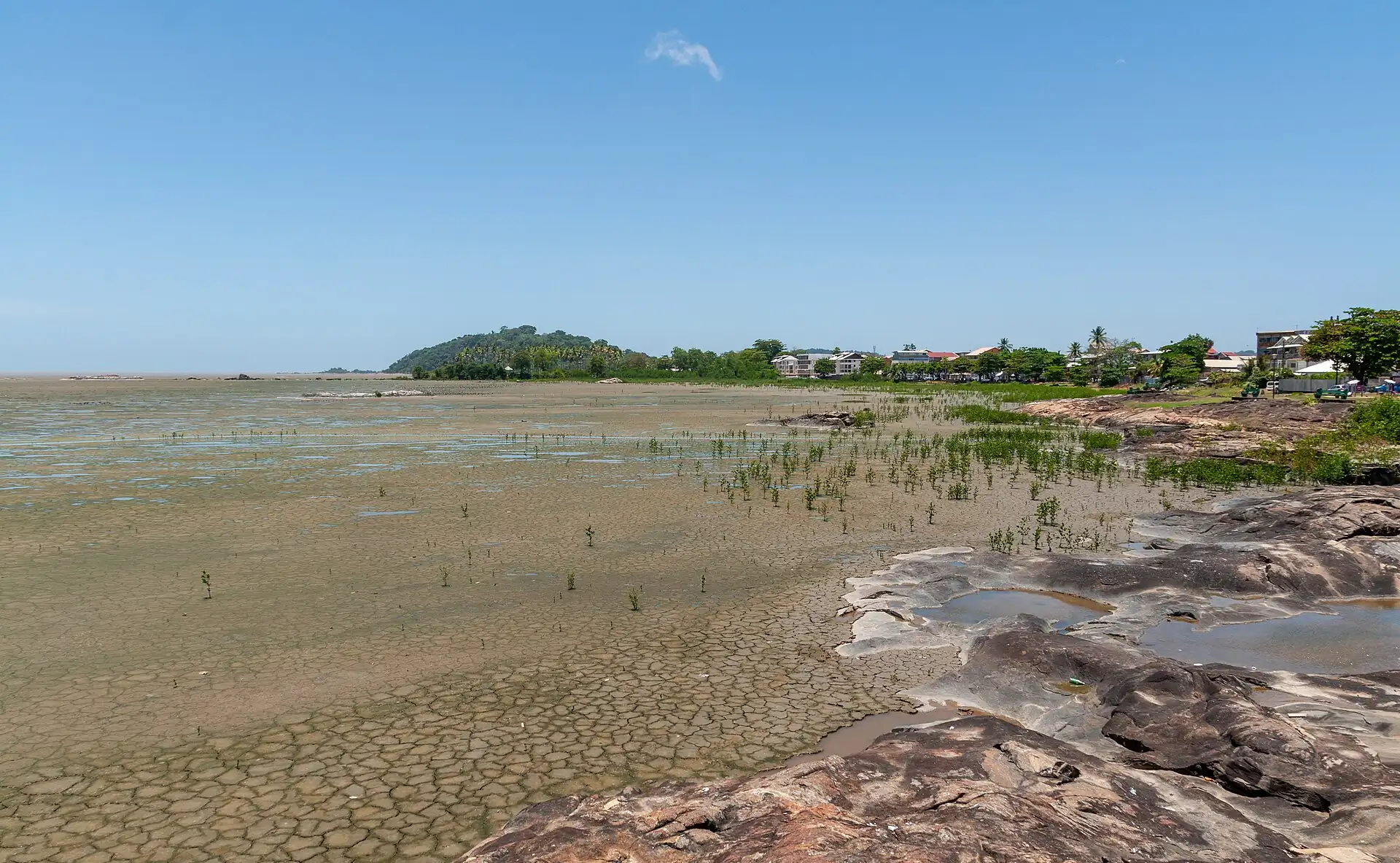
Getting around, in detailGet around · Connect
Get around
Walk inside the centre, taxi between areas and to the beach, and rent a car only if you are going to Kourou, Saint-Laurent or beyond. There is no metro and city buses are limited.
| Mode | Verdict | Fare | Use it for | What breaks |
|---|---|---|---|---|
| Walking | use | Free | Inside any one cluster — Palmistes, the market, the cathedral area, the old port | Central Cayenne is flat and walkable in the cooler hours; midday heat makes even a short walk tiring. |
| Taxi | use | EUR 8–15 (≈ US$10–18) within the centre; EUR 20–35 (≈ US$25–45) to Rémire-Montjoly | Between clusters, at night, with bags | Agree the fare or ask for the meter before you set off; book through your hotel for the most reliable service. |
| Rental car | use | EUR 45–70 (≈ US$55–85) a day, confirm locally | Kourou, Saint-Laurent-du-Maroni and any trip beyond Cayenne | The only practical way to reach the space centre and the coast road towns on your own schedule. |
| Local bus | limited | A few euros, confirm locally | Some routes within greater Cayenne | Infrequent and not well documented for visitors; do not rely on a bus for a flight connection or an evening return. |
More on getting around
There is no ride-hailing app culture comparable to a large city here: book taxis through your hotel, note the driver's name and number for a return trip, and agree fares before you set off, especially from the airport. A rental car is worth it only if you are leaving Cayenne itself — inside the centre it adds parking stress without saving much time over a taxi or a walk.
Connect
| Option | Verdict | What breaks |
|---|---|---|
| Your home EU/French SIM or eSIM | use | Should work under standard French mobile rules since French Guiana is French territory; confirm your plan actually includes it, as some EU roaming bundles exclude overseas departments. |
| Carrier shop or the airport | use | Buy a local prepaid SIM if you need guaranteed coverage; bring your passport. |
| Street resellers | avoid | Buy from a carrier shop instead, as anywhere. |
A local taxi number from your hotel
Most trips
Cayenne does not have the ride-hailing app culture of a large city; hotels keep numbers for reliable drivers.
Google Maps
Walking and driving
Works well for the central grid; road names outside town are more reliable checked against a physical map for a Kourou or Saint-Laurent drive.
- Wi-Fi
- Free in most hotels and some cafés; ask for the password with your order.
Luggage
Where big bags are a problem, and how to get rid of them for the day.
Rule
- Lockers
- No public lockers; hotels hold bags after check-out.
- Forwarding
- No luggage-forwarding culture: keep the big bag at the hotel and take a day pack.
- Dead zone
- Late-evening flights: check out in the afternoon and ask the hotel to book the airport taxi.
Bags, area by area
4 walking areas rated
- Bags forbidden
- Bags painful
Lockers, forwarding and the gap between check-out and check-in are covered once, under Luggage.
See & doWalking clusters, day plans and the places worth the time
See & do
Walking clusters, day plans and the places worth the time
Clusters
Plan by cluster: each is a walkable area with a rescue point and a bag rule.
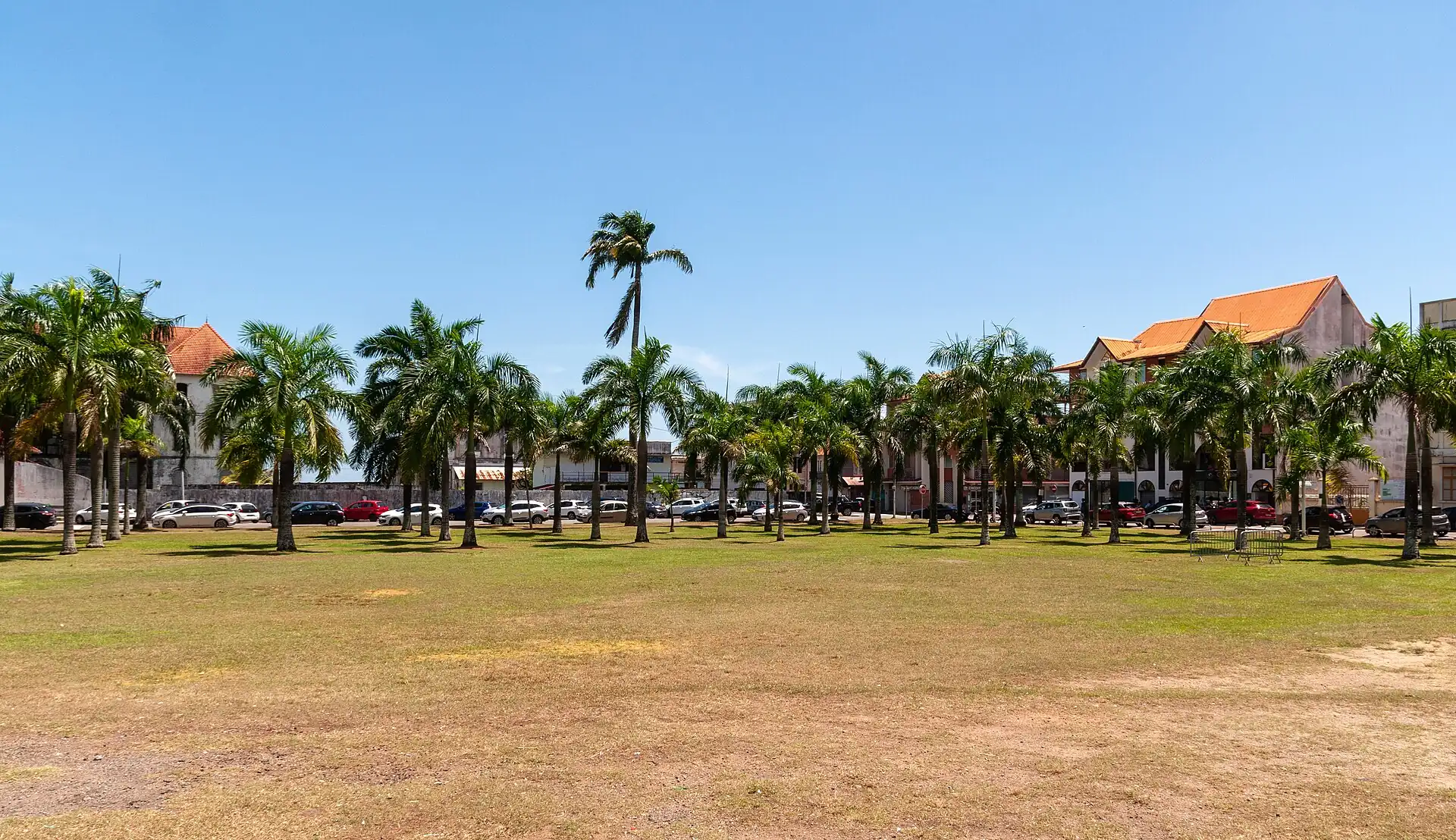
Morning cluster: the palm-lined square, the cafés and the government buildings around it; go early, before the heat.
rescue 100% · max p90 5.2′ · 90m
Market cluster: the covered central market and the Chinese and Creole shops around it; go before 10:00 for the stalls and the cooler air.
rescue 100% · max p90 5.2′ · 90m
Dusk cluster: Fort Cépérou above the old port gives the town view, and the waterfront is cooler after 16:00.
rescue 100% · max p90 5.2′ · 90m
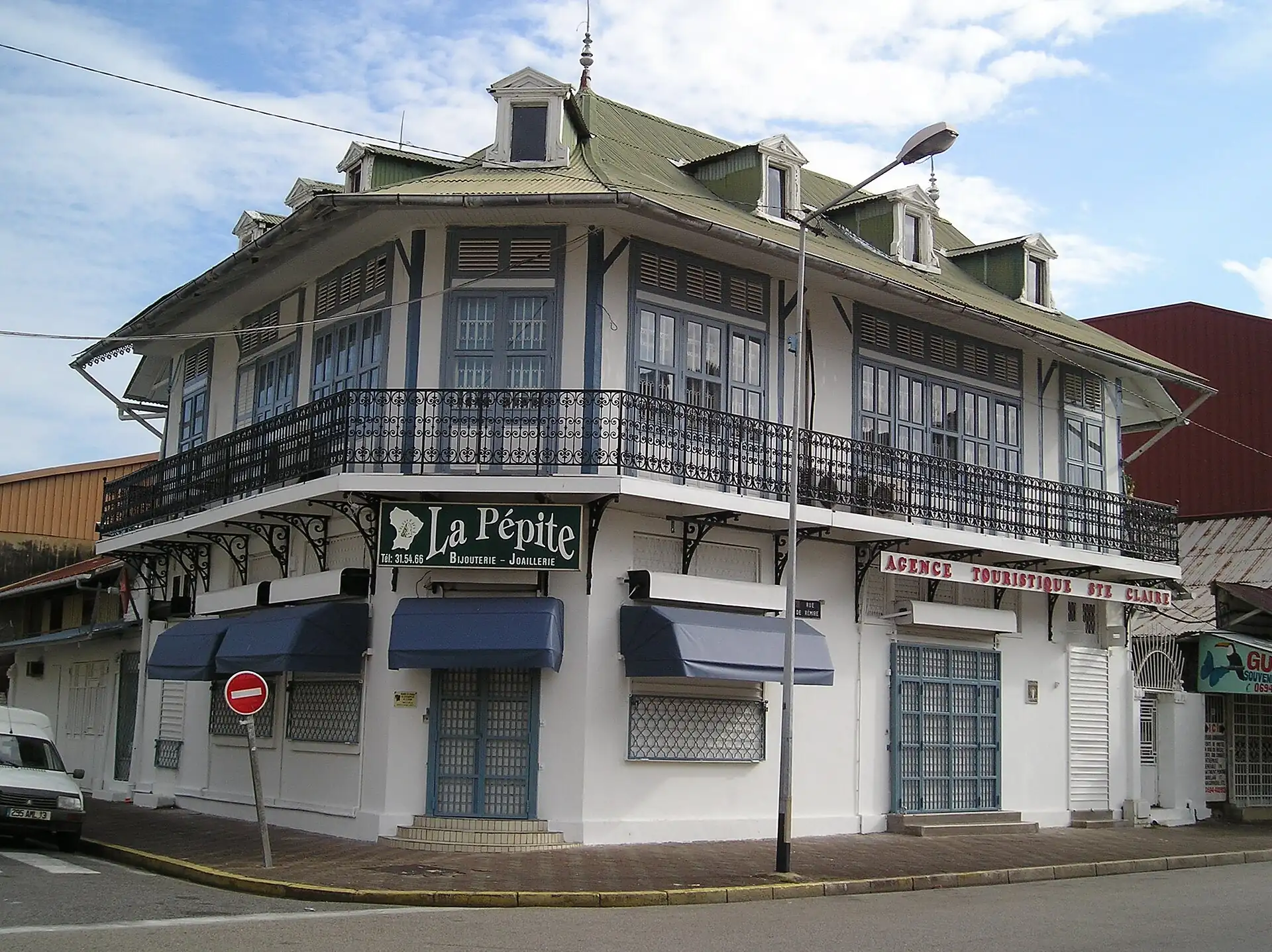
Half-day cluster: Saint-Sauveur cathedral, the museum and the shops on Rue Lallouette; good for hot midday hours indoors.
rescue 100% · max p90 5.2′ · 90m
Days
Ready-made day plans, timed against opening hours and walking distances.
How long are you staying?
Loose outlines in the town's rhythm: outdoors early and late, indoors at midday. The 3-day plan checks opening days where confirmed.
1 day
A stopover or the day before heading to Kourou
- 07:30Central Market Creole breakfast stalls — Breakfast at the market
- 09:00Musée des cultures guyanaises — Musée des cultures guyanaises
- 10:30Cathédrale Saint-Sauveur — Cathedral and Musée Franconie
- 12:00Rue Lallouette Creole canteens — Creole lunch on Rue Lallouette
- 13:30Rest indoors through the heat
- 16:30Fort Cépérou — Fort Cépérou for the view
- 18:30Old port food trucks — Old port food trucks
Skip: The beach and Kourou: both need more time than a single day allows.
Cayenne in 3 days
3 daysEarly morning at the market, midday indoors, the fort at dusk; the last day ends with the bags already in the taxi to Félix Eboué.
Day by day
Day 1 — Museum in the cool morning, central market, a 12:30 lunch table
- 08:30Central Market Creole breakfast stalls (optional)
- Musée des cultures guyanaises
- Musée départemental Alexandre-Franconie (optional)
- Cathédrale Saint-Sauveur (optional)
- Central Market (optional)
- 12:30Lunch table 12:30 (Your reserved lunch (near the market))
Day 2 — Rémire-Montjoly beach by taxi, then Fort Cépérou at dusk
Day 3 — Saint-Sauveur cathedral, taxi to the airport at 09:30
- 07:30Cathédrale Saint-Sauveur (optional)
- 09:30Taxi to Félix Eboué at 09:30 (your flight time decides; leave at least 3.5 h before an international departure)
Places
“Best time” is when to arrive for the fewest crowds, for example “before 08:30”; “Go any time” means the hour makes little difference. More sights follow under “More sights and museums”.
6 places. Filters use the guide’s own ratings; a place with no rating is left out when a filter is on.
Tours, classes and shows in Cayenne →
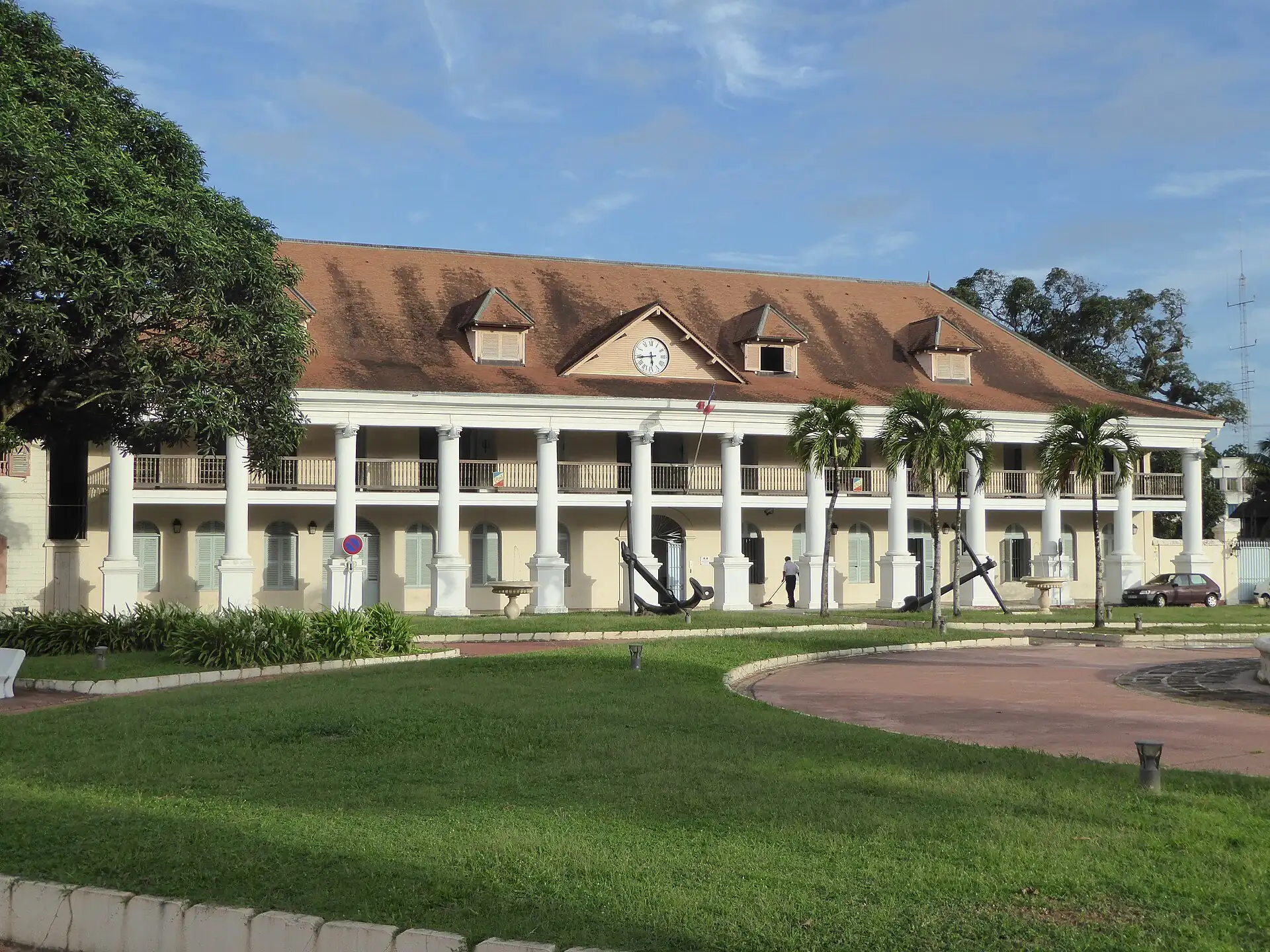
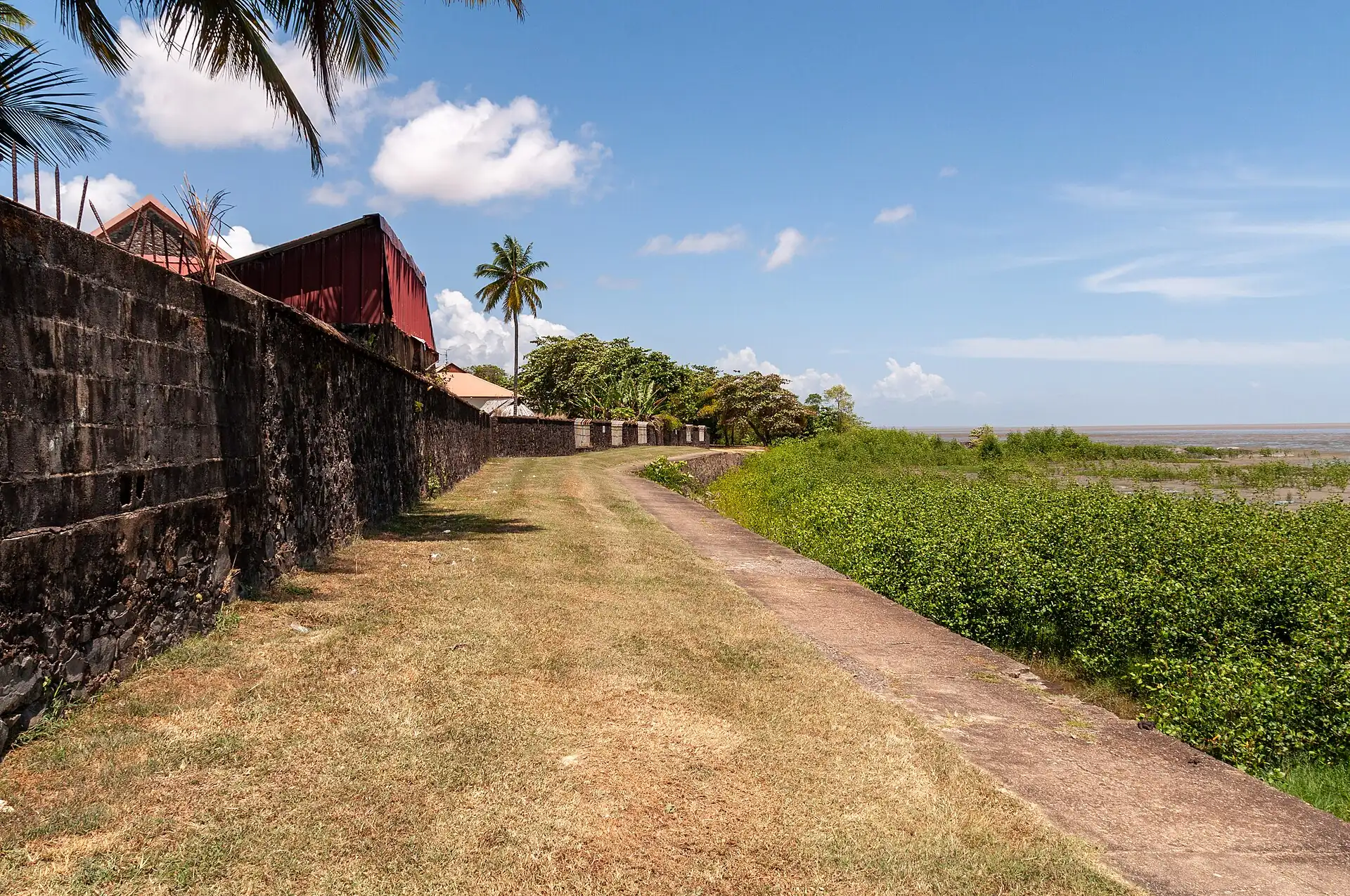
If you do ten things in Cayenne
Ranked for a first visit of 2–3 days. Prices are 2026 estimates in euros; hours marked (check) in the linked pages still need confirmation.
- 1
Marché Central in the cool morning
Creole, Hmong and Brazilian stalls side by side; a bokit and fresh juice is the easiest introduction to Guianese food.
- Time
- 1–1.5 h
- Best
- 08:00–10:00
- Cost
- Free to browse; food EUR 4–10 (≈ US$5–12)
- 2
Amerindian, Maroon and Creole culture indoors and air-conditioned; the best single stop for understanding who lives here.
- Time
- 1–1.5 h
- Best
- Midday
- Cost
- EUR 2–5 (≈ US$3–6)
- 3
A short hill for the best view over the old town, the old port and the river mouth.
- Time
- 30–45 min
- Best
- 16:30–18:00
- Cost
- Free
- 4
A quiet 19th-century timber-frame cathedral, a short stop between the market and the museums.
- Time
- 15 min
- Best
- Outside Mass times
- Cost
- Free
- 5
Musée Franconie for natural history
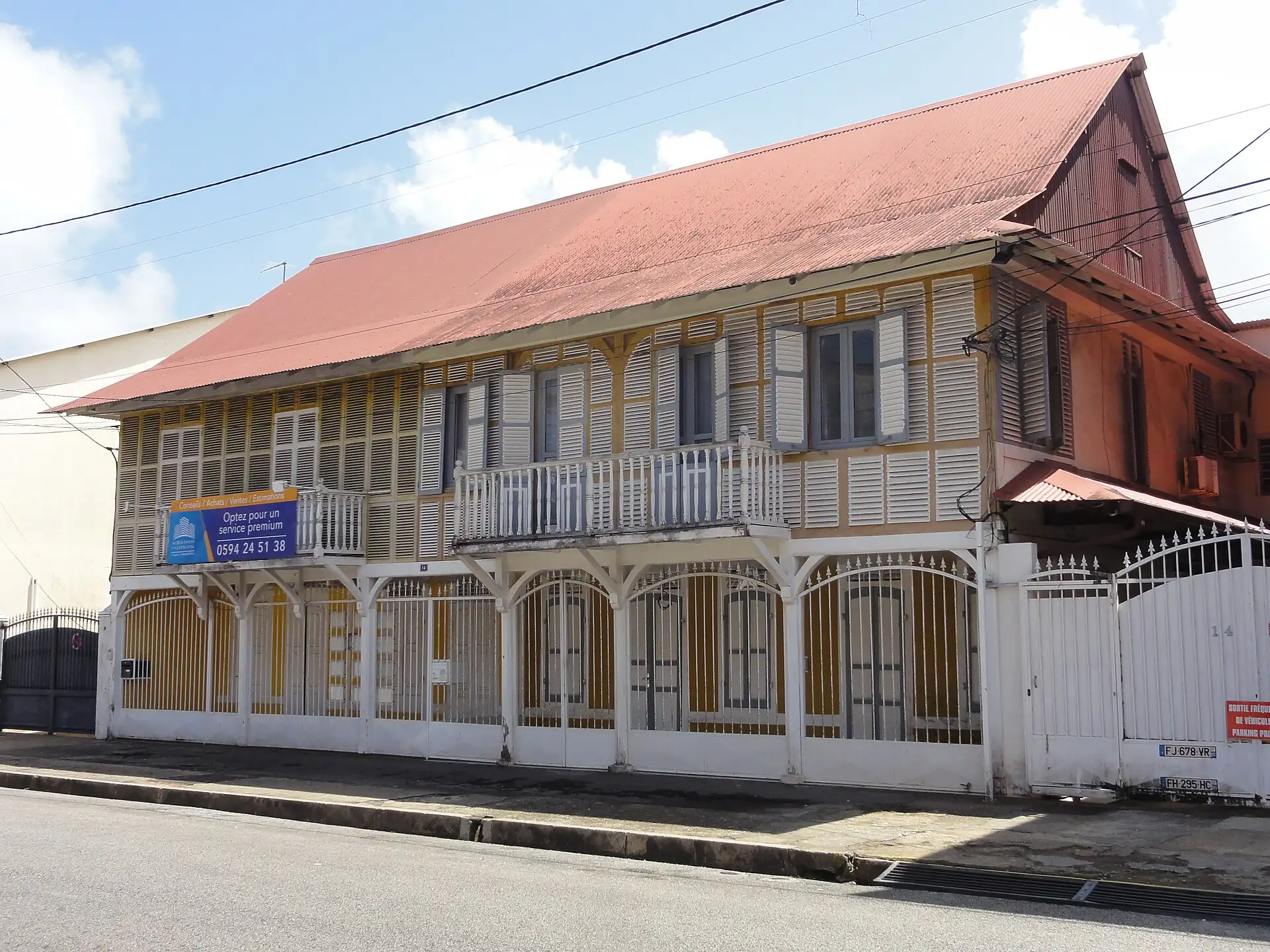
A small departmental museum of natural history and archaeology in an old colonial house; pairs with the culture museum.
- Time
- 45 min–1 h
- Best
- Midday
- Cost
- EUR 2–5 (≈ US$3–6)
- 6
A half-day at Rémire-Montjoly beach
The nearest Atlantic beach to Cayenne; check locally which stretch is safe to swim.
- Time
- 2–3 h
- Best
- Morning or late afternoon
- Cost
- Taxi EUR 20–35 (≈ US$25–45) return
- 7
Evening food trucks at the old port
Grilled skewers and fish with a river breeze, after the fort at dusk.
- Time
- 1–1.5 h
- Best
- 18:30–21:00
- Cost
- EUR 8–14 (≈ US$10–17)
- 8
Day trip to the Guiana Space Centre, Kourou
Europe's main spaceport, about an hour's drive; book a tour in advance and bring photo ID.
- Time
- Full day
- Best
- Weekday, booked ahead
- Cost
- Tour price confirm locally
- 9
Boat trip to the Îles du Salut
Former penal-colony islands including the Devil's Island group; weather-dependent crossing from Kourou.
- Time
- Full day or overnight
- Best
- Dry season, calm seas
- Cost
- Boat fare confirm locally
- 10
A Creole plat du jour on Rue Lallouette
Colombo or grilled fish and rice, the everyday Cayenne lunch.
- Time
- 1–1.5 h
- Best
- 12:00–13:30
- Cost
- EUR 12–18 (≈ US$14–25)
Good for…
Verdict is how well Cayenne works for that traveller, not how nice it is.
Small and walkable, with a clear rhythm of morning outdoors, midday indoors, evening on the square or the waterfront.
- 1Sleep on Place des Palmistes — everything on the list is a walk or a short taxi.
- 2Cayenne in 3 days — the 3-day plan already checks midday-heat and closure patterns.
- 3A pre-booked airport taxi — there is no ride-hailing app culture here to fall back on.
A genuine mix of Creole, Hmong, Brazilian and Chinese-Guianese cooking, cheap at the market and moderate at a sit-down canteen.
- 1Central Market Creole breakfast stalls — bokit and fresh juice, the easiest way into Guianese food.
- 2Rue Lallouette Creole canteens — colombo and, in season, bouillon d'awara.
- 3Chinese-Guianese canteens — a long-standing, reliable part of the local food scene.
Cheaper than mainland France for food and taxis, but flights and hotels keep a Cayenne trip from being a true budget destination.
- 1Market breakfast and lunch — under EUR 10 (≈ US$12) a meal at the market versus EUR 15–35 (≈ US$18–45) at a sit-down restaurant.
- 2Free sights — Place des Palmistes, the old port and Fort Cépérou cost nothing to see.
- 3palmistes — the widest spread of lower-priced hotel rooms.
- 1A quieter old-port hotel — closer to the fort and the sunset view.
- 2Fort Cépérou at sunset — the town's best view, free, for the cost of a short walk or taxi.
- 3Dinner by the water — a relaxed evening with a river breeze after the day's heat.
Kids are welcomed; the heat and the after-dark safety caution are the planning constraints.
- 1Rémire-Montjoly beach — the easiest family outing from Cayenne, checked for swim safety with a local first.
- 2Musée des cultures guyanaises — a cool, short, engaging indoor stop for a midday break.
- 3Sea-turtle night walk with a guide — a memorable, safely supervised evening activity in season.
The flat centre helps; heat and uneven pavements in places are the strain.
- 1palmistes — a flat, central base with taxis on hand for anything further.
- 2Cathédrale Saint-Sauveur — a short, shaded, indoor stop with nowhere to climb.
- 3A rental car with a driver for Kourou — covers the space centre without a long self-drive.
The fort, the beach sand and some market aisles are difficult; the flat central grid helps elsewhere.
- 1Confirmed accessible hotel rooms — ask directly; do not assume a central address means step-free.
- 2Taxis for anything beyond the immediate hotel block — the most reliable step-free option in a town without ride-hailing apps.
- 3Musée des cultures guyanaises — the most confirmed step-free indoor sight, though a few entrance steps remain (check).
Tours and classes: book or skip
Book through your hotel or a listed operator with written inclusions and a cancellation policy. Prices per person unless stated.
| Tour or class | Verdict | Typical price | Why | Check before paying |
|---|---|---|---|---|
| Guiana Space Centre guided tour | book | Confirm locally | The only way inside the launch facilities at Kourou; the reason most visitors add Kourou to a Cayenne trip. | Book well ahead of your date; ID rules and launch-day access differ from a normal tour day. |
| Îles du Salut boat trip | book | Confirm locally | Reaches the former penal-colony islands, including the Devil's Island group, that you cannot get to independently. | Which islands the boat actually lands on, the return time, and the weather-cancellation policy. |
| Sea-turtle night walk (in season) | book | Confirm locally | The only responsible way to see nesting turtles without disturbing them. | That the guide is authorised and the group size is small. |
| Interior river and rainforest trip | book | Confirm locally | The interior is reached by riverboat with a guide, not by road, and illegal gold-mining areas make independent travel unsafe. | The operator's licence and the exact villages or reserve visited. |
| Market walking tour | do it yourself | Free | The Marché Central is easy to explore on your own; a guide adds little beyond company. | Go before 10:00 regardless of whether you book a guide.Go before 10:00 AM regardless of whether you book a guide. |
What each season brings
Long rainy season
Dec–Jun
Green, humid, with a possible short drier spell in Feb–Mar; Carnival runs through Jan–Feb regardless of rain.
Watch: Frequent showers; flooded low spots after heavy rain.
Dry season (carême)
Aug–Nov
The most reliable window for walking, the beach and day trips; September–October are typically the driest and hottest.
Watch: Still hot and humid by any temperate-climate standard — this is a dry season, not a cool one.
Sea-turtle nesting
Roughly Apr–Aug
Leatherback and green turtles nest on beaches near Cayenne; guided night visits are the responsible way to see it.
Watch: Confirm current-year dates and any beach access restrictions locally.
Photo spots and the light
Light times are for clear days; a sudden shower can change the sky fast in the rainy season.
| Spot | Best light | Tip |
|---|---|---|
| Fort Cépérou over the old port | 16:30–18:00 | Shoot from the fort wall toward the river mouth as the light softens. |
| Place des Palmistes under the palms | Early morning or blue hour | The square's palm rows and colonial-era buildings frame well before the midday sun flattens everything. |
| Cathédrale Saint-Sauveur | Morning | The timber-frame façade catches soft early light before the streets get busy. |
| Central Market | Morning | Ask before photographing stall holders directly; the produce displays are the easier subject. |
| Rémire-Montjoly beach | Sunrise or late afternoon | The Atlantic horizon works best away from the midday glare. |
Cayenne travel FAQ
Answers are 2026 desk estimates; fares, hours and entry rules marked (check) change — confirm before you travel.
Do I need a visa for French Guiana?
It depends on your nationality. French Guiana is an EU outermost region but outside the Schengen area, so a Schengen visa for mainland France may not automatically cover it. Check the specific requirement for your passport before you fly.
Do I need a yellow fever vaccination?
Most travellers need proof of yellow fever vaccination to enter French Guiana. Confirm the current rule with a travel clinic well before your flight and carry the certificate.
What currency is used?
The euro, the same as mainland France. Cards are widely accepted centrally; carry cash for the market, food trucks and taxis.
Is tap water safe to drink in Cayenne?
Generally treated in central Cayenne; ask your hotel if unsure, and use bottled water outside town or if you have a sensitive stomach.
How do I get around Cayenne?
Walk inside the centre, take a taxi (booked through your hotel) between areas or to the beach, and rent a car only if you plan to reach Kourou, Saint-Laurent-du-Maroni or beyond.
Is Cayenne safe?
Central Cayenne is manageable by day with normal city caution; petty theft and occasional robbery are the documented risks, and walking alone after dark is not recommended. The interior carries a separate, more serious risk from illegal gold mining and is not for independent travel.
How many days do I need in Cayenne?
Two to three days covers the town itself; add at least a full day, ideally an overnight, for Kourou and the Guiana Space Centre.
Can I see a rocket launch?
Launches from the Guiana Space Centre at Kourou, about an hour from Cayenne, are sometimes visible from the coast on a clear night, and public viewing sites are announced ahead of each launch. Confirm the schedule with Arianespace or CNES before you plan around one.
What is Devil's Island?
Île du Diable is part of the Îles du Salut group off Kourou, used as part of France's 19th–20th-century penal colony; it is not landable, but boats circle it and land on the other islands in the group. It is not in Cayenne itself — you reach it via Kourou.
What language is spoken?
French is the official language; Guianese Creole is widely spoken informally, alongside Amerindian languages, Hmong, Portuguese and others reflecting the territory's mix of communities.
When is the best time to visit?
August to November, the dry season, gives the most reliable weather for walking and the beach; the rest of the year is wetter but still workable if you build in flexible indoor time.
More to see and doSee & do · Learn & work · Rain & heat · Free things · Wheelchair and stroller
Free things to do
Sights in Cayenne that cost nothing to enter. Each is described under Places or More sights; extra costs inside are marked there.
Wheelchair and stroller, place by place
How each place in this guide works for wheels, from its own page. Ratings are desk estimates unless a page says it was checked on the ground.
| Place | Step-free | Wheelchair | Stroller | What to know |
|---|---|---|---|---|
| Cathédrale Saint-Sauveur | partial | caution | ok | A timber-frame colonial cathedral, rebuilt after damage from fire and storms; the interior is flat once inside. |
| Central Market | ok | caution | caution | Flat covered hall with narrow aisles that fill up on Saturday morning. |
| Musée départemental Alexandre-Franconie | partial | caution | caution | An old colonial house converted to a museum; expect a step or two between rooms. |
| Rémire-Montjoly beach | ok | caution | caution | Flat sand with a beachfront road behind it; no boardwalk confirmed. |
See & do
13 of 13
Amerindian, Maroon and Creole culture indoors, air-conditioned; the best single introduction to Guianese identity.
Cathedral and Lallouette · Check · EUR 2–5 (≈ US$3–6)(check)
Natural history and archaeology in an old colonial house; pairs well with the culture museum.
Cathedral and Lallouette · Check · EUR 2–5 (≈ US$3–6)(check)
- Colonial
A 19th-century timber-frame cathedral; a quiet 15-minute stop.
Cathedral and Lallouette · Check outside Mass times · Free(check)
- monument
Short hill above the old port for the best town view, especially at sunset.
Old port and Fort Cépérou · Check · Free
- Markets
Covered market hall with Creole, Hmong and Brazilian stalls; go before 10:00.Covered market hall with Creole, Hmong and Brazilian stalls; go before 10:00 AM.
Marché Central · Morning; check for Sunday and Monday · Free
- nature
The nearest Atlantic beach to Cayenne, about 20–30 min by taxi; check locally which stretch is safe for swimming.
Rémire-Montjoly · Daylight · Free
Place des Palmistes
Lakes & parksThe palm-lined central square, with government buildings, cafés and the evening food kiosks.
Place des Palmistes · Always open · Free
Old port waterfront
NeighbourhoodsFishing boats, the harbour and the evening food trucks; go before dark.
Old port and Fort Cépérou · Daytime and early evening · Free
- Food tours
Walk the stalls, try a bokit and fresh juice, and see the Creole, Hmong and Brazilian produce side by side.
Marché Central · Morning · Free to browse; food EUR 4–10 (≈ US$5–12)
Guiana Space Centre tour
tourGuided visits to the launch facilities at Kourou, about an hour's drive; bring photo ID and book in advance.
Kourou · Scheduled tours; book ahead · Free to low-cost guided tours (confirm current price)(check)
Îles du Salut boat trip
tourFormer penal-colony islands, including Île du Diable (Devil's Island, not landable); weather can cancel the crossing.
Kourou · Day trip or overnight · Boat fare, confirm locally(check)
Sea-turtle night walk with a guide
natureAn authorised guide is the only responsible way to see nesting turtles; do not approach nests on your own.
Rémire-Montjoly / coast · Evening, roughly April–August · Confirm locally(check)
- Active
A short climb for the best view over the old town and the river mouth.
Old port and Fort Cépérou · Late afternoon · Free
- Booking
- Space-centre tours and Îles du Salut boat trips need advance booking, especially around launch dates and holiday weekends; book through your hotel or a listed operator.
Learn & work
| What | Where | Cost | Note |
|---|---|---|---|
| French language courses | Confirm locally; language schools are less established here than in mainland France | Confirm locally | Most visitors get by with basic French plus patience; a private tutor is the more realistic option than a structured course for a short trip. |
| Creole cooking or market tour | Confirm through your hotel or a listed local operator | Confirm locally | Not confirmed as a standing offer in Cayenne; ask your hotel what is currently running (field-verify). |
Working here
- Tourist entry
- As an EU outermost region, French Guiana has entry rules that differ from a standard Schengen visa — check the specific requirement for your nationality, including whether a French Guiana-specific visa or the yellow-fever certificate is needed, well before you fly. None of these permits allow paid work.
- Work permit
- Legal work follows French labour law, applied locally; a non-EU national needs a work authorisation processed like a mainland French one, adapted for the overseas department.
- Remote work
- France has no dedicated digital-nomad visa; working remotely for a foreign employer on a tourist stay is a grey area, as in mainland France.
Rain-day and heat-day plan
Rain day
Showers can arrive any month, even in the 'dry' season: carry a light rain layer and treat any outdoor plan as flexible.
- 01Musée des cultures guyanaises — Indoor, air-conditioned; about an hour.
- 02Musée départemental Alexandre-Franconie — Small indoor museum; a good midday or rain filler.
- 03Cathédrale Saint-Sauveur — Indoor for a short stop between showers.
- 04Central Market — Covered market hall stays usable in light rain.
Heat day
Heat and humidity are constant, not seasonal: keep outdoor walking to before 10:30 and after 16:00, and use midday for museums, lunch and a hotel rest.
- 07:30Central Market Creole breakfast stalls — Breakfast while the market hall is at its coolest.
- 09:00Musée des cultures guyanaises — Air-conditioned museum through the building heat.
- 12:00Rue Lallouette Creole canteens — Indoor lunch through the hottest hours.
- 16:30Fort Cépérou — The hill cools enough for the climb up to the fort.
Day-trips and nearby
Places you can reach from Cayenne in a day or with one night away, with the route and what it costs. Door to door, not ride time.
Kourou and the Guiana Space Centre
goRental car or taxi, about 1 h each way
Book a centre tour in advance and carry photo ID; launch-day access differs from a normal visit — confirm the schedule before you go.
- Time
- Full day
Îles du Salut (Devil's Island group)
goDrive or taxi to Kourou, then a boat crossing of about 45 minutes (weather-dependent)
Former penal-colony islands, including Île du Diable (Devil's Island itself, not landable); ferries can be cancelled in rough seas, so keep a buffer day if you must fly out soon after.
- Time
- Full day, or overnight on the islands
Saint-Laurent-du-Maroni
overnightRental car, about 2.5–3 h each way along the coast road
The old penal-colony transportation camp (Camp de la Transportation) is the main sight; an overnight makes the drive worthwhile.
- Time
- Long day or overnight
Guiana Amazonian Park and the interior
go with operatorRequires a licensed operator or boat transport; not self-drive
Interior river villages and rainforest are reached by riverboat with a guide, not by road. Illegal gold-mining areas make independent travel unsafe: book with an operator.
- Time
- Multi-day
Go next
Door to door: About 1 h by air
Flight from Cayenne, or overland via Saint-Laurent-du-Maroni and a river crossing
Check current visa and border rules for Suriname before you plan the overland crossing.
Door to door: Well over a day by road
Overland via Saint-Georges de l'Oyapock and the Oyapock River bridge to Oiapoque, then onward by road
A long, infrequently travelled border crossing; confirm current road conditions, visa rules and vehicle-insurance requirements before attempting it.
Eat & sleepWhere to eat and which area to sleep in
Eat & sleep
Where to eat and which area to sleep in
Eat
A short list of places worth crossing the city for, each with how to get a seat.
Restaurant finder: filter every place to eat in Cayenne →
Vegetarian-friendly score
2.0 / 5 · Workable
- Country diet noteOur country guide rates vegetarian eating as workable.1 / 2
- Places to eat in this guide0 of 5 places with a known answer are vegetarian-friendly, 5 partly.0.75 / 1.5
- Budget eating lines0 vegetarian lines in "Eat by budget".0 / 0.6
- Meat-free national dishes3 meat-free dishes in the country food list.0.3 / 0.4
- Dedicated vegetarian kitchens0 mentions of vegetarian restaurants, Buddhist or fasting kitchens.0 / 0.5
Country note: Possible; Chinese and Hmong places easiest.
Vegetarian places near me →Make a diet card →
How we score
- Country diet note (up to 2): easy 2, workable 1, mixed 0.75, hard 0; no note 0.5.
- City places to eat (up to 1.5): 1.5 × (vegetarian-friendly + half of partly friendly) ÷ places with a known answer; needs 3 or more known places.
- Budget eating lines marked vegetarian (up to 0.6): 0.2 each.
- Meat-free national dishes (up to 0.4): 0.1 each.
- Dedicated vegetarian kitchens mentioned — Buddhist chay, shōjin ryōri, Jain, fasting food, vegan cafés (up to 0.5): 0.1 each.
- Total rounded to the nearest half point, 0 to 5. Built from our own pages only, not from reviews.
Eating and drinking guideEat by budget · Drink
Before you sit down to eat
Short version; full text linked
- Queues and hours
- Per person, one dish or one meal, 2026 estimate. More →
Eat by budget
Under EUR 10 (≈ US$12) a meal
| Where | Order | Area | Price | Note |
|---|---|---|---|---|
| Central Market Creole breakfast stalls | Bokit | Marché Central | EUR 4–7 (≈ US$5–9) | Fried filled sandwich; go before 09:00.Fried filled sandwich; go before 9:00 AM. |
| Accras (fried cod or vegetable fritters) | Accras | Market and Creole canteens | EUR 1–3 (≈ US$2–4) each | A common starter or snack, sold by the piece. |
| Riz cantonais (Cantonese fried rice) | Riz cantonais | Chinese-Guianese canteens | EUR 9–15 (≈ US$11–18) as a main | A filling, familiar option in most weather. |
| Old port food trucks | Grilled brochette or fish | Old port waterfront | EUR 8–14 (≈ US$10–17) | Evening only; go 18:30–21:00.Evening only; go 6:30 PM–9:00 PM. |
Dishes to know
| Dish | What it is | Where to look | When | Price |
|---|---|---|---|---|
| Bokit | A fried dough pocket filled with chicken, cod, ham and cheese or vegetables. | Marché Central and street stalls | Morning and lunch | EUR 4–7 (≈ US$5–9) |
| Colombo | A Creole curry, usually chicken or goat, with a Caribbean-style spice blend and rice. | Creole canteens | Lunch | EUR 12–18 (≈ US$14–25) |
| Bouillon d'awara | A slow-cooked stew built on awara palm-fruit pulp with smoked and salted meats; traditionally an Easter dish. | Some Creole restaurants, seasonally | Check availability | EUR 15–25 (≈ US$18–30) (check) |
| Accras | Small deep-fried cod or vegetable fritters. | Market stalls, canteens | Any time | EUR 1–3 (≈ US$2–4) each |
| Riz cantonais | Cantonese-style fried rice, a Chinese-Guianese staple. | Chinese-Guianese canteens | Lunch, dinner | EUR 9–15 (≈ US$11–18) |
| Ti-punch | Rum, cane syrup and lime, mixed to taste. | Bars, restaurants | Evening | EUR 4–7 (≈ US$5–9) |
- Ask what is fresh or seasonal rather than ordering from memory: awara stew and some fish dishes are not available year-round.
- Service is included by law (service compris); the printed price is the price.
Drink & nightlife
| Where | What | Until | Note |
|---|---|---|---|
| Cafés on Place des Palmistes | Coffee, planteur punch, light drinks | About 20:00–21:00About 8:00 PM–9:00 PM | The default daytime and early-evening spot; air-conditioned options exist (field-verify which cafés). |
| Old port waterfront | Food trucks with drinks, river breeze | About 21:00–22:00About 9:00 PM–10:00 PM | Best after 16:00 when the heat drops; stay in the lit, busy stretch.Best after 4:00 PM when the heat drops; stay in the lit, busy stretch. |
| Hotel bars | Cocktails, rum, wine | About 23:00–00:00About 11:00 PM–12:00 AM | The most reliable option for a late, unhurried drink. |
By style
| Style | What | Where | Price | Until |
|---|---|---|---|---|
| Ti-punch | Rum, cane syrup and lime, mixed at the table to tasteThe default French Caribbean and Guianese aperitif; ask for it "pas trop fort" (not too strong) if you want it light. | Bars, restaurants, food trucks | EUR 4–7 (≈ US$5–9) | Evening |
| Planteur | A sweeter rum-and-fruit-juice punchA gentler introduction than ti-punch. | Cafés and restaurants | EUR 5–9 (≈ US$6–11) | Any time |
| Local beer | French and regional Caribbean beers | Bars, restaurants | EUR 4–7 (≈ US$5–9) a bottle | Evening |
| Fresh fruit juice | Passion fruit, soursop and other local fruit, pressed to order | Market stalls, cafés | EUR 2–4 (≈ US$3–5) | Daytime |
Rules that bite
- Drink-driving limits are the same as mainland France and strictly enforced; do not drive after ti-punch or planteur.
- The heat makes alcohol hit faster than at home: pace yourself and drink water alongside.
Sleep
Pick the area first: it decides your walk home at night and your first morning.
Which neighborhood fits you
Three questions, one recommendation, with the reasons.
Your best fit
- Market, cathedral and museums all within a walk or short taxi.
Next best: Old port (waterfront)
Built from our 1–5 desk scores per area; your answers stay in this browser.
More on sleepingSleep by budget · Your area · With kids
Sleep by budget
| Band | Price | Where | Room types | What to expect |
|---|---|---|---|---|
| budget | EUR 60–90 (≈ US$70–110) | Place des Palmistes | Small hotels and guesthouses | Simple rooms, fan or basic AC; confirm reception hours before a late arrival. |
| mid | EUR 90–150 (≈ US$110–180) | Place des Palmistes, old port | 3-star hotels | AC, breakfast often included, more reliable front-desk hours. |
| splurge | EUR 150–280 (≈ US$180–350) | Central Cayenne or the coast toward Rémire-Montjoly | Larger hotels, some with a pool | The most reliable AC and breakfast; still modest by international luxury standards — confirm what 'splurge' gets you locally. |
Booking checks
- Confirm air conditioning specifically: not every budget room has it, and Cayenne's heat makes this a real comfort question, not a preference.
- Ask about the reception's overnight arrangements before a late flight arrival — some smaller hotels do not staff a 24-hour desk.
- Book ahead for Carnival weekends (January–February): rooms fill and prices rise.
Which area is yours
| If you are | Sleep in | Because |
|---|---|---|
| First visit, 2–3 nights | Place des Palmistes (centre) | Everything in central Cayenne is a walk or a short taxi away. |
| Couples wanting quieter evenings and a view | Old port (waterfront) | Closer to the fort and the sunset view; budget taxis for evenings out. |
| Longer stays combining Cayenne with Kourou | Place des Palmistes (centre) | Easiest base to leave from and return to with a rental car. |
Central hotels around the square: walk to the market, the cathedral and most restaurants; taxis fill the gaps to the fort.
Quieter rooms near the old port and the fort: cooler evenings, but more walking to the market.
Areas are in our default order until you tick a priority.
Scores are 1–5 desk judgements per priority (2026).
With kids
- The heat is the main planning constraint: mornings and late afternoons outdoors, museums and a hotel pool or rest at midday.
- Musée des cultures guyanaises and Musée Franconie are short, air-conditioned stops that work well with children.
- Rémire-Montjoly beach is the easiest family outing from Cayenne, but check locally which stretch of water is calm before letting kids swim.
- Sea-turtle nesting season (roughly April–August) can be a memorable evening activity with an authorised guide — do not approach nests without one.
- Taxis rarely carry child seats: ask your hotel to arrange one in advance, or bring a travel booster.
PracticalMoney, essentials, safety and the pocket card
Practical
Money, essentials, safety and the pocket card
Money
What a day costs at three comfort levels, and how to pay.
- Budget
- EUR 50–80 (≈ US$60–95) excl. bed / day
- Mid
- EUR 80–140 (≈ US$95–170) excl. bed / day
- High
- EUR 140 (≈ US$170)+ excl. bed / day
- Transit card
- No transit card: taxis, a few buses and walking. Rent a car at the airport if you go beyond Cayenne.
- Cash rule
- Use ATMs in banks or shops in the centre, not on empty streets at night; keep EUR 30 (≈ US$35) in small notes for market stalls.
More on moneyCosts · Budget · Buy
What things cost
- Bokit (fried filled sandwich) at a market stallEUR 4–7 (≈ US$5–9)
- Plat du jour at a Creole canteenEUR 12–18 (≈ US$14–25)
- Main dish at a Chinese-Guianese canteenEUR 9–15 (≈ US$11–18)
- Bottle of water, convenience storeEUR 1–2 (≈ US$2–3)
- Rental car per dayEUR 45–70 (≈ US$55–85), confirm locally
Trip budget
| Hotel double room1 × 3 nights × €110 | €330 |
| Food, local transport, entries2 × 3 days × €100 | €600 |
| Airport taxi, both ways1 × €80 · one taxi per group | €80 |
| Rental car per day (for Kourou or beyond)1 × €60 | €60 |
| Buffer 10%Price creep, a taxi you did not plan, one splurge | €107 |
| Trip total≈ €196 per person per day, bed included | €1,177≈ US$1,400 |
2026 estimate in euros; flights, visas and tours excluded. Your choices stay in this browser.
Prices of common things
| Rental car, per day | EUR 45–70 (≈ US$55–85), confirm locally |
2026 estimate; check locally.
Buy
- Bargaining
- Prices in shops and at fixed-price market stalls are not usually negotiated, as in mainland France. Light bargaining sometimes works for handicrafts sold informally, but do not expect it at food stalls or shops with a posted price.
- Fixed-price check
- Supermarkets (Carrefour, or local chains — confirm which operate centrally) give you a reliable ceiling for spices, coffee and packaged snacks before you buy the same thing at a craft stall.
Markets and shopping streets
| Where | What | When | Haggle | Note |
|---|---|---|---|---|
| Marché Central (Cayenne covered market) | Produce, spices, Creole and Hmong food stalls, some crafts | Morning; likely closed or reduced Sunday and Monday (confirm locally) | no | The best single stop for Guianese food culture; go before 10:00.The best single stop for Guianese food culture; go before 10:00 AM. |
| Supermarkets | Packaged food, toiletries, drinks | Standard French retail hours, long lunch closure common | no | Your fixed-price reference for spices and coffee. |
Shops by what they sell
| For | Where | Hours | Note |
|---|---|---|---|
| Local crafts, Amerindian and Maroon-style basketwork | Rue Lallouette and shops near the market (confirm locally which are currently open) | Standard shop hours with a long lunch closure | Ask where a piece was made; some souvenirs sold in Cayenne are imported. |
| Spices, hot sauce, ti-punch rum | Marché Central and supermarkets | Market: morning; supermarkets: longer hours | Compare the supermarket price before paying a market-stall price for the same bottle. |
| Books and maps | A few central bookshops (confirm which are open) | Standard shop hours | Useful for detailed maps if you are driving to Kourou or Saint-Laurent. |
Changing money
| Where | Verdict | Why |
|---|---|---|
| Bank branches in central Cayenne | use | Standard French banking hours; euros only, so there is little to exchange if you already hold euros. |
| ATMs in banks or supermarkets | use | The normal way to get cash; avoid standalone ATMs on quiet streets at night. |
| Airport arrivals | ok | Confirm whether a currency-exchange desk is staffed; French Guiana uses the euro, so this matters only if you arrive with another currency. |
ATMs
- Per withdrawal
- Standard French bank-card limits apply; check your own card's daily international withdrawal limit before you fly.
- Fees
- Local ATM fees and your home bank's foreign-transaction fee both apply outside the eurozone-partner banks; confirm with your bank.
- Where
- Machines inside or attached to banks and supermarkets in central Cayenne; fewer machines outside town.
Essentials and accessEssentials · Access
Essentials
- Plugs & power
- 220 V; European two-pin sockets (type C/E), the same as mainland France. No adapter needed if you already have one for Europe.
- Toilets
- Cafés, museums, hotels and the market; carry tissues, as in much of France's overseas territories.
- Health
- Heat and humidity year-round; mosquito-borne illness (dengue, zika, chikungunya) risk — use repellent. Yellow fever vaccination is required for entry for most travellers: confirm the current rule with a travel clinic before you fly. Malaria risk is higher inland than in Cayenne itself; ask a travel clinic about prophylaxis if you are heading into the interior.
- Accessibility
- Central Cayenne is mostly flat with pavements of varying quality; kerbs and market crowds are the main obstacles. Confirm accessible rooms and step-free entrances directly with hotels.
- Laundry
- Hotels offer laundry service; ask about self-service options in town (confirm locally).
- Emergency numbers
- 112 (general, works on any phone), 15 (medical/SAMU), 17 (police), 18 (fire).
Pack
- Light, breathable clothes for constant heat and humidity
- A rain layer or umbrella, even in the dry season — Cayenne can get a short sharp shower any month
- Strong insect repellent and a mosquito net if you are going inland
- A copy of your yellow-fever vaccination certificate
- Modest clothing for the cathedral and for visits outside the beach
Accessibility
Central Cayenne is flat, which helps, but pavements are uneven in places and kerbs are high in others. Step-free access is most reliable in hotels, the museums and the cathedral; the market and old port have narrower or less even ground.
- Pavements
- Mostly flat but uneven in places, with narrow stretches around the market; plan a slower pace than a purpose-built promenade.
- Getting around
- Taxis are the step-free default for anything beyond a short walk; confirm wheelchair-accessible vehicles are available before you fly (field-verify).
- Hotels
- Ask directly about accessible rooms and step-free entrances; do not assume a central location means step-free.
- Toilets
- Accessible toilets in hotels and some museums; not confirmed at market or waterfront facilities (field-verify).
- Crossings
- Few signalled crossings in the centre; cross with care, as traffic does not always stop for pedestrians.
Sights, step-free or not
| Musée des cultures guyanaises | with help | A few steps at the entrance; ask staff about the easiest route in. |
| Fort Cépérou | hard | A short hill and steps up to the fort; not step-free. |
| Cathédrale Saint-Sauveur | with help | A few steps at the main doors; flat once inside. |
| Central Market | with help | Flat floor but narrow, crowded aisles at peak times. |
| Rémire-Montjoly beach | with help | Loose sand; the beachfront road above it is step-free. |
Survive
Safety basics, the lines not to cross, and practical habits that save the day.
Safety
- Emergency: 112 (also 15 medical, 17 police, 18 fire).
- Petty crime and robbery occur: avoid walking alone at night and do not leave items in parked cars.
- Heat and sun are strong: carry water and cover up; use repellent against dengue-carrying mosquitoes.
- Some interior areas are unsafe because of illegal gold mining; do not travel there without an operator.
Red lines
- Start with bonjour: French is the main language.
- Ask before photographing people, especially at the market.
- Dress modestly away from the beach.
Practical
- Toilets: cafés, museums and hotels; carry tissues.
- Tap water: use bottled or filtered water unless your hotel says it is safe.
More on staying safeStay safe · Stay healthy · Safety map · Solo & women · Etiquette · Cope · Scams
After dark, by area
6 flagged areas
- Take care
- Take care
- Take care
- Take care
Rémire-Montjoly beach
Take careInterior forest and gold-mining areas
Take care
Day = about 07:00–19:00. What to watch in each area, day and night →
Scams and red flags
Walk away if you see these
- Overcharging is more a risk in unmarked taxis than in shops: agree the fare or ask for the meter before you set off, especially from the airport.
- Street sellers of 'discount' phone SIMs or watches near the market: buy SIMs from a carrier shop or the airport instead.
- Unlicensed guides offering trips to Kourou, the Îles du Salut or the interior: book through a listed tour operator or your hotel, and confirm any operator's licence.
- As with any tourist area, keep bags in front of you and phones out of reach in the market crowds and on the old port waterfront after dark.
Stay safe
Crossing the road
- 01Cross at marked points where you can; traffic does not reliably stop for pedestrians on the main roads.
- 02Streets are mostly flat, so the main hazard is inattentive drivers rather than terrain.
Hustles specific to this city
| Hustle | Where | The tell | What to do |
|---|---|---|---|
| Unmetered taxi overcharging | Airport, tourist stops | No meter offered and a high price quoted | Agree the fare before you get in, or book through your hotel. |
| Unlicensed tour operators | Kourou, Îles du Salut, interior trips | A cheap, informal offer to guide you into the interior | Book through a listed operator or your hotel; ask for a licence. |
- Police
- 17 for police, 112 for general emergencies. Report thefts at the local commissariat with your passport; insurers need the written report.
- Night
- Petty theft and occasional robbery are the documented risks; avoid walking alone after dark, especially on the old port waterfront and unlit residential streets.
- Interior
- Illegal gold-mining areas (orpaillage) in the interior carry a separate, more serious risk profile; do not travel there independently — use a licensed operator.
Stay healthy
- Yellow fever
- Vaccination is required for entry for most travellers; confirm the current rule and get the certificate from a travel clinic well before you fly.
- Mosquito-borne illness
- Dengue, zika and chikungunya are present; use repellent day and night, and see a doctor promptly for a sudden fever.
- Malaria
- Risk is higher inland than in Cayenne itself; ask a travel clinic about prophylaxis if you are heading into the interior.
- Heat and sun
- Constant heat and humidity: drink water through the day, wear sun protection, and rest indoors at midday.
- Food and water
- Tap water in central Cayenne is generally treated; use bottled water if unsure or once outside town.
- Pharmacies
- Standard French-brand pharmacies (green cross sign) are common in central Cayenne.
Hospitals and clinics: see Cope.
Safety by area and hour
| Area | Day | Night | What to watch |
|---|---|---|---|
| Place des Palmistes | fine | caution | Bag snatching in crowds; keep phones and bags in front of you, and take a taxi rather than walking alone late. |
| Marché Central | fine | caution | Busy and generally fine by day; quiet and best avoided at night once stalls close. |
| Cathedral and Lallouette | fine | caution | Quiet streets after shops close; walk in company after dark. |
| Old port and Fort Cépérou | fine | caution | Fine by day and at the early-evening food trucks; the waterfront and the path up to the fort are not somewhere to be alone late. |
| Rémire-Montjoly beach | fine | caution | Go by day; confirm locally which parking areas are considered safe if you drive yourself. |
| Interior forest and gold-mining areas | caution | caution | Illegal gold mining (orpaillage) makes parts of the interior unsafe without a licensed operator; do not travel there independently. |
- Central Cayenne by day is manageable on foot with normal city-travel caution; after dark, book a taxi rather than walking, even for short distances.
- Keep valuables out of sight in parked cars and hotel rooms use the safe if one is provided.
Solo, women and LGBTQ+ travellers
Solo
- Central Cayenne by day is manageable alone; take a taxi rather than walking after dark, and avoid the waterfront and unlit streets at night.
- Book Kourou, Îles du Salut and interior trips through a listed operator or your hotel rather than an informal guide.
Women
- No specific harassment pattern is documented for Voykit beyond general petty-crime caution; the same after-dark taxi rule applies.
- Dress is relaxed by day; cover shoulders and knees for the cathedral.
LGBTQ+
- Same-sex relations are legal under French law, which applies fully in French Guiana, and same-sex marriage is recognised nationwide.
- Public attitudes are less documented than in mainland France; low-key public affection is the safer default, as in most of the department.
Etiquette in Cayenne
- Greetings
- Say 'bonjour' before any request, in a shop, a taxi or a market stall — skipping it reads as rude, as in mainland France.
- Cathedral
- Shoulders and knees covered; keep quiet during a service and ask before photographing worshippers.
- Photos
- Ask before photographing people up close, especially at the market and at Carnival.
- Tipping
- Not expected — service is included by law in French restaurant and bar bills (service compris); round up only if you want to.
- Language
- French is the working language; a few words go a long way, and Guianese Creole is common in informal conversation.
- Turtles
- Keep well back from any marked sea-turtle nest and never use flash photography or torches near nesting beaches at night.
Cope
Hospitals and clinics that handle foreigners
| Where | Area | Use it for |
|---|---|---|
| Centre Hospitalier de Cayenne (Andrée Rosemon) | Cayenne | The main public hospital for the department, with an emergency department; confirm the current address before you go. |
| Private clinics and GP practices in central Cayenne | Cayenne | For non-emergency visits; French carte vitale coverage does not apply to visitors — expect to pay upfront and claim on travel insurance. |
Visa extensions
- Office
- Local prefecture (Préfecture de la Guyane) in Cayenne handles residency and visa matters; check the address and hours before going.
- Visa note
- French Guiana is an EU outermost region but sits outside the Schengen area: a Schengen visa alone may not cover entry here. Check French Guiana's specific entry rules for your nationality, including the yellow-fever vaccination requirement, well before you fly.
- Overstay
- As in mainland France, overstaying is a serious immigration matter; resolve any visa question at the prefecture well before your return flight.
Embassies and consulates
| Country | Address | Phone | Note |
|---|---|---|---|
| Consular matters (non-French nationals) | Most countries handle French Guiana through their embassy in Paris; a few have honorary consuls in Cayenne (confirm locally) | — | (check) |
- Lost passport
- Report to the local police (commissariat) first, then contact your embassy or consulate in Paris; budget several working days to arrange travel documents.
- Pharmacies
- Pharmacies (marked with a green cross) are common in central Cayenne and carry standard French-brand medicines; many require a prescription that a visiting pharmacist can help interpret.
- Self-service laundry
- Ask your hotel; laundromats exist in town but are not confirmed as a citywide network (field-verify).
Apps and offline kitOffline kit
Offline kit
Set up before you leave, so Cayenne still works with no signal or a dead roaming plan.
On your phone
- Maps: open the city in Google Maps, tap the place name, then Download offline map (or use an offline-maps app).
- Data: install an eSIM or buy a local SIM before the first taxi; the apps in this guide depend on it.
- Translation: download the local language for camera translation.
- Screenshots: booking confirmations, hotel address in the local script, and the emergency numbers.
This guide
Save the Cayenne guide and its pages on this device; it opens without a connection.
Phrases that do the work
Greeting
Hello
Bonjour
Thanks
Thank you
Merci
Market
How much is this?
C'est combien ?
Food
Not spicy, please
Pas trop épicé, s'il vous plaît
Food
Delicious!
C'est très bon !
Café
The bill
L'addition, s'il vous plaît
Taxi
Please take me to this address
Pouvez-vous m'emmener à cette adresse ?
Taxi
Stop here
Arrêtez ici, s'il vous plaît
Pocket card
Fill in, then print or save as PDF
Stays in this browser only; nothing is sent anywhere.
CayenneCayenne
Pocket card · Voykit
My bed tonight
—
—
—
Pouvez-vous m'emmener à cette adresse ?Please take me to this address
Emergency
- General112
- Medical15
- Police17
- Fire18
Embassy
Most non-French nationals route consular matters through their embassy in Paris; write your own embassy's contact details below before you fly.
My embassy: —
Fare anchors (2026 estimate)
- Félix Eboué → centre, taxi: EUR 30–45 (≈ US$35–55), about 30 min (confirm before you ride)
- Short taxi within Cayenne: EUR 8–15 (≈ US$10–18)
- Taxi to Rémire-Montjoly beach: EUR 20–35 (≈ US$25–45)
French Guiana uses the euro and French law; show the address written out for the taxi driver.
Deep diveHistory, reading, photos and every source
Deep dive
History, reading, photos and every source
Sources
- officialGuyane tourism board
- officialFrench government travel information
- secondaryWikivoyage — Cayenne
Ask about Cayenne
Loading…
Was this useful?