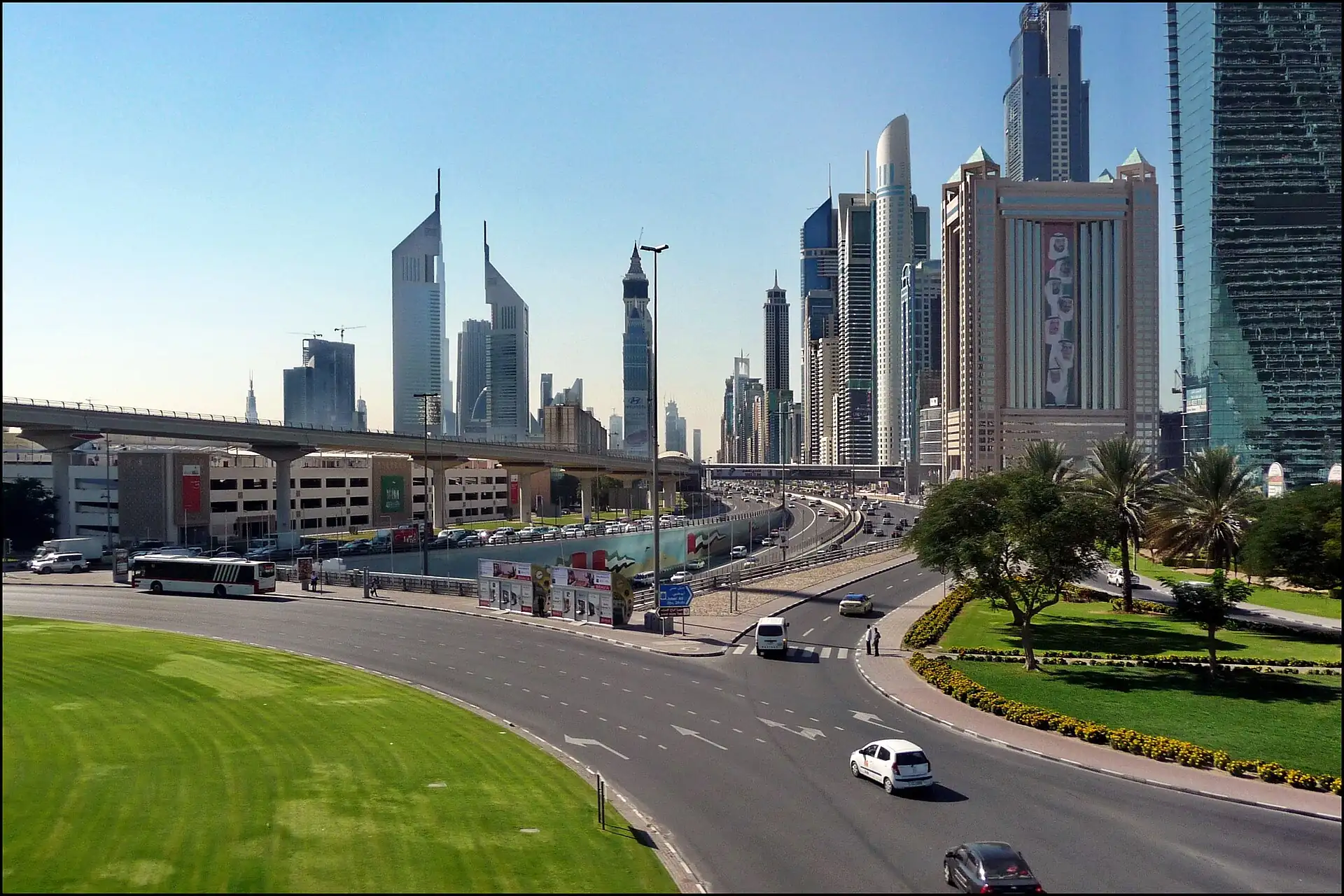
Dubai
دبي
Code DB · 4 walking zones
Dubai is an air-conditioning city: go outdoors before 10:00 and after 17:00, spend the hot hours in a mall, museum or café, use the metro or a taxi between clusters, and follow the local rules on dress, alcohol and behaviour.Dubai is an air-conditioning city: go outdoors before 10:00 AM and after 5:00 PM, spend the hot hours in a mall, museum or café, use the metro or a taxi between clusters, and follow the local rules on dress, alcohol and behaviour.
Our quick read of Dubai, scored 1–5 (friction is out of 100). Cash need: how often you still need notes. Heat risk: how hot days get. Stroller: how easy wheels are. Friction: overall effort for a first visit. Desk judgements, so check before relying on them.
- Local time
- --:--
- Weather
- forecast below
- Currency
- AED
- Best months
- Jan · Feb · Mar · Nov · Dec
- Airport
- Dubai (DXB)
Walking zones: the 4 areas this guide plans a day around. Each is a district you can cover on foot, so you do one zone per half-day and ride the train between them. The code (DB 01, DB 02…) is just the zone's number on the Dubai line; the line under each name says how bags fare there and how much time it needs.
Map of Dubai
Use the switches to show or hide each kind of pin. A switch that is on shows its pins on the map; tap it again to hide them. "Show only" keeps just the pins that match (for example, places that fit a suitcase). Tap any pin for its name and a link to its page.
- Where to sleep
- Places
- Eat
- Walking clusters
- Rest stops
From the airport Dubai (DXB) to your bed
Tap a pin for its card. Places without their own coordinates are shown by their walking cluster.
Why Dubai
Dubai's sights are far apart: Downtown, the old Creek and the Marina are 25 to 45 minutes from each other, and every outdoor stretch is either a heat problem or a traffic problem. The trips that go wrong put two clusters in one morning, walk between towers at noon in summer, or arrive without knowing the rules on alcohol, dress and public behaviour. Four clusters cover a first visit; each needs its own half day, and the desert and Abu Dhabi are separate car days.
See first
- 1Burj Khalifa observation deck · 1.5 h
- 2
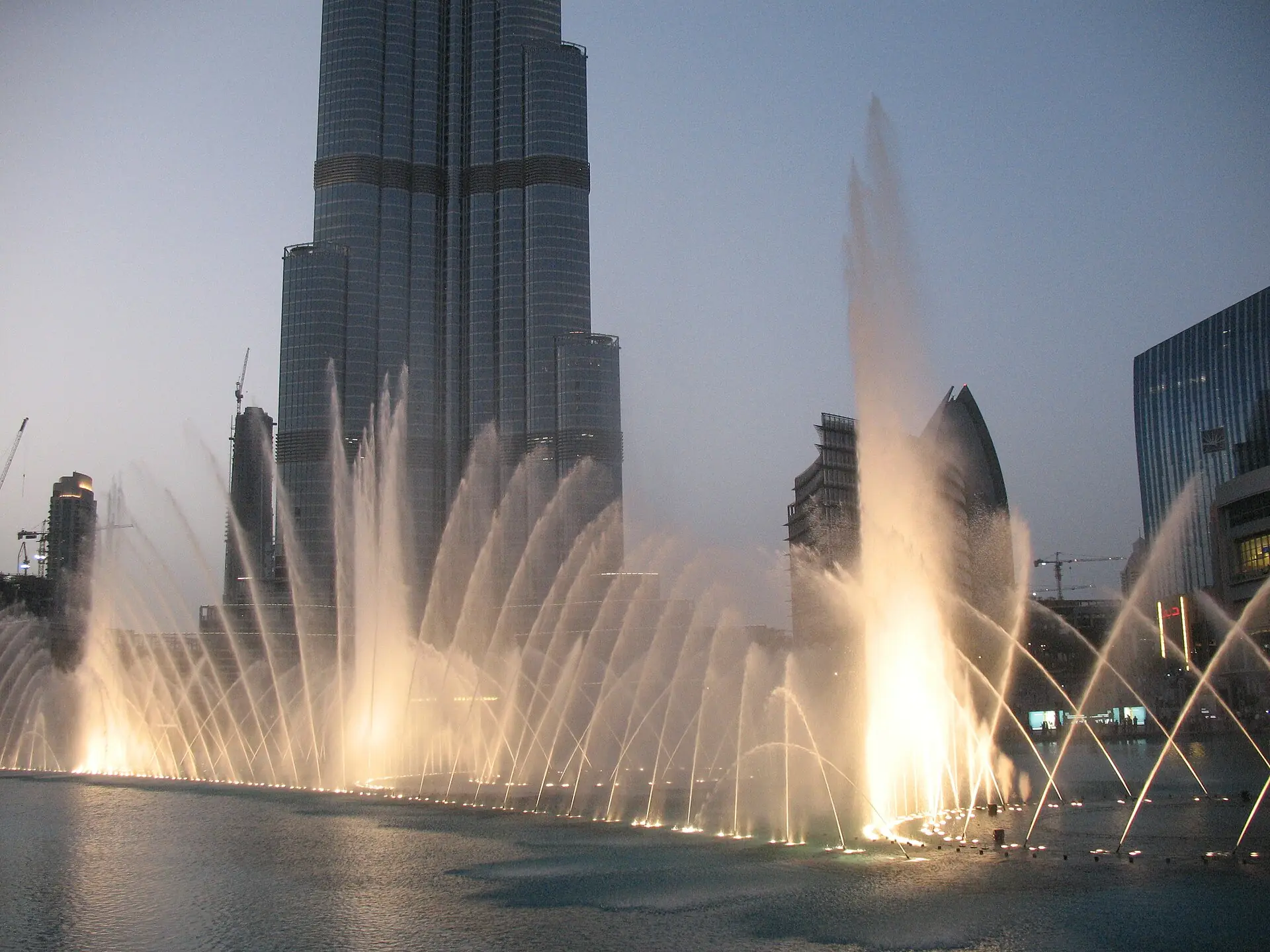
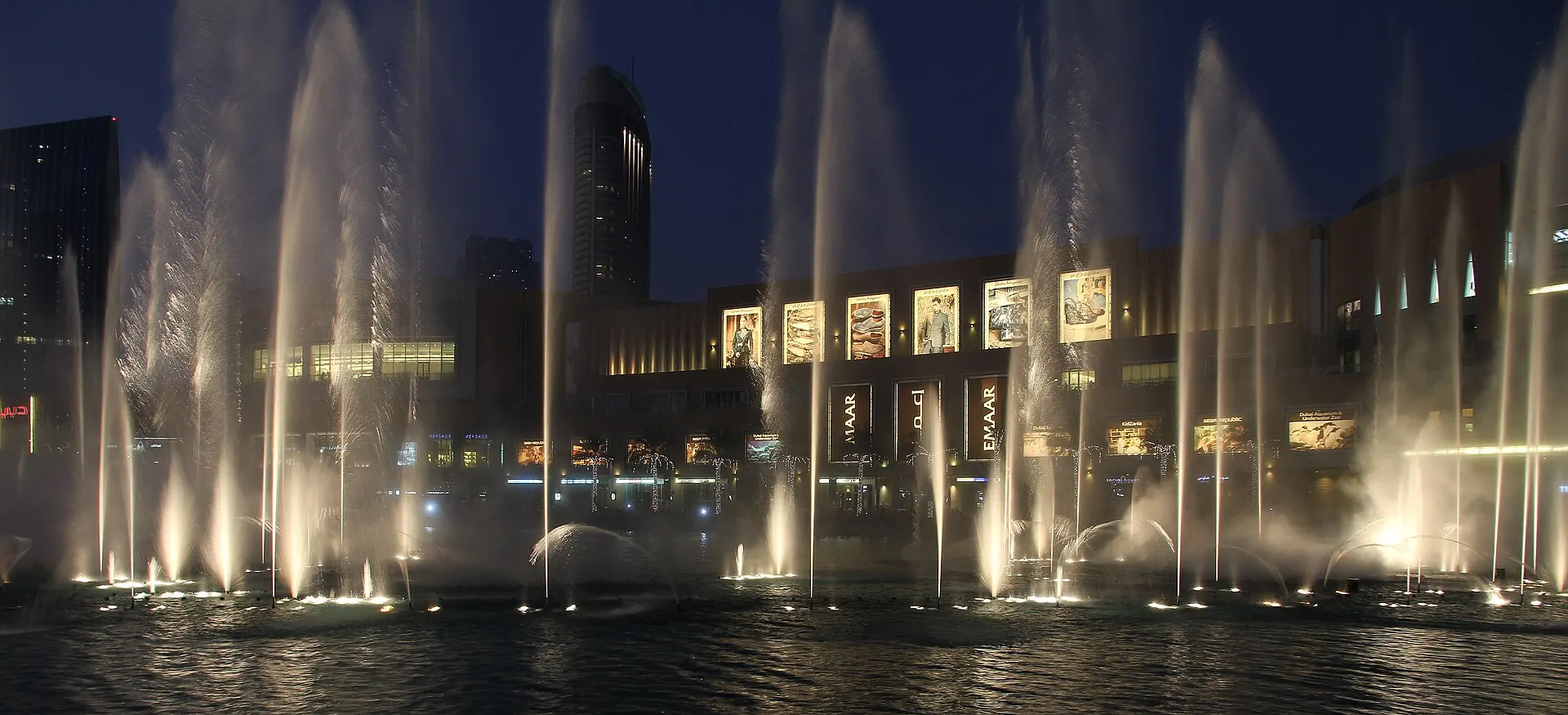 Dubai Fountain show · 20 min
- 3
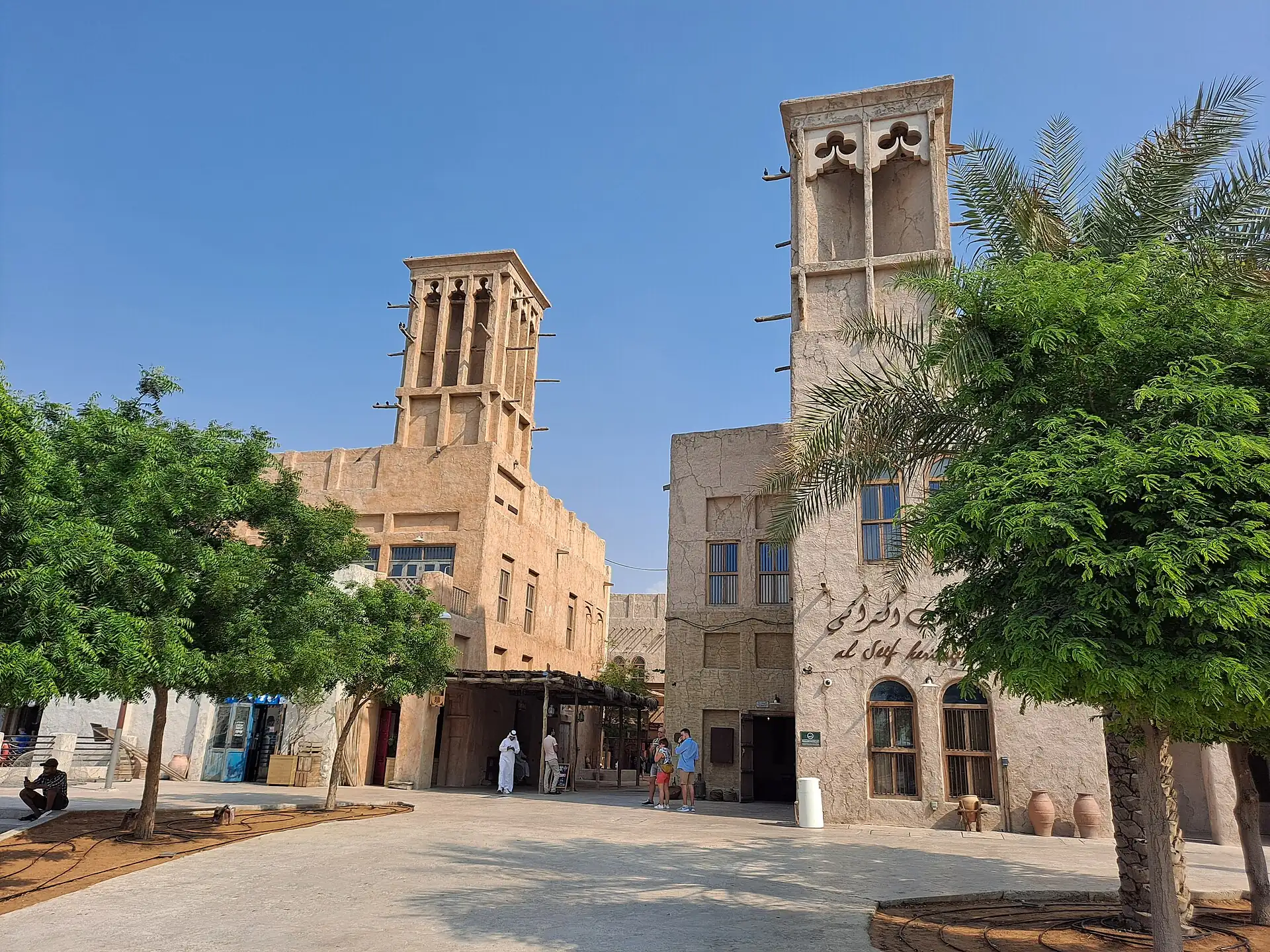 Al Fahidi lanes · 1–1.5 h
- 4Abra across the Creek · 15 min
- 5Gold and Spice Souks · 45–60 min
Fits
- Short city breaks
- Mall and skyline trips
- Winter sun
- Families needing air conditioning
Does not fit
- Summer walkers
- Budget backpackers
- Anyone who wants to drink in public or dress freely outside pools and beaches
How long
- 2 daysDowntown + Burj Khalifa, Al Fahidi + Creek
- 3 daysFour clusters, one per half day, outdoors only at dawn and dusk
- 5 daysFour clusters + a desert evening + Abu Dhabi day by road
Good for
- First timers
- Foodies
- Budget
- Couples
- Solo
- Families
About Dubai
Dubai is a city-emirate on the Gulf coast of the UAE, built on a tidal creek that made it a trading port long before oil. Two thirds of the people are expatriates; the Emirati population is a small minority, and the everyday languages are English, Arabic, Hindi, Urdu, Tagalog and Malayalam.
The old town lies along the Creek: Bur Dubai and Al Fahidi on the west bank, Deira on the east. The new city runs down the coast in a straight line: Downtown and the Burj Khalifa, then Al Quoz and Jumeirah, then the Marina and Palm Jumeirah. The distances are large: 25 to 45 minutes between clusters.
Good to know
- Dubai is both an emirate and a city; Deira and Bur Dubai are the old town on either side of the Creek, and Downtown and the Marina are new districts far from both.
- Dubai's official visitor site is Visit Dubai; it lists events, licences and tourist rules.
- Hotel concierges book tickets, desert safaris and tours; ask for a written price.
Go deeper 13 min read · 6 chapters
Dubai is a creek town that became a hub. The wooden boats on the water, the wind-tower houses in Bur Dubai and the 828-metre tower in Downtown belong to one story of trade, told over less than 200 years. This deep dive reads the city as a line of districts, each built for a different era, so that a day from the creek to the skyline becomes a walk through that story, with heat and local rules kept in view.
1History2 min
Dubai began as a creek. A tidal inlet cuts about 14 kilometres inland from the Gulf, and it gave boats a sheltered berth on a coast with few. Fishing and pearl diving fed a small settlement for centuries. In 1833 about 800 people of the Bani Yas tribe, led by the Al Maktoum family, settled on the creek, and the Al Maktoum family still rules the emirate.
The turn to trade came in 1901, when Sheikh Maktoum bin Hasher made Dubai a free port with low duties. Merchants from Persia and India moved across, and many of the coral-and-gypsum houses in Bur Dubai were built by families from that wave. Pearls collapsed in the 1930s, when cultured pearls and the Depression cut demand, and the town survived on trade, gold and smuggling routes to the Indian subcontinent.
Oil was found offshore in 1966 and exports started in 1969. Dubai’s reserves were modest next to Abu Dhabi’s, and that shaped its choices. Sheikh Rashid spent the revenue on a dredged creek, a port, roads and an airport, and bet on being a place where goods, money and people pass through. Jebel Ali port and the World Trade Centre opened in 1979, the free zone followed in 1985, and Emirates airline was founded the same year and turned the airport into a hub between Europe, Asia and Africa.
On 2 December 1971 Dubai joined six other emirates to form the United Arab Emirates, which is why 2 December is National Day. The city grew fast in the 1990s and 2000s: the Burj Al Arab in 1999, the Marina and the Palm developments, and the Metro’s Red Line in 2009. The 2009 debt crisis at Dubai World forced a refinancing, with help from Abu Dhabi, and the Burj Khalifa opened in January 2010 as the tallest building in the world at 828 metres. Expo 2020 Dubai ran from October 2021 to March 2022, and in January 2022 the UAE moved its working week to end on Friday afternoon, so the weekend is now Saturday and Sunday.
For a visitor the useful point is that the old town and the new city are different eras, not different styles. The creek is the 19th and early 20th century, and the coast road from Downtown to the Marina is a plan made in the last 30 years. Most of the population, about two thirds or more, are expatriates, mainly from South Asia, and that is the reason the food, the languages on the street and the shop signs are as mixed as they are.
- Settled
- 1833 on the Creek by about 800 Bani Yas, led by the Al Maktoum family
- Free port
- 1901, which drew merchants from Persia and India
- Oil
- Found offshore in 1966; exports from 1969
- UAE formed
- 2 December 1971, six emirates, with Ras Al Khaimah joining in 1972
- Burj Khalifa
- Opened 2010 at 828 m
2How the city is laid out2 min
Dubai is a line, not a grid. The coast runs south-west from the old creek to the Marina and beyond, and the city grew along it. The main artery is Sheikh Zayed Road, a wide highway with the Metro Red Line beside it, and the towers stand on both sides. Most first-time confusion comes from expecting one centre. There are four, and they are 25 to 45 minutes apart by car.
The old town sits on the creek. Bur Dubai is the west bank and Deira is the east bank. Al Fahidi and the textile souk are in Bur Dubai. The gold, spice and perfume souks are in Deira. Fares are small: an abra crosses in 5 to 10 minutes for about AED 1, and the Metro links both banks in a few stops. Streets here are narrow, busy from the late afternoon, and shaded in places by the buildings themselves.
Downtown Dubai is the tower district. The Burj Khalifa, The Dubai Mall and the Dubai Fountain are grouped around an artificial lake, and the walkways are air-conditioned or covered between the Metro station and the mall. A first stay here works for people who want lifts, cool corridors and taxis at the door, and it does not work for people who want to walk to a neighbourhood café at night. There are few places to walk outside the towers and the mall, and the distances are large.
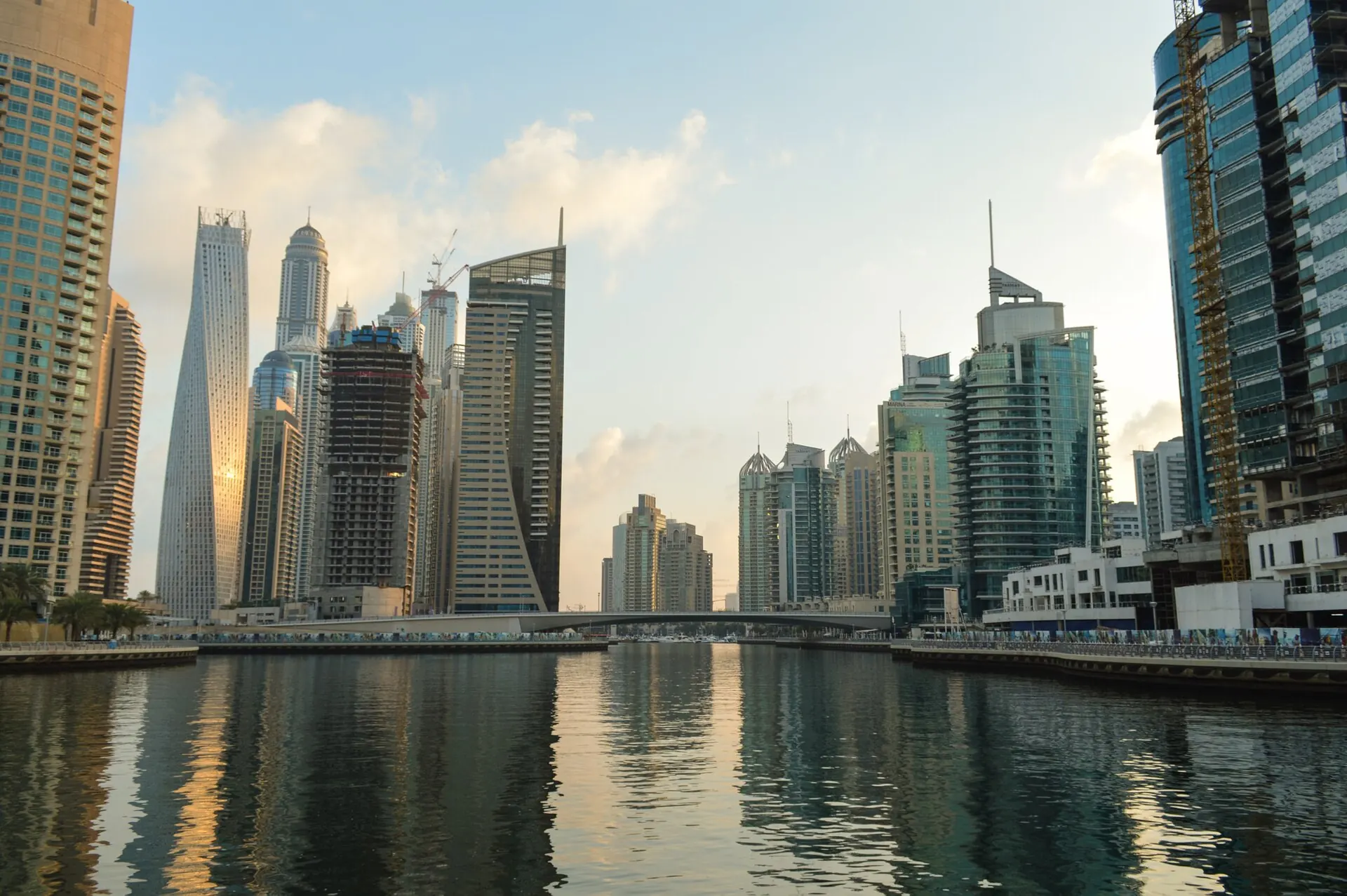
The Marina and JBR are the beach cluster. Dubai Marina is a man-made canal with towers on both sides and a promenade around it, and JBR is a strip of beachfront with a public beach and a car-free walk of cafés and shops. The Dubai Tram links the Marina to the Metro and Palm links. Between these clusters lie Al Quoz, an industrial district with galleries, and Jumeirah, a low-rise coastal strip with beach parks and the Jumeirah Mosque, one of few mosques where non-Muslims can take a guided visit.
The practical way to use the city is one cluster per half day, then a Metro or taxi ride to the next. Sleep in the cluster that matches the trip: Downtown for a first visit and malls, Bur Dubai for the old town and lower prices, the Marina or JBR for a beach stay. Do not try to walk between clusters. In the warm months even 1 kilometre outdoors in the middle of the day is a poor idea, and a taxi across town costs AED 30 to 65 on a 2026 estimate.
- Old town
- Bur Dubai (west bank) and Deira (east bank) on either side of the Creek
- Spine
- Sheikh Zayed Road with the Metro Red Line
- Distances
- 25 to 45 minutes by car between the main clusters
- Transit card
- Silver Nol card works on Metro, tram, bus and abra (check current fares)
3Architecture and the skyline2 min
There are two Dubais in the built form, and they are easy to tell apart. In Bur Dubai the old houses are low, made of coral stone, gypsum and palm wood, with thick walls and small windows. In the new districts, towers of glass and steel rise 300 metres or more. The one links to the other by a design idea: keep the sun out and let air move.
The most useful old feature is the barjeel, or wind tower. A square shaft rises above a courtyard house with openings on each side, and it catches breeze and drops cooler air into the rooms below. The Al Fahidi Historical Neighbourhood, once called Bastakiya after the Bastak region of Persia, is the best place to see them. Its lanes are narrow so that the buildings shade each other, and the courtyards were a working cooling system before electricity. Many of the houses are now galleries, cafés, small museums and a hotel, and the neighbourhood is a walk of about 30 minutes.
The skyline came from a competition for height and firsts. The Burj Al Arab, a sail-shaped hotel on its own island, opened in 1999 and made the coast recognisable. The Burj Khalifa followed in 2010 at 828 metres, with a Y-shaped floor plan that the designers said was inspired by a desert flower and that steadies the tower against wind. Its observation decks sit at floors 124 and 125, and a higher deck at 148 is sold at a higher price. The Dubai Frame, Palm Jumeirah and the twin curves of towers at the Marina all belong to the same era.
For a visitor the practical points are these. Book the tower for sunset or early morning, when the sky is clear and the glare is lower, and check weather: haze in summer and dust days cut the view badly. Tickets change with time slots and price by hour, on a 2026 estimate about AED 170 to 350 for the standard decks, so buy ahead and compare. The Dubai Mall and its fountain are the free part of the same district. The fountain shows run in the evening, roughly every 30 minutes, with the schedule to check locally.
To read the city as architecture, do it in this order. Start in Al Fahidi to see the old solution. Cross the creek by abra to see the trading buildings on the Deira side. Then go to Downtown by Metro and look up. The gap between the first hour and the last is 150 years, and it is short enough to walk in one day.
- Wind tower
- Barjeel, a shaft that catches breeze and cools courtyard houses
- Burj Khalifa
- 828 m; public decks at floors 124, 125 and 148
- Burj Al Arab
- Opened 1999 on its own island
- Al Fahidi
- Old merchant quarter, called Bastakiya after the Bastak region of Persia
4The Creek, the souks and trade2 min
Dubai’s first business was moving goods. The creek was the port, and the souks on both banks were the shops that grew around it. Dhows, the wooden trading boats of the Gulf, still tie up along the Deira side and load goods for Iran, Iraq, East Africa and South Asia. This is worth seeing even if you buy nothing, because it explains why the city has always been a port first.
The abra is the best introduction. These are open wooden boats with a canopy and a bench down each side, and they cross the creek in 5 to 10 minutes for about AED 1 per person on a 2026 estimate. Boats leave when full, and the operator collects the fare on board. Stations sit at Bur Dubai and Deira, and some run along the creek for a longer hire at a negotiated price; agree the fare before you step on. Cash in small notes is easier than a card here.
The Gold Souk in Deira is a covered lane of jewellery shops, mostly 18, 21 and 22 carat pieces sold by weight. Prices follow the daily gold rate plus a making charge, and the making charge is where you can bargain. Ask the shop for the day’s rate, the weight in grams and the charge separately. Larger pieces come with a certificate and a receipt, and it is sensible to keep both. Visit after about 16:30 when the heat drops and the lanes come alive. The Spice Souk is a short walk away, with saffron, dried limes, frankincense, rose petals and dried fruit; prices are also negotiable, and cheap saffron is a warning sign. Ask for a small sample and check the smell and colour.
Bur Dubai has its own trade streets. The textile souk runs beside the creek, with cloth, scarves and pashminas, and around it are small shops selling spices, electronics and souvenirs. Bargain lightly and with humour. The starting price is normally well above the final one, and a fair deal in the souks is usually a discount of about a fifth to a third from the first quote, though it depends on the item. Say no politely and walk away if you are not sure; you will often be called back with a better offer.
The malls are the modern version of the same instinct. Dubai has sold to visitors for more than a century, and the Dubai Shopping Festival, from December into January, keeps the tradition going with sales and fireworks. If you want the old form, choose the souks. If you want fixed prices, air conditioning and a food court, choose the mall. You do not have to pick one, and a day that starts at the creek and ends in Downtown covers both.
- Abra fare
- About AED 1 per crossing, 5 to 10 minutes (2026 estimate)
- Gold
- Priced by weight at the day rate plus a making charge; bargain the charge
- Best hours
- After about 16:30, when the heat dropsAfter about 4:30 PM, when the heat drops
- Shopping Festival
- Runs from December into January with sales and fireworks
5Food, from karak to kebab2 min
Dubai eats like the people who live there. Since most residents come from elsewhere, the strongest cooking is often not Emirati but Indian, Pakistani, Iranian, Lebanese, Filipino and Ethiopian, served in canteens and small restaurants that cost far less than a hotel dining room. Emirati food exists, and it is worth one meal, but the best-value eating in the city is usually in the neighbourhoods where workers and families eat.
Start with karak, a strong tea boiled with cardamom and milk, sold at street counters and canteens for about AED 2 to 6 on a 2026 estimate. It is the city’s everyday drink, taken standing or sitting on a plastic stool at almost any hour. Deira’s shawarma counters, which sell chicken or beef wraps for AED 8 to 18, stay open late, and are the reliable answer to a hungry hour after the souks close.
Bur Dubai and Karama have the Indian and Pakistani canteens. A set lunch of rice, dal, a vegetable and a curry, sometimes with bread, runs AED 15 to 45, and vegetarian options are standard. Portions are large and service is quick. Iranian kebab houses, often around Deira and Bur Dubai, grill minced lamb or chicken on flat skewers and serve them with bread, grilled tomato and rice. The rice comes with a butter and a sumac pot on the side, and you use both freely.
For the local version, an Emirati or Gulf table might have machboos, a spiced rice with meat or fish; harees, a slow-cooked wheat and meat porridge often eaten in Ramadan; luqaimat, small fried dumplings drenched in date syrup; and Arabic coffee, or gahwa, poured in small cups with dates. Arabic coffee is served until you shake the cup lightly to say enough. Ask staff which of the dishes are house specialities, and confirm any details with the venue before you go.
Alcohol is served only in licensed venues, mainly hotels and some licensed restaurants. Drinks are expensive, often AED 40 or more for a beer, and drinking in public is illegal. During Ramadan, restaurants generally open late in the day, food courts are often screened, and eating or drinking in public during daylight is discouraged, so plan around it. Friday brunch is a social ritual in hotels and costs a good deal more than a weekday meal. Prices vary widely, so check current details, and confirm locally which dishes and opening hours apply.
- Karak
- Cardamom milk tea, AED 2 to 6 (2026 estimate)
- Shawarma
- AED 8 to 18 at counters, often open late
- Canteen lunch
- AED 15 to 45 for a set meal
- Alcohol
- Only in licensed venues; no public drinking
6Rules, heat and the rhythm of the year2 min
The year in Dubai is set by temperature. From November to March the days are warm and dry, with highs of 24 to 31 degrees, and it is the season for the beach, the creek walk and the desert. From April the heat builds, and from June to September highs run 40 to 42 degrees with high humidity on the coast. Almost everything then moves indoors or into the evening: sightseeing before 10:00, a mall or museum in the middle of the day, and outdoor walks again after 17:00.
Rain is rare, about 3 days a month in winter, though when it comes it can flood roads because the drainage is designed for little water. A sandstorm or dust day happens a few times a year and cuts visibility, so check the forecast before booking the tower or a desert tour. Sunscreen, water and a hat are basic in every month, and a light layer is useful because malls and the Metro are cold inside.
Rules are stricter than many visitors expect, but easy to follow once you know them. Cover shoulders and knees in malls, old quarters and mosques; swimwear belongs on beaches and at pools. Alcohol is limited to licensed venues, and there is zero tolerance for drink-driving. Avoid kissing and close contact in public, and keep language and gestures polite. Do not photograph people, especially women, without asking, and do not photograph government or military sites. Drone use needs permits, so leave a drone at home unless you have arranged one.
Ramadan changes the rhythm. It follows the lunar calendar and moves about 11 days earlier each year; the 2026 dates are about 18 February to 19 March, so check exact dates. In daylight, eating, drinking and smoking in public are discouraged, many restaurants open later, and evenings around Iftar, the meal that breaks the fast, are busy and festive. Eid al-Fitr follows and hotels fill. Friday midday prayer pauses some shops for a short time, and Friday brunch is a social event in hotels. The weekend is Saturday and Sunday since 2022.
Dubai is safe on most measures, with low street crime, a visible police presence and taxis that use meters. The main risks are heat, traffic and legal missteps: a photograph taken without permission, a rude gesture, or a medicine that is restricted in the UAE. Check the rules on your prescription medicines before travel, since some common drugs need paperwork. If you are unsure, ask the hotel front desk or a local staff member, who will generally be glad to help.
- Best season
- November to March, highs 24 to 31 degrees
- Summer
- June to September, highs about 40 to 42 degrees
- Ramadan 2026
- About 18 February to 19 March; check exact dates
- Weekend
- Saturday and Sunday since January 2022
Read, watch, wordsGlossary · Sources
Glossary
| Term | Local | Meaning |
|---|---|---|
| Abra | A small wooden ferry that crosses Dubai Creek for about AED 1. | |
| Barjeel | A wind tower that catches breeze and cools a courtyard house. | |
| Karak | Strong tea boiled with cardamom and milk, sold at canteens and street counters. | |
| Souk | سوق | A market, from the covered gold lanes of Deira to the textile lanes of Bur Dubai. |
| Iftar | The meal that breaks the fast at sunset in Ramadan. | |
| Nol card | The prepaid transit card for Metro, tram, bus and abra. | |
| Dhow | A traditional wooden trading boat, still loaded along the Deira waterfront. |
Read for this deep dive
Background reading only: the text above is written by Voykit, not copied from these pages.
Photos
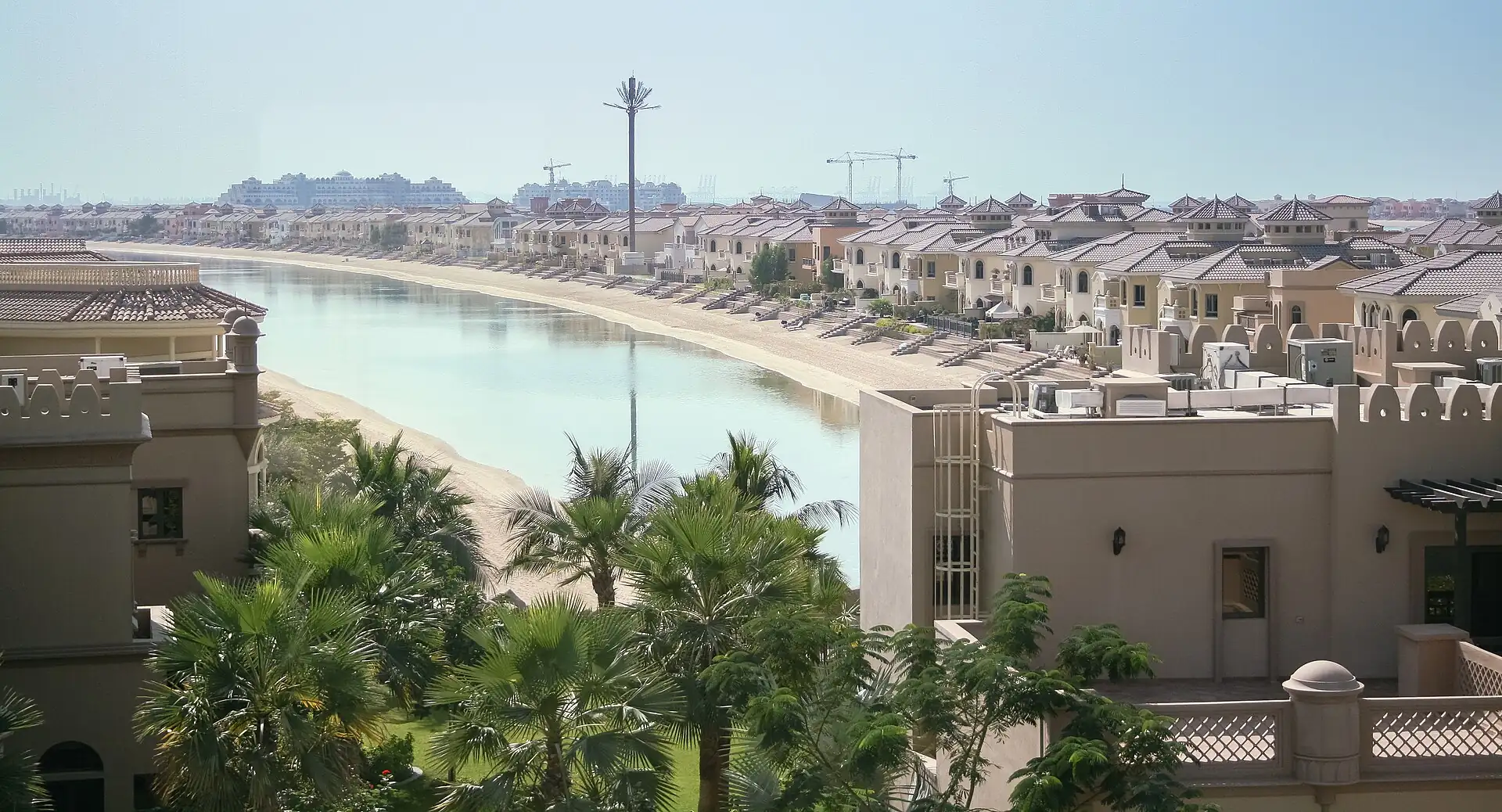
Al Bada'a - Dubai - United Arab Emirates Photo: trolvag, CC BY-SA 3.0
Dubai street scene Photo: Leandro Neumann Ciuffo, CC BY 2.0
World Trade Centre Arena, Dubai, U.A.E Photo: ITU Pictures, CC BY 2.0
Satwa Dubai Public Cricket Stadium - By Mh Sumon +971508899245 Photo: Mh Sumon, CC BY-SA 3.0
Dubai landmark Photo: Photopank, CC BY-SA 4.0
Dubai park Photo: wilhelmtittes, CC BY 3.0
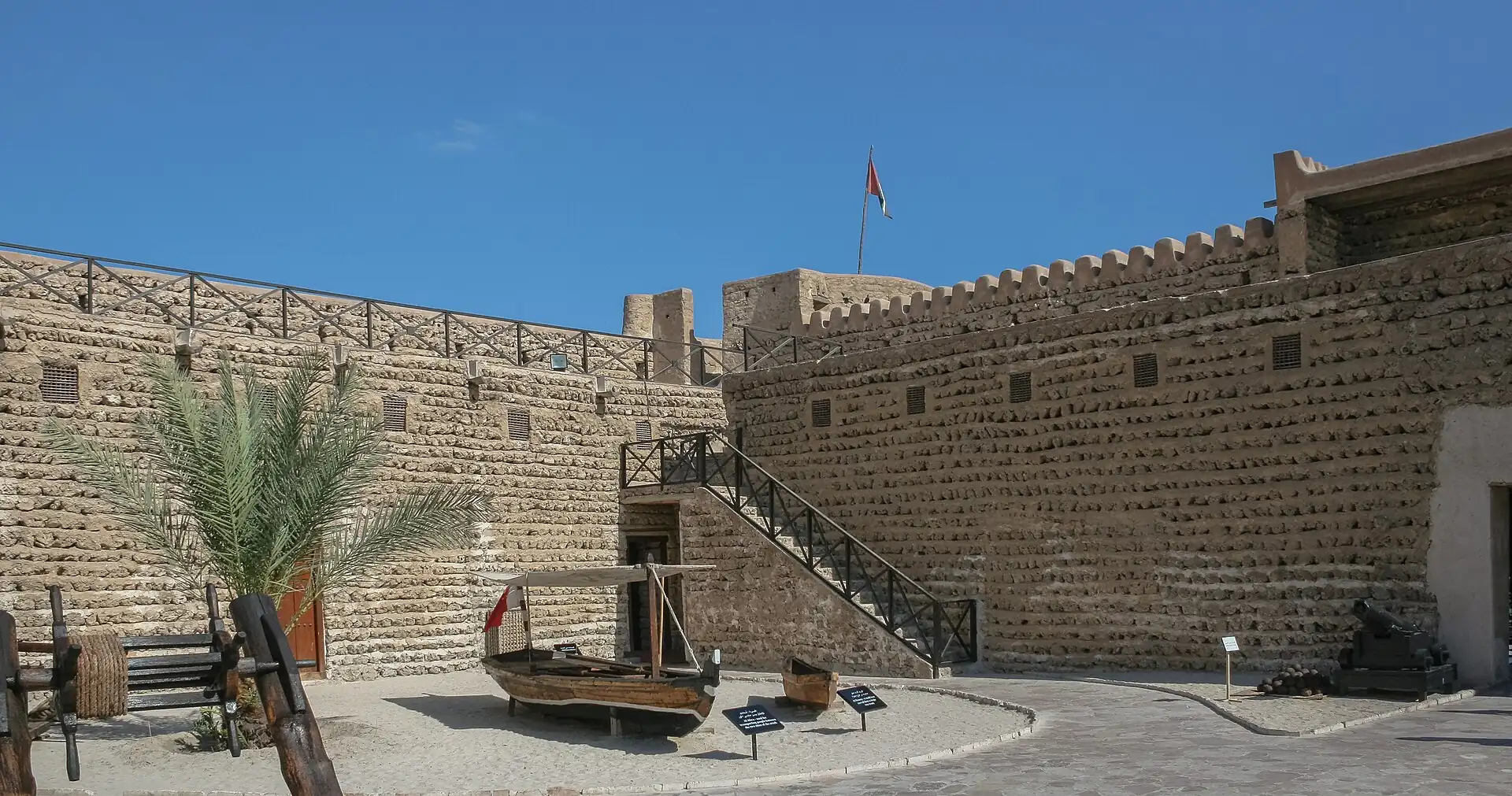
Heritage Village, Dubai, United Arab Emirates Photo: Diego Delso, CC BY-SA 4.0
Rules in force · 6Alcohol is served only in licensed venues such as hotels,…
- United Arab Emirates ↗Alcohol is served only in licensed venues such as hotels, bars and some restaurants; drinking or being drunk in public is an offence.
- United Arab Emirates ↗Cover shoulders and knees in malls, government buildings, souks and mosques; swimwear stays on beaches and at pools.
- United Arab Emirates ↗Keep public behaviour reserved: no kissing or close contact in public, no rude gestures, swearing or arguments online or in person, and ask before photographing people.
- United Arab Emirates ↗Some common medicines (certain painkillers, sleeping pills and ADHD drugs) are controlled here: check the health ministry's rules and carry the prescription before you fly.
- United Arab Emirates ↗Check entry rules for your passport on the official government portals; many nationalities enter without a prior visa, others need one in advance.
- Emirate of Dubai ↗From May to September, avoid outdoor walks between 11:00 and 16:00: build the day around shade and air conditioning.
Entry rules depend on your passport. Full visa guide
Emergency numbers for Dubai999 ▾
Tap a number to call from your phone. These are the numbers listed in this guide; a row marked check has not been verified.
Planning is the full guide. I'm here keeps what is open and the cheat card.
Right now
Checking the weather…
Working out what is open near you…
What is open nowclock, closures, places open
Now in Dubai
Local time in Dubai
--:--
Loads in your browser · Asia/Dubai
This month
Month verdict appears here.
Closed today
See the weekly grid below.
| Weekly closure | Mon | Tue | Wed | Thu | Fri | Sat | Sun |
|---|---|---|---|---|---|---|---|
| Government offices and bankscheckWeekend is Saturday and Sunday for most offices; Friday is a short day. | · | · | · | · | · | ✕ | ✕ |
If today is a closure day: Friday: many venues open after midday prayers; brunch and beach days are busy on Friday and Saturday. In summer plan the outdoor part before 10:00.
Open every day: Abra crossing on Dubai Creek, Al Fahidi Historical Neighbourhood, Burj Khalifa observation decks, Dubai Fountain, The Dubai Mall, Gold Souk and Spice Souk, JBR Beach and The Walk, Dubai Marina Walk.
- check Small shops and souks: Some pause at Friday prayer (about 12:00–14:00).
Weekly closures come from our place pages; public holidays add closures not shown here.
Open now
The sights and places to eat on our list that are open at this moment, in the city's time, nearest first from where you are staying.
Loads in your browser with the city's local time.
Hours marked (check) are typical, not confirmed. Walking times are straight-line estimates. Open at another time →
Cheat cardthe pocket version
Cheat card
The essentials on one card: save it as an image for your phone, share it, or print it.
Dubai
دبي
- Money
- Keep AED 100 in small notes for abras and souk stalls; withdraw at bank ATMs inside malls.
- SIM
- Buy an eSIM before you fly, or a tourist SIM from du or e& at the airport arrivals hall.
- Ride app
- Careem and Uber · RTA Dubai / Nol Pay
- Emergency
- 999 police · 998 ambulance · 997 fire
- Plugs
- Sockets G. US/Canada (A/B): adapter · UK/Ireland (G): fits · Australia/NZ (I): adapter. 230 V: US 120 V-only devices (hair dryers) need a converter; most chargers are dual-voltage.
Say it
- Hello: مرحبا (marhaba) (mar-ha-ba)
- Thank you: شكرا (shukran) (shuk-ran)
- Please: من فضلك (min fadlak) (min fad-lak)
- How much?: بكم؟ (bikam) (bi-kam)
- Please use the meter: شغل العداد (shaghil al-addad) (sha-ghil al-ad-dad)
Top 5
- Burj Khalifa observation deck
- Dubai Fountain show
- Al Fahidi lanes
- Abra across the Creek
- Gold and Spice Souks
EssentialsQuick answers, what things cost and how to get around
Essentials
Quick answers, what things cost and how to get around
Quick answers
The questions people ask first about Dubai, one line each. Tap a card for the full answer.
- Cash or card?Cards and phone pay work almost everywhere, including taxis, malls and most canteens.
- SIM or eSIMBuy an eSIM before you fly, or a tourist SIM from du or e& at the airport arrivals hall.
- Ride-hailing appCareem and Uber · RTA Dubai / Nol Pay.
- Tap waterTap water is treated and safe, but most visitors drink bottled or filtered water.
- Tipping10–15% in a restaurant only if a service charge is not already on the bill; many add 10% service and 5% VAT.
- Plugs & powerSockets G. US/Canada (A/B): adapter · UK/Ireland (G): fits · Australia/NZ (I): adapter. 230 V: US 120 V-only devices (hair dryers) need a converter; most chargers are dual-voltage.
Show all 14 answers
- Safe at night?The central areas on our map are rated fine at night.
- What to wearCover shoulders and knees in malls, old quarters and mosques; swimwear on beaches and at pools only.
- Emergency numbers999 police · 998 ambulance · 997 fire
- Your embassycheckUS, UK, Canada, Australia embassies listed with addresses (check before you go).
- Closed which day?Sat: 1 on our list shut · Sun: 1 on our list shut.
- Sundays & holidaysWeekly closures come from our place pages; public holidays add closures not shown here.
- Rainy-day planRain is rare but heavy: streets flood and roads jam.
- Landing lateDXB: airport taxi or ride-hailing car to the door runs all night.
Cost cheat-sheetwhat everyday things cost
Cost cheat-sheet
Typical prices for the everyday things, as ranges. Change the currency right here; the local price stays first.
2026 desk estimate · check
- CoffeeCoffee in a caféAED 18–30 (≈ US$5–9)
- Sit-down mealSet lunch at an Indian or Pakistani canteenAED 15–45 (≈ US$5–13)
- Street or quick mealKarak tea at a stall or canteenAED 2–6 (≈ US$1–2)
- BeerBeer or a glass of wine in a hotel barAED 40–75 (≈ US$11–25) with fees
- Taxi, about 5 km (3 mi)Taxi, about 3 mi (5 km)Taxi across townAED 30–65 (≈ US$9–18)
- Metro or bus rideMetro rideAED 3–8 (≈ US$1–3)
- Budget bedHostel dorm bed, a night, per personAED 90 (≈ US$25)
- Mid-range bedHotel double room, a night, per roomAED 550 (≈ US$150)
- High-end bedHotel double room, a night, per roomAED 1,400 (≈ US$400)
A day, not counting the bed: Budget AED 250 (≈ US$70) · Mid AED 650 (≈ US$180) · High AED 1,500 (≈ US$450)
Local prices, with USD next to them (rates 2026-09 (approximate); change it in the header). Ranges are desk estimates: check locally. Every price and the budget calculator →
Source: Prices in Dubai
Draft
Written from desk research. Not yet compared with the official source.
No official source is recorded for this figure.
Prices are 2026 desk estimates, not yet compared with an official source. Check on the day.
Not checked in the last 12 months (no check date on file).
DecideWho it suits, the trade-offs and when to go
Decide
Who it suits, the trade-offs and when to go
Best months at a glance
The guide's verdict for each month
Jan
Best
24°C (75°F)75°F (24°C)
Feb
Best
25°C (77°F)77°F (25°C)
Mar
Best
28°C (82°F)82°F (28°C)
Apr
Care
33°C (91°F)91°F (33°C)
May
Care
38°C (100°F)100°F (38°C)
Jun
Avoid
40°C (104°F)104°F (40°C)
Jul
Avoid
42°C (108°F)108°F (42°C)
Aug
Avoid
42°C (108°F)108°F (42°C)
Sep
Avoid
40°C (104°F)104°F (40°C)
Oct
Care
36°C (97°F)97°F (36°C)
Nov
Best
31°C (88°F)88°F (31°C)
Dec
Best
26°C (79°F)79°F (26°C)
Best: Nov–Mar. Mixed: Apr–May, Oct. Avoid: Jun–Sep. Month by month →
Warmest Jul (42°C (108°F)108°F (42°C)), coolest Jan (14°C (57°F)57°F (14°C) low), wettest Jan (3 rain days), driest May (0). Averages, not a forecast.
Dubai across the year
Best-looking months for Dubai: Jan, Feb, Mar. Rated avoid: Jun, Jul, Aug, Sep.
| Measure | Jan | Feb | Mar | Apr | May | Jun | Jul | Aug | Sep | Oct | Nov | Dec |
|---|---|---|---|---|---|---|---|---|---|---|---|---|
| Weather | Great (good) | Great (good) | Great (good) | Mixed (care) | Mixed (care) | Avoid (avoid) | Avoid (avoid) | Avoid (avoid) | Avoid (avoid) | Mixed (care) | Great (good) | Great (good) |
| Crowds | High (care) | High (care) | High (care) | Medium (ok) | Low (good) | Low (good) | Low (good) | Low (good) | Low (good) | Medium (ok) | High (care) | High (care) |
| Prices | High (care) | High (care) | High (care) | Medium (ok) | Medium (ok) | Low (good) | Low (good) | Low (good) | Low (good) | Medium (ok) | High (care) | High (care) |
| Events | 3 events (ok) | 3 events (ok) | 5 events (ok) | 1 event (ok) | 2 events (care) | 2 events (ok) | 1 event (ok) | 1 event (ok) | 2 events (ok) | 3 events (ok) | 4 events (ok) | 5 events (ok) |
Green is good news, amber needs planning, red is a month to avoid; dashed grey with a question mark means our data does not say. Open the year heatmap →
Not checked in the last 12 months (no check date on file).
Source: Months, temperatures and crowds
Draft
Written from desk research. Not yet compared with the official source.
Monthly highs, rain and crowd levels are climate averages and desk estimates for the city, not a forecast.
Understand the cityUnderstand · Districts
Orientation & districts
Dubai is a line of districts along the coast, joined by Sheikh Zayed Road and the metro. Sleep in one cluster, spend one half day per district and use the metro or a taxi between them.
Deira and Bur Dubai are the old town, either side of the Creek. Downtown and the Marina are new districts 25 to 45 minutes from each other by car.
Shaded shapes: walking areas (click one). Black pins: sleep areas. Grey dots: places. Round badges: arrivals. Click the map to turn on scroll-wheel zoom.
Hover, tap or tab to an area to see what it is like. Pins are sleep areas; arrows at the edge point to the airport.
Not drawn yet (no coordinates in this guide): Jumeirah, Palm Jumeirah, Business Bay and DIFC, Al Quoz and Alserkal Avenue. They are in the neighbourhood cards below.
Where’s what, as a list:
- Downtown Dubai (وسط مدينة دبي): Burj Khalifa, Dubai Mall and the fountain; air-conditioned links; hotels with lifts and taxis at the door. Suits: First visit, malls, the tower and the fountain. Price band $$$.
- Bur Dubai and Al Fahidi (بر دبي): Wind-tower lanes, textile souk, abra station and a lot of Indian and Emirati food. Suits: Old town, budget hotels, the Creek. Price band $$.
- Deira (ديرة): Across the Creek; walk the souks from 16:30 and eat shawarma late.Across the Creek; walk the souks from 4:30 PM and eat shawarma late. Suits: Gold and spice souks, cheap food, older hotels.
- Dubai Marina and JBR (مرسى دبي): A car-free promenade, the public beach and tram; 25 to 45 minutes from Downtown. Suits: Beach stays, winter sun, families.
- Jumeirah (جميرا): A villa strip with beaches, cafés and art galleries; go by car. Suits: Beach parks, mosque visits, Burj Al Arab views.
- Palm Jumeirah (نخلة جميرا): Large resorts, monorail and beach clubs; far from the old town. Suits: Resort holidays and waterparks.
- Business Bay and DIFC (الخليج التجاري): Towers and restaurants near Downtown; DIFC has galleries and fine dining. Suits: Business trips, art galleries, dining.
- Al Quoz and Alserkal Avenue (القوز): Galleries and cafés in old warehouses; check opening days. Suits: Art and design, warehouses.
- Sleep area Bur Dubai: suits Old town, budget hotels, the Creek, price band $$.
- Sleep area Downtown Dubai: suits First visit, malls, the tower and the fountain, price band $$$.
- Dubai International Airport (DXB), about 10 km (6.2 mi)6.2 mi (10 km) from the centre, 25–50 min by the usual route.
Neighbourhoods at a glance
One tab per area, pulled together from this guide’s districts table, area notes, sleep-area scores and place pages. Scores are desk judgements (1–5); prices are estimates, check before you book.
Downtown Dubai
$$$وسط مدينة دبي
Burj Khalifa, Dubai Mall and the fountain; air-conditioned links; hotels with lifts and taxis at the door.
- Suits:
- First visit, malls, the tower and the fountain
- Best time:
- Evening
- Rooms:
- AED 350–900 (from the sleep guide)
Pick this if: First timers, families, shoppers
Watch out for: Midday outdoor walks in summer.
- Quiet nights4/5 High
- Nightlife3/5 Medium
- Families5/5 Very high
- Late arrival5/5 Very high
Why these scores
- Quiet nights: Wide, air-conditioned surroundings.
- Nightlife: Hotel bars and dinner venues; not a street nightlife area.
- Families: Malls, play areas and lifts.
- Late arrival: 24-hour desks and taxis.
Getting around from here
- 120–150 min walk to Al Fahidi & Bur Dubai Creek
- Car to Deira: about 30 min to Deira Souks & Creek
- Car or metro to the Marina: about 35 min to Dubai Marina & JBR Walk
Bur Dubai and Al Fahidi
$$بر دبي
Wind-tower lanes, textile souk, abra station and a lot of Indian and Emirati food.
- Suits:
- Old town, budget hotels, the Creek
- Best time:
- Morning
- Rooms:
- AED 90–160 dorm bed · AED 250–400 double (from the sleep guide)
Pick this if: Heritage lovers, photographers
Watch out for: Midday sun.
- Quiet nights3/5 Medium
- Nightlife2/5 Low
- Families3/5 Medium
- Late arrival4/5 High
Why these scores
- Quiet nights: Mosque calls and traffic; back rooms are calmer.
- Nightlife: Late cafés and canteens.
- Families: Old town interest; fewer kids' facilities.
- Late arrival: Desks open late; taxis available.
Getting around from here
- 18–26 min walk to Deira Souks & Creek
- Car or metro to Downtown: about 25 min to Downtown Dubai (Burj Khalifa & Dubai Mall)
- DXB: about 6 km (3.7 mi) in a straight line (arrival ride 25–50 min)DXB: about 3.7 mi (6 km) in a straight line (arrival ride 25–50 min)
Deira
ديرة
Across the Creek; walk the souks from 16:30 and eat shawarma late.Across the Creek; walk the souks from 4:30 PM and eat shawarma late.
- Suits:
- Gold and spice souks, cheap food, older hotels
- Best time:
- After 16:30After 4:30 PM
Pick this if: Shoppers and food lovers
Watch out for: Midday when many shops shut.
Getting around from here
- Abra across the Creek: about 20 min to Al Fahidi & Bur Dubai Creek
- Car to Downtown: about 30 min to Downtown Dubai (Burj Khalifa & Dubai Mall)
- DXB: about 7 km (4.3 mi) in a straight line (arrival ride 25–50 min)DXB: about 4.3 mi (7 km) in a straight line (arrival ride 25–50 min)
Dubai Marina and JBR
مرسى دبي
A car-free promenade, the public beach and tram; 25 to 45 minutes from Downtown.
- Suits:
- Beach stays, winter sun, families
- Best time:
- Sunrise or sunset
Pick this if: Beach lovers, families
Watch out for: Midday sand in summer.
Getting around from here
- Car or metro north-east: about 35 min to Downtown Dubai (Burj Khalifa & Dubai Mall)
- Car or metro: about 45 min to Al Fahidi & Bur Dubai Creek
- DXB: about 30 km (19 mi) in a straight line (arrival ride 25–50 min)DXB: about 19 mi (30 km) in a straight line (arrival ride 25–50 min)
Jumeirah
جميرا
A villa strip with beaches, cafés and art galleries; go by car.
- Suits:
- Beach parks, mosque visits, Burj Al Arab views
Palm Jumeirah
نخلة جميرا
Large resorts, monorail and beach clubs; far from the old town.
- Suits:
- Resort holidays and waterparks
Business Bay and DIFC
الخليج التجاري
Towers and restaurants near Downtown; DIFC has galleries and fine dining.
- Suits:
- Business trips, art galleries, dining
Al Quoz and Alserkal Avenue
القوز
Galleries and cafés in old warehouses; check opening days.
- Suits:
- Art and design, warehouses
Ward by ward
5 area guides. Open one for the short answer, the key facts and what the area is like; the full guide is linked inside. Prices marked (check) are estimates.
Bur DubaiBest for: First-timers who want the creek, souks and Al Fahidi on foot, plus metro access
Stay in Bur Dubai if you want Old Dubai, the creek, the souks and cheap metro links, and you accept older buildings and a 20–30 minute ride to the beach. Skip it for a resort-and-beach trip. Book Al Fahidi or BurJuman for atmosphere, Al Mankhool for value.
- Best for:
- First-timers who want the creek, souks and Al Fahidi on foot, plus metro access
- Skip if:
- You want a beach resort, a pool deck or a walkable nightlife strip
- Metro:
- Green Line: Al Fahidi, BurJuman, Oud Metha, Dubai Healthcare City; Red Line at BurJuman
- To the beach:
- Jumeirah Public Beach about 20–30 min by taxi (check traffic)
- To the airport:
- DXB Terminals 1 and 3 about 15–20 min by taxi (check)
- Abra across the creek:
- 1 dirham, pay the driver, runs around the clock (2026 estimate)
- Creek Park entry:
- 5 dirham (2026 estimate)
- Best months:
- November to March; summer days are for air conditioning
What Bur Dubai is like
Bur Dubai is the south bank of Dubai Creek and the closest thing the city has to an old downtown. It runs from the water south to 2nd of December Street (D 73), with Jumeirah beyond it and Deira on the far bank. This is where the city started: the Textile Souk, the Al Fahidi wind-tower quarter, the museum in Al Fahidi Fort, and a grid of low-rise blocks full of Indian, Pakistani, Filipino and Iranian shops and canteens.
The feel changes street by street. Al Fahidi and Al Souk Al Kabeer are heritage lanes and galleries. Al Mankhool and Al Karama are dense residential blocks with budget hotels and some of the best cheap eating in Dubai. Meena Bazaar is a shopping lane of tailors and sari shops. Further south, Oud Metha and Dubai Healthcare City are newer, with hospitals, apartments and Creek Park.
It is not a resort district. There is almost no beach, few pools outside hotels, and the heat from May to September pushes everyone indoors. What you get instead is walkability by Dubai standards, real street life in the evenings, and metro stations that put the rest of the city within reach.
Full Bur Dubai guideShould you stay in Bur Dubai
Yes, if your trip is about the creek, the souks, museums and food, and you want a base that is cheaper than Downtown or the Marina. Al Fahidi and the streets around BurJuman give you heritage on foot plus two metro lines. Al Mankhool and Al Karama give you lower room rates and better canteens, at the cost of a 10–15 minute walk to a station.
No, if you came for the beach, a resort pool or a walkable bar strip. Jumeirah and the Marina do that better. Families with small children may also prefer a hotel with a pool and a beach shuttle, which Bur Dubai mostly lacks.
Practical notes: many older buildings have small rooms and thin walls, so read recent reviews before booking. Alcohol is served in hotel bars and restaurants, not in street cafés. Dress is casual but modest in the souks and old quarters. Friday midday is quiet around the mosques.
DeiraBest for: Souks, Creek views, budget and mid-range hotels, Indian, Iranian and Emirati food
Stay in Deira if you want the Creek, the gold and spice souks, cheap South Asian and Iranian food, and a 1 AED abra crossing to Bur Dubai — and if you accept traffic, older buildings and a 20–30 minute metro ride to Downtown. Skip it for beach resorts or a quiet family base; Jumeirah suits those better.
- Best for:
- Souks, Creek views, budget and mid-range hotels, Indian, Iranian and Emirati food
- Not for:
- Beach access, resort pools, quiet streets, easy parking
- Location:
- North of Dubai Creek, between Bur Dubai and the Sharjah border; Dubai International Airport sits inside the district
- Metro:
- Red and Green lines; Union, Baniyas Square, Al Rigga, Deira City Centre, Abu Baker Al Siddique, Salah Al Din, Al Ras, Gold Souk
- Creek crossing:
- Heritage abra, about 1 AED, payable to the driver, runs around the clock (check)
- Road toll:
- All five Creek crossings charge the Salik toll (check)
- Traffic:
- Creek bridges and Al Ittihad Rd jam at rush hour; use the metro instead
- Best months:
- November to March; summer days are for air conditioning
- Coordinates:
- 25.2667, 55.3167 (district centre, approximate)
What Deira is like
Deira is the old commercial heart of Dubai, on the north bank of Dubai Creek. The waterfront holds the Gold Souk and the Spice Souk; behind them the streets turn into a dense grid of small shops, tailors, money changers and cafeterias where the working city still eats lunch. Dubai International Airport takes up a large slice of the district inland, so parts of Deira are effectively airport land.
The historic transport is still running. Wooden dhows load cargo on Baniyas Road for ports across the Arabian Sea and East Africa, and small ferries called abras shuttle passengers across the Creek to Bur Dubai for about 1 AED. That crossing is the single best reason to base yourself here: you can walk out of a hotel and be in the Textile Souk in ten minutes for the price of a bottle of water.
The trade-off is texture. Buildings are older and plainer than in Downtown or on the Palm, pavements are uneven, and the Creek bridges and Al Ittihad Road are at capacity during rush hour. Deira rewards travellers who want markets, food and a working city rather than a resort.
Full Deira guideShould you stay in Deira?
Yes, if your trip is about the Creek, the souks and food, and you want a hotel bill well below Downtown or Jumeirah levels. Deira also makes sense for a short layover: several hotels sit within a metro stop or two of the airport, and the Green Line reaches Union and Baniyas Square quickly.
No, if you are travelling for beaches and pools, if you have small children and want quiet streets, or if you plan to drive and park daily. Jumeirah and the beach strip are the better base for resort time; Bur Dubai across the Creek is calmer and still walkable to the souks.
Where inside Deira: Al Rigga and Salah Al Din suit metro access and evening restaurants; Al Ras and Al Sabkha put you next to the Gold Souk and the abra stations; Deira City Centre area is the most mall-like and family-friendly.
Jebel Ali
Stay in Jebel Ali only if you have a reason: a resort on the JA beach strip, a flight from Al Maktoum airport (DWC), or work in Jafza port. For sightseeing, sleep in central Dubai and treat Jebel Ali as a half-day trip to Dubai Parks & Resorts. Without a car or the Red Line, it is a long haul.
- Who it suits:
- Beach-resort guests, Jafza/port workers, DWC airport passengers, theme-park families
- Who it does not suit:
- First-time sightseers wanting the Creek, souks and Downtown on foot
- Getting there:
- Red Line metro to the southern terminus, or taxi down Sheikh Zayed Road (E11)
- To Abu Dhabi:
- Sheikh Zayed Road continues south; Jebel Ali is the last Dubai stop before the emirate border (check)
- Second airport:
- Al Maktoum International (DWC) sits in the district; most visitors still land at DXB in Deira
- Main draw:
- Dubai Parks & Resorts: Motiongate, Bollywood Parks, Legoland and Legoland Water Park
- Beach:
- JA Resort strip at the northern edge, around the Palm Tree Court hotels
- Best months:
- Nov–Mar; summer days are too hot for outdoor parks by midday
What the area is like
Jebel Ali is the southern edge of Dubai, a working district built around the port and the free zone rather than around tourism. Sheikh Zayed Road (E11) runs through it as the spine to Abu Dhabi, and the Red Line metro ends here, so the area is easy to reach but far from the Creek, Deira and Downtown.
The district mixes three things that do not really connect on foot: the port and Jafza industrial zone, the JA beach resort strip at the northern end, and the theme-park cluster at Dubai Parks & Resorts inland near Exit 5. Between them are highways, car parks and long, hot walks. Al Maktoum International Airport (DWC) also sits inside the district; it handles a small share of flights, mostly regional, while most visitors still arrive at Dubai International in Deira.
Expect a car-dependent stay. If you are here for the beach or the parks, that is fine. If you came for the old city, you are on the wrong side of town.
Full Jebel Ali guideShould you stay here
Stay if your trip is built around a resort, a theme park or the port. The JA beach hotels give you a self-contained strip with pools and restaurants, and Dubai Parks & Resorts has its own family hotel, so you can walk to the gates. DWC is useful if you have an early flight from there, though flight schedules change and you should confirm your terminal before booking.
Do not stay here for a normal first visit. The Creek, the souks, the museums and the Downtown sights are 30–45 minutes away by car outside peak traffic, and the metro ride is long. You will spend your days commuting. Central Dubai or the Jumeirah beach strip is a better base for sightseeing; see the city guide and the Jumeirah page for those.
A middle option: keep a central hotel and come south for one day at the parks or one beach afternoon. That covers the district without paying for the distance twice.
JumeirahBest for: Beach days, Burj Al Arab and Madinat Jumeirah, family resorts
Stay in Jumeirah if you want the beach, Burj Al Arab views and a calmer residential base, and you accept that sights are spread out and you will need the metro, tram, bus or a car. Skip it for a first trip built around the Creek souks and Deira, where the old city is walkable.
- Best for:
- Beach days, Burj Al Arab and Madinat Jumeirah, family resorts
- Worst for:
- Walkable sightseeing; distances between sights are large
- Getting around:
- Metro Red Line, Dubai Tram, buses, Nol Card; Palm Monorail suspended since December 2025 (check) (check)
- Beach season:
- November to March for comfortable daytime heat; summer is for early mornings and evenings
- Burj Al Arab access:
- Guests, restaurant bookings or a guided tour only; tour from about 250 AED (2026 estimate) (check)
- Typical stay:
- 2–3 nights as a beach base, or a day trip from Downtown or Deira
- Coordinates:
- 25.2101, 55.2490 (approximate district centre) (check)
What Jumeirah is like
Jumeirah runs along the Gulf coast south-west of Downtown Dubai, from the Jumeirah Beach area past the Burj Al Arab and Madinat Jumeirah to the Palm and the World Islands offshore. Most of it is low-rise residential villas, embassies, schools, cafés and small malls, with the hotel strip and public beaches on the sea side.
That mix is the point. You get a beach on your doorstep and a neighbourhood that feels lived-in rather than resort-only, but the landmarks are strung along several kilometres of coast road. Sheikh Zayed Road, the main artery, is a multi-lane expressway with toll sections and few pedestrian crossings, so crossing it on foot is not practical.
The area is not the old city. The Creek, the gold and spice souks and the dense Deira and Bur Dubai streets are 20–30 minutes away by metro or taxi, and most first-time visitors split their stay between the two.
Full Jumeirah guideShould you stay in Jumeirah
Choose Jumeirah if the beach and a resort or apartment base matter more to you than walking to sights. It suits families, couples on a beach holiday, and repeat visitors who have already done the Creek and Downtown. It also works for a longer stay, since supermarkets, pharmacies and everyday restaurants are close by.
Skip it if this is your first trip and you want to walk out of your hotel into souks, museums and cheap food. Deira and Bur Dubai put you in the old city; Downtown puts you under the Burj Khalifa and beside Dubai Mall. Jumeirah is a taxi or metro ride from all of those.
A middle option: stay 2–3 nights in Jumeirah for the beach, then move to Deira or Downtown for the sightseeing half of the trip.
Suburbs and HattaBest for: Families with a car, theme-park and mall days, a Hatta overnight
Stay in the suburbs only if you have a car and want space, malls and theme parks over walkable streets; Hatta is a one-night mountain escape, not a base. Everyone else should sleep in Jumeirah, Deira or Bur Dubai and visit the suburbs by taxi or the E 611/E 311 roads.
- Best for:
- Families with a car, theme-park and mall days, a Hatta overnight
- Worst for:
- First-timers without a car, anyone wanting to walk to sights
- Hatta distance from central Dubai:
- About 90 minutes by car via the E 44
- Hatta best months:
- Nov–Mar; summer heat limits hiking and kayaking
- Getting around the suburbs:
- Car or taxi; buses are limited and slow between the new districts
- Hatta transport:
- No metro; drive or a booked tour/transfer
- Typical taxi to Global Village:
- About 70 dirhams from central Dubai
What the area is like
"Suburbs and Hatta" is not one neighbourhood. It covers the inland belt along the E 311 (Sheikh Mohammed Bin Zayed Road) and E 611 (Emirates Road) — Dubailand, Arabian Ranches, Dubai Silicon Oasis, International City, Sports City, Global Village and the Festival City waterfront — plus Hatta, an exclave of Dubai in the Hajar Mountains near Oman.
The suburban belt is car country: gated communities, malls, theme parks and sports venues spread over long distances, with little street life between them. It holds most of Dubai's family housing and its big-ticket attractions, but almost none of the historic city.
Hatta is the opposite: a small mountain town with a lake, a heritage village and hiking and biking trails, about 90 minutes from central Dubai. It is a day trip or a one-night stay, not a place to base a Dubai holiday.
Full Suburbs and Hatta guideShould you stay here?
Choose the suburbs if you are travelling with children, have a car, and your days are built around Global Village, IMG Worlds of Adventure or the Dubai Autodrome. Hotels and serviced apartments here are usually cheaper per square metre than the beach districts, and parking is easy.
Skip them on a first trip. The Creek, the souks, Jumeirah's beach and the metro all sit in the older city; from Dubailand you will spend 30–45 minutes each way in traffic to reach them. Hatta suits one night if you want trails and cooler air, and you accept that everything else is far away.
Decide
The honest trade-off: what you will enjoy, what will wear you down.
You will like
- Skyline and mall days
- Winter sun
- Air-conditioned comfort
You will hate
- Summer heat
- Long distances between sights
- Strict rules on public behaviour
Similar citiesif this one is not quite right
Similar cities
If Dubai does not fit your dates or budget, these match it on season, cost and feel.
- Muscat
Oman
- Good in the same months: Jan, Feb, Mar, Nov, Dec
- Works well for first-timers, couples, solo travel
- A similar climate through the year
- Doha
Qatar
- Good in the same months: Jan, Feb, Mar, Nov, Dec
- Works well for first-timers, couples, solo travel
- A similar climate through the year
- Manama
Bahrain
- Good in the same months: Jan, Feb, Mar, Nov, Dec
- Works well for first-timers, food trips, couples
- A similar climate through the year
When
Best months: Jan, Feb, Mar, Nov, Dec. Month-by-month verdicts below, with the live forecast first. When to go, month by month →
Dubai: next 7 days
Loading forecast…
Forecast: Open-Meteo (CC BY 4.0), model data for this point.
Air quality
Loading…
Model estimate (CAMS via Open-Meteo), not a street-level station; readings near busy roads run higher.
Month by month, all 12best Jan, Feb, Mar, Nov, Dec
Warm days, cool nights; hotel prices peak.
Warm; check Ramadan dates (about Feb 18–Mar 19 in 2026).
Warm; Ramadan in 2026 until mid-month.
Hot afternoons; beaches busy.
Very hot; go early and late.
Extreme heat and humidity.
Extreme heat and humidity.
Extreme heat and humidity.
Still 40 degrees plus by day.
Heat easing; evenings usable.
Best month for walking outdoors.
Warm and clear; National Day and year-end crowds.
Climate, calendar and eventsClimate · Calendar · Events · Packing by season
Climate
| Jan | Feb | Mar | Apr | May | Jun | Jul | Aug | Sep | Oct | Nov | Dec | |
|---|---|---|---|---|---|---|---|---|---|---|---|---|
| High | 24°C (75°F)75°F (24°C) | 25°C (77°F)77°F (25°C) | 28°C (82°F)82°F (28°C) | 33°C (91°F)91°F (33°C) | 38°C (100°F)100°F (38°C) | 40°C (104°F)104°F (40°C) | 42°C (108°F)108°F (42°C) | 42°C (108°F)108°F (42°C) | 40°C (104°F)104°F (40°C) | 36°C (97°F)97°F (36°C) | 31°C (88°F)88°F (31°C) | 26°C (79°F)79°F (26°C) |
| Low | 14°C (57°F)57°F (14°C) | 15°C (59°F)59°F (15°C) | 18°C (64°F)64°F (18°C) | 21°C (70°F)70°F (21°C) | 25°C (77°F)77°F (25°C) | 28°C (82°F)82°F (28°C) | 31°C (88°F)88°F (31°C) | 31°C (88°F)88°F (31°C) | 28°C (82°F)82°F (28°C) | 24°C (75°F)75°F (24°C) | 20°C (68°F)68°F (20°C) | 16°C (61°F)61°F (16°C) |
| Rain days | 3 | 3 | 3 | 1 | 0 | 0 | 0 | 0 | 0 | 0 | 1 | 2 |
| Verdict |
- November to March is the season for walking outdoors; May to September is an indoor season.
- Humidity on the coast is high in summer; the felt heat is above the air temperature.
- Rain is rare but heavy when it comes; streets flood and metro stations fill, so postpone plans that day.
Events by month
New Year's Day
holiday1 January (public holiday) · Whole city(check dates)
Fireworks at the Burj Khalifa on 31 Dec; shops open; roads close near Downtown.
Dubai Shopping Festival
festivalAbout mid-Dec to mid-Jan (check) · Malls(check dates)
Sales, fireworks, and higher hotel prices.
Dubai Marathon
sportJanuary (check) · Umm Suqeim(check dates)
Road closures on the coast.
Ramadan 2026
holidayAbout 18 Feb–19 Mar 2026; about 8 Feb 2027 (check) · Whole city(check dates)
Daytime eating is discouraged in public; late openings; busy Iftar evenings.
Eid al-Fitr
holidayAbout 20 March 2026 (check) · Whole city(check dates)
Three-day holiday; crowded malls and hotels.
Dubai World Cup
sportLate March (check) · Meydan(check dates)
Horse-racing crowds; hotels book out.
Art Dubai
cultureSpring (check) · Madinat Jumeirah(check dates)
Gallery weekend.
Eid al-Adha
holidayAbout 27 May 2026 (check) · Whole city(check dates)
Holiday; family crowds.
Dubai Summer Surprises
seasonSummer (check) · Malls and attractions(check dates)
Discounts; extreme heat.
Islamic New Year
holidayAbout 16 June 2026 (check) · Whole city(check dates)
One public holiday.
Prophet's Birthday
holidayAbout 25 August 2026 (check) · Whole city(check dates)
One public holiday.
GITEX and business events
cultureOctober (check) · World Trade Centre(check dates)
Hotels full, prices up.
Global Village season
festivalAbout Oct–Apr (check) · Dubailand(check dates)
Evening crowds; entry fee.
Dubai Airshow (odd years)
cultureMid-November in odd years (check) · Dubai World Central(check dates)
Hotels full.
Dubai Fitness Challenge
sportAbout 30 days in Oct–Nov (check) · City-wide(check dates)
Free classes and events.
UAE National Day
holiday2–3 December · Whole city(check dates)
Public holiday, parades and fireworks.
Commemoration Day
holidayAbout 30 Nov–1 Dec (check) · Whole city(check dates)
Flags at half-mast; a public holiday in some years.
Dubai Food Festival
festivalAbout Feb–Mar (check) · Various(check dates)
Food events and pop-ups.
Cooler season begins
seasonFrom about late October · City(check dates)
Outdoor life returns; prices rise.
Peak summer
seasonJuly and August · Whole city(check dates)
42 degrees plus; lowest hotel prices.
Back-to-school return
seasonLate August to September · Whole city(check dates)
Traffic returns; hotels remain cheap.
Festivals and events that change the plan
| When | What | Effect on your plan |
|---|---|---|
| Dec–Jan | Dubai Shopping Festival | Sales, fireworks and crowds; hotel prices high. |
| 31 Dec | New Year's Eve at Downtown | Roads and metro close around the Burj Khalifa; book a viewpoint or watch elsewhere. |
| Feb–Mar | Ramadan (2026: about 18 Feb to 19 Mar) | Daytime eating in public is discouraged; restaurants open late; evenings are busy after Iftar. |
| 2 Dec | UAE National Day | Public holiday, parades and fireworks; hotels book out. |
What to pack, by season
From Dubai’s own climate table: the coldest, warmest and wettest three months, and what to bring for each.
Coldest months
Dec–Feb
15° to 25°
A light jacket and a sweater.
Warmest months
Jun–Aug
30° to 41°
Light, breathable clothes, a sun hat and sunscreen; plan midday indoors and carry water.
Wettest months
Jan–Mar
3 rain days a month
Showers are occasional: a light shell is enough.
Arrive & moveGetting in, getting around, and your bags
Arrive & move
Getting in, getting around, and your bags
I land at…
Enter your landing time: what still runs from the airport, where you can eat when you get in, and which areas let you check in that late.
Dubai International Airport (DXB)
Out of the airport about 00:00 (next day)12:00 AM (next day) (01:20 (next day)1:20 AM (next day) if immigration and bags are slow); in town about 00:25 (next day)12:25 AM (next day).
Transport from the airport
- Any hourAirport taxi or ride-hailing car to the door. Runs all night.
- Last resortOvernight near the airport. If nothing else works.
Places to eat open when you get in
Where to sleep with a late arrival
- Lets you inBur Dubai 24-hour desk. Desks open late; taxis available.
- Lets you inDowntown Dubai 24-hour desk. 24-hour desks and taxis.
Typical times from our airport data, not a timetable: check the last departure on the day. Full airport-to-bed plan for Dubai International Airport (DXB) →
Arrive
Each gateway has its own airport-to-bed page with timings and the last safe connection.
Getting in, in detailGet in
Get in by rail and road
| Station | Mode | Serves | Where | To the centre |
|---|---|---|---|---|
| Dubai International (DXB)مطار دبي الدوليuse | Air | Emirates hub and most long-haul flights | About 5 km east of the Creek · Garhoud | Red Line metro or taxi 15–30 minMetro links Terminals 1 and 3; taxis are metered. |
| Al Maktoum International (DWC)مطار آل مكتومcaution | Air | Some low-cost and cargo flights | About 40 km south-west of Dubai · Dubai South | Taxi about 40–60 min (AED 120–180 (≈ US$35–50))Check which airport your flight uses. |
| Al Ghubaiba and Union bus stationsمحطة الغبيبةuse | Bus | Abu Dhabi, Sharjah and Al Ain buses | Bur Dubai and Deira · Bur Dubai | Metro Green LineBuy tickets at the station or with a Nol card (check). |
| Sharjah and Abu Dhabi roadsE11 and E311use | road | Road links to other emirates | North and south of the city · All | Car, taxi or intercity busTraffic peaks at 07:00–09:30 and 16:30–20:00.Traffic peaks at 7:00 AM–9:30 AM and 4:30 PM–8:00 PM. |
- Metro and taxis are the standard airport transfers; hotels arrange cars for a fixed price.
- Check the airport code on your ticket: DXB is the main one.
- An Etihad Rail passenger service is planned; check the current status.
Move
The default way around, when a pass pays off, and when the last trains go.
- Default
- Metro or taxi between clusters; walk only inside a cluster and only at dawn or dusk in the warm months.
- Passes
- A Nol card pays back after two or three metro rides in a day; a taxi is faster for door-to-door between Downtown and the Marina.
- Last trains
- The metro runs from about 05:00 to midnight, later on Thursday and Friday nights, and starts later on Friday morning (verify on the RTA site); taxis and ride-hailing run all night.desk estimate
- Other modes
- Other modes (Rome2Rio) ↗
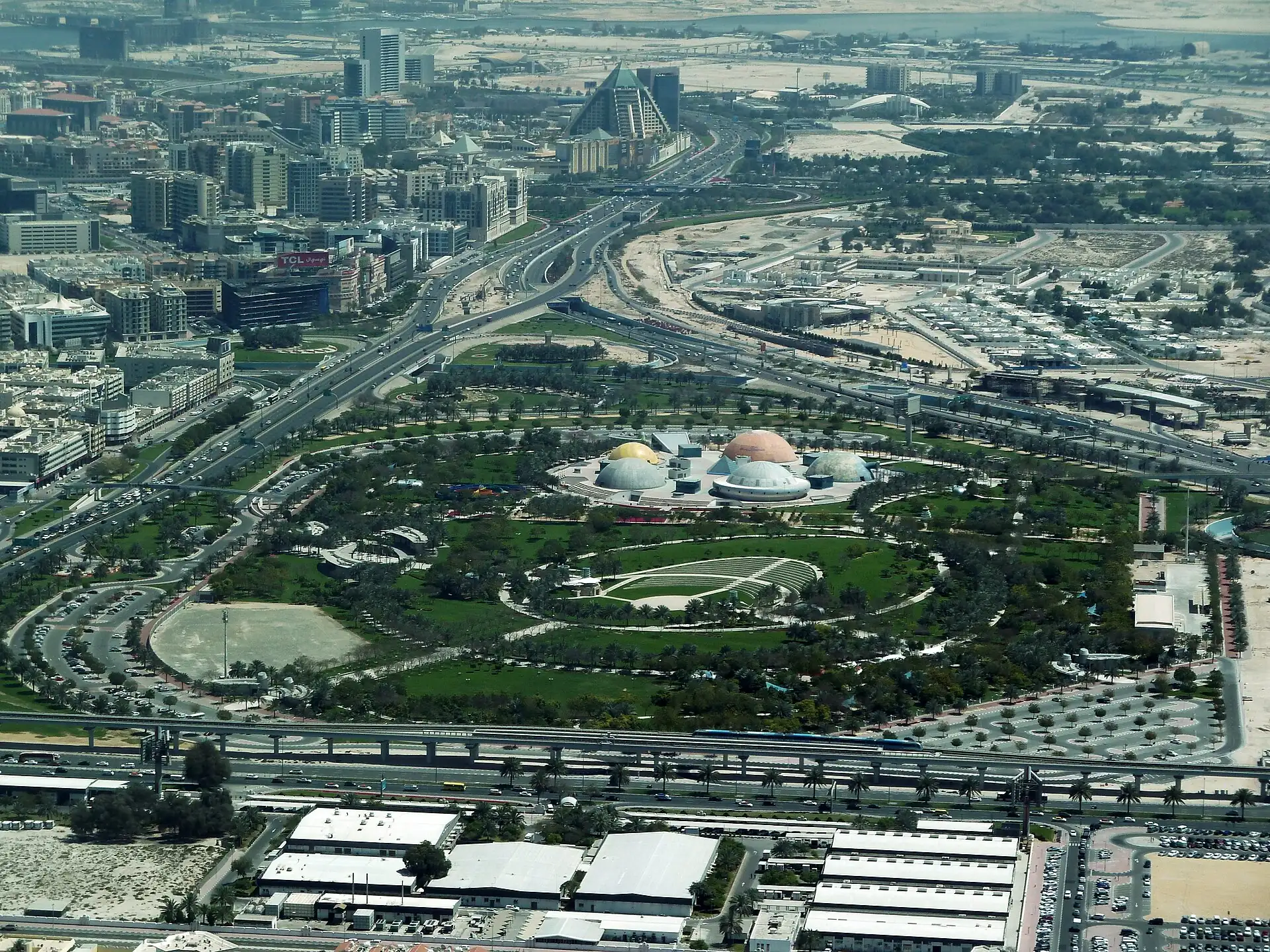
Getting around, in detailGet around · Connect
Get around
Walk inside a cluster (only at dawn or dusk in the warm months), metro or taxi between clusters, abra for the Creek and tram for the Marina.
| Mode | Verdict | Fare | Use it for | What breaks |
|---|---|---|---|---|
| Walking | use | Free | Inside Al Fahidi, Downtown malls and the Marina | Very hot from April to October; take a taxi for legs above 1 km (0.6 mi) in the heat.Very hot from April to October; take a taxi for legs above 0.6 mi (1 km) in the heat. |
| Metro (Red and Green lines) | use | AED 3–8 (≈ US$1–3) (silver Nol) | Airport, Downtown, Bur Dubai, Deira, Marina | Runs about 05:00 to midnight; women-and-children carriage.Runs about 5:00 AM to midnight; women-and-children carriage. |
| Dubai Tram | ok | AED 3–7.5 (≈ US$1–3) (check) | Marina, JBR and Palm links | Links the Marina to the metro; short line. |
| Taxi and ride-hail | use | Base AED 5–12 (≈ US$2–4) plus about AED 2 (≈ under US$1) a km | Door to door, late night, between clusters | Metered; airport pick-up has a surcharge. |
| Abra (Creek water taxi) | use | about AED 1 (≈ under US$1) | Bur Dubai to the Deira souks | 5–10 minutes; boats leave when full. |
| Public bus | ok | AED 3–7 (≈ US$1–2) by zones | Coast and suburban routes | Slow in traffic; metro is better for visitors. |
| Water bus and water taxi | maybe | About AED 5–50 (≈ US$2–14) (check) | Marina, Creek and Al Seef | Check the route and schedule. |
| Hop-on hop-off bus | maybe | AED 250–350 (≈ US$70–100) (check) | First look at Old and New Dubai | An air-conditioned upper deck; compare with a metro day. |
Metro and rail lines
Dubai Metro has two lines: Red Line (Rashidiya to Jebel Ali via Downtown, Bur Dubai and the Marina) and Green Line (Etisalat to Creek via Al Fahidi and Deira).
Airport Terminals 1 and 3, Burj Khalifa/Dubai Mall, Dubai Marina.
Al Fahidi, Al Ghubaiba, Union, Baniyas Square and Al Ras for the souks.
City buses a visitor actually uses
| Bus | Route | Useful for | Fare | Note |
|---|---|---|---|---|
| E100 | Al Ghubaiba ↔ Abu Dhabi | Intercity | About AED 25 (≈ US$7) (check) | About 2 h; check the timetable.(check) |
| C01 | Airport Terminal 3 ↔ Al Ghubaiba | Airport to Bur Dubai | About AED 5–8 (≈ US$2–3) (check) | Slow at rush hour.(check) |
Taxis and ride-hailing
Dubai Taxi (RTA)
rank/app
Cream taxis with colour-coded roofs; metered; book by the RTA app.
Careem
app
Fixed price shown; pay by card.
Uber
app
Widely used; check the price before you ride.
Hotel taxi desks
desk
Fixed prices; often higher.
On foot and car-free hours
| Where | When | Note |
|---|---|---|
| Al Fahidi lanes | Before 10:30Before 10:30 AM | Shaded and flat. |
| Dubai Mall to the fountain | Evening | Covered or lit and cool. |
| Marina Walk | Sunrise or after 18:00Sunrise or after 6:00 PM | Flat and long. |
More on getting around
Addresses use area names and a nearby landmark rather than street numbers, so give the driver a map pin or the mall name. The Nol card works on metro, tram, bus, taxis (partly) and abras.
Connect
| Option | Verdict | What breaks |
|---|---|---|
| eSIM bought before you fly | use | No queue; data only on most plans. |
| du or e& counter at the airport | use | Passport needed; about 15–30 minutes. |
| Roaming on a home plan | caution | Can be costly; check your carrier's daily pass. |
Careem and Uber
Taxis and cars
Fixed fares shown in the app; licensed cars only.
RTA Dubai / Nol Pay
Metro, tram, bus, taxi
Top up a Nol card and plan routes.
Talabat and Deliveroo
Food delivery
Useful for late-night food in hotels.
Google Maps
Directions
Metro links and walking distances are reliable; add 10 minutes in the heat.
- Wi-Fi
- Free in malls, hotels and most cafés; the password is on the receipt or the table.
- VoIP calls
- WhatsApp and FaceTime voice calls are blocked or limited; use messaging or a licensed VoIP app (check).
- Power
- UK-style three-pin sockets (230 V).
Luggage
Where big bags are a problem, and how to get rid of them for the day.
Rule
- Lockers
- Some malls and stations have lockers; hotels hold bags after check-out.
- Forwarding
- No forwarding service culture; keep the big bag at the Dubai hotel for trips away.
- Dead zone
- Late check-out flights: ask the hotel to hold bags and for a shower room; many do for a fee.
Bags, area by area
4 walking areas rated
- Bags painful
Downtown Dubai (Burj Khalifa & Dubai Mall)Dubai Marina & JBR WalkAl Fahidi & Bur Dubai CreekDeira Souks & Creek
Lockers, forwarding and the gap between check-out and check-in are covered once, under Luggage.
See & doWalking clusters, day plans and the places worth the time
See & do
Walking clusters, day plans and the places worth the time
Clusters
Plan by cluster: each is a walkable area with a rescue point and a bag rule.
Evening cluster: Burj Khalifa at a booked time, Dubai Mall in the hot hours, the fountain show after dusk; almost all of it is air-conditioned or shaded, but distances between parts are long.
rescue 100% · max p90 6.7′ · half
Morning and after-dark cluster: beach and promenade before 09:00 or after 17:00; midday here is 40 degrees plus with sun on the water; swimwear stays on the beach.
rescue 95% · max p90 7′ · half
Morning cluster: Al Fahidi lanes and the Creek abra crossing before 10:30, then indoors; the old wind-tower houses are the coolest walk in Dubai.
rescue 98% · max p90 6.9′ · half
Late-afternoon cluster: gold, spice and abra crossing from 16:30 when the covered lanes cool; bargaining on souk goods, fixed prices in shops.
rescue 97% · max p90 6.9′ · half
Days
Ready-made day plans, timed against opening hours and walking distances.
How long are you staying?
Loose outlines in Dubai's rhythm: outdoors at dawn and dusk, indoors at midday.
1 day
A stopover
- 08:30Al Fahidi Historical Neighbourhood — Al Fahidi lanes and the tea house
- 10:30Abra crossing on Dubai Creek — Abra across the Creek
- 11:00Gold Souk and Spice Souk — Gold and Spice Souks
- 13:00Lunch and rest indoors
- 16:30Burj Khalifa observation decks — Burj Khalifa slot
- 19:30Dubai Fountain — Dubai Fountain show
Skip: The Marina, the desert and Abu Dhabi: all are long rides.
Dubai in 3 days
3 daysOne cluster per half day: Downtown indoors, the Creek at dawn, the Marina at first light; the last day ends with the bags already in the car.
Day by day
Day 1 — Burj Khalifa, the fountain, a 13:30 lunch table
- 10:00Burj Khalifa observation decks
- Dubai Fountain (optional)
- The Dubai Mall (optional)
- 13:30Lunch table 13:30 (Dubai Mall)
Day 2 — Al Fahidi, the Creek and the souks
Day 3 — Marina at first light, car to the airport at 12:00
- 07:30JBR Beach and The Walk
- Dubai Marina Walk (optional)
- 12:00Car to Dubai International at 12:00
Places
“Best time” is when to arrive for the fewest crowds, for example “before 08:30”; “Go any time” means the hour makes little difference. More sights follow under “More sights and museums”.
8 places. Filters use the guide’s own ratings; a place with no rating is left out when a filter is on.
Show 2 more placesShow fewer
Tours, classes and shows in Dubai →
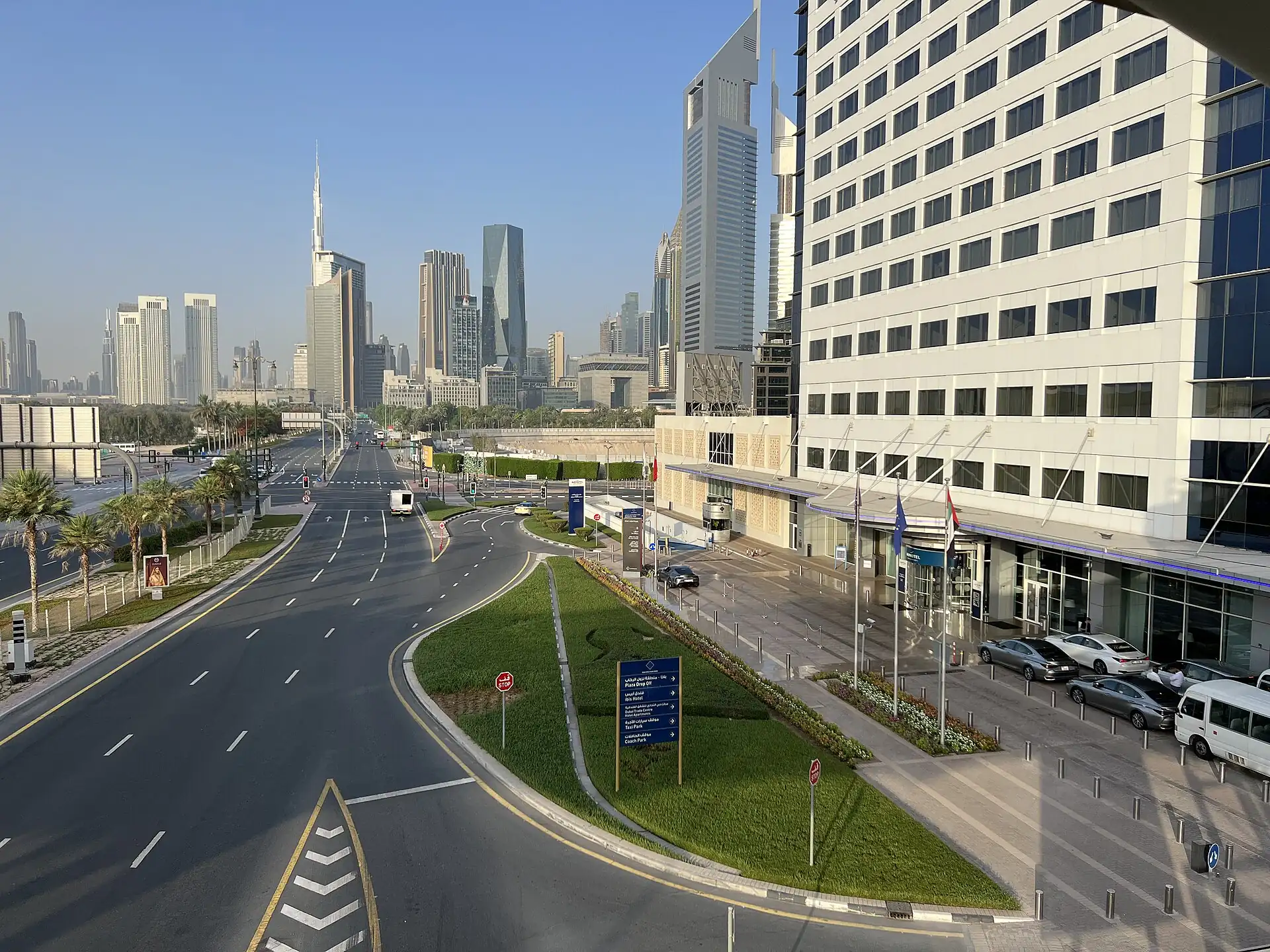
If you do ten things in Dubai
Ranked for a first visit of 2–4 days. Prices are 2026 estimates; hours: check.
- 1
The world's tallest building; book a clear-morning or sunset slot.
- Time
- 1.5 h
- Best
- Morning or sunset slot
- Cost
- AED 170–350 (≈ US$50–100)
- 2
Free evening water show at the foot of the tower.
- Time
- 20 min
- Best
- After sunset
- Cost
- Free
- 3
The best-kept old Dubai: wind towers and courtyard cafés.
- Time
- 1–1.5 h
- Best
- Before 10:30
- Cost
- Free
- 4
The cheapest and coolest boat ride in the city.
- Time
- 15 min
- Best
- Morning or 16:00+
- Cost
- about AED 1 (≈ under US$1)
- 5
Covered lanes of gold, spices and perfume.
- Time
- 45–60 min
- Best
- After 16:30
- Cost
- Free
- 6
- 7
- 8
- 9
Desert evening with a small operator
Dunes, sunset and a camp dinner.
- Time
- 5–6 h
- Best
- Winter afternoons
- Cost
- AED 150–350 (≈ US$45–100)
- 10
Museum of the Future
A striking exhibition building with timed entry.
- Time
- 2 h
- Best
- Morning slots
- Cost
- AED 145–175 (≈ US$40–50) (check)
Good for…
Verdict is how well Dubai works for that traveller, not how nice it is.
Four clusters cover a first visit; plan around the heat.
- 1Book a timed Burj Khalifa slot — the one sight that sells out.
- 2Old Dubai in the morning — cool and free.
Excellent range from canteens to fine dining; Indian, Lebanese and Persian are strongest.
- 1Bur Dubai and Meena Bazaar canteens — the best value lunch.
- 2Arabian Tea House — Emirati food in a courtyard.
Canteens, the metro and free beaches keep it cheap; hotels and tours are the cost.
- 1Abra crossing on Dubai Creek — a boat ride for AED 1 (≈ under US$1).
- 2Deira shawarma counters and karak stops — a meal for under AED 20 (≈ US$6).
Sunset views, beach clubs and hotel dinners.
- 1Dubai Fountain — a free evening show.
- 2
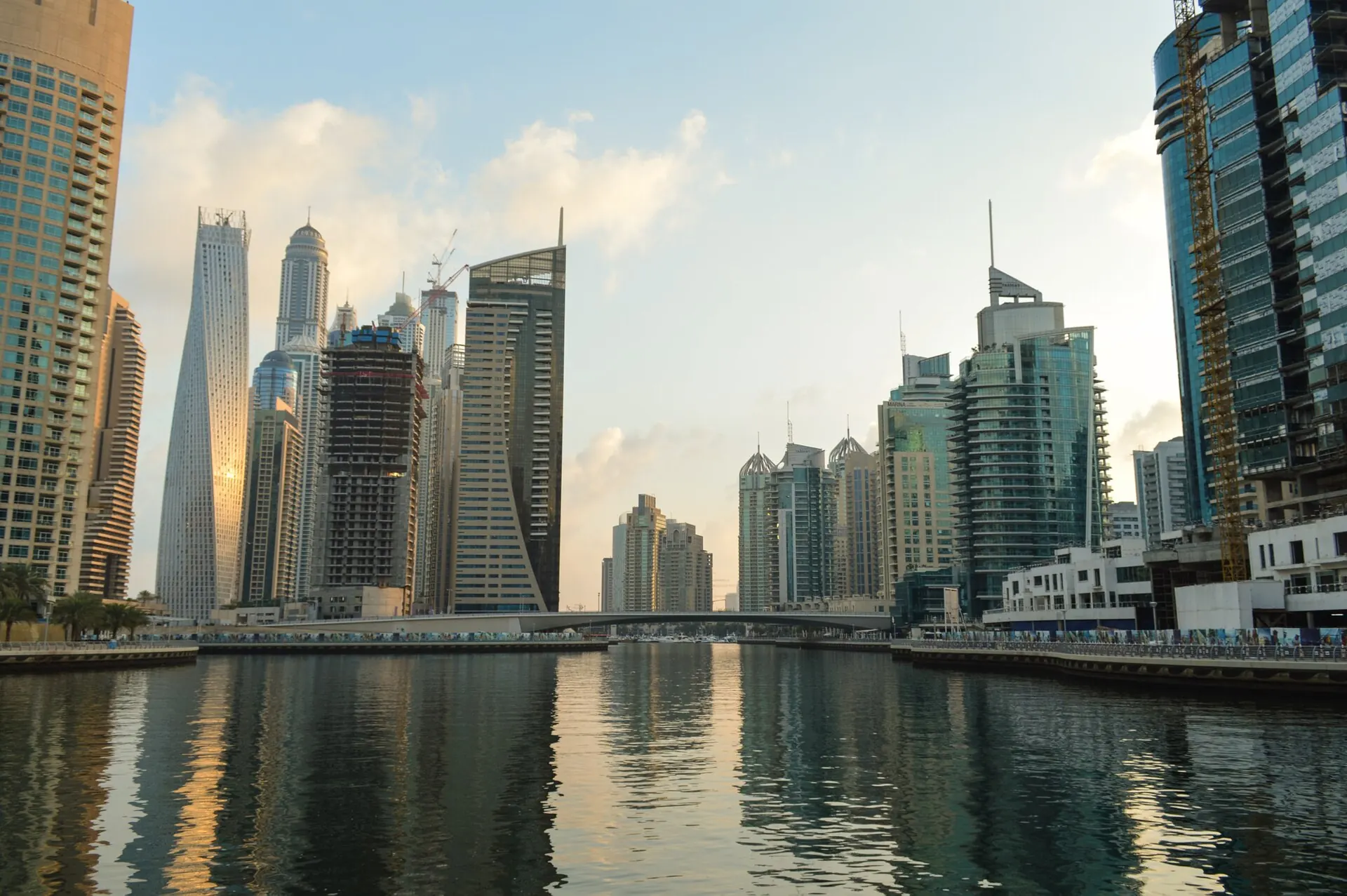 Dubai Marina Walk — a sunset walk and dinner.
Very safe and easy to move around.
- 1Al Fahidi Historical Neighbourhood — a quiet morning.
Malls, beaches, aquariums and cool play areas.
- 1
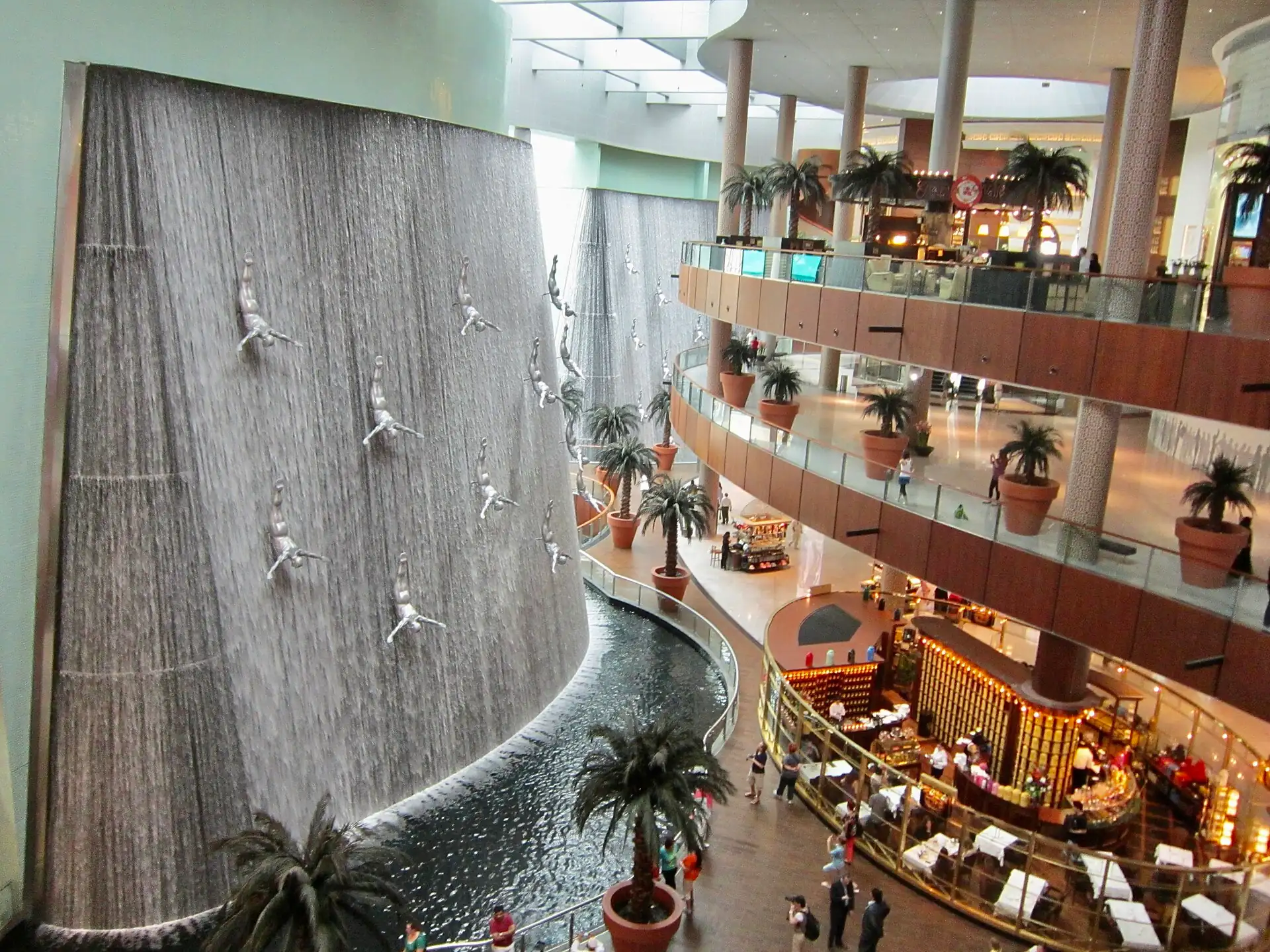 The Dubai Mall — AC and activities.
- 2JBR Beach and The Walk — beach and cafés.
Lifts and AC everywhere; heat is the risk.
- 1The Dubai Mall — seating and lifts.
Some of the world's most lavish hotels and restaurants.
- 1Burj Khalifa observation decks — the skyline view.
Modern areas are step-free; old quarters have kerbs and steps.
- 1The Dubai Mall — step-free and cool.
Tours and classes: book or skip
Book through the operator's own site or the hotel with written inclusions, meeting point and cancellation terms.
| Tour or class | Verdict | Typical price | Why | Check before paying |
|---|---|---|---|---|
| Burj Khalifa (official timed ticket) | book | AED 170–350 (≈ US$50–100) | One of the few sights that sells out. | Book the official site; slot by hour. |
| Desert evening (small group, conservation area) | book | AED 150–350 (≈ US$45–100) | Dunes, sunset, camp dinner. | Group size, pick-up point, dinner menu, alcohol policy. |
| Dhow cruise on the Creek or Marina | maybe | AED 150–350 (≈ US$45–100) | A slow boat dinner. | Food quality varies; read reviews. |
| Old Dubai food walk | book | AED 200–350 (≈ US$55–100) | A guide opens canteens you would miss. | Vegetarian options and route. |
| Hop-on hop-off bus | maybe | AED 250–350 (≈ US$70–100) | A first overview in AC. | Compare with the metro. |
| Abu Dhabi day tour | do it yourself | AED 350–500 (≈ US$100–140) | Long day; renting a car or taxi is more flexible. | Mosque dress rules. |
| Helicopter or seaplane flight | skip | AED 700–2,000 (≈ US$200–550) | Expensive; the Burj deck is cheaper for a view. | Safety record. |
| Desert quad biking | skip | AED 200–400 (≈ US$55–110) | Noisy and short. | Environmental impact. |
| Private abra charter | do it yourself | AED 100–150 (≈ US$30–45) per hour | The standard AED 1 (≈ under US$1) abra covers the crossing. | Agree price first. |
| Mosque visit with cultural centre | book | AED 35–100 (≈ US$10–30) | Guided, with questions welcome. | Dress and times. |
What each season brings
Winter
Dec–Feb
Warm days, cool nights, beaches and Global Village.
Watch: Peak prices and crowds in December and January.
Spring
Mar–May
Warm to hot; Eid and Ramadan periods.
Watch: Heat from April; Ramadan changes daytime life.
Summer
Jun–Sep
Lowest hotel prices; pool and mall weeks.
Watch: 40 degrees plus and humidity; indoor plans only.
Autumn
Oct–Nov
Heat eases; outdoor life returns.
Watch: Prices rise from November.
Photo spots and the light
Light times are for clear days; haze flattens colours.
| Spot | Best light | Tip |
|---|---|---|
| Burj Khalifa from Burj Park | Blue hour | Shoot from the lawn with the fountain; no tripods on the promenade. |
| Al Fahidi wind towers | Morning | Ask before photographing people. |
| Abras on the Creek | Golden hour | Hold your phone with two hands. |
| Spice sacks and shop signs | Late afternoon | Ask before you photograph a stall. |
| JBR beach at sunrise | Before 07:30 | Do not photograph people on the sand. |
| Marina skyline | Blue hour | Stay off the docks. |
Dubai travel FAQ
Answers are 2026 desk estimates; fares and rules marked (check) change.
How many days do I need in Dubai?
Two days for Downtown and Old Dubai, three with the Marina and beach, five with a desert evening and Abu Dhabi. Fit the outdoor parts into dawn and dusk.
When is the best time to visit?
November to March: warm days, cool nights and outdoor life. April to October is hot; June to September is extreme.
Do I need a visa?
Most visitors from the US, UK, Canada, Australia, New Zealand and Ireland get a visa on arrival; the length differs by passport, so check the official ICP or GDRFA page.
Is Dubai safe?
Yes. Violent crime is very low; the risks are heat, traffic and misunderstanding local rules.
Can I drink alcohol?
Yes, in licensed hotel bars, restaurants and clubs if you are 21 or over; not in public places or on beaches. Zero tolerance for drink-driving.
What should I wear?
Loose clothes covering shoulders and knees in malls and old quarters; swimwear on beaches and pools only.
Is tap water safe?
Yes, but most visitors drink bottled or filtered water.
How do I get around?
Metro for the airport and Downtown, taxi or ride-hail for door to door, abra for the Creek and tram in the Marina.
How much is the Burj Khalifa?
About AED 170–350 (≈ US$50–100) for the At the Top deck depending on the hour; book online for a slot.
What is the weekend?
Saturday and Sunday for most offices and schools; Friday is a short working day with midday prayers.
What about Ramadan?
Do not eat, drink or smoke in public in daylight; restaurants open late and evenings are lively after sunset.
Is Dubai expensive?
Hotels and tours are; canteens, the metro and free beaches keep costs down. See the price table for typical costs.
Do I need cash?
A little: AED 100 (≈ US$30) in small notes for abras, souks and tips; cards work almost everywhere else.
Can I use WhatsApp calls?
Voice and video calls on some apps are restricted; messages work. Use a licensed VoIP app or a local SIM for calls (check).
How do I get from the airport?
Taxi or ride-hail (AED 55–85 (≈ US$15–25) to Downtown) or the Red Line metro from Terminals 1 and 3.
Can I visit a mosque?
Yes, on guided visits to some mosques (for example Jumeirah, by booking) and at the Sheikh Zayed Grand Mosque in Abu Dhabi; dress covered.
More to see and doSee & do · Learn & work · Rain & heat · Free things · Wheelchair and stroller
Free things to do
Sights in Dubai that cost nothing to enter. Each is described under Places or More sights; extra costs inside are marked there.
Wheelchair and stroller, place by place
How each place in this guide works for wheels, from its own page. Ratings are desk estimates unless a page says it was checked on the ground.
| Place | Step-free | Wheelchair | Stroller | What to know |
|---|---|---|---|---|
| Abra crossing on Dubai Creek | partial | poor | caution | A step down into the boat; helpful boatmen but not step-free. |
| Al Fahidi Historical Neighbourhood | partial | caution | ok | Level lanes with some kerbs; old buildings have steps. |
| Burj Khalifa observation decks | yes | good | good | Lifts to the observation level; step-free route from the mall. |
| Dubai Fountain | yes | ok | ok | Level promenade and lifts in the mall; the bridge has steps with a ramp alternative (check). |
| The Dubai Mall | yes | good | good | Lifts and escalators throughout; long distances. |
| Gold Souk and Spice Souk | partial | caution | caution | Mostly level lanes with kerbs and crowds; the Old Souk landing has a ramp (check). |
| JBR Beach and The Walk | yes | good | good | The Walk is level; the beach has ramps and mats at some points (check). |
| Dubai Marina Walk | yes | good | good | Level promenade with ramps and lifts at the malls. |
See & do
25 of 25
The tallest building in the world; book a clear-morning or sunset slot.
Downtown · Timed slots, about 08:30–23:00 (check)Timed slots, about 8:30 AM–11:00 PM (check) · AED 170–350 (≈ US$50–100)(check)
- Shows & music
A free water show every 30 minutes; stand at the promenade rail.
Downtown · Evening shows after sunset (check) · Free(check)
- mall
The air-conditioned hub of Downtown.
Downtown · About 10:00–00:00About 10:00 AM–12:00 AM · Free (attractions extra)(check)
Al Fahidi Historical Neighbourhood
Citadel & old cityWind-tower lanes and courtyard cafés; go before 10:30.Wind-tower lanes and courtyard cafés; go before 10:30 AM.
Bur Dubai · Lanes open; venues 09:00–19:00 (check)Lanes open; venues 9:00 AM–7:00 PM (check) · Free(check)
The cheapest boat ride in Dubai.
Bur Dubai and Deira · About 05:00–00:00About 5:00 AM–12:00 AM · about AED 1 (≈ under US$1)(check)
- Markets
Gold by weight and spices in covered lanes.
Deira · About 10:00–22:00About 10:00 AM–10:00 PM · Free(check)
Public beach and a car-free promenade.
Marina and JBR · Open access · Free(check)
- promenade
Yachts and towers at sunrise and dusk.
Marina · Open access · Free(check)
Museum of the Future
MuseumsA ring-shaped exhibition building; book a time slot.
Trade Centre area · About 10:00–19:00 (check)About 10:00 AM–7:00 PM (check) · About AED 145–175 (≈ US$40–50) (check)(check)
Dubai Frame
ViewsA gold frame with views of Old and New Dubai.
Zabeel Park · About 09:00–21:00 (check)About 9:00 AM–9:00 PM (check) · About AED 50 (≈ US$14) (check)(check)
Jumeirah Mosque and cultural centre visit
cultureA guided visit to a working mosque with time for questions.
Jumeirah · Guided visits by booking (check) · About AED 35–100 (≈ US$10–30) (check)(check)
Etihad Museum
MuseumsThe story of the UAE's founding in 1971.
Jumeirah · About 10:00–20:00 (check)About 10:00 AM–8:00 PM (check) · About AED 25–50 (≈ US$7–14) (check)(check)
Alserkal Avenue
artsArt galleries and cafés in old warehouses.
Al Quoz · Galleries about 10:00–19:00; closed some days (check)Galleries about 10:00 AM–7:00 PM; closed some days (check) · Free(check)
Kite Beach and Burj Al Arab views
beachA public beach with a view of the sail-shaped hotel.
Jumeirah · Open access · Free(check)
Dubai Miracle Garden (seasonal)
parkA flower park, open in cooler months.
Al Barsha South · Roughly Oct–May (check) · About AED 100 (≈ US$30) (check)(check)
Global Village (seasonal)
MarketsPavilions of food and crafts from many countries.
Dubailand · Roughly Oct–Apr, afternoon to midnight (check) · About AED 25 (≈ US$7) (check)(check)
Aquaventure and Atlantis, Palm Jumeirah
waterparkWaterslides and an aquarium at a resort.
Palm Jumeirah · About 10:00–18:00 (check)About 10:00 AM–6:00 PM (check) · About AED 300–400 (≈ US$85–110) (check)(check)
Desert evening: dune drive, camp dinner
activityA 4x4 dune drive, sunset and a camp dinner; pick a small group.
Desert conservation areas · Pick-up about 15:00–16:00Pick-up about 3:00 PM–4:00 PM · AED 150–350 (≈ US$45–100)(check)
Dhow dinner cruise on the Creek
cruiseA slow boat dinner; food is secondary.
Creek and Marina · Evening (check) · AED 150–350 (≈ US$45–100)(check)
Old Dubai food walk
Food toursCanteens, karak and bakeries with a guide.
Bur Dubai and Deira · Morning or evening (check) · AED 200–350 (≈ US$55–100)(check)
Sunset at Kite Beach
beachFree public beach with cafés.
Jumeirah · Sunset · Free(check)
Indoor skiing at a mall (optional)
SportA snow park in a mall; a rain-day option.
Al Barsha · Slots by booking (check) · AED 200–350 (≈ US$55–100)(check)
Ice rink and aquarium
familyKids' rain-day pair.
Downtown · Mall hours · AED 50–250 (≈ US$14–70)(check)
Friday brunch at a hotel
foodA long buffet with an optional drinks package.
Hotels · 12:30–16:0012:30 PM–4:00 PM · AED 300–700 (≈ US$85–200)(check)
Spa and hammam
Spa & massageA cool afternoon.
Hotels and spas · Booking (check) · AED 200–600 (≈ US$55–170)(check)
- Booking
- Burj Khalifa, desert safaris and Friday brunches sell out on weekends and in December and January; book a few days ahead.
Learn & work
| What | Where | Cost | Note |
|---|---|---|---|
| Arabic language and culture courses | Language schools and cultural centres | From about AED 500 (≈ US$140) a course (check) | Classes for expats; English is the working language.(check) |
| Cooking classes (Emirati and Arabic) | Hotels and cooking studios | AED 250–450 (≈ US$70–130) for a half day | Book ahead; halal menus.(check) |
| Desert survival or falconry experiences | Desert camps | AED 250–600 (≈ US$70–170) | Operator vetting matters; check safety.(check) |
Working here
- Tourist entry
- A visitor visa does not allow work. Business travellers should use the right visa category (check).
- Employment
- Most work visas need employer sponsorship and a residence visa; freelancers use free-zone permits.
- Remote work
- A virtual working programme exists for remote workers (check the current rules).
- Free zones
- Free zones such as DIFC and the Dubai Internet City host foreign-owned firms.
Rain-day and heat-day plan
Rain day
Rain is rare but heavy: streets flood and roads jam. Stay indoors and postpone the day if there is a rain warning.
- 01The Dubai Mall — Air-conditioned and huge; aquarium window, food and shops.
- 02Burj Khalifa observation decks — Only if visibility is clear; check the forecast.
- 03Dubai Mall food courts and terrace cafés — A long lunch under one roof.
Heat day
Above 38 degrees plan outdoor stops before 10:00 and after 17:00, with a mall, museum or café between.
- 07:30JBR Beach and The Walk — Empty beach and cool sand.
- 08:30Al Fahidi Historical Neighbourhood — Shaded lanes before the heat.
- 12:00The Dubai Mall — The cool hours in AC.
- 17:00Gold Souk and Spice Souk — Covered lanes cool as the shops light up.
- 19:00Dubai Fountain — Free evening show.
Day-trips and nearby
Places you can reach from Dubai in a day or with one night away, with the route and what it costs. Door to door, not ride time.
Abu Dhabi (Sheikh Zayed Grand Mosque, Louvre Abu Dhabi)
goCar or bus about 1.5–2 h each way
Dress covered for the mosque; go by tour or hire car.
- Time
- Full day
Sharjah (Heritage Area, Museum of Islamic Civilization)
goCar or bus 30–60 min
Sharjah is alcohol-free; traffic on the E11 is heavy at rush hour.
- Time
- Half day
Desert evening (dunes, camp dinner)
bookPick-up by 4x4 tour, about 45 min each way
Choose a small-group operator with a conservation area; check exact inclusions.
- Time
- 5–6 h
Hatta (mountains, dam, kayak)
maybeCar about 1–1.5 h
Cooler than the coast in winter; check the events.
- Time
- Full day
Al Ain (oasis, Al Jahili Fort)
maybeCar about 1.5–2 h
Best October to March.
- Time
- Full day
Go next
Eat & sleepWhere to eat and which area to sleep in
Eat & sleep
Where to eat and which area to sleep in
Eat
A short list of places worth crossing the city for, each with how to get a seat.
Restaurant finder: filter every place to eat in Dubai →
Vegetarian-friendly score
3.5 / 5 · Good
- Country diet noteOur country guide rates vegetarian eating as easy.2 / 2
- Places to eat in this guide3 of 6 places with a known answer are vegetarian-friendly, 3 partly.1.13 / 1.5
- Budget eating lines0 vegetarian lines in "Eat by budget".0 / 0.6
- Meat-free national dishes6 meat-free dishes in the country food list.0.4 / 0.4
- Dedicated vegetarian kitchens1 mention of vegetarian restaurants, Buddhist or fasting kitchens.0.1 / 0.5
Country note: Easy: Indian vegetarian restaurants, falafel, mezze and lentil dishes everywhere.
Vegetarian places near me →Make a diet card →
How we score
- Country diet note (up to 2): easy 2, workable 1, mixed 0.75, hard 0; no note 0.5.
- City places to eat (up to 1.5): 1.5 × (vegetarian-friendly + half of partly friendly) ÷ places with a known answer; needs 3 or more known places.
- Budget eating lines marked vegetarian (up to 0.6): 0.2 each.
- Meat-free national dishes (up to 0.4): 0.1 each.
- Dedicated vegetarian kitchens mentioned — Buddhist chay, shōjin ryōri, Jain, fasting food, vegan cafés (up to 0.5): 0.1 each.
- Total rounded to the nearest half point, 0 to 5. Built from our own pages only, not from reviews.
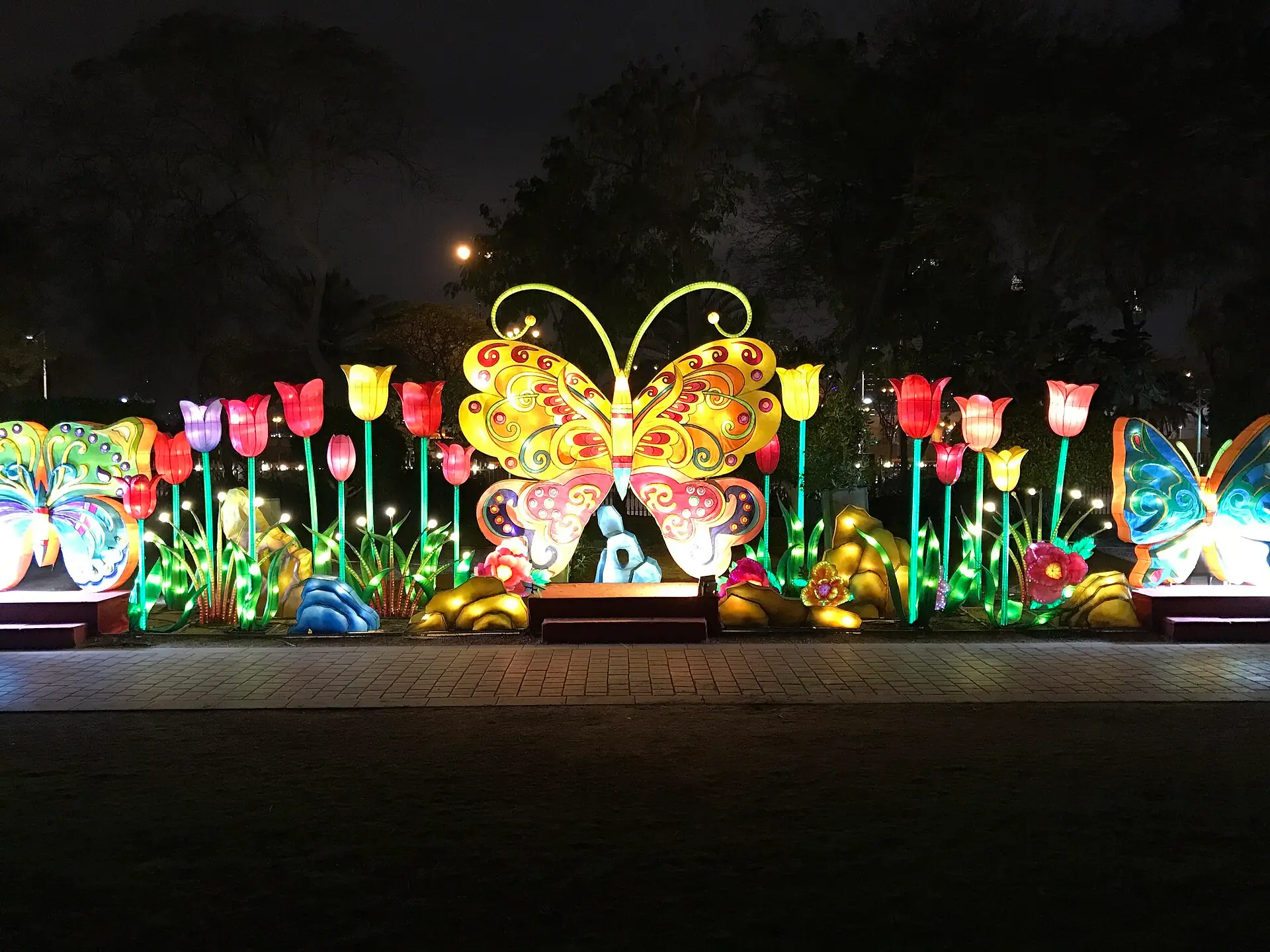
Eating and drinking guideEat by budget · Drink
Before you sit down to eat
Short version; full text linked
- Queues and hours
- Per person, one dish or one meal, 2026 estimate in AED. More →
Eat by budget
Under AED 45 (≈ US$13) a meal
| Where | Order | Area | Price | Note |
|---|---|---|---|---|
| Bur Dubai and Meena Bazaar canteens | Thali or biryani | Bur Dubai | AED 15–45 (≈ US$5–13) | Cash friendly. |
| Deira shawarma counters and karak stops | Shawarma and karak | Deira | AED 8–30 (≈ US$3–9) | Standing counters. |
| Bakery breakfast | Manakish and tea | Any neighbourhood | AED 8–20 (≈ US$3–6) | Check the daily specials.(check) |
Dishes to know
| Dish | What it is | Where to look | When | Price |
|---|---|---|---|---|
| Machboosمچبوس | Spiced rice with chicken, lamb or fish | Emirati restaurants | Lunch | AED 60–110 (≈ US$17–30) |
| Shawarmaشاورما | Sliced meat wrap | Counters everywhere | Any time | AED 8–18 (≈ US$3–5) |
| Karak teaكرك | Strong spiced milk tea | Canteens and cafés | All day | AED 2–12 (≈ US$1–4) |
| Luqaimatلقيمات | Sweet dough balls with date syrup | Emirati cafés | Snack | AED 15–45 (≈ US$5–13) |
| Hareesهريس | Wheat and meat porridge | Emirati restaurants, Ramadan | Dinner | AED 30–60 (≈ US$9–17) |
| Hummus and mezzeمزة | Small shared plates | Lebanese restaurants | Lunch or dinner | AED 40–100 (≈ US$11–30) |
| Biryaniبرياني | Spiced rice with meat | Indian and Pakistani canteens | Lunch | AED 15–50 (≈ US$5–14) |
| Dates and Arabic coffeeتمر وقهوة | Sweet fruit and cardamom coffee | Cafés and hotels | Anytime | AED 15–35 (≈ US$5–10) |
- Look for a busy canteen with a short menu; the best value is a set plate at lunch.
- Check that service, VAT and any municipality fee are on the bill before tipping.
- During Ramadan restaurants open around sunset; some cafés screen off a daytime section.
- Vegetarian food is easy: Indian, Lebanese and Persian menus have many meat-free dishes.
Drink & nightlife
| Where | What | Until | Note |
|---|---|---|---|
| Rooftop and hotel bars in Downtown and the Marina | Cocktail bars with skyline views | About 01:00–03:00About 1:00 AM–3:00 AM | Dress smart; expect AED 45–80 (≈ US$13–25) a drink with fees (check). |
| Hotel brunch venues (Friday and Saturday) | Long buffet with drinks | About 16:00About 4:00 PM | AED 300–700 (≈ US$85–200); book ahead. |
| Beach clubs on JBR and the Palm | Day clubs with sunbeds | About 00:00About 12:00 AM | Minimum spend applies at weekends. |
By style
| Style | What | Where | Price | Until |
|---|---|---|---|---|
| Beer and wine | Imported beers and wines in licensed venuesAsk if a happy hour applies. | Hotels and licensed restaurants | AED 40–75 (≈ US$11–25) a glass with fees | Venue hours |
| Mocktails and fresh juice | Fruit, mint and ginger drinksA cool alternative in the heat. | Cafés everywhere | AED 20–40 (≈ US$6–11) | Café hours |
| Arabic coffee and karak tea | Cardamom coffee and spiced milk teaThe standard hospitality drink. | Cafés and canteens | AED 2–30 (≈ US$1–9) | Late |
Rules that bite
- Drinking in public or being drunk in public is an offence; keep alcohol in licensed venues.
- The drink-drive limit is zero: do not drive after any alcohol.
- Bringing alcohol from duty free is allowed within limits for adults (check the current allowance).
- In Ramadan, bars and clubs may close or restrict music; check before you go.
Sleep
Pick the area first: it decides your walk home at night and your first morning.
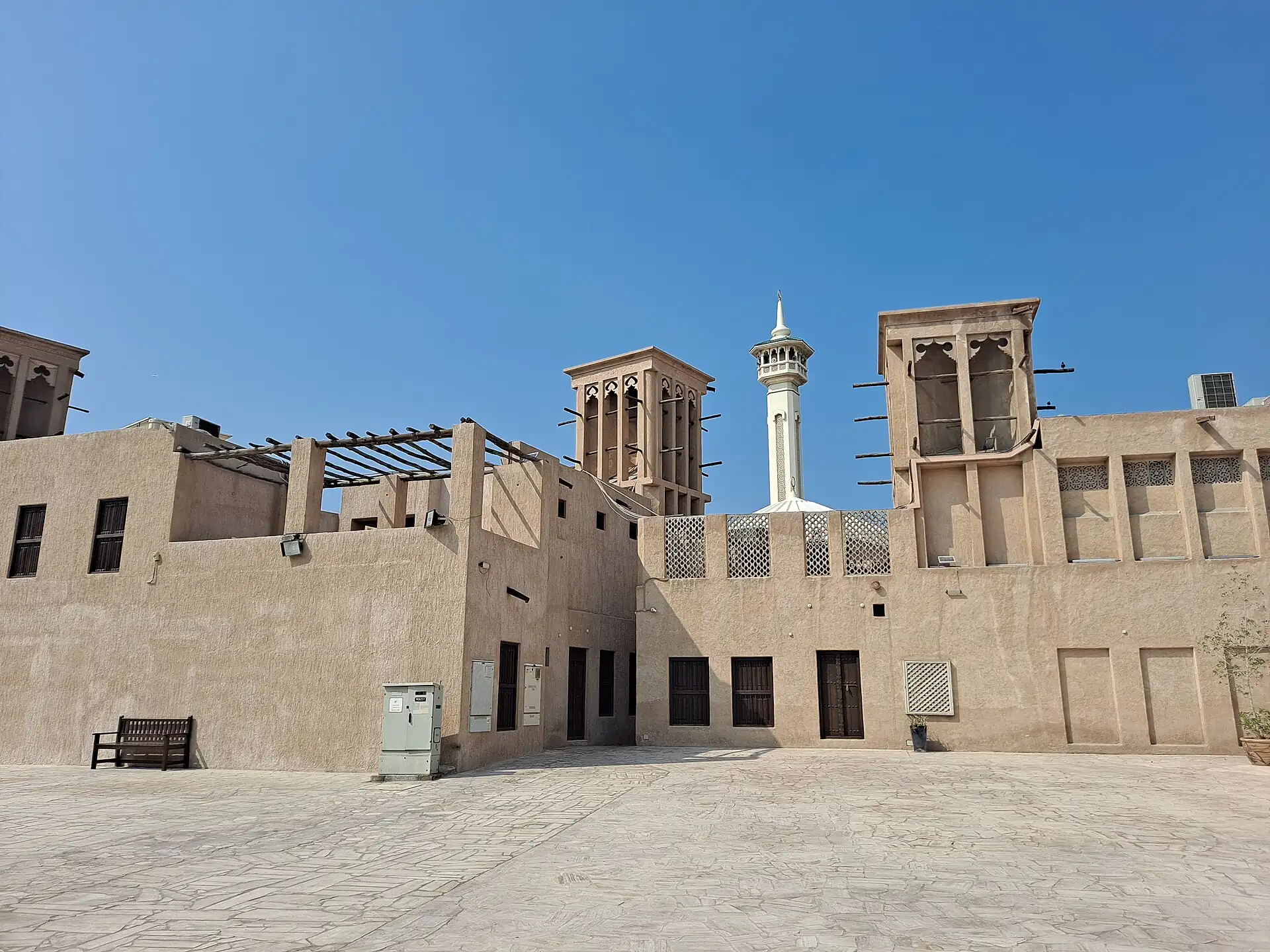
Which neighborhood fits you
Three questions, one recommendation, with the reasons.
Your best fit
- Al Fahidi, the abra and the souks on foot.
- The cheapest central beds.
- Desks open late; taxis available.
Next best: Downtown Dubai
Built from our 1–5 desk scores per area; your answers stay in this browser.
More on sleepingSleep by budget · Your area · With kids
Sleep by budget
| Band | Price | Where | Room types | What to expect |
|---|---|---|---|---|
| budget | AED 90–160 (≈ US$25–45) dorm bed · AED 250–400 (≈ US$70–110) double | Bur Dubai, Deira | Hostels, small hotels | Small rooms, old buildings; check the lift and the air conditioning. |
| mid | AED 450–900 (≈ US$130–250) | Downtown, Business Bay, Marina | 3–4 star hotels, serviced apartments | Pool, breakfast and a lift; tourism fee and VAT extra. |
| high | AED 1,200–3,000 (≈ US$350–850)+ | Downtown, Palm Jumeirah, Marina | 5-star and resort hotels | Large pools, brunches and beach access. |
| apartments | AED 350–900 (≈ US$100–250) | Marina, Downtown, JBR | Holiday-home apartments | Kitchen and space; check the local licence and check-in rules. |
Booking checks
- Ask if the Tourism Dirham fee and 10% service are included.
- Book December and January rooms 2–3 months ahead.
- Choose a hotel near a metro station if you do not want to take taxis.
- In summer, ask about pool shade and evening beach access.
- Unmarried couples: check the current rules on sharing a room (check).
Which area is yours
| If you are | Sleep in | Because |
|---|---|---|
| First visit, Burj Khalifa and malls | Downtown Dubai | Everything indoor and walkable; taxis and the metro at the door. |
| Budget, old Dubai, food | Bur Dubai | Cheaper beds and the Creek on foot; take a taxi to Downtown. |
| Beach holiday | Downtown Dubai | Sleep Downtown and take a taxi to JBR for a beach day, or book a Marina hotel. |
Shortest trip for first-timers: a tower hotel with a 24-hour desk and a taxi door, a covered walk from Burj Khalifa and the mall; pricier and far from the old Creek.
Old-town base, lower prices and the abra at the door: choose a hotel with a 24-hour desk and a car-accessible entrance, and expect a 25-minute ride to Downtown.
Areas are in our default order until you tick a priority.
Scores are 1–5 desk judgements per priority (2026). Downtown is easiest for a first visit; Bur Dubai suits budget and the old town.
With kids
- Dubai is very easy with children: malls have play areas, baby rooms and cool air, and most hotels have pools.
- Heat is the risk: go outdoors before 10:00 and after 17:00, offer water every hour and cover heads.Heat is the risk: go outdoors before 10:00 AM and after 5:00 PM, offer water every hour and cover heads.
- Strollers are fine in modern areas; old town lanes have kerbs and cobbles.
- Metro and tram allow prams; keep to the women-and-children carriage if you prefer.
- The abra, beach, aquarium window and fountain are short kid-friendly stops.
- Ask your hotel about kids' clubs and family brunch; check ages and prices.
PracticalMoney, essentials, safety and the pocket card
Practical
Money, essentials, safety and the pocket card
Money
What a day costs at three comfort levels, and how to pay.
- Budget
- AED 150–300 (≈ US$45–85) excl. bed / day
- Mid
- AED 300–700 (≈ US$85–200) excl. bed / day
- High
- AED 700 (≈ US$200)+ excl. bed / day
- Transit card
- Nol card for metro, bus, tram and abra: a silver card from a station machine, then top up; taxis and ride-hailing take cards.
- Cash rule
- Keep AED 100 (≈ US$30) in small notes for abras and souk stalls; withdraw at bank ATMs inside malls.
More on moneyCosts · Budget · Buy
What things cost
- Shawarma wrap at a counterAED 8–18 (≈ US$3–5)
- Main course in a mid-range restaurantAED 60–130 (≈ US$17–40)
- Abra across the Creekabout AED 1 (≈ under US$1)
- Burj Khalifa At the Top ticketAED 170–350 (≈ US$50–100) by hour
Trip budget
| Hotel double room1 × 4 nights × AED 550 | AED 2,200 |
| Food, local transport, entries2 × 4 days × AED 650 | AED 5,200 |
| Airport taxi, both ways1 × AED 160 · one car per 4 people; the metro is about AED 8 each way | AED 160 |
| eSIM or tourist SIM2 × AED 60 | AED 120 |
| Burj Khalifa ticket2 × AED 220 | AED 440 |
| Buffer 10%Price creep, a taxi you did not plan, one splurge | AED 812 |
| Trip total≈ AED 1,117 per person per day, bed included | AED 8,932≈ US$2,500 |
December and January cost 50–100% more; summer costs less.
2026 estimate in dirhams (AED); flights, visas and tours excluded. Your choices stay in this browser.
Prices of common things
| Karak tea | AED 2–6 (≈ US$1–2) |
| Shawarma wrap | AED 8–18 (≈ US$3–5) |
| Canteen lunch | AED 15–45 (≈ US$5–13) |
| Mid-range restaurant main | AED 60–130 (≈ US$17–40) |
| Abra crossing | about AED 1 (≈ under US$1) |
| Burj Khalifa ticket | AED 170–350 (≈ US$50–100) |
| Bottled water 1.5 L | AED 2–4 (≈ US$1–2) in shops |
2026 estimate; check locally.
Buy
- Bargaining
- Malls and department stores have fixed prices. In the souks bargain over textiles, perfume, spices and the making charge on gold; the gold rate per gram is posted and is not negotiable.
- Fixed-price check
- Compare the daily gold rate and the making charge in three shops; ask for a written invoice with weight, karat and price. Compare with mall prices before you commit.
Markets and shopping streets
| Where | What | When | Haggle | Note |
|---|---|---|---|---|
| Gold Souk (Deira) | Gold and jewellery | About 10:00–22:00; some shops close midday (check)About 10:00 AM–10:00 PM; some shops close midday (check) | making charge only | Late afternoon is cooler. |
| Spice Souk (Deira) | Spices, dried fruit, tea, incense | About 09:00–22:00 (check)About 9:00 AM–10:00 PM (check) | light | Buy small quantities. |
| Textile Souk (Bur Dubai) | Fabric, pashminas, scarves | About 09:00–22:00 (check)About 9:00 AM–10:00 PM (check) | yes | Start at half the first price. |
| Global Village (seasonal) | Pavilions of crafts and food from many countries | Roughly Oct–Apr, afternoon to midnight (check) | some | Entry fee; check the season dates. |
Shops by what they sell
| For | Where | Hours | Note |
|---|---|---|---|
| Dates, sweets and Arabic coffee | Dubai Mall and old-town shops | About 10:00–22:00 | Compare boxes; good gifts. |
| Oud and perfume oils | Deira and Bur Dubai perfume shops, malls | About 10:00–22:00 | Smell before buying; prices vary widely. |
| Gold jewellery | Gold Souk and malls | About 10:00–22:00 | Ask for weight, karat, invoice. |
| Camel-milk chocolate and local sweets | Malls and airports | Shop hours | Check use-by dates. |
Changing money
| Where | Verdict | Why |
|---|---|---|
| Bank branches and licensed exchange houses | use | Fair rates; bring a passport. |
| Airport exchange counters | caution | Convenient but with a margin; change a small amount. |
| Bank ATMs inside malls | use | Withdraw in dirhams and decline the ATM's own conversion. |
| Street changers | avoid | No licence, no receipt. |
ATMs
- Per withdrawal
- Around AED 2,000–5,000 (≈ US$550–1,400) by bank; check your card limit.
- Fees
- Your home bank plus a local fee; choose to pay in AED, not your home currency.
Essentials and accessEssentials · Access
Essentials
- Plugs & power
- 230 V, 50 Hz; UK-style three-pin sockets (type G) with some European two-pin outlets. Bring a UK adapter.
- Toilets
- Malls, metro stations, cafés and hotels; mosque and public toilets are clean but bring tissues. Most malls also have family rooms.
- Opening hours
- Malls run about 10:00 to midnight. Government offices are Monday to Friday. Small shops may pause at Friday midday prayer. Ramadan changes daytime opening.Malls run about 10:00 AM to midnight. Government offices are Monday to Friday. Small shops may pause at Friday midday prayer. Ramadan changes daytime opening.
- Health
- Take travel insurance with medical cover and a heat plan. Pharmacies are common; some ordinary medicines are controlled, so carry a prescription and check the UAE list.
- Accessibility
- Modern Dubai is step-free with lifts and ramps in malls, hotels and metro stations. Old Dubai has kerbs, cobbles and steps; taxis are the best way between clusters.
- Laundry
- Hotels charge per item; local laundries and dry cleaners are cheap and quick (AED 3–10 (≈ US$1–3) an item); self-service laundries are rare.
Pack
- Light, loose clothing that covers shoulders and knees for malls and old quarters
- A hat, sun cream and a refillable bottle
- A light layer for cold air conditioning
- Swimwear for the beach and hotel pools
- A UK power adapter
Accessibility
Dubai's malls, hotels and metro are step-free with lifts. The old quarters have kerbs and cobbles, and distances are long, so use taxis between clusters.
- Pavements
- Wide in new districts, uneven in old quarters; kerb ramps at most crossings.
- Metro and tram
- Lifts and ramps at stations; priority spaces on trains.
- Taxis
- Accessible taxis are available on request via the RTA or apps (check).
- Heat
- Heat is the main barrier; plan short outdoor legs.
- Toilets
- Accessible toilets in malls, hotels and metro stations.
Sights, step-free or not
| Burj Khalifa observation decks | good | Step-free from the mall; lifts to the deck. |
| The Dubai Mall | good | Lifts, wide walkways and wheelchair hire (check). |
| Dubai Fountain | good | Level promenade. |
| Al Fahidi Historical Neighbourhood | step-free | Flat lanes; some galleries have steps. |
| Abra crossing on Dubai Creek | hard | A step into the boat. |
| JBR Beach and The Walk | good | Promenade is level; sand is not. |
Survive
Safety basics, the lines not to cross, and practical habits that save the day.
Safety
- Heat (May–Sep): outdoor time only before 10:00 and after 17:00, water every hour, and shade or a mall between.Heat (May–Sep): outdoor time only before 10:00 AM and after 5:00 PM, water every hour, and shade or a mall between.
- Cross at signals and bridges; jaywalking is fined.
- Emergency: 999 police, 998 ambulance, 997 fire.
Red lines
- Alcohol only in licensed venues; never carry an open drink outside them.
- No kissing or close contact in public; keep language and gestures polite.
- Ask before photographing people; no photos of government buildings.
Practical
- Toilets: malls, metro stations and cafés.
- Tap water is treated but many visitors buy bottled; hotels supply bottles.
- Tourism Dirham fee: hotels charge a per-night fee at check-out; ask if it is included.
More on staying safeStay safe · Stay healthy · Safety map · Solo & women · Etiquette · Cope · Scams
Scams and red flags
Walk away if you see these
- Unmetered private cars at the airport and malls: use the official taxi rank or a ride-hailing app.
- Souk sellers who quote 'special price' for a gold or perfume item: ask for the weight, the karat and a written invoice.
- Desert safari and dhow cruise touts on the street: book an operator with written inclusions.
- Fake 'free gift' or 'lucky draw' offers in malls: a sales pitch for a time-share or a trip.
- Street currency changers and 'hotel taxi' add-ons: use bank ATMs or licensed exchange desks.
Stay safe
Crossing the road
- 01Cross at signals and footbridges; jaywalking is fined and traffic is fast.
- 02Look right and left: traffic drives on the right and cars turn on red arrows.
- 03Do not walk on the road shoulder; use taxis for longer distances.
Hustles specific to this city
| Hustle | Where | The tell | What to do |
|---|---|---|---|
| Unmetered private cars | Airport, malls, hotels | A driver offers a flat fare without a meter. | Use the taxi rank or a ride-hail app. |
| Souk 'special price' on gold and perfume | Deira and Bur Dubai | A seller quotes an unusually low price or refuses a written invoice. | Ask for weight, karat and an invoice; compare three shops. |
| Timeshare and 'lucky draw' pitches | Malls and streets | A free gift or a prize if you attend a presentation. | Decline politely. |
| Fake safari or dhow touts | Corniche and hotels | A very cheap street price. | Book with a known operator and written inclusions. |
- Police
- 999; Dubai Police app (report a problem in English).
- Heat illness
- Nausea, cramps or confusion: move to shade and drink; call 998 if severe.
- Drones and photos
- Drones need a permit; photographing government buildings and people without permission can lead to a fine.
Stay healthy
Air quality by month
| Jan | Feb | Mar | Apr | May | Jun | Jul | Aug | Sep | Oct | Nov | Dec |
|---|---|---|---|---|---|---|---|---|---|---|---|
| ok | ok | mixed | mixed | mixed | mixed | mixed | mixed | mixed | ok | ok | ok |
Air quality is usually good; dust storms and haze cause poor days, mostly in spring and summer.
- Heat
- Drink water hourly, use sun cream, wear a hat, and do outdoor plans before 10:00 and after 17:00.Drink water hourly, use sun cream, wear a hat, and do outdoor plans before 10:00 AM and after 5:00 PM.
- Tap water
- Treated and safe; bottled water is common.
- Medicines
- Some ordinary medicines are controlled; carry a prescription and check the UAE list before you go.
- Sun and sea
- Swim where lifeguards are posted; jellyfish and strong currents are rare but possible.
- Cold air conditioning
- Cold indoor air after hot outdoors can cause colds; carry a light layer.
- Vaccines
- Routine vaccines are enough for most visitors; check the official travel-health advice.
Hospitals and clinics: see Cope.
Safety by area and hour
| Area | Day | Night | What to watch |
|---|---|---|---|
| Downtown and Dubai Mall | fine | fine | Traffic on Sheikh Zayed Road; heat outside. |
| Al Fahidi and Bur Dubai | fine | fine | Heat and crowded lanes; be modest in dress. |
| Deira souks | fine | fine | Pickpockets in crowds; hard-sell offers. |
| Marina and JBR | fine | fine | Swim only where lifeguards are posted; drink only in licensed venues. |
- Cross at signals and bridges; jaywalking is fined and drivers are fast.
- Public displays of affection, rude gestures and swearing can be offences.
Solo, women and LGBTQ+ travellers
Solo
- Very safe and easy for solo visitors; hotels and cafés are used to single guests.
- Use ride-hailing at night and keep to licensed venues for drinks.
- Hostels and small hotels in Bur Dubai are the social base.
Women
- Dubai is safe for women; dress covered in malls and old quarters and use the women-and-children carriage on the metro if you like.
- Keep a modest look outside beaches and pools; harassment can be reported to the police (901 or the Dubai Police app).
- Taxis have a pink-roofed women-only service (check current availability).
LGBTQ+
- Same-sex relations are illegal in the UAE; avoid public displays of affection and discuss with your embassy if needed.
- Hotels do not ask about relationships, but discretion is expected.
- Check your government's travel advice before you go.
Etiquette in Dubai
- Dress
- Cover shoulders and knees in malls, old quarters and mosques; swimwear on beaches and at pools only.
- Alcohol
- Only in licensed venues; no public drinking; zero tolerance for drink-driving.
- Public behaviour
- Avoid kissing and close contact; keep voices, language and gestures polite; do not photograph people or government buildings without asking.
- Ramadan
- Do not eat, drink or smoke in public in daylight; many restaurants open late; be modest in dress and tone.
- Friday
- Friday midday prayer pauses some shops; Friday brunch is a social event.
- Greetings
- A handshake is usual among men; wait for a woman to offer her hand; use the right hand for food and greetings.
- Photos
- Ask before photographing locals, especially women; no photos of military or government sites.
Cope
Hospitals and clinics that handle foreigners
| Where | Area | Use it for |
|---|---|---|
| Private hospitals and clinics | Across the city (check the nearest to your hotel) | Standard of care is high; insurance details are needed on arrival. |
| Ambulance | Whole city | Call 998; Dubai Health Authority runs the public ambulance. |
| Pharmacies | Malls and neighbourhoods; some open late | Some medicines are restricted; carry a prescription. |
Visa extensions
- Entry
- US, UK, Canadian, Australian, New Zealand and Irish passport holders normally receive a visa on arrival; the length varies by passport (check the official ICP or GDRFA page).
- Stay
- Overstay fines are daily and add up quickly; extend before the date.
- Passport
- Passport validity of at least six months is required (check).
Embassies and consulates
| Country | Address | Phone | Note |
|---|---|---|---|
| United States | Consulate General, Al Seef Road, Bur Dubai (check) | check the embassy site | (check) |
| United Kingdom | Consulate General, Al Seef Road, Bur Dubai (check) | check the embassy site | (check) |
| Canada | Consulate in Dubai (check the address) | check the embassy site | (check) |
| Australia | Consulate-General, Dubai (check the address) | check the embassy site | (check) |
- Emergency
- 999 police, 998 ambulance, 997 fire.
- Lost passport
- Report to the police, then contact your consulate; keep a scan.
- Travel warnings
- Check your government's travel advice before you go.
Apps and offline kitOffline kit
Offline kit
Set up before you leave, so Dubai still works with no signal or a dead roaming plan.
On your phone
- Maps: open the city in Google Maps, tap the place name, then Download offline map (or use an offline-maps app).
- Data: install an eSIM or buy a local SIM before the first taxi; the apps in this guide depend on it.
- Translation: download the local language for camera translation.
- Screenshots: booking confirmations, hotel address in the local script, and the emergency numbers.
This guide
Save the Dubai guide and its pages on this device; it opens without a connection.
Phrases that do the work
Greeting
Hello
مرحبا (marhaba)
mar-ha-ba
Peace greeting
Peace be upon you
السلام عليكم
as-sa-laam a-lay-kum
Thanks
Thank you
شكرا (shukran)
shuk-ran
Please
Please
من فضلك (min fadlak)
min fad-lak
Yes / no
Yes / no
نعم / لا (naam / la)
na-am / la
Price
How much?
بكم؟ (bikam)
bi-kam
Bargaining
Too expensive
غالي (ghali)
gha-li
Meter
Please use the meter
شغل العداد (shaghil al-addad)
sha-ghil al-ad-dad
Water
Water
ماء (moya)
moy-ya
Pocket card
Fill in, then print or save as PDF
Stays in this browser only; nothing is sent anywhere.
Dubaiدبي
Pocket card · Voykit
My bed tonight
—
—
—
من فضلك خذني إلى هذا العنوان — show a map pin; English is widely understood.Please take me to this address
Emergency
- Police999
- Ambulance998
- Fire997
- Dubai Police non-emergency901
Embassy
The US and UK consulates are in Dubai; the embassies are in Abu Dhabi. Write your consulate's 24-hour line below.
My embassy: —
Fare anchors (2026 estimate)
- DXB → Downtown, taxi: AED 55–85 (≈ US$15–25), 15–30 min; 45 min at rush hour
- DXB → Downtown, metro Red Line: About AED 6–8 (≈ US$2–3), 30–40 min; Burj Khalifa/Dubai Mall station
- Downtown → Al Fahidi, metro: About AED 5–8 (≈ US$2–3), 20–30 min (check)
- Abra across the Creek: About AED 1 (≈ under US$1), 10 min
Say or show
- مرحبا (marhaba) — Hello (mar-ha-ba)
- شكرا (shukran) — Thank you (shuk-ran)
- من فضلك (min fadlak) — Please (min fad-lak)
- بكم؟ (bikam) — How much? (bi-kam)
- شغل العداد (shaghil al-addad) — Please use the meter (sha-ghil al-ad-dad)
- ماء (moya) — Water (moy-ya)
Use a ride-hailing app or the taxi rank with a meter; show a map pin for a destination, since street addresses are rarely used.
Deep diveHistory, reading, photos and every source
Deep dive
History, reading, photos and every source
Sources
Ask about Dubai
Loading…
Was this useful?