Georgetown
Code GY · 4 walking zones
Georgetown is a base-and-mornings city: see the market, the cathedral and the gardens in the morning, rest indoors at midday, be off the street before dark, and use a taxi your hotel trusts for every ride after sunset.
Our quick read of Georgetown, scored 1–5 (friction is out of 100). Cash need: how often you still need notes. Heat risk: how hot days get. Stroller: how easy wheels are. Friction: overall effort for a first visit. Desk judgements, so check before relying on them.
- Local time
- --:--
- Weather
- forecast below
- Currency
- GYD
- Best months
- Feb · Mar · Apr · Sep · Oct
- Airports
- Cheddi Jagan International Airport , Timehri (GEO) · Eugene F. Correia International Airport , Ogle (OGL)
Walking zones: the 4 areas this guide plans a day around. Each is a district you can cover on foot, so you do one zone per half-day and ride the train between them. The code (GY 01, GY 02…) is just the zone's number on the Georgetown line; the line under each name says how bags fare there and how much time it needs.
Map of Georgetown
Use the switches to show or hide each kind of pin. A switch that is on shows its pins on the map; tap it again to hide them. "Show only" keeps just the pins that match (for example, places that fit a suitcase). Tap any pin for its name and a link to its page.
- Where to sleep
- Walking clusters
- Rest stops
From the airport Cheddi Jagan (GEO) to your bed · F. Correia (OGL) to your bed
Tap a pin for its card. Places without their own coordinates are shown by their walking cluster.
Why Georgetown
Georgetown is a low, hot capital of wooden colonial buildings below sea level, with a large market, a cathedral, botanic gardens and a seawall. It is the base for Kaieteur Falls and the interior lodges. Street crime is a real risk, so the plan is daytime walking inside small areas, taxis between them and none after dark. Four clusters cover a first visit; two nights is enough before the interior.
Fits
- Short stays before the interior
- Wooden-architecture and market visits
- Travellers who arrange taxis
Does not fit
- Strollers and wheelchairs (pavements)
- Night wanderers
- Travellers without cash
How long
- 1 daysStabroek Market and the cathedral in one morning
- 2 daysFour clusters, mornings and a seawall dusk by taxi
- 3 daysFour clusters + one slow day, or a Kaieteur day flight
Good for
- Wooden-architecture and market lovers
- Interior and wildlife travellers
- Independent night wanderers
- Wheelchair and stroller users
About Georgetown
Georgetown sits at the mouth of the Demerara River on the Atlantic coast, and most of the city is below sea level; the seawall and drainage canals decide where the streets go.
It grew from a Dutch and then British colonial port, and the low-rise, timber-and-iron city that resulted is what visitors come to see.
It is the country's only real city and its transport hub: the road to the airport, the internal flights to Kaieteur Falls and the Rupununi, and the road and boat routes to the interior all start here.
Good to know
- Georgetown here is the capital of Guyana; there are other towns with the same name in Malaysia and the Cayman Islands.
Go deeper 10 min read · 6 chapters
Georgetown is a low, hot, timber-and-iron capital at the mouth of the Demerara River, below sea level and held back from the Atlantic by a seawall. This deep dive covers how a Dutch and then British port became a Caribbean-South American capital, what its wooden architecture is, who lives here and what they eat, and what the oil era has changed.
1History2 min
The site was first settled by the Dutch, who built on the Demerara River in the 1700s under the Dutch West India Company and laid out a planned town of straight streets and drainage canals in the manner of the Netherlands. The Dutch called the area Stabroek, a name that survives in the market. The British took control during the Napoleonic wars and renamed the town Georgetown in 1812, after King George III.
The colony became British Guiana and grew on sugar. Enslaved Africans worked the plantations until emancipation in 1834, after which a system of apprenticeship followed. To replace labour on the estates, the colonial government brought indentured workers from India, China, Portugal (Madeira) and elsewhere between the mid-1800s and the early 1900s. That is why today's Georgetown is so mixed, and why the food and festivals cover roti, chow mein, pepperpot and Diwali on the same street.
The colony gained independence from Britain on 26 May 1966 and became a republic in 1970 under the name Guyana. The decades after were shaped by economic difficulty and political tension along ethnic lines, and many people emigrated. Georgetown itself changed slowly during this period, which is one reason so much of its timber architecture survives.
The most recent chapter began in 2015, when a major offshore oil discovery led to production from late 2019. Government revenue and the economy have grown quickly since, and the city is now building new hotels, roads and offices. Visitors arriving in Georgetown see an older, low, wooden city standing next to a new one being built in glass and concrete.
For a visitor this history is easy to read on the street. The grid of straight roads and canals is Dutch, the timber Gothic churches and City Hall are British, and the mix of temples, mosques and churches within a few blocks of each other comes from the later arrival of workers from India, China and Portugal. Ask your driver or guide to point out the older canals, which still carry rainwater to the sluices.
- Dutch town founded
- 1700s, as Stabroek
- Renamed Georgetown
- 1812, under British rule
- Emancipation
- 1834
- Independence
- 26 May 1966
- Offshore oil production begins
- Late 2019
2The wooden city2 min
Georgetown is one of the largest surviving collections of timber colonial architecture in the Americas. Wood was cheap, local hardwoods resist termites and rot, and a light building copes better with the soft, wet coastal clay than stone would. Houses are raised on stilts or brick piers to allow air to move underneath, with tall windows, louvres and shutters that catch the sea breeze.
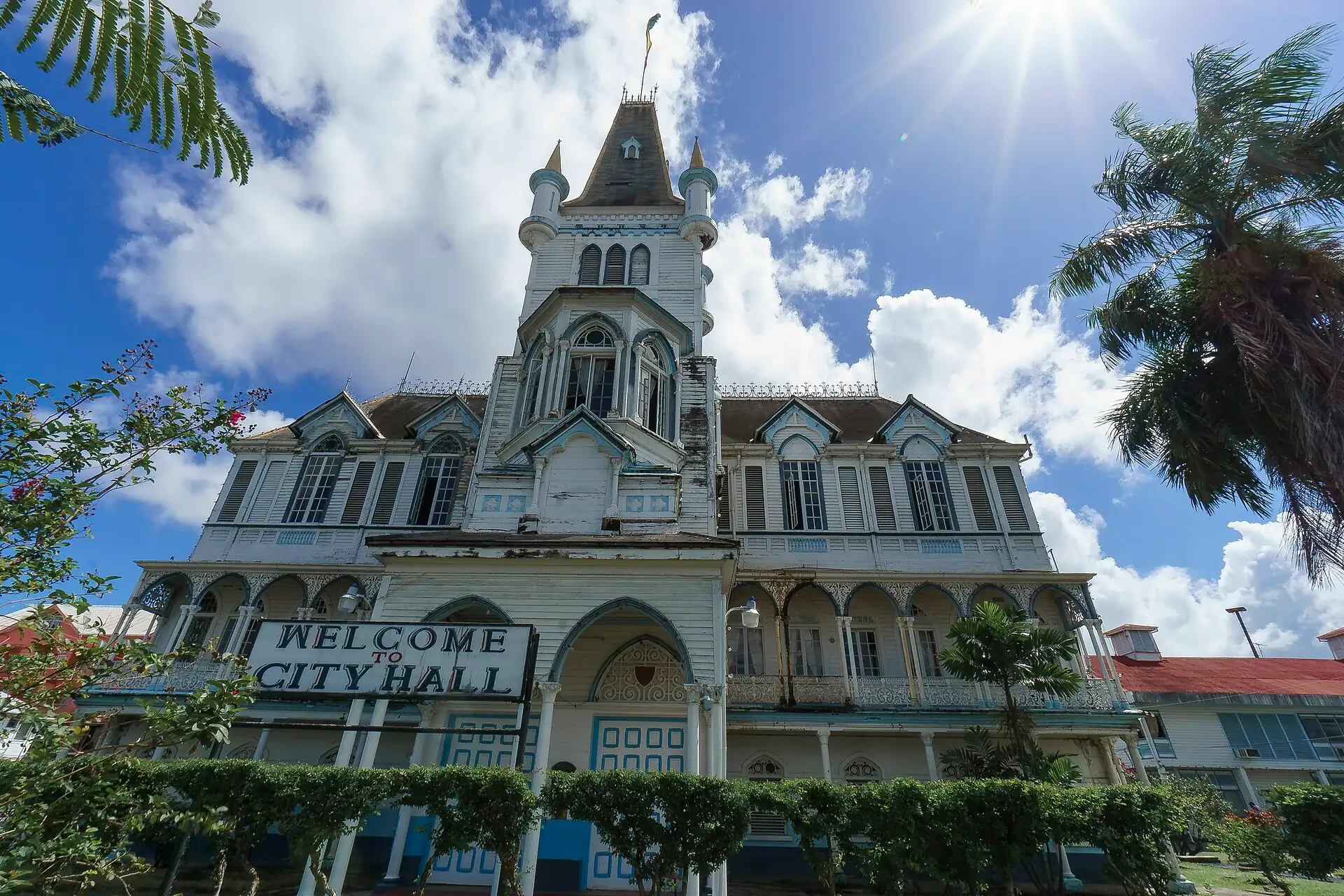
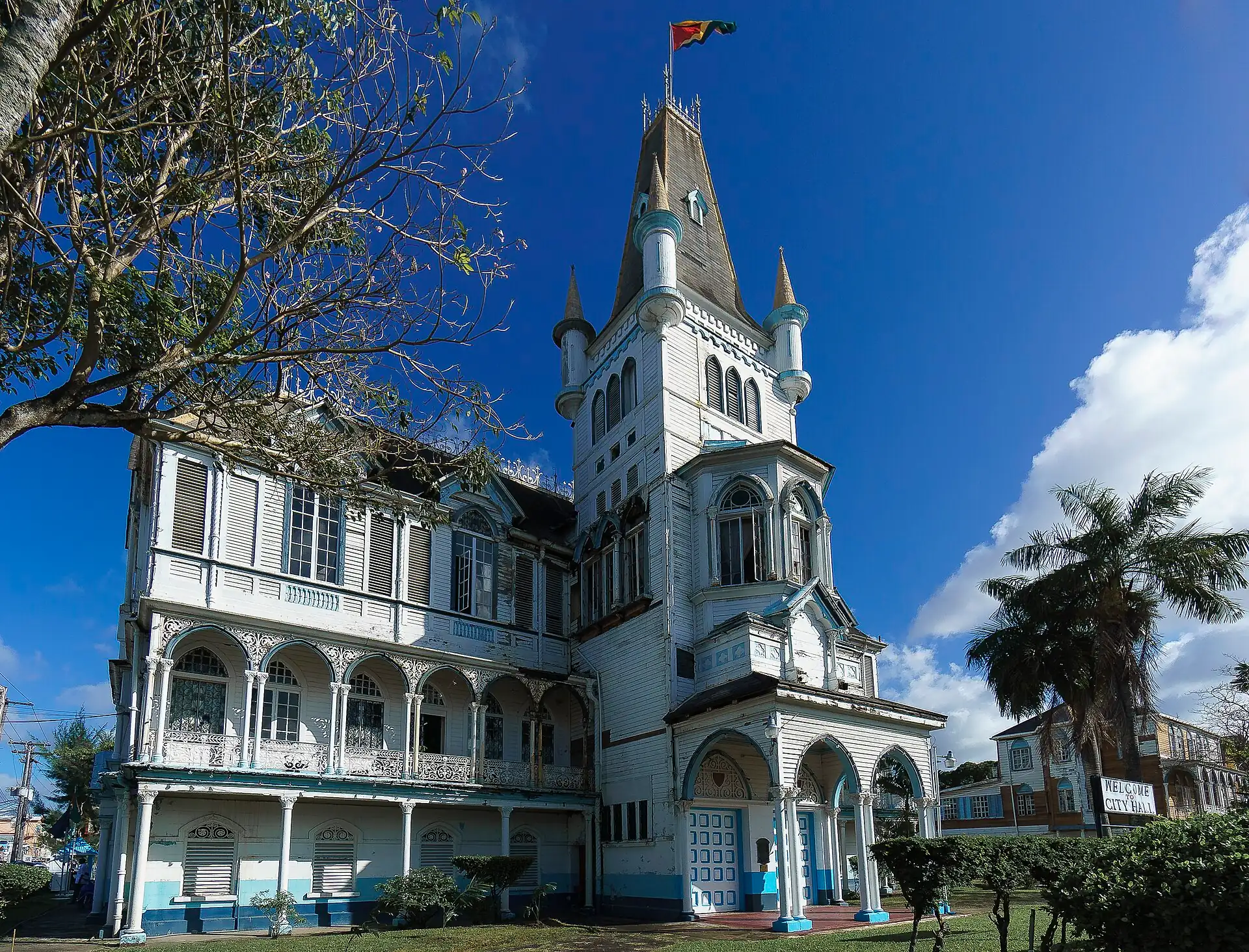
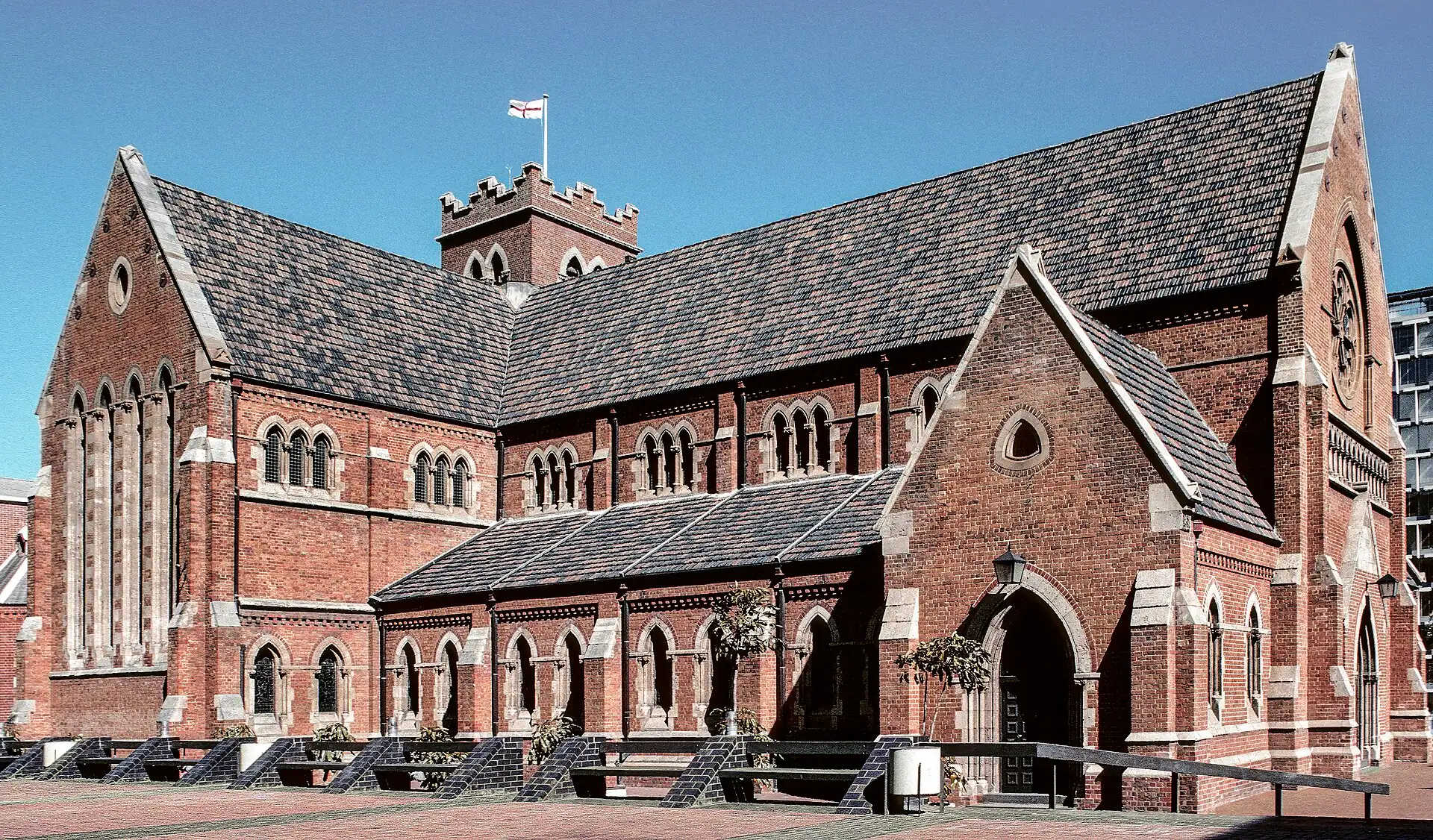
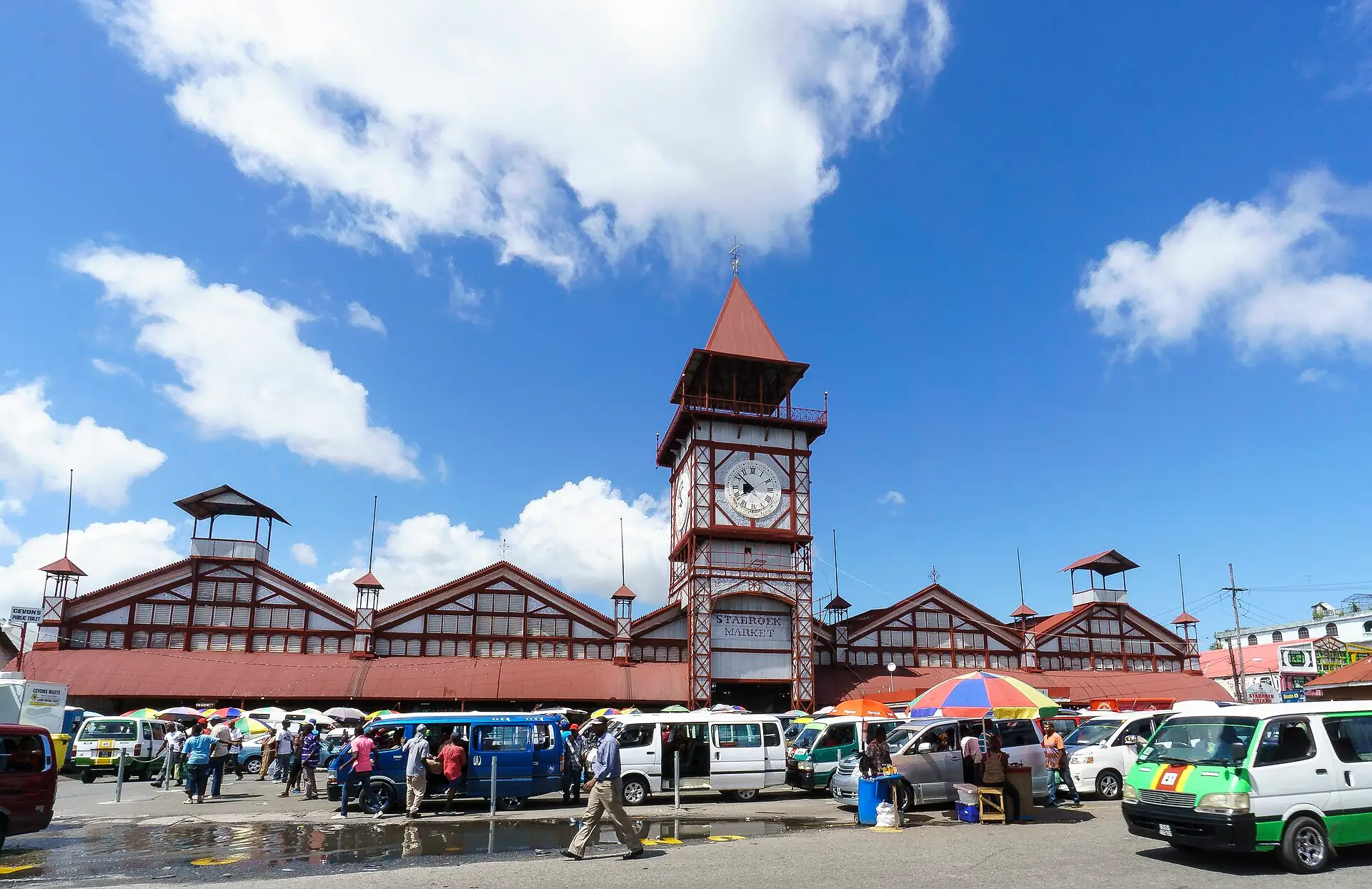
Many buildings show a Gothic Revival influence, with pointed windows, steep roofs and decorative fretwork. St George's Cathedral, an Anglican church consecrated in the 1890s, is the best known and is among the tallest wooden church buildings in the world. City Hall, completed in the late 1880s, is another timber Gothic showpiece, and the Victorian cast-iron Stabroek Market with its clock tower shows how iron and wood were mixed in a port city.
The city was laid out on a grid, with wide streets and drainage canals called kokers that run through them, and sluices that let water out at low tide. Because much of Georgetown is below high-tide level, the seawall and the drainage system are the reason the city exists at all, and a failure is a serious event: heavy rain and high tides can flood the streets.
Fire is the greatest threat to a wooden city, and major fires have destroyed parts of the centre in the past. Upkeep is expensive, and some historic buildings are in poor repair. For visitors, the practical points are that the best views are from the pavement, that pavements are broken, and that some buildings are open only on request, so check before going.
Walk the streets in daylight in small hops, stop at the cathedral and City Hall, look up at the fretwork on the older houses, and take a taxi between areas. Bring the camera out only when you are stopping to take a picture.
- Main building material
- Local hardwood on raised piers
- Key styles
- Gothic Revival, colonial vernacular
- Water control
- Seawall, canals and sluices
- Cast-iron market
- Stabroek Market, late 1800s
3People and food2 min
Guyana is one of the most mixed societies in the Americas. The largest groups are Indo-Guyanese, descended from indentured workers who arrived from India, and Afro-Guyanese, descended from enslaved Africans, followed by people of mixed heritage and Indigenous (Amerindian) communities, plus smaller Chinese, Portuguese and other groups. Georgetown has a mix of all of them, and religious buildings for Christians, Hindus and Muslims stand close together.
Food shows the mix best. Roti with curry, especially dhal puri and paratha, comes from India by way of indenture. Cook-up rice, a one-pot dish of rice, beans and meat, has roots in African cooking. Pepperpot, a dark meat stew cooked with cassareep, a syrup made from the cassava root, comes from Amerindian cooking and is a Christmas tradition. Chow mein and fried rice are everyday takeaway food thanks to the Chinese community.
Drinks and snacks are worth trying too. Mauby is a slightly bitter drink from tree bark, sorrel is a spiced hibiscus drink at Christmas, and coconut water is sold from the shell on the seawall. Bakeries sell cheese rolls, salara and pine tarts. El Dorado is the country's best-known rum, and Banks is the national lager.
Festivals also follow the mix. Mashramani, on 23 February, marks the republic with costumed parades. Phagwah is the Hindu festival of colours in March. Easter Monday means kite flying on the seawall. Diwali lights up homes in the autumn, and Emancipation Day is on 1 August.
English is the official language and easy to use, but everyday speech is Guyanese Creole, which is quick and can be hard to follow at first. People are quick to greet you, and it is polite to say good morning or good afternoon when you get into a taxi or walk into a shop.
A practical tip for eating: lunch is the main meal, and many of the best counters close by mid-afternoon. Go between 11:30 and 14:30, carry small notes, and eat what is being cooked in front of you. In the evening, choose a sit-down place with air conditioning and book the taxi home before you order, because the walk is not an option after dark for anyone.
- Official language
- English (Guyanese Creole in daily speech)
- Signature dishes
- Pepperpot, cook-up, roti and curry, chow mein
- Main festivals
- Mashramani, Phagwah, Diwali, Emancipation Day
4Neighbourhoods and how to use them2 min
The centre is compact enough that any two sights are a few minutes apart by taxi, but the character of each area is different, and the sensible way to use Georgetown is to give each a morning slot and go straight back to a base.
Stabroek and Water Street, by the river and the ferry landing, are the busiest. The market is the main draw and the best time is the first two hours after opening; pickpocketing and bag-snatching are the main risks, so go with little and keep it in front of you. The cathedral quarter and Main Street have the wooden architecture and the lunch counters, and it is possible to walk between them in daylight, watching for broken pavements and open drains.
The Kingston area, along the seawall to the north, has the larger hotels, the best access for airport cars and the Umana Yana, a conical thatched meeting house built by the Wai Wai people in 1972. On Sundays and holidays the seawall fills with families, kites and vendors. It is pleasant by day, and empty and unsafe at dusk and night.
The Botanical Gardens, east of the centre, are the calmest spot in Georgetown: broad paths under big trees, ponds with manatees and a large range of birds. It is a taxi ride from the centre and best in the morning before the heat. The nearby Castellani House holds the national art collection in a large timber mansion.
Where to sleep depends on how you like to work. Kingston is best for a first night: security, 24-hour desks and easy airport pickups. Main Street is closer to the cathedral and lunch, with more mid-range choices. In both cases, book the taxi to and from the airport ahead and keep the interior bag at the hotel if you fly on small aircraft.
- Best for a first night
- Kingston, near the seawall
- Best for walking by day
- Main Street and the cathedral quarter
- Calmest morning
- Botanical Gardens
- Rule for every area
- Taxi after dark
5The gateway to the interior2 min
For most visitors Georgetown is a base rather than a destination. The interior of Guyana is mostly rainforest, rivers and savannah, with very few roads, so small aircraft and boats are the main transport, and almost every route starts in the capital.
Kaieteur Falls, on the Potaro River, has a single drop of about 226 metres and is one of the most powerful single-drop waterfalls in the world by volume. It is normally visited on a day flight from Ogle airport, which takes about an hour each way, and it depends on the weather. Book with a licensed operator and leave a spare day in the plan in case of cancellation.
The Rupununi savannah, in the south, is reached by internal flight or a long road journey and has ranch and wildlife lodges. Bartica, on the Essequibo River, is reached by road to Parika and a fast boat and is the gateway for river and forest lodges. Shell Beach on the north-west coast is a nesting site for sea turtles in certain months.
Most interior flights are on small aircraft with tight baggage limits, often around 20 kg or less including the carry-on, so leave the large bag at your Georgetown hotel. Interior lodges can be expensive, some have no phone or internet, and plans change with the weather.
The best months for interior flights are usually September and October and the drier part of February to April. Check current conditions with your operator, and consider travel insurance that covers medical evacuation, since the interior is far from hospitals.
If you have only one day beyond the city, most visitors choose Kaieteur Falls, because the flight itself crosses the forest and the falls stand in a park with almost no development around them. If you have a little longer, a lodge stay on a river or in the savannah gives a very different view of Guyana from the capital, and the operator can arrange the transfer from your Georgetown hotel.
- Kaieteur Falls
- About 226 m single drop; day flight from Ogle
- Bartica
- Road to Parika, then fast boat
- Baggage on small planes
- Tight limits: leave the large bag in Georgetown
6Daily life and practical realities2 min
Georgetown's big practical truth is that street crime is a genuine risk, and the response is routine rather than dramatic: walk in daylight, in small hops, with little on you, and take a hotel-booked taxi for everything else. Locals do the same, and it is not rude to ask your hotel to book a car for a ten-minute ride.
Money is mostly cash. Carry Guyanese dollars in small notes; larger hotels, some restaurants and tour offices take cards. Change money at banks and licensed offices in daylight only. Prices in hotels and tours are often quoted in US dollars, and the oil-era economy has pushed hotel prices up, so book early for popular weeks.
Health comes down to heat, water and insects. Drink bottled water, use repellent day and night, rest in air conditioning from late morning, and check current advice on dengue, malaria in the interior and yellow fever. A yellow-fever certificate may be asked for at the airport depending on where you have been.
The city has two wet seasons, roughly May to mid-August and mid-November to January, and heavy rain can flood low streets quickly. The driest months are September and October. Since the city is below sea level, avoid walking or driving through flood water.
Open hours are inconsistent, and many small places are closed on Sunday. Check hours with your hotel, book the return taxi before you leave, and treat any published time as a starting point. If you plan for mornings out and afternoons in, Georgetown is friendlier than its reputation.
One last habit worth adopting: tell your hotel where you are going and when you expect to be back. Staff will book a trusted driver, tell you the going fare, and warn you about a street or event to avoid that day. In a city where formal information is thin, that local advice is more reliable than any printed schedule, and it costs nothing to ask.
- Currency
- Guyanese dollar (about G$200–215 to US$1, check)
- Emergency
- Police 911; ask your hotel for fire and ambulance
- Rule of thumb
- Mornings out, afternoons in, no walking after dark
Photos
Georgetown City Hall Photo: Dan Sloan, CC BY-SA 2.0
Georgetown landmark Photo: Dan Sloan, CC BY-SA 2.0
Rules in force · 7Above 2,500 m (Bogotá, Quito, Cusco, La Paz) keep the fir…Do not attempt to cross into Venezuela
- South America ↗Above 2,500 m (Bogotá, Quito, Cusco, La Paz) keep the first day light; sleep lower where you can (Sacred Valley before Cusco) and descend if headache comes with vomiting or confusion.
- South America ↗A yellow fever certificate is required on arrival in French Guiana, and asked for on some routes into Bolivia, Paraguay, Suriname and Guyana, or when arriving from Amazon areas — vaccinate at least 10 days before travel and carry the card.
- South America ↗Overnight buses are the norm in Argentina, Chile and Peru, but pick top-tier companies and keep valuables on your body; on-board thefts from overhead racks are the common loss.
- Guyana ↗Check entry rules for your passport with Guyana's Ministry of Home Affairs or a Guyanese embassy before booking.
- Guyana ↗Interior flights use small aircraft with tight baggage weight limits that include hand luggage: pack light and confirm with the operator.
- Guyana ↗Do not attempt to cross into Venezuela: the land border is closed and the Essequibo border zone is disputed and lawless in places.
- Georgetown and the coast ↗Do not walk after dark in Georgetown; use a taxi your hotel trusts.
Entry rules depend on your passport. Full visa guide
Emergency numbers for Georgetown911 ▾
- Police911
- Ambulance and firecheck
Tap a number to call from your phone. These are the numbers listed in this guide; a row marked check has not been verified.
Planning is the full guide. I'm here keeps what is open and the cheat card.
Right now
Checking the weather…
Working out what is open near you…
What is open nowclock, closures, places open
Now in Georgetown
Local time in Georgetown
--:--
Loads in your browser · America/Guyana
This month
Month verdict appears here.
Closed today
See the weekly grid below.
If today is a closure day: Confirm museum and market hours through your hotel the same day, and book the taxi back before you go out.
Weekly closures and opening times are not consistently published; treat any hour here as a starting point to confirm locally.
Cheat cardthe pocket version
Cheat card
The essentials on one card: save it as an image for your phone, share it, or print it.
Georgetown
- Money
- Carry Guyanese dollars in small notes plus a US-dollar backup; cards work in larger hotels only.
- SIM
- Buy a prepaid SIM from a mobile-network shop with your passport (Digicel and GTT are the main networks)…
- Ride app
- Hotel-arranged taxi · Local ride apps
- Emergency
- 911 police · check ambulance and fire
- Plugs
- Sockets A/B/D/G. US/Canada (A/B): fits · UK/Ireland (G): fits · Australia/NZ (I): adapter. 240 V: US 120 V-only devices (hair dryers) need a converter; most chargers are dual-voltage.
Say it
- Good morning: Good morning (good MOR-ning)
- The bill, please: The bill, please (the BILL please)
Top 5
- St George's Cathedral
- Stabroek Market
- Botanical Gardens
- Kingston seawall and Umana Yana
- Georgetown City Hall
EssentialsQuick answers, what things cost and how to get around
Essentials
Quick answers, what things cost and how to get around
Quick answers
The questions people ask first about Georgetown, one line each. Tap a card for the full answer.
- Cash or card?Cash in Guyanese dollars for everything outside hotels; cards work in larger hotels, some restaurants and tour offices.
- Cash & ATMsCarry Guyanese dollars in small notes plus a US-dollar backup; cards work in larger hotels only.
- SIM or eSIMcheckBuy a prepaid SIM from a mobile-network shop with your passport (Digicel and GTT are the main networks); check current plans and airport counters.
- Ride-hailing appHotel-arranged taxi · Local ride apps.
- Tap waterDo not drink the tap water; use bottled or filtered water and skip ice from unknown sources.
- TippingNot compulsory.
Show all 14 answers
- Plugs & powerSockets A/B/D/G. US/Canada (A/B): fits · UK/Ireland (G): fits · Australia/NZ (I): adapter. 240 V: US 120 V-only devices (hair dryers) need a converter; most chargers are dual-voltage.
- Safe at night?Take more care after dark in Stabroek Market, Cathedral quarter and Main Street, Kingston seawall and more.
- What to wearCover shoulders and knees; take shoes off at mosques and temples.
- RestroomsHotels, cafés and the few malls; carry tissues and some small notes.
- Emergency numberscheck911 police · check ambulance and fire
- Sundays & holidaysShops open early and close by late afternoon; many small places are shut on Sunday, and the market is quieter then.
- Rainy-day planIn the wet seasons put outdoor stops in the morning and keep the museum or a hotel café for the afternoon; heavy rain floods low streets quickly.
- Landing lateGEO: hotel-arranged car to the door runs all night.
Cost cheat-sheetwhat everyday things cost
Cost cheat-sheet
Typical prices for the everyday things, as ranges. Change the currency right here; the local price stays first.
2026 desk estimate · check
- Sit-down mealCook-up or curry lunch at a counterG$1,200–3,000
- BeerLocal beer (Banks) at a barG$500–900
- Taxi, about 5 km (3 mi)Taxi, about 3 mi (5 km)Short taxi rideG$1,000–2,500
- Budget bedHotel double room, a night, per roomGYD 12,000
- Mid-range bedHotel double room, a night, per roomGYD 30,000
- High-end bedHotel double room, a night, per roomGYD 60,000
A day, not counting the bed: Budget GYD 9,000 · Mid GYD 20,000 · High GYD 42,000
Local prices, with USD next to them (rates 2026-09 (approximate); change it in the header). Ranges are desk estimates: check locally. Every price and the budget calculator →
Source: Prices in Georgetown
Draft
Written from desk research. Not yet compared with the official source.
No official source is recorded for this figure.
Prices are 2026 desk estimates, not yet compared with an official source. Check on the day.
Not checked in the last 12 months (no check date on file).
DecideWho it suits, the trade-offs and when to go
Decide
Who it suits, the trade-offs and when to go
Best months at a glance
The guide's verdict for each month
Jan
Care
30°C (86°F)86°F (30°C)
Feb
Best
30°C (86°F)86°F (30°C)
Mar
Best
31°C (88°F)88°F (31°C)
Apr
Best
31°C (88°F)88°F (31°C)
May
Care
30°C (86°F)86°F (30°C)
Jun
Avoid
30°C (86°F)86°F (30°C)
Jul
Care
30°C (86°F)86°F (30°C)
Aug
Care
31°C (88°F)88°F (31°C)
Sep
Best
32°C (90°F)90°F (32°C)
Oct
Best
32°C (90°F)90°F (32°C)
Nov
Care
31°C (88°F)88°F (31°C)
Dec
Care
30°C (86°F)86°F (30°C)
Best: Feb–Apr, Sep–Oct. Mixed: May, Jul–Aug, Nov–Jan. Avoid: Jun. Month by month →
Warmest Sep (32°C (90°F)90°F (32°C)), coolest Jan (24°C (75°F)75°F (24°C) low), wettest Jun (22 rain days), driest Oct (7). Averages, not a forecast.
Georgetown across the year
Best-looking months for Georgetown: Mar, Apr, Sep. Rated avoid: Jun.
| Measure | Jan | Feb | Mar | Apr | May | Jun | Jul | Aug | Sep | Oct | Nov | Dec |
|---|---|---|---|---|---|---|---|---|---|---|---|---|
| Weather | Mixed (care) | Good (good) | Great (good) | Great (good) | Mixed (care) | Avoid (avoid) | Mixed (care) | Mixed (care) | Great (good) | Great (good) | Mixed (care) | Mixed (care) |
| Crowds | Low (good) | Medium (ok) | Medium (ok) | Medium (ok) | Low (good) | Low (good) | Low (good) | Medium (ok) | Medium (ok) | Medium (ok) | Medium (ok) | Medium (ok) |
| Prices | Medium (ok) | Medium (ok) | Medium (ok) | Medium (ok) | Low (good) | Low (good) | Low (good) | Medium (ok) | Medium (ok) | Medium (ok) | Medium (ok) | High (care) |
| Events | None listed (ok) | 2 events (care) | 1 event (ok) | 1 event (ok) | 1 event (ok) | None listed (ok) | None listed (ok) | 1 event (ok) | None listed (ok) | 1 event (ok) | 1 event (ok) | 2 events (care) |
Green is good news, amber needs planning, red is a month to avoid; dashed grey with a question mark means our data does not say. Open the year heatmap →
Not checked in the last 12 months (no check date on file).
Source: Months, temperatures and crowds
Draft
Written from desk research. Not yet compared with the official source.
Monthly highs, rain and crowd levels are climate averages and desk estimates for the city, not a forecast.
Understand the cityUnderstand · Districts
Orientation & districts
The visitable city is a grid of streets running south of the Demerara River: Stabroek Market and the river ferry landing at the northwest, Main Street and the cathedral quarter in the middle, and the Kingston seawall and Botanical Gardens to the north-east. It is walkable in daylight in small hops, but taxis join the parts.
Distances are short but pavements are broken and street crime is real: a hotel-booked taxi between areas is the default, and none of it after dark.
Shaded shapes: walking areas (click one). Black pins: sleep areas. Grey dots: places. Round badges: arrivals. Click the map to turn on scroll-wheel zoom.
Hover, tap or tab to an area to see what it is like. Pins are sleep areas; arrows at the edge point to the airport.
Off the map: Cheddi Jagan International Airport (GEO), Timehri (60–95 min by the usual route); Eugene F. Correia International Airport (OGL), Ogle (25–45 min by the usual route).
Where’s what, as a list:
- Stabroek and Water Street: Busiest, most crowded, best in the first two hours after opening. Suits: Markets and everyday life, in the morning.
- Cathedral quarter and Main Street: St George's, City Hall and the museum are close; many mid-range hotels. Suits: Wooden architecture and lunch on foot in daylight. Price band $$.
- Kingston and the seawall: Larger hotels with security and 24-hour desks. Suits: A first night, larger hotels, a seawall dusk by car. Price band $$$.
- Botanical Gardens and Vlissengen Road: A car ride from the centre; quiet on weekdays. Suits: A calm morning of gardens and a gallery.
- Sleep area Kingston hotels near the seawall: suits A first night, larger hotels, a seawall dusk by car, price band $$$.
- Sleep area Main Street and the cathedral area: suits Wooden architecture and lunch on foot in daylight, price band $$.
- Cheddi Jagan International Airport (GEO), Timehri, 60–95 min by the usual route.
- Eugene F. Correia International Airport (OGL), Ogle, 25–45 min by the usual route.
Neighbourhoods at a glance
One tab per area, pulled together from this guide’s districts table, area notes, sleep-area scores and place pages. Scores are desk judgements (1–5); prices are estimates, check before you book.
Stabroek and Water Street
Busiest, most crowded, best in the first two hours after opening.
- Suits:
- Markets and everyday life, in the morning
Getting around from here
- Taxi east: about 8 min to St George's Cathedral & Main Street
Cathedral quarter and Main Street
$$St George's, City Hall and the museum are close; many mid-range hotels.
- Suits:
- Wooden architecture and lunch on foot in daylight
- Quiet nights3/5 Medium
- Nightlife2/5 Low
- Families3/5 Medium
- Late arrival3/5 Medium
Why these scores
- Quiet nights: Traffic and street noise by day.
- Nightlife: Modest; do not walk at night.
- Families: Fewer facilities, more street activity.
- Late arrival: Confirm the night desk when you book.
Getting around from here
- 18–25 min walk to Stabroek Market & the waterfront
- Taxi north: about 8 min to Kingston & the seawall
- Taxi east: about 10 min to Botanical Gardens
Kingston and the seawall
$$$Larger hotels with security and 24-hour desks.
- Suits:
- A first night, larger hotels, a seawall dusk by car
- Quiet nights4/5 High
- Nightlife2/5 Low
- Families4/5 High
- Late arrival5/5 Very high
Why these scores
- Quiet nights: Mostly quiet at night.
- Nightlife: Hotel bars only; go nowhere on foot.
- Families: Pools and secure grounds help.
- Late arrival: 24-hour desks and airport car arrangements.
Getting around from here
- 18–25 min walk to St George's Cathedral & Main Street
Botanical Gardens and Vlissengen Road
A car ride from the centre; quiet on weekdays.
- Suits:
- A calm morning of gardens and a gallery
Getting around from here
- Taxi west: about 10 min to St George's Cathedral & Main Street
Decide
The honest trade-off: what you will enjoy, what will wear you down.
You will like
- Wooden colonial buildings
- Markets and Caribbean-South American food
- Base for Kaieteur and the rainforest
You will hate
- Heat and humidity
- Street crime worries
- Taxi-only after dark
Similar citiesif this one is not quite right
Similar cities
If Georgetown does not fit your dates or budget, these match it on season, cost and feel.
- Paramaribo
Suriname
- Good in the same months: Feb, Mar, Sep, Oct
- A similar climate through the year
- Hue
Vietnam
- Good in the same months: Feb, Mar, Apr
- Kingstown
Saint Vincent and the Grenadines
- Good in the same months: Feb, Mar, Apr
- A similar climate through the year
When
Best months: Feb, Mar, Apr, Sep, Oct. Month-by-month verdicts below, with the live forecast first. When to go, month by month →
Georgetown: next 7 days
Loading forecast…
Forecast: Open-Meteo (CC BY 4.0), model data for this point.
Air quality
Loading…
Model estimate (CAMS via Open-Meteo), not a street-level station; readings near busy roads run higher.
Month by month, all 12best Feb, Mar, Apr, Sep, Oct
Short wet season tails off; flooding on the coast.
Dry; Mashramani parades around Feb 23.
Dry and hot.
Dry; Easter holidays.
Long wet season begins.
Heavy rain; interior roads flood.
Wet; interior flights cancel.
Wet season ends; dry from mid-month.
Dry and hot.
Dry; best month for interior flights.
Short wet season starts.
Wet; Christmas closures and crowds.
Climate, calendar and eventsClimate · Calendar · Events · Packing by season
Climate
| Jan | Feb | Mar | Apr | May | Jun | Jul | Aug | Sep | Oct | Nov | Dec | |
|---|---|---|---|---|---|---|---|---|---|---|---|---|
| High | 30°C (86°F)86°F (30°C) | 30°C (86°F)86°F (30°C) | 31°C (88°F)88°F (31°C) | 31°C (88°F)88°F (31°C) | 30°C (86°F)86°F (30°C) | 30°C (86°F)86°F (30°C) | 30°C (86°F)86°F (30°C) | 31°C (88°F)88°F (31°C) | 32°C (90°F)90°F (32°C) | 32°C (90°F)90°F (32°C) | 31°C (88°F)88°F (31°C) | 30°C (86°F)86°F (30°C) |
| Low | 24°C (75°F)75°F (24°C) | 24°C (75°F)75°F (24°C) | 24°C (75°F)75°F (24°C) | 25°C (77°F)77°F (25°C) | 24°C (75°F)75°F (24°C) | 24°C (75°F)75°F (24°C) | 24°C (75°F)75°F (24°C) | 24°C (75°F)75°F (24°C) | 24°C (75°F)75°F (24°C) | 24°C (75°F)75°F (24°C) | 24°C (75°F)75°F (24°C) | 24°C (75°F)75°F (24°C) |
| Rain days | 15 | 9 | 10 | 12 | 20 | 22 | 20 | 16 | 8 | 7 | 12 | 17 |
| Verdict |
- Sep–Oct is the driest, best window and the best for interior flights.
- May–mid-August is the long wet season; roads flood and flights cancel more often.
- It is 30 °C (86 °F) or more every month: plan indoor pauses from late morning.It is 86 °F (30 °C) or more every month: plan indoor pauses from late morning.
Events by month
Mashramani
festival23 Feb · Citywide
Parades and road closures.
Phagwah
festivalVaries · Citywide(check dates)
Coloured powder and water on the streets.
Easter kite flying
festivalEaster Monday (varies) · Kingston seawall(check dates)
Thousands of kites and crowds; a daytime highlight.
Independence Day
holiday26 May · Citywide
National holiday.
Emancipation Day
holiday1 Aug · Citywide
Cultural events; some closures.
Christmas
holiday25 Dec · Citywide
Many places close for several days.
Festivals and events that change the plan
| When | What | Effect on your plan |
|---|---|---|
| 23 Feb | Mashramani | Republic Day parades with costumed bands and floats; roads close and taxis are scarce. |
| Mar (varies) | Phagwah | The Hindu festival of colours; people throw powder and water on the streets and at gatherings. |
| Easter Monday (varies) | Kite flying on the seawall | Kites fill the sky above the Kingston seawall: busy, festive and worth a daytime visit. |
| 26 May | Independence Day | National holiday; events and parades in the city. |
| 1 Aug | Emancipation Day | Cultural events and gatherings; some closures. |
| Oct-Nov (varies) | Diwali | Lights and sweet-sellers; hotel demand can rise. |
| Dec | Christmas | Pepperpot and parties; many places close for several days. |
What to pack, by season
From Georgetown’s own climate table: the coldest, warmest and wettest three months, and what to bring for each.
Coldest months
May–Jul
24° to 30°
Light layers; evenings can still feel cool.
Warmest months
Aug–Oct
24° to 32°
Light, breathable clothes, a sun hat and sunscreen; plan midday indoors and carry water.
Wettest months
May–Jul
21 rain days a month
A compact umbrella or rain jacket and shoes that can get wet.
Arrive & moveGetting in, getting around, and your bags
Arrive & move
Getting in, getting around, and your bags
I land at…
Enter your landing time: what still runs from the airport, where you can eat when you get in, and which areas let you check in that late.
Out of the airport about 00:00 (next day)12:00 AM (next day) (01:15 (next day)1:15 AM (next day) if immigration and bags are slow); in town about 01:00 (next day)1:00 AM (next day).
Transport from the airport
- Any hourHotel-arranged car to the door. Runs all night.
- Last resortOvernight near the airport. If nothing else works.
Places to eat open when you get in
We have no confirmed hours for the places to eat here yet. Plan on a convenience store or your hotel. What is open late →
Where to sleep with a late arrival
- Lets you inKingston hotels near the seawall Desk hours not confirmed: message the hotel with your flight number. 24-hour desks and airport car arrangements.
- Call aheadMain Street and the cathedral area Desk hours not confirmed: message the hotel with your flight number. Confirm the night desk when you book.
Typical times from our airport data, not a timetable: check the last departure on the day. Full airport-to-bed plan for Cheddi Jagan International Airport (GEO), Timehri →
Arrive
Each gateway has its own airport-to-bed page with timings and the last safe connection.
Getting in, in detailGet in
Get in by rail and road
| Station | Mode | Serves | Where | To the centre |
|---|---|---|---|---|
| Cheddi Jagan International Airport (GEO)use | Air | Most international arrivals | About 41 km south of Georgetown at Timehri | Hotel-arranged car, 45–75 minMany flights land late: book the pickup in advance and never accept rides offered in the hall. |
| Ogle Airport (OGL)use | Air | Internal flights to the interior and regional charters | East of the city on the coast road | Taxi, 20–30 minSmall aircraft with strict baggage limits: leave the large bag at your hotel. |
Move
The default way around, when a pass pays off, and when the last trains go.
- Default
- Walk inside a cluster by day; taxi between clusters and always after dark.
- Passes
- No pass. Minibuses exist but are crowded and not for visitors with bags: use hotel-arranged taxis and agree the fare first.
- Last trains
- No rail. Taxis are easy by day and scarcer late: ask the hotel to book the ride back before you go out.desk estimate
- Other modes
- Other modes (Rome2Rio) ↗
Getting around, in detailGet around · Connect
Get around
Walk inside a cluster by day; taxi between them and always after dark. Minibuses exist but are crowded and not for visitors with bags.
| Mode | Verdict | Fare | Use it for | What breaks |
|---|---|---|---|---|
| Walking | use | Free | Inside one cluster, in daylight | Watch for broken pavements and open drains. |
| Hotel-arranged taxi | use | G$1,000–2,500 in town | Between clusters, with bags, after dark | Agree the fare first and ask your hotel for a trusted driver. |
| Minibus | skip | Low | Locals | Crowded and not for visitors with bags. |
Connect
| Option | Verdict | What breaks |
|---|---|---|
| Mobile-network shops (Digicel, GTT) | use | Bring your passport; check current data plans and whether your phone is unlocked. |
| Airport counters | check | Availability varies: confirm before relying on it. |
Hotel-arranged taxi
Almost all rides for visitors
Ask your hotel for a driver and agree the fare first.
Local ride apps
Some rides in town
Check current availability and safety with your hotel.
- Wi-Fi
- Hotels have Wi-Fi of varying speed; the interior lodges may have none.
- Interior coverage
- Phone coverage falls away quickly outside the coast: tell family your plan before you go.
Luggage
Where big bags are a problem, and how to get rid of them for the day.
Rule
- Lockers
- No public lockers; hotels hold bags after check-out and for interior trips.
- Forwarding
- No forwarding culture; keep the big bag at the Georgetown hotel for Kaieteur or lodge stays.
- Dead zone
- Late flights: ask the hotel to hold bags and for a room to shower.
Bags, area by area
4 walking areas rated
- Bags forbidden
- Bags painful
St George's Cathedral & Main StreetKingston & the seawallBotanical Gardens
Lockers, forwarding and the gap between check-out and check-in are covered once, under Luggage.
See & doWalking clusters, day plans and the places worth the time
See & do
Walking clusters, day plans and the places worth the time
Clusters
Plan by cluster: each is a walkable area with a rescue point and a bag rule.
Early-morning cluster: the market and the riverfront; go at opening, keep valuables hidden and leave before it gets hot.
rescue 100% · max p90 6′ · half
Morning cluster: the cathedral, Parliament and the old wooden streets; flat and short, but the pavements are broken.
rescue 100% · max p90 6′ · half
Late-afternoon cluster: the seawall walk and the thatched Umana Yana; go by taxi and be back before dark.
rescue 100% · max p90 6′ · half
Morning cluster: shaded paths, ponds and manatees; a car ride from the centre and quiet on weekdays.
rescue 100% · max p90 6′ · half
Days
Ready-made day plans, timed against opening hours and walking distances.
How long are you staying?
1 day
Stabroek Market and St George's Cathedral in the morning, lunch at a counter, a taxi to the seawall at 16:30 and back by 18:00.Stabroek Market and St George's Cathedral in the morning, lunch at a counter, a taxi to the seawall at 4:30 PM and back by 6:00 PM.
Georgetown in 3 days
3 daysThe market at opening, the cathedral before noon, the gardens on the second morning and the seawall last; every ride is a taxi and the last day ends with the bag already in the car.
Day by day
Day 1 — Stabroek Market at 07:30, the cathedral, a 12:30 lunch table
- 07:30Stabroek Market
- St George's Cathedral
- Georgetown City Hall (optional)
- National Museum of Guyana (optional)
- 12:30Lunch table 12:30 (town centre)
Day 2 — Botanical Gardens at opening
Day 3 — Seawall walk, car to the airport at 11:30
- 07:00Kingston seawall and Umana Yana
- 11:30Car to the airport at 11:30
Places
“Best time” is when to arrive for the fewest crowds, for example “before 08:30”; “Go any time” means the hour makes little difference. More sights follow under “More sights and museums”.
If you do ten things in Georgetown
- 1
- 2
- 3
- 4
- 5
- 6
- 7
Good for…
Neighbourhoods in one line
| Area | Feel | Suits | Go | Avoid |
|---|---|---|---|---|
Tours and classes: book or skip
| Tour or class | Verdict | Typical price | Why | Check before paying |
|---|---|---|---|---|
What each season brings
Dry season (Sep–Oct, Feb–Apr)
Long wet season (May–mid-Aug)
Short wet season (Nov–Jan)
Photo spots and the light
| Spot | Best light | Tip |
|---|---|---|
Georgetown travel FAQ
Is Georgetown safe?
Street crime is a real risk. In daylight, small hops on foot in the centre are normal; after dark take a hotel-booked taxi door to door.
Do I need a taxi for everything?
For anything beyond a short daylight walk, yes: taxis are cheap and are the main safety tool.
How many days do I need?
Two nights covers the city; add a day for Kaieteur or a river trip.
Can I use my card?
In larger hotels and some restaurants. Carry small Guyanese notes for everything else.
More to see and doSee & do · Learn & work · Rain & heat · Free things
Free things to do
Sights in Georgetown that cost nothing to enter. Each is described under Places or More sights; extra costs inside are marked there.
See & do
9 of 9
- Markets
A Victorian-era cast-iron market hall with a clock tower at the river ferry landing.
Stabroek and Water Street
- church
An Anglican cathedral in timber, one of the tallest wooden church buildings in the world.
Cathedral quarter and Main Street
- Architecture
A Gothic Revival timber building from the late 1880s.
Cathedral quarter and Main Street
- Museums
Natural history, Amerindian and colonial displays.
Cathedral quarter and Main Street
- Gardens
Shaded paths, ponds and manatees.
Botanical Gardens and Vlissengen Road
Timber mansion with the national art collection.
Botanical Gardens and Vlissengen Road
Kingston seawall and Umana Yana
promenadeThe sea defence and the Umana Yana thatched meeting house.
Kingston and the seawall
A Sunday afternoon on the seawall
ActiveFamilies, kites and snack vendors; the city's main social scene, ending before dusk.
Kingston and the seawall
A cooking or rum tasting through your hotel
ClassesAsk the hotel about a demerara-rum tasting or local-food session.
Kingston and the seawall
- Booking
- Book Kaieteur flights, river trips and lodges through a registered operator; the city sights need no booking.
Learn & work
| What | Where | Cost | Note |
|---|---|---|---|
| Guyanese Creole and English | Informal only | check | English is the official language; no short courses aimed at visitors. |
Working here
- Tourist entry
- Visitor entry does not permit work.
Rain-day and heat-day plan
Day-trips and nearby
Places you can reach from Georgetown in a day or with one night away, with the route and what it costs. Door to door, not ride time.
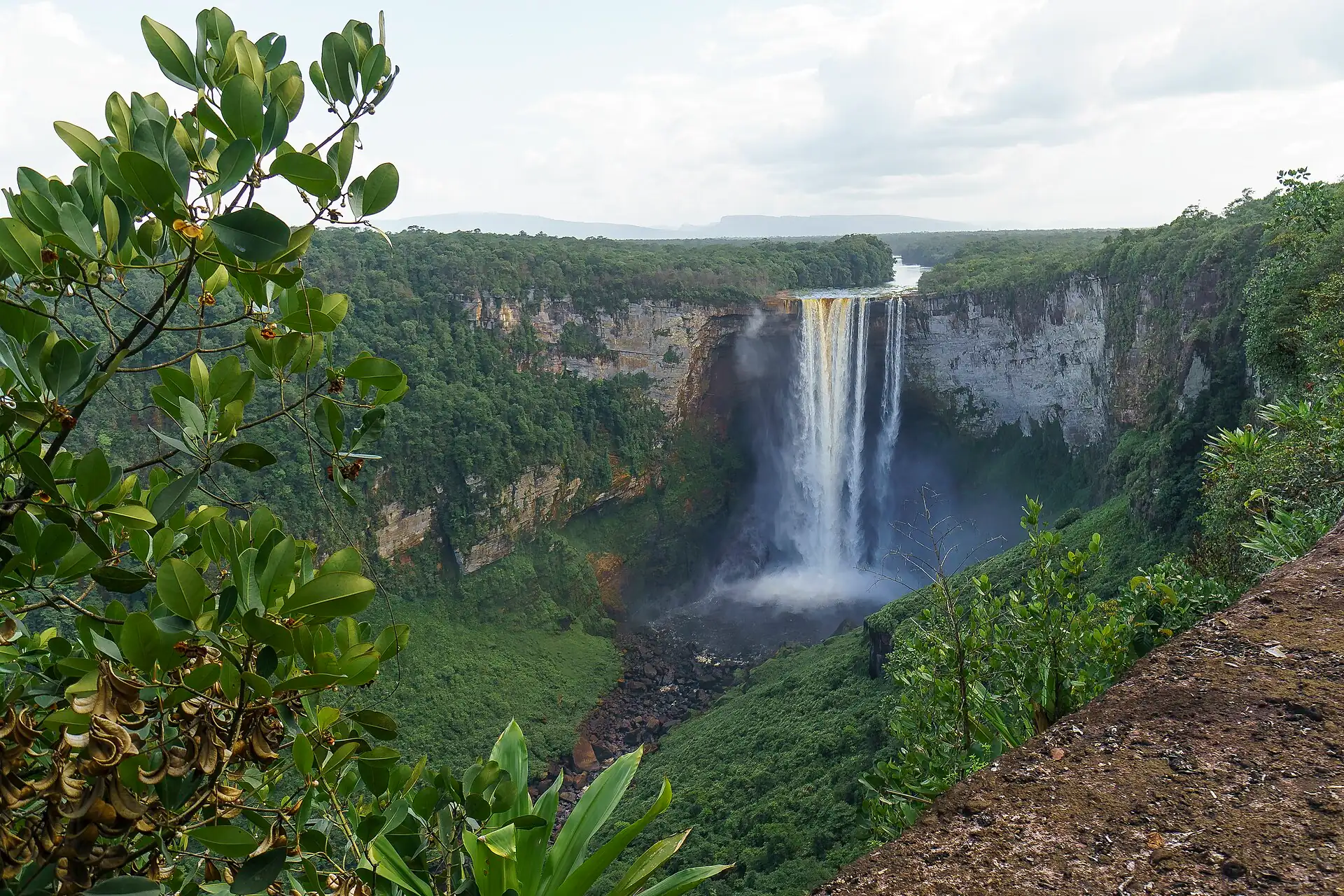 Photo: Dan Sloan, CC BY-SA 2.0
Kaieteur Falls
goDay flight from Ogle airport with a registered operator, about 1 h each way
A 226 m single drop in the rainforest; flights depend on weather, so leave a spare day and book with a licensed operator.
- Time
- Full day
Bartica and the Essequibo
overnightRoad to Parika (about 1 h), then a fast boat, about 1 h
The gateway to the interior rivers; choose a reputable boat operator and check sailing times locally.
- Time
- Full day or overnight
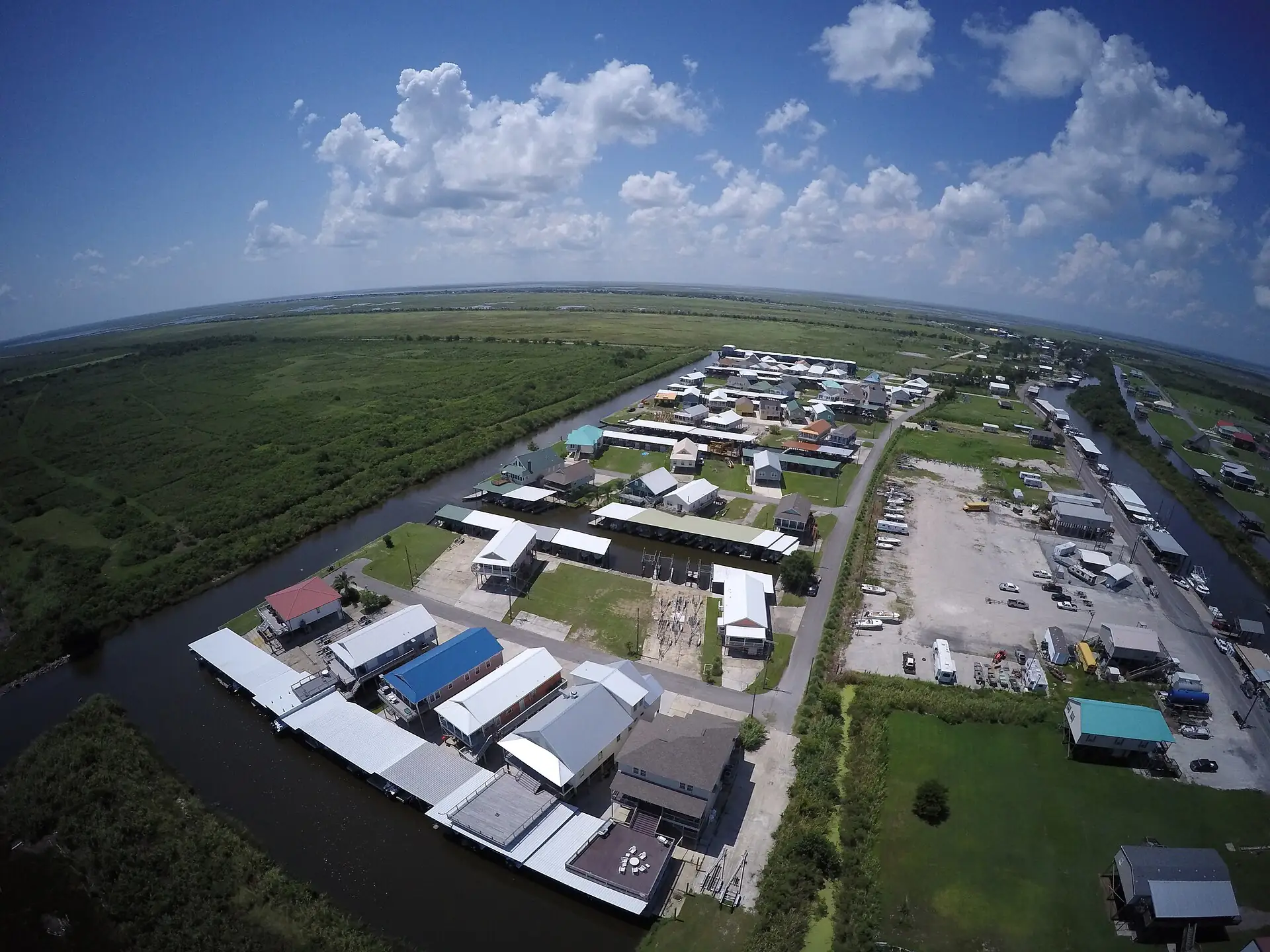 Photo: Louisiana Sea Grant, CC BY 2.0
Shell Beach
overnightOrganised trip by road and boat, check
Turtle-nesting beach on the northwest coast; season and access depend on weather and operator.
- Time
- Overnight
Go next
Door to door: Overnight or more
Internal flight, about 1 h
Ranch and wildlife lodges; small planes, tight baggage limits.
Eat & sleepWhere to eat and which area to sleep in
Eat & sleep
Where to eat and which area to sleep in
Eat
A short list of places worth crossing the city for, each with how to get a seat.
Restaurant finder: filter every place to eat in Georgetown →
Vegetarian-friendly score
3.5 / 5 · Good
- Country diet noteOur country guide rates vegetarian eating as easy.2 / 2
- Places to eat in this guide3 of 6 places with a known answer are vegetarian-friendly, 3 partly.1.13 / 1.5
- Budget eating lines0 vegetarian lines in "Eat by budget".0 / 0.6
- Meat-free national dishes5 meat-free dishes in the country food list.0.4 / 0.4
- Dedicated vegetarian kitchens0 mentions of vegetarian restaurants, Buddhist or fasting kitchens.0 / 0.5
Country note: Easy thanks to Hindu cooking: dhal, curried vegetables, channa.
Vegetarian places near me →Make a diet card →
How we score
- Country diet note (up to 2): easy 2, workable 1, mixed 0.75, hard 0; no note 0.5.
- City places to eat (up to 1.5): 1.5 × (vegetarian-friendly + half of partly friendly) ÷ places with a known answer; needs 3 or more known places.
- Budget eating lines marked vegetarian (up to 0.6): 0.2 each.
- Meat-free national dishes (up to 0.4): 0.1 each.
- Dedicated vegetarian kitchens mentioned — Buddhist chay, shōjin ryōri, Jain, fasting food, vegan cafés (up to 0.5): 0.1 each.
- Total rounded to the nearest half point, 0 to 5. Built from our own pages only, not from reviews.
Eating and drinking guideEat by budget · Drink
Before you sit down to eat
Short version; full text linked
Eat by budget
Under G$1,500 a meal
| Where | Order | Area | Price | Note |
|---|---|---|---|---|
| An Indo-Guyanese roti and curry shop | Roti with curry | Stabroek | G$800–2,000 | |
| A local bakery for cheese rolls and pine tarts | Cheese roll and juice | Stabroek | G$150–700 | |
| Seawall snack and drinks vendors | Coconut water and snacks | Kingston seawall | G$300–1,500 |
Dishes to know
| Dish | What it is | Where to look | When | Price |
|---|---|---|---|---|
| Pepperpot | Slow-cooked spiced meat stew with cassareep | Restaurants and lunch counters | Lunch | G$1,800–3,500 |
| Cook-up rice | One-pot rice with beans and meat | Counters citywide | Lunch | G$1,500–3,000 |
| Roti and curry | Flatbread with chicken, duck or channa curry | Roti shops | Lunch, dinner | G$800–2,000 |
| Chow mein | Stir-fried noodles | Chinese-Guyanese restaurants | Lunch, dinner | G$2,000–4,000 |
Drink & nightlife
| Where | What | Until | Note |
|---|---|---|---|
| Hotel bars in Kingston | Beer, rum, cocktails | Late | The safest choice for an evening drink with the taxi at the door. |
By style
| Style | What | Where | Price | Until |
|---|---|---|---|---|
| Local rum | El Dorado, sold in bars and shopsAge-labelled bottles are a good souvenir. | Bars and supermarkets | G$500–3,000 a drink or bottle | Late |
| Beer | Banks Beer, the national lager | Bars, restaurants | G$500–900 | Late |
| Mauby and sorrel | Bark and hibiscus drinks | Street stalls and restaurants | G$300–600 | Daytime |
Rules that bite
- Do not walk home after drinking; take the hotel taxi.
- Never leave a drink unattended.
Sleep
Pick the area first: it decides your walk home at night and your first morning.
Which neighborhood fits you
Three questions, one recommendation, with the reasons.
Your best fit
Main Street and the cathedral area
- Cathedral, City Hall and lunch counters within a short daylight walk.
Next best: Kingston hotels near the seawall
Built from our 1–5 desk scores per area; your answers stay in this browser.
More on sleepingYour area · With kids
Which area is yours
| If you are | Sleep in | Because |
|---|---|---|
| A first, short visit | Kingston hotels near the seawall | Secure, easy for bags and the airport run. |
| Sightseeing on foot by day | Main Street and the cathedral area | Closest to the cathedral and the lunch counters. |
Best first night: larger hotels with 24h desks, secure doors and car access; a taxi from every sight and no walking at night.
Older wooden hotels and guesthouses; close to the cathedral and the food counters, but check the door and the night desk.
Areas are in our default order until you tick a priority.
Scores are 1–5 desk judgements per priority (2026).
With kids
- Heat and broken pavements make strollers hard: plan a carrier and taxis.
- The Botanical Gardens and its manatee pond, and the seawall on a Sunday, are the easiest child-friendly stops.
- Bring repellent and check current health advice for mosquito-borne illness.
- Restaurants are relaxed about children; choose air-conditioned ones for midday.
PracticalMoney, essentials, safety and the pocket card
Practical
Money, essentials, safety and the pocket card
Money
What a day costs at three comfort levels, and how to pay.
- Budget
- G$8,000–15,000 excl. bed / day
- Mid
- G$15,000–35,000 excl. bed / day
- High
- G$35,000+ excl. bed / day
- Transit card
- No transit card: taxis your hotel books and walking inside a cluster by day.
- Cash rule
- Carry Guyanese dollars in small notes plus a US-dollar backup; cards work in larger hotels only. Withdraw at ATMs inside banks or hotels in daylight and keep a reserve.
More on moneyCosts · Budget · Buy
What things cost
- Roti with curryG$800–2,000
- Bottled water, 1.5 LG$200–400
- Coconut water at the seawallG$300–500
- Airport transfer, GEO to townG$8,000–12,000
Trip budget
| Hotel double room1 × 2 nights × GYD 30,000 | GYD 60,000 |
| Food, local transport, entries2 × 2 days × GYD 20,000 | GYD 80,000 |
| Airport transfer, both ways1 × GYD 20,000 | GYD 20,000 |
| Buffer 15%Price creep, a taxi you did not plan, one splurge | GYD 24,000 |
| Trip total≈ GYD 46,000 per person per day, bed included | GYD 184,000 |
2026 estimate in GYD; flights and interior tours excluded. Your choices stay in this browser.
Prices of common things
| Cook-up or curry lunch | G$1,200–3,000 |
| Roti with curry | G$800–2,000 |
| Bottled water | G$200–400 |
| Airport transfer | G$8,000–12,000 |
2026 estimate; check locally.
Buy
- Bargaining
- Bargain lightly at Stabroek Market and with street sellers; fixed prices apply in shops and supermarkets.
- Fixed-price check
- Supermarkets and hotel shops show prices; use them as a reference before you buy at the market.
Markets and shopping streets
| Where | What | When | Haggle | Note |
|---|---|---|---|---|
| Stabroek Market | Produce, fish, crafts, clothes and household goods | Mornings best, quieter after midday | light | Keep bags in front of you and ask before photographing sellers. |
| Bourda Market | Fresh produce, spices and fish | Mornings best | light | A local produce market; visit by taxi in daylight (check hours). |
Shops by what they sell
| For | Where | Hours | Note |
|---|---|---|---|
| Local rum and hot pepper sauce | Supermarkets and duty-free at the airport | Shop hours | El Dorado rum is the national spirit; buy sealed bottles only. |
| Amerindian crafts | Craft shops and hotel shops | Shop hours | Ask where a piece is made; avoid items made from animal parts, which cannot travel. |
Changing money
| Where | Verdict | Why |
|---|---|---|
| Banks and licensed exchange offices | use | Daylight only, with your passport. |
| Street changers | avoid | A common way to lose money. |
ATMs
- Reliability
- ATMs inside banks and hotels usually work with international cards; withdraw in daylight and carry a reserve of cash.
Essentials and accessEssentials · Access
Essentials
- Tipping
- Not compulsory. 10% at sit-down restaurants where no service charge is added; round up for taxis.
- Plugs & power
- About 240 V, 60 Hz. Sockets in use include types A, B, D and G: bring a universal adapter.
- Health
- Yellow-fever certificate may be checked on arrival; mosquito-borne illness (dengue, malaria in the interior) is a real risk, so use repellent and check current advice.
- Accessibility
- Broken pavements, open drains and heat make Georgetown difficult on foot for wheelchair users; plan taxis door to door.
- Laundry
- Hotels offer laundry; independent laundries exist but ask your hotel first.
- Emergency numbers
- Police 911; ask your hotel for the current fire and ambulance numbers on arrival.
Pack
- Light, breathable clothing and a sun hat
- Insect repellent and a small first-aid kit
- A light rain jacket for the wet seasons
- Small-denomination cash and a padlock for luggage
- A dry bag if you go to the interior
Accessibility
Georgetown is hard for wheelchairs and strollers: broken pavements, open drains, heat and few lifts. Taxis are the practical step-free option.
- Pavements
- Uneven, broken in places, with open drains beside the road.
- Getting around
- Hotel-arranged taxis door to door.
- Hotels
- Larger hotels in Kingston have lifts and step-free entrances; ask before booking anywhere else.
- Toilets
- Accessible toilets are rare outside hotels.
Survive
Safety basics, the lines not to cross, and practical habits that save the day.
Safety
- Robbery and theft, including armed robbery, occur: leave jewellery at the hotel, keep phones out of sight and do not walk after dark.
- Heat: AC stop every 60–90 minutes; drink bottled water.
- Emergency: 911 (police); ask your hotel for the fire and ambulance numbers.
- The coast is below sea level and floods in heavy rain: do not drive or walk through flood water.
Red lines
- Ask before photographing people, especially at Stabroek Market.
- Dress modestly in the cathedral and in mosques and temples.
- Do not photograph police, military or government buildings.
Practical
- Toilets: hotels, cafés and the few malls.
- Tap water is not for drinking.
More on staying safeStay safe · Stay healthy · Safety map · Solo & women · Etiquette · Cope · Scams
After dark, by area
4 flagged areas
- Avoid after dark
Cathedral quarter and Main Street
Avoid after dark- Avoid after dark
- Avoid after dark
Day = about 07:00–18:00. What to watch in each area, day and night →
Scams and red flags
Walk away if you see these
- Unofficial taxi drivers at the airport or outside the market asking a very high fare: use your hotel car or a driver your hotel recommends.
- Street offers of currency exchange at a better rate: use banks and licensed exchange offices in daylight only.
- Anyone offering a "guide" or interior trip on the street: book Kaieteur and lodge trips through a registered operator.
- Distraction thefts in the market: keep phones and cash out of sight and in front.
Stay safe
Stay healthy
Hospitals and clinics: see Cope.
Safety by area and hour
| Area | Day | Night | What to watch |
|---|---|---|---|
| Stabroek Market | caution | avoid | Pickpockets and bag-snatching in the crowd; leave valuables at the hotel. |
| Cathedral quarter and Main Street | fine | avoid | Fine by day in small hops; take a taxi after dark. |
| Kingston seawall | fine | avoid | Busy and friendly on a Sunday afternoon; empty and risky at dusk and night. |
| Botanical Gardens | fine | avoid | Stay on the main paths in daylight and do not go alone at quiet times. |
- Do not walk after dark, even a short distance: use a hotel taxi door to door.
- Check your government's current travel advice before you go.
- Keep phones and jewellery out of sight.
Solo, women and LGBTQ+ travellers
Solo
- Solo travel works with strict daylight habits: taxi door to door and no walking after dark.
- Join a registered tour for any interior trip rather than freelancing.
Women
- Expect attention and comments in busy areas; a firm, short reply and a taxi handle it.
- Dress modestly at religious sites and avoid isolated stretches even by day.
LGBTQ+
- Same-sex relations are legal but social attitudes are mixed and public affection may attract hostility; discretion is advised. Check current advice before you go.
Etiquette in Georgetown
- Greetings
- Say good morning or good afternoon when you enter a shop or sit in a taxi; it matters.
- Places of worship
- Cover shoulders and knees; take shoes off at mosques and temples.
- Photography
- Ask before photographing people; never photograph police, military or government buildings.
- Tipping
- Not compulsory; round up taxis and thank guides.
Cope
Hospitals and clinics that handle foreigners
| Where | Area | Use it for |
|---|---|---|
| Private clinics and hospitals in Georgetown | Ask your hotel | Standards vary; travel insurance with medical evacuation cover is strongly advised. |
Visa extensions
- Entry rules
- Check visa and yellow-fever certificate requirements for your nationality before you fly.
- Lost passport
- Contact your embassy or high commission; many countries cover Guyana from elsewhere, so check before you fly.
- Pharmacies
- Found in the centre; bring any prescription medicine you need.
- Theft or robbery
- Report to police with your hotel's help; keep copies of your passport and insurance details.
Apps and offline kitOffline kit
Offline kit
Set up before you leave, so Georgetown still works with no signal or a dead roaming plan.
On your phone
- Maps: open the city in Google Maps, tap the place name, then Download offline map (or use an offline-maps app).
- Data: install an eSIM or buy a local SIM before the first taxi; the apps in this guide depend on it.
- Translation: download the local language for camera translation.
- Screenshots: booking confirmations, hotel address in the local script, and the emergency numbers.
This guide
Save the Georgetown guide and its pages on this device; it opens without a connection.
Phrases that do the work
Greeting
Good morning
Good morning
good MOR-ning
Thanks
Thank you
Thanks, boss
thanks boss
Market
How much is this?
How much this one?
how much this WUN
Food
Delicious
It sweet
it SWEET
Café
The bill, please
The bill, please
the BILL please
Taxi
Please take me to this address
Take me to this address, please
take me to this ad-DRESS please
Pocket card
Fill in, then print or save as PDF
Stays in this browser only; nothing is sent anywhere.
GeorgetownGeorgetown
Pocket card · Voykit
My bed tonight
—
—
—
Take me to this address, pleasePlease take me to this address
Emergency
- Police911
- Ambulance and firecheck
Embassy
My embassy: —
Fare anchors (2026 estimate)
- Airport to town: G$8,000–12,000, 45–75 min
- Short taxi ride in town: G$1,000–2,500
Say or show
- Good morning — Good morning (good MOR-ning)
- The bill, please — The bill, please (the BILL please)
Carry a copy of your passport, not the original, by day; keep cash in small notes and out of sight.
Deep diveHistory, reading, photos and every source
Deep dive
History, reading, photos and every source
Sources
- officialGuyana Tourism Authority (official)
- secondaryWikivoyage — Georgetown (Guyana)
- secondaryWikivoyage — Guyana
Ask about Georgetown
Loading…
Was this useful?