Madrid
Code SP · 5 walking zones
Madrid runs late: do the museums and the palace in the morning, eat lunch at 14:00, rest in the afternoon heat, and start the evening after 20:00 — and book the Prado and the Royal Palace ahead.Madrid runs late: do the museums and the palace in the morning, eat lunch at 2:00 PM, rest in the afternoon heat, and start the evening after 8:00 PM — and book the Prado and the Royal Palace ahead.
Our quick read of Madrid, scored 1–5 (friction is out of 100). Cash need: how often you still need notes. Heat risk: how hot days get. Stroller: how easy wheels are. Friction: overall effort for a first visit. Desk judgements, so check before relying on them.
- Local time
- --:--
- Weather
- forecast below
- Currency
- EUR
- Best months
- Mar · Apr · May · Sep · Oct
- Airport
- Adolfo Suárez Madrid–Barajas (MAD)
Walking zones: the 5 areas this guide plans a day around. Each is a district you can cover on foot, so you do one zone per half-day and ride the train between them. The code (SP 01, SP 02…) is just the zone's number on the Madrid line; the line under each name says how bags fare there and how much time it needs.
Map of Madrid
Use the switches to show or hide each kind of pin. A switch that is on shows its pins on the map; tap it again to hide them. "Show only" keeps just the pins that match (for example, places that fit a suitcase). Tap any pin for its name and a link to its page.
- Where to sleep
- Places
- Eat
- Walking clusters
- Rest stops
From the airport Suárez Madrid–Barajas (MAD) to your bed
Tap a pin for its card. Places without their own coordinates are shown by their walking cluster.
Why Madrid
Madrid's sights sit in a walkable core, but the city runs on a late clock and a hot summer. The trips that go wrong are the ones that queue at the Prado at noon in July, arrive at a kitchen that has closed between 16:00 and 20:00, or plan a Monday visit when several museums are shut. Four walking clusters cover a first visit; Toledo and Segovia are trips away from one kept bed.
Fits
- Museum trips
- Late eaters and night owls
- City breaks with day-trips by train
Does not fit
- Travellers who need an early dinner
- Midday walkers in July and August
- Anyone expecting shops open on Sundays
How long
- 2 daysPalace and Plaza Mayor morning, Prado and Reina Sofía next day
- 3 daysFour clusters, museums in the morning, Retiro on the last day
- 5 daysFour clusters + Toledo day-trip + one slow day
Good for
- First timers
- Foodies
- Budget
- Couples
- Solo
- Families
About Madrid
Madrid became the seat of the Spanish court in 1561 under Philip II and has been the capital almost without a break since. It sits about 650 m up on the meseta, so nights cool off even after a hot day, winters are dry and cold, and summers are hard and bright.
The old core is two layers: the Habsburg town of narrow streets and brick-and-stone squares around Plaza Mayor and the palace, and the Bourbon and 19th-century city to the east, with the Paseo del Prado, the Retiro and the grid of Salamanca. Gran Vía, cut through the middle from 1910, is the third layer.
Good to know
- Madrid is the city and the region (Comunidad de Madrid); Toledo, Segovia and Ávila are in other regions and need a train.
- Tourist offices (Centro de Turismo) sit on Plaza Mayor and at Atocha and Barajas; hours are shorter than the queue suggests, so check the day.
- The city runs a free walking-tour circuit in English every day, tip-based; book the one that names the guide and meeting point.
Go deeper 12 min read · 7 chapters
Madrid is a capital made on purpose, in the middle of a dry plateau, and it still feels like a city that runs on a schedule of its own. This deep dive reads it in six layers: the history behind the court, the museum mile, the streets and buildings, the food clock, the neighbourhoods and the festivals, so that a walk from the Palace to the Retiro becomes a walk through four centuries.
1History2 min
Madrid is younger than most European capitals. A small Muslim fort, Mayrit, stood above the Manzanares river in the 9th century, and the Christian kingdom of Castile took it in 1083. For the next five centuries it was a modest town on a dry plateau, with no cathedral, no great river and no port. Its luck was its position: almost exactly in the middle of the Iberian peninsula.
In 1561 Philip II moved his court here from Toledo and made Madrid the capital of an empire that stretched from Flanders to the Philippines. The choice was practical, not romantic. A new capital in the centre could be reached from every province, and it belonged to no old bishop or noble family. The court returned briefly to Valladolid under Philip III, then came back in 1606 and stayed. The Plaza Mayor, finished in 1619, is the best-preserved image of that Habsburg city.
The Bourbons, who took the crown in 1700, remade it. Charles III (reigned 1759–1788) is remembered as the best mayor Madrid ever had: he paved and lit the streets, built the Botanical Garden, laid out the Paseo del Prado and commissioned the building that became the Prado Museum. The Royal Palace, begun after a fire destroyed the old Alcázar in 1734, dates from the same period and took about three decades to finish.
On 2 May 1808, residents rose against French troops in the streets around the Puerta del Sol. The repression the next day was painted by Goya and remains one of the best-known images of the war. Through the 19th century the city grew on a planned grid to the east, the Ensanche, and the railways arrived. Gran Vía, cut through the old streets from 1910, was the great modernising project of the early 20th century.
The Civil War (1936–1939) put Madrid on the front line, with a siege that lasted almost three years and shaped the Franco-era city. After Franco died in 1975 the city changed fast. The movida of the 1980s made Malasaña a centre of music, film and nightlife, the democratic city government rebuilt parks and museums, and Spain joined the European Community in 1986. Today about 3.4 million people live in the city and nearly seven million in the region.
- Capital since
- 1561 (with a short gap 1601–1606)
- Altitude
- About 650 m, the highest capital in the EU
- Plaza Mayor finished
- 1619
- Royal Palace begun
- 1738 after the fire of 1734
- Uprising against the French
- 2 May 1808
- Population
- About 3.4 million city, nearly 7 million region
2The museum mile2 min
Madrid's reputation as an art city rests on a stretch of the Paseo del Prado a little over a kilometre long. Within it stand the Prado, the Thyssen-Bornemisza, the Reina Sofía and, close by, CaixaForum and the Royal Botanical Garden. In 2021 UNESCO listed the Paseo del Prado and the Retiro together as a cultural landscape, recognising the way the boulevard, the gardens and the museums were planned as a single ensemble of science and art.
The Prado holds the royal collection, so it is strongest where the Spanish kings had taste and power: Velázquez, who was court painter to Philip IV, Goya, El Greco, Ribera and Murillo, plus deep holdings of Flemish and Italian painting that came through Habsburg territories. Las Meninas, Velázquez's 1656 group portrait of the royal family, is the painting most visitors come for. The advice that works is to choose three rooms and see them well, rather than to walk the whole building.
The Reina Sofía takes over where the Prado stops. Its centrepiece is Picasso's Guernica, painted in 1937 for the Spanish pavilion at the Paris World's Fair after the bombing of the Basque town, and shown here since 1992 after decades abroad. Around it are rooms of Dalí, Miró and the Spanish avant-garde, and a set of rooms that puts the painting in its political setting. Allow time to sit in front of it; the room is often crowded.
The Thyssen-Bornemisza is the museum that most visitors finish and enjoy. The collection assembled by the Thyssen-Bornemisza family was bought by Spain in 1993 for a much lower price than its market value, and it fills the gaps in the other two: Italian primitives, Dutch portraits, Impressionists, German Expressionists and American painting. It is arranged in time order from the top floor, so you can walk downhill through seven centuries.
Practical rules make the museums easier. Book timed tickets online for the Prado and the Reina Sofía in high season. Each of the big three offers free entry in a fixed window most days, but those hours draw long queues, and standing for 40 minutes before a museum is not a good use of a day in summer. The Reina Sofía is closed on Tuesday. Bags larger than a small daypack go to the cloakroom, and photography without flash is allowed in most permanent rooms.
- Prado collection
- Royal collection, opened as a museum in 1819
- Las Meninas
- Velázquez, 1656
- Guernica
- Picasso, 1937; Reina Sofía since 1992
- Thyssen collection
- Bought by Spain in 1993
- UNESCO listing
- Paseo del Prado and Retiro, 2021
3Streets and buildings2 min
Madrid has three street plans overlaid on one another. The oldest is the Habsburg and medieval core to the west and south of Sol, with narrow, curving lanes that follow old paths and property lines. Streets are named for trades and saints, houses are four or five storeys, and brick and granite are the usual materials. The Plaza Mayor and the lanes around it are the clearest example, and so is the Austrias quarter beside the palace.
The second layer is the Bourbon city and the 19th-century grid. The Paseo del Prado, the Cibeles and Neptune fountains and the Puerta de Alcalá, finished in 1778, mark the eastern edge of the old town. Beyond them the Ensanche (Salamanca) is laid out on straight streets with wide pavements, apartment blocks with iron balconies and the shopping streets Serrano and Velázquez. The grid is easy to navigate, and dull on foot compared with the centre.
The third layer is the 20th century. Gran Vía, opened in three stages from 1910 to 1929, was cut through the middle of the old city to carry traffic and commerce. It is lined with cinemas, banks and hotels in styles that mix Beaux-Arts, Art Deco and early skyscrapers. The Metropolis building with its winged statue at the Alcalá corner is the classic postcard. The Edificio España and the Telefónica building show how fast the city rose in the 1920s and 1950s.
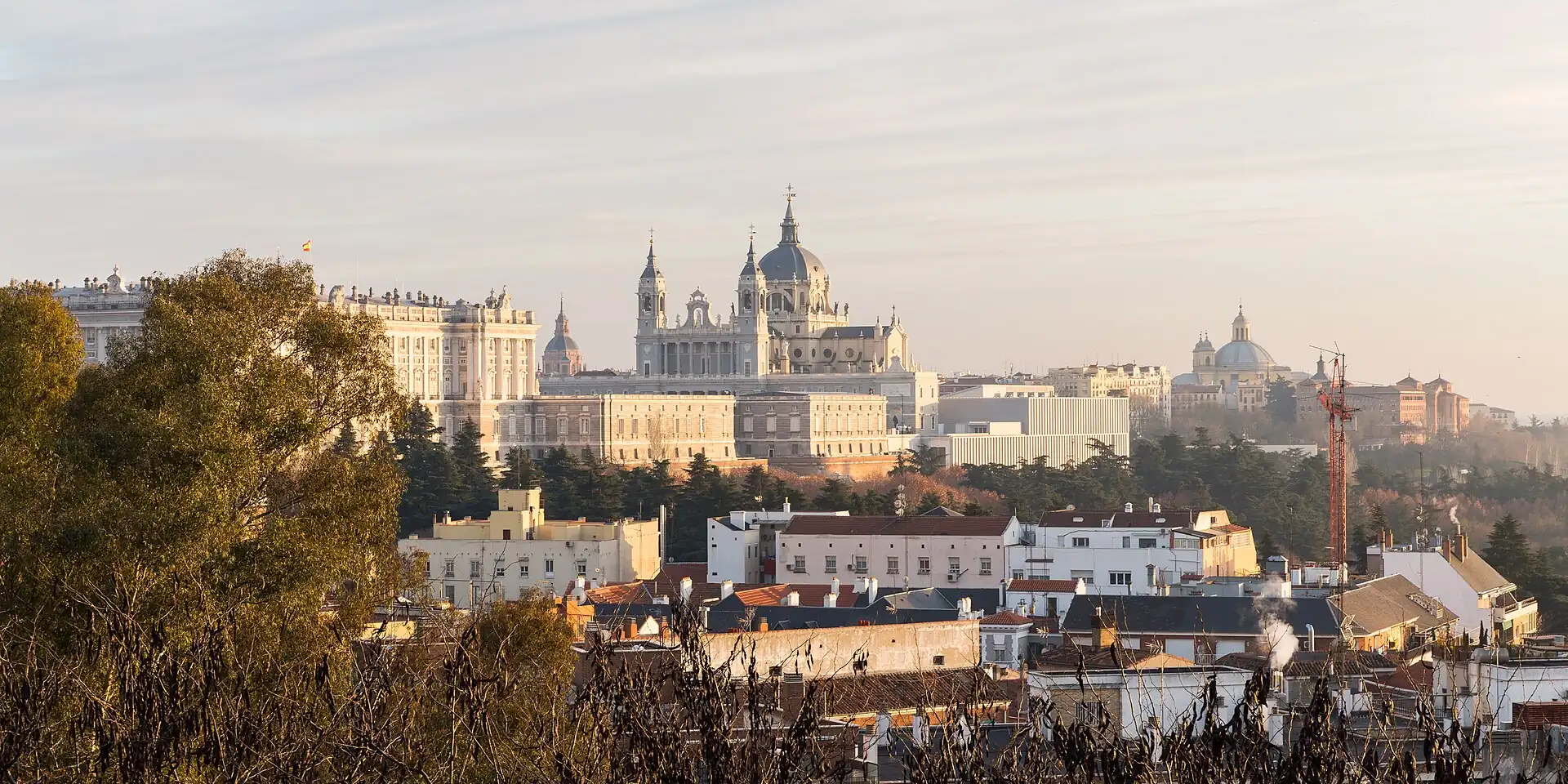
The materials tell a story. Brick, often combined with white stone, is the Madrid look and the local Mudéjar style used it for towers and arches. Slate roofs cover the palace and the Almudena. The cathedral is the odd one out: begun in 1879 in a neo-Gothic design, it took until 1993 to finish and mixes a neoclassical façade with a neo-Gothic interior and a modern painted ceiling.
For a first visit the useful thing to know is how the levels work. The centre sits on a ridge above the Manzanares, so most walks from Sol to the palace go slightly downhill, and the return is uphill. Streets around Lavapiés and La Latina are steep. The Paseo del Prado, the Retiro and Gran Vía are flat and wide, and are where you can walk most easily in the heat.
- Gran Vía built
- 1910–1929 in three stages
- Puerta de Alcalá
- Finished 1778
- Almudena Cathedral
- Begun 1879, consecrated 1993
- Typical materials
- Brick with stone, slate roofs
4Food and the clock2 min
The single most useful fact about eating in Madrid is the timetable. Breakfast is coffee and a pastry or tostada at 08:00–10:00. A mid-morning bite (almuerzo) is common. Lunch, the main meal, runs from 14:00 to 15:30, and dinner starts at 21:00 or later. Most kitchens close between about 16:00 and 20:00, so a traveller who tries to eat dinner at 18:00 finds only bars serving tapas and drinks.
The dish that defines the city is cocido madrileño, a slow-cooked stew of chickpeas, meat, sausage and vegetables that is served in courses: first the broth with noodles, then the chickpeas and vegetables, then the meats. It is a winter lunch and takes two hours. Other Madrid staples are callos (tripe stew), huevos rotos (fried eggs over potatoes), tortilla de patatas, and the bocadillo de calamares, a roll of fried squid that has fed Plaza Mayor for generations.
The bar is the centre of daily life. A caña, a small glass of draught beer, costs a couple of euros and in some bars comes with a free bite; a vermouth on tap before Sunday lunch is a ritual, especially in La Latina and Chamberí. Standing at the counter is cheaper than sitting at a table, and a terrace on a famous square can cost twice as much as a bar around the corner.
The weekday menú del día is the best-value meal in the city. For around €13 to €20 it gives two courses, bread, a drink and dessert or coffee, served from about 13:30 to 15:30 Monday to Friday. It is not printed at dinner and it is rarely offered on weekends. Ask for it by name: '¿hay menú del día?'.
Sweet traditions are as strong. Churros and thick hot chocolate are eaten for breakfast and after a night out, and San Ginés has served them since 1894. On San Isidro's day, 15 May, bakers sell rosquillas (ring doughnuts). Convents sell biscuits and sweets through a turntable window at fixed hours. And in December, Plaza Mayor holds a Christmas market with figures for the nativity scene, while roasted chestnuts appear on street corners.
- Lunch
- 14:00–15:302:00 PM–3:30 PM
- Dinner
- From 21:00From 9:00 PM
- Kitchen gap
- About 16:00–20:00About 4:00 PM–8:00 PM
- Menú del día
- €13–20, weekday lunch
- Signature dish
- Cocido madrileño
5Neighbourhoods2 min
Sol is the crossing point of the city: Km 0, the clock, the Bear and Strawberry Tree statue and the meeting point for anyone with no better idea. Just west is Madrid de los Austrias, the Habsburg quarter around the Plaza Mayor, the Plaza de la Villa and the Mercado de San Miguel. Beyond that, at the western edge, stand the Royal Palace, the Almudena Cathedral and the Plaza de Oriente.
Huertas, south-east of Sol, is the old literary quarter: the Ateneo cultural society, the taverns where Cervantes and Lope de Vega lived. Its streets have poems set into the pavement, and today it is a lively mix of bars and small theatres. Farther south lie La Latina, home of the Sunday El Rastro market and the tapas bars of Cava Baja, and Lavapiés, the most mixed neighbourhood in the city, with Senegalese, Bangladeshi and Spanish shops in the same block.
North of Gran Vía are Malasaña and Chueca, which were poor and run-down until the 1980s, when the movida gave Malasaña its reputation for music, tattoos and vintage shops. Chueca was one of the first neighbourhoods in Europe where the LGBTQ+ community claimed the streets, and Madrid Pride, held each July, fills it. Both are dense with bars, and both are quieter and easier by day.
East of the centre are the museums and the Retiro. Barrio de los Jerónimos is dignified and calm, and Atocha, at its southern end, is the main rail hub. Beyond the Retiro, Salamanca is the upscale shopping district with wide pavements and expensive apartments, and Chamberí to the north is a more residential district of good bars and old cinemas.
For a first visit, there are two sensible bases. Sol and Gran Vía put everything within a 25-minute walk, with the price of noise. Chueca and Malasaña are livelier at night and better for food, with a short walk to Sol. Quieter options are Retiro, Salamanca and Chamberí, all on the Metro, all a little farther from the sights.
- Km 0
- Puerta del Sol
- Old literary quarter
- Huertas
- Sunday market
- El Rastro, La Latina
- Pride quarter
- Chueca
6Festivals and the year2 min
The calendar begins on 5 January, when the Three Kings parade through the streets throwing sweets to children, and 6 January is the day Spanish children get their presents. January 7 begins the winter sales, and Serrano and Fuencarral fill with shoppers.
Holy Week, from Palm Sunday to Easter Sunday, closes streets in the evening for processions of hooded brotherhoods carrying heavy floats, and many museums shut on Good Friday. It is a religious event as well as a spectacle, and visitors watch from the side in silence.
May is the busiest month for local holidays. On 2 May, Dos de Mayo, the city remembers the 1808 uprising with events in Malasaña. On 15 May the city honours its patron, San Isidro, with a big picnic in the Pradera de San Isidro, dress in traditional costume, concerts and bullfights at Las Ventas. The same month brings the Night of the Museums, with free late openings.
July belongs to Pride. Orgullo Madrid runs for several days in early July with parades, stages in Chueca and a march on Saturday that draws more than a million people. It changes the city for a week: hotels sell out, Gran Vía closes to traffic and the price of a bed rises sharply. Book months ahead if you plan to be there, and consider a different week if you want a quiet visit.
In August the city goes quiet, with many families away and some restaurants shut for a few weeks, though the Verbena de la Paloma around 15 August fills La Latina with street parties. Autumn brings the national day on 12 October and Almudena's day on 9 November. And Christmas is a big season: lights on Sol and Gran Vía from late November, markets in Plaza Mayor, and most restaurants closed on the evening of 24 December and all of 25 December.
- Reyes Magos
- Parade 5 January
- Dos de Mayo
- 2 May, regional holiday
- San Isidro
- 15 May
- Pride
- Early July
- Almudena
- 9 November
7Living like a madrileño2 min
The pace of Madrid is set by the sun and the clock. Summers are hot, so daily life shifts: shops open at 10:00, close in the middle of the day in smaller streets, and reopen from 17:00. Offices work until 19:00 or later, and children play in the squares until 22:00 on summer evenings. The result is a city where the most crowded time of day is often 22:00 on a Thursday, and where the streets near Sol are full at midnight.
Greetings are physical. Friends kiss twice on the cheeks, right then left, and men who are close may embrace. Strangers shake hands. A short 'hola' or 'buenas tardes' on entering a bar or shop is the polite minimum. Conversation is loud and overlapping and does not signal a fight. Tipping is small: a euro or two, or rounding up, and 5–10% for exceptional service in a sit-down restaurant.
Transport is easy. The Metro is one of the largest in Europe, cheap and clear, and runs from about 06:00 to 01:30. Buses fill in, and night buses, the búhos, run from Cibeles after the Metro closes. Taxis are metered and reasonable. The fast trains from Atocha and Chamartín make Toledo, Segovia, Córdoba and Barcelona easy day or overnight trips.
The main risk for visitors is petty theft. Pickpockets work Sol, Plaza Mayor, the Metro, and the queues at the museums. A zipped cross-body bag, a phone in a front pocket and a healthy suspicion of anyone who asks you to sign a clipboard or tie a bracelet on your wrist solve most of the problem. Violent crime is rare in the centre, and the streets stay busy and well lit late.
Finally, respect the small rules. Cover shoulders and knees in churches, do not photograph during services, and do not touch paintings. Keep your voice low in the museum rooms and in residential streets late at night, in Malasaña and Lavapiés especially. Ask before you photograph people up close, and remember that Sunday is quiet for shops, but full for parks, markets and bars.
- Metro hours
- About 06:00–01:30About 6:00 AM–1:30 AM
- Night buses
- Búhos from Cibeles
- Emergency
- 112
- Tap water
- Safe to drink
Read, watch, wordsReading · Watching · Glossary · Sources
Reading
- Ghosts of Spain — Giles TremlettA journalist explores how Spain deals with its recent past.
- Death in the Afternoon — Ernest HemingwayHemingway on the bullfight, with Madrid as one of its bases.
- Fortunata and Jacinta — Benito Pérez GaldósA great novel of 19th-century Madrid.
Watching
- Women on the Verge of a Nervous Breakdown — Pedro AlmodóvarA comedy set in the movida city.
Glossary
| Term | Local | Meaning |
|---|---|---|
| Caña | Caña | A small draught beer. |
| Menú del día | Menú del día | A weekday set lunch. |
| Tablao | Tablao | A small venue for live flamenco. |
| Hostal | Hostal | A small guesthouse on the upper floors of a building. |
| Movida | La movida madrileña | The cultural boom of the 1980s. |
Read for this deep dive
Background reading only: the text above is written by Voykit, not copied from these pages.
Photos
Madrid street scene Photo: thx, CC BY-SA 4.0
Madrid street scene Photo: Nicolas Vigier, CC0
Rules in force · 10Non-EU visitors get 90 days in any rolling 180-day window…
- Europe ↗Non-EU visitors get 90 days in any rolling 180-day window, counted across all 29 Schengen states together — not per country; the Entry/Exit System now logs each crossing, so an overstay is detected automatically.
- Europe ↗On the first Schengen entry since EES began, non-EU travellers give four fingerprints and a face photo at the border instead of a passport stamp; there is nothing to apply for or pay in advance.
- Iberia ↗Plan meals on the Iberian clock: Spanish kitchens serve lunch from about 13:30–14:00 and dinner from 20:30–21:00; Portugal eats an hour or so earlier. Early evenings are for tapas or petiscos, not full meals.
- Iberia ↗Inland Spain and Portugal (Seville, Córdoba, Madrid, the Alentejo) pass 40 °C in heatwaves from late June to August: sightsee before 11:00 and after 18:00, and keep July–August for the coasts and the green north.
- Iberia ↗Andorra and Gibraltar have their own border and customs rules and are reached only through Spain (or France for Andorra); read their pages before adding them, especially if you hold a limited Schengen visa.
- Spain ↗Spain is in the Schengen area. Check the entry rules for your passport on official sources; the EU's Entry/Exit System registers non-EU visitors at the first Schengen border, and further pre-travel authorisation rules are being introduced.
- Spain ↗High-speed trains have airport-style baggage screening at the station and boarding gates that close a few minutes before departure: arrive early.
- Spain ↗Carry your passport or ID: police may ask for it, and hotels must register every guest's document.
- Spain ↗The Alhambra in Granada and the Sagrada Família in Barcelona sell timed tickets that sell out weeks ahead in season; book on the official sites before you fix your dates.
- Madrid and Central Spain ↗Book fast-train tickets for Toledo and Segovia ahead on weekends and in spring: return seats can sell out.
Entry rules depend on your passport. Full visa guide
Emergency numbers for Madrid112 ▾
Tap a number to call from your phone. These are the numbers listed in this guide; a row marked check has not been verified.
Planning is the full guide. I'm here keeps what is open and the cheat card.
Right now
Checking the weather…
Working out what is open near you…
What is open nowclock, closures, places open
Now in Madrid
Local time in Madrid
--:--
Loads in your browser · Europe/Madrid
This month
Month verdict appears here.
Closed today
See the weekly grid below.
| Weekly closure | Mon | Tue | Wed | Thu | Fri | Sat | Sun |
|---|---|---|---|---|---|---|---|
| Reina Sofía MuseumClosed all day Tuesday and on some public holidays. | · | ✕ | · | · | · | · | · |
| Reina Sofía MuseumClosed all day; open on Monday. | · | ✕ | · | · | · | · | · |
| El Escorial monasteryClosed Monday. | ✕ | · | · | · | · | · | · |
If today is a closure day: Monday: the Reina Sofía is open but the Prado ends at 20:00 with free evening entry; the Thyssen has free entry Monday afternoons. Tuesday: the Reina Sofía is shut, so use it for Prado or the palace. Sunday: shops are closed, but El Rastro and the parks are full.
Open every day: Almudena Cathedral, Plaza del Dos de Mayo, Plaza Mayor, Prado Museum, Retiro Park, Royal Palace of Madrid, Thyssen-Bornemisza Museum.
- check Royal Palace: Closes for state events with little notice; the official site lists the day.
- check Thyssen-Bornemisza Museum: Open Monday for a shorter, free session; other days full hours.
Weekly closures come from our place pages; August holidays and public holidays add closures not shown here.
Cheat cardthe pocket version
Cheat card
The essentials on one card: save it as an image for your phone, share it, or print it.
Madrid
- Money
- Withdraw at bank ATMs (inside a branch or lobby), decline the machine's own currency conversion…
- SIM
- Install an eSIM before you fly; EU roaming applies to EU SIMs.
- Ride app
- Cabify, Free Now and Uber
- Emergency
- 112 All emergencies · 091 police (national) · 092 police (municipal) (not 911, 999 or 000)
- Plugs
- Sockets C/F. US/Canada (A/B): adapter · UK/Ireland (G): adapter · Australia/NZ (I): adapter. 230 V: US 120 V-only devices (hair dryers) need a converter; most chargers are dual-voltage.
Say it
- Hello: Hola (OH-la)
- Thank you: Gracias (GRAH-thyas)
- A coffee with milk, please: Un café con leche, por favor (oon kah-FEH kon LEH-cheh, por fah-VOR)
- The bill, please: La cuenta, por favor (la KWEN-ta, por fah-VOR)
- How much is it?: ¿Cuánto cuesta? (KWAN-to KWES-ta)
Top 5
- Prado Museum
- Royal Palace of Madrid
- Reina Sofía Museum
- Retiro Park
- Plaza Mayor
EssentialsQuick answers, what things cost and how to get around
Essentials
Quick answers, what things cost and how to get around
Quick answers
The questions people ask first about Madrid, one line each. Tap a card for the full answer.
- Cash or card?Cards and contactless work almost everywhere, including small bars; keep a little cash for market stalls and some old cafés.
- SIM or eSIMInstall an eSIM before you fly; EU roaming applies to EU SIMs.
- Ride-hailing appCabify, Free Now and Uber.
- Tap waterTap water is safe and good.
- TippingNot expected.
- Plugs & powerSockets C/F. US/Canada (A/B): adapter · UK/Ireland (G): adapter · Australia/NZ (I): adapter. 230 V: US 120 V-only devices (hair dryers) need a converter; most chargers are dual-voltage.
Show all 14 answers
- Safe at night?Take more care after dark in Retiro, Lavapiés.
- Emergency numbers112 All emergencies · 091 police (national) · 092 police (municipal) (not 911, 999 or 000)
- Your embassycheckUS, UK, Canada, Australia, Ireland embassies listed with addresses (check before you go).
- Closed which day?Tue: 2 on our list shut · Mon: 1 on our list shut.
- Sundays & holidaysShops close 14:00–17:00 in many small streets and on Sundays; big centres and the tourist streets stay open.Shops close 2:00 PM–5:00 PM in many small streets and on Sundays; big centres and the tourist streets stay open.
- Late at nightBars open until 02:00–03:00 and clubs until 06:00; weekday nights end earlier.Bars open until 2:00 AM–3:00 AM and clubs until 6:00 AM; weekday nights end earlier.
- Rainy-day planRain is short and rare: do museums on the wet day and keep the Retiro and the Palace gardens for the dry one.
- Landing lateMAD: taxi (fixed airport fare) or ride-hailing car to the door runs all night.
Cost cheat-sheetwhat everyday things cost
Cost cheat-sheet
Typical prices for the everyday things, as ranges. Change the currency right here; the local price stays first.
2026 desk estimate · check
- CoffeeCoffee (café con leche at the bar)€1.50–2.50 (≈ US$2–3)
- Sit-down mealSit-down dinner, per person€25–45 (≈ US$30–55)
- Street or quick mealMenú del día (weekday set lunch)€13–20 (≈ US$16–25)
- BeerCaña of beer / glass of wine€1.80–3.50 (≈ US$3–5)€3–5 (≈ US$4–6)
- Taxi, about 5 km (3 mi)Taxi, about 3 mi (5 km)Taxi across the centre€8–15 (≈ US$10–18)
- Metro or bus rideMetro single (Zone A)The airport station adds a supplement (check).€1.50–2.50 (≈ US$2–3)
- SIM or eSIM, a weekTourist eSIM, about a week€8–20 (≈ US$10–25)
- Museum or sight ticketMuseum entry (Prado, Thyssen, Reina Sofía)€12–20 (≈ US$14–25)
- Budget bedHostel dorm bed, a night, per person€28 (≈ US$35)
- Mid-range bedHotel double room, a night, per room€150 (≈ US$180)
- High-end bedHotel double room, a night, per room€320 (≈ US$400)
A day, not counting the bed: Budget €55 (≈ US$65) · Mid €110 (≈ US$130) · High €220 (≈ US$300)
Local prices, with USD next to them (rates 2026-09 (approximate); change it in the header). Ranges are desk estimates: check locally. Every price and the budget calculator →
Source: Prices in Madrid
Draft
Written from desk research. Not yet compared with the official source.
No official source is recorded for this figure.
Prices are 2026 desk estimates, not yet compared with an official source. Check on the day.
Not checked in the last 12 months (no check date on file).
DecideWho it suits, the trade-offs and when to go
Decide
Who it suits, the trade-offs and when to go
Best months at a glance
The guide's verdict for each month
Jan
Care
10°C (50°F)50°F (10°C)
Feb
Care
13°C (55°F)55°F (13°C)
Mar
Best
16°C (61°F)61°F (16°C)
Apr
Best
19°C (66°F)66°F (19°C)
May
Best
23°C (73°F)73°F (23°C)
Jun
Care
29°C (84°F)84°F (29°C)
Jul
Avoid
33°C (91°F)91°F (33°C)
Aug
Avoid
33°C (91°F)91°F (33°C)
Sep
Best
27°C (81°F)81°F (27°C)
Oct
Best
20°C (68°F)68°F (20°C)
Nov
Care
14°C (57°F)57°F (14°C)
Dec
Care
10°C (50°F)50°F (10°C)
Best: Mar–May, Sep–Oct. Mixed: Jun, Nov–Feb. Avoid: Jul–Aug. Month by month →
Warmest Jul (33°C (91°F)91°F (33°C)), coolest Jan (3°C (37°F)37°F (3°C) low), wettest Apr (8 rain days), driest Jul (2). Averages, not a forecast.
Madrid across the year
Best-looking months for Madrid: May, Sep, Oct. Rated avoid: Jul, Aug.
| Measure | Jan | Feb | Mar | Apr | May | Jun | Jul | Aug | Sep | Oct | Nov | Dec |
|---|---|---|---|---|---|---|---|---|---|---|---|---|
| Weather | Mixed (care) | Mixed (care) | Good (good) | Great (good) | Great (good) | Mixed (care) | Avoid (avoid) | Avoid (avoid) | Great (good) | Great (good) | Mixed (care) | Mixed (care) |
| Crowds | Low (good) | Low (good) | Medium (ok) | High (care) | Medium (ok) | High (care) | High (care) | High (care) | Medium (ok) | Medium (ok) | Low (good) | Medium (ok) |
| Prices | Low (good) | Low (good) | Medium (ok) | High (care) | Medium (ok) | High (care) | High (care) | High (care) | Medium (ok) | Medium (ok) | Low (good) | Medium (ok) |
| Events | 5 events (ok) | 1 event (ok) | 2 events (ok) | 1 event (ok) | 3 events (ok) | None listed (ok) | 2 events (ok) | 2 events (ok) | None listed (ok) | 2 events (ok) | 2 events (ok) | 3 events (ok) |
Green is good news, amber needs planning, red is a month to avoid; dashed grey with a question mark means our data does not say. Open the year heatmap →
Not checked in the last 12 months (no check date on file).
Source: Months, temperatures and crowds
Draft
Written from desk research. Not yet compared with the official source.
Monthly highs, rain and crowd levels are climate averages and desk estimates for the city, not a forecast.
Understand the cityUnderstand · Districts
Orientation & districts
A first visit fits inside a box about 3 km wide: Sol in the middle, the Palace and the Austrias quarter to the west, the museums and the Retiro to the east, Malasaña and Chueca to the north. Almost everything in it is a walk; the Metro fills the gaps.
Neighbourhood names here are the ones locals and taxi drivers use, not official district names. In a taxi or map app, give the street and number.
Shaded shapes: walking areas (click one). Black pins: sleep areas. Grey dots: places. Round badges: arrivals. Click the map to turn on scroll-wheel zoom.
Hover, tap or tab to an area to see what it is like. Pins are sleep areas; arrows at the edge point to the airport.
Not drawn yet (no coordinates in this guide): La Latina and Lavapiés, Salamanca, Chamberí, Chamartín and the Bernabéu. They are in the neighbourhood cards below.
Where’s what, as a list:
- Sol and Centro (Sol, Centro): The centre of the Metro and the Cercanías network. Noisy until 02:00 on weekend nights; ask for a back room.The centre of the Metro and the Cercanías network. Noisy until 2:00 AM on weekend nights; ask for a back room. Suits: First visit, 2–4 nights, walk-to-everything. Price band $$.
- Palacio and Austrias (Palacio, Madrid de los Austrias): Quiet by 22:00 and thin on late food; do not sleep here unless you want silence.Quiet by 10:00 PM and thin on late food; do not sleep here unless you want silence. Suits: One morning of palace and cathedral, then lunch at San Miguel.
- Paseo del Arte (Barrio de los Jerónimos, Atocha): Prado, Thyssen and Reina Sofía within 15 minutes on foot; Atocha station is the rail hub for Toledo and the AVE. Suits: Museum days.
- Retiro (El Retiro): The park is the city living room on Sundays; the surrounding streets are residential and calm. Suits: A slow morning, families.
- Malasaña and Chueca (Malasaña, Chueca): Louder at night than Sol, but a better food choice. Chueca is the main LGBTQ+ quarter and feels relaxed at all hours. Suits: Night owls, Pride week, vintage shops and cocktail bars. Price band $$.
- La Latina and Lavapiés (La Latina, Lavapiés): No cluster page yet. Sunday lunchtime on Calle Cava Baja is a Madrid ritual; Lavapiés is livelier and rougher after midnight. Suits: Tapas crawls on Sunday, the Rastro flea market, multicultural food.
- Salamanca (Barrio de Salamanca): Wide, orderly and expensive; a Metro or taxi ride to Sol. Suits: Quiet upscale stays, shopping on Calle Serrano.
- Chamberí (Chamberí): North of Malasaña; fewer visitors, more households at the table. Suits: A local-feeling base with good bars.
- Chamartín and the Bernabéu (Chamartín, Santiago Bernabéu): Business towers and the stadium; Chamartín is the departure station for Segovia and the north. Suits: Football fans, the Chamartín train station.
- Sleep area Chueca and Malasaña: suits Night owls, Pride week, vintage shops and cocktail bars, price band $$.
- Sleep area Sol and Gran Vía: suits First visit, 2–4 nights, walk-to-everything, price band $$.
- Adolfo Suárez Madrid–Barajas Airport (MAD), about 14 km (8.7 mi)8.7 mi (14 km) from the centre, 30–55 min by the usual route.
Neighbourhoods at a glance
One tab per area, pulled together from this guide’s districts table, area notes, sleep-area scores and place pages. Scores are desk judgements (1–5); prices are estimates, check before you book.
Sol and Centro
$$Sol, Centro
The centre of the Metro and the Cercanías network. Noisy until 02:00 on weekend nights; ask for a back room.The centre of the Metro and the Cercanías network. Noisy until 2:00 AM on weekend nights; ask for a back room.
- Suits:
- First visit, 2–4 nights, walk-to-everything · First visits, night owls
- Best time:
- Morning before 10:00 and after 21:00Morning before 10:00 AM and after 9:00 PM
- Rooms:
- €110–220 per room per night (mid-range); more in spring and at Christmas
Pick this if: First visits, museums on foot, late evenings
Skip this if: You are a light sleeper, need a quiet street, or travel with a wheelchair
- Quiet nights2/5 Low
- Nightlife5/5 Very high
- Families3/5 Medium
- Late arrival5/5 Very high
Why these scores
- Quiet nights: Noise to 02:00 at weekends; ask for a back or upper room.
- Nightlife: Bars and tapas on every street.
- Families: Central and walkable but busy.
- Late arrival: Most hotels have 24 h desks; hostales may lock the street door.
Getting around from here
- 12–18 min walk to Royal Palace & Madrid de los Austrias
- 10–15 min walk to Malasaña & Chueca
- Taxi south-east: about 12 min to Paseo del Arte: Prado, Reina Sofía, Atocha
Palacio and Austrias
Palacio, Madrid de los Austrias
Quiet by 22:00 and thin on late food; do not sleep here unless you want silence.Quiet by 10:00 PM and thin on late food; do not sleep here unless you want silence.
- Suits:
- One morning of palace and cathedral, then lunch at San Miguel
- Best time:
- Before noon
Pick this if: Sightseeing mornings
Watch out for: Late night, when the streets are empty.
Getting around from here
- Walk east: about 12 min to Sol & Plaza Mayor
- Taxi north-east: about 10 min to Malasaña & Chueca
- MAD: about 15 km (9.3 mi) in a straight line (arrival ride 30–55 min)MAD: about 9.3 mi (15 km) in a straight line (arrival ride 30–55 min)
Paseo del Arte
Barrio de los Jerónimos, Atocha
Prado, Thyssen and Reina Sofía within 15 minutes on foot; Atocha station is the rail hub for Toledo and the AVE.
- Best time:
- Weekday mornings
Pick this if: Museum days
Watch out for: Free-entry evening slots with long queues.
Getting around from here
- Walk north-east: about 10 min to Retiro Park
- Taxi west: about 12 min to Sol & Plaza Mayor
- MAD: about 14 km (8.7 mi) in a straight line (arrival ride 30–55 min)MAD: about 8.7 mi (14 km) in a straight line (arrival ride 30–55 min)
Retiro
El Retiro
The park is the city living room on Sundays; the surrounding streets are residential and calm.
- Suits:
- A slow morning, families
- Best time:
- Before 11:00 or after 18:00Before 11:00 AM or after 6:00 PM
Pick this if: Slow mornings
Watch out for: A midday walk in July.
See
Getting around from here
- Walk west: about 10 min to Paseo del Arte: Prado, Reina Sofía, Atocha
- Taxi north-west: about 12 min to Malasaña & Chueca
- MAD: about 13 km (8.1 mi) in a straight line (arrival ride 30–55 min)MAD: about 8.1 mi (13 km) in a straight line (arrival ride 30–55 min)
Malasaña and Chueca
$$Malasaña, Chueca
Louder at night than Sol, but a better food choice. Chueca is the main LGBTQ+ quarter and feels relaxed at all hours.
- Suits:
- Night owls, Pride week, vintage shops and cocktail bars · Bars, vintage shops, Pride week
- Best time:
- After 20:00; Sunday flea-market morningsAfter 8:00 PM; Sunday flea-market mornings
- Rooms:
- €90–190 per room per night (mid-range)
Pick this if: Evenings out, cafés, shopping
Skip this if: You want silence at night or a lift to the door
- Quiet nights2/5 Low
- Nightlife5/5 Very high
- Families3/5 Medium
- Late arrival5/5 Very high
Why these scores
- Quiet nights: Bars and terraces run late; Pride week is loud.
- Nightlife: The main LGBTQ+ quarter and a dense bar scene.
- Families: Fine by day; evenings are adult.
- Late arrival: Street food and taxis at any hour.
Getting around from here
- 12–18 min walk to Sol & Plaza Mayor
- Taxi south-east: about 12 min to Paseo del Arte: Prado, Reina Sofía, Atocha
- MAD: about 13 km (8.1 mi) in a straight line (arrival ride 30–55 min)MAD: about 8.1 mi (13 km) in a straight line (arrival ride 30–55 min)
La Latina and Lavapiés
La Latina, Lavapiés
No cluster page yet. Sunday lunchtime on Calle Cava Baja is a Madrid ritual; Lavapiés is livelier and rougher after midnight.
- Suits:
- Tapas crawls on Sunday, the Rastro flea market, multicultural food
- Best time:
- Sunday 12:30 and weeknightsSunday 12:30 PM and weeknights
Pick this if: Food walks
Watch out for: Lavapiés side streets after midnight.
Salamanca
Barrio de Salamanca
Wide, orderly and expensive; a Metro or taxi ride to Sol.
- Suits:
- Quiet upscale stays, shopping on Calle Serrano
- Best time:
- Any day
Pick this if: Shopping and a calm bed
Watch out for: Expecting nightlife.
Chamberí
Chamberí
North of Malasaña; fewer visitors, more households at the table.
- Suits:
- A local-feeling base with good bars
Chamartín and the Bernabéu
Chamartín, Santiago Bernabéu
Business towers and the stadium; Chamartín is the departure station for Segovia and the north.
- Suits:
- Football fans, the Chamartín train station
Ward by ward
10 area guides. Open one for the short answer, the key facts and what the area is like; the full guide is linked inside. Prices marked (check) are estimates.
ArganzuelaBest for: Rail day-trippers, families, longer stays, park access
Stay in Arganzuela if you want quieter, cheaper Madrid with Atocha station and Madrid Río park on your doorstep; skip it if you want tapas bars and nightlife outside your door. Best for rail day-trippers and families, not first-timers who want Sol or La Latina at night.
- Best for:
- Rail day-trippers, families, longer stays, park access
- Skip if:
- You want nightlife and bars within a 2-minute walk
- Main draw:
- Madrid Río park, Matadero Madrid arts centre
- Transport:
- Atocha station, metro lines 3, 5, 6, Cercanías
- Typical hotel price:
- €80–160 double, 2026 estimate (check)
- Walk to Sol:
- About 25–35 minutes, or 3 metro stops (check)
What Arganzuela is like
Arganzuela sits on the south bank of the Manzanares, between Atocha station and the M-30 ring road. It is a residential district of apartment blocks, offices and markets rather than a sightseeing zone, and most international visitors pass through it on the way to somewhere else.
The district changed shape in the 2000s, when the riverside motorway was moved into a tunnel and the surface became Madrid Río, a 6-km linear park with paths, bridges, playgrounds and kiosks. Matadero Madrid, the old city abattoir, is now a contemporary arts centre with exhibitions, a cinema and a café. Both are free to walk into.
The feel is local and calm. You get bakeries, supermarkets and neighbourhood bars, not a tourist strip. That is the trade: fewer things to do on the doorstep, lower prices and quieter nights.
Full Arganzuela guideShould you stay in Arganzuela
Choose Arganzuela if your trip leans on trains: Atocha is at the northern edge, so you can leave for Toledo, Segovia or Andalusia without crossing the city. It also suits families and longer stays, because Madrid Río gives children space to run and the streets are quiet at night.
Look elsewhere if this is your first visit and you want to walk out of the hotel into bars, restaurants and nightlife. Sol, La Latina and Malasaña do that better. Arganzuela is also short on sights of its own, so you will spend time on the metro.
A middle option: stay near Atocha or Delicias for two or three nights, use the park in the mornings, and move north if you want the nightlife on your doorstep.
Chamberí-CastellanaBest for: Residential calm, local restaurants, business and rail access
Stay here if you want a residential Madrid base with local cafés, metro lines 1/2/5/7/10 and quick Cercanías links, and you accept a 20–30 minute ride to the old centre. Skip it if you want bars and sights on your doorstep; Sol-Letras-Lavapiés or Malasaña-Chueca fit that better.
- Best for:
- Residential calm, local restaurants, business and rail access
- Not for:
- First-timers who want to walk out into nightlife and major sights
- Metro:
- Lines 1, 2, 5, 7, 10; useful stops Bilbao, Quevedo, Iglesia, Alonso Cano, Canal, Islas Filipinas
- Rail:
- Nuevos Ministerios (Cercanías) and Madrid-Chamartín-Clara Campoamor in the north
- To Puerta del Sol:
- About 15–20 minutes by metro, 30–40 minutes on foot (check)
- Typical double room:
- 2026 estimate: €90–160 per night (check)
- Quietest nights:
- Weeknights; the district is largely residential
- Watch out:
- Paseo de la Castellana is a fast, wide boulevard; crossings are at lights only
What the area is like
Chamberí sits directly north of the historic centre, between the old town and the northern business districts. It is mostly residential, with intact 19th-century blocks, small squares and shops used by people who live there rather than by visitors. It is neither crowded nor empty, which is exactly why some travellers choose it.
Paseo de la Castellana is the spine of the wider area: a long northbound boulevard lined with offices, government buildings and high-rises. The closer section dates from the 19th century; the northern stretch was extended in the mid-20th century and is still filling in. Landmarks along it include the Nuevos Ministerios complex, the twin Torres de Colón near Plaza de Colón, the slanted Gate of Europe towers at Plaza de Castilla and the four Cuatro Torres skyscrapers further north, the tallest in Spain.
Two names are often used together but are not the same thing. Chamberí is the residential district; Castellana is the boulevard and the business corridor. Where you stay changes the feel more than the map suggests: streets around Plaza de Olavide are quiet and local, while addresses on or near the Castellana are business-oriented and louder at rush hour.
Full Chamberí-Castellana guideShould you stay here or not
Choose Chamberí-Castellana if you value sleep, local food and easy metro or rail connections over being in the middle of the tourist core. It also works well for a business trip, a longer stay, or a return visit to Madrid when you have already done the centre.
Look elsewhere if this is your first short trip and you want to step out into tapas bars, Plaza Mayor and the art museums. Sol-Letras-Lavapiés and Malasaña-Chueca put you inside that scene; Retiro-Paseo del Arte is better for museums and green space; Salamanca is the upmarket shopping alternative; Moncloa suits students and the western side.
The practical trade-off is time. Reaching the historic centre takes roughly 15–20 minutes by metro from stations such as Bilbao or Alonso Cano, and longer at peak hours. If you plan late nights, budget for taxis back, since metro service ends overnight.
La Latina-AustriasBest for: First-timers who want the historic core on foot: Plaza Mayor, Royal Palace, El Rastro
Stay in La Latina-Austrias if you want Madrid's oldest streets, Plaza Mayor and the Royal Palace within a 20-minute walk and tapas on your doorstep. Skip it for quiet nights or easy parking. First-timers: 2–3 nights here, then move for a calmer base.
- Best for:
- First-timers who want the historic core on foot: Plaza Mayor, Royal Palace, El Rastro
- Avoid if:
- You need quiet nights, a car, or a lift and step-free access
- Metro:
- Ópera (lines 2, 5, R), La Latina (5), Puerta de Toledo (5), Príncipe Pío (6, 10, Cercanías)
- Walk to Plaza Mayor:
- About 350 m from Sol station
- El Rastro flea market:
- Sunday mornings in La Latina (check)
- Noise:
- Loud until late on Cava Baja and around Plaza Mayor; quieter west of Calle Toledo
- Typical dinner time:
- 21:00–23:00; many kitchens shut mid-afternoon9:00 PM–11:00 PM; many kitchens shut mid-afternoon
- Tap water:
- Drinkable in Madrid (check)
What the area is like
La Latina-Austrias is the old town of Madrid, split into two halves that sit side by side. Austrias, the Habsburg quarter, was the royal and political centre of the Spanish Empire in the 16th and 17th centuries. It holds the Royal Palace, Plaza Mayor, the old town hall and several government buildings, and it carries most of the city's tourist traffic.
La Latina grew on the site of the Muslim medina of al-Majrit, the settlement that came before today's city. Its lanes are narrow and its buildings mostly 18th-century, with a few older traces left in La Morería, the old Moorish quarter. This is where Madrileños come for tapas, vermouth and sherry, and where El Rastro, the city's best-known flea market, takes over the streets on Sunday mornings.
The two are compact and walkable. From Plaza Mayor you can reach the Royal Palace in about 10 minutes on foot, and the La Latina tapas strip along Cava Baja in roughly 12. Streets are cobbled and often sloping, and pavements are narrow.
Full La Latina-Austrias guideShould you stay here
Yes, if this is your first visit and you want the classic sights on foot. You can walk to the Royal Palace, Plaza Mayor, the Almudena Cathedral and the Sabatini gardens, and reach Sol, the Prado and the Retiro with a short metro ride or a 20–30 minute walk. Evenings are the draw: Cava Baja and the lanes around it are packed with tapas bars.
No, if you value sleep over location. Plaza Mayor, Cava Baja and the streets off Calle Mayor stay loud well past midnight, and rubbish collection and deliveries start early. Rooms facing a plaza or a bar street are the worst offenders; ask for an interior room or a higher floor.
Also think twice if you have limited mobility or a car. The historic core is cobbled, hilly in places and full of steps, and driving and parking here are impractical. Travellers who want calm, newer hotels and easier transport tend to prefer Chamberí-Castellana or Salamanca, and those who want nightlife and a younger crowd pick Malasaña-Chueca.
Malasaña-ChuecaBest for: Nightlife, tapas bars, central walking base, second-hand and independent shopping
Stay in Malasaña-Chueca if you want bars, nightlife and central Madrid on foot; skip it if you need quiet nights or easy parking. Malasaña and Conde Duque suit younger, budget-minded travellers; Chueca and Salesas are calmer and pricier. Book early for weekends.
- Best for:
- Nightlife, tapas bars, central walking base, second-hand and independent shopping
- Not for:
- Light sleepers, families wanting quiet, anyone arriving by car
- Metro:
- Tribunal (1, 10), Gran Vía (1, 5), Chueca (5), Noviciado (2), Bilbao (1, 4), Alonso Martínez (4, 5, 10)
- Walk to Puerta del Sol:
- About 15–20 minutes (1–2 km (0.6–1.2 mi))About 15–20 minutes (0.6–1.2 mi (1–2 km))
- Walk to Atocha station:
- About 35–45 minutes (3 km (1.9 mi)); take metro with luggageAbout 35–45 minutes (1.9 mi (3 km)); take metro with luggage
- Noise:
- Loud on Calle Fuencarral and Plaza del Dos de Mayo until late, especially Thu–Sat
- Typical double room:
- €90–180 per night, 2026 estimate; higher during festivals (check)
- Quietest pockets:
- Conde Duque west side and Salesas near Alonso Martínez (check)
What the area is like
Malasaña, Chueca, Conde Duque and Salesas sit 1–2 km (0.6–1.2 mi) north of Puerta del Sol, in the Justicia district. Calle Fuencarral runs between Malasaña and Chueca and is the main shopping and walking spine; the stretch between Gran Vía and Calle Hernán Cortés is closed to cars.Malasaña, Chueca, Conde Duque and Salesas sit 0.6–1.2 mi (1–2 km) north of Puerta del Sol, in the Justicia district. Calle Fuencarral runs between Malasaña and Chueca and is the main shopping and walking spine; the stretch between Gran Vía and Calle Hernán Cortés is closed to cars.
Malasaña grew from a working residential barrio into the centre of the 1980s Movida madrileña, and it still draws a young, creative crowd. By day it is second-hand shops, small designers and cafés; at night the pavements fill with bar tables. Plaza del Dos de Mayo is its symbolic square, named for the 1808 uprising against Napoleonic troops.
Conde Duque, west of Malasaña, is similar but quieter and more student-oriented, named after the 18th-century barracks that is now a cultural centre. Chueca is Madrid's gay district, slightly more polished, with a high concentration of antique shops; most venues welcome everyone. Salesas is the small, quieter strip between Chueca and the Salamanca district.
Full Malasaña-Chueca guideShould you stay here?
Yes, if your trip is about eating late, drinking, and walking to the centre. You can reach Sol in 15–20 minutes on foot, and the metro puts the Prado, Retiro and the Royal Palace within a few stops. It is also a good base for a short first visit to Madrid.
No, if you sleep lightly or travel with young children who need early nights. Calle Fuencarral, Plaza del Dos de Mayo and the Chueca bar streets stay loud until 2–3am, especially Thursday to Saturday. If you want calm and still central, look at Chamberí-Castellana or the northern edge of Salesas.
Budget matters too. Malasaña has more hostels and small pensions; Chueca and Salesas lean to boutique hotels and higher rates. Weekend prices rise sharply, so book ahead for Friday and Saturday nights.
MoncloaBest for: Students, long stays, green space, quiet nights, easy metro to the centre
Stay in Moncloa only if you want a quiet, student-and-government district next to Casa de Campo and the university, with metro lines 3 and 6 into the centre in about 15 minutes. Skip it if you want nightlife, tapas streets or walkable sightseeing — Sol, Malasaña and La Latina do that better.
- Best for:
- Students, long stays, green space, quiet nights, easy metro to the centre
- Worst for:
- Nightlife, first-trip sightseeing on foot, late dinner culture
- Metro:
- Moncloa (lines 3, 6) and Argüelles (3, 4, 6); Príncipe Pío (6, 10, cercanías C1, C7, C10)
- To Puerta del Sol:
- About 15 minutes on metro line 3 from Moncloa
- Green space:
- Casa de Campo, over 1,750 ha, west of the district
- Cable car:
- Teleférico links Argüelles with Casa de Campo (check seasonal hours) (check)
- Faro de Moncloa:
- 92 m tower with observation deck, €4 (2026 estimate) (check)
What the area is like
Moncloa-Aravaca is the western district of Madrid, built around three things: the Complutense and Polytechnic university campuses, the government complex at the Palacio de la Moncloa, and the huge Casa de Campo park. The name comes from that 17th-century palace, which is now the Prime Minister's residence and office — in Spanish news, "Moncloa" means the government itself.
Argüelles, at the district's eastern edge, is the part most visitors actually use. It is residential, full of students, and sits within walking distance of Plaza de España and the edge of central Madrid. Further west, Aravaca is a separate suburban town that was absorbed into the city in 1951 and has little for a short trip.
Casa de Campo covers more than 1,750 hectares — roughly five times the size of Central Park — and is mostly natural Iberian scrub rather than manicured parkland. The Parque de Atracciones amusement park and the Madrid Zoo and Aquarium sit inside it. The district is also where the Civil War frontline ran during the Siege of Madrid, which is why the Arco de la Victoria stands at the Moncloa junction.
Full Moncloa guideShould you stay here?
Moncloa works as a base if you value quiet, green space and a short metro ride over being in the middle of things. Line 3 from Moncloa station reaches Puerta del Sol in about 15 minutes, and Argüelles puts you within a 15–20 minute walk of Plaza de España and the Gran Vía end of the centre. Hotel rates here are usually lower than in Sol or Salamanca for the same standard of room.
It is a poor choice for a first trip of two or three nights. Madrid's main sights — the Prado, Reina Sofía, Thyssen, the Royal Palace, the Plaza Mayor tapas circuit — are all east of here, and you would spend the trip on the metro. It is also a poor choice if you want late dinners and bars outside your door; Argüelles has student bars, but the serious nightlife is in Malasaña, Chueca and La Latina.
Families and longer stays do well here: the zoo, the amusement park and Casa de Campo are on the doorstep, and the streets are calm at night.
Northern SuburbsBest for: Early trains from Chamartín, airport nights, long metro stays, cheaper rooms
Stay in the northern suburbs only if you need Chamartín station, Barajas airport or a cheaper bed near the metro; for sightseeing, base in Sol-Letras-Lavapiés or Malasaña-Chueca instead. The area is a working city of offices, parks and residential blocks, not a tourist quarter — pick it for transport, not for atmosphere.
- Best for:
- Early trains from Chamartín, airport nights, long metro stays, cheaper rooms
- Worst for:
- First-trip sightseeing; the Prado, Royal Palace and old town are 20–35 min away by metro
- Metro lines:
- 1, 2, 4, 5, 7, 8, 9, 10 plus light metro ML1 to the northwest
- Airport:
- Adolfo Suárez Madrid–Barajas sits in Barajas district, metro line 8 to Nuevos Ministerios
- Main rail hub:
- Estación de Chamartín-Clara Campoamor, trains to northern Spain
- Bus terminal:
- Plaza de Castilla, long-distance coaches
- Typical room rate:
- 2026 estimate: €70–130 double, cheaper than the centre (check)
- Tap water:
- Drinkable across Madrid (check)
What the area is like
The northern suburbs are not one neighbourhood but seven districts — Chamartín, Tetuán, Fuencarral-El Pardo, Ciudad Lineal, Hortaleza, San Blas-Canillejas and Barajas — stitched together along Paseo de la Castellana and the metro's northern arms. It is Madrid in miniature: working-class blocks and immigrant food streets in Tetuán and San Blas, glass office towers around Plaza de Castilla, and some of the city's wealthiest residential streets in Chamartín and Fuencarral.
The scale is the thing to understand. Fuencarral-El Pardo alone is larger than the historic centre, and much of it is the protected Monte de El Pardo, a wooded royal hunting estate on the city's edge. Between the metro stops you get ordinary Madrid life: markets, bakeries, school runs, and bars that fill at 22:00 rather than at tourist dinner time.The scale is the thing to understand. Fuencarral-El Pardo alone is larger than the historic centre, and much of it is the protected Monte de El Pardo, a wooded royal hunting estate on the city's edge. Between the metro stops you get ordinary Madrid life: markets, bakeries, school runs, and bars that fill at 10:00 PM rather than at tourist dinner time.
Sights are spread out and mostly low-key. The National Museum of Natural Sciences near Nuevos Ministerios is the strongest museum in this half of the city, the Royal Palace of El Pardo is a genuine royal interior with Goya tapestries, and Parque de El Capricho is a late-18th-century garden that opens mainly at weekends. Everything else is architecture, sport and green space.
Full Northern Suburbs guideShould you stay here?
Choose the northern suburbs if your trip is built around transport. Chamartín station handles trains north to Burgos, León, Santander and the Basque Country, and the airport is inside the city boundary at Barajas, so an early flight or a 07:00 departure is far easier from here than from the centre. Rooms are also cheaper for the same metro access.Choose the northern suburbs if your trip is built around transport. Chamartín station handles trains north to Burgos, León, Santander and the Basque Country, and the airport is inside the city boundary at Barajas, so an early flight or a 7:00 AM departure is far easier from here than from the centre. Rooms are also cheaper for the same metro access.
Skip it for a first visit. Madrid's core sights — the Prado, Reina Sofía, Thyssen, the Royal Palace, Plaza Mayor — sit in the southern half of the city, and from Chamartín or Tetuán you are looking at 20–35 minutes on the metro each way, twice a day. If you want to walk out of your door into the old town, stay in Sol-Letras-Lavapiés, Malasaña-Chueca or La Latina-Austrias.
A middle option: stay near Nuevos Ministerios or Plaza de Castilla, where lines 6, 8, 9 and 10 meet and the airport express is quick, and accept a short metro ride to the museums. Families and longer stays often prefer this over the noisy centre.
Retiro-Paseo del ArteBest for: Museum-heavy trips, park mornings, calm evenings, families
Stay here if you want the Prado, Thyssen-Bornemisza and Reina Sofía within a 1.3 km (0.8 mi) walk and Retiro Park at your door; it suits museum-first trips and quiet evenings, not nightlife. Book 4–8 weeks ahead for spring and autumn, and pick Sol-Letras-Lavapiés instead if you want bars and restaurants at midnight.Stay here if you want the Prado, Thyssen-Bornemisza and Reina Sofía within a 0.8 mi (1.3 km) walk and Retiro Park at your door; it suits museum-first trips and quiet evenings, not nightlife. Book 4–8 weeks ahead for spring and autumn, and pick Sol-Letras-Lavapiés instead if you want bars and restaurants at midnight.
- Best for:
- Museum-heavy trips, park mornings, calm evenings, families
- Not for:
- Late-night bar hopping, budget dorm beds, cheap eats at every corner
- Museums on the strip:
- Prado, Thyssen-Bornemisza, Reina Sofía, CaixaForum, within about 1.3 km (0.8 mi)Prado, Thyssen-Bornemisza, Reina Sofía, CaixaForum, within about 0.8 mi (1.3 km)
- Metro:
- Banco de España and Retiro (line 2), Atocha (line 1), Ibiza (line 9)
- Main rail station:
- Atocha, at the southwest corner of the park
- Accessible metro stations:
- Atocha, Príncipe de Vergara, Sainz de Baranda; most others are not step-free (check)
- Park size:
- About 350 acres (140 ha), free to enter
- Quietest hours in the park:
- Weekday mornings before 10:00Weekday mornings before 10:00 AM
- Prado adult ticket:
- €15 (2026 estimate); free in the last 2 hours before closing (check)
What the area is like
Retiro is the eastern-central district of Madrid, named after the Parque del Buen Retiro, a public park of more than 350 acres that has been shaped and enlarged since the 16th century. The landscape gardens took their present form in the 1630s under Philip IV, when the park and its palace served as a royal court, especially during Lent and the hot months. The palace was wrecked in the Napoleonic Wars and the surviving park passed to the public in 1868. In 2021 a large part of the district, including the Paseo del Prado and Retiro, was inscribed as a UNESCO World Heritage cultural site.
Paseo del Arte means "walk of arts" and is also called the museum triangle: a strip roughly 1.3 km (0.8 mi) long along which the Prado, the Thyssen-Bornemisza Foundation, CaixaForum and the Reina Sofía line up. The district has around 118,000 residents, so it is a working neighbourhood as well as a museum quarter — offices, embassies, schools and apartment blocks sit behind the cultural frontage.Paseo del Arte means "walk of arts" and is also called the museum triangle: a strip roughly 0.8 mi (1.3 km) long along which the Prado, the Thyssen-Bornemisza Foundation, CaixaForum and the Reina Sofía line up. The district has around 118,000 residents, so it is a working neighbourhood as well as a museum quarter — offices, embassies, schools and apartment blocks sit behind the cultural frontage.
The feel changes block by block. Along Paseo del Prado and Calle de Alcalá you get grand 18th- and 19th-century facades, the Cibeles fountain and the Palacio de Cibeles. Behind them, towards Menéndez Pelayo and Ibiza, streets turn residential and quiet after dark. The park itself is the district's living room: joggers at dawn, rowers on the estanque, families on weekends.
Full Retiro-Paseo del Arte guideShould you stay here
Yes, if the museums are the point of your Madrid stop. You can walk from your hotel to the Prado at opening, cross to the Thyssen-Bornemisza after lunch and finish at the Reina Sofía without touching the metro. Add Retiro Park for a morning run or a slow afternoon, and Atocha station for day trips to Toledo or Segovia is a 10–20 minute walk from most of the district.
No, if you want Madrid's nightlife on your doorstep. This is a quiet, residential-feeling area after about 22:00; the bars and late kitchens are in Sol-Letras-Lavapiés, Malasaña-Chueca and La Latina-Austrias, all 15–30 minutes away by metro or on foot. Budget travellers also get less for their money here than in Lavapiés or Moncloa.No, if you want Madrid's nightlife on your doorstep. This is a quiet, residential-feeling area after about 10:00 PM; the bars and late kitchens are in Sol-Letras-Lavapiés, Malasaña-Chueca and La Latina-Austrias, all 15–30 minutes away by metro or on foot. Budget travellers also get less for their money here than in Lavapiés or Moncloa.
Where inside the district: the streets between Atocha and the Prado put you closest to the museums; the blocks around Retiro and Ibiza metro are quieter and greener, with the park at the end of the street; the area near Banco de España and Cibeles is the most central and the noisiest, on a busy traffic junction. Prices run higher near the museums and along Calle de Alcalá. For spring (April–June) and autumn (September–October) book 4–8 weeks ahead; the city's trade-fair weeks fill the big hotels fast (check dates).
SalamancaBest for: Couples, families, business travellers, museum-focused trips
Stay in Salamanca if you want quiet, safe, upmarket Madrid within a 15–25 minute walk of Retiro and the Prado, and you are happy to pay more for it. Skip it if you want nightlife, cheap tapas or a walkable old-town feel — Sol, La Latina or Malasaña suit that better. It is a residential and shopping district, not a sightseeing one.
- Best for:
- Couples, families, business travellers, museum-focused trips
- Skip if:
- You want late bars, budget beds or a historic-centre atmosphere
- Metro:
- Line 4 (Colón, Serrano, Velázquez, Goya), line 2 (Goya, Retiro), line 9 (Núñez de Balboa, Príncipe de Vergara)
- Cercanías:
- Recoletos station, near Plaza de Colón, lines C1, C2, C7, C8, C10
- Walk to Retiro park:
- 10–15 min from Calle Serrano
- Walk to Prado and Paseo del Arte:
- 20–25 min, or 2 metro stops
- Room prices:
- 2026 estimate: mid-range doubles €120–200; luxury €300+
- Quiet at night:
- Yes, mostly residential; restaurant noise limited to a few streets (check)
What the area is like
Salamanca sits northeast of the historic centre, roughly between Plaza de Colón, Calle de Alcalá and the M-30 ring road. It is Madrid's most expensive residential district: wide streets, stone apartment blocks, embassies, private clinics and offices, with Calle Serrano as the main luxury shopping street and Calle de Goya as the second axis.
There is little of the old city here. The district grew in the late 19th and 20th centuries as an extension of the centre, so the architecture is grand but not medieval. The payoff is space, calm and safety: pavements are wide, streets are lit, and you can walk home at midnight without the crowds of Sol or Huertas.
Two things pull travellers here. First, the museums on the western edge: the Museo Arqueológico Nacional and the Museo Lázaro Galdiano, both on Calle Serrano, plus the Prado, Thyssen and Reina Sofía a short walk or two metro stops southwest. Second, shopping: El Corte Inglés has two branches in the district, on Serrano and on Goya, and the surrounding streets carry international luxury brands and Spanish designers.
The eastern part of the district, around Las Ventas and Parque de las Avenidas, is quieter and more local. The bullring, Plaza de Toros de Las Ventas, is the main landmark there, and Parque de El Capricho lies further east beyond the M-30.
Full Salamanca guideShould you stay here
Salamanca works best as a base for travellers who value a quiet, comfortable hotel and do not mind walking or taking the metro to reach the sights. It is also the obvious choice if shopping is part of the trip, or if you are in Madrid for work.
It is a poor fit for a first visit built around nightlife and cheap food. The bars here are hotel bars and upscale restaurants rather than tapas crowds, and there is no hostel scene to speak of. If you want to step out of your door into a lively street at 11pm, stay in Sol-Letras-Lavapiés, Malasaña-Chueca or La Latina-Austrias instead.
Prices are the other trade-off. This is the most expensive district in the city for accommodation, and the gap over Sol or La Latina is real. In exchange you get larger rooms, quieter nights and a shorter trip to Retiro park.
Sol-Letras-LavapiésBest for: First-timers, nightlife, walk-everywhere trips, short stays
Yes for a first Madrid trip: Sol, Letras and Lavapiés put Puerta del Sol, Gran Vía, the Huertas literary quarter and the Prado museums within a 10–25 minute walk. Stay here if you want walkable nights and metro at every corner; skip it if you need quiet, parking or a pool.
- Best for:
- First-timers, nightlife, walk-everywhere trips, short stays
- Not for:
- Light sleepers, drivers, families wanting quiet or a pool
- Walk to Prado and Reina Sofía:
- 10–20 minutes east from Letras
- Metro:
- Sol (lines 1, 2, 3), Lavapiés (3), Antón Martín (1), Gran Vía (1, 5)
- Cercanías to airport:
- Line C1 from Sol to Aeropuerto T4, roughly 40 minutes (check)
- Noise:
- Loudest around Plaza Santa Ana, Cava Baja spillover and Lavapiés squares, roughly 23:00–03:00Loudest around Plaza Santa Ana, Cava Baja spillover and Lavapiés squares, roughly 11:00 PM–3:00 AM
- Pickpockets:
- Reported around Puerta del Sol and Gran Vía; keep bags zipped in front
- Typical double room:
- €90–180 in 2026 estimate, higher during fairs and holidays
What the area is like
This is the centre of the centre. Puerta del Sol is kilometre zero of Spain's road network, the meeting point locals still use, and the square where the country watches the New Year chimes on television. North of it, Calle de Preciados and Calle del Carmen form the main shopping stretch, and Gran Vía runs along the district's northern edge as Madrid's early-1900s avenue of banks, cinemas and billboards.
South-east of Sol, the barrio de las Letras takes its name from the writers who lived here: Cervantes, Lope de Vega, Quevedo, Góngora. Plaza de Santa Ana is one of Madrid's standard places for a late dinner and drinks with friends. Further south again, Lavapiés is the city's most mixed neighbourhood, with roughly half its residents tracing roots to Latin America, Africa or Asia, and a food and music scene to match.
The Paseo del Arte museum strip, with the Prado, Thyssen-Bornemisza, Caixaforum and Reina Sofía, sits just east of Letras and is covered in its own guide. Practically, the three neighbourhoods run into each other: you can cross the whole district on foot in about 25 minutes.
Full Sol-Letras-Lavapiés guideEating and drinking
Madrid eats late. Lunch runs roughly 14:00–16:00 and dinner from about 21:00, with tapas and vermouth earlier in the evening. Around Plaza de Santa Ana and Calle de las Huertas you get classic tabernas and sit-down restaurants; Calle Cava Baja, just west in La Latina, is the tapas street locals use; Lavapiés does the widest range, from Indian and Senegalese kitchens to old-school bodegas and market food halls.Madrid eats late. Lunch runs roughly 2:00 PM–4:00 PM and dinner from about 9:00 PM, with tapas and vermouth earlier in the evening. Around Plaza de Santa Ana and Calle de las Huertas you get classic tabernas and sit-down restaurants; Calle Cava Baja, just west in La Latina, is the tapas street locals use; Lavapiés does the widest range, from Indian and Senegalese kitchens to old-school bodegas and market food halls.
Useful orders: bocadillo de calamares near Plaza Mayor, huevos rotos, tortilla española, gambas al ajillo, and a caña or vermouth at the bar. Many places charge more for terrace tables than for standing at the bar, and a menú del día at lunch is usually the best value of the day. Tipping is optional: round up or leave 5–10% for good table service.
Vegetarian and vegan options are common in Lavapiés and around Huertas; elsewhere, ask, since many traditional dishes use pork or seafood stock.
Southern SuburbsBest for: Football at Vallecas, May tennis at La Caja Mágica, Faunia zoo, cheap long stays
Stay here only if you have a reason: a Rayo Vallecano match, the Madrid Open tennis in May, Faunia zoo with kids, or a much cheaper bed with Metro Line 1 or 6 into the centre. For a first Madrid trip, base in Sol-Letras-Lavapiés or Malasaña-Chueca instead; the southern districts are residential and spread out.
- Best for:
- Football at Vallecas, May tennis at La Caja Mágica, Faunia zoo, cheap long stays
- Not for:
- First-timers wanting museums, tapas streets and nightlife on the doorstep
- Metro into the centre:
- Lines 1, 3, 5, 6 and 9 reach the districts; 20–40 min to Sol depending on the stop (check)
- Districts covered:
- Latina, Carabanchel, Usera, Puente de Vallecas, Villa de Vallecas, Moratalaz, Vicálvaro, Villaverde
- Typical bed price:
- Lower than the centre; 2026 estimate, check live rates
- Airport:
- Metro Line 8 to Nuevos Ministerios, then a cross-town line; allow 60–75 min (check)
What the area is like
The Southern Suburbs are not one neighbourhood but a ring of working residential districts south and southeast of the centre: Latina (the part beyond the M-30, not the tapas quarter near La Latina), Carabanchel, Usera, Puente de Vallecas, Villa de Vallecas, Moratalaz, Vicálvaro and Villaverde. Streets of 1960s–1980s apartment blocks, local markets, parks and shopping centres, with almost no sightseeing as such.
That is the point and the problem. You get ordinary Madrid life, cheaper rent and space, but you spend time on the Metro to reach the Prado, the Royal Palace or a late dinner in La Latina. Distances between the districts are long; a car or a scooter makes more sense than walking.
Two exceptions pull visitors south: the football ground at Vallecas and the La Caja Mágica tennis site on the Manzanares, plus Faunia zoo in Vicálvaro for families.
Full Southern Suburbs guideShould you stay here or not
Choose the south if your trip is built around an event there, if you are staying a week or more and want a cheaper apartment, or if you are travelling by car and want easy access to the A-4 south toward Getafe, Toledo and Córdoba. Families with young children often like the space and the quieter evenings.
Skip it on a first visit of three or four nights. Madrid's core districts put the museums, markets and nightlife within a 20-minute walk, and the southern suburbs cannot match that. If you want cheaper beds with better access, look at Chamberí-Castellana or Moncloa before coming this far out.
District guidesAll district guides in Madrid →
Famous streetsAll famous streets in Madrid →
Decide
The honest trade-off: what you will enjoy, what will wear you down.
You will like
- Big museums
- Late nights and terrace life
- Fast trains to other cities
You will hate
- Summer heat
- Crowds at the Prado
- Early closing kitchens between meals
Similar citiesif this one is not quite right
Similar cities
If Madrid does not fit your dates or budget, these match it on season, cost and feel.
- Skopje
North Macedonia
- Good in the same months: Mar, Apr, May, Sep, Oct
- Works well for first-timers, food trips, tight budgets
- A similar climate through the year
- Istanbul
Türkiye (Turkey)
- Good in the same months: Mar, Apr, May, Sep, Oct
- A mid-range day costs about the same (≈US$110 vs US$128, excl. bed)
- Works well for first-timers, food trips, couples
- A similar climate through the year
- Paris
France
- Good in the same months: Mar, Apr, May, Sep, Oct
- A mid-range day costs about the same (≈US$140 vs US$128, excl. bed)
- Works well for first-timers, food trips, couples
When
Best months: Mar, Apr, May, Sep, Oct. Month-by-month verdicts below, with the live forecast first. When to go, month by month →
Madrid: next 7 days
Loading forecast…
Forecast: Open-Meteo (CC BY 4.0), model data for this point.
Air quality
Loading…
Model estimate (CAMS via Open-Meteo), not a street-level station; readings near busy roads run higher.
Month by month, all 12best Mar, Apr, May, Sep, Oct
Cold, dry, often sunny; 3–11°C (37–52°F).Cold, dry, often sunny; 37–52°F (3–11°C).
Cold mornings; clear days.
Mild; spring showers.
Warm; Easter week is busy.
Warm, long evenings; San Isidro fiesta mid-May.
Heat builds; mornings only.
Hot, 35°C (95°F) and above; museums are the only cool place.Hot, 95°F (35°C) and above; museums are the only cool place.
Hot and half-empty; many small places close for holiday.
Warm, returns to normal.
Best month for walking.
Cool and damp; Christmas lights begin.
Cold; shops open long over Christmas; check Dec 24–25 closures.
Climate, calendar and eventsClimate · Calendar · Events · Packing by season
Climate
| Jan | Feb | Mar | Apr | May | Jun | Jul | Aug | Sep | Oct | Nov | Dec | |
|---|---|---|---|---|---|---|---|---|---|---|---|---|
| High | 10°C (50°F)50°F (10°C) | 13°C (55°F)55°F (13°C) | 16°C (61°F)61°F (16°C) | 19°C (66°F)66°F (19°C) | 23°C (73°F)73°F (23°C) | 29°C (84°F)84°F (29°C) | 33°C (91°F)91°F (33°C) | 33°C (91°F)91°F (33°C) | 27°C (81°F)81°F (27°C) | 20°C (68°F)68°F (20°C) | 14°C (57°F)57°F (14°C) | 10°C (50°F)50°F (10°C) |
| Low | 3°C (37°F)37°F (3°C) | 4°C (39°F)39°F (4°C) | 6°C (43°F)43°F (6°C) | 8°C (46°F)46°F (8°C) | 11°C (52°F)52°F (11°C) | 16°C (61°F)61°F (16°C) | 19°C (66°F)66°F (19°C) | 19°C (66°F)66°F (19°C) | 15°C (59°F)59°F (15°C) | 10°C (50°F)50°F (10°C) | 6°C (43°F)43°F (6°C) | 3°C (37°F)37°F (3°C) |
| Rain days | 6 | 6 | 6 | 8 | 8 | 4 | 2 | 3 | 4 | 7 | 7 | 7 |
| Verdict |
- June to early September the afternoon passes 34 °C (93 °F) in most years; the air is dry, so shade and water work, and mornings and late evenings are comfortable.June to early September the afternoon passes 93 °F (34 °C) in most years; the air is dry, so shade and water work, and mornings and late evenings are comfortable.
- December to February is cold and often sunny; mornings can be near freezing and museums are warm. Pack a real coat.
- April–May and late September–October give warm days, cool nights and the best walking; April showers and May storms are short.
Events by month
Reyes Magos (Three Kings) parade
festivalJan 5 (evening), Jan 6 · Central avenues(check dates)
Sweets thrown to children; Jan 6 is a holiday with most shops closed.
Winter sales
shoppingFrom Jan 7 · Whole city(check dates)
Serrano and Fuencarral are busy; discounts from 30–70%.
Carnival
festivalBefore Lent (moves yearly) · Neighbourhoods(check dates)
Costume parades; small events, no closures for visitors.
Semana Santa (Holy Week)
holidayPalm Sunday to Easter Sunday · Churches and central streets(check dates)
Processions close streets in the evening; Good Friday closes many museums.
Dos de Mayo
holidayMay 2 · Malasaña
Regional holiday with events in Plaza del Dos de Mayo; the day after is busy.
San Isidro
festivalMay 15 and the week around it · Whole city, Pradera de San Isidro(check dates)
Patron-saint holiday with concerts and bullfights at Las Ventas.
Night of the Museums
festivalAround mid-May (check) · Museums(check dates)
Free late openings; queues at the Prado.
Madrid Pride (Orgullo)
festivalEarly July, main march on Saturday · Chueca, Gran Vía, Paseo del Prado(check dates)
Over a million people; streets close and hotels sell out.
Verbena de la Paloma
festivalAround Aug 15 · La Latina(check dates)
Street parties, costumes and small stalls; many families are away.
Fiesta Nacional
holidayOct 12 · Paseo de la Castellana
Military parade and closures on the Castellana.
Virgen de la Almudena
holidayNov 9 · Almudena Cathedral, Plaza de Oriente
City patron day; shops closed.
Christmas lights and markets
festivalLate Nov to Jan 6 · Sol, Plaza Mayor, Gran Vía(check dates)
Crowded evenings and pickpockets; roasted chestnuts on the corners.
Nochebuena and Navidad
holidayDec 24–25 · Whole city
Most restaurants and shops close on the evening of Dec 24 and all of Dec 25.
Festivals and events that change the plan
| When | What | Effect on your plan |
|---|---|---|
| Jan 5–6 | Reyes Magos (Three Kings) | Parade on Jan 5; many shops closed on Jan 6. |
| Holy Week (Mar–Apr) | Semana Santa | Processions close some streets; some museums shut on Good Friday. |
| May 15 | San Isidro | City holiday; parades and events around Plaza Mayor. |
| Jul–Aug | Summer break | Many family-run places close for a few weeks; heat peaks. |
| Oct 12 | Fiesta Nacional | Military parade on Paseo de la Castellana; some closures. |
| Dec 24–25 and Jan 1 | Christmas and New Year | Most restaurants and shops closed on the evening of Dec 24 and Dec 25. |
What to pack, by season
From Madrid’s own climate table: the coldest, warmest and wettest three months, and what to bring for each.
Coldest months
Dec–Feb
3° to 11°
A warm coat and layers.
Warmest months
Jun–Aug
18° to 32°
Light, breathable clothes, a sun hat and sunscreen; plan midday indoors and carry water.
Wettest months
Mar–May
7 rain days a month
Showers are occasional: a light shell is enough.
Arrive & moveGetting in, getting around, and your bags
Arrive & move
Getting in, getting around, and your bags
I land at…
Enter your landing time: what still runs from the airport, where you can eat when you get in, and which areas let you check in that late.
Adolfo Suárez Madrid–Barajas Airport (MAD)
Out of the airport about 23:5311:53 PM (01:01 (next day)1:01 AM (next day) if immigration and bags are slow); in town about 00:23 (next day)12:23 AM (next day).
Transport from the airport
- Any hourTaxi (fixed airport fare) or ride-hailing car to the door. Runs all night.
- RunningExprés Aeropuerto airport bus to Atocha, then a short taxi or Metro. Until about 00:00.Until about 12:00 AM.
- Last resortSleep at a hotel at or next to Barajas. If nothing else works.
Places to eat open when you get in
We have no confirmed hours for the places to eat here yet. Plan on a convenience store or your hotel. What is open late →
Where to sleep with a late arrival
- Lets you inChueca and Malasaña Desk hours not confirmed: message the hotel with your flight number. Street food and taxis at any hour.
- Lets you inSol and Gran Vía 24-hour desk. Most hotels have 24 h desks; hostales may lock the street door.
Typical times from our airport data, not a timetable: check the last departure on the day. Full airport-to-bed plan for Adolfo Suárez Madrid–Barajas Airport (MAD) →
Arrive
Each gateway has its own airport-to-bed page with timings and the last safe connection.
Getting in, in detailGet in
Get in by rail and road
| Station | Mode | Serves | Where | To the centre |
|---|---|---|---|---|
| Madrid AtochaEstación de Atochause | Train | AVE to Barcelona, Sevilla, Valencia, Málaga; trains to Toledo; Cercanías | South-east of the centre, beside the Prado · Retiro | Metro line 1, 10 min to Sol; taxi 10 minBig tropical garden inside; security check before the platforms on AVE trains. |
| Madrid ChamartínEstación de Chamartín–Clara Campoamoruse | Train | Segovia, Ávila, the north and Portugal | North of the centre · Chamartín | Metro line 10 or Cercanías; taxi 20 minThe other main hub; check which station your ticket names. |
| Príncipe PíoEstación de Príncipe Píolimited | Train | Local Cercanías lines | West edge, by the river | Metro lines 6, 10 and RSmall and useful for the Casa de Campo. |
| Estación Sur de AutobusesEstación Sur (Méndez Álvaro)use | Coach | Long-distance coaches: Andalusia, Valencia, Toledo | South of Atocha | Metro line 6, 12 minBook on the operator site or Alsa. |
| Plaza Elíptica and Moncloa coach stationsPlaza Elíptica, Moncloause | Coach | Regional buses to Segovia, Ávila, the sierra | South-west (Elíptica) and north-west (Moncloa) | Metro lines 3, 6 and 11Check which terminal your bus leaves from. |
- Buy the fast train ahead on the Renfe app or site; ticket touts in the station are not needed.
- Non-EU visitors face an entry check at Barajas; a train from another Schengen city has no border check.
- Atocha and Chamartín both have luggage lockers; check the size.
Move
The default way around, when a pass pays off, and when the last trains go.
- Default
- Walk inside a cluster; Metro or taxi between clusters.
- Passes
- A single Metro ride is cheap: no pass pays back in three days. Taxis are metered and reasonable across the centre.
- Last trains
- The Metro runs from about 06:00 until about 01:30; night buses (búhos) run after that.desk estimate
- Other modes
- Other modes (Rome2Rio) ↗
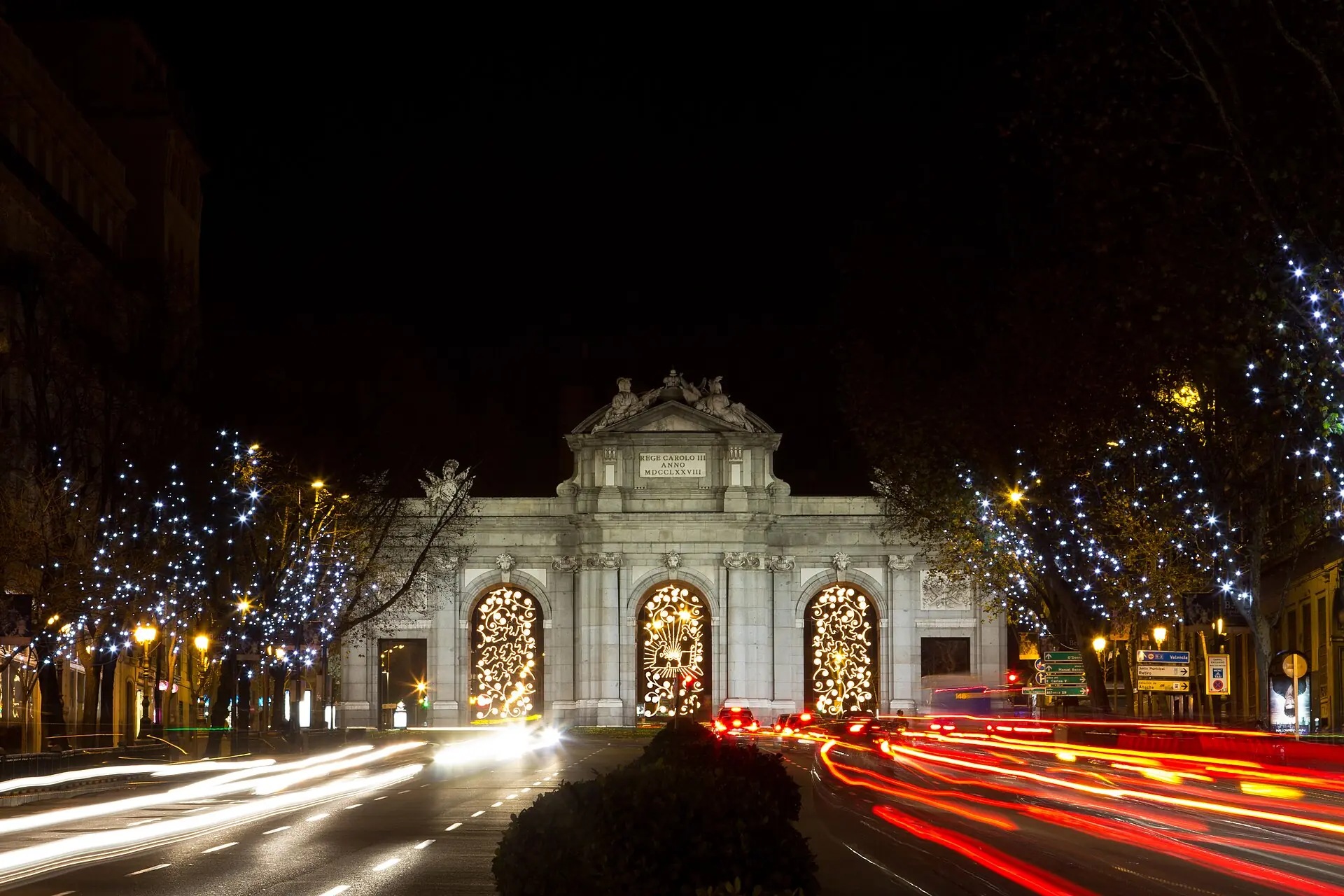
Getting around, in detailGet around · Connect
Get around
Walk inside a cluster, Metro between them. The network is large, cheap and fast; buses and taxis fill the last mile at night.
| Mode | Verdict | Fare | Use it for | What breaks |
|---|---|---|---|---|
| Walking | use | Free | Inside every cluster; Sol to the Prado is 25 minutes | Cobbles and hills in the old centre; wide and flat on the Paseo del Prado. |
| Metro | use | €1.50–2.50 (≈ US$2–3) a ride | Between clusters, airport | Runs about 06:00–01:30; the airport station adds a supplement (check).Runs about 6:00 AM–1:30 AM; the airport station adds a supplement (check). |
| City bus (EMT) | use | About €1.50 (≈ US$2) | Where the Metro is thin; the night buses (búhos) | Búhos run after 01:30, from Cibeles.Búhos run after 1:30 AM, from Cibeles. |
| Taxi | use | €8–15 (≈ US$10–18) across the centre | Bags, night, heat | Meter on; a white car with a red stripe and a green light when free. |
| Ride-hailing (Cabify, Uber, Free Now) | use | Similar to taxi | Airport and late nights | Quote shown in the app. |
| Cercanías commuter rail | use | €1.70–3.70 (≈ US$2–5) | El Escorial, Alcalá, Aranjuez, the airport | Same ticket zones as the Metro (check). |
| Bike and e-scooter share | ok | Per minute | Retiro, the Manzanares river path | Motorised scooters cannot go on the pavement; helmets are advised. |
| Walking tours and hop-on buses | maybe | €20–30 (≈ US$25–35) | A first-day overview | A walking tour teaches more than an open-top bus. |
Metro and rail lines
Twelve lines plus the Ramal; a tourist pass (abono turístico) is priced by days and zone (check). Buy at a machine or use a contactless bank card at the gate.
1
Busy and a pickpocket line.
2
Red line across the east.
City buses a visitor actually uses
| Bus | Route | Useful for | Fare | Note |
|---|---|---|---|---|
| Express Airport (24 h) | Atocha – Cibeles – Barajas | Airport at night | About €5 (≈ US$6) | Runs all night; check the current fare and stops.(check) |
| C1 (Cercanías) | Airport T4 – Atocha | Airport | About €2.60 (≈ US$4) | Runs from about 05:00 to midnight (check).Runs from about 5:00 AM to midnight (check).(check) |
| Metro line 8 | Airport – Nuevos Ministerios | Airport | Metro fare plus supplement | Change at Nuevos Ministerios for the centre.(check) |
| Búhos | From Cibeles | Night city | About €1.50 (≈ US$2) | Night buses after the Metro closes.(check) |
Taxis and ride-hailing
Licensed taxi
Meter and green light
White with a red stripe; the meter starts at about €3 (≈ US$4) (check).
Airport fixed fare
Flat rate
Applies to the zone inside the M-30; keep the receipt.
Free Now app
Hail a licensed taxi
Pay by the meter or in the app.
Cabify and Uber
Private hire
A price quoted up front.
Radio-Taxi
Phone booking
Ask the hotel to book.
Rank at a station
Queue and meter
The safest for arrivals; ignore touts.
On foot and car-free hours
| Where | When | Note |
|---|---|---|
| Paseo del Prado to the Retiro | Any time | Flat and shaded; 20 minutes. |
| Sol to the Royal Palace | Morning | 15 minutes along Calle Mayor; slightly downhill. |
| Sol to Malasaña | Evening | 12 minutes via Gran Vía; busy and lit. |
| Atocha to Lavapiés | Daytime | Steep rise; go by Metro after dark. |
| Casa de Campo | Not at night | Large park; dark and lonely after dusk. |
More on getting around
Rome2Rio gives rail options beyond the city; the Renfe app sells the fast trains.
Connect
| Option | Verdict | What breaks |
|---|---|---|
| Tourist eSIM bought before you fly | use | No queue; works on landing. EU SIMs roam at home rates across the EU. |
| Carrier shops (Movistar, Vodafone, Orange) in the centre | use | Prepaid SIMs need your passport; allow 20–30 minutes. |
| Airport SIM kiosks | caution | Convenient, dearer than the shop; check the data amount and the validity days. |
| Street sellers | avoid | Unregistered SIMs can be cut off. |
Metro de Madrid and Citymapper
Metro and bus routing
Live status and step-free station info.
Cabify, Free Now and Uber
Ride-hailing and taxis
Free Now hails licensed taxis by meter; Cabify and Uber use private-hire cars with a fixed quote.
Renfe and Ouigo
Trains to Toledo, Segovia and the AVE lines
Book in the app; day-trip trains sell out on weekends.
Google Maps
Walking and opening hours
Check the hours of small restaurants; the siesta break moves them.
TheFork
Restaurant bookings
Useful for Botín and other places that fill up.
- Wi-Fi
- Free in most cafés, museums and hotels; the password is on the receipt or the wall.
Luggage
Where big bags are a problem, and how to get rid of them for the day.
Rule
- Lockers
- Left-luggage points at Atocha and Chamartín stations and private storage shops near Sol.
- Forwarding
- Courier forwarding is possible from hotels at a price; simplest is to keep the big bag at the Madrid hotel for day trips.
- Dead zone
- Late check-out flights: hotels usually hold bags for free; ask for a shower room.
Bags, area by area
5 walking areas rated
- Bags painful
Sol & Plaza MayorRoyal Palace & Madrid de los AustriasPaseo del Arte: Prado, Reina Sofía, AtochaMalasaña & Chueca
- Bags ok
Lockers, forwarding and the gap between check-out and check-in are covered once, under Luggage.
See & doWalking clusters, day plans and the places worth the time
See & do
Walking clusters, day plans and the places worth the time
Clusters
Plan by cluster: each is a walkable area with a rescue point and a bag rule.
Puerta del Sol, Plaza Mayor and the lanes between: tourist-dense, good for a first evening and for lunch at 14:00 — expect pickpockets.
rescue 99% · max p90 6.9′ · half
Morning cluster: the Royal Palace, the cathedral and Plaza de Oriente; little shade on the open esplanades.
rescue 100% · max p90 7′ · half
Museum cluster on the Paseo del Prado: two big museums and Atocha station within 600 m; go at opening or after 17:00.
rescue 99% · max p90 6.9′ · half
A big green park for a slow morning or an evening: the lake and the Crystal Palace, shade and benches; the surrounding streets are quiet.
rescue 99% · max p90 7′ · half
Evening cluster: bars, plazas and small shops between Gran Vía and Calle Fuencarral; go after 19:00.
rescue 100% · max p90 6.8′ · 90m
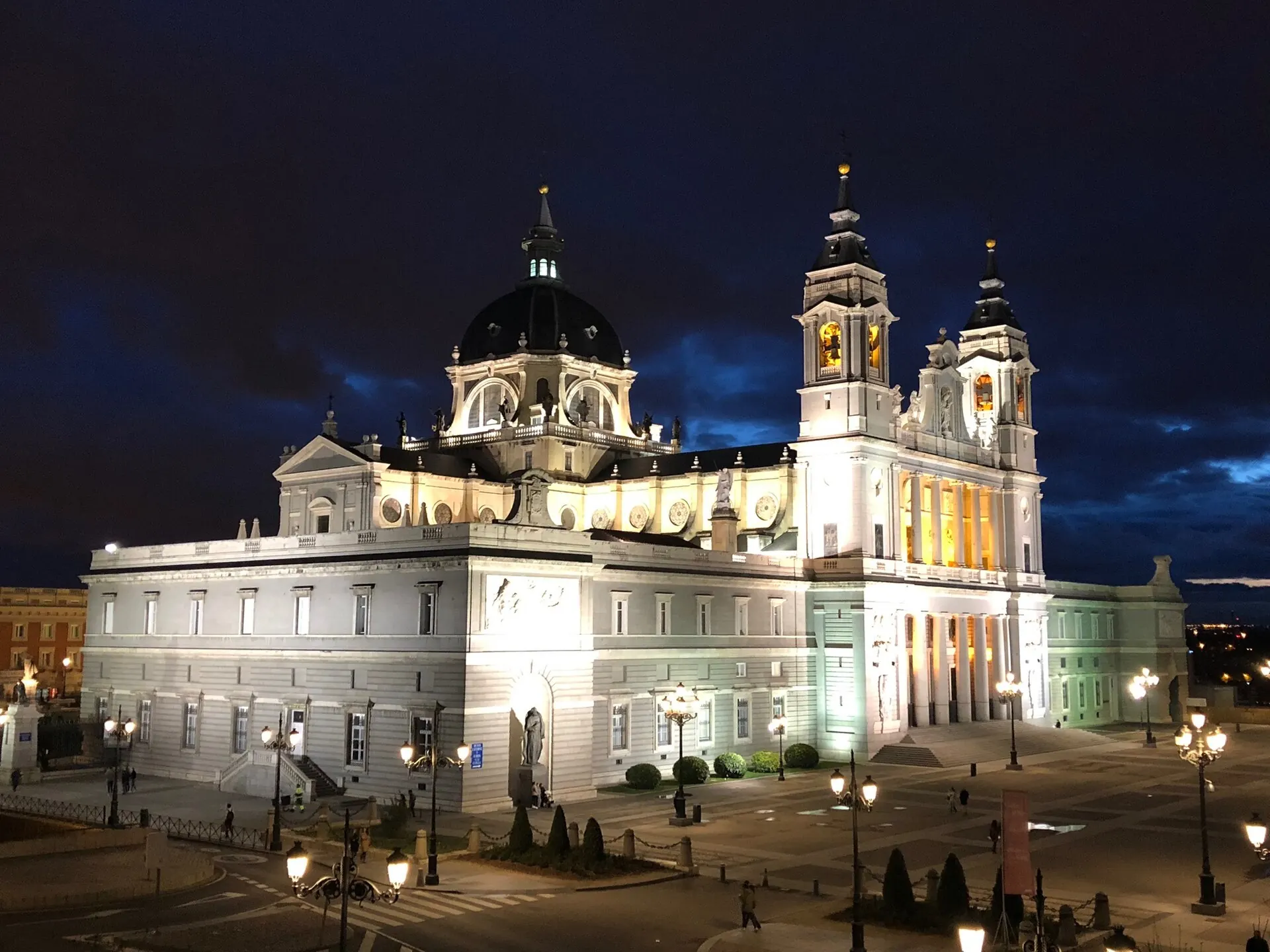
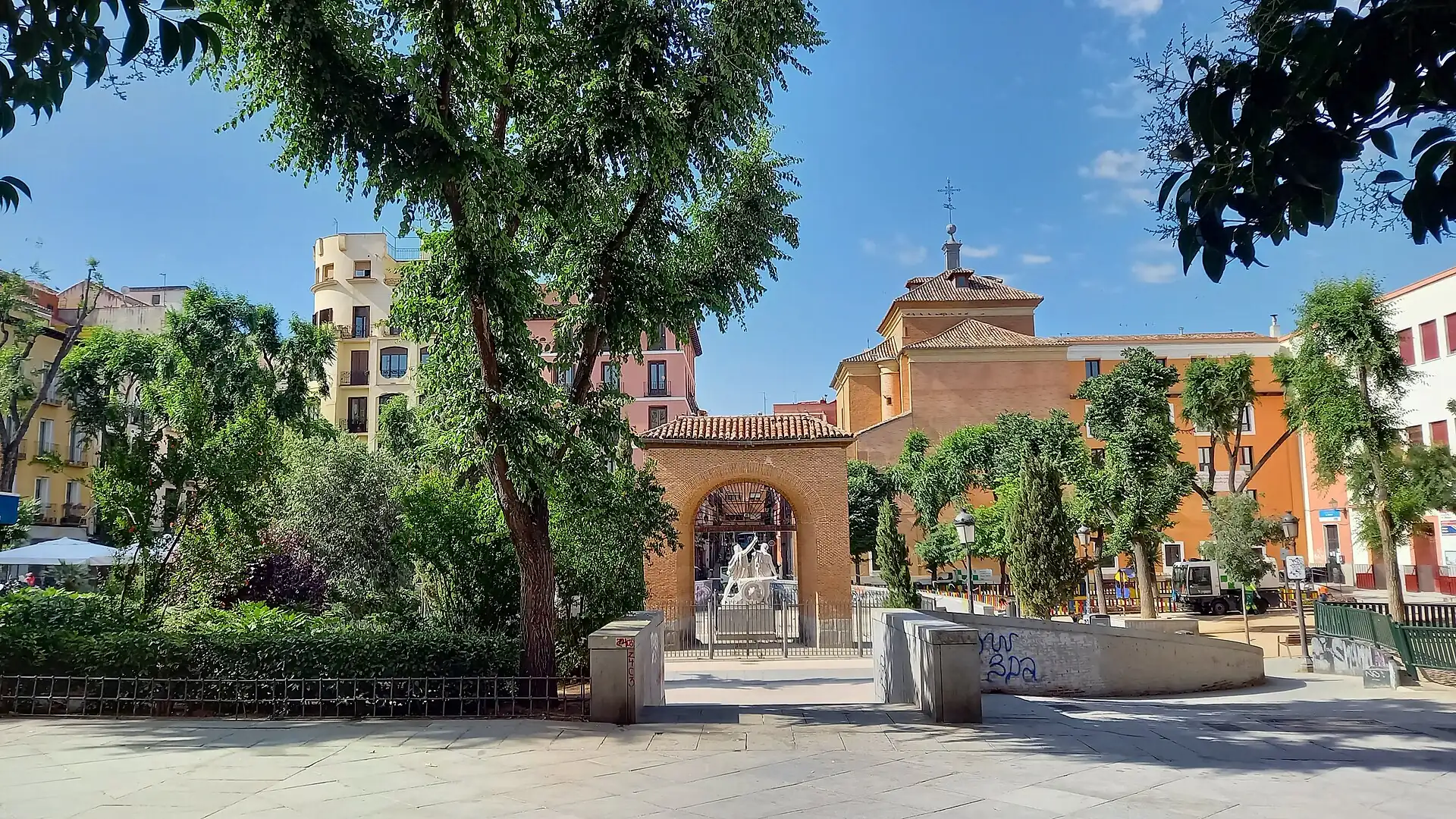
Days
Ready-made day plans, timed against opening hours and walking distances.
How long are you staying?
Loose outlines in the city's rhythm: museums in the morning, a 14:00 lunch, a rest and the evening late. The timed plan checks opening days, walking and heat.
1 day
A stopover or a day between trains
- 09:00Royal Palace of Madrid — Royal Palace at opening
- 11:00Plaza Mayor — Plaza Mayor and a coffee
- 13:30Casa Labra — A standing tapas lunch
- 15:30Prado Museum — Prado, three rooms
- 18:30Retiro Park — Retiro at the cool hour
- 21:30Dinner in Chueca or La Latina
Skip: The Reina Sofía and the Thyssen: another day.
Madrid in 3 days
3 daysMornings for museums, a 14:00 lunch, afternoons at rest, evenings late; the last day ends with the bags already in the car.
Day by day
Day 1 — Royal Palace at opening, Plaza Mayor, a 14:00 lunch table
- 09:30Royal Palace of Madrid
- Almudena Cathedral (optional)
- Plaza Mayor (optional)
- Bar La Campana (optional)
- 14:00Lunch table 14:00 (Sol)
Day 2 — Prado and Reina Sofía
Day 3 — Retiro Park, car to Barajas at 12:00
- 08:30Retiro Park
- 12:00Car to Barajas at 12:00
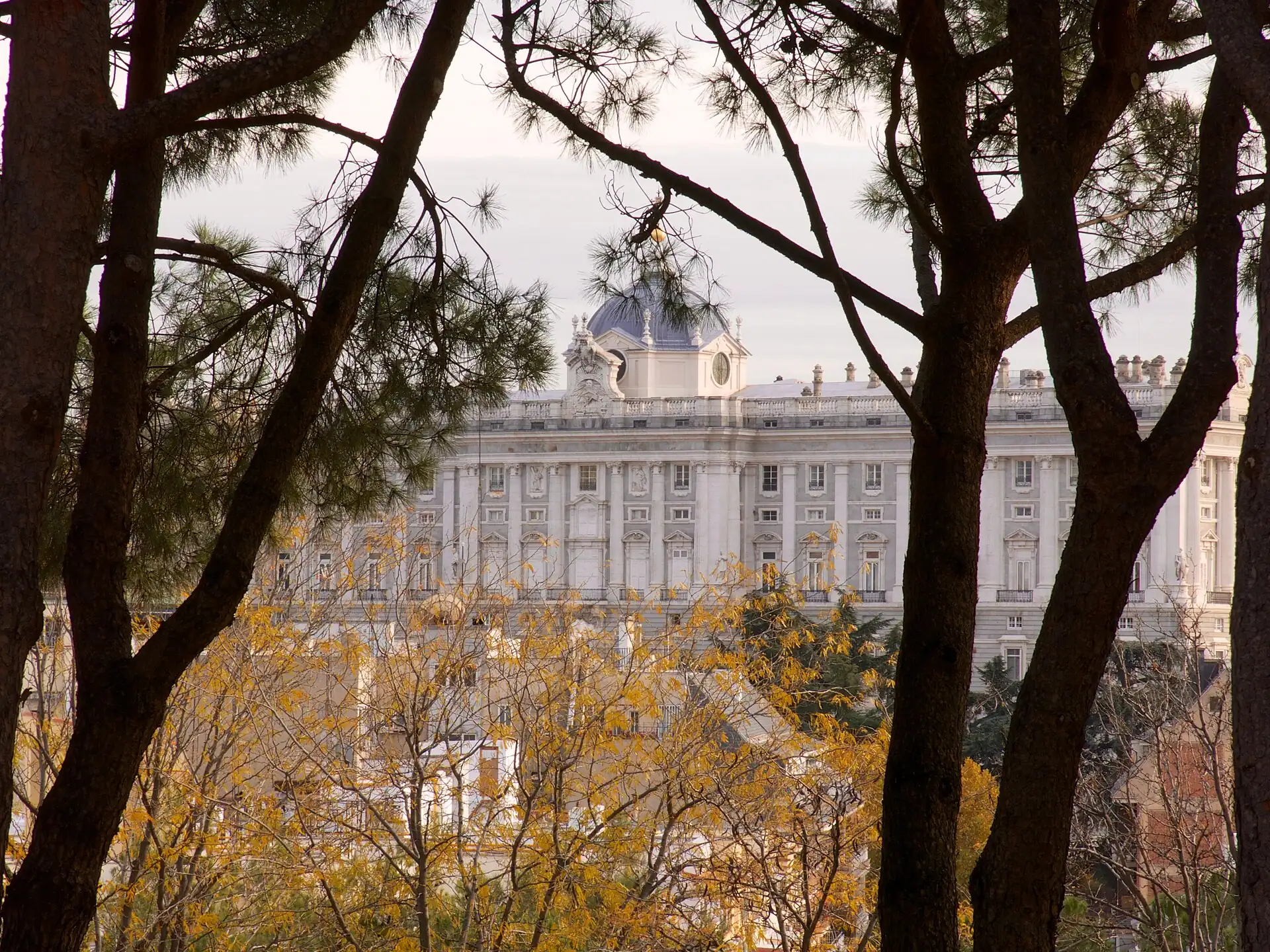
Places
“Best time” is when to arrive for the fewest crowds, for example “before 08:30”; “Go any time” means the hour makes little difference. More sights follow under “More sights and museums”.
8 places. Filters use the guide’s own ratings; a place with no rating is left out when a filter is on.
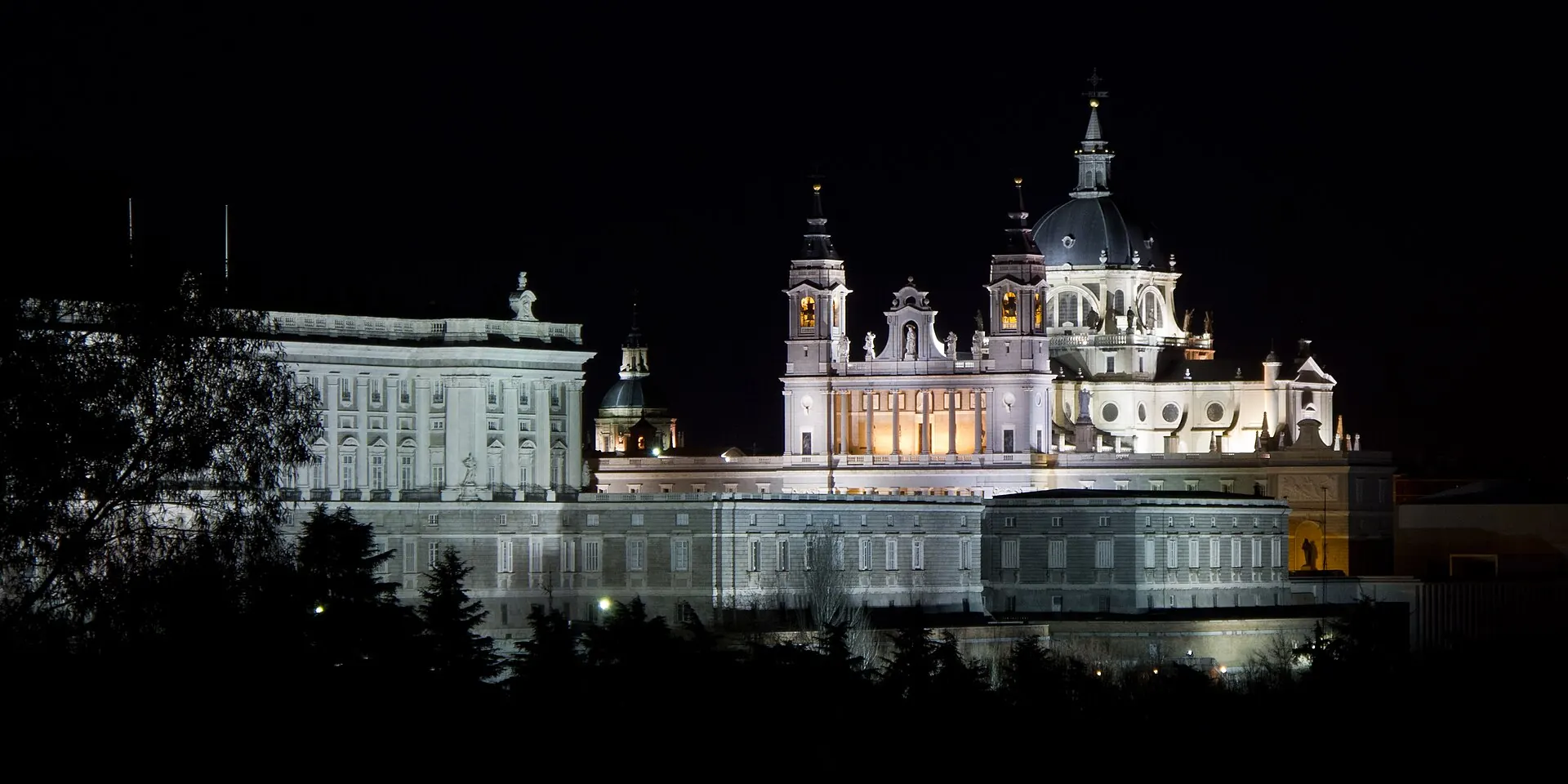
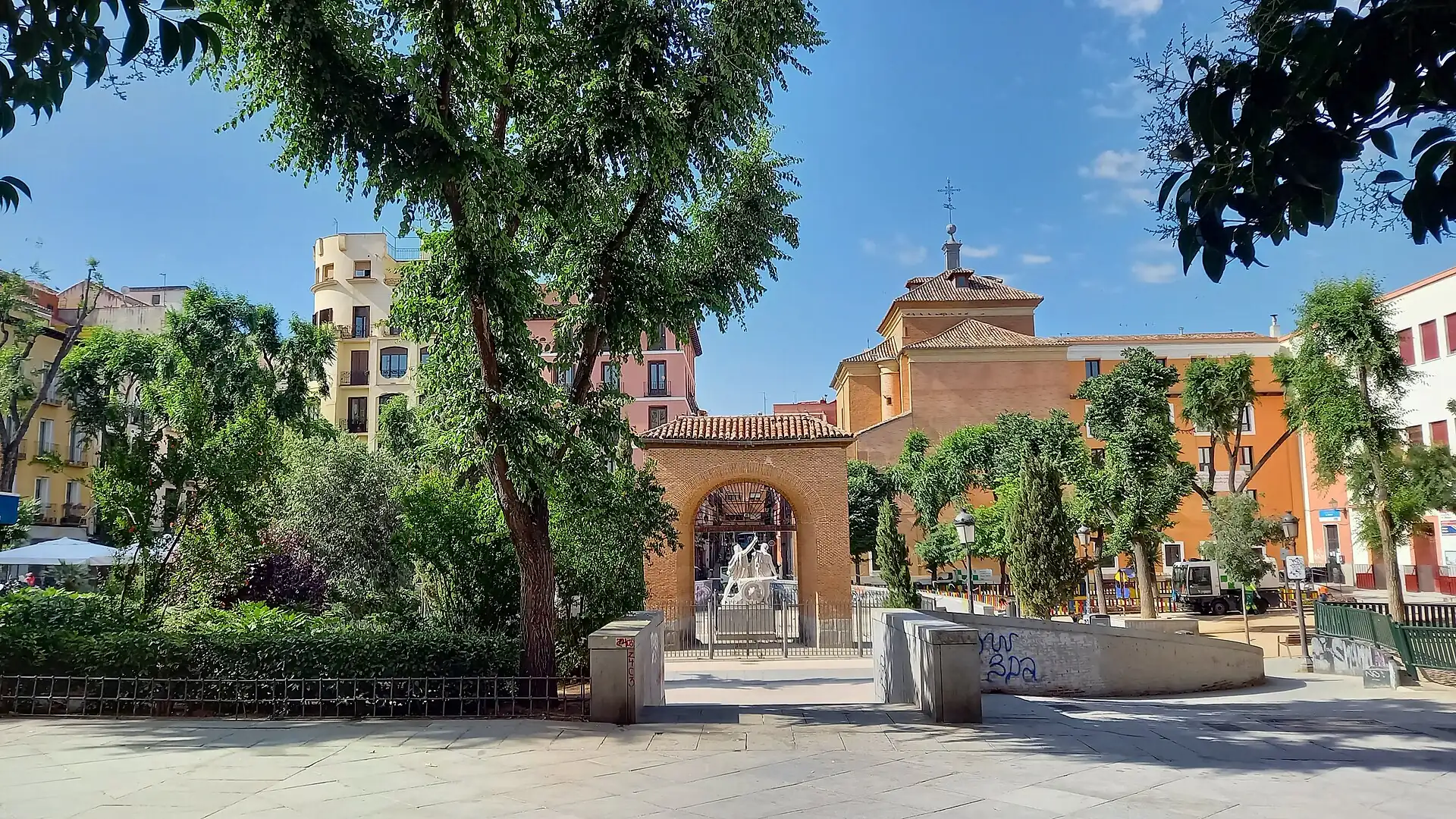
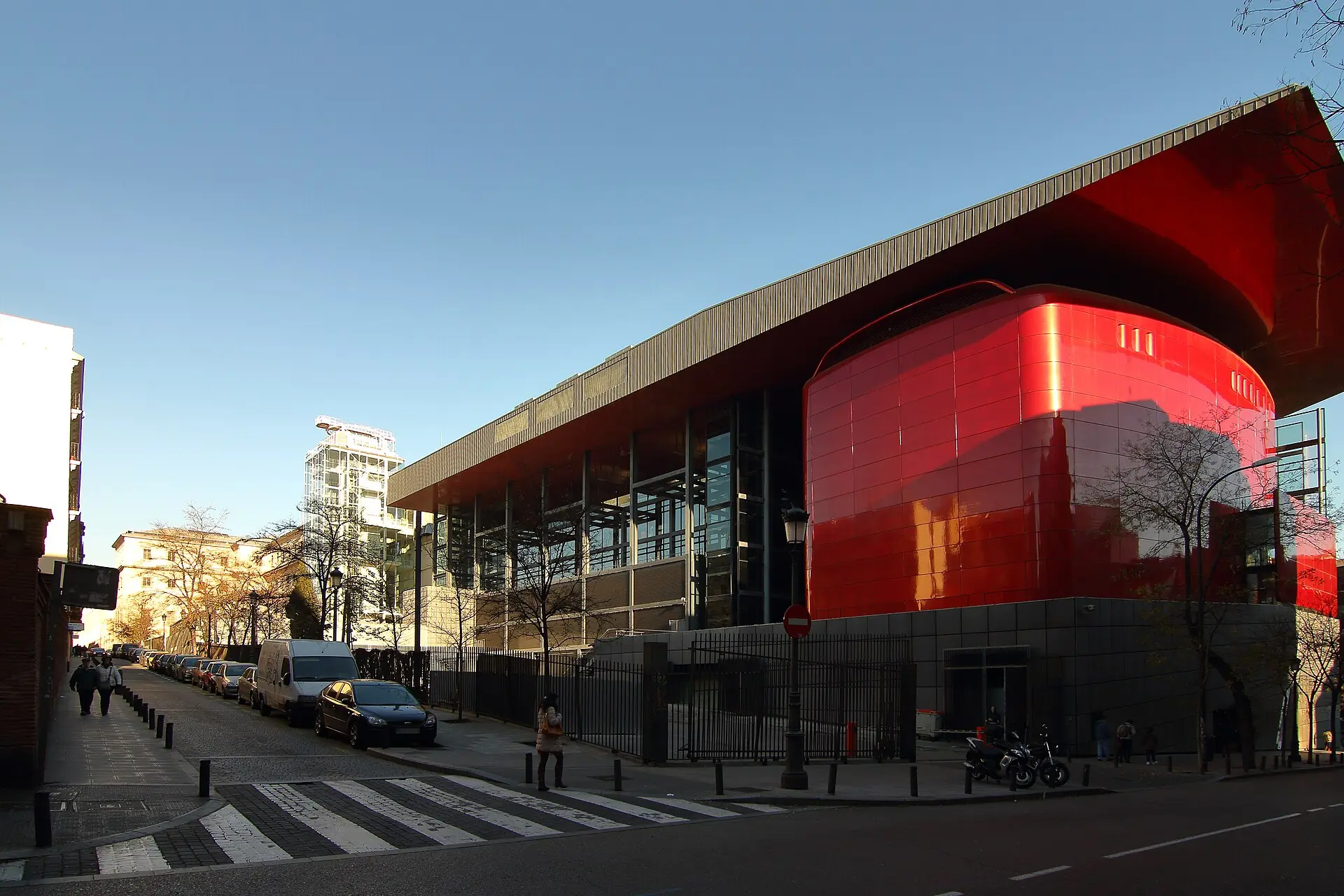
Show 2 more placesShow fewer
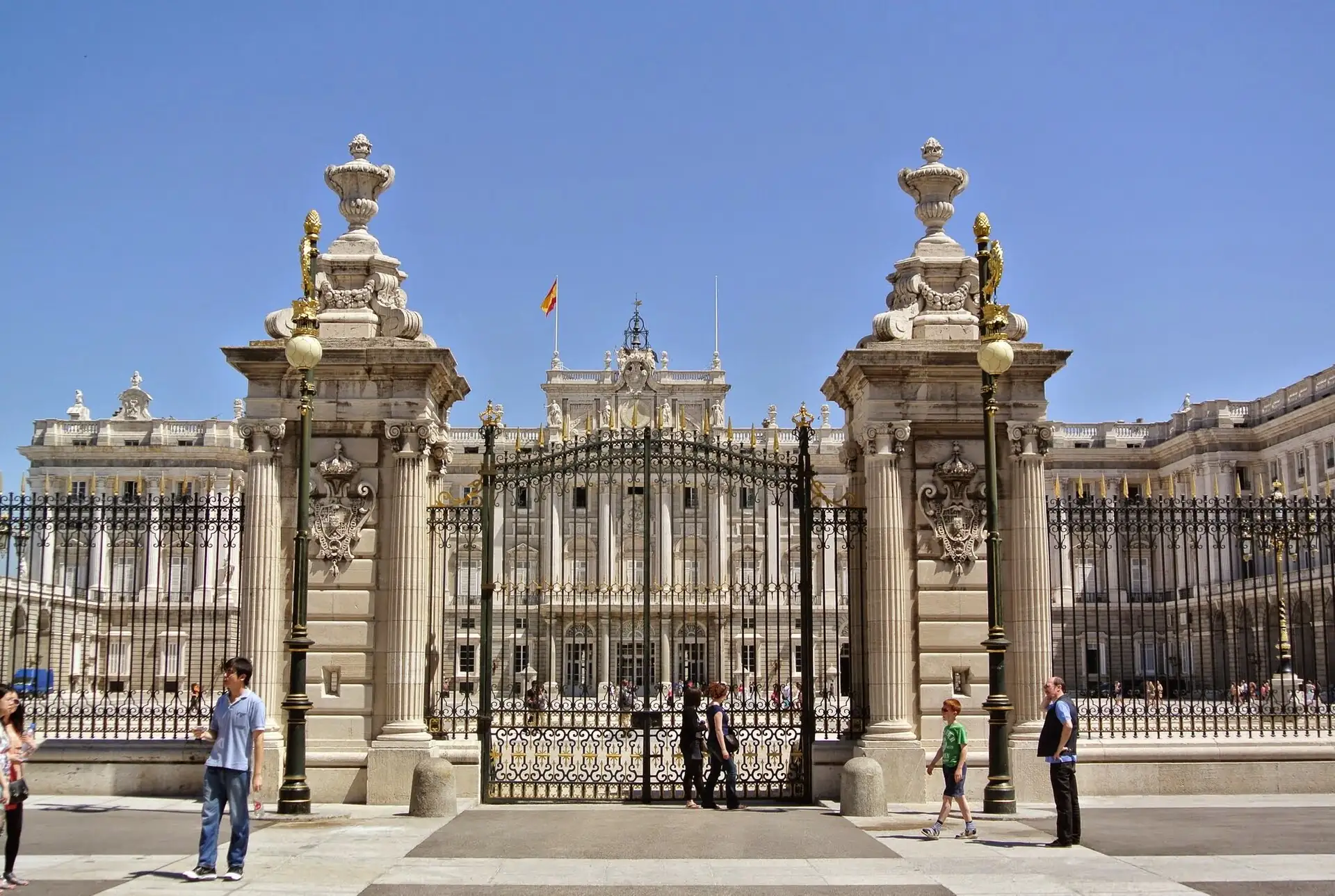
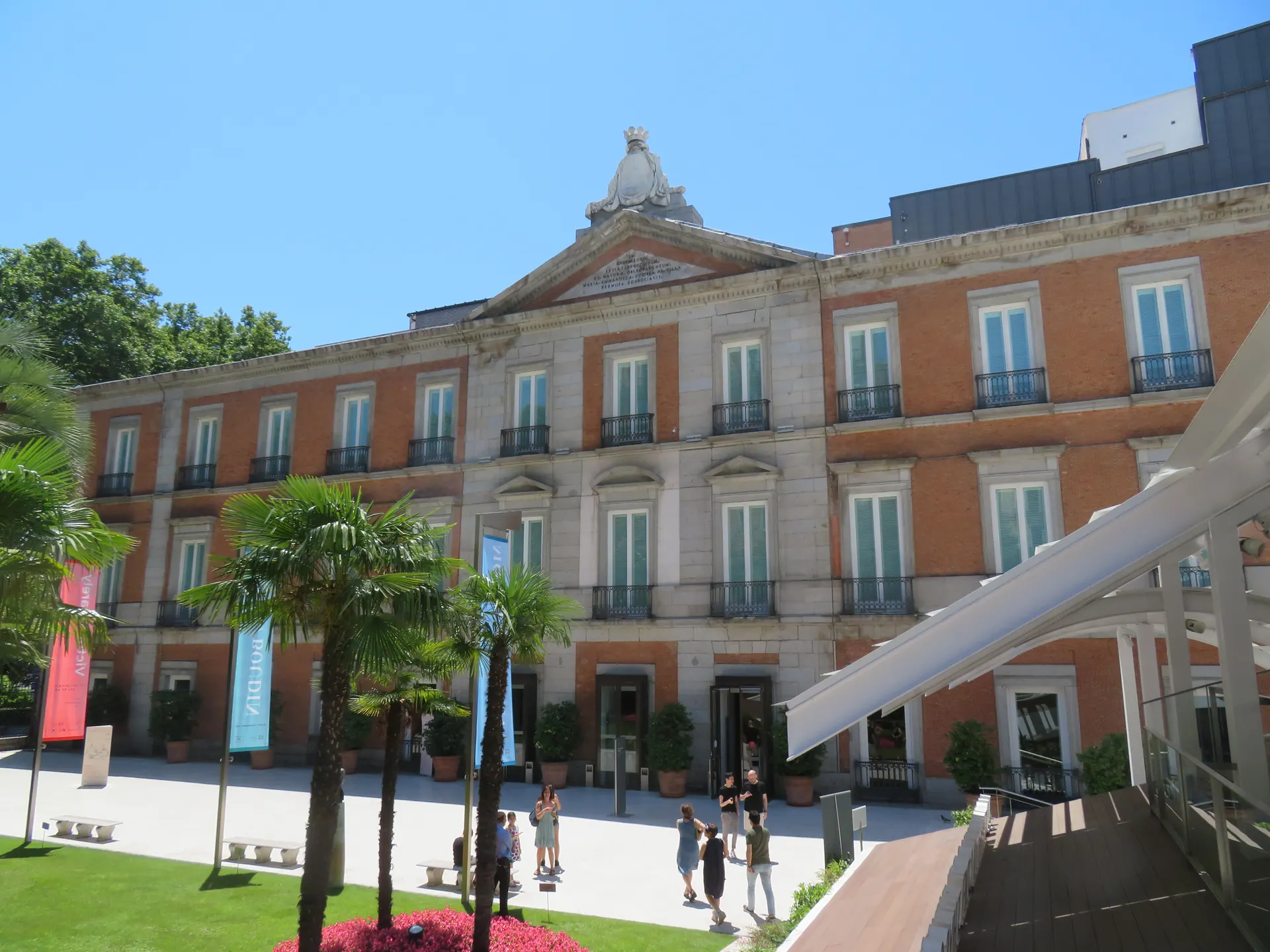
Tours, classes and shows in Madrid →
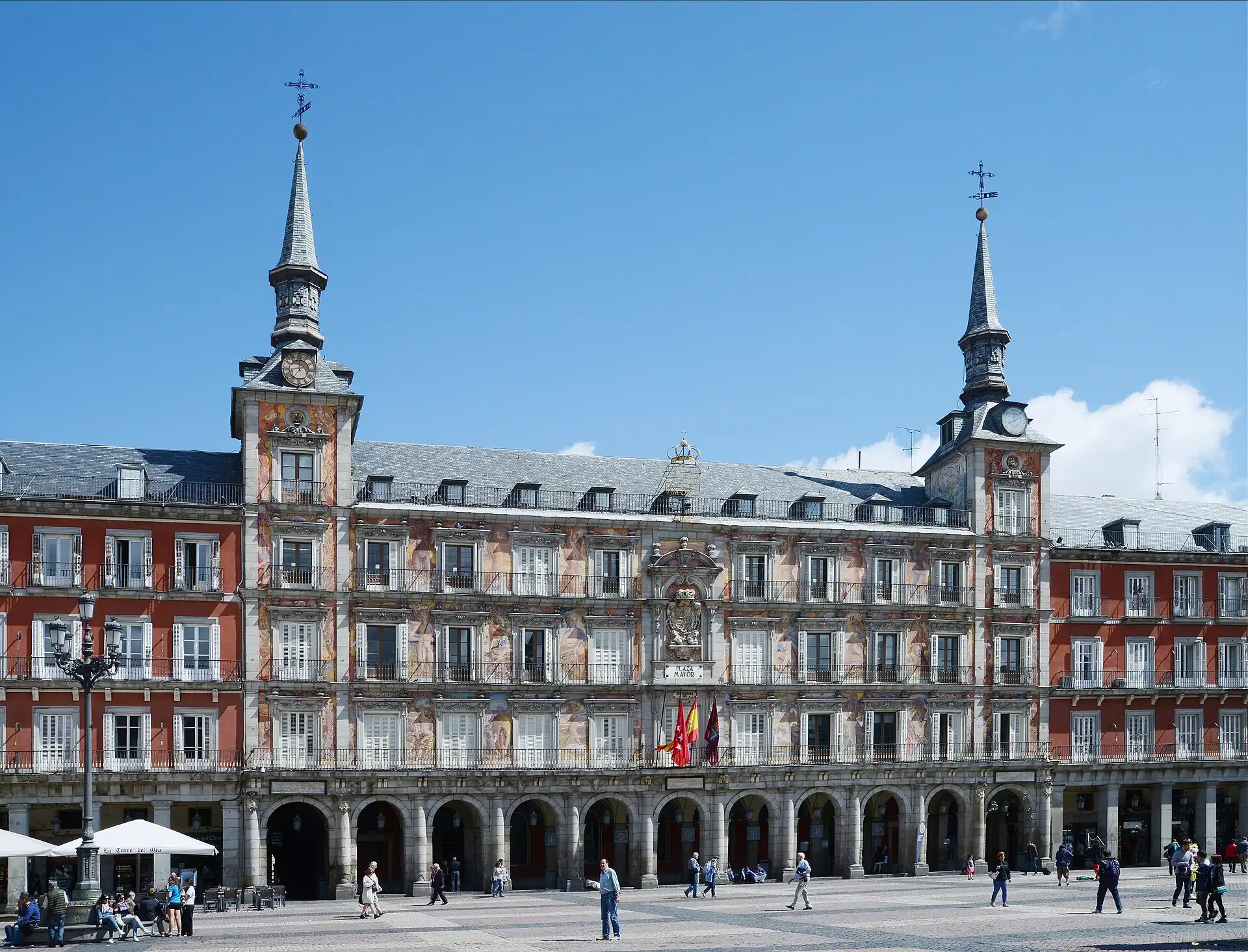
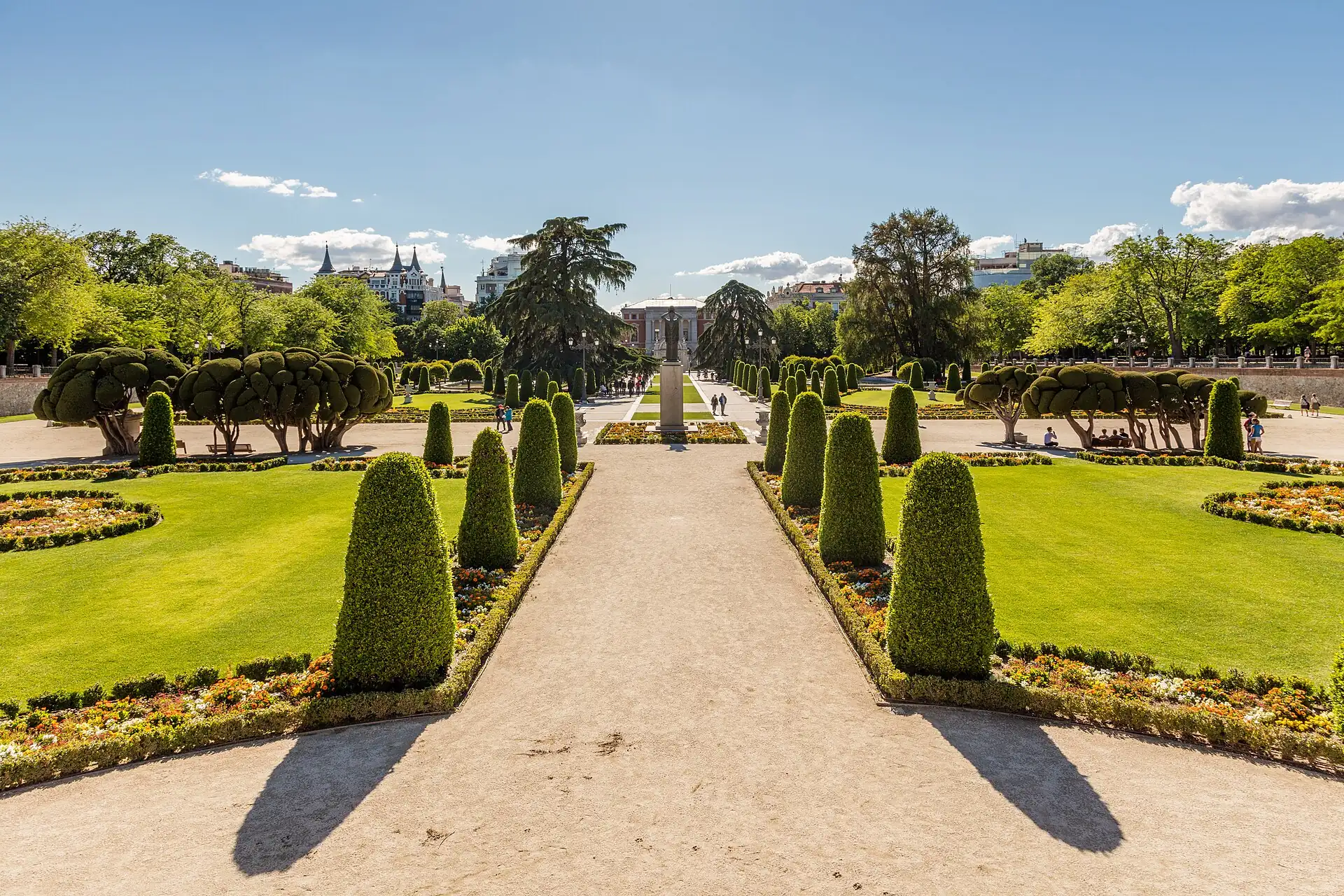
If you do ten things in Madrid
Ranked for a first visit of 2–4 days. Prices are 2026 estimates; hours marked (check) in the linked pages still need confirmation.
- 1
Velázquez, Goya and Bosch in one building; pick three rooms.
- Time
- 2–2.5 h
- Best
- At opening, booked
- Cost
- €15–20 (≈ US$18–25)
- 2
The rooms of a European royal house and the armoury.
- Time
- 1.5–2 h
- Best
- At opening
- Cost
- €12–16 (≈ US$14–19)
- 3
Picasso's Guernica and the Spanish avant-garde.
- Time
- 1–1.5 h
- Best
- Weekday morning; closed Tue
- Cost
- €12 (≈ US$14)
- 4
The city's park: the lake, the Crystal Palace and shade.
- Time
- 1.5–2 h
- Best
- Morning or after 18:00
- Cost
- Free
- 5
The arcaded Habsburg square, beside the market and the taverns.
- Time
- 20–30 min
- Best
- Before 10:00
- Cost
- Free
- 6
European painting from 1300 to Pop Art, easy to take in.
- Time
- 1.5–2 h
- Best
- Afternoon
- Cost
- €13–16 (≈ US$16–19)
- 7
A neo-Gothic cathedral with a view over the palace.
- Time
- 30–45 min
- Best
- Late morning
- Cost
- Free to enter; museum and dome extra
- 8
Cod croquettes and a caña the way locals do it.
- Time
- 30 min
- Best
- 13:00 or 19:00
- Cost
- €8–15 (≈ US$10–18)
- 9
The square at the heart of Malasaña; the terraces fill at 20:00.The square at the heart of Malasaña; the terraces fill at 8:00 PM.
- Time
- 30 min
- Best
- Evening
- Cost
- Free
- 10
Churros and hot chocolate after midnight or at breakfast.
- Time
- 30 min
- Best
- Late night
- Cost
- €5–8 (≈ US$6–10)
Good for…
Verdict is how well Madrid works for that traveller, not how nice it is.
Compact and walkable, with three great museums.
- 1Sleep at Sol — everything is a walk or a short ride.
- 2Madrid in 3 days — the 3-day plan checks closing days.
- 3
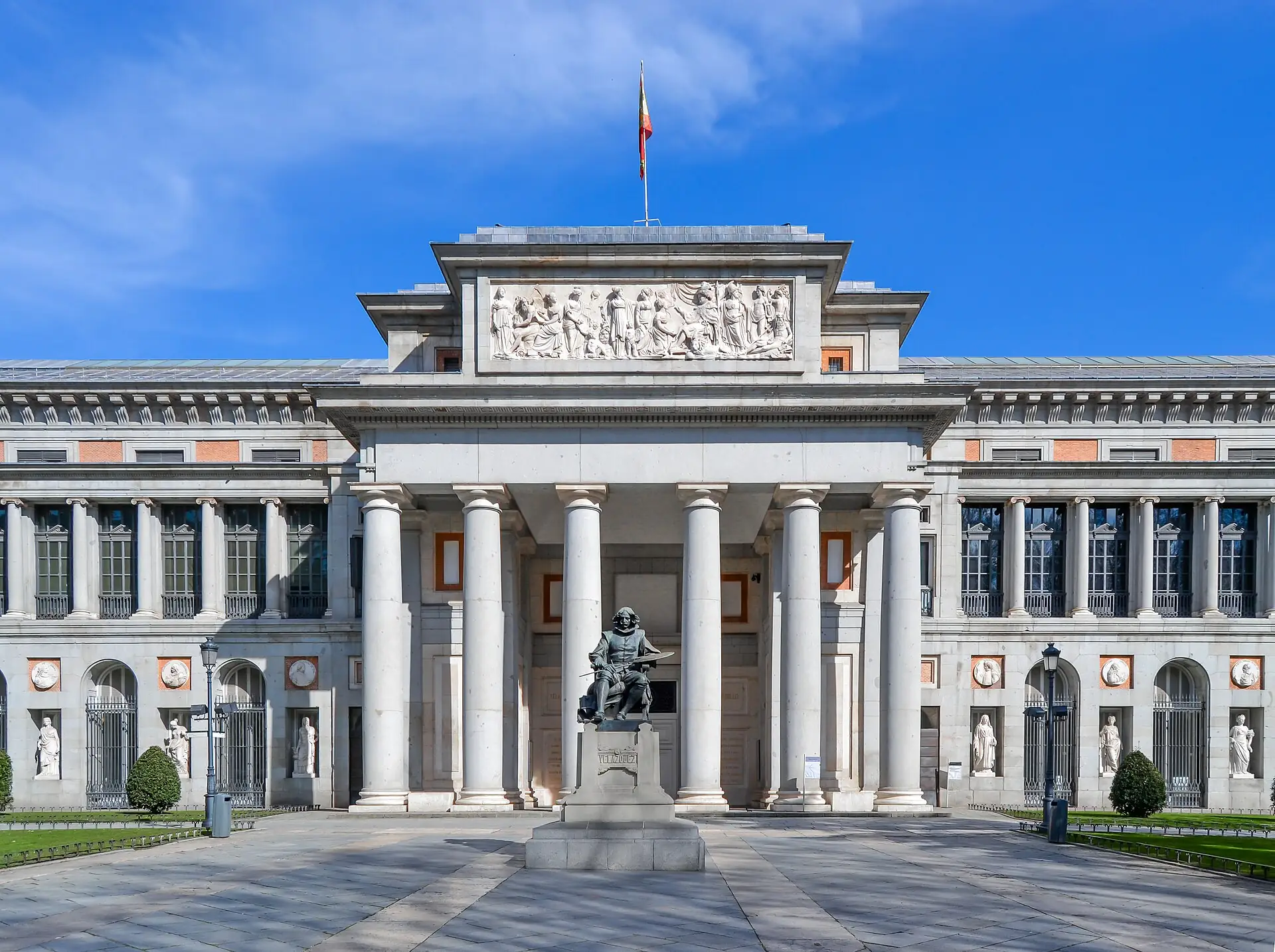 Prado Museum — book a timed ticket.
Tapas, markets and late tables; the set lunch is a bargain.
- 1Mercado de San Antón — stalls and a rooftop terrace.
- 2Casa Labra — cod croquettes and a caña.
- 3Casa Botín — roast suckling pig in a house from 1725.
Set lunches and free museum hours keep the day cheap.
- 1Menú del día — three courses for €13–20 (≈ US$16–25).
- 2Free museum evenings — the Prado, Reina Sofía and Thyssen each have a free window.
- 3Retiro and Templo de Debod — free and pleasant.
- 1Sunset at Templo de Debod — a soft view and no ticket.
- 2A tablao evening — live flamenco in a small room.
- 3
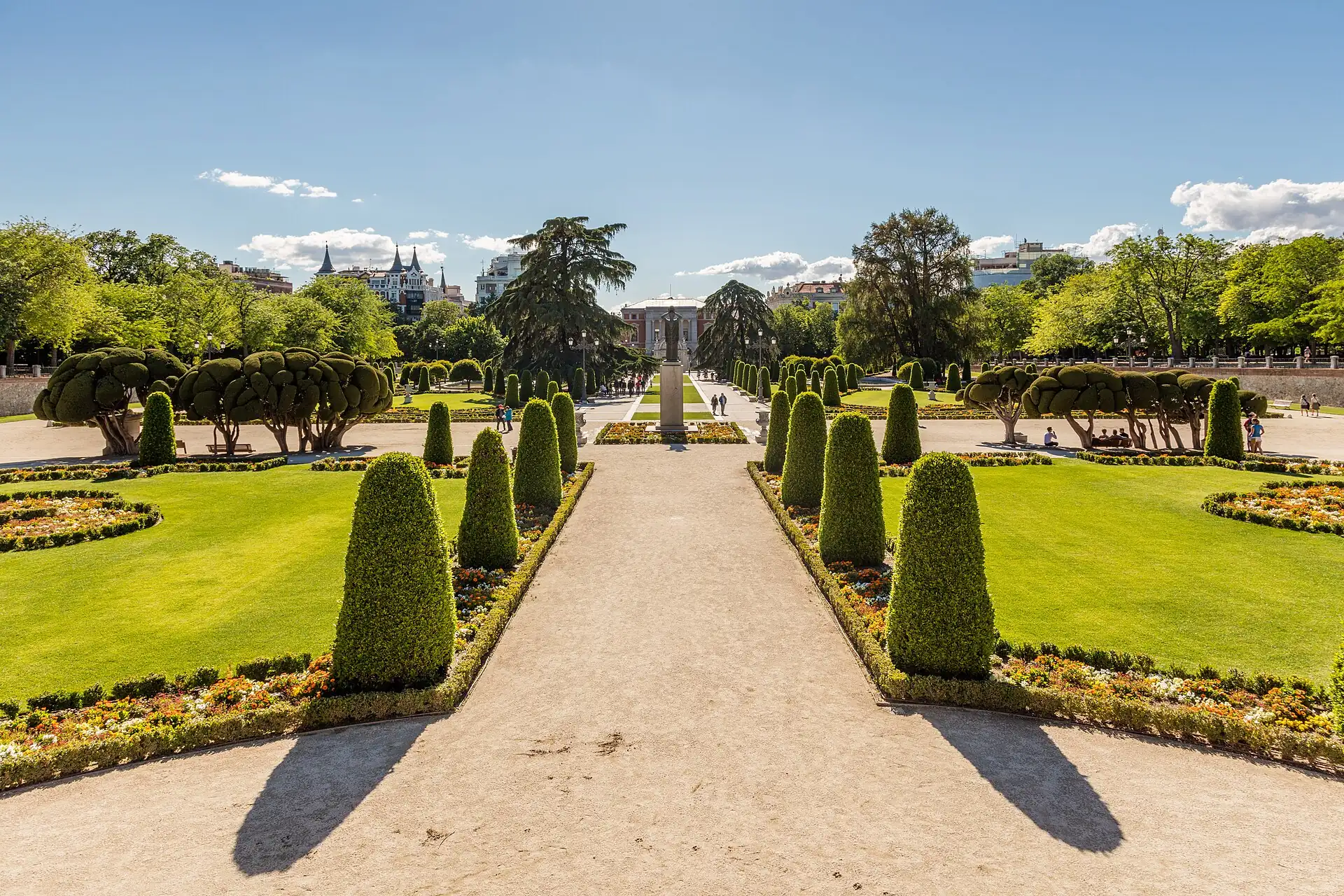 Retiro Park — rowing boats and shade.
Easy alone; the bar-counter culture helps.
- 1Mercado de San Miguel — stand and taste a few things.
- 2A free walking tour — meet people on day one.
- 3chueca — a friendly base at night.
- 1Retiro Park — rowing boats and a playground.
- 2Casa de Campo — a cable car and a lake.
- 3Late dinners — children stay up late; plan an afternoon rest.
- 1Taxi between clusters — the hills and the heat are tiring.
- 2Prado Museum — benches and lifts.
- 3Spring or autumn — the mild months.
- 1A Salamanca or Paseo del Prado hotel — quiet, central and grand.
- 2Casa Botín — a booked historic table.
- 3Private museum tour — early access to the Prado.
Museums and Metro lifts are good; the old centre has cobbles and steps.
- 1Prado Museum — lifts throughout.
- 2Adapted taxi — book ahead in the app.
- 3Newer hotel with a lift — many hostales have stairs only.
Tours and classes: book or skip
Book through the hotel or an operator with written inclusions and a cancellation policy. Prices per person, group tour unless stated.
| Tour or class | Verdict | Typical price | Why | Check before paying |
|---|---|---|---|---|
| Prado guided tour (small group) | book | €40–75 (≈ US$50–90) | A guide picks the masterpieces and skips the queue; best if this is your only museum. | Group size under 15, entry ticket included. |
| Tapas and wine walking tour | book | €60–100 (≈ US$70–120) | You learn what to order and how to stand at the bar. | Number of stops with food, drinks included. |
| Free walking tour (tip-based) | maybe | Tip €10–15 (≈ US$12–18) | A good day-one overview. | Read reviews and the meeting point. |
| Toledo day tour by coach | maybe | €60–100 (≈ US$70–120) | Easy but rushed; the train is cheaper and gives you freedom. | Time in the town versus on the bus. |
| Segovia day tour | maybe | €60–100 (≈ US$70–120) | Combines the aqueduct and the castle. | Time in town, lunch and entry included. |
| Hop-on hop-off bus | skip | €25–30 (≈ US$30–35) | Traffic is slow; walking and the Metro are faster. | None. |
| Flamenco show with dinner | skip | €70–120 (≈ US$85–140) | Dinner is average and late. | Choose the show without dinner. |
| Royal Palace guided tour | maybe | €25–45 (≈ US$30–55) | Adds context to the rooms. | Entry included and the language. |
| Football stadium tour | maybe | €25–35 (≈ US$30–45) | For fans; a slot is easy to book online. | Match-day closures. |
| Food market visit with a cooking class | book | €70–120 (≈ US$85–140) | Half a day and a meal you can repeat at home. | Hands-on stations, not a demo. |
What each season brings
Spring
Mar–May
Warm days, terraces open, San Isidro and the Retiro in bloom.
Watch: Easter crowds; May storms.
Summer
Jun–Aug
Late evenings and open-air cinemas; the city empties in August.
Watch: 35 °C afternoons; small places close for holiday.
Autumn
Sep–Nov
The best walking weather; the Prado quieter; chestnuts on the corners.
Watch: Rain in November.
Winter
Dec–Feb
Christmas lights, chocolate and churros, clear cold skies.
Watch: Freezing mornings; Dec 24–25 closures.
Photo spots and the light
Light times are for clear days.
| Spot | Best light | Tip |
|---|---|---|
| Palace from the Plaza de Oriente | 08:30–10:30 | Shoot from the gardens with the façade lit by the morning sun. |
| Templo de Debod | Sunset | The temple reflects in its pool; a tripod is not needed at golden hour. |
| Crystal Palace and its pond | 08:00–10:00 | Morning light and few people; the pond gives a mirror. |
| Gran Vía from Callao | Blue hour | The neon and the towers; use a wall for stability. |
| Círculo de Bellas Artes rooftop | Sunset | A ticketed terrace with views over the roofs (check). |
| The arcades of Plaza Mayor | Early morning | Empty before 09:00. |
Madrid travel FAQ
Answers are 2026 desk estimates; fares and rules marked (check) change.
When do restaurants serve dinner in Madrid?
From about 20:30–21:00. Many kitchens close between 16:00 and 20:00; lunch is 13:30–15:30. A bar snack bridges the gap.From about 8:30 PM–9:00 PM. Many kitchens close between 4:00 PM and 8:00 PM; lunch is 1:30 PM–3:30 PM. A bar snack bridges the gap.
Do I need to book the Prado?
Yes for the opening slot in high season; the queue at the door builds from 10:30. Free evening entry is crowded.Yes for the opening slot in high season; the queue at the door builds from 10:30 AM. Free evening entry is crowded.
What is the best way from the airport?
A fixed-fare taxi (about €33 (≈ US$40), check), the Express Airport Bus (24 h) or the Metro line 8; ride-hailing is similar to a taxi.
Is Madrid safe?
Yes for violence; pickpockets are the main risk in Sol, the Metro and museum queues. Keep your bag zipped and in front.
How many days do I need?
Two full days for the core, three with a day trip to Toledo or Segovia.
Is the tap water safe?
Yes.
What day are museums closed?
The Reina Sofía closes Tuesday; the Prado is open daily; other museums often close on Monday: check each.
Is it too hot in summer?
July and August pass 33–36 °C (91–97 °F) in the afternoon. Plan mornings and evenings for walking and museums for the middle.July and August pass 91–97 °F (33–36 °C) in the afternoon. Plan mornings and evenings for walking and museums for the middle.
Do I need cash?
A little. Cards work almost everywhere; carry €30–50 (≈ US$35–60) in coins and notes for markets and small bars.
What should I wear to churches?
Shoulders and knees covered; a light scarf works.
What is the tipping rule?
Not expected; round up or leave a few coins.
When is Madrid Pride?
Early July; the main march is on Saturday. Book hotels months ahead.
More to see and doSee & do · Learn & work · Rain & heat · Free things · Wheelchair and stroller
Free things to do
Sights in Madrid that cost nothing to enter. Each is described under Places or More sights; extra costs inside are marked there.
Wheelchair and stroller, place by place
How each place in this guide works for wheels, from its own page. Ratings are desk estimates unless a page says it was checked on the ground.
| Place | Step-free | Wheelchair | Stroller | What to know |
|---|---|---|---|---|
| Almudena Cathedral | yes | ok | ok | Level entrance and nave; the dome is by steps. |
| Plaza del Dos de Mayo | yes | ok | ok | Flat paved square; toilets are in bars. |
| Plaza Mayor | partial | caution | ok | Cobbles across the square; the arcades are smoother. No public toilets on the square. |
| Prado Museum | yes | ok | ok | Step-free entrances and lifts; wheelchairs on loan (check). |
| Reina Sofía Museum | yes | ok | ok | Lifts throughout; the old building and the new Nouvel wing are both step-free. |
| Retiro Park | yes | ok | ok | Paved main paths; gravel side paths are slower. |
| Royal Palace of Madrid | partial | caution | poor | A step-free route exists inside; some rooms and the armoury need steps. Ask at the door. |
| Thyssen-Bornemisza Museum | yes | ok | ok | Lifts to every floor; wheelchairs on loan. |
See & do
22 of 22
Thyssen-Bornemisza MuseumMuseo Nacional Thyssen-Bornemisza
MuseumsA walk through European painting from the 13th century to Pop Art in one building; a two-hour museum that is easy to finish.
Paseo del Arte · Tue–Sun about 10:00–19:00; Monday a shorter free session (check)Tue–Sun about 10:00 AM–7:00 PM; Monday a shorter free session (check) · €13–16 (≈ US$16–19)(check)
CaixaForum MadridCaixaForum
MuseumsExhibitions under a striking green wall; the café and roof are useful AC breaks.
Paseo del Arte · Daily about 10:00–20:00 (check)Daily about 10:00 AM–8:00 PM (check) · €6–8 (≈ US$7–10)(check)
Royal Botanical GardenReal Jardín Botánico
parkA calm rectangle of trees and glasshouses beside the Prado; good in spring.
Paseo del Arte · Daily, day hours (check) · €4–6 (≈ US$5–7)(check)
Templo de DebodTemplo de Debod
monumentA real Egyptian temple given to Spain in 1968, rebuilt on a hill; go for sunset over the Casa de Campo.
Palacio · Tue–Sun daytime; the garden is open longer (check) · Free(check)
Plaza de Oriente and Teatro RealPlaza de Oriente
squareGardens and statues between the palace and the opera house; the calm side of the old centre.
Palacio · Always open · Free
Sorolla MuseumMuseo Sorolla
MuseumsA painter's house and garden; one of the calmest rooms in Madrid.
Chamberí · Tue–Sat 09:30–20:00; Sun 10:00–15:00 (check)Tue–Sat 9:30 AM–8:00 PM; Sun 10:00 AM–3:00 PM (check) · €3–6 (≈ US$4–7)(check)
Museum of Romanticism and the Cerralbo MuseumMuseo del Romanticismo, Museo Cerralbo
MuseumsTwo small house museums with period rooms, useful on a wet day.
Malasaña, Argüelles · Tue–Sun (check) · €3–6 (≈ US$4–7)(check)
Santiago Bernabéu Stadium tourEstadio Santiago Bernabéu
SportTrophy room, dressing rooms and the pitch view for Real Madrid fans; book a slot.
Chamartín · Daily except match days (check) · €25–35 (≈ US$30–45)(check)
Las Ventas bullring and museumPlaza de Toros de Las Ventas
cultureA large Neo-Mudéjar bullring; a tour explains the tradition, whatever your view on it.
Salamanca · Tours daily on non-event days (check) · €10–15 (≈ US$12–18)(check)
Museo del TrajeMuseo del Traje
MuseumsClothing history in a quiet modern building.
Moncloa · Tue–Sat 09:30–19:00; Sun 10:00–15:00 (check)Tue–Sat 9:30 AM–7:00 PM; Sun 10:00 AM–3:00 PM (check) · €3 (≈ US$4)(check)
Casa de Campo and the cable carCasa de Campo, Teleférico
parkMadrid's biggest park with a lake and a cable car over the river, out of the city noise.
West · Park always open; cable car seasonal (check) · Cable car about €6–7 (≈ US$7–9)(check)
Gran VíaGran Vía
streetThe 1910–1929 avenue of cinemas, hotels and towers; walk it in the evening light.
Centro · Always open · Free
Puerta del Sol and the Km 0 plaquePuerta del Sol
squareThe clock, the Bear and the Strawberry Tree statue and the plaque from which the roads are measured; a meeting point, and a place to guard your pockets.
Centro · Always open · Free
Plaza de Cibeles and the Palacio de CibelesPlaza de Cibeles, CentroCentro
ViewsThe fountain, the post-office palace and a small rooftop terrace for a view of the city.
Paseo del Arte · Terrace daily, day hours (check) · Terrace about €3–4 (≈ US$4–5)(check)
Tapas crawl in La Latina
Food toursStand, order a caña and one bite, and move on down Calle Cava Baja; the classic Sunday.
La Latina · Sunday 12:30–15:30 or weeknights from 20:30Sunday 12:30 PM–3:30 PM or weeknights from 8:30 PM · €15–30 (≈ US$18–35) for four stops
Flamenco tablao
Shows & musicLive flamenco in a small room; book, and pick a tablao known for cante and not just a dinner show.
Huertas, Centro · Evening shows, often two a night · €30–60 (≈ US$35–70) with a drink(check)
Madrid football night
SportReal Madrid at the Bernabéu or Atlético at the Metropolitano; buy from the official site only.
Chamartín, Wanda Metropolitano · Match days · €40–150 (≈ US$50–180)+(check)
Rowing on the Retiro lake
outdoorA small boat on the Estanque under the monument to Alfonso XII.
Retiro · Daily in fair weather · €6–8 (≈ US$7–10) for 45 min(check)
Sunday El Rastro then vermouth
MarketsBrowse, then a vermouth and a plate of pickles with the crowd on the side streets.
La Latina · Sunday 09:00–15:00Sunday 9:00 AM–3:00 PM · Free
Sunset at the Templo de Debod
viewGo 30 minutes before sunset in June–September and sit on the wall.
Palacio · Evening in fair weather · Free
Cooking class with a market visit
ClassesPaella, tortilla and gazpacho at a hands-on school; check that you cook, not just watch.
Centro · Morning or evening (about 3–4 h) · €70–120 (≈ US$85–140)
Zarzuela or opera at the Teatro Real
Shows & musicSpain's light opera and grand opera in a 19th-century house; book ahead.
Palacio · Evening performances · €30–200 (≈ US$35–250)(check)
- Free nights
- The Prado, Reina Sofía and Thyssen each have a free-entry window most evenings or Sundays (check the hours on each site). Queues start early; book the free ticket online if the site offers one.
Learn & work
| What | Where | Cost | Note |
|---|---|---|---|
| Spanish courses | Language schools around Sol and Chamberí | €120–300 (≈ US$140–350) a week for group classes (check) | Castilian Spanish; many schools help with a student visa for stays over 90 days.(check) |
| Private Spanish tutor | Online platforms and local schools | €15–30 (≈ US$18–35) an hour | Say the accent you want; the Madrid accent is clear and easy to follow. |
| Cooking classes | Centro and Salamanca cooking schools | €70–120 (≈ US$85–140) a session | See Do; short courses in tapas and paella. |
| Flamenco classes | Studios around Lavapiés and Huertas | €15–25 (≈ US$18–30) a class | Drop-in beginner classes; bring a shoe with a firm heel. |
Working here
- Tourist entry
- Visa-exempt visitors may stay 90 days in 180 in the Schengen area; paid work is not allowed on a tourist stay.
- Work permit
- Non-EU citizens need a work authorisation and a residence permit before they start; the employer usually applies.
- Teaching English
- Language academies hire native speakers with a degree and a TEFL certificate; salaries are quoted per hour or per month.
- Remote work
- Spain has a digital-nomad visa for remote workers meeting income and contract rules (check the current rules); Madrid has co-working spaces and many cafés with good Wi-Fi.
Rain-day and heat-day plan
Rain day
Rain is short and rare: do museums on the wet day and keep the Retiro and the Palace gardens for the dry one.
- 01Prado Museum — Two hours indoors; queue under cover if you booked.
- 02Reina Sofía Museum — Guernica and the modern rooms; closed Tuesday.
- 03Thyssen-Bornemisza Museum — A compact tour of European painting; good for a wet afternoon.
- 04Real Fábrica de Tapices and Museo de Historia — Small museums in the centre for a wet hour.
- 05Mercado de San Antón — Covered food hall with a terrace roof; lunch and a rest.
Heat day
Above 32 °C: outdoor sights before 11:00 and after 19:00, museums and air-conditioned cafés between, water every hour.
- 08:30Royal Palace of Madrid — Palace at opening; the plaza is bare of shade.
- 10:30Almudena Cathedral — Cool stone interior; free to enter for prayer at set hours (check).
- 12:00Prado Museum — Air-conditioned; pick three rooms.
- 14:30Casa Labra — Standing lunch, then a hotel rest.
- 20:00Retiro Park — The park opens to the cool after 20:00; check the closing time.The park opens to the cool after 8:00 PM; check the closing time.
Day-trips and nearby
Places you can reach from Madrid in a day or with one night away, with the route and what it costs. Door to door, not ride time.
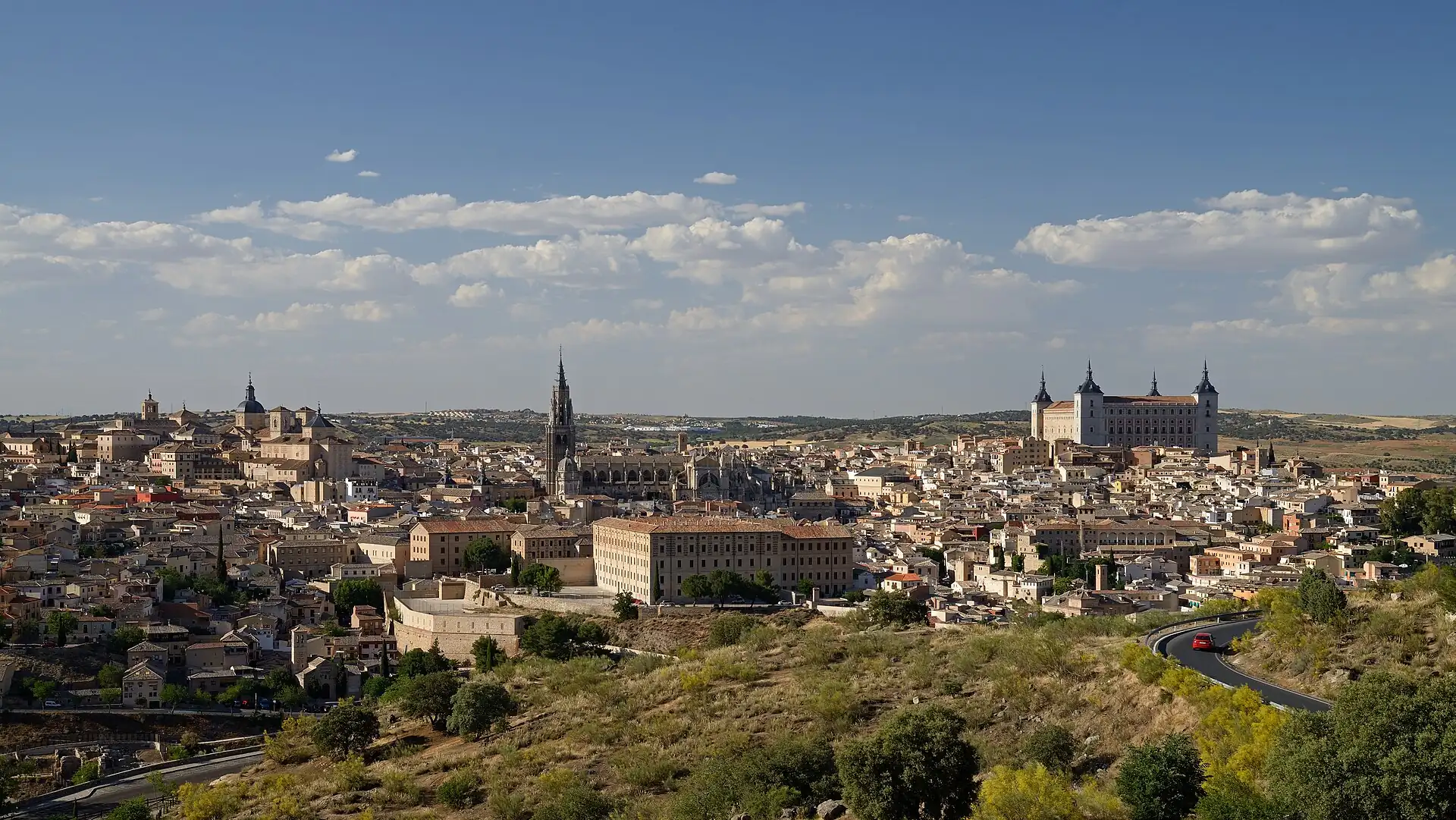 Photo: Ввласенко, CC BY-SA 3.0
Toledo
goFast train from Atocha, about 35 minutes each way
Old city on a hill; book the return train.
- Time
- Full day
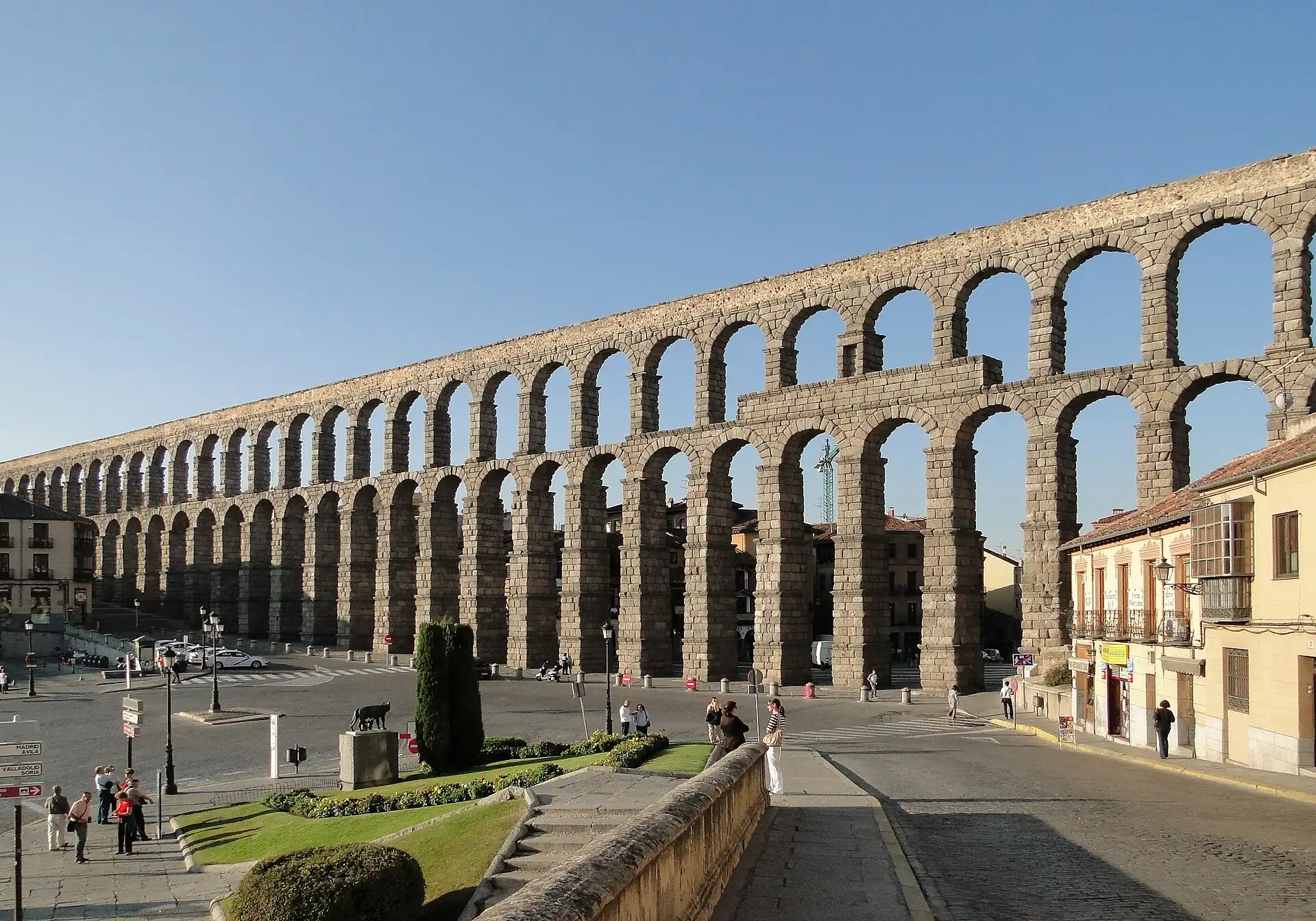 Photo: Bernard Gagnon, CC BY-SA 3.0
Segovia
goFast train from Chamartín, about 30 minutes each way
Roman aqueduct and the castle; the station is outside the old town.
- Time
- Full day
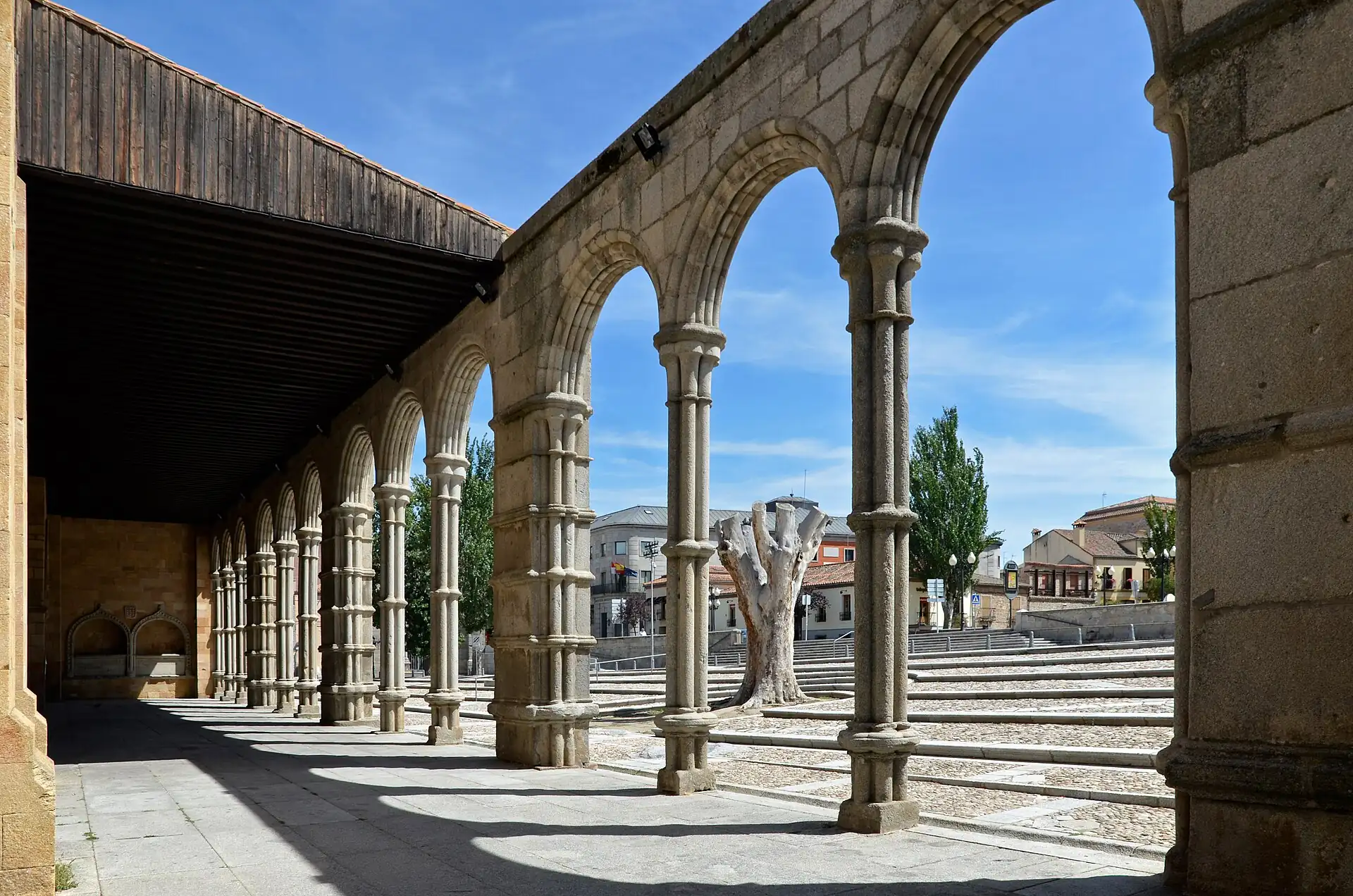 Photo: Selbymay, CC BY-SA 3.0
Ávila
go off seasonTrain from Chamartín, about 1.5 h each way
Walls are the sight; cold and windy in winter.
- Time
- Full day
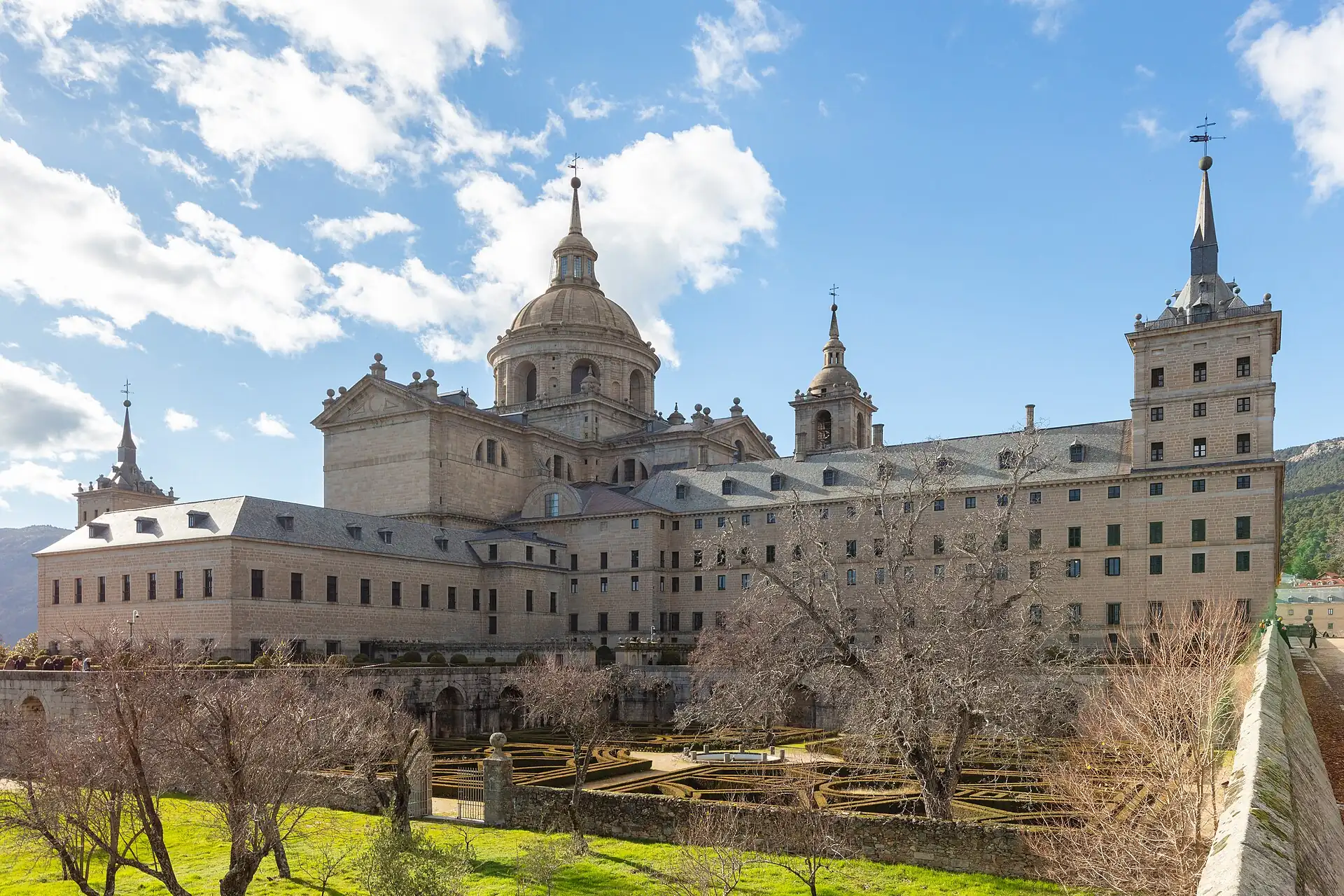 Photo: Diego Delso, CC BY-SA 4.0
El Escorial
goCommuter train and bus, about 1 h each way
Monastery and royal library; closed on Mondays.
- Time
- Half day
Go next
Córdoba
goDoor to door: About 2.5 h
AVE train from Atocha, about 1 h 45
Better with one night; the mosque-cathedral needs a morning.
Sevilla
overnightDoor to door: About 3 h
AVE from Atocha, about 2 h 30
Two nights minimum; avoid it in July–August.
Barcelona
overnightDoor to door: About 3.5 h
AVE from Atocha, about 2 h 30–3 h
Flying is not faster once you count the airport transfers.
Valencia
goDoor to door: About 2.5 h
AVE from Atocha, about 1 h 40
A beach day in spring or autumn.
Eat & sleepWhere to eat and which area to sleep in
Eat & sleep
Where to eat and which area to sleep in
Eat
A short list of places worth crossing the city for, each with how to get a seat.
Restaurant finder: filter every place to eat in Madrid →
Vegetarian-friendly score
2.5 / 5 · Workable
- Country diet noteOur country guide rates vegetarian eating as workable.1 / 2
- Places to eat in this guide2 of 6 places with a known answer are vegetarian-friendly, 4 partly.1 / 1.5
- Budget eating lines0 vegetarian lines in "Eat by budget".0 / 0.6
- Meat-free national dishes6 meat-free dishes in the country food list.0.4 / 0.4
- Dedicated vegetarian kitchens0 mentions of vegetarian restaurants, Buddhist or fasting kitchens.0 / 0.5
Country note: Easier in cities than villages; ham and tuna appear in 'vegetable' dishes.
Vegetarian places near me →Make a diet card →
How we score
- Country diet note (up to 2): easy 2, workable 1, mixed 0.75, hard 0; no note 0.5.
- City places to eat (up to 1.5): 1.5 × (vegetarian-friendly + half of partly friendly) ÷ places with a known answer; needs 3 or more known places.
- Budget eating lines marked vegetarian (up to 0.6): 0.2 each.
- Meat-free national dishes (up to 0.4): 0.1 each.
- Dedicated vegetarian kitchens mentioned — Buddhist chay, shōjin ryōri, Jain, fasting food, vegan cafés (up to 0.5): 0.1 each.
- Total rounded to the nearest half point, 0 to 5. Built from our own pages only, not from reviews.
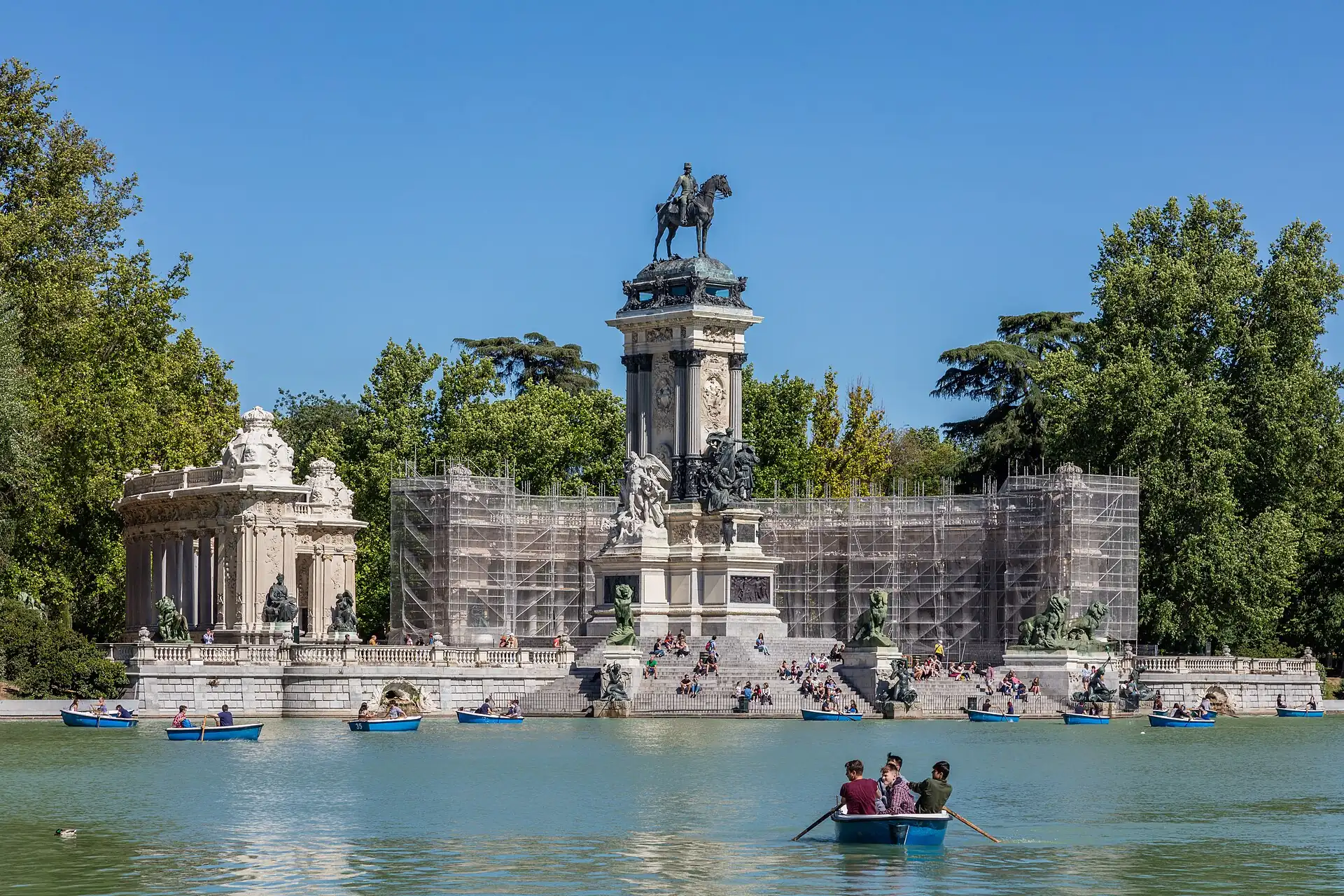
Eating and drinking guideEat by budget · Drink
Before you sit down to eat
Short version; full text linked
Eat by budget
Under €15 (≈ US$18) a meal
| Where | Order | Area | Price | Note |
|---|---|---|---|---|
| Casa Labra | Bacalao croquettes and fried cod | Sol | €8–15 (≈ US$10–18) | Standing bar; go at 13:00 or 19:00.Standing bar; go at 1:00 PM or 7:00 PM. |
| Bar La Campana | Bocadillo de calamares | Plaza Mayor | €5–8 (≈ US$6–10) | A sandwich of fried squid rings; the local snack. |
| Menú del día | Three courses, bread and a drink | Any side street, 13:30–15:30 | €13–20 (≈ US$16–25) | The best-value meal of the day; ask "¿hay menú?" |
| Chocolatería San Ginés | Chocolate con churros | Sol | €5–8 (≈ US$6–10) | A late-night or breakfast stop. |
Dishes to know
| Dish | What it is | Where to look | When | Price |
|---|---|---|---|---|
| Cocido madrileñoCocido madrileño | Chickpeas, meat and vegetables in a set of courses. | Old taverns | Lunch in winter | €25–40 (≈ US$30–50) |
| Bocadillo de calamaresBocadillo de calamares | Fried squid rings in a bread roll. | Around Plaza Mayor | Anytime | €5–8 (≈ US$6–10) |
| Tortilla de patatasTortilla española | Potato and egg omelette, juicy or firm. | Any bar | Morning or a tapa | €3–6 (≈ US$4–7) |
| Patatas bravasPatatas bravas | Fried potato with a spicy sauce. | Bars | Tapa hour | €4–7 (≈ US$5–9) |
| Huevos rotosHuevos rotos | Fried eggs over fried potatoes, often with ham. | Old taverns | Lunch | €8–14 (≈ US$10–17) |
| Callos a la madrileñaCallos | Tripe stew with chorizo. | Old taverns | Winter | €8–14 (≈ US$10–17) |
| Gambas al ajilloGambas al ajillo | Prawns sizzling in garlic and oil. | Bars | Tapa hour | €8–14 (≈ US$10–17) |
| Churros con chocolateChurros con chocolate | Fried dough dipped in thick hot chocolate. | Chocolaterías | Breakfast or after midnight | €5–8 (≈ US$6–10) |
| Jamón ibéricoJamón ibérico | Cured ham from acorn-fed pigs, sliced thin. | Delis and bars | Anytime | €12–25 (≈ US$14–30) a plate |
| CroquetasCroquetas | Fried béchamel with ham or cod. | Bars | Anytime | €1.50–3 (≈ US$2–4) each |
| RosquillasRosquillas de San Isidro | Ring doughnuts, sold on the saint's day. | Bakeries | May | €1–3 (≈ US$2–4) |
| Vermut and olivesVermut | Vermouth with olives and pickles. | Bodegas | Before Sunday lunch | €3–5 (≈ US$4–6) |
- Lunch is the main meal: the set lunch is cheaper than the same dishes at dinner.
- Order at the bar for a lower price than at the table; the terrace price is often 10–20% higher.
- The bill does not come until you ask: "la cuenta, por favor".
Drink & nightlife
| Where | What | Until | Note |
|---|---|---|---|
| Plaza de Santa Ana and Huertas | Terrace bars and old taverns | About 01:00–02:00About 1:00 AM–2:00 AM | Crowded and tourist-priced on the square; the side streets are cheaper. |
| Malasaña (Dos de Mayo, Velarde) | Bars, vermouth spots, live music | About 02:00About 2:00 AM | Younger and louder; Thursday–Saturday is peak. |
| Chueca (Plaza de Chueca, Calle Pelayo) | LGBTQ+ bars and cocktails | About 03:00About 3:00 AM | Friendly to everyone; the square is at its fullest during Pride. |
| La Latina (Cava Baja and Cava Alta) | Tapas taverns | About 00:00–01:00About 12:00 AM–1:00 AM | Sunday lunchtime is the ritual; go before 13:30.Sunday lunchtime is the ritual; go before 1:30 PM. |
| Hotel rooftop bars (Gran Vía, Sol) | Cocktails with a view of the roofs | About 01:00About 1:00 AM | Cover charges or a minimum spend in some; the sunset slot fills early. |
By style
| Style | What | Where | Price | Until |
|---|---|---|---|---|
| Caña | Small draught beerOften comes with a small free bite (tapa) in older bars. | Any bar | €1.80–3.50 (≈ US$3–5) | Bar hours |
| Vermut (vermouth) | Red vermouth on ice with an olive and a slice of orangeThe Sunday-lunch drink; ask for "un vermut de grifo" (on tap). | Bodegas and Sunday-lunch bars | €3–5 (≈ US$4–6) | Bar hours |
| Tinto de verano | Red wine with lemon soda over iceA summer drink lighter than sangria. | Terraces | €3–5 (≈ US$4–6) | Bar hours |
| Sangria | Wine punch with fruitLocals drink it rarely; a jug in the tourist streets is often poor. | Tourist terraces | €5–9 (≈ US$6–11) a glass | Bar hours |
| Sidra and vermú on tap in taverns | Cider poured from height, a northern traditionLet the waiter pour and drink it in one go. | Asturian sidrerías in Chueca and Lavapiés | €3–6 (≈ US$4–7) a glass | Bar hours |
| Chocolate con churros | Thick hot chocolate with fried doughA closing-time or breakfast tradition. | Chocolaterías | €5–8 (≈ US$6–10) | Some open all night |
Rules that bite
- Bars ask for ID at the door of clubs; carry a photocopy of your passport or a photo of it.
- Tipping is optional: leave a euro or round up.
Sleep
Pick the area first: it decides your walk home at night and your first morning.
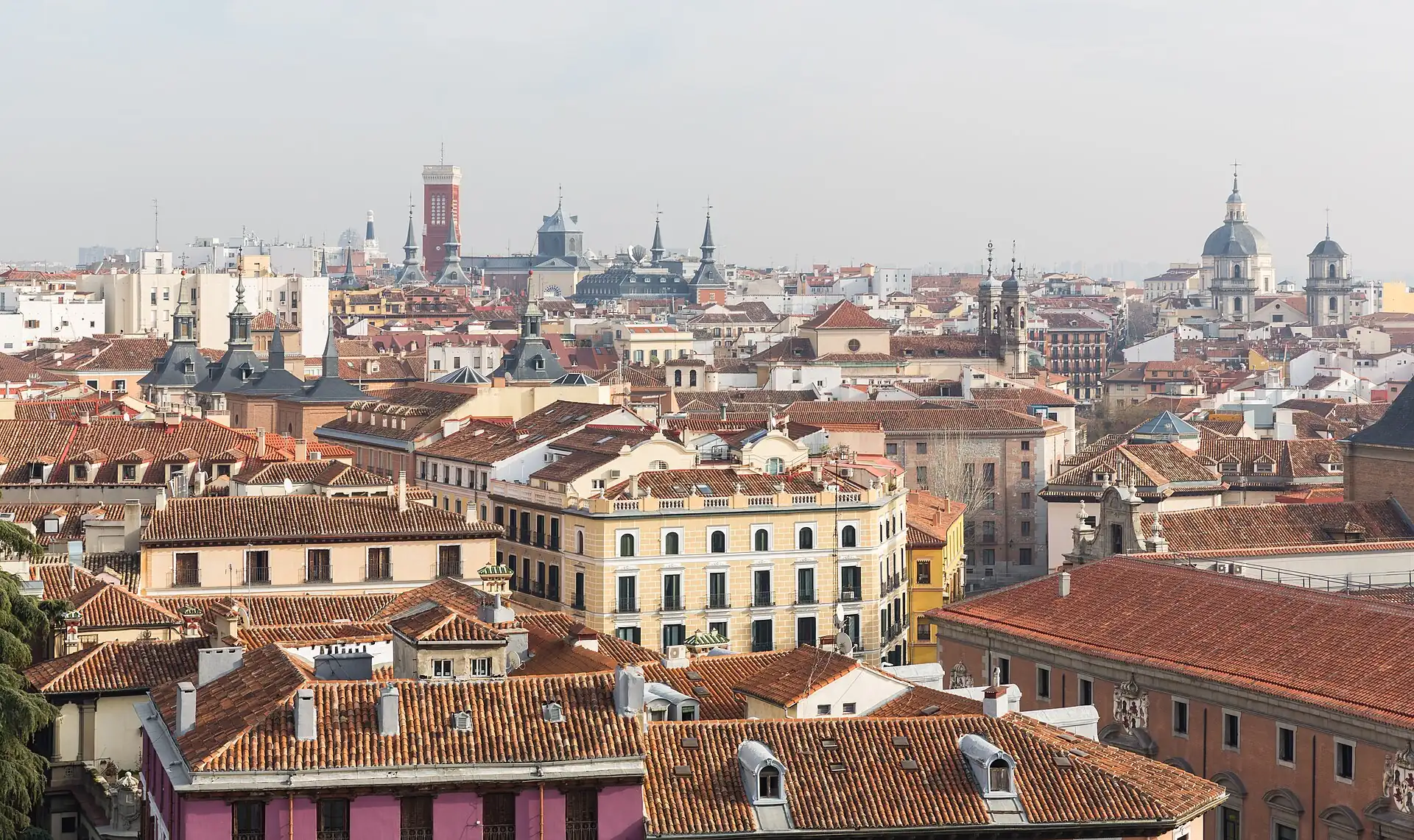
Which neighborhood fits you
Three questions, one recommendation, with the reasons.
Your best fit
- Walk to the palace, Plaza Mayor and the museums within 25 minutes.
- Most hotels have 24 h desks; hostales may lock the street door.
Watch out: Noise to 02:00 at weekends; ask for a back or upper room.
Next best: Chueca and Malasaña
Built from our 1–5 desk scores per area; your answers stay in this browser.
More on sleepingSleep by budget · Your area · With kids
Sleep by budget
| Band | Price | Where | Room types | What to expect |
|---|---|---|---|---|
| budget | €25–40 (≈ US$30–50) dorm bed · €60–90 (≈ US$70–110) private room | Sol, Lavapiés, Huertas | Hostels and hostales (guesthouses) | Small rooms, shared or tiny bathrooms; a street door with a buzzer. |
| mid | €110–220 (≈ US$130–300) | Sol, Chueca, Salamanca | Boutique hotels and 3–4 star chains | Lift, breakfast, AC, 24 h desk. |
| splurge | €300–800 (≈ US$350–950)+ | Salamanca, Paseo del Prado | Historic five-stars and design hotels | Pools, spas, a rooftop bar; taxes may be added. |
| mid | €90–200 (≈ US$110–250) (cheaper by the week) | Chamberí, Malasaña | Apartments | Kitchen and washing machine; check the tourist licence. |
Booking checks
- Book a room with AC for June–September, and ask about street noise: Sol and Chueca run late.
- Hostales (H, Hs) are small guesthouses on the upper floors of a building; they are legitimate, but read the reviews.
- Night arrival: confirm the door hours for a late check-in.
- Ask whether a city tourist tax applies to your stay: rules change (check).
- The hotel registers you with the police; carry your passport.
Which area is yours
| If you are | Sleep in | Because |
|---|---|---|
| First visit, 3 nights | Sol and Gran Vía | Everything on the list is a walk. |
| Nightlife and LGBTQ+ travellers | Chueca and Malasaña | The bars are at the door and the streets feel safe. |
| Light sleepers | Chueca and Malasaña | Pick an inner-courtyard room, or look at Retiro or Salamanca. |
First-timers: everything is a walk away, but choose a hotel with a 24h desk and a car-accessible door, and a room away from the street.
Quieter than Sol on weeknights but louder at weekends; pick a hostal or hotel with a staffed desk and ask about the night bell.
Areas are in our default order until you tick a priority.
Scores are 1–5 desk judgements per priority (2026).
With kids
- Retiro Park is the easiest family day: the rowing boats on the Estanque, puppet shows on weekends and the Crystal Palace to run around.
- Strollers manage the wide streets and the museums, but the old centre has cobbles and steep lanes; a carrier is easier.
- The Prado and the Reina Sofía give children a trail sheet; the Science Museum CosmoCaixa (Alcobendas) and Faunia are half-day options by Metro or taxi.
- Restaurants seat children at any hour, but kitchens close between 16:00 and 20:00: a bocadillo or a bakery snack bridges the gap.Restaurants seat children at any hour, but kitchens close between 4:00 PM and 20:00: a bocadillo or a bakery snack bridges the gap.
- Taxis carry child seats on request; book ahead.
PracticalMoney, essentials, safety and the pocket card
Practical
Money, essentials, safety and the pocket card
Money
What a day costs at three comfort levels, and how to pay.
- Budget
- €40–70 (≈ US$50–85) excl. bed / day
- Mid
- €70–140 (≈ US$85–170) excl. bed / day
- High
- €140 (≈ US$170)+ excl. bed / day
- Transit card
- No pass needed for a short stay; a rechargeable Multi card for the Metro and buses is optional, and contactless bank cards work at many gates.
- Cash rule
- Withdraw at bank ATMs (inside a branch or lobby), decline the machine's own currency conversion, and keep €30–50 (≈ US$35–60) in coins and small notes.
More on moneyCosts · Budget · Buy
What things cost
- Bottle of water, shop€0.60–1.20 (≈ US$1–2)
- Royal Palace ticket€12–16 (≈ US$14–19)
Trip budget
| Hotel double room1 × 4 nights × €150 | €600 |
| Food, local transport, entries2 × 4 days × €110 | €880 |
| Airport taxi, both ways1 × €66 · fixed fare each way; the Metro or bus is cheaper | €66 |
| eSIM2 × €12 | €24 |
| Buffer 10%Price creep, a taxi you did not plan, one splurge | €157 |
| Trip total≈ €216 per person per day, bed included | €1,727≈ US$2,500 |
2026 estimate in euros; flights, tours and museum passes excluded. Your choices stay in this browser.
Buy
- Bargaining
- Prices in shops, markets and restaurants are fixed. Haggling is not done, except a small discount for several items at an antiques stall or a flea-market table.
- Fixed-price check
- Compare with a department store or a supermarket before buying food gifts in the tourist streets around Plaza Mayor; the same jar of saffron or box of turrón often costs less at El Corte Inglés or a Mercadona.
Markets and shopping streets
| Where | What | When | Haggle | Note |
|---|---|---|---|---|
| El Rastro (La Latina) | Flea market: clothes, antiques, leather, bric-a-brac | Sundays and holidays, about 09:00–15:00Sundays and holidays, about 9:00 AM–3:00 PM | light | Crowded; pickpockets work it. Wear your bag in front. |
| Mercado de San Miguel | Covered market turned tapas hall | Daily, long hours (check) | no | Prices are a step above ordinary bars; a place for a tasting plate, not a full shop. |
| Mercado de San Antón (Chueca) | Food hall with a rooftop terrace | Daily, long hours (check) | no | A calmer market than San Miguel; the terrace fills after 20:00.A calmer market than San Miguel; the terrace fills after 8:00 PM. |
| Mercado de la Cebada (La Latina) | Neighbourhood fresh-produce market | Mon–Sat mornings, some afternoons (check) | no | Where locals buy; fruit, fish and bakery counters. |
| Cuesta de Moyano | Second-hand book stalls beside the Retiro | Most days, daytime (check) | light | Bring Spanish; old prints and postcards are the easy buys. |
| Plaza Mayor Christmas market | Nativity figures and decorations | Late Nov–Dec 31 (check) | no | Busy after dark; stalls sell figurines for the Belén scenes. |
Shops by what they sell
| For | Where | Hours | Note |
|---|---|---|---|
| Department store (El Corte Inglés) | Puerta del Sol, Callao, Serrano | Mon–Sat 10:00–22:00; Sunday hours vary (check) | A fixed-price reference, plus a tax-free desk for non-EU visitors. |
| Olive oil, jamón and cheese | Around Plaza Mayor and Mercado de San Miguel; supermarkets | Shop hours; long midday break in small shops | A vacuum-packed jamón travels well; check customs rules for your home country. |
| Fashion and design | Calle Fuencarral, Calle Serrano, Malasaña | Shop hours | Spanish chains and independents; sales start on 7 January and 1 July. |
| Fans, capes and hats | Calle Mayor, Calle Toledo | Shop hours | Old specialist shops; a hand-painted fan is a good gift. |
| Guitars | Calle Cuchilleros area, Gran Vía side streets | Shop hours | Handmade classical guitars are a serious purchase; ask for the export paperwork. |
| Sweets and turrón | Sol, Plaza Mayor; convents (dulces de convento) | Shop hours | Convents sell biscuits through a turntable window at fixed hours. |
Changing money
| Where | Verdict | Why |
|---|---|---|
| Bank ATM in a branch or lobby | use | Best rate; choose to be charged in euros, not your home currency. |
| Cash machines run by Euronet, Travelex or on the street (Sol, airport) | avoid | High fees and a poor rate. |
| Exchange booths on Puerta del Sol and Gran Vía | avoid | Wide spreads; use a card instead. |
| Cards and phone wallets | use | Accepted almost everywhere; contactless up to the per-tap limit. |
| Tax refund (IVA) desk at the airport | caution | Only for non-EU residents on large purchases; keep the form stamped at customs before check-in. |
ATMs
- Fee
- Your bank charges its own fee; the Spanish bank usually does not, though some now do (check the screen).
- Limit
- Around €300–600 (≈ US$350–700) a withdrawal.
- Currency choice
- Decline dynamic currency conversion and pay in euros.
- Safety
- Cover the keypad; avoid machines with a person hovering behind you.
Essentials and accessEssentials · Access
Essentials
- Tipping
- Not expected. Leave coins or round up in restaurants; 5–10% only for exceptional service.
- Plugs & power
- 230 V; two-round-pin sockets (types C and F). Non-EU visitors need an adapter.
- Toilets
- Cafés, department stores, museums and stations; buy something small if asked.
- Health
- Summer heat and strong sun; pharmacies (farmacia) with a green cross give first advice. Bring travel insurance and, for EU citizens, the EHIC/GHIC.
- Accessibility
- Metro has many step-free stations, but not all; the old centre has steep streets and cobbles.
- Laundry
- Self-service launderettes in Lavapiés and Chueca; hotels charge per item.
- Emergency numbers
- 112.
Pack
- Sun hat, sunscreen and a refillable bottle from May to September
- A warm layer for winter mornings
- Comfortable shoes for cobbles and museum floors
- A small zipped cross-body bag
Accessibility
Madrid is manageable on wheels. The Metro has lifts at many stations, museums are step-free, and the newer pavements are wide; the old centre has cobbles and steep streets, and some hostales have no lift.
- Pavements
- Wide on Gran Vía and the Paseo del Prado; narrow with cobbles in the Austrias and Huertas.
- Metro
- Many stations have lifts, but not all; check the Metro map before you set out. Lifts fail at times.
- Buses
- The EMT bus fleet is low-floor with a ramp; a good step-free option.
- Taxis
- Adapted taxis are available by request; book ahead in the app.
- Hotels
- Newer hotels have lifts and roll-in showers; many old-building hostales are up narrow stairs.
- Toilets
- Accessible toilets in museums, malls, El Corte Inglés and stations.
Sights, step-free or not
| Prado Museum | step-free | Step-free entrances and lifts; wheelchairs on loan at the cloakroom. |
| Reina Sofía Museum | step-free | Lifts throughout; the glass lifts on the façade are part of the building. |
| Royal Palace of Madrid | with help | A step-free route exists but some rooms have steps; ask at the door. |
| Retiro Park | step-free | Paved main paths; gravel side paths are slower going. |
| Plaza Mayor | with help | Cobbles across the square; the arcades are smooth. |
Survive
Safety basics, the lines not to cross, and practical habits that save the day.
Safety
- Pickpockets work Sol, Plaza Mayor, the Metro and the Prado queue: front pocket or a zipped bag, never a phone on a café table.
- Summer heat: water, hat and an AC stop every 90 minutes; avoid 14:00–18:00 on foot.Summer heat: water, hat and an AC stop every 90 minutes; avoid 2:00 PM–6:00 PM on foot.
- Emergency: 112 for everything (police, fire, ambulance).
Red lines
- Churches and the Royal Palace: no photos where signs forbid them; shoulders covered in churches.
- Do not touch paintings; large bags go in the cloakroom at the museums.
Practical
- Toilets: cafés (buy a coffee), department stores, museums and train stations.
- Tap water is safe to drink.
More on staying safeStay safe · Stay healthy · Safety map · Solo & women · Etiquette · Cope · Scams
After dark, by area
2 flagged areas
- Take care
Lavapiés
Take care
Day = about 07:00–20:00. What to watch in each area, day and night →
Scams and red flags
Walk away if you see these
- Fake petition clipboards and bracelet hands in Sol: keep walking and keep your hands free.
- The 'find the lady' street game and distraction thefts near Plaza Mayor and the Metro.
- Restaurants near Plaza Mayor that add a large cover or 'tourist menu' surcharge: read the menu prices before you sit.
- Taxi drivers who refuse the meter: use the meter or the airport fixed fare, and check the receipt.
Stay safe
Crossing the road
- 01Wait for the green man: drivers stop at crossings but scooters and bikes cut through.
- 02Look right on one-way streets and for the bus lane on Gran Vía.
- 03Watch for bikes and e-scooters on the wide Paseo del Prado pavements.
Hustles specific to this city
| Hustle | Where | The tell | What to do |
|---|---|---|---|
| Petition clipboard and bracelet | Sol, Plaza Mayor | A person asks you to sign, or ties a bracelet to your wrist, then asks for money. | Keep walking and keep your hands free. |
| Find the lady | Sol, Metro | A street card game with a crowd of shills. | Do not play; the crowd is part of the game. |
| Metro pickpocket | Line 1 and the airport lines | A crush at the door and a hand at your pocket. | Stand with your back to a wall; bag in front. |
| Restaurant cover charge | Plaza Mayor | A menu without prices or a large cover fee. | Read the printed menu before you sit; ask "¿cuánto cuesta?". |
| Taxi that refuses the meter | Airport, stations | The driver quotes a price before the meter runs. | Ask for the meter or the airport fixed fare, and take the receipt. |
| Spilled liquid | Crowded streets | A stranger "cleans" your jacket while a partner takes the wallet. | Step away; check your pockets. |
| Fake police | Tourist streets | Plain-clothes "police" ask to see your wallet. | Ask for uniformed police and refuse. |
- Pickpockets
- The main risk: front pocket, zipped bag, no phone on a café table.
- Night
- The centre is busy and safe; quieter side streets in Lavapiés and near Atocha need a few extra minutes of care.
- Heat
- Summer heat stroke is the more common emergency: drink water and rest at 14:00–18:00.Summer heat stroke is the more common emergency: drink water and rest at 2:00 PM–6:00 PM.
Stay healthy
Air quality by month
| Jan | Feb | Mar | Apr | May | Jun | Jul | Aug | Sep | Oct | Nov | Dec |
|---|---|---|---|---|---|---|---|---|---|---|---|
| mixed | mixed | ok | ok | ok | ok | mixed | mixed | ok | ok | mixed | mixed |
Winter inversions and traffic can push nitrogen dioxide levels up; the city restricts cars in the central zone. Check the city air-quality app if you have asthma.
- Heat
- June–August: water, a hat and a break indoors at 14:00–18:00.June–August: water, a hat and a break indoors at 2:00 PM–6:00 PM.
- Water
- Tap water is safe and good; bottled is not needed.
- Pharmacy
- Pharmacists advise on minor illness; the green cross marks them; duty pharmacies stay open at night.
- Vaccinations
- No special vaccines are needed; keep routine ones up to date.
- Ticks and sun
- The Casa de Campo and the sierra have ticks in spring; wear long trousers on trails.
Hospitals and clinics: see Cope.
Safety by area and hour
| Area | Day | Night | What to watch |
|---|---|---|---|
| Sol, Plaza Mayor and Gran Vía | fine | fine | Pickpockets in crowds, on the Metro and at tables; distraction scams and petition clipboards. |
| Palacio and Austrias | fine | fine | Quiet and dim after 23:00; bag snatchers on Calle Mayor at closing time.Quiet and dim after 11:00 PM; bag snatchers on Calle Mayor at closing time. |
| Paseo del Arte and Atocha | fine | fine | Pickpockets in the Prado queue and in Atocha station. |
| Retiro | fine | caution | Gates close at dusk; the park is dark and empty after closing. |
| Malasaña and Chueca | fine | fine | Phone theft at terraces; crowded on Friday and Saturday nights. |
| Lavapiés | fine | caution | Petty theft and hassle after midnight on some streets; stay on the busy ones. |
| Metro at rush hour | caution | fine | Line 1 and the stations at Sol, Atocha and the airport are the hot spots; bag in front. |
- A zipped cross-body bag, phone in a front pocket and no wallet in a back pocket cover almost every risk.
- Use a taxi or a ride-hailing app after 01:00 rather than a night bus if you are alone.Use a taxi or a ride-hailing app after 1:00 AM rather than a night bus if you are alone.
Solo, women and LGBTQ+ travellers
Solo
- Easy and social: a caña at the bar and a menu-del-día lunch put you in the middle of the room.
- Dinner is late; if you eat alone, sit at the bar, not at a table set for four.
- Hostels in Sol and Lavapiés run free walking tours and tapas nights.
Women
- Harassment is uncommon in the centre; the main risk is bag theft. Wear a cross-body bag on the inside of the pavement.
- Night taxis and ride-hailing apps are common and safe; share the trip with a friend.
- Clothes are relaxed; cover shoulders only for churches.
LGBTQ+
- Spain has recognised same-sex marriage since 2005, and Chueca is one of the largest LGBTQ+ neighbourhoods in Europe.
- Madrid Pride (Orgullo, early July) closes streets and fills hotels; book months ahead.
- Affection between two men or two women is normal in the centre; Lavapiés and the outer districts are similar.
Etiquette in Madrid
- Greeting
- A handshake in formal meetings; two kisses, right then left, between friends. Say "hola" on entering a small shop or bar.
- Meal times
- Lunch 14:00–15:30; dinner from 21:00. Arriving at 19:00 to a closed kitchen is the classic mistake.Lunch 2:00 PM–3:30 PM; dinner from 9:00 PM. Arriving at 7:00 PM to a closed kitchen is the classic mistake.
- Tapas and bar counters
- Order at the bar, pay at the end, and toss napkins on the floor only in the few bars that still allow it.
- Tipping
- Small change or round up; 5–10% only for good service in restaurants.
- Churches
- Cover shoulders and knees; do not photograph during services.
- Noise
- Speech is loud and conversation overlaps; that is not an argument.
- Siesta
- Small shops close 14:00–17:00 outside the centre; plan errands for the morning.Small shops close 2:00 PM–5:00 PM outside the centre; plan errands for the morning.
Cope
Hospitals and clinics that handle foreigners
| Where | Area | Use it for |
|---|---|---|
| Hospital Universitario La Paz | Fuencarral-El Pardo (north) | Large public hospital with 24 h emergency; insurers direct-bill some private wings. |
| Hospital Clínico San Carlos | Moncloa-Aravaca | Public teaching hospital with 24 h emergency. |
| Hospital Universitario Ramón y Cajal | Fuencarral (Ciudad Sanitaria) | Another 24 h public hospital with emergency care. |
| Farmacias de guardia (duty pharmacies) | Citywide | A green cross; the door lists the pharmacy open tonight. |
Visa extensions
- Stay
- Non-EU visitors can stay up to 90 days in any 180 in the Schengen area without a visa if they are from a visa-exempt country; check ETIAS timing before you travel.
- Extending
- A tourist stay is rarely extended; an appointment with the Oficina de Extranjería is needed and refusals are common.
- Overstay
- Fines and an entry ban follow; fix it before you leave, not at the border.
- ID
- Carry your passport or a copy; police can ask for identification.
Embassies and consulates
| Country | Address | Phone | Note |
|---|---|---|---|
| United States | Calle de Serrano 75 | +34 91 587 2200 | (check) |
| United Kingdom | Torre Espacio, Paseo de la Castellana 259D | +34 91 714 6300 | (check) |
| Canada | Torre Espacio, Paseo de la Castellana 259D | +34 91 382 8400 | (check) |
| Australia | Torre Espacio, Paseo de la Castellana 259D | +34 91 353 6600 | (check) |
| Ireland | Paseo de la Castellana 46 | +34 91 436 4093 | (check) |
- Emergency
- 112 for police, fire and ambulance; English is spoken on the line.
- Police
- Policía Nacional 091; Policía Municipal 092.
- Lost passport
- File a report (denuncia) at a police station, then contact your embassy.
- Theft report
- Denuncias can be started online and finished at the police station; you need the copy for insurance.
- Insurance
- EU visitors carry the EHIC or GHIC; all others need travel insurance with medical cover.
Apps and offline kitOffline kit
Offline kit
Set up before you leave, so Madrid still works with no signal or a dead roaming plan.
On your phone
- Maps: open the city in Google Maps, tap the place name, then Download offline map (or use an offline-maps app).
- Data: install an eSIM or buy a local SIM before the first taxi; the apps in this guide depend on it.
- Translation: download the local language for camera translation.
- Screenshots: booking confirmations, hotel address in the local script, and the emergency numbers.
This guide
Save the Madrid guide and its pages on this device; it opens without a connection.
Phrases that do the work
Greeting
Hello
Hola
OH-la
Thanks
Thank you
Gracias
GRAH-thyas
Bar
A coffee with milk, please
Un café con leche, por favor
oon kah-FEH kon LEH-cheh, por fah-VOR
Bar
The bill, please
La cuenta, por favor
la KWEN-ta, por fah-VOR
Shop
How much is it?
¿Cuánto cuesta?
KWAN-to KWES-ta
Food
Is there a set lunch?
¿Hay menú del día?
eye meh-NOO del DEE-a
Taxi
To this address, please
A esta dirección, por favor
a ES-ta dee-rek-THYON, por fah-VOR
Help
I need help
Necesito ayuda
neh-theh-SEE-to ah-YOO-da
Pocket card
Fill in, then print or save as PDF
Stays in this browser only; nothing is sent anywhere.
MadridMadrid
Pocket card · Voykit
My bed tonight
—
—
—
A esta dirección, por favorTo this address, please
Emergency
- All emergencies112
- Police (national)091
- Police (municipal)092
Embassy
Most embassies are on the Castellana and Serrano axis; write your own embassy 24-hour line below.
My embassy: —
Fare anchors (2026 estimate)
- Barajas → centre, taxi (fixed fare): €33 (≈ US$40), 25–45 min (check the current fare)
- Barajas → Atocha, Express Airport Bus: About €5 (≈ US$6), 30–40 min, runs all night (check)
- Metro across the centre: €1.50–2.50 (≈ US$2–3)
Say or show
- Hola — Hello (OH-la)
- Gracias — Thank you (GRAH-thyas)
- Un café con leche, por favor — A coffee with milk, please (oon kah-FEH kon LEH-cheh, por fah-VOR)
- La cuenta, por favor — The bill, please (la KWEN-ta, por fah-VOR)
- ¿Cuánto cuesta? — How much is it? (KWAN-to KWES-ta)
- Necesito ayuda — I need help (neh-theh-SEE-to ah-YOO-da)
Show the street and number; drivers use both.
Deep diveHistory, reading, photos and every source
Deep dive
History, reading, photos and every source
Sources
- officialSpain Tourism (Turespaña)
- officialMadrid tourism (Turismo Madrid)
- secondaryWikivoyage — Madrid
Ask about Madrid
Loading…
Was this useful?