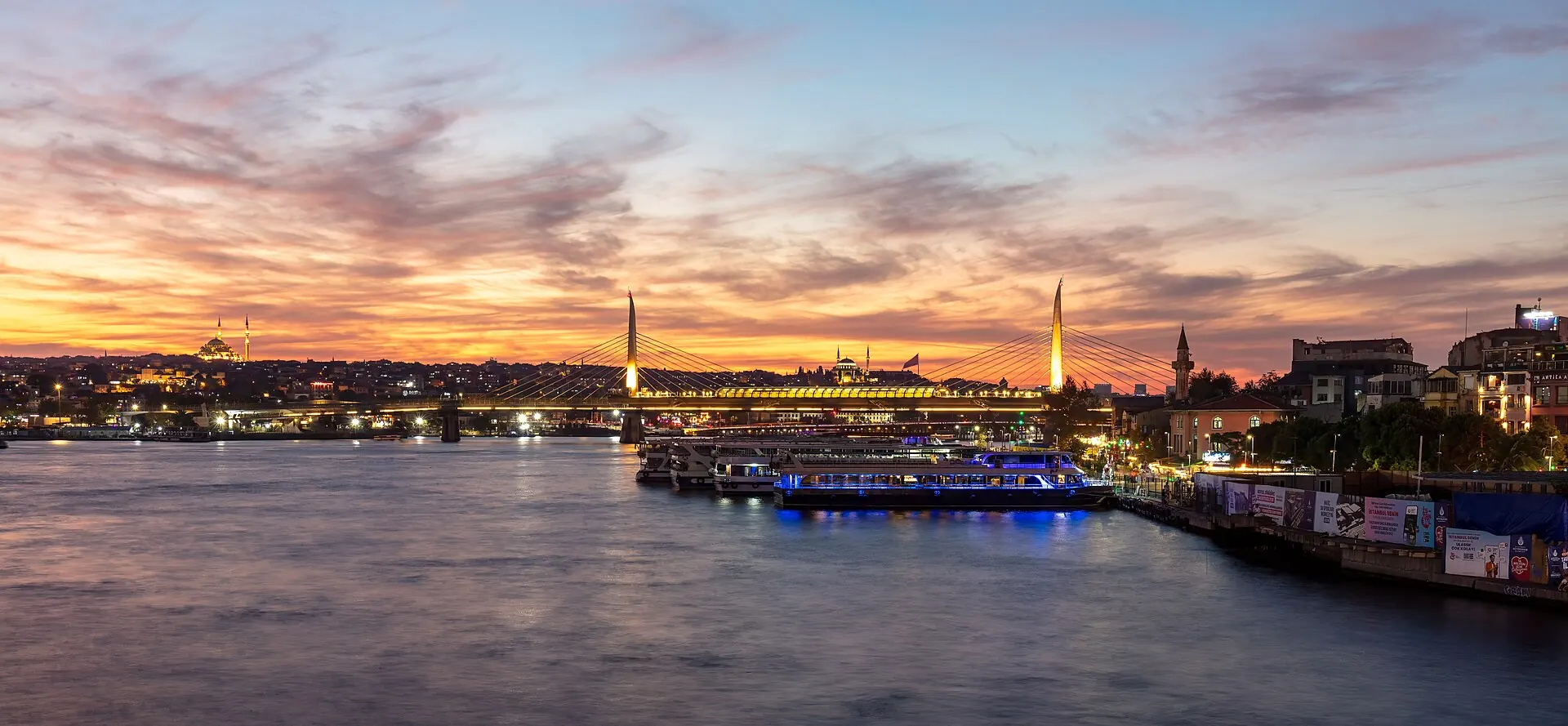
Istanbul
İstanbul
Code IS · 4 walking zones
Istanbul is a hills-and-water city: do Sultanahmet at opening, cross the water by tram or ferry, keep Galata and Karaköy for the late afternoon — and never plan a day of stairs with a suitcase.
Our quick read of Istanbul, scored 1–5 (friction is out of 100). Cash need: how often you still need notes. Heat risk: how hot days get. Stroller: how easy wheels are. Friction: overall effort for a first visit. Desk judgements, so check before relying on them.
- Local time
- --:--
- Weather
- forecast below
- Currency
- TRY
- Best months
- Mar · Apr · May · Sep · Oct · Nov
- Airports
- Istanbul (IST) · Sabiha Gökçen (SAW)
Walking zones: the 4 areas this guide plans a day around. Each is a district you can cover on foot, so you do one zone per half-day and ride the train between them. The code (IS 01, IS 02…) is just the zone's number on the Istanbul line; the line under each name says how bags fare there and how much time it needs.
Map of Istanbul
Use the switches to show or hide each kind of pin. A switch that is on shows its pins on the map; tap it again to hide them. "Show only" keeps just the pins that match (for example, places that fit a suitcase). Tap any pin for its name and a link to its page.
- Where to sleep
- Places
- Eat
- Walking clusters
- Rest stops
From the airport Istanbul (IST) to your bed · Sabiha Gökçen (SAW) to your bed
Tap a pin for its card. Places without their own coordinates are shown by their walking cluster.
Why Istanbul
Istanbul's big sights sit close together on the old peninsula, but the city is steep, crowded and cut in two by water. The trips that go wrong are the ones that queue at Hagia Sophia at noon, drag a suitcase up Galata's cobbles, or land at the far airport in the evening peak. Four walking clusters cover a first visit; ferries and day trips leave from one kept bed.
See first
- 1
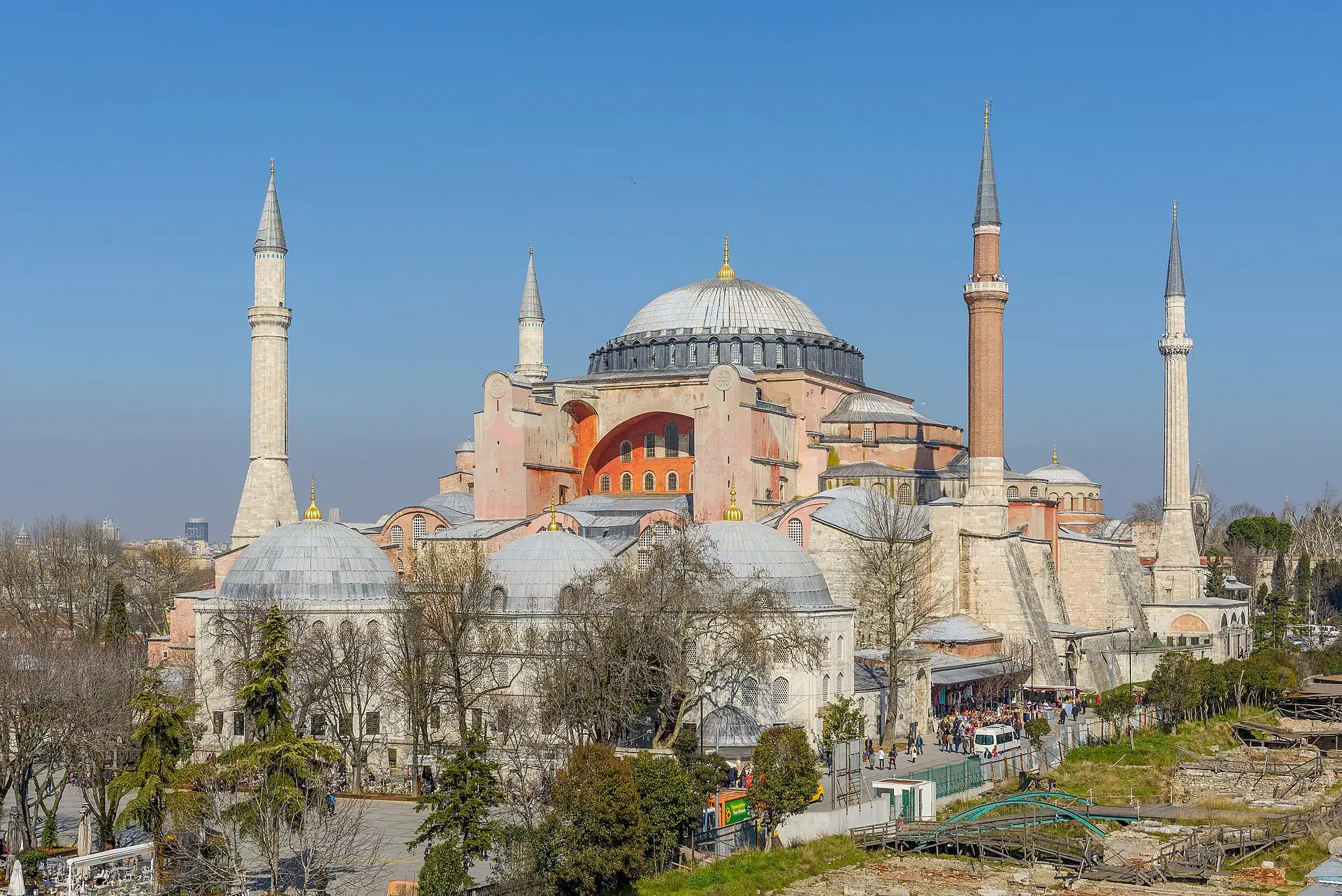 Hagia Sophia · 1–1.5 h
- 2
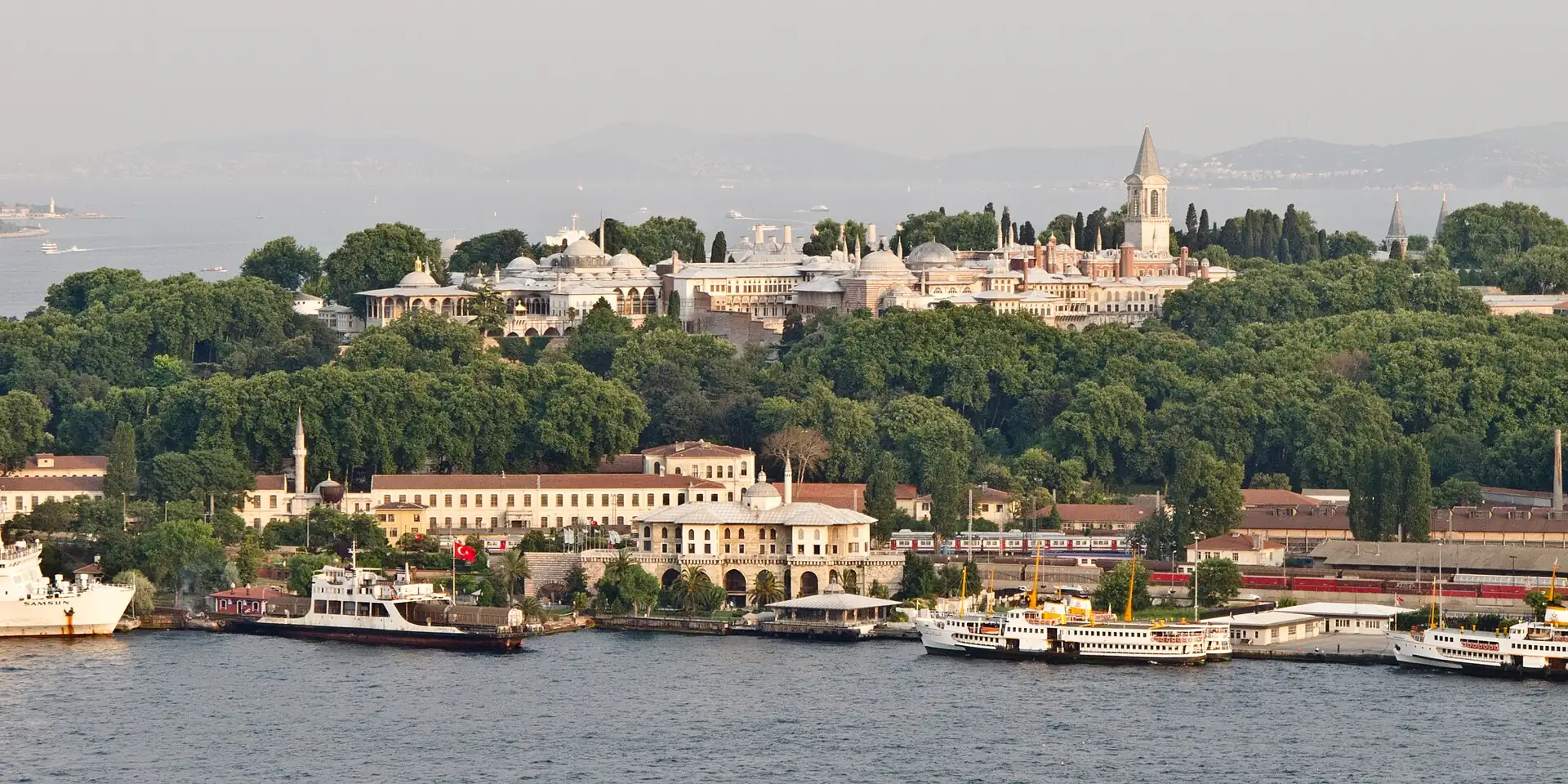 Topkapı Palace · 2–3 h
- 3
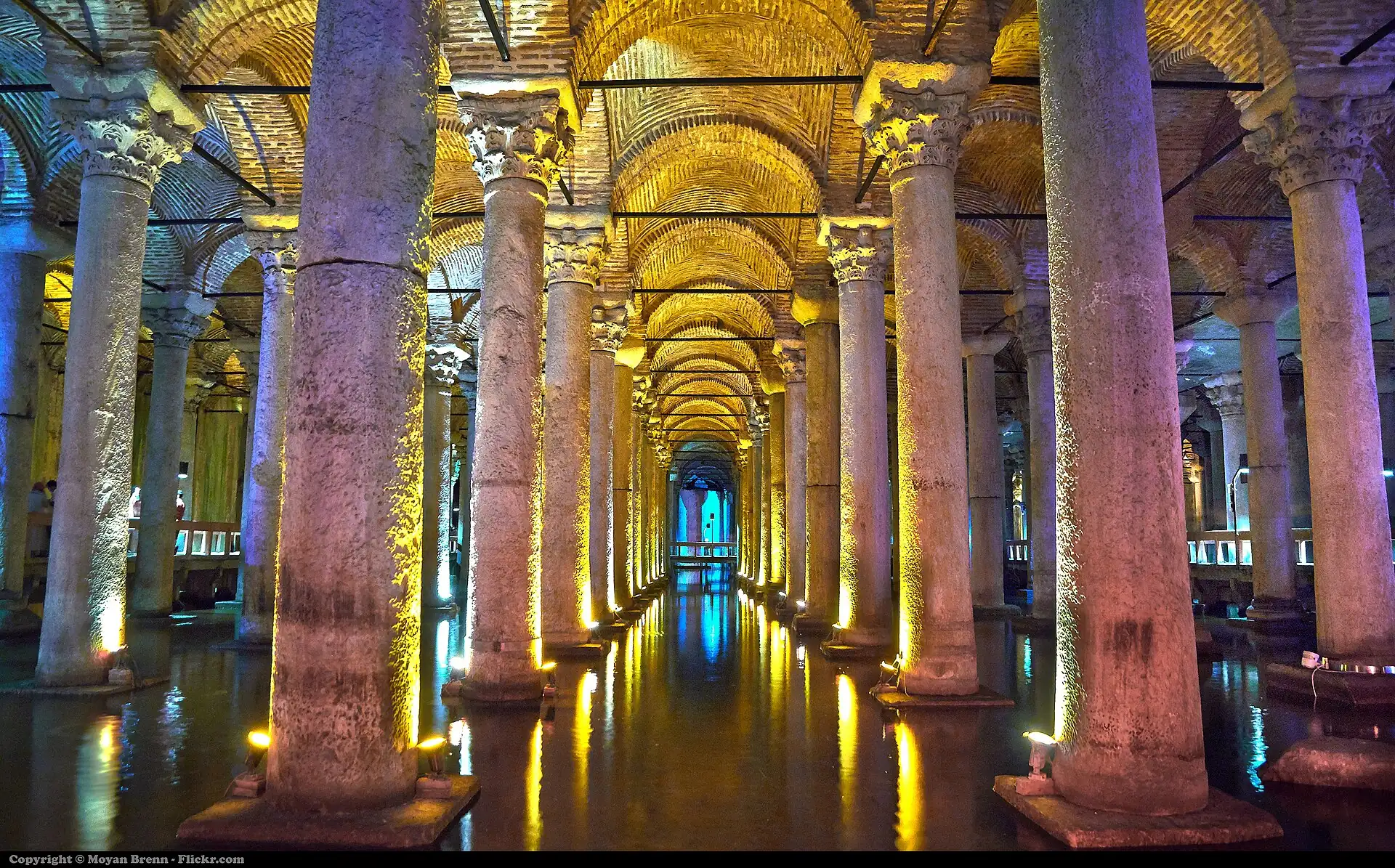 Basilica Cistern · 30–40 min
- 4
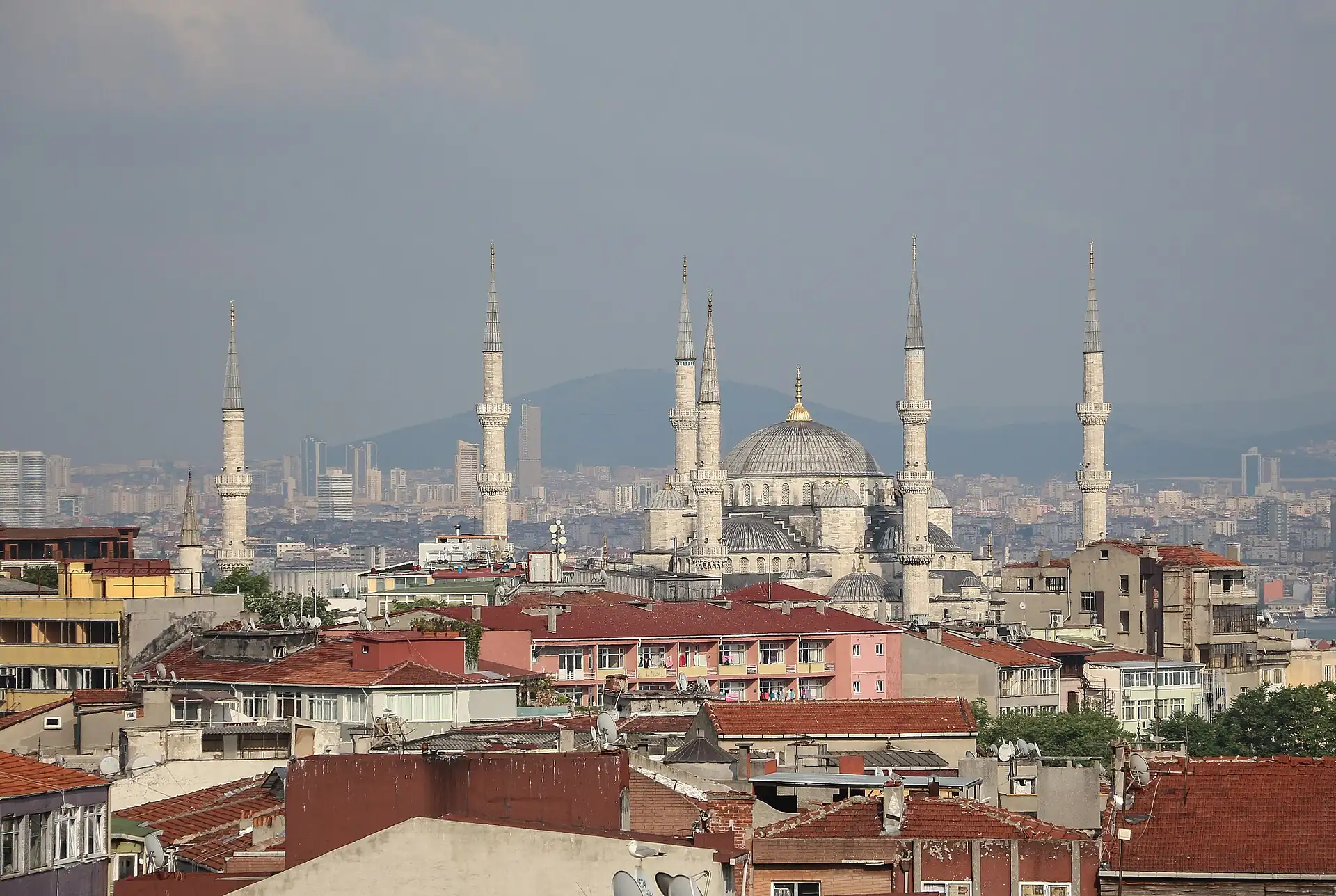 Blue Mosque · 20–30 min
- 5Spice Bazaar · 30–45 min
Fits
- First trips to Türkiye
- History and food trips
- Ferry and tram travellers
Does not fit
- Strollers and wheelchairs (slopes and cobbles)
- Travellers who cannot stand crowds
- Midday visitors in July
How long
- 2 daysSultanahmet morning, Topkapı, Eminönü at dusk
- 3 daysFour clusters, early starts, one evening on the water
- 5 daysFour clusters + Princes' Islands ferry day + one slow day
Good for
- First timers
- Foodies
- Budget
- Couples
- Families
- Luxury
About Istanbul
Istanbul straddles two continents. The Bosphorus strait cuts the city in two, with Europe on the west bank and Asia on the east, and the Golden Horn, a long inlet on the European side, cuts the European half again. The old walled peninsula between the Golden Horn and the Sea of Marmara holds the imperial sights; Beyoğlu and Karaköy sit across the water to the north; Kadıköy and Üsküdar are on the Asian shore.
Good to know
- Sultanahmet is both a district and the old-city square; Taksim and Beyoğlu are across the Golden Horn on the European side, and Kadıköy is on the Asian side.
- Tourist information desks operate around Sultanahmet Square and at the main airports; hours vary, so treat them as a backup to your hotel desk.
- The Ministry of Culture and Tourism runs the official Go Türkiye site with museum, visa and transport basics.
Go deeper 11 min read · 6 chapters
Istanbul is a city on a strait, and almost everything about it follows from that: the trade routes, the capitals built on its hills, the ferries that still move its people, and the mix of languages, religions and kitchens that arrived by water. This deep dive follows how a Greek colony became the capital of two empires, how its neighbourhoods layered up along the Golden Horn, what its domes and towers say about who built them, and why a simple breakfast or a glass of tea still organises a day here.
1History2 min
The site was settled by Greek colonists in the seventh century BCE, who called it Byzantion. It was a small trading city on a triangular promontory where the Bosphorus meets the Sea of Marmara and the Golden Horn, an easy place to defend and a natural toll gate on the route between the Black Sea and the Mediterranean. Rome absorbed it, and in 330 CE the emperor Constantine chose it as the seat of the eastern empire and renamed it after himself. Constantinople grew fast, and the Hippodrome, the great cisterns and the land walls that still mark the west of the old city all date from the centuries when it was the largest city in Europe.
For a thousand years it survived sieges, fires, riots and one disastrous sack by the Fourth Crusade in 1204. Emperor Justinian rebuilt the centre after the Nika riots of 532, and his church of Hagia Sophia, finished in 537, stayed the largest cathedral in the world for almost a thousand years. In 1453 the Ottoman sultan Mehmed II took the city after a siege and made it his capital. He converted Hagia Sophia into a mosque, repopulated the city with people from across his lands, and built the first palace on the hill above the Golden Horn. His successors turned Constantinople into a capital of the Islamic world with mosques, schools, hospitals and markets; Süleyman the Magnificent's reign in the sixteenth century is often seen as its height.
The last two centuries were a long unwinding. The Ottoman state lost territory, modernised its army and its buildings, and built palaces along the Bosphorus in a European style. After the First World War the empire ended, the Republic was declared in 1923 under Mustafa Kemal Atatürk, and Ankara replaced Istanbul as the capital. The city stayed the country's commercial and cultural centre and grew from under a million people in the 1950s to a metropolis of many millions today. Two bridges, then a third, a metro under the strait and a new airport have all been added within living memory. A visitor sees all of this at once: a sixth-century dome, a sixteenth-century mosque and a twenty-first-century tram within the same square.
- Founded as Byzantion
- About 660 BCE
- Constantinople dedicated
- 330 CE
- Hagia Sophia completed
- 537
- Ottoman conquest
- 1453
- Republic declared
- 1923 (capital moved to Ankara)
- Modern airport opens
- 2018–2019
2Neighbourhood stories2 min
Istanbul reads best as a set of hills and shores. The old peninsula between the Golden Horn and the Sea of Marmara is where Byzantium began, and its names still describe the layers: Sultanahmet for the imperial core, Topkapı and Gülhane for the palace and its parkland, Eminönü and Sirkeci for the harbour and the old railway terminus. Walk from the square in front of Hagia Sophia down to the water and you cross the whole story from church to palace to port in twenty minutes, on a slope that explains why the Ottomans placed their court on the high ground and their markets at the quay.
Across the Golden Horn the character changes. Galata was a walled Genoese colony from the thirteenth century, a foreign-run trading quarter with its own tower, and it kept a mix of Greeks, Armenians, Jews and Levantine merchants until the twentieth century. Karaköy below it was the banking and shipping district, and it is now full of cafés and small galleries in old commercial buildings. Above it, Beyoğlu and İstiklal Avenue grew in the nineteenth century as the European quarter, with embassies, theatres, arcades and apartment blocks in a style borrowed from Paris and Vienna. The steepness of the hill is real: the Tünel funicular, opened in 1875, was built to save people from the climb and is one of the oldest underground railways in the world.
Further out, the quarters are more local. Balat and Fener on the Golden Horn were Jewish and Greek Orthodox neighbourhoods with painted wooden houses and a few small churches, now being renovated and getting cafés. Kadıköy and Üsküdar on the Asian shore have the market streets, the fish stalls and the tea gardens that residents actually use. A first visit needs the old peninsula and the hill; a second visit rewards a ferry ride and a slow afternoon on the other side. Each district works best on foot, with a ferry or tram between them rather than a taxi through traffic.
- Galata as a Genoese colony
- From the 13th century
- Tünel funicular opens
- 1875
- Old peninsula districts
- Sultanahmet, Topkapı, Eminönü, Sirkeci
- Asian-side districts
- Kadıköy, Üsküdar
3Architecture2 min
The skyline is a lesson in domes. Hagia Sophia is the first big statement: a dome about 31 metres across seemingly floating over a square nave on windows and pendentives, built in under six years by two mathematicians, Anthemius and Isidore. The Ottomans took that idea and made it a national language. Their greatest architect, Mimar Sinan, served four sultans in the sixteenth century, and his Süleymaniye Mosque above the Golden Horn balances a central dome with half-domes and slender minarets in a way that answers, and arguably improves on, the Byzantine model. Sinan is credited with hundreds of buildings across the empire, including mosques, bridges, baths and schools.
The Blue Mosque, built for Sultan Ahmed I between 1609 and 1616, is the last of the great imperial mosques of the classical period and stands opposite Hagia Sophia on the same square. It has six minarets, which, the story goes, caused a small scandal at the time because the Great Mosque of Mecca had the same number, and the sultan is said to have solved it by funding a seventh minaret in Mecca. Inside, tens of thousands of blue İznik tiles give it the name that visitors use, while its official name is Sultanahmet Mosque. Topkapı Palace tells the other Ottoman story: not a single monument but a series of courtyards, kiosks and chambers in which the court lived, with a Harem, a treasury and pavilions that look over the Bosphorus.
Underground, the Basilica Cistern shows what the Byzantine city did for water: 336 columns hold a vaulted roof over a reservoir that supplied the imperial palace. On the north bank the Galata Tower is a stone cylinder dating from the fourteenth century in its current form, and the nineteenth-century palaces along the Bosphorus, Dolmabahçe above all, show the empire in its late European style. The everyday city is architecture too: wooden houses that survived the fires, Art Nouveau apartment blocks in Beyoğlu, and the long stairs that connect the levels of the hill. Look up at a roofline and you often see three centuries at once.
- Hagia Sophia dome
- About 31 m across
- Mimar Sinan
- Chief imperial architect for most of the 16th century
- Blue Mosque built
- 1609–1616
- Basilica Cistern
- 336 columns, built under Justinian
- Galata Tower
- Genoese tower, current form 14th century
4Food history2 min
Turkish cooking grew from the Ottoman court kitchen, and the palace kitchens at Topkapı fed thousands of people each day. Court cooks combined Central Asian traditions of meat, yogurt and flatbread with Persian, Arab, Balkan and Mediterranean ingredients that arrived along the empire's roads. Olive oil dishes served cold, stuffed vegetables, pilafs, slow lamb stews and syrupy sweets all spread from that mix. Because the city drew people from every province, its restaurants and home kitchens kept regional dishes from the Aegean, the Black Sea, the south-east and the Balkans, which is why one street can offer several regional cuisines.
The day is organised around a few habits. Breakfast, kahvaltı, is a spread of white cheese, olives, tomatoes, cucumbers, eggs, honey, clotted cream and jam, eaten slowly with tea, and weekend brunch at a good breakfast house is a social event. Lunch is often a lokanta, a plain restaurant with a steam counter of vegetable dishes and grills, or a quick köfte or döner. Simit, the sesame ring, and tea are the street snack. On the water the fish sandwich, balık ekmek, became a symbol of the Golden Horn in the twentieth century. Dinner might be a meyhane, a tavern where small cold dishes called meze arrive in a long series alongside rakı, the aniseed spirit, diluted with water until it turns cloudy.
Sweets have a long history in the city. Baklava reached its modern form in the palace kitchens, and a tradition holds that the sultans' guards received a tray of it in a procession in the middle of Ramadan. Turkish delight, lokum, was sold in shops from the eighteenth century, and coffee arrived in the sixteenth century, when the first coffeehouses opened near the palace and were promptly regulated because people talked politics in them. Tea overtook coffee in the twentieth century as the everyday drink, served in small tulip glasses. For a visitor the practical lesson is to eat according to the hour: breakfast late, fish at the water, baklava in the afternoon and dinner late, rather than trying to fit everything into one meal.
- Everyday street snack
- Simit and tea
- Water-side classic
- Balık ekmek, grilled fish in bread
- Breakfast
- Kahvaltı, a spread of cheese, olives, eggs and jam
- Coffee arrives
- 16th century
- Dinner style
- Meyhane with meze and rakı
5The strait and the ferries2 min
Istanbul is unusual among big cities in how much of its daily life still runs across water. The Bosphorus is a strait about 30 kilometres long that connects the Black Sea to the Sea of Marmara, and it is one of the busiest waterways in the world, carrying ships of every kind close enough to the shore that residents watch tankers from their kitchens. The Golden Horn, a drowned river valley about seven kilometres long, gave the old city a sheltered harbour, and the chain that once closed its mouth against attackers appears in every account of the siege of 1453. The two cities on either side, Europe and Asia, are joined by bridges, a tunnel and a rail link under the seabed, but most commuters who live on one side and work on the other still take a ferry.
The public ferry system dates from the mid-nineteenth century, when steamers began to replace rowing boats between the shores, and the name Şirket-i Hayriye, the Good Enterprise Company, is still on some of the older vessels. Today the ferries carry millions of passengers a year on routes to Kadıköy, Üsküdar, the Bosphorus villages and the Princes' Islands. A crossing is cheap, the fare is on the same card as the tram, and the outer deck is the best view in the city: the old peninsula's domes on one side, the Asian hills on the other, and gulls that will take a simit from your hand. Locals feed them from the stern and drink tea in the cabin.
For planning, the water matters in three ways. The first is time: a crossing by ferry is usually faster and less stressful than a taxi in traffic. The second is light: the best views of the skyline are from the water in the last hour before sunset. The third is weather: strong wind or fog can cancel ferries, and winter storms can change the timetable, so a second option by tram or Marmaray is a sensible backup. A ride to Kadıköy for lunch and a return at dusk is one of the best days you can build with a single card and no tour. The Princes' Islands are the longer version, with pine lanes, horse carriages and bicycles on car-free islands.
- Bosphorus length
- About 30 km (19 mi)About 19 mi (30 km)
- Golden Horn length
- About 7 km (4.3 mi)About 4.3 mi (7 km)
- Public steam ferries begin
- Mid-19th century
- Rail under the strait
- Marmaray tunnel, opened 2013
- One card for everything
- Istanbulkart
6Faith, calendar and daily rhythm2 min
Istanbul is a Muslim-majority city with a long tradition of mixing communities. The prayer call, the ezan, sounds five times a day from thousands of minarets, and the times shift through the year with the sun. Friday is the main congregation day, when mosques fill around midday and traffic near the biggest ones slows. For a visitor the practical consequences are simple: mosques close to tourists during prayer and on Friday mornings, dress is modest, and shoes come off at the door. Beyond the mosques, the city has Greek Orthodox, Armenian, Jewish and Catholic churches and synagogues, some of them centuries old, and several of them welcome visitors at set hours.
The calendar has two layers. The civil year has public holidays such as 23 April, Children's Day, 29 October, Republic Day, and 30 August, Victory Day. The religious year follows the Islamic lunar calendar, so its dates move about eleven days earlier each year. Ramadan is a month of fasting from dawn to sunset, ended by Ramazan Bayramı, a three-day holiday of family visits, sweets and closed shops. Kurban Bayramı, the feast of sacrifice, comes about two months and ten days later and is the longest holiday of the year, when many residents leave the city and long-distance transport is booked out. If your dates fall near one, book beds and transport early and expect shorter hours.
The daily rhythm is a good guide to how to use the city. Mornings start with tea and a simit; mid-morning is the best time for the sights; lunch is early and quick; the afternoon is when the heat and the crowds peak; and the evening, from about 19:00 to midnight, is when the city comes alive again, with the waterfront, the terraces and the meyhanes full. Shops stay open late, the ferries run until after dark, and dinner is rarely before 20:00. A visitor who follows this rhythm, with an early start, a long break and a late dinner, finds the city much easier than one who tries to do everything between ten and four.
- Daily prayer calls
- Five a day
- Main prayer day
- Friday around midday
- Islamic holidays
- Move about 11 days earlier each year
- National holidays
- 23 April, 30 August, 29 October
Read, watch, wordsReading · Watching · Glossary · Sources
Reading
- Istanbul: Memories and the City — Orhan PamukA memoir of growing up in the city among ruins, melancholy and the Bosphorus; the best single book on its mood.
- Istanbul: A Tale of Three Cities — Bettany HughesA popular history from Byzantion to the present.
- The Bridge on the Drina and other writing on the region — Ivo AndrićNot about Istanbul directly, but a key novel of Ottoman legacy in the Balkans.
Watching
- Crossing — Levan Akin, 2024A drama that moves between Georgia and Istanbul and shows the city's queer and immigrant communities.
- On the Edge of Heaven — Fatih Akın, 2007A German-Turkish drama with Istanbul scenes and a look at the two countries' ties.
Glossary
| Term | Local | Meaning |
|---|---|---|
| Kahvaltı | Kahvaltı | Breakfast; a spread of cheese, olives, eggs and jam. |
| Simit | Simit | Sesame-covered bread ring sold on the street. |
| Çay | Çay | Turkish tea in a small tulip glass. |
| Meyhane | Meyhane | A tavern serving meze and rakı. |
| Lokanta | Lokanta | A plain restaurant with a counter of daily dishes. |
| Hammam | Hamam | A Turkish bath. |
| Istanbulkart | İstanbulkart | The transit card used on trams, metros, buses and ferries. |
| Bayram | Bayram | A religious festival; a public holiday. |
| Ezan | Ezan | The call to prayer. |
| Dolmuş | Dolmuş | A shared minibus on a fixed route. |
Read for this deep dive
Background reading only: the text above is written by Voykit, not copied from these pages.
Rules in force · 6
- Türkiye (Turkey) ↗Check whether your passport is visa-exempt; if it is not, apply only at evisa.gov.tr — lookalike sites charge extra and some sell nothing.
- Türkiye (Turkey) ↗At mosques cover shoulders and knees, take shoes off at the door, and women carry a headscarf; stay out during prayer times.
- Türkiye (Turkey) ↗Taxis must run the taximeter; refuse flat quotes, or book through BiTaksi or Uber so the ride is logged.
- Türkiye (Turkey) ↗Carry lira in small notes for tea, markets, tips and toilets; prices move with inflation, so treat every printed price as dated.
- Türkiye (Turkey) ↗Do not take stones, coins or tiles from ancient sites, and export no antiques without a museum certificate; travellers have been detained at airport customs.
- Marmara ↗Ferries to the islands and across the Bosphorus run less often in strong wind; check the last boat before you cross.
Entry rules depend on your passport. Full visa guide
Emergency numbers for Istanbul112 ▾
- Police, ambulance, fire112
- Tourist police (Sultanahmet)Ask your hotel for the current number (check)
Tap a number to call from your phone. These are the numbers listed in this guide; a row marked check has not been verified.
Planning is the full guide. I'm here keeps what is open and the cheat card.
Right now
Checking the weather…
Working out what is open near you…
What is open nowclock, closures, places open
Now in Istanbul
Local time in Istanbul
--:--
Loads in your browser · Europe/Istanbul
This month
Month verdict appears here.
Closed today
See the weekly grid below.
| Weekly closure | Mon | Tue | Wed | Thu | Fri | Sat | Sun |
|---|---|---|---|---|---|---|---|
| Grand BazaarcheckUsually closed on Sundays. | · | · | · | · | · | · | ✕ |
| Topkapı PalacecheckUsually closed one weekday; the day has changed over the years, so confirm before you go. | · | ✕ | · | · | · | · | · |
If today is a closure day: Do the mosques and palace at opening, cross the water in the middle of the day, and leave the tower for the last light. Keep Friday around midday free: mosques close to visitors for the main prayer.
Weekly closures come from our place pages; public holidays, religious festivals (Bayram) and prayer times add closures not shown here.
Cheat cardthe pocket version
Cheat card
The essentials on one card: save it as an image for your phone, share it, or print it.
Istanbul
İstanbul
- Money
- Keep ₺500 in small notes; use ATMs inside banks and decline the machine's own exchange rate.
- SIM
- Turkcell, Vodafone or Türk Telekom; passport for registration…
- Ride app
- BiTaksi and iTaksi · Uber · İBB Istanbulkart app
- Emergency
- 112 police, ambulance, fire · Ask your hotel for the current number (check) tourist police (sultanahmet) (not 911, 999 or 000)
- Plugs
- Sockets C/F. US/Canada (A/B): adapter · UK/Ireland (G): adapter · Australia/NZ (I): adapter. 230 V: US 120 V-only devices (hair dryers) need a converter; most chargers are dual-voltage.
Top 5
- Hagia Sophia
- Topkapı Palace
- Basilica Cistern
- Blue Mosque
- Spice Bazaar
EssentialsQuick answers, what things cost and how to get around
Essentials
Quick answers, what things cost and how to get around
Quick answers
The questions people ask first about Istanbul, one line each. Tap a card for the full answer.
- Cash or card?Cards work in hotels, malls and most restaurants; cash (lira) for small shops, markets, tea houses and taxis without an app.
- SIM or eSIMTurkcell, Vodafone or Türk Telekom; passport for registration; a foreign phone may be registered on entry. eSIM is the simplest option.
- Ride-hailing appBiTaksi and iTaksi · Uber · İBB Istanbulkart app.
- Tap waterTap water is treated but most visitors drink bottled water.
- TippingNot expected at simit carts or tea stalls.
- Plugs & powerSockets C/F. US/Canada (A/B): adapter · UK/Ireland (G): adapter · Australia/NZ (I): adapter. 230 V: US 120 V-only devices (hair dryers) need a converter; most chargers are dual-voltage.
Show all 14 answers
- Safe at night?Take more care after dark in Eminönü and the bazaars, Beyoğlu and İstiklal.
- Emergency numberscheck112 police, ambulance, fire · Ask your hotel for the current number (check) tourist police (sultanahmet) (not 911, 999 or 000)
- Your embassycheckUS, UK, Australia embassies listed with addresses (check before you go).
- Closed which day?Tue: 1 on our list shut · Sun: 1 on our list shut.
- Sundays & holidaysWeekly closures come from our place pages; public holidays, religious festivals (Bayram) and prayer times add closures not shown here.
- Late at nightBars and clubs in Beyoğlu, Karaköy and Kadıköy run late on weekends.
- Rainy-day planWinter and spring rain arrives in showers that empty in an hour; plan the covered sights (cistern, palace interiors, bazaars…
- Landing lateIST: taxi or ride-hailing car to the hotel door runs all night.
Cost cheat-sheetwhat everyday things cost
Cost cheat-sheet
Typical prices for the everyday things, as ranges. Change the currency right here; the local price stays first.
2026 desk estimate · check
- CoffeeTurkish coffee, café₺150–300 (≈ US$4–8)
- Sit-down mealSit-down restaurant meal, per person₺700–2,000 (≈ US$18–50)
- Street or quick mealSimit (sesame ring) from a street cart₺25–45 (≈ US$1–2)
- Beerbar or restaurant₺250–500 (≈ US$7–13)
- Taxi, about 5 km (3 mi)Taxi, about 3 mi (5 km)Short taxi rideMeter only; refuse fixed street prices.₺200–500 (≈ US$5–13)
- Metro or bus rideTram, metro or ferry rideIstanbulkart price; ferries to the Asian side are similar.₺30–50 (≈ US$1–2)
- SIM or eSIM, a weekTourist SIM or eSIM, about a week₺400–900 (≈ US$10–25)
- Museum or sight ticketMuseum ticket for foreignersVaries by sight; check current rates.₺800–2,500 (≈ US$20–65)
- Budget bedHostel dorm bed, a night, per person₺700 (≈ US$18)
- Mid-range bedHotel double room, a night, per room₺5,500 (≈ US$140)
- High-end bedHotel double room, a night, per room₺14,000 (≈ US$350)
A day, not counting the bed: Budget ₺2,000 (≈ US$50) · Mid ₺4,500 (≈ US$110) · High ₺10,000 (≈ US$250)
Local prices, with USD next to them (rates 2026-09 (approximate); change it in the header). Ranges are desk estimates: check locally. Every price and the budget calculator →
Source: Prices in Istanbul
Draft
Written from desk research. Not yet compared with the official source.
No official source is recorded for this figure.
Prices are 2026 desk estimates, not yet compared with an official source. Check on the day.
Not checked in the last 12 months (no check date on file).
DecideWho it suits, the trade-offs and when to go
Decide
Who it suits, the trade-offs and when to go
Best months at a glance
The guide's verdict for each month
Jan
Care
9°C (48°F)48°F (9°C)
Feb
Care
10°C (50°F)50°F (10°C)
Mar
Best
12°C (54°F)54°F (12°C)
Apr
Best
17°C (63°F)63°F (17°C)
May
Best
22°C (72°F)72°F (22°C)
Jun
Care
27°C (81°F)81°F (27°C)
Jul
Care
29°C (84°F)84°F (29°C)
Aug
Care
29°C (84°F)84°F (29°C)
Sep
Best
25°C (77°F)77°F (25°C)
Oct
Best
20°C (68°F)68°F (20°C)
Nov
Best
15°C (59°F)59°F (15°C)
Dec
Care
11°C (52°F)52°F (11°C)
Best: Mar–May, Sep–Nov. Mixed: Jun–Aug, Dec–Feb. Month by month →
Warmest Jul (29°C (84°F)84°F (29°C)), coolest Jan (4°C (39°F)39°F (4°C) low), wettest Jan (15 rain days), driest Jul (3). Averages, not a forecast.
Istanbul across the year
Best-looking months for Istanbul: May, Sep, Oct.
| Measure | Jan | Feb | Mar | Apr | May | Jun | Jul | Aug | Sep | Oct | Nov | Dec |
|---|---|---|---|---|---|---|---|---|---|---|---|---|
| Weather | Mixed (care) | Mixed (care) | Good (good) | Good (good) | Great (good) | Mixed (care) | Mixed (care) | Mixed (care) | Great (good) | Great (good) | Good (good) | Mixed (care) |
| Crowds | Low (good) | Low (good) | Medium (ok) | Medium (ok) | High (care) | High (care) | High (care) | High (care) | Medium (ok) | Medium (ok) | Low (good) | Low (good) |
| Prices | Low (good) | Low (good) | Medium (ok) | Medium (ok) | Medium (ok) | High (care) | High (care) | High (care) | Medium (ok) | Medium (ok) | Low (good) | Low (good) |
| Events | None listed (ok) | 1 event (ok) | 2 events (care) | 4 events (ok) | 1 event (ok) | 2 events (ok) | 1 event (ok) | 1 event (ok) | None listed (ok) | 1 event (ok) | 1 event (ok) | 1 event (ok) |
Green is good news, amber needs planning, red is a month to avoid; dashed grey with a question mark means our data does not say. Open the year heatmap →
Not checked in the last 12 months (no check date on file).
Source: Months, temperatures and crowds
Draft
Written from desk research. Not yet compared with the official source.
Monthly highs, rain and crowd levels are climate averages and desk estimates for the city, not a forecast.
Understand the cityUnderstand · Districts
Orientation & districts
Istanbul is huge, but a first visit stays on the European side. The old peninsula (Sultanahmet, Topkapı, Eminönü) is on the south bank of the Golden Horn; Karaköy, Galata and Beyoğlu are across the Galata Bridge on the north bank; Kadıköy and Üsküdar are on the Asian shore, reached by ferry.
Addresses are written by neighbourhood (mahalle) and street; give your driver the neighbourhood and a landmark, and show the pin on a map.
Shaded shapes: walking areas (click one). Black pins: sleep areas. Grey dots: places. Round badges: arrivals. Click the map to turn on scroll-wheel zoom.
Hover, tap or tab to an area to see what it is like. Pins are sleep areas; arrows at the edge point to the airport.
Off the map: Sabiha Gökçen Airport (SAW) (75–120 min by the usual route).
Not drawn yet (no coordinates in this guide): Beyoğlu, Taksim and İstiklal, Fatih, Balat and Fener, Kadıköy and Üsküdar, Bosphorus villages (Ortaköy, Bebek, Arnavutköy). They are in the neighbourhood cards below.
Where’s what, as a list:
- Sultanahmet: Hagia Sophia, the Blue Mosque, the Basilica Cistern and the Hippodrome in one flat walk; quiet after 22:00, with carpet-shop touts in the main streets.Hagia Sophia, the Blue Mosque, the Basilica Cistern and the Hippodrome in one flat walk; quiet after 10:00 PM, with carpet-shop touts in the main streets. Suits: First-timers, short stays, early sights. Price band $$.
- Topkapı and Gülhane: The palace sits on the point at the tip of the peninsula; Gülhane Park below it is the shade and the tram link. Suits: The palace, the archaeology museums and a shaded park.
- Eminönü and the bazaars: Crowded, loud and central; the tram, the ferries and the Galata Bridge all meet here. Suits: Spice Bazaar, ferry quays, fish sandwiches, dusk on the water.
- Karaköy and Galata: The north-bank waterfront and the hill above it; steep cobbled lanes, good coffee and restaurants. Suits: Cafés, galleries, the tower, evenings on the hill. Price band $$$.
- Beyoğlu, Taksim and İstiklal: The long pedestrian avenue and the bars behind it; busy and noisy until late. Suits: Nightlife, shopping, a late dinner.
- Fatih, Balat and Fener: Quiet residential lanes with small churches and cafés; steep and uneven. Suits: Old houses on the Golden Horn, a second day.
- Kadıköy and Üsküdar: The Asian side: cheaper food, a big market and views back over the old city. Suits: A ferry ride, markets, a local evening.
- Bosphorus villages (Ortaköy, Bebek, Arnavutköy): Waterfront cafés and mosques on the strait; a car or bus ride from the old city. Suits: A slow afternoon by the water.
- Sleep area Karaköy and Galata: suits Cafés, galleries, the tower, evenings on the hill, price band $$$.
- Sleep area Sultanahmet (old city): suits First-timers, short stays, early sights, price band $$.
- Istanbul Airport (IST), about 34 km (21 mi)21 mi (34 km) from the centre, 60–100 min by the usual route.
- Sabiha Gökçen Airport (SAW), 75–120 min by the usual route.
Neighbourhoods at a glance
One tab per area, pulled together from this guide’s districts table, area notes, sleep-area scores and place pages. Scores are desk judgements (1–5); prices are estimates, check before you book.
Sultanahmet
$$Hagia Sophia, the Blue Mosque, the Basilica Cistern and the Hippodrome in one flat walk; quiet after 22:00, with carpet-shop touts in the main streets.Hagia Sophia, the Blue Mosque, the Basilica Cistern and the Hippodrome in one flat walk; quiet after 10:00 PM, with carpet-shop touts in the main streets.
- Suits:
- First-timers, short stays, early sights
- Best time:
- Opening to 10:00Opening to 10:00 AM
- Rooms:
- ₺1,500–3,000 (from the sleep guide)
Pick this if: First-timers, early risers
Watch out for: Midday in July.
- Quiet nights3/5 Medium
- Nightlife1/5 Very low
- Families3/5 Medium
- Late arrival3/5 Medium
Why these scores
- Quiet nights: Quiet after 22:00 but for the call to prayer at dawn.
- Nightlife: A few rooftop terraces and tourist restaurants only.
- Families: Flat squares, few playgrounds; near the tram.
- Late arrival: Most hotels have a night desk; small guesthouses may not.
Getting around from here
- 12–18 min walk to Topkapı Palace & Gülhane Park
- Tram T1 west then north: about 10 min to Eminönü & the Spice Bazaar
- IST: about 34 km (21 mi) in a straight line (arrival ride 60–100 min)IST: about 21 mi (34 km) in a straight line (arrival ride 60–100 min)
Topkapı and Gülhane
The palace sits on the point at the tip of the peninsula; Gülhane Park below it is the shade and the tram link.
- Suits:
- The palace, the archaeology museums and a shaded park
- Best time:
- Morning
Pick this if: A slow half day
Watch out for: Late afternoon closing rush.
Getting around from here
- Walk south-west: about 8 min to Sultanahmet (Hagia Sophia & Blue Mosque)
- Tram T1 from Gülhane: about 8 min to Eminönü & the Spice Bazaar
- IST: about 34 km (21 mi) in a straight line (arrival ride 60–100 min)IST: about 21 mi (34 km) in a straight line (arrival ride 60–100 min)
Eminönü and the bazaars
Crowded, loud and central; the tram, the ferries and the Galata Bridge all meet here.
- Suits:
- Spice Bazaar, ferry quays, fish sandwiches, dusk on the water
- Best time:
- Mid-morning and dusk
Pick this if: Markets and ferries
Watch out for: Weekend afternoons with a bag.
Getting around from here
- Cross the bridge or tram T1: about 8 min to Galata Tower & Karaköy
- Tram T1 uphill: about 10 min to Sultanahmet (Hagia Sophia & Blue Mosque)
- IST: about 33 km (21 mi) in a straight line (arrival ride 60–100 min)IST: about 21 mi (33 km) in a straight line (arrival ride 60–100 min)
Karaköy and Galata
$$$The north-bank waterfront and the hill above it; steep cobbled lanes, good coffee and restaurants.
- Suits:
- Cafés, galleries, the tower, evenings on the hill
- Best time:
- Late afternoon and evening
- Rooms:
- ₺3,500–8,000 (from the sleep guide)
Pick this if: Evenings, food and coffee
Watch out for: Hauling a suitcase uphill.
- Quiet nights3/5 Medium
- Nightlife4/5 High
- Families2/5 Low
- Late arrival4/5 High
Why these scores
- Quiet nights: Bars and cafés late on weekends; the top of the hill is calmer.
- Nightlife: Cafés, bars, restaurants and galleries within a short walk.
- Families: Steep and busy; better for adults.
- Late arrival: Restaurants and taxis until late.
Getting around from here
- 15–22 min walk to Eminönü & the Spice Bazaar
- IST: about 33 km (21 mi) in a straight line (arrival ride 60–100 min)IST: about 21 mi (33 km) in a straight line (arrival ride 60–100 min)
Beyoğlu, Taksim and İstiklal
The long pedestrian avenue and the bars behind it; busy and noisy until late.
- Suits:
- Nightlife, shopping, a late dinner
Fatih, Balat and Fener
Quiet residential lanes with small churches and cafés; steep and uneven.
- Suits:
- Old houses on the Golden Horn, a second day
Kadıköy and Üsküdar
The Asian side: cheaper food, a big market and views back over the old city.
- Suits:
- A ferry ride, markets, a local evening
Ward by ward
12 area guides. Open one for the short answer, the key facts and what the area is like; the full guide is linked inside. Prices marked (check) are estimates.
Asian BosphorusBest for: Ferry commuters, couples, slow travellers, repeat Istanbul visitors
Stay on the Asian Bosphorus if you want waterfront calm, Ottoman mosques and quick ferries to Europe — best for couples, slow travellers and repeat visitors, less so for first-timers who need Hagia Sophia at the door. Base in Üsküdar for transport, Beylerbeyi or Çengelköy for quiet. Skip it if your days are packed with Old City sights.
- Best for:
- Ferry commuters, couples, slow travellers, repeat Istanbul visitors
- Skip if:
- First trip with a full Old City checklist; you will spend 40–60 min each way
- Base:
- Üsküdar (metro, ferry, buses) or Beylerbeyi / Çengelköy (quieter waterfront)
- Ferry to Eminönü:
- From Üsküdar, roughly 20 min; check current timetable (check)
- Ferry to Beşiktaş:
- From Üsküdar, roughly 15–20 min; check current timetable (check)
- Metro:
- M5 to Üsküdar; M4 and Marmaray serve Kadıköy and Söğütlüçeşme
- Cross-bridge buses:
- Slow in rush hour (07:00–10:00 west, 18:00–20:00 east); Metrobüs has its own laneSlow in rush hour (7:00 AM–10:00 AM west, 6:00 PM–8:00 PM east); Metrobüs has its own lane
- Cash:
- Turkish lira; İstanbulkart works on ferries, metro, tram and Metrobüs
What the area is like
The Asian Bosphorus is the strip of Istanbul on the Asian bank of the channel that links the Black Sea to the Sea of Marmara. It runs from the ferry and metro hub of Üsküdar north through Kuzguncuk, Beylerbeyi, Çengelköy and Kandilli towards Beykoz, where the waterfront turns green and the city thins out.
Üsküdar is the oldest and busiest part, with Ottoman mosques, markets and a working ferry terminal. Further north the mood changes: wooden yalı mansions on the water, small piers, tea gardens on the hillside and forest behind Beykoz. This is a residential Istanbul that visitors pass through rather than a sightseeing district, which is exactly why some travellers choose it.
The Maiden's Tower sits on its own islet off the Üsküdar shore and is the area's best-known landmark; the legend attached to it is older than the Ottoman city.
Full Asian Bosphorus guideShould you stay here?
Stay if you value a quiet waterfront base, want to cross to Europe by boat rather than by bridge, and are happy to plan your day around ferry times. The area suits couples, slow travellers, people on a second or third Istanbul trip, and anyone working remotely who wants cafés and a promenade instead of tour groups.
Skip it on a first visit if your list is Hagia Sophia, Topkapı, the Grand Bazaar and the Blue Mosque. Those sit on the Historical Peninsula, and the crossing plus transfers can eat 40–60 minutes each way. It also makes less sense if you have an early flight from Istanbul Airport on the European side, or if you dislike hills — Üsküdar and Beylerbeyi both climb steeply from the water.
A middle option: stay in Kadıköy, two metro stops from Üsküdar, where the food and nightlife are denser, and treat the Bosphorus villages as day trips.
Eastern SuburbsBest for: Sabiha Gökçen (SAW) flights, medical appointments, business in Ataşehir, Kartal, Pendik, Ümraniye
Stay in the Eastern Suburbs only if you fly into Sabiha Gökçen, need a hospital or clinic, or have business in Ataşehir, Kartal or Pendik. Sightseeing is thin and the coast is industrial, so most visitors should sleep on the Historical Peninsula, in Galata or on the Asian Bosphorus and ride the M4 out for a flight.
- Best for:
- Sabiha Gökçen (SAW) flights, medical appointments, business in Ataşehir, Kartal, Pendik, Ümraniye
- Skip if:
- You have 3–4 days and want the old city, bazaars and ferries
- Airport:
- Sabiha Gökçen (SAW), about 20 km (12 mi) from the coast districts; M4 metro to KadıköySabiha Gökçen (SAW), about 12 mi (20 km) from the coast districts; M4 metro to Kadıköy
- Metro to Kadıköy:
- M4 from Kartal or Pendik, roughly 30–40 min
- YHT trains:
- Pendik station, high-speed trains east to Eskişehir and on to Ankara or Konya
- Ferry:
- Pendik Pier, IDO fast ferry from Yalova, about 45 min, foot passengers only
- Typical hotel rate:
- ₺1,800–3,500 double per night, 2026 estimate
- Tap water:
- Not for drinking; bottled or filtered
What the area is like
The Eastern Suburbs are the districts of Ataşehir, Maltepe, Kartal, Ümraniye, Çekmeköy, Sancaktepe, Pendik and Tuzla. They are not the old Bosphorus towns, which have their own pages. This is 20th-century Istanbul that swallowed fishing villages and farmland: apartment blocks, industrial estates, shipyards and shopping malls, with the Marmara coast running along the south edge.
The sea is close but rarely scenic. Land along the shore was reclaimed for shipbuilding and port work, and the coast road carries heavy traffic. What the area does have is transport: the M4 metro, the M5 and M8 lines, the Marmaray suburban train and Sabiha Gökçen Airport, which together put the city centre within a 30–60 minute ride.
The one visitor trade that has grown here is medical tourism. Clinics and hospitals in the eastern districts treat an international clientele, mostly for dental work and cosmetic procedures, and many patients stay a week or two nearby. If that is your reason for coming, the location makes sense; if it is not, there is little to hold you.
Full Eastern Suburbs guideShould you stay here
Choose the Eastern Suburbs if your trip is built around a flight from Sabiha Gökçen, a hospital appointment, or work in one of the business districts. A hotel in Kartal or Pendik can cut an hour off an early departure, and rates are often lower than in the centre. The trade-off is that you will spend 30–60 minutes each way on the metro to see anything in the old city.
Skip it for a normal sightseeing trip. The Historical Peninsula puts Hagia Sophia, Topkapı and the Grand Bazaar on your doorstep; Galata and the European Bosphorus give you the ferry-and-waterfront experience; Kadıköy and the Asian Bosphorus give you the food and neighbourhood life of the Asian side without the industrial edge. All four are better bases for a first visit.
If you need to be near SAW for one night, stay in Kartal or Pendik rather than Ümraniye or Çekmeköy: the M4 runs straight to the airport and to Kadıköy, and the Marmaray connects along the coast. Ümraniye and the northern districts are residential and depend more on buses.
European BosphorusBest for: Waterfront walks, palaces, ferry rides, leafy streets
Stay here if you want waterfront mornings, Ottoman palaces and ferry hops, and you accept that sights are spread over 15 km (9.3 mi) of shoreline. Skip it if you want to walk to Hagia Sophia or need late-night bars. Base near Beşiktaş or Ortaköy for transport; Sarıyer suits a quiet, local stay.Stay here if you want waterfront mornings, Ottoman palaces and ferry hops, and you accept that sights are spread over 9.3 mi (15 km) of shoreline. Skip it if you want to walk to Hagia Sophia or need late-night bars. Base near Beşiktaş or Ortaköy for transport; Sarıyer suits a quiet, local stay.
- Best for:
- Waterfront walks, palaces, ferry rides, leafy streets
- Worst for:
- Walking to the old city; nightlife after midnight
- Base towns:
- Beşiktaş (transport hub), Ortaköy (bridge views), Bebek and Arnavutköy (quiet), Sarıyer (local, north)
- Metro:
- M2 inland via Levent; M7 serves Beşiktaş and the southern part
- Ferries:
- Beşiktaş, Ortaköy, Arnavutköy, Bebek, Emirgan, İstinye, Yeniköy, Büyükdere, Sarıyer piers
- Dolmabahçe Palace entry:
- Foreign visitors 1200 TL for Selamlık + Harem + Painting Museum; Müzekart not accepted (2026 estimate) (check)
- Yıldız Palace entry:
- Free; 08:00–19:00 summer, to 17:00 winter (check)Free; 8:00 AM–7:00 PM summer, to 5:00 PM winter (check) (check)
- Best month:
- May, when Judas trees flower along the shore
What the area is like
The European Bosphorus is the strip of Istanbul on the European bank of the channel that links the Black Sea to the Sea of Marmara. In Turkish the channel is the Boğaz; Boğaziçi is the name for the villages strung along it. They began as separate fishing settlements and still have not fully merged, so each has its own feel.
The shoreline runs roughly 15 km (9.3 mi) from Beşiktaş in the south to Sarıyer in the north, with late Ottoman palaces, parks and wooded hills behind it. In May the Judas trees (erguvan) flower deep pink along the water and up the slopes, which is the single best reason to time a visit here.The shoreline runs roughly 9.3 mi (15 km) from Beşiktaş in the south to Sarıyer in the north, with late Ottoman palaces, parks and wooded hills behind it. In May the Judas trees (erguvan) flower deep pink along the water and up the slopes, which is the single best reason to time a visit here.
It is a residential, well-off part of the city rather than a sightseeing core. You come for the water, the ferries, the palaces and the cafés, not for a dense cluster of monuments.
Full European Bosphorus guideShould you stay here
Yes, if your Istanbul plan is waterfront walks, Dolmabahçe and Yıldız palaces, ferry rides and neighbourhood cafés, and you are happy to use metro, bus, dolmuş or boat to reach the old city. Beşiktaş is the practical base: ferries, buses and the M7 metro meet there, and Kabataş with its tram is one stop away.
No, if you want to step out of your hotel into the Historical Peninsula, or if you want bars and clubs within walking distance late at night. The M2 metro runs inland and away from most of the sights, so a hotel far from the water can leave you dependent on buses.
Ortaköy puts you under the Bosphorus bridge with a lively square; Bebek and Arnavutköy are quieter and pricier; Sarıyer in the north is the most local and the cheapest of the group, with buses onward to the Black Sea coast.
GalataBest for: Walkers, first-timers who want nightlife and cafés on the doorstep, short stays of 2–4 nights
Stay in Galata if you want to walk to the Galata Tower, İstiklal Avenue and the Karaköy ferry and metro in under 15 minutes, and you accept steep streets and street noise. Skip it if you need quiet nights, step-free pavements or a hotel pool; the Historical Peninsula or European Bosphorus suits those better.
- Best for:
- Walkers, first-timers who want nightlife and cafés on the doorstep, short stays of 2–4 nights
- Skip if:
- You need quiet, step-free streets or a resort-style hotel
- Walk to Galata Tower:
- 5–10 minutes from most Galata and Karaköy hotels
- Walk to İstiklal Avenue:
- 10–15 minutes uphill from Karaköy
- Metro:
- M2 at Şişhane; T1 tram and Marmaray at Karaköy
- Ferry:
- Karaköy pier to Kadıköy, Üsküdar and the Princes' Islands
- Nightly hotel range:
- About ₺1,500–6,000 for a double, 2026 estimate (check)
- Noise:
- Loud until 01:00–02:00 on İstiklal and around Galata clubs (check)Loud until 1:00 AM–2:00 AM on İstiklal and around Galata clubs (check)
What the area is like
Galata sits on the north side of the Golden Horn, across the water from the Historical Peninsula, and runs uphill into Beyoğlu. The lower part by the water is Karaköy, the old port and banking quarter; above it the streets climb past the Galata Tower to Şişhane and İstiklal Avenue. Almost everything is within a 20-minute walk, but the walk is steep and the pavements are narrow.
The neighbourhood began as a Genoese trading colony in the 14th century and kept a Western, non-Muslim character through the Ottoman period. That history left the tower, several churches and the Tünel funicular, opened in 1875 and among the oldest underground railways anywhere. Banks and embassies followed in the 19th century; today the old bank buildings hold cafés, galleries and design shops, and the streets around Galata and Asmalımescit carry much of the city's nightlife.
Expect a working district, not a museum: delivery vans on cobbles, cats, construction, and calls to prayer from several mosques at once. It is busy in the day and louder at night.
Full Galata guideShould you stay here
Yes, for a first or second visit of two to four nights if you plan to spend your evenings on İstiklal and around the tower, and you are happy to walk uphill. You get the tower, the Karaköy ferry, the T1 tram, the M2 metro and the Marmaray all within about 15 minutes on foot, which makes day trips across the city easy.
No, if you are travelling with a stroller or a wheelchair, if you want quiet after 22:00, or if you want a hotel with a pool and a garden. The Historical Peninsula puts you next to the main monuments but is quieter at night; the European Bosphorus gives you water views and calmer streets at higher prices.No, if you are travelling with a stroller or a wheelchair, if you want quiet after 10:00 PM, or if you want a hotel with a pool and a garden. The Historical Peninsula puts you next to the main monuments but is quieter at night; the European Bosphorus gives you water views and calmer streets at higher prices.
Boutique hotels and hostels dominate, mostly in converted apartment blocks with small lifts or none. Ask about the floor and the lift before booking, and check whether the room faces the street.
Golden HornBest for: Eyüp mosque and cemetery, Fener and Balat streets, Pierre Loti hill views, Chora Church
Stay in the Golden Horn only if you want Eyüp's Ottoman pilgrimage quarter, the Fener and Balat lanes, or a quiet base on the M2 metro. Most first trips do better in Sultanahmet or Galata. Choose it for 1–2 nights of atmosphere, not for sightseeing logistics.
- Best for:
- Eyüp mosque and cemetery, Fener and Balat streets, Pierre Loti hill views, Chora Church
- Not for:
- First-timers wanting Hagia Sophia, Topkapı and the bazaars on foot
- Metro:
- M2 crosses the Horn on a bridge; Haliç station sits mid-channel with pedestrian links to both banks, Şişhane is better placed for the north bank (check)
- Tram:
- T5 runs Alibeyköy Cep Otogarı to Cibali; extension to Eminönü planned (check)
- Ferries:
- Ferries from Üsküdar to Eminönü are reported to call at Horn quays and run west to Eyüp; check current timetables (check)
- Typical double room:
- ₺1,800–3,500 per night in Balat or Eyüp, 2026 estimate (check)
What the area is like
The Golden Horn (Haliç) is the estuary where the Alibeyköy and Kağıthane rivers meet, a sheltered bay on the European side that has been Istanbul's harbour since the city began. The name comes from the Greek for "golden horn", likely for the curve of the water and the light on it at sunset.
In the 18th century the banks held Ottoman palaces and tulip gardens, the Tulip Era playground of Sadabad. Industry took over from the 19th century until the 1980s, when the water was heavily polluted. Clean-up started in the late 1980s; today the water is much cleaner and former factory lots are parks.
This guide covers the banks west of the old city walls and the O-1 ring road. The south-eastern bank belongs to the Historical Peninsula, the northern bank to Galata. A simple rule: if you stand on the same land as the Süleymaniye Mosque, the Phanar Greek College or the Eyüp Mosque, you are on the south bank; if you see those across the water and the Galata Tower is on your side, you are on the north bank.
Full Golden Horn guideShould you stay here
Stay here if your Istanbul list leans Ottoman and religious rather than Byzantine and bazaar: Eyüp's mosque and hillside cemetery, the colourful lanes of Fener and Balat, the Chora Church, and the Pierre Loti viewpoint. It also suits travellers who want a calmer, cheaper base on the M2 metro with easy access to Taksim and the airport line.
Skip it on a first trip of three or four nights. Hagia Sophia, Topkapı, the Grand Bazaar and the main tram spine sit in Sultanahmet and Eminönü, and you would spend 25–40 minutes each way (check). Galata or the Historical Peninsula puts those sights on foot.
If you do stay, pick Balat or Fener for cafés and old streets, or Eyüp for the mosque quarter. Both are residential; expect early calls to prayer and few late-night options.
Historical PeninsulaBest for: First trips and short stays: the main monuments are within walking distance
Stay here if your Istanbul trip is about the big sights: Topkapı, Hagia Sophia, the Blue Mosque and the Grand Bazaar are all on this peninsula, and you can walk between them. Choose Galata or Beyoğlu instead if you want nightlife and cafés, or Kadıköy for a local, cheaper base. Book early in spring and autumn.
- Best for:
- First trips and short stays: the main monuments are within walking distance
- Not for:
- Nightlife, late cafés and a local everyday feel — cross to Galata or Kadıköy
- Where to sleep:
- Sultanahmet for sights, Eminönü/Sirkeci for transport, Laleli–Aksaray for cheaper rooms
- Getting in:
- Tram T1 along Divan Yolu, Marmaray and Metro at Sirkeci, ferries at Eminönü
- Walk time:
- Sultanahmet to Grand Bazaar about 25–30 minutes on foot
- Watch out:
- Hilly streets, tram tracks, and persistent restaurant touts around Sultanahmet (check)
- Best months:
- Apr–Jun and Sep–Nov; summer is hot and crowded
What the area is like
The Historical Peninsula — Tarihi Yarımada, or Suriçi, the "Walled City" — is the oldest part of Istanbul, on the European side. The Sea of Marmara bounds it to the south, the Golden Horn to the north, the Bosphorus to the east, and the old Theodosian Walls to the west, now roughly the line of 10 Yıl Caddesi. Almost everything a first-time visitor comes for sits inside that boundary.
The ground is a ridge of low hills, so you walk up and down constantly, though the slopes are modest by Mediterranean standards. Sultanahmet, near the tip, packs Topkapı Palace, Hagia Sophia and the Blue Mosque into a strip about 1 km (0.6 mi) long; you could spend a week there alone. West of it, the old Middle Street runs as Divan Yolu Caddesi, then Yeniçeriler Caddesi past Çemberlitaş and Beyazıt, then Ordu Caddesi to Laleli and Aksaray. Tram T1 follows the same route, and the Sultanahmet–Beyazıt stretch is closed to cars.The ground is a ridge of low hills, so you walk up and down constantly, though the slopes are modest by Mediterranean standards. Sultanahmet, near the tip, packs Topkapı Palace, Hagia Sophia and the Blue Mosque into a strip about 0.6 mi (1 km) long; you could spend a week there alone. West of it, the old Middle Street runs as Divan Yolu Caddesi, then Yeniçeriler Caddesi past Çemberlitaş and Beyazıt, then Ordu Caddesi to Laleli and Aksaray. Tram T1 follows the same route, and the Sultanahmet–Beyazıt stretch is closed to cars.
Eminönü is the low ground by the water: ferry piers, Sirkeci station, Gülhane Park below Topkapı, and the Galata Bridge with its lower-deck fish restaurants. Kennedy Caddesi runs along the reclaimed shore and separates the sea from the old walls — useful for a taxi, less so on foot.
Full Historical Peninsula guideShould you stay here
Yes, if this is your first Istanbul trip and you want the monuments on your doorstep. Staying in Sultanahmet means you can reach Hagia Sophia or Topkapı before the tour groups arrive, come back to rest at midday, and go out again in the evening without crossing the city. The trade-off is that the area empties after dark, restaurant prices are aimed at visitors, and touts work the streets around the main square.
Look at Eminönü and Sirkeci if transport matters most: tram, Marmaray, Metro and ferries are all within a few minutes. Laleli and Aksaray, further west along the tram line, have cheaper rooms and a more workaday feel, but the walk to the sights is longer and the streets are busier and less tidy.
Choose Galata or Beyoğlu instead if you want late cafés, bars and a lived-in neighbourhood, or Kadıköy on the Asian side for lower prices and a local food scene. Both are a short ferry or tram ride from the peninsula, so you can still see the sights easily.
KadıköyBest for: Food, markets, bars, cafés, bookshops, ferry rides, lower hotel prices
Stay in Kadıköy if you want Asia-side Istanbul: cheaper rooms, a real market and bar district, and ferries to the Old City in about 20 minutes. Skip it if your days are packed with Sultanahmet sights and you want to walk to them. Best for second visits, food-led trips and slower stays.
- Where it is:
- Asia side, on the Bosphorus about 2 km (1.2 mi) across from the Old CityAsia side, on the Bosphorus about 1.2 mi (2 km) across from the Old City
- Best for:
- Food, markets, bars, cafés, bookshops, ferry rides, lower hotel prices
- Less good for:
- Walking to Hagia Sophia, Topkapı or the Grand Bazaar
- Ferry to Eminönü or Karaköy:
- About 20–25 min; check the current timetable (check)
- Marmaray cross-Bosphorus train:
- Every 15 min to the Old City and western suburbs
- Metro M4:
- Kadıköy waterfront to Sabiha Gökçen Airport (SAW)
- Typical hotel price:
- 2026 estimate: mid-range double ₺2,500–4,500 per night; check current rates (check)
- Quiet hours:
- Bars around Kadife Sokak run late; ask for a room off that street
What the area is like
Kadıköy is the Asia-side district closest to the Old City, sitting where the Bosphorus opens into the Sea of Marmara. It is older than Byzantium: Greek settlers were here from 685 BCE, and the place was known as Chalcedon. The old name survives in the merchant mansions, churches and the grid of streets behind the ferry pier.
Today it is the everyday, working Istanbul that visitors often miss. The centre is a market district: fishmongers, pickle shops, cheese and olive stalls, spice sellers and coffee roasters along the streets behind the pier. Bahariye Caddesi and the lanes around it are pedestrian, busy until late, and full of bookshops, record shops and cheap eats. Moda, the residential peninsula south-east of the centre, is quieter, greener and faces the sea.
The mood is local rather than monumental. You come here for the market, the food, the bars and the ferry ride, not for imperial architecture. The heritage tram T3 loops from the centre along Bahariye and around Moda; it is a nostalgia trip more than useful transport.
Full Kadıköy guideShould you stay here
Stay in Kadıköy if you have already seen the headline sights, or if you are happy to cross the water by ferry or train each morning. Rooms are generally cheaper than in Sultanahmet or Beyoğlu, the food is better value, and evenings are livelier without being a tourist strip. It also suits anyone arriving at or leaving from Sabiha Gökçen Airport, since Metro M4 runs from the waterfront straight there.
Do not stay here if this is a short first trip built around Hagia Sophia, Topkapı, the Grand Bazaar and the mosques. Those are all on the European side, and the crossing adds 20–40 minutes each way depending on mode and traffic. Families may also prefer Moda or the streets near the Marmaray line over the bar quarter, which stays loud past midnight.
A practical middle path: base on the European side and give Kadıköy a full afternoon and evening. If you are in Istanbul for five nights or more, splitting two nights here works well.
New CityBest for: Modern-city stay, shopping, cafés, business travel, easy M2 metro access
Stay in New City if you want modern Istanbul: M2 metro under the door, Nişantaşı cafés and shopping, and business-district hotels. Skip it if your trip is about Ottoman sights — the Historical Peninsula is 20–30 minutes away by metro and tram. Choose it for a comfortable base, not for first-timer sightseeing.
- Best for:
- Modern-city stay, shopping, cafés, business travel, easy M2 metro access
- Skip if:
- You want to walk to Hagia Sophia, Topkapı or the Grand Bazaar
- Main axis:
- Cumhuriyet Caddesi (Taksim–Mecidiyeköy), continuing as Büyükdere Caddesi through Levent and Maslak
- Metro:
- M2 under Cumhuriyet Caddesi, Taksim to Maslak; M11 from Istanbul Airport to Gayrettepe
- To Taksim:
- One or two M2 stops from Osmanbey or Şişli
- To Sultanahmet:
- About 25–35 minutes: M2 to Taksim plus funicular and tram
- Neighborhoods:
- Elmadağ, Harbiye, Nişantaşı, Teşvikiye, Şişli, Kurtuluş, Mecidiyeköy, Gayrettepe, Levent, Maslak
- Room prices:
- Mid-range doubles from about ₺2,500–4,500 per night (2026 estimate, check)
- Walkability:
- Good within Nişantaşı and Şişli; hilly between neighborhoods
What the area is like
New City is the modern half of European Istanbul, north of Taksim Square. Elmadağ, Harbiye, Nişantaşı, Teşvikiye, Şişli and Kurtuluş grew up in the early 20th century as apartment districts; Mecidiyeköy, Gayrettepe, Levent and Maslak became the city's business core, where steel-and-glass towers form the one real skyscraper skyline in Istanbul.
The spine is Cumhuriyet Caddesi, running from Taksim through Harbiye and Şişli to Mecidiyeköy, then continuing as Büyükdere Caddesi through Levent and Maslak towards Sarıyer on the Bosphorus. The M2 metro runs underneath almost the whole line, which is why this area works as a base even though it has few historic sights.
Nişantaşı is the pleasant part: Art Nouveau apartment blocks, ground-floor restaurants, cafés, pubs and clothing shops, and a long-standing residential feel. Şişli and Mecidiyeköy are busier and more ordinary; Levent and Maslak are offices, malls and hotels after dark.
Full New City guideShould you stay here?
Stay here if you value a calm, modern hotel, easy metro access and good eating over proximity to the big monuments. Nişantaşı and Teşvikiye suit couples and shoppers; Şişli and Mecidiyeköy suit budget travellers and anyone using the Metrobüs; Levent and Maslak suit business trips and late airport arrivals.
Skip it on a first visit of two or three days if Hagia Sophia, Topkapı and the bazaars are your priority. You would spend 25–35 minutes each way into Sultanahmet, and evenings would end with a metro ride rather than a walk home. The Historical Peninsula or Galata are better placed for that trip.
It also works well as a second base: a few nights in the old city, then a few here for Nişantaşı restaurants, the museums around Harbiye and the malls of Levent.
Princes' IslandsBest for: Quiet car-free nights, wooden mansions, sea air, cycling on Büyükada
Stay only if you want quiet nights and a slow ferry commute: the Princes' Islands suit a 1–2 night summer break or a day trip, not a first Istanbul base. Day-trippers should go on a weekday in April–May or September–October; skip it in winter, when it is cold and largely shut.
- Best for:
- Quiet car-free nights, wooden mansions, sea air, cycling on Büyükada
- Not for:
- First-timers who want Hagia Sophia, Topkapı and the bazaars on foot
- Ferry from Kabataş to Büyükada:
- About 90 min; about 45 min from Kadıköy and Bostancı (check timetable)
- Last ferry back:
- Around 23:00 (check)Around 11:00 PM (check)
- Cars:
- No private motor vehicles; electric minibuses, taxis and bicycle hire only
- Best months:
- April–May and September–October; June–August crowded, November–March cold and deserted
- Islands:
- Nine; Büyükada, Heybeliada, Burgazada and Kınalıada have the ferries and facilities
- Stay cost:
- 2026 estimate: guesthouses and small hotels, higher on summer weekends (check)
What the area is like
The Princes' Islands (Prens Adaları, usually just Adalar) are nine islands in the Sea of Marmara about 5 km (3.1 mi) off Istanbul's Asian coast, and they are part of the city. Büyükada is the largest and has the most facilities; Heybeliada, Burgazada and Kınalıada also take ferries. The rest are small, private or closed.The Princes' Islands (Prens Adaları, usually just Adalar) are nine islands in the Sea of Marmara about 3.1 mi (5 km) off Istanbul's Asian coast, and they are part of the city. Büyükada is the largest and has the most facilities; Heybeliada, Burgazada and Kınalıada also take ferries. The rest are small, private or closed.
From the mid-19th century the islands became summer homes for Istanbul's merchant class, who built wooden mansions in competing styles. Most are still private and cannot be visited from inside, but the streets around them are the main sight. There are no private cars, so the pace is walking, cycling and electric minibus.
The mood swings hard with the season. April, May, September and October are pleasant and manageable. June to August are crowded and touristy, especially weekends. November to March are gloomy and largely deserted, with cold winds off the water.
Full Princes' Islands guideShould you stay here or not
Stay if you want two quiet nights, sea air and a car-free base, and you accept that every city sight costs a ferry ride. A summer weekend on Büyükada is the classic version. Book ahead for those dates, because day-trippers fill the island and rooms go early.
Do not stay if this is your first Istanbul trip. The Historical Peninsula, Galata and the bazaars are on the European side, and a 45–90 minute ferry each way eats the morning. Do not stay in winter either: many places close, ferries thin out and the islands lose the reason you came.
A middle option works well: keep your Istanbul hotel and take one weekday day trip. Leave on an early ferry, walk or cycle Büyükada, and return before the last boat around 23:00.A middle option works well: keep your Istanbul hotel and take one weekday day trip. Leave on an early ferry, walk or cycle Büyükada, and return before the last boat around 11:00 PM.
Rural
Rural Istanbul — the Silivri, Çatalca and Arnavutköy districts on the western edge — is not a base for sightseeing. Stay only if you have a car, want quiet and coast, or need a bed near Istanbul Airport. Everyone else should sleep in the Historical Peninsula or Galata and visit Çatalca as a half-day.
- Who it suits:
- Drivers, families wanting space, one-night airport stays
- Who it does not suit:
- First-timers with 3–4 days and no car
- Distance to Sultanahmet:
- Çatalca about 40 km (25 mi) west; 60–90 min by car outside rush hourÇatalca about 25 mi (40 km) west; 60–90 min by car outside rush hour (check)
- Airport:
- Istanbul Airport (IST) sits in Arnavutköy, 30 km (19 mi) northwest of the centreIstanbul Airport (IST) sits in Arnavutköy, 19 mi (30 km) northwest of the centre
- Metro:
- M11 reaches the Arnavutköy and airport area only; Silivri and Çatalca have no metro
- Main roads:
- D-100, D-200, O-4 (E-80) and O-7
- Çatalca rail:
- Station being rebuilt for a high-speed line, targeted late 2026 (check)
- Best season:
- Apr–Jun and Sep–Oct; Black Sea beaches are a summer affair
What the area is like
"Rural Istanbul" covers the three western districts of Silivri, Çatalca and Arnavutköy — farmland, small towns and Black Sea and Marmara coastline that the city has been absorbing for a century. Silivri, on the Marmara shore, has Roman and Byzantine roots and grew through the 20th century into a mix of industry, housing and summer homes. Çatalca stayed agricultural far longer and is still the quietest of the three, with a small old quarter of wooden houses and squares. Arnavutköy, named for Albanian settlers in the Ottoman period, was farming and fishing country until the airport and new roads arrived; it is now the most industrialised and the least appealing to a visitor.
This is not a sightseeing district. There is no bazaar, no mosque complex, no cluster of restaurants worth a trip. What you get is space, low prices, a handful of genuine historic sites and quick access to the airport. Treat it as a place to sleep or to break a drive, not as a neighbourhood to explore on foot for a day.
Full Rural guideShould you stay here or not
Stay if you are driving and want a quiet, cheap base with parking, if you have an early flight from Istanbul Airport, or if you are visiting family in the western suburbs. Skip it on a first trip. The city's sights are 40–60 km (25–37 mi) east, and the daily commute in and out will eat two to three hours of your day.Stay if you are driving and want a quiet, cheap base with parking, if you have an early flight from Istanbul Airport, or if you are visiting family in the western suburbs. Skip it on a first trip. The city's sights are 25–37 mi (40–60 km) east, and the daily commute in and out will eat two to three hours of your day.
If you do stay, pick Çatalca for character or Silivri for the coast and easier road links. Arnavutköy is practical only for the airport. For a normal Istanbul trip, compare the Historical Peninsula, Galata and Kadıköy instead.
Sile
Stay in Şile only if you want a Black Sea beach day or a quiet weekend, not as a base for Istanbul sightseeing: it is 75 km (47 mi) northeast of the city and 2 hours by bus from Üsküdar. Day-trippers should go on a weekday in June–September; everyone else should skip it.Stay in Şile only if you want a Black Sea beach day or a quiet weekend, not as a base for Istanbul sightseeing: it is 47 mi (75 km) northeast of the city and 2 hours by bus from Üsküdar. Day-trippers should go on a weekday in June–September; everyone else should skip it.
- Distance from central Istanbul:
- About 75 km (47 mi) northeast, on the Black Sea coastAbout 47 mi (75 km) northeast, on the Black Sea coast
- Bus from Üsküdar:
- IETT 139, roughly every 2 hours, about 2 hours; 139A continues to Ağva (check)
- Best months:
- June–September for swimming; fine weekends are crowded
- Beach entry (2026 estimate):
- Uzunkum: about 300 TL parking plus 900 TL per person (check)
- Stay for:
- 1–2 nights as a beach break, or a day trip from Istanbul
- Not for:
- First-time Istanbul sightseeing, nightlife, car-free hill access
What kind of area it is
Şile is a Black Sea beach resort inside the Istanbul metropolitan municipality, not a central neighbourhood. The old town runs along Üsküdar Cd, pedestrian-only in the evening, with modern shopfronts and the Hüseyin Keçici Central Mosque midway along it. The harbour, the Byzantine Şile Castle on its islet and the 1859 lighthouse are the landmarks; the castle islet and interior are closed to visitors.
The district stretches far beyond the town: Ağva is a smaller, quieter resort 28 km (17 mi) east, and the hills to the south hold reservoir lakes, forest parks and camping areas. Holiday homes fill the coast, and on fine weekends the place belongs to Istanbul families. Few international travellers come this way.The district stretches far beyond the town: Ağva is a smaller, quieter resort 17 mi (28 km) east, and the hills to the south hold reservoir lakes, forest parks and camping areas. Holiday homes fill the coast, and on fine weekends the place belongs to Istanbul families. Few international travellers come this way.
The name comes from the Turkish word for marjoram. Settlement goes back to the Stone Age, and in the Hellenistic period the site grew as the port of Hilea before Constantinople overshadowed it.
Full Sile guideShould you stay here
Stay if your trip is a beach break with a book, a family weekend, or a stop on a Black Sea drive. Skip if this is your first Istanbul visit: the sights are 75 km (47 mi) away and the bus takes about two hours each way, so you would spend your days commuting.Stay if your trip is a beach break with a book, a family weekend, or a stop on a Black Sea drive. Skip if this is your first Istanbul visit: the sights are 47 mi (75 km) away and the bus takes about two hours each way, so you would spend your days commuting.
The beach is the reason to come. Ayazma, 1.5 km (0.9 mi) west of the harbour, is the closest sand to the centre but crowded and grubby in high season. Kumbaba, further west, is quieter and continues as Vadi, Kırandere and Alacalı. East of Ağlayan Kaya headland, Uzunkum is a 600 m paid strip; beyond its tombola islet, Kırandere beach runs another 1 km (0.6 mi) with far fewer people.The beach is the reason to come. Ayazma, 0.9 mi (1.5 km) west of the harbour, is the closest sand to the centre but crowded and grubby in high season. Kumbaba, further west, is quieter and continues as Vadi, Kırandere and Alacalı. East of Ağlayan Kaya headland, Uzunkum is a 600 m paid strip; beyond its tombola islet, Kırandere beach runs another 0.6 mi (1 km) with far fewer people.
Base yourself in Şile town for restaurants and transport, or in Ağva for a slower version of the same coast. The southern hills need your own car.
Western SuburbsBest for: Airport and bus-station nights, coastal Yeşilköy and Bakırköy, Halkalı train connections
Stay in the Western Suburbs only if you need the airport, the Esenler bus terminal or an overnight train from Sofia or Bucharest, or if you want a coastal base at Yeşilköy or Bakırköy. For sightseeing, sleep in the Historical Peninsula or Galata and treat this as a transfer zone.
- Best for:
- Airport and bus-station nights, coastal Yeşilköy and Bakırköy, Halkalı train connections
- Worst for:
- First-time sightseeing: the Old City is 20–40 min east by Marmaray or tram
- Main hubs:
- Halkalı (Marmaray B1, overnight trains), Esenler Otogar, Bakırköy
- Airport link:
- M11 metro from Halkalı to Istanbul Airport; Gayrettepe also on the line (check)
- Marmaray hours:
- About 06:00–23:00, every 15 minAbout 6:00 AM–11:00 PM, every 15 min (check)
- Metrobüs:
- Beylikdüzü–Zeytinburnu–Mecidiyeköy–Söğütlüçeşme on the D100; fast but crowded
- Coast:
- Marmara beaches at Yeşilköy and Bakırköy; Black Sea lagoons and beaches further north (check)
- Getting around:
- East–west lines are good; north–south links are weak away from the centre
What the area is like
The Western Suburbs are everything west of the Old City walls, spread across the Thracian side of Istanbul. They are mostly residential: commuter districts, apartment blocks, some rough edges and some expensive ones, with little of the monument-and-museum density you find in the centre. In 2005 the city boundary was extended to cover the whole province, so this area now stretches roughly 50 km (31 mi) west towards Tekirdağ Province.The Western Suburbs are everything west of the Old City walls, spread across the Thracian side of Istanbul. They are mostly residential: commuter districts, apartment blocks, some rough edges and some expensive ones, with little of the monument-and-museum density you find in the centre. In 2005 the city boundary was extended to cover the whole province, so this area now stretches roughly 31 mi (50 km) west towards Tekirdağ Province.
The Marmara coast is the useful part for visitors. Yeşilköy, formerly San Stefano, began as a multicultural village and later a seaside resort; its centre still has decorated wooden houses from around 1900, several churches of different denominations, and a cluster of cafés and restaurants near the old railway station. Bakırköy and Ataköy are larger, busier and better connected, with a ferry pier and the Marmaray line.
Inland is commuter belt and, further out, farmland and quarries. The Black Sea coast at the northern edge has small resorts, lagoons and beaches, and is less built up. Halkalı and Sefaköy were once separate municipalities and still feel like their own towns.
This is also where Istanbul meets the rest of Europe: the main airport, the main bus station and, for now, the European mainline rail terminus all sit here. That is the main reason a traveller ends up sleeping west of the walls.
Full Western Suburbs guideShould you stay here?
Choose the Western Suburbs if your trip is built around transport or the coast. A late arrival or early departure at Istanbul Airport, a bus from Esenler, or an overnight train to Sofia or Bucharest makes a night here sensible. Yeşilköy and Bakırköy also work as a quieter, cheaper base with sea air, ferries and a fast rail link into the centre.
Skip it for a first visit. Almost everything you came for — Hagia Sophia, Topkapı, the bazaars, Galata, the Bosphorus — is 20–40 minutes east, and late evenings mean a long ride home. If you want a central base, compare the Historical Peninsula and Galata first, or the Bosphorus neighbourhoods if you prefer water views.
One practical trap: the area is wide. A hotel near the airport is not near Bakırköy, and travelling between the two usually means going via the centre or paying for a taxi across the peninsula. Check the exact address against the metro or Marmaray stop before booking.
District guidesAll district guides in Istanbul →
Famous streetsAll famous streets in Istanbul →
Decide
The honest trade-off: what you will enjoy, what will wear you down.
You will like
- Domes and minarets at sunrise
- Ferries at dusk
- Street food and tea
You will hate
- Queues at the big sights
- Steep cobbled streets
- Taxi overcharging
Similar citiesif this one is not quite right
Similar cities
If Istanbul does not fit your dates or budget, these match it on season, cost and feel.
- Kyrenia (Girne)
Northern Cyprus
- Good in the same months: Mar, Apr, May, Oct, Nov
- A mid-range day costs about the same (≈US$110 vs US$110, excl. bed)
- Works well for first-timers, food trips, couples
- Lisbon
Portugal
- Good in the same months: Mar, Apr, May, Sep and 2 more
- A mid-range day costs about the same (≈US$116 vs US$110, excl. bed)
- Works well for first-timers, food trips, couples
- A similar climate through the year
- Madrid
Spain
- Good in the same months: Mar, Apr, May, Sep, Oct
- A mid-range day costs about the same (≈US$128 vs US$110, excl. bed)
- Works well for first-timers, food trips, couples
- A similar climate through the year
When
Best months: Mar, Apr, May, Sep, Oct, Nov. Month-by-month verdicts below, with the live forecast first. When to go, month by month →
Istanbul: next 7 days
Loading forecast…
Forecast: Open-Meteo (CC BY 4.0), model data for this point.
Air quality
Loading…
Model estimate (CAMS via Open-Meteo), not a street-level station; readings near busy roads run higher.
Month by month, all 12best Mar, Apr, May, Sep, Oct, Nov
Cold and damp; fewer visitors.
Cold; short days.
Cool; tulip season starts.
Mild; tulips, but Easter crowds.
Warm; long days; crowds building.
Hot; Bayram dates may move here.
Hot and humid; peak crowds.
Hot; markets quiet in the afternoon.
Warm; best light.
Best month for walking; 29 Oct holiday.
Cool; fewer crowds.
Cold and wet; some sights close early.
Climate, calendar and eventsClimate · Calendar · Events · Packing by season
Climate
| Jan | Feb | Mar | Apr | May | Jun | Jul | Aug | Sep | Oct | Nov | Dec | |
|---|---|---|---|---|---|---|---|---|---|---|---|---|
| High | 9°C (48°F)48°F (9°C) | 10°C (50°F)50°F (10°C) | 12°C (54°F)54°F (12°C) | 17°C (63°F)63°F (17°C) | 22°C (72°F)72°F (22°C) | 27°C (81°F)81°F (27°C) | 29°C (84°F)84°F (29°C) | 29°C (84°F)84°F (29°C) | 25°C (77°F)77°F (25°C) | 20°C (68°F)68°F (20°C) | 15°C (59°F)59°F (15°C) | 11°C (52°F)52°F (11°C) |
| Low | 4°C (39°F)39°F (4°C) | 4°C (39°F)39°F (4°C) | 5°C (41°F)41°F (5°C) | 9°C (48°F)48°F (9°C) | 13°C (55°F)55°F (13°C) | 18°C (64°F)64°F (18°C) | 21°C (70°F)70°F (21°C) | 21°C (70°F)70°F (21°C) | 18°C (64°F)64°F (18°C) | 14°C (57°F)57°F (14°C) | 10°C (50°F)50°F (10°C) | 6°C (43°F)43°F (6°C) |
| Rain days | 15 | 13 | 12 | 9 | 7 | 5 | 3 | 3 | 5 | 9 | 11 | 15 |
| Verdict |
- April to early June and September to early November are the best walking months: warm days, cool mornings, fewer wet days.
- July and August are hot and humid, with the heat peaking in the afternoon on the paved squares; do outdoor sights early and go under a roof at midday.
- December to February are cold, wet and grey, with an occasional snow day that stops ferries and trams; the crowds are smaller.
Events by month
Istanbul Tulip Festival
festivalApril · Parks (Emirgan, Gülhane)
Millions of tulips in bloom; crowded at weekends.
Ramadan, then Ramazan Bayramı (Eid al-Fitr)
religiousIslamic calendar, moves yearly · Citywide(check dates)
Restaurants adapt; the three-day holiday closes shops and clogs transport.
Kurban Bayramı (Eid al-Adha)
religiousIslamic calendar, moves yearly · Citywide(check dates)
The big national holiday; banks and many shops close and long-distance transport is booked out.
National Sovereignty and Children's Day
public23 April · Citywide
Public holiday.
Istanbul Music Festival and Istanbul Biennial (odd years, check)
festivalJune, varies · Historic venues(check dates)
Concerts in churches and museums; check programme.
Victory Day
public30 August · Citywide
Public holiday.
Republic Day
public29 October · Citywide
Public holiday; flags and parades.
Anniversary of Atatürk's death
public10 November, 09:05 · Citywide
A minute of silence; sirens and traffic stop.
Festivals and events that change the plan
| When | What | Effect on your plan |
|---|---|---|
| 23 Apr | National Sovereignty and Children's Day | Public holiday with events and closures. |
| Variable (Islamic calendar) | Ramadan, then Ramazan Bayramı | Long meal times at sunset (iftar); the three-day holiday closes shops and clogs transport. |
| Variable (Islamic calendar) | Kurban Bayramı | The biggest domestic holiday; banks and many shops close; buses and flights are booked out. |
| Apr | Tulip Festival | Parks are full; weekend crowds. |
| 29 Oct | Republic Day | Public holiday; flags and fireworks. |
| Dec | New Year's Eve | Big crowds in Taksim; book ahead. |
What to pack, by season
From Istanbul’s own climate table: the coldest, warmest and wettest three months, and what to bring for each.
Coldest months
Jan–Mar
4° to 10°
A warm coat and layers.
Warmest months
Jun–Aug
20° to 28°
Light clothes, sunglasses and sunscreen; a thin layer for air conditioning.
Wettest months
Dec–Feb
14 rain days a month
A compact umbrella or rain jacket and shoes that can get wet.
Arrive & moveGetting in, getting around, and your bags
Arrive & move
Getting in, getting around, and your bags
I land at…
Enter your landing time: what still runs from the airport, where you can eat when you get in, and which areas let you check in that late.
Out of the airport about 00:05 (next day)12:05 AM (next day) (01:20 (next day)1:20 AM (next day) if immigration and bags are slow); in town about 01:05 (next day)1:05 AM (next day).
Transport from the airport
- Any hourTaxi or ride-hailing car to the hotel door. Runs all night.
- RunningHavaist airport bus to Sultanahmet or Taksim, then a short car ride. Until about 00:30.Until about 12:30 AM.
- Last resortOvernight at the airport. If nothing else works.
Places to eat open when you get in
We have no confirmed hours for the places to eat here yet. Plan on a convenience store or your hotel. What is open late →
Where to sleep with a late arrival
- Lets you inKaraköy and Galata 24-hour desk. Restaurants and taxis until late.
- Lets you inSultanahmet (old city) 24-hour desk. Most hotels have a night desk; small guesthouses may not.
Typical times from our airport data, not a timetable: check the last departure on the day. Full airport-to-bed plan for Istanbul Airport (IST) →
Arrive
Each gateway has its own airport-to-bed page with timings and the last safe connection.
Getting in, in detailGet in
Get in by rail and road
| Station | Mode | Serves | Where | To the centre |
|---|---|---|---|---|
| Istanbul Airport (IST)İstanbul Havalimanıuse | Air | Most international flights; about 40 km (25 mi) north-west of the old cityMost international flights; about 25 mi (40 km) north-west of the old city | North-west, beyond Kağıthane | Taxi or car 45–100 min; Havaist buses; metro M11 then a changeThe main gateway; book your hotel car or use the taxi rank. |
| Sabiha Gökçen Airport (SAW)Sabiha Gökçen Havalimanıok | Air | Low-cost and regional flights; on the Asian side | Asian side, Pendik | Taxi or bus 60–120 min; Havabus; M4 metro and a ferry or Marmaray (check)Cheaper flights, longer transfer; allow more time. |
| Halkalı and Marmaray stationsHalkalı, Sirkeci, Üsküdaruse | Train | The Marmaray commuter line under the Bosphorus and the airport shuttle links (check) | Sirkeci station is at Eminönü | Sirkeci to Sultanahmet 10 min on foot or one tram stopA fast, cheap way to cross the strait without a ferry. |
| Esenler and Alibeyköy bus stationsEsenler Otogarıcaution | Bus | Long-distance coaches across Türkiye | European side, outer districts | Metro, tram or taxi 30–60 minBig and chaotic; go straight to your operator's counter. |
| Yenikapı ferry and bus quaysYenikapıuse | Ferry | Fast ferries to Bursa, Yalova and the Marmara coast (check) | South-west of Sultanahmet | Metro M2 or a taxi 15–25 minBook online for peak weekends. |
- IST is far out: the taxi rank and pre-booked cars are simplest; the Havaist bus is a good backup.
- Rail service from the airport is limited; do not plan around a train unless you have checked the current route.
Move
The default way around, when a pass pays off, and when the last trains go.
- Default
- Walk inside a cluster; tram T1 along the old peninsula and to Karaköy; ferries across the water; taxi or ride-hail for late nights.
- Passes
- No pass needed: an Istanbulkart pays for itself after a few rides; museum passes are worth it only with three or more paid museums.
- Last trains
- Trams and the metro run to about midnight; ferries stop earlier; taxis and ride-hailing run all night.desk estimate
- Other modes
- Other modes (Rome2Rio) ↗
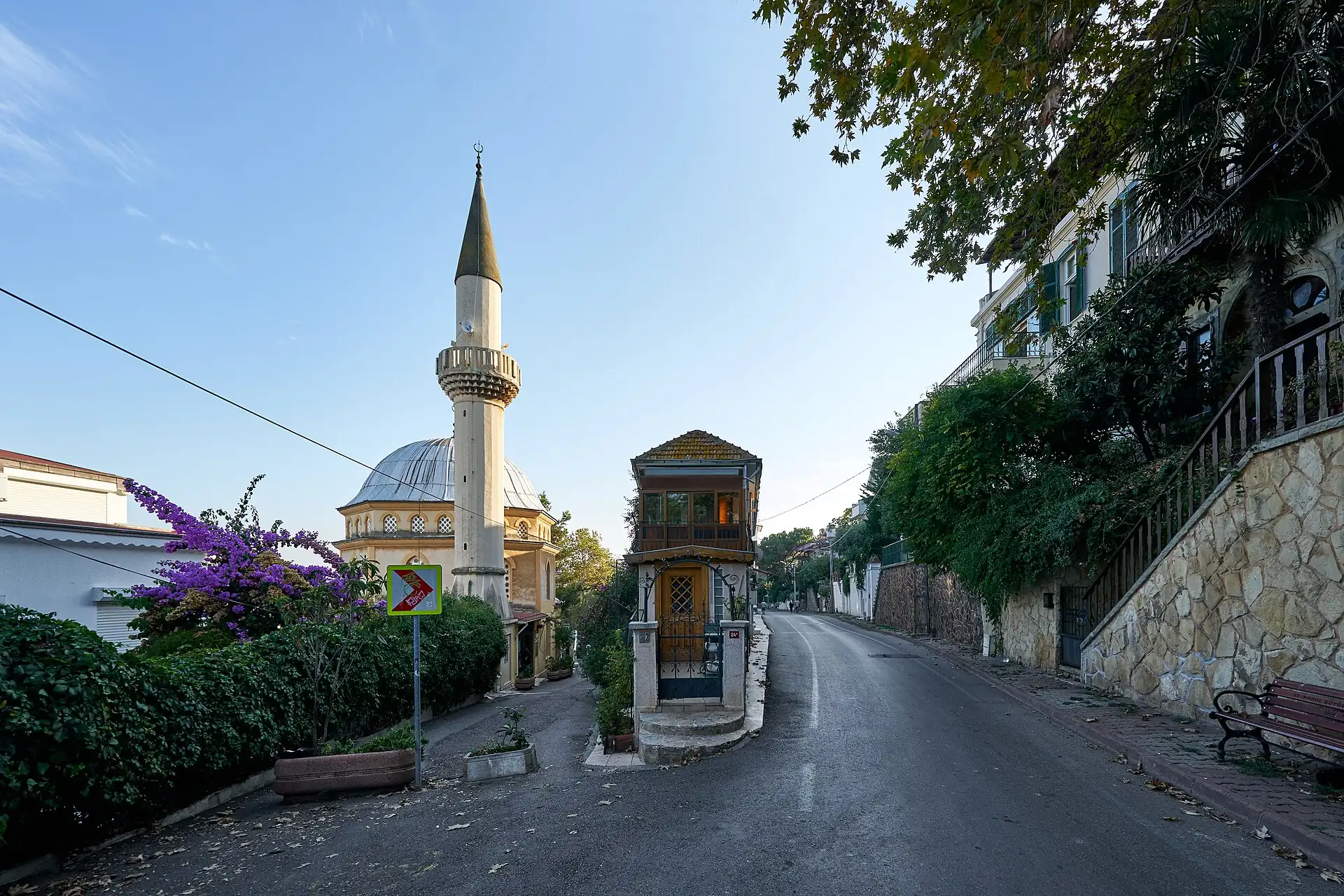
Getting around, in detailGet around · Connect
Get around
Walk inside a cluster; tram T1 along the old peninsula to Karaköy; ferries across the Bosphorus; metro and Marmaray for longer hops; taxi or ride-hailing car at night or with bags. An Istanbulkart works on every public mode.
| Mode | Verdict | Fare | Use it for | What breaks |
|---|---|---|---|---|
| Walking | use | Free | Inside a cluster | Cobbled and sloped; wear shoes with grip. |
| Tram T1 | use | Istanbulkart, about ₺30–50 (≈ US$1–2) a ride (check) | Sultanahmet, Eminönü, Karaköy, Kabataş | Frequent and cheap; crowded at rush hour and on weekends. |
| Metro and Marmaray | use | Istanbulkart | Longer hops, the Asian side, the airport link (check) | Marmaray passes under the strait; some interchanges are long. |
| Ferry | use | Istanbulkart; short public crossings about ₺30–60 (≈ US$1–2) | Kadıköy, Üsküdar, Bosphorus, Princes' Islands | The best value ride in the city; outside seats are the view, windows are steamed in winter. |
| Funicular (Tünel and Kabataş–Taksim) | use | Istanbulkart | Karaköy to İstiklal and Kabataş to Taksim | Saves the steep climb from the waterfront. |
| Taxi | caution | Meter only; short ride ₺200–500 (≈ US$5–13) | Bags, night, the airport | Insist on the meter; the fixed-price offer is a scam tell. |
| Ride-hailing (BiTaksi, Uber, iTaksi) | use | Fare shown before you ride | Bags, late night, peak hours | Apps reduce the meter argument; traffic can still double the time. |
| Dolmuş and minibus | caution | Cash, low fares | Local hops if you know the route | Shared minibuses on fixed routes; the destination is on the windscreen. |
| Bosphorus tour boat | maybe | ₺300–1,000 (≈ US$8–25) (check) | A slow view of the shoreline | Public ferries cover the same ground at a fraction of the price. |
Taxis and ride-hailing
BiTaksi
app
Local app that calls licensed taxis.
iTaksi
app
Another local option.
Uber
app
Shows the fare in advance and calls licensed taxis.
Yellow street taxis
street
Insist on the meter; carry small notes.
On foot and car-free hours
| Where | When | Note |
|---|---|---|
| Sultanahmet Square and the Hippodrome | Early morning | Flat and quiet before the tour groups; cobbles and puddles after rain. |
| Galata Bridge and Karaköy waterfront | Late afternoon | Fishermen along the rail; sunset over the old city. |
More on getting around
Buy an Istanbulkart at a kiosk near the tram stop or ferry pier, load it with lira, and tap it on every mode. A single card can be shared by several people, and each tap takes the fare.
Rush hours are about 07:30–10:00 and 17:00–20:00. Traffic is the risk on the bridges: if the timing matters, go by ferry, tram or metro.
Connect
| Option | Verdict | What breaks |
|---|---|---|
| Turkcell, Vodafone or Türk Telekom shop | use | Passport is needed to register; foreign phones must be registered within a limited period (check the rule for your stay). |
| Airport tourist SIM counters | ok | Convenient and pricier; check data volume and validity. |
| eSIM from a travel provider | use | No registration queue and no shop; buy before you fly. |
| Street SIM sellers | avoid | Unregistered lines get blocked. |
BiTaksi and iTaksi
Taxis
Local apps that summon a licensed taxi with a shown route; ask your hotel which works best.
Uber
Cars and taxis
Works in Istanbul mainly by calling a licensed taxi; the fare shown is the expected total (check).
Moovit and Google Maps
Tram, metro, ferry times
Both show ferry departures and tram lines.
İBB Istanbulkart app
Card balance
Top up an Istanbulkart or check the balance (check current features).
Google Translate
Menus and signs
Download Turkish for offline use.
- Wi-Fi
- Free in most cafés, hotels and on some ferries; patchy in the Grand Bazaar and inside old mosques.
Luggage
Where big bags are a problem, and how to get rid of them for the day.
Rule
- Lockers
- Few public lockers; hotels hold bags after check-out.
- Forwarding
- No forwarding culture: keep the big bag at the hotel for trips away.
- Dead zone
- Late departures: ask the hotel to hold bags and for a shower room; many do for a small fee.
Bags, area by area
4 walking areas rated
- Bags forbidden
Topkapı Palace & Gülhane ParkEminönü & the Spice BazaarGalata Tower & Karaköy
- Bags painful
Lockers, forwarding and the gap between check-out and check-in are covered once, under Luggage.
See & doWalking clusters, day plans and the places worth the time
See & do
Walking clusters, day plans and the places worth the time
Clusters
Plan by cluster: each is a walkable area with a rescue point and a bag rule.
Sunrise cluster: Hagia Sophia at opening, the Blue Mosque outside prayer times, the Basilica Cistern; flat squares, cobbled lanes, crowds from 10:00.
rescue 100% · max p90 6.3′ · half
Morning cluster: Topkapı at opening for the courtyards and harem queue, then Gülhane Park shade; a long half-day with stairs and slopes.
rescue 100% · max p90 7′ · half
Late-afternoon cluster: the Spice Bazaar, the New Mosque, the Galata Bridge and the ferry piers; crowded, loud, flat, best for the last hour of light.
rescue 99% · max p90 6.4′ · 90m
Late-afternoon cluster: climb from Karaköy to the Galata Tower, then cafés and galleries on the way down; steep, cobbled, busy at sunset.
rescue 100% · max p90 5.3′ · half
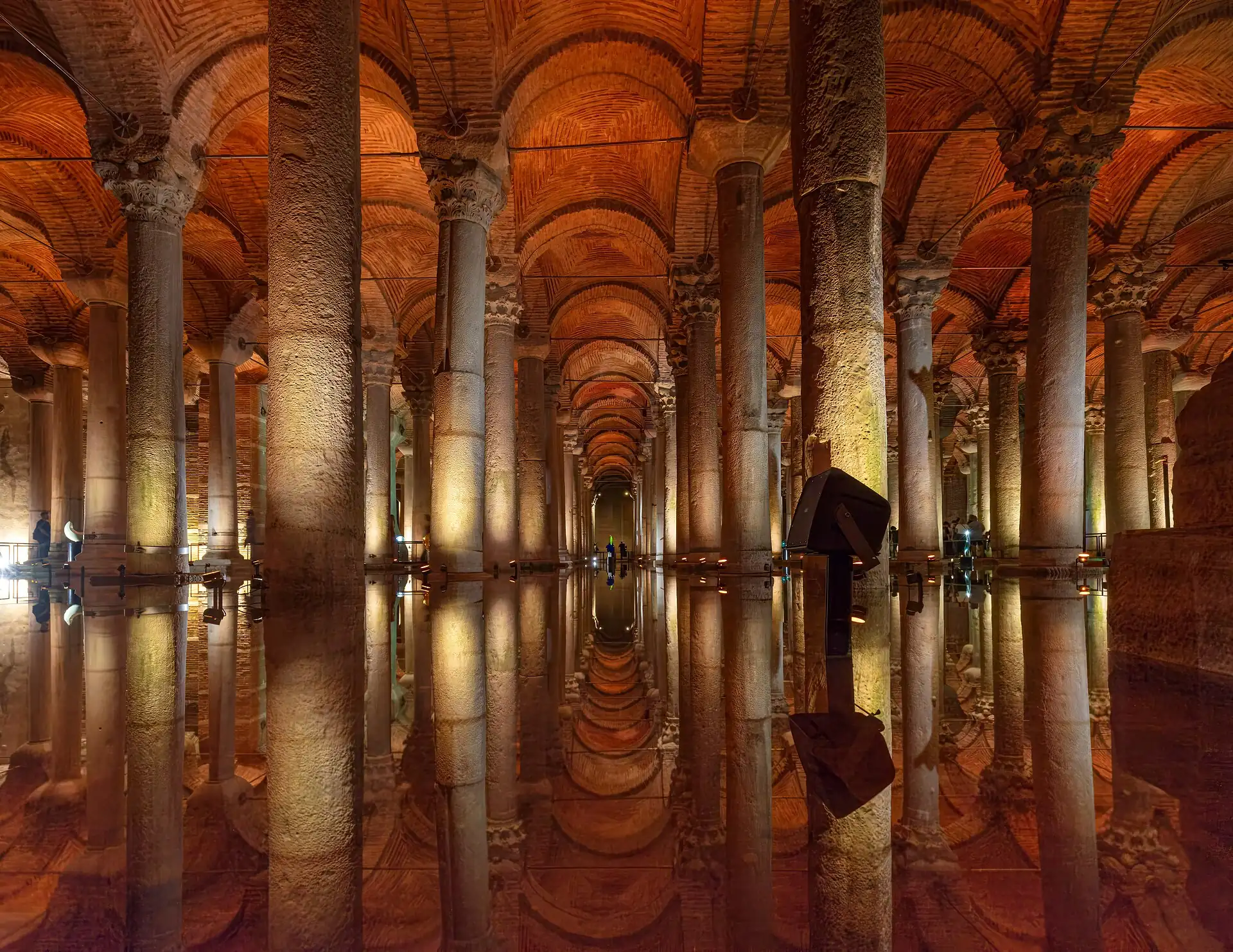
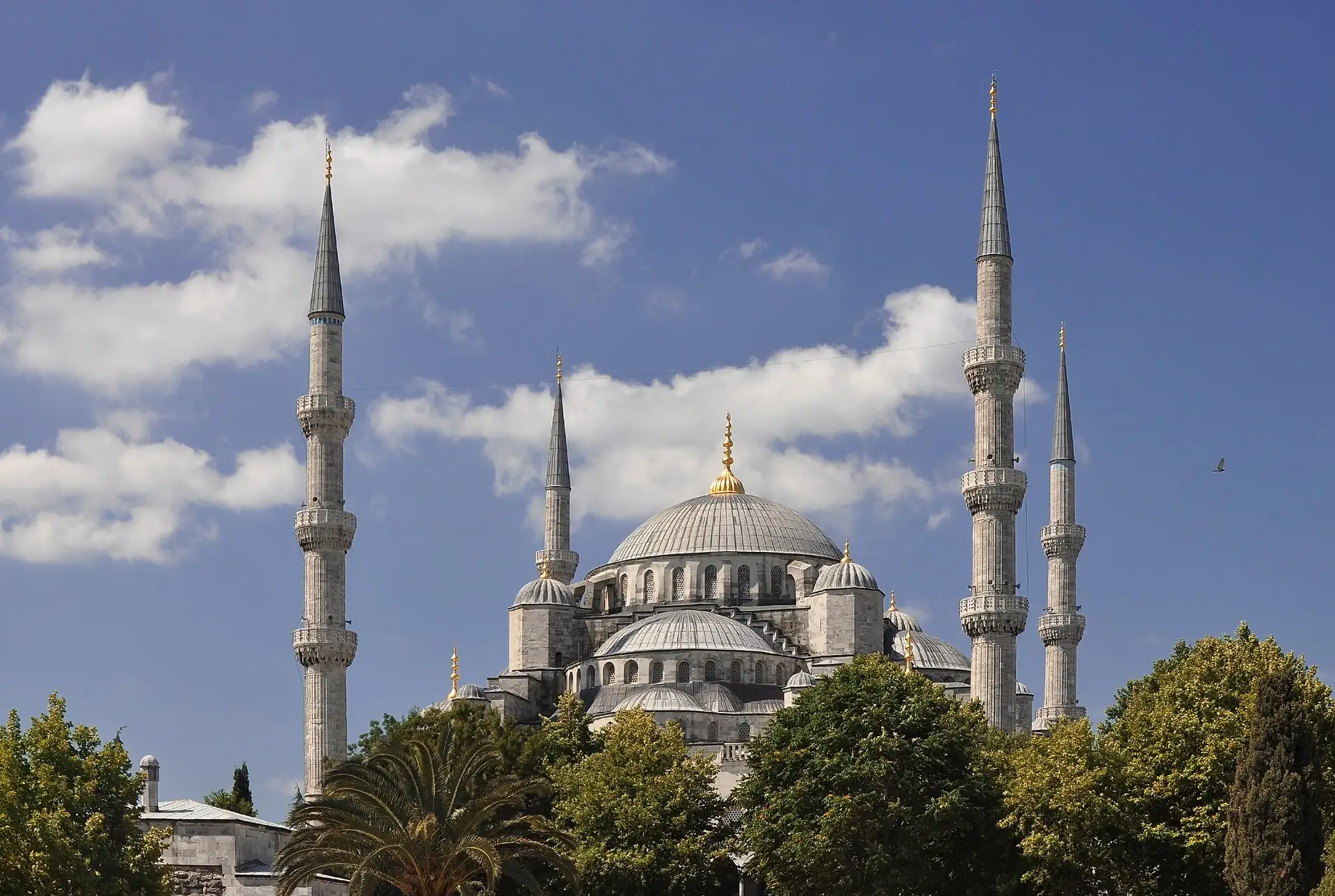
Days
Ready-made day plans, timed against opening hours and walking distances.
How long are you staying?
Loose outlines in the city's rhythm: sights at opening, water at midday, dusk on the bridge, evenings by the ferry.
1 day
A long layover
- 08:30Hagia Sophia — Hagia Sophia at opening
- 10:30Basilica Cistern — Basilica Cistern
- 12:30Köfte lokanta, Sultanahmet — Köfte lunch in Sultanahmet
- 14:00Spice Bazaar (Mısır Çarşısı) — Tram to Eminönü and the Spice Bazaar
- 16:00Fish sandwich at Eminönü — Fish sandwich and a ferry at dusk
Skip: Topkapı, the palace: it needs its own half day.
Istanbul in 3 days
3 daysMosques and palaces at opening, tram and ferry in the afternoon, the tower at the end; the last day ends with the bags already in the car.
Day by day
Day 1 — Hagia Sophia at opening, cistern, a 12:30 lunch table
- 08:30Hagia Sophia
- Blue Mosque (Sultan Ahmed Mosque) (optional)
- Basilica Cistern (optional)
- 12:30Lunch table 12:30 (Sultanahmet)
Day 2 — Topkapı at opening, tram to the Spice Bazaar
Day 3 — Galata Tower, baklava, car to the airport at 12:30
- 08:30Galata Tower
- Turkish breakfast, Karaköy (optional)
- Karaköy Güllüoğlu (optional)
- 12:30Car to the airport at 12:30
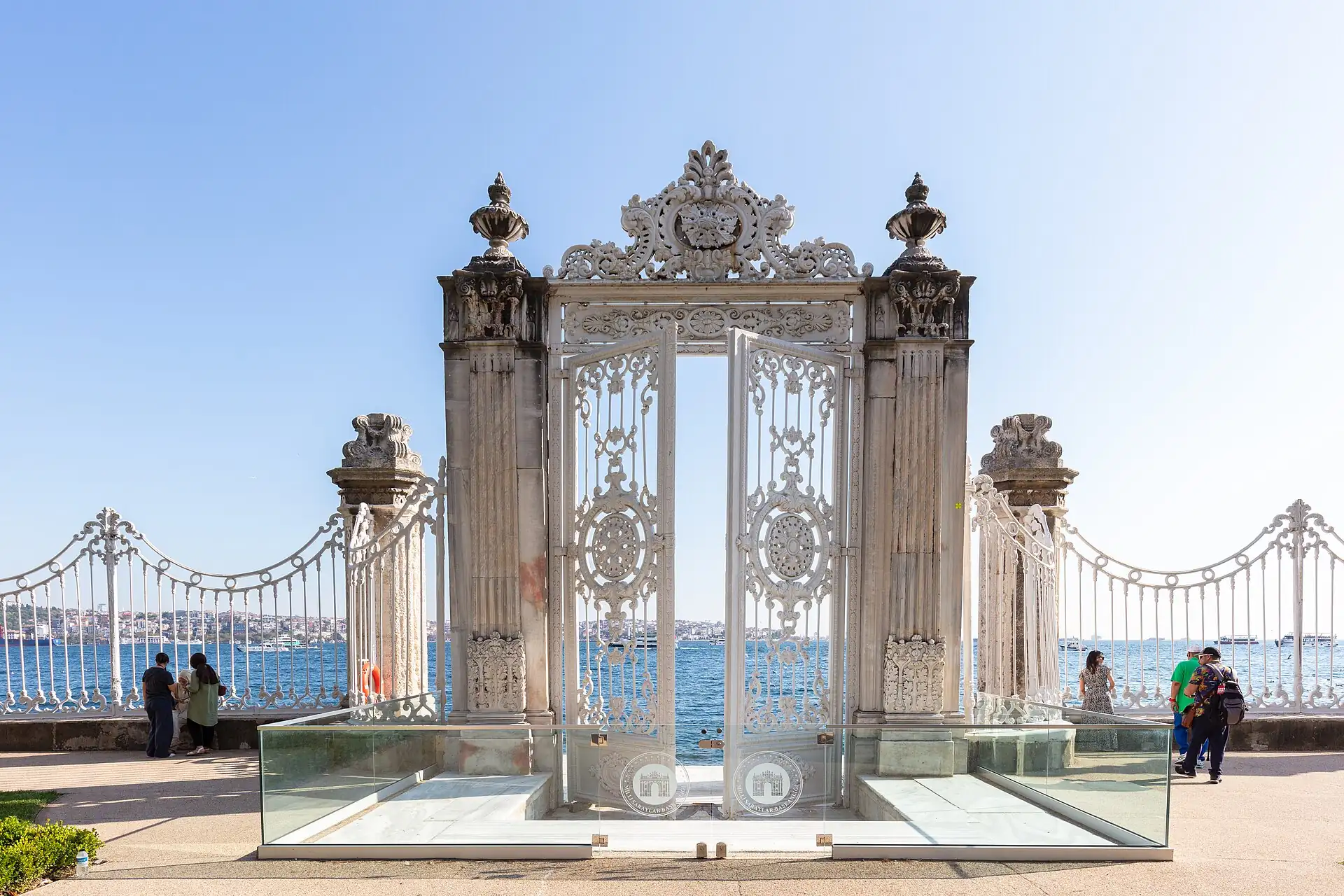
Places
“Best time” is when to arrive for the fewest crowds, for example “before 08:30”; “Go any time” means the hour makes little difference. More sights follow under “More sights and museums”.
6 places. Filters use the guide’s own ratings; a place with no rating is left out when a filter is on.
Tours, classes and shows in Istanbul →
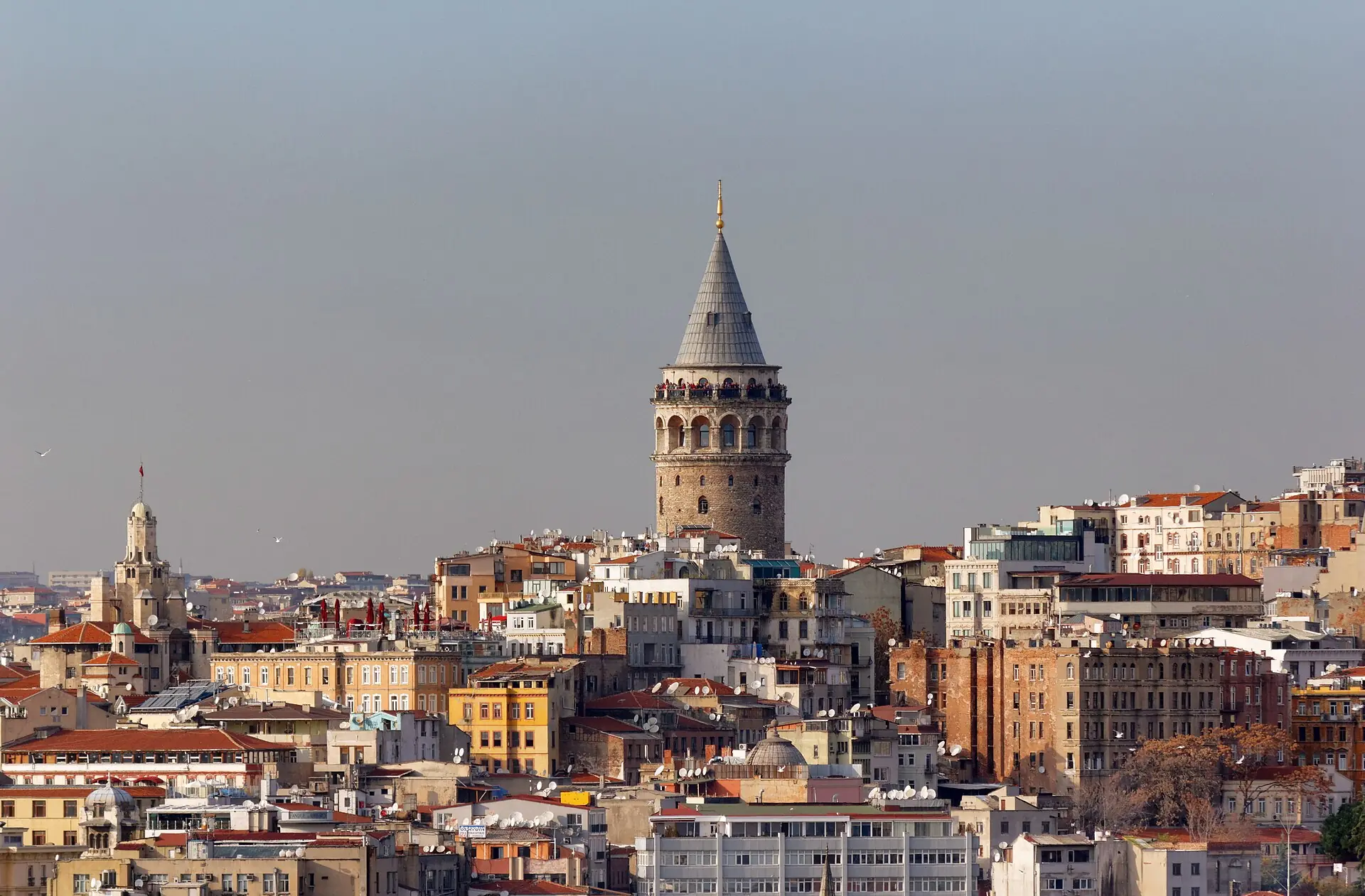
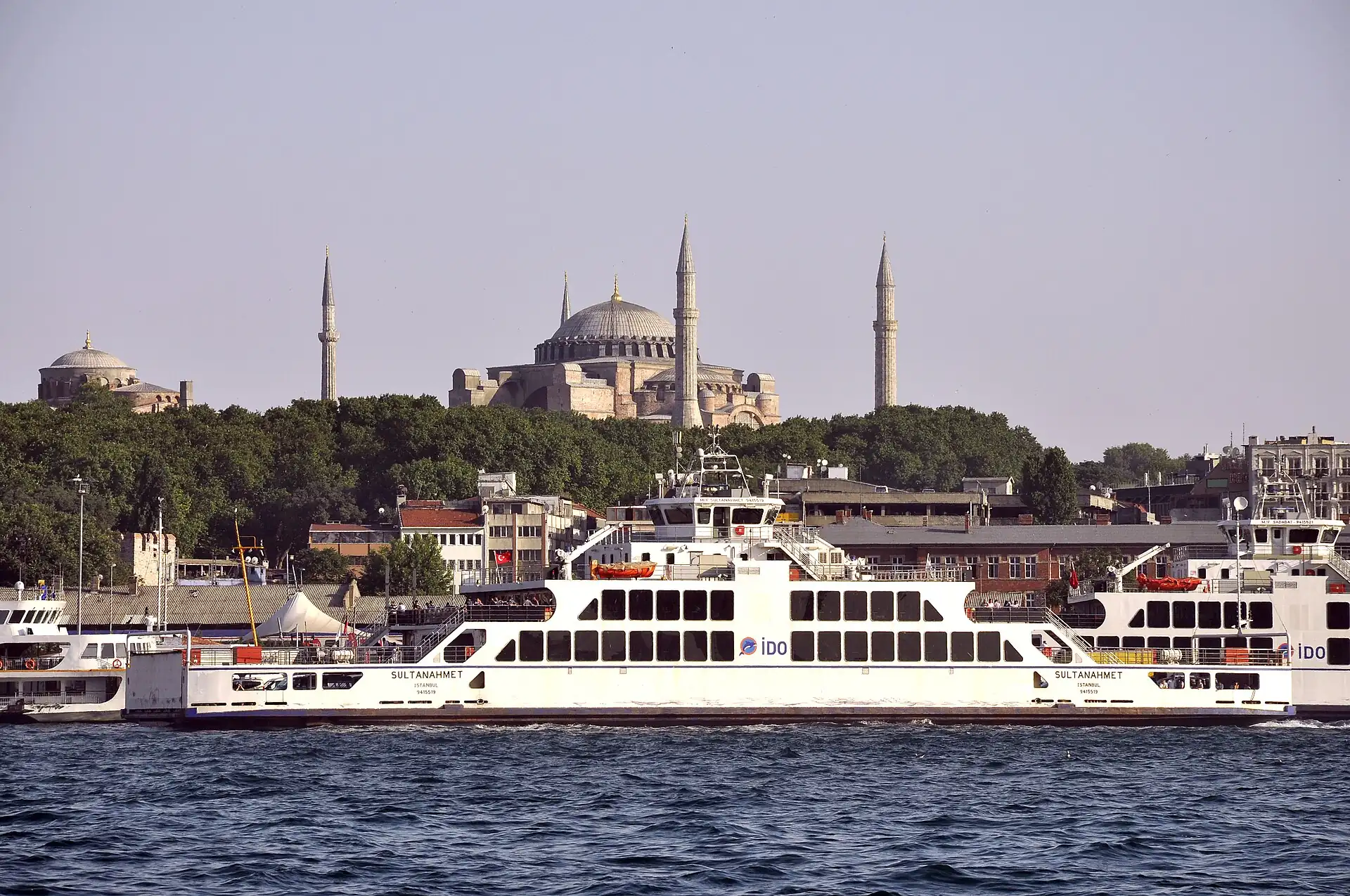
If you do ten things in Istanbul
Ranked for a first visit of 2–3 days. Prices are 2026 estimates in TRY; foreigner museum prices change often.
- 1
The single building that explains the city; the dome is worth the queue.
- Time
- 1–1.5 h
- Best
- At opening
- Cost
- About €25 (≈ US$30) for foreigners (check)
- 2
Courtyards, treasury and Bosphorus views of the sultans' residence.
- Time
- 2–3 h
- Best
- At opening
- Cost
- About €40 (≈ US$50); Harem extra (check)
- 3
A cool, underground forest of columns lit from below.
- Time
- 30–40 min
- Best
- Early or late
- Cost
- About €25–30 (≈ US$30–35) (check)
- 4
A working mosque with blue tiles and a big courtyard; free and short.
- Time
- 20–30 min
- Best
- Outside prayer times
- Cost
- Free
- 5
Colour, smells and tastings by the ferry quay.
- Time
- 30–45 min
- Best
- Mid-morning
- Cost
- Free to browse
- 6
A view of both skylines and the Golden Horn.
- Time
- 40 min
- Best
- Opening or after 19:00
- Cost
- About €30 (≈ US$35) (check)
- 7
Public ferry to Kadıköy or Üsküdar
A cheap cruise across the strait and back.
- Time
- 1–2 h
- Best
- Late afternoon
- Cost
- About ₺30–60 (≈ US$1–2)
- 8
A messy, cheap and reliable local lunch.
- Time
- 30 min
- Best
- Lunch
- Cost
- ₺250–450 (≈ US$7–11)
- 9
Süleymaniye Mosque
Sinan's masterpiece and a calm terrace above the Golden Horn.
- Time
- 45 min
- Best
- Mid-morning
- Cost
- Free
- 10
Grand Bazaar
A maze of shops that shows the trade side of the city.
- Time
- 1–2 h
- Best
- Early
- Cost
- Free to browse
Good for…
Verdict is how well Istanbul works for that traveller, not how nice it is.
The big sights are close together and the city rewards early starts.
- 1Hagia Sophia — the defining building, done at opening.
- 2Basilica Cistern — an easy, cool second stop.
Breakfast spreads, fish by the water, köfte and sweets in one short walk.
- 1Fish sandwich at Eminönü — a cheap classic on the water.
- 2Turkish breakfast, Karaköy — a long Turkish breakfast.
- 3Karaköy Güllüoğlu — baklava by the tray.
Street food and public transport are cheap; museum tickets for foreigners are not.
- 1Simit, çay and street snacks — a filling snack for the price of a coffee.
- 2Public ferries and mosques — the cheapest views and the free sights.
- 1
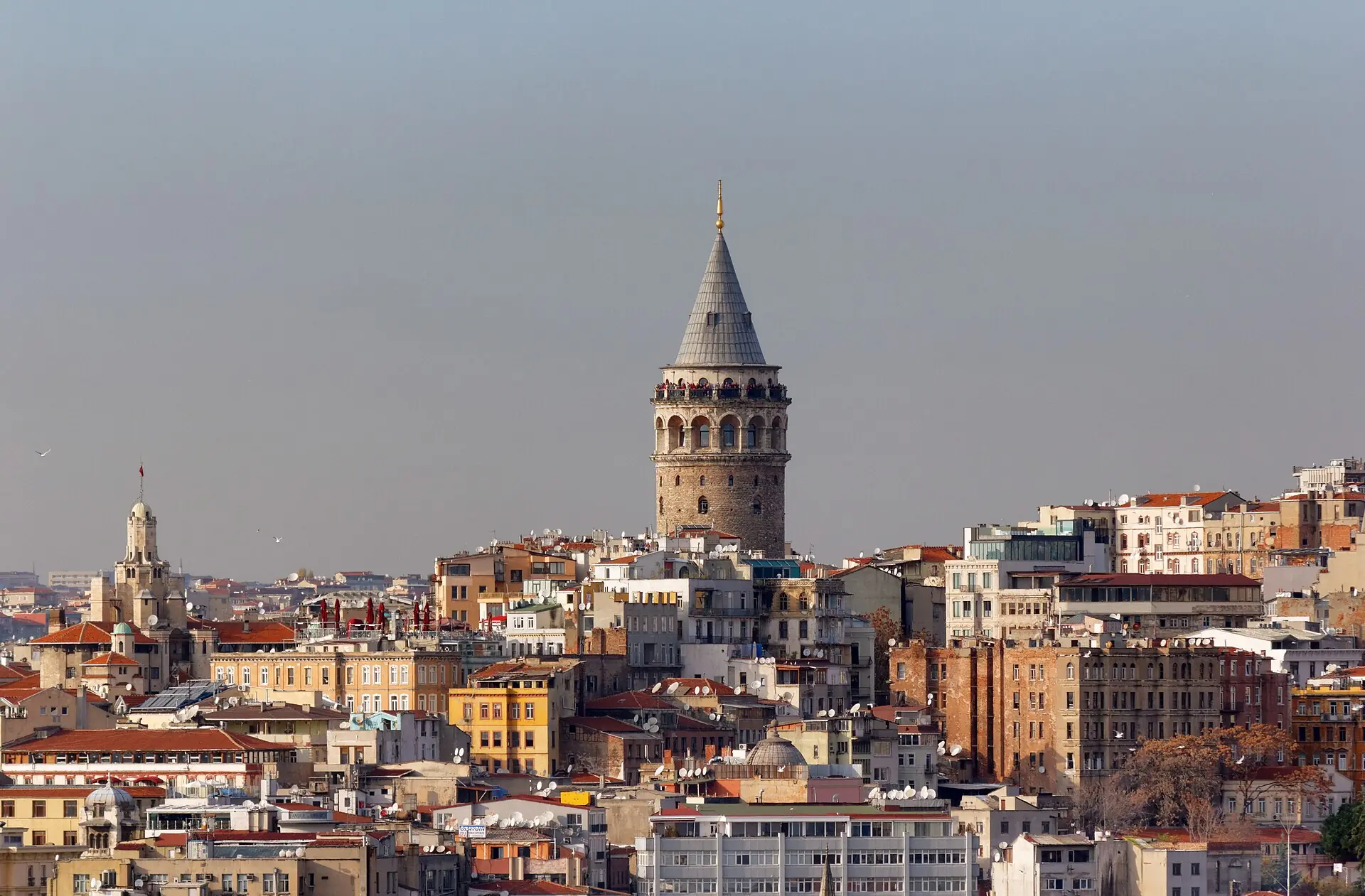 Galata Tower — sunset over the Golden Horn.
- 2A dusk ferry to Kadıköy — a cheap, romantic hour on the water.
Rewarding, but cobbles, crowds and heat make it hard with a stroller.
- 1Princes' Islands — car-free lanes and bikes.
- 2Basilica Cistern — the dim walkways hold children's attention.
- 1A Bosphorus palace hotel — the water at your door.
- 2A private guide for the old city — skips the queues and the confusion.
Cobbles, slopes and steps almost everywhere; plan by car.
- 1Modern hotels with lifts — the only reliable access at the start and end of the day.
Tours and classes: book or skip
Book through the hotel or a licensed operator with written inclusions and a cancellation policy. Prices per person, group tour unless stated.
| Tour or class | Verdict | Typical price | Why | Check before paying |
|---|---|---|---|---|
| Old-city walking tour (Hagia Sophia, Blue Mosque, Cistern) with a licensed guide | maybe | ₺2,500–6,000 (≈ US$65–150) (check) | Good if you want history explained; the sights are easy solo with a book. | Whether tickets are included and how big the group is. |
| Bosphorus cruise, private or shared | maybe | ₺500–2,500 (≈ US$13–65) (check) | Public ferries do the same route for a fraction of the price. | The route, the length and whether there is a guide. |
| Food walk (Karaköy, Eminönü or Kadıköy) | book | ₺2,500–5,000 (≈ US$65–130) (check) | A quick way to learn what to order and where. | The number of tastings and dietary options. |
| Princes' Islands or Bursa day tour | maybe | ₺2,500–5,500 (≈ US$65–140) (check) | Handy if you have no time to plan the transport. | Ferry times, lunch and free time. |
| Gallipoli day tour | maybe | ₺4,000–8,000 (≈ US$100–200) (check) | A long day; a night in Çanakkale is more relaxed. | Transport quality and guide language. |
What each season brings
Spring
Apr–May
Tulips, warm days, long light.
Watch: Easter and holiday crowds; some rain.
Early summer
Jun
Long evenings, festivals and sea swims on the islands.
Watch: Heat building; Bayram dates may move here.
High summer
Jul–Aug
Ferry breezes and late dinners.
Watch: Heat and humidity; peak crowds at the big sights.
Autumn
Sep–Nov
The best walking weather and clearer light.
Watch: Rain returns in November; 29 October holiday.
Winter
Dec–Mar
Few crowds and cheaper beds.
Watch: Cold, wet, short days; occasional snow.
Photo spots and the light
Light times are for clear days; mist and haze over the strait can soften the view.
| Spot | Best light | Tip |
|---|---|---|
| Hagia Sophia from Sultanahmet Park | Sunrise or blue hour | Shoot from the park with the fountain in front; inside, stay out of the walkways. |
| The old city from Galata Tower | Sunset | Arrive before the queue builds; the gallery is narrow. |
| Galata Bridge at dusk | Sunset to blue hour | Fishermen along the rail and the mosques against the sky; keep bags zipped. |
| Ferry seat looking back at the skyline | Late afternoon | Sit on the outer deck on the side facing the old city. |
| The columns of the cistern | Any time | No tripods; brace on the rail and use night mode. |
Istanbul travel FAQ
Answers are 2026 desk estimates; fares and rules marked (check) change.
Is Istanbul safe for visitors?
Generally yes for the main areas. The common problems are pickpockets, taxi overcharging and nightlife scams. Use meters or apps, keep valuables in front pockets, and check your government's advice.
Do I need a visa?
Many passports enter visa-free or with an e-Visa for a short stay; check the official e-Visa site for your passport.
Do I need cash?
Some; cards are widely accepted, but small shops, ferries and tips are easier with lira. Keep ₺500 (≈ US$13) in small notes.
Is tap water safe to drink?
It is treated but most visitors drink bottled water; choose sealed bottles.
How far is the airport?
IST is about 40 km (25 mi) north-west of the old city and takes 45–100 minutes by car; SAW is on the Asian side and takes 60–120 minutes.IST is about 25 mi (40 km) north-west of the old city and takes 45–100 minutes by car; SAW is on the Asian side and takes 60–120 minutes.
How many days do I need?
Three days cover the four clusters at an easy pace; add a day for the Asian side and the Princes' Islands.
What should I wear at mosques?
Shoulders and knees covered; women cover the hair; shoes off at the door.
Taxi, app or Istanbulkart?
Trams, metro and ferries with an Istanbulkart for the main routes; taxis and apps for bags and night.
Are the museums free?
Mosques are generally free; Hagia Sophia, Topkapı, the cistern and the tower charge foreigners a fee in euro or lira (check).
What is the best area to stay?
Sultanahmet for a first visit and early sights; Karaköy or Galata for cafés and evenings.
More to see and doSee & do · Learn & work · Rain & heat · Wheelchair and stroller
Wheelchair and stroller, place by place
How each place in this guide works for wheels, from its own page. Ratings are desk estimates unless a page says it was checked on the ground.
| Place | Step-free | Wheelchair | Stroller | What to know |
|---|---|---|---|---|
| Basilica Cistern | partial | caution | poor | Steps lead down to the walkways; a lift has been offered at times (check); the walkways are wet and slippery. |
| Blue Mosque (Sultan Ahmed Mosque) | partial | caution | ok | A ramp or steps at the visitor entrance (check); flat carpeted interior; the courtyard has cobbles. |
| Galata Tower | no | poor | poor | A lift takes you most of the way; the last flight is a narrow stair; the approach is a steep cobbled hill. |
| Hagia Sophia | partial | caution | caution | A ramp and visitor route exist; the stone floors are uneven and worn; the upper gallery is a sloped ramp. |
| Spice Bazaar (Mısır Çarşısı) | partial | caution | poor | Flat inside but with small steps at entrances; crowded and narrow aisles. |
| Topkapı Palace | partial | caution | caution | A large hilly site with cobbles; some ramps, several sections with steps; the Harem has steps. |
See & do
18 of 18
- mosque
A sixth-century church turned mosque; the dome is the point of the visit.
Sultanahmet · Daily, long hours; closes to visitors around prayers (check) · About €25 (≈ US$30) for foreigners (check)(check)
The six-minaret mosque of Sultan Ahmed, with blue Iznik tiles inside.
Sultanahmet · Outside prayer times; closed to visitors Friday morning to about 13:30 (check)Outside prayer times; closed to visitors Friday morning to about 1:30 PM (check) · Free; donations welcome
- underground
A sixth-century underground reservoir with 336 columns and Medusa heads.
Sultanahmet · Daily (check) · About €25–30 (≈ US$30–35) for foreigners (check)(check)
- palace
The sultans' palace, a set of courtyards with the treasury, the Harem and Bosphorus views.
Topkapı · Closed one weekday; day has changed over time (check) · About €40 (≈ US$50) for foreigners; Harem separate (check)(check)
- Markets
A 17th-century covered market for spices, dried fruit and Turkish delight.
Eminönü · About 08:00–19:30 (check)About 8:00 AM–7:30 PM (check) · Free to browse
- Views
A medieval stone tower with a small viewing gallery over the Golden Horn.
Galata · Daily to late evening (check) · About €30 (≈ US$35) for foreigners (check)(check)
Grand Bazaar
MarketsA covered maze of thousands of shops; go early with a target and a price in mind.
Beyazıt · About 08:30–19:00; closed Sundays (check)About 8:30 AM–7:00 PM; closed Sundays (check) · Free to browse
Süleymaniye Mosque
mosqueSinan's masterpiece on the third hill, with a quiet garden and a Golden Horn view.
Süleymaniye · Outside prayer times (check) · Free
Istanbul Archaeology Museums
MuseumsThree museums at Gülhane with sarcophagi, tiles and the ancient Orient collection.
Gülhane · Daily except one weekday (check) · ₺ and euro fees, check(check)
Chora Church (Kariye)
churchA Byzantine church with rare mosaics and frescoes on the west side of the city; confirm the current opening arrangements.
Edirnekapı · Check current status · Check(check)
Dolmabahçe Palace
palaceA 19th-century waterfront palace with heavy Baroque interiors; guided tours only.
Beşiktaş · Closed Monday and Thursday in the past (check) · Check
Galata Bridge and the Golden Horn
walkThe bridge with fishermen above and restaurants below, with a view of both skylines.
Eminönü–Karaköy · Open air · Free
Bosphorus ferry to the Black Sea (public route)
ferryA slow ride up the strait past palaces, wooden mansions and fortresses.
Eminönü · Daily; a few departures (check) · Check
Ferry to Kadıköy and back
ferryThe cheapest cruise: 25 minutes across, then a market lunch.
Eminönü, Karaköy · All day; frequent departures · ₺30–60 (≈ US$1–2) by Istanbulkart (check)
Turkish bath (hammam)
bathA steam room, a scrub and a wash; pick a historic bathhouse with clear prices and privacy.
Sultanahmet, Beyoğlu (check operator) · Daytime and evening · ₺2,000–6,000 (≈ US$50–150) (check)
Whirling dervish ceremony
musicA Sufi Mevlevi sema; treat it as a religious performance and stay quiet.
Sirkeci and Fatih (check operator) · Evenings · ₺1,000–2,500 (≈ US$25–65) (check)
Turkish cooking class
ClassesShop a market, then cook meze and a main; book through your hotel or a class operator.
Sultanahmet, Karaköy (check operator) · Half day · ₺2,500–5,500 (≈ US$65–140) (check)
Princes' Islands day
day tripCar-free islands with pine lanes and waterside lunches, 60–90 minutes by ferry.
Kabataş, Eminönü · Morning ferry · ₺100–300 (≈ US$3–8) return plus bike hire (check)
- Booking
- Hammams, classes and evening ceremonies are best booked a day or two ahead through your hotel or the operator's own site.
Learn & work
| What | Where | Cost | Note |
|---|---|---|---|
| Turkish language classes | Language schools and private tutors (ask your hotel; check) | Check current fees | Short intensive courses and one-to-one lessons are available; Turkish grammar is very regular once you learn the suffixes. |
| Ebru (paper marbling) and calligraphy workshops | Cultural centres and studios in Sultanahmet and Fatih (check) | ₺1,000–3,000 (≈ US$25–75) (check) | A two-hour class makes a piece to take home; book ahead. |
| Turkish cooking | Hotels and cooking schools (check) | ₺2,500–5,500 (≈ US$65–140) (check) | Half-day sessions covering meze, dolma and a main. |
Working here
- Tourist entry
- Many visitors enter without a visa or with an e-Visa for a short stay; tourist entry does not allow paid work.
- Work permit
- Legal work needs an employer-sponsored permit and residence formalities; expect apostilled documents.
- Remote work
- No dedicated digital-nomad visa is confirmed; working remotely on a tourist entry is a grey area, so check current rules before relying on it.
Rain-day and heat-day plan
Rain day
Winter and spring rain arrives in showers that empty in an hour; plan the covered sights (cistern, palace interiors, bazaars, museums) for the wet hour and keep terraces for the dry.
- 01Basilica Cistern — Indoor and underground; about 30–40 minutes.
- 02Spice Bazaar (Mısır Çarşısı) — Covered market; smells and tastings in the wet.
- 03Hagia Sophia — Indoors, a long slow visit under the dome.
Heat day
In July and August the paved squares are hot: outdoor sights before 11:00 and after 17:00, a cool, covered stop from midday to 16:00, water every hour.
- 08:30Hagia Sophia — Cool air and the shortest queue.
- 11:00Basilica Cistern — Cool underground for the rising heat.
- 13:00 — Lunch and a rest under a fan or air-conditioning; a ferry breeze is the alternative.
- 17:30Galata Tower — Late light and a breeze on the hill.
Day-trips and nearby
Places you can reach from Istanbul in a day or with one night away, with the route and what it costs. Door to door, not ride time.
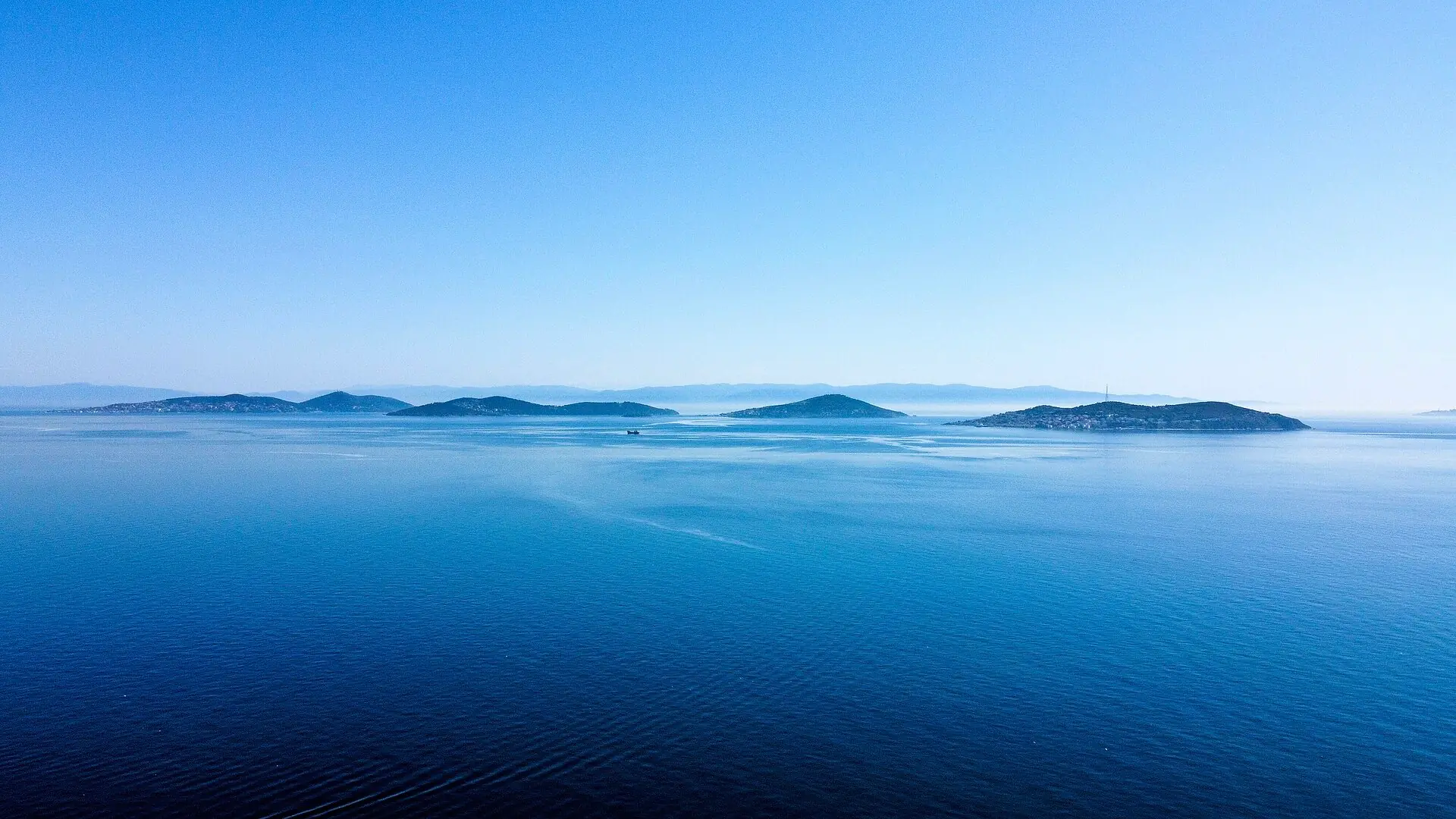 Photo: Abdullahi Bala Mohammed, CC BY-SA 4.0
Princes' Islands
goFerry 60–90 min
Car-free lanes, bikes and waterside lunches; go early on weekends.
- Time
- Full day
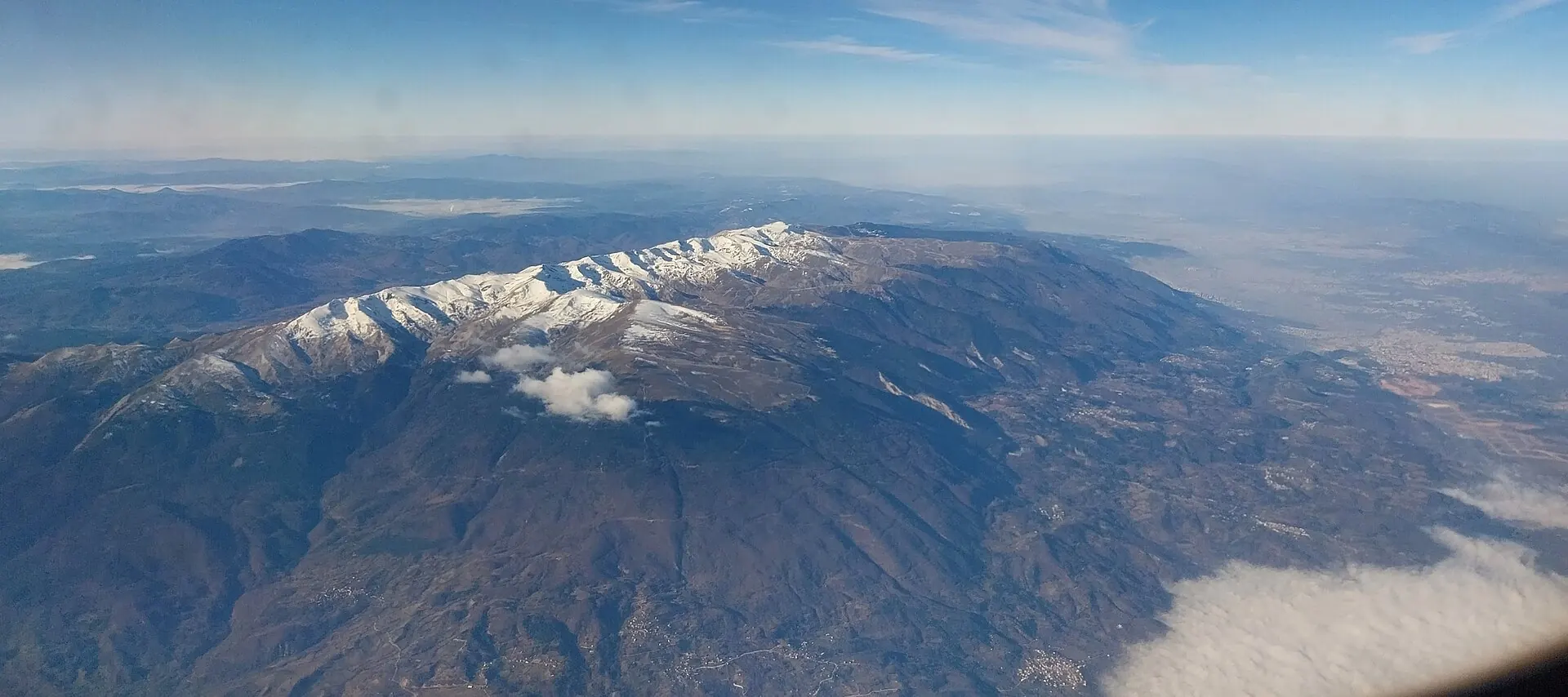 Photo: GrandEscogriffe, CC BY-SA 4.0
Bursa
goFerry and bus 2–3 h
The first Ottoman capital; a big mosque, a market and İskender kebab.
- Time
- Long day or overnight
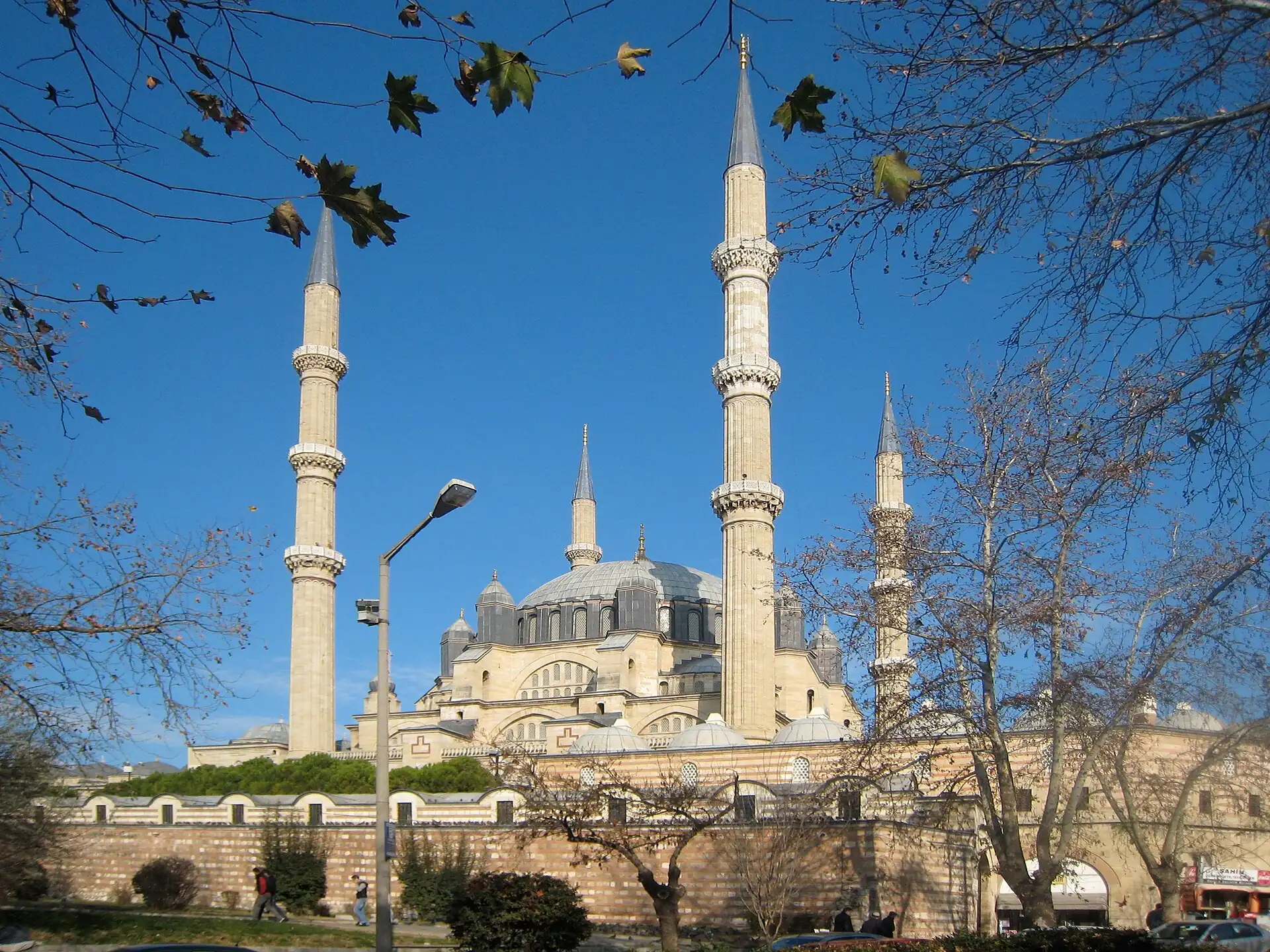 Photo: Ankara, CC BY-SA 3.0
Edirne
overnightBus 2.5–3 h
Sinan's Selimiye Mosque; better with a night.
- Time
- Long day or overnight
Gallipoli and Çanakkale
overnightBus about 5 h, or a tour
A First World War peninsula; not a day trip by bus.
- Time
- Two days
Go next
Şile and the Black Sea coast
maybeDoor to door: About 2 h
Bus or car 1.5–2 h
A seaside town with a lighthouse and beaches; busy on summer weekends.
Cappadocia
overnightDoor to door: Half a day
Flight 1.5 h to Kayseri or Nevşehir, then a transfer
Not a day trip; at least two nights.
Eat & sleepWhere to eat and which area to sleep in
Eat & sleep
Where to eat and which area to sleep in
Eat
A short list of places worth crossing the city for, each with how to get a seat.
Restaurant finder: filter every place to eat in Istanbul →
Vegetarian-friendly score
2.0 / 5 · Workable
- Country diet noteOur country guide rates vegetarian eating as mixed.0.75 / 2
- Places to eat in this guide3 of 5 places with a known answer are vegetarian-friendly, 1 partly.1.05 / 1.5
- Budget eating lines0 vegetarian lines in "Eat by budget".0 / 0.6
- Meat-free national dishes6 meat-free dishes in the country food list.0.4 / 0.4
- Dedicated vegetarian kitchens0 mentions of vegetarian restaurants, Buddhist or fasting kitchens.0 / 0.5
Country note: Olive-oil vegetable dishes (zeytinyağlı), meze, lentil soup, menemen and pide with cheese are easy; stews and soups often use meat stock.
Vegetarian places near me →Make a diet card →
How we score
- Country diet note (up to 2): easy 2, workable 1, mixed 0.75, hard 0; no note 0.5.
- City places to eat (up to 1.5): 1.5 × (vegetarian-friendly + half of partly friendly) ÷ places with a known answer; needs 3 or more known places.
- Budget eating lines marked vegetarian (up to 0.6): 0.2 each.
- Meat-free national dishes (up to 0.4): 0.1 each.
- Dedicated vegetarian kitchens mentioned — Buddhist chay, shōjin ryōri, Jain, fasting food, vegan cafés (up to 0.5): 0.1 each.
- Total rounded to the nearest half point, 0 to 5. Built from our own pages only, not from reviews.
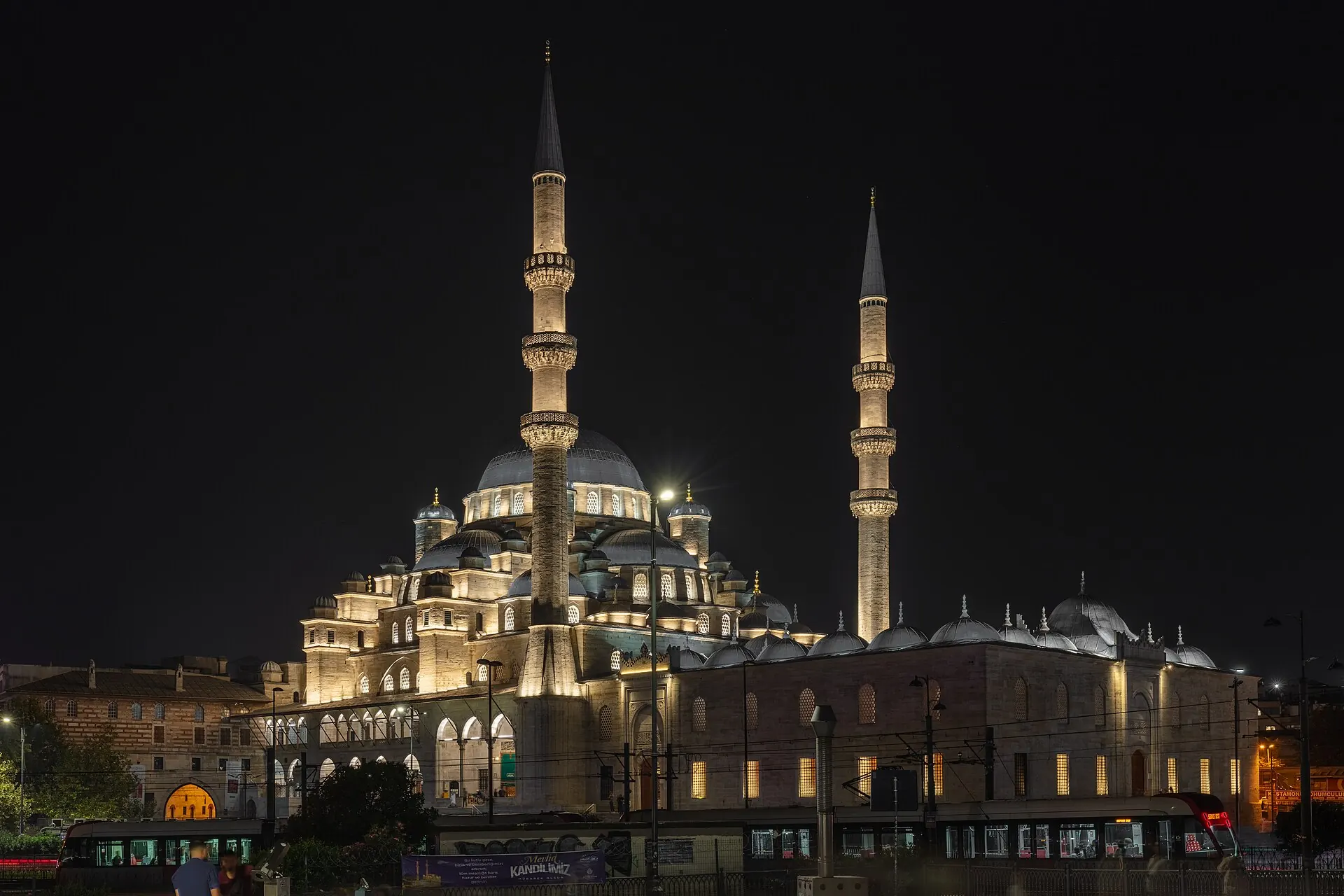
Eating and drinking guideEat by budget · Drink
Before you sit down to eat
Short version; full text linked
Eat by budget
Under ₺400 (≈ US$10) a meal
| Where | Order | Area | Price | Note |
|---|---|---|---|---|
| Simit and tea | Simit, a sesame ring, with tea | Sultanahmet, Gülhane Park | ₺30–100 (≈ US$1–3) | A fast breakfast between sights. |
| Street snacks and tea | Simit, roasted chestnuts, corn and tea | Sultanahmet and Gülhane | ₺30–120 (≈ US$1–3) | Carts near the tram stops. |
| Döner and dürüm stalls | Döner in bread or a wrap | Eminönü, Beyoğlu | ₺200–400 (≈ US$5–10) | Watch the meat turn; busy stalls are fresher. |
Dishes to know
| Dish | What it is | Where to look | When | Price |
|---|---|---|---|---|
| Köfte | Grilled minced-meat patties, usually with piyaz (white bean salad) | Sultanahmet köfte restaurants | Lunch | ₺400–800 (≈ US$10–20) |
| Balık ekmek | Grilled fish in a roll with onion and salad | Eminönü boats and stalls | Any time | ₺250–450 (≈ US$7–11) |
| Simit | Sesame-covered bread ring | Street carts and bakeries | Morning | ₺25–45 (≈ US$1–2) |
| Menemen and kahvaltı | Scrambled eggs with tomato and pepper, or a full breakfast spread | Cafés and breakfast houses | Morning | ₺300–1,200 (≈ US$8–30) |
| Lahmacun and pide | Thin minced-meat flatbread and boat-shaped pide | Pide salons | Lunch, dinner | ₺250–600 (≈ US$7–15) |
| Döner and iskender | Sliced roast meat in bread, or over bread with tomato sauce and butter | Döner shops | Lunch, dinner | ₺250–700 (≈ US$7–18) |
| Meze and rakı | Small cold dishes with aniseed spirit and water | Meyhanes in Beyoğlu | Dinner | ₺1,000–3,000 (≈ US$25–75) |
| Baklava and künefe | Filo, nuts and syrup; hot cheese pastry with syrup | Sweet shops such as Karaköy | Afternoon | ₺300–600 (≈ US$8–15) |
| Turkish delight (lokum) | Soft sweets with nuts or rose | Spice Bazaar and sweet shops | Any time | ₺300–800 (≈ US$8–20) a box |
- Eat where the turnover is fast and the food is hot; a full lokanta at 12:30 is a good sign.Eat where the turnover is fast and the food is hot; a full lokanta at 12:30 PM is a good sign.
- Ask for prices when there is no menu, especially for fish by weight and in nightlife streets.
- A cover charge (kuver) or bread charge may appear on the bill; it is legal but check the menu.
Drink & nightlife
| Where | What | Until | Note |
|---|---|---|---|
| Karaköy and Galata cafés and bars | Coffee, cocktails, rooftop terraces | Late on weekends | The easiest place to start an evening: walkable, mixed crowd. |
| Beyoğlu side streets (Asmalımescit, Nevizade) | Meyhanes and bars | Late | Traditional meyhanes with mezes and rakı; agree the menu and prices before ordering. |
| Kadıköy (Moda and the bar streets) | Pubs, live music, street-side cafés | Very late on weekends | A local scene on the Asian side; ferry to Kadıköy and taxi back. |
| Rooftop terraces in Sultanahmet | Tea, beer, views of the mosques | About 23:00About 11:00 PM | Quiet, tourist-facing, pricey for a drink. |
By style
| Style | What | Where | Price | Until |
|---|---|---|---|---|
| Tea (çay) | Black tea in tulip glassesThe default hospitality drink; the first glass may be free in a shop. | Everywhere | ₺30–60 (≈ US$1–2) a glass | All day |
| Turkish coffee | Strong coffee with grounds, served in a small cupDrink slowly and stop before the grounds. | Cafés and old coffee houses | ₺150–300 (≈ US$4–8) | All day |
| Beer, wine and rakı | Efes and local beer, Turkish wine, aniseed rakı with mezePrices vary widely; ask before ordering in nightlife streets. | Bars, meyhanes, restaurants | ₺250–500 (≈ US$7–13) a beer in a tourist bar | Late |
| Ayran and şalgam | Salted yogurt drink, fermented carrot and turnip juiceAyran cools a spicy meal; şalgam is an acquired taste. | Kebab shops and street stalls | ₺40–90 (≈ US$1–3) | Daytime |
Rules that bite
- Do not accept a drink from a stranger who has invited you to a bar or club: overpriced bills and spiked drinks are a known scam pattern in Beyoğlu.
- Check the menu prices in writing before you sit down in nightlife streets.
- Ramadan: many places still serve alcohol, but daytime restaurants may be quieter and shorter in hours.
Sleep
Pick the area first: it decides your walk home at night and your first morning.
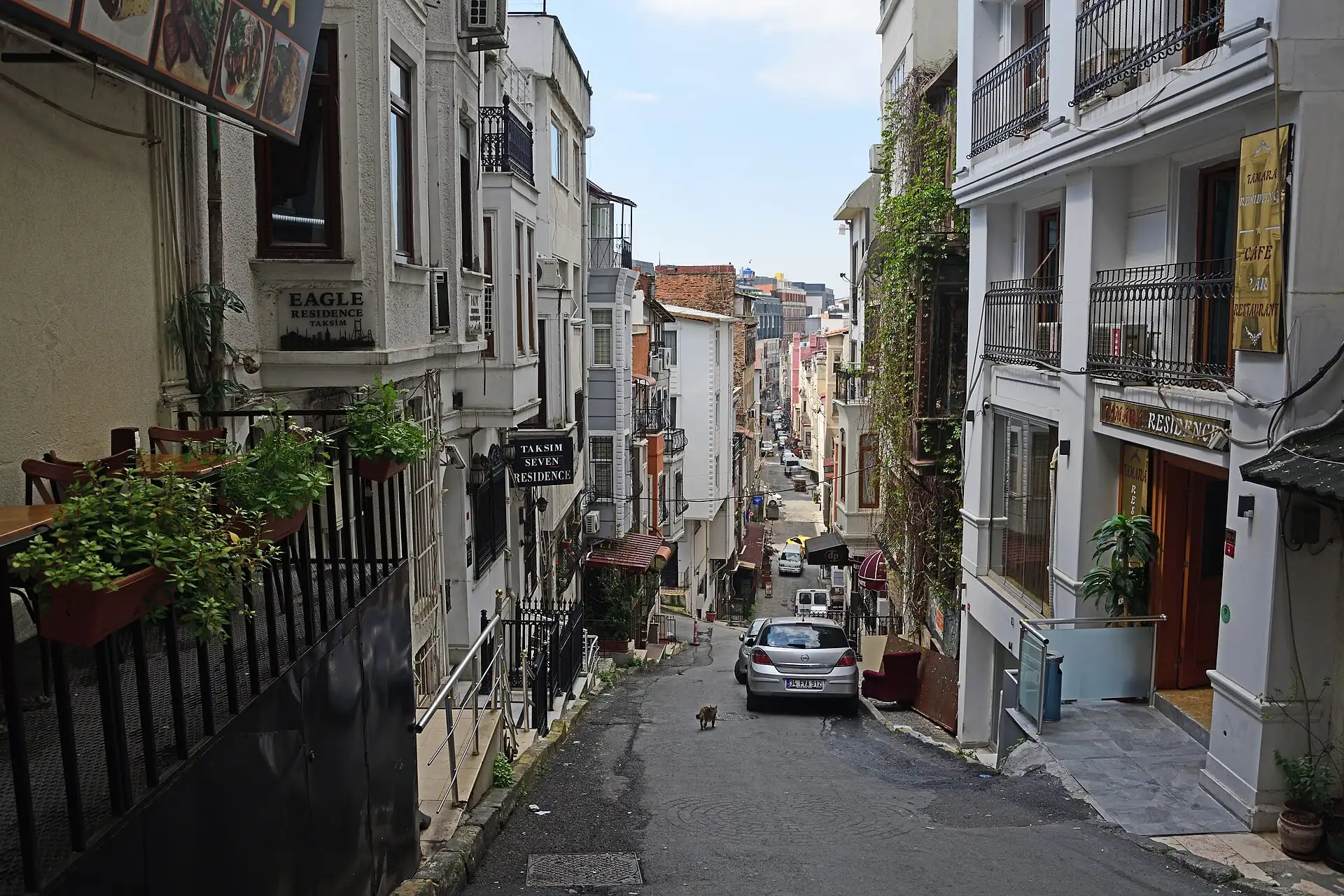
Which neighborhood fits you
Three questions, one recommendation, with the reasons.
Next best: Karaköy and Galata
Built from our 1–5 desk scores per area; your answers stay in this browser.
More on sleepingSleep by budget · Your area · With kids
Sleep by budget
| Band | Price | Where | Room types | What to expect |
|---|---|---|---|---|
| budget | ₺1,500–3,000 (≈ US$40–75) | Sultanahmet, Beyoğlu hostels and small hotels | Hostels, family guesthouses | Small rooms, a rooftop breakfast, some noise from dawn prayers. |
| mid | ₺3,500–8,000 (≈ US$90–200) | Sultanahmet, Karaköy, Galata | 3–4 star hotels, boutique hotels | Lift (usually), breakfast, air conditioning, a street the car can reach. |
| splurge | ₺12,000–35,000 (≈ US$300–900)+ | Bosphorus, Beyoğlu, Sultanahmet | 5-star hotels, palace hotels | Pools, spas, views, doorstep drop-off. |
Booking checks
- Ask whether a room has a window and where it faces: some interior rooms are dark and noisy.
- A hotel taxi to the airport is worth booking; street taxis quote high fares to visitors.
- Confirm any lift and street access before booking in Sultanahmet, Galata or Karaköy.
Which area is yours
| If you are | Sleep in | Because |
|---|---|---|
| First visit, 2–3 nights, sights first | Sultanahmet (old city) | Walk to the big sights at opening, before the tour groups. |
| Food and café trip, evenings out | Karaköy and Galata | Walk to dinner and the ferry; a tram ride to the old city. |
| Lots of luggage or arriving late | Sultanahmet (old city) | A hotel with a night desk and a street the car can reach. |
First-timers: Hagia Sophia and the Blue Mosque are a walk away; pick a hotel with a 24h desk and a street the car can reach.
Cafés, galleries and the ferry piers; steep streets, a lift in the better hotels, and a 10-minute tram to the old city.
Areas are in our default order until you tick a priority.
Scores are 1–5 desk judgements per priority (2026).
With kids
- Cobbled slopes and steep steps make strollers hard in Sultanahmet, Galata and Karaköy; a carrier works better.
- The ferry ride across the Bosphorus or to the Princes' Islands is an easy win for children; bikes and horse carriages on the islands are a second.
- The Basilica Cistern's dim walkways and the Topkapı courtyards suit kids who can walk for an hour; keep the sightseeing to mornings.
- Car seats are rare in taxis: bring a travel booster or ask the hotel to book a car with one.
PracticalMoney, essentials, safety and the pocket card
Practical
Money, essentials, safety and the pocket card
Money
What a day costs at three comfort levels, and how to pay.
- Budget
- ₺1,500–2,500 (≈ US$40–65) excl. bed / day
- Mid
- ₺2,500–5,000 (≈ US$65–130) excl. bed / day
- High
- ₺5,000 (≈ US$130)+ excl. bed / day
- Transit card
- Istanbulkart for tram, metro, bus and public ferry; load it with lira at kiosks.
- Cash rule
- Keep ₺500 (≈ US$13) in small notes; use ATMs inside banks and decline the machine's own exchange rate.
More on moneyCosts · Budget · Buy
What things cost
- Simit from a street cart₺25–45 (≈ US$1–2)
- Tea, a glass₺30–60 (≈ US$1–2)
- Fish sandwich at Eminönü₺250–450 (≈ US$7–11)
- Köfte lunch in Sultanahmet₺400–800 (≈ US$10–20)
- Breakfast spread for two₺800–2,000 (≈ US$20–50)
- Large bottle of water₺20–40 (≈ under US$1)
- Hagia Sophia, foreigner ticket (check)About €25 (≈ US$30)
Trip budget
| Hotel double room1 × 3 nights × ₺5,500 | ₺16,500 |
| Food, local transport, entries2 × 3 days × ₺4,500 | ₺27,000 |
| Airport car, both ways1 × ₺4,000 · one car per 4 people | ₺4,000 |
| Museum tickets (Hagia Sophia, Topkapı, Cistern), three sights2 × ₺3,500 · foreigner prices, check | ₺7,000 |
| Tourist SIM or eSIM, about a week2 × ₺600 | ₺1,200 |
| Buffer 20%Price creep, a taxi you did not plan, one splurge | ₺11,140 |
| Trip total≈ ₺11,140 per person per day, bed included | ₺66,840≈ US$1,700 |
2026 estimate in TRY (lira; prices move quickly, check); flights, visas and tours excluded. Your choices stay in this browser.
Prices of common things
| Tea (çay), a glass | ₺30–60 (≈ US$1–2) |
| Fish sandwich (balık ekmek) at Eminönü | ₺250–450 (≈ US$7–11) |
| Lokanta lunch, main plus side | ₺400–900 (≈ US$10–25) |
2026 estimate; check locally.
Buy
- Bargaining
- In the Grand Bazaar and at carpet and ceramic shops the first price is a starting point: counter at about half, settle around 60–70%, and walk away politely if it does not move. Do not bargain in shops with posted prices, in food markets or in supermarkets.
- Fixed-price check
- Check the price of spices, tea, Turkish delight or textiles in a supermarket or a fixed-price shop first; that is your ceiling for the same item in a bazaar.
Markets and shopping streets
| Where | What | When | Haggle | Note |
|---|---|---|---|---|
| Grand Bazaar (Kapalıçarşı) | Ceramics, lamps, leather, carpets, jewellery, textiles | Roughly 08:30–19:00, closed Sundays (check)Roughly 8:30 AM–7:00 PM, closed Sundays (check) | hard | A covered maze of thousands of shops; go early, decide what you want, and ignore invitations for tea that come with a carpet talk. |
| Spice Bazaar (Mısır Çarşısı) | Spices, dried fruit, Turkish delight, tea, nuts | Roughly 08:00–19:30 (check)Roughly 8:00 AM–7:30 PM (check) | light | Compare weights and prices between two stalls; ask to taste before buying. |
| Arasta Bazaar | Ceramics, scarves, small gifts | Daytime (check) | medium | A calmer row of shops beside the Blue Mosque. |
| Kadıköy market streets | Fish, cheese, olives, sweets, spices | Daytime; Sunday quieter (check) | no | A local food market on the Asian side; fixed prices and good tasting. |
| Supermarkets and chains (Migros, BİM, A101) | Water, snacks, toiletries, fixed-price essentials | About 08:00–22:00About 8:00 AM–10:00 PM | no | Your price reference and an air-conditioned break. |
Shops by what they sell
| For | Where | Hours | Note |
|---|---|---|---|
| Turkish delight (lokum), baklava and nuts | Spice Bazaar area, Karaköy, and sweet shops in Eminönü | Shop hours | Buy by weight; ask for a taste and check the expiry date on boxed gifts. |
| Ceramics, glass lamps, textiles | Grand Bazaar, Arasta Bazaar | — | Ask whether a piece is handmade or factory-made and what the price is per piece. |
| Carpets and kilims | Reputable dealers near Sultanahmet and the Grand Bazaar (check) | — | A big purchase: compare at least three shops, keep the receipt and the certificate, and never buy on the day someone approached you in the street. |
| Tea and coffee | Supermarkets and the bazaars | — | Turkish tea and coffee are cheaper in a supermarket than in a tourist shop. |
Changing money
| Where | Verdict | Why |
|---|---|---|
| Bank ATMs | use | Usually the fairest rate; choose to be charged in lira. |
| Exchange offices (döviz) away from tourist squares | use | Compare two offices; posted rates should be the rate you get. |
| Airport exchange desks | ok | Convenient for the first ride, at a weaker rate. |
| Street changers and 'special rate' shops | avoid | Short-changing and fake notes. |
ATMs
- Per withdrawal
- Most machines cap a foreign card withdrawal at a few thousand lira per go; the screen shows the limit.
- Fees
- A local fee plus your own bank's foreign-transaction fee; take the cap rather than several small amounts.
- Where
- Machines in bank branches, hotels and malls in daylight; avoid street machines in nightlife streets.
- Conversion
- If the machine or card terminal offers to charge in your home currency, decline and pay in lira.
Essentials and accessEssentials · Access
Essentials
- Plugs & power
- 230 V, 50 Hz; two-pin European sockets (type C and F).
- Toilets
- Cafés, mosques (some paid), malls and museums; carry ₺20–50 (≈ US$1–2) in coins.
- Opening hours
- Shops open about 10:00–20:00; museums close one day a week; mosques close to visitors during prayers; restaurants run late.Shops open about 10:00 AM–8:00 PM; museums close one day a week; mosques close to visitors during prayers; restaurants run late.
- Health
- Routine vaccinations; heat and dehydration in summer; travel insurance recommended.
- Accessibility
- Steep, cobbled and full of steps; a taxi and a hotel with a lift help.
- Laundry
- Hotels charge by the item; drop-off laundries are common in Sultanahmet and Beyoğlu.
- Emergency numbers
- 112 for police, ambulance and fire.
Pack
- A scarf or shawl for mosques
- Shoes with grip for wet cobbles
- A light layer for ferry decks and evenings
- A small day bag with a zip, worn in front
Accessibility
Istanbul is hard on wheels. The old peninsula is hilly and cobbled, pavements are narrow with high kerbs, and older sights have steps. Trams and newer metro stations have lifts; ferries have ramps. Plan by taxi and pick a hotel with a lift.
- Pavements
- Narrow, sloped and often blocked by cars, tables and scooters; cobbles in Sultanahmet, Galata and Karaköy.
- Getting around
- Tram T1 has step-free boarding at most stops (check); taxis with a folded chair are the usual option; ferries have ramps but a gap.
- Hotels
- Modern hotels have lifts; older guesthouses often do not: ask for a room number and floor before booking.
- Toilets
- Accessible toilets in museums, malls and modern hotels; rare in old mosques and bazaars.
- Mosques
- Steps or ramps at entrances; visitors leave shoes at the door; a folding chair may be allowed (ask).
Sights, step-free or not
| Hagia Sophia | with help | A ramp and lift options for visitors exist (check); ancient stone floors are uneven. |
| Topkapı Palace | with help | A large hilly site with cobbles; some sections have ramps, others steps (check). |
| Basilica Cistern | with help | Steps down; a lift has been provided in the past (check); slippery walkways. |
| Blue Mosque (Sultan Ahmed Mosque) | with help | Steps and ramps at the visitor entrance (check); shoes come off. |
| Galata Tower | hard | Lift up, but a narrow stair for the last part; a steep cobbled approach. |
| Spice Bazaar (Mısır Çarşısı) | with help | Flat inside but crowded and full of small steps at the entrances. |
Survive
Safety basics, the lines not to cross, and practical habits that save the day.
Safety
- Use the taxi meter or a ride-hailing app; refuse fixed 'special' prices offered on the street.
- Emergency: 112 (police, ambulance, fire).
- Crowded trams and squares: keep phone and wallet in front pockets.
Red lines
- Mosques: shoulders and knees covered, shoes off, no photos of people praying.
- Do not follow a stranger to a 'friend's' carpet shop or bar.
- Do not drink from a glass or bottle you did not see opened in nightlife streets.
Practical
- Toilets: cafés, mosques (some paid) and shopping malls; carry small lira coins.
- Tap water is safe to wash with but most visitors drink bottled water.
More on staying safeStay safe · Stay healthy · Safety map · Solo & women · Etiquette · Cope · Scams
After dark, by area
2 flagged areas
- Take care
Beyoğlu and İstiklal
Take care
Day = about 07:00–19:00. What to watch in each area, day and night →
Scams and red flags
Walk away if you see these
- Bar and club invitations from friendly strangers: overpriced bills and worse; decline.
- The shoe-shine brush drop: say no and keep walking.
- Carpet-shop 'tours' offered by a 'student' or a 'local': it is a sales visit.
- Taxis with fixed fares, broken meters or a detour: use the meter or an app.
- Fake or resold tickets outside major sights: buy from the official ticket office or site.
Stay safe
Crossing the road
- 01Drivers may not yield at crossings: cross with the locals at signals and scan for scooters on pavements.
- 02Tram tracks run down the middle of some streets: look both ways and listen for the bell.
Hustles specific to this city
| Hustle | Where | The tell | What to do |
|---|---|---|---|
| Bar invitation | Beyoğlu, İstiklal, Sultanahmet | A friendly stranger invites you to 'one drink' in a bar they know | Decline; check the menu prices and never follow a stranger to a venue. |
| Shoe-shine drop | Sultanahmet, Eminönü | A man 'drops' his brush and insists on cleaning your shoes | Say 'no' and keep walking; do not pick it up. |
| Carpet-shop invitation | Sultanahmet | A 'student' offers a tour or a rooftop, then a carpet shop | Decline unless you want to buy; it is a sales visit. |
| Taxi meter tricks | Airports, stations, Sultanahmet | A high fixed price, a 'broken' meter or a detour | Insist on the meter or use an app; check the fare on your phone map. |
| Fake ticket sellers | Big sights | Someone offers a 'skip the line' ticket outside the gate | Buy from the official ticket office or the official site. |
- Police
- Report thefts to the tourist police in Sultanahmet or the nearest station; insurers need the written report.
- Pickpockets
- Most common on the tram, the Galata Bridge, İstiklal and in the Spice Bazaar; use front pockets and zipped bags.
- Demonstrations
- Political demonstrations occur; avoid gatherings and check your government's advice.
- Earthquakes
- Istanbul lies near an active fault; know the exit from your hotel and follow the staff's guidance.
Stay healthy
- Heat
- July and August afternoons are hot on paved squares; shade, water and a break from 13:00 to 16:00.July and August afternoons are hot on paved squares; shade, water and a break from 1:00 PM to 4:00 PM.
- Food and water
- Tap water is chlorinated and most visitors drink bottled water; eat where the turnover is fast.
- Pharmacies
- Well stocked; the on-duty pharmacy list is posted on each door.
- Air quality
- Traffic fumes near main roads; a mask is optional in winter or if you are sensitive.
- Stairs and cobbles
- Sprains are common on wet cobbles; wear closed shoes with grip.
- Vaccinations
- Routine vaccinations up to date; ask a travel clinic about hepatitis A and tetanus.
Hospitals and clinics: see Cope.
Safety by area and hour
| Area | Day | Night | What to watch |
|---|---|---|---|
| Sultanahmet | fine | fine | Carpet-shop touts and 'friendly' invitations; decline politely and keep walking. |
| Eminönü and the bazaars | caution | caution | Dense crowds and pickpockets on the tram, the bridge and in the Spice Bazaar. |
| Karaköy and Galata | fine | fine | Steep unlit lanes late at night; go by taxi. |
| Beyoğlu and İstiklal | fine | caution | Bar-invitation scams, pickpockets and drink-spiking; stay in busy places. |
| Kadıköy | fine | fine | Normal city care; the ferry is the safe way home. |
- Keep phone and wallet in front pockets on trams, the Galata Bridge and in the Spice Bazaar.
- Use the taxi meter or a ride-hailing app; refuse fixed 'special' prices offered on the street.
Solo, women and LGBTQ+ travellers
Solo
- Istanbul is manageable for solo visitors: use ferries and trams by day, book a taxi or app car after dark, and keep to busy streets in Beyoğlu at night.
- Turn down invitations to a 'friend's' shop or bar from a stranger; the polite line 'no thank you' said once and repeated works.
Women
- Verbal attention and staring can happen on busy streets; a calm 'hayır' (no) and keeping walking usually ends it.
- Dress modestly for mosques, with the hair covered (carry a scarf); in the city, dress varies widely by neighbourhood and Sultanahmet, Karaköy and Kadıköy are relaxed.
LGBTQ+
- Homosexuality is not criminalised, but public attitudes are mixed and public events have been restricted; discretion is wise, especially outside Beyoğlu and Kadıköy.
- Check your government's travel advice before you go.
Etiquette in Istanbul
- Mosques
- Shoulders and knees covered; women cover the hair; shoes off at the door and carried in a bag; no visiting during the five daily prayers and the Friday midday prayer.
- Photos
- Ask before photographing people, especially women and children; no flash in mosques; no photos of people praying.
- Tea
- Accepting tea in a shop does not oblige you to buy, but it starts a conversation; say 'no, thank you' with a smile if you do not want to sit.
- Bargaining
- Expected in the bazaars; smile, counter, and walk away politely. Never at shops with posted prices.
- Greetings
- A handshake and 'merhaba' are enough; some devout Muslims avoid shaking hands with the opposite sex, so wait for them to offer.
- Ramadan
- Avoid eating or drinking in front of fasting people in daylight if you can; restaurants stay open in Istanbul and evenings are lively at iftar time.
- Tipping
- Round up taxi fares; 5–10% in sit-down restaurants if service is not already added.
Cope
Hospitals and clinics that handle foreigners
| Where | Area | Use it for |
|---|---|---|
| Private hospitals (for example Acıbadem, Memorial, American Hospital) | Citywide; several near Şişli and the European side | Private hospitals with international-patient desks and English-speaking staff; pay upfront and claim later; check the branch nearest your hotel. |
| Pharmacies (eczane) | Every district | Green cross sign; an on-duty pharmacy (nöbetçi eczane) rota covers nights and Sundays and is posted on each door. |
| State hospitals | Citywide | Slower and busier for visitors; use for emergencies when a private option is far. |
Visa extensions
- Entry rules
- Many visitors enter with an e-Visa or visa exemption for short stays; check your passport's rule on the official e-Visa site before you fly.
- Extending
- Short-stay visitors generally cannot extend a tourist stay in the country without leaving; residence permit questions go through the immigration office (check).
- Overstay
- Overstays can bring fines and an entry ban; leave on time.
Embassies and consulates
| Country | Address | Phone | Note |
|---|---|---|---|
| United States | Consulate General, Sarıyer | — | (check) |
| United Kingdom | Consulate General, Beyoğlu | — | (check) |
| Germany | Consulate General, Beyoğlu | — | (check) |
| France | Consulate General, Beyoğlu | — | (check) |
| Japan | Consulate General, Beşiktaş | — | (check) |
| Australia | Consulate General, Şişli | — | (check) |
- Lost passport
- Police report at the tourist police station in Sultanahmet, then your consulate for an emergency document; allow a few working days.
- Pharmacies
- Pharmacists can advise on minor problems and sell many medicines without a prescription; bring the generic name.
- Gyms and pools
- Day passes at hotel gyms and pools, roughly ₺800–2,500 (≈ US$20–65) (2026 estimate); hammams are a local alternative.
- Co-working
- Co-working spaces in Beyoğlu, Karaköy and Kadıköy sell day passes; many cafés tolerate laptops on weekdays.
- Laundry
- Hotels charge by the item; self-service and drop-off laundries exist in Sultanahmet and Beyoğlu; ask your hotel.
Apps and offline kitOffline kit
Offline kit
Set up before you leave, so Istanbul still works with no signal or a dead roaming plan.
On your phone
- Maps: open the city in Google Maps, tap the place name, then Download offline map (or use an offline-maps app).
- Data: install an eSIM or buy a local SIM before the first taxi; the apps in this guide depend on it.
- Translation: download the local language for camera translation.
- Screenshots: booking confirmations, hotel address in the local script, and the emergency numbers.
This guide
Save the Istanbul guide and its pages on this device; it opens without a connection.
Phrases that do the work
Greeting
Hello
Merhaba
mehr-ha-BAH
Greeting
Good morning
Günaydın
gewn-eye-DUHN
Thanks
Thank you
Teşekkür ederim
teh-shek-KEWR eh-deh-rim
Market
How much is this?
Bu ne kadar?
boo neh kah-DAR
Market
Too expensive
Çok pahalı
choke pah-hah-LUH
Food
The bill, please
Hesap lütfen
heh-SAHP lewt-FEN
Food
No meat, please
Et yok lütfen
et yok lewt-FEN
Taxi
Please use the meter
Taksimetre lütfen
tahk-see-MEH-treh lewt-FEN
Taxi
Please take me to this address
Lütfen beni bu adrese götürün
lewt-FEN beh-nee boo ah-DREH-seh guh-tewr-EWN
Everyday
No, thank you
Hayır, teşekkürler
hah-YUHR teh-shek-kewr-LER
Pocket card
Fill in, then print or save as PDF
Stays in this browser only; nothing is sent anywhere.
Istanbulİstanbul
Pocket card · Voykit
My bed tonight
—
—
—
Lütfen beni bu adrese götürünPlease take me to this address
Emergency
- Police, ambulance, fire112
- Tourist police (Sultanahmet)Ask your hotel for the current number (check)
Embassy
Most consulates are in Beyoğlu and Şişli; write your own embassy's 24-hour line below.
My embassy: —
Fare anchors (2026 estimate)
- Airport IST to Sultanahmet, taxi or ride-hail car: ₺1,500–2,500 (≈ US$40–65), 45–100 min depending on traffic
- Short taxi ride, old city: ₺200–500 (≈ US$5–13)
- Tram T1, Sultanahmet to Karaköy: About 10–15 min; Istanbulkart fare (check)
Show the address on a map; taxis should use the meter.
Deep diveHistory, reading, photos and every source
Deep dive
History, reading, photos and every source
Sources
- officialTürkiye tourism (Go Türkiye)
- secondaryWikivoyage — Istanbul
Ask about Istanbul
Loading…
Was this useful?