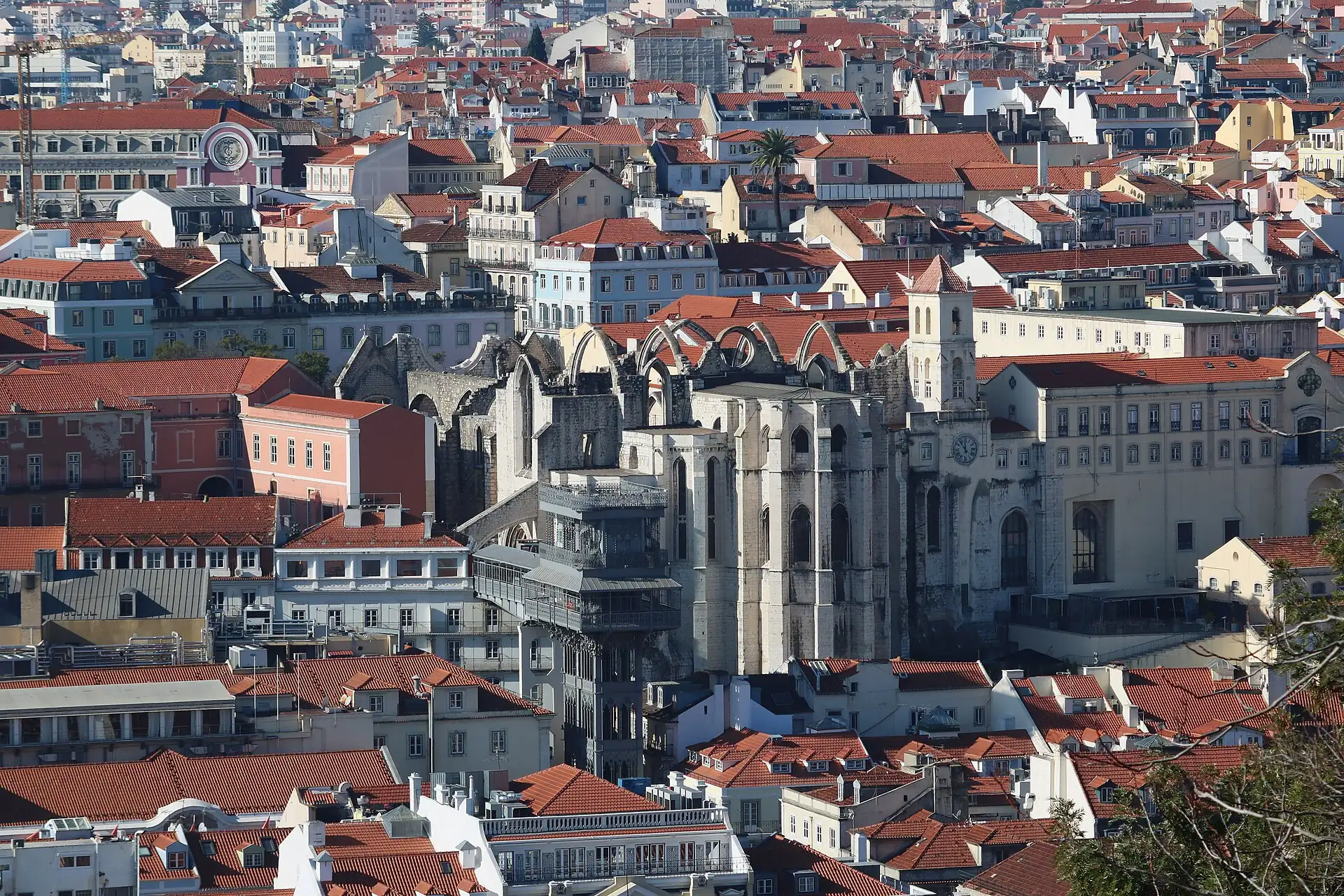
Lisbon
Lisboa
Code PT · 4 walking zones
Lisbon is a hills-and-cobbles city: do Alfama and Belém in the morning, ride the flat Baixa in the heat of the day, and never plan a walk that climbs with a suitcase.
Our quick read of Lisbon, scored 1–5 (friction is out of 100). Cash need: how often you still need notes. Heat risk: how hot days get. Stroller: how easy wheels are. Friction: overall effort for a first visit. Desk judgements, so check before relying on them.
- Local time
- --:--
- Weather
- forecast below
- Currency
- EUR
- Best months
- Jan · Feb · Mar · Apr · May · Sep · Oct · Nov · Dec
- Airport
- Lisbon Humberto Delgado (LIS)
Walking zones: the 4 areas this guide plans a day around. Each is a district you can cover on foot, so you do one zone per half-day and ride the train between them. The code (PT 01, PT 02…) is just the zone's number on the Lisbon line; the line under each name says how bags fare there and how much time it needs.
Map of Lisbon
Use the switches to show or hide each kind of pin. A switch that is on shows its pins on the map; tap it again to hide them. "Show only" keeps just the pins that match (for example, places that fit a suitcase). Tap any pin for its name and a link to its page.
- Where to sleep
- Places
- Eat
- Walking clusters
- Rest stops
From the airport Humberto Delgado (LIS) to your bed
Tap a pin for its card. Places without their own coordinates are shown by their walking cluster.
Why Lisbon
Lisbon's sights are close on the map but stacked on steep, polished cobbles. The trips that go wrong are the ones that add a suitcase to a hill, queue an hour for Tram 28 in July, or arrive at the Jerónimos Monastery on a Monday when it is closed. Five walking clusters cover a first visit; Sintra and Cascais are trips away from one kept bed.
See first
- 1
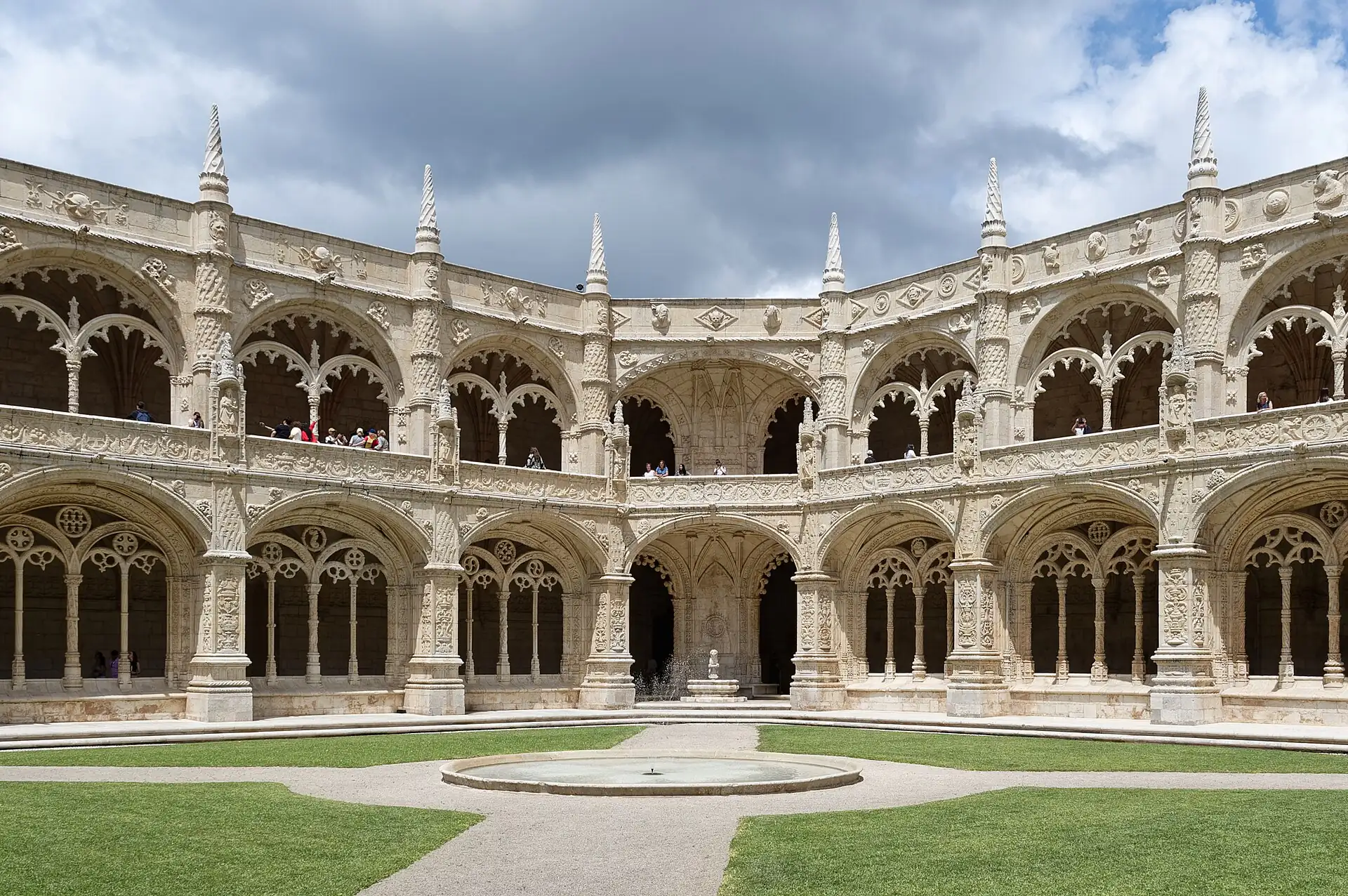 Belém: monastery and pastry · 2-3 h
- 2
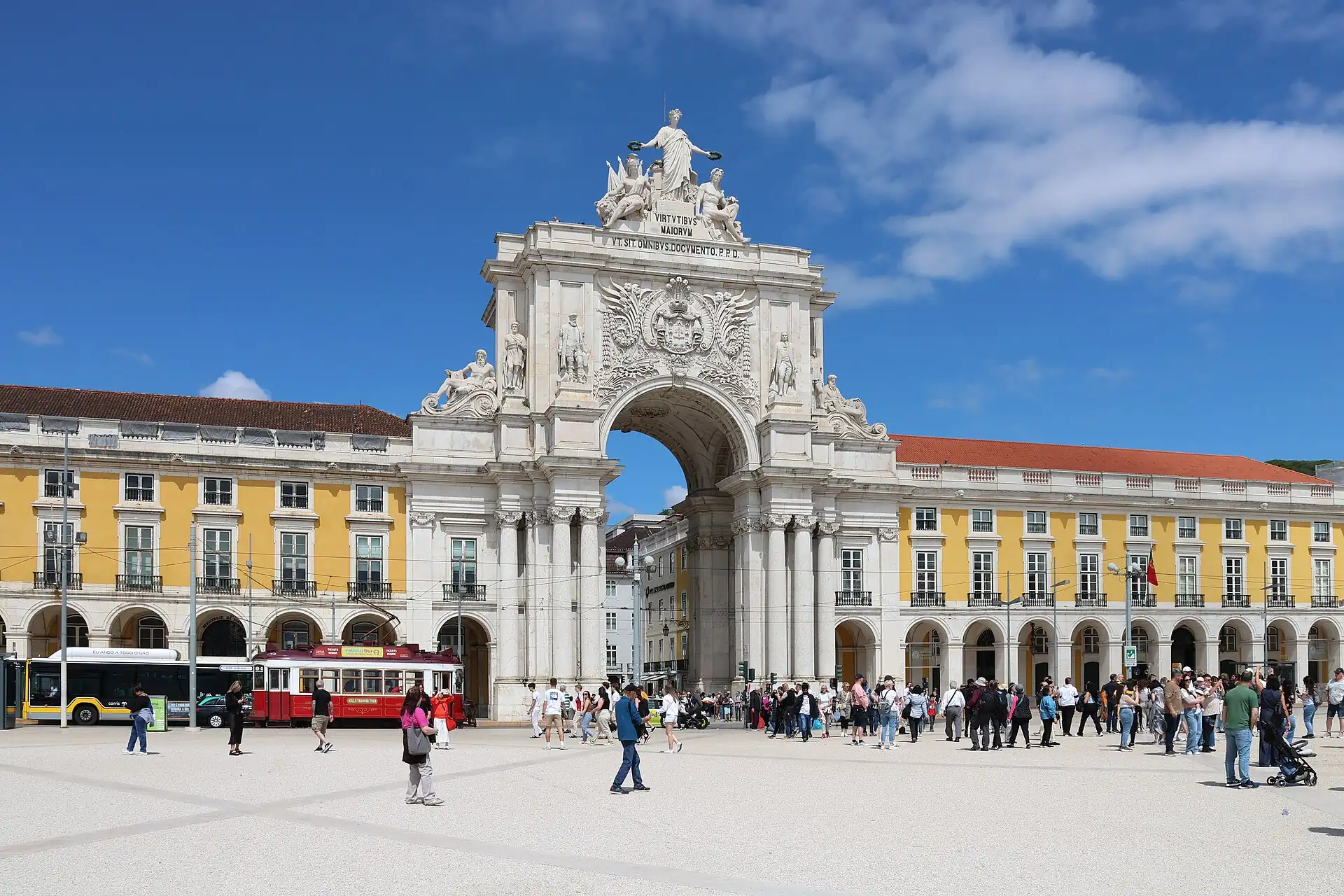 Praça do Comércio and Baixa on foot · 1-1.5 h
- 3
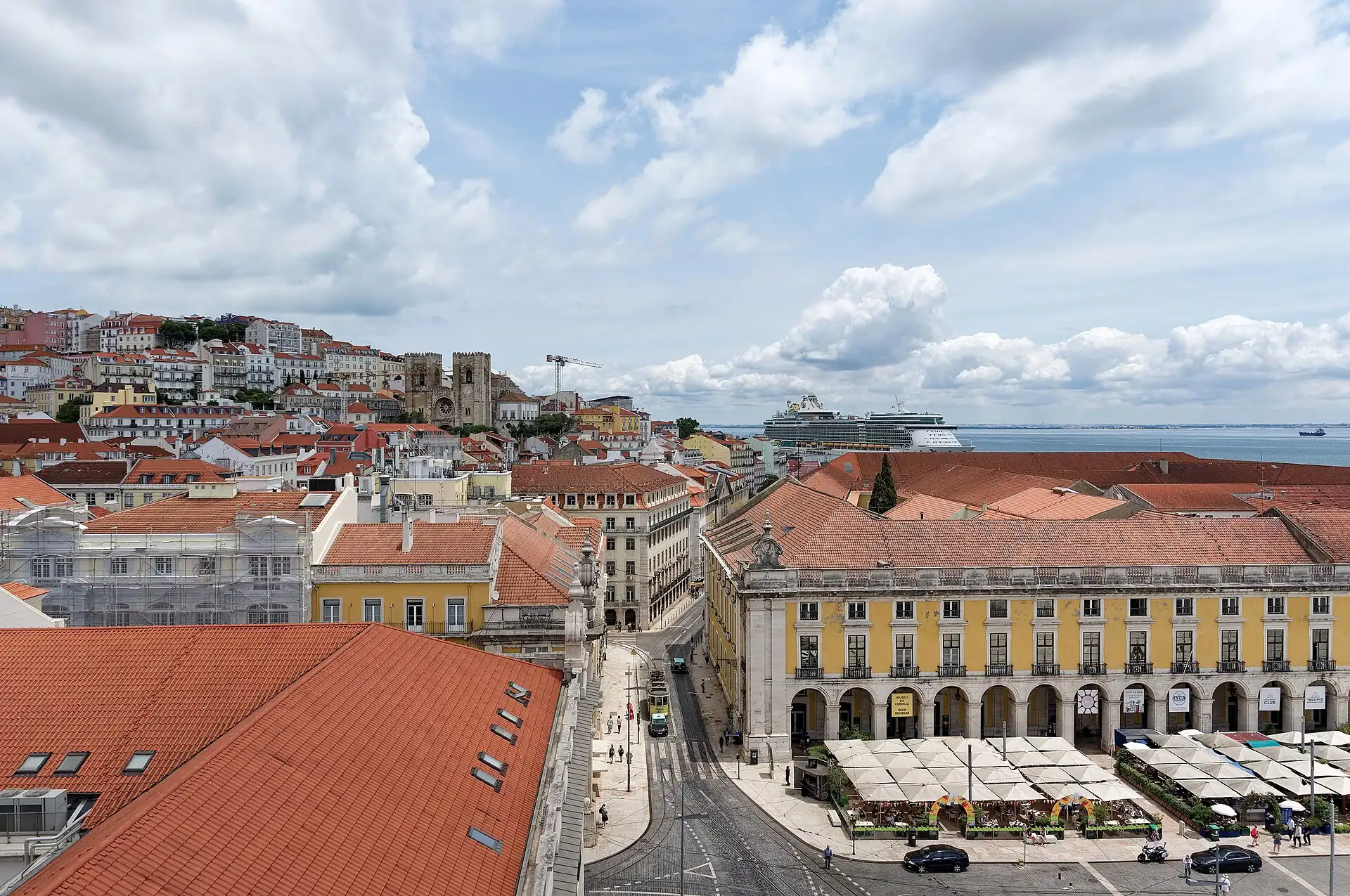 Sé and the Alfama descent · 1.5-2 h
- 4Time Out Market for a first meal · 1 h
- 5A fado evening · 2-3 h
Fits
- First-time city breaks
- Food and café trips
- Short stays with a Sintra or Cascais day-trip
Does not fit
- Strollers and wheelchairs (steep cobbles)
- Travellers who cannot manage hills
- Midday walkers in July and August
How long
- 2 daysBaixa + Alfama morning, Belém afternoon
- 3 daysAlfama, Belém and Chiado, one cluster per half-day
- 5 daysFour clusters + Sintra day-trip + one slow day
Good for
- First timers
- Foodies
- Budget
- Couples
- Solo
- Families
About Lisbon
Lisbon is one of the oldest cities in Western Europe: a Phoenician and Roman port, a Moorish town until 1147, and the capital of Portugal since the 13th century. Its old core is a set of seven hills above the Tagus estuary, so distances that look short on a map are stairs, cobbles and trams in practice.
The great earthquake of 1 November 1755, followed by a tsunami and fires, destroyed much of the lower city. The Marquis of Pombal rebuilt the flat centre, Baixa, as a straight grid, and that is why Baixa is level and Alfama, on rock, kept its medieval lanes. When you walk from one to the other you walk from one Lisbon to the other.
Good to know
- Baixa is the flat grid between the two hills; Alfama is the old quarter east of it, and Belém is a separate riverside district 6 km west.
- Visit Lisboa (Ask Me Lisboa) runs information kiosks at Praça dos Restauradores, Praça do Comércio and the airport (check hours).
- Shops offering "tourist information" are often tour sellers; the official kiosks are marked.
Go deeper 10 min read · 6 chapters
Lisbon is a hilly Atlantic port that has been rebuilt again and again: by Romans and Moors, by the kings of the Age of Discoveries, by the Marquis of Pombal after a great earthquake, and by the generation that ended a dictatorship in 1974. This deep dive reads the city in layers, so that a climb from the flat grid of Baixa to the walls of São Jorge Castle becomes a walk through eight centuries of decisions.
1History2 min
The steep hill above the Tagus estuary drew settlers long before Portugal existed. Phoenician and Greek traders used the natural harbour, and the Romans made Olisipo a town of some rank under Julius Caesar. After the fall of Rome, Visigoths held it briefly, and from 714 it became al-Ushbuna, a Muslim city with a citadel, a mosque on the site of today's cathedral, and a walled quarter running down to the river.
On 25 October 1147, Afonso Henriques, the first king of Portugal, took Lisbon after a siege in which crusaders from England, Flanders and the Rhineland helped him. The city stayed at the edge of the Christian world for a century, and in 1255 the court moved here from Coimbra, making Lisbon the capital. Its port grew with Atlantic trade, and by the 15th century sailors were probing the African coast.
Vasco da Gama left the Tagus for India in July 1497, and the sea route he opened brought spices, gold and enormous wealth. Manuel I built the Ribeira Palace on the waterfront and ordered the Jerónimos Monastery in 1501. Spain took the crown in 1580 and lost it in 1640, and in the 18th century gold from Brazil paid for churches, an aqueduct and an opera house. Then, on 1 November 1755, came the earthquake, and much of that city fell.
The rest of the story is one of decline and recovery. Napoleon's army entered in 1807 and the court fled to Brazil; the monarchy ended in 1910 after the murder of King Carlos and his heir in 1908. From 1933 the Estado Novo dictatorship ran the country from Lisbon, until the Carnation Revolution of 25 April 1974 ended it without a war. Portugal joined the European Community in 1986, and Expo 98 rebuilt the eastern waterfront.
Since 2010, Lisbon has become one of the most visited capitals in Europe. The change brought investment and life back to the old lanes, and it also pushed up rents and pushed out residents. Every visitor is part of that story now, which is worth remembering when you choose where to sleep and eat.
- Christian conquest
- 25 October 1147
- Capital since
- 1255
- Da Gama sails for India
- July 1497
- Great earthquake
- 1 November 1755
- Carnation Revolution
- 25 April 1974
2Neighbourhood stories2 min
Alfama, the oldest quarter, takes its name from an Arabic word usually explained as "baths" or "springs". It sits on rock that stood through the 1755 quake, which is why its lanes are still crooked and narrow. Fishermen's families and washerwomen lived here for centuries, and it still has a village feel: laundry, sardine grills in June, small fado houses, and the tiled viewpoint of Santa Luzia.
Mouraria, on the other side of the castle hill, was the Moorish quarter assigned after 1147. It is now a mix of Portuguese pensioners and migrants from Asia and Africa, and it is often named as the birthplace of fado, through the singer Maria Severa in the 19th century. A walk here shows the city as it is lived in, not as it is sold.
Baixa, the lower town, was the trading heart of Lisbon and was rebuilt after 1755 on a strict grid. Streets are named after the guilds that worked on them: Rua do Ouro for goldsmiths, Rua da Prata for silversmiths, Rua dos Sapateiros for shoemakers. Rossio, the square at its north end, has a wave-patterned pavement in black and white stones and has been the meeting place of the city for centuries.
Chiado and Bairro Alto sit on the western hill. Chiado has been the intellectual and shopping quarter since the 18th century, with the café A Brasileira, a bronze statue of the poet Fernando Pessoa on its terrace and the ruined Carmo Convent nearby. Bairro Alto was laid out in the 16th century and is now a grid of small bars that fill from about 22:00. Príncipe Real, higher up, is a calm 19th-century district of villas and a garden.
Belém, six kilometres west, was where ships left for the ocean. Its monasteries and towers were built with the wealth of the spice trade. Further east, Parque das Nações is the modern waterfront created for Expo 98, with the Oceanário and a cable car.
- Alfama
- On rock; survived the 1755 earthquake
- Baixa
- Rebuilt on a grid after 1755
- Bairro Alto laid out
- Mainly 16th century
- Expo 98
- Rebuilt the Parque das Nações waterfront
3Architecture and the earthquake2 min
The earthquake of 1755 struck on All Saints' Day, about 09:40 in the morning, when churches were full and candles were lit. A tsunami followed, and fires burned for days. Estimates of the dead run into the tens of thousands, and much of the lower city and the royal palace on the river were destroyed. Alfama, on firmer ground, and the higher hills suffered less.
The chief minister, the Marquis of Pombal, acted fast. He cleared the rubble and laid out Baixa as a straight grid of streets of equal height, ending at a great square, the Praça do Comércio. The buildings used a timber frame, called gaiola or cage, built to flex in a quake; the story is told that soldiers marched around models to test them. The result is the earliest large-scale attempt at earthquake-resistant design in Europe.
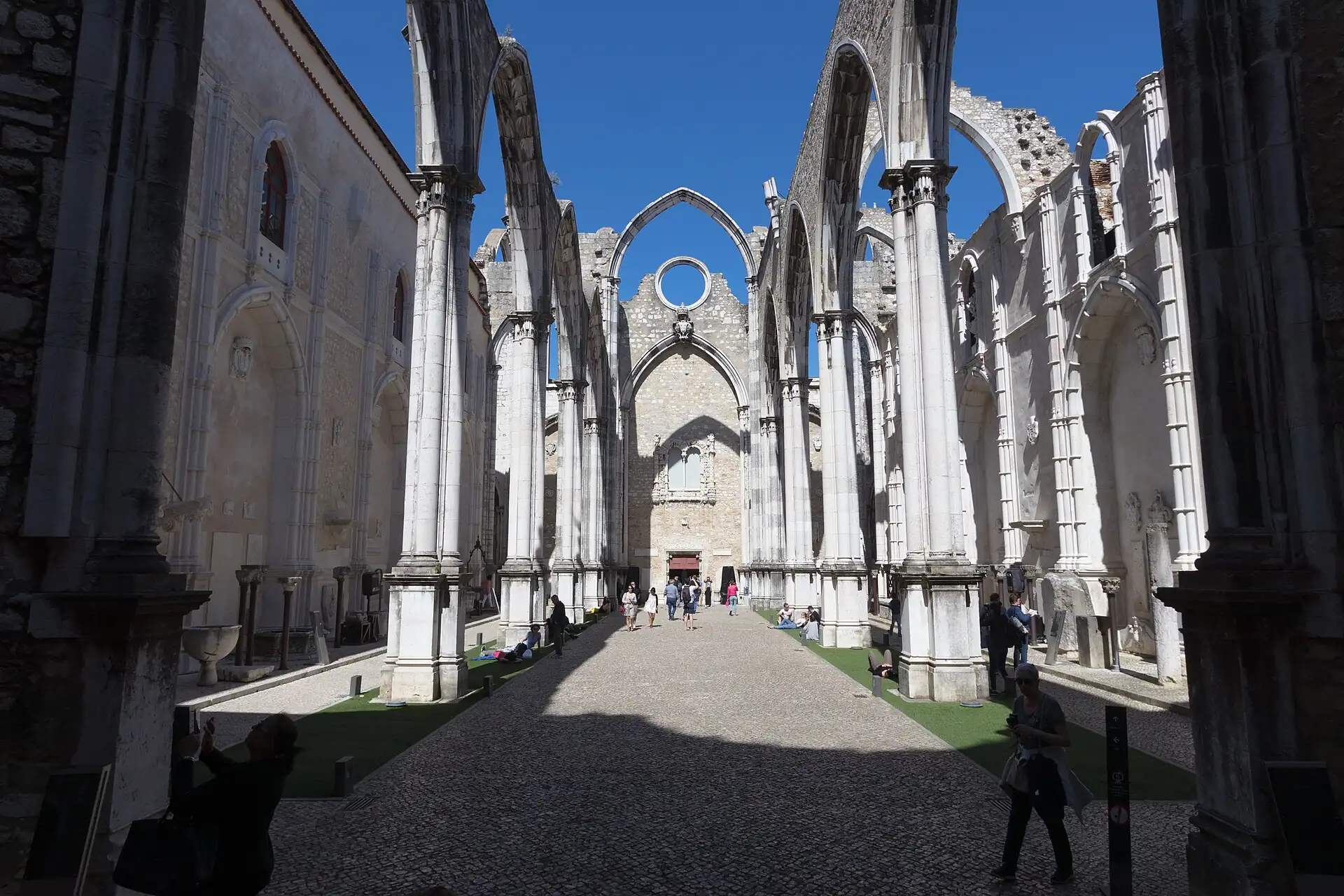
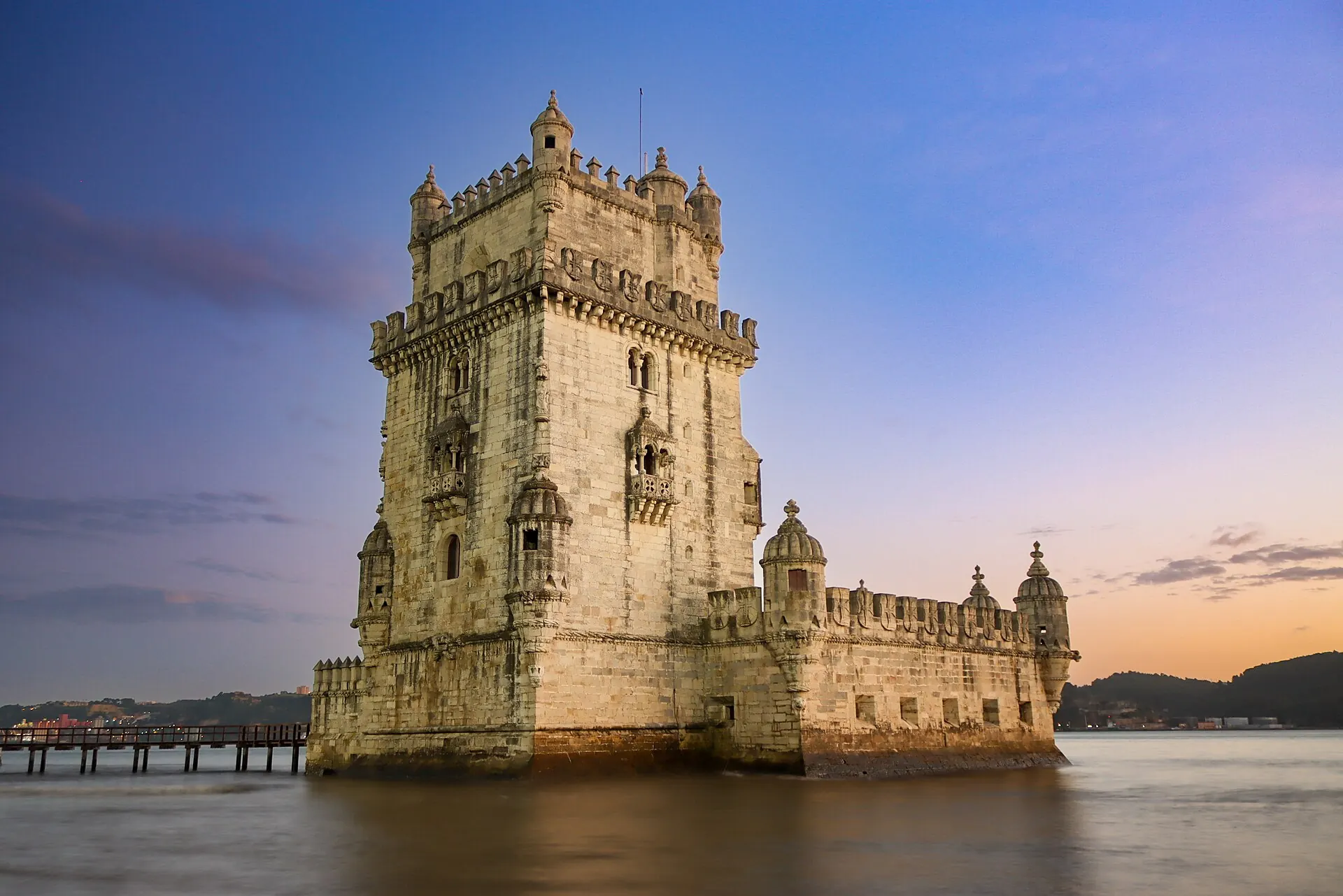
Other layers survive. The Romanesque cathedral, begun after 1147, looks like a fortress. The Manueline style of the early 16th century, seen at the Jerónimos Monastery and the Tower of Belém, decorates stone with ropes, armillary spheres and sea creatures, marking the wealth of the discoveries. The Carmo Convent is left roofless as a memorial.
Azulejos, painted tiles, tie the city together. The Moorish tradition of tile came through Spain, and by the 17th and 18th centuries blue-and-white panels covered churches and palaces. Today tiles cover house fronts in every district, and the National Tile Museum shows the history in a convent. The pavements are also a craft: calçada portuguesa is a mosaic of small black basalt and white limestone blocks, laid by hand.
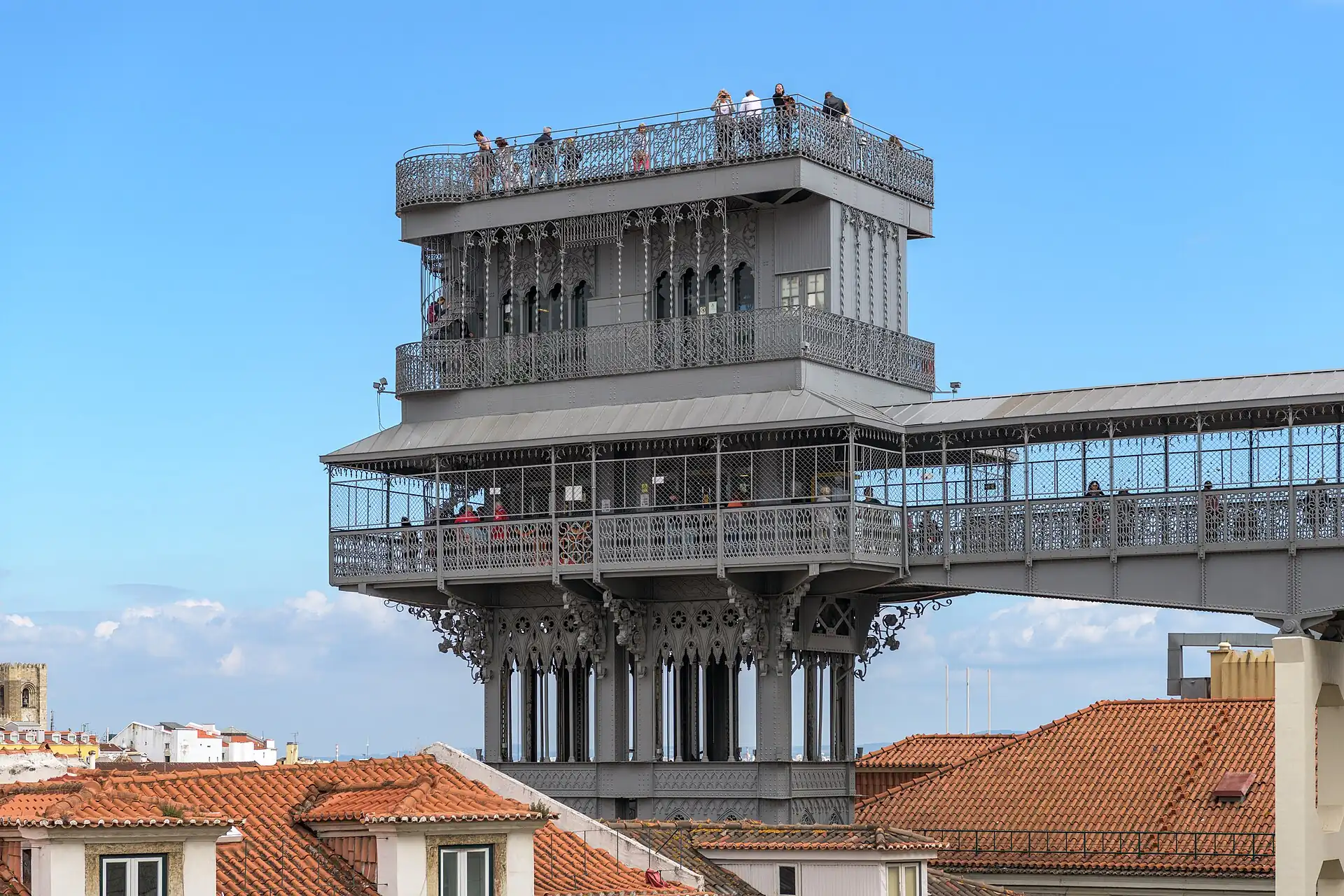
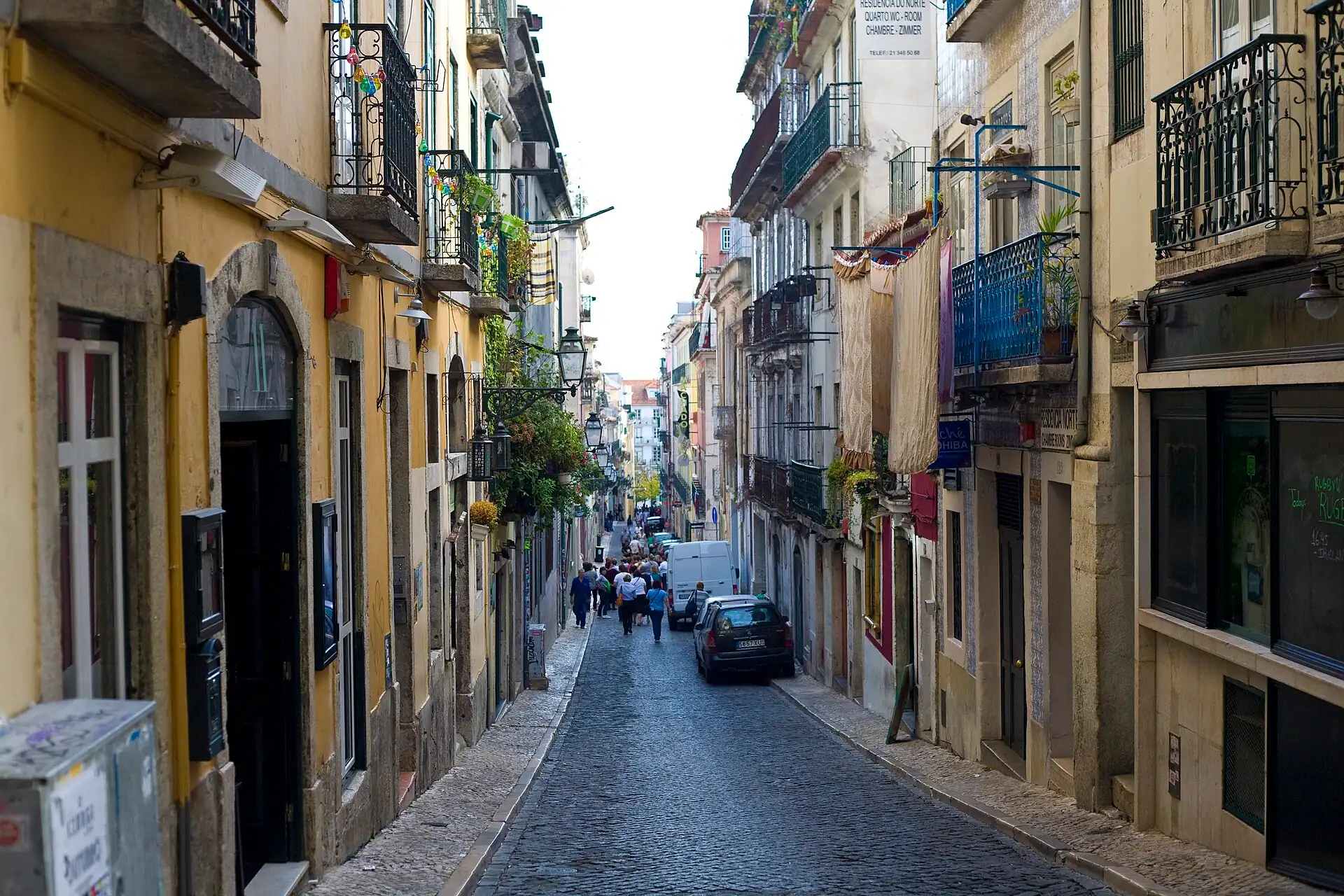
Modern additions are visible too: the iron Santa Justa Lift of 1902, the 25 de Abril Bridge of 1966, and the Expo 98 buildings. Lisbon rebuilds rather than replaces, and the result is a city of stacked styles. When you walk, look up: the first floor is often a shop, the upper floors carry tiled fronts and iron balconies, and the roofs show the timber and terracotta that hold the whole thing together.
- Earthquake
- 1 November 1755, about 09:401 November 1755, about 9:40 AM
- Pombal timber frame
- Gaiola (cage), early anti-seismic design
- Manueline style
- Early 16th century
- Santa Justa Lift
- 1902
4Food history2 min
Lisbon's cooking is shaped by fish, bread, wine and the empire. The sea gave sardines and clams; the wheat fields of the Alentejo gave bread; the ships brought spices, sugar, coffee and chilli from Asia, Africa and Brazil. The result is a cuisine of simple materials cooked well and of strong flavours in small amounts.
Salt cod, bacalhau, is the national dish: fished off Newfoundland and Norway, salted and dried, then cooked in many ways. A common saying claims one recipe for every day of the year. Sardines are the summer treat, grilled over charcoal on a slice of bread in June, the month of the city's patron saint, Santo António.
The pastel de nata is the best-known sweet. Monks at the Jerónimos Monastery made custard tarts, and after the religious orders were dissolved in 1834 the recipe was sold to a nearby business, which opened as Pastéis de Belém in 1837. The recipe is kept secret, and Lisbon has since produced dozens of imitations, some of them very good.
The bica, a short strong coffee drunk at the counter, and the ginjinha, a cherry liqueur sold at bars near Rossio since the 19th century, complete the ritual. Wine matters too: vinho verde from the north, red from the Douro and Alentejo, and port. Lisbon's tascas, small family taverns, serve a daily dish, a prato do dia, at low prices, and a couvert of bread and olives charged if you eat it.
In the last decade the city has added a new layer: a food hall in the old Ribeira market, chef-led restaurants in Chiado and Príncipe Real, and a wave of Michelin stars. The cheapest lunch and the most expensive dinner are now both easy to find. A practical rule holds across all of it: eat the daily dish at midday when the kitchen is fresh, save the seafood for a place with a queue of locals, and keep the sweet tart for the walk between the two.
- Pastéis de Belém opens
- 1837
- Religious orders dissolved
- 1834
- Santo António festival
- 12-13 June
- Staple fish
- Bacalhau (salt cod) and sardines
5Festivals2 min
June is the month that Lisbon changes its shape. The Festas de Lisboa run all month and peak on the night of 12 June and the holiday on 13 June, the day of Santo António, born in Lisbon in the late 12th century and the city's favourite saint. Streets in Alfama, Mouraria and Graça are decorated with paper garlands, sardines are grilled on the pavements, and neighbourhoods compete in a parade of marchas populares on Avenida da Liberdade.
A small pot of basil, the manjerico, is given with a paper poem in June. Weddings of the poor, once arranged by the church on this day, have become a civic tradition. The crowds are dense, rooms are more expensive, and the best plan is to visit the lanes in the afternoon and to book a table for dinner well in advance.
25 April, Liberty Day, marks the Carnation Revolution of 1974. A parade fills Avenida da Liberdade, and red carnations are worn in coats. The events of that day are still a matter of personal memory for many older residents.
The rest of the year has its own dates. Carnival, Easter processions, and 10 June, Portugal Day, are national holidays. The Feast of Saint Vincent in January honours the city's patron, whose relics, by tradition, were carried to Lisbon in a boat guarded by ravens, which appear on the city's coat of arms. Music festivals such as NOS Alive in July and the biennial Rock in Rio Lisboa draw large crowds, and the Web Summit technology conference fills hotels every November.
For a visitor, the calendar matters for logistics: book rooms early for June, August and New Year; expect closures on holidays; and if your trip overlaps a festival night, take it as a chance to see Lisbon at its most social. Go with a plan for the crowds: arrive early, carry little, agree a meeting point in case you lose your group, and leave enough time to walk home, because streets close and cars cannot get through.
- Santo António
- 12-13 June
- Liberty Day
- 25 April
- Portugal Day
- 10 June
- Web Summit
- Early November (check)
6City life and fado1 min
Lisbon runs at a slower pace than most European capitals. Cafés fill from 08:00 with people drinking a bica standing at the counter. Lunch is long, dinner starts around 20:00, and the bars of Bairro Alto fill after 22:00. In summer the city lives outdoors, on the terraces of the miradouros, viewpoints where locals and visitors sit with a drink at sunset.
Fado is the city's music: a sung form, accompanied by Portuguese guitar, about longing and fate, a feeling known as saudade. It grew in the port districts of Alfama and Mouraria in the 19th century and was listed by UNESCO as intangible heritage in 2011. Hear it in a small house where the singers are neighbours, and keep silent during the songs.
The city is defined by its hills and trams. The yellow Tram 28 rattles through Graça, Alfama and Baixa; Tram 15 runs west to Belém; and funiculars lift people up Glória, Bica and Lavra. They are useful and crowded, and they suit those who are patient.
Football matters. Benfica and Sporting are the two big Lisbon clubs, and the derby fills bars and cafés across the city. The 25 de Abril Bridge, opened in 1966 and called after the dictator until 1974, links Lisbon to the south bank and the statue of Cristo Rei, modelled on the one in Rio.
Tourism has changed everyday life. Housing in the old districts is expensive, and many residents have moved out. What visitors can do is small but real: eat in neighbourhood tascas, buy from local shops, avoid short-let blocks that empty the lanes, and treat the tram as public transport rather than a ride. Learn a few words of Portuguese, starting with bom dia and obrigado (obrigada if you are a woman), which are noticed and answered with warmth.
- Fado on UNESCO list
- 2011
- 25 de Abril Bridge opened
- 1966
- Big football clubs
- Benfica and Sporting
- Dinner time
- From about 20:00From about 8:00 PM
Read, watch, wordsReading · Watching · Glossary · Sources
Reading
- Lisbon: War in the Shadows of the City of Light, 1939-45 — Neill LocheryA vivid history of neutral Lisbon in the Second World War.
- The Book of Disquiet — Fernando PessoaA collage of Lisbon office life and inner thought by the city's best-known poet.
- Baltasar and Blimunda — José SaramagoAn 18th-century novel of the Inquisition and the building of a convent near Lisbon.
- Night Train to Lisbon — Pascal MercierA teacher leaves Bern for Lisbon and follows the life of a Portuguese doctor.
Watching
- Lisbon Story — Wim Wenders, 1994A sound engineer walks through Lisbon and records the city.
- Tabu — Miguel Gomes, 2012A Lisbon-set film about memory and colonial Africa, in two parts.
Glossary
| Term | Local | Meaning |
|---|---|---|
| azulejo | azulejo | A painted glazed tile. |
| miradouro | miradouro | A viewpoint terrace. |
| saudade | saudade | A feeling of longing, at the heart of fado. |
| tasca | tasca | A small family tavern with a daily dish. |
| prato do dia | prato do dia | Dish of the day, at a fixed price. |
| couvert | couvert | Bread, olives and butter brought to the table and charged if eaten. |
| bica | bica | A short espresso in Lisbon. |
| calçada | calçada portuguesa | Hand-laid mosaic pavement of black and white stone. |
| gaiola | gaiola pombalina | The timber-frame cage inside post-1755 buildings. |
| Manueline | estilo manuelino | Late Gothic style of the early 16th century with maritime motifs. |
Read for this deep dive
- Wikipedia: Lisbon ↗
- Wikipedia: 1755 Lisbon earthquake ↗
- Wikipedia: Fado ↗
- UNESCO: Monastery of the Hieronymites and Tower of Belém ↗
Background reading only: the text above is written by Voykit, not copied from these pages.
Rules in force · 8Non-EU visitors get 90 days in any rolling 180-day window…
- Europe ↗Non-EU visitors get 90 days in any rolling 180-day window, counted across all 29 Schengen states together — not per country; the Entry/Exit System now logs each crossing, so an overstay is detected automatically.
- Europe ↗On the first Schengen entry since EES began, non-EU travellers give four fingerprints and a face photo at the border instead of a passport stamp; there is nothing to apply for or pay in advance.
- Iberia ↗Plan meals on the Iberian clock: Spanish kitchens serve lunch from about 13:30–14:00 and dinner from 20:30–21:00; Portugal eats an hour or so earlier. Early evenings are for tapas or petiscos, not full meals.
- Iberia ↗Inland Spain and Portugal (Seville, Córdoba, Madrid, the Alentejo) pass 40 °C in heatwaves from late June to August: sightsee before 11:00 and after 18:00, and keep July–August for the coasts and the green north.
- Iberia ↗Andorra and Gibraltar have their own border and customs rules and are reached only through Spain (or France for Andorra); read their pages before adding them, especially if you hold a limited Schengen visa.
- Portugal ↗Portugal is in the Schengen area. Check the entry rules for your passport on official sources; the EU's Entry/Exit System registers non-EU visitors at the first Schengen border, and further pre-travel authorisation rules are being introduced.
- Portugal ↗Alfa Pendular and Intercidades trains assign seats: book Lisbon–Porto ahead in summer and on holiday weekends.
- Portugal ↗Many motorways, including the Algarve's A22, use electronic tolls only: ask the hire company for a transponder before you drive off.
Entry rules depend on your passport. Full visa guide
Emergency numbers for Lisbon112 ▾
- Police, fire, ambulance112
Tap a number to call from your phone. These are the numbers listed in this guide; a row marked check has not been verified.
Planning is the full guide. I'm here keeps what is open and the cheat card.
Right now
Checking the weather…
Working out what is open near you…
What is open nowclock, closures, places open
Now in Lisbon
Local time in Lisbon
--:--
Loads in your browser · Europe/Lisbon
This month
Month verdict appears here.
Closed today
See the weekly grid below.
| Weekly closure | Mon | Tue | Wed | Thu | Fri | Sat | Sun |
|---|---|---|---|---|---|---|---|
| Tower of BelémWeekly closure on Monday; check holidays. | ✕ | · | · | · | · | · | · |
| Jerónimos MonasteryAlso closed on 1 January, Easter Sunday, 1 May and 25 December (check). | ✕ | · | · | · | · | · | · |
| Tower of BelémcheckWeekly closure and limited numbers inside; check ticketing. | ✕ | · | · | · | · | · | · |
| Carmo Convent and Archaeological MuseumcheckCheck the weekly closing day. | · | · | · | · | · | · | ✕ |
If today is a closure day: Monday: the Jerónimos Monastery and the Tower of Belém are closed, and many museums are shut. Plan Belém for a Tuesday to Sunday, and do the Baixa and viewpoints on Monday.
Weekly closures come from our place pages; holidays add closures not shown here.
Open now
The sights and places to eat on our list that are open at this moment, in the city's time, nearest first from where you are staying.
Loads in your browser with the city's local time.
Hours marked (check) are typical, not confirmed. Walking times are straight-line estimates. Open at another time →
Cheat cardthe pocket version
Cheat card
The essentials on one card: save it as an image for your phone, share it, or print it.
Lisbon
Lisboa
- Money
- Keep €20–30 in coins and small notes for cafés and tram tickets; use Multibanco bank ATMs…
- SIM
- Install an eSIM before you fly, or buy a SIM at the airport arrivals shops (passport needed).
- Ride app
- Uber and Bolt · FreeNow
- Emergency
- 112 police, fire, ambulance (not 911, 999 or 000)
- Plugs
- Sockets F. US/Canada (A/B): adapter · UK/Ireland (G): adapter · Australia/NZ (I): adapter. 230 V: US 120 V-only devices (hair dryers) need a converter; most chargers are dual-voltage.
Say it
- Thank you: Obrigado / Obrigada (oh-bree-GAH-doo / -dah)
- The bill, please: A conta, por favor (ah KON-ta poor fa-VOR)
Top 5
- Belém: monastery and pastry
- São Jorge Castle
- Praça do Comércio and Baixa on foot
- Carmo Convent
- Sé and the Alfama descent
EssentialsQuick answers, what things cost and how to get around
Essentials
Quick answers, what things cost and how to get around
Quick answers
The questions people ask first about Lisbon, one line each. Tap a card for the full answer.
- Cash or card?Cards and contactless work almost everywhere; carry a few euros for small cafés, kiosks and tram tickets.
- SIM or eSIMInstall an eSIM before you fly, or buy a SIM at the airport arrivals shops (passport needed).
- Ride-hailing appUber and Bolt · FreeNow.
- Tap waterTap water is safe to drink.
- TippingNot expected.
- Plugs & powerSockets F. US/Canada (A/B): adapter · UK/Ireland (G): adapter · Australia/NZ (I): adapter. 230 V: US 120 V-only devices (hair dryers) need a converter; most chargers are dual-voltage.
Show all 14 answers
- Safe at night?Take more care after dark in Alfama, Chiado and Bairro Alto, Cais do Sodré and Pink Street and more.
- Emergency numbers112 police, fire, ambulance (not 911, 999 or 000)
- Your embassycheckUS, UK, Canada embassies listed with addresses (check before you go).
- Closed which day?Mon: 3 on our list shut · Sun: 1 on our list shut.
- Sundays & holidaysWeekly closures come from our place pages; holidays add closures not shown here.
- Late at nightBars in Bairro Alto and Cais do Sodré run to 02:00 or later; the streets fill after midnight.Bars in Bairro Alto and Cais do Sodré run to 2:00 AM or later; the streets fill after midnight.
- Rainy-day planRain is short and heavy from October to April.
- Landing lateLIS: ride-hailing car or taxi to the door runs all night.
Cost cheat-sheetwhat everyday things cost
Cost cheat-sheet
Typical prices for the everyday things, as ranges. Change the currency right here; the local price stays first.
2026 desk estimate · check
- CoffeeEspresso (bica) at a café counter€0.80-1.60 (≈ US$1–2)
- Sit-down mealSit-down dinner, per person€20–40 (≈ US$25–50)
- Street or quick mealPrato do dia (set lunch)€10-16 (≈ US$12–19)
- Beerimperial / bottle in a bar€1.50-3 (≈ US$2–4)€3-5 (≈ US$4–6)
- Taxi, about 5 km (3 mi)Taxi, about 3 mi (5 km)5 km (3.1 mi) ride-hail car3.1 mi (5 km) ride-hail carSurge at night and in rain.€6-12 (≈ US$7–14)
- Metro or bus rideCheck the current fare table.about €1.80 (≈ US$3) plus a €0.50 (≈ under US$1) card
- SIM or eSIM, a weekTourist eSIM, about a week of data€5–15 (≈ US$6–18)
- Museum or sight ticketMuseum or monument entry€8-20 (≈ US$10–25)
- Budget bedHostel dorm bed, a night, per person€25 (≈ US$30)
- Mid-range bedHotel double room, a night, per room€150 (≈ US$180)
- High-end bedHotel double room, a night, per room€320 (≈ US$400)
A day, not counting the bed: Budget €55 (≈ US$65) · Mid €100 (≈ US$120) · High €220 (≈ US$300)
Local prices, with USD next to them (rates 2026-09 (approximate); change it in the header). Ranges are desk estimates: check locally. Every price and the budget calculator →
Source: Prices in Lisbon
Draft
Written from desk research. Not yet compared with the official source.
No official source is recorded for this figure.
Prices are 2026 desk estimates, not yet compared with an official source. Check on the day.
Not checked in the last 12 months (no check date on file).
DecideWho it suits, the trade-offs and when to go
Decide
Who it suits, the trade-offs and when to go
Best months at a glance
The guide's verdict for each month
Jan
Best
15°C (59°F)59°F (15°C)
Feb
Best
16°C (61°F)61°F (16°C)
Mar
Best
18°C (64°F)64°F (18°C)
Apr
Best
20°C (68°F)68°F (20°C)
May
Best
23°C (73°F)73°F (23°C)
Jun
Care
27°C (81°F)81°F (27°C)
Jul
Care
29°C (84°F)84°F (29°C)
Aug
Care
30°C (86°F)86°F (30°C)
Sep
Best
27°C (81°F)81°F (27°C)
Oct
Best
23°C (73°F)73°F (23°C)
Nov
Best
18°C (64°F)64°F (18°C)
Dec
Best
15°C (59°F)59°F (15°C)
Best: Sep–May. Mixed: Jun–Aug. Month by month →
Warmest Aug (30°C (86°F)86°F (30°C)), coolest Jan (8°C (46°F)46°F (8°C) low), wettest Dec (10 rain days), driest Jul (1). Averages, not a forecast.
Lisbon across the year
Best-looking months for Lisbon: Apr, May, Sep.
| Measure | Jan | Feb | Mar | Apr | May | Jun | Jul | Aug | Sep | Oct | Nov | Dec |
|---|---|---|---|---|---|---|---|---|---|---|---|---|
| Weather | Good (good) | Good (good) | Good (good) | Great (good) | Great (good) | Mixed (care) | Mixed (care) | Mixed (care) | Great (good) | Great (good) | Good (good) | Good (good) |
| Crowds | Low (good) | Low (good) | Medium (ok) | Medium (ok) | Medium (ok) | High (care) | High (care) | High (care) | Medium (ok) | Medium (ok) | Low (good) | Medium (ok) |
| Prices | Low (good) | Low (good) | Medium (ok) | Medium (ok) | Medium (ok) | High (care) | High (care) | High (care) | Medium (ok) | Medium (ok) | Low (good) | Medium (ok) |
| Events | 1 event (ok) | 1 event (ok) | 1 event (ok) | 3 events (ok) | None listed (ok) | 3 events (care) | 1 event (ok) | None listed (ok) | None listed (ok) | None listed (ok) | 1 event (ok) | 2 events (ok) |
Green is good news, amber needs planning, red is a month to avoid; dashed grey with a question mark means our data does not say. Open the year heatmap →
Not checked in the last 12 months (no check date on file).
Source: Months, temperatures and crowds
Draft
Written from desk research. Not yet compared with the official source.
Monthly highs, rain and crowd levels are climate averages and desk estimates for the city, not a forecast.
Understand the cityUnderstand · Districts
Orientation & districts
Almost everything a first visit needs sits in a 3 km strip along the Tagus: Baixa in the flat middle, Alfama on the eastern hill, Chiado and Bairro Alto on the western hill, and Belém 6 km further west by tram or train.
Lisbon districts are informal neighbourhoods; addresses give street and parish. Apps and drivers understand the street name and number.
Shaded shapes: walking areas (click one). Black pins: sleep areas. Grey dots: places. Round badges: arrivals. Click the map to turn on scroll-wheel zoom.
Hover, tap or tab to an area to see what it is like. Pins are sleep areas; arrows at the edge point to the airport.
Off the map: Lisbon Humberto Delgado Airport (LIS) (25–45 min by the usual route).
Not drawn yet (no coordinates in this guide): Cais do Sodré and Time Out Market, Parque das Nações. They are in the neighbourhood cards below.
Where’s what, as a list:
- Baixa: A grid of shops, cafés and squares between Rossio and the river. Flat, central and noisy; a good base for transport. Suits: First visit, short stays, flat walking. Price band $$.
- Alfama: Medieval lanes, steep stairs and small bars. Beautiful and hard with bags; visit on foot. Suits: Castle, fado, viewpoints.
- Chiado and Bairro Alto: Chiado is the elegant shopping hill; Bairro Alto above it is the night district. Steep at both ends. Suits: Cafés, shopping, nightlife.
- Príncipe Real: Leafy hilltop with boutiques and a garden; a 15-minute walk or a short taxi from Baixa. Suits: Couples, quieter evenings. Price band $$$.
- Belém: Flat riverside district with the monastery, the tower and the pastry shop; a tram, train or car ride from the centre. Suits: A morning of monuments.
- Cais do Sodré and Time Out Market: River station district with the food hall and Pink Street bars. Suits: Evening food and bars.
- Parque das Nações: Modern waterfront of Expo 98, 20-30 minutes by metro from the centre. Suits: Aquarium, families.
- Sleep area Baixa: suits First visit, short stays, flat walking, price band $$.
- Sleep area Príncipe Real: suits Couples, quieter evenings, price band $$$.
- Lisbon Humberto Delgado Airport (LIS), 25–45 min by the usual route.
Neighbourhoods at a glance
One tab per area, pulled together from this guide’s districts table, area notes, sleep-area scores and place pages. Scores are desk judgements (1–5); prices are estimates, check before you book.
Baixa
$$A grid of shops, cafés and squares between Rossio and the river. Flat, central and noisy; a good base for transport.
- Suits:
- First visit, short stays, flat walking · First visits and short stays
- Best time:
- Morning and dusk
- Rooms:
- €100–220 per room per night (mid-range); more in June and August
Pick this if: First visits, walking to the river and the tram lines
Skip this if: You are a light sleeper or have a lot of bags to carry up stairs
- Quiet nights2/5 Low
- Nightlife3/5 Medium
- Families3/5 Medium
- Late arrival4/5 High
Why these scores
- Quiet nights: Busy pedestrian streets and late bars; ask for a back room.
- Nightlife: Bairro Alto and Cais do Sodré are a short walk.
- Families: Flat, but busy and noisy at night.
- Late arrival: Metro and app cars reach the door.
Getting around from here
- 15–22 min walk to Alfama & São Jorge Castle
- 12–18 min walk to Chiado & Bairro Alto
Alfama
Medieval lanes, steep stairs and small bars. Beautiful and hard with bags; visit on foot.
- Suits:
- Castle, fado, viewpoints
- Best time:
- Morning or evening
Pick this if: Walkers and fado fans
Watch out for: Midday summer heat and wet cobbles.
Getting around from here
- Car or walk downhill: about 12 min to Baixa (downtown grid)
Chiado and Bairro Alto
Chiado is the elegant shopping hill; Bairro Alto above it is the night district. Steep at both ends.
- Suits:
- Cafés, shopping, nightlife
- Best time:
- Day for Chiado; late for Bairro Alto
Pick this if: Cafés, shops, nightlife
Watch out for: Sleeping there on a weekend.
Getting around from here
- Walk east downhill via Rua Garrett: about 10 min to Baixa (downtown grid)
Príncipe Real
$$$Leafy hilltop with boutiques and a garden; a 15-minute walk or a short taxi from Baixa.
- Suits:
- Couples, quieter evenings · Couples and quiet sleepers
- Best time:
- Weekend market and evenings
- Rooms:
- €130–260 per room per night
Pick this if: Couples, quiet evenings, garden cafés
Skip this if: You want to walk to the airport metro or carry bags
- Quiet nights4/5 High
- Nightlife3/5 Medium
- Families3/5 Medium
- Late arrival3/5 Medium
Why these scores
- Quiet nights: Leafy and calm; the calmest area in the centre.
- Nightlife: Bairro Alto is a short downhill walk.
- Families: Garden and playground nearby; hills are hard.
- Late arrival: Taxis and app cars are fine; the last stretch is uphill.
Getting around from here
- 6–10 min walk to Chiado & Bairro Alto
- 18–25 min walk to Baixa (downtown grid)
Belém
Flat riverside district with the monastery, the tower and the pastry shop; a tram, train or car ride from the centre.
- Suits:
- A morning of monuments
- Best time:
- Tuesday to Sunday mornings
Pick this if: A morning of sights
Watch out for: Mondays, when it is closed.
Getting around from here
- Tram 15 or train and car east: about 25 min to Baixa (downtown grid)
Cais do Sodré and Time Out Market
River station district with the food hall and Pink Street bars.
- Suits:
- Evening food and bars
- Best time:
- After 18:00After 6:00 PM
Pick this if: Evenings
Watch out for: Very late nights alone.
Parque das Nações
Modern waterfront of Expo 98, 20-30 minutes by metro from the centre.
- Suits:
- Aquarium, families
Ward by ward
6 area guides. Open one for the short answer, the key facts and what the area is like; the full guide is linked inside. Prices marked (check) are estimates.
AlfamaBest for: First-time visitors who want old-town atmosphere, viewpoints and fado on foot
Stay in Alfama if you want Lisbon's oldest streets, river views and fado within a 15-minute walk of Baixa — and you accept steep hills, stairs and tram noise. Skip it if you need step-free access, quiet nights or easy parking; Baixa or Bairro Alto fit better. Book early for spring and autumn.
- Best for:
- First-time visitors who want old-town atmosphere, viewpoints and fado on foot
- Not for:
- Travellers needing step-free access, light sleepers, drivers with a car
- Walk to Baixa:
- About 10–20 minutes downhill; uphill back is steep
- Trams:
- Routes 12E and 28E run through Alfama (check)
- Metro and trains:
- Santa Apolónia (blue line, Alfa Pendular and suburban trains)
- Castelo de São Jorge entry:
- €15 adult, €7.50 ages 13–25 and 65+, under 12 free (2026 estimate)
- Lisbon Cathedral entry:
- €5 adult, €2.50 ages 7–12, under 7 free (2026 estimate)
- Quietest hours:
- Early morning; fado houses and bars run late into the night
What Alfama is like
Alfama is the hill between the castle and the river, east of Baixa. It is the oldest part of Lisbon: narrow lanes, laundry across the street, tiled facades and small squares that open onto the water. The 1755 earthquake damaged but did not flatten it, so the street plan is older than the grid of Baixa below.
The neighbourhood runs uphill from Praça do Comércio to Castelo de São Jorge. Two viewpoints, Miradouro de Santa Luzia and the Portas do Sol terrace, look over the rooftops and the Tagus. Expect stairs, cobbles and slopes everywhere; comfortable shoes matter more here than anywhere else in the city.
Fado is part of the identity. Small fado houses cluster around Rua dos Remédios and the lanes near the cathedral, and dinner shows run late. The same streets are quiet in the morning and busy from mid-afternoon until well after midnight.
Full Alfama guideShould you stay in Alfama?
Yes for a first trip of two to four nights if you want to walk to the castle, the cathedral and the river, and to hear fado without a taxi home. Alfama suits couples, solo travellers and anyone happy on foot.
No if you have limited mobility, travel with a stroller, or need a car. Streets are steep, some lanes are stairs, and parking is scarce and expensive. Light sleepers should pick a room away from the tram line and fado streets, or stay in Baixa instead.
Book early for April to June and September to October, when the good rooms sell out. Summer is hot and crowded; winter is cheaper and quieter but some terraces close.
Bairro AltoBest for: Nightlife, bars, cheap eats, central walking base
Stay in Bairro Alto only if you want bars and late noise at your door; light sleepers should sleep in Chiado, Príncipe Real or Baixa and walk up. It is a dining and nightlife district, not a sightseeing base — most sights sit downhill, and the streets are quiet by day and loud from about 22:00.Stay in Bairro Alto only if you want bars and late noise at your door; light sleepers should sleep in Chiado, Príncipe Real or Baixa and walk up. It is a dining and nightlife district, not a sightseeing base — most sights sit downhill, and the streets are quiet by day and loud from about 10:00 PM.
- Best for:
- Nightlife, bars, cheap eats, central walking base
- Worst for:
- Light sleepers, families with young children, drivers
- Quiet hours:
- Streets fill from about 22:00 until 02:00–03:00 (check)Streets fill from about 10:00 PM until 2:00 AM–3:00 AM (check)
- Metro:
- Baixa-Chiado (blue and green lines), Rato and Marquês de Pombal (yellow)
- Trams:
- 15E, 18E, 24E, 25E, 28E pass through the district
- Funicular:
- Elevador da Glória links Baixa to the São Pedro de Alcântara viewpoint
- Terrain:
- Steep, cobbled, narrow; walkable to Baixa in about 10–15 minutes downhill
- Coordinates:
- 38.7137, -9.1452 (approximate district centre)
What the area is like
Bairro Alto is a grid of narrow, steep streets on the hill above Baixa, in central Lisbon. By day it is quiet: shutters down, laundry out, a few tascas and small shops open. After about 22:00 the same streets fill with people drinking outside bars, and the noise runs until roughly 02:00–03:00, later at weekends (check).Bairro Alto is a grid of narrow, steep streets on the hill above Baixa, in central Lisbon. By day it is quiet: shutters down, laundry out, a few tascas and small shops open. After about 10:00 PM the same streets fill with people drinking outside bars, and the noise runs until roughly 2:00 AM–3:00 AM, later at weekends (check).
The wider district also takes in Chiado, the elegant shopping and theatre quarter downhill, and Príncipe Real uphill, which is calmer and more residential. Many listings that say "Bairro Alto" are actually in one of these two, so check the exact street before booking.
Sights inside the district are limited. The Igreja do Carmo, the roofless church left by the 1755 earthquake and now an archaeological museum, and the Jardim de São Pedro de Alcântara viewpoint at the top of the Elevador da Glória are the two main stops. Everything else — Baixa, Alfama, the river — is a walk downhill.
Full Bairro Alto guideShould you stay here
Choose Bairro Alto if you want to step out of your door into bars, eat late and cheaply, and walk to most of central Lisbon. Choose somewhere else if you sleep before midnight, travel with young children, or are driving — the streets are narrow, cobbled and largely closed to through traffic.
For a quieter base with the same central position, look at Chiado (flatter, hotels, quieter), Príncipe Real (calmer, more local) or Baixa (flat, metro hub, close to the river). All three are within a 10–20 minute walk of Bairro Alto, so you can visit the nightlife without sleeping in it.
BaixaBest for: First trips, 2–4 nights, flat walking, metro and tram access
Stay in Baixa if you want flat walking, metro and tram access, and the river at the end of the street — best for first trips, short stays and anyone avoiding Lisbon's hills. Skip it if you want nightlife noise or a quiet residential feel; Bairro Alto and Alfama do those better. Prices run high and the grid is busy with tour groups by day.
- Best for:
- First trips, 2–4 nights, flat walking, metro and tram access
- Skip if:
- You want quiet nights or a local residential feel
- Terrain:
- Flat grid between Rossio and the river; hills start in Alfama and Bairro Alto
- Metro:
- Baixa–Chiado (Blue and Green), Rossio, Restauradores, Terreiro do Paço, Martim Moniz
- Tram:
- 12E and 15E at Praça da Figueira; 15E and 25E at Praça do Comércio
- Train to Sintra:
- Rossio station, about 40 min
- Room prices:
- 2026 estimate: mid-range double €120–200 a night in high season (check)
- Noise:
- Rua Augusta and Rossio are loud by day; side streets quieter at night
What Baixa is like
Baixa is Lisbon's downtown: a grid of parallel streets laid out after the 1755 earthquake under the Marquis of Pombal, running north from the river between Rossio and Praça do Comércio. It is the flattest part of central Lisbon, which is the main reason travellers choose it.
The district is built around squares. Praça do Comércio faces the Tagus, with the arch and the equestrian statue of King José I; Rossio (Praça Dom Pedro IV) has the wavy black-and-white pavement and the theatre; Praça da Figueira is a transport hub with hotels and cafés; Praça dos Restauradores marks the start of Avenida da Liberdade. Rua Augusta is the pedestrian spine linking Rossio to the river.
Expect commerce rather than neighbourhood life: banks, chain shops, cafés, pastelarias and a heavy daytime flow of visitors. It empties out in the evening, when the action moves uphill to Bairro Alto and down to Alfama and Cais do Sodré.
Full Baixa guideShould you stay here
Baixa works best as a base, not as a destination in itself. You can walk to Alfama, Chiado, Bairro Alto and the river without climbing, and reach Belém or Sintra by tram or train from stations inside the district. For a first trip of two to four nights, or for anyone with limited mobility or heavy luggage, it is the simplest choice in central Lisbon.
Choose somewhere else if you want atmosphere at night. Bairro Alto is louder and hillier but has the bars; Alfama has the narrow lanes and fado houses; Belém is quieter and further out; Parque das Nações is modern and riverside; the northern neighbourhoods are cheaper and more residential. Baixa also has the highest concentration of tour groups and the least local character of the central options.
BelémBest for: Monument-heavy half-days, families, river walks, museum time
Stay in Belém only if monuments, museums and river views matter more to you than nightlife — it is quiet after dark and 20–30 minutes from central Lisbon by tram or train. Base here for two nights with an early Jerónimos start; otherwise visit as a half-day and sleep in Baixa or Bairro Alto.
- Best for:
- Monument-heavy half-days, families, river walks, museum time
- Worst for:
- Nightlife, late dinners, bar-hopping, cheap hostels
- From central Lisbon:
- Tram 15E or Cascais-line train, roughly 20–30 min (check)
- Jerónimos Monastery:
- €18 adult, closed Mondays, last entry 30 min before close
- Belém Tower:
- Ticketed separately; queues build by mid-morning (check)
- Where to eat:
- Pastéis de Belém and riverside restaurants; few late-night options
- Stay 1–2 nights if:
- You want an early monastery slot and MAAT or Coach Museum time
What Belém is like
Belém sits about 6 km (3.7 mi) west of the centre along the Tagus, at the point where Portuguese ships left for India and Brazil. The district is a flat riverside strip of monuments, museums and gardens rather than a residential grid: Jerónimos Monastery and Belém Tower are both UNESCO-listed, and the Padrão dos Descobrimentos and MAAT line the water a short walk apart.Belém sits about 3.7 mi (6 km) west of the centre along the Tagus, at the point where Portuguese ships left for India and Brazil. The district is a flat riverside strip of monuments, museums and gardens rather than a residential grid: Jerónimos Monastery and Belém Tower are both UNESCO-listed, and the Padrão dos Descobrimentos and MAAT line the water a short walk apart.
It is calm. Offices and cultural venues close in the evening, restaurants along Avenida Brasília fill at lunch and thin out after 22:00, and there is little of the bar culture you find uphill in Bairro Alto. The upside is space, river light and short walks between sights; the downside is that a night out means a tram or taxi back into the centre.It is calm. Offices and cultural venues close in the evening, restaurants along Avenida Brasília fill at lunch and thin out after 10:00 PM, and there is little of the bar culture you find uphill in Bairro Alto. The upside is space, river light and short walks between sights; the downside is that a night out means a tram or taxi back into the centre.
The area also holds the National Coach Museum, the Navy Museum and the Berardo collection inside the Centro Cultural de Belém, so a museum-heavy trip can be spent almost entirely here. Ajuda's botanical garden and palace sit on the hill just above, reachable by tram 18E.
Full Belém guideShould you stay in Belém?
Stay if your Lisbon list is monuments and museums, you are travelling with children or older relatives, or you want a quiet base with river views and parking. Two nights is enough to see Jerónimos without queueing in the heat and still reach MAAT and the Coach Museum.
Do not stay if you want restaurants after 22:00, fado bars, or a walkable route to nightlife. Belém is also poor value for hostel beds: most accommodation is mid-range and upscale hotels, and you will pay for taxis or repeated tram rides into the centre.Do not stay if you want restaurants after 10:00 PM, fado bars, or a walkable route to nightlife. Belém is also poor value for hostel beds: most accommodation is mid-range and upscale hotels, and you will pay for taxis or repeated tram rides into the centre.
A practical compromise many travellers use: sleep in Baixa or Alfama and give Belém one full morning, arriving at Jerónimos for opening. If you are in Lisbon four nights, one Belém day is usually enough.
NorthBest for: Museums, parks, families, transport links, quieter nights
Stay in North Lisbon if you want calm, green space and easy metro and train links, not nightlife on your doorstep. Base here for the Gulbenkian, Parque Eduardo VII and Sete Rios transport hub; skip it if you want fado, river views or bars within a two-minute walk.
- Best for:
- Museums, parks, families, transport links, quieter nights
- Not for:
- Nightlife, riverfront views, first-trip sightseeing on foot
- Metro:
- All four lines cross the district; São Sebastião, Praça de Espanha, Marquês de Pombal, Jardim Zoológico, Colégio Militar/Luz
- Rail and bus hub:
- Sete Rios: CP intercity, regional and suburban trains, Fertagus, and the main national bus terminal
- Gulbenkian Museum:
- €10, ages 13–30 and 65+ €5, ages 0–12 free; closed Tuesdays (2026 estimate) (check)
- Gulbenkian Gardens:
- Free, open sunrise to sunset
- Jardim Zoológico:
- €15; 10:00–20:00 late March to September, 10:00–18:00 October to late March (2026 estimate)€15; 10:00 AM–8:00 PM late March to September, 10:00 AM–6:00 PM October to late March (2026 estimate) (check)
- Centro Colombo:
- One of Europe's largest malls, 08:00–22:30 dailyOne of Europe's largest malls, 8:00 AM–10:30 PM daily
- Monsanto Forest Park:
- About 10 km² (4 sq mi), the city's largest green areaAbout 4 sq mi (10 km²), the city's largest green area
- To the historic centre:
- Metro from Marquês de Pombal to Baixa-Chiado, roughly 5 minutes
What the area is like
North Lisbon is the broad district above the historic centre, covering Avenidas Novas, Sete Rios and Campolide. It is the modern, working side of the city: office blocks, apartment buildings, hospitals, university campuses and wide avenues, with the Gulbenkian foundation and its gardens at the middle of it.
The streets are flatter and calmer than Alfama or Bairro Alto, and the district holds most of the city's green space, from Parque Eduardo VII up to Monsanto Forest Park. You come here for museums, a quiet bed and quick connections, not for postcard views or late bars.
Two edges matter. Praça Marquês de Pombal and Parque Eduardo VII sit at the southern boundary, a short walk from the Baixa. Sete Rios, in the centre, is where long-distance trains and buses arrive, which makes the district a practical first or last night.
Full North guideShould you stay here or not
Stay if you value quiet nights, green space, family-friendly hotels and direct transport: the metro reaches the historic centre in minutes, and Sete Rios puts the whole country within reach without crossing the city with luggage.
Skip it if this is your first visit and you want to walk out of the door into fado houses, tiled alleys and river viewpoints. Alfama, Baixa and Bairro Alto deliver that; North Lisbon does not. It also suits longer stays and business trips better than a two-night sightseeing blitz.
Parque das NaçõesBest for: Families, aquarium and science-museum trips, modern architecture, easy airport and train access
Stay in Parque das Nações if you want modern, flat, riverside Lisbon with the Oceanário, Oriente station and the airport on one metro line — best for families, Expo-era architecture and a night before an early train. Skip it if you came for hills, trams and fado; the historic centre is 20–25 minutes away by metro.
- Best for:
- Families, aquarium and science-museum trips, modern architecture, easy airport and train access
- Skip if:
- You want narrow streets, viewpoints, fado and nightlife on foot — that is Alfama, Bairro Alto or Baixa
- Metro:
- Red line to Oriente; from the historic centre change at Alameda (green line)
- Oriente station:
- Lisbon's main rail and bus hub; airport is 3 stops on the red line
- Oceanário de Lisboa:
- Adults €19, ages 4–12 €10, under 4 free (2026 estimate) (check)
- Telecabine:
- Runs between the Oceanário and the Vasco da Gama tower; adults €6.50 one-way (2026 estimate) (check)
- Terrain:
- Flat riverside promenade, unlike the hills of Alfama and Bairro Alto
- Quiet at night:
- Mostly residential and office blocks; limited late-night scene
What the area is like
Parque das Nações was built from scratch for Expo '98 on Lisbon's northeastern riverfront, and it still reads as one district of modern architecture rather than an old neighbourhood. The Expo site kept its main structures — the Oceanário, the Vasco da Gama tower, the cable car, the Altice Arena — and later added apartment blocks, offices, a casino and a large shopping mall around them.
The result is flat, open and riverside: a long promenade along the Tagus, gardens such as Jardim Garcia de Orta, and wide pavements that are easy with a stroller or a suitcase. Gare do Oriente, Santiago Calatrava's station, anchors the district as Lisbon's main transport hub, with metro, trains and long-distance buses in one building.
It is not the Lisbon of postcards. There are no tiled alleys, no miradouros over the rooftops and almost no fado. What you get instead is space, water views, and a base that works hard on travel days.
Full Parque das Nações guideShould you stay here?
Stay here if your trip leans on transport and family sights: an early train to Porto or the Algarve, a flight out of Lisbon airport, a day at the Oceanário, or a few nights with children who need room to run. The red metro line links the airport, Oriente and the district in a few stops, and hotels here are generally newer and cheaper per night than equivalent rooms in the historic centre.
Do not stay here if you want to walk out of your door into Lisbon's old city. Reaching Alfama, Baixa or Bairro Alto takes roughly 20–25 minutes by metro plus walking, and the last metro back is early enough to end a late night out. For a first visit built around sightseeing and evenings on foot, base in Baixa, Alfama or Bairro Alto and come here for a half-day.
A middle path works well: two or three nights in the centre, then one night near Oriente before an early departure.
District guidesAll district guides in Lisbon →
Famous streetsAll famous streets in Lisbon →
Decide
The honest trade-off: what you will enjoy, what will wear you down.
You will like
- Viewpoints at sunset
- Pastries and coffee stops
- Trams and river light
You will hate
- Steep cobbles
- Summer crowds at the big sights
- Pickpockets on trams
Similar citiesif this one is not quite right
Similar cities
If Lisbon does not fit your dates or budget, these match it on season, cost and feel.
- Tokyo
Japan
- Good in the same months: Jan, Feb, Mar, Apr and 4 more
- A mid-range day costs about the same (≈US$108 vs US$116, excl. bed)
- Works well for first-timers, food trips, couples
- A similar climate through the year
- Istanbul
Türkiye (Turkey)
- Good in the same months: Mar, Apr, May, Sep and 2 more
- A mid-range day costs about the same (≈US$110 vs US$116, excl. bed)
- Works well for first-timers, food trips, couples
- A similar climate through the year
- Vatican
Vatican City
- Good in the same months: Jan, Feb, Mar, May and 3 more
- A mid-range day costs about the same (≈US$128 vs US$116, excl. bed)
- Works well for first-timers, couples
- A similar climate through the year
When
Best months: Jan, Feb, Mar, Apr, May, Sep, Oct, Nov, Dec. Month-by-month verdicts below, with the live forecast first. When to go, month by month →
Lisbon: next 7 days
Loading forecast…
Forecast: Open-Meteo (CC BY 4.0), model data for this point.
Air quality
Loading…
Model estimate (CAMS via Open-Meteo), not a street-level station; readings near busy roads run higher.
Month by month, all 12best Jan, Feb, Mar, Apr, May, Sep, Oct, Nov, Dec
Mild and often wet; short queues.
Mild; almond blossom late in the month.
Spring light; some showers.
Warm; Apr 25 and Easter are busy.
Warm, long days; good month.
Warm; Jun 12–13 Santo António night fills the old quarters.
Hot afternoons and full trams.
Hottest and busiest; cluster indoors midday.
Warm and calmer; best month for walking.
Mild; first rain.
Cool and showery; Web Summit fills rooms in the first week.
Mild; book early for New Year.
Climate, calendar and eventsClimate · Calendar · Events · Packing by season
Climate
| Jan | Feb | Mar | Apr | May | Jun | Jul | Aug | Sep | Oct | Nov | Dec | |
|---|---|---|---|---|---|---|---|---|---|---|---|---|
| High | 15°C (59°F)59°F (15°C) | 16°C (61°F)61°F (16°C) | 18°C (64°F)64°F (18°C) | 20°C (68°F)68°F (20°C) | 23°C (73°F)73°F (23°C) | 27°C (81°F)81°F (27°C) | 29°C (84°F)84°F (29°C) | 30°C (86°F)86°F (30°C) | 27°C (81°F)81°F (27°C) | 23°C (73°F)73°F (23°C) | 18°C (64°F)64°F (18°C) | 15°C (59°F)59°F (15°C) |
| Low | 8°C (46°F)46°F (8°C) | 9°C (48°F)48°F (9°C) | 10°C (50°F)50°F (10°C) | 12°C (54°F)54°F (12°C) | 14°C (57°F)57°F (14°C) | 17°C (63°F)63°F (17°C) | 18°C (64°F)64°F (18°C) | 19°C (66°F)66°F (19°C) | 18°C (64°F)64°F (18°C) | 15°C (59°F)59°F (15°C) | 11°C (52°F)52°F (11°C) | 9°C (48°F)48°F (9°C) |
| Rain days | 9 | 8 | 8 | 9 | 6 | 2 | 1 | 1 | 3 | 8 | 9 | 10 |
| Verdict |
- June to September is dry and warm to hot; July and August afternoons pass 30 °C (86 °F) on stone streets that hold the heat.June to September is dry and warm to hot; July and August afternoons pass 86 °F (30 °C) on stone streets that hold the heat.
- November to March is mild but wet; the cobbles get slick and the sights are quiet.
- April, May, September and October are the best walking months: warm days, cool evenings, moderate rain.
Events by month
Carnival
festivalMoves each year · Whole country; Lisbon parades(check dates)
Some businesses close on Carnival Tuesday.
Liberty Day
holiday25 April · Avenida da Liberdade(check dates)
Parade and holiday closures; commemorates 1974.
Easter
holidayMoves each year · Whole country(check dates)
Good Friday and Easter Sunday closures; processions.
Festas de Lisboa and Santo António
festivalWhole of June; 12-13 June is the peak · Alfama, Mouraria and Graça(check dates)
Street parties with grilled sardines and basil pots; lanes are packed and rooms cost more.
Summer season
seasonJuly and August · Beaches and terraces(check dates)
Hot, busy and expensive; the city is full of visitors.
Web Summit
eventEarly November · Parque das Nações(check dates)
Fills hotels and pushes prices for a week.
Christmas and New Year
holiday24-25 and 31 December · Praça do Comércio, Rossio(check dates)
Lights, markets and fireworks; book early.
Festivals and events that change the plan
| When | What | Effect on your plan |
|---|---|---|
| Jun 12–13 | Santo António festivals | All-night street parties in Alfama and Mouraria; rooms sell out and streets close. |
| Apr 25 | Freedom Day | Public holiday with a march on Avenida da Liberdade; some shops close. |
| Early Nov | Web Summit | Hotel prices rise and rides are scarce around the Parque das Nações. |
| Dec 31 | New Year's Eve | Fireworks over the river at Praça do Comércio; crowds and closed streets. |
What to pack, by season
From Lisbon’s own climate table: the coldest, warmest and wettest three months, and what to bring for each.
Coldest months
Dec–Feb
9° to 15°
A light jacket and a sweater.
Warmest months
Jul–Sep
18° to 29°
Light clothes, sunglasses and sunscreen; a thin layer for air conditioning.
Wettest months
Nov–Jan
9 rain days a month
A compact umbrella.
Arrive & moveGetting in, getting around, and your bags
Arrive & move
Getting in, getting around, and your bags
I land at…
Enter your landing time: what still runs from the airport, where you can eat when you get in, and which areas let you check in that late.
Lisbon Humberto Delgado Airport (LIS)
Out of the airport about 23:5811:58 PM (01:00 (next day)1:00 AM (next day) if immigration and bags are slow); in town about 00:23 (next day)12:23 AM (next day).
Transport from the airport
- Any hourRide-hailing car or taxi to the door. Runs all night.
- RunningMetro red line from Aeroporto station, change at Alameda or São Sebastião for the centre. Until about 00:30.Until about 12:30 AM.
- Last resortOvernight near the airport. If nothing else works.
Places to eat open when you get in
We have no confirmed hours for the places to eat here yet. Plan on a convenience store or your hotel. What is open late →
Where to sleep with a late arrival
- Lets you inBaixa 24-hour desk. Metro and app cars reach the door.
- Lets you inPríncipe Real 24-hour desk. Taxis and app cars are fine; the last stretch is uphill.
Typical times from our airport data, not a timetable: check the last departure on the day. Full airport-to-bed plan for Lisbon Humberto Delgado Airport (LIS) →
Arrive
Each gateway has its own airport-to-bed page with timings and the last safe connection.
Getting in, in detailGet in
Get in by rail and road
| Station | Mode | Serves | Where | To the centre |
|---|---|---|---|---|
| Lisboa Santa ApolóniaEstação de Santa Apolóniause | Train | Porto, Coimbra and long-distance trains (Alfa Pendular) | Eastern edge of Alfama, on the river | Metro blue line or a car 10 min; walkable to AlfamaBook on the CP site or the app; do not buy from helpers.(check) |
| Lisboa OrienteGare do Orienteuse | Train | Fast trains to Porto, Faro; buses; metro | Parque das Nações, 6 km north-east | Metro red line 15-20 minA large transport hub with luggage lockers.(check) |
| Rossio stationEstação do Rossiouse | Train | Sintra line | Above Rossio square | In the centreTrains for Sintra leave about every 15-20 min.(check) |
| Cais do SodréEstação do Cais do Sodréuse | Train | Cascais line and the Cacilhas ferry | The river, west of Baixa | Walk 10 minTrains for Cascais run about every 20 min.(check) |
| Sete Rios and Oriente bus stationsTerminal Rodoviário de Sete Riosok | Bus | Rede Expressos, FlixBus and regional buses | Sete Rios (north-west) and Oriente | Metro or carAsk which terminal before you book.(check) |
- Long-distance trains sell out on Friday and Sunday and in summer; book ahead.
- A Viva Viagem card works on the metro, trams, buses and the Cascais line; keep it.
- Ferries to Cacilhas and the south bank leave from Cais do Sodré; use them for the view.
Move
The default way around, when a pass pays off, and when the last trains go.
- Default
- Walk inside a cluster; metro or a ride-hailing car between clusters; tram 15 or the train to Belém.
- Passes
- A 24-hour transport ticket pays back at three or more rides; short taxi hops up the hills are cheap.
- Last trains
- The metro stops around 01:00; ride-hailing runs all night.desk estimate
- Other modes
- Other modes (Rome2Rio) ↗
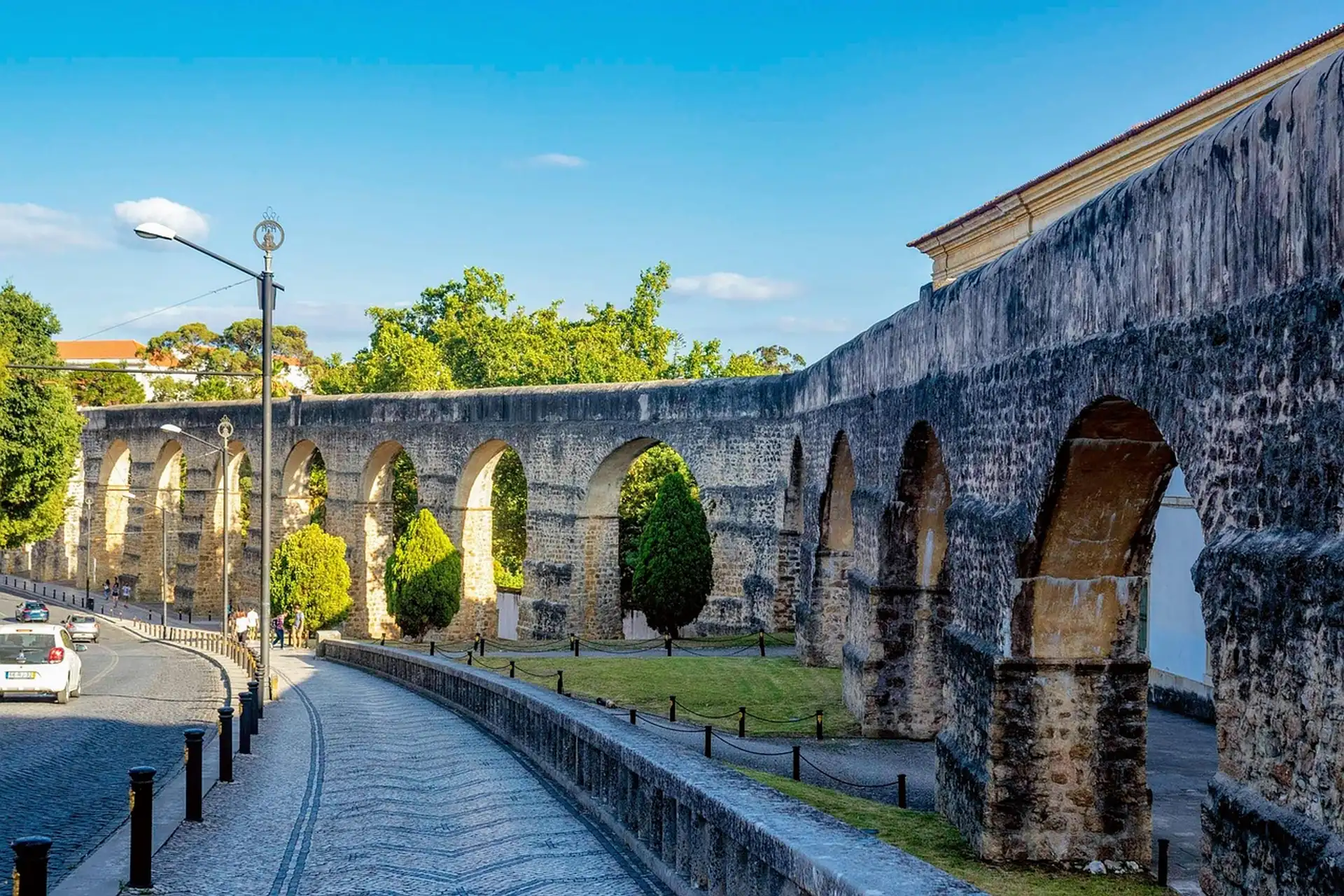
Getting around, in detailGet around · Connect
Get around
Walk inside a cluster, and use the metro, tram or app cars between them. Hills and cobbles make Alfama and Bairro Alto slow; the metro and a Viva Viagem card make the flat parts easy. Avoid Tram 28 in peak hours.
| Mode | Verdict | Fare | Use it for | What breaks |
|---|---|---|---|---|
| Walking | use | Free | Inside Baixa, Chiado, Alfama and Belém | Steep and slippery in wet weather; wear shoes with grip. |
| Metro | use | about €1.80 (≈ US$3) plus a €0.50 (≈ under US$1) card (check) | Airport, Oriente, flat crossings | Four lines; runs about 06:30-01:00.Four lines; runs about 6:30 AM-1:00 AM. |
| Tram (Carris) | ok | about €3 (≈ US$4) on board; cheaper with a card | Tram 15 to Belém; Tram 28 for the ride | Tram 28 is crowded and full of pickpockets; ride it early or on a weekday. |
| Funiculars and elevators | ok | about €4 (≈ US$5) or included in a day pass | Bica, Glória, Lavra, Santa Justa | Short queues early; treat as a ride, not a shortcut. |
| Ride-hail car or taxi | use | €5-10 (≈ US$6–12) across the centre | Hills, bags, night | Uber, Bolt and FreeNow; licensed taxis are fine and cheap. |
| Train | use | €1.50-3 (≈ US$2–4) | Belém, Cascais, Sintra | Use the Cascais line to Belém; the Sintra line from Rossio. |
| Ferry | ok | about €1.50-2 (≈ US$2–3) | Cacilhas and the south bank | Quick and scenic; fewer boats at night. |
Metro and rail lines
Four lines and a fifth in construction; the red line connects the airport to São Sebastião.
Red line (Linha Vermelha)
openAeroporto - Oriente - Alameda - São Sebastião
- Aeroporto — The airport, 20-25 minutes to the centre
- Oriente — Parque das Nações and the fast trains
- Alameda — Change to the green line
Runs about 06:30-01:00; check.Runs about 6:30 AM-1:00 AM; check.
Green line (Linha Verde)
openTelheiras - Cais do Sodré
- Baixa-Chiado — Chiado, the Carmo Convent and Baixa
- Cais do Sodré — Time Out Market and the Cascais line
The most useful line for the centre.
Blue line (Linha Azul)
openReboleira - Santa Apolónia
- Restauradores — The Rossio area
- Santa Apolónia — Long-distance trains and Alfama
Connects the centre to the north-west and Santa Apolónia.
City buses a visitor actually uses
| Bus | Route | Useful for | Fare | Note |
|---|---|---|---|---|
| Aerobus and Carris buses | Airport and city | A budget airport transfer | about €4 (≈ US$5) (check) | Buses run about every 20-30 min; check the route and stops.(check) |
Taxis and ride-hailing
Uber and Bolt
app
Card in-app; fare fixed before you book.
FreeNow
app
Licensed taxi hail.
Street taxis (green and black)
street
Metered; ask for a receipt; airport queue is official.
On foot and car-free hours
| Where | When | Note |
|---|---|---|
| Baixa and Rua Augusta | All day | Pedestrian street from Rossio to Praça do Comércio. |
| Alfama loop from the castle to the Sé | Morning | Downhill is easier; do it top to bottom. |
More on getting around
The Viva Viagem card is a rechargeable card sold at metro stations; a 24-hour ticket pays back at three or more rides. Carris tram fares bought on board are higher than card fares.
Connect
| Option | Verdict | What breaks |
|---|---|---|
| EU roaming or a tourist eSIM | use | EU/EEA SIMs roam at home rates; other visitors should install an eSIM before landing. |
| Carrier shops (MEO, NOS, Vodafone) | ok | Passport needed; prepaid data packs are cheap. |
Uber and Bolt
Cars
The default for airport and hill rides; Bolt is often cheaper.
FreeNow
Taxis
Book licensed taxis in the app.
Carris and Metro apps
Trams, buses and metro
Live arrivals and ticket purchase.
Google Maps
Walking and transit
Works well; use the walking view to avoid stairs.
- Wi-Fi
- Free in most cafés and hotels; some public squares have city Wi-Fi.
- Cash and cards
- Contactless cards work almost everywhere; MB Way is popular with locals.
Luggage
Where big bags are a problem, and how to get rid of them for the day.
Rule
- Lockers
- Lockers at Santa Apolónia and Cais do Sodré stations and luggage-storage shops in Baixa; hotels hold bags after check-out.
- Forwarding
- No forwarding culture: keep the big bag at the Lisbon hotel for Sintra and Cascais.
- Dead zone
- Late flights: ask the hotel to hold bags after check-out; many do for free or a small fee.
Bags, area by area
4 walking areas rated
- Bags forbidden
- Bags painful
Lockers, forwarding and the gap between check-out and check-in are covered once, under Luggage.
See & doWalking clusters, day plans and the places worth the time
See & do
Walking clusters, day plans and the places worth the time
Clusters
Plan by cluster: each is a walkable area with a rescue point and a bag rule.
Flat midday cluster: Praça do Comércio, Rua Augusta and Rossio on level pavements — the one part of central Lisbon that suits bags and heat; 90 minutes.
rescue 100% · max p90 6.4′ · 90m
Morning-only cluster: the castle at opening, then the viewpoints and the cathedral; steep cobbles and stairs, no shade at midday; half a day.
rescue 93% · max p90 7′ · half
Late-morning to evening cluster: Carmo ruins and the A Brasileira café by day, Bairro Alto restaurants and viewpoints at dusk; hilly, with tram-line cobbles.
rescue 91% · max p90 6.9′ · half
Flat riverside cluster 6 km west: the Jerónimos Monastery, pastel de nata queue and the river promenade; go on a weekday morning, not Monday.
rescue 93% · max p90 6.8′ · half
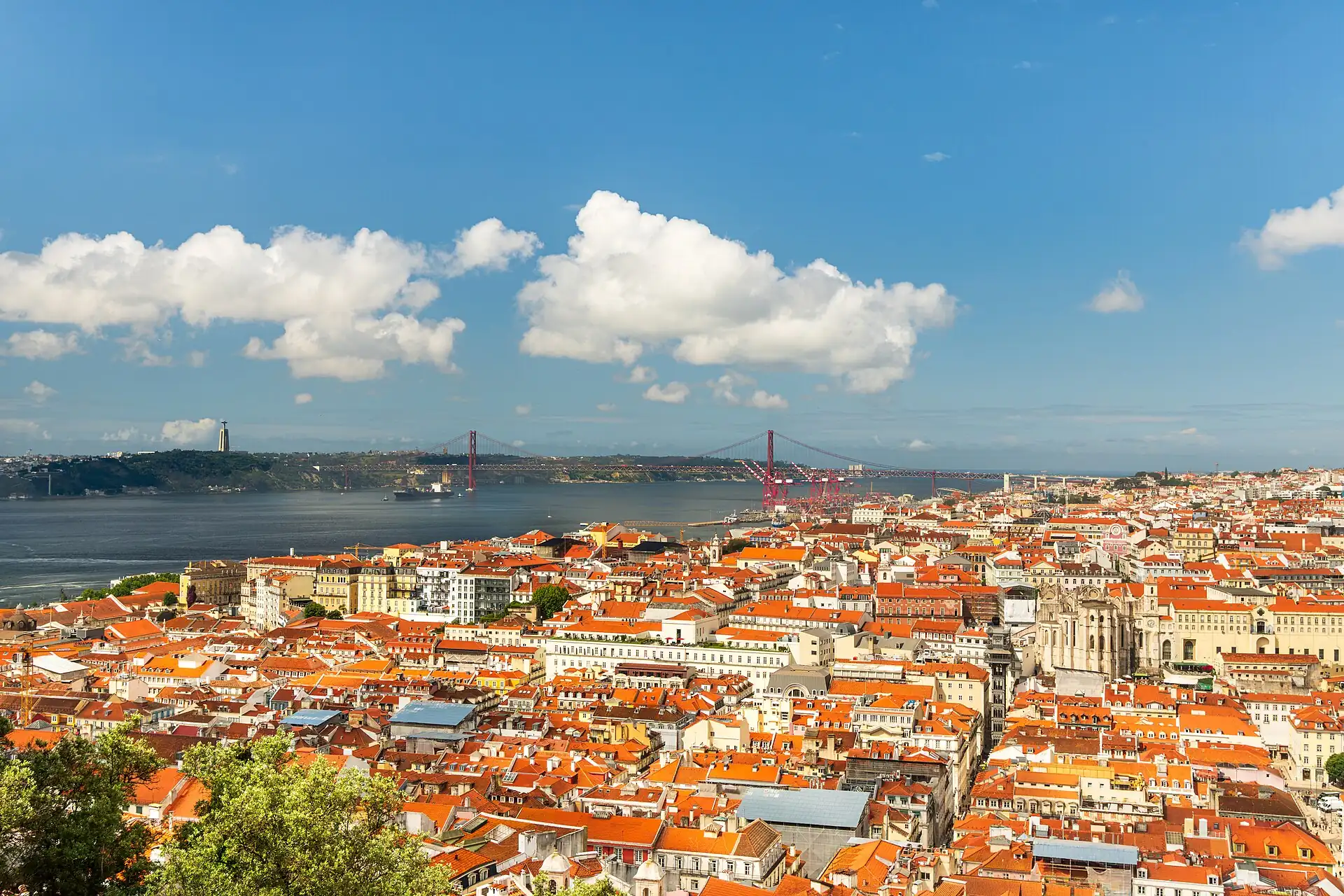
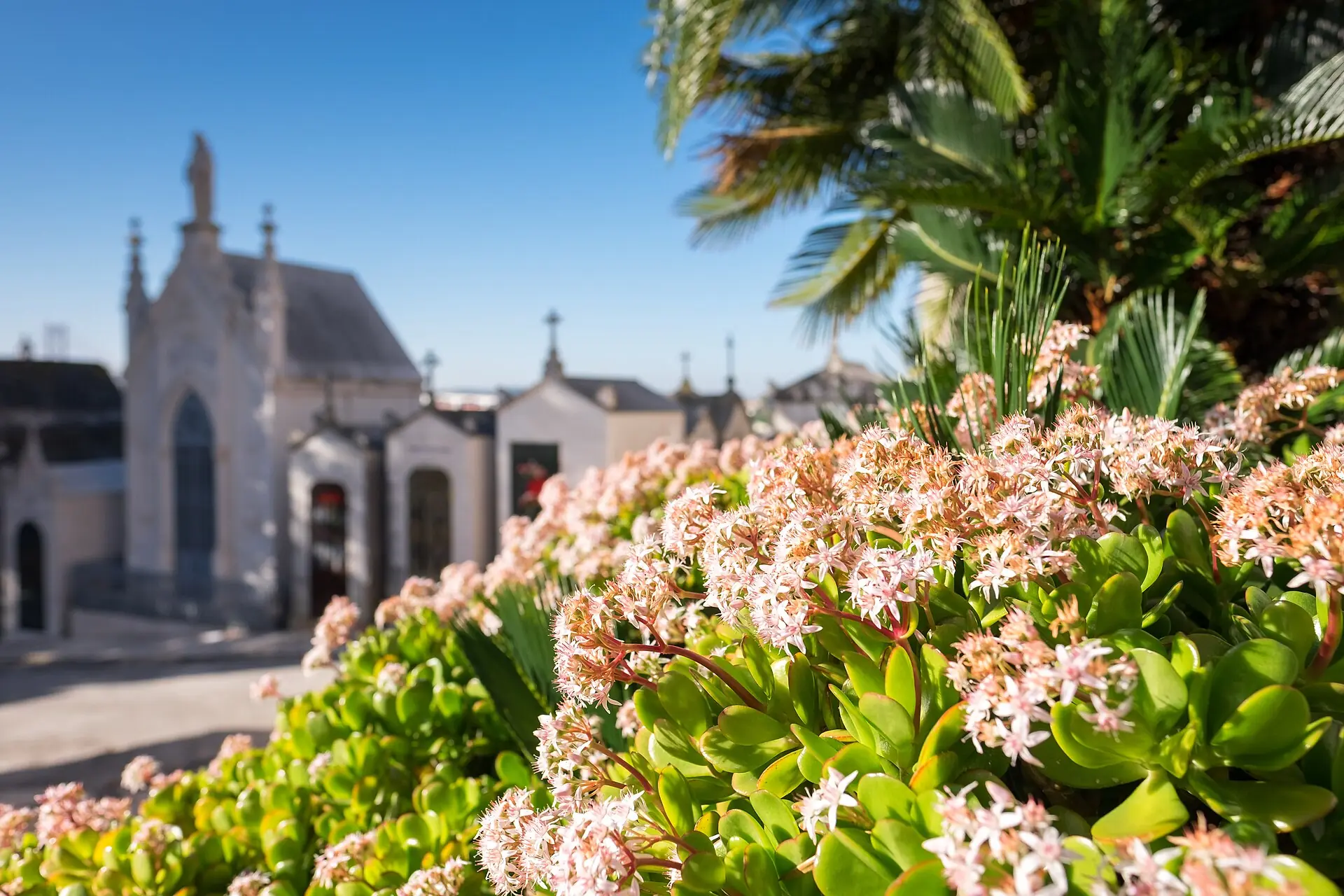
Days
Ready-made day plans, timed against opening hours and walking distances.
How long are you staying?
Loose outlines in the city's rhythm: hills in the morning, flat Baixa and the river in the heat, tram and viewpoint evenings. The timed day plan checks distances and closing days.
1 day
A stopover or the day before a Sintra trip
- 09:00São Jorge Castle — São Jorge Castle at opening
- 11:00Sé de Lisboa (cathedral) — Walk down through Alfama to the Sé
- 13:00Praça do Comércio — Lunch in Baixa; Praça do Comércio
- 15:30Jerónimos Monastery — Tram 15 or train to Belém for the monastery (not Monday)
- 17:30Pastéis de Belém — Pastel de nata
- 20:00Dinner and fado, or a sunset viewpoint
Skip: Sintra and Cascais: both need a day.
Lisbon in 3 days
3 daysHills in the morning, flat Baixa and the river in the heat, tram and viewpoint evenings; the last day ends with the bags already in the car.
Day by day
Day 1 — São Jorge Castle at opening, a 13:00 lunch table
- 09:00São Jorge Castle
- Sé de Lisboa (cathedral) (optional)
- Praça do Comércio (optional)
- 13:00Lunch table 13:00 (Baixa)
Day 2 — Belém: monastery, then a pastel de nata
Day 3 — Chiado, car to the airport at 12:00
- 08:30A Brasileira
- Carmo Convent
- Santa Justa Lift (optional)
- 12:00Car to the airport at 12:00
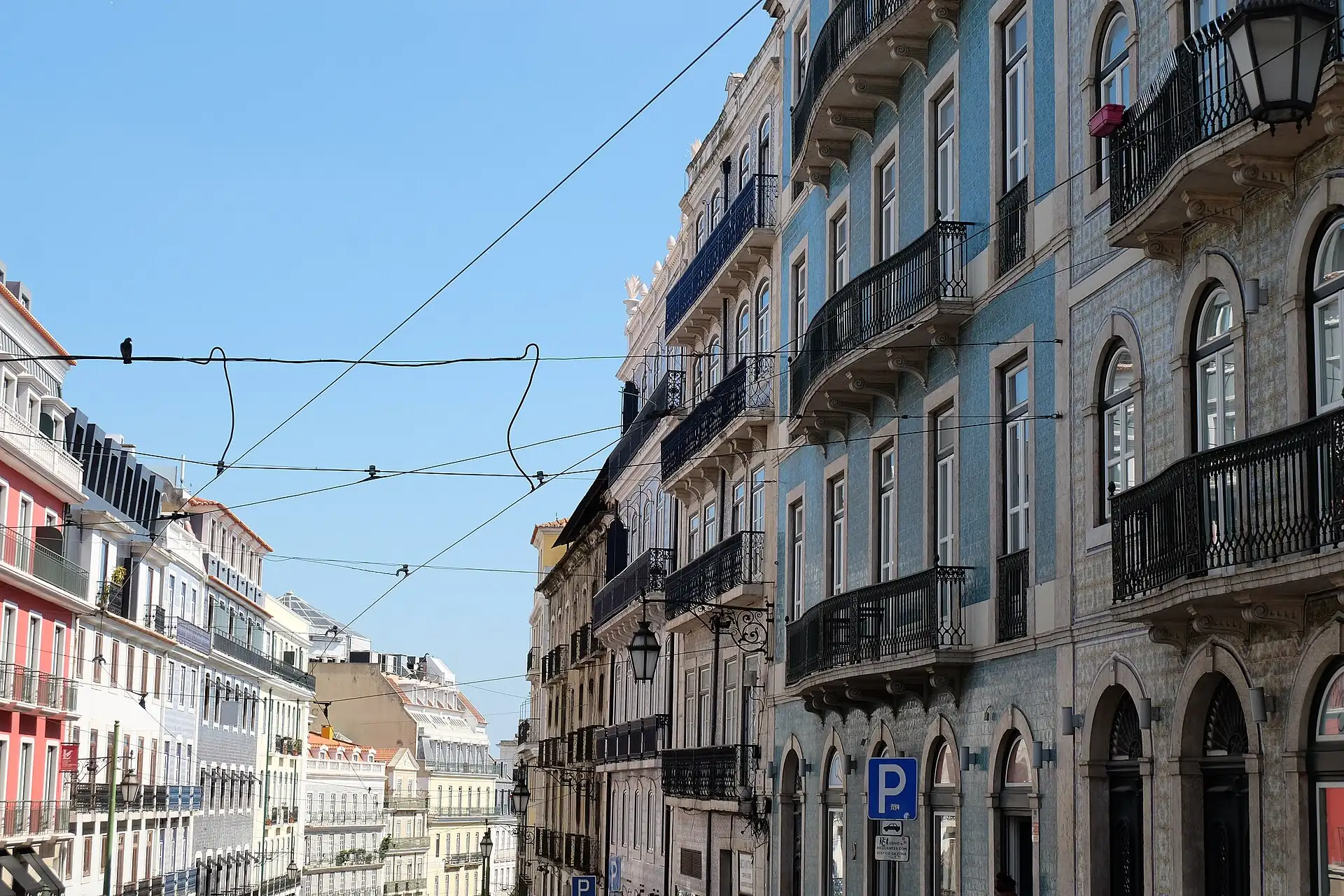
Places
“Best time” is when to arrive for the fewest crowds, for example “before 08:30”; “Go any time” means the hour makes little difference. More sights follow under “More sights and museums”.
7 places. Filters use the guide’s own ratings; a place with no rating is left out when a filter is on.
If you do ten things in Lisbon
Ranked for a first visit of 2-4 days. Prices are 2026 estimates in euros; hours marked (check) still need confirmation.
- 1
The finest Manueline building in Portugal and the shop that made the custard tart famous.
- Time
- 2-3 h
- Best
- Tue-Sun at opening
- Cost
- €12-18 (≈ US$14–25) plus pastries
- 2
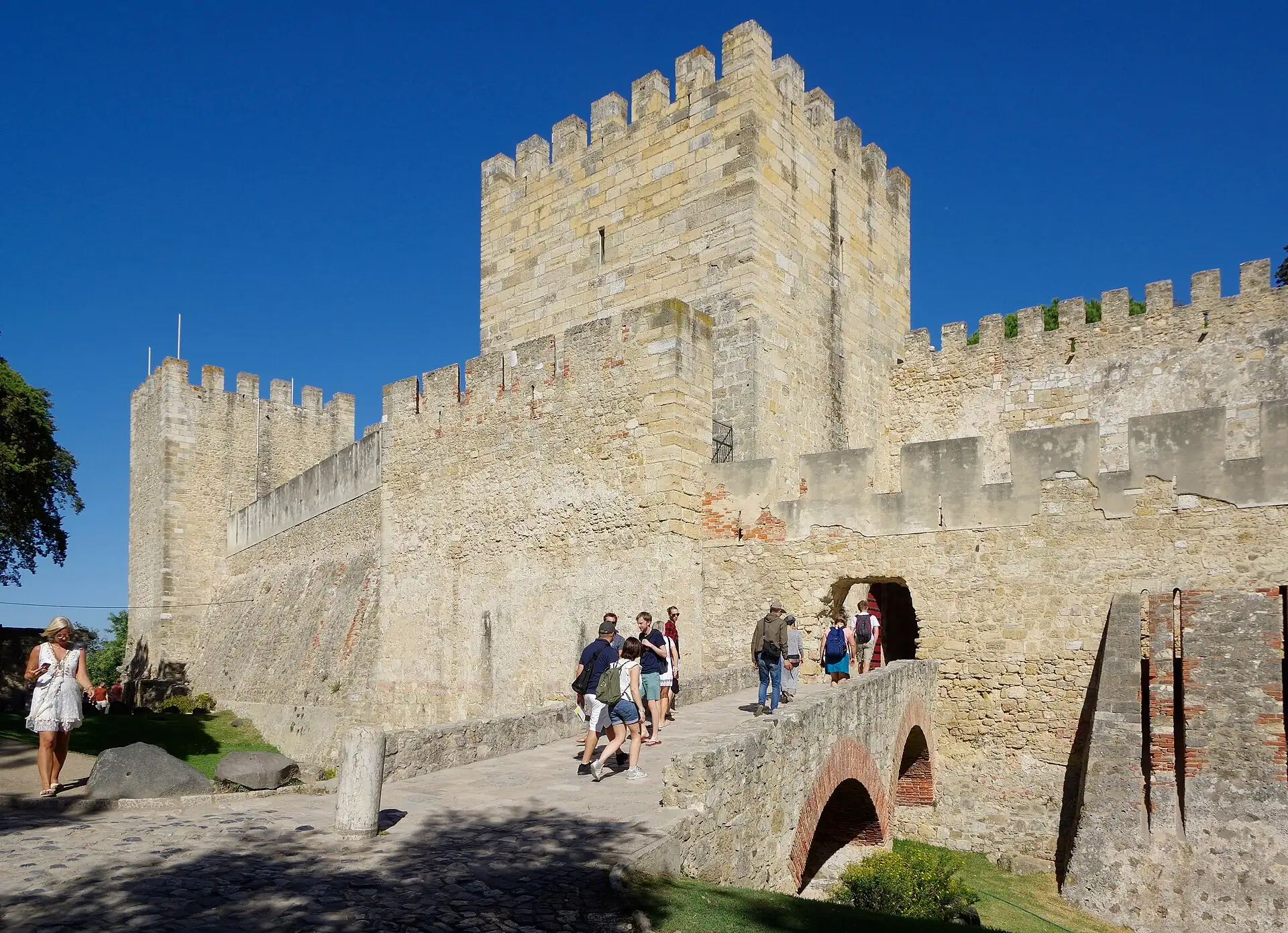
The best all-round view of the city and a walk along old walls.
- Time
- 1-1.5 h
- Best
- Opening or late afternoon
- Cost
- €15-16 (≈ US$18–19)
- 3
Praça do Comércio and Baixa on foot
The grid the Marquis of Pombal built after 1755, ending at the river.
- Time
- 1-1.5 h
- Best
- Morning or golden hour
- Cost
- Free
- 4
A roofless Gothic church that turns the earthquake into a single image.
- Time
- 30-45 min
- Best
- Late morning
- Cost
- €5-7 (≈ US$6–9)
- 5
Romanesque cathedral and lanes leading down to the river; best done downhill.
- Time
- 1.5-2 h
- Best
- Morning
- Cost
- Free; cloister €5 (≈ US$6)
- 6
Time Out Market for a first meal
A covered hall with many stalls: a low-risk introduction to Portuguese food.
- Time
- 1 h
- Best
- 12:00 or 15:00
- Cost
- €12-25 (≈ US$14–30)
- 7
Custard tarts baked in view; less crowded than Belém.
- Time
- 15-20 min
- Best
- Morning or afternoon
- Cost
- €1.30-2.50 (≈ US$2–3)
- 8
A fado evening
The music of Lisbon in a small house; the best way to spend a night.
- Time
- 2-3 h
- Best
- Evening
- Cost
- €20-50 (≈ US$25–60)
- 9
Sunset at a miradouro
Terraces over the roofs and the river; a drink from the kiosk.
- Time
- 1 h
- Best
- Sunset
- Cost
- Free; drinks extra
- 10
Sintra day trip
Palaces and forests 40 minutes away by train; needs an early start.
- Time
- Full day
- Best
- Weekday, opening
- Cost
- €10-20 (≈ US$12–25) per palace plus transport
Good for…
Verdict is how well Lisbon works for that traveller, not how nice it is.
Compact, safe and easy; the hills are the only catch.
- 1Sleep in Baixa — flat streets, metro and trains at the door.
- 2Lisbon in 3 days — the 3-day plan puts hills in the morning.
- 3Metro red line from the airport — cheap and quick; no taxi haggling.
Seafood, pastries and wine at fair prices.
- 1Pastéis de Belém — the original custard tart.
- 2Cervejaria Ramiro — seafood at a famous counter.
- 3Manteigaria — tarts baked in front of you.
Cheaper than most of Western Europe; rooms have risen.
- 1Prato do dia — a full lunch for €8-14 (≈ US$10–17).
- 2A Ginjinha — a €1.50-3 (≈ US$2–4) drink in a historic bar.
- 3Miradouros — free views over the city.
Sunset viewpoints, fado and wine bars.
- 1Fado evening — a small house and live music.
- 2Sleep in Príncipe Real — quiet streets and a garden.
Safe and social; use cars in Alfama at night.
- 1Hostels in Baixa — easy to meet people.
- 2Time Out Market Lisboa — a solo-friendly table.
Good aquarium and trams; hills and cobbles are tiring.
- 1Oceanário — the best rain-day plan.
- 2Praça do Comércio — a huge flat square.
Base in Baixa and use cars for the hills.
- 1A Baixa hotel with a lift — flat and central.
Grand hotels and tasting menus.
- 1A tasting menu in Chiado — book weeks ahead.
Baixa and Belém are flat; the rest is not.
- 1Praça do Comércio and Belém — level ground and ramps.
Tours and classes: book or skip
Book through the hotel or an operator with written inclusions and a cancellation policy. Prices per person, group tour unless stated.
| Tour or class | Verdict | Typical price | Why | Check before paying |
|---|---|---|---|---|
| Sintra day tour | maybe | €60-120 (≈ US$70–140) | Saves logistics; you can also go by train and bus for less. | Entry fees included, group size, time at each palace. |
| Food and wine walk | book | €60-100 (≈ US$70–120) | A three-hour introduction to Portuguese food with tastings. | Tastings include full portions; a small group. |
| Fado dinner show | maybe | €40-80 (≈ US$50–95) | A good evening if the venue is small; big dinner shows are staged. | Set menu, drinks, show time. |
| Tuk-tuk city tour | skip | €40-80 (≈ US$50–95) | A short ride on narrow streets; a walk is better. | Fixed price before you sit down. |
| Tagus sunset sail | maybe | €30-60 (≈ US$35–70) | A pleasant view from the water; cancelled in wind. | Weather refund; drinks included. |
| Cascais and Cabo da Roca tour | skip | €60-100 (≈ US$70–120) | The train to Cascais is simpler. | If you go, ask for the route. |
What each season brings
Spring
Mar-May
Warm days, jacaranda in late May, gardens and long light.
Watch: Showers; Easter and 25 April crowds.
Summer
Jun-Aug
Santo António street parties, terraces and beaches.
Watch: Heat of 30 °C and crowds; book ahead.
Autumn
Sep-Nov
The best walking weather and warm sea; wine harvest nearby.
Watch: Rain from mid-October; Web Summit week.
Winter
Dec-Feb
Quiet sights, cheap rooms, almond blossom late in February.
Watch: Wet cobbles and short days.
Photo spots and the light
Light times are for clear days.
| Spot | Best light | Tip |
|---|---|---|
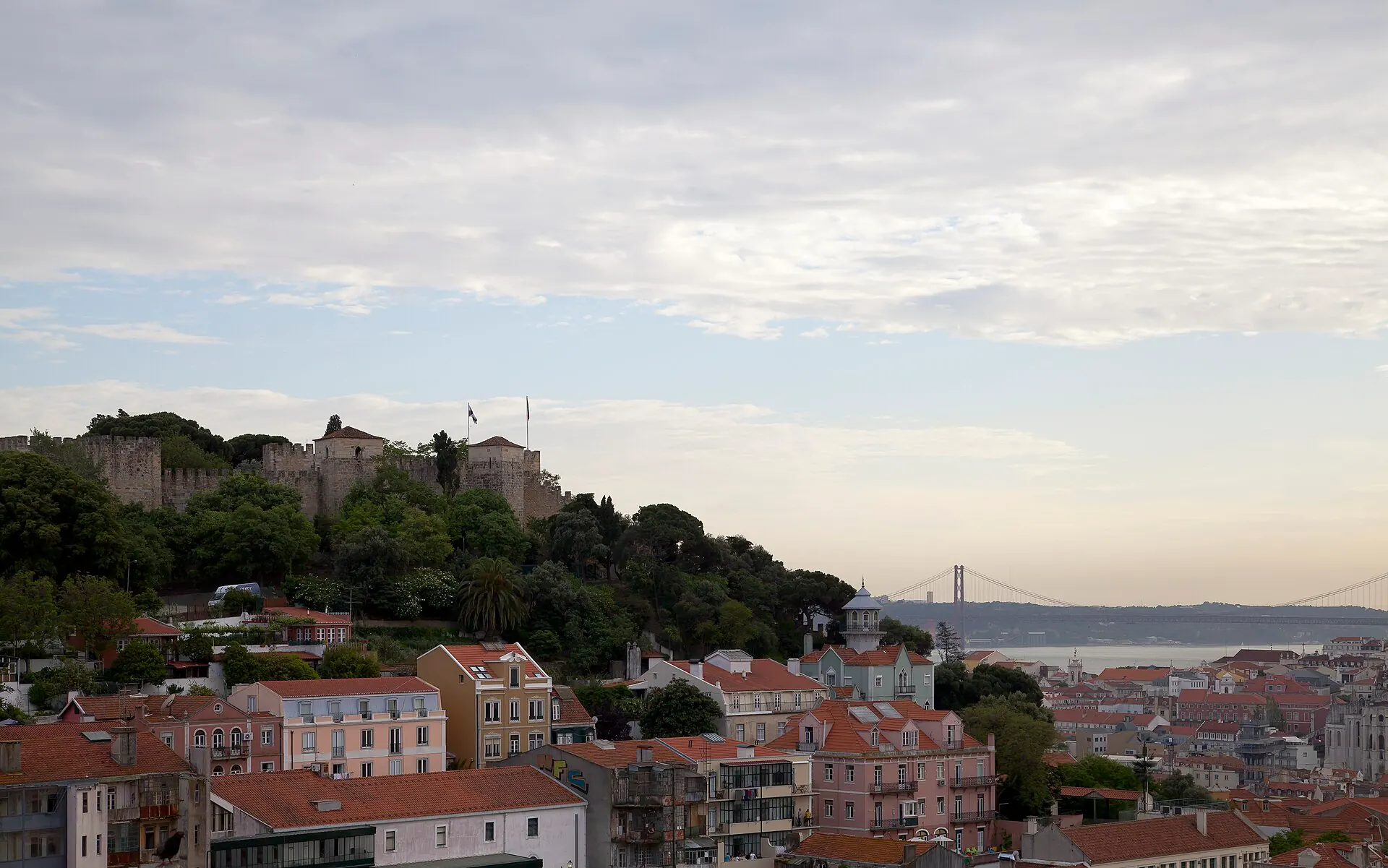
| São Jorge Castle | Late afternoon | Shoot from the walls toward Baixa and the river. |
| Praça do Comércio | Golden hour | Stand at the river steps and look back at the arch. |
| Carmo Convent | Morning | Frame the open arches against the sky. |
| Miradouro da Senhora do Monte | Sunset | A wide view of Baixa and the castle. |
| Tower of Belém | Late afternoon | From the river bank, with the tower lit by low sun. |
| Tram 28 in Alfama | Morning | Wait at a curve and shoot the tram against the tiles. |
Lisbon travel FAQ
Answers are 2026 desk estimates; fares and rules marked (check) change.
Is Lisbon safe?
Yes for violence. The risks are pickpockets on trams, in queues and near Rossio, and slippery cobbles. Keep bags in front.
How do I get from the airport to the centre?
The red metro line to the centre takes 20-25 minutes and costs about €2.30 (≈ US$3) with a card; an app car costs €15-25 (≈ US$18–30).
Do I need cash?
Rarely. Cards and contactless work almost everywhere; keep €20 (≈ US$25) for small cafés and tram tickets.
Is tap water safe?
Yes.
How many days do I need?
Two full days for the centre and Belém; three with a Sintra day; four with Cascais or a slow day.
When is the best time to go?
April to June and September to October; July and August are hot and crowded.
Is Tram 28 worth it?
For the ride, yes at 07:30 or on a weekday. In summer afternoons it is crowded and pickpockets work it.For the ride, yes at 7:30 AM or on a weekday. In summer afternoons it is crowded and pickpockets work it.
Do I tip?
Not required; round up or leave 5-10% for good service.
What about the couvert?
Bread, olives and cheese put on the table are charged if you eat them; send them back if you do not want them.
What should I wear?
Comfortable shoes with grip and layers. Cover shoulders and knees in churches.
Do I need a visa?
Many nationalities can stay 90 days in any 180 days in the Schengen area; check your passport and ETIAS status.
Is Belém open on Monday?
The monastery and tower are closed on Monday; the pastry shop stays open.
More to see and doSee & do · Learn & work · Rain & heat · Wheelchair and stroller
Wheelchair and stroller, place by place
How each place in this guide works for wheels, from its own page. Ratings are desk estimates unless a page says it was checked on the ground.
| Place | Step-free | Wheelchair | Stroller | What to know |
|---|---|---|---|---|
| Santa Justa Lift | partial | caution | ok | A spiral stair to the top platform. |
| Praça do Comércio | yes | ok | ok | Steps to the river. |
| Sé de Lisboa (cathedral) | partial | caution | caution | A few steps to the nave; more to the cloister. |
| Tower of Belém | no | poor | poor | About 100 steps in narrow stairs. |
See & do
23 of 23
- Citadel & old city
Moorish and medieval walls above Alfama with the best all-round view of the river and Baixa. 1-1.5 h.
Alfama · Daily, about 09:00-21:00 (check)Daily, about 9:00 AM-9:00 PM (check) · €15-16 (≈ US$18–19)(check)
- Citadel & old city
Manueline church and cloister with sea-inspired stone carving; UNESCO listed.
Belém · Tue-Sun, about 10:00-17:30 (check)Tue-Sun, about 10:00 AM-5:30 PM (check) · €12-18 (≈ US$14–25)(check)
- Citadel & old city
A 16th-century riverside fortress; the outside is the photo and the inside is narrow with a queue.
Belém · Tue-Sun (check) · €8-12 (≈ US$10–14)(check)
- Citadel & old city
A fortress-like Romanesque cathedral with a Roman and Moorish dig in the cloister.
Alfama · Daily (check) · Free; cloister about €5 (≈ US$6)(check)
- Neighbourhoods
A huge riverside square with yellow arcades and the triumphal arch on Rua Augusta.
Baixa · Always open · Free(check)
- Citadel & old city
A Gothic church roofless since the 1755 earthquake, with a small archaeology museum.
Chiado · Check; usually closed Sunday · €5-7 (≈ US$6–9)(check)
- Views
A neo-Gothic iron lift from 1902; the queue is long and the top platform small.
Baixa · Daily, long hours (check) · about €5-6 (≈ US$6–7)(check)
Miradouro de Santa Luzia
ViewsTiled terrace over Alfama and the river; go early or at sunset.
Alfama · Always open · Free(check)
Miradouro da Senhora do Monte
ViewsThe highest central viewpoint; the whole city and the castle.
Graça · Always open · Free(check)
Museu Nacional do Azulejo
MuseumsTiles from the 15th century to the present in a convent; a café in the cloister.
Xabregas · Check; closed Monday · €5-8 (≈ US$6–10)(check)
Museu Calouste Gulbenkian
MuseumsA collector's museum from Egyptian art to Lalique jewellery, with a park.
Avenidas Novas · Check; closed Tuesday · €10-14 (≈ US$12–17)(check)
Museu do Fado
MuseumsA small museum of fado history with audio, a good first step before a fado night.
Alfama · Check; closed Monday · €5-7 (≈ US$6–9)(check)
MAAT and the riverside walk
MuseumsA museum of art, architecture and technology with a roof you can walk on.
Belém · Check; closed Tuesday · €10-12 (≈ US$12–14)(check)
Oceanário de Lisboa
MuseumsOne of the largest aquariums in Europe; the best rain-day plan with children.
Parque das Nações · Daily (check) · €20-25 (≈ US$25–30)(check)
Pantheon of Santa Engrácia
Citadel & old cityA white baroque dome with a rooftop view; a quiet stop on the Feira da Ladra days.
Alfama · Check; closed Monday · €4-5 (≈ US$5–6)(check)
Fado evening
Shows & musicLive fado in a small house. Choose a small venue over a big dinner show; book ahead.
Alfama and Mouraria · Evenings, from about 20:00Evenings, from about 8:00 PM · €20-50 (≈ US$25–60) with or without dinner(check)
Tram 28 ride
activityA yellow historic tram through Graça, Alfama and Baixa. Ride at 07:30 or on a weekday to avoid crowds.A yellow historic tram through Graça, Alfama and Baixa. Ride at 7:30 AM or on a weekday to avoid crowds.
Estrela to Martim Moniz · About 06:00-22:00 (check)About 6:00 AM-10:00 PM (check) · about €3 (≈ US$4) on board or a day pass(check)
Custard tart baking class
ClassesMake pastéis de nata with a baker and eat them warm.
Baixa and Belém · Morning and afternoon · €40-70 (≈ US$50–85)(check)
Food walk in Alfama and Baixa
Food toursTastings of ginjinha, tinned fish, cheese and tarts with a guide.
Alfama, Baixa · 3 h, day or evening · €60-100 (≈ US$70–120)(check)
Tagus sunset sailing
ActiveA boat trip with drinks under the 25 de Abril bridge; cancelled in wind.
Doca de Santo Amaro · Evenings · €30-60 (≈ US$35–70)(check)
Surf lesson at Carcavelos or Costa da Caparica
SportBoard and wet suit included; a beach day by train.
Coast, 30 min · Morning · €40-70 (≈ US$50–85)(check)
Tile painting workshop
CraftsPaint your own tile; rain-day fill.
Baixa, Alfama · 2 h · €30-60 (≈ US$35–70)(check)
Live music at a Bairro Alto bar
Shows & musicJazz, blues and rock in tiny bars.
Bairro Alto · Evenings · Free to €10 (≈ US$12)(check)
- Booking
- Fado dinners, food tours and classes sell out from May to September and around Santo António: book two to three days ahead.
Learn & work
| What | Where | Cost | Note |
|---|---|---|---|
| Portuguese (language school) | Language schools in Baixa and Avenidas Novas | €150-300 (≈ US$180–350) a week for group classes (check) | European Portuguese sounds different from Brazilian; say which you want.(check) |
| Cooking and pastry classes | Baixa, Príncipe Real, Belém | €40-100 (≈ US$50–120) a session | See Do. |
| Portuguese guitar or fado | Alfama music schools and fado houses | €25-60 (≈ US$30–70) a lesson | A few venues run one-off lessons.(check) |
| Surf | Carcavelos, Costa da Caparica | €40-70 (≈ US$50–85) a lesson | See Do. |
Working here
- Tourist stay
- Schengen rules apply: 90 days in any 180 without a visa for many nationalities; paid work is not allowed.
- Work permit
- A work visa needs an employer; the process runs through AIMA and consulates and can take months.
- Digital nomads
- Portugal has a remote-work residence visa for income above a set threshold (check the current level); Lisbon has many co-working spaces.
- Teaching English
- Language schools hire teachers; a degree and TEFL help, and a contract must come before you arrive.
Rain-day and heat-day plan
Rain day
Rain is short and heavy from October to April. Have an indoor plan; polished cobbles and steep tram stops get slippery.
- 01Jerónimos Monastery — A large church and cloister; go early.
- 02Carmo Convent — Roofless nave with an archaeological museum; partly covered.
- 03Oceanário de Lisboa — Large indoor aquarium in Parque das Nações; good for families.
- 04National Tile Museum (Museu Nacional do Azulejo) — Tiles from the 15th century on, in a convent; check the closing day.
- 05Time Out Market Lisboa — A covered food hall.
Heat day
In July and August the stone streets bake from 12:00 to 17:00: outdoors before 11:00 and after 17:30, indoors in between.
- 08:30São Jorge Castle — Walls and views before the tour groups.
- 11:00Sé de Lisboa (cathedral) — A cool stone cathedral.
- 13:00Praça do Comércio — Lunch under the arcades; shade and breeze.
- 17:30Jerónimos Monastery — Cooler light; check closing time.
Day-trips and nearby
Places you can reach from Lisbon in a day or with one night away, with the route and what it costs. Door to door, not ride time.
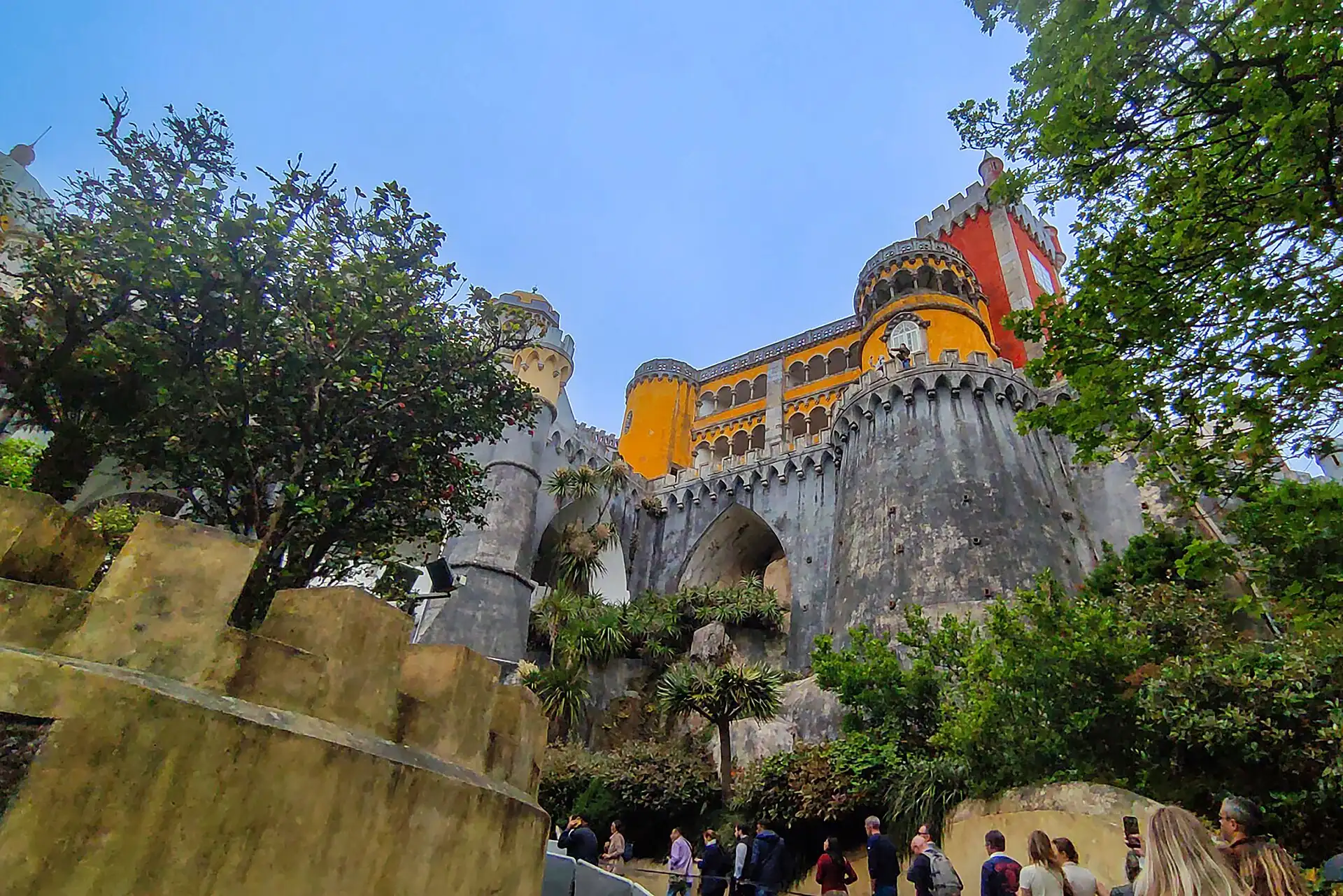 Photo: Taisir85, CC BY-SA 4.0
Sintra (palaces)
goTrain from Rossio about 40 min each way, then a local bus or taxi
Book palace tickets ahead and go on a weekday.
- Time
- Full day — leave before 09:00Full day — leave before 9:00 AM
Cascais and the coast
goTrain from Cais do Sodré about 40 min each way
Easy with a Viva Viagem card; beaches are busy in summer.
- Time
- Half or full day
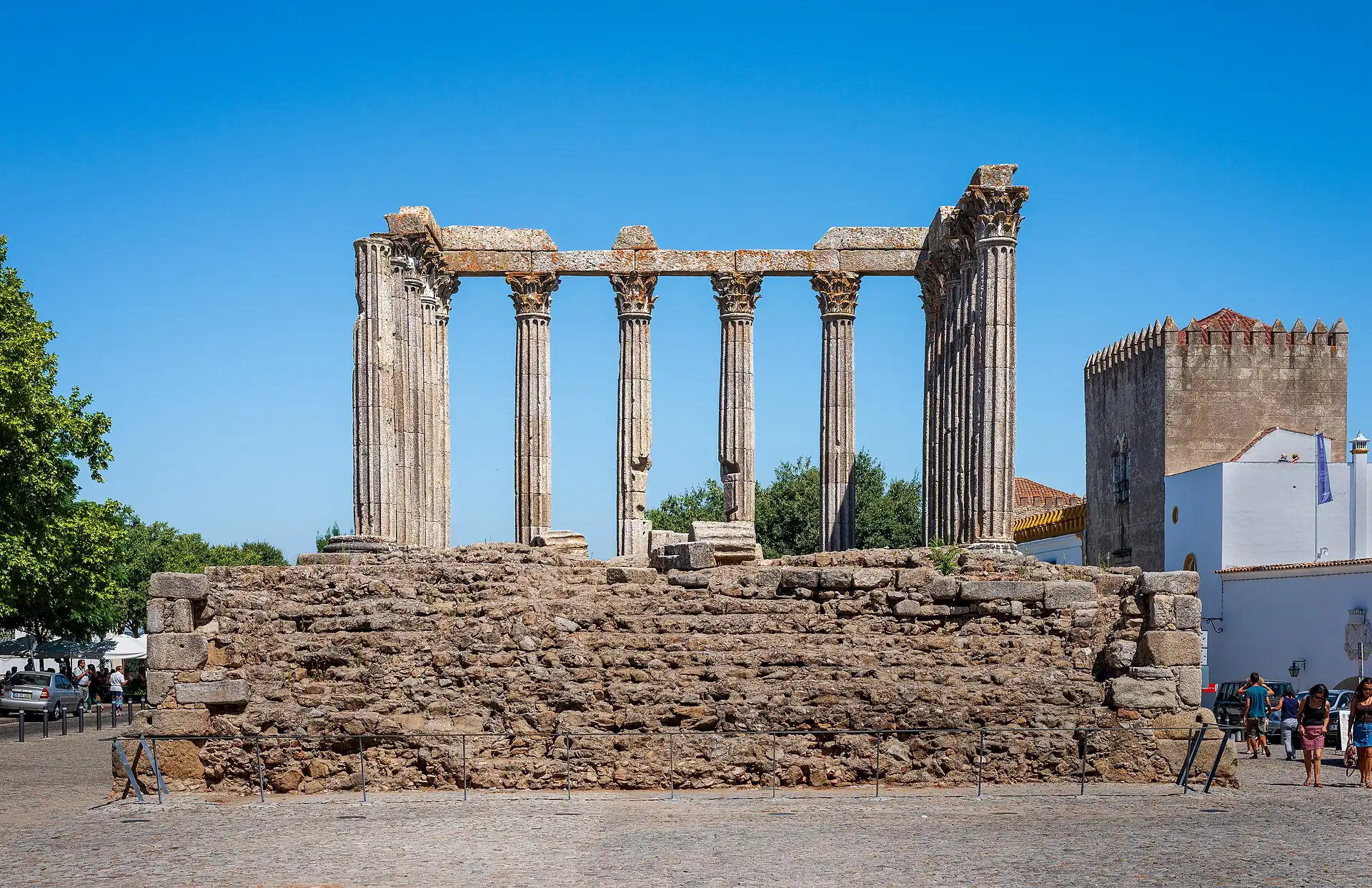 Photo: Norbert Nagel, CC BY-SA 3.0
Évora
go off seasonTrain or bus about 1.5 h each way
Hot in July and August; check the return service before you go.
- Time
- Full day
Go next
Porto
goDoor to door: 3-3.5 h
Fast train about 2 h 45 min to 3 h
The main northern trip; book the train ahead.
Algarve (Faro)
overnightDoor to door: 3-4 h
Train about 3 h or a short flight
Beaches; plan several nights.
Eat & sleepWhere to eat and which area to sleep in
Eat & sleep
Where to eat and which area to sleep in
Eat
A short list of places worth crossing the city for, each with how to get a seat.
Restaurant finder: filter every place to eat in Lisbon →
Vegetarian-friendly score
3.5 / 5 · Good
- Country diet noteOur country guide rates vegetarian eating as easy.2 / 2
- Places to eat in this guide5 of 6 places with a known answer are vegetarian-friendly, 1 partly.1.38 / 1.5
- Budget eating lines0 vegetarian lines in "Eat by budget".0 / 0.6
- Meat-free national dishes3 meat-free dishes in the country food list.0.3 / 0.4
- Dedicated vegetarian kitchens0 mentions of vegetarian restaurants, Buddhist or fasting kitchens.0 / 0.5
Country note: Easy in Lisbon and Porto, harder in the countryside where soups often contain meat stock.
Vegetarian places near me →Make a diet card →
How we score
- Country diet note (up to 2): easy 2, workable 1, mixed 0.75, hard 0; no note 0.5.
- City places to eat (up to 1.5): 1.5 × (vegetarian-friendly + half of partly friendly) ÷ places with a known answer; needs 3 or more known places.
- Budget eating lines marked vegetarian (up to 0.6): 0.2 each.
- Meat-free national dishes (up to 0.4): 0.1 each.
- Dedicated vegetarian kitchens mentioned — Buddhist chay, shōjin ryōri, Jain, fasting food, vegan cafés (up to 0.5): 0.1 each.
- Total rounded to the nearest half point, 0 to 5. Built from our own pages only, not from reviews.
Eating and drinking guideEat by budget · Drink
Before you sit down to eat
Short version; full text linked
Eat by budget
Under €12 (≈ US$14) a meal
| Where | Order | Area | Price | Note |
|---|---|---|---|---|
| A Brasileira | Bica and a pastry at the counter | Chiado | €2-6 (≈ US$3–7) | Stand at the counter; tables cost more. |
| Manteigaria | Pastel de nata | Chiado | €1.30-2.50 (≈ US$2–3) | Warm from the oven; watch them bake. |
| A Ginjinha | Ginjinha shot | Rossio | €1.50-3 (≈ US$2–4) | Stand at the door. |
| Prato do dia at a tasca | Set lunch of the day | Baixa, Alfama, Graça | €8-14 (≈ US$10–17) | Soup, main and a drink; go at 12:30.Soup, main and a drink; go at 12:30 PM. |
| Bifana | Pork sandwich | Everywhere | €3-5 (≈ US$4–6) | A quick lunch; add mustard. |
Dishes to know
| Dish | What it is | Where to look | When | Price |
|---|---|---|---|---|
| Pastel de nataPastel de nata | Custard tart in a flaky shell, sprinkled with cinnamon and sugar | Belém and every café | All day | €1.30-2.50 (≈ US$2–3) |
| Bacalhau | Salt cod; hundreds of recipes, from fritters to baked with potato | Tascas and restaurants | Lunch and dinner | €12-22 (≈ US$14–30) |
| Sardinhas assadas | Grilled sardines with bread and salad, best in June | Alfama and street stalls | Summer | €8-15 (≈ US$10–18) |
| Bifana | Marinated pork in a roll | Snack bars and tascas | Lunch | €3-5 (≈ US$4–6) |
| Caldo verde | Cabbage and potato soup with chouriço | Tascas | Cool months | €3-6 (≈ US$4–7) |
| Pastéis de bacalhau | Salt cod fritters | Cafés and tascas | Starter or snack | €2-4 (≈ US$3–5) |
| Ginjinha | Cherry liqueur | A Ginjinha | Evening | €1.50-3 (≈ US$2–4) |
- The couvert (bread, butter, olives) is charged if you eat it; send back what you do not want.
- Kitchens close between 15:00 and 19:30 in local places; eat at 12:30-14:00 and after 19:30.Kitchens close between 3:00 PM and 7:30 PM in local places; eat at 12:30 PM-2:00 PM and after 7:30 PM.
- Eat where locals queue; tourist menus on Rua Augusta are pricier and lower quality.
Drink & nightlife
| Where | What | Until | Note |
|---|---|---|---|
| Bairro Alto | Small bars on narrow streets | About 02:00About 2:00 AM | Crowded on weekend nights; drinks are cheap and served in the street. |
| Pink Street (Rua Nova do Carvalho), Cais do Sodré | Bars and clubs | About 04:00About 4:00 AM | A younger crowd; pickpockets work the queues. |
| Miradouros (viewpoints) with kiosks | Drinks with a view | About 00:00About 12:00 AM | Sunset at Santa Catarina or Senhora do Monte; buy a drink at the kiosk. |
| A Ginjinha (Rossio) | Tiny bar for the cherry liqueur | Late evening (check) | A single shot with or without cherries; a quick stop. |
| Wine bars in Príncipe Real and Chiado | Portuguese wine by the glass | About 00:00About 12:00 AM | Ask for a house wine or a Douro red. |
By style
| Style | What | Where | Price | Until |
|---|---|---|---|---|
| Ginjinha | Sour-cherry liqueurAsk com elas for a cherry in the glass, sem elas for none. | A Ginjinha and small bars near Rossio | €1.50-3 (≈ US$2–4) | Evening |
| Vinho verde | Young, light, slightly sparkling white wineA summer lunch wine. | Any restaurant | €3-5 (≈ US$4–6) a glass | All day |
| Port | Fortified wine from the DouroWhite port and tonic is a popular aperitif. | Wine bars and shops | €4-8 (≈ US$5–10) a glass | Evening |
| Beer | Sagres and Super BockAsk for an imperial for a small draught glass. | Everywhere | €1.50-3 (≈ US$2–4) | All day |
Rules that bite
- The legal drinking age is 18; ID is often asked in bars.
- Street sellers in Bairro Alto and Baixa offer drugs; ignore them and keep walking.
- Do not drive after drinking; taxis and app cars run all night.
Sleep
Pick the area first: it decides your walk home at night and your first morning.
Which neighborhood fits you
Three questions, one recommendation, with the reasons.
Your best fit
- Rossio, Praça do Comércio, the Santa Justa lift and Alfama on foot.
- Metro and app cars reach the door.
Watch out: Busy pedestrian streets and late bars; ask for a back room.
Next best: Príncipe Real
Built from our 1–5 desk scores per area; your answers stay in this browser.
More on sleepingSleep by budget · Your area · With kids
Sleep by budget
| Band | Price | Where | Room types | What to expect |
|---|---|---|---|---|
| budget | €25-45 (≈ US$30–55) dorm bed; €70-110 (≈ US$85–130) private room | Baixa, Bairro Alto, Alfama | Hostels and guesthouses | Small rooms, steep stairs; noise from Bairro Alto and Cais do Sodré on weekends. |
| mid | €120-220 (≈ US$140–300) | Baixa, Chiado, Príncipe Real | Boutique hotels and 3-4 star chains | Lift, breakfast, air conditioning; small rooms in old buildings. |
| splurge | €300-800 (≈ US$350–950)+ | Avenida da Liberdade, Chiado, riverfront | Grand hotels and design hotels | Pools and spas; city tax is added. |
| mid | €100-220 (≈ US$120–300) | Apartments in Alfama, Graça, Baixa | Serviced apartments | Kitchen and washer; stairs and self check-in are common. |
Booking checks
- Ask about stairs and lifts: many old buildings have none.
- A city tax of about €2 (≈ US$3) per person per night (up to several nights) is added at check-in (check).
- Sleep away from Bairro Alto and Pink Street if you want quiet.
- Hotels near the castle look near on the map and are far up on foot; check the route.
Which area is yours
01Baixa
First-timers: flat streets, metro and train in every direction and a door a taxi can reach — but pick a hotel with a 24-hour desk, not a guesthouse with a locked door.
Quieter, leafier nights above Bairro Alto; steeper streets and a 10-minute taxi or a hill walk to Baixa.
Areas are in our default order until you tick a priority.
Scores are 1-5 desk judgements per priority (2026).
With kids
- Cobbles and hills are tiring: use a carrier for babies and expect to carry tired legs on Alfama stairs.
- The Oceanário in Parque das Nações is the best indoor day for children; the Pavilion of Knowledge is a science museum there.
- Trams and elevators are a treat: Tram 15 to Belém is easier than the crowded Tram 28.
- Cais do Sodré and Baixa have playgrounds; Jardim da Estrela and Parque Eduardo VII have space to run.
- Cars need a child seat by law: request one from the taxi company or app; most standard rides do not have one.
PracticalMoney, essentials, safety and the pocket card
Practical
Money, essentials, safety and the pocket card
Money
What a day costs at three comfort levels, and how to pay.
- Budget
- €45–70 (≈ US$55–85) excl. bed / day
- Mid
- €70–130 (≈ US$85–160) excl. bed / day
- High
- €130 (≈ US$160)+ excl. bed / day
- Transit card
- A rechargeable Viva Viagem card covers metro, trams, buses and funiculars; buy a 24-hour ticket on it if you ride three or more times.
- Cash rule
- Keep €20–30 (≈ US$25–35) in coins and small notes for cafés and tram tickets; use Multibanco bank ATMs, not the standalone machines in tourist streets.
More on moneyCosts · Budget · Buy
What things cost
- Pastel de nata€1.30–2.50 (≈ US$2–3)
- Glass of ginjinha (cherry liqueur)€1.50–3 (≈ US$2–4)
- Bottle of water, shop€0.50–1.50 (≈ US$1–2)
- Ride-hailing car across the centre€5–10 (≈ US$6–12)
- Car from the airport to Baixa€15–25 (≈ US$18–30)
- Castle or monastery ticket€10–20 (≈ US$12–25)
Trip budget
| Hotel double room1 × 4 nights × €150 | €600 |
| Food, local transport, entries2 × 4 days × €100 | €800 |
| Airport metro or car, both ways1 × €40 · car for two to four people | €40 |
| eSIM or SIM2 × €10 | €20 |
| Buffer 10%Price creep, a taxi you did not plan, one splurge | €146 |
| Trip total≈ €201 per person per day, bed included | €1,606≈ US$1,900 |
2026 estimate in euros; flights and tours excluded. Your choices stay in this browser.
Prices of common things
| Pastel de nata | €1.30-2.50 (≈ US$2–3) |
2026 estimate; check locally.
Buy
- Bargaining
- Prices are fixed in shops and cafés. Haggling is normal only at the Feira da Ladra flea market (Tuesdays and Saturdays) and at street stalls.
- Fixed-price check
- Souvenir shops on Rua Augusta charge more than neighbourhood shops in Chiado and Príncipe Real for the same tiles, tins and cork. Compare before you buy.
Markets and shopping streets
| Where | What | When | Haggle | Note |
|---|---|---|---|---|
| Feira da Ladra (Campo de Santa Clara) | Flea market: antiques, tiles, second-hand goods | Tue and Sat mornings | hard | Bags in front; go early. |
| Mercado da Ribeira (Time Out Market) | Food hall and some produce | Daily, long hours | no | Prices are higher than local cafés; see the eat pages. |
| LX Factory | Design shops, cafés and a Sunday market | Daily; Sunday market (check) | light | A converted factory in Alcântara; a taxi ride from the centre. |
| Mercado de Campo de Ourique | Neighbourhood food market | Daily | no | Calmer than Time Out; a tram 28 ride from the centre. |
Shops by what they sell
| For | Where | Hours | Note |
|---|---|---|---|
| Azulejos (tiles) and ceramics | Baixa, Chiado, Alfama | About 10:00-19:30 | Buy signed pieces from workshops; cheap tiles are often machine-made. |
| Tinned fish and conservas | Chiado, Baixa, supermarkets | Shop hours | Supermarkets are cheapest; specialist shops sell the presentation. |
| Cork goods | Rua Augusta and Chiado | Shop hours | Ask for the label saying real cork. |
| Ginjinha and port wine | A Ginjinha, wine shops | Shop hours | Carry in checked bags; buy port at wine shops with a shipping option. |
Changing money
| Where | Verdict | Why |
|---|---|---|
| Multibanco (bank ATMs) | use | Best rate; choose to be charged in euros. |
| Exchange booths in tourist streets | avoid | Poor rates and fees; no need for cash exchange in the euro area. |
ATMs
- Per withdrawal
- Multibanco machines usually cap at €200-400 (≈ US$250–500) per withdrawal.
- Fees
- Some independent ATMs (Euronet) charge high fees and offer poor conversion: use bank ATMs.
Essentials and accessEssentials · Access
Essentials
- Tipping
- Not expected. Round up or leave 5–10% for good table service.
- Plugs & power
- 230 V; two-pin round sockets (type F, also C). Bring an adapter if your plugs are flat.
- Toilets
- Cafés, malls and museums; public toilets are rare.
- Opening hours
- Lunch 12:30–14:30, dinner from about 20:00; many restaurants close one weekday. Museums often close on Mondays.Lunch 12:30 PM–2:30 PM, dinner from about 8:00 PM; many restaurants close one weekday. Museums often close on Mondays.
- Health
- Sun and dehydration in summer; travel insurance with medical cover. EU/EEA visitors carry their health card.
- Accessibility
- Steep hills, narrow pavements and steps; the Baixa grid and Belém are flat, Alfama and Bairro Alto are not.
- Laundry
- Self-service and drop-off laundries near the centre, priced by the load.
- Emergency numbers
- 112 for police, fire and ambulance.
Pack
- Comfortable shoes with grip for wet cobbles
- A light layer for the river breeze in the evening
- Sun hat and water bottle from May to September
- A cross-body bag that zips
Accessibility
Lisbon is hard going on wheels. Hills, cobbles and steps rule out much of Alfama and Bairro Alto; Baixa and Belém are flat. Newer trams and the metro are the accessible options.
- Pavements
- Portuguese calçada is decorative and slippery; kerbs are cut at main crossings; steep streets have stairs.
- Metro
- Most stations have lifts; check the station on the metro site before you go.
- Trams and buses
- Tram 15 is a low-floor tram; the historic trams are not accessible. Many buses have ramps.
- Elevators
- The Santa Justa lift and the funiculars are tourist attractions; the Glória and Bica funiculars are not step-free.
- Hotels
- Older buildings have small lifts or none; ask for a photo of the entrance.
Sights, step-free or not
| Jerónimos Monastery | step-free | Level church and cloister with ramps; check the cloister route. |
| Praça do Comércio | step-free | Flat, open square with kerb ramps. |
| São Jorge Castle | with help | Steep approach and steps inside; a taxi to the gate helps. |
| Tower of Belém | hard | Narrow spiral stairs; the outside is level. |
Survive
Safety basics, the lines not to cross, and practical habits that save the day.
Safety
- Pickpockets work Tram 28, Rossio, Baixa and viewpoints: bag in front, phone away on the tram.
- Street sellers in Baixa and Bairro Alto offer drugs; ignore them and keep walking.
- Polished cobbles are slippery when wet: shoes with grip, not leather soles.
- Emergency: 112.
Red lines
- Churches and monasteries: cover shoulders and knees, no flash, keep quiet during services.
- Do not photograph residents at close range in Alfama doorways and balconies.
Practical
- Toilets: cafés, malls and the metro concourses; buy a coffee to use a café toilet.
- Tap water is safe to drink.
More on staying safeStay safe · Stay healthy · Safety map · Solo & women · Etiquette · Cope · Scams
After dark, by area
4 flagged areas
- Take care
- Take care
Cais do Sodré and Pink Street
Take careTram 28 and Tram 12
Take care
Day = about 07:00-19:00. What to watch in each area, day and night →
Scams and red flags
Walk away if you see these
- Bread, olives and cheese placed on the table are charged if you touch them: send them back if you do not want them.
- Tuk-tuk drivers quote a price per person or per stop: agree the total in writing before you climb in.
- Sellers who whisper 'hashish' in Baixa and Bairro Alto sell fakes and attract trouble: decline and keep walking.
- Unlicensed drivers at the airport arrivals hall: use the taxi rank or a ride-hailing app.
Stay safe
Crossing the road
- 01Trams share the street with pedestrians and cars: step back from the rails and look uphill and down.
- 02Cross on green; drivers stop at zebra crossings but not always at the top of hills.
- 03On cobbles wet from rain or washing, go slowly; steps are polished.
- 04Cyclists and electric scooters use pavements in places; keep to the side.
Hustles specific to this city
| Hustle | Where | The tell | What to do |
|---|---|---|---|
| Drug sellers | Baixa, Bairro Alto, Cais do Sodré | A man whispers "hashish, cocaine" as you walk | Do not stop; the product is often fake. |
| Tram pickpockets | Tram 28, Tram 12, Rossio | A crowd pushes; a hand at your bag | Bag in front, zipped; ride early. |
| Fake fado and tour sellers | Alfama, Rua Augusta | A promoter selling a "cheap show" or free tastings | Book directly; check the price. |
| Taxi over-charging | Airport and train stations | A cab refuses the meter or offers a fixed high fare | Use an app or the official rank and ask for the meter. |
| Restaurant couvert | Tourist streets | Olives and bread appear unasked | Send them back or ask the price first. |
- Police
- 112. The tourist police have a station in Baixa; report thefts for the insurance form.
- Phone snatching
- Riders on scooters grab phones held at the kerb; keep them in a front pocket.
- Night
- Alfama stairs are dark and slippery; take a taxi after dinner.
- ATMs
- Use Multibanco machines inside banks; avoid standalone machines in tourist streets.
Stay healthy
Air quality by month
| Jan | Feb | Mar | Apr | May | Jun | Jul | Aug | Sep | Oct | Nov | Dec |
|---|---|---|---|---|---|---|---|---|---|---|---|
| ok | ok | ok | ok | ok | ok | mixed | mixed | ok | ok | ok | ok |
Lisbon's air is generally good; summer brings heat and occasional Saharan dust.
- Heat
- July and August pass 30 °C (86 °F); drink water, wear a hat and rest from 13:00 to 17:00.July and August pass 30 °C (86 °F); drink water, wear a hat and rest from 1:00 PM to 5:00 PM.July and August pass 86 °F (30 °C); drink water, wear a hat and rest from 13:00 to 17:00.July and August pass 86 °F (30 °C); drink water, wear a hat and rest from 1:00 PM to 5:00 PM.
- Tap water
- Safe to drink; many fountains in the old town.
- Sun
- Strong from May to September; hats and cream on viewpoints.
- Falls
- Wet cobbles and steps cause many injuries; wear shoes with grip.
- Medical cover
- EU/EEA visitors carry a health card (EHIC or GHIC); others need travel insurance.
- Pharmacies
- Farmácias with a green cross post the on-duty pharmacy; staff give advice for minor problems.
Hospitals and clinics: see Cope.
Safety by area and hour
| Area | Day | Night | What to watch |
|---|---|---|---|
| Baixa and Rossio | fine | fine | Pickpockets in crowds and at metro doors; street drug sellers. |
| Alfama | fine | caution | Dark stairs and lanes; wet cobbles. Take a taxi back after dinner. |
| Chiado and Bairro Alto | fine | caution | Crowds, pickpockets and drug offers on weekend nights. |
| Cais do Sodré and Pink Street | fine | caution | Late-night crowds; phone snatching. |
| Belém | fine | fine | Queues at the monastery attract pickpockets. |
| Tram 28 and Tram 12 | caution | caution | Pickpockets work the crowded cars; keep bags in front. |
- Use a cross-body bag and keep phones in a front pocket on trams and in queues.
- Wear shoes with grip: polished cobbles are slippery when wet.
Solo, women and LGBTQ+ travellers
Solo
- Easy and social: hostels, fado bars and cafés welcome solo diners.
- Take an app car after a late dinner in Alfama.
Women
- Lisbon is generally comfortable; keep your belongings close in crowded places.
- Cover shoulders in churches; dress is relaxed elsewhere.
LGBTQ+
- Portugal legalised same-sex marriage in 2010 and Lisbon is relaxed; Bairro Alto and Príncipe Real have a visible scene.
- Lisbon Pride is usually in June; check the date.
Etiquette in Lisbon
- Greetings
- Say bom dia, boa tarde or boa noite when you enter a shop or café; a handshake or a kiss on each cheek among friends.
- Meal times
- Lunch 12:30-14:30; dinner from about 20:00. Kitchens are often closed between meals.Lunch 12:30 PM-2:30 PM; dinner from about 8:00 PM. Kitchens are often closed between meals.
- Tipping
- Not expected; round up or leave 5-10% for good service.
- Churches
- Cover shoulders and knees, no flash, and keep quiet during services.
- The couvert
- Bread, olives and cheese put on the table are charged if you eat them; send them back if you do not want them.
- Queues
- Orderly at counters; in cafés you may order at the bar and pay first or after (check).
- Fado
- Silence during a song; applaud at the end; do not talk or use a phone.
Cope
Hospitals and clinics that handle foreigners
| Where | Area | Use it for |
|---|---|---|
| Hospital da Luz | Benfica | Private hospital with international patients; check direct billing. |
| Hospital CUF Descobertas | Parque das Nações | Private hospital with 24 h emergency. |
| Hospital de Santa Maria | Lisbon Norte | Large public hospital; EU health cards are accepted at public facilities. |
| Pharmacies (farmácias) | Every district | A green cross; a rota shows the night pharmacy. |
Visa extensions
- Length of stay
- Schengen rules: many nationalities can stay 90 days in any 180 days without a visa; ETIAS is being introduced (check).
- Office
- AIMA (formerly SEF) handles residence and extensions; queues are long, so book ahead and check the site.
- Overstay
- Fines and entry bans can apply; fix your status before you leave.
Embassies and consulates
| Country | Address | Phone | Note |
|---|---|---|---|
| United States | Avenida das Forças Armadas, Sete Rios | check the embassy site | (check) |
| United Kingdom | Rua de São Bernardo, Estrela | check the embassy site | (check) |
| Canada | Avenida da Liberdade | check the embassy site | (check) |
- Lost passport
- Police report at the tourist police station in Baixa (Praça dos Restauradores) or any PSP station, then your embassy.
- Emergency
- 112 for police, fire and ambulance.
- Pickpockets
- Report a theft at a police station for the insurance form; take a translator.
Apps and offline kitOffline kit
Offline kit
Set up before you leave, so Lisbon still works with no signal or a dead roaming plan.
On your phone
- Maps: open the city in Google Maps, tap the place name, then Download offline map (or use an offline-maps app).
- Data: install an eSIM or buy a local SIM before the first taxi; the apps in this guide depend on it.
- Translation: download the local language for camera translation.
- Screenshots: booking confirmations, hotel address in the local script, and the emergency numbers.
This guide
Save the Lisbon guide and its pages on this device; it opens without a connection.
Phrases that do the work
Greeting
Hello / good morning
Olá / Bom dia
oh-LAH / bom DEE-ah
Thanks
Thank you
Obrigado / Obrigada
oh-bree-GAH-doo / -dah
Café
An espresso, please
Uma bica, por favor
OO-ma BEE-ka poor fa-VOR
Market
How much is it?
Quanto custa?
KWAN-too KOOSH-ta
Café
The bill, please
A conta, por favor
ah KON-ta poor fa-VOR
Taxi
To this address, please
Para esta morada, por favor
PAH-ra ESH-ta moo-RAH-da poor fa-VOR
Food
Delicious
Delicioso
deh-lee-see-OH-zoo
Help
Excuse me
Desculpe
desh-KOOLP
Pocket card
Fill in, then print or save as PDF
Stays in this browser only; nothing is sent anywhere.
LisbonLisboa
Pocket card · Voykit
My bed tonight
—
—
—
Por favor, leve-me a este endereçoPlease take me to this address
Emergency
- Police, fire, ambulance112
Embassy
Most embassies are in Estrela, Sete Rios and the Avenida da Liberdade area. Write your own embassy line below.
My embassy: —
Fare anchors (2026 estimate)
- Airport to Baixa, metro red line: about €2.30 (≈ US$3) with a card, 25 min
- Airport to Baixa, app car: €15-25 (≈ US$18–30), 20-30 min
- Baixa to Belém, tram 15 or train: about €1.50-3 (≈ US$2–4), 20-30 min
Say or show
- Obrigado / Obrigada — Thank you (oh-bree-GAH-doo / -dah)
- A conta, por favor — The bill, please (ah KON-ta poor fa-VOR)
Show the street and number; hills and one-way streets make drivers ask for the exact door.
Deep diveHistory, reading, photos and every source
Deep dive
History, reading, photos and every source
Sources
- officialVisit Lisboa (official)
- officialVisit Portugal (official)
- secondaryWikivoyage — Lisbon
Ask about Lisbon
Loading…
Was this useful?