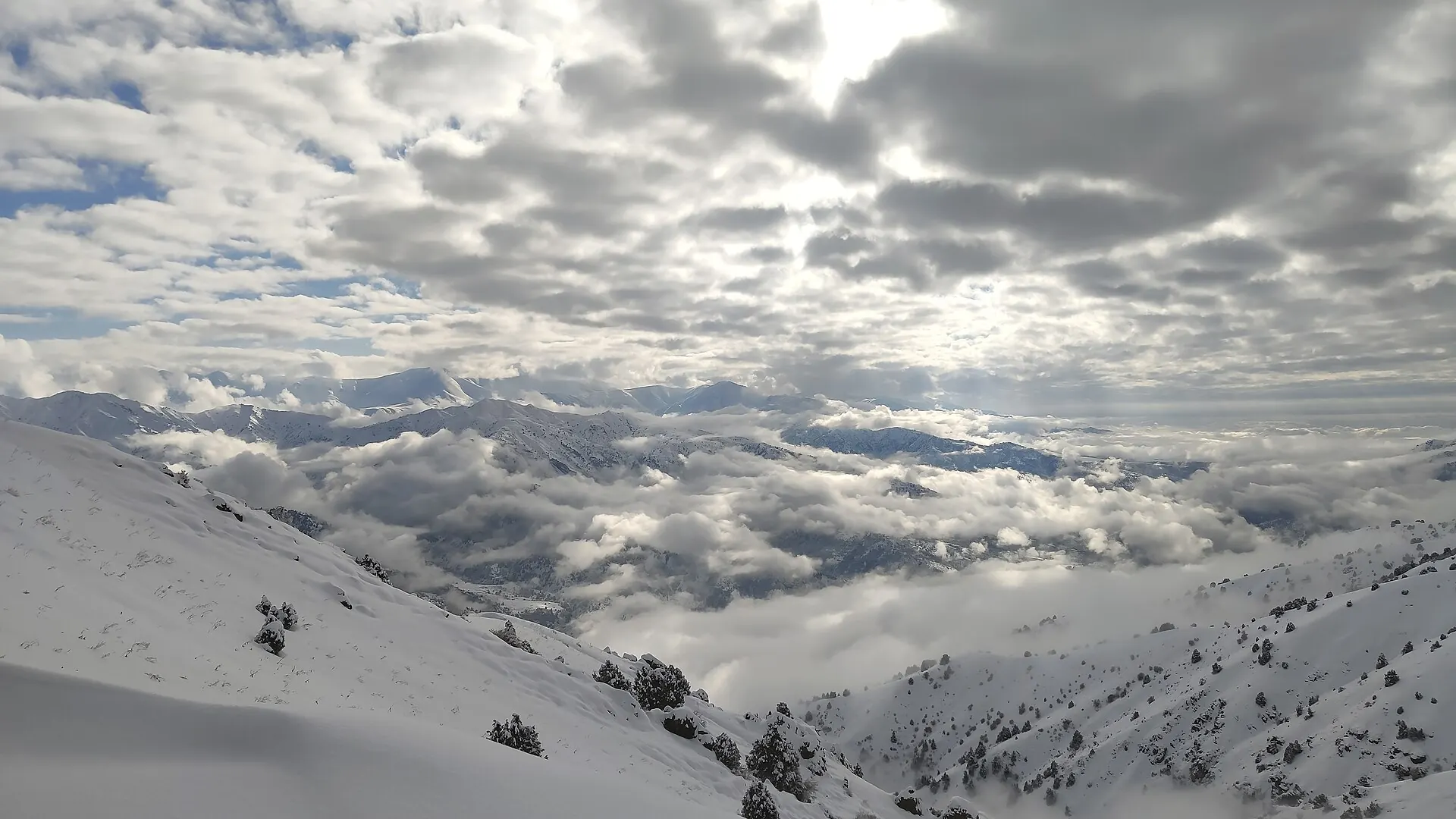
Tashkent
Toshkent
Code TS · 4 walking zones
Tashkent is a morning-and-evening city: do Khast Imam and Chorsu before 11:00, hide from the heat at midday, and use the metro and short car rides between four spread-out clusters — the airport is close, but check that your hotel desk is staffed when you land.Tashkent is a morning-and-evening city: do Khast Imam and Chorsu before 11:00 AM, hide from the heat at midday, and use the metro and short car rides between four spread-out clusters — the airport is close, but check that your hotel desk is staffed when you land.
Our quick read of Tashkent, scored 1–5 (friction is out of 100). Cash need: how often you still need notes. Heat risk: how hot days get. Stroller: how easy wheels are. Friction: overall effort for a first visit. Desk judgements, so check before relying on them.
- Local time
- --:--
- Weather
- forecast below
- Currency
- UZS
- Best months
- Mar · Apr · May · Sep · Oct
- Airport
- Islam Karimov Tashkent (TAS)
Walking zones: the 4 areas this guide plans a day around. Each is a district you can cover on foot, so you do one zone per half-day and ride the train between them. The code (TS 01, TS 02…) is just the zone's number on the Tashkent line; the line under each name says how bags fare there and how much time it needs.
Map of Tashkent
Use the switches to show or hide each kind of pin. A switch that is on shows its pins on the map; tap it again to hide them. "Show only" keeps just the pins that match (for example, places that fit a suitcase). Tap any pin for its name and a link to its page.
- Where to sleep
- Places
- Eat
- Walking clusters
- Rest stops
From the airport Karimov Tashkent (TAS) to your bed
Tap a pin for its card. Places without their own coordinates are shown by their walking cluster.
Why Tashkent
Tashkent's sights are far apart on wide avenues, and the summer sun is strong. The trips that go wrong walk between clusters at noon in July, or arrive late to a hotel with no night desk. Four clusters cover a first visit: the Old City with Chorsu, Khast Imam, Amir Temur Square and Independence Square. Samarkand and Bukhara are trips away from one kept bed, not part of this line.
See first
- 1
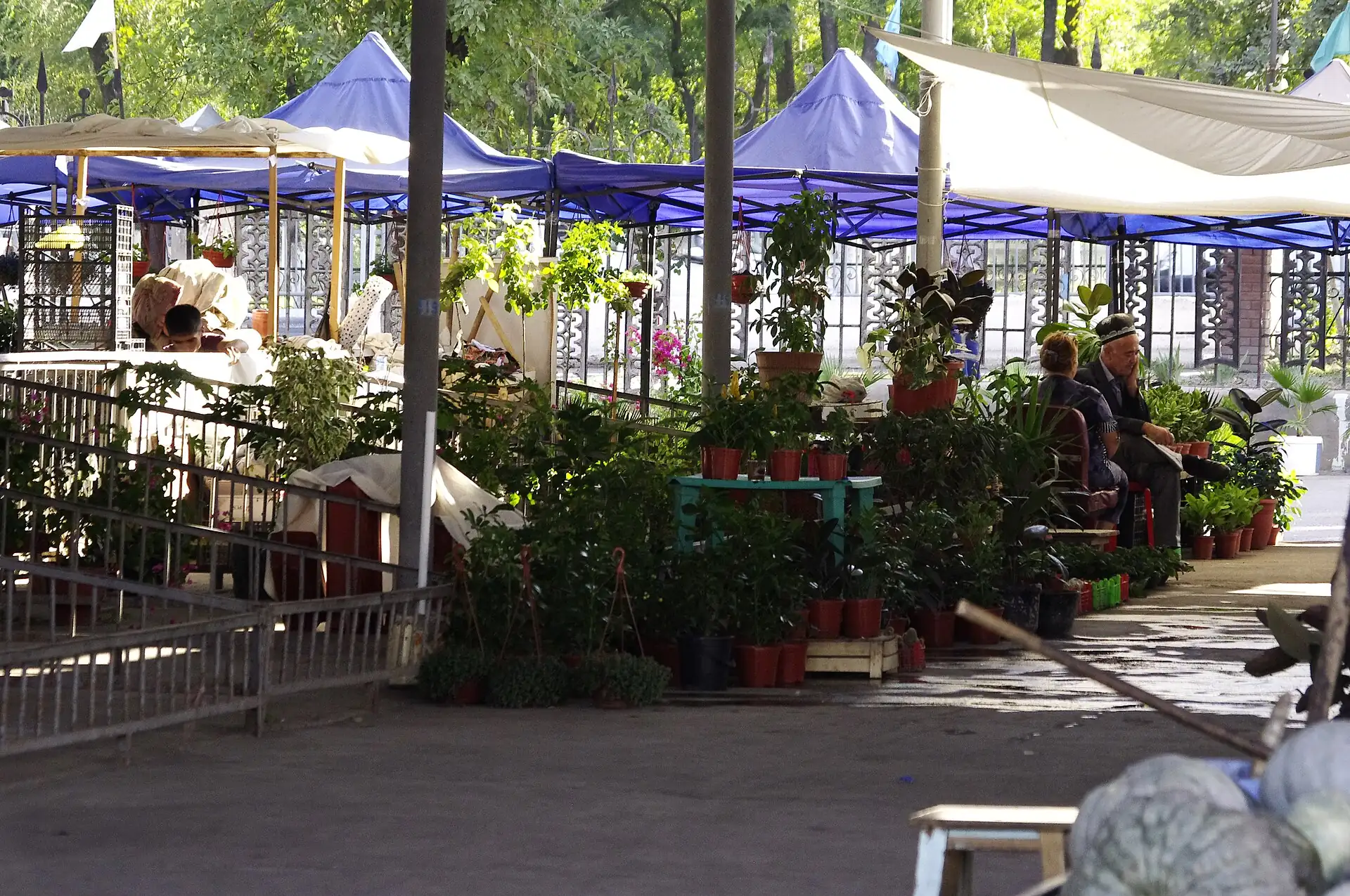 Chorsu bazaar · 1–1.5 h
- 2Khast Imam complex · 45–60 min
- 3Plov and samsa lunch · 30–45 min
- 4Tashkent metro · 1 h
- 5
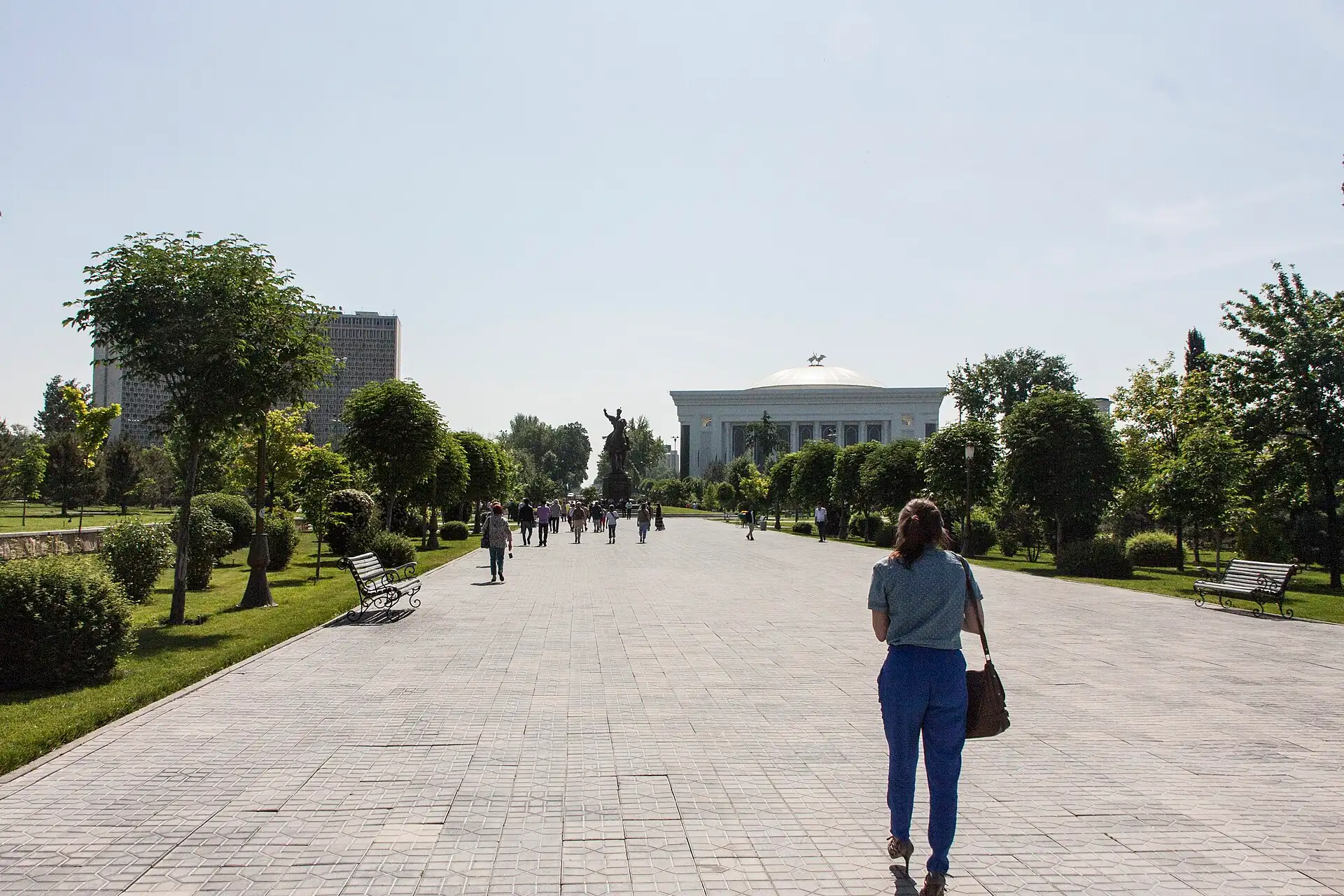 Amir Temur Square · 30–45 min
Fits
- Bazaar and food trips
- Short city breaks before the Silk Road cities
- Metro and architecture fans
Does not fit
- Midday walkers in summer
- Travellers who want a compact old town
- Strollers and wheelchairs at the Old City market
How long
- 2 daysKhast Imam and Chorsu morning, Amir Temur Square evening
- 3 daysFour clusters, mornings and evenings only
- 5 daysFour clusters + one slow day + a road day to the Chimgan mountains
Good for
- First timers
- Foodies
- Budget
- Couples
- Families
- Luxury
About Tashkent
Tashkent means stone city, and most of what you see is younger than the name suggests: a 1966 earthquake flattened much of the old centre, and Soviet planners rebuilt it with wide avenues, big squares, apartment blocks and, in 1977, the first metro in Central Asia.
It is the biggest city in Central Asia after Almaty and the capital of Uzbekistan, with about three million people. Uzbek is the official language and Russian is still the shared language of business and older residents; young people and hotel staff often speak some English.
The Old City survives in patches around Chorsu and Khast Imam: courtyard houses, mosques and madrasas, and the domed bazaar. Newer districts have glass towers, parks along canals and a strong café culture.
Good to know
- Chorsu is both a bazaar and a metro station; Khast Imam is the Hazrati Imam complex, and it is a separate visit from Chorsu.
- Tourist information counters are at the airport and central train station (check hours); the Uzbekistan Tourism Committee site and your hotel desk are the most reliable sources for current opening days.
- Ask your hotel to write your next destination in Uzbek or Russian for taxi drivers, and to confirm opening days of museums by phone.
Go deeper 15 min read · 6 chapters
Tashkent is a city of layers: an oasis market, a Timurid and Shaybanid old town, a Russian garden quarter, a Soviet capital rebuilt after an earthquake, and a young state that chose Timur as its symbol. This deep dive reads it in six chapters, so that a bazaar breakfast, a metro ride and an evening on the squares add up to a sense of where you are.
1History: from oasis to capital2 min
Tashkent sits where the Chirchiq river leaves the Tian Shan foothills and spreads across a plain, and that water is the reason for the city. Ancient sources speak of an oasis called Chach, a farming and trading region on the northern edge of the Silk Road. Caravans crossed here between the Fergana valley, the steppe and the cities of Samarkand and Bukhara, and the settlement grew as a market and a fortress rather than a capital. The name Tashkent is Turkic and means stone city, a name that appears in written sources from around the 11th century.
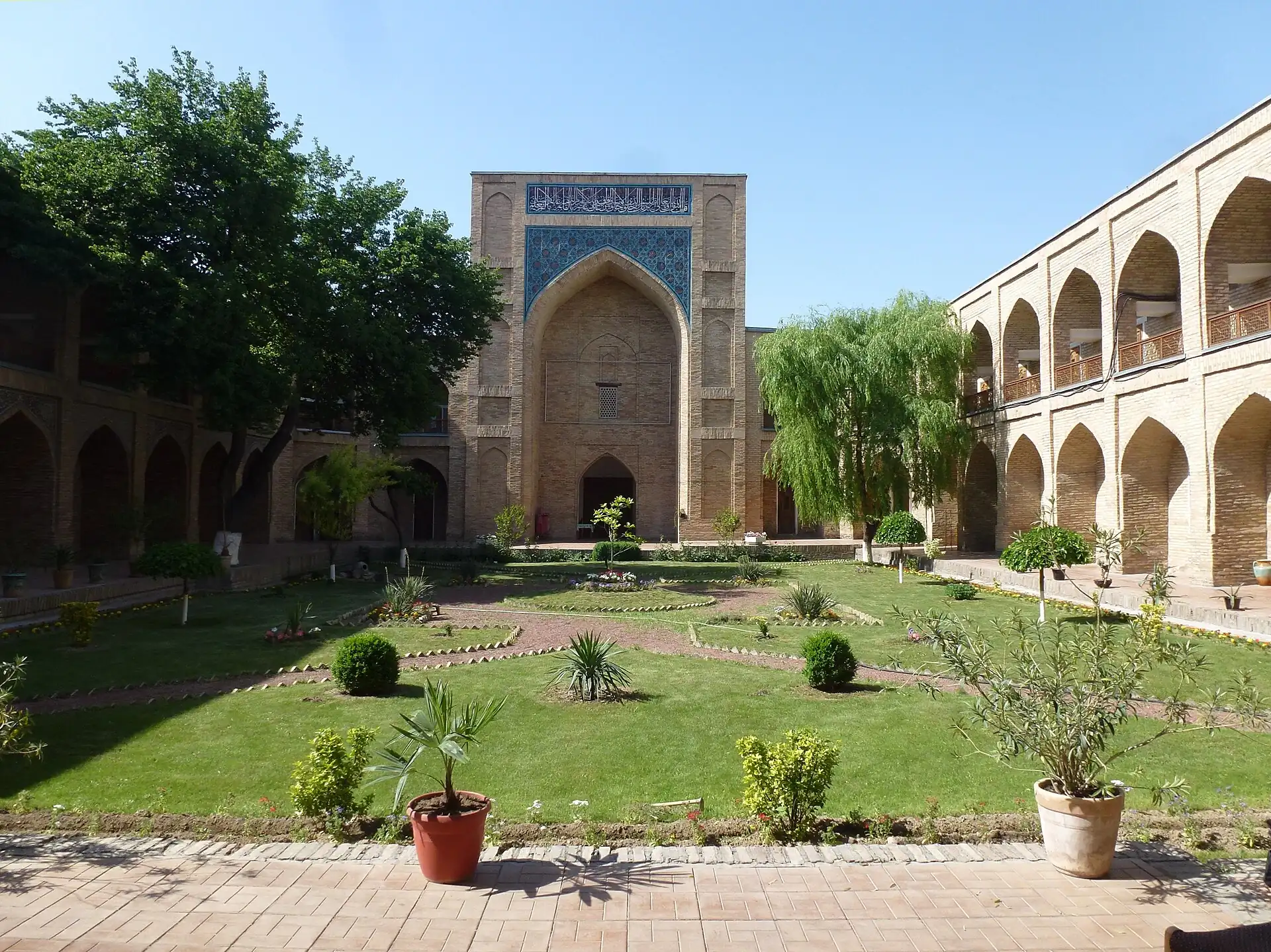
The Arab armies reached Central Asia in the 8th century and brought Islam, and the region later passed between Persian, Turkic and Mongol rulers. Tashkent was damaged by the Mongol invasions of the 13th century and recovered under the Timurids in the 14th and 15th centuries. Timur, born near Shahrisabz, ruled from Samarkand, and Tashkent remained a provincial city, but it gained mosques and tombs, and the scholar Abu Bakr Kaffal Shashi was already remembered here as an early saint. The Shaybanid rulers of the 16th century built madrasas and markets, and the Kukeldash madrasa beside today's Chorsu bazaar dates from this period.
In the 18th and early 19th centuries Tashkent was contested by the Kokand Khanate and local city councils. The Russian army took it in 1865, and the empire made it the capital of the Turkestan governor-generalship. Russians built a new town of straight streets and gardens to the south of the old one, so Tashkent grew as two cities side by side, an Uzbek old town of mud-brick courtyards and a European-style quarter with parks and canals. After the revolution, it became the capital of the Uzbek Soviet republic in 1930, replacing Samarkand, and it grew fast as a centre of industry, universities and the military.
The great turning point was the earthquake of 26 April 1966. It destroyed much of the old centre and left hundreds of thousands of people without homes. The Soviet republics sent builders, architects and materials, and the city was rebuilt as a showpiece of modern planning, with wide avenues, big squares, microdistricts of apartment blocks, and a metro that opened in 1977. Tashkent became one of the largest cities in the Soviet Union and the fourth after Moscow, Leningrad and Kyiv. Many Soviet-era buildings still stand, next to newer glass towers built after independence.
Uzbekistan became independent on 1 September 1991, and Tashkent became the capital of a new state. The city changed its symbols quickly: a statue of Timur replaced Karl Marx on the main square in 1993, Lenin Square became Independence Square, and mosques and madrasas that had been closed or turned into workshops reopened. Today the city has about three million people, and the past shows in layers, from the Kukeldash madrasa to the tiled metro stations and the mahalla courtyards. To read them, the four clusters of this guide are a good start.
- Name
- Tashkent means stone city in Turkic; the older name Chach refers to the oasis region
- Russian conquest
- 1865, followed by a new European-style town beside the old one
- Earthquake
- 26 April 1966, followed by large-scale Soviet rebuilding
- Independence
- 1 September 1991; Independence Square and the statue of Timur followed
2How the city is laid out2 min
Tashkent is a flat, sprawling city, and the first thing to understand is that its sights are far apart. The centre is a grid of wide avenues laid out in the Soviet period, with squares, parks and fountains between blocks of apartments and government buildings. Distances that look short on a map are long on foot, especially in July, and that is why a first visit works best in four small clusters connected by the metro and short car rides.
The old town, in Uzbek Eski Shahar, lies in the north-west around Chorsu bazaar and the Hazrati Imam complex. It is a maze of lanes lined by mud-brick walls, called mahallas, each a small community with its own mosque, tea house and neighbourhood committee. The 1966 earthquake spared parts of it and flattened others, so today you find courtyard houses beside apartment blocks and schools. Walking these lanes in the morning, with the smell of bread from a tandoor, is the closest thing to the city as it was.
The new town, Yangi Shahar, is the area the Russians laid out after 1865 to the south-east of the old one. Its shady streets, small parks and older buildings were much damaged in 1966, but the layout survives, and the pedestrian street known as Broadway, Sayilgoh in Uzbek, is a reminder of it. Amir Temur Square is at the heart of this area, with the museum, Hotel Uzbekistan and a ring of avenues around it. From here the metro and ride-hail cars reach everything else.
Water shapes the map. The Ankhor canal winds through the centre as a green corridor of parks and walking paths, and the Chirchiq river flows to the north. Summers are hot and dry, so many streets have irrigation channels called aryks and rows of plane and poplar trees. To the east, the Chimgan and Charvak mountains rise on clear days, and the road to them is a common day trip.
The metro is the best key to the layout. Three lines cross the centre and a circle line joins them, and the stations named for the big squares tell you where to go: Chorsu for the old town, Amir Temur Xiyoboni for the modern centre, Mustaqillik Maydoni for Independence Square. Use the metro for the long hops and Yandex Go for the last mile, and walk only inside a cluster. That rhythm, morning outdoors, midday indoors and evening on the squares, is the one the city itself follows.
- Old town
- North-west, around Chorsu bazaar and Khast Imam, made of mahalla lanes
- New town
- South-east of the old town, laid out after 1865; Amir Temur Square and Broadway are here
- Metro
- Three lines and a circle line; the first metro in Central Asia, opened in 1977
- Canal
- The Ankhor canal is a green walking corridor through the centre
3The bazaar and the table3 min
Most of what visitors remember from Tashkent is eaten, and most of it starts at the bazaar. Chorsu is the biggest and best known, and its blue dome, built in the 1970s, covers the meat and dairy hall at the centre. The name comes from the Persian for four ways, meaning a crossroads market. Around the dome are open aisles of bread, dried fruit, spices, vegetables and household goods, and the noise, colour and smell are the reason to go. The best hours are 07:00 to 09:00, when bread is hot and the crowd is thin.
Bread is treated with respect. Non is baked on the inside wall of a clay tandoor, round and flat and stamped with a pattern by the baker, and each region has its own style. Tashkent non is thick and soft, and a fresh loaf breaks with steam. Locals do not put bread upside down, throw it away or drop it, and a piece that falls is picked up and kissed. Samsa, the baked pastry with beef, pumpkin or cheese, comes out of the same kind of oven.
Plov, called osh in Uzbek, is the national dish and the centre of a social ritual. Rice is cooked in a large cast-iron cauldron, a kazan, over a gas flame or wood fire. The cook, usually a man called an oshpaz, fries meat and onions in oil, adds yellow carrot in long strips, spices such as cumin and barberries, and finally rice and water, and steams it without stirring. Each region has its own version, and Tashkent's is known for its oil, its chickpeas and its boiled eggs and horse meat on festive plates. Plov is a lunch dish, eaten at midday in a canteen or plov centre, and by mid-afternoon the cauldron is often empty. Many families and offices have plov on Thursday.
Beyond plov, there is lagman, hand-pulled noodles with beef and peppers, served fried or in soup, a dish brought by the Uyghur and Dungan communities. Manti are big steamed dumplings with lamb and onion. Shurpa is a clear soup with meat and potato. Shashlik grills skewers over charcoal, and the fresh tomato and onion salad called achichuk is served beside them. Korean-style carrot salads at the bazaar come from the Koryo-saram, Koreans deported to Central Asia in 1937, whose descendants are a part of Tashkent life.
Tea is the frame around all of it. Green tea in a small china bowl, poured and returned to the pot three times to mix it, is served with almost every meal, and a tea house, or choyxona, is a place to rest, talk and eat. Accept tea when it is offered; refusing is a small insult. On a hot day, a pot of green tea in the shade with bread and dried apricots does more than water. Bring small notes in som, because bazaars and tea houses are cash only, and ask the price per kilo before food is weighed.
- Chorsu
- A domed bazaar from the 1970s in the middle of a much older market district; the name means crossroads
- Plov
- Osh: rice, carrot, meat and spices cooked in a kazan; a lunch dish that often sells out by 14:00Osh: rice, carrot, meat and spices cooked in a kazan; a lunch dish that often sells out by 2:00 PM
- Bread
- Non baked in a tandoor; treated with respect and never thrown away
- Tea
- Green tea is served with every meal; refills are usually free
4Khast Imam and the Islamic heritage2 min
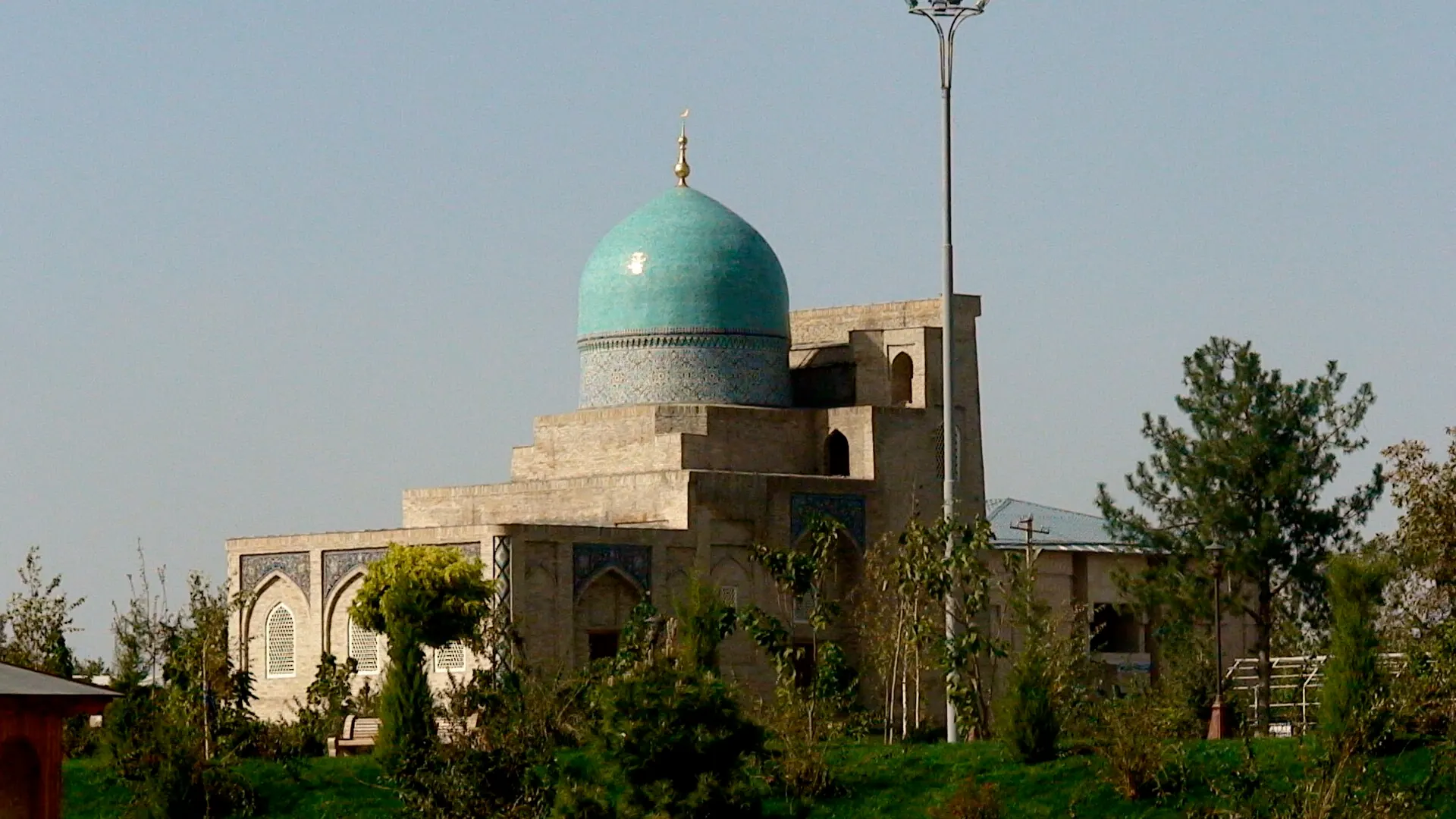
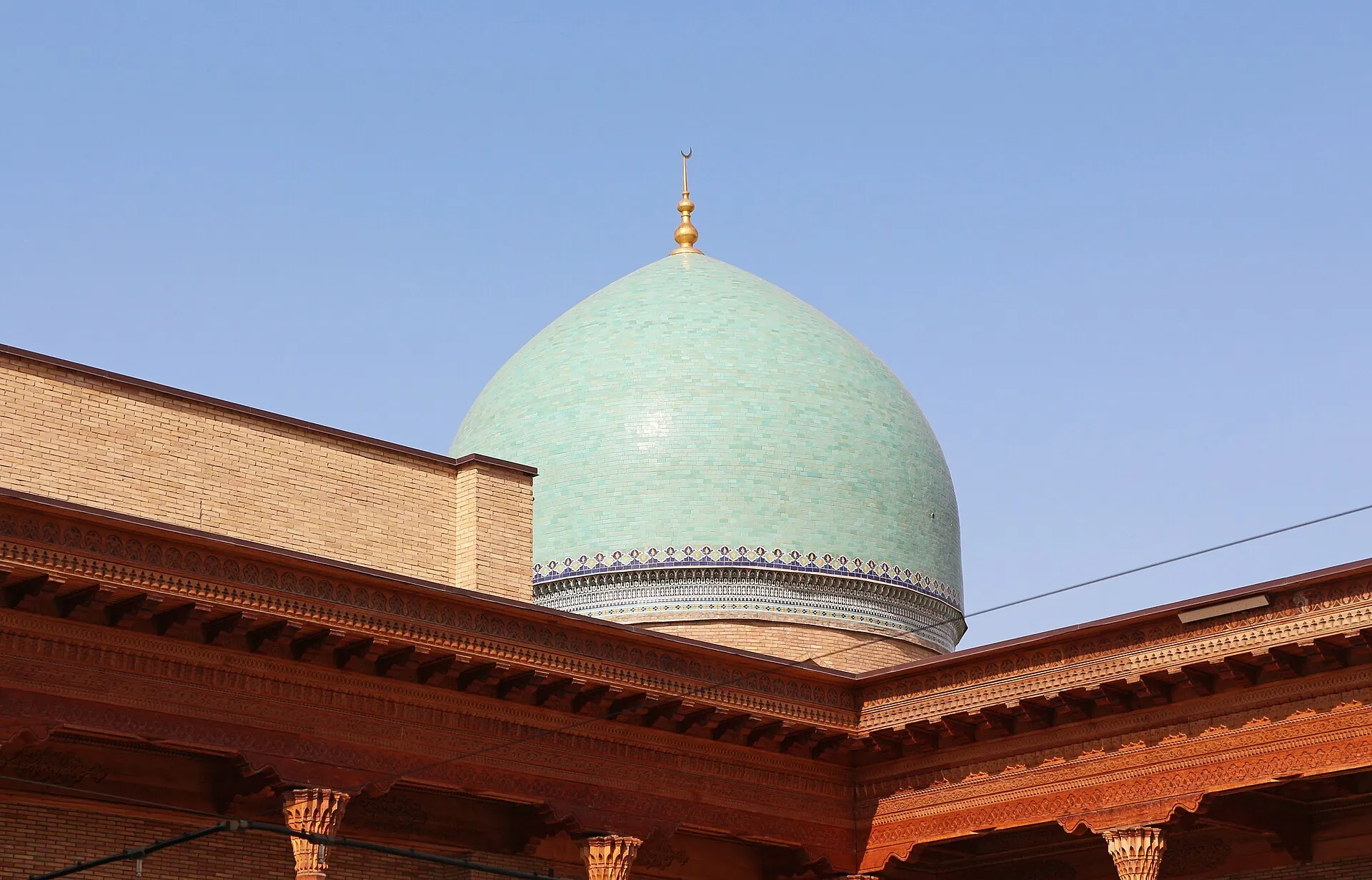
The Hazrati Imam complex, called Khast Imam in the local shorthand, is the religious centre of Tashkent and the place to understand how faith and building have gone together here. It grew around the tomb of Abu Bakr Kaffal Shashi, a 10th-century scholar of Islamic law and a poet, who was born in Shash, the old name for the Tashkent area, and who became a saint. The mausoleum you see today dates mostly from the 16th century, when the Shaybanid rulers rebuilt it, and its garden is one of the calmest corners of the city.
Around the main square stand a group of buildings that come from several centuries. The Barak-Khan Madrasa is a 16th-century religious school with a tiled portal and rows of student cells that now hold craft stalls. The Tilla Sheikh Mosque is a Friday mosque with a fine interior. The Muyi Muborak Madrasa is next to them and holds a library with old manuscripts. Newer buildings, including the Hazrati Imam Mosque with its two slim minarets, were raised in the 21st century on the same axis, so the square feels both old and new.
The library's best-known treasure is an old Quran manuscript, often called the Uthman Quran after the third caliph. Tradition holds that it is one of the oldest copies of the Quran in the world. It is said to have been taken to Samarkand by Timur, later to Saint Petersburg, and returned to Central Asia in the early Soviet years, where it now rests in Tashkent. Whatever its exact age, it shows how much of the Muslim world's written heritage passed through this city, and the library is worth the small fee if it is open.
This is a working religious site, not a museum, and the visitor's role is to be a respectful guest. Dress covered, with shoulders and knees hidden and a scarf for women, and take shoes off at prayer halls. Do not photograph people at prayer. Some areas close around the noon prayer, and Friday is the busiest day. Go in the first hours after opening, when the squares are quiet and the blue domes take the morning light, and leave before the midday heat turns the open squares into a griddle.
The Soviet period restricted religion, closed mosques and turned some into warehouses, and the revival since independence explains why the complex looks half old and half new. The small tea houses on the edge of the complex, the craft stalls in the madrasa cells and the garden of Kaffal Shashi are good places to slow down. Ask your hotel to check prayer times and the day's opening hours by phone before you set out, because they change more than printed guides suggest.
- Kaffal Shashi
- A 10th-century scholar of Islamic law; the mausoleum was rebuilt in the 16th century
- Barak-Khan Madrasa
- A 16th-century religious school with a tiled portal and craft stalls in the cells
- Library
- Holds an old Quran manuscript traditionally called the Uthman Quran; access rules vary
- Dress
- Shoulders and knees covered; shoes off at prayer halls; hair covered for women if asked
5The Soviet city and the metro2 min
After the 1966 earthquake, Tashkent became a laboratory of Soviet urban planning, and much of what the city looks like today comes from that decade. Planners built wide avenues, big squares and neighbourhoods of apartment blocks, arranged in microdistricts with schools and shops. The buildings were designed to withstand earthquakes, with reinforced frames, and to mix Soviet forms with Central Asian motifs such as tiled screens, arches and geometric patterns. The result is a city that is more open and green than its neighbours in the region, and more spread out than it looks on a map.
The metro is the best example. It opened in November 1977 as the first in Central Asia, and its stations were designed as showpieces, with marble, chandeliers, tile, carved panels and murals. Each of the stations on the first lines has a theme, from cosmonauts and space to the poet Alisher Navoi to the silk and cotton industries. Riding through them is one of the cheapest sightseeing hours in the region, and each stop is a short walk from something else. For years photography was forbidden, and the rules have relaxed, but signs still ban it in some places, and you should never photograph guards, military staff or turnstiles.
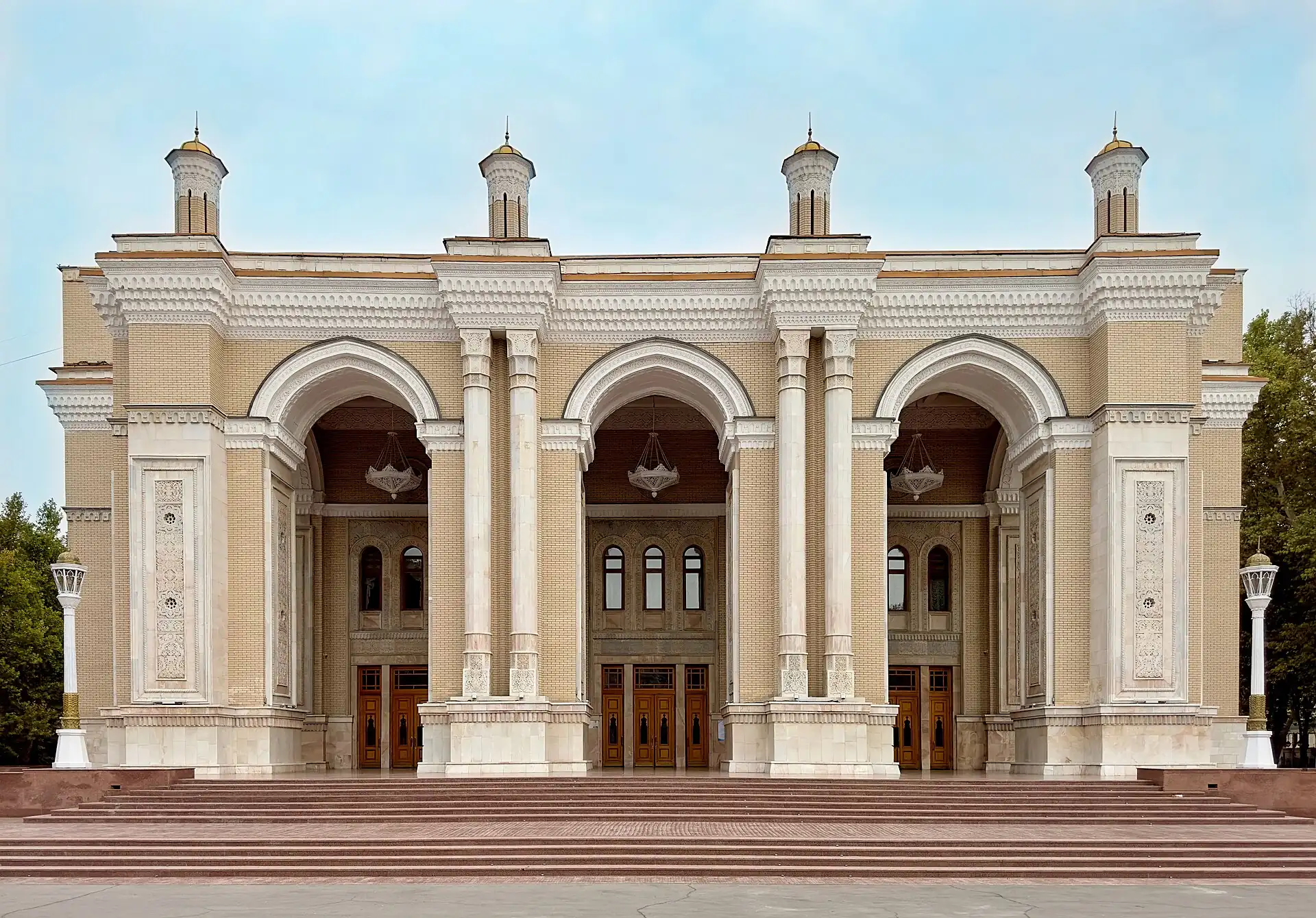
The Navoi Opera and Ballet Theatre, opened in 1947, is another Soviet-era building with a story. It was built during and after the war by builders including Japanese prisoners of war, and its interior mixes Uzbek carving and tile with European theatre design. Tickets are cheap, evening performances are a formal occasion, and the building survived the 1966 earthquake almost undamaged, which became a point of civic pride. If you have an evening free, a ballet or opera performance is an inexpensive way to see the interior.
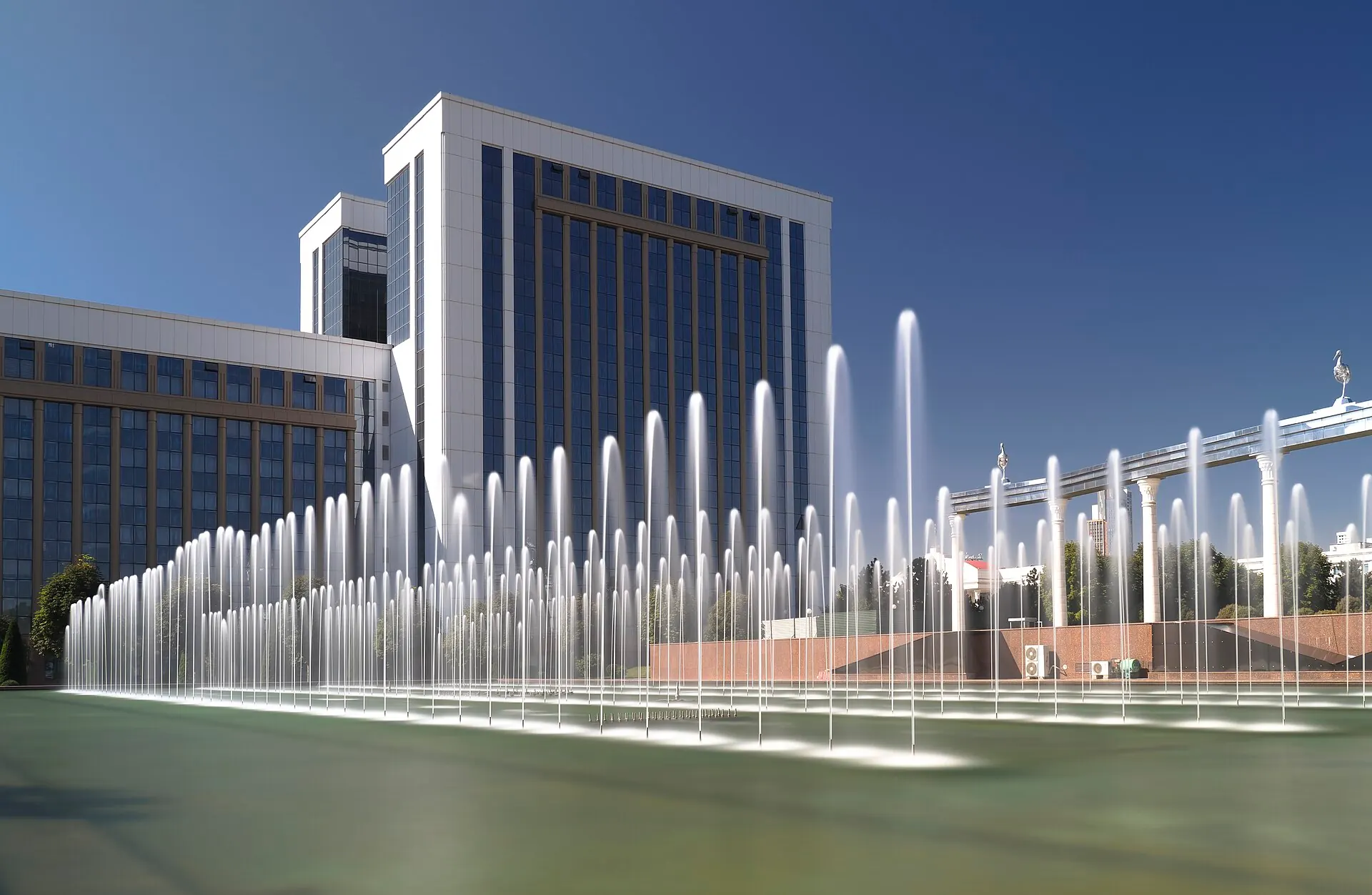
Independence Square was Lenin Square until 1991, and its vast size shows its origin as a stage for parades. After independence, the Lenin statue was removed, a monument of a mother with a child on a globe took the centre, and a memorial arch was built at one end. It is a good place to feel the scale of Soviet-era planning, and its gardens and fountains make the evening walk pleasant. Be aware that government buildings surround it, and guards watch what you photograph.
The Tashkent TV Tower, finished in the 1980s, is one of the tallest structures in the region and a landmark on the skyline. Panel apartment blocks, wide parks and fountains fill most other districts, and few are beautiful by themselves. But together they explain the city and its people, who are proud of having rebuilt from a disaster. The metro, the theatre and the squares are the way in, and the mahalla lanes of the old town are the counterpoint.
- Metro
- Opened in November 1977, the first in Central Asia, with themed stations
- Navoi Theatre
- Opened in 1947; built with Japanese prisoners of war among the workers; survived the 1966 earthquake
- Independence Square
- Formerly Lenin Square; the monument of independence and a memorial arch followed after 1991
- Photo rules
- Allowed in most stations; never photograph guards, military staff or turnstiles
6Timur, independence and today's Tashkent2 min
Timur, known in the West as Tamerlane, is the historical figure Uzbekistan chose as its symbol after 1991. He was a 14th-century conqueror who built an empire from Delhi to Damascus and made Samarkand his capital, and he is remembered here as a state-builder and patron of architecture. His statue on horseback in Amir Temur Square, raised in 1993, stands where a monument to Karl Marx once stood, and the change explains the modern country's search for its own past. The square is a place to see how a young state uses history.
The Temuriylar History Museum, on the north side of the square, is a big domed building whose halls tell the story of the Timurid dynasty and of Uzbek history. It opened in the 1990s, and its display of portraits, manuscripts, weapons and costumes is uneven, but the building itself, with a great painted dome and a gilded interior, is worth an hour. It is also the most convenient air-conditioned rest near the hotels, so it fits a hot afternoon. Captions are mostly in Uzbek and Russian with some English, and tickets cost a small amount.
Around the square, the modern centre is a mix of hotels, banks and cafés. Hotel Uzbekistan, a Soviet-era tower on the south side, stands beside newer glass buildings, and the pedestrian street Broadway, Sayilgoh, has painters, cafés and street stalls. The city has been changing fast: new roads, parks and towers have replaced older neighbourhoods, and cafés serving flat whites sit beside samsa stalls. Visitors find a mix of quiet politeness, generous hospitality and small business energy, and they often find that Uzbeks are curious about them.
For a traveller, the most important change is access. Visa-free entry for many passports, an e-visa system, high-speed trains to Samarkand and Bukhara, and English signage at major sights have made Tashkent easy to use as a gateway. The Afrosiyob train takes about two hours and ten minutes to Samarkand, and Tashkent's airport has a growing network of regional and international flights. The city is a good place to arrive, adjust and plan, and the practical work of a first day is to buy a SIM, change money at a bank, and book train seats.
What to take from all this is a sense of proportion. Tashkent is not a city of postcard views; it is a city of everyday life on a grand scale, where the bazaar, the tea house, the metro and the square are the sights. Give it two or three days, keep the mornings and evenings for walking, and use the middle of the day for the museum, the metro and a long lunch. When the train to Samarkand leaves, you will have seen a lot of Central Asia in one place.
- Timur
- Born 1336, ruled from Samarkand; the national symbol since 1991; statue on the square raised in 1993
- Temuriylar Museum
- A domed museum of the Timurid dynasty opened in the 1990s
- Broadway
- Sayilgoh: a pedestrian street with painters, cafés and stalls
- Samarkand train
- Afrosiyob, about 2 h 10 min from Tashkent Central; book ahead and bring your passport
Read, watch, wordsGlossary · Sources
Glossary
| Term | Local | Meaning |
|---|---|---|
| Mahalla | mahalla | A traditional neighbourhood community with its own mosque, tea house and local committee. |
| Chaikhana | choyxona | A tea house, often with platform beds and a courtyard. |
| Osh / plov | osh | The national rice dish cooked in a cauldron. |
| Non | non | Round tandoor-baked bread. |
| Madrasa | madrasa | A religious school, often with a courtyard and student cells. |
| Kazan | qozon | The cast-iron cauldron used for plov. |
| Aryk | ariq | An irrigation channel along a street. |
| Hisob | hisob | The bill at a restaurant. |
Read for this deep dive
Background reading only: the text above is written by Voykit, not copied from these pages.
Photos
Tashkent aerial view Photo: Marat Nadjibaev, CC BY-SA 4.0
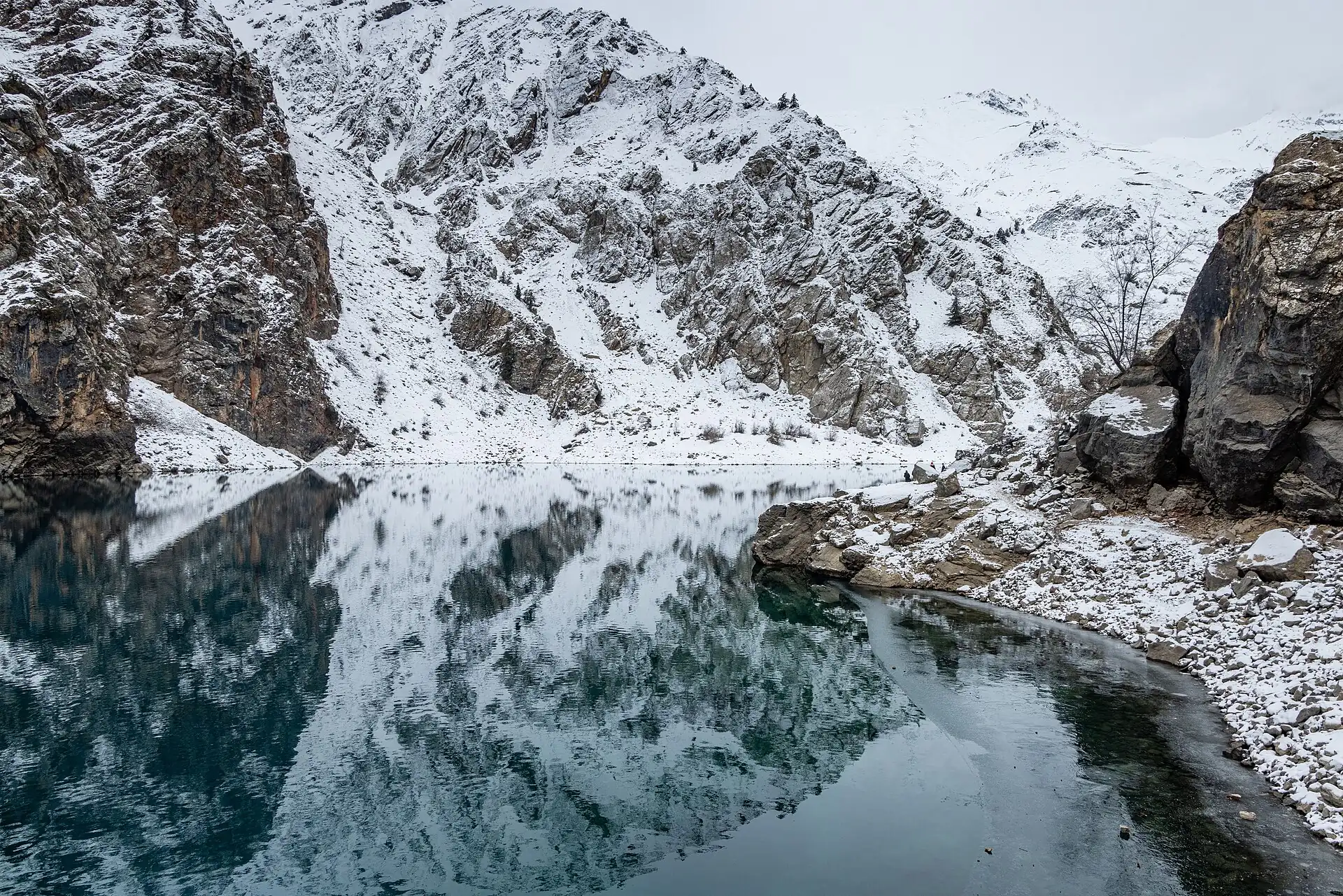
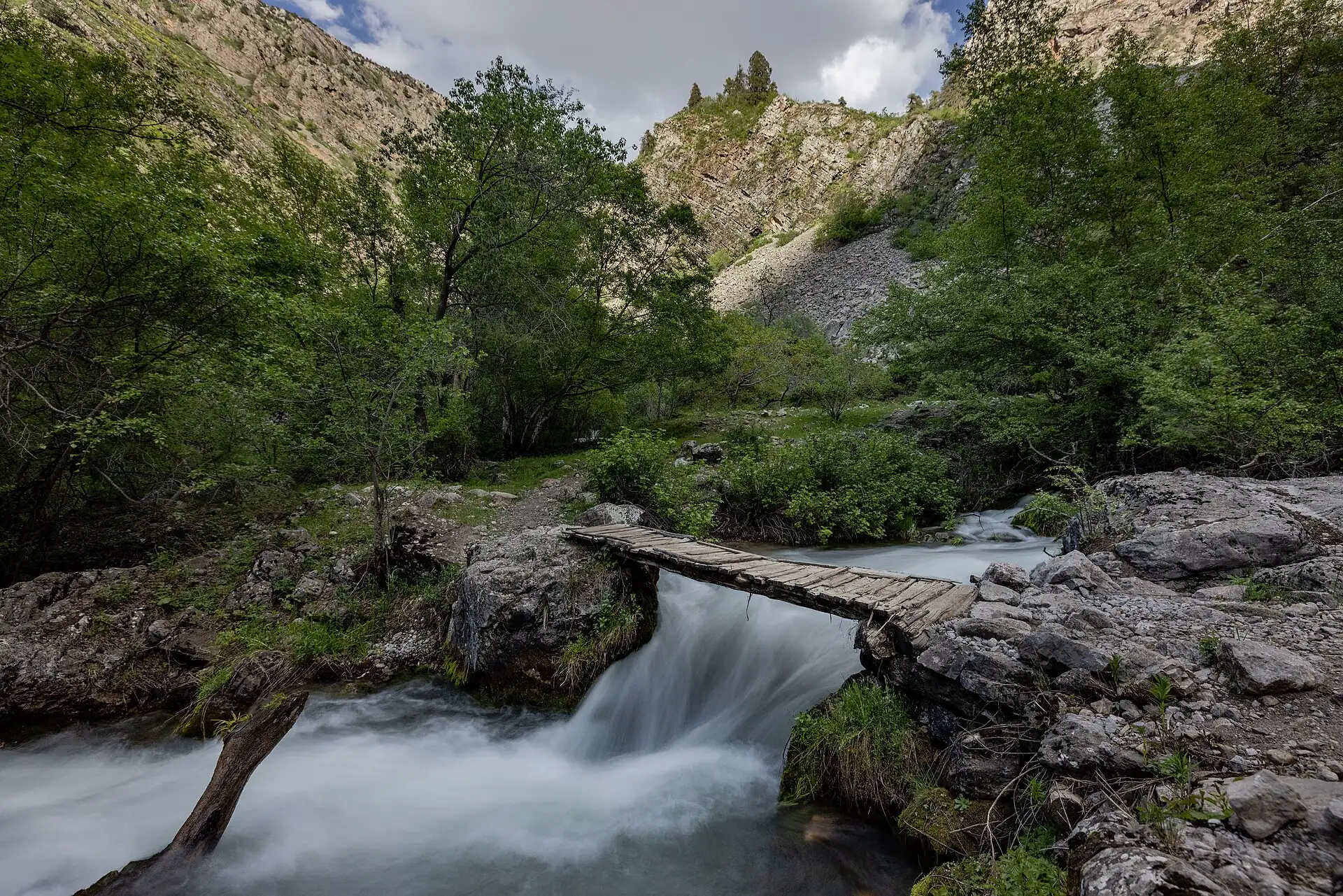
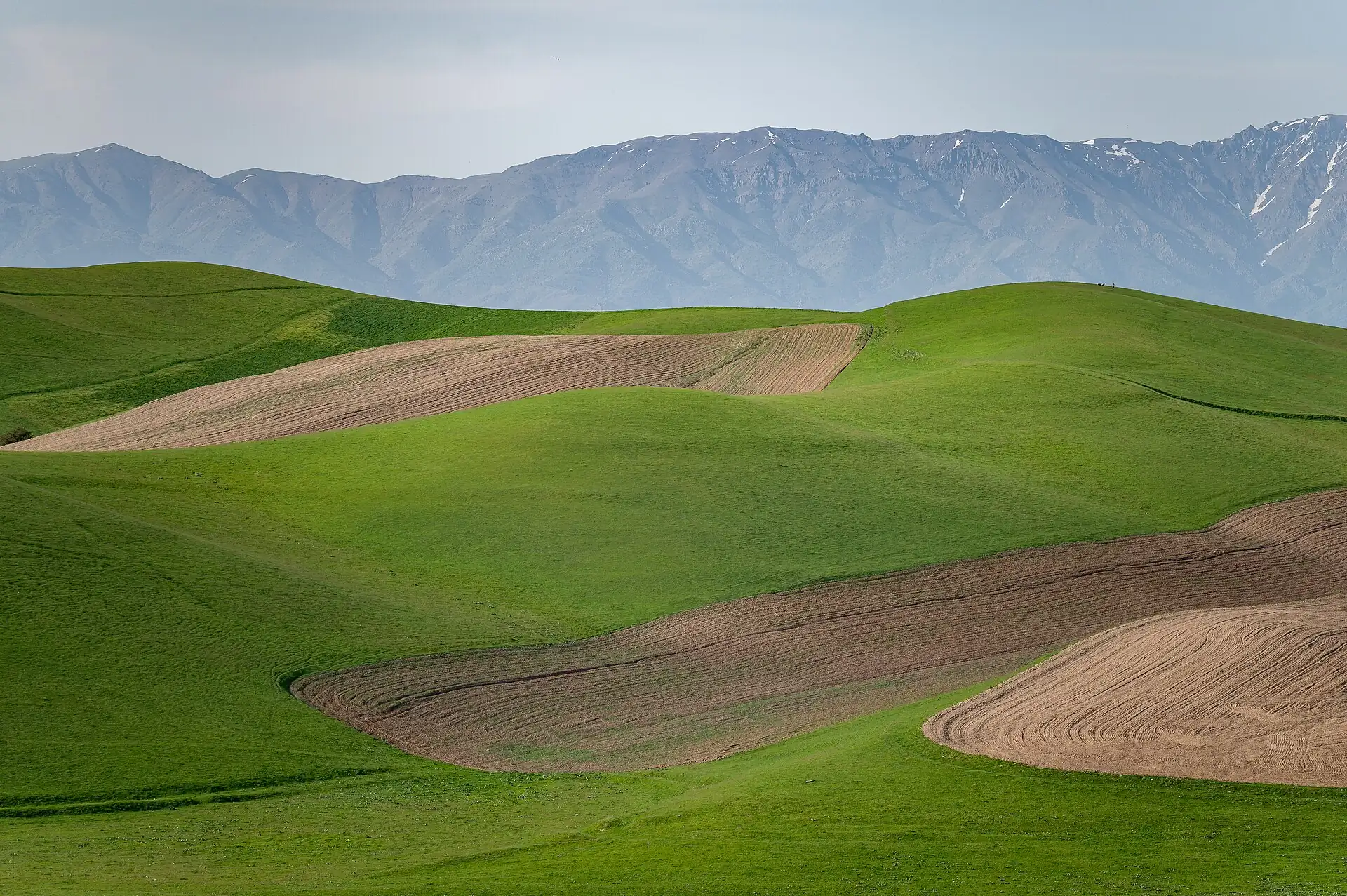
Ugom Chatkal State National Natural Park: Tashkent Region Photo: Marat Nadjibaev, CC BY-SA 4.0
Rules in force · 6Land borders between Central Asian states open and shut w…
- Central Asia ↗Keep every hotel registration slip or its e-registration record until you leave Uzbekistan and Tajikistan; border officers can ask for proof of where you slept and fine gaps.
- Central Asia ↗Land borders between Central Asian states open and shut with politics and demarcation deals; confirm the exact post is open to foreigners the week you cross.
- Uzbekistan ↗Check entry rules on the official e-visa portal only; many nationalities enter without a visa for a limited stay, others need an e-visa. Lookalike sites charge extra.
- Uzbekistan ↗Foreign visitors are registered by hotels; keep any registration slip you are given and ask for one if you stay in a private home.
- Uzbekistan ↗Carry Uzbek soʻm in small notes; bazaars, taxis and small cafés are cash-first, and cards are accepted mainly in hotels and larger shops.
- Tashkent Region ↗Jun–Aug in Tashkent is 35–40 °C by day: do outdoor sights before 11:00 and after 17:00.
Entry rules depend on your passport. Full visa guide
Emergency numbers for Tashkent101 ▾
Tap a number to call from your phone. These are the numbers listed in this guide; a row marked check has not been verified.
Planning is the full guide. I'm here keeps what is open and the cheat card.
Right now
Checking the weather…
Working out what is open near you…
What is open nowclock, closures, places open
Now in Tashkent
Local time in Tashkent
--:--
Loads in your browser · Asia/Tashkent
This month
Month verdict appears here.
Closed today
See the weekly grid below.
| Weekly closure | Mon | Tue | Wed | Thu | Fri | Sat | Sun |
|---|---|---|---|---|---|---|---|
| Many museumscheckOne weekly closing day is common; confirm on the day. | ✕ | · | · | · | · | · | · |
| Hazrati Imam complex hallscheckPrayer times can limit access to the working mosques. | · | · | · | · | ✕ | · | · |
If today is a closure day: Do Khast Imam and Chorsu before 11:00, use the metro or a ride-hail car through midday, and keep the squares for after 17:00.
Open every day: Amir Temur Square, Chorsu Bazaar, Independence Square, Kaffal Shashi Mausoleum, Khast Imam (Hazrati Imam) Complex, Kukeldash Madrasa, Tashkent Metro stations, Temuriylar History Museum.
Museum and mosque opening days change and are not printed here: ask the hotel to phone the evening before, especially for Mondays, holidays and Friday prayers.
Cheat cardthe pocket version
Cheat card
The essentials on one card: save it as an image for your phone, share it, or print it.
Tashkent
Toshkent
- Money
- Keep UZS 200,000 in small notes; use ATMs inside banks, hotels or malls, not on dark streets.
- SIM
- Ucell, Beeline, Mobiuz and Uzmobile sell tourist SIMs at the airport and in shops; bring your passport…
- Ride app
- Yandex Go
- Emergency
- 101 fire · 102 police · 103 ambulance (not 911, 999 or 000)
- Plugs
- Sockets C/F. US/Canada (A/B): adapter · UK/Ireland (G): adapter · Australia/NZ (I): adapter. 220 V: US 120 V-only devices (hair dryers) need a converter; most chargers are dual-voltage.
Say it
- Thank you: Rahmat (rakh-MAHT)
- How much is it?: Qancha? (KAHN-chah)
- Too expensive: Qimmat (kim-MAHT)
Top 5
- Chorsu bazaar
- Khast Imam complex
- Plov and samsa lunch
- Tashkent metro
- Amir Temur Square
EssentialsQuick answers, what things cost and how to get around
Essentials
Quick answers, what things cost and how to get around
Quick answers
The questions people ask first about Tashkent, one line each. Tap a card for the full answer.
- Cash or card?Cards (Visa, Mastercard) work in hotels, malls, larger restaurants and most ride-hail apps; bazaars, tea houses…
- SIM or eSIMUcell, Beeline, Mobiuz and Uzmobile sell tourist SIMs at the airport and in shops; bring your passport, the shop registers the SIM to you.
- Ride-hailing appYandex Go.
- Tap waterNot for drinking from the tap.
- TippingNot required.
- Plugs & powerSockets C/F. US/Canada (A/B): adapter · UK/Ireland (G): adapter · Australia/NZ (I): adapter. 220 V: US 120 V-only devices (hair dryers) need a converter; most chargers are dual-voltage.
Show all 14 answers
- Safe at night?Take more care after dark in Chorsu bazaar and the Old City.
- Emergency numbers101 fire · 102 police · 103 ambulance (not 911, 999 or 000)
- Your embassyMost embassies are in Tashkent: write the number of yours here before you fly.
- Closed which day?Mon: 1 on our list shut · Fri: 1 on our list shut.
- Sundays & holidaysMuseum and mosque opening days change and are not printed here: ask the hotel to phone the evening before, especially for Mondays…
- Late at nightThere is no strict curfew, but the city is not a late-night drinking town: most restaurants and cafés wind down by 23:00…There is no strict curfew, but the city is not a late-night drinking town: most restaurants and cafés wind down by 11:00 PM…
- Rainy-day planRain is light and short outside Nov–Apr; carry a small umbrella and use the metro, which is dry and cool.
- Landing lateTAS: ride-hailing car to the door runs all night.
Cost cheat-sheetwhat everyday things cost
Cost cheat-sheet
Typical prices for the everyday things, as ranges. Change the currency right here; the local price stays first.
2026 desk estimate · check
- CoffeeCoffee or teaUZS 20,000–40,000
- Sit-down mealSit-down dinner, main and a drinkUZS 100,000–220,000 (about US$8–17)
- Taxi, about 5 km (3 mi)Taxi, about 3 mi (5 km)Ride-hail across the centreUZS 15,000–45,000
- Metro or bus rideMetro rideAbout UZS 2,000–3,000 (check)
- Budget bedFamily room or apartment (up to 4), a night, per roomUZS 50
- Mid-range bedHotel or guesthouse double, a night, per roomUZS 70
- High-end bedHotel or guesthouse double, a night, per roomUZS 160
A day, not counting the bed: Budget UZS 30 · Mid UZS 55 · High UZS 110
Local prices, with USD next to them (rates 2026-09 (approximate); change it in the header). Ranges are desk estimates: check locally. Every price and the budget calculator →
Source: Prices in Tashkent
Draft
Written from desk research. Not yet compared with the official source.
No official source is recorded for this figure.
Prices are 2026 desk estimates, not yet compared with an official source. Check on the day.
Not checked in the last 12 months (no check date on file).
DecideWho it suits, the trade-offs and when to go
Decide
Who it suits, the trade-offs and when to go
Best months at a glance
The guide's verdict for each month
Jan
Care
5°C (41°F)41°F (5°C)
Feb
Care
8°C (46°F)46°F (8°C)
Mar
Best
14°C (57°F)57°F (14°C)
Apr
Best
22°C (72°F)72°F (22°C)
May
Best
28°C (82°F)82°F (28°C)
Jun
Care
34°C (93°F)93°F (34°C)
Jul
Avoid
36°C (97°F)97°F (36°C)
Aug
Avoid
35°C (95°F)95°F (35°C)
Sep
Best
29°C (84°F)84°F (29°C)
Oct
Best
21°C (70°F)70°F (21°C)
Nov
Care
13°C (55°F)55°F (13°C)
Dec
Care
7°C (45°F)45°F (7°C)
Best: Mar–May, Sep–Oct. Mixed: Jun, Nov–Feb. Avoid: Jul–Aug. Month by month →
Warmest Jul (36°C (97°F)97°F (36°C)), coolest Jan (−2°C (28°F)28°F (−2°C) low), wettest Mar (11 rain days), driest Jul (1). Averages, not a forecast.
Tashkent across the year
Best-looking months for Tashkent: Apr, May, Sep. Rated avoid: Jul, Aug.
| Measure | Jan | Feb | Mar | Apr | May | Jun | Jul | Aug | Sep | Oct | Nov | Dec |
|---|---|---|---|---|---|---|---|---|---|---|---|---|
| Weather | Mixed (care) | Mixed (care) | Good (good) | Great (good) | Great (good) | Mixed (care) | Avoid (avoid) | Avoid (avoid) | Great (good) | Great (good) | Mixed (care) | Mixed (care) |
| Crowds | Low (good) | Low (good) | Medium (ok) | High (care) | High (care) | Medium (ok) | Low (good) | Medium (ok) | High (care) | High (care) | Medium (ok) | Low (good) |
| Prices | Low (good) | Low (good) | Medium (ok) | High (care) | High (care) | Medium (ok) | Low (good) | Medium (ok) | High (care) | High (care) | Medium (ok) | Low (good) |
| Events | 2 events (ok) | None listed (ok) | 2 events (ok) | 1 event (ok) | 2 events (ok) | 1 event (ok) | 1 event (ok) | None listed (ok) | 1 event (ok) | 1 event (ok) | None listed (ok) | 2 events (ok) |
Green is good news, amber needs planning, red is a month to avoid; dashed grey with a question mark means our data does not say. Open the year heatmap →
Not checked in the last 12 months (no check date on file).
Source: Months, temperatures and crowds
Draft
Written from desk research. Not yet compared with the official source.
Monthly highs, rain and crowd levels are climate averages and desk estimates for the city, not a forecast.
Understand the cityUnderstand · Districts
Orientation & districts
Tashkent spreads over a grid of avenues on a plain, with the Ankhor canal and the Chirchiq river to the north. Amir Temur Square is the modern centre, Independence Square is a short metro ride west, Chorsu bazaar and the Old City are north-west, and the Khast Imam complex is further north-west again. Stations of the Chilonzor and Uzbekistan metro lines connect the first three.
Clusters here are the four working areas of a first visit. Yunusobod, Mirzo Ulugbek and Chilonzor are big residential districts with malls and restaurants but few sights.
Shaded shapes: walking areas (click one). Black pins: sleep areas. Grey dots: places. Round badges: arrivals. Click the map to turn on scroll-wheel zoom.
Hover, tap or tab to an area to see what it is like. Pins are sleep areas; arrows at the edge point to the airport.
Off the map: Islam Karimov Tashkent International Airport (TAS) (25–45 min by the usual route).
Not drawn yet (no coordinates in this guide): Yunusobod and Mirzo Ulugbek. They are in the neighbourhood cards below.
Where’s what, as a list:
- Amir Temur Square and Broadway: The square, the history museum, Hotel Uzbekistan and the pedestrian street known as Broadway (Sayilgoh) with cafés. Suits: A first visit, hotels with a staffed desk, evening walks. Price band $$$.
- Chorsu and the Old City: Domed Chorsu bazaar, Kukeldash madrasa and a metro station on the door; choose a guesthouse with a night desk. Suits: Bazaar mornings and courtyard guesthouses. Price band $.
- Khast Imam: Hazrati Imam complex and the Kaffal Shashi mausoleum; a short ride from Chorsu. Suits: A morning of mosques, madrasas and manuscripts.
- Independence Square (Mustaqillik): Big open squares and gardens on the avenue; one of the metro's showpiece stations is here. Suits: Evening walk and a metro stop.
- Yunusobod and Mirzo Ulugbek: Residential districts north and east of the centre; a ride-hail car to any sight is 15–30 minutes. Suits: Long stays, modern cafés, malls, quieter streets.
- Sleep area Amir Temur Square area: suits A first visit, hotels with a staffed desk, evening walks, price band $$$.
- Sleep area Chorsu and the Old City: suits Bazaar mornings and courtyard guesthouses, price band $.
- Islam Karimov Tashkent International Airport (TAS), 25–45 min by the usual route.
Neighbourhoods at a glance
One tab per area, pulled together from this guide’s districts table, area notes, sleep-area scores and place pages. Scores are desk judgements (1–5); prices are estimates, check before you book.
Amir Temur Square and Broadway
$$$The square, the history museum, Hotel Uzbekistan and the pedestrian street known as Broadway (Sayilgoh) with cafés.
- Suits:
- A first visit, hotels with a staffed desk, evening walks
- Best time:
- 17:00–21:005:00 PM–9:00 PM
- Rooms:
- US$50–110 (from the sleep guide)
Pick this if: Evening walks, hotels with a staffed desk
Watch out for: Midday in July.
- Quiet nights3/5 Medium
- Nightlife4/5 High
- Families4/5 High
- Late arrival5/5 Very high
Why these scores
- Quiet nights: Main roads and Broadway evening noise; ask for a rear room.
- Nightlife: Cafés, bars and Broadway on foot.
- Families: Flat, shaded parks, kids' menus, a metro station nearby.
- Late arrival: Larger hotels usually keep a 24-hour desk; confirm in writing.
Getting around from here
- 25–32 min walk to Independence Square
- Car west: about 22 min to Chorsu Bazaar & Old City
Chorsu and the Old City
$Domed Chorsu bazaar, Kukeldash madrasa and a metro station on the door; choose a guesthouse with a night desk.
- Suits:
- Bazaar mornings and courtyard guesthouses
- Best time:
- 07:00–11:007:00 AM–11:00 AM
- Rooms:
- US$20–45 (from the sleep guide)
Pick this if: Bazaar mornings, budget stays
Watch out for: Late afternoon in the heat and unlit lanes after dark.
- Quiet nights2/5 Low
- Nightlife2/5 Low
- Families2/5 Low
- Late arrival2/5 Low
Why these scores
- Quiet nights: Bazaar sounds start early; guesthouse courtyards are calmer.
- Nightlife: Very little after 21:00 in the lanes.
- Families: Uneven ground and heat; workable with a carrier.
- Late arrival: Small guesthouses may not staff a night desk: send your flight number and ask for a door code.
Getting around from here
- 20–28 min walk to Khast Imam (Hazrati Imam) Complex
- Car east: about 22 min to Amir Temur Square
Khast Imam
Hazrati Imam complex and the Kaffal Shashi mausoleum; a short ride from Chorsu.
- Suits:
- A morning of mosques, madrasas and manuscripts
- Best time:
- 08:00–11:008:00 AM–11:00 AM
Pick this if: A calm morning
Watch out for: Friday midday prayer and noon sun.
Getting around from here
- Car south: about 11 min to Chorsu Bazaar & Old City
- Car south-east: about 24 min to Amir Temur Square
Independence Square (Mustaqillik)
Big open squares and gardens on the avenue; one of the metro's showpiece stations is here.
- Suits:
- Evening walk and a metro stop
- Best time:
- 17:00–20:005:00 PM–8:00 PM
Pick this if: Metro stop and an evening walk
Watch out for: Midday sun.
Getting around from here
- Car east: about 10 min to Amir Temur Square
- Car north-west: about 18 min to Chorsu Bazaar & Old City
Yunusobod and Mirzo Ulugbek
Residential districts north and east of the centre; a ride-hail car to any sight is 15–30 minutes.
- Suits:
- Long stays, modern cafés, malls, quieter streets
Decide
The honest trade-off: what you will enjoy, what will wear you down.
You will like
- Domed bazaars
- Mosques and madrasas
- The metro and Soviet-era squares
You will hate
- Long treeless walks in summer
- Crowded markets
- Traffic on wide avenues
Similar citiesif this one is not quite right
Similar cities
If Tashkent does not fit your dates or budget, these match it on season, cost and feel.
- Skopje
North Macedonia
- Good in the same months: Mar, Apr, May, Sep, Oct
- Works well for first-timers, food trips, tight budgets
- A similar climate through the year
- Yerevan
Armenia
- Good in the same months: Mar, Apr, May, Sep, Oct
- Works well for first-timers, food trips, tight budgets
- A similar climate through the year
- Madrid
Spain
- Good in the same months: Mar, Apr, May, Sep, Oct
- Works well for first-timers, food trips, tight budgets
- A similar climate through the year
When
Best months: Mar, Apr, May, Sep, Oct. Month-by-month verdicts below, with the live forecast first. When to go, month by month →
Tashkent: next 7 days
Loading forecast…
Forecast: Open-Meteo (CC BY 4.0), model data for this point.
Air quality
Loading…
Model estimate (CAMS via Open-Meteo), not a street-level station; readings near busy roads run higher.
Month by month, all 12best Mar, Apr, May, Sep, Oct
Cold and grey; bring a coat.
Cold, some rain.
Mild; check Navruz dates (around Mar 21).
Warm; a good month to walk.
Warm and long days; good month.
Hot by midday; keep to mornings and evenings.
Hottest; daytime highs pass 38 °C (100 °F).Hottest; daytime highs pass 100 °F (38 °C).
Very hot and dry.
Heat eases; Sep 1 events close central streets.
Best month for walking.
Cool, grey, some rain.
Cold; bring a coat.
Climate, calendar and eventsClimate · Calendar · Events · Packing by season
Climate
| Jan | Feb | Mar | Apr | May | Jun | Jul | Aug | Sep | Oct | Nov | Dec | |
|---|---|---|---|---|---|---|---|---|---|---|---|---|
| High | 5°C (41°F)41°F (5°C) | 8°C (46°F)46°F (8°C) | 14°C (57°F)57°F (14°C) | 22°C (72°F)72°F (22°C) | 28°C (82°F)82°F (28°C) | 34°C (93°F)93°F (34°C) | 36°C (97°F)97°F (36°C) | 35°C (95°F)95°F (35°C) | 29°C (84°F)84°F (29°C) | 21°C (70°F)70°F (21°C) | 13°C (55°F)55°F (13°C) | 7°C (45°F)45°F (7°C) |
| Low | −2°C (28°F)28°F (−2°C) | 0°C (32°F)32°F (0°C) | 5°C (41°F)41°F (5°C) | 11°C (52°F)52°F (11°C) | 15°C (59°F)59°F (15°C) | 19°C (66°F)66°F (19°C) | 21°C (70°F)70°F (21°C) | 19°C (66°F)66°F (19°C) | 14°C (57°F)57°F (14°C) | 8°C (46°F)46°F (8°C) | 3°C (37°F)37°F (3°C) | 0°C (32°F)32°F (0°C) |
| Rain days | 8 | 9 | 11 | 11 | 8 | 4 | 1 | 1 | 1 | 5 | 8 | 9 |
| Verdict |
- April–May and September–October are the comfortable months: warm days, cool evenings, little rain.
- July and August are dry and very hot; peaks pass 40 °C (104 °F), so outdoor sights belong before 11:00 and after 17:00.July and August are dry and very hot; peaks pass 40 °C (104 °F), so outdoor sights belong before 11:00 AM and after 5:00 PM.July and August are dry and very hot; peaks pass 104 °F (40 °C), so outdoor sights belong before 11:00 and after 17:00.July and August are dry and very hot; peaks pass 104 °F (40 °C), so outdoor sights belong before 11:00 AM and after 5:00 PM.
- December to February is cold, grey and smoggy on some days; museums, tea houses and the metro carry the trip.
Events by month
New Year holiday
holiday1 January · City-wide
Public holiday; some museums closed, city lights on.
Navruz
festival21 March (holiday days vary) · Squares, parks, bazaars(check dates)
Food stalls, music and crowds; some shops and museums close.
Ramadan and Eid al-Fitr (Ramazon Hayit)
religiousIslamic calendar · Mosques and homes(check dates)
Daytime eating in public is quiet; shops and trains are busy around the holiday.
Day of Remembrance and Honour
holiday9 May · Memorial sites and Independence Square
Ceremonies and street closures; a public holiday.
Eid al-Adha (Qurbon Hayit)
religiousIslamic calendar · Mosques and homes(check dates)
Public holiday; livestock markets and family visits.
Independence Day
holiday1 September · Independence Square and central avenues
Concerts, bag checks and closures near the square.
Teachers' Day
holiday1 October · City-wide
Public holiday; schools closed, flower stalls busy.
Constitution Day
holiday8 December · City-wide
Public holiday; offices and many museums closed.
Festivals and events that change the plan
| When | What | Effect on your plan |
|---|---|---|
| 21 Mar | Navruz (spring new year) | Public holiday; squares full of food stalls, music and families; some shops and museums close for two or three days (check the year's dates). |
| 9 May | Day of Remembrance and Honour | Public holiday with wreath-laying and ceremonies at Independence Square and memorial sites; some streets close. |
| 1 Sep | Independence Day | Public holiday; concerts and events centre on Independence Square and the avenues around it, with closures and bag checks. |
| Moves yearly | Ramazon Hayit (Eid al-Fitr) and Qurbon Hayit (Eid al-Adha) | Public holidays on the Islamic calendar; shops close, families visit mosques and graves, prices for intercity trains rise. |
| 8 Dec | Constitution Day | Public holiday; offices and many museums closed. |
| 31 Dec – 1 Jan | New Year | Public holiday; the city puts up lights and trees, and restaurants book out. |
What to pack, by season
From Tashkent’s own climate table: the coldest, warmest and wettest three months, and what to bring for each.
Coldest months
Dec–Feb
-1° to 7°
Warm coat, hat, gloves and a thermal layer.
Warmest months
Jun–Aug
20° to 35°
Light, breathable clothes, a sun hat and sunscreen; plan midday indoors and carry water.
Wettest months
Feb–Apr
10 rain days a month
A compact umbrella.
Arrive & moveGetting in, getting around, and your bags
Arrive & move
Getting in, getting around, and your bags
I land at…
Enter your landing time: what still runs from the airport, where you can eat when you get in, and which areas let you check in that late.
Islam Karimov Tashkent International Airport (TAS)
Out of the airport about 23:5511:55 PM (01:00 (next day)1:00 AM (next day) if immigration and bags are slow); in town about 00:20 (next day)12:20 AM (next day).
Transport from the airport
- Any hourRide-hailing car to the door. Runs all night.
- Any hourAirport taxi rank — agree the fare before you get in. Any hour.
- Last resortOvernight near the airport. If nothing else works.
Places to eat open when you get in
We have no confirmed hours for the places to eat here yet. Plan on a convenience store or your hotel. What is open late →
Where to sleep with a late arrival
- Lets you inAmir Temur Square area 24-hour desk. Larger hotels usually keep a 24-hour desk; confirm in writing.
- Call aheadChorsu and the Old City Desk hours not confirmed: message the hotel with your flight number. Small guesthouses may not staff a night desk: send your flight number and ask for a door code.
Typical times from our airport data, not a timetable: check the last departure on the day. Full airport-to-bed plan for Islam Karimov Tashkent International Airport (TAS) →
Arrive
Each gateway has its own airport-to-bed page with timings and the last safe connection.
Getting in, in detailGet in
Get in by rail and road
| Station | Mode | Serves | Where | To the centre |
|---|---|---|---|---|
| Tashkent Central railway stationToshkent-Markaziyuse | Train | Afrosiyob high-speed trains to Samarkand and Bukhara; slower trains to other cities | Tashkent, on the metro (check the station name) | Car 15–25 min; metro from a nearby stationBuy tickets on railway.uz or through a licensed agent with your passport; seat numbers are assigned. |
| Long-distance bus and shared-taxi stationscaution | Bus | Shymkent (Kazakhstan), Fergana valley, Samarkand by road | Several stations on the edges of the city | Car 20–40 minShared taxis leave when full; agree the fare and the drop-off point first. |
| Hotel or operator pick-upuse | Coach | Chimgan, Charvak and day tours | Your hotel door | Already thereThe simplest way to do mountain trips; book with a licensed operator. |
- Book the Samarkand train seats a few days ahead in spring and autumn; they sell out before holidays.
- Carry your passport to the station; it is checked at the gate and on the train.
Move
The default way around, when a pass pays off, and when the last trains go.
- Default
- Walk inside a cluster; ride-hailing car or the metro between clusters.
- Passes
- No pass. Short car rides inside the centre are cheap; check the fare in the app before you ride.
- Last trains
- The metro stops at night (field-verify the last train); ride-hailing runs all night.desk estimate
- Other modes
- Other modes (Rome2Rio) ↗
Getting around, in detailGet around · Connect
Get around
Walk inside a cluster; ride the metro between the big squares and Chorsu; use Yandex Go for everything else. Distances are longer than they look on the map.
| Mode | Verdict | Fare | Use it for | What breaks |
|---|---|---|---|---|
| Metro | use | About UZS 2,000–3,000 a ride (check) | Chorsu, Amir Temur, Mustaqillik and the west and north of the centre | Cool, fast and cheap; some stations are photo stops; card or token at the gate; runs from about 05:00 to midnight (check).Cool, fast and cheap; some stations are photo stops; card or token at the gate; runs from about 5:00 AM to midnight (check). |
| Ride-hail car (Yandex Go) | use | UZS 15,000–45,000 across the centre | Khast Imam, the airport and any trip after dark | Price shown in the app before you ride; add a small tip for help with bags. |
| Walking | use | Free | Inside a cluster, mornings and evenings | Wide streets, few trees at midday; avoid between clusters in summer. |
| City bus | caution | About UZS 2,000–3,000 | Only if you know the route | Crowded and signed in Uzbek and Russian; navigate with Yandex Maps. |
| Street taxi | caution | Agree the fare first | When apps are slow | Not metered; foreigners are often quoted double. |
| Car with driver | use | US$40–80 a day (check) | Chimgan, Charvak and multi-stop days | Book through the hotel or a licensed operator. |
Taxis and ride-hailing
Yandex Go
app
Main app; use English and pay cash or card.
MyTaxi
app
Local app; check availability.
Airport taxi rank
rank
Agree the fare before you get in; the app is cheaper.
On foot and car-free hours
| Where | When | Note |
|---|---|---|
| Amir Temur Square and Broadway | Late afternoon and evening | Flat, lit and lively; the easiest place to walk after dark. |
| Around Chorsu bazaar | Early morning | Cool and less crowded; the lanes get busy from 10:00.Cool and less crowded; the lanes get busy from 10:00 AM. |
More on getting around
Metro maps are bilingual, and Yandex Maps shows station exits. Addresses are given by street, house number and landmark; keep your hotel card in Uzbek.
Rush hours are roughly 07:30–09:30 and 17:00–19:30, when ride-hail cars can take twice as long. The metro is unaffected.
Connect
| Option | Verdict | What breaks |
|---|---|---|
| Airport arrivals hall and operator shops (Ucell, Beeline, Mobiuz, Uzmobile) | use | Bring your passport; registration takes 10–15 minutes and data plans are cheap. |
| eSIM from a regional provider | use | Install before you fly; check that the plan covers Uzbekistan. |
| Home-SIM roaming | caution | Often expensive; check your carrier's rate for Uzbekistan. |
Yandex Go
Ride-hailing
The main taxi app; shows the fare before you ride and works in English.
Yandex Maps and 2GIS
Maps, opening hours, metro lines
Often more accurate than Google Maps for shops and bus routes.
Telegram
Booking, hotel and guide chats
Widely used by local businesses.
Uzbekistan Railways (railway.uz)
Train tickets
Use the official site or a reputable agent; passport details are needed.
- Wi-Fi
- Free and reliable in hotels, malls and most cafés; the metro has patchy coverage underground.
- Blocked or slow services
- Some messaging and social apps have been slowed at times; a VPN app can help (check current rules).
Luggage
Where big bags are a problem, and how to get rid of them for the day.
Rule
- Lockers
- Few public lockers; hotels hold bags after check-out.
- Forwarding
- No forwarding service culture; keep the big bag at the Tashkent hotel for trips away.
- Dead zone
- Late check-out flights: ask the hotel to hold bags and for a shower room; many do for a small fee.
Bags, area by area
4 walking areas rated
- Bags forbidden
- Bags painful
Lockers, forwarding and the gap between check-out and check-in are covered once, under Luggage.
See & doWalking clusters, day plans and the places worth the time
See & do
Walking clusters, day plans and the places worth the time
Clusters
Plan by cluster: each is a walkable area with a rescue point and a bag rule.
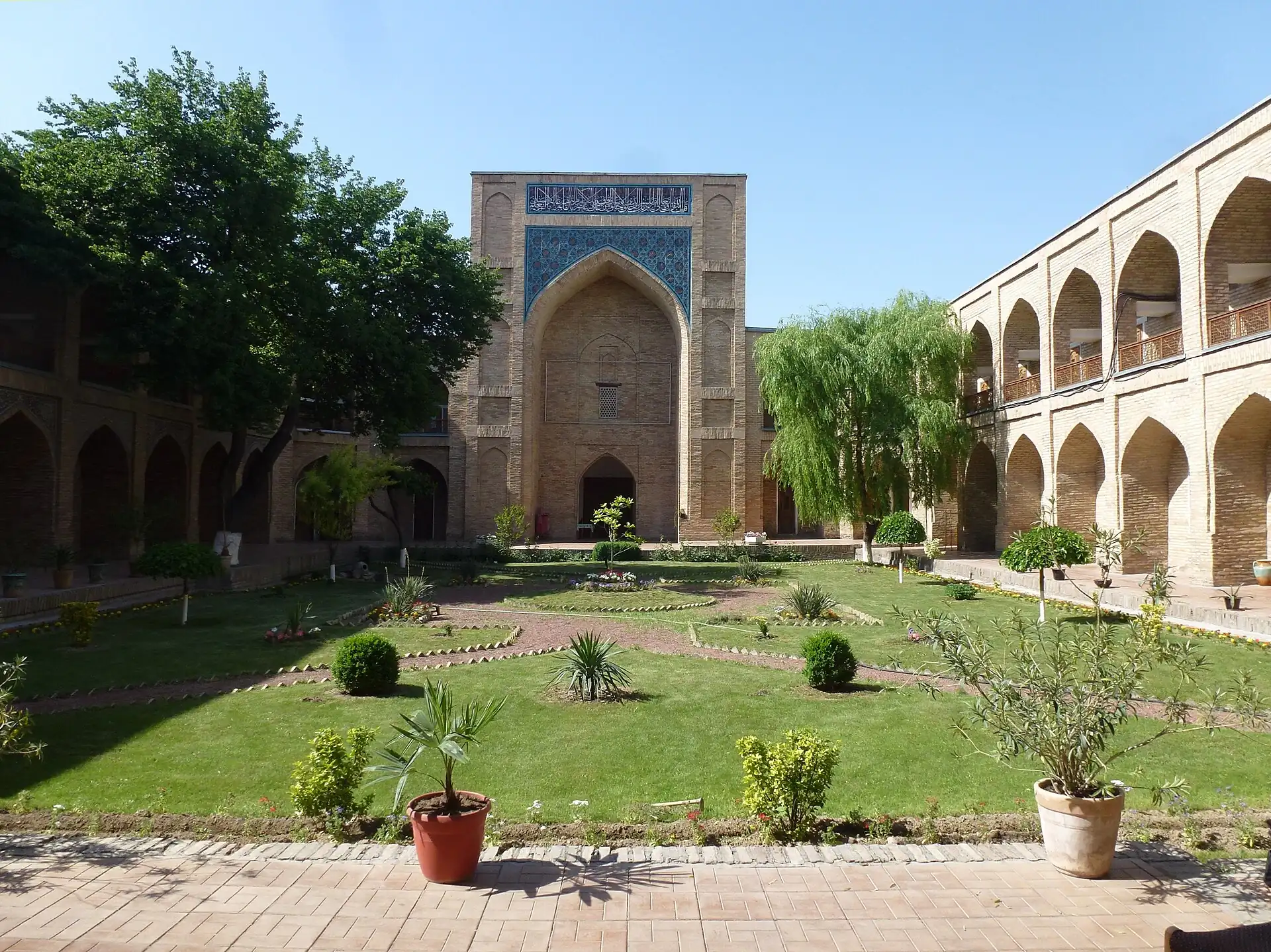
Morning cluster: the domed Chorsu bazaar from opening, Kukeldash madrasa next to it, plov and samsa for lunch; crowded and hot by midday.
rescue 100% · max p90 6.4′ · half
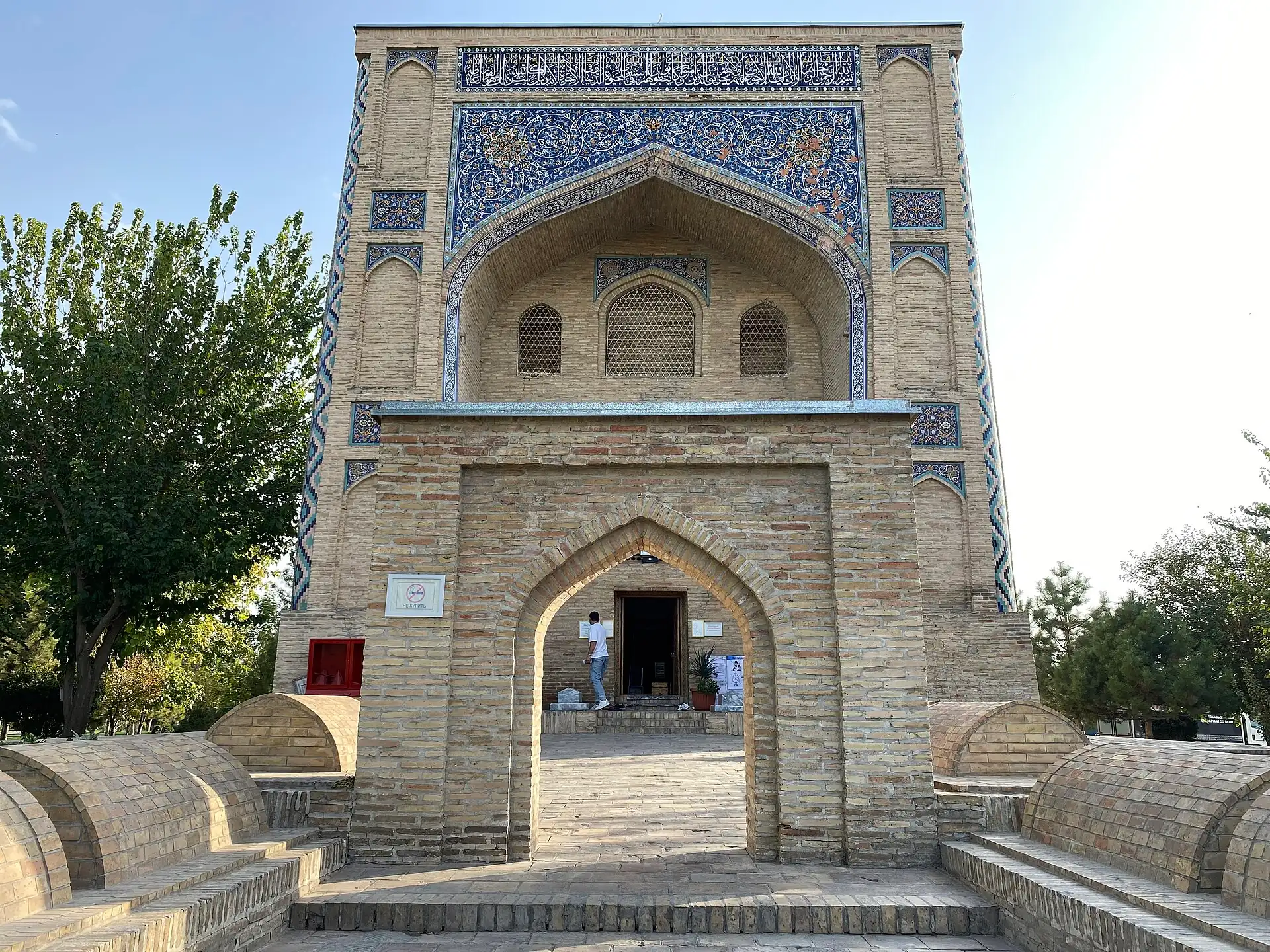
Morning-only cluster: the mosque courtyards and the Kaffal Shashi mausoleum before the heat; open squares with little shade at noon.
rescue 100% · max p90 6.9′ · half
Late-afternoon and evening cluster: the square, the history museum and the hotel-row cafés; flat and shaded, easy to combine with the metro.
rescue 100% · max p90 5.7′ · 90m
Short evening cluster: the square and its gardens on foot from the metro; large, open and hot by day, better after 17:00.
rescue 100% · max p90 5.7′ · 90m
Days
Ready-made day plans, timed against opening hours and walking distances.
How long are you staying?
Loose outlines: outdoors in the morning and evening, indoors at midday.
1 day
A long layover or a stop before the train to Samarkand
- 07:30Chorsu Bazaar — Chorsu bazaar and Kukeldash
- 10:00Khast Imam (Hazrati Imam) Complex — Khast Imam complex
- 12:30Plov and samsa near Chorsu bazaar — Plov lunch
- 14:00Tashkent Metro stations — Metro to the centre and a museum or hotel rest
- 17:30Amir Temur Square — Amir Temur Square and Broadway
- 19:30Evening shashlik grill near Independence Square — Shashlik dinner
Skip: Independence Square and the museum: add them on a second day.
Tashkent in 3 days
3 daysMornings outside, middays indoors, evenings on the squares; the last day ends with the bags already in the car.
Day by day
Day 1 — Khast Imam morning, plov lunch near Chorsu
- 08:00Khast Imam (Hazrati Imam) Complex
- Kaffal Shashi Mausoleum (optional)
- Tea house (chaikhana) near Khast Imam (optional)
- 12:30Plov lunch around 12:30 (walk-in)
Day 2 — Amir Temur Square, the museum, Independence Square
Day 3 — Chorsu bazaar, car to the airport at 12:00
- 07:30Chorsu Bazaar
- Kukeldash Madrasa (optional)
- 12:00Car to the airport at 12:00
Places
“Best time” is when to arrive for the fewest crowds, for example “before 08:30”; “Go any time” means the hour makes little difference. More sights follow under “More sights and museums”.
8 places. Filters use the guide’s own ratings; a place with no rating is left out when a filter is on.
Show 2 more placesShow fewer
Tours, classes and shows in Tashkent →
If you do ten things in Tashkent
Ranked for a first visit of 2–3 days. Prices are 2026 estimates in UZS.
- 1
The domed hall, bread, spices and dried fruit; the city at its most direct.
- Time
- 1–1.5 h
- Best
- Early morning
- Cost
- Free
- 2
Working mosque, madrasa courtyards and an old library of manuscripts.
- Time
- 45–60 min
- Best
- Morning
- Cost
- Free to small fee
- 3
The dish that defines Uzbek food, eaten with the lunch crowd.
- Time
- 30–45 min
- Best
- 12:00–13:00
- Cost
- UZS 35,000–70,000
- 4
Marble, chandeliers and murals in stations that double as a cheap lift home.
- Time
- 1 h
- Best
- Midday
- Cost
- UZS 2,000–3,000 a ride
- 5
Timur's statue, the fountains and the gardens at dusk.
- Time
- 30–45 min
- Best
- Late afternoon
- Cost
- Free
- 6
The best indoor rest from the heat, with Timurid history in ornate halls.
- Time
- 1 h
- Best
- Midday
- Cost
- About UZS 40,000–60,000
- 7
A Soviet-scale square with an arch and gardens; best after 17:00.A Soviet-scale square with an arch and gardens; best after 5:00 PM.
- Time
- 30–45 min
- Best
- Evening
- Cost
- Free
- 8
A 16th-century madrasa beside the bazaar; a short stop for the exterior.
- Time
- 15–20 min
- Best
- Morning
- Cost
- Free
- 9
- 10
Samarkand by train
The next stop on the Silk Road, two hours away.
- Time
- 2 nights
- Best
- Spring or autumn
- Cost
- Train seat US$20–50 (check)
Good for…
Verdict is how well Tashkent works for that traveller, not how nice it is.
Easy to navigate with the metro and Yandex Go; four clusters cover it.
- 1amir-temur-broadway — staffed hotels and evening walks in one place.
- 2Chorsu Bazaar — the bazaar morning that explains the city.
Plov, non, samsa and shashlik at low prices.
- 1Plov and samsa near Chorsu bazaar — lunch with the bazaar crowd.
- 2Evening shashlik grill near Independence Square — an evening grill.
- 3Tandoor bread and sweets row at Chorsu — hot bread at dawn.
Meals under US$4, tea and bread almost free, metro rides pennies.
- 1Guesthouses in the Old City — the cheapest beds.
- 2Tashkent Metro stations — a cheap sightseeing loop.
- 1An evening on Broadway — lit, easy and relaxed.
- 2Ballet or opera — a formal night out for a few dollars.
Kids like the metro and the fountains; heat and bazaar crowds need planning.
- 1Tashkent Metro stations — a cheap adventure.
- 2Amir Temur Square — gardens and open space.
- 1A five-star hotel — AC, pool and airport transfer.
- 2A private car with driver — a full day without haggling.
Kerbs, underpasses and metro stairs; plan by car.
- 1Amir Temur Square — flat and paved.
- 2Large hotels — lifts and level access.
Tours and classes: book or skip
Book through the hotel or a licensed operator with written inclusions and a cancellation policy. Prices per person unless stated.
| Tour or class | Verdict | Typical price | Why | Check before paying |
|---|---|---|---|---|
| Old City and bazaar walking tour | maybe | US$20–40 (check) | A local guide helps explain the bazaar and Khast Imam. | Group size and whether entry fees are included. |
| Tashkent metro tour | maybe | US$10–25 (check) | Useful for photo rules and station stories. | Whether the guide is licensed and how many stations are covered. |
| Chimgan and Charvak day trip | book | US$40–80 per car (check) | Transport is the main hurdle; a driver saves hours. | Whether the cable car and lunch are included. |
| Samarkand by high-speed train | maybe | US$60–120 (check) | A very long day; two nights is calmer. | Return train time and hotel pick-up. |
What each season brings
Spring
Mar–May
Warm days, blossom in the parks, Navruz on 21 March.
Watch: Rain in March and April; holiday crowds at Navruz.
Summer
Jun–Aug
Long days, cool evenings on the squares.
Watch: 40 °C heat; plan around it and drink water.
Autumn
Sep–Nov
The best walking weather, harvest at the bazaars.
Watch: Rain in November; Independence Day crowds on 1 September.
Winter
Dec–Feb
Fewer visitors and lower hotel prices.
Watch: Cold, smog and short days; bring a coat.
Photo spots and the light
Light times are for clear days; the summer sun is harsh by 10:00.
| Spot | Best light | Tip |
|---|---|---|
| Chorsu dome and dry-goods aisle | 07:30–09:30 | Golden light through the dome; ask before photographing stallholders. |
| Hazrati Imam courtyards | 08:00–10:00 | Blue domes against the morning sky; stay out of prayer areas. |
| Timur statue at dusk | Sunset | Fountains and lights; no photos of guarded government entrances. |
| Palace-style metro stations | Any time | Photography is generally allowed, but follow station signs and never photograph guards or turnstiles. |
| Arch and gardens | Golden hour | Follow guards' instructions on where to stand. |
Tashkent travel FAQ
Answers are 2026 desk estimates; rules and fares marked (check) change.
Is Tashkent safe for visitors?
Yes, for the main clusters by day and evening. The common problems are pickpockets in bazaars and the metro, taxi overcharging and heat. Use a booked car after dark in the Old City and follow your government's travel advice.
Do I need a visa?
Many passports enter visa-free for up to 30 days and others use the e-visa portal. Check the current rule for your passport before you fly.
Do I need cash?
Yes, for bazaars, tea houses, samsa stalls and small taxis. Cards work in hotels, malls and larger restaurants. Bring small notes in som.
Is the tap water safe?
No. Drink sealed bottled or filtered water.
Is the metro worth it?
Yes. It is cheap, cool in summer and several stations look like palaces. Check the current photography rules before you shoot.
How many days do I need in Tashkent?
Two to three days covers the four clusters at an easy pace; add a day for Chimgan if you want the mountains.
How do I get from the airport to the centre?
Yandex Go from the pickup area or an airport taxi with the fare agreed first, 20–45 minutes for about 8 km (5 mi). Confirm your hotel desk is staffed if you land late.Yandex Go from the pickup area or an airport taxi with the fare agreed first, 20–45 minutes for about 5 mi (8 km). Confirm your hotel desk is staffed if you land late.
What should I wear to mosques?
Shoulders and knees covered; women may be asked to cover their hair. Shoes off at prayer halls.
Ride-hail app or street taxi?
Yandex Go: fare shown before you ride. If you take a street taxi, agree the price first.
What is the best month to visit?
April, May, September and October: warm days, cool evenings, little rain. July and August are hot; winter is cold and smoggy.
Can I go to Samarkand for a day?
Yes, by Afrosiyob train (about 2 h 10 min each way), but it makes a long day. Two nights is calmer.
More to see and doSee & do · Learn & work · Rain & heat · Free things · Wheelchair and stroller
Free things to do
Sights in Tashkent that cost nothing to enter. Each is described under Places or More sights; extra costs inside are marked there.
Wheelchair and stroller, place by place
How each place in this guide works for wheels, from its own page. Ratings are desk estimates unless a page says it was checked on the ground.
| Place | Step-free | Wheelchair | Stroller | What to know |
|---|---|---|---|---|
| Amir Temur Square | yes | ok | good | Kerbs and underpass stairs. |
| Chorsu Bazaar | partial | caution | poor | A few steps between halls. |
| Independence Square | yes | ok | good | A few steps at the arch platform. |
| Kaffal Shashi Mausoleum | partial | caution | ok | A few low steps at the gate and the door. |
| Khast Imam (Hazrati Imam) Complex | partial | caution | ok | Low steps at most doors. |
| Kukeldash Madrasa | partial | poor | ok | A few steps at the entrance. |
| Tashkent Metro stations | poor | poor | poor | Escalators and stairs. |
| Temuriylar History Museum | partial | caution | ok | A short flight at the main entrance. |
See & do
16 of 16
Working mosque and madrasa courtyards, and a library holding one of the oldest Quran manuscripts.
Khast Imam · Daily, mostly daytime; prayer times limit some halls (check) · Courtyards free; museum rooms a small fee (check)(check)
- Markets
The domed hall and open aisles where the city buys bread, spices, dried fruit and meat.
Chorsu · Daily, about 06:00–17:00Daily, about 6:00 AM–5:00 PM · Free
- madrasa
A 16th-century madrasa beside the bazaar, best seen from the forecourt.
Chorsu · Exterior always; interior varies (check) · Free from outside
- square
The equestrian statue of Timur, fountains and gardens; go at dusk.
Amir Temur · Always open · Free
- Museums
The dome, the ornate halls and displays on the Timurid dynasty.
Amir Temur · Daily except Monday (check) · About UZS 40,000–60,000 for foreigners (check)
- square
A vast Soviet-era square repurposed with a monument and a memorial arch and gardens.
Mustaqillik · Always open; some areas restricted · Free
- transit
The first metro in Central Asia, with chandeliers, marble and murals in several stations.
Citywide · About 05:00–midnight (check)About 5:00 AM–midnight (check) · About UZS 2,000–3,000 per ride (check)
- mausoleum
A 16th-century mausoleum garden for an early scholar, in the Khast Imam complex.
Khast Imam · Daytime (check) · Free or small fee (check)
Navoi Opera and Ballet Theatre
ArchitectureA 1947 building with rich interiors; check the programme for evening performances.
Amir Temur · Free from outside; tickets for performances
Tashkent TV Tower
ViewsA Soviet-era tower with a viewing deck over the city; go on a clear day.
North centre · Daytime; check · Ticket (check)
Bazaar breakfast
foodNon bread, samsa, tea and fruit at the bazaar before the crowd; ask before photographing stalls.
Chorsu · 07:00–10:007:00 AM–10:00 AM · UZS 30,000–70,000
Metro loop
transitRide three or four stations that are worth stopping for; check current photo rules.
Citywide · Daytime · UZS 2,000–3,000 per ride
Plov lunch at a plov centre
foodPlov is a lunch dish and sells out by mid-afternoon; ask your hotel for a recent recommendation.
North centre (check) · About 12:00–14:00About 12:00 PM–2:00 PM · UZS 50,000–90,000
Chaikhana tea break
foodA pot of green tea on a platform bed with bread and jam is the right midday rest.
Khast Imam or Chorsu · Daytime · UZS 20,000–40,000
Evening walk on Broadway
walkStreet painters, cafés and buskers; gentle and lit.
Amir Temur · From about 17:30From about 5:30 PM · Free
Ballet or opera evening
performanceA cheap, formal evening in a grand building; dress smartly.
Amir Temur · Evening; check the season · Tickets about US$5–25 (check)
- Booking
- Performance tickets and driver day trips are best booked one or two days ahead through your hotel; museums and the metro need no booking.
Learn & work
| What | Where | Cost | Note |
|---|---|---|---|
| Uzbek plov cooking class | Cooking schools and some hotels (check operator) | US$25–50 | Half a day at a market and a stove; you eat what you cook. |
| Uzbek or Russian language lessons | Language centres in the centre (check) | Check current fees | Short courses for beginners are available. |
| Craft workshops (suzani, ceramics, miniature painting) | Craft centres near the Old City (check) | US$15–40 | A two- or three-hour workshop; book ahead. |
Working here
- Tourist entry
- Visa-free entry or an e-visa covers tourism only; it does not allow paid work.
- Work permit
- Legal work needs a permit arranged by an employer; ask your embassy or a lawyer for current rules.
- Remote work
- Working remotely for a foreign employer on a tourist stay is a grey area; Tashkent has many co-working spaces and reliable Wi-Fi. Check current rules before a long stay.
Rain-day and heat-day plan
Rain day
Rain is light and short outside Nov–Apr; carry a small umbrella and use the metro, which is dry and cool.
- 01Temuriylar History Museum — The largest indoor stop near Amir Temur Square.
- 02Tashkent Metro stations — A dry sightseeing loop: ride the palace-style stations.
- 03Chaikhana or café — A pot of tea while the shower passes.
Heat day
In June–August do outdoor sights before 11:00 and after 17:00; spend midday in a hotel, museum, mall or on the metro.
- 07:30Khast Imam (Hazrati Imam) Complex — Open squares are cool and quiet.
- 09:00Chorsu Bazaar — Under the dome and out before the crowd.
- 12:30Tashkent Metro stations — Underground and cool for an hour.
- 18:30Amir Temur Square — Gardens and fountains are comfortable after the sun drops.
Day-trips and nearby
Places you can reach from Tashkent in a day or with one night away, with the route and what it costs. Door to door, not ride time.
Chimgan and Charvak reservoir
goCar with driver, 1.5–2 h each way
Mountains and a lake; go on a clear weekday, weekend traffic adds an hour and winter snow can close the road.
- Time
- Full day
Samarkand by high-speed train
maybeAfrosiyob from Tashkent Central, about 2 h 10 min
Doable as a very long day; two nights is calmer. Book seats before you go, passport needed.
- Time
- Full day (long) or better as 2 nights
Kokand and the Fergana Valley
skipTrain or car, 4–5 h each way
Not a Tashkent day trip; plan it as a separate leg.
- Time
- 2 days
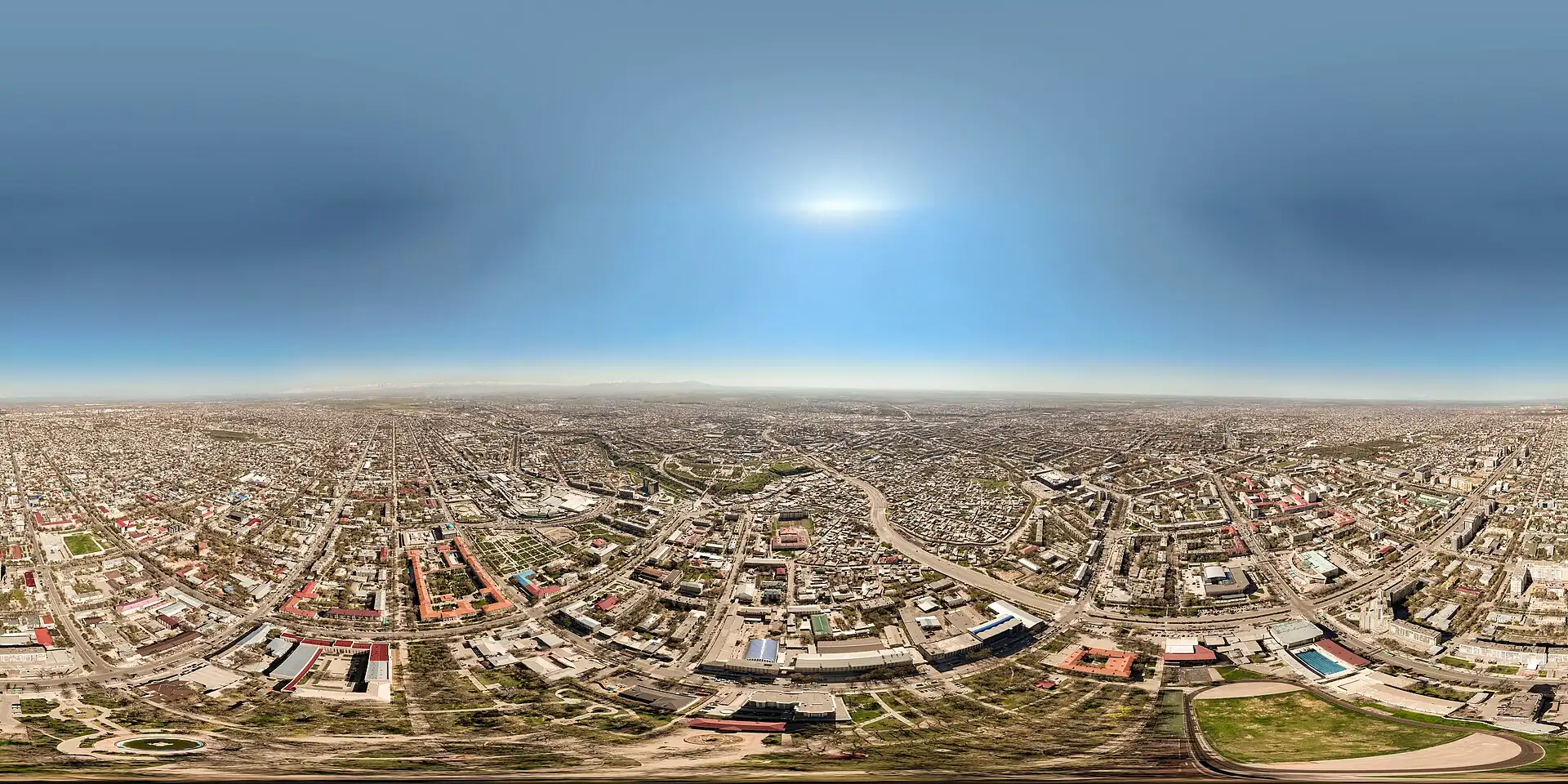 Photo: Nikolai Bulykin, CC BY-SA 4.0
Shymkent, Kazakhstan
skipShared taxi or bus to the border, 2–3 h
Border queues and visa rules vary; treat it as an onward route, not an outing.
- Time
- Full day
Go next
Bukhara
goDoor to door: About 4 h on the fast train
Afrosiyob or a slower night train
Leave from Tashkent Central; consider going via Samarkand.
Fergana Valley (Kokand, Margilan)
maybeDoor to door: 4–5 h
Train or car via the Kamchik pass
Better as a separate leg with overnight stays.
Almaty or Shymkent (Kazakhstan)
maybeDoor to door: About 1.5 h flying to Almaty
Flight from TAS, or shared taxi to the border
Check entry rules for both countries.
Eat & sleepWhere to eat and which area to sleep in
Eat & sleep
Where to eat and which area to sleep in
Eat
A short list of places worth crossing the city for, each with how to get a seat.
Restaurant finder: filter every place to eat in Tashkent →
Vegetarian-friendly score
1.0 / 5 · Hard work
- Country diet noteOur country guide rates vegetarian eating as hard.0 / 2
- Places to eat in this guide0 of 5 places with a known answer are vegetarian-friendly, 4 partly.0.6 / 1.5
- Budget eating lines0 vegetarian lines in "Eat by budget".0 / 0.6
- Meat-free national dishes4 meat-free dishes in the country food list.0.4 / 0.4
- Dedicated vegetarian kitchens0 mentions of vegetarian restaurants, Buddhist or fasting kitchens.0 / 0.5
Country note: Hard: meat stock and mutton fat run through soups and plov.
Vegetarian places near me →Make a diet card →
How we score
- Country diet note (up to 2): easy 2, workable 1, mixed 0.75, hard 0; no note 0.5.
- City places to eat (up to 1.5): 1.5 × (vegetarian-friendly + half of partly friendly) ÷ places with a known answer; needs 3 or more known places.
- Budget eating lines marked vegetarian (up to 0.6): 0.2 each.
- Meat-free national dishes (up to 0.4): 0.1 each.
- Dedicated vegetarian kitchens mentioned — Buddhist chay, shōjin ryōri, Jain, fasting food, vegan cafés (up to 0.5): 0.1 each.
- Total rounded to the nearest half point, 0 to 5. Built from our own pages only, not from reviews.
Eating and drinking guideEat by budget · Drink
Before you sit down to eat
Short version; full text linked
Eat by budget
Under UZS 50,000 a meal
| Where | Order | Area | Price | Note |
|---|---|---|---|---|
| Plov and samsa near Chorsu bazaar | Plov and samsa at the bazaar | Chorsu | UZS 35,000–70,000 | Go before 13:00.Go before 1:00 PM. |
| Tandoor bread and sweets row at Chorsu | Hot tandoor bread and sweets | Chorsu | UZS 5,000–20,000 | Best fresh in the morning. |
| Samsa stalls | Baked pastry with beef or pumpkin | Any market or street corner | UZS 8,000–15,000 |
Dishes to know
| Dish | What it is | Where to look | When | Price |
|---|---|---|---|---|
| Plov (osh) | Rice cooked with carrot, beef or lamb and spices in a big cauldron | Plov centres and bazaars | Lunch | UZS 35,000–90,000 |
| Samsa | Baked pastry with meat, pumpkin or cheese | Every market | Breakfast, snack | UZS 8,000–15,000 |
| Lagman | Hand-pulled noodles with a meat and vegetable sauce | Canteens | Lunch, dinner | UZS 40,000–80,000 |
| Manti | Large steamed dumplings with lamb and onion | Canteens and restaurants | Lunch, dinner | UZS 40,000–90,000 |
| Shashlik | Grilled skewers of lamb, beef or chicken | Grills and restaurants | Evening | UZS 20,000–50,000 a skewer |
| Non | Round tandoor bread stamped with a pattern | Bakeries and bazaars | Any time | UZS 5,000–15,000 |
| Shurpa | A clear meat and vegetable soup | Restaurants and tea houses | Lunch | UZS 40,000–80,000 |
| Dried fruit and nuts | Apricots, raisins, almonds and halva | Chorsu | Anytime | UZS 40,000–150,000 a kilo |
- Plov sells out by early afternoon: eat it at lunch, not dinner.
- Check bazaar prices per kilo before they weigh.
- Tea is often free with a meal; ask for choy.
- Pork is rare outside Russian or international restaurants; vegetarians eat well from bread, salads, vegetable samsa and soups, but stocks are usually meat-based.
Drink & nightlife
| Where | What | Until | Note |
|---|---|---|---|
| Broadway (Sayilgoh) cafés | Street with terraces, lounges and craft-beer bars | Late evening (check) | The easiest first-night stop from the Amir Temur hotels. |
| Chaikhanas (tea houses) | Green tea on a platform bed, food | Evening | Tea, not alcohol, is the drink; a good afternoon rest from the heat. |
| Hotel and rooftop bars | Lounge or terrace bar | Late (check) | The most reliable place for cocktails and English service. |
By style
| Style | What | Where | Price | Until |
|---|---|---|---|---|
| Local beer and wine | Uzbek and regional lagers; wine from Uzbek vineyardsTea is served free at many restaurants; ask for choy. | Restaurants, bars, supermarkets | UZS 20,000–40,000 a beer (2026 estimate) | Varies |
| Coffee | Flat white, espresso and filter in modern cafésSpecialty cafés are common in the centre. | Broadway, Yunusobod, malls | UZS 20,000–40,000 | Evening |
Sleep
Pick the area first: it decides your walk home at night and your first morning.
Which neighborhood fits you
Three questions, one recommendation, with the reasons.
Your best fit
- The square, the museum and a metro station within a short walk.
- Larger hotels usually keep a 24-hour desk; confirm in writing.
Next best: Chorsu and the Old City
Built from our 1–5 desk scores per area; your answers stay in this browser.
More on sleepingSleep by budget · Your area · With kids
Sleep by budget
| Band | Price | Where | Room types | What to expect |
|---|---|---|---|---|
| budget | US$20–45 | Chorsu, Old City guesthouses | Hostels and guesthouses | Simple rooms, fan or AC, breakfast, sometimes a courtyard; confirm the night desk. |
| mid | US$50–110 | Amir Temur and Broadway | 3–4 star hotels | Lift, AC, breakfast, staffed desk, help with taxis. |
| splurge | US$130–300+ | Amir Temur, Yunusobod | 5-star and international chains | Pool, spa, airport transfer and concierge. |
Booking checks
- Confirm a 24-hour or night-desk arrangement in writing if you land after 22:00.Confirm a 24-hour or night-desk arrangement in writing if you land after 10:00 PM.
- Ask what registration paperwork the hotel handles; keep the slip.
- Book early for Navruz (21 March), 1 September and the spring and autumn peaks.
Which area is yours
| If you are | Sleep in | Because |
|---|---|---|
| First visit, want easy arrival and evenings out | Amir Temur Square area | Staffed hotels, restaurants and a metro station within a few minutes. |
| Bazaar mornings and a cheaper bed | Chorsu and the Old City | Walk to Chorsu at opening; confirm the night desk before you fly. |
First-timers: bigger hotels with a staffed desk, lifts and a door the car can reach; the metro and the square are a walk away.
Bazaar mornings on foot, but choose a guesthouse that confirms a night desk or door code in writing; lanes are narrow and cars stop at the edge.
Areas are in our default order until you tick a priority.
Scores are 1–5 desk judgements per priority (2026). Book a hotel that confirms a staffed desk.
With kids
- Kids are welcome everywhere; many restaurants have kids' seating and shashlik and plov suit most tastes.
- The heat and uneven bazaar floors are the main problems: go early and carry a baby carrier, not a stroller, at Chorsu and Khast Imam.
- The metro is a good child-friendly activity: the stations look like palaces, the ride is cheap, and rides through the centre take a few minutes.
- City parks, the Ankhor canal promenade, the zoo and amusement parks handle the afternoon slump (check hours and opening days).
PracticalMoney, essentials, safety and the pocket card
Practical
Money, essentials, safety and the pocket card
Money
What a day costs at three comfort levels, and how to pay.
- Budget
- UZS 150,000–300,000 excl. bed / day
- Mid
- UZS 300,000–700,000 excl. bed / day
- High
- UZS 700,000+ excl. bed / day
- Transit card
- The metro takes a card or a token at the station; ride-hailing apps and taxis cover the rest.
- Cash rule
- Keep UZS 200,000 in small notes; use ATMs inside banks, hotels or malls, not on dark streets.
More on moneyCosts · Budget · Buy
What things cost
- Plov, one portion at a canteenUZS 35,000–70,000 (about US$3–5.50)
- Samsa from a tandoorUZS 8,000–15,000
- Bottle of water, shopUZS 4,000–8,000
- Ride-hail car across the centreUZS 15,000–45,000
- Airport to centre by ride-hailUZS 40,000–80,000
Trip budget
| Hotel or guesthouse double1 × 3 nights × UZS 70 | UZS 210 |
| Food, local transport, entries2 × 3 days × UZS 55 | UZS 330 |
| Ride-hail cars, per day1 × UZS 6 · Three or four short rides. | UZS 6 |
| SIM or eSIM data2 × UZS 8 | UZS 16 |
| Buffer 15%Price creep, a taxi you did not plan, one splurge | UZS 84 |
| Trip total≈ UZS 108 per person per day, bed included | UZS 646 |
2026 estimate in US dollars; flights, insurance and tours excluded. Your choices stay in this browser.
Prices of common things
| Plov portion | UZS 35,000–70,000 |
| Samsa | UZS 8,000–15,000 |
| Airport to centre by app | UZS 40,000–80,000 |
2026 estimate; check locally.
Buy
- Bargaining
- Bargain at bazaars, for crafts and with unmetered taxis; start at about 60% of the first price and smile. Prices in shops, malls, supermarkets and cafés are fixed.
- Fixed-price check
- Supermarkets, malls, pharmacies and restaurants show prices; bazaar produce is weighed, so ask the price per kilo before it goes on the scale.
Markets and shopping streets
| Where | What | When | Haggle | Note |
|---|---|---|---|---|
| Chorsu bazaar | Bread, spices, dried fruit, nuts, meat, produce and household goods under a blue dome | Daily, about 06:00–17:00 (check)Daily, about 6:00 AM–5:00 PM (check) | yes | Cash only in som; go before 10:00 for the calm hour.Cash only in som; go before 10:00 AM for the calm hour. |
| Alay bazaar | Produce, spices, dried fruit and sweets; more local, fewer souvenir stalls | Daily, morning to late afternoon (check) | yes | A quieter alternative to Chorsu, in the centre near the Alay metro station. |
| Broadway (Sayilgoh) street stalls | Paintings, magnets, ceramics and small crafts | Afternoon and evening | yes | Convenient near Amir Temur Square; prices are higher than in the bazaar. |
Shops by what they sell
| For | Where | Hours | Note |
|---|---|---|---|
| Suzani embroidery, ceramics, silk scarves, wooden boxes | Craft shops near Chorsu and the Old City; museum shops | About 09:00–19:00 | Ask for the maker and the region; antiques need an export permit, so buy new. |
| Dried fruit, nuts, spices, halva | Chorsu bazaar dry-goods aisle | About 07:00–17:00 | Taste first; vacuum-pack for the flight. |
| Pharmacies (dorixona) | Every main street | Daily; some open 24 hours (check) | Bring your own prescription medicines. |
Changing money
| Where | Verdict | Why |
|---|---|---|
| Bank branches and licensed exchange offices | use | Official rate, receipt on request; bring clean, undamaged US dollar or euro notes. |
| ATMs inside banks, hotels and malls | use | Visa and Mastercard cards work; withdrawal limits and fees vary by bank (check). |
| Street changers | avoid | Nothing to gain at the current rate, and counting tricks are common. |
ATMs
- Where
- Inside bank lobbies, hotels and shopping centres; avoid machines on dark streets.
- Fees
- Your home bank plus the local bank's fee; not confirmed, check with both.
Essentials and accessEssentials · Access
Essentials
- Tipping
- Not required. Round up a taxi fare; 10% is common in sit-down restaurants when no service charge is printed on the bill.
- Plugs & power
- 220 V, 50 Hz. Two-pin round sockets (types C and F). Bring an adapter.
- Toilets
- Hotels, malls, cafés and museums. Public toilets at bazaars and metro stations are basic and often pay-per-use (UZS 1,000–3,000); carry tissues and small notes.
- Opening hours
- Museums and mosques often close one day a week (many Monday); bazaars run about 06:00 to 17:00–18:00; shops 09:00–20:00; restaurants open through the evening. Friday midday prayer thins mosque visiting.Museums and mosques often close one day a week (many Monday); bazaars run about 6:00 AM to 5:00 PM–6:00 PM; shops 9:00 AM–8:00 PM; restaurants open through the evening. Friday midday prayer thins mosque visiting.
- Health
- Heat in July and August, winter smog (Dec–Feb), tap water and street-food hygiene. Take travel insurance with medical cover; many private clinics have English-speaking staff (check).
- Accessibility
- Wide avenues and flat squares, but kerbs, underpasses, uneven bazaar floors and a step-heavy metro make step-free travel hard; a ride-hail car is the reliable option.
- Laundry
- Hotels offer it; small laundry shops (kir yuvish) take a bag by weight, same-day if you drop before noon (check).
- Emergency numbers
- 101 fire, 102 police, 103 ambulance. Ask your hotel to write its address in Uzbek and Russian for a driver or a dispatcher.
Pack
- Sun hat, sunglasses and high-SPF sunscreen for May–Sep
- Scarf or long-sleeved layer for mosques and madrasas
- Slip-on shoes for mosque courtyards
- A warm coat Dec–Feb
- Small notes in som for the bazaar
- Wet wipes and tissues
- A power bank for a full day of maps and ride-hailing
Accessibility
Tashkent has wide pavements and flat squares, but the bazaars, mosques and metro stations are built with steps and few lifts. Step-free travel works best by ride-hail car, with the squares and museums chosen ahead.
- Pavements
- Wide on the avenues, uneven at kerbs; underpasses replace many crossings and have stairs.
- Metro
- Deep stations with long escalators and few lifts; check station by station.
- Taxis
- Ride-hail cars are cheap and reach most doors; ask the driver to wait for you at the kerb.
- Toilets
- Hotels and malls; few accessible toilets elsewhere.
Sights, step-free or not
| Amir Temur Square | step-free | Flat paved gardens with benches. |
| Independence Square | step-free | Very large flat squares; long distances between shaded points. |
| Chorsu Bazaar | with help | Uneven floors and crowds; step-free at the main hall but tight aisles. |
| Khast Imam (Hazrati Imam) Complex | with help | Flat squares, a few low steps into halls; no lifts. |
| Temuriylar History Museum | with help | Steps at the entrance; confirm step-free access at the desk. |
| Tashkent Metro stations | hard | Long escalators and few lifts. |
Survive
Safety basics, the lines not to cross, and practical habits that save the day.
Safety
- Heat (Jun–Aug): shade or AC stop every 60–90 minutes; drink bottled water.
- Cross wide avenues at crossings or underpasses; drivers do not always yield.
- Emergency: 101 fire, 102 police, 103 ambulance.
Red lines
- Mosques and mausoleums: shoulders and knees covered; shoes off at prayer halls.
- Do not photograph government buildings, guards or military sites.
- Ask before photographing people at the bazaar.
Practical
- Toilets: hotels, malls and cafés; carry tissues and small change.
- Tap water is not for drinking.
More on staying safeStay safe · Stay healthy · Safety map · Solo & women · Etiquette · Cope · Scams
After dark, by area
1 flagged area
Chorsu bazaar and the Old City
Take care
Day = daylight hours. What to watch in each area, day and night →
Scams and red flags
Walk away if you see these
- Unmetered street taxis quote foreigners two or three times the app fare: book through Yandex Go or agree the price before you get in.
- At Chorsu and other bazaars a stallholder may weigh generously or add a portion you did not ask for: ask the price per kilo first, watch the scale, and pay with small notes.
- A helper at Khast Imam or Kukeldash offers a private guided tour and names the price afterwards: agree the price in writing or say no thanks.
- A friendly stranger invites you to a restaurant or a shop and the bill is inflated: choose the place yourself and check the menu prices.
- Street changers approach near bazaars and hotels: use a bank or licensed exchange office, and count notes in front of the cashier.
Stay safe
Crossing the road
- 01Cross wide avenues at marked crossings or use an underpass; drivers may not yield at pedestrian crossings.
- 02In the metro, stand behind the line and keep your bag in front.
Hustles specific to this city
| Hustle | Where | The tell | What to do |
|---|---|---|---|
| Taxi price for foreigners | Airport, hotels, Chorsu | A driver quotes a fare two or three times the app price | Use Yandex Go or agree the fare before you get in. |
| Bazaar scale and portion | Chorsu | A generous scoop weighed before you agree | Ask the price per kilo first and pay with small notes. |
| Unasked guide | Khast Imam, Kukeldash | A helper starts a tour and asks for money | Decline politely or agree a price in writing. |
| Street money changer | Near bazaars and hotels | Offers a rate better than the bank | Use a bank; the official rate is the market rate. |
- Police
- Police may check documents: carry a copy of your passport and the registration slip and stay polite. To report theft, go to the nearest station with your hotel's help; insurers need the written report.
- Bag and phone theft
- Mostly in crowded bazaars and the metro at rush hour: use a front bag and keep phones off the table.
- Night
- The centre is quiet and safe after dark; use a booked car for the Old City lanes.
Stay healthy
Air quality by month
| Jan | Feb | Mar | Apr | May | Jun | Jul | Aug | Sep | Oct | Nov | Dec |
|---|---|---|---|---|---|---|---|---|---|---|---|
| — | — | — | — | — | — | — | — | — | — | — | — |
Winter smog (Dec–Feb) and summer dust can make the air poor; check an air-quality app and carry a mask if you are sensitive.
- Heat
- Shade and water every 60–90 minutes in June–August; use sun protection and avoid midday walks.
- Food and water
- Bottled or filtered water; eat where turnover is fast and food is served hot; wash or peel raw fruit.
- Stomach bugs
- Travellers' diarrhoea is common; carry oral rehydration salts and your own prescription medicines.
- Vaccinations
- Routine vaccines and, for some travellers, hepatitis A and typhoid; ask a travel clinic four to six weeks before you fly.
- Stray dogs
- Common near markets and parks; do not feed or pet them, and ask a doctor about rabies vaccination if you plan to be outdoors a lot.
Hospitals and clinics: see Cope.
Safety by area and hour
| Area | Day | Night | What to watch |
|---|---|---|---|
| Amir Temur Square and Broadway | fine | fine | Traffic on the avenues; pedestrian underpasses at night are less pleasant than the surface crossings. |
| Chorsu bazaar and the Old City | fine | caution | Pickpockets in the crowd; lanes are dark and dogs roam after the bazaar closes. |
| Khast Imam | fine | fine | Guides who approach unasked; heat on the open squares. |
| Independence Square | fine | fine | Follow guards' instructions on where to walk; photography of the government buildings is restricted. |
- The city is calm, but police may check passports and registration slips on the street: carry a copy and stay polite.
- Never photograph guards, military or government entrances; guards can and do ask you to delete images.
- In the metro, keep your bag in front at rush hour and stay behind the yellow line.
Solo, women and LGBTQ+ travellers
Solo
- Tashkent is easy to do alone: people are welcoming and the metro, taxi apps and cafés work in English.
- Evenings on Broadway and the main squares are lively; avoid quiet back lanes late at night.
Women
- Women travel alone in Tashkent without much trouble; cover shoulders and knees at religious sites, and use a booked car late at night.
- Persistent staring is more common than harassment; a firm no and moving to a shop or a group ends most contact.
LGBTQ+
- Male same-sex acts are illegal in Uzbekistan and attitudes are conservative; public affection between any couple is low-key. Travel with discretion and check your government's current advice.
- Hotels rarely ask about the relationship of guests, but keep photos and messages private when crossing borders.
Etiquette in Tashkent
- Greeting
- Shake hands with men; wait for a woman to offer a hand. Place a hand on your chest for a respectful greeting.
- Mosques and madrasas
- Cover shoulders and knees; women may be asked to cover their hair. Take shoes off at prayer halls and do not photograph people at prayer.
- Tea and bread
- Bread is respected: do not put it upside down or throw it away. Accept tea when it is offered; it is a sign of welcome.
- Photos
- Ask before photographing people, especially women and older men. No photos of guards, military or government buildings.
- Eating
- Eat plov with the right hand or a spoon; leave a little on the plate to show you are full.
- Tipping and bargaining
- Bargain politely at bazaars, not in shops; 10% at a restaurant is welcome.
Cope
Hospitals and clinics that handle foreigners
| Where | Area | Use it for |
|---|---|---|
| Private clinics in Mirabad, Yunusobod and Mirzo Ulugbek | Central and north Tashkent | Several take walk-ins and have English-speaking doctors (check); pay by card or cash and keep receipts for your insurer. |
| Ambulance 103 | Citywide | Ask your hotel to call and to give the address in Uzbek and Russian. |
Visa extensions
- Registration
- Hotels register foreign guests online and give you a slip or confirmation; keep it, and ask what applies if you stay in a private apartment (check current rules).
- Visa
- Many passports enter visa-free for up to 30 days and others use the official e-visa portal; check the current rule for your passport before you fly.
- Lost passport
- Report it to the local police and to your embassy in Tashkent; keep a photo of the data page and the entry stamp.
- Pharmacies
- Widely available; carry your own prescription medicines and the generic name.
- Laundry
- Ask your hotel or find a small laundry shop; same-day service is common.
Apps and offline kitOffline kit
Offline kit
Set up before you leave, so Tashkent still works with no signal or a dead roaming plan.
On your phone
- Maps: open the city in Google Maps, tap the place name, then Download offline map (or use an offline-maps app).
- Data: install an eSIM or buy a local SIM before the first taxi; the apps in this guide depend on it.
- Translation: download the local language for camera translation.
- Screenshots: booking confirmations, hotel address in the local script, and the emergency numbers.
This guide
Save the Tashkent guide and its pages on this device; it opens without a connection.
Phrases that do the work
Greeting
Hello (formal)
Assalomu alaykum
ah-sah-LOH-moo ah-LAY-koom
Greeting, short
Hi
Salom
sah-LOHM
Thanks
Thank you
Rahmat
rakh-MAHT
Asking
Please
Iltimos
il-tee-MOHS
Price
How much is it?
Qancha?
KAHN-chah
Bazaar
Too expensive
Qimmat
kim-MAHT
Yes / no
Yes / no
Ha / yo'q
hah / yoak
Metro
Where is the metro?
Metro qayerda?
met-ROH kah-yer-DAH
Russian back-up
Thank you (Russian)
Spasibo
spah-SEE-bah
Pocket card
Fill in, then print or save as PDF
Stays in this browser only; nothing is sent anywhere.
TashkentToshkent
Pocket card · Voykit
My bed tonight
—
—
—
Iltimos, meni ... ga olib boringPlease take me to
Emergency
- Fire101
- Police102
- Ambulance103
Embassy
Most embassies are in Tashkent: write the number of yours here before you fly.
My embassy: —
Fare anchors (2026 estimate)
- Airport to centre: UZS 40,000–80,000 by app
- Short ride in the centre: UZS 15,000–30,000
- Metro ride: About UZS 2,000–3,000 (check)
Say or show
- Rahmat — Thank you (rakh-MAHT)
- Qancha? — How much is it? (KAHN-chah)
- Qimmat — Too expensive (kim-MAHT)
Save your hotel's address in Uzbek and Russian offline, and carry small som notes for bazaars and tea houses.
Deep diveHistory, reading, photos and every source
Deep dive
History, reading, photos and every source
Sources
- officialUzbekistan Tourism Committee
- officialUzbekistan e-visa portal
- secondaryWikivoyage — Tashkent
Ask about Tashkent
Loading…
Was this useful?