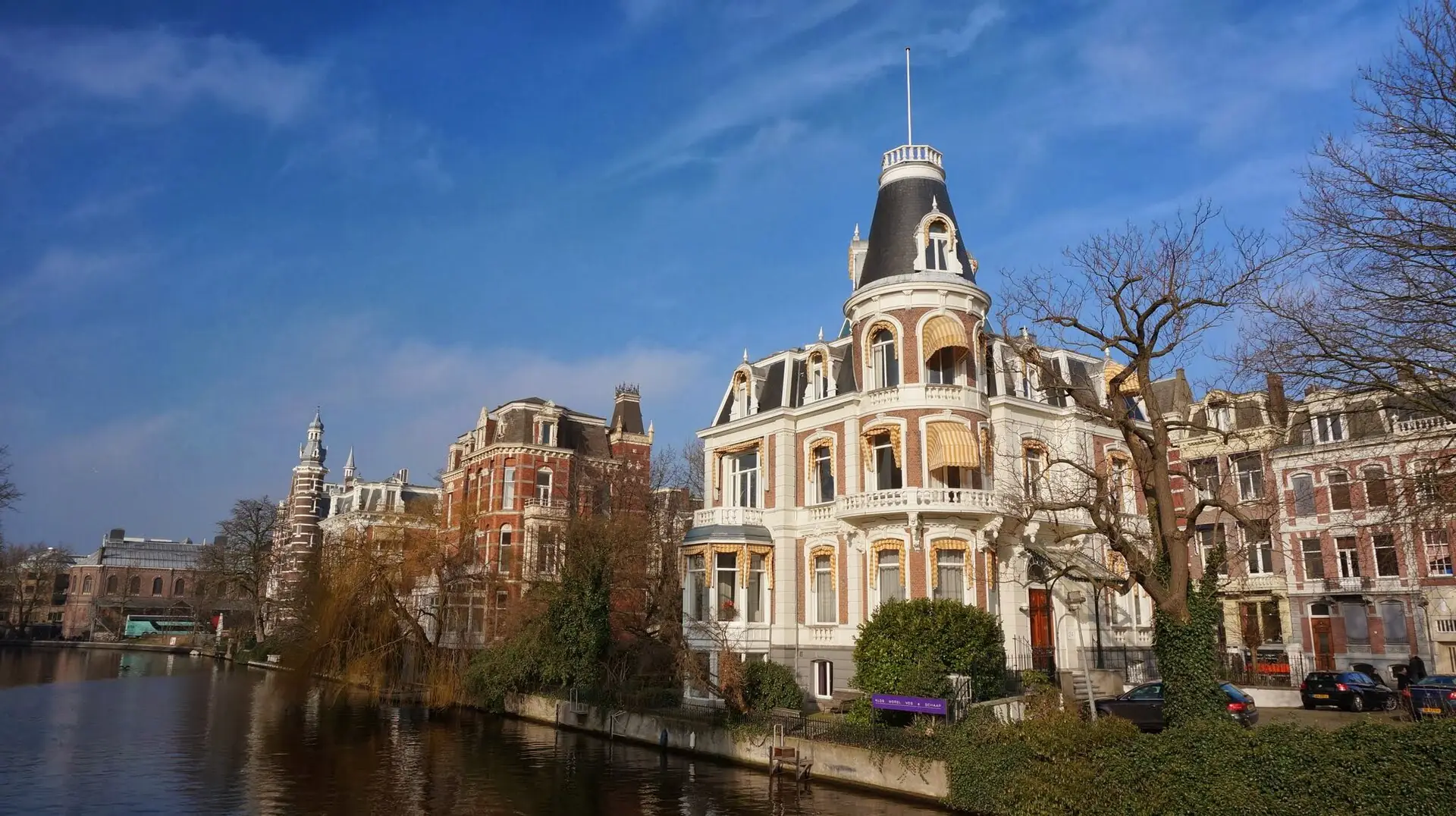
Amsterdam
Code NE · 4 walking zones
Amsterdam is a timed-ticket city: book the Anne Frank House and the Rijksmuseum weeks ahead, walk the canals early or late, and look both ways for bikes before you step into any lane that looks like pavement.
Our quick read of Amsterdam, scored 1–5 (friction is out of 100). Cash need: how often you still need notes. Heat risk: how hot days get. Stroller: how easy wheels are. Friction: overall effort for a first visit. Desk judgements, so check before relying on them.
- Local time
- --:--
- Weather
- forecast below
- Currency
- EUR
- Best months
- Mar · Apr · May · Jun · Sep · Oct
- Airport
- Amsterdam Schiphol (AMS)
Walking zones: the 4 areas this guide plans a day around. Each is a district you can cover on foot, so you do one zone per half-day and ride the train between them. The code (NE 01, NE 02…) is just the zone's number on the Amsterdam line; the line under each name says how bags fare there and how much time it needs.
Map of Amsterdam
Use the switches to show or hide each kind of pin. A switch that is on shows its pins on the map; tap it again to hide them. "Show only" keeps just the pins that match (for example, places that fit a suitcase). Tap any pin for its name and a link to its page.
- Where to sleep
- Places
- Eat
- Walking clusters
- Rest stops
From the airport Amsterdam Schiphol (AMS) to your bed
Tap a pin for its card. Places without their own coordinates are shown by their walking cluster.
Why Amsterdam
Amsterdam is flat, small and easy to walk, but its two biggest sights sell out and its canal-house hotels have steep stairs and no lifts. The trips that go wrong are the ones that arrive at the Anne Frank House without a ticket, book a room up four flights with two large bags, or step into a bike lane. Four clusters cover a first visit; Haarlem, Zaanse Schans and the bulb fields are day trips from one kept bed.
Fits
- Museum and canal trips
- Short city breaks
- Travellers who cycle or walk
Does not fit
- Strollers and wheelchairs in canal-house hotels (stairs)
- Last-minute Anne Frank House visitors
- Travellers who hate crowds in spring and summer
How long
- 2 daysAnne Frank House and the Jordaan, Rijksmuseum and the canal ring
- 3 daysFour clusters at an easy pace; a market morning in De Pijp
- 5 daysFour clusters + Haarlem + Zaanse Schans or the bulb fields in season
About Amsterdam
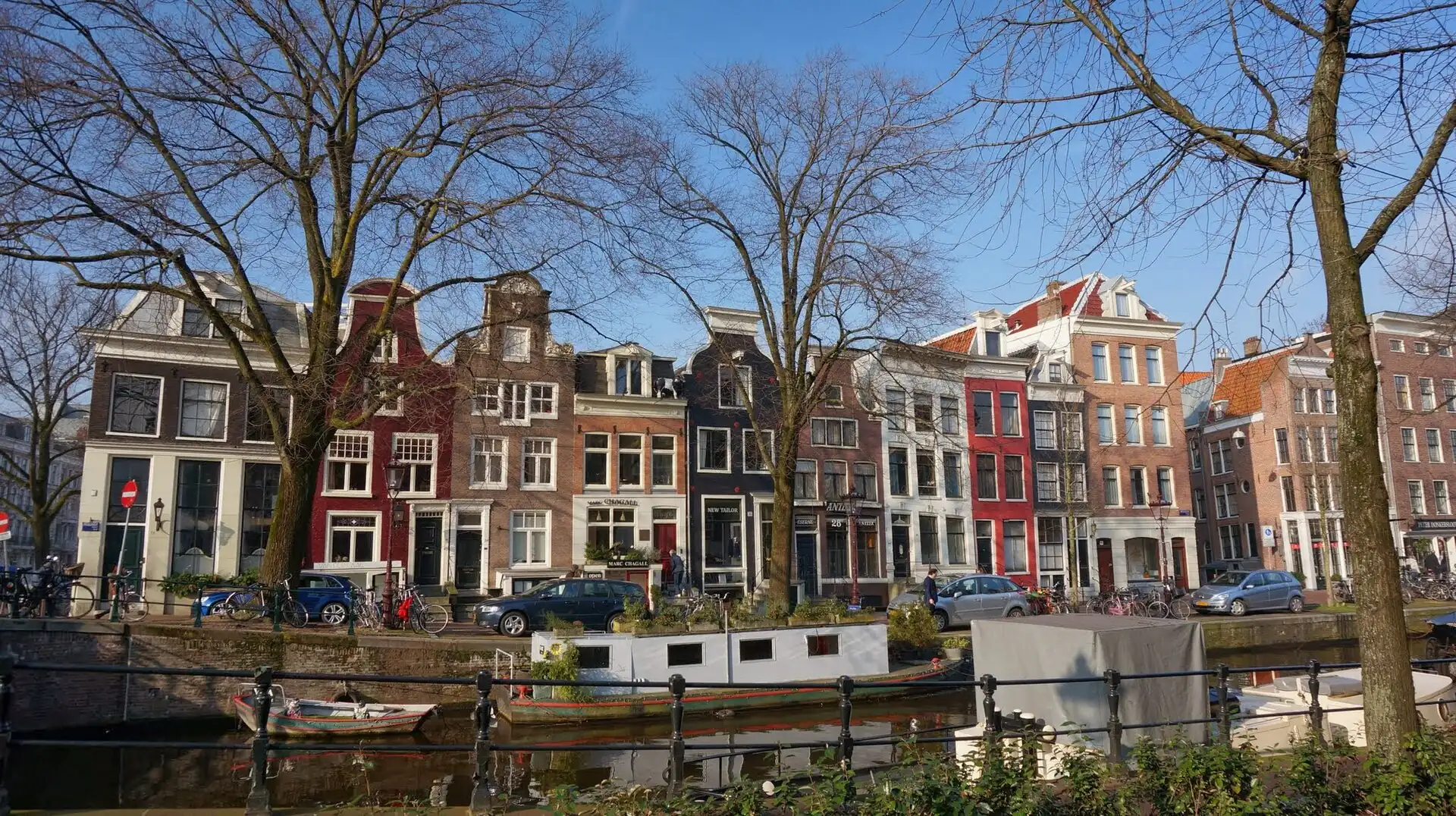
Amsterdam grew rich in the 1600s on trade run by the Dutch East India Company, and that wealth paid for the canal ring you walk today — three concentric canals dug outward from the old harbour so merchants could build warehouses with a private dock at the back and a house at the front.
The canal houses are narrow because the city taxed frontage, not floor area, so owners built tall and deep instead of wide, and hung a hoist beam from the gable to winch furniture through the windows — the stairs inside are too steep for a bed or a sofa.
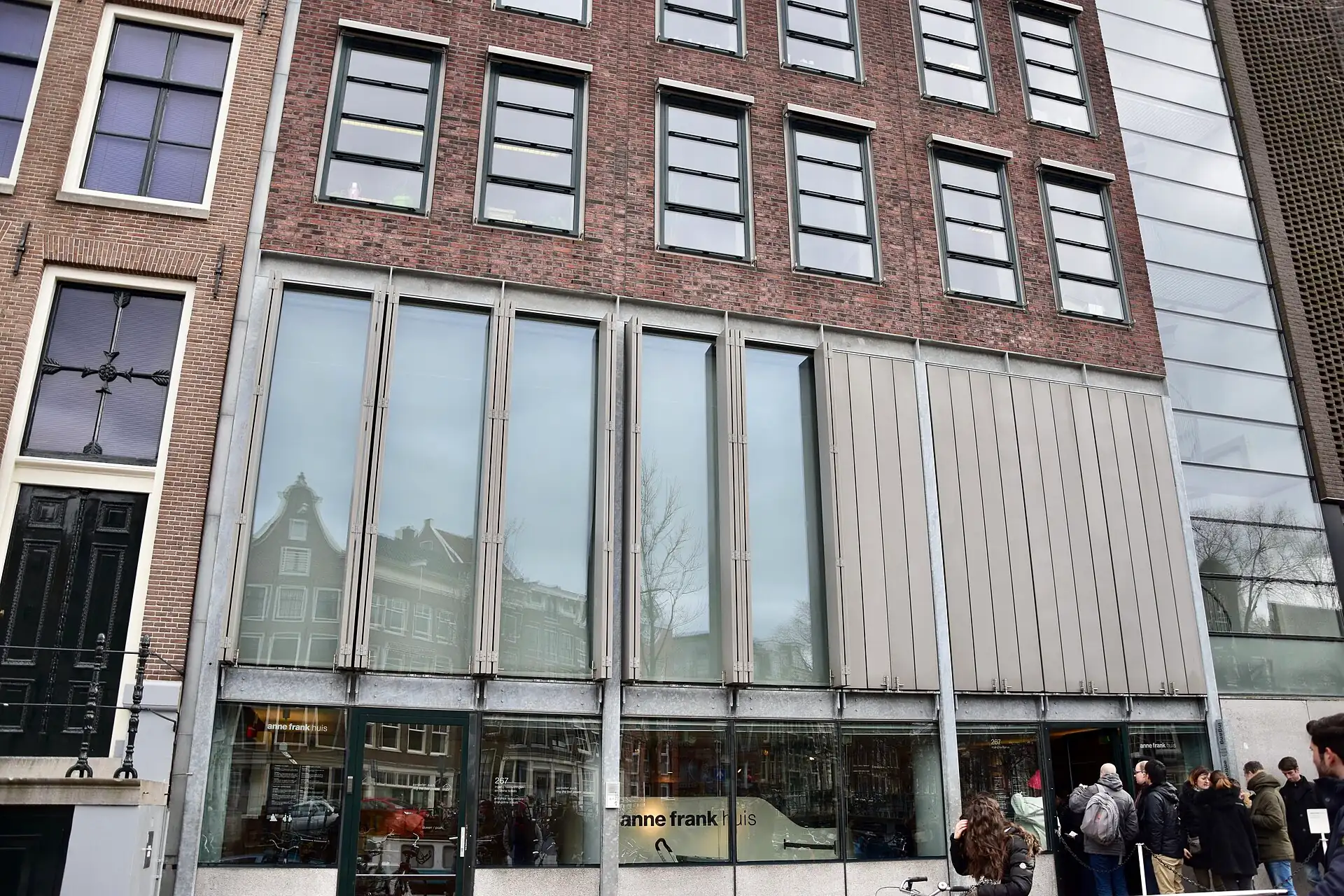
Amsterdam was occupied by Germany from 1940 to 1945, and about three in four of the city's Jewish residents did not survive the war; the Anne Frank House and the Portuguese Synagogue quarter are the closest a first-time visitor gets to that history.
Good to know
- Holland is two provinces, not the whole country; Amsterdam is the capital in North Holland, and The Hague is the seat of government.
- I amsterdam visitor centres at Schiphol Plaza and opposite Centraal Station sell transit cards and city passes and hand out free maps.
- Museum and canal-house staff are a better source for same-day ticket availability than any third-party app.
Go deeper 9 min read · 5 chapters
Amsterdam is a city built on trade and water: a dam on the Amstel river that grew, in one extraordinary century, into the richest trading port in the world, and then kept most of what it built. This deep dive reads the canals, the houses and the street life layer by layer, so a walk from the Jordaan to the Museum Quarter carries some of the history behind it.
1History2 min
Amsterdam starts small and late by European standards: fishermen built a dam across the Amstel river around 1270, and the settlement that grew up beside it, Amstelredamme, was granted city rights in 1306. For its first three centuries it was a modest trading town on the edge of the Holy Roman Empire, useful mainly because ships could reach the open sea through the Zuiderzee.
The 17th century changed everything. After the northern provinces broke from Spanish rule in the Dutch Revolt, Amsterdam absorbed merchants and skilled refugees fleeing the war and religious persecution in the southern Netherlands, including a large Sephardic Jewish community from Portugal and Spain. The Dutch East India Company, founded in 1602 and headquartered here, became the first company to issue tradeable shares, and the Amsterdam Stock Exchange, opened the same decade, is often called the world's first. Profits from trade with Asia, and from the transatlantic slave trade the same companies ran, funded the three-canal ring dug outward from the old harbour between about 1613 and the 1660s: Herengracht, Keizersgracht and Prinsengracht, still the shape of the historic centre today.
The Golden Age faded through the 18th century as English and French trade overtook Dutch shipping, and the city's fortunes dipped further under French occupation from 1795 to 1813, when the Dutch Republic was briefly abolished. A slower 19th-century recovery brought the Amsterdam-Rhine Canal and a railway link, and industrial growth pushed the city beyond its old walls for the first time.
The 20th century's defining event was the German occupation from May 1940 to May 1945. About 75 percent of Amsterdam's roughly 80,000 Jewish residents were deported and murdered, a far higher proportion than in many other occupied cities; the Anne Frank House preserves the hiding place of one family among many who tried to escape that fate. Liberation came on 5 May 1945, still marked every year, with a national two-minute silence for the war dead the evening before.
Post-war Amsterdam rebuilt slowly, then reinvented itself again from the 1960s as a centre of counter-culture, squatting and progressive social policy: the first legal cannabis coffeeshops opened in the 1970s, and in 2001 the Netherlands became the first country to legalise same-sex marriage, with Amsterdam's city hall performing some of the first ceremonies at midnight. Today the pressure runs the other way — housing shortages and overtourism have pushed the city toward visitor caps, short-stay rental limits and a campaign to shift the image of the centre away from stag parties and drug tourism.
- City rights granted
- 1306
- Canal ring dug
- About 1613-1660s
- Dutch East India Company founded
- 1602, headquartered in Amsterdam
- German occupation
- May 1940 - May 1945
- Canal Ring UNESCO listing
- 2010
- Population
- About 900,000 (city proper, 2025 estimate)
2Neighbourhood stories2 min
The Jordaan grew up in the 1600s just outside the new canal ring as housing for workers, craftsmen and immigrants who could not afford the merchant houses on Herengracht. Its narrow, slightly crooked streets follow old drainage ditches rather than a planned grid, which is why it still feels different from the formal canals a few minutes away. Gentrified since the 1970s, it is now one of the more expensive residential quarters in the city, but it keeps a village feel: small shops, courtyard almshouses (hofjes) tucked behind street doors, and a strong local identity built around its own folk songs and football club.
De Wallen, the old harbour-front streets that became the Red Light District, is Amsterdam's oldest neighbourhood and among its most misunderstood. Window prostitution has been licensed and regulated here since long before the Netherlands formally legalised sex work in 2000, and the area is also home to the Oude Kerk (Amsterdam's oldest building, consecrated around 1306) and the old Jewish quarter's edge. City policy has worked for years to reduce the area's reputation as a nightlife spectacle, including moving some window displays and restricting large tour groups; it remains, underneath the visitor traffic, a residential neighbourhood.
South of the canal ring, De Pijp was built in the late 19th century as dense housing for the industrial working class, in a grid so tight it earned the nickname 'the Pipe' for its long, narrow streets. Albert Cuyp Market has run here since 1905. Waves of migration through the 20th century, especially from Suriname, the Dutch Caribbean and Morocco, gave the neighbourhood its food culture, still visible in the market stalls and the roti and toko shops around it; more recent gentrification has added the craft-beer bars and design shops.
Amsterdam Noord, across the IJ waterway and reachable only by ferry or a metro line opened in 2018, was shipyards and working-class housing for most of the 20th century. Former NDSM Wharf industrial buildings now house studios and festivals, and the A'DAM Tower observation deck looks back across the water at the skyline the rest of this list explains. It is the neighbourhood locals point to when asked where the city is still changing fastest.
- Jordaan origin
- Workers' quarter, outside the canal ring, from the 1600s
- Oude Kerk consecrated
- About 1306
- Albert Cuyp Market founded
- 1905
- Amsterdam Noord metro (North-South line)
- Opened 2018
3Architecture2 min
The canal house is Amsterdam's signature building, and its shape comes directly from 17th-century tax policy: plots were taxed on the width of their street frontage, so merchants built narrow — often 5 to 6 metres wide — and deep, sometimes running 30 metres or more back from the canal. The result is the tall, top-heavy silhouette of the canal ring, each house slightly different in gable shape (step gables, bell gables, neck gables) but all built to roughly the same narrow-and-deep formula.
Those narrow houses created a practical problem: a staircase steep enough to fit inside a 5-metre-wide building cannot carry a bed, a wardrobe or a piano. The solution, still visible on almost every canal house, is the hijsbalk, a wooden or iron hook projecting from the top gable, used with a rope and pulley to hoist furniture straight up and in through the windows — which is also why many facades lean slightly forward, to keep a hoisted load clear of the lower floors.
Below the surface, the Golden Age solved a harder problem: the city sits on soft peat and clay over old riverbed sand, unable to support heavy stone buildings directly. Builders drove wooden piles, sometimes 10 to 18 metres of them, down through the soft ground to the firmer sand layer below, and rested the building's foundation on top. As long as the piles stay wet they last for centuries; where groundwater levels have dropped, historic piles have rotted and some canal houses now visibly lean or sag — a slow, expensive engineering problem the city still manages today.
The 20th century added its own layer: the Amsterdam School, an expressionist brick style built mostly for social housing between about 1910 and 1930, decorated ordinary apartment blocks with sculpted brickwork, wrought iron and stained glass, on the idea that workers deserved good design too. The Scheepvaarthuis (1916), near Centraal Station, is usually named as the movement's starting point, and De Dageraad housing estate in De Pijp is one of its best-preserved examples.
- Typical canal house width
- About 5-6 m
- Foundation piles
- Driven 10-18 m to reach firm sand
- Amsterdam School period
- About 1910-1930
- Canal Ring UNESCO listing
- 2010, about 1,550 protected monuments
4Food history2 min
Dutch food culture in Amsterdam carries two very different histories: a northern-European tradition of preserved, portable food built for sailors and traders, and a colonial-era import of Indonesian flavour that arrived with returning families after Indonesian independence in 1945-49. Herring, the classic Dutch street snack, is soused (lightly cured) rather than eaten fully raw, a preservation method that let fishing fleets keep their catch through long North Sea voyages; the tradition of eating the first catch of the season, Hollandse Nieuwe, as a near-ceremonial event each May or June goes back centuries.
Bitterballen, deep-fried balls of roux-based ragout, and other bar snacks (bittergarnituur) grew out of the same preserved, keep-well tradition, adapted for the brown café — Amsterdam's small, dark, wood-panelled neighbourhood pubs, named for the tobacco-stained walls of decades of pipe and cigarette smoke. The stroopwafel, a thin waffle pressed around caramel syrup, is usually traced to Gouda in the 18th century rather than Amsterdam itself, but the city's markets, especially Albert Cuyp, are where most visitors first taste one made fresh.
Indonesian food arrived at scale with the roughly 300,000 people who came to the Netherlands from the former Dutch East Indies after 1945-49 independence, many of them Indo-European (mixed Dutch-Indonesian) families with nowhere else to call home. They opened the city's first Indonesian restaurants in the 1950s and 60s, and invented, or at least popularised in this form, the rijsttafel — a 'rice table' of many small dishes served together — which does not exist in quite that format in Indonesia itself; it is a Dutch-colonial-era way of eating built for a plantation household's table, not a traditional Indonesian meal.
Cheese has been central to Dutch trade since the medieval period, when towns like Gouda and Edam built their economies on wheel-shaped, wax-coated cheeses designed to travel by ship without spoiling — the same preservation logic as the herring. Amsterdam itself was never a major cheese-producing town, but as the trading and export hub it became, and remains, the place most visitors buy it.
- Indonesian migration to the Netherlands
- About 300,000 people, 1945-1949 and after
- Hollandse Nieuwe herring season
- Roughly May-July
- Rijsttafel origin
- Dutch colonial-era Indonesia, popularised in the Netherlands from the 1950s-60s
5Festivals and city life1 min
King's Day (Koningsdag), 27 April, is the closest Amsterdam comes to a citywide holiday shutdown: streets close to cars, canals fill with private boats, and the entire city wears orange, the colour of the royal House of Orange-Nassau. Unlike most national holidays, it comes with an unusual local tradition — vrijmarkt, a 'free market' where residents, including children, set up stalls to sell secondhand goods on the street without a permit, in effect for one day only.
The Pride canal parade, usually held over a weekend in late July or early August, turns the main canals into a floating parade route, with boats sponsored by bars, embassies and companies as well as LGBTQ organisations. The Netherlands' early adoption of same-sex marriage (2001, the first country in the world) is part of why the event carries particular civic weight here, beyond its scale as a party.
Remembrance Day (4 May) and Liberation Day (5 May) are treated seriously: a two-minute silence at 20:00 on 4 May is observed nationally, including on trams and in bars, before Liberation Day itself becomes a public festival, especially in years ending in 0 or 5 (a 'lustrum' year) when celebrations are larger.
Everyday city life runs on the bicycle more than any other northern European capital: an estimated 850,000-plus bikes are in use across the city, more than the number of registered cars, and cycling is simply how most residents commute, shop and get children to school — a visitor who tries to walk in a bike lane, even briefly, will find out quickly how seriously this is taken.
- King's Day
- 27 April
- Pride canal parade
- Late July-early August (dates vary)
- Same-sex marriage legalised
- 2001, first country in the world
- Bicycles in the city
- Estimated 850,000+
Rules in force · 9Non-EU visitors get 90 days in any rolling 180-day window…
- Europe ↗Non-EU visitors get 90 days in any rolling 180-day window, counted across all 29 Schengen states together — not per country; the Entry/Exit System now logs each crossing, so an overstay is detected automatically.
- Europe ↗On the first Schengen entry since EES began, non-EU travellers give four fingerprints and a face photo at the border instead of a passport stamp; there is nothing to apply for or pay in advance.
- Benelux ↗Dutch and Belgian police can ask anyone to show identification (in the Netherlands from age 14): carry the original passport or EU ID card — a photocopy is not accepted.
- Benelux ↗Tap-in fares, Dutch and Belgian domestic tickets and Luxembourg's free transport all stop at the border: buy an international ticket for cross-border legs, or you will be fined on board.
- Netherlands ↗The Netherlands is in the EU and the Schengen area; the EU Entry/Exit System applies to non-EU visitors. Check the official EU and Dutch sources for your passport.
- Netherlands ↗Red or marked bike lanes are for bikes: do not walk or stand in them, and look for cyclists before crossing.
- Netherlands ↗Amsterdam has local rules on public drinking, cannabis use in some areas and short-term rentals; check the city's current rules and book licensed accommodation.
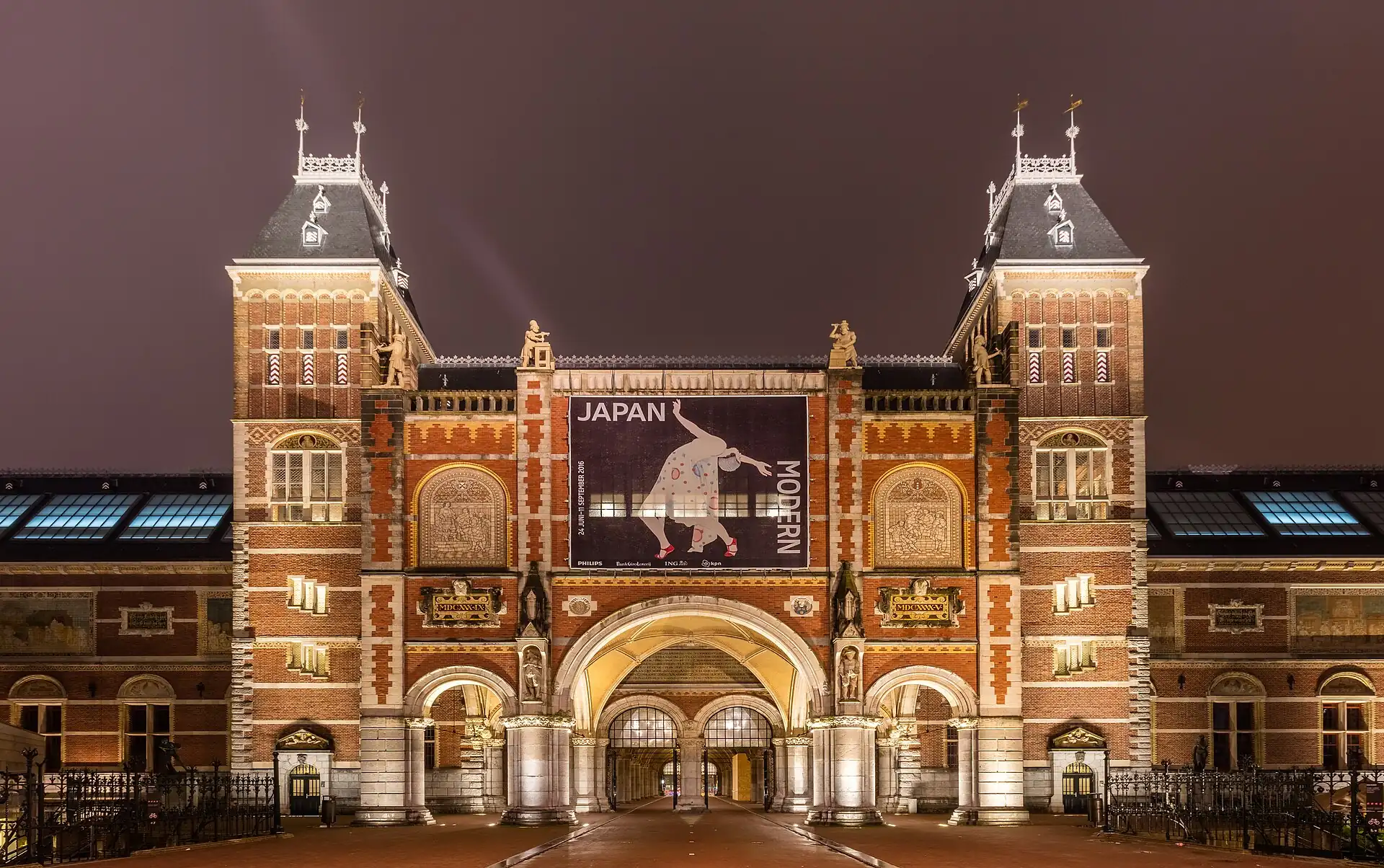
- Netherlands ↗The Anne Frank House, Van Gogh Museum, Rijksmuseum and Keukenhof sell timed tickets online only or mostly; book before you arrive rather than queueing.
- Amsterdam and North Holland ↗Plan every leg by train, bus or tram with a contactless card; a car in Amsterdam costs more in parking than it saves.
Entry rules depend on your passport. Full visa guide
Emergency numbers for Amsterdam112 ▾
- All services112
Tap a number to call from your phone. These are the numbers listed in this guide; a row marked check has not been verified.
Planning is the full guide. I'm here keeps what is open and the cheat card.
Right now
Checking the weather…
Working out what is open near you…
What is open nowclock, closures, places open
Now in Amsterdam
Local time in Amsterdam
--:--
Loads in your browser · Europe/Amsterdam
This month
Month verdict appears here.
Closed today
See the weekly grid below.
If today is a closure day: Monday mornings are the quietest time to see the Anne Frank House and Rijksmuseum if a same-week slot opens up; weekends sell out first.
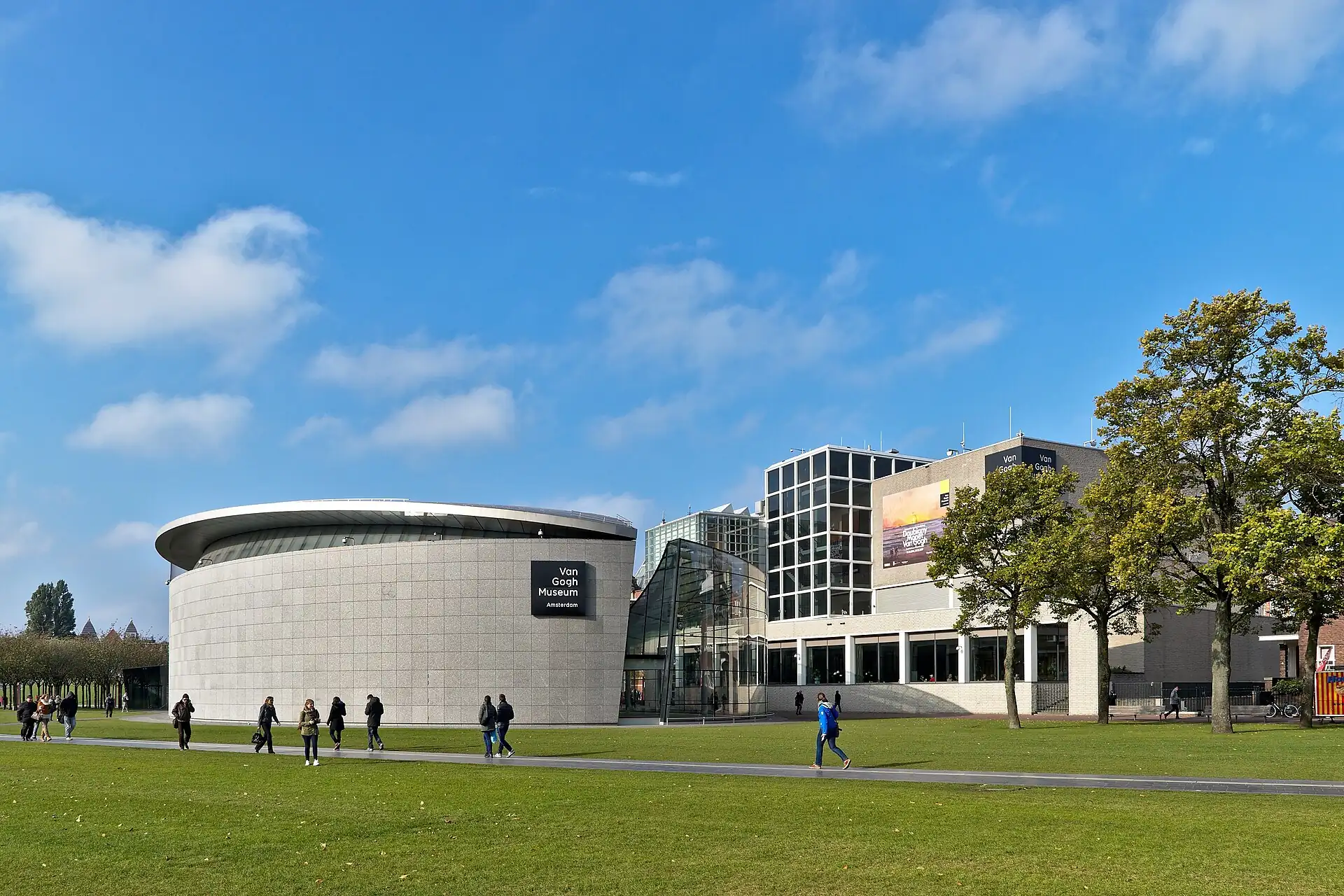
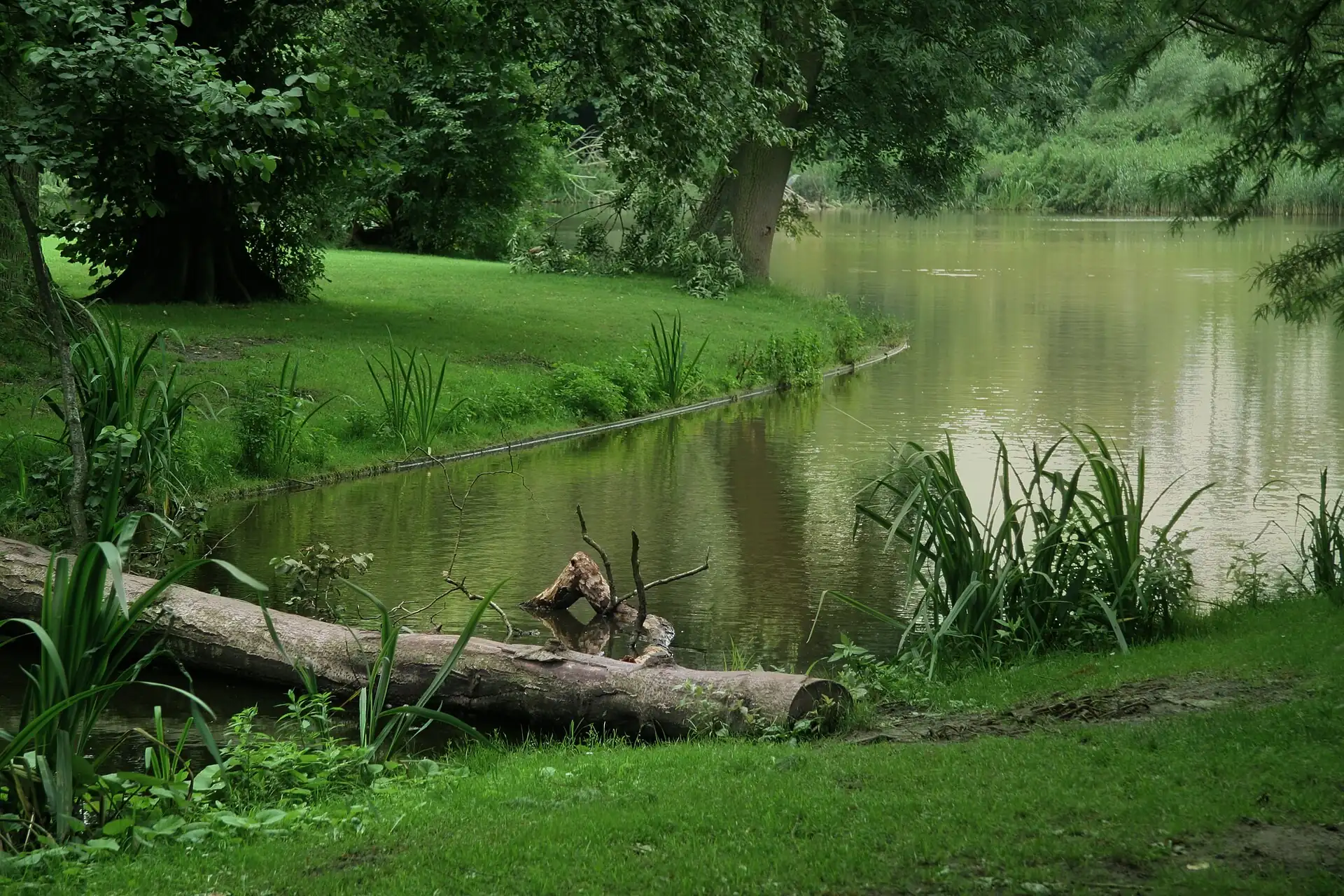
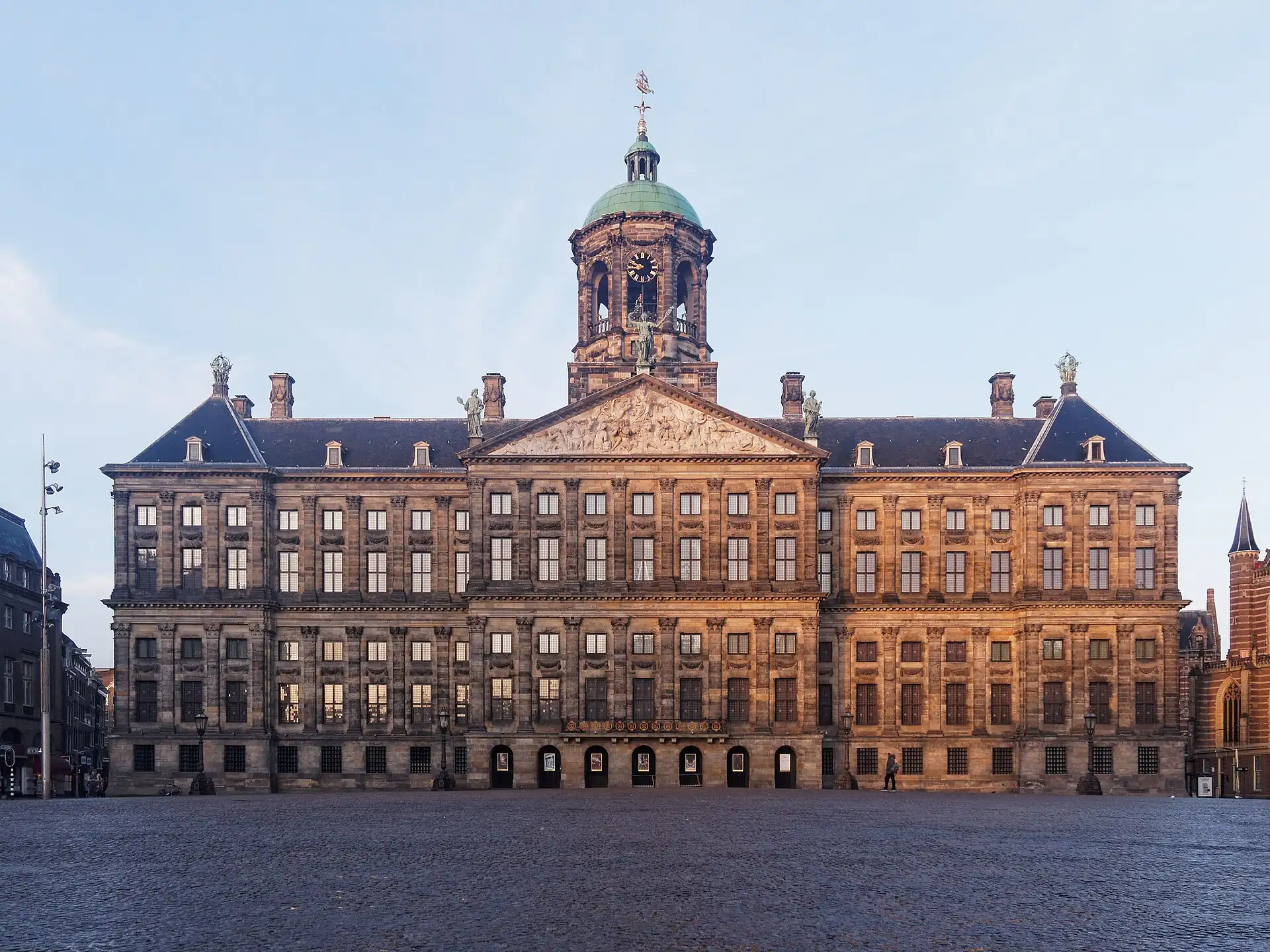
Open every day: Begijnhof, Dam Square and the Royal Palace, Van Gogh Museum, Vondelpark.
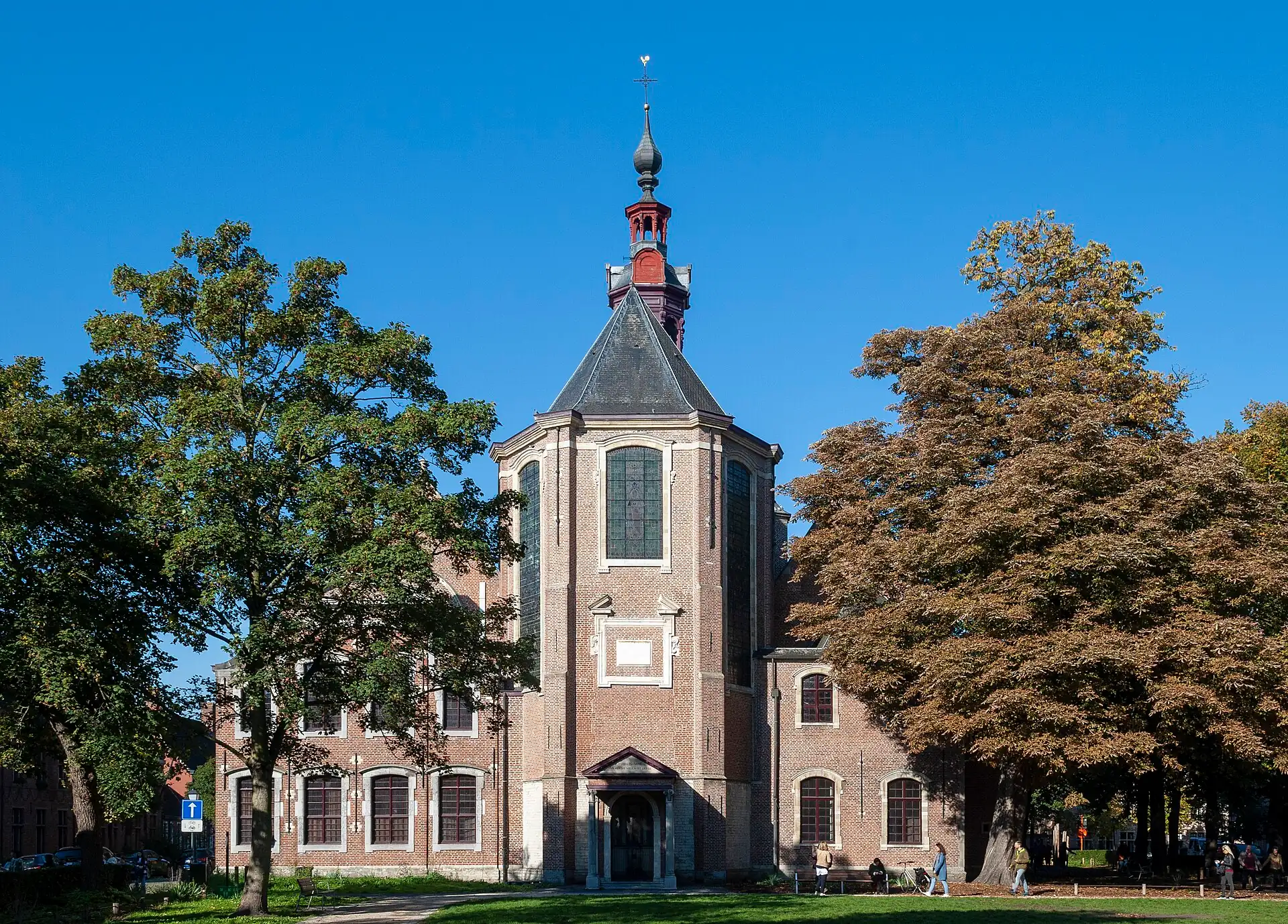
- check Begijnhof: Open daily; hours are informal and set by the residents' association.
- check Dam Square and the Royal Palace: The square is always open; the palace interior's open days vary — check before planning around it.
- check Van Gogh Museum: Open daily in most years; confirm holiday hours before your date.
- check Vondelpark: Always open.
- check Anne Frank House: Open daily, but timed slots sell out; no walk-in entry.
- check Rijksmuseum: Open daily; confirm the last-entry time for your date.
Weekly closures come from our place pages; national holidays and King's Day add closures not shown here.
Open now
The sights and places to eat on our list that are open at this moment, in the city's time, nearest first from where you are staying.
Loads in your browser with the city's local time.
Hours marked (check) are typical, not confirmed. Walking times are straight-line estimates. Open at another time →
Cheat cardthe pocket version
Cheat card
The essentials on one card: save it as an image for your phone, share it, or print it.
Amsterdam
- Money
- Many places take cards only; keep €20 in coins and small notes and withdraw at bank ATMs.
- SIM
- Install an eSIM before you fly, or buy a SIM at Schiphol or a phone shop (passport needed).
- Ride app
- Uber / Bolt
- Emergency
- 112 All services (not 911, 999 or 000)
- Plugs
- Sockets C/F. US/Canada (A/B): adapter · UK/Ireland (G): adapter · Australia/NZ (I): adapter. 230 V: US 120 V-only devices (hair dryers) need a converter; most chargers are dual-voltage.
Say it
- Hello: Hallo (HAH-loh)
- Thank you: Dank je wel (dahnk yuh vel)
- How much is it?: Hoeveel kost het? (HOO-vayl kost het)
- The bill, please: De rekening, alstublieft (duh RAY-kuh-ning, AHL-stoo-bleeft)
- Cheers!: Proost! (prohst)
Top 5
- Anne Frank House
- Rijksmuseum
- Van Gogh Museum
- Begijnhof
- Dam Square and the Royal Palace
EssentialsQuick answers, what things cost and how to get around
Essentials
Quick answers, what things cost and how to get around
Quick answers
The questions people ask first about Amsterdam, one line each. Tap a card for the full answer.
- Cash or card?Cards and phone payments are the norm; some places do not take cash at all.
- SIM or eSIMInstall an eSIM before you fly, or buy a SIM at Schiphol or a phone shop (passport needed).
- Ride-hailing appUber / Bolt.
- Tap waterTap water is safe to drink.
- TippingNot required; round up or leave 5–10% for good service.
- Plugs & powerSockets C/F. US/Canada (A/B): adapter · UK/Ireland (G): adapter · Australia/NZ (I): adapter. 230 V: US 120 V-only devices (hair dryers) need a converter; most chargers are dual-voltage.
Show all 14 answers
- Safe at night?Take more care after dark in De Wallen (Red Light District).
- What to wearA rain jacket in every season
- Emergency numbers112 All services (not 911, 999 or 000)
- Your embassycheckUS, UK embassies listed with addresses (check before you go).
- Sundays & holidayscheckMuseums open about 09:00–17:00 with a late night once a week; shops open later on Sundays and Mondays — check each place.Museums open about 9:00 AM–5:00 PM with a late night once a week; shops open later on Sundays and Mondays — check each place.
- Late at nightcheckMuseums open about 09:00–17:00 with a late night once a week; shops open later on Sundays and Mondays — check each place.Museums open about 9:00 AM–5:00 PM with a late night once a week; shops open later on Sundays and Mondays — check each place.
- Rainy-day planRain can arrive any month with little warning; keep the Rijksmuseum, Van Gogh Museum or another indoor sight as the standing rain-day plan.
- Landing lateAMS: taxi or booked ride to the door runs all night.
Cost cheat-sheetwhat everyday things cost
Cost cheat-sheet
Typical prices for the everyday things, as ranges. Change the currency right here; the local price stays first.
2026 desk estimate · check
- CoffeeCoffee at a caféEUR3.50-5
- Sit-down mealDinner at a sit-down restaurant, per person€30–60 (≈ US$35–70)
- Street or quick mealStroopwafel, fresh from a market stallEUR2.50-4
- Taxi, about 5 km (3 mi)Taxi, about 3 mi (5 km)Taxi from Schiphol to the centre€45–65 (≈ US$55–80)
- Metro or bus rideTram or bus single rideEUR3-4
- Museum or sight ticketMuseum ticket (Rijksmuseum or Van Gogh Museum)EUR22-32
- Budget bedHotel double room, a night, per room€90 (≈ US$110)
- Mid-range bedHotel double room, a night, per room€160 (≈ US$190)
- High-end bedHotel double room, a night, per room€320 (≈ US$400)
A day, not counting the bed: Budget €70 (≈ US$85) · Mid €130 (≈ US$160) · High €250 (≈ US$300)
Local prices, with USD next to them (rates 2026-09 (approximate); change it in the header). Ranges are desk estimates: check locally. Every price and the budget calculator →
Source: Prices in Amsterdam
Draft
Written from desk research. Not yet compared with the official source.
No official source is recorded for this figure.
Prices are 2026 desk estimates, not yet compared with an official source. Check on the day.
Not checked in the last 12 months (no check date on file).
DecideWho it suits, the trade-offs and when to go
Decide
Who it suits, the trade-offs and when to go
Best months at a glance
The guide's verdict for each month
Jan
Care
6°C (43°F)43°F (6°C)
Feb
Care
7°C (45°F)45°F (7°C)
Mar
Best
10°C (50°F)50°F (10°C)
Apr
Best
14°C (57°F)57°F (14°C)
May
Best
18°C (64°F)64°F (18°C)
Jun
Best
20°C (68°F)68°F (20°C)
Jul
Care
22°C (72°F)72°F (22°C)
Aug
Care
22°C (72°F)72°F (22°C)
Sep
Best
19°C (66°F)66°F (19°C)
Oct
Best
15°C (59°F)59°F (15°C)
Nov
Care
10°C (50°F)50°F (10°C)
Dec
Care
7°C (45°F)45°F (7°C)
Best: Mar–Jun, Sep–Oct. Mixed: Jul–Aug, Nov–Feb. Month by month →
Warmest Jul (22°C (72°F)72°F (22°C)), coolest Jan (1°C (34°F)34°F (1°C) low), wettest Jan (19 rain days), driest Jun (14). Averages, not a forecast.
Amsterdam across the year
Best-looking months for Amsterdam: Mar, May, Jun.
| Measure | Jan | Feb | Mar | Apr | May | Jun | Jul | Aug | Sep | Oct | Nov | Dec |
|---|---|---|---|---|---|---|---|---|---|---|---|---|
| Weather | Mixed (care) | Mixed (care) | Good (good) | Good (good) | Great (good) | Great (good) | Mixed (care) | Mixed (care) | Good (good) | Good (good) | Mixed (care) | Mixed (care) |
| Crowds | Low (good) | Low (good) | Medium (ok) | High (care) | High (care) | High (care) | High (care) | High (care) | Medium (ok) | Medium (ok) | Low (good) | Medium (ok) |
| Prices | Low (good) | Low (good) | Medium (ok) | High (care) | High (care) | High (care) | High (care) | High (care) | Medium (ok) | Medium (ok) | Low (good) | Medium (ok) |
| Events | 1 event (ok) | None listed (ok) | 1 event (ok) | 2 events (ok) | 2 events (ok) | None listed (ok) | None listed (ok) | 1 event (ok) | None listed (ok) | None listed (ok) | None listed (ok) | 1 event (ok) |
Green is good news, amber needs planning, red is a month to avoid; dashed grey with a question mark means our data does not say. Open the year heatmap →
Not checked in the last 12 months (no check date on file).
Source: Months, temperatures and crowds
Draft
Written from desk research. Not yet compared with the official source.
Monthly highs, rain and crowd levels are climate averages and desk estimates for the city, not a forecast.
Understand the cityUnderstand · Districts
Orientation & districts
The city centre sits inside the canal ring, a horseshoe open to the IJ waterway on the north side. Centraal Station anchors the north end; the Museum Quarter sits south of the ring; De Pijp is further south again. Everything a first visit needs is inside about 3 km of the station.
Trams and bikes are faster than walking between clusters more than about 15 minutes apart; Google Maps and the GVB app both route trams well.
Shaded shapes: walking areas (click one). Black pins: sleep areas. Grey dots: places. Round badges: arrivals. Click the map to turn on scroll-wheel zoom.
Hover, tap or tab to an area to see what it is like. Pins are sleep areas; arrows at the edge point to the airport.
Not drawn yet (no coordinates in this guide): De Wallen (Red Light District), Amsterdam Noord. They are in the neighbourhood cards below.
Where’s what, as a list:
- Jordaan (De Jordaan): Narrow streets, few cars, small boutique hotels with stairs and no lift. Suits: First visit, quiet canal streets, the Anne Frank House. Price band $$.
- Canal Ring / Grachtengordel (Grachtengordel): The tourist core; busy by day, quieter after the shops close. Suits: Postcard canals, Dam Square, Begijnhof.
- De Wallen (Red Light District) (De Wallen): Window prostitution and coffeeshops are licensed and legal here: do not photograph workers, and treat it as a place people live, not a show. Suits: A daytime walk through the oldest part of the city.
- Museum Quarter (Museumplein) (Museumkwartier): Flat, open lawn between the museums; the best rain-day and heat-day cluster because two of the three main sights are indoors. Suits: The Rijksmuseum, Van Gogh Museum and Vondelpark in one half-day.
- De Pijp (De Pijp): Albert Cuyp Market runs Monday to Saturday; check the day before you plan a morning around it. Suits: Market mornings, budget-to-mid hotels, a livelier evening scene. Price band $$.
- Amsterdam Noord (Noord): Across the IJ from Centraal Station; a short free ferry, not a metro ride. Suits: A free ferry ride and a view from A'DAM Lookout.
- Sleep area De Pijp: suits Market mornings, budget-to-mid hotels, a livelier evening scene, price band $$.
- Sleep area Jordaan: suits First visit, quiet canal streets, the Anne Frank House, price band $$.
- Amsterdam Schiphol Airport (AMS), about 11 km (6.8 mi)6.8 mi (11 km) from the centre, 25–45 min by the usual route.
Neighbourhoods at a glance
One tab per area, pulled together from this guide’s districts table, area notes, sleep-area scores and place pages. Scores are desk judgements (1–5); prices are estimates, check before you book.
Jordaan
$$De Jordaan
Narrow streets, few cars, small boutique hotels with stairs and no lift.
- Suits:
- First visit, quiet canal streets, the Anne Frank House
- Rooms:
- €160–320 per room per night (mid-range); more in April and May
Pick this if: First visits, canal walks, the Anne Frank House
Skip this if: You have a stroller or wheelchair, or large bags and a room on an upper floor without a lift
- Quiet nights4/5 High
- Nightlife3/5 Medium
- Families3/5 Medium
- Late arrival3/5 Medium
Why these scores
- Quiet nights: Residential and mostly car-free; quieter than the canal-ring core.
- Nightlife: Brown cafés close by 01:00; livelier bars are a tram ride away.
- Families: Flat and walkable, but hotel stairs are the obstacle.
- Late arrival: Small hotels; confirm the check-in desk hours before a late flight.
Getting around from here
- 12–17 min walk to Dam, Spui & canal ring
- 28–36 min walk to Museum Quarter (Museumplein)
- 32–42 min walk to De Pijp & Albert Cuyp Market
Canal Ring / Grachtengordel
Grachtengordel
The tourist core; busy by day, quieter after the shops close.
- Suits:
- Postcard canals, Dam Square, Begijnhof
Getting around from here
- Walk west: about 15 min to Jordaan & Anne Frank House
- Tram or walk south: about 15 min to Museum Quarter (Museumplein)
- AMS: about 11 km (6.8 mi) in a straight line (arrival ride 25–45 min)AMS: about 6.8 mi (11 km) in a straight line (arrival ride 25–45 min)
De Wallen (Red Light District)
De Wallen
Window prostitution and coffeeshops are licensed and legal here: do not photograph workers, and treat it as a place people live, not a show.
- Suits:
- A daytime walk through the oldest part of the city
Museum Quarter (Museumplein)
Museumkwartier
Flat, open lawn between the museums; the best rain-day and heat-day cluster because two of the three main sights are indoors.
- Suits:
- The Rijksmuseum, Van Gogh Museum and Vondelpark in one half-day
Getting around from here
- Walk east: about 15 min to De Pijp & Albert Cuyp Market
- Tram or walk north: about 15 min to Dam, Spui & canal ring
- AMS: about 9 km (5.6 mi) in a straight line (arrival ride 25–45 min)AMS: about 5.6 mi (9 km) in a straight line (arrival ride 25–45 min)
De Pijp
$$De Pijp
Albert Cuyp Market runs Monday to Saturday; check the day before you plan a morning around it.
- Suits:
- Market mornings, budget-to-mid hotels, a livelier evening scene
- Rooms:
- €130–260 per room per night
Pick this if: Market mornings, restaurants, walking to the museums
Skip this if: You want quiet nights or a lift
- Quiet nights3/5 Medium
- Nightlife4/5 High
- Families3/5 Medium
- Late arrival3/5 Medium
Why these scores
- Quiet nights: Busier by day around the market, calmer at night away from the main strip.
- Nightlife: The livelier of the two sleep areas, with bars open later.
- Families: Market and park nearby; a tram ride to the main sights.
- Late arrival: Mixed; check individual hotel desk hours.
Getting around from here
- 12–17 min walk to Museum Quarter (Museumplein)
- 20–28 min walk to Dam, Spui & canal ring
- 32–42 min walk to Jordaan & Anne Frank House
Amsterdam Noord
Noord
Across the IJ from Centraal Station; a short free ferry, not a metro ride.
- Suits:
- A free ferry ride and a view from A'DAM Lookout
Ward by ward
8 area guides. Open one for the short answer, the key facts and what the area is like; the full guide is linked inside. Prices marked (check) are estimates.
BinnenstadBest for: First-timers who want the station, Dam Square and the canals on foot
Stay in Binnenstad if you want to walk to Centraal Station, Dam Square and the Red Light District and accept crowds and high room rates. Skip it if you want quiet nights or better value — pick Jordaan, Oost or Zuid instead. Two nights is usually enough.
- Best for:
- First-timers who want the station, Dam Square and the canals on foot
- Skip if:
- You want quiet evenings, cheap rooms or a local feel
- Walk to Centraal Station:
- 5–15 minutes from most of the district
- Trams through the area:
- 2, 4, 12, 14, 17, 26 (check current routes)
- Metro:
- Lines stop at Amsterdam Centraal and along the central axis (check)
- Typical room rate:
- High for Amsterdam; book early in Apr–Sep (2026 estimate)
- Noise:
- Damrak, Warmoesstraat and the Red Light District are loud at night
What the area is like
Binnenstad is the medieval core of Amsterdam, the ground between Centraal Station and the ring of canals. The Damrak–Rokin line splits it into the Oudezijde (Old Side) to the east, the oldest part of the city, and the Nieuwezijde (New Side) to the west. Both date from the Middle Ages; the street pattern has barely changed.
The Oudezijde holds Warmoesstraat, the city's oldest street, the Red Light District along Oudezijds Achterburgwal, and Nieuwmarkt, a square ringed with cafés that anchors a small Chinese neighbourhood. The Zeedijk is the street for Asian restaurants and snack bars. East of Nieuwmarkt, the Nieuwmarktbuurt includes the former Jodenbuurt, the Jewish quarter, where the Jewish Historical Museum keeps that history.
The Nieuwezijde is Dam Square: the Royal Palace, the Nieuwe Kerk, and the main shopping streets — Kalverstraat, Nieuwdijk and the bars around Spui. Expect souvenir shops, two torture museums, a sex museum and a cannabis museum among the genuine sights. This is the busiest, most commercial part of Amsterdam.
Full Binnenstad guideShould you stay here or not
Stay here if your trip is short and you want to walk out of your door into the postcard: station, Dam Square, canals, Red Light District and the main shopping streets all within 20 minutes on foot. It is also the easiest base if you arrive late or leave early by train.
Do not stay here if you value quiet, space or value for money. Rooms are the most expensive in the city and the smallest, and street noise runs late on Damrak, Warmoesstraat and around the Red Light District. Travellers who want cafés, markets and a lived-in feel usually do better in Jordaan, Oost or Zuid, all a short tram ride away.
A middle path: book two nights in Binnenstad for the arrival and the headline sights, then move to Jordaan or Oost for the rest of the trip.
Canal DistrictBest for: First-time visitors who want canals, museums and nightlife on foot
Yes — stay in the Canal District if you want the 17th-century canals, the Anne Frank House and walkable nightlife on your doorstep, and you accept higher prices and tram noise. Skip it if you want quiet, parking or a cheap bed; Binnenstad, Jordaan or Oost fit better.
- Best for:
- First-time visitors who want canals, museums and nightlife on foot
- Not for:
- Drivers, light sleepers on main streets, tight budgets
- Tram from Centraal:
- Trams 2 and 12 to Leidseplein; 13 and 17 to Westerkerk (Anne Frank House) (check)
- Metro:
- Vijzelgracht on line 51, south of Centraal (check)
- Anne Frank House:
- Book online weeks ahead; only a small share of tickets sold same day (check)
- UNESCO status:
- The canal ring is a World Heritage Site
- Walkability:
- Most sights within 20–30 minutes on foot; bikes have priority
What the area is like
The Canal District (Grachtengordel) is the ring of waterways dug in the 17th century around the old centre, and it is a UNESCO World Heritage Site. Three main canals — Herengracht, Keizersgracht and Prinsengracht — curve around the Binnenstad, lined with narrow merchant houses, courtyard gardens and houseboats. The area also covers Leidseplein and Rembrandtplein, the city's main nightlife squares, and the Weteringschans.
Expect crowds and bikes. The streets are narrow, the bridges are busy, and locals cycle fast, so look before you step off a kerb. Evenings are quieter on the side canals and louder around Leidseplein and Rembrandtplein, where bars and clubs run late.
Full Canal District guideShould you stay here?
Stay here if this is your first trip to Amsterdam and you want the postcard view from your window, the Anne Frank House and the Rijksmuseum area within walking distance, and trams back to your door after dinner. It suits couples, solo travellers and anyone happy to walk 20–30 minutes between sights.
Look elsewhere if you have a car (do not drive in Amsterdam), need quiet at night, or want lower prices. Jordaan is calmer and still central; Binnenstad puts you beside Centraal station; Oost and West are cheaper and more residential; Zuid is quieter and close to the museum quarter.
JordaanBest for: Canals, markets, galleries, boutique restaurants, quiet nights
Yes for most first-time visitors who want canals, markets and quiet evenings within walking distance of the centre. Stay in Jordaan if you value atmosphere and food over nightlife and proximity to Centraal; pick Binnenstad or Canal District instead if you want the museums and station on your doorstep.
- Best for:
- Canals, markets, galleries, boutique restaurants, quiet nights
- Not for:
- Late-night bars, budget dorms, anyone who wants Centraal on foot in under 10 minutes
- Tram from Centraal:
- 13 or 17 to Westermarkt, about 10 minutes
- Markets:
- Noordermarkt and Lindengracht Saturday; Lapjesmarkt Westerstraat Monday morning
- Walk to Anne Frank House:
- About 5 minutes from Westermarkt
- Typical hotel price:
- €150–300 per night, 2026 estimate (check)
What the area is like
Jordaan sits west of the Prinsengracht, between Brouwersgracht in the north and the Marnixstraat edge in the south. It was a working-class district of breweries, warehouses and small workshops, and the narrow streets and back canals still follow that pattern. Today it holds galleries, design shops and restaurants, and it is one of the more expensive parts of the Netherlands.
The grid is small: roughly 15 minutes on foot from Brouwersgracht to Elandsgracht, and the same again across to Leidseplein. Three streets carry most of the shops and bars — Westerstraat, Rozengracht and Elandsgracht — while the side streets (Tweede Anjeliersdwarsstraat, Tweede Tuindwarsstraat, Tweede Egelantiersdwarsstraat) are where the restaurants cluster. Hazenstraat is the gallery street.
Noorderkerk, the 17th-century church on Noordermarkt, is the district's landmark, and the corner of Prinsengracht and Elandsgracht has statues of the Jordaan's folk singers.
Full Jordaan guideShould you stay here
Stay in Jordaan if you want to walk out of your door into a canal street with a bakery, a brown café and a market, and you do not mind being 15–20 minutes on foot from Centraal or the Museumplein. It suits couples, solo travellers and anyone staying three nights or more who wants evenings that are calm rather than loud.
Do not stay here if you want to be beside the station for early trains, if you want hostel dorms and cheap beer, or if you plan to spend most of your time at the Rijksmuseum and Van Gogh Museum. Binnenstad and the Canal District put you closer to those; Zuid is quieter and more residential; Oost and Plantage suit families and museum-goers who want space.
Book early for April–June and September, and expect small rooms in converted canal houses with steep stairs and no lift.
NoordBest for: Budget and mid-range stays, NDSM art and events, families with a car
Stay in Noord if you want cheaper beds, big creative spaces and a free 4-minute ferry to Centraal, and you accept a residential borough with few sights. Skip it if your trip is canal walks and museums on foot; the metro and ferry add 15–25 minutes each way. Best for 2+ nights, not a one-night stop.
- Best for:
- Budget and mid-range stays, NDSM art and events, families with a car
- Skip if:
- You want museums, canals and nightlife within a 10-minute walk
- Ferry to Centraal:
- Free GVB ferry, roughly every 5–10 minutes, about 4 minutes across the IJ (check)
- Metro:
- Line 52 (North/South line) stops at Noorderpark and Noord; about every 6 minutes (check)
- Walk to Centraal from ferry pier:
- 0 minutes — the ferry lands beside Amsterdam Centraal
- Typical bed price:
- Hostel dorm from about €35–55; mid-range double about €110–180 (2026 estimate) (check)
- Quiet hours:
- Residential streets; NDSM and the ferry piers are the lively parts
What Noord is like
Noord is the borough north of the IJ, Amsterdam's wide waterway. It is mostly residential — around 86,000 people — and it looks nothing like the canal ring: low-rise blocks, garden suburbs, working docks and, in the east, farmland and polder villages. Three new neighborhoods are under construction, so parts of the waterfront are building sites.
For visitors the two poles are the NDSM shipyard, a former yard that closed in the 1980s and now holds studios, event halls, a skate park and Greenpeace's headquarters, and the older village core around Noorderpark. Between them sit ordinary streets with bakeries, cafés and supermarkets used by residents, not tourists.
The ferry is the reason Noord works as a base. It crosses from behind Centraal Station in a few minutes, and locals roll on with bikes. Treat the crossing as part of the day, not a commute.
Full Noord guideShould you stay in Noord or not
Stay if you want more space for your money, a quieter sleep, and you are happy to take the ferry or metro into the centre each day. It suits longer stays, repeat visitors, and anyone arriving or leaving by train from Centraal, since the ferry pier is right there.
Do not stay if this is your first short trip and you plan to walk between the Rijksmuseum, the Anne Frank House and canal-side dinners. Every one of those trips becomes a ferry or metro ride plus a walk. Also skip Noord if you want to step out of your door into nightlife.
PlantageBest for: Museums, families, zoo and botanical garden, quiet evenings
Stay in Plantage if you want museums, the zoo and quiet canals within a 20-minute walk of the centre, and you value calm over nightlife. Skip it if you want bars at the door or a short walk to Centraal; tram 14 or metro 51/53/54 covers the gap in about 10 minutes.
- Best for:
- Museums, families, zoo and botanical garden, quiet evenings
- Not for:
- Nightlife, late bars, quick walk to Centraal Station
- Walk to Centraal:
- About 25–30 minutes; tram 14 is faster (check)
- Tram:
- 14 (Centraal–Javaplein) stops at Artis, Plantage Lepellaan, Alexanderplein
- Metro:
- Waterlooplein and Weesperplein on lines 51, 53, 54
- Room prices:
- 2026 estimate: mid-range doubles roughly €140–220 per night (check)
- Quietest nights:
- Weeknights; the area has few bars (check)
What Plantage is like
Plantage is the green eastern edge of central Amsterdam, laid out on the site of a 17th-century botanical and pleasure ground. Today it holds the densest cluster of museums in the city plus Artis Zoo and the Hortus Botanicus, so daytime foot traffic is heavy and evenings are calm.
The streets are wide, tree-lined and low-rise, with canals on the south and west sides. The Eastern Islands, the small peninsulas around the Entrepotdok, sit just north and are usually treated as part of the same area. It is residential as much as touristic: locals walk dogs in Wertheimpark and use the same tram stops as visitors.
Because it is inside the canal ring but off the main shopping spine, you get central addresses without the Dam Square crowds.
Full Plantage guideShould you stay here
Choose Plantage if your trip is built around museums, if you are travelling with children, or if you want to sleep in a quiet street and still walk to dinner. The trade-off is distance: Centraal Station, the Jordaan and the busiest nightlife are 20–30 minutes on foot or one tram ride away.
It suits a 2–4 night city break. For a first visit focused on the Anne Frank House and canal-side cafés, the Canal District or Jordaan puts you closer. For a longer stay or a family trip, Plantage is often the better base.
WestBest for: Budget and mid-range stays, parks, Westerpark nightlife, easy Schiphol access
Yes — stay in West if you want cheaper beds, big parks and local nightlife within 10–20 minutes of the centre by tram or metro. Skip it if you want canals and museums on your doorstep. Best for repeat visitors, budget travellers and anyone staying near Sloterdijk for Schiphol.
- Best for:
- Budget and mid-range stays, parks, Westerpark nightlife, easy Schiphol access
- Not for:
- First-timers who want the canal ring and museums on foot
- Tram to the centre:
- Tram 1 and 17 along the Overtoom and Kinkerstraat, roughly 10–15 minutes to the centre (check)
- Rail hubs:
- Amsterdam Sloterdijk (Intercity, Schiphol and Haarlem lines) and Amsterdam Lelylaan (Sprinter only)
- Metro:
- Lines 50 and 51 run north through West to Isolatorweg (check current line numbers)
- Typical hotel rate:
- €110–180 per night for a double in 2026 estimate; cheaper near Sloterdijk
- Quiet hours:
- Westerpark club area is loud late on weekends; pick a side street if you sleep early
What West is like
West is the ring of neighbourhoods between the canal belt and the A10 motorway, plus the newer districts beyond it. It grew from the 1870s onward as the city pushed west: first the Vondelbuurt mansions along the Vondelpark, then the dense 19th-century streets of Oud-West around the Overtoom and Kinkerstraat, then the Amsterdam School housing of De Baarsjes and the Spaarndammerbuurt in the 1920s.
Two things stand out for a visitor. First, the architecture: the Amsterdam School style — brick, sculpted facades, expressive rooflines — is at its best here, and Het Schip in the Spaarndammerbuurt is the showpiece, now a museum. Second, the everyday city: markets, cafés and bars used by residents rather than tourists, which is why West feels calmer and cheaper than the centre.
Westerpark, laid out in 1890 on the site of the old gasworks, is the social centre of the district — cafés, galleries, an art-house cinema and clubs. Further west, across the ring road, Nieuw-West is mostly post-1950 housing with few sights; Sloterdijk is a business and rail hub with the area's cheapest hotels.
Full West guideShould you stay in West
Stay in West if you are on a budget, travelling with a car or arriving late at Schiphol, or if you have already seen the canal ring and want a quieter base with better food and drink value. The trade-off is time: most addresses here are 10–20 minutes by tram or metro from the centre, and you will use public transport every day.
Do not stay in West for a first visit of two or three nights if the Anne Frank House, the Rijksmuseum and canal walks are your priority — the Binnenstad, Canal District, Jordaan or Plantage put those on foot. Nieuw-West and the Sloterdijk office district are also poor choices if you want atmosphere in the evening; Sloterdijk is functional, not scenic.
ZuidBest for: Museums, Vondelpark, De Pijp food market, quieter hotels
Stay in Zuid if you want the Rijksmuseum, Van Gogh Museum and Vondelpark on foot, quieter streets and easy tram or metro links; skip it if you want canal views, nightlife or a 5-minute walk to Centraal. Museum Quarter and De Pijp suit first trips; Zuidas is a business district that empties at night.
- Best for:
- Museums, Vondelpark, De Pijp food market, quieter hotels
- Not for:
- Canal views, late nightlife, walking distance to Centraal
- Tram to the centre:
- About 10–15 minutes to Leidseplein or Centraal by tram or metro (check)
- Museum Quarter:
- Rijksmuseum, Van Gogh Museum and Stedelijk side by side
- Market:
- Albert Cuyp Market in De Pijp, closed Sundays (check)
- Zuidas:
- Financial district; offices and hotels, little to do after work hours
- Parking:
- P+R Olympisch Stadion from €6 per 24 hours on weekday arrivals after 10:00 (2026 estimate)P+R Olympisch Stadion from €6 per 24 hours on weekday arrivals after 10:00 AM (2026 estimate)
What Zuid is like
Zuid is Amsterdam's southern borough, and it holds three different areas that visitors often treat as one. The Museum Quarter grew from the 1860s, when the wealthy outgrew the Canal District and built a grand new quarter around the Rijksmuseum. The Van Gogh Museum and Stedelijk Museum followed, and today the three sit within a few minutes of each other beside the Museumplein. Vondelpark, the city's main park, starts at the edge of this quarter, and P.C. Hooftstraat runs the designer shops.
De Pijp sits just east of the Museum Quarter. It was laid out in the late 19th century as dense working-class housing, and it has since turned into one of the city's liveliest eating and drinking areas. Albert Cuyp Market is the long street market at its centre, and Heinekenplein is the student and beer end of the neighbourhood. Together the Museum Quarter and De Pijp are known as Oud-Zuid.
Further south, Berlage's Nieuw-Zuid of the 1920s brought the Olympic Stadium and streets named after Greek places. Beyond that, Buitenveldert and the Zuidas financial district are modern and low on sights. The Zuidas is where the offices and chain hotels are; it is convenient for work and for the train, not for a holiday evening.
Full Zuid guideShould you stay in Zuid?
Yes for most first-time visitors who care about museums and sleep quality. Zuid has a wide range of hotels, from budget chains to design places, often at lower prices than the Canal District for the same standard. Trams and the metro reach the centre in about 10–15 minutes, and you can walk to the Rijksmuseum, Van Gogh Museum and Vondelpark from many beds.
Skip Zuid if your picture of Amsterdam is a canal-view window, a brown café downstairs and a short walk to Centraal. The Canal District and Jordaan do that better. Also skip the Zuidas if you want restaurants and bars on your doorstep; it is quiet after office hours and you will be commuting for dinner.
Choose De Pijp if you want food, markets and a younger crowd, and the Museum Quarter if you want the museums and Vondelpark at your door. Families often prefer the quieter streets of Oud-Zuid south of the park.
ZuidoostBest for: Concerts and Ajax matches, budget hotels, Schiphol transfers
Stay in Zuidoost only if you want cheap beds, the Ziggo Dome or Johan Cruijff ArenA on foot, or a one-stop train from Schiphol. It is a 1960s–70s planned district, not the canal ring: 15–20 minutes by metro to Centraal, few classic sights. Choose it for event nights or budget; skip it for a first Amsterdam visit.
- Best for:
- Concerts and Ajax matches, budget hotels, Schiphol transfers
- Not for:
- First-timers wanting canals, museums and walkable old streets
- Metro to Amsterdam Centraal:
- Lines 53 and 54, roughly 15–20 minutes
- Train from Schiphol:
- Direct to Amsterdam Bijlmer ArenA, one stop, about 15 minutes (check)
- Main stations:
- Amsterdam Bijlmer ArenA (metro 50/54, Intercity) and Holendrecht (metro 50/54, Sprinter)
- Night transport:
- Limited night trains on some nights; check NS and Arriva timetables
- Typical budget hotel:
- €80–140 per night, 2026 estimate (check)
- Getting around:
- Metro plus walking; the district is spread out and green, not dense
What Zuidoost is like
Zuidoost (Southeast) is one of Amsterdam's boroughs, usually called the Bijlmer. It does not touch the rest of the city: Duivendrecht and Diemen sit between it and the centre, so you arrive by metro or train rather than on foot.
It was built in the 1960s and 70s as a planned residential district: tall apartment blocks set in green space, wide roads and a lot of open ground. That layout is why it feels unlike the canal ring — more space, fewer corners, and a skyline of towers rather than gables.
Today it is one of the most mixed districts in the Netherlands, with large Surinamese, Ghanaian, Nigerian and Caribbean communities, and the food follows. The Johan Cruijff ArenA (Ajax), the Ziggo Dome and AFAS Live sit in the same cluster, so on event nights the area is busy and on other nights it is quiet.
Full Zuidoost guideShould you stay in Zuidoost?
Yes, in three cases: you are going to a concert or match at the ArenA cluster and want to walk home; you land late at Schiphol and want a cheap bed one train stop away; or you are in Amsterdam for several days and want to cut your hotel bill. No, if this is your first visit and you picture canals, the Jordaan and museum mornings — those are 20–30 minutes away by metro, and the last train back matters at night.
The trade is money and space against time and atmosphere. Zuidoost hotels are usually cheaper than the centre and rooms are bigger, but you pay in metro fares and in the walk from station to hotel. Check the exact address: some hotels sit right by Bijlmer ArenA station, others are a 10–15 minute walk or a bus ride from it.
District guidesAll district guides in Amsterdam →
Decide
The honest trade-off: what you will enjoy, what will wear you down.
You will like
- Flat streets and canals
- Museums close together
- Cafés and street markets
You will hate
- Summer crowds in the centre
- Bikes in every lane
- High hotel prices
Similar citiesif this one is not quite right
Similar cities
If Amsterdam does not fit your dates or budget, these match it on season, cost and feel.
- Paris
France
- Good in the same months: Mar, Apr, May, Jun and 2 more
- A mid-range day costs about the same (≈US$140 vs US$151, excl. bed)
- A similar climate through the year
- London
United Kingdom
- Good in the same months: Mar, Apr, May, Jun and 2 more
- A mid-range day costs about the same (≈US$140 vs US$151, excl. bed)
- A similar climate through the year
- Brussels
Belgium
- Good in the same months: Mar, Apr, May, Jun and 2 more
- A mid-range day costs about the same (≈US$128 vs US$151, excl. bed)
- A similar climate through the year
When
Best months: Mar, Apr, May, Jun, Sep, Oct. Month-by-month verdicts below, with the live forecast first. When to go, month by month →
Amsterdam: next 7 days
Loading forecast…
Forecast: Open-Meteo (CC BY 4.0), model data for this point.
Air quality
Loading…
Model estimate (CAMS via Open-Meteo), not a street-level station; readings near busy roads run higher.
Month by month, all 12best Mar, Apr, May, Jun, Sep, Oct
Cold, damp and dark; low prices.
Cold; short days.
Cool; first tulips late in the month.
Tulip season; King's Day on Apr 27 packs the city.
Mild and long days; book everything ahead.
Warm; long evenings.
Warm and crowded; rain showers.
Peak crowds; Pride canal parade early in the month.
Mild, thinner crowds.
Cool and colourful; Amsterdam Dance Event week is busy.
Cold and wet; short days.
Cold; light festival, Christmas closures.
Climate, calendar and eventsClimate · Events · Packing by season
Climate
| Jan | Feb | Mar | Apr | May | Jun | Jul | Aug | Sep | Oct | Nov | Dec | |
|---|---|---|---|---|---|---|---|---|---|---|---|---|
| High | 6°C (43°F)43°F (6°C) | 7°C (45°F)45°F (7°C) | 10°C (50°F)50°F (10°C) | 14°C (57°F)57°F (14°C) | 18°C (64°F)64°F (18°C) | 20°C (68°F)68°F (20°C) | 22°C (72°F)72°F (22°C) | 22°C (72°F)72°F (22°C) | 19°C (66°F)66°F (19°C) | 15°C (59°F)59°F (15°C) | 10°C (50°F)50°F (10°C) | 7°C (45°F)45°F (7°C) |
| Low | 1°C (34°F)34°F (1°C) | 1°C (34°F)34°F (1°C) | 3°C (37°F)37°F (3°C) | 5°C (41°F)41°F (5°C) | 9°C (48°F)48°F (9°C) | 12°C (54°F)54°F (12°C) | 14°C (57°F)57°F (14°C) | 14°C (57°F)57°F (14°C) | 11°C (52°F)52°F (11°C) | 8°C (46°F)46°F (8°C) | 4°C (39°F)39°F (4°C) | 2°C (36°F)36°F (2°C) |
| Rain days | 19 | 16 | 17 | 15 | 15 | 14 | 15 | 15 | 16 | 18 | 19 | 19 |
| Verdict |
- Rain is spread evenly all year rather than falling in a wet season: pack a rain jacket in every month, not just winter.
- Summer highs rarely pass 25 degC, but hotel rooms often have no air conditioning: a warm week can still feel uncomfortable indoors.
- Wind off the water makes any temperature feel a few degrees colder on a bike or a canal boat.
Festivals and events that change the plan
| When | What | Effect on your plan |
|---|---|---|
| Late March–mid May | Tulip season | Bulb fields and Keukenhof are crowded; hotels fill. |
| Apr 27 | King's Day | Street parties across the city; trams and trains are full and some streets close. |
| May 4–5 | Remembrance and Liberation Day | Two minutes' silence on the evening of the 4th; festivals on the 5th. |
| Early August | Pride canal parade | Canal closures and crowds in the centre. |
| Dec–January | Light festival | Boat tours and canal-side crowds in the evenings. |
What to pack, by season
From Amsterdam’s own climate table: the coldest, warmest and wettest three months, and what to bring for each.
Coldest months
Dec–Feb
1° to 7°
A warm coat and layers.
Warmest months
Jun–Aug
13° to 21°
Layers: warm days, cooler evenings.
Wettest months
Nov–Jan
19 rain days a month
A compact umbrella or rain jacket and shoes that can get wet.
Arrive & moveGetting in, getting around, and your bags
Arrive & move
Getting in, getting around, and your bags
I land at…
Enter your landing time: what still runs from the airport, where you can eat when you get in, and which areas let you check in that late.
Amsterdam Schiphol Airport (AMS)
Out of the airport about 23:5011:50 PM (00:57 (next day)12:57 AM (next day) if immigration and bags are slow); in town about 00:15 (next day)12:15 AM (next day).
Transport from the airport
- Any hourTaxi or booked ride to the door. Runs all night.
- GoneNS train from Schiphol to Amsterdam Centraal, then tram or a short walk (night frequency unverified). Stops about 23:30.Stops about 11:30 PM.
- Last resortOvernight near Schiphol. If nothing else works.
Places to eat open when you get in
We have no confirmed hours for the places to eat here yet. Plan on a convenience store or your hotel. What is open late →
Where to sleep with a late arrival
Typical times from our airport data, not a timetable: check the last departure on the day. Full airport-to-bed plan for Amsterdam Schiphol Airport (AMS) →
Arrive
Each gateway has its own airport-to-bed page with timings and the last safe connection.
Move
The default way around, when a pass pays off, and when the last trains go.
- Default
- Walk inside a cluster; tram or a short taxi between clusters, and bike only if you are confident in traffic.
- Passes
- A day ticket on trams and buses pays off after about three rides; contactless fares are capped.
- Last trains
- Trams and buses thin out after midnight and night buses take over; taxis and ride-hailing run late.desk estimate
- Other modes
- Other modes (Rome2Rio) ↗
Getting around, in detailConnect
Connect
| Option | Verdict | What breaks |
|---|---|---|
| eSIM bought before you fly | use | Works the moment you land; no counter or queue. |
| Carrier shop or Schiphol Plaza | use | KPN, Vodafone and T-Mobile all sell tourist SIMs; passport needed. |
GVB
Trams, buses, metro tickets and planning
Official Amsterdam transit app; contactless card or phone works directly on the gates and readers too.
NS
Trains to Haarlem, Schiphol and day trips
Dutch railways app; buy tickets in-app or tap a contactless card.
Uber / Bolt
Taxis
Licensed taxis are also available at ranks; agree or confirm the fare is metered.
Google Maps
Walking, cycling and transit routing
Handles trams and bike routes well.
- Wi-Fi
- Free in almost every café, hotel and museum.
Luggage
Where big bags are a problem, and how to get rid of them for the day.
Rule
- Lockers
- Lockers at Amsterdam Centraal and Schiphol; hotels hold bags after check-out.
- Forwarding
- No forwarding service culture; keep the big bag at the hotel for day trips.
- Dead zone
- Late flights: ask the hotel to hold bags and for a shower room; many do for a fee.
Bags, area by area
4 walking areas rated
- Bags painful
Jordaan & Anne Frank HouseMuseum Quarter (Museumplein)Dam, Spui & canal ringDe Pijp & Albert Cuyp Market
Lockers, forwarding and the gap between check-out and check-in are covered once, under Luggage.
See & doWalking clusters, day plans and the places worth the time
See & do
Walking clusters, day plans and the places worth the time
Clusters
Plan by cluster: each is a walkable area with a rescue point and a bag rule.
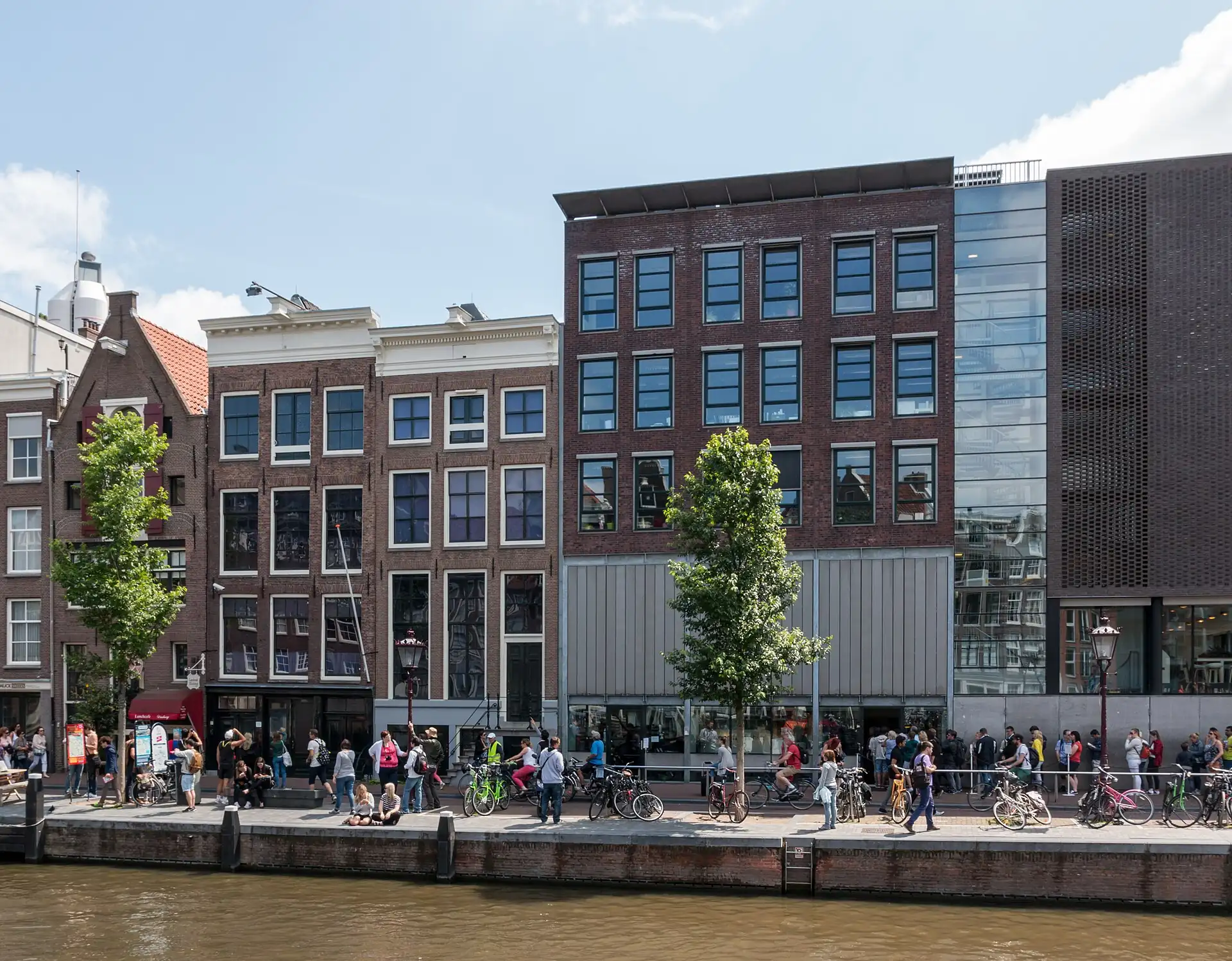
Morning cluster: the Anne Frank House at your timed slot, the Westerkerk and the quiet canals of the Jordaan; flat and shaded by trees, 2–3 hours.
rescue 98% · max p90 6.9′ · half
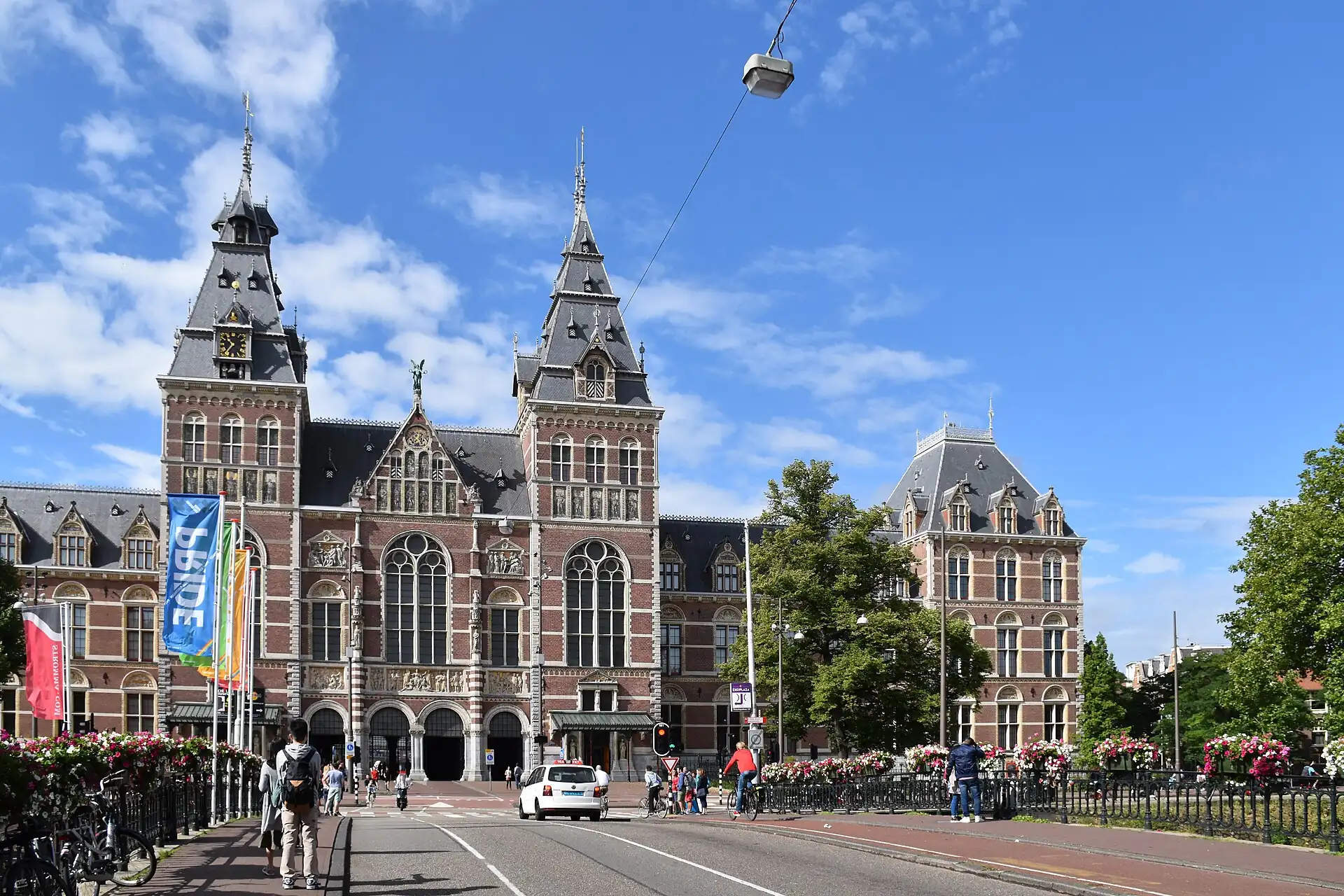
Morning cluster: the Rijksmuseum at your timed slot, then the open lawn of Museumplein; indoor and flat, so it works in rain.
rescue 99% · max p90 7′ · half
Lunch and evening cluster: the Spui square, the Dam and the canal ring between them; flat and busy, best before 10:00 or after 18:00.
rescue 100% · max p90 6.9′ · half
Late-morning cluster: the Albert Cuyp street market and Sarphatipark; flat and lively, best 10:00–14:00 on a market day.
rescue 97% · max p90 7′ · 90m
Days
Ready-made day plans, timed against opening hours and walking distances.
How long are you staying?
Pick a length and the plan rebuilds with timed stops and walking distances; add a pace and interests there. Plans longer than the city has places for stop at what the data supports.
Two weeks
Week 1: the 7-day plan. Week 2: one day trip at a time (Haarlem, Zaanse Schans, Keukenhof and the bulb fields), each followed by a day in one area, with two days held back for what you missed.
One month
Live like a resident: pick one area per week as your base, repeat the day-trip rhythm, and add a week away (Haarlem, Utrecht, Rotterdam). Book museums on weekday mornings, keep weekends for markets and parks.
Amsterdam in 3 days
3 daysThe Anne Frank House at a booked slot and a long lunch, the Rijksmuseum and a brown café, a market last; the final day ends with the bags already in the car to Schiphol.
Day by day
Day 1 — Anne Frank House, a 12:30 lunch table in the Jordaan
- 09:00Anne Frank House
- 12:30Lunch table 12:30 (Jordaan)
Day 2 — Rijksmuseum at opening, Museumplein, a brown café
Day 3 — Albert Cuyp Market, car to Schiphol at 11:30
- Stroopwafel stall, Albert Cuyp Market (optional)
- Herring stall, Albert Cuyp Market (optional)
- 11:30Car to Schiphol at 11:30
Places
“Best time” is when to arrive for the fewest crowds, for example “before 08:30”; “Go any time” means the hour makes little difference. More sights follow under “More sights and museums”.
6 places. Filters use the guide’s own ratings; a place with no rating is left out when a filter is on.
Things to do in Amsterdam: shows, nightlife and activities →
More to see and doRain & heat · Wheelchair and stroller
Wheelchair and stroller, place by place
How each place in this guide works for wheels, from its own page. Ratings are desk estimates unless a page says it was checked on the ground.
| Place | Step-free | Wheelchair | Stroller | What to know |
|---|---|---|---|---|
| Begijnhof | partial | caution | caution | A few worn cobblestones; no steps at the main gate. |
| Dam Square and the Royal Palace | partial | caution | good | None on the square; stairs inside the palace. |
| Van Gogh Museum | full | good | good | None on the visitor route; lifts serve every level. |
| Vondelpark | full | good | good | None. |
Rain-day and heat-day plan
Rain day
Rain can arrive any month with little warning; keep the Rijksmuseum, Van Gogh Museum or another indoor sight as the standing rain-day plan.
- 01Rijksmuseum — Large indoor museum; a full morning or afternoon.
- 02Van Gogh Museum — Indoor, about 90 minutes to 2 hours.
- 03NEMO Science Museum — Hands-on and indoor; good for kids on a wet day.
Heat day
Above 25 degC (uncommon): plan outdoor time before 11:00 or after 17:00; few hotel rooms have air conditioning.
- 09:00Vondelpark — Shade under mature trees; quiet before the crowds.
- 11:00Rijksmuseum — Indoor and cool for the middle of the day.
Day-trips and nearby
Places you can reach from Amsterdam in a day or with one night away, with the route and what it costs. Door to door, not ride time.
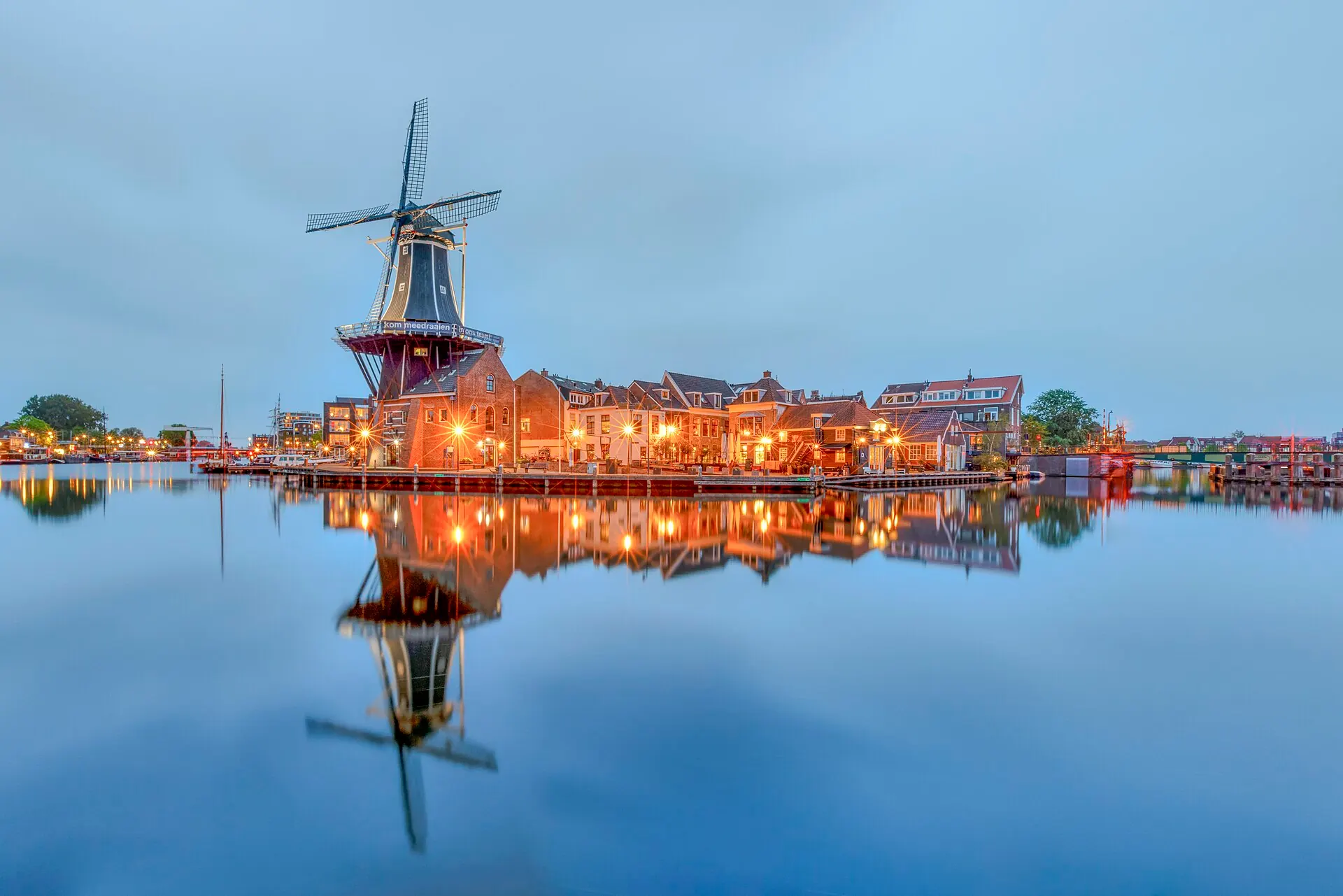 Photo: Joana Kruse joanaimages.com, CC BY-SA 4.0
Haarlem
goTrain about 15–20 min
Small old town with a market square; easy without a car.
- Time
- Half day
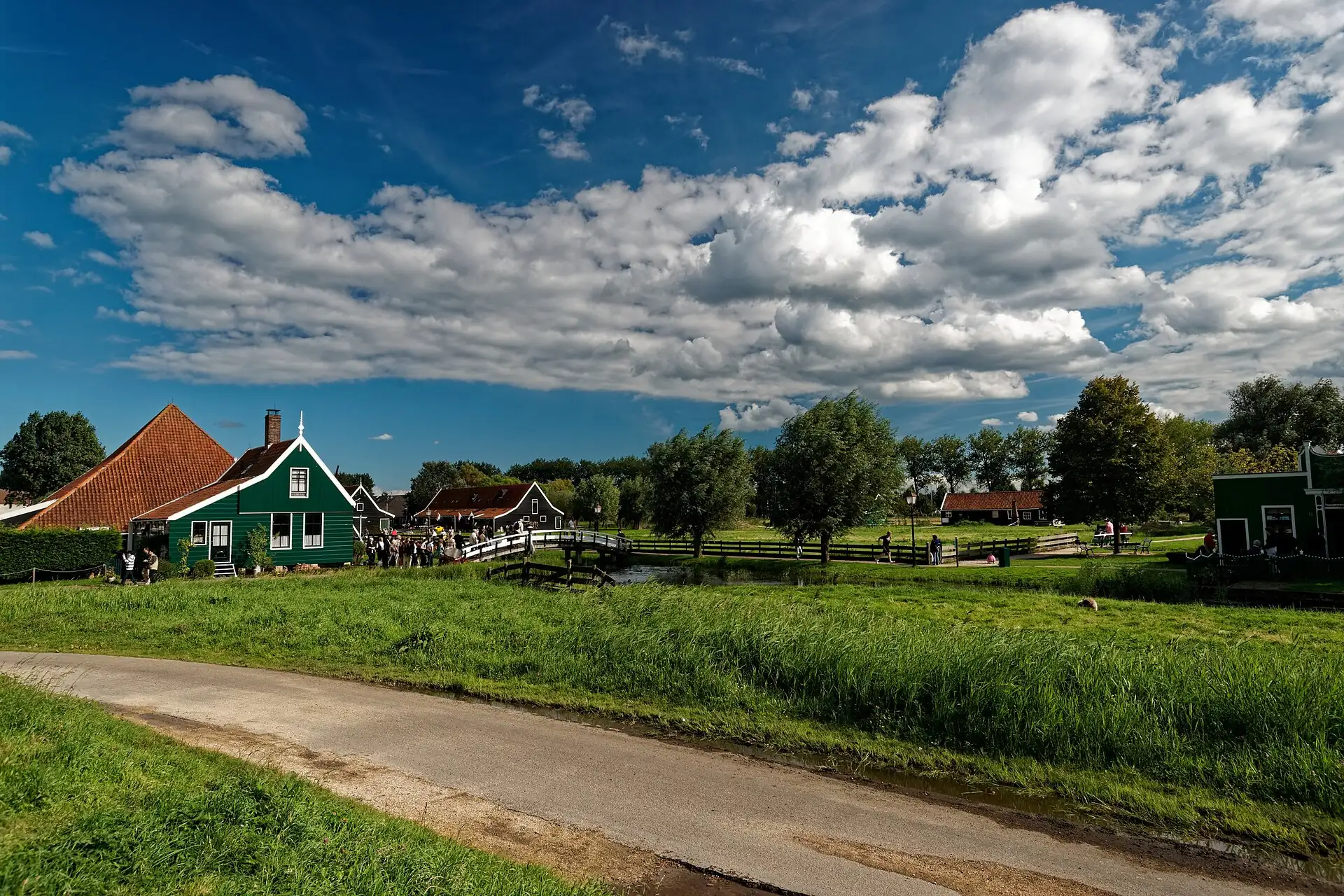 Photo: Txllxt TxllxT, CC BY-SA 4.0
Zaanse Schans
goTrain and a short walk, about 30–40 min
Windmills and workshops; busy midday.
- Time
- Half day
Keukenhof and the bulb fields
go off seasonBus or tour, about 1–1.5 h
Open in spring only; timed tickets and crowds.
- Time
- Full day
Go next
Eat & sleepWhere to eat and which area to sleep in
Eat & sleep
Where to eat and which area to sleep in
Eat
A short list of places worth crossing the city for, each with how to get a seat.
Restaurant finder: filter every place to eat in Amsterdam →
Vegetarian-friendly score
3.0 / 5 · Good
- Country diet noteOur country guide rates vegetarian eating as easy.2 / 2
- Places to eat in this guide0 of 5 places with a known answer are vegetarian-friendly, 4 partly.0.6 / 1.5
- Budget eating lines0 vegetarian lines in "Eat by budget".0 / 0.6
- Meat-free national dishes4 meat-free dishes in the country food list.0.4 / 0.4
- Dedicated vegetarian kitchens0 mentions of vegetarian restaurants, Buddhist or fasting kitchens.0 / 0.5
Country note: Easy: vegetarian options on nearly every menu; the Vegetarian Butcher brand started here.
Vegetarian places near me →Make a diet card →
How we score
- Country diet note (up to 2): easy 2, workable 1, mixed 0.75, hard 0; no note 0.5.
- City places to eat (up to 1.5): 1.5 × (vegetarian-friendly + half of partly friendly) ÷ places with a known answer; needs 3 or more known places.
- Budget eating lines marked vegetarian (up to 0.6): 0.2 each.
- Meat-free national dishes (up to 0.4): 0.1 each.
- Dedicated vegetarian kitchens mentioned — Buddhist chay, shōjin ryōri, Jain, fasting food, vegan cafés (up to 0.5): 0.1 each.
- Total rounded to the nearest half point, 0 to 5. Built from our own pages only, not from reviews.
Eating and drinking guideDrink
Drink & nightlife
| Where | What | Until | Note |
|---|---|---|---|
| Brown cafés (bruine kroegen) across the Jordaan and canal ring | Old pubs with dark wood, beer and bitterballen | About 01:00 on weekendsAbout 1:00 AM on weekends | The classic Amsterdam evening; Café Hoppe on the Spui is one of the best known. |
| De Pijp bars | Craft beer and cocktail bars | About 01:00-03:00About 1:00 AM-3:00 AM | Livelier and younger than the canal-ring cafés. |
| Coffeeshops | Licensed cannabis sale and use | Varies, often 22:00-01:00Varies, often 10:00 PM-1:00 AM | Cannabis is tolerated only inside a licensed coffeeshop; smoking it on the street in the centre is not allowed. Do not mix it with alcohol. |
By style
| Style | What | Where | Price | Until |
|---|---|---|---|---|
| Beer | Dutch lager (Heineken, Amstel) and a growing craft scene | Any brown café or bar | EUR4-7 a glass (2026 estimate) | Bar closing |
| Jenever (Dutch gin) | A juniper spirit, the ancestor of gin, served neat and coldTraditionally drunk in one go, not sipped like a cocktail. | Proeflokalen (tasting houses) such as those near the Begijnhof | EUR4-8 a glass (2026 estimate) | Bar closing |
Rules that bite
- Drink-driving limits apply to cyclists too in practice; a wobbling bike after a bar crawl is a common cause of canal falls.
- Do not smoke cannabis on the street in the centre; use a licensed coffeeshop.
Sleep
Pick the area first: it decides your walk home at night and your first morning.
Which neighborhood fits you
Three questions, one recommendation, with the reasons.
Your best fit
- Anne Frank House on the doorstep; canal-ring sights a 10-15 minute walk.
- Residential and mostly car-free; quieter than the canal-ring core.
Watch out: Boutique hotels dominate; few budget beds.
Next best: De Pijp
Built from our 1–5 desk scores per area; your answers stay in this browser.
More on sleepingYour area · With kids
Which area is yours
| If you are | Sleep in | Because |
|---|---|---|
| First visit, want to walk to the Anne Frank House | Jordaan | Sights on the doorstep; accept the stairs. |
| Budget-conscious, want a livelier evening | De Pijp | Cheaper beds, market mornings, a tram ride from the centre. |
01Jordaan
First-timers: a hotel in the Jordaan or on the western canals, a short walk to the Anne Frank House; choose one with a lift and a 24h desk, not a steep canal house that locks at midnight.
02De Pijp
Lively, cheaper nights near the Albert Cuyp market and a walk to the museums; more restaurants, fewer grand hotels.
Areas are in our default order until you tick a priority.
Scores are 1-5 desk judgements per priority (2026).
With kids
- Trams and the free Noord ferry are an easy, cheap activity in themselves.
- NEMO Science Museum (by Centraal Station) has hands-on exhibits and a roof terrace.
- Vondelpark has playgrounds and open grass; a stroller moves easily on its paved paths.
- Canal-house hotel stairs are steep and often without a lift: check before booking with a stroller or a travel cot.
- Bike lanes are a real hazard for a child who runs ahead; hold hands at every crossing.
PracticalMoney, essentials, safety and the pocket card
Practical
Money, essentials, safety and the pocket card
Money
What a day costs at three comfort levels, and how to pay.
- Budget
- €50–90 (≈ US$60–110) excl. bed / day
- Mid
- €90–170 (≈ US$110–200) excl. bed / day
- High
- €170 (≈ US$200)+ excl. bed / day
- Transit card
- Tap a contactless card or phone on trams and buses, or buy a day ticket; no card to top up is needed for a short visit.
- Cash rule
- Many places take cards only; keep €20 (≈ US$25) in coins and small notes and withdraw at bank ATMs.
More on moneyCosts · Budget · Buy
What things cost
- Lunch (sandwich or soup), per person€12–22 (≈ US$14–30)
- Rijksmuseum ticket€25–32 (≈ US$30–40)
- Anne Frank House ticket€15–20 (≈ US$18–25)
Trip budget
| Hotel double room1 × 3 nights × €160 | €480 |
| Food, local transport, entries2 × 3 days × €130 | €780 |
| Airport transfer, both ways (train)2 × €12 | €24 |
| eSIM or tourist SIM2 × €25 | €50 |
| Buffer 10%Price creep, a taxi you did not plan, one splurge | €133 |
| Trip total≈ €245 per person per day, bed included | €1,467≈ US$1,800 |
2026 estimate in euro; flights and tours excluded. Your choices stay in this browser.
Prices of common things
| Day ticket, trams and buses | EUR9-10.50 |
| Bike rental, per day | EUR12-20 |
2026 estimate; check locally.
Buy
- Bargaining
- Prices are fixed almost everywhere, including markets; haggling is not the norm and is not expected.
- Fixed-price check
- Supermarkets (Albert Heijn, Jumbo) are the price check for cheese, stroopwafels and chocolate before buying the same thing at a tourist shop near a canal.
Markets and shopping streets
| Where | What | When | Haggle | Note |
|---|---|---|---|---|
| Albert Cuyp Market | Food stalls, cheese, flowers, clothes | Mon-Sat, about 09:00-17:00 (check)Mon-Sat, about 9:00 AM-5:00 PM (check) | no | The best-known market in the city; go before noon for a thinner crowd. |
| Bloemenmarkt (floating flower market) | Tulip bulbs, souvenirs, flowers | Daily, shop hours | no | On Singel canal; bulbs sold for export carry a phytosanitary certificate, check before buying for your home country. |
| Noordermarkt | Farmers' market (Sat), flea and fabric market (Mon) | Sat and Mon mornings (check) | no | In the Jordaan, a short walk from the Anne Frank House. |
Shops by what they sell
| For | Where | Hours | Note |
|---|---|---|---|
| Cheese | Cheese shops around the Jordaan and canal ring; supermarkets for the everyday price | Shop hours | Ask for a taste before buying; vacuum-packed wheels travel well. |
| Diamonds | Showrooms near the Museum Quarter | Shop hours | Free "diamond tours" end in a sales pitch: go only if you actually want to buy, and compare a price at home first. |
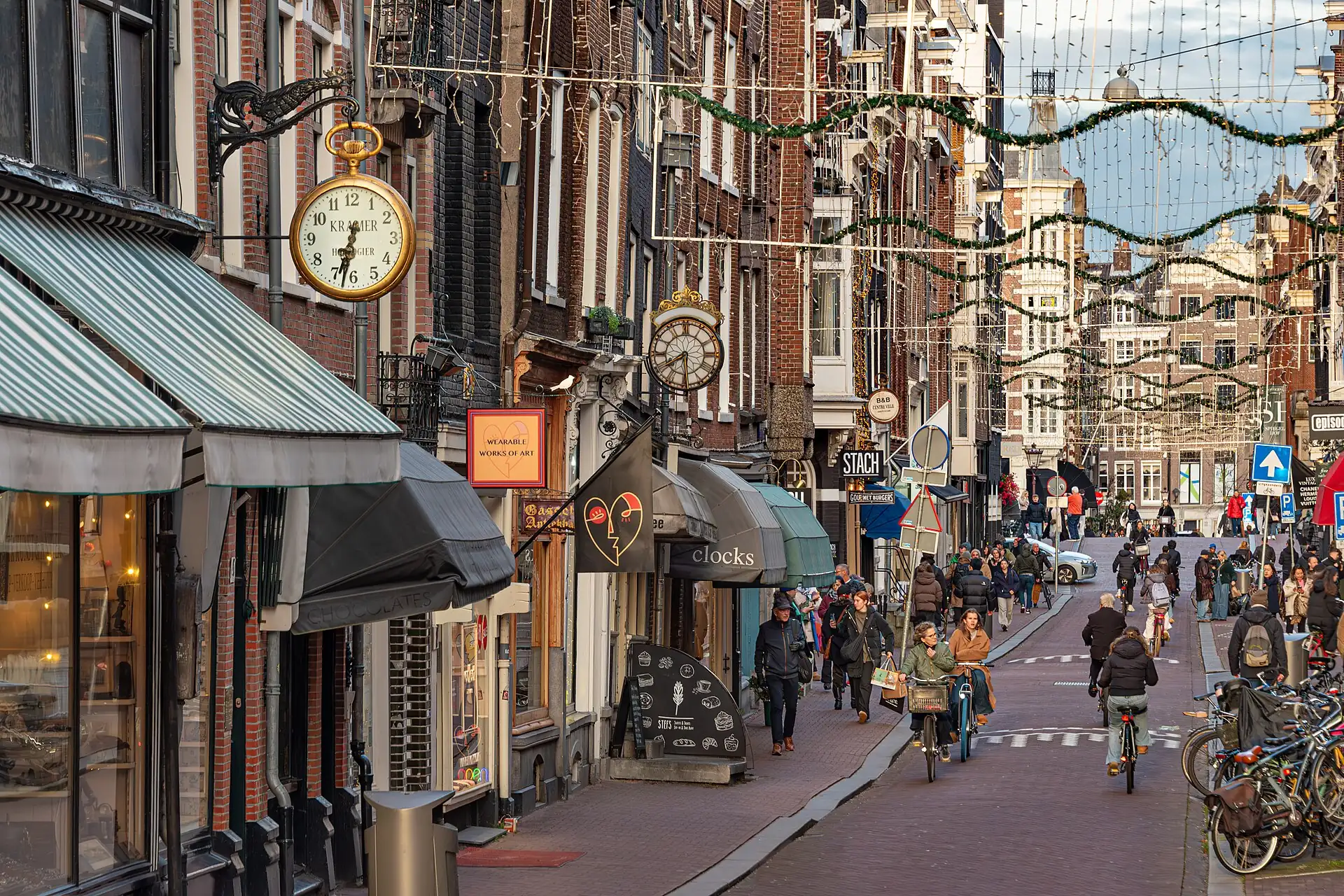
| Books and design | Spui and the Nine Streets (De 9 Straatjes) | About 10:00-18:00; later on Thu | The Nine Streets link the three main canals with independent shops. |
Changing money
| Where | Verdict | Why |
|---|---|---|
| Bank branches and GWK Travelex counters | use | Fair rate; passport needed. |
| Street money changers | avoid | Not a common sight in Amsterdam; if approached, decline. |
ATMs
- Where
- Bank ATMs (ABN AMRO, ING, Rabobank) and station machines; avoid standalone tourist-area ATMs that charge a high conversion fee.
- Conversion
- If the machine offers to charge in your home currency, decline and pay in euro.
Essentials and accessEssentials · Access
Essentials
- Plugs & power
- 230 V; sockets take types C and F. A plain adapter is enough for most visitors.
- Toilets
- Cafés, museums and stations; some public ones charge a small fee.
- Health
- Damp cold in winter; low canal edges and bikes are the main injury risks. Travel insurance with medical cover.
- Accessibility
- Flat streets, but cobbles, canal-side steps and hotel stairs; museums and newer hotels have lifts.
- Laundry
- Hotels offer same- or next-day service; launderettes in De Pijp and the Jordaan.
- Emergency numbers
- 112.
Pack
- A rain jacket in every season
- Comfortable shoes for cobbles
- A warm layer from October to April
- A contactless card that works abroad
Accessibility
Amsterdam's streets are flat, but cobbles, canal-side steps, narrow bridges and stair-only canal-house hotels make it harder going on wheels than the flat terrain suggests.
- Streets
- Flat but cobbled in the historic core; canal-side pavements are narrow and shared with bike traffic.
- Public transit
- Trams and buses are mostly low-floor and step-free; the metro has lifts at most stations.
- Hotels
- Canal-house hotels often have steep stairs and no lift; newer hotels and chains near the centre are the safer bet for step-free access.
- Toilets
- Accessible toilets in museums, malls and larger cafés; rare in small brown cafés.
Sights, step-free or not
| Rijksmuseum | step-free | Lifts and step-free routes throughout. |
| Van Gogh Museum | step-free | Step-free, lifts between floors. |
| Anne Frank House | hard | Steep, narrow stairs inside the hiding annex; not step-free. |
| Begijnhof | step-free | Flat courtyard, a few worn cobbles. |
Survive
Safety basics, the lines not to cross, and practical habits that save the day.
Safety
- Bikes, scooters and trams: look both ways before every crossing and never stand in a bike lane.
- Pickpockets work Centraal Station, Dam Square and crowded trams: keep phone and wallet in front pockets.
- Canal edges are low and unlit at night: keep away from the water's edge after drinking.
- Emergency: 112.
Red lines
- Anne Frank House and other memorials: keep voices low and follow the no-photo rules.
- Do not photograph workers in the red-light streets.
- Cannabis is tolerated only in licensed coffeeshops; do not smoke it on the street in the old centre.
Practical
- Toilets: cafés, museums and stations; some public ones cost a coin or a card tap.
- Tap water is safe to drink.
More on staying safeSafety map · Solo & women · Etiquette · Cope · Scams
After dark, by area
1 flagged area
De Wallen (Red Light District)
Take care
Day = about 07:00-19:00. What to watch in each area, day and night →
Scams and red flags
Walk away if you see these
- Unlicensed taxis at Schiphol or Centraal quoting a flat fare: use the official rank, a booked ride or the train.
- Ticket sellers outside the Anne Frank House and the Rijksmuseum: buy only on the official sites.
- Bike-rental or e-scooter deposits that are charged extra on return: photograph the bike and read the terms.
Safety by area and hour
| Area | Day | Night | What to watch |
|---|---|---|---|
| Jordaan | fine | fine | Bike lanes look like pavement; step aside before you stop to check a map. |
| Canal ring and Dam Square | fine | fine | Pickpockets in crowds around Centraal Station, Dam Square and busy trams. |
| De Wallen (Red Light District) | fine | caution | Crowded and loud late at night on weekends; do not photograph window workers; watch for opportunistic theft. |
| Museum Quarter | fine | fine | Quiet after museum hours; well lit. |
| De Pijp | fine | fine | Busy and safe; standard city-centre caution after dark. |
- Bikes are the everyday hazard, not crime: look both ways at every crossing, even on a one-way street.
- Canal edges have no barrier in most places; keep back from the water after dark or after drinking.
Solo, women and LGBTQ+ travellers
Solo
- Easy and safe city to explore alone; cafés and hostels are social.
- Cycling solo is fine once you are confident in traffic; start on a quiet Jordaan street before trying a main road.
Women
- Harassment is uncommon; standard city caution after dark, especially around De Wallen on weekend nights.
- Solo women cycle and walk freely; keep bags zipped and in front in crowds.
LGBTQ+
- Amsterdam is one of the most LGBTQ-friendly cities in Europe; same-sex marriage has been legal since 2001.
- The Reguliersdwarsstraat and Amstel areas have the main LGBTQ nightlife; the Pride canal parade runs in early August.
Etiquette in Amsterdam
- Bikes
- Never walk or stand in a bike lane (usually red asphalt); look both ways even on a one-way street.
- Coffeeshops
- Cannabis stays inside the licensed coffeeshop; do not smoke it on the street or mix it with alcohol.
- De Wallen
- Do not photograph window workers; treat the area as a place people live and work, not a spectacle.
- Tipping
- Not required; round up or leave 5-10% for good service.
- Directness
- Dutch conversation is direct and can read as blunt to visitors; it is not meant as rude.
Cope
Hospitals and clinics that handle foreigners
| Where | Area | Use it for |
|---|---|---|
| OLVG (Oost or West location) | Multiple sites | Major hospital with an emergency department; ask your insurer about direct billing. |
| Amsterdam UMC | South-east and west sites | University hospital, emergency care. |
| Huisartsenpost (out-of-hours GP) | Citywide, phone-first triage | For non-emergency care outside office hours; call before turning up. |
Visa extensions
- Office
- IND (Immigratie- en Naturalisatiedienst) handles visas and residence; short-stay tourists rarely need to visit in person.
- Overstay
- Schengen overstays are fined and can affect future entry; check your allowed days before you extend a trip.
Embassies and consulates
| Country | Address | Phone | Note |
|---|---|---|---|
| United States | Museumplein 19 | check | (check) |
| United Kingdom | Koningslaan 44 (check current address) | check | (check) |
| Germany | De Lairessestraat 172 | check | (check) |
- Lost passport
- Police report, then your embassy or consulate for an emergency document.
- Pharmacies
- Apotheek signs; most keep office hours, with a rotating night pharmacy per neighbourhood posted on the door.
- Laundry
- Launderettes (wasserette) in the Jordaan and De Pijp; hotels offer paid laundry service.
Apps and offline kitOffline kit
Offline kit
Set up before you leave, so Amsterdam still works with no signal or a dead roaming plan.
On your phone
- Maps: open the city in Google Maps, tap the place name, then Download offline map (or use an offline-maps app).
- Data: install an eSIM or buy a local SIM before the first taxi; the apps in this guide depend on it.
- Translation: download the local language for camera translation.
- Screenshots: booking confirmations, hotel address in the local script, and the emergency numbers.
This guide
Save the Amsterdam guide and its pages on this device; it opens without a connection.
Phrases that do the work
Greeting
Hello
Hallo
HAH-loh
Thanks
Thank you
Dank je wel
dahnk yuh vel
Shop
How much is it?
Hoeveel kost het?
HOO-vayl kost het
Café
The bill, please
De rekening, alstublieft
duh RAY-kuh-ning, AHL-stoo-bleeft
Taxi
To this address, please
Naar dit adres, alstublieft
nar dit ah-DRES, AHL-stoo-bleeft
Toast
Cheers!
Proost!
prohst
Pocket card
Fill in, then print or save as PDF
Stays in this browser only; nothing is sent anywhere.
AmsterdamAmsterdam
Pocket card · Voykit
My bed tonight
—
—
—
Naar dit adres, alstublieftTo this address, please
Emergency
- All services112
Embassy
Write your own embassy's phone number below; most are near the Museum Quarter.
My embassy: —
Fare anchors (2026 estimate)
- Schiphol to Centraal, train: About EUR5-6, 15-20 min
- Tram or bus, single ride: EUR3-4
Say or show
- Hallo — Hello (HAH-loh)
- Dank je wel — Thank you (dahnk yuh vel)
- Hoeveel kost het? — How much is it? (HOO-vayl kost het)
- De rekening, alstublieft — The bill, please (duh RAY-kuh-ning, AHL-stoo-bleeft)
- Proost! — Cheers! (prohst)
Most locals speak English; Dutch phrases are a courtesy, not a necessity.
Deep diveHistory, reading, photos and every source
Deep dive
History, reading, photos and every source
Sources
- officialNetherlands Board of Tourism
- officialAmsterdam city marketing (I amsterdam)
- secondaryWikivoyage — Amsterdam
Ask about Amsterdam
Loading…
Was this useful?