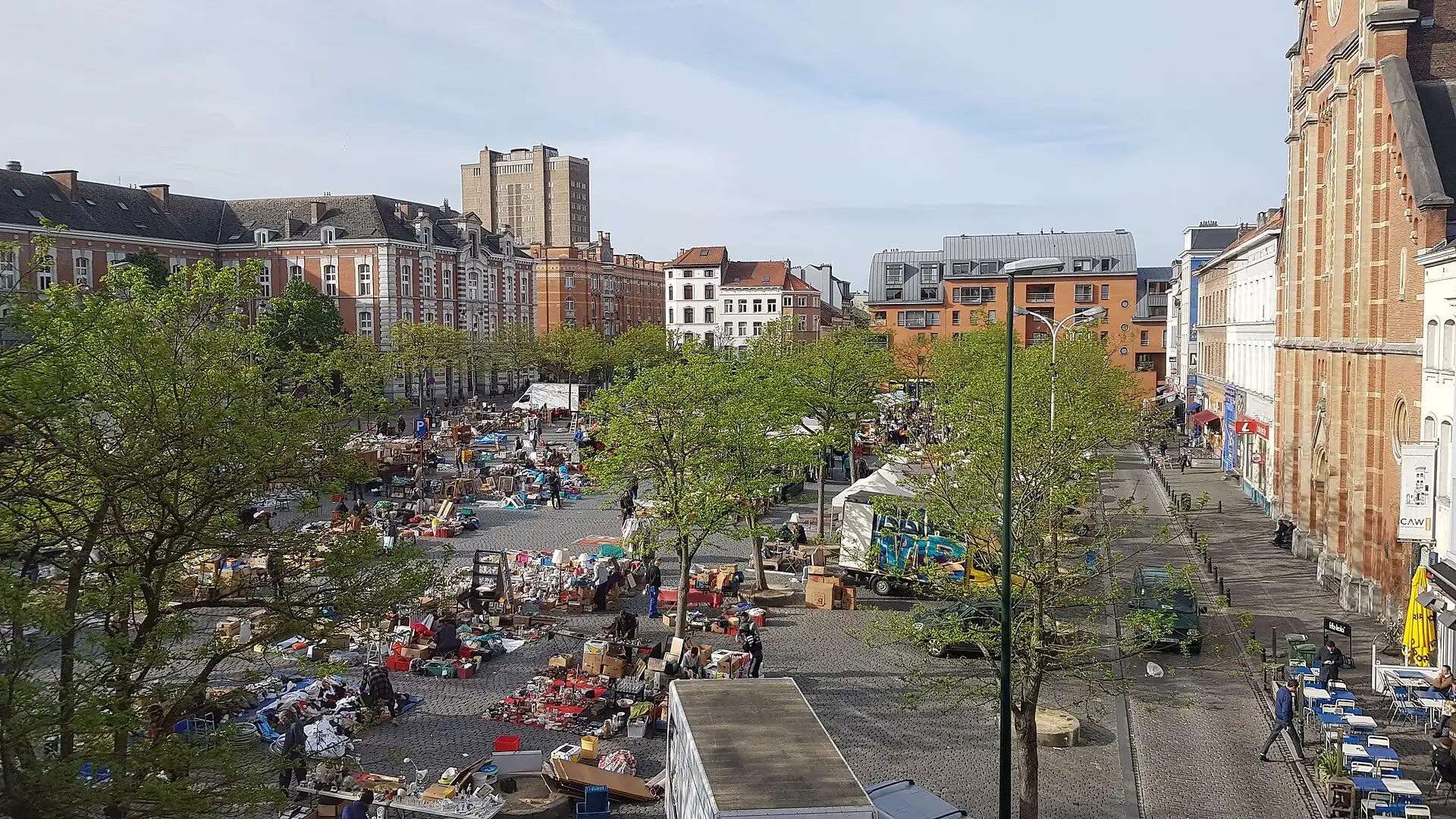
Brussels
Bruxelles / Brussel
Code BG · 4 walking zones
Brussels is a two-speed city: do the Grand-Place, the arcades and the Sablon on foot in one morning, and give the EU quarter, Cinquantenaire and Horta's Saint-Gilles a separate half day by metro or tram.
Our quick read of Brussels, scored 1–5 (friction is out of 100). Cash need: how often you still need notes. Heat risk: how hot days get. Stroller: how easy wheels are. Friction: overall effort for a first visit. Desk judgements, so check before relying on them.
- Local time
- --:--
- Weather
- forecast below
- Currency
- EUR
- Best months
- Mar · Apr · May · Jun · Jul · Sep · Oct
- Airports
- Brussels (BRU) · Brussels South Charleroi (CRL)
Walking zones: the 4 areas this guide plans a day around. Each is a district you can cover on foot, so you do one zone per half-day and ride the train between them. The code (BG 01, BG 02…) is just the zone's number on the Brussels line; the line under each name says how bags fare there and how much time it needs.
Map of Brussels
Use the switches to show or hide each kind of pin. A switch that is on shows its pins on the map; tap it again to hide them. "Show only" keeps just the pins that match (for example, places that fit a suitcase). Tap any pin for its name and a link to its page.
- Where to sleep
- Places
- Eat
- Walking clusters
- Rest stops
From the airport Brussels (BRU) to your bed · South Charleroi (CRL) to your bed
Tap a pin for its card. Places without their own coordinates are shown by their walking cluster.
Why Brussels
The centre of Brussels is small and flat enough to walk, but the sights beyond it are spread over trams and metro lines, and the language on every sign, ticket and station is in two versions. Trips go wrong when a day is planned around Monday, when the big museums are closed, or when a late flight meets a train that has stopped. Four clusters cover a first visit; Bruges, Ghent and Antwerp are trains away from one kept bed.
See first
- 1
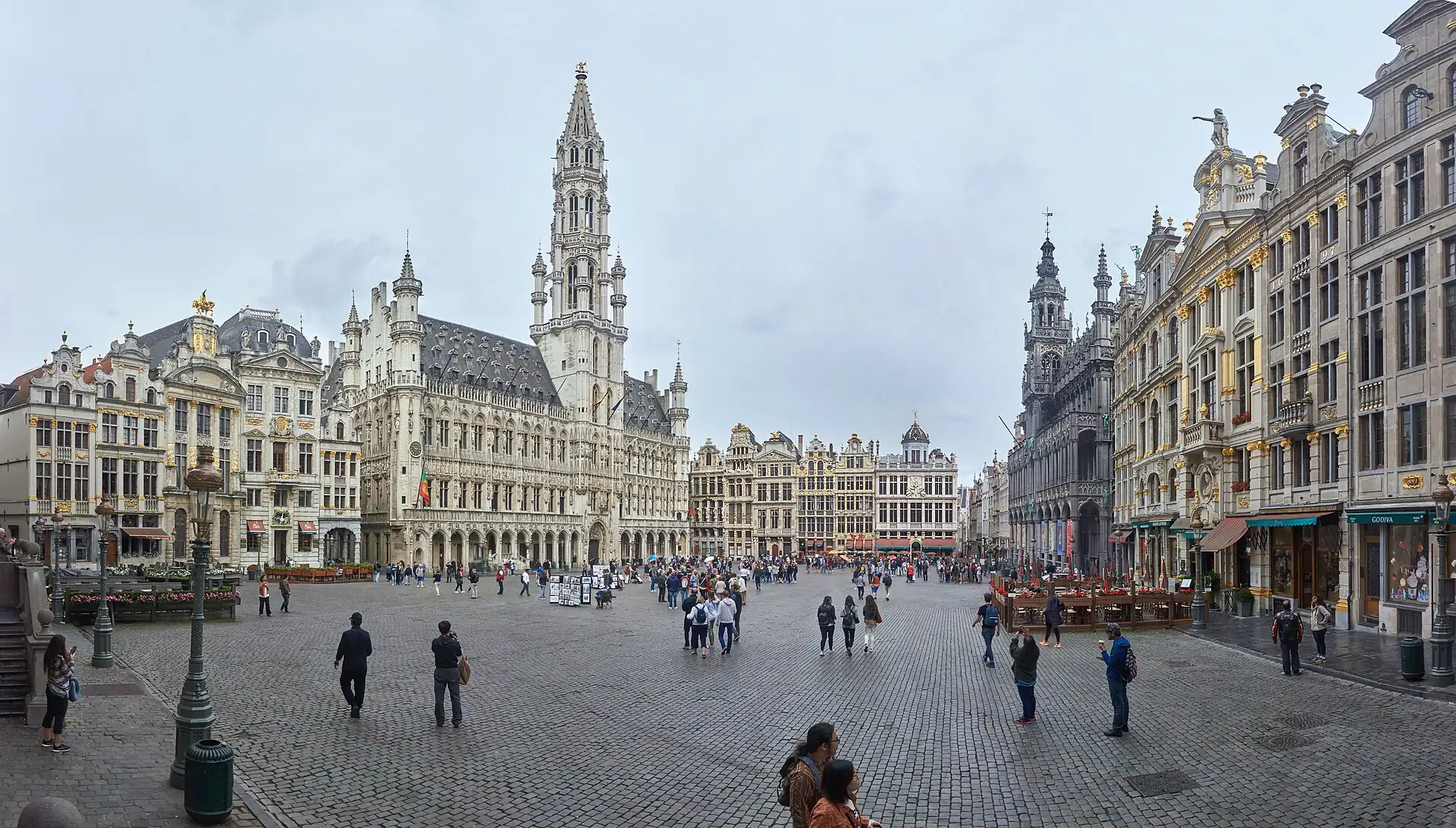 Grand-Place at first light or once it is lit · 20–40 min
- 2
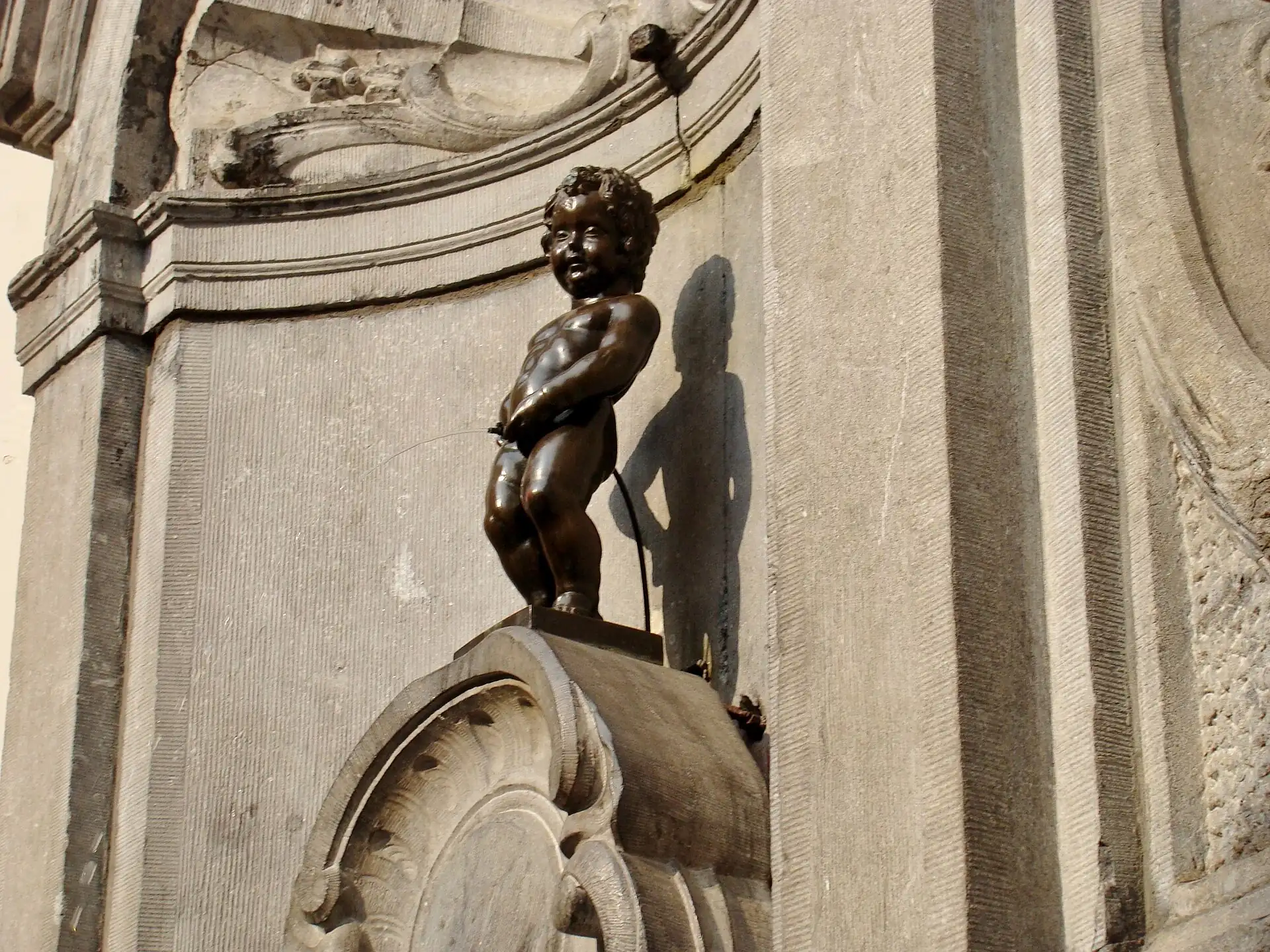 Manneken Pis · 5–10 min
- 3
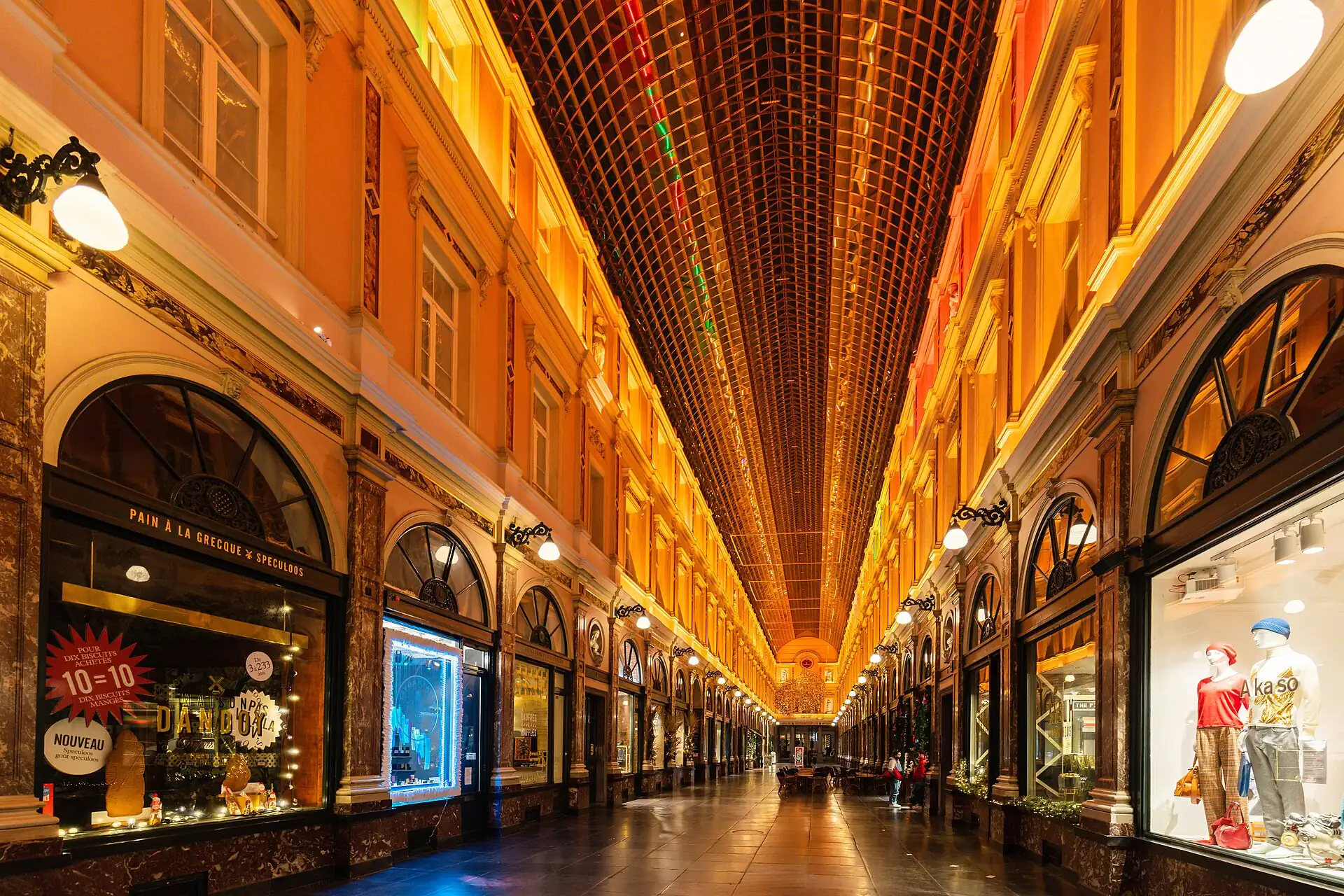 Galeries Royales Saint-Hubert · 15–30 min
- 4
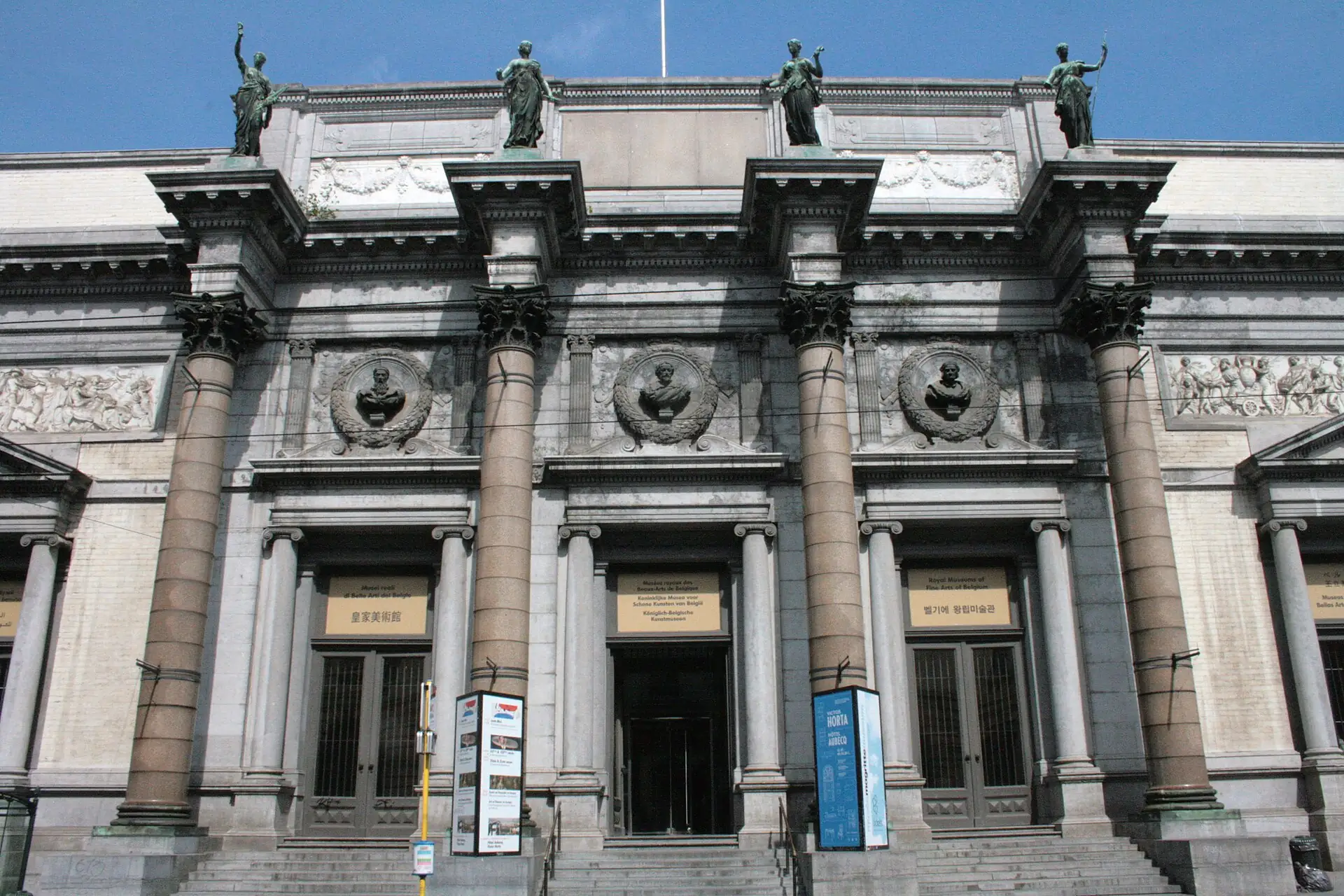 Royal Museums of Fine Arts and the Magritte Museum · 2–3 h
- 5
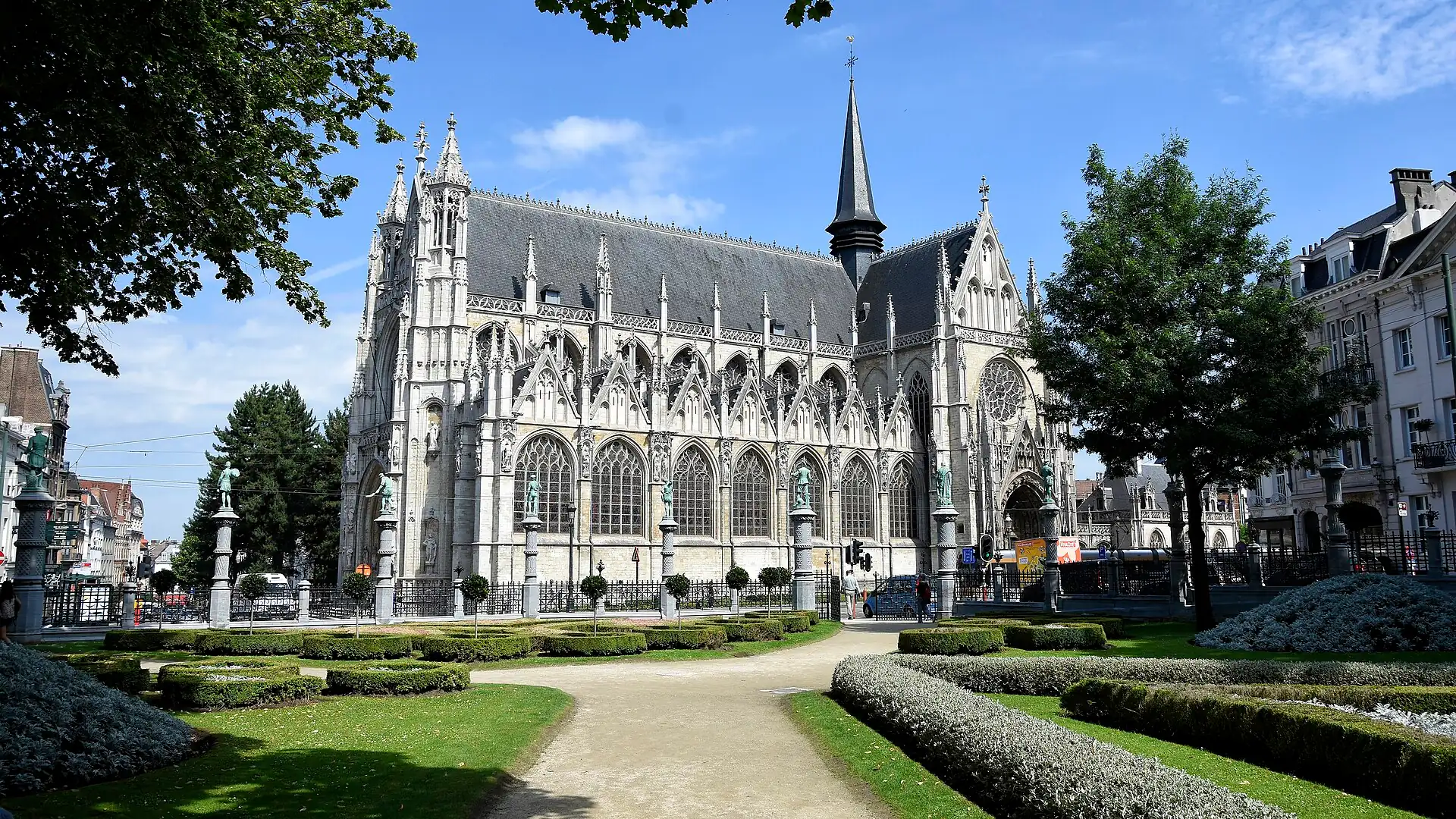 Sablon square and church · 30–60 min
Fits
- Food and chocolate walkers
- Museum and Art Nouveau trips
- Short city breaks by rail
- Bases for Bruges, Ghent and Antwerp day trips
Does not fit
- Anyone who wants a single historic core with no transit
- Monday museum plans
- Travellers with strollers who avoid cobbles
How long
- 2 daysGrand-Place, arcades and Sablon, then Cinquantenaire
- 3 daysFour clusters: centre, museums, EU quarter, Saint-Gilles
- 5 daysFour clusters + Bruges day + Ghent day
Good for
- First timers
- Foodies
- Budget
- Couples
- Solo
- Families
About Brussels
Brussels starts as a river crossing: around 979, Charles, Duke of Lower Lorraine, built a fort on an island in the Senne, at the marshy spot the name may come from — "bruoc sella", settlement on the marsh. The island is Saint-Géry today, a small square with a covered market hall, easy to walk past without knowing it was the beginning.
The city grew rich on the cloth trade between the Rhine and the English Channel, and by the 1300s its guilds were strong enough to face down the Dukes of Brabant. The guildhalls that ring the Grand-Place are not medieval survivors — nearly the whole square was flattened in two days in 1695 — but they were rebuilt within about four years by the same guilds, in the same footprint, in a defiant Baroque.
Good to know
- Brussels means both the city of Brussels (the historic centre) and the Brussels-Capital Region of 19 municipalities; Saint-Gilles and the EU quarter are in the region, not in the old centre.
- Visit Brussels information point in the Town Hall / Hôtel de Ville building on the Grand-Place, and a second point in Brussels-Central station (BIP — Brussels Info Place moved locations in recent years; confirm the current address).
- Hotel desks book museum tickets, day trips and the Horta Museum's timed slots.
Go deeper 9 min read · 5 chapters
Brussels is a capital built on a covered-over river, home to a kingdom, a region and the headquarters of the European Union at once. This deep dive reads the city in layers — the guild square rebuilt after a bombardment, the Art Nouveau houses of a single architect, the comic strips on its walls, and the institutions that turned a corner of it into an international quarter — so a walk from the Grand-Place to Cinquantenaire makes more sense as history, not just geography.
1History2 min
Brussels traces its founding to around 979, when Charles, Duke of Lower Lorraine, built a fort on an island in the river Senne. The name is often linked to Old Dutch for "settlement on the marsh", which fits the site: the Senne valley was wet ground, and the city that grew there kept fighting its river long after the fort was gone. That island, Saint-Géry, is a modest square today, easy to pass without noticing it is where the city began.
By the 13th and 14th centuries Brussels was a major stop on the cloth trade between the Rhine and the English Channel, wealthy enough for its craft guilds to win representation in city government alongside the old patrician families. That wealth built the Grand-Place, though almost nothing standing there today predates 1695. In two days that August, French artillery under Marshal de Villeroy, acting on the orders of Louis XIV, bombarded the city and destroyed most of the square and thousands of buildings around it. The guilds rebuilt within about four years, in Baroque stone rather than the wood and plaster that had burned, which is why the square reads as a unified 17th-century set piece rather than a patchwork of centuries.
Brussels served as a capital more than once before it was ever the capital of an independent Belgium. It was a seat of the Dukes of Brabant, then of the Burgundian and Habsburg Netherlands — briefly the administrative heart of an empire under Charles V that stretched from the Americas to Central Europe — then of the Austrian Habsburgs through the 18th century, with a short interruption of French annexation after 1795. When the Belgian Revolution broke out at the opera house in 1830 and the country won independence from the Kingdom of the Netherlands, Brussels was the natural choice as capital of the new state.
The 19th century reshaped the city as much as any war. The Senne had become an open sewer as the city industrialised, and between 1867 and 1871 it was vaulted over; the wide central boulevards that now cut through the old street pattern, from the Bourse to Place de Brouckère, sit on top of the buried river. The 20th century added a second capital function on top of the first: Brussels became host to the forerunners of the European Union from the 1950s and to NATO from 1967, and the building boom that followed — a coinage in urban planning, "Brusselization", for the demolition of historic streets to make way for offices and a road tunnel — still shows in parts of the European Quarter.
- Traditional founding date
- 979, Charles, Duke of Lower Lorraine
- Grand-Place rebombarded
- 1695, by French forces under Marshal de Villeroy
- Guildhalls rebuilt
- Within about four years of 1695
- Capital of independent Belgium
- Since 1830
- Senne river covered over
- 1867–1871
- Seat of EU institutions
- Since the 1950s
2Neighbourhood stories2 min
The Pentagon — what Brussels residents call the old centre inside the ring boulevards that trace the vanished 14th-century city walls — is really several small towns pressed together. The lower town around the Grand-Place was trade and guilds; the upper town around Place Royale and the Coudenberg, where a royal palace once stood before it burned in 1731, was aristocracy and government. That difference in elevation and character survives: the walk up from the Grand-Place towards the Sablon and the Royal Museums climbs a real hill, and it also climbs a social one.
South of the grand museums, the Marolles sits in the shadow of the Palais de Justice, a vast 19th-century law-courts building so large it was, at completion in 1883, reportedly the biggest structure built anywhere in the 19th century. The Marolles below it stayed a working-class, French-speaking neighbourhood even as the rest of the city grew more prosperous, and its flea market on Place du Jeu de Balle — daily, busiest at dawn — is a genuine local market rather than a tourist recreation of one.
East of the centre, the European Quarter is the newest neighbourhood in the old city's story, built up from the 1950s around what became the European Commission's Berlaymont headquarters and the roundabout at Schuman. It is deliberately international: flags, glass towers, multilingual signage, and, on weekdays when the institutions are working, a very different crowd from the rest of Brussels. On weekends, when the desks empty out, it can feel closer to an office park than a neighbourhood.
Saint-Gilles and neighbouring Ixelles, south of the centre, grew up in the late 19th and early 20th centuries as Brussels expanded beyond its walls, and they absorbed the city's Art Nouveau building boom more than any other district. Victor Horta built his own house and studio on Rue Américaine in Saint-Gilles, now the Horta Museum, and the surrounding streets still carry his and his contemporaries' curved ironwork and glass on buildings that are simply lived in, not museums.
- Palais de Justice completed
- 1883, Joseph Poelaert
- Marolles flea market
- Daily, Place du Jeu de Balle
- European Quarter anchor
- Schuman roundabout, from the 1950s
- Horta's own house
- Rue Américaine, Saint-Gilles
3Architecture and Art Nouveau2 min
Brussels' signature architectural export is Art Nouveau, and its clearest starting point has a date: 1893, when the architect Victor Horta completed the Hôtel Tassel for a client, using an iron-and-glass structural frame and curved, plant-like ornament throughout the interior in a way no European building had combined before. Horta went on to design his own house and studio nearby, now the Horta Museum, along with several other town houses across the city; four of his buildings, including the Hôtel Tassel and his own house, are listed together as a UNESCO World Heritage site.
The style spread quickly through Brussels' growing southern districts in the 1890s and 1900s, as other architects — Paul Hankar, Victor Horta's contemporaries and followers — applied the same curved lines, wrought iron and stained glass to ordinary town houses, not only grand commissions. Much of it survives simply because it kept being lived in: walking the streets around Saint-Gilles and Ixelles turns up doorways, window frames and iron balconies from the period on buildings with no plaque at all.
The Grand-Place itself represents an earlier and very different architectural moment: Baroque guildhalls rebuilt at speed after 1695, ornate but built to a strict, shared street line the guilds imposed on each other, which is why the square reads as one composition rather than a jumble of separate buildings. The 19th century added its own layer with the Galeries Royales Saint-Hubert, opened in 1847 as one of Europe's first glass-roofed shopping arcades, a building type that let Brussels shop in comfort regardless of its wet climate — a very practical piece of architectural history.
The Cinquantenaire complex is a third architectural moment again: built for the 1880 exhibition marking 50 years of Belgian independence, with the triumphal arch completed only in 1905 under Leopold II, in a grand, imperial style that borrowed from Rome more than from anything local. It sits at the edge of the European Quarter, so a single walk east from the centre passes through three very different centuries of what Brussels wanted to look like.
- Hôtel Tassel, first Art Nouveau building
- 1893, Victor Horta
- UNESCO-listed Horta buildings
- Four town houses, including his own house
- Galeries Royales Saint-Hubert opened
- 1847
- Cinquantenaire arch completed
- 1905, for Leopold II
4Comics, chocolate, beer and frites2 min
Belgium's comic-strip tradition is centred on Brussels in a way few other cities can claim for any art form. Hergé, the creator of Tintin, worked in the city; Peyo created the Smurfs here; Morris drew Lucky Luke. The city funds a Comic Strip Route of large wall murals — dozens across the centre and beyond — and the Belgian Comic Strip Center occupies a former textile warehouse designed by Victor Horta, so the building itself belongs to the earlier architectural story as much as to this one.
Chocolate has a specific Brussels claim to fame: the filled praline, now the standard form of a "Belgian chocolate", was invented in 1912 by Jean Neuhaus, working from a shop inside the Galeries Royales Saint-Hubert. His family's shop is still there. Chocolate had been sold in Brussels for much longer — Belgium's colonial history in the Congo, a dark and separate part of this story, made cocoa and its trade politically and economically significant to the country from the late 19th century — but the filled, bite-sized praline as visitors know it today is a 20th-century Brussels invention.
Brussels sits in the Senne valley, and that geography gave the region a beer style found almost nowhere else: lambic, fermented spontaneously by wild yeasts naturally present in the local air rather than a cultivated strain. Gueuze, a blend of young and old lambics, and kriek, a cherry-flavoured lambic, both descend from this tradition; the Cantillon brewery in Anderlecht still makes lambic the traditional way and is open to visitors. None of Belgium's six Trappist breweries sits inside Brussels itself, but all are sold in its bars.
Frites are claimed by both Belgium and France as a national invention, and the argument is old enough that neither side is likely to concede it. What is not disputed is the Brussels frituur culture: twice-fried potato in paper cones, sold from dedicated stands rather than as a side dish, with a wide menu of sauces beyond ketchup. The waffle culture splits in two as well — the light, rectangular Brussels waffle and the denser, caramelised Liège waffle are different pastries with different origins, sold side by side across the city regardless of which region they properly belong to.
- Tintin creator
- Hergé, worked in Brussels
- Filled praline invented
- 1912, Jean Neuhaus
- Lambic beer style
- Spontaneously fermented, native to the Senne valley
- Trappist breweries in Belgium
- Six, none inside Brussels itself
5The European Quarter and a bilingual capital2 min
Brussels became an international capital almost by accident of timing. When the founding members of what became the European Union needed a seat for the European Coal and Steel Community's institutions in the 1950s, Brussels was a compromise location — central, already home to some diplomatic infrastructure, and not the capital of one of the larger founding states. Decades of further treaties layered the European Commission, the Council of the European Union and, part-time, the European Parliament onto the city, alongside NATO's headquarters from 1967 (NATO moved into a newly built headquarters near the airport in 2018).
The result is a city with two distinct rhythms. On weekdays the European Quarter around Schuman fills with staff, lobbyists and journalists, and the bars around Place du Luxembourg — known locally as "Plux" — are busiest on Thursday evenings, the informal end of the institutional week. On weekends the same streets can feel closed, since the restaurants and cafés that serve the weekday crowd often do not bother opening for a mostly empty neighbourhood.
Brussels-Capital Region is legally bilingual, French and Dutch, a status that reflects Belgium's own division between French-speaking Wallonia and Dutch-speaking Flanders, with Brussels historically Dutch-speaking but now overwhelmingly French-speaking day to day, surrounded by Flemish territory. Every official sign, street name and government document appears in both languages, which is why place names in this guide often carry two forms — Grand-Place and Grote Markt, Sablon and Zavel — describing the same location.
The EU presence has not erased the older city so much as sat down beside it. A ten-minute metro ride separates the flags and roundabouts of the European Quarter from the guildhalls of the Grand-Place, and the contrast is part of what makes Brussels an unusual capital to visit: a small, walkable historic core, and beside it the working machinery of a continental institution, with comic murals and chocolate shops belonging entirely to neither.
- EU institutions in Brussels since
- The 1950s (as forerunner bodies)
- NATO headquarters
- In Brussels since 1967; rebuilt near the airport, 2018
- Official languages of Brussels-Capital Region
- French and Dutch
- Weekday vs weekend EU quarter
- Busy on weekdays, quiet on weekends
Read, watch, wordsReading · Glossary · Sources
Reading
- Brussels — A Cultural and Literary History — André de VriesA general history of the city aimed at visitors, covering the periods and neighbourhoods this dive summarises.
- The Invention of Belgium — checkBackground on how Belgium and its capital came to exist as a state in 1830; check current editions for an accessible general history.
Glossary
| Term | Local | Meaning |
|---|---|---|
| Pentagon | Le Pentagone / De Vijfhoek | The old centre inside the ring boulevards that trace the vanished city walls. |
| Ommegang | Ommegang | A historical pageant re-enacting a 16th-century royal procession, held on the Grand-Place. |
| Praline | Praline | A filled chocolate shell, invented in Brussels in 1912. |
| Lambic | Lambic | Spontaneously fermented beer native to the Senne valley. |
| Frituur / fritkot | Frituur / fritkot | A dedicated stand selling frites and similar fried snacks. |
| Brusselization | Bruxellisation | The term coined for the demolition of historic streets for office development, especially in the European Quarter. |
Read for this deep dive
Background reading only: the text above is written by Voykit, not copied from these pages.
Rules in force · 9Non-EU visitors get 90 days in any rolling 180-day window…
- Europe ↗Non-EU visitors get 90 days in any rolling 180-day window, counted across all 29 Schengen states together — not per country; the Entry/Exit System now logs each crossing, so an overstay is detected automatically.
- Europe ↗On the first Schengen entry since EES began, non-EU travellers give four fingerprints and a face photo at the border instead of a passport stamp; there is nothing to apply for or pay in advance.
- Benelux ↗Dutch and Belgian police can ask anyone to show identification (in the Netherlands from age 14): carry the original passport or EU ID card — a photocopy is not accepted.
- Benelux ↗Tap-in fares, Dutch and Belgian domestic tickets and Luxembourg's free transport all stop at the border: buy an international ticket for cross-border legs, or you will be fined on board.
- Belgium ↗Belgium is in the EU and the Schengen area; the EU Entry/Exit System applies to non-EU visitors. Check the official EU and Belgian sources for your passport.
- Belgium ↗Cities have different names in Dutch and French (Antwerpen/Anvers, Gent/Gand, Brugge/Bruges, Luik/Liège); check both on tickets and signs.
- Belgium ↗Brussels, Antwerp and Ghent have low-emission zones; if you drive, check that the car is registered or allowed before entering.
- Belgium ↗Belgian unions call national action days that stop trains, trams and flights; check SNCB and your airline two days before any travel day.
- Brussels area ↗For day trips, buy a return or a Flanders day ticket; the Brussels city ticket does not cover trains to other cities.
Entry rules depend on your passport. Full visa guide
Emergency numbers for Brussels112 ▾
Tap a number to call from your phone. These are the numbers listed in this guide; a row marked check has not been verified.
Planning is the full guide. I'm here keeps what is open and the cheat card.
Right now
Checking the weather…
Working out what is open near you…
What is open nowclock, closures, places open
Now in Brussels
Local time in Brussels
--:--
Loads in your browser · Europe/Brussels
This month
Month verdict appears here.
Closed today
See the weekly grid below.
| Weekly closure | Mon | Tue | Wed | Thu | Fri | Sat | Sun |
|---|---|---|---|---|---|---|---|
| Royal Museums of Fine ArtscheckConfirm before a Monday visit. | ✕ | · | · | · | · | · | · |
If today is a closure day: Monday is the day to plan around — the Royal Museums of Fine Arts and several other museums close, though the Grand-Place, arcades and Cinquantenaire park stay open. Check the Horta Museum's own closing day before booking a slot.
- check Horta Museum: Closing day varies by season; check before booking a timed slot.
Weekly closures come from our place pages; national and regional holidays add closures not shown here.
Open now
The sights and places to eat on our list that are open at this moment, in the city's time, nearest first from where you are staying.
Loads in your browser with the city's local time.
Hours marked (check) are typical, not confirmed. Walking times are straight-line estimates. Open at another time →
Cheat cardthe pocket version
Cheat card
The essentials on one card: save it as an image for your phone, share it, or print it.
Brussels
Bruxelles / Brussel
- Money
- Keep €20–30 in coins for toilets and small cafés; use bank ATMs, not exchange booths.
- SIM
- An eSIM before you fly works across the EU; SIM kiosks in arrivals need a passport.
- Ride app
- Uber / Bolt
- Emergency
- 112 All emergencies · 101 police · 100 ambulance and fire (not 911, 999 or 000)
- Plugs
- Sockets C/E. US/Canada (A/B): adapter · UK/Ireland (G): adapter · Australia/NZ (I): adapter. 230 V: US 120 V-only devices (hair dryers) need a converter; most chargers are dual-voltage.
Say it
- Hello: Bonjour (bon-zhoor)
- Thank you: Merci / Dank u (mair-see / dahnk oo)
- The bill, please: L'addition, s'il vous plaît (la-dee-syon seel voo pleh)
- Where is the metro?: Où est le métro ? (oo eh luh may-troh)
- Without meat, please: Sans viande, s'il vous plaît (sahn vee-ahnd seel voo pleh)
Top 5
- Grand-Place at first light or once it is lit
- Manneken Pis
- Galeries Royales Saint-Hubert
- Royal Museums of Fine Arts and the Magritte Museum
- Sablon square and church
EssentialsQuick answers, what things cost and how to get around
Essentials
Quick answers, what things cost and how to get around
Quick answers
The questions people ask first about Brussels, one line each. Tap a card for the full answer.
- Cash or card?Cards and phones are accepted almost everywhere; carry a few coins for toilets and market stalls.
- SIM or eSIMAn eSIM before you fly works across the EU; SIM kiosks in arrivals need a passport.
- Ride-hailing appUber / Bolt.
- Tap waterTap water is safe and free.
- TippingService is included; round up or leave a euro or two for good service.
- Plugs & powerSockets C/E. US/Canada (A/B): adapter · UK/Ireland (G): adapter · Australia/NZ (I): adapter. 230 V: US 120 V-only devices (hair dryers) need a converter; most chargers are dual-voltage.
Show all 14 answers
- Safe at night?Take more care after dark in Brussels-Midi, Nord and Central stations, Canal zone (west of the centre).
- What to wearQuiet dress and behaviour; avoid visiting during a service unless you are attending.
- Emergency numbers112 All emergencies · 101 police · 100 ambulance and fire (not 911, 999 or 000)
- Your embassycheckUS, UK, Canada, Australia embassies listed with addresses (check before you go).
- Closed which day?Mon: 1 on our list shut.
- Sundays & holidaysShops close around 18:00–19:00 and many are shut on Sunday, except in the centre; museums often close on Mondays.Shops close around 6:00 PM–7:00 PM and many are shut on Sunday, except in the centre; museums often close on Mondays.
- Rainy-day planRain can arrive at any time of year without much warning; keep an indoor option ready rather than betting on a forecast.
- Landing lateBRU: last train to Brussels-Central about 23:30, then taxi from the rank to your door (agree the fare first).BRU: last train to Brussels-Central about 11:30 PM, then taxi from the rank to your door (agree the fare first).
Cost cheat-sheetwhat everyday things cost
Cost cheat-sheet
Typical prices for the everyday things, as ranges. Change the currency right here; the local price stays first.
2026 desk estimate · check
- CoffeeCoffee in a café€3–4.50 (≈ US$4–6)
- Sit-down mealMussels and frites main course€20–32 (≈ US$25–40)
- Beer25–33 cl in a café€3.50–6 (≈ US$5–7)
- Metro or bus rideSingle public transport ticket€2.40–3 (≈ US$3–4)
- Museum or sight ticketMuseum ticket€10–20 (≈ US$12–25)
- Budget bedHostel dorm bed, a night, per person€25 (≈ US$30)
- Mid-range bedHotel double room, a night, per room€150 (≈ US$180)
- High-end bedHotel double room, a night, per room€320 (≈ US$400)
A day, not counting the bed: Budget €60 (≈ US$70) · Mid €110 (≈ US$130) · High €220 (≈ US$300)
Local prices, with USD next to them (rates 2026-09 (approximate); change it in the header). Ranges are desk estimates: check locally. Every price and the budget calculator →
Source: Prices in Brussels
Draft
Written from desk research. Not yet compared with the official source.
No official source is recorded for this figure.
Prices are 2026 desk estimates, not yet compared with an official source. Check on the day.
Not checked in the last 12 months (no check date on file).
DecideWho it suits, the trade-offs and when to go
Decide
Who it suits, the trade-offs and when to go
Best months at a glance
The guide's verdict for each month
Jan
Care
6°C (43°F)43°F (6°C)
Feb
Care
7°C (45°F)45°F (7°C)
Mar
Best
11°C (52°F)52°F (11°C)
Apr
Best
14°C (57°F)57°F (14°C)
May
Best
18°C (64°F)64°F (18°C)
Jun
Best
21°C (70°F)70°F (21°C)
Jul
Best
23°C (73°F)73°F (23°C)
Aug
Care
23°C (73°F)73°F (23°C)
Sep
Best
19°C (66°F)66°F (19°C)
Oct
Best
15°C (59°F)59°F (15°C)
Nov
Care
9°C (48°F)48°F (9°C)
Dec
Care
6°C (43°F)43°F (6°C)
Best: Mar–Jul, Sep–Oct. Mixed: Aug, Nov–Feb. Month by month →
Warmest Jul (23°C (73°F)73°F (23°C)), coolest Jan (1°C (34°F)34°F (1°C) low), wettest Jan (18 rain days), driest Jun (12). Averages, not a forecast.
Brussels across the year
Best-looking months for Brussels: May, Jun, Jul.
| Measure | Jan | Feb | Mar | Apr | May | Jun | Jul | Aug | Sep | Oct | Nov | Dec |
|---|---|---|---|---|---|---|---|---|---|---|---|---|
| Weather | Mixed (care) | Mixed (care) | Good (good) | Good (good) | Great (good) | Great (good) | Great (good) | Mixed (care) | Good (good) | Good (good) | Mixed (care) | Mixed (care) |
| Crowds | Low (good) | Medium (ok) | Low (good) | Medium (ok) | Medium (ok) | High (care) | High (care) | High (care) | Medium (ok) | Low (good) | Low (good) | Medium (ok) |
| Prices | Low (good) | Low (good) | Medium (ok) | Medium (ok) | Medium (ok) | Medium (ok) | Medium (ok) | Medium (ok) | Medium (ok) | Medium (ok) | Low (good) | Medium (ok) |
| Events | None listed (ok) | None listed (ok) | None listed (ok) | 1 event (ok) | 2 events (ok) | None listed (ok) | 3 events (care) | 2 events (ok) | 1 event (ok) | None listed (ok) | 1 event (ok) | 1 event (ok) |
Green is good news, amber needs planning, red is a month to avoid; dashed grey with a question mark means our data does not say. Open the year heatmap →
Not checked in the last 12 months (no check date on file).
Source: Months, temperatures and crowds
Draft
Written from desk research. Not yet compared with the official source.
Monthly highs, rain and crowd levels are climate averages and desk estimates for the city, not a forecast.
Understand the cityUnderstand · Districts
Orientation & districts
The historic centre — locals call it "the Pentagon" after the ring of boulevards that replaced the city walls — holds the Grand-Place, the arcades and most first-night sights within a 15-minute walk. The European Quarter and Cinquantenaire sit a short metro ride east; Sablon and the Marolles are an easy walk or short tram south of the centre; Saint-Gilles and Ixelles, with the Horta Museum, are a tram ride further south.
Brussels-Capital Region is officially bilingual French–Dutch; almost every place name in this guide has two forms (Grand-Place/Grote Markt, Sablon/Zavel). Street signs show both. This guide uses the French form first, as it is the language of daily use for most residents of the centre.
Shaded shapes: walking areas (click one). Black pins: sleep areas. Grey dots: places. Round badges: arrivals. Click the map to turn on scroll-wheel zoom.
Hover, tap or tab to an area to see what it is like. Pins are sleep areas; arrows at the edge point to the airport.
Off the map: Brussels Airport (BRU) (20–30 min by the usual route); Brussels South Charleroi Airport (CRL) (60–85 min by the usual route).
Not drawn yet (no coordinates in this guide): Laeken (Atomium), Ixelles ponds and Matongé. They are in the neighbourhood cards below.
Where’s what, as a list:
- The Pentagon: centre and Grand-Place (De Vijfhoek): Cobbled and largely flat; busy with tour groups from mid-morning to early evening, quieter at each end of the day. Suits: First visit, 2–4 nights, walkable sights. Price band $$$.
- Sablon and the Marolles (Zavel en de Marollen): A gentle hill from the lower town up to Sablon; the Marolles below the law courts is poorer and unpolished — that is its point. Suits: Museums, antiques, a flea market.
- European Quarter and Cinquantenaire (Europese Wijk en Jubelpark): Office towers and roundabouts on weekdays, near-empty on weekends when the institutions close; the park is the reason to come regardless of the day. Suits: A half-day away from the tourist centre.
- Saint-Gilles and Ixelles (Sint-Gillis en Elsene): Hillier and less crowded than the centre; the Horta Museum is the anchor, with cafés and shops on the Parvis. Suits: Art Nouveau, a slower afternoon, longer stays. Price band $$.
- Laeken (Atomium): North of the centre by metro; not in this guide's walking clusters, but a common half-day add-on. Suits: A half-day out for the Atomium and Mini-Europe.
- Ixelles ponds and Matongé: Cafés around the Étangs d'Ixelles and the Congolese quarter of Matongé; a short tram or bus from Sablon. Suits: A local afternoon away from the sights.
- Sleep area Grand-Place and centre: suits First visit, 2–4 nights, walkable sights, price band $$$.
- Sleep area Saint-Gilles: suits Art Nouveau, a slower afternoon, longer stays, price band $$.
- Brussels Airport (BRU), 20–30 min by the usual route.
- Brussels South Charleroi Airport (CRL), 60–85 min by the usual route.
Neighbourhoods at a glance
One tab per area, pulled together from this guide’s districts table, area notes, sleep-area scores and place pages. Scores are desk judgements (1–5); prices are estimates, check before you book.
The Pentagon: centre and Grand-Place
$$$De Vijfhoek
Cobbled and largely flat; busy with tour groups from mid-morning to early evening, quieter at each end of the day.
- Suits:
- First visit, 2–4 nights, walkable sights · First visits, photographers, chocolate and beer trips
- Best time:
- Before 09:00 or after darkBefore 9:00 AM or after dark
- Rooms:
- €110–240 per room per night (mid-range); more at Christmas and in summer
Pick this if: First visits, walking to the Grand-Place and the arcades
Skip this if: You want a quiet night or a car at the door
- Quiet nights2/5 Low
- Nightlife4/5 High
- Families3/5 Medium
- Late arrival4/5 High
Why these scores
- Quiet nights: Bars, tour groups and delivery traffic keep it lively into the evening.
- Nightlife: Grand-Place terraces and the Saint-Géry bar streets are a short walk.
- Families: Flat enough near the square; cobbles further out are harder with a stroller.
- Late arrival: Larger hotels keep a 24-hour desk; smaller guesthouses may not.
Getting around from here
- 10–15 min walk to Mont des Arts and Sablon
- Metro east: about 15 min to EU quarter and Cinquantenaire
Sablon and the Marolles
Zavel en de Marollen
A gentle hill from the lower town up to Sablon; the Marolles below the law courts is poorer and unpolished — that is its point.
- Suits:
- Museums, antiques, a flea market
- Best time:
- Sunday morning for the market
Pick this if: A slower afternoon, couples
Watch out for: Expecting bargain prices from the antiques dealers.
Getting around from here
- Walk north-west: about 12 min to Grand-Place and the arcades
- Tram south: about 20 min to Saint-Gilles and Horta Museum
European Quarter and Cinquantenaire
Europese Wijk en Jubelpark
Office towers and roundabouts on weekdays, near-empty on weekends when the institutions close; the park is the reason to come regardless of the day.
- Suits:
- A half-day away from the tourist centre
- Best time:
- Weekday for the atmosphere, any day for the park
Pick this if: A half-day out from the tourist centre
Watch out for: Expecting restaurants and shops to be open on a weekend.
Getting around from here
- Metro to the centre: about 15 min to Grand-Place and the arcades
- Metro to Central: about 18 min to Mont des Arts and Sablon
Saint-Gilles and Ixelles
$$Sint-Gillis en Elsene
Hillier and less crowded than the centre; the Horta Museum is the anchor, with cafés and shops on the Parvis.
- Suits:
- Art Nouveau, a slower afternoon, longer stays · A slower pace, longer stays
- Best time:
- Any time; the Saturday Parvis market
- Rooms:
- €85–160 per room per night (mid-range)
Pick this if: Value, Art Nouveau and local cafés
Skip this if: You want the Grand-Place at your door
- Quiet nights4/5 High
- Nightlife3/5 Medium
- Families4/5 High
- Late arrival3/5 Medium
Why these scores
- Quiet nights: Residential streets away from the Parvis market are calm at night.
- Nightlife: Local bars on the Parvis; the centre's nightlife is a tram ride away.
- Families: Space, local shops and a lively Saturday market.
- Late arrival: Smaller hotels and guesthouses; confirm late check-in in advance.
See
Getting around from here
- 25–35 min walk to Mont des Arts and Sablon
- Tram and metro: about 25 min to Grand-Place and the arcades
Laeken (Atomium)
North of the centre by metro; not in this guide's walking clusters, but a common half-day add-on.
- Suits:
- A half-day out for the Atomium and Mini-Europe
Ixelles ponds and Matongé
Cafés around the Étangs d'Ixelles and the Congolese quarter of Matongé; a short tram or bus from Sablon.
- Suits:
- A local afternoon away from the sights
Ward by ward
12 area guides. Open one for the short answer, the key facts and what the area is like; the full guide is linked inside. Prices marked (check) are estimates.
Business DistrictBest for: Early trains and coaches from Brussels-North, Tour & Taxis and Kanal events, business trips
Stay here only if you want a hotel next to Brussels-North station for an early train or coach, or you are here for Tour & Taxis and Kanal. It is a working district, thin on evening life, and the blocks east of the station are rough after dark. Everyone else should base in the Pentagon or Centre.
- Best for:
- Early trains and coaches from Brussels-North, Tour & Taxis and Kanal events, business trips
- Skip if:
- You want cafés, restaurants and evening atmosphere within a short walk
- Main sights:
- Botanical Garden (Kruidtuin), Tour & Taxis, Kanal – Centre Pompidou, North Station building
- Getting in:
- Metro 2 and 6 to Kruidtuin or Rogier; tram 92 and 93 along the small ring; Brussels-North for trains and coaches
- Walk to Grand-Place:
- About 20–25 minutes south from the station area
- Evening caution:
- Blocks east of Brussels-North, around Aarschot Street, are a red-light area; keep to main streets (check)
- Hotel prices:
- Mid-range doubles from about €70–120 a night in 2026, cheaper than the Centre (check)
What the area is like
The Business District sits on the north side of central Brussels, wrapped around Brussels-North station and the office towers along the small ring. It is the city's working quarter: ministries, banks, the Belgian national rail headquarters, conference hotels and a lot of weekday lunch trade. On Saturdays and Sundays it empties out, and several lunch places shut.
The interesting edge is the canal side. Tour & Taxis, a former freight and customs complex, has been converted into a mixed site with a food market, offices and event halls, and Kanal – Centre Pompidou occupies a 1930s Citroën garage on the quay. The old Botanical Garden, now a public park with a concert venue in its greenhouses, sits on the southern edge by the small ring. The North Station building itself is a 1950s Art Deco structure worth a look if you are passing through.
It is not a district you wander for hours. It is a district you use: for a museum, a market, a concert, or a train.
Full Business District guideShould you stay here
Stay if your trip is built around transport or work. Brussels-North has trains to the airport and across Belgium, plus international coaches, and hotels here cost less than equivalent rooms in the Centre. Tour & Taxis and Kanal are both walkable from the station area, and the metro puts the Grand-Place about 10 minutes away.
Do not stay if you want to step out of your hotel into restaurants and bars. The district has few good evening options, and the walk south to the Pentagon is 20–25 minutes. It is also not the place for a first visit with children or for late nights: the streets east of the station, around Aarschot Street, form the city's red-light area, and the blocks behind the station are not comfortable after dark.
A middle option: stay two nights here for an early departure, then move to the Centre or the Pentagon for the rest of the trip.
European QuarterBest for: EU institution visits, Cinquantenaire museums, quiet hotel nights, metro line 1/5 access
Stay here only if your trip is about the EU institutions, the Parlamentarium or Cinquantenaire Park, or if you want a quiet, safe, office-district base on metro lines 1 and 5. For Grand-Place, nightlife and restaurants, stay in the Pentagon or Centre instead; the quarter empties after 18:00 and dinner options are thin.Stay here only if your trip is about the EU institutions, the Parlamentarium or Cinquantenaire Park, or if you want a quiet, safe, office-district base on metro lines 1 and 5. For Grand-Place, nightlife and restaurants, stay in the Pentagon or Centre instead; the quarter empties after 6:00 PM and dinner options are thin.
- Best for:
- EU institution visits, Cinquantenaire museums, quiet hotel nights, metro line 1/5 access
- Not for:
- Nightlife, classic Brussels sightseeing, cheap eating, weekend atmosphere
- Metro:
- Schuman (lines 1, 5) for the Commission; Luxembourg for Parliament; Merode for Cinquantenaire east
- Walk to Grand-Place:
- About 30–35 minutes downhill; 10–15 minutes by metro
- Free sights:
- Parlamentarium, House of European History, European Parliament tours (book ahead, ID required)
- Evening food:
- Limited; most restaurants sit in the surrounding residential streets, not the office core
- Weekend feel:
- Very quiet — offices closed, streets near-empty (check)
What the area is like
The European Quarter (Quartier européen / Europese wijk) is the office district east of Brussels' historic core, built around the institutions of the European Union. The European Commission sits on Wetstraat/Rue de la Loi, the European Parliament on Rue Wiertz near Luxembourg station, and the Council nearby. Between them are glass office blocks, embassies, press offices and a handful of museums.
It is not a sightseeing district in the usual sense. The streets are wide, the buildings are modern, and the working population goes home in the late afternoon. What it does have is the Parc du Cinquantenaire/Jubelpark with its triumphal arch and three museums, plus a cluster of free EU visitor attractions that are among the best-value things to do in Brussels.
The northern edge, towards Merode and the squares around Square Marie-Louise, is a leafy and expensive residential area. South of the Parliament, towards Place du Luxembourg, the bars fill with staff and lobbyists on weekday evenings and then go quiet at weekends.
Full European Quarter guideShould you stay here or not
Stay if you are visiting the EU institutions, attending a conference or meeting in the district, or want a calm, safe base with fast metro links and easy parking. Business hotels here are often cheaper at weekends than equivalent rooms in the Centre, and the area is quiet at night.
Do not stay if you want Grand-Place, Manneken Pis, comic-strip murals and evening restaurants within walking distance. The Centre and the Pentagon give you that; the European Quarter gives you a 10–15 minute metro ride to it. If you are in Brussels for two or three nights of classic sightseeing, the Centre is the better base.
HeyselBest for: Atomium, Kinepolis cinema, stadium events, Expo '58 architecture
Stay in Heysel only if the Atomium, Kinepolis or a King Baudouin Stadium event is your reason for being in Brussels — it is a leisure plateau, not a sightseeing base. Everyone else should sleep in the centre or Pentagon and ride metro line 6 out for half a day. Two nights maximum.
- Best for:
- Atomium, Kinepolis cinema, stadium events, Expo '58 architecture
- Worst for:
- Nightlife, restaurants, walking to central sights
- Metro to centre:
- Line 6 to Beekkant or Weststation, then line 1 or 5; about 30 minutes
- Tram:
- Line 19 terminates under the Atomium; line 3 from Beurs about 25 minutes
- Walk from Heysel metro:
- Most sights within 300 m
- Terrain:
- Plateau; uphill from the centre, downhill back
- Quiet hours:
- Evenings are calm outside event nights
- Safety note:
- Metro transfer stations Beekkant and Weststation are best avoided after dark (check)
What the area is like
Heysel — De Heizel in Dutch — is the flat plateau in the far north of Brussels, built up for the 1935 World's Fair and rebuilt for Expo '58. The Atomium is the survivor of that second expo, and it still sets the skyline. Around it sit the Centenary Palace, the Kinepolis cinema complex with its ring of bars and restaurants that locals call the village, and the King Baudouin Stadium, which hosts football and the Memorial Van Damme athletics meeting.
This is a leisure district rather than a residential or commercial one. Between events it is quiet, with wide pavements, parkland and car parks. The Museums of the Far East — the Japanese Tower and Chinese Pavilion — and the Royal Greenhouses sit on the eastern edge of the plateau, closer to the Araucaria tram stop than to the Atomium.
The district has one heavy historical mark: the 1985 Heysel Stadium disaster, when rioting before a European Cup final killed 39 people. The old stadium was demolished and replaced by the King Baudouin Stadium. It is remembered, not a sight.
Full Heysel guideShould you stay here
Choose Heysel if your trip is built around a stadium match, a concert, the cinema or the Atomium itself, or if you are driving and want easy parking away from the centre. Families with small children sometimes like it for the space and the quiet.
Skip it if you want to walk out of your hotel into Grand-Place, eat at a different restaurant every night or use Brussels as a rail base — Heysel is a metro ride from the centre and the last stretch of that ride crosses the International District, which is not somewhere to linger after dark. A half-day trip covers the sights comfortably.
MatongeBest for: African and Congolese food, bars, arthouse cinemas, Ixelles street life
Stay in Matonge if you want African restaurants, a young Ixelles crowd and metro line 2/6 at Porte de Namur, 10 minutes from the centre. Skip it if you want quiet nights or classic postcard Brussels. Book only if your hotel is near Chaussée d'Ixelles or Place Fernand Cocq.
- Best for:
- African and Congolese food, bars, arthouse cinemas, Ixelles street life
- Not for:
- Quiet evenings, families wanting space, first-timers who want Grand-Place on the doorstep
- Metro:
- Porte de Namur / Naamsepoort (lines 2 and 6) at the north edge
- Walk to Grand-Place:
- About 20–25 minutes downhill (check)
- Tram and bus:
- Trams 54 and 71 and night buses n09, n10 stop at Matongé-Naamsepoort
- Typical hotel price:
- From €129 at the top end of Avenue Louise (2026 estimate)
- Noise:
- Chaussée d'Ixelles and Place Fernand Cocq stay lively late; side streets are calmer
- Safety:
- Normal big-city caution; no area-specific warning confirmed (check)
What Matonge is like
Matonge sits in Ixelles, just south-east of Brussels' Pentagon, and takes its name from a Kinshasa neighborhood. It grew around Congolese and wider African migration from the 1960s and is still the city's main African quarter: hair salons, fabric shops, phone and money-transfer offices, and restaurants serving Congolese and West African dishes along Chaussée d'Ixelles and the streets behind Porte de Namur.
The district is small and walkable, roughly between Porte de Namur in the north and Place Fernand Cocq in the south. It blends into the rest of Ixelles, so you get African groceries next to Belgian brasseries, Italian restaurants and student bars. Two arthouse cinemas, Styx and Vendôme, sit inside or beside it, and a smaller UGC multiplex is on Avenue de la Toison d'Or.
A mural on Chaussée d'Ixelles near Porte de Namur marks the community. Daytime is busy with shoppers and office workers from the Louise business district; evenings shift to diners and drinkers, and the weekend brings a younger crowd from the surrounding student streets.
Full Matonge guideShould you stay here?
Yes, if you want a lived-in Brussels base with metro access, good cheap eating and a short ride to the centre. Porte de Namur is two stops from the Grand-Place area by metro and about 20–25 minutes on foot downhill, so you are not trading much convenience for lower prices and better food.
No, if this is your first trip and you picture yourself stepping out onto cobbles by the Grand-Place, or if you need quiet nights. The area is residential and commercial rather than scenic, and the main streets carry traffic and late noise. Families with small children usually prefer the quieter Ixelles streets south of Place Fernand Cocq or the Louise hotels.
Book here if you want to eat well for less and use the metro. Book in the Centre or the Pentagon if sightseeing on foot matters more than food and local atmosphere.
Molenbeek and surroundingsBest for: Budget beds near Brussels-South, beer at Cantillon, a working neighbourhood
Stay here only if you want cheap beds near Brussels-South and a real, mostly non-tourist neighbourhood; most first-time visitors should base in the Pentagon or Centre and visit Molenbeek by day. Skip it as a base if you want evening restaurants, polished streets and short walks to the Grand-Place.
- Best for:
- Budget beds near Brussels-South, beer at Cantillon, a working neighbourhood
- Worst for:
- First-timers wanting walkable sights, evening dining, a polished streetscape
- Main rail hub:
- Brussels-South / Bruxelles-Midi, metro lines 2 and 6
- Metro to centre:
- About 10–15 minutes to the Grand-Place area via metro and a short walk (check)
- Cantillon Brewery:
- Rue Gheude 56; tour with tasting about €10, tasting alone about €2; closed Sunday and public holidays (check)
- Vaartkapoen sculpture:
- Saincteletteplaats, viewable any time, free
- Night-time:
- Some blocks feel rough after dark; stick to lit main streets and the metro (check)
What the area is like
Molenbeek (Molenbeek-Saint-Jean / Sint-Jans-Molenbeek) is one of the 19 municipalities of the Brussels-Capital Region, west of the canal and the inner ring. It grew as an industrial suburb from the late 1700s, and its dense late-19th-century housing still shapes the streets today. The name comes from the Dutch for "mill creek".
The wider cluster in this guide also covers Anderlecht, Forest (Vorst) and Saint-Gilles (Sint-Gillis) — municipalities south and south-west of the centre. Anderlecht is old (first recorded in 1047) and is best known abroad for its football club. Forest holds the Wiels contemporary art centre and Forest National, one of Belgium's biggest concert halls. Saint-Gilles has Art Nouveau houses and the Gare du Midi / Zuidstation, the station where high-speed trains stop.
The reputation is mixed and partly media-driven, but some blocks genuinely have more street crime and grime than the centre. It is a residential, immigrant-heavy area with markets, bakeries and cheap eats rather than a sightseeing district.
Full Molenbeek and surroundings guideShould you stay here
Treat this as a value base, not a sightseeing base. If your priority is a low room rate within walking distance of Brussels-South for an early Eurostar or Thalys, or you want to be near Cantillon and the canal, it works. If you have two or three days in Brussels and want the Grand-Place, museums and restaurants on foot, pay more and stay in the Pentagon or Centre.
The practical trade-off is time. From Molenbeek you will usually take a metro or tram into the centre for dinner and back after dark, which adds 20–30 minutes each way and a fare. That is fine for a night or two; it gets tiring over a longer stay.
Solo travellers and families should read recent reviews of the exact street before booking, and prefer addresses on or near the main roads and metro stops rather than deep side streets.
North-EastBest for: NATO and EU contractor stays, long visits, travellers who want quiet and parking
Stay in North-East only if you have a reason to be there: NATO business, a flight from a nearby base, or cheaper long-stay lodging. It is residential Evere, Haren and north Schaarbeek with few sights, 20–30 minutes by tram from the centre. Most first-time visitors should base in the Pentagon or Centre instead.
- Best for:
- NATO and EU contractor stays, long visits, travellers who want quiet and parking
- Skip if:
- Your trip is Grand-Place, museums and nightlife — the centre is a 20–30 min tram ride away
- Communes:
- Evere (centre), Haren (north), residential Schaarbeek (south-east)
- Rail stations:
- Evere, Bordet, Haren, plus Schaarbeek on the Antwerp line
- Tram from Rogier to Linde:
- Line 55, about 30 min
- Bike from the centre:
- About 30–40 min by Villo shared bike
- NATO HQ:
- Off-limits to visitors; view from outside only
- Cemetery of Brussels:
- In Evere; check opening hours before going (check)
What the area is like
North-East Brussels is the part of the capital that sits between the Brussels-North rail yard and the Flemish border. It covers Evere in the middle, Haren to the north and the residential edge of Schaarbeek to the south-east. This is working Brussels: offices, depots, family housing, schools and a large military and institutional presence rather than a tourist quarter.
The district is best known as the home of the NATO headquarters in Evere, one of the world's main military and political hubs. That single fact shapes the area's hotels, lunch places and taxi traffic. Away from it, streets are quiet, low-rise and green in places, with the Cemetery of Brussels as the largest open space.
Sights are thin on the ground. There is a small communal museum in Evere on local history, and a milling and food museum in a former 1841 windmill. Both are modest, weekday-leaning and easy to miss. If you are here for two nights with a Brussels checklist, you will spend most of your time on a tram.
Full North-East guideShould you stay here or not
Stay if your trip has a North-East anchor: a meeting at NATO or a nearby institution, a long stay where a bigger room and quieter street matter more than a postcard view, or a car you want to park without central-Brussels hassle. Hotel rates here are often below the centre for the same standard, and the trade-off is tram time.
Do not stay if this is your first Brussels trip and you want Grand-Place, the museums and evening restaurants on foot. The centre is roughly 20–30 minutes away by tram or bus, and late-night returns are slower. Families and light sleepers may still prefer it for the calm.
A middle option: stay in Schaarbeek near a station on the Antwerp line, or in the Woluwe area, and use the same tram and rail lines. Both keep you closer to the sights while staying outside the busiest blocks.
PentagonBest for: First-time visitors who want the historic core on foot
Stay in the Pentagon if you want Grand-Place, the Marolles flea market and Dansaert bars within a 20-minute walk and you accept higher hotel prices and some street noise. Skip it if you want quiet, parking or a cheap bed; Heysel, Woluwe or Molenbeek suit those better.
- Best for:
- First-time visitors who want the historic core on foot
- Walk across the Pentagon:
- About 25–30 minutes end to end
- Metro:
- Lines 1, 2, 5, 6 plus premetro 3, 4, 32, 33, 48, 51, 82, 92, 93
- Hotel prices:
- Mid-range doubles from roughly €110–180 a night (2026 estimate) (check)
- Noise:
- Bars around Place Saint-Géry and Dansaert run late; ask for a back room
- Flea market:
- Place du Jeu de Balle, daily, early morning start (check)
- Free viewpoint:
- Poelaert Square, open 24/7, lift down to the Marolles
- Tap water:
- Safe to drink across Brussels
What the Pentagon is like
The Pentagon (Le Pentagone, Vijfhoek) is the old city inside the ring of boulevards that traces the 14th-century walls. Its five sides give the name. Everything the postcard Brussels promises sits here: Grand-Place, the Royal Galleries, the Marolles, the fish restaurants around Place Sainte-Catherine and the Dansaert design strip.
It is also the working centre of a country and a half. EU staff, commuters and shoppers fill the streets on weekdays, and the same streets empty out after 19:00 except around Saint-Géry and Dansaert, where bars stay busy. The upper town, around Place Poelaert and the Palace of Justice, is quieter and more residential, with a free lift dropping you into the Marolles below.It is also the working centre of a country and a half. EU staff, commuters and shoppers fill the streets on weekdays, and the same streets empty out after 7:00 PM except around Saint-Géry and Dansaert, where bars stay busy. The upper town, around Place Poelaert and the Palace of Justice, is quieter and more residential, with a free lift dropping you into the Marolles below.
Distances are small. From Grand-Place you can walk to the Marolles in 10 minutes, to Dansaert in 12 and to Place Sainte-Catherine in 6. The trade-off is that the Pentagon is the most expensive and most tourist-heavy part of Brussels, and the streets around the Grand-Place are the least local you will find in the city.
Full Pentagon guideShould you stay here or not
Stay if this is your first visit, you are arriving by train and you want to walk to dinner, the museums and the beer bars without planning transport. Stay if you have two or three nights and no car.
Do not stay if you need parking, quiet nights, a large modern room or a low price. The same money buys more space in Woluwe, Heysel or Molenbeek, all 20–30 minutes away by metro. Families with a car and travellers on a tight budget are usually happier outside the Pentagon and visiting it by day.
SchaarbeekBest for: Budget rooms, Art Nouveau, quick access to Brussels-North and the airport line
Stay in Schaarbeek only if you want cheaper rooms near Brussels-North station and Art Nouveau houses, and you are comfortable with a mixed, sometimes rough residential district. Choose it for a 1–2 night transit stop or a budget base; pick the Pentagon, Centre or Woluwe instead if you want a walkable tourist core at night.
- Best for:
- Budget rooms, Art Nouveau, quick access to Brussels-North and the airport line
- Not for:
- A first-trip sightseeing base; the main sights are 2–4 km (1.2–2.5 mi) southwestA first-trip sightseeing base; the main sights are 1.2–2.5 mi (2–4 km) southwest
- Rough edges:
- Rue d'Aerschot red-light area and Sint-Joost are the least comfortable parts, especially late at night
- Walk to Grand-Place:
- About 30–40 minutes from the southern edge; metro or tram is faster (check)
- Metro:
- Lines 2 and 6 stop at Rogier, Botanique and Madou on the district's western edge (check)
- Tram:
- Trams 92 and 55 serve the town hall and Haachtsesteenweg area (check)
- Room prices:
- 2026 estimate: budget doubles from about €70–110, below Pentagon rates (check)
What Schaarbeek is like
Schaarbeek (Schaerbeek in French) is a large commune north-east of the Pentagon, Brussels' historic centre. It is mostly residential and commercial, with a few well-kept streets of town houses and a lot of ordinary city fabric: bakeries, phone shops, garages, markets. It is not a sightseeing district, and most of what a first-time visitor comes to Brussels for sits 2–4 km (1.2–2.5 mi) southwest.Schaarbeek (Schaerbeek in French) is a large commune north-east of the Pentagon, Brussels' historic centre. It is mostly residential and commercial, with a few well-kept streets of town houses and a lot of ordinary city fabric: bakeries, phone shops, garages, markets. It is not a sightseeing district, and most of what a first-time visitor comes to Brussels for sits 1.2–2.5 mi (2–4 km) southwest.
The district's reputation is mixed. Sint-Joost-ten-Node, the small commune wedged between Schaarbeek and the centre, is the poorest in Belgium, and the Rue d'Aerschot strip near Brussels-North station is the city's red-light area. Around it you find cheap hotels, late-night shops and a lot of foot traffic. Other parts, especially around Ambiorixplein, the town hall and Josaphat park, are quiet and middle-class.
The reason to come is architecture. Schaarbeek has one of the densest concentrations of Art Nouveau and late-19th-century town houses in Brussels, built when the commune marketed itself to the new Brussels upper class. Two houses by Victor Horta and Gustave Strauven are open or viewable, and the town hall is a monument in its own right.
Full Schaarbeek guideShould you stay here or not
Stay if price and transport matter more than atmosphere. Hotels around Brussels-North and along Chaussée de Louvain are cheaper than the Pentagon or the EU quarter, and the station puts you one stop from the centre and on the airport train line. It also works for a short transit night before an early flight or train.
Do not stay if this is your first visit and you want to walk out of your door into Grand-Place, restaurants and bars. The walk from most Schaarbeek hotels to the centre is 30–40 minutes, and the streets between are not the ones you would choose after dark. Families and solo travellers often prefer the Centre, the Pentagon or Woluwe.
If you do book here, choose a room near Ambiorixplein, Josaphat park or the town hall rather than directly on Rue d'Aerschot, and check recent guest photos of the street, not just the room.
Sonian ForestBest for: Walkers, runners, cyclists, families wanting green space and quiet
Stay here only if you want forest walks at the door and a quiet night, not nightlife or sightseeing on foot. Base in Brussels centre and day-trip in by tram 94 or S-train instead. Choose Bosvoorde or Tervuren for two nights if you are hiking or cycling.
- Best for:
- Walkers, runners, cyclists, families wanting green space and quiet
- Worst for:
- First-timers who want Grand-Place, museums and restaurants on foot
- Getting in:
- Tram 94 to Bosvoorde or Delleur; S-train to Bosvoorde, Boondael or Diesdelle
- East side:
- Tram 44 from Montgomery to Vier Armen, near Tervuren
- Ter Kameren Park:
- The forest's northern arm, walkable from Louise Avenue
- Bikes:
- Villo stations near Ter Kameren; mountain bike rental for the southern tracks (check)
- Paths:
- Mostly unpaved dolomite; firm in rain, but wear proper shoes
- Cost:
- Forest entry free; 2026 estimate, no ticket gate
What the area is like
The Sonian Forest is a beech and oak woodland covering the south-east edge of Brussels and spilling into Flanders. It is protected, and the northern arm reaches into the city as Ter Kameren Park, which is more landscaped than wild. The parts around Watermaal-Bosvoorde and further south give the better sense of the forest proper.
This is not a neighbourhood in the usual sense. There is no dense grid of bars and shops; instead you get residential streets in Bosvoorde, Watermaal and Oudergem on the forest edge, plus the separate town of Tervuren to the east. Addresses here are quiet, green and low-rise, and the forest is a short walk from most of them.
The terrain is hillier than visitors expect, with occasional steep climbs on the southern tracks. Paths are mostly unpaved but surfaced with dolomite, so they stay walkable after rain. The forest is a UNESCO-listed beech forest site, and much of it is closed to motor traffic.
Full Sonian Forest guideShould you stay here or not
Stay here if your trip is about walking, running or cycling, or if you are travelling with children who need space to burn energy. It also suits a second or third visit to Brussels, when you have already done the centre. Hotels are limited and spread out, so check the exact address against a tram or train stop before booking.
Do not stay here on a first trip. The Grand-Place, the museums and most restaurants are 30–40 minutes away by tram or train, and the last services thin out late at night. Brussels centre, the Pentagon or the area around Louise gives you the same city with far less commuting. If you want the forest without the isolation, Tervuren is a small town with its own cafés and a direct tram link.
SouthBest for: Art Nouveau fans, families, longer stays, quieter nights
Stay in South if you want Art Nouveau, quiet residential streets and easy tram links to the centre; skip it if you want Grand-Place at your door or late-night bars. Saint-Gilles suits museum-goers, Uccle suits families and longer stays, Forest suits budget rooms near the Eurostar depot.
- Best for:
- Art Nouveau fans, families, longer stays, quieter nights
- Not for:
- Nightlife, first-timers who want to walk everywhere from the hotel
- Municipalities:
- Saint-Gilles (Sint-Gillis), Forest (Vorst), Uccle (Ukkel)
- To the centre:
- Tram or metro 15–25 min to Grand-Place area (check)
- Horta Museum entry:
- Adults €10, students/seniors €3.50 (2026 estimate) (check)
- Van Buuren Museum entry:
- Adults €10, seniors €8, students €5, under 12 free (2026 estimate) (check)
- Meunier Museum:
- Free entry (check)
- Watch out:
- 'Brussels South' also means Charleroi airport, 50 km (31 mi) away'Brussels South' also means Charleroi airport, 31 mi (50 km) away (check)
What the area is like
South covers three municipalities south of the city centre: Saint-Gilles, Forest and Uccle. Saint-Gilles is the busiest of the three, with a mix of 19th-century terraces, Art Nouveau houses and a young, mixed population around Place du Parvis and Barrière de Saint-Gilles. Forest is greener and more industrial at its edges, with a former abbey, art deco civic buildings and the depot used by Eurostar trains. Uccle is the wealthiest and quietest, with detached houses, embassies and the forest edge at its southern tip.
The area is residential rather than monumental. You come here for specific sights and for a calmer base, not for a square-by-square wander. Trams and the metro do the heavy lifting; walking between the three municipalities takes longer than the map suggests.
Full South guideShould you stay here or not
Stay in South if you want Art Nouveau within walking distance, a quieter street at night, or a family-sized apartment at a lower price than the centre. Saint-Gilles works well for a 2–3 night city break with tram access to the centre. Uccle suits longer stays, families and anyone with a car.
Do not stay here if this is your first visit and you want to step out onto Grand-Place, or if you plan late nights in the centre and would rather walk home. The trade-off is real: you save on the room and lose 15–25 minutes each way on transit. Check the exact tram or metro stop before booking, because some streets in southern Uccle are a long walk from any line.
WestBest for: Atomium, Mini-Europe, Far East museums, cheap parking, event days at Heysel
West Brussels is a residential, low-rise part of the city with a few big sights (Atomium, Mini-Europe, the Far East museums) and cheaper hotels, but it is not a base for a first visit. Stay here only if the Atomium or a nearby event is your priority; otherwise sleep in the Centre or Pentagon and ride out for a half day.
- Best for:
- Atomium, Mini-Europe, Far East museums, cheap parking, event days at Heysel
- Not for:
- First-timers wanting Grand-Place, nightlife and walkable sightseeing
- Metro to centre:
- Line 6 from Heysel to De Brouckère, about 20–25 min (check)
- Hotel prices:
- Generally below the Centre; 2026 estimate
- Walkability:
- Low; sights are spread out, plan on metro, tram or bus
- Evening:
- Quiet; most restaurants are local, not tourist-oriented
What the area is like
West is the western belt of the Brussels-Capital Region: Laeken and the Heysel plateau in the north, then Jette, Ganshoren, Berchem-Sainte-Agathe, Anderlecht's western edge and the ULB medical campus in the south. It is mostly houses, schools, offices and parks rather than a sightseeing district, and outside the Atomium area few visitors come here at all.
The two poles that matter to a traveller are the Heysel plateau, with the Atomium, Mini-Europe and the Far East museums, and the green western edge, where the Luizen windmill stands on the Vlasendael plateau near Anderlecht. Between them the area is quiet, with local shopping streets and a handful of good neighbourhood restaurants.
Language is mixed Dutch and French, as everywhere in Brussels, and English works in hotels and museums.
Full West guideShould you stay here
For a normal Brussels trip, no. The classic sights — Grand-Place, the museums around the Mont des Arts, the Marolles — are 20–30 minutes away by metro, and the evenings here are residential. You pay less for a room, but you spend the difference in travel time.
There are two cases where West makes sense. First, if the Atomium, Mini-Europe or an event at the Heysel exhibition halls is the reason for your trip, staying within a stop or two saves a long ride each morning. Second, if you are driving and want free or cheap parking plus quick access to the ring road, the western communes are easier than the Centre.
If you want a base with restaurants and bars on the doorstep, look at the Centre or Pentagon instead; if you want the Atomium area specifically, the Heysel guide covers it.
WoluweBest for: Families, longer stays, quiet nights, metro line 1 and 5 access
Stay in Woluwe only if you want quiet, green, residential Brussels with easy metro access and cheaper rooms than the centre — good for families, longer stays and hospital or EU-business trips. Skip it if your trip is two nights of Grand-Place, bars and museums; the ride in costs 25–35 minutes each way. It is a base, not a sight in itself.
- Best for:
- Families, longer stays, quiet nights, metro line 1 and 5 access
- Skip if:
- You want nightlife, Grand-Place on foot, or a 2-night city break
- Metro to centre:
- Line 1 or 5 to Merode, then to central stations; about 25–35 min (check)
- Single metro ticket:
- €2.10 per ride at the machine (2026 estimate) (check)
- Airport link:
- No direct metro; bus or train to the centre, then metro east (check)
- Green space:
- Woluwe valley parks and the Woluwe-Saint-Pierre walking paths (check)
- Room prices:
- Usually below Pentagon and Centre rates for the same standard (check)
What Woluwe is like
Woluwe is the residential south-east of Brussels, split between Woluwe-Saint-Lambert and Woluwe-Saint-Pierre. It is low-rise, leafy and calm: apartment blocks along the main avenues, villas and gardens behind them, schools, parish churches and a steady local street life rather than a tourist one. The Woluwe valley runs through it, with a stream, ponds and walking paths that locals use daily.
The area grew in the 20th century and its most visible landmarks are modern: metro stations with large murals, a shopping mall at Stokkel, and the university hospital cluster (UCLouvain Saint-Luc, Saint-Pierre) that brings many visitors here on business or family errands. You will hear French and Dutch, and English works in hotels and restaurants.
Two things pull sightseers east: the metro art at Vandervelde and Stokkel, and the Art Nouveau and Art Deco houses scattered along the avenues. Most of the famous Art Nouveau town houses, including the Solvay Residence, sit further west and south, closer to Avenue Louise and the Bois de la Cambre, so treat those as a separate half-day rather than a Woluwe walk.
Full Woluwe guideShould you stay here or not
Choose Woluwe if you value sleep, space and a supermarket over a bar strip, or if you are in Brussels for a hospital, a school or an EU-adjacent office. It also suits families with a car or a stroller, and travellers staying a week or more who want a neighbourhood rather than a hotel district.
Do not choose it for a first two-night visit. The classic Brussels sights — Grand-Place, the museums, the bars around the centre — are 25–35 minutes away by metro plus walking, and that return trip twice a day eats your evening. If you want to be inside the action, look at the Pentagon or the Centre instead. If you want green and quiet but still close, the Sonian Forest edge is the alternative.
Decide
The honest trade-off: what you will enjoy, what will wear you down.
You will like
- Compact centre
- Frites, waffles and beer
- Comics and Art Nouveau
You will hate
- Rain and grey skies
- Cobbles with wheeled bags
- Closed museums on Monday
Similar citiesif this one is not quite right
Similar cities
If Brussels does not fit your dates or budget, these match it on season, cost and feel.
- London
United Kingdom
- Good in the same months: Mar, Apr, May, Jun and 3 more
- A mid-range day costs about the same (≈US$140 vs US$128, excl. bed)
- Works well for first-timers, food trips, couples
- A similar climate through the year
- Prague
Czech Republic
- Good in the same months: Mar, Apr, May, Jun and 2 more
- A mid-range day costs about the same (≈US$124 vs US$128, excl. bed)
- Works well for first-timers, tight budgets, couples
- A similar climate through the year
- Paris
France
- Good in the same months: Mar, Apr, May, Jun and 2 more
- A mid-range day costs about the same (≈US$140 vs US$128, excl. bed)
- Works well for first-timers, food trips, couples
- A similar climate through the year
When
Best months: Mar, Apr, May, Jun, Jul, Sep, Oct. Month-by-month verdicts below, with the live forecast first. When to go, month by month →
Brussels: next 7 days
Loading forecast…
Forecast: Open-Meteo (CC BY 4.0), model data for this point.
Air quality
Loading…
Model estimate (CAMS via Open-Meteo), not a street-level station; readings near busy roads run higher.
Month by month, all 12best Mar, Apr, May, Jun, Jul, Sep, Oct
Cold and grey; museums quiet.
Cold; carnival season nearby.
Cool; longer days.
Mild; spring showers.
Mild and green; good month.
Warm, long days.
Warm; Jul 21 national day events.
Warm; some restaurants close for holidays.
Mild; good walking.
Crisp; showers.
Grey and wet.
Winter markets crowd the centre; book beds early.
Climate, calendar and eventsClimate · Calendar · Events · Packing by season
Climate
| Jan | Feb | Mar | Apr | May | Jun | Jul | Aug | Sep | Oct | Nov | Dec | |
|---|---|---|---|---|---|---|---|---|---|---|---|---|
| High | 6°C (43°F)43°F (6°C) | 7°C (45°F)45°F (7°C) | 11°C (52°F)52°F (11°C) | 14°C (57°F)57°F (14°C) | 18°C (64°F)64°F (18°C) | 21°C (70°F)70°F (21°C) | 23°C (73°F)73°F (23°C) | 23°C (73°F)73°F (23°C) | 19°C (66°F)66°F (19°C) | 15°C (59°F)59°F (15°C) | 9°C (48°F)48°F (9°C) | 6°C (43°F)43°F (6°C) |
| Low | 1°C (34°F)34°F (1°C) | 1°C (34°F)34°F (1°C) | 3°C (37°F)37°F (3°C) | 5°C (41°F)41°F (5°C) | 9°C (48°F)48°F (9°C) | 12°C (54°F)54°F (12°C) | 14°C (57°F)57°F (14°C) | 14°C (57°F)57°F (14°C) | 11°C (52°F)52°F (11°C) | 8°C (46°F)46°F (8°C) | 4°C (39°F)39°F (4°C) | 2°C (36°F)36°F (2°C) |
| Rain days | 18 | 15 | 15 | 13 | 13 | 12 | 12 | 13 | 13 | 15 | 17 | 18 |
| Verdict |
- No month is reliably dry: pack a waterproof jacket year-round rather than trust a forecast.
- May–Sep is the comfortable walking window; Jun–Aug rarely gets uncomfortably hot the way southern Europe does.
- Nov–Feb is short, grey days and the most rain; the winter markets make up some of the difference in the centre.
Events by month
Iris Festival
holidayAround 8 May · Citywide(check dates)
Regional holiday marking the Brussels-Capital Region; some closures and events.
Zinneke Parade
festivalEvery second year, spring · Streets across the centre(check dates)
A large community parade with costumes and music; road closures on the route.
Ommegang
cultureLate June to early July · Grand-Place and surrounding streets(check dates)
A historical pageant re-enacting a 16th-century royal procession, in period costume on the Grand-Place; ticketed seating, free viewing further back.
Belgian National Day
holiday21 July · Centre and Cinquantenaire
Military parade and fireworks; museums and shops keep altered hours.
Meyboom
culture9 August · Near the Grand-Place(check dates)
A centuries-old tradition of planting a tree; small local celebration, minor street closures.
Flower Carpet on the Grand-Place
festivalMid-August, every even-numbered year · Grand-Place
The square is covered in begonias and closed to crossing traffic for a weekend; hotels sell out.
Brussels Comic Strip Festival
cultureWeekend in September · Centre, near the Comic Strip Center(check dates)
Comic-themed events, giant inflatable characters and stalls around the centre.
Winter Wonders Christmas market
festivalLate November to early January · Centre streets, De Brouckère to Sainte-Catherine
Market stalls, a light show on the Grand-Place and an ice rink; centre streets fill in the evenings. Book beds early.
Festivals and events that change the plan
| When | What | Effect on your plan |
|---|---|---|
| Mid-Aug (every second year) | Flower Carpet on the Grand-Place | The square is covered in begonias and closed to crossing traffic for a weekend; hotels sell out. |
| Jul 21 | Belgian National Day | Parades and events in the centre; museums and shops have altered hours. |
| Late Nov–Dec | Winter Wonders Christmas market | Centre streets fill in the evenings; book beds early. |
| Sunday mornings (weekly) | Sablon antiques market | Sablon streets are crowded and cars cannot reach hotels; walk in. |
| National strike days (varies) | Rail and transit strikes | Trains, metro and trams can stop with little notice; have a taxi or walking plan. |
What to pack, by season
From Brussels’s own climate table: the coldest, warmest and wettest three months, and what to bring for each.
Coldest months
Dec–Feb
1° to 6°
A warm coat and layers.
Warmest months
Jun–Aug
13° to 22°
Layers: warm days, cooler evenings.
Wettest months
Nov–Jan
18 rain days a month
A compact umbrella or rain jacket and shoes that can get wet.
Arrive & moveGetting in, getting around, and your bags
Arrive & move
Getting in, getting around, and your bags
I land at…
Enter your landing time: what still runs from the airport, where you can eat when you get in, and which areas let you check in that late.
Out of the airport about 23:4811:48 PM (00:45 (next day)12:45 AM (next day) if immigration and bags are slow); in town about 00:13 (next day)12:13 AM (next day).
Transport from the airport
- GoneTrain to Brussels-Central. Last one about 23:30: gone by the time you are out.
- Any hourTaxi from the rank to your door (agree the fare first). Any hour.
- Last resortOvernight near the airport. If nothing else works.
Places to eat open when you get in
We have no confirmed hours for the places to eat here yet. Plan on a convenience store or your hotel. What is open late →
Where to sleep with a late arrival
- Lets you inGrand-Place and centre 24-hour desk. Larger hotels keep a 24-hour desk; smaller guesthouses may not.
- Lets you inSaint-Gilles 24-hour desk. Smaller hotels and guesthouses; confirm late check-in in advance.
Typical times from our airport data, not a timetable: check the last departure on the day. Full airport-to-bed plan for Brussels Airport (BRU) →
Arrive
Each gateway has its own airport-to-bed page with timings and the last safe connection.
Getting in, in detailGet in
Get in by rail and road
| Station | Mode | Serves | Where | To the centre |
|---|---|---|---|---|
| Brussels-CentralBruxelles-Central / Brussel-Centraaluse | Train | All domestic lines; closest station to the Grand-Place | Below the old town, at the foot of Mont des Arts | Walkable, 5 minutes to the Grand-Place |
| Brussels-MidiBruxelles-Midi / Brussel-Zuiduse | Train | Eurostar, Thalys/ICE international trains, and most domestic lines | South of the centre | Metro or tram, about 10–15 minutes to the Grand-Place; a 20-minute walkThe area immediately around the station is busier and less polished than the centre; go straight to the metro or a taxi rank with bags. |
| Brussels-NordBruxelles-Nord / Brussel-Noorduse | Train | Domestic lines, some international connections | North of the centre | Metro or tram, about 10 minutes |
| Eurolines/FlixBus coach terminalok | Bus | International coach routes | Near Brussels-Nord station | Metro or tram, about 10 minutes |
- Eurostar and Thalys/ICE tickets are cheaper booked ahead; last-minute fares rise sharply.
- All three main stations connect directly to the metro and tram network — no need for a taxi with light luggage.
Move
The default way around, when a pass pays off, and when the last trains go.
- Default
- Walk inside a cluster; metro, premetro and tram between clusters.
- Passes
- A 24-hour ticket pays back after about three rides; on a walkable day single tickets are enough.
- Last trains
- Metro and trams stop around midnight; night buses (Noctis) run on Friday and Saturday nights and a few weekdays, so check the STIB timetable.desk estimate
- Other modes
- Other modes (Rome2Rio) ↗
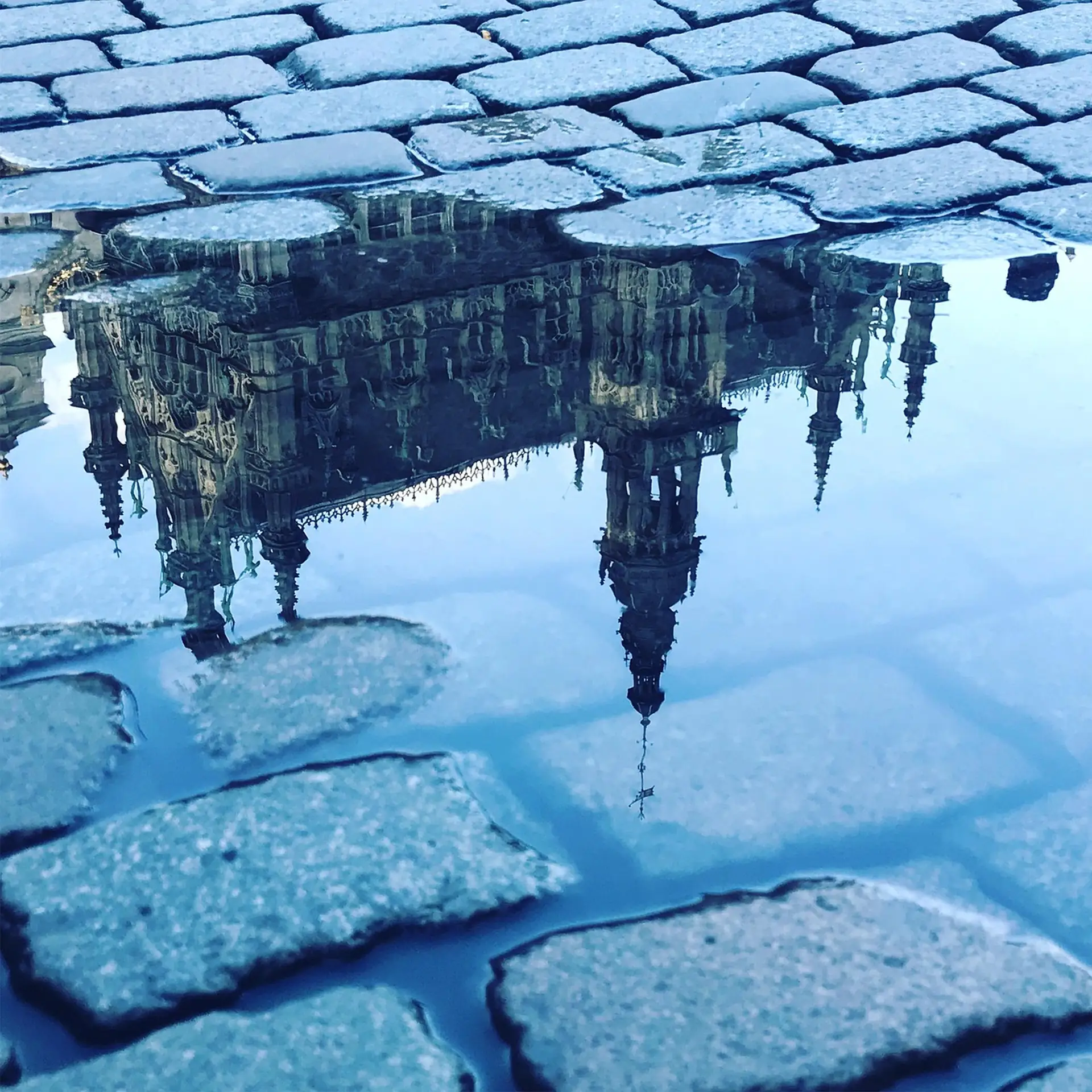
Getting around, in detailGet around · Connect
Get around
Walk inside a cluster; metro, tram or premetro (underground tram) between them. The network is compact enough that few journeys take more than 20–25 minutes.
| Mode | Verdict | Fare | Use it for | What breaks |
|---|---|---|---|---|
| Walking | use | Free | Inside any one cluster | Cobbles in the old centre; flatter and smoother in the EU quarter and Cinquantenaire. |
| Metro | use | €2.40–3 (≈ US$3–4) single; day passes available | Longer hops, especially to the EU quarter and Cinquantenaire | Four lines; frequent on weekdays, less so late evening. |
| Tram and premetro | use | Same tickets as the metro | Sablon, Saint-Gilles and routes the metro does not reach directly | |
| Bus | ok | Same tickets as the metro | Shorter hops and areas away from tram and metro lines | |
| Taxi or ride-hail | ok | Metered; ride-hail apps show the fare first | Late night, with bags, or when trams stop | |
| Bike share (Villo!) | ok | Day or week pass in the app | Flatter stretches; cobbles are uncomfortable on a shared bike |
Taxis and ride-hailing
Taxis Verts
metered
One of the larger licensed fleets; hail at a rank or call.
Uber / Bolt
app
Widely used; fare fixed before the ride.
On foot and car-free hours
| Where | When | Note |
|---|---|---|
| Grand-Place and the arcades | Any time | Pedestrian-only in the square itself; surrounding streets carry light traffic. |
More on getting around
Validate every ticket on boarding — inspectors fine on the spot with no grace period for a visitor's mistake. A 24-hour ticket pays for itself after about three rides; on a day spent mostly on foot, single tickets are cheaper.
Connect
| Option | Verdict | What breaks |
|---|---|---|
| eSIM bought before you fly | use | Works across the EU roaming zone; no counter or queue at the airport. |
| Carrier shops in the centre (Proximus, Orange, Base) | use | Registration with a passport; 15–30 minutes. |
| Airport kiosks | ok | Convenient on arrival; compare the price to a city-centre shop first. |
STIB-MIVB
Metro, tram and bus tickets and timetables
Buy and validate tickets in the app; works for the whole network.
Uber / Bolt
Cars
Widely used; fare shown before you ride.
Villo!
Bike share
Docked city bikes; day and week passes available in the app.
Lime / Dott
E-scooters and dockless bikes
Park in the marked zones shown in the app; fines apply for careless parking.
Google Maps
Walking and transit directions
Covers STIB routes well; useful for checking the next tram or bus.
- Wi-Fi
- Free in most cafés and all hotels; ask for the code with your order.
Luggage
Where big bags are a problem, and how to get rid of them for the day.
Rule
- Lockers
- Lockers at Brussels-Central, Midi and Nord stations; hotels hold bags after check-out.
- Forwarding
- No forwarding culture for tourists; keep the big bag at the Brussels hotel for day trips to Bruges, Ghent or Antwerp.
- Dead zone
- Late flights: ask the hotel to hold bags; the airport is 20–30 minutes by train.
Bags, area by area
4 walking areas rated
- Bags painful
Grand-Place and the arcadesMont des Arts and SablonEU quarter and CinquantenaireSaint-Gilles and Horta Museum
Lockers, forwarding and the gap between check-out and check-in are covered once, under Luggage.
See & doWalking clusters, day plans and the places worth the time
See & do
Walking clusters, day plans and the places worth the time
Clusters
Plan by cluster: each is a walkable area with a rescue point and a bag rule.
Morning cluster: the square, the arcades, the comic-strip walls and a waffle; flat, cobbled, crowded after 10:30.
rescue 100% · max p90 5.5′ · half
Museum-and-antiques cluster: pick one museum, then the Sablon squares and a chocolate shop; gentle hill.
rescue 100% · max p90 5.9′ · half
Half-day cluster by metro: the parliament area, then the park and its arch; wide, flat and quiet on weekends.
rescue 100% · max p90 5.5′ · half
Art Nouveau half day: the Parvis, Horta's own house and the shopping streets; hilly, quiet and less crowded.
rescue 100% · max p90 5.9′ · half
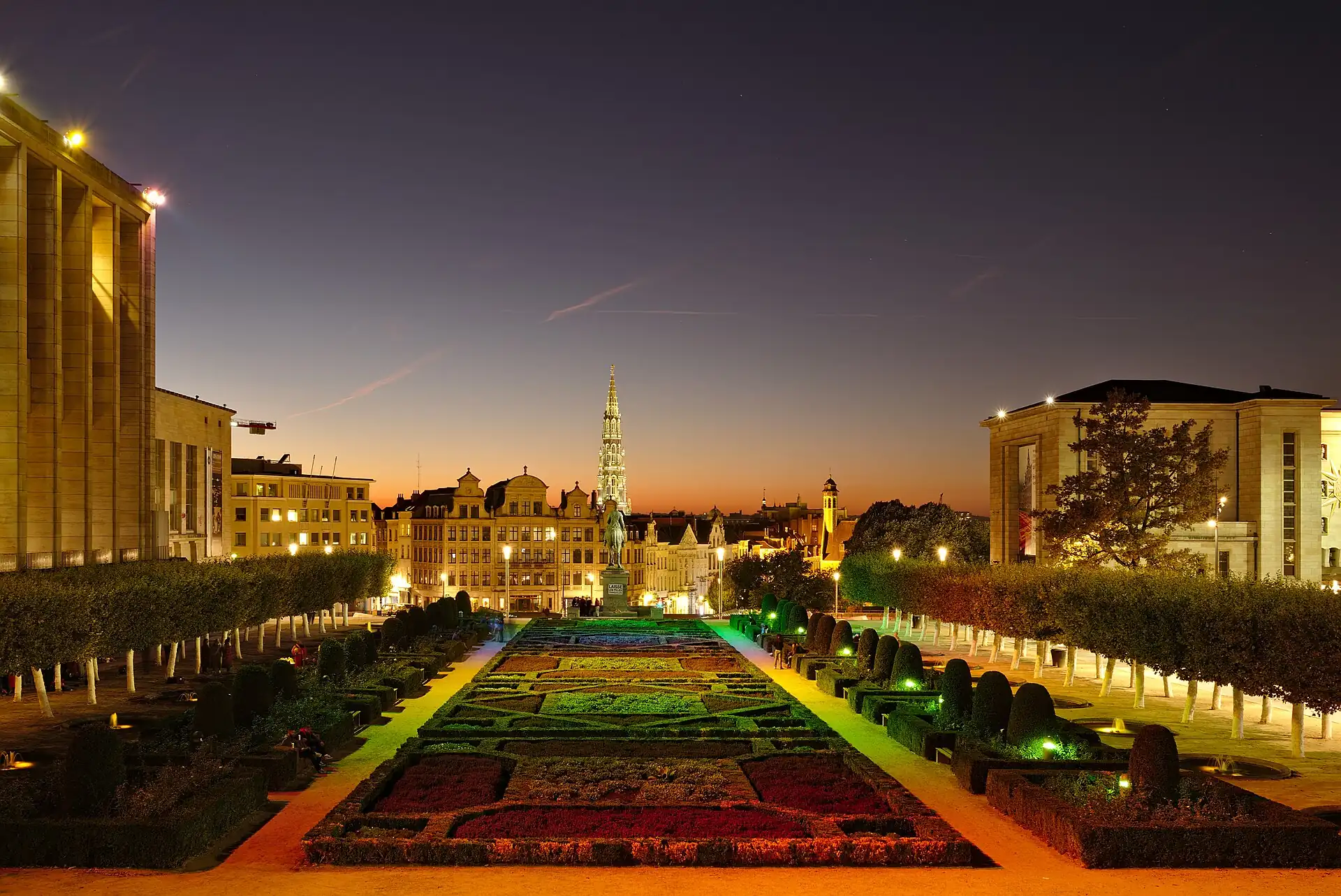
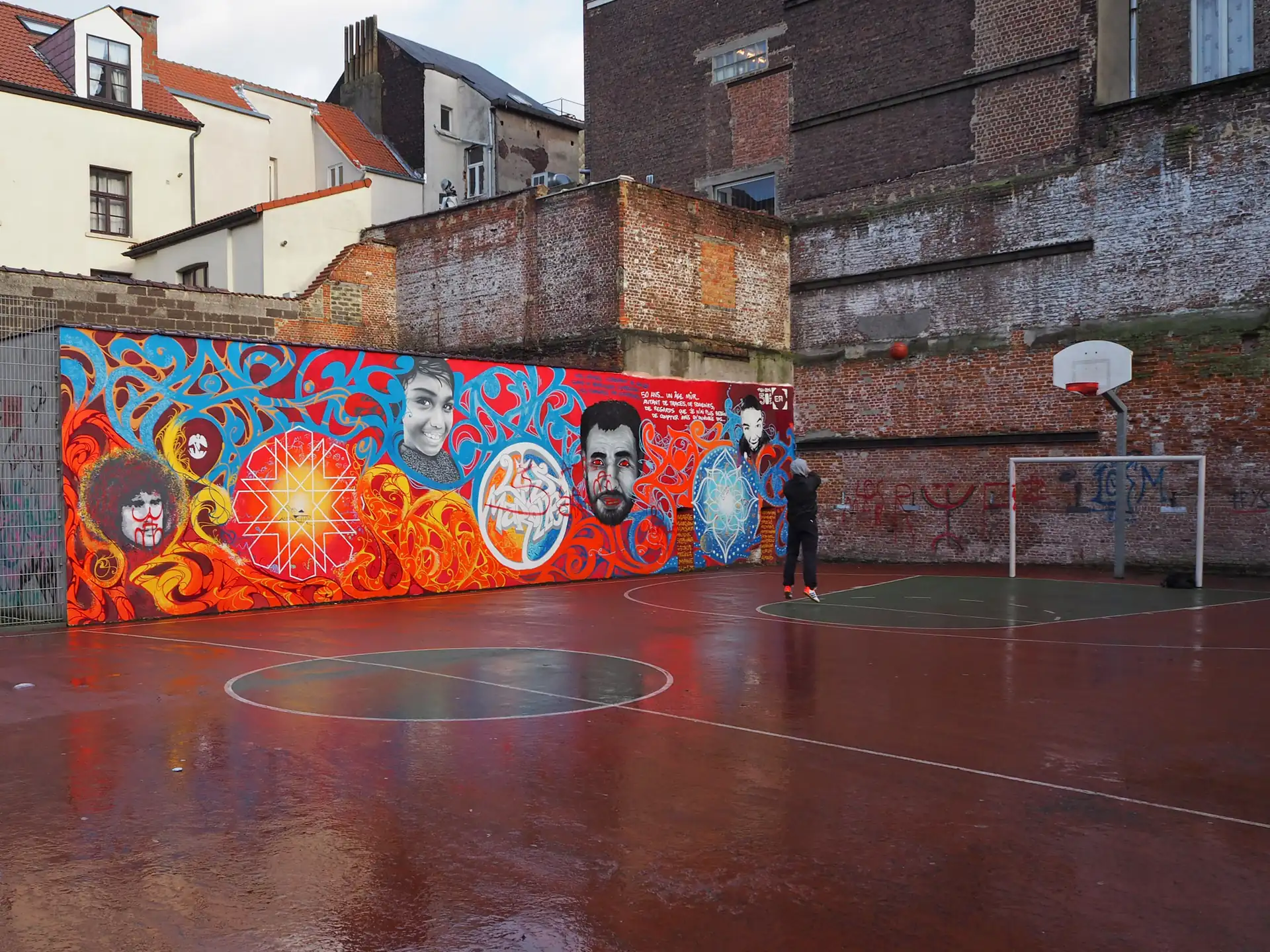
Days
Ready-made day plans, timed against opening hours and walking distances.
How long are you staying?
Loose outlines in the city's rhythm. The timed day plans check museum closing days and lunch anchors.
1 day
A stopover between trains or flights
- 09:00Grand-Place — Grand-Place before the crowds
- 09:30Galeries Royales Saint-Hubert — Manneken Pis and the Galeries Royales
- 10:30A museum or the Sablon, depending on the day of the week
- 12:30Frites or a moules-frites lunch
- 14:00Cinquantenaire Park and arch — Cinquantenaire park or the EU quarter by metro
- 17:00Back to the centre for a waffle and a beer
Skip: A second museum: one is enough for a single day.
Brussels in 3 days
3 daysOld centre in the morning, one museum and a café in the middle, the EU quarter and the park last; the last day ends with the bags already at the hotel door.
Day by day
Day 1 — Grand-Place, arcades, a 12:30 lunch table
- 08:30Grand-Place
- Manneken Pis (optional)
- Maison Dandoy (optional)
- Galeries Royales Saint-Hubert
- 12:30Lunch table 12:30 (Grand-Place)
Day 2 — Fine arts, Sablon, a historic café
Day 3 — Cinquantenaire, frites, bags to the airport at 13:00
- 09:00Cinquantenaire Park and arch
- Maison Antoine (optional)
- 13:00Bags and train to the airport at 13:00
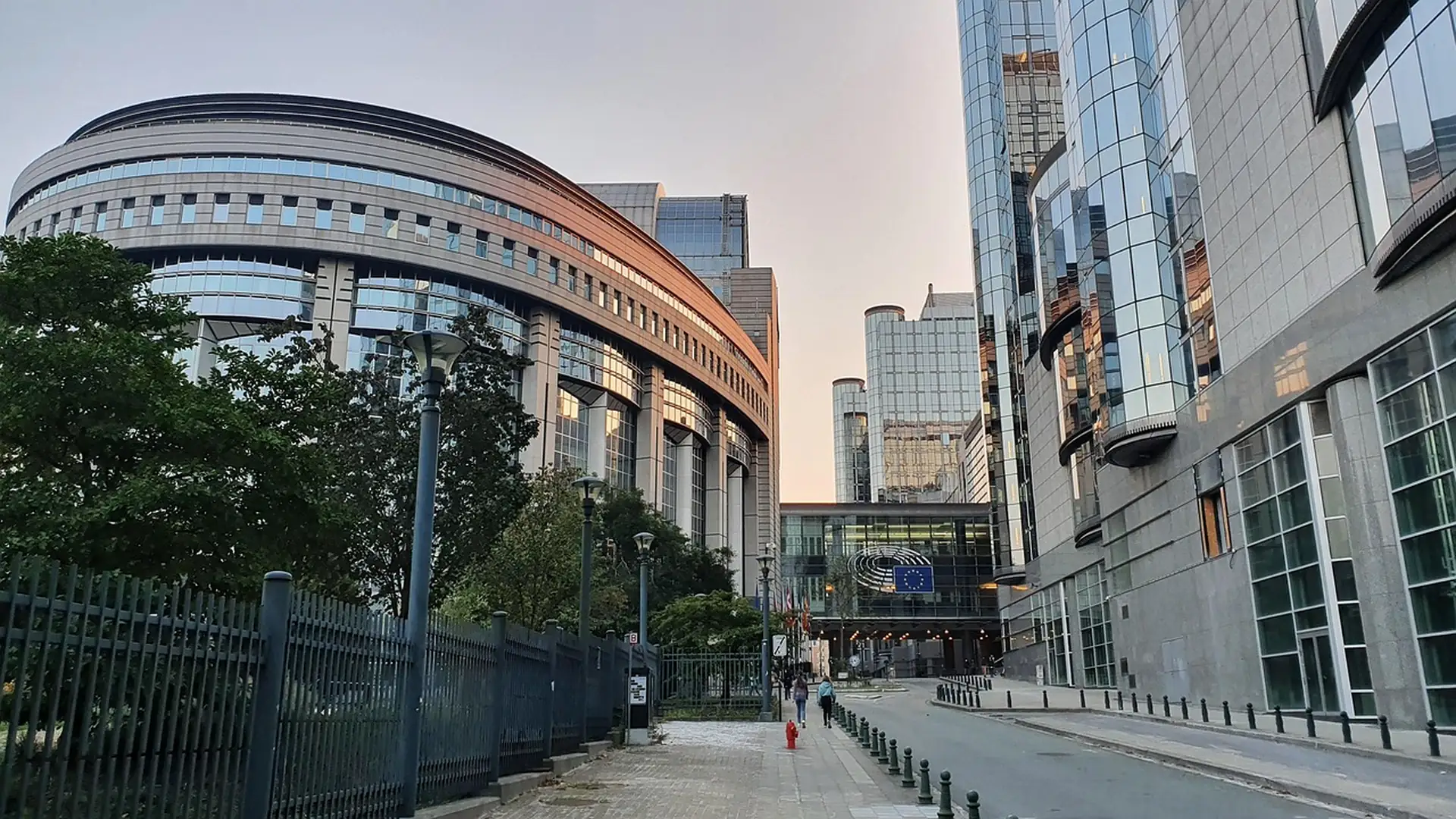
Places
“Best time” is when to arrive for the fewest crowds, for example “before 08:30”; “Go any time” means the hour makes little difference. More sights follow under “More sights and museums”.
7 places. Filters use the guide’s own ratings; a place with no rating is left out when a filter is on.
Tours, classes and shows in Brussels →
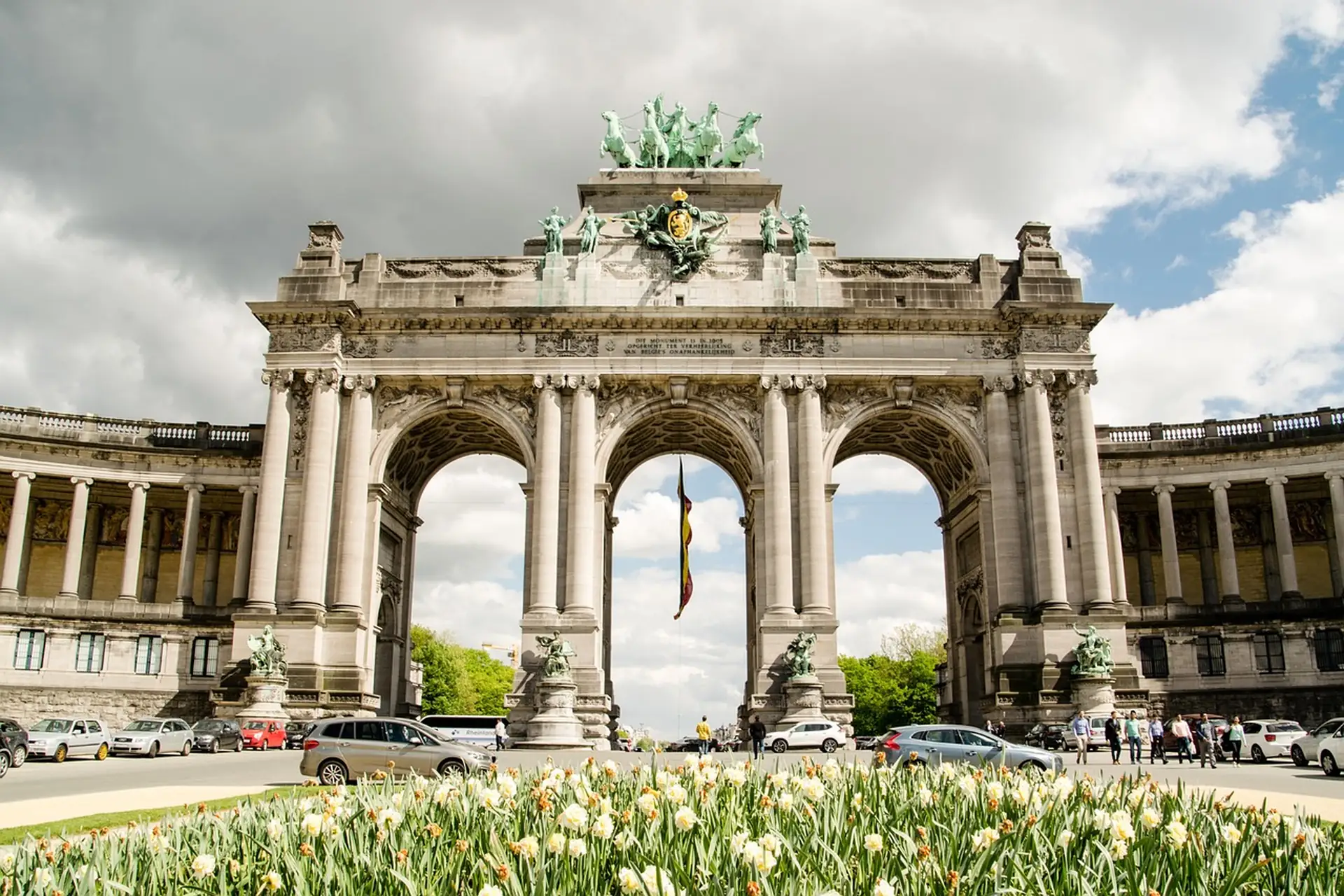
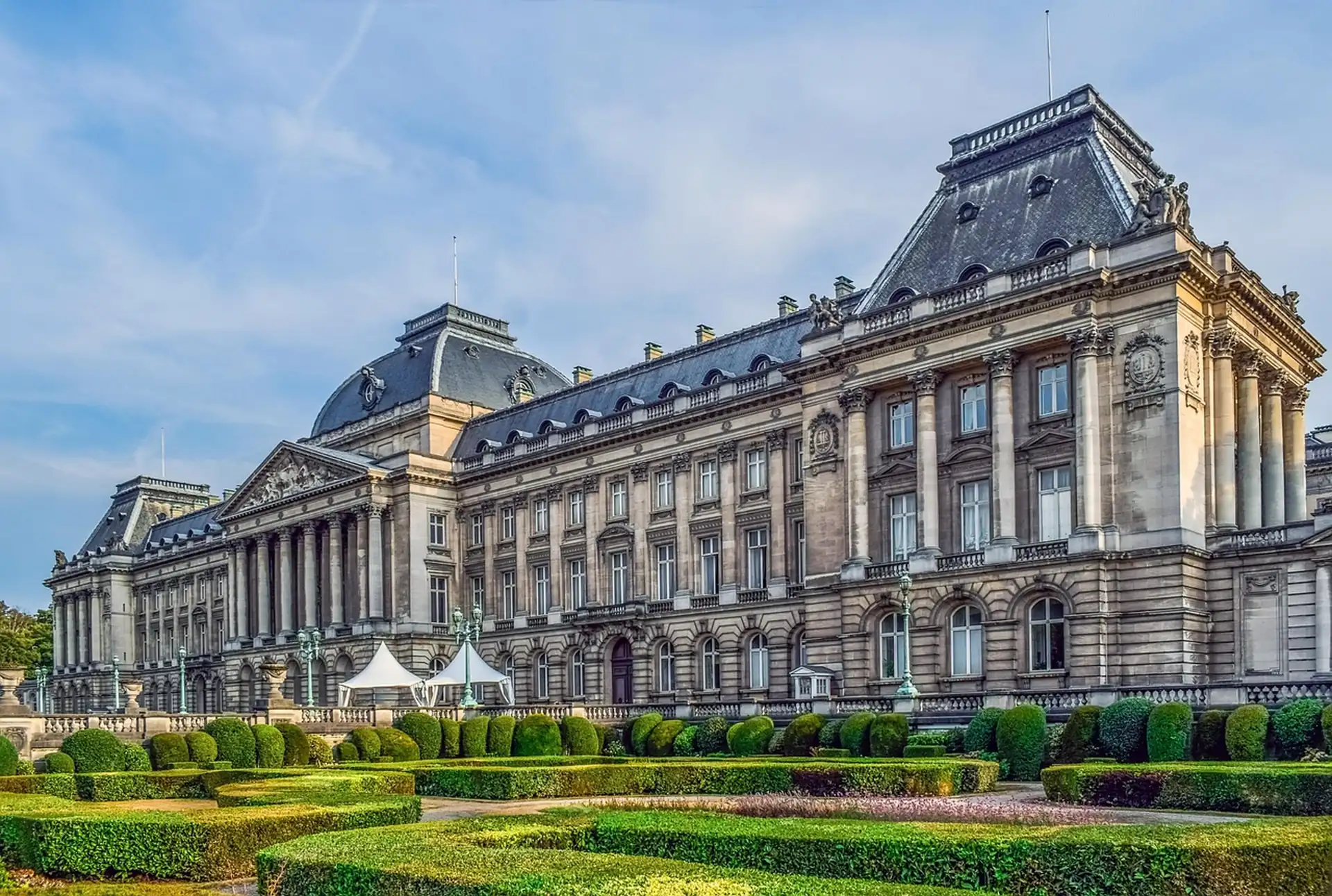
If you do ten things in Brussels
Ranked for a first visit of 2–3 days. Prices are 2026 estimates in euros; hours marked (check) still need confirmation.
- 1
Grand-Place at first light or once it is lit
The guildhall square with almost nobody on it, before the tour groups or after they leave.
- Time
- 20–40 min
- Best
- Before 09:00 or after dark
- Cost
- Free
- 2
A small, well-known statue that is a five-minute stop on the way to somewhere else.
- Time
- 5–10 min
- Best
- Any time
- Cost
- Free
- 3
The covered arcade where the modern chocolate praline was invented, and a dry rest stop in one.
- Time
- 15–30 min
- Best
- Any time
- Cost
- Free
- 4
Royal Museums of Fine Arts and the Magritte Museum
Old Masters and Belgium's best-known surrealist, in one museum complex.
- Time
- 2–3 h
- Best
- Weekday morning
- Cost
- €10–20 (≈ US$12–25)
- 5
A quieter, hillier corner of the centre with antiques shops and chocolatiers.
- Time
- 30–60 min
- Best
- Sunday morning for the antiques market
- Cost
- Free
- 6
A large park built for Belgium's 50th independence anniversary, with three museums under one arch.
- Time
- 1–2 h
- Best
- Weekday morning; sunny weekend afternoons
- Cost
- Free; museums extra
- 7
Victor Horta's own house and studio, the clearest single stop for Brussels Art Nouveau.
- Time
- 1–1.5 h
- Best
- A booked timed slot
- Cost
- €12 (≈ US$14)
- 8
Belgian Comic Strip Center
Original art from Tintin and other Belgian comics, inside a Horta-designed building.
- Time
- 1.5–2 h
- Best
- Weekday morning
- Cost
- €12–16 (≈ US$14–19)
- 9
A cone of frites from a well-known stand, eaten standing, the way most locals do.
- Time
- 15–20 min
- Best
- Off peak lunch hours
- Cost
- €4–6.50 (≈ US$5–8)
- 10
A Bruges day trip
The best single day trip from Brussels, about an hour each way by direct train.
- Time
- Full day
- Best
- Weekday
- Cost
- Train fare only
Good for…
Verdict is how well Brussels works for that traveller, not how nice it is.
Compact and walkable, with a well-marked centre.
- 1Sleep near the Grand-Place — everything on a first list is a walk away.
- 2Brussels in 3 days — the 3-day plan already checks museum closing days.
- 3The train from the airport — fixed fare, faster than a taxi at rush hour.
Chocolate, beer, frites and moules-frites cover most budgets.
- 1Maison Antoine — frites at a well-known stand, eaten the local way.
- 2Cantillon brewery — traditional lambic beer, made in the city.
- 3A chocolate-making workshop — learn the praline that was invented here.
Free sights (the square, the arcades, the park) balance the cost of museums.
- 1Frites over a sit-down meal — a full meal for under €7 (≈ US$9).
- 2A day pass on transit — pays back after about three rides.
- 3Grand-Place — the square, the arcades and Manneken Pis cost nothing.
- 1An afternoon in the Sablon — quieter streets, antiques shops, a chocolatier or two.
- 2Dinner near Sainte-Catherine — the seafood-restaurant district, calmer than the tourist strip.
- 1A café counter meal — eating alone at a bar is normal here.
- 2The Comic Strip Route walk — free, self-paced, and a reason to explore beyond the Grand-Place.
Cobbles and stairs are the hard parts; the sights themselves are short and easy.
- 1Manneken Pis and the comic murals — short, free stops that hold a child's attention briefly.
- 2Cinquantenaire park — open space to run, with museums as a backup.
- 3Atomium and Mini-Europe — the standard family half-day, a metro ride north.
Fine at a slow pace; cobbles and a lack of benches in places are the strain.
- 1Royal Museums of Fine Arts — lifts to every floor and seating throughout.
- 2A guided walking tour — someone else navigates the cobbles and the route.
Cobbles and older metro stations are the main obstacles.
- 1Cinquantenaire Park and arch — wide, flat, paved paths.
- 2Newer metro stations and low-floor trams — check the STIB accessibility map before planning a route.
Tours and classes: book or skip
Book through the hotel or an operator with written inclusions and a cancellation policy. Prices per person, 2026 estimates.
| Tour or class | Verdict | Typical price | Why | Check before paying |
|---|---|---|---|---|
| Chocolate-making workshop | book | €40–70 (≈ US$50–85) | Hands-on, short, and you take the result home. | Group size and whether the price includes tasting other chocolate as well. |
| Cantillon brewery visit | book | €8–12 (≈ US$10–14) | A working traditional brewery, not a branded tourist experience. | Current opening hours before you plan a special trip. |
| Guided Art Nouveau walking tour | maybe | €20–35 (≈ US$25–45) | Points out façades and details a self-guided walk would miss. | Whether it includes the Horta Museum entry or only the exterior walk. |
| Comic Strip Route self-guided walk | do it yourself | Free | A printed or app map covers the same ground as a paid tour. | Pick up the current map from tourist information first. |
What each season brings
Spring
Mar–May
Longer days, the Iris Festival and, some years, the Zinneke Parade.
Watch: Rain showers can arrive with little warning.
Summer
Jun–Aug
Warm without being hot; Ommegang, National Day and outdoor terraces.
Watch: Some restaurants close for a few weeks around August for holidays.
Autumn
Sep–Nov
The Comic Strip Festival and crisp walking weather before the grey sets in.
Watch: Rain days climb back up through November.
Winter
Dec–Feb
The Christmas markets and light show on the Grand-Place.
Watch: Short, grey days; book beds early for December.
Photo spots and the light
Light times are for clear days; grey skies are common year-round.
| Spot | Best light | Tip |
|---|---|---|
| Grand-Place, lit at night | After dark | Shoot from the centre of the square looking towards the Town Hall spire. |
| Galeries Royales Saint-Hubert | Daytime, any weather | The glass roof works even under grey skies; shoot down the length of the arcade. |
| Cinquantenaire arch | Late afternoon | Frame the arch from the park's central avenue. |
| Horta Museum stairwell | Any time, inside | Check current photo rules at the desk before shooting indoors. |
| Comic Strip Route murals | Morning, before shadows from the street | The Hergé/Tintin mural near Gare Centrale is the best-known stop. |
Brussels travel FAQ
Answers are 2026 desk estimates; fares and rules marked (check) change.
Is Brussels safe?
Yes for violence; the common problems are pickpocketing at the main stations, on the metro and in market crowds. Keep bags closed and in front.
How much is the train from Brussels Airport to the centre?
About €10–13 (≈ US$12–16), roughly 20 minutes to Brussels-Central.
Do I need cash in Brussels?
Not much — cards and phones are accepted almost everywhere; carry a few coins for toilets and small cafés.
Is tap water safe to drink?
Yes, citywide.
How many days do I need in Brussels?
Two full days for the centre, three with a Bruges or Ghent day trip.
Which museums are closed on Monday?
The Royal Museums of Fine Arts and several others; check the specific museum before planning a Monday visit. The Grand-Place, arcades and parks stay open.
Should I book the Horta Museum ahead?
Yes — it runs timed slots and the house is small; book online before you go.
What is the best area to stay?
Near the Grand-Place for a first visit and walkable sights; Saint-Gilles for better value and a quieter base.
Do people speak English?
Widely, especially in hotels, restaurants and with younger people; French is the more useful default greeting in the centre.
Is Brussels expensive?
Moderate to high for Western Europe; frites, waffles and beer keep a food budget reasonable even if hotels and sit-down meals add up.
What should I know about the language split?
Brussels-Capital Region is officially bilingual French–Dutch; most residents of the centre speak French day to day, with English widely understood.
More to see and doSee & do · Learn & work · Rain & heat · Free things · Wheelchair and stroller
Free things to do
Sights in Brussels that cost nothing to enter. Each is described under Places or More sights; extra costs inside are marked there.
Wheelchair and stroller, place by place
How each place in this guide works for wheels, from its own page. Ratings are desk estimates unless a page says it was checked on the ground.
| Place | Step-free | Wheelchair | Stroller | What to know |
|---|---|---|---|---|
| Cinquantenaire Park and arch | yes | ok | ok | Wide, flat paved paths throughout the park; museum accessibility varies by building. |
| Royal Museums of Fine Arts | yes | ok | ok | Lifts serve all floors of the main building; ask at the desk for the current accessible route between wings. |
| Galeries Royales Saint-Hubert | yes | ok | ok | Smooth stone floor under a glass roof; the flattest stretch in the old centre. |
| Grand-Place | yes | caution | caution | Flat but cobbled — small wheels and thin heels struggle on the stones. |
| Horta Museum | no | poor | poor | The narrow original staircase is central to the house and is not step-free; call ahead if this is a concern. |
| Manneken Pis | yes | ok | ok | Street-level corner; crowded viewing spot rather than a physical obstacle. |
| Notre-Dame du Sablon | partial | caution | caution | A few steps at the main entrance; the square outside is flat. |
See & do
16 of 16
- square
The guildhall square, rebuilt after the 1695 bombardment; best at first light or once it is lit at night.
Pentagon · Free
Cathedral of St Michael and St GudulaCathédrale des Saints-Michel-et-Gudule
churchGothic cathedral on the ridge above the lower town, a short walk from Central Station.
Pentagon · Daily; check for services · Free; treasury extra(check)
Belgian Comic Strip CenterCentre Belge de la Bande Dessinée
MuseumsA Horta-designed former warehouse holding original art from Tintin, the Smurfs and other Belgian comics.
Pentagon · Daily except Monday (check) · €12–16 (≈ US$14–19) (2026 estimate)(check)
Bourse / Belgian Beer World
Citadel & old cityThe old stock exchange building, reopened as a beer-themed visitor attraction with a rooftop bar; confirm current opening status before planning around it.
Pentagon · Daily (check) · Check locally(check)
Europe's early covered shopping arcade, glass-roofed, with the shop where the modern praline was invented.
Pentagon · Free
Magritte Museum
MuseumsThe largest collection of René Magritte's work, next to the Royal Museums of Fine Arts.
Mont des Arts · Daily except Monday (check) · €10–16 (≈ US$12–19) (2026 estimate)(check)
- Museums
Old Masters (Bruegel, Rubens) and a separate modern wing under one roof.
Mont des Arts · €10–20 (≈ US$12–25)
- church
Gothic church on the antiques-market square.
Sablon · Free
Place du Jeu de Balle flea market
MarketsA working-class flea market below the huge law courts; best early.
Marolles · Daily mornings · Free to browse
- Lakes & parks
A park built for the 1880 independence anniversary, with a triumphal arch and three museums.
EU quarter · Free; museums extra
- Museums
Victor Horta's own Art Nouveau house and studio, a UNESCO-listed interior.
Saint-Gilles · €12 (≈ US$14) (2026 estimate)
Atomium
ViewsBuilt for Expo 58; a metro ride north of the centre, outside this guide's clusters.
Laeken · Daily (check) · €16–22 (≈ US$19–30) (2026 estimate)(check)
Chocolate-making workshop
ClassesMake and take home a small batch of pralines with a chocolatier.
Pentagon or Sablon · About 1.5–2 h, several times a day · €40–70 (≈ US$50–85) (2026 estimate)(check)
Cantillon brewery visit
tourA working traditional lambic brewery, self-guided with a tasting.
Anderlecht (short tram from the centre) · Check current visiting hours · €8–12 (≈ US$10–14) (2026 estimate)(check)
Comic Strip Route walk
self guidedDozens of wall murals of Belgian comic characters across the centre; a map is available from tourist information.
Pentagon and beyond · Any time · Free
Guided Art Nouveau walk
tourA walking tour past Horta houses and other Art Nouveau façades beyond the museum itself.
Saint-Gilles / Ixelles · About 2–3 h · €20–35 (≈ US$25–45) (2026 estimate)(check)
- Booking
- Book chocolate workshops and the Horta Museum's timed slots a few days ahead in peak season (spring, summer, Christmas market weeks).
Learn & work
| What | Where | Cost | Note |
|---|---|---|---|
| French or Dutch language courses | Language schools in the centre and near the universities (ULB, VUB) | Varies by course length; check current rates | Short-term visitors more often use private tutors or apps than enrol in a course. |
| Chocolate and pastry classes | Chocolatiers and cooking schools citywide | €40–90 (≈ US$50–110) a session (2026 estimate) | See Do; book a few days ahead. |
| Beer appreciation courses | Beer-focused bars and a few dedicated schools | Check current rates | Often paired with a brewery visit. |
Working here
- Tourist entry
- EU/Schengen citizens can work without a permit; other nationalities need a work permit and, for longer stays, a residence registration.
- EU institution traineeships
- The European Commission and Parliament run paid traineeship ("Blue Book" and similar) programmes with their own application cycles; not a route into casual work.
- Remote work
- Belgium's rules for remote workers and digital nomads change; check current requirements before planning a long working stay.
Rain-day and heat-day plan
Rain day
Rain can arrive at any time of year without much warning; keep an indoor option ready rather than betting on a forecast.
- 01Royal Museums of Fine Arts — Large indoor collection; a comfortable half-day.
- 02Galeries Royales Saint-Hubert — Covered arcade with cafés and shops; a dry walking route through the centre.
- 03Belgian Comic Strip Center — Indoor, inside a Horta-designed building; works for most ages.
Heat day
Brussels rarely gets uncomfortably hot: above about 27 °C, move museum visits to midday and outdoor walks to morning or evening.
- 09:00Grand-Place — Cool air and thinner crowds before the tour groups arrive.
- 13:00Royal Museums of Fine Arts — Air-conditioned indoor hours for the warmest part of the day.
- 17:00Cinquantenaire Park and arch — Shaded paths and a breeze once the day cools.
Day-trips and nearby
Places you can reach from Brussels in a day or with one night away, with the route and what it costs. Door to door, not ride time.
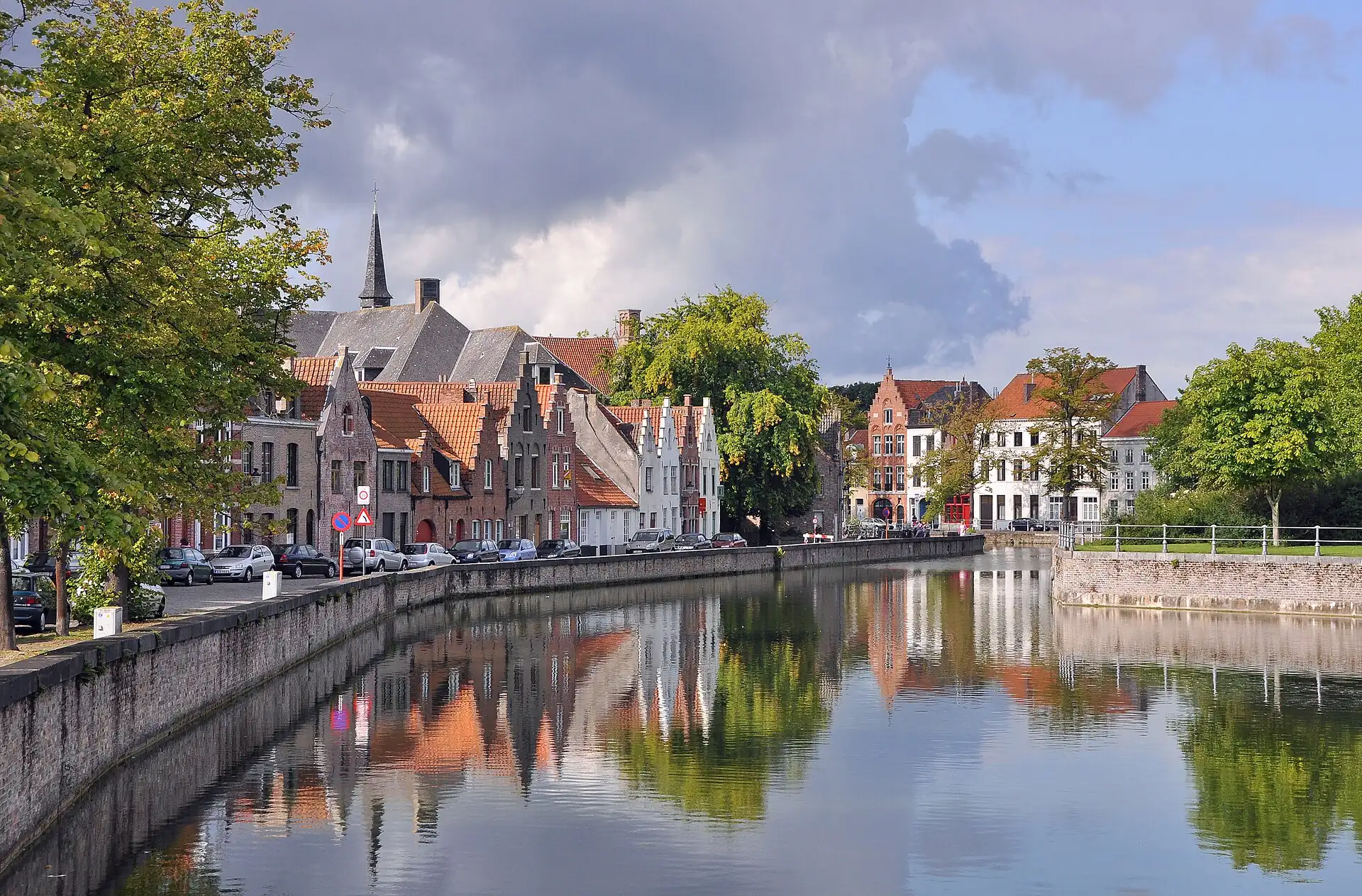 Photo: Marc Ryckaert ( MJJR ), CC BY 3.0
Bruges
goDirect train about 1 h from Brussels-Central
Go on a weekday; crowded midday.
- Time
- Full day — leave by 09:00Full day — leave by 9:00 AM
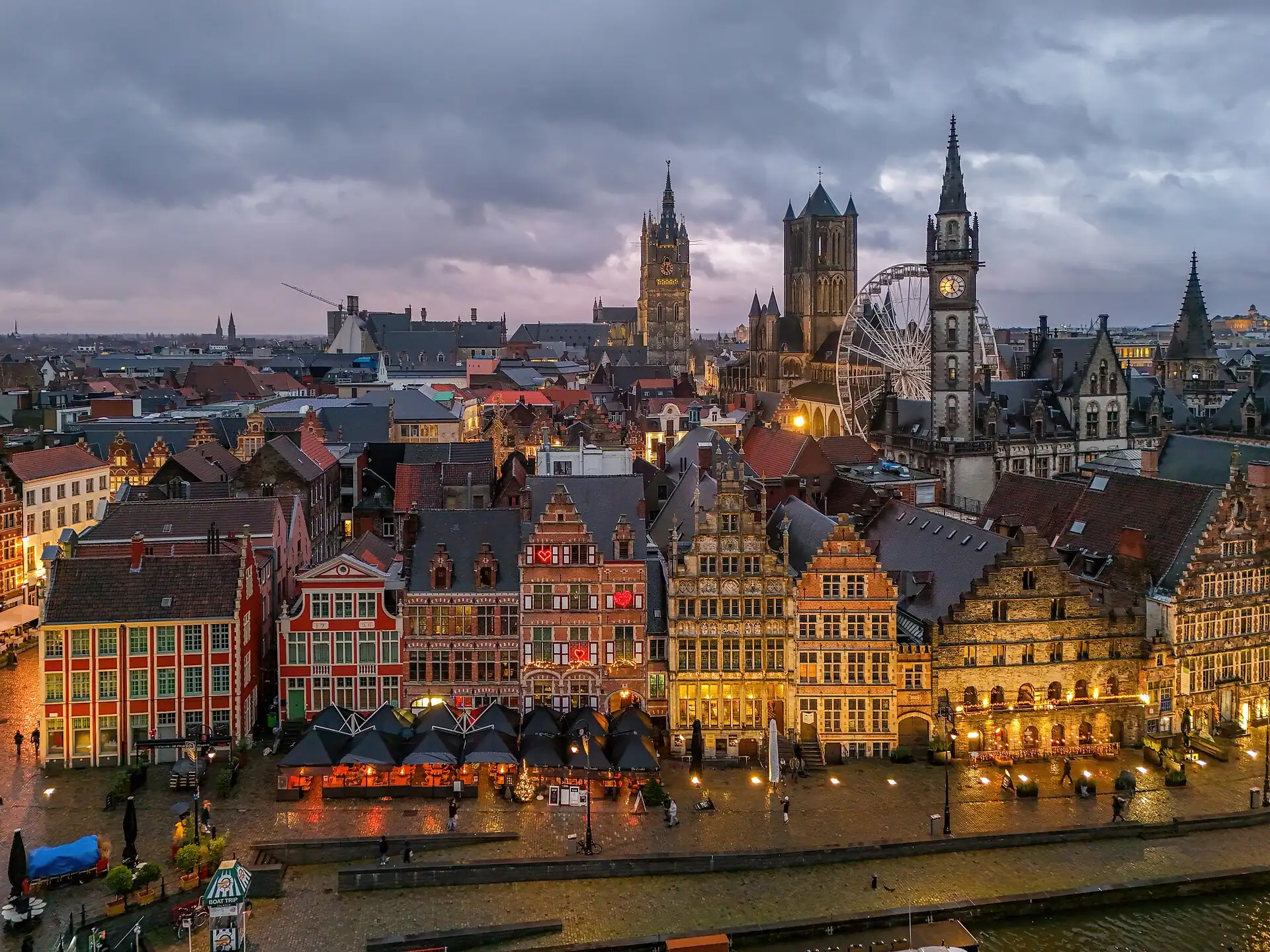 Photo: Giles Laurent, CC BY-SA 4.0
Ghent
goDirect train about 35–40 min
Less crowded than Bruges; walkable centre.
- Time
- Half to full day
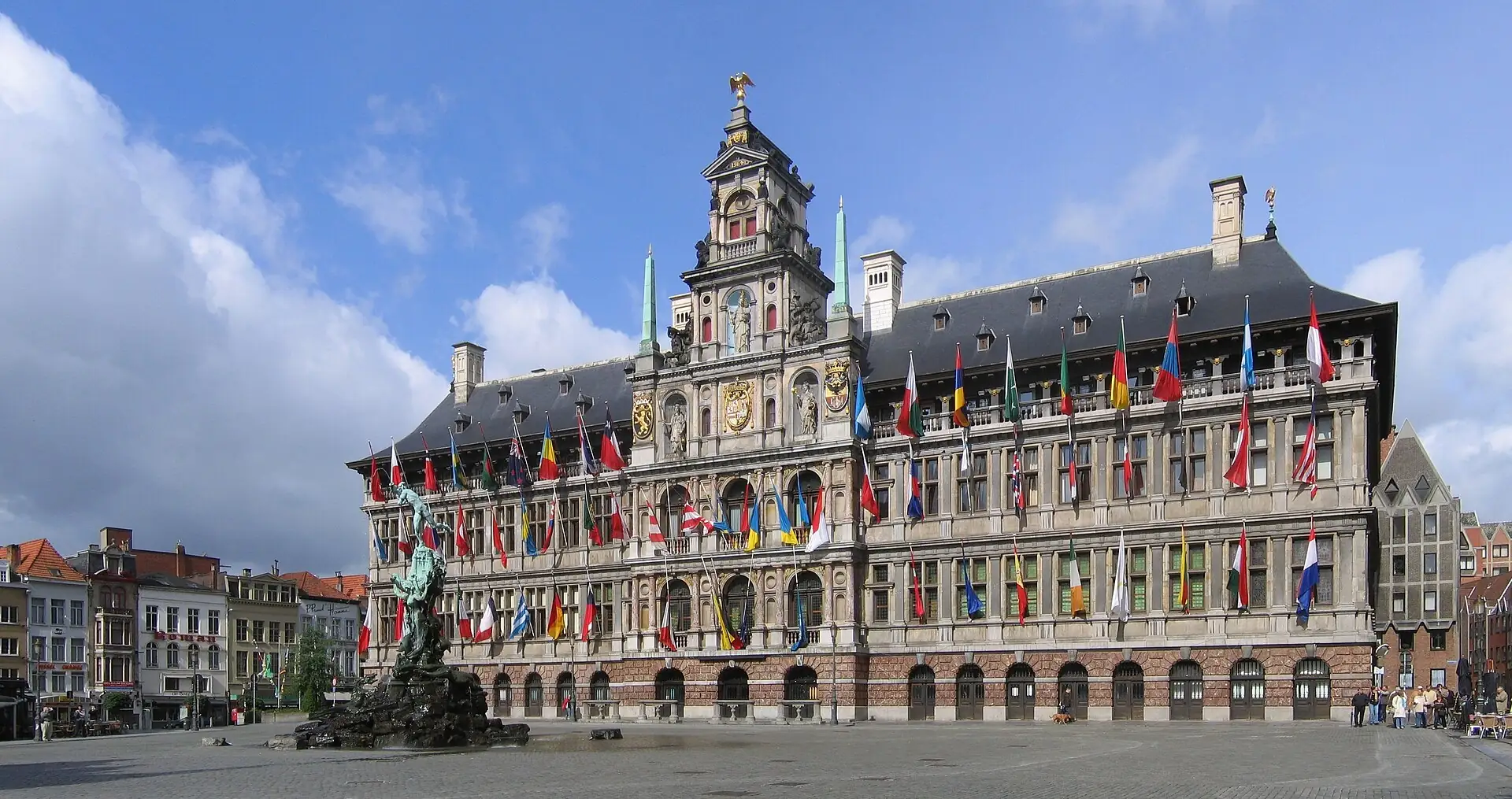 Photo: Klaus with K, CC BY-SA 3.0
Antwerp
goDirect train about 40–50 min
Station, diamond quarter and museums.
- Time
- Full day
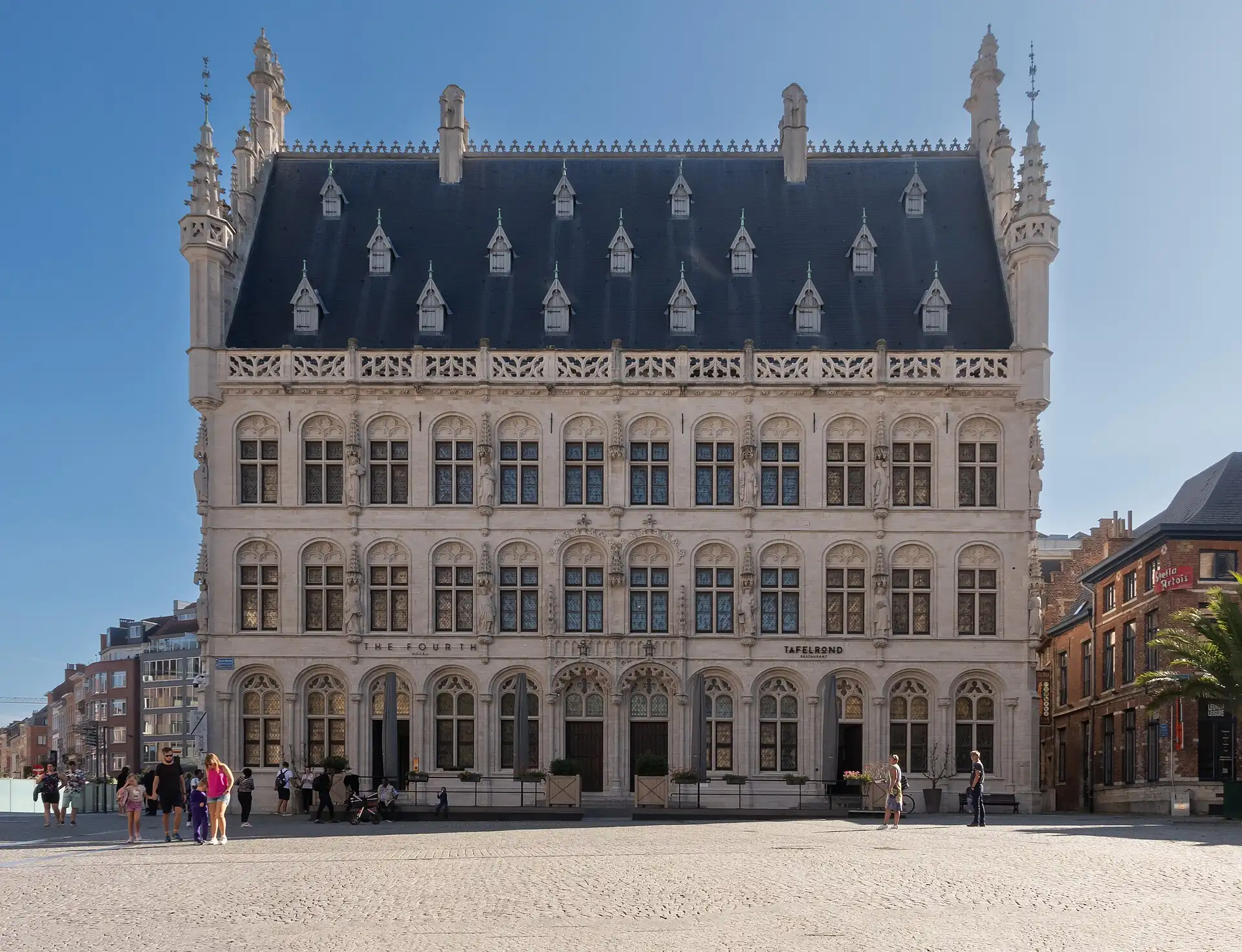 Photo: Michielverbeek, CC BY 4.0
Leuven
goTrain about 20–30 min
Compact university town and a good beer stop.
- Time
- Half day
Go next
Door to door: About 2.5 h
Direct train about 2 h
Easily reached without flying; book ahead for the cheapest fares.
Door to door: About 2 h
Direct high-speed train about 1 h 25 min
Faster centre-to-centre than flying once airport time is counted.
Eat & sleepWhere to eat and which area to sleep in
Eat & sleep
Where to eat and which area to sleep in
Eat
A short list of places worth crossing the city for, each with how to get a seat.
Restaurant finder: filter every place to eat in Brussels →
Vegetarian-friendly score
4.0 / 5 · Easy
- Country diet noteOur country guide rates vegetarian eating as easy.2 / 2
- Places to eat in this guide5 of 5 places with a known answer are vegetarian-friendly.1.5 / 1.5
- Budget eating lines0 vegetarian lines in "Eat by budget".0 / 0.6
- Meat-free national dishes3 meat-free dishes in the country food list.0.3 / 0.4
- Dedicated vegetarian kitchens0 mentions of vegetarian restaurants, Buddhist or fasting kitchens.0 / 0.5
Country note: Fine in cities; traditional brasseries are meat-heavy.
Vegetarian places near me →Make a diet card →
How we score
- Country diet note (up to 2): easy 2, workable 1, mixed 0.75, hard 0; no note 0.5.
- City places to eat (up to 1.5): 1.5 × (vegetarian-friendly + half of partly friendly) ÷ places with a known answer; needs 3 or more known places.
- Budget eating lines marked vegetarian (up to 0.6): 0.2 each.
- Meat-free national dishes (up to 0.4): 0.1 each.
- Dedicated vegetarian kitchens mentioned — Buddhist chay, shōjin ryōri, Jain, fasting food, vegan cafés (up to 0.5): 0.1 each.
- Total rounded to the nearest half point, 0 to 5. Built from our own pages only, not from reviews.
Eating and drinking guideEat by budget · Drink
Before you sit down to eat
Short version; full text linked
- Queues and hours
- Per person, one dish or one meal, 2026 estimate. More →
Eat by budget
Under €12 (≈ US$14) a meal
| Where | Order | Area | Price | Note |
|---|---|---|---|---|
| Maison Antoine | Frites with a sauce | EU quarter | €4–6.50 (≈ US$5–8) | Standing room only; a queue at lunch. |
| Any frituur/fritkot stand | Frites, often with a snack (mitraillette sandwich) | Citywide | €4–9 (≈ US$5–11) | |
| Speculoos and waffle stands | Belgian waffle with toppings | Near the Grand-Place and stations | €3.50–6 (≈ US$5–7) |
Dishes to know
| Dish | What it is | Where to look | When | Price |
|---|---|---|---|---|
| FritesFrites/Frieten | Twice-fried potato chips, served in a paper cone with a sauce | Frituur stands citywide; Maison Antoine is the best-known | All day | €4–6.50 (≈ US$5–8) |
| Moules-frites | Mussels steamed in white wine or broth, served with frites | Sainte-Catherine and centre restaurants | Lunch, dinner | €20–32 (≈ US$25–40) |
| WaffleGaufre/Wafel | Two regional styles: the light, rectangular Brussels waffle and the denser, caramelised Liège waffle | Stands citywide | All day | €3.50–6 (≈ US$5–7) |
| Stoemp | Mashed potato mixed with vegetables, served with sausage | Bistros citywide | Lunch, dinner | €14–22 (≈ US$17–30) |
| Chocolate pralines | Filled chocolates, invented in Brussels in 1912 | Chocolatiers citywide; the Galeries Royales Saint-Hubert has the original shop | Any time | €8–20 (≈ US$10–25) for a small box |
| Speculoos | Spiced shortbread biscuit | Bakeries and supermarkets | Any time | €3–6 (≈ US$4–7) a packet |
- Service is included in the bill by law; a small rounding tip is a courtesy, not a rule.
- Menus outside restaurants near the Grand-Place and Rue des Bouchers can carry inflated drinks prices — check before sitting.
Drink & nightlife
| Where | What | Until | Note |
|---|---|---|---|
| Grand-Place café terraces | Historic cafés, beer bars | Late evening | Priced for the location; check the drinks menu before sitting. |
| Rue du Marché au Charbon and Rue Saint-Géry | Bars, LGBTQ nightlife, cocktail bars | About 01:00–03:00About 1:00 AM–3:00 AM | The centre's main going-out streets, a short walk from the Bourse. |
| Place Saint-Géry | Bars and terraces | Late | Younger crowd; busy on weekend nights. |
| Sablon and Marolles | Wine bars, quieter cafés | About midnight | A calmer alternative to the centre. |
| European Quarter (Place du Luxembourg, "Plux") | Expat and lobbyist bars | About midnight on weekdays | Packed with EU staff after work on Thursdays; quiet on weekends when the institutions are closed. |
By style
| Style | What | Where | Price | Until |
|---|---|---|---|---|
| Café-terrace beer | A standard pils (Jupiler, Stella Artois) or a Belgian specialty on tap | Any café or bar | €3.50–6 (≈ US$5–7) | Café closing time |
| Lambic and gueuze | Spontaneously fermented, sour beer native to the Senne valleyAn acquired taste for many first-time drinkers; ask for a small pour before committing to a full glass. | Cantillon brewery (Anderlecht, a short tram from the centre) and specialist beer bars | €4–8 (≈ US$5–10) | Bar closing time |
| Trappist and abbey beers | Strong, often dark beers brewed by or licensed from monasteriesNone of the six Trappist breweries is in Brussels itself, but all are sold here. | Beer bars and better cafés citywide | €5–9 (≈ US$6–11) | Bar closing time |
| Genever (jenever) | Juniper spirit, the ancestor of gin | Specialist genever bars in the centre | €4–8 (≈ US$5–10) a glass | Bar closing time |
| Coffee | Espresso-based coffee, similar to elsewhere in Western Europe | Any café | €3–4.50 (≈ US$4–6) | Most cafés serve coffee all day |
Rules that bite
- The legal drinking age is 16 for beer and wine, 18 for spirits; bars generally check ID for anyone who looks under about 25.
- Drink-driving limits are strict and enforced; do not drive after drinking.
Sleep
Pick the area first: it decides your walk home at night and your first morning.
Which neighborhood fits you
Three questions, one recommendation, with the reasons.
Your best fit
- Grand-Place, arcades and Manneken Pis are all within 10 minutes.
- Larger hotels keep a 24-hour desk; smaller guesthouses may not.
Watch out: Bars, tour groups and delivery traffic keep it lively into the evening.
Next best: Saint-Gilles
Built from our 1–5 desk scores per area; your answers stay in this browser.
More on sleepingSleep by budget · Your area · With kids
Sleep by budget
| Band | Price | Where | Room types | What to expect |
|---|---|---|---|---|
| budget | €25–50 (≈ US$30–60) dorm bed · €70–110 (≈ US$85–130) double | Centre and outer districts | Hostels, budget chain hotels | Small rooms; some hostels have no lift. |
| mid | €120–200 (≈ US$140–250) | Centre, Sablon, Saint-Gilles | Boutique and mid-range chain hotels | Lift, breakfast, 24-hour desk at the larger properties. |
| splurge | €250–500 (≈ US$300–600)+ | Centre and Avenue Louise | International chains, design hotels | Spa, concierge, doorstep drop-off. |
Booking checks
- Ask for a room away from the square or a main tram line if you are a light sleeper.
- The hotel must register guests on arrival; a passport or ID check at check-in is normal.
Which area is yours
First-timers: the square, the arcades and the station are all on foot; choose a hotel with a 24-hour desk off the cobbled pedestrian streets.
Cheaper rooms, Art Nouveau streets and local cafés; the metro or tram to the centre in about 15 minutes.
Areas are in our default order until you tick a priority.
Scores are 1–5 desk judgements per priority (2026).
With kids
- Cobbles and kerbs make the old centre uneven for a stroller; a lightweight buggy copes better than a large one.
- The Grand-Place, Manneken Pis and the comic-strip murals are short, free stops that work for most ages.
- Mini-Europe and the Atomium (Laeken, a metro ride north) are the standard family half-day out, outside this guide's clusters.
- Museum family tickets and activity trails exist at the larger museums; ask at the desk.
- Chocolate and waffle stops double as rest breaks with children.
PracticalMoney, essentials, safety and the pocket card
Practical
Money, essentials, safety and the pocket card
Money
What a day costs at three comfort levels, and how to pay.
- Budget
- €45–75 (≈ US$55–90) excl. bed / day
- Mid
- €75–140 (≈ US$90–170) excl. bed / day
- High
- €140 (≈ US$170)+ excl. bed / day
- Transit card
- A 24-hour or 10-journey STIB/MIVB ticket, or single tickets; validate on every ride.
- Cash rule
- Keep €20–30 (≈ US$25–35) in coins for toilets and small cafés; use bank ATMs, not exchange booths.
More on moneyCosts · Budget · Buy
What things cost
- Cone of frites with sauce€4–6.50 (≈ US$5–8)
- Belgian waffle from a stand€3.50–6 (≈ US$5–7)
- 24-hour STIB ticket€8–9 (≈ US$10–11)
- Train from Brussels Airport to the centre€10–13 (≈ US$12–16)
- Taxi from the airport to the centre€45–60 (≈ US$55–70)
- Bottle of water, shop€1–1.80 (≈ US$2–3)
Trip budget
| Hotel double room1 × 3 nights × €150 | €450 |
| Food, local transport, entries2 × 3 days × €110 | €660 |
| Airport train, both ways1 × €40 · per person round trip; a group still buys one ticket each | €40 |
| eSIM2 × €15 | €30 |
| Buffer 10%Price creep, a taxi you did not plan, one splurge | €118 |
| Trip total≈ €216 per person per day, bed included | €1,298≈ US$1,600 |
2026 estimate in euros; flights and tours excluded. Your choices stay in this browser.
Prices of common things
| Cone of frites with sauce | €4–6.50 (≈ US$5–8) |
| Belgian waffle from a stand | €3.50–6 (≈ US$5–7) |
2026 estimate; check locally.
Buy
- Bargaining
- Fixed prices almost everywhere; haggling is not the custom. The one exception is the Marolles flea market (Place du Jeu de Balle), where a small discount on a asked price is normal to try.
- Fixed-price check
- Chocolate, beer and comics all have printed prices; compare a supermarket's own-brand chocolate to a named chocolatier before assuming the difference in quality matches the difference in price.
Markets and shopping streets
| Where | What | When | Haggle | Note |
|---|---|---|---|---|
| Marché du Midi / Zuidmarkt (Sunday market) | Food, spices, clothes, household goods — often called one of the largest markets in Europe | Sunday morning, around Brussels-Midi station | light | Busy and a known pickpocket spot; keep bags closed and in front. |
| Place du Jeu de Balle flea market | Second-hand goods, antiques, junk | Daily, best early morning; busiest weekends | light | In the Marolles; go before 09:00 for the best finds.In the Marolles; go before 9:00 AM for the best finds. |
| Sablon antiques market | Antiques, art, silver | Saturday and Sunday mornings, Place du Grand Sablon | light | Dealer prices, not bargain prices; browsing is normal without buying. |
| Supermarkets (Delhaize, Carrefour, Colruyt) | Chocolate, beer, biscuits, toiletries | Long hours; most close Sunday afternoon or all day | no | Your fixed-price reference for chocolate and beer before paying arcade prices. |
Shops by what they sell
| For | Where | Hours | Note |
|---|---|---|---|
| Chocolate | Galeries Royales Saint-Hubert, Sablon, and shops citywide | About 10:00–18:30 | Named chocolatiers (Neuhaus, Pierre Marcolini, Wittamer) cost more than supermarket chocolate of the same brand family; both are genuine Belgian chocolate. |
| Comics and graphic novels | Rue du Midi shops, the Belgian Comic Strip Center shop | Shop hours | Mostly French and Dutch editions; some English-language shelves in the bigger comic shops. |
| Beer (bottles to take home) | Specialist beer shops in the centre and Sablon | Shop hours | Ask about a shop's own cold chain for bottle-conditioned beers; some styles do not travel well in heat. |
| Lace and tapestry | Around the Grand-Place and Sablon | Shop hours | Ask whether lace is hand-made or machine-made before paying a hand-made price; machine lace is common and cheaper. |
| Malls (rain-day option) | City2 (Rue Neuve), Woluwe Shopping Center | About 10:00–19:00 | Chain stores and a food court; not a sight in itself. |
Changing money
| Where | Verdict | Why |
|---|---|---|
| Bank branches | use | Fair rate; passport may be asked for larger amounts. |
| Bank ATMs (not exchange booths) | use | Best rate for most travellers; avoid the "dynamic currency conversion" prompt and choose to be charged in euros. |
| Airport exchange booths | caution | Convenient for the first hour, weaker rate; change only what you need for the ride into town. |
| Street money-changers | avoid | Not a common sight in Brussels; treat any street offer as a scam. |
ATMs
- Per withdrawal
- Most European bank cards work at any bank ATM; check your own bank's foreign-transaction fee before you fly.
- Conversion
- If the ATM offers to charge you in your home currency, decline and choose euros — the ATM's own exchange rate is worse.
- Where
- Machines at all three main stations, in banks and in shopping streets; avoid free-standing machines in bars, which often carry high fees.
Essentials and accessEssentials · Access
Essentials
- Plugs & power
- 230 V; types C and E. Bring an adapter for UK, US and Asian plugs.
- Toilets
- Cafés, museums and paid toilets near stations.
- Health
- Damp weather and a lot of walking on cobbles; travel insurance with medical cover, or an EU health card.
- Accessibility
- Steps and cobbles in the old centre; newer metro stations have lifts, tram and bus stops are low-floor.
- Laundry
- Self-service laundrettes in most districts; hotels charge per item.
- Emergency numbers
- 112 for any emergency; 101 police; 100 ambulance and fire.
Pack
- A waterproof jacket in every season
- Comfortable shoes for cobbles
- A warm layer for November to March
- A small cash pouch for toilets and stalls
Accessibility
The old centre is cobbled and has kerbs at almost every crossing; step-free access is better in the newer parts of the metro and in the larger museums than on the historic streets themselves.
- Cobbles
- Most of the Grand-Place, the Sablon and the streets around Manneken Pis are cobbled; a stroller or a case with small wheels struggles.
- Metro and premetro
- Newer stations have lifts; older central stations vary — check the STIB accessibility map for your route.
- Trams and buses
- Newer low-floor trams and buses are step-free at most stops; older stock still has steps.
- Museums
- The Royal Museums of Fine Arts and the Cinquantenaire museums have lifts; the Horta Museum's original staircase is narrow, with limited step-free access.
- Toilets
- Accessible toilets in malls, larger museums and stations; rarer in small cafés.
Sights, step-free or not
| Grand-Place | with help | Flat but cobbled; wheels struggle, walking is fine. |
| Galeries Royales Saint-Hubert | step-free | Smooth arcade floor, step-free. |
| Royal Museums of Fine Arts | step-free | Lifts to all floors. |
| Horta Museum | hard | Narrow original staircase; call ahead to check current access. |
| Cinquantenaire Park and arch | step-free | Wide paved paths, flat. |
Survive
Safety basics, the lines not to cross, and practical habits that save the day.
Safety
- Pickpockets work Brussels-Midi, Central and Nord stations, the metro and the Grand-Place; keep bags closed in front of you.
- Avoid deserted streets around Brussels-Nord and Midi late at night; use a taxi or ride-hailing app.
- Emergency: 112 (any emergency), 101 police, 100 ambulance and fire.
Red lines
- Do not stand or cycle on tram tracks; cobbles are slippery when wet.
- Buy tickets from the official machines or app; the ticket sellers outside the stations are not official.
- Quiet in churches; no photos during services.
Practical
- Toilets: cafés (buy a drink), museums, stations (about €0.50–1); carry coins.
- Tap water is safe to drink.
More on staying safeStay safe · Stay healthy · Safety map · Solo & women · Etiquette · Cope · Scams
After dark, by area
2 flagged areas
Brussels-Midi, Nord and Central stations
Take careCanal zone (west of the centre)
Take care
Day = about 07:00–20:00. What to watch in each area, day and night →
Scams and red flags
Walk away if you see these
- Ticket sellers outside stations offer discounted or 'day' tickets: buy only from official machines, counters or the app.
- Restaurants on the Rue des Bouchers near the Grand-Place push fixed 'tourist menus' with high drinks prices: check the menu outside before you sit.
- Fake charity clipboard sellers at the Grand-Place and stations: do not sign or give money.
- Unlicensed drivers at Brussels-Midi and Nord offer rides: use the taxi rank or an app.
Stay safe
Crossing the road
- 01Cross at marked crossings; trams do not always yield and are quieter than cars.
- 02Cobbled streets can be slippery when wet; wear shoes with grip.
Hustles specific to this city
| Hustle | Where | The tell | What to do |
|---|---|---|---|
| Rue des Bouchers tourist menus | Streets around the Grand-Place | A tout invites you in; the printed menu hides high drinks prices | Check the full menu, including drinks, before sitting down. |
| Fake charity clipboards | Grand-Place, stations | Someone asks you to sign a petition, then asks for money | Decline and keep walking; do not sign anything on the street. |
| Unlicensed taxis | Brussels-Midi and Nord stations | A driver approaches you in the arrivals area rather than at the rank | Use the official taxi rank or a ride-hail app. |
| Fake ticket sellers | Near metro and tram stops | Someone offers a discounted transport ticket | Buy only from official machines, counters or the STIB app. |
- Police
- 101 for police, 112 for any emergency. Report theft at the nearest police station; insurers need a written report.
- Pickpockets
- The main risk at Midi, Nord and Central stations, on the metro, and around street performers on the Grand-Place.
- Night
- Violent crime against visitors is rare; the common problems are theft and inflated restaurant bills.
Stay healthy
- Weather
- Damp and changeable rather than extreme; a waterproof layer matters more than sun protection most of the year.
- Water
- Tap water is safe to drink citywide.
- Walking
- Cobbles and a lot of walking add up; comfortable shoes matter more here than in a flatter city.
- Pharmacies
- Green cross sign; a duty rota covers nights and Sundays.
- Travel insurance
- EU citizens can use a European Health Insurance Card for state healthcare; everyone else should carry travel insurance with medical cover.
Hospitals and clinics: see Cope.
Safety by area and hour
| Area | Day | Night | What to watch |
|---|---|---|---|
| Grand-Place and arcades | fine | fine | Pickpockets work the square and the arcades, especially around street performers; keep bags closed in front. |
| Brussels-Midi, Nord and Central stations | fine | caution | The main pickpocket zones in the city, busiest around the Midi Sunday market; keep valuables out of back pockets. |
| European Quarter | fine | fine | Quiet and safe but nearly empty on evenings and weekends; not a place to linger after dark for the atmosphere. |
| Sablon and Marolles | fine | fine | Calm; watch bags at the Sunday antiques and flea markets, which draw crowds. |
| Saint-Gilles | fine | fine | Generally fine; some streets near the station feel rougher after dark — stick to the Parvis and Horta Museum streets. |
| Canal zone (west of the centre) | fine | caution | Outside this guide's clusters; less visited and less lit at night than the tourist centre. |
- Keep bags closed and worn in front on the metro, at stations and in market crowds.
- Brussels has occasional demonstrations near the EU quarter and government buildings; they are usually orderly but can disrupt transport — check the news on the day.
Solo, women and LGBTQ+ travellers
Solo
- Brussels is an easy solo city: hostels and cafés are social, and eating alone at a bar counter is normal.
- Evening walks around the Grand-Place and Sablon are well lit and busy; the station areas late at night deserve more caution.
Women
- Harassment is uncommon in the centre; bag snatching and pickpocketing are the more likely issues.
- Solo evening travel on trams and the metro is generally fine on the busier lines; quieter stops late at night warrant normal city caution.
LGBTQ+
- Belgium recognises same-sex marriage and Brussels has an established LGBTQ scene, centred on Rue du Marché au Charbon near the Bourse.
- Public affection is unremarkable in the centre; Brussels Pride runs in spring (check dates each year).
Etiquette in Brussels
- Greetings
- A handshake for business or first meetings; friends often exchange one or three light cheek kisses — follow the other person's lead.
- Language
- Brussels is bilingual French–Dutch; greeting in French is the safer default in the centre, but do not assume everyone speaks French — English works widely too.
- Tipping
- Service is included by law; rounding up or leaving a euro or two for good service is appreciated, not expected.
- Queues
- Orderly and expected, especially at bakeries, frites stands and museum entries.
- Churches
- Quiet dress and behaviour; avoid visiting during a service unless you are attending.
- Photos
- Ask before photographing people closely, especially at markets.
Cope
Hospitals and clinics that handle foreigners
| Where | Area | Use it for |
|---|---|---|
| Saint-Pierre University Hospital (CHU Saint-Pierre) | Marolles, central | Public hospital with an emergency department close to the centre; ask your insurer about direct billing. |
| Erasme Hospital (Hôpital Erasme) | Anderlecht | Large university hospital, a metro ride from the centre. |
| Cliniques universitaires Saint-Luc | Woluwe-Saint-Lambert | Private-public teaching hospital; English generally spoken. |
Visa extensions
- EU/Schengen citizens
- No visa or immigration formalities for a tourist stay.
- Other nationalities
- Follow standard Schengen short-stay visa rules; check requirements for your passport before you fly.
- Overstay
- Fines and travel bans can follow a Schengen overstay; track your 90-in-180-day allowance if visiting several Schengen countries.
Embassies and consulates
| Country | Address | Phone | Note |
|---|---|---|---|
| United States | Regentlaan / Boulevard du Régent | — | (check) |
| United Kingdom | Rue d'Arlon | — | (check) |
| Canada | Avenue de Tervueren | — | (check) |
| Australia | Rue Guimard | — | (check) |
- Pharmacies
- Green cross sign; a rota system covers nights and Sundays — the nearest pharmacy's window or an app lists the duty pharmacy.
- Lost passport
- Police report first, then your embassy or consulate; budget a few working days for a replacement or emergency document.
- Laundry
- Self-service launderettes in most districts, charged by the machine.
Apps and offline kitOffline kit
Offline kit
Set up before you leave, so Brussels still works with no signal or a dead roaming plan.
On your phone
- Maps: open the city in Google Maps, tap the place name, then Download offline map (or use an offline-maps app).
- Data: install an eSIM or buy a local SIM before the first taxi; the apps in this guide depend on it.
- Translation: download the local language for camera translation.
- Screenshots: booking confirmations, hotel address in the local script, and the emergency numbers.
This guide
Save the Brussels guide and its pages on this device; it opens without a connection.
Phrases that do the work
Greeting
Hello
Bonjour
bon-zhoor
Greeting
Hello (Dutch)
Dag / Goedendag
dakh / khoo-den-dakh
Thanks
Thank you
Merci / Dank u
mair-see / dahnk oo
Café
A coffee, please
Un café, s'il vous plaît
uhn kah-fay seel voo pleh
Café
The bill, please
L'addition, s'il vous plaît
la-dee-syon seel voo pleh
Food
Without meat, please
Sans viande, s'il vous plaît
sahn vee-ahnd seel voo pleh
Transport
Where is the metro?
Où est le métro ?
oo eh luh may-troh
Taxi
To this address, please
À cette adresse, s'il vous plaît
ah set ah-dress seel voo pleh
Pocket card
Fill in, then print or save as PDF
Stays in this browser only; nothing is sent anywhere.
BrusselsBruxelles / Brussel
Pocket card · Voykit
My bed tonight
—
—
—
À cette adresse, s'il vous plaîtTo this address, please
Emergency
- All emergencies112
- Police101
- Ambulance and fire100
Embassy
Most embassies sit in the Léopold/EU quarter and around Avenue Louise; write your own embassy's 24-hour line below.
My embassy: —
Fare anchors (2026 estimate)
- Brussels Airport → centre, train: €10–13 (≈ US$12–16), about 20 minutes to Brussels-Central
- Airport → centre, taxi: €45–60 (≈ US$55–70), 25–40 minutes depending on traffic
- Single STIB ticket: €2.40–3 (≈ US$3–4)
Say or show
- Bonjour — Hello (bon-zhoor)
- Merci / Dank u — Thank you (mair-see / dahnk oo)
- L'addition, s'il vous plaît — The bill, please (la-dee-syon seel voo pleh)
- Où est le métro ? — Where is the metro? (oo eh luh may-troh)
- Sans viande, s'il vous plaît — Without meat, please (sahn vee-ahnd seel voo pleh)
Show an address with the street name and number; Brussels drivers and apps work from both French and Dutch street names.
Deep diveHistory, reading, photos and every source
Deep dive
History, reading, photos and every source
Sources
- officialVisit Brussels
- officialSTIB-MIVB (Brussels public transport)
- secondaryWikivoyage — Brussels
Ask about Brussels
Loading…
Was this useful?