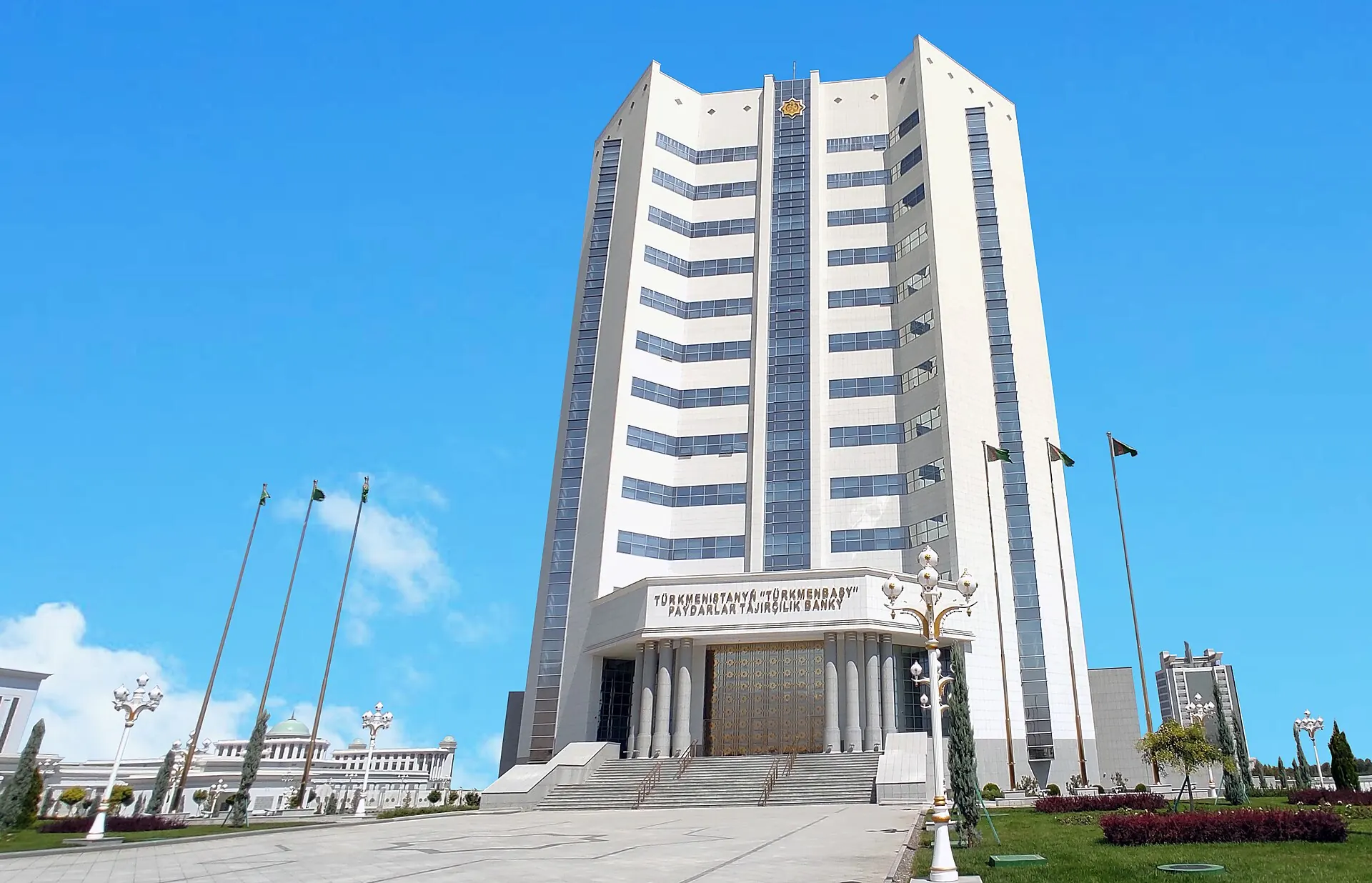
Ashgabat
Aşgabat
Code AS · 4 walking zones
Ashgabat is a city of wide avenues, marble monuments and long distances between them: do two clusters in the morning by car, spend the hottest hours indoors, and leave every permit and photograph question to your guide.
Our quick read of Ashgabat, scored 1–5 (friction is out of 100). Cash need: how often you still need notes. Heat risk: how hot days get. Stroller: how easy wheels are. Friction: overall effort for a first visit. Desk judgements, so check before relying on them.
- Local time
- --:--
- Weather
- forecast below
- Currency
- TMT
- Best months
- Mar · Apr · May · Sep · Oct
- Airport
- Ashgabat (ASB)
Walking zones: the 4 areas this guide plans a day around. Each is a district you can cover on foot, so you do one zone per half-day and ride the train between them. The code (AS 01, AS 02…) is just the zone's number on the Ashgabat line; the line under each name says how bags fare there and how much time it needs.
Map of Ashgabat
Use the switches to show or hide each kind of pin. A switch that is on shows its pins on the map; tap it again to hide them. "Show only" keeps just the pins that match (for example, places that fit a suitcase). Tap any pin for its name and a link to its page.
- Where to sleep
- Walking clusters
- Rest stops
From the airport Ashgabat (ASB) to your bed
Tap a pin for its card. Places without their own coordinates are shown by their walking cluster.
Why Ashgabat
The sights of Ashgabat are far apart, built for parades rather than walking, and open at hours that change without notice. The failures are practical: landing with no invitation letter, a night arrival with no pickup, noon in July, and a camera raised at a ministry. Four clusters cover a first visit by car with your guide; this site plans the hours, and your operator confirms the permits.
Fits
- Travellers with an approved operator and a guide
- Architecture and Soviet-to-modern-era curiosity
- Spring and autumn trips
Does not fit
- Independent, no-plan travellers
- Strollers and wheelchairs at midday heat
- Photographers who want candid street shots
How long
- 2 daysCentral Ashgabat + carpet museum morning, southern monuments
- 3 daysFour clusters, mornings only, indoor midday
- 5 daysFour clusters + Nisa and Kow Ata as guided day trips
Good for
- Architecture and Soviet-to-modern curiosity
- Independent, no-plan travellers
- Photographers wanting candid street shots
About Ashgabat
Ashgabat sits on the site of a Silk Road oasis town (ancient Konjikala/Ashkhabad) at the foot of the Kopet Dagh mountains, on the edge of the Karakum desert.
A catastrophic earthquake on 6 October 1948 killed a large share of the population and levelled almost the entire city; what stands today was rebuilt from the ground up, first in Soviet style, then — after independence in 1991 — in the marble-clad monumental style the city is now known for.
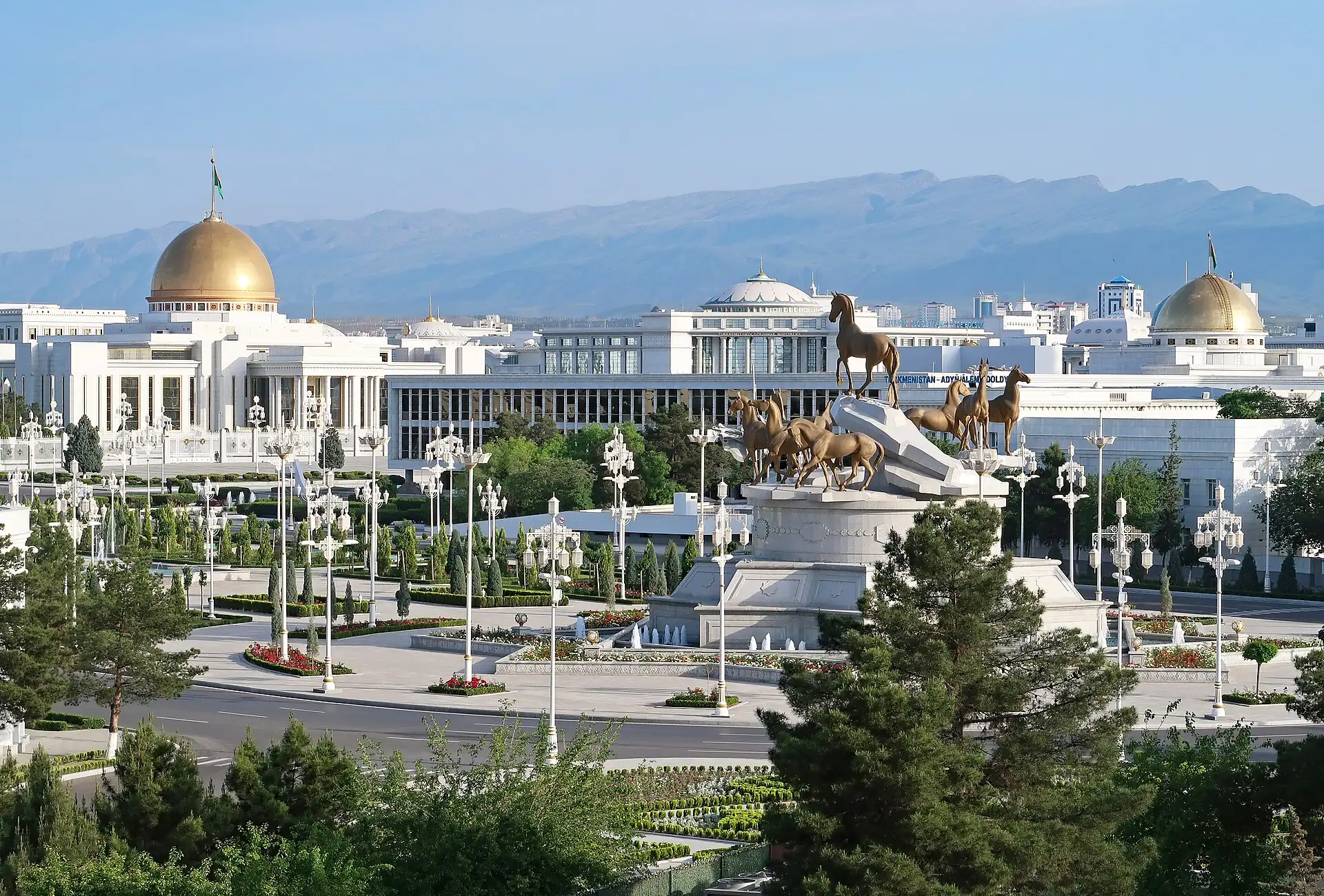
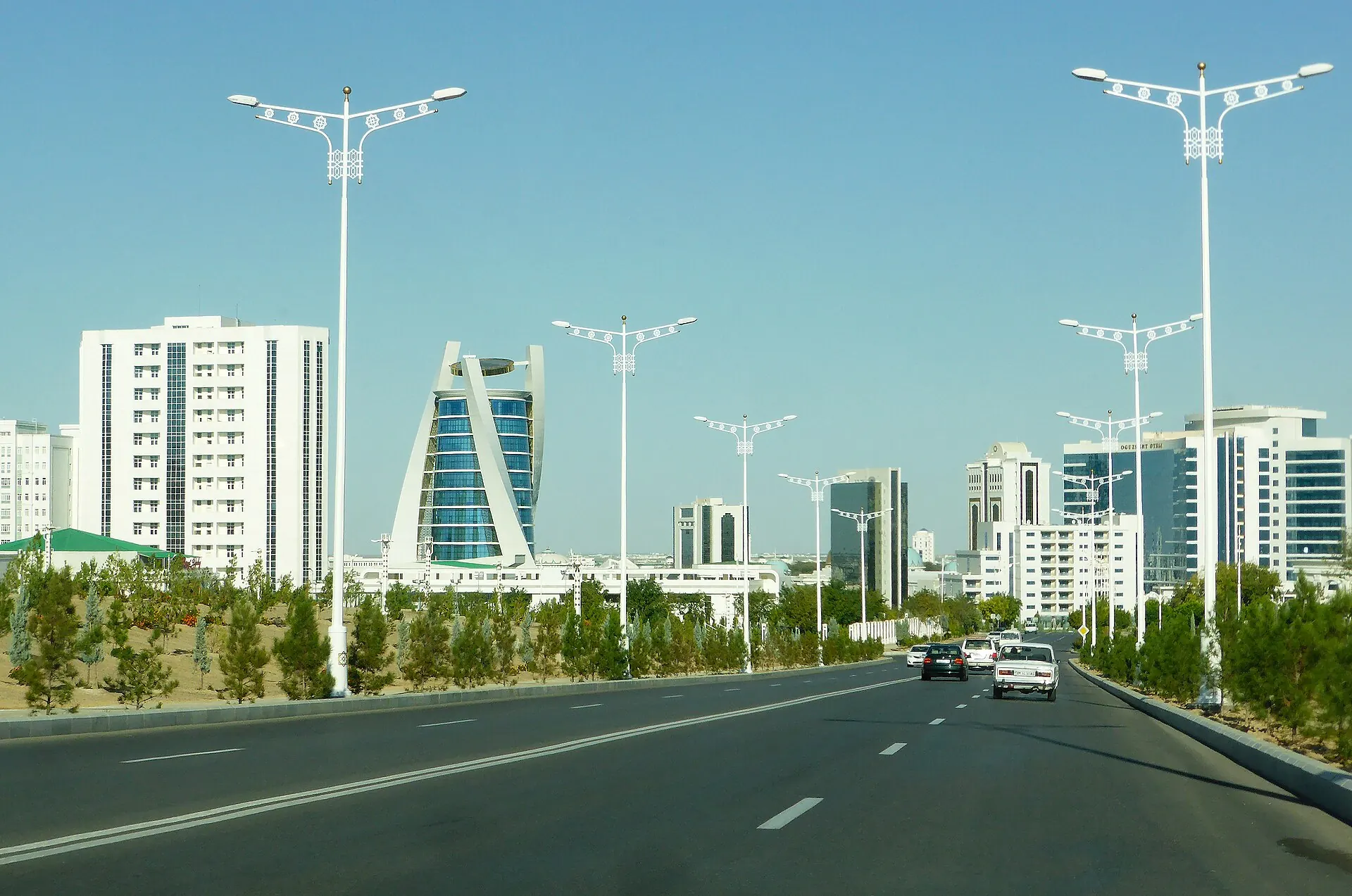
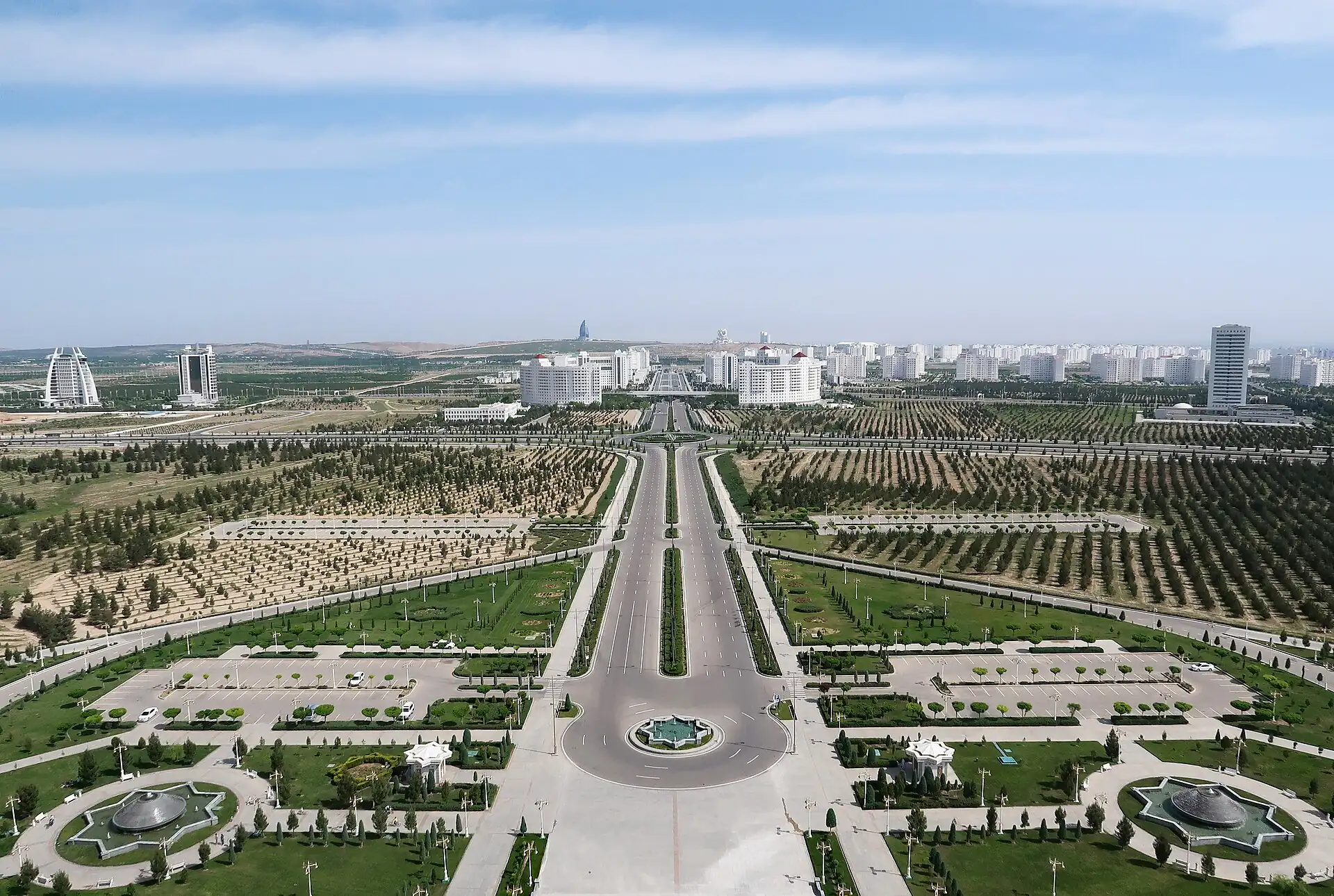
Since the 1990s the state has rebuilt central Ashgabat around wide ceremonial avenues, white-marble government and residential buildings, and gold-topped monuments; the city holds Guinness World Records for the world's highest concentration of white marble buildings.
Good to know
- Ashgabat is both the capital city and its own administrative unit, separate from Ahal region; day trips to Nisa or Kow Ata cross the city limit and need a permit.
- There is no independent tourist information office in the Western sense: your booked tour operator is effectively the only channel for local information, permits and same-day schedule changes.
Go deeper 7 min read · 5 chapters
Ashgabat is one of the strangest cityscapes a traveller can visit: a capital rebuilt almost entirely from scratch since a 1948 earthquake, then rebuilt again since 1991 in white marble and gold. This deep dive covers how the city got here, what the marble hides and reveals, and what daily life looks like underneath the monuments.
1History2 min
Ashgabat's site has been settled since antiquity as an oasis town on the northern edge of the Kopet Dagh mountains, at the point where routes from Persia and the wider Silk Road network crossed the Karakum desert toward the Amu Darya and Central Asia beyond. The modern city, however, is a Russian imperial creation: it was founded in 1881 as a garrison and administrative post for the Transcaspian region of the Russian Empire, taking its name from a Persian phrase usually rendered as 'city of love' or 'city of Ashk'.
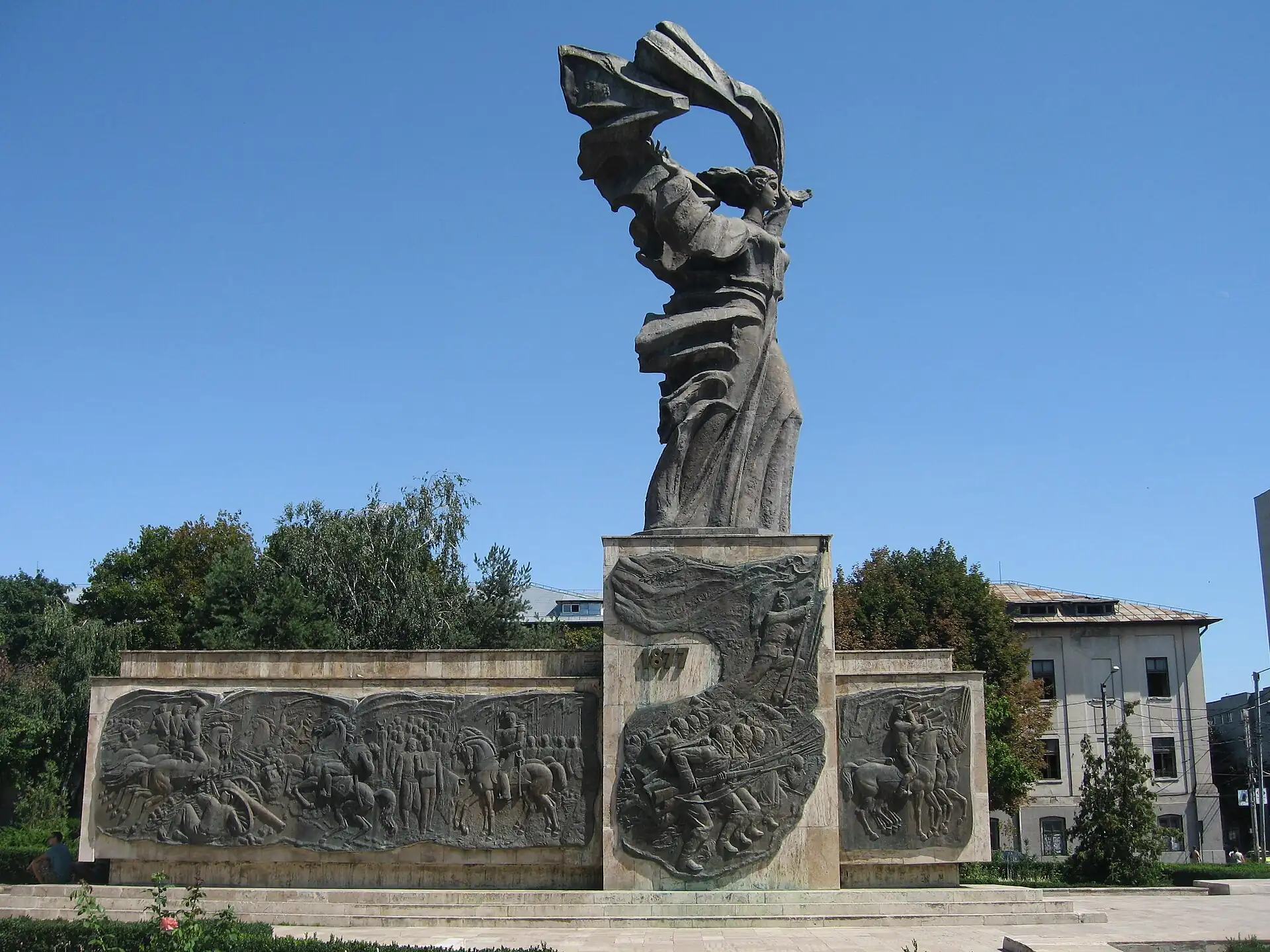
Under Soviet rule from the 1920s, Ashgabat became the capital of the Turkmen Soviet Socialist Republic, developing as a modest, low-rise administrative and university city with tree-lined streets, a pattern still visible in its older residential grid. That city was almost entirely destroyed on 6 October 1948 by one of the deadliest earthquakes of the 20th century, which killed a very large share of the population — estimates commonly cited run from tens of thousands up to two-thirds of residents — in a matter of seconds. The disaster was suppressed in Soviet reporting at the time and only became widely acknowledged decades later; 6 October is now marked as a day of remembrance.
The city was rebuilt after 1948 largely in restrained Soviet style: apartment blocks, government buildings and parks laid out on a grid, seismically reinforced after the disaster. This post-war Soviet city forms the older residential fabric that still surrounds the modern marble core.
Turkmenistan became independent in 1991 with the dissolution of the USSR, and under its first president, Saparmurat Niyazov (who styled himself Türkmenbaşy, 'leader of the Turkmen'), the state embarked on an extraordinary building programme funded by natural gas revenue: wide ceremonial avenues, gold-domed and gold-statued monuments, and government buildings clad floor to roof in white marble. This programme continued and expanded under his successor, Gurbanguly Berdimuhamedow, president from 2006, and has continued in a more moderated form since his son Serdar Berdimuhamedow took office in 2022. The result is a city centre that holds a Guinness World Record for the highest density of white marble-clad buildings anywhere on Earth.
Politically, Turkmenistan operates as a tightly centralised, single-party-dominated state; the government maintains extensive control over media, internet access and the movements of both citizens and visitors. This context — not any particular hostility to tourists — explains most of the practical restrictions a visitor encounters: photography rules, permit requirements and the guided, operator-run structure of nearly all foreign tourism.
- Founded (as Russian garrison town)
- 1881
- 1948 earthquake
- 6 October; the city was almost entirely destroyed
- Independence
- 27 October 1991
- UN-recognised permanent neutrality
- 1995 (marked each 12 December)
- Guinness World Record
- Highest density of white marble-clad buildings
2Architecture and the marble city1 min
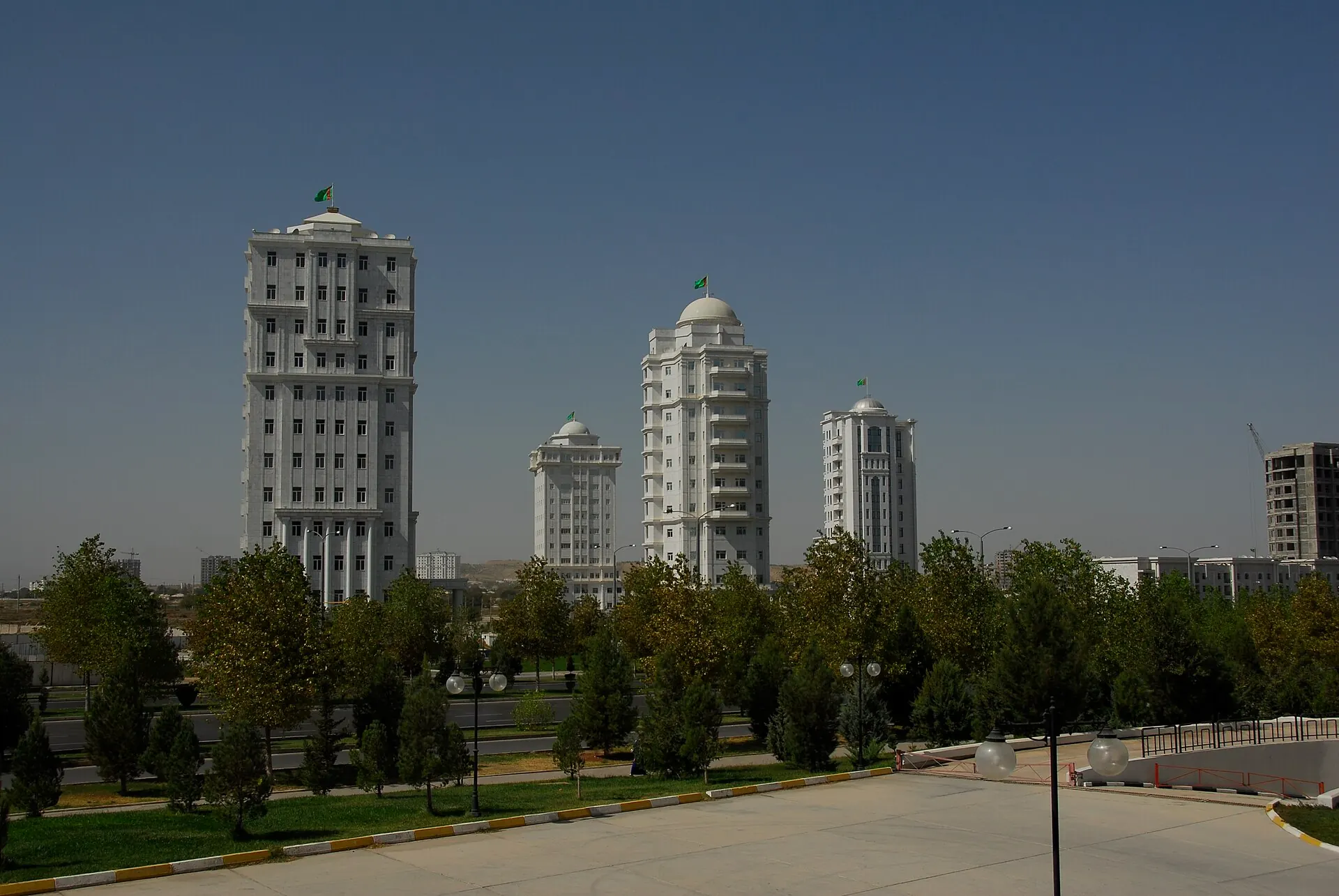
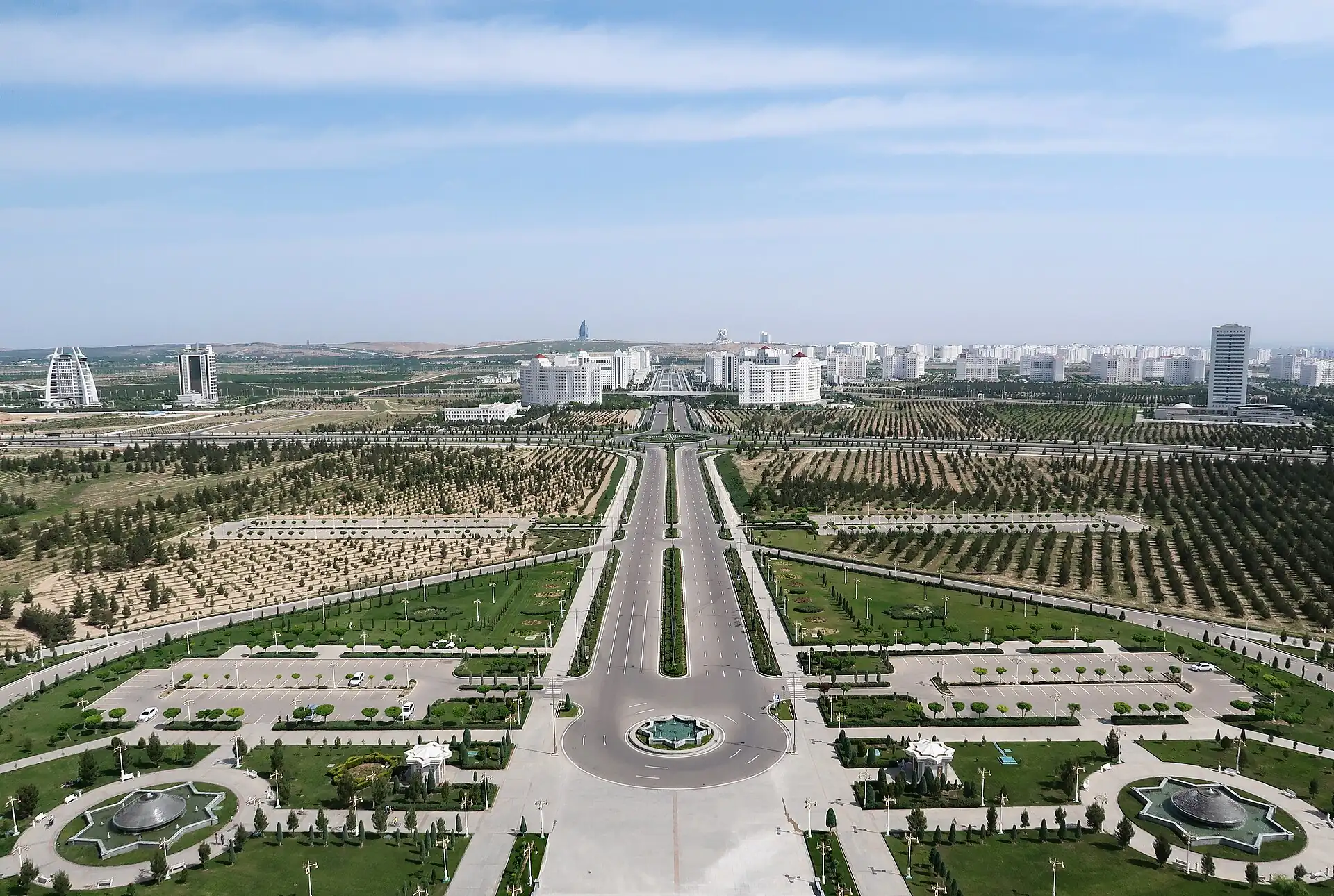
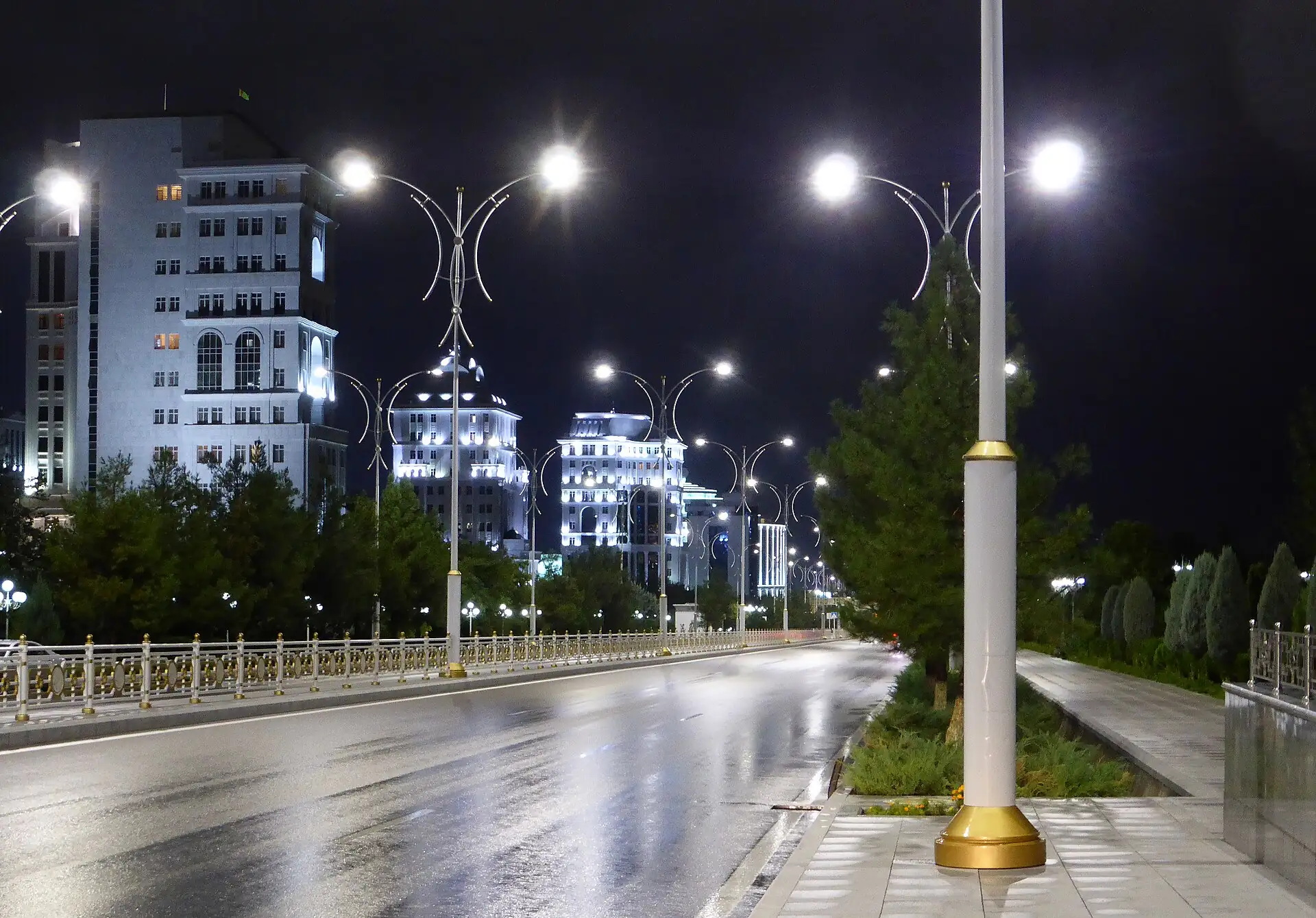
The defining fact of central Ashgabat's built environment is scale and material: wide, straight avenues designed for state parades rather than pedestrians, lined with government buildings, apartment blocks and hotels clad in imported white marble, frequently topped with gold detailing. Individual structures often reference classical or Central Asian ornamental motifs — columns, domes, arches — combined at a scale and uniformity that has no real precedent, built at speed with state-directed financing rather than organic urban growth.
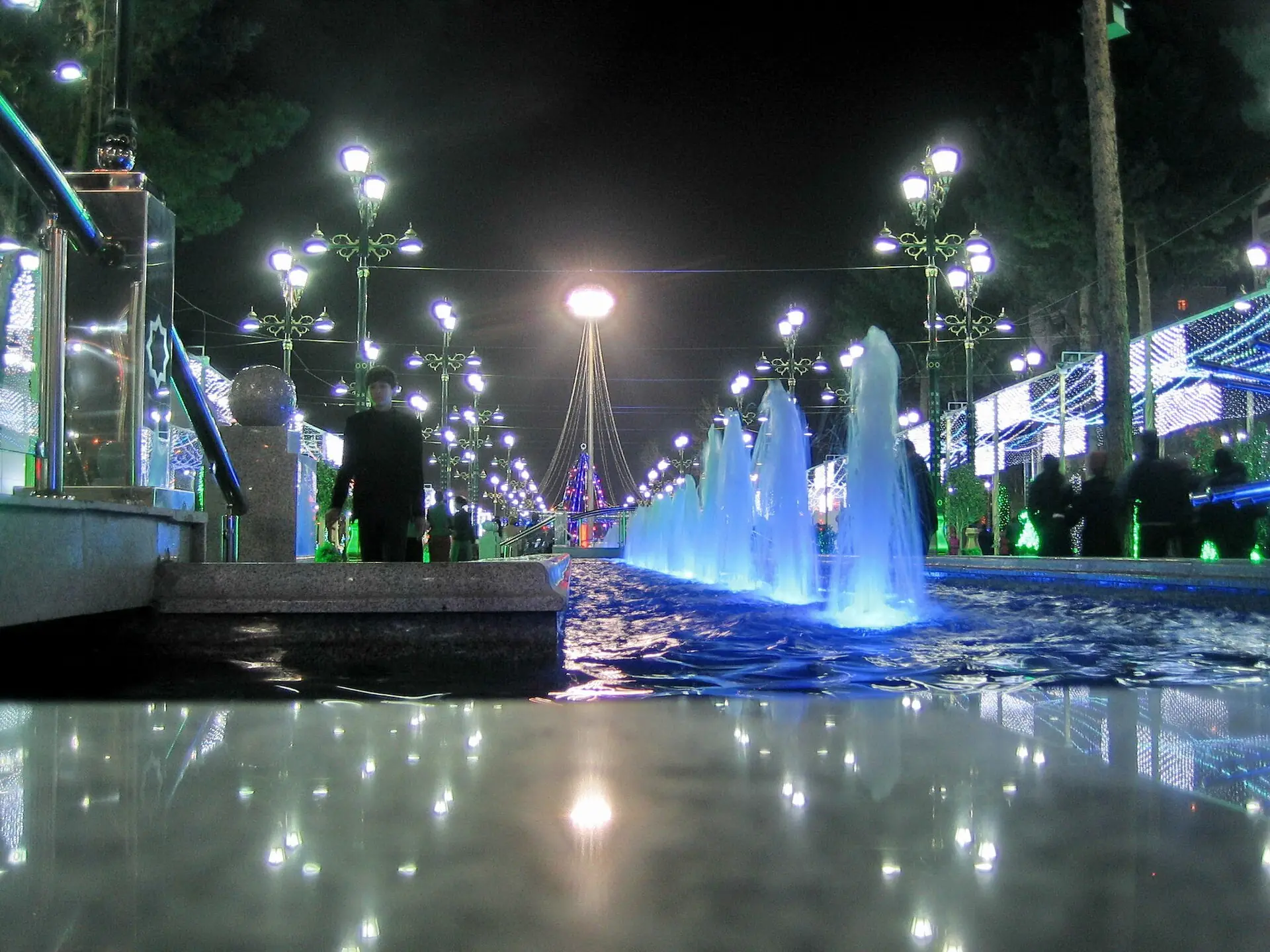
The Turkmen Carpet Museum and the various ministry buildings along the central avenues are representative examples: monumental, symmetrical, heavily decorated, and largely empty of street life at ground level, since the buildings were designed around processions and official functions rather than everyday pedestrian use. Fountains, some of the largest and most elaborate in the world by number and scale, run along many of the avenues, adding to the sense of a city built as a stage set.
This is deliberate: the marble building programme was explicitly conceived as a display of the new state's wealth and independence to both a domestic and international audience, particularly during the Niyazov and early Berdimuhamedow eras when natural gas revenue was directed heavily into the capital's fabric rather than distributed evenly across the country. Critics, including some international observers, have described the programme as prioritising prestige architecture over broader economic development.
A visitor's practical experience of this architecture is one of striking visual scale paired with an almost total absence of casual pedestrian activity: the avenues are built for cars and for viewing, not walking, which is why the trip OS treats every inter-monument leg here as a car journey rather than a walk.
- Defining material
- Imported white marble cladding
- Ferris wheel record
- Alem tower houses the world's largest enclosed Ferris wheel
- Building era
- Concentrated from the mid-1990s onward
3Desert and setting1 min
Ashgabat sits in a narrow band of habitable oasis land between the Kopet Dagh mountain range, which forms the border with Iran just south of the city, and the Karakum ('black sand') desert, which covers roughly 70% of Turkmenistan's territory and stretches north and east from the capital toward the Amu Darya river and the Aral Sea basin.
This setting produces the sharp continental desert climate that dominates any visit: very hot, dry summers with daytime highs regularly exceeding 38–40°C from June to August, and cold, sometimes damp winters. Water for the city and its extensive fountains and gardens is drawn partly from mountain sources and partly from the Karakum Canal, a major Soviet-era engineering project that brings water from the Amu Darya across hundreds of kilometres of desert — itself a significant, and environmentally contested, feat of Central Asian infrastructure.
The desert is also where several of Turkmenistan's best-known sights outside the capital sit: the Darvaza gas crater, a burning natural-gas pit that has become the country's best-known international image, lies several hours north into the Karakum and is normally visited as an overnight trip with a desert camp rather than a day excursion from Ashgabat.
- Desert coverage of Turkmenistan
- About 70% of the country (Karakum)
- Summer highs
- Commonly 38–40°C (100–104°F), Jun–AugCommonly 100–104°F (38–40°C), Jun–Aug
- Nearby mountain range
- Kopet Dagh, forming the Iran border
4Food and tea culture1 min
Turkmen cuisine centres on rice, meat (predominantly lamb and beef) and bread, reflecting the country's steppe and oasis-agriculture history. Palaw (plov) — rice cooked with meat, carrot and onion in oil, usually in a large communal kazan pot — is the national dish and the one a visitor should prioritise, ideally at lunch when it is freshly cooked rather than reheated.
Tea, rather than alcohol, is the centre of daily social life: green tea (gök çaý) is served constantly refilled in çaýhanas (teahouses) across the city, accompanied by flatbread (çörek), dried fruit and nuts. A çaýhana visit is less about the food and more about the unhurried pace — sitting, talking and drinking tea for an extended period is the point, not a quick transaction.
Street and bazaar food — şaşlyk (grilled meat skewers) and somsa (a baked, filled pastry related to samosas) — offers the most accessible and least formal eating in the city, best experienced at Altyn Asyr Bazaar on a weekend when the stalls are fully open. Restaurant dining beyond hotels remains limited in variety compared to larger regional capitals, and English-language menus are inconsistent outside international hotels.
- National dish
- Palaw (plov)
- Default drink
- Green tea (gök çaý)
- Street food
- Şaşlyk (skewers), somsa (pastry)
5Daily life and present-day restrictions1 min
For residents, daily life in Ashgabat sits at some remove from the marble ceremonial core: shopping, socialising and much of the city's actual economic activity happens in the older residential grid, at markets like Altyn Asyr, and increasingly online within the limits of the country's tightly restricted internet access. Turkmenistan is consistently ranked among the most internet-restricted countries in the world, with many foreign websites and most VPN services blocked or unreliable — a fact that shapes both residents' daily life and a visitor's ability to stay in touch while travelling.
For foreign visitors, the defining feature of a trip to Ashgabat is that nearly everything runs through a licensed tour operator: obtaining a letter of invitation before applying for a visa, arranging a guide and driver, and in many cases securing permits for travel outside the capital. Independent, self-directed tourism of the kind common in most world capitals is unusual in Turkmenistan in practice, even where it may be formally possible for some nationalities.
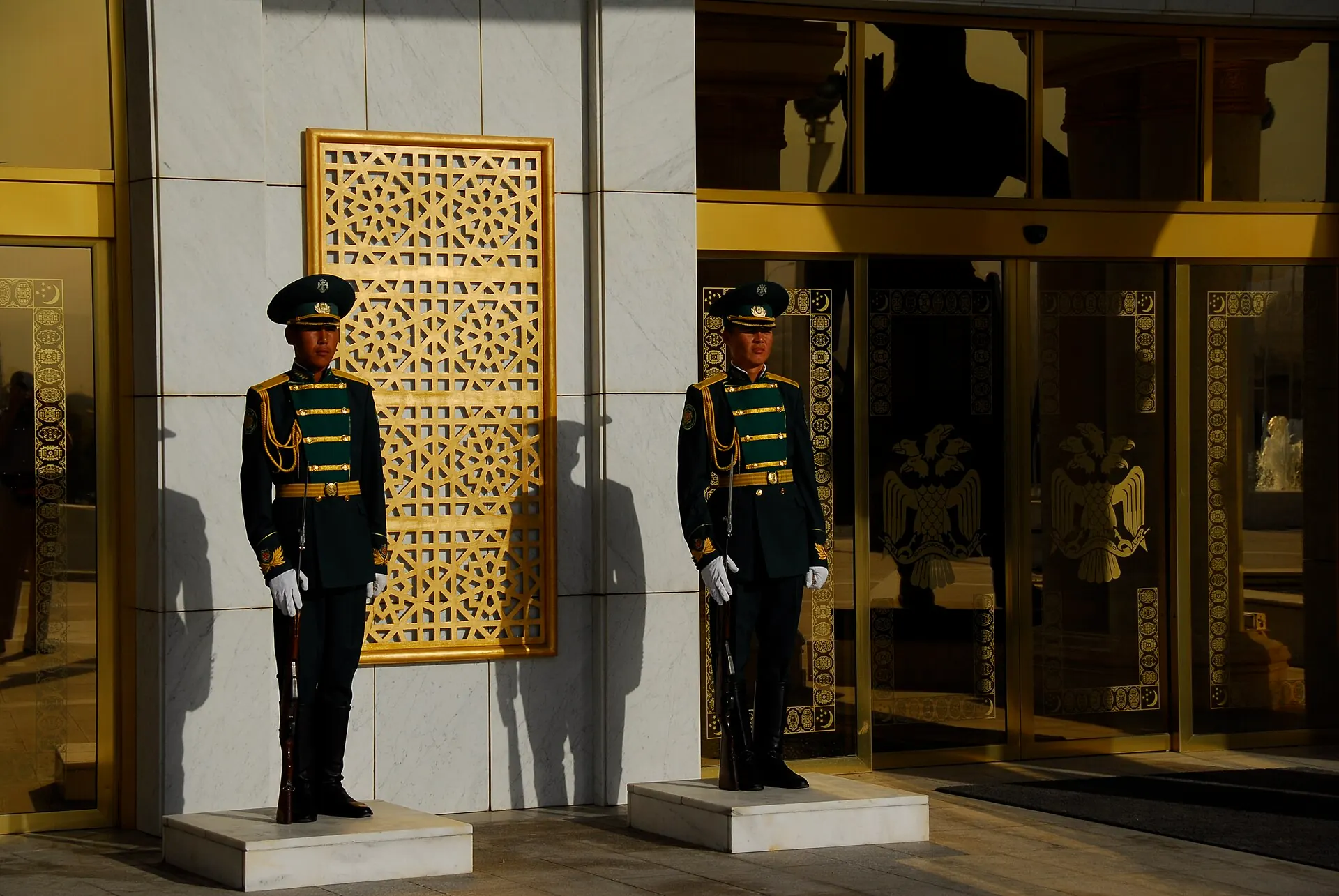
Photography restrictions are real and enforced, not a formality: government buildings, checkpoints, military and police personnel, and the airport are consistently off-limits to cameras, and visitors are expected to ask a guide before photographing anything uncertain. Hotel registration of every stay, kept with your passport and visa, is standard practice throughout a visit.
- Internet access
- Among the most restricted globally; many foreign sites and VPNs blocked
- Tourism structure
- Almost entirely operator-arranged: LOI, visa, guide and driver
- Photography
- Restricted for government, security and infrastructure subjects
Rules in force · 7Land borders between Central Asian states open and shut w…Almost all tourist visas need an invitation letter from a…
- Central Asia ↗Keep every hotel registration slip or its e-registration record until you leave Uzbekistan and Tajikistan; border officers can ask for proof of where you slept and fine gaps.
- Central Asia ↗Land borders between Central Asian states open and shut with politics and demarcation deals; confirm the exact post is open to foreigners the week you cross.
- Turkmenistan ↗Almost all tourist visas need an invitation letter from a licensed Turkmen operator, issued before you apply; arrivals without one are refused boarding or entry.
- Turkmenistan ↗Independent travel is not the expected model: itineraries are declared to the authorities, and travel outside Ashgabat needs permits your operator arranges.
- Turkmenistan ↗Do not photograph government buildings, presidential palaces, military sites, police, airports or border areas; ask your guide before raising a camera.
- Turkmenistan ↗Foreign cards and ATMs rarely work: bring enough clean, undamaged US dollar or euro notes for the whole trip and change only through official channels.
- Ahal ↗Trips beyond the Ashgabat city limit need a permit that your operator files; do not leave the city without it.
Entry rules depend on your passport. Full visa guide
Emergency numbers for Ashgabat101 ▾
Tap a number to call from your phone. These are the numbers listed in this guide; a row marked check has not been verified.
Planning is the full guide. I'm here keeps what is open and the cheat card.
Right now
Checking the weather…
Working out what is open near you…
What is open nowclock, closures, places open
Now in Ashgabat
Local time in Ashgabat
--:--
Loads in your browser · Asia/Ashgabat
This month
Month verdict appears here.
Closed today
See the weekly grid below.
If today is a closure day: Confirm every opening hour and permit the same day through your operator — published hours for state sites are unreliable and change without notice.
Weekly closures and permit rules are not consistently published in English; treat any hour on this site as a starting point to be confirmed locally.
Cheat cardthe pocket version
Cheat card
The essentials on one card: save it as an image for your phone, share it, or print it.
Ashgabat
Aşgabat
- Money
- Do not rely on ATMs or cards: bring all cash in clean US dollars or euros and change through your operator or an…
- SIM
- A local SIM (MTS Turkmenistan) needs your passport and is best arranged by your operator…
- Ride app
- Local taxi apps
- Emergency
- 101 fire · 102 police · 103 ambulance (not 911, 999 or 000)
- Plugs
- Sockets C/F. US/Canada (A/B): adapter · UK/Ireland (G): adapter · Australia/NZ (I): adapter. 220 V: US 120 V-only devices (hair dryers) need a converter; most chargers are dual-voltage.
Say it
- Hello: Salam (sah-LAHM)
- Thank you: Sag boluň (sahg boh-LOON)
- How much is this?: Bu näçe? (boo nah-CHEH)
Top 5
- Turkmen Carpet Museum
- Independence Monument
- Arch of Neutrality
- Alem Cultural and Entertainment Center
- National Museum of Turkmenistan
EssentialsQuick answers, what things cost and how to get around
Essentials
Quick answers, what things cost and how to get around
Quick answers
The questions people ask first about Ashgabat, one line each. Tap a card for the full answer.
- Cash or card?Assume cash for almost everything outside a hotel front desk: bring clean, undamaged US dollars or euros and change them through your operator or a…
- SIM or eSIMA local SIM (MTS Turkmenistan) needs your passport and is best arranged by your operator; foreign roaming can be unreliable and expensive.
- Ride-hailing appLocal taxi apps.
- Tap waterDo not drink tap water; use bottled or boiled water.
- TippingNot obligatory.
- Plugs & powerSockets C/F. US/Canada (A/B): adapter · UK/Ireland (G): adapter · Australia/NZ (I): adapter. 220 V: US 120 V-only devices (hair dryers) need a converter; most chargers are dual-voltage.
Show all 14 answers
- Safe at night?Take more care after dark in Altyn Asyr Bazaar.
- What to wearModest dress (shoulders and knees covered) is expected, particularly at mosques and official sites.
- RestroomsHotels, museums and shopping centres; carry tissues, as public facilities are scarce.
- Emergency numbers101 fire · 102 police · 103 ambulance (not 911, 999 or 000)
- Sundays & holidaysNowruz: Persian/Central Asian new year: public celebrations, some closures, and crowds at central squares.
- Late at nightThis is not a late-night city.
- Rainy-day planRain is rare outside spring; when it occurs, treat marble squares as slippery and reschedule an outdoor block indoors (carpet museum…
- Landing lateASB: pre-arranged operator or hotel transfer to the door runs all night.
Cost cheat-sheetwhat everyday things cost
Cost cheat-sheet
Typical prices for the everyday things, as ranges. Change the currency right here; the local price stays first.
2026 desk estimate · check
- Sit-down mealA hotel-restaurant dinnerTMT 80–200
- Taxi, about 5 km (3 mi)Taxi, about 3 mi (5 km)Short taxi ride across the centreTMT 20–40
- Museum or sight ticketMuseum entryTMT 20–60
- Budget bedHotel double room, a night, per roomTMT 300
- Mid-range bedHotel double room, a night, per roomTMT 600
- High-end bedHotel double room, a night, per roomTMT 1,500
A day, not counting the bed: Budget TMT 250 · Mid TMT 450 · High TMT 800
Local prices, with USD next to them (rates 2026-09 (approximate); change it in the header). Ranges are desk estimates: check locally. Every price and the budget calculator →
Source: Prices in Ashgabat
Draft
Written from desk research. Not yet compared with the official source.
No official source is recorded for this figure.
Prices are 2026 desk estimates, not yet compared with an official source. Check on the day.
Not checked in the last 12 months (no check date on file).
DecideWho it suits, the trade-offs and when to go
Decide
Who it suits, the trade-offs and when to go
Best months at a glance
The guide's verdict for each month
Jan
Care
9°C (48°F)48°F (9°C)
Feb
Care
12°C (54°F)54°F (12°C)
Mar
Best
18°C (64°F)64°F (18°C)
Apr
Best
24°C (75°F)75°F (24°C)
May
Best
31°C (88°F)88°F (31°C)
Jun
Avoid
37°C (99°F)99°F (37°C)
Jul
Avoid
39°C (102°F)102°F (39°C)
Aug
Avoid
37°C (99°F)99°F (37°C)
Sep
Best
31°C (88°F)88°F (31°C)
Oct
Best
23°C (73°F)73°F (23°C)
Nov
Care
16°C (61°F)61°F (16°C)
Dec
Care
10°C (50°F)50°F (10°C)
Best: Mar–May, Sep–Oct. Mixed: Nov–Feb. Avoid: Jun–Aug. Month by month →
Warmest Jul (39°C (102°F)102°F (39°C)), coolest Jan (0°C (32°F)32°F (0°C) low), wettest Mar (8 rain days), driest Jul (0). Averages, not a forecast.
Ashgabat across the year
Best-looking months for Ashgabat: Apr, May, Sep. Rated avoid: Jun, Jul, Aug.
| Measure | Jan | Feb | Mar | Apr | May | Jun | Jul | Aug | Sep | Oct | Nov | Dec |
|---|---|---|---|---|---|---|---|---|---|---|---|---|
| Weather | Mixed (care) | Mixed (care) | Good (good) | Great (good) | Great (good) | Avoid (avoid) | Avoid (avoid) | Avoid (avoid) | Great (good) | Great (good) | Mixed (care) | Mixed (care) |
| Crowds | Low (good) | Low (good) | Low (good) | Medium (ok) | Medium (ok) | Low (good) | Low (good) | Low (good) | Medium (ok) | Medium (ok) | Low (good) | Low (good) |
| Prices | Low (good) | Low (good) | Medium (ok) | Medium (ok) | Medium (ok) | Medium (ok) | Medium (ok) | Medium (ok) | Medium (ok) | Medium (ok) | Low (good) | Low (good) |
| Events | None listed (ok) | None listed (ok) | 1 event (ok) | 1 event (ok) | None listed (ok) | None listed (ok) | None listed (ok) | 1 event (ok) | 1 event (ok) | None listed (ok) | None listed (ok) | 1 event (ok) |
Green is good news, amber needs planning, red is a month to avoid; dashed grey with a question mark means our data does not say. Open the year heatmap →
Not checked in the last 12 months (no check date on file).
Source: Months, temperatures and crowds
Draft
Written from desk research. Not yet compared with the official source.
Monthly highs, rain and crowd levels are climate averages and desk estimates for the city, not a forecast.
Understand the cityUnderstand · Districts
Orientation & districts
Central Ashgabat is a grid of wide marble avenues radiating from Independence Park and the Ruhyýet Palace area; most sights sit 1–5 km apart along or just off these avenues, with almost no shade and few pedestrians.
There is no public transit map aimed at visitors; addresses are best given as a named building or avenue intersection, and your operator's driver is the practical way to navigate.
Shaded shapes: walking areas (click one). Black pins: sleep areas. Grey dots: places. Round badges: arrivals. Click the map to turn on scroll-wheel zoom.
Hover, tap or tab to an area to see what it is like. Pins are sleep areas; arrows at the edge point to the airport.
Off the map: Ashgabat International Airport (ASB) (25–45 min by the usual route).
Not drawn yet (no coordinates in this guide): Old residential grid (north of the centre). They are in the neighbourhood cards below.
Where’s what, as a list:
- Central Ashgabat (Ruhyýet / Bitarap Türkmenistan avenue): Ministries, the carpet museum and major hotels; wide, ceremonial, and largely car-dependent. Suits: A first, guided visit. Price band $$$.
- Berzengi: Southern district with Independence Park, the Alem wheel and newer five-star hotels; a car ride from the historic centre. Suits: Independence Monument-area sights and newer hotels. Price band $$.
- Old residential grid (north of the centre): Lower Soviet-era apartment blocks and tree-lined streets; not a sight in itself, but worth a drive-through with your guide. Suits: A sense of everyday Ashgabat away from the marble core.
- Sleep area Berzengi (south): suits Independence Monument-area sights and newer hotels, price band $$.
- Sleep area Central Ashgabat: suits A first, guided visit, price band $$$.
- Ashgabat International Airport (ASB), 25–45 min by the usual route.
Neighbourhoods at a glance
One tab per area, pulled together from this guide’s districts table, area notes, sleep-area scores and place pages. Scores are desk judgements (1–5); prices are estimates, check before you book.
Central Ashgabat (Ruhyýet / Bitarap Türkmenistan avenue)
$$$Ministries, the carpet museum and major hotels; wide, ceremonial, and largely car-dependent.
- Suits:
- A first, guided visit
- Quiet nights3/5 Medium
- Nightlife2/5 Low
- Families3/5 Medium
- Late arrival4/5 High
Why these scores
- Quiet nights: Wide avenues mean less traffic noise than a dense old town, but some state-event days bring loudspeakers and closures.
- Nightlife: A handful of hotel bars; nothing like a bar district.
- Families: Fine as a base, but every outing is a car ride.
- Late arrival: 24-hour front desks at the larger hotels.
Getting around from here
- Car south-east: about 15 min to Independence Monument & Berzengi
Berzengi
$$Southern district with Independence Park, the Alem wheel and newer five-star hotels; a car ride from the historic centre.
- Suits:
- Independence Monument-area sights and newer hotels
- Quiet nights4/5 High
- Nightlife1/5 Very low
- Families3/5 Medium
- Late arrival4/5 High
Why these scores
- Quiet nights: Quieter residential-adjacent district south of the centre.
- Nightlife: Minimal; a hotel bar is usually the only option.
- Families: The Alem wheel makes this the better base with children.
- Late arrival: 24-hour desks at the larger hotels.
Getting around from here
- 60–80 min walk to Ruhyýet Palace & Nyýazow avenue
- Car north: about 20 min to Turkmen Carpet Museum
Old residential grid (north of the centre)
Lower Soviet-era apartment blocks and tree-lined streets; not a sight in itself, but worth a drive-through with your guide.
- Suits:
- A sense of everyday Ashgabat away from the marble core
Decide
The honest trade-off: what you will enjoy, what will wear you down.
You will like
- Marble avenues and fountains at dusk
- Carpets and crafts
- A guided, arranged trip
You will hate
- Photography restrictions
- Midday heat in summer
- Long empty distances between sights
Similar citiesif this one is not quite right
Similar cities
If Ashgabat does not fit your dates or budget, these match it on season, cost and feel.
When
Best months: Mar, Apr, May, Sep, Oct. Month-by-month verdicts below, with the live forecast first. When to go, month by month →
Ashgabat: next 7 days
Loading forecast…
Forecast: Open-Meteo (CC BY 4.0), model data for this point.
Air quality
Loading…
Model estimate (CAMS via Open-Meteo), not a street-level station; readings near busy roads run higher.
Month by month, all 12best Mar, Apr, May, Sep, Oct
Cold and grey; some frost.
Cold, damp; short days.
Mild; Nowruz holidays on 20–21 Mar.
Warm and green; best window opens.
Hot by late month; keep afternoons indoors.
Very hot; walking outdoors is limited to early morning.
Hottest month; 40°C (104°F) and above.Hottest month; 104°F (40°C) and above.
Extreme heat; Melon Day festivities.
Heat eases; Independence Day 27–28 Sep.
Best month: warm days, cool nights.
Cool and grey.
Cold; Neutrality Day 12 Dec.
Climate, calendar and eventsClimate · Calendar · Events · Packing by season
Climate
| Jan | Feb | Mar | Apr | May | Jun | Jul | Aug | Sep | Oct | Nov | Dec | |
|---|---|---|---|---|---|---|---|---|---|---|---|---|
| High | 9°C (48°F)48°F (9°C) | 12°C (54°F)54°F (12°C) | 18°C (64°F)64°F (18°C) | 24°C (75°F)75°F (24°C) | 31°C (88°F)88°F (31°C) | 37°C (99°F)99°F (37°C) | 39°C (102°F)102°F (39°C) | 37°C (99°F)99°F (37°C) | 31°C (88°F)88°F (31°C) | 23°C (73°F)73°F (23°C) | 16°C (61°F)61°F (16°C) | 10°C (50°F)50°F (10°C) |
| Low | 0°C (32°F)32°F (0°C) | 2°C (36°F)36°F (2°C) | 7°C (45°F)45°F (7°C) | 12°C (54°F)54°F (12°C) | 18°C (64°F)64°F (18°C) | 23°C (73°F)73°F (23°C) | 26°C (79°F)79°F (26°C) | 24°C (75°F)75°F (24°C) | 18°C (64°F)64°F (18°C) | 11°C (52°F)52°F (11°C) | 5°C (41°F)41°F (5°C) | 1°C (34°F)34°F (1°C) |
| Rain days | 6 | 6 | 8 | 6 | 3 | 1 | 0 | 0 | 1 | 3 | 5 | 6 |
| Verdict |
- Jun–Aug regularly passes 38–40°C (100–104°F) with almost no rain: outdoor sightseeing works only in the first two hours after sunrise or the last two before sunset.Jun–Aug regularly passes 100–104°F (38–40°C) with almost no rain: outdoor sightseeing works only in the first two hours after sunrise or the last two before sunset.
- Winter (Dec–Feb) is cold and can be damp; marble squares with no wind break feel colder than the number suggests.
- Oct and Apr are the most workable months for a walking-heavy itinerary.
Events by month
Nowruz
holiday20–21 Mar · Citywide
Public celebrations and some closures.
Independence Day
holiday27–28 Sep · Central monuments
The year's largest state event; heavy security and street closures.
Neutrality Day
holiday12 Dec · Independence Park
Official ceremonies; some closures near the monument.
Festivals and events that change the plan
| When | What | Effect on your plan |
|---|---|---|
| 20–21 Mar | Nowruz | Persian/Central Asian new year: public celebrations, some closures, and crowds at central squares. |
| 27–28 Sep | Independence Day | The largest state event of the year: parades and displays around the central monuments, heavy security, some streets closed. |
| 12 Dec | Neutrality Day | National holiday marking Turkmenistan's UN-recognised permanent neutrality (1995); official ceremonies at Independence Park. |
| Second Sunday of Aug | Melon Day (Turkmen Melon Day) | A genuinely local festival celebrating the Turkmen melon; exhibitions and tastings, held in the hottest part of the year. |
What to pack, by season
From Ashgabat’s own climate table: the coldest, warmest and wettest three months, and what to bring for each.
Coldest months
Dec–Feb
1° to 10°
A warm coat and layers.
Warmest months
Jun–Aug
24° to 38°
Light, breathable clothes, a sun hat and sunscreen; plan midday indoors and carry water.
Wettest months
Jan–Mar
7 rain days a month
Showers are occasional: a light shell is enough.
Arrive & moveGetting in, getting around, and your bags
Arrive & move
Getting in, getting around, and your bags
I land at…
Enter your landing time: what still runs from the airport, where you can eat when you get in, and which areas let you check in that late.
Ashgabat International Airport (ASB)
Out of the airport about 00:30 (next day)12:30 AM (next day) (02:40 (next day)2:40 AM (next day) if immigration and bags are slow); in town about 00:55 (next day)12:55 AM (next day).
Transport from the airport
- Any hourPre-arranged operator or hotel transfer to the door. Runs all night.
- Any hourAirport taxi to your hotel (fare agreed before you sit; your operator on the phone). Any hour.
- Last resortWait in the terminal or a nearby hotel until your operator can collect you. If nothing else works.
Places to eat open when you get in
We have no confirmed hours for the places to eat here yet. Plan on a convenience store or your hotel. What is open late →
Where to sleep with a late arrival
- Lets you inBerzengi (south) 24-hour desk. 24-hour desks at the larger hotels.
- Lets you inCentral Ashgabat 24-hour desk. 24-hour front desks at the larger hotels.
Typical times from our airport data, not a timetable: check the last departure on the day. Full airport-to-bed plan for Ashgabat International Airport (ASB) →
Arrive
Each gateway has its own airport-to-bed page with timings and the last safe connection.
Getting in, in detailGet in
Get in by rail and road
| Station | Mode | Serves | Where | To the centre |
|---|---|---|---|---|
| Ashgabat International Airport (ASB)use | Air | The only realistic arrival point for most visitors | About 10 km from the centre | Car with your operator, 20–30 minAllow generous time for immigration on arrival and departure; procedures can be slow. |
- Your invitation letter (LOI) and visa must be arranged before you fly — this is not a visa-on-arrival destination for most nationalities.
Move
The default way around, when a pass pays off, and when the last trains go.
- Default
- Car with your operator's driver between clusters; walk inside a cluster.
- Passes
- No pass. Ask your operator for a per-day car and driver rate rather than paying per ride.
- Last trains
- No metro constraint: cars run all night, but plan pickups through your operator.desk estimate
- Other modes
- Other modes (Rome2Rio) ↗
Getting around, in detailGet around · Connect
Get around
Car between clusters, walk only inside one; there is no practical public-transit option aimed at visitors.
| Mode | Verdict | Fare | Use it for | What breaks |
|---|---|---|---|---|
| Car with operator driver | use | Arranged as part of your tour | Every leg between clusters | The default and, in practice, the only reliable way to move around. |
| Walking | use | Free | Inside a single cluster only | No shade on the open squares; short hops only. |
| Street taxi | caution | Agree the price first | A backup if your operator's car is unavailable | Fares are not metered in a way a visitor can easily verify; your operator or hotel desk is the safer route. |
Connect
| Option | Verdict | What breaks |
|---|---|---|
| Arranged by your tour operator | use | The most reliable way to get a working local number; bring your passport. |
| Foreign roaming | caution | Can be expensive and, at times, unreliable; check with your home carrier before relying on it. |
Local taxi apps
Short rides in the centre
Coverage and reliability are inconsistent; your operator's driver is the default for a guided trip.
- Internet access
- Turkmenistan has some of the most restricted internet access in the world: many foreign sites and most VPNs are blocked or unreliable. Download maps, confirmations and messages before you fly, and set expectations with people back home about limited contact.
- Wi-Fi
- Available at international hotels, usually slow and subject to the same national restrictions as mobile data.
Luggage
Where big bags are a problem, and how to get rid of them for the day.
Rule
- Lockers
- No public lockers; hotels hold bags.
- Forwarding
- No forwarding service: keep the big bag at the hotel and take a day pack.
- Dead zone
- Late departures: ask the hotel to hold bags and for a room to freshen up.
Bags, area by area
4 walking areas rated
- Bags forbidden
- Bags painful
Turkmen Carpet MuseumIndependence Monument & BerzengiNeutrality Arch & Bitarap avenue
Lockers, forwarding and the gap between check-out and check-in are covered once, under Luggage.
See & doWalking clusters, day plans and the places worth the time
See & do
Walking clusters, day plans and the places worth the time
Clusters
Plan by cluster: each is a walkable area with a rescue point and a bag rule.
Morning cluster: the presidential-palace forecourt and the avenue are for looking, not photographing; wide paved squares, no shade, tight security.
rescue 100% · max p90 6.1′ · half
Morning cluster: the carpet museum and its surrounding avenue; go at opening, indoors with AC, then car onward.
rescue 100% · max p90 5.7′ · 90m
Late-afternoon or early-morning cluster: the Independence Monument and its park; open, shadeless, best at dusk in warm months.
rescue 100% · max p90 5.9′ · 90m
Late-afternoon cluster: the Arch of Neutrality at the foot of the Kopet Dag; a viewing area with wide sight lines; short stay.
rescue 100% · max p90 5.6′ · 90m
Days
Ready-made day plans, timed against opening hours and walking distances.
How long are you staying?
2 days
Central Ashgabat + carpet museum morning, southern monuments the second day.
Ashgabat in 3 days
3 daysMornings out with your guide, middays indoors, a car for every leg; the last day ends with the bags already in the car.
Day by day
Day 1 — Palace avenue, carpet museum, a 12:30 lunch table
- National Museum of Turkmenistan (optional)
- Turkmen Carpet Museum
- 12:30Lunch table 12:30 (booked by your operator)
Day 2 — Independence Monument and the Neutrality Arch
Day 3 — One last look, car to the airport at 12:00
- Turkmen Carpet Museum (optional)
- 12:00Car to the airport at 12:00
Places
“Best time” is when to arrive for the fewest crowds, for example “before 08:30”; “Go any time” means the hour makes little difference. More sights follow under “More sights and museums”.
6 places. Filters use the guide’s own ratings; a place with no rating is left out when a filter is on.
If you do ten things in Ashgabat
- 1
- 2
- 3
- 4
- 5
- 6
Good for…
Neighbourhoods in one line
| Area | Feel | Suits | Go | Avoid |
|---|---|---|---|---|
Tours and classes: book or skip
| Tour or class | Verdict | Typical price | Why | Check before paying |
|---|---|---|---|---|
What each season brings
Spring (Mar–Apr)
Summer (Jun–Aug)
Autumn (Sep–Oct)
Winter (Dec–Feb)
Photo spots and the light
| Spot | Best light | Tip |
|---|---|---|
Ashgabat travel FAQ
Can I visit Ashgabat independently, without a tour operator?
In practice, no — nearly every foreign visitor needs a letter of invitation, a guide and a pre-arranged itinerary. Treat this as a guided-trip destination.
Is photography allowed?
Only in limited circumstances. Government buildings, checkpoints, military and police, and the airport are always off-limits; ask your guide before photographing anything you are unsure of.
What currency should I bring?
Clean, undamaged US dollars or euros in cash; do not rely on cards or ATMs.
More to see and doSee & do · Learn & work · Rain & heat · Free things
Free things to do
Sights in Ashgabat that cost nothing to enter. Each is described under Places or More sights; extra costs inside are marked there.
See & do
7 of 7
- Museums
The national collection of Turkmen carpets, the country's best-known craft.
Central Ashgabat
- monument
The ceremonial monument marking 1991 independence.
Berzengi
- monument
A gold-topped arch marking Turkmenistan's permanent neutrality.
Berzengi
Alem Cultural and Entertainment Center
attractionIndoor Ferris wheel inside a glass pyramid — the best family stop in the city.
Berzengi
State history and archaeology collection, including Nisa and Merv finds.
Central Ashgabat
Central Asia's largest bazaar — carpets, textiles and a livestock market.
Ring road
Guided city tour
tourThe standard way to see Ashgabat: a half- or full-day car tour with a licensed guide.
Citywide
- Booking
- Almost everything in the "do" category in Ashgabat runs through your tour operator; there is little independent activity infrastructure.
Learn & work
| What | Where | Cost | Note |
|---|---|---|---|
| Turkmen language | Arranged privately or through a tour operator | check | No casual drop-in language schools aimed at short-term visitors. |
Working here
- Tourist entry
- Tourist visas do not permit work of any kind, paid or unpaid.
- Work permit
- Employment requires a separate visa category and local sponsorship; this is a specialist, non-tourist process.
Rain-day and heat-day plan
Day-trips and nearby
Places you can reach from Ashgabat in a day or with one night away, with the route and what it costs. Door to door, not ride time.
Nisa (Parthian fortress ruins)
goCar about 20–30 min west of the city, with your operator
UNESCO World Heritage Parthian capital ruins; a permit and guide are normally arranged as part of the same booking as the city tour.
- Time
- Half day
Kow Ata underground lake
goCar about 90 min south-west
A warm sulphur lake in a cave, popular for swimming; bring a towel and swimwear.
- Time
- Half day
Darvaza gas crater (the "Door to Hell")
overnightCar 3.5–4 h north into the Karakum desert, usually with an overnight camp
The best-known image of Turkmenistan; requires a permit and an operator-run desert camp — not a same-day round trip from the city.
- Time
- Overnight
Go next
Door to door: About 1 h by air
Domestic flight about 1 h, or a long drive
Ancient Silk Road city of Merv, another UNESCO World Heritage site, reached via the city of Mary.
Eat & sleepWhere to eat and which area to sleep in
Eat & sleep
Where to eat and which area to sleep in
Eat
A short list of places worth crossing the city for, each with how to get a seat.
Restaurant finder: filter every place to eat in Ashgabat →
Vegetarian-friendly score
1.0 / 5 · Hard work
- Country diet noteOur country guide rates vegetarian eating as hard.0 / 2
- Places to eat in this guide1 of 5 places with a known answer are vegetarian-friendly, 4 partly.0.9 / 1.5
- Budget eating lines0 vegetarian lines in "Eat by budget".0 / 0.6
- Meat-free national dishes3 meat-free dishes in the country food list.0.3 / 0.4
- Dedicated vegetarian kitchens0 mentions of vegetarian restaurants, Buddhist or fasting kitchens.0 / 0.5
Country note: Hard; tell your agency in advance.
Vegetarian places near me →Make a diet card →
How we score
- Country diet note (up to 2): easy 2, workable 1, mixed 0.75, hard 0; no note 0.5.
- City places to eat (up to 1.5): 1.5 × (vegetarian-friendly + half of partly friendly) ÷ places with a known answer; needs 3 or more known places.
- Budget eating lines marked vegetarian (up to 0.6): 0.2 each.
- Meat-free national dishes (up to 0.4): 0.1 each.
- Dedicated vegetarian kitchens mentioned — Buddhist chay, shōjin ryōri, Jain, fasting food, vegan cafés (up to 0.5): 0.1 each.
- Total rounded to the nearest half point, 0 to 5. Built from our own pages only, not from reviews.
Eating and drinking guideEat by budget · Drink
Before you sit down to eat
Short version; full text linked
Eat by budget
Under TMT 40 a meal
| Where | Order | Area | Price | Note |
|---|---|---|---|---|
| A çaýhana (teahouse) near the carpet museum | Tea and bread | Central Ashgabat | TMT 10–25 | |
| Food stalls at Altyn Asyr Bazaar | Şaşlyk or somsa | Altyn Asyr Bazaar | TMT 10–30 | |
| chai-and-chapati | Tea and chapati-style bread | check | check |
Dishes to know
| Dish | What it is | Where to look | When | Price |
|---|---|---|---|---|
| Palaw (plov) | Rice cooked with lamb, carrot and onion in oil — the national dish | Plov restaurants citywide | Lunch | TMT 40–90 |
| Şaşlyk | Charcoal-grilled meat skewers | Restaurants and bazaar stalls | Any | TMT 10–40 |
| Somsa | Baked pastry filled with meat or pumpkin | Bakeries and bazaar stalls | Any | TMT 5–15 |
| Çekdirme | Clear meat-and-vegetable soup | Local restaurants | Lunch | TMT 15–30 |
Drink & nightlife
| Where | What | Until | Note |
|---|---|---|---|
| Hotel bars (major international hotels) | Beer, spirits, cocktails | About 23:00About 11:00 PM | The most consistent option for a foreign visitor; alcohol is otherwise not widely served outside hotels and a handful of restaurants. |
By style
| Style | What | Where | Price | Until |
|---|---|---|---|---|
| Tea | Green tea (gök çaý)The default drink of the day; alcohol is a much smaller part of daily life than tea. | Çaýhanas across the city | TMT 10–25 | ~20:00 |
| Beer and spirits | Local and imported brandsAlcohol sale and service can be restricted around religious and state holidays — ask your operator. | Hotel bars and a small number of restaurants | TMT 30–80 a drink | ~23:00 |
Rules that bite
- Public drunkenness is treated seriously; keep alcohol consumption to hotel bars and restaurants.
Sleep
Pick the area first: it decides your walk home at night and your first morning.
Which neighborhood fits you
Three questions, one recommendation, with the reasons.
Your best fit
- Carpet museum and Ruhyýet-area monuments are a short car ride away.
- 24-hour front desks at the larger hotels.
Watch out: Few budget beds; most options aimed at business and operator-booked travellers.
Next best: Berzengi (south)
Built from our 1–5 desk scores per area; your answers stay in this browser.
More on sleepingYour area · With kids
Which area is yours
| If you are | Sleep in | Because |
|---|---|---|
| A short guided visit | Central Ashgabat | Closest to the carpet museum and ministries cluster. |
| Travelling with children | Berzengi (south) | Closer to the Alem wheel and Independence Park. |
Best first night: hotels near the Ruhyýet Palace and the Nyýazow avenue with a 24h desk and a car at the door; registration is done by the front desk.
Quieter south side near the Independence Monument, with larger hotels; a car to the centre takes 15–25 minutes.
Areas are in our default order until you tick a priority.
Scores are 1–5 desk judgements per priority (2026).
With kids
- The Alem Cultural and Entertainment Center (indoor Ferris wheel) is the single best kid-friendly stop in the city.
- Long distances between sights and little shade make strollers hard work outside a car; plan door-to-door car rides.
- There is little dedicated child infrastructure (play areas, kids' menus) outside international hotels.
PracticalMoney, essentials, safety and the pocket card
Practical
Money, essentials, safety and the pocket card
Money
What a day costs at three comfort levels, and how to pay.
- Budget
- TMT 150–300 excl. bed / day
- Mid
- TMT 300–600 excl. bed / day
- High
- TMT 600+ excl. bed / day
- Transit card
- No transit card for visitors: your operator's car covers the movements; short taxi rides are cash.
- Cash rule
- Do not rely on ATMs or cards: bring all cash in clean US dollars or euros and change through your operator or an official exchange counter.
More on moneyCosts · Budget · Buy
What things cost
- A plov meal at a local restaurantTMT 40–90
- Tea and bread at a çaýhanaTMT 10–25
- A car and driver for a half-day (arranged by your operator)TMT 300–600
- Bottled waterTMT 3–6
Trip budget
| Hotel double room1 × 3 nights × TMT 600 | TMT 1,800 |
| Food, local transport, entries2 × 3 days × TMT 450 | TMT 2,700 |
| Car and driver, half day1 × TMT 300 | TMT 300 |
| Guide fee, per day1 × TMT 200 | TMT 200 |
| Buffer 15%Price creep, a taxi you did not plan, one splurge | TMT 750 |
| Trip total≈ TMT 958 per person per day, bed included | TMT 5,750 |
2026 estimate in TMT; flights, visas, invitation letters and guided-tour fees excluded. Your choices stay in this browser.
Prices of common things
| Tea and bread at a çaýhana | TMT 10–25 |
| Plov at a local restaurant | TMT 40–90 |
| Bottled water, convenience store | TMT 3–6 |
2026 estimate; check locally.
Buy
- Bargaining
- Fixed prices are the norm in shops and hotels; bargaining is expected at the Altyn Asyr (Tolkuchka) bazaar, especially for carpets, and is unusual elsewhere.
- Fixed-price check
- State department stores and hotel gift shops post prices; use them as a rough ceiling before bargaining at the bazaar.
Markets and shopping streets
| Where | What | When | Haggle | Note |
|---|---|---|---|---|
| Altyn Asyr Bazaar (Tolkuchka) | Carpets, textiles, household goods, livestock | Best Thu evening–Sun; thin on weekdays | hard | The country's largest bazaar, on the ring road outside the centre — a half-day car trip, not a central-cluster stop. |
| Central department stores | Souvenirs, carpets, jewellery | Shop hours | no | Fixed, posted prices; card acceptance is inconsistent, carry cash. |
Shops by what they sell
| For | Where | Hours | Note |
|---|---|---|---|
| Carpets (Turkmen "gyplak" and other regional patterns) | Turkmen Carpet Museum shop, Altyn Asyr Bazaar | Shop hours | Genuine hand-knotted carpets carry export paperwork requirements — ask the shop for the certificate before buying. |
| Silver jewellery and traditional dress | Central department stores, the bazaar | Shop hours | Turkmen silver jewellery (often set with carnelian) is a recognisable local craft. |
Changing money
| Where | Verdict | Why |
|---|---|---|
| Bank counters | use | The lawful, traceable way to exchange cash; bring clean, undamaged notes. |
| Your tour operator | use | Often the most practical route given limited independent banking access for visitors. |
| Street or informal money-changers | avoid | Currency control is strictly enforced; do not use unofficial exchange. |
ATMs
- Reliability
- Do not plan around ATMs: foreign cards frequently do not work, and machines that do accept them may be out of cash. Bring all the cash you expect to need.
Essentials and accessEssentials · Access
Essentials
- Tipping
- Not obligatory. Round up for drivers and guides; 5–10% at a sit-down restaurant if you had good service.
- Plugs & power
- 220V; two-pin sockets (types C and F). Bring a universal adapter.
- Opening hours
- Shops and offices commonly close for a midday break; many state sites have hours that are not published in English and change without notice — confirm same day through your operator.
- Health
- Summer heat (Jun–Aug, 40°C (104°F)+) is the main risk; pharmacies exist but stock and English-language labelling vary. Travel insurance with medical evacuation cover is strongly advised given the limited private-hospital options for foreigners.Summer heat (Jun–Aug, 104°F (40°C)+) is the main risk; pharmacies exist but stock and English-language labelling vary. Travel insurance with medical evacuation cover is strongly advised given the limited private-hospital options for foreigners.
- Accessibility
- Wide, flat marble avenues are step-free in principle, but crossings are long, shade is rare, and kerbs at older buildings are inconsistent.
- Laundry
- Hotels offer laundry service; independent laundries are uncommon in the centre.
- Emergency numbers
- 101 fire, 102 police, 103 ambulance (commonly cited; confirm with your hotel).
Pack
- Light, breathable clothes for the heat; a warm layer for Dec–Feb
- Modest dress (shoulders and knees covered) for mosques and formal settings
- A hat and high-SPF sunscreen — shade is rare on the ceremonial squares
- A printed copy of your invitation letter, visa and hotel confirmation
Accessibility
The ceremonial avenues are flat and wide, which helps wheels, but distances are long, shade is minimal, and step-free confirmation at specific buildings is inconsistent. Plan every leg as a car ride.
- Pavements
- Wide and generally flat in the marble core; older residential streets are less consistent.
- Getting around
- A private car with your operator's driver is the practical step-free option door to door.
- Hotels
- International hotels have lifts and accessible rooms on request; confirm ahead.
- Toilets
- Accessible toilets mainly in international hotels; rare elsewhere.
Survive
Safety basics, the lines not to cross, and practical habits that save the day.
Safety
- Heat (May–Sep): drink bottled water, keep AC hours between 12:00 and 16:00.Heat (May–Sep): drink bottled water, keep AC hours between 12:00 PM and 4:00 PM.
- Emergency numbers are commonly 101 fire, 102 police, 103 ambulance; confirm with your hotel.
- Police and soldiers guard many monuments and roads: follow instructions, do not argue.
Red lines
- Do not photograph government buildings, ministries, presidential palaces, military or police, or the airport.
- Do not walk on marble squares that are cordoned off; ask before stepping onto ceremonial areas.
- Do not carry a drone or long lens; declare electronics if asked at customs.
Practical
- Toilets: hotels, museums and shopping centres; carry tissues.
- Tap water is not for drinking; use bottled water.
- Data and VPN access is limited; download maps and confirmations before you fly.
More on staying safeStay safe · Stay healthy · Safety map · Solo & women · Etiquette · Cope · Scams
After dark, by area
1 flagged area
Altyn Asyr Bazaar
Take care
Day = about 07:00–19:00. What to watch in each area, day and night →
Scams and red flags
Walk away if you see these
- There is little street-level tourist scamming in Ashgabat given how few independent tourists there are; the real risks are bureaucratic (an invalid invitation letter, an expired registration slip) rather than a bad-faith vendor.
- Unofficial money-changers offering a much better rate than a bank: avoid — currency rules are strict and enforcement is real.
- A taxi without a fare agreed up front can round up the price at the end: agree the amount, or let your operator arrange the car.
Stay safe
Stay healthy
Hospitals and clinics: see Cope.
Safety by area and hour
| Area | Day | Night | What to watch |
|---|---|---|---|
| Central Ashgabat (ministries | fine | fine | Heavily monitored; follow guard and police instructions immediately, do not linger near checkpoints. |
| Independence Park / Berzengi | fine | fine | Open, shadeless ground; heat risk more than any security concern. |
| Altyn Asyr Bazaar | fine | caution | Busy and crowded on weekends; watch belongings as in any large market. |
- The single biggest daily risk is heat exposure on shadeless marble squares in summer, not crime.
- Do not argue with police or soldiers guarding a monument; comply and, if needed, ask your guide to explain the situation.
Solo, women and LGBTQ+ travellers
Solo
- Independent solo travel with no operator is unusual in practice; expect a guide and driver even travelling alone.
- The city itself is calm and orderly; the friction is bureaucratic (visas, permits), not personal safety.
Women
- Harassment is uncommon. Modest dress is advisable, particularly outside international hotels.
LGBTQ+
- Same-sex relations between men are criminalised in Turkmenistan; there is no public LGBTQ scene, and discretion is strongly advised.
Etiquette in Ashgabat
- Photography
- Never photograph government buildings, checkpoints, military or police, or the airport; ask your guide before raising a camera anywhere uncertain.
- Dress
- Modest dress (shoulders and knees covered) is expected, particularly at mosques and official sites.
- Greetings
- A handshake is standard between men; wait for a woman to offer her hand.
- Officials
- Comply calmly with police and security instructions; do not photograph or argue with them.
Cope
Hospitals and clinics that handle foreigners
| Where | Area | Use it for |
|---|---|---|
| International-standard clinics inside major hotels | Central Ashgabat | The most accessible option for a foreign visitor for minor issues; for anything serious, medical evacuation cover is strongly advised. |
Visa extensions
- Registration
- Your hotel registers your stay with the authorities on arrival; keep the registration slip with your passport and visa at all times.
- Visa extension
- Extensions and any change of itinerary are normally handled through your operator, who liaises with the State Migration Service — do not attempt this independently.
- Lost passport
- Report to your embassy (if represented) and your tour operator immediately; few countries maintain an embassy in Ashgabat, so many nationalities coordinate through a neighbouring country's mission — confirm your own country's arrangement before you fly.
- Pharmacies
- Found in central Ashgabat; English-language labelling and stock of specific medicines are not guaranteed — bring your own prescription supply.
Apps and offline kitOffline kit
Offline kit
Set up before you leave, so Ashgabat still works with no signal or a dead roaming plan.
On your phone
- Maps: open the city in Google Maps, tap the place name, then Download offline map (or use an offline-maps app).
- Data: install an eSIM or buy a local SIM before the first taxi; the apps in this guide depend on it.
- Translation: download the local language for camera translation.
- Screenshots: booking confirmations, hotel address in the local script, and the emergency numbers.
This guide
Save the Ashgabat guide and its pages on this device; it opens without a connection.
Phrases that do the work
Greeting
Hello
Salam
sah-LAHM
Thanks
Thank you
Sag boluň
sahg boh-LOON
Market
How much is this?
Bu näçe?
boo nah-CHEH
Food
Delicious
Örän tagamly
UH-run tah-GAHM-luh
Café
The bill
Hasap
hah-SAHP hah-YUSH
Taxi
Please take me to this address
Meni şu salga eltiň
meh-NEE shoo sahl-GAH el-TEEN
Taxi
Stop here
Şu ýerde duruň
shoo yer-DEH doo-ROON
Pocket card
Fill in, then print or save as PDF
Stays in this browser only; nothing is sent anywhere.
AshgabatAşgabat
Pocket card · Voykit
My bed tonight
—
—
—
Meni şu salga eltiňPlease take me to this address
Emergency
- Fire101
- Police102
- Ambulance103
Embassy
My embassy: —
Fare anchors (2026 estimate)
- Airport → central hotel: TMT 40–60, 20–30 min (arranged by your operator)
- Short car ride across the centre: TMT 20–40
Say or show
- Salam — Hello (sah-LAHM)
- Sag boluň — Thank you (sahg boh-LOON)
- Bu näçe? — How much is this? (boo nah-CHEH)
Carry your passport, visa and hotel registration slip at all times; police checks on foreigners are routine.
Deep diveHistory, reading, photos and every source
Deep dive
History, reading, photos and every source
Sources
- officialMinistry of Foreign Affairs of Turkmenistan
- secondaryWikivoyage — Ashgabat
Ask about Ashgabat
Loading…
Was this useful?