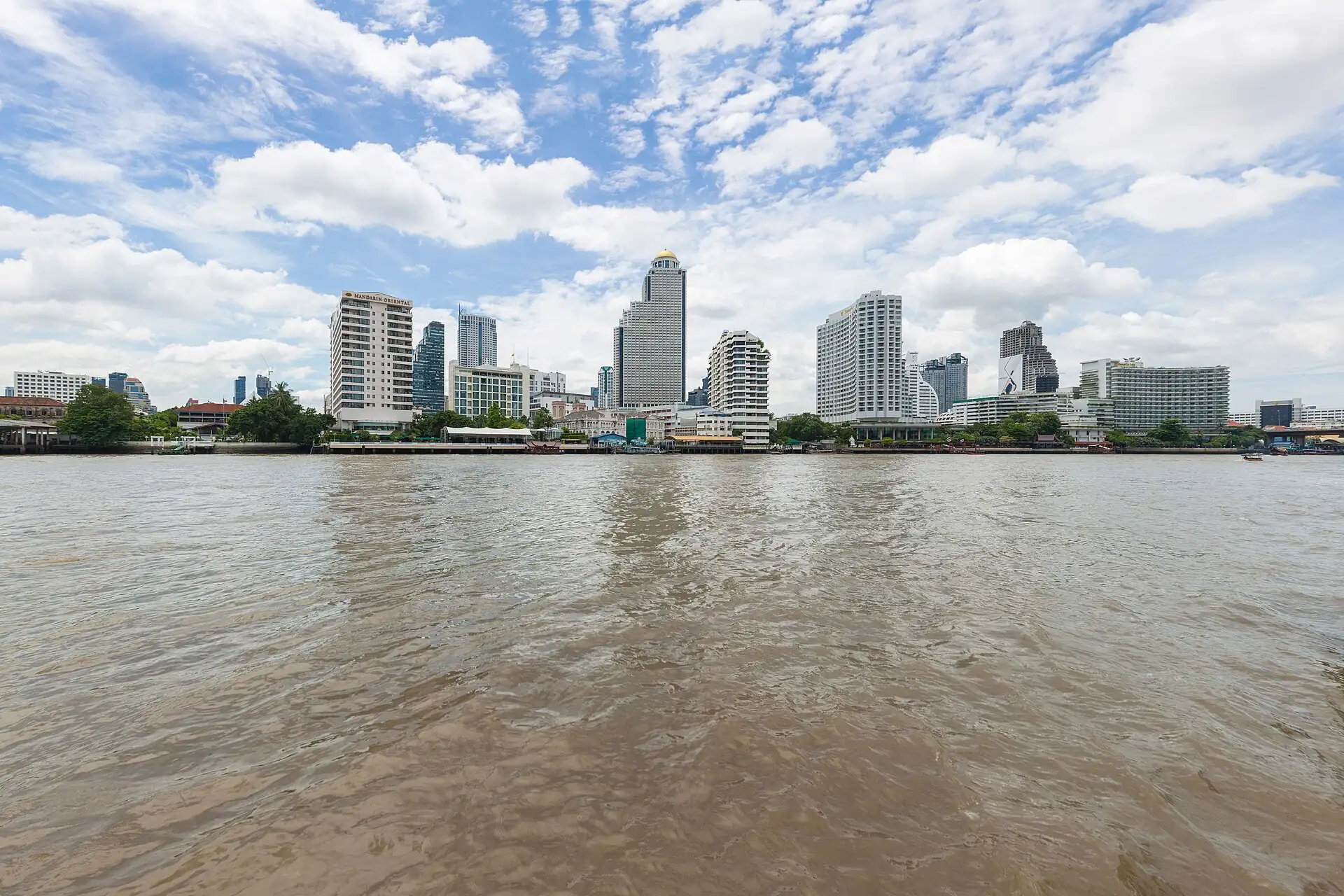
Bangkok
กรุงเทพมหานคร
Code BK · 4 walking zones
Bangkok is a morning-and-evening city: do the palace and temples at opening, hide in AC malls from 12:00 to 16:00, eat on the street after 18:00 — and take a metered taxi or a ride-hail with big bags, never the BTS at rush hour.Bangkok is a morning-and-evening city: do the palace and temples at opening, hide in AC malls from 12:00 PM to 4:00 PM, eat on the street after 6:00 PM — and take a metered taxi or a ride-hail with big bags, never the BTS at rush hour.
Our quick read of Bangkok, scored 1–5 (friction is out of 100). Cash need: how often you still need notes. Heat risk: how hot days get. Stroller: how easy wheels are. Friction: overall effort for a first visit. Desk judgements, so check before relying on them.
- Local time
- --:--
- Weather
- forecast below
- Currency
- THB
- Best months
- Jan · Feb · Nov · Dec
- Airports
- Suvarnabhumi (BKK) · Don Mueang (DMK)
Walking zones: the 4 areas this guide plans a day around. Each is a district you can cover on foot, so you do one zone per half-day and ride the train between them. The code (BK 01, BK 02…) is just the zone's number on the Bangkok line; the line under each name says how bags fare there and how much time it needs.
Map of Bangkok
Use the switches to show or hide each kind of pin. A switch that is on shows its pins on the map; tap it again to hide them. "Show only" keeps just the pins that match (for example, places that fit a suitcase). Tap any pin for its name and a link to its page.
- Where to sleep
- Places
- Eat
- Walking clusters
- Rest stops
From the airport Suvarnabhumi (BKK) to your bed · Don Mueang (DMK) to your bed
Tap a pin for its card. Places without their own coordinates are shown by their walking cluster.
Why Bangkok
Bangkok's sights are far apart and its traffic is famously slow. The temples are on the river, the malls are on the BTS, the food is in Chinatown, and no single line connects them. The trips that go wrong are the ones that fight the heat at noon, queue with a bag at the Grand Palace in the wrong clothes, or take a tuk-tuk to a 'closed' attraction. Four clusters cover a first visit from one kept bed, with the river and the BTS as the two reliable routes.
See first
- 1
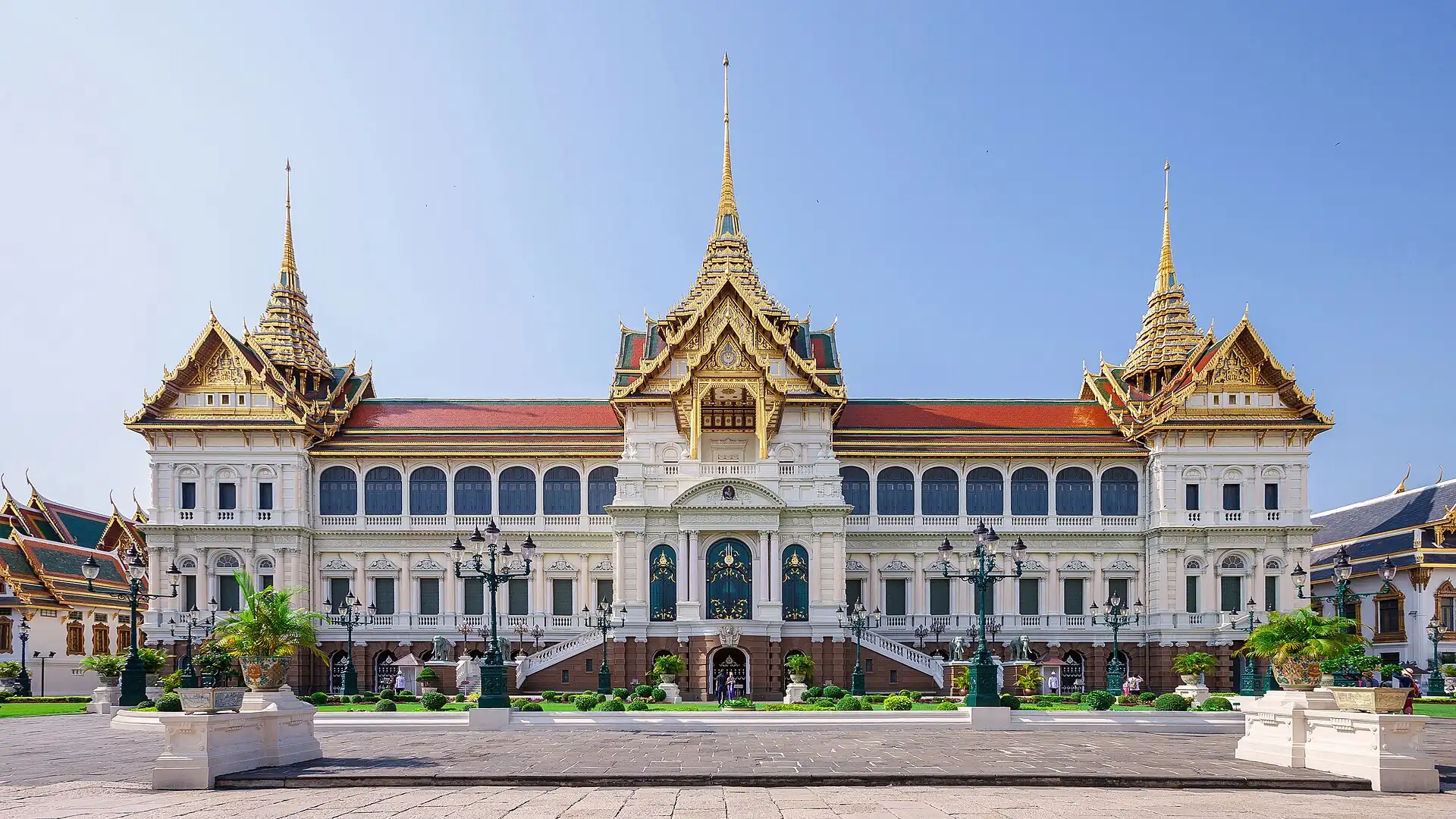 Grand Palace and the Emerald Buddha · 1.5–2 h
- 2Wat Arun from the river · 45 min plus the ferry
- 3Chinatown street-food evening · 2–3 h
- 4The Chao Phraya by express boat · 30–60 min
- 5Chatuchak Weekend Market · 3–4 h
Fits
- Street-food trips
- Temple and river days
- Bases for a longer Thailand trip
Does not fit
- Strollers and wheelchairs (pavements)
- Travellers who dislike heat and traffic
- Midday walkers from March to May
How long
- 2 daysGrand Palace + Wat Pho at opening; Siam or Chinatown in the evening
- 3 daysFour clusters, mornings and evenings only
- 5 daysFour clusters + Ayutthaya day-trip + one slow day
Good for
- First timers
- Foodies
- Budget
- Couples
- Solo
- Families
About Bangkok
Bangkok became the capital in 1782, when King Rama I moved the court across the river from Thonburi to what is now Rattanakosin. The palace, the royal temples and the city pillar are still where he put them, inside an old moat, which is why the historic sights sit in one corner far from the modern centre.
The city grew along the river and its canals (khlong), then on roads. Chinese merchants moved to Sampheng and Yaowarat, Western trading houses to Charoen Krung, and after the 1960s the money moved east along Sukhumvit and to Silom. That is the reason for the modern map: temples west, Chinatown in the middle, malls and hotels east on the BTS.
Good to know
- Rattanakosin (the Old City with the Grand Palace) is on the east bank of the Chao Phraya; Wat Arun is across the river; Sukhumvit and Silom are business and hotel districts, not the historic centre.
- Tourism Authority of Thailand (TAT) call centre 1672, English, daily 08:00–20:00 (check); its head office is on New Phetchaburi Road.
- Bangkok city tourist information booths near the Grand Palace (Phra Nakhon) and at some BTS stations give free maps (check locations).
Go deeper 12 min read · 6 chapters
Bangkok is younger than it looks. The capital was founded in 1782 on a bend of the Chao Phraya, built to echo the lost city of Ayutthaya, and it spread from a moated royal island to a metropolis of more than ten million along canals, then roads, then elevated railways. This deep dive follows that growth: the court and its temples, the Chinese merchant town beside it, the river and canals that shaped both, and the food, arts and rituals that tie the modern city back to its first streets.
1History2 min
Before Bangkok there was Ayutthaya, the Siamese capital for four centuries until Burmese armies destroyed it in 1767. A commander of Chinese-Thai descent, Taksin, rallied the survivors and set up a new capital downriver at Thonburi, on the west bank, where a customs post and fort guarded the river approach. The village on the opposite bank, among plum-olive orchards, was called Bang Makok; foreigners shortened it to Bangkok, and the name stuck abroad long after the Thais stopped using it.
In 1782 Taksin was deposed and executed, and his leading general became King Rama I, founder of the Chakri dynasty that still reigns. He moved the court across the river to the east bank, which was easier to defend, and on 21 April 1782 set the city pillar. Canals were dug to turn the site into an island, walls and forts were raised along them, and the new city, Rattanakosin, was planned to recall Ayutthaya: palace, royal temples and a great open field for ceremonies, even using bricks carried downriver from the old ruins.
The 19th century brought the outside world. The Bowring Treaty of 1855 opened Siam to British trade, and other Western powers followed with consulates, trading houses and churches along the river south of the old city. Kings Mongkut (Rama IV) and Chulalongkorn (Rama V) modernised the state to keep the colonial empires at bay: they built roads, a railway, ministries, a European-style palace quarter at Dusit and the broad Ratchadamnoen Avenue. Siam was the only country in the region never colonised.
On 24 June 1932 a group of officials and officers ended absolute monarchy in a bloodless coup; the Democracy Monument on Ratchadamnoen commemorates it. The decades that followed alternated between elected governments and military rule, and the city became a stage for mass protest, notably in 1973, 1976, 1992 and 2010. At the same time, American spending during the Vietnam war, Japanese investment and a long boom turned Bangkok into an industrial and financial capital, with traffic to match.
The city now spreads far beyond its first moat: about 5.5 million registered residents in the municipality and more than ten million in the wider metropolitan region. Since the Skytrain opened in 1999, rail lines have multiplied, from the MRT in 2004 to the monorails of 2023; Suvarnabhumi airport opened in 2006, and long-distance trains moved to the new Krung Thep Aphiwat terminal in 2023. Old Rattanakosin, meanwhile, is protected by height limits and still ruled by ceremony.
- Founded
- 21 April 1782, King Rama I
- Earlier capital
- Thonburi (1767–1782), under King Taksin
- Thai name
- Krung Thep Maha Nakhon, 'city of angels'
- End of absolute monarchy
- 24 June 1932
- Population
- About 5.5 million registered; more than 10 million in the metro region (2025 estimate)
- Dynasty
- Chakri, since 1782; the current king is Rama X
2Neighbourhood stories2 min
Rattanakosin Island is the royal and religious core: the Grand Palace, Wat Phra Kaew, Wat Pho, the great ceremonial field of Sanam Luang, ministries and a university. It feels different from the rest of the city because it was planned as a stage, and height limits keep it low. Just north, Banglamphu grew as a market quarter around a canal and later became the backpacker world of Khao San Road, which started with a few guesthouses in the early 1980s.
Chinatown began with a forced move. The Chinese traders who lived on the site chosen for the palace were relocated in 1782 to Sampheng, downriver, and the narrow Sampeng Lane still carries wholesale goods on trolleys. Yaowarat Road was cut in the 1890s and became the district's spine, lined with gold shops, Chinese medicine halls and restaurants. Teochew migrants dominated, which is why the food and dialect still lean that way. Talat Noi, by the river, keeps older shophouses, a Hokkien clan house and workshops full of engine parts.
South along the river, Bang Rak and Charoen Krung were the foreign quarter of the 19th century. Charoen Krung, 'prosperous city', was the first paved road, built in the 1860s. The Oriental hotel opened in 1876, the Portuguese and French had churches and embassies there, and the old customs house still stands on the bank. Today the area mixes grand hotels, galleries and a design scene around the former general post office.
The modern city grew east. Silom was once a quiet road of windmills (the name means 'wind mill'), then became the banking district. Sukhumvit, named after a road engineer, stretched out from the 1960s with foreign residents, hotels, nightlife and, from 1999, the Skytrain. Siam Square, near Chulalongkorn University, became the youth and shopping centre, and the malls around it now form the busiest retail district in the country.
Across the river, Thonburi keeps what the east bank lost: canals lined with wooden stilt houses, temple piers and orchards. The Bangkok Noi and Bangkok Yai canals follow the course of the original river before a shortcut canal, dug in the 16th century, became the main channel. Further out, the loop of land called Bang Krachao was left largely green by planning rules and is known as the city's lung.
- Chinatown settled
- 1782, at Sampheng
- Yaowarat Road
- Built in the 1890s under Rama V
- Charoen Krung Road
- 1860s, the city's first paved road
- Oriental hotel
- Opened 1876
- Bang Krachao
- Green loop of the river, about 16 km² (6 sq mi)Green loop of the river, about 6 sq mi (16 km²)
3Temples, palaces and belief2 min
A Thai wat is a compound, not a single building. The ordination hall (ubosot or bot) is marked by eight boundary stones; the assembly hall (viharn) holds the main Buddha image for lay visitors; bell-shaped chedis and corn-cob towers called prang hold relics; and cloisters, bell towers, libraries and monks' quarters fill the rest. Steep layered roofs end in finials shaped like birds' heads (chofa), and gables carry gilded carvings of gods and nagas.
Wat Phra Kaew, inside the palace grounds, is the royal temple and houses the Emerald Buddha, a small image carved from green jade or jasper that has been fought over by kingdoms since the 15th century. The king changes its robes three times a year, at the start of the hot, rainy and cool seasons. The cloister walls carry the Ramakien, the Thai version of the Indian Ramayana, painted in 178 panels and restored many times since the 1780s.
Wat Pho, next door, is older than the city and was rebuilt by Rama I and again by Rama III, who added the 46 m reclining Buddha in 1832. Rama III also turned the temple into a public encyclopaedia: marble plaques and statues record medicine, massage points, poetry and history, and the inscriptions were added to UNESCO's Memory of the World register in 2011. Across the river, Wat Arun's central prang, raised in the early 19th century and covered with broken Chinese porcelain, marks the Thonburi bank.
Religion in Bangkok is mostly Theravada Buddhism mixed with older layers. Brahmin priests perform royal ceremonies, the city pillar holds the protective spirit of the capital, and almost every building has a small spirit house on a pillar outside, fed daily with drinks, flowers and incense. The Erawan Shrine to the Hindu god Brahma, built in 1956 to stop accidents on a hotel site, is among the busiest places of worship in the city. Many young men still become monks for a few weeks or months, and alms rounds pass through quiet streets at dawn.
Palace architecture tells the story of modernisation. The Chakri Maha Prasat throne hall in the Grand Palace (1882) has a European body and Thai spired roofs, a compromise between a British architect and the court. At Dusit, the Italian-designed Ananta Samakhom Throne Hall (1915) is in marble with a dome, while the Marble Temple (Wat Benchamabophit, 1899) uses Carrara stone in a Thai form.
- Emerald Buddha
- About 66 cm tall; robes changed three times a year
- Ramakien murals
- 178 panels in the Wat Phra Kaew cloister
- Reclining Buddha, Wat Pho
- 46 m long, 15 m high, 1832
- Wat Pho inscriptions
- UNESCO Memory of the World, 2011
- Chakri Maha Prasat
- Throne hall, 1882
4Food history2 min
Bangkok cooking is the court and the market meeting the Chinese kitchen. Royal cuisine refined curries and carved fruit inside the palace, while Chinese migrants brought the wok, noodles, pork and a habit of eating out. Most noodle dishes in the city, from rolled kuay jap to duck noodle soup, are Chinese in origin, and the street-stall culture itself grew from Chinese hawkers selling to labourers along the river and canals.
Pad thai is younger than many visitors think. In the late 1930s and 1940s the government of Field Marshal Plaek Phibunsongkhram promoted rice-noodle stir-fries with a Thai name as part of a nationalist programme and a push to reduce rice consumption during shortages. The dish spread through street stalls and became a symbol of Thai food abroad. Boat noodles recall the canal era, when vendors served small bowls from boats so that they would not spill; the small bowls remain.
Chinatown is the most concentrated food street in the city. Stalls on Yaowarat Road serve oyster omelettes, grilled seafood, fish-maw soup, bird's-nest desserts and Teochew dumplings; the late-afternoon shift change from gold shops to food stalls turns the pavement into an open-air dining room. During the Chinese Vegetarian Festival in the ninth lunar month, yellow flags mark stalls that go meat-free for nine days.
Street food has been under pressure and in the spotlight at the same time. City authorities cleared or regulated stalls on many main roads from the mid-2010s, with Monday set as a cleaning day in several districts. Then the Michelin Guide arrived in 2017, and Jay Fai, a street-side cook known for her crab omelette, received a star, followed by Bib Gourmand listings for many stalls and shophouses. Today tasting-menu restaurants reinterpret regional Thai food at the top end, while khao gaeng curry shops and som tam carts still feed the city.
- Pad thai
- Promoted from the late 1930s under Phibunsongkhram
- Boat noodles
- Small bowls from the canal-vendor era
- Michelin Guide Bangkok
- First edition December 2017
- Vegetarian Festival
- First nine days of the 9th Chinese lunar month
- Tom yum kung
- UNESCO intangible heritage, 2024
5Arts, sport and ritual2 min
Khon, the masked dance-drama of the Ramakien, began as a court art performed by men wearing elaborate painted masks, with narrators and a piphat orchestra of gongs, xylophones and oboe. It nearly vanished in the 20th century and was revived by royal patronage; UNESCO listed it in 2018. Performances are seasonal, but the same story is everywhere in the city, from the palace murals to the giant guardian statues at temple gates.
Traditional Thai massage, nuad thai, is taught at the school in Wat Pho, where Rama III's statues and plaques mapped the body's energy lines. It was inscribed by UNESCO in 2019. Massage shops across the city follow the same basic sequence of pressing, stretching and pulling, done fully clothed on a mat.
Muay Thai, the 'art of eight limbs', using fists, elbows, knees and shins, is the national sport. Rajadamnern Stadium opened in 1945 as the first national venue; Lumpinee, the other historic stadium, moved from its old site near Lumphini Park to a new building in the north of the city in 2014. Every fight starts with the wai kru ram muay, a ritual dance honouring teachers, to live music that speeds up with the action.
The calendar is built on Buddhist and royal dates. Songkran, the Thai New Year in April, began as a family ritual of pouring water over elders' hands and Buddha images and has become the world's best-known water fight; UNESCO inscribed it in 2023. Loy Krathong in November sets small floating baskets of banana leaf, flowers and candles on the river to thank the water spirits. Royal birthdays and ceremonies fill Sanam Luang and Ratchadamnoen with portraits and flags.
Contemporary art has grown fast. The Bangkok Art and Culture Centre opened in 2008 opposite MBK as a free public gallery, private museums such as MOCA collect modern Thai painting, and the Bangkok Art Biennale, first held in 2018, puts works inside temples and old buildings. Thai cinema and indie music sit next to a huge pop and television industry whose stars fill the mall billboards.
- Khon
- UNESCO intangible heritage, 2018
- Nuad thai (Thai massage)
- UNESCO intangible heritage, 2019
- Songkran
- UNESCO intangible heritage, 2023
- Rajadamnern Stadium
- Opened 1945
- BACC
- Opened 2008; free
6The river and the modern city2 min
Bangkok was built on water. Until the late 19th century most people lived in houses on stilts or on floating rafts along the Chao Phraya and its canals, and boats were the streets; European visitors called it the 'Venice of the East'. The city filled in many canals for roads from the 1890s onwards, and most of the remaining ones on the east bank are drains lined with concrete, but the Khlong Saen Saep still carries a fast commuter boat, and Thonburi's canals keep a slower life.
The river itself is still a working road. The Chao Phraya Express Boat, running since 1971, stops at piers from Nonthaburi to Sathorn, and cross-river ferries cost a few baht. Rice barges, pulled in trains by tugboats, pass the palace and the hotels. Since 2018 the riverside has also become a stage for new landmarks, from the ICONSIAM mall on the Thonburi bank to redeveloped warehouses in Talat Noi.
Silk made one of the river's best stories. Jim Thompson, an American architect and former intelligence officer, settled in Bangkok after 1945 and revived hand-woven Thai silk with weavers from the Ban Khrua canal community. His house, six traditional teak buildings moved from Ayutthaya and Ban Khrua and joined by the Saen Saep canal, became a museum after he vanished in the Cameron Highlands of Malaysia in 1967, a case never solved.
The modern city lives above the old one. The Skytrain opened in 1999 after decades of traffic jams, and the rail network now runs to more than 250 km across BTS, MRT, Airport Rail Link and SRT lines, with monorails added in 2023. Skywalks link stations to malls, and the malls themselves act as public squares, air-conditioned and open late. Towers such as King Power MahaNakhon (314 m, 2016) and Magnolias Waterfront Residences at ICONSIAM define the skyline.
Water remains the city's long-term problem. Bangkok sits about 1.5 m above sea level on soft clay, and groundwater pumping in the 20th century made it sink; subsidence has slowed since pumping was restricted, but the sea is rising. The floods of 2011 covered northern districts for weeks while dikes protected the centre. Engineers debate barriers and sea walls, and the government has discussed moving some state functions away; for visitors, it means a rainy-season afternoon can turn streets into rivers for an hour.
- Chao Phraya Express Boat
- Running since 1971
- BTS Skytrain opened
- 5 December 1999
- Rail network
- More than 250 km (155 mi) across all operators (2026 estimate)More than 155 mi (250 km) across all operators (2026 estimate)
- Jim Thompson disappeared
- March 1967, Cameron Highlands, Malaysia
- King Power MahaNakhon
- 314 m, completed 2016
- Elevation
- About 1.5 m above sea level
Read, watch, wordsReading · Watching · Glossary · Sources
Reading
- A History of Thailand — Chris Baker and Pasuk PhongpaichitThe standard one-volume history, clear on Bangkok's economy and politics.
- Bangkok Found — Alex KerrEssays on how to read the city's surface and the older layers below it.
- Four Reigns — Kukrit PramojA novel of palace life from Rama V to the 1940s, a classic of Thai literature.
- Very Thai — Philip Cornwel-SmithAn illustrated guide to everyday Thai street culture, from spirit houses to plastic stools.
Watching
- Street Food: Asia — Bangkok — Netflix, 2019Jay Fai's kitchen and the pressures on the city's street cooks.
- The Legend of Suriyothai — Chatrichalerm Yukol, 2001Ayutthaya-era epic that shows the court culture Bangkok set out to rebuild.
Glossary
| Term | Local | Meaning |
|---|---|---|
| Krung Thep | กรุงเทพฯ | City of angels: the Thai name for Bangkok. |
| wat | วัด | Buddhist temple compound with monks' quarters. |
| ubosot / bot | อุโบสถ | Ordination hall, marked by boundary stones. |
| chedi | เจดีย์ | Bell-shaped reliquary tower. |
| prang | ปรางค์ | Corn-cob-shaped tower of Khmer origin, as at Wat Arun. |
| khlong | คลอง | Canal. |
| soi | ซอย | Side lane off a main road, usually numbered. |
| san phra phum | ศาลพระภูมิ | Spirit house for the guardian spirit of a plot of land. |
| wai | ไหว้ | Greeting with palms pressed together. |
| khon | โขน | Masked dance-drama of the Ramakien. |
Read for this deep dive
- Wikipedia — Bangkok ↗
- Wikipedia — History of Bangkok ↗
- Wikipedia — Wat Phra Kaew ↗
- Wikipedia — Thai cuisine ↗
Background reading only: the text above is written by Voykit, not copied from these pages.
Photos
Bangkok City Library, Ratchadamnoen Road, Bangkok Photo: This Photo was taken by Supanut Arunoprayote . Feel free to use any of my images, but please mention me as the author and may send me a mess, CC BY 4.0
Holy Redeemer Church, Bangkok Photo: Chainwit., CC BY-SA 4.0
Bangkok street scene Photo: This Photo was taken by Supanut Arunoprayote . Feel free to use any of my images, but please mention me as the author and may send me a mess, CC BY 4.0
Bangkok street scene Photo: Reversemos.sapanaht, CC BY 4.0
View of the Holy Redeemer Church from the Green Mile in Bangkok Photo: Christophe95, CC BY-SA 4.0
Rules in force · 7Drug trafficking can carry the death penalty in Singapore…
- Southeast Asia ↗Drug trafficking can carry the death penalty in Singapore, Malaysia, Indonesia, Vietnam, Laos, Thailand, Brunei and Myanmar; never carry a bag or parcel for anyone.
- Southeast Asia ↗Carry a passport valid for at least six months from entry with two blank pages; airlines refuse boarding on less.
- Thailand ↗Check entry rules and any arrival card on the official Thai government sites for your passport; visa-exempt stays and pre-arrival forms change.
- Thailand ↗Do not criticise or mock the monarchy: insulting the royal family is a criminal offence.
- Thailand ↗Temples and palaces: shoulders and knees covered, shoes off before entering halls.
- Thailand ↗E-cigarettes and vapes are illegal to import or use; do not pack them.
- Central Thailand ↗Day-trips in Mar–May: leave by 07:30 and be back indoors by 13:00.
Entry rules depend on your passport. Full visa guide
Emergency numbers for Bangkok1155 ▾
Tap a number to call from your phone. These are the numbers listed in this guide; a row marked check has not been verified.
Planning is the full guide. I'm here keeps what is open and the cheat card.
Right now
Checking the weather…
Working out what is open near you…
What is open nowclock, closures, places open
Now in Bangkok
Local time in Bangkok
--:--
Loads in your browser · Asia/Bangkok
This month
Month verdict appears here.
Closed today
See the weekly grid below.
| Weekly closure | Mon | Tue | Wed | Thu | Fri | Sat | Sun |
|---|---|---|---|---|---|---|---|
| Bangkok Art and Culture Centre (BACC)checkFree; opposite MBK. | ✕ | · | · | · | · | · | · |
| Museum SiamcheckNear Wat Pho (MRT Sanam Chai). | ✕ | · | · | · | · | · | · |
| National Museum BangkokcheckNext to Sanam Luang; confirm before crossing town. | ✕ | ✕ | · | · | · | · | · |
| Museum of Contemporary Art (MOCA)checkFar north on Vibhavadi Rangsit Road. | ✕ | · | · | · | · | · | · |
| Siriraj Medical MuseumcheckThonburi side, by the hospital pier. | · | ✕ | · | · | · | · | · |
| Chatuchak Weekend MarketcheckMain market Sat–Sun; plant section trades Wed–Thu; a few shops open Fri evening. | ✕ | ✕ | ✕ | ✕ | ✕ | · | · |
| Street-food stalls in many districtscheckMonday street-cleaning day; not every district and not every stall. | ✕ | · | · | · | · | · | · |
If today is a closure day: Monday: many museums close (BACC, Museum Siam, MOCA, the National Museum), and many districts keep Monday as street-vendor cleaning day, so Chinatown and other stall streets are thinner. Put the Grand Palace, Wat Pho and a mall day on Monday instead.
Open every day: Grand Palace, Jim Thompson House, Wat Pho.
Weekly closures come from our place pages; royal ceremonies, Buddhist holy days (no alcohol sales) and Songkran add closures not shown here.
Open now
The sights and places to eat on our list that are open at this moment, in the city's time, nearest first from where you are staying.
Loads in your browser with the city's local time.
Hours marked (check) are typical, not confirmed. Walking times are straight-line estimates. Open at another time →
Cheat cardthe pocket version
Cheat card
The essentials on one card: save it as an image for your phone, share it, or print it.
Bangkok
กรุงเทพมหานคร
- Money
- Keep ฿1,000 in small notes; withdraw inside banks or malls (about ฿220 fee per foreign-card withdrawal).
- SIM
- Install an eSIM before you fly, or buy a tourist SIM at the AIS or True counters in the arrivals hall (passport needed…
- Ride app
- Grab · Bolt · LINE MAN
- Emergency
- 1155 tourist police · 191 police · 1669 ambulance (not 911, 999 or 000)
- Plugs
- Sockets A/C/O. US/Canada (A/B): fits · UK/Ireland (G): adapter · Australia/NZ (I): adapter. 220 V: US 120 V-only devices (hair dryers) need a converter; most chargers are dual-voltage.
Say it
- Hello: สวัสดีครับ / ค่ะ (sawasdee khrap / kha) (sa-wat-dee krap (men) / ka (women))
- Thank you: ขอบคุณครับ / ค่ะ (khop khun) (kop-koon krap / ka)
- How much is this?: อันนี้เท่าไหร่ (an nee tao rai) (an nee tao rai)
- Not spicy, please: ไม่เผ็ด (mai phet) (mai pet)
- Please use the meter: เปิดมิเตอร์ด้วย (poet meter duay) (pert mee-ter duay)
Top 5
- Grand Palace and the Emerald Buddha
- Wat Pho
- Wat Arun from the river
- Chinatown street-food evening
- Jim Thompson House
EssentialsQuick answers, what things cost and how to get around
Essentials
Quick answers, what things cost and how to get around
Quick answers
The questions people ask first about Bangkok, one line each. Tap a card for the full answer.
- Cash or card?Cash for street food, markets, motorbike taxis, tuk-tuks and boats; cards in hotels, malls and most restaurants (some add 2–3%).
- SIM or eSIMInstall an eSIM before you fly, or buy a tourist SIM at the AIS or True counters in the arrivals hall (passport needed; the counter registers it).
- Ride-hailing appGrab · Bolt · LINE MAN.
- Tap waterDo not drink tap water; bottled and filtered water is cheap.
- TippingNot expected at stalls.
- Plugs & powerSockets A/C/O. US/Canada (A/B): fits · UK/Ireland (G): adapter · Australia/NZ (I): adapter. 220 V: US 120 V-only devices (hair dryers) need a converter; most chargers are dual-voltage.
Show all 14 answers
- Safe at night?Take more care after dark in Rattanakosin (palace and temples), Lumphini Park and Silom, Sukhumvit Nana and Soi Cowboy and more.
- Emergency numbers1155 tourist police · 191 police · 1669 ambulance (not 911, 999 or 000)
- Your embassycheckUS, UK, Australia, Canada embassies listed with addresses (check before you go).
- Closed which day?Mon: 6 on our list shut · Tue: 3 on our list shut.
- Sundays & holidaysChinese New Year: Yaowarat closes to traffic for street parties; shops in Chinatown shut for a few days after.
- Late at nightStandard closing time for bars and clubs is 02:00; licensed venues in the main nightlife zones (parts of Sukhumvit, Silom/Patpong, Khao San…Standard closing time for bars and clubs is 2:00 AM; licensed venues in the main nightlife zones (parts of Sukhumvit, Silom/Patpong, Khao San…
- Rainy-day planRainy-season storms (May–Oct) hit mostly in the late afternoon or evening: do the outdoor sights before 14:00 and have an indoor plan for 15:00–18:00.Rainy-season storms (May–Oct) hit mostly in the late afternoon or evening: do the outdoor sights before 2:00 PM and have an indoor plan for 3:00 PM–6:00 PM.
- Landing lateBKK: last airport Rail Link to Phaya Thai about 23:30, then metered taxi from the public queue (meter on; airport fee and expressway tolls extra).BKK: last airport Rail Link to Phaya Thai about 11:30 PM, then metered taxi from the public queue (meter on; airport fee and expressway tolls extra).
Cost cheat-sheetwhat everyday things cost
Cost cheat-sheet
Typical prices for the everyday things, as ranges. Change the currency right here; the local price stays first.
2026 desk estimate · check
- CoffeeCoffee (iced coffee from a cart / latte in a café)฿30–60 (≈ US$1–2)฿80–150 (≈ US$3–5)
- Sit-down mealSit-down restaurant meal, per person฿250–600 (≈ US$8–19)
- Street or quick mealNoodle soup or pad thai at a street stall฿50–100 (≈ US$2–4)
- Beerlarge bottle at 7-Eleven / in a bar฿60–80 (≈ US$2–3)฿120–200 (≈ US$4–7)
- Taxi, about 5 km (3 mi)Taxi, about 3 mi (5 km)5 km (3.1 mi) ride-hail: motorbike / car3.1 mi (5 km) ride-hail: motorbike / carRain and rush hour (07:00–09:30, 16:30–19:30) push fares and waits up.Rain and rush hour (7:00 AM–9:30 AM, 4:30 PM–7:30 PM) push fares and waits up.฿60–100 (≈ US$2–4)฿120–220 (≈ US$4–7)
- Metro or bus rideBTS or MRT rideA ฿20 cap applies on some lines (check the current fare table).฿17–65 (≈ US$1–2)
- SIM or eSIM, a weekTourist SIM or eSIM, about a week฿300–600 (≈ US$10–19)
- Museum or sight ticketTemple entry (Wat Pho / Wat Arun)฿300 (≈ US$10)฿200 (≈ US$7) (check)
- Budget bedHostel dorm bed, a night, per person฿350 (≈ US$11)
- Mid-range bedHotel double room, a night, per room฿2,500 (≈ US$80)
- High-end bedHotel double room, a night, per room฿8,000 (≈ US$250)
A day, not counting the bed: Budget ฿900 (≈ US$30) · Mid ฿2,000 (≈ US$65) · High ฿5,000 (≈ US$160)
Local prices, with USD next to them (rates 2026-09 (approximate); change it in the header). Ranges are desk estimates: check locally. Every price and the budget calculator →
Source: Prices in Bangkok
Draft
Written from desk research. Not yet compared with the official source.
No official source is recorded for this figure.
Prices are 2026 desk estimates, not yet compared with an official source. Check on the day.
Not checked in the last 12 months (no check date on file).
DecideWho it suits, the trade-offs and when to go
Decide
Who it suits, the trade-offs and when to go
Best months at a glance
The guide's verdict for each month
Jan
Best
32°C (90°F)90°F (32°C)
Feb
Best
33°C (91°F)91°F (33°C)
Mar
Care
34°C (93°F)93°F (34°C)
Apr
Avoid
35°C (95°F)95°F (35°C)
May
Avoid
34°C (93°F)93°F (34°C)
Jun
Care
33°C (91°F)91°F (33°C)
Jul
Care
33°C (91°F)91°F (33°C)
Aug
Care
33°C (91°F)91°F (33°C)
Sep
Avoid
32°C (90°F)90°F (32°C)
Oct
Care
32°C (90°F)90°F (32°C)
Nov
Best
32°C (90°F)90°F (32°C)
Dec
Best
31°C (88°F)88°F (31°C)
Best: Nov–Feb. Mixed: Mar, Jun–Aug, Oct. Avoid: Apr–May, Sep. Month by month →
Warmest Apr (35°C (95°F)95°F (35°C)), coolest Jan (22°C (72°F)72°F (22°C) low), wettest Sep (21 rain days), driest Jan (2). Averages, not a forecast.
Bangkok across the year
Best-looking months for Bangkok: Jan, Feb, Dec. Rated avoid: Apr, May, Sep.
| Measure | Jan | Feb | Mar | Apr | May | Jun | Jul | Aug | Sep | Oct | Nov | Dec |
|---|---|---|---|---|---|---|---|---|---|---|---|---|
| Weather | Great (good) | Great (good) | Mixed (care) | Avoid (avoid) | Avoid (avoid) | Mixed (care) | Mixed (care) | Mixed (care) | Avoid (avoid) | Mixed (care) | Good (good) | Great (good) |
| Crowds | High (care) | High (care) | Medium (ok) | High (care) | Low (good) | Low (good) | Medium (ok) | Medium (ok) | Low (good) | Low (good) | Medium (ok) | High (care) |
| Prices | High (care) | High (care) | Medium (ok) | High (care) | Low (good) | Low (good) | Medium (ok) | Medium (ok) | Low (good) | Low (good) | Medium (ok) | High (care) |
| Events | 3 events (ok) | 2 events (ok) | 1 event (ok) | 2 events (ok) | 2 events (ok) | 2 events (ok) | 2 events (ok) | 1 event (ok) | 1 event (ok) | 3 events (ok) | 3 events (ok) | 4 events (ok) |
Green is good news, amber needs planning, red is a month to avoid; dashed grey with a question mark means our data does not say. Open the year heatmap →
Not checked in the last 12 months (no check date on file).
Source: Months, temperatures and crowds
Draft
Written from desk research. Not yet compared with the official source.
Monthly highs, rain and crowd levels are climate averages and desk estimates for the city, not a forecast.
Understand the cityUnderstand · Districts
Orientation & districts
Think of Bangkok as two halves joined by the BTS and the river. West: the old city (Rattanakosin) with the palace and temples, then Chinatown, both along the Chao Phraya. East: Siam, Silom and Sukhumvit, where the malls, hotels and rail lines are. Plan each day on one side.
Districts (khet) are official; travellers and drivers use neighbourhood names and the nearest BTS or MRT station instead.
Shaded shapes: walking areas (click one). Black pins: sleep areas. Grey dots: places. Round badges: arrivals. Click the map to turn on scroll-wheel zoom.
Hover, tap or tab to an area to see what it is like. Pins are sleep areas; arrows at the edge point to the airport.
Off the map: Don Mueang International Airport (DMK) (50–80 min by the usual route).
Not drawn yet (no coordinates in this guide): Banglamphu and Khao San, Riverside (Charoen Krung, Bang Rak), Ari and Phaya Thai, Chatuchak, Thonburi (west bank), Ratchada and Huai Khwang, On Nut, Bang Na and outer Sukhumvit. They are in the neighbourhood cards below.
Where’s what, as a list:
- Rattanakosin (Phra Nakhon) (เกาะรัตนโกสินทร์): Grand Palace, Wat Pho, museums, river piers. Quiet and thin on beds and food at night. Suits: Temple mornings.
- Banglamphu and Khao San (บางลำพู): Walkable to the palace; loud on Khao San until late; no rail except the MRT at Sanam Chai 2 km (1.2 mi) away (check).Walkable to the palace; loud on Khao San until late; no rail except the MRT at Sanam Chai 1.2 mi (2 km) away (check). Suits: Backpackers, budget stays close to the temples.
- Chinatown (Yaowarat) and Talat Noi (เยาวราช): Street food after dark, gold shops, old shophouses; MRT Wat Mangkon. Boutique hotels in old buildings. Suits: Food trips, second visits.
- Riverside (Charoen Krung, Bang Rak) (เจริญกรุง): Grand hotels on the river with their own boats; BTS Saphan Taksin; the old customs house and galleries. Suits: Couples, splurge stays.
- Siam and Pathum Wan (สยาม): The BTS interchange, Jim Thompson House, Siam Paragon, MBK. Few mid-price hotels. Suits: Malls, heat and rain days.
- Silom and Sathorn (สีลม): Business district with Lumphini Park, BTS and MRT; Patpong night market and the Soi 2/4 bars. Suits: First visit with park and river access. Price band $$.
- Sukhumvit (Nana to Ekkamai) (สุขุมวิท): Hotels on the BTS, international food, malls; Asok and Phrom Phong are the useful stops. 45 min or more to the temples. Suits: First visit, families, long stays. Price band $$.
- Ari and Phaya Thai: Leafy lanes, local food and cafés on the BTS north of Victory Monument. Suits: Café hunters, repeat visitors.
- Chatuchak: Chatuchak Weekend Market and Or Tor Kor food market; MRT Kamphaeng Phet or BTS Mo Chit. Suits: Weekend market morning.
- Thonburi (west bank) (ธนบุรี): Wat Arun, canal boat trips, ICONSIAM mall on the river. Few places to stay beyond the riverside. Suits: Canals and Wat Arun.
- Ratchada and Huai Khwang: Jodd Fairs and local night markets; big clubs; not a base for sights. Suits: Night markets on the MRT.
- On Nut, Bang Na and outer Sukhumvit: Lower rents on the BTS; 40–60 min to anything on a first-visit list. Suits: Cheap long stays.
- Sleep area Silom–Sala Daeng: suits First visit with park and river access, price band $$.
- Sleep area Sukhumvit (Asok–Nana): suits First visit, families, long stays, price band $$.
- Suvarnabhumi Airport (BKK), about 25 km (16 mi)16 mi (25 km) from the centre, 30–40 min by the usual route.
- Don Mueang International Airport (DMK), 50–80 min by the usual route.
Neighbourhoods at a glance
One tab per area, pulled together from this guide’s districts table, area notes, sleep-area scores and place pages. Scores are desk judgements (1–5); prices are estimates, check before you book.
Rattanakosin (Phra Nakhon)
เกาะรัตนโกสินทร์
Grand Palace, Wat Pho, museums, river piers. Quiet and thin on beds and food at night.
- Best time:
- 08:00–11:00; golden hour on the river8:00 AM–11:00 AM; golden hour on the river
Pick this if: Temple mornings
Watch out for: Midday in April; anyone who says the palace is closed.
Getting around from here
- Taxi or boat: about 25 min to Chinatown (Yaowarat)
- Taxi or BTS + boat: about 40 min to Siam & Jim Thompson House
- BKK: about 29 km (18 mi) in a straight line (arrival ride 30–40 min)BKK: about 18 mi (29 km) in a straight line (arrival ride 30–40 min)
Banglamphu and Khao San
บางลำพู
Walkable to the palace; loud on Khao San until late; no rail except the MRT at Sanam Chai 2 km (1.2 mi) away (check).Walkable to the palace; loud on Khao San until late; no rail except the MRT at Sanam Chai 1.2 mi (2 km) away (check).
- Suits:
- Backpackers, budget stays close to the temples
- Best time:
- Late evening
Pick this if: Budget travellers, first nights out
Watch out for: Sleeping on Khao San itself.
Chinatown (Yaowarat) and Talat Noi
เยาวราช
Street food after dark, gold shops, old shophouses; MRT Wat Mangkon. Boutique hotels in old buildings.
- Suits:
- Food trips, second visits
- Best time:
- After 18:00; mornings for Sampeng LaneAfter 6:00 PM; mornings for Sampeng Lane
Pick this if: Food lovers, night walkers
Watch out for: Monday evenings, when many stalls rest (check).
Getting around from here
- Taxi or boat: about 25 min to Rattanakosin (Grand Palace & Wat Pho)
- MRT or taxi: about 30 min to Siam & Jim Thompson House
Riverside (Charoen Krung, Bang Rak)
เจริญกรุง
Grand hotels on the river with their own boats; BTS Saphan Taksin; the old customs house and galleries.
- Suits:
- Couples, splurge stays
Siam and Pathum Wan
สยาม
The BTS interchange, Jim Thompson House, Siam Paragon, MBK. Few mid-price hotels.
- Suits:
- Malls, heat and rain days
- Best time:
- 11:00–17:0011:00 AM–5:00 PM
Pick this if: Heat and rain days, shoppers
Watch out for: Rush-hour BTS with bags.
Getting around from here
- BTS south: about 15 min to Lumphini Park & Silom
- MRT or taxi: about 30 min to Chinatown (Yaowarat)
- BKK: about 25 km (16 mi) in a straight line (arrival ride 30–40 min)BKK: about 16 mi (25 km) in a straight line (arrival ride 30–40 min)
Silom and Sathorn
$$สีลม
Business district with Lumphini Park, BTS and MRT; Patpong night market and the Soi 2/4 bars.
- Suits:
- First visit with park and river access
- Best time:
- Dawn in the park; evenings on Silom
- Rooms:
- ฿1,800–4,500 (from the sleep guide)
Pick this if: Mixed trips, LGBTQ travellers
Watch out for: Upstairs bars in Patpong.
- Quiet nights3/5 Medium
- Nightlife4/5 High
- Families3/5 Medium
- Late arrival5/5 Very high
Why these scores
- Quiet nights: Quieter than Sukhumvit away from Patpong and Soi 2/4.
- Nightlife: Patpong night market, LGBTQ bars on Soi 2/4, rooftops in Sathorn.
- Families: The park helps; nights around Patpong are adult.
- Late arrival: 24-hour desks and taxis around the clock.
Getting around from here
- 40–55 min walk to Siam & Jim Thompson House
- BKK: about 24 km (15 mi) in a straight line (arrival ride 30–40 min)BKK: about 15 mi (24 km) in a straight line (arrival ride 30–40 min)
Sukhumvit (Nana to Ekkamai)
$$สุขุมวิท
Hotels on the BTS, international food, malls; Asok and Phrom Phong are the useful stops. 45 min or more to the temples.
- Suits:
- First visit, families, long stays
- Best time:
- Evenings
- Rooms:
- ฿1,800–4,000 (from the sleep guide)
Pick this if: First visits, families, long stays
Watch out for: Nana and Soi Cowboy if you are not looking for them.
- Quiet nights2/5 Low
- Nightlife5/5 Very high
- Families4/5 High
- Late arrival5/5 Very high
Why these scores
- Quiet nights: Traffic and bars until 02:00 around Nana and Asok; high floors and side sois are quieter.
- Nightlife: Rooftops, Soi 11, Thong Lo and Ekkamai on the same BTS line.
- Families: Serviced apartments, malls, international food and hospitals close by.
- Late arrival: 24-hour desks are the norm; taxis at the door all night.
Getting around from here
- 45–60 min walk to Siam & Jim Thompson House
- 40–55 min walk to Lumphini Park & Silom
- BKK: about 22 km (14 mi) in a straight line (arrival ride 30–40 min)BKK: about 14 mi (22 km) in a straight line (arrival ride 30–40 min)
Ari and Phaya Thai
Leafy lanes, local food and cafés on the BTS north of Victory Monument.
- Suits:
- Café hunters, repeat visitors
- Best time:
- Morning and lunch
Pick this if: Repeat visitors, café hunters
Watch out for: Expecting sights: there are none.
Chatuchak
Chatuchak Weekend Market and Or Tor Kor food market; MRT Kamphaeng Phet or BTS Mo Chit.
- Suits:
- Weekend market morning
Thonburi (west bank)
ธนบุรี
Wat Arun, canal boat trips, ICONSIAM mall on the river. Few places to stay beyond the riverside.
- Suits:
- Canals and Wat Arun
Ratchada and Huai Khwang
Jodd Fairs and local night markets; big clubs; not a base for sights.
- Suits:
- Night markets on the MRT
On Nut, Bang Na and outer Sukhumvit
Lower rents on the BTS; 40–60 min to anything on a first-visit list.
- Suits:
- Cheap long stays
- Best time:
- Evenings
Pick this if: First visits, families, long stays
Watch out for: Nana and Soi Cowboy if you are not looking for them.
Ward by ward
10 area guides. Open one for the short answer, the key facts and what the area is like; the full guide is linked inside. Prices marked (check) are estimates.
DusitBest for: Royal and political sights, quiet streets, a calmer base away from the tourist core
Dusit suits travellers who want Bangkok's political and royal quarter at a slow pace, not nightlife or shopping. Stay here only if you value quiet, leafy avenues and palace architecture and accept weak transit links; most visitors should base in Sukhumvit, Silom or Rattanakosin and visit Dusit as a half-day. Switch if you need BTS access or late-night food.
- Best for:
- Royal and political sights, quiet streets, a calmer base away from the tourist core
- Not for:
- Nightlife, shopping, late-night food, anyone who wants BTS or MRT at the door
- Main sights:
- Dusit Palace complex, Anantasamakhom Throne Hall, King Rama V equestrian statue, National Assembly, Government House (exterior)
- Getting in:
- Chao Phraya Express Boat to Thewet pier, then about 20 minutes on foot to the palace area; bus 70 from Sanam Luang or Khao San Road; bus 515 from Victory Monument
- Boat fare:
- Sathorn (Taksin) to Thewet about 40 minutes, ฿13 (2026 estimate)
- Dusit Palace status:
- Reported permanently closed; check before travelling (check)
- Government House visits:
- Only open to the public on Children's Day, 9 January (check) (check)
- Trooping the Colour:
- Annual ceremony around Suan Amporn, 2 December (check) (check)
- Population:
- About 104,000 (Wikidata)
What the area is like
Dusit was laid out in the early 1900s by King Rama V, who had visited Europe and wanted a new royal quarter with wide avenues, gardens and a cooler, less crowded feel than Rattanakosin. The result is the greenest and most formal part of central Bangkok: embassies, ministries, palaces and institutions rather than shops and bars.
The district is the seat of Thailand's government. The National Assembly, Government House and several royal residences sit within its boundaries, and the streets around them are wide, quiet and often empty of the crowds you find at the Grand Palace. That calm is the appeal, and also the limitation: there is little street life, and evenings are very quiet.
Anantasamakhom Throne Hall, in Italian Renaissance style, faces a broad avenue with the King Rama V equestrian statue in the middle; the statue is garlanded on Chulalongkorn Day, 23 October. Suan Amporn, next to the statue, hosts the annual Trooping the Colour ceremony, usually on 2 December, when Royal Guard officers parade in full dress.
Full Dusit guideShould you stay in Dusit
Stay in Dusit if you want a quiet, residential-feeling base with palace architecture on your doorstep and you are happy to use taxis, buses or boats rather than the Skytrain. It works well for travellers who have already seen the main Bangkok sights, for families who want space and calm, and for anyone visiting the government quarter on business.
Do not stay here if this is your first Bangkok trip and you want temples, markets, malls and nightlife within walking distance. Dusit has no BTS or MRT station of its own, the nearest rail access is a taxi or bus ride away, and restaurants thin out after dark. Most first-timers are better off in Sukhumvit, Silom or Rattanakosin, and treating Dusit as a half-day trip.
A middle option: book two nights in Dusit for the palace and river side of the city, then move to a transit-connected area for the rest of the trip.
Khao San RoadBest for: Budget beds, nightlife, solo and first-time travellers
Stay on Khao San Road only if you want the cheapest beds, late bars and a backpacker crowd on your doorstep; it suits first-time and solo travellers on a budget. Skip it if you want quiet nights, easy Skytrain access or a base for Sukhumvit and Silom, which are 30–60 minutes away. Two nights is usually enough.
- Best for:
- Budget beds, nightlife, solo and first-time travellers
- Worst for:
- Quiet sleep, families, anyone basing their trip on the Skytrain
- Nearest rail:
- None; no BTS or MRT station in Rattanakosin
- Boat to city centre:
- Phra Athit pier to Sathorn, about 35 minutes, ฿13–18 (2026 estimate)
- Boat hours:
- Chao Phraya Express Boat stops around 18:00–19:00Chao Phraya Express Boat stops around 6:00 PM–7:00 PM
- Walk to Grand Palace:
- About 20–25 minutes south along the river
- Typical stay:
- 2 nights, then move to Sukhumvit or Silom
What the area is like
Khao San Road is a short street about a block from the Chao Phraya River, on the north side of Rattanakosin. The name means milled rice, a reminder of the street's old role in the rice trade; the first guest house opened in 1982 with six rooms. Today the same couple of blocks hold bars, food stalls, restaurants, convenience stores, pharmacies, money changers, ATMs, massage places, tailors, travel agencies and laundromats.
The wider Banglamphu area around it is calmer and worth knowing. Soi Rambuttri runs parallel with small bars and restaurants spilling onto the road. Phra Athit Road has riverside hotels and older mansions. Samsen Road, further north, is quieter, with guest houses and vegetarian restaurants. Temples sit within walking distance, and the river is a few minutes west.
It is a tourist zone first and a Bangkok neighbourhood second. Expect touts, loud music until late and prices aimed at visitors. Petty theft and pickpocketing do happen at night, so keep bags zipped and phones out of back pockets.
Full Khao San Road guideShould you stay here or not
Stay if price and atmosphere matter more than convenience. Khao San has some of the cheapest rooms in Bangkok, a ready-made crowd to drink with, and easy access to the old city's temples and the river. It is a natural first stop after a long flight, especially for solo travellers.
Do not stay if you want to sleep before midnight, travel with young children, or plan to spend your days in Sukhumvit, Silom or Siam. There is no Skytrain or metro here, and reaching those areas takes 30–60 minutes by taxi or boat. If you want a base for the modern city, look at Sukhumvit or Silom instead; if you want temples and river life with fewer bars, Rattanakosin or Thonburi work better.
Phahonyothin
Stay in Phahonyothin only if you want Chatuchak Weekend Market, the BTS Mo Chit–Saphan Khwai–Ari corridor, or a cheap bed near Don Mueang Airport. It is a commuter district, not a sightseeing base: pick it for a weekend market trip or an early flight, otherwise stay in Siam, Sukhumvit or Silom.
- Who it suits:
- Market shoppers, Ari café-hoppers, Don Mueang flyers, long-stay and commuter budgets
- Who should skip it:
- First-timers wanting temples, river boats and nightlife on foot
- Main draw:
- Chatuchak Weekend Market, over 8,000 stalls, Sat–Sun (check)
- BTS access:
- Mo Chit, Saphan Khwai, Ari, Sanam Pao, Victory Monument on the Sukhumvit line
- Airport:
- Don Mueang (DMK) is the northern end of the road; Suvarnabhumi (BKK) is far southeast
- Getting downtown:
- BTS to Siam is roughly 20–30 min; road traffic can take far longer (check)
- Street food:
- Concentrated around Soi Ari, Saphan Khwai and Chatuchak's food lanes
What the area is like
Phahonyothin is not one neighbourhood but a 30 km (19 mi) arterial road running north from Victory Monument past the old Don Mueang Airport toward Rangsit and beyond. The part that matters to visitors is the southern stretch, roughly Victory Monument to Mo Chit, where the BTS Sukhumvit line runs above the road and the district behaves like a normal, busy Bangkok suburb: offices, condos, malls, markets and a lot of commuters.Phahonyothin is not one neighbourhood but a 19 mi (30 km) arterial road running north from Victory Monument past the old Don Mueang Airport toward Rangsit and beyond. The part that matters to visitors is the southern stretch, roughly Victory Monument to Mo Chit, where the BTS Sukhumvit line runs above the road and the district behaves like a normal, busy Bangkok suburb: offices, condos, malls, markets and a lot of commuters.
Until 2006 nearly every international visitor landed at Don Mueang, and hotels and businesses grew up around it. When Suvarnabhumi opened, that traffic moved southeast and the far northern end went quiet. The south end kept its own life, and today it is where Bangkok residents shop, eat and live rather than where they take guests sightseeing.
The result is a district with few headline sights but good everyday infrastructure. You get air-conditioned malls, a huge weekend market, a walkable café strip at Ari, and hotel rates below the Sukhumvit and Silom averages. You do not get the Grand Palace, the river, or a bar strip you can wander at midnight.
Full Phahonyothin guideShould you stay here or not
Choose Phahonyothin if your trip is built around Chatuchak Weekend Market, if you have an early or late flight at Don Mueang, or if you want a cheaper, quieter base on the BTS line and are happy to ride 20–30 minutes for the classic sights. Ari in particular works well for slow travellers who want cafés, local restaurants and a residential feel.
Skip it if this is your first Bangkok trip and you want temples, the Chao Phraya river boats, Khao San nightlife or Yaowarat food within walking distance. Those sit in Rattanakosin, Thonburi and the old town, and the cross-city trip from Phahonyothin eats an hour or more each way in traffic.
A middle option: stay in Siam Square or Sukhumvit for the first nights, then move north for a market weekend or the night before a Don Mueang departure.
RamkhamhaengBest for: Suvarnabhumi layovers, Ramkhamhaeng University visits, long-stay expat rentals
Skip Ramkhamhaeng as a base unless you have a reason to be east: it is a local, spread-out district with few sights and slow cross-town links. Stay here only for a Suvarnabhumi layover, a university visit or a cheap long-stay; everyone else should sleep in Sukhumvit, Silom or Rattanakosin and treat Ramkhamhaeng as a half-day detour.
- Best for:
- Suvarnabhumi layovers, Ramkhamhaeng University visits, long-stay expat rentals
- Skip if:
- You have 3–4 nights in Bangkok and want temples, river boats and walkable food streets
- Main drag:
- Ramkhamhaeng Road, about 18 km (11 mi) from Phetchaburi Road to Min BuriRamkhamhaeng Road, about 11 mi (18 km) from Phetchaburi Road to Min Buri
- Fastest way in:
- Saen Saep Express Boat, roughly ฿10–20, every 5–10 min, 05:30–20:30Saen Saep Express Boat, roughly ฿10–20, every 5–10 min, 5:30 AM–8:30 PM
- Rail:
- Airport Rail Link City Line, Ramkhamhaeng station, direct from Suvarnabhumi
- Getting around:
- Attractions are far apart; most locals drive or take the canal boat
- Airport:
- Suvarnabhumi sits in the far east of the district; Lat Krabang Road has the airport hotels
What the area is like
Ramkhamhaeng is eastern Bangkok built around one long arterial road. It runs about 18 km (11 mi) from Phetchaburi Road near Sukhumvit northeast to the Suwinthawong Road junction in Min Buri. Traffic is heavy at commuter hours, and the district is mostly low-rise concrete, malls, markets and university campuses rather than a sightseeing zone.Ramkhamhaeng is eastern Bangkok built around one long arterial road. It runs about 11 mi (18 km) from Phetchaburi Road near Sukhumvit northeast to the Suwinthawong Road junction in Min Buri. Traffic is heavy at commuter hours, and the district is mostly low-rise concrete, malls, markets and university campuses rather than a sightseeing zone.
The southwest end is Hua Mak, dominated by Ramkhamhaeng University, Thailand's first open-admissions university, with a student population in the hundreds of thousands. Rajamangala Stadium, home of the national football team, is here too. North of the Srinagarindra Road junction (Lam Sali) is Bang Kapi, similar in feel but busier with commuters and anchored by a large mall.
Further east the road thins out into rice paddies and grazing animals, ending in Min Buri, which has a large Thai Muslim community, markets and mosques. Suvarnabhumi Airport occupies the far east of the district, and the hotel strip on Lat Krabang Road exists mainly for transit passengers.
Full Ramkhamhaeng guideShould you stay here or not
For a normal Bangkok trip, no. The district has few attractions, the malls are weaker than those in Siam or Sukhumvit, and sights are spread far apart with poor walking connections. You would spend your days crossing the city rather than seeing it.
There are three cases where it works. One, an overnight layover at Suvarnabhumi: an airport-area hotel on Lat Krabang Road beats a 40-minute ride into town and back. Two, a specific reason to be east, such as visiting the university, Rajamangala Stadium or family. Three, a longer stay on a budget, where cheaper rents and local food matter more than sightseeing.
If you stay, pick a place within walking distance of a Saen Saep pier or the Airport Rail Link station. Otherwise you are dependent on taxis in some of the worst traffic in the city.
RatchadaphisekBest for: Nightlife, late-night seafood, MRT-accessible hotels at lower rates than Sukhumvit
Stay in Ratchadaphisek if you want a local nightlife and dining scene on the MRT, with cheaper hotels than Sukhumvit and clubs open until 02:00. Skip it if you want temples, river views or walkable sightseeing — the road is long and mostly traffic. Best for repeat visitors and late-night eaters.Stay in Ratchadaphisek if you want a local nightlife and dining scene on the MRT, with cheaper hotels than Sukhumvit and clubs open until 2:00 AM. Skip it if you want temples, river views or walkable sightseeing — the road is long and mostly traffic. Best for repeat visitors and late-night eaters.
- Best for:
- Nightlife, late-night seafood, MRT-accessible hotels at lower rates than Sukhumvit
- Skip if:
- You want temples, riverside walks or a walkable sightseeing base
- MRT stations:
- Phetchaburi, Phra Ram 9, Thailand Cultural Centre, Huai Khwang, Sutthisan, Ratchadaphisek
- MRT fare:
- About ฿16–41 (2026 estimate)
- From Sukhumvit by MRT:
- About 5–10 minutes
- From Silom by MRT:
- About 10–15 minutes
- Club closing time:
- 02:00 in the RCA entertainment zone, one hour later than most of Bangkok2:00 AM in the RCA entertainment zone, one hour later than most of Bangkok (check)
- Busiest night:
- Saturday, when Thai students fill Royal City Avenue (RCA)
What the area is like
Ratchadaphisek — almost always shortened to Ratchada — runs north from Sukhumvit along Ratchadaphisek Road, with the MRT directly underneath. It is a long, wide, traffic-heavy artery rather than a pretty neighborhood, and the interesting parts sit on the sois that branch off it: odd-numbered sois on the west side, even-numbered on the east.
Since the metro arrived, the district has become an entertainment zone for Thai residents rather than tourists. Dozens of clubs, karaoke bars, cinemas, bowling alleys and shopping malls cater mainly to a local crowd, with foreign visitors welcome. Royal City Avenue (RCA), a pedestrian-only strip, is the centre of it and draws Thai students in their late teens and early twenties, busiest on Saturday nights.
Two pockets are worth knowing. Huai Khwang, around Pracha Rat Bamphen, is Bangkok's "New Chinatown" — a cluster of Chinese restaurants and businesses serving the city's Chinese community. And the seafood restaurants along the road have built a following among Chinese and Japanese visitors, which is why hotel supply here is better than the sightseeing would suggest.
Full Ratchadaphisek guideShould you stay here
Ratchadaphisek works as a base if your Bangkok plan is food, nightlife and the metro, and you would rather pay local prices than Sukhumvit rates. Hotels cluster near the MRT stations, so you can be in Siam or Silom in a few stops while sleeping somewhere quieter and cheaper.
It does not work as a first-trip sightseeing base. The Grand Palace, Wat Pho and the river are a long ride away, and there is little to see on foot between the sois. If you want temples and river boats, stay in Rattanakosin or along the river and come here for one evening. If you want malls and BTS connections, Siam Square or Sukhumvit are more practical.
Families and light sleepers should pick a hotel away from RCA and the main road; the district's business is noise, and it runs late.
RattanakosinBest for: First-trip sightseeing: Grand Palace, Wat Phra Kaeo, Wat Pho, Sanam Luang, river boats
Stay in Rattanakosin if you want the Grand Palace, Wat Pho and the river within a 20-minute walk, and you accept quiet evenings and few late-night options. Skip it if you want nightlife, malls or easy BTS access — Sukhumvit or Silom fit that better. Khao San suits budget travellers.
- Best for:
- First-trip sightseeing: Grand Palace, Wat Phra Kaeo, Wat Pho, Sanam Luang, river boats
- Worst for:
- Nightlife beyond Khao San, shopping malls, fast BTS access
- Walk Khao San Road to Grand Palace:
- 15–20 minutes
- Getting around:
- Chao Phraya express boat on the west side; walk between the core sights
- Nearest rail:
- No BTS or MRT in the historic core; MRT Sanam Chai (Blue Line) serves the south edge (check)
- Evenings:
- Lively around Khao San Road; quiet and residential along the river and inner streets
- Dress code at temples:
- Cover shoulders and knees; shoes off inside (check current rules)
- Prices:
- 2026 estimate
What the area is like
Rattanakosin is Bangkok's historic core, an artificial island created in 1782 when King Rama I moved the capital across the Chao Phraya from Thonburi. The Chao Phraya forms its west side; canals dug at the time close the east. King Rama I rebuilt the layout and architecture of Ayutthaya here, and bricks from the ruined old capital were brought downstream for the new city.
The district is organised around Sanam Luang, the wide royal field used for ceremonies and festivals. The Grand Palace and its royal temple, Wat Phra Kaeo, sit on the north side; Wat Pho, with the reclining Buddha, is just south. These are the sights most visitors come for, and they cluster within walking distance of each other.
Banglamphu, on the north-western edge, includes Khao San Road and Rambuttri and runs on budget guesthouses and nightlife. It is part of the district geographically but feels different from the ceremonial core: walking from Khao San Road to the Grand Palace takes around 15–20 minutes. Daytime crowds are heavy around the main sights; evenings range from busy at Khao San to quiet along the river and the smaller inner streets.
Full Rattanakosin guideShould you stay here
Stay in Rattanakosin if the temples and the river are the point of your Bangkok stop. You can walk to the Grand Palace, Wat Pho and Sanam Luang, catch a Chao Phraya express boat without a taxi, and be back at your room in minutes. The trade-off is evenings: the historic core empties out, and there is little nightlife outside Khao San Road.
Choose elsewhere if you want malls, rooftop bars, BTS or MRT at the door, or a wide choice of mid-range and upscale hotels. Sukhumvit and Silom are better connected for that, and Siam Square puts you beside the big shopping centres. Rattanakosin also has fewer international-standard hotels, and traffic between here and the modern city can be slow at peak times.
A common compromise is to sleep in Sukhumvit or Silom and visit Rattanakosin as a day trip, or to spend one or two nights here for the temples and then move. Khao San Road is the budget option inside the district; it is loud at night, so pick a room on a side street if you want sleep.
Siam SquareBest for: First-timers who want malls, BTS access and air-conditioned escapes from the heat
Stay in Siam Square if you want Bangkok's most connected base: two BTS lines meet at Siam station, malls and cheap eats sit within a 10-minute walk, and the airport rail link is one stop away at Phaya Thai. Skip it if you want temples, river views or a quiet street at night.
- Best for:
- First-timers who want malls, BTS access and air-conditioned escapes from the heat
- Worst for:
- Riverside atmosphere, temple sightseeing on foot, light sleepers on Rama I Road
- BTS:
- Siam station, interchange of the Sukhumvit and Silom lines
- Airport:
- Airport Rail Link to Phaya Thai, about 26 min, then one BTS stop to Siam (check)
- Room prices:
- Hostel dorm from about ฿400; mid-range double ฿1,500–3,500; five-star ฿5,000+ (2026 estimate) (check)
- Walk to food:
- Street stalls on Soi Chula 12–14 and in the sois behind Siam Square, 5–10 min
- Noise:
- Rama I Road and the BTS viaduct run late; ask for a high floor away from the tracks
- Getting to old Bangkok:
- BTS to Sathorn pier, then Chao Phraya boat, about 40 min total (check)
What the area is like
Siam Square is not a square. It is a grid of small sois on land owned by Chulalongkorn University, built up from the 1970s into a shopping and study district, and today it is the middle of modern Bangkok. Students from the university, office workers and shoppers fill the lanes between Rama I Road and the campus, and the BTS viaduct runs straight over the junction.
The area splits into three parts. South of Rama I Road is the original Siam Square: narrow sois of boutiques, cafés, tutoring schools and cheap restaurants. North of the road are the big malls — Siam Paragon, Siam Center and Siam Discovery — joined by walkways. East along Rama I Road is Ratchaprasong, with CentralWorld and the Erawan Shrine, and further east the road becomes Phloen Chit Road, where embassies and airline offices replace shops.
It is a daytime and evening district, not a nightlife one. Bars and clubs cluster in Sukhumvit and Silom; here the last crowds are cinema-goers and people eating after work. That makes it calm by Bangkok standards, but also short on late-night character.
Full Siam Square guideShould you stay here?
Yes, if transport matters more to you than atmosphere. Siam station is the interchange between the Sukhumvit and Silom lines, so almost every BTS trip in the city starts here, and the Airport Rail Link at Phaya Thai is one stop away. You can reach Chatuchak Weekend Market, Sukhumvit and Silom without changing trains, and the old city via Sathorn pier in about 40 minutes.
No, if you came for temples and river life. Rattanakosin and Thonburi hold the Grand Palace, Wat Pho and the Chao Phraya, and staying there means walking to sights instead of riding to them. Khao San Road suits backpackers who want a guesthouse strip; Yaowarat and Phahurat suit food-led travellers who want Chinatown at the door.
Within Siam, choose your street carefully. Soi Kasemsan 1, near National Stadium station, has cheap guesthouses and is a short walk from MBK Center and Jim Thompson House. Hotels on Rama I Road and near the malls cost more and hear traffic. Anything within 10 minutes of a BTS entrance is a good buy; beyond that, Bangkok heat makes the walk feel longer than the map suggests.
SukhumvitBest for: First-timers who value transport, food and nightlife over old-Bangkok atmosphere
Stay in Sukhumvit if you want BTS Skytrain access from your hotel, the city's widest restaurant range and a straightforward airport run; skip it if you came for temples, river life or quiet streets. The practical core is the lower sois (roughly 1–63) near a station; past Soi 63 it turns residential and every trip starts with a ride.
- Best for:
- First-timers who value transport, food and nightlife over old-Bangkok atmosphere
- Main transport:
- BTS Sukhumvit Line (Nana, Asok, Phrom Phong, Thong Lo, Ekkamai); MRT Blue Line meets it at Sukhumvit station, connected to Asok BTS
- Airport:
- Suvarnabhumi (BKK): Airport Rail Link to Phaya Thai, then change to the BTS; or metered taxi 30–60 min (check)
- Soi numbering:
- Odd numbers north of Sukhumvit Road, even numbers south; opposite sois do not line up
- Nightlife zones:
- Nana Entertainment Plaza (Soi 4) and Soi Cowboy (between Soi 21 and 23)
- Walkability:
- Fine between stations; pavements are uneven, crossings are long and the heat is strong
- Quietest stretch:
- Sois past 63, plus side sois away from Sukhumvit Road itself (check)
What Sukhumvit is like
Sukhumvit Road runs southeast from the Siam Square area, where it is known as Phloen Chit Road and then Rama I Road, and continues most of the way to the Cambodian border. The stretch travellers mean by "Sukhumvit" is the first few kilometres: roughly Soi 1 to Soi 63, a dense band of condominiums, hotels, malls, offices and restaurants built up since World War II and pushed further by the BTS Skytrain, which opened along the road in 1999.
The sois are numbered west to east, odd numbers on the north side and even on the south, and they do not line up: Soi 33 faces Soi 24. Most sois also carry a name, so Soi 55 is better known as Soi Thong Lo, and side sois have their own numbering. Addresses are easier to read as "BTS station + soi number" than as a street name.
The character changes block by block. Soi 3/1 is the Arab quarter, Soi 12 has a long Indian presence, and Japanese residents cluster from Soi 21 east and around Soi 55. Nana Entertainment Plaza sits in Soi 4 and Soi Cowboy between Soi 21 and 23, both busy after dark. Past Soi 63 the area turns into an ordinary residential Bangkok, and the further east you go, the more you rely on the Skytrain or a taxi.
South of the sois is Khlong Toei, a district, market and port named after the canal that once carried pandan along its bank. Khlong Toei Market is a working wet market, not a tourist attraction, and the port area lost most of its traffic after Laem Chabang near Pattaya took over in 1981.
Full Sukhumvit guideEating and drinking
Sukhumvit has the broadest eating in the city, and the cheapest meals are often the best. Food courts in the malls around Asok and Phrom Phong serve reliable Thai plates at fixed prices, and street stalls along the sois run from breakfast noodles to late-night grills. Soi 38 near Thong Lo has long been a night-food street; confirm what is open when you go, as stalls move.
The area's immigrant communities set the menu. Soi 3/1 (Soi Arab) does Middle Eastern grills, breads and sweets; Soi 12 and nearby sois have Indian restaurants; Japanese restaurants and izakaya cluster from Soi 21 east and around Soi 55. This is also where you find Korean, Vietnamese and Western kitchens at every price.
Drinking splits into three zones: hotel bars and rooftop venues around Asok and Phloen Chit, craft-beer and cocktail places in Thong Lo and Ekkamai, and the bar strips of Soi 4 and Soi Cowboy. The first two are the pricier end of Bangkok drinking; the bar strips sit at the cheaper end, and all three are busiest after dark.
ThonburiBest for: River and canal atmosphere, temples, quiet nights, lower hotel prices
Stay in Thonburi only if you want canal-side calm, temple mornings and river commutes; skip it if you need BTS at the door or late-night bars. Base near Wang Lang or the riverside for boats, or around Krung Thon Buri for the BTS. Two nights is usually enough.
- Best for:
- River and canal atmosphere, temples, quiet nights, lower hotel prices
- Skip if:
- You want BTS/MRT at the door, nightlife or mall-hopping on foot
- Getting there:
- Chao Phraya Express Boat to Wang Lang (orange flag, ฿15), BTS to Krung Thon Buri, or cross-river ferries
- Getting around:
- Boats and long-tail canal trips; BTS only along the eastern edge; taxis for everything else
- Typical stay:
- 1–2 nights as a base, or 3+ if you work remotely and want quiet
- Prices:
- 2026 estimate: guesthouses from about ฿600, mid-range riverside hotels ฿1,500–3,500
- Coordinates:
- 13.7250, 100.4858 (district centre, approximate)
What Thonburi is like
Thonburi is the whole west bank of the Chao Phraya: a huge, low-rise half of Bangkok that was briefly the capital of Siam after Ayutthaya fell in 1767, then stayed agricultural for centuries while the east bank built palaces and skyscrapers. It was a separate city until 1971.
That history is why the area feels different. Khlong Bangkok Noi and Khlong Bangkok Yai still run through it, with stilt houses, temple piers and small boat traffic. Fruit orchards that once made Thonburi famous for durian have mostly given way to housing, but pockets of canal life remain, especially on the Thonburi Noi side and around Khlong Bang Luang.
It is not a sightseeing district in the Rattanakosin sense. There is no Grand Palace, and the streets between the canals are ordinary residential Bangkok. What you get instead is space, quiet at night and a river commute that most visitors only see from a tour boat.
Full Thonburi guideShould you stay in Thonburi?
Stay if your trip is about temples, markets and the river, and you are happy to plan around boats. The Wang Lang pier area puts you one stop from Silom by boat, with a morning market and cheap food at the pier. The Krung Thon Buri and Wongwian Yai area along the BTS gives you fast rail access to Siam and Sukhumvit while keeping hotel rates below the east bank.
Skip it if you want to walk out of your hotel into nightlife, or if you will be moving by BTS and MRT all day. Large parts of Thonburi have no rail line, so a 15-minute walk can turn into a taxi ride. First-timers with three nights often do better in Rattanakosin for the temples or Sukhumvit for transport, and visit Thonburi as a half-day.
A middle option works well: two nights in Thonburi for the canal side, then move east for the rest of the trip.
Yaowarat and PhahuratBest for: Street food at night, gold and fabric shopping, old commercial Bangkok
Stay in Yaowarat and Phahurat if you want Chinatown street food, gold shops and fabric markets on your doorstep and can accept narrow pavements, traffic and few quiet rooms. Skip it for a first Bangkok trip built around temples and malls; base in Sukhumvit, Silom or Rattanakosin and come here for one evening instead.
- Best for:
- Street food at night, gold and fabric shopping, old commercial Bangkok
- Worst for:
- Quiet rooms, easy walking, families with strollers, temple sightseeing
- Come at:
- 17:00–22:00 for Yaowarat Road; weekday daytime for Phahurat fabric shops5:00 PM–10:00 PM for Yaowarat Road; weekday daytime for Phahurat fabric shops
- Typical shop hours:
- Most shops close around 17:00; many close at weekendsMost shops close around 5:00 PM; many close at weekends
- Nearest MRT:
- Wat Mangkon on the Blue Line, inside the district
- Boat:
- Chao Phraya express and cross-river ferries at Memorial Bridge
- Walking:
- Compact but confusing: alleys named trok, signs hidden by shopfronts
- Room prices:
- 2026 estimate: budget guesthouses from about ฿600; mid-range ฿1,500–3,000 (check)
What the area is like
Yaowarat and Phahurat sit west of Silom and southeast of Rattanakosin, on the Bangkok side of the Chao Phraya. Yaowarat Road is the centre of the city's Chinese community; Phahurat Road, a few minutes west, is the Indian quarter. The two are close enough to cover on one walk.
The Chinese community moved here in the late 1700s, after King Rama I built his capital at the Grand Palace and asked them to settle outside the walls. The district became Bangkok's trading core for about two centuries, and the commercial centre only shifted to Siam Square as Thailand's economy grew. Yaowarat Road and Charoen Krung Road were laid out in 1891; Phahurat Road followed in 1898, named by King Rama V after his daughter.
By day this is a working commercial district: shophouses, gold shops, wholesalers, ceramics, fabrics, ginseng, religious goods. Yaowarat Road itself changes after dark, when the neon signs come on and the pavement fills with food stalls and crowds. Phahurat is a daytime place, best on a weekday when the fabric and accessory shops are open.
Orientation is harder than elsewhere in Bangkok. Alleys are named trok rather than soi, several carry more than one name, and shop signs hide street signs. Expect to get lost; it is part of the visit rather than a problem to solve.
Full Yaowarat and Phahurat guideShould you stay here or not
Stay if food is the point of your Bangkok stop and you want to walk out of your room into it. Yaowarat Road is at its best from about 17:00 to 22:00, and staying nearby means you eat there twice instead of once, then walk home instead of hunting a taxi.Stay if food is the point of your Bangkok stop and you want to walk out of your room into it. Yaowarat Road is at its best from about 5:00 PM to 10:00 PM, and staying nearby means you eat there twice instead of once, then walk home instead of hunting a taxi.
Do not stay if this is your first Bangkok trip and you plan to see the Grand Palace, Wat Pho and the malls. Those sit in Rattanakosin and Siam Square, and you would cross the city twice a day. Traffic on Charoen Krung, Chakphet and Tri Phet roads is heavy, and the pavements are narrow, crowded and uneven: hard work with a stroller or a suitcase.
A middle option works well: sleep in Sukhumvit, Silom or Rattanakosin, then give Yaowarat and Phahurat one full late afternoon and evening. Come by MRT to Wat Mangkon or by boat to Memorial Bridge, eat, walk Phahurat the next morning if fabrics interest you, and leave.
District guidesAll district guides in Bangkok →
Decide
The honest trade-off: what you will enjoy, what will wear you down.
You will like
- Street food and night markets
- Temples and the river
- Cheap taxis and boats
You will hate
- Heat and humidity
- Traffic and noise
- Touts and scams
Similar citiesif this one is not quite right
Similar cities
If Bangkok does not fit your dates or budget, these match it on season, cost and feel.
- Siem Reap
Cambodia
- Good in the same months: Jan, Feb, Nov, Dec
- Works well for first-timers, tight budgets, couples
- A similar climate through the year
- Ho Chi Minh City
Vietnam
- Good in the same months: Jan, Nov, Dec
- A mid-range day costs about the same (≈US$61 vs US$62, excl. bed)
- Works well for first-timers, food trips, tight budgets
- A similar climate through the year
- Manila
Philippines
- Good in the same months: Jan, Feb, Dec
- A mid-range day costs about the same (≈US$70 vs US$62, excl. bed)
- Works well for first-timers, food trips, tight budgets
- A similar climate through the year
When
Best months: Jan, Feb, Nov, Dec. Month-by-month verdicts below, with the live forecast first. When to go, month by month →
Bangkok: next 7 days
Loading forecast…
Forecast: Open-Meteo (CC BY 4.0), model data for this point.
Air quality
Loading…
Model estimate (CAMS via Open-Meteo), not a street-level station; readings near busy roads run higher.
Month by month, all 12best Jan, Feb, Nov, Dec
Cool (for Bangkok) and dry; high season; smog on still days (check AQI).
Warm and dry; Chinese New Year crowds Yaowarat some years.
Hot; heat builds, highs around 34 °C (93 °F).Hot; heat builds, highs around 93 °F (34 °C).
Hottest; Songkran 13–15 Apr: water fights, closures, sold-out transport.
Hot and humid; first afternoon storms.
Rainy season starts; storms usually in the afternoon.
Rain most days, mostly short and heavy.
Rain most days; low hotel prices.
Wettest month; street flooding in low areas after storms.
Rain eases late in the month; river levels high; Vegetarian Festival some years.
Cooler and drier; Loy Krathong on the river.
Cool and dry; peak crowds and prices around New Year.
Climate, calendar and eventsClimate · Calendar · Events · Packing by season
Climate
| Jan | Feb | Mar | Apr | May | Jun | Jul | Aug | Sep | Oct | Nov | Dec | |
|---|---|---|---|---|---|---|---|---|---|---|---|---|
| High | 32°C (90°F)90°F (32°C) | 33°C (91°F)91°F (33°C) | 34°C (93°F)93°F (34°C) | 35°C (95°F)95°F (35°C) | 34°C (93°F)93°F (34°C) | 33°C (91°F)91°F (33°C) | 33°C (91°F)91°F (33°C) | 33°C (91°F)91°F (33°C) | 32°C (90°F)90°F (32°C) | 32°C (90°F)90°F (32°C) | 32°C (90°F)90°F (32°C) | 31°C (88°F)88°F (31°C) |
| Low | 22°C (72°F)72°F (22°C) | 24°C (75°F)75°F (24°C) | 26°C (79°F)79°F (26°C) | 27°C (81°F)81°F (27°C) | 27°C (81°F)81°F (27°C) | 26°C (79°F)79°F (26°C) | 26°C (79°F)79°F (26°C) | 26°C (79°F)79°F (26°C) | 25°C (77°F)77°F (25°C) | 25°C (77°F)77°F (25°C) | 24°C (75°F)75°F (24°C) | 22°C (72°F)72°F (22°C) |
| Rain days | 2 | 2 | 4 | 6 | 15 | 16 | 17 | 19 | 21 | 16 | 6 | 2 |
| Verdict |
- There is no cool season in the European sense: November–February highs are still 31–33 °C (88–91 °F), with lower humidity and cooler nights.There is no cool season in the European sense: November–February highs are still 88–91 °F (31–33 °C), with lower humidity and cooler nights.
- March–May is the hardest heat, with the heat index often above 40 °C (104 °F). Walk before 10:00 and after 17:00.March–May is the hardest heat, with the heat index often above 40 °C (104 °F). Walk before 10:00 AM and after 5:00 PM.March–May is the hardest heat, with the heat index often above 104 °F (40 °C). Walk before 10:00 and after 17:00.March–May is the hardest heat, with the heat index often above 104 °F (40 °C). Walk before 10:00 AM and after 5:00 PM.
- Rainy-season storms (May–Oct) are usually short and heavy, in the late afternoon or evening; mornings are often dry.
Events by month
New Year's Day and Children's Day
holiday1 January; Children's Day on the second Saturday · Whole city(check dates)
Offices close on 1 January; on Children's Day some government sites and army bases open to kids.
Chinese New Year
festivalAround 6 February in 2027 · Yaowarat and Chinatown(check dates)
Yaowarat Road closes to traffic for lion dances and food stalls; many Chinatown shops shut for 3–5 days afterwards.
Makha Bucha
holidayFull moon of the 3rd lunar month (public holiday) · Temples(check dates)
Candlelit processions around temple halls in the evening; no alcohol sales for the day.
Chakri Day
holiday6 April · Rattanakosin
Public holiday; royal ceremonies can close parts of the old city.
Songkran (Thai New Year)
festival13–15 April, with events for a few days either side · Silom, Khao San, Siam, Wisut Kasat
City-wide water fights; phones in waterproof pouches; many locals leave, so outbound buses, trains and flights sell out while the city centre is calmer.
Coronation Day and the Royal Ploughing Ceremony
holiday4 May; ploughing ceremony on a date set by astrologers (check) · Sanam Luang(check dates)
Public holidays; the ceremony closes Sanam Luang and nearby roads.
Visakha Bucha
holidayFull moon of the 6th lunar month (public holiday) · Temples(check dates)
Evening candle processions; no alcohol sales.
Queen Suthida's birthday and Bangkok Pride
culture3 June (holiday); Pride parade in June (check) · Whole city; Pride on Sukhumvit or Silom(check dates)
Portraits and flags; Pride brings a large parade and a month of events.
Asarnha Bucha and Khao Phansa (start of Buddhist Lent)
holidayFull moon of the 8th lunar month and the next day · Temples(check dates)
Two days without alcohol sales; candle festivals, big in the provinces.
King Vajiralongkorn's birthday
holiday28 July · Whole city
Public holiday; yellow flags and portraits; royal events around Rattanakosin.
Mother's Day
holiday12 August (check) · Whole city(check dates)
Public holiday; blue decorations.
Vegetarian (Jay) Festival
festivalFirst nine days of the 9th Chinese lunar month · Yaowarat and Talat Noi(check dates)
Yellow flags mark meat-free stalls; Chinatown classics in vegan versions.
King Bhumibol memorial day and Chulalongkorn Day
holiday13 and 23 October · Whole city; Royal Plaza for Chulalongkorn Day
Public holidays; floral tributes at the Rama V statue in Dusit.
Ok Phansa (end of Buddhist Lent)
holidayFull moon of the 11th lunar month · Temples and the river(check dates)
Temple merit-making; alcohol sales often banned for the day (check).
Loy Krathong
festivalFull moon of the 12th lunar month · Chao Phraya riverside, Lumphini and Benjakitti park lakes(check dates)
Floating offerings and river fireworks; piers and riverside hotels packed; book riverside dinners early.
Bangkok Marathon and city runs
sportAutumn weekends (check) · Rattanakosin, river bridges(check dates)
Early-morning road closures in the old city.
Father's Day and Constitution Day
holiday5 and 10 December · Whole city
Public holidays; events around Sanam Luang and Ratchadamnoen.
New Year countdown
holiday31 December · ICONSIAM riverside, CentralWorld square
River fireworks and huge crowds; roads close and taxis disappear after midnight — use the BTS or MRT, which run late (check).
Festivals and events that change the plan
| When | What | Effect on your plan |
|---|---|---|
| Jan–Feb (moves yearly) | Chinese New Year | Yaowarat closes to traffic for street parties; shops in Chinatown shut for a few days after. |
| 13–15 Apr | Songkran (Thai New Year) | City-wide water fights (Silom, Khao San, Siam); many Bangkokians leave; transport out of the city sells out; offices and some shops close. |
| Full-moon Buddhist days (Makha, Visakha, Asarnha Bucha) | Buddhist holy days | No alcohol sales nationwide; some bars close for the day. |
| Sep–Oct (9th lunar month) | Vegetarian Festival | Yellow flags on Yaowarat stalls; meat-free versions of Chinatown classics for nine days. |
| Nov (12th lunar full moon) | Loy Krathong | Floating offerings on the river and park lakes; riverside hotels and piers are packed. |
| 31 Dec | New Year countdown | Fireworks over the river at ICONSIAM and at CentralWorld; roads close and taxis vanish after midnight. |
What to pack, by season
From Bangkok’s own climate table: the coldest, warmest and wettest three months, and what to bring for each.
Coldest months
Nov–Jan
23° to 32°
Light layers; evenings can still feel cool.
Warmest months
Mar–May
27° to 34°
Light, breathable clothes, a sun hat and sunscreen; plan midday indoors and carry water.
Wettest months
Jul–Sep
19 rain days a month
A compact umbrella or rain jacket and shoes that can get wet.
Arrive & moveGetting in, getting around, and your bags
Arrive & move
Getting in, getting around, and your bags
I land at…
Enter your landing time: what still runs from the airport, where you can eat when you get in, and which areas let you check in that late.
Out of the airport about 00:05 (next day)12:05 AM (next day) (01:20 (next day)1:20 AM (next day) if immigration and bags are slow); in town about 00:55 (next day)12:55 AM (next day).
Transport from the airport
- GoneAirport Rail Link to Phaya Thai. Last one about 23:30: gone by the time you are out.
- Any hourMetered taxi from the public queue (meter on; airport fee and expressway tolls extra). Any hour.
- Last resortOvernight at an airport hotel. If nothing else works.
Places to eat open when you get in
We have no confirmed hours for the places to eat here yet. Plan on a convenience store or your hotel. What is open late →
Where to sleep with a late arrival
- Lets you inSilom–Sala Daeng 24-hour desk. 24-hour desks and taxis around the clock.
- Lets you inSukhumvit (Asok–Nana) 24-hour desk. 24-hour desks are the norm; taxis at the door all night.
Typical times from our airport data, not a timetable: check the last departure on the day. Full airport-to-bed plan for Suvarnabhumi Airport (BKK) →
Arrive
Each gateway has its own airport-to-bed page with timings and the last safe connection.
Getting in, in detailGet in
Get in by rail and road
| Station | Mode | Serves | Where | To the centre |
|---|---|---|---|---|
| Krung Thep Aphiwat Central Terminalสถานีกลางกรุงเทพอภิวัฒน์ (Bang Sue)use | Train | Long-distance trains north (Chiang Mai), north-east (Nong Khai, Ubon) and south (Hua Hin, Surat Thani, Hat Yai); SRT Red lines to Don Mueang | Bang Sue, 10 km north of the centre · Chatuchak | MRT Blue from Bang Sue station, 20–30 min to Sukhumvit or Silom; taxi 25–45 minBuy on the SRT D-Ticket website or at the counters; sleeper berths sell out at weekends and holidays. |
| Hua Lamphong (Bangkok railway station)หัวลำโพงlimited | Train | Some ordinary and commuter trains, including the eastern line (check which services still run) | Edge of Chinatown · Pathum Wan | MRT Hua Lamphong in the stationMost long-distance trains moved to Krung Thep Aphiwat in January 2023.(check) |
| Thonburi stationสถานีรถไฟธนบุรี (Bangkok Noi)use | Train | Trains to Kanchanaburi and Nam Tok on the Death Railway | West bank near Siriraj hospital · Bangkok Noi | Express boat to Thonburi Railway pier, or taxi 20–40 minTwo or three trains a day; third class, cheap, fixed foreigner fare (check). |
| Wongwian Yai stationวงเวียนใหญ่ok | Train | Maeklong line to Mahachai (change by ferry for Maeklong railway market) | Thonburi · Thon Buri | BTS Wongwian Yai, 10 min walkSlow and local; tours to the railway market are easier. |
| Northern bus terminal (Mo Chit 2)หมอชิต 2caution | Bus | North and north-east: Chiang Mai, Chiang Rai, Ayutthaya, Isaan; many vans | Kamphaeng Phet 2 Road, near Chatuchak · Chatuchak | Taxi from BTS Mo Chit or MRT Chatuchak Park 10 min; city buses (check)Touts near the entrance: buy at the operator's own window upstairs. |
| Eastern bus terminal (Ekkamai)เอกมัยuse | Bus | East coast: Pattaya, Rayong (Ko Samet), Trat (Ko Chang) | Sukhumvit at BTS Ekkamai · Watthana | Already on the BTS |
| Southern bus terminal (Sai Tai Mai)สายใต้ใหม่ok | Bus | South and west: Kanchanaburi, Hua Hin, Phuket, Krabi, Surat Thani | Taling Chan, west bank, far from any rail · Taling Chan | Taxi 30–60 min, ฿150–300 (≈ US$5–10)Leave time for traffic; overnight buses to the south are frequent. |
| Suvarnabhumi airport bus stationuse | Bus | Pattaya, Hua Hin and eastern provinces direct from the airport | Airport transport centre, free shuttle from the terminal · Samut Prakan | —Skips Bangkok entirely if you head straight to the coast (check timetables). |
| Khao San / hotel pick-ups (tourist minibuses and joint tickets)caution | Coach | Islands (bus + boat), Kanchanaburi, Ayutthaya, Siem Reap | Agencies in Banglamphu and Sukhumvit · Phra Nakhon | Already thereCheap and convenient but slow, with bag theft reported on overnight tourist buses: keep valuables with you, or use government (Transport Co.) buses. |
- Overnight sleeper trains: lower berths are longer and cost a little more; book 1–3 weeks ahead in high season.
- Vans (rot tu) are fast but cramped with little luggage space; large suitcases may pay an extra seat.
- Cambodia overland: the Aranyaprathet–Poipet crossing is the busiest; buy the e-visa beforehand and ignore 'visa helpers'.
Move
The default way around, when a pass pays off, and when the last trains go.
- Default
- Walk inside a cluster; BTS or MRT for the malls; Chao Phraya boat to the temples; taxi or ride-hail with bags or after 20:00.Walk inside a cluster; BTS or MRT for the malls; Chao Phraya boat to the temples; taxi or ride-hail with bags or after 8:00 PM.
- Passes
- No pass. BTS and boats are cheap; a metered taxi is fine for short rides if traffic is light.
- Last trains
- BTS and MRT stop around midnight; taxis and ride-hailing run all night.desk estimate
- Other modes
- Other modes (Rome2Rio) ↗
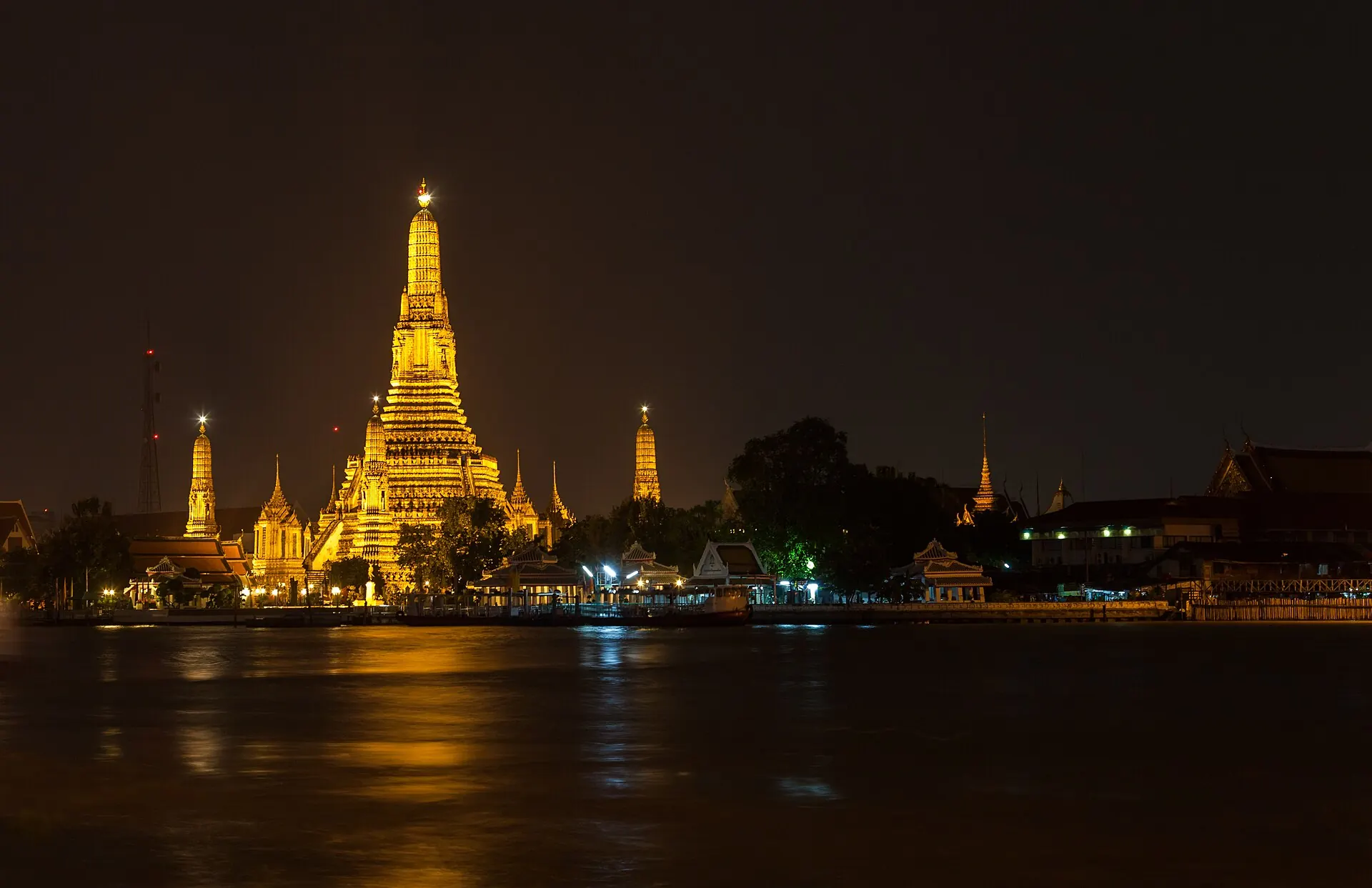
Getting around, in detailGet around · Connect
Get around
Rail above and below the streets for the east side, the river boat for the old city, taxis and ride-hail for everything else. Avoid roads at rush hour; the BTS and MRT beat any car between 07:00 and 09:30 and 16:30 and 19:30.Rail above and below the streets for the east side, the river boat for the old city, taxis and ride-hail for everything else. Avoid roads at rush hour; the BTS and MRT beat any car between 7:00 AM and 9:30 AM and 4:30 PM and 7:30 PM.
| Mode | Verdict | Fare | Use it for | What breaks |
|---|---|---|---|---|
| Walking | ok | Free | Inside a cluster: the old city, Chinatown, Siam malls | Heat, broken pavements and footbridges make 1 km (0.6 mi) feel like 3. Mall skywalks link BTS Siam, Chit Lom and Phloen Chit.Heat, broken pavements and footbridges make 0.6 mi (1 km) feel like 3. Mall skywalks link BTS Siam, Chit Lom and Phloen Chit. |
| BTS Skytrain | use | ฿17–65 (≈ US$1–2) per ride (check) | Sukhumvit, Siam, Silom, Chatuchak, the river at Saphan Taksin | Rabbit card, or singles with a QR ticket; contactless bank cards on some routes (check). Runs about 05:30–00:00.Rabbit card, or singles with a QR ticket; contactless bank cards on some routes (check). Runs about 5:30 AM–12:00 AM. |
| MRT (underground and monorails) | use | ฿17–45 (≈ US$1–2) per ride; ฿20 (≈ under US$1) cap on some lines (check) | Chinatown, Wat Pho, Hua Lamphong, Chatuchak, Krung Thep Aphiwat | Tap a contactless Visa or Mastercard at the Blue and Purple line gates; separate tickets from the BTS. |
| Chao Phraya Express Boat | use | Orange flag about ฿16 (≈ under US$1); blue tourist boat about ฿30 (≈ under US$1) or a day pass (check) | Grand Palace (Tha Chang), Wat Pho (Tha Tien), Wat Arun, Chinatown, ICONSIAM | From Sathorn pier under BTS Saphan Taksin. Boats run until about 18:00–19:00; check the flag on the boat.From Sathorn pier under BTS Saphan Taksin. Boats run until about 6:00 PM–7:00 PM; check the flag on the boat. |
| Cross-river ferry | use | ฿4–5 (≈ under US$1) (check) | Tha Tien to Wat Arun and other short crossings | Pay at the pier gate. |
| Khlong Saen Saep canal boat | ok | ฿10–24 (≈ under US$1) (check) | Golden Mount (Phan Fa pier) to Pratunam, Asok and Thong Lo, skipping road traffic | Fast and splashy; step on and off quickly; locals only, few signs in English. |
| Metered taxi | ok | ฿35 (≈ US$2) flag fall, then per km; ฿80–200 (≈ US$3–7) across the centre | Bags, groups, old city to Sukhumvit off-peak | Say 'meter' before getting in; if refused, flag the next. Tolls are extra and paid by you. |
| Ride-hail car (Grab, Bolt) | use | ฿100–250 (≈ US$4–8) across the centre | Night, airport, anywhere a taxi driver refuses the meter | Fixed fare in the app; surge in rain and rush hour. |
| Motorbike taxi (orange vests) | ok | ฿15–60 (≈ US$1–2) for short hops (posted at the stand, check) | The last kilometre from a station down a long soi; beating jams | Ask for a helmet; knees in; not with bags. App motorbikes (Grab, Bolt) quote fixed fares. |
| Tuk-tuk | caution | Agree first: about ฿100–300 (≈ US$4–10) for a short ride | One short ride for the experience, or Chinatown at night | Never accept a cheap 'tour'. Fares are above a taxi; price agreed per trip, not per person. |
| City bus | limited | ฿8–25 (≈ under US$1) | Budget old-city rides (e.g. routes along Ratchadamnoen) | Slow in traffic and hard to read; Google Maps and ViaBus show routes. Air-conditioned buses are the blue and white ones. |
| Bicycle | limited | Rental ฿100–300 (≈ US$4–10) a day | Bang Krachao, Lumphini and Benjakitti parks, guided old-city rides | No safe bike network in the centre; ride with a tour or in parks. |
| Rented scooter | avoid | ฿200–350 (≈ US$7–11) a day | Not recommended in Bangkok | Heavy traffic, police checkpoints for foreigners without the right licence class and IDP; insurance may not pay. |
Metro and rail lines
Eleven lines by different operators with separate tickets and fares. Interchanges often mean leaving one system, walking across and buying again. Siam (BTS), Asok/Sukhumvit (BTS/MRT), Sala Daeng/Si Lom (BTS/MRT) and Phaya Thai (BTS/ARL) are the key transfers.
BTS Sukhumvit line (light green)
openKhu Khot → Mo Chit → Siam → Asok → On Nut → Kheha, about 47 stations
- Mo Chit — Chatuchak Weekend Market, MRT Chatuchak Park
- Victory Monument — boat-noodle alley, buses and vans north
- Phaya Thai — Airport Rail Link to Suvarnabhumi
- Siam — interchange with the Silom line; Siam Paragon, MBK via skywalk
- Chit Lom / Phloen Chit — CentralWorld, Erawan Shrine, embassies on Wireless Road
- Nana / Asok — Sukhumvit hotels; MRT Sukhumvit at Asok; Terminal 21
- Phrom Phong — EmQuartier and Emporium malls, Benjasiri park
- Thong Lo / Ekkamai — bars and restaurants; eastern bus terminal at Ekkamai
Runs about 05:30–00:00; packed at rush hour; many stations have stairs only on one side (check lifts).Runs about 5:30 AM–12:00 AM; packed at rush hour; many stations have stairs only on one side (check lifts).
BTS Silom line (dark green)
openNational Stadium → Siam → Sala Daeng → Saphan Taksin → Bang Wa, 14 stations
- National Stadium — Jim Thompson House, MBK, BACC
- Siam — interchange with the Sukhumvit line
- Ratchadamri — Lumphini Park's north side, hotels
- Sala Daeng — MRT Si Lom, Lumphini Park, Patpong
- Chong Nonsi — King Power MahaNakhon SkyWalk; Sathorn skywalk
- Saphan Taksin — Sathorn pier: Chao Phraya boats to the temples and ICONSIAM
- Krung Thon Buri — Gold line to ICONSIAM
The river link: BTS to Saphan Taksin, then the boat, is the best way from the east side to the Grand Palace.
BTS Gold line
openKrung Thon Buri → Charoen Nakhon → Khlong San, 3 stations, automated
- Charoen Nakhon — ICONSIAM
Short shuttle; the boat from Sathorn is often as fast.
MRT Blue line
openLoop through Hua Lamphong, Sukhumvit, Chatuchak, Bang Sue and across the river to Tha Phra, with a spur to Lak Song
- Sanam Chai — Wat Pho, Museum Siam, the Grand Palace 10–15 min on foot
- Itsaraphap — Thonburi side; Wat Arun about 15 min on foot (check)
- Wat Mangkon — Chinatown and Yaowarat Road
- Hua Lamphong / Sam Yan — old railway station; Chula and Sam Yan market
- Si Lom / Lumphini — Lumphini Park, BTS Sala Daeng
- Queen Sirikit National Convention Centre — Benjakitti Forest Park
- Sukhumvit — BTS Asok, Terminal 21
- Phetchaburi — Airport Rail Link at Makkasan
- Phra Ram 9 / Thailand Cultural Centre — Jodd Fairs night market; Orange line (future)
- Chatuchak Park / Kamphaeng Phet — Chatuchak Weekend Market, Or Tor Kor
- Bang Sue — Krung Thep Aphiwat long-distance trains and the Red lines
Runs about 06:00–00:00; step-free at every station.Runs about 6:00 AM–12:00 AM; step-free at every station.
MRT Purple line
openTao Poon → Nonthaburi → Khlong Bang Phai, elevated
- Tao Poon — interchange with the Blue line
- Phra Nang Klao Bridge — Nonthaburi pier (check)
Serves northern suburbs; few visitors need it. ฿20 (≈ under US$1) cap (check).
MRT Yellow line (monorail)
openLat Phrao → Srinagarindra Road → Samrong, 23 stations
- Lat Phrao — interchange with the Blue line
- Hua Mak — Airport Rail Link
- Samrong — BTS Sukhumvit line
A suburban connector; useful for Srinagarindra night markets and malls.
MRT Pink line (monorail)
openNonthaburi Civic Center → Chaeng Watthana → Min Buri, with a branch to Muang Thong Thani (check)
- Government Complex — Immigration office for visa extensions (check the nearest station)
- Wat Phra Sri Mahathat — BTS Sukhumvit line
- Lak Si — SRT Dark Red line
- Muang Thong Thani branch — IMPACT Arena concerts and fairs (check)
Mostly for the Immigration office and IMPACT events.
Airport Rail Link
openPhaya Thai → Ratchaprarop → Makkasan → Lat Krabang → Suvarnabhumi, 8 stations
- Phaya Thai — BTS Sukhumvit line
- Makkasan — MRT Phetchaburi (walkway)
- Hua Mak — MRT Yellow line
- Suvarnabhumi — airport, basement level
About 26 min end to end, every 10–15 min, about 05:30–00:00; ฿15–45 (≈ US$1–2) (check). Crowded at rush hour with little luggage space.About 26 min end to end, every 10–15 min, about 5:30 AM–12:00 AM; ฿15–45 (≈ US$1–2) (check). Crowded at rush hour with little luggage space.
SRT Dark Red line
openKrung Thep Aphiwat → Don Mueang → Rangsit
- Krung Thep Aphiwat — MRT Blue at Bang Sue; long-distance trains
- Lak Si — MRT Pink line
- Don Mueang — Don Mueang airport (DMK) by footbridge
The rail link to DMK; runs about 05:30–00:00, every 12–20 min; ฿20 (≈ under US$1) cap (check).The rail link to DMK; runs about 5:30 AM–12:00 AM, every 12–20 min; ฿20 (≈ under US$1) cap (check).
SRT Light Red line
openKrung Thep Aphiwat → Bang Son → Taling Chan
- Taling Chan — weekend floating market 15 min by taxi (check)
Short suburban line with long gaps between trains.
MRT Orange line
constructionThailand Cultural Centre → Min Buri (east section); west section under Ratchadamnoen to Bang Khun Non
- Democracy Monument (planned) — the old city, when the west section opens
East section expected to open around 2027–2028 (check); not yet useful.
City buses a visitor actually uses
| Bus | Route | Useful for | Fare | Note |
|---|---|---|---|---|
| A1 / A2 | Don Mueang airport ↔ BTS Mo Chit (A1); ↔ Victory Monument (A2) | DMK on a budget | about ฿30–50 (≈ US$1–2) | Airport express buses from outside arrivals; luggage space.(check) |
| A4 | Don Mueang ↔ Khao San / Sanam Luang | DMK to Banglamphu | about ฿50 (≈ US$2) | (check) |
| S1 | Suvarnabhumi ↔ Khao San Road | BKK to Banglamphu without changing | about ฿60 (≈ US$2) | From the airport transport centre; about every 30 min in the daytime.(check) |
| 53 | Loop around the old city (Tha Tien, Tha Chang, Phra Athit, Banglamphu) | Hopping between old-city sights | about ฿8–10 (≈ under US$1) | (check) |
| Bangkok Mass Transit (BMTA) and private routes | Hundreds of lines | Local trips | ฿8–25 (≈ under US$1) | Plan with ViaBus or Google Maps; pay the conductor in coins or small notes. |
Taxis and ride-hailing
Grab
app
Cars, bikes, food; card in-app. The late-night and airport default.
Bolt
app
Often cheaper than Grab; card or cash.
Metered taxis
metered
Colourful cars with a 'Taxi-Meter' roof sign; flag fall ฿35 (≈ US$2). Bigger 'Taxi-VIP' and airport-queue taxis cost more.
Airport taxi queue
airport
Take a slip from the kiosk at arrivals (level 1 at BKK); ฿50 (≈ US$2) airport surcharge plus tolls on top of the meter.
Motorbike taxi stands
metered
Orange-vested riders at soi mouths and stations; fares posted on a board (check).
On foot and car-free hours
| Where | When | Note |
|---|---|---|
| Khao San Road | Evenings, closed to cars | Pedestrian party street; busiest after 21:00.Pedestrian party street; busiest after 9:00 PM. |
| Yaowarat Road food strip | Evenings, busiest Fri–Sun | Stalls take over the pavements; the road stays open to traffic most nights. |
| Lumphini Park | About 04:30–21:00 (check)About 4:30 AM–9:00 PM (check) | 2.5 km (1.6 mi) lake loop; anthem stops everyone at 08:00 and 18:00.2.5 km (1.6 mi) lake loop; anthem stops everyone at 8:00 AM and 6:00 PM.1.6 mi (2.5 km) lake loop; anthem stops everyone at 08:00 and 18:00.1.6 mi (2.5 km) lake loop; anthem stops everyone at 8:00 AM and 6:00 PM. |
| Benjakitti Forest Park skywalk | Daytime | Elevated boardwalks over wetland, linked to Lumphini by a green bridge. |
| Siam–Chit Lom–Phloen Chit skywalk | Always | Covered walkway under the BTS linking the malls: the heat-proof route. |
| Khlong Ong Ang walking street | Weekend evenings (check) | Restored canal in the old city with food stalls and murals.(check) |
More on getting around
Addresses: find the road (thanon), the soi number and the nearest station. Sukhumvit odd-numbered sois are on the north side, even on the south, and they do not line up: Soi 21 (Asok) faces Soi 16. Sois can be long, so a motorbike taxi from the soi mouth is normal. Put the building name in the app and show drivers the Thai script.
Rush hours are about 07:00–09:30 and 16:30–19:30, and Friday evenings are worst. In a storm, roads flood for an hour and taxis refuse long trips: take the BTS or MRT and wait it out in a mall.
Connect
| Option | Verdict | What breaks |
|---|---|---|
| Tourist eSIM bought before you fly | use | Data only on most plans; works on arrival. Grab and banking apps keep your home number. |
| AIS or True counters in Suvarnabhumi and Don Mueang arrivals | use | Official carrier counters with printed tourist packages (about ฿300–600 (≈ US$10–19) for 8–15 days, 2026 estimate); they register the SIM to your passport. Queue can be 15–30 min at peak. |
| Carrier shops in malls | use | Same packages, shorter queues, passport needed. |
| SIMs sold at 7-Eleven | caution | Cheap, but must be registered with a passport, which the shop may not do properly; an unregistered SIM can be cut off. |
Grab
Cars, motorbikes, food delivery
Fare fixed before you ride; card in-app. The default for late nights and airport runs.
Bolt
Cars and motorbikes
Often cheaper than Grab; card or cash.
LINE MAN
Food delivery, taxis
Thai super-app; restaurant menus with photos.
LINE
Messaging
Hotels, guides, shops and clinics use it instead of WhatsApp.
ViaBus
City bus routes and live bus positions
Covers the BMTA and private bus lines (check coverage).
Google Maps
Walking, BTS/MRT routes, boats
Transit directions are good; search in English or Thai script.
Wongnai
Restaurant reviews
The local review site; Thai-language reviews are the most useful.
- Wi-Fi
- Free in hotels, cafés and malls (register with a phone number or passport at some malls). BTS stations have patchy public Wi-Fi.
- VPN and apps
- No major app is blocked; banking apps from home may ask for SMS codes, so keep your home SIM reachable or use an eSIM.
Luggage
Where big bags are a problem, and how to get rid of them for the day.
Rule
- Lockers
- Lockers are limited; hotels hold bags after check-out.
- Forwarding
- No forwarding culture; keep the big bag at the Bangkok hotel for trips away.
- Dead zone
- Late flights after check-out: ask the hotel to hold bags and for a shower room; many do for a small fee.
Bags, area by area
4 walking areas rated
- Bags forbidden
- Bags painful
Lockers, forwarding and the gap between check-out and check-in are covered once, under Luggage.
See & doWalking clusters, day plans and the places worth the time
See & do
Walking clusters, day plans and the places worth the time
Clusters
Plan by cluster: each is a walkable area with a rescue point and a bag rule.
Morning-only cluster: the Grand Palace at opening, Wat Pho next door, then the river pier for Wat Arun by ferry; open courtyards with little shade, and a strict dress code.
rescue 98% · max p90 6.9′ · half
Evening cluster: Yaowarat Road street stalls from about 18:00, Wat Traimit and the Chinatown gate; crowded, loud and cash-only, and the road is packed with cars until late.
rescue 99% · max p90 6.9′ · half
Midday cluster: the Jim Thompson House tour, then the air-conditioned malls at Siam; flat, walkable on covered skywalks and the best heat refuge in the city.
rescue 100% · max p90 7′ · half
Early-morning cluster: Lumphini Park at 06:00–08:00 while it is cool, then the AC offices and cafés of Silom; the park is the only big green space in the centre.
rescue 99% · max p90 6.9′ · 90m
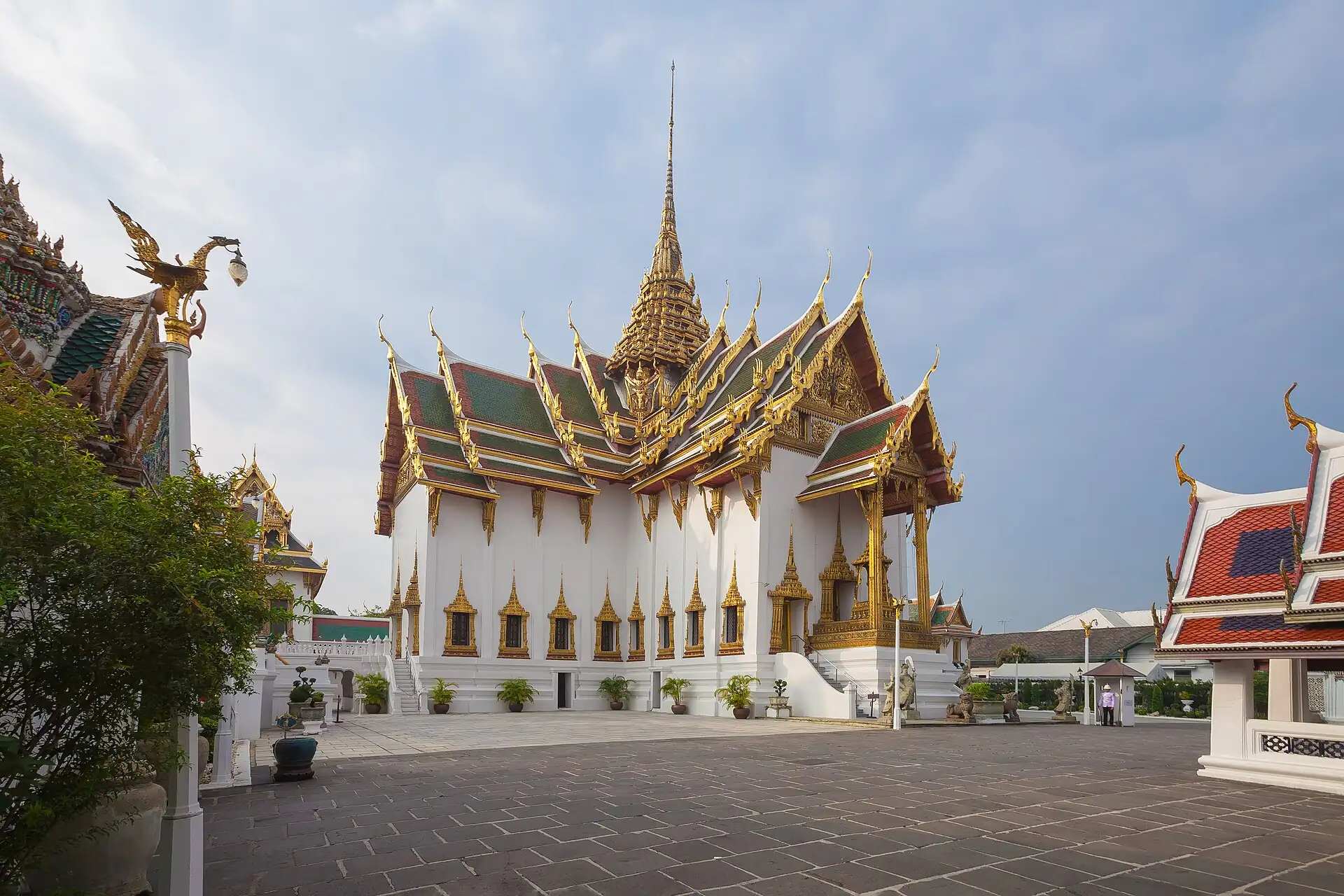
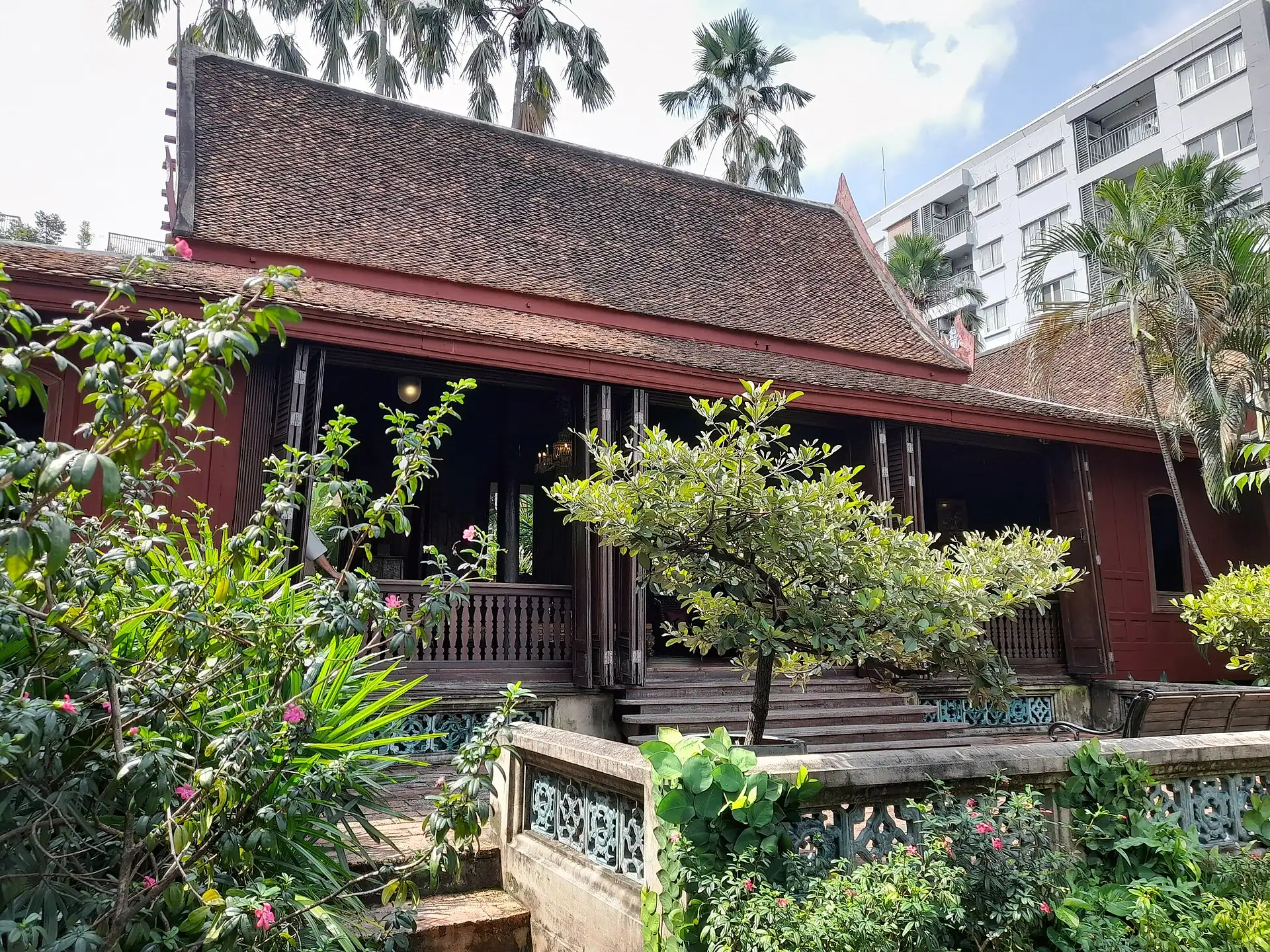
Days
Ready-made day plans, timed against opening hours and walking distances.
How long are you staying?
Loose outlines in the city's rhythm: outdoors early and late, malls and museums at midday. The timed day plans check opening days, travel and heat.
1 day
A stopover between flights
- 08:00Grand Palace — Grand Palace at opening, covered up
- 10:30Wat Pho — Wat Pho and a 30-minute massage
- 12:30Ferry to Wat Arun, then lunch by the river at Tha Tien
- 14:30Jim Thompson House — BTS to Siam for the malls or Jim Thompson House in the heat
- 18:00Yaowarat Road street food (evening) — Chinatown street food
Skip: Chatuchak and Ayutthaya: too far for one day.
Bangkok in 3 days
3 daysTemples at opening, malls at midday, street food after dark; the last day ends with the bags already in the taxi.
Day by day
Day 1 — Grand Palace at opening, Wat Pho, a 12:30 lunch table
- 07:45Grand Palace
- Wat Pho
- 12:30Lunch table 12:30 (Tha Tien)
Day 2 — Jim Thompson House, Siam malls, Yaowarat after 18:00
- 09:30Jim Thompson House
Day 3 — Lumphini Park at 06:30, car to Suvarnabhumi at 11:00
- 11:00Car to Suvarnabhumi at 11:00
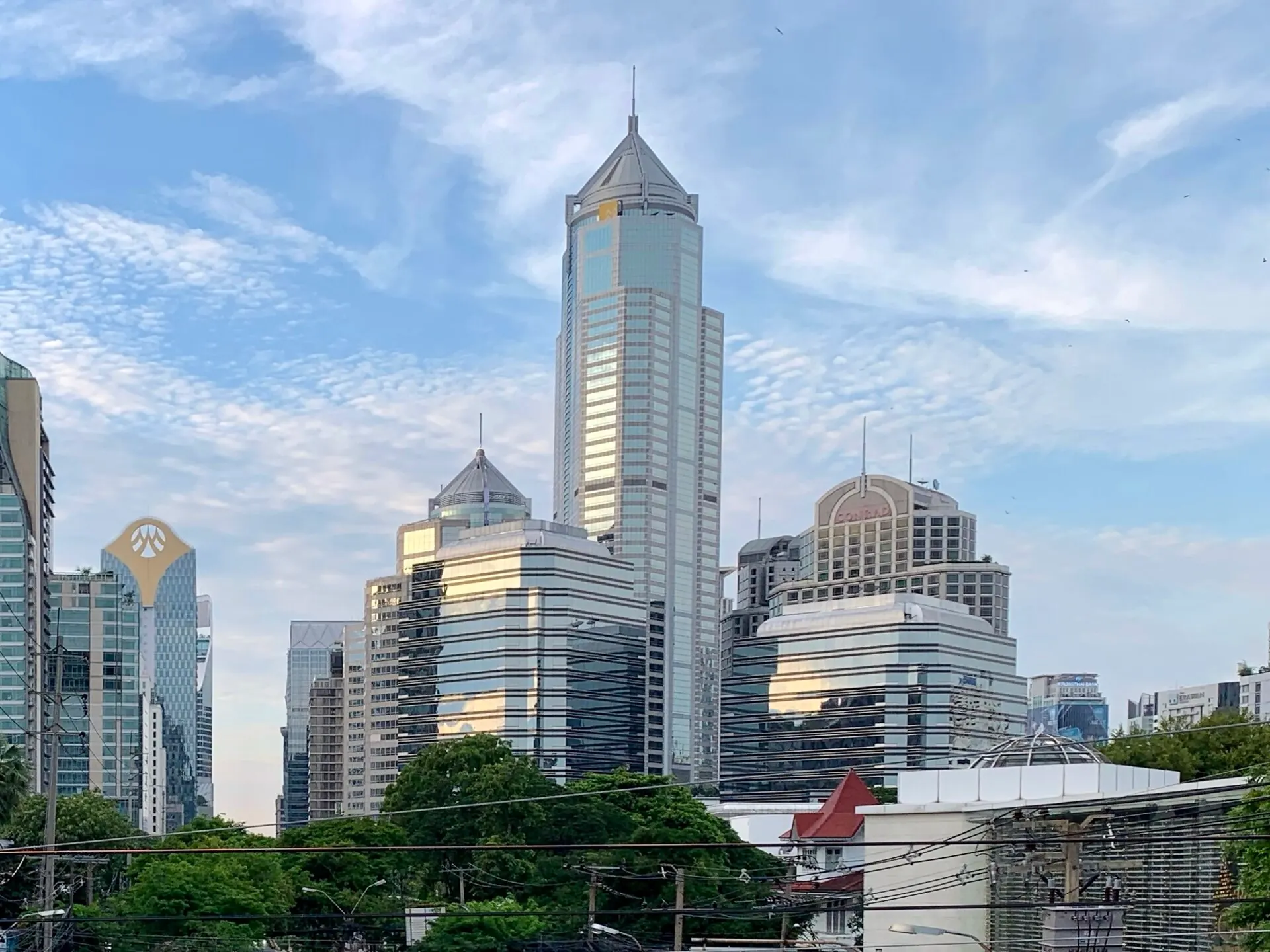
Places
“Best time” is when to arrive for the fewest crowds, for example “before 08:30”; “Go any time” means the hour makes little difference. More sights follow under “More sights and museums”.
3 places. Filters use the guide’s own ratings; a place with no rating is left out when a filter is on.
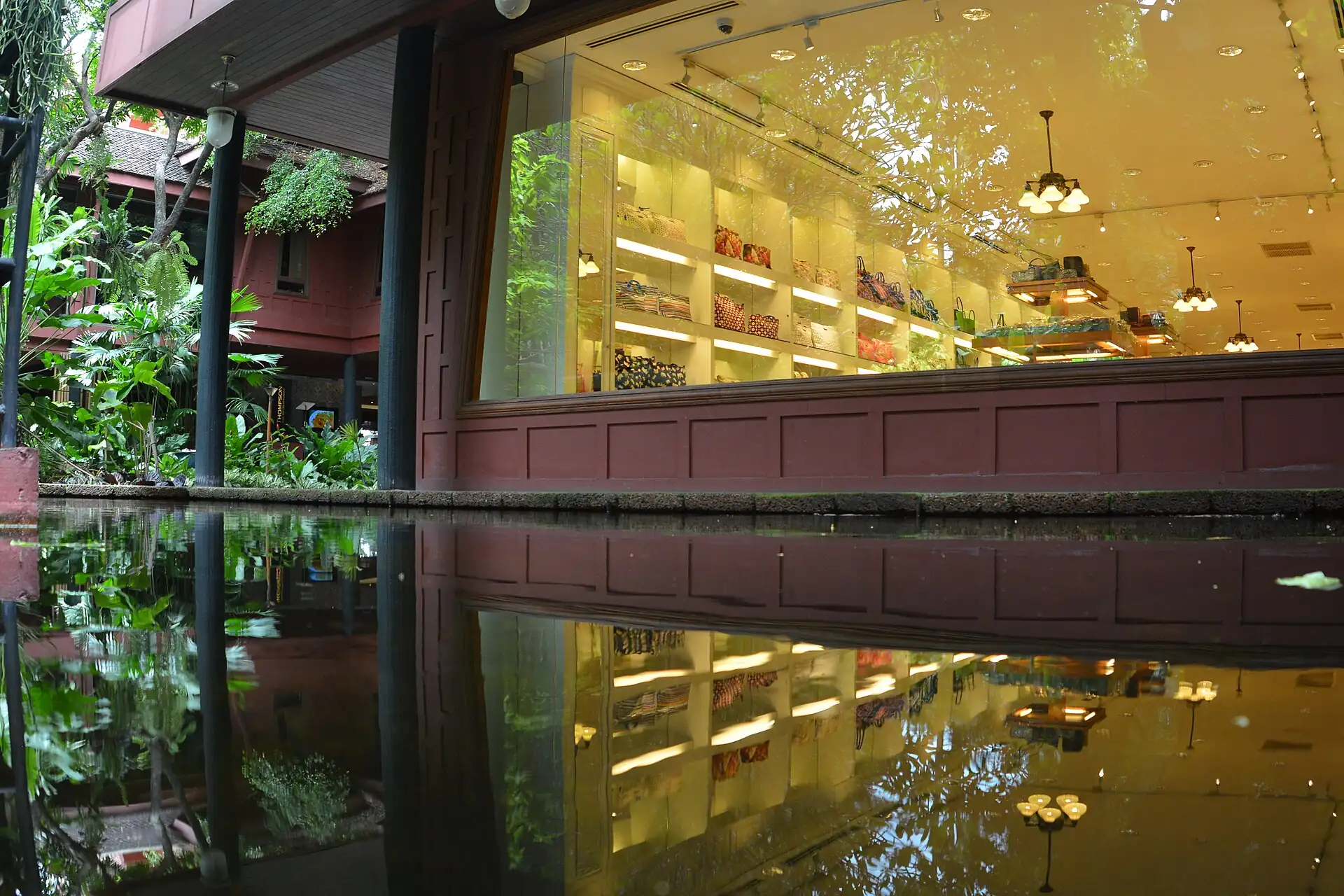
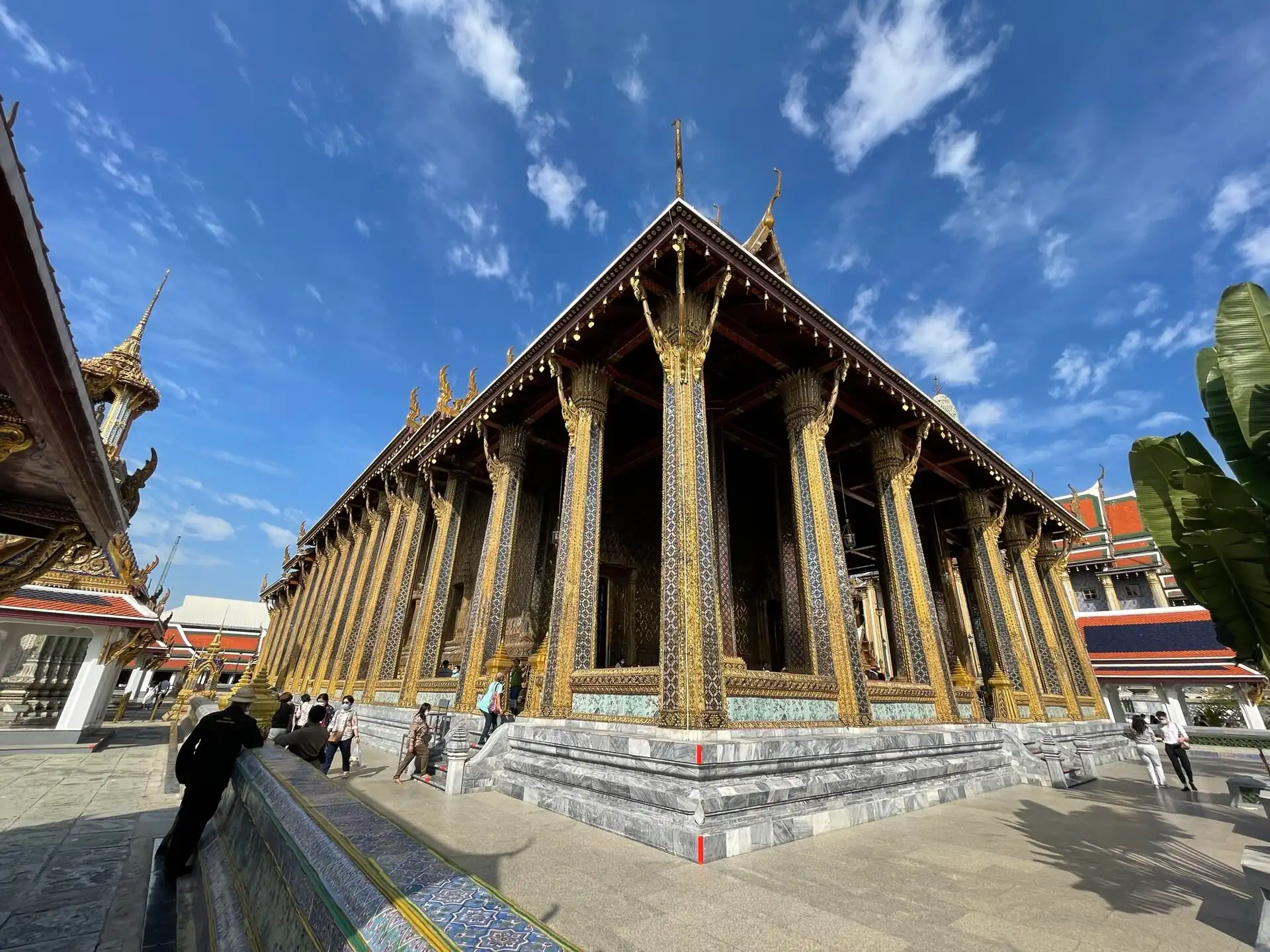
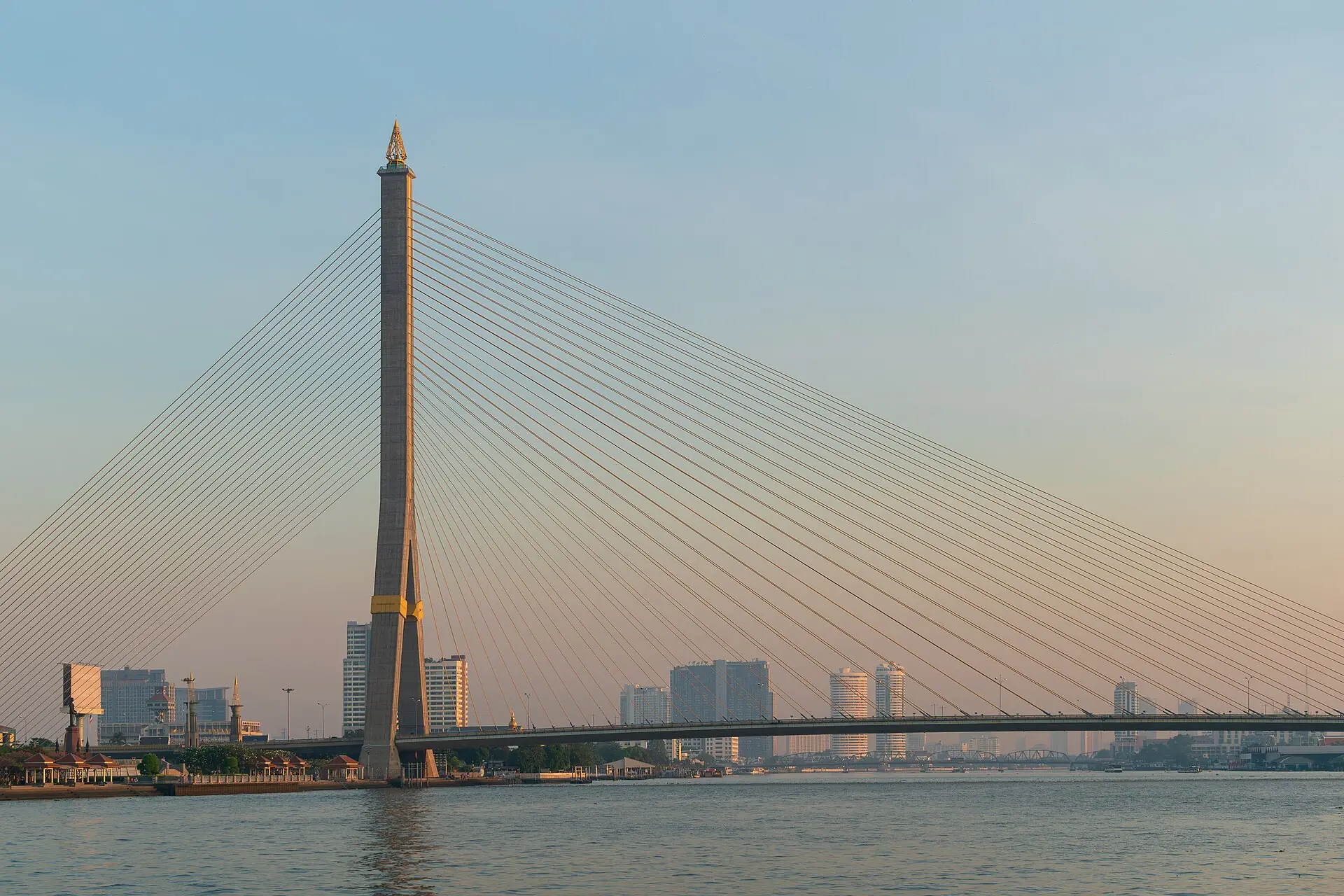
If you do ten things in Bangkok
Ranked for a first visit of 3–4 days. Prices are 2026 estimates in baht; hours marked (check) in the linked pages still need confirmation.
- 1
Grand Palace and the Emerald Buddha
The royal compound and Thailand's holiest temple, gold and mosaic in every direction; the one sight everyone sees.
- Time
- 1.5–2 h
- Best
- 08:30 at opening
- Cost
- ฿500 (≈ US$16)
- 2
The 46 m reclining Buddha, a quiet maze of courtyards and chedis, and a massage at the school where Thai massage is taught.
- Time
- 1–1.5 h
- Best
- After the palace, before 12:00; or late afternoon
- Cost
- ฿300 (≈ US$10); massage extra
- 3
Wat Arun from the river
The porcelain-covered tower on the west bank: climb it in the morning, photograph it from Tha Tien at sunset.
- Time
- 45 min plus the ferry
- Best
- 08:00–10:00 or sunset from across the river
- Cost
- ฿200 (≈ US$7) plus ฿5 (≈ under US$1) ferry (check)
- 4
Neon signs, woks on the pavement and a dozen dishes on one street; the best meal in the city for ฿300 (≈ US$10).
- Time
- 2–3 h
- Best
- 18:00–21:00; fewer stalls on Monday (check)
- Cost
- ฿200–500 (≈ US$7–16) for five or six dishes
- 5
Teak houses joined into a home full of Asian art, with the mystery of the owner's disappearance; the best rain and heat escape.
- Time
- 1 h
- Best
- 10:00–12:00 or early afternoon
- Cost
- ฿200 (≈ US$7)
- 6
The Chao Phraya by express boat
Palaces, temples, churches and hotels from the water for the price of a bus ticket; the way to reach the old city from the BTS.
- Time
- 30–60 min
- Best
- Late afternoon light
- Cost
- ฿16–30 (≈ under US$1) (check)
- 7
Chatuchak Weekend Market
Thousands of stalls, from vintage and ceramics to plants and coconut ice cream; half a day that fills a suitcase.
- Time
- 3–4 h
- Best
- Sat–Sun 09:00–12:00
- Cost
- Free entry
- 8
Golden Mount (Wat Saket) at sunset
An easy climb above the old city's rooftops and temple spires, with a breeze at the top.
- Time
- 1 h
- Best
- 16:30–18:30
- Cost
- ฿100 (≈ US$4) (check)
- 9
Muay Thai night at Rajadamnern
The national sport in its oldest stadium: live music, ritual dances before each fight, and a loud crowd.
- Time
- 2–3 h
- Best
- Evening fight card
- Cost
- ฿1,500–2,500 (≈ US$50–80) ringside (check)
- 10
Ayutthaya day trip
The ruined capital of old Siam 80 km (50 mi) north: temple towers, Buddha heads in tree roots, a bike ride between them.The ruined capital of old Siam 50 mi (80 km) north: temple towers, Buddha heads in tree roots, a bike ride between them.
- Time
- Full day
- Best
- Leave by 07:30; Nov–Feb for the heat
- Cost
- Train ฿20–400 (≈ US$1–13) by class plus ฿50–100 (≈ US$2–4) per temple (check)
Good for…
Verdict is how well Bangkok works for that traveller, not how nice it is.
Easy arrival, cheap taxis and rail, and a clear first-visit list.
- 1Sleep on the BTS in Sukhumvit — rail at the door, food on every corner, taxis all night.
- 2Bangkok in 3 days — the 3-day plan already checks closure days and heat.
- 3Grand Palace — at opening in covered clothes, and nothing any tout tells you.
One of the world's great street-food cities, from ฿20 (≈ under US$1) bowls to Michelin stars.
- 1Yaowarat Road street food (evening) — a whole dinner of Chinatown stalls on one street.
- 2Boat noodles at Victory Monument — six small bowls for the price of one elsewhere.
- 3Or Tor Kor Market — the best produce and prepared food in the city under one roof.
Street meals under ฿100 (≈ US$4), beds under ฿500 (≈ US$16), boats for ฿16 (≈ under US$1).
- 1Chao Phraya orange-flag boat — the city's cheapest sightseeing tour (check fare).
- 2Free sights — Lumphini, Benjakitti, BACC, Erawan Shrine and Chinatown cost nothing.
- 3Mall food courts — air-conditioned Thai food for ฿40–100 (≈ US$2–4).
- 1A riverside hotel — boats to the temples and sunset on the terrace.
- 2Rooftop drink at sunset — Silom and Sathorn towers; book the famous ones.
- 3Thai massage together — an hour for ฿300–600 (≈ US$10–19) each at a clean shop.
- 1Street-food tour on night one — company, and the confidence to order anywhere afterwards.
- 2Hostels in Silom or Banglamphu — social, with women-only dorms common.
- 3A Muay Thai drop-in class — two hours of hard training with a mixed group.
Children are adored; heat, pavements and traffic are the hard parts.
- 1SEA LIFE and KidZania at Siam Paragon — whole days of air-conditioned activities.
- 2Lumphini Park — playgrounds, paddle boats and monitor lizards before 09:00.playgrounds, paddle boats and monitor lizards before 9:00 AM.
- 3A Chao Phraya boat ride — a cheap, breezy hit with children.
Fine with taxis and a slow pace; heat and stairs are the strain.
- 1A riverside or Silom hotel — lifts, taxis at the door, boats to the temples.
- 2
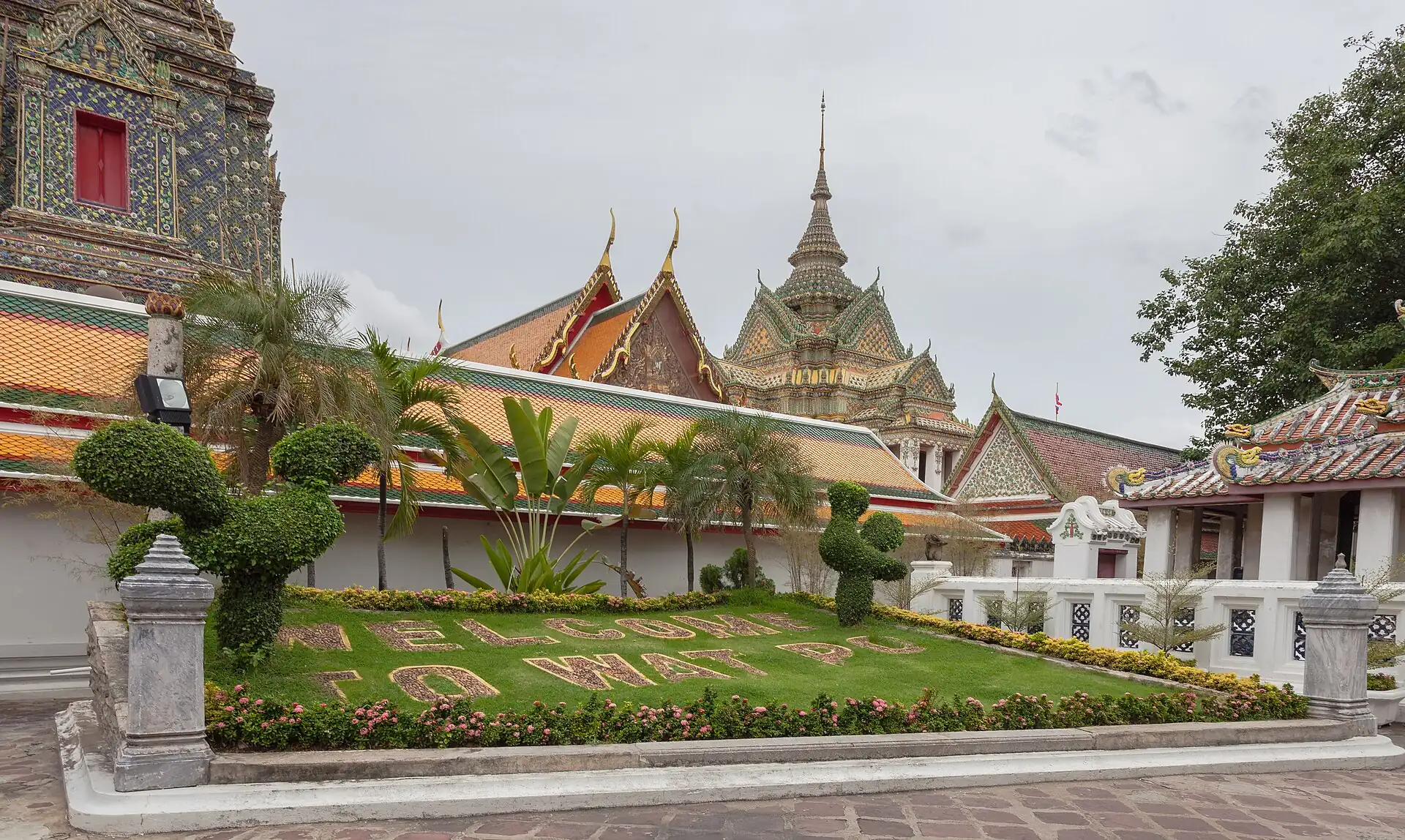 Wat Pho — flat courtyards and shade, best at opening.
- 3Private car with driver for a day — about ฿2,500–4,000 (≈ US$80–130) covers the temples and museums without heat or stairs (check).
- 1Grand riverside hotels — among Asia's best service, with private boats to the palace pier.
- 2A tasting menu at a Michelin-starred Thai restaurant — Thai cooking at its most refined; book weeks ahead.
- 3Private long-tail boat through the canals — an hour on the Thonburi khlongs without the tour boats.
Step-free rail and malls, but pavements, temples and boats are tough; plan by car.
- 1MRT, ARL and newer lines — lifts at every station.
- 2Siam malls via skywalk — a long step-free route with accessible toilets.
- 3International chain hotels — confirmed accessible rooms and car-to-door drop-off.
Tours and classes: book or skip
Book through the hotel or an operator with written inclusions and a cancellation policy. Prices per person, group tour unless stated.
| Tour or class | Verdict | Typical price | Why | Check before paying |
|---|---|---|---|---|
| Street-food tour, walking (evening) | book | ฿1,200–2,500 (≈ US$40–80) | Best on night one: dishes, prices and how to order. | Group under 10; number of food stops, not just drinks. |
| Tuk-tuk night food tour | maybe | ฿1,800–3,000 (≈ US$60–95) | Covers Chinatown, the flower market and temples lit at night. | Licensed drivers; seat belts; no shopping stops. |
| Cooking class with market visit | book | ฿1,200–2,500 (≈ US$40–80) | Half a day, useful afterwards; good on a hot or wet morning. | Own station per person; curry paste by hand. |
| Bike tour (old city lanes or Bang Krachao) | book | ฿1,200–1,800 (≈ US$40–60) | Reaches lanes and the green lung you would not find alone. | Helmets, group size, pace, and start time before 09:00.Helmets, group size, pace, and start time before 9:00 AM. |
| Canal long-tail boat, private | maybe | ฿1,300–2,000 (≈ US$40–65) per boat per hour (check) | The Thonburi canals in an hour. | Posted-price pier, route and duration agreed; no 'floating market' shopping stops. |
| Ayutthaya day tour | book | ฿1,200–2,500 (≈ US$40–80) | Transport and tickets solved; some return by river boat. | Number of temples, entry fees included, lunch, return time. |
| Floating market + railway market tour | maybe | ฿900–1,800 (≈ US$30–60) | The photos are real; the market is staged for tourists. | Leave by 06:30; check the railway-market train times.Leave by 6:30 AM; check the railway-market train times. |
| Muay Thai tickets through an agent | do it yourself | Ringside ฿1,500–2,500 (≈ US$50–80) | Buy at the stadium's own site or counter; agents add a mark-up. | Official stadium website or box office. |
| ฿20 tuk-tuk city tour | skip | ฿20–50 (≈ US$1–2) | Gem and tailor commission stops. | There is no honest version of this. |
| Chao Phraya dinner cruise | maybe | ฿1,200–3,000 (≈ US$40–95) | Temples lit at night from the water; buffet food is ordinary. | Boat size, drinks included, pier location. |
What each season brings
Cool season
Nov–Feb
Dry days in the low 30s, cooler nights, Loy Krathong on the river, New Year fireworks; the easiest walking months.
Watch: Peak prices and crowds; smog on still days in Jan–Feb.
Hot season
Mar–May
Mango season and mango sticky rice; Songkran water fights; clear skies.
Watch: Heat index above 40 °C; plan every afternoon indoors.
Rainy season
Jun–Oct
Green parks, cleaner air, lower hotel prices, fewer tourists; short storms that cool the evenings.
Watch: Street flooding after storms; September is the wettest; boats and bike tours can cancel.
Photo spots and the light
Light times are for clear days; rainy-season haze and cool-season smog soften everything.
| Spot | Best light | Tip |
|---|---|---|
| Wat Arun from Tha Tien pier or a riverside terrace | Sunset, 17:45–18:30 | The tower is lit after dark; riverside restaurants charge for the view with a drink. |
| Grand Palace | 08:30–09:30 | The gold chedis catch the morning sun; the crowd arrives by 09:30. |
| Wat Pho | 08:00–09:00 or after 16:00 | The four great chedis from the courtyard corners; no feet toward the Buddha in the hall. |
| Golden Mount (Wat Saket) | Sunset | 360° over the old-city roofs; the bells line the stairs. |
| Yaowarat Road neon | Blue hour, 18:30–19:30 | From the footbridge near Soi Texas or the pavements at the Plaeng Nam junction (check); watch the traffic. |
| King Power MahaNakhon SkyWalk | Sunset into night | The glass floor 314 m up; buy the sunset slot early (check). |
| Talat Noi murals and So Heng Tai mansion | Late afternoon | Residents live here: no photos into homes or workshops without asking. |
| Chao Phraya from Rama VIII Bridge area or the express boat | Golden hour | Shoot from the back of the boat; stay seated when it docks. |
Bangkok travel FAQ
Answers are 2026 desk estimates; fares and rules marked (check) change.
Is Bangkok safe?
Yes for violence; the common problems are scams, pickpockets and traffic. Ignore strangers who say a sight is closed, use metered taxis or ride-hail, and keep phones away from the kerb.
How much is a taxi from Suvarnabhumi to Sukhumvit?
About ฿400–550 (≈ US$13–17) on the meter including the ฿50 (≈ US$2) airport surcharge and expressway tolls, 35–70 min. The Airport Rail Link to Phaya Thai costs about ฿45 (≈ US$2) (check) and connects to the BTS.
How do I get from Don Mueang to the city?
The SRT Dark Red line from the airport station to Krung Thep Aphiwat, then the MRT Blue line; or bus A1 to BTS Mo Chit; or a taxi of about ฿250–400 (≈ US$8–13) (2026 estimate, check).
What should I wear to the Grand Palace?
Shoulders and knees covered, no see-through clothes, leggings or ripped jeans. Long trousers or a long skirt and a T-shirt with sleeves work; the gate staff turn people away.
Is the Grand Palace open every day?
Daily in principle, but it closes at short notice for royal ceremonies (check the official site). It is never 'closed for lunch' — that is the tout line.
Do I need cash in Bangkok?
Yes for street food, markets, boats, motorbike taxis and small shops. Keep ฿1,000–2,000 (≈ US$35–65) in small notes; cards work in malls, hotels and most restaurants.
Is tap water safe to drink?
Drink bottled or filtered water. Ice from restaurants and carts is factory-made and generally fine.
How many days do I need?
Three days for the city, four or five with Ayutthaya and a canal or bike morning.
Grab or taxi?
Metered taxis are cheap when drivers use the meter; ride-hail apps are the fix when they refuse or at night. On the BTS/MRT side, rail beats both at rush hour.
When is the best time to visit?
November to February: dry and a little cooler. March to May is very hot; June to October brings afternoon storms and lower prices.
What is the best area to stay?
Sukhumvit for the BTS, food and nightlife; Silom for the park, MRT and a calmer base; the riverside for a splurge; Banglamphu for the cheapest beds near the temples.
Can I drink alcohol any time?
Shops sell alcohol only in set hours (about 11:00–14:00 and 17:00–24:00, check) and not on Buddhist holy days; bars close at 02:00, some zones at 04:00.Shops sell alcohol only in set hours (about 11:00 AM–2:00 PM and 5:00 PM–12:00 AM, check) and not on Buddhist holy days; bars close at 2:00 AM, some zones at 4:00 AM.
Is cannabis legal?
Rules were tightened in 2025: it is treated as a controlled herb and buying needs a medical prescription (check the current law). Smoking in public can be fined.
How much should I tip?
Nothing at stalls, round up taxis, ฿50–100 (≈ US$2–4) after a massage, and nothing extra where a 10% service charge is already on the bill.
Do people speak English?
In hotels, malls and tourist areas, yes; taxi and stall owners often not. Show addresses in Thai script.
What happens during Songkran?
For three days (13–15 April) you will get soaked in the main streets. Waterproof pouch for your phone, clothes that dry fast, and no plans that need you dry.
Are vapes allowed?
No — importing and using e-cigarettes is illegal and enforced with fines. Leave them at home.
More to see and doSee & do · Learn & work · Rain & heat · Free things
Free things to do
Sights in Bangkok that cost nothing to enter. Each is described under Places or More sights; extra costs inside are marked there.
See & do
40 of 40
- Old city and palaces
The royal palace and Wat Phra Kaew with the Emerald Buddha; dress code enforced at the gate.
Rattanakosin · Daily about 08:30–15:30 (check); closed on some royal ceremony daysDaily about 8:30 AM–3:30 PM (check); closed on some royal ceremony days · ฿500 (≈ US$16)(check)
- Temples (wat)
The 46 m reclining Buddha, a thousand more images and the massage school; quieter than the palace.
Rattanakosin · Daily about 08:00–18:30 (check)Daily about 8:00 AM–6:30 PM (check) · ฿300 (≈ US$10)(check)
Wat Arun (Temple of Dawn)วัดอรุณ
Temples (wat)Porcelain-studded central tower on the west bank; ฿5 (≈ under US$1) ferry from Tha Tien. Best seen from across the river at sunset.
Thonburi · Daily about 08:00–18:00 (check)Daily about 8:00 AM–6:00 PM (check) · ฿200 (≈ US$7)(check)
Golden Mount (Wat Saket)ภูเขาทอง
Temples (wat)Artificial hill with about 300 steps to a golden chedi and a 360° view over the old city; go at sunset.
Rattanakosin · Daily about 07:00–19:00 (check)Daily about 7:00 AM–7:00 PM (check) · ฿100 (≈ US$4)(check)
Wat Suthat and the Giant Swingวัดสุทัศน์ / เสาชิงช้า
Temples (wat)One of the biggest viharns in the city, with murals and a bronze Buddha; the red swing frame stands outside.
Rattanakosin · Daily about 08:30–20:00 (check)Daily about 8:30 AM–8:00 PM (check) · ฿100 (≈ US$4)(check)
Wat Ratchanatdaram (Loha Prasat)
Temples (wat)Metal-spired 'iron palace' of 37 spires; climb inside to the top. A short walk from the Golden Mount.
Rattanakosin · Daily about 08:00–17:00 (check)Daily about 8:00 AM–5:00 PM (check) · Free (donation)(check)
Wat Benchamabophit (Marble Temple)
Temples (wat)Carrara-marble temple of 1899 with a gallery of Buddha images in every style.
Dusit · Daily about 08:00–17:30 (check)Daily about 8:00 AM–5:30 PM (check) · ฿100 (≈ US$4)(check)
Wat Traimit (Golden Buddha)วัดไตรมิตร
Temples (wat)A 5.5-tonne solid-gold Buddha found under plaster in 1955; small Chinatown museum below.
Chinatown · Daily about 08:00–17:00 (check)Daily about 8:00 AM–5:00 PM (check) · ฿100 (≈ US$4)(check)
Wat Mangkon Kamalawat
Temples (wat)Busy Chinese-Buddhist temple off Charoen Krung, thick with incense.
Chinatown · Free
City Pillar Shrineศาลหลักเมือง
Old city and palacesThe spiritual foundation stone of the city from 1782, across from the palace; five minutes.
Rattanakosin · Daily, day hours · Free
National Museum Bangkok
MuseumsThe old Front Palace: royal barges, thrones, Thai art from every period. Take the free guided tour if running (check).
Rattanakosin · Wed–Sun about 09:00–16:00 (check)Wed–Sun about 9:00 AM–4:00 PM (check) · ฿200 (≈ US$7)(check)
Museum Siam
MuseumsPlayful museum of 'what is Thai', in a colonial ministry building by MRT Sanam Chai.
Rattanakosin · Tue–Sun about 10:00–18:00 (check)Tue–Sun about 10:00 AM–6:00 PM (check) · ฿100–200 (≈ US$4–7)(check)
Queen Sirikit Museum of Textiles
MuseumsRoyal costume and weaving, air-conditioned, inside the palace grounds.
Rattanakosin · Daily with the palace (check) · Included in the palace ticket(check)
- Museums
Six teak houses joined into the silk king's home; guided only, 45 minutes.
Siam · Daily about 10:00–17:00, guided tours (check)Daily about 10:00 AM–5:00 PM, guided tours (check) · ฿200 (≈ US$7)(check)
Bangkok Art and Culture Centre (BACC)
MuseumsSpiral gallery of contemporary Thai art opposite MBK; café and bookshops inside.
Siam · Tue–Sun 10:00–20:00 (check)Tue–Sun 10:00 AM–8:00 PM (check) · Free
Suan Pakkad Palace
Old city and palacesTraditional wooden houses and a lacquer pavilion in a quiet garden; few visitors.
Ratchathewi · Daily about 09:00–16:00 (check)Daily about 9:00 AM–4:00 PM (check) · ฿100 (≈ US$4)(check)
Siriraj Medical Museum
MuseumsForensic and pathology collections; not for the squeamish or small children.
Thonburi · Wed–Mon about 10:00–17:00 (check)Wed–Mon about 10:00 AM–5:00 PM (check) · ฿200 (≈ US$7)(check)
Erawan Shrine
Old city and palacesBrahma shrine at a busy junction; worshippers hire dancers to give thanks.
Siam · Daily, dawn to late evening · Free
Democracy Monument
Architecture1939 Art Deco monument on Ratchadamnoen Avenue to the 1932 revolution; see it from the pavement.
Rattanakosin · Free
Chao Phraya River
River and canalsThe city's main street: palaces, temples and hotels from the express boat.
Riverside · Boats about 06:00–19:00Boats about 6:00 AM–7:00 PM · ฿16–30 (≈ under US$1) per ride (check)
Thonburi canals (khlong)
River and canalsStilt houses, temples and small canal markets on Khlong Bangkok Yai and Bang Luang.
Thonburi · Day · Long-tail boat about ฿1,300–2,000 (≈ US$40–65) an hour per boat (check)(check)
Lumphini Park
ParksThe central park: joggers, tai chi, paddle boats and monitor lizards.
Silom · About 04:30–21:00 (check)About 4:30 AM–9:00 PM (check) · Free
Benjakitti Forest Park
ParksWetland park with elevated boardwalks, linked to Lumphini by a green bridge.
Sukhumvit (Asok) · About 05:00–21:00 (check)About 5:00 AM–9:00 PM (check) · Free
Chatuchak Weekend Market
MarketsThe huge weekend market: go at 09:00, eat at Or Tor Kor across the road.The huge weekend market: go at 9:00 AM, eat at Or Tor Kor across the road.
Chatuchak · Sat–Sun about 09:00–18:00Sat–Sun about 9:00 AM–6:00 PM · Free
Pak Khlong Talat flower market
MarketsGarlands and orchids by the kilo; best late evening or pre-dawn.
Rattanakosin · 24 h · Free
Talat Noi
NeighbourhoodsRiverside lanes of machine shops, murals and old Chinese houses south of Yaowarat.
Chinatown · Free
King Power MahaNakhon SkyWalk
ViewsGlass-floored roof 314 m up, at BTS Chong Nonsi; sunset tickets cost more.
Silom · About 10:00–19:00 (check)About 10:00 AM–7:00 PM (check) · About ฿880–1,080 (≈ US$30–35) (check)(check)
ICONSIAM
NeighbourhoodsRiverside mega-mall with an indoor floating-market food hall; river fireworks at New Year.
Thonburi · Daily about 10:00–22:00Daily about 10:00 AM–10:00 PM · Free
Muay Thai at Rajadamnern Stadium
SportThe oldest national stadium (1945); a fight card runs about three hours with music and betting from the upper stands.
Rattanakosin · Fights most evenings (check the schedule) · ฿1,500–2,500 (≈ US$50–80) ringside; cheaper upper tiers(check)
Muay Thai class
ActiveTwo-hour drop-in sessions for beginners; bring water and expect to be wrecked.
Citywide gyms · Morning and afternoon sessions · ฿400–800 (≈ US$13–25) a drop-in class
- Spa & massage
The temple's school, the home of traditional Thai massage; queue for a ticket, 30 or 60 minutes.
Rattanakosin · Temple hours · About ฿420–600 (≈ US$13–19) an hour (check)(check)
Street-food walking tour
Food toursEight to ten tastings with someone who orders; best on night one.
Chinatown / Bang Rak · Evenings, about 3 h · ฿1,200–2,500 (≈ US$40–80)
Cooking class with market visit
ClassesMarket walk, 4–5 dishes and a curry paste pounded by hand.
Silom / Sukhumvit / old city · Morning or afternoon, 3–4 h · ฿1,200–2,500 (≈ US$40–80)
Long-tail boat through the Thonburi canals
River and canalsHire from a pier with a posted price board, not from touts; one hour is enough.
Thonburi · Day · About ฿1,300–2,000 (≈ US$40–65) per boat per hour (check)(check)
Bike tour of Bang Krachao
ActiveRaised concrete paths through palms and orchards in the loop of the river; flat and shaded.
Phra Pradaeng (across the river) · Morning, 4–5 h · ฿1,200–1,800 (≈ US$40–60)
Khon masked dance
Shows & musicMasked dance of the Ramakien epic at Sala Chalermkrung or the National Theatre; English subtitles vary.
Chinatown / Rattanakosin · Some evenings (check) · About ฿800–1,500 (≈ US$25–50) (check)(check)
Rooftop sunset
ViewsDress codes apply (no shorts or flip-flops); book at the famous ones.
Silom / Sathorn / Sukhumvit · 17:30–19:005:30 PM–7:00 PM · ฿400–900 (≈ US$13–30) a drink
Chao Phraya dinner cruise
River and canalsBuffet on a boat past the lit temples; the food is the weak part, the views are not.
Riverside · Evening, about 2 h · ฿1,200–3,000 (≈ US$40–95)
Cinema
CinemaHollywood releases in English with Thai subtitles; everyone stands for the royal anthem before the film.
Malls · Daily · ฿200–500 (≈ US$7–16); premium seats more
Spa or foot massage
Spa & massageChoose places with a printed price list; a ฿50–100 (≈ US$2–4) tip is normal.
Everywhere · Until about 22:00–00:00Until about 10:00 PM–12:00 AM · ฿300–600 (≈ US$10–19) an hour street shops; ฿2,000 (≈ US$65)+ in hotel spas
- Booking
- Cooking classes, food tours and Muay Thai ringside seats sell out in Nov–Feb: book a day or two ahead. Boat trips run in light rain; bike tours cancel in storms.
Learn & work
| What | Where | Cost | Note |
|---|---|---|---|
| Thai language (intensive courses) | Chulalongkorn University's Intensive Thai Program; private schools in Silom, Sukhumvit and Ari | About ฿7,000–15,000 (≈ US$250–500) for a 60–100 hour course (check) | Longer courses at licensed schools can support an education visa (check the current rules).(check) |
| Thai massage courses | Wat Pho Thai Traditional Medical and Massage School (by the temple and in branches) | About ฿10,000–15,000 (≈ US$350–500) for a 30-hour general course (check) | Certificates recognised by many spas; book ahead.(check) |
| Cooking courses | Schools in Silom, Sukhumvit and the old city | ฿1,200–2,500 (≈ US$40–80) a session | See Do; multi-day professional courses exist. |
| Muay Thai training | Gyms across the city, from backpacker-friendly to fight camps | ฿400–800 (≈ US$13–25) a class; monthly passes ฿6,000–12,000 (≈ US$190–400) | Long stays can use the DTV visa's Muay Thai option (check). |
| Meditation | Wat Mahathat's meditation centre (Section 5) and other temples (check) | Free or donation | Dress in white or modestly; retreats need booking.(check) |
Working here
- Tourist entry
- Many nationalities enter visa-exempt; the length of that stay has been under review (check the current rules on the Thailand page). Neither visa exemption nor a tourist visa allows paid work, including paid volunteering.
- Work permit
- Legal work needs a Non-Immigrant B visa plus a work permit arranged by a Thai employer, with a minimum salary set by nationality. Many jobs are reserved for Thai citizens.
- Remote work
- The Destination Thailand Visa (DTV) covers remote workers and 'soft power' activities such as Muay Thai or cooking courses: 5 years' validity, stays of up to 180 days per entry, proof of about ฿500,000 (≈ US$16,000) in savings (check). The Long-Term Resident (LTR) visa suits higher earners.
- Teaching English
- Schools want a degree and a TEFL certificate; salaries around ฿30,000–45,000 (≈ US$950–1,400) a month (check). Work only once the employer has filed the work permit.
Rain-day and heat-day plan
Rain day
Rainy-season storms (May–Oct) hit mostly in the late afternoon or evening: do the outdoor sights before 14:00 and have an indoor plan for 15:00–18:00.
- 01Jim Thompson House — Guided tour of the teak houses, about 45 min; umbrellas at the door.
- 02Siam Paragon, SEA LIFE and the Siam malls — Linked by skywalks to the BTS: a whole wet afternoon without going outside.
- 03Museum Siam — Interactive history museum by Wat Pho; closed Monday (check).
- 04Bangkok Art and Culture Centre — Free contemporary art over several floors opposite MBK; closed Monday.
- 05ICONSIAM — Riverside mall with an indoor floating-market food hall; ferry from Sathorn pier.
Heat day
Above 33 °C: outdoor sights 07:00–10:30 and after 16:30, a mall or museum between, water and electrolytes every hour.
- 06:30Lumphini Park — Joggers, tai chi and the lake before the heat; the 08:00 anthem stops everyone.Joggers, tai chi and the lake before the heat; the 8:00 AM anthem stops everyone.
- 08:30Grand Palace — At opening; shade is scarce in the courtyards.
- 10:30Wat Pho — The reclining Buddha hall is shaded; leave by noon.
- 12:30Jim Thompson House — Lunch at the café, then the guided tour indoors.
- 17:00Golden Mount (Wat Saket) — Breezy summit for sunset; about 300 steps.
Day-trips and nearby
Places you can reach from Bangkok in a day or with one night away, with the route and what it costs. Door to door, not ride time.
Ayutthaya (old capital ruins)
goTrain from Krung Thep Aphiwat about 1.5 h, or van or car about 1.5 h
Rent a bicycle or hire a tuk-tuk by the hour between the ruins; heat by noon.
- Time
- Full day — leave by 07:30Full day — leave by 7:30 AM
Damnoen Saduak floating market + Maeklong railway market
go off seasonTour van or car about 1.5–2 h each way
Staged and crowded after 09:00; the train-through-the-market times are fixed (check).
- Time
- Half to full day — leave 06:30Half to full day — leave 6:30 AM
Kanchanaburi (River Kwai bridge, war cemetery)
overnightTrain from Thonburi about 3 h, or van from the southern bus terminal about 2.5 h
One night lets you add Erawan Falls.
- Time
- Very long as a day trip
Bang Krachao (the green lung)
goCross-river boat from Khlong Toei pier (Wat Khlong Toei Nok), then bicycle
Flat paths on raised walkways through palms and orchards; Bang Nam Phueng market at weekends.
- Time
- Half day
Ko Kret (pottery island)
goTaxi to Pak Kret, then a 2-minute ferry
Mon pottery and snacks; busiest and liveliest on weekends.
- Time
- Half day
Go next
Door to door: 2–3 h
Bus from the eastern bus terminal (Ekkamai) or a car
Beach resort town; Ko Larn island by ferry is the nicer sea.
Hua Hin
goDoor to door: 3–4.5 h
Train from Krung Thep Aphiwat or Hua Lamphong (check) about 4 h; van about 3 h
Quiet royal beach town; weekends fill with Bangkokians.
Door to door: 3.5–4.5 h by air
Flight about 1 h 15 min from DMK or BKK; or the overnight sleeper train from Krung Thep Aphiwat (11–13 h)
The sleeper train is a trip in itself; book lower berths early.
Door to door: 4–5 h by air
Flight about 1 h 25 min; overnight bus 12 h
Fly; the rainy season on the Andaman side is May–October.
Door to door: 4 h by air; 8–10 h overland
Flight about 1 h; or bus via the Aranyaprathet–Poipet border
Overland border has scams at Poipet; use the direct international bus if you go by road.
Eat & sleepWhere to eat and which area to sleep in
Eat & sleep
Where to eat and which area to sleep in
Eat
A short list of places worth crossing the city for, each with how to get a seat.
Vegetarian-friendly score
1.5 / 5 · Hard work
- Country diet noteOur country guide rates vegetarian eating as mixed.0.75 / 2
- Places to eat in this guideToo few places with a known answer (1) to judge.0 / 1.5
- Budget eating lines4 vegetarian lines in "Eat by budget".0.6 / 0.6
- Meat-free national dishes3 meat-free dishes in the country food list.0.3 / 0.4
- Dedicated vegetarian kitchens0 mentions of vegetarian restaurants, Buddhist or fasting kitchens.0 / 0.5
Country note: Fish sauce, shrimp paste and oyster sauce are in most dishes. 'Jay' (เจ) restaurants with yellow flags are fully vegan; Chiang Mai and Bangkok have many vegetarian cafés.
Vegetarian places near me →Make a diet card →
How we score
- Country diet note (up to 2): easy 2, workable 1, mixed 0.75, hard 0; no note 0.5.
- City places to eat (up to 1.5): 1.5 × (vegetarian-friendly + half of partly friendly) ÷ places with a known answer; needs 3 or more known places.
- Budget eating lines marked vegetarian (up to 0.6): 0.2 each.
- Meat-free national dishes (up to 0.4): 0.1 each.
- Dedicated vegetarian kitchens mentioned — Buddhist chay, shōjin ryōri, Jain, fasting food, vegan cafés (up to 0.5): 0.1 each.
- Total rounded to the nearest half point, 0 to 5. Built from our own pages only, not from reviews.
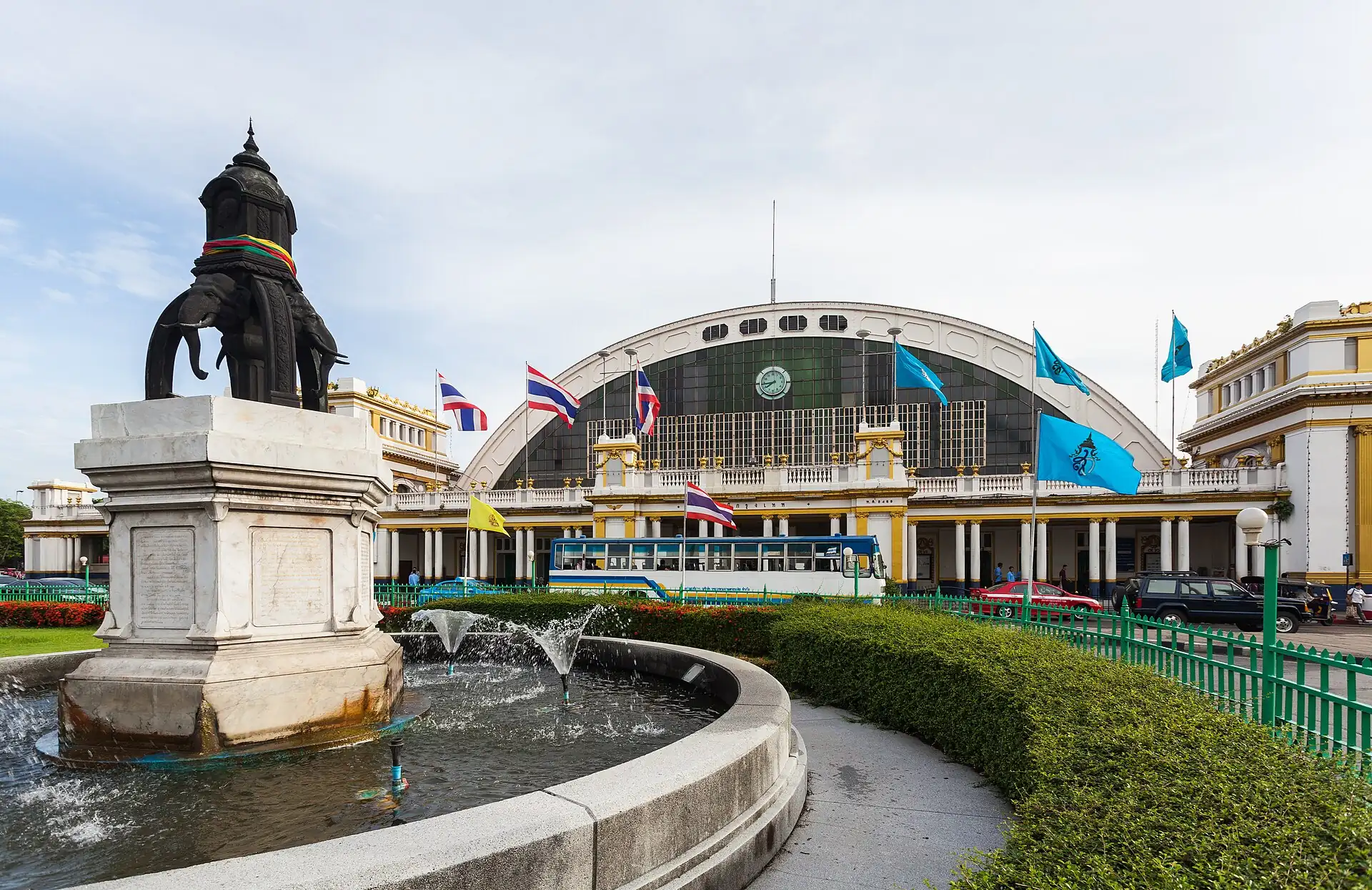
Eating and drinking guideEat by budget · Drink
Before you sit down to eat
Short version; full text linked
Eat by budget
Under ฿150 (≈ US$5) a meal
| Where | Order | Area | Price | Note |
|---|---|---|---|---|
| Yaowarat Road street food (evening) | Chinatown grazing: noodles, dumplings, grilled seafood, desserts | Chinatown | ฿60–200 (≈ US$2–7) a dish | Evenings from 18:00; cash.Evenings from 6:00 PM; cash. |
| Boat-noodle alley | Kuay teow reua in small bowls | Victory Monument (canal-side lane) | ฿20–30 (≈ under US$1) a bowl; most people eat 4–6 | Lunch; stack the bowls, pay by the count.(check) |
| Jek Pui curry | Curry over rice at tables with no chairs | Chinatown (Charoen Krung) | ฿60–100 (≈ US$2–4) | Late afternoon to early evening; a Chinatown classic.(check) |
| Nai Ek Roll Noodles | Kuay jap (peppery rolled-noodle soup, pork) | Chinatown (Yaowarat Soi 9) | ฿80–150 (≈ US$3–5) | Seated shophouse; air-con upstairs.(check) |
| Pratunam chicken rice (Go-Ang, the pink uniforms) | Khao man gai | Pratunam (Phetchaburi Soi 30) | ฿60–120 (≈ US$2–4) | Fast queue; open from early morning.(check) |
| Mall food courtsveg | Anything Thai, pay by card top-up | MBK, Terminal 21 (Pier 21), Siam Paragon | ฿40–150 (≈ US$2–5) | The air-conditioned budget meal; Pier 21 is famously cheap. |
| Or Tor Kor Market food hall | Curries, som tam, grilled meats | Chatuchak (MRT Kamphaeng Phet) | ฿80–200 (≈ US$3–7) | Clean, fixed prices; the best lunch on a Chatuchak day. |
| Khao gaeng (curry-and-rice) shopsveg | Point at 2–3 curries over rice | Any office street, 07:00–13:00 | ฿50–90 (≈ US$2–3) | The cheapest full meal; vegetables easy to point at. |
Dishes to know
| Dish | What it is | Where to look | When | Price |
|---|---|---|---|---|
| Pad thaiผัดไทย | Stir-fried rice noodles with tamarind, egg, tofu or shrimp, peanuts on the side | Street woks everywhere; Thipsamai | Evening | ฿60–150 (≈ US$2–5) |
| Tom yum goongต้มยำกุ้ง | Hot-and-sour prawn soup with lemongrass, galangal and lime leaf; clear or creamy | Any Thai restaurant | Any | ฿120–400 (≈ US$4–13) |
| Som tamส้มตำ | Pounded green-papaya salad; ask for 'phet nit noi' (a little spicy) | Isaan stalls and restaurants | Lunch, dinner | ฿50–120 (≈ US$2–4) |
| Khao man gaiข้าวมันไก่ | Poached chicken on rice cooked in chicken fat, ginger-soy sauce, clear soup | Pratunam and every market | Breakfast, lunch | ฿50–100 (≈ US$2–4) |
| Boat noodlesก๋วยเตี๋ยวเรือ | Small bowls of dark, rich pork or beef noodle soup | Victory Monument | Lunch | ฿20–30 (≈ under US$1) a bowl |
| Pad kra paoผัดกะเพรา | Minced pork or chicken fried with holy basil and chilli, rice and a fried egg | Every made-to-order stall | Any | ฿50–90 (≈ US$2–3) |
| Green curryแกงเขียวหวาน | Coconut curry with Thai aubergine and basil | Curry-and-rice shops | Lunch | ฿60–150 (≈ US$2–5) |
| Moo pingหมูปิ้ง | Grilled marinated pork skewers with sticky rice | Morning carts near stations | 07:00–10:007:00 AM–10:00 AM | ฿10–15 (≈ under US$1) a stick |
| Kuay jap nam saiก๋วยจั๊บ | Peppery broth with rolled rice noodles and pork | Chinatown | Evening | ฿60–120 (≈ US$2–4) |
| Oyster omeletteหอยทอด | Crisp omelette with oysters or mussels | Chinatown and Banglamphu | Evening | ฿80–150 (≈ US$3–5) |
| Mango sticky riceข้าวเหนียวมะม่วง | Sweet sticky rice with coconut cream and ripe mango | Dessert stalls; best in mango season | Mar–Jun | ฿80–150 (≈ US$3–5) |
| Pa thong ko and soy milkปาท่องโก๋ | Fried dough sticks with pandan custard or hot soy milk | Morning stalls, Chinatown | Breakfast | ฿20–50 (≈ US$1–2) |
| Thai iced teaชาเย็น | Strong orange tea with condensed milk over ice | Carts everywhere | All day | ฿30–60 (≈ US$1–2) |
- Eat where Thais queue and the wok is busy; a high turnover means fresh ingredients.
- The table caddy holds sugar, fish sauce with chilli, vinegar and chilli flakes: season the noodles yourself.
- Fork in the left hand pushes food onto the spoon in the right; chopsticks only for noodles.
- Ask 'tao rai?' before ordering where there is no menu with prices, especially seafood sold by weight.
Drink & nightlife
| Where | What | Until | Note |
|---|---|---|---|
| Khao San Road and Rambuttri | Backpacker bars, bucket drinks, live covers | About 02:00–04:00About 2:00 AM–4:00 AM | Loud and cheap; watch your drink and your phone. |
| Sukhumvit Soi 11 and Thong Lo / Ekkamai | Cocktail bars, clubs, craft beer | About 02:00; some to 04:00About 2:00 AM; some to 4:00 AM | Thong Lo is where young Bangkok goes out; dress smart-casual. |
| Silom Soi 2 and Soi 4 | LGBTQ bars and clubs | About 02:00–04:00About 2:00 AM–4:00 AM | ID checked at the door; passport photo on the phone usually accepted (check). |
| Hotel rooftop bars | Cocktails with a view | About 00:00–01:00About 12:00 AM–1:00 AM | Dress codes (no shorts, flip-flops or vests) and 17% '++' on the menu price. |
| Chinatown and Talat Noi bars | Small bars in old shophouses | About 00:00–01:00About 12:00 AM–1:00 AM | The quieter bar crawl, near the street food. |
By style
| Style | What | Where | Price | Until |
|---|---|---|---|---|
| Rooftop bars | Cocktails 30–60 floors upGo at 17:30 for sunset; some take reservations, and the view deck fills first.Go at 5:30 PM for sunset; some take reservations, and the view deck fills first. | Sathorn/Silom (Lebua, Banyan Tree), Sukhumvit (Thong Lo, Asok hotels), riverside towers | ฿400–900 (≈ US$13–30) a cocktail plus ++ | About 00:00–01:00 |
| Local beer and whisky | Chang, Leo, Singha by the big bottle; Thai rum or whisky with soda and iceBeer is served with ice in the glass; that is normal. | Street restaurants, som tam shops, live-music bars | ฿90–150 (≈ US$3–5) a big bottle | About 00:00 |
| Craft beer | Thai and imported IPAs and soursImport duty makes craft beer pricey. | Ari, Ekkamai, Chinatown taprooms | ฿200–350 (≈ US$7–11) a glass | About 00:00–01:00 |
| Cocktail and speakeasy bars | Bars using Thai herbs, spirits and fruit | Chinatown (Soi Nana), Sukhumvit, Thong Lo | ฿350–550 (≈ US$11–17) | About 01:00–02:00 |
| Jazz and live music | Jazz, blues, Thai covers bands | Victory Monument (Saxophone Pub), Phra Athit, hotel bars | Drinks ฿150–400 (≈ US$5–13); some cover charges | About 01:00 |
| Coffee and tea | Thai iced tea (cha yen), oliang (iced black coffee), third-wave cafésMany specialty cafés close early; carts run late. | Carts everywhere; Ari, Chinatown and Thong Lo cafés | ฿30–60 (≈ US$1–2) cart · ฿90–180 (≈ US$3–6) café | Cafés about 18:00–20:00 |
| Go-go bars | Adult bars in Nana Plaza, Soi Cowboy, PatpongUpstairs 'show' bars are the scam venue; see Stay safe. | Sukhumvit Soi 4 and 23, Silom | Drinks ฿150–250 (≈ US$5–8) | About 02:00 |
Rules that bite
- Never leave a drink unattended in Khao San or club areas; spiked drinks are reported.
- Drink-driving limit 0.05% (0.02% for new licences); motorbike taxis and Grab are cheap enough to never risk it.
- Carry a passport or a clear photo of it: clubs check ID for the age limit of 20.
Sleep
Pick the area first: it decides your walk home at night and your first morning.
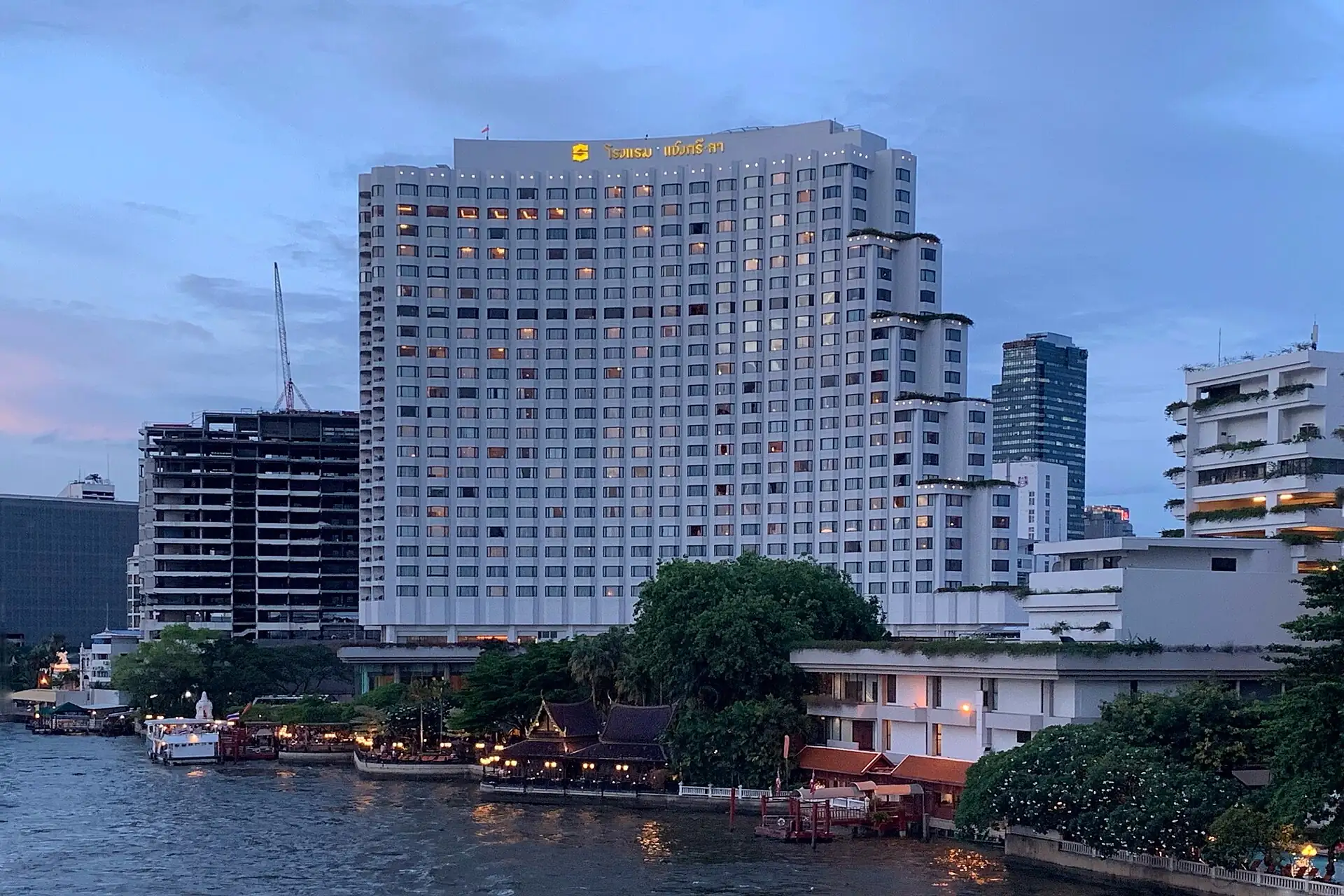
Which neighborhood fits you
Three questions, one recommendation, with the reasons.
Your best fit
- Walk to the palace, Wat Pho and the Golden Mount; boat from Phra Athit pier.
- The cheapest beds in the centre.
Watch out: Music until 02:00 or later; earplugs essential on Khao San, better on Phra Athit and Samsen.
Next best: Silom–Sala Daeng · Riverside (Charoen Krung)
Built from our 1–5 desk scores per area; your answers stay in this browser.
More on sleepingSleep by budget · Your area · With kids
Sleep by budget
| Band | Price | Where | Room types | What to expect |
|---|---|---|---|---|
| budget | ฿350–700 (≈ US$11–25) dorm bed · ฿800–1,500 (≈ US$25–50) double | Banglamphu and Khao San; Silom sois; Sukhumvit Soi 11–15 hostels | Hostels (party and quiet), guesthouses | Small rooms, shared bathrooms at the low end, noise near bars; air-con usually included; lockers in dorms. |
| mid | ฿1,800–4,000 (≈ US$60–130) | Sukhumvit (Nana–Phrom Phong) | 3–4 star hotels and serviced apartments | Pool on the roof, 24-h desk, BTS within 5–10 min. Rooms facing Sukhumvit Road are louder. |
| mid | ฿1,800–4,500 (≈ US$60–140) | Silom and Sathorn | Business hotels, boutique hotels | Park and MRT/BTS close by; quieter than Sukhumvit. |
| splurge | ฿6,000–25,000 (≈ US$190–800)+ | Riverside (Charoen Krung), Ratchadamri, Lumphini | Grand heritage hotels, international luxury chains | Hotel boats to the temples, pools, spas; '++' taxes on quoted rates. |
| mid | ฿1,500–3,000 (≈ US$50–95) (cheaper by the month) | Ari, On Nut, Ekkamai | Serviced apartments and condos | Kitchen, washer, gym and pool; monthly rates much lower; check short-let rules for the building. |
Booking checks
- Check the BTS or MRT station and the walk to it: a 'Sukhumvit' hotel can be 1.5 km (0.9 mi) down a soi.Check the BTS or MRT station and the walk to it: a 'Sukhumvit' hotel can be 0.9 mi (1.5 km) down a soi.
- '++' means 10% service plus 7% VAT on top of the quoted price: compare totals.
- The hotel must report your stay to Immigration; it may copy your passport but should not keep it.
- Short-term rentals of under 30 days in condos are restricted by law; rooms can be cancelled at short notice — prefer hotels and licensed serviced apartments.
- Ask for a room away from the street and the bar side in Nana, Khao San and Silom Soi 4.
Which area is yours
| If you are | Sleep in | Because |
|---|---|---|
| First visit, 3–5 nights, mixed temples and malls | Sukhumvit (Asok–Nana) | BTS at the door, every kind of food, easy taxis; accept the long ride to the temples. |
| Park mornings, river access and the MRT | Silom–Sala Daeng | Lumphini on foot, BTS to the river boat, calmer than Sukhumvit. |
| Couples or a splurge | Riverside (Charoen Krung) | Hotel boats to the temples and sunset on the water. |
| Backpackers who want the temples on foot | Banglamphu and Khao San | Cheapest beds, walkable old city; pick a side street for sleep. |
First nights: BTS and MRT at the door, big hotels with 24h desks, food at every corner; noisy, and far from the temples.
Quieter nights near Lumphini Park, the river and Chinatown by taxi; BTS and MRT interchange, but less street food at the door.
Grand hotels with porters and their own shuttle boats.
Khao San is closed to cars in the evening; guesthouses are often walk-ups without lifts.
Areas are in our default order until you tick a priority.
Scores are 1–5 desk judgements per priority (2026). Riverside and Banglamphu have no sleep-area page yet; they link to the districts table.
With kids
- Pavements, stairs and heat rule out strollers on most walks: bring a carrier and plan by BTS and taxi. Malls are stroller-friendly.
- Rain or heat: SEA LIFE Bangkok Ocean World and KidZania in Siam Paragon; the Children's Discovery Museum at Chatuchak (check hours).
- Lumphini Park has playgrounds, monitor lizards and paddle boats; go before 09:00 or after 16:00.Lumphini Park has playgrounds, monitor lizards and paddle boats; go before 9:00 AM or after 4:00 PM.
- Chao Phraya boats are a hit with children; hold hands on the pier, as boats barely stop.
- Taxis and ride-hail cars rarely have child seats: pre-book a car with one through the hotel or bring a travel booster.
- Thais love small children: expect strangers to touch cheeks and hair; a smile and a wai back is fine.
PracticalMoney, essentials, safety and the pocket card
Practical
Money, essentials, safety and the pocket card
Money
What a day costs at three comfort levels, and how to pay.
- Budget
- ฿500–900 (≈ US$16–30) excl. bed / day
- Mid
- ฿900–2,500 (≈ US$30–80) excl. bed / day
- High
- ฿2,500 (≈ US$80)+ excl. bed / day
- Transit card
- Rabbit card or single tokens for the BTS; MRT has its own tokens and cards; keep coins and ฿20 notes for the machines.
- Cash rule
- Keep ฿1,000 (≈ US$35) in small notes; withdraw inside banks or malls (about ฿220 (≈ US$7) fee per foreign-card withdrawal).
More on moneyCosts · Budget · Buy
What things cost
- Pad thai or fried rice at a street stall฿60–100 (≈ US$2–4)
- Bottle of water, convenience store฿7–15 (≈ under US$1)
- Chao Phraya Express Boat, orange flagabout ฿16 (≈ under US$1) (check)
- Grand Palace ticket฿500 (≈ US$16)
- One-hour Thai massage฿300–600 (≈ US$10–19)
Trip budget
| Hotel double room1 × 4 nights × ฿2,500 | ฿10,000 |
| Food, local transport, entries2 × 4 days × ฿2,000 | ฿16,000 |
| Airport taxi, both ways1 × ฿1,000 · one car per 3–4 people with bags; includes surcharge and tolls | ฿1,000 |
| eSIM or tourist SIM2 × ฿450 | ฿900 |
| Temple and palace tickets2 × ฿1,000 · Grand Palace, Wat Pho, Wat Arun | ฿2,000 |
| Buffer 10%Price creep, a taxi you did not plan, one splurge | ฿2,990 |
| Trip total≈ ฿4,111 per person per day, bed included | ฿32,890≈ US$1,100 |
2026 estimate in baht; flights, visas and tours excluded. Your choices stay in this browser.
Prices of common things
| Chao Phraya Express Boat | about ฿16–30 (≈ under US$1) (check) |
2026 estimate; check locally.
Buy
- Bargaining
- Bargain in markets and at stalls without price tags: counter at about half the first price, settle around 60–75%, and smile throughout. Never bargain in malls, 7-Eleven, restaurants, or on printed-price food; do not start haggling unless you intend to buy.
- Fixed-price check
- Before buying souvenirs, silk, spices or snacks in a tourist market, check the same item in a mall supermarket (Gourmet Market, Tops, Big C) or at MBK. That is your ceiling.
Markets and shopping streets
| Where | What | When | Haggle | Note |
|---|---|---|---|---|
| Chatuchak Weekend Market | Clothes, homeware, crafts, plants, vintage, food; about 15,000 stalls | Sat–Sun about 09:00–18:00; plant section Wed–Thu (check)Sat–Sun about 9:00 AM–6:00 PM; plant section Wed–Thu (check) | light | Go at 09:00 before the heat; the numbered sections and a map app keep you from getting lost.Go at 9:00 AM before the heat; the numbered sections and a map app keep you from getting lost. |
| Or Tor Kor Market | Premium fruit, curries, dried goods, prepared food | Daily about 06:00–18:00 (check)Daily about 6:00 AM–6:00 PM (check) | no | Opposite Chatuchak; fixed prices, higher than elsewhere but top quality. |
| Pratunam and Platinum Fashion Mall | Wholesale and cheap clothing | Platinum about 09:00–20:00; street stalls from early morningPlatinum about 9:00 AM–8:00 PM; street stalls from early morning | light | Prices drop for three or more of an item. |
| Sampeng Lane (Chinatown) | Wholesale trinkets, fabrics, toys, accessories | Daytime, busiest mornings | light | Narrow and packed; trolleys push through, keep your bag in front. |
| Pak Khlong Talat (flower market) | Flowers and garlands by the kilo; vegetables | 24 h; busiest late night to early morning | no | Best after 22:00 or before 07:00, when the deliveries arrive.Best after 10:00 PM or before 7:00 AM, when the deliveries arrive. |
| Khao San Road and Rambuttri | T-shirts, souvenirs, fake IDs, bags | Afternoon to late night | hard | Highest mark-ups in the city; the fake documents are illegal to buy. |
| Jodd Fairs and other night markets | Food stalls, clothes, bars | Evenings about 17:00–24:00 (check)Evenings about 5:00 PM–12:00 AM (check) | light | Rama 9 area on the MRT; food is the reason to go. |
| Asiatique The Riverfront | Souvenir shops, restaurants, Ferris wheel | About 16:00–24:00About 4:00 PM–12:00 AM | no | Fixed-price mall-style market; free shuttle boat from Sathorn pier (check). |
Shops by what they sell
| For | Where | Hours | Note |
|---|---|---|---|
| Malls (AC, food courts, cinemas) | Siam Paragon, Siam Center, CentralWorld (Siam–Chit Lom); EmQuartier and Emporium (Phrom Phong); Terminal 21 (Asok); ICONSIAM (river) | About 10:00–22:00 | Fixed prices; show your passport at the tourist lounge for a VAT-refund form and discount card (check). |
| Electronics and phones | MBK Center (National Stadium); Pantip Plaza (Pratunam, now fewer shops) | About 10:00–21:00 | Grey imports and repairs; check the warranty works outside Thailand. |
| Silk and textiles | Jim Thompson shops (Surawong flagship and malls); Chatuchak for cheaper cotton | Shop hours | Jim Thompson sells fixed-price silk; the outlet on Sukhumvit 93 is cheaper (check). |
| Tailors | Sukhumvit Sois 3–11, Silom, Charoen Krung | About 10:00–21:00 | A good suit needs two fittings over 3–5 days; 24-hour suits look it. Anyone a tuk-tuk driver brings you to pays him commission. |
| Spices, dried fruit, snacks to take home | Supermarkets (Gourmet Market, Tops); Or Tor Kor; Chinatown shops | Long hours | Vacuum-packed curry pastes and dried mango travel well; check your country's food import rules. |
| Buddha images and antiques | Chatuchak, River City (antiques), Chinatown | Shop hours | Exporting Buddha images and antiques needs a Fine Arts Department permit: buy from a dealer who arranges it. |
| Books | Kinokuniya (Siam Paragon, EmQuartier); Asia Books branches | Mall hours | English books and maps of Thailand; prices a little above home. |
| Pharmacy and toiletries | Boots and Watsons in every mall and on Sukhumvit | Mall hours | Sunscreen is dear; local brands of tiger balm and inhalers are cheap gifts. |
Changing money
| Where | Verdict | Why |
|---|---|---|
| SuperRich and similar licensed exchange booths | use | Best cash rates in the city for USD, EUR and GBP; passport needed. The green and orange SuperRich are separate companies, both fine. |
| Suvarnabhumi basement, by the Airport Rail Link | ok | Exchange booths near the train level give much better rates than the arrivals-hall counters upstairs. |
| Bank exchange counters (Kasikorn, SCB, Bangkok Bank) | use | Fair rates, a receipt, passport needed; mall branches open late. |
| Arrivals-hall counters | ok | Change only enough for the first taxi and day, about ฿1,000–2,000 (≈ US$35–65). |
| Hotel front desk | avoid | Convenient, poor rate. |
ATMs
- Per withdrawal
- Most Thai ATMs let a foreign card take ฿20,000–30,000 (≈ US$650–950) at a time; the machine shows its cap.
- Fees
- Thai banks charge a foreign card about ฿220–250 (≈ US$7–8) per withdrawal (2026 estimate, shown on screen) on top of your own bank's fee: take the cap once rather than small amounts.
- Conversion
- If the ATM or a card terminal offers to charge in your home currency, decline and pay in baht.
- Where
- Machines inside bank branches, malls or BTS stations. Thai ATMs give cash first, then the card: wait for the card.
Essentials and accessEssentials · Access
Essentials
- Tipping
- Not expected at stalls. Round up taxi fares; ฿50–100 (≈ US$2–4) after a massage; ฿300–500 (≈ US$10–16) a day for a guide. Upmarket restaurants add 10% service plus 7% VAT ('++').
- Plugs & power
- 220 V, 50 Hz; sockets take flat two-pin (A) and round two-pin (C) plugs, many also three-pin (O). A universal adapter covers it.
- Toilets
- Malls, BTS/MRT interchange stations (some), cafés, hotels and temples; some public toilets charge ฿3–5 (≈ under US$1). Carry tissues; a bum-gun hose is standard.
- Opening hours
- Street food runs from breakfast and again after dusk; malls about 10:00–22:00; temples mostly 08:00–17:00 or 18:00. Many museums close on Monday — check each place.Street food runs from breakfast and again after dusk; malls about 10:00 AM–10:00 PM; temples mostly 8:00 AM–5:00 PM or 6:00 PM. Many museums close on Monday — check each place.
- Health
- Heat and humidity all year, dengue in the rainy season, PM2.5 smog in the cool season (Dec–Mar), and rabies from street dogs. Travel insurance with medical cover: private hospitals are excellent and expensive.
- Accessibility
- Pavements are high, broken and crowded with stalls; footbridges have steps. MRT and ARL stations have lifts; many BTS stations now do (check each). Malls are the step-free zone.
- Laundry
- Laundry shops price by the kilo with same- or next-day service; coin-operated laundromats are common in Sukhumvit and near hostels.
- Emergency numbers
- 191 police, 1155 Tourist Police (English), 1669 ambulance, 199 fire.
Pack
- Light, breathable clothes plus one outfit that covers shoulders and knees (temples and the palace)
- Slip-on shoes: they come off at every temple hall and in many homes and shops
- A compact umbrella for sun and the rainy-season storms
- A light layer for icy mall, cinema and BTS air-conditioning
- A KN95 mask for smoggy days in January–March
Accessibility
Bangkok is hard on wheels outside malls and hotels. Pavements are high, broken and blocked by stalls, many crossings are footbridges with stairs, and boats have steps and gaps. MRT, ARL and the newer lines are step-free; the BTS is patchy. Plan door-to-door taxis and mall routes.
- Pavements
- High kerbs, broken tiles, poles and food stalls; you will often have to use the road edge. The Lumphini park paths and the mall skywalks are the smooth exceptions.
- Lifts at stations
- All MRT, ARL, Yellow and Pink line stations have lifts. BTS added lifts at most stations, but some have only one side or are out of service (check each station).
- Getting around
- Metered taxis and ride-hail cars take folded wheelchairs; book a larger car in the app. City buses are mostly high-floor. River boats and piers are not accessible.
- Hotels
- International chains in Sukhumvit, Silom and the riverside have adapted rooms; ask for photos. Old-city guesthouses often have steps and no lift.
- Toilets
- Accessible toilets in malls, big hotels and newer rail stations; rare elsewhere.
- Crossings
- Few signalled crossings with audible signals; drivers rarely stop at zebra crossings. Cross with others or at lights.
Sights, step-free or not
| Grand Palace | with help | Flat courtyards on paving, but steps into every hall; ramps at some (check with staff). |
| Wat Pho | with help | Flat grounds; low steps into the reclining Buddha hall; shoes off. |
| Jim Thompson House | hard | Traditional teak houses on raised floors with stairs; the gardens and shop are level. |
| Siam Paragon and CentralWorld | step-free | Lifts, accessible toilets, skywalk links to BTS Siam and Chit Lom. |
| Lumphini Park | step-free | Level paved paths around the lake. |
| Yaowarat Road street food (evening) | hard | Packed pavements and stools; kerbs and traffic along the road. |
| Chao Phraya Express Boat | hard | Steps, moving pontoons and a gap to the boat; the ICONSIAM shuttle boat pier is easier (check). |
Survive
Safety basics, the lines not to cross, and practical habits that save the day.
Safety
- Heat: AC stop every 60–90 minutes; carry water and a hat.
- Scams: ignore strangers who say an attraction is closed; use the official gate or site.
- Emergency: 191 police, 199 fire, 1669 ambulance, 1155 Tourist Police.
Red lines
- Grand Palace and temples: shoulders and knees covered; shoes off in halls.
- Do not touch monks or point your feet at Buddha images.
- Never insult the monarchy in speech, print or online.
Practical
- Toilets: malls, cafés and temples (small fee at some); carry tissues.
- Tap water is not for drinking.
More on staying safeStay safe · Stay healthy · Safety map · Solo & women · Etiquette · Cope · Scams
After dark, by area
5 flagged areas
Rattanakosin (palace and temples)
Take care- Take care
Sukhumvit Nana and Soi Cowboy
Take careKhao San Road
Take careKhlong Toei (port slum and market)
Take care
Day = about 07:00–19:00. What to watch in each area, day and night →
Scams and red flags
Walk away if you see these
- 'The Grand Palace is closed today' from a friendly stranger near the gate: it is almost never true. Walk to the official visitor entrance and see for yourself.
- ฿20–50 (≈ US$1–2) tuk-tuk 'city tours' stop at gem, tailor and suit shops that pay the driver commission; the gem 'bargain' is worth a fraction of what you pay.
- Taxis that refuse the meter near sights, malls and Khao San: walk to the main road and flag another, or use a ride-hailing app.
- Upstairs 'free show' bars in Patpong and Nana end with a bill of thousands of baht: do not go upstairs on a tout's invitation.
- Lookalike 'TAT tourist information' offices in the old city are private agencies; the real Tourism Authority does not sell tours.
Stay safe
Crossing the road
- 01Traffic drives on the left: look right first, then left, then right again.
- 02Motorbikes ride on pavements and against the flow in sois: look both ways even on one-way streets.
- 03Zebra crossings do not stop traffic; wait for a gap, or cross with locals or at lights.
- 04Use footbridges on big roads (Sukhumvit, Rama IV, Ratchadamri); they are hot but safe.
- 05At junctions, green for you can still mean turning cars: watch the corner.
Hustles specific to this city
| Hustle | Where | The tell | What to do |
|---|---|---|---|
| 'Closed today' at the palace | Around the Grand Palace and Wat Pho | A friendly stranger says it is closed for a ceremony and suggests a tuk-tuk tour | Walk to the official visitor gate on Na Phra Lan Road and look for yourself. |
| Gem and tailor tuk-tuk tour | Old city | ฿20–50 (≈ US$1–2) for a whole afternoon, with stops at a 'government' gem shop or tailor | Decline. Take a metered taxi or walk; there are no government gem sales. |
| Meter refusal | Sights, malls, Khao San, Sukhumvit bar zones | Flat fee of ฿200–500 (≈ US$7–16) for a ฿80 (≈ US$3) ride | Walk to the main road and flag another, or use Grab or Bolt. |
| Upstairs 'show' bars | Patpong, Nana | Tout with a menu of shows 'free entry' | Do not go upstairs. If trapped with a bill, call 1155 before paying. |
| Fake monks and charity collectors | BTS skywalks, tourist streets | Robed men asking for money or selling amulets | Real monks do not solicit cash in the street; walk on. |
| Jet-ski or scooter 'damage' claims | Rentals (more in Pattaya and Phuket) | Existing scratches blamed on you | Photograph the vehicle before riding; never leave your passport as a deposit. |
| Card skimming and DCC | ATMs and shops | Terminal offers to charge in your home currency | Pay in baht; use ATMs inside banks and malls. |
| Friendly bar 'English teacher' | Sukhumvit, Khao San | Invitation to a card game or a special gem deal at a friend's house | Say no; the card game is rigged. |
- Tourist Police
- 1155, English, 24 h. Report theft at the Tourist Police or the local station with your passport; insurers need the written report.
- Drugs
- Penalties are severe for all drugs except regulated cannabis; cannabis rules changed in 2025 and buying now needs a medical certificate (check). Do not smoke it in public.
- Lèse-majesté
- Criticism of the monarchy, online or offline, is prosecuted, including against foreigners.
- Night
- Violent crime against visitors is rare; risks are scams, spiked drinks, and traffic.
Stay healthy
Air quality by month
| Jan | Feb | Mar | Apr | May | Jun | Jul | Aug | Sep | Oct | Nov | Dec |
|---|---|---|---|---|---|---|---|---|---|---|---|
| poor | poor | mixed | ok | ok | ok | ok | ok | ok | ok | mixed | mixed |
PM2.5 smog builds in the cool, dry months when winds are still and farm fires burn in the region: readings above 100 (unhealthy for sensitive groups) are common from December to March, worst in January and February mornings. Check a live AQI app (IQAir, AirBKK) and carry a KN95 mask (฿15–40 (≈ US$1–2) at 7-Eleven). The rainy season washes the air clean.
- Heat
- All year, worst March–May: shade and AC every 60–90 minutes, electrolytes from 7-Eleven, no noon walks in the old city.
- Dengue
- Mosquito-borne and present all year, peaking in the rainy season (June–October). Repellent by day; see a doctor for a sudden high fever and avoid ibuprofen until dengue is ruled out.
- Food and water
- Bottled or filtered water. Street food is generally safe at busy stalls; take care with raw seafood and shellfish in the heat.
- Rabies
- Street dogs and temple cats: do not pet them. After any bite or scratch go the same day to a hospital or the Thai Red Cross Queen Saovabha Memorial Institute (Rama IV Road) for shots.
- Flood water
- Avoid wading through storm floods with cuts on your feet (leptospirosis risk); shower afterwards.
Hospitals and clinics: see Cope.
Safety by area and hour
| Area | Day | Night | What to watch |
|---|---|---|---|
| Rattanakosin (palace and temples) | fine | caution | 'Closed today' touts, ฿20 (≈ under US$1) tuk-tuk tours, gem-shop detours; empty and dark after 19:00.'Closed today' touts, ฿20 (≈ under US$1) tuk-tuk tours, gem-shop detours; empty and dark after 7:00 PM. |
| Chinatown (Yaowarat) | fine | fine | Crowds at the food stalls: phone and bag in front; traffic along the kerb. |
| Siam and Pathum Wan | fine | fine | Pickpockets on the BTS skywalks at rush hour. |
| Lumphini Park and Silom | fine | caution | Park closes at night; Patpong's upstairs show bars and inflated bills. |
| Sukhumvit Nana and Soi Cowboy | fine | caution | Late-night drunk crowds, bar-bill disputes, sex-work touting; fine to walk through on the main road. |
| Khao San Road | fine | caution | Spiked drinks, bag snatches, fake-ID and 'bucket' touts; motorbike taxis racing the lanes. |
| Riverside piers | fine | fine | Boats stop only briefly and piers are slippery; mind the gap. |
| Khlong Toei (port slum and market) | caution | caution | Nothing for a first visit; if you go to the market, go by day with a local. |
- Traffic drives on the left and motorbikes use pavements and go against the flow: look both ways every time.
- The most common loss is a phone or wallet on crowded BTS trains, markets and Khao San: front pocket, zipped bag.
- Argue with no one in public: a lost temper escalates fast. Call 1155 and let the Tourist Police deal with it.
Solo, women and LGBTQ+ travellers
Solo
- One of the easiest cities in Asia alone: hostels in Silom, Sukhumvit and Banglamphu are social, and eating alone at a stall is normal.
- Use ride-hail apps late at night rather than street taxis or motorbike taxis: driver and route are logged.
- Book day trips through the hotel or a tour operator with written inclusions; solo travellers often pay a small supplement.
Women
- Harassment is uncommon; the greater risks are drink spiking in party areas and bag snatches.
- Women should not touch monks or hand things directly to them; place items down or give them to a man to pass on.
- Women-only dorms are common in hostels; the BTS has no women-only carriage.
LGBTQ+
- Same-sex marriage has been legal since January 2025; Bangkok is one of Asia's most open cities for LGBTQ travellers.
- Silom Soi 2 and Soi 4 are the long-standing bar streets; Bangkok Pride runs in June (check dates).
- Public affection of any kind is low-key in Thai culture; that applies to everyone.
Etiquette in Bangkok
- Temples
- Cover up, take hats off, keep your head lower than Buddha images when sitting, and sit with feet tucked away from the altar.
- Head and feet
- The head is high and the feet low: do not touch anyone's head, do not point with your feet or put them on tables or seats.
- Monks
- Give monks space and seats on transport; women do not touch a monk or hand him things directly.
- The monarchy
- Stand when the royal anthem plays (before films, and at 08:00 and 18:00 in parks and stations); treat royal images, and banknotes that carry the king's portrait, with respect — never step on a coin.Stand when the royal anthem plays (before films, and at 8:00 AM and 6:00 PM in parks and stations); treat royal images, and banknotes that carry the king's portrait, with respect — never step on a coin.
- The wai
- The palms-together greeting: return a wai from adults, but you do not need to wai shop staff or children; a smile and a nod is fine.
- Shoes
- Off at temple halls, homes and some shops and massage parlours — look for the row of shoes.
- Keeping cool
- Raised voices and anger lose face for everyone: keep calm (jai yen), smile, and walk away if a deal will not work.
- Tipping
- Not expected at stalls; round up taxis; ฿50–100 (≈ US$2–4) for a massage; check for a service charge before tipping in restaurants.
Cope
Hospitals and clinics that handle foreigners
| Where | Area | Use it for |
|---|---|---|
| Bumrungrad International Hospital | Sukhumvit Soi 3, near BTS Nana | 24 h emergency, foreign-language desks, insurer liaison; expensive. |
| Bangkok Hospital | Soi Soonvijai, New Phetchaburi Road | Large private hospital with 24 h emergency and international desk. |
| Samitivej Sukhumvit Hospital | Sukhumvit Soi 49 | Private; strong on paediatrics. |
| BNH Hospital | Convent Road, Silom | Private, smaller; closest to Silom hotels. |
| King Chulalongkorn Memorial Hospital | Rama IV Road, opposite Lumphini Park | Large public hospital; cheaper, longer waits; rabies clinic at the Thai Red Cross Queen Saovabha institute next door. |
Visa extensions
- Office
- Bangkok Immigration Division 1, Government Complex, Chaeng Watthana Road, Building B; weekday office hours. Check the address and queue system before going.
- Extending
- A visa-exempt stay can usually be extended once by 30 days for ฿1,900 (≈ US$60) (check); bring passport, photo, TM.7 form and hotel address.
- Arrival card
- Thailand uses an online Digital Arrival Card (TDAC) filled in before arrival; the rules sit on the Thailand country page.
- Overstay
- Fined ฿500 (≈ US$16) a day at departure, and long overstays bring re-entry bans: fix it before the airport.
Embassies and consulates
| Country | Address | Phone | Note |
|---|---|---|---|
| United States | 95 Wireless Road (Thanon Witthayu), Lumphini, Pathum Wan | +66 2 205 4000 | (check) |
| United Kingdom | AIA Sathorn Tower, 11/1 South Sathorn Road, Sathorn | +66 2 305 8333 | (check) |
| Australia | 181 Wireless Road, Lumphini, Pathum Wan | +66 2 344 6300 | (check) |
| Canada | Abdulrahim Place, 990 Rama IV Road, Bang Rak | +66 2 646 4300 | (check) |
| Germany | 9 South Sathorn Road, Sathorn | +66 2 287 9000 | (check) |
| France | 35 Charoen Krung Soi 36, Bang Rak | +66 2 657 5100 | Consular section may be at a separate address (check)(check) |
| Japan | 177 Witthayu Road, Lumphini, Pathum Wan | +66 2 207 8500 | (check) |
| China | 57 Ratchadaphisek Road, Din Daeng | +66 2 245 0088 | Visas through the Chinese visa application centre(check) |
| India | 46 Soi Prasarnmitr, Sukhumvit Soi 23 | +66 2 258 0300 | Visas through the Indian visa centre; e-visas for most(check) |
| Singapore | 129 South Sathorn Road, Sathorn | — | (check) |
| Vietnam | 83/1 Wireless Road, Lumphini | — | Most nationalities use the Vietnamese e-visa instead(check) |
| Laos | 502/1–3 Soi Sahakarnpramoon, Pracha Uthit Road, Wang Thonglang | — | Most nationalities can get a Lao visa on arrival or e-visa(check) |
| Cambodia | 518/4 Pracha Uthit Road (Soi Ramkhamhaeng 39) | — | Use the Cambodian e-visa where possible(check) |
- Help lines
- Tourist Police 1155, 24 h, English; TAT tourist call centre 1672, daily about 08:00–20:00 (check).Tourist Police 1155, 24 h, English; TAT tourist call centre 1672, daily about 8:00 AM–8:00 PM (check).
- Tourist Police
- 1155, English-speaking, 24 h. They take theft reports for insurance and help in disputes with taxis and shops.
- Lost passport
- Police report (Tourist Police or local station), then your embassy for an emergency passport, then Immigration for the entry stamp before you fly: budget several working days.
- Pharmacies
- Boots, Watsons and Fascino in malls and on main roads; many medicines sold over the counter. Pharmacists often speak English: bring the active ingredient name.
- Self-service laundry
- Coin- and app-operated laundromats in Sukhumvit, Silom and near Khao San, many 24 h: about ฿40–80 (≈ US$2–3) a wash plus drying (2026 estimate).
- Laundry
- Laundry shops charge by the kilo, about ฿40–80 (≈ US$2–3) per kg (2026 estimate), next-day; hotels charge per item.
- Gyms and pools
- Day passes at hotel gyms and fitness chains about ฿300–800 (≈ US$10–25) (2026 estimate). Muay Thai gyms sell drop-in classes.
- Co-working
- Co-working spaces in Sukhumvit, Silom, Ari and Thong Lo sell day passes; cafés tolerate laptops for the price of a drink.
Apps and offline kitOffline kit
Offline kit
Set up before you leave, so Bangkok still works with no signal or a dead roaming plan.
On your phone
- Maps: open the city in Google Maps, tap the place name, then Download offline map (or use an offline-maps app).
- Data: install an eSIM or buy a local SIM before the first taxi; the apps in this guide depend on it.
- Translation: download the local language for camera translation.
- Screenshots: booking confirmations, hotel address in the local script, and the emergency numbers.
This guide
Save the Bangkok guide and its pages on this device; it opens without a connection.
Phrases that do the work
Greeting
Hello
สวัสดีครับ / ค่ะ (sawasdee khrap / kha)
sa-wat-dee krap (men) / ka (women)
Thanks
Thank you
ขอบคุณครับ / ค่ะ (khop khun)
kop-koon krap / ka
Market
How much is this?
อันนี้เท่าไหร่ (an nee tao rai)
an nee tao rai
Market
Can you lower the price?
ลดได้ไหม (lot dai mai)
lot dai mai
Food
Not spicy, please
ไม่เผ็ด (mai phet)
mai pet
Food
A little spicy
เผ็ดนิดหน่อย (phet nit noi)
pet nit noy
Food
Delicious!
อร่อย (aroi)
a-roy
Café
The bill, please
เช็คบิล (check bin)
chek bin
Taxi
Please use the meter
เปิดมิเตอร์ด้วย (poet meter duay)
pert mee-ter duay
Taxi
Please take me to this address
ไปที่อยู่นี้ครับ / ค่ะ (pai tee yoo nee)
pai tee yoo nee
Taxi
Stop here, please
จอดตรงนี้ (jot trong nee)
jot trong nee
Problem
No, thank you
ไม่เป็นไร / ไม่เอา (mai pen rai / mai ao)
mai ao krap / ka
Pocket card
Fill in, then print or save as PDF
Stays in this browser only; nothing is sent anywhere.
Bangkokกรุงเทพมหานคร
Pocket card · Voykit
My bed tonight
—
—
—
ไปที่อยู่นี้ครับ / ค่ะPlease take me to this address
Emergency
- Tourist Police1155
- Police191
- Ambulance1669
- Fire199
Embassy
Most embassies are on Wireless Road (US, UK residence area, Australia, Japan) and South Sathorn Road (UK, Germany, Singapore). Write your own embassy's 24-hour line below.
My embassy: —
Fare anchors (2026 estimate)
- Suvarnabhumi → Sukhumvit, metered taxi: ฿400–550 (≈ US$13–17) incl. ฿50 (≈ US$2) airport surcharge and tolls, 35–70 min
- Suvarnabhumi → Phaya Thai, Airport Rail Link: about ฿45 (≈ US$2), 26 min (check)
- Don Mueang → centre, SRT Red line + MRT: about ฿40–60 (≈ US$2) (check)
- Taxi across the centre: ฿80–200 (≈ US$3–7) on the meter
Say or show
- สวัสดีครับ / ค่ะ (sawasdee khrap / kha) — Hello (sa-wat-dee krap (men) / ka (women))
- ขอบคุณครับ / ค่ะ (khop khun) — Thank you (kop-koon krap / ka)
- อันนี้เท่าไหร่ (an nee tao rai) — How much is this? (an nee tao rai)
- ไม่เผ็ด (mai phet) — Not spicy, please (mai pet)
- เปิดมิเตอร์ด้วย (poet meter duay) — Please use the meter (pert mee-ter duay)
- จอดตรงนี้ (jot trong nee) — Stop here, please (jot trong nee)
Show drivers the address in Thai script with the nearest BTS/MRT station and soi number; many do not read English.
Deep diveHistory, reading, photos and every source
Deep dive
History, reading, photos and every source
Sources
- officialTourism Authority of Thailand
- secondaryWikivoyage — Bangkok
Ask about Bangkok
Loading…
Was this useful?