Manila
Maynila
Code MN · 4 walking zones
Manila is a two-transfers-a-day city: do Intramuros before 10:30, Rizal Park and Binondo as a second half-day, and Makati as a third; stay inside air conditioning from 11:00 to 15:00 and never plan a road transfer in rush hour.Manila is a two-transfers-a-day city: do Intramuros before 10:30 AM, Rizal Park and Binondo as a second half-day, and Makati as a third; stay inside air conditioning from 11:00 AM to 3:00 PM and never plan a road transfer in rush hour.
Our quick read of Manila, scored 1–5 (friction is out of 100). Cash need: how often you still need notes. Heat risk: how hot days get. Stroller: how easy wheels are. Friction: overall effort for a first visit. Desk judgements, so check before relying on them.
- Local time
- --:--
- Weather
- forecast below
- Currency
- PHP
- Best months
- Jan · Feb · Mar · Dec
- Airport
- Ninoy Aquino (MNL)
Walking zones: the 4 areas this guide plans a day around. Each is a district you can cover on foot, so you do one zone per half-day and ride the train between them. The code (MN 01, MN 02…) is just the zone's number on the Manila line; the line under each name says how bags fare there and how much time it needs.
Map of Manila
Use the switches to show or hide each kind of pin. A switch that is on shows its pins on the map; tap it again to hide them. "Show only" keeps just the pins that match (for example, places that fit a suitcase). Tap any pin for its name and a link to its page.
- Where to sleep
- Places
- Walking clusters
- Rest stops
From the airport Ninoy Aquino (MNL) to your bed
Tap a pin for its card. Places without their own coordinates are shown by their walking cluster.
Why Manila
Manila's sights are close on a map and slow on the road. The trips that go wrong are the ones that fight three things at once: midday heat on open squares, a 10 km transfer at 17:00, and a flight booked for the wrong terminal. Four clusters cover a first visit; the airport is 30 minutes to 2 hours away, so a late landing decides which bed is safe.
See first
- 1
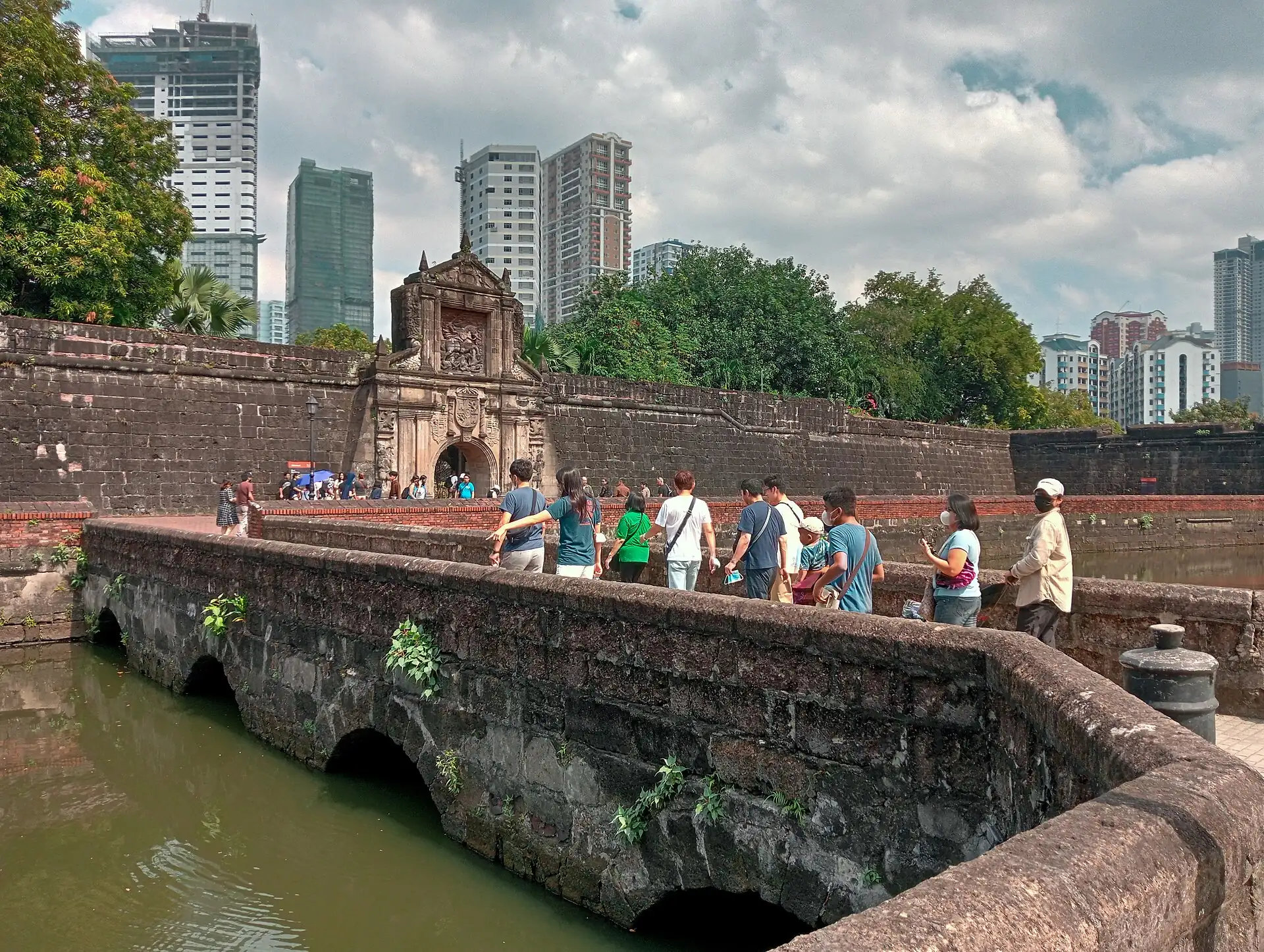
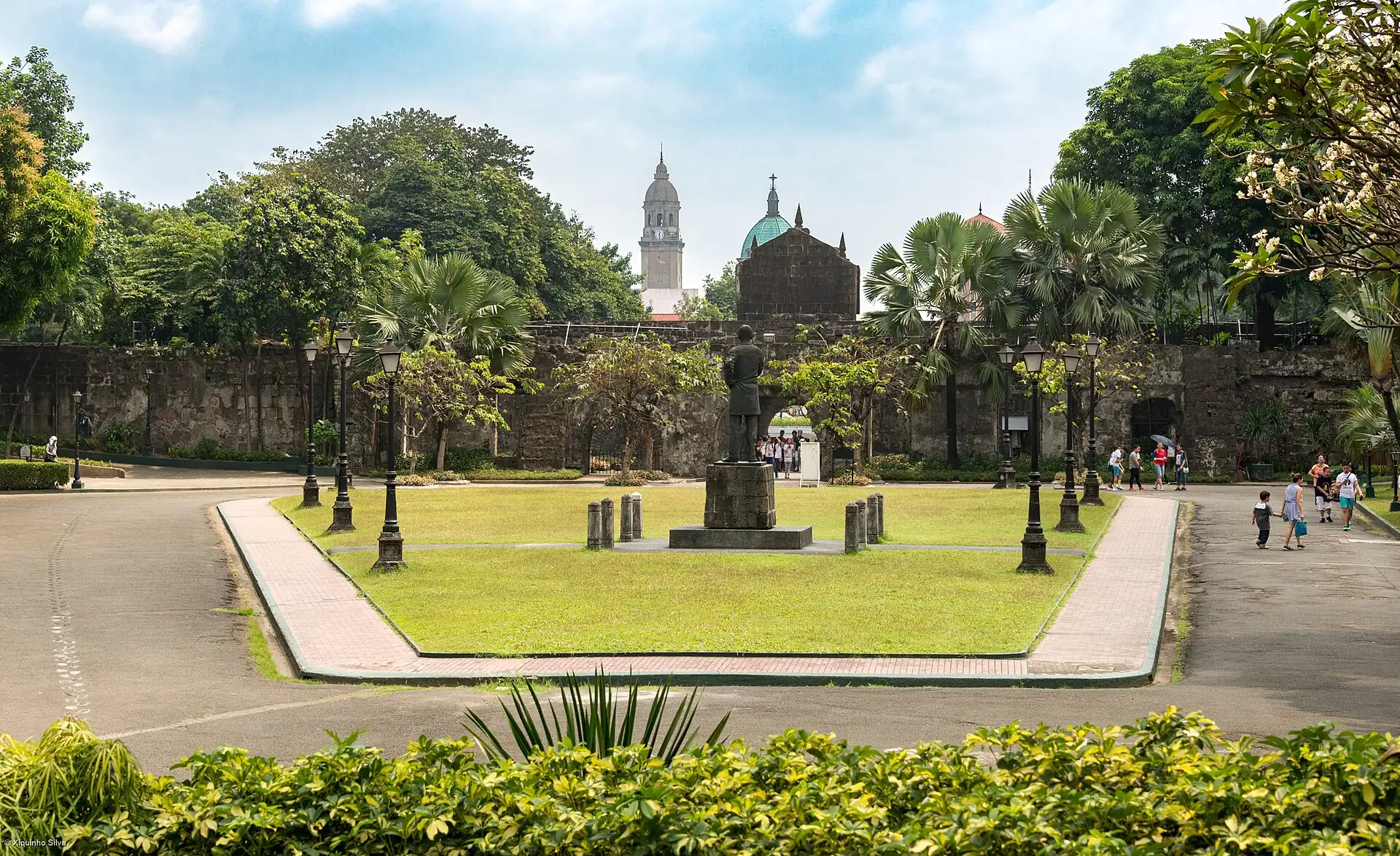 Fort Santiago at opening · 1–1.5 h
- 2San Agustin Church and museum · 45 min
- 3Rizal Park and the monument · 30–60 min
- 4
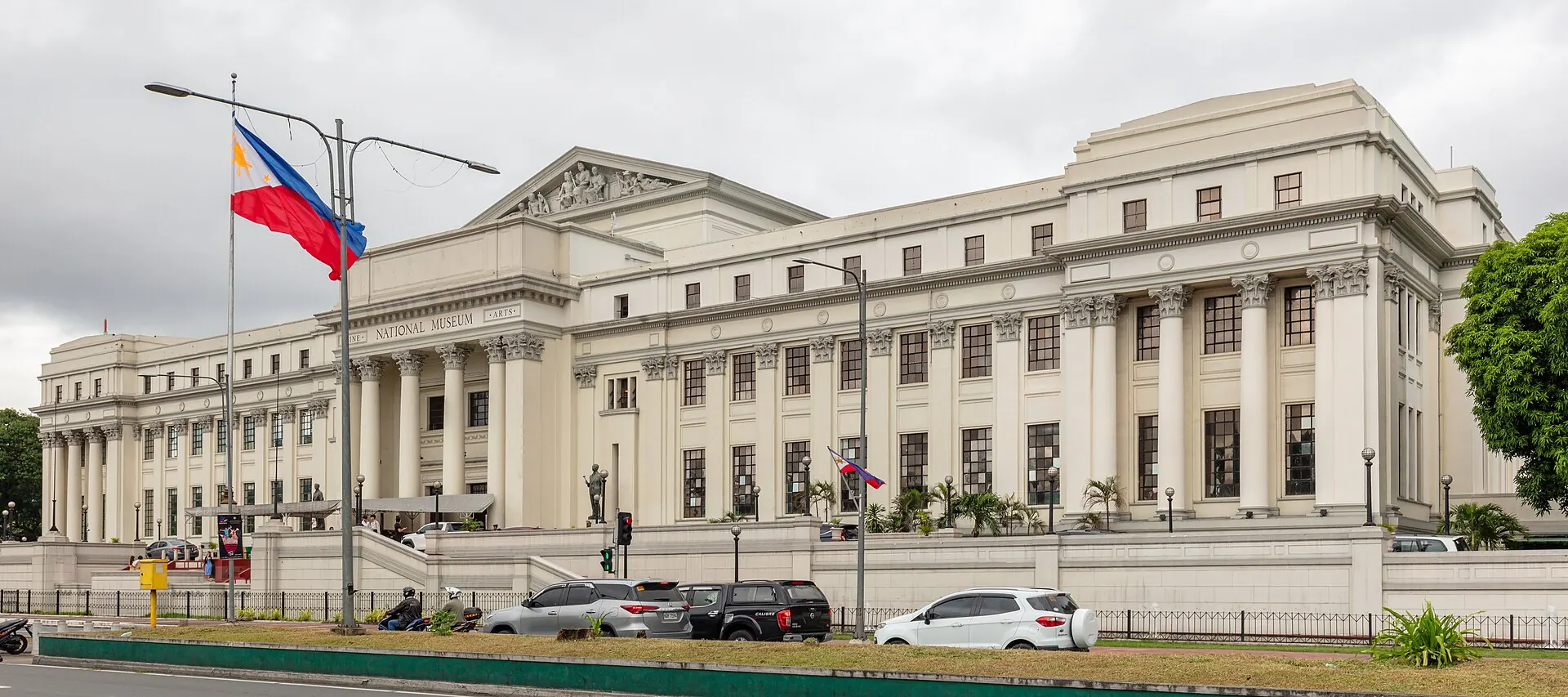 National Museum of Fine Arts · 1–1.5 h
- 5Binondo food walk and dumplings · 2–3 h
Fits
- History and food trips
- Short gateway stays before the islands
- Early risers who can be indoors by 11:00Early risers who can be indoors by 11:00 AM
Does not fit
- Strollers and wheelchairs (pavements)
- Travellers who dislike heat and traffic
- Midday walkers in April and May
How long
- 2 daysIntramuros morning + Rizal Park; Binondo evening
- 3 daysFour clusters, mornings and evenings, two transfers a day at most
- 5 daysFour clusters + Tagaytay or Corregidor day trip + one slow day
Good for
- First timers
- Foodies
- History readers
- Families
- Wheelchair users
- Budget
About Manila
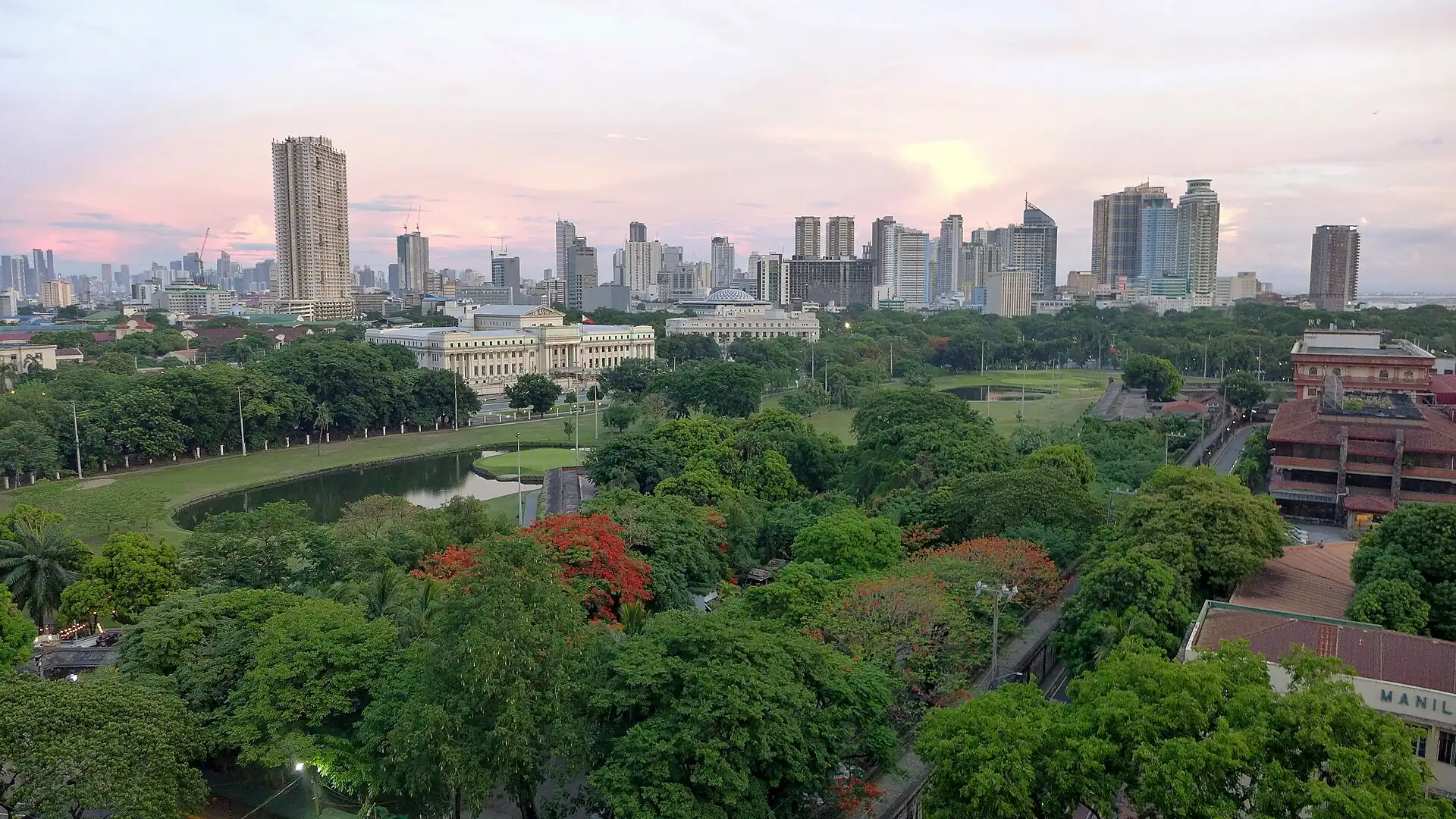
Manila is the old city on the east shore of Manila Bay, at the mouth of the Pasig river. It is one of sixteen cities in Metro Manila, and most visitors stay in Manila proper (Ermita, Malate, Intramuros) or in Makati, the business district ten kilometres south-east.
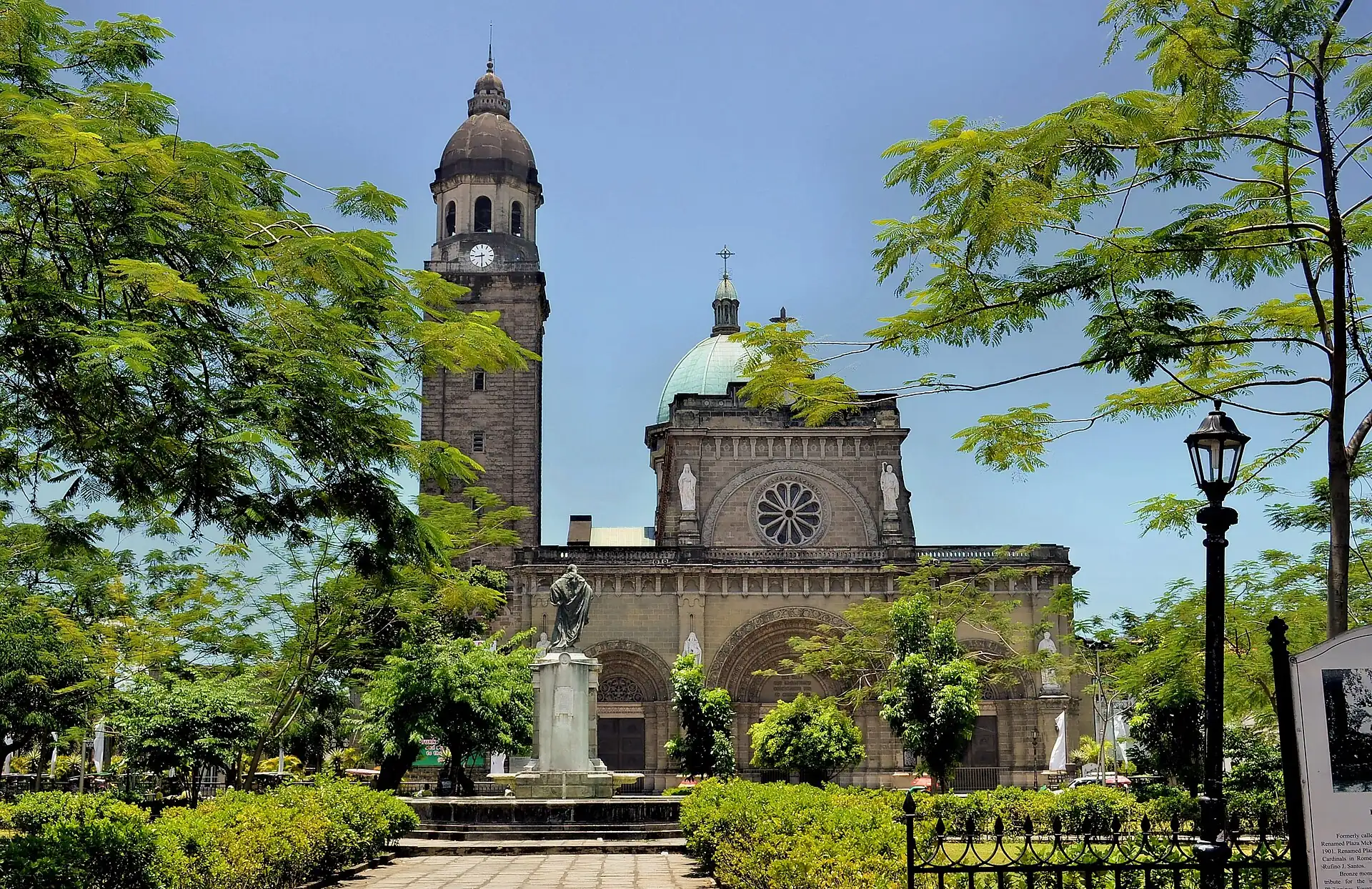
The Spanish founded the walled city of Intramuros in 1571 and ruled from it for over three centuries. The Americans took over in 1898 and planned the park and boulevards of Luneta and Roxas Boulevard; in 1945 the Battle of Manila destroyed most of Intramuros and much of the old centre. What survives is patchy: one stone church, a rebuilt cathedral, fort walls and a few colonial streets.
Good to know
- Manila is the city; Metro Manila is the region of sixteen cities including Makati, Pasay and Quezon City. Intramuros is the walled old city inside Manila.
- Department of Tourism office on T.M. Kalaw Street, Ermita (near Rizal Park; check hours).
- Intramuros Administration visitor centre at Fort Santiago and near the cathedral (check).
Go deeper 10 min read · 6 chapters
Manila is a city that was rebuilt out of ruins more than once, and it wears the layers openly: a Spanish walled city beside American boulevards, a Chinese trading quarter across the river, and a modern business centre ten kilometres away. This deep dive reads Manila layer by layer, so that a morning in Intramuros and an evening in Makati become two chapters of one story rather than two unrelated trips.
1History2 min
Before the Spanish arrived, the mouth of the Pasig river held a trading settlement usually written as Maynila, from a Tagalog phrase for a place where the nila plant grows. It sat on a sheltered bay with river access to Laguna de Bay and the rice country behind, which is the same geography that still makes it useful. Chinese, Malay and other traders visited long before 1571.
In 1571 Miguel López de Legazpi took Maynila for Spain and founded the walled city of Intramuros beside it. For over three centuries it was the capital of the Spanish East Indies and the western end of the Manila galleon trade, which carried Chinese silk and porcelain to Acapulco in return for Mexican silver. The city was Spanish in law and religion but Chinese in commerce, which is why Binondo across the river, founded in the 1590s as a settlement for Chinese Catholic converts, is often called the oldest Chinatown in the world.
The British occupied the city from 1762 to 1764 during the Seven Years War and then returned it to Spain. In the nineteenth century the port opened to world trade, a Filipino educated class grew, and it produced José Rizal, a doctor and novelist whose books criticised colonial rule. Rizal was held in Fort Santiago and executed by firing squad on 30 December 1896 at Bagumbayan, now Luneta. The Philippine revolution had already begun, and independence was declared in June 1898, shortly before Spain handed the islands to the United States.
American planners then reshaped the city. Daniel Burnham drew up a plan in 1905 with a bayfront boulevard and a park at Luneta, and government buildings in neoclassical style rose along it. The Japanese occupied Manila in 1942. In February 1945 the Battle of Manila, fought street by street as American and Filipino forces retook the city, killed well over a hundred thousand civilians and destroyed most of Intramuros and much of the old centre. Little of pre-war Manila survived; what did is easy to count.
After the war the city grew outward: Makati became the business district in the 1960s, then Bonifacio Global City after 1995. The 1986 People Power revolution on EDSA ended the Marcos government. Today Metro Manila has over thirteen million people (2020 census, check) and Manila proper is one of sixteen cities in it.
- Founded as a Spanish city
- 1571 (Intramuros)
- Rizal executed
- 30 December 1896, Luneta
- Battle of Manila
- February to March 1945
- Metro Manila cities
- Sixteen cities and one municipality
2Neighbourhoods2 min
Manila is not one centre but several, and each has a job. Intramuros is the walled old city: cobbled lanes, a fort, a cathedral and a few restored houses inside walls that once held the whole Spanish town. Most of it was rebuilt or left empty after 1945, so it is a sightseeing quarter rather than a place where many people live.
To the south along the bay, Ermita and Malate were the old tourist belt: hotels, cafés, embassies and bars along Roxas Boulevard and Mabini Street. Rizal Park (Luneta) sits at their northern end, with the national monument, lawns and three National Museum branches. It is the city's main public space and it is busiest on Sunday afternoons.
Across the Pasig, Binondo is the food quarter. Narrow lanes around Ongpin Street and Binondo Church hold shops for hopia and tikoy, dumpling houses, herbal sellers and gold dealers. Santa Cruz, Quiapo and Divisoria run on from it and are crowded market districts where the pace is fast and pickpockets are common. Quiapo Church is the home of the Black Nazarene and one of the country's main pilgrimage sites.
To the south-east, Makati is the financial district: glass towers, malls, gardens and expensive restaurants, connected by air-conditioned walkways. Nearby Poblacion is the bar quarter, and Bonifacio Global City in Taguig is newer, with a walkable grid, modern hotels and rooftop bars. Quezon City in the north-east is a huge residential and university district with its own food and arts scene at Cubao.
The practical lesson is that Manila is easier if you sleep in the box you plan to see. The two boxes, the old city and Makati, are only about ten kilometres apart but can be an hour or two apart on a bad afternoon. Travellers who mix them in one day usually spend the difference in traffic.
- Old city to Makati
- About 10 km (6.2 mi); 30–90 min by carAbout 6.2 mi (10 km); 30–90 min by car
- Rizal Park size
- About 58 hectares
- Binondo
- Often called the oldest Chinatown in the world
3Architecture2 min
Manila's architecture is a record of what survived. The oldest stone building of any size is San Agustin Church, completed in 1607, with thick buttressed walls that suit an earthquake zone and a painted ceiling that imitates carved coffers. It belongs to the UNESCO listing for the Baroque Churches of the Philippines because it came through the 1945 battle when nearly everything else around it did not.
Fort Santiago and the Intramuros walls are the other Spanish survivals: massive stone and rubble walls, bastions with names of saints, and a few gates. Most of Intramuros was rebuilt from 1979 onward under a restoration authority, so some houses and gates you see are reconstructions of the original plans. This is worth knowing when you compare it with cities that kept their old centre intact.
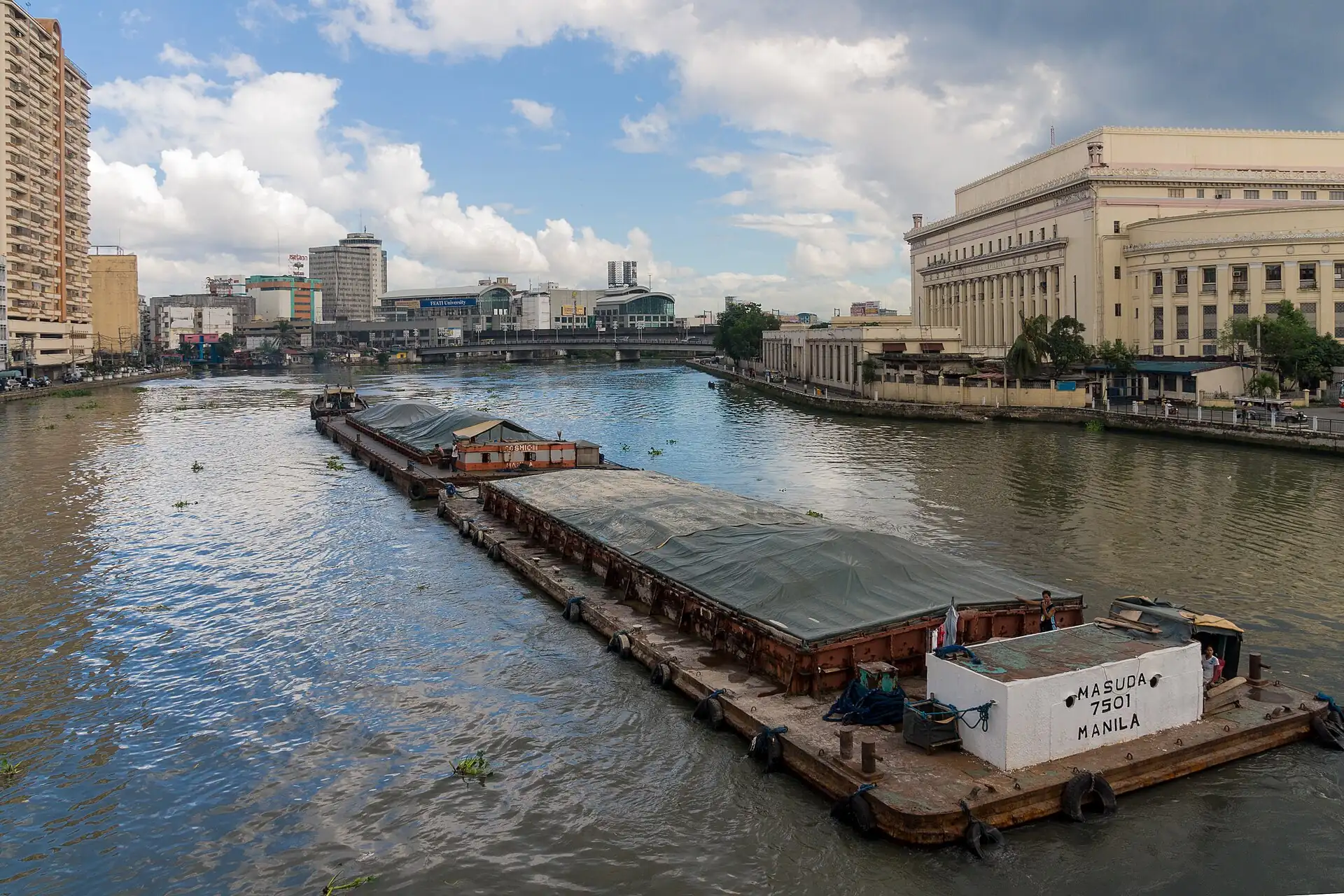
The American period gave the city its neoclassical public buildings: the Legislative Building (now the National Museum of Fine Arts), the Post Office and the Finance Building beside the Pasig. They use white stone, columns and formal symmetry, and they mark the Burnham plan's axis from the bay. The nearby Manila Hotel, opened in 1912 and still operating, is the best example of the era's grand hotels.
Filipino houses have their own tradition. The bahay na bato ("house of stone") combines a stone lower floor with a timber upper floor, capiz-shell windows and long sliding shutters, designed for heat and earthquakes. Casa Manila in Intramuros is a reconstruction of one. You will also see the barong Tagalog, the sheer embroidered shirt, in shop windows, and the jeepney, an army-jeep bus decorated in bright colours, on almost every street.
After the war Manila built for growth, not beauty. Makati's towers, Bonifacio Global City's glass and the malls that anchor each district follow the rhythm of heat and traffic: air conditioning, covered walkways and everything under one roof. A visitor who wants to understand the modern city should spend an afternoon in a mall, and treat it as architecture rather than an escape from it.
- San Agustin Church
- Completed 1607; UNESCO listing 1993
- Intramuros restoration
- From 1979 (check dates)
- Manila Hotel
- Opened 1912
4Food2 min
Filipino food is built on sour, salty and sweet together. Vinegar, soy sauce, garlic and pepper make adobo, the dish most people call national; tamarind makes sinigang, a sour soup; peanuts thicken kare-kare; and calamansi, a small sour lime, goes on almost everything. Rice comes with every meal, and dishes are shared. Spanish, Chinese, Malay and American influences all show: lechon and paella from Spain, pancit and lumpia from China, and sweet spaghetti and hot dogs from the American years.
Binondo is the best place to see the Chinese layer. Dumpling houses serve northern-style dumplings and noodles; small counters sell siopao (steamed buns), lugaw (rice porridge) and pancit; and shops sell hopia, a flaky pastry with mung bean or ube filling, and tikoy, a sticky rice cake made for the New Year. Eat here from mid-morning, when the lanes are open and the food is fresh.
For Filipino home cooking, look for a carinderia: a small eatery with pots of prepared dishes, where you point and pay by portion for a plate of rice and one or two dishes. It is cheap, fast and usually good. In malls and restaurants, heritage restaurants such as those in Intramuros serve kare-kare, sinigang and lechon in seated, air-conditioned rooms for a higher price.
Breakfast is often a silog: garlic fried rice with an egg and a meat such as tapa (cured beef) or longganisa (sweet sausage). Snacks include taho (a warm soft tofu with syrup sold in the morning), fishballs and kwek-kwek (fried quail eggs) from street carts, and halo-halo, a shaved-ice dessert with sweet beans, fruit and milk that is the standard answer to the heat.
Drinks are cheap and strong. San Miguel and Red Horse are the local beers, Ginebra is the gin, and Tanduay the rum; calamansi juice and buko (young coconut) juice are the cool non-alcohol choices. Street food is safe if it is hot and busy; drink bottled water and skip ice from street stalls.
- National dish
- Adobo (vinegar, soy, garlic, pepper)
- Sour soup
- Sinigang (tamarind)
- Cheap eat
- Silog breakfast: about ₱100–200 (2026 estimate)
5Festivals and the year2 min
The Philippines has one of the longest Christmas seasons in the world. The "ber months" (September to December) bring lights and carols to malls, and from 16 December the Simbang Gabi dawn Masses begin. Christmas Eve is the main family meal, and traffic in Manila is at its worst in the fortnight before. If you come in December, plan around the weather and the queues.
Holy Week is the other great pause. On Maundy Thursday and Good Friday many restaurants, shops and sights close, the roads empty as people go to the provinces, and processions and penitential rites take place. Some travellers find the quiet pleasant; others find that half the city is shut. Check the date each year, since it moves with Easter.
The Feast of the Black Nazarene on 9 January draws millions to Quiapo for a procession of a dark wooden image of Christ, carried through the streets by barefoot devotees. It is one of the biggest religious gatherings in the country and it closes roads across the old city for the day. Visit Quiapo Church on another day if you want to see it without the crowd.
Chinese New Year is celebrated in Binondo with lion and dragon dances, firecrackers, red decorations and food stalls, and it is one of the best days to be in the district. Independence Day on 12 June and Rizal Day on 30 December bring wreath-laying and parades to Rizal Park, and All Saints' Day on 1 November sends families to the cemeteries with food and candles.
The rainy season, June to October, is not a festival but it sets the calendar: storms and typhoons can close sights, flood streets and cancel flights, so a flexible plan matters more than a fixed one. Around the city, the Giant Lantern Festival in San Fernando (Pampanga) in December is a popular day trip if you are in town then.
- Black Nazarene
- 9 January, Quiapo
- Independence Day
- 12 June
- Rizal Day
- 30 December
- Simbang Gabi
- From 16 December
6Daily life2 min
Daily life in Manila is organised by heat, traffic and floods. People leave early to avoid the worst of the commute, eat lunch late, and use malls as public space because they are cool, safe and close to transit. A visitor who copies this rhythm, with outdoor sights early and indoor ones at midday, will have an easier trip than one who tries to see everything between 10:00 and 15:00.
The jeepney is the everyday vehicle: a long open-backed bus with two benches, a fixed route painted on the side and a fare passed hand to hand toward the driver. The LRT and MRT carry the big commuter flows but are crowded at peak. Tricycles and pedicabs handle short hops in districts, and Grab has become the default for many people. Cars dominate, and the city has a number-coding scheme that bans private cars on certain days by plate number.
Filipinos are known for hospitality and a soft, indirect style. "Po" and "opo" are used with elders and officials, a smile is the normal answer to a request, and open anger is bad manners. English is widely spoken and Taglish, a mix of English and Tagalog, is used everywhere; a few words of Filipino, like salamat (thank you), are well received.
Family and faith organise the week. Sunday is for Mass and long family lunches, especially in malls and restaurants, and religious images appear in homes, jeepneys and shops. Remittances from Filipinos abroad support many households, and overseas work is a central fact of national life, which is why airports fill with families at Christmas.
For a visitor, the most useful habits are small ones: carry small notes, keep phones out of hand near roads, book rides by app, avoid walking through floodwater, and treat the mall as a place to rest. Manila does not always make itself easy, but it repays a plan and an early start.
- Main languages
- Filipino and English; Taglish is common
- Emergency number
- 911
- Currency
- Philippine peso (PHP, ₱)
Read, watch, wordsReading · Watching · Glossary · Sources
Reading
- Noli Me Tángere — José RizalThe 1887 novel that helped start the revolution; set in colonial Manila.
- Manila, My Manila — Nick JoaquinA history and portrait of the city by one of its best-known writers.
- Dogeaters — Jessica HagedornA 1990 novel of Manila in the Marcos years, told in many voices.
Watching
- Manila in the Claws of Light (Maynila: Sa mga Kuko ng Liwanag) — Lino Brocka, 1975A classic film of Manila's working-class streets.
- Manila by Night (City After Dark) — Ishmael Bernal, 1980A film of the city's night life and its edges (mature themes).
Glossary
| Term | Local | Meaning |
|---|---|---|
| Intramuros | Intramuros | The walled Spanish city, literally "within the walls". |
| Jeepney | jeepney | A decorated bus built on an army-jeep body; the everyday vehicle. |
| Carinderia | carinderia | A small eatery with prepared dishes on display. |
| Po / opo | po / opo | Polite words used with elders and officials. |
| Sari-sari store | sari-sari | A small neighbourhood shop selling snacks and drinks. |
| Barangay | barangay | The smallest administrative unit; part of every address. |
| Halo-halo | halo-halo | A shaved-ice dessert; the word means "mix-mix". |
Read for this deep dive
- Wikipedia — Manila ↗
- Wikipedia — Intramuros ↗
- Wikipedia — Battle of Manila (1945) ↗
- UNESCO — Baroque Churches of the Philippines ↗
Background reading only: the text above is written by Voykit, not copied from these pages.
Photos
Manila temple Photo: Judgefloro, CC0
Manila street scene Photo: Judgefloro, CC0
Rules in force · 6Drug trafficking can carry the death penalty in Singapore…
- Southeast Asia ↗Drug trafficking can carry the death penalty in Singapore, Malaysia, Indonesia, Vietnam, Laos, Thailand, Brunei and Myanmar; never carry a bag or parcel for anyone.
- Southeast Asia ↗Carry a passport valid for at least six months from entry with two blank pages; airlines refuse boarding on less.
- Philippines ↗Complete the free eTravel registration on the official government site within 72 hours before arrival; ignore lookalike sites that charge.
- Philippines ↗Typhoon season runs roughly June to November: flights and boats are cancelled at short notice; buy flexible tickets and keep a spare day.
- Philippines ↗Carry pesos in small notes; many stalls, jeepneys and taxis are cash-only.
- Metro Manila ↗Rush hours are 07:00–10:00 and 16:30–20:30 on weekdays; a 10 km ride can take 90 minutes. Book flights and transfers outside them.
Entry rules depend on your passport. Full visa guide
Emergency numbers for Manila911 ▾
Tap a number to call from your phone. These are the numbers listed in this guide; a row marked check has not been verified.
Planning is the full guide. I'm here keeps what is open and the cheat card.
Right now
Checking the weather…
Working out what is open near you…
What is open nowclock, closures, places open
Now in Manila
Local time in Manila
--:--
Loads in your browser · Asia/Manila
This month
Month verdict appears here.
Closed today
See the weekly grid below.
| Weekly closure | Mon | Tue | Wed | Thu | Fri | Sat | Sun |
|---|---|---|---|---|---|---|---|
| National Museum branchescheckMost close on Monday; check the official site. | ✕ | · | · | · | · | · | · |
If today is a closure day: Monday: many National Museum branches are shut, so walk Rizal Park and Intramuros and move the museum to Tuesday. Holy Week (March or April) closes a lot of sights and roads; check the date.
- check Intramuros sights: Fort Santiago and museums keep their own hours; check.
- check Malls: Open daily; Holy Week hours vary.
Weekly closures come from our place pages; typhoon days, Holy Week and national holidays add closures not shown here.
Cheat cardthe pocket version
Cheat card
The essentials on one card: save it as an image for your phone, share it, or print it.
Manila
Maynila
- Money
- Keep ₱1,000 in small notes; withdraw at ATMs inside malls or banks, not on the street…
- SIM
- Install an eSIM before you fly, or buy a Globe, Smart or DITO SIM at NAIA arrivals or a mall (passport needed…
- Ride app
- Grab · inDrive and Move It
- Emergency
- 911 emergency (police, fire, ambulance) · 1342 Tourist hotline (check)
- Plugs
- Sockets A/B. US/Canada (A/B): fits · UK/Ireland (G): adapter · Australia/NZ (I): adapter. 220 V: US 120 V-only devices (hair dryers) need a converter; most chargers are dual-voltage.
Top 5
- Fort Santiago at opening
- San Agustin Church and museum
- Rizal Park and the monument
- National Museum of Fine Arts
- Binondo food walk and dumplings
EssentialsQuick answers, what things cost and how to get around
Essentials
Quick answers, what things cost and how to get around
Quick answers
The questions people ask first about Manila, one line each. Tap a card for the full answer.
- Cash or card?Cash for jeepneys, markets, street counters and small eateries; cards in hotels, malls and many restaurants; ride-hailing apps take cards in-app.
- SIM or eSIMcheckInstall an eSIM before you fly, or buy a Globe, Smart or DITO SIM at NAIA arrivals or a mall (passport needed; registration required, check).
- Ride-hailing appGrab · inDrive and Move It.
- Tap waterDo not drink tap water; use bottled or filtered water.
- TippingNot fixed.
- Plugs & powerSockets A/B. US/Canada (A/B): fits · UK/Ireland (G): adapter · Australia/NZ (I): adapter. 220 V: US 120 V-only devices (hair dryers) need a converter; most chargers are dual-voltage.
Show all 14 answers
- Safe at night?Take more care after dark in Rizal Park and museums, Ermita and Malate, Quiapo and Divisoria and more.
- What to wearShoulders and knees covered; no photos during Mass; quiet in the pews.
- Emergency numberscheck911 emergency (police, fire, ambulance) · 1342 Tourist hotline (check)
- Your embassycheckUS, UK, Australia, Canada embassies listed with addresses (check before you go).
- Closed which day?Mon: 1 on our list shut.
- Sundays & holidaysWeekly closures come from our place pages; typhoon days, Holy Week and national holidays add closures not shown here.
- Rainy-day planStorms usually break in the afternoon (Jun–Oct): do the outdoor sight before 11:00, then go indoors.Storms usually break in the afternoon (Jun–Oct): do the outdoor sight before 11:00 AM, then go indoors.
- Landing lateMNL: ride-hailing car or airport taxi to the door runs all night.
Cost cheat-sheetwhat everyday things cost
Cost cheat-sheet
Typical prices for the everyday things, as ranges. Change the currency right here; the local price stays first.
2026 desk estimate · check
- CoffeeCoffee (café latte in a chain)₱120–200 (≈ US$3–4)
- Sit-down mealSit-down restaurant meal₱400–1,000 (≈ US$8–18)
- Street or quick mealStreet meal (silog or pancit plate)₱80–200 (≈ US$2–4)
- Beerbottle at a store / bar₱50–70 (≈ US$1–2)₱90–150 (≈ US$2–3)
- Taxi, about 5 km (3 mi)Taxi, about 3 mi (5 km)5 km (3.1 mi) ride-hail: car3.1 mi (5 km) ride-hail: carRain and rush hour push fares up.₱150–300 (≈ US$3–6)
- Metro or bus rideLRT or MRT ride₱15–35 (≈ under US$1)
- Museum or sight ticketAyala Museum ticket₱650–800 (≈ US$12–15) (check)
- Budget bedHostel dorm bed, a night, per person₱500 (≈ US$9)
- Mid-range bedHotel double room, a night, per room₱4,500 (≈ US$80)
- High-end bedHotel double room, a night, per room₱12,000 (≈ US$250)
A day, not counting the bed: Budget ₱1,800 (≈ US$35) · Mid ₱4,000 (≈ US$75) · High ₱9,000 (≈ US$160)
Local prices, with USD next to them (rates 2026-09 (approximate); change it in the header). Ranges are desk estimates: check locally. Every price and the budget calculator →
Source: Prices in Manila
Draft
Written from desk research. Not yet compared with the official source.
No official source is recorded for this figure.
Prices are 2026 desk estimates, not yet compared with an official source. Check on the day.
Not checked in the last 12 months (no check date on file).
DecideWho it suits, the trade-offs and when to go
Decide
Who it suits, the trade-offs and when to go
Best months at a glance
The guide's verdict for each month
Jan
Best
30°C (86°F)86°F (30°C)
Feb
Best
31°C (88°F)88°F (31°C)
Mar
Best
33°C (91°F)91°F (33°C)
Apr
Care
35°C (95°F)95°F (35°C)
May
Care
34°C (93°F)93°F (34°C)
Jun
Avoid
32°C (90°F)90°F (32°C)
Jul
Avoid
31°C (88°F)88°F (31°C)
Aug
Avoid
30°C (86°F)86°F (30°C)
Sep
Avoid
31°C (88°F)88°F (31°C)
Oct
Care
31°C (88°F)88°F (31°C)
Nov
Care
31°C (88°F)88°F (31°C)
Dec
Best
30°C (86°F)86°F (30°C)
Best: Dec–Mar. Mixed: Apr–May, Oct–Nov. Avoid: Jun–Sep. Month by month →
Warmest Apr (35°C (95°F)95°F (35°C)), coolest Jan (22°C (72°F)72°F (22°C) low), wettest Aug (23 rain days), driest Feb (2). Averages, not a forecast.
Manila across the year
Best-looking months for Manila: Jan, Feb, Mar. Rated avoid: Jun, Jul, Aug, Sep.
| Measure | Jan | Feb | Mar | Apr | May | Jun | Jul | Aug | Sep | Oct | Nov | Dec |
|---|---|---|---|---|---|---|---|---|---|---|---|---|
| Weather | Great (good) | Great (good) | Great (good) | Mixed (care) | Mixed (care) | Avoid (avoid) | Avoid (avoid) | Avoid (avoid) | Avoid (avoid) | Mixed (care) | Mixed (care) | Great (good) |
| Crowds | High (care) | Medium (ok) | Medium (ok) | High (care) | Medium (ok) | Low (good) | Low (good) | Low (good) | Low (good) | Low (good) | Medium (ok) | High (care) |
| Prices | High (care) | Medium (ok) | Medium (ok) | High (care) | Medium (ok) | Low (good) | Low (good) | Low (good) | Low (good) | Low (good) | Medium (ok) | High (care) |
| Events | 3 events (care) | 1 event (ok) | 1 event (ok) | 1 event (ok) | 1 event (ok) | 2 events (ok) | None listed (ok) | None listed (ok) | None listed (ok) | None listed (ok) | 2 events (ok) | 3 events (ok) |
Green is good news, amber needs planning, red is a month to avoid; dashed grey with a question mark means our data does not say. Open the year heatmap →
Not checked in the last 12 months (no check date on file).
Source: Months, temperatures and crowds
Draft
Written from desk research. Not yet compared with the official source.
Monthly highs, rain and crowd levels are climate averages and desk estimates for the city, not a forecast.
Understand the cityUnderstand · Districts
Orientation & districts
A first visit sits in two boxes about 10 km apart: the old city (Intramuros, Rizal Park, Ermita, Malate, Binondo) around Manila Bay and the Pasig river, and the Makati and Bonifacio business districts to the south-east. EDSA and Roxas Boulevard link them, and both jam from 06:30 to 09:30 and from 16:30 to 20:30.
Metro Manila is a region of sixteen cities plus Pateros; a ride from Manila to Makati crosses a city boundary. Address forms use barangay and city; ride-hailing apps handle the names.
Shaded shapes: walking areas (click one). Black pins: sleep areas. Grey dots: places. Round badges: arrivals. Click the map to turn on scroll-wheel zoom.
Hover, tap or tab to an area to see what it is like. Pins are sleep areas; arrows at the edge point to the airport.
Not drawn yet (no coordinates in this guide): Quiapo and Divisoria, Poblacion (Makati), Bonifacio Global City (BGC), Pasay and Mall of Asia, Quezon City. They are in the neighbourhood cards below.
Where’s what, as a list:
- Intramuros (Intramuros): Walled city; sightseeing by day, few beds. Hot and shadeless after 10:00.Walled city; sightseeing by day, few beds. Hot and shadeless after 10:00 AM. Suits: A first-morning walk: fort, churches, cobbled lanes.
- Ermita and Malate (Ermita at Malate): Old tourist belt; noisy after dark and rough in places at night. Take a car after dark. Suits: A base with hotels, cafés and Rizal Park close by. Price band $$.
- Rizal Park and museums (Luneta): A 58-hectare park with the national monuments and three National Museum branches. Suits: Morning walk, museums, families.
- Binondo and Santa Cruz (Binondo): The oldest Chinatown; a half-day by car, not a place to sleep with bags. Suits: Food, markets, church, Chinese shops.
- Quiapo and Divisoria (Quiapo at Divisoria): Very crowded; pickpockets are the risk. Go with a plan and a local guide if new. Suits: Church, street markets, bargain shopping.
- Makati: Ayala and Greenbelt (Makati): Level pavements, air-conditioned malls and gardens. Ten km from Rizal Park. Suits: Business travellers, restaurants, malls, a calmer base. Price band $$$.
- Poblacion (Makati) (Poblacion): Dense bar lanes; take a car in and out. Noisy at night. Suits: Bars and late dinners.
- Bonifacio Global City (BGC) (BGC): Part of Taguig; newer and quieter than Makati; far from the old city. Suits: Modern hotels, restaurants, a walkable grid.
- Pasay and Mall of Asia (Pasay): The airport area, then Mall of Asia on the bay; a sunset stop, not a base. Suits: Airport, bay sunsets, big mall.
- Quezon City (Lungsod Quezon): Far north-east; use a car or MRT-3 and expect long rides. Suits: Cubao Expo, Tomas Morato dining, the university.
- Sleep area Ermita & Malate: suits A base with hotels, cafés and Rizal Park close by, price band $$.
- Sleep area Makati: Ayala & Greenbelt: suits Business travellers, restaurants, malls, a calmer base, price band $$$.
- Ninoy Aquino International Airport (MNL), about 10 km (6.2 mi)6.2 mi (10 km) from the centre, 55–100 min by the usual route.
Neighbourhoods at a glance
One tab per area, pulled together from this guide’s districts table, area notes, sleep-area scores and place pages. Scores are desk judgements (1–5); prices are estimates, check before you book.
Intramuros
Intramuros
Walled city; sightseeing by day, few beds. Hot and shadeless after 10:00.Walled city; sightseeing by day, few beds. Hot and shadeless after 10:00 AM.
- Suits:
- A first-morning walk: fort, churches, cobbled lanes
- Best time:
- Early morning
Pick this if: History, first mornings
Watch out for: Midday walks in April and May.
Getting around from here
- Car or LRT south-east: about 15 min to Rizal Park & National Museums
- Car across the river: about 20 min to Binondo (Chinatown)
- MNL: about 11 km (6.8 mi) in a straight line (arrival ride 55–100 min)MNL: about 6.8 mi (11 km) in a straight line (arrival ride 55–100 min)
Ermita and Malate
$$Ermita at Malate
Old tourist belt; noisy after dark and rough in places at night. Take a car after dark.
- Suits:
- A base with hotels, cafés and Rizal Park close by
- Best time:
- Dawn and dusk
- Rooms:
- ₱500–1,000 dorm bed · ₱1,500–2,500 double (from the sleep guide)
Pick this if: Walkers, museum fans
Watch out for: Midday; Sunday crowds.
- Quiet nights2/5 Low
- Nightlife4/5 High
- Families3/5 Medium
- Late arrival3/5 Medium
Why these scores
- Quiet nights: Roxas Boulevard traffic and Malate nightlife; ask for an upper floor at the back.
- Nightlife: Remedios Circle and Malate bars are close.
- Families: Busy roads and rough pavements; choose a hotel with a pool.
- Late arrival: Hotels with 24-hour desks are common; take a car after dark.
Getting around from here
- 30–40 min walk to Intramuros
- Car north: about 20 min to Binondo (Chinatown)
- MNL: about 9 km (5.6 mi) in a straight line (arrival ride 55–100 min)MNL: about 5.6 mi (9 km) in a straight line (arrival ride 55–100 min)
Rizal Park and museums
Luneta
A 58-hectare park with the national monuments and three National Museum branches.
- Suits:
- Morning walk, museums, families
- Best time:
- Dawn and dusk
Pick this if: Walkers, museum fans
Watch out for: Midday; Sunday crowds.
Getting around from here
- Car or LRT north-west: about 15 min to Intramuros
- Car north: about 20 min to Binondo (Chinatown)
- MNL: about 9 km (5.6 mi) in a straight line (arrival ride 55–100 min)MNL: about 5.6 mi (9 km) in a straight line (arrival ride 55–100 min)
Binondo and Santa Cruz
Binondo
The oldest Chinatown; a half-day by car, not a place to sleep with bags.
- Suits:
- Food, markets, church, Chinese shops
- Best time:
- 10:00–13:0010:00 AM–1:00 PM
Pick this if: Food, markets
Watch out for: Bags and strollers.
Getting around from here
- Car south-west: about 20 min to Intramuros
- Car south: about 20 min to Rizal Park & National Museums
Quiapo and Divisoria
Quiapo at Divisoria
Very crowded; pickpockets are the risk. Go with a plan and a local guide if new.
- Suits:
- Church, street markets, bargain shopping
Makati: Ayala and Greenbelt
$$$Makati
Level pavements, air-conditioned malls and gardens. Ten km from Rizal Park.
- Suits:
- Business travellers, restaurants, malls, a calmer base
- Best time:
- Any time
- Rooms:
- ₱7,000–20,000+ (from the sleep guide)
Pick this if: Late arrivals, business, families
Watch out for: Traffic at 17:00–20:00.
- Quiet nights4/5 High
- Nightlife4/5 High
- Families4/5 High
- Late arrival5/5 Very high
Why these scores
- Quiet nights: Calm business streets at night; Poblacion is noisy but separate.
- Nightlife: Poblacion bars are a short car ride away.
- Families: Malls, gardens and good hospitals nearby.
- Late arrival: The best area for a late arrival: 24-hour desks and safe streets.
Getting around from here
- 90–120 min walk to Intramuros
- Car north: about 40 min to Rizal Park & National Museums
- MNL: about 5 km (3.1 mi) in a straight line (arrival ride 55–100 min)MNL: about 3.1 mi (5 km) in a straight line (arrival ride 55–100 min)
Poblacion (Makati)
Poblacion
Dense bar lanes; take a car in and out. Noisy at night.
- Suits:
- Bars and late dinners
- Best time:
- After 21:00After 9:00 PM
Pick this if: Night owls
Watch out for: Early mornings; noise.
Bonifacio Global City (BGC)
BGC
Part of Taguig; newer and quieter than Makati; far from the old city.
- Suits:
- Modern hotels, restaurants, a walkable grid
Pasay and Mall of Asia
Pasay
The airport area, then Mall of Asia on the bay; a sunset stop, not a base.
- Suits:
- Airport, bay sunsets, big mall
Quezon City
Lungsod Quezon
Far north-east; use a car or MRT-3 and expect long rides.
- Suits:
- Cubao Expo, Tomas Morato dining, the university
Ward by ward
8 area guides. Open one for the short answer, the key facts and what the area is like; the full guide is linked inside. Prices marked (check) are estimates.
BinondoBest for: Food crawls, Chinese-Filipino history, temples, cheap eats
Stay in Binondo only if you want the oldest Chinatown in the world on foot — food crawls, temples and Ongpin Street — and you accept narrow, traffic-heavy streets and few international-standard hotels. Base elsewhere (Makati, Ermita) and visit Binondo as a half-day, ideally 8am–2pm or after dark.
- Best for:
- Food crawls, Chinese-Filipino history, temples, cheap eats
- Not for:
- Quiet nights, resort-style hotels, easy driving or parking
- Walkable core:
- Ongpin, Carvajal and Escolta streets, roughly 1.5 km (0.9 mi) end to endOngpin, Carvajal and Escolta streets, roughly 0.9 mi (1.5 km) end to end
- Getting there:
- LRT-1 to Carriedo, then a 5–10 minute walk west
- Best hours:
- Morning to early afternoon; streets are congested and hot at midday
- Hotel base:
- Few international brands in Binondo; most travellers sleep in Ermita, Malate or Makati (check)
- Cash:
- Carry pesos; many small eateries and market stalls take cash only (check)
What Binondo is like
Binondo is the Chinatown of Manila and, by most accounts, the oldest Chinatown in the world, founded in 1584 by the Spanish as a settlement for Chinese immigrants. It sits just north of the Pasig River, across Jones Bridge from Intramuros, and today it is a dense grid of narrow streets: Ongpin for restaurants, groceries and herbal shops, Carvajal for market stalls, Escolta for pre-war art deco facades that once held the city's luxury shops.
The district is the birthplace of the Chinese mestizo community in the Philippines, and that mix shows in the food — Chinese technique with Filipino ingredients. It is busy, loud and largely low-rise, with a mix of old shophouses, temples, banks and a large mall (Lucky Chinatown) on its northern edge. Expect heat, uneven pavements and heavy traffic on Claro M. Recto Avenue.
It is a working district, not a tourist quarter. That is the appeal: you are walking through a place people live and trade in, not a staged version of it.
Full Binondo guideGetting there and around
The simplest way in is LRT-1 to Carriedo station, then a 5–10 minute walk west into the district. This avoids the worst of the traffic and is the option most visitors use. Taxis and ride-hailing apps also work, but budget extra time on Claro M. Recto Avenue and Jones Bridge at peak hours.
Once inside, the core is walkable: Binondo Church and Plaza San Lorenzo Ruiz, Ongpin Street, Carvajal Street and Escolta Street are all within about 1.5 km (0.9 mi). Jeepneys run along the main avenues, and calesas (horse-drawn carriages) still operate in the district if you want a short ride — agree the fare before you get in.Once inside, the core is walkable: Binondo Church and Plaza San Lorenzo Ruiz, Ongpin Street, Carvajal Street and Escolta Street are all within about 0.9 mi (1.5 km). Jeepneys run along the main avenues, and calesas (horse-drawn carriages) still operate in the district if you want a short ride — agree the fare before you get in.
A Pasig River ferry stop at Escolta has served the area in the past; check whether it is running before you plan around it.
ErmitaBest for: Museums, Rizal Park, Intramuros access, first-trip sightseeing base
Stay in Ermita if you want Manila's museums, Rizal Park and Intramuros within a 15–25 minute walk and three LRT-1 stations on your doorstep. Skip it if you want nightlife or a quiet street: traffic on Roxas Boulevard and Taft Avenue runs late. Book only if your hotel is on a side street.
- Best for:
- Museums, Rizal Park, Intramuros access, first-trip sightseeing base
- Not for:
- Nightlife, quiet evenings, resort-style stays
- Walk to Intramuros:
- About 20–30 minutes from the eastern edge; more in midday heat (check)
- LRT-1 stations:
- Pedro Gil, United Nations, Central Terminal
- Airport transfer:
- NAIA is roughly 8–12 km (5–7.5 mi) south; 30–90 minutes by road depending on trafficNAIA is roughly 5–7.5 mi (8–12 km) south; 30–90 minutes by road depending on traffic (check)
- Typical taxi from NAIA:
- Metered fare around ₱200–350 in normal traffic; airport taxi flag-down from ₱70 (check)
- Budget room:
- From about ₱1,200–2,500 per night, 2026 estimate (check)
- Coordinates:
- 14.5830, 120.9830 (approximate district centre)
What Ermita is like
Ermita is the old government and museum quarter of downtown Manila, named after a 16th-century hermitage that once stood where Ermita Church is now. Under American rule it filled with civic buildings around the green of Luneta, today's Rizal Park. Several of those buildings are now the National Museum complex, so the district's core is a walkable cluster of neoclassical halls, parkland and monuments rather than a residential neighbourhood.
The streets are busy and mixed. Roxas Boulevard faces Manila Bay with a strip of hotels and the U.S. Embassy compound; Taft Avenue carries the LRT-1 overhead and the universities, hospitals and offices that come with it. Side streets hold budget hotels, hostels, cafés, convenience stores and a lot of through traffic. It is a working downtown, not a polished tourist zone.
Two things shape a stay here. First, distances are short on a map but slow on foot in the heat, and pavements are uneven with vendors and parked cars. Second, the district is safe in the daytime and along the main roads at night, but petty theft happens; keep bags zipped and use taxis or ride-hailing after dark rather than walking quiet blocks.
Full Ermita guideShould you stay in Ermita?
Yes if your trip is about Manila's history and museums, or if you have one or two nights before flying on to the islands and want the sights on foot. The National Museum group, Rizal Park, Manila Ocean Park and the eastern gates of Intramuros are all within a 15–30 minute walk of each other, and LRT-1 puts Quiapo, Binondo and Santa Cruz one or two stops north.
No if you want nightlife, a pool-and-restaurants bubble or quiet evenings. Malate, just south, has more bars and restaurants; Makati and Taguig have the business hotels and malls. Families with small children often prefer the bayfront hotels for the space, not the streets.
If you do book, choose a room on a side street away from Roxas Boulevard and Taft Avenue, and check recent reviews for noise. Rates are lower than Makati for the same standard, which is the main reason travellers pick it.
IntramurosBest for: First-time visitors who want the colonial core on foot, in one or two days
Stay in Intramuros if you want the walled city, Fort Santiago and San Agustin within a 15-minute walk and you value quiet evenings over nightlife. Skip it if you want cheap street food, bars or easy LRT access; Ermita and Malate suit those better. Two nights is enough.
- Best for:
- First-time visitors who want the colonial core on foot, in one or two days
- Not for:
- Nightlife, budget street food, late-night transport; those are in Ermita, Malate and Binondo
- Walkable core:
- Fort Santiago to San Agustin is about 1.2 km (0.7 mi), 15–20 minutes on footFort Santiago to San Agustin is about 0.7 mi (1.2 km), 15–20 minutes on foot
- Walls:
- Roughly 5 km (3.1 mi) of stone wall and gates enclose the districtRoughly 3.1 mi (5 km) of stone wall and gates enclose the district
- Area:
- About 0.67 km² (0 sq mi), a tight street gridAbout 0 sq mi (0.67 km²), a tight street grid
- Nearest LRT-1:
- Central Terminal, then a taxi or 20–25 minute walk west to the main sights (check)
- Taxi flagdown:
- ₱40, then about ₱3.50 every 300 m (2026 estimate) (check)
- Quiet hours:
- Most sights close by 18:00; the district empties in the eveningMost sights close by 6:00 PM; the district empties in the evening
What the area is like
Intramuros is the old Manila: a pentagonal walled city laid out from 1571, when it was the whole capital of the Spanish East Indies. Almost everything inside the walls was destroyed in the 1945 Battle of Manila, so what you walk through today is a mix of restored gates, walls and churches and later buildings on old foundations. The Intramuros Administration has managed the district since 1979.
The street plan is orderly and hard to get lost in. General Luna runs through the middle, linking San Agustin Church and Manila Cathedral, with Fort Santiago at its northwestern end and Rizal Park just beyond the eastern edge in Ermita. The walls still ring almost the entire district, so you always know where the edge is.
It is a daytime district. Offices, schools, churches and museums fill it during working hours, then it goes quiet. Residents number only a few thousand.
Full Intramuros guideShould you stay here or not
Stay inside the walls if your Manila stop is short and sightseeing-led: you can see Fort Santiago, the cathedral and San Agustin before the heat builds, come back to your room at midday, and go out again in the late afternoon. It also suits travellers who want a calm base and do not mind taking a taxi for dinner.
Do not stay here if you want cheap eats on your doorstep, bars after 22:00, or a short walk to the LRT. Ermita and Malate have more restaurants and hotels at every price, Binondo has the food, and Makati and Taguig have the nightlife. Intramuros hotel stock is small and skews mid-range to upscale, so budget travellers usually sleep outside the walls and visit.Do not stay here if you want cheap eats on your doorstep, bars after 10:00 PM, or a short walk to the LRT. Ermita and Malate have more restaurants and hotels at every price, Binondo has the food, and Makati and Taguig have the nightlife. Intramuros hotel stock is small and skews mid-range to upscale, so budget travellers usually sleep outside the walls and visit.
Two nights covers it. One full day for the walls, Fort Santiago and the churches, plus a museum or Casa Manila, is enough for most trips.
MalateBest for: Budget and midrange hotels, bay sunsets, LRT access, student-night food
Stay in Malate if you want a walkable, budget-to-midrange base on Manila Bay with LRT Line 1 stations and a short hop to Intramuros. Skip it if you want polished streets or quiet nights: it is gritty, traffic-heavy and noisy, and the bayfront is best at sunset, not midday.
- Best for:
- Budget and midrange hotels, bay sunsets, LRT access, student-night food
- Skip if:
- You want clean, quiet, upscale streets or easy daytime walking
- LRT Line 1 stations:
- United Nations, Pedro Gil, Vito Cruz — each about 1 km (0.6 mi) from most of MalateUnited Nations, Pedro Gil, Vito Cruz — each about 0.6 mi (1 km) from most of Malate
- Taxi from the bay rotunda:
- ₱200–300 negotiated, or insist on the meter starting at ₱40 (2026 estimate) (check)
- Walk to Intramuros:
- About 30–40 minutes north along Roxas Boulevard; take a taxi in the heat
- Bayfront:
- Roxas Boulevard: Rajah Sulayman Park, Manila Yacht Club, sunset views
- Noise:
- Expect traffic and karaoke noise; ask for a room away from the main road
What Malate is like
Malate sits on the bay just south of Ermita and west of the University Belt, and it is one of the oldest parts of Manila. It is gritty and dirty in places, busy with traffic on Roxas Boulevard and M. Adriatico Street, and loud at night. It is also practical: hotels at every price, cheap eats, LRT Line 1 stations and the bayfront all within a couple of kilometres.
The bay side is the pleasant half. Rajah Sulayman Park faces Roxas Boulevard across from Malate Church, with a fountain and evening crowds, and the Manila Yacht Club and the ASEAN Garden sit further south. Inland, around San Andres Street and the De La Salle University area, it is a working student district: markets, supermarkets, food stalls and malls rather than sights.
Malate Church (Nuestra Señora de Remedios) on M.H. del Pilar Street is the landmark: a Baroque-style church founded in 1594 and rebuilt in 1864. Rizal Memorial Stadium on M. Adriatico Street hosts major sports events, and the Metropolitan Museum of Manila and Fort San Antonio Abad sit near the Bangko Sentral complex on Roxas Boulevard.
Full Malate guideShould you stay in Malate?
Yes, if you are a budget or midrange traveller who wants to be near the bay, use the LRT, and reach Intramuros, Rizal Park and the museums without long rides. Malate also works for a first or last night in Manila before a domestic flight, since the airport is a short taxi ride south.
No, if you want clean, quiet, walkable streets or a resort feel. Malate is noisy, traffic is heavy, and pavements are uneven and often blocked. Families and light sleepers usually do better in Makati or Pasay, and travellers who want the old-city atmosphere should look at Ermita or Intramuros instead.
Book a room away from Roxas Boulevard and M. Adriatico Street if you sleep early, and confirm air conditioning: older budget hotels may not have it.
QuiapoBest for: Markets, Quiapo Church, Muslim Quarter, street food, cheap shopping
Stay in Quiapo only if you want Manila's market-and-church chaos on your doorstep and can handle crowds, noise and rough side streets; most first-time visitors should sleep in Ermita, Malate or Makati and visit Quiapo as a half-day trip, arriving by LRT-1 at Carriedo before 10am on a weekday.
- Best for:
- Markets, Quiapo Church, Muslim Quarter, street food, cheap shopping
- Not for:
- Quiet nights, easy walking, families with small children, light sleepers
- Getting there:
- LRT-1 to Carriedo, then walk down Carriedo Street; or bus to Quezon Boulevard
- Best time to go:
- Weekday morning, 7–10am, before the heat and crowds peak
- Avoid:
- Fridays (Quiapo Church devotion draws huge crowds) and the Black Nazarene procession in January
- Walkability:
- High within the core, but pavements are narrow and traffic is heavy
- Typical hotel range:
- ₱800–2,500 per night, 2026 estimate (check)
What Quiapo is like
Quiapo is the closest thing Manila has to a downtown: the area between Recto Avenue to the north, Rizal Avenue to the west, Estero de San Miguel to the east and the Pasig River to the south. Alongside Santa Cruz and Binondo it forms the old commercial heart of the city, and it still works as one — just not in the orderly sense a visitor might expect.
The tourist core sits around Plaza Miranda, Quiapo Church and Carriedo Street. Cross Quezon Boulevard and you reach the Muslim Quarter, home to Metro Manila's largest mosque and the biggest Filipino Muslim community outside Mindanao. Further east, toward the University Belt, is the older residential Quiapo of ancestral houses and narrow lanes — rougher, less visited, and the part locals mean when they say the district has character.
Expect crowds, loudspeakers, tangled overhead cables and constant movement. It is a chaotic mix of East and West, and the comparison travellers reach for is a bazaar in Old Delhi rather than a Southeast Asian beach town.
Full Quiapo guideShould you stay in Quiapo
For most first-time visitors, no. Quiapo is a place to visit, not to sleep. Hotels are few, mostly budget, and the streets around them stay loud late. If you want a base in Manila with restaurants, cafés and easier taxis, look at Ermita, Malate or Makati and come here for a morning.
Stay in Quiapo if you are a repeat visitor, a photographer, or a budget traveller who wants markets and street food within a two-minute walk and does not mind early noise. It also suits anyone whose main interest is Quiapo Church and the Friday devotion, since you can walk there before the crowds build.
Practical points: keep phones and wallets out of sight in the market crush, use a metered taxi or ride-hailing app after dark rather than walking to the LRT, and treat the side streets east of Quezon Boulevard as daytime-only territory.
SoutheastBest for: Budget beds, local food, Paco Park, heritage in Santa Ana
Stay here only if you want cheap, local, working-class Manila and a base near Paco Park or the PNR line; most first-time visitors should sleep in Ermita or Malate instead. Come for Paco Park and Santa Ana heritage, eat at busy local stalls, and skip it if you need walkable nightlife or easy airport access.
- Districts covered:
- Paco, Pandacan, San Andres Bukid, Santa Ana
- Best for:
- Budget beds, local food, Paco Park, heritage in Santa Ana
- Not for:
- First-trip sightseeing base, nightlife, families wanting walkable streets
- Main sights:
- Paco Park (7am–5pm), Plaza Dilao, Santa Ana heritage houses
- Getting in:
- Jeepneys on Pedro Gil Street; PNR Paco station; taxis and ride-hailing
- Getting around:
- Jeepney, tricycle, taxi or walking; distances are short but pavements are uneven
- Typical budget room:
- From about ₱1,700–2,500 a night (2026 estimate) (check)
- Safety:
- Working-class area; keep valuables out of sight, avoid unlit side streets at night (check)
What the area is like
Southeast Manila is the collective name for four districts south-east of the old centre: Paco, Pandacan, San Andres Bukid and Santa Ana. This is working-class Manila, not a tourist zone. Streets are busy with jeepneys, tricycles, sari-sari stores and food carts, and the housing ranges from old family homes to dense informal settlements along the railway.
Paco holds most of the heritage: Paco Park, a circular former cemetery built in 1820 where Jose Rizal was first buried, plus Plaza Dilao, once a Japanese settlement and now a transport junction. Santa Ana survived the Second World War largely intact and keeps a cluster of old houses and church heritage. Pandacan and San Andres Bukid are mostly residential, with few sights for a visitor.
The area sits along the Pasig River's south bank and the PNR railway. That makes it useful for moving around the city cheaply, but it also means traffic noise, dust and flooding in the wet season are part of the picture.
Full Southeast guideShould you stay here or not
Choose Southeast if your priority is price and local life. A room here costs a fraction of a hotel in Makati or Bonifacio Global City, and you eat where Manileños eat. Paco Park is a genuine sight, and the PNR line plus Pedro Gil jeepneys put you within reach of Ermita, Intramuros and Makati.
Skip it if this is your first trip and you want to walk to museums, bars and restaurants. The districts are spread out, pavements are patchy, and after dark there is little for a visitor to do. Families and solo travellers who value an easy evening should base in Ermita or Malate and visit Paco as a half-day.
A middle option: stay two nights in Paco for the park and the food, then move to a hotel nearer the bay for the rest of your Manila stay.
Tondo and San NicolasBest for: Divisoria bargain shopping, Filipino-Chinese food streets, Tutuban market complex
Stay only if you want Divisoria's bargain market and Filipino-Chinese food streets, and you are comfortable with dense, rough-edged streets. Most visitors should sleep in Ermita or Makati and come here by day, by jeepney or LRT-1 to Blumentritt, leaving before dark.
- Best for:
- Divisoria bargain shopping, Filipino-Chinese food streets, Tutuban market complex
- Not for:
- First-timers wanting walkable sights, quiet evenings or easy taxis
- Stay here?:
- Only with a specific reason; Ermita, Malate or Makati suit most trips
- Getting in:
- LRT-1 to Blumentritt or LRT-2 to Recto, then jeepney to Divisoria; jeepney fares from about ₱9–28 (2026 estimate)
- Getting around:
- Jeepney, tricycle, pedicab or on foot; buses run mainly along Road 10 by the port
- Daylight rule:
- Do the market and food streets in daylight; leave before dark
- Cash:
- Carry small peso notes; market stalls rarely take cards
- Density:
- About 9 km² (3 sq mi) for over 600,000 people — among the densest districts in the worldAbout 3 sq mi (9 km²) for over 600,000 people — among the densest districts in the world (check)
What the area is like
Tondo and San Nicolas sit north of the Pasig, west of Binondo and Santa Cruz. San Nicolas is the older commercial strip along the river; Tondo spreads north and west toward the port, and includes Divisoria, Manila's main bargain market. Southeastern Tondo merges into Binondo, so Filipino-Chinese shops, schools and food stalls run continuously across the boundary.
This is the densest part of Manila: roughly 9 km² (3 sq mi) holding more than 600,000 people (2020 census figures put Tondo alone above 650,000). Low houses and crowded lanes sit beside new condominium towers, and the income gap is visible block by block. Tondo was the seat of the pre-Hispanic Kingdom of Tondo and later a centre of the 1896 revolution; little of that survives above ground, so the draw today is markets, food and street life rather than monuments.This is the densest part of Manila: roughly 3 sq mi (9 km²) holding more than 600,000 people (2020 census figures put Tondo alone above 650,000). Low houses and crowded lanes sit beside new condominium towers, and the income gap is visible block by block. Tondo was the seat of the pre-Hispanic Kingdom of Tondo and later a centre of the 1896 revolution; little of that survives above ground, so the draw today is markets, food and street life rather than monuments.
Expect noise, traffic, heat and constant bustle. It is not a district to wander aimlessly in the evening, and some lanes and riverside areas are genuinely poor and unsafe for visitors without a local guide.
Full Tondo and San Nicolas guideShould you stay here
For most first trips, no. Manila's visitor hotels cluster in Ermita, Malate and Makati, where you can walk to sights, eat late and get a taxi easily. Tondo and San Nicolas have few hotels aimed at tourists, and the streets around them are not comfortable after dark.
Stay here if you have a concrete reason: you are shopping seriously at Divisoria over several days, you want early access to Tutuban and the food streets, or you are travelling with someone local. In that case pick a hotel on a main road, keep valuables minimal, and use ride-hailing or hotel-arranged transport at night rather than walking.
A middle option works well: sleep in Ermita or Santa Cruz and treat Tondo as a half-day trip. You get the market and the food without committing your evenings to the district.
University BeltBest for: Student-budget food, university visits, cheap eats along España Boulevard
Stay in University Belt only if you have a reason to be there — a university visit, a student budget, or cheap food along España Boulevard. Most first-time visitors should base in Ermita or Makati and treat U-Belt as a daytime stop. Skip it at night and at rush hour.
- Best for:
- Student-budget food, university visits, cheap eats along España Boulevard
- Not for:
- First-trip sightseeing base, families, night walking
- Main road:
- España Boulevard (6–8 lanes), Sampaloc
- Getting there:
- LRT Line 2 (Legarda, Pureza, V. Mapa) or jeepney from Quiapo
- Rush hour:
- Avoid 7–9am and 5–8pm; traffic on España stalls
- Night safety:
- Keep to lit main roads; petty theft reported around stations (check)
- Typical budget meal:
- ₱60–150 (2026 estimate)
What the area is like
University Belt — U-Belt to locals — is not an official district. It is the cluster of universities and colleges across Sampaloc, San Miguel, Santa Mesa and the eastern edge of Quiapo, with the University of Santo Tomas (founded 1611, moved here in the early 20th century) as its anchor. España Boulevard is the spine: six to eight lanes of jeepneys, buses and students crossing between classes.
The area is a concrete grid of campuses, condominiums, cafés, beer houses and cheap canteens. It is gentrifying along España, with mid-range restaurants and nightlife aimed at students, while blocks further east stay working-class. It is busy, loud and functional rather than scenic — you come for the food, the campuses and the student energy, not for a postcard.
Full University Belt guideShould you stay here?
Yes if you are visiting a university, studying, or travelling on a tight budget and want cheap rooms and meals within walking distance of campuses. No if this is your first trip to Manila and you plan to see Intramuros, museums and Rizal Park — Ermita, Malate or Makati put you closer to those and to airport transfers, with more hotel choice.
If you do stay, pick a place on or just off España Boulevard near a Line 2 station, and treat the area as a base for eating and sleeping rather than for sightseeing. Book ahead around graduation and enrolment periods, when families fill the budget hotels.
Decide
The honest trade-off: what you will enjoy, what will wear you down.
You will like
- Spanish-era walls and churches
- Chinatown dumplings and noodles
- Cheap rides and malls
You will hate
- Traffic and noise
- Heat and floods
- Scams and touts
Similar citiesif this one is not quite right
Similar cities
If Manila does not fit your dates or budget, these match it on season, cost and feel.
- Panama City
Panama
- Good in the same months: Jan, Feb, Mar, Dec
- A mid-range day costs about the same (≈US$90 vs US$70, excl. bed)
- Works well for first-timers, food trips, tight budgets
- A similar climate through the year
- Abidjan
Côte d'Ivoire
- Good in the same months: Jan, Feb, Mar, Dec
- Works well for food trips, tight budgets
- A similar climate through the year
- Colombo
Sri Lanka
- Good in the same months: Jan, Feb, Mar, Dec
- Works well for first-timers, food trips, tight budgets
- A similar climate through the year
When
Best months: Jan, Feb, Mar, Dec. Month-by-month verdicts below, with the live forecast first. When to go, month by month →
Manila: next 7 days
Loading forecast…
Forecast: Open-Meteo (CC BY 4.0), model data for this point.
Air quality
Loading…
Model estimate (CAMS via Open-Meteo), not a street-level station; readings near busy roads run higher.
Month by month, all 12best Jan, Feb, Mar, Dec
Cool and dry; Christmas traffic ends early January.
Dry, comfortable mornings.
Hot and dry; check Holy Week dates.
Very hot; Holy Week closures some years.
Hottest month; storms start.
Rainy season; flooding and typhoons.
Heavy rain, typhoons, floods.
Peak typhoon season; flights cancelled.
Heavy rain and street flooding.
Rain eases; typhoons still possible.
Typhoons possible early; drier late in the month.
Cool and dry; worst traffic and peak prices.
Climate, calendar and eventsClimate · Calendar · Events · Packing by season
Climate
| Jan | Feb | Mar | Apr | May | Jun | Jul | Aug | Sep | Oct | Nov | Dec | |
|---|---|---|---|---|---|---|---|---|---|---|---|---|
| High | 30°C (86°F)86°F (30°C) | 31°C (88°F)88°F (31°C) | 33°C (91°F)91°F (33°C) | 35°C (95°F)95°F (35°C) | 34°C (93°F)93°F (34°C) | 32°C (90°F)90°F (32°C) | 31°C (88°F)88°F (31°C) | 30°C (86°F)86°F (30°C) | 31°C (88°F)88°F (31°C) | 31°C (88°F)88°F (31°C) | 31°C (88°F)88°F (31°C) | 30°C (86°F)86°F (30°C) |
| Low | 22°C (72°F)72°F (22°C) | 22°C (72°F)72°F (22°C) | 23°C (73°F)73°F (23°C) | 25°C (77°F)77°F (25°C) | 25°C (77°F)77°F (25°C) | 25°C (77°F)77°F (25°C) | 24°C (75°F)75°F (24°C) | 24°C (75°F)75°F (24°C) | 24°C (75°F)75°F (24°C) | 24°C (75°F)75°F (24°C) | 23°C (73°F)73°F (23°C) | 22°C (72°F)72°F (22°C) |
| Rain days | 3 | 2 | 3 | 4 | 11 | 17 | 22 | 23 | 21 | 15 | 9 | 5 |
| Verdict |
- Nov–Feb is the dry, cooler season: the best time for walking Intramuros and Rizal Park.
- Mar–May is hot and dry; the heat index often feels five to eight degrees higher than the air temperature.
- Jun–Oct is the wet season: heavy afternoon rain, floods and typhoons (worst Aug–Sep).
- Typhoon signals can close sights, schools and flights: keep one flexible day.
Events by month
Feast of the Black Nazarene
festival9 January (Traslación procession) · Quiapo(check dates)
Huge crowds and closed roads around Quiapo; avoid the district that day.
Chinese New Year
festivalLate January or February (moves yearly) · Binondo(check dates)
Lion and dragon dances, decorations and busy streets; some shops close.
Holy Week (Semana Santa)
holidayMoves yearly · Whole city(check dates)
Many shops, restaurants and sights close on Maundy Thursday and Good Friday; processions; the city empties as people go to the provinces.
Flores de Mayo
festivalThrough May · Parishes(check dates)
Evening processions with flowers and children in costume.
Independence Day
holiday12 June · Rizal Park and Kawit (Cavite)
Parades and events at Rizal Park; roads closed.
Manila Day
holiday24 June · Manila(check dates)
City celebrations; a local holiday.
All Saints' and All Souls' Day
holiday1–2 November · Cemeteries
Families visit graves; cemeteries and roads are packed.
Simbang Gabi and Christmas
festivalFrom 16 December · Churches and malls(check dates)
Dawn Masses, lights, worst traffic of the year.
Rizal Day
holiday30 December · Rizal Park
Wreath-laying at the monument; a holiday.
Giant Lantern Festival
festivalMid-December · San Fernando, Pampanga(check dates)
A day trip; book transport ahead.
Festivals and events that change the plan
| When | What | Effect on your plan |
|---|---|---|
| 9 Jan | Feast of the Black Nazarene | Quiapo is closed to traffic and packed with millions; avoid the district. |
| Late Jan–Feb (moves yearly) | Chinese New Year | Binondo lion dances; some shops close. |
| Mar–Apr (moves yearly) | Holy Week | Many places close on Maundy Thursday and Good Friday. |
| 12 Jun | Independence Day | Parades and events at Rizal Park. |
| 1 Nov | All Saints' Day | Cemeteries and roads are packed. |
| 16–25 Dec | Simbang Gabi and Christmas | Dawn Masses and the worst traffic of the year. |
What to pack, by season
From Manila’s own climate table: the coldest, warmest and wettest three months, and what to bring for each.
Coldest months
Dec–Feb
22° to 30°
Light layers; evenings can still feel cool.
Warmest months
Apr–Jun
25° to 34°
Light, breathable clothes, a sun hat and sunscreen; plan midday indoors and carry water.
Wettest months
Jul–Sep
22 rain days a month
A compact umbrella or rain jacket and shoes that can get wet.
Arrive & moveGetting in, getting around, and your bags
Arrive & move
Getting in, getting around, and your bags
I land at…
Enter your landing time: what still runs from the airport, where you can eat when you get in, and which areas let you check in that late.
Ninoy Aquino International Airport (MNL)
Out of the airport about 00:20 (next day)12:20 AM (next day) (01:50 (next day)1:50 AM (next day) if immigration and bags are slow); in town about 01:15 (next day)1:15 AM (next day).
Transport from the airport
- Any hourRide-hailing car or airport taxi to the door. Runs all night.
- Any hourMetered airport taxi from the terminal taxi bay. Any hour.
- Last resortOvernight near the airport. If nothing else works.
Places to eat open when you get in
We have no confirmed hours for the places to eat here yet. Plan on a convenience store or your hotel. What is open late →
Where to sleep with a late arrival
- Lets you inErmita & Malate 24-hour desk. Hotels with 24-hour desks are common; take a car after dark.
- Lets you inMakati: Ayala & Greenbelt 24-hour desk. The best area for a late arrival: 24-hour desks and safe streets.
Typical times from our airport data, not a timetable: check the last departure on the day. Full airport-to-bed plan for Ninoy Aquino International Airport (MNL) →
Arrive
Each gateway has its own airport-to-bed page with timings and the last safe connection.
Getting in, in detailGet in
Get in by rail and road
| Station | Mode | Serves | Where | To the centre |
|---|---|---|---|---|
| NAIA Terminals 1–4Ninoy Aquino International Airportuse | Air | International and domestic flights | Pasay, 8–10 km from Ermita · Pasay | Car 30–90 min, ₱350–700 (≈ US$7–13)Check your terminal: they are separate buildings and a transfer takes 30–60 minutes. |
| Buendia LRT-1 / EDSABaclaran to Roosevelt (LRT-1)caution | Train | North-south city line | Ermita, Pasay · Manila | Cheap; crowded at peakRush hour is packed; use cars with bags. |
| Southern bus terminals (Cubao, Buendia, Pasay)Bus to Tagaytay, Batangas, Baguiouse | Bus | Provincial buses | EDSA corridor · Various | Car or ride-hailBook seats ahead on weekends and holidays. |
| CCP Complex pierFerry to Corregidoruse | sea | Day tours to Corregidor | Roxas Boulevard, Pasay · Pasay | Car 20–30 min from ErmitaCheck the tour operator and the weather. |
- NAIA has four terminals: check your terminal before you leave.
- Book intercity buses in advance for weekends and holidays.
- Allow three to four hours for an international departure.
- Leave a buffer for traffic: two hours from Makati to NAIA at rush hour.
Move
The default way around, when a pass pays off, and when the last trains go.
- Default
- Walk inside a cluster in the morning; ride-hailing car between clusters; LRT-1 only for the short old-city hop.
- Passes
- No pass. Ride-hailing fares are shown upfront; the LRT-1 is cheap but crowded at rush hour.
- Last trains
- LRT and MRT stop in the evening (check the operator for the day); ride-hailing runs all night, with surge in rain and rush hours.desk estimate
- Other modes
- Other modes (Rome2Rio) ↗
Getting around, in detailGet around · Connect
Get around
Walk inside a cluster in the morning, ride-hail between clusters. Cars are the default for visitors; the LRT is cheap but crowded; jeepneys are for the adventurous with small change and a map.
| Mode | Verdict | Fare | Use it for | What breaks |
|---|---|---|---|---|
| Walking | use | Free | Inside Intramuros, Rizal Park and Makati | Pavements are broken and hot; Makati has level walks. |
| Ride-hail car (Grab) | use | ₱150–300 (≈ US$3–6) across the centre | Between clusters, at night, with bags | Fare shown first; surge in rain and rush hours. |
| Ride-hail motorbike | caution | ₱60–150 (≈ US$2–3) | Solo, short hops | Fast in traffic; not with luggage or in rain. |
| Taxi (metered) | caution | Meter | Airport ranks and hotels | Insist on the meter; use the airport taxi ranks. |
| LRT-1 / LRT-2 / MRT-3 | caution | ₱15–35 (≈ under US$1) | Old-city hops on LRT-1; MRT-3 along EDSA | Crowded at rush hour; keep bags in front. |
| Jeepney | caution | ₱14–25 (≈ under US$1) | Short local hops | Say "para po" to stop; hand fare forward; keep phones out of sight. |
| Tricycle and pedicab | caution | Agree first | Short hops inside districts | Agree the price before you sit. |
| Kalesa (horse carriage) | caution | Agree first | Intramuros tour | Agree the route and price; check the horse condition. |
Metro and rail lines
Three rail lines: LRT-1 (north-south), LRT-2 (east-west) and MRT-3 (along EDSA). They are not fully joined; a subway is under construction (check).
LRT-1 (Baclaran to Roosevelt; extension to Cavite, check)
openBaclaran, Pasay, Ermita, Central Terminal, Carriedo, Monumento, Roosevelt
- Central Terminal — Rizal Park and Ermita
- Carriedo — Quiapo and Binondo
- Baclaran — The Baclaran market
Runs about 05:00–22:00; crowded at peak (check).Runs about 5:00 AM–10:00 PM; crowded at peak (check).
LRT-2 (Recto to Antipolo)
openRecto, Legarda, Cubao, Katipunan, Santolan, Antipolo
- Recto — Divisoria and Quiapo
- Cubao — Araneta Center
East-west; useful for Cubao and Antipolo.
MRT-3 (North Ave to Taft Ave)
openAlong EDSA through Makati (Ayala) to Pasay (Taft)
- Ayala — Makati Ayala
- Taft — LRT-1 transfer
Crowded; use for Makati only at off-peak.
City buses a visitor actually uses
| Bus | Route | Useful for | Fare | Note |
|---|---|---|---|---|
| P2P and airport buses | NAIA to Makati, Ortigas, Cubao | Airport on a budget | about ₱150–300 (≈ US$3–6) (check) | Comfortable point-to-point; check the schedule.(check) |
| EDSA Carousel | Busway along EDSA | North-south on EDSA | about ₱15–75 (≈ US$1–2) (check) | Use off-peak; crowded.(check) |
Taxis and ride-hailing
Grab
app
Cars, bikes, food; card in-app. The airport default.
inDrive
app
Negotiated fares; check the price.
Airport yellow taxi
meter
At NAIA ranks; insist on the meter.
White and other taxis
meter
Hail or hotel; insist on the meter.
On foot and car-free hours
| Where | When | Note |
|---|---|---|
| Intramuros | Before 10:30Before 10:30 AM | Cobbled and shadeless later; ride between the fort and the churches. |
| Rizal Park | Before 09:00 or after 16:30Before 9:00 AM or after 4:30 PM | Long paths in sun. |
| Makati Ayala | Any time | Level, air-conditioned walkways. |
| Roxas Boulevard bay walk | Sunset | A cooler evening walk; watch bags. |
More on getting around
Addresses: Manila uses barangay and city names; always show the driver a map pin. No-number-coding days apply to private cars (a rule that limits cars by plate on set weekdays, check); hotel drivers know it.
Connect
| Option | Verdict | What breaks |
|---|---|---|
| Tourist eSIM bought before you fly | use | No counter and no queue; data only on most plans. |
| Globe, Smart or DITO counters at NAIA arrivals | caution | Buy at the branded counter, check the price board, and test data before you leave. |
| Mall telecom shops (SM, Ayala) | use | Bring a passport; registration is required for SIMs (check the current rule). |
| Street sellers | avoid | Unregistered SIMs can fail; buy from a branded shop. |
Grab
Cars, motorbikes, food delivery
Fare shown before you ride; card in-app; the default for visitors.
inDrive and Move It
Cars, motorbikes
Negotiated or app fares; check the price shown.
GCash and Maya
E-wallets
Widely used by locals; visitor use varies (check).
Google Maps and Waze
Navigation
Waze is better for live traffic.
foodpanda and GrabFood
Food delivery
A useful option in floods.
- Wi-Fi
- Free in malls, cafés and most hotels; speeds vary. Public Wi-Fi in parks is patchy.
- Signal
- Mobile data is good in the centre; it slows in storms and at big events.
- Power
- 220 V, 60 Hz; sockets take type A and B plugs; some take type C (check adaptors).
Luggage
Where big bags are a problem, and how to get rid of them for the day.
Rule
- Lockers
- Few public lockers; hotels hold bags after check-out.
- Forwarding
- No forwarding service; keep the big bag at the Manila hotel for trips away.
- Dead zone
- Late flights: ask the hotel to hold bags and for a shower room; many do for a fee.
Bags, area by area
4 walking areas rated
- Bags forbidden
- Bags painful
Lockers, forwarding and the gap between check-out and check-in are covered once, under Luggage.
See & doWalking clusters, day plans and the places worth the time
See & do
Walking clusters, day plans and the places worth the time
Clusters
Plan by cluster: each is a walkable area with a rescue point and a bag rule.
Morning-only cluster: Fort Santiago and the churches before 10:30; cobbles, walls and little shade; a kalesa or pedicab is an option, at an agreed price.
rescue 100% · max p90 5′ · half
Morning cluster: the park and the museums before the heat; the museums are air-conditioned and free or low-cost, which makes them the midday plan.
rescue 100% · max p90 5.1′ · half
Late-morning to evening cluster: churchyard, narrow Ongpin and Yuchengco streets, dumpling and noodle lunch; crowded and loud, with no space for bags.
rescue 100% · max p90 5.8′ · half
Midday-friendly cluster: garden walks in the morning, then malls and museums with air conditioning; the safest area for a late arrival.
rescue 100% · max p90 5.5′ · half
Days
Ready-made day plans, timed against opening hours and walking distances.
How long are you staying?
Loose outlines in the city's rhythm: outdoors early, indoors at midday. The timed day plans check opening days, walking and heat.
1 day
A stopover or a day before flying on
- 07:30Fort Santiago — Fort Santiago
- 09:30San Agustin Church and museum — San Agustin Church
- 10:30Manila Cathedral — Manila Cathedral
- 12:00Barbara's Heritage Restaurant (Intramuros) — Lunch in Intramuros
- 14:00National Museum of Fine Arts — National Museum of Fine Arts
- 17:30Bay sunset, then a car to dinner
Skip: Binondo and Makati: too far for one day.
Manila in 3 days
3 daysMornings outside, middays indoors, one transfer per half-day; the last day ends with the bags already in the car.
Day by day
Day 1 — Intramuros morning, a 12:00 lunch table
- 07:30Fort Santiago
- San Agustin Church and museum
- Manila Cathedral (optional)
- 12:00Lunch table 12:00 (Intramuros)
Day 2 — Rizal Park, the museum, Binondo dumplings
Day 3 — Makati gardens, car to NAIA at 12:30
- 08:30Ayala Triangle Gardens
- Ayala Museum (optional)
- 12:30Car to NAIA at 12:30 (flight 17:00 or later)
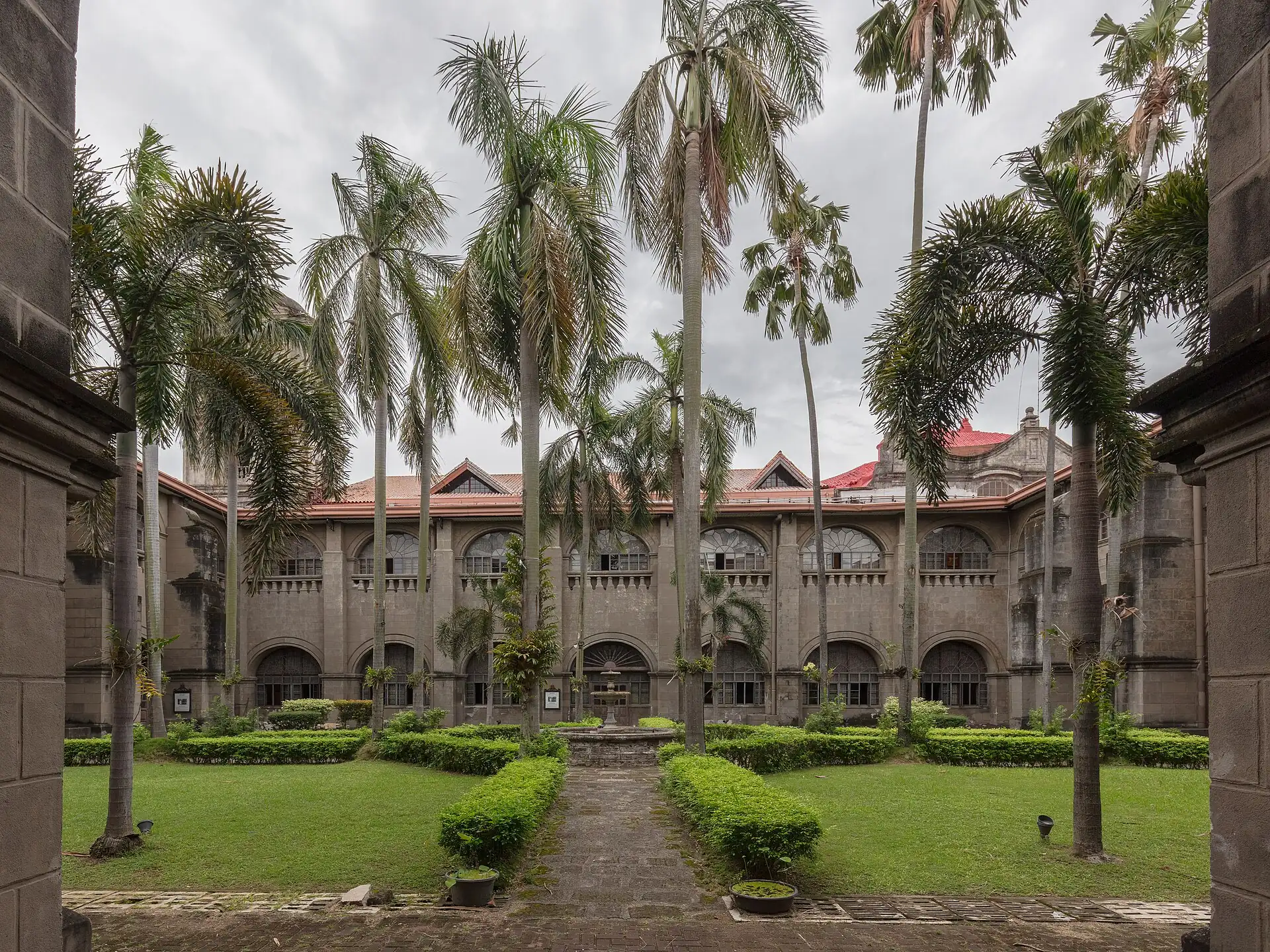
Places
“Best time” is when to arrive for the fewest crowds, for example “before 08:30”; “Go any time” means the hour makes little difference. More sights follow under “More sights and museums”.
7 places. Filters use the guide’s own ratings; a place with no rating is left out when a filter is on.
Tours, classes and shows in Manila →
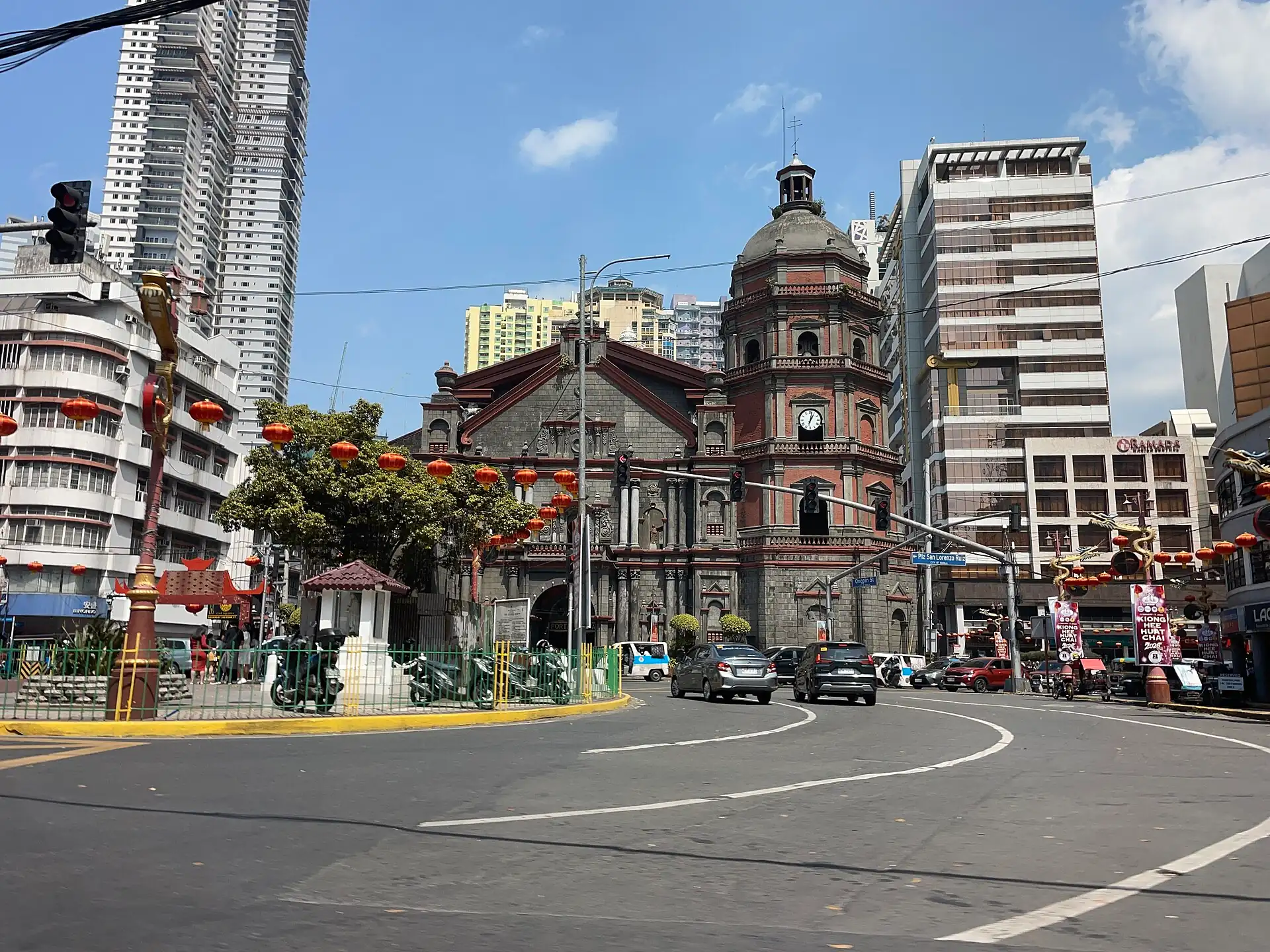
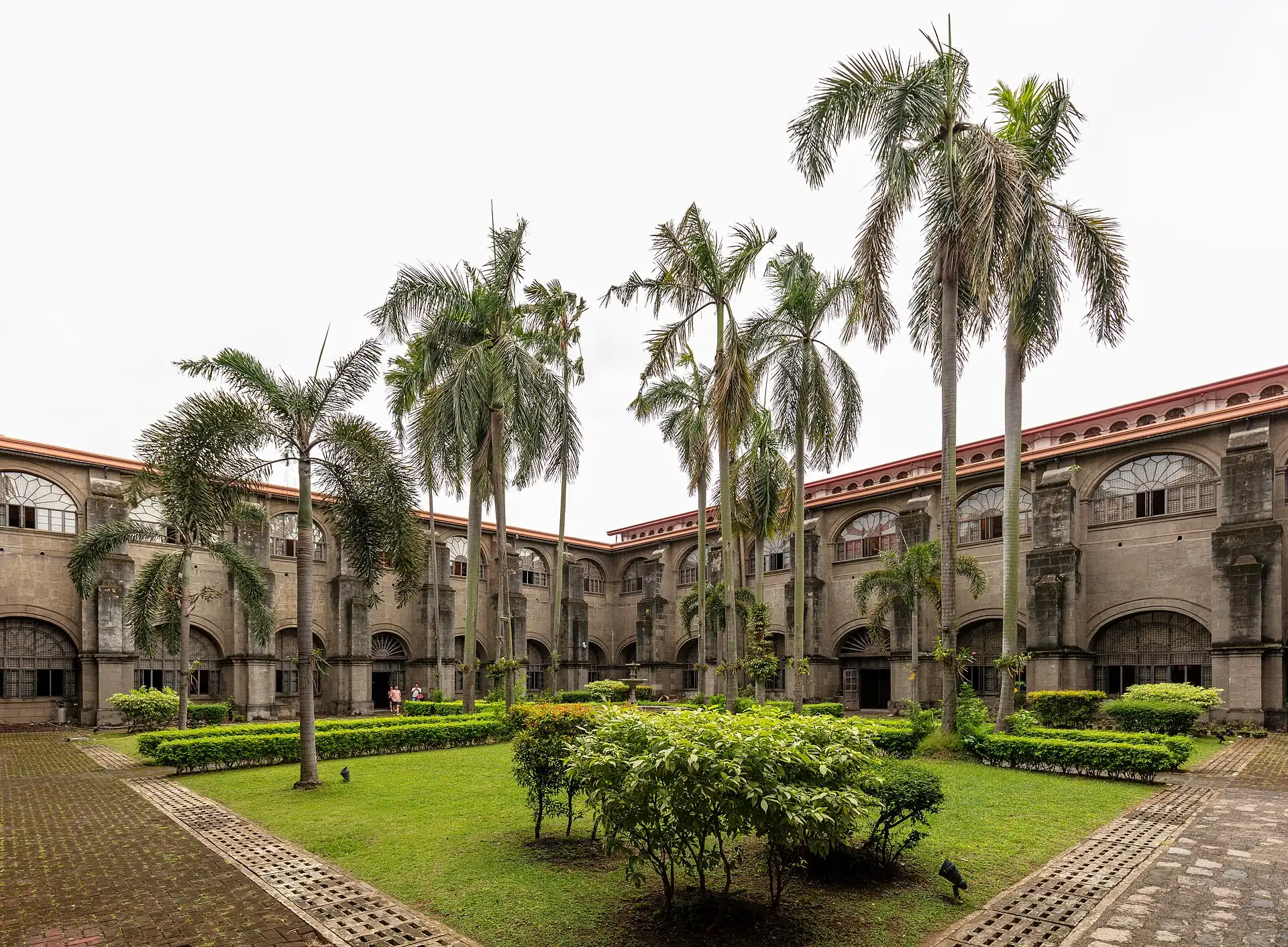
If you do ten things in Manila
Ranked for a first visit of 2–4 days. Prices are 2026 estimates in pesos; hours marked (check) in the linked pages still need confirmation.
- 1
The city's best-preserved fort, with the Rizal Shrine; cool and quiet before 09:30.The city's best-preserved fort, with the Rizal Shrine; cool and quiet before 9:30 AM.
- Time
- 1–1.5 h
- Best
- 08:00–10:00
- Cost
- ₱75–100 (≈ US$2) (check)
- 2
The oldest stone church in the country and a UNESCO site; shaded and cool.
- Time
- 45 min
- Best
- 09:30–11:00
- Cost
- Church free; museum about ₱200 (≈ US$4) (check)
- 3
The national monument, Kilometer Zero and the honour guards; cool at dawn.
- Time
- 30–60 min
- Best
- 06:30–08:30
- Cost
- Free
- 4
The Spoliarium and Philippine painting in a cool neoclassical building.
- Time
- 1–1.5 h
- Best
- 10:00–12:00
- Cost
- Free or low (check)
- 5
Binondo food walk and dumplings
The oldest Chinatown and the best place to eat on foot.
- Time
- 2–3 h
- Best
- 10:30–13:00
- Cost
- ₱300–800 (≈ US$6–15)
- 6
A quiet stop on Plaza de Roma with a tall stone interior.
- Time
- 15–20 min
- Best
- Weekday morning
- Cost
- Free
- 7
Dioramas of Philippine history and pre-colonial gold; air-conditioned.
- Time
- 1.5 h
- Best
- 11:00–15:00
- Cost
- ₱650–800 (≈ US$12–15) (check)
- 8
A calm park in the business district.
- Time
- 30 min
- Best
- 07:00–09:00 or dusk
- Cost
- Free
- 9
- 10
Manila Bay sunset
The classic evening: a walk on Roxas Boulevard.
- Time
- 1 h
- Best
- 17:00–18:15
- Cost
- Free
Good for…
Verdict is how well Manila works for that traveller, not how nice it is.
A clear morning-and-evening plan works if you accept the traffic.
- 1Sleep in Ermita or Makati — close to the sights or safe and calm.
- 2Manila in 3 days — the 3-day plan checks closures and heat.
- 3Grab from the airport — fixed fare, no taxi haggling.
Filipino-Chinese food in Binondo and modern Filipino in Makati.
- 1Dong Bei Dumplings — dumplings and noodles in Binondo.
- 2Eng Bee Tin (hopia, tikoy and Chinese sweets) — hopia and tikoy.
- 3Barbara's Heritage Restaurant (Intramuros) — a seated Filipino lunch.
Intramuros, Fort Santiago and the wartime story.
- 1Fort Santiago — Rizal and the fort.
- 2San Agustin Church and museum — the survivor of 1945.
- 3National Museum of Fine Arts — Spoliarium.
Heat and traffic are the problem; parks and museums help.
- 1Rizal Monument (Luneta) and Rizal Park — lawns and lake.
- 2
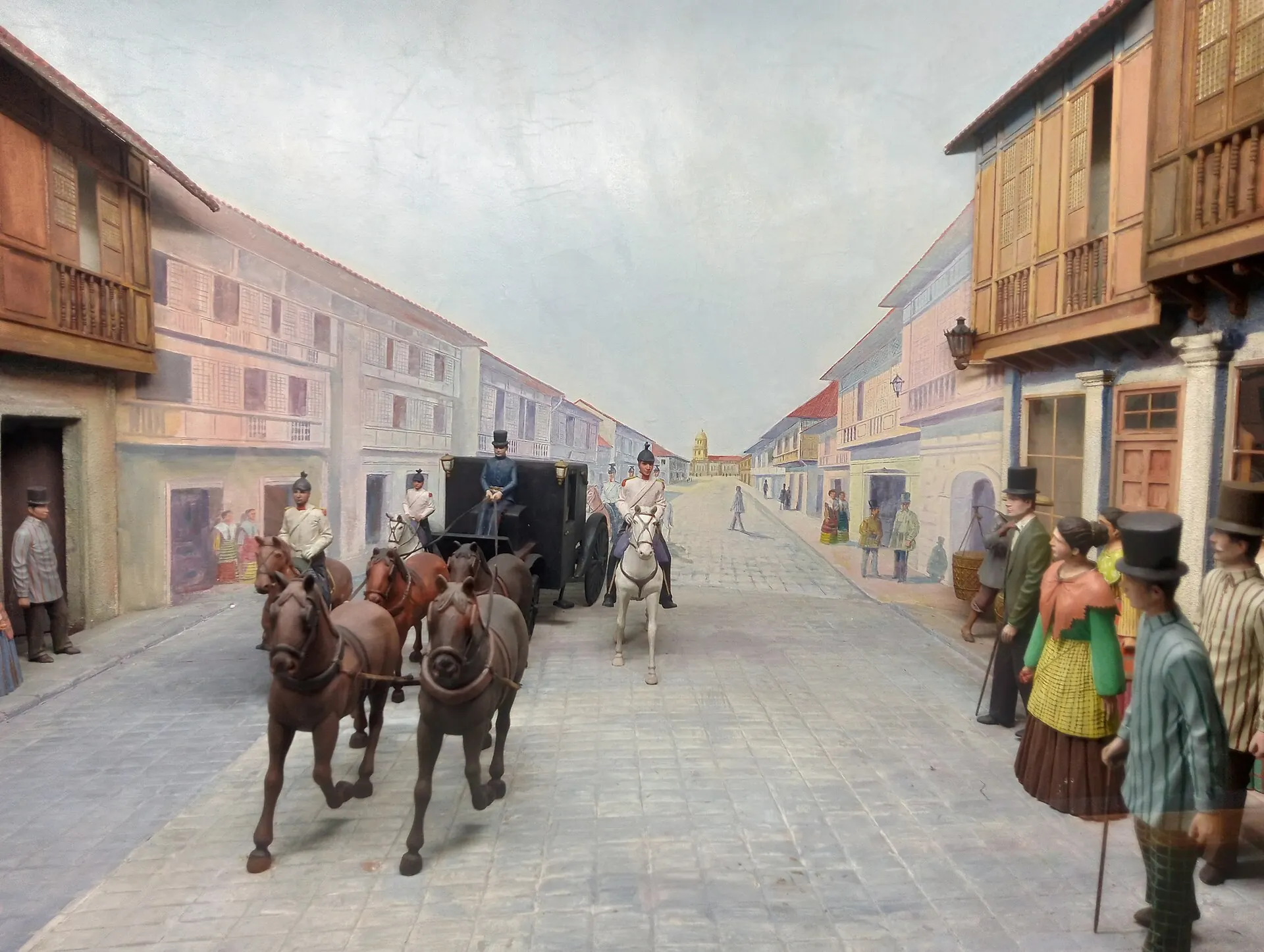 Ayala Museum — dioramas.
Broken pavements; malls and some hotels are fine.
- 1Ayala Museum — lifts and wide halls.
- 2
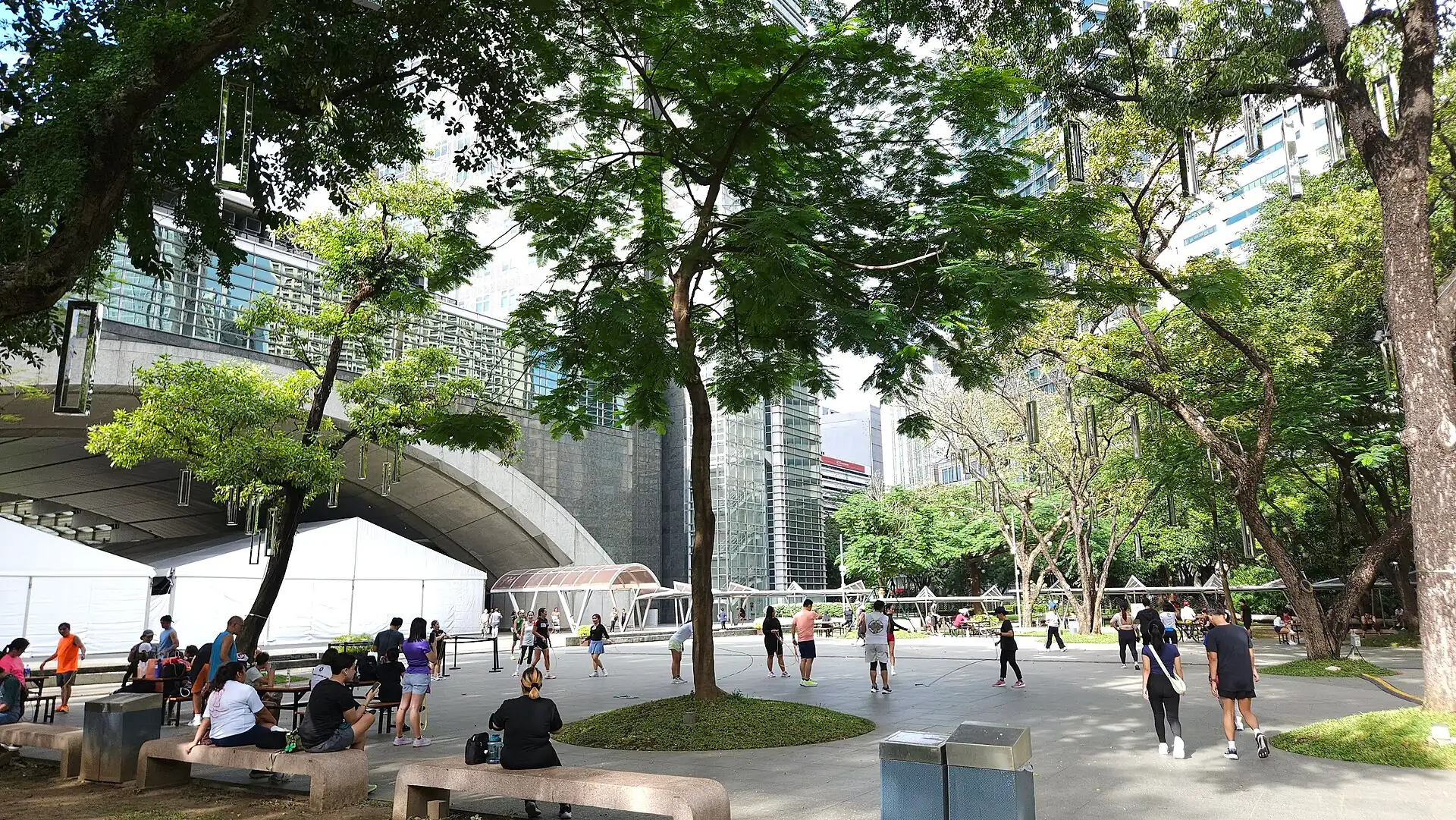 Ayala Triangle Gardens — level paths.
Cheap street food, cheap rides and free museums.
- 1Binondo noodle and siopao counters — a meal under ₱200 (≈ US$4).
Use ride-hailing after dark and choose Makati for a base.
- 1Sleep in Makati — safe streets.
Poblacion and Malate are lively; take cars.
- 1Poblacion — bar lanes.
Manila Bay is not for swimming; go to Batangas or the islands.
- 1Puerto Galera — beaches within a day.
Go Dec–Feb; keep midday indoors.
- 1Ayala Museum — cool galleries.
Tours and classes: book or skip
Book through the hotel or an operator with written inclusions and a cancellation policy. Prices per person, group tour unless stated (2026 estimate).
| Tour or class | Verdict | Typical price | Why | Check before paying |
|---|---|---|---|---|
| Binondo food walking tour | book | ₱1,500–3,000 (≈ US$30–55) | Best on day one; you learn dishes and prices. | Group size under 10; how many stops include food. |
| Intramuros walking tour with a licensed guide | book | ₱600–1,500 (≈ US$11–30) | A guide adds the history behind the walls. | Licensed guide badge; time and route. |
| Corregidor day tour | book | ₱3,000–5,000 (≈ US$55–90) | The main day trip; the ferry books out. | Ferry time, lunch and the tram tour; weather policy. |
| Tagaytay and Taal day trip by car | book | ₱4,500–7,000 (≈ US$80–130) per car | Best on a weekday. | Driver hours, stops and tolls. |
| Jeepney or kalesa tour | caution | agree first | Fun, but agree the price, route and time. | The route, the stops and the total price. |
| Pub crawl | caution | ₱1,000–2,000 (≈ US$18–40) | Good for meeting people; watch your drinks. | Group size and safety. |
| Cooking class | book | ₱2,000–4,000 (≈ US$40–75) | A good plan for a hot morning. | Hands-on stations; menu. |
| Quiapo and Divisoria market tour | caution | ₱1,000–2,000 (≈ US$18–40) | Only with a local guide; crowded. | Guide reviews; bag security. |
| Taal Heritage Town day tour | book | ₱3,000–6,000 (≈ US$55–110) | A long day; check the route. | Transport time and lunch. |
| Airport transfer | book | ₱1,500–3,000 (≈ US$30–55) | Useful for late arrivals. | Car type and waiting time. |
What each season brings
Cool dry
Dec–Feb
The best weather; Christmas lights and the Black Nazarene feast.
Watch: Christmas traffic and prices; hotel rates peak.
Hot dry
Mar–May
Clear days, Holy Week processions and beach weather.
Watch: 35 °C and a hotter heat index; midday indoors.
Wet (typhoon)
Jun–Oct
Lower prices and green landscapes.
Watch: Floods, typhoons and flight disruptions; keep a flexible plan.
Transition
Nov
Rain eases; All Saints' Day and early Christmas lights.
Watch: Late typhoons; cemetery crowds on 1 November.
Photo spots and the light
Light times are for clear days; haze flattens views in the dry season.
| Spot | Best light | Tip |
|---|---|---|
| Fort Santiago gate and ramparts | 08:00–09:30 | Shoot from the plaza side with the sun behind you; the walls are shadeless later. |
| San Agustin ceiling and cloister | Mid-morning | No flash; look up for the painted ceiling. |
| Rizal Monument and guards | 06:30–08:00 | Do not touch or crowd the guards. |
| Manila Bay sunset | 17:15–18:15 | Walk from the Cultural Center; stay with company. |
| Binondo Church and Ongpin Street | Morning | Ask before photographing people; lanes are crowded. |
| Makati skyline from the gardens | Late afternoon | Stay on paths; no drones. |
Manila travel FAQ
Answers are 2026 desk estimates; fares and rules marked (check) change.
Is Manila safe for tourists?
Mostly, yes: the main problems are bag snatching, pickpockets, scams and heat. Use ride-hailing after dark, keep phones out of hand and avoid dark side streets.
How do I get from NAIA to the hotel?
Grab or the airport taxi ranks: about ₱350–700 (≈ US$7–13) and 30–90 minutes depending on traffic. Check your terminal, and allow extra time at rush hour.
How many days do I need?
Two days cover the main sights; three add Makati and a slow day; five add a day trip to Tagaytay or Corregidor.
Is tap water safe to drink?
No. Drink bottled or filtered water; ice in restaurants is generally fine.
Do I need cash?
Yes: jeepneys, markets and street counters are cash-only. Malls and hotels take cards.
When is the best time to visit?
December to February is cool and dry; March to May is hot; June to October is wet with typhoons.
What should I wear in churches?
Cover shoulders and knees; carry a light scarf.
Is the LRT safe for visitors?
Yes for short hops, but it is crowded at peak: keep bags in front and avoid rush hour.
Is Manila good for kids?
It works with planning: parks, museums and malls are child-friendly; pavements and heat are the challenge.
Should I tip?
Round up for drivers; 10% in restaurants if no service charge is added.
Do I need a visa?
Many nationalities enter visa-free for a short stay; check your passport rules and any online arrival form before you fly.
What is number coding?
A rule that bans private cars on certain plates on set weekdays in peak hours; ride-hail cars are not affected in the same way (check).
More to see and doSee & do · Learn & work · Rain & heat · Free things · Wheelchair and stroller
Free things to do
Sights in Manila that cost nothing to enter. Each is described under Places or More sights; extra costs inside are marked there.
Wheelchair and stroller, place by place
How each place in this guide works for wheels, from its own page. Ratings are desk estimates unless a page says it was checked on the ground.
| Place | Step-free | Wheelchair | Stroller | What to know |
|---|---|---|---|---|
| Ayala Museum | yes | good | good | Few. |
| Ayala Triangle Gardens | yes | good | good | Few. |
| Fort Santiago | partial | caution | poor | Steps to the walls and the shrine; the main path is flat. |
| Manila Cathedral | partial | caution | ok | Steps at the main door. |
| National Museum of Fine Arts | partial | caution | ok | A flight of steps at the main door. |
| Rizal Monument (Luneta) and Rizal Park | yes | ok | ok | A few steps at monuments. |
| San Agustin Church and museum | partial | caution | poor | A few steps at the entrance and in the museum. |
See & do
23 of 23
Casa Manila and Bahay TsinoyCasa Manila; Bahay Tsinoy
MuseumsTwo small museums: a Spanish-era house and the story of the Chinese in Philippine life. 60–90 minutes.
Intramuros · Daytime (check) · small fee (check)(check)
National Museum of AnthropologyPambansang Museo ng Antropolohiya
MuseumsArchaeology and the Manunggul jar; pairs with the Fine Arts museum.
Rizal Park · Tue–Sun daytime (check) · free or low (check)(check)
National Museum of Natural HistoryPambansang Museo ng Likas na Kasaysayan
MuseumsThe Tree of Life atrium and biodiversity halls; cool and good with children.
Rizal Park · Tue–Sun daytime (check) · free or low (check)(check)
Binondo Church (Minor Basilica of San Lorenzo Ruiz)Simbahan ng Binondo
churchThe church at the heart of Chinatown; small plaza.
Binondo · Daytime · free(check)
Quiapo ChurchSimbahan ng Quiapo
churchHome of the Black Nazarene; very crowded on Fridays and 9 January.
Quiapo · Daytime · free(check)
San Sebastian ChurchSimbahan ng San Sebastian
churchA steel Gothic church, all-metal, near Recto; check hours.
Quiapo · Daytime (check) · free(check)
Paco ParkPaco Park
GardensA round cemetery-park with shade and a quiet café.
Paco · Daytime (check) · small fee (check)(check)
Manila Bay sunset promenadeBaywalk
viewThe classic sunset walk; watch bags and go with company.
Roxas Boulevard · Sunset · free(check)
SM Mall of Asia and the bayMall of Asia
mallA huge mall, a sunset view and an aquarium next door.
Pasay · 10:00–22:0010:00 AM–10:00 PM · free(check)
Manila Ocean ParkManila Ocean Park
attractionAquarium next to Rizal Park; a rainy-day stop with children.
Ermita · Daytime · ticket (check)(check)
Cultural Center of the Philippines (CCP)Sentrong Pangkultura ng Pilipinas
artsThe national performing-arts complex; check the programme.
Pasay · Evenings (check) · ticket (check)(check)
Ayala Triangle Gardens and GreenbeltAyala Triangle at Greenbelt
GardensGreen pockets in the business district.
Makati · Daytime · free(check)
Bahay Tsinoy Chinese museumBahay Tsinoy
MuseumsThe Chinese in the Philippines; a cool museum.
Intramuros · Daytime (check) · ticket (check)(check)
Las Piñas Bamboo OrganLas Piñas Bamboo Organ
musicA 19th-century organ made largely of bamboo; check concert days.
Las Piñas · Daytime (check) · small fee (check)(check)
Cubao ExpoCubao Expo
artsVintage shops and small bars; far from the old city.
Quezon City · Evenings · free(check)
Kalesa ride in Intramuros
tourA horse-carriage loop past the sights; agree the price, route and time before you sit.
Intramuros · Daytime · agree first (₱500–1,000 (≈ US$9–18) for a short route, 2026 estimate)(check)
Binondo food walk
foodA guided walk through the food lanes: dumplings, hopia, siopao and pancit. Worth it for the first visit.
Binondo · Morning or early evening · ₱1,500–3,000 (≈ US$30–55) with a guide (2026 estimate)(check)
Corregidor day tour
tourFerry, tram and tunnels on the wartime island; book ahead.
Manila Bay · Full day · ₱3,000–5,000 (≈ US$55–90) (2026 estimate)(check)
Cooking class with a market visit
ClassesLearn adobo and sinigang; a good hot-day plan.
Makati or Ermita · Morning · ₱2,000–4,000 (≈ US$40–75) (2026 estimate)(check)
Jeepney art or cultural tour
tourA guided jeepney ride with a local driver; agree the route and stops.
Manila · Half day · agree first (check)(check)
Sunset at Manila Bay
viewWalk the promenade near the Cultural Center or Mall of Asia.
Roxas Boulevard · Sunset · free(check)
Rooftop drinks in Makati
nightCity views and cocktails; check dress code.
Makati · Evening · ₱800–2,000 (≈ US$15–40) (2026 estimate)(check)
Weekend market breakfast
foodSalcedo (Saturday) or Legazpi (Sunday) markets.
Makati · Saturday or Sunday morning · ₱300–800 (≈ US$6–15)(check)
- Booking
- Book Corregidor and food tours a day ahead; most others can be booked the same day.
- Weather
- Outdoor tours may be cancelled in storms; ask about refunds.
Learn & work
| What | Where | Cost | Note |
|---|---|---|---|
| Filipino (Tagalog) at a language school | Language centres in Makati and Quezon City | About ₱500–1,000 (≈ US$9–18) an hour (check) | Many tutors also work online.(check) |
| Cooking classes | Cooking schools in Makati and BGC | ₱2,000–4,000 (≈ US$40–75) a class (check) | Book ahead.(check) |
| Arnis (Filipino martial art) | Gyms and cultural groups (check) | Small class fees (check) | Ask for a beginner session.(check) |
| Diving certification (before the islands) | Dive shops in Manila and Batangas | ₱15,000–25,000 (≈ US$300–450) for a course (check) | Often done in Anilao or Puerto Galera.(check) |
Working here
- Tourist entry
- Tourist stays do not allow paid work; check the visa rule for your passport.
- Work permit
- Legal work needs an employer-sponsored visa and an Alien Employment Permit (check the current rules).
- Teaching English
- The main job for foreign teachers, usually online or in language schools; check the permit rules.
- Remote work
- Digital-nomad rules are changing; check the current visa options.
Rain-day and heat-day plan
Rain day
Storms usually break in the afternoon (Jun–Oct): do the outdoor sight before 11:00, then go indoors. In a typhoon signal, stay in.
- 01National Museum of Fine Arts — Large indoor galleries; the Spoliarium hall.
- 02Ayala Museum — Air-conditioned museum of history dioramas and gold.
- 03San Agustin Church and museum — Covered nave and museum cloister.
- 04Greenbelt and Glorietta malls (Makati) — Air-conditioned shopping and dining.
- 05SM Mall of Asia — A huge mall with an aquarium and cinemas.
Heat day
Above 33 °C (heat index over 40): outdoor sights 06:30–10:00 and after 16:30; malls and museums 11:00–16:00.
- 06:30Rizal Park walk — Cool and quiet; exercise groups.
- 08:00Fort Santiago at opening — Little shade later.
- 10:30San Agustin and Manila Cathedral — Stone interiors are cooler.
- 12:00Lunch in Intramuros — An air-conditioned table.
- 14:00National Museum or Ayala Museum — Cool galleries.
- 17:00Manila Bay sunset — Roxas Boulevard walk when cooler.
Day-trips and nearby
Places you can reach from Manila in a day or with one night away, with the route and what it costs. Door to door, not ride time.
Tagaytay and Taal
goCar or bus, about 2–3 h each way
Cool air and a lake and volcano view; go on a weekday.
- Time
- Full day; leave 07:00Full day; leave 7:00 AM
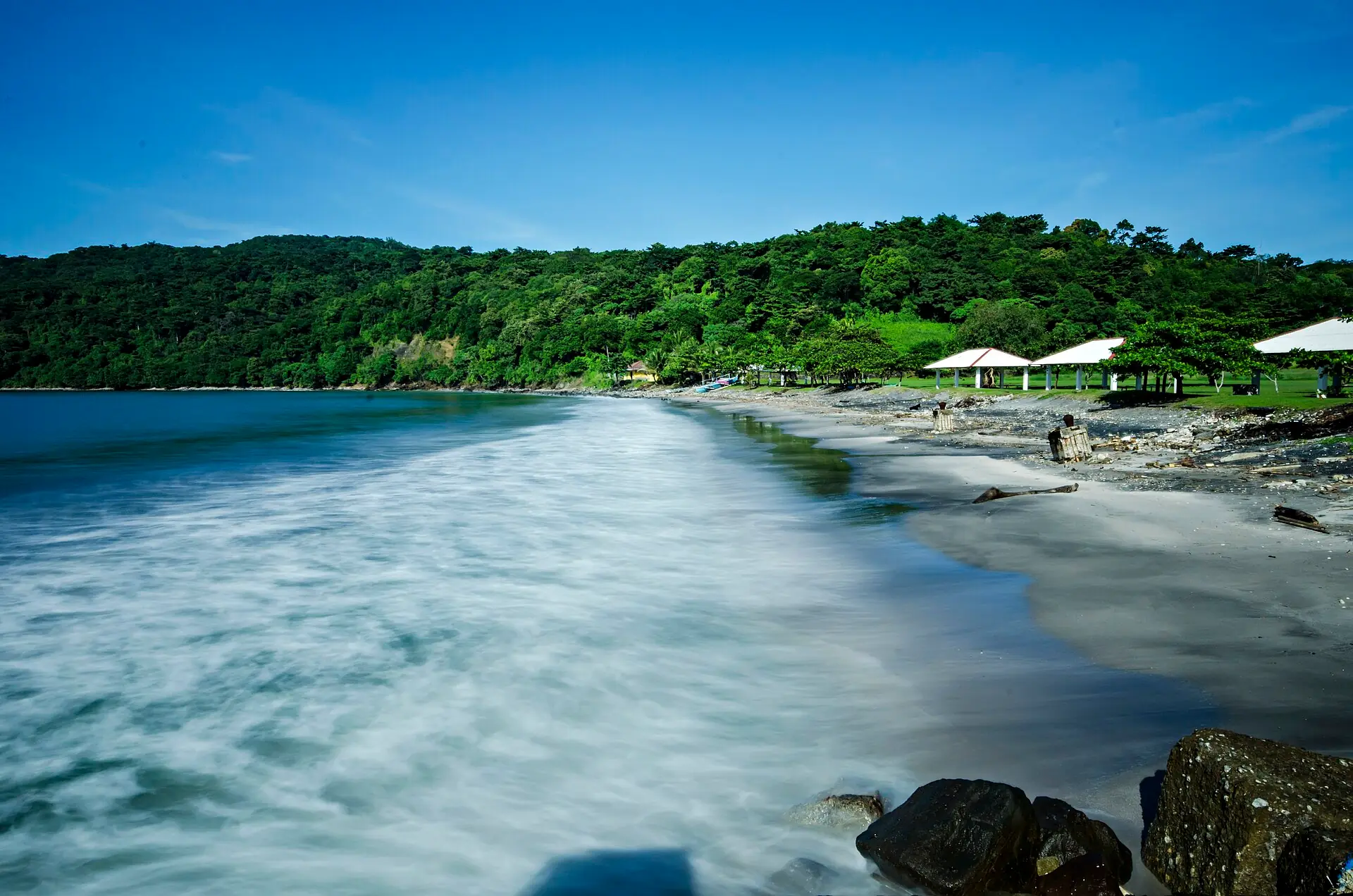 Photo: IJVelas, CC BY-SA 3.0
Corregidor Island
goFerry about 1 h from CCP Complex
A wartime island; book the tour.
- Time
- Full day
Taal Heritage Town
goCar or bus, about 3 h each way
Old houses, churches and food; a long day.
- Time
- Full day
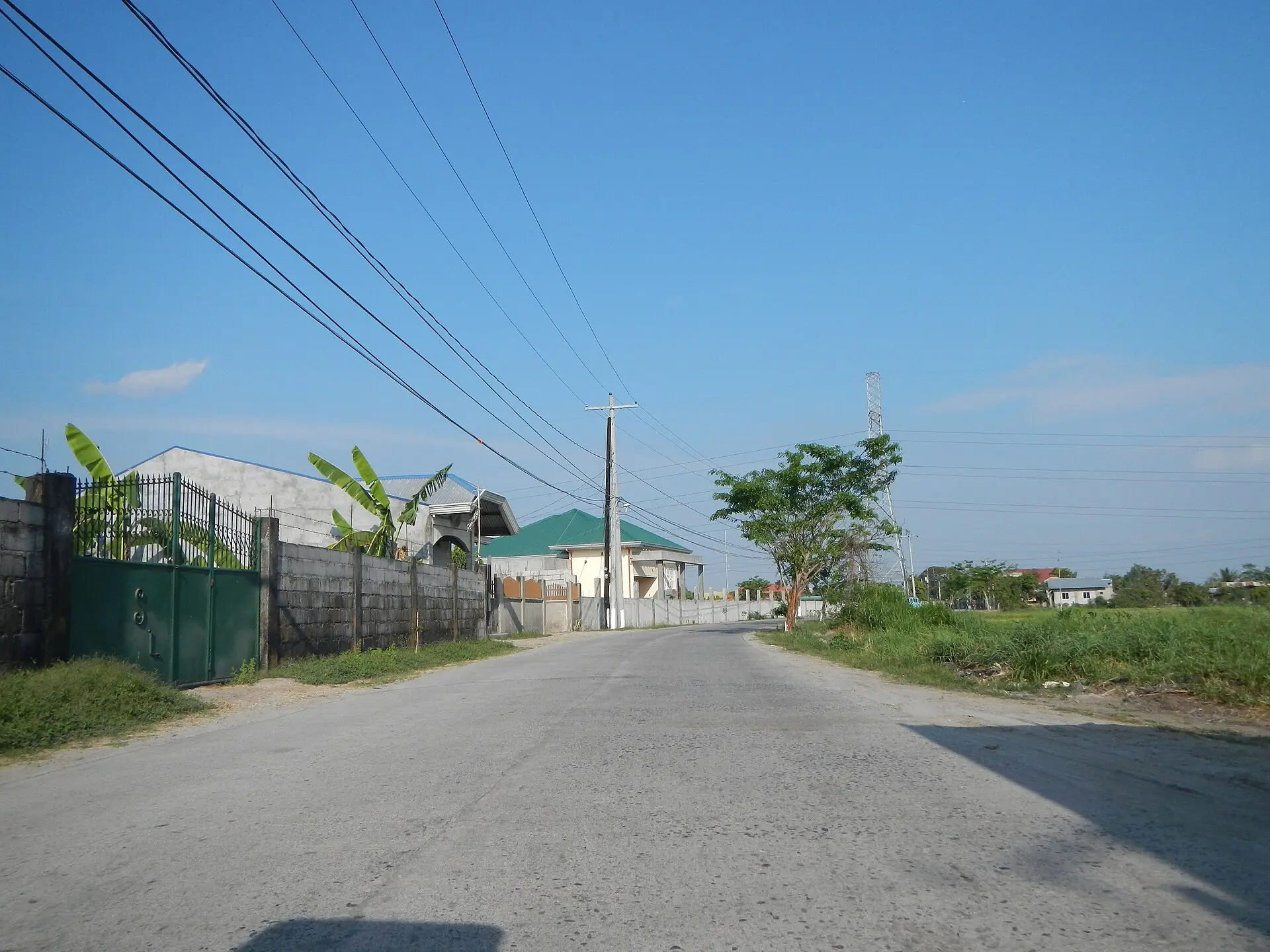 Photo: Judgefloro, CC BY-SA 4.0
Pampanga
goBus or car, about 2–3 h
Food capital; Giant Lantern Festival in December.
- Time
- Full day
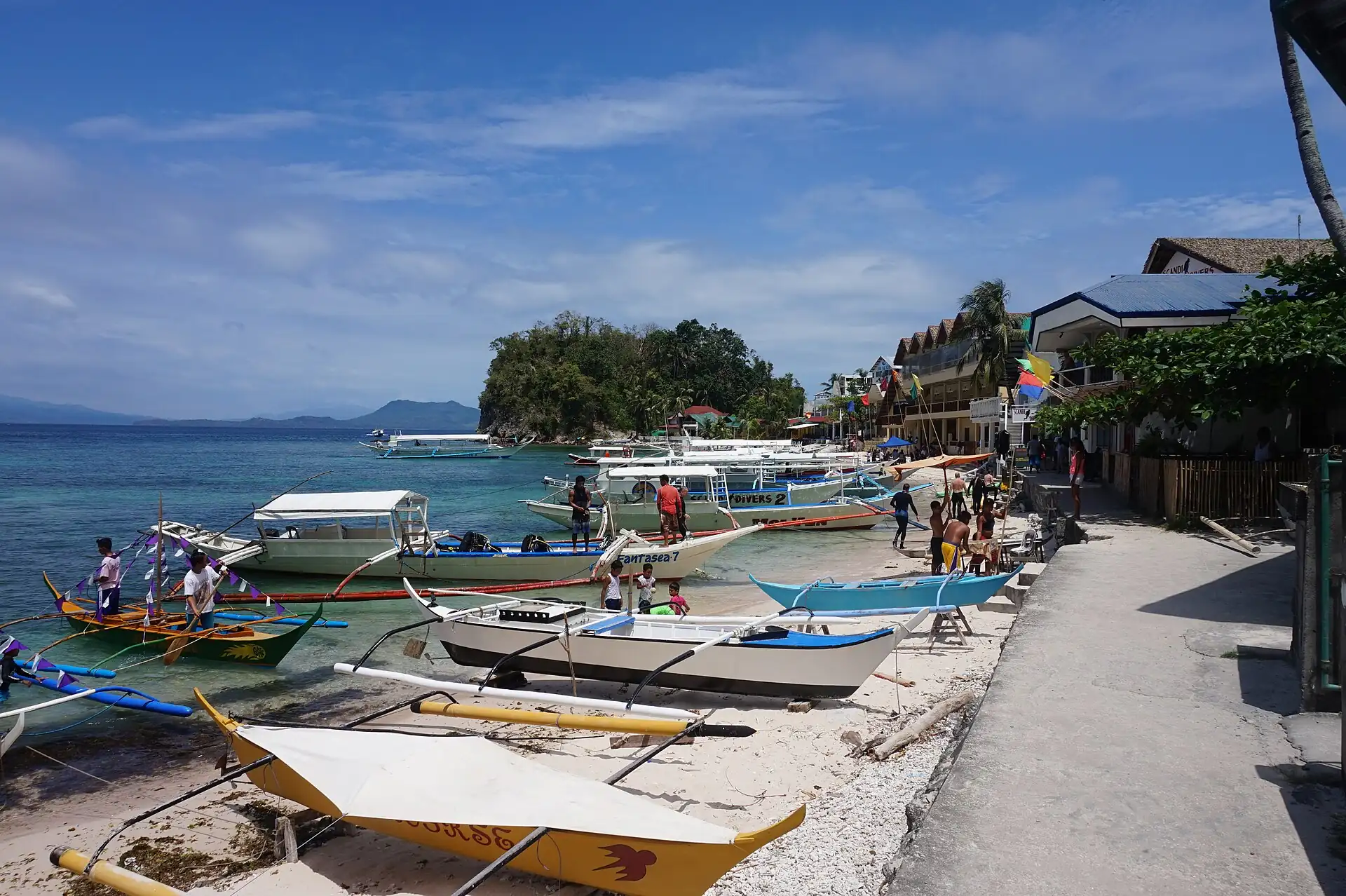 Photo: Harry Fozzard from Dumaguete City, Philippines, Public domain
Puerto Galera
overnightBus and ferry, 4–5 h
Beaches and diving; stay a night.
- Time
- Overnight
Go next
Eat & sleepWhere to eat and which area to sleep in
Eat & sleep
Where to eat and which area to sleep in
Eat
A short list of places worth crossing the city for, each with how to get a seat.
Restaurant finder: filter every place to eat in Manila →
Vegetarian-friendly score
1.0 / 5 · Hard work
- Country diet noteOur country guide rates vegetarian eating as hard.0 / 2
- Places to eat in this guide0 of 4 places with a known answer are vegetarian-friendly, 4 partly.0.75 / 1.5
- Budget eating lines0 vegetarian lines in "Eat by budget".0 / 0.6
- Meat-free national dishes1 meat-free dish in the country food list.0.1 / 0.4
- Dedicated vegetarian kitchens0 mentions of vegetarian restaurants, Buddhist or fasting kitchens.0 / 0.5
Country note: Hard: meat and bagoong in most dishes; vegetarian cafés in Manila, Cebu and tourist islands.
Vegetarian places near me →Make a diet card →
How we score
- Country diet note (up to 2): easy 2, workable 1, mixed 0.75, hard 0; no note 0.5.
- City places to eat (up to 1.5): 1.5 × (vegetarian-friendly + half of partly friendly) ÷ places with a known answer; needs 3 or more known places.
- Budget eating lines marked vegetarian (up to 0.6): 0.2 each.
- Meat-free national dishes (up to 0.4): 0.1 each.
- Dedicated vegetarian kitchens mentioned — Buddhist chay, shōjin ryōri, Jain, fasting food, vegan cafés (up to 0.5): 0.1 each.
- Total rounded to the nearest half point, 0 to 5. Built from our own pages only, not from reviews.
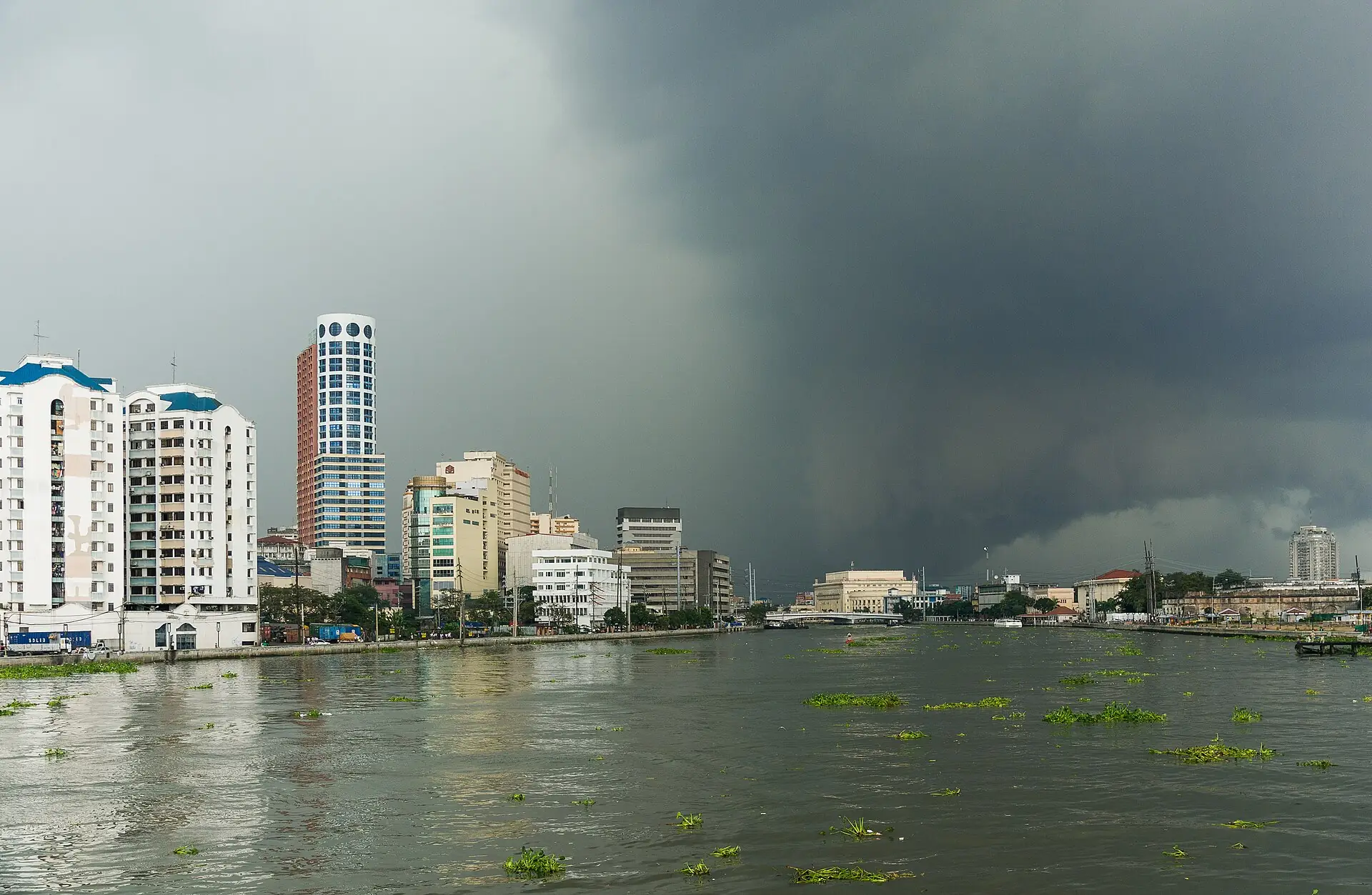
Eating and drinking guideEat by budget · Drink
Before you sit down to eat
Short version; full text linked
Eat by budget
Under ₱250 (≈ US$5) a meal
| Where | Order | Area | Price | Note |
|---|---|---|---|---|
| Binondo noodle and siopao counters | Pancit or lugaw | Binondo | ₱80–200 (≈ US$2–4) | Walk-in counters; go before 11:30.Walk-in counters; go before 11:30 AM. |
| Eng Bee Tin (hopia, tikoy and Chinese sweets) | Hopia and tikoy | Binondo | ₱100–300 (≈ US$2–6) | Take-away sweets. |
| Silog breakfast (tapsilog) | Any district | ₱100–200 (≈ US$2–4) | A fried rice, egg and meat plate at a small eatery. |
Dishes to know
| Dish | What it is | Where to look | When | Price |
|---|---|---|---|---|
| AdoboAdobo | Meat stewed in vinegar, soy sauce, garlic and pepper; the national dish. | Restaurants and carinderias | Lunch and dinner | ₱150–400 (≈ US$3–8) |
| SinigangSinigang | A sour soup with tamarind, vegetables and pork or shrimp. | Restaurants and home-style eateries | Lunch and dinner | ₱250–500 (≈ US$5–9) |
| Kare-kareKare-kare | Peanut stew with oxtail; eaten with shrimp paste. | Heritage restaurants | Lunch and dinner | ₱350–800 (≈ US$7–15) |
| LechonLechon | Roast suckling pig with crisp skin; a party dish. | Specialist shops and fiestas | Lunch | ₱300–600 (≈ US$6–11) a portion |
| Halo-haloHalo-halo | Shaved ice with sweet beans, fruit and milk. | Cafés and dessert shops | Afternoon | ₱100–300 (≈ US$2–6) |
| PancitPancit | Stir-fried noodles; Binondo has the classic Chinese-Filipino style. | Binondo and everywhere | Any time | ₱80–250 (≈ US$2–5) |
| SiopaoSiopao | Steamed bun with pork or chicken; a Chinese-Filipino snack. | Binondo counters, bakeries | Any time | ₱40–100 (≈ US$1–2) |
| SilogSilog | Garlic fried rice with egg and a meat (tapa, longganisa). | Small eateries, all day | Breakfast | ₱100–200 (≈ US$2–4) |
| LumpiaLumpia | Spring rolls, fresh or fried. | Restaurants and street counters | Any time | ₱60–200 (≈ US$2–4) |
| BalutBalut | A fertilised duck egg, boiled; a night-time street snack. | Street vendors at night | Evening | ₱25–40 (≈ under US$1) |
- Eat where locals queue and turnover is fast; choose hot food.
- Tap water is not for drinking; use bottled water and ice from restaurants.
- Order rice with everything and share dishes.
- Service charge is common; check the bill before tipping.
Drink & nightlife
| Where | What | Until | Note |
|---|---|---|---|
| Poblacion (Makati) | Bar lanes, cocktail bars, small clubs | Until about 02:00 (check)Until about 2:00 AM (check) | Dense and loud; take a car in and out. |
| Remedios Circle and Malate | Old bars, live music, café-bars | Until about 02:00 (check)Until about 2:00 AM (check) | Livelier but rougher at night; take a car home. |
| BGC (Bonifacio High Street) | Restaurant bars and rooftops | Until about 01:00 (check)Until about 1:00 AM (check) | Modern, walkable, expensive. |
| Cubao Expo (Quezon City) | Small bars and vintage shops | Until about 01:00 (check)Until about 1:00 AM (check) | Far from the old city; go with a group. |
| Hotel rooftop bars | Views over Makati or the bay | Until about 00:00Until about 12:00 AM | Book a sunset table; dress code varies. |
By style
| Style | What | Where | Price | Until |
|---|---|---|---|---|
| San Miguel and Red Horse beer | Local lager and strong lagerOrder a bucket of six for a group; Red Horse is stronger. | Bars, sari-sari stores, restaurants | ₱90–150 (≈ US$2–3) a bottle in a bar; ₱50–70 (≈ US$1–2) at a store | Until closing |
| Ginebra and Tanduay | Local gin and rum, mixed with soda or colaDrink slowly; strong mixes are common. | Sari-sari stores and bars | ₱150–300 (≈ US$3–6) a glass in a bar | Until closing |
| Lambanog | Coconut spirit, high alcoholVery strong; sip, do not shoot. | Provincial stalls and bars | ₱100–250 (≈ US$2–5) a shot | Until closing |
| Tuba and local rum | Palm wineFerments fast; buy fresh. | Stalls at fiestas | ₱30–80 (≈ US$1–2) a glass | Daytime |
| Calamansi juice and buko juice | Lime and coconutA cool non-alcohol drink; ask for less sugar. | Street stalls, cafés | ₱30–80 (≈ US$1–2) | Daytime |
Rules that bite
- Zero-tolerance for drink-driving; use ride-hailing.
- Do not accept drinks from strangers, and watch your glass in bars.
- Some bars in tourist areas add heavy "ladies' drink" bills: check the price before you order.
Sleep
Pick the area first: it decides your walk home at night and your first morning.
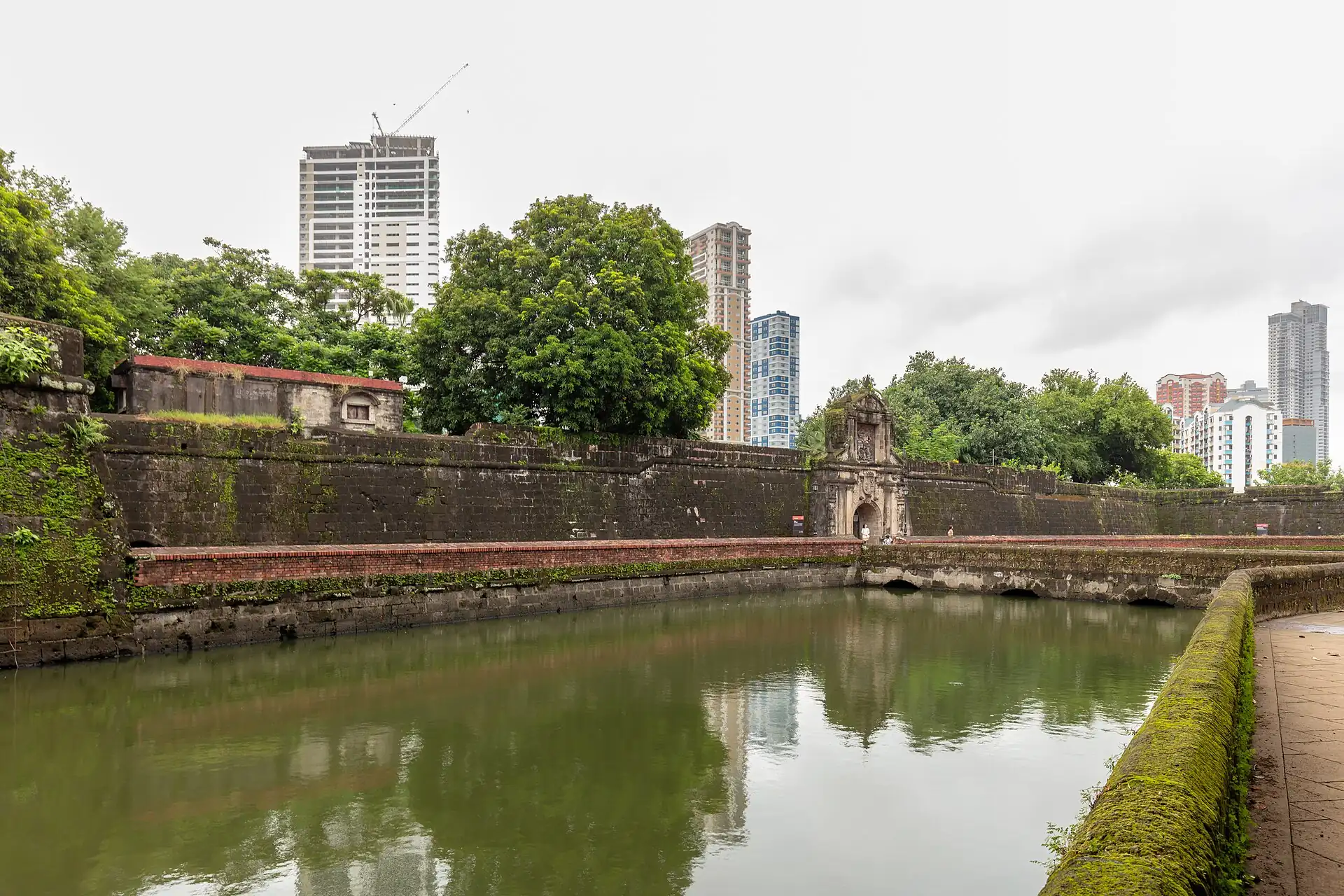
Which neighborhood fits you
Three questions, one recommendation, with the reasons.
Your best fit
- Rizal Park and Intramuros are a short car ride or a hot walk.
- The widest choice of cheaper hotels near the sights.
Watch out: Roxas Boulevard traffic and Malate nightlife; ask for an upper floor at the back.
Next best: Makati: Ayala & Greenbelt
Built from our 1–5 desk scores per area; your answers stay in this browser.
More on sleepingSleep by budget · Your area · With kids
Sleep by budget
| Band | Price | Where | Room types | What to expect |
|---|---|---|---|---|
| budget | ₱500–1,000 (≈ US$9–18) dorm bed · ₱1,500–2,500 (≈ US$30–45) double | Ermita, Malate, Makati backpacker hostels | Hostels, small hotels | Small rooms, thin walls, hot showers usually; check reviews for noise. |
| mid | ₱2,500–6,000 (≈ US$45–110) | Ermita, Malate, Makati | Business hotels | Air conditioning, breakfast, 24-hour desk, pool at some. |
| high | ₱7,000–20,000 (≈ US$130–400)+ | Makati, Bay City, BGC | International hotels, bay-view towers | Pool, gym, several restaurants, airport pick-ups. |
Booking checks
- Choose Makati for a late arrival and Ermita for sights.
- Book flexible rates in typhoon season (Jun–Oct).
- Ask for a room away from the road.
- Christmas and New Year rates are the highest of the year.
- Ask about airport transfer prices; hotel cars cost more than Grab.
Which area is yours
| If you are | Sleep in | Because |
|---|---|---|
| First visit, 2–3 nights, sights first | Ermita & Malate | Close to Rizal Park and Intramuros; take cars after dark. |
| Late arrival or business travel | Makati: Ayala & Greenbelt | Safe, quiet streets, and air-conditioned everything. |
| Families with children | Makati: Ayala & Greenbelt | Gardens, malls and hospitals close by. |
Old-city base: hotels with a 24h desk and a car door, short rides to Intramuros and Rizal Park; the nearby streets are rough at night, so take a car for evening trips.
Late-arrival base: business hotels with 24h desks, door drop-off, malls next door — but 30–60 minutes from the old city, so allow a transfer each way.
Areas are in our default order until you tick a priority.
Scores are 1–5 desk judgements per priority (2026).
With kids
- Pavements are broken and streets are loud; bring a carrier for babies and a light stroller only for malls and Rizal Park.
- Rizal Park lawns and the National Museum are good with children; go before 09:00.Rizal Park lawns and the National Museum are good with children; go before 9:00 AM.
- Malls have play areas and toilets: use them for the midday rest.
- Heat is the main risk: shade, water and a hat, and stop every 60 minutes.
- Car seats are rare in ride-hail cars; bring your own or accept the risk on short rides.
- Pharmacies (Mercury Drug) and clinics in malls handle common child illness; check insurance.
PracticalMoney, essentials, safety and the pocket card
Practical
Money, essentials, safety and the pocket card
Money
What a day costs at three comfort levels, and how to pay.
- Budget
- ₱1,200–2,500 (≈ US$25–45) excl. bed / day
- Mid
- ₱2,500–6,000 (≈ US$45–110) excl. bed / day
- High
- ₱6,000 (≈ US$110)+ excl. bed / day
- Transit card
- Rail uses a Beep card or single-journey tickets; for visitors, ride-hailing cars are the practical default.
- Cash rule
- Keep ₱1,000 (≈ US$18) in small notes; withdraw at ATMs inside malls or banks, not on the street, and decline dynamic currency conversion.
More on moneyCosts · Budget · Buy
What things cost
- Pancit or silog at a street eatery₱80–200 (≈ US$2–4)
- Siopao or hopia₱40–100 (≈ US$1–2)
- Bottle of water, store₱20–35 (≈ under US$1)
- Grab across the centre₱150–300 (≈ US$3–6)
- Airport car to Ermita or Makati₱350–700 (≈ US$7–13)
- Jeepney ride₱14–25 (≈ under US$1)
- Fort Santiago ticket₱75–100 (≈ US$2) (check)
Trip budget
| Hotel double room1 × 4 nights × ₱4,500 | ₱18,000 |
| Food, local transport, entries2 × 4 days × ₱4,000 | ₱32,000 |
| Airport car, both ways1 × ₱1,600 · one car per 4 people | ₱1,600 |
| Day trip to Tagaytay by car1 × ₱4,500 · private car and driver, 2026 estimate | ₱4,500 |
| Corregidor day tour2 × ₱3,500 · ferry, lunch and tram tour (check) | ₱7,000 |
| Buffer 10%Price creep, a taxi you did not plan, one splurge | ₱6,310 |
| Trip total≈ ₱8,680 per person per day, bed included | ₱69,410≈ US$1,300 |
2026 estimate in pesos; flights, visas and tours excluded. Your choices stay in this browser.
Prices of common things
| Jeepney ride | ₱14–25 (≈ under US$1) |
| Bottle of water (store) | ₱20–35 (≈ under US$1) |
2026 estimate; check locally.
Buy
- Bargaining
- Malls and department stores have fixed prices. In Divisoria, Quiapo, Baclaran and Greenhills stalls, offer about 50–60% of the first price and settle at 65–75%; walk away politely if it does not move. Do not haggle at food counters or in shops with printed tags.
- Fixed-price check
- Check the price of pearls, dried mangoes and souvenirs in a mall or airport shop first, so you know when a stall price is fair.
Markets and shopping streets
| Where | What | When | Haggle | Note |
|---|---|---|---|---|
| Divisoria (Tondo) | Bargain clothes, fabric, party goods, wholesale | Daytime (check) | hard | Crowded and hot; bring only cash you need and keep bags in front. |
| Quiapo market (near Quiapo Church) | Religious items, electronics, herbs, street food | Daytime (check) | hard | Pickpockets are common; go with a guide. |
| Greenhills Shopping Center (San Juan) | Pearls, ukay (second-hand), tech, local crafts | About 10:00–20:00 (check)About 10:00 AM–8:00 PM (check) | medium | Counter at about 60% for pearls; check quality. |
| Salcedo Saturday Market (Makati) | Food, fresh produce, coffee, small crafts | Saturday morning (check) | fixed | Go early; a good breakfast stop. |
| Legazpi Sunday Market (Makati) | Food, plants, secondhand goods | Sunday morning (check) | fixed | Popular with expats; crowded after 10:00.Popular with expats; crowded after 10:00 AM. |
| Baclaran market | Cheap clothes, bags, sandals | Daytime (check) | hard | Very crowded; leave valuables at the hotel. |
Shops by what they sell
| For | Where | Hours | Note |
|---|---|---|---|
| Barong Tagalog (formal shirt) | Makati and Ermita shops; tailors in Quiapo | About 10:00–19:00 | Ask for the cloth (piña, jusi, cotton) and the price for the tailoring. |
| Pearls and shell jewellery | Greenhills and Divisoria | About 10:00–19:00 | Ask for natural or cultured, and test with a light tap on the teeth if you know how. |
| Dried mangoes and local snacks | Supermarkets and airport shops | Daily | Check the sugar content and expiry date; airport prices are higher. |
| Coffee (Cordillera and Batangas beans) | Cafés and Salcedo Market | Daily | Ask for whole beans and the roast date. |
| Handwoven cloth and baskets | Rockwell and Greenbelt craft shops | About 10:00–20:00 | Check for tags with region and weaver; prices are fixed. |
Changing money
| Where | Verdict | Why |
|---|---|---|
| Banks and mall money-changers | use | Best rates in malls; show a passport; ask for a receipt. |
| Airport counters | caution | Worse rates; change a small amount for the ride only. |
| Street changers in Ermita and Malate | avoid | Short-changing is common; use a mall counter instead. |
| ATMs in malls and banks | use | Fees apply; decline dynamic currency conversion. |
ATMs
- Per withdrawal
- Most ATMs cap a foreign card at ₱10,000–20,000 (≈ US$180–400) per withdrawal and add a fee of about ₱200–250 (≈ US$4–5) (2026 estimate, check).
- Where
- Use ATMs inside banks and malls in daylight; avoid stand-alone machines on the street.
- Cards
- Visa and Mastercard work in hotels, malls and restaurants; markets and jeepneys need cash.
- E-wallets
- GCash and Maya are common for locals; visitor access varies (check).
Essentials and accessEssentials · Access
Essentials
- Tipping
- Not fixed. Round up for drivers; leave 10% in restaurants if no service charge is on the bill; small tips (₱20–50 (≈ under US$1)) for porters.
- Plugs & power
- 220 V, 60 Hz; sockets take type A and B plugs (US-style flat pins), some take type C. Bring an adaptor.
- Toilets
- Malls, cafés, hotels and museums; carry tissue and small change for pay toilets.
- Opening hours
- Malls open about 10:00–21:00 (later at weekends). Government offices and museums close on weekends or Mondays (check).Malls open about 10:00 AM–9:00 PM (later at weekends). Government offices and museums close on weekends or Mondays (check).
- Health
- Heat, dengue and traffic smog; drink water, use repellent and carry a mask on bad-air days.
- Accessibility
- Broken pavements and few lifts; malls and newer hotels are the easy places.
- Laundry
- Hotels and small laundries do same- or next-day service at about ₱60–100 (≈ US$2) a kilo (2026 estimate, check).
- Emergency numbers
- 911 for police, fire and ambulance.
Pack
- Light, breathable clothes and a cover for shoulders and knees in churches.
- A compact umbrella or rain jacket.
- Sunscreen, a hat and repellent.
- A cross-body or zip bag and a copy of your passport.
- Comfortable closed shoes for cobbles.
Accessibility
Manila is hard on wheels. Pavements are broken or blocked, kerbs are high, and step-free access exists mainly in malls, newer hotels and some museums. Plan door-to-door car rides and pick a hotel with a lift.
- Pavements
- Broken, narrow and shared with vendors; Makati and BGC have level walks.
- Transit
- LRT and MRT have lifts at some stations (check); trains are crowded at peak.
- Taxis and cars
- Ride-hail cars are the practical option; ask for an SUV when you book.
- Toilets
- Accessible toilets are in malls and newer hotels.
- Heat
- Plan AC stops every 60 minutes.
- Floods
- Streets flood within an hour of heavy rain: stay in.
Sights, step-free or not
| Fort Santiago | with help | Gravel and steps; the garden and shrine are reachable with help. |
| San Agustin Church and museum | with help | A step at the door; the museum has stairs. |
| Manila Cathedral | step-free | Side entrance available (ask). |
| Rizal Monument (Luneta) and Rizal Park | step-free | Level paths; long distances in sun. |
| National Museum of Fine Arts | with help | Ask for the accessible entrance. |
| Ayala Museum | step-free | Lifts and wide halls. |
Survive
Safety basics, the lines not to cross, and practical habits that save the day.
Safety
- Keep phones and bags out of hand near roads and crowded jeepneys.
- Heat: air-conditioned stop every 60 minutes; drink bottled water.
- In floods, wait indoors; never walk through floodwater.
- Emergency: 911.
Red lines
- Churches: shoulders and knees covered; no photos during Mass.
- Do not accept unsolicited tour offers or 'free' rides near tourist sites.
- Do not photograph police, military posts or people in distress.
Practical
- Toilets: malls and cafés; carry tissue and small change.
- Tap water is not for drinking.
More on staying safeStay safe · Stay healthy · Safety map · Solo & women · Etiquette · Cope · Scams
After dark, by area
4 flagged areas
Quiapo and Divisoria
Avoid after dark- Take care
- Take care
Poblacion (late)
Take care
Day = about 07:00–19:00. What to watch in each area, day and night →
Scams and red flags
Walk away if you see these
- Kalesa and tour offers near Intramuros that quote a price and then change it: agree the price, the route and the time before you sit.
- Taxis that refuse the meter: use Grab or insist on the meter, and note the plate.
- Friendly strangers who offer to show you around, then ask for money or lead you to a bar: decline politely.
- Drink spiking in bars: keep your drink in sight and go out with friends.
- Short-changing at street stalls and money changers: count your change and use a mall counter.
Stay safe
Crossing the road
- 01Cross at lights or footbridges; drivers rarely stop.
- 02Look both ways, and again: motorbikes weave through gaps.
- 03Do not run across EDSA or Roxas Boulevard.
- 04Use footbridges where they exist, even if it takes longer.
Hustles specific to this city
| Hustle | Where | The tell | What to do |
|---|---|---|---|
| Fake tour guide or "free" ride | Intramuros, Rizal Park | Someone offers a free tour or a kalesa ride at a low price, then asks for more. | Agree the price and time first, or use the official Intramuros guides. |
| Taxi meter tricks | Ermita, airport | A driver refuses the meter or takes a long route. | Use Grab or insist on the meter; note the plate. |
| Drink spiking | Malate, Poblacion bars | A friendly stranger offers a drink; you wake without your phone. | Keep your drink in sight; go out with friends. |
| Pickpockets in crowds | Quiapo, Divisoria, LRT | A crowd bumps you and a bag is opened. | Wear a cross-body bag in front; carry only what you need. |
| Money changers | Street counters | Short-changing or a rate that changes. | Use a mall counter and count your money. |
| Wrong-change trick | Street stalls | Change is given from a smaller note. | Count change and hold your note until you have it. |
- Police
- Call 911; report thefts at the local police station and get a written report for insurance.
- Tourist police
- A tourist police desk is at Intramuros and in Ermita (check).
- Floods
- Never walk or drive through floodwater; wait indoors.
- Typhoons
- Watch the PAGASA signals and follow the hotel; airlines announce cancellations.
Stay healthy
Air quality by month
| Jan | Feb | Mar | Apr | May | Jun | Jul | Aug | Sep | Oct | Nov | Dec |
|---|---|---|---|---|---|---|---|---|---|---|---|
| mixed | mixed | mixed | mixed | ok | ok | ok | ok | ok | ok | mixed | mixed |
Traffic smog is worst in the dry season on weekdays; check IQAir or a similar app and carry a mask from any pharmacy (₱10–50 (≈ under US$1)). Rain cleans the air.
- Heat
- Mar–May: air conditioning every 60 minutes, electrolytes, no midday walks. Heat exhaustion is the most common visitor illness.
- Dengue
- Mosquito-borne; worst in the rainy season. Use repellent, wear long sleeves at dusk and drain standing water.
- Water and food
- Do not drink tap water; choose hot street food; wash hands before eating.
- Leptospirosis
- After floods, avoid wading in dirty water; see a doctor if you have fever after contact.
- Pharmacies
- Mercury Drug and other chains are on almost every street; many are 24 h.
- Vaccines
- Check routine and travel vaccines with a clinic before you go.
Hospitals and clinics: see Cope.
Safety by area and hour
| Area | Day | Night | What to watch |
|---|---|---|---|
| Intramuros | fine | fine | Touts for kalesa and "free" tours; heat. |
| Rizal Park and museums | fine | caution | Bag snatching at night; take a car after dark. |
| Ermita and Malate | fine | caution | Bar touts and drink spiking; watch your bag and glass. |
| Binondo | fine | fine | Crowded lanes and pickpockets; keep bags in front. |
| Makati: Ayala and Greenbelt | fine | fine | The safest area; watch your phone in malls. |
| Quiapo and Divisoria | caution | avoid | Very crowded; pickpockets; go with a guide. |
| Poblacion (late) | fine | caution | Crowded bars; drink spiking; take a car. |
- Use ride-hailing apps after dark instead of street taxis.
- Do not walk through floodwater; it hides open drains.
- Keep valuables in a hotel safe.
Solo, women and LGBTQ+ travellers
Solo
- Easy city alone: hostels and cafés are social, and a table for one is normal.
- Book day trips through the hotel or an operator with written inclusions.
- Use ride-hailing apps after dark; share your route with a friend.
Women
- Harassment is uncommon in daytime; bag snatching and drink spiking are the risks. Wear a cross-body bag on the side away from the road.
- Use Grab and check the plate; do not accept rides from touts.
- In bars, keep your drink in sight and leave with friends.
LGBTQ+
- The Philippines is generally tolerant and Manila has a lively scene (Poblacion, Malate); same-sex marriage is not recognised.
- Public affection is fine in tourist areas; be low-key in conservative areas.
- Manila Pride is in June (check).
Etiquette in Manila
- Churches
- Shoulders and knees covered; no photos during Mass; quiet in the pews.
- Politeness
- Use "po" and "opo" with older people and officials; a smile and a soft voice go far.
- Queues
- Orderly at LRT and malls; loose at jeepney stops and street counters.
- Tipping
- Not fixed: round up for drivers; 10% in restaurants if no service charge is added.
- Shoes
- Off in some homes; look for shoes at the door.
- Hospitality
- You may be offered food: accept a small amount as a courtesy.
- Public behaviour
- Do not shout or lose your temper; keep arguments quiet and calm.
- Photos
- Ask before photographing people, especially children.
Cope
Hospitals and clinics that handle foreigners
| Where | Area | Use it for |
|---|---|---|
| St. Luke's Medical Center, Global City | Bonifacio Global City, Taguig | 24 h emergency; foreign-language staff; ask your insurer about direct billing. |
| Makati Medical Center | Amorsolo Street, Makati | 24 h emergency and specialists; close to the Makati hotels. |
| Manila Doctors Hospital | United Nations Avenue, Ermita | Private hospital near the old city. |
| Philippine General Hospital | Taft Avenue, Manila | Large public teaching hospital; crowded; use if nothing else is near. |
| Mercury Drug (pharmacy) | Branches in every district, some 24 h | Common medicines; bring your prescription. |
Visa extensions
- Office
- Bureau of Immigration head office on Intramuros (Magallanes Drive, check); extensions and visa services are handled there and at mall branches (check).
- Entry
- Many nationalities enter visa-free for a short stay (check the duration for your passport); an online arrival form (eTravel) has been required (check the current rule).
- Extension
- Tourist stay can be extended in the country for a fee (check the rate and the maximum).
- Departure
- Have a return ticket ready; airlines check it at check-in.
Embassies and consulates
| Country | Address | Phone | Note |
|---|---|---|---|
| United States | Roxas Boulevard, Ermita | — | (check) |
| United Kingdom | Taguig (McKinley Hill, check) | — | (check) |
| Australia | Makati (Ayala Avenue area, check) | — | (check) |
| Canada | Makati (Ayala Avenue area, check) | — | (check) |
| Japan | Roxas Boulevard, Pasay | — | (check) |
- Lost passport
- Report to the police (Manila Police District or the nearest station), then your embassy; you may need an exit clearance from Immigration.
- Lost card
- Call your bank; carry a photo of the card number and the international phone line.
- Emergency
- Call 911 for police, fire or ambulance; in Makati use hotel or mall security first.
- Typhoon
- Follow PAGASA signals (check) and the hotel; stay inside during signal 3 or higher.
- Insurance
- Carry travel insurance with medical evacuation; check typhoon cover.
Apps and offline kitOffline kit
Offline kit
Set up before you leave, so Manila still works with no signal or a dead roaming plan.
On your phone
- Maps: open the city in Google Maps, tap the place name, then Download offline map (or use an offline-maps app).
- Data: install an eSIM or buy a local SIM before the first taxi; the apps in this guide depend on it.
- Translation: download the local language for camera translation.
- Screenshots: booking confirmations, hotel address in the local script, and the emergency numbers.
This guide
Save the Manila guide and its pages on this device; it opens without a connection.
Phrases that do the work
Greeting
Hello
Kumusta
koo-moo-STAH
Thanks
Thank you
Salamat
sah-LAH-maht
Market
How much is this?
Magkano ito?
mag-KAH-no EE-toh
Food
Not spicy, please
Hindi maanghang
hin-DEE mah-ahng-HANG
Food
Delicious!
Masarap!
mah-sah-RAP
Jeepney
Stop here, please
Para po
PAH-rah poh
Help
Help!
Tulong!
TOO-long
Polite
Yes / No (polite)
Opo / Hindi po
OH-poh / hin-DEE poh
Pocket card
Fill in, then print or save as PDF
Stays in this browser only; nothing is sent anywhere.
ManilaMaynila
Pocket card · Voykit
My bed tonight
—
—
—
Pakidala po ako sa address na itoPlease take me to this address
Emergency
- Emergency (police, fire, ambulance)911
- Tourist hotline (check)1342
Embassy
Most embassies are in Ermita, Pasay and Makati (US: Roxas Boulevard).
My embassy: —
Fare anchors (2026 estimate)
- NAIA → Ermita/Malate, app car: ₱350–700 (≈ US$7–13), 30–90 min
- NAIA → Makati, app car: ₱300–600 (≈ US$6–11), 30–90 min
- Ermita → Intramuros, app car: ₱100–200 (≈ US$2–4), 15–25 min
- Jeepney or LRT hop: ₱14–35 (≈ under US$1)
Show the address in English with the barangay and city; ride-hailing apps handle it. Bring cash in small notes.
Deep diveHistory, reading, photos and every source
Deep dive
History, reading, photos and every source
Sources
- officialPhilippines Department of Tourism (official)
- officialIntramuros Administration
- secondaryWikivoyage — Manila
Ask about Manila
Loading…
Was this useful?