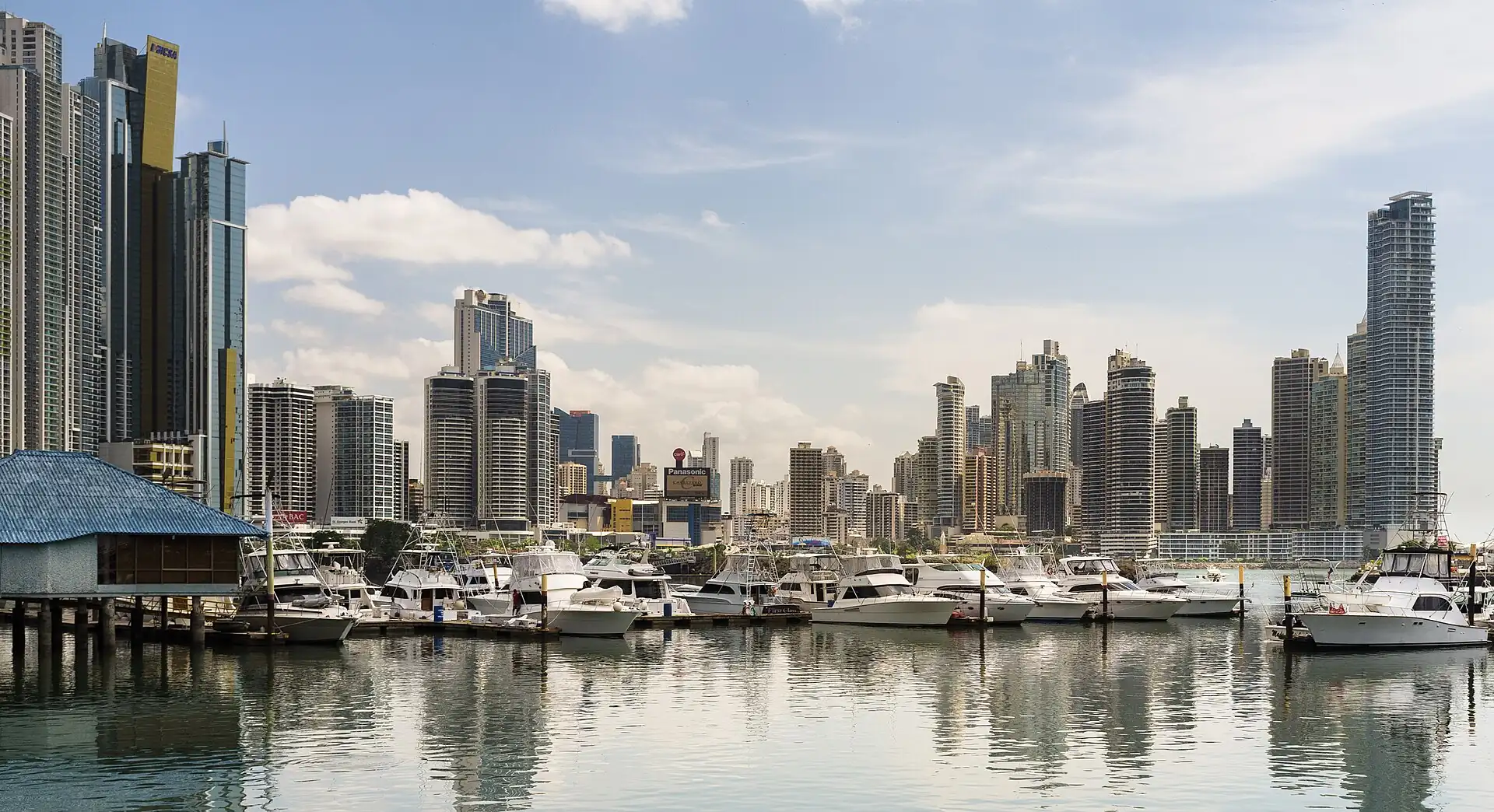
Panama City
Ciudad de Panamá
Code PA · 4 walking zones
Panama City is a morning city: Casco Viejo and the Miraflores Locks before 11:00, indoors from midday, taxis by app after dark.Panama City is a morning city: Casco Viejo and the Miraflores Locks before 11:00 AM, indoors from midday, taxis by app after dark.
Our quick read of Panama City, scored 1–5 (friction is out of 100). Cash need: how often you still need notes. Heat risk: how hot days get. Stroller: how easy wheels are. Friction: overall effort for a first visit. Desk judgements, so check before relying on them.
- Local time
- --:--
- Weather
- forecast below
- Currency
- USD
- Best months
- Jan · Feb · Mar · Dec
- Airport
- Tocumen (PTY)
Walking zones: the 4 areas this guide plans a day around. Each is a district you can cover on foot, so you do one zone per half-day and ride the train between them. The code (PA 01, PA 02…) is just the zone's number on the Panama City line; the line under each name says how bags fare there and how much time it needs.
Map of Panama City
Use the switches to show or hide each kind of pin. A switch that is on shows its pins on the map; tap it again to hide them. "Show only" keeps just the pins that match (for example, places that fit a suitcase). Tap any pin for its name and a link to its page.
- Where to sleep
- Places
- Eat
- Walking clusters
- Rest stops
From the airport Tocumen (PTY) to your bed
Tap a pin for its card. Places without their own coordinates are shown by their walking cluster.
Why Panama City
Panama City packs a colonial old town, a working Canal and a tower skyline into one hot, wet, traffic-heavy city. The trips that go wrong walk Casco Viejo at noon, plan the Canal locks without checking the ship schedule, or add a long transfer on a rainy afternoon. Four areas cover a first visit; the airport, the locks and the causeway are car rides away from one kept bed.
See first
- 1
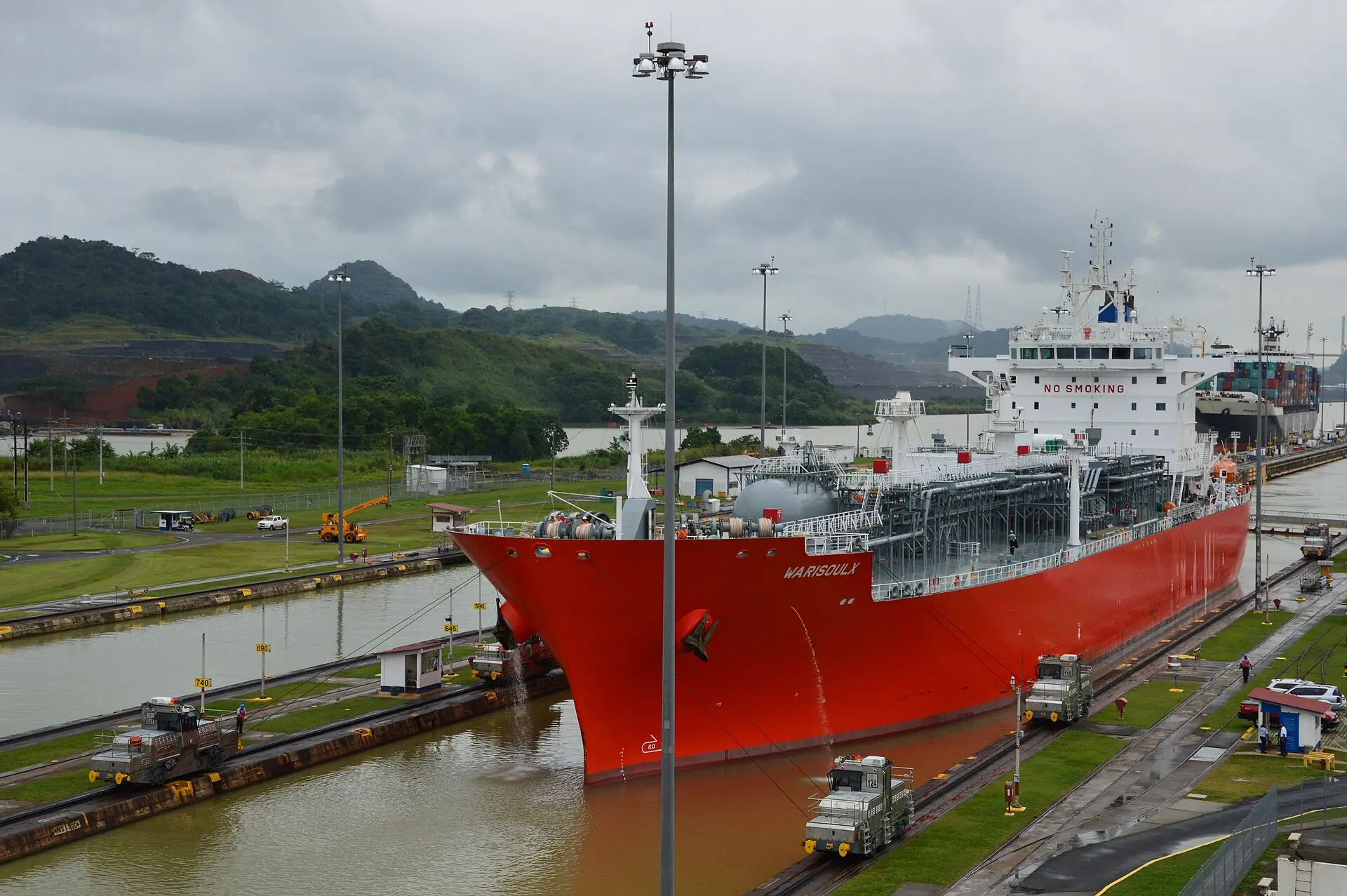 Miraflores Locks · 90 min to 2 h
- 2
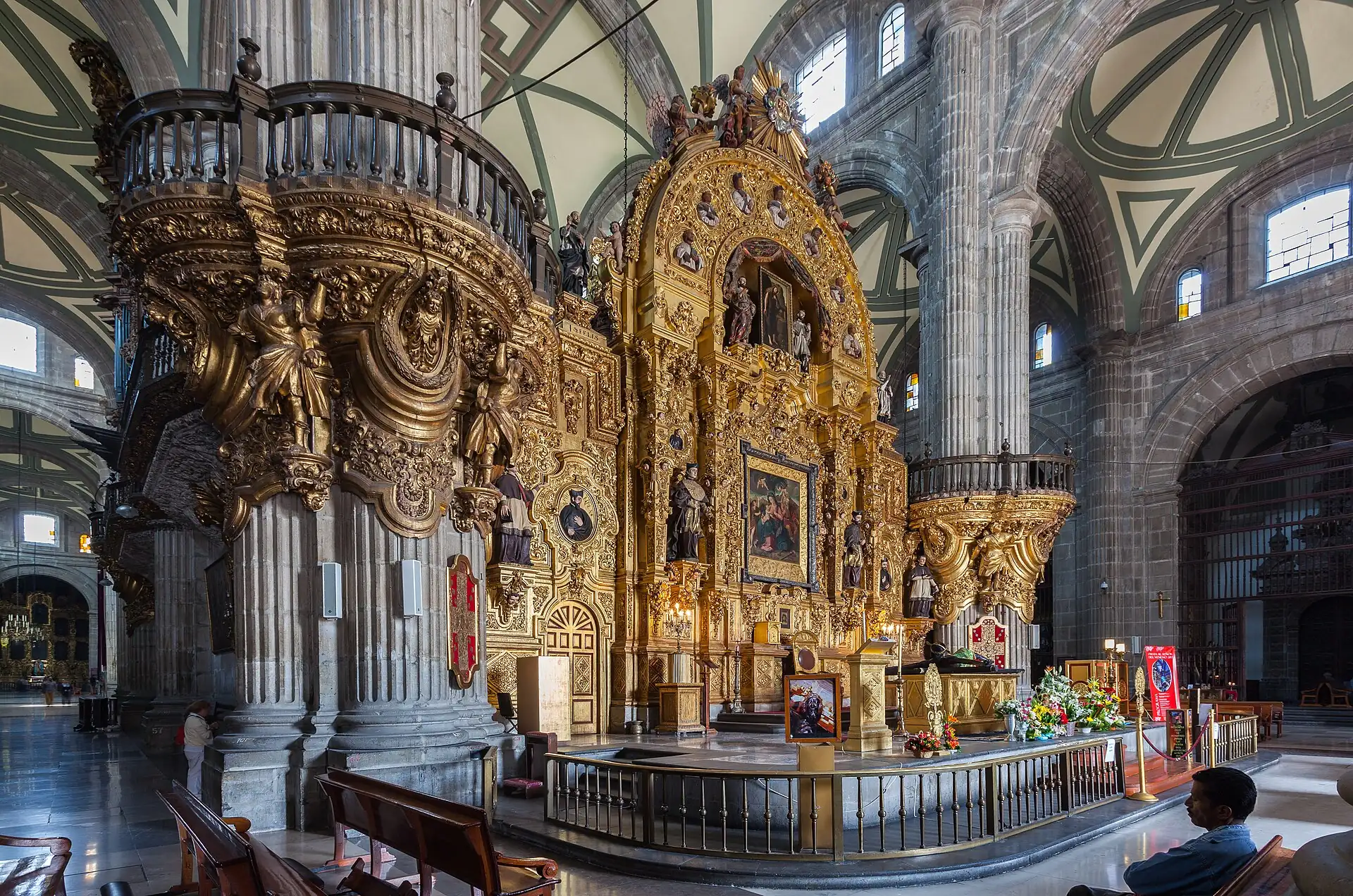 Casco Viejo plazas · 1 to 2 h
- 3
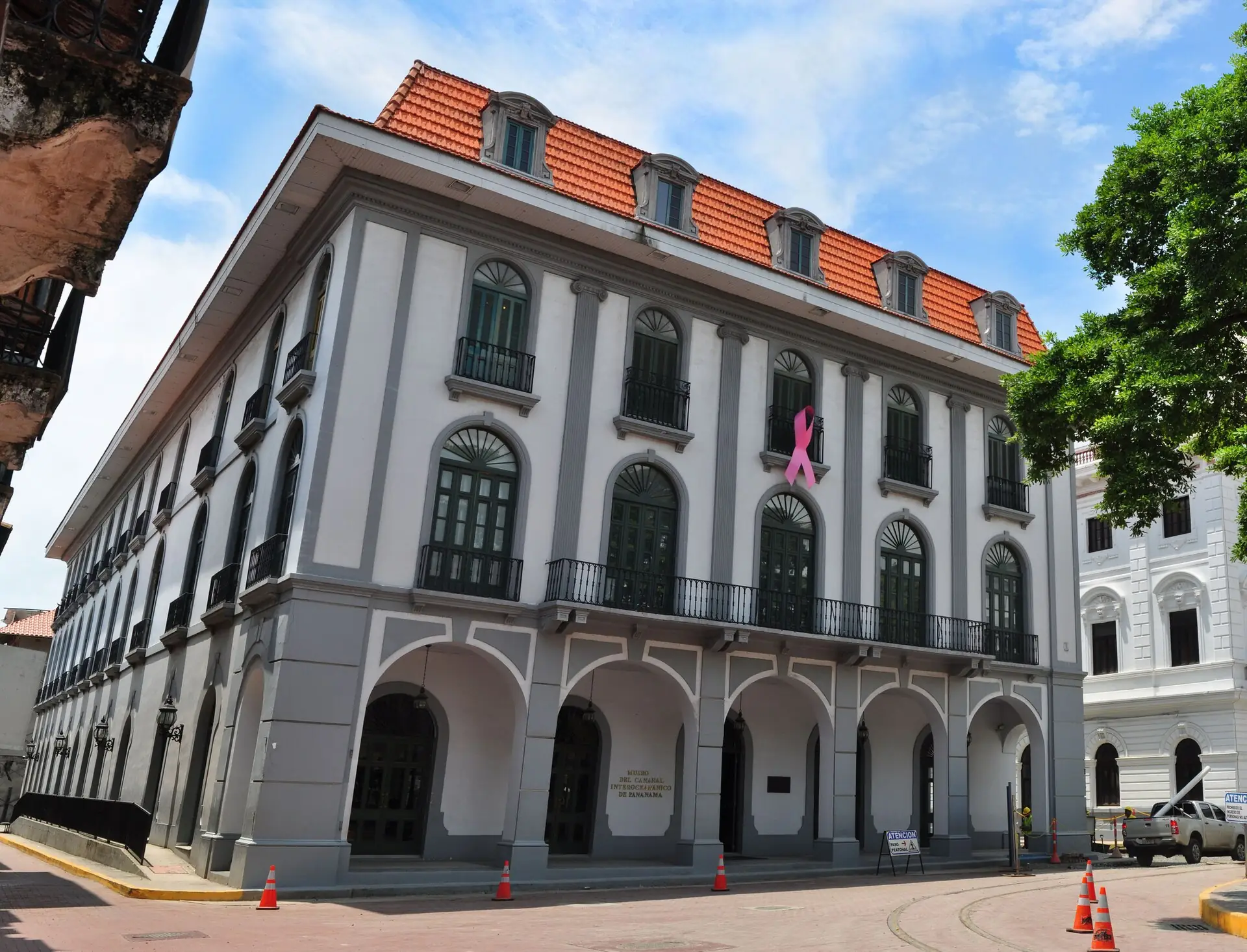 Panama Canal Museum · 60 to 90 min
- 4
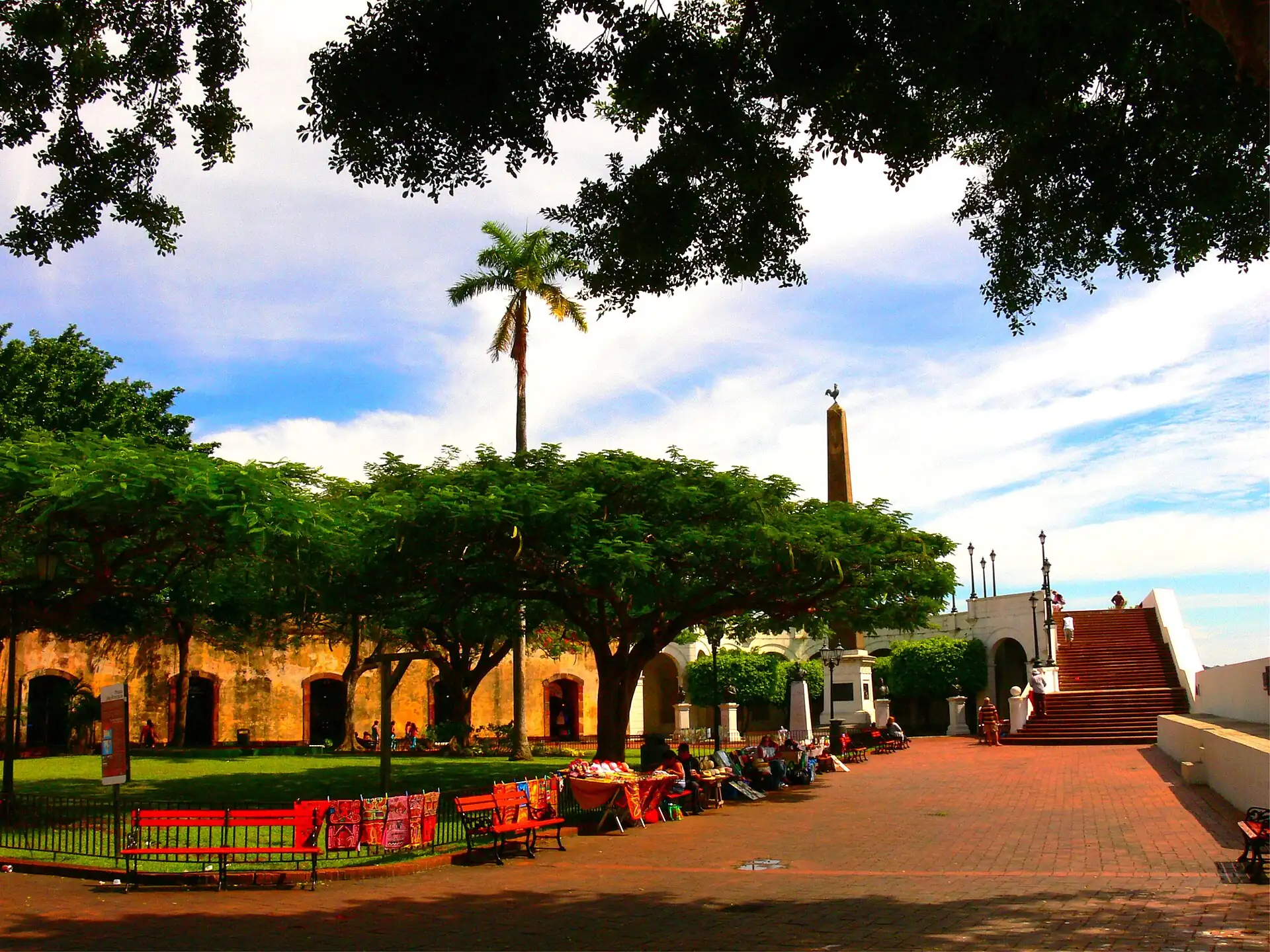 Plaza de Francia sea wall · 20 to 30 min
- 5Biomuseo · 90 min
Fits
- Stopover and short city breaks
- Travellers who like old towns and working infrastructure
- Early risers
Does not fit
- Travellers who hate heat and humidity
- Strollers and wheelchairs in Casco Viejo (cobbles and kerbs)
- Anyone planning long walks between areas
How long
- 2 daysCasco Viejo morning, Miraflores Locks the next morning
- 3 daysCasco Viejo, the Locks, Amador causeway and the Biomuseo; mornings outside, afternoons indoors
- 5 daysThree-day loop + Panamá Viejo ruins + one slow day or a rainforest morning in Gamboa
Good for
- First timers
- Foodies
- Budget
- Couples
- Solo
- Families
About Panama City
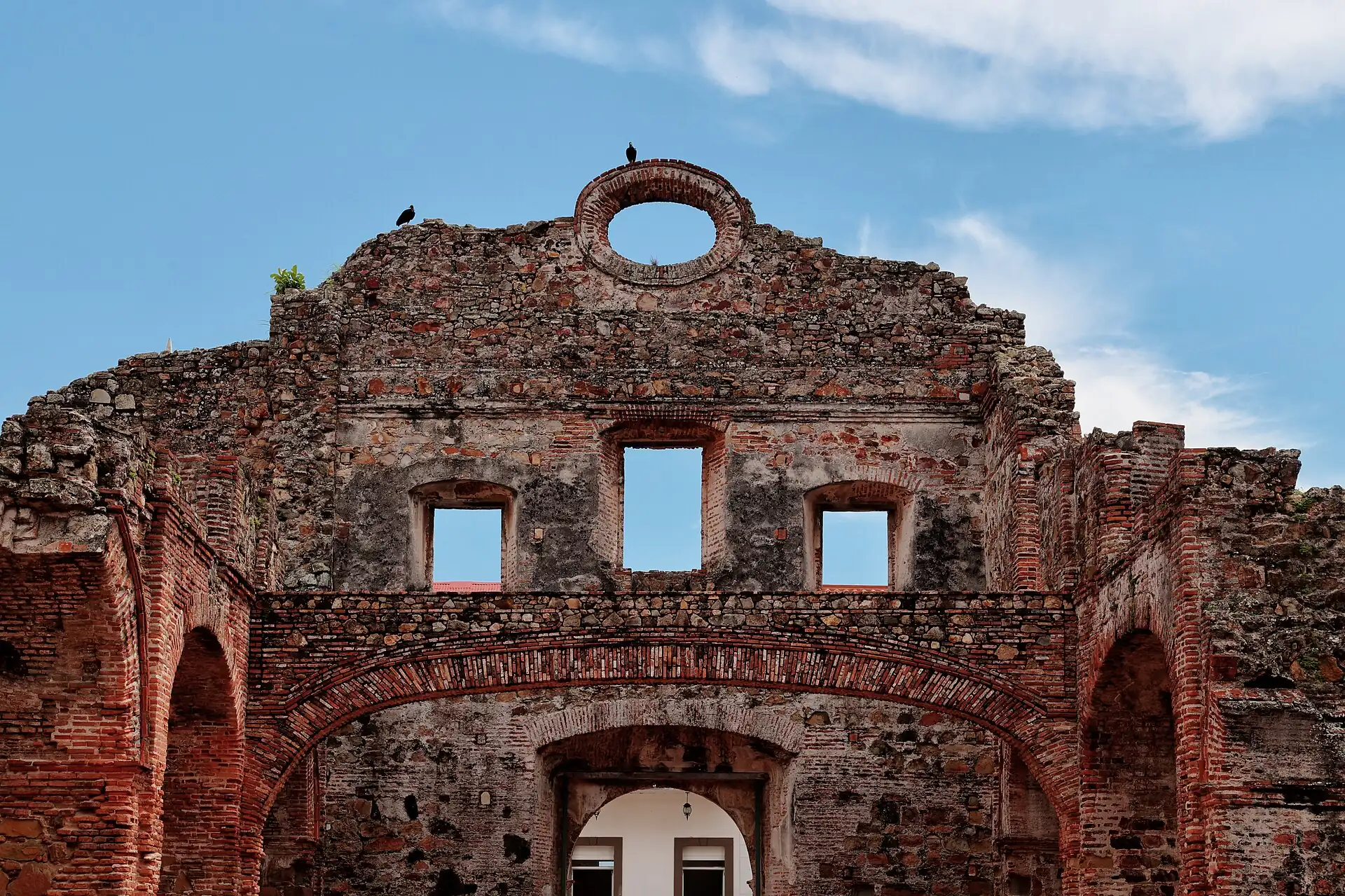
Panama City sits on the Pacific end of the Panama Canal, on a narrow strip of land between two oceans. The first Spanish city on the Pacific, now called Panamá Viejo, was founded in 1519 and served as the port for silver and gold shipped across the isthmus. In 1671 the English pirate Henry Morgan sacked it, and in 1673 the city was rebuilt on a peninsula a few kilometres west, the site of today's Casco Viejo.
Panama was part of Colombia until 1903, when it broke away with United States support and signed the treaty that allowed the Canal to be built. The Canal opened in 1914, the United States ran it and the Canal Zone until 31 December 1999, and Panama has run it since. The waterway, and the ships waiting at anchor in the bay, are still the reason for the city's shape and its wealth.
Good to know
- Panamá Viejo is the ruined first city, east of downtown; Casco Viejo (also called Casco Antiguo) is the 17th-century old town that is lived in today.
- The national tourism authority (ATP) publishes the official events and information; hotel desks are the most practical source.
- The Canal authority publishes ship schedules for Miraflores.
Go deeper 12 min read · 6 chapters
Panama City is a place where the geography is the story: a narrow land bridge between two oceans, a port that has moved goods across it for five centuries, and a canal that turned the crossing into a machine. This deep dive reads the city in layers: the first Spanish city and the pirate who destroyed it, the Canal and how the locks work, the old town that replaced the ruins, the bay and its skyline, the food, and the plain rules for a hot, wet, traffic-heavy city where mornings are the best hours.
1History: the first city on the Pacific and the one that replaced it2 min
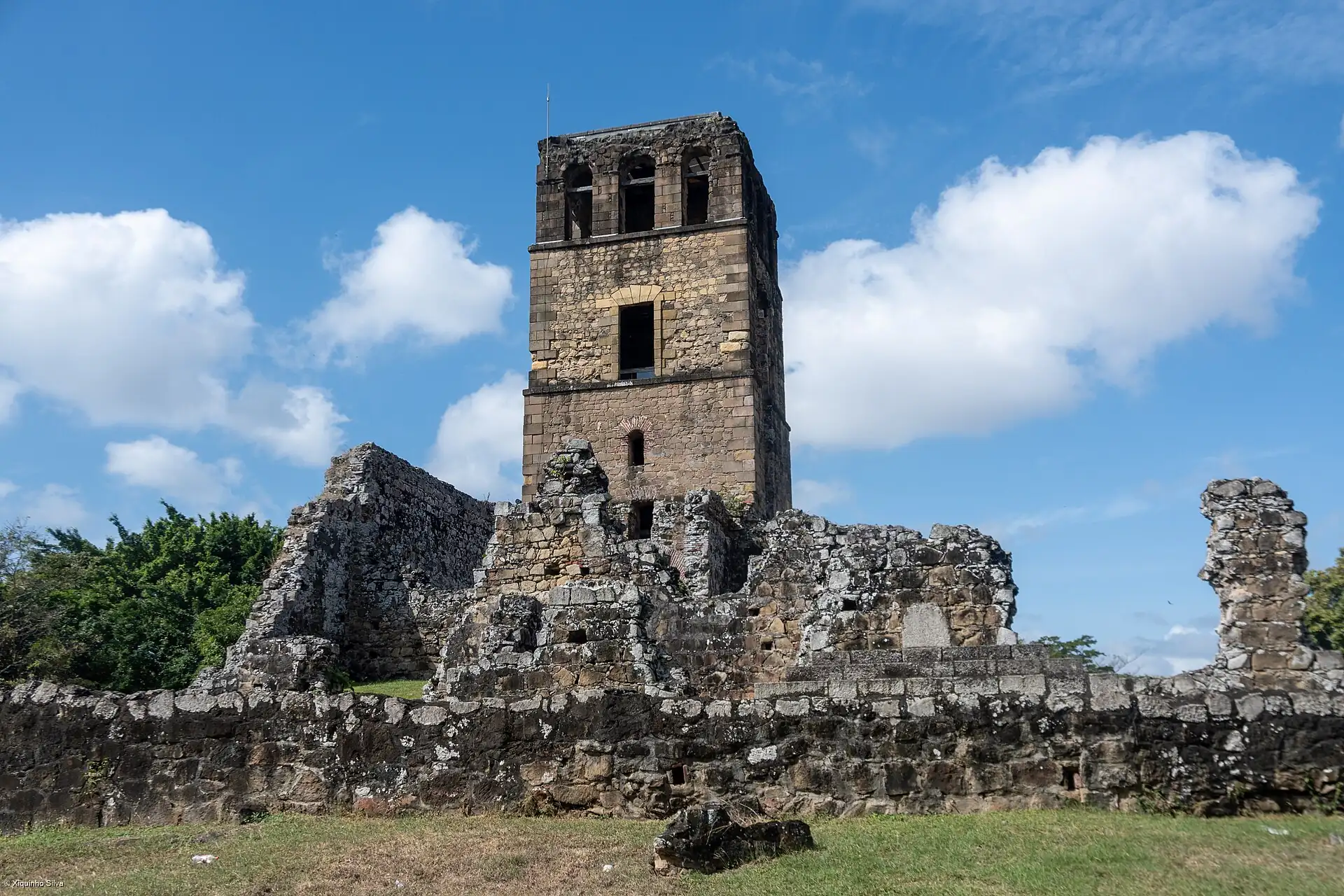
The Spanish founded Panamá, now called Panamá Viejo, in 1519 on the Pacific side of the isthmus. It was the western end of a mule road across the land: silver and gold from Peru came up the coast by ship, crossed to the Caribbean side and went on to Spain. The city grew rich on that trade, with churches, convents and a stone cathedral tower that still stands among the ruins.
In 1671 the English privateer Henry Morgan crossed the isthmus with an army, defeated the defenders and took the city. The Spanish set fire to parts of it themselves, and the fire and the sack left the city in ruins. The colonial authorities chose not to rebuild on the same spot. In 1673 they founded a new city on a small rocky peninsula a few kilometres to the west, easier to defend with a sea wall, and that is the district now called Casco Viejo.
For the next two centuries the isthmus was a colonial backwater that woke up whenever a new route was needed. The California gold rush of 1849 brought a railway across the isthmus in 1855, and the idea of a canal was in the air throughout. The French, led by Ferdinand de Lesseps, began digging in 1881 and gave up in 1889 after disease, cost and engineering problems. The United States took over in 1904 and finished the Canal in 1914.
Panama was part of Colombia until 3 November 1903, when it declared independence with US backing and quickly signed the treaty that gave the United States rights to build and run the Canal and a strip of land around it, the Canal Zone. Under treaties signed in 1977, the zone was dissolved and the Canal was handed to Panama on 31 December 1999. Panama now runs the waterway through the Panama Canal Authority, and its income is a large part of the national economy.
You can walk through the layers in a day. Panamá Viejo is the Spanish ruin, Casco Viejo is the second city, the Canal Museum tells the French and American story, and the Miraflores Locks show the machine in use.
- Founded as Panamá (now Panamá Viejo)
- 1519
- Sacked by Henry Morgan
- 1671
- Casco Viejo founded
- 1673
- Independence from Colombia
- 3 November 1903
- Canal opened
- 1914
- Canal handed to Panama
- 31 December 1999
2The Canal: how the locks work and what to see at Miraflores2 min
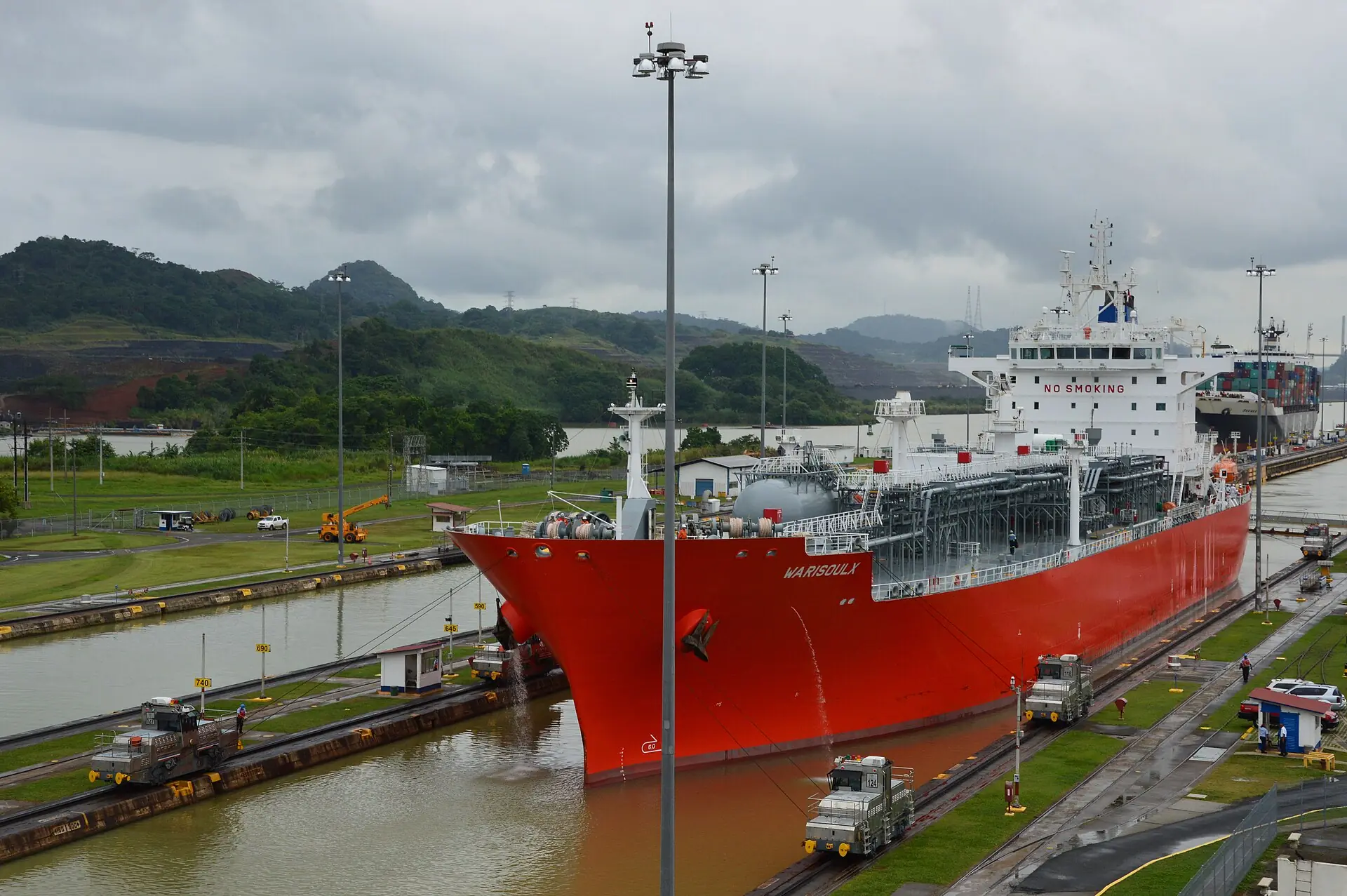
The Panama Canal is about 82 kilometres long from the Pacific to the Atlantic, and it works without a single pump moving water. Ships enter a chamber, the gates close behind them, and water flows in by gravity from the lake above to lift the ship to the next level. On the Pacific side, the ships are lifted in two steps at Miraflores and one at Pedro Miguel to reach the artificial Lake Gatún, about 26 metres above sea level. They cross the lake and then go down on the Caribbean side by the three chambers of the Gatún Locks. A full transit takes about eight to ten hours.
The original locks opened in 1914, and their chambers are about 33 metres wide, which set the maximum size of a ship for a century: the so-called Panamax. In 2016 a third set of locks opened, on the Pacific side at Cocolí and on the Atlantic side at Agua Clara, with chambers about 55 metres wide. These take much larger ships, and they reuse a share of the water in side basins. Both sets of locks work at the same time, so on a busy morning you may see a small ship in the old locks and a giant container vessel elsewhere.
The easiest place to see the machine is the Miraflores Locks on the city's north-west edge. The visitor centre has terraces that look directly over the chambers, a small museum, a film and a cafe. The main point of a visit is to time it for a ship: most transits pass in the morning and late afternoon, and the Canal authority publishes a schedule. A ship takes about ten to twenty minutes to be lifted, and you watch the gates open, the water rise and the small locomotives, called mules, hold the ship in place.
Two other things help. The Canal Museum in Casco Viejo tells the story of the French attempt and the American construction, with maps, models and photographs, and it explains the locks before you see them. And a partial transit tour on the Amador Causeway takes you through part of the Canal, which is the closest you can come to feeling the lift.
Some numbers put it in context. Ships pay tolls that run from thousands to hundreds of thousands of dollars. The Canal carries a few percent of world trade, and the lake that feeds the locks depends on rainfall, so in dry years the authority limits the number of daily transits. Check the schedule and any restrictions before you plan around a specific ship.
- Length
- About 82 km (51 mi)About 51 mi (82 km)
- Lake Gatún height
- About 26 m above sea level
- Transit time
- About 8 to 10 hours
- New locks opened
- 2016
- Best time at Miraflores
- Morning or late afternoon, when a ship is due
3Casco Viejo: the old town, its plazas and its edges2 min
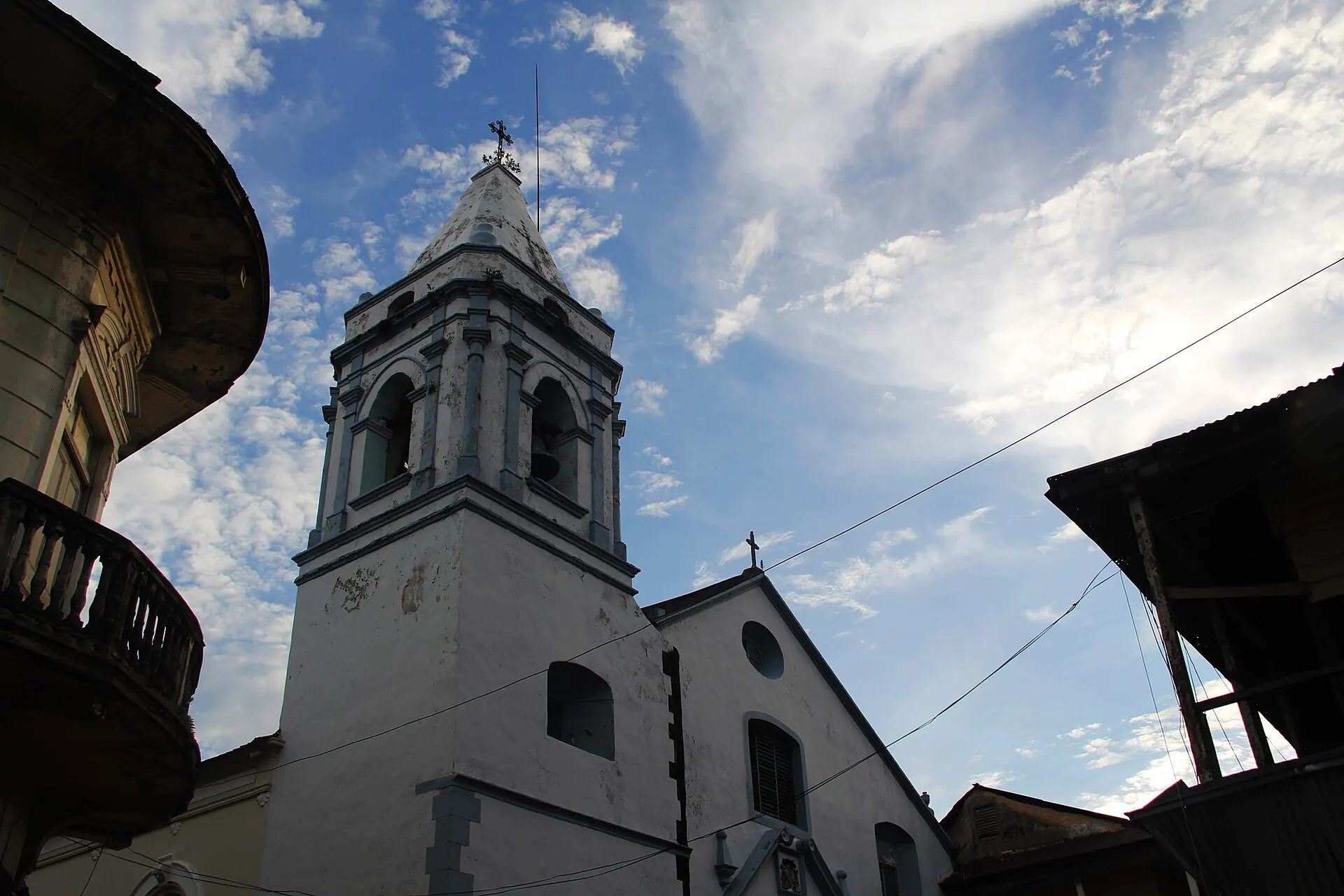
Casco Viejo, also called Casco Antiguo, is the district founded in 1673 on the peninsula that replaced the ruined first city. It is a small, walkable area of narrow streets, plazas, churches and balconied houses in Spanish, French and Caribbean styles, and it was inscribed as part of a UNESCO World Heritage site in 1997. For decades it decayed, with crowded tenements and crumbling facades. Since the early 2000s many buildings have been restored as hotels, restaurants and flats, and the district now looks polished in places and rough in others.
The main plaza is Plaza de la Independencia, where the cathedral, the Canal Museum and cafés face each other. A few streets away, Plaza de Francia, at the tip of the peninsula, has a monument to the French Canal effort and a view across the bay to the skyline. A short walk along the sea wall brings you past the old vaults, called Las Bóvedas, and the Presidential Palace, known as the Palacio de las Garzas, or Palace of the Herons. Do not photograph the guards up close.
The Iglesia de San José holds a gilded baroque altar. A local story says a priest painted the altar to hide it from Henry Morgan's men before the sack of 1671, and that the altar was moved to the new church. Historians question the details, but the altar is still worth a short visit.
Two practical points matter. First, the heat: cobbled streets and stone walls hold the sun, so the good hours are before 10:00 and after 17:00. Second, the edges. The streets that border Casco Viejo, towards Santa Ana and El Chorrillo, are not safe to wander, especially at night. Keep to the main plazas and lit streets, take a car door to door after dark, and choose a hotel with a drop-off within a hundred metres.
The district works best as a morning walk and an evening meal. Start early, see the cathedral, the plaza and the museum, take lunch at a fonda or a café, rest in air conditioning, and come back at dusk for the sea wall and a drink. Cobbles and high kerbs are hard with a stroller or a wheelchair, and luggage should go straight from car to hotel door.
- Founded
- 1673
- UNESCO inscription
- 1997
- Main plaza
- Plaza de la Independencia
- Best hours
- Before 10:00 and after 17:00Before 10:00 AM and after 5:00 PM
4The bay and the skyline: the causeway, the museum and the towers2 min
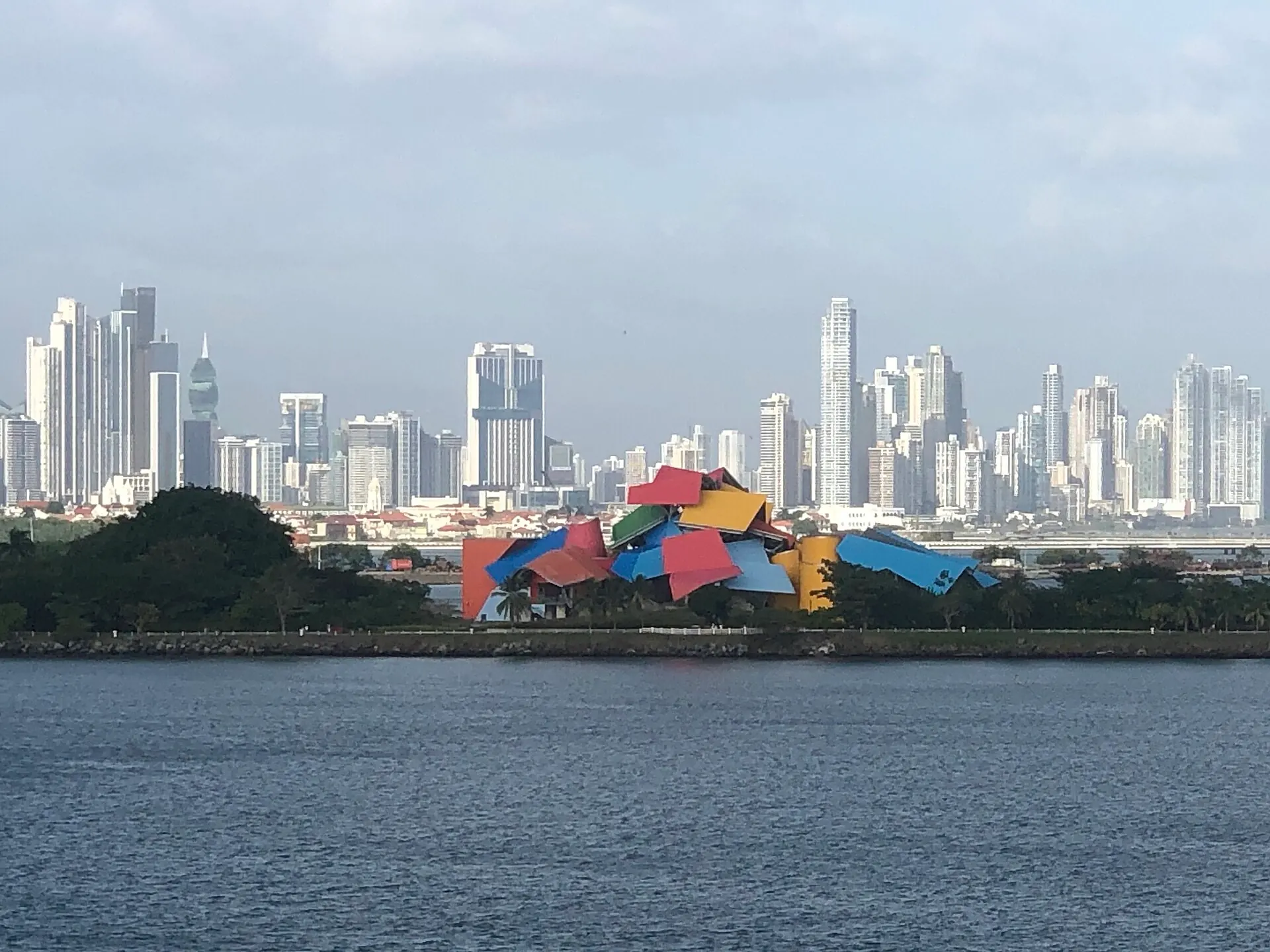
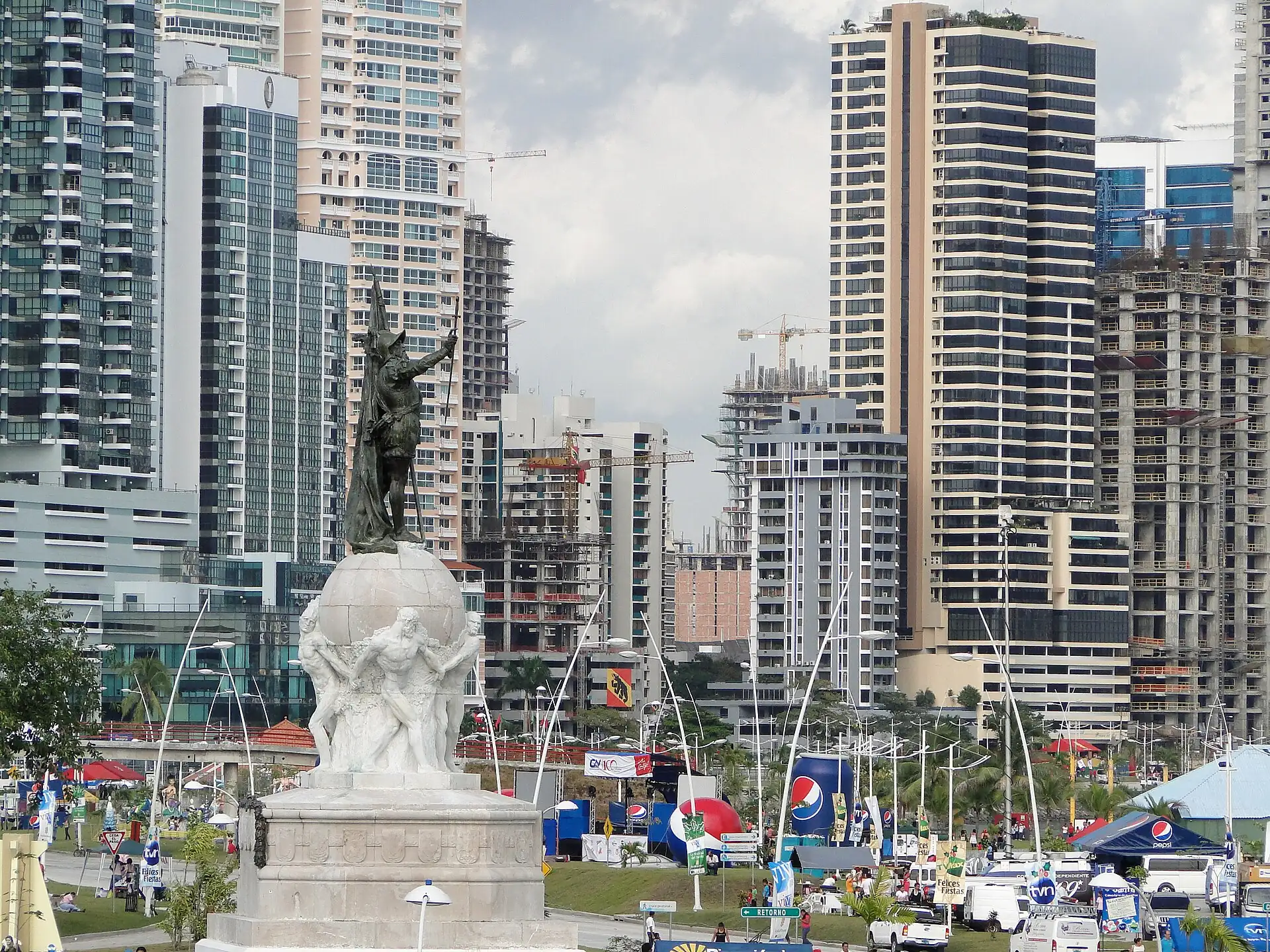
Across the bay from Casco Viejo rise the towers of the modern city: Punta Paitilla, Punta Pacífica and Costa del Este. Panama City has one of the tallest skylines in Latin America, built on banking, shipping and real estate, and it looks best at dusk from the sea wall in the old town. Below the towers, the Cinta Costera, a long seaside path, gives walkers and cyclists a flat route along the bay.
In the bay, dozens of ships wait at anchor for their turn to enter the Canal, and they give the view its character. To get closer, take the Amador Causeway, a road and path about six kilometres long that links Panama's mainland to three small islands. It was built in the early 1900s from the rock dug out of the Culebra Cut to protect the Pacific entrance of the Canal, and it is now a park with cycle hire, restaurants and a promenade.
At the start of the causeway stands the Biomuseo, designed by the architect Frank Gehry and opened in 2014. The building is a set of tilted, brightly coloured roofs, and inside eight galleries explain how the land bridge of Panama formed between the two American continents, how it changed the oceans' currents and how animals and plants crossed it. It is a good choice for a family or a hot morning, and it takes about 90 minutes.
East of the centre, the ruins of Panamá Viejo, with the cathedral tower you can climb, sit in the middle of new roads and apartment blocks. They are an open, hot site, so go at opening. The visitor centre and small museum provide context, and a walk through the stones takes about an hour.
These sights are far apart, and traffic decides how much you can do. The causeway is 15 minutes by car from Casco Viejo in light traffic, the ruins 20 to 30 minutes, and both can double in rush hour. Group by area: the causeway and the Biomuseo in one morning, the ruins in another, and do not try to see the old town, the causeway and the locks on the same day.
- Amador Causeway
- About 6 km (3.7 mi), built from rock excavated for the CanalAbout 3.7 mi (6 km), built from rock excavated for the Canal
- Biomuseo opened
- 2014, designed by Frank Gehry
- Ruins visit
- About 75 to 100 minutes
5Food and drink: fondas, ceviche and highland coffee2 min
Panamanian food is home cooking shaped by the mix of Spanish, African, Indigenous and Caribbean cultures. The everyday meal is a plate of rice, beans, stewed or fried meat or fish, and plantain or salad. The national comfort dish is sancocho, a chicken soup with root vegetables and culantro, a herb with a stronger taste than coriander. Arroz con pollo, ropa vieja (shredded beef) and patacones (twice-fried green plantain slices) appear on most menus.
The cheapest and most local meals are at fondas, small counters and rooms that serve one or two plates of the day for about US$5 to 9. Snacks are fried and cheap: carimañolas, cassava fritters filled with meat, empanadas and hojaldras, fried dough, cost US$1 to 2 each and are sold at bakeries and street stalls. Ceviche, raw sea bass cured in lime with onion and pepper, is the seafood dish to try, and a cup at the Mercado de Mariscos costs US$4 to 8. Eat it early in the day at a counter with fast turnover.
Restaurants in Casco Viejo and on the Amador Causeway cost three to five times as much as a fonda, with tourist prices and a service charge on some bills. They are the place for a long dinner with a view, not for a value lunch. Compare menus at the door and ask about the service charge.
Coffee is a serious subject. The highlands near Boquete grow some of the world's most expensive coffee, including the geisha variety, which has sold at record auction prices. Specialty cafés in Casco Viejo serve it, with an ordinary filter cup at US$3 to 6 and a geisha at US$8 to 20 or more. The cafés are also good air-conditioned breaks.
For drinks, the local lagers are Balboa, Atlas and Panama, at US$2 to 5 in a bar, and seco is a sugar-cane spirit often mixed with milk or juice. Fresh fruit drinks, chichas, and raspao, shaved ice with syrup, cool you down in the afternoon. Ask for bottled water; ice in established places is usually fine.
- Fonda plate
- About US$5 to 9
- Carimañola or empanada
- About US$1 to 2
- Ceviche cup at the market
- About US$4 to 8
- Local beer
- Balboa, Atlas or Panama, US$2 to 5
6Visiting well: heat, rain, cars and money2 min
Panama City is easy to like in the morning and hard in the middle of the day. It is hot and humid all year, with highs of 30 to 33 degrees, and in the wet season, from May to November, heavy rain usually falls after 14:00. Plan outdoor stops between 07:00 and 11:00, rest in air conditioning around midday, and come back out at dusk. Carry water, wear a hat and light clothes, and pack a rain jacket in the wet season.
Transport is the second decision. The Metro is clean and cheap but does not reach Casco Viejo, the locks or the causeway, and buses are hard for visitors. Ride-hailing apps, such as Uber and inDrive, work across the city, with fares of US$4 to 10 across the centre and US$12 to 25 to the locks, and licensed taxis work if you agree the fare before you get in. From Tocumen airport, use the official taxi counter or an app, which costs about US$30 to 40 to Casco Viejo. Traffic can double any ride at rush hour, so leave early for a flight.
Money is simple because the US dollar is the paper money; Panama's own balboa exists only as coins, of the same size as US ones. Cards are accepted in hotels, malls and most restaurants, and cash is needed for markets, fondas, small cafés and some taxis. Tipping is about 10% in restaurants if service is not already added; round up for drivers.
Safety takes common sense. The centre of Casco Viejo is busy and patrolled in the evening, but the streets around its edge are not for wandering, so take a car door to door after dark. Keep phones out of sight near the roadside, where distraction thefts happen. Avoid unofficial guides who ask for money afterwards, and use only licensed operators for boat and rainforest tours. The emergency number is 911.
Manners are relaxed but polite. Say buenos días when you enter a shop or a restaurant, cover shoulders and knees in churches, and ask before photographing people. Do not photograph police or the guards at the presidential palace up close, and stay behind the railings at the locks. A few words of Spanish help with vendors and cooks, though hotel staff usually speak English.
A workable three-day plan is one morning in Casco Viejo with the Canal Museum, one morning at the Miraflores Locks and the market, and one morning on the causeway with the Biomuseo, keeping every afternoon for rest and every evening for a walk on the sea wall or a dinner in the old town.
- Wet season
- May to November, with heavy rain after 14:00May to November, with heavy rain after 2:00 PM
- Airport taxi to Casco Viejo
- About US$30 to 40
- Ride-hail across the centre
- About US$4 to 10
- Emergency
- 911
Read, watch, wordsReading · Glossary · Sources
Reading
- The Path Between the Seas — David McCulloughThe standard history of the building of the Panama Canal, from the French attempt to 1914.
- Wikivoyage: Panama City — Wikivoyage contributorsA free travel guide with practical notes; check details before you go.
Glossary
| Term | Local | Meaning |
|---|---|---|
| Casco Viejo | Casco Antiguo | The old town, founded in 1673 after the first city was destroyed. |
| Fonda | Fonda | A small local restaurant serving a plate of the day. |
| Sancocho | Sancocho | A chicken and root-vegetable soup with culantro. |
| Ceviche | Ceviche | Raw fish cured in lime juice with onion and pepper. |
| Mula | Mula | A small locomotive that guides a ship through the locks. |
| Balboa | Balboa | Panama's currency, fixed to the US dollar and used only as coins. |
Read for this deep dive
Background reading only: the text above is written by Voykit, not copied from these pages.
Rules in force · 7Guatemala, El Salvador, Honduras and Nicaragua (CA-4) giv…
- Central America ↗Guatemala, El Salvador, Honduras and Nicaragua (CA-4) give one shared entry allowance, usually 90 days in total; leaving for Belize, Costa Rica or Mexico and coming back does not always reset it — check with immigration before a long stay.
- Central America ↗Cross land borders in daylight and early in the day; many posts close or empty of transport by late afternoon, and the approaches are where robberies happen.
- Central America ↗Several borders charge entry, exit or municipal fees in US dollars (Belize exit, Nicaragua entry and exit, Honduras entry); carry small, clean US notes and ask for a receipt.
- Panama ↗Check entry rules for your passport with Panama's National Migration Service or a Panamanian consulate; proof of onward travel and funds may be asked for.
- Panama ↗Do not travel independently in the Darién; the UK and other governments warn against parts of it, and there is no road crossing to Colombia.
- Panama ↗Guna Yala (San Blas) is governed by the Guna people: visitor fees apply, and photography of people usually needs permission and payment. Book through Guna-run or licensed operators.
- Panama City and the Canal ↗Check the Canal Authority's daily ship schedule before you plan the locks: the visit is worth most when a ship is due.
Entry rules depend on your passport. Full visa guide
Emergency numbers for Panama City911 ▾
- Police, ambulance, fire911
Tap a number to call from your phone. These are the numbers listed in this guide; a row marked check has not been verified.
Planning is the full guide. I'm here keeps what is open and the cheat card.
Right now
Checking the weather…
Working out what is open near you…
What is open nowclock, closures, places open
Now in Panama City
Local time in Panama City
--:--
Loads in your browser · America/Panama
This month
Month verdict appears here.
Closed today
See the weekly grid below.
| Weekly closure | Mon | Tue | Wed | Thu | Fri | Sat | Sun |
|---|---|---|---|---|---|---|---|
| Many museumscheckCheck each museum. | ✕ | · | · | · | · | · | · |
| Banks and government officescheckBanks close at weekends. | · | · | · | · | · | ✕ | ✕ |
If today is a closure day: Weekday mornings before 10:00 are the quietest and coolest time for Casco Viejo and the ruins; the afternoon rain in the wet season arrives after 14:00.
Weekly closures come from our place pages; public holidays close many sights.
Cheat cardthe pocket version
Cheat card
The essentials on one card: save it as an image for your phone, share it, or print it.
Panama City
Ciudad de Panamá
- Money
- Keep $20 in small notes; use ATMs inside banks or malls, and refuse to pay with $50 or $100 notes at small shops.
- SIM
- Install an eSIM before you fly, or buy a tourist SIM at the counters in Tocumen arrivals (passport needed).
- Ride app
- Uber and inDrive
- Emergency
- 911 police, ambulance, fire
- Plugs
- Sockets A/B. US/Canada (A/B): fits · UK/Ireland (G): adapter · Australia/NZ (I): adapter. 120 V: UK and AU 230 V-only devices need a converter; most chargers are dual-voltage.
Top 5
- Miraflores Locks
- Casco Viejo plazas
- Panama Canal Museum
- Plaza de Francia sea wall
- Biomuseo
EssentialsQuick answers, what things cost and how to get around
Essentials
Quick answers, what things cost and how to get around
Quick answers
The questions people ask first about Panama City, one line each. Tap a card for the full answer.
- Cash or card?Cards work in hotels, malls and most restaurants; cash for markets, small cafés and taxis.
- SIM or eSIMInstall an eSIM before you fly, or buy a tourist SIM at the counters in Tocumen arrivals (passport needed).
- Ride-hailing appUber and inDrive.
- Tap waterBottled water is the easy choice; ice in established places is usually fine.
- TippingAbout 10% in restaurants if service is not already added; round up for drivers.
- Plugs & powerSockets A/B. US/Canada (A/B): fits · UK/Ireland (G): adapter · Australia/NZ (I): adapter. 120 V: UK and AU 230 V-only devices need a converter; most chargers are dual-voltage.
Show all 14 answers
- Safe at night?Take more care after dark in Casco Viejo centre, Streets around Casco Viejo (Santa Ana, El Chorrillo), Panamá Viejo.
- Emergency numbers911 police, ambulance, fire
- Your embassycheckUS, UK, Canada embassies listed with addresses (check before you go).
- Closed which day?Mon: 1 on our list shut · Sat: 1 on our list shut.
- Sundays & holidaysWeekly closures come from our place pages; public holidays close many sights.
- Late at nightShops in Casco Viejo open late morning.
- Rainy-day planIn the wet season (May to November), heavy showers arrive after 14:00: put outdoor stops in the morning and indoor stops in the afternoon.
- Landing latePTY: airport taxi or ride-hailing car to the door runs all night.
Cost cheat-sheetwhat everyday things cost
Cost cheat-sheet
Typical prices for the everyday things, as ranges. Change the currency right here; the local price stays first.
2026 desk estimate · check
- CoffeeCoffee at a caféUS$2 to 5
- Sit-down mealSit-down restaurant meal, per person$15–35
- Street or quick mealEmpanada or fried snack$1–3
- BeerBeer in a barUS$2 to 5
- Taxi, about 5 km (3 mi)Taxi, about 3 mi (5 km)Ride-hailing across the centreUS$4 to 10
- SIM or eSIM, a weekTourist SIM or eSIM, about a week$8–20
- Budget bedHotel double room, a night, per roomUS$55
- Mid-range bedHotel double room, a night, per roomUS$110
- High-end bedHotel double room, a night, per roomUS$240
A day, not counting the bed: Budget US$40 · Mid US$90 · High US$200
Prices in local money; change the currency in the header to see yours next to them. Every price and the budget calculator →
Source: Prices in Panama City
Draft
Written from desk research. Not yet compared with the official source.
No official source is recorded for this figure.
Prices are 2026 desk estimates, not yet compared with an official source. Check on the day.
Not checked in the last 12 months (no check date on file).
DecideWho it suits, the trade-offs and when to go
Decide
Who it suits, the trade-offs and when to go
Best months at a glance
The guide's verdict for each month
Jan
Best
32°C (90°F)90°F (32°C)
Feb
Best
33°C (91°F)91°F (33°C)
Mar
Best
33°C (91°F)91°F (33°C)
Apr
Care
33°C (91°F)91°F (33°C)
May
Care
31°C (88°F)88°F (31°C)
Jun
Care
31°C (88°F)88°F (31°C)
Jul
Care
31°C (88°F)88°F (31°C)
Aug
Care
31°C (88°F)88°F (31°C)
Sep
Care
30°C (86°F)86°F (30°C)
Oct
Avoid
30°C (86°F)86°F (30°C)
Nov
Avoid
30°C (86°F)86°F (30°C)
Dec
Best
31°C (88°F)88°F (31°C)
Best: Dec–Mar. Mixed: Apr–Sep. Avoid: Oct–Nov. Month by month →
Warmest Feb (33°C (91°F)91°F (33°C)), coolest Jan (23°C (73°F)73°F (23°C) low), wettest Oct (19 rain days), driest Feb (3). Averages, not a forecast.
Panama City across the year
Best-looking months for Panama City: Jan, Feb, Mar. Rated avoid: Oct, Nov.
| Measure | Jan | Feb | Mar | Apr | May | Jun | Jul | Aug | Sep | Oct | Nov | Dec |
|---|---|---|---|---|---|---|---|---|---|---|---|---|
| Weather | Great (good) | Great (good) | Great (good) | Mixed (care) | Mixed (care) | Mixed (care) | Mixed (care) | Mixed (care) | Mixed (care) | Avoid (avoid) | Avoid (avoid) | Good (good) |
| Crowds | High (care) | High (care) | Medium (ok) | Medium (ok) | Low (good) | Low (good) | Medium (ok) | Low (good) | Low (good) | Low (good) | Medium (ok) | High (care) |
| Prices | High (care) | High (care) | Medium (ok) | Medium (ok) | Low (good) | Low (good) | Medium (ok) | Low (good) | Low (good) | Low (good) | Medium (ok) | High (care) |
| Events | 3 events (ok) | 1 event (ok) | 1 event (ok) | 1 event (ok) | 1 event (ok) | 1 event (ok) | 1 event (ok) | 2 events (ok) | 1 event (ok) | 1 event (ok) | 4 events (care) | 2 events (ok) |
Green is good news, amber needs planning, red is a month to avoid; dashed grey with a question mark means our data does not say. Open the year heatmap →
Not checked in the last 12 months (no check date on file).
Source: Months, temperatures and crowds
Draft
Written from desk research. Not yet compared with the official source.
Monthly highs, rain and crowd levels are climate averages and desk estimates for the city, not a forecast.
Understand the cityUnderstand · Districts
Orientation & districts
Casco Viejo is a small peninsula on the south-east side of the bay, with the cathedral square in the middle and the sea wall at the tip. North of it are Santa Ana and Avenida Central, and beyond them the modern towers of Bella Vista, Punta Paitilla and Costa del Este. The Amador Causeway runs south-west into the bay, the Miraflores Locks are 30 minutes north-west, and Panamá Viejo is 20 to 30 minutes east.
Walk inside Casco Viejo; use ride-hailing or licensed taxis between areas, and do not walk the edges of the old town at night.
Shaded shapes: walking areas (click one). Black pins: sleep areas. Grey dots: places. Round badges: arrivals. Click the map to turn on scroll-wheel zoom.
Hover, tap or tab to an area to see what it is like. Pins are sleep areas; arrows at the edge point to the airport.
Not drawn yet (no coordinates in this guide): Costa del Este and Punta Paitilla. They are in the neighbourhood cards below.
Where’s what, as a list:
- Casco Viejo (Casco Antiguo): Cobbles and heat; the edges are unsafe at night. Suits: Old streets, plazas and restaurants. Price band $$.
- Bella Vista and Avenida Balboa (Bella Vista): Towers and traffic. Suits: Modern hotels and a shorter ride to the business districts. Price band $$$.
- Amador Causeway (Calzada de Amador): Open and shadeless at midday. Suits: The Biomuseo and a flat seaside path.
- Miraflores Locks (Esclusas de Miraflores): North-west by car; go early. Suits: Ships in the Canal.
- Panamá Viejo (Panamá Viejo): East by car; open and hot. Suits: The ruins of the first city.
- Costa del Este and Punta Paitilla (Costa del Este): A car city. Suits: Malls and modern towers.
- Sleep area Bella Vista and Avenida Balboa: suits Modern hotels and a shorter ride to the business districts, price band $$$.
- Sleep area Casco Viejo: suits Old streets, plazas and restaurants, price band $$.
- Tocumen International Airport (PTY), about 21 km (13 mi)13 mi (21 km) from the centre, 45–75 min by the usual route.
Neighbourhoods at a glance
One tab per area, pulled together from this guide’s districts table, area notes, sleep-area scores and place pages. Scores are desk judgements (1–5); prices are estimates, check before you book.
Casco Viejo
$$Casco Antiguo
Cobbles and heat; the edges are unsafe at night.
- Suits:
- Old streets, plazas and restaurants · Walking, dinner and rooftop drinks
- Best time:
- Morning and evening
- Rooms:
- $70–200 per room per night (mid-range to boutique); more during Carnival and November holidays
Pick this if: First visits, restaurants, walking to Plaza de Francia
Skip this if: You travel with a stroller or wheelchair, or need a quiet street at night
- Quiet nights3/5 Medium
- Nightlife5/5 Very high
- Families2/5 Low
- Late arrival3/5 Medium
Why these scores
- Quiet nights: Busy at weekends near the plaza.
- Nightlife: Rooftop bars and restaurants.
- Families: Cobbles and heat.
- Late arrival: Ask about a night desk.
Getting around from here
- Car north-west: about 30 min to Miraflores Locks
- Car south: about 15 min to Amador Causeway and Biomuseo
- PTY: about 22 km (14 mi) in a straight line (arrival ride 45–75 min)PTY: about 14 mi (22 km) in a straight line (arrival ride 45–75 min)
Bella Vista and Avenida Balboa
$$$Bella Vista
Towers and traffic.
- Suits:
- Modern hotels and a shorter ride to the business districts · Comfort and pools
- Best time:
- Evening
- Rooms:
- $90–200 per room per night (mid-range to high)
Pick this if: Families, late arrivals, shorter transfers to Albrook and the bus terminals
Skip this if: You want to walk to old-town restaurants at night
- Quiet nights3/5 Medium
- Nightlife3/5 Medium
- Families4/5 High
- Late arrival4/5 High
Why these scores
- Quiet nights: Traffic noise.
- Nightlife: Bars and restaurants nearby.
- Families: Pools and malls.
- Late arrival: 24-hour desks.
Getting around from here
- 15–22 min walk to Casco Viejo
- PTY: about 18 km (11 mi) in a straight line (arrival ride 45–75 min)PTY: about 11 mi (18 km) in a straight line (arrival ride 45–75 min)
Amador Causeway
Calzada de Amador
Open and shadeless at midday.
- Suits:
- The Biomuseo and a flat seaside path
- Best time:
- Early or late
Pick this if: The Biomuseo and a bike ride
Watch out for: Midday.
Getting around from here
- Car north: about 15 min to Casco Viejo
- PTY: about 24 km (15 mi) in a straight line (arrival ride 45–75 min)PTY: about 15 mi (24 km) in a straight line (arrival ride 45–75 min)
Miraflores Locks
Esclusas de Miraflores
North-west by car; go early.
- Suits:
- Ships in the Canal
- Best time:
- Morning
Pick this if: Canal fans
Watch out for: Ship-free hours.
Getting around from here
- Car south-east: about 30 min to Casco Viejo
- PTY: about 25 km (16 mi) in a straight line (arrival ride 45–75 min)PTY: about 16 mi (25 km) in a straight line (arrival ride 45–75 min)
Panamá Viejo
Panamá Viejo
East by car; open and hot.
Feels: Open ruins beside the city
- Suits:
- The ruins of the first city
- Best time:
- At opening
Pick this if: History fans
Watch out for: Midday.
Getting around from here
- Car west: about 20 min to Casco Viejo
- PTY: about 14 km (8.7 mi) in a straight line (arrival ride 45–75 min)PTY: about 8.7 mi (14 km) in a straight line (arrival ride 45–75 min)
Costa del Este and Punta Paitilla
Costa del Este
A car city.
- Suits:
- Malls and modern towers
Decide
The honest trade-off: what you will enjoy, what will wear you down.
You will like
- Old-town evenings
- Ships in the Canal
- Short flights to the islands
You will hate
- Midday heat
- Rush-hour traffic
- Afternoon downpours
Similar citiesif this one is not quite right
Similar cities
If Panama City does not fit your dates or budget, these match it on season, cost and feel.
- Colombo
Sri Lanka
- Good in the same months: Jan, Feb, Mar, Dec
- Works well for first-timers, food trips, tight budgets
- A similar climate through the year
- Manila
Philippines
- Good in the same months: Jan, Feb, Mar, Dec
- A mid-range day costs about the same (≈US$70 vs US$90, excl. bed)
- Works well for first-timers, food trips, tight budgets
- A similar climate through the year
- Majuro
Marshall Islands
- Good in the same months: Jan, Feb, Mar, Dec
- A mid-range day costs about the same (≈US$90 vs US$90, excl. bed)
- Works well for couples
- A similar climate through the year
When
Best months: Jan, Feb, Mar, Dec. Month-by-month verdicts below, with the live forecast first. When to go, month by month →
Panama City: next 7 days
Loading forecast…
Forecast: Open-Meteo (CC BY 4.0), model data for this point.
Air quality
Loading…
Model estimate (CAMS via Open-Meteo), not a street-level station; readings near busy roads run higher.
Month by month, all 12best Jan, Feb, Mar, Dec
Dry season; hot, breezy.
Driest month; Carnival dates move.
Dry, very hot by afternoon.
Hot; first rains late in the month.
Rainy season starts; afternoon storms.
Wet afternoons; mornings usually fine.
Showers most afternoons.
Wet; humid.
Wet; heavy rain possible.
Among the wettest months; flooding on some roads.
Wet; national holidays crowd the old town.
Rains ease; Christmas season busy.
Climate, calendar and eventsClimate · Calendar · Events · Packing by season
Climate
| Jan | Feb | Mar | Apr | May | Jun | Jul | Aug | Sep | Oct | Nov | Dec | |
|---|---|---|---|---|---|---|---|---|---|---|---|---|
| High | 32°C (90°F)90°F (32°C) | 33°C (91°F)91°F (33°C) | 33°C (91°F)91°F (33°C) | 33°C (91°F)91°F (33°C) | 31°C (88°F)88°F (31°C) | 31°C (88°F)88°F (31°C) | 31°C (88°F)88°F (31°C) | 31°C (88°F)88°F (31°C) | 30°C (86°F)86°F (30°C) | 30°C (86°F)86°F (30°C) | 30°C (86°F)86°F (30°C) | 31°C (88°F)88°F (31°C) |
| Low | 23°C (73°F)73°F (23°C) | 23°C (73°F)73°F (23°C) | 23°C (73°F)73°F (23°C) | 24°C (75°F)75°F (24°C) | 24°C (75°F)75°F (24°C) | 24°C (75°F)75°F (24°C) | 24°C (75°F)75°F (24°C) | 24°C (75°F)75°F (24°C) | 24°C (75°F)75°F (24°C) | 23°C (73°F)73°F (23°C) | 23°C (73°F)73°F (23°C) | 23°C (73°F)73°F (23°C) |
| Rain days | 6 | 3 | 3 | 7 | 17 | 17 | 16 | 17 | 18 | 19 | 19 | 12 |
| Verdict |
- Panama City is hot all year, about 30 to 33 degC by day, with high humidity.
- The dry season runs from about December to April; the wet season, May to November, brings heavy afternoon showers, often after 14:00.The dry season runs from about December to April; the wet season, May to November, brings heavy afternoon showers, often after 2:00 PM.
- Plan outdoor stops for the morning and keep the afternoon for indoor stops or a rest; carry a light rain jacket in the wet season.
Events by month
Martyrs' Day
holidayJan 9 · Citywide
Public holiday.
Panama Jazz Festival
festivalJanuary · Casco Viejo and other venues(check dates)
Concerts; book early.
Carnival
festivalFour days before Ash Wednesday · Citywide(check dates)
Offices and shops close; the centre is packed.
Holy Week
holidayMoves each year · Citywide(check dates)
Many close; busy roads out of the city.
Founding of the city
holidayAug 15 · Casco Viejo
Events in the old town.
National days
holidayNov 3, 4, 5, 10 and 28 · Citywide
Parades; Casco Viejo is crowded and many offices are shut.
Christmas and New Year
holidayDec 25 and Dec 31 to Jan 1 · Citywide
Fireworks and traffic; book rooms and cars early.
Festivals and events that change the plan
| When | What | Effect on your plan |
|---|---|---|
| Feb or Mar (four days before Ash Wednesday) | Carnival | National party; many offices and shops close and the centre is packed. |
| Nov 3, 4, 5 and 10, 28 | November national days | Parades and closures; Casco Viejo is crowded, and many offices are shut. |
| Dec 31–Jan 1 | New Year | Fireworks and traffic; book rooms and cars early. |
| May–November | Rainy season | Heavy afternoon rain; outdoor stops belong in the morning. |
What to pack, by season
From Panama City’s own climate table: the coldest, warmest and wettest three months, and what to bring for each.
Coldest months
Sep–Nov
23° to 30°
Light layers; evenings can still feel cool.
Warmest months
Feb–Apr
23° to 33°
Light, breathable clothes, a sun hat and sunscreen; plan midday indoors and carry water.
Wettest months
Sep–Nov
19 rain days a month
A compact umbrella or rain jacket and shoes that can get wet.
Arrive & moveGetting in, getting around, and your bags
Arrive & move
Getting in, getting around, and your bags
I land at…
Enter your landing time: what still runs from the airport, where you can eat when you get in, and which areas let you check in that late.
Tocumen International Airport (PTY)
Out of the airport about 23:5511:55 PM (01:07 (next day)1:07 AM (next day) if immigration and bags are slow); in town about 00:40 (next day)12:40 AM (next day).
Transport from the airport
- Any hourAirport taxi or ride-hailing car to the door. Runs all night.
- Any hourSecond taxi rank or a hotel-arranged transfer, priced by zone. Any hour.
Places to eat open when you get in
We have no confirmed hours for the places to eat here yet. Plan on a convenience store or your hotel. What is open late →
Where to sleep with a late arrival
- Lets you inBella Vista and Avenida Balboa 24-hour desk. 24-hour desks.
- Lets you inCasco Viejo 24-hour desk. Ask about a night desk.
Typical times from our airport data, not a timetable: check the last departure on the day. Full airport-to-bed plan for Tocumen International Airport (PTY) →
Arrive
Each gateway has its own airport-to-bed page with timings and the last safe connection.
Getting in, in detailGet in
Get in by rail and road
| Station | Mode | Serves | Where | To the centre |
|---|---|---|---|---|
| Tocumen International Airport (PTY)PTYuse | Air | International flights and a regional hub | About 25 km north-east of the centre | Taxi or ride-hail 30 to 60 min; Metro line 2 also serves the airport (check) |
| Albrook bus terminalok | Bus | Long-distance buses to the interior and the borders | West of the centre | Taxi or Metro line 1 to the terminal (check) |
| Amador Causeway ferry pierok | boat | Ferries to Taboga Island | South-west of the centre | Taxi 15 to 25 min |
- Use the official airport taxi counter or a ride-hailing app.
- Traffic can double the ride at rush hour.
- Buses to the interior leave from Albrook.
Move
The default way around, when a pass pays off, and when the last trains go.
- Default
- Walk inside a cluster; ride-hailing car between clusters.
- Passes
- No pass. Rides inside the centre are cheap; check the fare in the app before you ride.
- Last trains
- The Metro closes at night and does not reach Casco Viejo or the locks; ride-hailing runs late but drivers may cancel in heavy rain.desk estimate
- Other modes
- Other modes (Rome2Rio) ↗
Getting around, in detailGet around · Connect
Get around
Walk inside a cluster; use ride-hailing or licensed taxis between clusters; the Metro helps for the modern towers but not for Casco Viejo or the locks.
| Mode | Verdict | Fare | Use it for | What breaks |
|---|---|---|---|---|
| Walking | ok | Free | Inside Casco Viejo and along the causeway | Heat, cobbles and kerbs. |
| Ride-hailing | use | US$4 to 10 across the centre | Between clusters and after dark | Check the fare in the app; drivers cancel in heavy rain. |
| Licensed taxi | ok | US$5 to 15 across the centre | When there is no app signal | Agree the total before you get in. |
| Metro | ok | About US$0.35 to 0.50 (check) | The modern districts and the airport line | Cheap; does not reach Casco Viejo or the locks. |
| Public bus | caution | About US$0.25 to 0.50 (check) | Not recommended for visitors | Crowded; hard to read. |
| Rental car | caution | US$40 to 80 a day | Day trips | Traffic and parking are hard in the centre. |
Taxis and ride-hailing
Airport taxi counter
fixed fare
Agree the fare before you leave the terminal.
Ride-hailing car
in-app fare
Check the plate and the fare.
On foot and car-free hours
| Where | When | Note |
|---|---|---|
| Casco Viejo | Morning and evening | Cobbles; stay in the main streets. |
| Amador Causeway | Early or late | Flat, no shade. |
More on getting around
Traffic is heavy at 07:00 to 09:00 and 16:00 to 19:00; add 30 to 60 minutes to trips across the city. Taxis without meters quote a price: agree it first.
Connect
| Option | Verdict | What breaks |
|---|---|---|
| eSIM bought before you fly | use | Works on landing; no counter. |
| Tocumen arrivals counters | use | Passport needed; compare plans. |
Uber and inDrive
Rides across the city
Check the fare in the app before you ride.
Google Maps
Routing
Works; download offline maps.
Messaging hotels and drivers
Widely used.
- Wi-Fi
- Free in hotels, malls and most cafés.
- Ride-hailing
- Apps work across the city; drivers sometimes cancel in heavy rain.
Luggage
Where big bags are a problem, and how to get rid of them for the day.
Rule
- Lockers
- Few public lockers; hotels hold bags after check-out.
- Forwarding
- No forwarding service culture; keep the big bag at the hotel for trips to the islands or highlands.
- Dead zone
- Late check-out flights: ask the hotel to hold bags and for a shower room.
Bags, area by area
4 walking areas rated
- Bags forbidden
- Bags painful
Lockers, forwarding and the gap between check-out and check-in are covered once, under Luggage.
See & doWalking clusters, day plans and the places worth the time
See & do
Walking clusters, day plans and the places worth the time
Clusters
Plan by cluster: each is a walkable area with a rescue point and a bag rule.
Morning and evening cluster: cathedral, plazas and the sea wall; cobbled and hot at noon, with bags forbidden on the streets.
rescue 91% · max p90 7′ · half
Half-morning cluster: ships pass the locks, a viewing terrace and a small museum; go early, indoors after 11:30.
rescue 91% · max p90 7′ · half
Morning or late-afternoon cluster: the Biomuseo and a flat seaside path; open and shadeless at midday.
rescue 91% · max p90 7′ · half
Morning cluster: the ruins of the first city, open and shadeless; a tower climb and a small museum.
rescue 91% · max p90 7′ · half
Days
Ready-made day plans, timed against opening hours and walking distances.
How long are you staying?
Loose outlines in the city's rhythm. The timed day plans check lunch anchors and the airport leg.
1 day
A stopover
- 07:30Metropolitan Cathedral — Casco Viejo: cathedral and plaza
- 09:30Panama Canal Museum (Museo del Canal Interoceánico) — Canal Museum
- 12:00Fonda lunch (plato del día) — Lunch at a fonda
- 14:00Rest in air conditioning
- 17:30Plaza de Francia — Plaza de Francia at dusk
Skip: The locks unless you have a morning to spare.
Panama City in 3 days
3 daysMornings outside, afternoons indoors, evenings in the old town; the last day ends with the bags already in the car.
Day by day
Day 1 — Casco Viejo morning, a 12:30 lunch table
- 07:30Metropolitan Cathedral
- Panama Canal Museum (Museo del Canal Interoceánico) (optional)
- Plaza de Francia (optional)
- Iglesia de San José (Golden Altar) (optional)
- 12:30Lunch table 12:30 (Casco Viejo)
Day 2 — Miraflores Locks, then seafood at the market
Day 3 — Causeway and Biomuseo, car to Tocumen at 12:00
- 08:30Biomuseo
- 12:00Car to Tocumen at 12:00
Places
“Best time” is when to arrive for the fewest crowds, for example “before 08:30”; “Go any time” means the hour makes little difference. More sights follow under “More sights and museums”.
7 places. Filters use the guide’s own ratings; a place with no rating is left out when a filter is on.
Tours, classes and shows in Panama City →
Things to do in Panama City: shows, nightlife and activities →
If you do ten things in Panama City
Ranked for a first visit of 2 to 4 days. Prices are 2026 estimates in US dollars; hours marked (check) still need confirmation.
- 1
Ships lifting through the Canal.
- Time
- 90 min to 2 h
- Best
- Morning, when a ship is due
- Cost
- about US$20 to 30
- 2
- 3
- 4
- 5
- 6
- 7
- 8
- 9
Gamboa
Birds and the Chagres river.
- Time
- Half day
- Best
- Early
- Cost
- US$60 to 120
- 10
Taboga
A beach day by ferry.
- Time
- Full day
- Best
- Dry season
- Cost
- US$30 to 60
Good for…
Verdict is how well Panama City works for that traveller, not how nice it is.
An old town, a Canal and a skyline in one hot, wet city; mornings are the plan.
- 1Sleep in Casco Viejo — the old streets on foot.
- 2Panama City in 3 days — the 3-day plan uses mornings.
- 3Miraflores Locks — the Canal.
Ceviche, sancocho and highland coffee.
- 1Mercado de Mariscos — fresh ceviche.
- 2Fonda lunch (plato del día) — a plate of the day.
- 3Specialty coffee cafés in Casco Viejo — highland coffee.
Cheap fondas, cheap rides and cheap coffee; entries add up.
- 1Carimañolas, empanadas and hojaldres — cheap breakfast.
- 2Fonda lunch (plato del día) — cheap lunch.
- 1Plaza de Francia — a sunset walk.
- 2Amador Causeway waterfront lunch — a view lunch.
- 1A hotel with a night desk — safe arrivals.
- 2Panama Canal Museum (Museo del Canal Interoceánico) — a calm afternoon.
Ships, a museum and a flat path; heat is the risk.
- 1Biomuseo — hands-on galleries.
- 2Miraflores Locks — big ships.
Cars make it easy; cobbles and heat are the strain.
- 1Panama Canal Museum (Museo del Canal Interoceánico) — cool and indoors.
- 2Miraflores Locks — lifts and shade.
Cobbles and kerbs; the locks and the Biomuseo are workable.
- 1Biomuseo — ramps and lifts.
- 2Miraflores Locks — level terraces.
Tours and classes: book or skip
Book through a licensed operator with written inclusions and a cancellation policy. Prices per person, 2026 estimates.
| Tour or class | Verdict | Typical price | Why | Check before paying |
|---|---|---|---|---|
| Canal partial transit | book | US$120 to 180 | The best way to feel the locks. | Operator licence, route and duration. |
| Gamboa rainforest tour | maybe | US$60 to 120 | Birds and wildlife with a guide. | Guide, group size and start time. |
| Casco Viejo walking tour | maybe | US$20 to 40 | A guide adds the history. | Group size and the meeting point. |
| Taboga Island day | maybe | US$30 to 60 | A beach day by ferry. | Ferry times and the return. |
| Self-guided old town | do it yourself | Free | The old town is compact. | Go early. |
What each season brings
Dry season (Dec to Apr)
Dec to Apr
Sunny mornings and fewer showers.
Watch: Higher prices, heat and busy sights.
Early wet (May to Jul)
May to Jul
Lower prices and green hills.
Watch: Afternoon downpours.
Wet peak (Aug to Nov)
Aug to Nov
Lowest prices.
Watch: Heavy rain, flooded streets and some closures.
Carnival (Feb or Mar)
Feb to Mar
Parades and parties.
Watch: Offices shut and the centre is packed.
Photo spots and the light
Light times are for clear days; the sun is strong from 10:00 to 15:00.
| Spot | Best light | Tip |
|---|---|---|
| The skyline across the bay | Dusk | Shoot from the sea wall as the lights come on. |
| The twin towers and the plaza | Early morning | Low light on the facade; the plaza is empty. |
| A ship in the chamber | Morning | Shoot from the upper terrace. |
| The coloured roof | Morning | Wide shots from the causeway path. |
| Casco Viejo side streets | Early morning | Ask before photographing people. |
Panama City travel FAQ
Answers are 2026 desk estimates; fares and rules marked (check) change.
Is Panama City safe?
The centre and tourist areas are fine with normal care; take a car at night and do not walk the edges of Casco Viejo.
How much is a taxi from the airport?
About US$30 to 40 to Casco Viejo; agree the fare first or use an app.
Do I need cash?
Yes for markets, small cafés and some taxis; cards work in hotels and malls.
Is Panama on the US dollar?
Yes; the balboa is fixed to the dollar and only coins circulate, so paper money is US dollars.
What is the best time to visit?
December to April is dry; the wet season, May to November, has afternoon rain.
Can I see ships in the Canal?
Yes at Miraflores; check the schedule and go in the morning.
Is tap water safe?
It is treated and commonly drunk, but many visitors use bottled water.
How many days do I need?
Two for Casco Viejo and the Canal; three or four with the causeway and the ruins.
Do I need Spanish?
Not in hotels; a few words help at markets and fondas.
Is it worth going to Panamá Viejo?
Yes if you like ruins and history; go early.
Do I need a hire car?
No; use ride-hailing or licensed taxis.
More to see and doSee & do · Learn & work · Rain & heat · Free things · Wheelchair and stroller
Free things to do
Sights in Panama City that cost nothing to enter. Each is described under Places or More sights; extra costs inside are marked there.
Wheelchair and stroller, place by place
How each place in this guide works for wheels, from its own page. Ratings are desk estimates unless a page says it was checked on the ground.
| Place | Step-free | Wheelchair | Stroller | What to know |
|---|---|---|---|---|
| Biomuseo | yes | good | good | Ramps and lifts; a wide, level entrance. |
| Panama Canal Museum (Museo del Canal Interoceánico) | partial | caution | caution | Some steps at the entrance and between floors; check the lift. |
| Metropolitan Cathedral | partial | caution | caution | Steps at the entrance; check the side ramp. |
| Miraflores Locks | yes | good | good | Lifts and ramps; the terraces are level. |
| Panamá Viejo ruins | partial | caution | caution | Flat paths; uneven stones among the ruins and steep steps in the tower. |
| Plaza de Francia | yes | ok | ok | Level plaza; steps to the sea wall in places. |
| Iglesia de San José (Golden Altar) | partial | caution | caution | Level entrance in most cases; cobbled street outside. |
See & do
15 of 15
- church
The old town's main church, on Plaza de la Independencia.
Casco Viejo · Free
The story of the Canal, from the French attempt to today.
Casco Viejo · about US$10
A gilded baroque altar with a pirate legend.
Casco Viejo · Free
- monument
A sea-wall plaza with a monument to the French Canal effort.
Casco Viejo · Free
- canal
Ships lift through the Pacific locks.
Canal · about US$20 to 30
- Museums
Panama's natural history in a Gehry building.
Amador Causeway · about US$25 to 30
- ruins
The ruins of the first city on the Pacific.
Panamá Viejo · about US$10 to 15
Cinta Costera
parkA long seaside path with views of the bay; go early or late.
Bay front · Daylight · Free(check)
Parque Natural Metropolitano
natureA rainforest park with trails and a view of the skyline; go early.
North of the centre · Daylight · small fee (check)(check)
Casco Viejo sea wall
ViewsA walk along the wall with the skyline across the bay.
Casco Viejo · Daylight · Free(check)
Canal partial transit or boat tour
tourA boat trip through part of the Canal; book a licensed operator.
Amador Causeway · Half or full day · US$120 to 180 (2026 estimate)(check)
Gamboa rainforest walk
tourBirds and wildlife with a guide; go early.
Gamboa · Half day · US$60 to 120 (2026 estimate)(check)
Casco Viejo walking tour
tourA guide adds the story of Morgan and the rebuild.
Casco Viejo · 2 to 3 h · US$20 to 40 (2026 estimate)(check)
Taboga Island day
tourA beach day by ferry from Amador.
Taboga · Full day · US$30 to 60 with the ferry (check)(check)
Causeway cycle
self guidedA flat ride with skyline views; early or late.
Amador Causeway · 1 to 2 h · US$5 to 15 for a bike (check)(check)
- Booking
- Book Canal boat trips and rainforest tours a few days ahead, use licensed operators and check the weather.
Learn & work
| What | Where | Cost | Note |
|---|---|---|---|
| Spanish classes | Language schools | US$10 to 20 an hour (2026 estimate) | Book ahead; check the school's licence. |
| Cooking classes (ceviche, sancocho) | Cooking schools and hotels | US$50 to 100 (2026 estimate) | Book a few days ahead. |
| Diving and snorkelling courses | Pearl Islands and Portobelo | US$80 to 150 (2026 estimate) | Check licence and insurance. |
Working here
- Tourist entry
- A tourist entry does not allow work; check the rules with the immigration authority.
- Remote work
- Panama has a short-stay remote-worker visa; check the current terms before you plan to work while you stay.
- Cost of living
- Rents are moderate; imported goods are dear.
Rain-day and heat-day plan
Rain day
In the wet season (May to November), heavy showers arrive after 14:00: put outdoor stops in the morning and indoor stops in the afternoon.
- 01Panama Canal Museum (Museo del Canal Interoceánico) — Indoors and air-conditioned.
- 02Biomuseo — A big indoor museum.
- 03Specialty coffee cafés in Casco Viejo — A long coffee under cover.
- 04Fonda lunch (plato del día) — A plate of the day out of the rain.
Heat day
Above 32 degC or 80% humidity: plan outdoors before 10:00 or after 17:00 and take an air-conditioned break every 60 to 90 minutes.
- 07:30Metropolitan Cathedral — Go before the sun is high.
- 12:00Panama Canal Museum (Museo del Canal Interoceánico) — Cool and indoors.
- 17:30Plaza de Francia — The sea wall at dusk.
Day-trips and nearby
Places you can reach from Panama City in a day or with one night away, with the route and what it costs. Door to door, not ride time.
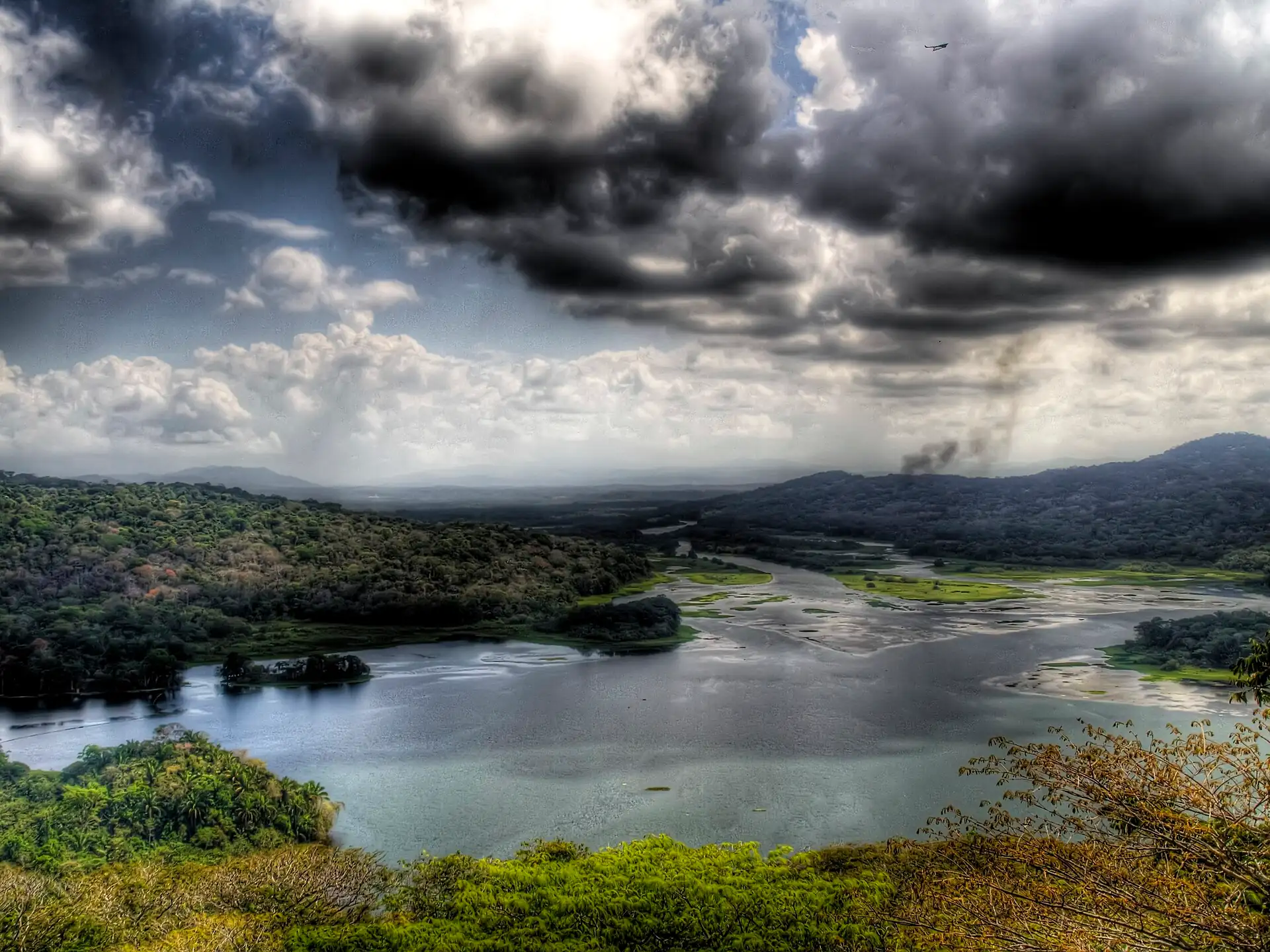 Photo: Javier Losa, CC BY 2.0
Gamboa rainforest
goCar or tour, about 45 min each way
Birdwatching and the Chagres river; go early.
- Time
- Half day
Portobelo and Colón coast
go off seasonCar about 1.5–2 h each way
Colonial forts on the Caribbean side; check road and weather news.
- Time
- Full day
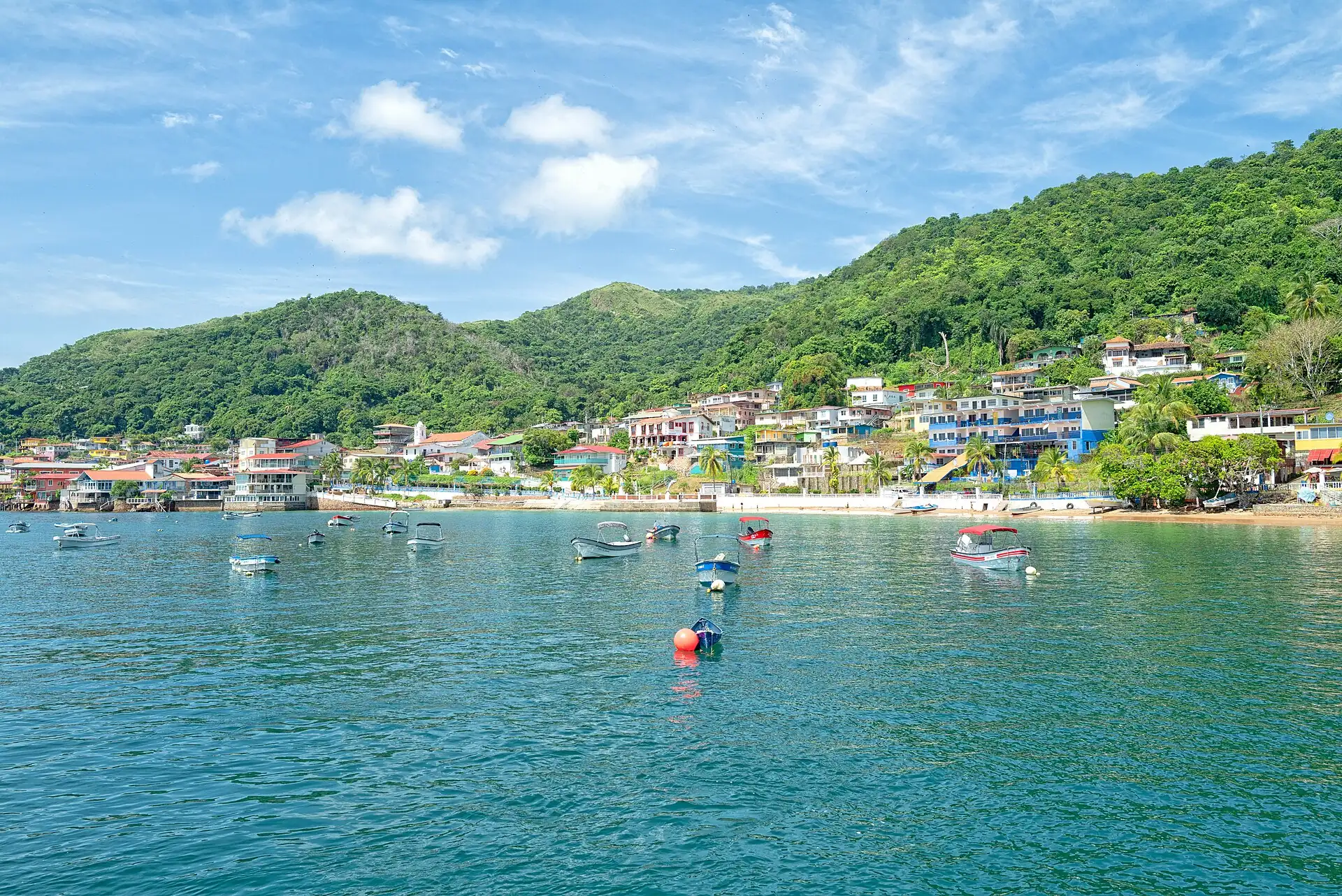 Photo: Otávio Nogueira from Fortaleza, BR, CC BY 2.0
Taboga Island
goFerry from Amador, about 30–60 min
Beach day; check the ferry times the day before.
- Time
- Full day
Go next
Door to door: 4 to 5 h
Flight about 1 h 30 to 2 h
Another Central American capital.
Eat & sleepWhere to eat and which area to sleep in
Eat & sleep
Where to eat and which area to sleep in
Eat
A short list of places worth crossing the city for, each with how to get a seat.
Restaurant finder: filter every place to eat in Panama City →
Vegetarian-friendly score
3.0 / 5 · Good
- Country diet noteOur country guide rates vegetarian eating as easy.2 / 2
- Places to eat in this guide1 of 4 places with a known answer are vegetarian-friendly, 3 partly.0.94 / 1.5
- Budget eating lines0 vegetarian lines in "Eat by budget".0 / 0.6
- Meat-free national dishes3 meat-free dishes in the country food list.0.3 / 0.4
- Dedicated vegetarian kitchens0 mentions of vegetarian restaurants, Buddhist or fasting kitchens.0 / 0.5
Country note: Easy in Panama City and Bocas; harder on San Blas (fish-based).
Vegetarian places near me →Make a diet card →
How we score
- Country diet note (up to 2): easy 2, workable 1, mixed 0.75, hard 0; no note 0.5.
- City places to eat (up to 1.5): 1.5 × (vegetarian-friendly + half of partly friendly) ÷ places with a known answer; needs 3 or more known places.
- Budget eating lines marked vegetarian (up to 0.6): 0.2 each.
- Meat-free national dishes (up to 0.4): 0.1 each.
- Dedicated vegetarian kitchens mentioned — Buddhist chay, shōjin ryōri, Jain, fasting food, vegan cafés (up to 0.5): 0.1 each.
- Total rounded to the nearest half point, 0 to 5. Built from our own pages only, not from reviews.
Eating and drinking guideEat by budget · Drink
Before you sit down to eat
Short version; full text linked
- Queues and hours
- Per person, one dish or one meal, 2026 estimate in US dollars. More →
Eat by budget
Under US$10 a meal
| Where | Order | Area | Price | Note |
|---|---|---|---|---|
| Carimañolas, empanadas and hojaldres | Carimañola and coffee | Casco Viejo | US$2 to 5 | |
| Fonda lunch (plato del día) | Plato del día | Casco Viejo | US$5 to 9 | |
| Mercado de Mariscos | A cup of ceviche | Market | US$4 to 8 |
Dishes to know
| Dish | What it is | Where to look | When | Price |
|---|---|---|---|---|
| SancochoSancocho | A chicken soup with root vegetables and culantro | Fondas | Lunch | US$4 to 8 |
| CevicheCeviche | Raw fish cured in lime with onion and pepper | Mercado de Mariscos | Lunch | US$4 to 12 |
| Arroz con polloArroz con pollo | Rice with chicken | Fondas | Lunch | US$5 to 9 |
| CarimañolasCarimañolas | Cassava fritters filled with meat | Bakeries and stalls | Breakfast or snack | US$1 to 2 |
| PataconesPatacones | Twice-fried green plantain slices | Restaurants | Side | US$2 to 5 |
| HojaldrasHojaldras | Fried dough rounds, sweet or savoury | Bakeries | Breakfast | US$1 to 2 |
| RaspaoRaspao | Shaved ice with fruit syrup | Street carts | Afternoon | US$1 to 2 |
- Eat cooked food hot; choose busy counters.
- Ask for bottled water; ice in established places is usually fine.
- Check the bill for a service charge before tipping.
- Go to markets and fondas before 13:30.Go to markets and fondas before 1:30 PM.
Drink & nightlife
| Where | What | Until | Note |
|---|---|---|---|
| Casco Viejo rooftop bars and plazas | Bars and terraces | About 01:00About 1:00 AM | A sunset drink with the skyline; take a car home. |
| Amador Causeway bars | Waterfront bars | About 23:00About 11:00 PM | A view of ships; take a car back. |
| Calle Uruguay and Bella Vista | Bars and clubs | Late | Take a car; do not walk between bars. |
By style
| Style | What | Where | Price | Until |
|---|---|---|---|---|
| Beer | Balboa, Atlas and Panama lagers | Any bar | US$2 to 5 (2026 estimate) | Bar closing |
| Seco | A local sugar-cane spirit | Bars and shops | US$3 to 6 (2026 estimate) | Bar closing |
| Coffee | Highland coffee | Specialty cafés | US$3 to 6 (2026 estimate) | Café closing |
Rules that bite
- Do not drink and drive.
- Keep an eye on your drink.
- Take a car home after dark.
Sleep
Pick the area first: it decides your walk home at night and your first morning.
Which neighborhood fits you
Three questions, one recommendation, with the reasons.
Your best fit
- The plaza, the cathedral and the sea wall are on foot.
Watch out: Boutique hotels; a few hostels.
Next best: Bella Vista and Avenida Balboa
Built from our 1–5 desk scores per area; your answers stay in this browser.
More on sleepingSleep by budget · Your area · With kids
Sleep by budget
| Band | Price | Where | Room types | What to expect |
|---|---|---|---|---|
| budget | US$35 to 70 double | Casco Viejo and Bella Vista | Hostels and small guest houses | Basic rooms; check air conditioning and security. |
| mid | US$80 to 160 | Casco Viejo and Bella Vista | Boutique and business hotels | Pool, breakfast and a car desk. |
| splurge | US$200 to 500+ | Casco Viejo and the bay towers | Restored mansions and tower hotels | Views, rooftop pools and restaurants. |
Booking checks
- Choose a hotel with a drop-off within 100 m in Casco Viejo.
- Ask about a night desk if you land after 21:00.Ask about a night desk if you land after 9:00 PM.
- Book early for December to April and for national holidays.
Which area is yours
| If you are | Sleep in | Because |
|---|---|---|
| First visit, want old streets and dinner on foot | Casco Viejo | The plazas and restaurants are a walk away. |
| Modern comforts and a pool | Bella Vista and Avenida Balboa | A short car ride to the sights. |
First-timers: restored streets, restaurants and the sea wall on foot; choose a hotel with a 24-hour desk and a drop-off within 100 m.
Quieter nights in larger hotels with lifts and a car at the door; a 15-minute ride to Casco Viejo.
Areas are in our default order until you tick a priority.
Scores are 1-5 desk judgements per priority (2026).
With kids
- The Biomuseo has hands-on galleries; go in the morning and walk the causeway afterwards.
- Miraflores Locks shows big ships lifting through the Canal; the terraces are level and have shade in places.
- Casco Viejo cobbles and high kerbs are hard with a stroller; use a carrier.
- The heat is the main risk with children: carry water, hats and sun cream, and rest in air conditioning at midday.
PracticalMoney, essentials, safety and the pocket card
Practical
Money, essentials, safety and the pocket card
Money
What a day costs at three comfort levels, and how to pay.
- Budget
- $25–45 excl. bed / day
- Mid
- $45–100 excl. bed / day
- High
- $100+ excl. bed / day
- Transit card
- No transit card needed for a first visit: ride-hailing cars, taxis and walking. The Metro has its own rechargeable card if you use it.
- Cash rule
- Keep $20 in small notes; use ATMs inside banks or malls, and refuse to pay with $50 or $100 notes at small shops.
More on moneyCosts · Budget · Buy
What things cost
- Fish plate at a market counter$8–15
- Bottle of water, shop$1–2
- Ride-hailing car across the centre$4–10
- Miraflores Locks ticket$20–35 (check the Canal Authority)
- Biomuseo ticket$20–30
Trip budget
| Hotel double room1 × 3 nights × US$110 | US$330 |
| Food, local transport, entries2 × 3 days × US$90 | US$540 |
| Airport transfer, both ways (taxi)1 × US$70 | US$70 |
| Miraflores Locks entry2 × US$25 | US$50 |
| Biomuseo entry2 × US$27 | US$54 |
| Buffer 15%Price creep, a taxi you did not plan, one splurge | US$157 |
| Trip total≈ US$200 per person per day, bed included | US$1,201 |
2026 estimate in US dollars; flights and boat tours excluded. Your choices stay in this browser.
Prices of common things
| Bottle of water, shop | US$1 to 2 |
| Empanada or carimañola | US$1 to 3 |
| Fonda lunch | US$5 to 9 |
2026 estimate; check locally.
Buy
- Bargaining
- Prices in shops and restaurants are fixed; bargaining is normal only with street sellers and at craft stalls.
- Fixed-price check
- Supermarkets (Riba Smith, Super 99) and pharmacies show fixed prices; use them to check water and snack prices.
Markets and shopping streets
| Where | What | When | Haggle | Note |
|---|---|---|---|---|
| Mercado de Mariscos | Fresh fish and ceviche counters | Early morning to mid-afternoon (check) | no | See the eat page. |
| Craft stalls near Plaza de Francia and Avenida Central | Molas (Guna textiles), hats and souvenirs | About 09:00 to 18:00 (check)About 9:00 AM to 6:00 PM (check) | yes | Ask where an item was made; prices vary. |
Shops by what they sell
| For | Where | Hours | Note |
|---|---|---|---|
| Molas and Guna crafts | Casco Viejo stalls and craft shops | About 09:00 to 18:00 | Ask where an item was made; buy from the makers or cooperatives. |
| Panama hats (sombrero pintao and toquilla) | Casco Viejo shops | About 09:00 to 18:00 | Real Panama hats are woven in Ecuador and Panama; compare prices and quality. |
| Coffee (Boquete highlands) | Cafés and supermarkets | About 08:00 to 19:00 | Whole beans travel well; geisha is expensive. |
Changing money
| Where | Verdict | Why |
|---|---|---|
| Bank ATMs | use | Draw US dollars; use ATMs inside banks or malls. |
| Exchange desks | avoid | Not needed: the US dollar is the paper money. |
ATMs
- Where
- Bank ATMs in malls and banks; avoid machines on quiet streets at night.
- Currency
- US dollars; Panamanian balboa coins are used for small change.
Essentials and accessEssentials · Access
Essentials
- Plugs & power
- 120 V; type A and B sockets, as in the United States.
- Toilets
- Cafés, malls, hotels and museums; carry tissues.
- Opening hours
- Museums often close one weekday (often Monday); check each place. Shops in Casco Viejo open late morning.
- Health
- Heat and humidity all year, mosquitoes (dengue is present), sun. Travel insurance with medical cover.
- Accessibility
- Casco Viejo has cobbles, high kerbs and uneven pavements; newer hotels, malls and the Biomuseo are step-free.
- Laundry
- Hotels do same- or next-day laundry, priced by the item or kilo.
- Emergency numbers
- 911.
Pack
- Light, breathable clothes and a hat
- A rain jacket for May–November
- Shoes that grip wet cobbles
- A layer for over-cooled shops and restaurants
Accessibility
Casco Viejo has cobbles, high kerbs and uneven pavements; the Biomuseo, malls, the Canal visitor centre and newer hotels are step-free. A car is the workable route between areas.
- Streets
- Cobbles, high kerbs and narrow pavements in Casco Viejo; better pavements in newer districts.
- Public transit
- The Metro is step-free but does not reach Casco Viejo or the locks; use a car.
- Hotels
- Modern hotels have lifts; boutique hotels in old buildings may not.
- Sights
- The Biomuseo and the locks have lifts and ramps; the ruins are uneven.
Sights, step-free or not
| Miraflores Locks | good | Lifts and level terraces. |
| Biomuseo | good | Ramps and lifts. |
| Metropolitan Cathedral | with help | Steps at the entrance; cobbles outside. |
| Panamá Viejo ruins | hard | Uneven paths and a steep tower. |
| Panama Canal Museum (Museo del Canal Interoceánico) | with help | Some steps; check the lift. |
Survive
Safety basics, the lines not to cross, and practical habits that save the day.
Safety
- Casco Viejo is busy and patrolled in the evening; the streets around its edge (toward Santa Ana and El Chorrillo) are not: take a car at night.
- Heat: AC stop every 60–90 minutes; drink bottled water.
- Emergency: 911.
Red lines
- Do not walk the streets of El Chorrillo, Curundú or Santa Ana at night, even close to Casco Viejo.
- Canal locks: stay behind the visitor-centre railings.
- Do not photograph police or the presidential palace guards up close.
Practical
- Toilets: cafés, malls and museums; carry tissues.
- Tap water in Panama City is treated and commonly drunk, but many visitors use bottled water.
More on staying safeStay safe · Stay healthy · Safety map · Solo & women · Etiquette · Cope · Scams
After dark, by area
3 flagged areas
Streets around Casco Viejo (Santa Ana, El Chorrillo)
Avoid after dark- Take care
- Take care
Day = about 07:00 to 19:00. What to watch in each area, day and night →
Scams and red flags
Walk away if you see these
- Street taxis that name a high price for tourists or refuse the meter: use a ride-hailing app or agree the total before you get in.
- Airport touts offering a 'cheap' ride inside arrivals: use the official taxi counter or your app.
- Distraction thefts on buses and at busy corners: keep phones out of sight near the roadside.
- Unofficial guides at the locks or in Casco Viejo who ask for money afterwards: agree a price first or decline.
Stay safe
Crossing the road
- 01Traffic drives on the right and cars do not always stop; cross with locals.
- 02High kerbs and open drains: watch your step.
Hustles specific to this city
| Hustle | Where | The tell | What to do |
|---|---|---|---|
| Street taxi price | Airport and street | A driver names a high tourist fare | Use a ride-hailing app or agree the total first. |
| Airport touts | Tocumen arrivals | A 'cheap' ride inside the terminal | Use the official counter or an app. |
| Unofficial guides | Locks and Casco Viejo | A friendly offer, then a request for money | Agree a price first or decline. |
- Police
- 911; report theft at a police station for insurance.
- Night
- Take a car door to door; do not walk the edges of Casco Viejo.
- Government advice
- Check your government's travel advice for Panama before you go.
Stay healthy
- Heat and humidity
- Drink water, rest in air conditioning every 60 to 90 minutes and wear light clothes.
- Water
- Tap water in the city is treated and commonly drunk; many visitors use bottled water.
- Mosquitoes
- Dengue is present; use repellent, especially at dawn and dusk.
- Vaccines
- Check the yellow fever and routine vaccine advice for your route.
- Insurance
- Private care is good but dear; buy travel insurance with medical cover.
Hospitals and clinics: see Cope.
Safety by area and hour
| Area | Day | Night | What to watch |
|---|---|---|---|
| Casco Viejo centre | fine | caution | Busy and patrolled in the evening; keep to the main plazas and lit streets. |
| Streets around Casco Viejo (Santa Ana, El Chorrillo) | caution | avoid | Do not walk here at night; take a car. |
| Amador Causeway | fine | fine | Open and shadeless by day; take a car back. |
| Miraflores Locks | fine | fine | Visitor centre only; stay behind the railings. |
| Panamá Viejo | fine | caution | Go by day; the surrounding streets are not for walking. |
- Use a ride-hailing app or agree a taxi fare before you get in.
- Keep phones out of sight near the roadside.
- Do not walk between clusters at night.
Solo, women and LGBTQ+ travellers
Solo
- Solo travellers are common in Casco Viejo; keep to lit main streets and take a car after dark.
- Choose a hotel with a night desk.
Women
- Expect attention on the street; a firm no thank you is enough.
- Avoid walking the edges of Casco Viejo at night and use a ride-hailing app.
LGBTQ+
- Same-sex activity is legal but same-sex marriage is not recognised; attitudes vary, so be discreet outside tourist areas.
- Check your government's advice before you travel.
Etiquette in Panama City
- Greetings
- Say buenos días or buenas tardes when you enter a shop or a restaurant.
- Dress
- Cover shoulders and knees in churches; smart casual in restaurants.
- Photos
- Ask before photographing people, and do not photograph police or guards up close.
- Tipping
- About 10% in restaurants if service is not added; round up for drivers.
- Pace
- Service can be slow; a friendly, patient request works better than pressure.
- Canal
- Stay behind the visitor-centre railings at the locks.
Cope
Hospitals and clinics that handle foreigners
| Where | Area | Use it for |
|---|---|---|
| Punta Pacífica private hospital | Punta Pacífica | A private hospital with an emergency department; costs are high, so keep insurance details ready. |
| Hospital Nacional | Bella Vista | A private hospital with an emergency department; confirm with your insurer. |
| Pharmacies | Malls and main roads | Basic medicines; many open late. |
Visa extensions
- Entry
- Most visitors need a valid passport, a return or onward ticket and proof of funds; some arrivals need a yellow fever certificate. Check the current rules for your passport before you fly.
- Stay
- Many visitors may stay up to 180 days; check the current rule.
Embassies and consulates
| Country | Address | Phone | Note |
|---|---|---|---|
| United States | Clayton, Panama City (check) | check | (check) |
| United Kingdom | check | check | (check) |
| Canada | check | check | (check) |
- Lost passport
- Report to the police, then contact your embassy.
- Pharmacies
- In malls and on main roads; some open late.
- Laundry
- Hotels do same- or next-day laundry.
Apps and offline kitOffline kit
Offline kit
Set up before you leave, so Panama City still works with no signal or a dead roaming plan.
On your phone
- Maps: open the city in Google Maps, tap the place name, then Download offline map (or use an offline-maps app).
- Data: install an eSIM or buy a local SIM before the first taxi; the apps in this guide depend on it.
- Translation: download the local language for camera translation.
- Screenshots: booking confirmations, hotel address in the local script, and the emergency numbers.
This guide
Save the Panama City guide and its pages on this device; it opens without a connection.
Phrases that do the work
Greeting
Hello
Buenos días
BWEH-nos DEE-as
Thanks
Thank you
Gracias
GRAH-syas
Market
How much is this?
¿Cuánto cuesta?
KWAN-toh KWES-ta
Food
Not spicy, please
Sin picante, por favor
seen pee-KAN-teh por fah-VOR
Café
The bill, please
La cuenta, por favor
la KWEN-ta por fah-VOR
Taxi
Please take me to this address
Lléveme a esta dirección
YEH-veh-meh ah ES-ta dee-rek-SYON
Taxi
Stop here, please
Pare aquí, por favor
PAH-reh ah-KEE por fah-VOR
Pocket card
Fill in, then print or save as PDF
Stays in this browser only; nothing is sent anywhere.
Panama CityCiudad de Panamá
Pocket card · Voykit
My bed tonight
—
—
—
Lléveme a esta direcciónPlease take me to this address
Emergency
- Police, ambulance, fire911
Embassy
Write your embassy's phone number below and save your insurer's line.
My embassy: —
Fare anchors (2026 estimate)
- Tocumen to Casco Viejo, taxi: About US$30 to 40, 30 to 60 min depending on traffic (agree first)
- Casco Viejo to Miraflores, ride-hail: About US$12 to 25, 30 to 45 min
Spanish is the language; a few words go a long way, and hotel staff speak English.
Deep diveHistory, reading, photos and every source
Deep dive
History, reading, photos and every source
Sources
- officialAutoridad de Turismo de Panamá
- officialPanama Canal Authority
- secondaryWikivoyage — Panama City
Ask about Panama City
Loading…
Was this useful?