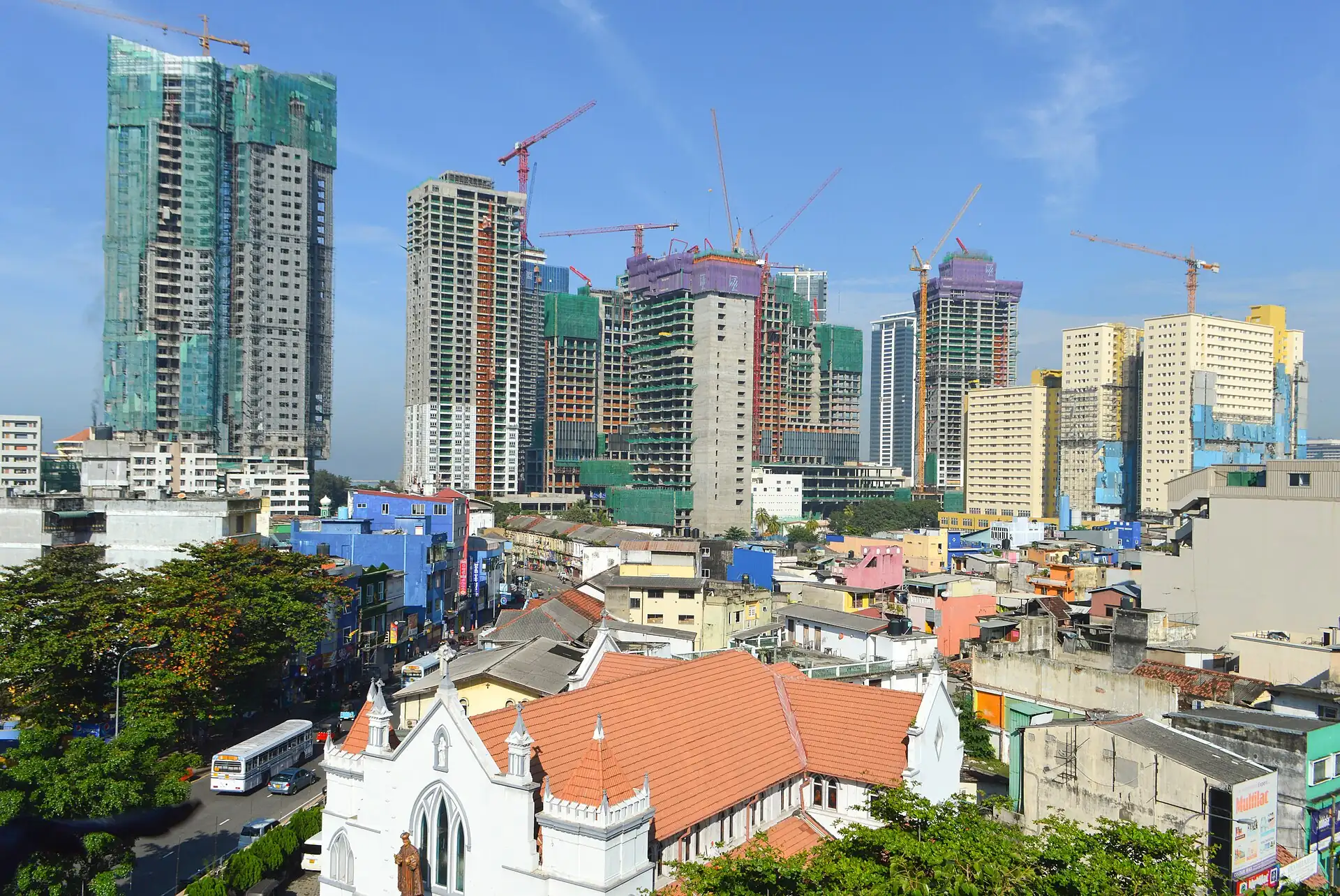
Colombo
කොළඹ
Code CB · 4 walking zones
Colombo is a morning-and-evening city: do Beira Lake and Pettah before 10:30, hide from the heat at midday, walk the seafront after 16:30 — and leave a wide margin for the airport, which is far and the road is slow.Colombo is a morning-and-evening city: do Beira Lake and Pettah before 10:30 AM, hide from the heat at midday, walk the seafront after 4:30 PM — and leave a wide margin for the airport, which is far and the road is slow.
Our quick read of Colombo, scored 1–5 (friction is out of 100). Cash need: how often you still need notes. Heat risk: how hot days get. Stroller: how easy wheels are. Friction: overall effort for a first visit. Desk judgements, so check before relying on them.
- Local time
- --:--
- Weather
- forecast below
- Currency
- LKR
- Best months
- Jan · Feb · Mar · Dec
- Airport
- Bandaranaike (CMB)
Walking zones: the 4 areas this guide plans a day around. Each is a district you can cover on foot, so you do one zone per half-day and ride the train between them. The code (CB 01, CB 02…) is just the zone's number on the Colombo line; the line under each name says how bags fare there and how much time it needs.
Map of Colombo
Use the switches to show or hide each kind of pin. A switch that is on shows its pins on the map; tap it again to hide them. "Show only" keeps just the pins that match (for example, places that fit a suitcase). Tap any pin for its name and a link to its page.
- Where to sleep
- Places
- Eat
- Walking clusters
- Rest stops
From the airport Bandaranaike (CMB) to your bed
Tap a pin for its card. Places without their own coordinates are shown by their walking cluster.
Why Colombo
Colombo is hot, humid and spread along one coast road. Its sights are close as the crow flies, but pavements are narrow or missing and the traffic peaks twice a day. The trips that go wrong are the ones that walk at noon, drag suitcases through Pettah, or leave for Katunayake with less than a three-hour margin. Four clusters cover a first visit; most travellers use Colombo as the first or last night of a longer island trip.
See first
- 1
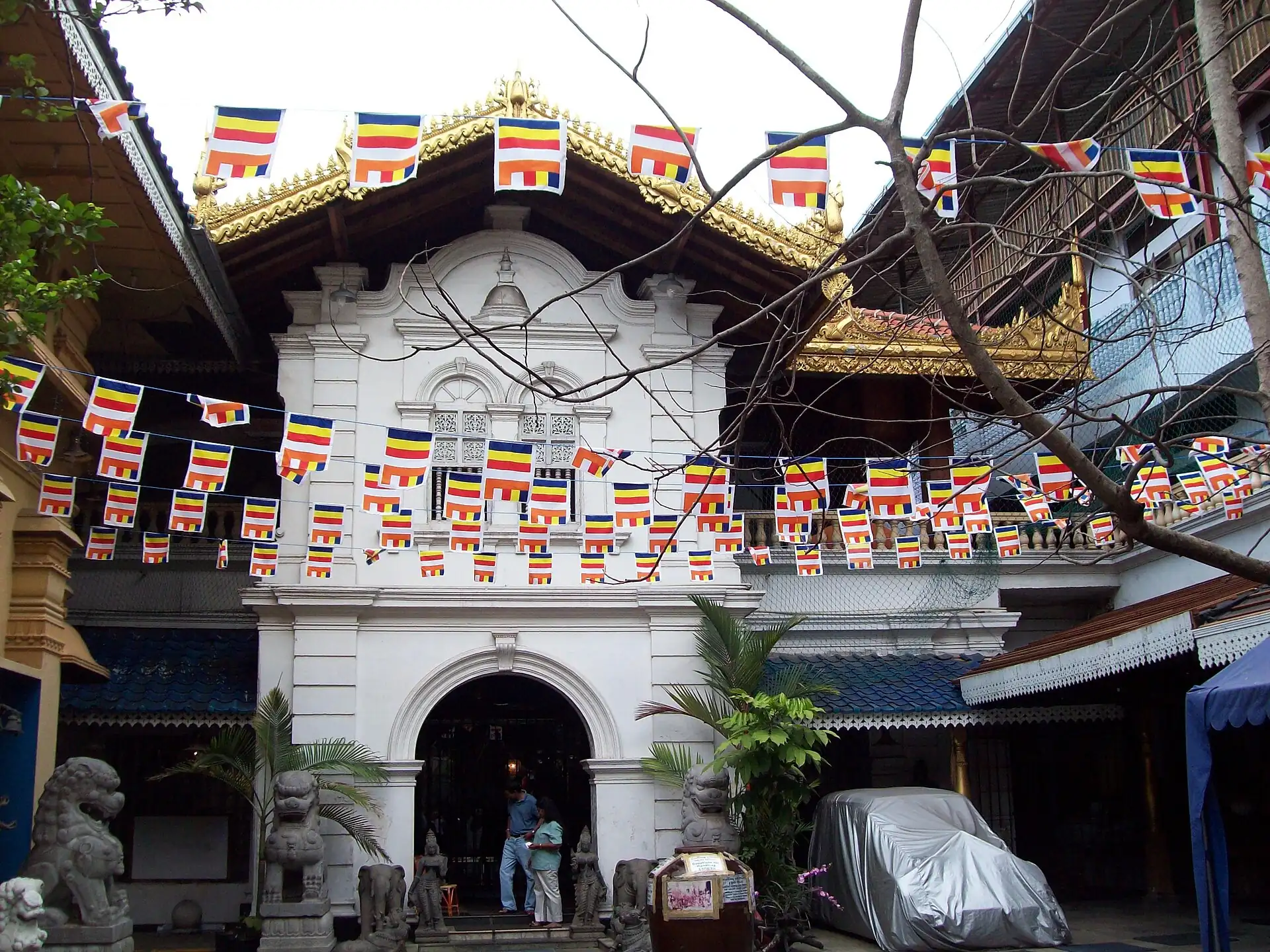 Gangaramaya Temple at opening · 45–60 min
- 2
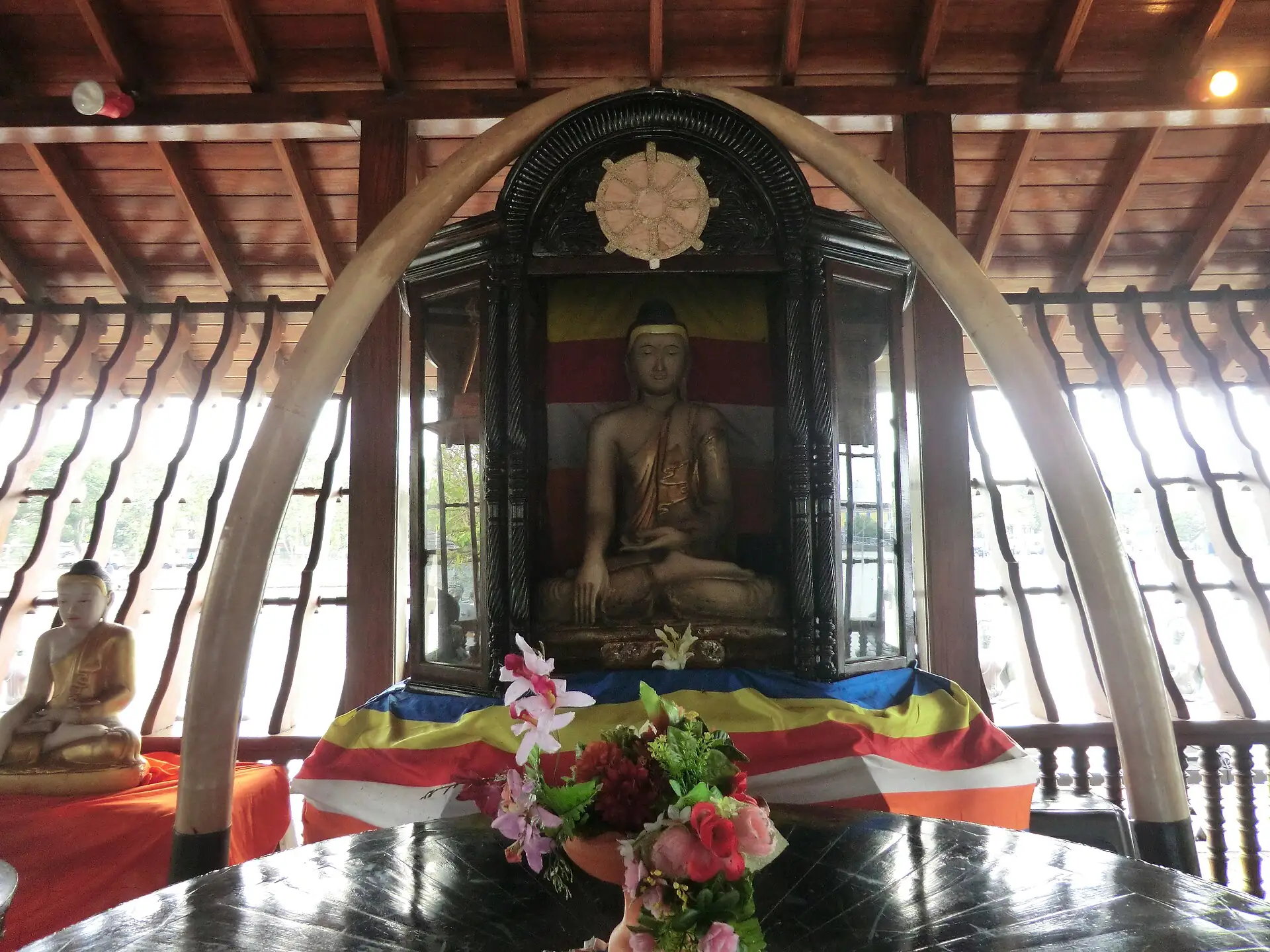 Seema Malaka on Beira Lake · 20–30 min
- 3
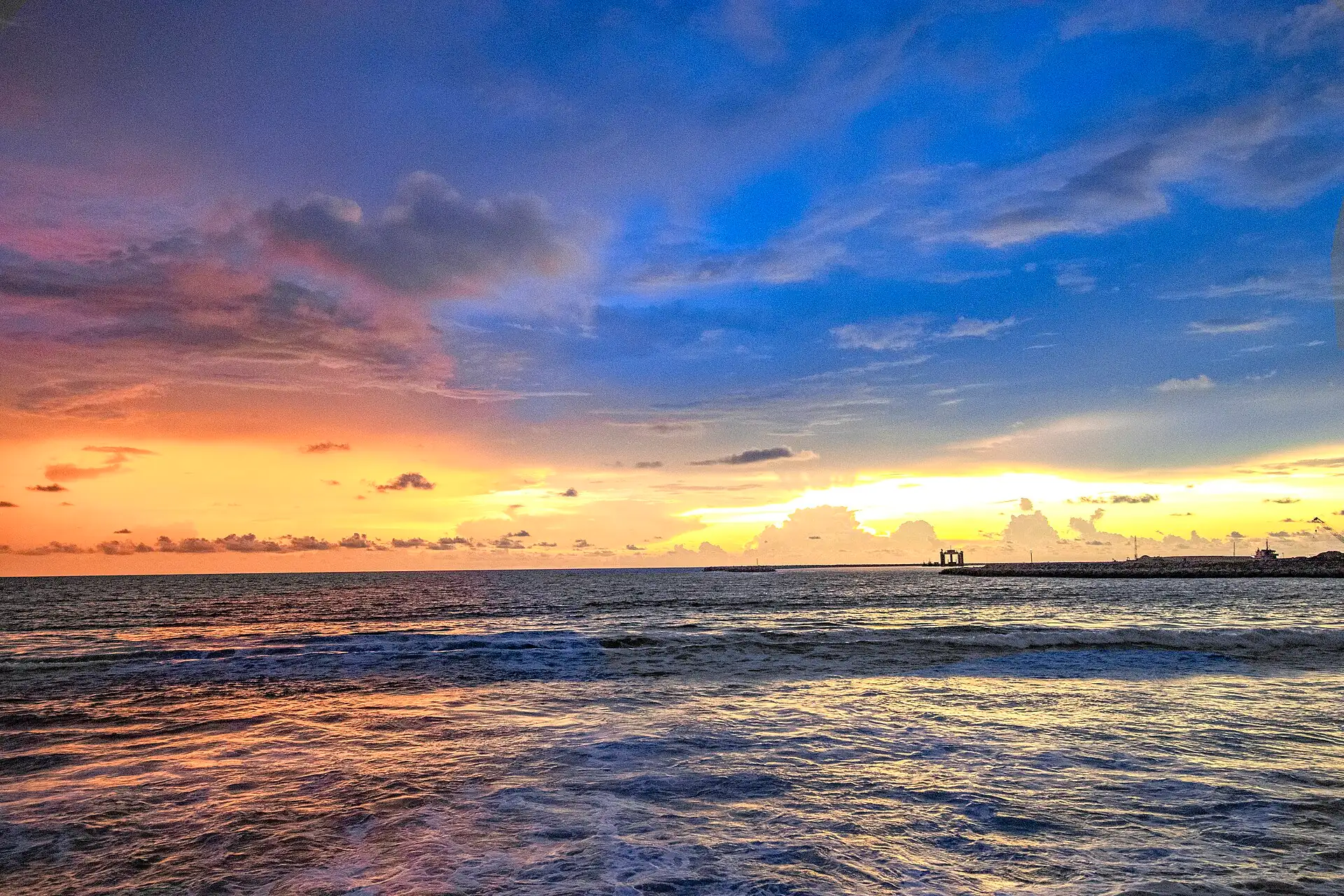 Galle Face Green at sunset · 45–90 min
- 4Dutch Hospital precinct · 45–60 min
- 5Crab dinner at Ministry of Crab · 1.5–2 h
Fits
- First or last night of an island trip
- Early risers
- Short city breaks with a beach trip
Does not fit
- Strollers and wheelchairs (pavements)
- Travellers who hate heat and humidity
- Midday walkers
How long
- 2 daysBeira Lake + Pettah in the morning, Galle Face at sunset
- 3 daysFour clusters, mornings and evenings only
- 5 daysFour clusters + Negombo or Mount Lavinia + one slow day
Good for
- First timers
- Foodies
- Budget
- Couples
- Solo
- Families
About Colombo
Colombo grew as a trading port, not a royal capital: Kotte and later Kandy held that role for most of the island's history. Arab and Indian traders worked the harbour for centuries before Europeans arrived, drawn by cinnamon and the spice trade.
Three colonial powers ruled from here in sequence — Portuguese, Dutch, then British — and each left a layer: the Fort's street grid and the name Pettah (from the Tamil pettai, town outside the fort walls) are Dutch-era; the railway, clock tower and grand public buildings are British.
Good to know
- Colombo Fort is the old harbour district and the main railway station area; Colombo 1–15 are postal districts, so hotel names with a number can be far apart.
- Sri Lanka Tourism Development Authority information counters operate at the airport and in central Colombo; hours and locations change — check before relying on one.
- Your hotel desk is usually the fastest way to book a driver, a day trip or a train ticket.
Go deeper 11 min read · 6 chapters
Colombo was a trading port centuries before it was anything else, and it has never really stopped being one. Three colonial powers ruled it in turn — Portuguese, Dutch, British — and each left a layer over the older Arab and South Indian trading town underneath. This deep dive reads the city through those layers, so a walk from the harbour to the seafront becomes a walk through five centuries of ships, spices and shifting rule.
1History2 min
Long before any European ship reached it, Colombo was a minor but useful stop on the Indian Ocean trade routes. Arab and South Indian traders worked the natural harbour for cinnamon, gems and elephants, and a small Sinhalese settlement grew around it, subordinate to inland capitals such as Kotte, a few kilometres to the east, which held the real political power on this part of the island through the 15th and early 16th centuries.
The Portuguese arrived in 1505, looking for the cinnamon trade, and by the 1510s–1520s had built a fort on the harbour. Portuguese rule over the coastal areas lasted until the mid-17th century, contested throughout by the Kandyan kingdom inland, which no European power fully subdued. In 1656 the Dutch East India Company, allied at times with Kandy against the Portuguese, took Colombo after a long siege, and Dutch rule over the coastal belt lasted until the 1790s. The Dutch laid out much of the street grid that survives in Fort and Pettah today, dug canals for moving cinnamon and other goods, and built warehouses, a hospital and churches, including Wolvendaal, consecrated in 1749 and still standing.
The British took the Dutch coastal territories between 1796 and 1815, and by 1815, after the fall of the Kandyan kingdom, ruled the entire island as the single crown colony of Ceylon, administered from Colombo. The 19th and early 20th centuries brought the railway, a deep-water harbour completed in stages from the 1870s to early 1900s, grand civic buildings, and the clock tower and lighthouse that still marks the edge of Fort, built in 1857 and used as a working lighthouse until 1952.
Ceylon became independent within the British Commonwealth in 1948, with Colombo as its capital, and the country was renamed Sri Lanka in 1972. Politics moved a short distance away in 1982, when the official seat of government shifted to the newly built Sri Jayawardenepura Kotte, but Colombo kept the ministries, courts, harbour and business district that make it the country's real centre of gravity. The following decades were marked by a long civil war (1983–2009) between the government and the Liberation Tigers of Tamil Eelam, which brought periodic violence to the capital, and by the coordinated Easter Sunday bombings of 21 April 2019, which hit churches and hotels across the country including Colombo. An economic crisis in 2022 brought fuel and currency shortages and mass protests in the city; conditions have since stabilised, though travellers should check current status before relying on older guidebooks.
- Earlier regional capital
- Kotte, a few kilometres inland
- Portuguese arrival
- 1505
- Dutch capture of Colombo
- 1656
- Ceylon crown colony (whole island)
- From 1815
- Independence
- 1948
- Renamed Sri Lanka
- 1972
- Population (metro)
- About 750,000 city proper; several million metro area (check)
2Neighbourhood stories2 min
Fort takes its name from the succession of fortifications the Portuguese, Dutch and British each built and rebuilt on the harbour point. Little of the physical walls survive today; what remains is the layout and function: government buildings, the main railway station, banks and, since the harbour and port grew through the 20th century, checkpoints and photography restrictions around anything military or governmental. The Dutch Hospital, built in the 17th century to treat sailors and later Dutch officials, is the oldest building still standing in Fort, and its conversion into a courtyard of shops and restaurants is a fairly recent (2011) rescue of a building that spent decades as government offices and, briefly, a police post.
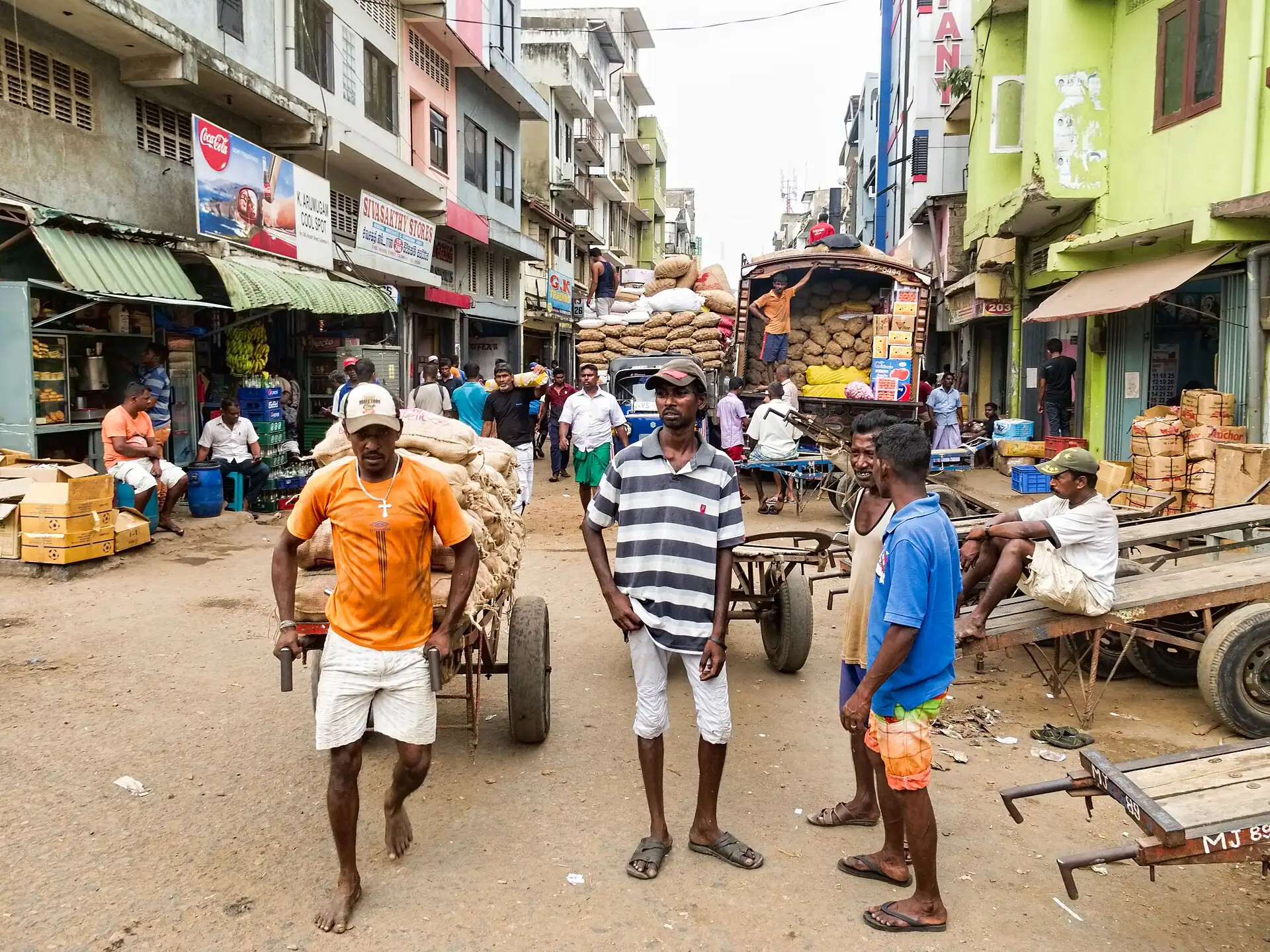
Pettah takes its name from the Tamil pettai, meaning the town outside the fort walls — the trading quarter that grew up beyond the Dutch fortifications to serve the garrison and the port. It has kept that function for more than 300 years: today it is still Colombo's wholesale and bargain-shopping district, organised loosely by trade the way old Hanoi or old Delhi are, with streets known informally for particular goods. Sea Street is the gold and jewellery market; Manning Market handles wholesale fruit and vegetables. Pettah's religious diversity is visible in a few blocks: the Dutch Reformed Wolvendaal Church, the candy-striped Jami Ul-Alfar mosque (the 'Red Mosque', built 1908–1909) and several Hindu kovils all sit within walking distance of each other, a legacy of a trading port that never had the luxury of a single dominant community.
Beira Lake is what remains of a much larger network of lagoons and marshes that the Portuguese and Dutch both used defensively — the name is thought to come from a Portuguese engineer, though the exact origin is debated. The Dutch dug canals connecting the lake to the sea and to other waterways for moving goods; much of that canal network has since been filled in or built over. Gangaramaya Temple grew up on the lake's edge from the late 19th century, and Seema Malaka, the meditation shrine built out on the water on wooden piles, is a 20th-century addition (rebuilt after storm damage) rather than an ancient structure, though it reads as timeless from the lakeside path.
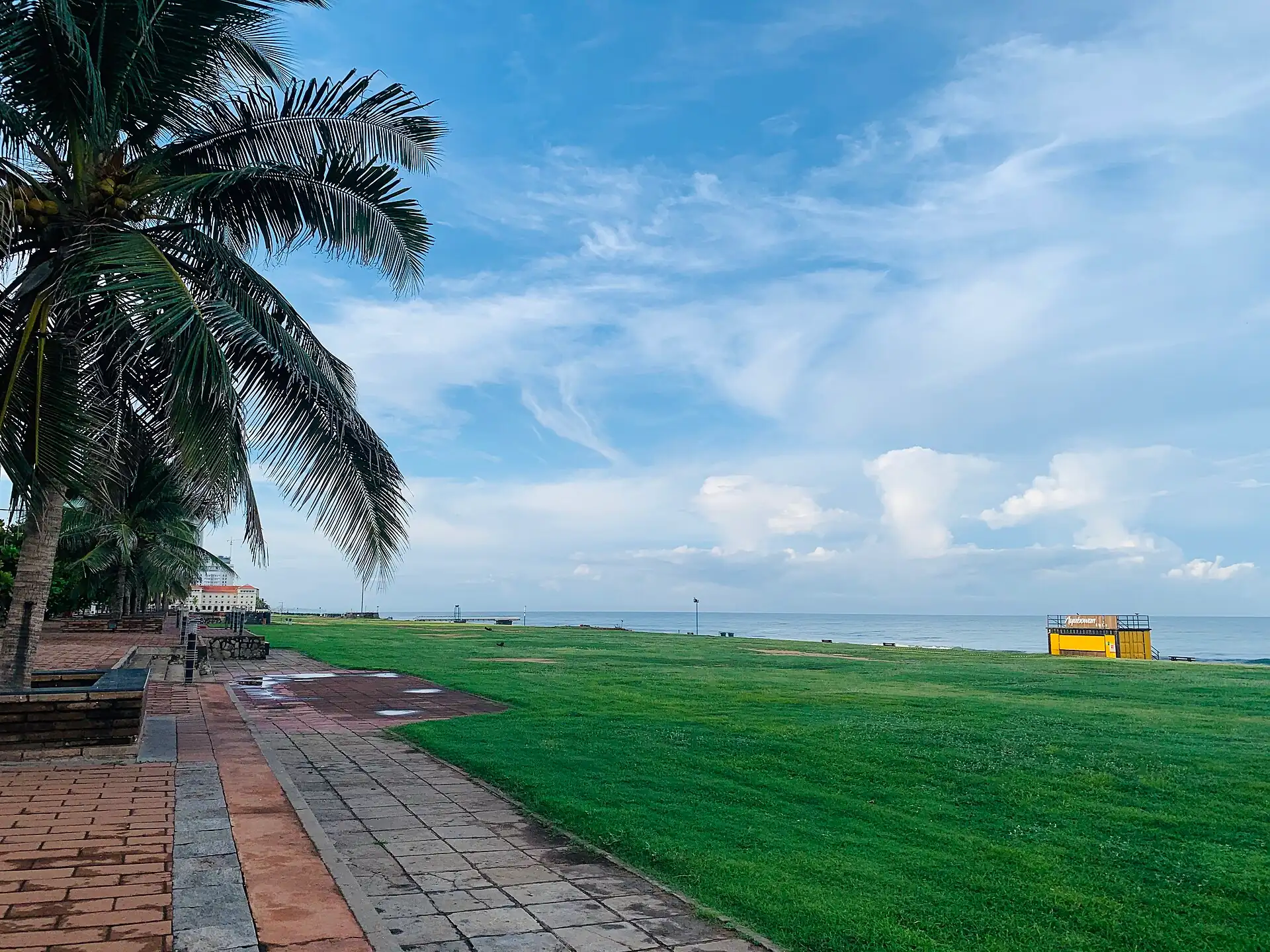
Galle Face Green was laid out as an open esplanade by the Dutch for military exercises and was later extended and formalised under British rule as a public promenade and racecourse edge. Its role has stayed remarkably constant: an open, breezy strip along the sea where Colombo comes to walk, fly kites and eat in the evening, exactly as it did more than a century ago, if today's food stalls sell isso wade rather than whatever the Dutch garrison snacked on.
- Pettah name origin
- Tamil pettai, town outside the fort walls
- Dutch Hospital age
- 17th century; restored and reopened as a precinct in 2011
- Jami Ul-Alfar mosque
- Built 1908–1909
- Galle Face Green
- Laid out under Dutch rule, extended by the British
3Architecture2 min
Colombo's colonial-era buildings come in two broad flavours: Dutch and British. Dutch buildings tend to be lower, thick-walled and built from coral stone or brick with deep-set windows and tiled roofs, designed for a tropical climate long before mechanical cooling — Wolvendaal Church and the surviving core of the Dutch Hospital are the clearest surviving examples. British buildings from the 19th and early 20th centuries are grander and more overtly imperial: columned facades, clock towers, wide verandahs and, in the case of the old lighthouse-clock-tower in Fort, a genuinely functional piece of maritime infrastructure disguised as a monument.
The Dutch Hospital's conversion into a shopping and dining precinct is a useful lesson in how Colombo treats its older buildings: rather than museum-case preservation, the thick coral-stone walls and internal courtyards now house restaurants, bars and shops, with modern glass and steel additions inserted carefully between the old walls. It is one of the more successful adaptive-reuse projects in South Asia and a template the city has tried to repeat elsewhere, with mixed results.
Away from Fort and Pettah, Colombo's 20th-century growth produced two more architectural layers worth knowing about even if they sit outside the OS clusters: the garden-suburb layout of Cinnamon Gardens (Colombo 7), built from the late 19th century for the colonial and then national elite, with wide leafy roads and freestanding houses; and, from the 1990s onward, a skyline of towers and shopping malls along the Galle Road corridor and around the harbour, reflecting the same private-capital building boom seen across South and Southeast Asian capitals in the same decades.
Religious architecture across the city mixes styles as thoroughly as the population does: Buddhist temples like Gangaramaya combine Sri Lankan, Thai, Chinese and Indian decorative elements in a way some visitors find eclectic to the point of cluttered — the temple's own museum wing, stuffed with donated statues, clocks and curiosities, is as much a period piece of 20th-century collecting as it is a religious space.
- Wolvendaal Church material
- Coral stone and brick, Dutch style
- Dutch Hospital reopening
- 2011, as a shopping and dining precinct
- Old lighthouse (clock tower)
- Built 1857, used as a working light until 1952
- Cinnamon Gardens (Colombo 7)
- Garden suburb, developed from the late 19th century
4Food history2 min
Sri Lankan food carries the same layered history as the city's buildings. Rice and curry, the daily staple across the island, reflects an older Indian Ocean trading pattern: coconut, chilli (introduced from the Americas via Portuguese trade in the 16th century), and spices the island itself supplied to the rest of the world for centuries, cinnamon above all — the crop that first drew Portuguese, Dutch and British traders here in that order.
Kottu roti, the chopped-flatbread dish cooked loudly on a flat griddle, is a much more recent, distinctly Sri Lankan invention, thought to date from the mid-20th century as a way to use up leftover roti and vegetables at roadside stalls. Its signature is as much the sound as the taste: two metal blades chopping the roti and other ingredients together on the griddle in a fast rhythm that street vendors have turned into an advertising jingle in itself.
Lamprais — rice, meat curries, a fried meatball (frikkadel) and other accompaniments baked together in a banana-leaf parcel — is a legacy of the Dutch Burgher community, the descendants of Dutch settlers and local intermarriage who developed a distinct Eurasian cuisine during and after Dutch rule. It remains a specialist dish today, associated particularly with Burgher families and a handful of restaurants that keep the tradition.
Colombo's seafood culture is inseparable from its harbour: mud crab, prawns and reef fish arrive daily, and dishes like isso wade — a lentil fritter topped with a whole prawn, sold from carts along Galle Face Green at sunset — turn cheap harbour-adjacent ingredients into the city's most recognisable street snack. At the other end of the price scale, Colombo's crab restaurants, several clustered around the Dutch Hospital precinct, have in the last two decades built a national reputation for very large, very expensive mud crab served whole.
- Cinnamon
- Native to Sri Lanka; the original reason for European trading interest
- Kottu roti origin
- Mid-20th century roadside dish (approximate)
- Lamprais
- A Dutch Burgher-community dish
- Isso wade
- Galle Face Green's signature sunset street snack
5Festivals2 min
Vesak, marking the Buddha's birth, enlightenment and death on the May full moon, is Colombo's most visually striking festival. Streets fill with illuminated arches (thoranas), paper lanterns and elaborate light displays, and volunteer-run stalls (dansal) hand out free food and drink to anyone passing, a tradition of communal giving that turns the whole city into something between a religious observance and a street party. Alcohol sales are banned by law for the two days around Vesak, as they are on every monthly Poya (full-moon) holiday.
The Sinhala and Tamil New Year in mid-April is the opposite mood entirely: a quiet city. Both Sinhalese and Tamil communities observe the traditional new year around the same date, rooted in the sun's movement between zodiac signs rather than the lunar calendar, and the custom is to travel to family homes, observe auspicious times for cooking and eating set by astrologers, and largely stop working for several days. Visitors in Colombo during this window find shops shut and streets unusually empty, a striking contrast to the rest of the year.
Deepavali (Diwali), observed by the city's Hindu Tamil community mainly around Pettah's kovils, brings lights and sweets on a smaller, more localised scale than Vesak. The Duruthu Perahera at Kelaniya Temple on the city's edge, held on the January full moon, is a major procession with decorated elephants and dancers marking a legendary visit by the Buddha to the site, and draws crowds from across the region.
Christmas and New Year, a legacy of the sizeable Christian community that dates back to Portuguese and Dutch rule, are marked with church services, carol events around Wolvendaal and the city's cathedrals, and a well-attended countdown crowd along Galle Face Green on 31 December — a very different Galle Face from its quiet Dutch-military-exercise origins, but the same open ground doing much the same job of bringing the city together outdoors.
- Vesak
- May full moon; the year's biggest Buddhist festival
- Sinhala/Tamil New Year
- Mid-April, around 13–14 April
- Duruthu Perahera
- January full moon, Kelaniya Temple
- Poya alcohol ban
- Every monthly full-moon holiday, by law
6City life2 min
Colombo runs on heat and traffic in roughly equal measure. The working day starts early to make the most of the cooler morning hours — office traffic builds from about 07:00 — and the afternoon heat, close to 30–31°C with high humidity nearly every day of the year, pushes outdoor activity to the morning and evening. The two daily traffic peaks, roughly 07:00–09:00 and 16:30–19:00, are as reliable a feature of city life as the heat itself, and locals plan meetings, deliveries and even social visits around them.
Tea remains a constant thread through the day: small roadside tea shops (known loosely as 'kades') serve plain or milk tea throughout the morning and afternoon, and a quick tea break punctuates the working day much as coffee does in other cities. Evenings belong to the coast: Galle Face Green fills from late afternoon with families, joggers, kite-fliers and the isso wade carts, a pattern that has held for well over a century even as the buildings behind the green have changed completely.
Religious plurality is a daily, visible fact of Colombo life rather than a historical footnote: calls to prayer from Pettah's mosques, temple bells from Gangaramaya, and church bells from the city's Christian congregations all sound within a few streets of each other, and public holidays across Buddhist, Hindu, Muslim and Christian calendars are all observed nationally, which is one reason the events calendar for Colombo is so dense compared with a single-faith city.
The city carries recent history more visibly than many capitals its size: security checkpoints around government buildings and the harbour, a legacy of both the civil war and the 2019 bombings, remain part of daily movement through Fort, and locals navigate them without much comment. The 2022 economic crisis, which brought fuel queues and mass protests to the streets around the presidential secretariat, is recent enough that its effects — from prices to political mood — are still worth checking on before a trip, even as the immediate crisis has eased.
- Average temperature
- About 27–31°C (81–88°F) year-roundAbout 81–88°F (27–31°C) year-round
- Daily traffic peaks
- About 07:00–09:00 and 16:30–19:00About 7:00 AM–9:00 AM and 4:30 PM–7:00 PM
- Religious calendar
- Buddhist, Hindu, Muslim and Christian holidays all observed
Read, watch, wordsReading · Watching · Glossary · Sources
Reading
- Ceylon: An Island Emerges — Chelvadurai Manogaran (and general histories of Ceylon)A broad history of the island useful for understanding how Colombo fits into it.
- Running in the Family — Michael OndaatjeA memoir of a Colombo-rooted Burgher family that captures the flavour of the city's colonial-era elite.
- The Village in the Jungle — Leonard WoolfA British colonial officer's novel of rural Ceylon, useful context for the world outside Colombo's port.
Watching
- General news and travel documentaries on Sri Lanka's civil war and 2019 bombings — VariousUnderstanding this recent history helps make sense of the security presence still visible around Fort.
Glossary
| Term | Local | Meaning |
|---|---|---|
| Pettah | පිටකොටුව / பேட்டை | The town outside the fort walls; Colombo's old trading quarter. |
| Poya | පොහොය | The monthly full-moon Buddhist holiday, with an island-wide alcohol sales ban. |
| Kottu | කොත්තු | Chopped flatbread fried with vegetables, egg or meat on a flat griddle. |
| Isso wade | ඉස්සො වඩේ | A lentil fritter topped with a whole prawn, Galle Face Green's classic snack. |
| Lamprais | Rice and curries baked in a banana leaf, a Dutch Burgher-community dish. | |
| Dansal | දන්සැල් | Free food and drink stalls set up as an act of giving, especially around Vesak. |
| Thorana | තොරණ | An illuminated arch put up for Vesak, telling a story from the Buddha's life. |
Read for this deep dive
- Wikipedia — Colombo ↗
- Wikipedia — History of Colombo ↗
- Wikipedia — Sri Lankan cuisine ↗
- Wikipedia — Vesak ↗
Background reading only: the text above is written by Voykit, not copied from these pages.
Rules in force · 6
- South Asia ↗Trekking regions, border districts and several Indian states need separate permits on top of the visa; check the permit before you book transport into them.
- South Asia ↗Remove shoes (and in many Jain and Hindu temples, leather) before entering; cover shoulders and legs; ask before photographing people or rituals.
- Sri Lanka ↗Apply for the Electronic Travel Authorisation only on the official government ETA site; lookalike sites charge extra, and the rules and fees change.
- Sri Lanka ↗At temples cover shoulders and knees, take off shoes and hats, and never pose with your back to a Buddha statue; Buddha images on clothes or tattoos cause offence.
- Sri Lanka ↗Carry Sri Lankan rupees in small notes; tuk-tuks, buses and small shops are cash-only, and ATMs are fewer outside the cities.
- Western Province ↗Colombo's peak traffic (about 07:00–09:30 and 16:30–19:30) doubles car times: plan airport transfers and cluster changes outside it.
Entry rules depend on your passport. Full visa guide
Emergency numbers for Colombo119 ▾
Tap a number to call from your phone. These are the numbers listed in this guide; a row marked check has not been verified.
Planning is the full guide. I'm here keeps what is open and the cheat card.
Right now
Checking the weather…
Working out what is open near you…
What is open nowclock, closures, places open
Now in Colombo
Local time in Colombo
--:--
Loads in your browser · Asia/Colombo
This month
Month verdict appears here.
Closed today
See the weekly grid below.
If today is a closure day: Check the Poya (full-moon) calendar before you fly: alcohol sales are banned island-wide on Poya days, government offices close, and some shops and bars shut or run shorter hours.
- check Government offices and banks: Closed on Poya (full-moon) days and the Sinhala/Tamil New Year period in mid-April.
- check Gangaramaya Temple museum rooms: Hours can shorten on Poya days when the temple is busiest with worshippers.
Weekly closures come from our place pages; the Sinhala and Tamil New Year in mid-April adds closures not shown here.
Open now
The sights and places to eat on our list that are open at this moment, in the city's time, nearest first from where you are staying.
Loads in your browser with the city's local time.
Hours marked (check) are typical, not confirmed. Walking times are straight-line estimates. Open at another time →
Cheat cardthe pocket version
Cheat card
The essentials on one card: save it as an image for your phone, share it, or print it.
Colombo
කොළඹ
- Money
- Keep LKR 5,000 in small notes; use ATMs inside banks, hotels or malls, not on dark streets.
- SIM
- Buy a tourist SIM or eSIM at the arrivals hall carrier counters (Dialog, Mobitel, Hutch) with your passport…
- Ride app
- PickMe · Uber
- Emergency
- 119 police · 110 fire · 1990 ambulance (not 911, 999 or 000)
- Plugs
- Sockets D. US/Canada (A/B): adapter · UK/Ireland (G): adapter · Australia/NZ (I): adapter. 230 V: US 120 V-only devices (hair dryers) need a converter; most chargers are dual-voltage.
Say it
- Hello: ආයුබෝවන් (ah-yu-bo-wan)
- Thank you: ස්තුතියි (stu-thi-yi)
- How much is this?: මේකට කීයද? (may-ka-ta key-ya-da)
- Not spicy, please: සැර නෑ (særa næ)
- The bill, please: බිල් එක දෙන්නකෝ (bill eka den-na-ko)
Top 5
- Gangaramaya Temple at opening
- Seema Malaka on Beira Lake
- Galle Face Green at sunset
- Dutch Hospital precinct
- Crab dinner at Ministry of Crab
EssentialsQuick answers, what things cost and how to get around
Essentials
Quick answers, what things cost and how to get around
Quick answers
The questions people ask first about Colombo, one line each. Tap a card for the full answer.
- Cash or card?Cash for tuk-tuks, market stalls and small eating houses; cards in hotels, malls and most restaurants.
- SIM or eSIMBuy a tourist SIM or eSIM at the arrivals hall carrier counters (Dialog, Mobitel, Hutch) with your passport, or install an eSIM before you fly.
- Ride-hailing appPickMe · Uber.
- Tap waterDo not drink tap water; use bottled or filtered water.
- TippingNot expected at eating houses.
- Plugs & powerSockets D. US/Canada (A/B): adapter · UK/Ireland (G): adapter · Australia/NZ (I): adapter. 230 V: US 120 V-only devices (hair dryers) need a converter; most chargers are dual-voltage.
Show all 14 answers
- Safe at night?Take more care after dark in Fort, Pettah, Beira Lake and Gangaramaya.
- What to wearShoulders and knees covered; shoes and hats off before the grounds; never turn your back to a Buddha statue for a photo.
- RestroomsHotels, malls and cafés; carry tissues and hand gel.
- Emergency numbers119 police · 110 fire · 1990 ambulance (not 911, 999 or 000)
- Your embassycheckUS, UK, Australia embassies listed with addresses (check before you go).
- Sundays & holidaysSinhala and Tamil New Year: Most shops, offices and many restaurants close for several days; streets are quiet…
- Rainy-day planMonsoon storms (May–Sep, Oct–Nov) usually build through the afternoon: do the outdoor sight before 11:00, then go indoors.Monsoon storms (May–Sep, Oct–Nov) usually build through the afternoon: do the outdoor sight before 11:00 AM, then go indoors.
- Landing lateCMB: pre-booked car or airport taxi to the hotel door runs all night.
Cost cheat-sheetwhat everyday things cost
Cost cheat-sheet
Typical prices for the everyday things, as ranges. Change the currency right here; the local price stays first.
2026 desk estimate · check
- Sit-down mealSit-down restaurant meal, per personLKR 2,000–6,000
- Street or quick mealKing coconut from a street stallLKR 150–250
- BeerLocal beer, bar or restaurantLKR 600–1,200
- Taxi, about 5 km (3 mi)Taxi, about 3 mi (5 km)Short tuk-tuk ride, app-meteredRain and rush hour push app fares up.LKR 300–700
- Metro or bus rideSuburban train rideThird class; check the current fare table.LKR 30–100
- SIM or eSIM, a weekTourist SIM or eSIM, about a weekLKR 1,500–3,000
- Museum or sight ticketMuseum or temple foreigner entryLKR 500–2,000
- Budget bedHostel dorm bed, a night, per personLKR 2,500
- Mid-range bedHotel double room, a night, per roomLKR 18,000
- High-end bedHotel double room, a night, per roomLKR 45,000
A day, not counting the bed: Budget LKR 9,000 · Mid LKR 20,000 · High LKR 45,000
Local prices, with USD next to them (rates 2026-09 (approximate); change it in the header). Ranges are desk estimates: check locally. Every price and the budget calculator →
Source: Prices in Colombo
Draft
Written from desk research. Not yet compared with the official source.
No official source is recorded for this figure.
Prices are 2026 desk estimates, not yet compared with an official source. Check on the day.
Not checked in the last 12 months (no check date on file).
DecideWho it suits, the trade-offs and when to go
Decide
Who it suits, the trade-offs and when to go
Best months at a glance
The guide's verdict for each month
Jan
Best
30°C (86°F)86°F (30°C)
Feb
Best
31°C (88°F)88°F (31°C)
Mar
Best
31°C (88°F)88°F (31°C)
Apr
Care
31°C (88°F)88°F (31°C)
May
Avoid
30°C (86°F)86°F (30°C)
Jun
Avoid
29°C (84°F)84°F (29°C)
Jul
Care
29°C (84°F)84°F (29°C)
Aug
Care
29°C (84°F)84°F (29°C)
Sep
Care
29°C (84°F)84°F (29°C)
Oct
Avoid
29°C (84°F)84°F (29°C)
Nov
Care
29°C (84°F)84°F (29°C)
Dec
Best
29°C (84°F)84°F (29°C)
Best: Dec–Mar. Mixed: Apr, Jul–Sep, Nov. Avoid: May–Jun, Oct. Month by month →
Warmest Feb (31°C (88°F)88°F (31°C)), coolest Jan (23°C (73°F)73°F (23°C) low), wettest May (18 rain days), driest Feb (5). Averages, not a forecast.
Colombo across the year
Best-looking months for Colombo: Jan, Feb, Mar. Rated avoid: May, Jun, Oct.
| Measure | Jan | Feb | Mar | Apr | May | Jun | Jul | Aug | Sep | Oct | Nov | Dec |
|---|---|---|---|---|---|---|---|---|---|---|---|---|
| Weather | Great (good) | Great (good) | Great (good) | Mixed (care) | Avoid (avoid) | Avoid (avoid) | Mixed (care) | Mixed (care) | Mixed (care) | Avoid (avoid) | Mixed (care) | Great (good) |
| Crowds | High (care) | High (care) | Medium (ok) | Medium (ok) | Low (good) | Low (good) | Medium (ok) | High (care) | Low (good) | Low (good) | Low (good) | High (care) |
| Prices | High (care) | High (care) | Medium (ok) | Medium (ok) | Low (good) | Low (good) | Medium (ok) | High (care) | Low (good) | Low (good) | Low (good) | High (care) |
| Events | 2 events (ok) | 1 event (ok) | None listed (ok) | 1 event (ok) | 1 event (ok) | None listed (ok) | 1 event (ok) | 1 event (care) | None listed (ok) | 1 event (ok) | 1 event (ok) | 3 events (ok) |
Green is good news, amber needs planning, red is a month to avoid; dashed grey with a question mark means our data does not say. Open the year heatmap →
Not checked in the last 12 months (no check date on file).
Source: Months, temperatures and crowds
Draft
Written from desk research. Not yet compared with the official source.
Monthly highs, rain and crowd levels are climate averages and desk estimates for the city, not a forecast.
Understand the cityUnderstand · Districts
Orientation & districts
Almost everything a first visit needs sits within about 3 km of the harbour: Fort and Pettah at the old town, Galle Face and Beira Lake just south. Kollupitiya, Bambalapitiya and beyond are a ride, not a walk.
Colombo uses postal districts (Colombo 1–15) alongside neighbourhood names; drivers and apps generally know the neighbourhood name better than the postal number.
Shaded shapes: walking areas (click one). Black pins: sleep areas. Grey dots: places. Round badges: arrivals. Click the map to turn on scroll-wheel zoom.
Hover, tap or tab to an area to see what it is like. Pins are sleep areas; arrows at the edge point to the airport.
Off the map: Bandaranaike International Airport (CMB) (50–90 min by the usual route).
Not drawn yet (no coordinates in this guide): Cinnamon Gardens (Colombo 7), Mount Lavinia. They are in the neighbourhood cards below.
Where’s what, as a list:
- Fort (Colombo 1) (කොටුව): Old harbour district: the railway station, government buildings and the Dutch Hospital precinct. Checkpoints and photo limits near the port. Suits: Sightseeing by day, business hotels. Price band $$$.
- Pettah (Colombo 11) (පිටකොටුව): Dense trading lanes and Sea Street's gold market; go before 10:00 and leave the big bag behind.Dense trading lanes and Sea Street's gold market; go before 10:00 AM and leave the big bag behind. Suits: An early-morning market walk.
- Galle Face / Slave Island (Colombo 2) (ගාලු මුවදොර): The open seafront green and the hotel row behind it; hot and shadeless at midday. Suits: Sunset walks, seafront hotels.
- Beira Lake / Slave Island: Gangaramaya temple and the Seema Malaka lake shrine sit at the lake's edge. Suits: A temple morning.
- Kollupitiya (Colombo 3) (කොල්ලුපිටිය): Coast-road guesthouses and apartments, 10–15 minutes from Galle Face by tuk-tuk. Suits: Budget and mid-range stays close to Galle Face. Price band $.
- Cinnamon Gardens (Colombo 7): National Museum, Viharamahadevi Park and the diplomatic quarter; a car ride from Fort, not a walk. Suits: Museums and parks, outside the OS clusters.
- Mount Lavinia: The nearest proper beach to central Colombo, about 30–40 minutes by car or the coastal train. Suits: A beach half-day or a last-night stay near the airport road.
- Sleep area Fort: suits Sightseeing by day, business hotels, price band $$$.
- Sleep area Kollupitiya (Colombo 03): suits Budget and mid-range stays close to Galle Face, price band $.
- Bandaranaike International Airport (CMB), 50–90 min by the usual route.
Neighbourhoods at a glance
One tab per area, pulled together from this guide’s districts table, area notes, sleep-area scores and place pages. Scores are desk judgements (1–5); prices are estimates, check before you book.
Fort (Colombo 1)
$$$කොටුව
Old harbour district: the railway station, government buildings and the Dutch Hospital precinct. Checkpoints and photo limits near the port.
- Suits:
- Sightseeing by day, business hotels
- Best time:
- Daytime; the Dutch Hospital comes alive in the evening
- Rooms:
- LKR 15,000–30,000 (from the sleep guide)
Pick this if: Sightseeing, business travellers
Watch out for: Photographing government or port buildings.
- Quiet nights3/5 Medium
- Nightlife2/5 Low
- Families3/5 Medium
- Late arrival4/5 High
Why these scores
- Quiet nights: Quiet after office hours; a working district, not a nightlife one.
- Nightlife: The Dutch Hospital precinct is the exception; otherwise thin after 22:00.
- Families: Traffic and broken pavements make walks with small children hard work.
- Late arrival: Larger hotels keep 24-hour desks.
Getting around from here
- 15–22 min walk to Galle Face
- Walk east: about 15 min to Pettah
- Car east: about 15 min to Beira Lake and Gangaramaya
Pettah (Colombo 11)
පිටකොටුව
Dense trading lanes and Sea Street's gold market; go before 10:00 and leave the big bag behind.Dense trading lanes and Sea Street's gold market; go before 10:00 AM and leave the big bag behind.
- Suits:
- An early-morning market walk
- Best time:
- 07:30–10:007:30 AM–10:00 AM
Pick this if: An early market walk
Watch out for: Midday heat; carrying the big bag.
Getting around from here
- Walk west: about 15 min to Fort
- Car south-east: about 12 min to Beira Lake and Gangaramaya
Galle Face / Slave Island (Colombo 2)
ගාලු මුවදොර
The open seafront green and the hotel row behind it; hot and shadeless at midday.
- Suits:
- Sunset walks, seafront hotels
- Best time:
- 16:30–19:004:30 PM–7:00 PM
Pick this if: Everyone
Watch out for: Midday: shadeless and hot.
Getting around from here
- Walk north along the seafront: about 18 min to Fort
- Car east: about 15 min to Beira Lake and Gangaramaya
Beira Lake / Slave Island
Gangaramaya temple and the Seema Malaka lake shrine sit at the lake's edge.
- Suits:
- A temple morning
- Best time:
- 07:00–09:307:00 AM–9:30 AM
Pick this if: A quiet morning
Watch out for: Walking the lanes after dark.
Getting around from here
- Car west: about 15 min to Fort
- Car west: about 15 min to Galle Face
Kollupitiya (Colombo 3)
$කොල්ලුපිටිය
Coast-road guesthouses and apartments, 10–15 minutes from Galle Face by tuk-tuk.
- Suits:
- Budget and mid-range stays close to Galle Face
- Best time:
- Any time
- Rooms:
- LKR 4,000–8,000 (from the sleep guide)
Pick this if: Budget stays, longer visits
Watch out for: Expecting a quiet night on the main road.
- Quiet nights2/5 Low
- Nightlife3/5 Medium
- Families3/5 Medium
- Late arrival2/5 Low
Why these scores
- Quiet nights: Coast-road traffic noise is constant.
- Nightlife: Restaurants and a few bars on Galle Road; Galle Face is a short ride away.
- Families: Reasonable for families who plan door-to-door rides.
- Late arrival: Night staffing is not guaranteed at smaller guesthouses: confirm before you fly.
Getting around from here
- 10–15 min walk to Galle Face
- 18–26 min walk to Beira Lake and Gangaramaya
Cinnamon Gardens (Colombo 7)
National Museum, Viharamahadevi Park and the diplomatic quarter; a car ride from Fort, not a walk.
- Suits:
- Museums and parks, outside the OS clusters
Mount Lavinia
The nearest proper beach to central Colombo, about 30–40 minutes by car or the coastal train.
- Suits:
- A beach half-day or a last-night stay near the airport road
Decide
The honest trade-off: what you will enjoy, what will wear you down.
You will like
- Temples in daily use
- Seafront sunsets
- Rice-and-curry lunches and street snacks
You will hate
- Heat and humidity
- Heavy traffic and no pavements
- Long airport transfers
Similar citiesif this one is not quite right
Similar cities
If Colombo does not fit your dates or budget, these match it on season, cost and feel.
- Panama City
Panama
- Good in the same months: Jan, Feb, Mar, Dec
- Works well for first-timers, food trips, tight budgets
- A similar climate through the year
- Abidjan
Côte d'Ivoire
- Good in the same months: Jan, Feb, Mar, Dec
- Works well for food trips, tight budgets
- A similar climate through the year
- Manila
Philippines
- Good in the same months: Jan, Feb, Mar, Dec
- Works well for first-timers, food trips, tight budgets
- A similar climate through the year
When
Best months: Jan, Feb, Mar, Dec. Month-by-month verdicts below, with the live forecast first. When to go, month by month →
Colombo: next 7 days
Loading forecast…
Forecast: Open-Meteo (CC BY 4.0), model data for this point.
Air quality
Loading…
Model estimate (CAMS via Open-Meteo), not a street-level station; readings near busy roads run higher.
Month by month, all 12best Jan, Feb, Mar, Dec
Driest and coolest month for the west coast; warm all the same.
Dry and sunny; good month.
Hot and humid; still mostly dry.
Hot; Sinhala and Tamil New Year closures in mid-April; first storms.
South-west monsoon starts; heavy rain and flooding risk.
Monsoon: rain most days; rough sea.
Monsoon easing; showers.
Showers; drier than June.
Mixed; showers and storms.
Inter-monsoon thunderstorms; heavy afternoon rain.
Storms continue; rain in the afternoons.
Drier and slightly cooler; busy season.
Climate, calendar and eventsClimate · Calendar · Events · Packing by season
Climate
| Jan | Feb | Mar | Apr | May | Jun | Jul | Aug | Sep | Oct | Nov | Dec | |
|---|---|---|---|---|---|---|---|---|---|---|---|---|
| High | 30°C (86°F)86°F (30°C) | 31°C (88°F)88°F (31°C) | 31°C (88°F)88°F (31°C) | 31°C (88°F)88°F (31°C) | 30°C (86°F)86°F (30°C) | 29°C (84°F)84°F (29°C) | 29°C (84°F)84°F (29°C) | 29°C (84°F)84°F (29°C) | 29°C (84°F)84°F (29°C) | 29°C (84°F)84°F (29°C) | 29°C (84°F)84°F (29°C) | 29°C (84°F)84°F (29°C) |
| Low | 23°C (73°F)73°F (23°C) | 24°C (75°F)75°F (24°C) | 25°C (77°F)77°F (25°C) | 25°C (77°F)77°F (25°C) | 26°C (79°F)79°F (26°C) | 25°C (77°F)77°F (25°C) | 25°C (77°F)77°F (25°C) | 25°C (77°F)77°F (25°C) | 25°C (77°F)77°F (25°C) | 24°C (75°F)75°F (24°C) | 24°C (75°F)75°F (24°C) | 23°C (73°F)73°F (23°C) |
| Rain days | 6 | 5 | 8 | 13 | 18 | 17 | 15 | 14 | 15 | 18 | 15 | 12 |
| Verdict |
- Colombo is hot and humid every month: the difference between 'good' and 'bad' months is rain, not temperature.
- The south-west monsoon (May–Sep) brings the heaviest and most frequent rain and can flood low streets for an hour or two.
- Jan–Mar is the driest, most reliable window for walking outdoors.
Events by month
Duruthu Perahera (Kelaniya)
festivalJanuary full moon · Kelaniya Temple, edge of Colombo(check dates)
A major procession with elephants and dancers; crowds and road closures around the temple.
Sinhala and Tamil New Year
holidayMid-April (usually 13–14 April) · Whole city(check dates)
Shops, offices and many restaurants close for several days as people travel to family homes; streets are quiet, hotels near the coast fill with domestic travellers after.
Vesak
festivalMay full moon · Whole city, especially temples and main roads(check dates)
Lanterns, illuminated arches (thoranas) and free food stalls (dansal) fill the streets; alcohol sales banned for two days; a striking but crowded time to be in the city.
Kandy Esala Perahera season begins (not in Colombo)
festivalLate July–August · Kandy, day trip distance(check dates)
If your Colombo trip overlaps, a side trip to Kandy during the festival needs rooms booked months ahead.
Deepavali
festivalOctober or November (lunar) · Hindu neighbourhoods, kovils near Pettah(check dates)
Lights and sweets around Hindu temples; a quieter city-wide event than Vesak.
Christmas
24–25 December · Churches, seafront hotels
Carol events and decorations along Galle Face; hotels near the seafront book up.
New Year's Eve
31 December · Galle Face Green and seafront hotels
A crowded countdown along the seafront; book a seafront dinner ahead if you want a view.
Festivals and events that change the plan
| When | What | Effect on your plan |
|---|---|---|
| Mid-April (moves yearly) | Sinhala and Tamil New Year | Most shops, offices and many restaurants close for several days; streets are quiet, transport is booked out as people travel to family homes. |
| May (full moon) | Vesak | Buddha's birth, enlightenment and death are marked with lanterns, illuminated arches (thoranas) and free food stalls (dansal) across the city; alcohol sales are banned for the two days. |
| Every full-moon day (Poya) | Poya holiday | A monthly public holiday: alcohol sales are banned, government offices close, and some shops and bars shut or trade shorter hours. |
| Late Dec–early Jan | Christmas and New Year | Hotels near Galle Face fill up; carol events and a countdown crowd on the seafront. |
What to pack, by season
From Colombo’s own climate table: the coldest, warmest and wettest three months, and what to bring for each.
Coldest months
Oct–Dec
24° to 29°
Light layers; evenings can still feel cool.
Warmest months
Mar–May
25° to 31°
Light, breathable clothes, a sun hat and sunscreen; plan midday indoors and carry water.
Wettest months
May–Jul
17 rain days a month
A compact umbrella or rain jacket and shoes that can get wet.
Arrive & moveGetting in, getting around, and your bags
Arrive & move
Getting in, getting around, and your bags
I land at…
Enter your landing time: what still runs from the airport, where you can eat when you get in, and which areas let you check in that late.
Bandaranaike International Airport (CMB)
Out of the airport about 00:05 (next day)12:05 AM (next day) (01:15 (next day)1:15 AM (next day) if immigration and bags are slow); in town about 00:55 (next day)12:55 AM (next day).
Transport from the airport
- Any hourPre-booked car or airport taxi to the hotel door. Runs all night.
- Any hourRide-hailing app or another licensed taxi (agree the fare before you get in). Any hour.
- Last resortOvernight near the airport. If nothing else works.
Places to eat open when you get in
We have no confirmed hours for the places to eat here yet. Plan on a convenience store or your hotel. What is open late →
Where to sleep with a late arrival
- Lets you inFort 24-hour desk. Larger hotels keep 24-hour desks.
- Call aheadKollupitiya (Colombo 03) Desk hours not confirmed: message the hotel with your flight number. Night staffing is not guaranteed at smaller guesthouses: confirm before you fly.
Typical times from our airport data, not a timetable: check the last departure on the day. Full airport-to-bed plan for Bandaranaike International Airport (CMB) →
Arrive
Each gateway has its own airport-to-bed page with timings and the last safe connection.
Getting in, in detailGet in
Get in by rail and road
| Station | Mode | Serves | Where | To the centre |
|---|---|---|---|---|
| Colombo Fort railway stationකොළඹ කොටුවuse | Train | Kandy, Galle, the south coast, the hill country and most of the network | Heart of the Fort cluster · Fort | Already there; walkable to PettahBuy tickets at the counter or through the Sri Lanka Railways booking channels, not from unofficial helpers on the concourse. |
| Bastian Mawatha bus stand (Pettah)caution | Bus | Long-distance buses across the island | Pettah, north edge · Pettah | Walkable from FortCrowded and hard to navigate on a first visit; a private car or a tour pick-up is easier for day trips. |
- Reserved-class train tickets for popular routes (Kandy, Ella) sell out days ahead in high season; book online or through the hotel.
- Keep small notes for a tuk-tuk from a bus or train station: drivers rarely have change for large notes.
Move
The default way around, when a pass pays off, and when the last trains go.
- Default
- Walk inside a cluster; ride-hailing tuk-tuk or car between clusters (check the app price first).
- Passes
- No pass. Short tuk-tuk and car rides in the centre are cheap; use the app or agree the fare before you ride.
- Last trains
- The suburban trains do not serve the airport and are crowded at peak; ride-hailing runs late but is thinner in heavy rain.desk estimate
- Other modes
- Other modes (Rome2Rio) ↗
Getting around, in detailGet around · Connect
Get around
Walk inside a cluster, tuk-tuk or car between them. Suburban trains run along the coast south of the centre; city buses are cheap but slow and hard to navigate on a first visit.
| Mode | Verdict | Fare | Use it for | What breaks |
|---|---|---|---|---|
| Walking | use | Free | Inside Fort, Pettah, Galle Face and Beira Lake clusters | Pavements are narrow, broken or missing in places; walk in a group and stay alert to traffic. |
| App tuk-tuk (PickMe) | use | LKR 300–700 across the centre | Between clusters, short hops | Fare shown in the app before you ride; safer than an unmetered street tuk-tuk. |
| App car (PickMe, Uber) | use | LKR 600–1,500 across the centre | Bags, night, families | More comfortable and AC; book ahead in heavy rain when demand spikes. |
| Street tuk-tuk | caution | Agree the fare first: about LKR 300–600 for a short hop | When the app is slow | Meters exist but are not always used; agree the price before you get in. |
| Metered taxi | ok | Flag fall plus per km | Airport runs, longer trips | Stick to known companies; insist on the meter or agree the fare first. |
| Suburban train (coastal line) | ok | LKR 30–100 | Mount Lavinia, the south coast | Cheap and scenic, but crowded at peak hours; third class has open windows and no AC. |
| City bus | caution | LKR 30–80 | Budget travel with time to spare | Routes are hard to read on a first visit; the driver's conductor takes cash fares. |
| Rented scooter or car | avoid | Varies | Only if you ride or drive confidently in dense, left-hand traffic | You need a licence valid in Sri Lanka plus an International Driving Permit; traffic discipline is loose by Western standards. |
More on getting around
Rush hours are roughly 07:00–09:00 and 16:30–19:00: add half again to any car or tuk-tuk time. In heavy monsoon rain, some low-lying streets flood for an hour or two and ride-hailing demand spikes — wait it out in a café rather than trying to beat the water.
Connect
| Option | Verdict | What breaks |
|---|---|---|
| Carrier booth in Bandaranaike arrivals (Dialog, Mobitel, Hutch) | use | Buy at the branded counter with your passport; data-only tourist SIMs are quick to set up. |
| Tourist eSIM bought before you fly | use | No counter, no queue; data only on most plans. |
| Carrier store in the city | use | Same options as the airport, sometimes better value; 15–30 min with your passport. |
| SIM from an unofficial street seller | avoid | SIMs must be registered to the user's own passport; an unofficial SIM can be cut off mid-trip. |
PickMe
Tuk-tuks, cars, food delivery
The dominant Sri Lankan ride-hailing app; fare shown before you ride.
Uber
Cars
Also operates in Colombo; compare the fare with PickMe.
Google Maps
Walking, addresses
Works well for the centre; search by landmark as well as street address.
Messaging drivers and guesthouses
The default messaging app for hotels, guides and drivers.
- Wi-Fi
- Free in most hotels, cafés and malls; ask staff for the password.
Luggage
Where big bags are a problem, and how to get rid of them for the day.
Rule
- Lockers
- Few public lockers; hotels hold bags after check-out.
- Forwarding
- No forwarding culture: keep the big bag at the Colombo hotel when you go to the hills or the coast for a night.
- Dead zone
- Late flights: ask the hotel to hold bags and give a shower room; many do for a small fee.
Bags, area by area
4 walking areas rated
- Bags forbidden
- Bags painful
Lockers, forwarding and the gap between check-out and check-in are covered once, under Luggage.
See & doWalking clusters, day plans and the places worth the time
See & do
Walking clusters, day plans and the places worth the time
Clusters
Plan by cluster: each is a walkable area with a rescue point and a bag rule.
Morning and evening cluster: the old lighthouse clock tower, the Dutch Hospital courtyard and the harbour-side lanes; government and port areas have checkpoints and photo limits.
rescue 100% · max p90 5.3′ · half
Early-morning market cluster: Pettah's lanes and the Sea Street gold market are loud, crowded and hot after 10:00; go before the heat with a day pack.
rescue 100% · max p90 5.3′ · half
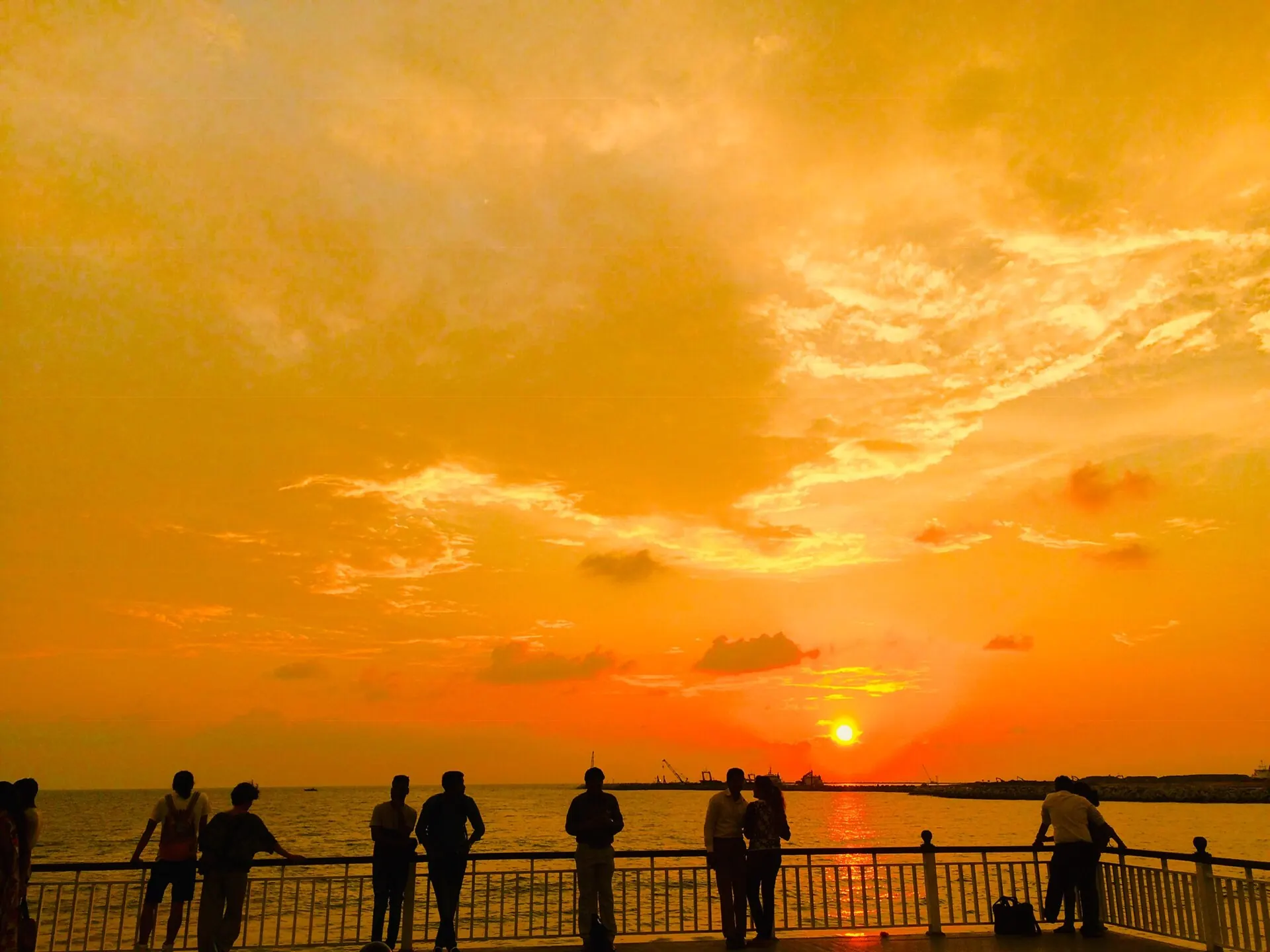
Late-afternoon cluster: the seafront green at sunset; hot and shadeless at midday, busy at weekends with families and food stalls.
rescue 100% · max p90 5.3′ · 90m
Morning cluster: Gangaramaya temple and the lake-side Seema Malaka; dress code enforced, bags left at the hotel.
rescue 100% · max p90 5.3′ · half
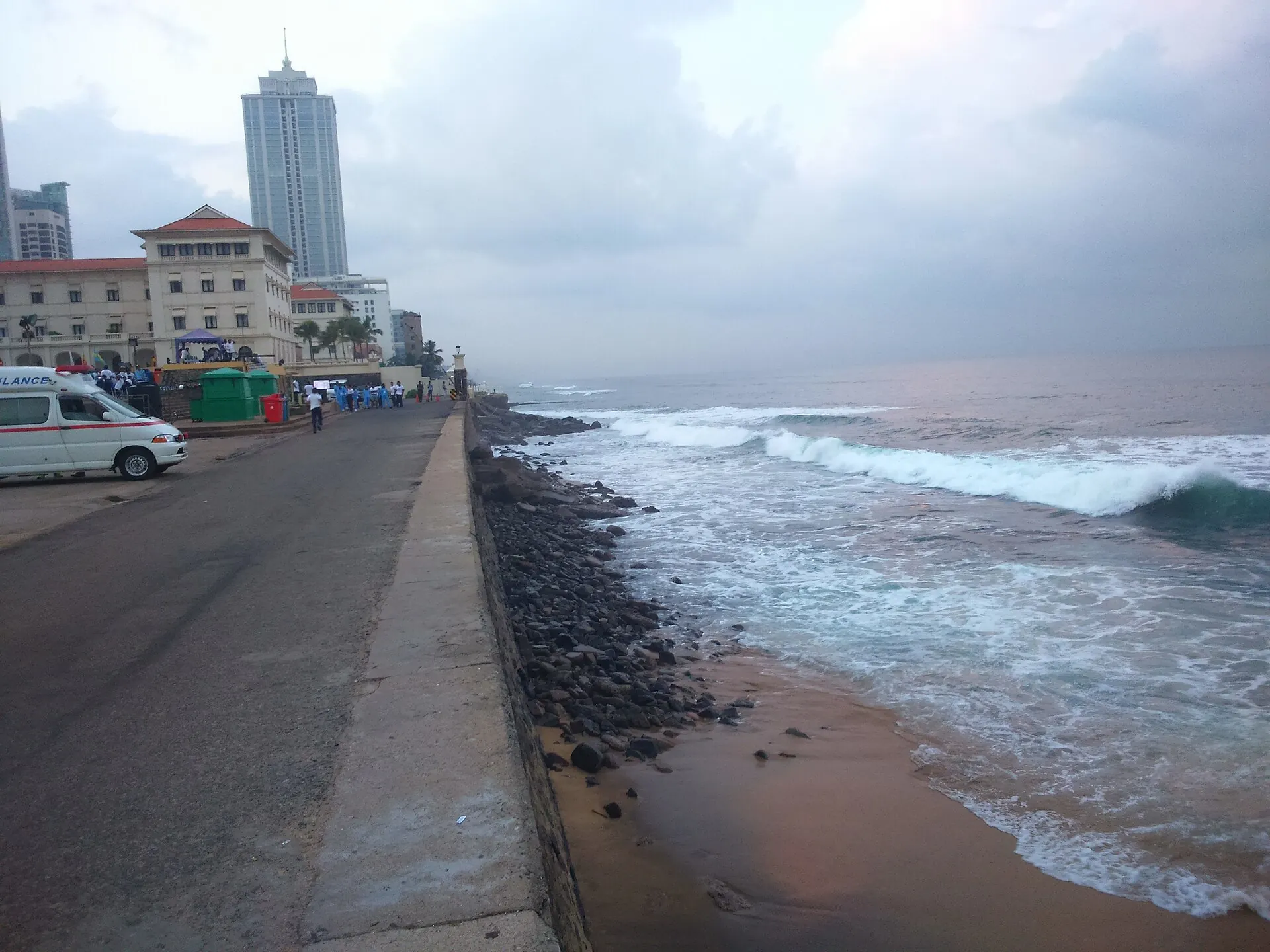
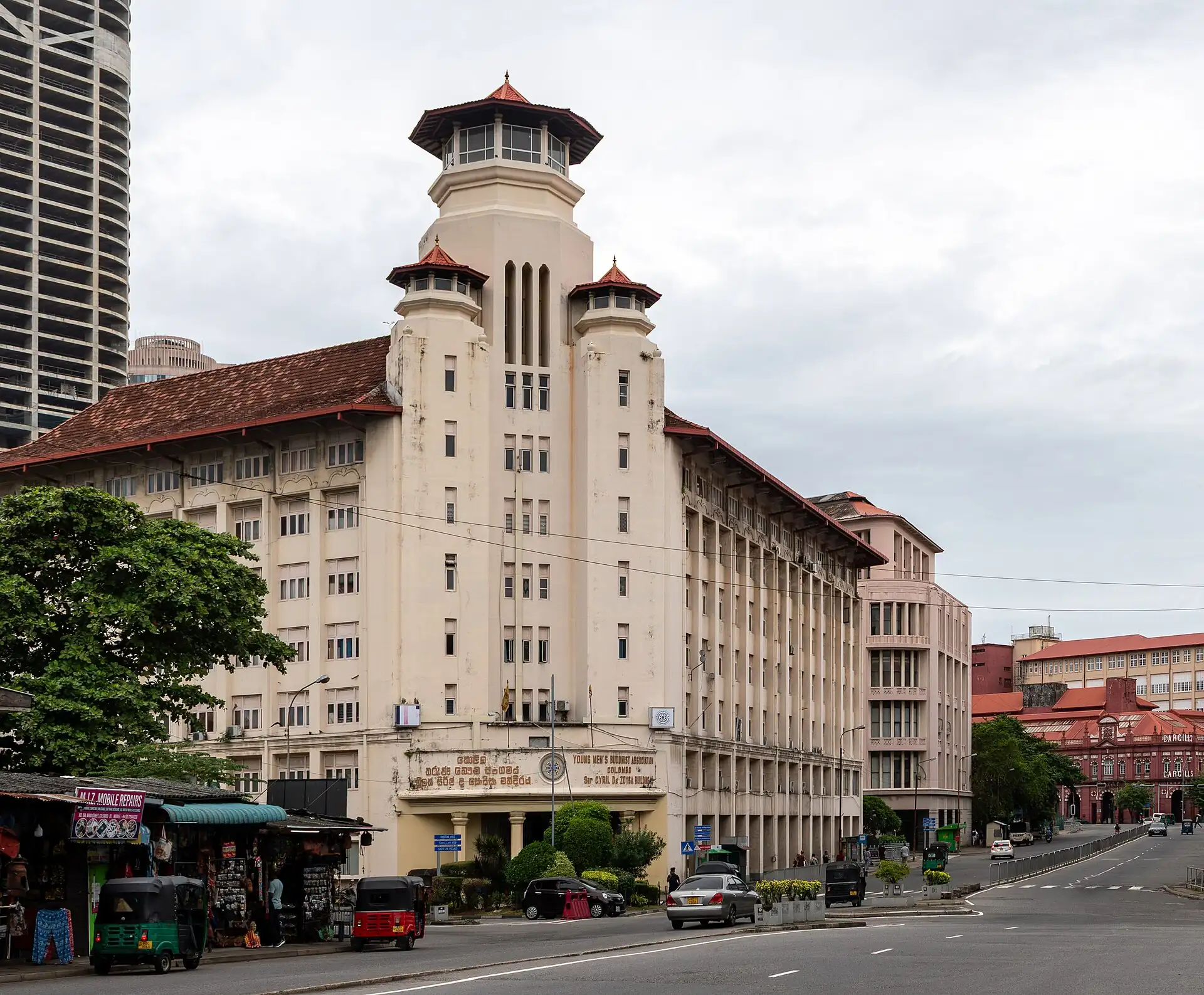
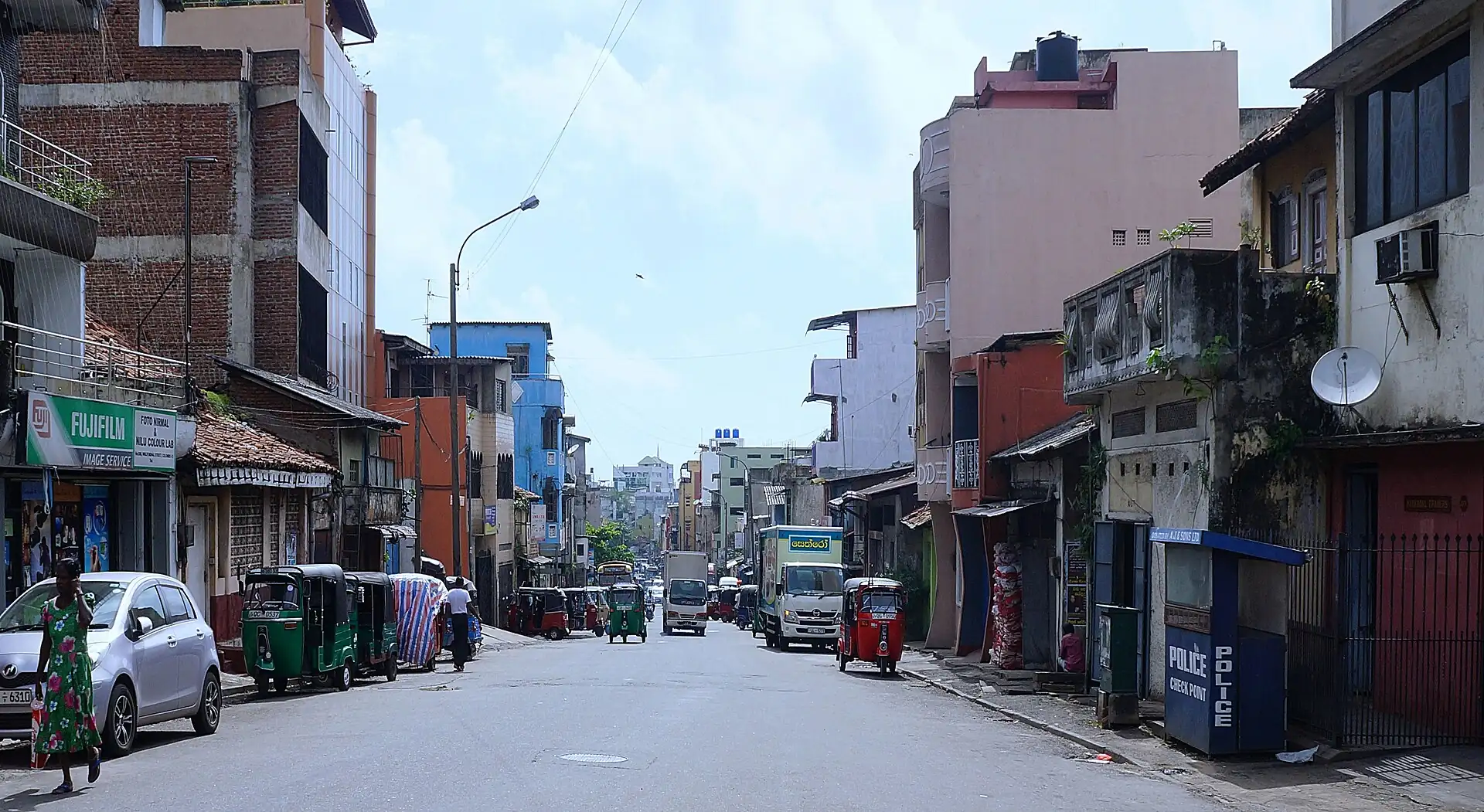
Days
Ready-made day plans, timed against opening hours and walking distances.
How long are you staying?
Loose outlines in the city's rhythm: outdoors early and late, indoors at midday. The timed day plan checks opening days, walking and heat.
1 day
A stopover before or after the rest of an island trip
- 07:00Gangaramaya Temple — Gangaramaya Temple and Seema Malaka
- 09:30Café or hotel rest, AC
- 12:00Rice and curry lunch room, Beira Lake — Rice and curry lunch near Beira Lake
- 13:30Dutch Hospital Shopping Precinct — Indoors for the heat: Dutch Hospital shops and cafés
- 16:30Galle Face Green — Galle Face Green at sunset, isso wade
- 19:30Dinner in the Fort or Galle Face
Skip: Pettah's deep lanes: save them for a morning with more time.
Colombo in 3 days
3 daysMornings at the lake and the market, sunsets on the seafront; the last day ends with the bags in the car with a wide margin.
Day by day
Day 1 — Beira Lake morning, a 12:30 lunch table
- 07:30Gangaramaya Temple
- Seema Malaka (optional)
- Rice and curry lunch room, Beira Lake (optional)
- Buhari (optional)
- 12:30Lunch table 12:30 (Fort)
Day 2 — Sunset on the green, dinner in the Fort
Day 3 — Pettah early, car to Katunayake at 12:00
- Wolvendaal Church (optional)
- Sea Street kottu stalls (optional)
- 12:00Car to the airport at 12:00
Places
“Best time” is when to arrive for the fewest crowds, for example “before 08:30”; “Go any time” means the hour makes little difference. More sights follow under “More sights and museums”.
6 places. Filters use the guide’s own ratings; a place with no rating is left out when a filter is on.
Tours, classes and shows in Colombo →
If you do ten things in Colombo
Ranked for a first visit of 2–3 days. Prices are 2026 estimates in Sri Lankan rupees; hours marked (check) in the linked pages still need confirmation.
- 1
Shrine halls and an eclectic museum wing before the tour groups arrive.
- Time
- 45–60 min
- Best
- Opening, before 09:00
- Cost
- On-site ticket (check)
- 2
A meditation shrine on stilts over the water, a short walk from Gangaramaya.
- Time
- 20–30 min
- Best
- Morning
- Cost
- Small entry fee (check)
- 3
The city's open seafront: kites, food stalls and the whole city out for the evening breeze.
- Time
- 45–90 min
- Best
- 16:30–18:30
- Cost
- Free
- 4
Colombo's oldest surviving building, now shops, cafés and bars in a colonial courtyard.
- Time
- 45–60 min
- Best
- Any time; liveliest in the evening
- Cost
- Free to enter
- 5
Crab dinner at Ministry of Crab
A signature Colombo splurge in the Dutch Hospital courtyard; book ahead.
- Time
- 1.5–2 h
- Best
- Dinner
- Cost
- LKR 8,000+ for a crab
- 6
A 1749 Dutch Reformed church with carved tombstones; quiet and rarely crowded.
- Time
- 20–30 min
- Best
- Morning
- Cost
- Free
- 7
Pettah market lanes and Sea Street
Dense trading streets and the gold market; go before the heat and leave the big bag behind.
- Time
- 1–1.5 h
- Best
- 07:30–10:00
- Cost
- Free to walk
- 8
Old Colombo Lighthouse (clock tower)
A five-minute stop between the Dutch Hospital and Galle Face; a photo, not a detour.
- Time
- 5–10 min
- Best
- Any time
- Cost
- Free
- 9
Prawn fritters bought from a cart on the green as the sun goes down.
- Time
- 15–20 min
- Best
- 17:00–18:30
- Cost
- LKR 100–250 each
- 10
Kandy day trip or overnight
The Temple of the Tooth and the hill-country gateway, a scenic train ride away.
- Time
- Full day or overnight
- Best
- A weekday
- Cost
- LKR 900–2,500 train fare
Good for…
Verdict is how well Colombo works for that traveller, not how nice it is.
Compact centre, cheap tuk-tuks and app-based fares remove most of the guesswork.
- 1Sleep in Fort — close to the station, the Dutch Hospital and a short ride to everything else.
- 2Colombo in 3 days — the 3-day plan already checks opening days and heat windows.
- 3PickMe app from the airport — fixed fare shown before you ride.
Rice and curry, kottu and a serious crab restaurant, all within a few clusters.
- 1Ministry of Crab — the signature Colombo splurge; book ahead.
- 2Rice and curry lunch room, Beira Lake — an honest lunchtime rice-and-curry spread.
- 3Galle Face isso wade stalls — the classic sunset street snack.
Local meals under LKR 900 and free sights along the seafront.
- 1Local eating houses — rice and curry for LKR 400–900.
- 2Galle Face Green — free, and the city's best evening out.
- 3Suburban trains — LKR 30–100 rides down the coast.
- 1A Galle Face hotel room — sea views and a short walk to sunset drinks.
- 2Ministry of Crab — a memorable dinner worth booking ahead for.
- 3Seafront rooftop drinks at dusk — check the minimum spend first.
- 1A guided Pettah market walk — the lanes are hard to read alone on a first pass.
- 2kollupitiya — cheaper guesthouses with a social café scene nearby.
- 3A Ceylon tea tasting — short, easy to book, good company.
Kids are welcomed; heat, traffic and broken pavements are the hard parts.
- 1Galle Face Green — open, breezy, and the one stroller-friendly stretch.
- 2Malls with a food court — AC refuge when the heat or rain wins.
- 3A Beira Lake boat ride — a short, easy activity kids enjoy.
Fine at a slow pace; crossings and broken pavements are the strain.
- 1Fort — lifts, 24-hour desks and the shortest rides to the sights.
- 2Galle Face Green — flat, level promenade, best in the cooler hours.
- 3A private car with driver for a day — covers all four clusters without a single crossing.
Broken pavements and steps almost everywhere; plan by car.
- 1Large Fort or Galle Face hotels — confirmed accessible rooms and door-to-door drop-off.
- 2Galle Face Green — the one long, flat, paved promenade in the city.
- 3Dutch Hospital Shopping Precinct — mostly level courtyard, easier than the surrounding streets.
Tours and classes: book or skip
Book through the hotel or an operator with written inclusions and a cancellation policy. Prices per person, group tour unless stated.
| Tour or class | Verdict | Typical price | Why | Check before paying |
|---|---|---|---|---|
| Pettah market walk with a guide | book | LKR 4,000–8,000 | The trade lanes are hard to read alone on a first visit. | Group size and how much time is spent at Sea Street versus the general market. |
| Sri Lankan cooking class | book | LKR 5,000–9,000 | A useful rain-day plan that pays off for the rest of the trip. | Hands-on cooking, not a demonstration; vegetarian option if needed. |
| Ceylon tea tasting | maybe | LKR 1,500–3,000 | Short and informative, easy to slot into an afternoon. | Whether it includes a short talk on grading, not just tasting. |
| Kandy day tour | maybe | LKR 15,000–30,000 by private car | Doable as a long day, better as an overnight. | Whether the Temple of the Tooth and travel time both fit comfortably. |
| Beira Lake boat ride | book | LKR 500–1,000 (check) | A short, cheap way to see Gangaramaya and Seema Malaka from the water. | Current operator and price at the jetty. |
| Private driver for a day | book | LKR 10,000–20,000 | Covers all four clusters and a Cinnamon Gardens museum stop without a single crossing. | Fixed price agreed before you start, fuel included. |
What each season brings
Dry season (west coast)
Dec–Mar
The most reliable weather window: warm, mostly dry, good for walking and the seafront.
Watch: Christmas and New Year crowds near Galle Face.
Sinhala/Tamil New Year
Mid-Apr
A distinct city mood: quiet streets, closed shops, the run-up to the monsoon.
Watch: Many restaurants and shops close for several days.
South-west monsoon
May–Sep
Heavy, frequent rain; the east coast is drier in this window if you are combining regions.
Watch: Flooded streets after storms; rough seas.
Inter-monsoon
Oct–Nov
Afternoon thunderstorms are the pattern; mornings are often clear.
Watch: Plan outdoor time before midday.
Photo spots and the light
Light times are for clear days; monsoon cloud flattens everything.
| Spot | Best light | Tip |
|---|---|---|
| Seema Malaka over Beira Lake | Early morning | Shoot from the lakeside path for the shrine reflected in the water. |
| Galle Face Green at sunset | 17:30–18:30 | Face west over the sea wall; kites and food carts fill the foreground. |
| Dutch Hospital Shopping Precinct | Blue hour, 18:00–19:00 | The courtyard's lamps come on as the sky darkens; shoot from the upper-floor walkway. |
| Old Colombo Lighthouse (clock tower) | Morning | A tight frame against the sky avoids the surrounding traffic and wires. |
| Wolvendaal Church | Morning | Soft light on the coral-stone façade; grounds are quiet outside service times. |
Colombo travel FAQ
Answers are 2026 desk estimates; fares and rules marked (check) change.
Is Colombo safe?
Yes for violence; the common problems are heat, traffic and the scams described on this page. Use ride-hailing apps after dark and keep bags zipped in crowded Pettah lanes.
How much is a car from Bandaranaike airport to Fort?
About LKR 7,000–12,000 by pre-booked car or a licensed airport taxi, 50–90 minutes depending on traffic and the time of day.
Do I need cash in Colombo?
Yes for tuk-tuks, market stalls and small eating houses. Keep LKR 5,000–10,000 in small notes; cards work in hotels, malls and most restaurants.
Is tap water safe to drink?
No. Drink bottled or filtered water; ice in hotels and established cafés is generally safe.
What should I wear to temples?
Shoulders and knees covered, shoes and hats off before the grounds. A light scarf and long trousers or a long skirt cover both rules.
How many days do I need in Colombo?
One full day covers the highlights; two to three lets you add Pettah properly and a slower pace before the rest of an island trip.
What is Poya and why does it matter?
Poya is the monthly full-moon public holiday. Alcohol sales are banned that day, government offices close, and some shops and bars shut or run shorter hours — check the date before you plan an evening out.
PickMe or a street tuk-tuk?
PickMe: fixed fare shown before you ride, logged driver and route. If you flag a street tuk-tuk, agree the fare or insist on the meter before you get in.
How do I cross the street?
Walk at a steady pace and cross where locals cross; tuk-tuks and buses do not slow for pedestrians. Crossing next to a local helps on the first day.
Is Colombo good as a base for the rest of Sri Lanka?
Yes for a first or last night. Kandy, Galle and Negombo are all reachable in half a day or less; most travellers do not spend more than two or three nights in the city itself.
How much should I tip?
Not expected at local eating houses; round up tuk-tuk fares; 5–10% in restaurants without a service charge already added.
What is the best area to stay?
Fort for a first or last night with easy transport links; Kollupitiya for a cheaper base a short ride from Galle Face.
Do people speak English?
Widely in hotels, restaurants and with younger people in Colombo; drivers and market vendors work with numbers on a phone. Written addresses help.
More to see and doSee & do · Learn & work · Rain & heat · Free things · Wheelchair and stroller
Free things to do
Sights in Colombo that cost nothing to enter. Each is described under Places or More sights; extra costs inside are marked there.
Wheelchair and stroller, place by place
How each place in this guide works for wheels, from its own page. Ratings are desk estimates unless a page says it was checked on the ground.
| Place | Step-free | Wheelchair | Stroller | What to know |
|---|---|---|---|---|
| Old Colombo Lighthouse (clock tower) | ok | ok | ok | Street-level viewpoint; a pavement stop, not a building to enter. |
| Dutch Hospital Shopping Precinct | ok | ok | ok | Mostly level courtyard on the ground floor; a few upper-floor units are reached by stairs. |
| Seema Malaka | partial | caution | caution | Reached by a level pontoon walkway; no stairs, but the walkway can be narrow when a tour group passes. |
| Wolvendaal Church | partial | caution | caution | A few steps at the entrance; the grounds and interior floor are flat. |
See & do
18 of 18
- Temples & pagodas
A working Buddhist temple with shrine halls and an eclectic museum wing; go at opening.
Beira Lake · Daily, day hours (check) · On-site ticket (check)
- Temples & pagodas
A meditation shrine on stilts over Beira Lake, reached by a short pontoon walkway.
Beira Lake · Daily, day hours · Small entry fee (check)
- promenade
The city's open seafront green: kite-flying, food stalls and sunset crowds.
Galle Face · Always open; best at dawn or after 16:30Always open; best at dawn or after 4:30 PM · Free
The old lighthouse and clock tower that once guided ships into the harbour; five minutes from the street.
Fort · Exterior, always viewable · Free
Dutch Hospital Shopping Precinct
Citadel & old cityColombo's oldest surviving building, a Dutch-era hospital turned courtyard of shops, cafés and bars.
Fort · Shop and restaurant hours, roughly 09:00–23:00Shop and restaurant hours, roughly 9:00 AM–11:00 PM · Free to enter
- Colonial
A 1749 Dutch Reformed church with carved tombstones and colonial-era pews; quiet outside service times.
Pettah · Grounds by day; services on Sunday · Free
National Museum of Colombo
MuseumsThe island's main history museum, including royal regalia; a car ride from Fort.
Cinnamon Gardens (outside the OS clusters) · Daily except some public holidays (check) · Foreigner ticket (check)(check)
Independence Memorial Hall
Citadel & old cityBuilt to mark 1948 independence; open lawns good for a walk.
Cinnamon Gardens (outside the OS clusters) · Grounds by day · Free(check)
Viharamahadevi Park
Lakes & parksThe city's largest park, next to the National Museum; shady paths and a playground.
Cinnamon Gardens (outside the OS clusters) · Daily, day hours · Free(check)
Red Mosque (Jami Ul-Alfar)
mosqueThe candy-striped landmark mosque at the edge of Pettah's market lanes.
Pettah · Exterior view any time; interior around prayer times (check) · Free
Beira Lake waterfront walk
Lakes & parksA shaded lakeside path connecting Gangaramaya and Seema Malaka; best in the morning.
Beira Lake · Always open · Free
Beira Lake boat ride
ActiveA short paddle-boat or motorboat loop past Gangaramaya and Seema Malaka.
Beira Lake · Day hours (check operator) · LKR 500–1,000 (check)
Sri Lankan cooking class
ClassesRice and curry, hoppers and sambols from scratch; a good rain-day plan.
Fort / Kollupitiya · Morning or afternoon, 3–4 h · LKR 5,000–9,000
Ceylon tea tasting
ClassesA guided tasting through Sri Lanka's tea-growing regions; short and easy to fit in.
Fort / Kollupitiya · About 1 h · LKR 1,500–3,000
Pettah market walk with a guide
Food toursA guide reads the trade streets and market stalls that are hard to decode alone.
Pettah · Morning, about 2–3 h · LKR 4,000–8,000
Sunset walk on Galle Face Green
ActiveKite-flying, isso wade stalls and the whole city out for the evening breeze.
Galle Face · 16:30–18:304:30 PM–6:30 PM · Free; snacks extra
Cricket at a Colombo ground
SportInternational and club matches at grounds around the city; check the fixture list before you fly.
Fort / Cinnamon Gardens · Match days (check) · LKR 500–3,000(check)
Ayurvedic spa treatment
Spa & massageTraditional Sri Lankan Ayurveda, from a simple massage to a longer programme.
Hotels citywide · By appointment · LKR 3,000–10,000
- Booking
- Cooking classes and guided walks are easy to book a day ahead through the hotel; nothing in Colombo needs weeks of notice.
Learn & work
| What | Where | Cost | Note |
|---|---|---|---|
| Sinhala or Tamil with a private tutor | Language centres and online platforms | LKR 3,000–7,000 an hour (check) | Sinhala is the majority language in Colombo; Tamil is also widely spoken. |
| Cooking courses | Hotels and cooking schools in Fort and Kollupitiya | LKR 5,000–9,000 a session | See Do; some run half-day market-and-cook formats. |
| Batik and handicraft workshops | Studios linked to Barefoot and similar shops | LKR 2,000–6,000 (check) | Short sessions; book through the shop. |
Working here
- Tourist entry
- Most nationalities need an Electronic Travel Authorisation (ETA) before arrival; it does not permit paid work, including paid volunteering.
- Work visa
- Legal work needs an employer-sponsored visa. Expect documentation checks and processing time before you can start.
- Remote work
- Sri Lanka has introduced digital-nomad style visa options in recent years; rules change — check current requirements rather than relying on older guides.
Rain-day and heat-day plan
Rain day
Monsoon storms (May–Sep, Oct–Nov) usually build through the afternoon: do the outdoor sight before 11:00, then go indoors.
- 01Dutch Hospital Shopping Precinct — Covered colonial courtyard with shops and cafés; about an hour.
- 02Gangaramaya Temple — Covered shrine halls and the museum rooms stay dry.
- 03Majestic City or Liberty Plaza malls — Food courts and shops for a washed-out afternoon.
Heat day
Above 31 °C with high humidity: outdoor sights before 10:00 and after 16:30, air-conditioning in between, water every hour.
- 07:00Gangaramaya Temple — Before the tour groups and the worst heat.
- 09:00Wolvendaal Church — Quiet grounds, some shade.
- 11:00Dutch Hospital Shopping Precinct — Indoors and AC for the hottest hours.
- 16:30Galle Face Green — Sea breeze and the coolest outdoor hour of the day.
Day-trips and nearby
Places you can reach from Colombo in a day or with one night away, with the route and what it costs. Door to door, not ride time.
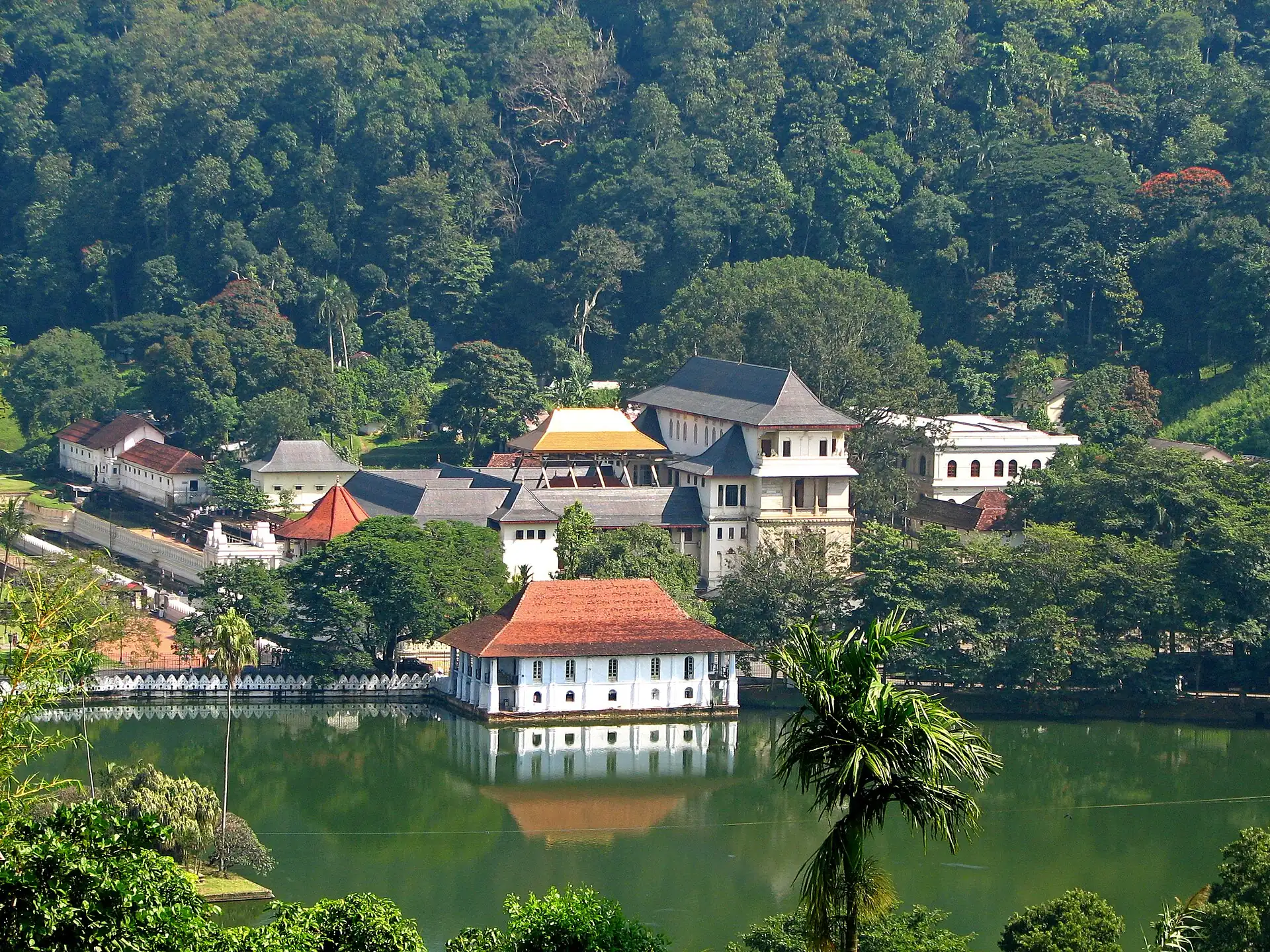 Photo: McKay Savage from Chennai, India, CC BY 2.0
Kandy (Temple of the Tooth)
overnightTrain or car, about 3 h each way
The scenic train is popular; book seats ahead in high season.
- Time
- Full day, better as an overnight
Galle (Fort and ramparts)
goTrain or expressway car, about 2–2.5 h each way
A coastal Dutch fort town; combine with a beach stop nearby.
- Time
- Full day
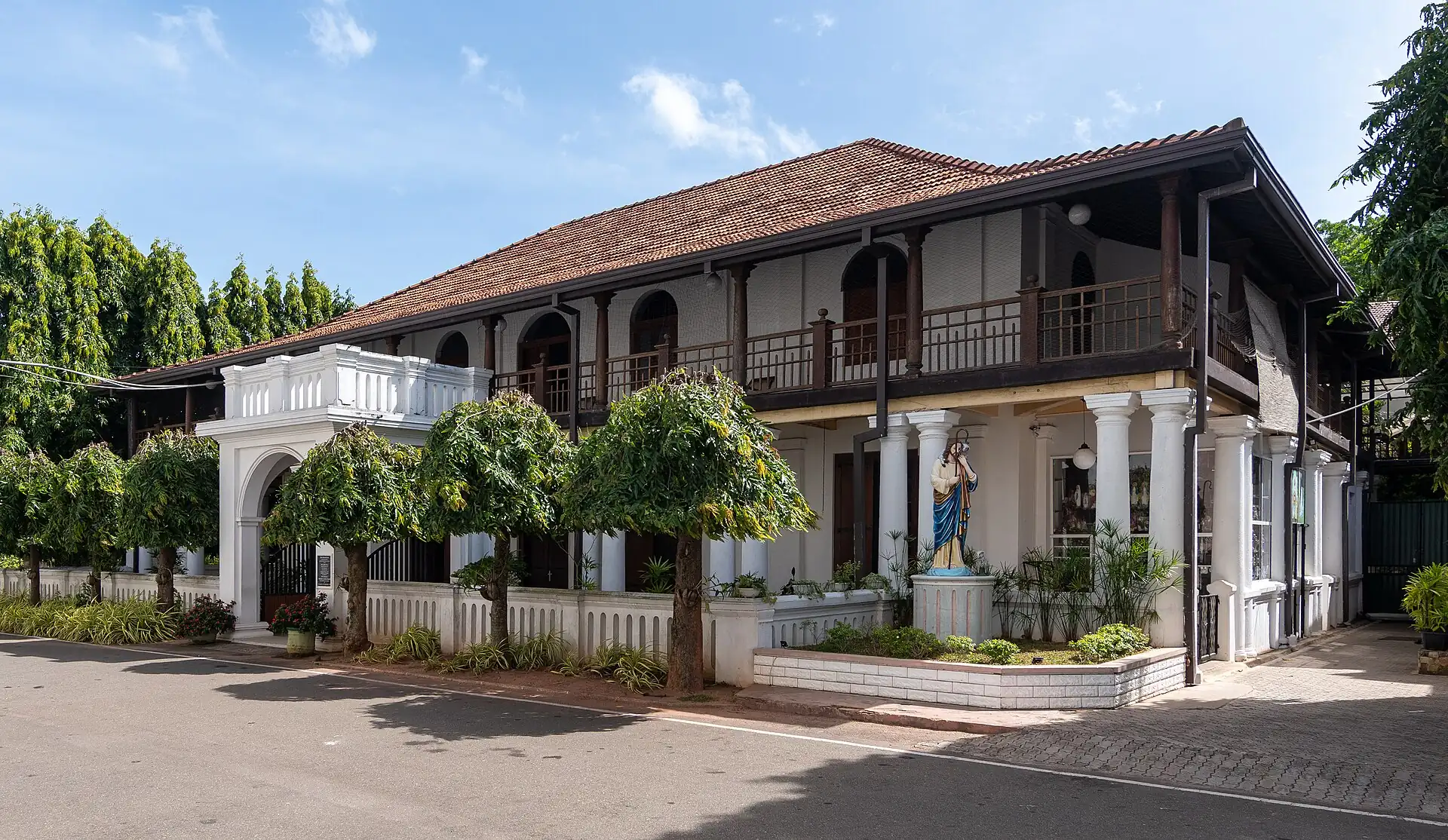 Photo: Steffen Schmitz ( more photos ), CC BY-SA 4.0
Negombo
goCar about 45 min–1 h from the airport side of the city
Closest beach town to the airport; a common overnight before an early flight.
- Time
- Half day or a first/last night
Pinnawala or an elephant sanctuary
cautionCar about 3 h each way
Check the sanctuary's animal-welfare record before booking.
- Time
- Full day
Go next
Door to door: 4–4.5 h
Car about 4–4.5 h
Rock fortress and ancient cities; two nights minimum, best combined with Kandy or Dambulla.
Door to door: 2.5–3 h
Train or expressway car, about 2.5–3 h
Beaches, whale watching in season (Nov–Apr); a long day trip or, better, a night away.
Eat & sleepWhere to eat and which area to sleep in
Eat & sleep
Where to eat and which area to sleep in
Eat
A short list of places worth crossing the city for, each with how to get a seat.
Restaurant finder: filter every place to eat in Colombo →
Vegetarian-friendly score
2.0 / 5 · Workable
- Country diet noteOur country guide rates vegetarian eating as mixed.0.75 / 2
- Places to eat in this guide1 of 5 places with a known answer are vegetarian-friendly, 3 partly.0.75 / 1.5
- Budget eating lines0 vegetarian lines in "Eat by budget".0 / 0.6
- Meat-free national dishes4 meat-free dishes in the country food list.0.4 / 0.4
- Dedicated vegetarian kitchens0 mentions of vegetarian restaurants, Buddhist or fasting kitchens.0 / 0.5
Country note: Many curries are vegetable, but Maldive fish flakes hide in sambols and some curries.
Vegetarian places near me →Make a diet card →
How we score
- Country diet note (up to 2): easy 2, workable 1, mixed 0.75, hard 0; no note 0.5.
- City places to eat (up to 1.5): 1.5 × (vegetarian-friendly + half of partly friendly) ÷ places with a known answer; needs 3 or more known places.
- Budget eating lines marked vegetarian (up to 0.6): 0.2 each.
- Meat-free national dishes (up to 0.4): 0.1 each.
- Dedicated vegetarian kitchens mentioned — Buddhist chay, shōjin ryōri, Jain, fasting food, vegan cafés (up to 0.5): 0.1 each.
- Total rounded to the nearest half point, 0 to 5. Built from our own pages only, not from reviews.
Eating and drinking guideEat by budget · Drink
Before you sit down to eat
Short version; full text linked
Eat by budget
Under LKR 900 a meal
| Where | Order | Area | Price | Note |
|---|---|---|---|---|
| Rice and curry lunch room, Beira Lake | Rice and curry | Beira Lake | LKR 400–900 | Lunchtime buffet-style eating house. |
| Sea Street kottu stalls | Kottu roti | Pettah | LKR 500–900 | Chopped roti fried with vegetables, egg or meat; loud and fast. |
| Galle Face isso wade stalls | Isso wade (prawn fritters) | Galle Face | LKR 100–250 each | The classic sunset snack on the green. |
| Egg hoppers (bowl-shaped rice pancakes) | Egg hoppers with sambol | Any local eating house | LKR 300–600 | A common breakfast or dinner dish; ask for it plain or with an egg. |
| String hoppers with curry | Steamed rice-noodle nests with dhal or coconut curry | Any local eating house | LKR 300–600 | A lighter alternative to rice and curry. |
Dishes to know
| Dish | What it is | Where to look | When | Price |
|---|---|---|---|---|
| Rice and curryබත් සහ ව්යංජන | Rice with several small curries, sambols and a poppadum | Any local eating house | Lunch mainly, some for dinner | LKR 400–900 |
| Kottu roti | Chopped flatbread fried with vegetables, egg, cheese or meat | Street stalls and casual restaurants | Evening mainly | LKR 500–1,200 |
| Hoppers (appa) | Bowl-shaped fermented rice pancakes, plain or with an egg in the centre | Breakfast and dinner spots | Morning, evening | LKR 150–300 each |
| String hoppers (idiyappam) | Steamed rice-noodle nests, eaten with curry or coconut sambol | Breakfast spots | Morning | LKR 300–600 for a plate |
| Lamprais | Rice, meat curry and accompaniments baked in a banana leaf, a Dutch Burgher dish | Specialist eating houses | Lunch | LKR 800–1,500 |
| Devilled dishes (chicken, cashew, prawns) | Stir-fried in a spicy, slightly sweet chilli sauce | Restaurants and bars | Any | LKR 900–2,000 |
| Isso wade | Deep-fried lentil fritter topped with a whole prawn | Galle Face Green stalls | Evening | LKR 100–250 each |
| Watalappan | Coconut-milk and jaggery custard, a Malay-Sri Lankan dessert | Restaurants, some bakeries | Dessert | LKR 300–600 |
- Eat where turnover is fast and the food is visibly fresh; a busy eating house at lunch is a good sign.
- Spice levels can be high by default: ask for 'not spicy' if you are unsure.
- Bottled water on the table is charged unless you asked for tap; check before opening it.
Drink & nightlife
| Where | What | Until | Note |
|---|---|---|---|
| Galle Face seafront hotel bars and verandahs | Cocktails, sunset views | About 23:00–00:00About 11:00 PM–12:00 AM | Check the dress code and minimum spend; a service charge is usually added. |
| Dutch Hospital precinct bars and cafés | Beer, cocktails, café | About 23:00–00:00About 11:00 PM–12:00 AM | Open-air colonial courtyard; busy on weekend evenings. |
| King coconut and juice stalls | Fresh king coconut, fruit juice | Daylight hours | The cheapest, most reliable cold drink on a hot walk. |
| Ceylon tea cafés | Tea, light snacks | About 20:00–21:00About 8:00 PM–9:00 PM | Pure Ceylon black tea, often served with milk on the side rather than mixed in. |
By style
| Style | What | Where | Price | Until |
|---|---|---|---|---|
| Ceylon tea | Black tea, plain or with milk and sugarAsk for 'milk tea' or 'plain tea'; the local sweet version is very sugary. | Any café or eating house | LKR 150–400 | Café hours |
| King coconut (thambili) | Orange-husked coconut water, drunk straight from the shellA safe, hydrating street drink; the vendor cuts it open for you. | Street stalls citywide | LKR 150–250 | Daylight |
| Local beer | Lion Lager, Three Coins and other Sri Lankan lagersWine shops (off-licences) are separate from grocery stores and keep their own hours. | Bars, restaurants, licensed shops | LKR 600–1,200 a bottle | About 23:00–24:00; banned on Poya days |
| Arrack | Coconut-based spirit, the national drinkTry it with soda water and lime, the common local mix. | Bars and restaurants | LKR 500–1,000 a serving | Bar hours; banned on Poya days |
| Cocktails and rooftop bars | International cocktails, sundownersPrices often add a service charge and VAT; check the final total. | Larger hotels around Galle Face and the seafront | LKR 1,500–3,500 | About 23:00–00:00 |
Sleep
Pick the area first: it decides your walk home at night and your first morning.
Which neighborhood fits you
Three questions, one recommendation, with the reasons.
Your best fit
- Railway station, clock tower, Dutch Hospital and Pettah all within a short ride or walk.
- Larger hotels keep 24-hour desks.
Watch out: Mostly mid-range and upmarket business hotels; few budget rooms.
Next best: Kollupitiya (Colombo 03)
Built from our 1–5 desk scores per area; your answers stay in this browser.
More on sleepingSleep by budget · Your area · With kids
Sleep by budget
| Band | Price | Where | Room types | What to expect |
|---|---|---|---|---|
| budget | LKR 4,000–8,000 | Kollupitiya | Guesthouses, small hotels | Simple rooms, fan or AC, night staffing not guaranteed — confirm before you fly. |
| mid | LKR 15,000–30,000 | Fort, Galle Face | Business and mid-range chain hotels | Lift, 24-hour desk, breakfast, door the car can reach. |
| splurge | LKR 45,000+ | Galle Face seafront | International luxury hotels | Pools, spas, sea views; a service charge and VAT often added to the quoted rate. |
Booking checks
- Ask for a room with a window and check the lift exists before booking a Kollupitiya guesthouse.
- The hotel should register your passport details; it may photocopy it but should not keep the original.
- Message the guesthouse your arrival time if it is late: not every property staffs the desk overnight.
Which area is yours
| If you are | Sleep in | Because |
|---|---|---|
| First or last night, business travellers | Fort | Lift, 24-hour desk, close to the station and the Dutch Hospital precinct. |
| Budget stays, couples, longer visits | Kollupitiya (Colombo 03) | Cheaper rooms a short ride from Galle Face; confirm night reception before you fly. |
01Fort
First and last nights: Fort hotels are a short ride from the railway station and the seafront, with 24h desks and doors the car can reach.
Cheaper guesthouses and apartments on the coast road, 10 minutes from Galle Face; night staffing varies, so confirm before you fly.
Areas are in our default order until you tick a priority.
Scores are 1–5 desk judgements per priority (2026).
With kids
- Pavements are narrow or missing: bring a carrier, not a stroller, outside malls and hotel grounds.
- Galle Face Green in the early evening is open, breezy and has snack stalls — the easiest outdoor stretch for children.
- Heat: plan outdoor time before 10:00 or after 16:30, and carry water for kids at all times.Heat: plan outdoor time before 10:00 AM or after 4:30 PM, and carry water for kids at all times.
- Malls (Majestic City, Liberty Plaza, One Galle Face) are the rain- or heat-day fallback with AC and food courts.
- Ride-hailing cars rarely have child seats: ask the hotel to arrange a car with one, or bring a travel booster.
PracticalMoney, essentials, safety and the pocket card
Practical
Money, essentials, safety and the pocket card
Money
What a day costs at three comfort levels, and how to pay.
- Budget
- LKR 6,000–12,000 excl. bed / day
- Mid
- LKR 12,000–30,000 excl. bed / day
- High
- LKR 30,000+ excl. bed / day
- Transit card
- No transit card needed: ride-hailing apps, tuk-tuks and walking.
- Cash rule
- Keep LKR 5,000 in small notes; use ATMs inside banks, hotels or malls, not on dark streets.
More on moneyCosts · Budget · Buy
What things cost
- Rice and curry, local eating houseLKR 400–900
- Kottu roti, mid-rangeLKR 600–1,200
- Cup of Ceylon tea, caféLKR 150–400
- Bottle of water, shopLKR 60–100
- Car from Bandaranaike Airport to FortLKR 7,000–12,000
Trip budget
| Hotel double room1 × 2 nights × LKR 18,000 | LKR 36,000 |
| Food, local transport, entries2 × 2 days × LKR 20,000 | LKR 80,000 |
| Airport car, both ways1 × LKR 18,000 · one car per 4 people | LKR 18,000 |
| eSIM or tourist SIM2 × LKR 2,500 | LKR 5,000 |
| Buffer 10%Price creep, a taxi you did not plan, one splurge | LKR 13,900 |
| Trip total≈ LKR 38,230 per person per day, bed included | LKR 152,900 |
2026 estimate in Sri Lankan rupees; flights, visas and tours excluded. Your choices stay in this browser.
Prices of common things
| Ceylon tea, café | LKR 150–400 |
| Rice and curry, local eating house | LKR 400–900 |
2026 estimate; check locally.
Buy
- Bargaining
- In Pettah's general stalls and souvenir shops, an opening price to a foreigner can be inflated: counter politely, settle somewhere in the middle, and walk away if it does not move. Do not bargain in shops with printed tags, supermarkets or malls.
- Fixed-price check
- Check the printed price for tea, spices or handicrafts in a supermarket (Cargills, Keells) or a fixed-price shop like the Sri Lanka handicrafts board outlets before buying the same item in a market stall.
Markets and shopping streets
| Where | What | When | Haggle | Note |
|---|---|---|---|---|
| Pettah general market lanes | Clothes, electronics, household goods, spices | Roughly 09:00–19:00, closed Sunday (check)Roughly 9:00 AM–7:00 PM, closed Sunday (check) | hard | Dense and crowded; keep bags zipped and leave the big suitcase at the hotel. |
| Sea Street gold market | Gold and gem jewellery | Shop hours | light | Buy from established shops with a receipt; avoid street pitches offering 'investment' gems. |
| Manning Market (Pettah) | Wholesale fruit, vegetables, dried goods | Early morning, busiest before 08:00Early morning, busiest before 8:00 AM | hard | Built for traders; interesting to walk through, not for small purchases. |
| Supermarkets (Cargills, Keells) | Tea, spices, snacks, toiletries | Long hours; some late-night branches | no | Your fixed-price reference for tea and spices. |
| Majestic City / Liberty Plaza malls | Clothes, electronics, food court | About 10:00–21:00About 10:00 AM–9:00 PM | no | AC refuge on a hot or wet afternoon. |
Shops by what they sell
| For | Where | Hours | Note |
|---|---|---|---|
| Ceylon tea | Supermarkets, tea shops on Galle Road and in malls | Shop hours | Buy branded, sealed packs; loose-leaf market tea varies in quality. |
| Batik, handloom textiles | Barefoot (Galle Road), Laksala state handicrafts shops | About 09:00–19:00 | Barefoot is pricier but reliable quality; Laksala has fixed government prices. |
| Gems and jewellery | Established shops with a licence, not street offers | Shop hours | Ask for a certificate; decline any stranger who offers to walk you to a shop. |
| Spices | Pettah stalls, supermarkets | Shop hours | Sealed supermarket packs travel and clear customs more predictably than loose spice bought in a market. |
| Malls (AC, food court) | Majestic City, Liberty Plaza, One Galle Face (outside the OS clusters, Galle Face area) | About 10:00–21:00 | Fixed prices; the rain-day and heat-day refuge. |
Changing money
| Where | Verdict | Why |
|---|---|---|
| Bank branches (Commercial Bank, HNB, Sampath) | use | Fair rate and a receipt; passport needed; office hours only. |
| Licensed money changers in Fort and Kollupitiya | ok | Competitive rates; check the licence sign and count notes at the counter. |
| Bandaranaike Airport booths | ok | Slightly worse rate: change enough for the ride and the first day. |
| Hotel front desk | avoid | Convenient, poor rate. |
| People offering to change money on the street | avoid | Short-changing and fake-note risk. |
ATMs
- Per withdrawal
- Most bank ATMs cap a foreign card at LKR 40,000–100,000 per withdrawal (2026 estimate, shown on screen); try another bank's machine if you need more.
- Fees
- Local fee about LKR 300–700 per withdrawal (2026 estimate) plus your own bank's fee: take the cap, not small amounts.
- Conversion
- If the ATM or a card terminal offers to charge in your home currency, decline and pay in rupees.
- Where
- Machines inside bank branches, malls or hotels, not on dark streets.
Essentials and accessEssentials · Access
Essentials
- Plugs & power
- 230 V; mainly type D and type G sockets (both are common). Bring a universal adapter.
- Opening hours
- Shops and eating houses open by 09:00–10:00; many close around 20:00–21:00. Government offices and some shops close on Poya (full-moon) days — check the calendar.Shops and eating houses open by 9:00 AM–10:00 AM; many close around 8:00 PM–9:00 PM. Government offices and some shops close on Poya (full-moon) days — check the calendar.
- Health
- Heat and humidity year-round, dengue risk from mosquitoes, occasional flooding in the monsoon months. Travel insurance with medical cover.
- Accessibility
- Pavements are narrow, broken or missing outside malls and larger hotels; step-free access is poor across the centre.
- Laundry
- Hotels offer same- or next-day laundry, priced by the piece or the kilo; few self-service laundromats.
- Emergency numbers
- 119 police, 110 fire, 1990 ambulance, 1912 Tourist Police.
Pack
- Light, breathable clothes; a light rain shell for the monsoon months
- Something that covers shoulders and knees for temples
- Sunscreen, a hat and mosquito repellent
- Slip-on shoes (shoes and often hats come off at temples)
Accessibility
Colombo is hard going on wheels. Pavements are narrow, broken or absent outside malls and larger hotels, and step-free access is mainly found in newer buildings. Plan door-to-door car or tuk-tuk rides and pick a hotel with a lift.
- Pavements
- Narrow, broken or blocked by parked vehicles and stalls across the centre; the Galle Face promenade is the smooth exception.
- Getting around
- App cars are the step-free option; tuk-tuks are not wheelchair-accessible.
- Hotels
- Larger chain hotels in Fort and along the seafront have lifts and accessible rooms; smaller guesthouses often do not — ask for photos of the entrance.
- Toilets
- Accessible toilets in malls and large hotels; rare elsewhere.
- Crossings
- Few signalled crossings; cross beside a local where possible.
Sights, step-free or not
| Galle Face Green promenade | step-free | Level, paved promenade; the smoothest walk in the city. |
| Gangaramaya Temple | with help | Paved courtyards with some raised thresholds between shrine rooms. |
| Seema Malaka | with help | Reached by a short pontoon walkway over the lake; ask about assistance. |
| Dutch Hospital Shopping Precinct | step-free | Paved courtyard, mostly level, some steps to upper-floor units. |
| Wolvendaal Church | with help | A few steps at the entrance; grounds are flat. |
Survive
Safety basics, the lines not to cross, and practical habits that save the day.
Safety
- Traffic: cross where locals cross, slowly and steadily; tuk-tuks and buses do not stop for you.
- Heat and humidity all year: an AC stop every 60–90 minutes and bottled water.
- Sea: rip currents on the west coast beaches; swim only where lifeguards or locals swim, and not in the monsoon.
- Emergency: 119 police, 110 fire, 1990 ambulance; Tourist Police 1912.
Red lines
- Temples: shoulders and knees covered, shoes and hats off before the grounds; never pose with your back to a Buddha statue.
- Do not photograph military posts, the harbour or government buildings.
- Ask before photographing people, monks or worshippers.
Practical
- Toilets: hotels, malls and cafés; carry tissues.
- Tap water is not for drinking; use bottled water.
More on staying safeStay safe · Stay healthy · Safety map · Solo & women · Etiquette · Cope · Scams
After dark, by area
3 flagged areas
- Take care
- Take care
- Take care
Day = about 07:00–19:00. What to watch in each area, day and night →
Scams and red flags
Walk away if you see these
- 'The temple is closed today' from a stranger who then offers a tour or a shop: temples run their own hours; walk to the gate and check yourself.
- Tuk-tuk meters left off with a high price named on arrival: agree the fare or the meter before you get in, or use the ride-hailing app.
- Gem and jewellery 'investment' pitches from a friendly stranger who leads you to a shop with a story about export profit: this is a long-running scam, walk away.
- 'I waited for you' driver claims after a stop: pay only the agreed one-way fare, or book the return leg separately in the app.
Stay safe
Crossing the road
- 01Look both ways, and again: tuk-tuks and motorbikes weave and do not always keep to one side.
- 02Cross at a steady pace; never run or stop dead mid-road.
- 03Buses and trucks do not slow for pedestrians: wait for a clear gap.
- 04Cross beside a local where you can, especially on the coast road.
Hustles specific to this city
| Hustle | Where | The tell | What to do |
|---|---|---|---|
| 'The temple is closed' stranger | Near temples and sights | A friendly local claims the site is shut and offers an alternative or a shop visit | Walk to the gate yourself; ignore the offer and continue. |
| Gem 'investment' pitch | Tourist areas, sometimes started by a friendly conversation | A stranger leads the conversation toward a gem shop and an investment story | Decline and walk away; buy gems only from licensed shops you found yourself. |
| Tuk-tuk meter tricks | Anywhere | Meter left off, or running fast | Agree the fare before riding, or use the PickMe app, which shows the fare upfront. |
| 'I waited for you' driver | Sights, temples | A driver who dropped you off claims a waiting fee | Pay only the agreed one-way fare, or book each leg separately in the app. |
- Police
- 119, or the Tourist Police on 1912. Report thefts at the nearest police station with your passport; insurers need the written report.
- Night
- Violent crime against visitors is rare; the risks are traffic, heat and the scams above.
Stay healthy
- Heat
- Year-round: shade and AC every 60–90 minutes, water regularly, no midday walks. Heat exhaustion is the most common visitor complaint.
- Dengue
- Mosquito-borne; a real year-round risk in Colombo, worse after monsoon rains leave standing water. Repellent by day and at dusk; see a doctor promptly for a sudden high fever.
- Food and water
- Bottled or filtered water only. Busy eating houses with fast turnover are generally safer than quiet ones.
- Flooding
- Low-lying streets can flood for an hour or two in heavy monsoon rain (May–Sep, Oct–Nov); wait it out rather than wading through.
Hospitals and clinics: see Cope.
Safety by area and hour
| Area | Day | Night | What to watch |
|---|---|---|---|
| Fort | fine | caution | Checkpoints near government and port buildings; quiet and empty after office hours. |
| Pettah | fine | caution | Crowded lanes by day: watch your bag; largely shut and poorly lit after dark. |
| Galle Face | fine | fine | Weekend evening crowds; keep bags in front near the food-stall lines. |
| Beira Lake and Gangaramaya | fine | caution | Quiet lanes after dark; take a tuk-tuk back rather than walking. |
| Kollupitiya coast road | fine | fine | Fast traffic; cross at marked points where possible. |
- Crossing roads is the main daily hazard: walk at a steady pace and cross where locals cross; tuk-tuks and buses do not slow for you.
- Use ride-hailing apps after dark rather than an unmetered street tuk-tuk: the fare and route are logged.
Solo, women and LGBTQ+ travellers
Solo
- Manageable alone: hotels and cafés are used to solo travellers, and tuk-tuks make short hops easy.
- Book day trips and drivers through the hotel or an operator with written inclusions.
- Use ride-hailing apps after dark rather than hailing a street tuk-tuk.
Women
- Harassment is not common but does happen; dress modestly at temples and avoid empty streets after dark.
- Cover shoulders and knees for temples; elsewhere dress is relatively relaxed in central, tourist-facing areas.
- Sit in the back seat of a tuk-tuk or car when travelling alone at night.
LGBTQ+
- Sri Lankan law includes colonial-era provisions against same-sex relations; enforcement against travellers is rare but the legal status has been in flux in recent years — check the current position before you travel.
- Public displays of affection of any kind are low-key across Sri Lanka, regardless of orientation.
- A small, discreet scene exists in Colombo; nothing comparable to the public gay-friendly zones of some regional capitals.
Etiquette in Colombo
- Temples
- Shoulders and knees covered; shoes and hats off before the grounds; never turn your back to a Buddha statue for a photo.
- Shoes
- Off at temple entrances and some homes — look for the shoe rack at the door.
- Head gesture
- A side-to-side head wobble usually means agreement, not disagreement; if unsure, ask in words.
- Right hand
- Eat and hand things over with the right hand where local custom is followed, especially at rice-and-curry eating houses.
- Poya days
- Dress and behave a little more conservatively around temples on the monthly full-moon holiday; alcohol sales are banned that day.
- Photos
- Ask before photographing people, and never photograph guards, military posts or the harbour.
Cope
Hospitals and clinics that handle foreigners
| Where | Area | Use it for |
|---|---|---|
| National Hospital of Sri Lanka | Colombo 10 (Regent Street) | Main public hospital with 24 h emergency; can be crowded — a private hospital is faster for non-critical care. |
| Lanka Hospitals | Colombo 5 (Narahenpita) | Large private hospital; 24 h emergency, ask your insurer about direct billing. |
| Asiri Hospital | Colombo 5 / Colombo 8 (multiple branches) | Private hospital group; emergency and specialists. |
| Nawaloka Hospital | Colombo 2 (near Galle Face) | Private hospital close to the seafront hotels; 24 h emergency. |
Visa extensions
- Office
- Department of Immigration and Emigration, Ananda Rajakaruna Mawatha, Punchi Borella; weekday office hours. Check the address and hours before going.
- Extending
- Tourist visa extensions are applied for online or at the department in person; processing times vary — check current guidance before your visa's expiry.
- Overstay
- Fined at the airport on departure; sort it with the department before you fly if you have overstayed.
Embassies and consulates
| Country | Address | Phone | Note |
|---|---|---|---|
| United States | 210 Galle Road, Colombo 3 | — | (check) |
| United Kingdom | 389 Bauddhaloka Mawatha, Colombo 7 | — | (check) |
| Australia | 21 Gregory's Road, Colombo 7 | — | (check) |
| India | 36–38 Galle Road, Colombo 3 | — | (check) |
| Germany | Bauddhaloka Mawatha, Colombo 4 | — | (check) |
- Lost passport
- Police report at the local station, then your embassy for an emergency document, then Immigration if you need an exit visa: budget a few working days.
- Pharmacies
- Chain pharmacies (Osu Sala, Healthguard) in most neighbourhoods; many medicines are sold without a prescription — check the active ingredient and dose.
- Laundry
- Hotel laundry is the norm; priced by the piece, same- or next-day.
Apps and offline kitOffline kit
Offline kit
Set up before you leave, so Colombo still works with no signal or a dead roaming plan.
On your phone
- Maps: open the city in Google Maps, tap the place name, then Download offline map (or use an offline-maps app).
- Data: install an eSIM or buy a local SIM before the first taxi; the apps in this guide depend on it.
- Translation: download the local language for camera translation.
- Screenshots: booking confirmations, hotel address in the local script, and the emergency numbers.
This guide
Save the Colombo guide and its pages on this device; it opens without a connection.
Phrases that do the work
Greeting
Hello
ආයුබෝවන්
ah-yu-bo-wan
Thanks
Thank you
ස්තුතියි
stu-thi-yi
Market
How much is this?
මේකට කීයද?
may-ka-ta key-ya-da
Food
Not spicy, please
සැර නෑ
særa næ
Food
Delicious
රසයි
ra-sai
Café
The bill, please
බිල් එක දෙන්නකෝ
bill eka den-na-ko
Tuk-tuk
Please take me to this address
මාව මේ ලිපිනයට ගෙනියන්න
mawa may lipinayata genianna
Tuk-tuk
Stop here, please
මෙතන නවත්තන්න
methana navattanna
Pocket card
Fill in, then print or save as PDF
Stays in this browser only; nothing is sent anywhere.
Colomboකොළඹ
Pocket card · Voykit
My bed tonight
—
—
—
මාව මේ ලිපිනයට ගෙනියන්නPlease take me to this address
Emergency
- Police119
- Fire110
- Ambulance1990
- Tourist Police1912
Embassy
Most embassies are in Colombo 3 and Colombo 7 (US and India: Galle Road; UK: Bauddhaloka Mawatha). Write your own embassy's line below.
My embassy: —
Fare anchors (2026 estimate)
- Bandaranaike Airport → Fort, car: LKR 7,000–12,000, 50–90 min
- App tuk-tuk across the centre: LKR 300–700
Say or show
- ආයුබෝවන් — Hello (ah-yu-bo-wan)
- ස්තුතියි — Thank you (stu-thi-yi)
- මේකට කීයද? — How much is this? (may-ka-ta key-ya-da)
- සැර නෑ — Not spicy, please (særa næ)
- බිල් එක දෙන්නකෝ — The bill, please (bill eka den-na-ko)
- මෙතන නවත්තන්න — Stop here, please (methana navattanna)
Show the address written out; drivers search by landmark as much as by street number.
Deep diveHistory, reading, photos and every source
Deep dive
History, reading, photos and every source
Sources
- officialSri Lanka Tourism Development Authority
- officialBandaranaike International Airport
- secondaryWikivoyage — Colombo
Ask about Colombo
Loading…
Was this useful?