Bratislava
Code LS · 4 walking zones
Bratislava is a compact two-day city: Old Town and the castle in one loop, the Danube promenade for the evening — and keep the bags out of the cobbled lanes.
Our quick read of Bratislava, scored 1–5 (friction is out of 100). Cash need: how often you still need notes. Heat risk: how hot days get. Stroller: how easy wheels are. Friction: overall effort for a first visit. Desk judgements, so check before relying on them.
- Local time
- --:--
- Weather
- forecast below
- Currency
- EUR
- Best months
- Apr · May · Jun · Sep · Oct · Dec
- Airports
- Bratislava Milan Rastislav Štefánik (BTS) · Vienna (VIE)
Walking zones: the 4 areas this guide plans a day around. Each is a district you can cover on foot, so you do one zone per half-day and ride the train between them. The code (LS 01, LS 02…) is just the zone's number on the Bratislava line; the line under each name says how bags fare there and how much time it needs.
Map of Bratislava
Use the switches to show or hide each kind of pin. A switch that is on shows its pins on the map; tap it again to hide them. "Show only" keeps just the pins that match (for example, places that fit a suitcase). Tap any pin for its name and a link to its page.
- Where to sleep
- Eat
- Walking clusters
- Rest stops
From the airport Milan Rastislav Štefánik (BTS) to your bed · Vienna (VIE) to your bed
Tap a pin for its card. Places without their own coordinates are shown by their walking cluster.
Why Bratislava
Bratislava's sights sit within about 1.5 km of each other on the Danube, so two days cover it and a third is spare. The trips that go wrong are the ones that drag suitcases over Old Town cobbles, climb the castle hill in midsummer heat, or arrive at a small restaurant on a Sunday evening that has closed early. Four walking clusters cover a first visit; Vienna and Devín Castle are trips away from one kept bed.
Fits
- Short city breaks
- Danube and castle trips
- Bratislava as a base for Vienna and Budapest by train
Does not fit
- Strollers and wheelchairs in the old lanes
- Travellers who want big-city nightlife
- Anyone who needs more than two days of sights
How long
- 1 daysOld Town and the castle in one loop
- 2 daysOld Town, castle and the Danube promenade
- 3 daysThree clusters + Devín Castle or a Vienna day-trip
About Bratislava
A Celtic hillfort, then a Roman frontier post at Gerulata (now Rusovce): the Danube here was the edge of empire, not its centre, for most of ancient history.
From the 1530s, after the Ottomans took Buda, this became the Hungarian kingdom's substitute capital: Pozsony to Hungarians, Pressburg to its German-speaking burghers, host to 11 royal coronations at St Martin's Cathedral between 1563 and 1830.
Capital of Slovakia only since 1993, after Czechoslovakia split peacefully. The Iron Curtain ran a few kilometres from the Old Town until 1989, which shaped Petržalka's Communist-era housing across the river as much as it shaped the border itself.
Good to know
- Bratislava is the capital of Slovakia, not of the Czech Republic or of Slovenia; Vienna is about an hour away by train or bus.
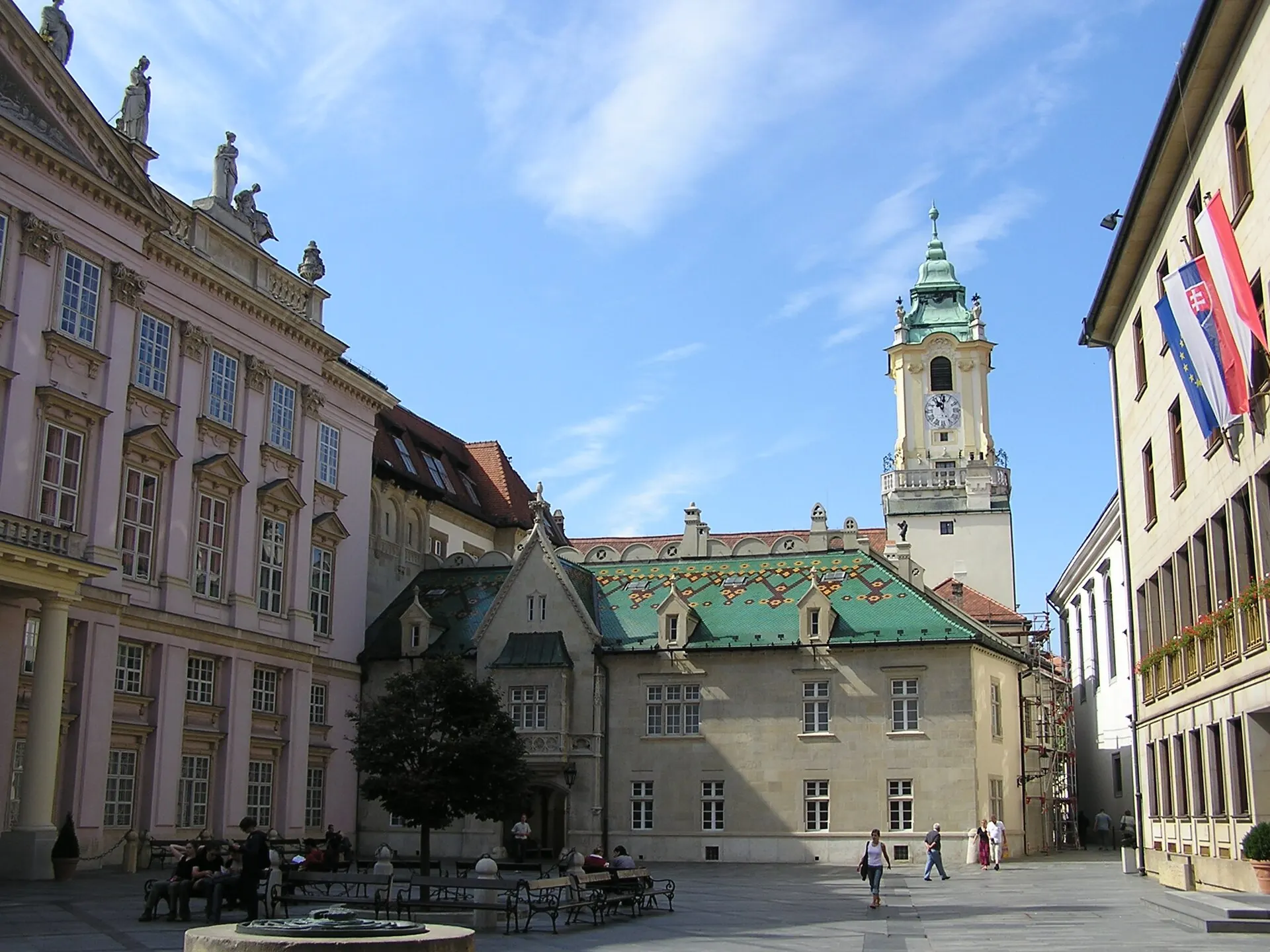
- Visit Bratislava information point on Main Square (Hlavné námestie), inside the Old Town Hall passage: maps and event listings; check current hours.
- Hotel front desks book Vienna transfers, Devín Castle tickets and wine-route day trips.
Go deeper 11 min read · 6 chapters
Bratislava has spent most of its history being someone else's second city: a Roman frontier post, a free royal town of the Hungarian kingdom, a Habsburg coronation seat under a German name, a Communist industrial suburb squeezed against the Iron Curtain. Its small, dense Old Town holds all of that at once, wedged between a working castle hill and a river that both cuts it off from Petržalka and connects it to Vienna, an hour upstream. This deep dive reads the city in the order its layers were built, so a walk from Main Square to the castle becomes a walk through who ruled here and why.
1Roman and Celtic origins, medieval town2 min
People have used the hill above the Danube bend for a long time before anyone wrote the name down. A Celtic oppidum, a fortified hilltop settlement of the Boii tribe, stood here from around the 2nd century BCE, and coins minted locally — the so-called biatec coins — are among the earliest named artefacts of the region. When Rome pushed its frontier to the Danube, the river became the edge of empire: a Roman military camp at Gerulata, in what is now the Rusovce district on the city's southern edge, guarded this stretch of the limes from roughly the 1st to the 4th century CE, one stop in the chain of forts between Vienna (Vindobona) and Budapest (Aquincum).
The early medieval centuries brought Slavic settlement and, from the 9th century, a fortified site under Great Moravia, the first major Slavic state in the region. The town's name in this period is debated by historians, tied loosely to a Slavic prince sometimes rendered as Braslav; what is firmer is that by the 10th and 11th centuries the castle hill had become a border fortress of the emerging Kingdom of Hungary, guarding its western edge against Bohemia and the Holy Roman Empire. The Hungarian name Pozsony and the German name Pressburg both describe the same walled town that grew up below the fortress through the 12th and 13th centuries, chartered as a free royal town in 1291.
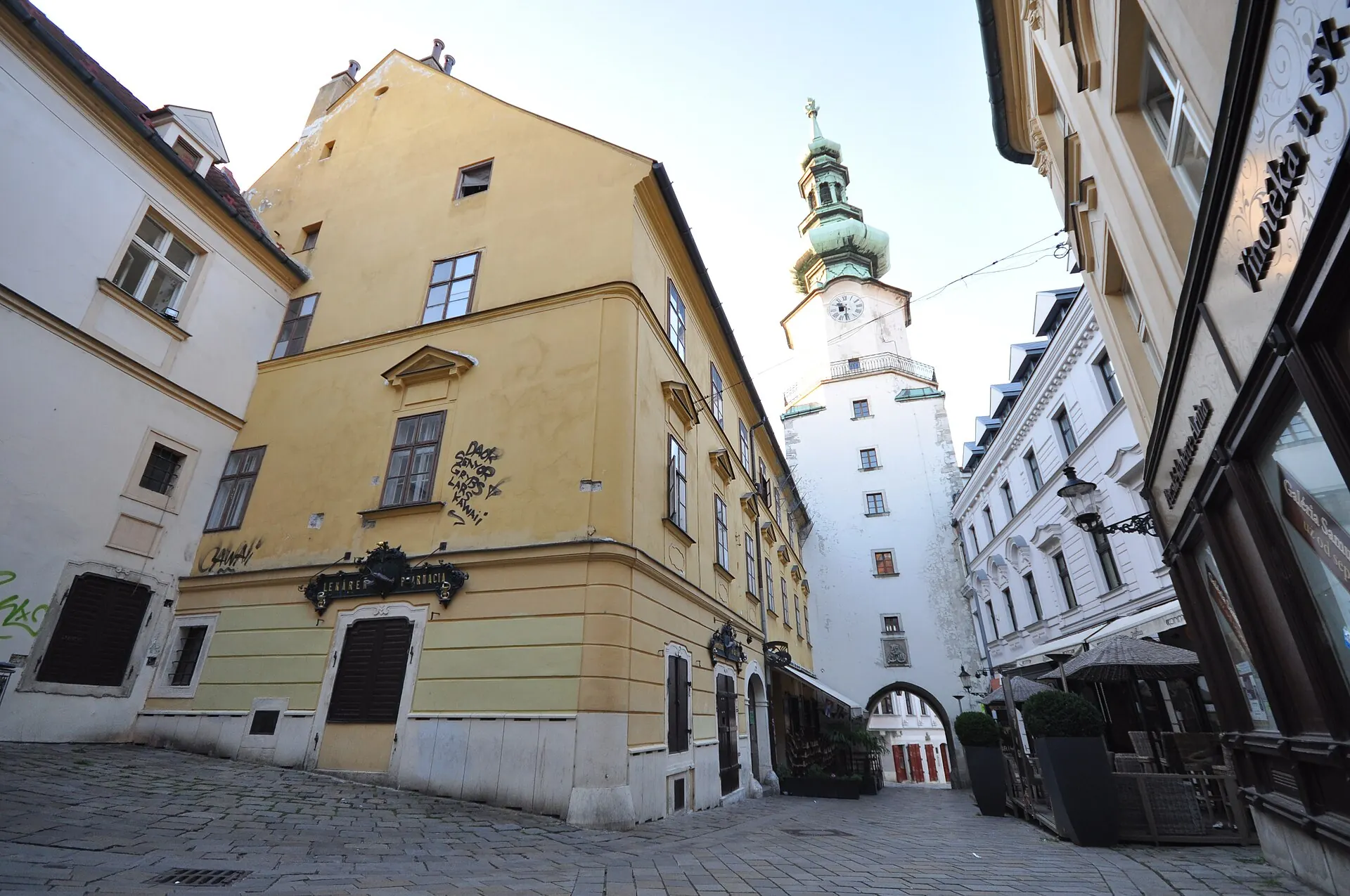
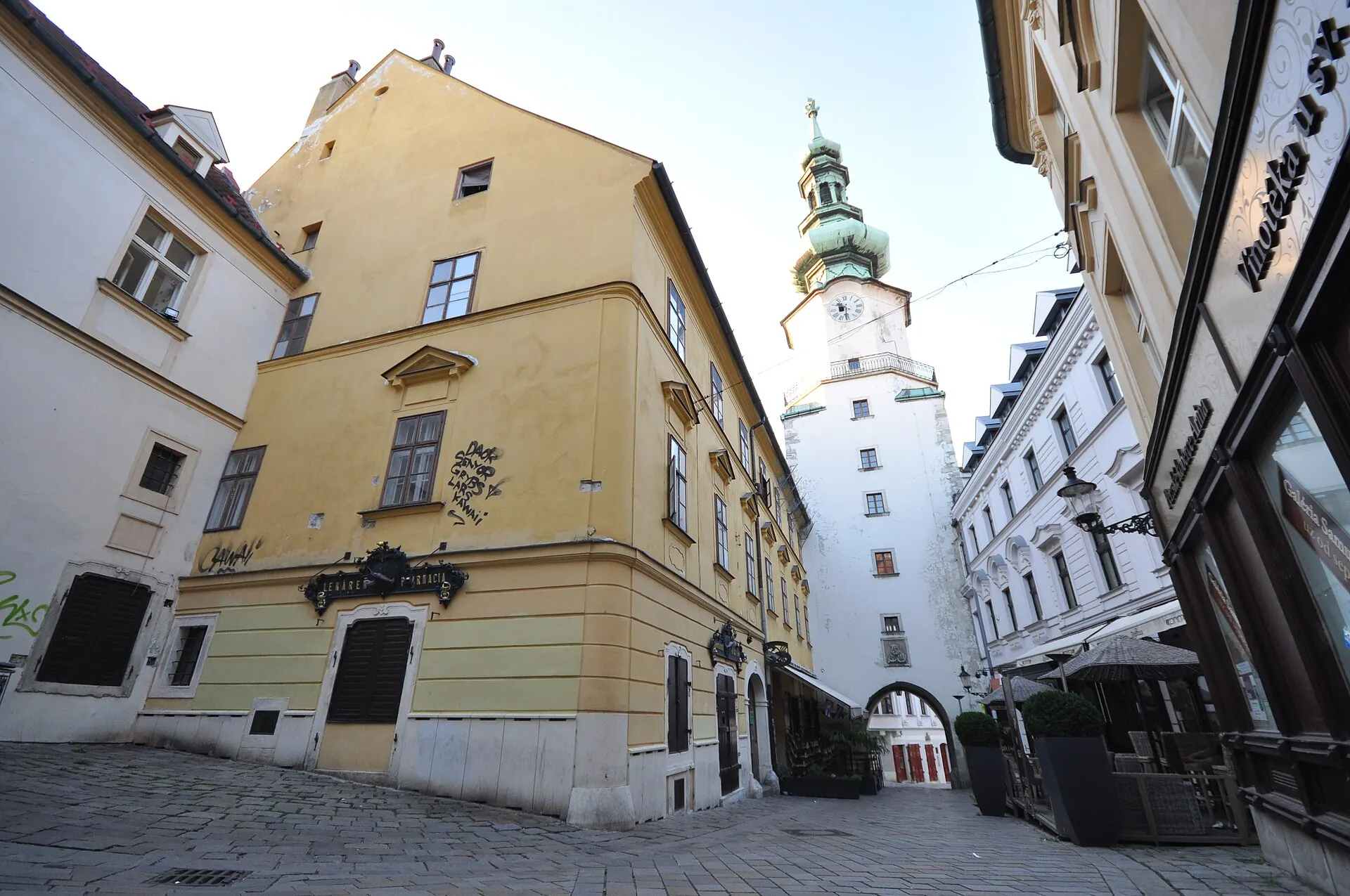
Medieval Pressburg thrived on its position: German, Hungarian and Slovak communities lived side by side inside the walls, trading on the river route between Vienna and the Hungarian plain. Fragments of that wall and its gates survive today mainly in Michael's Gate, the last standing city gate, rebuilt in its current Baroque-topped form in the 18th century over a much older core. The town's importance was cemented, and its name changed one more time in outside eyes, by the crisis of the 16th century described in the next chapter — the Ottoman conquest of central Hungary.
Through these centuries the town remained physically tiny by modern standards: what is now the Old Town was essentially the whole city, ringed by walls, with the castle hill as its military anchor and the river as its trade route and its danger, since floods regularly reshaped the low-lying banks. Almost everything a visitor sees in the Old Town today — the street pattern, the scale of the buildings, the positions of the gates — still traces that medieval footprint, even though very few individual buildings are that old beneath their later facades.
- Celtic oppidum
- From around the 2nd century BCE, Boii tribe
- Roman camp at Gerulata
- 1st–4th century CE, now Rusovce district
- Free royal town charter
- 1291
- Surviving medieval gate
- Michael's Gate, core medieval, current form 18th century
2Coronation city: Pozsony, Pressburg, Bratislava2 min
In 1526 the Ottoman army defeated the Hungarian king at the Battle of Mohács, and within a few years the Ottomans held Buda, the Hungarian capital. The rest of the kingdom, including this town, fell to the Habsburgs, who needed a new capital close to their own centre of power in Vienna. Pressburg (Pozsony to Hungarians) became the capital of Royal Hungary and, crucially, the coronation town of the Hungarian kings: St Martin's Cathedral hosted eleven coronations of Hungarian monarchs and their consorts between 1563 and 1830, including Maria Theresa in 1741, the best remembered of them.
The cathedral's spire still carries a gilded replica of the Hungarian royal crown, a marker of that role that survives even though the coronations themselves ended when Buda was retaken from the Ottomans in 1686 and the political centre gradually shifted back east over the following century and a half. For roughly 250 years, though, this small town on the Danube functioned as the effective capital of a kingdom whose historic heartland lay elsewhere, hosting the Hungarian parliament (Diet) as well as the coronations.
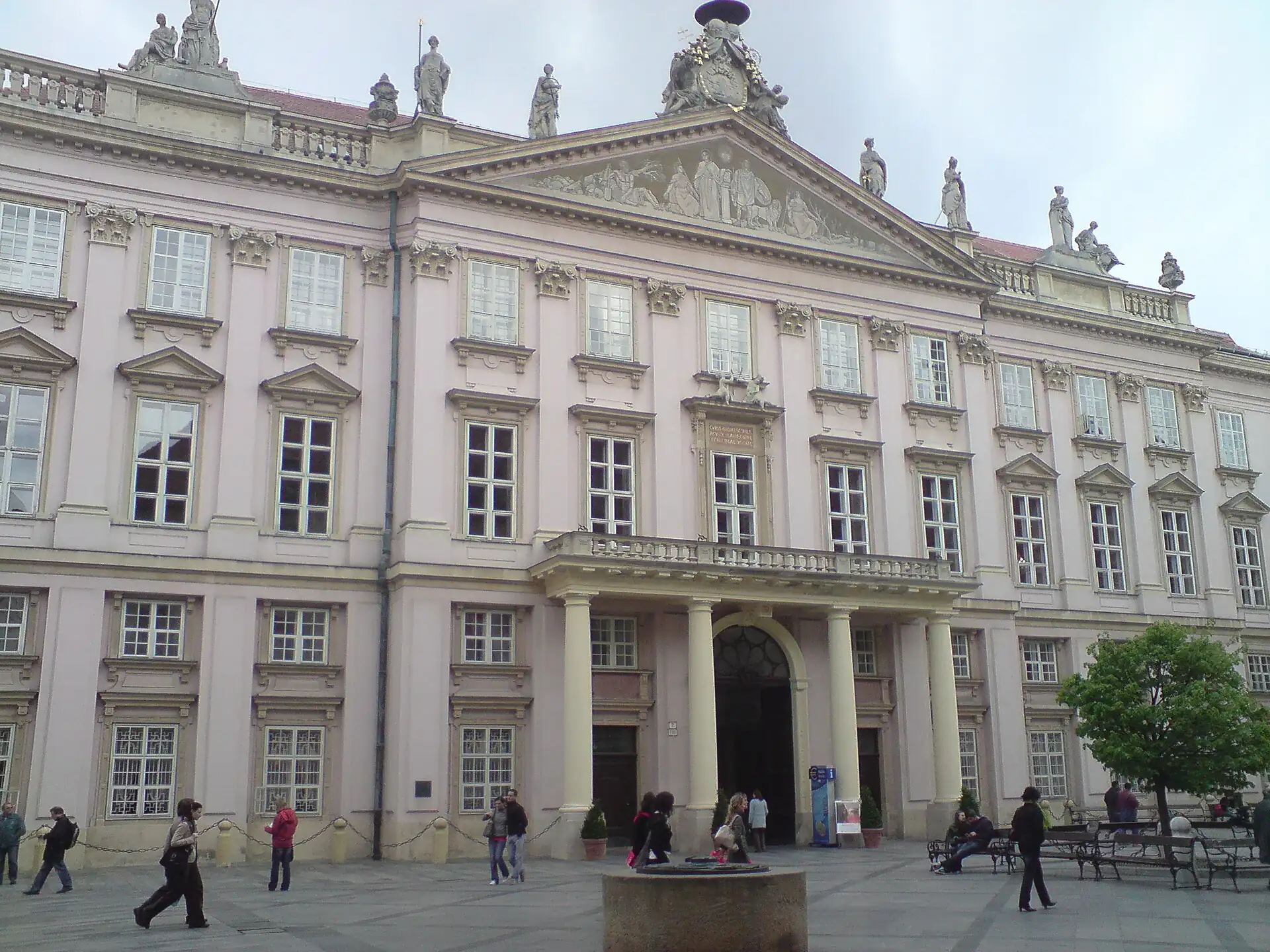
That period left the Old Town its grandest buildings: the Primate's Palace, built for the Archbishop of Esztergom as his residence away from a capital he could not safely occupy, and the Grassalkovich Palace, built for a powerful noble family and later a summer residence associated with Maria Theresa's court circle. The Primate's Palace's Hall of Mirrors later hosted a different kind of history-making moment: the Peace of Pressburg was signed there in 1805 after Napoleon's victory at Austerlitz, forcing Austria to cede territory.
The coronation era also shaped the city's multi-ethnic character for the following century: German-speaking burghers, Hungarian nobility and administrators, and a Slovak-speaking population that was, for most of this period, the least politically powerful of the three despite being a majority in the surrounding countryside. That imbalance, and the slow rise of Slovak national identity within a Hungarian-dominated kingdom, is the background to the city's eventual absorption into a new state after the First World War.
- Hungarian capital status
- From the 1530s after the Battle of Mohács (1526)
- Coronations at St Martin's
- 11 monarchs and consorts, 1563–1830
- Peace of Pressburg signed
- 1805, Primate's Palace
- Crown replica on cathedral spire
- Marks the coronation role
3Architecture: Old Town and castle2 min
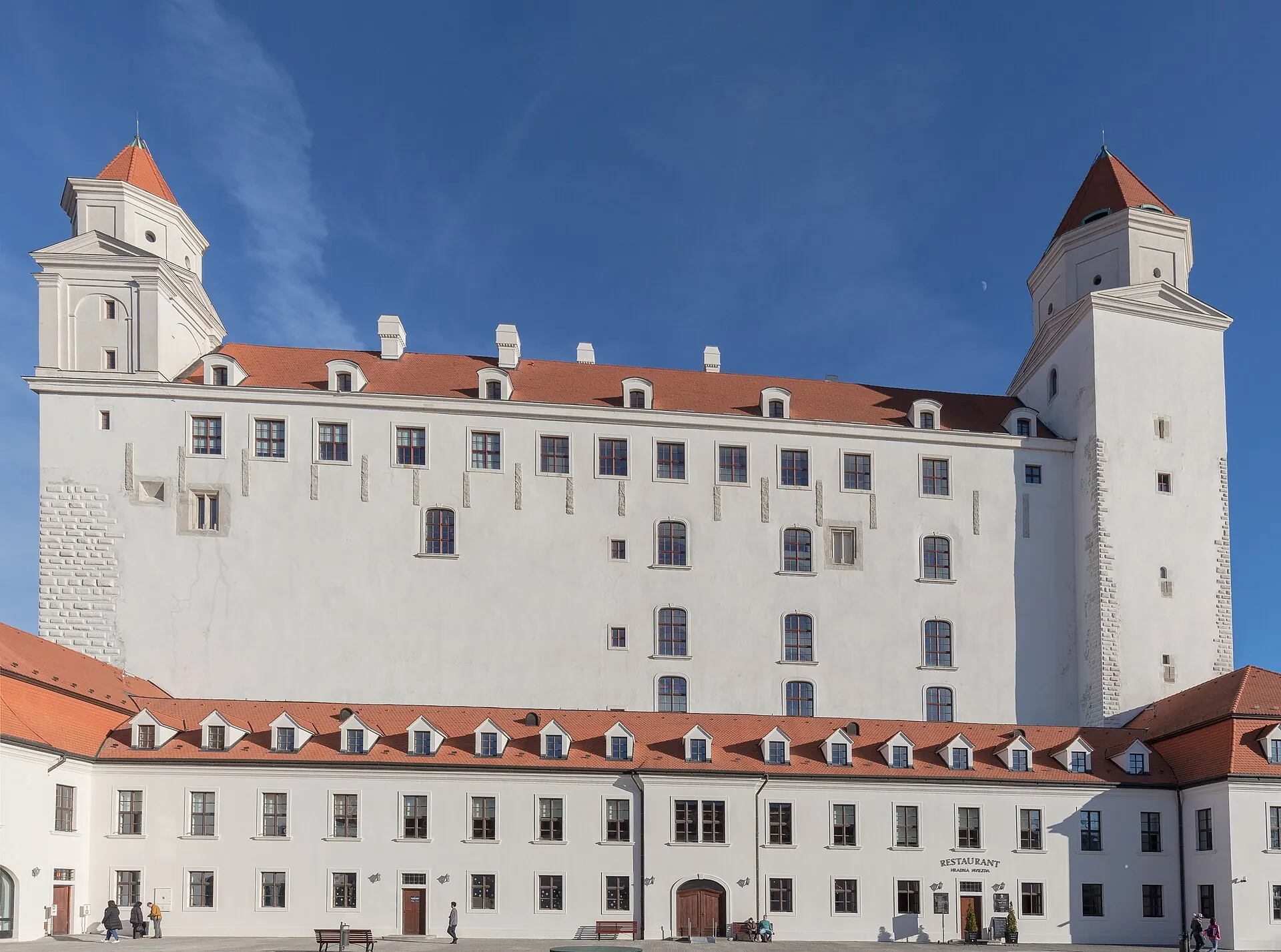
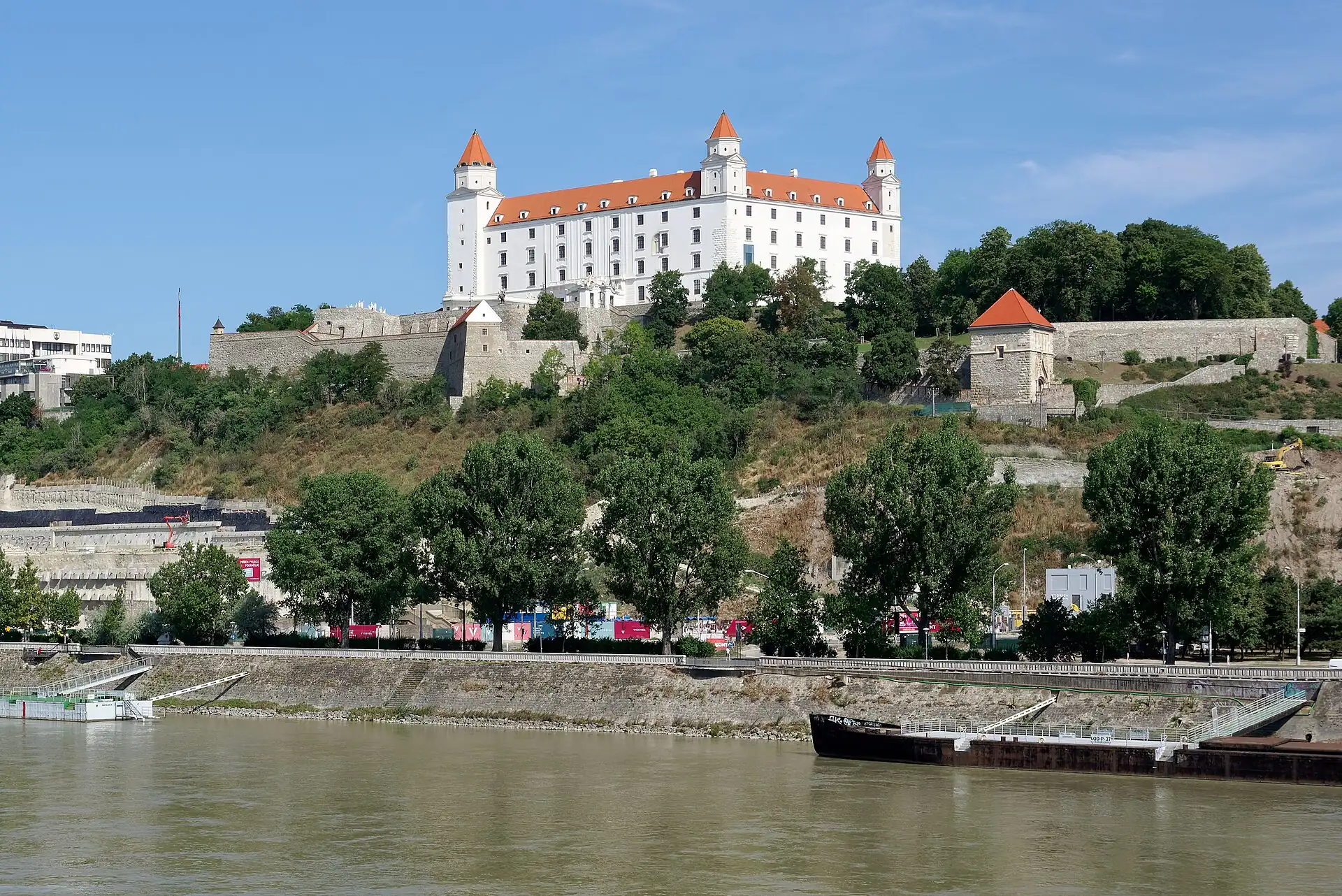
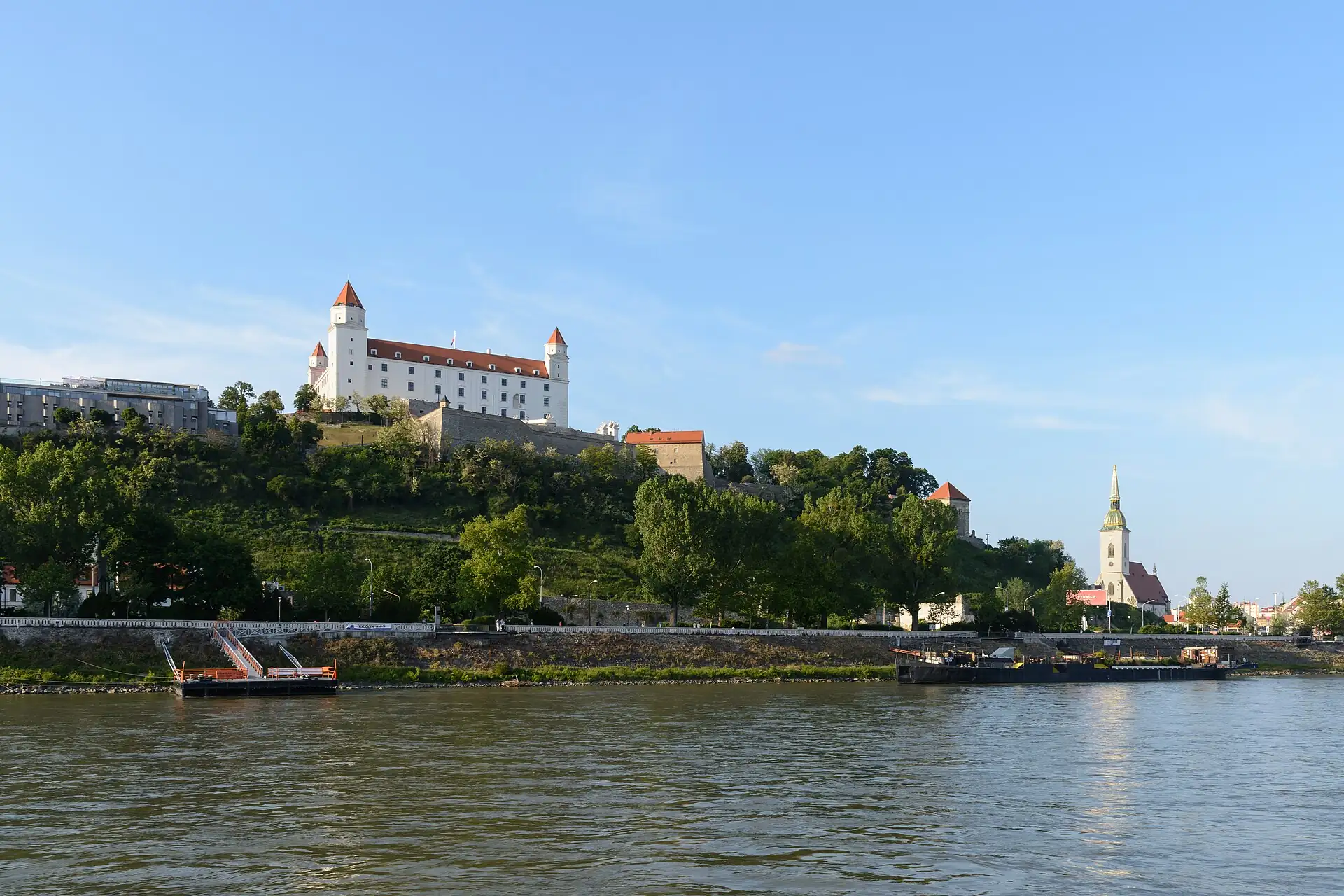
Bratislava Castle's silhouette — a rectangular block with a squat tower at each corner, sometimes nicknamed the 'upside-down table' — dates in its present outline mostly to a 16th-century Renaissance rebuild ordered after the Ottoman threat made the older medieval fortress inadequate, followed by an 18th-century Baroque remodelling under Maria Theresa, who used it as a royal residence. The castle burned in 1811, reportedly through the carelessness of soldiers garrisoned there, and stood as a shell for over a century before a 20th-century reconstruction restored it to something like its Theresian form; interior work has continued into recent decades.
The Old Town below is a layered mix rather than a single style: Gothic cores hide under Baroque and Rococo facades on many burgher houses, a pattern typical of a town that was rich enough to keep rebuilding its street frontages as fashions changed but constrained enough by its walls to keep reusing the same footprints. Main Square and its side streets show this clearly — look for doorway arches and cellar vaults that are centuries older than the painted facades above them.
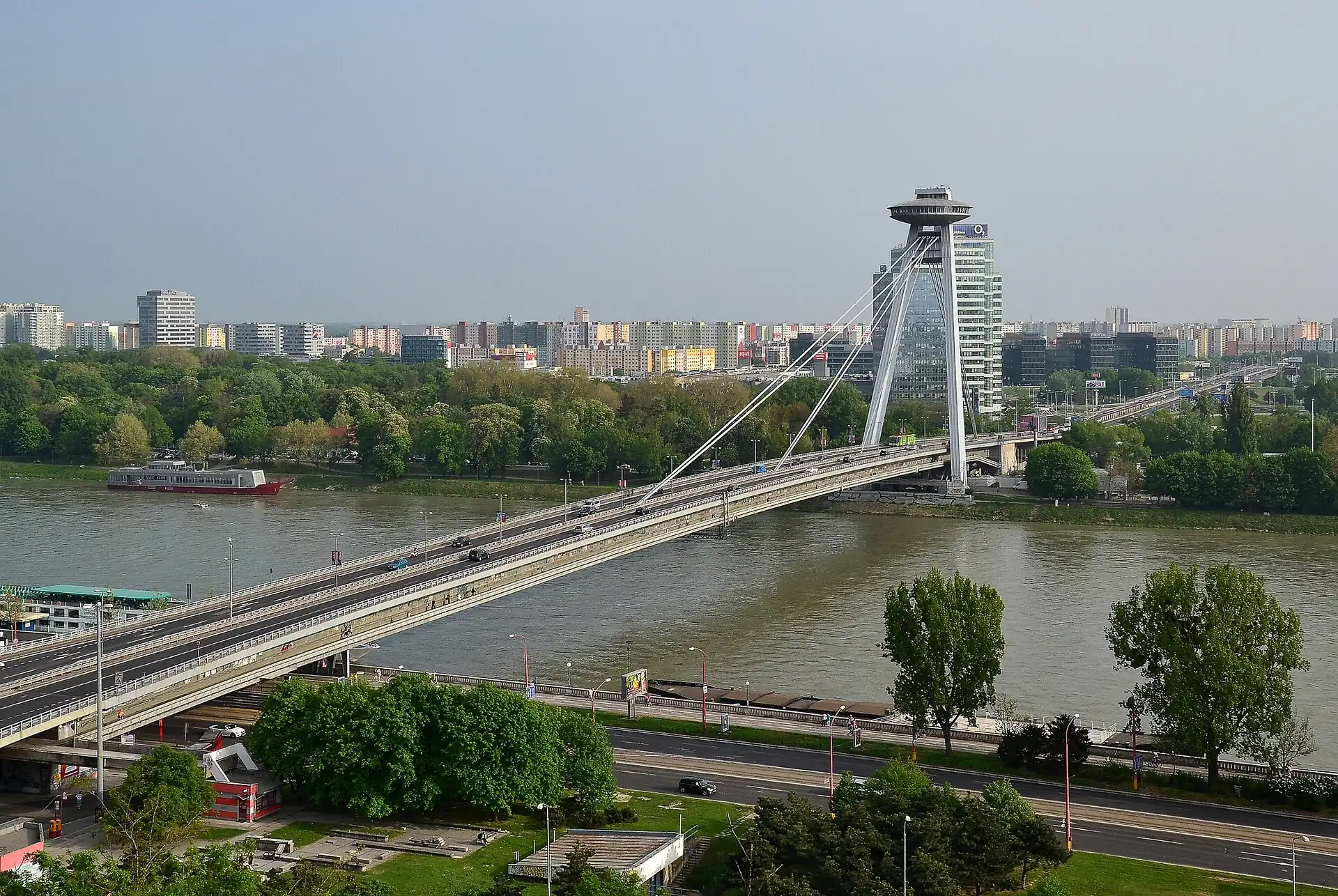
The 20th century added two landmarks that most visitors notice as much as the castle. The SNP Bridge (Most SNP), opened in 1972, carries its road deck on cables from a single pylon and holds the UFO-shaped restaurant and observation deck above the Danube — a piece of late-Communist engineering confidence that also required demolishing a section of the historic Jewish quarter below the castle to build the bridge's approach roads, a loss still noted by the city today.
Directly across the river, Petržalka is the architectural counterpart to the Old Town's density: a Communist-era panelák housing estate, built from the 1970s onward, that became one of the largest prefabricated-concrete residential districts in central Europe. It is covered in its own chapter below, but as architecture it represents the opposite instinct from the layered Old Town — standardised, fast-built, mass housing rather than centuries of incremental rebuilding.
- Castle Renaissance rebuild
- 16th century, after Ottoman threat
- Castle fire
- 1811
- SNP Bridge opened
- 1972
- UFO deck height
- Observation deck on the bridge pylon
4Communist-era Petržalka and the Iron Curtain years2 min
From 1948 to 1989 Czechoslovakia was a one-party Communist state and, after the Soviet-led invasion of 1968 that crushed the Prague Spring reform movement, a tightly controlled one. Bratislava's position mattered here in a way few other capitals shared: the Austrian border, and with it the edge of the Iron Curtain, ran only a few kilometres from the Old Town, along the Morava and Danube rivers near Devín. The border was fenced, mined and patrolled; crossing it without authorisation was treated as a serious crime, and people were killed attempting it near the city into the 1980s.
Petržalka, on the Danube's right bank facing the Old Town, was transformed by this geography. Once a quiet area of family houses and allotment gardens, it was cleared from the 1970s to build a mass housing estate of prefabricated concrete apartment blocks, planned to eventually house well over 100,000 people. Its scale made it one of the largest panelák developments in the Eastern Bloc, and its position — hemmed between the river and the sealed border a few kilometres further south — meant it was, in effect, built inside a restricted border zone, something that shaped daily life for its residents in ways not obvious from the architecture alone.
The Devín Castle ruins, a few kilometres upriver at the Danube–Morava confluence, sat directly on the closed frontier during this period and were largely inaccessible to ordinary visitors; the site's importance as a symbol of Slavic and Great Moravian history was reclaimed only after 1989, when it reopened and became a place of pilgrimage for a certain kind of national memory as much as a tourist stop.
The Velvet Revolution of November 1989 ended Communist rule within weeks, and the border fences came down soon after. Petržalka itself did not disappear or empty out — it remains home to a large share of the city's population — but its relationship to the rest of Bratislava changed: from a sealed edge of the Eastern Bloc to an ordinary, if visually distinct, residential district a short bridge crossing from the Old Town, now also connected by trams extended across the river in the 2010s and, since 2023, a metro-style regional rail tunnel.
- Petržalka housing built
- Mainly 1970s–1980s
- Estimated peak population
- Over 100,000 residents
- Border with Austria
- A few kilometres from the Old Town, sealed 1948–1989
- Velvet Revolution
- November 1989
5Food history2 min
Slovak cooking, as eaten in Bratislava today, is a farmhouse and highland cuisine that entered the city from the surrounding countryside rather than one invented in court kitchens. Its centrepiece, bryndzové halušky — small potato dumplings folded through bryndza, a soft, tangy sheep's-milk cheese, and topped with pieces of smoked bacon — comes from the sheep-herding traditions of the Slovak mountains, where bryndza was a way to preserve milk through the year long before refrigeration. It is treated today as close to a national dish, served everywhere from tourist pubs to family kitchens.
The city's more cosmopolitan food habits trace back to its long stretch as a Habsburg and Hungarian-linked town: cafés on the Viennese model, hearty goulash-family stews, and pastry traditions shared with Vienna and Budapest all sit alongside the more rural Slovak dishes. Kaffee Mayer, a café tracing its roots to the 19th century, sits in that Habsburg coffeehouse lineage rather than the highland one — a reminder that Bratislava's food culture was never only one thing, even before it became a capital in its own right.
Wine is the other strand worth knowing. The Small Carpathians, the low hills just north-west of the city around Pezinok and Modra, have been a wine-growing area for centuries, and Bratislava itself has vineyards inside its municipal boundary, unusually for a capital city. Every autumn brings burčiak, young, still-fermenting wine sold cloudy and only briefly, a seasonal ritual tied to the harvest rather than a bottled product.
Communist-era food culture left its own mark, mostly in what disappeared rather than what was added: private restaurants were rare, state-run canteens and standardised menus were the norm, and much of the city's current café and restaurant scene — the market-hall stalls, the craft breweries, the modern Slovak fine dining rooms — is a product of the reopening of private enterprise after 1989 and, more visibly, of investment since the 2000s.
- National dish
- Bryndzové halušky (potato dumplings, sheep cheese, bacon)
- Bryndza
- Soft sheep's-milk cheese, highland preservation tradition
- Burčiak season
- September–November, young unfiltered wine
- Wine region
- Small Carpathians (Pezinok, Modra), plus city vineyards
6Festivals, city life, and a capital squeezed between Vienna and Budapest2 min
Bratislava became a national capital only in 1993, when Czechoslovakia split peacefully into the Czech Republic and Slovakia in what is usually called the Velvet Divorce. Before that it had been, at various points, a Habsburg coronation town, a provincial city of interwar Czechoslovakia, and the capital of a short-lived, Nazi-aligned Slovak state during the Second World War — a history the city addresses directly rather than glosses over, including memorials to its once-large Jewish community, largely destroyed in the Holocaust, and to the section of the Jewish quarter demolished for the SNP Bridge.
Its modern identity leans hard into its geography: this is the only national capital in the world that borders two other countries, Austria and Hungary, within its municipal boundary, and it markets itself frankly as a city you can pair with Vienna, an hour away by train, in a way few capitals would concede about a neighbour. That closeness is practical as much as symbolic — many Bratislavans commute to or shop in Vienna, and the two cities' airports and transport links are treated as a shared regional system by budget travellers.
City life today runs on a compact scale that its coronation-era buildings never anticipated needing to hold: the Bratislava Music Festival brings classical concerts to the Reduta concert hall and churches each autumn; Christmas markets fill Main Square and Hviezdoslav Square from late November; and the Danube embankment, once a working river frontage, is now the city's main evening promenade, especially since the Eurovea development added shopping and dining directly on the water.
Devín Castle's autumn events and the Small Carpathian wine routes both draw on the same instinct: a city aware that its own footprint is small, and that much of what makes a stay worthwhile — the river, the vineyards, Vienna, the castle ruins upstream — sits just outside the Old Town's walls rather than inside them. That has arguably always been true of Bratislava, a town whose importance came less from its own size than from what sat on either side of it.
- Slovak independence (from Czechoslovakia)
- 1 January 1993, the Velvet Divorce
- Borders two countries
- Only capital bordering two other states (Austria, Hungary)
- Bratislava to Vienna
- About 1–1.25 h by train or bus
- Bratislava Music Festival
- Annual, autumn, Reduta concert hall
Photos
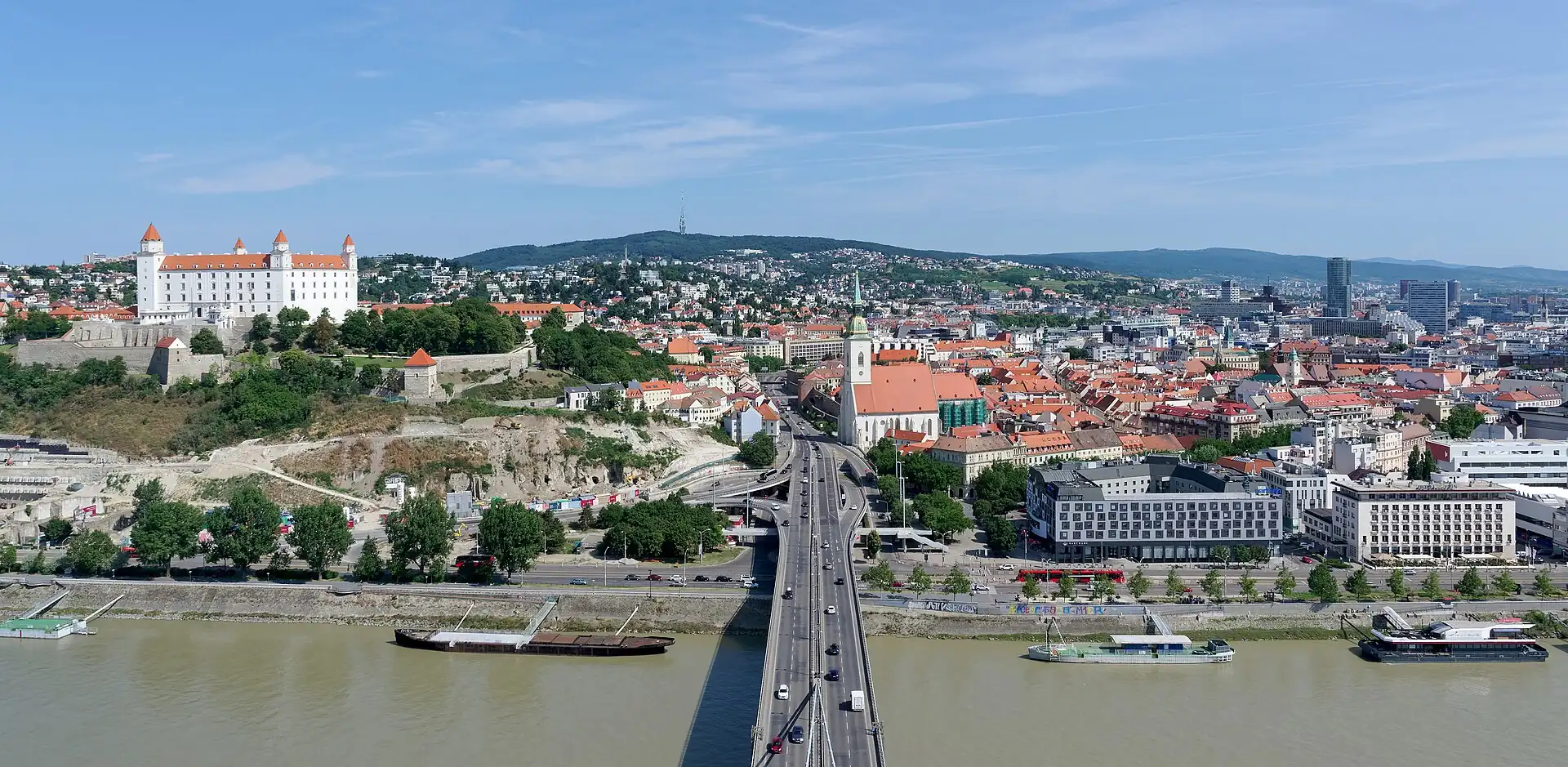
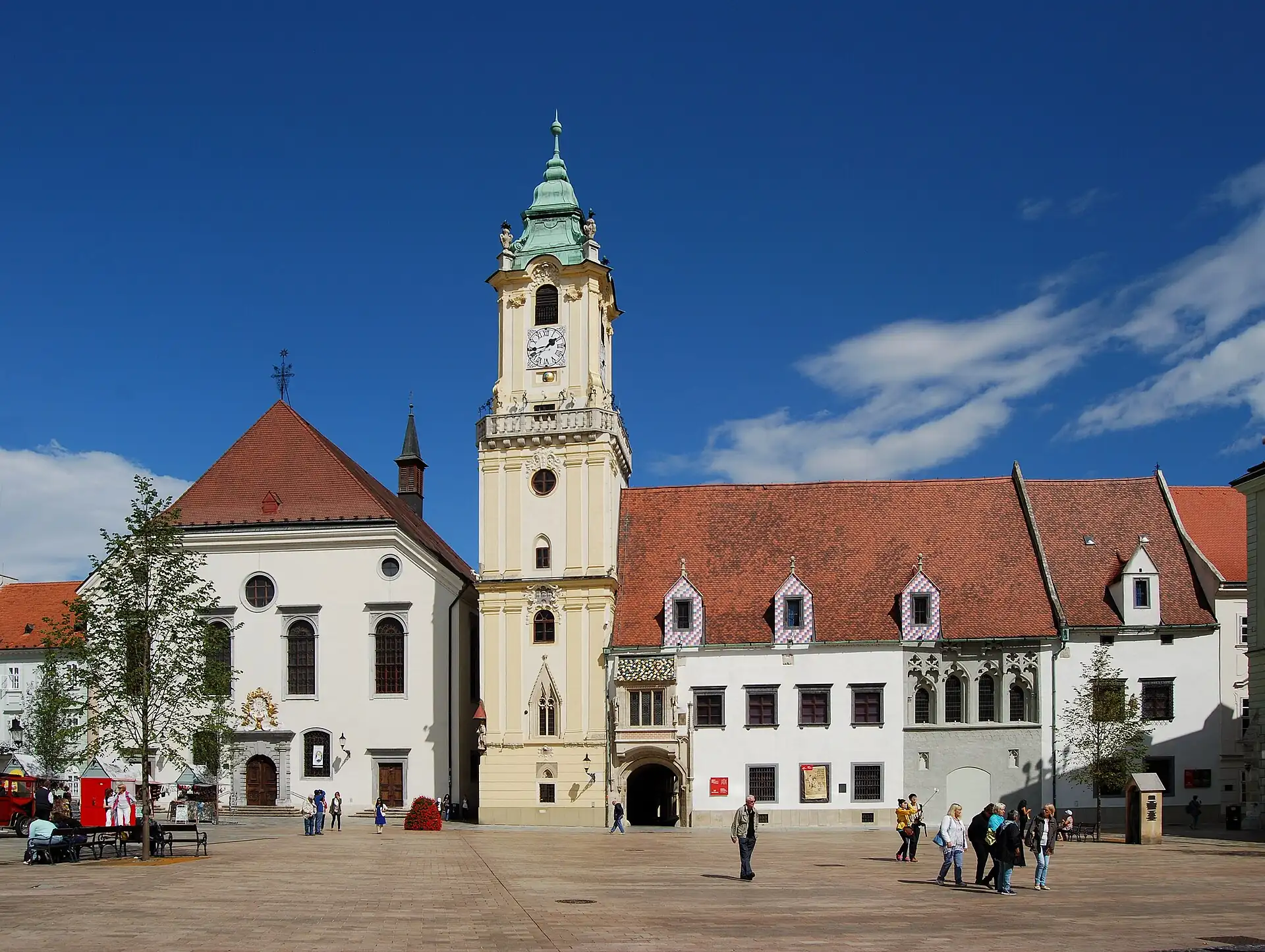
View of Bratislava from the castle hill Photo: Jakub Hałun, CC BY-SA 4.0
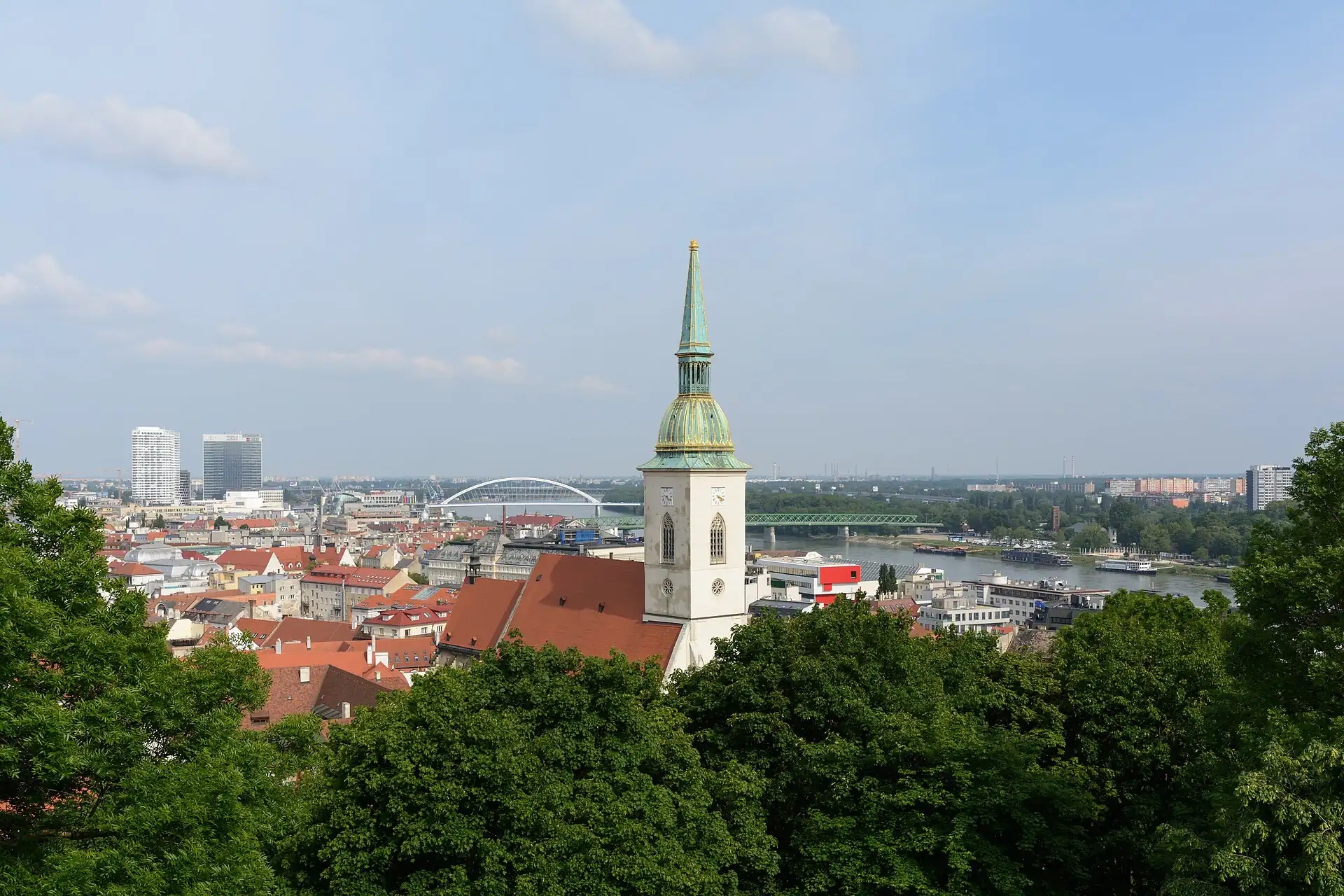
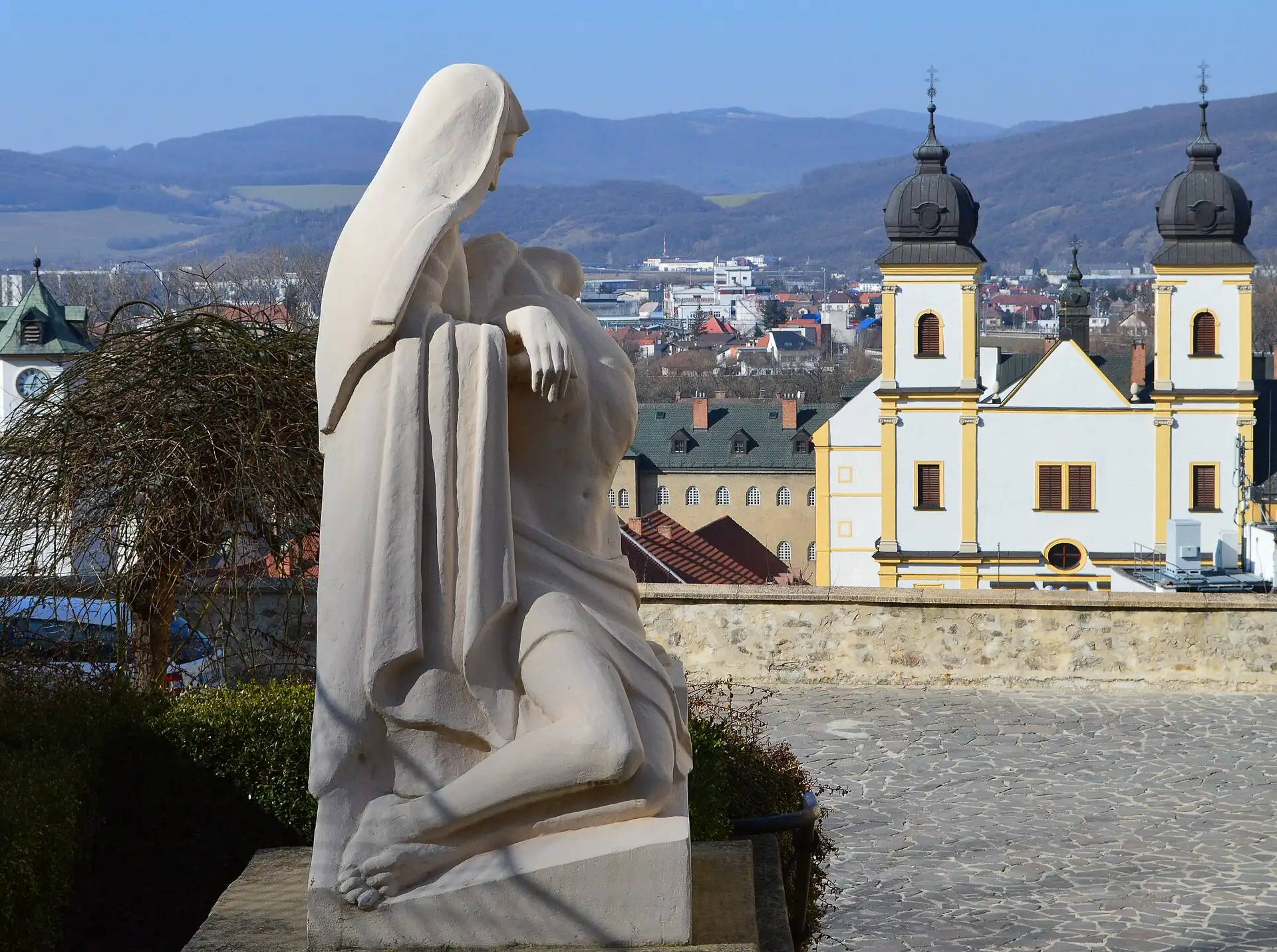
Bratislava - St Photo: Ingo Mehling, CC BY-SA 4.0
Bratislava (Slovakia): the Danube, with the Old Bridge (Starý most) and the Apollo Bridge Photo: Marc Ryckaert ( MJJR ), CC BY 3.0
Rules in force · 8Non-EU visitors get 90 days in any rolling 180-day window…
- Europe ↗Non-EU visitors get 90 days in any rolling 180-day window, counted across all 29 Schengen states together — not per country; the Entry/Exit System now logs each crossing, so an overstay is detected automatically.
- Europe ↗On the first Schengen entry since EES began, non-EU travellers give four fingerprints and a face photo at the border instead of a passport stamp; there is nothing to apply for or pay in advance.
- Central Europe ↗Six of the nine countries here — Austria, Switzerland, Czechia, Slovakia, Hungary and Slovenia — charge a time-based motorway vignette, mostly digital and linked to the number plate; buy it before the first motorway past the border, because cameras, not toll booths, do the checking.
- Central Europe ↗Temporary police checks at internal Schengen borders are common in this region in 2026 (Germany, Austria, Poland, Slovenia among others — check): keep your passport on you on every cross-border train, bus and road even though there is no fixed control post.
- Slovakia ↗Slovakia is in the EU and the Schengen area: check entry rules, the EU Entry/Exit System and any travel authorisation requirement for your passport on official sources.
- Slovakia ↗Motorways and expressways need an electronic vignette bought before you drive on them.
- Slovakia ↗Many high trails in Tatra National Park close seasonally (roughly November to mid-June); check the park's current closures before planning a hike.
- Bratislava Region ↗Small-town restaurants and cellars often close on Sunday evening and Monday: check before a wine-village day.
Entry rules depend on your passport. Full visa guide
Emergency numbers for Bratislava112 ▾
Tap a number to call from your phone. These are the numbers listed in this guide; a row marked check has not been verified.
Planning is the full guide. I'm here keeps what is open and the cheat card.
Right now
Checking the weather…
Working out what is open near you…
What is open nowclock, closures, places open
Now in Bratislava
Local time in Bratislava
--:--
Loads in your browser · Europe/Bratislava
This month
Month verdict appears here.
Closed today
See the weekly grid below.
| Weekly closure | Mon | Tue | Wed | Thu | Fri | Sat | Sun |
|---|---|---|---|---|---|---|---|
| Slovak National Museum (Danube building)checkConfirm before planning a museum morning around it. | ✕ | · | · | · | · | · | · |
If today is a closure day: Monday: many museums and some castle interiors close or shorten hours; walk the Old Town squares and the Danube promenade instead and move museum visits to another day.
- check Primate's Palace state rooms: Sometimes closed without notice for official receptions.
Weekly closures come from our place pages; national holidays and Christmas (Dec 24–26) add closures not shown here.
Cheat cardthe pocket version
Cheat card
The essentials on one card: save it as an image for your phone, share it, or print it.
Bratislava
- Money
- Use bank ATMs (in a branch or lobby), decline the machine's currency conversion…
- SIM
- Install an eSIM before you fly; EU roaming applies to EU SIMs.
- Ride app
- Bolt
- Emergency
- 112 General emergency (EU) · 158 police · 155 ambulance (not 911, 999 or 000)
- Plugs
- Sockets C/E. US/Canada (A/B): adapter · UK/Ireland (G): adapter · Australia/NZ (I): adapter. 230 V: US 120 V-only devices (hair dryers) need a converter; most chargers are dual-voltage.
Say it
- Hello: Dobrý deň (DOH-bree dyen)
- Thank you: Ďakujem (DYAH-koo-yem)
- How much is it?: Koľko to stojí? (KOL-ko toh STOH-yee)
- The bill, please: Účet, prosím (OO-chet PRO-seem)
- I need help: Potrebujem pomoc (PO-treh-boo-yem PO-mots)
Top 5
- Main Square (Hlavné námestie)
- Bratislava Castle
- St Martin's Cathedral
- UFO Observation Deck (SNP Bridge)
- Michael's Gate and Tower
EssentialsQuick answers, what things cost and how to get around
Essentials
Quick answers, what things cost and how to get around
Quick answers
The questions people ask first about Bratislava, one line each. Tap a card for the full answer.
- Cash or card?Cards and contactless work in most restaurants, shops and taxis; keep a little cash for small pubs, market stalls and toilets.
- SIM or eSIMInstall an eSIM before you fly; EU roaming applies to EU SIMs.
- Ride-hailing appBolt.
- Tap waterTap water is safe and good.
- TippingcheckRound up or add about 10% in restaurants; check whether service is already on the bill.
- Plugs & powerSockets C/E. US/Canada (A/B): adapter · UK/Ireland (G): adapter · Australia/NZ (I): adapter. 230 V: US 120 V-only devices (hair dryers) need a converter; most chargers are dual-voltage.
Show all 14 answers
- Safe at night?Take more care after dark in Castle hill.
- What to wearCover shoulders and keep quiet during services.
- Emergency numbers112 General emergency (EU) · 158 police · 155 ambulance (not 911, 999 or 000)
- Your embassycheckUS, UK embassies listed with addresses (check before you go).
- Closed which day?Mon: 1 on our list shut.
- Sundays & holidaysShops open around 09:00–18:00 and close early on Saturday and much of Sunday; many restaurants close on Sunday evening or Monday.Shops open around 9:00 AM–6:00 PM and close early on Saturday and much of Sunday; many restaurants close on Sunday evening or Monday.
- Rainy-day planRain can arrive any season: Slovak National Museum, Primate's Palace and Old Town Hall are the indoor fallbacks.
- Landing lateBTS: taxi or ride-hailing car to the door runs all night.
Cost cheat-sheetwhat everyday things cost
Cost cheat-sheet
Typical prices for the everyday things, as ranges. Change the currency right here; the local price stays first.
2026 desk estimate · check
- CoffeeCoffee at a café€2–3.50 (≈ US$3–5)
- Sit-down mealLocal pub main course (halušky)€7–12 (≈ US$9–14)
- BeerHalf-litre of local beer€2–4 (≈ US$3–5)
- Taxi, about 5 km (3 mi)Taxi, about 3 mi (5 km)Taxi across the centre€5–10 (≈ US$6–12)
- Metro or bus rideTram or bus ticket, single€1.10–1.50 (≈ US$2)
- SIM or eSIM, a weekTourist eSIM, about a week of data€8–20 (≈ US$10–25)
- Museum or sight ticketMuseum or castle ticket€6–14 (≈ US$7–17)
- Budget bedHostel dorm bed, a night, per person€15 (≈ US$18)
- Mid-range bedHotel double room, a night, per room€90 (≈ US$110)
- High-end bedHotel double room, a night, per room€180 (≈ US$250)
A day, not counting the bed: Budget €45 (≈ US$55) · Mid €85 (≈ US$100) · High €160 (≈ US$190)
Local prices, with USD next to them (rates 2026-09 (approximate); change it in the header). Ranges are desk estimates: check locally. Every price and the budget calculator →
Source: Prices in Bratislava
Draft
Written from desk research. Not yet compared with the official source.
No official source is recorded for this figure.
Prices are 2026 desk estimates, not yet compared with an official source. Check on the day.
Not checked in the last 12 months (no check date on file).
DecideWho it suits, the trade-offs and when to go
Decide
Who it suits, the trade-offs and when to go
Best months at a glance
The guide's verdict for each month
Jan
Care
2°C (36°F)36°F (2°C)
Feb
Care
4°C (39°F)39°F (4°C)
Mar
Care
10°C (50°F)50°F (10°C)
Apr
Best
15°C (59°F)59°F (15°C)
May
Best
20°C (68°F)68°F (20°C)
Jun
Best
24°C (75°F)75°F (24°C)
Jul
Care
26°C (79°F)79°F (26°C)
Aug
Care
26°C (79°F)79°F (26°C)
Sep
Best
21°C (70°F)70°F (21°C)
Oct
Best
14°C (57°F)57°F (14°C)
Nov
Care
8°C (46°F)46°F (8°C)
Dec
Best
3°C (37°F)37°F (3°C)
Best: Apr–Jun, Sep–Oct, Dec. Mixed: Jan–Mar, Jul–Aug, Nov. Month by month →
Warmest Jul (26°C (79°F)79°F (26°C)), coolest Jan (−3°C (27°F)27°F (−3°C) low), wettest Jan (12 rain days), driest Aug (9). Averages, not a forecast.
Bratislava across the year
Best-looking months for Bratislava: May, Jun, Sep.
| Measure | Jan | Feb | Mar | Apr | May | Jun | Jul | Aug | Sep | Oct | Nov | Dec |
|---|---|---|---|---|---|---|---|---|---|---|---|---|
| Weather | Mixed (care) | Mixed (care) | Mixed (care) | Good (good) | Great (good) | Great (good) | Mixed (care) | Mixed (care) | Great (good) | Good (good) | Mixed (care) | Good (good) |
| Crowds | Medium (ok) | Medium (ok) | Low (good) | Low (good) | Medium (ok) | Medium (ok) | High (care) | High (care) | Medium (ok) | Low (good) | Low (good) | Medium (ok) |
| Prices | Medium (ok) | Medium (ok) | Low (good) | Low (good) | Medium (ok) | Medium (ok) | High (care) | High (care) | Medium (ok) | Low (good) | Low (good) | Medium (ok) |
| Events | None listed (ok) | None listed (ok) | 1 event (ok) | None listed (ok) | 1 event (ok) | None listed (ok) | 1 event (ok) | None listed (ok) | 2 events (ok) | 1 event (ok) | 2 events (ok) | 2 events (ok) |
Green is good news, amber needs planning, red is a month to avoid; dashed grey with a question mark means our data does not say. Open the year heatmap →
Not checked in the last 12 months (no check date on file).
Source: Months, temperatures and crowds
Draft
Written from desk research. Not yet compared with the official source.
Monthly highs, rain and crowd levels are climate averages and desk estimates for the city, not a forecast.
Understand the cityUnderstand · Districts
Orientation & districts
Almost everything a first visit needs sits inside a 1.5 km loop: Main Square in the middle, the castle hill to the west, the Danube promenade to the south-east. Petržalka, across the river, is a residential district, not a sightseeing one.
District names below are the city's official boroughs; addresses and transit use them directly, unlike some larger cities.
Shaded shapes: walking areas (click one). Black pins: sleep areas. Grey dots: places. Round badges: arrivals. Click the map to turn on scroll-wheel zoom.
Hover, tap or tab to an area to see what it is like. Pins are sleep areas; arrows at the edge point to the airport.
Off the map: Bratislava Milan Rastislav Štefánik Airport (BTS) (20–35 min by the usual route); Vienna International Airport (VIE) (60–85 min by the usual route).
Not drawn yet (no coordinates in this guide): Petržalka, Ružinov, Devín. They are in the neighbourhood cards below.
Where’s what, as a list:
- Staré Mesto: Old Town (Staré Mesto): Cobbled and partly pedestrianised; car to the door with bags, not a walk. Suits: First visit, 1–3 nights. Price band $$.
- Staré Mesto: Kamenné námestie / Obchodná (Kamenné námestie): Wider streets, easier for bags than the inner Old Town lanes. Suits: Couples and families wanting a shorter walk to shops and trams. Price band $$.
- Castle Hill: Steep; a taxi up and a walk down works well in heat. Suits: A half-day of sights.
- Petržalka: Communist-era housing estate across the river: residential, cheap trams and buses, little for a short visit beyond the view of it from the UFO deck. Suits: Not a first-visit base.
- Ružinov: Mostly residential and business districts between the centre and the airport. Suits: Airport-adjacent stays only.
- Devín: Separate village at the Danube–Morava confluence, not walkable from the centre: bus or taxi. Suits: A half-day castle-ruin trip.
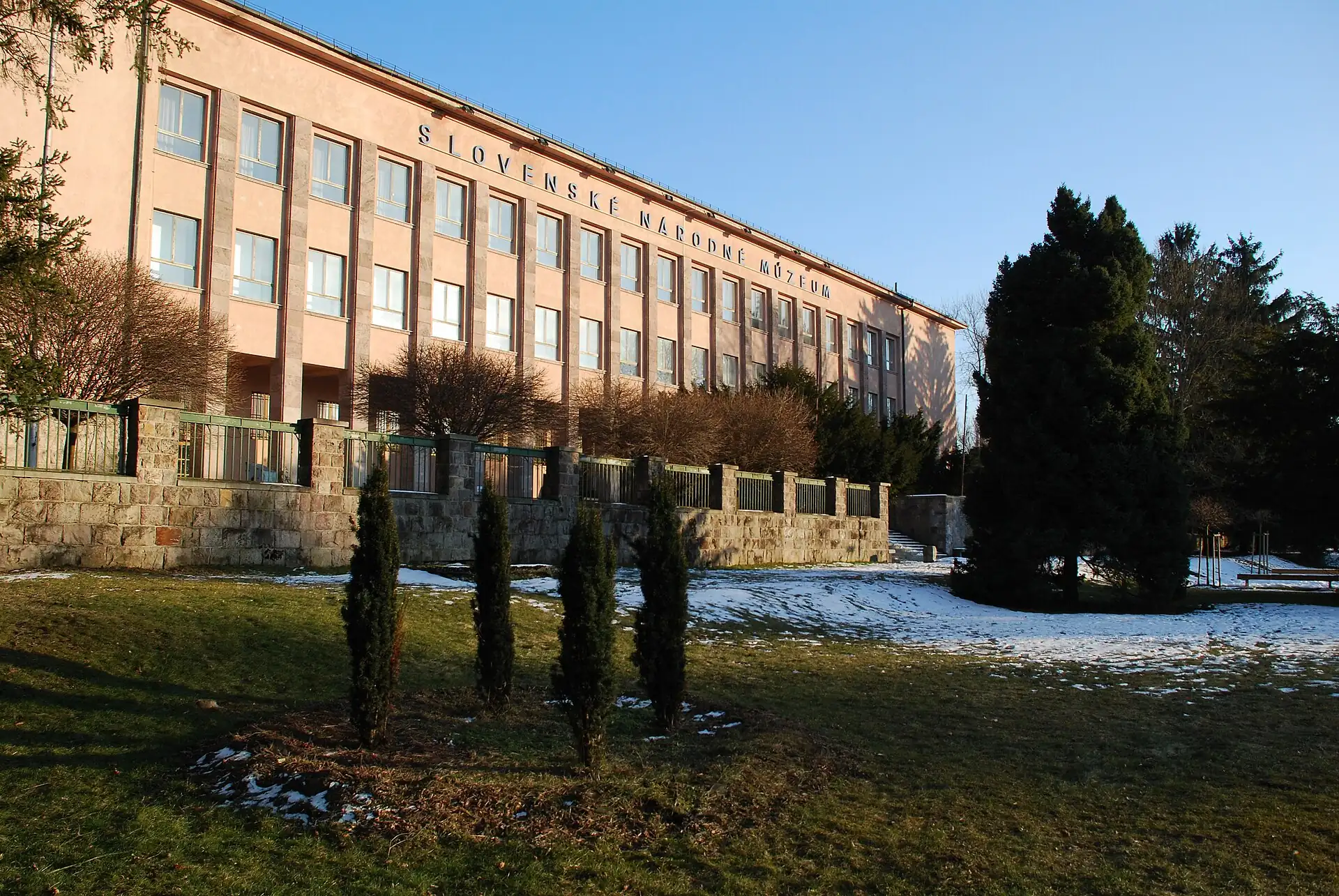
- Danube Riverfront: Flat, open evening cluster: the promenade, the National Museum and the Eurovea mall; good after 17:00 and in rain.Flat, open evening cluster: the promenade, the National Museum and the Eurovea mall; good after 5:00 PM and in rain.
- Sleep area Kamenné námestie and Obchodná: suits Couples and families wanting a shorter walk to shops and trams, price band $$.
- Sleep area Old Town: suits First visit, 1–3 nights, price band $$.
- Bratislava Milan Rastislav Štefánik Airport (BTS), 20–35 min by the usual route.
- Vienna International Airport (VIE), 60–85 min by the usual route.
Neighbourhoods at a glance
One tab per area, pulled together from this guide’s districts table, area notes, sleep-area scores and place pages. Scores are desk judgements (1–5); prices are estimates, check before you book.
Staré Mesto: Old Town
$$Staré Mesto
Cobbled and partly pedestrianised; car to the door with bags, not a walk.
- Suits:
- First visit, 1–3 nights
- Rooms:
- €70–140 per room per night (mid-range); more at Christmas and in summer
Pick this if: First visits, walking everywhere, evenings out
Skip this if: You have large bags, mobility limits, or want silence at night
- Quiet nights2/5 Low
- Nightlife4/5 High
- Families2/5 Low
- Late arrival4/5 High
Why these scores
- Quiet nights: Bars and restaurant terraces run into the evening on the squares.
- Nightlife: Main Square, Obchodná and the surrounding bars are all a short walk.
- Families: Cobbles and narrow pavements make strollers hard work.
- Late arrival: Most hotels have staffed reception; smaller guesthouses may not.
Getting around from here
- 10–15 min walk to Danube Riverfront
- 15–22 min walk to Castle Hill & St Martin's Cathedral
Staré Mesto: Kamenné námestie / Obchodná
$$Kamenné námestie
Wider streets, easier for bags than the inner Old Town lanes.
- Suits:
- Couples and families wanting a shorter walk to shops and trams
- Rooms:
- €60–120 per room per night (mid-range)
Pick this if: Late arrivals, tram links, quieter nights
Skip this if: You want to step out onto the Old Town squares
- Quiet nights3/5 Medium
- Nightlife3/5 Medium
- Families3/5 Medium
- Late arrival4/5 High
Why these scores
- Quiet nights: Busier traffic street than the inner Old Town but quieter at night.
- Nightlife: Obchodná's bars are close; Main Square is a 10-minute walk.
- Families: Flatter streets and easier stroller access than the inner lanes.
- Late arrival: Larger hotels here keep staffed desks.
Getting around from here
- 10–15 min walk to Old Town & Main Square
Castle Hill
Steep; a taxi up and a walk down works well in heat.
- Suits:
- A half-day of sights
Getting around from here
- Walk downhill: about 15 min to Old Town & Main Square
- Taxi east: about 8 min to Danube Riverfront
Petržalka
Communist-era housing estate across the river: residential, cheap trams and buses, little for a short visit beyond the view of it from the UFO deck.
- Suits:
- Not a first-visit base
Ružinov
Mostly residential and business districts between the centre and the airport.
- Suits:
- Airport-adjacent stays only
Devín
Separate village at the Danube–Morava confluence, not walkable from the centre: bus or taxi.
- Suits:
- A half-day castle-ruin trip
Decide
The honest trade-off: what you will enjoy, what will wear you down.
You will like
- Compact old town
- River walks
- Cheap beer and wine, and Vienna next door
You will hate
- Cobbles with luggage
- Steep castle hill in heat
- Restaurants that close early on Sunday
Similar citiesif this one is not quite right
Similar cities
If Bratislava does not fit your dates or budget, these match it on season, cost and feel.
- Ljubljana
Slovenia
- Good in the same months: Apr, May, Jun, Sep and 2 more
- A mid-range day costs about the same (≈US$110 vs US$99, excl. bed)
- A similar climate through the year
- Kraków
Poland
- Good in the same months: Apr, May, Jun, Sep and 2 more
- A mid-range day costs about the same (≈US$88 vs US$99, excl. bed)
- A similar climate through the year
- Vienna
Austria
- Good in the same months: Apr, May, Jun, Sep, Oct
- A mid-range day costs about the same (≈US$116 vs US$99, excl. bed)
- A similar climate through the year
When
Best months: Apr, May, Jun, Sep, Oct, Dec. Month-by-month verdicts below, with the live forecast first. When to go, month by month →
Bratislava: next 7 days
Loading forecast…
Forecast: Open-Meteo (CC BY 4.0), model data for this point.
Air quality
Loading…
Model estimate (CAMS via Open-Meteo), not a street-level station; readings near busy roads run higher.
Month by month, all 12best Apr, May, Jun, Sep, Oct, Dec
Cold and grey; 0°C (32°F), snow some years.Cold and grey; 32°F (0°C), snow some years.
Cold; short days.
Cool, changeable.
Mild; terraces open.
Warm and green; long days.
Warm; Danube evenings.
Hot; castle hill in the morning only.
Hot; some places close for holiday.
Warm; wine season starts.
Best month for walking; autumn colour.
Cool and damp; Christmas markets from late November.
Cold; Christmas market and lights; check Dec 24–26 closures.
Climate, calendar and eventsClimate · Calendar · Events · Packing by season
Climate
| Jan | Feb | Mar | Apr | May | Jun | Jul | Aug | Sep | Oct | Nov | Dec | |
|---|---|---|---|---|---|---|---|---|---|---|---|---|
| High | 2°C (36°F)36°F (2°C) | 4°C (39°F)39°F (4°C) | 10°C (50°F)50°F (10°C) | 15°C (59°F)59°F (15°C) | 20°C (68°F)68°F (20°C) | 24°C (75°F)75°F (24°C) | 26°C (79°F)79°F (26°C) | 26°C (79°F)79°F (26°C) | 21°C (70°F)70°F (21°C) | 14°C (57°F)57°F (14°C) | 8°C (46°F)46°F (8°C) | 3°C (37°F)37°F (3°C) |
| Low | −3°C (27°F)27°F (−3°C) | −2°C (28°F)28°F (−2°C) | 2°C (36°F)36°F (2°C) | 6°C (43°F)43°F (6°C) | 11°C (52°F)52°F (11°C) | 14°C (57°F)57°F (14°C) | 16°C (61°F)61°F (16°C) | 16°C (61°F)61°F (16°C) | 12°C (54°F)54°F (12°C) | 7°C (45°F)45°F (7°C) | 3°C (37°F)37°F (3°C) | −1°C (30°F)30°F (−1°C) |
| Rain days | 12 | 10 | 10 | 10 | 12 | 11 | 10 | 9 | 9 | 9 | 11 | 12 |
| Verdict |
- Winters are cold and grey with occasional snow; few sights are indoors-only, so plan short outdoor windows.
- July–August highs of 26 °C (79 °F) feel hotter on the exposed castle hill and cobbled squares: morning castle visits.July–August highs of 79 °F (26 °C) feel hotter on the exposed castle hill and cobbled squares: morning castle visits.
- September–October gives the best walking weather and coincides with the wine harvest.
Events by month
Christmas
holidayDec 24–26 · Citywide
Shops and restaurants close; the Christmas markets close.
Festivals and events that change the plan
| When | What | Effect on your plan |
|---|---|---|
| Dec 24–26 | Christmas | Shops and restaurants close on Dec 24–26; the Christmas markets close in late December. |
| Late Nov–Dec 23 | Christmas markets | Main Square and Hviezdoslav Square fill in the evenings. |
| Easter | Easter | Shops close on Good Friday and Easter Monday. |
| Sep–Nov | Wine harvest season | New wine (burčiak) on sale in the Old Town and along the Small Carpathians. |
| May 8 and Jul 5 | National holidays | Shops and some sights close or shorten hours. |
What to pack, by season
From Bratislava’s own climate table: the coldest, warmest and wettest three months, and what to bring for each.
Coldest months
Dec–Feb
-2° to 3°
Warm coat, hat, gloves and a thermal layer.
Warmest months
Jun–Aug
15° to 25°
Light clothes, sunglasses and sunscreen; a thin layer for air conditioning.
Wettest months
Nov–Jan
12 rain days a month
A compact umbrella.
Arrive & moveGetting in, getting around, and your bags
Arrive & move
Getting in, getting around, and your bags
I land at…
Enter your landing time: what still runs from the airport, where you can eat when you get in, and which areas let you check in that late.
Out of the airport about 23:4111:41 PM (00:27 (next day)12:27 AM (next day) if immigration and bags are slow); in town about 00:01 (next day)12:01 AM (next day).
Transport from the airport
- Any hourTaxi or ride-hailing car to the door. Runs all night.
- GoneCity bus 61 to the main railway station, then a short taxi or tram. Stops about 22:00.Stops about 10:00 PM.
- Last resortSleep at a hotel at or next to the airport. If nothing else works.
Places to eat open when you get in
We have no confirmed hours for the places to eat here yet. Plan on a convenience store or your hotel. What is open late →
Where to sleep with a late arrival
- Lets you inKamenné námestie and Obchodná Desk hours not confirmed: message the hotel with your flight number. Larger hotels here keep staffed desks.
- Lets you inOld Town 24-hour desk. Most hotels have staffed reception; smaller guesthouses may not.
Typical times from our airport data, not a timetable: check the last departure on the day. Full airport-to-bed plan for Bratislava Milan Rastislav Štefánik Airport (BTS) →
Arrive
Each gateway has its own airport-to-bed page with timings and the last safe connection.
Getting in, in detailGet in
Get in by rail and road
| Station | Mode | Serves | Where | To the centre |
|---|---|---|---|---|
| Hlavná stanica (main railway station)use | Train | Vienna, Prague, Budapest and domestic Slovak cities | North edge of the Old Town | 15–20 min walk, or a short tram/taxi ride |
| Autobusová stanica Mlynské Nivy (Nivy bus station)use | Bus | Vienna Airport shuttle, regional and international coaches | East of the Old Town | 15–20 min walk, or a short tram ride |
| Petržalka stationok | Train | Some regional and cross-border services | Across the river | Tram or bus across the bridge(check) |
- Vienna Airport is a viable alternative gateway; the shuttle bus takes about 1–1.25 h to Bratislava.
- Book cross-border trains and buses a little ahead in summer and around holidays.
Move
The default way around, when a pass pays off, and when the last trains go.
- Default
- Walk inside the Old Town; tram, bus or taxi to the castle, the station and the riverside.
- Passes
- No pass. Buy a ticket on the DPB app or at a stop machine and validate it; a 24-hour ticket pays back after three rides.
- Last trains
- Trams and buses run until about 23:30; night buses run after that. Taxis and ride-hailing (Bolt) run all night.desk estimate
- Other modes
- Other modes (Rome2Rio) ↗
Getting around, in detailGet around · Connect
Get around
Walk the Old Town; use DPB trams and buses for everything else. No metro; a short regional rail tunnel now links Petržalka.
| Mode | Verdict | Fare | Use it for | What breaks |
|---|---|---|---|---|
| Walking | use | Free | Inside the Old Town and castle hill | Cobbled and partly pedestrianised. |
| Tram or bus (DPB) | use | €1.10–1.50 (≈ US$2) single (2026 estimate) | Kamenné námestie, the station, Petržalka | Buy and validate on the DPB/IDS BK app or at a stop machine. |
| Taxi or Bolt | use | €5–10 (≈ US$6–12) across the centre (2026 estimate) | Castle hill, bags, night | Fare shown before you ride in the app. |
| Bicycle | ok | Bike-share pricing varies (check) | Danube promenade, flat riverside routes |
Connect
| Option | Verdict | What breaks |
|---|---|---|
| EU/EEA SIM | use | EU roaming rules apply; no extra cost for most EU-based plans. |
| Tourist eSIM bought before you fly | use | Simplest option for non-EU visitors. |
| Carrier store in the city (Orange, Telekom, O2) | use | Passport needed; 15–30 minutes. |
Bolt
Taxis
The default ride-hailing app; fare shown before you ride.
DPB / IDS BK app
Public transport tickets
Buy and validate tram and bus tickets on your phone.
Google Maps
Walking and transit
Works well for the compact centre.
- Wi-Fi
- Free in most cafés and hotels; ask for the password with your order.
Luggage
Where big bags are a problem, and how to get rid of them for the day.
Rule
- Lockers
- Left-luggage lockers at the main railway station (Hlavná stanica) and private storage shops in the Old Town.
- Forwarding
- No forwarding culture: keep the big bag at the Bratislava hotel for a Vienna or Devín day trip.
- Dead zone
- Late check-out flights: hotels usually hold bags free; ask for a shower room.
Bags, area by area
4 walking areas rated
- Bags forbidden
- Bags painful
- Bags ok
Lockers, forwarding and the gap between check-out and check-in are covered once, under Luggage.
See & doWalking clusters, day plans and the places worth the time
See & do
Walking clusters, day plans and the places worth the time
Clusters
Plan by cluster: each is a walkable area with a rescue point and a bag rule.
Compact and walkable: Main Square, Michael's Gate and the lanes between; go in the morning or evening and leave luggage at the hotel.
rescue 98% · max p90 7′ · half
A steep half-day cluster: the castle courtyards, the cathedral and the UFO deck; go in the morning or by taxi in heat.
rescue 99% · max p90 7′ · half
Flat, open evening cluster: the promenade, the National Museum and the Eurovea mall; good after 17:00 and in rain.
rescue 99% · max p90 7′ · half
Quieter north edge: the Presidential Palace garden, Palisády street and the pubs on Obchodná; good for lunch and an evening walk.
rescue 99% · max p90 6.9′ · 90m
Days
Ready-made day plans, timed against opening hours and walking distances.
How long are you staying?
Old Town squares and Michael's Gate in the morning, the castle and cathedral in the afternoon.
Bratislava in 3 days
3 daysOld Town and the castle in the morning, the river in the evening; the last day ends with the bags already in the car.
Day by day
Day 1 — Old Town morning, a 13:00 lunch table
- 09:00Main Square (Hlavné námestie)
- Old Town Hall (optional)
- Primate's Palace (optional)
- Michael's Gate and Tower
- 13:00Lunch table 13:00 (Old Town)
Day 2 — Castle hill, cathedral and the UFO deck
Day 3 — Danube museum, car to the airport at 12:00
- 09:00Slovak National Museum (Danube building)
- Grassalkovich Palace garden (optional)
- 12:00Car to the airport at 12:00
Places
“Best time” is when to arrive for the fewest crowds, for example “before 08:30”; “Go any time” means the hour makes little difference. More sights follow under “More sights and museums”.
9 places. Filters use the guide’s own ratings; a place with no rating is left out when a filter is on.
Show 3 more placesShow fewer
If you do ten things in Bratislava
- 1
- 2
- 3
- 4
- 5
- 6
- 7
- 8
- 9
Good for…
Neighbourhoods in one line
| Area | Feel | Suits | Go | Avoid |
|---|---|---|---|---|
Tours and classes: book or skip
| Tour or class | Verdict | Typical price | Why | Check before paying |
|---|---|---|---|---|
What each season brings
Spring (Apr–May)
Summer (Jun–Aug)
Autumn (Sep–Nov)
Winter (Dec–Mar)
Photo spots and the light
| Spot | Best light | Tip |
|---|---|---|
Bratislava travel FAQ
Is two days enough for Bratislava?
Yes for the core sights; add a third day for Devín Castle or a Vienna day trip.
Is Bratislava part of the Czech Republic?
No — Bratislava is the capital of Slovakia, a separate country since 1993.
Can I day-trip to Vienna?
Yes, by train or bus in about an hour to 75 minutes each way.
More to see and doSee & do · Learn & work · Rain & heat · Free things
Free things to do
Sights in Bratislava that cost nothing to enter. Each is described under Places or More sights; extra costs inside are marked there.
See & do
10 of 10
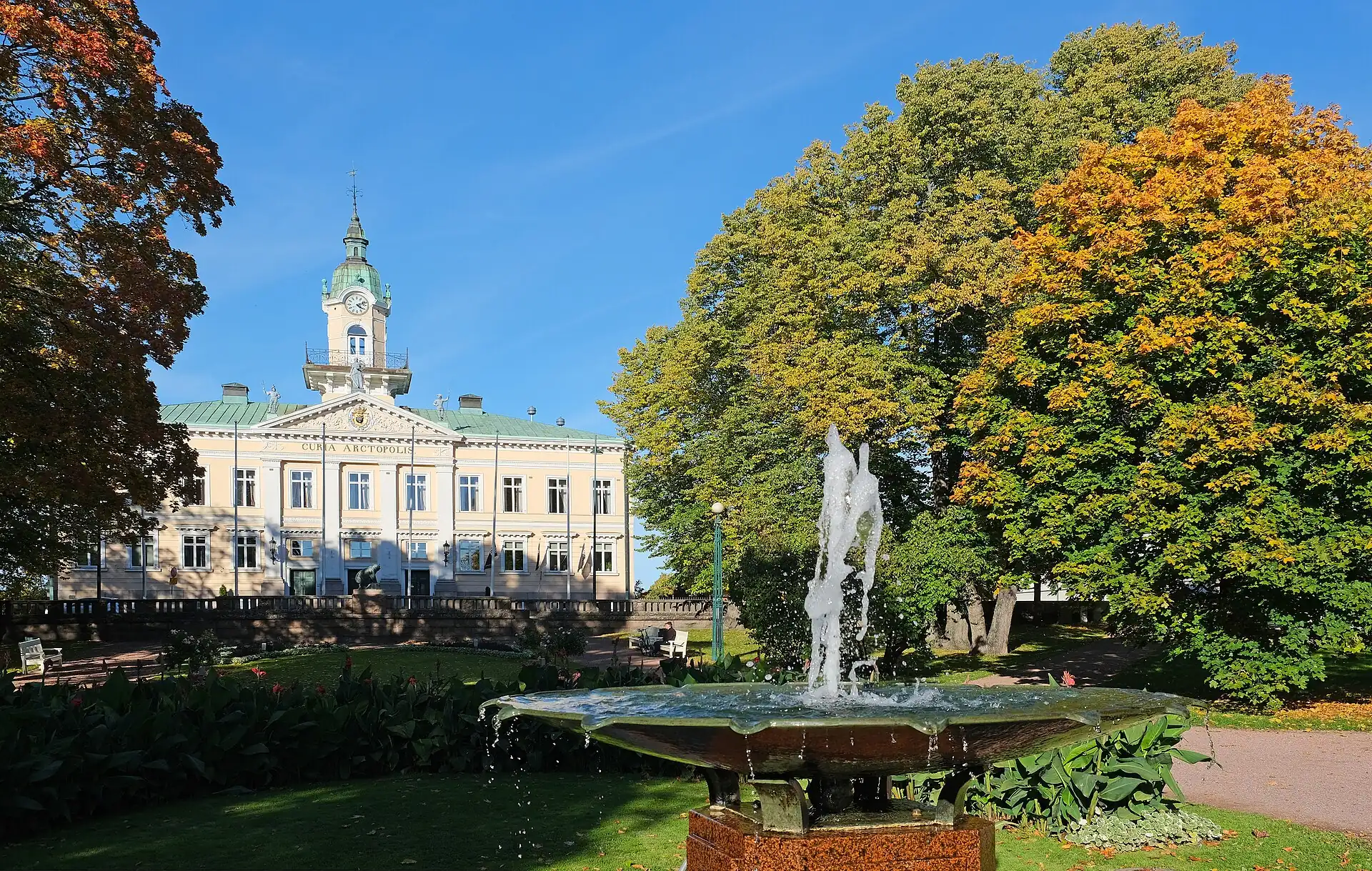
The Old Town's centre: 20 minutes for the Old Town Hall, the Roland fountain and the cafés; go early or in the evening.
Old Town & Main Square
- other
Go in the morning: 60–90 minutes for the courtyards, the museum and the views; the hill is a climb.
Castle Hill & St Martin's Cathedral
A Gothic coronation church beside the river road: 20 minutes; the towers are visible from the castle path.
Castle Hill & St Martin's Cathedral
A lift to the bridge-top deck for the river and the Old Town: 30–45 minutes; go at golden hour or on a clear morning.
Castle Hill & St Martin's Cathedral
- other
A 15–20 minute stop between Main Square and Michael's Gate: the courtyard is free to look into, the tower and the Bratislava City Museum inside need a ticket.
Old Town & Main Square
- other
A 30–45 minute stop for the Hall of Mirrors and the English tapestries: go on the way between Main Square and Hviezdoslav Square.
Old Town & Main Square
Castle terraces
ViewsWalk the castle terraces for the Danube view.
Old Town · check · Free
UFO deck lift
ViewsRide the UFO deck lift for the skyline.
Old Town · check · check
Danube river cruise or Devín Castle boat
activityTake a Danube river cruise or boat to Devín Castle in season.
Danube riverfront · Seasonal · check(check)
Vienna day trip
day tripDay-trip to Vienna by train.
Vienna · check · check
Learn & work
| What | Where | Cost | Note |
|---|---|---|---|
| Slovak National Museum | Riverfront, Old Town | check | Natural history and archaeology. |
| Bratislava City Museum | Inside the Old Town Hall | check | Local history. |
Working here
- Co-working and cafés
- Co-working spaces around the Old Town and Kamenné námestie sell day passes; cafés tolerate laptops for the price of a drink.
Rain-day and heat-day plan
Rain day
Rain can arrive any season: Slovak National Museum, Primate's Palace and Old Town Hall are the indoor fallbacks.
- 01Slovak National Museum (Danube building) — Indoor, AC, on the riverfront.
- 02Primate's Palace — Indoor state rooms, short visit.
- 03Eurovea or Aupark mall — Food court and shops for a washed-out afternoon.
Heat day
Above 28 °C: do the castle hill before 10:30, then indoor or shaded stops until the evening.
- 09:00Bratislava Castle — Go early; little shade on the terraces.
- 11:30St Martin's Cathedral — Cool stone interior.
- 17:00Danube promenade — River breeze in the evening.
Day-trips and nearby
Places you can reach from Bratislava in a day or with one night away, with the route and what it costs. Door to door, not ride time.
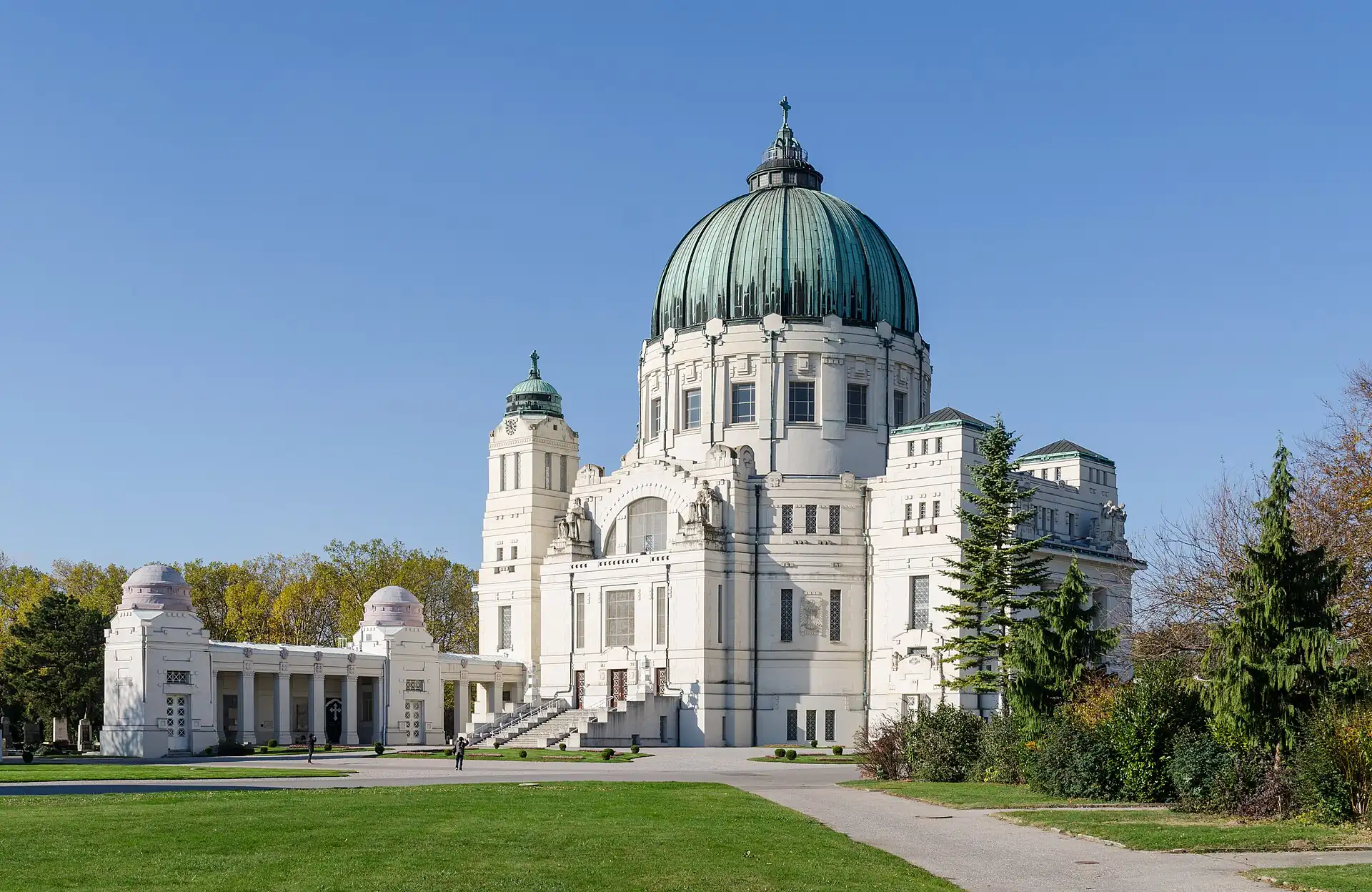 Photo: Steffen Schmitz ( more photos ), CC BY-SA 4.0
Vienna
goTrain or bus, about 1–1.25 h each way
Trains and buses run all day; compare against the airport bus.
- Time
- Full day
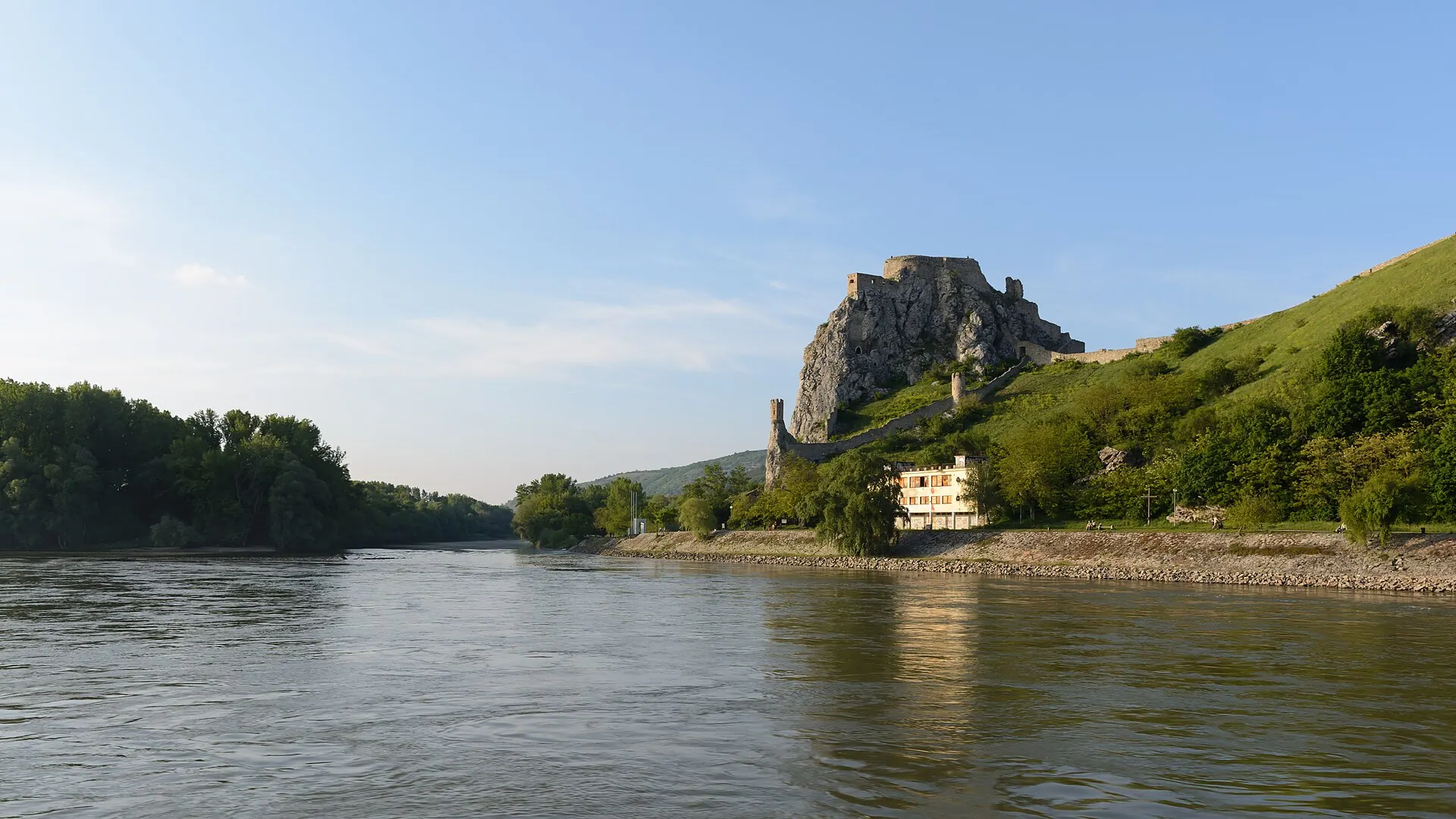 Photo: Uoaei1, CC BY-SA 4.0
Devín Castle
goCity bus 29 or a taxi, about 30–40 min
Ruined castle at the Danube–Morava meeting point; check opening months.
- Time
- Half day
Small Carpathians wine route (Pezinok, Modra)
goRegional train and a walk, about 35–50 min
Cellar tastings; book if you want a tour.
- Time
- Half day
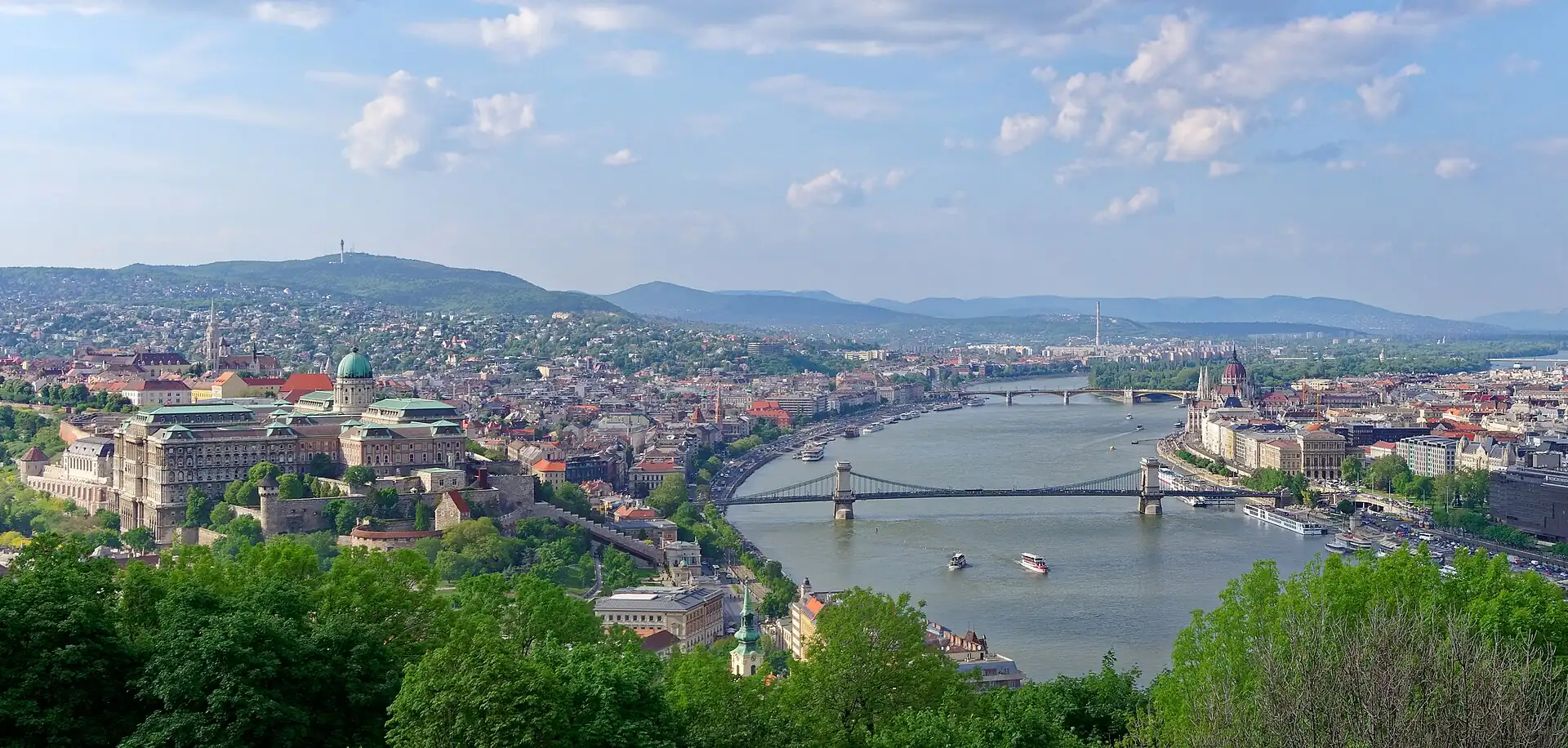 Photo: Jakub Hałun, CC BY-SA 4.0
Budapest
overnightTrain, about 2.5 h each way
Better as a separate stop than a day trip.
- Time
- Full day only if you must
Eat & sleepWhere to eat and which area to sleep in
Eat & sleep
Where to eat and which area to sleep in
Eat
A short list of places worth crossing the city for, each with how to get a seat.
Restaurant finder: filter every place to eat in Bratislava →
Vegetarian-friendly score
2.5 / 5 · Workable
- Country diet noteOur country guide rates vegetarian eating as workable.1 / 2
- Places to eat in this guide3 of 5 places with a known answer are vegetarian-friendly, 2 partly.1.2 / 1.5
- Budget eating lines0 vegetarian lines in "Eat by budget".0 / 0.6
- Meat-free national dishes5 meat-free dishes in the country food list.0.4 / 0.4
- Dedicated vegetarian kitchens0 mentions of vegetarian restaurants, Buddhist or fasting kitchens.0 / 0.5
Country note: Possible (fried cheese, pirohy, halušky without bacon) but monotonous.
Vegetarian places near me →Make a diet card →
How we score
- Country diet note (up to 2): easy 2, workable 1, mixed 0.75, hard 0; no note 0.5.
- City places to eat (up to 1.5): 1.5 × (vegetarian-friendly + half of partly friendly) ÷ places with a known answer; needs 3 or more known places.
- Budget eating lines marked vegetarian (up to 0.6): 0.2 each.
- Meat-free national dishes (up to 0.4): 0.1 each.
- Dedicated vegetarian kitchens mentioned — Buddhist chay, shōjin ryōri, Jain, fasting food, vegan cafés (up to 0.5): 0.1 each.
- Total rounded to the nearest half point, 0 to 5. Built from our own pages only, not from reviews.
Eating and drinking guideEat by budget · Drink
Eat by budget
check
| Where | Order | Area | Price | Note |
|---|---|---|---|---|
| Pub classics (bryndzové halušky, goulash) | Bryndzové halušky, goulash | check | check | The everyday meal; book ahead for the smaller upscale rooms. |
| Stará tržnica market hall | Several stalls in one stop | Old Town | check | The easiest way to sample several stalls in one stop. |
| Christmas-market sausage and mulled wine | Sausage and mulled wine | Main Square, Hviezdoslav Square | check | A seasonal, cash-friendly meal in its own right. |
Drink & nightlife
| Where | What | Until | Note |
|---|---|---|---|
| Obchodná street | Bars and pubs | About 01:00–02:00 on weekendsAbout 1:00 AM–2:00 AM on weekends | The main going-out street outside the Old Town squares. |
| Main Square terraces | Wine and beer terraces | About 23:00–00:00About 11:00 PM–12:00 AM | Tourist-priced; check the menu before sitting. |
| Tyršovo nábrežie (Danube embankment bars) | Riverside bars, some seasonal | About 00:00About 12:00 AM | Summer-only pontoon and container bars along the river. |
By style
| Style | What | Where | Price | Until |
|---|---|---|---|---|
| Pub beer | Slovak and Czech lagers on tap | Slovak Pub, Bratislavský meštiansky pivovar and Old Town pubs | €2–4 (≈ US$3–5) a half-litre (2026 estimate) | About 23:00–00:00 |
| Wine bars | Small Carpathians and Slovak regional wines by the glass | Wine bars around Ventúrska and the Old Town | €3–6 (≈ US$4–7) a glass (2026 estimate) | About 00:00 |
| Café culture | Coffee, cake, Kaffee Mayer-style Habsburg café tradition | Main Square and side streets | €2–3.50 (≈ US$3–5) a coffee (2026 estimate) | About 21:00–22:00 |
Rules that bite
- Zero alcohol limit for driving, including bicycles in some interpretations; do not drink and drive at all.
- Christmas market mulled wine is served in a deposit cup; return it for your deposit back.
Sleep
Pick the area first: it decides your walk home at night and your first morning.
Which neighborhood fits you
Three questions, one recommendation, with the reasons.
Your best fit
- Everything — Main Square, the castle approach, the cathedral — is inside 10–15 minutes on foot.
- Most hotels have staffed reception; smaller guesthouses may not.
Watch out: Bars and restaurant terraces run into the evening on the squares.
Next best: Kamenné námestie and Obchodná
Built from our 1–5 desk scores per area; your answers stay in this browser.
More on sleepingSleep by budget · Your area · With kids
Sleep by budget
| Band | Price | Where | Room types | What to expect |
|---|---|---|---|---|
| check | check | Old Town | check | The pick for a first visit. |
| check | check | Kamenné námestie | check | Easier bags and a shorter budget than the Old Town. Book a hotel with a lift if the room is above the ground floor; older Old Town buildings often lack one. |
Which area is yours
| If you are | Sleep in | Because |
|---|---|---|
| First visit, 1–3 nights | Old Town | Everything is walkable; accept the cobbles and pick a hotel with a lift. |
| Families or anyone with bags who wants an easier walk | Kamenné námestie and Obchodná | Wider streets, tram access, still 10–15 minutes to the sights. |
01Old Town
First-timers: sights are minutes away, but choose a hotel with a 24h desk and a taxi drop-off within 100 m, not a flat up four flights.
Ten minutes' walk north of the Old Town: quieter at night, with the tram at the door and the main train station a short ride away.
Areas are in our default order until you tick a priority.
Scores are 1–5 desk judgements per priority (2026).
With kids
- Cobbled Old Town lanes are hard on strollers; the Danube promenade is the flat, stroller-friendly stretch.
- The castle hill climb is steep; a taxi to the top works better with small children.
- UFO Observation Deck's glass floor and city view are a quick, high-impact stop for kids.
- Eurovea and Aupark malls have play areas for a rain or heat afternoon.
- Devín Castle ruins have open grounds to run around, good for a half-day out.
PracticalMoney, essentials, safety and the pocket card
Practical
Money, essentials, safety and the pocket card
Money
What a day costs at three comfort levels, and how to pay.
- Budget
- €35–60 (≈ US$45–70) excl. bed / day
- Mid
- €60–110 (≈ US$70–130) excl. bed / day
- High
- €110 (≈ US$130)+ excl. bed / day
- Transit card
- No pass needed for the centre; single tickets for trams and buses are cheap, and a 24-hour ticket pays back after three rides.
- Cash rule
- Use bank ATMs (in a branch or lobby), decline the machine's currency conversion, and keep €20–40 (≈ US$25–50) in small notes for market stalls and small pubs.
More on moneyCosts · Budget · Buy
What things cost
- Bottle of water, shop€0.60–1.20 (≈ US$1–2)
- Cathedral tower or exhibition ticket€2–5 (≈ US$3–6)
Trip budget
| Hotel double room1 × 2 nights × €90 | €180 |
| Food, local transport, entries2 × 2 days × €85 | €340 |
| Airport transfer, both ways1 × €30 · taxi or airport bus, one way about €5–15 | €30 |
| eSIM or tourist SIM2 × €15 | €30 |
| Buffer 10%Price creep, a taxi you did not plan, one splurge | €58 |
| Trip total≈ €160 per person per day, bed included | €638≈ US$750 |
2026 estimate in EUR; flights and tours excluded.
Buy
- Bargaining
- No bargaining culture: shops, markets and stalls post fixed prices. The exception is informal deals at wine cellars on a Small Carpathians day trip, and even there it is modest.
- Fixed-price check
- Check supermarket prices (Billa, Tesco, Lidl) for wine, spirits and snacks as a ceiling before buying the same in a souvenir shop.
Markets and shopping streets
| Where | What | When | Haggle | Note |
|---|---|---|---|---|
| Stará tržnica (Old Market Hall) | Food stalls, Saturday farmers' market | Varies; Saturday mornings busiest | no | Covered 1910 iron-and-glass hall; good rain option. |
| Christmas markets (Main Square, Hviezdoslav Square) | Mulled wine, sausages, crafts | Late November–December (check dates) | no | Crowded evenings; prices are posted. |
Shops by what they sell
| For | Where | Hours | Note |
|---|---|---|---|
| Wine and spirits | Small Carpathians cellars (day trip); city wine shops on Ventúrska and around the Old Town | Shop hours | Burčiak (young wine) is sold only September–November, and only briefly per batch. |
| Malls (AC, food courts) | Eurovea (riverfront), Aupark (Petržalka), Bory Mall (outer city) | About 09:00–21:00 | The rain-day and heat-day refuge. |
Changing money
| Where | Verdict | Why |
|---|---|---|
| Bank ATMs | use | Best rate; decline the ATM's own currency conversion. |
| Airport or station exchange booths | caution | Weaker rate; change only enough for the first taxi. |
| Hotel front desk | avoid | Convenient, poor rate. |
ATMs
- Fees
- Bank fees vary by card; most EU cards pay no extra fee inside the eurozone. Non-EU cards: check your bank's foreign ATM fee.
- Conversion
- If the machine offers to charge in your home currency, decline and pay in euro.
Essentials and accessEssentials · Access
Essentials
- Plugs & power
- 230 V; two-round-pin sockets (types C and E). Non-EU visitors need an adapter.
- Toilets
- Cafés, shopping centres and the station; carry coins.
- Health
- Cold winters and hot summer afternoons; pharmacies (lekáreň) give first advice. Bring travel insurance and, for EU citizens, the EHIC/GHIC.
- Accessibility
- Old Town lanes are cobbled; the castle hill is steep. Trams have low floors on newer lines.
- Laundry
- Self-service laundries in the Old Town area; hotels charge per item.
- Emergency numbers
- 112.
Pack
- Comfortable shoes with grip for cobbles
- A warm layer from October to March
- A hat and water bottle for July and August
- A small rain jacket
Accessibility
The Old Town's cobbles and the castle hill's slope are the main obstacles; the Danube promenade and most trams and newer buses are step-free.
- Pavements
- Cobbled and uneven in the Old Town; smoother on Kamenné námestie and the riverfront.
- Public transport
- Newer trams and buses are low-floor; check the vehicle before boarding if step-free matters.
- Getting around
- Taxis and Bolt are the step-free option for the castle hill and longer trips.
- Hotels
- Older Old Town buildings may lack lifts; ask for a photo of the entrance and stairs.
Sights, step-free or not
| Main Square (Hlavné námestie) | step-free | Flat, though cobbled. |
| Bratislava Castle | with help | Steep approach; taxi to the top avoids the climb. |
| St Martin's Cathedral | with help | A few steps at the entrance. |
| UFO Observation Deck (SNP Bridge) | step-free | Lift to the deck. |
Survive
Safety basics, the lines not to cross, and practical habits that save the day.
Safety
- Pickpockets work the Old Town squares, the tram and the station: keep bags zipped and in front.
- Ice on cobbles in winter and slippery wet stone in rain: wear shoes with grip.
- Emergency: 112 (EU number) works everywhere.
Red lines
- Churches: cover shoulders and keep quiet during services.
- Do not climb on statues or sit on the Old Town fountain edges.
Practical
- Toilets: cafés (buy a drink), shopping centres and the railway station; some charge €0.50–1.
- Tap water is safe to drink.
More on staying safeStay safe · Stay healthy · Safety map · Solo & women · Etiquette · Cope · Scams
After dark, by area
1 flagged area
- Take care
Day = about 07:00–20:00. What to watch in each area, day and night →
Scams and red flags
Walk away if you see these
- Taxi drivers at the station or airport who refuse the meter or quote a fixed price far above the tariff: use Bolt or a company you booked.
- Restaurants in the main squares that add a cover charge or charge for bread: read the menu before you sit.
- Fake 'currency exchange' booths with poor rates: withdraw at a bank ATM instead.
- Overcharging for beer or a bill in a bar: check the itemised bill and the price list on entry.
Stay safe
Stay healthy
Hospitals and clinics: see Cope.
Safety by area and hour
| Area | Day | Night | What to watch |
|---|---|---|---|
| Old Town squares | fine | fine | Pickpockets in crowds; overpriced or unpriced bar snacks. |
| Castle hill | fine | caution | Poorly lit paths after dark; stick to the main approach. |
| Danube promenade | fine | fine | Cyclists share the path; keep to the pedestrian side. |
| Obchodná and Kamenné námestie | fine | fine | Nightlife pickpocketing on weekend evenings. |
- Bratislava is generally safe; petty theft in crowded squares and on trams is the main everyday risk.
- Use Bolt or a booked taxi at night rather than hailing an unmarked car.
Solo, women and LGBTQ+ travellers
Solo
- Easy and low-stress city to visit alone; cafés and pubs are comfortable for one.
- Book Vienna or Devín trips through the hotel desk if you'd rather not plan transit solo.
Women
- Generally safe; the same crowd-pickpocket caution applies as any European capital.
- Nightlife areas can get rowdy on weekend evenings; stick to well-lit main streets.
LGBTQ+
- Legal and generally tolerant, though public affection is low-key outside a small scene.
- Same-sex marriage is not recognised in Slovakia; a small Pride event runs some years (check dates).
Etiquette in Bratislava
- Churches
- Cover shoulders and keep quiet during services.
- Tipping
- Round up or add about 10% in restaurants; check whether service is already on the bill.
- Greetings
- A handshake and eye contact for a first meeting; more formal than some Western European norms.
- Queues
- Orderly; wait your turn at counters and stops.
Cope
Hospitals and clinics that handle foreigners
| Where | Area | Use it for |
|---|---|---|
| Univerzitná nemocnica Bratislava (university hospital, several sites) | Old Town / Ružinov / Petržalka | Public emergency care; EU citizens use EHIC/GHIC, others need travel insurance. |
| Private clinics (e.g. ProCare, Dr. Max network for pharmacies) | Various | Faster non-emergency visits; pay upfront by card, claim later. |
Visa extensions
- EU/Schengen citizens
- No visa or immigration formalities; an ID card or passport is enough.
- Non-EU visitors
- Standard Schengen 90-in-180-day rule applies; check your own nationality's visa requirement before travel.
- Overstay
- Can affect future Schengen entry; leave on time or seek advice from your embassy.
Embassies and consulates
| Country | Address | Phone | Note |
|---|---|---|---|
| United States | Hviezdoslavovo námestie 4, Staré Mesto | — | (check) |
| United Kingdom | Panská 16, Staré Mesto | — | (check) |
| Germany | Hviezdoslavovo námestie/Ventúrska area | — | (check) |
| Austria | Ventúrska 10, Staré Mesto | — | (check) |
- Lost passport
- Report to the police, then contact your embassy for an emergency travel document.
- Pharmacies
- Lekáreň signs; Dr. Max and Benu chains post prices; many staff speak some English.
- Laundry
- Self-service laundries in the Old Town area; hotels charge per item.
Apps and offline kitOffline kit
Offline kit
Set up before you leave, so Bratislava still works with no signal or a dead roaming plan.
On your phone
- Maps: open the city in Google Maps, tap the place name, then Download offline map (or use an offline-maps app).
- Data: install an eSIM or buy a local SIM before the first taxi; the apps in this guide depend on it.
- Translation: download the local language for camera translation.
- Screenshots: booking confirmations, hotel address in the local script, and the emergency numbers.
This guide
Save the Bratislava guide and its pages on this device; it opens without a connection.
Phrases that do the work
Greeting
Hello
Dobrý deň
DOH-bree dyen
Thanks
Thank you
Ďakujem
DYAH-koo-yem
Please
Please / you're welcome
Prosím
PRO-seem
Pub
One beer, please
Jedno pivo, prosím
YED-no PEE-vo PRO-seem
Shop
How much is it?
Koľko to stojí?
KOL-ko toh STOH-yee
Café
The bill, please
Účet, prosím
OO-chet PRO-seem
Taxi
To this address, please
Na túto adresu, prosím
na TOO-to ah-DREH-soo PRO-seem
Help
I need help
Potrebujem pomoc
PO-treh-boo-yem PO-mots
Pocket card
Fill in, then print or save as PDF
Stays in this browser only; nothing is sent anywhere.
BratislavaBratislava
Pocket card · Voykit
My bed tonight
—
—
—
Na túto adresu, prosímTo this address, please
Emergency
- General emergency (EU)112
- Police158
- Ambulance155
Embassy
Write your own embassy's address and 24-hour line below before you fly.
My embassy: —
Fare anchors (2026 estimate)
- Airport (BTS) to Old Town, taxi: €12–20 (≈ US$14–25), 15–20 min
- Airport to centre, bus 61: About €1.50 (≈ US$2), 25–30 min (check)
Say or show
- Dobrý deň — Hello (DOH-bree dyen)
- Ďakujem — Thank you (DYAH-koo-yem)
- Koľko to stojí? — How much is it? (KOL-ko toh STOH-yee)
- Účet, prosím — The bill, please (OO-chet PRO-seem)
- Potrebujem pomoc — I need help (PO-treh-boo-yem PO-mots)
Most embassies sit in or near the Old Town, within walking distance of Main Square.
Deep diveHistory, reading, photos and every source
Deep dive
History, reading, photos and every source
Sources
- officialSlovak Tourist Board
- officialBratislava Tourist Board
- secondaryWikivoyage — Bratislava
Ask about Bratislava
Loading…
Was this useful?