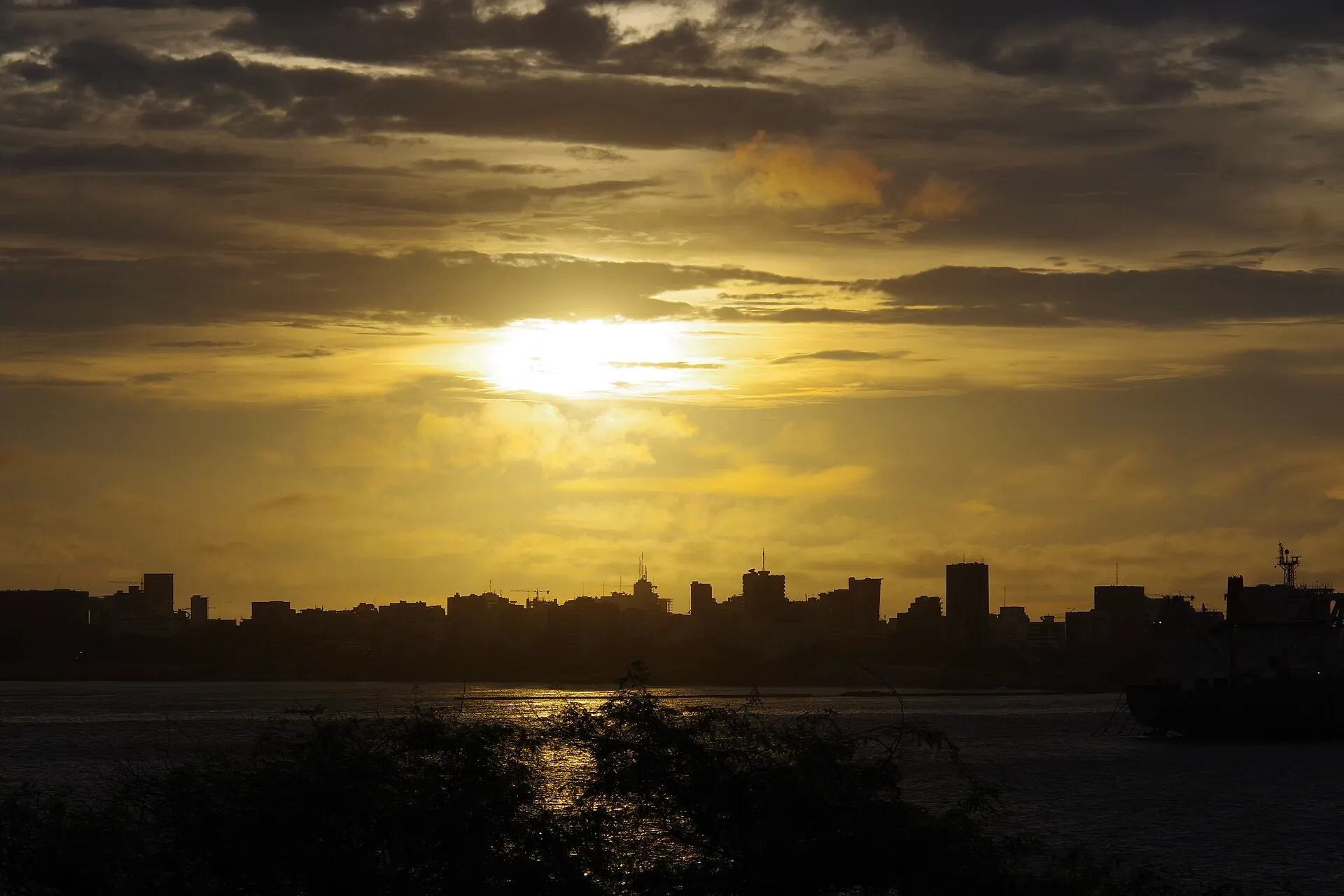
Dakar
Code SN · 4 walking zones
Dakar is a car-and-morning city: take the Gorée ferry early, walk the Plateau before noon, keep evenings for Ngor and the Almadies, pre-book the airport ride, and never rely on a taxi appearing.
Our quick read of Dakar, scored 1–5 (friction is out of 100). Cash need: how often you still need notes. Heat risk: how hot days get. Stroller: how easy wheels are. Friction: overall effort for a first visit. Desk judgements, so check before relying on them.
- Local time
- --:--
- Weather
- forecast below
- Currency
- XOF
- Best months
- Jan · Feb · Mar · Apr · Nov · Dec
- Airport
- Blaise Diagne (DSS)
Walking zones: the 4 areas this guide plans a day around. Each is a district you can cover on foot, so you do one zone per half-day and ride the train between them. The code (SN 01, SN 02…) is just the zone's number on the Dakar line; the line under each name says how bags fare there and how much time it needs.
Map of Dakar
Use the switches to show or hide each kind of pin. A switch that is on shows its pins on the map; tap it again to hide them. "Show only" keeps just the pins that match (for example, places that fit a suitcase). Tap any pin for its name and a link to its page.
- Where to sleep
- Places
- Eat
- Walking clusters
- Rest stops
From the airport Blaise Diagne (DSS) to your bed
Tap a pin for its card. Places without their own coordinates are shown by their walking cluster.
Why Dakar
Dakar sits on a peninsula and the sights are spread along its coast: the Plateau and the market district in the south, Gorée Island a short ferry ride offshore, and the Ngor and Almadies coast in the north-west. The airport, Blaise Diagne, is about 45 km from the centre, so the airport ride is a real leg, not a footnote. Traffic is heavy, pavements are broken, and prayer times, Fridays and Ramadan shape opening hours. Four clusters cover a first visit; a car with a driver joins them.
See first
- 1Gorée and the House of Slaves · 3–4 h with lunch
- 2
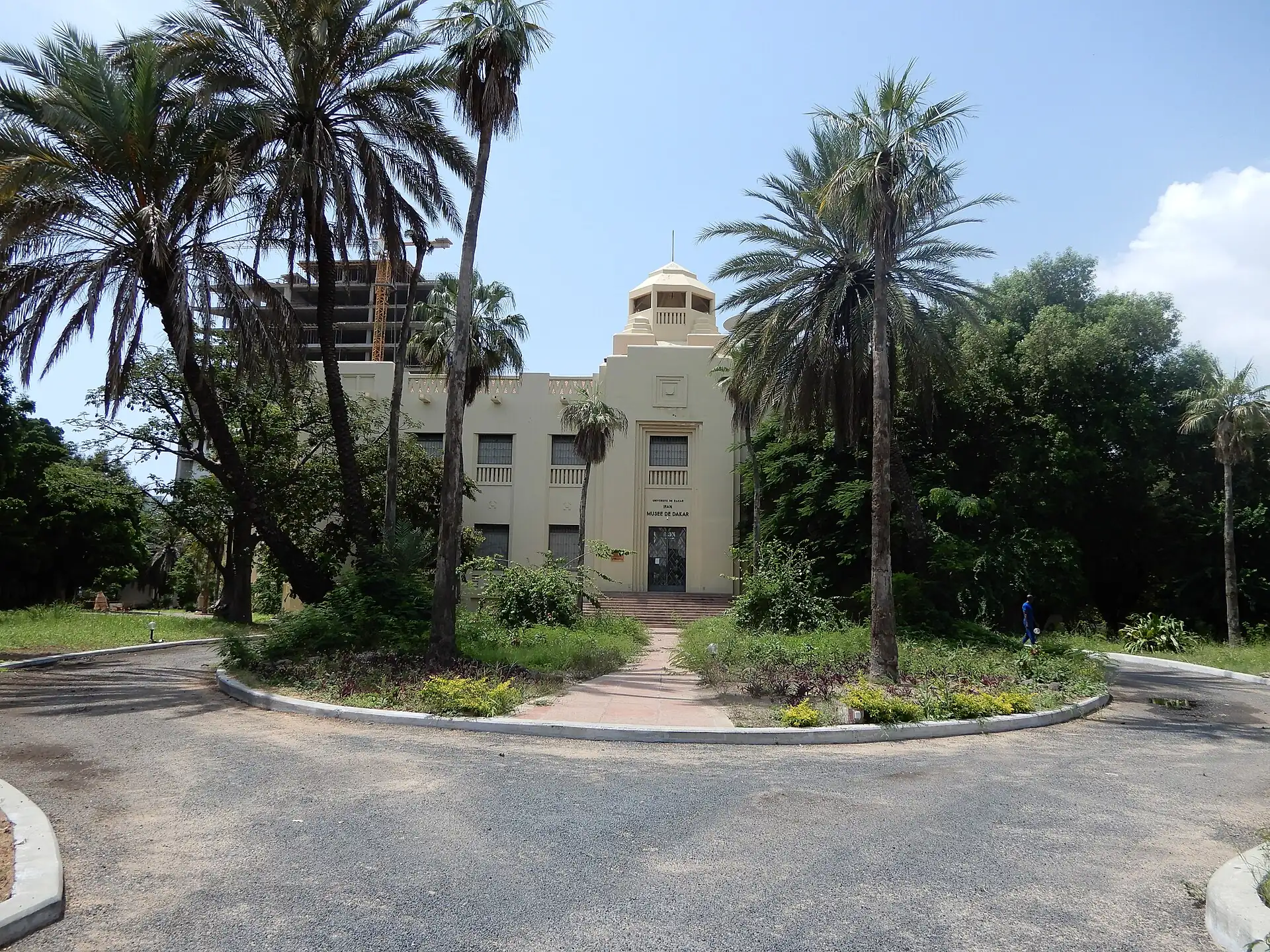 IFAN Museum of African Arts · 1 h
- 3Thieboudienne lunch · 45–60 min
- 4
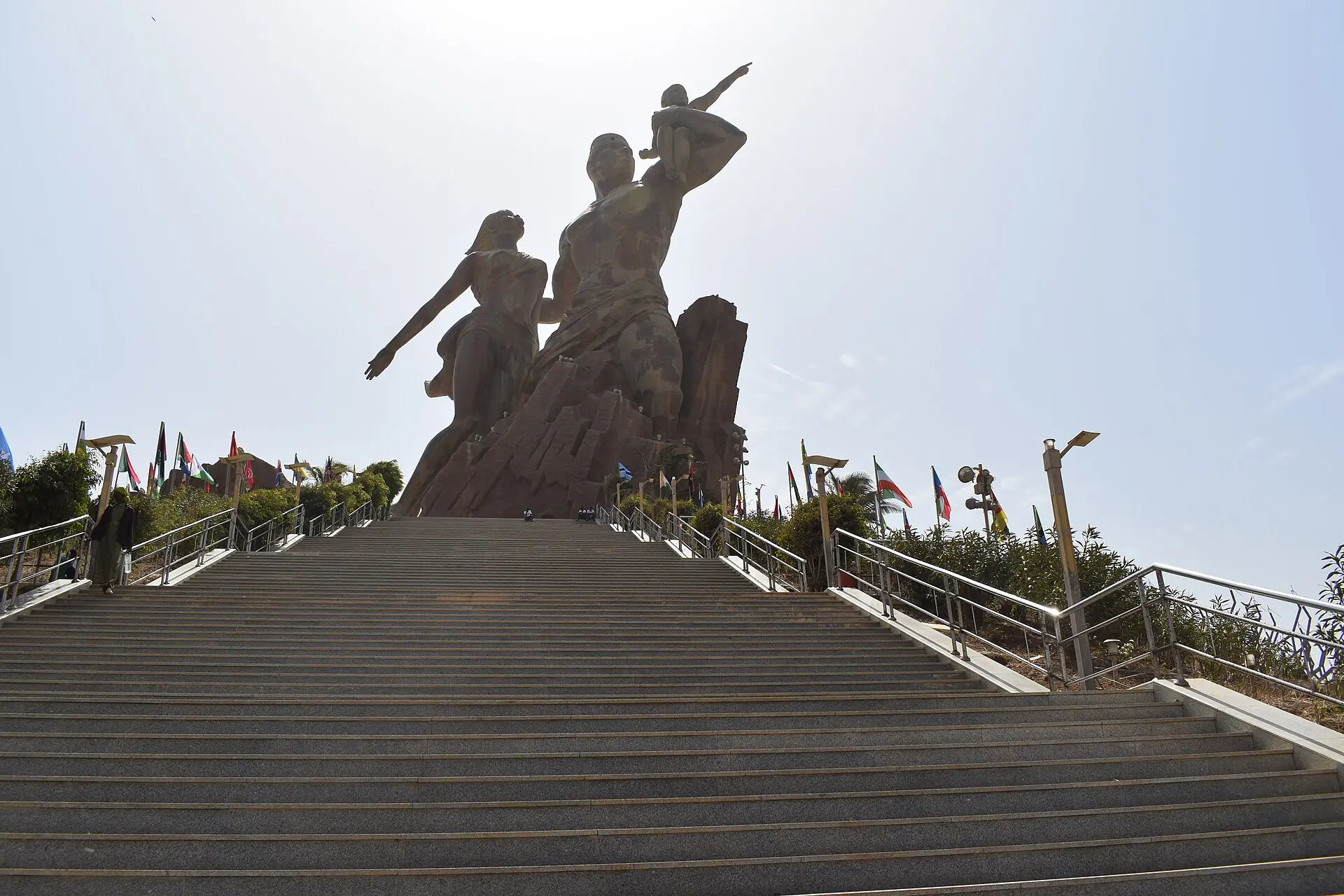 African Renaissance Monument · 1 h
- 5
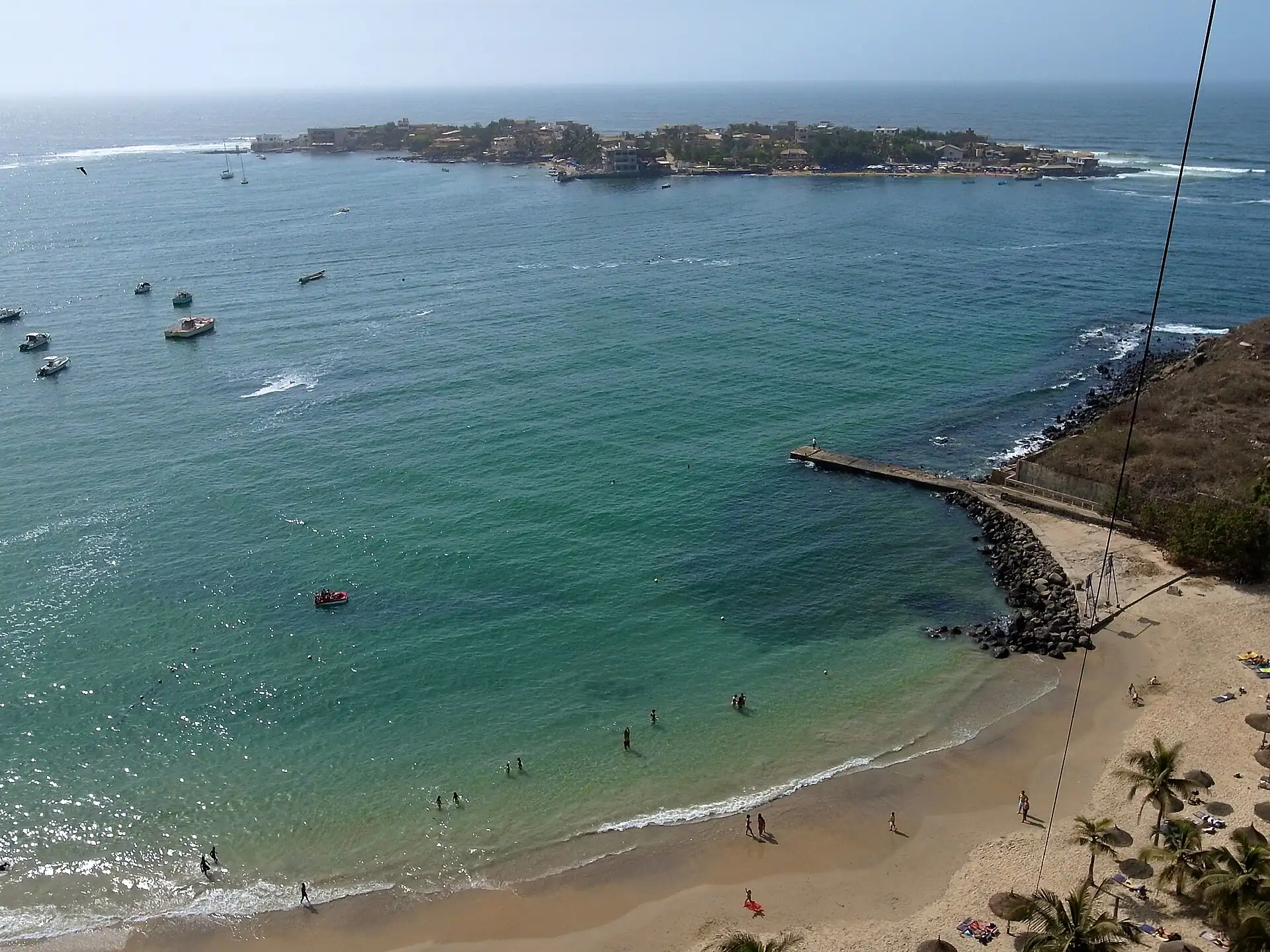 Ngor Island by pirogue · Half day
Fits
- History and museum trips
- Music and food trips
- A capital before a trip elsewhere in Senegal
Does not fit
- Strollers and wheelchairs (pavements)
- Travellers who dislike traffic and touts
- Anyone who needs cash machines everywhere
How long
- 2 daysGorée morning, Plateau afternoon
- 3 daysFour clusters, mornings for walking and the ferry
- 5 daysFour clusters + Lac Rose or the Petite Côte + one slow day
Good for
- First timers
- Foodies
- Budget
- Couples
- Families
- Luxury
About Dakar
Dakar sits at the tip of the Cap-Vert peninsula, the westernmost point of mainland Africa. Lebou fishing villages lined its shores long before the colonial era; the Lebou remain a distinct community in the Yoff, Ouakam and Ngor quarters.
The French built a post on the peninsula in the 1850s, and the arrival of the railway to Saint-Louis and the port made Dakar the capital of French West Africa in 1902. The Plateau's grid, the Place de l'Indépendance and the large administrative buildings come from that era. Just offshore, Gorée had been a Portuguese, Dutch, British and then French trading post from the 15th century onward, and its House of Slaves is now the best-known memorial to the Atlantic trade in West Africa.
Good to know
- Dakar is the region and the city; the old airport (Léopold Sédar Senghor) is closed to commercial flights and the airport you use is Blaise Diagne, far out of town.
- No single tourist information desk is confirmed in central Dakar; hotel desks and licensed tour operators are the practical first stop for driver, ferry and museum information.
- The national tourism authority lists licensed operators; compare one written quote before paying for a tour.
Go deeper 10 min read · 6 chapters
Dakar is a peninsula city at the western edge of Africa: a colonial port turned capital, with a memorial island offshore, a market district that never sleeps, and a beach-side quarter at its north-west tip. This deep dive follows how the Cap-Vert peninsula was settled and traded, how its neighbourhoods layered up, what its buildings and its kitchens say about its past, and why the calendar of faith and music still shapes an ordinary day in Dakar.
1History2 min
Dakar sits on the Cap-Vert peninsula, the westernmost tip of mainland Africa, and people were living on its shores long before any port existed. The Lebou, a Wolof-speaking fishing community, settled the coast villages that still carry names like Ngor, Yoff and Ouakam. Portuguese sailors reached the peninsula in 1444 and named the cape after its green vegetation. From the 15th century onward the small island of Gorée, a short sail offshore, became a trading post that changed hands between the Portuguese, the Dutch, the British and the French, and it settled into French control for good in the early 19th century. What it traded, above all, was people, and the House of Slaves has become the best-known memorial to that trade in West Africa. Historians still debate how many captives passed through the house itself, so read its story alongside the wider records.
The French built a fort on the mainland in the 1850s, and the town they laid out on the Plateau grew as a port and a railhead. The railway to Saint-Louis, opened in the 1880s, tied the peanut-growing interior to the harbour, and in 1902 Dakar became the capital of French West Africa. The Plateau's grid, its administrative buildings and its squares come from that era. Dakar was also one of the four communes whose African-born residents held a form of French citizenship, which made it a centre of early African political life. Blaise Diagne, elected to the French parliament in 1914, was the first Black African deputy, and the airport that now takes his name opened in 2017.
Senegal became independent in 1960 under Léopold Sédar Senghor, a poet and the country's first president. The Mali Federation that was meant to join Senegal and French Sudan broke apart within months, and Dakar became the capital of a smaller, single state. In 1966 the city hosted the World Festival of Black Arts, a landmark for African culture. Since then Senegal has been noted in the region for changing its presidents through elections, most recently in 2024, and Dakar has grown from a colonial port into a metropolitan area of several million people.
- Cap-Vert reached by Portuguese
- 1444
- French fort on the peninsula
- 1850s
- Capital of French West Africa
- 1902
- Independence
- 1960
- World Festival of Black Arts
- 1966
- Blaise Diagne airport opens
- 2017
2Neighbourhood stories2 min
Dakar reads best as a set of layers along one long peninsula. The Plateau at the southern end is the colonial centre: ministries, banks, the port and the ferry to Gorée, with wide avenues that empty out at night. Just north of it, the Medina was created in 1914 after a plague outbreak, when the colonial authorities moved the African population out of the Plateau. What began as a segregated quarter has become the beating heart of the city, dense with tailors, tea sellers, mosques and small workshops, and the birthplace of much of its music.
Sandaga, the great central market, sits between the two. It is a place of piled fabric, spices, electronics and shouted prices, and it has been the city's main commercial crossing for generations. Further west the Corniche runs along the shore, past the Soumbédioune fishing beach, where painted pirogues land the catch each morning and a craft village sits beside them. The Lebou fishing villages of Ouakam, Yoff and Ngor were once separate from the city and are now absorbed into it, though they keep their own customs, mosques and beaches. Yoff is also the seat of the Layène brotherhood.
At the north-west tip, the Almadies and Ngor have become the beach-side quarter of the city, with hotels, bars, seafood terraces and a surf scene, and a pirogue crossing to Ngor island. The trade-off is distance: every outing from there is a car ride. Beyond them, the suburbs of Pikine and Guédiawaye hold most of the city's population, and they are where the Dakar most Senegalese know lives. As a visitor, the practical lesson is simple: choose your base by the kind of day you want, and let a driver stitch the layers together. Give the driver a landmark as well as a district name, because addresses here work by neighbourhood more than by street number, and agree the price of a long ride before you set off.
- Medina founded
- 1914
- Airport distance
- About 45 km (28 mi) east of the centreAbout 28 mi (45 km) east of the centre
- Gorée ferry
- About 20 minutes
- Population
- Several million in the metropolitan area (2026 estimate)
3Architecture2 min
Dakar's architecture is a conversation between the colonial centre, independence-era ambition and recent large projects. The Plateau still holds its early 20th-century administrative buildings, the presidential palace, the chamber of commerce and the old railway station, most in a heavy European style with local details. The Cathédrale du Souvenir Africain, completed in the 1930s, is one of the city's largest churches, built when Dakar was the capital of French West Africa and wanted buildings to match.
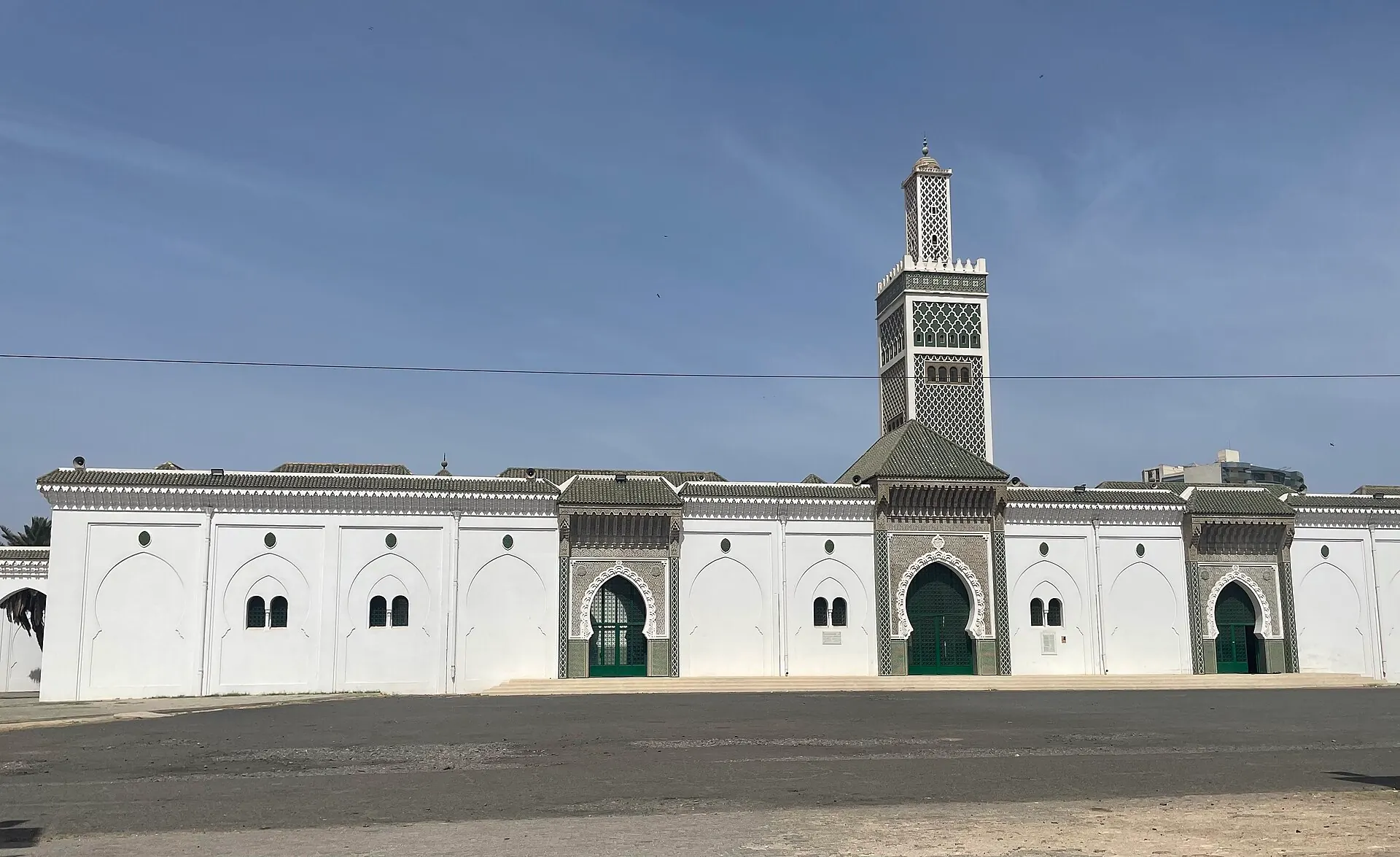
Independence brought a different ambition. The Grande Mosquée in the Medina, opened in the 1960s, is the city's main mosque and shows the influence of North African design. In the years around 2010 the city gained two big signature projects, both built with foreign funding and labour. The Grand Théâtre National on the Corniche, opened in 2011, was built with Chinese support, and the African Renaissance Monument on the Ouakam hill, unveiled in 2010, was built by a North Korean firm. At 49 metres the monument is taller than the Statue of Liberty and stays controversial, both for its style and for its cost, and residents will give you frank opinions about it. Near the theatre, the Museum of Black Civilisations opened in 2018; check its current opening before you plan a visit.
Gorée offers the opposite scale. Its low stone houses, painted in ochre, pink and blue, with wooden balconies and courtyards, were built by merchants and shipowners over two centuries, and the whole island is listed by UNESCO. In the city, the everyday architecture is the street: the painted cars rapides, the hand-lettered signs and the murals that grew out of the Set Setal movement of 1990, when young people cleaned and painted their neighbourhoods. A good walk of the Plateau takes in the colonial layer, and a car ride to the monument takes in the new one.
- Cathédrale du Souvenir Africain
- Completed in the 1930s
- Grande Mosquée
- Opened in the 1960s
- African Renaissance Monument
- Unveiled 2010, 49 m tall
- Grand Théâtre National
- Opened 2011
- Museum of Black Civilisations
- Opened 2018 (check current opening)
4Food history2 min
Senegalese cooking is built around rice, fish, onions, tomato and slow, oily sauces, and its national dish is thieboudienne, called ceebu jën in Wolof. Fish, often grouper, is stuffed with herbs and simmered with cassava, carrot, cabbage and sweet potato, and the rice is cooked in the tomato-red broth so that a crust forms at the bottom of the pot. That crust, the xoon, is the prize. The dish is commonly credited to Saint-Louis, and each family and canteen has its own version.
Around it sits a wider table. Yassa, chicken or fish in an onion, mustard and lemon sauce, comes from the Casamance in the south. Mafé, meat in a thick peanut sauce, is shared with neighbouring Mali and Gambia. Thiou is a simpler stew of vegetables or fish over rice. In the evening, dibi, grilled lamb sold by weight with onions and mustard, is the street classic of the Medina. Wheat came with the French: crisp baguettes, pastry shops and cheese are part of the morning, and a Lebanese community that settled in the 20th century added shawarma and mezze.
Drinks tell their own story. Café Touba, coffee spiced with Guinea pepper, takes its name from the holy city of the Mouride brotherhood, and it is drunk from small street stalls all day. Bissap is a hibiscus drink, bouye comes from the baobab fruit, and ginger juice is sold in bottles by the road. The tea ritual, ataya, is a social act: strong green tea prepared in three rounds and poured back and forth to build a foam. The saying goes that the first round is bitter like death, the second sweet like life and the third gentle like love. Accept the offer when it comes, and expect to spend an hour. Sweet pastries and peanuts often appear alongside, and refusing everything at once can read as cold, so take a little of what is offered.
- National dish
- Thieboudienne (ceebu jën)
- Street classic
- Dibi, grilled lamb
- Signature drink
- Café Touba
- Tea ritual
- Ataya, three rounds
5Music and street life2 min
Dakar's soundtrack is mbalax, a dance music built on the sabar drums and the tama talking drum, layered with electric guitars and horns. In the 1960s Cuban records were popular on Senegalese radio, and bands such as the Star Band and Orchestra Baobab mixed that influence with local rhythms; from the 1970s and 1980s singers like Youssou N'Dour brought mbalax to a global audience. Baaba Maal, from the north, and a large hip-hop scene, with groups such as Positive Black Soul and Daara J, gave the city a second voice. The Y'en a marre movement of 2011, started by rappers and journalists, showed how music and politics can meet in Dakar's streets.
Sport is the other national passion. Traditional wrestling, lutte, mixes athletics, ritual and spectacle, and its stars are household names; a big fight fills a stadium and empties the streets. Football is everywhere, from beach pitches on the Corniche to national matches; Senegal won the Africa Cup of Nations in the tournament played in early 2022 and the win is still celebrated. Fashion and craft have a strong tradition too, from tailors in the Medina who will make a boubou from a length of wax-print cloth in a few days to the contemporary art shown at the Dak'Art biennale.
For a visitor, the streets are the show. Colourful cars rapides, the traditional minibuses, are being phased out in favour of newer transport, but you will still see them. Vendors sell everything at traffic lights, and greetings matter: take time to say hello and ask how someone is, and you will be treated as a guest, a tradition Senegalese call teranga. Evenings are late, and live-music nights start after 22:00, so plan a booked car for the ride back, and check what is on that night before you go. Ask your hotel which venues are lively on which nights, because the best rooms change from season to season.
- Signature music
- Mbalax
- Signature sport
- Lutte (traditional wrestling)
- Contemporary art
- Dak'Art biennale (even years, check)
- Hospitality tradition
- Teranga
6Faith, brotherhoods and festivals2 min
Islam is the majority faith in Senegal, and in Dakar it is practised through a system of Sufi brotherhoods that shape daily life. The Mourides follow Cheikh Amadou Bamba, whose holy city of Touba, about 190 km from Dakar, draws millions each year to the Grand Magal, a pilgrimage that commemorates his exile in 1895. The Tijaniyya, the largest brotherhood, has its centres in Tivaouane and Kaolack, and the Layène community is centred on Yoff, a village inside the Dakar urban area. Christians, mostly Catholics, are a small minority, and the annual Popenguine pilgrimage near the coast at Pentecost draws large crowds.
For visitors, the effect is visible on the calendar and in the streets. Friday midday prayers slow traffic and close offices for a long lunch. During Ramadan, many restaurants adjust their hours and public eating in daylight is avoided; Korité, the feast that ends Ramadan, is a public holiday. Tabaski, the feast of the sheep, is the biggest domestic holiday of the year: in the days before, sheep are sold on street corners and in the city's vacant lots, and on the day itself the city empties as families travel home. Taxis and ferries are then hard to find, and many shops are closed for days.
Religion in Senegal is also famously tolerant and mixed, and families often include both Muslims and Christians. The brotherhoods appear on murals, in taxis and on the backs of cars rapides as portraits of their founders. As a visitor, dress modestly at mosques and in the Medina, avoid prayer times, ask before you photograph, and accept greetings warmly. If you want a religious event to be part of your trip, check the Islamic calendar for the year, and plan your driver and hotel a week ahead, because the roads around a major festival change quickly.
- Main faith
- Islam, mostly Sufi brotherhoods
- Holy city
- Touba, about 190 km (118 mi) from DakarTouba, about 118 mi (190 km) from Dakar
- Grand Magal
- 18 Safar in the Islamic calendar (moves yearly)
- Biggest domestic holiday
- Tabaski
Read, watch, wordsReading · Watching · Glossary · Sources
Reading
- God's Bits of Wood — Ousmane SembèneA novel of the 1947–48 railway strike on the Dakar–Niger line; a view of colonial Dakar from below.
- So Long a Letter — Mariama BâA short Senegalese classic, written as a letter, about marriage, faith and women's lives in Dakar.
- Selected poems — Léopold Sédar SenghorThe poet-president's verse on Africa, memory and identity; a way into the founding generation.
Watching
- Touki Bouki — Djibril Diop Mambéty, 1973A cult film of two young Dakar lovers dreaming of Paris; the city on screen.
- Atlantics — Mati Diop, 2019A ghost story set in a modern Dakar suburb and its workers, with the ocean as a character.
Glossary
| Term | Local | Meaning |
|---|---|---|
| Teranga | Teranga | Senegalese hospitality: warm greetings and a visitor treated as a guest. |
| Ceebu jën | Ceebu jën (thieboudienne) | Fish and rice in tomato sauce; the national dish. |
| Mbalax | Mbalax | Dance music built on sabar drums; the sound of the city. |
| Sabar | Sabar | A drum tradition that drives mbalax and family celebrations. |
| Lutte | Lutte | Traditional Senegalese wrestling; the national sport. |
| Car rapide | Car rapide | A painted minibus on set routes, being phased out. |
| Pirogue | Pirogue | A painted wooden fishing boat, also used as a ferry. |
| Ataya | Ataya | The three-round green tea ritual. |
| Toubab | Toubab | A local word for a foreigner or white visitor; usually not offensive. |
| Tabaski | Tabaski | The feast of the sheep (Eid al-Adha), the main domestic holiday. |
Read for this deep dive
Background reading only: the text above is written by Voykit, not copied from these pages.
Rules in force · 8Nine African countries on this site have no trip line bec…Carry an original yellow fever vaccination certificate on…
- Africa ↗When a route touches a yellow-fever country — even a transit of 12 hours or more — keep the original yellow card (ICVP) in your hand luggage; health desks and airlines can refuse boarding or entry without it.
- Africa ↗Nine African countries on this site have no trip line because governments advise against travel; several others have no-go regions. Read your government's advice for every country on the route before paying deposits.
- West Africa ↗Carry an original yellow fever vaccination certificate on any West African trip: several countries on the coast road demand it of every arrival, and the rest demand it after you have passed through a neighbour.
- West Africa ↗Cross land borders and drive between cities in daylight only; plan each crossing as a full travel day with cash for fees and passport copies for checkpoints.
- Senegal ↗Check visa and entry rules for your passport on official Senegalese government sources before booking.
- Senegal ↗Dress modestly in towns and at religious sites: shoulders and knees covered.
- Senegal ↗Check your government's advice before travelling to parts of the Casamance region in the south.
- Dakar and Cap-Vert ↗Traffic is heavy at rush hours; build a buffer for every road leg and the airport.
Entry rules depend on your passport. Full visa guide
Emergency numbers for Dakaropen ▾
- Police17 (check)
- Fire18 (check)
- Ambulance1515 SAMU (check)
Tap a number to call from your phone. These are the numbers listed in this guide; a row marked check has not been verified.
Planning is the full guide. I'm here keeps what is open and the cheat card.
Right now
Checking the weather…
Working out what is open near you…
What is open nowclock, closures, places open
Now in Dakar
Local time in Dakar
--:--
Loads in your browser · Africa/Dakar
This month
Month verdict appears here.
Closed today
See the weekly grid below.
If today is a closure day: Take the Gorée ferry early, keep the Plateau for the morning, and book the airport car ahead; traffic is the main variable, and it is worst on Friday afternoons and around holidays.
Weekly closures come from our place pages; public holidays, prayer times and occasional demonstrations can add closures not shown here. Check your government's travel advice before you go.
Cheat cardthe pocket version
Cheat card
The essentials on one card: save it as an image for your phone, share it, or print it.
Dakar
- Money
- Keep XOF 10,000 in small notes for taxis, snacks and tips; use ATMs inside banks or hotels in daylight only.
- SIM
- Buy an Orange, Free or Expresso SIM at the airport or a branded boutique with your passport; registration is required.
- Ride app
- Yango · Heetch
- Emergency
- 17 (check) police · 18 (check) fire · 1515 SAMU (check) ambulance (not 911, 999 or 000)
- Plugs
- Sockets C/E. US/Canada (A/B): adapter · UK/Ireland (G): adapter · Australia/NZ (I): adapter. 230 V: US 120 V-only devices (hair dryers) need a converter; most chargers are dual-voltage.
Top 5
- Gorée and the House of Slaves
- IFAN Museum of African Arts
- Thieboudienne lunch
- African Renaissance Monument
- Ngor Island by pirogue
EssentialsQuick answers, what things cost and how to get around
Essentials
Quick answers, what things cost and how to get around
Quick answers
The questions people ask first about Dakar, one line each. Tap a card for the full answer.
- Cash or card?Cash (XOF) for markets, canteens, taxis and ferries; cards at hotels, malls and upmarket restaurants.
- SIM or eSIMBuy an Orange, Free or Expresso SIM at the airport or a branded boutique with your passport; registration is required.
- Ride-hailing appYango · Heetch.
- Tap waterDo not drink tap water; buy sealed bottled water or use a filter.
- TippingNot expected at canteens or stalls.
- Plugs & powerSockets C/E. US/Canada (A/B): adapter · UK/Ireland (G): adapter · Australia/NZ (I): adapter. 230 V: US 120 V-only devices (hair dryers) need a converter; most chargers are dual-voltage.
Show all 14 answers
- Safe at night?Take more care after dark in Plateau, Sandaga and Medina, Gorée and more.
- What to wearShoulders and knees covered; women cover the hair; remove shoes; avoid prayer times and Friday midday.
- Emergency numberscheck17 (check) police · 18 (check) fire · 1515 SAMU (check) ambulance (not 911, 999 or 000)
- Your embassycheckUS, UK embassies listed with addresses (check before you go).
- Sundays & holidaysWeekly closures come from our place pages; public holidays, prayer times and occasional demonstrations can add closures not shown here.
- Late at nightNo formal curfew; bars and clubs in the Almadies, Ouakam and the Corniche area run late on weekends.
- Rainy-day planAugust and September downpours can flood streets for an hour or more: do outdoor stops before noon, then go indoors.
- Landing lateDSS: pre-booked hotel pickup or taxi to the door runs all night.
Cost cheat-sheetwhat everyday things cost
Cost cheat-sheet
Typical prices for the everyday things, as ranges. Change the currency right here; the local price stays first.
2026 desk estimate · check
- CoffeeCoffee (café, hotel or bakery)XOF 1,000–2,500
- Sit-down mealSit-down restaurant meal, per personXOF 6,000–18,000
- Street or quick mealFataya (fried pastry) from a street sellerXOF 100–300
- BeerBeer (Gazelle or Flag), bar or restaurantXOF 1,000–2,000
- Taxi, about 5 km (3 mi)Taxi, about 3 mi (5 km)Short taxi rideAgree first; rain and rush hour push fares up.XOF 1,500–3,000
- SIM or eSIM, a weekTourist SIM, about a weekXOF 3,000–10,000
- Museum or sight ticketMuseum entryXOF 1,000–2,000
- Budget bedBudget guesthouse bed, a night, per personXOF 10,000
- Mid-range bedHotel double room, a night, per roomXOF 55,000
- High-end bedHotel double room, a night, per roomXOF 140,000
A day, not counting the bed: Budget XOF 15,000 · Mid XOF 35,000 · High XOF 90,000
Local prices, with USD next to them (rates 2026-09 (approximate); change it in the header). Ranges are desk estimates: check locally. Every price and the budget calculator →
Source: Prices in Dakar
Draft
Written from desk research. Not yet compared with the official source.
No official source is recorded for this figure.
Prices are 2026 desk estimates, not yet compared with an official source. Check on the day.
Not checked in the last 12 months (no check date on file).
DecideWho it suits, the trade-offs and when to go
Decide
Who it suits, the trade-offs and when to go
Best months at a glance
The guide's verdict for each month
Jan
Best
26°C (79°F)79°F (26°C)
Feb
Best
27°C (81°F)81°F (27°C)
Mar
Best
27°C (81°F)81°F (27°C)
Apr
Best
27°C (81°F)81°F (27°C)
May
Care
29°C (84°F)84°F (29°C)
Jun
Care
31°C (88°F)88°F (31°C)
Jul
Care
31°C (88°F)88°F (31°C)
Aug
Avoid
31°C (88°F)88°F (31°C)
Sep
Avoid
32°C (90°F)90°F (32°C)
Oct
Care
32°C (90°F)90°F (32°C)
Nov
Best
31°C (88°F)88°F (31°C)
Dec
Best
28°C (82°F)82°F (28°C)
Best: Nov–Apr. Mixed: May–Jul, Oct. Avoid: Aug–Sep. Month by month →
Warmest Sep (32°C (90°F)90°F (32°C)), coolest Jan (18°C (64°F)64°F (18°C) low), wettest Aug (11 rain days), driest Jan (0). Averages, not a forecast.
Dakar across the year
Best-looking months for Dakar: Mar, Apr, Nov. Rated avoid: Aug, Sep.
| Measure | Jan | Feb | Mar | Apr | May | Jun | Jul | Aug | Sep | Oct | Nov | Dec |
|---|---|---|---|---|---|---|---|---|---|---|---|---|
| Weather | Great (good) | Great (good) | Great (good) | Great (good) | Mixed (care) | Mixed (care) | Mixed (care) | Avoid (avoid) | Avoid (avoid) | Mixed (care) | Great (good) | Great (good) |
| Crowds | High (care) | High (care) | Medium (ok) | Medium (ok) | Low (good) | Low (good) | Low (good) | Low (good) | Low (good) | Low (good) | Medium (ok) | High (care) |
| Prices | High (care) | High (care) | Medium (ok) | Medium (ok) | Medium (ok) | Low (good) | Low (good) | Low (good) | Low (good) | Low (good) | Medium (ok) | High (care) |
| Events | None listed (ok) | 2 events (ok) | 2 events (care) | 2 events (ok) | 4 events (ok) | 4 events (ok) | 1 event (ok) | 2 events (care) | None listed (ok) | None listed (ok) | 1 event (ok) | 2 events (ok) |
Green is good news, amber needs planning, red is a month to avoid; dashed grey with a question mark means our data does not say. Open the year heatmap →
Not checked in the last 12 months (no check date on file).
Source: Months, temperatures and crowds
Draft
Written from desk research. Not yet compared with the official source.
Monthly highs, rain and crowd levels are climate averages and desk estimates for the city, not a forecast.
Understand the cityUnderstand · Districts
Orientation & districts
Dakar is a long peninsula. The Plateau (offices, museums, the port and the Gorée ferry) is at the south end; Sandaga and the Medina sit just north; the Corniche runs along the west shore; the Almadies and Ngor are 30–45 minutes' drive north-west. The airport is far to the east.
Addresses work by landmark and neighbourhood more than by street number: give your driver the district and a nearby landmark.
Shaded shapes: walking areas (click one). Black pins: sleep areas. Grey dots: places. Round badges: arrivals. Click the map to turn on scroll-wheel zoom.
Hover, tap or tab to an area to see what it is like. Pins are sleep areas; arrows at the edge point to the airport.
Off the map: Blaise Diagne International Airport (DSS) (60–100 min by the usual route).
Not drawn yet (no coordinates in this guide): Yoff, Pikine and Guédiawaye. They are in the neighbourhood cards below.
Where’s what, as a list:
- Plateau: Colonial-era centre, museums, government buildings and the Gorée ferry quay; quiet in the evening. Suits: A first morning of sights; short stays with bags. Price band $$$.
- Sandaga and Medina: Crowded and loud; the market district and the old African quarter, best by day and by car. Suits: Markets, street food, mosques.
- Gorée Island: Car-free island with the House of Slaves and small museums; go early. Suits: A half-day trip by ferry.
- Ngor and the Almadies: Breezy, resort-like, with beaches, surf and a pirogue to Ngor island; a car ride from everything else. Suits: Beach evenings, seafood, longer stays. Price band $$$.
- Ouakam and Mamelles: The hill with the African Renaissance Monument and the twin lighthouses; on the way to Ngor. Suits: The monument and the views.
- Yoff: A traditional Lebou village near the old airport, with a lively beach; useful if you have a local host. Suits: A local beach day.
- Pikine and Guédiawaye: Vast outer suburbs; not set up for sightseeing. Suits: Local life.
- Sleep area Ngor and the Almadies: suits Beach evenings, seafood, longer stays, price band $$$.
- Sleep area The Plateau: suits A first morning of sights; short stays with bags, price band $$$.
- Blaise Diagne International Airport (DSS), 60–100 min by the usual route.
Neighbourhoods at a glance
One tab per area, pulled together from this guide’s districts table, area notes, sleep-area scores and place pages. Scores are desk judgements (1–5); prices are estimates, check before you book.
Plateau
$$$Colonial-era centre, museums, government buildings and the Gorée ferry quay; quiet in the evening.
- Suits:
- A first morning of sights; short stays with bags
- Best time:
- 08:00–17:00 weekdays8:00 AM–5:00 PM weekdays
- Rooms:
- XOF 20,000–35,000 (from the sleep guide)
Pick this if: A morning of sights, business travellers
Watch out for: Walking alone after dark.
- Quiet nights3/5 Medium
- Nightlife2/5 Low
- Families3/5 Medium
- Late arrival4/5 High
Why these scores
- Quiet nights: Quiet in the evening once offices close; some noise from traffic.
- Nightlife: A few hotel bars; the real nightlife is a ride away.
- Families: Fewer beaches and green spaces, but close to Gorée.
- Late arrival: Hotels keep desks staffed; smaller guesthouses may not.
Getting around from here
- 15–22 min walk to Sandaga and the Médina
- Walk or car to the ferry quay, then the boat: about 55 min to Gorée Island
Sandaga and Medina
Crowded and loud; the market district and the old African quarter, best by day and by car.
- Suits:
- Markets, street food, mosques
- Best time:
- Morning to mid-afternoon
Pick this if: Market and street-food trips
Watch out for: Carrying valuables loosely in the crowd.
Getting around from here
- Car south: about 12 min to The Plateau
Gorée Island
Car-free island with the House of Slaves and small museums; go early.
- Suits:
- A half-day trip by ferry
- Best time:
- Morning
Pick this if: A slow half day
Watch out for: Racing it in an hour.
Getting around from here
- Boat back to the mainland quay: about 40 min to The Plateau
Ngor and the Almadies
$$$Breezy, resort-like, with beaches, surf and a pirogue to Ngor island; a car ride from everything else.
- Suits:
- Beach evenings, seafood, longer stays
- Best time:
- Afternoon to late
- Rooms:
- XOF 40,000–80,000 (from the sleep guide)
Pick this if: Beach evenings and seafood
Watch out for: Expecting a walkable city; every outing is a car.
- Quiet nights4/5 High
- Nightlife4/5 High
- Families4/5 High
- Late arrival4/5 High
Why these scores
- Quiet nights: Beach quiet outside the weekend bars.
- Nightlife: Bars, restaurants and clubs nearby.
- Families: Beaches, pools and space; children can swim in calm spots.
- Late arrival: Hotels and guesthouses with late staff; the airport is far either way.
Getting around from here
- 30–45 min walk to The Plateau
Ouakam and Mamelles
The hill with the African Renaissance Monument and the twin lighthouses; on the way to Ngor.
- Suits:
- The monument and the views
- Best time:
- Afternoon to late
Pick this if: Beach evenings and seafood
Watch out for: Expecting a walkable city; every outing is a car.
Getting around from here
- Car south-east: about 30 min to The Plateau
Yoff
A traditional Lebou village near the old airport, with a lively beach; useful if you have a local host.
- Suits:
- A local beach day
Pikine and Guédiawaye
Vast outer suburbs; not set up for sightseeing.
- Suits:
- Local life
Decide
The honest trade-off: what you will enjoy, what will wear you down.
You will like
- Gorée and the history sites
- Markets and street food
- Music and the Atlantic coast
You will hate
- Traffic and touts
- Broken pavements
- Late arrivals with no ride arranged
Similar citiesif this one is not quite right
Similar cities
If Dakar does not fit your dates or budget, these match it on season, cost and feel.
- Kingston
Jamaica
- Good in the same months: Jan, Feb, Mar, Apr, Dec
- Works well for food trips, couples
- A similar climate through the year
- Kolonia
Federated States of Micronesia
- Good in the same months: Jan, Feb, Mar, Apr, Dec
- Works well for couples
- A similar climate through the year
- Koror
Palau
- Good in the same months: Jan, Feb, Mar, Apr and 2 more
- Works well for couples
- A similar climate through the year
When
Best months: Jan, Feb, Mar, Apr, Nov, Dec. Month-by-month verdicts below, with the live forecast first. When to go, month by month →
Dakar: next 7 days
Loading forecast…
Forecast: Open-Meteo (CC BY 4.0), model data for this point.
Air quality
Loading…
Model estimate (CAMS via Open-Meteo), not a street-level station; readings near busy roads run higher.
Month by month, all 12best Jan, Feb, Mar, Apr, Nov, Dec
Dry and warm; good month.
Dry; cooler evenings.
Dry; warm.
Dry; hot afternoons.
Hot and humid; rains start late in the month.
Hot, humid, first rains.
Rainy season; heat, humidity and flooding.
Peak rains; floods and flooded roads.
Peak rains; floods.
Rains ending; humid.
Dry season starts; good month.
Dry; cooler nights; year-end crowds.
Climate, calendar and eventsClimate · Calendar · Events · Packing by season
Climate
| Jan | Feb | Mar | Apr | May | Jun | Jul | Aug | Sep | Oct | Nov | Dec | |
|---|---|---|---|---|---|---|---|---|---|---|---|---|
| High | 26°C (79°F)79°F (26°C) | 27°C (81°F)81°F (27°C) | 27°C (81°F)81°F (27°C) | 27°C (81°F)81°F (27°C) | 29°C (84°F)84°F (29°C) | 31°C (88°F)88°F (31°C) | 31°C (88°F)88°F (31°C) | 31°C (88°F)88°F (31°C) | 32°C (90°F)90°F (32°C) | 32°C (90°F)90°F (32°C) | 31°C (88°F)88°F (31°C) | 28°C (82°F)82°F (28°C) |
| Low | 18°C (64°F)64°F (18°C) | 18°C (64°F)64°F (18°C) | 19°C (66°F)66°F (19°C) | 19°C (66°F)66°F (19°C) | 21°C (70°F)70°F (21°C) | 24°C (75°F)75°F (24°C) | 25°C (77°F)77°F (25°C) | 26°C (79°F)79°F (26°C) | 26°C (79°F)79°F (26°C) | 26°C (79°F)79°F (26°C) | 24°C (75°F)75°F (24°C) | 20°C (68°F)68°F (20°C) |
| Rain days | 0 | 0 | 0 | 0 | 1 | 2 | 6 | 11 | 10 | 4 | 1 | 0 |
| Verdict |
- The dry season runs from about November to June; December to February are the coolest and most comfortable months, with a breeze off the Atlantic.
- The rains run roughly July to October, with the heaviest downpours and street flooding in August and September.
- From December to February the harmattan wind can bring dust and haze from the Sahara, which reduces views from the monument and the sea.
Events by month
Cool-season peak
Dec–Feb · Citywide
Best weather; hotels and flights fill.
Independence Day
4 April · Plateau
Public holiday; parades and some road closures.
Ramadan and Korité
religiousIslamic calendar, moves yearly · Citywide(check dates)
Restaurant hours change; Korité is a public holiday.
Tabaski (Eid al-Adha)
religiousIslamic calendar, moves yearly · Citywide(check dates)
Sheep markets, then a quiet, closed city; taxis are scarce.
Dak'Art biennale (even years)
festivalVaries · Galleries and cultural centres(check dates)
Exhibitions across the city; hotels fill.
Assumption and Grand Magal of Touba
religious15 August; Magal moves yearly · Churches; Touba(check dates)
Public holiday; roads to Touba jam.
All Saints' Day
1 November · Cemeteries and churches
Public holiday.
Christmas and year-end
25 December · Churches and the Almadies
Public holiday; bars and restaurants fill.
Festivals and events that change the plan
| When | What | Effect on your plan |
|---|---|---|
| Apr 4 | Independence Day | Public holiday with parades near the Plateau and some road closures. |
| Variable (Islamic calendar) | Ramadan, then Korité (Eid al-Fitr) | Daytime eating in public is avoided; restaurants adapt; the holiday itself is a big family day with shops closed. |
| Variable (Islamic calendar) | Tabaski (Eid al-Adha) | The biggest domestic holiday: sheep for sale on the streets beforehand, then the city empties as people travel home; taxis and ferries are hard to find. |
| 18 Safar (moves yearly) | Grand Magal of Touba | A pilgrimage to Touba, about 190 km away; roads out of Dakar jam and the city can feel quiet. |
| May–June, even years (check) | Dak'Art contemporary art biennale | Exhibitions across the city; hotels fill; check the year's dates and programme. |
| Late May or June (Pentecost) | Popenguine Catholic pilgrimage | Large crowds on the Petite Côte roads; Dakar traffic thickens. |
| Dec | Year-end and cool-season peak | Hotels, flights and Almadies restaurants fill; book ahead. |
What to pack, by season
From Dakar’s own climate table: the coldest, warmest and wettest three months, and what to bring for each.
Coldest months
Jan–Mar
18° to 27°
Light layers; evenings can still feel cool.
Warmest months
Aug–Oct
26° to 32°
Light, breathable clothes, a sun hat and sunscreen; plan midday indoors and carry water.
Wettest months
Jul–Sep
9 rain days a month
A compact umbrella.
Arrive & moveGetting in, getting around, and your bags
Arrive & move
Getting in, getting around, and your bags
I land at…
Enter your landing time: what still runs from the airport, where you can eat when you get in, and which areas let you check in that late.
Blaise Diagne International Airport (DSS)
Out of the airport about 23:5511:55 PM (01:05 (next day)1:05 AM (next day) if immigration and bags are slow); in town about 00:55 (next day)12:55 AM (next day).
Transport from the airport
- Any hourPre-booked hotel pickup or taxi to the door. Runs all night.
- Last resortOvernight at a hotel near the airport and ride in the morning. If nothing else works.
Places to eat open when you get in
We have no confirmed hours for the places to eat here yet. Plan on a convenience store or your hotel. What is open late →
Where to sleep with a late arrival
- Lets you inNgor and the Almadies Desk hours not confirmed: message the hotel with your flight number. Hotels and guesthouses with late staff; the airport is far either way.
- Lets you inThe Plateau 24-hour desk. Hotels keep desks staffed; smaller guesthouses may not.
Typical times from our airport data, not a timetable: check the last departure on the day. Full airport-to-bed plan for Blaise Diagne International Airport (DSS) →
Arrive
Each gateway has its own airport-to-bed page with timings and the last safe connection.
Getting in, in detailGet in
Get in by rail and road
| Station | Mode | Serves | Where | To the centre |
|---|---|---|---|---|
| Gare routière (Pompiers) and Gare des Baux MaraîchersGares routièrescaution | Bus | Long-distance buses and shared taxis to Thiès, Touba, Saint-Louis and the Petite Côte | Pompiers and Baux Maraîchers (check) | Car 20–40 minChaotic; go straight to the operator's counter, not with a self-appointed helper. |
| Regional express train (TER)TERcheck | Train | Dakar to Diamniadio, with a link to Blaise Diagne airport (check current status) | Dakar terminus near the Plateau (check) | Already there or a short car ride(check) |
| Hotel or operator pick-upsuse | Coach | Lac Rose, Bandia, Saly and Saint-Louis tours | Your hotel door | Already thereThe easiest option for day trips: book through the hotel or a licensed operator. |
- Long-distance buses and sept-places (shared taxis) depart when full rather than on a fixed timetable: build in slack.
- For Lac Rose or Saly, a hired car with driver for the day is often simpler than public transport.
Move
The default way around, when a pass pays off, and when the last trains go.
- Default
- Walk short distances in the Plateau; taxi or ride-hailing car between clusters; ferry for Gorée.
- Passes
- No pass. Taxis have no meters: agree the fare before you get in.
- Last trains
- No metro. Ride-hailing and taxis run late but thin out after dark; book the ride back.desk estimate
- Other modes
- Other modes (Rome2Rio) ↗
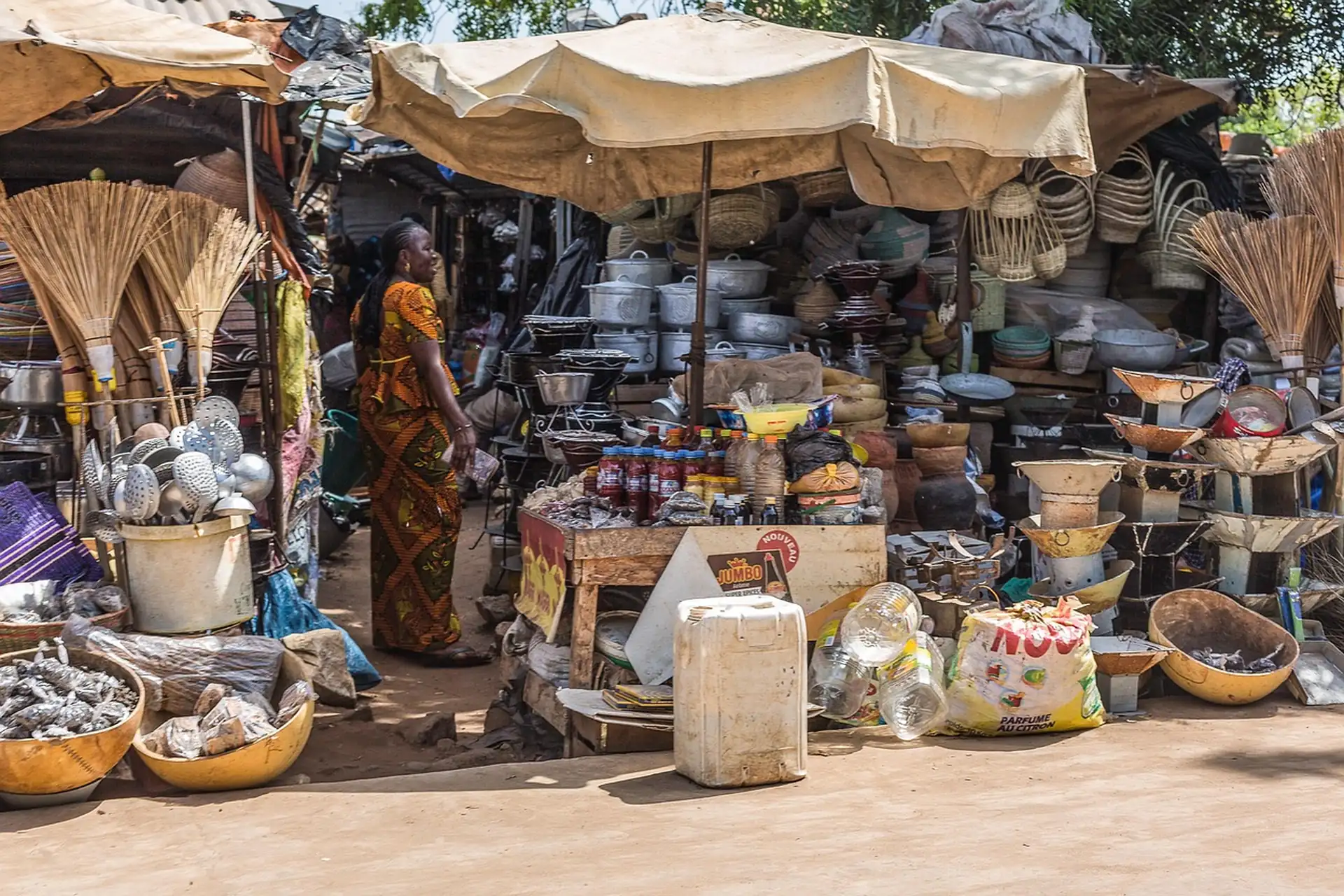
Getting around, in detailGet around · Connect
Get around
Walk short distances in the Plateau by day; use a taxi, an app or a hotel car between districts and always after dark. There is no metro; the coast road is the bottleneck, so avoid rush hour and Friday afternoons.
| Mode | Verdict | Fare | Use it for | What breaks |
|---|---|---|---|---|
| Walking | use | Free | Inside the Plateau and Gorée by day | Pavements are uneven and sometimes missing; keep bags secure. |
| Taxi (yellow and black) | caution | Agree first: XOF 1,500–4,000 for a short ride | Short hops | Meters are rarely used; agree the fare before you get in and carry small notes. |
| Ride-hailing car (Yango, Heetch) | use | XOF 1,500–6,000 across the city | Between clusters, bags, night | Fare shown in the app before you ride; the default for most visitors. |
| Car rapide and Ndiaga Ndiaye minibuses | caution | XOF 100–300 | Adventurous local routes | Painted minibuses on set routes, crowded and hard to read; watch your bag. |
| Dakar Dem Dikk buses | ok | XOF 150–500 | Long cheap routes if you know the line | Crowded at rush hour; check the route. |
| Regional train (TER) and BRT | ok | Low fares (check) | Eastern suburbs and the airport link (check) | New lines; check the current stops and timetables. |
| Gorée ferry | use | XOF 5,000–6,000 return, foreigner fare (check) | Gorée Island | About 20 minutes each way; check the last boat back before you land. |
| Pirogue to Ngor island | ok | XOF 1,000–2,500 return | Ngor Island | Short crossing from the beach; agree the fare and return time before boarding. |
| Rented car with driver | use | XOF 30,000–60,000 a day (check) | Day trips and cross-city days | Book through the hotel or a licensed operator. |
Taxis and ride-hailing
Yango
app
A main ride-hailing app; fare fixed before you ride.
Heetch
app
Another app option; check availability.
Yellow and black street taxis
street
Agree the fare before you get in; meters are rarely used.
On foot and car-free hours
| Where | When | Note |
|---|---|---|
| Plateau blocks around Place de l'Indépendance | Weekday morning | Walkable between the museum, the cathedral and the market; thins out after office hours. |
| Gorée lanes | Morning | The island is car-free; sand and cobbles. |
More on getting around
Addresses work by neighbourhood and landmark: tell a driver the district and a nearby landmark, and screenshot a map pin if you have one.
Rush hours are roughly 07:00–09:30 and 16:30–19:30, and Friday afternoon is worst because of the midday prayers. Add 30 minutes or more to any cross-city trip, and add more in the rains.
Connect
| Option | Verdict | What breaks |
|---|---|---|
| Orange, Free or Expresso booth at the airport | use | Passport needed for mandatory registration; buy only at the branded counter. |
| Carrier boutique in the city | use | Same registration process; better choice of data bundles. |
| Street SIM sellers | avoid | SIMs must be registered to your own passport; an unregistered SIM can be cut off. |
Yango
Cars
A main ride-hailing app in Dakar; fare shown before you ride.
Heetch
Cars
Another ride-hailing option; check availability.
Wave and Orange Money
Mobile payments
Widely used by locals; needs a registered local SIM.
Google Maps
Walking, addresses
Coverage is patchy off the main roads; confirm the pin with your driver or hotel.
- Wi-Fi
- Available in most hotels, cafés and malls; slower or absent in markets and on the ferry.
Luggage
Where big bags are a problem, and how to get rid of them for the day.
Rule
- Lockers
- No public lockers; hotels hold bags after check-out.
- Forwarding
- No forwarding service; keep your base for the whole stay.
- Dead zone
- Late-flight day: ask the hotel to hold bags and for a shower room; leave time for the long airport ride.
Bags, area by area
4 walking areas rated
- Bags forbidden
- Bags painful
Lockers, forwarding and the gap between check-out and check-in are covered once, under Luggage.
See & doWalking clusters, day plans and the places worth the time
See & do
Walking clusters, day plans and the places worth the time
Clusters
Plan by cluster: each is a walkable area with a rescue point and a bag rule.
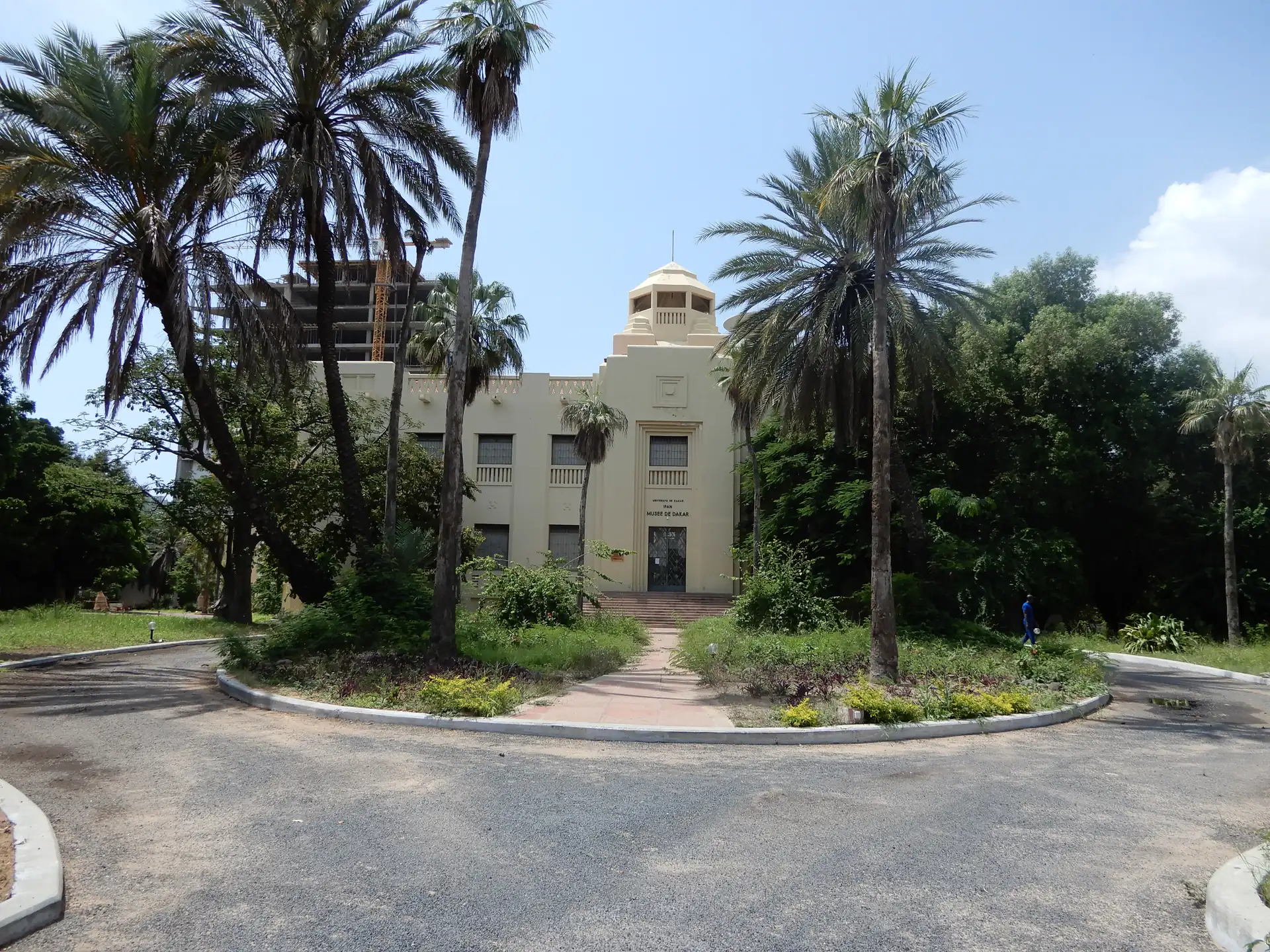
Morning cluster: the colonial-era centre with the IFAN museum, Place de l'Indépendance and government buildings; walk it before noon.
rescue 100% · max p90 6.4′ · half
Market cluster: Sandaga market and the crowded streets around it; go early, keep bags in front, take a car after noon.
rescue 100% · max p90 6.4′ · half
Half-day by ferry: a car-free island of narrow lanes with the House of Slaves and small museums; go early and check the last boat back.
rescue 100% · max p90 4.3′ · half
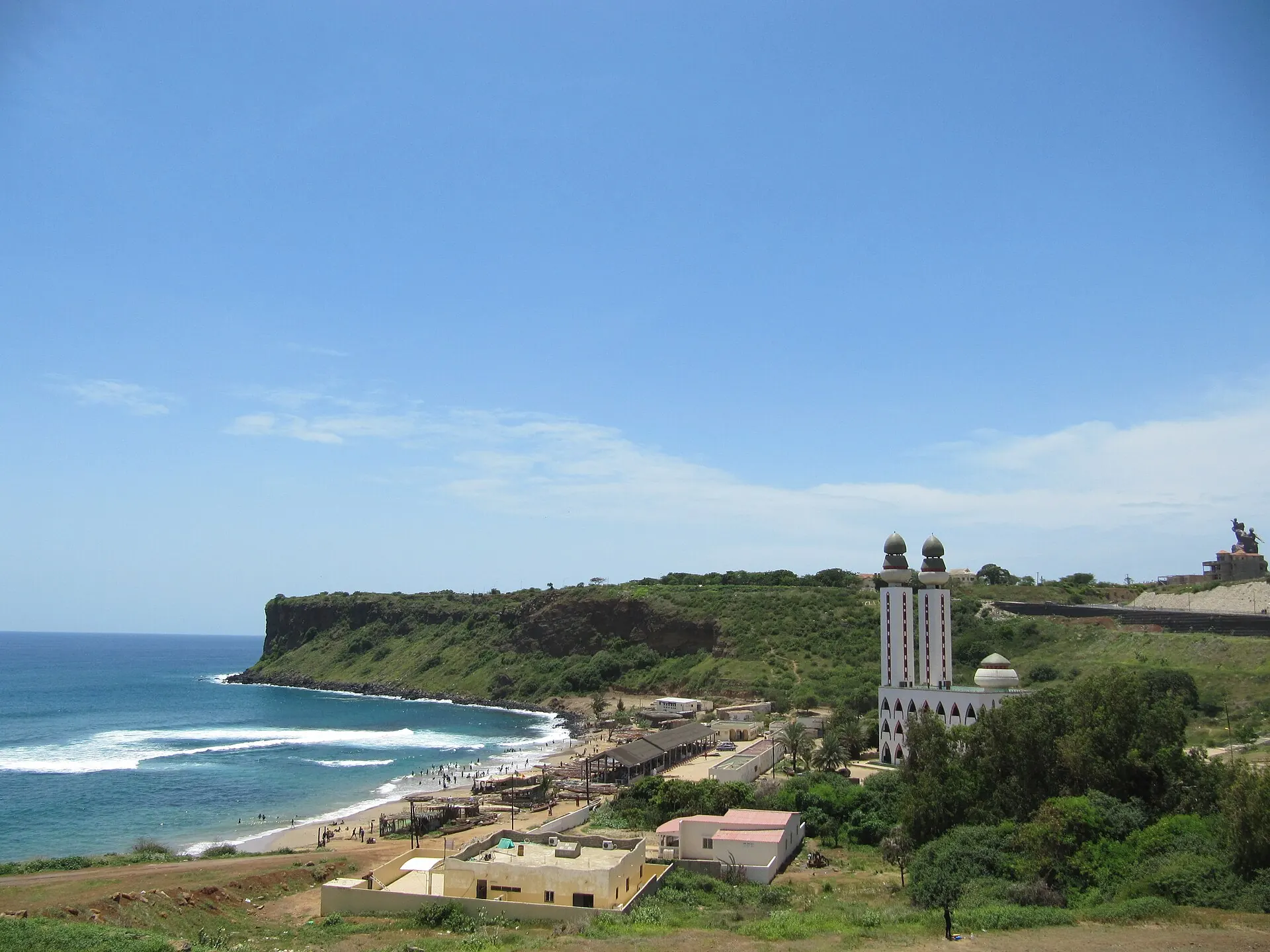
Evening cluster: the coast at the north-west tip; restaurants and beach bars; a car from the Plateau.
rescue 100% · max p90 6.4′ · 90m
Days
Ready-made day plans, timed against opening hours and walking distances.
How long are you staying?
Loose outlines in the city's rhythm: outdoors in the cooler morning and late afternoon, indoors or resting at midday, the coast road avoided at rush hour.
1 day
A stopover between flights
- 07:30House of Slaves, Gorée — Ferry to Gorée
- 10:30Terrace lunch on Gorée — Lunch on the island terrace
- 13:30Ferry back and rest indoors
- 16:30IFAN Museum of African Arts — IFAN Museum or a Plateau walk
- 19:30Dinner on the Corniche or in the Almadies
Skip: Ngor and Lac Rose: they need their own day.
Dakar in 3 days
3 daysPlateau and lunch on the first morning, Gorée early on the second, the market and the airport on the last; every long leg is a car and the last day ends with the bags already in it.
Day by day
Day 1 — Plateau morning and a Thieboudienne lunch
Day 2 — Gorée by ferry, a 12:30 lunch on the island
- 08:00House of Slaves, Gorée
- Gorée Historical Museum (optional)
- 12:30Lunch on Gorée 12:30
Day 3 — Sandaga market, car to the airport at 10:00
- Grand Mosque of Dakar (optional)
- 10:00Car to the airport at 10:00
Places
“Best time” is when to arrive for the fewest crowds, for example “before 08:30”; “Go any time” means the hour makes little difference. More sights follow under “More sights and museums”.
9 places. Filters use the guide’s own ratings; a place with no rating is left out when a filter is on.
Show 3 more placesShow fewer
Tours, classes and shows in Dakar →
If you do ten things in Dakar
Ranked for a first visit of 2–3 days. Prices are 2026 estimates in XOF.
- 1
The defining memorial of the Atlantic trade, on a car-free island 20 minutes by ferry.
- Time
- 3–4 h with lunch
- Best
- Early morning
- Cost
- XOF 5,000–6,000 ferry plus entry
- 2
Masks, textiles and everyday objects from West Africa; the best indoor hour in the Plateau.
- Time
- 1 h
- Best
- Weekday morning
- Cost
- XOF 1,000–2,000
- 3
The national dish, eaten at lunch where locals eat it.
- Time
- 45–60 min
- Best
- 12:00–13:30
- Cost
- XOF 1,500–3,000
- 4
A 49 m statue with a view over the whole peninsula.
- Time
- 1 h
- Best
- Early morning or late afternoon
- Cost
- XOF 2,000–5,000
- 5
A short boat ride to a car-free island with a beach and seafood.
- Time
- Half day
- Best
- Morning
- Cost
- XOF 1,000–2,500 plus lunch
- 6
Fruit, fish, flowers and small crafts near the port.
- Time
- 45 min
- Best
- Morning
- Cost
- Free to browse
- 7
The main religious landmark of the city; a respectful outside view.
- Time
- 20 min
- Best
- Mid-morning
- Cost
- Free
- 8
Fish from the pirogues, grilled to order on the Corniche.
- Time
- 1–1.5 h
- Best
- Lunch
- Cost
- XOF 3,000–8,000
- 9
A live mbalax night
The city's signature music; go with a booked car and check the venue.
- Time
- 3–4 h
- Best
- From late evening
- Cost
- XOF 2,000–10,000 (check)
- 10
Lac Rose and Bandia
A pink-tinged salt lake and a safari park within about an hour.
- Time
- Full day
- Best
- Weekday
- Cost
- Driver or tour, ask your hotel
Good for…
Verdict is how well Dakar works for that traveller, not how nice it is.
Rewarding but needs a car-based rhythm and some patience with logistics.
- 1House of Slaves, Gorée — the memorial and island morning that define the city.
- 2A hotel-booked driver — removes fare haggling and traffic stress.
Thieboudienne, yassa, dibi and fresh fish are reason enough to come.
- 1Thieboudienne lunch, Plateau canteen — the national dish at a fair price.
- 2Grilled fish, Soumbédioune fishing beach — fish from the boats, grilled to order.
- 3Dibi grill stands, Medina — an evening street-food classic.
Street meals under XOF 3,000 and free sights, but taxis and ferries add up.
- 1Fataya and café Touba, Plateau streets — a filling snack for a few hundred XOF.
- 2Free sights — the cathedral, the Kermel market and the Corniche cost nothing.
- 1A beach-side hotel on Ngor — quiet, near seafood and the pirogue to the island.
- 2Seafood terraces, Ngor beach — sunset dinner on the beach.
Kids are welcomed, but heat, broken pavements and malaria risk are real planning constraints.
- 1Ngor Island — a beach, sand lanes and a boat ride; take life jackets.
- 2Lac Rose and Bandia — a safari park and a salt lake within an hour.
- 1A 5-star hotel in the Almadies — reliable backup power, a pool and calm.
- 2A private driver for the whole trip — removes the coast-road traffic stress.
Broken pavements and few kerb cuts almost everywhere; plan by car.
- 1Large Plateau or Almadies hotels — confirmed accessible rooms and car-to-door drop-off.
Tours and classes: book or skip
Book through the hotel or a licensed operator with written inclusions and a cancellation policy. Prices per person, group tour unless stated.
| Tour or class | Verdict | Typical price | Why | Check before paying |
|---|---|---|---|---|
| City tour with driver (Plateau, Medina, Corniche, monument) | book | XOF 25,000–50,000 (check) | Solves the traffic and fare logistics in one booking. | Which sights are included and whether entry fees are extra. |
| Gorée half-day tour with ferry and guide | maybe | XOF 20,000–40,000 (check) | Handy if you want a guide for the island's history. | Ferry, entries and lunch, and the last boat back. |
| Lac Rose and Bandia day tour | book | XOF 40,000–80,000 (check) | Transport is the hurdle; a tour or a hired driver solves it. | Whether the reserve entry and lunch are included. |
| Saly or Saint-Louis multi-day tour | maybe | Varies | Useful if you have no car. | Transport quality, guide language and cancellation terms. |
What each season brings
Cool dry season
Dec–Feb
The most comfortable weather, with sea breezes and cool evenings.
Watch: Harmattan dust and haze on some days; hotels fill.
Hot dry season
Mar–Jun
Dry and warm with little rain; the heat builds toward June.
Watch: Hot afternoons; first rains in late May and June.
Rainy season
Jul–Oct
Green and quiet; fewer visitors and lower prices.
Watch: Heavy downpours and flooded streets, especially in August and September.
Late dry season
Nov
The rains end and the dry season returns; a good month.
Watch: Some humidity lingers.
Photo spots and the light
Light times are for clear days; harmattan haze (Dec–Feb) flattens contrast.
| Spot | Best light | Tip |
|---|---|---|
| Gorée lanes and the House of Slaves | 08:00–10:00 | Soft light in the lanes; ask before photographing people and follow the house's photo rules. |
| African Renaissance Monument | Early morning or late afternoon | Shoot from below against the sky, or from the platform for the peninsula view. |
| Ngor island lanes and beach | Morning and sunset | Painted houses and boats; ask before photographing people. |
| Soumbédioune fishing beach | 07:30–10:00 | Painted pirogues land the catch in the morning; buy something before you photograph, and ask. |
Dakar travel FAQ
Answers are 2026 desk estimates; fares and rules marked (check) change.
Is Dakar safe for visitors?
Generally yes for the main areas by day; the common problems are bag and phone snatching, overcharging and traffic. Move by booked car after dark, avoid demonstrations, and check your government's travel advice before you go.
Do I need a visa?
Many visitors need no visa for short stays and others need one; check current requirements for your passport and the yellow-fever certificate rule.
Do I need cash?
Yes. Markets, canteens, taxis and ferries take cash (XOF) only. Cards work in hotels, malls and some restaurants.
Is tap water safe to drink?
No. Drink bottled or filtered water and check the seal.
How far is the airport?
Blaise Diagne is about 45 km (28 mi) east of the city; allow 60–100 minutes by road and book the ride before you fly.Blaise Diagne is about 28 mi (45 km) east of the city; allow 60–100 minutes by road and book the ride before you fly.
How many days do I need in Dakar?
Two to three days cover the four clusters; add a day for Lac Rose or the Petite Côte.
What should I wear at mosques and Gorée?
Shoulders and knees covered; women cover the hair at mosques; closed shoes for sand and cobbles.
Taxi, app or hotel car?
Apps show the fare first; street taxis need the fare agreed before you get in; hotel cars are the safe option for the airport and night.
Is malaria a risk?
Yes in Senegal, especially after the rains; take prophylaxis as advised by a travel clinic and use repellent.
What is the best area to stay?
Plateau for a walkable first morning and easy Gorée access; Ngor and the Almadies for beach evenings and a calmer base.
More to see and doSee & do · Learn & work · Rain & heat · Wheelchair and stroller
Wheelchair and stroller, place by place
How each place in this guide works for wheels, from its own page. Ratings are desk estimates unless a page says it was checked on the ground.
| Place | Step-free | Wheelchair | Stroller | What to know |
|---|---|---|---|---|
| Cathedral of African Remembrance | partial | caution | ok | Steps at the main doors; ask about a side entrance (check). |
| House of Slaves, Gorée | partial | poor | poor | Sand, cobbles and stairs inside the house; a step-free route is not confirmed. |
| Grand Mosque of Dakar | check | caution | caution | Approach steps; confirm a side access. |
| IFAN Museum of African Arts | partial | caution | ok | Steps at the entrance; galleries mostly level (check). |
| Ngor Island | no | poor | poor | Boat steps and sand; not suited to wheelchairs. |
| Kermel market | partial | poor | poor | Crowded aisles and uneven floors. |
| African Renaissance Monument | no | poor | poor | Many steps to the base and the viewing level; a lift may operate (check). |
| Gorée Historical Museum | partial | poor | poor | Fort stairs and sandy lanes; no step-free route confirmed. |
| Pointe des Almadies | partial | poor | caution | Rocky ground near the edge. |
See & do
16 of 16
- memorial
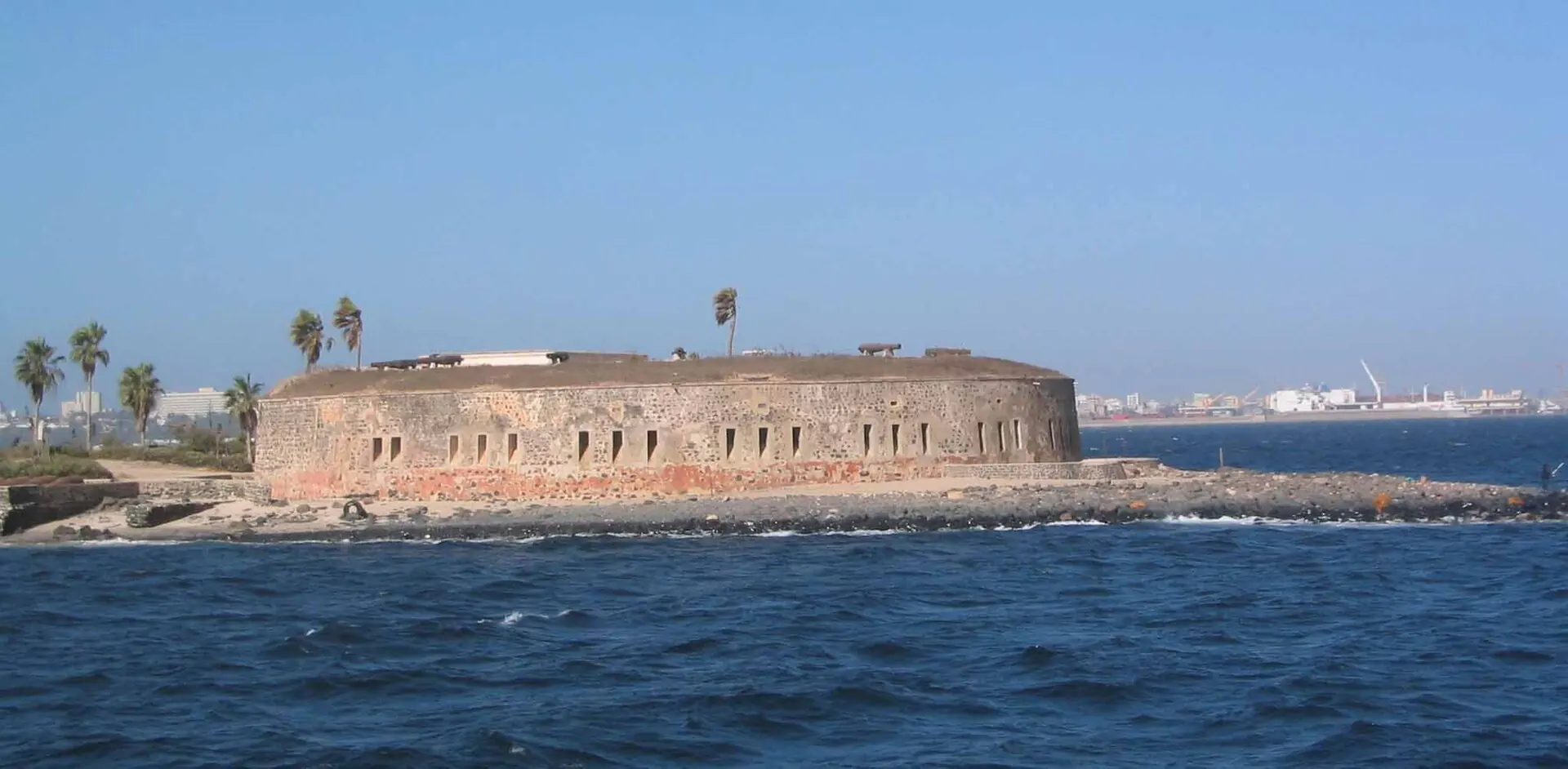
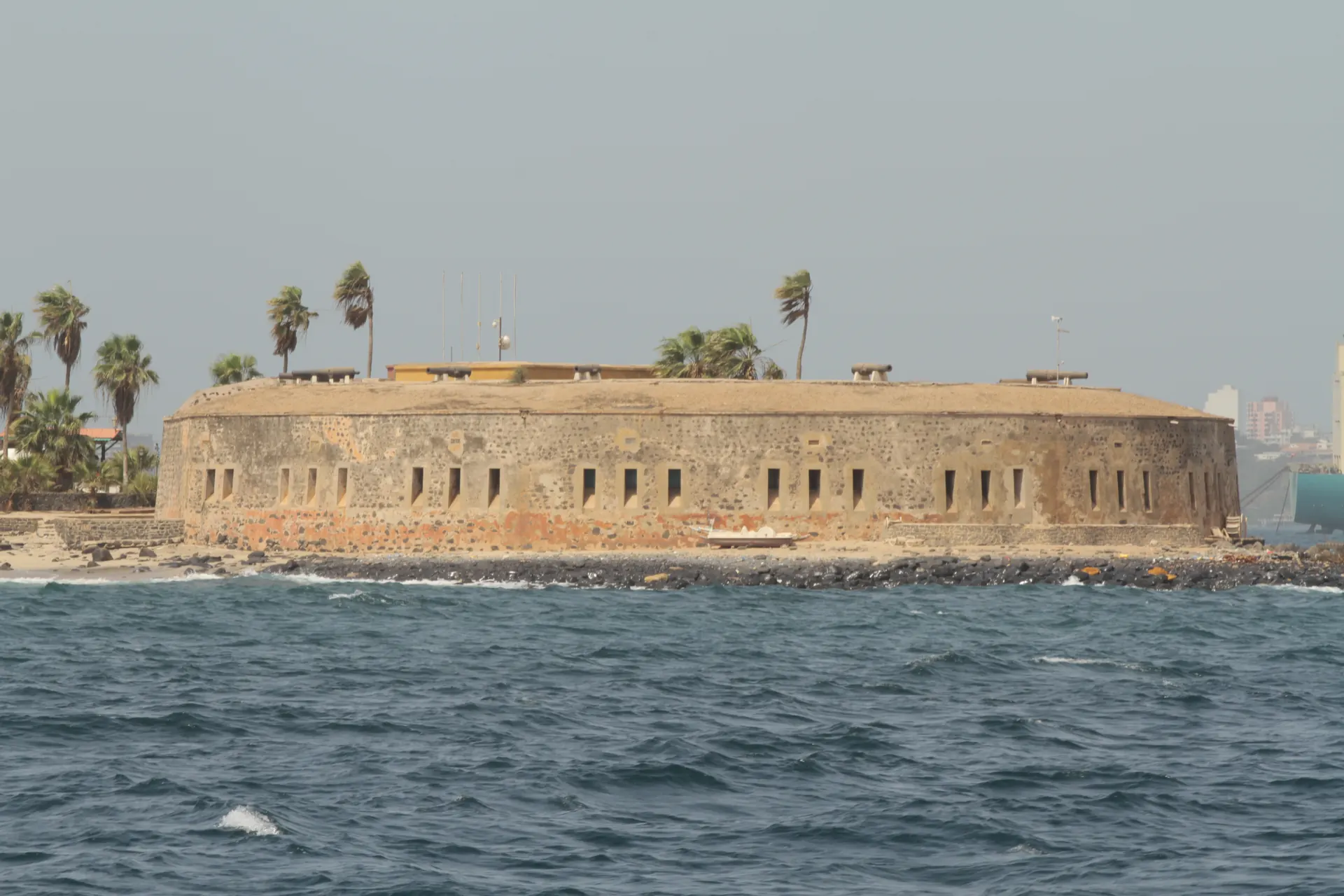
The best-known memorial to the Atlantic trade in West Africa, on a car-free island 20 minutes by ferry.
Gorée · Day hours; last boat back rules (check) · XOF 1,000–2,000(check)
- Museums
A small history museum in the island's fort; a good add-on to the House of Slaves.
Gorée · Day hours (check) · XOF 1,000–2,000(check)
- Museums
Masks, textiles and everyday objects from West Africa on Place Soweto.
Plateau · Weekday day hours (check) · XOF 1,000–2,000(check)
A large church of the 1930s in the Plateau; a free, short stop.
Plateau · Day hours; services (check) · Free
- Markets
The Plateau's covered market: fruit, fish, flowers and small crafts near the port.
Plateau · Morning to mid-afternoon (check) · Free to browse
- mosque
The main mosque of the city; a respectful view from outside, with entry at the gate's discretion.
Medina · Outside prayer times (check) · Free(check)
A 49 m statue on the hill with a view over the peninsula; go early or late.
Ouakam · Daytime (check) · XOF 2,000–5,000
- island
A small car-free island with sand lanes, a beach and seafood; a slow half day.
Ngor · Boats from early morning to dusk · XOF 1,000–2,500 return by pirogue
- Views
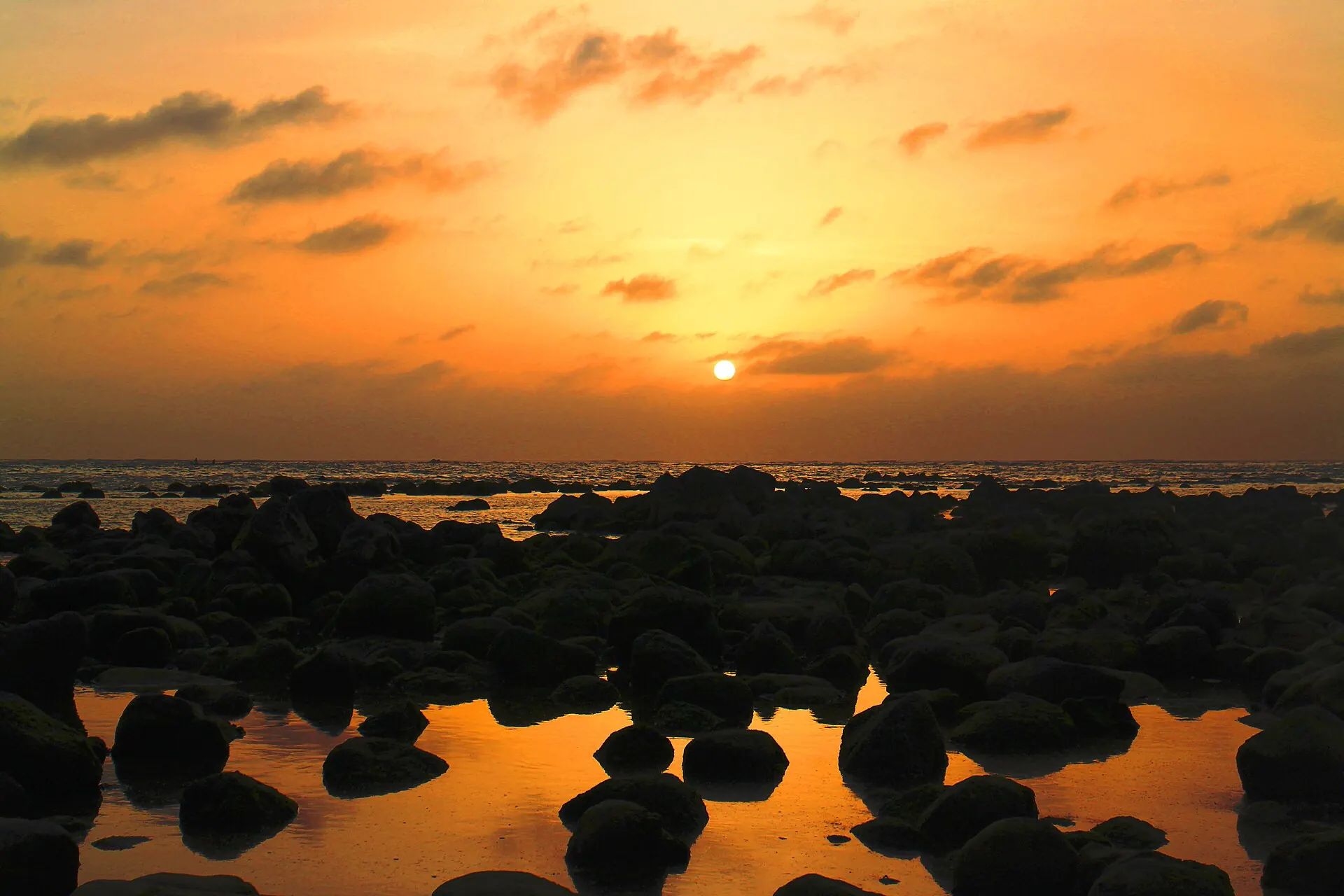
The westernmost point of mainland Africa; a quick photo stop at sunset.
Almadies · Open air · Free
Marché Sandaga
MarketsThe huge, hectic central market; go by day with only the cash you need.
Sandaga · Daytime · Free to browse
Soumbédioune fishing beach and craft village
MarketsPainted pirogues land the catch in the morning; the craft village and grilled fish are next door.
Corniche · Morning for the landing · Free to browse
Gorée morning by ferry
day tripThe classic Dakar half day; go early and check the last boat back.
Gorée · Early boat · XOF 5,000–6,000 ferry plus entries
Pirogue to Ngor island, lunch and swim
ActiveA slow half day on a car-free island.
Ngor · Morning to afternoon · XOF 1,000–2,500 plus lunch
Surf lesson at Ngor or Yoff
SportNgor is a known surf spot; book a lesson with a school, not a stranger on the beach.
Ngor, Yoff (check operator) · Morning · XOF 15,000–30,000 (check)
Live mbalax night
musicThe city's signature music; go with a booked car and check the venue and night first.
Medina, Ouakam, Almadies (check venues) · From late evening · XOF 2,000–10,000 (check)
Cooking class (thieboudienne, yassa)
ClassesLearn the national dish and take the recipe home; book through your hotel.
Plateau or Almadies (check operator) · Half day · XOF 15,000–35,000 (check)
- Booking
- Cooking classes, surf lessons and driver day trips are best booked a day or two ahead through your hotel or a licensed operator.
Learn & work
| What | Where | Cost | Note |
|---|---|---|---|
| Wolof and French classes | Language schools and private tutors (ask your hotel; check) | Check current fees | Short intensive courses and one-to-one lessons are usually available. |
| Sabar drumming and dance lessons | Cultural centres and private teachers (check operator) | XOF 5,000–15,000 an hour (check) | Sabar is the rhythmic drum tradition behind mbalax; ask your hotel to recommend a teacher. |
| Senegalese cooking | Hotels and cooking schools (check) | XOF 15,000–35,000 (check) | Half-day sessions covering thieboudienne, yassa and mafé. |
Working here
- Tourist entry
- Many visitors need no visa for short stays and others need one; check current requirements for your passport and the yellow-fever certificate rule. Tourist entry does not allow paid work.
- Work permit
- Legal work needs an employer-sponsored permit and residence formalities; expect legalised documents from home.
- Remote work
- No digital-nomad visa is confirmed; working remotely on a tourist entry is a grey area, so check current rules before relying on it.
Rain-day and heat-day plan
Rain day
August and September downpours can flood streets for an hour or more: do outdoor stops before noon, then go indoors.
- 01IFAN Museum of African Arts — Indoor galleries; about an hour.
- 02Gorée Historical Museum — Indoor museum on the island; check the ferry first.
- 03Thieboudienne lunch, Plateau canteen — A lunch under cover while the shower passes.
Heat day
From May to October the heat and humidity build: outdoor sights before 11:00 and after 16:30, air-conditioning in between, water every hour.
- 08:00House of Slaves, Gorée — Cool morning air and a quiet island.
- 11:00IFAN Museum of African Arts — Indoor for the rising heat.
- 13:00 — Lunch and a break under a fan or AC.
- 17:00Ngor Island — Sea breeze and light for the beach.
Day-trips and nearby
Places you can reach from Dakar in a day or with one night away, with the route and what it costs. Door to door, not ride time.
Lac Rose (Lake Retba) and Bandia reserve
goCar about 45–75 min, depending on traffic
A pink-tinged salt lake with salt collectors, and a safari park nearby for giraffe and rhino; go with a driver, not a taxi.
- Time
- Full day
Saly and the Petite Côte
overnightCar about 1.5–2.5 h
Resort beaches south of Dakar; a night turns a rushed day into a proper beach stop.
- Time
- Full day or overnight
Joal-Fadiouth (shell island)
overnightCar about 2.5–3 h
A shell-built island reached by a wooden bridge; better with a night nearby.
- Time
- Long day or overnight
 Photo: Diego Delso, CC BY-SA 4.0
Saint-Louis
overnightCar or bus about 4–5 h, or a domestic flight
A colonial island town at the river mouth in the north; not a day trip.
- Time
- Two nights
Go next
Touba
cautionDoor to door: 2.5–3.5 h
Car or bus 2.5–3.5 h
The holy city of the Mouride brotherhood; visitors should read the local rules first and go only with a local guide.
Eat & sleepWhere to eat and which area to sleep in
Eat & sleep
Where to eat and which area to sleep in
Eat
A short list of places worth crossing the city for, each with how to get a seat.
Restaurant finder: filter every place to eat in Dakar →
Vegetarian-friendly score
1.5 / 5 · Hard work
- Country diet noteOur country guide rates vegetarian eating as mixed.0.75 / 2
- Places to eat in this guide0 of 6 places with a known answer are vegetarian-friendly, 4 partly.0.5 / 1.5
- Budget eating lines0 vegetarian lines in "Eat by budget".0 / 0.6
- Meat-free national dishes2 meat-free dishes in the country food list.0.2 / 0.4
- Dedicated vegetarian kitchens0 mentions of vegetarian restaurants, Buddhist or fasting kitchens.0 / 0.5
Country note: Most sauces use fish or meat stock; street accara and bean sandwiches are safe bets, and Dakar has a few vegetarian cafés.
Vegetarian places near me →Make a diet card →
How we score
- Country diet note (up to 2): easy 2, workable 1, mixed 0.75, hard 0; no note 0.5.
- City places to eat (up to 1.5): 1.5 × (vegetarian-friendly + half of partly friendly) ÷ places with a known answer; needs 3 or more known places.
- Budget eating lines marked vegetarian (up to 0.6): 0.2 each.
- Meat-free national dishes (up to 0.4): 0.1 each.
- Dedicated vegetarian kitchens mentioned — Buddhist chay, shōjin ryōri, Jain, fasting food, vegan cafés (up to 0.5): 0.1 each.
- Total rounded to the nearest half point, 0 to 5. Built from our own pages only, not from reviews.
Eating and drinking guideEat by budget · Drink
Before you sit down to eat
Short version; full text linked
Eat by budget
Under XOF 3,000 a meal
| Where | Order | Area | Price | Note |
|---|---|---|---|---|
| Thieboudienne lunch, Plateau canteen | Thieboudienne lunch plate | Plateau | XOF 1,500–3,000 | Go before 13:30; the pot empties.Go before 1:30 PM; the pot empties. |
| Fataya and café Touba, Plateau streets | Fataya and café Touba | Plateau streets | XOF 300–1,000 | A fast snack between sights. |
| Dibi grill stands, Medina | Dibi (grilled lamb) with onions and mustard | Medina | XOF 2,000–4,000 | Fix the weight and the price before he cuts. |
| Riz and sauce canteens | Rice with peanut, fish or tomato sauce | Any office street, lunchtime | XOF 1,000–2,000 |
Dishes to know
| Dish | What it is | Where to look | When | Price |
|---|---|---|---|---|
| Thieboudienne (ceebu jën) | Fish, rice and vegetables in tomato sauce; the national dish | Canteens and family homes | Lunch | XOF 1,500–3,500 |
| Yassa poulet or poisson | Chicken or fish in onion, mustard and lemon sauce | Restaurants and canteens | Lunch, dinner | XOF 1,500–4,000 |
| Mafé | Meat stew in peanut sauce with rice | Canteens and restaurants | Lunch, dinner | XOF 1,500–3,500 |
| Thiou | Vegetable or fish stew served with rice | Home-style canteens | Lunch | XOF 1,000–3,000 |
| Dibi | Grilled lamb sold by weight with onions and mustard | Roadside stands and dibiteries | Evening, lunch | XOF 2,000–4,000 |
| Fataya | Fried pastry filled with spiced fish or meat | Street sellers | Any time | XOF 100–300 |
| Café Touba | Coffee spiced with Guinea pepper and cloves | Street sellers and cafés | Any time | XOF 100–300 |
| Bissap, ginger and bouye | Hibiscus, ginger and baobab-fruit drinks | Street stalls and cafés | Daytime | XOF 200–800 |
| Thiakry | Sweet millet couscous with curdled milk; a dessert | Markets and bakeries | Afternoon, dessert | XOF 300–1,000 |
- Eat where the turnover is fast and the food is hot and freshly cooked.
- Where there is no posted menu, ask the price before you order.
- Cash only at most canteens and stalls; carry small XOF notes.
Drink & nightlife
| Where | What | Until | Note |
|---|---|---|---|
| Almadies and Ngor bars | Beach bars, lounges, restaurants | Late on weekends | The main expat and visitor strip; go by booked car. |
| Ouakam and Mermoz | Clubs, live-music bars | Very late on weekends | Mbalax and live music; go with a local contact or a booked driver. |
| Corniche and Plateau hotel bars | Cocktail bars, hotel terraces | About midnight | Quieter and pricier. |
| Medina live-music venues | Live music, late shows | Very late | The heartland of mbalax; go with a local contact or a booked driver, and check the venue is open. |
By style
| Style | What | Where | Price | Until |
|---|---|---|---|---|
| Beer and grills | Gazelle or Flag beer with grilled fish or dibiThe default evening out; alcohol is legal and available, but many locals do not drink. | Almadies, Ngor, Medina | XOF 1,000–2,000 a beer | Late on weekends |
| Bissap, ginger and bouye | Hibiscus, ginger and baobab-fruit cold drinksA cheap, refreshing non-alcoholic option; check the water and ice. | Street stalls and cafés | XOF 200–800 | Daytime |
| Cocktails and lounges | International-style bars in hotels and the Almadies | Almadies, Plateau hotels | XOF 4,000–8,000 | About midnight |
Rules that bite
- Move by booked car after dark rather than walking, especially along the Corniche and around Ouakam.
- During Ramadan, many bars close or serve only after sunset; check before you go.
Sleep
Pick the area first: it decides your walk home at night and your first morning.
Which neighborhood fits you
Three questions, one recommendation, with the reasons.
Your best fit
- The museum, the square and the Gorée ferry are walkable.
- Hotels keep desks staffed; smaller guesthouses may not.
Next best: Ngor and the Almadies
Built from our 1–5 desk scores per area; your answers stay in this browser.
More on sleepingSleep by budget · Your area · With kids
Sleep by budget
| Band | Price | Where | Room types | What to expect |
|---|---|---|---|---|
| budget | XOF 20,000–35,000 | Plateau, Medina guesthouses | Budget hotels and guesthouses | Simple rooms, fan or basic AC, limited breakfast. |
| mid | XOF 40,000–80,000 | Plateau, Almadies, Ngor | 3–4 star hotels and beach guesthouses | Lift, breakfast, AC, generator or backup for power cuts. |
| splurge | XOF 100,000–300,000+ | Almadies, Plateau international chains | 5-star hotels | Pools, spas, doorstep drop-off, reliable backup power and water. |
Booking checks
- Ask about backup power and water: outages happen, and a hotel without a generator means a hot, dark evening.
- Confirm airport transfer arrangements in advance: arriving without a booked car is the riskiest part of the trip.
- The hotel will register your passport details; it may photocopy it but should return the original promptly.
Which area is yours
| If you are | Sleep in | Because |
|---|---|---|
| First visit, 2–3 nights, sights first | The Plateau | Walk to the museum and the ferry quay; leave the district by early evening. |
| Beach and food trip, longer stay | Ngor and the Almadies | A calmer base by the sea; budget a car for every outing. |
| Nightlife-focused, short stay | Ngor and the Almadies | Bars and restaurants close by and a quiet bed to come home to. |
Walk to the museum and Place de l'Indépendance; a hotel with a 24-hour desk and a car-accessible door matters more than the view.
Beach and restaurants at the north-west tip; a 30-minute car ride from the Plateau and closer to nothing else.
Areas are in our default order until you tick a priority.
Scores are 1–5 desk judgements per priority (2026).
With kids
- Pavements are broken and traffic is heavy: a carrier works better than a stroller outside hotels and malls.
- Ngor island and its beach are an easy half-day for children who can swim, with life jackets for the pirogue.
- Gorée is car-free and lets children run in the lanes, but the House of Slaves is a heavy subject; use judgement.
- Cars rarely have child seats: bring a travel booster or ask the hotel to arrange one.
PracticalMoney, essentials, safety and the pocket card
Practical
Money, essentials, safety and the pocket card
Money
What a day costs at three comfort levels, and how to pay.
- Budget
- XOF 10,000–20,000 excl. bed / day
- Mid
- XOF 20,000–50,000 excl. bed / day
- High
- XOF 50,000+ excl. bed / day
- Transit card
- No transit card: taxis and ride-hailing (Yango, Heetch) inside Dakar; a hired car with a driver for longer legs.
- Cash rule
- Keep XOF 10,000 in small notes for taxis, snacks and tips; use ATMs inside banks or hotels in daylight only.
More on moneyCosts · Budget · Buy
What things cost
- Thieboudienne lunch plate in a canteenXOF 1,500–3,000
- Dibi (grilled lamb), a plate for oneXOF 2,000–4,000
- Grilled fish with sides at the Corniche or a beach terraceXOF 3,000–8,000
- Large bottle of waterXOF 300–600
- Car from Blaise Diagne airport to the cityXOF 20,000–35,000
- Gorée ferry, return, foreigner fare (check)XOF 5,000–6,000
Trip budget
| Hotel double room1 × 3 nights × XOF 55,000 | XOF 165,000 |
| Food, local transport, entries2 × 3 days × XOF 35,000 | XOF 210,000 |
| Airport car, both ways1 × XOF 50,000 · one car per 4 people | XOF 50,000 |
| Gorée ferry, return2 × XOF 5,500 | XOF 11,000 |
| Tourist SIM, about a week2 × XOF 5,000 | XOF 10,000 |
| Buffer 15%Price creep, a taxi you did not plan, one splurge | XOF 66,900 |
| Trip total≈ XOF 85,500 per person per day, bed included | XOF 512,900 |
2026 estimate in XOF; flights, visas and tours excluded. Your choices stay in this browser.
Prices of common things
| Thieboudienne lunch plate | XOF 1,500–3,000 |
| Airport car to the city | XOF 20,000–35,000 |
2026 estimate; check locally.
Buy
- Bargaining
- In markets and at craft stalls the first price to a foreigner is often two to three times the local price: counter at about half, settle around 60–70%, walk away politely if it does not move. Do not bargain in shops with printed tags or in supermarkets.
- Fixed-price check
- Check the price of fabric, spices or dried goods in a supermarket before buying the same item in a market; that is your ceiling.
Markets and shopping streets
| Where | What | When | Haggle | Note |
|---|---|---|---|---|
| Marché Sandaga | Everything: cloth, clothes, spices, electronics, household goods | Daytime (check) | hard | The big central market; crowded, hot and full of touts. Take only the cash you need. |
| Marché Kermel | Fruit, fish, flowers and small crafts | Morning to mid-afternoon (check) | light | Smaller and calmer than Sandaga; near the port on the Plateau. |
| Marché HLM (fabric) | Wax-print and dyed fabric, tailors' materials | Daytime (check) | hard | Known for cloth and a good place to buy fabric for a tailor. |
| Village artisanal de Soumbédioune | Wood carvings, leather, paintings, jewellery | Daytime (check) | hard | Craft village on the Corniche next to the fishing beach; quality varies, and prices start high. |
| Supermarkets (Auchan, Casino, Exclusive) | Packaged food, toiletries, fixed-price essentials | About 08:00–21:00About 8:00 AM–9:00 PM | no | Your fixed-price reference and an AC refuge on a hot afternoon. |
Shops by what they sell
| For | Where | Hours | Note |
|---|---|---|---|
| Wax-print fabric (pagne) and tailoring | Marché HLM, Sandaga, and tailors in the Medina | Shop hours | Buy the cloth, then take it to a tailor; allow two to three days. |
| Souvenirs: baobab-fruit products, spices, leather, carvings | Soumbédioune craft village and Kermel market | — | Ask for the price of the same item at two stalls before buying. |
| Art and design | Galleries in Plateau and Almadies (check) | — | Contemporary art is a serious scene here; buy from galleries that provide a certificate. |
Changing money
| Where | Verdict | Why |
|---|---|---|
| Bank branches (CBAO, SGBS, Ecobank) | use | Fair official rate; passport needed; office hours only. |
| Hotel front desk | ok | Convenient for a small amount, weaker rate than a bank. |
| Airport booths | ok | Change enough for the ride and the first day, then use a bank or ATM. |
| Street money-changers | avoid | Short-changing and counterfeit-note risk; not licensed. |
ATMs
- Per withdrawal
- Bank ATMs typically cap a foreign card around XOF 200,000–500,000 per withdrawal; the screen shows the limit.
- Fees
- Local fee plus your own bank's foreign-transaction fee; take the cap rather than small amounts to limit the fee hit.
- Where
- Machines inside bank branches, malls or hotels, in daylight; avoid street-facing ATMs after dark.
- Conversion
- If an ATM or card terminal offers to charge in your home currency, decline and pay in XOF.
Essentials and accessEssentials · Access
Essentials
- Plugs & power
- 230 V, 50 Hz; two-pin European sockets (type C and E, some type K). Bring a universal adapter.
- Toilets
- Hotels, cafés and malls; carry tissues and small coins. Public toilets are rare.
- Opening hours
- Offices run roughly 08:00–17:00 with a long Friday midday break for prayers; markets start early and thin out by late afternoon; restaurants fill from 20:00.Offices run roughly 8:00 AM–5:00 PM with a long Friday midday break for prayers; markets start early and thin out by late afternoon; restaurants fill from 8:00 PM.
- Health
- Malaria risk (take prophylaxis and use repellent, especially in and after the rains), yellow-fever certificate needed if arriving from an endemic country, heat and dehydration. Travel insurance with medical evacuation cover is strongly advised.
- Accessibility
- Pavements are broken, high-kerbed or missing; step-free access exists mainly in newer hotels and malls.
- Laundry
- Hotels charge by the item; independent laundries exist in Plateau and Almadies, so ask your hotel.
- Emergency numbers
- 17 police, 18 fire, 1515 SAMU ambulance (check current numbers with your hotel).
Pack
- Light, loose clothes; a scarf or shawl for mosques
- A light layer for cool Dec–Feb evenings by the sea
- Closed shoes for cobbles, sand and broken pavements; sandals for the ferry
- Sun hat, sunscreen and a reusable bottle; a dry bag for pirogue crossings
Accessibility
Dakar is hard going on wheels. Pavements are broken, high-kerbed or missing, and step-free access exists mainly in newer hotels, malls and a few museums. Plan door-to-door car rides and pick a hotel with a lift.
- Pavements
- Broken, with open drains in places; the Corniche promenade is smoother in places.
- Getting around
- Cars from apps or hotels are the step-free option; buses, minibuses and pirogues are not.
- Hotels
- International-standard hotels in Plateau and Almadies have lifts and accessible rooms on request.
- Toilets
- Accessible toilets in malls and larger hotels; rare elsewhere.
- Gorée
- Sand and cobbles, a boat with steps and no step-free route confirmed; plan for help.
Sights, step-free or not
| IFAN Museum of African Arts | with help | Steps at the entrance; galleries mostly level (check). |
| Cathedral of African Remembrance | with help | Steps at the doors. |
| African Renaissance Monument | hard | Many steps; a lift may operate (check). |
| House of Slaves, Gorée | hard | Sand, cobbles and stairs. |
| Kermel market | hard | Crowded aisles and uneven floors. |
Survive
Safety basics, the lines not to cross, and practical habits that save the day.
Safety
- Bag snatching and pickpockets in busy areas and on the Corniche: keep phones out of sight and use a cross-body bag.
- Touts and unofficial guides at tourist sites can be persistent; a firm, polite no works.
- Roads: travel in daylight for long legs and use a seat belt.
- Sea: strong currents at many beaches; swim only where locals and lifeguards say it is safe.
- Emergency: 17 police, 18 fire, 1515 ambulance (SAMU); numbers may not always connect, so save your hotel's and driver's numbers and check your government's advice.
Red lines
- Greetings come first: say hello and ask how someone is before any question or purchase.
- Use the right hand to give, receive and eat.
- Ask before photographing people; do not photograph police, soldiers, government buildings or the airport.
- During Ramadan avoid eating, drinking or smoking in public in daylight.
Practical
- Tap water: use bottled water.
- Toilets: hotels, cafés and malls; carry tissues and small coins.
More on staying safeStay safe · Stay healthy · Safety map · Solo & women · Etiquette · Cope · Scams
After dark, by area
5 flagged areas
- Avoid after dark
- Take care
- Take care
- Take care
Corniche
Take care
Day = about 07:00–19:00. What to watch in each area, day and night →
Scams and red flags
Walk away if you see these
- Ferry-quay touts who sell 'tickets' or 'guide' packages at the Gorée quay: buy the ticket at the official window, and agree nothing with a helper who approaches you.
- The 'friendship bracelet' or 'gift' handed to you, followed by a demand for payment: keep your hands in your pockets and say no thank you.
- The 'artist' or 'student' who invites you to a gallery or studio, where the pressure to buy starts: it is a sales visit, not a favour.
- Taxis quoting a special foreigner fare, and meters that are 'broken': agree the fare first or use an app with a price shown.
- Street money-changers offering a better rate than a bank: short-changing and fake notes are common. Use a bank or hotel desk.
Stay safe
Crossing the road
- 01Traffic is fast and drivers do not always yield: cross at a clear gap and do not assume right of way.
- 02Broken pavements and open drains often push you into the road edge: watch for traffic from both directions.
Hustles specific to this city
| Hustle | Where | The tell | What to do |
|---|---|---|---|
| Ferry-quay tout | Gorée quay | Someone sells a 'ticket' or 'guide' before you reach the window | Buy at the official ticket window and decline politely. |
| Gift bracelet | Beaches, Gorée, Plateau | A 'gift' tied on your wrist, then a demand for money | Keep your hands free and say no thank you before it starts. |
| Gallery invitation | Plateau, Corniche | An 'artist' or 'student' invites you to a studio | Decline unless you want to buy; it is a sales visit. |
| Special-price taxi | Anywhere | A fare quoted well above local rates once you are seen as a foreigner | Ask a local the going rate or use an app with a shown price. |
- Police
- Report thefts at the nearest commissariat with your passport; bring hotel staff to help. Insurers need the written report.
- Bag and phone snatching
- Most common at traffic lights and along the Corniche; keep bags zipped and phones out of sight.
- Demonstrations
- Political demonstrations have occurred in recent years, sometimes with road closures; avoid gatherings and check your government's advice.
- Sea
- Strong currents and rip tides at many beaches; swim only where locals and lifeguards say it is safe.
Stay healthy
- Malaria
- Present in Senegal; take prophylaxis as advised by a travel clinic, use repellent from dusk, and sleep under a net or in an AC room.
- Yellow fever
- A vaccination certificate may be required if arriving from an endemic country; check your route before you fly.
- Heat
- Shade and AC every 60–90 minutes, bottled water, and no midday exertion in the humid months.
- Food and water
- Bottled or filtered water only; busy canteens with fast turnover are generally safer than quiet ones.
- Sun and sea
- Strong sun on the Atlantic coast; use sunscreen, a hat and a rash guard.
- Vaccination and clinics
- Ask a travel clinic at home several weeks before you travel; private clinics in Dakar can help on arrival (check).
Hospitals and clinics: see Cope.
Safety by area and hour
| Area | Day | Night | What to watch |
|---|---|---|---|
| Plateau | fine | caution | Empties out after offices close; use a car after dark. |
| Sandaga and Medina | caution | avoid | Crowded markets with pickpockets and touts; go by day, in a small group or with a driver. |
| Gorée | fine | caution | Quiet by day; no return boats after the last ferry. |
| Ngor and the Almadies | fine | caution | Beach roads are dark at night; book a car for the return. |
| Corniche | fine | caution | Snatching at traffic lights and on the beach paths; keep phones out of sight. |
- Keep phones and bags out of sight on the Corniche and at traffic lights; snatching from a car window happens.
- Use a hotel-booked car or an app after dark instead of a street taxi.
Solo, women and LGBTQ+ travellers
Solo
- Manageable with some care: use apps or hotel cars after dark, keep valuables out of sight, and agree fares before you get in a street taxi.
- Hotel desks and licensed operators are the safer route to a driver or guide than someone who approaches you on the street.
Women
- Verbal attention and persistent offers are common for foreign women, especially at markets and beaches; a firm 'non merci' and continuing to walk usually ends it.
- Dress modestly at mosques and in the Medina; beachwear stays on the beach.
LGBTQ+
- Same-sex acts are criminalised in Senegal and prosecutions occur; discretion is essential and public displays of affection are best avoided by everyone.
- Check your government's travel advice before you go.
Etiquette in Dakar
- Greetings
- Greet and ask how someone is before any question or purchase; skipping it reads as rude.
- Right hand
- Give and receive money, food and objects with the right hand or both hands, not the left alone.
- Mosques
- Shoulders and knees covered; women cover the hair; remove shoes; avoid prayer times and Friday midday.
- Photos
- Ask before photographing people; never photograph police, soldiers, government buildings or the airport.
- Ramadan
- Avoid eating, drinking or smoking in public in daylight; be discreet about it.
- Meals
- Shared bowls are common: eat from your side with the right hand or a spoon and wait for the host.
- Bargaining
- Haggle with a smile at markets; never at shops with posted prices.
Cope
Hospitals and clinics that handle foreigners
| Where | Area | Use it for |
|---|---|---|
| Hôpital Principal de Dakar | Plateau | A large hospital with emergency care; check current international-patient arrangements. |
| Private clinics (for example Clinique de la Madeleine, Clinique du Cap) | Plateau | Private clinics used by expats; pay upfront by card or cash, claim later; check current services. |
| Hôpital de Fann and Hôpital Le Dantec | Fann, Plateau | Large public teaching hospitals; slower and more crowded. |
Visa extensions
- Office
- Direction de la Police de l'Air et des Frontières and the immigration services in Dakar; weekday office hours. Check the address and hours before going.
- Extending
- Visa extensions and residence questions go through the immigration office, or more easily through a licensed agent for a fee.
- Overstay
- Fines are assessed at exit; resolve any problem before you reach the airport.
Embassies and consulates
| Country | Address | Phone | Note |
|---|---|---|---|
| France | Plateau (check) | — | (check) |
| United States | Almadies area (check) | — | (check) |
| United Kingdom | Dakar (check) | — | (check) |
| Germany | Dakar (check) | — | (check) |
| Morocco | Dakar (check) | — | (check) |
| Mali | Dakar (check) | — | (check) |
- Lost passport
- Police report from the nearest commissariat, then your embassy for an emergency document; budget a few working days.
- Pharmacies
- Pharmacies with a green cross across every district; an on-call rota covers nights and Sundays, so ask your hotel.
- Gyms and pools
- Day passes at larger hotel gyms and pools, roughly XOF 5,000–20,000 (2026 estimate).
- Co-working
- A small but growing number of co-working spaces in Plateau, Mermoz and Almadies sell day passes; hotel lobbies also tolerate laptops.
- Laundry
- Hotels charge by the item; ask the front desk for a nearby independent option if you need it cheaper.
Apps and offline kitOffline kit
Offline kit
Set up before you leave, so Dakar still works with no signal or a dead roaming plan.
On your phone
- Maps: open the city in Google Maps, tap the place name, then Download offline map (or use an offline-maps app).
- Data: install an eSIM or buy a local SIM before the first taxi; the apps in this guide depend on it.
- Translation: download the local language for camera translation.
- Screenshots: booking confirmations, hotel address in the local script, and the emergency numbers.
This guide
Save the Dakar guide and its pages on this device; it opens without a connection.
Phrases that do the work
Greeting
Peace be upon you
Salaam aleikum
sa-laam a-lay-koom
Greeting
Hello
Bonjour
bon-zhoor
Greeting
How are you?
Nanga def?
nan-ga def
Thanks
Thank you
Jërëjëf
jeh-reh-jeff
Market
How much is this?
Ñaata la?
nya-ta la
Market
Too expensive
Dafa bare
da-fa ba-ray
Food
Not spicy, please
Sans piment, s'il vous plaît
son pee-mon seel voo play
Taxi
Please take me to this address
Emmenez-moi à cette adresse, s'il vous plaît
ahm-nay mwah ah set ah-dress
Taxi
How much to go to the Plateau?
C'est combien pour aller au Plateau?
say kom-byan poor a-lay oh pla-toh
Everyday
No problem
Ñu ngi fi
nyoo ngee fee
Pocket card
Fill in, then print or save as PDF
Stays in this browser only; nothing is sent anywhere.
DakarDakar
Pocket card · Voykit
My bed tonight
—
—
—
Emmenez-moi à cette adresse, s'il vous plaîtPlease take me to this address
Emergency
- Police17 (check)
- Fire18 (check)
- Ambulance1515 SAMU (check)
Embassy
Most embassies are in Plateau or Almadies; write your own embassy's 24-hour line below.
My embassy: —
Fare anchors (2026 estimate)
- Airport to the city, hotel car or taxi: XOF 20,000–35,000, 60–100 min depending on traffic
- Short taxi ride, centre: XOF 1,500–3,000
- Plateau to Ngor: XOF 4,000–8,000, 30–60 min
Give your driver the district and a landmark, not just a street name.
Deep diveHistory, reading, photos and every source
Deep dive
History, reading, photos and every source
Sources
- officialUK FCDO travel advice — Senegal
- secondaryWikivoyage — Dakar
Ask about Dakar
Loading…
Was this useful?