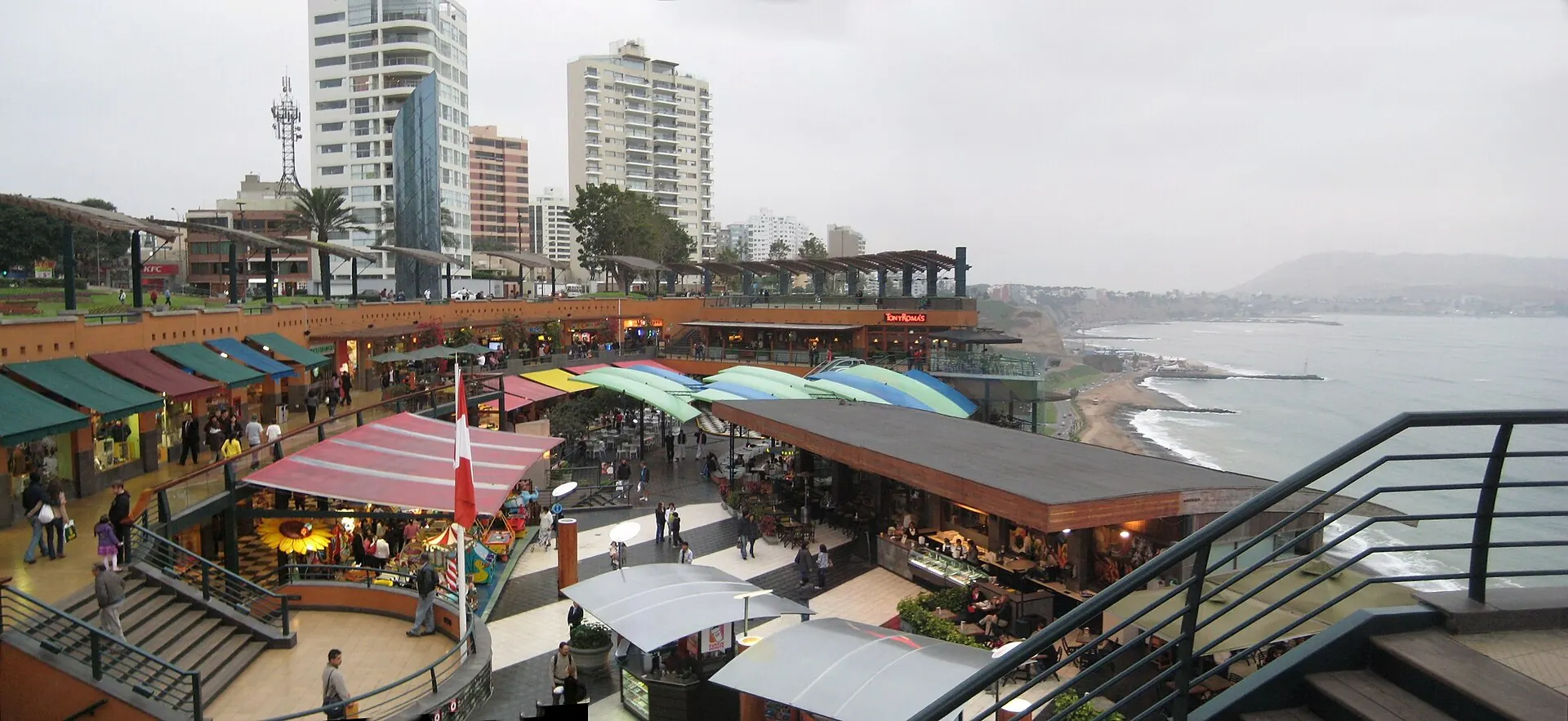
Lima
Code PE · 4 walking zones
Lima is a lunch-and-cliff city: Miraflores and Barranco by day, the centre in one morning by car, and sun only from December to April.
Our quick read of Lima, scored 1–5 (friction is out of 100). Cash need: how often you still need notes. Heat risk: how hot days get. Stroller: how easy wheels are. Friction: overall effort for a first visit. Desk judgements, so check before relying on them.
- Local time
- --:--
- Weather
- forecast below
- Currency
- PEN
- Best months
- Jan · Feb · Mar · Apr · Dec
- Airport
- Jorge Chávez (LIM)
Walking zones: the 4 areas this guide plans a day around. Each is a district you can cover on foot, so you do one zone per half-day and ride the train between them. The code (PE 01, PE 02…) is just the zone's number on the Lima line; the line under each name says how bags fare there and how much time it needs.
Map of Lima
Use the switches to show or hide each kind of pin. A switch that is on shows its pins on the map; tap it again to hide them. "Show only" keeps just the pins that match (for example, places that fit a suitcase). Tap any pin for its name and a link to its page.
- Where to sleep
- Places
- Eat
- Walking clusters
- Rest stops
From the airport Jorge Chávez (LIM) to your bed
Tap a pin for its card. Places without their own coordinates are shown by their walking cluster.
Why Lima
Lima is a huge coastal city under a grey sky for half the year, with traffic that turns a 10 km ride into an hour. The trips that go wrong stack the historic centre, Barranco and Miraflores into one afternoon, or ride the airport road at rush hour. Four areas cover a first visit; base in Miraflores or Barranco and cross the city by app car, outside rush hours.
See first
- 1A ceviche lunch · 1-1.5 h
- 2Parque del Amor and the Malecón · 1-1.5 h
- 3
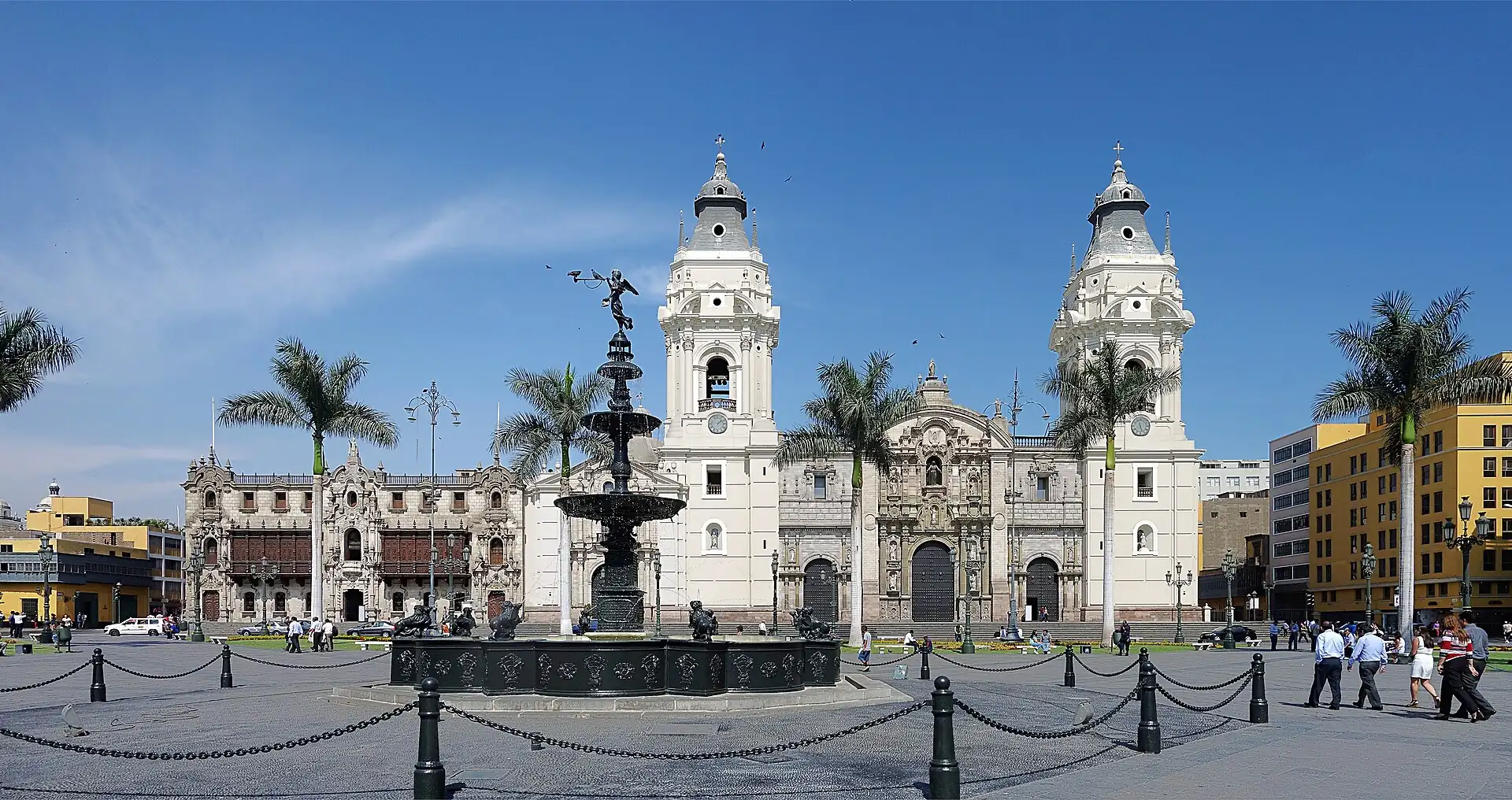 The historic centre in one morning · 3-4 h
- 4Barranco on foot · 2-3 h
- 5A Barranco tavern dinner · 1.5 h
Fits
- Food-led trips
- Short stays before Cusco or the coast
- Travellers who like sea-cliff walks
Does not fit
- Travellers in a hurry: distances and traffic are long
- Anyone who needs sun from May to November
- Strollers and wheelchairs in the old centre
How long
- 2 daysMiraflores and Barranco by day, the centre in one morning
- 3 daysMiraflores, the historic centre and Barranco, one area a day, with lunch as the fixed point
- 5 daysThree-day loop + Museo Larco morning + Pachacámac half day
Good for
- First timers
- Foodies
- Budget
- Couples
- Solo
- Families
About Lima
Lima was founded by Francisco Pizarro on 18 January 1535 as the City of the Kings and became the capital of the Spanish viceroyalty of Peru. Its historic centre around the Plaza Mayor keeps the colonial grid, balconies and churches, and is a UNESCO World Heritage site. Most visitors sleep somewhere else: the modern districts sit 8-12 km to the south on cliffs above the Pacific.
The city is a desert on the coast. It almost never rains, but from about May to November a low grey cloud (garúa) sits over it and the damp gets into everything. From December to April the sky clears, and the cliff parks and beaches fill. Plan for the season, not for the postcard.
Good to know
- Miraflores and Barranco are separate districts on the cliff; the historic centre (Cercado de Lima) is about 10 km north-east and is a different trip.
- iPerú, the national tourist information service, runs desks at the airport and at Larcomar in Miraflores (check current hours).
- Municipal tourist police wear a different uniform in Miraflores and the centre; ask them for directions rather than strangers in the street.
Go deeper 10 min read · 6 chapters
Lima is a desert capital of about ten million people on a cliff above the Pacific, and it has been the political centre of western South America for almost five hundred years. This deep dive reads the city in layers: a valley of adobe pyramids, a viceregal capital rebuilt after earthquakes, a republic that grew by migration, and a table that is now its main claim on visitors. It is written to make a ride between districts read as a walk through those layers.
1History2 min
The valley of the Rímac, whose Quechua name means "the talker", was settled long before the Spanish came. The Lima culture built adobe temple mounds here between about AD 200 and 700; one of them, Huaca Pucllana, still stands in the middle of Miraflores. To the south, the sanctuary of Pachacámac grew into a major oracle that Wari, Ychsma and finally Inca rulers each took over rather than tore down. When the Spanish arrived, the coast was already a patchwork of temples, canals and fields.
Francisco Pizarro founded the City of the Kings on 18 January 1535, on the south bank of the Rímac, and the name Lima is the Spanish way of saying Rímac. From 1542 it was the capital of the Viceroyalty of Peru, which ran from Panama to Chile. The University of San Marcos opened in 1551 and is counted as the oldest in the Americas. Silver from Potosí flowed to the port of Callao and on to Spain, and Lima grew rich on the trade, with mansions, convents and a court that copied Madrid.
The city was destroyed more than once. Large earthquakes in 1687 and 1746 flattened much of it, and the 1746 quake sent a wave over Callao that wiped out the port. The viceroy rebuilt both, and the Real Felipe fortress at Callao dates from that rebuilding. San Martín proclaimed independence in the Plaza Mayor on 28 July 1821, and Spanish rule ended for good in 1824 at Ayacucho.
The nineteenth century brought a costly war. In the War of the Pacific, Chilean forces beat the Peruvian army at San Juan and Miraflores in January 1881 and occupied Lima until 1883. Miraflores and Barranco were the front line, and the seaside villas of Barranco were looted and burned. The twentieth century turned Lima into a giant: waves of migrants from the Andes settled the hills and sand flats around the old core, building neighbourhoods that the authorities later recognised as districts.
The years from 1980 to 2000 brought political violence to the capital, including the Tarata bombing in Miraflores in 1992. The Lugar de la Memoria museum records the period. Since about 2000 economic growth, new roads, the Metropolitano bus lane (2010) and a food scene that draws the world have changed how the city sees itself, without removing the traffic.
- Founded
- 18 January 1535, as the City of the Kings
- Viceroyalty capital
- From 1542
- Independence proclaimed
- 28 July 1821
- Chilean occupation
- 1881-1883
- Population
- About 10-11 million (metropolitan area)
2Neighbourhood stories2 min
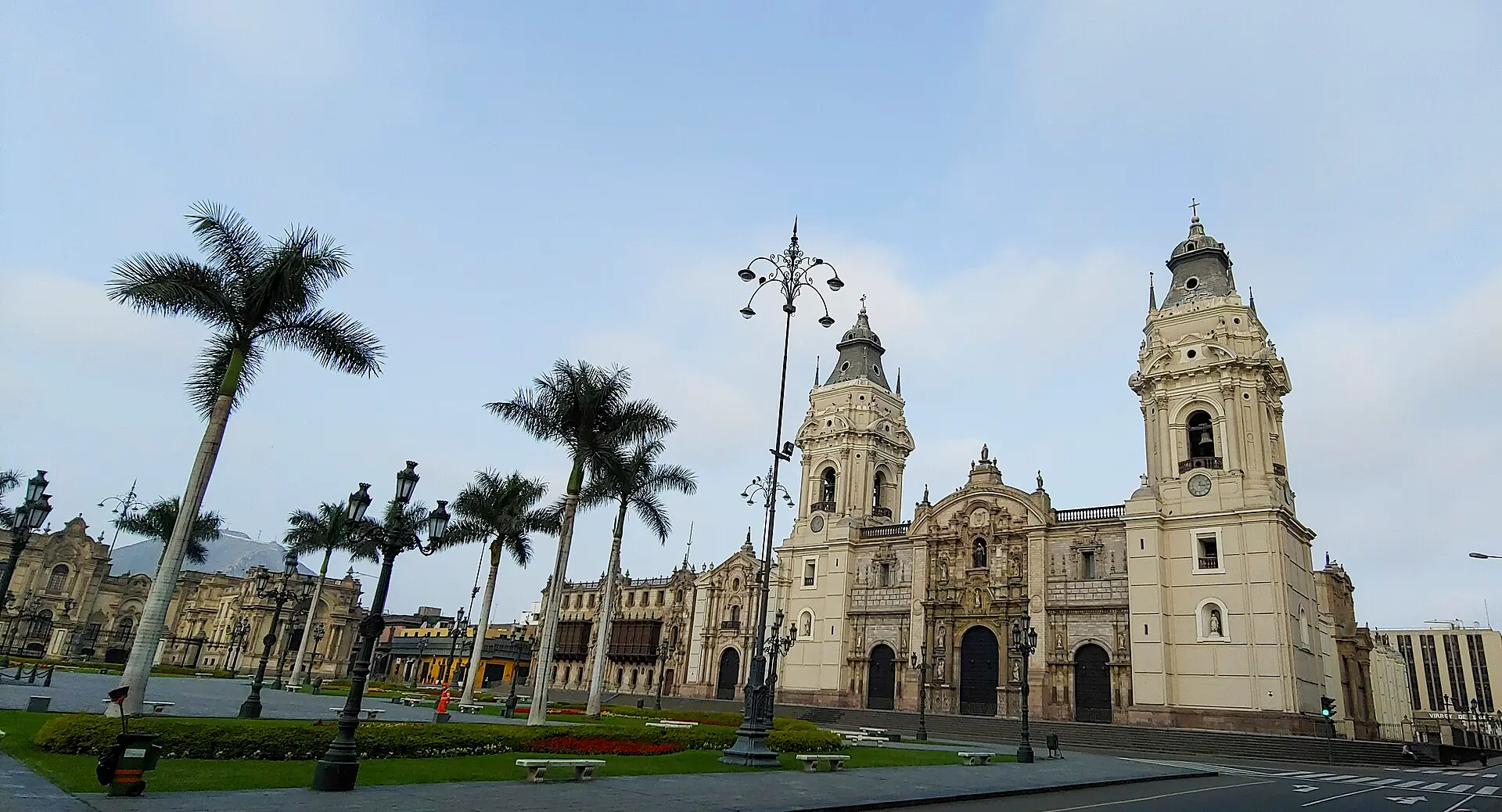
The historic centre, or Cercado de Lima, is where the grid began: streets laid around the Plaza Mayor, with the cathedral on one side and the government palace on another. UNESCO listed it in 1988 and extended the listing in 1991 to include the convent of San Francisco. The centre is a working district. Office workers, street sellers, shoe repairers and pilgrims share pavements that are too narrow for them, and it is best seen on a morning walk and left by mid-afternoon.
Across the river, Rímac keeps some of the oldest streets, the Plaza de Acho bullring (opened in 1766) and the cross on the Cerro San Cristóbal. It is not a tourist area, but it shows how colonial Lima grew outward from the plaza.
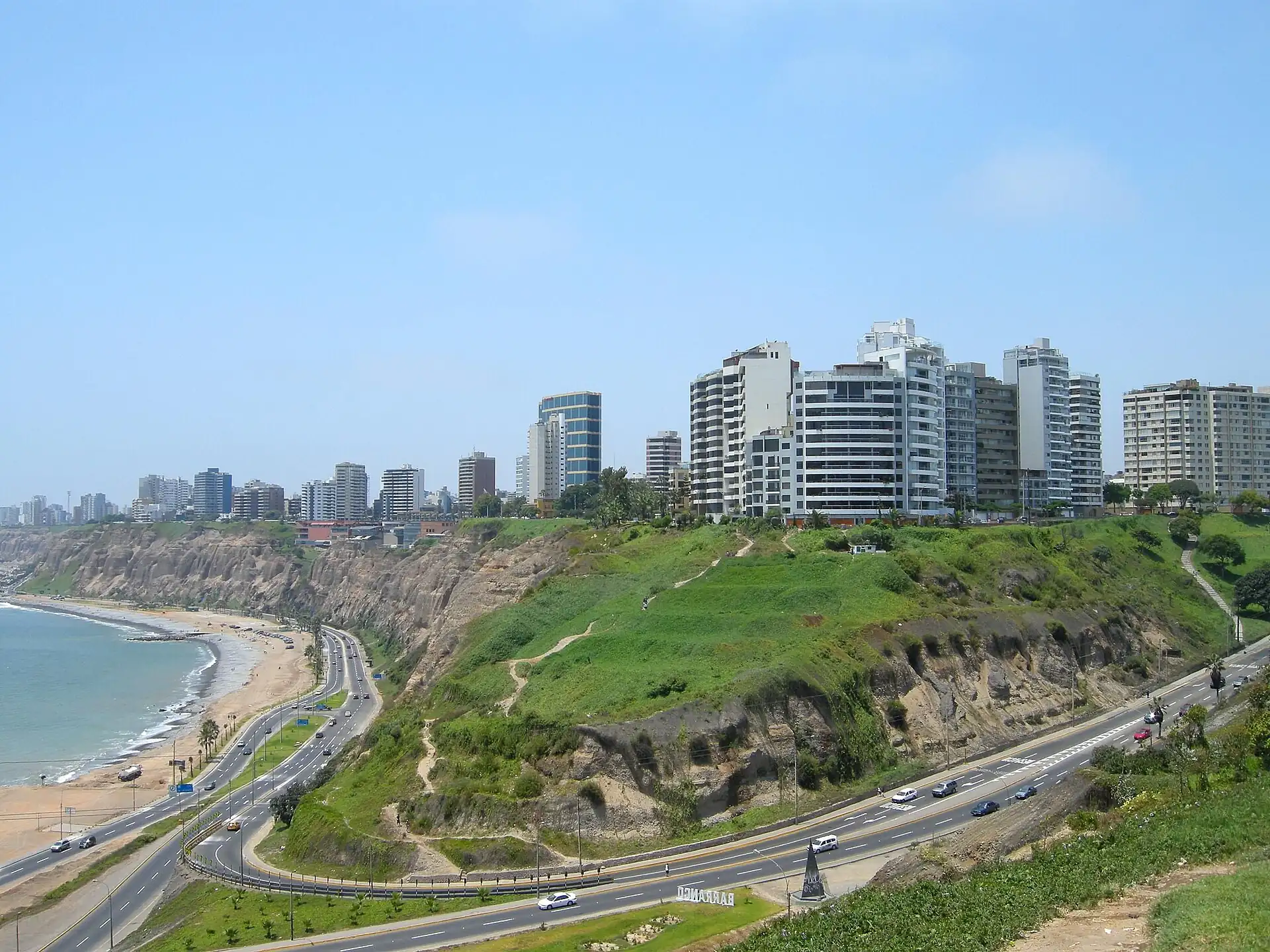
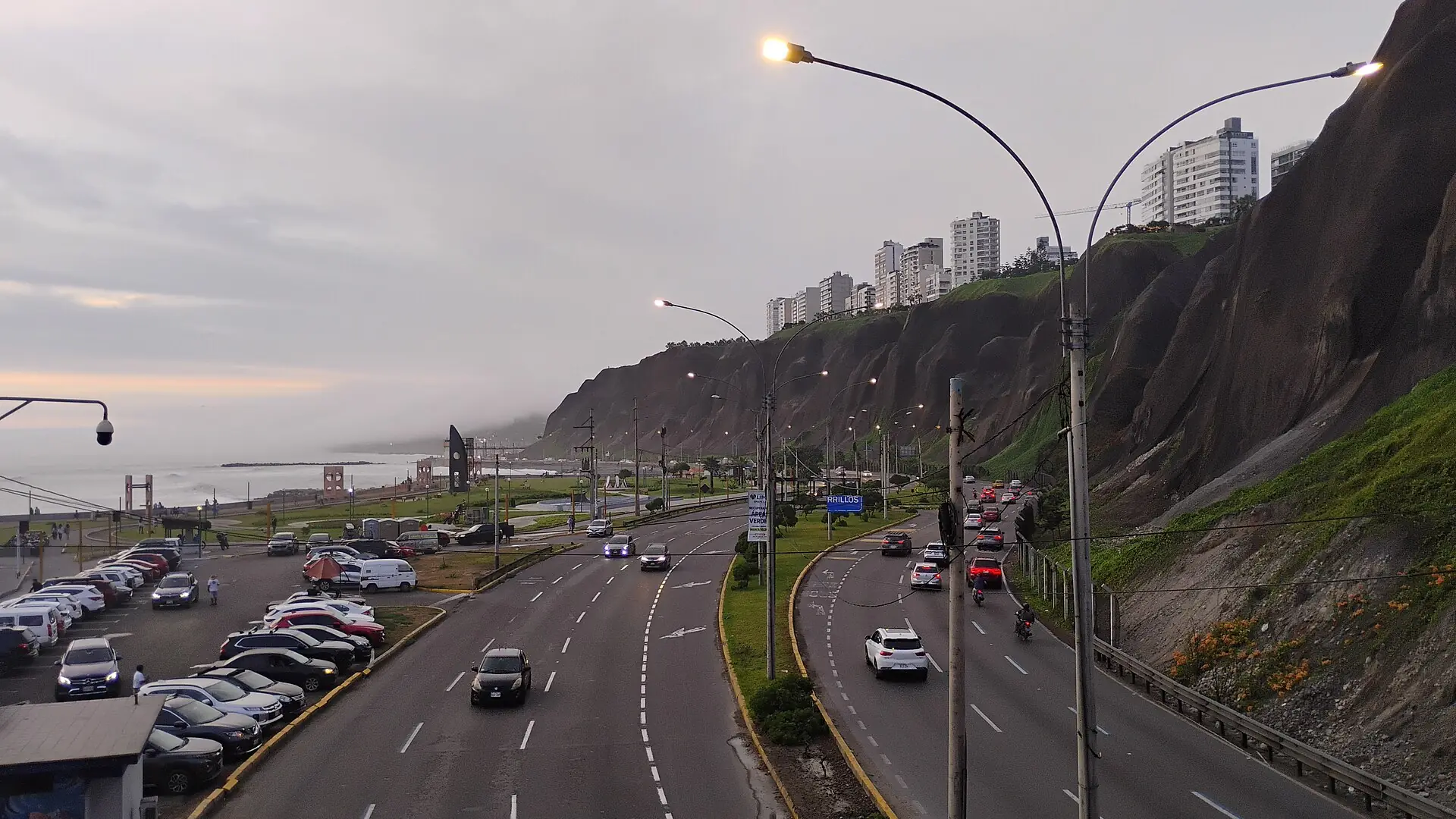
Miraflores became a district in 1857 and was a country retreat of orchards and villas before the twentieth century turned it into the modern cliff-top face of Lima. Its parks, towers, cafés and hotels make it the easiest base. The cliff walk, called the Malecón, follows the edge of the Costa Verde with paths for cyclists and paragliders above the beach.
Barranco has always been the artistic sibling. It grew as a seaside resort for Lima families in the late nineteenth century, with villas, a bridge over the path to the beach and a chapel on the hill. After the war it became a district of painters and poets, and it now holds galleries, bars and the small museums of Pedro de Osma and Mario Testino. The old bridge, the Puente de los Suspiros, gets the photos; the alleys behind it get the evenings.
San Isidro is the business district, with an olive grove planted in colonial times and the pre-Inca mound of Huallamarca among its towers. Pueblo Libre is the quiet residential district where San Martín and Bolívar both lived; today it holds the Larco museum and the national museum of archaeology. On the coast, Callao and La Punta keep the port, the fortress and a slow seaside rhythm.
- Historic centre UNESCO listing
- 1988, extended 1991
- Miraflores became a district
- 1857
- Plaza de Acho bullring opened
- 1766
- Districts in Lima province
- 43
3Architecture and earthquakes2 min
Lima builds with the earth in mind. After the disasters of the seventeenth and eighteenth centuries, builders turned to quincha: a frame of timber and cane packed with mud and covered in plaster. It flexes in a quake instead of cracking. Many of the upper storeys and balconies of the colonial centre are quincha under yellow, blue and white paint, which is why they look solid and weigh very little.
The most recognisable feature is the enclosed wooden balcony, the cajón, that sits above the street and lets residents see out without being seen. The best examples are on the Archbishop's Palace beside the cathedral and on Torre Tagle Palace, an early eighteenth-century mansion with a carved balcony and a courtyard. Casa Aliaga, in the centre, is regularly described as the oldest house in the Americas still lived in by the same family, and it can be visited by appointment.
The cathedral, on the Plaza Mayor, has been rebuilt after quakes several times. Its present form dates mostly from the late seventeenth century and later repairs, and it holds the chapel where tradition places the remains of Pizarro. The convent of San Francisco is a baroque church and cloister with a library and crypts that hold the remains of thousands of people; the catacombs were rediscovered in the twentieth century.
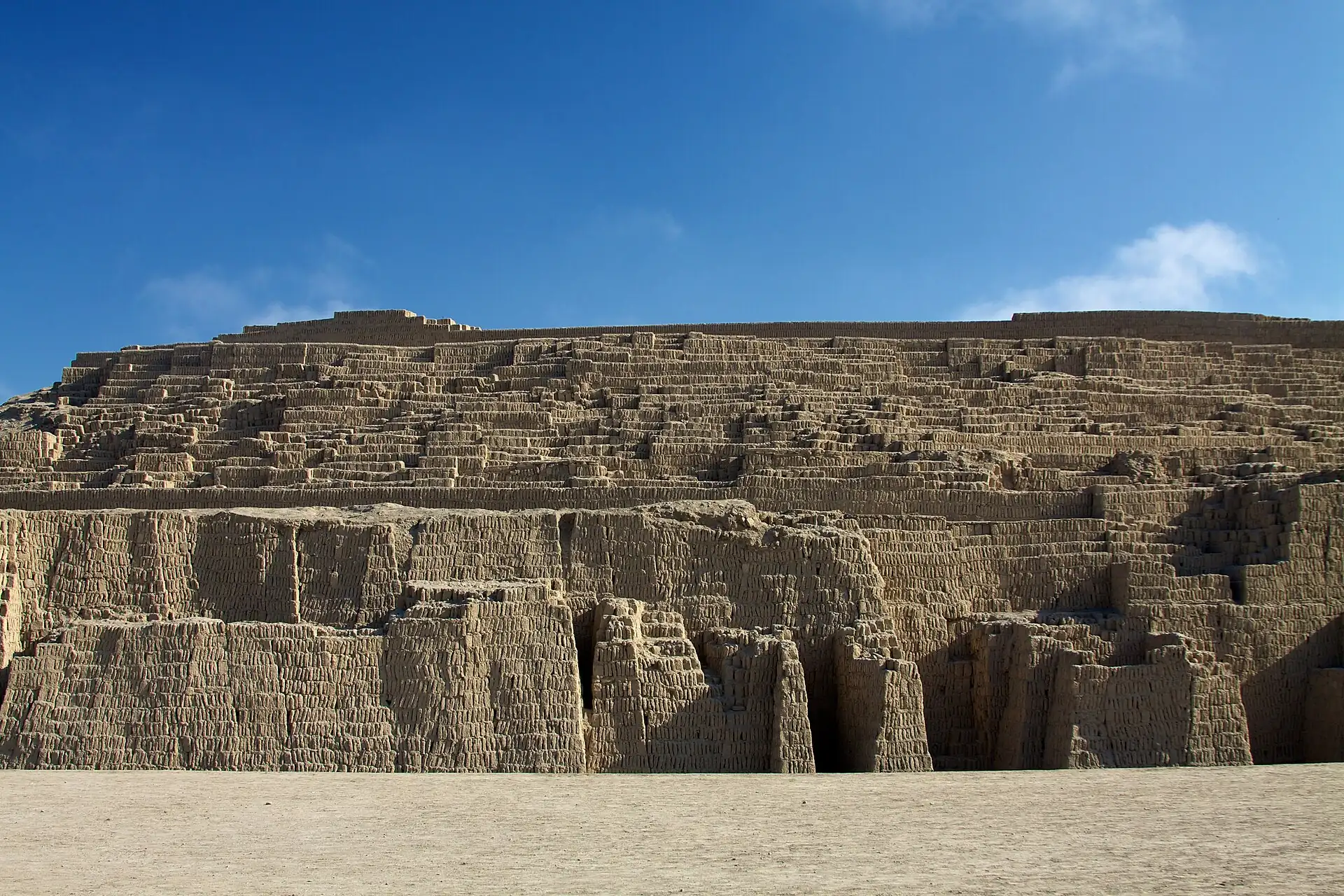
Not everything in Lima is colonial. Dozens of huacas, pre-Hispanic mounds, sit between modern blocks. Huaca Pucllana is built of small adobe bricks stood on edge like books on a shelf, a technique that lets the wall shift without falling. In the twentieth century, the city added Republican villas, art deco cinemas and, in Miraflores and San Isidro, towers that rise along the cliff.
What you see is a city that expects the ground to move. Newer buildings follow strict codes, and hotels post evacuation routes. If a quake occurs, follow staff and stay clear of glass and balconies.
- Colonial technique
- Quincha: timber and cane frame with mud and plaster
- Adobe technique at Huaca Pucllana
- Bricks stood on edge, like books
- Major earthquakes
- 1687 and 1746
- Torre Tagle Palace
- Early 18th century
4Food history2 min
Lima's cooking is the meeting of several migrations on a coast full of fish. Spanish settlers brought lime, onion, rice and pork; enslaved Africans shaped grilled meats and fried sweets; Cantonese labourers arriving from the 1840s began the Chinese-Peruvian kitchen that Lima calls chifa; and Japanese migrants from 1899 added the sashimi-style cuts that became nikkei cooking. Andean produce, from thousands of potato varieties to ají peppers and quinoa, arrived in the city with the migrants who followed.
Ceviche is the emblem: raw fish cured in lime juice with onion, chilli and a slice of sweet potato, served with toasted corn. The origin is debated, but the modern version, quick and sharp, was shaped in Lima's cevicherías. It is a lunch dish because the fish should be bought that morning, and the milky leftover juice, leche de tigre, is drunk as a shot. Ceviche has a national day on 28 June.
Lomo saltado is the best-known chifa dish: strips of beef fried with onion and tomato, soy sauce and fries, served with rice. Anticuchos, skewers of beef heart grilled over charcoal, are a Black Peruvian street food that turned into a national one. Picarones, sweet-potato rings soaked in syrup, are sold in the streets beside them.
Pisco, a grape spirit made around Ica and other southern valleys, is the base of the pisco sour, a drink invented in Lima in the early twentieth century and served with lime, egg white and bitters. Peru celebrates it on the first Saturday of February. Chicha morada, a spiced purple-corn drink with no alcohol, sits beside it at lunch.
Since the 2000s, chefs such as Gastón Acurio, Virgilio Martínez and Mitsuharu Tsumura have made Lima a name in international restaurant rankings. The result is a city where a tasting menu in Barranco, a market menú in Surquillo and a chicken shop are all part of one food culture, and where a cheap lunch is as reliable as an expensive one.
- Chifa begins
- From the 1840s, Cantonese labourers
- Nikkei begins
- From 1899, Japanese migrants
- Ceviche Day
- 28 June
- Pisco Sour Day
- First Saturday of February
5Festivals2 min
Lima's year turns on a few large dates. Fiestas Patrias, on 28 and 29 July, celebrates independence: flags on every balcony, a military parade and a president's message to Congress on the 28th. The days around are a domestic holiday, and hotels and roads fill.
The most striking event is October's procession of the Señor de los Milagros. The image, a mural of Christ painted in the 1650s by an Angolan slave, is said to have survived the earthquakes that destroyed the wall around it. Each October Sunday, hundreds of thousands of people in purple robes carry a large litter through the centre, with incense, brass bands and sweet-sellers at every corner. The sweet, turrón de Doña Pepa, is eaten only in this month. Streets close and crowds are dense, so plan the centre for another day.
Santa Rosa de Lima, on 30 August, honours the first saint of the Americas, canonised in 1671. Pilgrims queue at her sanctuary in the centre to drop notes into a wishing well. Holy Week, Semana Santa, brings processions and a break from work; the roads out of the city clog on Thursday.
Summer brings beach season and, in early February, Pisco Sour Day. On 31 October, Lima marks Día de la Canción Criolla, a day for the waltz and the marinera, with music in the peñas of Barranco and the centre. In August the Lima Film Festival fills the cinemas, and at Christmas the fountains of the Magic Water Circuit and the lights along Avenida Larco draw families out after dark.
For a visitor the message is practical. Check the calendar before you plan the centre, book rooms early for late July and December, and go to a procession if you can; it explains a side of Lima that the food and the cliff do not. If you cannot be there in October, the Church of Las Nazarenas in the centre, which holds the mural, can be visited outside the procession month (check its hours) and is a quiet way to see what the fuss is about.
- Fiestas Patrias
- 28-29 July
- Santa Rosa de Lima
- 30 August
- Señor de los Milagros
- Sundays in October
- Día de la Canción Criolla
- 31 October
6City life1 min
Lima's daily rhythm is set by traffic, lunch and the sea. Rush hours run from 07:00 to 10:00 and 17:00 to 20:30, when buses and cars are packed and a 10 km ride can take an hour. Locals plan their day around it, doing the long crossings between rush hours or by the Metropolitano bus lane. Lunch is the main meal, at 13:00 to 15:00, and offices empty into menú restaurants.
The city divides into rich and poor along its length, with the cliff districts and San Isidro at the top of the scale and the hills to the north and east at the bottom. The gap shows in the number of guards at shop doors, in the price of a lunch, and in the number of people who spend two hours a day on a bus. Informal work is huge: street vendors, combi drivers, delivery riders and market sellers are a large part of the city.
The sea is close but not always visible. From May to November a grey cloud hangs over the coast, and residents talk about the garúa as a season. In summer, the beaches of the Costa Verde fill and surf schools run from dawn. Football matters: Alianza Lima and Universitario play in a rivalry that fills the stands and the bars on match days.
Music runs from Andean folk to Afro-Peruvian cajón and the criolla waltz, and it is easy to hear in a peña. Everyday life also has its own vocabulary: a combi is a small bus, a cambista is a street money changer, and yapa is the little extra a market seller adds to your bag.
Visitors do best by adopting some local habits: lunch at midday, an app car between districts, warm layers in winter, and small notes for markets. The rest of the city follows.
- Rush hours
- 07:00-10:00 and 17:00-20:307:00 AM-10:00 AM and 5:00 PM-8:30 PM
- Main meal
- Lunch, 13:00-15:00Lunch, 1:00 PM-3:00 PM
- Cloud season
- About May to November
- Big football rivalry
- Alianza Lima and Universitario
Read, watch, wordsReading · Watching · Glossary · Sources
Reading
- Lima: A Cultural History — James HigginsA readable history of the city, from Pizarro to the present, with the arts and daily life.
- Conversation in The Cathedral — Mario Vargas LlosaA Lima novel of the 1950s dictatorship, set in the streets of the centre and Miraflores.
- Aunt Julia and the Scriptwriter — Mario Vargas LlosaA comic novel set in 1950s Lima and its radio culture.
- Peru: The Cookbook — Gastón AcurioA tour of Peruvian home and restaurant cooking with the story behind each dish.
Watching
- The Milk of Sorrow (La teta asustada) — Claudia Llosa, 2009A drama set in a Lima barrio, on the memory of the violence of the 1980s.
- Days of Santiago (Días de Santiago) — Josué Méndez, 2004A veteran struggles to fit into Lima life after war; a portrait of the city at street level.
Glossary
| Term | Local | Meaning |
|---|---|---|
| garúa | garúa | The grey coastal mist and drizzle of May to November. |
| huaca | huaca | A pre-Hispanic temple mound or sacred site. |
| quincha | quincha | Cane and mud on a timber frame; earthquake-friendly colonial building. |
| cajón balcony | balcón limeño | The enclosed wooden balcony of colonial Lima. |
| menú | menú | A set lunch with soup, main and a drink. |
| chifa | chifa | Chinese-Peruvian restaurant or cooking. |
| nikkei | nikkei | Japanese-Peruvian cooking. |
| pisco | pisco | Grape spirit; the base of the pisco sour. |
| combi | combi | Small minibus on a city route. |
| yapa | yapa | The little extra a seller adds to your purchase. |
Read for this deep dive
- Wikipedia: Lima ↗
- UNESCO: Historic Centre of Lima ↗
- Wikipedia: Peruvian cuisine ↗
- Wikipedia: Battle of Miraflores ↗
Background reading only: the text above is written by Voykit, not copied from these pages.
Rules in force · 8Above 2,500 m (Bogotá, Quito, Cusco, La Paz) keep the fir…
- South America ↗Above 2,500 m (Bogotá, Quito, Cusco, La Paz) keep the first day light; sleep lower where you can (Sacred Valley before Cusco) and descend if headache comes with vomiting or confusion.
- South America ↗A yellow fever certificate is required on arrival in French Guiana, and asked for on some routes into Bolivia, Paraguay, Suriname and Guyana, or when arriving from Amazon areas — vaccinate at least 10 days before travel and carry the card.
- South America ↗Overnight buses are the norm in Argentina, Chile and Peru, but pick top-tier companies and keep valuables on your body; on-board thefts from overhead racks are the common loss.
- Peru ↗Check entry rules for your passport with Peru's migration authority (Migraciones) or a Peruvian consulate; keep the entry record you receive, as hotels may ask for it.
- Peru ↗Machu Picchu entry is by timed ticket for a named circuit, with daily caps; in high season tickets sell out weeks or months ahead. Buy tickets only from the official Ministry of Culture seller or a licensed agency.
- Peru ↗The classic Inca Trail needs a permit booked through a licensed operator, often months ahead; the trail closes every February for maintenance.
- Peru ↗Altitude sickness is common above 2,500 m: ascend gradually, rest on day one, and ask a doctor before travel if you have heart or lung conditions.
- Lima area ↗If you fly on to Cusco, go up gradually: sleep in the Sacred Valley first.
Entry rules depend on your passport. Full visa guide
Emergency numbers for Lima105 ▾
Tap a number to call from your phone. These are the numbers listed in this guide; a row marked check has not been verified.
Planning is the full guide. I'm here keeps what is open and the cheat card.
Right now
Checking the weather…
Working out what is open near you…
What is open nowclock, closures, places open
Now in Lima
Local time in Lima
--:--
Loads in your browser · America/Lima
This month
Month verdict appears here.
Closed today
See the weekly grid below.
| Weekly closure | Mon | Tue | Wed | Thu | Fri | Sat | Sun |
|---|---|---|---|---|---|---|---|
| Museo de Arte de Lima (MALI)checkUsually closed Monday; check before you go. | ✕ | · | · | · | · | · | · |
If today is a closure day: Most Lima museums close one weekday, often Monday: check before you ride to the centre. The Palacio de Gobierno changing of the guard is at midday, free, and crowded.
- check Museo Larco: Open most days; confirm hours and the last entry on the museum site.
- check Convent of San Francisco catacombs: Guided visits at set times; confirm before you go.
Weekly closures come from our place pages; national holidays, Semana Santa and Fiestas Patrias change hours.
Open now
The sights and places to eat on our list that are open at this moment, in the city's time, nearest first from where you are staying.
Loads in your browser with the city's local time.
Hours marked (check) are typical, not confirmed. Walking times are straight-line estimates. Open at another time →
Cheat cardthe pocket version
Cheat card
The essentials on one card: save it as an image for your phone, share it, or print it.
Lima
- Money
- Keep S/ 100 in small notes; use ATMs inside banks or malls, and not on the street at night.
- SIM
- Install an eSIM before you fly, or buy a tourist SIM at the airport counters (passport needed).
- Ride app
- Uber · inDrive · Cabify
- Emergency
- 105 police · 116 fire · 106 ambulance (samu) (not 911, 999 or 000)
- Plugs
- Sockets A/B/C. US/Canada (A/B): fits · UK/Ireland (G): adapter · Australia/NZ (I): adapter. 220 V: US 120 V-only devices (hair dryers) need a converter; most chargers are dual-voltage.
Say it
- Hello: Buenos días (BWEH-nos DEE-as)
- Thank you: Gracias (GRAH-syas)
- How much is this?: ¿Cuánto cuesta? (KWAN-toh KWES-ta)
- Not spicy, please: Sin ají, por favor (seen ah-HEE por fah-VOR)
- The bill, please: La cuenta, por favor (la KWEN-ta por fah-VOR)
Top 5
- A ceviche lunch
- Parque del Amor and the Malecón
- Museo Larco
- Huaca Pucllana
- The historic centre in one morning
EssentialsQuick answers, what things cost and how to get around
Essentials
Quick answers, what things cost and how to get around
Quick answers
The questions people ask first about Lima, one line each. Tap a card for the full answer.
- Cash or card?Cards in hotels, malls and most restaurants; cash for markets, small cafés, taxis and small museums.
- SIM or eSIMInstall an eSIM before you fly, or buy a tourist SIM at the airport counters (passport needed).
- Ride-hailing appUber · inDrive · Cabify.
- Tap waterDo not drink tap water; use bottled or filtered water.
- TippingAbout 10% in restaurants if service is not added; round up for drivers.
- Plugs & powerSockets A/B/C. US/Canada (A/B): fits · UK/Ireland (G): adapter · Australia/NZ (I): adapter. 220 V: US 120 V-only devices (hair dryers) need a converter; most chargers are dual-voltage.
Show all 14 answers
- Safe at night?Take more care after dark in Malecón and cliff path, Historic centre, La Victoria and Parque Universitario area.
- What to wearCover shoulders and knees, no flash, and do not photograph worshippers.
- Emergency numbers105 police · 116 fire · 106 ambulance (samu) (not 911, 999 or 000)
- Your embassycheckUS, UK, Canada embassies listed with addresses (check before you go).
- Closed which day?Mon: 1 on our list shut.
- Sundays & holidaysWeekly closures come from our place pages; national holidays, Semana Santa and Fiestas Patrias change hours.
- Rainy-day planRain is rare; the problem is grey cloud and damp from May to November.
- Landing lateLIM: ride-hailing car or official taxi to the door runs all night.
Cost cheat-sheetwhat everyday things cost
Cost cheat-sheet
Typical prices for the everyday things, as ranges. Change the currency right here; the local price stays first.
2026 desk estimate · check
- CoffeeCoffee (café in Miraflores)S/ 8-15
- Sit-down mealCeviche lunch at a good cevicheríaS/ 40-80
- Street or quick mealSet lunch (menú) at a local restaurantS/ 15-30
- Beerbar / bottle from a shopS/ 12-20S/ 6-10
- Taxi, about 5 km (3 mi)Taxi, about 3 mi (5 km)5 km (3.1 mi) ride-hail car3.1 mi (5 km) ride-hail carRush hour and rain add surge.S/ 10-25
- Metro or bus rideMetropolitano bus rideNeeds a card; check the current fare.about S/ 3
- SIM or eSIM, a weekTourist SIM or eSIM, about a weekS/ 30–80
- Museum or sight ticketMuseum entryS/ 20-60
- Budget bedHostel dorm bed, a night, per personPEN 40
- Mid-range bedHotel double room, a night, per roomPEN 380
- High-end bedHotel double room, a night, per roomPEN 900
A day, not counting the bed: Budget PEN 130 · Mid PEN 300 · High PEN 700
Local prices, with USD next to them (rates 2026-09 (approximate); change it in the header). Ranges are desk estimates: check locally. Every price and the budget calculator →
Source: Prices in Lima
Draft
Written from desk research. Not yet compared with the official source.
No official source is recorded for this figure.
Prices are 2026 desk estimates, not yet compared with an official source. Check on the day.
Not checked in the last 12 months (no check date on file).
DecideWho it suits, the trade-offs and when to go
Decide
Who it suits, the trade-offs and when to go
Best months at a glance
The guide's verdict for each month
Jan
Best
27°C (81°F)81°F (27°C)
Feb
Best
28°C (82°F)82°F (28°C)
Mar
Best
28°C (82°F)82°F (28°C)
Apr
Best
26°C (79°F)79°F (26°C)
May
Care
23°C (73°F)73°F (23°C)
Jun
Care
21°C (70°F)70°F (21°C)
Jul
Care
19°C (66°F)66°F (19°C)
Aug
Care
19°C (66°F)66°F (19°C)
Sep
Care
19°C (66°F)66°F (19°C)
Oct
Care
21°C (70°F)70°F (21°C)
Nov
Care
23°C (73°F)73°F (23°C)
Dec
Best
25°C (77°F)77°F (25°C)
Best: Dec–Apr. Mixed: May–Nov. Month by month →
Warmest Feb (28°C (82°F)82°F (28°C)), coolest Jul (15°C (59°F)59°F (15°C) low), wettest Jul (3 rain days), driest Jan (0). Averages, not a forecast.
Lima across the year
Best-looking months for Lima: Jan, Feb, Mar.
| Measure | Jan | Feb | Mar | Apr | May | Jun | Jul | Aug | Sep | Oct | Nov | Dec |
|---|---|---|---|---|---|---|---|---|---|---|---|---|
| Weather | Great (good) | Great (good) | Great (good) | Good (good) | Mixed (care) | Mixed (care) | Mixed (care) | Mixed (care) | Mixed (care) | Mixed (care) | Mixed (care) | Great (good) |
| Crowds | Medium (ok) | Low (good) | Low (good) | Medium (ok) | Medium (ok) | High (care) | High (care) | High (care) | Medium (ok) | Medium (ok) | Low (good) | Medium (ok) |
| Prices | Medium (ok) | Low (good) | Low (good) | Medium (ok) | Medium (ok) | High (care) | High (care) | High (care) | Medium (ok) | Medium (ok) | Medium (ok) | Medium (ok) |
| Events | 2 events (ok) | 2 events (care) | 1 event (ok) | 1 event (ok) | None listed (ok) | 1 event (care) | 1 event (ok) | 1 event (ok) | None listed (ok) | 1 event (ok) | None listed (ok) | 1 event (ok) |
Green is good news, amber needs planning, red is a month to avoid; dashed grey with a question mark means our data does not say. Open the year heatmap →
Not checked in the last 12 months (no check date on file).
Source: Months, temperatures and crowds
Draft
Written from desk research. Not yet compared with the official source.
Monthly highs, rain and crowd levels are climate averages and desk estimates for the city, not a forecast.
Understand the cityUnderstand · Districts
Orientation & districts
Almost everything a first visit needs sits in two clusters: the cliff districts of Miraflores and Barranco in the south, and the historic centre 10 km north-east. Pueblo Libre, with the best museum, sits between them. Everything is a car ride apart.
Districts are separate municipalities with their own police, rubbish trucks and rules. Drivers and apps use the district name, so give it with the street address.
Shaded shapes: walking areas (click one). Black pins: sleep areas. Grey dots: places. Round badges: arrivals. Click the map to turn on scroll-wheel zoom.
Hover, tap or tab to an area to see what it is like. Pins are sleep areas; arrows at the edge point to the airport.
Not drawn yet (no coordinates in this guide): San Isidro, Surquillo, Callao and La Punta. They are in the neighbourhood cards below.
Where’s what, as a list:
- Miraflores: Flat, walkable, well lit and policed. Cliff parks, the Malecón and most mid-range hotels. Pricier than other districts. Suits: First visit, families, short stays, ceviche lunches. Price band $$.
- Barranco: Old villas, galleries and bars 20 minutes south of Miraflores by car. Livelier at night; quieter streets on the hill side. Suits: Couples, night owls, art and bars. Price band $$.
- Historic centre (Cercado de Lima): Plaza Mayor, cathedral, San Francisco convent. Crowded and busy by day; empty and unsafe after dark. Go by car, leave by 14:00.Plaza Mayor, cathedral, San Francisco convent. Crowded and busy by day; empty and unsafe after dark. Go by car, leave by 2:00 PM. Suits: One morning of colonial sights.
- Pueblo Libre: Quiet residential streets around Museo Larco and the national archaeology museum. A car ride from anywhere. Suits: Museum lovers.
- San Isidro: Leafy, corporate, a taxi from the cliffs. Huaca Huallamarca and the olive grove are the local sights. Suits: Business trips, fine dining, calm.
- Surquillo: Working district next to Miraflores with the produce market and cheap eateries. Suits: Market lunch.
- Callao and La Punta: Port town beside the airport; go by car and stay in La Punta and the fortress area, not the port streets. Suits: Sea-front half day.
- Sleep area Barranco: suits Couples, night owls, art and bars, price band $$.
- Sleep area Miraflores: suits First visit, families, short stays, ceviche lunches, price band $$.
- Jorge Chávez International Airport (LIM), about 14 km (8.7 mi)8.7 mi (14 km) from the centre, 60–100 min by the usual route.
Neighbourhoods at a glance
One tab per area, pulled together from this guide’s districts table, area notes, sleep-area scores and place pages. Scores are desk judgements (1–5); prices are estimates, check before you book.
Miraflores
$$Flat, walkable, well lit and policed. Cliff parks, the Malecón and most mid-range hotels. Pricier than other districts.
- Suits:
- First visit, families, short stays, ceviche lunches · First visits, families, lunch trips
- Best time:
- Morning walks, sunset (Dec-Apr)
- Rooms:
- S/ 250–600 per room per night (mid-range); more during Fiestas Patrias and December
Pick this if: First visits, restaurants, cliff walks
Skip this if: You want a bohemian, late-night area
- Quiet nights3/5 Medium
- Nightlife3/5 Medium
- Families5/5 Very high
- Late arrival5/5 Very high
Why these scores
- Quiet nights: Avenida Larco and Parque Kennedy are busy; streets on the residential side are calm.
- Nightlife: Bars and restaurants nearby; Barranco is livelier and 20 minutes away.
- Families: Flat, fenced parks, pharmacies and easy cars.
- Late arrival: Hotels with 24 h desks are common; app cars run all night.
Getting around from here
- Car south: about 20 min to Barranco
- Car north-east: about 40 min to Historic centre
- LIM: about 14 km (8.7 mi) in a straight line (arrival ride 60–100 min)LIM: about 8.7 mi (14 km) in a straight line (arrival ride 60–100 min)
Barranco
$$Old villas, galleries and bars 20 minutes south of Miraflores by car. Livelier at night; quieter streets on the hill side.
- Suits:
- Couples, night owls, art and bars · Couples, art and night
- Best time:
- Late afternoon and evening
- Rooms:
- S/ 200–500 per room per night (mid-range)
Pick this if: Evenings, galleries, a slower pace
Skip this if: You want quiet streets or step-free access
- Quiet nights2/5 Low
- Nightlife5/5 Very high
- Families3/5 Medium
- Late arrival4/5 High
Why these scores
- Quiet nights: Bars and live music run late at weekends; ask for a room on the hill side.
- Nightlife: The main night district: bars, peñas and clubs on foot.
- Families: Cobbled and steep in places; lively at night.
- Late arrival: Some small hotels lock the door: confirm night staff or a key code.
Getting around from here
- Car north: about 20 min to Miraflores
- LIM: about 17 km (11 mi) in a straight line (arrival ride 60–100 min)LIM: about 11 mi (17 km) in a straight line (arrival ride 60–100 min)
Historic centre (Cercado de Lima)
Plaza Mayor, cathedral, San Francisco convent. Crowded and busy by day; empty and unsafe after dark. Go by car, leave by 14:00.Plaza Mayor, cathedral, San Francisco convent. Crowded and busy by day; empty and unsafe after dark. Go by car, leave by 2:00 PM.
- Suits:
- One morning of colonial sights
- Best time:
- 09:00-13:009:00 AM-1:00 PM
Pick this if: One morning of history
Watch out for: Afternoon and evening; quiet streets after dark.
Getting around from here
- Car south: about 40 min to Miraflores
- LIM: about 9 km (5.6 mi) in a straight line (arrival ride 60–100 min)LIM: about 5.6 mi (9 km) in a straight line (arrival ride 60–100 min)
Pueblo Libre
Quiet residential streets around Museo Larco and the national archaeology museum. A car ride from anywhere.
- Best time:
- Mornings
Pick this if: Museum lovers
Watch out for: Weekday rush hour.
See
Getting around from here
- Car south-east: about 30 min to Miraflores
San Isidro
Leafy, corporate, a taxi from the cliffs. Huaca Huallamarca and the olive grove are the local sights.
- Suits:
- Business trips, fine dining, calm
- Best time:
- Lunch and evening
Pick this if: Business trips and dining
Watch out for: Expecting street life on Sundays.
Surquillo
Working district next to Miraflores with the produce market and cheap eateries.
- Suits:
- Market lunch
Callao and La Punta
Port town beside the airport; go by car and stay in La Punta and the fortress area, not the port streets.
- Suits:
- Sea-front half day
- Best time:
- Daylight
Pick this if: Half day on the water
Watch out for: Walking in the port area.
Ward by ward
7 area guides. Open one for the short answer, the key facts and what the area is like; the full guide is linked inside. Prices marked (check) are estimates.
BarrancoBest for: Nightlife, peñas, galleries, cafés, coastal walks
Yes — stay in Barranco if you want Lima's nightlife, galleries and clifftop walks within a few blocks, and you accept a 30–45 minute ride to the historic centre. Skip it if you need early flights from Jorge Chávez airport or a quiet base; Miraflores or Central Lima fit those trips better.
- Best for:
- Nightlife, peñas, galleries, cafés, coastal walks
- Not ideal for:
- Airport mornings, family quiet, colonial-centre sightseeing on foot
- Distance to Miraflores:
- About 3 km (1.9 mi) north along the malecón; 10–15 min by taxiAbout 1.9 mi (3 km) north along the malecón; 10–15 min by taxi
- Distance to Central Lima:
- About 12 km (7.5 mi); 30–45 min by taxi in trafficAbout 7.5 mi (12 km); 30–45 min by taxi in traffic
- Airport transfer:
- About 20 km (12 mi); 45–70 min depending on trafficAbout 12 mi (20 km); 45–70 min depending on traffic
- Getting around:
- Walkable core; taxis or app rides for the centre and airport
- Typical hotel range:
- Hostel dorm S/ 40–80; mid-range double S/ 180–350 (2026 estimate)
- Safety:
- Busy streets fine by day; use app taxis at night and keep phones out of sight
What Barranco is like
Barranco is a small coastal district south of Miraflores, built on a low cliff above the Pacific. Its core is a grid of early-20th-century houses, some still painted in bright colours, with the Puente de los Suspiros and the Plaza Municipal at the middle. It is compact: you can walk from the plaza to the sea viewpoint in about 15 minutes.
The district has long been the bohemian end of Lima. Art galleries cluster along Paseo Sáenz Peña and Avenida Pedro de Osma, and the night economy is the strongest in the city — peñas with Afro-Peruvian and criollo music, rock bars, and student-priced cafés. Weekends bring the Feria Gastronómica on the corner of Avenida El Sol Oeste and Avenida General José de San Martín, with outdoor tables and local musicians.
It is also a residential district, not a resort strip. Expect street noise on weekend nights, dogs, and a mix of restored mansions and ordinary apartment blocks. The cliff edge — the malecón — is a paved walk with ocean views and a path down toward the beaches at the Costa Verde.
Full Barranco guideShould you stay in Barranco?
Stay here if nightlife, food and galleries are the point of your Lima stop, or if you want a base that feels like a neighbourhood rather than a hotel zone. Couples and solo travellers who like walking do well. The trade-off is distance: the historic centre is a taxi ride, not a stroll, and airport departures before dawn mean a long, expensive transfer.
Choose Miraflores instead if you want more hotels, malls and easier transport links, or Central Lima if colonial sights and museums are your priority. Families with small children often prefer Miraflores for quieter blocks and parks. Barranco suits a 2-night Lima stay that is mostly evenings and food, with one daytime run to the centre.
Central LimaBest for: Colonial architecture, Plaza de Armas, churches, museums, budget hotels
Stay in Central Lima (Cercado) for colonial sights, Plaza de Armas, San Francisco catacombs and museums, and if you want to be near the Metro Line 1 and cheap local food. Skip it as a base if you want nightlife, ocean views or easy evening walks; most visitors sleep in Miraflores or Barranco and day-trip here.
- Best for:
- Colonial architecture, Plaza de Armas, churches, museums, budget hotels
- Not for:
- Nightlife, beach, late-evening wandering; quieter after dark
- Metro Line 1:
- 5 stations in the area; card S/5, trip S/1.50; 06:00–23:00 daily (check)5 stations in the area; card S/5, trip S/1.50; 6:00 AM–11:00 PM daily (check)
- Getting there from Miraflores:
- Taxi or ride-hail 30–50 min depending on traffic (check)
- Walkable core:
- Plaza de Armas to Plaza San Martín about 10 minutes on foot
- Safety:
- Keep to busy streets, avoid empty blocks after dark, watch bags (check)
- Currency:
- Sol (PEN, S/); roughly S/3.4–3.7 per US$ — check
What Central Lima is like
Central Lima is the historic core: the districts of Lima (Cercado), Breña, Jesús María, Lince, La Victoria, San Luis, El Agustino and Rímac. The tourist centre is Cercado, built around the Plaza de Armas and the Plaza San Martín, with the cathedral, the Government Palace, the Congress and a dense grid of colonial churches, old theatres and arcades.
It is a working city centre, not a resort. Weekday mornings are loud and crowded with office workers, students and street sellers; Sundays are quieter and many shops close. The architecture is the draw: 16th- to 19th-century churches, the San Francisco convent and its catacombs, and the Casa de la Literatura in the old Desamparados station.
The area is compact and mostly flat, so you can cover the main sights on foot in a day. It is also the transport hub for the metro and many bus routes, which makes it convenient for onward travel but busy at rush hour.
Full Central Lima guideShould you stay here or not
Stay in Central Lima if your priority is colonial sights, museums and cheap local food, or if you have an early bus or train and want to be near the centre. It suits budget travellers, history-focused visitors and anyone who wants to walk out of the hotel into the Plaza de Armas.
Do not stay here if you want ocean views, evening restaurants and bars, or a relaxed late-night walk back to your hotel. Most first-time visitors base themselves in Miraflores or Barranco and come to Central Lima as a day trip, which is easy by taxi, ride-hail or the Metropolitano bus.
If you do stay, choose a hotel on or near Plaza de Armas, Plaza San Martín or Jr. de la Unión, and avoid walking empty side streets after dark. Check current local advice before you book.
EastBest for: Archaeology at Puruchuco and Cajamarquilla, Huachipa zoo, golf in La Molina
Stay in East Lima only if you have a reason: family in La Molina, a course at the agrarian university, or a cheap bed near the Carretera Central. It is residential and industrial, 45–75 minutes from Miraflores by road, and most first-timers should sleep in Miraflores or Barranco instead.
- Who it suits:
- Returning visitors, families, students, anyone with business in Ate or La Molina
- Who should skip it:
- First-timers with 2–3 nights who want museums, food and nightlife on foot
- Districts covered:
- La Molina, Ate Vitarte, Santa Anita, San Juan de Lurigancho, Lurigancho-Chosica, Chaclacayo, Cieneguilla
- Metro Line 1:
- Runs 06:00–23:00 daily; rechargeable card S/5, each trip S/1.50 (2026 estimate)Runs 6:00 AM–11:00 PM daily; rechargeable card S/5, each trip S/1.50 (2026 estimate)
- To Miraflores:
- 45–75 min by road depending on traffic; no direct metro link
- Airport:
- Jorge Chávez (LIM) is west; allow 60–90 min by road (check)
- Best for:
- Archaeology at Puruchuco and Cajamarquilla, Huachipa zoo, golf in La Molina
What East Lima is like
East Lima is not one neighborhood. It is a band of districts running from the working-class streets of Ate Vitarte and Santa Anita out along the Carretera Central to the greener, wealthier La Molina, then further east to Chaclacayo, Chosica and the country escapes at Cieneguilla. The Río Rímac cuts through it, and so does the traffic.
This is where Lima lives and works rather than where it performs for visitors. You will find universities, gated residential streets, industrial parks, market streets and a handful of genuinely interesting archaeological sites. It is dusty in the dry season and the air is not the city's cleanest.
The practical consequence: sights are spread out and rarely walkable from each other. A car, a taxi app or a lot of patience with buses is the price of staying here.
Full East guideShould you stay here
For a normal first trip to Lima, no. The classic two-night stay works because Miraflores and Barranco put the malecón, restaurants and bars within walking distance, and Central Lima covers the museums and colonial core. East Lima adds a long commute to all of that.
There are exceptions. If you are visiting family, studying, working in Ate or La Molina, or breaking a long overland route along the Carretera Central toward Tarma and the central Andes, a base here saves hours. La Molina also has the city's most comfortable residential hotels and a country-club feel that some travellers prefer to the tourist circuit.
If you do stay, pick La Molina for comfort or the area around a Metro Line 1 station for value, and treat the rest of Lima as a day trip rather than an evening out.
MirafloresBest for: First-time visitors, food-focused trips, couples, solo travellers who want to walk at night
Yes — stay in Miraflores if you want a safe, walkable base with ocean views, the best restaurant density in Lima and easy airport buses. Skip it if you want colonial architecture or cheap beds; those are in Central Lima. It is the default first-trip choice, and it costs more than the centre.
- Best for:
- First-time visitors, food-focused trips, couples, solo travellers who want to walk at night
- Skip if:
- You want colonial streets, museums and markets on foot — that is Central Lima
- Airport to Miraflores:
- Official taxi from S/ 60; Airport Express bus about US$ 5.5 (S/ 20); 45–60 min
- Getting around:
- Mostly walkable; taxis and ride-hailing for Barranco, Central Lima and the airport
- Walk to the sea:
- Malecón clifftop parks and Larcomar are 5–15 min from most hotels
- Food:
- Highest concentration of mid-range and high-end restaurants in Peru
- Safety:
- One of Lima's safer districts; normal big-city care after dark
- Currency:
- Sol (PEN, S/); roughly S/ 3.4–3.7 per US$ — check
What Miraflores is like
Miraflores is a coastal district of high-rise apartments, parks, hotels, restaurants and shops, sitting on cliffs above the Pacific about 10 km (6.2 mi) south of Central Lima. It is the district most visitors picture when they think of Lima: the clifftop Malecón walk, the Larcomar shopping centre built into the cliff, Kennedy Park with its resident cats, and blocks of cafés and restaurants between Avenida Larco and Avenida José Pardo.Miraflores is a coastal district of high-rise apartments, parks, hotels, restaurants and shops, sitting on cliffs above the Pacific about 6.2 mi (10 km) south of Central Lima. It is the district most visitors picture when they think of Lima: the clifftop Malecón walk, the Larcomar shopping centre built into the cliff, Kennedy Park with its resident cats, and blocks of cafés and restaurants between Avenida Larco and Avenida José Pardo.
It is a modern, residential and commercial area rather than a historic one. The colonial architecture, the Plaza de Armas and the main museums are in Central Lima, 30–45 minutes away by taxi in normal traffic. Miraflores is where you sleep, eat and walk; Central Lima is where you go for a half-day of sightseeing.
The district is compact and mostly flat between the clifftop and Avenida Arequipa, so you can cover a lot on foot. The seafront itself is reached by stairs or a lift down the cliff, or by the path at Parque del Amor.
Full Miraflores guideShould you stay here
For a first trip to Lima, Miraflores is the easiest base: safe streets, English-speaking staff, airport buses that stop here, and restaurants within walking distance of almost any hotel. It is also the most expensive district for accommodation and food.
Choose Miraflores if you have two nights or more in Lima and want to eat well and walk in the evenings. Choose Central Lima if you want colonial streets, churches and markets on your doorstep and cheaper beds, accepting more caution after dark. Barranco, just south, is smaller and more bohemian, with nightlife and galleries, and is a good alternative for a second visit or a longer stay.
North
North Lima is not a base for a first trip: stay in Miraflores or Barranco and come north only for Ancón's bay, the pre-Inca site of El Paraíso or the Gran Terminal Terrestre bus station. Choose it only if you arrive or leave by long-distance bus, or want a cheap, local, non-tourist Lima.
- Stay here if:
- You have an early or late intercity bus at Gran Terminal Terrestre (next to Plaza Norte)
- Skip as a base if:
- You have 2–3 days in Lima and want museums, food and nightlife
- Main draw:
- Ancón bay and its islands (sea lions, birds), best September–March
- Metropolitano BRT:
- Links Comas, Los Olivos, Independencia and San Martín de Porres to Central and South Lima
- Airport:
- Jorge Chávez (LIM) is in Callao, west of the centre — not in North Lima
- Safety:
- Districts vary street by street; avoid unlit blocks at night and keep to main roads (check)
- Cash:
- Small museum entries are S/ 1–7; carry coins and small notes (check)
What North Lima is like
North Lima is the part of the city on the north side of the Rímac river: Comas, Carabayllo, Puente Piedra, Santa Rosa, Ancón, San Martín de Porres, Los Olivos and Independencia. It is where most limeños actually live — dense, working, commercial, and almost untouched by tourism. You will not find the cafés, galleries and ceviche counters of Miraflores or Barranco here.
The coast at Ancón, about 40 km (25 mi) north of the centre, is the exception. The bay has a small group of islands (Islas Pescadores) with sea lions and seabirds, and boat trips can be arranged locally. Bird numbers are highest between September and March. Inland, the archaeology is older than the Inca: Huaca El Paraíso in San Martín de Porres is a pre-ceramic site with a small oasis nearby, and Carabayllo's Museo Juan José Vega Bello sits in the Punchauca hacienda house on the Lima–Canta road.The coast at Ancón, about 25 mi (40 km) north of the centre, is the exception. The bay has a small group of islands (Islas Pescadores) with sea lions and seabirds, and boat trips can be arranged locally. Bird numbers are highest between September and March. Inland, the archaeology is older than the Inca: Huaca El Paraíso in San Martín de Porres is a pre-ceramic site with a small oasis nearby, and Carabayllo's Museo Juan José Vega Bello sits in the Punchauca hacienda house on the Lima–Canta road.
Practical note: this is a big, spread-out area with heavy traffic. Distances that look short on a map take far longer by road, so plan one or two stops per day, not five.
Full North guideShould you stay here?
For a normal Lima visit, no. The sights most travellers come for — the historic centre, the museums, the food scene — are 30–60 minutes away by road, and you would spend your trip commuting. Stay in Miraflores or Barranco and visit the north as a day trip.
The clear exception is transport. Gran Terminal Terrestre, the modern intercity bus terminal, sits beside Plaza Norte shopping centre and the Tomás Valle Metropolitano station. If your bus leaves at 06:00 or arrives at 23:00, a night in San Martín de Porres or Los Olivos removes a stressful cross-city run. The same applies if you are heading north to Huaraz, Trujillo or Chiclayo.The clear exception is transport. Gran Terminal Terrestre, the modern intercity bus terminal, sits beside Plaza Norte shopping centre and the Tomás Valle Metropolitano station. If your bus leaves at 6:00 AM or arrives at 11:00 PM, a night in San Martín de Porres or Los Olivos removes a stressful cross-city run. The same applies if you are heading north to Huaraz, Trujillo or Chiclayo.
A second case: travellers who have already done Lima and want a cheaper, purely local stay with markets and ordinary neighbourhood food. Expect fewer English speakers and more careful street sense after dark.
SouthBest for: Pachacámac ruins, Pantanos de Villa wetlands, family days out, quieter residential streets
Stay in South Lima only if you want Pachacámac, the wetlands or a quieter, greener base — most first-timers should sleep in Miraflores or Barranco and visit South as a day trip. Choose it if you have a car, a south-side address or an early coastal run; skip it if your trip is museums, food and nightlife.
- Best for:
- Pachacámac ruins, Pantanos de Villa wetlands, family days out, quieter residential streets
- Worst for:
- First-trip sightseeing, nightlife, walkable restaurant strips
- Main districts:
- San Borja, Santiago de Surco, San Juan de Miraflores, Villa María del Triunfo, Villa El Salvador, Pachacámac, Lurín and the beach towns south to Pucusana
- Getting there:
- Metro Line 1 serves San Borja; colectivos and buses down the Panamericana Sur for Pachacámac and the beaches — check current routes and stations (check)
- Pachacámac entry:
- About S/ 6 (2026 estimate) — check current ticket and hours (check)
- Wetlands entry:
- Pantanos de Villa, daily 09:00–17:00 — checkPantanos de Villa, daily 9:00 AM–5:00 PM — check (check)
- Safety:
- Residential and generally calm by day; use taxis after dark and avoid empty streets — check local advice (check)
What South Lima is like
South Lima — the Cono Sur — is the city's long southern wedge, running from the middle-class districts of San Borja and Santiago de Surco out through San Juan de Miraflores, Villa María del Triunfo and Villa El Salvador to Pachacámac, Lurín and the beach towns of Punta Hermosa, Punta Negra, San Bartolo, Santa María del Mar and Pucusana.
It is not one neighbourhood. San Borja and Surco are leafy, low-rise and car-oriented, with offices, universities, malls and the national library and theatre cluster around La Cultura station (check). Further south the districts get denser and less polished, then break into desert, farmland and surf coast. The two things that pull visitors this far are the Pachacámac archaeological site and the Pantanos de Villa wetlands; everything else is everyday Lima — markets, cevicherías, family parks and long avenues.
Distances are large and the traffic is heavy. Treat South as a set of separate stops reached by taxi or bus, not as a district you stroll.
Full South guideWhere to eat in South Lima
South Lima eats well, but for locals rather than tourists. The reliable pattern is the cevichería: busy at lunch, closed by late afternoon, serving ceviche, tiraditos, arroz con mariscos and chicharrón de pescado. Look for a full room at lunchtime and a fresh catch board; prices are usually below Miraflores for the same dish (check).
Surco and San Borja also have pollerías, chifas (Chinese-Peruvian), anticucho grills in the evening and menus at markets such as Surquillo and the Surco municipal market (check). Around the universities and office towers you will find cheap menú del día lunches — soup, main and drink for a few soles. On the coast, Punta Hermosa and San Bartolo have simple seafood shacks that fill up on summer weekends.
Vegetarian options exist but are thinner than in Miraflores; ask for ceviche without fish if you want a mushroom or vegetable version, and check that the leche de tigre has no fish stock.
WestBest for: Museums, residential calm, mid-range hotels, business travel
Stay in West Lima if you want museums, quiet residential streets and lower prices than Miraflores, and you are happy to ride taxis or the Metropolitano between districts. Skip it if you want to walk to dinner and bars at night; base in Miraflores or Barranco instead. San Isidro suits business trips, Pueblo Libre suits museum days.
- Best for:
- Museums, residential calm, mid-range hotels, business travel
- Worst for:
- Nightlife on foot, beach access, first-night convenience
- Districts covered:
- San Isidro, Pueblo Libre, Magdalena del Mar, San Miguel, Jesús María, Breña, Chorrillos
- Museo Larco:
- Av. Bolívar 1515, Pueblo Libre; daily 09:00–22:00; adult S/30 (2026 estimate)Av. Bolívar 1515, Pueblo Libre; daily 9:00 AM–10:00 PM; adult S/30 (2026 estimate) (check)
- Getting around:
- Metropolitano bus and taxis; walking between districts is impractical
- Airport run:
- Jorge Chávez (LIM) to San Isidro roughly 45–75 min by taxi, traffic dependent (check)
- Safety:
- Residential streets are calm by day; take registered taxis at night (check)
What the area is like
West Lima is the cluster of districts south of the Rímac River and west of Avenida Arequipa: San Isidro, Pueblo Libre, Magdalena del Mar, San Miguel, Jesús María, Breña and Chorrillos. It is not one neighbourhood you stroll end to end. It is a set of residential and office districts joined by avenues, each with its own centre and its own reason to visit.
San Isidro is the money district: embassies, offices, apartment towers, golf course greenery and a run of small art galleries along Camino Real and nearby streets. Pueblo Libre is older and quieter, with colonial-era houses and the two museums that pull most visitors west. Magdalena del Mar and San Miguel sit closer to the coast and the airport road, with markets, universities and everyday residential life. Jesús María and Breña are denser and more local, useful mainly for specific museums. Chorrillos is further south, a separate working district with its own character.
The practical consequence: you do not choose West Lima for a walkable night out. You choose it for space, lower room rates than Miraflores, and quick access to museums and the airport corridor.
Full West guideShould you stay here
Stay in San Isidro if you are in Lima for business, want a quiet, safe-feeling base with good hotels and restaurants, and do not mind a 15–25 minute taxi to Miraflores or Barranco for dinner. Stay in Pueblo Libre if museums are your priority and you want a calmer, cheaper base with local food around Plaza Bolívar.
Do not stay here if this is your first two nights in Peru and you want to walk out of the hotel into cafés, bars and the malecón. Miraflores and Barranco do that better. West Lima also has no beach you would swim at; the coast here is a highway edge and rough water.
Families and longer stays often do well in Magdalena del Mar and San Miguel: apartments, supermarkets and parks, with the airport road close.
Decide
The honest trade-off: what you will enjoy, what will wear you down.
You will like
- Ceviche and Peruvian food
- Cliff-top parks
- Museums and colonial churches
You will hate
- Traffic
- Grey, damp winters
- Crowded, loud streets in the centre
Similar citiesif this one is not quite right
Similar cities
If Lima does not fit your dates or budget, these match it on season, cost and feel.
- San José
Costa Rica
- Good in the same months: Jan, Feb, Mar, Apr, Dec
- Works well for food trips, couples
- A similar climate through the year
- San Juan
Puerto Rico
- Good in the same months: Jan, Feb, Mar, Apr, Dec
- Works well for first-timers, food trips, couples
- Oranjestad
Sint Eustatius
- Good in the same months: Jan, Feb, Mar, Apr, Dec
- Works well for first-timers, couples, solo travel
When
Best months: Jan, Feb, Mar, Apr, Dec. Month-by-month verdicts below, with the live forecast first. When to go, month by month →
Lima: next 7 days
Loading forecast…
Forecast: Open-Meteo (CC BY 4.0), model data for this point.
Air quality
Loading…
Model estimate (CAMS via Open-Meteo), not a street-level station; readings near busy roads run higher.
Month by month, all 12best Jan, Feb, Mar, Apr, Dec
Warm, sunny; beaches busy.
Hottest and sunniest month.
Warm and sunny.
Warm; sun fading.
Grey skies return.
Cool, grey, damp.
Grey; Fiestas Patrias crowds late month.
Grey and damp; cool wind on the cliff.
Grey; a few brighter days.
Grey; Señor de los Milagros processions in the centre.
Skies begin to clear.
Sunny; Christmas crowds and higher prices.
Climate, calendar and eventsClimate · Calendar · Events · Packing by season
Climate
| Jan | Feb | Mar | Apr | May | Jun | Jul | Aug | Sep | Oct | Nov | Dec | |
|---|---|---|---|---|---|---|---|---|---|---|---|---|
| High | 27°C (81°F)81°F (27°C) | 28°C (82°F)82°F (28°C) | 28°C (82°F)82°F (28°C) | 26°C (79°F)79°F (26°C) | 23°C (73°F)73°F (23°C) | 21°C (70°F)70°F (21°C) | 19°C (66°F)66°F (19°C) | 19°C (66°F)66°F (19°C) | 19°C (66°F)66°F (19°C) | 21°C (70°F)70°F (21°C) | 23°C (73°F)73°F (23°C) | 25°C (77°F)77°F (25°C) |
| Low | 21°C (70°F)70°F (21°C) | 22°C (72°F)72°F (22°C) | 21°C (70°F)70°F (21°C) | 19°C (66°F)66°F (19°C) | 18°C (64°F)64°F (18°C) | 16°C (61°F)61°F (16°C) | 15°C (59°F)59°F (15°C) | 15°C (59°F)59°F (15°C) | 15°C (59°F)59°F (15°C) | 16°C (61°F)61°F (16°C) | 17°C (63°F)63°F (17°C) | 19°C (66°F)66°F (19°C) |
| Rain days | 0 | 0 | 0 | 0 | 1 | 2 | 3 | 3 | 3 | 1 | 0 | 0 |
| Verdict |
- May to November is grey, 90% humidity and 15-21 °C (59-70 °F): bring a fleece, not an umbrella. Views from the cliff are often lost in the cloud.May to November is grey, 90% humidity and 59-70 °F (15-21 °C): bring a fleece, not an umbrella. Views from the cliff are often lost in the cloud.
- December to April is warm and sunny (26-28 °C (79-82 °F)) and the beaches fill; the sun at sea level is strong even when hazy.December to April is warm and sunny (79-82 °F (26-28 °C)) and the beaches fill; the sun at sea level is strong even when hazy.
- Lima almost never gets real rain. If it drizzles, streets are slick and the traffic worsens.
Events by month
Summer season
seasonJanuary to March · Cliff-top parks and beaches(check dates)
Hot and sunny; beaches and cliff cafés are busy and hotel prices are highest.
Pisco Day
festivalFirst Saturday of February · Restaurants and bars(check dates)
Pisco sour promotions across the city.
Semana Santa (Holy Week)
holidayMoves each year · Historic centre and churches(check dates)
Processions in the centre, reduced services and many people leaving the city by road.
Fiestas Patrias
holiday28-29 July · Whole city, Plaza Mayor(check dates)
National holiday; long weekend travel and higher room prices.
Santa Rosa de Lima
festival30 August · Santa Rosa sanctuary in the centre(check dates)
Pilgrims and queues at the sanctuary.
Señor de los Milagros
festivalOn set Sundays in October · Historic centre(check dates)
Purple-clad processions; streets in the centre close and crowds are dense.
Christmas and New Year
holiday24-25 and 31 December · Whole city(check dates)
Fireworks and traffic; the Magic Water Circuit and Christmas lights draw families.
Festivals and events that change the plan
| When | What | Effect on your plan |
|---|---|---|
| Jul 28–29 | Fiestas Patrias | National holiday; domestic travel peak and higher demand for rooms. |
| October (processions on set Sundays) | Señor de los Milagros | Large processions in the historic centre; streets close and crowds are dense. |
| Easter week | Semana Santa | Reduced services and busy roads out of Lima. |
| Dec 24–25 and 31 | Christmas and New Year | Fireworks and traffic; book rooms and cars early. |
What to pack, by season
From Lima’s own climate table: the coldest, warmest and wettest three months, and what to bring for each.
Coldest months
Jul–Sep
15° to 19°
A light jacket and a sweater.
Warmest months
Jan–Mar
21° to 28°
Light clothes, sunglasses and sunscreen; a thin layer for air conditioning.
Wettest months
Jul–Sep
3 rain days a month
Showers are occasional: a light shell is enough.
Arrive & moveGetting in, getting around, and your bags
Arrive & move
Getting in, getting around, and your bags
I land at…
Enter your landing time: what still runs from the airport, where you can eat when you get in, and which areas let you check in that late.
Jorge Chávez International Airport (LIM)
Out of the airport about 23:5011:50 PM (01:07 (next day)1:07 AM (next day) if immigration and bags are slow); in town about 00:50 (next day)12:50 AM (next day).
Transport from the airport
- Any hourRide-hailing car or official taxi to the door. Runs all night.
- Any hourOfficial airport taxi desk, prepaid fare, or a hotel-arranged transfer. Any hour.
Places to eat open when you get in
We have no confirmed hours for the places to eat here yet. Plan on a convenience store or your hotel. What is open late →
Where to sleep with a late arrival
- Lets you inBarranco 24-hour desk. Some small hotels lock the door: confirm night staff or a key code.
- Lets you inMiraflores 24-hour desk. Hotels with 24 h desks are common; app cars run all night.
Typical times from our airport data, not a timetable: check the last departure on the day. Full airport-to-bed plan for Jorge Chávez International Airport (LIM) →
Arrive
Each gateway has its own airport-to-bed page with timings and the last safe connection.
Getting in, in detailGet in
Get in by rail and road
| Station | Mode | Serves | Where | To the centre |
|---|---|---|---|---|
| Jorge Chávez International Airport (LIM)Aeropuerto Internacional Jorge Chávezuse | Air | International and domestic flights, including Cusco and Arequipa | Callao, about 12 km from Miraflores | App car 60-100 min in traffic, S/ 60-100See the gateway page; allow 3.5 h before an international departure. |
| Cruz del Sur main terminalTerminal Cruz del Sur, La Victoriause | Bus | Comfortable long-distance buses to Arequipa, Ica, Paracas, Cusco, Trujillo | Inner suburbs, about 6 km from the centre | App car 25-40 minBook on the company site; arrive 45 minutes early.(check) |
| Plaza Norte TerrapuertoTerminal Plaza Norte, Independenciaok | Bus | Several bus companies to the north coast and the Andes | North Lima, beside the Metropolitano | Metropolitano or app carFar from the cliffs; use an app car with luggage.(check) |
| Company terminalscheck | Bus | Oltursa, Civa, Flores and others | Each company has its own; addresses differ | App carAsk which terminal before you book a taxi.(check) |
- Buses to Paracas, Ica and Arequipa are safer and easier with the big companies; book seats in advance at weekends and holidays.
- Do not take a bus from an unmarked street stop; use company terminals.
- Flights to Cusco and Arequipa are usually cheaper than you fear if you book ahead.
Move
The default way around, when a pass pays off, and when the last trains go.
- Default
- Walk inside a district; ride-hailing car between districts.
- Passes
- No pass. Cars are cheap; check the fare in the app and plan for slow traffic.
- Last trains
- No rail line serves the tourist districts at night; app cars run late but expect surge prices.desk estimate
- Other modes
- Other modes (Rome2Rio) ↗
Getting around, in detailGet around · Connect
Get around
Walk inside a district; ride-hail between districts. The Metropolitano bus is fast on its own lane but crowded and needs a card; taxis are cheap. Traffic decides everything: 07:00-10:00 and 17:00-20:30 add 30 minutes or more.Walk inside a district; ride-hail between districts. The Metropolitano bus is fast on its own lane but crowded and needs a card; taxis are cheap. Traffic decides everything: 7:00 AM-10:00 AM and 5:00 PM-8:30 PM add 30 minutes or more.
| Mode | Verdict | Fare | Use it for | What breaks |
|---|---|---|---|---|
| Walking | use | Free | Inside Miraflores, Barranco, the plaza area of the centre | Wide in Miraflores; Barranco has steps and cobbles. |
| Ride-hail car | use | S/ 8-20 across a district; S/ 25-45 Miraflores to the centre | Between districts, night, bags | Compare the fare before booking; surge in rush hour and rain. |
| Metropolitano bus | ok | about S/ 3 with a card (check) | Miraflores to the centre in rush hour | Own lane, fast, packed at peak times; watch your bag. |
| Street taxi | caution | Agree before you get in | Daylight only when apps are slow | Do not accept a cab already carrying a passenger. |
| Combi and micro buses | avoid | Cheap | Locals; unclear routes | Crowded and hard to read; skip on a first visit. |
| Cycling | ok | Rental S/ 20-40 an hour | Malecón and Barranco cliff paths | Bike lanes in Miraflores; do not cycle in the centre. |
Metro and rail lines
Line 1 of the Metro (elevated) runs from the south to the north-east; it serves working districts, not the visitor core. Metropolitano is the useful line.
Metropolitano (BRT, line A/B/C routes)
openChorrillos - Barranco - Miraflores - Centro - Independencia
- Estación Ricardo Palma — Miraflores, Parque Kennedy area
- Estación Central — Historic centre and Plaza Mayor
Needs the rechargeable card; peak hours are very crowded (check hours).
City buses a visitor actually uses
| Bus | Route | Useful for | Fare | Note |
|---|---|---|---|---|
| Airport Express Lima | Airport to Miraflores | Airport transfer on a budget | US$ 8-12 (check) | Runs a fixed route; check the schedule and drop-off point.(check) |
Taxis and ride-hailing
Uber
app
Airport and night default; card in-app.
inDrive
app
Bid for a fare; check the plate.
Cabify
app
Fixed fare, app booking.
On foot and car-free hours
| Where | When | Note |
|---|---|---|
| Miraflores Malecón | Morning and late afternoon | Paved path; the cliff parks are fenced. |
| Barranco: Bajada de Baños to the beach | Daylight | Steep, stepped; not after dark. |
More on getting around
Distances look short on the map and are not: 10 km may take an hour at rush hour. Group rides in the morning and evenings around the traffic.
Connect
| Option | Verdict | What breaks |
|---|---|---|
| Tourist eSIM bought before you fly | use | Works on landing; no counter, no queue. |
| Carrier counters (Claro, Movistar, Entel, Bitel) at the airport or a mall | ok | Passport needed and the SIM is registered to you; test data before you leave the counter. |
| Street or kiosk SIMs | avoid | Registration rules make them unreliable for visitors. |
Uber
Cars
The default for airport and night rides; fare is shown before you book.
inDrive
Cars
Popular; you propose a price and drivers bid. Check the driver plate against the app.
Cabify
Cars
Another app car with fixed fares.
Messaging
Restaurants, hotels and guides use it for bookings.
Google Maps
Walking and addresses
Good in the districts; use the street name and the district together.
- Wi-Fi
- Free in hotels, malls and most cafés; speeds are fine for maps and messages.
- Data cover
- Good in the city, patchy on the Panamericana and in the Andes.
- Local wallets
- Locals pay with Yape and Plin; a foreign card cannot be linked, so keep cash for small vendors.
Luggage
Where big bags are a problem, and how to get rid of them for the day.
Rule
- Lockers
- Few public lockers; hotels hold bags after check-out.
- Forwarding
- No forwarding service culture; leave the big bag at your Lima hotel if you fly to Cusco for a few days.
- Dead zone
- Late check-out flights: ask the hotel to hold bags and for a shower room.
Bags, area by area
4 walking areas rated
- Bags forbidden
- Bags painful
Lockers, forwarding and the gap between check-out and check-in are covered once, under Luggage.
See & doWalking clusters, day plans and the places worth the time
See & do
Walking clusters, day plans and the places worth the time
Clusters
Plan by cluster: each is a walkable area with a rescue point and a bag rule.
Day cluster: cliff-top parks and the Malecón by morning, cafés and lunch after; flat, walkable, well policed.
rescue 91% · max p90 6.9′ · half
Late-afternoon and evening cluster: the bridge, the old houses and the bars; steep paths down to the sea.
rescue 91% · max p90 6.9′ · half
One-morning cluster: Plaza Mayor, the cathedral and the San Francisco convent; go by car, leave by midday, keep phones out of sight.
rescue 91% · max p90 6.9′ · half
Half-morning cluster: one museum with a garden café in a quiet residential district; a car ride from everywhere.
rescue 91% · max p90 6.9′ · half
Days
Ready-made day plans, timed against opening hours and walking distances.
How long are you staying?
Loose outlines in the city's rhythm: lunch at midday, cliff walks early, the centre in one morning. The timed day plan checks distances and traffic.
1 day
A stopover or a night before Cusco
- 08:00Parque del Amor and the Malecón — Parque del Amor and the Malecón
- 10:00Huaca Pucllana — Huaca Pucllana guided visit
- 12:30Cebichería La Mar — Ceviche lunch
- 15:30Puente de los Suspiros — Car to Barranco; the bridge and the beach path
- 19:00Isolina Taberna Peruana — Dinner in Barranco
Skip: The historic centre: it needs a morning and a car each way.
Lima in 3 days
3 daysMornings for parks and the centre, lunch as the fixed point, dinner in Barranco; the last day ends with the bags already in the car.
Day by day
Day 1 — Miraflores parks, a 12:30 lunch table
- 07:30Parque Kennedy
- Parque del Amor and the Malecón (optional)
- Huaca Pucllana (optional)
- 12:30Lunch table 12:30 (Miraflores)
Day 2 — Historic centre by car, ceviche lunch
Day 3 — Barranco morning, car to Jorge Chávez at 12:00
- 08:30Puente de los Suspiros
- 12:00Car to Jorge Chávez at 12:00
Places
“Best time” is when to arrive for the fewest crowds, for example “before 08:30”; “Go any time” means the hour makes little difference. More sights follow under “More sights and museums”.
8 places. Filters use the guide’s own ratings; a place with no rating is left out when a filter is on.
Show 2 more placesShow fewer
If you do ten things in Lima
Ranked for a first visit of 2-4 days. Prices are 2026 estimates in soles; hours marked (check) still need confirmation.
- 1
The dish Lima is known for, eaten at midday when the fish is fresh.
- Time
- 1-1.5 h
- Best
- 12:00-13:00, or after 14:30
- Cost
- S/ 60-100
- 2
Parque del Amor and the Malecón
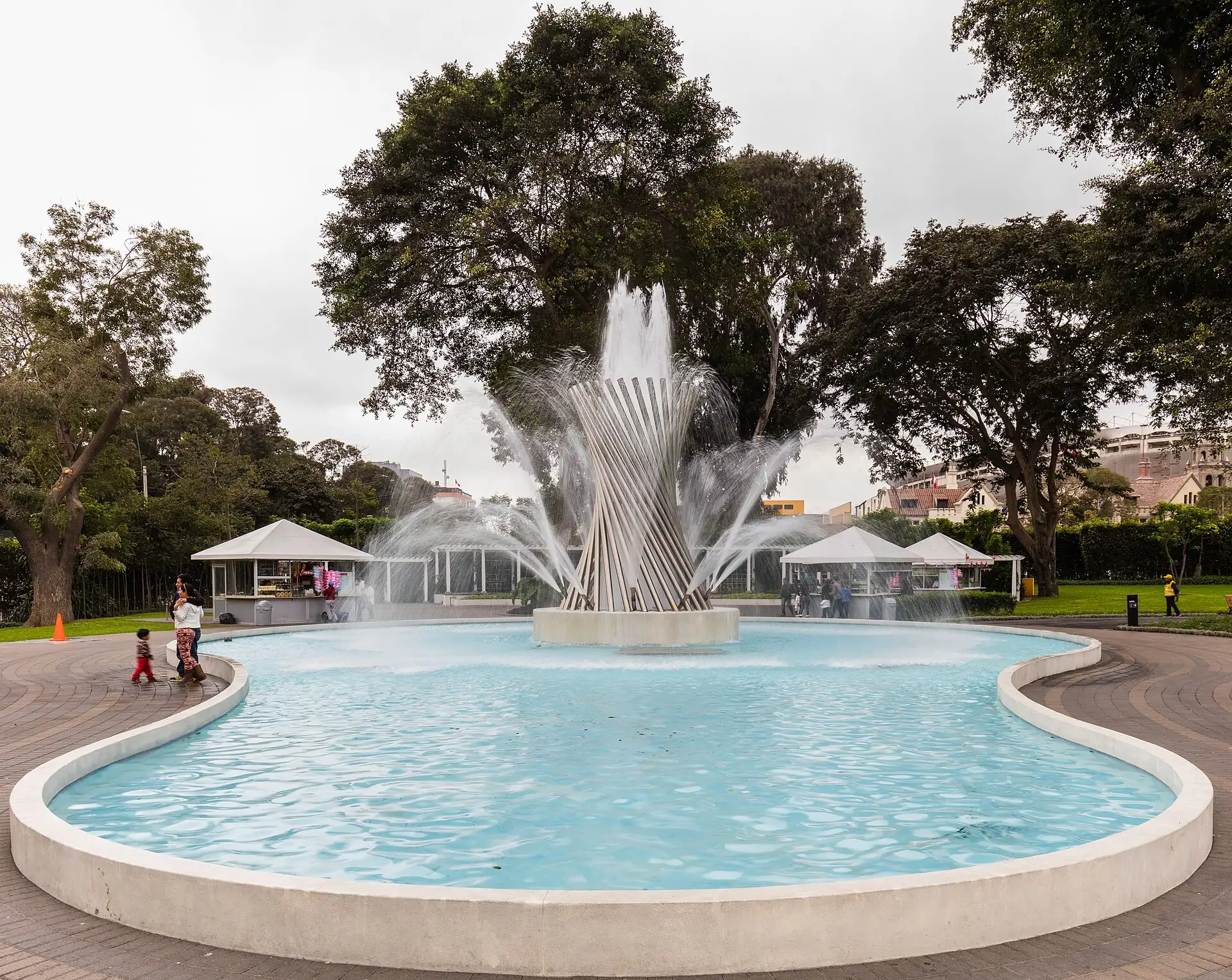
Flat cliff-top walk with the surf below; the best free hour in Miraflores.
- Time
- 1-1.5 h
- Best
- 08:00-10:00 or 16:30-sunset
- Cost
- Free
- 3
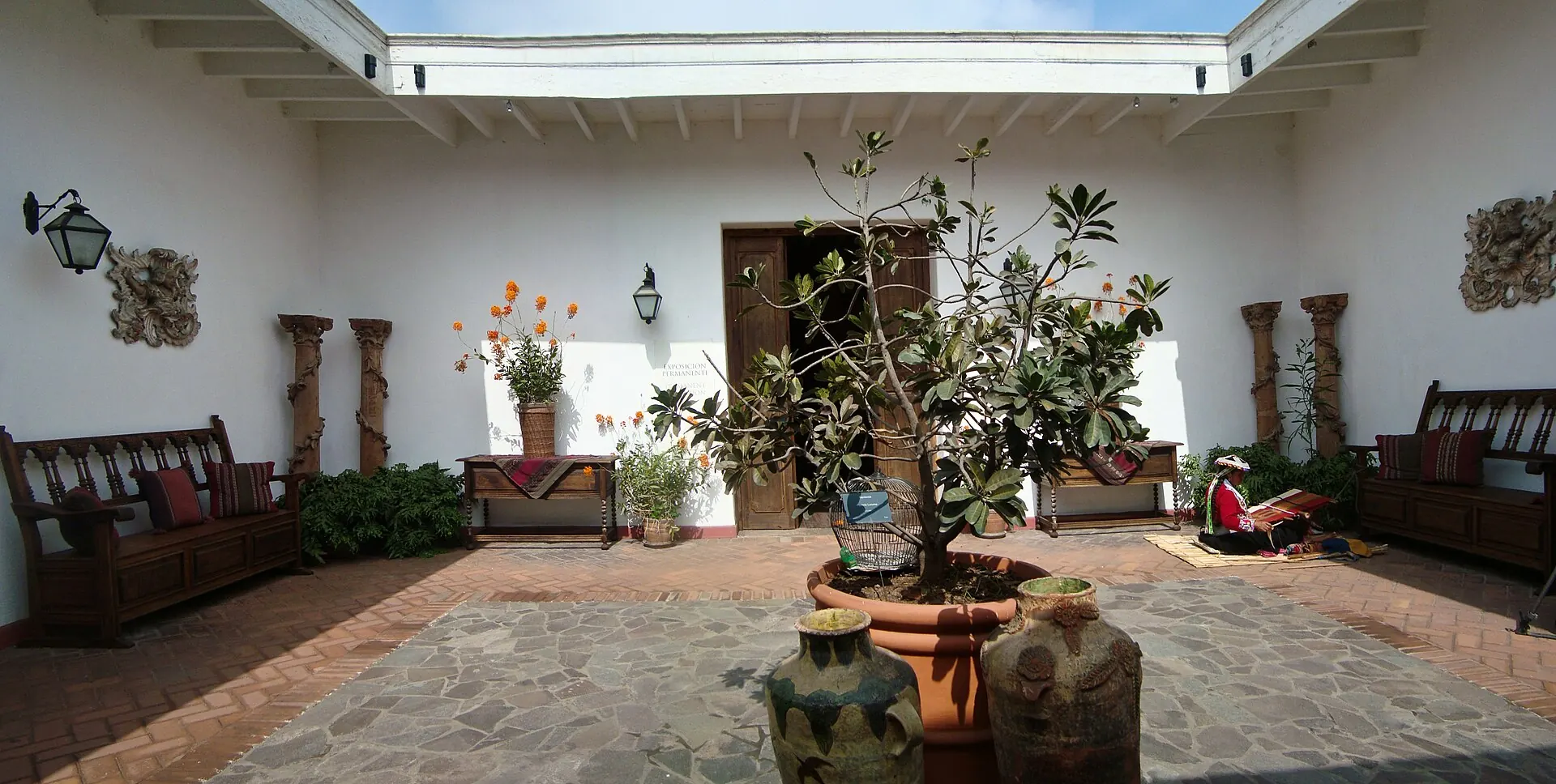
The clearest introduction to 3,000 years of Peruvian cultures, in a garden house.
- Time
- 1.5-2 h
- Best
- Morning, before tour groups
- Cost
- S/ 40-60
- 4
A 1,500-year-old adobe pyramid beside a restaurant terrace, in the middle of Miraflores.
- Time
- 1 h
- Best
- Morning guided tour
- Cost
- S/ 15-30
- 5
The historic centre in one morning
Plaza Mayor, cathedral and the San Francisco convent, then leave by 14:00.Plaza Mayor, cathedral and the San Francisco convent, then leave by 2:00 PM.
- Time
- 3-4 h
- Best
- 09:00-13:00
- Cost
- S/ 40-70 for tickets
- 6
The bridge, the galleries and the beach path; the best area for an evening out.
- Time
- 2-3 h
- Best
- 16:00-20:00
- Cost
- Free; drinks extra
- 7
Large plates of Peruvian home cooking in a corner house.
- Time
- 1.5 h
- Best
- Early evening
- Cost
- S/ 50-90
- 8
The easy cliff-side spot with a view of the Pacific.
- Time
- 1 h
- Best
- Sunset (clear months)
- Cost
- Free; drinks extra
- 9
Fruit, ají and a working-lunch menú a few blocks from Miraflores.
- Time
- 1 h
- Best
- 11:00-13:30
- Cost
- S/ 12-25
- 10
Pachacámac half day
Pre-Inca sanctuary south of the city; good if you have a fourth day.
- Time
- 4-5 h with the ride
- Best
- Morning
- Cost
- S/ 15-30 plus the ride
Good for…
Verdict is how well Lima works for that traveller, not how nice it is.
Easy to base in Miraflores; one day for the centre by car.
- 1Sleep in Miraflores — flat streets, 24 h desks and lunch in walking range.
- 2Lima in 3 days — the 3-day plan keeps one area a day.
- 3Uber or inDrive from the airport — fare shown before you ride, no taxi haggling.
One of the best cities in the Americas to eat in, at every price.
- 1Cebichería La Mar — lunchtime ceviche and tiradito.
- 2Isolina Taberna Peruana — home-style plates in Barranco.
- 3Mercado de Surquillo No. 1 — the market where cooks buy produce.
Menús at S/ 12-25, cheap app cars; rooms cost more than the region.
- 1Menú del día — a full lunch for S/ 12-25.
- 2Metropolitano bus — about S/ 3 to the centre, if you avoid rush hour.
- 3Free cliff walks — Malecón and the parks cost nothing.
Cliff sunsets, Barranco bars and long lunches.
- 1A Barranco dinner — lit villas and music nearby.
- 2
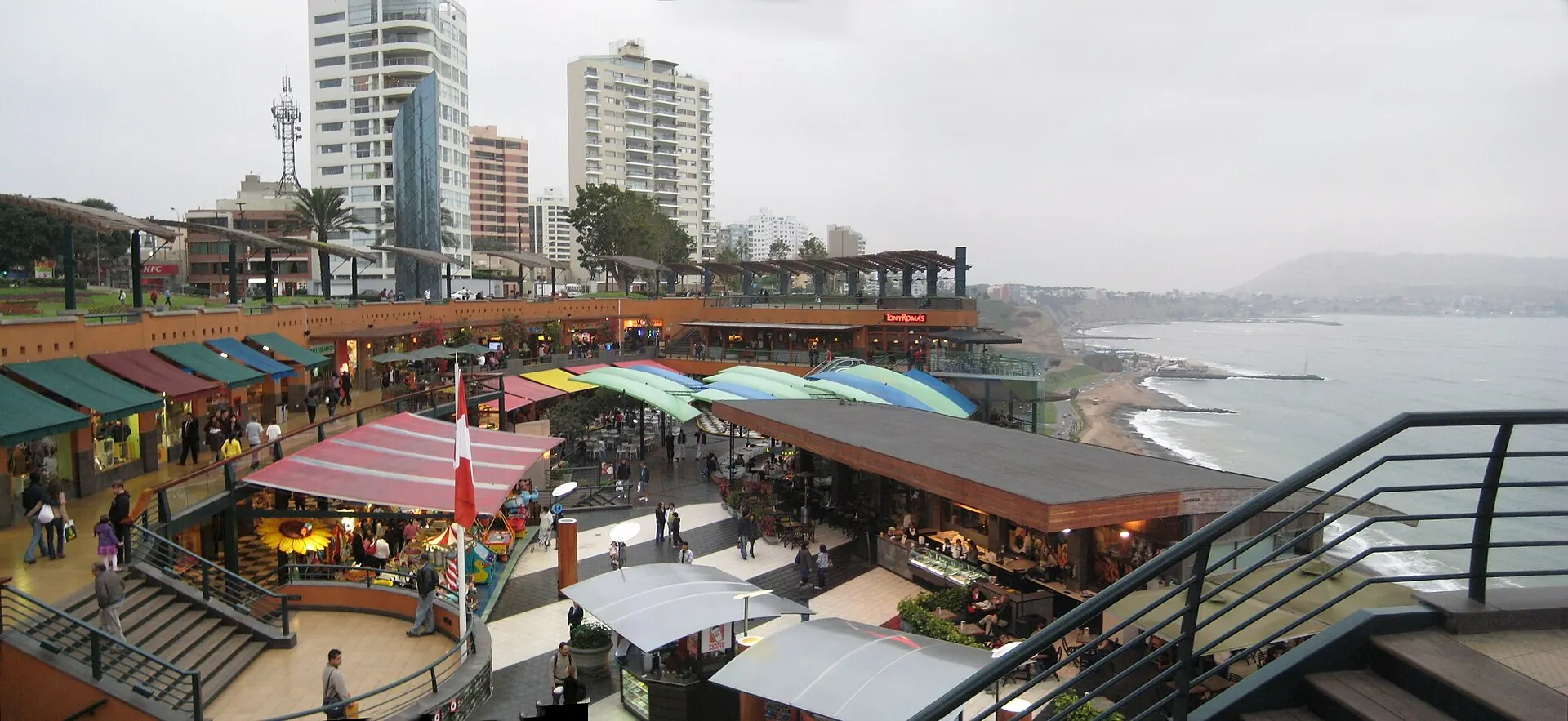 Larcomar — sunset over the sea, clear months only.
Safe by day in the cliff districts; use cars at night.
- 1Hostel in Barranco — easy to meet people; bars nearby.
- 2Cooking class — a group meal on day one.
Parks and museums work; distances and traffic tire children.
- 1
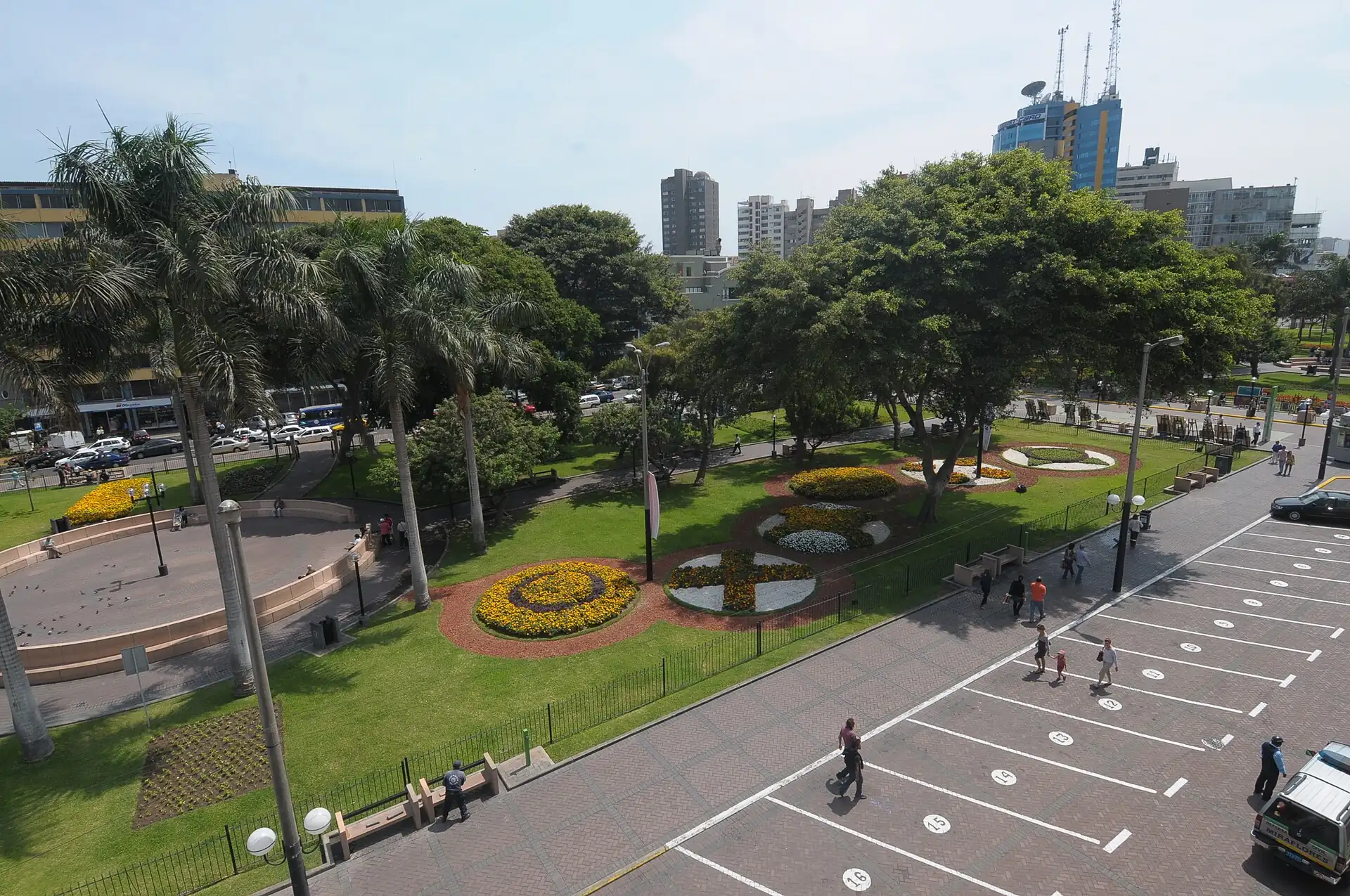 Parque Kennedy — cats, ice cream and space to run.
- 2Magic Water Circuit — an evening fountain show for kids.
Book door-to-door cars; the centre pavements are hard.
- 1A Miraflores hotel with a lift — flat streets and parks.
Top restaurants and boutique hotels.
- 1Tasting menu in Barranco or San Isidro — book weeks ahead.
Miraflores and the malls are feasible; the centre and Barranco are not.
- 1Larcomar and Parque del Amor — paved and level in parts.
Tours and classes: book or skip
Book through the hotel or an operator with written inclusions and a cancellation policy. Prices per person, group tour unless stated.
| Tour or class | Verdict | Typical price | Why | Check before paying |
|---|---|---|---|---|
| City tour of the historic centre | maybe | S/ 80-180 | Useful for context; the centre is easier with a guide. | Group size, entry fees included, a drop-off away from the centre at 14:00.Group size, entry fees included, a drop-off away from the centre at 2:00 PM. |
| Ceviche and pisco class | book | S/ 180-350 | Half a day; you can cook the dish at home afterwards. | Hands-on, small group, market visit included. |
| Pachacámac half-day tour | book | S/ 120-250 | Transport is the hard part. | Entry, guide and a return by 13:00.Entry, guide and a return by 1:00 PM. |
| Paracas and Ballestas day trip | skip | S/ 250-450 | About 8 hours on the road for a 2 h boat; better as an overnight. | If you do go, check the boat and park fees. |
| Barranco street art and pisco walk | maybe | S/ 80-150 | Gives context to the murals and bars. | Group under 12; a mix of stops. |
| Surf lesson | maybe | S/ 80-150 | Gentle waves and equipment included. | Instructor ratio and wet suits. |
| Paragliding tandem | maybe | S/ 200-350 | A cliff-side flight over Miraflores. | Licensed pilot; insurance; low-cloud refund policy. |
What each season brings
Summer
Dec-Apr
Sun, warm sea, cliff parks full, beaches busy.
Watch: Strong sun and higher prices; book ahead.
Autumn
May-Jun
Fewer crowds, calm days between clouds, good for museums and food.
Watch: Grey skies begin; layers.
Winter
Jul-Sep
Grey garúa, cool nights, a good time for museums, Andean trips and Fiestas Patrias.
Watch: Damp and low views; Fiestas Patrias crowds.
Spring
Oct-Nov
Skies begin to clear; the Señor de los Milagros processions.
Watch: Streets in the centre close on procession days.
Photo spots and the light
Light times are for clear days; in the grey season the cliff is often lost in cloud.
| Spot | Best light | Tip |
|---|---|---|
| The embrace sculpture and the cliff | 17:30-sunset (Dec-Apr) | Shoot from the side paths so the sea is in view. |
| Puente de los Suspiros | Late afternoon | Walk down toward the beach path and look back up at the bridge. |
| Huaca Pucllana | 09:00-11:00 | The adobe bricks look best in low side light. |
| Lima Cathedral | 09:00-10:30 | The Plaza Mayor faces the morning sun; balconies of the Archbishop's Palace. |
| Larcomar terraces | Sunset | Walk to the outermost terrace over the cliff. |
| Barranco murals | Morning | Quiet streets before the bars open. |
Lima travel FAQ
Answers are 2026 desk estimates; fares and rules marked (check) change.
Is Lima safe?
Miraflores and Barranco are used to visitors and safe by day; the risk is theft of phones and bags. Use app cars at night, avoid the centre after dark and never walk the beach paths at night.
How much is a taxi from the airport to Miraflores?
About S/ 60-100 by app car, 60-100 minutes depending on traffic; use the official desk or an app, not touts.
Do I need cash?
Yes for markets, small cafés, taxis and small museums; keep S/ 100-200 in small notes. Cards work in hotels, malls and most restaurants.
Is the tap water safe?
No. Drink bottled or filtered water. Ice in restaurants is usually from treated water.
How many days do I need?
Two full days for Miraflores, Barranco and one morning in the centre; three with Pachacámac or a slow day.
When is the best time to go?
December to April for sun; May to November is grey and damp but fine for food and museums.
Is the historic centre worth it?
Yes for one morning. Go by car, see the plaza and the San Francisco convent, and leave by 14:00.Yes for one morning. Go by car, see the plaza and the San Francisco convent, and leave by 2:00 PM.
Uber, inDrive or a street taxi?
Use an app. Street taxis are not metered; if you take one, agree the fare first and never hail one at night.
Can I drink the pisco sour?
Yes. It has raw egg white; ask for it without if you prefer.
What should I wear?
Layers: a light jacket for the grey season and sun cream for summer. Shorts are fine; cover shoulders in churches.
Do I need a visa?
Many nationalities enter visa-free for up to 90 days; check the rule for your passport.
Should I worry about altitude in Lima?
No, Lima is at sea level. Altitude matters only if you continue to Cusco or Arequipa.
More to see and doSee & do · Learn & work · Rain & heat · Free things
Free things to do
Sights in Lima that cost nothing to enter. Each is described under Places or More sights; extra costs inside are marked there.
See & do
24 of 24
- Museums
Pre-Columbian ceramics and gold in an 18th-century house, plus a garden restaurant. 90 minutes.
Pueblo Libre · Daily, about 09:00-22:00 (check)Daily, about 9:00 AM-10:00 PM (check) · S/ 40-60(check)
- Citadel & old city
A stepped adobe pyramid from about AD 200-700 in the middle of Miraflores, visited on a 45-minute guided walk.
Miraflores · Most days, guided visits (check) · S/ 15-30(check)
- Colonial
On the Plaza Mayor; Pizarro's tomb is said to be in a side chapel. Add the Archbishop's Palace next door.
Historic centre · Daily, check the season · about S/ 30(check)
A yellow baroque convent with a library and crypts with thousands of bones; a guided tour of about 40 minutes.
Historic centre · Daily, guided visits (check) · about S/ 15-25(check)
- Neighbourhoods
A short wooden bridge on the way down to the beach path. Pair with the galleries and the bars.
Barranco · Always open · Free(check)
Parque del Amor and the Malecón
Lakes & parksCliff-top park with a large sculpture of an embrace and views of the surf; the walk along the Malecón is flat.
Miraflores · Always open; daylight · Free(check)
- Lakes & parks
The central park of Miraflores with resident cats, craft stalls in the evening and cafés around.
Miraflores · Always open · Free(check)
- Views
A mall built into the cliff with terraces over the sea; it is the easy option for sunset or a rainy afternoon.
Miraflores · Shop hours · Free(check)
Museo de Arte de Lima (MALI)MALI
MuseumsLarge art museum in the Palace of the Exhibition; a cool escape with a café.
Historic centre · Check days; usually closed Monday · S/ 30-35(check)
Museo Nacional de Arqueología, Antropología e Historia del Perú
MuseumsThe national museum for Chavín stone carvings and the Tello obelisk; a companion to Larco.
Pueblo Libre · Check · S/ 10-30(check)
Lugar de la Memoria (LUM)
MuseumsA museum on the years of political violence, 1980-2000, on the cliff edge. Heavy, well presented, in Spanish and English.
Miraflores / San Isidro · Check; usually closed Monday · Free (check)(check)
Museo Pedro de Osma
MuseumsViceroyalty art and silver in a garden mansion; quiet and rarely full.
Barranco · Check · S/ 20-30(check)
MATE, Museo Mario Testino
MuseumsPhotography by the Peruvian photographer in a Barranco villa.
Barranco · Check; closed Monday · S/ 30-40(check)
Plaza Mayor and Palacio de Gobierno
ColonialThe main square with the cathedral, the government palace and the wooden balconies of the Archbishop's Palace.
Historic centre · Changing of the guard about 12:00Changing of the guard about 12:00 PM · Free(check)
Magic Water Circuit (Parque de la Reserva)
Lakes & parksLit fountains and a laser show; a family evening. Go by car, return by car.
Cercado · Evenings, closed some weekdays (check) · about S/ 4-10(check)
Pachacámac
Citadel & old cityPre-Inca and Inca sanctuary with a site museum; half a day by car. See day trips.
Lurín, 31 km (19 mi) southLurín, 19 mi (31 km) south · Check · about S/ 15-30(check)
Ceviche and cooking class
ClassesHalf a day: a market visit, ceviche, a pisco sour and a dessert. Book a small group.
Miraflores and Barranco · Morning and afternoon sessions · S/ 180-350(check)
Pisco tasting
Food toursCompare quebranta, italia and acholado piscos with a guide; often bundled with a sour class.
Barranco and Miraflores · Afternoon and evening · S/ 100-250(check)
Peña criolla dinner and show
Shows & musicDinner with Afro-Peruvian dance and music; book ahead and confirm what is included.
Barranco · Evenings (check) · S/ 150-350(check)
Surf lesson
SportWet suits are needed all year; the water is cold. Lessons include the board.
Miraflores (La Pampilla, Makaha) · Morning · S/ 80-150(check)
Paragliding above the cliff
ActiveTandem flights from the cliff with a licensed operator; cancelled in low cloud.
Miraflores · Daytime in clear weather · S/ 200-350(check)
Cycling the Malecón
ActiveA flat cliff-top path of about 8 km (5 mi) with views of the sea.A flat cliff-top path of about 5 mi (8 km) with views of the sea.
Miraflores to Barranco · Morning · S/ 20-40 an hour(check)
Barranco street art walk
CraftsMurals, galleries and the old bridge; a good first afternoon.
Barranco · Daytime · S/ 80-150 tour or free on foot(check)
Chocolate or coffee workshop
ClassesHands-on class in cacao or coffee; useful on a grey day.
Miraflores · Afternoon · S/ 100-200(check)
- Booking
- Dinner shows, classes and tours sell out in December-April and around Fiestas Patrias: book a few days ahead.
Learn & work
| What | Where | Cost | Note |
|---|---|---|---|
| Spanish (language school) | Language schools in Miraflores and San Isidro | About US$ 200-400 a week for group classes (check) | Private tutors and online lessons are cheaper; Peruvian Spanish is slow and clear.(check) |
| Peruvian cooking classes | Miraflores, Barranco, San Isidro | S/ 180-500 a session | Multi-day courses exist; see Do. |
| Surf lessons | Miraflores and Barranco beaches | S/ 80-150 a lesson | Several schools rent boards and wet suits. |
| Dance (salsa, marinera, Afro-Peruvian) | Studios in Miraflores and Barranco | S/ 40-100 a lesson | Peñas often run a dance lesson before the show. |
Working here
- Tourist entry
- Most visitors get 90 days visa-free (up to 183 days a year in some cases); paid work is not allowed on the tourist stamp.
- Work permit
- A work visa needs an employer, a contract and legalised documents; the process takes weeks. Check the Migraciones site.
- Teaching English
- Language institutes hire foreigners; a TEFL certificate helps. Check that the school offers a contract before you arrive.
- Remote work
- Peru has no dedicated digital-nomad visa (check); remote work on a tourist stamp is a grey area. Cafés and co-working in Miraflores and Barranco are plentiful and fast.
Rain-day and heat-day plan
Rain day
Rain is rare; the problem is grey cloud and damp from May to November. Have an indoor plan for days when the cliff view is lost.
- 01Museo Larco — Galleries and a covered restaurant; 90 minutes.
- 02Museo de Arte de Lima (MALI) — Large art museum in Parque de la Exposición; check the closing day.
- 03Lugar de la Memoria (LUM) — Memory museum on the Costa Verde; heavy but important.
- 04Larcomar — Indoor cliff-side mall with cafés and shops.
Heat day
From December to April the sun is strong from 11:00 to 15:00: outdoors before 10:30 and after 16:00, indoors between.
- 08:00Parque del Amor and the Malecón — Cliff-top walk in cooler air; done by 10:00.Cliff-top walk in cooler air; done by 10:00 AM.
- 10:00Huaca Pucllana — Guided tour on the pyramid; little shade.
- 12:30Cebichería La Mar — Lunch with air conditioning.
- 16:30Puente de los Suspiros — Barranco light and the descent to the beach path.
Day-trips and nearby
Places you can reach from Lima in a day or with one night away, with the route and what it costs. Door to door, not ride time.
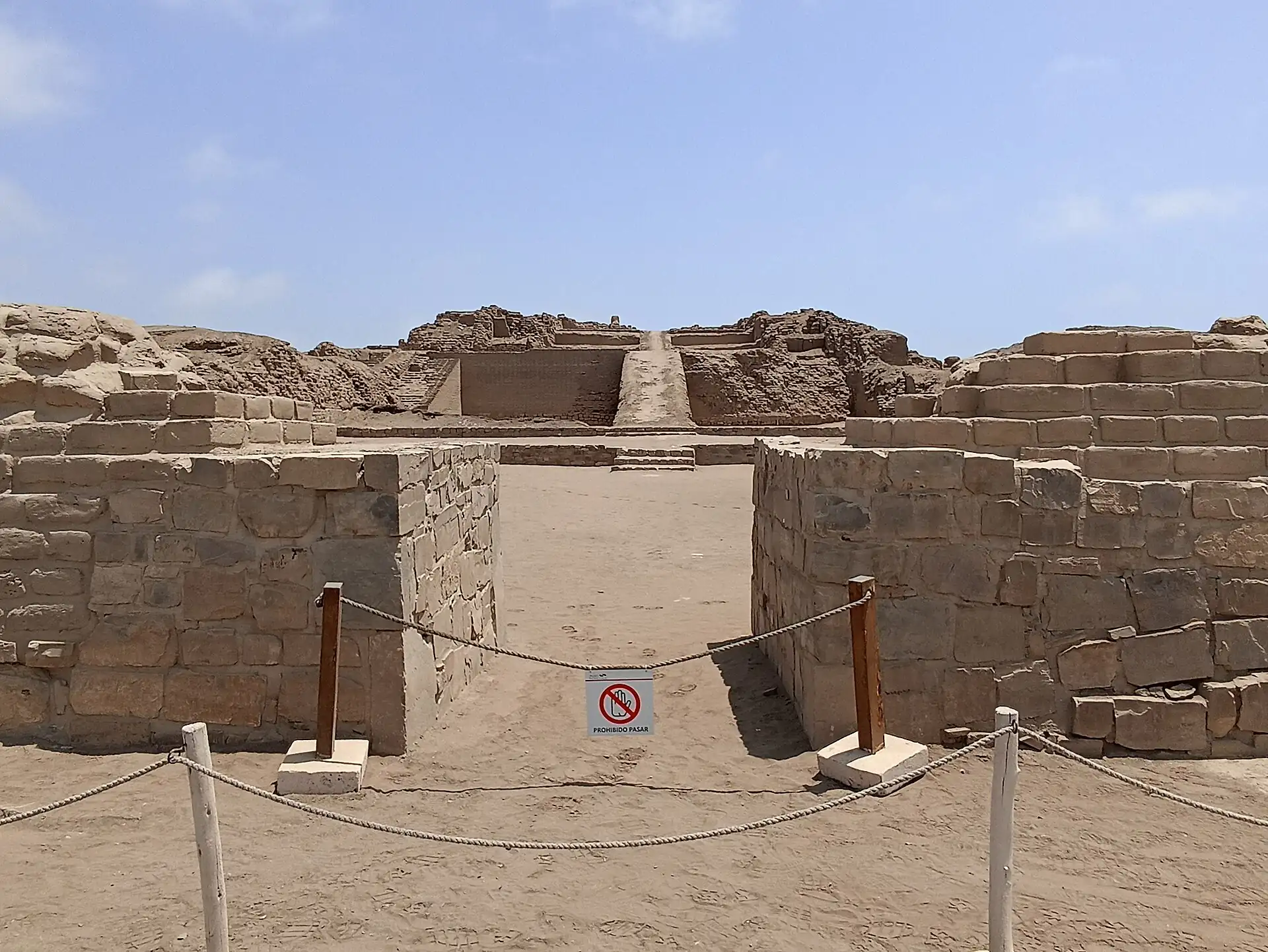 Photo: Jose Antonio Huaman Juarez, CC BY-SA 4.0
Pachacámac
goCar about 1 h each way
Pre-Inca temple site south of the city; go early, little shade.
- Time
- Half day
Paracas and the Ballestas Islands
overnightBus or car about 4 h each way
Long road; the boat trip often leaves in the morning.
- Time
- Overnight is better
Callao and La Punta
goCar about 30–45 min
Port district and seafront; take a car, do not walk from the port.
- Time
- Half day
Go next
Cusco and Machu Picchu
goDoor to door: About 4-5 h to Cusco
Flight about 1 h 30 min, then a train or road to the valley
Spend a night in Lima before altitude if you can; keep the big bag at the Lima hotel.
Door to door: 4.5-5.5 h
Bus about 4-5 h
Dune buggies and pisco bodegas; combine with Paracas.
Arequipa
goDoor to door: 3-4 h by air
Flight about 1 h 40 min; bus about 15-17 h
Colonial city under a volcano; the flight is worth it.
Eat & sleepWhere to eat and which area to sleep in
Eat & sleep
Where to eat and which area to sleep in
Eat
A short list of places worth crossing the city for, each with how to get a seat.
Restaurant finder: filter every place to eat in Lima →
Vegetarian-friendly score
3.0 / 5 · Good
- Country diet noteOur country guide rates vegetarian eating as easy.2 / 2
- Places to eat in this guide1 of 4 places with a known answer are vegetarian-friendly, 3 partly.0.94 / 1.5
- Budget eating lines0 vegetarian lines in "Eat by budget".0 / 0.6
- Meat-free national dishes2 meat-free dishes in the country food list.0.2 / 0.4
- Dedicated vegetarian kitchens0 mentions of vegetarian restaurants, Buddhist or fasting kitchens.0 / 0.5
Country note: Easy in Lima, Cusco and Arequipa; soups often use meat stock.
Vegetarian places near me →Make a diet card →
How we score
- Country diet note (up to 2): easy 2, workable 1, mixed 0.75, hard 0; no note 0.5.
- City places to eat (up to 1.5): 1.5 × (vegetarian-friendly + half of partly friendly) ÷ places with a known answer; needs 3 or more known places.
- Budget eating lines marked vegetarian (up to 0.6): 0.2 each.
- Meat-free national dishes (up to 0.4): 0.1 each.
- Dedicated vegetarian kitchens mentioned — Buddhist chay, shōjin ryōri, Jain, fasting food, vegan cafés (up to 0.5): 0.1 each.
- Total rounded to the nearest half point, 0 to 5. Built from our own pages only, not from reviews.
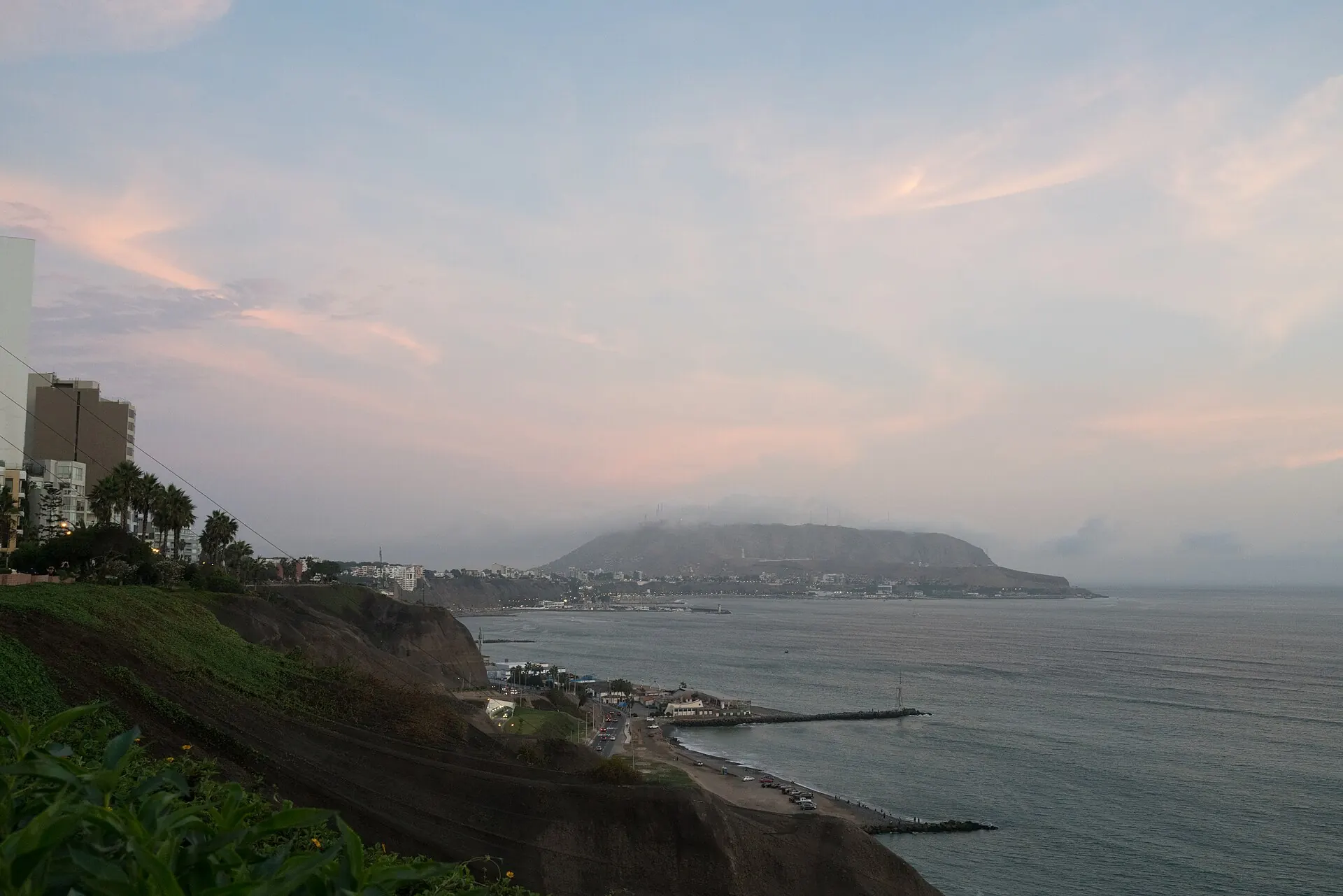
Eating and drinking guideEat by budget · Drink
Before you sit down to eat
Short version; full text linked
- Queues and hours
- Per person, one dish or one meal, 2026 estimate in soles. More →
Eat by budget
Under S/ 30 a meal
| Where | Order | Area | Price | Note |
|---|---|---|---|---|
| Mercado de Surquillo No. 1 | Market lunch (menú) | Surquillo | S/ 12-25 | Set lunch with soup, main and a drink; go before 14:00.Set lunch with soup, main and a drink; go before 2:00 PM. |
| La Lucha Sangucheria | Chicharrón or roast pork sandwich | Miraflores | S/ 18-28 | Fast, cheap and filling; queue at lunch. |
| Pollería (rotisserie chicken) | Pollo a la brasa with fries | Everywhere | S/ 25-45 for a quarter | The national comfort food; pick a busy shop.(check) |
Dishes to know
| Dish | What it is | Where to look | When | Price |
|---|---|---|---|---|
| CevicheCeviche | Raw white fish cured in lime with onion, chilli and sweet potato; the juice is leche de tigre | Cevicherías; lunch only | 12:00-16:0012:00 PM-4:00 PM | S/ 40-80 |
| Lomo saltado | Stir-fried beef, onion and tomato with fries and rice; a Chinese-Peruvian dish | Everywhere | Lunch and dinner | S/ 25-50 |
| Ají de gallina | Shredded chicken in a creamy yellow chilli sauce with rice and potato | Home-style restaurants | Lunch | S/ 20-40 |
| Anticuchos | Grilled beef-heart skewers with potato and corn | Street carts and grills, evening | Evening | S/ 12-25 |
| Causa | Cold layered potato terrine with chicken, tuna or crab | Restaurants | Starter | S/ 20-40 |
| Picarones | Ring-shaped sweet potato and squash fritters with syrup | Street stalls and dessert shops | Afternoon | S/ 8-15 |
| Chifa | Chinese-Peruvian cooking: fried rice, wontons, saltado dishes | Chifa restaurants | Lunch and dinner | S/ 25-50 |
- Ceviche is a lunch dish: fish is fresh in the morning, and many cevicherías close by 17:00.Ceviche is a lunch dish: fish is fresh in the morning, and many cevicherías close by 5:00 PM.
- Order the menú del día at lunch in local places: a full meal for S/ 12-25.
- A cover or service charge of 10-18% is sometimes added: check the bill and menu footnote.
Drink & nightlife
| Where | What | Until | Note |
|---|---|---|---|
| Barranco bars (Bajada de Baños and Avenida Grau) | Bars, live music, rooftop terraces | About 02:00About 2:00 AM | The main night out; go in a group and take an app car home. |
| Miraflores bars near Parque Kennedy and Calle de las Pizzas | Cocktails, beer, restaurants | About 01:00About 1:00 AM | Tourist prices; fewer risks than the centre. |
| Hotel bars (Country Club, Belmond and others) | Classic pisco sour bars | About 23:00About 11:00 PM | A calm first-evening drink; prices are high. |
| Peñas criollas | Dinner with Afro-Peruvian and criolla music | About 01:00About 1:00 AM | Book ahead; show, dinner and drinks are often bundled. |
| Craft beer bars | Local breweries and taprooms | About 00:00About 12:00 AM | Good for a quiet evening; several are in Barranco and Miraflores. |
By style
| Style | What | Where | Price | Until |
|---|---|---|---|---|
| Pisco sour | Pisco, lime juice, syrup, egg white, bittersPeru and Chile both claim pisco; here it is a national drink and has its own day in the first week of February. | Bars and restaurants everywhere | S/ 25-40 | Late |
| Chilcano | Pisco with ginger ale and limeLighter and longer than a sour. | Bars and restaurants | S/ 20-35 | Late |
| Chicha morada | Purple-corn drink with pineapple and spices; no alcoholOrder it with lunch. | Restaurants and markets | S/ 6-12 | Daytime |
| Beer | Cusqueña, Pilsen Callao, CristalBig bottles are for sharing. | Everywhere | S/ 10-20 | Late |
Rules that bite
- Never leave a drink unattended in a bar, and use an app car home rather than walking between districts at night.
- Drinking in the street is not allowed; keep to bars, terraces and the cliff parks in daylight.
- Drink-driving limits are strict and taxis are cheap: do not drive.
Sleep
Pick the area first: it decides your walk home at night and your first morning.
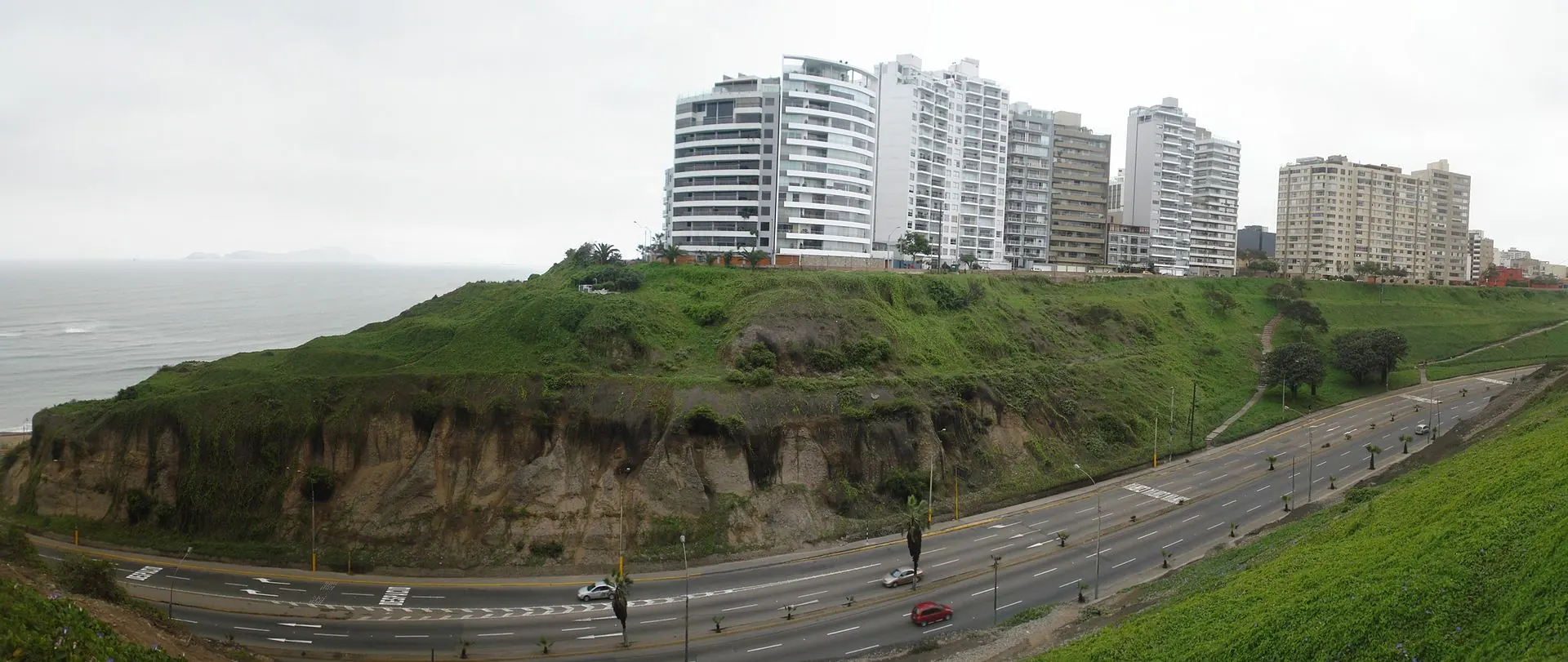
Which neighborhood fits you
Three questions, one recommendation, with the reasons.
Your best fit
- Parks, cliff path, Huaca Pucllana and ceviche lunches on foot.
- Hotels with 24 h desks are common; app cars run all night.
Watch out: The most expensive of the sleep areas; cheaper rooms are further inland.
Next best: Barranco
Built from our 1–5 desk scores per area; your answers stay in this browser.
More on sleepingSleep by budget · Your area · With kids
Sleep by budget
| Band | Price | Where | Room types | What to expect |
|---|---|---|---|---|
| budget | S/ 40-70 dorm bed; S/ 120-220 private room | Miraflores and Barranco | Hostels and guesthouses | Small rooms, shared bathrooms at the low end, breakfast sometimes included. |
| mid | S/ 250-550 | Miraflores | Business-style hotels and boutique hotels | Lift, breakfast, a 24 h desk and often a view; safe streets on foot. |
| splurge | S/ 700-1,800+ | Miraflores cliff, San Isidro, Barranco villas | Grand hotels and design hotels | Pools, spas, sea views; taxes and service are often added. |
| mid | S/ 200-450 | Apartments in Miraflores | Serviced apartments | Kitchen and washer; self check-in is common; check the security at the door. |
Booking checks
- Choose a hotel with a 24 h desk: many flights land late and the city is not one to wander at night.
- Ask for a room away from the street: Avenida Larco and Barranco bars are loud on weekends.
- Check whether rates include the 18% tax; foreign visitors on tourist stays are often exempt from the tax on hotel rooms (check the hotel policy).
- Look at the cloud forecast from May to November: sea views may be lost in the mist.
Which area is yours
First-timers: parks, cafés and restaurants on foot, quiet streets and a car at the door; choose a hotel with a 24-hour desk.
02Barranco
Bar-and-gallery nights and a slower pace; steps and hills, a 20-minute ride from the airport road and Miraflores.
Areas are in our default order until you tick a priority.
Scores are 1-5 desk judgements per priority (2026).
With kids
- Cliff-top parks are fenced and flat: Parque del Amor and Parque Kennedy (with its resident cats) are easy with a stroller on the paved paths.
- Parque de la Reserva has a Magic Water Circuit of illuminated fountains in the evening (check opening days and the price).
- Larcomar has an outdoor play area and views of the sea; Museo Larco has a garden where children can sit.
- Cars often have no child seats: ask your hotel to book one with a seat, or bring a booster.
- Keep kids out of the sun from 11:00 to 15:00 from December to April; on grey days, warm layers matter more than sun cream.Keep kids out of the sun from 11:00 AM to 3:00 PM from December to April; on grey days, warm layers matter more than sun cream.
PracticalMoney, essentials, safety and the pocket card
Practical
Money, essentials, safety and the pocket card
Money
What a day costs at three comfort levels, and how to pay.
- Budget
- S/ 80–150 excl. bed / day
- Mid
- S/ 150–350 excl. bed / day
- High
- S/ 350+ excl. bed / day
- Transit card
- No transit card needed for a first visit: ride-hailing cars and walking inside a district. The Metropolitano bus and Metro lines need their own cards.
- Cash rule
- Keep S/ 100 in small notes; use ATMs inside banks or malls, and not on the street at night.
More on moneyCosts · Budget · Buy
What things cost
- Ceviche lunch, per personS/ 40–80
- Pisco sourS/ 25–40
- Bottle of water, shopS/ 2–4
- Ride-hailing car across a districtS/ 8–20
- Ride-hailing car Miraflores to the centreS/ 25–45
- Car from the airport to MirafloresS/ 60–100
Trip budget
| Hotel double room1 × 4 nights × PEN 380 | PEN 1,520 |
| Food, local transport, entries2 × 4 days × PEN 300 | PEN 2,400 |
| Airport car, both ways1 × PEN 160 · one car per 4 people | PEN 160 |
| eSIM or tourist SIM2 × PEN 60 | PEN 120 |
| Buffer 10%Price creep, a taxi you did not plan, one splurge | PEN 420 |
| Trip total≈ PEN 578 per person per day, bed included | PEN 4,620 |
2026 estimate in soles; flights, visas and tours excluded. Your choices stay in this browser.
Buy
- Bargaining
- Haggle at craft markets and with street sellers: start at about half and settle near 60-70%. Do not haggle in malls, supermarkets, cafés and restaurants, or with taxi apps.
- Fixed-price check
- Before you buy alpaca in a market, look at the price tag in a fixed-price shop such as Dédalo in Barranco or a mall store; that is your ceiling. Check the label: a lot of "alpaca" is acrylic.
Markets and shopping streets
| Where | What | When | Haggle | Note |
|---|---|---|---|---|
| Mercado Indio (Avenida Petit Thouars, Miraflores) | Crafts, alpaca knitwear, ceramics, silver | Daily, about 10:00-20:00 (check)Daily, about 10:00 AM-8:00 PM (check) | hard | Prices for tourists are high; go with a budget and walk the whole row before buying. |
| Parque Kennedy craft stalls | Paintings, jewellery, small souvenirs | Evenings, most days (check) | light | Small pieces; carry them, do not ask for shipping. |
| Mercado de Surquillo No. 1 | Produce, fish, ají peppers, food stalls | Morning to mid-afternoon; quiet on Sunday afternoon | no | Buy food and spices; sealed ají paste and quinoa travel well. |
| Dédalo (Barranco) | Design objects, ceramics, textiles | Shop hours; closed Monday (check) | no | Fixed prices, better quality, a good gift stop after the bridge. |
Shops by what they sell
| For | Where | Hours | Note |
|---|---|---|---|
| Alpaca and pima cotton clothing | Mercado Indio, Larcomar and Avenida Larco shops, Barranco boutiques | About 10:00-21:00 | Ask for the fibre content; baby alpaca and pima cotton cost more and are worth it. |
| Pisco, chocolate, coffee | Supermarkets (Wong, Vivanda) and Surquillo market | Long hours | Supermarket prices are fixed and cheapest. A 750 ml pisco can go in checked bags only. |
Changing money
| Where | Verdict | Why |
|---|---|---|
| Bank ATMs inside banks or malls | use | Best rate and a receipt. Withdraw in daylight. |
| Licensed casas de cambio (Miraflores, Larcomar) | ok | Fair rate for US dollars; passport may be needed. |
| Street changers (cambistas) in vests | avoid | Counterfeit note and sleight-of-hand tricks are known; a bad rate is likely. |
ATMs
- Per withdrawal
- Caps vary by bank, often in the range of S/ 700-1,200 per withdrawal; check before you go.
- Fees
- Local fee and your own bank fee both apply; decline dynamic currency conversion and choose the local currency.
Essentials and accessEssentials · Access
Essentials
- Plugs & power
- 220 V; type A, B and C sockets (many take both flat and round pins). Bring an adapter.
- Toilets
- Cafés, malls, hotels and museums; carry tissues.
- Opening hours
- Lunch is the main meal, 13:00–15:00; many restaurants close between lunch and dinner. Museums often close one weekday.Lunch is the main meal, 1:00 PM–3:00 PM; many restaurants close between lunch and dinner. Museums often close one weekday.
- Health
- Traveller's stomach from street food; sun on cliff-top parks; sea-level city but bring insurance with medical and evacuation cover if you continue to altitude.
- Accessibility
- Miraflores and Barranco have steps and high kerbs; the historic centre pavements are crowded and uneven; newer museums and malls are step-free.
- Laundry
- Hotels and neighbourhood laundries do same- or next-day service, priced by the kilo.
Pack
- Layers: a fleece or jacket for the damp cool of May–November
- Comfortable walking shoes for steep cliff paths
- A day pack you can wear in front
- Sun cream for December–April
Accessibility
Lima is hard on wheels except in the newer districts. Miraflores has kerb ramps at some corners and step-free malls; the historic centre pavements are narrow and crowded and many old buildings have steps.
- Pavements
- Wide in San Isidro and Miraflores; narrow, uneven and busy in the centre.
- Getting around
- App cars are the step-free option: book a larger car for a folding chair. The Metropolitano has ramps at stations but crowds at peak times.
- Hotels
- Modern hotels have lifts; small Barranco and centre hotels often do not. Ask for a photo of the entrance.
- Toilets
- Accessible toilets in malls, Larcomar and large hotels; rare elsewhere.
Sights, step-free or not
| Parque del Amor and the Malecón | step-free | Paved paths on the cliff top; the beach steps are not accessible. |
| Museo Larco | step-free | Ground-level galleries and a garden; ask staff about a lift. |
| Lima Cathedral | with help | Steps at entrances and uneven floors inside. |
| Puente de los Suspiros | with help | Cobbles and a steep path to the beach. |
Survive
Safety basics, the lines not to cross, and practical habits that save the day.
Safety
- Phone and bag snatching happens in the historic centre and on Miraflores streets: keep phones out of sight near the roadside.
- Cliff-top parks are fenced; stay behind the barriers, and do not walk on the beach paths at night.
- Earthquakes: note your hotel's exits and follow official instructions.
- Emergency: 105 police, 116 fire, 106 ambulance (SAMU).
Red lines
- Do not walk between districts at night, and avoid La Victoria and the streets around Parque Universitario after dark.
- Ask before photographing people; many expect a small payment in the centre.
- Do not accept a taxi that already carries a passenger.
Practical
- Toilets: cafés, malls and museums; carry tissues.
- Tap water is not for drinking; use bottled or filtered water.
More on staying safeStay safe · Stay healthy · Safety map · Solo & women · Etiquette · Cope · Scams
After dark, by area
3 flagged areas
- Avoid after dark
La Victoria and Parque Universitario area
Avoid after dark- Take care
Day = about 07:00-19:00. What to watch in each area, day and night →
Scams and red flags
Walk away if you see these
- Street taxis that name a high price or take a long route: use a ride-hailing app.
- 'Helpful' strangers who offer a taxi at the airport: use the official desk or your app.
- Distraction thefts and snatching near the historic centre and on busy Miraflores corners: keep phones and cameras out of sight.
- Change short-changed with large notes: count your notes.
Stay safe
Crossing the road
- 01Cross at signalled crossings and wait for the green: drivers rarely stop for pedestrians.
- 02Look for motorbikes and cyclists at corners; they ride between lanes.
- 03On the Malecón bike path, keep to the walking side.
- 04Avoid crossing avenues at night; use footbridges (puentes peatonales) where signposted.
Hustles specific to this city
| Hustle | Where | The tell | What to do |
|---|---|---|---|
| Street taxis at the airport | Airport arrivals | Touts in the hall offering a cab to a "good hotel" | Use the official desk or your app car. |
| Money changers in vests | Parque Kennedy and central streets | A quick swap or a calculator | Use an ATM or a licensed exchange office; count the notes yourself. |
| Distraction theft | Historic centre, buses, Miraflores corners | Someone spills something or asks for help with a map while another takes your bag | Keep the bag in front and phone in a zipped pocket. |
| Quick-service tour touts | Plaza Mayor | An unofficial guide at the gate offering a tour "for the group" | Book a tour at your hotel or use the official desk. |
| Fake police or taxi drivers | Night streets | A person asking to see your passport or cash in a taxi | Do not hand your wallet or passport to anyone; ask for the tourist police at the station. |
- Police
- 105. Report thefts at the Miraflores tourist police or any comisaría for the insurance report; take a translator.
- Phone snatching
- Riders on bikes and motorbikes grab phones held at the kerb: use maps away from the road.
- Night
- Use app cars between districts; do not walk the cliff paths or beaches after dark.
- ATMs
- Inside banks or malls, in daylight; cover the keypad.
Stay healthy
Air quality by month
| Jan | Feb | Mar | Apr | May | Jun | Jul | Aug | Sep | Oct | Nov | Dec |
|---|---|---|---|---|---|---|---|---|---|---|---|
| ok | ok | ok | ok | mixed | mixed | mixed | mixed | mixed | mixed | ok | ok |
Lima's air is affected by traffic and coastal cloud; readings vary by district. Check a live AQI app if you have asthma.
- Sun
- Strong at sea level in December-April even through haze: hat, cream and water.
- Food and water
- Bottled or filtered water. Ceviche is safe at busy, well-known places; skip street ceviche and raw salads on day one if your stomach is sensitive.
- Altitude
- Lima is at sea level. If you go on to Cusco (3,400 m), plan a slow first day and ask your doctor about medication.
- Mosquitoes
- Not a problem in the city, but dengue exists in the lowlands and Amazon; use repellent if you go inland.
- Vaccinations
- Routine vaccines plus hepatitis A and typhoid are commonly advised; yellow fever for the Amazon. Check with a travel clinic.
- Earthquakes
- Lima is in an earthquake zone: note the exits, keep shoes near the bed, and follow staff and official guidance.
Hospitals and clinics: see Cope.
Safety by area and hour
| Area | Day | Night | What to watch |
|---|---|---|---|
| Miraflores (parks, Larco) | fine | fine | Phone snatching by cyclists and motorbikes at the roadside; keep phones out of hand near the kerb. |
| Malecón and cliff path | fine | caution | Quiet stretches after dark; do not walk the beach paths below the cliff at night. |
| Barranco | fine | fine | Busy bars at weekends; bag snatching near the bridge and on the way home. Take an app car. |
| Historic centre | caution | avoid | Bag and phone theft in crowds; go by car before 14:00 and stay in the main plazas.Bag and phone theft in crowds; go by car before 2:00 PM and stay in the main plazas. |
| La Victoria and Parque Universitario area | avoid | avoid | Higher crime; not a tourist zone. |
| Pueblo Libre | fine | fine | Quiet; go by car door to door. |
- Use an app car after dark and between districts; do not hail street taxis at night.
- A cheap second phone and a card in a hotel safe cost less than a bad afternoon.
Solo, women and LGBTQ+ travellers
Solo
- Easy in Miraflores and Barranco by day; use app cars at night and skip the centre after dark.
- Hostels and cooking classes make it easy to meet people.
Women
- Street comments and staring are common; ignoring them and walking on is normal. Sit in the front seat of app cars only if you feel comfortable, and share your trip on the app.
- Dress is relaxed in Miraflores and Barranco; cover shoulders in churches.
LGBTQ+
- Same-sex relations are legal; there is no national recognition of same-sex marriage. Barranco and Miraflores are the most relaxed districts; public affection may draw attention elsewhere.
- Check current advice before you travel; the Lima Pride march is usually in June or July.
Etiquette in Lima
- Greetings
- Say buenos días or buenas tardes when you enter a shop or restaurant; a handshake or one kiss on the cheek among friends.
- Lunch
- The main meal, 13:00-15:00; restaurants fill at 13:30. Dinner is later than in northern Europe.The main meal, 1:00 PM-3:00 PM; restaurants fill at 1:30 PM. Dinner is later than in northern Europe.
- Tipping
- About 10% in restaurants if a service charge is not added; round up for drivers and tour guides.
- Churches
- Cover shoulders and knees, no flash, and do not photograph worshippers.
- Photos
- Ask before you photograph people; in the centre some may ask for a small payment.
- Queues and lifts
- Peruvians are polite in queues; greeting the driver and shop staff matters.
- Punctuality
- Dinner invitations start late; tours and flights do not.
Cope
Hospitals and clinics that handle foreigners
| Where | Area | Use it for |
|---|---|---|
| Clínica Anglo Americana | San Isidro | Private clinic with international patients, emergency and specialists; ask your insurer about direct billing. |
| Clínica Internacional | San Borja and centre | Large private clinic with a 24 h emergency unit. |
| Clínica Ricardo Palma | San Isidro | Private hospital; a taxi from Miraflores. |
| Pharmacies (Inkafarma, Mifarma) | Every district | Long hours; staff will help with mild stomach and altitude needs. |
Visa extensions
- Office
- Superintendencia Nacional de Migraciones, main office in Breña, Lima; check the address and hours before you go.
- Length of stay
- Many nationalities enter visa-free for up to 90 days (up to 183 days a year in some cases): confirm for your passport, and keep the arrival record.
- Extending
- Extensions are possible through Migraciones for a fee; start early and bring your passport and proof of funds.
- Overstay
- Charged per day at the exit counter, and can delay your flight: fix it before you go to the airport.
Embassies and consulates
| Country | Address | Phone | Note |
|---|---|---|---|
| United States | Avenida La Encalada, Surco | check the embassy site | (check) |
| United Kingdom | Torre Parque Mar, Avenida José Larco, Miraflores | check the embassy site | (check) |
| Canada | Calle Bolognesi, Miraflores | check the embassy site | (check) |
- Lost passport
- Police report at the Miraflores tourist police or a local comisaría, then your embassy for an emergency travel document.
- Lost card
- Call your bank; carry a second card and keep a photo of your passport.
- Earthquake
- Follow staff, stay clear of glass and balconies, and use stairs, not lifts. Note the exits when you check in.
Apps and offline kitOffline kit
Offline kit
Set up before you leave, so Lima still works with no signal or a dead roaming plan.
On your phone
- Maps: open the city in Google Maps, tap the place name, then Download offline map (or use an offline-maps app).
- Data: install an eSIM or buy a local SIM before the first taxi; the apps in this guide depend on it.
- Translation: download the local language for camera translation.
- Screenshots: booking confirmations, hotel address in the local script, and the emergency numbers.
This guide
Save the Lima guide and its pages on this device; it opens without a connection.
Phrases that do the work
Greeting
Hello
Buenos días
BWEH-nos DEE-as
Thanks
Thank you
Gracias
GRAH-syas
Market
How much is this?
¿Cuánto cuesta?
KWAN-toh KWES-ta
Food
Not spicy, please
Sin ají, por favor
seen ah-HEE por fah-VOR
Café
The bill, please
La cuenta, por favor
la KWEN-ta por fah-VOR
Taxi
Please take me to this address
Lléveme a esta dirección
YEH-veh-meh ah ES-ta dee-rek-SYON
Taxi
Stop here, please
Pare aquí, por favor
PAH-reh ah-KEE por fah-VOR
Pocket card
Fill in, then print or save as PDF
Stays in this browser only; nothing is sent anywhere.
LimaLima
Pocket card · Voykit
My bed tonight
—
—
—
Lléveme a esta direcciónPlease take me to this address
Emergency
- Police105
- Fire116
- Ambulance (SAMU)106
Embassy
Most embassies are in San Isidro, Miraflores and Surco. Write your own embassy line below.
My embassy: —
Fare anchors (2026 estimate)
- Airport to Miraflores, app car: S/ 60-100, 60-100 min in traffic
- Miraflores to the centre, app car: S/ 25-45, 40 min
- Miraflores to Barranco, app car: S/ 12-20, 15-25 min
Say or show
- Buenos días — Hello (BWEH-nos DEE-as)
- Gracias — Thank you (GRAH-syas)
- ¿Cuánto cuesta? — How much is this? (KWAN-toh KWES-ta)
- Sin ají, por favor — Not spicy, please (seen ah-HEE por fah-VOR)
- La cuenta, por favor — The bill, please (la KWEN-ta por fah-VOR)
- Pare aquí, por favor — Stop here, please (PAH-reh ah-KEE por fah-VOR)
Show the street, number and district; apps and drivers use the district name.
Deep diveHistory, reading, photos and every source
Deep dive
History, reading, photos and every source
Sources
- officialPromPerú — Peru travel
- officialLima Airport Partners (Jorge Chávez)
- secondaryWikivoyage — Lima
Ask about Lima
Loading…
Was this useful?