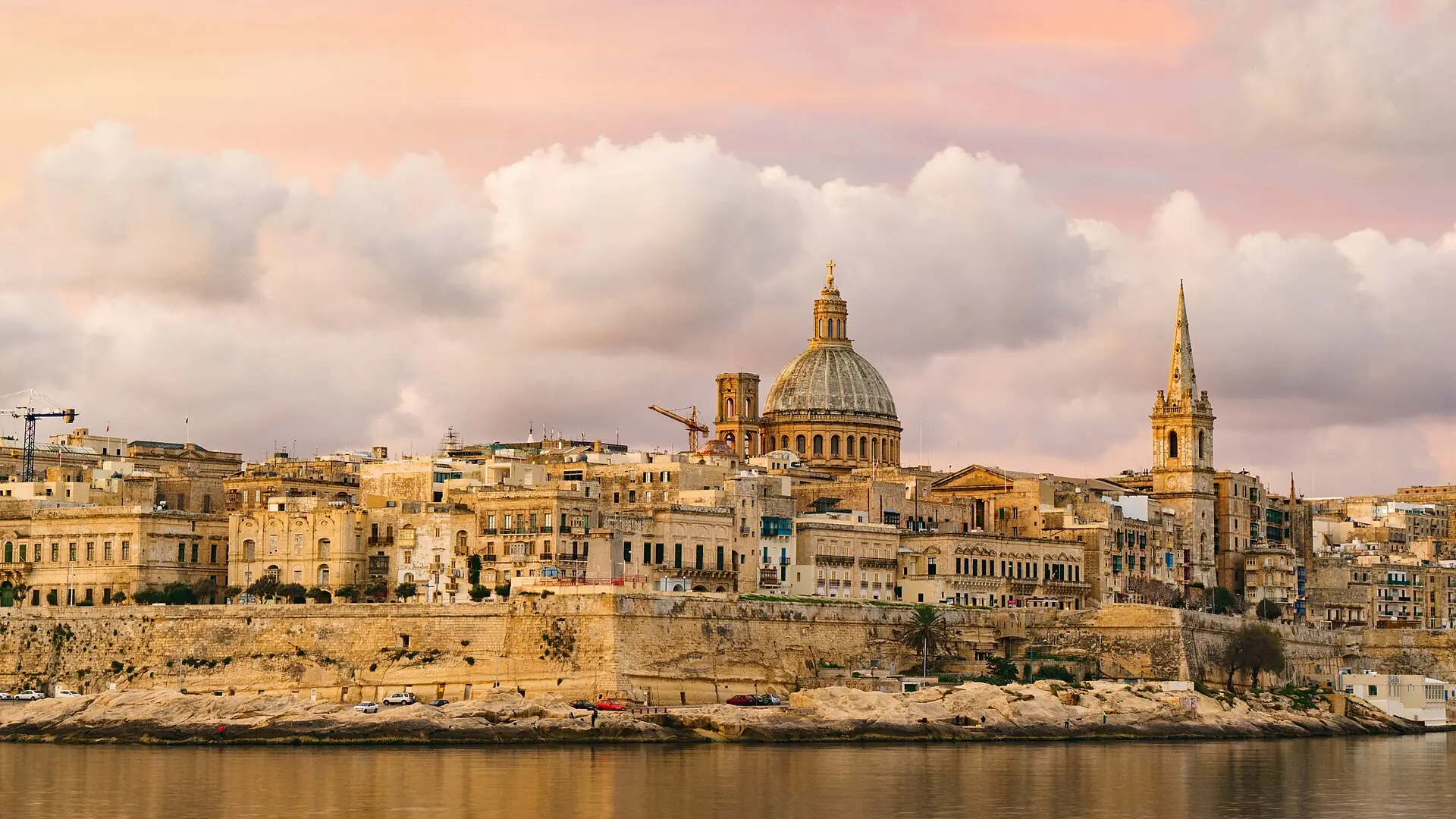
Valletta
Il-Belt Valletta
Code MM · 4 walking zones
Valletta is a morning-and-evening capital: do Republic Street and the Barrakka gardens early, rest through the midday sun, and cross the harbour by ferry for the Three Cities or Sliema.
Our quick read of Valletta, scored 1–5 (friction is out of 100). Cash need: how often you still need notes. Heat risk: how hot days get. Stroller: how easy wheels are. Friction: overall effort for a first visit. Desk judgements, so check before relying on them.
- Local time
- --:--
- Weather
- forecast below
- Currency
- EUR
- Best months
- Feb · Mar · Apr · May · Sep · Oct · Dec
- Airport
- Malta International Airport, Luqa (MLA)
Walking zones: the 4 areas this guide plans a day around. Each is a district you can cover on foot, so you do one zone per half-day and ride the train between them. The code (MM 01, MM 02…) is just the zone's number on the Valletta line; the line under each name says how bags fare there and how much time it needs.
Map of Valletta
Use the switches to show or hide each kind of pin. A switch that is on shows its pins on the map; tap it again to hide them. "Show only" keeps just the pins that match (for example, places that fit a suitcase). Tap any pin for its name and a link to its page.
- Where to sleep
- Places
- Eat
- Walking clusters
- Rest stops
From the airport Malta , Luqa (MLA) to your bed
Tap a pin for its card. Places without their own coordinates are shown by their walking cluster.
Why Valletta
Valletta is a fortified grid on a narrow peninsula: everything worth seeing is within 1 km, but the side streets are stepped and there is little shade. The airport is about 6 km away by taxi or bus. What goes wrong is the summer sun, cruise-ship days when Republic Street is full from about 10:00, and Sunday closures. Four short areas cover a first visit; sleep here for the evenings, when the town empties out.
See first
- 1
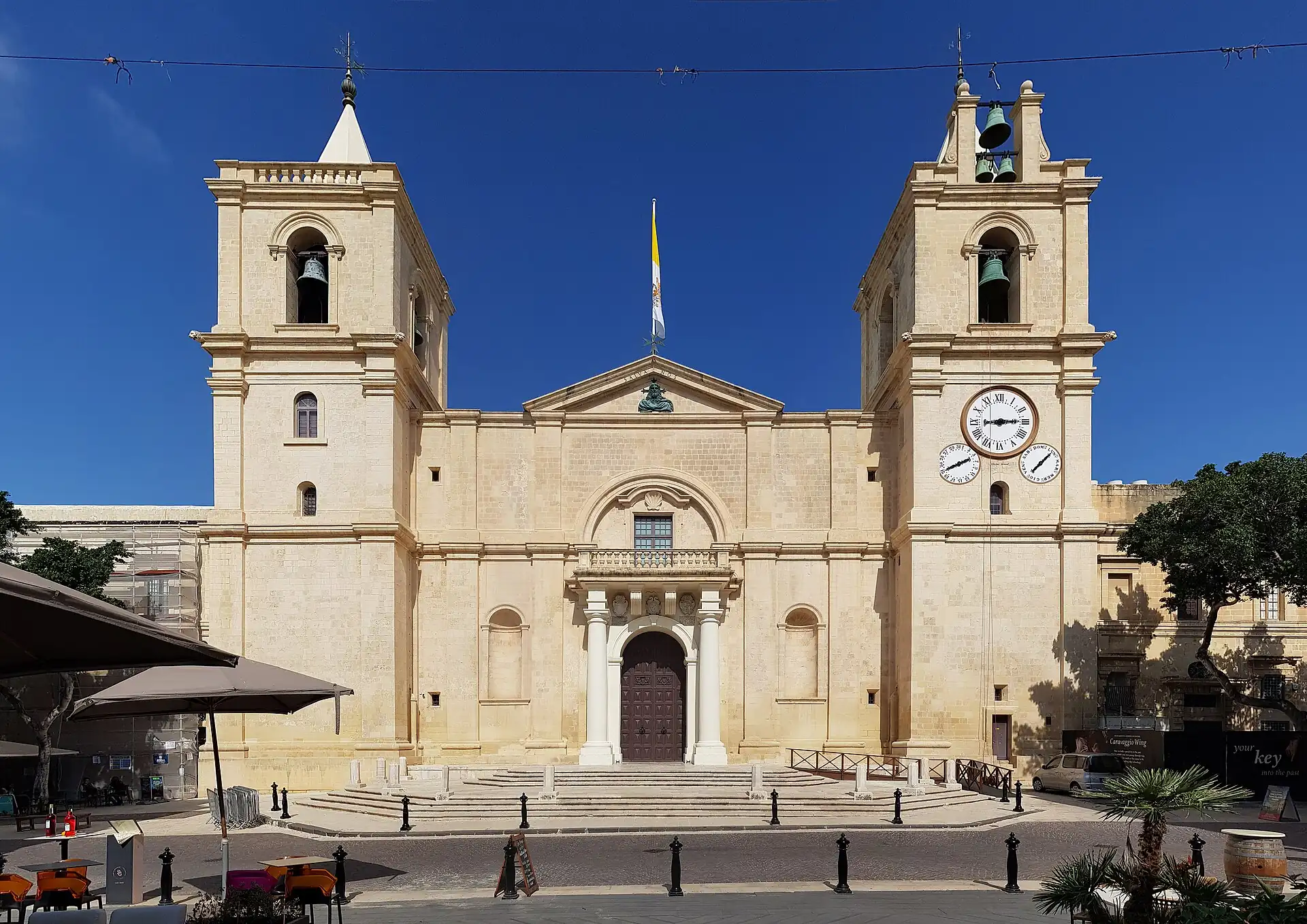 St John’s Co-Cathedral · 1–1.5 h
- 2
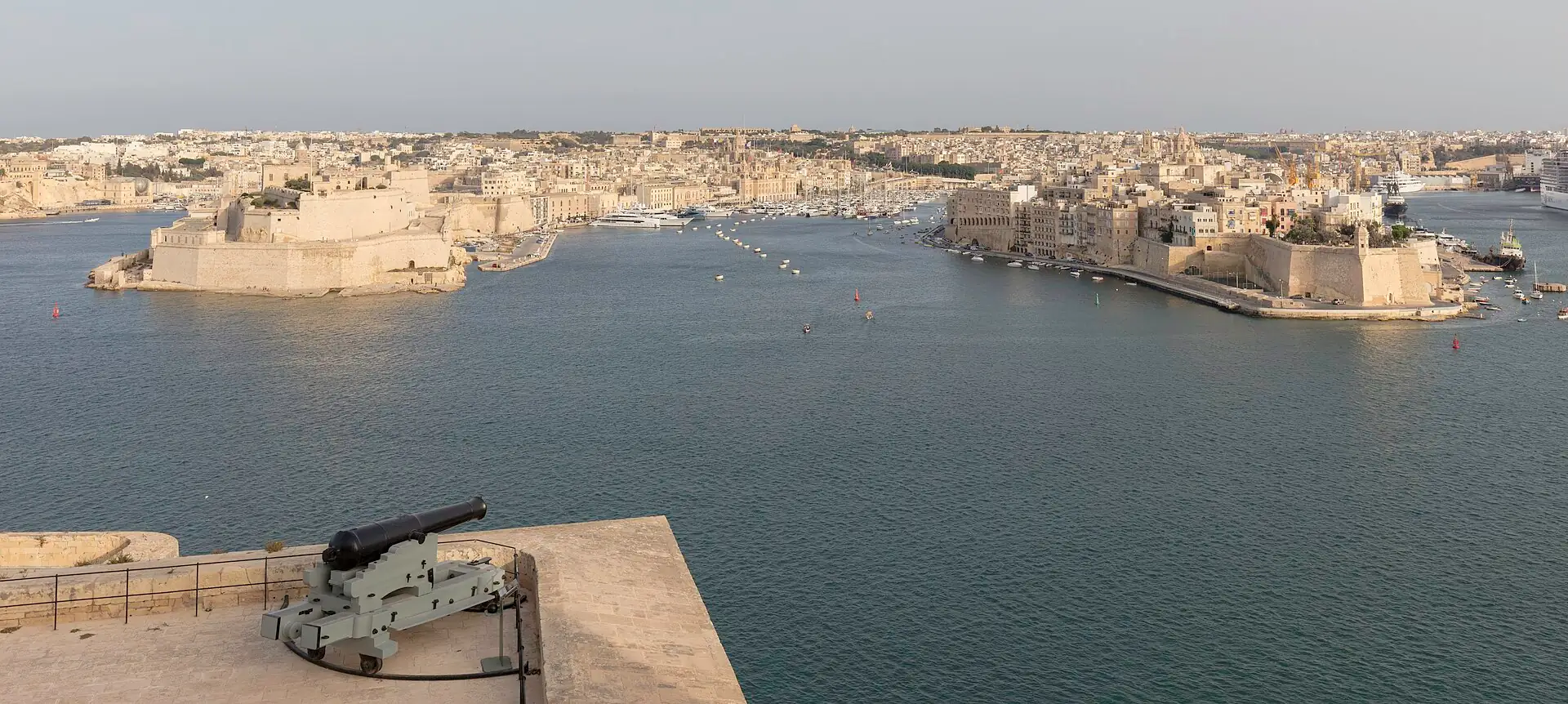 Upper Barrakka Gardens · 30–45 min
- 3
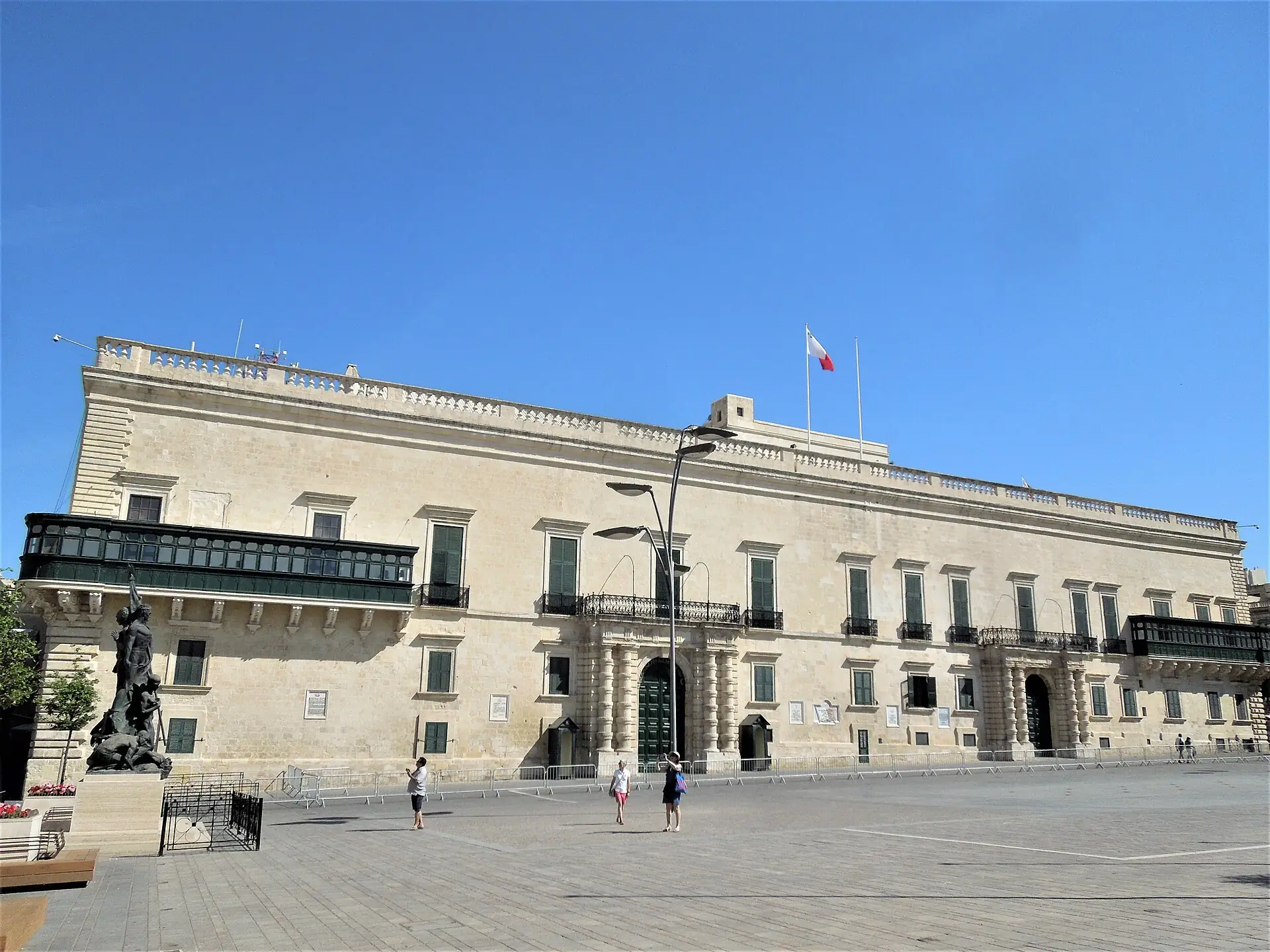
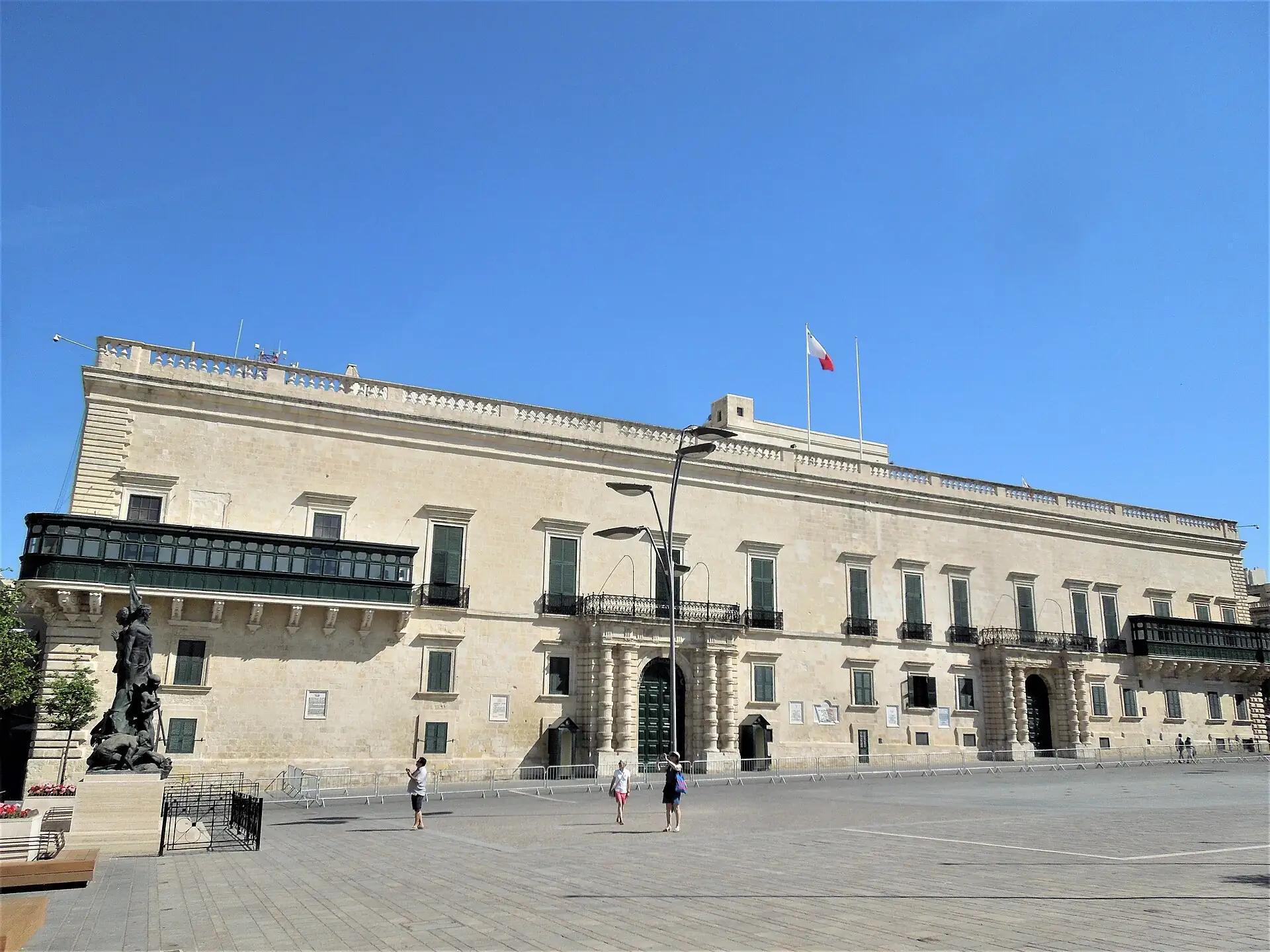 Grandmaster’s Palace · 1 h
- 4
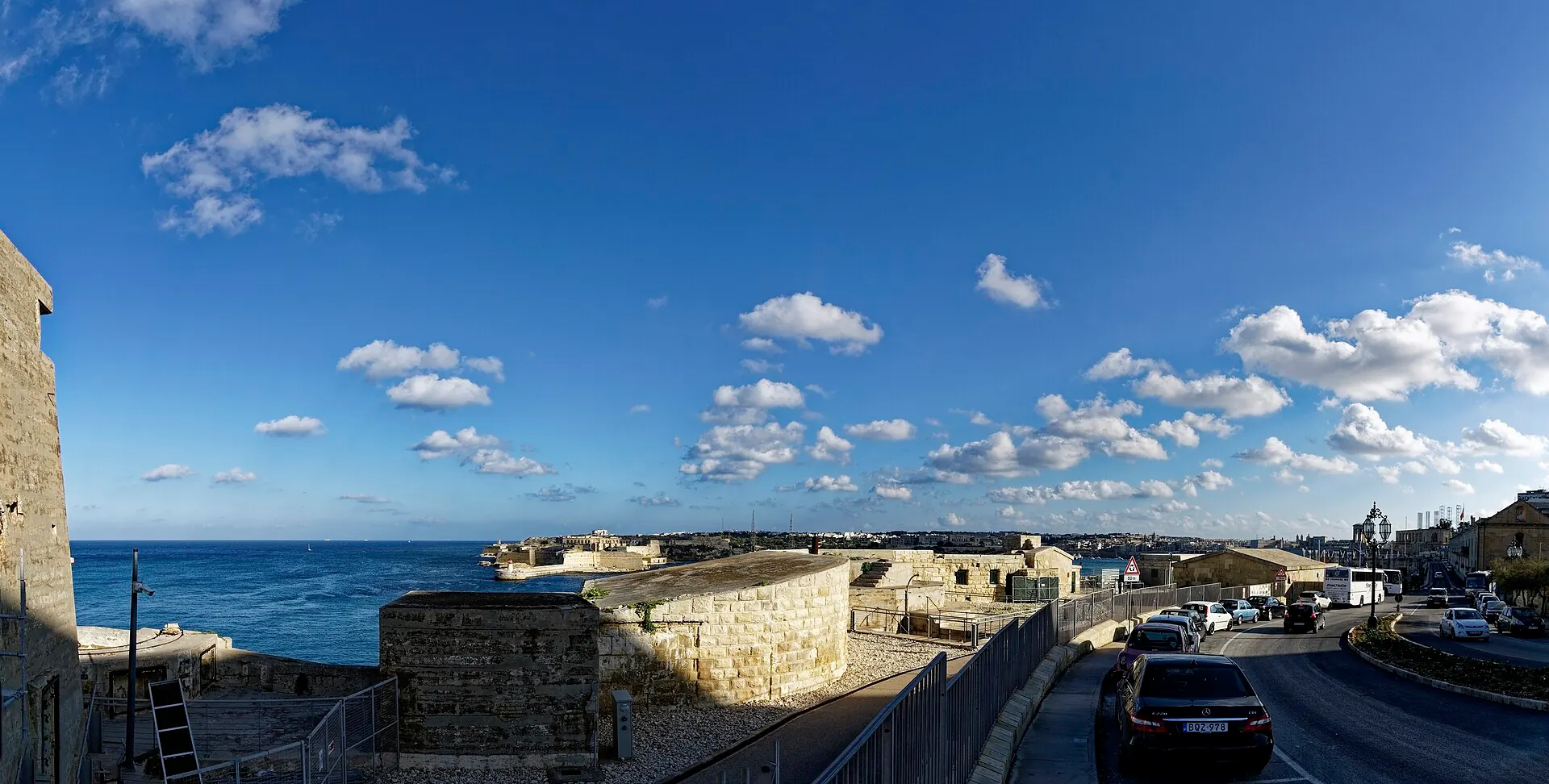 National War Museum · 1–1.5 h
- 5A harbour ferry to the Three Cities · 2–3 h
Fits
- History and fortress lovers
- Short city breaks with harbour views
- Evening walks after the day-trippers leave
Does not fit
- Wheelchairs and strollers on the steps
- Midday walkers in July and August
- Beach-first trips (the beaches are elsewhere on the island)
How long
- 2 daysRepublic Street and the Barrakka gardens, Fort St Elmo the next morning
- 3 daysFour areas on foot, one harbour ferry afternoon
- 5 daysFour areas + Three Cities by ferry + Mdina half day
Good for
- First timers
- Foodies
- Budget
- Families
- Wheelchair
- History fans
About Valletta
Valletta is the capital of Malta, a small island country in the central Mediterranean, about 90 km south of Sicily. The city sits on a narrow peninsula between two deep harbours: the Grand Harbour to the east and Marsamxett Harbour to the west. It is one of the smallest capitals in the European Union, with about 5,000 residents inside the walls, but it holds the island’s main museums, its parliament and its most visited church.
Good to know
- Valletta is the walled capital on the peninsula; Floriana is the suburb outside its main gate, and Sliema lies across Marsamxett Harbour by ferry.
- The Valletta Tourist Information Office (near the City Gate bus terminus and at the Upper Barrakka) gives free maps and bus advice; check the current hours.
- The Malta Tourism Authority site (visitmalta.com) lists public holidays and events.
Go deeper 12 min read · 6 chapters
Valletta is a fortress capital built in a hurry after a siege, and everything you see on its straight, steep streets follows from that. The Knights of St John wanted a city that could not be taken, so they laid it out on a rock between two harbours and walled it on every side. Later rulers added palaces, theatres and gardens, and a second siege in the 1940s left scars that are still visible. This deep dive reads the city in layers, so a walk along Republic Street becomes a walk through 450 years.
1History: a siege, a city and a second siege2 min
Valletta exists because of a siege. In 1530 the Order of St John, a military and religious order driven from Rhodes by the Ottomans, took over Malta from the Holy Roman Emperor Charles V. The Knights based themselves in the harbour town of Birgu, across the Grand Harbour from today’s Valletta. In the spring of 1565 an Ottoman fleet and an army of tens of thousands arrived to take the island. The Great Siege lasted from May to early September. Fort St Elmo, at the tip of the peninsula where Valletta now stands, fell after about a month, and its defenders were killed almost to a man. The rest of the Knights, a few thousand soldiers and the Maltese population held out until a relief force from Sicily arrived in September.
The Order’s Grand Master, Jean de Valette, decided that the next attack must find a city that could not fall. The pope and the kings of Catholic Europe sent money. On 28 March 1566 Valette laid the foundation stone of a new fortified town on the empty Xiberras peninsula, and the Italian military engineer Francesco Laparelli drew up a grid. The Maltese architect Girolamo Cassar then designed and built many of its main buildings, including St John’s and the Grandmaster’s Palace. The town was largely finished within about five years, which is very fast for a city with stone walls this thick. The Knights moved in around 1571, and Valletta became the capital.
The Order ruled Malta until 1798, when Napoleon’s fleet stopped on its way to Egypt and took the island almost without a fight. The French were unpopular, closing convents and taking church silver, and the Maltese rose against them within months. With British help the French garrison surrendered in 1800, and Malta became a British possession, later a Crown Colony. For 164 years Valletta was the base of the Royal Navy in the central Mediterranean, and many of its buildings and street names date from that time.
The second siege came in the Second World War. Malta lay between Italy and North Africa, so it was bombed heavily from 1940 to 1942, and convoys of food and fuel had to fight their way in. In April 1942 King George VI awarded the whole island the George Cross for its endurance. Independence followed in 1964, a republic in 1974, EU membership in 2004 and the euro in 2008. Valletta was listed by UNESCO in 1980 and was a European Capital of Culture in 2018. Today about 5,000 people live inside the walls, and about half a million live on the island.
- Founded
- 28 March 1566, the year after the Great Siege
- Order of St John rule
- 1530 to 1798
- British rule
- 1800 to 1964
- George Cross
- Awarded to the island in April 1942
- UNESCO listing
- 1980
2Layout: a grid on a rock2 min
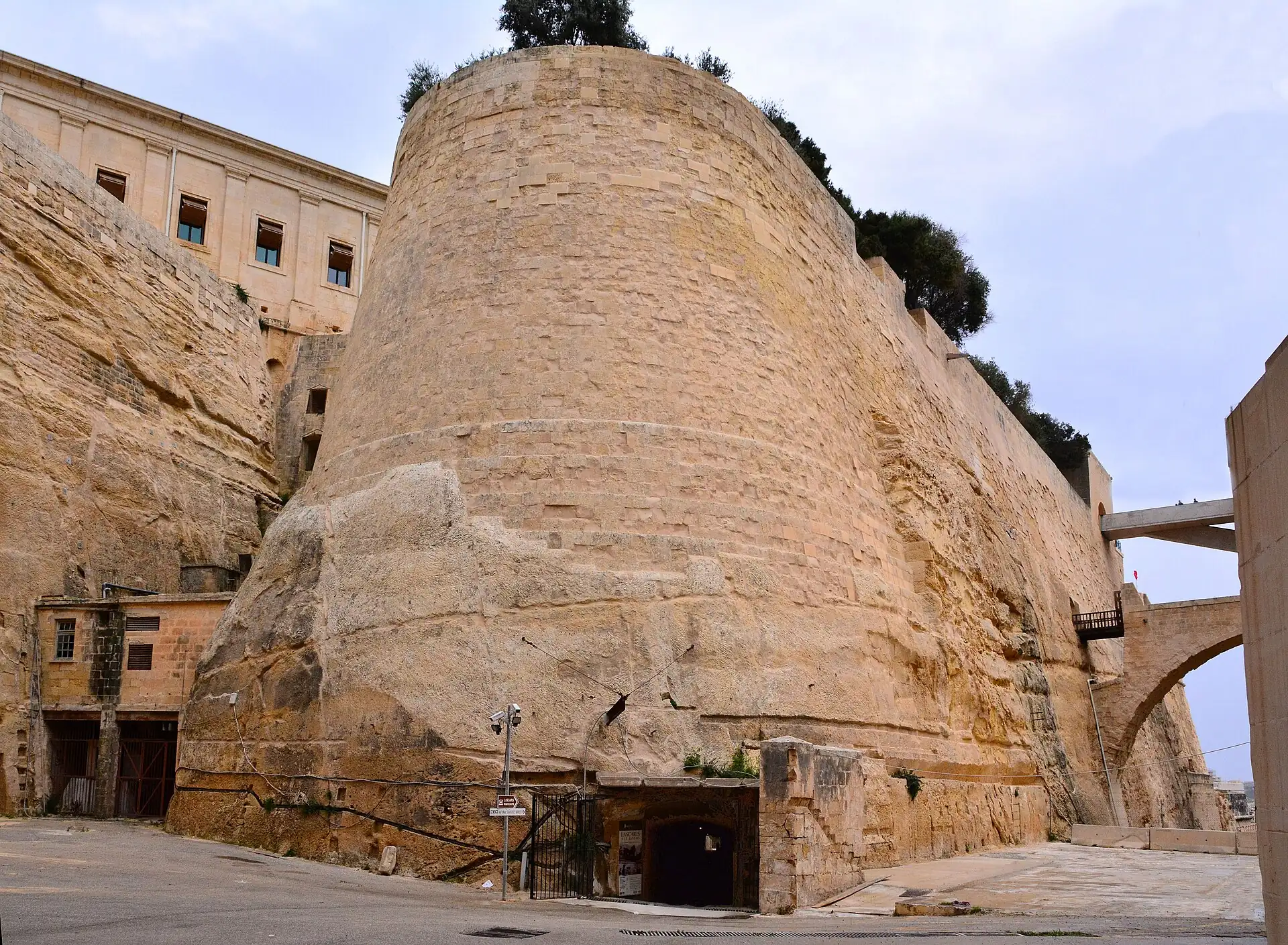
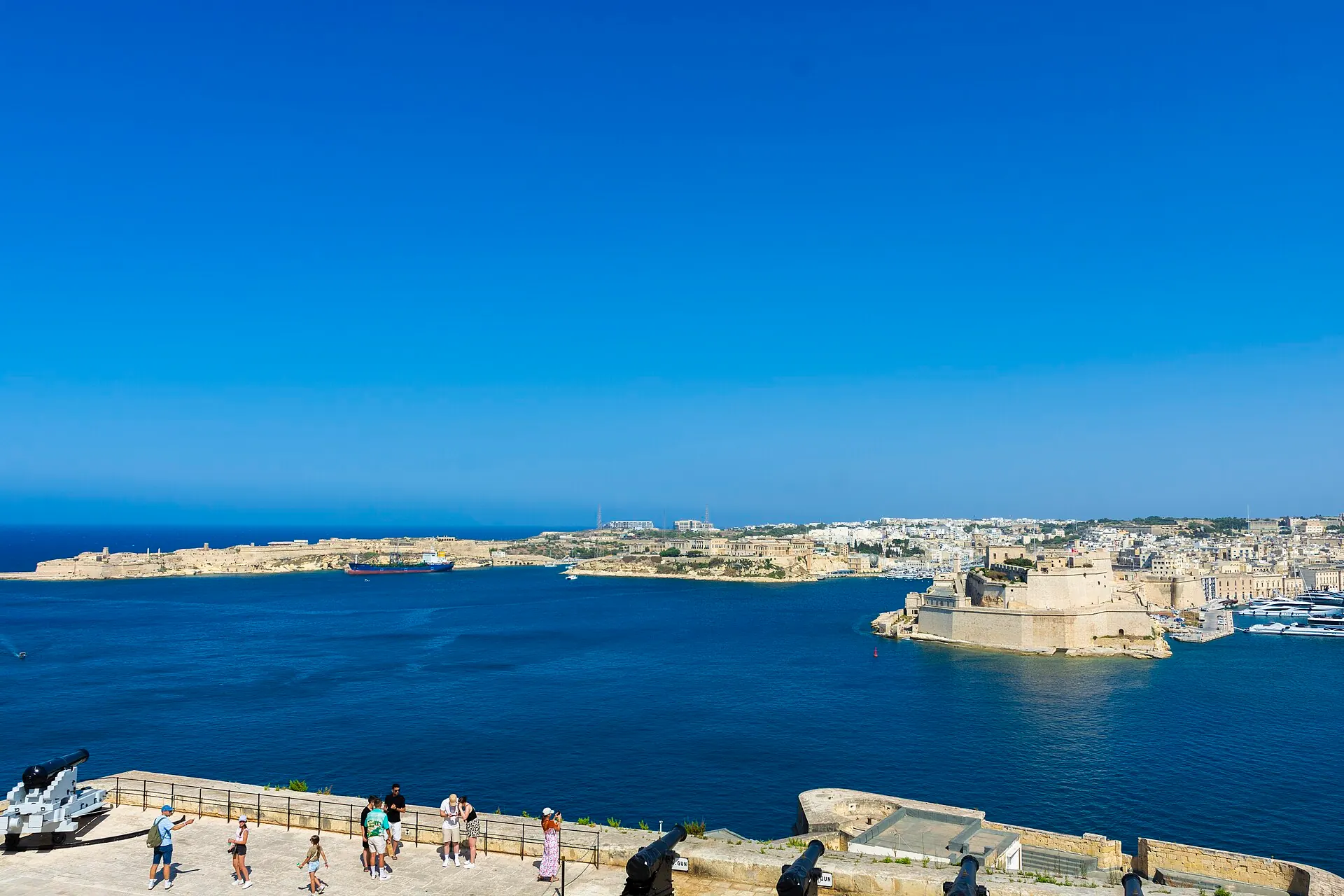
Valletta is small enough to read from a map. The city sits on a tongue of rock, about a kilometre long and 600 metres wide, with the Grand Harbour on the east and Marsamxett Harbour on the west. Republic Street runs along the spine from the modern City Gate at the landward end to Fort St Elmo at the tip. Nearly every other street is a straight cross street that drops steeply to the water, and many of those are stepped. That is why suitcases and strollers are a bad idea here, and why a taxi that stops at the corner is doing its best.
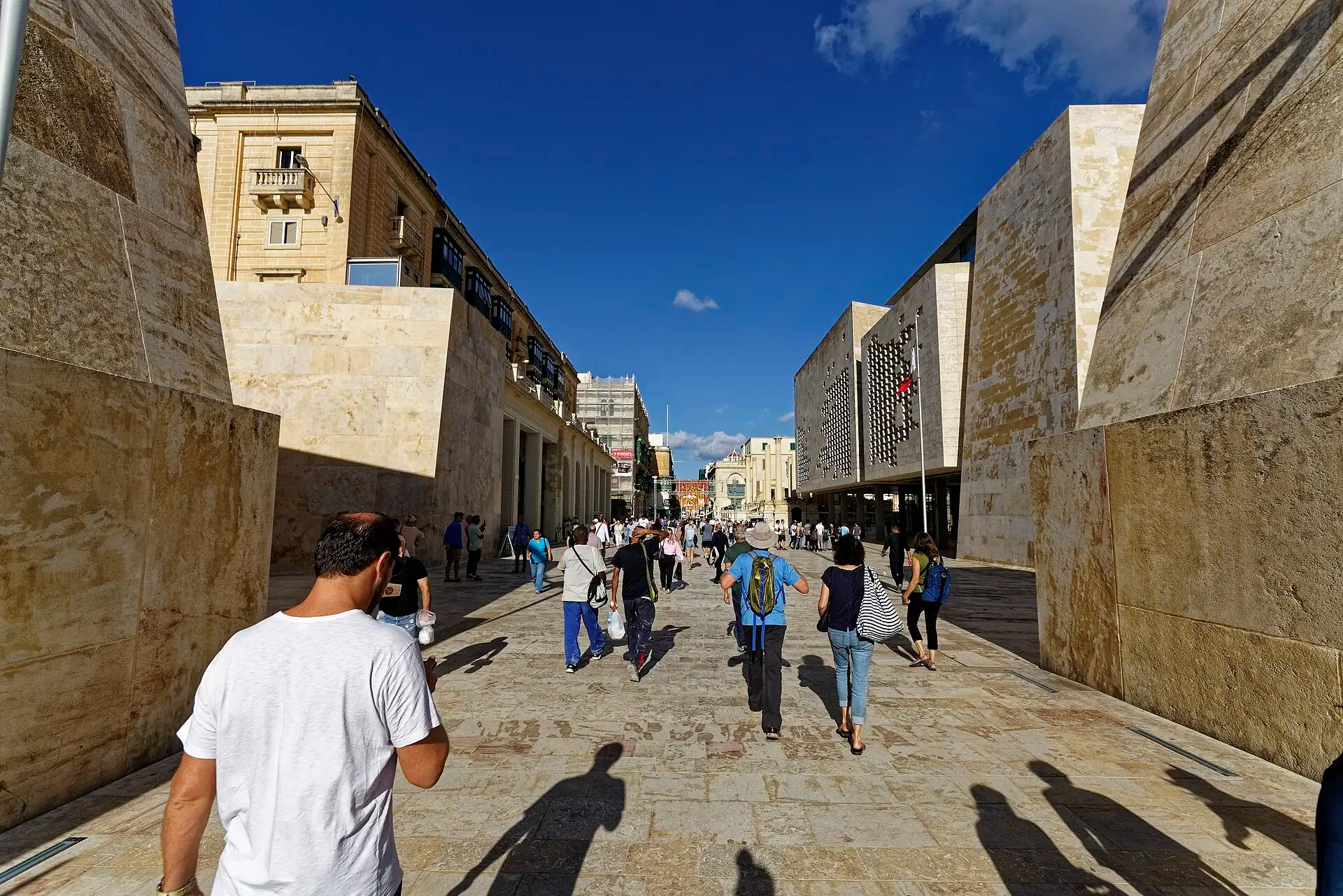
Laparelli’s grid was drawn with defence in mind. The wide bastions on the landward side were cut into a deep dry ditch, and a second line of walls was added outside them in the 1630s to protect the approach. The suburb that grew behind that outer line is named after its engineer, Pietro Paolo Floriani: Floriana. The ditch and the walls remain, and you cross them at City Gate, which was rebuilt with a new parliament and an open-air theatre by the architect Renzo Piano between 2011 and 2015. The theatre stands on the ruins of the Royal Opera House, which was bombed in 1942 and never rebuilt as a roofed hall.
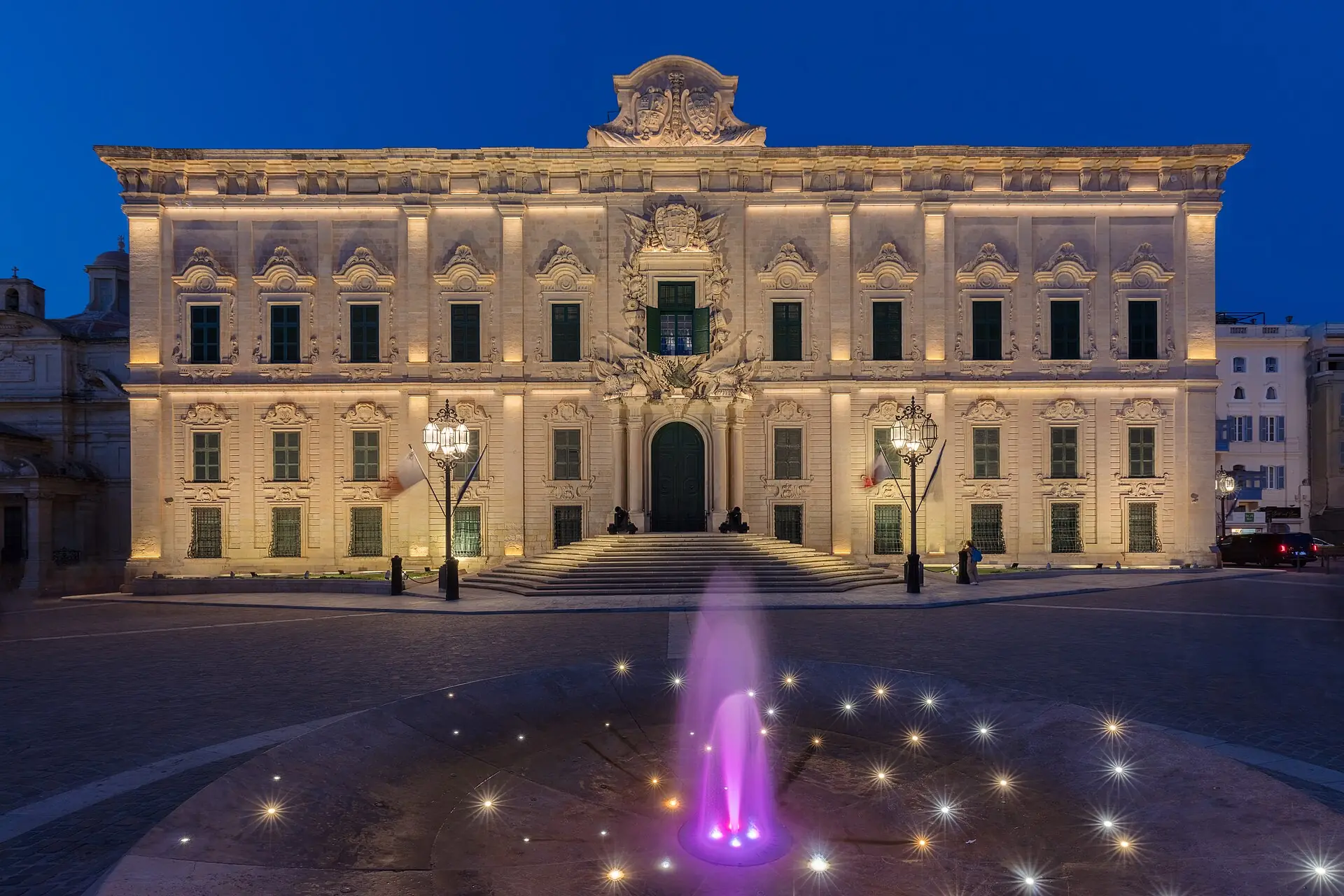
The Knights also planned Valletta for comfort. The streets were laid out so that breezes from both harbours would run through them, and each langue, or national group of the Order, built its own inn, or auberge, near the walls. The Auberge de Castille, now the Prime Minister’s office, is the grandest. Several other auberges are now museums or offices. Strait Street, a narrow lane parallel to Republic Street, was known in the twentieth century as a place where sailors drank; it now has small wine bars and music venues.
Practical tips follow from the plan. Do the long, level walk along Republic Street, and use the Upper Barrakka Gardens as a viewpoint. The Barrakka Lift connects the garden to the harbour level, so you can take the ferry to the Three Cities without climbing. The bus terminus lies just outside the gate, and the ferry landings are below the walls on both harbours. Start at the gate and walk to the fort in the morning, when the street is cool and mostly empty, and come back along a side street for shade.
- Length and width
- About 1 km (0.6 mi) by 600 mAbout 0.6 mi (1 km) by 600 m
- Main street
- Republic Street (Triq ir-Repubblika), gate to fort
- Harbours
- Grand Harbour (east) and Marsamxett (west)
- Barrakka Lift
- Connects the Upper Barrakka Gardens and the harbour level (check fare and hours)
3Baroque and art: plain outside, gold inside2 min
The Knights’ buildings look severe from the street: plain limestone walls, small windows and wooden balconies. The richness is kept inside, and nowhere more than St John’s Co-Cathedral. Girolamo Cassar built it in the 1570s as the church of the Order, with a fortress-like façade. In the seventeenth century the Order’s wealthy langues covered the interior with carved stone, gilding and marble. The Calabrian painter Mattia Preti, who arrived in 1660 and lived in Malta until his death in 1699, painted the barrel vault with scenes from the life of St John the Baptist and designed the carved stone decoration of the walls in the style of high baroque.
The floor is a second work of art. It is made of about 400 inlaid marble tomb slabs of Knights, decorated with skeletons, coats of arms and symbols of mortality, and visitors walk over them along a marked path. The eight side chapels belong to the langues of the Order, and each is decorated according to its nation’s taste. The cathedral’s treasure is the Oratory, where Caravaggio’s Beheading of St John the Baptist hangs. Painted in 1608, it is the artist’s largest canvas and the only one he signed, in the blood flowing from the saint’s neck. Caravaggio had fled Rome after a killing, was made a Knight of Malta, and was then imprisoned and expelled from the Order after a fight. He escaped to Sicily within months.
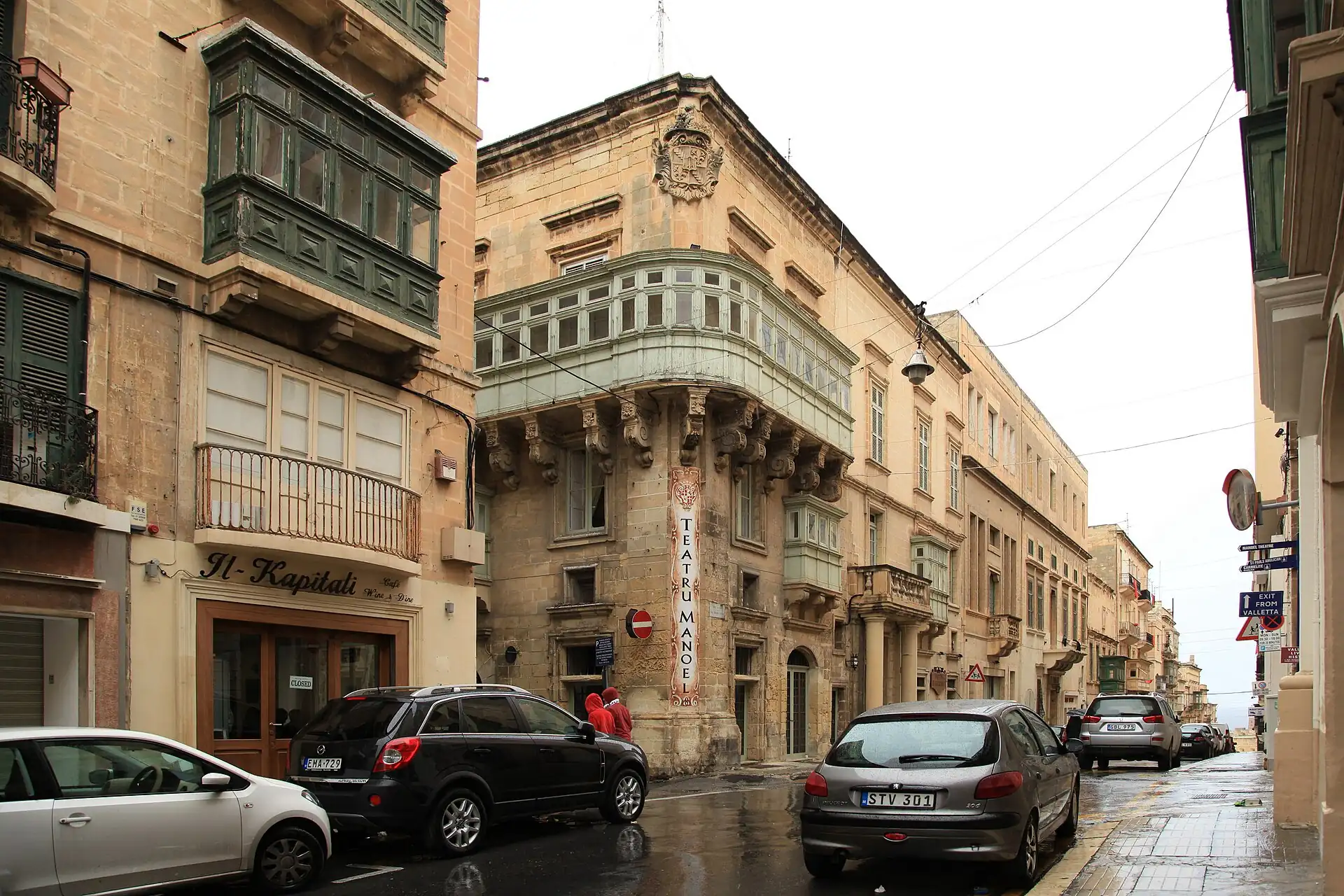
Not everything is baroque. The Grandmaster’s Palace, built from 1571, holds frescoes of the Great Siege, tapestries and one of Europe’s big collections of armour. Casa Rocca Piccola shows how a noble family lived in a sixteenth-century house. The Manoel Theatre of 1731, named for Grand Master Manoel de Vilhena, is among the oldest working theatres in Europe. The British added an Anglican church with a tall spire in 1844 and the Royal Opera House in 1866, and the Italian-style Our Lady of Mount Carmel dome is a landmark on the skyline.
A good approach is to go first to St John’s at opening, before the tour groups arrive, and then to a quiet interior such as Casa Rocca Piccola or the Manoel Theatre while the queues build. Dress modestly: shoulders and knees covered, no flash, and quiet voices. The interior is more rewarding if you read a little first about the Knights and their langues, and if you look up as often as you look down.
- Cathedral built
- 1570s, by Girolamo Cassar
- Painter of the vault
- Mattia Preti, in the 1660s
- Caravaggio painting
- Beheading of St John the Baptist, 1608, in the Oratory
- Theatre
- Manoel Theatre, opened 1732 (check the year on the official page)
4The war years: the second siege2 min
In June 1940 Italy entered the war, and Malta, a British naval base a few minutes’ flight from Sicily, was suddenly on the front line. The island was bombed on the first day and for most of the next two years. Historians cite over 3,000 air raids, and the Grand Harbour and the Three Cities took the worst of it. Valletta lost its opera house, part of its main street and many old buildings. Ordinary people sheltered in caves, tunnels and the rock-cut shelters that had been dug into the limestone, and families slept in them for months.
The island depended on supplies from Britain, and each convoy across the Mediterranean was under attack. By 1942 food, fuel and ammunition were running short. The convoy called Operation Pedestal reached the Grand Harbour in mid-August 1942 with five of fourteen merchant ships, including the tanker Ohio, which was towed in. It arrived on the feast of Santa Marija, 15 August, a date that is still a public holiday. The convoy saved the island’s fuel supply, and Malta could keep its aircraft and submarines in action. In April 1942 King George VI had awarded the island the George Cross, which is now on the Maltese flag.
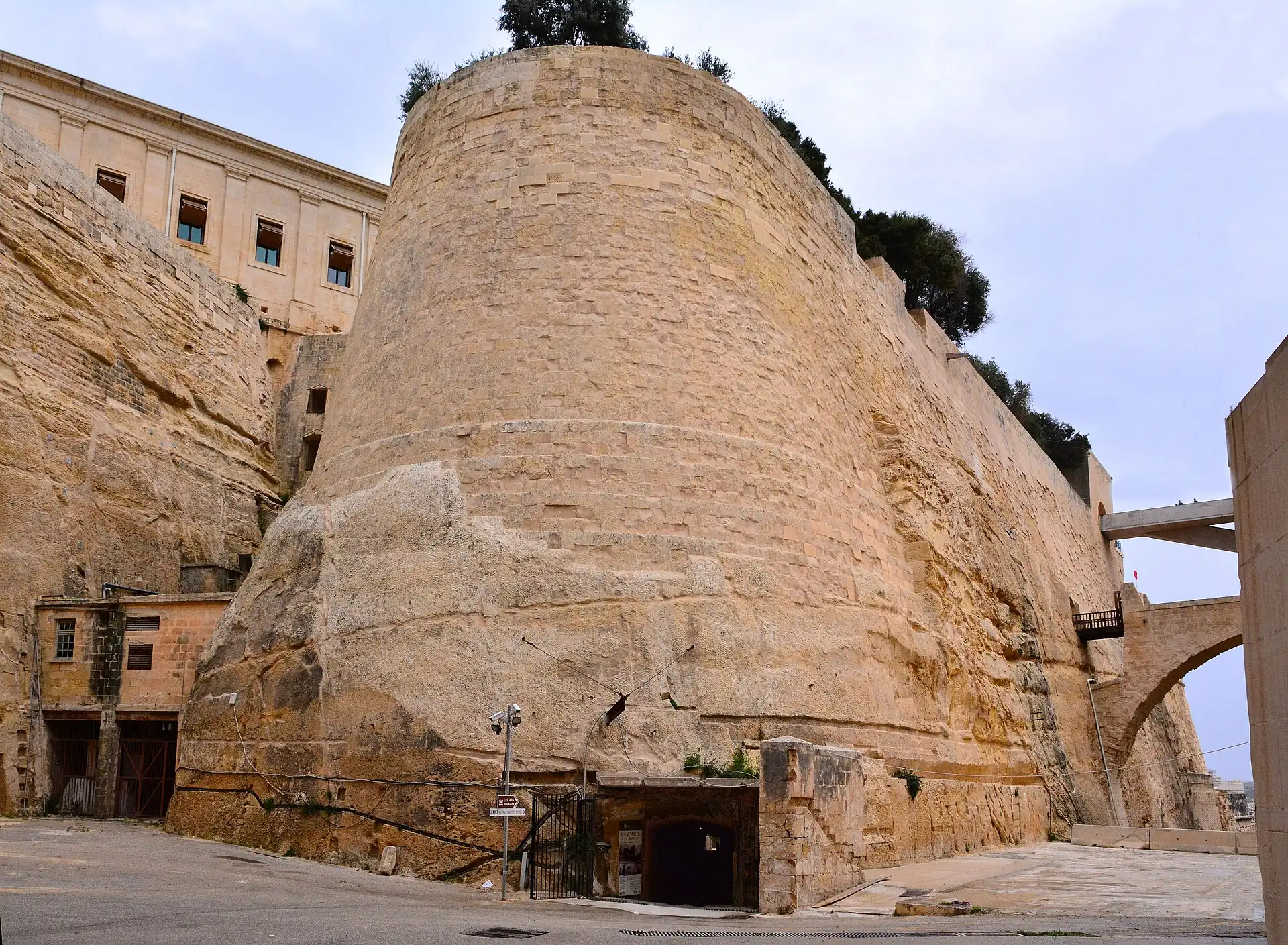
Below the Upper Barrakka Gardens, tunnels were cut into the rock to house the command centre from which Royal Navy, Army and Air Force commanders directed the defence. This is the Lascaris War Rooms; the same rooms were used in 1943 to plan the Allied landings in Sicily. The National War Museum in Fort St Elmo displays aircraft parts, the cars and uniforms of the period, and the original George Cross. The fort itself carries bullet marks and bomb damage from two sieges 377 years apart.
The war also shaped daily life. Ration books, black-out curtains and the sound of sirens are part of family memory, and many older Maltese still call the air-raid shelters by their nicknames. It is worth reading a little before you visit, because the museums assume some background. If you visit only one, choose the War Museum for the objects and the Lascaris War Rooms for the atmosphere of a working command post.
- Air raids
- Over 3,000 during the second siege (commonly cited)
- George Cross
- Awarded 15 April 1942 and shown on the national flag
- Operation Pedestal
- Convoy that arrived on 15 August 1942
- War Rooms
- Cut into the rock below the Upper Barrakka; used to plan the 1943 landings in Sicily
5Food and drink2 min
Maltese food is an island cuisine shaped by Sicily, North Africa, the Knights’ kitchens and British habits. The most common snack is the pastizz, a flaky diamond-shaped pastry filled with ricotta or mushy peas, sold hot from counters for about a euro. Eaten at 08:00 with a small coffee or a glass of tea, it is the local breakfast. Beside it stand the qassata, a round savoury pie, and imqaret, deep-fried date pastries sold from kiosks and market stalls.
Bread is central. The ftira is a ring-shaped loaf that can be split and filled with tuna, tomato, capers and olives, and the ħobż biż-żejt is bread rubbed with ripe tomato and oil. Sheep and goat cheeses called ġbejniet are eaten fresh or dried, often with peppercorns. Soups, especially the thick vegetable minestra, are winter food. The national dish is stuffat tal-fenek, rabbit stewed in wine and garlic, often served with spaghetti as a first course and the rabbit as a second course; the meal is called a fenkata and is a Sunday tradition in villages.
Fish follows the season. Lampuki, or dolphinfish, is caught from late summer through autumn and is baked in a pie or fried with tomato sauce. Bragioli are stuffed beef olives, timpana is baked macaroni in pastry, and bread pudding and figolla, an Easter almond cake, are among the sweets. In the harbour towns you can eat grilled fish by weight, so ask the total price before you order.
On the drinks list, Cisk is the local lager, brewed since the late 1920s, and Kinnie is a bitter-orange soft drink from the early 1950s that Maltese people drink as often as cola. The islands also produce wine from local grapes, including Ġellewża and Girgentina, from producers such as Marsovin and Delicata, and a sweet liqueur called bajtra from prickly pears. Cafés sell good coffee, often with milk in the Italian style. Tap water is safe but comes from desalination plants and tastes flat, so most visitors drink bottled water.
Practical rules help. Lunch is at midday to 14:30 and dinner starts at 19:00, and small restaurants close in between. Check menus for the price of fish by weight and for cover charges, and ask what is fresh that day. Tipping about 5 to 10% is normal in restaurants if service is not on the bill. Vegetarians manage easily with cheese pastizzi, salads and pasta, while vegans need to ask about cheese and stock.
- Cheap snack
- Pastizzi, about €0.60 to €1.20 each (2026 estimate)
- National dish
- Stuffat tal-fenek (rabbit stew)
- Local drinks
- Cisk lager, Kinnie, Maltese wine and bajtra liqueur
- Dinner starts
- About 19:00; lunch to about 14:30About 7:00 PM; lunch to about 2:30 PM
6Language and local life2 min
Maltese and English are both official languages, and nearly everyone you meet switches between them without thinking. Maltese is the only Semitic language written in the Latin alphabet, and it descends from the Arabic spoken in Sicily and Malta in the Middle Ages, with many Italian, Sicilian and English words added over centuries. You will see it on signs, and some letters, such as ħ, ġ, ċ and ż, are unfamiliar; a few words such as grazzi, bonġu and saħħa are enough to be polite.
The rhythm of life follows the Catholic calendar. Most people are baptised in the Catholic Church, and each parish holds a festa, a summer feast for its patron saint, with brass bands, processions, street decorations and fireworks that can run late into the night. In Valletta the big feast is St Paul’s Shipwreck on 10 February, a public holiday. Holy Week has processions with statues on Good Friday. Sunday is quiet: many small shops and some sights close, and families eat a long lunch. The country has 14 public holidays, so check the date before you plan.
The island is small and social. A friend or a cousin can often help, and shop staff will chat while they serve you. Traffic is heavy and drivers are impatient, so cross at marked places and look right first, as traffic drives on the left, a British habit. The bus network is the main way to get around, and the yellow buses of the old fleet have been replaced by modern ones. Ferries link Valletta to Sliema and the Three Cities, and many people commute by boat.
The best way to fit in is to eat at the local times, dress modestly in churches, and be patient with slow service. Malta is a small country that relies on visitors, and locals will usually tell you which counter is good and which is for tourists. If you want to see the daily life of Valletta, walk Republic Street at 08:00, when workers are buying pastizzi, and again at 19:00, when the town returns to its residents. Both are quieter than the middle of the day.
- Languages
- Maltese and English, both official
- Greetings
- Bonġu (good morning), Grazzi (thank you), Saħħa (cheers)
- Traffic
- Drives on the left
- Holidays
- 14 public holidays a year, including St Paul’s Shipwreck on 10 February
Read, watch, wordsGlossary · Sources
Glossary
| Term | Local | Meaning |
|---|---|---|
| Pastizz | pastizz | A flaky pastry filled with ricotta or mushy peas; plural pastizzi. |
| Ftira | ftira | A ring-shaped Maltese bread, often filled as a sandwich. |
| Festa | festa | A parish feast for a patron saint, with bands, processions and fireworks. |
| Langue | A national section of the Order of St John; each had its own auberge. | |
| Auberge | A Knights’ inn for one langue, such as the Auberge de Castille. | |
| Kinnie | Kinnie | A bitter-orange soft drink from Malta. |
| Fenkata | fenkata | A rabbit meal shared with family, often on Sunday. |
| Saħħa | saħħa | Cheers; literally health. |
Read for this deep dive
Background reading only: the text above is written by Voykit, not copied from these pages.
Rules in force · 9Non-EU visitors get 90 days in any rolling 180-day window…
- Europe ↗Non-EU visitors get 90 days in any rolling 180-day window, counted across all 29 Schengen states together — not per country; the Entry/Exit System now logs each crossing, so an overstay is detected automatically.
- Europe ↗On the first Schengen entry since EES began, non-EU travellers give four fingerprints and a face photo at the border instead of a passport stamp; there is nothing to apply for or pay in advance.
- Italy and Malta ↗The region's headline sights run on timed tickets that sell out: book the Vatican Museums, the Colosseum, the Uffizi, the Last Supper and Malta's Hypogeum before you fix train and hotel dates.
- Italy and Malta ↗Budget for per-night city taxes in Italy (up to about €10 a person in Rome), Malta's per-night environmental contribution, and Venice's day-visitor fee on peak days; none are included in most online room prices.
- Malta ↗Malta is in the EU and the Schengen area. Check the entry rules for your passport on official sources; the EU's Entry/Exit System registers non-EU visitors at the first Schengen border.
- Malta ↗Traffic drives on the left; if you hire a car, expect narrow roads, heavy traffic and limited parking in the towns.
- Malta ↗Sockets are the UK three-pin type (Type G); bring the right adapter.
- Malta ↗Every licensed stay adds an environmental contribution per adult per night (€1.50 from 1 July 2026, capped per stay — check), collected by the hotel or host.
- Valletta and the Grand Harbour ↗Harbour ferries run on their own timetable and stop in rough weather: check the day's service before you rely on one.
Entry rules depend on your passport. Full visa guide
Emergency numbers for Valletta112 ▾
- Police, ambulance, fire112
Tap a number to call from your phone. These are the numbers listed in this guide; a row marked check has not been verified.
Planning is the full guide. I'm here keeps what is open and the cheat card.
Right now
Checking the weather…
Working out what is open near you…
What is open nowclock, closures, places open
Now in Valletta
Local time in Valletta
--:--
Loads in your browser · Europe/Malta
This month
Month verdict appears here.
Closed today
See the weekly grid below.
| Weekly closure | Mon | Tue | Wed | Thu | Fri | Sat | Sun |
|---|---|---|---|---|---|---|---|
| St John’s Co-CathedralcheckClosed to visitors on Sundays; check Saturday hours. | · | · | · | · | · | · | ✕ |
| Casa Rocca PiccolacheckReduced or closed on Sundays. | · | · | · | · | · | · | ✕ |
If today is a closure day: Sunday: St John’s Co-Cathedral is shut and many shops and small museums have short hours; use the day for the Upper Barrakka, a ferry and a long lunch. Monday: some museums close; check Heritage Malta.
Open every day: Casa Rocca Piccola, Grandmaster's Palace, Lascaris War Rooms, Manoel Theatre, National War Museum (Fort St Elmo), St John's Co-Cathedral, Upper Barrakka Gardens.
- check Manoel Theatre: Tours on set times; check the day.
- check Lascaris War Rooms: Tour times vary; check.
Weekly closures come from our place pages; public holidays add closures not shown here.
Open now
The sights and places to eat on our list that are open at this moment, in the city's time, nearest first from where you are staying.
Loads in your browser with the city's local time.
Hours marked (check) are typical, not confirmed. Walking times are straight-line estimates. Open at another time →
Cheat cardthe pocket version
Cheat card
The essentials on one card: save it as an image for your phone, share it, or print it.
Valletta
Il-Belt Valletta
- Money
- Cards work in most restaurants and shops; carry €20–40 in small notes for kiosks, village bars and boat trips…
- SIM
- Install an eSIM before you fly, or buy a prepaid SIM from Epic…
- Ride app
- Bolt, eCabs and Uber
- Emergency
- 112 police, ambulance, fire (not 911, 999 or 000)
- Plugs
- Sockets G. US/Canada (A/B): adapter · UK/Ireland (G): fits · Australia/NZ (I): adapter. 230 V: US 120 V-only devices (hair dryers) need a converter; most chargers are dual-voltage.
Say it
- Thank you: Grazzi (grat-see)
- Please: Jekk jogħġbok (yek yoj-bok)
- Cheers: Saħħa (sa-ha)
- Excuse me: Skużani (skoo-za-nee)
- How much?: Kemm? (kem)
Top 5
- St John’s Co-Cathedral
- Upper Barrakka Gardens
- Grandmaster’s Palace
- National War Museum
- A harbour ferry to the Three Cities
EssentialsQuick answers, what things cost and how to get around
Essentials
Quick answers, what things cost and how to get around
Quick answers
The questions people ask first about Valletta, one line each. Tap a card for the full answer.
- Cash or card?Cards and contactless work in nearly every restaurant, shop and taxi; carry €20–40 (≈ US$25–50) in small notes for kiosks, village bars…
- SIM or eSIMInstall an eSIM before you fly, or buy a prepaid SIM from Epic, GO or Melita at the airport or in Valletta (passport needed).
- Ride-hailing appBolt, eCabs and Uber.
- Tap waterTap water is safe but comes largely from desalination and tastes flat or brackish; most visitors drink bottled water.
- TippingAbout 5–10% in a sit-down restaurant if service is not on the bill; round up for taxis; none at counters or kiosks.
- Plugs & powerSockets G. US/Canada (A/B): adapter · UK/Ireland (G): fits · Australia/NZ (I): adapter. 230 V: US 120 V-only devices (hair dryers) need a converter; most chargers are dual-voltage.
Show all 14 answers
- Safe at night?Take more care after dark in Floriana gardens, Strait Street after midnight, Paceville (St Julian’s).
- Emergency numbers112 police, ambulance, fire (not 911, 999 or 000)
- Your embassycheckUS, UK embassies listed with addresses (check before you go).
- Closed which day?Sun: 2 on our list shut.
- Sundays & holidaysShops open about 09:00–19:00 with a lunch break in small shops; many sights close on Sundays or Mondays…Shops open about 9:00 AM–7:00 PM with a lunch break in small shops; many sights close on Sundays or Mondays…
- Late at nightStrait Street has a few bars and live-music venues, and after closing only taxis and a few 24-hour shops stay open.
- Rainy-day planMalta rain comes in short, heavy bursts, mostly from October to March: step into a museum or café and wait 30 minutes.
- Landing lateMLA: taxi or ride-hailing car to the door runs all night.
Cost cheat-sheetwhat everyday things cost
Cost cheat-sheet
Typical prices for the everyday things, as ranges. Change the currency right here; the local price stays first.
2026 desk estimate · check
- CoffeeCoffee (cappuccino)€2.50–4 (≈ US$3–5)
- Sit-down mealSit-down lunch, per person€10–20 (≈ US$12–25)
- Street or quick mealCafé breakfast€6–12 (≈ US$7–14)
- BeerBottle of Cisk or local beer€3–5 (≈ US$4–6)
- Metro or bus rideBus single (Tallinja)Cash fares are higher; check the current table.€2–2.50 (≈ US$3)
- SIM or eSIM, a weekTourist eSIM, about a week€8–20 (≈ US$10–25)
- Budget bedHostel dorm bed, a night, per person€25 (≈ US$30)
- Mid-range bedHotel double room, a night, per room€160 (≈ US$190)
- High-end bedHotel double room, a night, per room€320 (≈ US$400)
A day, not counting the bed: Budget €55 (≈ US$65) · Mid €110 (≈ US$130) · High €240 (≈ US$300)
Local prices, with USD next to them (rates 2026-09 (approximate); change it in the header). Ranges are desk estimates: check locally. Every price and the budget calculator →
Source: Prices in Valletta
Draft
Written from desk research. Not yet compared with the official source.
No official source is recorded for this figure.
Prices are 2026 desk estimates, not yet compared with an official source. Check on the day.
Not checked in the last 12 months (no check date on file).
DecideWho it suits, the trade-offs and when to go
Decide
Who it suits, the trade-offs and when to go
Best months at a glance
The guide's verdict for each month
Jan
Care
15°C (59°F)59°F (15°C)
Feb
Best
15°C (59°F)59°F (15°C)
Mar
Best
17°C (63°F)63°F (17°C)
Apr
Best
19°C (66°F)66°F (19°C)
May
Best
23°C (73°F)73°F (23°C)
Jun
Care
27°C (81°F)81°F (27°C)
Jul
Avoid
31°C (88°F)88°F (31°C)
Aug
Avoid
31°C (88°F)88°F (31°C)
Sep
Best
28°C (82°F)82°F (28°C)
Oct
Best
24°C (75°F)75°F (24°C)
Nov
Care
20°C (68°F)68°F (20°C)
Dec
Best
16°C (61°F)61°F (16°C)
Best: Feb–May, Sep–Oct, Dec. Mixed: Jan, Jun, Nov. Avoid: Jul–Aug. Month by month →
Warmest Jul (31°C (88°F)88°F (31°C)), coolest Jan (9°C (48°F)48°F (9°C) low), wettest Dec (11 rain days), driest Jul (0). Averages, not a forecast.
Valletta across the year
Best-looking months for Valletta: Apr, May, Oct. Rated avoid: Jul, Aug.
| Measure | Jan | Feb | Mar | Apr | May | Jun | Jul | Aug | Sep | Oct | Nov | Dec |
|---|---|---|---|---|---|---|---|---|---|---|---|---|
| Weather | Mixed (care) | Good (good) | Good (good) | Great (good) | Great (good) | Mixed (care) | Avoid (avoid) | Avoid (avoid) | Great (good) | Great (good) | Mixed (care) | Good (good) |
| Crowds | Low (good) | Low (good) | Medium (ok) | Medium (ok) | Medium (ok) | High (care) | High (care) | High (care) | High (care) | Medium (ok) | Low (good) | Low (good) |
| Prices | Low (good) | Low (good) | Medium (ok) | Medium (ok) | Medium (ok) | High (care) | High (care) | High (care) | High (care) | Medium (ok) | Low (good) | Medium (ok) |
| Events | 2 events (ok) | 3 events (ok) | 4 events (care) | 4 events (care) | 1 event (ok) | 2 events (ok) | 1 event (ok) | 1 event (ok) | 2 events (ok) | None listed (ok) | 1 event (ok) | 3 events (ok) |
Green is good news, amber needs planning, red is a month to avoid; dashed grey with a question mark means our data does not say. Open the year heatmap →
Not checked in the last 12 months (no check date on file).
Source: Months, temperatures and crowds
Draft
Written from desk research. Not yet compared with the official source.
Monthly highs, rain and crowd levels are climate averages and desk estimates for the city, not a forecast.
Understand the cityUnderstand · Districts
Orientation & districts
Valletta itself is 1 km long and 600 m wide: Republic Street runs straight down the middle from City Gate to Fort St Elmo. Everything a first visit needs is within a 20-minute walk. Outside the walls, Floriana is the suburb across the ditch, Sliema and St Julian’s face the city across Marsamxett Harbour by ferry, and the Three Cities sit across the Grand Harbour.
The bus terminus is just outside City Gate. Ferries cross from the harbour below the Lower Barrakka and the Barrakka Lift links the upper town to the water.
Shaded shapes: walking areas (click one). Black pins: sleep areas. Grey dots: places. Round badges: arrivals. Click the map to turn on scroll-wheel zoom.
Hover, tap or tab to an area to see what it is like. Pins are sleep areas; arrows at the edge point to the airport.
Off the map: Malta International Airport, Luqa (MLA) (15–30 min by the usual route).
Not drawn yet (no coordinates in this guide): Sliema and St Julian’s, The Three Cities, Mdina and Rabat. They are in the neighbourhood cards below.
Where’s what, as a list:
- Republic Street and the centre (Triq ir-Repubblika): The core: St John’s, the Palace, Casa Rocca Piccola and the Upper Barrakka within 10 minutes. Suits: First visit, short stays, evenings on foot. Price band $$.
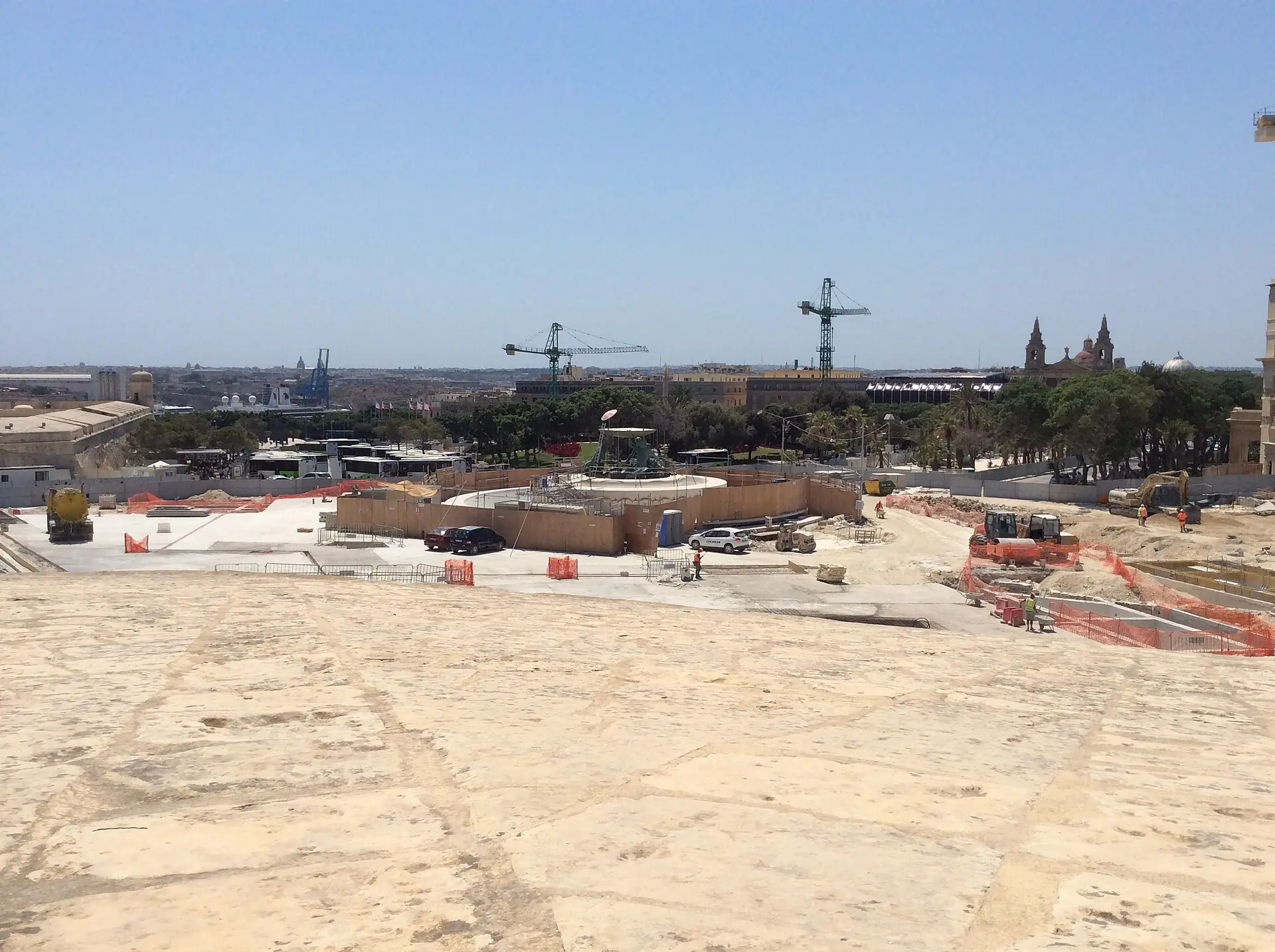
- City Gate and the Triton Fountain (Il-Port tal-Belt): The bus terminus, the Parliament and the fountain; sleep elsewhere. Suits: Arrivals, bus connections, pastizzi.
- Fort St Elmo and the north-east tip (Forti Sant’Iermu): A long shadeless walk; the National War Museum is here. Suits: War history, sea views.
- Floriana (Furjana): A suburb just outside the gate; bigger hotels and easier drop-offs. Suits: Quiet bases, car access, gardens. Price band $$.
- Sliema and St Julian’s (Tas-Sliema, San Ġiljan): Across Marsamxett Harbour; a ferry or 25-minute bus from Valletta. Suits: Seafront hotels, shopping, nightlife.
- The Three Cities (Il-Ħamsin (Birgu, Bormla, L-Isla)): A ferry ride across the Grand Harbour; a good half day. Suits: Old harbour towns, quiet streets.
- Mdina and Rabat (L-Imdina, Ir-Rabat): The old capital inland; bus 30–45 minutes. Suits: Old walled town, catacombs.
- Sleep area Floriana: suits Quiet bases, car access, gardens, price band $$.
- Sleep area Valletta: suits First visit, short stays, evenings on foot, price band $$.
- Malta International Airport, Luqa (MLA), 15–30 min by the usual route.
Neighbourhoods at a glance
One tab per area, pulled together from this guide’s districts table, area notes, sleep-area scores and place pages. Scores are desk judgements (1–5); prices are estimates, check before you book.
Republic Street and the centre
$$Triq ir-Repubblika
The core: St John’s, the Palace, Casa Rocca Piccola and the Upper Barrakka within 10 minutes.
- Suits:
- First visit, short stays, evenings on foot
- Best time:
- Before 10:00 or after 17:00Before 10:00 AM or after 5:00 PM
- Rooms:
- €400–800+ (from the sleep guide)
Pick this if: First timers, history fans
Watch out for: Cruise crowds from 10:00 and the midday sun.
- Quiet nights3/5 Medium
- Nightlife3/5 Medium
- Families2/5 Low
- Late arrival3/5 Medium
Why these scores
- Quiet nights: Calm after the day-trippers leave, but bars on Strait Street run late on weekends.
- Nightlife: Wine bars and restaurants at your door; the big clubs are in Paceville.
- Families: Small rooms, few lifts, steps and cobbles.
- Late arrival: Small hotels may close reception: confirm night access.
Getting around from here
- 10–14 min walk to City Gate, Castille & the Triton Fountain
- Walk north-east along Republic Street: about 14 min to Fort St Elmo & the National War Museum
City Gate and the Triton Fountain
Il-Port tal-Belt
The bus terminus, the Parliament and the fountain; sleep elsewhere.
- Suits:
- Arrivals, bus connections, pastizzi
- Best time:
- Morning
Pick this if: Arrivals, pastizzi, the parliament
Watch out for: Rush hour and the traffic.
Getting around from here
- Walk along Republic Street: about 10 min to Republic Street, St John's & Upper Barrakka
- Walk out through City Gate: about 8 min to Floriana & Independence Garden
Fort St Elmo and the north-east tip
Forti Sant’Iermu
A long shadeless walk; the National War Museum is here.
- Suits:
- War history, sea views
- Best time:
- Morning
Pick this if: War history and sea views
Watch out for: Midday sun and the long shadeless walk.
Getting around from here
- Walk south-west along Republic Street: about 14 min to Republic Street, St John's & Upper Barrakka
Floriana
$$Furjana
A suburb just outside the gate; bigger hotels and easier drop-offs.
- Suits:
- Quiet bases, car access, gardens
- Best time:
- Any time
- Rooms:
- €25–45 dorm bed · €80–130 double (from the sleep guide)
Pick this if: Quiet nights and families
Watch out for: Dusk in the gardens when they close.
- Quiet nights4/5 High
- Nightlife2/5 Low
- Families4/5 High
- Late arrival4/5 High
Why these scores
- Quiet nights: Wide avenues and gardens; calmer nights.
- Nightlife: A short walk into Valletta for dinner.
- Families: Gardens, lifts and larger rooms.
- Late arrival: 24-hour desks are common.
Getting around from here
- 8–12 min walk to City Gate, Castille & the Triton Fountain
Sliema and St Julian’s
Tas-Sliema, San Ġiljan
Across Marsamxett Harbour; a ferry or 25-minute bus from Valletta.
- Suits:
- Seafront hotels, shopping, nightlife
The Three Cities
Il-Ħamsin (Birgu, Bormla, L-Isla)
A ferry ride across the Grand Harbour; a good half day.
- Suits:
- Old harbour towns, quiet streets
Mdina and Rabat
L-Imdina, Ir-Rabat
The old capital inland; bus 30–45 minutes.
- Suits:
- Old walled town, catacombs
Decide
The honest trade-off: what you will enjoy, what will wear you down.
You will like
- Fortress views over two harbours
- Short walks, a lot of history
- Evenings without crowds
You will hate
- Midday sun and no shade
- Steps and cobbles
- Cruise-ship crowds
Similar citiesif this one is not quite right
Similar cities
If Valletta does not fit your dates or budget, these match it on season, cost and feel.
- Madrid
Spain
- Good in the same months: Mar, Apr, May, Sep, Oct
- A mid-range day costs about the same (≈US$128 vs US$128, excl. bed)
- Works well for first-timers, tight budgets
- A similar climate through the year
- Lisbon
Portugal
- Good in the same months: Feb, Mar, Apr, May and 3 more
- A mid-range day costs about the same (≈US$116 vs US$128, excl. bed)
- Works well for first-timers
- A similar climate through the year
- Rome
Italy
- Good in the same months: Feb, Mar, May, Sep, Oct
- A mid-range day costs about the same (≈US$140 vs US$128, excl. bed)
- Works well for first-timers
- A similar climate through the year
When
Best months: Feb, Mar, Apr, May, Sep, Oct, Dec. Month-by-month verdicts below, with the live forecast first. When to go, month by month →
Valletta: next 7 days
Loading forecast…
Forecast: Open-Meteo (CC BY 4.0), model data for this point.
Air quality
Loading…
Model estimate (CAMS via Open-Meteo), not a street-level station; readings near busy roads run higher.
Month by month, all 12best Feb, Mar, Apr, May, Sep, Oct, Dec
Mild and wet; some ferries cancelled in storms.
Mild; Carnival in February (dates move).
Mild; spring flowers.
Warm; good month.
Warm; long days.
Hot; village festas begin.
Hot; little shade at midday.
Hottest; Aug 15 is a public holiday and crowded.
Warm; still busy.
Warm; good walking.
Wetter; some storms.
Mild; Christmas lights.
Climate, calendar and eventsClimate · Calendar · Events · Packing by season
Climate
| Jan | Feb | Mar | Apr | May | Jun | Jul | Aug | Sep | Oct | Nov | Dec | |
|---|---|---|---|---|---|---|---|---|---|---|---|---|
| High | 15°C (59°F)59°F (15°C) | 15°C (59°F)59°F (15°C) | 17°C (63°F)63°F (17°C) | 19°C (66°F)66°F (19°C) | 23°C (73°F)73°F (23°C) | 27°C (81°F)81°F (27°C) | 31°C (88°F)88°F (31°C) | 31°C (88°F)88°F (31°C) | 28°C (82°F)82°F (28°C) | 24°C (75°F)75°F (24°C) | 20°C (68°F)68°F (20°C) | 16°C (61°F)61°F (16°C) |
| Low | 9°C (48°F)48°F (9°C) | 9°C (48°F)48°F (9°C) | 10°C (50°F)50°F (10°C) | 12°C (54°F)54°F (12°C) | 15°C (59°F)59°F (15°C) | 19°C (66°F)66°F (19°C) | 22°C (72°F)72°F (22°C) | 23°C (73°F)73°F (23°C) | 21°C (70°F)70°F (21°C) | 18°C (64°F)64°F (18°C) | 14°C (57°F)57°F (14°C) | 11°C (52°F)52°F (11°C) |
| Rain days | 10 | 8 | 7 | 5 | 3 | 1 | 0 | 1 | 4 | 8 | 9 | 11 |
| Verdict |
- July and August are the hot months: afternoon highs of 31 °C (88 °F) feel hotter on unshaded limestone.July and August are the hot months: afternoon highs of 88 °F (31 °C) feel hotter on unshaded limestone.
- May, June and late September to October are the best walking months: warm, dry and lighter crowds.
- Winter is mild but wet and windy; Gregale winds can cancel ferries.
- The sea is warm enough to swim from June to October.
Events by month
New Year’s Day
holiday1 January · Whole island(check dates)
Most shops and sights closed.
Valletta Baroque Festival
festivalMid to late January · Valletta venues(check dates)
Concerts in palaces and theatres.
St Paul’s Shipwreck
holiday10 February · Valletta(check dates)
Public holiday and a procession.
Carnival
festivalLate February or early March · Valletta and Floriana(check dates)
Parades and costume; some streets close.
St Joseph and Freedom Day
holiday19 and 31 March · Whole island(check dates)
Two public holidays.
Good Friday
holidayMoves with Easter · Valletta(check dates)
Processions and closures.
Malta International Fireworks Festival
festivalLate April · Grand Harbour(check dates)
Displays over the harbour.
Labour Day
holiday1 May · Whole island(check dates)
A public holiday.
Sette Giugno
holiday7 June · Valletta(check dates)
Public holiday; a memorial in Valletta.
Feast of Sts Peter and Paul (L-Imnarja)
holiday29 June · Buskett and Rabat(check dates)
Public holiday with folk music.
Malta Jazz Festival (check)
festivalMid-July (check) · Ta’ Liesse, Valletta(check dates)
Evening concerts.
Santa Marija
holiday15 August · Whole island(check dates)
Public holiday and the hottest week.
Victory Day
holiday8 September · Whole island(check dates)
A public holiday.
Independence Day
holiday21 September · Whole island(check dates)
Public holiday.
Rain and wind
seasonWhole month · Whole island
The wettest month; ferries may be cancelled.
Immaculate Conception and Republic Day
holiday8 and 13 December · Whole island(check dates)
Public holidays.
Christmas lights and nativity displays
festivalMid-December to 6 January · Valletta(check dates)
Republic Street is lit; some closures on 25 December.
Christmas Day
holiday25 December · Whole island(check dates)
Almost everything closed and buses run on a reduced timetable.
Festivals and events that change the plan
| When | What | Effect on your plan |
|---|---|---|
| Jan–Feb | Valletta Baroque Festival | Concerts in palaces and theatres; book rooms and tickets early (check dates). |
| Feb (dates move) | Carnival | Parades and children’s costumes in Valletta and Floriana; some streets close. |
| 10 Feb | St Paul’s Shipwreck | Public holiday; a procession in Valletta. |
| Mar–Apr | Holy Week | Good Friday processions, quiet streets and closures. |
| Late Apr | Malta fireworks festival | Displays over the Grand Harbour (check dates). |
| 15 Aug | Santa Marija | Public holiday; the hottest week of the year and crowded villages. |
| 21 Sep | Independence Day | Public holiday; some closures. |
| Dec | Christmas lights and nativity displays | Republic Street is lit; some sights close on 25 December. |
What to pack, by season
From Valletta’s own climate table: the coldest, warmest and wettest three months, and what to bring for each.
Coldest months
Jan–Mar
9° to 16°
A light jacket and a sweater.
Warmest months
Jul–Sep
22° to 30°
Light, breathable clothes, a sun hat and sunscreen; plan midday indoors and carry water.
Wettest months
Nov–Jan
10 rain days a month
A compact umbrella.
Arrive & moveGetting in, getting around, and your bags
Arrive & move
Getting in, getting around, and your bags
I land at…
Enter your landing time: what still runs from the airport, where you can eat when you get in, and which areas let you check in that late.
Malta International Airport, Luqa (MLA)
Out of the airport about 23:4311:43 PM (00:42 (next day)12:42 AM (next day) if immigration and bags are slow); in town about 23:5811:58 PM.
Transport from the airport
- Any hourTaxi or ride-hailing car to the door. Runs all night.
- GoneAirport bus to the Valletta bus terminus, then a short walk. Stops about 21:00.Stops about 9:00 PM.
- Last resortOvernight at a hotel near Malta International Airport. If nothing else works.
Places to eat open when you get in
We have no confirmed hours for the places to eat here yet. Plan on a convenience store or your hotel. What is open late →
Where to sleep with a late arrival
Typical times from our airport data, not a timetable: check the last departure on the day. Full airport-to-bed plan for Malta International Airport, Luqa (MLA) →
Arrive
Each gateway has its own airport-to-bed page with timings and the last safe connection.
Getting in, in detailGet in
Get in by rail and road
| Station | Mode | Serves | Where | To the centre |
|---|---|---|---|---|
| Malta International Airport (MLA)Ajruport Internazzjonali ta’ Maltause | Air | Flights to Europe and beyond | About 6 km south of Valletta, at Luqa · Luqa | Taxi 20–35 min; bus X4 or 71 about 30–45 minA fixed-fare taxi kiosk is at arrivals; ride-hail cars wait outside. |
| Valletta bus terminusTerminus tal-Beltuse | Bus | All island buses, including Mdina, Sliema, Marsaxlokk | Outside City Gate · Floriana edge | Walk 2 minutesBuses are numbered; check the Tallinja app for departures. |
| Grand Harbour ferry landingIl-Port il-Kbiruse | Ferry | The Three Cities and cruise arrivals | Below the Upper Barrakka Gardens · Lascaris Wharf | Barrakka Lift up; steps or a steep streetA short ride to Birgu. |
| Marsamxett ferry landingMarsamxettuse | Ferry | Sliema and Gzira | Below the western walls · Valletta west | A steep walk up to Republic StreetA 15-minute crossing. |
| Cruise terminal (Valletta Waterfront)Il-Port tal-Kruċiericaution | Ferry | Cruise ships | Below Floriana · Pinto Wharf | Shuttle or a 20-minute walkCruise days fill the centre from 10:00.Cruise days fill the centre from 10:00 AM. |
| Ċirkewwa ferry (for Gozo)Ċirkewwause | Ferry | Gozo | North-west tip of Malta · Mellieħa | Bus about 1 h 15Pay for the return crossing on the way back (check). |
- Traffic in Valletta is heavy on weekday mornings: allow extra time for the airport taxi.
- A ferry to the Three Cities is the best way to arrive by water.
- Cruise ships dock below Floriana; the shuttle or a walk brings you into the centre.
- There are no trains on Malta.
Move
The default way around, when a pass pays off, and when the last trains go.
- Default
- Walk inside Valletta; the harbour ferry or a bus between areas; a ride-hailing car with bags.
- Passes
- No pass needed for a short stay: Valletta is walkable and most day-trips are one bus or ferry ride.
- Last trains
- Buses run less often after 23:00; ride-hailing and taxis run all night.desk estimate
- Other modes
- Other modes (Rome2Rio) ↗
Getting around, in detailGet around · Connect
Get around
Walk inside Valletta, use the bus between areas, the ferry across the harbours and a taxi for late nights. Malta has no train or metro. The Barrakka Lift saves a climb from the harbour, and ride-hailing cars are cheap and quick.
| Mode | Verdict | Fare | Use it for | What breaks |
|---|---|---|---|---|
| Walking | use | Free | Everything in Valletta | The peninsula is 1 km (0.6 mi) long; steep side streets and stairs.The peninsula is 0.6 mi (1 km) long; steep side streets and stairs. |
| Bus (Tallinja) | use | About €2–2.50 (≈ US$3) single (check) | Airport, Sliema, Mdina, Marsaxlokk | Tap a contactless card or the Tallinja card (check); buses can be full and late. |
| Harbour ferry | use | About €2–3 (≈ US$3–4) (check) | Sliema, Three Cities | A scenic and cheap crossing; check winter timetables. |
| Barrakka Lift | use | About €1 (≈ US$2) (check) | Upper Barrakka to the harbour | Runs daily (check). |
| Taxi and ride-hail | use | From €6 (≈ US$7) for a short ride | Late nights, bags, hills | Bolt, eCabs and Uber all work; taxis from the rank cost more. |
| Hop-on hop-off bus | caution | About €20–25 (≈ US$25–30) (check) | A first-day overview | Slow in traffic; a walking loop is better in Valletta. |
| Rental car | caution | From €30 (≈ US$35) a day | Beaches and Gozo | Left-hand traffic and tight parking; not needed for Valletta. |
| E-scooters | caution | A few euros per ride | Sliema promenade | Steps and cobbles in Valletta; check rules. |
City buses a visitor actually uses
| Bus | Route | Useful for | Fare | Note |
|---|---|---|---|---|
| X4 | Airport ↔ Valletta (express) | Airport on a budget | About €2–2.50 (≈ US$3) (check) | Runs every 20–30 minutes; luggage space is limited.(check) |
| 71 / 72 | Airport ↔ Valletta (via Luqa) | Airport | About €2–2.50 (≈ US$3) (check) | A slower option.(check) |
| 51 / 52 | Valletta ↔ Rabat and Mdina | Mdina day trip | About €2–2.50 (≈ US$3) (check) | 30–45 minutes.(check) |
| 81 | Valletta ↔ Marsaxlokk | Fish market | About €2–2.50 (≈ US$3) (check) | 40 minutes.(check) |
Taxis and ride-hailing
eCabs
app
Maltese ride-hailing app with fixed prices.
Bolt
app
The cheapest option in most places.
Uber
app
Available; check the price shown.
Taxi rank at City Gate
rank
Metered; agree the price before you go if the meter is off.
Fixed-fare kiosk at MLA
kiosk
Fixed price to Valletta about €20–25 (≈ US$25–30) (check).
On foot and car-free hours
| Where | When | Note |
|---|---|---|
| Republic Street | Early morning or evening | The main line: level, shaded in patches, busy at cruise times. |
| Bastion walls and the Barrakka | Sunset | The best evening walk; can be windy. |
| Old Theatre Street and Strait Street | Evening | Quiet lanes with bars and restaurants. |
More on getting around
Addresses in Malta use the street name, the locality and a postcode such as VLT 1116; Valletta streets have both Maltese and English names.
Connect
| Option | Verdict | What breaks |
|---|---|---|
| Tourist eSIM before you fly | use | No queue; data only on most plans. |
| Epic, GO or Melita shop (Valletta or the airport) | use | Prepaid SIM with data; bring your passport. |
| Airport SIM counter | caution | Convenient, slightly higher price; test data before you leave. |
| Roaming on an EU plan | use | EU plans roam in Malta at home rates. |
| Roaming on a UK or US plan | caution | Check daily charges with your carrier. |
Tallinja
Buses and timetables
The public transport app; buy tickets with a contactless card or the app (check).
Bolt, eCabs and Uber
Taxis
Fixed price shown before you book; eCabs is Maltese-run.
Google Maps
Routes and hours
Steep and stepped streets show as short walks: allow extra time.
Valletta Ferry app or website
Harbour ferries
Check the timetable, which changes in winter (check).
- Wi-Fi
- Free in most cafés, hotels and museums; some public hot spots in Valletta (check).
- Signal
- Good 4G and 5G in Valletta; weaker in some Ħal Saflieni tunnels and inside thick-walled buildings.
- Post
- MaltaPost offices sell stamps; a postcard to the EU costs about €1 (≈ US$2) (check).
Luggage
Where big bags are a problem, and how to get rid of them for the day.
Rule
- Lockers
- Few public lockers; hotels hold bags after check-out.
- Forwarding
- No forwarding culture; the airport is a short ride, so keep the bag with you.
- Dead zone
- Late flights: ask the hotel to hold bags after check-out.
Bags, area by area
4 walking areas rated
- Bags forbidden
- Bags painful
Republic Street, St John's & Upper BarrakkaCity Gate, Castille & the Triton Fountain
- Bags ok
Lockers, forwarding and the gap between check-out and check-in are covered once, under Luggage.
See & doWalking clusters, day plans and the places worth the time
See & do
Walking clusters, day plans and the places worth the time
Clusters
Plan by cluster: each is a walkable area with a rescue point and a bag rule.
The core: St John's Co-Cathedral, the Grandmaster's Palace and the Upper Barrakka Gardens along and beside Republic Street; go early, before the cruise groups.
rescue 100% · max p90 4.3′ · half
The entrance: the new City Gate, Parliament, the Triton Fountain and Castille Place; the bus terminus is here, so arrive or leave through it.
rescue 100% · max p90 4.4′ · half
The far end of the peninsula: Fort St Elmo and the war museum with views to both harbours; a long, shadeless walk, so go in the morning.
rescue 100% · max p90 4.3′ · half
The suburb outside the gate: gardens, the Granaries and hotels with car access; use it for a quiet base or an evening walk.
rescue 100% · max p90 4.4′ · half
Days
Ready-made day plans, timed against opening hours and walking distances.
How long are you staying?
Loose outlines in the city’s rhythm: early mornings, indoor middays, evenings on the walls. The timed day plans check opening days and walking.
1 day
A stopover or a cruise-ship day
- 08:30St John's Co-Cathedral — St John’s Co-Cathedral at opening
- 10:00Grandmaster's Palace — Palace Square and the Grandmaster’s Palace
- 12:00Is-Suq tal-Belt (Valletta Food Market) — Lunch at Is-Suq tal-Belt
- 14:00Upper Barrakka Gardens — Upper Barrakka Gardens and the lift
- 16:00Caffe Cordina — Coffee at Caffe Cordina
- 18:30Nenu the Artisan Baker — A walk on the bastions and dinner
Skip: Fort St Elmo, the Three Cities and Mdina: all need more time.
Valletta in 3 days
3 daysMornings on the bastions, middays in the shade, evenings on the harbour walls; the last day ends with the bags already in the car.
Day by day
Day 1 — St John's at opening, Palace Square, a 12:30 lunch table
- 08:30St John's Co-Cathedral
- Grandmaster's Palace (optional)
- Casa Rocca Piccola (optional)
- 12:30Lunch table 12:30 (Valletta)
Day 2 — City Gate, Castille Place, Upper Barrakka Gardens
Day 3 — Fort St Elmo, food-hall lunch, car to the airport at 13:00
- 08:30National War Museum (Fort St Elmo)
- Is-Suq tal-Belt (Valletta Food Market)
- 13:00Car to Malta International Airport at 13:00
Places
“Best time” is when to arrive for the fewest crowds, for example “before 08:30”; “Go any time” means the hour makes little difference. More sights follow under “More sights and museums”.
7 places. Filters use the guide’s own ratings; a place with no rating is left out when a filter is on.
Tours, classes and shows in Valletta →
If you do ten things in Valletta
Ranked for a first visit of 2–4 days. Prices are 2026 estimates; hours marked (check) on the linked pages still need confirmation.
- 1
The island’s most decorated interior and the Caravaggio; go at opening.
- Time
- 1–1.5 h
- Best
- At opening
- Cost
- €15–20 (≈ US$18–25)
- 2
The best free view of the Grand Harbour and the noon gun.
- Time
- 30–45 min
- Best
- Before noon or at sunset
- Cost
- Free
- 3
The Knights’ palace, its armoury and its State Rooms.
- Time
- 1 h
- Best
- Late morning
- Cost
- €10–12 (≈ US$12–14)
- 4
Two sieges and the George Cross under one roof, with a view from the ramparts.
- Time
- 1–1.5 h
- Best
- Morning
- Cost
- €10–12 (≈ US$12–14)
- 5
A harbour ferry to the Three Cities
The best way to see the fortifications from the water.
- Time
- 2–3 h
- Best
- Morning or late afternoon
- Cost
- €2–3 (≈ US$3–4)
- 6
A quiet, guided visit to a noble family house.
- Time
- 45–60 min
- Best
- Morning
- Cost
- €10–14 (≈ US$12–17)
- 7
The underground command centre, cool in July.
- Time
- 1 h
- Best
- Hot afternoon
- Cost
- €12–16 (≈ US$14–19)
- 8
A 1730s theatre with tours and evening shows.
- Time
- 45 min
- Best
- Afternoon or evening
- Cost
- €7–10 (≈ US$9–12)
- 9
A food hall for a fast local lunch.
- Time
- 45 min
- Best
- Before 12:30
- Cost
- €8–18 (≈ US$10–25)
- 10
A walk on the bastion walls at sunset
The stone glows gold at dusk and the town empties out.
- Time
- 30–45 min
- Best
- Sunset
- Cost
- Free
Good for…
Verdict is how well Valletta works for that traveller, not how nice it is.
A compact city with a good baroque core; a first visit fits four short areas.
- 1St John's Co-Cathedral — the one sight to do at opening.
- 2Valletta in 3 days — the 3-day plan already checks opening days.
- 3Sleep in Valletta or Floriana — walk to everything.
Good local dishes at modest prices, but a small city with limited choice.
- 1Nenu the Artisan Baker — a Maltese platter and rabbit.
- 2Ta' Kris — a home-style lunch.
- 3Is-Suq tal-Belt (Valletta Food Market) — a food hall for every taste.
Cheap food and free views; beds are the cost.
- 1Upper Barrakka Gardens — a free view.
- 2Pastizzi and imqaret near City Gate — a €1 (≈ US$2) snack.
- 3Floriana guesthouse — cheaper than Valletta.
Steps and heat limit strollers; the gun, lift and ferry win children over.
- 1Upper Barrakka Gardens — the noon gun and the lift.
- 2National War Museum (Fort St Elmo) — vehicles and uniforms.
Steep and stepped; use the lift and a taxi.
- 1Upper Barrakka Gardens — a level terrace and a lift.
- 2St John's Co-Cathedral — a side ramp (check).
Two sieges, the Knights and the WWII story in one small town.
- 1National War Museum (Fort St Elmo) — the two sieges.
- 2
 Lascaris War Rooms — the WWII command centre.
- 3Grandmaster's Palace — the armoury.
There is no beach in Valletta; the sea is a ferry or bus ride away.
- 1Sliema rocky shore and Golden Bay — the nearest swimming; check the bus.
Wine bars and Strait Street in Valletta; big clubs are in Paceville.
- 1Trabuxu wine bar — a quiet glass of wine.
- 2
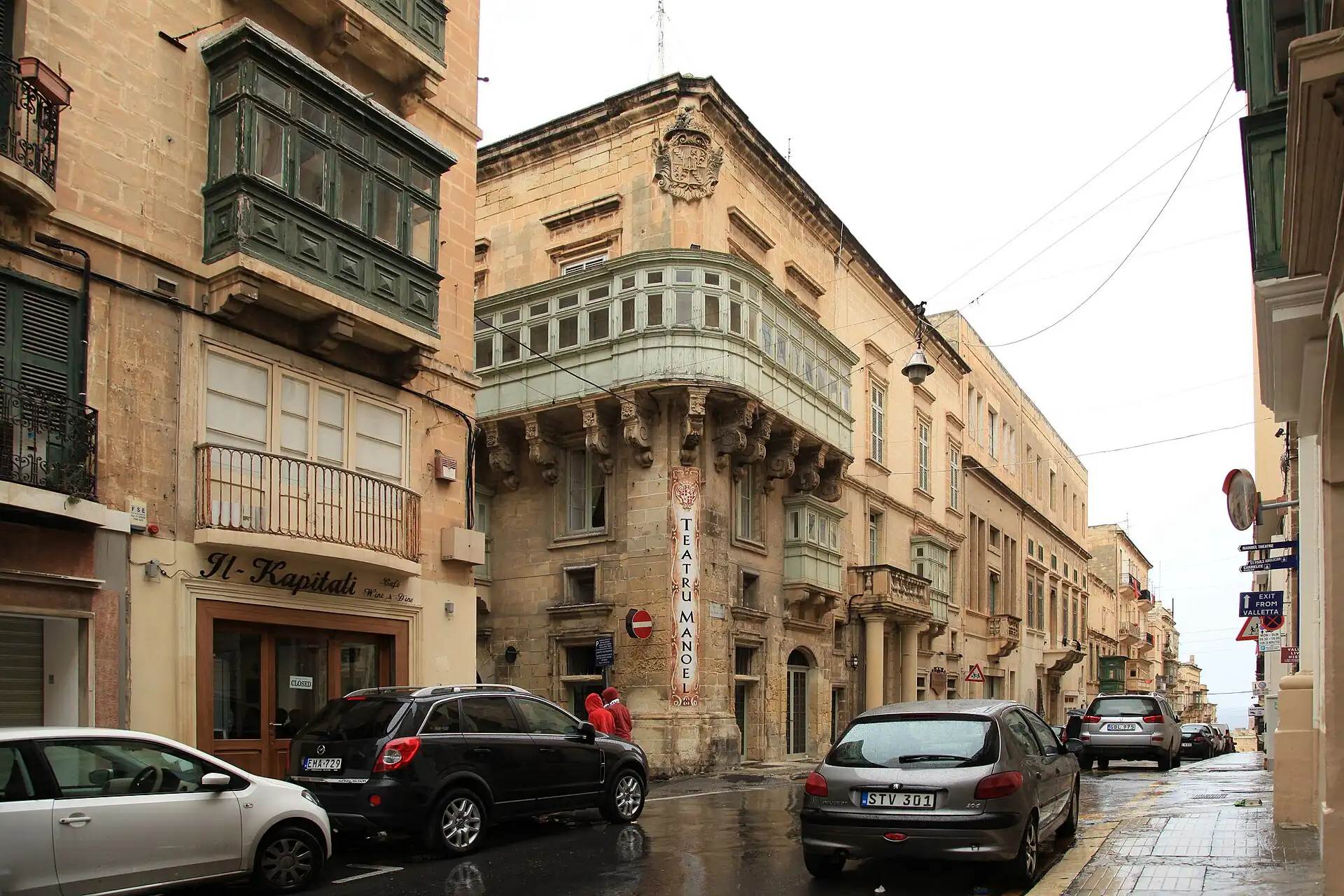 Manoel Theatre — an evening show.
Golden limestone and harbour views at dawn and dusk.
- 1Upper Barrakka Gardens — the Grand Harbour view.
Tours and classes: book or skip
Book through the operator’s own site or the hotel, with written inclusions and a cancellation policy. Prices per person, group tour unless stated.
| Tour or class | Verdict | Typical price | Why | Check before paying |
|---|---|---|---|---|
| Grand Harbour boat tour | book | €15–25 (≈ US$18–30) | The best view of the fortifications from the water. | The route, duration and whether it includes commentary. |
| Valletta walking tour (2 hours) | book | Free (tip) or €15–30 (≈ US$18–35) | A guide makes the grid and the Knights’ story make sense. | Operator name, group size and meeting point. |
| Hypogeum ticket | book | €35–40 (≈ US$45–50) | A prehistoric underground site with very limited entry. | Book on the official site weeks ahead. |
| Three Cities walking tour | maybe | €20–40 (≈ US$25–50) | A guide explains the sieges; you can also walk alone. | Operator name and language. |
| Gozo day tour | maybe | €45–80 (≈ US$55–95) | Efficient but rushed; two nights is better. | Inclusions and the ferry ticket. |
| Blue Lagoon boat trip | caution | €25–45 (≈ US$30–55) | Crowded from 10:00 in summer.Crowded from 10:00 AM in summer. | Go early; check the operator. |
| Hop-on hop-off bus | caution | €20–25 (≈ US$25–30) | Slow; Valletta is better on foot. | The route and the ticket duration. |
| Wine tasting tour | maybe | €40–75 (≈ US$50–90) | A half day at a winery. | Inclusions and the driver. |
| Food and pastizzi tour | maybe | €40–75 (≈ US$50–90) | A guided snack walk. | Group size and dietary options. |
| Diving trip | maybe | €30–70 (≈ US$35–85) | Clear water and wrecks. | Certification and equipment. |
What each season brings
Spring
Mar–May
Wildflowers, warm days and good walking weather.
Watch: Some Easter closures and cool evenings.
Summer
Jun–Aug
Long days, sea swimming and village festas.
Watch: Heat above 30 °C, cruise crowds and high prices.
Autumn
Sep–Nov
Warm sea, softer light and fewer visitors.
Watch: October and November storms; wet days.
Winter
Dec–Feb
Christmas lights, Carnival and the Baroque Festival.
Watch: Wind, rain and ferry cancellations.
Photo spots and the light
Light times are for clear days; overcast days flatten the colours.
| Spot | Best light | Tip |
|---|---|---|
| Upper Barrakka terrace | Early morning or sunset | Stand at the balustrade; the Three Cities glow gold. |
| St John’s Square | Morning | Shoot the façade before the café tables fill. |
| Republic Street looking down | Early morning | Straight lines and a bright sky; a clear street before 09:00. |
| Lower Barrakka Gardens | Afternoon | The Siege Bell Memorial with the harbour behind. |
| Valletta from Sliema promenade | Sunset | Take the ferry or walk to see the bastions glow. |
| Fort St Elmo ramparts | Late morning | Lighthouse and breakwater; keep to the walkway. |
| Three Cities waterfront | Golden hour | A view back to Valletta across the water. |
Valletta travel FAQ
Answers are 2026 desk estimates; fares and rules marked (check) change.
How many days do I need in Valletta?
Two full days cover the four areas; three with a Three Cities ferry; five with Mdina and Marsaxlokk.
Is Valletta safe at night?
Yes: violent crime is rare. The risks are rowdy groups on Strait Street at weekends and pickpockets on the bus. Use a licensed taxi after midnight.
Do I need to book St John’s Co-Cathedral?
Not always; arrive at opening to avoid queues, or buy a ticket online if the official site offers it (check).
How do I get from the airport to Valletta?
A taxi from the fixed-fare kiosk or a ride-hail car is about €15–25 (≈ US$18–30) and 20–35 minutes; the X4 bus is about €2–2.50 (≈ US$3) (check).
Do I need cash in Valletta?
Rarely: cards work in most places. Keep €20–40 (≈ US$25–50) in small notes for kiosks, boats and church donations.
When is the best time to visit?
April–June and late September–October: warm, dry and lighter crowds. July and August are hot and busy.
Is Valletta good for wheelchairs?
Only partly: steps and cobbles are everywhere; use the Barrakka Lift and taxis.
Is the tap water safe?
Yes, but it tastes brackish; most visitors buy bottled water.
What should I wear in churches?
Cover shoulders and knees; carry a scarf.
Can I do Valletta as a day trip from Sliema?
Yes: a 15-minute ferry lands below the walls; plan a morning and an evening.
What does Valletta cost per day?
About €55 (≈ US$65) budget, €110 (≈ US$130) mid-range and €240 (≈ US$300) for high-end excluding your bed.
More to see and doSee & do · Learn & work · Rain & heat · Wheelchair and stroller
Wheelchair and stroller, place by place
How each place in this guide works for wheels, from its own page. Ratings are desk estimates unless a page says it was checked on the ground.
| Place | Step-free | Wheelchair | Stroller | What to know |
|---|---|---|---|---|
| Casa Rocca Piccola | no | poor | poor | Multiple flights of stairs. |
| Grandmaster's Palace | partial | caution | caution | A few steps at entrances; galleries are level. |
| Lascaris War Rooms | no | poor | poor | Multiple steps. |
| Manoel Theatre | partial | caution | caution | A few steps at the door. |
| National War Museum (Fort St Elmo) | partial | caution | caution | Ramps and steps at the fort; stone surfaces are uneven. |
| St John's Co-Cathedral | partial | ok | caution | A few steps at the entrance; the interior is level. |
| Upper Barrakka Gardens | partial | ok | ok | A few steps to the arcade; the terrace is level. |
See & do
29 of 29
- church
The baroque interior and Caravaggio; go at opening.
Republic Street · Mon–Sat, from about 09:30 (check)Mon–Sat, from about 9:30 AM (check) · €15–20 (≈ US$18–25)(check)
- palace
State Rooms and armoury; check the State Rooms.
Palace Square · Daily, mid-morning (check) · €10–12 (≈ US$12–14)(check)
- Gardens
The best free harbour view; gun at noon and 16:00.The best free harbour view; gun at noon and 4:00 PM.
Upper Barrakka · Daily, dawn to dusk · Free(check)
Sieges of 1565 and 1940–42; a long walk.
Fort St Elmo · Daily (check) · €10–12 (≈ US$12–14)(check)
- house
A noble family house with a WWII shelter.
Republic Street · Mon–Sat tours (check) · €10–14 (≈ US$12–17)(check)
- theatre
A 1730s theatre; tours or an evening concert.
Old Theatre Street · Tours and shows (check) · €7–10 (≈ US$9–12)(check)
- Museums
Underground WWII command centre.
Lascaris Ditch · Guided tours (check) · €12–16 (≈ US$14–19)(check)
Triton Fountain and City Gate
landmarkThe bronze fountain and the Renzo Piano gate and parliament.
City Gate · Always · Free
Castille Place (exterior)
landmarkThe Prime Minister’s office; view the façade only.
Castille Place · Always · Free
Lower Barrakka Gardens and Siege Bell
GardensA quiet garden with a memorial and harbour view.
Lower Barrakka · Daily (check) · Free(check)
Malta National Museum of Archaeology
MuseumsTemple-period figurines and finds (check).
Auberge de Provence · Daily (check) · €6–10 (≈ US$7–12)(check)
St Paul’s Shipwreck Church
churchA small baroque church with a relic (check hours).
St Paul Street · Daily (check) · Free(check)
Our Lady of Mount Carmel and St Paul’s Anglican Pro-Cathedral
churchA domed church and a neoclassical spire (check).
Independence Square · Daily (check) · Free(check)
Hastings Gardens
GardensA quiet garden with a view over Marsamxett harbour.
North-west bastion · Daily · Free(check)
Valletta ferry and the Barrakka Lift
transportA quick harbour crossing and a lift ride.
Grand Harbour · Daily (check) · €1–3 (≈ US$2–4)(check)
Three Cities waterfront (Birgu)
townOld streets and a marina across the harbour.
Birgu · All day · Free
Mdina, the Silent City
townA walled hill town; the cathedral museum costs extra.
Mdina · All day · Free
Hal Saflieni Hypogeum
Temples & pagodasA prehistoric underground burial site; book early.
Paola · Timed tours (book weeks ahead) · €35–40 (≈ US$45–50)(check)
Marsaxlokk fishing harbour
townPainted boats and fish restaurants.
Marsaxlokk · All day; market Sunday morning · Free
Watch the noon gun at the Upper Barrakka
Shows & musicA cannon firing at noon and 16:00; arrive early.A cannon firing at noon and 4:00 PM; arrive early.
Upper Barrakka · 11:45 for 12:00 (check)11:45 AM for 12:00 PM (check) · Free(check)
Ride the Barrakka Lift and take the harbour ferry
ActiveA cheap water crossing to the Three Cities.
Grand Harbour · Daily (check) · €1–3 (≈ US$2–4)(check)
Harbour cruise (Grand Harbour)
ActiveA one-hour boat trip around the forts.
Valletta Waterfront · Daily (check) · €15–25 (≈ US$18–30)(check)
Food walk with pastizzi and local wine
Food toursA guided snack and wine tasting; check the operator.
Valletta · Morning or evening (check) · €40–75 (≈ US$50–90)(check)
Wine bar evening in Strait Street
NightA quiet glass of Maltese wine and cheese.
Strait Street · From about 19:00From about 7:00 PM · €15–30 (≈ US$18–35)(check)
Evening concert at the Manoel Theatre
Shows & musicClassical music and opera in a historic house.
Old Theatre Street · Evenings (check the programme) · €20–60 (≈ US$25–70)(check)
Day on the water at Comino and the Blue Lagoon
ActiveCrowded by 11:00; go early or skip.Crowded by 11:00 AM; go early or skip.
Comino · 09:00–17:00 (check)9:00 AM–5:00 PM (check) · €25–45 (≈ US$30–55)(check)
Cycling or walking the Dingli Cliffs
ActiveThe highest cliffs on the island; bus and a walk.
Dingli · Sunrise to sunset · Free(check)
Snorkel or dive at St Peter’s Pool or Cirkewwa
ActiveA dive centre can arrange a first dive; check the operator.
Southeast and north · Daylight · €30–70 (≈ US$35–85)(check)
Day trip to Mdina and Rabat
ActiveQuiet lanes, a cathedral and the catacombs.
Mdina · Daylight · Free (bus fare)(check)
- Booking
- The Hypogeum, the Manoel Theatre shows and popular boat trips sell out days or weeks ahead in summer.
- Sun
- Do outdoor activities before 11:00 and after 17:00 from June to September.Do outdoor activities before 11:00 AM and after 5:00 PM from June to September.
Learn & work
| What | Where | Cost | Note |
|---|---|---|---|
| English or Maltese language courses | Language schools in Sliema and St Julian’s | From about €200 (≈ US$250) a week (check) | Malta is a popular place to study English; most courses are in Sliema, not Valletta.(check) |
| Diving courses (Open Water) | Dive centres at Cirkewwa, St Paul’s Bay and Gozo | €350–450 (≈ US$450–550) for 3–4 days (check) | Wrecks and caves; book ahead.(check) |
| Cooking classes | Cookery schools and restaurants | €50–90 (≈ US$60–110) for a half day | Maltese cooking; book ahead.(check) |
| University summer schools | University of Malta (Msida) | Varies (check) | Short courses in Mediterranean studies and languages.(check) |
Working here
- Tourist entry
- Most visitors get up to 90 days in 180; tourist entry does not allow paid work.
- Work permit
- Non-EU workers need an employer-sponsored permit through Identity Malta; the Nomad Residence Permit covers some remote workers (check the rules).
- Remote work
- Remote workers on a tourist stay cannot work for a Maltese company; check the Nomad Residence Permit for longer stays.
- Coworking
- Coworking spaces and cafés with Wi-Fi are in Valletta, Sliema and Gżira.
- Tax
- Long stays can create tax obligations; check with an adviser.
Rain-day and heat-day plan
Rain day
Malta rain comes in short, heavy bursts, mostly from October to March: step into a museum or café and wait 30 minutes.
- 01St John's Co-Cathedral — A large, dry interior for an hour or more.
- 02Grandmaster's Palace — State Rooms and armoury under one roof.
- 03Casa Rocca Piccola — A guided house tour.
- 04Manoel Theatre — A guided theatre visit.
- 05Lascaris War Rooms — Underground and dry.
- 06Is-Suq tal-Belt — A covered food hall.
Heat day
From June to September, do outdoor sights before 11:00 and after 17:00; rest in air conditioning from 12:00 to 16:00.
- 08:30St John's Co-Cathedral — Cool inside at opening.
- 10:00Upper Barrakka Gardens — Shade under the arcade.
- 12:30Is-Suq tal-Belt (Valletta Food Market) — Air conditioning at lunch.
- 14:00Lascaris War Rooms — Cool underground.
- 19:00 — Republic Street and the bastion walls at sunset.
Day-trips and nearby
Places you can reach from Valletta in a day or with one night away, with the route and what it costs. Door to door, not ride time.
Three Cities (Birgu, Senglea, Cospicua)
goFerry from Valletta about 10 min
Old harbour towns with narrow streets; go in the morning.
- Time
- Half day
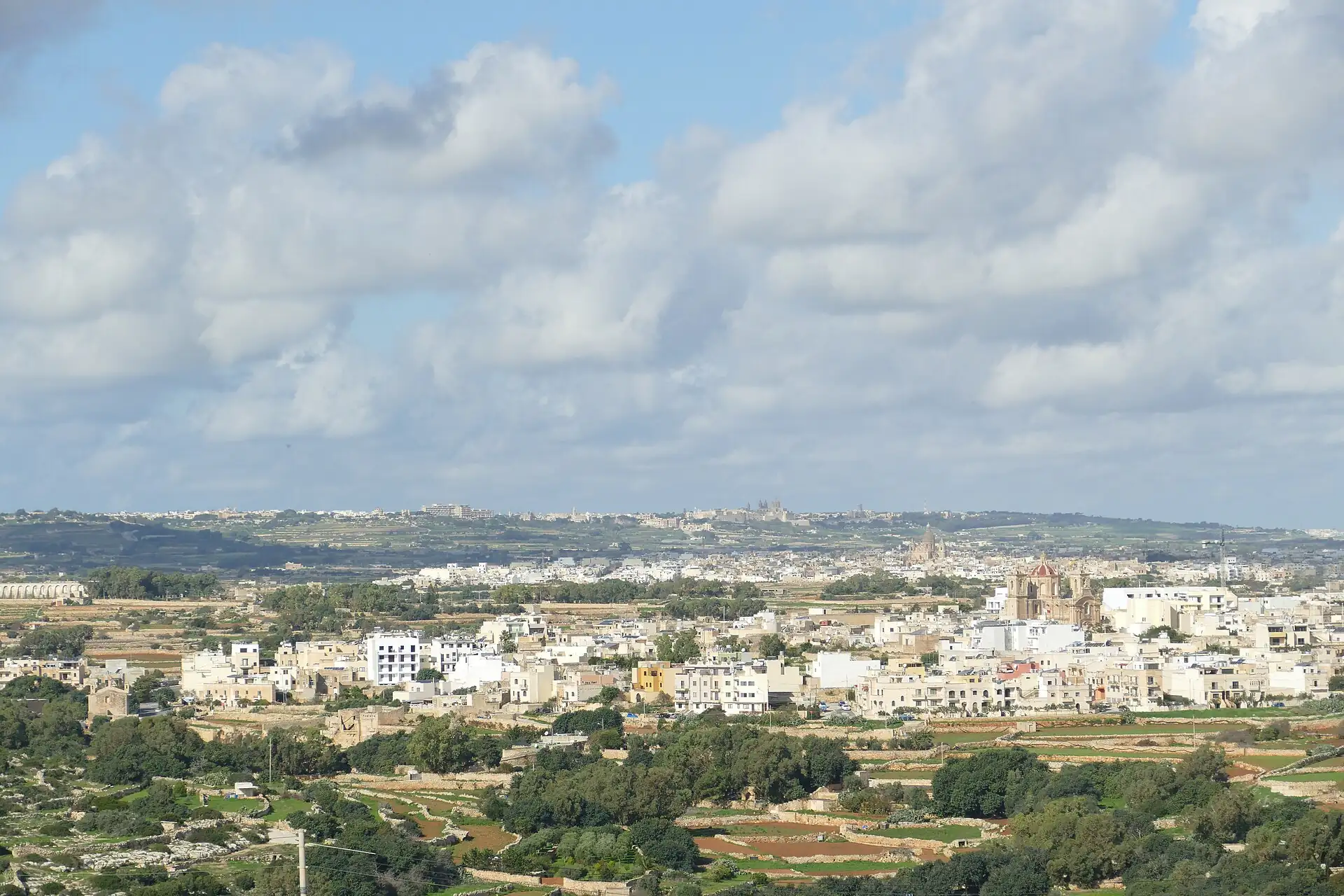 Photo: Kritzolina, CC BY-SA 4.0
Mdina and Rabat
goBus about 30–45 min
A walled hill town with quiet lanes; visit early or after 16:00.
- Time
- Half day
Sliema and St Julian’s
goFerry or bus 20–30 min
Sea promenade, shops and nightlife.
- Time
- Evening or half day
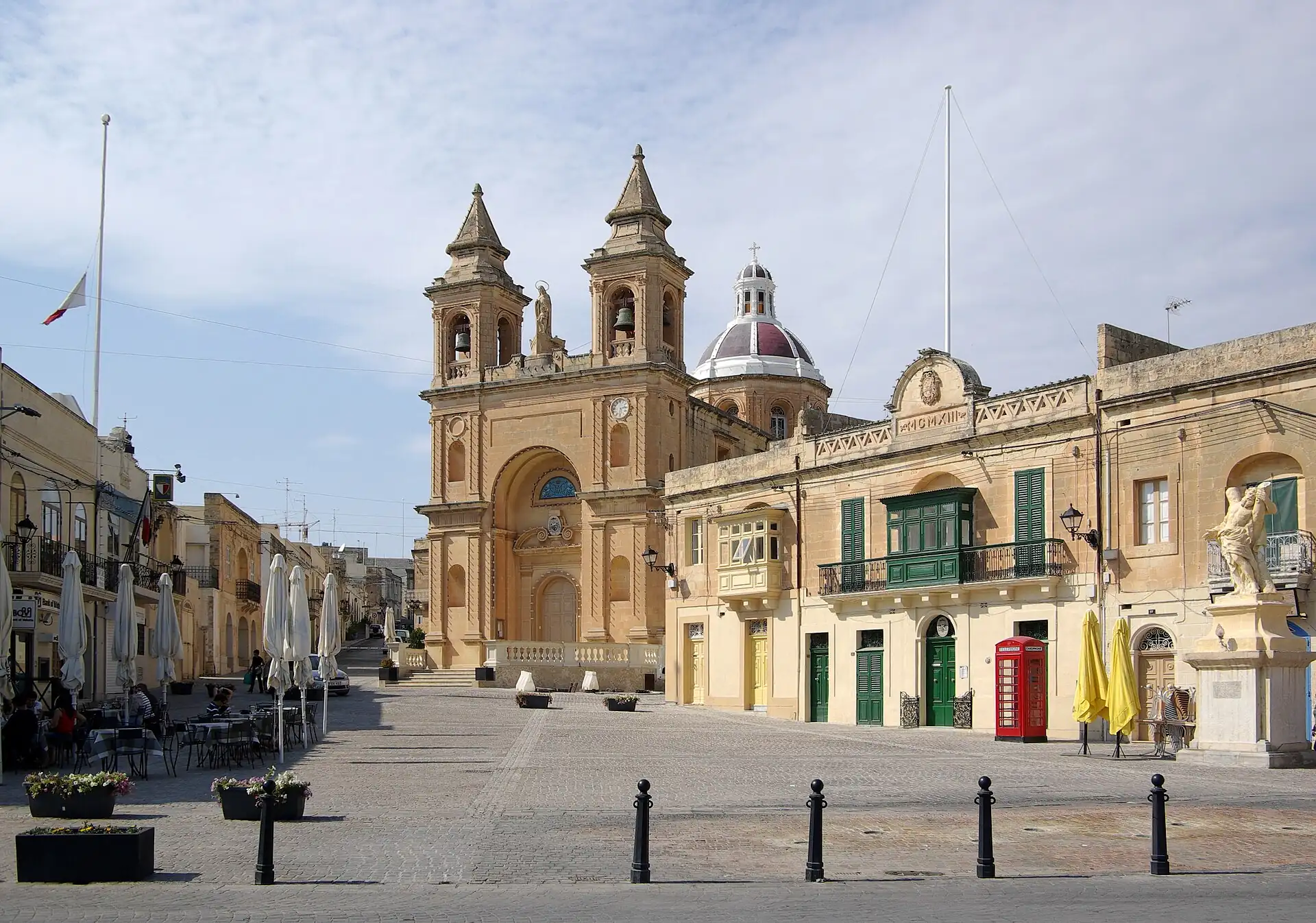 Photo: Berthold Werner, CC BY-SA 3.0
Marsaxlokk
goBus about 40 min
A fishing harbour; the Sunday fish market is busiest.
- Time
- Half day
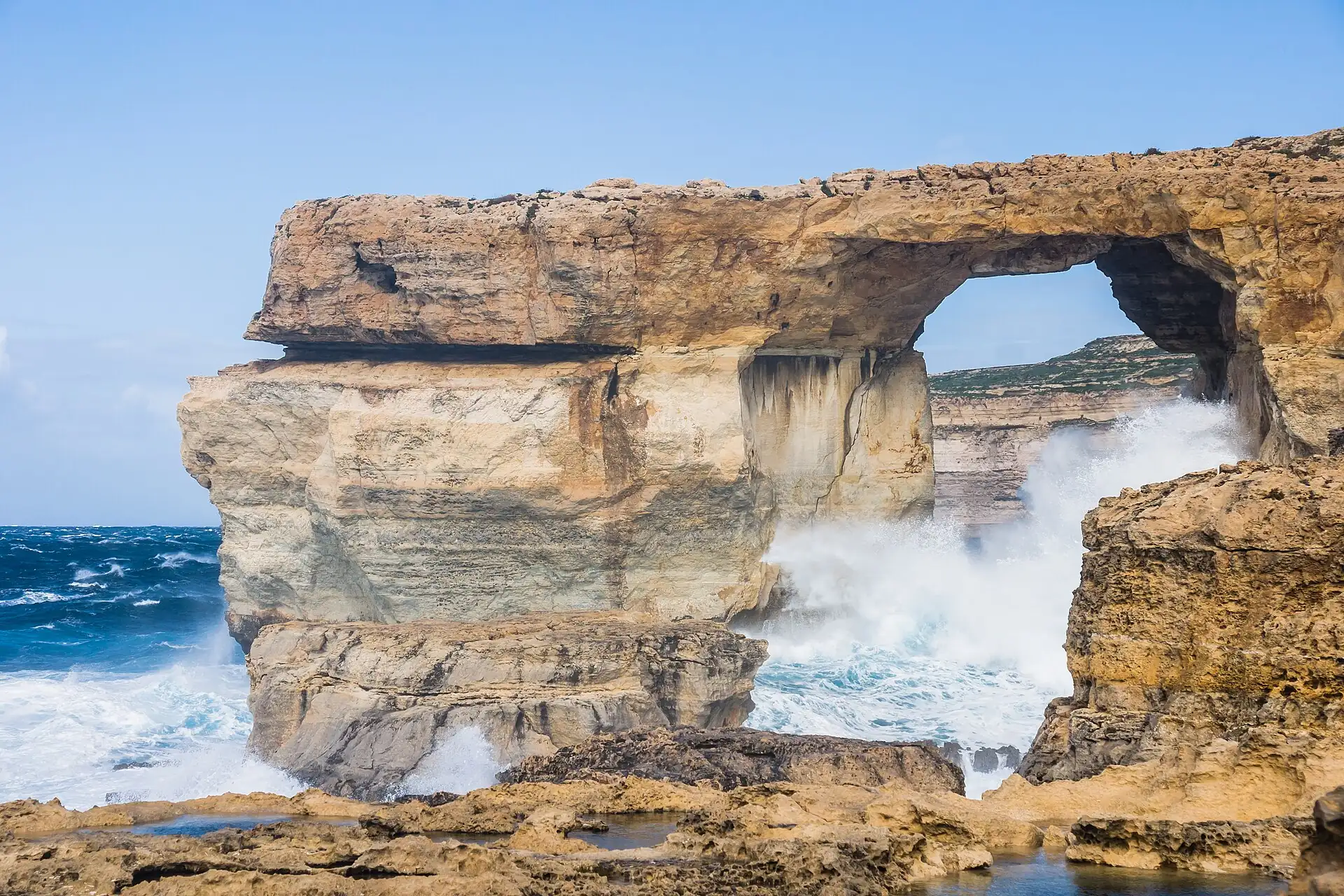 Photo: CEphoto, Uwe Aranas, CC BY-SA 3.0
Gozo
overnightBus and ferry, about 2 h each way
Better with one or two nights; check the ferry times.
- Time
- Full day
Go next
Comino and the Blue Lagoon
cautionDoor to door: 1.5–2 h
Boat from Ċirkewwa or Sliema
Crowded from 10:00 in summer; go early or skip.Crowded from 10:00 AM in summer; go early or skip.
Ħal Saflieni Hypogeum
goDoor to door: 40–60 min
Bus or taxi about 20 minutes
Timed tickets sell out weeks ahead; book on the official site.
Eat & sleepWhere to eat and which area to sleep in
Eat & sleep
Where to eat and which area to sleep in
Eat
A short list of places worth crossing the city for, each with how to get a seat.
Restaurant finder: filter every place to eat in Valletta →
Vegetarian-friendly score
3.0 / 5 · Good
- Country diet noteOur country guide rates vegetarian eating as workable.1 / 2
- Places to eat in this guide5 of 6 places with a known answer are vegetarian-friendly, 1 partly.1.38 / 1.5
- Budget eating lines0 vegetarian lines in "Eat by budget".0 / 0.6
- Meat-free national dishes4 meat-free dishes in the country food list.0.4 / 0.4
- Dedicated vegetarian kitchens0 mentions of vegetarian restaurants, Buddhist or fasting kitchens.0 / 0.5
Country note: Workable: pastizzi, kapunata, ġbejniet and Italian dishes; stocks and fish hide in some.
Vegetarian places near me →Make a diet card →
How we score
- Country diet note (up to 2): easy 2, workable 1, mixed 0.75, hard 0; no note 0.5.
- City places to eat (up to 1.5): 1.5 × (vegetarian-friendly + half of partly friendly) ÷ places with a known answer; needs 3 or more known places.
- Budget eating lines marked vegetarian (up to 0.6): 0.2 each.
- Meat-free national dishes (up to 0.4): 0.1 each.
- Dedicated vegetarian kitchens mentioned — Buddhist chay, shōjin ryōri, Jain, fasting food, vegan cafés (up to 0.5): 0.1 each.
- Total rounded to the nearest half point, 0 to 5. Built from our own pages only, not from reviews.
Eating and drinking guideEat by budget · Drink
Before you sit down to eat
Short version; full text linked
- Queues and hours
- Per person, one dish or one meal, 2026 estimate. More →
Eat by budget
Under €12 (≈ US$14) a meal
| Where | Order | Area | Price | Note |
|---|---|---|---|---|
| Pastizzi and imqaret near City Gate | Pastizzi and a coffee | City Gate | €2–5 (≈ US$3–6) | The cheapest hot snack. |
| Ta' Kris | Dish of the day | Melita Street | €8–12 (≈ US$10–14) | Home-style lunch. |
| Supermarket meal deal | Sandwich, drink and snack | Any Lidl or Pavi | €4–7 (≈ US$5–9) | The cheapest lunch. |
Dishes to know
| Dish | What it is | Where to look | When | Price |
|---|---|---|---|---|
| Pastizzipastizzi | A flaky pastry with ricotta or mushy peas | Pastizzerias and cafés | Any time | €0.60–1.20 (≈ US$1–2) |
| Ftiraftira | A ring of Maltese bread with tuna, tomato and olives | Bakeries and cafés | Lunch | €4–7 (≈ US$5–9) |
| Stuffat tal-fenek (rabbit stew)stuffat tal-fenek | The national dish: rabbit in wine and tomato | Traditional restaurants | Lunch or dinner | €14–22 (≈ US$17–30) |
| Lampuki pietorta tal-lampuki | A fish pie made with dolphinfish, in season (autumn) | Traditional restaurants | Lunch | €14–22 (≈ US$17–30) |
| Bragiolibragioli | Beef olives, stuffed and stewed | Home-style restaurants | Lunch | €12–20 (≈ US$14–25) |
| Timpanatimpana | Baked macaroni in pastry with a meat sauce | Home-style restaurants | Lunch | €10–16 (≈ US$12–19) |
| Ġbejnietġbejniet | Small sheep or goat cheeses | Markets and restaurants | Snack | €3–8 (≈ US$4–10) |
| Ħobż biż-żejtħobż biż-żejt | Bread rubbed with tomato and oil | Bars and cafés | Snack | €3–6 (≈ US$4–7) |
| Imqaretimqaret | Fried date pastry | Market stalls and street kiosks | Snack | €1.50–3 (≈ US$2–4) |
| KinnieKinnie | A bitter-orange soft drink | Everywhere | Any time | €1.50–3 (≈ US$2–4) |
| Cisk lagerCisk | The local lager | Bars | Any time | €2.50–4 (≈ US$3–5) |
| Bajtra liqueurbajtra | A prickly-pear liqueur | Bars | Evening | €3–5 (≈ US$4–6) |
- Look for a busy counter with a short menu; a menu in six languages is a warning.
- Lunch is 12:00–14:30 and dinner starts at 19:00; kitchens close early on weekdays.Lunch is 12:00 PM–2:30 PM and dinner starts at 7:00 PM; kitchens close early on weekdays.
- Check for a cover or bread charge on the bill.
- Ask for the fish price by weight before you order.
- Tap water is fine but bottled water is common; ask for a jug.
Drink & nightlife
| Where | What | Until | Note |
|---|---|---|---|
| Trabuxu wine bar (Strait Street) | Small wine bar | About 23:30 to 00:30About 11:30 PM to 12:30 AM | Maltese wine by the glass and cheese plates. |
| Bars on Strait Street | Live music and cocktails | About 00:00 to 01:00About 12:00 AM to 1:00 AM | Busiest on Friday and Saturday; quieter on weeknights. |
| Rooftop and harbour terraces | Cocktails with views | About 23:00 to 00:00About 11:00 PM to 12:00 AM | Check that the terrace is open; book for sunset. |
| Cafés on Republic Street | Coffee and beer | About 18:00 to 23:00About 6:00 PM to 11:00 PM | Fine for a first drink; prices are tourist level. |
| Waterfront bars at Sliema and St Julian’s | Bars and clubs | Late | A short taxi or ferry ride; noisy at weekends. |
By style
| Style | What | Where | Price | Until |
|---|---|---|---|---|
| Lager | Cisk, the local lager; light and cold.Ask for a “Cisk” and a small or large bottle. | Any bar | €2.50–4 (≈ US$3–5) a bottle or glass | Bar hours |
| Kinnie | A bitter-orange soft drink, sold everywhere.Try it once; it is an acquired taste. | Supermarkets and bars | €1.50–3 (≈ US$2–4) | All day |
| Maltese wine | Reds and whites from small local growers such as Marsovin and Delicata.Ask the staff to suggest a local bottle. | Wine bars | €4.50–8 (≈ US$6–10) a glass | Bar hours |
| Bajtra | A sweet liqueur made from prickly pear.Best over ice. | Bars and shops | €3–5 (≈ US$4–6) a shot | Bar hours |
| Craft beer | Small Maltese breweries.Ask what is on tap. | Bars in Valletta and Sliema | €4–6 (≈ US$5–7) | Bar hours |
Rules that bite
- Drink-drive limit is 0.08% blood alcohol (check); penalties are strict.
- Public drinking is allowed in some areas but not on beaches with signs.
- Alcohol sales after 22:00 in some shops may be limited; check.Alcohol sales after 10:00 PM in some shops may be limited; check.
- Keep hydrated: alcohol and the summer sun are a hard mix.
Sleep
Pick the area first: it decides your walk home at night and your first morning.
Which neighborhood fits you
Three questions, one recommendation, with the reasons.
More on sleepingSleep by budget · Your area · With kids
Sleep by budget
| Band | Price | Where | Room types | What to expect |
|---|---|---|---|---|
| budget | €25–45 (≈ US$30–55) dorm bed · €80–130 (≈ US$95–160) double | Valletta, Floriana | Hostels, guesthouses | Small rooms; some shared bathrooms; steps to reach the door. |
| mid | €120–220 (≈ US$140–300) | Valletta, Floriana | 3–4 star hotels and restored townhouses | Air conditioning, breakfast and a small room; ask for a lift. |
| high | €230–400 (≈ US$300–500) | Valletta harbour side, Floriana | 4–5 star hotels and palazzo suites | Larger rooms, terraces and harbour views. |
| splurge | €400–800 (≈ US$500–950)+ | Valletta and the Three Cities | Palazzo hotels | A restored palazzo with a terrace; book far ahead. |
Booking checks
- Book early for July, August and the Baroque Festival; the best rooms sell out.
- Ask whether the hotel has a lift and whether taxis reach the door.
- Air conditioning is a summer must; check it works.
- Floriana is cheaper and quieter than Valletta and is 10 minutes on foot from the gate.
- A room over Strait Street can be noisy on weekend nights: ask for a back room.
Which area is yours
| If you are | Sleep in | Because |
|---|---|---|
| First visit, 2–3 nights, sights on foot | Valletta | Walk to everything and enjoy the empty evening streets. |
| Families or wheelchair users | Floriana | Larger hotels with lifts and a car door. |
| Budget stay and nightlife | Valletta | Use ferries to Sliema for bars; sleep in Valletta only if the hotel has a lift. |
01Valletta
First night: the evening streets after the day-trippers leave and every sight on foot; choose a hotel with a lift or a street-level entrance.
02Floriana
Quieter nights, bigger hotels with a lift and a car door; a 10-minute walk to City Gate.
Areas are in our default order until you tick a priority.
Scores are 1–5 desk judgements per priority (2026).
With kids
- Valletta is walkable with children but steps and cobbles are hard on strollers: bring a light folding stroller or a carrier.
- The Upper Barrakka noon gun, the Barrakka Lift and the harbour ferry suit children of all ages.
- The National War Museum and the Lascaris War Rooms suit children over about eight; check age rules.
- Splash and Fun Park, Popeye Village and Mediterraneo Marine Park are out-of-town options (check hours).
- Children under about 4 travel free on the bus; children 5–15 pay a reduced fare (check).
- The heat is the hazard: hats, sunscreen and water from May to October, and a rest at midday.
- Family rooms in Valletta are small and few; Floriana and Sliema have larger apartments.
PracticalMoney, essentials, safety and the pocket card
Practical
Money, essentials, safety and the pocket card
Money
What a day costs at three comfort levels, and how to pay.
- Budget
- €35–60 (≈ US$45–70) excl. bed / day
- Mid
- €60–140 (≈ US$70–170) excl. bed / day
- High
- €140 (≈ US$170)+ excl. bed / day
- Transit card
- Buses accept the Tallinja card or contactless payment; check the operator's site for current fares and tourist passes.
- Cash rule
- Cards work in most restaurants and shops; carry €20–40 (≈ US$25–50) in small notes for kiosks, village bars and boat trips, and use bank ATMs.
More on moneyCosts · Budget · Buy
What things cost
- Pastizz from a pastizzeria€0.60–1.20 (≈ US$1–2)
- Ferry Valletta–Sliema or Three Cities€2–3 (≈ US$3–4)
- Taxi or ride-hail from the airport€15–25 (≈ US$18–30)
- St John’s Co-Cathedral ticket€15–20 (≈ US$18–25)
Trip budget
| Hotel double room1 × 3 nights × €160 | €480 |
| Food, local transport, entries2 × 3 days × €110 | €660 |
| Airport taxi, both ways1 × €40 · one car per 4 people; the X4 bus is about €2 each way | €40 |
| eSIM or tourist SIM2 × €12 | €24 |
| Buffer 10%Price creep, a taxi you did not plan, one splurge | €120 |
| Trip total≈ €221 per person per day, bed included | €1,324≈ US$1,600 |
July–August and festival weekends add 30–80%.
2026 estimate in euro; flights, visas and tours excluded. Your choices stay in this browser.
Prices of common things
| Pastizz | €0.60–1.20 (≈ US$1–2) |
| Ferry to Sliema or the Three CitiesCheck the operator. | €2–3 (≈ US$3–4) |
| Airport to Valletta by taxi or ride-hailA fixed-fare kiosk is at arrivals (check). | €15–25 (≈ US$18–30) |
| St John’s Co-CathedralIncludes audio guide (check). | €15–20 (≈ US$18–25) |
| Barrakka LiftEach way (check). | €1 (≈ US$2) |
2026 estimate; check locally.
Buy
- Bargaining
- Prices in shops and cafés are fixed; there is no bargaining. You may ask for a small discount on several items in a craft shop or at a market, but do not haggle over food.
- Fixed-price check
- Compare Maltese lace, glass and silver in two shops before you buy. City-centre gift shops charge more than craft cooperatives and village shops.
Markets and shopping streets
| Where | What | When | Haggle | Note |
|---|---|---|---|---|
| Valletta Sunday street market (check) | Bric-a-brac, lace and clothes | Sunday morning (check) | none | Check whether the market is running. |
| Is-Suq tal-Belt | Food hall with pastries and fresh produce | Daily (check) | none | Lunch and edible souvenirs. |
| Marsaxlokk Sunday fish market | Fish, lace and souvenirs | Sunday morning | small | A bus ride from Valletta. |
| Ta’ Qali Crafts Village | Glass, pottery and lace | Daily (check) | small | Near Mdina; a craft cooperative. |
Shops by what they sell
| For | Where | Hours | Note |
|---|---|---|---|
| Maltese glass | Ta’ Qali and Mdina Glass | About 09:00–17:00 | Compare thickness and weight; blown-glass items are heavy to carry. |
| Maltese lace and silver filigree | Craft shops on Republic Street and Ta’ Qali | About 09:00–18:00 | Ask whether the lace is handmade; machine lace is common. |
| Local food and wine | Supermarkets and Is-Suq tal-Belt | About 08:00–20:00 | Kinnie, sun-dried tomatoes, honey, ġbejniet in vacuum packs. |
| Kinnie and Cisk | Any supermarket | About 08:00–20:00 | The cheapest souvenirs; watch the airline liquid rules. |
| Bajtra (prickly-pear) liqueur | Duty free or wine shops | About 09:00–19:00 | Duty-free prices are not always lower. |
Changing money
| Where | Verdict | Why |
|---|---|---|
| Bank ATMs (BOV, HSBC, APS) | use | Fair rate; choose to be charged in euros, not your home currency. |
| Bank branches | use | Bring a passport; office hours only. |
| Exchange bureaux in Valletta and Sliema | caution | Compare the board rate and the fee before you hand over cash. |
| Airport exchange counters | caution | Convenient but expensive. |
| Street money changers | avoid | Not licensed; refuse. |
ATMs
- Per withdrawal
- Bank ATMs allow about €250–500 (≈ US$300–600) per withdrawal (check the screen); your home bank may set a daily limit.
- Fees
- Independent ATMs may charge €4–8 (≈ US$5–10) per withdrawal; use a bank ATM.
- Currency choice
- Choose euros, not your home currency, when the machine offers dynamic conversion.
Essentials and accessEssentials · Access
Essentials
- Plugs & power
- 230 V; UK-style three-pin sockets (type G). Bring a UK adapter.
- Toilets
- Cafés, museums, the food hall and the Upper Barrakka Gardens; public toilets near City Gate (check).
- Health
- Travel insurance with medical cover; EU and UK visitors should carry their health card (EHIC or GHIC). Pharmacies are plentiful.
- Accessibility
- Steps, cobbles and steep side streets; Republic Street is the gentlest line. Ask hotels about lifts.
- Laundry
- Drop-off laundries in Valletta and Floriana; hotels charge per item.
- Emergency numbers
- 112.
Pack
- Hat, sun cream and a water bottle from May to October
- Flat, grippy shoes for polished limestone and steps
- A light scarf or shirt to cover shoulders in churches
- A light rain layer from October to March
- A UK plug adapter
Accessibility
Valletta is hard on wheels: the city is built on a hill with many steps, cobbles and narrow pavements. Republic Street is the gentlest line; the Upper Barrakka Gardens are reachable by the Barrakka Lift. Many sights have partial access.
- Pavements
- Narrow and uneven; steep side streets have steps.
- Buses
- Low-floor buses with ramps and a wheelchair space; Valletta terminus is level.
- Ferries
- The harbour ferries have ramps at some landings; check the operator.
- Barrakka Lift
- A public lift linking the Upper Barrakka Gardens and the harbour level (check hours).
- Taxis
- Adapted taxis exist; book ahead through a company (check).
- Hotels
- Old buildings often lack lifts; confirm the floor and the steps from the street.
Sights, step-free or not
| Upper Barrakka Gardens | step-free | A level terrace and a lift; the best accessible view. |
| St John's Co-Cathedral | step-free | A ramped side entrance (check). |
| Grandmaster's Palace | with help | Check the lift for the upper floors. |
| National War Museum (Fort St Elmo) | with help | Ramps and uneven stone. |
| Casa Rocca Piccola | hard | Stairs throughout. |
| Lascaris War Rooms | hard | Stairs and tunnels. |
Survive
Safety basics, the lines not to cross, and practical habits that save the day.
Safety
- Summer sun: swim and walk early, carry water, and rest in shade from 12:00 to 16:00.Summer sun: swim and walk early, carry water, and rest in shade from 12:00 PM to 4:00 PM.
- Traffic drives on the left; look right first when you cross.
- Emergency: 112.
Red lines
- Churches, including St John's Co-Cathedral: shoulders and knees covered, no flash photography.
- Do not climb on the bastion walls or barriers.
- Tap water is safe but often brackish; most visitors drink bottled water.
Practical
- Toilets: cafés, museums and the food hall.
- Many shops and some sights close on Sundays or on Monday.
More on staying safeStay safe · Stay healthy · Safety map · Solo & women · Etiquette · Cope · Scams
After dark, by area
3 flagged areas
- Take care
- Take care
Paceville (St Julian’s)
Take care
Day = about 07:00–19:00. What to watch in each area, day and night →
Scams and red flags
Walk away if you see these
- Unlicensed taxis at the airport and cruise terminal: use the fixed-fare kiosk, a booked car or a ride-hailing app.
- Restaurant touts on Republic Street and the harbour: check the menu price for a table before you sit.
- A pastizzi or drink “tasting” offered on the street with a price added afterwards: ask the price first.
- Boat tour touts at the harbour: book through an operator with printed prices, and check what the ticket includes.
- Overpriced bottled water and cover charges near the big sights: check the menu.
Stay safe
Crossing the road
- 01Look right, then left: traffic drives on the left.
- 02Drivers turn quickly at narrow junctions; wait for a clear gap.
- 03Pavements are narrow and sometimes end suddenly; walk on the road only where there is no traffic.
- 04Cross at a marked crossing when you can; drivers may not stop.
Hustles specific to this city
| Hustle | Where | The tell | What to do |
|---|---|---|---|
| Unlicensed cabs | Airport and cruise terminal | A driver approaches with an offer | Use the fixed-fare kiosk or a ride-hailing app. |
| Restaurant touts | Republic Street and the harbour | A menu pushed into your hand | Check the price for a table before you sit. |
| Boat tour touts | Harbour and Sliema | A cheap price for a boat trip | Book a licensed operator with a written price. |
| Street “tastings” | Tourist streets | A free sample and then a price | Ask the price first. |
| Overpriced cover charges | Cafés near sights | A cover or service added to the bill | Read the bill and the menu. |
| Drink-spiking | Paceville and Strait Street | A friendly stranger offers a drink | Keep your drink in sight. |
- Police
- 112. Report theft at the nearest station for an insurance certificate.
- Sea
- Do not swim beyond red flags; harbour water is not for swimming.
- Sun
- Use a hat, water and sunscreen from May to October.
- Heat
- Rest from 12:00 to 16:00 in July and August.Rest from 12:00 PM to 4:00 PM in July and August.
Stay healthy
Air quality by month
| Jan | Feb | Mar | Apr | May | Jun | Jul | Aug | Sep | Oct | Nov | Dec |
|---|---|---|---|---|---|---|---|---|---|---|---|
| ok | ok | ok | ok | ok | ok | ok | ok | ok | ok | ok | ok |
Air quality is generally good; Saharan dust can raise readings on some days in spring and autumn.
- Tap water
- Safe to drink but brackish; bottled water is common.
- Sun and heat
- UV is strong from May to September; use sunscreen, a hat and water, and rest at midday.
- Sea
- Jellyfish appear in some summers; rocky shores can have sea urchins, so wear water shoes.
- Mosquitoes
- Some in summer; use repellent in the evenings.
- Food
- Standards are good; eat hot dishes and choose busy places in summer.
- Insurance
- EU and UK visitors carry an EHIC or GHIC; others need travel medical cover.
Hospitals and clinics: see Cope.
Safety by area and hour
| Area | Day | Night | What to watch |
|---|---|---|---|
| Republic Street and St John’s | fine | fine | Pickpockets in cruise crowds; steps and polished stone are slippery when wet. |
| City Gate and the bus terminus | fine | fine | Bags and phones at the busy terminus. |
| Fort St Elmo and the ramparts | fine | fine | Unfenced edges; a long, dark walk at night; take a taxi. |
| Floriana gardens | fine | caution | Parks close at dusk; quiet streets after dark. |
| Strait Street after midnight | fine | caution | Rowdy groups and drink-spiking risk; keep your drink in sight. |
| Paceville (St Julian’s) | fine | caution | Drunken crowds and fights; use licensed taxis late. |
- Look right first when you cross: traffic drives on the left.
- Use a licensed taxi or a ride-hailing app after midnight.
- Sea swimming: obey flag signs and avoid the harbour mouths.
Solo, women and LGBTQ+ travellers
Solo
- A very easy city alone: small cafés, wine bars and hostels are social, and a table for one is normal.
- Book evening restaurants ahead at weekends; a bar seat is a good backup.
- After midnight, use a licensed taxi or a ride-hailing app.
Women
- Harassment is uncommon; keep your bag zipped in crowds and on the bus.
- Cover shoulders and knees for churches; a light scarf is enough.
- Late at night, use a taxi and share your route with someone.
LGBTQ+
- Malta ranks high in Europe for LGBTQ+ rights: same-sex marriage has been legal since 2017.
- Pride events run in September (check the dates).
- Public affection is generally fine in Valletta, Sliema and St Julian’s; the villages are more conservative.
Etiquette in Valletta
- Churches
- Shoulders and knees covered, hats off, quiet voices and no flash; some are closed during services.
- Dress
- Casual; swimwear stays at the beach and on boats.
- Tipping
- About 5–10% in restaurants if service is not on the bill; round up for taxis.
- Queues
- Mostly orderly, but bus stops can be crowded; let passengers get off first.
- Greeting
- A handshake and “bonġu” or “hello” goes a long way.
- Traffic
- Drive on the left; look right first when you cross.
- Photos
- Ask before photographing people at festas or in churches; no flash in museums.
- Festas
- Village festas have loud fireworks and processions; expect late noise in summer.
Cope
Hospitals and clinics that handle foreigners
| Where | Area | Use it for |
|---|---|---|
| Mater Dei Hospital | Msida, about 10 minutes by taxi | The main public hospital with an emergency department; bring your EHIC or GHIC if you have one. |
| Floriana Health Centre (check) | Floriana | A public primary care clinic near the gate (check hours). |
| Private clinics and GPs | Sliema and Valletta | Non-emergency care is paid upfront; ask your insurer about direct billing. |
| Pharmacies | Across Valletta | Pharmacists advise on minor problems; a rota covers late hours (check). |
Visa extensions
- Stay
- Malta is in the Schengen area; most visitors may stay up to 90 days in 180 days. Non-EU passports are registered at the border under the EU Entry/Exit System (check current rules).
- ETIAS
- Visa-exempt visitors will need ETIAS authorisation when the system starts (check the official EU page).
- Extension
- Extensions are rare; apply to the Identity Malta agency before the stay ends (check).
Embassies and consulates
| Country | Address | Phone | Note |
|---|---|---|---|
| United States | Ta’ Qali National Park, Attard | +356 2561 4000 | (check) |
| United Kingdom | Whitehall Mansions, Ta’ Xbiex | +356 2323 0000 | (check) |
- Emergency
- 112 for police, ambulance, fire and sea rescue.
- Police
- Police stations in Valletta and Floriana; report theft to get a certificate for insurance.
- Lost passport
- Contact your embassy or consulate; Canada, Australia, New Zealand and Ireland use an honorary consul or an office abroad (check).
- Sea rescue
- Call 112 for a swimmer or boat in difficulty; do not swim beyond red flags.
Apps and offline kitOffline kit
Offline kit
Set up before you leave, so Valletta still works with no signal or a dead roaming plan.
On your phone
- Maps: open the city in Google Maps, tap the place name, then Download offline map (or use an offline-maps app).
- Data: install an eSIM or buy a local SIM before the first taxi; the apps in this guide depend on it.
- Translation: download the local language for camera translation.
- Screenshots: booking confirmations, hotel address in the local script, and the emergency numbers.
This guide
Save the Valletta guide and its pages on this device; it opens without a connection.
Phrases that do the work
Greeting
Good morning
Bonġu
bon-joo
Greeting
Good evening
Bonswa
bon-swa
Thanks
Thank you
Grazzi
grat-see
Please
Please
Jekk jogħġbok
yek yoj-bok
Pub
Cheers
Saħħa
sa-ha
Help
Excuse me
Skużani
skoo-za-nee
Price
How much?
Kemm?
kem
Transport
Where is the bus stop?
Fejn hi l-ħanut tal-linja?
fen ee l-ha-noot tal leen-ya
Pocket card
Fill in, then print or save as PDF
Stays in this browser only; nothing is sent anywhere.
VallettaIl-Belt Valletta
Pocket card · Voykit
My bed tonight
—
—
—
English is spoken everywhere; show the street name and locality on your phone.Please take me to this address
Emergency
- Police, ambulance, fire112
Embassy
The US embassy is at Ta’ Qali National Park in Attard; the UK High Commission is in Ta’ Xbiex. Others use consulates abroad or an honorary consul. Write your own embassy’s 24-hour line below.
My embassy: —
Fare anchors (2026 estimate)
- MLA → Valletta, taxi or ride-hail: €15–25 (≈ US$18–30), 20–35 min; more in rush hour
- MLA → Valletta, bus X4 or 71: About €2–2.50 (≈ US$3) (check), 30–45 min
- Valletta → Sliema ferry: About €2–3 (≈ US$3–4) (check), 15 min
Say or show
- Grazzi — Thank you (grat-see)
- Jekk jogħġbok — Please (yek yoj-bok)
- Saħħa — Cheers (sa-ha)
- Skużani — Excuse me (skoo-za-nee)
- Kemm? — How much? (kem)
English is an official language and is used in shops, taxis and museums. Maltese is used on signs and among locals.
Deep diveHistory, reading, photos and every source
Deep dive
History, reading, photos and every source
Sources
- officialVisit Malta (national tourism board)
- officialHeritage Malta (museums and sites)
- secondaryWikivoyage — Valletta
Ask about Valletta
Loading…
Was this useful?