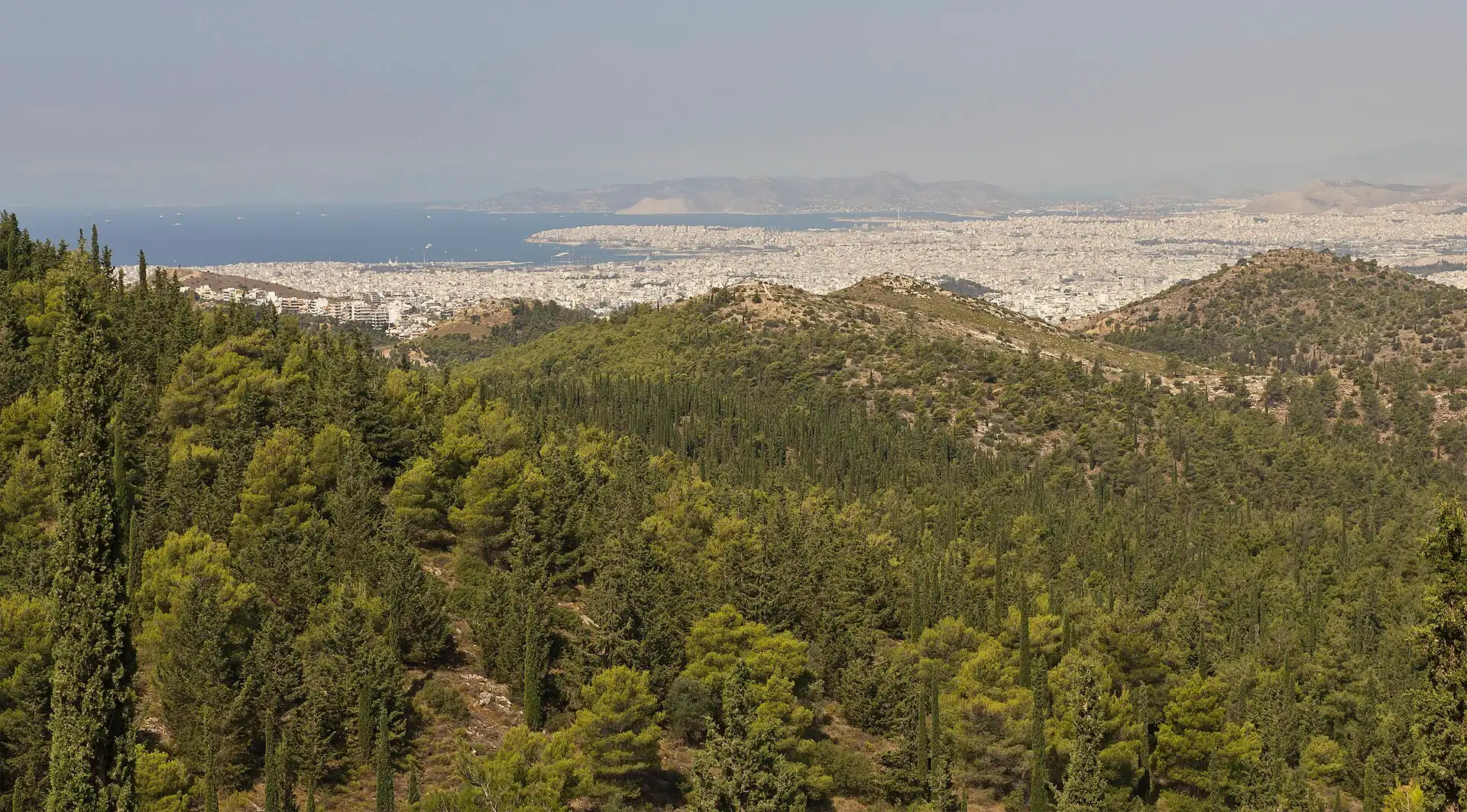
Athens
Αθήνα
Code GC · 4 walking zones
Athens is a morning-and-evening city: the Acropolis at opening, the museum and a long lunch through the heat, then Plaka and the lanes after 18:00.Athens is a morning-and-evening city: the Acropolis at opening, the museum and a long lunch through the heat, then Plaka and the lanes after 6:00 PM.
Our quick read of Athens, scored 1–5 (friction is out of 100). Cash need: how often you still need notes. Heat risk: how hot days get. Stroller: how easy wheels are. Friction: overall effort for a first visit. Desk judgements, so check before relying on them.
- Local time
- --:--
- Weather
- forecast below
- Currency
- EUR
- Best months
- Mar · Apr · May · Oct · Nov
- Airport
- Athens Eleftherios Venizelos (ATH)
Walking zones: the 4 areas this guide plans a day around. Each is a district you can cover on foot, so you do one zone per half-day and ride the train between them. The code (GC 01, GC 02…) is just the zone's number on the Athens line; the line under each name says how bags fare there and how much time it needs.
Map of Athens
Use the switches to show or hide each kind of pin. A switch that is on shows its pins on the map; tap it again to hide them. "Show only" keeps just the pins that match (for example, places that fit a suitcase). Tap any pin for its name and a link to its page.
- Where to sleep
- Walking clusters
- Rest stops
From the airport Eleftherios Venizelos (ATH) to your bed
Tap a pin for its card. Places without their own coordinates are shown by their walking cluster.
Why Athens
Athens' main sights sit within two kilometres of each other, but the marble is slippery, the hill is steep and the summer sun is strong. The trips that go wrong start the Acropolis at 12:00 in July, drag a suitcase up Plaka's steps, or leave the museum for the day the site is closed. Four clusters cover a first visit: the hill and museum, Plaka, Monastiraki with the Ancient Agora, and Syntagma with the National Garden.
See first
- 1National Archaeological Museum
- 2Plaka lanes
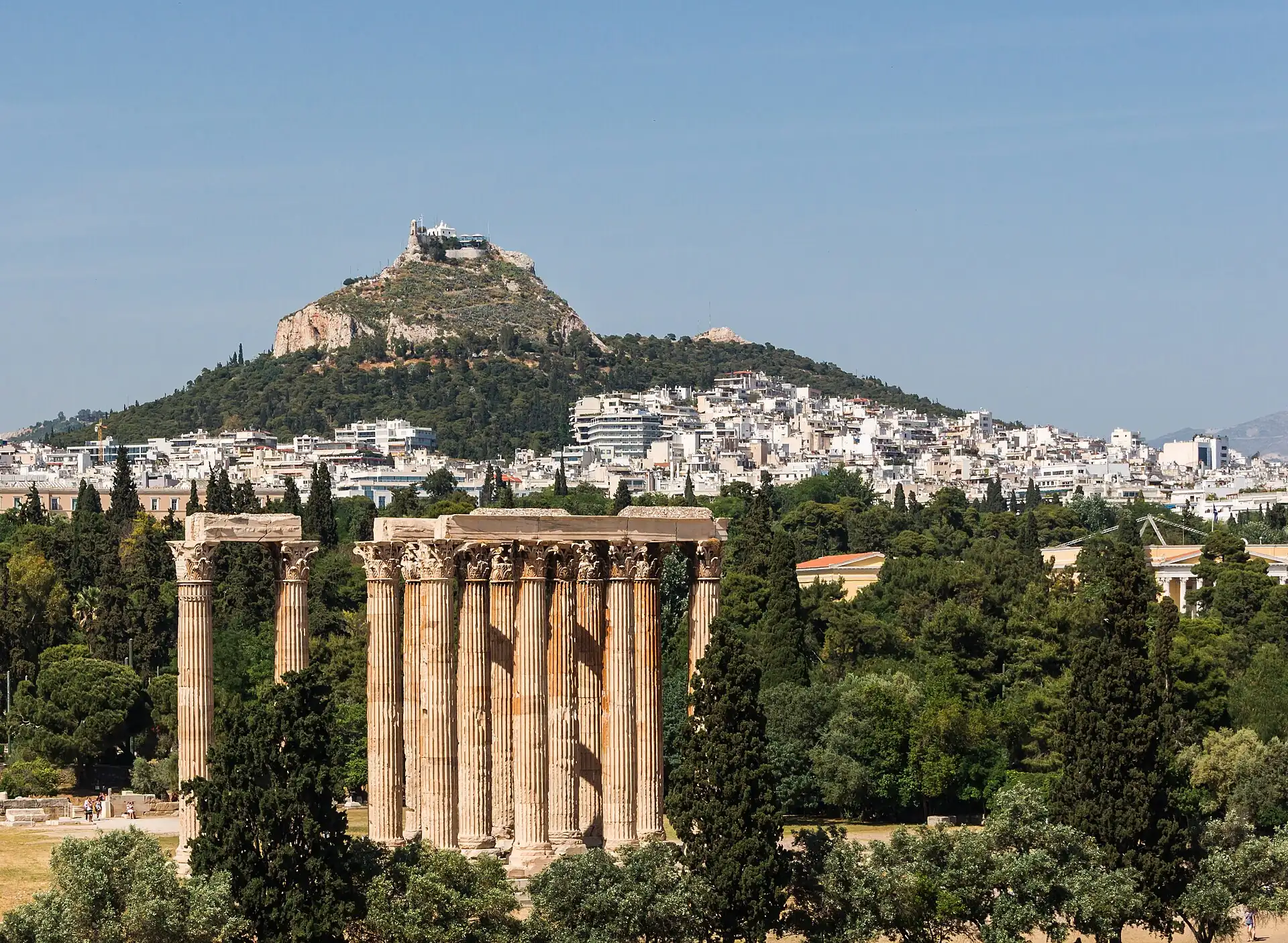
- 3Temple of Olympian Zeus
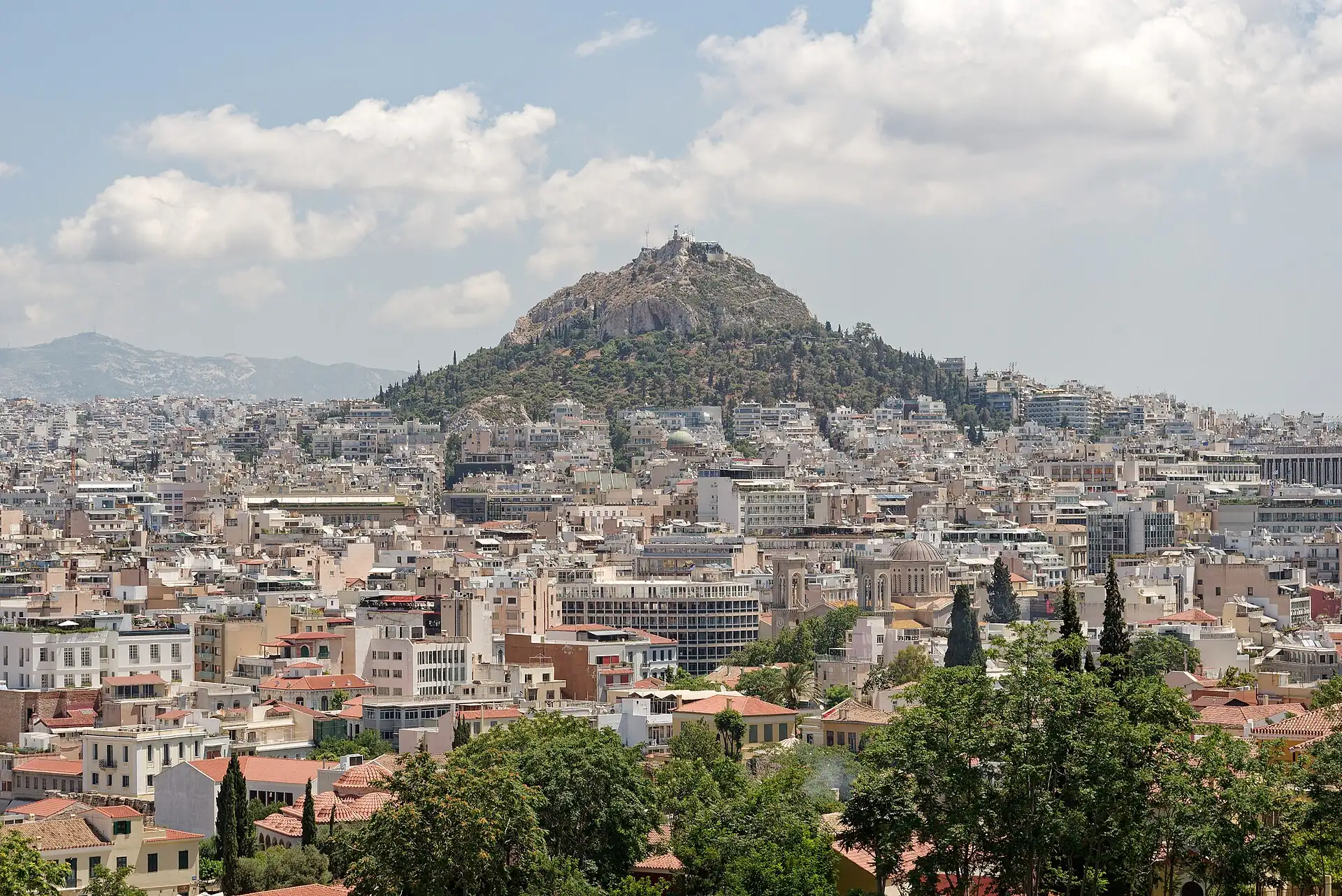
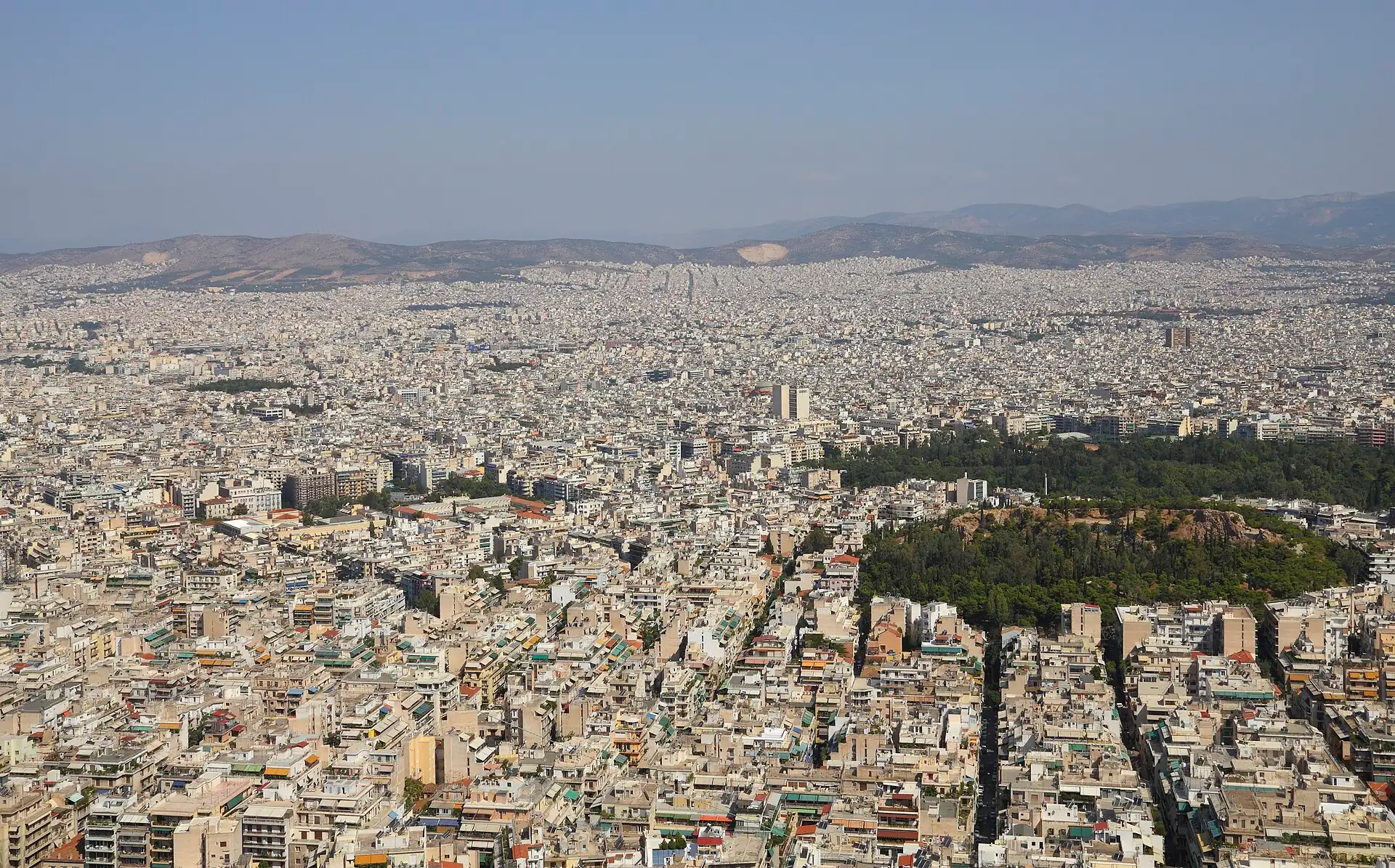
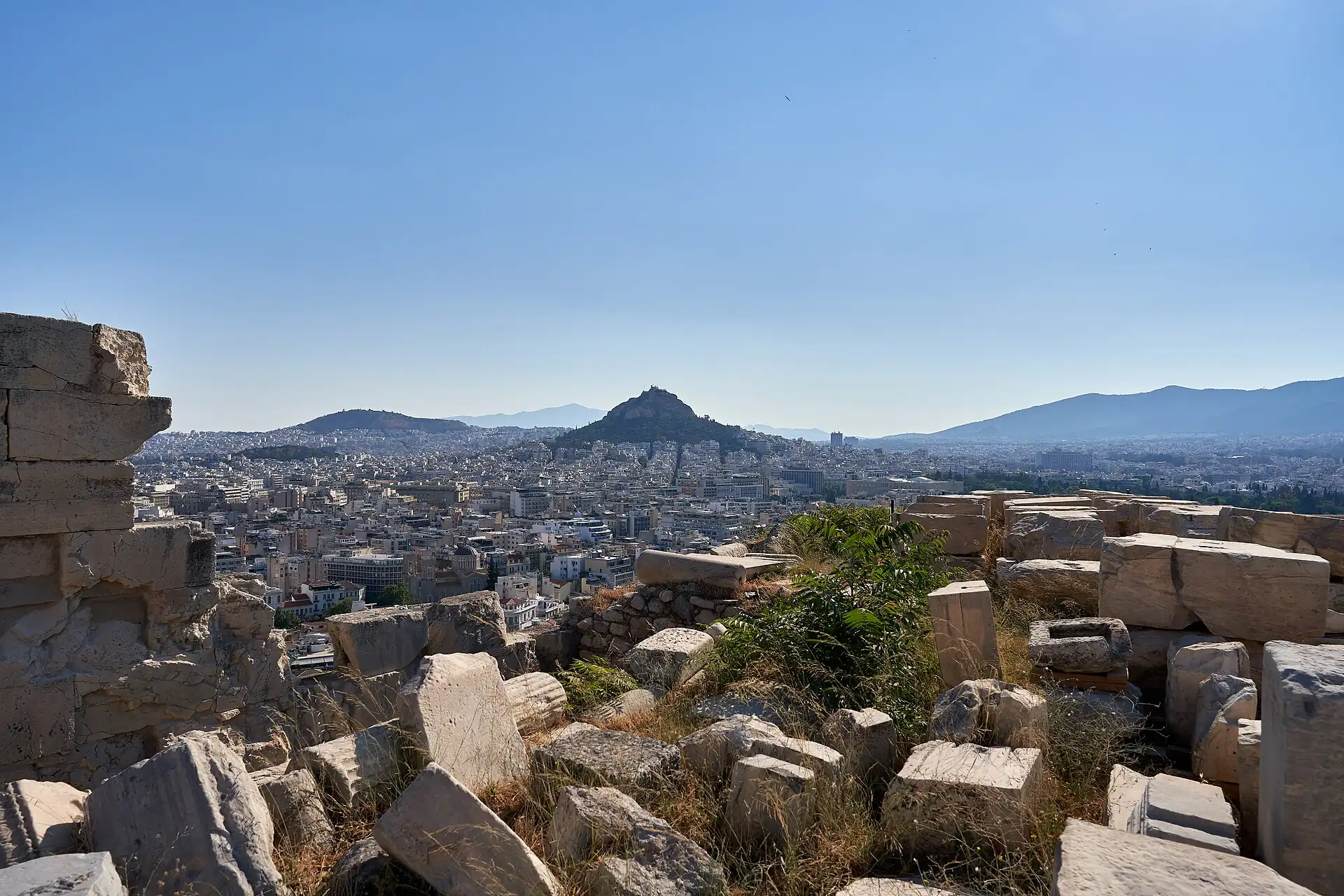
- 4Mount Lycabettus at sunset
- 5Monastiraki flea market
Fits
- History and museum trips
- Short city breaks
- Travellers who want a base for the islands
Does not fit
- Midday walkers in July and August
- Strollers and wheelchairs on the hill and in Plaka
- Travellers who want a beach city
How long
- 2 daysAcropolis and museum, then Plaka and Monastiraki
- 3 daysFour clusters, mornings and evenings; middays indoors
- 5 daysAdd Cape Sounion or a day trip to Delphi, and one slow day
Good for
- History and archaeology travellers
- Short city breaks
- Island-hoppers
About Athens
Athens has been inhabited for about 7,000 years, but the city you walk through is mostly two: the classical city of the 5th century BC packed onto and around the Acropolis rock, and the 19th–20th century capital built after Greek independence (1832), laid out in a grid around Syntagma and Omonia.
Ottoman rule (1458–1833) left little standing — most of what you see from that period is gone or built over — so the visible layers jump from antiquity to neoclassical Athens, with 20th-century apartment blocks (polykatoikies) filling almost everything else after a 1920s refugee influx and 1950s–70s building boom.
The city sprawls across the Attica basin between four mountains and the sea; the ancient and tourist core is a small fraction of it. Most first-time visitors never leave a 2 km radius around the Acropolis.
Good to know
- Athens is the whole city; Plaka is the old lower slope of the Acropolis, and Monastiraki is the square just west of it. Piraeus is the ferry port, a separate town about 30 minutes away.
- This Is Athens info point, Athens City Hall area and at the airport arrivals hall: free maps, event listings. Check current hours.
- Greek National Tourism Organisation (visitgreece.gr) covers the whole country; useful for island ferries and other cities.
Go deeper 11 min read · 6 chapters
Athens has been inhabited for around 7,000 years, but the city a visitor walks through today is really two cities laid on top of each other: the classical city of the 5th century BC, compressed onto and around the Acropolis rock, and the 19th–20th century capital built after Greek independence in 1832. This deep dive works through both layers, plus the food, festivals and neighbourhood life that sit on top of them.
1History2 min
Athens' recorded history begins in the Bronze Age, but its defining period is the 5th century BC, after the city led the Greek resistance to Persian invasion. The Persians burned the Acropolis in 480 BC, and the rebuilding that followed under Pericles — the Parthenon, the Propylaea, the Erechtheion — turned a modest fortified hilltop into the most ambitious building programme of the ancient world, funded partly by tribute from the Delian League, an alliance Athens increasingly ran as an empire. This was also the century of Athenian democracy, developed from Solon's and Cleisthenes' reforms, and of the philosophers, playwrights and historians whose work still shapes Western thought: Socrates, Plato, Aristotle, Sophocles, Thucydides.
Athens' political independence ended with Macedonian and then Roman conquest, but the city kept its prestige as a university town for centuries under Rome — emperors like Hadrian added buildings (the Temple of Olympian Zeus, the library, the arch that bears his name) rather than tearing the old ones down. Christianity closed the philosophical schools in 529 AD, and the Parthenon itself became a church, then, after the Ottoman conquest of 1458, a mosque. In 1687 a Venetian force besieging the Ottoman garrison fired a mortar shell into the Parthenon, which the Ottomans were using as a gunpowder store; the explosion blew out the roof and much of the interior, leaving the ruin visible today.
By the time Greek independence was won from the Ottomans in 1832, Athens was a village of a few thousand people scattered among the ruins. It was chosen as the new kingdom's capital anyway, for its ancient symbolism rather than its size, and King Otto's Bavarian architects laid out a neoclassical city on a grid running from the old Ottoman-era lanes (now Plaka) towards Syntagma Square. Growth stayed modest until 1922–23, when a forced population exchange with Turkey after the Greco-Turkish War brought well over a million refugees into Greece, many settling in fast-built, plain neighbourhoods around Athens almost overnight — Nea Ionia and Nea Smyrni among them.
The 20th century brought a brutal occupation — a famine during the German-Italian occupation of the winter of 1941–42 killed tens of thousands in Athens alone — and later a military dictatorship (1967–74), overturned in part by a student uprising at the Athens Polytechnic in November 1973 that the junta crushed with tanks; the date is still marked every year with a march through the city. Post-war reconstruction favoured cheap, fast apartment blocks (polykatoikies) over the neoclassical mansions that had defined 19th-century Athens, which is why so few of the latter survive outside a handful of protected streets.
Greece's 1981 EU entry and the 2004 Olympics brought major infrastructure — the metro, tram, airport and a pedestrianised historic centre — while the 2010–18 debt crisis left visible scars in patches of the centre: shuttered shopfronts, graffiti, a stronger protest culture. Tourism has since recovered strongly, with the Acropolis Museum (2009) and a run of infrastructure and heritage investment reshaping how the ancient core is presented to visitors.
- City founded (traditional)
- Prehistoric; continuously inhabited since roughly 5000 BC
- Parthenon built
- 447–438 BC
- Parthenon explosion
- 1687, Venetian bombardment
- Capital of modern Greece
- From 1834
- Population, wider metro area
- About 3.1–3.8 million (desk estimate, check)
2Neighbourhood stories2 min
Plaka survived where so much of old Athens did not, because 19th-century planners chose to build the new capital's grid around it rather than through it. Its lanes follow the old Ottoman-era street pattern, and a pocket called Anafiotika — small whitewashed houses climbing the Acropolis' north slope — was built by stonemasons from the Cycladic island of Anafi who came to work on King Otto's palace in the 1830s and built homes in the style of their home island, informally, on rock nobody else wanted.
Monastiraki takes its name from a small monastery church still standing on its square; the flea market around it grew from a 19th-century Jewish and Greek merchant quarter and later absorbed refugee traders after 1922. Psiri, just north, was a working-class leather and metalworking district through the 20th century; its cheap rents and empty workshops attracted bars and restaurants from the 1990s, and it is now one of the livelier nightlife pockets close to the centre.
Kolonaki, on the lower slopes of Lycabettus, developed from the 1870s as the address for Athens' new professional and political class, and it has stayed the city's most expensive residential and shopping district since. Exarchia, just to its north-west, took the opposite path: a student and left-wing neighbourhood since the 1970s Polytechnic uprising, still known for its squats, street art and periodic friction with police, alongside quiet specialist bookshops and some of the city's best small tavernas.
Koukaki, south of the Acropolis, was ordinary residential Athens until the 2009 opening of the Acropolis Museum drew short-let apartments and boutique hotels; it is now one of the most searched neighbourhoods on short-term rental platforms, a rare case of a museum visibly reshaping the streets around it within a decade.
Piraeus, technically a separate municipality, has been Athens' port since antiquity — the Long Walls once physically connected the two cities to protect the supply line during the Peloponnesian War. Today it is where the Cyclades, Dodecanese and Crete ferries leave from, still a working port town rather than a sight in its own right.
- Anafiotika built
- From the 1830s by Cycladic stonemasons
- Exarchia character
- Student/left-wing neighbourhood since the 1970s
- Kolonaki
- Athens' wealthiest central district since the 1870s
- Piraeus
- Athens' port since antiquity; still the main island-ferry hub
3Architecture2 min
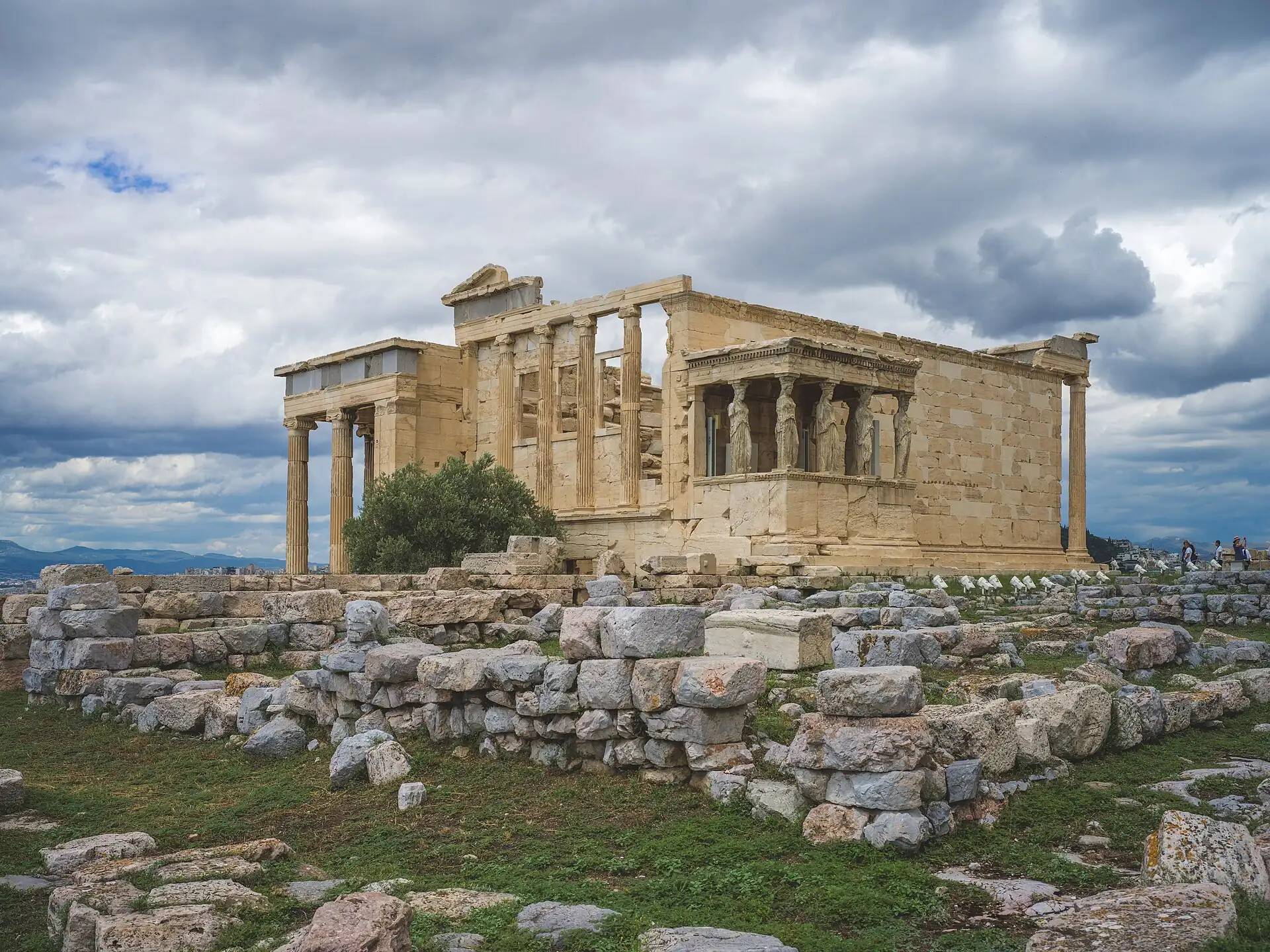
Classical Athenian architecture, seen at its clearest on the Acropolis, refined the Doric and Ionic orders and introduced optical corrections — columns that lean very slightly inward, a stylobate that curves upward almost imperceptibly — to counter the way straight lines appear to sag to the human eye. The Parthenon is the textbook example, but the Erechtheion's Caryatid porch, with sculpted women standing in for columns, shows the same period's willingness to break the standard forms.
Roman-era Athens added at a different scale: Hadrian's Library, the Temple of Olympian Zeus (finally finished after Hadrian took an interest, some 700 years after it was begun) and the Odeon of Herodes Atticus, a 5,000-seat theatre still used for the summer Epidaurus Festival. Byzantine Athens is comparatively hard to find — most of its churches are small and tucked between later buildings — but a handful, like the Church of the Holy Apostles in the Ancient Agora, survive as compact, domed brick-and-stone structures dating from the 10th–11th centuries.
Ottoman-period Athens left almost nothing standing; occupation forces used the Acropolis as a fortress and the Parthenon as a powder magazine, and most Ottoman civic buildings were removed after independence as the new state deliberately foregrounded the ancient past over the more recent Ottoman one. What replaced it, from the 1830s, was a self-consciously neoclassical capital: the 'Athens Trilogy' of the University, the Academy and the National Library on Panepistimiou Street is the clearest single ensemble, designed largely by Danish and German architects for the new Bavarian-led kingdom.
20th-century Athens is, in bulk, the polykatoikia — the reinforced-concrete apartment block with shops at street level, built rapidly from the 1950s–70s under a system that let landowners exchange their old house for flats in the new building without needing cash upfront. It is not celebrated architecture, but it explains why central Athens looks the way it does: dense, low-rise (a long-standing height limit tied to keeping the Acropolis visible), and short on green space compared with other European capitals.
The most significant recent addition is the Acropolis Museum (2009, architect Bernard Tschumi), built on a grid deliberately rotated to align with the Parthenon and set on glass floors over an excavated ancient neighbourhood, visible underfoot as visitors walk in.
- Parthenon architects
- Iktinos and Kallikrates; sculptor Phidias oversaw the decoration
- Athens Trilogy
- University, Academy, National Library — 19th-century neoclassical ensemble
- Acropolis Museum architect
- Bernard Tschumi, opened 2009
- Odeon of Herodes Atticus capacity
- About 5,000, still in use
4Food history2 min
Greek cooking in Athens is a layered inheritance: ancient staples of olive oil, bread, wine and legumes; Byzantine and Orthodox fasting rules that shaped a whole vocabulary of vegetable and seafood dishes for the many fasting days of the liturgical calendar; and roughly four centuries of Ottoman rule that left dishes like moussaka, dolmades and baklava, whose names and techniques are shared across the former Ottoman world, even as Greeks and their neighbours each claim their own version as original.
Souvlaki and gyros, the city's defining street food, are a 20th-century urban dish rather than an ancient one — grilled meat on a skewer or spit, wrapped in pita with tomato, onion and tzatziki, built for fast eating by workers and, later, night-time crowds leaving bars. The 1922–23 refugee influx from Asia Minor changed Athenian cooking noticeably, bringing spicier, more meat-forward dishes and techniques from Smyrna and the Anatolian coast into the city's everyday repertoire.
The Varvakios Central Market, opened in the 1880s, has been the city's wholesale meat and fish hub ever since, and its rough, functional taverna counters — patsas (tripe soup) traditionally eaten after a late night — are one of the few places left where the food culture is aimed entirely at Athenians, not visitors.
Modern Greek cuisine has had a visible upgrade in the last 15 years: a wave of Athens chefs have reworked traditional ingredients (wild greens, cured meats, island cheeses) into tasting menus, and several Athens restaurants now hold Michelin stars, a shift that runs alongside, not instead of, the neighbourhood taverna.
Coffee culture runs deep and specific: the traditional boiled Greek coffee (metrios, sketos, glykos for sweetness level) still has its place, but the iced frappé, invented almost by accident at a 1957 Thessaloniki trade fair, and the more recent freddo espresso and freddo cappuccino, are the everyday Athenian order, drunk slowly at a café table that is yours for as long as you want it.
- Varvakios Market opened
- 1886
- Frappé invented
- 1957, Thessaloniki (spread nationwide)
- Refugee influence
- 1922–23 Asia Minor exchange reshaped Athenian food culture
5Festivals and city rhythm2 min
Orthodox Easter is Athens' biggest annual event, bigger by far than Christmas, and it runs on the Orthodox liturgical calendar, which uses a different calculation from Western Easter and can fall up to five weeks apart in a given year. Holy Week fills the city's churches with candlelit processions, especially the Good Friday Epitaphios procession, and by Holy Saturday night much of central Athens has emptied as residents head to home villages or islands, leaving the tourist core comparatively quiet for the holiday itself.
Summer brings the Athens Epidaurus Festival, running roughly June to August, which stages ancient drama, music and dance both at the ancient theatre of Epidaurus in the Peloponnese and, in the city, at the Odeon of Herodes Atticus below the Acropolis — a rare chance to watch a performance in a 1,900-year-old amphitheatre still used for its original purpose.
National holidays carry real political weight: 25 March marks both the 1821 start of the war of independence from the Ottomans and, by coincidence of date, the Orthodox feast of the Annunciation, and is marked with a military parade past Parliament. 28 October, Ochi Day ('No' Day), commemorates Greece's 1940 refusal of an Italian ultimatum, which drew the country into the Second World War.
17 November is different in character: the anniversary of the 1973 Polytechnic uprising against the military junta is marked with a large, still-political march through the centre, usually ending near the US embassy, and can bring transport and street closures for an afternoon and evening.
August itself functions as an informal holiday in central Athens: many residents and small businesses close for one to three weeks around the 15 August Dormition of the Virgin public holiday, a habit that thins out some neighbourhood restaurants even as the tourist sites stay as busy as ever.
- Orthodox Easter
- Moves yearly; can differ from Western Easter by up to 5 weeks
- Athens Epidaurus Festival
- June–August, ancient and modern venues
- Polytechnic anniversary
- 17 November, political march through the centre
6City life2 min
Athenian daily rhythm runs later than much of northern Europe: lunch is commonly 13:30–15:30, dinner rarely starts before 21:00, and a coffee at a café table can occupy an hour or two without anyone expecting you to move on. Shops in the centre often close for a few hours in the mid-afternoon and reopen into the evening, a habit fading in the most touristed streets but still common elsewhere.
The 2004 Olympics reshaped how Athenians move around the city — the metro's expansion in particular cut journey times that used to depend on slow, congested buses and trams — but summer 2004's infrastructure push also left some outlying venues underused since, a visible reminder that hosting the games did not solve every structural issue in the city.
Protest is a normal part of Athenian civic life, not a sign of unusual unrest: marches, often ending at Syntagma Square outside Parliament or at the US embassy, are frequent and overwhelmingly peaceful, though transport and streets can close for hours around a large one. Greeks' relationship with the state is shaped by the 2010s debt crisis in ways still visible in political conversation, graffiti and a wary attitude toward austerity measures, even as the economy has stabilised since.
Family and neighbourhood ties remain strong: the kafeneio (traditional coffee house), often generations old and identified with a single neighbourhood, is as much a social institution as a place to drink coffee, and name days (celebrating your saint rather than, or alongside, your birthday) are marked with visits and small gifts among people who know each other well.
Athens' relationship with its ancient past is lived-in rather than reverential day to day: a resident might walk past the Temple of Olympian Zeus on the way to buy groceries, and the ancient, Byzantine, Ottoman-refugee, neoclassical and concrete-apartment layers of the city sit within a few minutes' walk of each other without much fuss made of the contrast.
- Typical dinner time
- 21:00 or later9:00 PM or later
- Kafeneio
- Traditional neighbourhood coffee house, a long-standing social institution
- Name days
- Widely celebrated alongside or instead of birthdays
Rules in force · 11Non-EU visitors get 90 days in any rolling 180-day window…Mine-suspected land still exists in Bosnia and Herzegovin…
- Europe ↗Non-EU visitors get 90 days in any rolling 180-day window, counted across all 29 Schengen states together — not per country; the Entry/Exit System now logs each crossing, so an overstay is detected automatically.
- Europe ↗On the first Schengen entry since EES began, non-EU travellers give four fingerprints and a face photo at the border instead of a passport stamp; there is nothing to apply for or pay in advance.
- Balkans ↗Mine-suspected land still exists in Bosnia and Herzegovina and in pockets of Croatia's former front line: outside towns keep to tarmac and waymarked paths, and treat red triangle signs and taped-off fields as absolute.
- Balkans ↗Serbia refuses onward entry to travellers who reached Kosovo from a third country and then try to cross straight into Serbia; route Kosovo–Serbia legs through North Macedonia or Montenegro, or start the loop in Serbia.
- Balkans ↗Hire cars need written permission from the rental company and valid insurance for every country on the line; Kosovo sells its own border insurance and some contracts exclude Albania, Kosovo or Bosnia outright.
- Greece ↗Greece is in the EU and the Schengen area: check entry rules, the EU Entry/Exit System and any travel authorisation requirement for your passport on official sources.
- Greece ↗Taking stones, pottery or other objects from archaeological sites is illegal; so is exporting antiquities without a permit.
- Greece ↗Do not photograph military sites or border zones; signs mark them.
- Greece ↗Acropolis tickets are sold for one-hour entry slots on the official Hellenic Heritage site (hhticket.gr); in peak season slots sell out days ahead, and you cannot enter outside your hour.
- Greece ↗Businesses must give a receipt (apodeixi) for every sale; ask for one, and do not accept a handwritten note in place of it.
- Athens and Attica ↗Summer winds can cancel ferries; leave a spare day before a flight home and check the operator on the day.
Entry rules depend on your passport. Full visa guide
Emergency numbers for Athens112 ▾
Tap a number to call from your phone. These are the numbers listed in this guide; a row marked check has not been verified.
Planning is the full guide. I'm here keeps what is open and the cheat card.
Right now
Checking the weather…
Working out what is open near you…
What is open nowclock, closures, places open
Now in Athens
Local time in Athens
--:--
Loads in your browser · Europe/Athens
This month
Month verdict appears here.
Closed today
See the weekly grid below.
| Weekly closure | Mon | Tue | Wed | Thu | Fri | Sat | Sun |
|---|---|---|---|---|---|---|---|
| National Archaeological MuseumClosed or reduced hours reported for Monday; confirm on the official site. | ✕ | · | · | · | · | · | · |
| National Archaeological MuseumcheckClosed or reduced hours on Mondays; confirm before going. | ✕ | · | · | · | · | · | · |
| Benaki Museum (main building)check | · | ✕ | · | · | · | · | · |
If today is a closure day: Monday: several major museums and archaeological sites close (check each one — closure days vary by site). If your only full day falls on a Monday, lead with the Acropolis and outdoor sites and save museums for another day.
Open every day: Mount Lycabettus, Panathenaic Stadium, Temple of Olympian Zeus.
- check Mount Lycabettus: No fixed weekly closure for the hill; cable car hours vary — check.
- check Panathenaic Stadium: No fixed weekly closure reported; check the official site for holidays.
- check Temple of Olympian Zeus: No fixed weekly closure reported — check for holidays.
- check Public transport on strike days: Transport strikes are called with short notice; check the news the day before if a strike is rumoured.
Weekly closures come from our place pages; Orthodox Easter, Aug 15 and strikes add closures not shown here.
Cheat cardthe pocket version
Cheat card
The essentials on one card: save it as an image for your phone, share it, or print it.
Athens
Αθήνα
- Money
- Keep EUR 30 in small notes for kiosks and tavernas that prefer cash; use bank ATMs…
- SIM
- Install an eSIM before you fly, or buy a tourist SIM at the airport with your passport.
- Ride app
- Beat · FreeNow
- Emergency
- 112 All services (EU) · 100 police · 166 ambulance (not 911, 999 or 000)
- Plugs
- Sockets C/F. US/Canada (A/B): adapter · UK/Ireland (G): adapter · Australia/NZ (I): adapter. 230 V: US 120 V-only devices (hair dryers) need a converter; most chargers are dual-voltage.
Say it
- Hello: Γεια σας (yah sas)
- Thank you: Ευχαριστώ (ef-har-ee-STO)
- Please / you're welcome: Παρακαλώ (pa-ra-ka-LO)
- The bill, please: Τον λογαριασμό, παρακαλώ (ton lo-ga-ri-az-MO pa-ra-ka-LO)
- Please take me to this address: Παρακαλώ, σε αυτή τη διεύθυνση (pa-ra-ka-LO se af-TEE tee dee-EF-thin-see)
Top 5
- Acropolis
- Acropolis Museum
- Ancient Agora
- National Archaeological Museum
- Plaka lanes
EssentialsQuick answers, what things cost and how to get around
Essentials
Quick answers, what things cost and how to get around
Quick answers
The questions people ask first about Athens, one line each. Tap a card for the full answer.
- Cash or card?Cards are widely accepted and terminals are required in most businesses; carry cash for kiosks, small tavernas and some taxis.
- SIM or eSIMInstall an eSIM before you fly, or buy a tourist SIM at the airport with your passport.
- Ride-hailing appBeat · FreeNow.
- Tap waterTap water is safe; bottled water is cheap at kiosks.
- TippingRound up or leave 5–10% in restaurants; round up taxi fares.
- Plugs & powerSockets C/F. US/Canada (A/B): adapter · UK/Ireland (G): adapter · Australia/NZ (I): adapter. 230 V: US 120 V-only devices (hair dryers) need a converter; most chargers are dual-voltage.
Show all 14 answers
- Safe at night?Take more care after dark in Omonia (transit hub, not a sight), Exarchia.
- What to wearCover shoulders and knees; no photos during a service.
- Emergency numbers112 All services (EU) · 100 police · 166 ambulance (not 911, 999 or 000)
- Your embassycheckUS, UK, Australia, Canada embassies listed with addresses (check before you go).
- Closed which day?Mon: 2 on our list shut · Tue: 1 on our list shut.
- Sundays & holidaysNational holidays: Parades in the centre; some streets close and shops shut.
- Rainy-day planWinter showers usually pass in an hour: wait it out in a café rather than pushing through the outdoor sites.
- Landing lateATH: taxi or pre-booked car to the door runs all night.
Cost cheat-sheetwhat everyday things cost
Cost cheat-sheet
Typical prices for the everyday things, as ranges. Change the currency right here; the local price stays first.
2026 desk estimate · check
- CoffeeCoffee (freddo espresso at a café)EUR 3–4.5 (≈ US$4–6)
- Street or quick mealSouvlaki or gyros from a street counterEUR 3–5 (≈ US$4–6)
- Beerbar or tavernaEUR 4–6 (≈ US$5–7)
- Taxi, about 5 km (3 mi)Taxi, about 3 mi (5 km)Taxi across the centreEUR 6–12 (≈ US$7–14)
- Metro or bus rideMetro or tram single ticketEUR 1.2–1.4 (≈ US$2)
- SIM or eSIM, a weekTourist eSIM, about a week of dataEUR 5–15 (≈ US$6–18)
- Museum or sight ticketMuseum entryEUR 6–20 (≈ US$7–25)
- Budget bedHostel dorm bed, a night, per person€20 (≈ US$25)
- Mid-range bedHotel double room, a night, per room€120 (≈ US$140)
- High-end bedHotel double room, a night, per room€280 (≈ US$350)
A day, not counting the bed: Budget €55 (≈ US$65) · Mid €100 (≈ US$120) · High €200 (≈ US$250)
Local prices, with USD next to them (rates 2026-09 (approximate); change it in the header). Ranges are desk estimates: check locally. Every price and the budget calculator →
Source: Prices in Athens
Draft
Written from desk research. Not yet compared with the official source.
No official source is recorded for this figure.
Prices are 2026 desk estimates, not yet compared with an official source. Check on the day.
Not checked in the last 12 months (no check date on file).
DecideWho it suits, the trade-offs and when to go
Decide
Who it suits, the trade-offs and when to go
Best months at a glance
The guide's verdict for each month
Jan
Care
13°C (55°F)55°F (13°C)
Feb
Care
14°C (57°F)57°F (14°C)
Mar
Best
16°C (61°F)61°F (16°C)
Apr
Best
20°C (68°F)68°F (20°C)
May
Best
25°C (77°F)77°F (25°C)
Jun
Care
30°C (86°F)86°F (30°C)
Jul
Avoid
33°C (91°F)91°F (33°C)
Aug
Avoid
33°C (91°F)91°F (33°C)
Sep
Care
29°C (84°F)84°F (29°C)
Oct
Best
23°C (73°F)73°F (23°C)
Nov
Best
18°C (64°F)64°F (18°C)
Dec
Care
14°C (57°F)57°F (14°C)
Best: Mar–May, Oct–Nov. Mixed: Jun, Sep, Dec–Feb. Avoid: Jul–Aug. Month by month →
Warmest Jul (33°C (91°F)91°F (33°C)), coolest Jan (7°C (45°F)45°F (7°C) low), wettest Jan (11 rain days), driest Jul (1). Averages, not a forecast.
Athens across the year
Best-looking months for Athens: Apr, May, Oct. Rated avoid: Jul, Aug.
| Measure | Jan | Feb | Mar | Apr | May | Jun | Jul | Aug | Sep | Oct | Nov | Dec |
|---|---|---|---|---|---|---|---|---|---|---|---|---|
| Weather | Mixed (care) | Mixed (care) | Good (good) | Great (good) | Great (good) | Mixed (care) | Avoid (avoid) | Avoid (avoid) | Mixed (care) | Great (good) | Good (good) | Mixed (care) |
| Crowds | Low (good) | Low (good) | Low (good) | Medium (ok) | Medium (ok) | High (care) | High (care) | High (care) | Medium (ok) | Low (good) | Low (good) | Low (good) |
| Prices | Low (good) | Low (good) | Low (good) | Medium (ok) | Medium (ok) | High (care) | High (care) | High (care) | Medium (ok) | Medium (ok) | Low (good) | Low (good) |
| Events | None listed (ok) | None listed (ok) | 3 events (ok) | 1 event (ok) | 2 events (ok) | 1 event (ok) | 1 event (ok) | 3 events (care) | None listed (ok) | 2 events (ok) | 2 events (ok) | None listed (ok) |
Green is good news, amber needs planning, red is a month to avoid; dashed grey with a question mark means our data does not say. Open the year heatmap →
Not checked in the last 12 months (no check date on file).
Source: Months, temperatures and crowds
Draft
Written from desk research. Not yet compared with the official source.
Monthly highs, rain and crowd levels are climate averages and desk estimates for the city, not a forecast.
Understand the cityUnderstand · Districts
Orientation & districts
Almost everything a first visit needs sits inside a 2 km box south and west of the Acropolis rock: Plaka and Monastiraki hug the hill, Syntagma and the National Garden are 10–15 minutes east, Koukaki is the quiet sleep base just south. Everything else is a metro or taxi ride.
Shaded shapes: walking areas (click one). Black pins: sleep areas. Grey dots: places. Round badges: arrivals. Click the map to turn on scroll-wheel zoom.
Hover, tap or tab to an area to see what it is like. Pins are sleep areas; arrows at the edge point to the airport.
Off the map: Athens Eleftherios Venizelos International Airport (ATH) (40–65 min by the usual route).
Not drawn yet (no coordinates in this guide): Kolonaki, Exarchia, Pangrati, Piraeus. They are in the neighbourhood cards below.
Where’s what, as a list:
- Plaka (Πλάκα): Pedestrian lanes, steps, tourist-priced tavernas; quieter after 22:00 than Monastiraki.Pedestrian lanes, steps, tourist-priced tavernas; quieter after 10:00 PM than Monastiraki. Suits: First visit, 2–4 nights, walking everything. Price band $$.
- Monastiraki (Μοναστηράκι): Busy square with metro access; pickpockets work the crowds and the metro line to the airport. Suits: Flea market, souvlaki, the Agora.
- Koukaki (Κουκάκι): Residential streets, neighbourhood tavernas, good value; gentrifying fast since the Acropolis Museum opened. Suits: Quieter base, still a 10–15 min walk to the Acropolis. Price band $$.
- Syntagma (Σύνταγμα): Metro interchange and the National Garden edge; protests and marches often pass or end here. Suits: Parliament, the Changing of the Guard, transit hub.
- Psiri (Ψυρρή): Grittier by day, lively by night; safe but keep bags close after dark. Suits: Bars, mezedes, nightlife.
- Kolonaki (Κολωνάκι): Steep streets below Lycabettus hill; the city's smartest neighbourhood, priced accordingly. Suits: Upmarket shopping, cafés, Lycabettus cable car.
- Exarchia (Εξάρχεια): Politically charged; generally fine by day, occasional flashpoints around protests — check the news before going at night. Suits: Street art, anarchist-scene cafés.
- Pangrati (Παγκράτι): Few tourists, good neighbourhood eating; 20–25 min walk to Plaka. Suits: Residential, local tavernas, near the Panathenaic Stadium.
- Piraeus (Πειραιάς): The port for island ferries, about 30 min by metro from the centre; not a sight in itself for most itineraries. Suits: Ferry departures only.
- Sleep area Koukaki: suits Quieter base, still a 10–15 min walk to the Acropolis, price band $$.
- Sleep area Plaka: suits First visit, 2–4 nights, walking everything, price band $$.
- Athens Eleftherios Venizelos International Airport (ATH), 40–65 min by the usual route.
Neighbourhoods at a glance
One tab per area, pulled together from this guide’s districts table, area notes, sleep-area scores and place pages. Scores are desk judgements (1–5); prices are estimates, check before you book.
Plaka
$$Πλάκα
Pedestrian lanes, steps, tourist-priced tavernas; quieter after 22:00 than Monastiraki.Pedestrian lanes, steps, tourist-priced tavernas; quieter after 10:00 PM than Monastiraki.
- Suits:
- First visit, 2–4 nights, walking everything
- Rooms:
- EUR 90–200 per room per night (mid-range); more in summer
Pick this if: First visits, evening walks, the Acropolis on foot
Skip this if: You have heavy bags, a stroller or limited mobility
- Quiet nights3/5 Medium
- Nightlife4/5 High
- Families3/5 Medium
- Late arrival4/5 High
Why these scores
- Quiet nights: Quieter than Monastiraki at night, but restaurant terraces run until late in summer.
- Nightlife: Tavernas and bars on the doorstep; not a club scene.
- Families: Cobbles and steps are hard with a stroller; fine with a carrier.
- Late arrival: Most hotels have a 24-hour desk or night bell.
Getting around from here
- 9–14 min walk to Monastiraki & Ancient Agora
- 10–15 min walk to Syntagma & National Garden
Monastiraki
Μοναστηράκι
Busy square with metro access; pickpockets work the crowds and the metro line to the airport.
- Suits:
- Flea market, souvlaki, the Agora
Getting around from here
- Walk east: about 8 min to Plaka & Anafiotika
- Walk south-east: about 12 min to Acropolis & Acropolis Museum
Koukaki
$$Κουκάκι
Residential streets, neighbourhood tavernas, good value; gentrifying fast since the Acropolis Museum opened.
- Suits:
- Quieter base, still a 10–15 min walk to the Acropolis
- Rooms:
- EUR 80–170 per room per night (mid-range)
Pick this if: Quieter evenings, local restaurants, museum mornings
Skip this if: You want lanes and taverna nightlife at the door
- Quiet nights4/5 High
- Nightlife2/5 Low
- Families4/5 High
- Late arrival3/5 Medium
Why these scores
- Quiet nights: Residential; quieter nights than Plaka or Monastiraki.
- Nightlife: A handful of neighbourhood bars; the action is a 10–15 minute walk away.
- Families: Flatter streets and fewer crowds than the historic core.
- Late arrival: Smaller hotels; confirm the night arrangement.
Getting around from here
- 16–22 min walk to Plaka & Anafiotika
- Walk north-west: about 12 min to Monastiraki & Ancient Agora
Syntagma
Σύνταγμα
Metro interchange and the National Garden edge; protests and marches often pass or end here.
- Suits:
- Parliament, the Changing of the Guard, transit hub
Getting around from here
- Walk west: about 10 min to Plaka & Anafiotika
- Walk south-west: about 18 min to Acropolis & Acropolis Museum
Psiri
Ψυρρή
Grittier by day, lively by night; safe but keep bags close after dark.
- Suits:
- Bars, mezedes, nightlife
Getting around from here
- Walk east: about 8 min to Plaka & Anafiotika
- Walk south-east: about 12 min to Acropolis & Acropolis Museum
Kolonaki
Κολωνάκι
Steep streets below Lycabettus hill; the city's smartest neighbourhood, priced accordingly.
- Suits:
- Upmarket shopping, cafés, Lycabettus cable car
Exarchia
Εξάρχεια
Politically charged; generally fine by day, occasional flashpoints around protests — check the news before going at night.
- Suits:
- Street art, anarchist-scene cafés
Pangrati
Παγκράτι
Few tourists, good neighbourhood eating; 20–25 min walk to Plaka.
- Suits:
- Residential, local tavernas, near the Panathenaic Stadium
Piraeus
Πειραιάς
The port for island ferries, about 30 min by metro from the centre; not a sight in itself for most itineraries.
- Suits:
- Ferry departures only
Decide
The honest trade-off: what you will enjoy, what will wear you down.
You will like
- Ancient sites on foot
- Taverna evenings
- Museum with air conditioning
You will hate
- July and August heat
- Steep marble in the sun
- Traffic and noise at night
Similar citiesif this one is not quite right
Similar cities
If Athens does not fit your dates or budget, these match it on season, cost and feel.
- Kyrenia (Girne)
Northern Cyprus
- Good in the same months: Mar, Apr, May, Oct, Nov
- A mid-range day costs about the same (≈US$110 vs US$116, excl. bed)
- A similar climate through the year
- Nicosia
Cyprus
- Good in the same months: Mar, Apr, May, Oct, Nov
- A mid-range day costs about the same (≈US$110 vs US$116, excl. bed)
- A similar climate through the year
- Istanbul
Türkiye (Turkey)
- Good in the same months: Mar, Apr, May, Oct, Nov
- A mid-range day costs about the same (≈US$110 vs US$116, excl. bed)
- A similar climate through the year
When
Best months: Mar, Apr, May, Oct, Nov. Month-by-month verdicts below, with the live forecast first. When to go, month by month →
Athens: next 7 days
Loading forecast…
Forecast: Open-Meteo (CC BY 4.0), model data for this point.
Air quality
Loading…
Model estimate (CAMS via Open-Meteo), not a street-level station; readings near busy roads run higher.
Month by month, all 12best Mar, Apr, May, Oct, Nov
Cool and rainy; sites open with shorter hours.
Cool; showers; Carnival events some years.
Mild; Mar 25 is a public holiday.
Warm; Orthodox Easter closures some years.
Warm and dry; good month.
Hot; go at opening.
Hottest; 38–42°C (100–108°F) spells; sites can close at midday.Hottest; 100–108°F (38–42°C) spells; sites can close at midday.
Very hot; Aug 15 holiday; many locals away.
Still hot; easing late in the month.
Warm; Oct 28 holiday.
Mild; first rains; Polytechnic anniversary on Nov 17 closes some streets.
Cool and wet; lights in Syntagma; short holiday hours.
Climate, calendar and eventsClimate · Calendar · Events · Packing by season
Climate
| Jan | Feb | Mar | Apr | May | Jun | Jul | Aug | Sep | Oct | Nov | Dec | |
|---|---|---|---|---|---|---|---|---|---|---|---|---|
| High | 13°C (55°F)55°F (13°C) | 14°C (57°F)57°F (14°C) | 16°C (61°F)61°F (16°C) | 20°C (68°F)68°F (20°C) | 25°C (77°F)77°F (25°C) | 30°C (86°F)86°F (30°C) | 33°C (91°F)91°F (33°C) | 33°C (91°F)91°F (33°C) | 29°C (84°F)84°F (29°C) | 23°C (73°F)73°F (23°C) | 18°C (64°F)64°F (18°C) | 14°C (57°F)57°F (14°C) |
| Low | 7°C (45°F)45°F (7°C) | 7°C (45°F)45°F (7°C) | 8°C (46°F)46°F (8°C) | 11°C (52°F)52°F (11°C) | 15°C (59°F)59°F (15°C) | 20°C (68°F)68°F (20°C) | 23°C (73°F)73°F (23°C) | 23°C (73°F)73°F (23°C) | 19°C (66°F)66°F (19°C) | 15°C (59°F)59°F (15°C) | 11°C (52°F)52°F (11°C) | 8°C (46°F)46°F (8°C) |
| Rain days | 11 | 9 | 8 | 7 | 5 | 2 | 1 | 1 | 3 | 6 | 9 | 11 |
| Verdict |
- Jul–Aug regularly hit the high 30s°C with heatwave spells over 40°C (104°F); the Acropolis can shut 13:00–17:00 on the worst days — check the official announcement each morning.Jul–Aug regularly hit the high 30s°C with heatwave spells over 40°C (104°F); the Acropolis can shut 1:00 PM–5:00 PM on the worst days — check the official announcement each morning.Jul–Aug regularly hit the high 30s°C with heatwave spells over 104°F (40°C); the Acropolis can shut 13:00–17:00 on the worst days — check the official announcement each morning.Jul–Aug regularly hit the high 30s°C with heatwave spells over 104°F (40°C); the Acropolis can shut 1:00 PM–5:00 PM on the worst days — check the official announcement each morning.
- Rain is a winter thing: Nov–Mar bring most of the year's rain days, but even then it is usually short showers, not all-day rain.
- May, Jun and Sep–Oct are the best walking windows: warm without the worst heat, fewer cruise-ship crowds than July–August.
Events by month
Independence Day
holiday25 March (public holiday) · Syntagma
Military parade past Parliament; street closures in the centre.
Orthodox Easter (Holy Week)
festivalMoves yearly; check this year's date · Citywide(check dates)
Good Friday and Holy Saturday processions; many shops close, and the city empties towards the islands and villages for the following week.
Athens Classic and spring events
sportVaries · Citywide(check dates)
Road closures on marathon and race days.
Athens Epidaurus Festival
cultureJune to August · Odeon of Herodes Atticus and venues citywide(check dates)
Theatre, music and dance performances, some in ancient venues; book ahead for headline shows.
Dormition of the Virgin
holiday15 August (public holiday) · Nationwide
Many Athenians leave for the islands; some central shops and restaurants close for the week.
Ochi Day
holiday28 October (public holiday) · Citywide
Military and school parades; some street closures.
Polytechnic uprising anniversary
culture17 November · Centre, ending near the US embassy
A large march through the centre; expect street and transport closures for the afternoon and evening.
Festivals and events that change the plan
| When | What | Effect on your plan |
|---|---|---|
| Mar 25 and Oct 28 | National holidays | Parades in the centre; some streets close and shops shut. |
| Easter (Orthodox, moves yearly) | Greek Easter | Many shops and sites close on Good Friday and Easter Sunday; the city empties for the islands. |
| Aug 15 | Dormition of the Virgin | Public holiday; many businesses close and transport is thin. |
| Nov 17 | Polytechnic anniversary | March through the centre; streets and some transport close for hours. |
What to pack, by season
From Athens’s own climate table: the coldest, warmest and wettest three months, and what to bring for each.
Coldest months
Dec–Feb
7° to 14°
A warm coat and layers.
Warmest months
Jun–Aug
22° to 32°
Light, breathable clothes, a sun hat and sunscreen; plan midday indoors and carry water.
Wettest months
Nov–Jan
10 rain days a month
A compact umbrella.
Arrive & moveGetting in, getting around, and your bags
Arrive & move
Getting in, getting around, and your bags
I land at…
Enter your landing time: what still runs from the airport, where you can eat when you get in, and which areas let you check in that late.
Athens Eleftherios Venizelos International Airport (ATH)
Out of the airport about 23:4511:45 PM (00:42 (next day)12:42 AM (next day) if immigration and bags are slow); in town about 00:25 (next day)12:25 AM (next day).
Transport from the airport
- Any hourTaxi or pre-booked car to the door. Runs all night.
- GoneMetro Line 3 to Syntagma (last train time unverified). Stops about 22:30.Stops about 10:30 PM.
- Last resortOvernight near the airport. If nothing else works.
Places to eat open when you get in
We have no confirmed hours for the places to eat here yet. Plan on a convenience store or your hotel. What is open late →
Where to sleep with a late arrival
Typical times from our airport data, not a timetable: check the last departure on the day. Full airport-to-bed plan for Athens Eleftherios Venizelos International Airport (ATH) →
Arrive
Each gateway has its own airport-to-bed page with timings and the last safe connection.
Getting in, in detailGet in
Get in by rail and road
| Station | Mode | Serves | Where | To the centre |
|---|---|---|---|---|
| Larissa Station (Athens central rail)Σταθμός Λαρίσηςuse | Train | Domestic trains north (Thessaloniki) and international connections | North-west of the centre | Metro line 2 or a short taxi(check) |
| Piraeus PortΛιμάνι Πειραιάuse | Ferry | Ferries to the Cyclades, Dodecanese, Crete and other islands | About 10 km south-west | Metro line 1, about 30 minPiraeus has multiple gates; check your ferry operator's gate number before you go. |
| Kifissos and Liosion bus terminals (KTEL)use | Bus | Long-distance domestic coaches (Delphi, Peloponnese, Meteora) | North-west of the centre | Local bus or taxi(check) |
- Book fast ferries to popular islands (Santorini, Mykonos) ahead in July–August; slower conventional ferries are cheaper and less crowded.
- Keep small-denomination euros for KTEL bus counters and Piraeus port kiosks.
Move
The default way around, when a pass pays off, and when the last trains go.
- Default
- Walk inside a cluster; taxi or metro between distant clusters in summer.
- Passes
- No pass needed for a first visit; a single metro ticket is cheap and taxis are inexpensive for short rides.
- Last trains
- The metro stops around midnight (Friday and Saturday later); taxis and ride-hailing run all night. Check the current hours.desk estimate
- Other modes
- Other modes (Rome2Rio) ↗
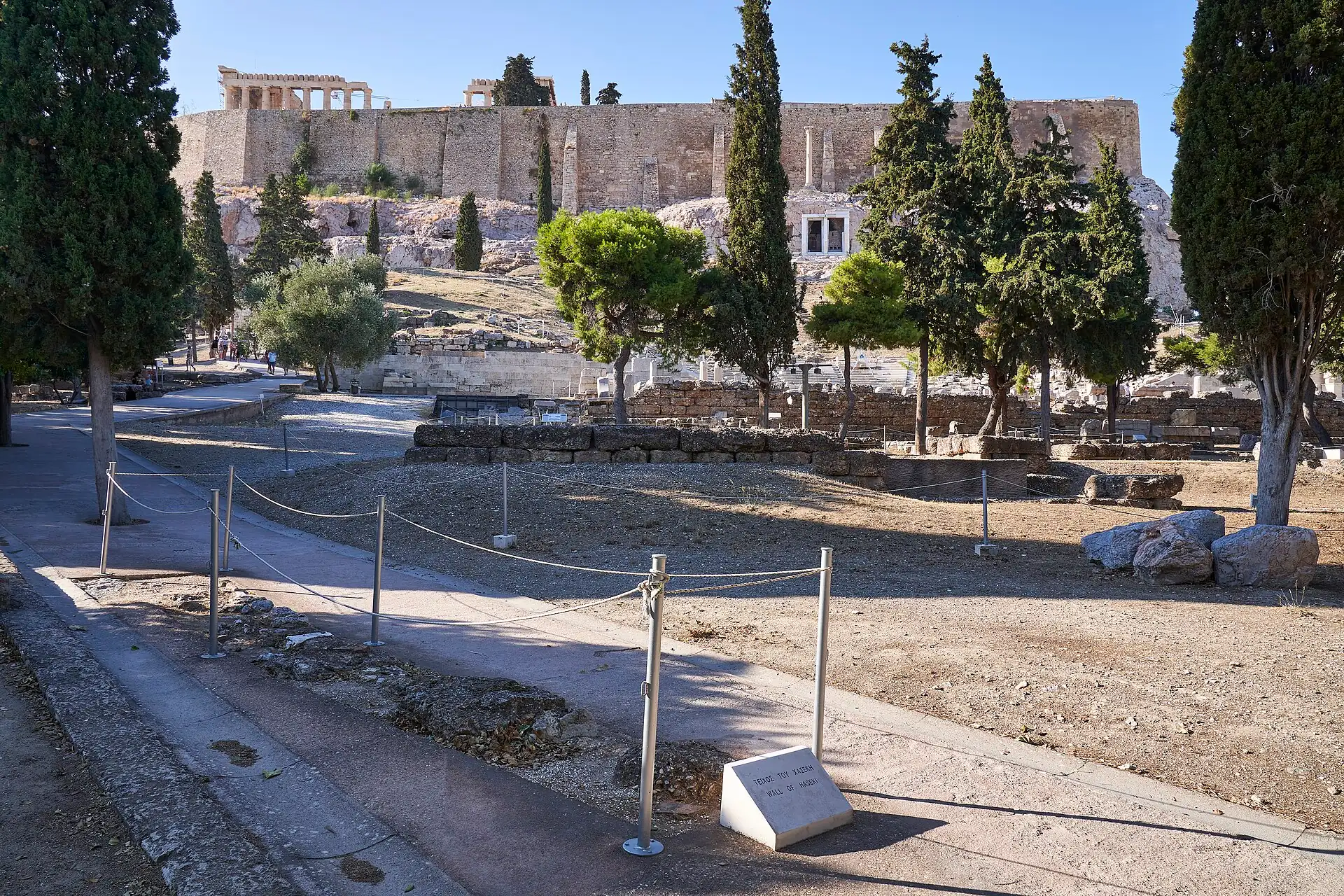
Getting around, in detailGet around · Connect
Get around
Walk inside the historic core; use the metro for the airport, Piraeus and longer hops. Taxis and Beat/FreeNow are cheap for short rides at night or with bags.
| Mode | Verdict | Fare | Use it for | What breaks |
|---|---|---|---|---|
| Walking | use | Free | Acropolis, Plaka, Monastiraki, Syntagma — all within 2 km | Marble and cobbles are slippery when wet or in smooth-soled shoes. |
| Metro | use | EUR 1.2–1.4 (≈ US$2) single; day/multi-day passes available | Airport (line 3), Piraeus (line 1), longer hops | Three lines; validate the ticket before boarding. |
| Tram | ok | Same ticket as metro/bus | Coastal route towards Piraeus and the beaches | Slower than the metro but scenic along the coast. |
| Bus | ok | Same ticket as metro/tram | Routes the metro does not reach | Can be slow in traffic. |
| Taxi / Beat / FreeNow | use | EUR 6–12 (≈ US$7–14) across the centre; metered | Bags, night, groups | Insist on the meter for street hails; apps show a fare estimate. |
Metro and rail lines
Three lines converge at Syntagma and Monastiraki; line 3 is the airport line.
Line 1 (Green, Piraeus–Kifissia)
openPiraeus port to the northern suburbs, through Monastiraki and Omonia
Line 2 (Red, Anthoupoli–Elliniko)
openNorth-west to south, through Syntagma and Acropolis station
Line 3 (Blue, Nikaia/Piraeus–Airport)
openThe airport line, through Syntagma and Monastiraki
More on getting around
The metro runs roughly 05:30 to midnight (Friday and Saturday later); check the current timetable. Ticket machines take cards and cash; validate paper tickets at the yellow machines before boarding, or tap a contactless card at the newer gates where enabled.
Connect
| Option | Verdict | What breaks |
|---|---|---|
| Tourist eSIM bought before you fly | use | No counter, no queue; works the moment you land. |
| Carrier store or kiosk in the city (Cosmote, Vodafone, Nova) | use | Board prices; passport needed for registration. |
| Airport arrivals kiosk | ok | Convenient but usually pricier than a city store. |
Beat
Taxis and cars
The dominant ride-hailing app in Athens; fare estimate shown before booking.
FreeNow
Taxis
Alternative taxi-hailing app, also used in several other European cities.
moovit / Athens transit apps
Metro, tram, bus routes and times
Official OASA app and Moovit both cover the network.
Google Maps
Walking, addresses, transit directions
Reliable for the centre; street names are transliterated, which can vary in spelling.
- Wi-Fi
- Free in most cafés and hotels; ask for the password with your order.
Luggage
Where big bags are a problem, and how to get rid of them for the day.
Rule
- Lockers
- Few public lockers; hotels hold bags after check-out.
- Forwarding
- No forwarding service culture; keep the big bag at the hotel for trips to the islands.
- Dead zone
- Late flights: ask the hotel to hold bags and for a shower room; many do for a small fee.
Bags, area by area
4 walking areas rated
- Bags painful
Acropolis & Acropolis MuseumPlaka & AnafiotikaMonastiraki & Ancient AgoraSyntagma & National Garden
Lockers, forwarding and the gap between check-out and check-in are covered once, under Luggage.
See & doWalking clusters, day plans and the places worth the time
See & do
Walking clusters, day plans and the places worth the time
Clusters
Plan by cluster: each is a walkable area with a rescue point and a bag rule.
Morning-only cluster: the rock at opening before the heat, the museum's air-conditioned galleries at midday; steep marble with little shade.
rescue 100% · max p90 4.1′ · half
Late-afternoon and evening cluster: stepped lanes under the Acropolis, tavernas and small shops; go after 17:00 in summer.
rescue 100% · max p90 4′ · half
Morning or dusk cluster: the Ancient Agora site, Monastiraki square and the flea-market streets; Psiri's bars stay open late.
rescue 100% · max p90 3.8′ · half
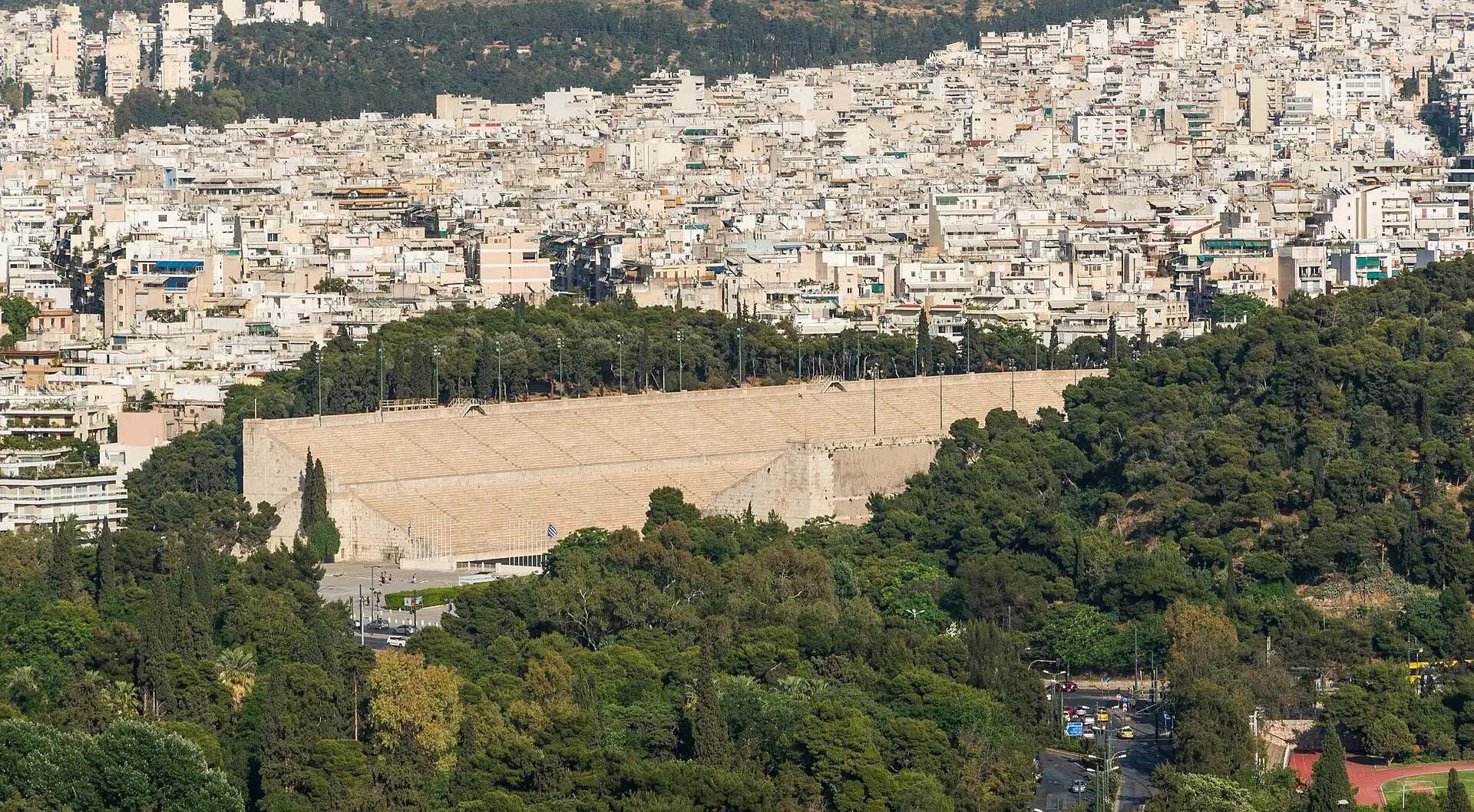
Morning and evening cluster: Syntagma square, the changing of the guard, the National Garden's shade and the Zappeion; the Panathenaic Stadium is a short walk on.
rescue 100% · max p90 3.9′ · half
Days
Ready-made day plans, timed against opening hours and walking distances.
How long are you staying?
1 day
Acropolis at opening, museum, Plaka lunch, Monastiraki flea market and Ancient Agora in the afternoon.
Athens in 3 days
3 daysThe hill at opening, the museum through the heat, a taverna lunch; the lanes and the garden after; the last day ends with the bags already in the car.
Day by day
Day 1 — Acropolis at opening, museum, a 13:30 lunch table in Plaka
- 08:00Acropolis
- Acropolis Museum
- 13:30Lunch table 13:30 (Plaka)
Day 2 — Ancient Agora, Monastiraki, a grill lunch
Day 3 — National Garden, car to the airport at 11:30
- 08:30Temple of Olympian Zeus (optional)
- 11:30Car to the airport at 11:30
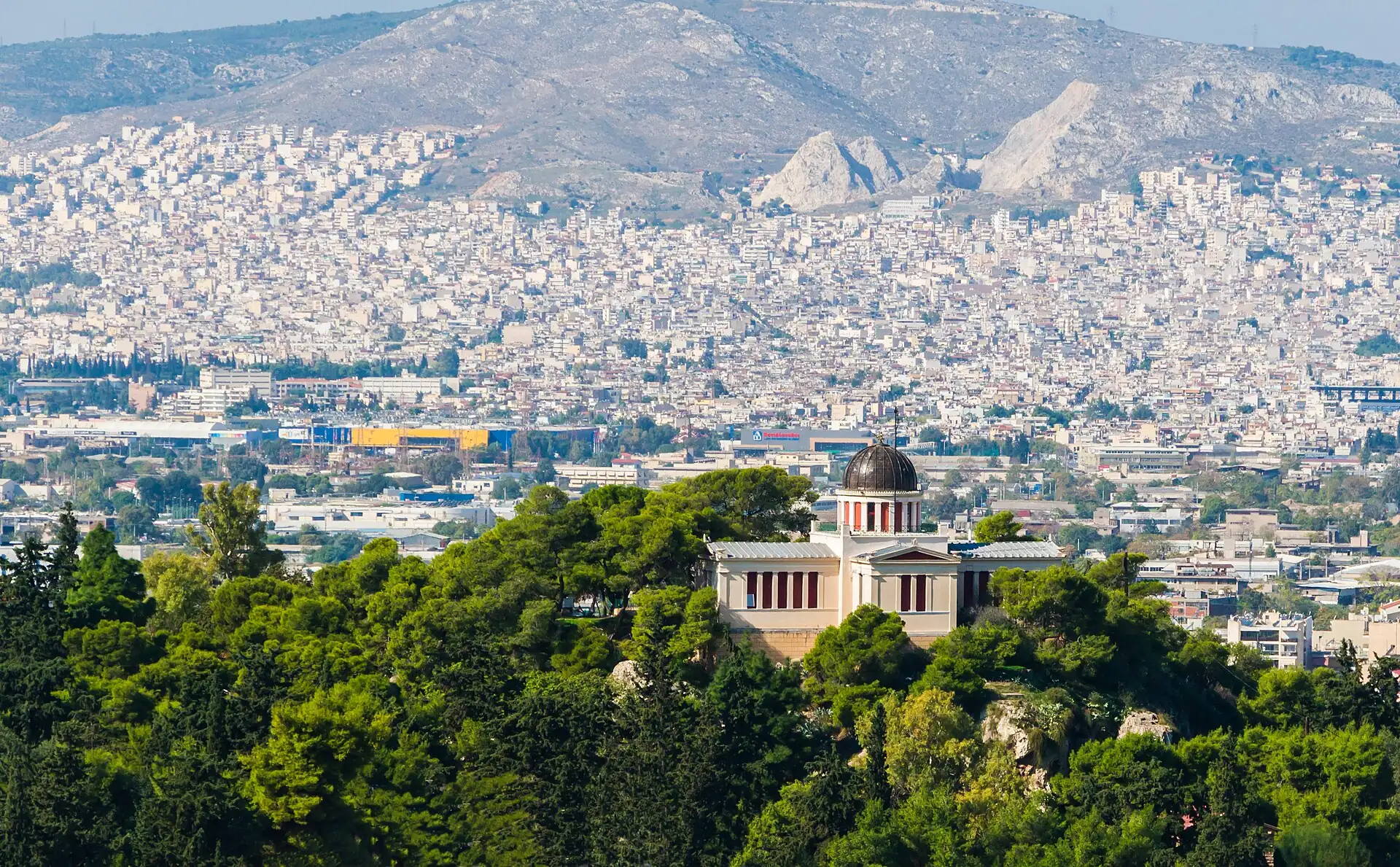
Places
“Best time” is when to arrive for the fewest crowds, for example “before 08:30”; “Go any time” means the hour makes little difference. More sights follow under “More sights and museums”.
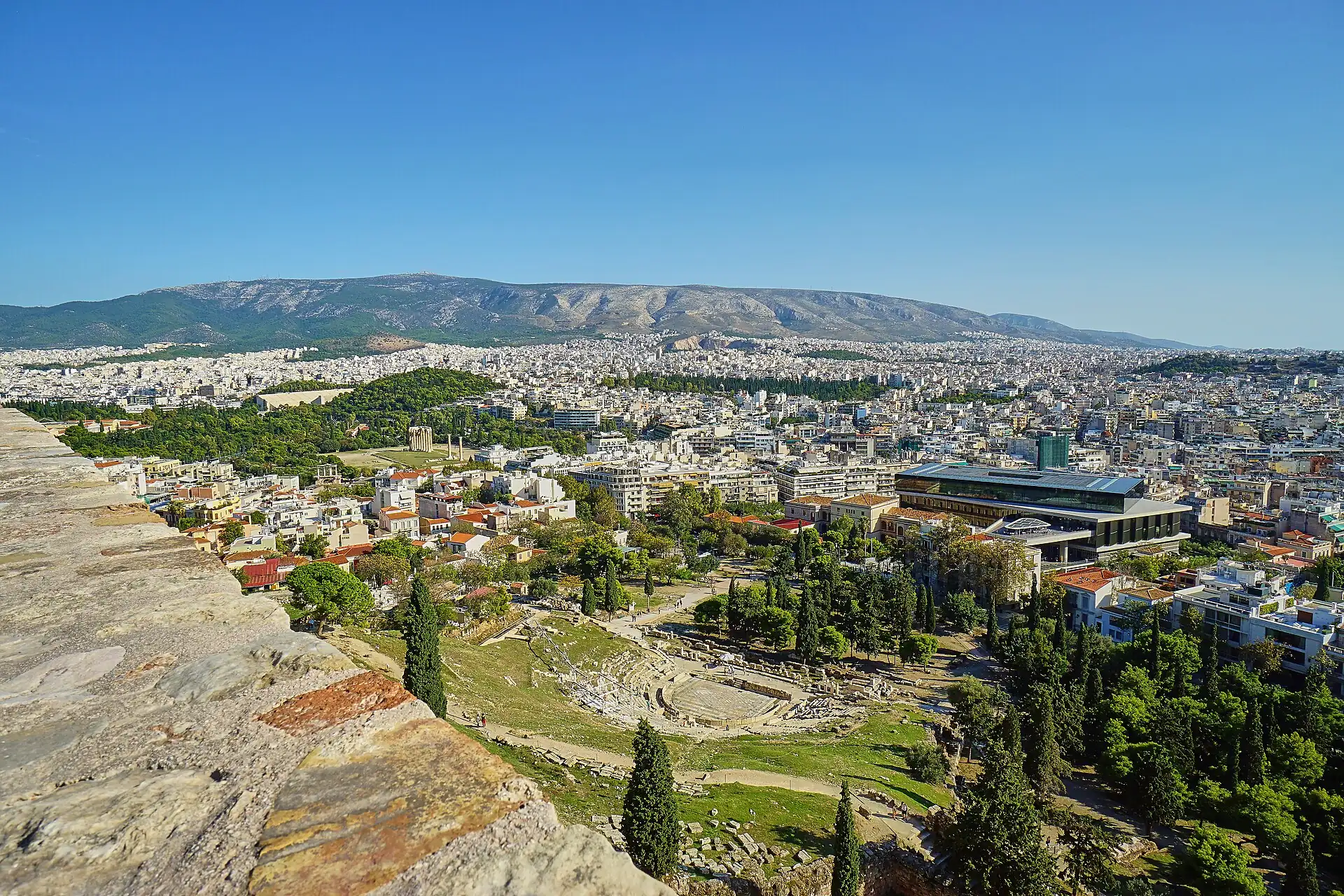
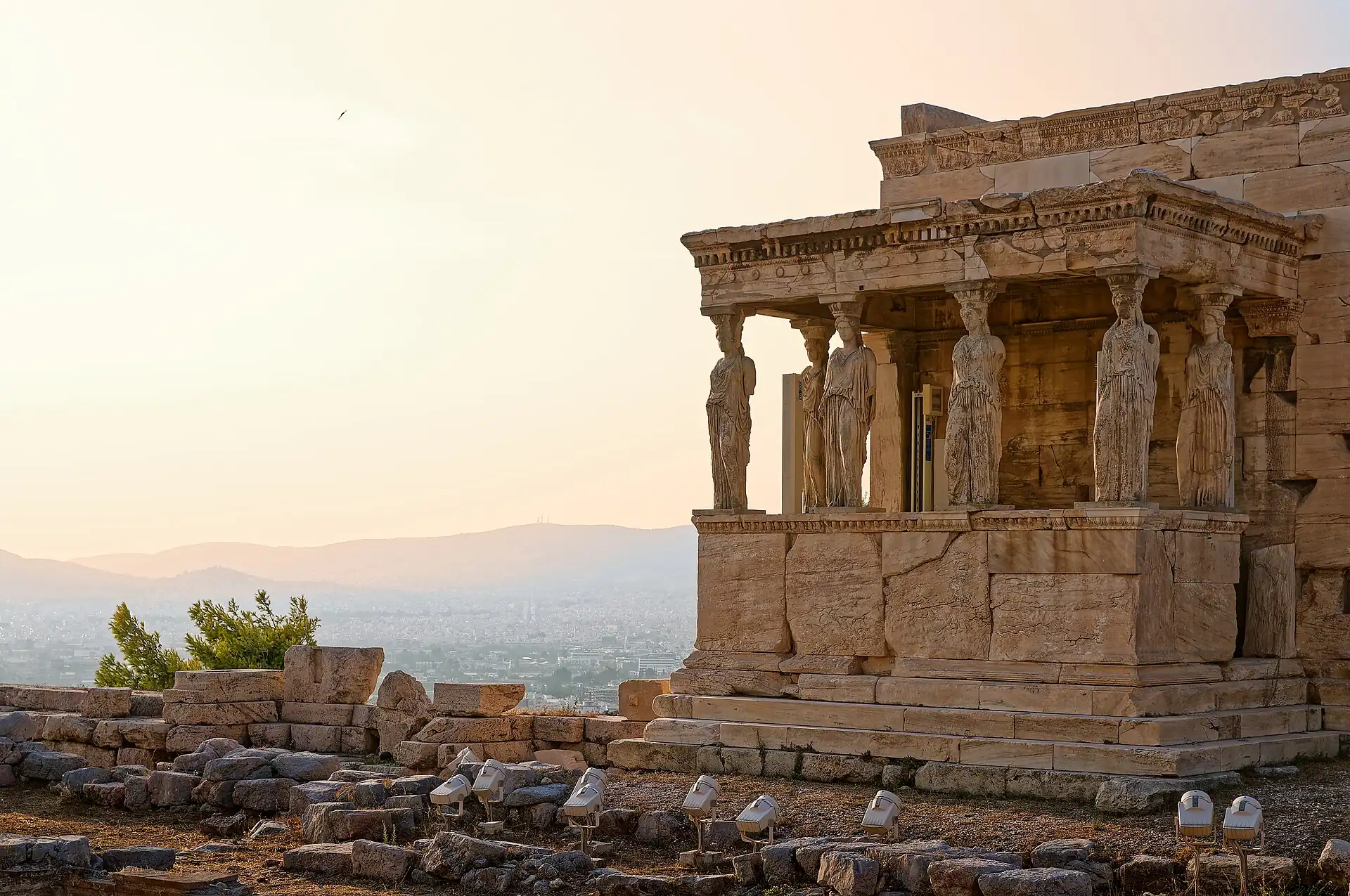
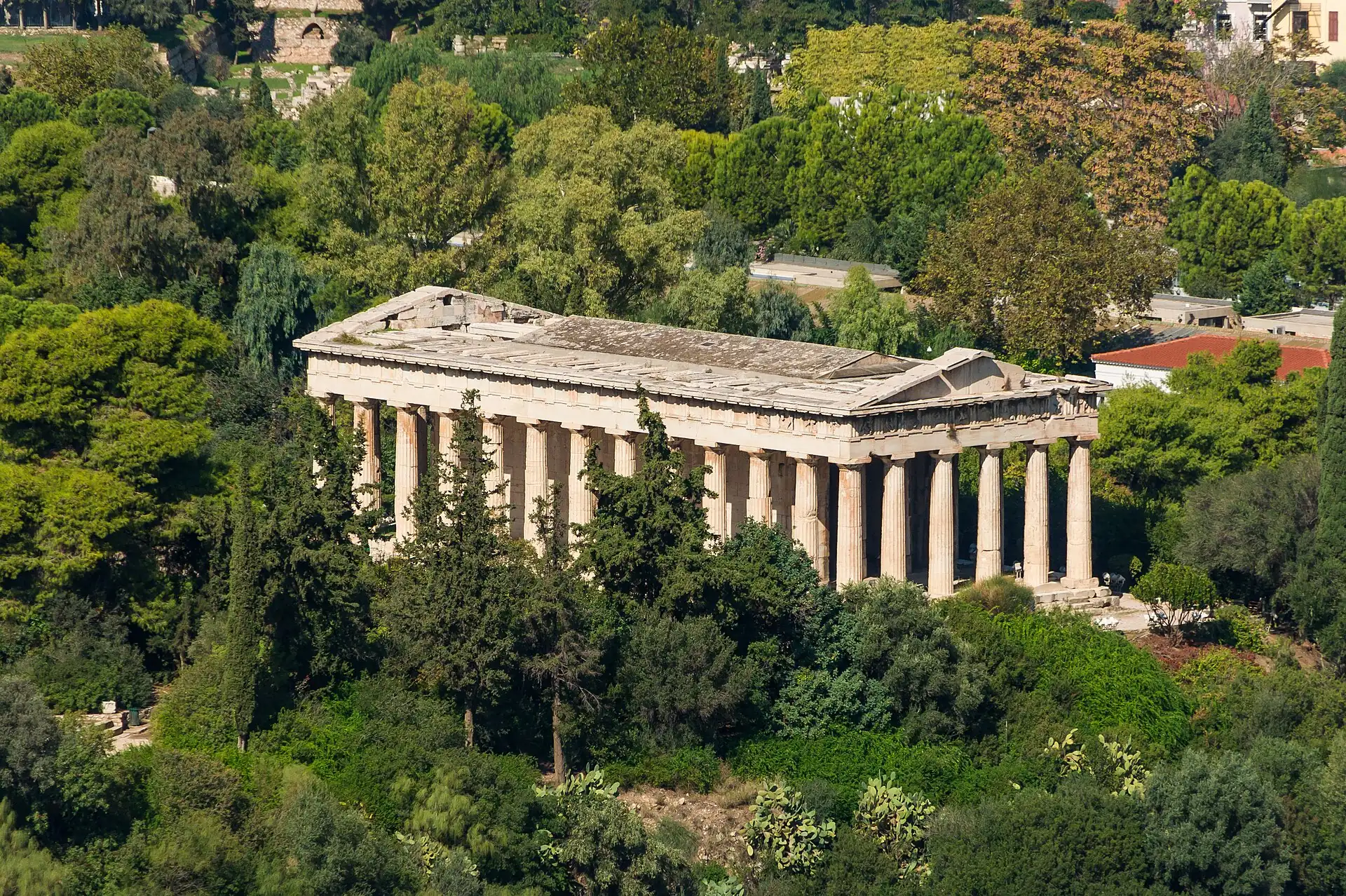
Tours, classes and shows in Athens →
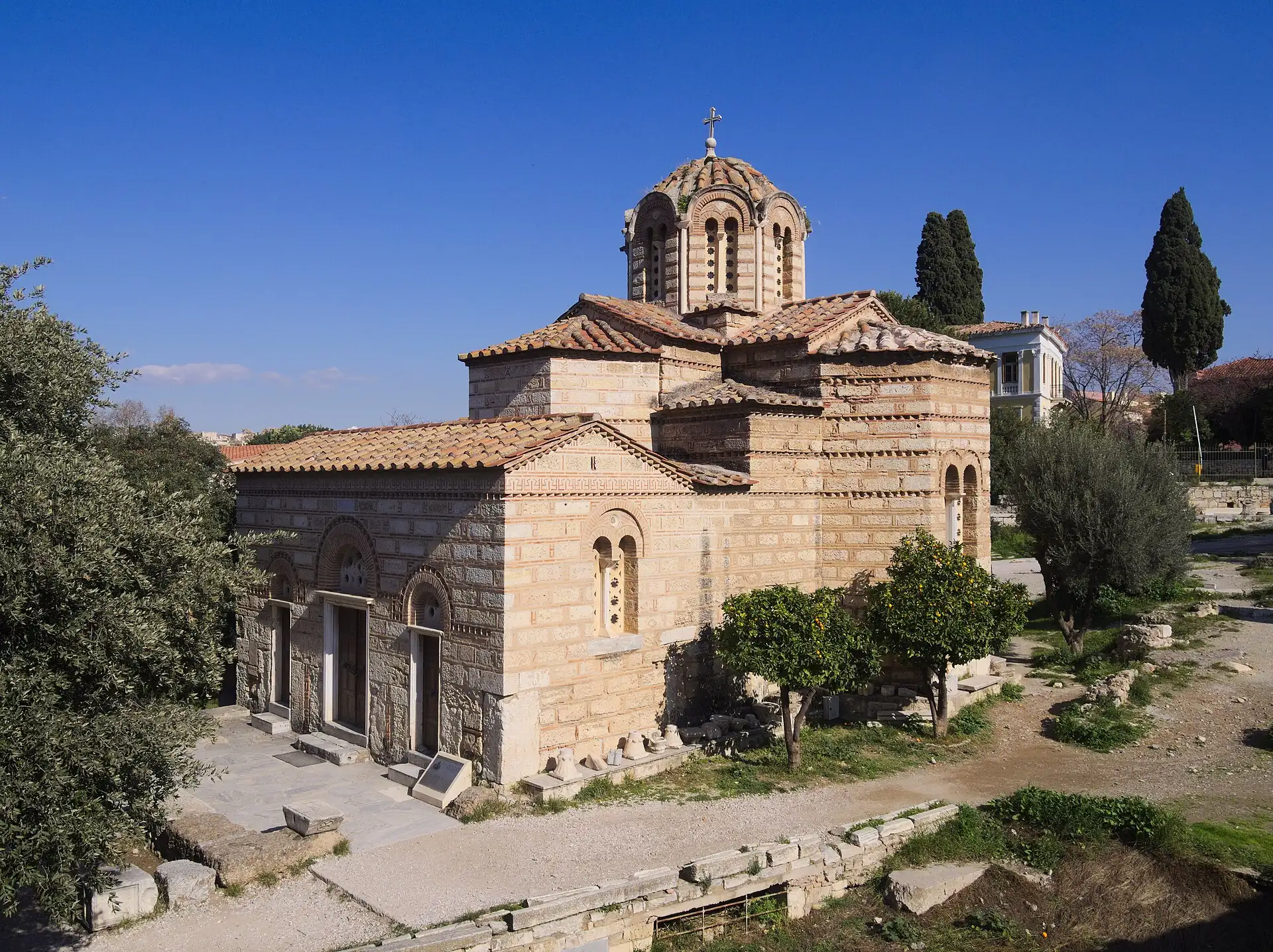
If you do ten things in Athens
- 1
- 2
- 3
- 4
National Archaeological Museum
The country's best single collection.
- 5
Plaka lanes
The old town at street level, best in early evening.
- 6
Temple of Olympian Zeus
Scale you can grasp from the street, five minutes from Syntagma.
- 7
Mount Lycabettus at sunset
The whole basin laid out below you.
- 8
Monastiraki flea market
Souvenirs, junk and people-watching in one square.
- 9
Panathenaic Stadium
Stand where the first modern Olympics were run.
- 10
Syntagma guard change
Free, on the hour, five minutes if that is all you have.
Good for…
Neighbourhoods in one line
| Area | Feel | Suits | Go | Avoid |
|---|---|---|---|---|
Tours and classes: book or skip
| Tour or class | Verdict | Typical price | Why | Check before paying |
|---|---|---|---|---|
What each season brings
Spring (Mar–May)
Summer (Jun–Aug)
Autumn (Sep–Nov)
Winter (Dec–Feb)
Photo spots and the light
| Spot | Best light | Tip |
|---|---|---|
| Areopagus Hill | ||
| Mount Lycabettus | ||
| Anafiotika lanes (Plaka) |
Athens travel FAQ
Is the Acropolis worth the heat and the crowds?
Yes, but go at opening — the first hour is dramatically quieter and cooler than midday.
Do I need a car in Athens?
No. The centre is walkable and the metro covers the airport and Piraeus; rent a car only for day trips beyond the city.
Is tap water safe?
Yes, Athens tap water is safe to drink.
More to see and doSee & do · Learn & work · Rain & heat · Wheelchair and stroller
Wheelchair and stroller, place by place
How each place in this guide works for wheels, from its own page. Ratings are desk estimates unless a page says it was checked on the ground.
| Place | Step-free | Wheelchair | Stroller | What to know |
|---|---|---|---|---|
| Mount Lycabettus | check | check | check | Steep paths on foot; the cable car is the only step-free route, and boarding may still need assistance — check ahead. |
| National Archaeological Museum | check | check | check | Lifts and ramps; one of the more accessible major museums in Athens. |
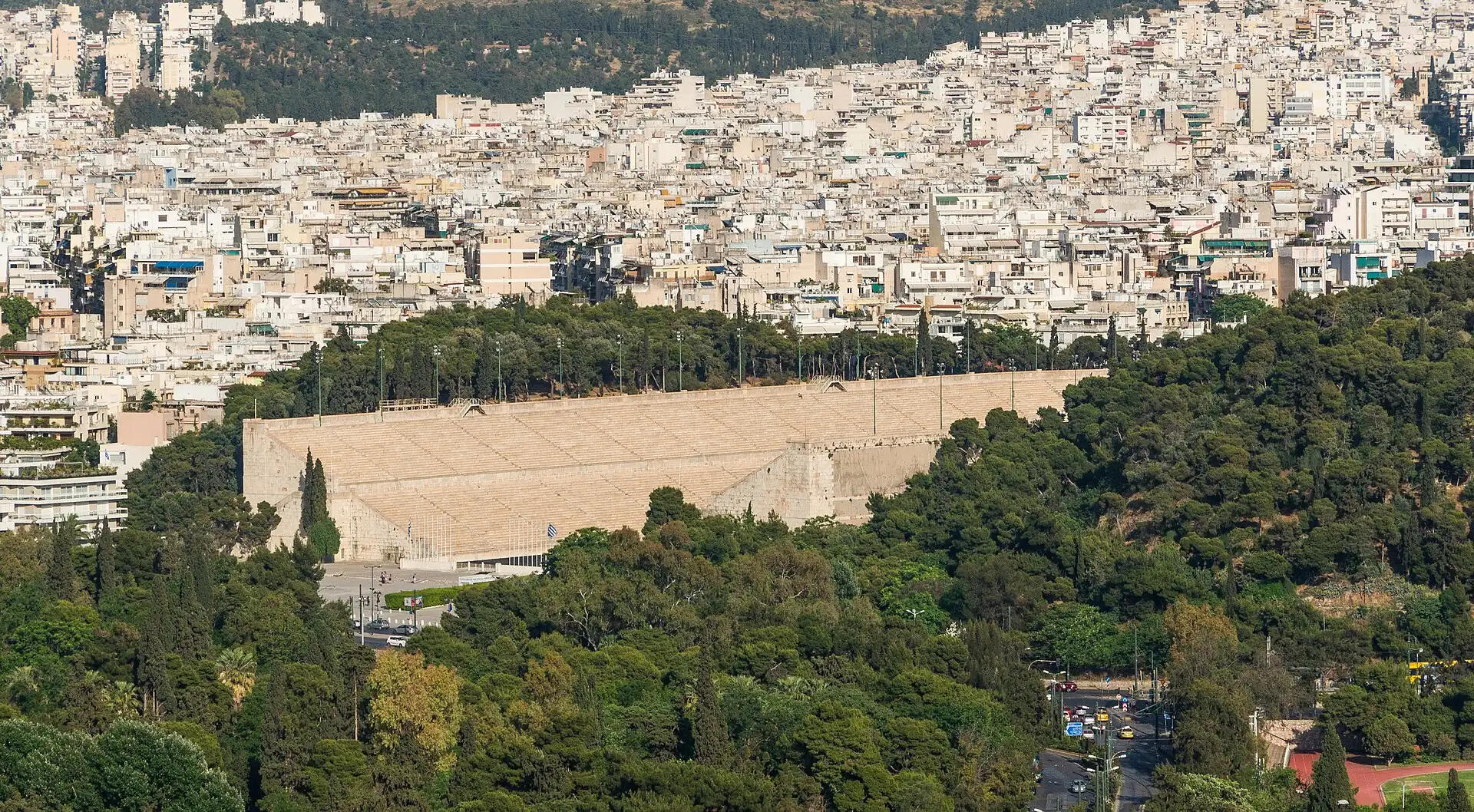
| Panathenaic Stadium | check | check | check | Flat track level is accessible; the marble seating rows are stepped and not step-free. |
| Temple of Olympian Zeus | check | check | check | Mostly flat gravel paths; check current step-free routing. |
See & do
16 of 16
- monument
The Parthenon and the sacred rock; go at opening.
Acropolis · Daily, seasonal hours (check) · EUR 20–30 (≈ US$25–35)
- Museums
Glass floors over the dig, the Parthenon Marbles cast alongside originals.
Acropolis · Daily, extended hours some days (check) · EUR 15–20 (≈ US$18–25)
- monument
The heart of democratic and commercial Athens; the best-preserved ancient temple, the Hephaisteion, sits at its edge.
Monastiraki / Agora · Daily, seasonal hours (check) · EUR 10 (≈ US$12)
National Archaeological Museum
MuseumsThe country's largest collection: the Mask of Agamemnon, Cycladic figurines, Antikythera mechanism fragments.
Exarchia edge · Daily, closed or reduced Mon (check) · EUR 12–20 (≈ US$14–25)
Kerameikos
monumentThe ancient cemetery and city gate; usually the quietest major site.
Near Monastiraki / Gazi · Daily, seasonal hours (check) · EUR 8 (≈ US$10)
Temple of Olympian Zeus and Hadrian's Arch
monumentFifteen towering columns of what was once Greece's largest temple.
Syntagma / Acropolis edge · Daily, seasonal hours (check) · EUR 8 (≈ US$10)
Panathenaic Stadium
monumentAll-marble stadium of the first modern Olympics (1896); run a lap of the track.
Pangrati edge · Daily, seasonal hours (check) · EUR 10 (≈ US$12)
Mount Lycabettus
ViewsThe city's highest point; sunset views over the whole basin to the sea.
Kolonaki · Always open; cable car has set hours (check) · Free on foot; cable car extra
Benaki Museum
MuseumsGreek art and history from antiquity to the 20th century in a neoclassical mansion.
Kolonaki edge · Daily except Tue (check) · EUR 6–10 (≈ US$7–12)
Syntagma Square and the Changing of the Guard
cultureEvzones in traditional dress outside Parliament; the Sunday ceremony is the fullest version.
Syntagma · Guard change on the hour; the grand version Sundays 11:00Guard change on the hour; the grand version Sundays 11:00 AM · Free
National Garden
Lakes & parksShaded paths, ponds and a small zoo corner behind Parliament.
Syntagma / Zappeion · Daily, daylight hours · Free
Athens Epidaurus Festival performance
Shows & musicAncient drama, music or dance, sometimes staged at the Odeon of Herodes Atticus below the Acropolis.
Various · Jun–Aug evenings · EUR 15–60 (≈ US$18–70)(check)
Greek cooking class
ClassesMarket visit plus hands-on cooking of 3–4 dishes.
Central Athens · 3–4 h · EUR 60–100 (≈ US$70–120)
Food and market walking tour
Food toursTastings through the central market and old-town lanes with a guide.
Central market and Plaka · 3 h · EUR 60–90 (≈ US$70–110)
Sunset at Lycabettus
ActiveWalk or cable-car up for the best skyline view in the city.
Kolonaki · Before dusk · Free on foot
Day sail or swim near Piraeus/Glyfada beaches
ActiveAthens has its own coastline south of the centre; a tram ride away.
Southern coast · Half or full day · Varies
Learn & work
| What | Where | Cost | Note |
|---|---|---|---|
| Modern Greek language courses | Athens Centre and other language schools | Varies by course length | Group and private options; some schools cater specifically to short-stay visitors.(check) |
| Cooking classes | Central Athens schools | EUR 60–100 (≈ US$70–120) a session | See Do. |
| Guided archaeology walks | Licensed guides at the Acropolis and Agora | EUR 30–80 (≈ US$35–95) per person for a group tour | Only state-licensed guides may lead paid tours inside archaeological sites. |
Working here
- Tourist entry
- EU/Schengen rules apply: most non-EU visitors get up to 90 days in a 180-day period without a visa; this does not permit paid work.
- Work permit
- Non-EU citizens need an employer-sponsored visa and residence permit arranged before arrival in most cases.
- Remote work
- Greece has a digital nomad visa for non-EU remote workers employed outside Greece; check current income and application requirements before relying on it.
Rain-day and heat-day plan
Rain day
Winter showers usually pass in an hour: wait it out in a café rather than pushing through the outdoor sites.
- 01Acropolis Museum — Indoor, glass-floored galleries over the excavation; 1.5–2 h.
- 02National Archaeological Museum — Large indoor collection; a full morning.
- 03The Mall Athens or Golden Hall — Indoor shopping for a washed-out afternoon.
Heat day
Above 35°C: outdoor sites before 11:00 and after 18:00, air-conditioning in between, water every hour, and check the official Acropolis heat-closure announcement each morning.
- 08:00Acropolis — Open at opening; queue is shortest and the marble is cooler.
- 10:00Acropolis Museum — Air-conditioned; the natural follow-on from the hill.
- 12:30Long indoor lunch — Wait out the hottest hours at a shaded or AC taverna.
- 18:00Ancient Agora — Cooler light for the Agora and Kerameikos.
Day-trips and nearby
Places you can reach from Athens in a day or with one night away, with the route and what it costs. Door to door, not ride time.
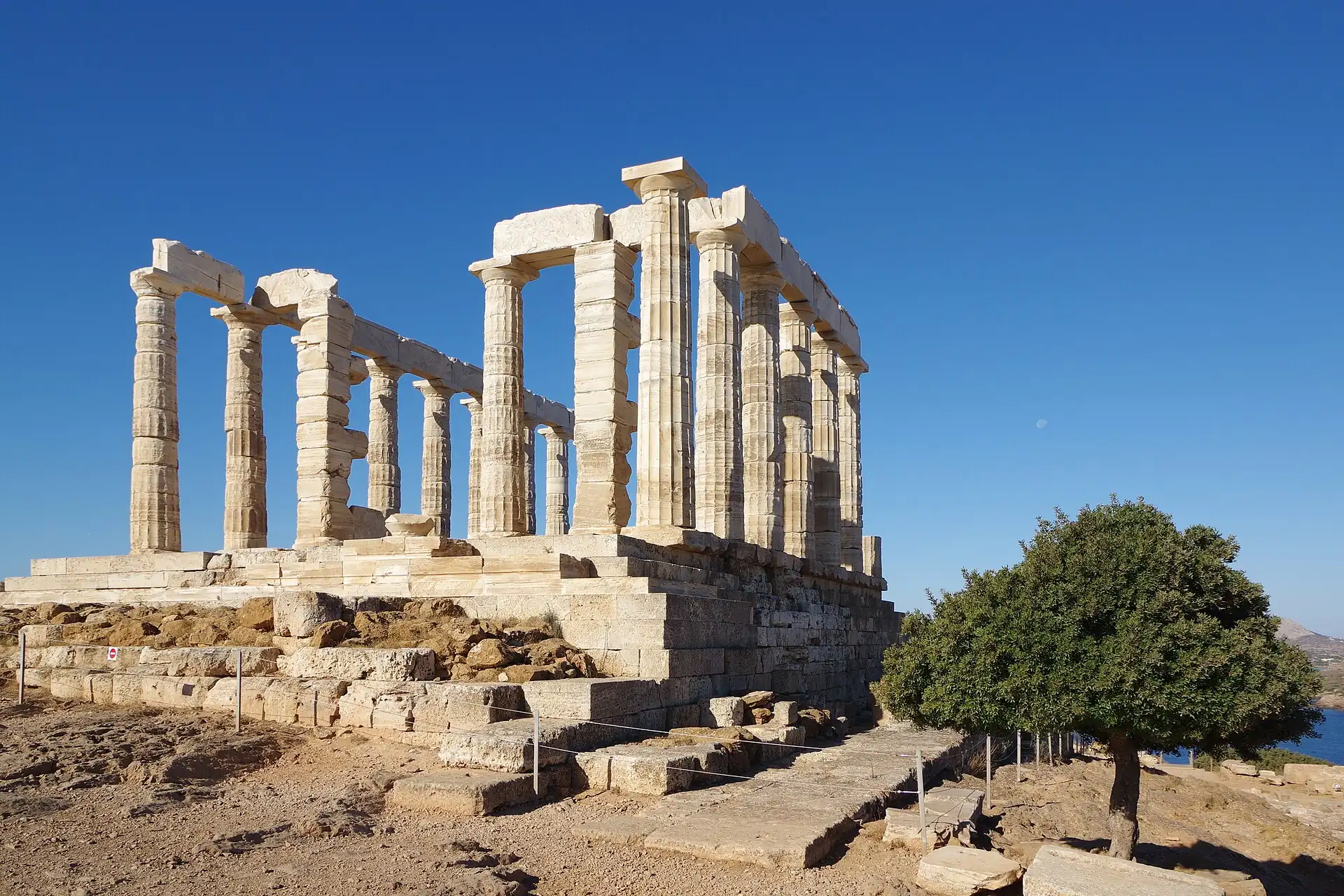 Photo: Berthold Werner, CC BY-SA 3.0
Cape Sounion
goBus or car, about 90 min each way
Temple of Poseidon on a headland; wind and crowds at sunset.
- Time
- Half day, leave 15:00 for sunsetHalf day, leave 3:00 PM for sunset
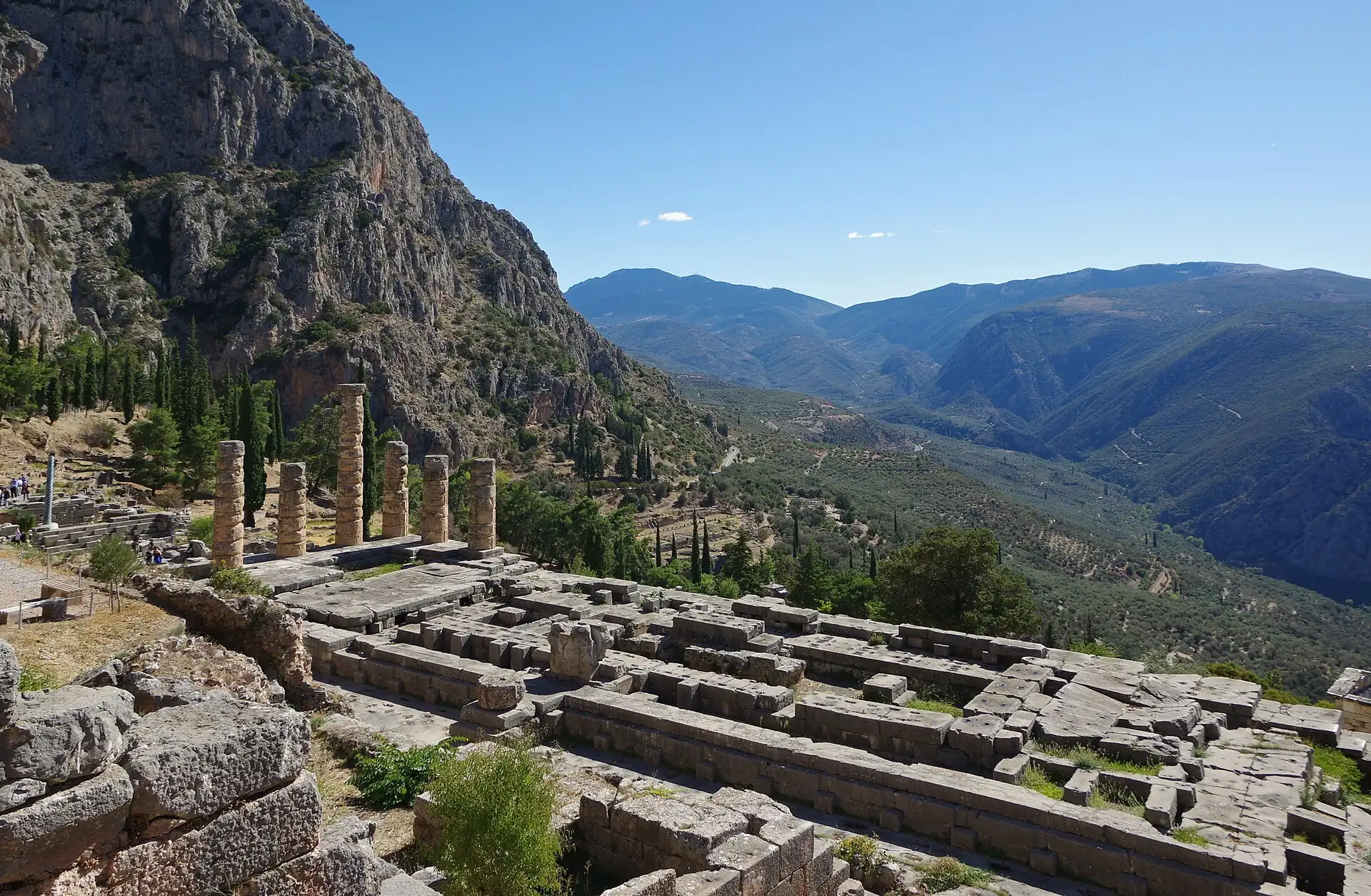 Photo: Berthold Werner, CC BY-SA 3.0
Delphi
goTour bus or car, about 2.5–3 h each way
Long day; join a tour or hire a car.
- Time
- Full day
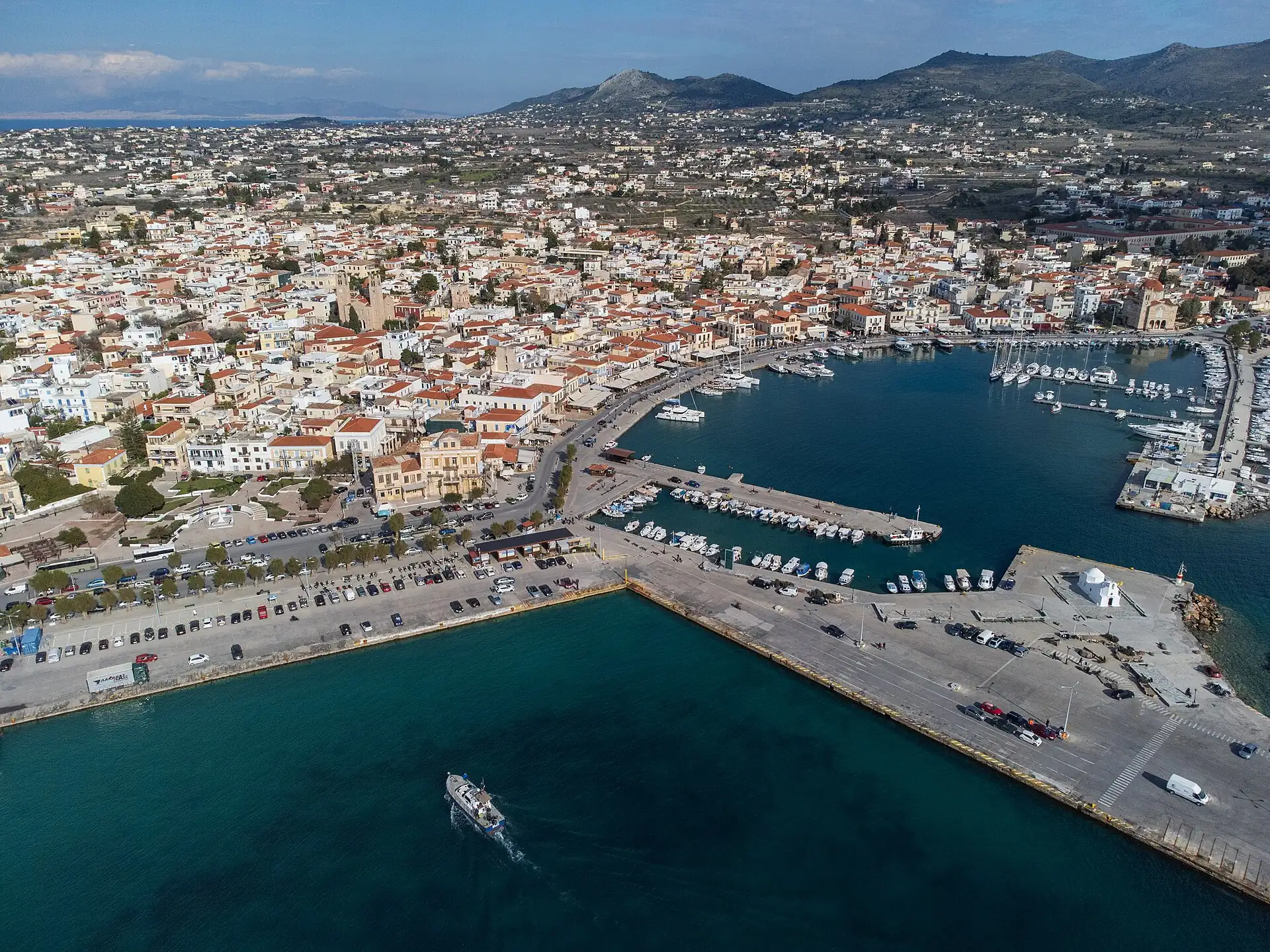 Photo: C messier, CC BY-SA 4.0
Aegina (island)
goFerry from Piraeus, about 40–75 min
Easy first island; ferry times change with the season.
- Time
- Full day
Go next
Door to door: 2.5–5 h to Piraeus port plus the crossing
Ferry from Piraeus (2–8 h depending on island and boat speed) or a short flight
Book high-speed ferries ahead in July–August; slower ferries are cheaper and calmer.
Door to door: 2–2.5 h
Car or bus, about 2–2.5 h
Ancient Corinth, Mycenae and Epidaurus are on the way or nearby.
Door to door: 4–4.5 h
Train or car, about 4–4.5 h
Cliff-top monasteries; a long way for a day trip — stay one night in Kalambaka.
Door to door: About 2 h door to door by air
Flight about 50 min, or train/car about 5 h
Greece's second city; a different food and nightlife scene from Athens.
Eat & sleepWhere to eat and which area to sleep in
Eat & sleep
Where to eat and which area to sleep in
Eat
A short list of places worth crossing the city for, each with how to get a seat.
Restaurant finder: filter every place to eat in Athens →
Vegetarian-friendly score
3.5 / 5 · Good
- Country diet noteOur country guide rates vegetarian eating as easy.2 / 2
- Places to eat in this guide1 of 5 places with a known answer are vegetarian-friendly, 4 partly.0.9 / 1.5
- Budget eating lines0 vegetarian lines in "Eat by budget".0 / 0.6
- Meat-free national dishes7 meat-free dishes in the country food list.0.4 / 0.4
- Dedicated vegetarian kitchens0 mentions of vegetarian restaurants, Buddhist or fasting kitchens.0 / 0.5
Country note: Easy: salads, pies, pulses, vegetable oven dishes (ladera) and many meze.
Vegetarian places near me →Make a diet card →
How we score
- Country diet note (up to 2): easy 2, workable 1, mixed 0.75, hard 0; no note 0.5.
- City places to eat (up to 1.5): 1.5 × (vegetarian-friendly + half of partly friendly) ÷ places with a known answer; needs 3 or more known places.
- Budget eating lines marked vegetarian (up to 0.6): 0.2 each.
- Meat-free national dishes (up to 0.4): 0.1 each.
- Dedicated vegetarian kitchens mentioned — Buddhist chay, shōjin ryōri, Jain, fasting food, vegan cafés (up to 0.5): 0.1 each.
- Total rounded to the nearest half point, 0 to 5. Built from our own pages only, not from reviews.
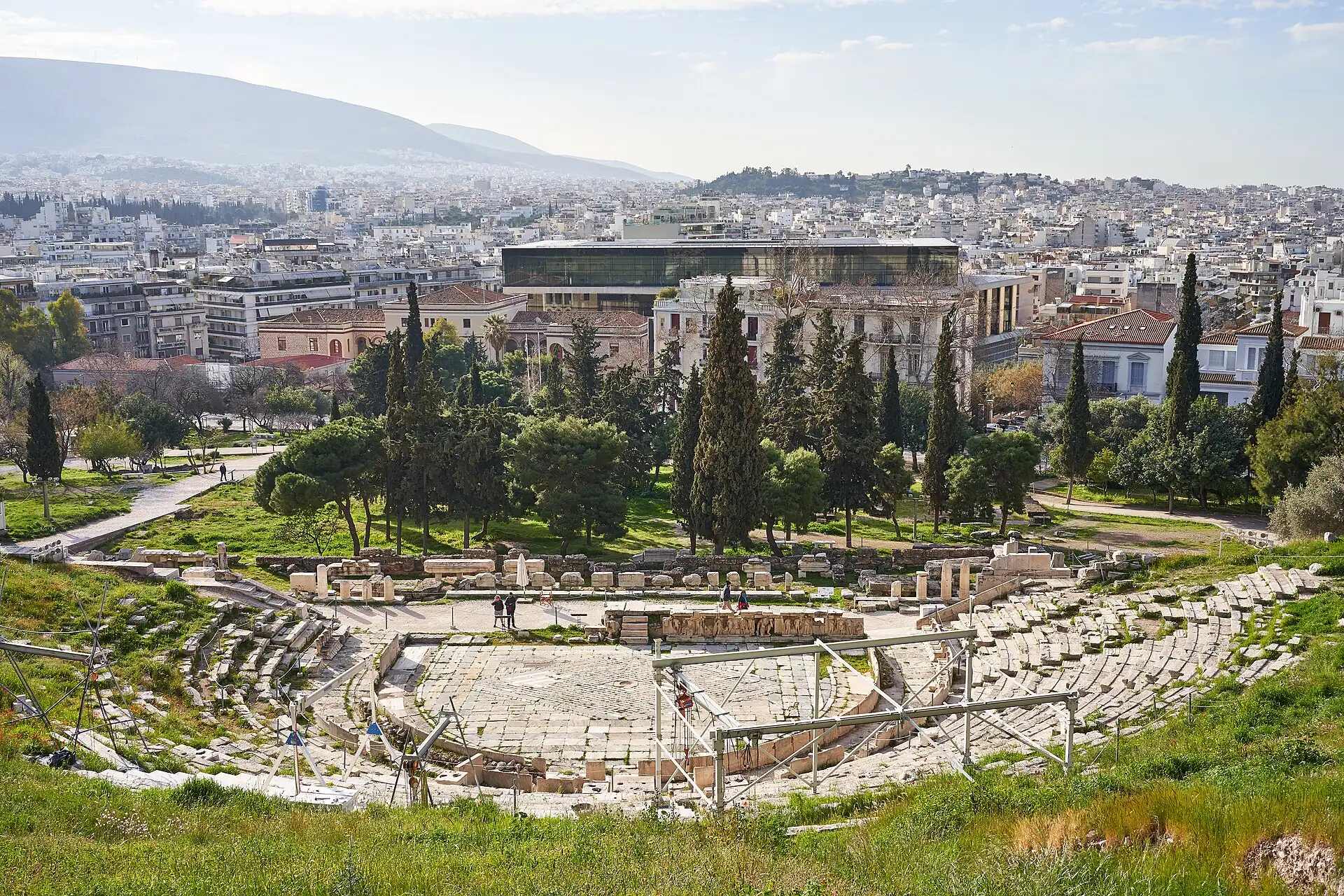
Eating and drinking guideEat by budget · Drink
Before you sit down to eat
Short version; full text linked
- Queues and hours
- Per person, one dish or one meal, 2026 estimate. More →
Eat by budget
Under EUR 10 (≈ US$12) a meal
| Where | Order | Area | Price | Note |
|---|---|---|---|---|
| Bairaktaris | Souvlaki and kebab plates | Monastiraki | EUR 8–12 (≈ US$10–14) | |
| Krinos | Loukoumades (honey doughnuts) | Monastiraki | EUR 5–7 (≈ US$6–9) | |
| Souvlaki pita, street counter | Pork or chicken souvlaki wrap | Citywide | EUR 3–4.5 (≈ US$4–6) | The city's fastest, cheapest meal. |
Drink & nightlife
| Where | What | Until | Note |
|---|---|---|---|
| Psiri bars and mezedopoleia | Small plates and ouzo, cocktail bars | Late, often past 01:00 on weekendsLate, often past 1:00 AM on weekends | Livelier and grittier than Plaka; keep bags close. |
| Gazi (around the old gasworks, Technopolis) | Clubs and bars, LGBTQ-friendly scene | Late | A tram or metro ride from the centre. |
| Rooftop bars around Monastiraki and Plaka | Cocktails with an Acropolis view | About midnight–01:00About midnight–1:00 AM | Check the menu prices before sitting; a premium is charged for the view. |
| Kolonaki cafés and bars | Coffee by day, cocktails by night | About midnight | Pricier than Plaka or Psiri. |
By style
| Style | What | Where | Price | Until |
|---|---|---|---|---|
| Greek coffee / frappé / freddo | Traditional boiled coffee, or the iced frappé and freddo espresso/cappuccinoFreddo is the everyday summer order; ordering it 'metrio' means medium sweet. | Any café, all-day | EUR 3–5 (≈ US$4–6) | Café closing |
| Ouzo and mezedes | Anise spirit with small platesOrdered to share, not as a single round. | Ouzeri and tavernas, Psiri and Plaka | EUR 4–7 (≈ US$5–9) a glass, mezedes EUR 4–9 (≈ US$5–11) each | Late |
| Greek wine | Assyrtiko whites, Agiorgitiko reds, retsinaRetsina (pine-resin wine) is an acquired taste worth one try. | Wine bars and tavernas citywide | EUR 4–8 (≈ US$5–10) a glass | Late |
| Rooftop cocktails | Cocktail bars with Acropolis views | Monastiraki, Plaka, Thissio | EUR 10–16 (≈ US$12–19) a drink | About midnight–01:00 |
| Craft beer | Greek microbrews | Bars in Gazi, Psiri, Pangrati | EUR 5–8 (≈ US$6–10) a glass | — |
Rules that bite
- No fixed drink-driving tolerance to speak of for tourists: Greece's legal blood-alcohol limit is low (0.05%) and enforced with roadside checks — do not drive after drinking.
- Smoking indoors is technically banned but loosely enforced in some bars; ventilation varies.
Sleep
Pick the area first: it decides your walk home at night and your first morning.
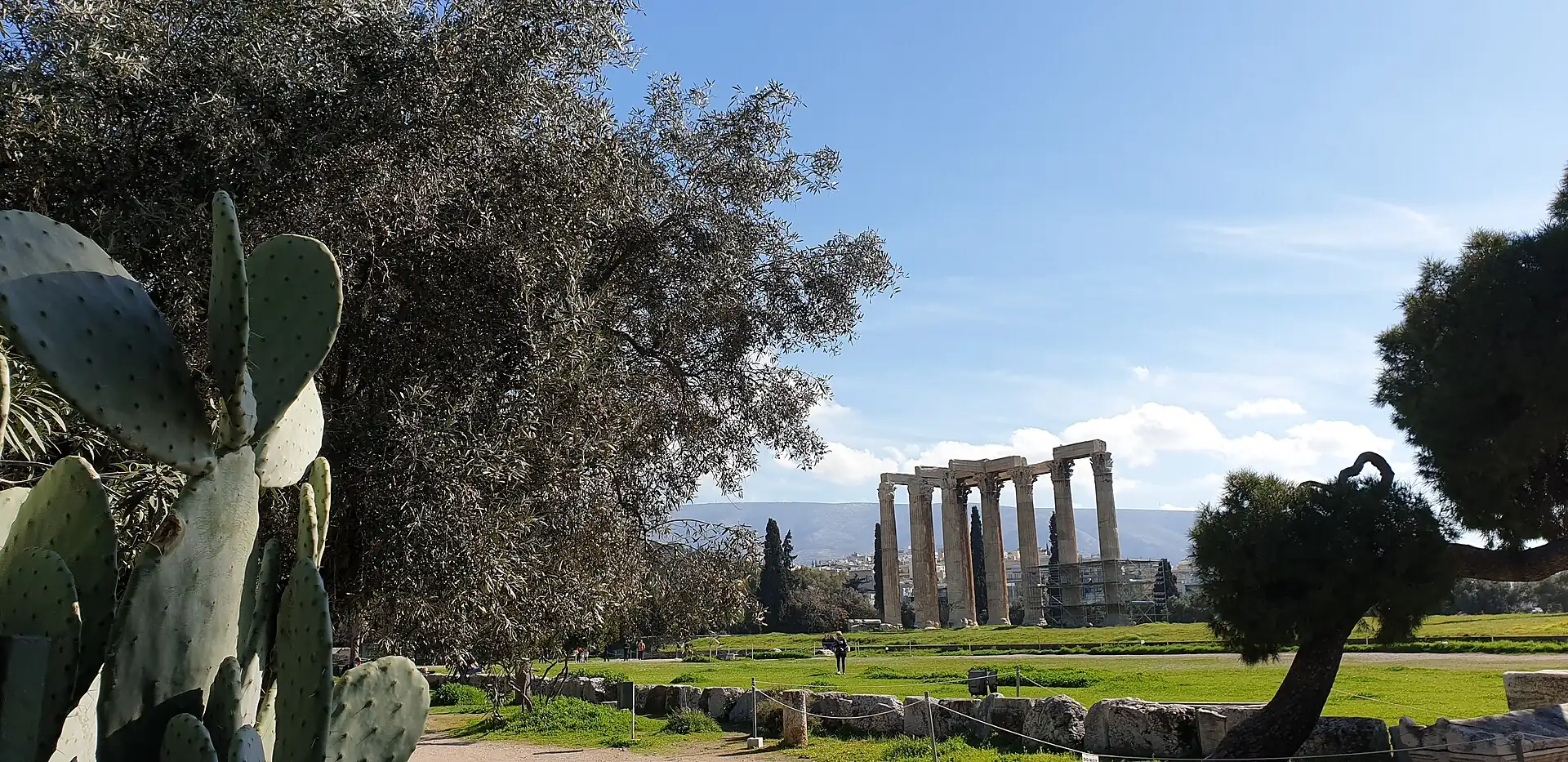
Which neighborhood fits you
Three questions, one recommendation, with the reasons.
More on sleepingYour area · With kids
Which area is yours
| If you are | Sleep in | Because |
|---|---|---|
| First visit, 2–4 nights, want to walk everything | Plaka | Sights on the doorstep; accept steps and tourist prices. |
| Value, quiet nights, still walkable to the Acropolis | Koukaki | 10–15 minute walk in, calmer streets, better prices. |
01Plaka
First-timers: a hotel on the edge of Plaka with a 24h desk and a door the taxi can reach, a walk from the Acropolis, Monastiraki and Syntagma.
02Koukaki
Quieter nights south of the hill: local cafés, a metro stop at Syngrou-Fix, and a walk to the museum and the promenade.
Areas are in our default order until you tick a priority.
Scores are 1–5 desk judgements per priority (2026).
With kids
- The Acropolis and Agora are outdoor, uneven and hot in summer: go at opening, bring water and a hat, and expect a short attention span on the marble.
- The National Garden (next to the Zappeion) has shade, a small zoo corner and a playground — the easiest cool-down stop near the centre.
- Hellenic Cosmos / the Foundation of the Hellenic World (a planetarium and digital museum) is a good rain-day or heat-day option, a metro ride from the centre.
- Trams and the metro are stroller-friendly at most central stations, but Plaka's lanes are steps and cobbles: bring a carrier for those streets.
- Kids under a certain age often get free or reduced entry to archaeological sites; ask at the ticket window.
PracticalMoney, essentials, safety and the pocket card
Practical
Money, essentials, safety and the pocket card
Money
What a day costs at three comfort levels, and how to pay.
- Budget
- EUR 40–70 (≈ US$50–85) excl. bed / day
- Mid
- EUR 70–130 (≈ US$85–160) excl. bed / day
- High
- EUR 130 (≈ US$160)+ excl. bed / day
- Transit card
- A metro, tram and bus ticket covers the whole network; most of a first visit is on foot.
- Cash rule
- Keep EUR 30 (≈ US$35) in small notes for kiosks and tavernas that prefer cash; use bank ATMs, not stand-alone ones in tourist streets.
More on moneyCosts · Budget · Buy
What things cost
- Taverna meal, per personEUR 15–30 (≈ US$18–35)
- Bottle of water, kioskEUR 1–2 (≈ US$2–3)
- Acropolis ticketEUR 20–30 (≈ US$25–35)
Trip budget
| Hotel double room1 × 3 nights × €120 | €360 |
| Food, local transport, entries2 × 3 days × €100 | €600 |
| Airport transfer, both ways1 × €90 · one taxi or metro group | €90 |
| eSIM, about a week2 × €10 | €20 |
| Buffer 10%Price creep, a taxi you did not plan, one splurge | €107 |
| Trip total≈ €196 per person per day, bed included | €1,177≈ US$1,400 |
2026 estimate in euros; flights and tours excluded. Your choices stay in this browser.
Prices of common things
| Souvlaki pita, takeaway | EUR 3–4.5 (≈ US$4–6) |
2026 estimate; check locally.
Buy
- Bargaining
- Fixed prices almost everywhere, including souvenir shops; haggling is not the norm. The flea market around Monastiraki and Avissynias Square is the exception for genuinely second-hand goods.
- Fixed-price check
- Supermarkets (AB Vasilopoulos, Sklavenitis) show you the honest price on olive oil, honey and wine before you pay a tourist-street mark-up for the same brands.
Markets and shopping streets
| Where | What | When | Haggle | Note |
|---|---|---|---|---|
| Varvakios Central Market (Athens Central Market) | Meat, fish, cheese, produce halls | Mon–Sat mornings into early afternoon (check) | no | A working market, not a tourist stop, though visitors are welcome to look and eat at the counters. |
| Monastiraki flea market | Antiques, vinyl, souvenirs, junk | Daily, busiest Sun mornings | light | Genuine antiques need a discerning eye; most stalls sell tourist souvenirs at fixed prices. |
| Avissynias Square market | Furniture, curios, bric-a-brac | Best on Sunday mornings | light | The older, more local end of the flea market. |
| Kolonaki boutiques | Designer clothes, jewellery | Shop hours | no | Athens' most expensive shopping street. |
Shops by what they sell
| For | Where | Hours | Note |
|---|---|---|---|
| Olive oil, honey, herbs | Supermarkets, delis around Plaka and the central market | Shop hours | Check the harvest year on oil; delis near the Acropolis charge a premium over a supermarket. |
| Jewellery, ceramics, leather sandals | Adrianou and Pandrossou streets, Plaka | About 09:00–21:00 in season | Handmade leather sandals are a genuine Athens buy; check stitching, not just price. |
| Books and maps | Solonos street, Kolonaki; Politeia bookstore | Shop hours | English titles in the bigger central stores. |
| Malls | The Mall Athens (Maroussi, metro-linked); Golden Hall (Kifisia) | About 10:00–21:00 | The rain-day and heat-day refuge; a metro or taxi ride from the centre. |
Essentials and accessEssentials · Access
Essentials
- Plugs & power
- 230 V; type C and F sockets.
- Toilets
- Cafés, museums and hotels; carry tissues.
- Opening hours
- Shops often close mid-afternoon and reopen in the evening; museums have a weekly closing day for some sites, so check each place.
- Health
- Heat and sun (June–September); travel insurance with medical cover. EU/EEA visitors can use the EHIC or GHIC.
- Accessibility
- Pavements are narrow and often blocked by parked scooters; the Acropolis has a lift for visitors with reduced mobility, which needs advance arrangement.
- Laundry
- Hotels and neighbourhood laundries do same- or next-day service.
- Emergency numbers
- 112 (all services), 100 police, 166 ambulance, 199 fire.
Pack
- A hat, sunscreen and a refillable bottle
- Shoes with grip for polished marble
- A light layer for evenings and for entering churches
Accessibility
The ancient sites are the hard part: uneven marble, steps and slopes at the Acropolis, Agora and Kerameikos. The Acropolis has a lift for visitors with reduced mobility that needs advance arrangement; the modern city (metro, trams, malls) is reasonably step-free.
- Pavements
- Narrow and often blocked by parked scooters and café tables in the centre; Plaka's lanes are stepped and cobbled.
- Metro and tram
- Newer stations (lines 2 and 3) have lifts; older line 1 stations vary — check the station before relying on it.
- Ancient sites
- Uneven, polished marble; the Acropolis lift needs a phone call or email ahead to arrange.
- Toilets
- Accessible toilets in malls, museums and larger hotels; rare at street level in Plaka.
Survive
Safety basics, the lines not to cross, and practical habits that save the day.
Safety
- Heat (June–September): no hill walking 12:00–17:00; carry water and wear a hat.Heat (June–September): no hill walking 12:00 PM–5:00 PM; carry water and wear a hat.
- Pickpockets work the metro to the airport, Monastiraki and crowded streets: keep bags closed in front.
- Emergency: 112 (all services), 100 police, 166 ambulance, 199 fire.
Red lines
- Acropolis and ancient sites: do not climb on monuments or take stones; drones are banned.
- Churches: cover shoulders and knees, and take no photos during services.
- Taking antiquities out of Greece without a permit is illegal.
Practical
- Toilets: cafés, museums and metro stations with staff; carry small coins.
- Tap water is safe to drink; many visitors prefer bottled.
More on staying safeStay safe · Stay healthy · Safety map · Solo & women · Etiquette · Cope · Scams
After dark, by area
2 flagged areas
Omonia (transit hub, not a sight)
Take careExarchia
Take care
Day = about 07:00–20:00. What to watch in each area, day and night →
Scams and red flags
Walk away if you see these
- Taxi drivers who refuse the meter or name a flat price for a short ride: ask for the meter, or use a ride-hailing app.
- Bar and club touts around Plaka who invite you for one drink and present a large bill: check the menu prices before you sit.
- Fake petition, 'found ring' and friendship-bracelet tricks near Monastiraki and the Acropolis: say no and keep walking.
Stay safe
Stay healthy
Hospitals and clinics: see Cope.
Safety by area and hour
| Area | Day | Night | What to watch |
|---|---|---|---|
| Plaka and the Acropolis | fine | fine | Overpriced 'friendly stranger' bar invitations near the lanes; check the menu before sitting. |
| Monastiraki and the Agora | fine | fine | Pickpockets in the flea-market crowds and on the metro line to the airport. |
| Syntagma and the National Garden | fine | fine | Protests and marches sometimes pass through or end here; check the news and avoid the crowd's edge. |
| Omonia (transit hub, not a sight) | caution | caution | Street drug use and rougher edges around the square at night; pass through by metro, do not linger. |
| Exarchia | fine | caution | Occasional flashpoints around protests or police activity; generally calm but check before a late walk. |
- Keep bags zipped and in front on the metro, especially the airport line and Monastiraki interchange.
- Use metered taxis or the Beat/FreeNow apps rather than street hails that skip the meter.
Solo, women and LGBTQ+ travellers
Solo
- Comfortable city to explore alone; cafés and tavernas welcome a single diner.
- Book day trips (Delphi, Cape Sounion) through a tour operator with clear inclusions; solo supplements can apply on some tours.
Women
- Harassment is uncommon in tourist areas; keep the usual precautions on the metro and in Omonia at night.
- Dress is relaxed generally; cover shoulders and knees when entering an Orthodox church.
LGBTQ+
- Athens is broadly tolerant, with a visible scene around Gazi; Greece recognised same-sex civil partnership in 2015 and marriage in 2024.
- Athens Pride runs in June; check dates.
Etiquette in Athens
- Churches
- Cover shoulders and knees; no photos during a service.
- Ancient sites
- Do not touch, climb on, or sit on the ruins; follow the guards' whistle.
- Tipping
- Round up or leave 5–10% in restaurants if service is not already added; round up taxi fares.
- Coffee culture
- A coffee at a café table is a seat you can keep for an hour or more; nobody rushes you.
- Name days
- Many Greeks celebrate their saint's name day rather than (or as well as) a birthday; a shop or friend might be 'closed for the feast'.
Cope
Hospitals and clinics that handle foreigners
| Where | Area | Use it for |
|---|---|---|
| Evangelismos General Hospital | Kolonaki / Ilisia | Major public hospital with an emergency department; central location. |
| Hygeia Hospital | Marousi | Large private hospital; ask your insurer about direct billing. |
| Athens Medical Center | Marousi / Psychiko | Private group with several sites; English-speaking staff. |
| IKA and public pharmacies | Citywide | Green-cross pharmacy signs; a rotating duty pharmacy stays open overnight — check the schedule posted on any pharmacy door. |
Visa extensions
- Office
- Athens Aliens and Immigration Directorate — check the current address and hours before going; appointment systems change.
- Extending a Schengen stay
- Tourists from visa-exempt countries generally cannot extend a 90-day Schengen stay from inside Greece except in exceptional circumstances; plan the 90/180-day rule before you fly.
- Overstay
- Fines and a possible future entry ban; sort any visa issue well before your flight home.
Embassies and consulates
| Country | Address | Phone | Note |
|---|---|---|---|
| United States | 91 Vasilissis Sophias Ave | +30 210 721 2951 | (check) |
| United Kingdom | 1 Ploutarchou St | +30 210 727 2600 | (check) |
| Australia | Thon Building, Kifisias & Alexandras Ave | +30 210 870 4000 | (check) |
| Canada | 48 Ethnikis Antistaseos, Chalandri | +30 214 407 3900 | (check) |
| France | 7 Vasilissis Sofias Ave | +30 210 339 1000 | (check) |
| Germany | 3 Karaoli & Dimitriou St | +30 210 728 5111 | (check) |
- Lost passport
- Police report from the local station, then your embassy for an emergency travel document; budget a working day or more.
- Pharmacies
- Widely available; many common medicines are sold without a prescription — check the active ingredient and dose.
- Laundry
- Neighbourhood laundries in Koukaki and Plaka, priced by the kilo, same or next-day service.
Apps and offline kitOffline kit
Offline kit
Set up before you leave, so Athens still works with no signal or a dead roaming plan.
On your phone
- Maps: open the city in Google Maps, tap the place name, then Download offline map (or use an offline-maps app).
- Data: install an eSIM or buy a local SIM before the first taxi; the apps in this guide depend on it.
- Translation: download the local language for camera translation.
- Screenshots: booking confirmations, hotel address in the local script, and the emergency numbers.
This guide
Save the Athens guide and its pages on this device; it opens without a connection.
Phrases that do the work
Greeting
Hello
Γεια σας
yah sas
Thanks
Thank you
Ευχαριστώ
ef-har-ee-STO
Please
Please / you're welcome
Παρακαλώ
pa-ra-ka-LO
Food
The bill, please
Τον λογαριασμό, παρακαλώ
ton lo-ga-ri-az-MO pa-ra-ka-LO
Taxi
Please take me to this address
Παρακαλώ, σε αυτή τη διεύθυνση
pa-ra-ka-LO se af-TEE tee dee-EF-thin-see
Pocket card
Fill in, then print or save as PDF
Stays in this browser only; nothing is sent anywhere.
AthensΑθήνα
Pocket card · Voykit
My bed tonight
—
—
—
Παρακαλώ, σε αυτή τη διεύθυνσηPlease take me to this address
Emergency
- All services (EU)112
- Police100
- Ambulance166
- Fire199
Embassy
Most embassies are along Vasilissis Sophias Avenue, east of the National Garden. Write your own embassy's 24-hour line below.
My embassy: —
Fare anchors (2026 estimate)
- Airport → centre, metro line 3: about EUR 9–10 (≈ US$11–12), 40 min
- Airport → centre, taxi (fixed day rate): EUR 40–54 (≈ US$50–65)
- Single metro/tram/bus ticket: EUR 1.2–1.4 (≈ US$2), valid 90 min across modes
Say or show
- Γεια σας — Hello (yah sas)
- Ευχαριστώ — Thank you (ef-har-ee-STO)
- Παρακαλώ — Please / you're welcome (pa-ra-ka-LO)
- Τον λογαριασμό, παρακαλώ — The bill, please (ton lo-ga-ri-az-MO pa-ra-ka-LO)
- Παρακαλώ, σε αυτή τη διεύθυνση — Please take me to this address (pa-ra-ka-LO se af-TEE tee dee-EF-thin-see)
Deep diveHistory, reading, photos and every source
Deep dive
History, reading, photos and every source
Sources
- officialVisit Greece (Greek National Tourism Organisation)
- officialAthens International Airport
- secondaryWikivoyage — Athens
Ask about Athens
Loading…
Was this useful?