Auckland
Tāmaki Makaurau
Code NZ · 4 walking zones
Auckland is a two-to-three-night gateway: walk the harbour and the centre, take a ferry for the water, and collect the hire car on the day you leave the city, because parking is dear and the centre is hilly.
Our quick read of Auckland, scored 1–5 (friction is out of 100). Cash need: how often you still need notes. Heat risk: how hot days get. Stroller: how easy wheels are. Friction: overall effort for a first visit. Desk judgements, so check before relying on them.
- Local time
- --:--
- Weather
- forecast below
- Currency
- NZD
- Best months
- Jan · Feb · Mar · Apr · Sep · Oct · Nov · Dec
- Airport
- Auckland (AKL)
Walking zones: the 4 areas this guide plans a day around. Each is a district you can cover on foot, so you do one zone per half-day and ride the train between them. The code (NZ 01, NZ 02…) is just the zone's number on the Auckland line; the line under each name says how bags fare there and how much time it needs.
Map of Auckland
Use the switches to show or hide each kind of pin. A switch that is on shows its pins on the map; tap it again to hide them. "Show only" keeps just the pins that match (for example, places that fit a suitcase). Tap any pin for its name and a link to its page.
- Where to sleep
- Walking clusters
- Rest stops
From the airport Auckland (AKL) to your bed
Tap a pin for its card. Places without their own coordinates are shown by their walking cluster.
Why Auckland
Auckland is a sprawling city on a harbour, and the airport is a 30–60 minute drive from the centre with no train. The trips that go wrong fight the sprawl: a hire car collected at the airport and parked at a CBD hotel, a border declaration missed, or a first day of jet lag spent driving on the left. Four clusters on the harbour and the ridge cover a first visit on foot and by ferry; the rest of the Upper North Island is a road trip from a kept bed.
Fits
- Gateway stops before a road trip
- Harbour and ferry trips
- Food and café trips
Does not fit
- Travellers who hate hills and traffic
- Anyone counting on rail from the airport
- Travellers on a tight budget (high prices)
How long
- 2 daysCBD + waterfront, Ponsonby evening
- 3 daysFour clusters plus a ferry to Devonport or Waiheke
- 5 daysFour clusters + Waiheke or Rangitoto + Rotorua on the way south
About Auckland
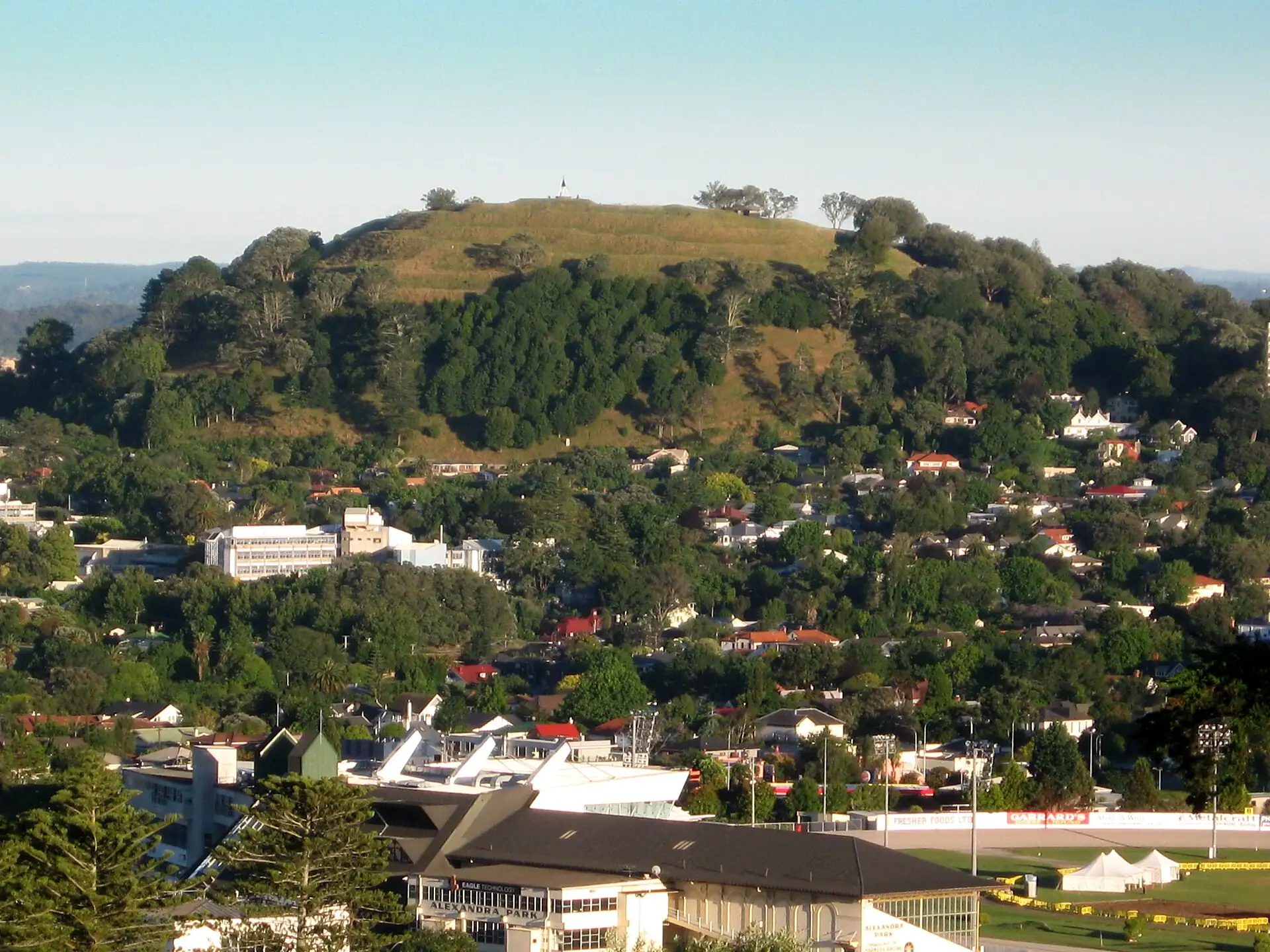
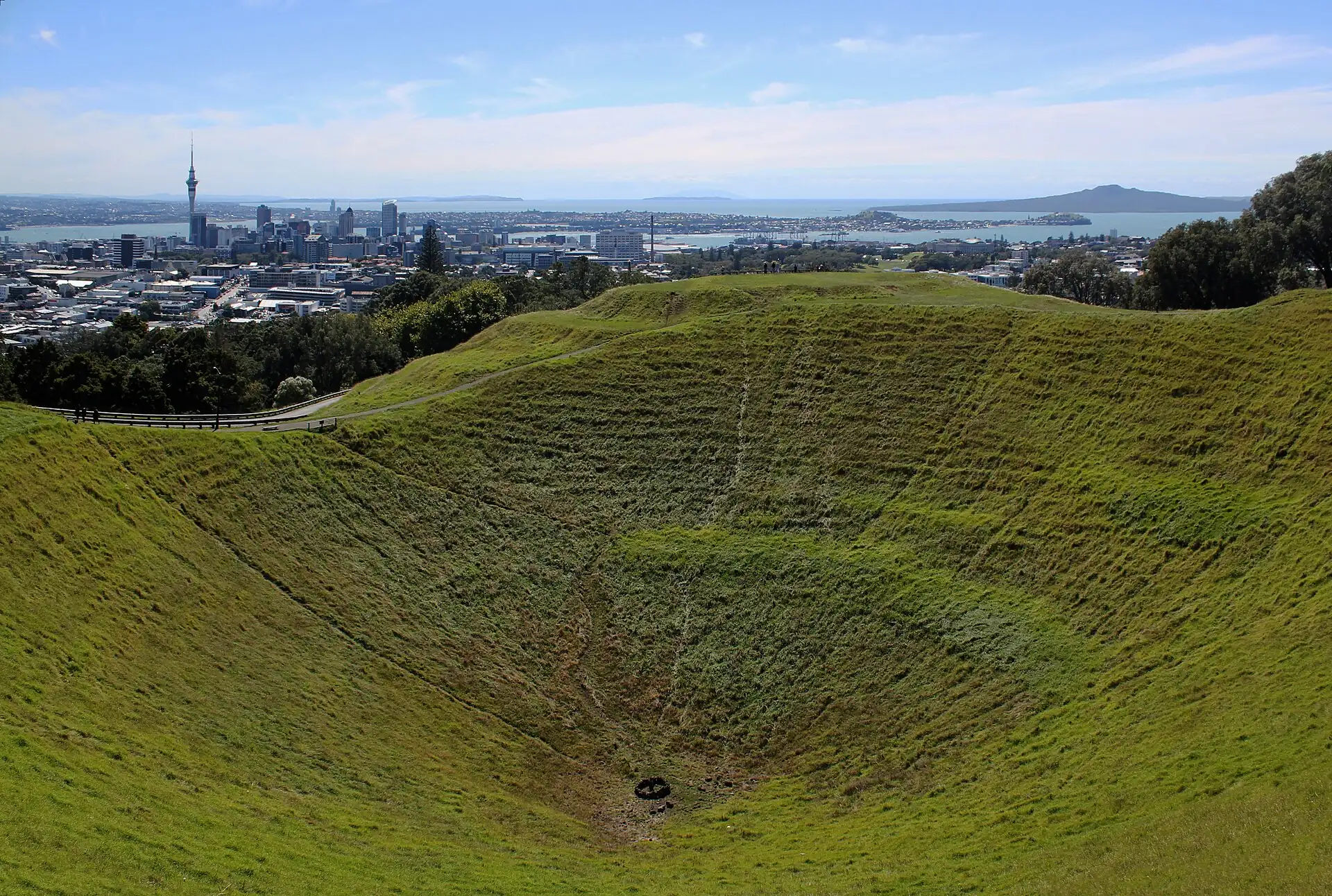
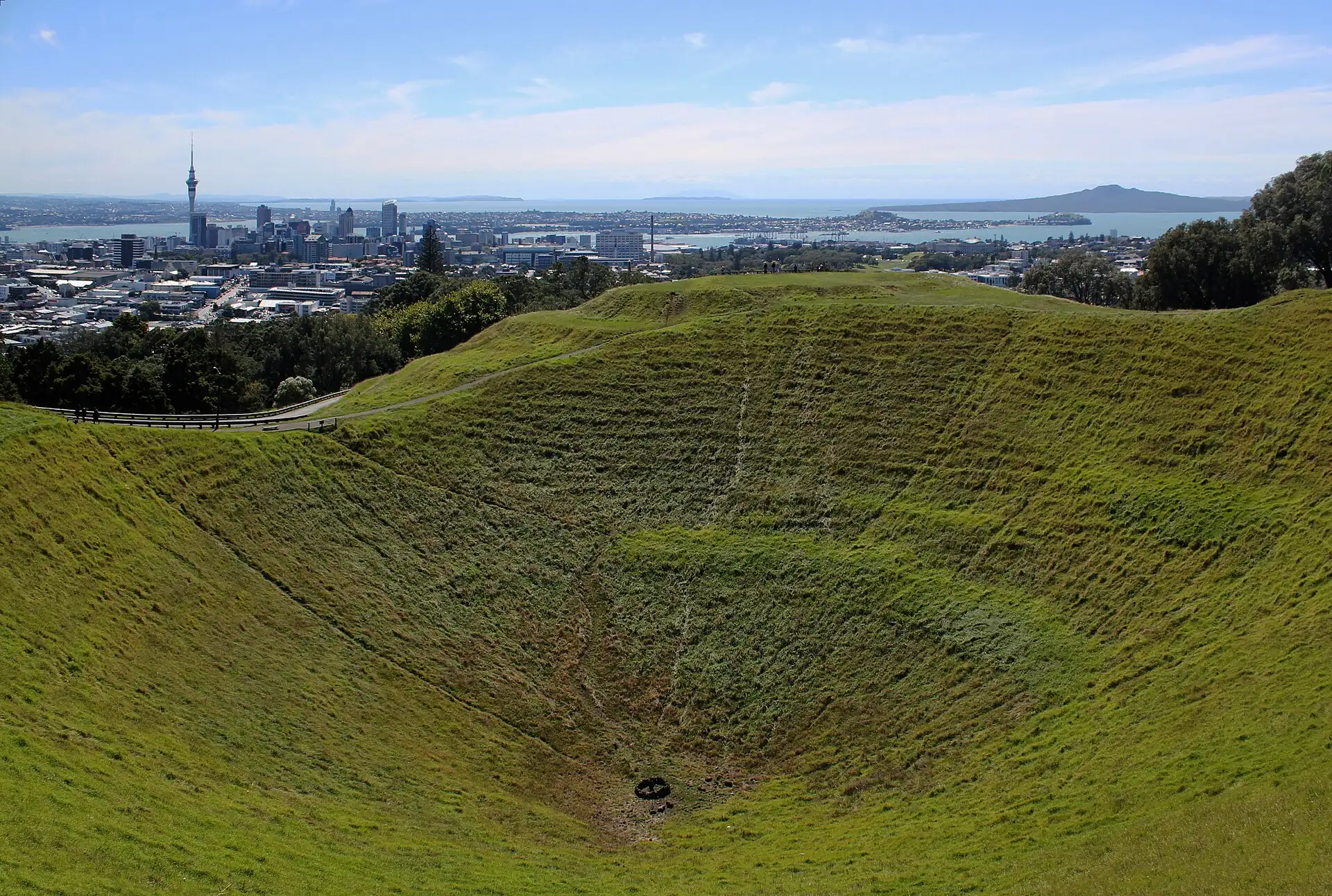
Auckland sits on a narrow isthmus between two harbours (Waitematā to the east, Manukau to the west) and is built across, around and sometimes inside about 50 volcanic cones and craters — the Auckland Volcanic Field, active as recently as roughly 600 years ago (Rangitoto) and considered dormant, not extinct.
In te reo Māori the isthmus is Tāmaki Makaurau, roughly 'Tāmaki desired by many', a reference to how contested this fertile, harbour-rich land was between iwi (tribes) for centuries before European contact.
The modern city is young by world-capital standards (Auckland has never been the capital — Wellington took that role in 1865) but is New Zealand's largest urban area by far, home to around a third of the country's population, and its main international gateway.
Good to know
- Auckland is the largest city and the main long-haul gateway; Wellington is the capital, on the far end of the North Island.
- i-SITE visitor centres at the Auckland Airport and in the CBD: free maps, event listings, booking help for ferries and tours. Check current locations and hours.
- Tātaki Auckland Unlimited (aucklandnz.com) is the official regional tourism site.
Go deeper 9 min read · 6 chapters
Auckland — Tāmaki Makaurau, 'Tāmaki desired by many' — is built across, around and sometimes inside a field of about 50 volcanic cones on a narrow isthmus between two harbours. This deep dive works through the volcanic land itself, the Māori and colonial history layered on top of it, the food a third of New Zealand's population has shaped, and the harbour-facing rhythm of daily life in the country's largest, though never capital, city.
1History2 min
Māori settlement of Tāmaki Makaurau is generally dated to around the 14th century, though the isthmus's fertile volcanic soil, sheltered harbours on both coasts and abundant kaimoana (seafood) made it one of the most contested pieces of land in pre-European Aotearoa. Successive iwi occupied and fortified the volcanic cones as pā — terraced hillfort villages — and the scale of the earthworks still visible on cones like Maungawhau (Mount Eden) and Maungakiekie (One Tree Hill) reflects large, organised populations rather than small settlements.
The Treaty of Waitangi, signed in February 1840 at Waitangi in the Bay of Islands, established British sovereignty over New Zealand (with ongoing, contested interpretation of its Māori- and English-language versions), and Auckland was founded later that year as the colony's capital, chosen for its central position and harbour access. The capital moved to Wellington in 1865, judged more central for a colony whose population and politics were shifting south, but Auckland kept growing as the country's commercial hub and main port.
Fear of Russian invasion in the 1870s–80s (the so-called 'Russian scare') led to a wave of coastal defence works, most visibly the gun emplacements and tunnel systems still walkable at Devonport's North Head and Fort Takapuna — fortifications built against an invasion that never came, now a low-key historical curiosity for visitors.
The 20th century brought suburban sprawl, accelerated sharply after the 1959 opening of the Auckland Harbour Bridge connected the CBD to the fast-growing North Shore. In July 1985, French intelligence agents bombed the Greenpeace ship Rainbow Warrior in Auckland Harbour while it prepared to protest French nuclear testing in the Pacific, killing photographer Fernando Pereira — an act of state-sponsored terrorism on New Zealand soil that hardened the country's independent, anti-nuclear foreign policy for decades after.
In 2010 Auckland's fragmented local government — previously eight separate councils — merged into a single 'Auckland Council', the so-called super city, to better coordinate transport and planning across the sprawling region. Major infrastructure has followed: Eden Park's 2011 Rugby World Cup upgrade, and the City Rail Link, a tunnel under the CBD intended to roughly double the rail network's capacity through the centre — a project that has run for years and is worth checking the current status of before assuming a route or station is open.
- Māori name
- Tāmaki Makaurau — 'Tāmaki desired by many'
- Treaty of Waitangi signed
- 6 February 1840
- Capital moved to Wellington
- 1865
- Rainbow Warrior bombing
- 10 July 1985, Auckland Harbour
- Auckland Council formed (super city)
- 2010
2The volcanic field1 min
Auckland sits on the Auckland Volcanic Field, a cluster of roughly 50 small volcanoes spread across the isthmus, active for around 200,000 years and considered dormant rather than extinct — the youngest and largest, Rangitoto, erupted from the sea floor only around 600 years ago, meaning early Māori almost certainly witnessed its formation, a memory preserved in some iwi oral tradition.
Unlike a single large volcano, this is a 'monogenetic' field: each cone is typically a one-off eruption from its own vent, so a future eruption is more likely to open a brand-new cone somewhere in the field than reactivate an existing one — a fact Auckland's civil defence planning takes seriously, even though any individual eruption is a low-probability event in a given lifetime.
Many cones are quarried away or partly built over — decades of 20th-century urban development treated them as convenient sources of scoria (volcanic rock) for roading — and the survivors that remain largely intact, like Maungawhau, Maungakiekie and Rangitoto, are now protected and, since Treaty of Waitangi settlements with Ngā Mana Whenua o Tāmaki Makaurau (a collective of Auckland iwi), co-governed by a Māori-council trust board.
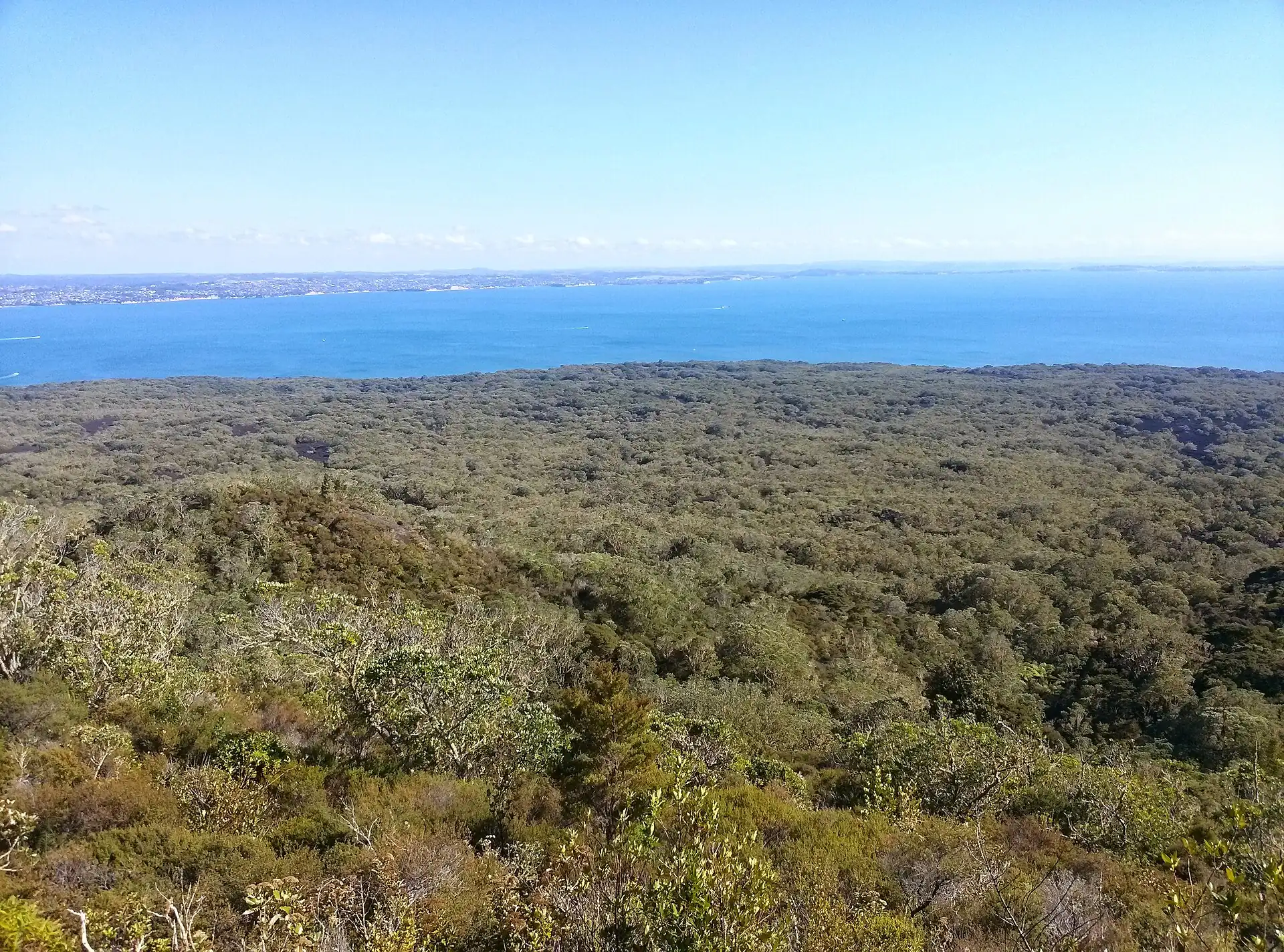
Rangitoto's basalt lava fields support one of the world's largest pōhutukawa forests, growing directly out of bare rock with very little soil — a striking example of plant life colonising young volcanic ground, and the reason the island turns red with pōhutukawa blossom around Christmas.
- Number of volcanic cones
- About 50 in the Auckland Volcanic Field
- Youngest cone
- Rangitoto, erupted roughly 600 years ago
- Field type
- Monogenetic — each eruption typically forms a new vent
3Neighbourhood stories1 min
The CBD and waterfront were built largely on reclaimed land — much of what is now Britomart, the Viaduct and Wynyard Quarter sat under the harbour in the 19th century, filled in over decades to expand the port and, more recently, redeveloped from working wharves and tank farms into restaurants, apartments and the Auckland Fish Market.
Ponsonby began as working-class Victorian housing, much of it built for dockworkers and tradespeople in villas that are now some of the most sought-after real estate in the city; a wave of gentrification from the 1970s–90s turned Ponsonby Road into the city's best-known café and restaurant strip, a transformation broadly mirrored in nearby Grey Lynn.
Devonport, across the harbour, developed separately as a naval town — Royal New Zealand Navy facilities occupied much of the waterfront for over a century — which is why the village retains a slower, more preserved Victorian character than the fast-redeveloped central city: naval land use effectively froze commercial development for generations.
Karangahape Road ('K Road'), a Māori name referring to the ridge itinerant traders once used, has cycled through phases as a shopping strip, a red-light district, and — from the 1990s onward — an arts, LGBTQ+ and alternative-nightlife precinct that retains a grittier edge than Ponsonby or the Viaduct.
Auckland is also the largest Polynesian city in the world by population, with major communities from Samoa, Tonga, the Cook Islands, Niue, Fiji and beyond, concentrated historically in South Auckland suburbs like Ōtara and Māngere. The weekend Ōtara Market and the annual Pasifika Festival (Auckland Domain, usually March) are the most accessible windows into this culture for a visitor based centrally, though both require travelling out from the CBD.
- CBD waterfront land
- Largely reclaimed through the 19th–20th centuries
- Devonport
- Former Royal New Zealand Navy base town
- Auckland's Pacific population
- Largest Polynesian urban population in the world
4Food history2 min
Māori food culture in Tāmaki Makaurau centred on the harbours' abundant kaimoana (seafood) — shellfish, snapper, eel — supplemented by cultivated kūmara (sweet potato), a Polynesian crop adapted to New Zealand's cooler climate through careful storage techniques (rua kūmara, underground pits), and the hāngī, a method of cooking food in an earth oven over heated stones, still used for ceremonial and celebratory meals today.
British colonial settlement from the 1840s brought a meat-and-three-veg tradition that dominated New Zealand cooking for over a century, but post-war immigration reshaped the city's food noticeably: Dalmatian (Croatian) settlers established much of the country's early wine industry, Chinese market gardeners supplied vegetables to the growing city from the 1900s onward, and post-1980s immigration from across Asia — Korea, Vietnam, India, the Philippines — gave Auckland one of the more genuinely diverse everyday food scenes in the Pacific.
Pacific migration from the mid-20th century onward brought dishes like Samoan oka (raw fish marinated in coconut cream, a cousin of poke), Tongan lu (meat and taro leaf cooked in an umu earth oven) and Fijian kokoda into the city's food vocabulary, most visibly at South Auckland markets and church and community events rather than in central restaurants — worth seeking out if the itinerary allows a trip beyond the CBD.
The flat white — espresso with steamed milk, a thinner and more tightly textured microfoam than a latte — is claimed by both New Zealand and Australia as a national invention from the 1980s–90s; Wellington and Auckland cafés both have their partisans, and the drink is now the default order at almost any Auckland café counter.
Auckland's modern dining scene, concentrated in Ponsonby, Britomart, Parnell and the Viaduct, leans on New Zealand's strong primary-produce base — Waiheke Island wine, Hauraki Gulf seafood, Waikato dairy and lamb from across the North Island — giving even casual restaurants a strong ingredient story.
- Hāngī
- Traditional Māori earth-oven cooking method, still used ceremonially
- Auckland's Pacific food influence
- Samoan, Tongan, Fijian and Cook Islands dishes, strongest in South Auckland
- Flat white origin
- Claimed by both New Zealand and Australia, 1980s–90s
5Festivals and city rhythm1 min
Waitangi Day, 6 February, marks the 1840 signing of the Treaty of Waitangi and is New Zealand's founding national holiday, though its meaning is genuinely contested: for many it is a day of national unity, for others a reminder of unresolved Treaty grievances, and commemorations (concentrated at Waitangi itself, in the north, rather than in Auckland) can include both celebration and protest in the same year.
Matariki, the Māori new year marked by the pre-dawn rise of the Pleiades star cluster (Matariki) in the winter sky, became a national public holiday in 2022 — the first in New Zealand's calendar grounded in mātauranga Māori (Māori knowledge systems). Its date moves each year according to the maramataka (Māori lunar calendar); Auckland marks it with dawn ceremonies, light installations and community events across the city.
The Pasifika Festival, usually held in March at the Auckland Domain, is one of the largest Pacific cultural festivals in the world, with village-style stalls representing Samoa, Tonga, the Cook Islands, Niue, Fiji and other Pacific nations — food, performance and craft in one park, a genuine reflection of the city's demographics rather than a tourist-oriented event.
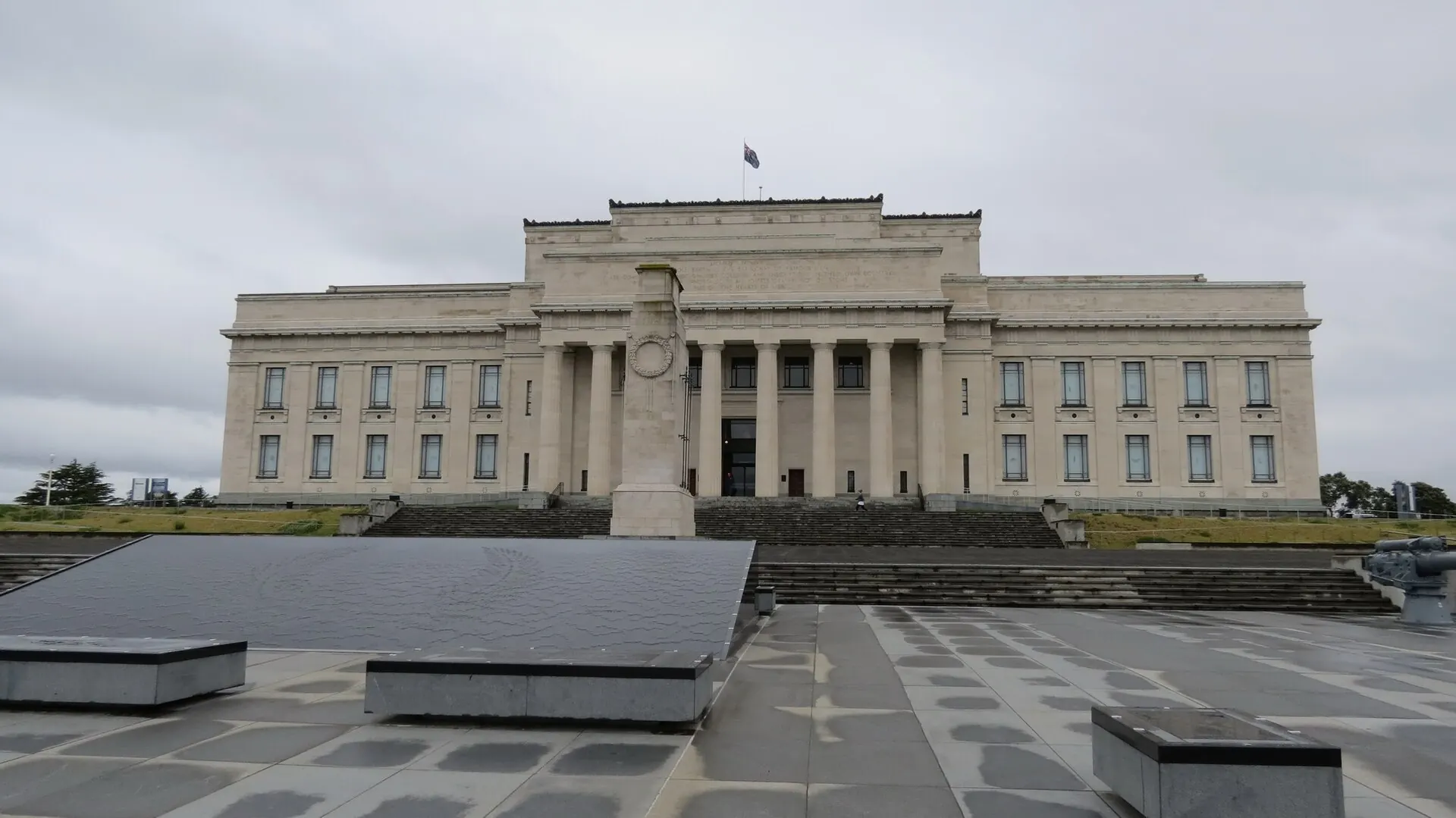
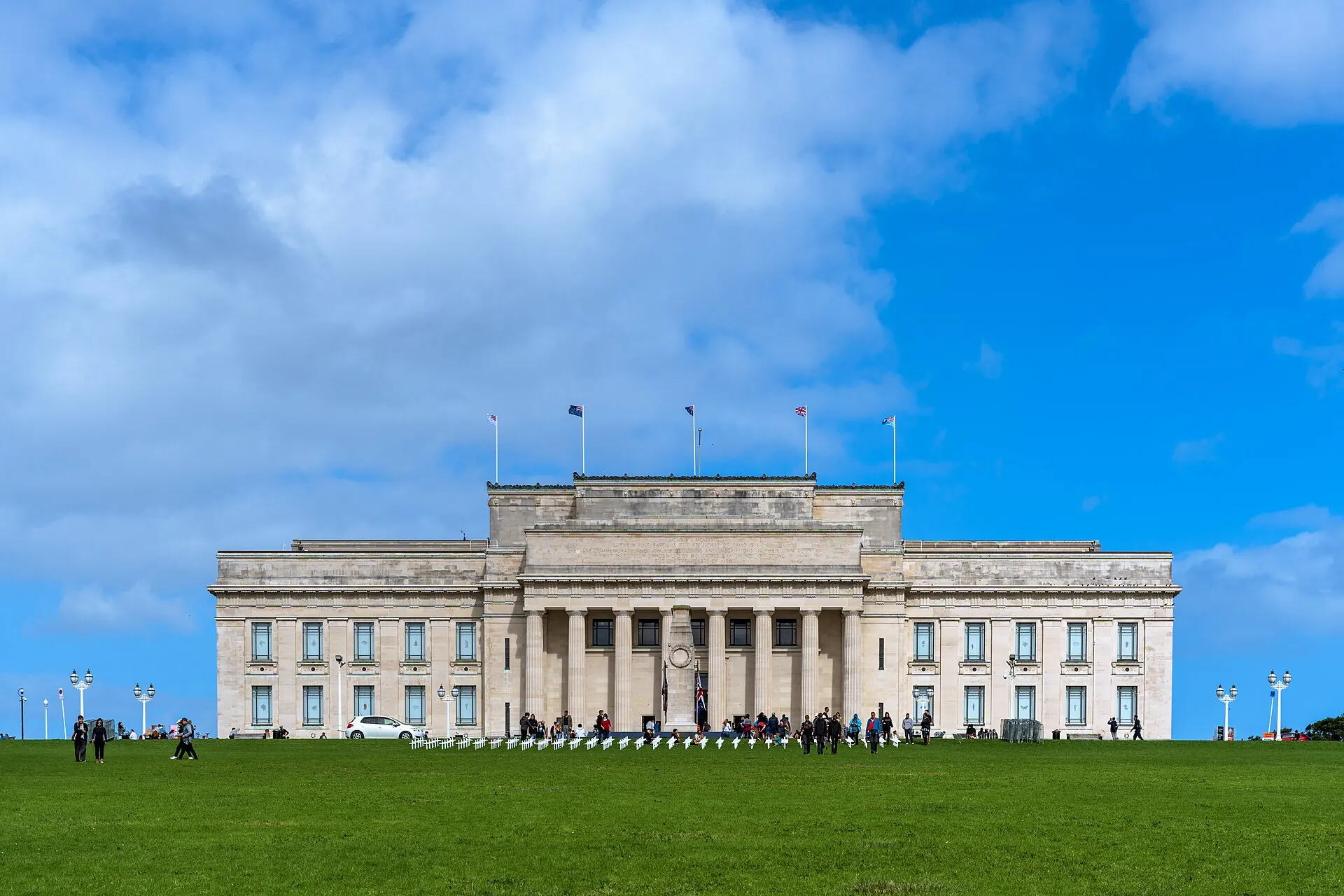
ANZAC Day, 25 April, commemorates New Zealand and Australian military casualties, particularly from the First World War Gallipoli campaign; Auckland's dawn service takes place at the Auckland War Memorial Museum's cenotaph, drawing large crowds well before sunrise, and city trading is restricted during the morning.
Summer (December–February) is peak season by a wide margin: Auckland Anniversary Weekend (late January) and the Christmas–New Year school holidays fill ferries, beaches and hotels, and prices rise accordingly — a visit timed for the shoulder seasons (autumn March–April, spring September–November) trades a little warmth for noticeably thinner crowds and lower prices.
- Waitangi Day
- 6 February, national public holiday
- Matariki
- Māori new year, national holiday since 2022, date moves yearly
- Pasifika Festival
- Usually March, Auckland Domain
- ANZAC Day dawn service
- 25 April, Auckland War Memorial Museum
6City life1 min
Auckland's identity is harbour-first: nicknamed the 'City of Sails' for its exceptionally high rate of boat ownership per capita, the city's weekends visibly empty toward the water — the Waitematā fills with yachts, and the Hauraki Gulf's islands (Waiheke, Rangitoto, Great Barrier) function as the city's back garden in a way few other cities' hinterlands do.
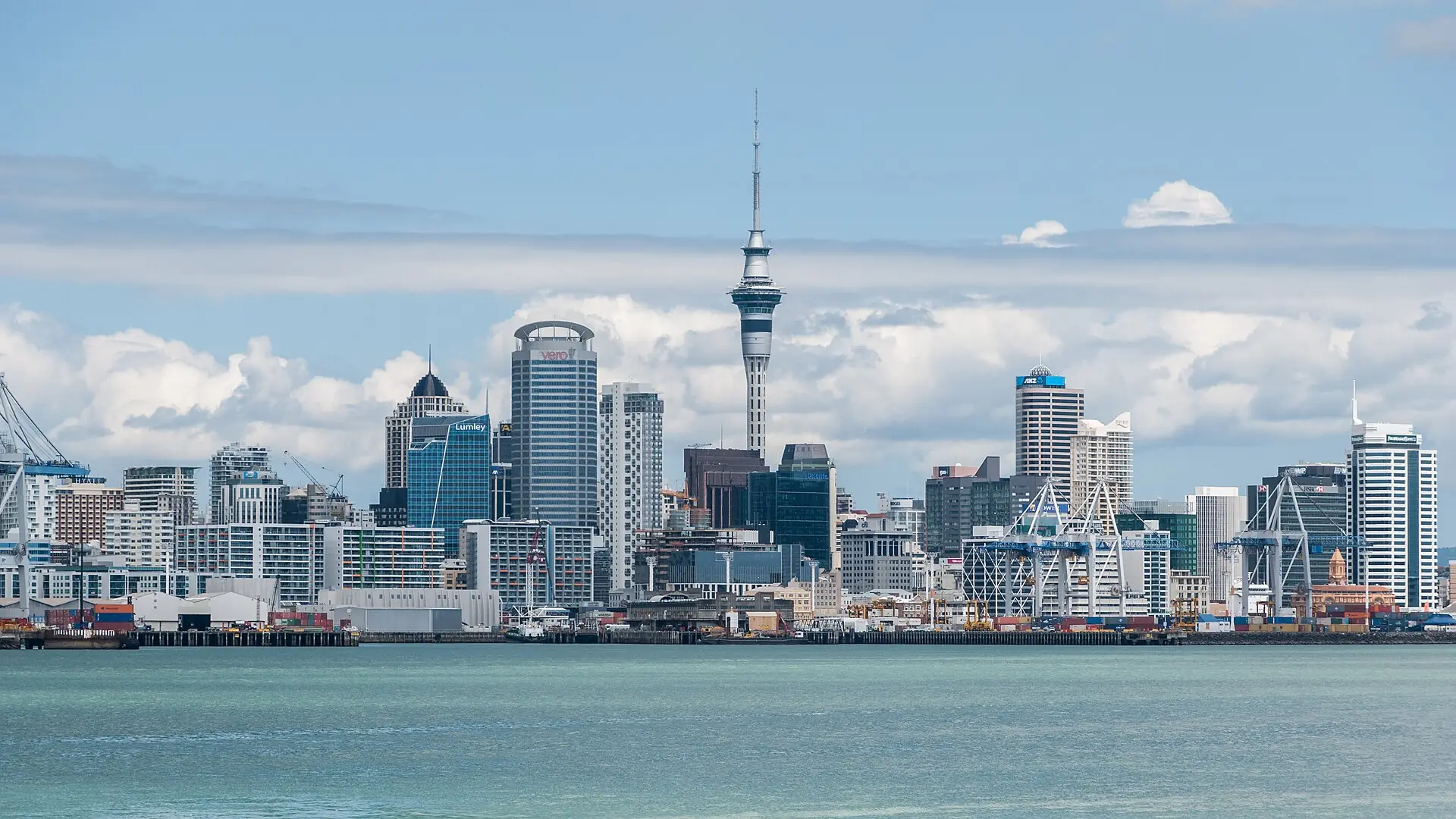
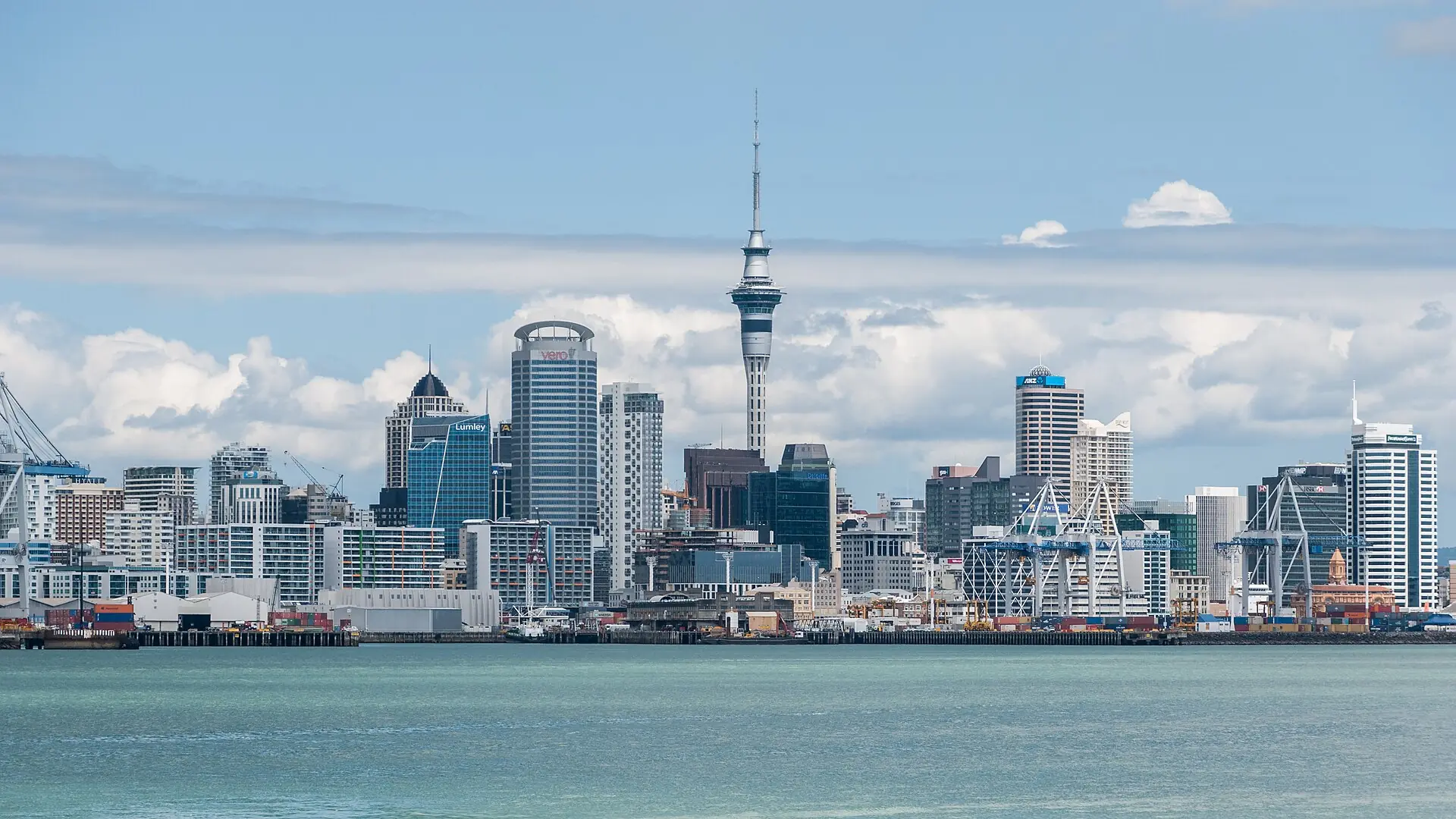
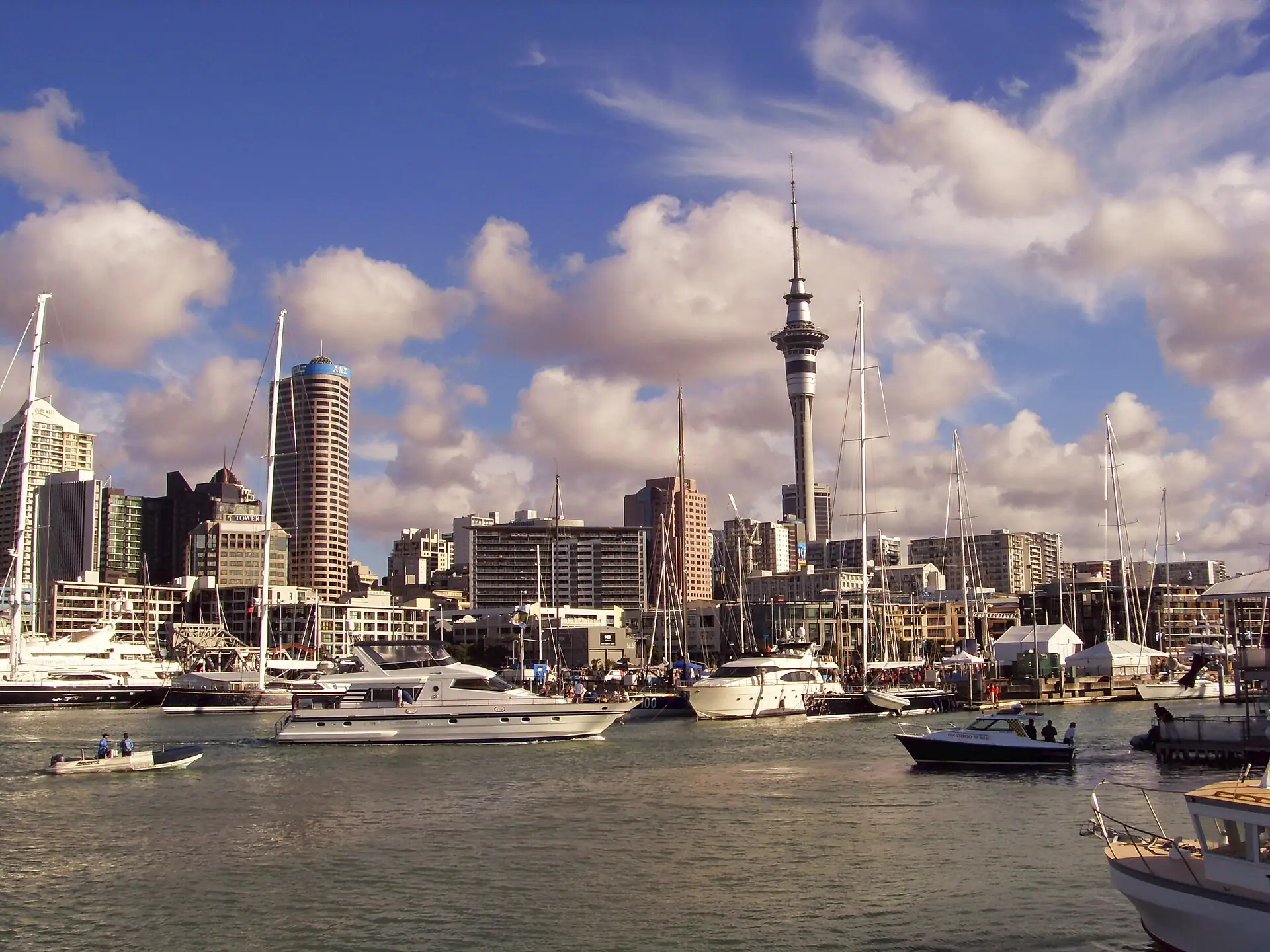
Because Auckland has never been the national capital, its civic life is commercial and cultural rather than governmental: there is no parliament to anchor the skyline, and the Sky Tower — built as a broadcast and observation tower, completed 1997 — occupies the symbolic role a capital's government buildings might elsewhere.
The city's sprawl (Auckland covers a large area for its population, spread across an isthmus and beyond) means car dependency has historically been high; the City Rail Link and other public-transport investment aim to shift that, but a visitor should expect most cross-town journeys, even short ones, to be easier by ride-hail, bus or ferry than always on foot outside the compact CBD-Britomart-Viaduct-Ponsonby core.
Biosecurity is taken unusually seriously for a Western democracy: New Zealand's isolation has protected it from many pests and diseases common elsewhere, and returning residents and visitors alike must declare food, plant material, outdoor gear and even hiking boots with soil on them at the border — a rule enforced with real fines, not a formality.
Weekday rhythm centres on café culture rather than late dining: many cafés close by mid-afternoon, and a 'proper' dinner out is more of a Friday–Saturday event than a nightly habit for most Aucklanders, whose evenings more often revolve around the outdoors — a walk on a volcanic cone, a swim, or simply watching the sun go down over the harbour.
- Nickname
- 'City of Sails' — one of the highest boat-ownership rates per capita in the world
- Sky Tower completed
- 1997
- Biosecurity declaration
- Mandatory at the border; undeclared risk items bring fines
Photos
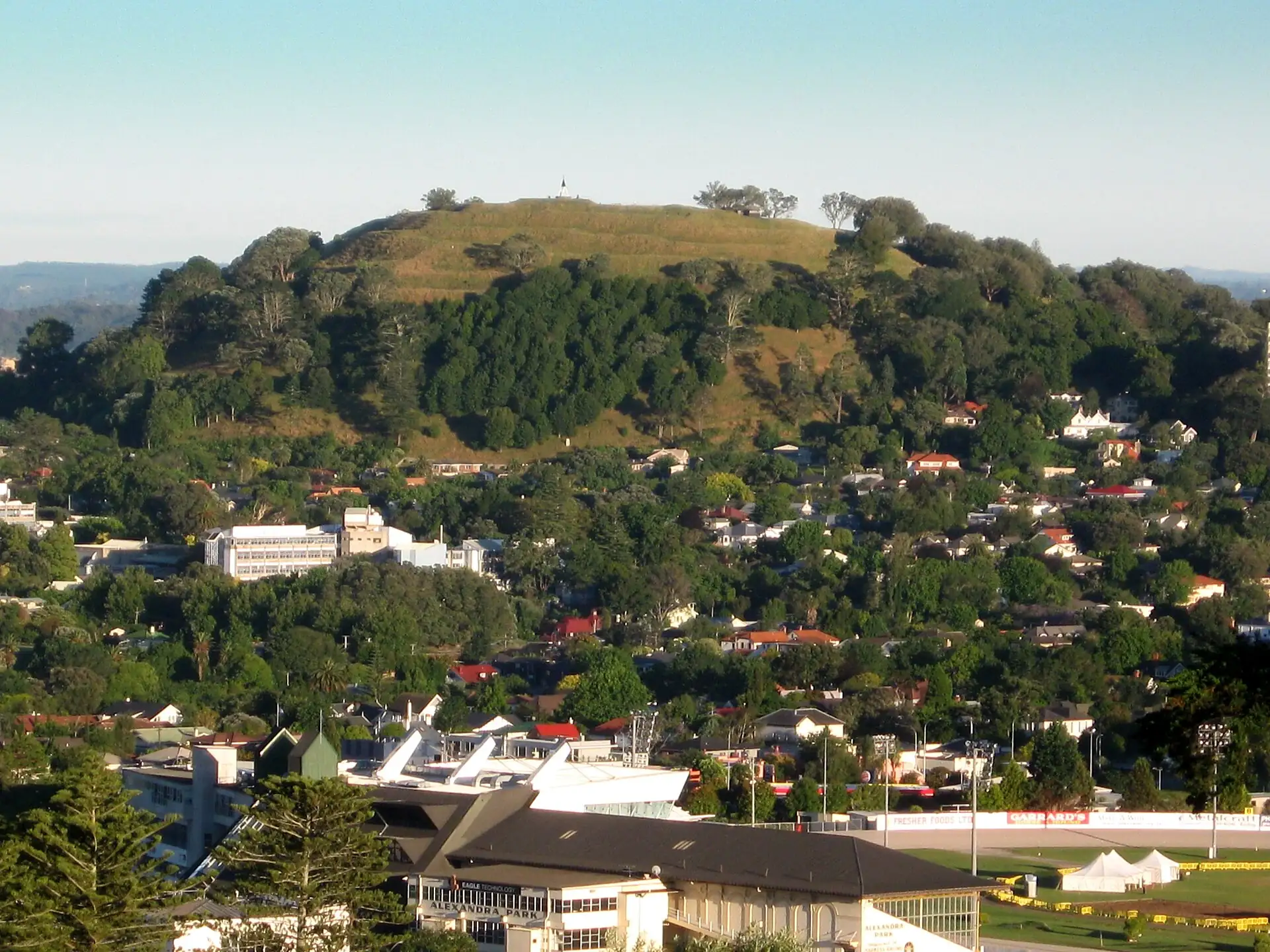
Mount Eden crater with Auckland CBD and Rangitoto skyline Photo: Avenue, CC BY-SA 3.0
2023 New Year's Eve Firework Display Auckland at Sky Tower, Auckland CBD Photo: James Shih, CC BY-SA 4.0
Spaghetti Junction Auckland Photo: russellstreet, CC BY-SA 2.0
Orakei Marina, Tamaki Drive, Auckland 1 Photo: DXR, CC BY-SA 3.0
Hobson Lodge, a hostel in Auckland, NZ Photo: Prosperosity, CC BY 4.0
Berlei Building, Auckland, New Zealand Photo: Itineris55, CC BY-SA 4.0
Rules in force · 8
- Oceania ↗Oceania's island states guard their farms and reefs at the border: tick 'yes' on the arrival card for any food, plant, animal product, soil or used outdoor gear, and let the officer decide.
- Oceania ↗Across the tropical South Pacific, cyclones are possible from November to April: choose insurance that covers weather delays and keep one spare night before a long-haul departure.
- Australia and New Zealand ↗Both countries drive on the left, with long distances between fuel stops in the outback and on New Zealand's back roads; fatigue causes more visitor crashes than speed.
- New Zealand ↗Visa-waiver visitors need an NZeTA (with the tourism levy) before travel, including many transit passengers; others need a visa. Apply only through Immigration New Zealand or its official app, and check the rules for your passport.
- New Zealand ↗Declare all food, plant and animal products, and used outdoor gear such as hiking boots and tents, on the New Zealand Traveller Declaration; undeclared risk items bring instant fines.
- New Zealand ↗Drive on the left; give way as signed at one-lane bridges; an English-language licence or one with an approved translation or International Driving Permit is required.
- New Zealand ↗Freedom camping is restricted: sleep in a vehicle only where signed as allowed, and in many places only in certified self-contained vehicles.
- Upper North Island ↗Collect the hire car on the day you leave Auckland: CBD parking is expensive and the first day after a long flight is the wrong time to drive on the left.
Entry rules depend on your passport. Full visa guide
Emergency numbers for Auckland111 ▾
- Police, fire, ambulance111
Tap a number to call from your phone. These are the numbers listed in this guide; a row marked check has not been verified.
Planning is the full guide. I'm here keeps what is open and the cheat card.
Right now
Checking the weather…
Working out what is open near you…
What is open nowclock, closures, places open
Now in Auckland
Local time in Auckland
--:--
Loads in your browser · Pacific/Auckland
This month
Month verdict appears here.
Closed today
See the weekly grid below.
| Weekly closure | Mon | Tue | Wed | Thu | Fri | Sat | Sun |
|---|---|---|---|---|---|---|---|
| Some smaller galleries and shopscheck | ✕ | · | · | · | · | · | · |
If today is a closure day: Monday: check individual museum and gallery closure days — most major sights in Auckland stay open daily, but smaller attractions vary. Ferry timetables are reduced on some public holidays.
Open every day: Auckland War Memorial Museum, Devonport, Mount Eden (Maungawhau), Rangitoto Island.
- check Auckland War Memorial Museum: Open daily with limited-hours exceptions on some public holidays — check.
- check Devonport: No fixed weekly closure; shops keep normal retail hours.
- check Mount Eden (Maungawhau): No fixed weekly closure.
- check Rangitoto Island: No fixed weekly closure; ferry timetable governs access.
- check Ferry services: Reduced timetables on public holidays and in severe weather; check before planning a ferry-dependent day.
Weekly closures come from our place pages; public holidays and severe weather (storms can suspend ferries) add closures not shown here.
Cheat cardthe pocket version
Cheat card
The essentials on one card: save it as an image for your phone, share it, or print it.
Auckland
Tāmaki Makaurau
- Money
- Cards and phone payments work almost everywhere; keep a little cash for small stalls.
- SIM
- Install an eSIM before you fly, or buy a SIM at the airport; coverage is good in the city.
- Ride app
- Uber / Ola
- Emergency
- 111 police, fire, ambulance (not 911, 999 or 000)
- Plugs
- Sockets I. US/Canada (A/B): adapter · UK/Ireland (G): adapter · Australia/NZ (I): fits. 230 V: US 120 V-only devices (hair dryers) need a converter; most chargers are dual-voltage.
Top 5
- Auckland War Memorial Museum
- Rangitoto Island
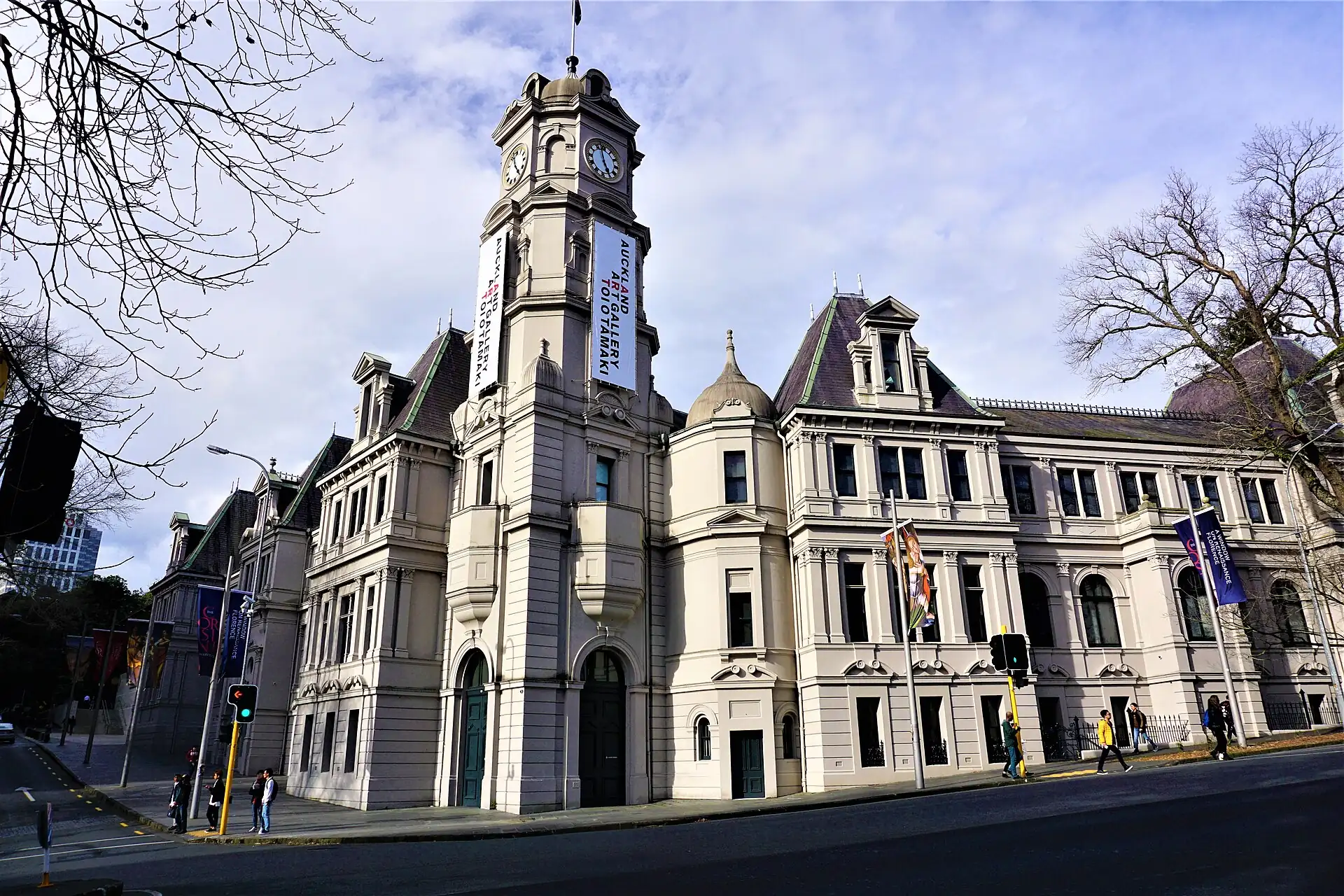
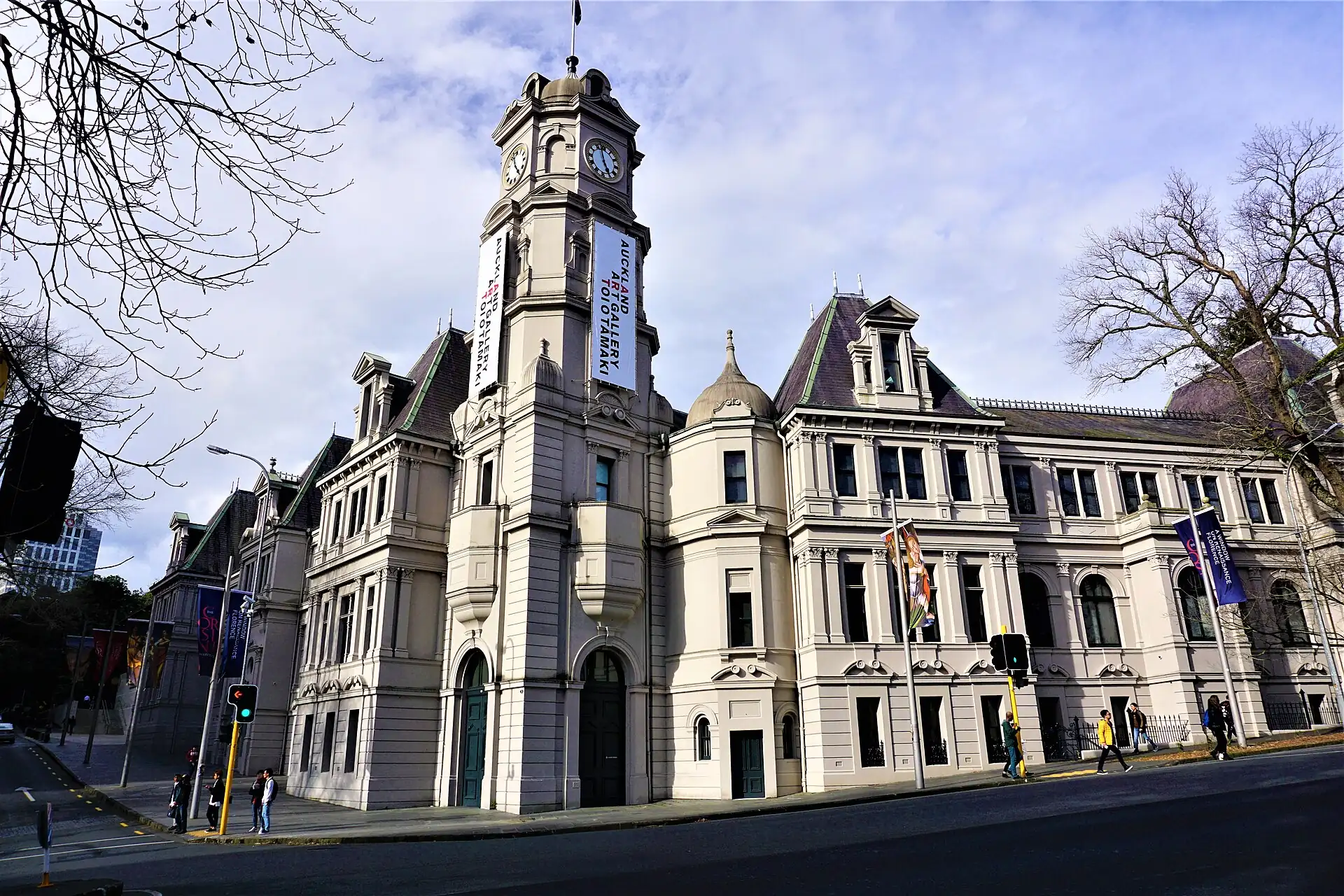
- Auckland Art Gallery Toi o Tāmaki
- Devonport
- Mount Eden (Maungawhau)
EssentialsQuick answers, what things cost and how to get around
Essentials
Quick answers, what things cost and how to get around
Quick answers
The questions people ask first about Auckland, one line each. Tap a card for the full answer.
- Cash or card?Cards and phone payments are accepted almost everywhere; some small markets and stalls take cash only.
- SIM or eSIMInstall an eSIM before you fly, or buy a SIM at the airport; coverage is good in the city.
- Ride-hailing appUber / Ola.
- Tap waterTap water is safe to drink.
- TippingNot expected; round up in restaurants if service was very good.
- Plugs & powerSockets I. US/Canada (A/B): adapter · UK/Ireland (G): adapter · Australia/NZ (I): fits. 230 V: US 120 V-only devices (hair dryers) need a converter; most chargers are dual-voltage.
Show all 14 answers
- Safe at night?Take more care after dark in Beaches and lookout car parks.
- What to wearA rain layer and a warm layer, all year
- Emergency numbers111 police, fire, ambulance (not 911, 999 or 000)
- Your embassycheckUS, UK, Australia embassies listed with addresses (check before you go).
- Closed which day?Mon: 1 on our list shut.
- Sundays & holidaysWeekly closures come from our place pages; public holidays and severe weather (storms can suspend ferries) add closures not shown here.
- Rainy-day planShowers can pass within an hour: wait it out in a café or the museum rather than pushing through a soaking on an outdoor walk.
- Landing lateAKL: taxi or ride-hailing car to the door runs all night.
Cost cheat-sheetwhat everyday things cost
Cost cheat-sheet
Typical prices for the everyday things, as ranges. Change the currency right here; the local price stays first.
2026 desk estimate · check
- Sit-down mealSit-down restaurant meal, per personNZ$30–55 (≈ US$18–35)
- Street or quick mealCafé breakfastNZ$18–28 (≈ US$11–17)
- BeerCraft beer, barNZ$10–14 (≈ US$6–9)
- Taxi, about 5 km (3 mi)Taxi, about 3 mi (5 km)Ride-hailing car across the centreNZ$12–25 (≈ US$8–15)
- Metro or bus rideAT HOP bus/train fare, short tripNZ$2–4 (≈ US$2–3)
- SIM or eSIM, a weekTourist SIM or eSIM, about a week of dataNZ$20–50 (≈ US$12–30)
- Museum or sight ticketMuseum entry (non-free sites)NZ$15–30 (≈ US$9–18)
- Budget bedHostel dorm bed, a night, per personNZ$35 (≈ US$25)
- Mid-range bedHotel double room, a night, per roomNZ$240 (≈ US$150)
- High-end bedHotel double room, a night, per roomNZ$450 (≈ US$300)
A day, not counting the bed: Budget NZ$90 (≈ US$55) · Mid NZ$160 (≈ US$95) · High NZ$280 (≈ US$170)
Local prices, with USD next to them (rates 2026-09 (approximate); change it in the header). Ranges are desk estimates: check locally. Every price and the budget calculator →
Source: Prices in Auckland
Draft
Written from desk research. Not yet compared with the official source.
No official source is recorded for this figure.
Prices are 2026 desk estimates, not yet compared with an official source. Check on the day.
Not checked in the last 12 months (no check date on file).
DecideWho it suits, the trade-offs and when to go
Decide
Who it suits, the trade-offs and when to go
Best months at a glance
The guide's verdict for each month
Jan
Best
23°C (73°F)73°F (23°C)
Feb
Best
24°C (75°F)75°F (24°C)
Mar
Best
22°C (72°F)72°F (22°C)
Apr
Best
20°C (68°F)68°F (20°C)
May
Care
17°C (63°F)63°F (17°C)
Jun
Care
15°C (59°F)59°F (15°C)
Jul
Care
14°C (57°F)57°F (14°C)
Aug
Care
15°C (59°F)59°F (15°C)
Sep
Best
17°C (63°F)63°F (17°C)
Oct
Best
18°C (64°F)64°F (18°C)
Nov
Best
20°C (68°F)68°F (20°C)
Dec
Best
22°C (72°F)72°F (22°C)
Best: Sep–Apr. Mixed: May–Aug. Month by month →
Warmest Feb (24°C (75°F)75°F (24°C)), coolest Jul (8°C (46°F)46°F (8°C) low), wettest Jul (15 rain days), driest Feb (8). Averages, not a forecast.
Auckland across the year
Best-looking months for Auckland: Jan, Feb, Mar.
| Measure | Jan | Feb | Mar | Apr | May | Jun | Jul | Aug | Sep | Oct | Nov | Dec |
|---|---|---|---|---|---|---|---|---|---|---|---|---|
| Weather | Great (good) | Great (good) | Great (good) | Good (good) | Mixed (care) | Mixed (care) | Mixed (care) | Mixed (care) | Good (good) | Good (good) | Good (good) | Great (good) |
| Crowds | High (care) | High (care) | Medium (ok) | Medium (ok) | Low (good) | Low (good) | Medium (ok) | Medium (ok) | Low (good) | Medium (ok) | Medium (ok) | High (care) |
| Prices | High (care) | High (care) | Medium (ok) | Medium (ok) | Low (good) | Low (good) | Medium (ok) | Medium (ok) | Low (good) | Medium (ok) | Medium (ok) | High (care) |
| Events | 4 events (care) | 2 events (ok) | 1 event (care) | 2 events (care) | None listed (ok) | 1 event (ok) | 1 event (ok) | None listed (ok) | None listed (ok) | None listed (ok) | None listed (ok) | 1 event (care) |
Green is good news, amber needs planning, red is a month to avoid; dashed grey with a question mark means our data does not say. Open the year heatmap →
Not checked in the last 12 months (no check date on file).
Source: Months, temperatures and crowds
Draft
Written from desk research. Not yet compared with the official source.
Monthly highs, rain and crowd levels are climate averages and desk estimates for the city, not a forecast.
Understand the cityUnderstand · Districts
Orientation & districts
A first visit sits inside a compact box: the CBD and Sky Tower, Britomart and the Ferry Building, Viaduct Harbour and Wynyard Quarter, and Ponsonby Road a 15–20 minute walk or short ride west. Devonport, Rangitoto and Waiheke are ferry rides from the Ferry Building; everything else is a drive.
Shaded shapes: walking areas (click one). Black pins: sleep areas. Grey dots: places. Round badges: arrivals. Click the map to turn on scroll-wheel zoom.
Hover, tap or tab to an area to see what it is like. Pins are sleep areas; arrows at the edge point to the airport.
Not drawn yet (no coordinates in this guide): Parnell, K Road (Karangahape Road), Waiheke Island. They are in the neighbourhood cards below.
Where’s what, as a list:
- CBD (Auckland CBD): Hilly in parts; the Sky Tower and Queen Street are the spine. Suits: First visit, business travellers, a base with everything walkable. Price band $$$.
- Britomart: Restored heritage buildings, the train station, and the Ferry Building for Devonport/Waiheke/Rangitoto. Suits: Ferries, dining, transit hub.
- Viaduct Harbour / Wynyard Quarter: Flat, easy walking; restaurants and bars along the marina. Suits: Waterfront walks, the fish market, harbour views.
- Ponsonby: Victorian villas turned into cafés, bars and boutiques on Ponsonby Road; 15–20 minutes from the CBD on foot. Suits: Café and restaurant trips, a livelier evening base. Price band $$$.
- Devonport: Village shops, two short volcanic-cone walks, naval history. Not a base — plan it as an outing. Suits: A half-day ferry trip.
- Parnell: Antique shops and restaurants near the Domain and museum; a 20–25 minute walk from the CBD. Suits: A quieter shopping and café stroll.
- K Road (Karangahape Road): Bars, vintage shops and a livelier late scene; a steep walk up from the CBD. Suits: Nightlife and alternative shopping.
- Waiheke Island: Vineyards and beaches, 40 minutes by ferry; too far for a casual half-day. Suits: A full-day or overnight trip.
- Sleep area Central Auckland (CBD): suits First visit, business travellers, a base with everything walkable, price band $$$.
- Sleep area Ponsonby: suits Café and restaurant trips, a livelier evening base, price band $$$.
- Auckland Airport (AKL), about 18 km (11 mi)11 mi (18 km) from the centre, 40–65 min by the usual route.
Neighbourhoods at a glance
One tab per area, pulled together from this guide’s districts table, area notes, sleep-area scores and place pages. Scores are desk judgements (1–5); prices are estimates, check before you book.
CBD
$$$Auckland CBD
Hilly in parts; the Sky Tower and Queen Street are the spine.
- Suits:
- First visit, business travellers, a base with everything walkable
- Rooms:
- NZ$180–350 per room per night (desk estimate)
Pick this if: First visits, ferries, walking to the harbour
Skip this if: You want a quiet street and a garden
- Quiet nights2/5 Low
- Nightlife4/5 High
- Families3/5 Medium
- Late arrival5/5 Very high
Why these scores
- Quiet nights: Traffic and nightlife noise on the main streets; ask for a higher floor.
- Nightlife: Bars and restaurants on the doorstep, plus a short walk to the Viaduct.
- Families: Hilly streets are hard with a stroller in parts.
- Late arrival: 24-hour desks are the norm at larger hotels.
Eat
Getting around from here
- 12–16 min walk to Britomart and the Ferry Building
- 15–20 min walk to Viaduct Harbour and Wynyard Quarter
- Car or bus west: about 12 min to Ponsonby Road
Britomart
Restored heritage buildings, the train station, and the Ferry Building for Devonport/Waiheke/Rangitoto.
- Suits:
- Ferries, dining, transit hub
Getting around from here
- Walk up Queen Street: about 12 min to Central Auckland: Sky Tower and Queen Street
- Walk along the waterfront: about 15 min to Viaduct Harbour and Wynyard Quarter
Viaduct Harbour / Wynyard Quarter
Flat, easy walking; restaurants and bars along the marina.
- Suits:
- Waterfront walks, the fish market, harbour views
Getting around from here
- Walk east along the waterfront: about 15 min to Britomart and the Ferry Building
- Walk south-east: about 15 min to Central Auckland: Sky Tower and Queen Street
Ponsonby
$$$Victorian villas turned into cafés, bars and boutiques on Ponsonby Road; 15–20 minutes from the CBD on foot.
- Suits:
- Café and restaurant trips, a livelier evening base
- Rooms:
- NZ$180–320 per room per night (desk estimate)
Pick this if: Cafés, restaurants and quieter nights
Skip this if: You want the ferries and Sky Tower within a short walk
- Quiet nights3/5 Medium
- Nightlife5/5 Very high
- Families3/5 Medium
- Late arrival3/5 Medium
Why these scores
- Quiet nights: Ponsonby Road itself is lively into the evening; side streets are calmer.
- Nightlife: The best restaurant and bar strip in the city, right on the doorstep.
- Families: Villa-lined streets are pleasant to walk but not stroller-flat everywhere.
- Late arrival: Smaller properties; confirm the night arrangement.
Getting around from here
- 40–55 min walk to Central Auckland: Sky Tower and Queen Street
- AKL: about 18 km (11 mi) in a straight line (arrival ride 40–65 min)AKL: about 11 mi (18 km) in a straight line (arrival ride 40–65 min)
Devonport
Village shops, two short volcanic-cone walks, naval history. Not a base — plan it as an outing.
- Suits:
- A half-day ferry trip
Getting around from here
- Walk up Queen Street: about 12 min to Central Auckland: Sky Tower and Queen Street
- Walk along the waterfront: about 15 min to Viaduct Harbour and Wynyard Quarter
Parnell
Antique shops and restaurants near the Domain and museum; a 20–25 minute walk from the CBD.
- Suits:
- A quieter shopping and café stroll
K Road (Karangahape Road)
Bars, vintage shops and a livelier late scene; a steep walk up from the CBD.
- Suits:
- Nightlife and alternative shopping
Waiheke Island
Vineyards and beaches, 40 minutes by ferry; too far for a casual half-day.
- Suits:
- A full-day or overnight trip
Ward by ward
4 area guides. Open one for the short answer, the key facts and what the area is like; the full guide is linked inside. Prices marked (check) are estimates.
CentralBest for: First-timers, short stays, no car, harbour and museum days
Stay in Central Auckland if this is your first stop and you want the harbour, museums, restaurants and the transport hub within walking distance — most visitors base themselves here. Skip it if you want quiet, free parking or a beach base; then West or North Shore suits better. Two to three nights covers the CBD and inner suburbs.
- Best for:
- First-timers, short stays, no car, harbour and museum days
- Not for:
- Free parking, quiet nights, beach-first trips
- Walkable core:
- CBD and waterfront are flat and compact; inner suburbs need a bus or train
- Main transport hub:
- Waitematā (Britomart) Transport Centre, Queen St at Customs St
- Airport transfer:
- Taxi, rideshare or shuttle; allow 30–60 min depending on traffic (check)
- Parking in the CBD:
- Available but often expensive; council car parks and street parking are usually cheaper (check)
- Getting around:
- Walk in the CBD; AT buses and trains for the suburbs; Uber and e-scooters also run (check)
What the area is like
Central Auckland sits on the isthmus between the Waitematā and Manukau harbours. Māori settled the isthmus around 1350; European settlement began on the Waitematā shore in 1840, and the town was the colony's capital from 1841 to 1865 before Wellington took over. Old Government House still stands, now part of the University of Auckland.
The CBD runs along the waterfront and up Queen Street, with the art gallery, Albert Park, the university and the Domain in the inner suburbs just south and east. Until 2010 this was Auckland City, run by its own council; the region-wide Auckland Council replaced it.
Practically, Central is where the city works: offices, the main rail and ferry terminals, the densest cluster of hotels, and the widest choice of places to eat. The trade-off is traffic, construction and city noise, and parking that costs real money.
Full Central guideShould you stay here
Yes for a first visit, a short stopover or any trip without a car. You can walk to the waterfront, the gallery and the Domain, and reach the rest of the region by train, bus or ferry from one hub. Two to three nights is the usual minimum that does the city justice.
No if you are driving out early each morning, want free parking outside your door, or came for beaches and quiet. West Auckland and the North Shore give you easier parking and a calmer base, at the cost of a bridge or motorway trip into town.
A middle option: stay Central for your first nights, then move to a suburban or coastal base once you have a car.
North Shore (New Zealand)Best for: Beach days, families, longer stays with a car, ferry day trips from Devonport
Stay on the North Shore if you want beaches, calm suburbs and a 10-minute ferry from Devonport to the CBD, and you are happy to drive or bus for everything else. Skip it for a first two-night Auckland stop if you want museums and nightlife on foot — stay central instead.
- Best for:
- Beach days, families, longer stays with a car, ferry day trips from Devonport
- Not for:
- A short first visit built around the CBD, museums and nightlife on foot
- Ferry to CBD:
- Devonport to downtown Auckland, about 10 minutes (check timetable)
- Drive from CBD:
- About 10 minutes over the Harbour Bridge to the nearest suburbs, longer in peak traffic
- Airport transfer:
- Auckland Airport is roughly a 30–60 minute drive depending on traffic (check)
- Getting around:
- Car or Auckland Transport buses; the coast is spread over 150 km (93 mi) of shorelineCar or Auckland Transport buses; the coast is spread over 93 mi (150 km) of shoreline
- Sunshine:
- Around 240 days a year on average (check)
- Currency:
- New Zealand dollar (NZD, NZ$)
What the area is like
The North Shore is the broad band of suburbs on the north side of the Waitematā Harbour, running from Devonport in the south through Takapuna, Browns Bay and Torbay to Long Bay and on to the Whangaparaoa Peninsula and Silverdale. It holds roughly 200,000 people across about 13,000 hectares, and its coastline runs about 150 km (93 mi) — the longest unbroken urban shoreline in New Zealand. Average sunshine is around 240 days a year, with about 1,100 mm of rain.The North Shore is the broad band of suburbs on the north side of the Waitematā Harbour, running from Devonport in the south through Takapuna, Browns Bay and Torbay to Long Bay and on to the Whangaparaoa Peninsula and Silverdale. It holds roughly 200,000 people across about 13,000 hectares, and its coastline runs about 93 mi (150 km) — the longest unbroken urban shoreline in New Zealand. Average sunshine is around 240 days a year, with about 1,100 mm of rain.
It is a residential area first. The centre of gravity for visitors is Takapuna, the beachside business and shopping hub, and Devonport, an older seaside suburb a short ferry ride from downtown Auckland. Further north the suburbs thin out into beaches, regional parks and the Whangaparaoa Peninsula.
Because it is spread out and sits across a harbour, the North Shore works best as a base if you have a car or are willing to use buses. If your Auckland plan is the city sights, the Viaduct and the museum, staying here adds a harbour crossing to every day.
Full North Shore (New Zealand) guideShould you stay here or not
Stay if you want a quieter, beach-led Auckland trip: a morning swim at Takapuna or Long Bay, an afternoon on North Head, and a ferry into the city when you feel like it. Families and travellers on a longer stay with a rental car get the most out of it, and Devonport is a reasonable base for people who want suburb calm with a fast link to the CBD.
Skip it if this is your only stop in Auckland and you have two nights. The main museums, waterfront dining and evening life are central, and crossing the bridge twice a day eats time. Also skip if you are relying on walking — the beaches and parks are kilometres apart.
A middle option: base in the CBD and treat Devonport and Takapuna as day trips. The ferry makes that easy.
South AucklandBest for: Airport layovers, early flights, Pacific Island and South Asian food, family visits
Stay in South Auckland only if you land late, leave early, or want Pacific and South Asian food and a car-based base near the airport. Most first-time visitors should sleep in Central Auckland and treat Manukau, Howick and Papakura as day trips. Without a car, South Auckland is slow to move around.
- Best for:
- Airport layovers, early flights, Pacific Island and South Asian food, family visits
- Not for:
- First-trip sightseeing on foot, harbour views, nightlife, walkable sightseeing
- Airport:
- Auckland Airport (AKL) is in Mangere, inside this district
- Getting in:
- Southern and Eastern train lines from Britomart; InterCity coaches stop at Manukau
- Getting around:
- Auckland Transport buses and trains; a car helps for beaches and Clevedon
- Typical drive to Central Auckland:
- 25–45 min off-peak by car; longer at peak (check)
- Stay 1–2 nights:
- Enough for the airport, Rainbow's End and one beach or garden (check)
What the area is like
South Auckland covers the ground south and east of the city centre: Mangere and the airport, Manukau, Manurewa, Papakura, Pakuranga, Howick and out to the coast at Maraetai and Clevedon. It is the most multicultural part of Auckland, with large Pacific Island, Māori, South Asian and Asian communities, and it has a young population.
This is a working, suburban district rather than a sightseeing quarter. Expect malls, industrial estates, big-box retail, train stations and low-rise housing, with pockets of older village character in Howick and Clevedon. The coast at Maraetai and the Hunua foothills are the scenic edge.
For a visitor, the practical draw is the airport, the food, and a handful of specific sights. It is not a place to wander for atmosphere.
Full South Auckland guideShould you stay here or not
Stay if your trip is built around a flight: a late arrival, a 6am departure, or a one-night stop between the airport and the rest of the country. Stay if you are visiting family, or if you want to eat your way through Manukau's Pacific and Indian food without driving into the city.
Do not stay for a first Auckland visit. The harbour, the volcanic cones, the museums and the main restaurant strips are all in Central Auckland, and commuting in from Manukau costs you 30–60 minutes each way. South Auckland also has less evening life and fewer places to walk to at night.
If you have a car and two or more nights, a split works: one night near the airport, the rest in Central Auckland.
West AucklandBest for: Wineries, Waitakere Ranges tracks, west coast beaches, cheaper cinema tickets
Stay in West Auckland only if you have a car and want wineries, Waitakere Ranges trails and Piha surf over city nightlife. Base in Henderson, New Lynn or Titirangi for 1–2 nights. Without a vehicle, or for a first Auckland visit, stay central instead.
- Best for:
- Wineries, Waitakere Ranges tracks, west coast beaches, cheaper cinema tickets
- Not for:
- Car-free trips, nightlife, first-time Auckland sightseeing
- Car needed:
- Yes for beaches and ranges; trains and buses serve residents more than sights
- Central Auckland to Henderson:
- 18 km (11 mi), about 20 minutes off-peak via the North-Western Motorway11 mi (18 km), about 20 minutes off-peak via the North-Western Motorway
- Airport to West Auckland:
- About 40 minutes off-peak by road
- Train:
- Regular services from central Auckland to West Auckland stations
- Route 14 bus:
- Links New Lynn, Henderson and Westgate every 15 minutes during the day
- Kauri track closures:
- Some Waitakere Ranges tracks closed since 1 July 2012; check before walking (check)
- Piha swimming:
- Swim between the red and yellow flags; rips and undertows are real
What West Auckland is like
West Auckland was its own city, Waitakere City, until the Auckland councils merged in 2010. It still feels separate: a spread of suburbs — Henderson, New Lynn, Massey, Westgate, Titirangi — running into the Waitakere Ranges and out to the black-sand coast. The urban part is small next to the bush and hills around it.
The population is close to 200,000 and mostly New Zealand-born, with Pacific, Asian and Māori communities making up the rest. English is spoken almost everywhere; Samoan and te reo Māori each sit around 5%.
For a visitor the draw is the west edge: vineyards in Henderson Valley and Kumeu, native forest in the ranges, and surf beaches such as Piha. The town centres are practical rather than pretty — malls, car parks, train stations.
Full West Auckland guideShould you stay here or not
Stay if you have a car and your Auckland days are about wine, bush walks and beaches. Henderson and New Lynn have the most beds and the best train links; Titirangi puts you closer to the ranges and Scenic Drive. Two nights covers a winery afternoon, a ranges morning and a beach stop.
Skip it if you are on foot, on a short first visit, or want restaurants and bars outside your door. Central Auckland puts the harbour, museums and ferries within walking distance, and the trip out west becomes a day trip instead. North Shore and South Auckland are the other suburban options, each with different trade-offs.
Decide
The honest trade-off: what you will enjoy, what will wear you down.
You will like
- Ferries and harbour views
- Cafés and food halls
- Easy access to the road trip north and south
You will hate
- Traffic and parking costs
- Wet winter weather
- High prices
Similar citiesif this one is not quite right
Similar cities
If Auckland does not fit your dates or budget, these match it on season, cost and feel.
- Cape Town
South Africa
- Good in the same months: Feb, Mar, Apr, Sep and 2 more
- A mid-range day costs about the same (≈US$80 vs US$94, excl. bed)
- A similar climate through the year
- Mexico City
Mexico
- Good in the same months: Jan, Feb, Mar, Oct and 2 more
- A mid-range day costs about the same (≈US$108 vs US$94, excl. bed)
- Lisbon
Portugal
- Good in the same months: Jan, Feb, Mar, Apr and 4 more
- A mid-range day costs about the same (≈US$116 vs US$94, excl. bed)
When
Best months: Jan, Feb, Mar, Apr, Sep, Oct, Nov, Dec. Month-by-month verdicts below, with the live forecast first. When to go, month by month →
Auckland: next 7 days
Loading forecast…
Forecast: Open-Meteo (CC BY 4.0), model data for this point.
Air quality
Loading…
Model estimate (CAMS via Open-Meteo), not a street-level station; readings near busy roads run higher.
Month by month, all 12best Jan, Feb, Mar, Apr, Sep, Oct, Nov, Dec
Warm summer; peak season, book early.
Warm, settled; Waitangi Day on Feb 6.
Warm; good for the water.
Mild, some showers; Easter and ANZAC Day.
Cooler, wetter; quieter.
Cool and wet; Matariki holiday around late June or July.
Coolest; rain and wind.
Cool, changeable; late winter.
Spring warms; changeable weather.
Mild, fresh; good walking.
Warm, long days.
Warm; Christmas crowds and school holidays.
Climate, calendar and eventsClimate · Events · Packing by season
Climate
| Jan | Feb | Mar | Apr | May | Jun | Jul | Aug | Sep | Oct | Nov | Dec | |
|---|---|---|---|---|---|---|---|---|---|---|---|---|
| High | 23°C (73°F)73°F (23°C) | 24°C (75°F)75°F (24°C) | 22°C (72°F)72°F (22°C) | 20°C (68°F)68°F (20°C) | 17°C (63°F)63°F (17°C) | 15°C (59°F)59°F (15°C) | 14°C (57°F)57°F (14°C) | 15°C (59°F)59°F (15°C) | 17°C (63°F)63°F (17°C) | 18°C (64°F)64°F (18°C) | 20°C (68°F)68°F (20°C) | 22°C (72°F)72°F (22°C) |
| Low | 16°C (61°F)61°F (16°C) | 16°C (61°F)61°F (16°C) | 15°C (59°F)59°F (15°C) | 13°C (55°F)55°F (13°C) | 11°C (52°F)52°F (11°C) | 9°C (48°F)48°F (9°C) | 8°C (46°F)46°F (8°C) | 8°C (46°F)46°F (8°C) | 10°C (50°F)50°F (10°C) | 12°C (54°F)54°F (12°C) | 13°C (55°F)55°F (13°C) | 15°C (59°F)59°F (15°C) |
| Rain days | 9 | 8 | 10 | 11 | 13 | 14 | 15 | 14 | 13 | 12 | 10 | 10 |
| Verdict |
- No month is truly dry: rain is spread through the year, with winter (Jun–Aug) the wettest and greyest, not stormy so much as persistently damp.
- Summer (Dec–Feb) is warm rather than hot, and UV is strong even on a cool or overcast day — sunscreen matters year-round.
- Weather changes fast: a sunny morning can turn to rain within the hour, so a rain layer is worth carrying regardless of the forecast.
Festivals and events that change the plan
| When | What | Effect on your plan |
|---|---|---|
| Late Jan | Auckland Anniversary Weekend | Public holiday; the harbour and ferries are busy. |
| Feb 6 | Waitangi Day | Public holiday; some shops close. |
| Apr 25 | ANZAC Day | Dawn services in the Domain; morning trading is restricted. |
| Late Jun or July | Matariki | Public holiday and events; some closures. |
| Christmas to late Jan | Summer holidays | Ferries, beaches and hotels are full; book early. |
What to pack, by season
From Auckland’s own climate table: the coldest, warmest and wettest three months, and what to bring for each.
Coldest months
Jun–Aug
8° to 15°
A light jacket and a sweater.
Warmest months
Jan–Mar
16° to 23°
Layers: warm days, cooler evenings.
Wettest months
Jun–Aug
14 rain days a month
A compact umbrella or rain jacket and shoes that can get wet.
Arrive & moveGetting in, getting around, and your bags
Arrive & move
Getting in, getting around, and your bags
I land at…
Enter your landing time: what still runs from the airport, where you can eat when you get in, and which areas let you check in that late.
Auckland Airport (AKL)
Out of the airport about 00:05 (next day)12:05 AM (next day) (01:25 (next day)1:25 AM (next day) if immigration and bags are slow); in town about 00:45 (next day)12:45 AM (next day).
Transport from the airport
- Any hourTaxi or ride-hailing car to the door. Runs all night.
- GoneSkyBus to Queen Street, then walk or taxi to the hotel (field-verify the last departure). Stops about 22:00.Stops about 10:00 PM.
- Last resortOvernight near the airport. If nothing else works.
Places to eat open when you get in
We have no confirmed hours for the places to eat here yet. Plan on a convenience store or your hotel. What is open late →
Where to sleep with a late arrival
- Lets you inCentral Auckland (CBD) 24-hour desk. 24-hour desks are the norm at larger hotels.
- Call aheadPonsonby Desk closes 22:00: arrange a late check-in. Smaller properties; confirm the night arrangement.
Typical times from our airport data, not a timetable: check the last departure on the day. Full airport-to-bed plan for Auckland Airport (AKL) →
Arrive
Each gateway has its own airport-to-bed page with timings and the last safe connection.
Move
The default way around, when a pass pays off, and when the last trains go.
- Default
- Walk inside the CBD and waterfront; ferry, bus or ride-hailing car between clusters.
- Passes
- No pass. An AT HOP card is worth it if you take two or more ferries or buses a day.
- Last trains
- Buses and ferries thin out in the evening: check the last sailing before a Devonport or Waiheke evening; taxis and ride-hailing run all night.desk estimate
- Other modes
- Other modes (Rome2Rio) ↗
Getting around, in detailConnect
Connect
| Option | Verdict | What breaks |
|---|---|---|
| Tourist eSIM bought before you fly | use | No counter, no queue; works on arrival. |
| Carrier store or SIM machine at the airport (Spark, One NZ, 2degrees) | use | Good coverage in the city; passport not usually required for a prepaid SIM. |
AT Mobile
Public transport planning and AT HOP top-ups
Official Auckland Transport app.
Uber / Ola
Ride-hailing
Both operate in Auckland; compare fares.
Fullers360
Ferry timetables and bookings
The main ferry operator for Devonport, Waiheke and Rangitoto.
- Wi-Fi
- Free in most cafés and hotels; ask for the password with your order.
Luggage
Where big bags are a problem, and how to get rid of them for the day.
- Lockers
- Some lockers at the ferry terminal and the railway station (field-verify); hotels hold bags after check-out.
- Forwarding
- Some couriers and hotels can forward bags; ask ahead.
- Dead zone
- Late check-out flights: ask the hotel to hold bags; most do.
Bags, area by area
4 walking areas rated
- Bags painful
Central Auckland: Sky Tower and Queen StreetBritomart and the Ferry BuildingViaduct Harbour and Wynyard QuarterPonsonby Road
Lockers, forwarding and the gap between check-out and check-in are covered once, under Luggage.
See & doWalking clusters, day plans and the places worth the time
See & do
Walking clusters, day plans and the places worth the time
Clusters
Plan by cluster: each is a walkable area with a rescue point and a bag rule.
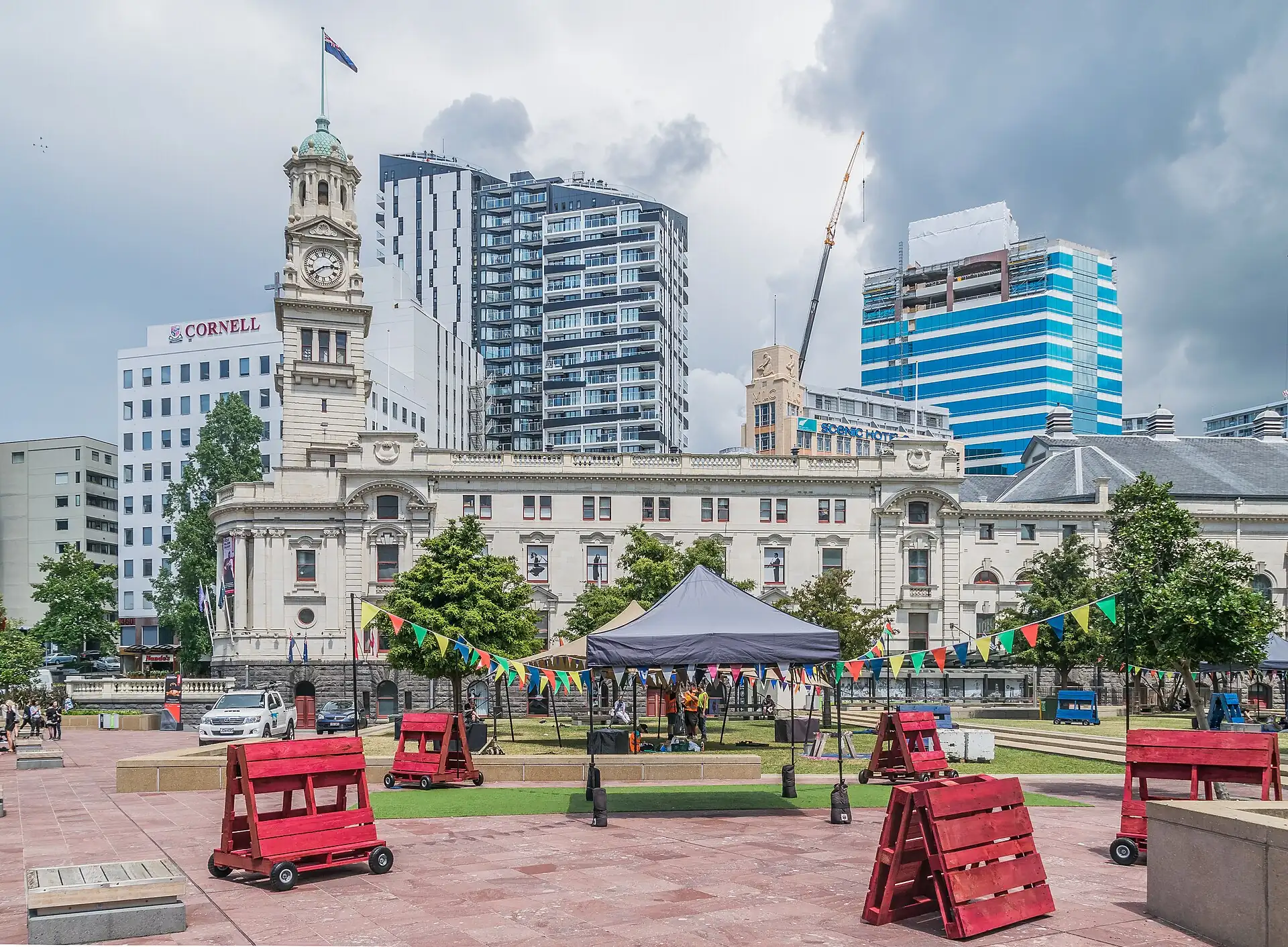
City-centre cluster: Sky Tower, Aotea Square, the art gallery and Queen Street; hilly but short, and easy in the rain because most stops are indoors.
rescue 100% · max p90 5.1′ · 90m
Harbour-edge cluster: Britomart station, lower Queen Street and the ferry terminal; flat and covered in places, the start point for every ferry.
rescue 100% · max p90 5.1′ · 90m
Waterfront cluster: the Viaduct marina and the Wynyard Quarter promenade; flat, breezy and best in the late afternoon.
rescue 100% · max p90 5.1′ · 90m
Evening cluster: the cafés, food hall and shops along Ponsonby Road; a short taxi or bus ride from the centre, best after 17:00.
rescue 100% · max p90 5.1′ · 90m
Days
Ready-made day plans, timed against opening hours and walking distances.
How long are you staying?
Pick a length and the plan rebuilds with timed stops and walking distances; add a pace and interests there. Plans longer than the city has places for stop at what the data supports.
Two weeks
Week 1: the 7-day plan. Week 2: one day trip at a time (Devonport, Waiheke Island, Rangitoto Island, Hobbiton), each followed by a day in one area, with two days held back for what you missed.
One month
Live like a resident: pick one area per week as your base, repeat the day-trip rhythm, and add a week away (Bay of Islands, Rotorua, Waitomo Caves). Book museums on weekday mornings, keep weekends for markets and parks.
Auckland in 3 days
3 daysMornings in the centre, the waterfront in the afternoon light, evenings in Ponsonby; the last day ends with the bags already in the car.
Day by day
Day 1 — Sky Tower at opening, the art gallery, a 12:30 lunch table
- 08:30Sky Tower
- Auckland Art Gallery Toi o Tāmaki
- Mount Eden (Maungawhau) (optional)
- 12:30Lunch table 12:30 (Britomart)
Day 2 — Viaduct Harbour in the afternoon light, dinner on Ponsonby Road
Day 3 — Ferry Building and Queen Street, car to the airport at 11:00
- 11:00Car to Auckland Airport at 11:00 (your flight time decides; leave 4 h before an international departure)
Places
“Best time” is when to arrive for the fewest crowds, for example “before 08:30”; “Go any time” means the hour makes little difference. More sights follow under “More sights and museums”.
More to see and doRain & heat · Free things · Wheelchair and stroller
Free things to do
Sights in Auckland that cost nothing to enter. Each is described under Places or More sights; extra costs inside are marked there.
Wheelchair and stroller, place by place
How each place in this guide works for wheels, from its own page. Ratings are desk estimates unless a page says it was checked on the ground.
| Place | Step-free | Wheelchair | Stroller | What to know |
|---|---|---|---|---|
| Auckland War Memorial Museum | check | check | check | Lifts and step-free routes through the main galleries. |
| Devonport | check | check | check | Village streets are flat; the cone walks are unpaved and steep in places. |
| Mount Eden (Maungawhau) | check | check | check | Steep paved path to the summit; not step-free. |
| Rangitoto Island | check | check | check | Uneven volcanic rock and an unpaved summit track; not step-free. |
Rain-day and heat-day plan
Rain day
Showers can pass within an hour: wait it out in a café or the museum rather than pushing through a soaking on an outdoor walk.
- 01Auckland War Memorial Museum — Large indoor museum; a full wet-weather morning or afternoon.
- 02Auckland Art Gallery Toi o Tāmaki — Indoor gallery, air-conditioned.
- 03Commercial Bay or Westfield Sylvia Park — Indoor shopping for a washed-out afternoon.
Heat day
Auckland rarely gets extreme heat, but UV is strong even on a mild or overcast day: sunscreen and a hat for any outdoor walk, especially on exposed cones and beaches.
- 09:00Mount Eden (Maungawhau) — Cooler morning air for the exposed summit walk.
- 11:00Auckland War Memorial Museum — Indoor break through the middle of the day.
- 15:00Viaduct Harbour — Harbour breeze in the afternoon.
Day-trips and nearby
Places you can reach from Auckland in a day or with one night away, with the route and what it costs. Door to door, not ride time.
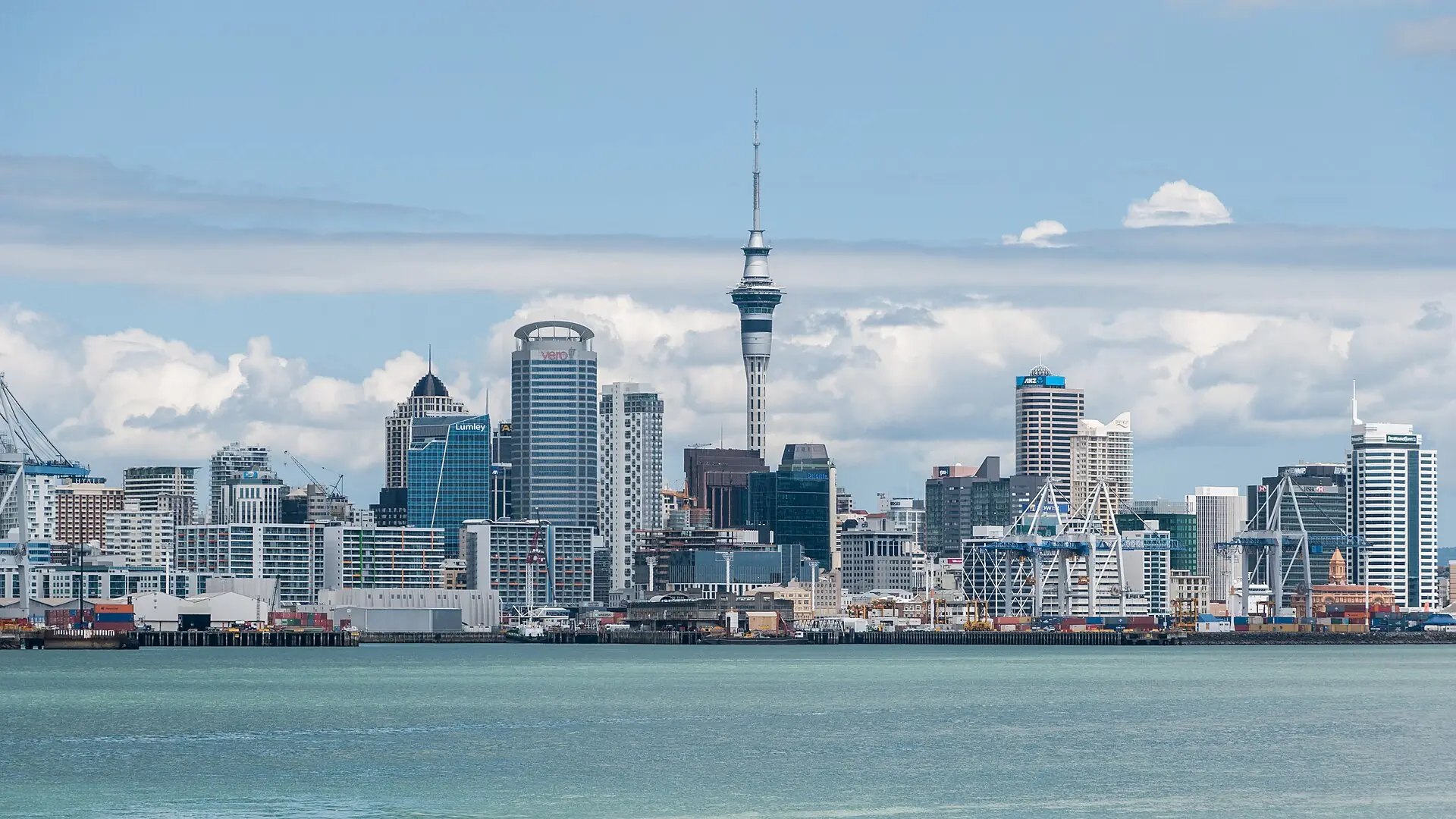 Photo: DXR, CC BY-SA 4.0
Devonport
goFerry from the Ferry Building, about 15 min
Cafés, Mount Victoria and the waterfront.
- Time
- Half day
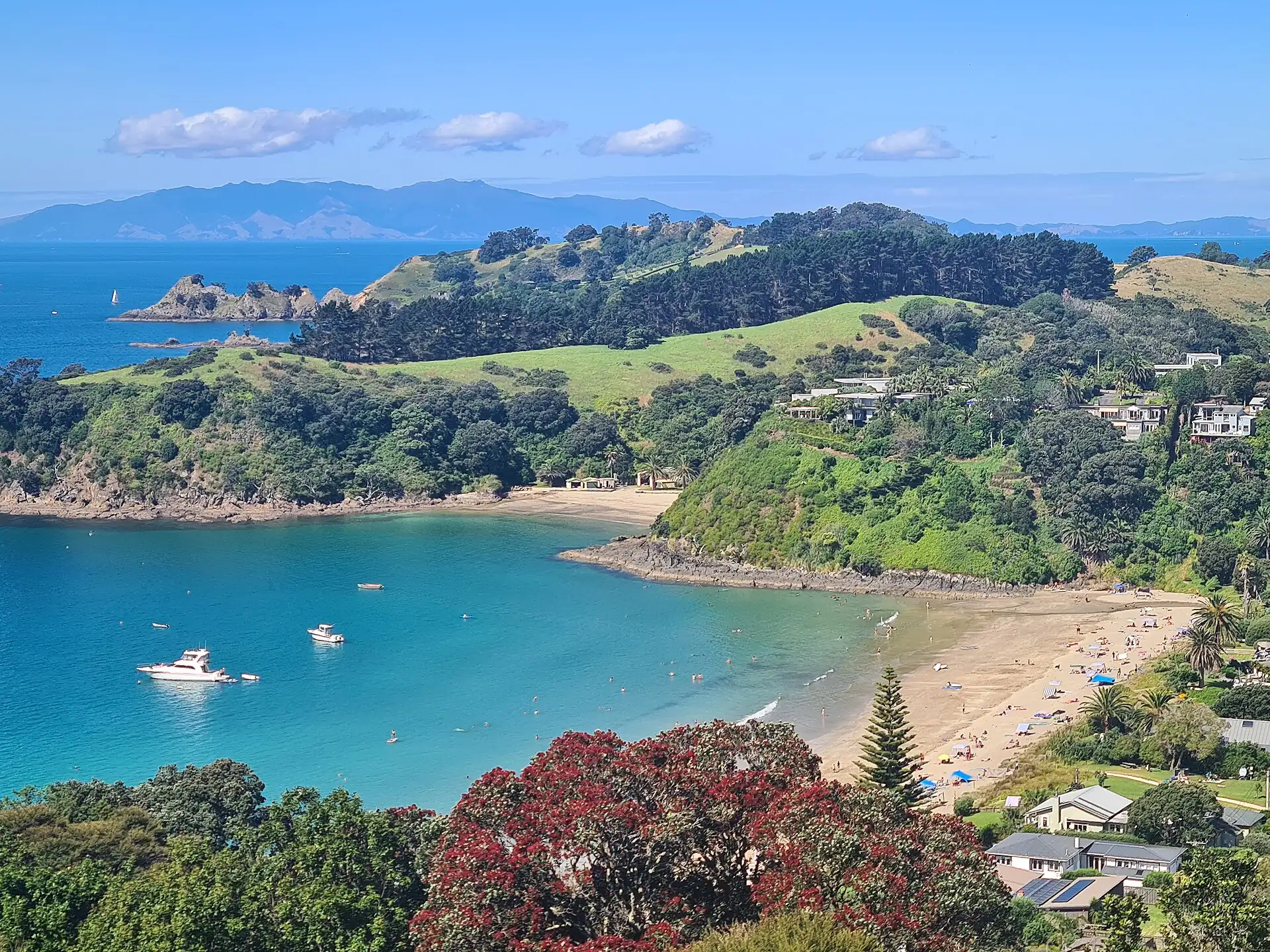 Photo: RadishSlice, CC BY-SA 4.0
Waiheke Island
goFerry from downtown, about 40 min
Beaches and vineyards; check the last ferry back.
- Time
- Full day
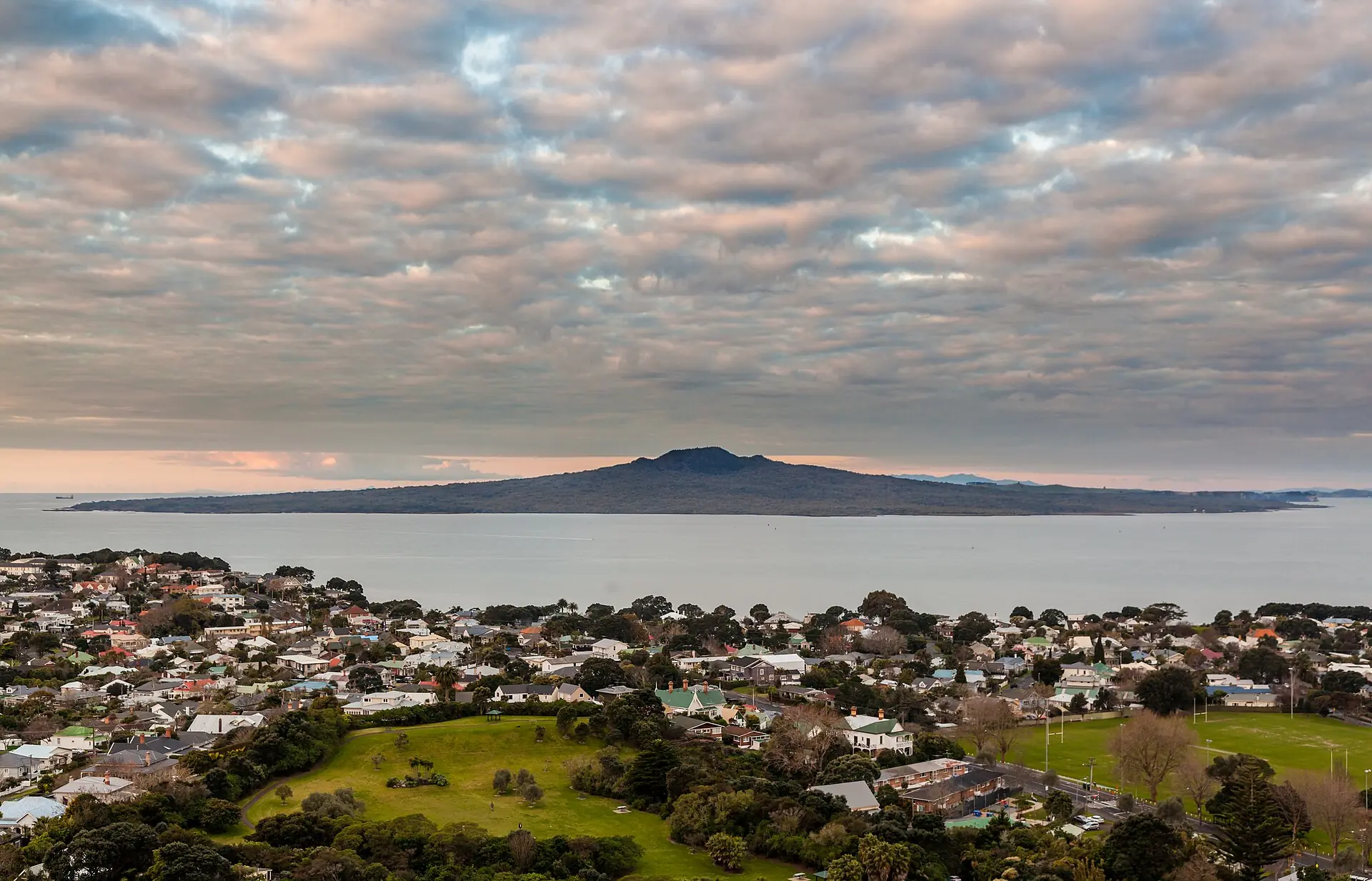 Photo: russellstreet, CC BY-SA 2.0
Rangitoto Island
goFerry from downtown, about 25 min
Volcanic-cone walk; carry water and sun cover.
- Time
- Half day
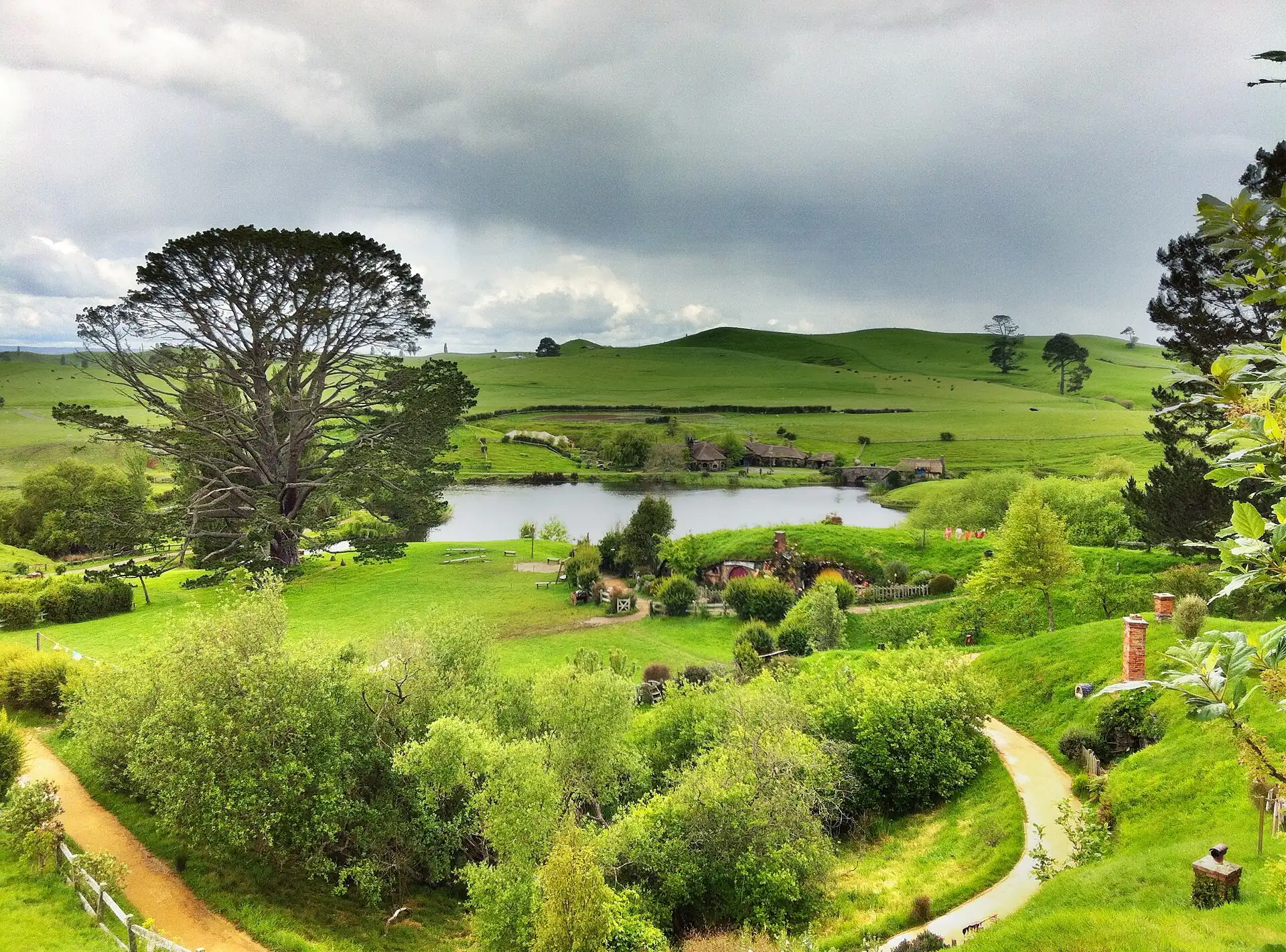 Photo: David Broad, CC BY 3.0
Hobbiton (Matamata)
overnightTour bus or car, about 2 h each way
Long day; better as a stop on the way to Rotorua.
- Time
- Full day
Go next
Door to door: 3–3.5 h
Car or bus, about 3–3.5 h
Sailing, history at Waitangi, dolphin trips.
Door to door: 3 h
Car or bus, about 3 h
Geothermal parks and Māori cultural experiences; often paired with Hobbiton on the way.
Door to door: 2–2.5 h
Car or tour, about 2–2.5 h
Glowworm caves; doable as a long day trip or on the way to Rotorua.
Door to door: 2–3 h
Car, about 2–3 h depending on route
Beaches, Cathedral Cove, Hot Water Beach.
Door to door: About 2.5 h door to door by air
Flight about 1 h 10 min, or a long drive/train
The capital; a different, more compact city.
Eat & sleepWhere to eat and which area to sleep in
Eat & sleep
Where to eat and which area to sleep in
Eat
A short list of places worth crossing the city for, each with how to get a seat.
Restaurant finder: filter every place to eat in Auckland →
Vegetarian-friendly score
3.5 / 5 · Good
- Country diet noteOur country guide rates vegetarian eating as easy.2 / 2
- Places to eat in this guide3 of 5 places with a known answer are vegetarian-friendly, 2 partly.1.2 / 1.5
- Budget eating lines0 vegetarian lines in "Eat by budget".0 / 0.6
- Meat-free national dishes5 meat-free dishes in the country food list.0.4 / 0.4
- Dedicated vegetarian kitchens0 mentions of vegetarian restaurants, Buddhist or fasting kitchens.0 / 0.5
Country note: Easy in cities and cafés; menus mark V, VG and GF.
Vegetarian places near me →Make a diet card →
How we score
- Country diet note (up to 2): easy 2, workable 1, mixed 0.75, hard 0; no note 0.5.
- City places to eat (up to 1.5): 1.5 × (vegetarian-friendly + half of partly friendly) ÷ places with a known answer; needs 3 or more known places.
- Budget eating lines marked vegetarian (up to 0.6): 0.2 each.
- Meat-free national dishes (up to 0.4): 0.1 each.
- Dedicated vegetarian kitchens mentioned — Buddhist chay, shōjin ryōri, Jain, fasting food, vegan cafés (up to 0.5): 0.1 each.
- Total rounded to the nearest half point, 0 to 5. Built from our own pages only, not from reviews.
Eating and drinking guideDrink
Drink & nightlife
| Where | What | Until | Note |
|---|---|---|---|
| Ponsonby Road bars and restaurants | Wine bars, cocktail spots, restaurants with a bar | Late on weekends | The city's best-known evening strip. |
| Viaduct Harbour bars | Waterfront bars and restaurants | Late on weekends | Popular with a slightly older, dressier crowd. |
| K Road bars | Live music, alternative bars | Late | Grittier and cheaper than Ponsonby or the Viaduct. |
By style
| Style | What | Where | Price | Until |
|---|---|---|---|---|
| Flat white / long black | New Zealand's everyday café coffee orderMany cafés close mid-afternoon; check before planning a late coffee stop. | Any café, all day | NZ$5–7 (≈ US$3–5) | Café closing |
| Craft beer | New Zealand and local Auckland brews | Bars citywide, especially K Road and Ponsonby | NZ$10–14 (≈ US$6–9) a pint | — |
| New Zealand wine | Sauvignon Blanc, Pinot Noir and more, including Waiheke reds | Restaurants and wine bars citywide | NZ$12–18 (≈ US$8–11) a glass | — |
| Cocktails | Bars in Ponsonby, the Viaduct and the CBD | Citywide | NZ$18–25 (≈ US$11–15) | — |
Rules that bite
- New Zealand's legal drink-driving limit is low and strictly enforced; do not drive after drinking.
- Some licensed venues run one-way door policies after a certain hour; check before a late arrival.
Sleep
Pick the area first: it decides your walk home at night and your first morning.
Which neighborhood fits you
Three questions, one recommendation, with the reasons.
Your best fit
- Sky Tower, gallery and the waterfront all walkable.
- 24-hour desks are the norm at larger hotels.
Watch out: Mostly mid-range to upmarket; few genuine budget beds in the core CBD. Traffic and nightlife noise on the main streets; ask for a higher floor.
Next best: Ponsonby
Built from our 1–5 desk scores per area; your answers stay in this browser.
More on sleepingYour area · With kids
Which area is yours
| If you are | Sleep in | Because |
|---|---|---|
| First visit, everything walkable | Central Auckland (CBD) | Sky Tower, gallery, harbour and Britomart all on foot. |
| Food and evening trips | Ponsonby | The best café and restaurant strip, a 15–20 minute walk from the centre. |
First-timers: a CBD hotel with a 24-hour desk, walkable to Sky Tower, Britomart and the ferries; the SkyBus and taxis reach the door.
02Ponsonby
Quieter nights in a guesthouse or boutique hotel near Ponsonby Road; a 10–15 minute taxi or bus ride to the harbour and Sky Tower.
Areas are in our default order until you tick a priority.
Scores are 1–5 desk judgements per priority (2026).
With kids
- Kelly Tarlton's SEA LIFE Aquarium (a short drive from the CBD) and the Auckland Zoo are the standard rainy-day and family favourites.
- The Auckland War Memorial Museum's natural history and volcano galleries are interactive and work well for kids.
- Devonport's North Head tunnels are a hit with children who enjoy a torch-lit explore.
- Ferries are generally an easy, enjoyable ride for kids, though check swell conditions on a windy day.
- Most restaurants and cafés are relaxed about children; high chairs are common, though not universal — ask ahead for a special occasion booking.
PracticalMoney, essentials, safety and the pocket card
Practical
Money, essentials, safety and the pocket card
Money
What a day costs at three comfort levels, and how to pay.
- Budget
- NZ$60–100 (≈ US$40–60) excl. bed / day
- Mid
- NZ$100–200 (≈ US$60–120) excl. bed / day
- High
- NZ$200 (≈ US$120)+ excl. bed / day
- Transit card
- AT HOP card for buses, trains and ferries; check Auckland Transport for contactless card options.
- Cash rule
- Cards and phone payments work almost everywhere; keep a little cash for small stalls.
More on moneyCosts · Budget · Buy
What things cost
- Bottle of water, shopNZ$3–4 (≈ US$2–3)
- SkyBus to the CBDNZ$20–30 (≈ US$12–18)
- Ferry to Devonport or Waiheke, returnNZ$15–55 (≈ US$9–35)
- Sky Tower ticketNZ$40–70 (≈ US$25–45)
Trip budget
| Hotel double room1 × 3 nights × NZ$240 | NZ$720 |
| Food, local transport, entries2 × 3 days × NZ$160 | NZ$960 |
| Airport transfer, both ways1 × NZ$140 · SkyBus or one taxi group | NZ$140 |
| eSIM, about a week2 × NZ$30 | NZ$60 |
| Buffer 10%Price creep, a taxi you did not plan, one splurge | NZ$188 |
| Trip total≈ NZ$345 per person per day, bed included | NZ$2,068≈ US$1,300 |
2026 estimate in NZ dollars; flights and car hire excluded. Your choices stay in this browser.
Prices of common things
| Fish and chips, takeaway | NZ$15–22 (≈ US$9–13) |
| Ferry to Devonport, return | NZ$15–20 (≈ US$9–12) |
2026 estimate; check locally.
Buy
- Bargaining
- Fixed prices everywhere; haggling is not the norm, including at markets.
- Fixed-price check
- Supermarkets (Countdown/Woolworths, New World, Pak'nSave) give you an honest baseline for snacks and drinks before a tourist-area dairy (corner shop) mark-up.
Markets and shopping streets
| Where | What | When | Haggle | Note |
|---|---|---|---|---|
| Auckland Fish Market | Fresh seafood, food-hall dining | Daily (check) | no | A working wholesale market alongside the retail and dining side. |
| Ponsonby Central | Food hall, boutique shops | Shop and restaurant hours | no | |
| La Cigale French Market (Parnell) | Weekend farmers' and artisan market | Weekend mornings (check) | no | |
| Otara Market | Pacific produce, food, clothing | Saturday mornings | light | South Auckland; one of the largest Pacific markets in the country, a longer trip from the centre. |
Shops by what they sell
| For | Where | Hours | Note |
|---|---|---|---|
| Māori and Pacific art, jewellery (pounamu/greenstone) | CBD galleries, the museum shop | Shop hours | Buy pounamu from a reputable gallery; ask about the artist and origin. |
| Outdoor and tramping gear | CBD and Ponsonby outdoor stores | Shop hours | Good stock if you are heading on to the wider North Island. |
| Malls | Westfield Sylvia Park, Commercial Bay (CBD) | About 09:00–18:00, later some nights | Commercial Bay is the closest to the CBD and waterfront. |
Essentials and accessEssentials · Access
Essentials
- Plugs & power
- 230 V; three-pin angled sockets (type I). Bring an adapter.
- Toilets
- Public toilets on the waterfront, in malls and at stations.
- Opening hours
- Shops open around 09:00 and close 17:00–18:00; late night on Thursday or Friday in the CBD. Many cafés close by 15:00.Shops open around 9:00 AM and close 5:00 PM–6:00 PM; late night on Thursday or Friday in the CBD. Many cafés close by 3:00 PM.
- Health
- Strong sun and changeable weather. Travel insurance with medical cover: care for visitors is not free.
- Accessibility
- The CBD has hills and steep streets; the waterfront and Britomart are flat and step-free.
- Laundry
- Hotels and laundrettes; same-day service in the CBD.
- Emergency numbers
- 111 for police, fire and ambulance.
Pack
- A rain layer and a warm layer, all year
- Sun hat and sunscreen
- Comfortable shoes for hills
- A power adapter (type I)
Accessibility
The waterfront, Britomart and Commercial Bay are flat and step-free. The CBD itself is hilly with steep streets in places, and many of the volcanic-cone viewpoints (Mount Eden, One Tree Hill) require walking the final stretch, since vehicle access to several summits is closed.
- Footpaths
- Generally good pavements in the CBD and waterfront; steep gradients on some CBD streets.
- Public transport
- Buses and trains are largely low-floor and accessible; ferries vary by vessel — check with the operator for wheelchair access.
- Volcanic cones
- Summit paths are unpaved and steep; vehicle access to the top is closed at several cones (Mount Eden, One Tree Hill) for conservation reasons.
- Toilets
- Accessible toilets in malls, the museum, the Ferry Building and larger hotels.
Survive
Safety basics, the lines not to cross, and practical habits that save the day.
Safety
- Emergency: 111 for police, fire and ambulance.
- Sun: the UV is strong even in cool weather; hat and sunscreen.
- Weather changes quickly: carry a rain layer.
- Swim only at patrolled beaches between the flags.
- Keep valuables out of parked cars: theft from cars is common.
Red lines
- Declare food, plants and outdoor gear at the border.
- Do not swim outside the flags or alone at surf beaches.
- Do not leave bags visible in a parked car.
Practical
- Toilets: public toilets on the waterfront, in malls and stations; cafés for customers.
- Tap water is safe to drink.
More on staying safeSafety map · Solo & women · Etiquette · Cope · Scams
After dark, by area
1 flagged area
Beaches and lookout car parks
Take care
Day = about 07:00–19:00. What to watch in each area, day and night →
Scams and red flags
Walk away if you see these
- Unlicensed drivers at the airport: use the taxi rank or a ride-hailing app.
- Do not leave bags visible in a parked car at beaches or viewpoints.
- Book Sky Tower or ferry tickets through the operator, not a street seller.
Safety by area and hour
| Area | Day | Night | What to watch |
|---|---|---|---|
| CBD and waterfront | fine | fine | Standard city-centre caution at night around Queen Street's lower end. |
| Britomart and Viaduct Harbour | fine | fine | Busy and well-lit; normal precautions. |
| Ponsonby | fine | fine | Lively at night; keep bags close in crowded bar strips. |
| Beaches and lookout car parks | fine | caution | Theft from parked cars is common at popular viewpoints and beaches — leave nothing visible. |
- Do not leave bags or valuables visible in a parked car, especially at beaches, lookouts and trailheads.
- Swim only between the flags at patrolled beaches; rips are a real hazard on west-coast surf beaches.
Solo, women and LGBTQ+ travellers
Solo
- Comfortable and easy city to explore alone; cafés and the waterfront work well for a solo day.
- Ferries and day tours are simple to book solo; solo supplements are less common than on longer NZ multi-day tours.
Women
- Generally safe; normal city precautions apply, particularly around late-night CBD streets and car parks.
LGBTQ+
- New Zealand is broadly progressive; Auckland has an established LGBTQ+ scene, especially around K Road and Ponsonby.
- Same-sex marriage has been legal in New Zealand since 2013. Auckland Pride runs in summer; check dates.
Etiquette in Auckland
- Greetings
- A handshake is standard; 'Kia ora' is a widely used, casual greeting appreciated from visitors.
- Māori sites and cones
- Treat volcanic cones and marae (meeting grounds) with respect; follow posted signs about tapu (sacred) areas.
- Tipping
- Not expected; round up for excellent service if you wish.
- Queues
- Orderly and expected, including at ferry terminals and food counters.
- Beaches
- Swim only between the flags at patrolled beaches; take rip currents seriously.
Cope
Hospitals and clinics that handle foreigners
| Where | Area | Use it for |
|---|---|---|
| Auckland City Hospital | Grafton | Major public hospital with an emergency department. |
| Auckland Metro Health (formerly Ascot/Mercy) | Various | Private hospitals; ask your insurer about direct billing. |
| Ascot Central and other urgent-care clinics | CBD and suburbs | For non-emergency visits; pay upfront and claim later unless your insurer has a direct arrangement. |
Visa extensions
- Office
- Immigration New Zealand does not typically require in-person visits for visitors; most processes are online. Check immigration.govt.nz for current requirements.
- Extending a visit
- Visitor visa extensions are applied for online before the current visa expires; approval is not guaranteed.
- Overstay
- Overstaying can bar future entry to New Zealand; resolve any visa issue well before your flight home.
Embassies and consulates
| Country | Address | Phone | Note |
|---|---|---|---|
| United States | Consulate General, Auckland (check current address) | — | (check) |
| United Kingdom | Consulate-General, Auckland (check current address) | — | (check) |
| Australia | Consulate-General, Auckland (check current address) | — | (check) |
| China | Consulate-General, Auckland (check current address) | — | (check) |
- Lost passport
- Police report, then your embassy or consulate (many countries' main NZ diplomatic presence is in Wellington, not Auckland) — check where your nearest mission is before you fly.
- Pharmacies
- Widely available; some common medicines need a prescription that is stricter than in other countries — check before relying on an over-the-counter purchase.
- Laundry
- Hotels and self-service laundrettes in the CBD and Ponsonby.
Apps and offline kitOffline kit
Offline kit
Set up before you leave, so Auckland still works with no signal or a dead roaming plan.
On your phone
- Maps: open the city in Google Maps, tap the place name, then Download offline map (or use an offline-maps app).
- Data: install an eSIM or buy a local SIM before the first taxi; the apps in this guide depend on it.
- Translation: download the local language for camera translation.
- Screenshots: booking confirmations, hotel address in the local script, and the emergency numbers.
This guide
Save the Auckland guide and its pages on this device; it opens without a connection.
Phrases that do the work
Greeting
Hello
Kia ora
kee-ah or-ah
Welcome
Welcome
Haere mai
high-reh my
Thanks
Thank you
Ngā mihi
ngah mee-hee
Café
Good, great
Ka pai
kah pie
Pocket card
Fill in, then print or save as PDF
Stays in this browser only; nothing is sent anywhere.
AucklandTāmaki Makaurau
Pocket card · Voykit
My bed tonight
—
—
—
Check with your driver — English is spoken throughout.Please take me to this address
Emergency
- Police, fire, ambulance111
Embassy
Most countries' main New Zealand diplomatic presence is in Wellington, not Auckland — check where your nearest mission is.
My embassy: —
Fare anchors (2026 estimate)
- Airport → CBD, SkyBus: NZ$20–30 (≈ US$12–18), about 45–60 min
- Airport → CBD, taxi/ride-hail: NZ$70–110 (≈ US$45–65), 30–60 min depending on traffic
- Ferry to Devonport, return: NZ$15–20 (≈ US$9–12), about 12 min each way
Deep diveHistory, reading, photos and every source
Deep dive
History, reading, photos and every source
Sources
- officialTātaki Auckland Unlimited (visitor site)
- officialTourism New Zealand
- officialAuckland Airport (official)
- officialImmigration New Zealand
- officialNZ SafeTravel
- secondaryWikivoyage — Auckland
Ask about Auckland
Loading…
Was this useful?