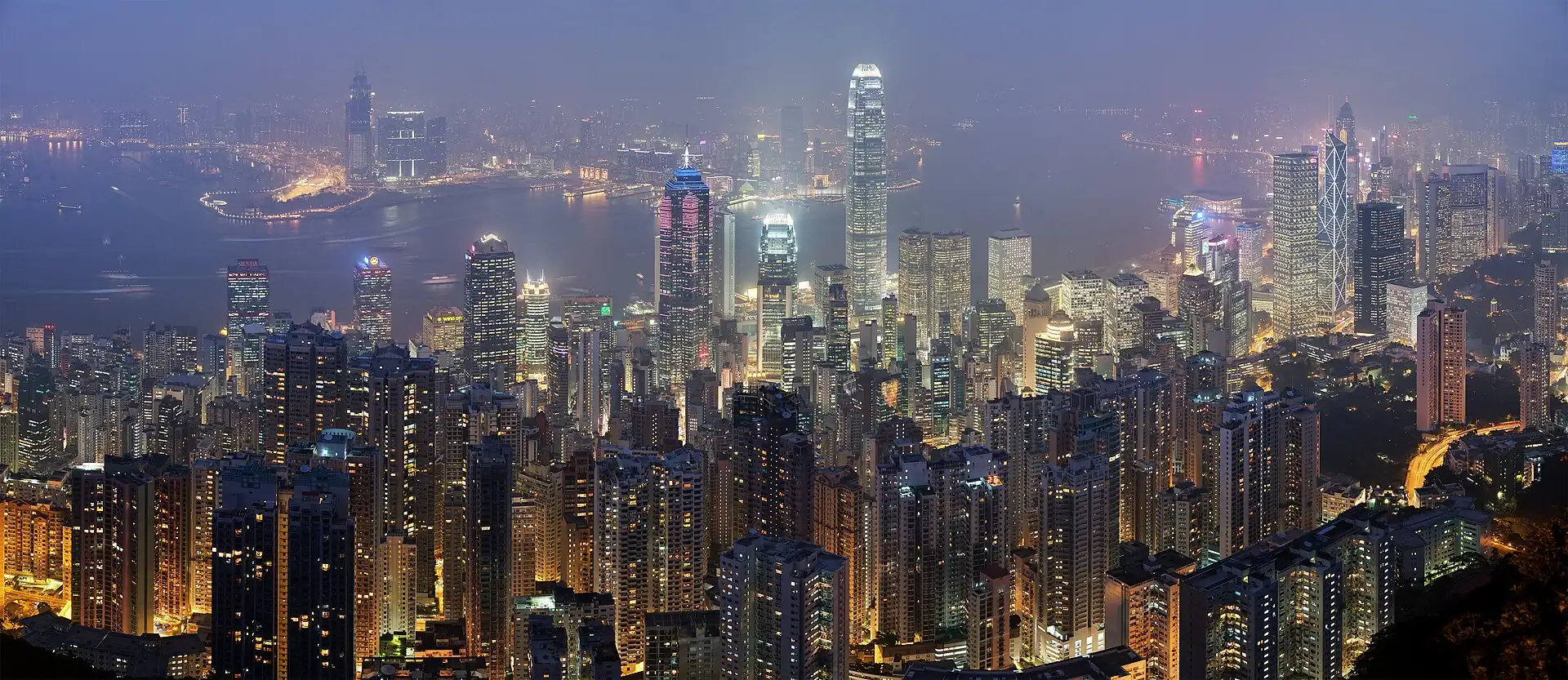
Hong Kong Island and Kowloon
香港
Code HK · 4 walking zones
Hong Kong is a weather-first city: do the Peak and temples on a clear morning, hide in AC malls at midday in summer, take the harbour and the markets after 17:00 — and check for typhoon signals every day from June to October.Hong Kong is a weather-first city: do the Peak and temples on a clear morning, hide in AC malls at midday in summer, take the harbour and the markets after 5:00 PM — and check for typhoon signals every day from June to October.
Our quick read of Hong Kong Island and Kowloon, scored 1–5 (friction is out of 100). Cash need: how often you still need notes. Heat risk: how hot days get. Stroller: how easy wheels are. Friction: overall effort for a first visit. Desk judgements, so check before relying on them.
- Local time
- --:--
- Weather
- forecast below
- Currency
- HKD
- Best months
- Jan · Mar · Apr · Oct · Nov · Dec
- Airport
- Hong Kong (HKG)
Walking zones: the 4 areas this guide plans a day around. Each is a district you can cover on foot, so you do one zone per half-day and ride the train between them. The code (HK 01, HK 02…) is just the zone's number on the Hong Kong Island and Kowloon line; the line under each name says how bags fare there and how much time it needs.
Map of Hong Kong Island and Kowloon
Use the switches to show or hide each kind of pin. A switch that is on shows its pins on the map; tap it again to hide them. "Show only" keeps just the pins that match (for example, places that fit a suitcase). Tap any pin for its name and a link to its page.
- Where to sleep
- Places
- Eat
- Walking clusters
- Rest stops
From the airport Hong Kong (HKG) to your bed
Tap a pin for its card. Places without their own coordinates are shown by their walking cluster.
Why Hong Kong Island and Kowloon
Hong Kong Island and Kowloon are compact, hilly and hot. Distances are short but stairs, slopes and humidity are not: the Central–Mid-Levels area is a climb, the Peak is a tram or a steep road, and July to September brings heat, storms and typhoon signals. Four clusters cover a first visit from one kept bed. The ones that go wrong bring big suitcases onto rush-hour MTR, plan the Peak on a hazy day, or walk in the midday sun.
See first
- 1
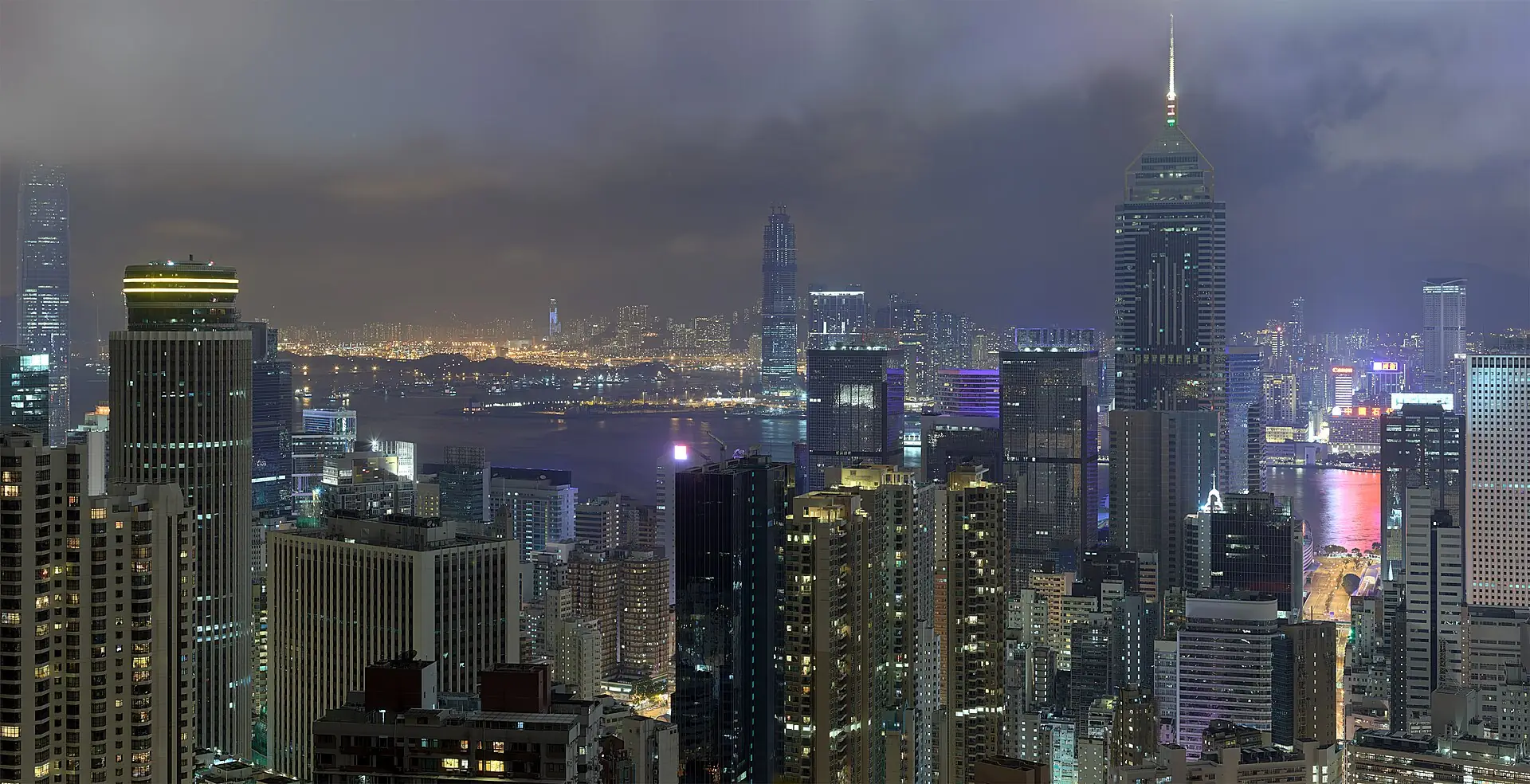 Victoria Peak on a clear morning · 1.5–3 h
- 2
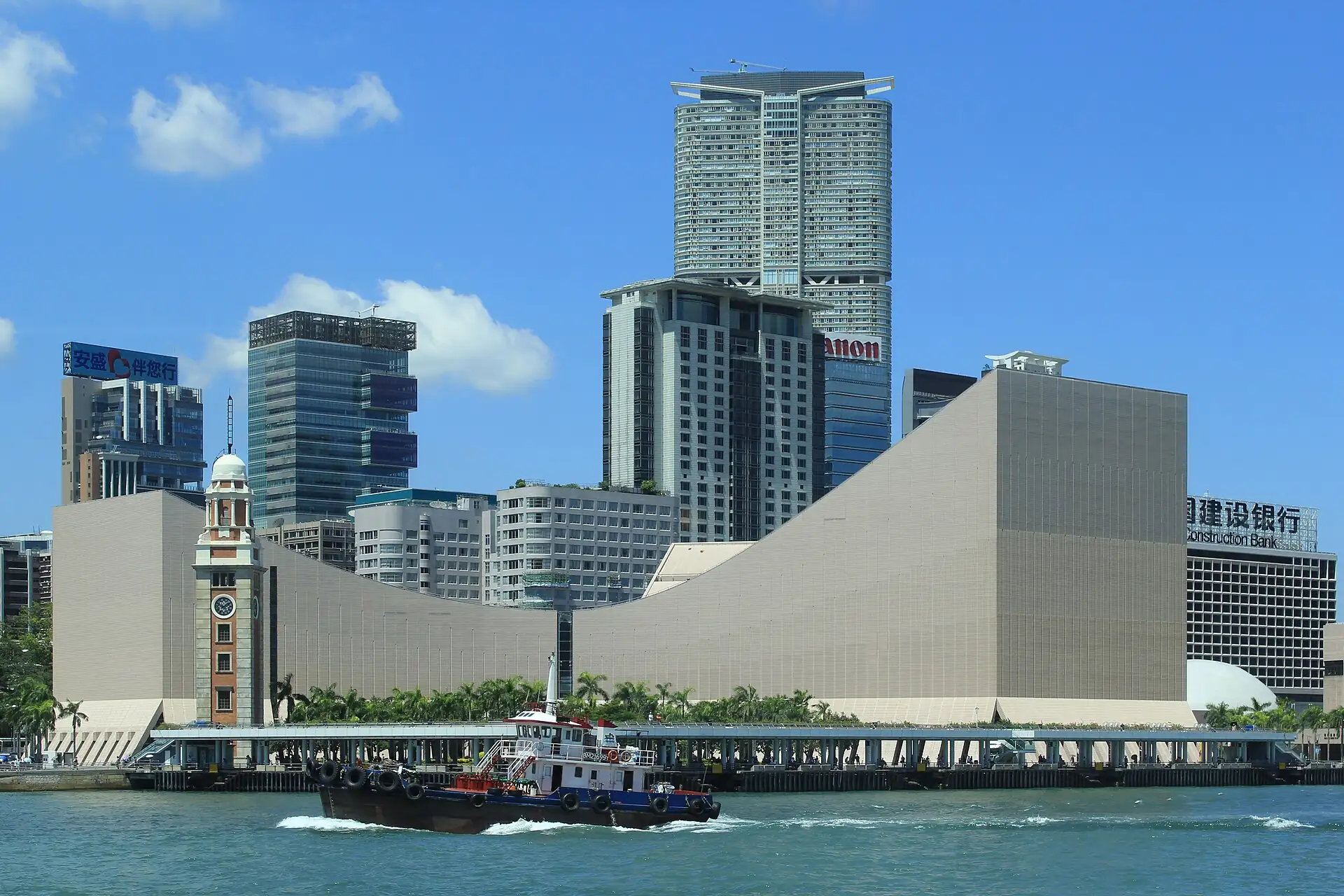 Star Ferry crossing · 20–40 min
- 3Tsim Sha Tsui Promenade at dusk · 30–60 min
- 4
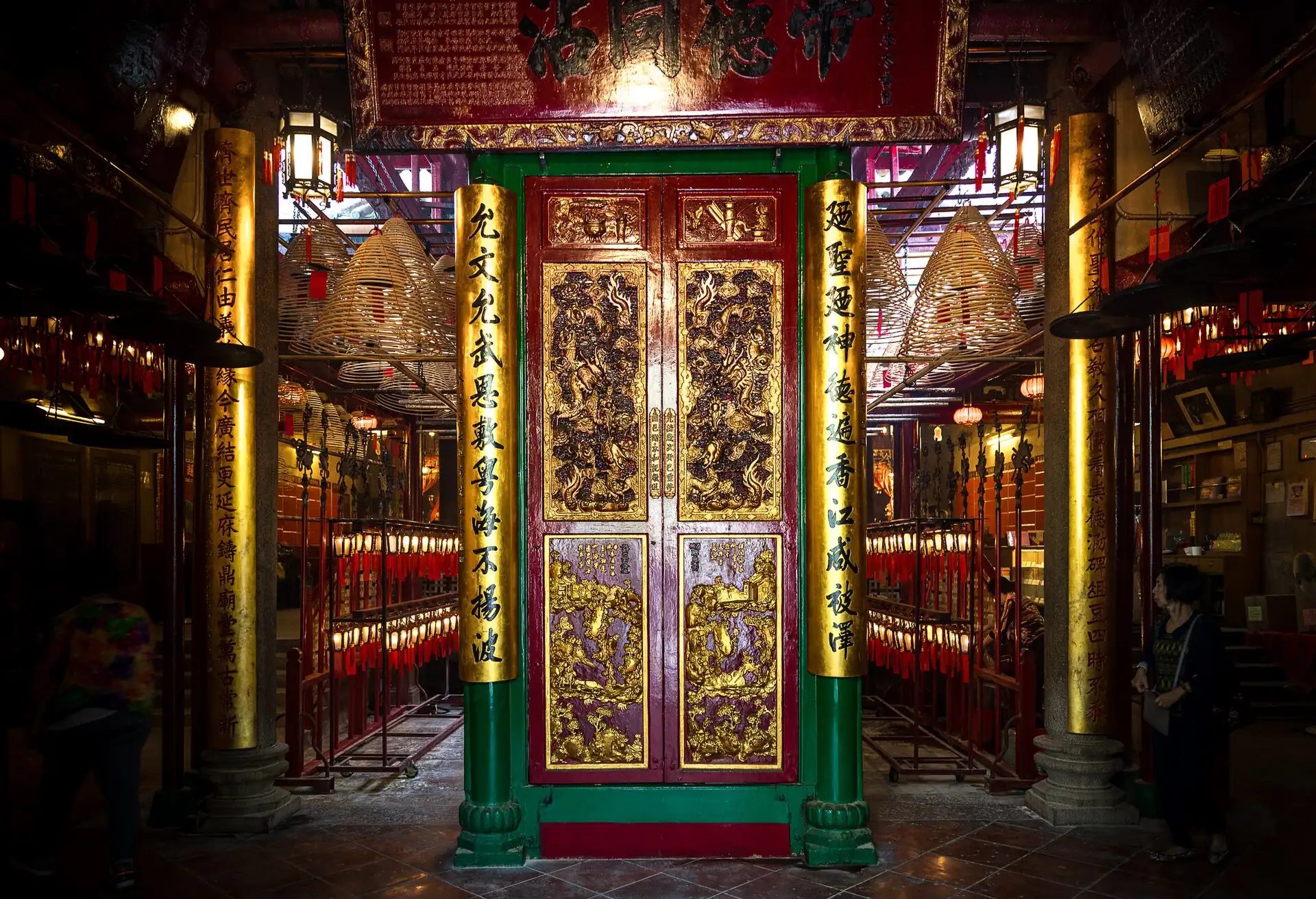 Man Mo Temple · 20–30 min
- 5Tai Kwun · 45–90 min
Fits
- Food-first short trips
- Skyline and harbour views
- Rail-and-ferry travellers
Does not fit
- Strollers and wheelchairs on the hills and stairs
- Travellers who dislike crowds
- Midday walkers in July and August
How long
- 2 daysCentral–Soho + the Peak; one evening on the Kowloon waterfront
- 3 daysFour clusters, mornings and evenings; malls at midday
- 5 daysFour clusters + Lantau or an outlying island + one weather-spare day
Good for
- First timers
- Foodies
- Budget
- Families
- Solo
- Luxury
About Hong Kong Island and Kowloon
Hong Kong was a cluster of fishing villages and salt farms until 1842, when China ceded Hong Kong Island to Britain after the First Opium War. Kowloon was added in 1860 and the New Territories were leased for 99 years in 1898. The colony grew into a free port and, in the second half of the 20th century, into a manufacturing and then a financial centre.
Japan occupied Hong Kong from Christmas Day 1941 to August 1945. In the decades after the war, refugees from mainland China, public housing estates and rapid industrialisation shaped the city. On 1 July 1997 sovereignty returned to China, and Hong Kong became a Special Administrative Region under the "one country, two systems" framework, with its own currency, legal system and border controls.
Good to know
- Central is both a district on Hong Kong Island and the MTR station name; Hong Kong Station (Airport Express) is linked to Central by an underground walkway.
- Hong Kong Tourism Board visitor centres at the airport and in Tsim Sha Tsui have maps and advice (check current locations).
- The Hong Kong Observatory website and app give warnings, radar and forecasts: check them each morning.
Go deeper 10 min read · 6 chapters
Hong Kong is a harbour, a hillside and a trading post that grew up in 180 years. This deep dive reads the city through its colonial founding, its harbour, its food, its temples, its weather and its 1997 handover, so a short visit makes more sense of the crowds and the skyline.
1From fishing villages to a free port2 min
Before 1841 the area was a scatter of fishing villages, salt pans and small walled settlements, part of Guangdong province. The name Hong Kong comes from the Cantonese "fragrant harbour", said to refer to the incense trade or to a stream that ran into the sea. The island was of little interest to China until British ships started to look for a trading base on the south China coast.
Britain took possession in 1841 during the First Opium War, and China ceded Hong Kong Island in the Treaty of Nanking in 1842. Kowloon came in 1860 after the Second Opium War, and the New Territories were leased for 99 years in 1898. The colonial city grew along the north shore of the Island: Queen's Road, the harbour reclamation, the Peak and the churches and banks of Central. Chinese merchants, Indian traders, Portuguese clerks and British officers all shaped it.
The colony became a free port, and later a manufacturing base for clothes, toys and electronics. After the Communist victory in 1949, hundreds of thousands of refugees arrived from the mainland, and public housing estates, factories and squatter huts filled the hills. The Japanese occupation from December 1941 to August 1945 was a period of hardship and shortage that still marks family memory.
In 1984 Britain and China signed the Sino-British Joint Declaration, agreeing that the territory would return to China on 1 July 1997 under the principle of "one country, two systems". Since then Hong Kong has been a Special Administrative Region with its own currency, legal system and border controls, but political debate over autonomy and freedoms has been intense, and the situation has changed in recent years. Check current advice on laws and public behaviour before you travel.
For a visitor, the history shows in the streets: the grid of Central, the tram lines, the colonial courthouse and police station, the temples and shops of Sheung Wan, and the housing blocks of Kowloon. It is best read by walking from Man Mo Temple down to the harbour and across on the Star Ferry.
- Island ceded
- 1842, Treaty of Nanking
- Kowloon ceded
- 1860
- New Territories lease
- 1898, 99 years
- Japanese occupation
- December 1941 to August 1945
- Handover to China
- 1 July 1997
- Population
- About 7.5 million
2The harbour and the skyline2 min
Victoria Harbour is the reason the city exists. It is a deep, sheltered channel between Hong Kong Island and the Kowloon peninsula, about 1.5 to 8 km wide, with room for large ships close to the shore. British traders used it for opium, tea and general cargo, and it became one of the busiest ports in the world in the 20th century.
The land around the harbour is not what it was. Since the 1850s, reclamation has pushed the shoreline out: Central's Des Voeux Road was once the waterfront, and the Star Ferry pier has moved several times. The result is that the skyline you see now rises from land that is barely 100 years old in places. The International Finance Centre, the Bank of China Tower and HSBC building in Central, and the towers of Tsim Sha Tsui, are the standard views.
The Star Ferry has crossed the harbour since 1888 with green-and-white boats carrying passengers, and it remains one of the cheapest rides with a view in the world. The Peak Tram, opened in the same year, hauled colonial residents up to the cool air of Victoria Peak, where the wealthy built their villas. The Mid-Levels Escalator, opened in 1993, links Central to the residential hillside in a chain of covered escalators about 800 metres long.
The nightly Symphony of Lights, a light and laser show that started in 2004, plays across the harbour at 20:00. It is free and popular, and the best position is on the Tsim Sha Tsui Promenade, looking across to Central. Fireworks over the harbour mark Lunar New Year, National Day and some other events.
For a visitor the easy way to read the harbour is by ferry and on foot. Cross on the Star Ferry, walk the promenade at dusk and take the tram or the MTR back. The view of the skyline from the Peak, from Lugard Road, is the widest, but the one from the water is the most intimate.
- Harbour width
- About 1.5 to 8 km (0.9 to 5 mi)About 0.9 to 5 mi (1.5 to 8 km)
- Star Ferry service
- Since 1888
- Peak Tram opened
- 1888
- Mid-Levels Escalator
- About 800 m, opened 1993
- Symphony of Lights
- Nightly at 20:00 (check)Nightly at 8:00 PM (check)
3Food: dim sum, noodles and cha chaan teng2 min
Hong Kong food is Cantonese at its core: fresh ingredients, quick cooking and a taste for the natural flavour of the food. The daily rhythm has three anchors: dim sum in the morning with tea, noodles or rice at lunch, and a cha chaan teng snack in the afternoon. Dinner is a long shared meal with several dishes.
Dim sum, which means "touch the heart", is a Cantonese tea-house tradition of small steamed or fried dishes, served in bamboo baskets from trolleys or ordered from a sheet. The classics are har gow (shrimp dumplings), siu mai (pork and shrimp), char siu bao (roast pork buns) and egg tarts. Lin Heung and other old halls keep the trolley style, while many newer places use paper menus. Tea is part of the meal: pour for others first and tap two fingers on the table to say thanks.
The cha chaan teng, or "tea restaurant", is the working-class café that grew from the 1950s, mixing Cantonese and Western food. Milk tea made with evaporated milk, pineapple buns with a slab of butter, scrambled eggs on toast and macaroni in soup are the standard orders. Kam Wah Cafe and Australia Dairy Company are two of the best-known. Service is fast, tables are shared and the bill is on a slip.
Noodles are an obsession. Wonton noodles, with thin egg noodles, shrimp wontons and clear broth, are the reference dish, and Mak's Noodle on Wellington Street is one of the best-known shops. Roast goose, char siu and roast pork are sold from glass-fronted shops and eaten over rice. Clay pot rice is a winter dish, cooked slowly over coal or gas.
Street food is a snack culture: fish balls on skewers, egg waffles (gai dan jai), stinky tofu and grilled squid. Dai pai dong, the licensed open-air stalls, have mostly disappeared, but a few survive in Central and Sham Shui Po. For a cheap and reliable meal, look for a busy shop, a printed menu with prices, and a queue of locals.
- Dim sum meaning
- "Touch the heart"
- Tea etiquette
- Tap two fingers to say thanks
- Cha chaan teng era
- From the 1950s
- Wonton noodle broth
- Clear, with dried flounder or shrimp shell
- Typical breakfast
- Milk tea, bun and eggs
4Temples, feng shui and folk belief2 min
Hong Kong is a secular, modern city with a very active folk religion. Temples are scattered through the towers: a small shrine at a shop counter, a household altar, an incense coil hanging in a tea house. Most people mix Buddhism, Taoism and ancestor veneration without thinking of them as separate religions.
Man Mo Temple on Hollywood Road, built in 1847 by Chinese merchants, is dedicated to Man Tai, the god of literature, and Mo Tai, the god of war. Students come before exams and businesspeople before deals. Large incense coils hang from the ceiling and burn for weeks, dropping ash into red containers and filling the air with smoke. The temple sits in a district of antique shops and Chinese herbal stores.
Feng shui, the practice of arranging space to bring good fortune, shapes buildings. Many towers are set with a gap or a curved shape so that dragons can pass, and the Bank of China Tower is said to be full of sharp angles that made neighbours nervous. Lion statues outside HSBC are rubbed for luck. Developers hire feng shui masters, and roads and building entrances are sometimes changed on their advice.
The calendar keeps the older year. Lunar New Year is the biggest holiday, with flower markets, red envelopes and family dinners. Ching Ming in April is a grave-sweeping day, Cheung Chau's Bun Festival honours spirits, and the Hungry Ghost month in the seventh lunar month sees paper offerings burnt on the street. As a visitor, watch quietly and do not photograph people at close range.
Temple manners are simple: keep your voice low, do not point at statues, do not step on the threshold, and do not touch offerings. You may light incense if you follow what others do, but you can also just walk through and look.
- Man Mo Temple built
- 1847
- Man Tai
- God of literature
- Mo Tai
- God of war
- Lunar New Year
- Late January or February
- Hungry Ghost month
- Seventh lunar month
5Weather, typhoons and the Observatory2 min
Hong Kong has a humid subtropical climate. Winters are short, cool and dry, with highs around 19 to 21 degrees and clear skies in December. Spring is foggy and humid. Summer is hot and wet, with highs around 32 and heavy showers, and autumn is the best season, with clear skies and moderate temperatures.
The typhoon season runs from about May to November, with the peak in July to September. The Hong Kong Observatory issues numbered signals: signal 1 (standby), signal 3 (strong wind), signal 8 (gale or storm) and signal 10 (hurricane). Signal 8 is the one that matters to visitors: the MTR keeps running in the tunnels but buses, ferries and most shops stop, schools close and people go home.
There is a separate rainstorm system, with amber, red and black warnings. A black rainstorm warning means over 70 mm of rain in an hour, and it can trigger flooding and landslips. Under a black warning you should stay indoors and move away from hillside paths. The Observatory website and the MyObservatory app show the warnings and radar.
Heat is a slower risk. From May to September the humidity makes 32 degrees feel like 40, and the city is built around air-conditioning: malls, offices and MTR carriages are cold. Plan outdoor sights early and late, bring water and put a light layer in your bag for the AC.
The practical advice is to check the Observatory each morning from May to October, keep a flexible day, and know that the city adapts to weather with speed: after a typhoon passes, things reopen within a day or two.
A final tip for planning: keep one flexible day in a summer trip, save indoor options such as Tai Kwun, a tea house or a museum for the wet hours, and do not book a fixed harbour cruise or a hike for a day with a signal 3 or a rainstorm warning forecast. The Star Ferry and the MTR keep the day moving in most weather.
- Best months
- October to December
- Typhoon season
- May to November, peak July to September
- Signal 8
- Gale or storm; most transport stops
- Black rainstorm
- Over 70 mm of rain in an hour
- Summer high
- About 32 °C (90 °F)About 90 °F (32 °C)
61997 and life in the SAR2 min
The handover on 1 July 1997 was carefully staged: the British flag came down at midnight at the Hong Kong Convention Centre, the Chinese flag went up, and Governor Chris Patten left by ship. The Basic Law, a mini-constitution, set out that Hong Kong would keep its capitalist system, its legal system, its currency and its way of life for 50 years.
The years since have brought economic booms and shocks: the Asian financial crisis in 1997 to 1998, the SARS outbreak in 2003, the global financial crisis in 2008, protests in 2014 and 2019, and the COVID-19 restrictions from 2020 to 2023. The population has changed as some residents have moved abroad and newcomers have arrived from the mainland.
For a visitor, the city runs as a highly efficient, safe and international place. English and Chinese are both official languages. Signs are bilingual. Airport, MTR and border controls are among the most efficient in the region. It uses its own currency, the Hong Kong dollar, pegged to the US dollar, and its own passport and immigration system.
There are practical points to know. Laws differ from the mainland, including press and speech rules, and visitors should check current travel advice, especially on public assembly and on photography of police and government sites. Avoid political demonstrations as a spectator, and keep your passport with you.
Away from politics, the city continues to reinvent itself: Tai Kwun reopened in 2018 as a heritage and arts centre, West Kowloon has new museums and a cultural district, and the food scene is changing with young chefs. The best way to see the city today is to spend a few days looking at both the old buildings and the new ones.
Finally, allow yourself a slow hour with a view. Sit on a harbour bench in the evening, watch the ferries and the light show, and think about the two languages on every sign and the two systems under one flag: it is a good way to close a visit that began at the temple on Hollywood Road.
- Handover date
- 1 July 1997
- Currency
- Hong Kong dollar (HKD)
- Basic Law period
- 50 years from 1997
- Official languages
- Chinese and English
- Airport opened
- 1998, Chek Lap Kok
Read, watch, wordsReading · Glossary · Sources
Reading
- Wikivoyage — Hong Kong — Wikivoyage contributorsA practical guide with districts, transport and food.
- Hong Kong Tourism Board guides — Hong Kong Tourism BoardCurrent events, transport and opening hours.
Glossary
| Term | Local | Meaning |
|---|---|---|
| Cha chaan teng | 茶餐廳 | A local tea restaurant with milk tea and Cantonese-Western food |
| Dim sum | 點心 | Small dishes eaten with tea |
| Octopus | 八達通 | The tap card for transport and shops |
| Ding ding | 叮叮 | The tram, named for its bell |
| Feng shui | 風水 | The practice of arranging space for good fortune |
| M goi | 唔該 | Thank you for service, or excuse me |
Read for this deep dive
Background reading only: the text above is written by Voykit, not copied from these pages.
Rules in force · 7
- East Asia ↗Every border in East Asia is a full international border, Hong Kong and Macau included: an entry permission for one never covers the next.
- East Asia ↗Ferries between Korea, Japan and China cancel in rough seas and typhoons; keep a flight or a spare day behind every sea leg.
- Hong Kong ↗Hong Kong has its own immigration control: entry to Hong Kong does not permit entry to mainland China, and the reverse. Check the Immigration Department list for your passport.
- Hong Kong ↗Buy an Octopus card or use a contactless bank card at MTR gates; single-journey tickets cost the same but queue at machines.
- Hong Kong ↗When Typhoon Signal No. 8 or a Black rainstorm warning is issued, most public transport and many businesses stop: stay where you are and re-plan the next day.
- Hong Kong ↗CBD products are a dangerous drug in Hong Kong since February 2023, and bringing e-cigarettes or heated-tobacco devices into the city is banned: leave both at home.
- Hong Kong SAR ↗Outlying-island ferries run on fixed timetables and are cancelled in typhoon signals: check the return sailing before you go.
Entry rules depend on your passport. Full visa guide
Emergency numbers for Hong Kong Island and Kowloon999 ▾
- Police, fire and ambulance check999
- Tourist hotline (HKTB) check+852 2508 1234
Tap a number to call from your phone. These are the numbers listed in this guide; a row marked check has not been verified.
Planning is the full guide. I'm here keeps what is open and the cheat card.
Right now
Checking the weather…
Working out what is open near you…
What is open nowclock, closures, places open
Now in Hong Kong Island and Kowloon
Local time in Hong Kong Island and Kowloon
--:--
Loads in your browser · Asia/Hong_Kong
This month
Month verdict appears here.
Closed today
See the weekly grid below.
If today is a closure day: If a typhoon signal 8 or a black rainstorm warning is up, stay indoors: transport, schools and many shops close.
Open every day: Ladies' Market (Tung Choi Street), Lugard Road walk (Peak circuit), Star Ferry (Central to Tsim Sha Tsui), Tai Kwun Centre for Heritage and Arts, Temple Street Night Market, Tsim Sha Tsui Promenade and the Symphony of Lights.
- check Many small restaurants and shops: Closed for one to three days over the holiday.
Weekly closures come from our place pages; Lunar New Year and other public holidays change opening hours.
Cheat cardthe pocket version
Cheat card
The essentials on one card: save it as an image for your phone, share it, or print it.
Hong Kong Island and Kowloon
香港
- Money
- Keep HK$300 in small notes for cha chaan teng and market stalls; use bank or station ATMs.
- SIM
- Tourist eSIM bought before you fly
- Ride app
- Uber · HKTaxi
- Emergency
- 999 police, fire and ambulance · +852 2508 1234 Tourist hotline (HKTB)
Top 5
- Victoria Peak on a clear morning
- Star Ferry crossing
- Tsim Sha Tsui Promenade at dusk
- Man Mo Temple
- Tai Kwun
EssentialsQuick answers, what things cost and how to get around
Essentials
Quick answers, what things cost and how to get around
Quick answers
The questions people ask first about Hong Kong Island and Kowloon, one line each. Tap a card for the full answer.
- Cash & ATMsKeep HK$300 (≈ US$40) in small notes for cha chaan teng and market stalls; use bank or station ATMs.
- SIM or eSIMTourist eSIM bought before you fly: No counter, no queue; data only on most plans.
- Ride-hailing appUber · HKTaxi.
- Tap waterTap water is treated, but many visitors drink bottled water.
- TippingA 10 percent service charge is often added; extra tip is not expected.
- Safe at night?Take more care after dark in Victoria Peak.
Show all 14 answers
- RestroomsToilets: MTR stations, malls and cafés; carry tissues.
- Emergency numbers999 police, fire and ambulance · +852 2508 1234 Tourist hotline (HKTB)
- Your embassycheckUS, UK, Australia, Canada embassies listed with addresses (check before you go).
- Sundays & holidaysWeekly closures come from our place pages; Lunar New Year and other public holidays change opening hours.
- Late at nightThere is no fixed closing time for most bars; many stay open until 02:00 or later.There is no fixed closing time for most bars; many stay open until 2:00 AM or later.
- Rainy-day planRain comes in short heavy bursts from April to September: do the outdoor sight in the morning, then move to an AC mall, museum or tea house.
- Landing lateHKG: last airport Express to Hong Kong Station about 00:15, then urban (red) taxi from the airport rank, meter on.HKG: last airport Express to Hong Kong Station about 12:15 AM, then urban (red) taxi from the airport rank, meter on.
- Wi-FiFree in most cafés, hotels and malls; the password is on the wall or the receipt.
Cost cheat-sheetwhat everyday things cost
Cost cheat-sheet
Typical prices for the everyday things, as ranges. Change the currency right here; the local price stays first.
2026 desk estimate · check
- Street or quick mealWonton noodlesHK$50–90 (≈ US$7–12)
- BeerBeer at a barHK$50–90 (≈ US$7–12)
- Taxi, about 5 km (3 mi)Taxi, about 3 mi (5 km)Taxi, 5 km (3.1 mi) in the cityTaxi, 3.1 mi (5 km) in the cityHK$60–110 (≈ US$8–15)
- Metro or bus ridePeak Tram returnHK$80–110 (≈ US$11–15)
- Budget bedHostel dorm bed, a night, per personHK$250 (≈ US$35)
- Mid-range bedDouble room, mid-range hotel, a night, per roomHK$1,300 (≈ US$170)
- High-end bedDouble room, mid-range hotel, a night, per roomHK$2,500 (≈ US$350)
A day, not counting the bed: Budget HK$450 (≈ US$60) · Mid HK$900 (≈ US$120) · High HK$2,000 (≈ US$300)
Local prices, with USD next to them (rates 2026-09 (approximate); change it in the header). Ranges are desk estimates: check locally. Every price and the budget calculator →
Source: Prices in Hong Kong Island and Kowloon
Draft
Written from desk research. Not yet compared with the official source.
No official source is recorded for this figure.
Prices are 2026 desk estimates, not yet compared with an official source. Check on the day.
Not checked in the last 12 months (no check date on file).
DecideWho it suits, the trade-offs and when to go
Decide
Who it suits, the trade-offs and when to go
Best months at a glance
The guide's verdict for each month
Jan
Best
19°C (66°F)66°F (19°C)
Feb
Care
20°C (68°F)68°F (20°C)
Mar
Best
22°C (72°F)72°F (22°C)
Apr
Best
26°C (79°F)79°F (26°C)
May
Care
29°C (84°F)84°F (29°C)
Jun
Care
31°C (88°F)88°F (31°C)
Jul
Avoid
32°C (90°F)90°F (32°C)
Aug
Avoid
32°C (90°F)90°F (32°C)
Sep
Care
31°C (88°F)88°F (31°C)
Oct
Best
28°C (82°F)82°F (28°C)
Nov
Best
25°C (77°F)77°F (25°C)
Dec
Best
21°C (70°F)70°F (21°C)
Best: Mar–Apr, Oct–Jan. Mixed: Feb, May–Jun, Sep. Avoid: Jul–Aug. Month by month →
Warmest Jul (32°C (90°F)90°F (32°C)), coolest Jan (14°C (57°F)57°F (14°C) low), wettest Jun (18 rain days), driest Nov (4). Averages, not a forecast.
Hong Kong Island and Kowloon across the year
Best-looking months for Hong Kong Island and Kowloon: Oct, Nov, Dec. Rated avoid: Jul, Aug.
| Measure | Jan | Feb | Mar | Apr | May | Jun | Jul | Aug | Sep | Oct | Nov | Dec |
|---|---|---|---|---|---|---|---|---|---|---|---|---|
| Weather | Good (good) | Mixed (care) | Good (good) | Good (good) | Mixed (care) | Mixed (care) | Avoid (avoid) | Avoid (avoid) | Mixed (care) | Great (good) | Great (good) | Great (good) |
| Crowds | Medium (ok) | High (care) | High (care) | Medium (ok) | Medium (ok) | Low (good) | Medium (ok) | Medium (ok) | Medium (ok) | High (care) | Medium (ok) | High (care) |
| Prices | Medium (ok) | High (care) | High (care) | Medium (ok) | Medium (ok) | Low (good) | Medium (ok) | Medium (ok) | Medium (ok) | High (care) | Medium (ok) | High (care) |
| Events | 1 event (ok) | 2 events (care) | None listed (ok) | 1 event (ok) | 1 event (ok) | 1 event (ok) | 1 event (ok) | None listed (ok) | 1 event (ok) | 1 event (ok) | None listed (ok) | 1 event (ok) |
Green is good news, amber needs planning, red is a month to avoid; dashed grey with a question mark means our data does not say. Open the year heatmap →
Not checked in the last 12 months (no check date on file).
Source: Months, temperatures and crowds
Draft
Written from desk research. Not yet compared with the official source.
Monthly highs, rain and crowd levels are climate averages and desk estimates for the city, not a forecast.
Understand the cityUnderstand · Districts
Orientation & districts
Almost everything a first visit needs sits on both sides of Victoria Harbour: Central, Soho and Sheung Wan on the Island, and Tsim Sha Tsui and Mong Kok in Kowloon, each 10 to 15 minutes apart by MTR or Star Ferry.
Addresses use street name and number, often with a floor; many buildings are stacked, so always note the floor and the building name.
Shaded shapes: walking areas (click one). Black pins: sleep areas. Grey dots: places. Round badges: arrivals. Click the map to turn on scroll-wheel zoom.
Hover, tap or tab to an area to see what it is like. Pins are sleep areas; arrows at the edge point to the airport.
Not drawn yet (no coordinates in this guide): Wan Chai and Causeway Bay, Outlying islands. They are in the neighbourhood cards below.
Where’s what, as a list:
- Central and Soho (中環 / 蘇豪): Hilly and busy; Man Mo Temple and Tai Kwun within a short climb. Suits: First visit, 2–4 nights, food and nightlife. Price band $$$.
- Victoria Peak (太平山): By Peak Tram or taxi; check visibility before you go. Suits: The best view and a green walk.
- Tsim Sha Tsui (尖沙咀): Flat and walkable; big malls and a busy Nathan Road. Suits: Harbour views, museums, easy airport train. Price band $$.
- Mong Kok and Yau Ma Tei (旺角 / 油麻地): One of the most densely populated places on Earth; loud and crowded. Suits: Street markets and cheap eats.
- Wan Chai and Causeway Bay (灣仔 / 銅鑼灣): Dense retail and neon; tram along the north shore. Suits: Shopping and local restaurants.
- Outlying islands (離島): Ferry from Central; quiet on weekdays. Suits: A slower day: Lantau, Cheung Chau, Lamma.
- Sleep area Central–Soho (Hong Kong Island): suits First visit, 2–4 nights, food and nightlife, price band $$$.
- Sleep area Tsim Sha Tsui (Kowloon): suits Harbour views, museums, easy airport train, price band $$.
- Hong Kong International Airport (HKG), about 26 km (16 mi)16 mi (26 km) from the centre, 30–40 min by the usual route.
Neighbourhoods at a glance
One tab per area, pulled together from this guide’s districts table, area notes, sleep-area scores and place pages. Scores are desk judgements (1–5); prices are estimates, check before you book.
Central and Soho
$$$中環 / 蘇豪
Hilly and busy; Man Mo Temple and Tai Kwun within a short climb.
- Suits:
- First visit, 2–4 nights, food and nightlife
- Best time:
- Morning and evening
- Rooms:
- HK$2,500+ (from the sleep guide)
Pick this if: Food and nightlife
Watch out for: Midday summer walks on steep streets.
- Quiet nights2/5 Low
- Nightlife5/5 Very high
- Families3/5 Medium
- Late arrival5/5 Very high
Why these scores
- Quiet nights: Bars and late traffic; ask for a higher floor and a back room.
- Nightlife: Soho and Lan Kwai Fong are on your doorstep.
- Families: Steep streets and crowds, though escalators help.
- Late arrival: Big hotels have night desks; taxis run all night.
Getting around from here
- 60–90 min walk to Victoria Peak
- MTR across the harbour: about 15 min to Tsim Sha Tsui waterfront
- HKG: about 25 km (16 mi) in a straight line (arrival ride 30–40 min)HKG: about 16 mi (25 km) in a straight line (arrival ride 30–40 min)
Victoria Peak
太平山
By Peak Tram or taxi; check visibility before you go.
- Suits:
- The best view and a green walk
- Best time:
- Clear mornings
Pick this if: Views
Watch out for: Cloud or haze.
Getting around from here
- Taxi or Peak Tram down: about 20 min to Central–Soho & Man Mo
- HKG: about 25 km (16 mi) in a straight line (arrival ride 30–40 min)HKG: about 16 mi (25 km) in a straight line (arrival ride 30–40 min)
Tsim Sha Tsui
$$尖沙咀
Flat and walkable; big malls and a busy Nathan Road.
- Suits:
- Harbour views, museums, easy airport train
- Best time:
- Dusk
- Rooms:
- HK$250–450 dorm bed · HK$500–900 double (from the sleep guide)
Pick this if: First visits and views
Watch out for: Touts around Nathan Road.
- Quiet nights2/5 Low
- Nightlife4/5 High
- Families4/5 High
- Late arrival4/5 High
Why these scores
- Quiet nights: Busy with tourists and traffic; harbour-facing rooms are worth it.
- Nightlife: Bars and late restaurants nearby.
- Families: Flat and full of parks and malls.
- Late arrival: Many hotels have 24-hour desks.
Getting around from here
- 45–60 min walk to Mong Kok markets
- MTR or ferry across the harbour: about 15 min to Central–Soho & Man Mo
- HKG: about 27 km (17 mi) in a straight line (arrival ride 30–40 min)HKG: about 17 mi (27 km) in a straight line (arrival ride 30–40 min)
Mong Kok and Yau Ma Tei
旺角 / 油麻地
One of the most densely populated places on Earth; loud and crowded.
- Suits:
- Street markets and cheap eats
- Best time:
- Late afternoon
Pick this if: Street shopping and cheap food
Watch out for: Weekend evenings if you dislike crowds.
Getting around from here
- MTR south: about 15 min to Tsim Sha Tsui waterfront
- HKG: about 27 km (17 mi) in a straight line (arrival ride 30–40 min)HKG: about 17 mi (27 km) in a straight line (arrival ride 30–40 min)
Wan Chai and Causeway Bay
灣仔 / 銅鑼灣
Dense retail and neon; tram along the north shore.
- Suits:
- Shopping and local restaurants
Outlying islands
離島
Ferry from Central; quiet on weekdays.
- Suits:
- A slower day: Lantau, Cheung Chau, Lamma
Ward by ward
6 area guides. Open one for the short answer, the key facts and what the area is like; the full guide is linked inside. Prices marked (check) are estimates.
Eastern DistrictBest for: Longer stays, repeat visitors, budget and mid-range hotels, local food and markets
Stay in Eastern District if you want everyday Hong Kong: wet markets, tram rides, local food and quieter streets, with the Island Line running straight to Central and Causeway Bay. Skip it for a first two-day trip built on star sights. Base here for a week or a repeat visit, or if your budget decides it.
- Best for:
- Longer stays, repeat visitors, budget and mid-range hotels, local food and markets
- Skip if:
- You have 1–2 days and want the headline sights within walking distance
- MTR to Central:
- Island Line, no change; journey time varies by station, from about 10 minutes at the western end to 25–30 minutes from Chai Wan (check)
- Tram:
- Runs along the north shore through the district; the source gives Kennedy Town to Sai Wan Ho as the line's extent (check)
- Ferries:
- Wan Chai Pier and North Point Ferry Pier have services to Kowloon; Sai Wan Ho Ferry Pier serves the eastern waterfront (check destinations)
- Taxi, Hong Kong Station to Causeway Bay:
- Around HK$30 depending on traffic (2026 estimate) (check)
- Population:
- About 616,000 in the district
- Note:
- Wan Chai, Causeway Bay and Happy Valley sit west of the Eastern District proper; this page covers Tin Hau east to Chai Wan
What the area is like
Eastern District runs along the north shore of Hong Kong Island from Tin Hau through North Point, Quarry Bay, Sai Wan Ho, Shau Kei Wan and Siu Sai Wan to Chai Wan. It is a working city, not a sightseeing zone: office towers above MTR stations, wet markets and cooked-food stalls at street level, and housing estates climbing the hill behind.
The feel changes station by station. North Point is dense and old-school, with the tram terminus, market streets and a ferry pier. Quarry Bay mixes offices with cafés and restaurants. Sai Wan Ho and Shau Kei Wan are more residential, with the tram still running through and the Museum of Coastal Defence on the hill above Shau Kei Wan. Chai Wan, at the end of the Island Line, is the quietest of the group.
Compared with Central, Wan Chai or Causeway Bay, there is little here that a short-stay visitor must see. The trade is space and a normal neighbourhood rhythm: you eat where people who live here eat, and you reach the famous parts of the island by train in minutes.
Full Eastern District guideShould you stay here
Stay if your trip is a week or more, if you have been to Hong Kong before, or if you want to be based on the Island Line rather than in the middle of the tourist core. The line makes the whole north shore one straight ride, so a hotel in North Point or Quarry Bay still puts you in Admiralty or Central quickly, and rates east of the core are often lower (check current prices).
Skip it if you have two days and want to walk out of your door into the harbourfront, Star Ferry and the Peak Tram. Also think twice if most of your plan is Kowloon-side: crossing the harbour daily adds time and fare, though the East Rail Line and Tseung Kwan O Line both cross from the eastern side of the island.
The area suits travellers who value food and markets over landmarks, and anyone who wants to be out late in Causeway Bay without staying in the busiest blocks. The big draws are spread out and the streets are hilly.
Kowloon
Stay in Kowloon if you want a mainland base with the Star Ferry, museums and markets within walking distance; Tsim Sha Tsui suits first-time sightseeing, Mong Kok suits shopping and food. Skip it if your days centre on Hong Kong Island offices — the harbour crossing adds a step each day. Room rates are often lower than Hong Kong Island, but compare before booking (check).
- Best areas to stay:
- Tsim Sha Tsui (tourist tip, hotels and hostels), Mong Kok (markets, food, cheaper rooms)
- Population:
- About 2.02 million in under 47 km² (18 sq mi)About 2.02 million in under 18 sq mi (47 km²)
- Star Ferry from Central:
- About HK$5 weekday, HK$6.5 weekend and holidays (2026 estimate); exact fare, no change (check)
- Airport Express to Kowloon station:
- About 20 minutes from Hong Kong International Airport
- Airport bus A21 to Tsim Sha Tsui:
- About HK$33, stops along Nathan Road (2026 estimate) (check)
- English:
- Reported as less widely spoken than on Hong Kong Island; expect to point and use translation apps (check) (check)
- Cross-harbour taxi:
- Slow and expensive in traffic; tunnel fees may apply both ways
What Kowloon is like
Kowloon is the peninsula on the mainland side of Victoria Harbour, directly across from Hong Kong Island's central business district. Around 2.02 million people live in under 47 km² (18 sq mi), which makes it one of the densest urban areas anywhere — and that density is the point: shops, stalls, restaurants and hotels stacked along every block.Kowloon is the peninsula on the mainland side of Victoria Harbour, directly across from Hong Kong Island's central business district. Around 2.02 million people live in under 18 sq mi (47 km²), which makes it one of the densest urban areas anywhere — and that density is the point: shops, stalls, restaurants and hotels stacked along every block.
The name means "nine dragons" in Cantonese, after the peaks behind the city. Lion Rock is the best known of them and does look like its name from the right angle. Prices on the Kowloon side tend to run lower than on Hong Kong Island, and English proficiency is reported as weaker away from hotels and major shops (check).
Two districts carry most of a short trip. Tsim Sha Tsui sits at the southern tip: museums, the waterfront, the Star Ferry and a mix of backpacker and high-end hotels. Mong Kok, further north, packs markets and shopping into less than a square kilometre.
Full Kowloon guideShould you stay in Kowloon
Yes for most leisure trips. Rates on the Kowloon side tend to be lower than comparable Hong Kong Island addresses (check), you are walking distance from the harbourfront, and the MTR and Star Ferry put the whole city within reach. Tsim Sha Tsui suits first-time visitors who want sights and transport on foot; Mong Kok suits shoppers, food-focused travellers and anyone watching the budget.
No if your trip revolves around Hong Kong Island — meetings in Central, an office commute, or evenings in Wan Chai and Causeway Bay. The harbour crossing is quick by MTR but adds a step to every day, and cross-harbour taxis are slow and costly in traffic. Travellers who want English service everywhere may also find Hong Kong Island easier (check).
Book early for Tsim Sha Tsui in high season (check); the cheapest rooms cluster in the mansions along Nathan Road, where quality varies sharply between floors.
LantauBest for: Hikers, families doing Disneyland, airport layovers, slow village stays
Stay on Lantau only if you want mountains, villages and the airport, not city nights: base in Tung Chung for transport, Mui Wo or Discovery Bay for quiet, Tai O for one night. Skip it as a base if you plan daily sightseeing in Kowloon or Central — the commute eats your day. Weekdays are cheaper and quieter; Sundays add a 50% surcharge on ferries and southern buses.
- Best for:
- Hikers, families doing Disneyland, airport layovers, slow village stays
- Worst for:
- Nightlife, museums, shopping, anyone commuting daily to Kowloon or Central
- Main hubs:
- Tung Chung (MTR, airport), Mui Wo (ferry), Discovery Bay (ferry), Tai O (fishing village)
- MTR to Tung Chung:
- About 30 minutes from Hong Kong station, HK$22.4–25.5 (2026 estimate)
- Ferry to Mui Wo:
- From Central Pier 6, HK$13 slow / HK$25.50 fast, roughly every 40 minutes (2026 estimate)
- Sunday surcharge:
- 50% on ferries and southern Lantau buses on Sundays and public holidays (check)
- Airport transfer:
- Bus S1 or S56 to Tung Chung, around HK$4 (2026 estimate); blue taxi direct (check)
- Tap water:
- Safe to drink in Hong Kong (check) (check)
What Lantau is like
Lantau is Hong Kong's largest island and its least urbanised: country parks, ridges and coastline wrap around four built-up pockets. The airport at Chek Lap Kok and the Tung Chung new town sit on the north shore, Disneyland and Sunny Bay on the east, and the southern and western shores stay village-scale.
The four communities behave differently. Tung Chung is high-rise, practical and built around the MTR and outlet mall. Discovery Bay is a resort-style estate with a car-free centre, a large expat population and its own ferry pier. Mui Wo is a working village with a ferry pier, bikes and a slower rhythm. Tai O is a stilt-house fishing village that fills with day-trippers at weekends.
Distances are bigger than they look on a map. Roads wind over or around the mountains, so Tung Chung to Tai O is a real bus ride, not a stroll. Plan one area per half-day rather than hopping between all four.
Full Lantau guideWhere to eat
Food on Lantau is village-scale: seafood, noodles and simple rice plates rather than a dining scene. Tai O is the obvious stop, with stilt-house restaurants along the waterfront serving steamed fish, prawns and shellfish; pick a busy one and confirm the price per catty before ordering, since seafood is sold by weight.
Mui Wo has a cluster of small restaurants and bakeries near the ferry pier, plus a few Western-leaning places that cater to the expat community. Discovery Bay's plaza has the widest choice of cafés and international menus, at higher prices. Tung Chung leans on mall food courts, chain restaurants and hotel dining, which is convenient before an early flight but not a reason to come.
Ngong Ping village, by the Big Buddha, is almost entirely tourist-oriented: vegetarian meals at the monastery area and snack stalls. It is fine for lunch, but you are paying for the location.
New TerritoriesBest for: Hiking, cycling, walled villages, lower hotel rates, border crossings to Shenzhen
Stay in the New Territories only if you want countryside, cycling and lower room rates more than nightlife and harbour views; base at Sha Tin or Tai Po for rail access, or Sai Kung for hiking and seafood. Skip it if your trip is three days of sightseeing — the commute eats the day.
- Best for:
- Hiking, cycling, walled villages, lower hotel rates, border crossings to Shenzhen
- Worst for:
- First-time sightseeing, nightlife, walking to major sights
- Rail access:
- East Rail Line (Admiralty–Lo Wu/Lok Ma Chau) and Tuen Ma Line (Tuen Mun–Wu Kai Sha)
- Typical trip from Central:
- 30–60 minutes by MTR depending on destination (check)
- Bike rental:
- About HK$30–60 per day for a standard bike, up to HK$150 for a road or mountain bike (check)
- Border closed area:
- Non-residents need a permit near the Shenzhen border; Lo Wu and Lok Ma Chau stations are for crossing only
- Sha Tau Kok:
- Tourism permits capped at 2,300 per day, applied for online in advance (check)
What the area is like
The New Territories is the large landmass between Kowloon and the Shenzhen border, leased to Britain in 1898 and now home to about 3.3 million people. It is not one neighbourhood: the west and north hold dense new towns such as Tuen Mun, Yuen Long and Tin Shui Wai, the centre holds Sha Tin and Tai Po along the rail corridor, and the east is Sai Kung, a peninsula of villages, coves and country park.
For a visitor the draw is landscape rather than streets. Country parks and the MacLehose Trail run from Tuen Mun across to Pak Tam Chung in Sai Kung, and the government's NT Cycle Track Network links Tuen Mun to Ma On Shan over roughly 60 km (37 mi) of segregated path. Villages are working places, not preserved exhibits, and stray dogs and messy roadside strips are part of the picture.For a visitor the draw is landscape rather than streets. Country parks and the MacLehose Trail run from Tuen Mun across to Pak Tam Chung in Sai Kung, and the government's NT Cycle Track Network links Tuen Mun to Ma On Shan over roughly 37 mi (60 km) of segregated path. Villages are working places, not preserved exhibits, and stray dogs and messy roadside strips are part of the picture.
Full New Territories guideShould you stay here
Stay if you are in Hong Kong for a week or more, if you have already done Central and Kowloon, or if hiking and cycling are the point of the trip. Sha Tin and Tai Po give the best balance: East Rail Line trains reach Admiralty and the border, and hotel rates are usually below comparable Kowloon rooms. Sai Kung suits travellers with a car-free plan built around trails and seafood, though buses are the only practical way around the eastern side.
Do not stay if this is your first visit and you have three or four days. The classic sights sit on Hong Kong Island and in Kowloon, and a daily 30–60 minute each-way commute removes two hours from a short trip. Nightlife is thin outside the new towns' malls, and late trains are less frequent than in the city core.
Outlying IslandsBest for: Car-free villages, seafood, short hikes, quiet nights
Stay on the Outlying Islands only if you want a car-free, ferry-dependent base and slow evenings; day-trippers should sleep in Central or Kowloon and ride out instead. Cheung Chau and Lamma suit overnight stays, Peng Chau and Po Toi are day trips, and ferries stop early, which is what usually decides it.
- Best for:
- Car-free villages, seafood, short hikes, quiet nights
- Worst for:
- Late nights, nightlife, airport or business access
- Ferry base:
- Central piers on Hong Kong Island; some routes from Aberdeen
- Last ferries:
- Most routes stop around late evening; check the day's timetable (check)
- Cars:
- Not allowed on the main tourist islands; bicycles instead
- Typical day cost:
- Ferry return plus seafood lunch; 2026 estimate (check)
- Lantau:
- Separate area with MTR access; not covered here
What the area is like
"Outlying Islands" is a broad, territory-wide label for the islands, islets and rocks beyond Hong Kong Island, Lantau and the New Territories. The ones travellers actually reach are a short list: Cheung Chau, Lamma, Peng Chau, Po Toi and, in the northeast, Tap Mun and Tung Ping Chau.
These are old fishing communities first and resort areas second. Villages cluster around a ferry pier, with seafood restaurants on the waterfront, a few beaches, and hiking trails that cross the island in an hour or two. Almost all are car-free, so the soundtrack is bicycles, dogs and generators rather than traffic.
Lantau is Hong Kong's largest island and is administratively part of the New Territories, with its own MTR connection; treat it as a separate trip and use the Lantau guide.
Full Outlying Islands guideShould you stay here or not
Stay if you want two or three slow days: a guesthouse above a shop in Yung Shue Wan on Lamma, or a small hotel on Cheung Chau, with dinner of steamed fish and a walk home in the dark. It also works for travellers who have already done the city and want the contrast without leaving the territory.
Do not stay if your trip is built around late dinners, bars, museums or early meetings on the other side of the harbour. Ferries thin out in the evening, so check the return timetable before you commit to a late dinner. Families with strollers and travellers with heavy luggage should note that many lanes are stepped and narrow.
A middle path: base in Central, Sheung Wan or Kowloon and take a morning ferry out, returning after an early seafood dinner. That covers Cheung Chau, Peng Chau and Po Toi well.
Southern DistrictBest for: Beaches, Ocean Park, families, slower pace
Stay in Southern District only if you want beaches, Ocean Park or a quiet base and accept a 25–35 minute MTR or bus ride to Central. Aberdeen, Wong Chuk Hang and Stanley suit families and slower trips; skip it if nightlife, museums and dense street life are your priority.
- Best for:
- Beaches, Ocean Park, families, slower pace
- Worst for:
- Nightlife, late-night food, first-time sightseeing on foot
- MTR access:
- South Island Line from Admiralty: Lei Tung, South Horizons, Wong Chuk Hang, Ocean Park
- Central to Aberdeen by taxi:
- Around HK$120 (2026 estimate) (check)
- Typical trip to Central:
- 25–35 minutes by MTR or bus (check)
- Beaches:
- Repulse Bay and Shek O are the main sandy options
- Cash:
- Some small shops and stalls take cash only (check)
What the area is like
Southern District covers the south side of Hong Kong Island, from Aberdeen and Ap Lei Chau in the west to Stanley and Shek O in the east. For most of the colonial period it was the far side of the hills: sunnier, wetter in typhoon season and harder to reach. Today it is one of the most expensive residential parts of the territory, with low-rise houses, beach clubs and a handful of towns.
Aberdeen is a working harbour town of about 60,000 people, home to Hong Kong's largest wholesale fish market. The original Chinese settlement on this harbour was called Hong Kong, and 19th-century British sailors took the village name for the whole island; the modern Cantonese name means "little Hong Kong".
Stanley is a waterfront town with a market, colonial buildings and a promenade. Repulse Bay has the best-known beach on the island. Shek O is a small village on the south-east tip with a sandy beach and a strip of restaurants. Inland, Wong Chuk Hang has turned from industrial estate into a district of galleries, studios and cafés.
The south-east coast around Tai Tam Bay is mostly rural, with coastal paths and mountain views. It is a different Hong Kong from the towers of Central, and on a clear day it is the easiest escape from the city without leaving the island.
Full Southern District guideShould you stay here
Stay in Southern District if you are travelling with children, want a beach within walking distance, or are happy to trade nightlife for space and quiet. Ocean Park is on the MTR, and Repulse Bay and Stanley are reachable by bus or taxi. Hotel choice is thin compared with Central, Tsim Sha Tsui or Causeway Bay, and prices are not necessarily lower.
Do not stay here if this is your first trip and you plan to spend your days in Central, Kowloon and the markets. You will spend 25–35 minutes each way on the MTR or a bus, and taxis back after midnight cost more and are harder to find. If you want to be in the middle of things, base in Central, Causeway Bay or Tsim Sha Tsui and visit the south as a day trip.
Decide
The honest trade-off: what you will enjoy, what will wear you down.
You will like
- Harbour views
- Street food and dim sum
- Fast, cheap public transport
You will hate
- Crowds and noise
- Heat and humidity
- Steep stairs and hills
Similar citiesif this one is not quite right
Similar cities
If Hong Kong Island and Kowloon does not fit your dates or budget, these match it on season, cost and feel.
- Macau Peninsula
Macau
- Good in the same months: Jan, Mar, Apr, Oct and 2 more
- Works well for first-timers, food trips, solo travel
- A similar climate through the year
- Lisbon
Portugal
- Good in the same months: Jan, Mar, Apr, Oct and 2 more
- A mid-range day costs about the same (≈US$116 vs US$115, excl. bed)
- Works well for first-timers, food trips, solo travel
- Tokyo
Japan
- Good in the same months: Jan, Mar, Apr, Oct and 2 more
- A mid-range day costs about the same (≈US$108 vs US$115, excl. bed)
- Works well for first-timers, food trips, solo travel
When
Best months: Jan, Mar, Apr, Oct, Nov, Dec. Month-by-month verdicts below, with the live forecast first. When to go, month by month →
Hong Kong Island and Kowloon: next 7 days
Loading forecast…
Forecast: Open-Meteo (CC BY 4.0), model data for this point.
Air quality
Loading…
Model estimate (CAMS via Open-Meteo), not a street-level station; readings near busy roads run higher.
Month by month, all 12best Jan, Mar, Apr, Oct, Nov, Dec
Cool and dry; check Lunar New Year dates.
Lunar New Year closures some years; cool.
Mild, sometimes foggy and humid.
Warm; good month.
Heat and humidity build; first storms.
Hot, rainy; black rainstorm warnings possible.
Hottest; typhoon season starts to peak.
Heat and typhoon risk.
Typhoon risk, still hot.
Clear and mild; avoid Oct 1–7 crowds.
Best month for walking and the Peak.
Cool and dry; bring a layer.
Climate, calendar and eventsClimate · Calendar · Packing by season
Climate
| Jan | Feb | Mar | Apr | May | Jun | Jul | Aug | Sep | Oct | Nov | Dec | |
|---|---|---|---|---|---|---|---|---|---|---|---|---|
| High | 19°C (66°F)66°F (19°C) | 20°C (68°F)68°F (20°C) | 22°C (72°F)72°F (22°C) | 26°C (79°F)79°F (26°C) | 29°C (84°F)84°F (29°C) | 31°C (88°F)88°F (31°C) | 32°C (90°F)90°F (32°C) | 32°C (90°F)90°F (32°C) | 31°C (88°F)88°F (31°C) | 28°C (82°F)82°F (28°C) | 25°C (77°F)77°F (25°C) | 21°C (70°F)70°F (21°C) |
| Low | 14°C (57°F)57°F (14°C) | 15°C (59°F)59°F (15°C) | 18°C (64°F)64°F (18°C) | 21°C (70°F)70°F (21°C) | 25°C (77°F)77°F (25°C) | 26°C (79°F)79°F (26°C) | 27°C (81°F)81°F (27°C) | 27°C (81°F)81°F (27°C) | 26°C (79°F)79°F (26°C) | 24°C (75°F)75°F (24°C) | 20°C (68°F)68°F (20°C) | 16°C (61°F)61°F (16°C) |
| Rain days | 6 | 7 | 10 | 11 | 15 | 18 | 17 | 17 | 15 | 6 | 4 | 4 |
| Verdict |
- October to December is the best window: dry, clear and mild.
- July to September is hot, humid and the peak of the typhoon season.
- Summer showers can turn heavy quickly: carry a small umbrella and use the covered footbridges.
Events by month
Lunar New Year
holidayLate January or February · City-wide(check dates)
Many shops close for a few days; flower markets, parades and fireworks
Lantern Festival
festivalFifteenth day of the first lunar month · Victoria Park and temples(check dates)
Lantern displays and crowds
Ching Ming
holidayAround 4–5 April · Cemeteries and hillside graves
Public holiday; heavy traffic and crowded transport
Cheung Chau Bun Festival
festivalAround late April to May · Cheung Chau(check dates)
Bun towers and parades; ferries fill up
Dragon Boat Festival
festivalFifth day of the fifth lunar month · Stanley, Sha Tin and Tsim Sha Tsui(check dates)
Boat races, public holiday
Handover anniversary
holiday1 July · City-wide
Public holiday; fireworks in the harbour in some years (check)
Mid-Autumn Festival
festivalFifteenth day of the eighth lunar month · Parks and Victoria Park(check dates)
Lanterns and mooncakes; holiday the next day
National Day
holiday1 October · City-wide
Holiday; fireworks in the harbour; busy transport
Christmas
holiday25 and 26 December · Malls and harbour
Lights and decorations; closures on the day itself
What to pack, by season
From Hong Kong Island and Kowloon’s own climate table: the coldest, warmest and wettest three months, and what to bring for each.
Coldest months
Dec–Feb
15° to 20°
A light jacket and a sweater.
Warmest months
Jun–Aug
27° to 32°
Light, breathable clothes, a sun hat and sunscreen; plan midday indoors and carry water.
Wettest months
Jun–Aug
17 rain days a month
A compact umbrella or rain jacket and shoes that can get wet.
Arrive & moveGetting in, getting around, and your bags
Arrive & move
Getting in, getting around, and your bags
I land at…
Enter your landing time: what still runs from the airport, where you can eat when you get in, and which areas let you check in that late.
Hong Kong International Airport (HKG)
Out of the airport about 23:4811:48 PM (00:50 (next day)12:50 AM (next day) if immigration and bags are slow); in town about 00:18 (next day)12:18 AM (next day).
Transport from the airport
- RunningAirport Express to Hong Kong Station. Last one about 00:15; you reach it around 23:48 (00:50 if immigration is slow).Last one about 12:15 AM; you reach it around 11:48 PM (12:50 AM if immigration is slow).
- Any hourUrban (red) taxi from the airport rank, meter on. Any hour.
- Last resortOvernight at the airport or Tung Chung. If nothing else works.
Places to eat open when you get in
We have no confirmed hours for the places to eat here yet. Plan on a convenience store or your hotel. What is open late →
Where to sleep with a late arrival
- Lets you inCentral–Soho (Hong Kong Island) 24-hour desk. Big hotels have night desks; taxis run all night.
- Lets you inTsim Sha Tsui (Kowloon) 24-hour desk. Many hotels have 24-hour desks.
Typical times from our airport data, not a timetable: check the last departure on the day. Full airport-to-bed plan for Hong Kong International Airport (HKG) →
Arrive
Each gateway has its own airport-to-bed page with timings and the last safe connection.
Getting in, in detailGet in
Get in by rail and road
| Station | Mode | Serves | Where | To the centre |
|---|---|---|---|---|
| Hong Kong Station (Airport Express)香港站use | Train | Airport Express to the airport | Central, linked to the Central MTR station · Central | Underground link to Central; free shuttle buses to major hotels (check)Some airlines offer in-town check-in; confirm yours. |
| Kowloon Station九龍站use | Train | Airport Express | Above the West Kowloon rail and shopping area · West Kowloon | Shuttle bus or taxi to Tsim Sha Tsui; MTR interchangeNot the same as Kowloon Tong or the Tsim Sha Tsui area. |
| Hung Hom Station紅磡站use | Train | East Rail Line; trains to the mainland (check current services) | Kowloon east · Hung Hom | MTR or taxi to Tsim Sha TsuiRail service to the mainland has changed; check the operator. |
| Hong Kong–Macau Ferry Terminal港澳碼頭use | Ferry | Ferries to Macau and the mainland | Sheung Wan · Sheung Wan | MTR Sheung Wan, 5 minutes on footBring your passport; check the current timetable. |
| Central Ferry Piers中環碼頭use | Ferry | Outlying island ferries (Lantau, Cheung Chau, Lamma) | Central waterfront · Central | Walk from Central MTRSunday and holiday ferries fill; go early. |
- Buy an Octopus card at the airport or a 7-Eleven; a phone Octopus is possible on some phones (check).
- The Airport Express is the fastest airport link; the bus or MTR Tung Chung line is cheaper.
- Check the last MTR and ferry times before a late night out.
Move
The default way around, when a pass pays off, and when the last trains go.
- Default
- Walk inside a cluster; MTR between clusters; taxi with bags or after the last train.
- Passes
- No pass. Octopus fares are cheap; taxis are metered and reasonable for short rides.
- Last trains
- MTR lines stop around midnight; taxis run all night.desk estimate
- Other modes
- Other modes (Rome2Rio) ↗
Getting around, in detailGet around · Connect
Get around
Walk inside a cluster, ride the MTR between clusters, take the Star Ferry or tram for the view, and a taxi with bags or after midnight. Octopus works on nearly everything.
| Mode | Verdict | Fare | Use it for | What breaks |
|---|---|---|---|---|
| Walking | use | Free | Inside a cluster | Hills, stairs and humidity slow you; use footbridges and escalators. |
| MTR | use | HK$5–30 (≈ US$1–4) (2026 estimate) | Crossing the harbour and between districts | Runs about 06:00 to 00:30 (check); avoid large bags in rush hour.Runs about 6:00 AM to 12:30 AM (check); avoid large bags in rush hour. |
| Trams (Ding Ding) | use | About HK$3 (≈ under US$1) flat | The north shore of Hong Kong Island | Cheap, slow and photogenic; board at the back and pay at the front. |
| Star Ferry | use | About HK$4–7 (≈ under US$1) | Central to Tsim Sha Tsui | A ten-minute open-air ride. |
| Buses and minibuses | caution | HK$5–20 (≈ US$1–3) | Places the MTR does not reach | Announcements are in Cantonese, English and Mandarin on most buses; minibuses can be hard for visitors. |
| Taxis | use | Metered; flag fall about HK$29 (≈ US$4) (check) | Bags, late nights, hillside hotels | Red urban taxis go almost everywhere; note the colours. |
| Escalators and walkways | use | Free | Central to Mid-Levels and Soho | The Central–Mid-Levels Escalator is about 800 m of covered escalators; it runs downhill in the morning and uphill after 10:00.The Central–Mid-Levels Escalator is about 800 m of covered escalators; it runs downhill in the morning and uphill after 10:00 AM. |
Metro and rail lines
The MTR has about ten lines; visitors mainly use Island Line, Tsuen Wan Line, Tung Chung Line and the Airport Express.
Island Line
openKennedy Town to Chai Wan along the north shore of Hong Kong Island
- Sheung Wan — Man Mo Temple and the ferry terminal
- Central — Central and the Star Ferry
- Admiralty — Interchange and the Peak Tram bus link
Runs about every 2–5 minutes.
Tsuen Wan Line
openCentral to Tsuen Wan via Tsim Sha Tsui and Mong Kok
- Tsim Sha Tsui — The promenade and museums
- Jordan — Temple Street and Australia Dairy Company
- Mong Kok — Ladies' Market
Crosses the harbour under the water.
Airport Express
openHong Kong Station to the airport, about 24 minutes
- Hong Kong — Central and in-town check-in
- Kowloon — West Kowloon
- Airport — Terminals
Racks for large bags; first and last trains are early and late (check).
City buses a visitor actually uses
| Bus | Route | Useful for | Fare | Note |
|---|---|---|---|---|
| A21 | Airport to Tsim Sha Tsui and Hung Hom (check) | Airport on a budget | About HK$35–45 (≈ US$5–6) | A cheaper alternative to the Airport Express; luggage space is limited.(check) |
Taxis and ride-hailing
Red urban taxi
street
Metered; may charge for luggage and tunnel tolls.
Uber
app
Available in Hong Kong; check the price before you book.
HKTaxi
app
Local taxi app (check).
On foot and car-free hours
| Where | When | Note |
|---|---|---|
| Tsim Sha Tsui promenade | Year-round | A flat walk along the harbour. |
| Central–Mid-Levels Escalator | Daily | Ride up and walk down to see the side streets. |
More on getting around
Addresses include the building name and floor; taxi drivers prefer a Chinese address on your phone. Octopus, or a contactless card on some routes, works on almost every public vehicle.
Connect
| Option | Verdict | What breaks |
|---|---|---|
| Tourist eSIM bought before you fly | use | No counter, no queue; data only on most plans. |
| Tourist SIM at the airport or a 7-Eleven | use | Passport may be needed; a few days of data costs about HK$80–150 (≈ US$11–20). |
| Free public Wi-Fi (GovWiFi) | caution | Works in some malls and MTR stations; do not rely on it for banking. |
MTR Mobile
Routes and fares
Shows exits and times for each station.
Citymapper
Buses, trams and ferries
Reliable in Hong Kong.
HK Observatory (MyObservatory)
Weather and warnings
Check daily from May to October.
Google Maps
Walking and transit
Good; note that hills and stairs are not always shown.
Octopus app
Top-up
A phone Octopus is available for some phones (check).
- Wi-Fi
- Free in most cafés, hotels and malls; the password is on the wall or the receipt.
- Mobile coverage
- Excellent, including in the MTR tunnels.
Luggage
Where big bags are a problem, and how to get rid of them for the day.
Rule
- Lockers
- Lockers are limited; hotels hold bags after check-out.
- Forwarding
- No forwarding culture; keep the big bag at the hotel.
- Dead zone
- Late flights after check-out: ask the hotel to hold bags; many do for free or a small fee.
Bags, area by area
4 walking areas rated
- Bags forbidden
- Bags painful
Lockers, forwarding and the gap between check-out and check-in are covered once, under Luggage.
See & doWalking clusters, day plans and the places worth the time
See & do
Walking clusters, day plans and the places worth the time
Clusters
Plan by cluster: each is a walkable area with a rescue point and a bag rule.
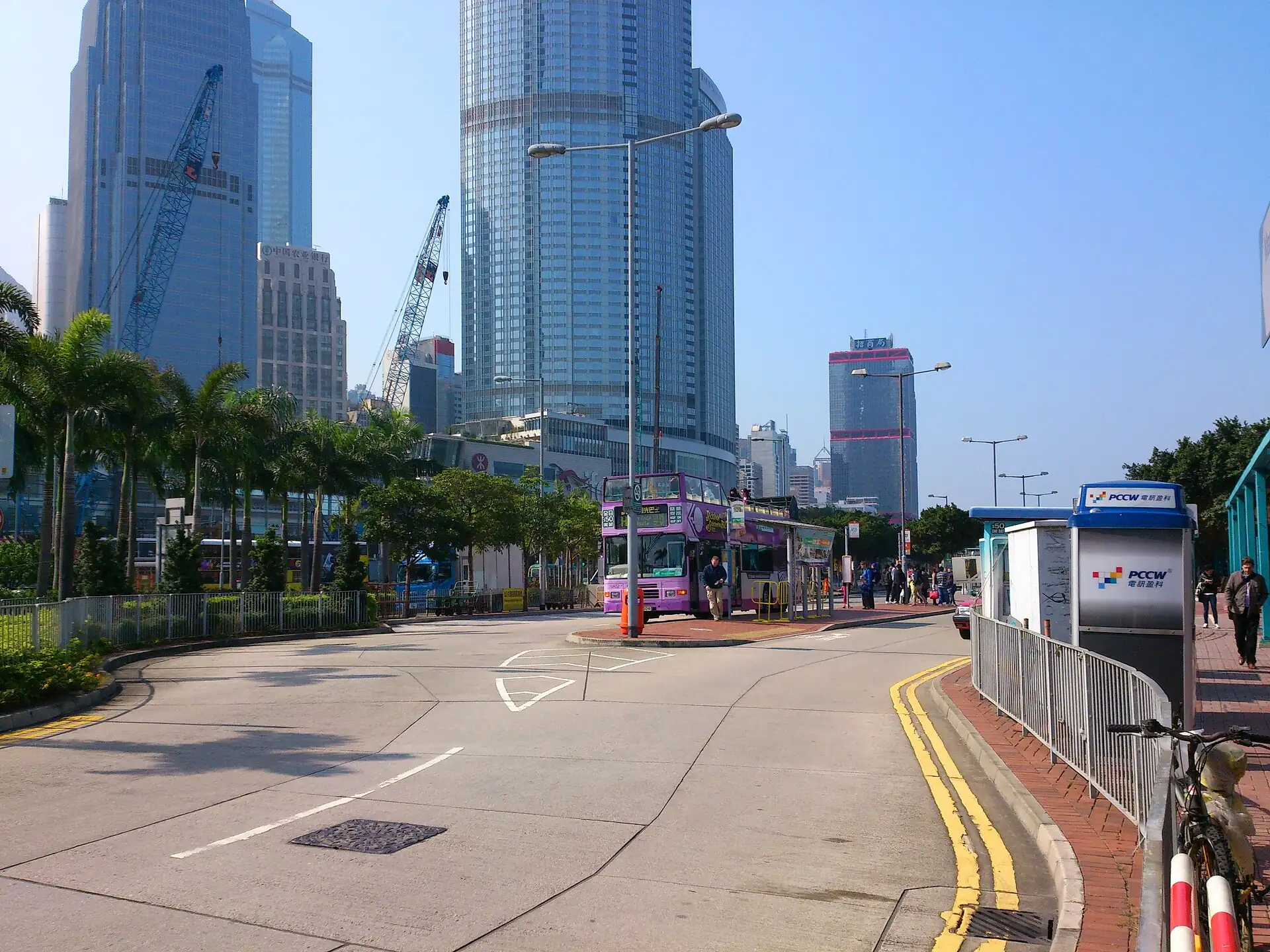
Morning-and-evening cluster: Man Mo Temple at opening, Tai Kwun and the Soho streets, then Lan Kwai Fong after dark; hilly, with stairs between the escalator and the harbour.
rescue 100% · max p90 7′ · half
Clear-morning cluster: Peak Tram or taxi up, the Peak Tower viewing area, then the flat Lugard Road walk; skip it when cloud or haze hides the view.
rescue 97% · max p90 7′ · half
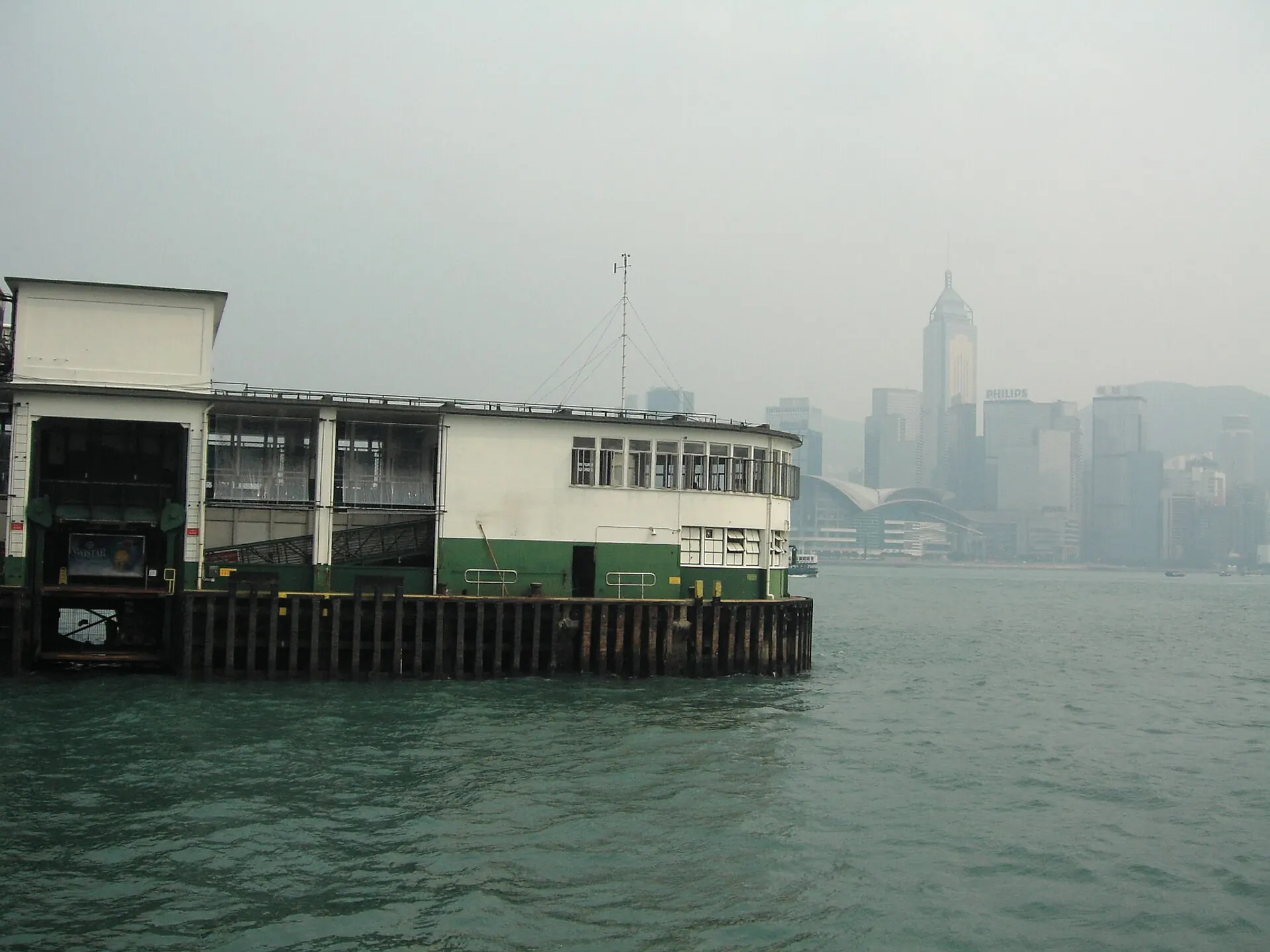
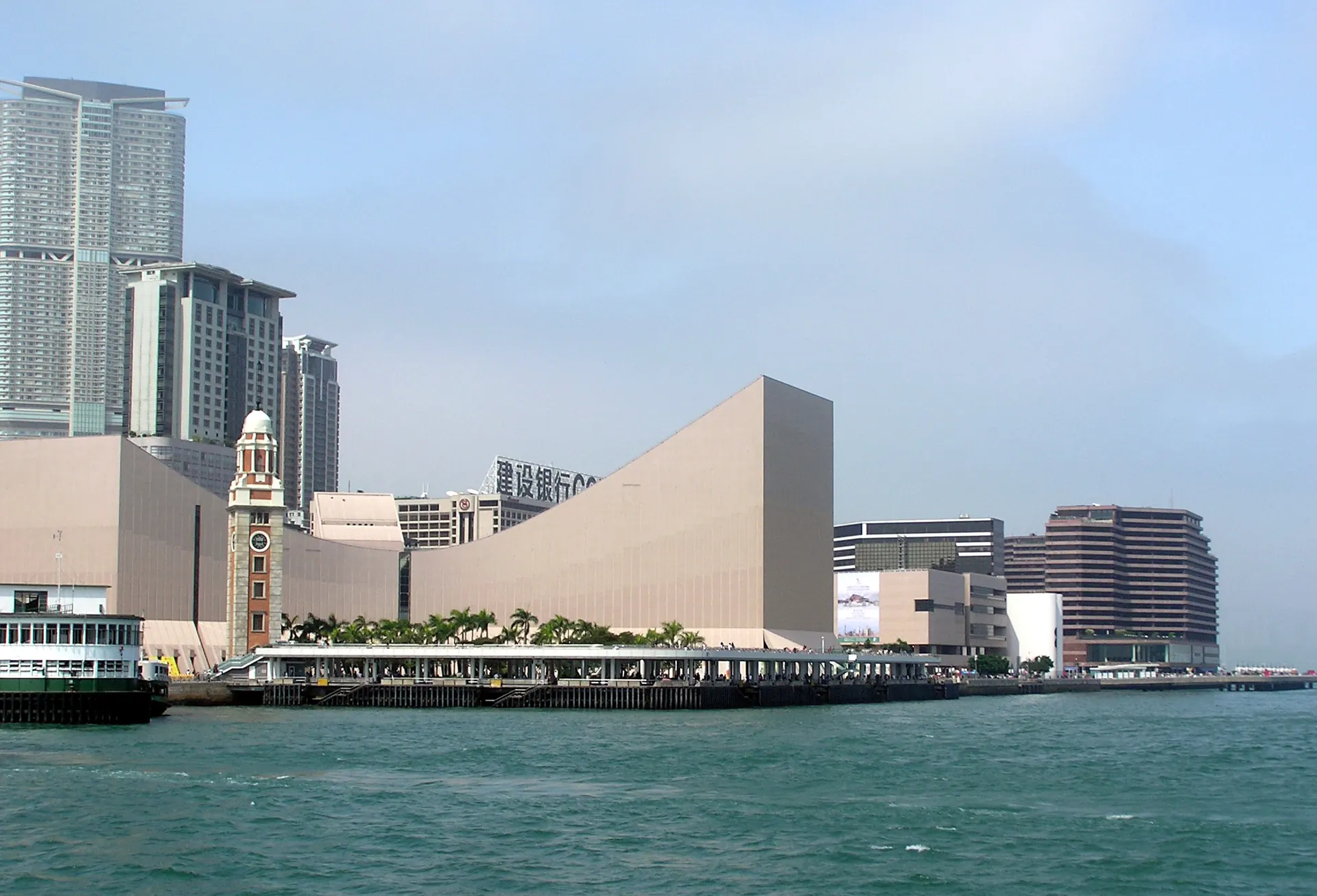
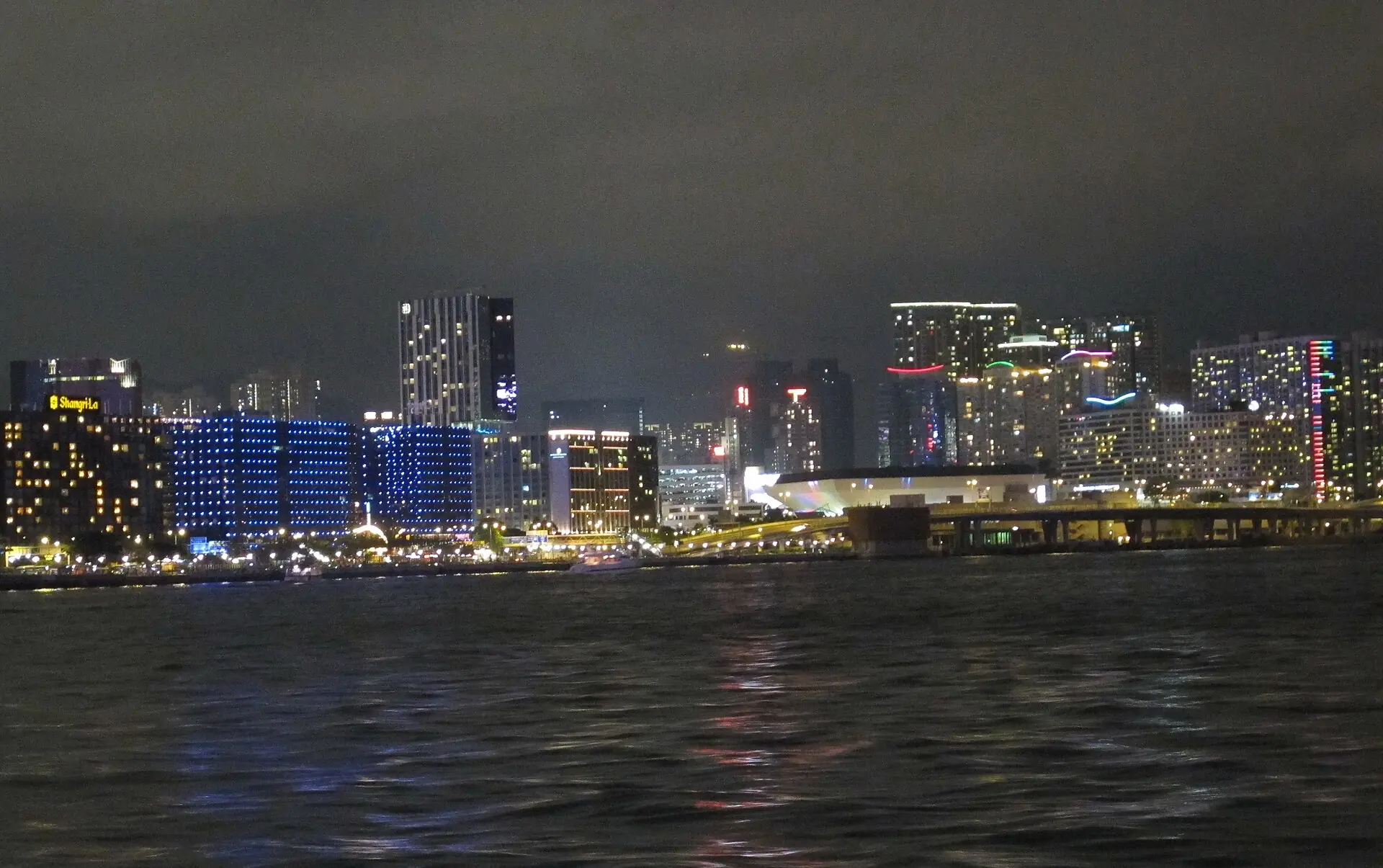
Evening cluster: the Star Ferry pier and the harbour promenade at dusk, then the light show if it runs; flat, exposed and warm in summer.
rescue 99% · max p90 6.8′ · half
Late-afternoon-and-evening cluster: the Ladies' Market and the street-food lanes from 16:00; very crowded, low shade and no seats at the stalls.
rescue 98% · max p90 7′ · 90m
Days
Ready-made day plans, timed against opening hours and walking distances.
How long are you staying?
Loose outlines in the city's rhythm: outdoors early and late, indoors and AC at midday.
1 day
A stopover
- 08:00Man Mo Temple — Man Mo Temple
- 10:00Victoria Peak — Peak Tram and Lugard Road
- 13:00Mak's Noodle — Lunch at Mak's Noodle
- 16:00Star Ferry (Central to Tsim Sha Tsui) — Star Ferry to Tsim Sha Tsui
- 19:00Tsim Sha Tsui Promenade and the Symphony of Lights — Promenade and the light show
Skip: Mong Kok and the islands.
Hong Kong in 3 days
3 daysTemples and the Peak in the morning, malls and cafés at midday, harbour and markets in the evening; the last day ends with the bags already in a taxi.
Day by day
Day 1 — Man Mo Temple at opening, Tai Kwun, a 12:30 lunch table
- 08:30Man Mo Temple
- Tai Kwun Centre for Heritage and Arts (optional)
- Mak's Noodle (optional)
- 12:30Lunch table 12:30 (Central)
Day 2 — The Peak on a clear morning, Lugard Road
Day 3 — Tsim Sha Tsui, Mong Kok, bags into a taxi at 15:00
Places
“Best time” is when to arrive for the fewest crowds, for example “before 08:30”; “Go any time” means the hour makes little difference. More sights follow under “More sights and museums”.
8 places. Filters use the guide’s own ratings; a place with no rating is left out when a filter is on.
Show 2 more placesShow fewer
Tours, classes and shows in Hong Kong Island and Kowloon →
Things to do in Hong Kong Island and Kowloon: shows, nightlife and activities →
If you do ten things in Hong Kong Island and Kowloon
Ranked for a first visit of 2–4 days. Prices are 2026 estimates in Hong Kong dollars.
- 1
Victoria Peak on a clear morning
The classic skyline view.
- Time
- 1.5–3 h
- Best
- 08:00–10:00 on a clear day
- Cost
- Peak Tram about HK$80–110 (≈ US$11–15)
- 2
A ten-minute harbour ride for a few dollars.
- Time
- 20–40 min
- Best
- Late afternoon
- Cost
- About HK$4–7 (≈ under US$1)
- 3
Tsim Sha Tsui Promenade at dusk
The skyline and the light show.
- Time
- 30–60 min
- Best
- 18:00–20:30
- Cost
- Free
- 4
Incense coils and a quiet temple in the city.
- Time
- 20–30 min
- Best
- Early morning
- Cost
- Free (small donation)
- 5
- 6
- 7
- 8
- 9
- 10
A local milk tea and bun.
- Time
- 30 min
- Best
- Before 10:00
- Cost
- HK$40–55 (≈ US$6–8)
Good for…
Verdict is how well Hong Kong works for that traveller, not how nice it is.
Efficient transport, English signs and safe streets.
- 1Victoria Peak — The best skyline view.
- 2Star Ferry — A cheap harbour ride.
Dim sum, noodles and cha chaan teng at every price.
- 1Lin Heung — Old-style dim sum.
Food and transport are cheap; beds are not.
- 1Kam Wah Cafe — A cheap, classic breakfast.
Trams, ferries and parks work; hills and crowds tire small children.
- 1Star Ferry — Short and open-air.
Safe and easy alone.
- 1Tai Kwun — A calm heritage stop.
Harbour hotels and tasting menus.
- 1The Peak — A good view meal.
Lifts exist but hills, stairs and crowded pavements are a challenge.
- 1Promenade — Level and ramped.
Tours and classes: book or skip
Book through the hotel or an operator with written inclusions and a cancellation policy.
| Tour or class | Verdict | Typical price | Why | Check before paying |
|---|---|---|---|---|
| Dim sum and food walking tour | book | HK$500–900 (≈ US$65–120) | A guide explains dishes and how to order. | Group size and number of tastings. |
| Harbour cruise | optional | HK$150–300 (≈ US$20–40) | A view from the water. | Departure time and the boat type. |
| Lantau and Big Buddha tour | optional | HK$500–1,000 (≈ US$65–130) with transport | Saves navigating a cable car and buses. | Cable-car closure days and the price for the cabin type. |
| Macau day trip | book | HK$800–1,500 (≈ US$110–200) | A guided day across the bridge. | Passport and the visa rules. |
| Hiking guide (Dragon's Back) | optional | HK$600–1,000 (≈ US$80–130) | A guide helps with trails and transport. | Weather and difficulty. |
What each season brings
Winter
Dec–Feb
Cool, dry and clear; Lunar New Year
Watch: A cool evening needs a jacket; Lunar New Year closures.
Spring
Mar–May
Warm and hazy; a good month for walking early
Watch: Fog, humidity and the first storms.
Summer
Jun–Aug
Hot and rainy; fewer crowds and indoor culture
Watch: Typhoons and black rainstorm warnings.
Autumn
Sep–Nov
The best season; October to November is clear
Watch: Early September typhoons; October holiday crowds.
Photo spots and the light
Light times are for clear days; haze flattens views.
| Spot | Best light | Tip |
|---|---|---|
| The Peak Tower terrace | Sunrise or blue hour | Go early to avoid the crowd at the rail. |
| Lugard Road western viewpoint | Sunset | A quieter frame than the Peak Tower. |
| Tsim Sha Tsui at dusk | Blue hour and after 20:00 | Use a tripod or steady the phone on the railing. |
| From the upper deck at dusk | Late afternoon | Sit on the left side going from Central to Tsim Sha Tsui. |
| Incense coils in the temple | Morning shafts of light | Ask before photographing worshippers. |
Hong Kong Island and Kowloon travel FAQ
Answers are 2026 desk estimates; fares and rules marked (check) change.
Is Hong Kong safe?
Yes for violent crime; the risks are weather, crowds and bag theft.
Do I need a visa?
Depends on your passport; many visit visa-free for 7 to 180 days (check).
What is Octopus?
A tap card for MTR, buses, trams, ferries and many shops.
When is the best time to visit?
October to December.
What is a typhoon signal 8?
A warning that halts most transport and closes shops; stay indoors.
Do I need cash?
Yes for cha chaan teng and market stalls; cards work in malls and hotels.
How do I get from the airport?
Airport Express about 24 minutes to Central or Kowloon; buses and taxis are cheaper or more direct (check).
Is tap water safe?
It is treated, but many visitors drink bottled water.
What do I tip?
A 10 percent service charge is often added; extra is not needed.
Is English spoken?
Widely in hotels and shops; street signs are bilingual.
What should I eat first?
Dim sum, wonton noodles and milk tea.
Can I use my phone?
Yes; coverage is excellent and eSIMs work.
What are the plug type?
Type G, 220 V.
Is Macau a day trip?
Yes, about an hour by ferry or bridge bus; bring your passport.
Is Hong Kong good for kids?
Yes with trams, ferries and parks; hills and crowds tire small children.
More to see and doSee & do · Learn & work · Rain & heat · Free things · Wheelchair and stroller
Free things to do
Sights in Hong Kong Island and Kowloon that cost nothing to enter. Each is described under Places or More sights; extra costs inside are marked there.
Wheelchair and stroller, place by place
How each place in this guide works for wheels, from its own page. Ratings are desk estimates unless a page says it was checked on the ground.
| Place | Step-free | Wheelchair | Stroller | What to know |
|---|---|---|---|---|
| Ladies' Market (Tung Choi Street) | yes | hard | hard | Level street but narrow and crowded; wheelchairs and strollers struggle at peak time. |
| Lugard Road walk (Peak circuit) | yes | ok | ok | Level tarmac path but narrow in places; a light stroller works. |
| Star Ferry (Central to Tsim Sha Tsui) | partial | ok | ok | A gangway and a step onto the boat; staff assist; check with the operator for wheelchairs. |
| Tai Kwun Centre for Heritage and Arts | partial | ok | ok | A lift and ramps link the levels; some historic stairs remain. |
| Temple Street Night Market | yes | hard | hard | Level street but narrow and crowded. |
| Tsim Sha Tsui Promenade and the Symphony of Lights | yes | ok | ok | Level and ramped along most of the length. |
See & do
24 of 24
- Temples & pagodas
A 19th-century temple with hanging incense coils, dedicated to the gods of literature and war.
Sheung Wan
- Views
The classic skyline view, reached by a tram or taxi.
The Peak
A level circular walk with a wide view.
The Peak
Tai Kwun Centre for Heritage and Arts
Citadel & old cityA restored police station and prison turned into a heritage and arts centre.
Central
A ten-minute harbour crossing since 1888.
Central
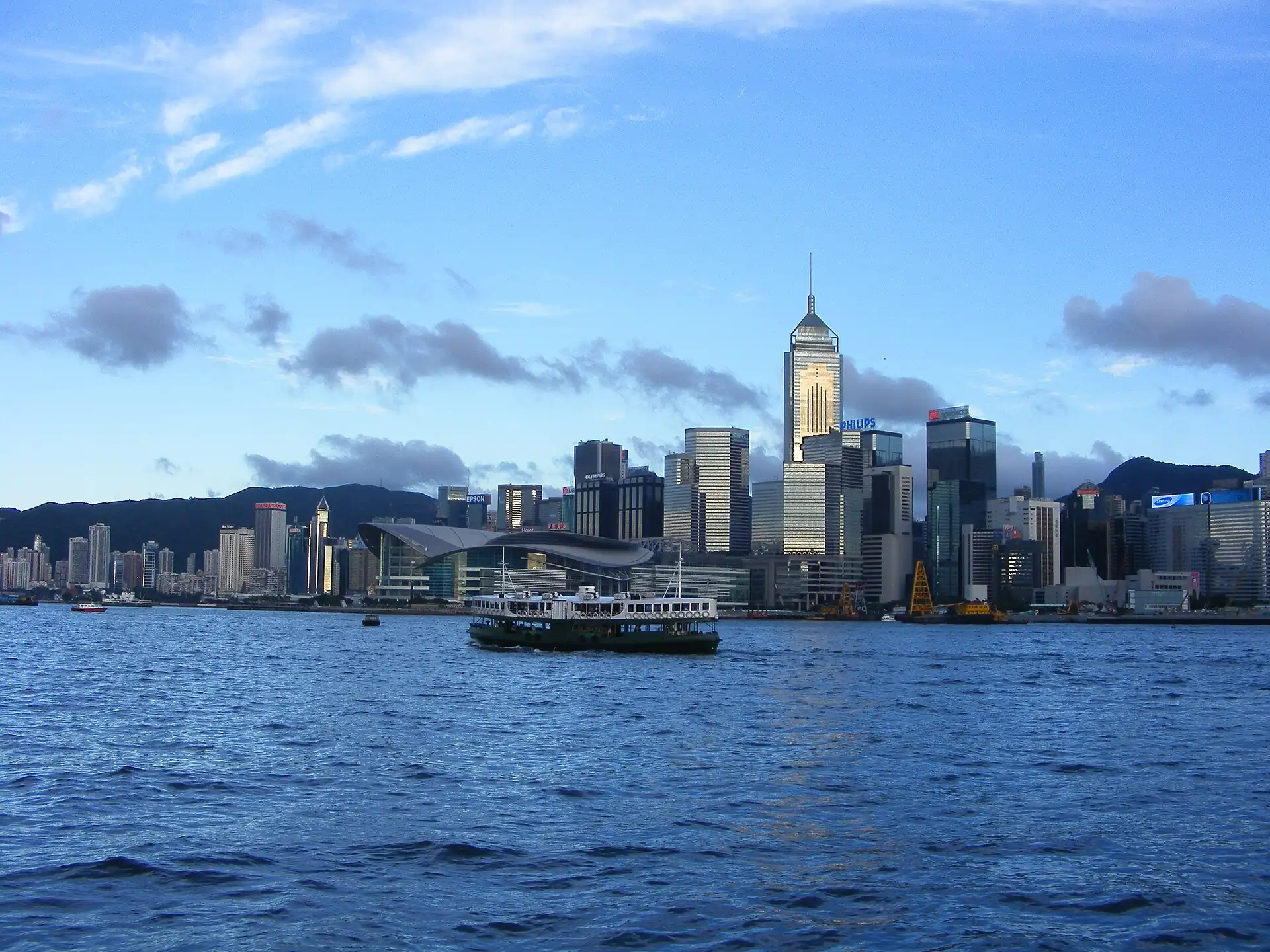
The harbourfront walk and light show.
Tsim Sha Tsui
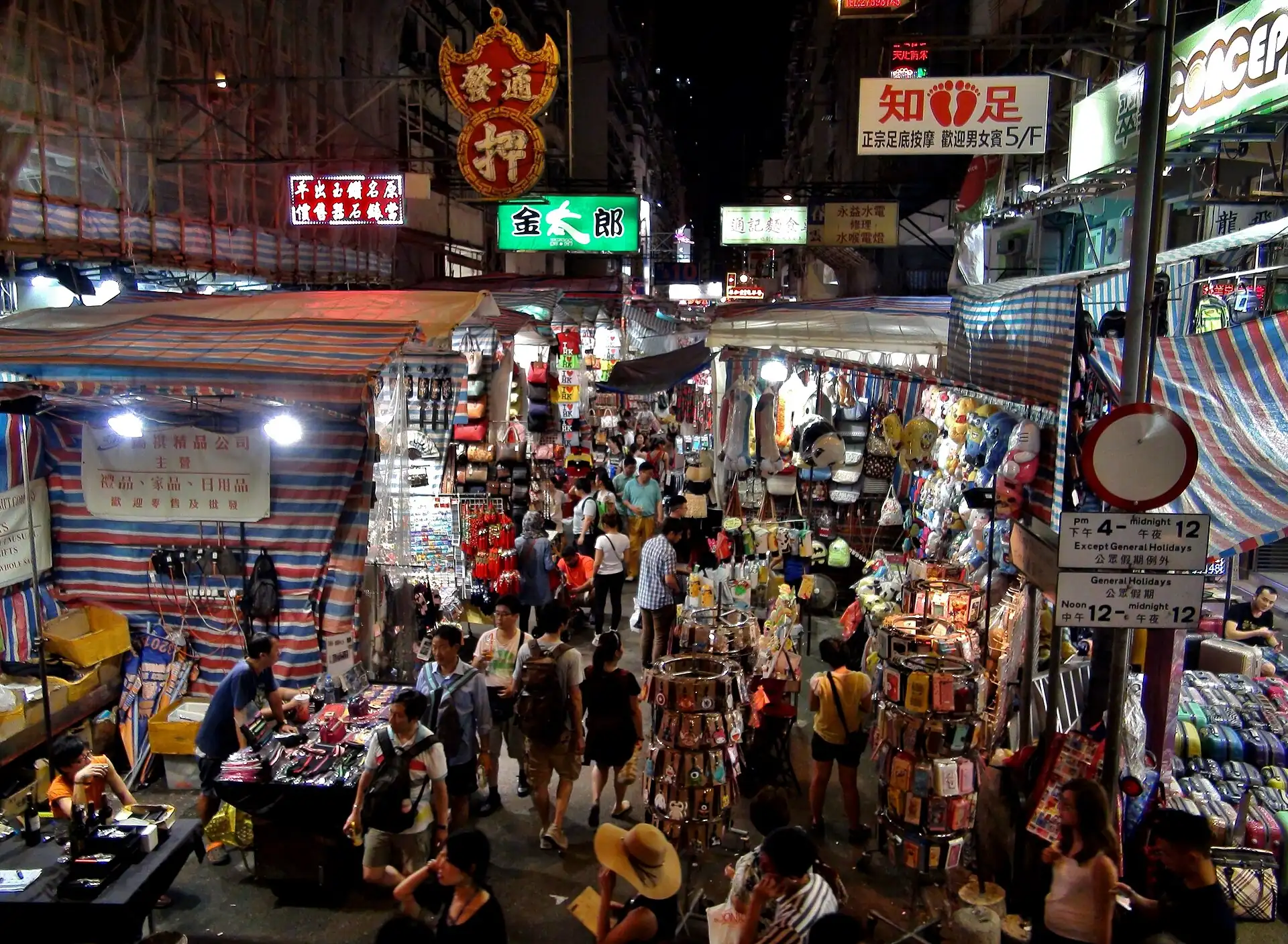
Clothes and souvenirs on a busy street.
Mong Kok
- Markets
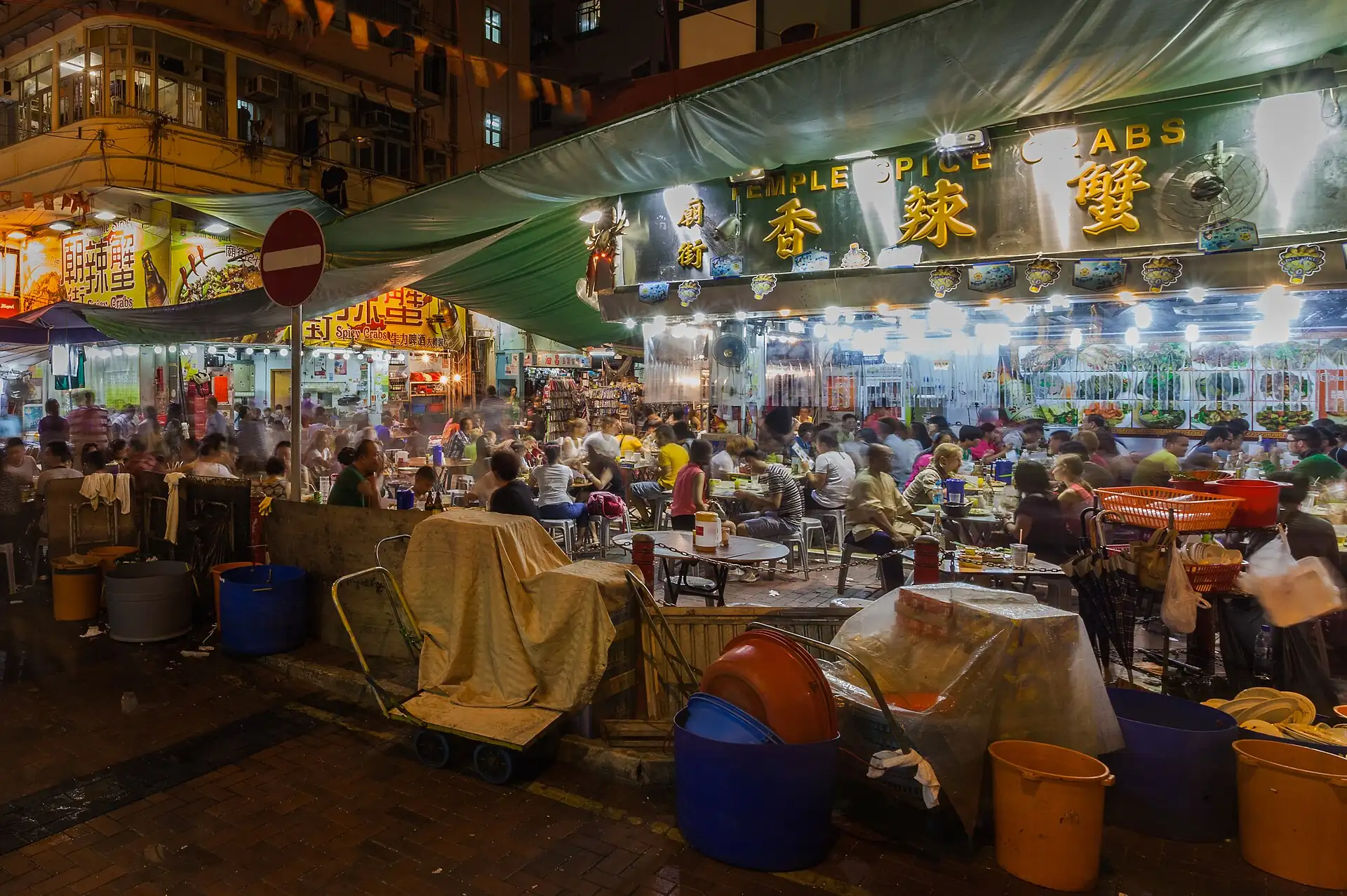
A night market with snacks and fortune-tellers.
Yau Ma Tei
Hong Kong Museum of History香港歷史博物館
MuseumsA walk-through of Hong Kong from prehistory to 1997.
Tsim Sha Tsui East · Wed–Mon, closed Tuesday (check) · about HK$10 (≈ US$2) (2026 estimate)(check)
Hong Kong Museum of Art香港藝術館
MuseumsChinese art and harbour views, reopened after renovation.
Tsim Sha Tsui · Daily except some weekdays (check) · about HK$10 (≈ US$2) (2026 estimate)(check)
Chi Lin Nunnery and Nan Lian Garden志蓮淨苑
Temples & pagodasA Tang-style wooden nunnery and a formal garden beside high-rise blocks.
Diamond Hill · Daily daytime (check) · Free(check)
Wong Tai Sin Temple黃大仙祠
Temples & pagodasA busy Taoist temple where people draw fortune sticks.
Wong Tai Sin · Daily (check) · Free(check)
Sheung Wan Ladder Street and antiques
walkStone steps, antiques and street art.
Sheung Wan · Daytime · Free(check)
Hong Kong Park and the Aviary香港公園
parkA green pocket with a large walk-in aviary and conservatory.
Admiralty · Daily (check) · Free(check)
Stanley Market and beach赤柱
MarketsA seaside village with a market and cafés; take the bus from Central.
South Hong Kong Island · Daily (check) · Free(check)
Kowloon Walled City Park九龍寨城公園
parkA Qing-dynasty garden on the site of the former walled city.
Kowloon City · Daily (check) · Free(check)
Cross the harbour by ferry.
Central · Daily · about HK$4–7 (≈ under US$1)(check)
Peak Tram ride
tourA funicular railway since 1888; book a skip-the-queue ticket only if the queue is long.
Central to the Peak · Daily, morning to late evening (check) · about HK$80–110 (≈ US$11–15) return (2026 estimate)(check)
Dim sum breakfast
foodA dim sum meal at a local hall.
Sheung Wan · Morning · about HK$80–160 (≈ US$11–25)(check)
Symphony of Lights
Shows & musicA free light and laser show over the harbour.
Tsim Sha Tsui and Central · 20:00 nightly (check)8:00 PM nightly (check) · Free(check)
Lantau day trip with Ngong Ping 360
day tripA cable car to the Big Buddha and Po Lin Monastery.
Lantau · Daytime · about HK$300–400 (≈ US$40–55) (2026 estimate)(check)
Tram ride on the north shore
tourRide the upper deck from Central to Causeway Bay.
Kennedy Town to Shau Kei Wan · About 05:00 to midnightAbout 5:00 AM to midnight · about HK$3 (≈ under US$1)(check)
Harbour cruise
tourA junk or ferry cruise; check the operator and the sailing time.
Victoria Harbour · Daily (check) · about HK$150–300 (≈ US$20–40)(check)
Cheung Chau or Lamma island walk
day tripA slow day on a car-free or quiet island.
Outlying islands · Daytime · Ferry about HK$15–40 (≈ US$2–6)(check)
- Booking
- Book Peak Tram and Ngong Ping 360 online in busy periods; ferries to the islands fill on Sundays.
- Weather
- Check the forecast the night before; many activities suspend under typhoon signal 8.
Learn & work
| What | Where | Cost | Note |
|---|---|---|---|
| Cantonese language course | University language centres and private schools | Course fees vary (check) | A little Cantonese is appreciated; "m goi" and "do jeh" go far.(check) |
| Dim sum and cooking classes | Cooking schools and some hotels | HK$400–900 (≈ US$55–120) | Book a few days ahead.(check) |
| Tai chi in the park | Hong Kong Park and Kowloon Park | Free or small fee | Sessions run in the early morning.(check) |
Working here
- Short-stay entry
- Many nationalities enter visa-free for a set number of days; visitors cannot work on a visitor status.
- Remote work
- Cafés and co-working spaces have fast Wi-Fi; rules on working remotely depend on your nationality and employer.
- Long stay
- Long stays need a visa or employment permit from the Immigration Department.
Rain-day and heat-day plan
Rain day
Rain comes in short heavy bursts from April to September: do the outdoor sight in the morning, then move to an AC mall, museum or tea house.
- 01Tai Kwun Centre for Heritage and Arts — Covered courtyards and galleries; 1 hour.
- 02Lin Heung Tea House — A dim sum hall for a slow rainy morning.
- 03Man Mo Temple — Dry inside; a short stop.
- 04Star Ferry (Central to Tsim Sha Tsui) — Covered upper deck; take the MTR if the sea is rough.
Heat day
Above 32 °C: outdoor sights before 10:30 and after 17:00, a mall or museum at midday, and water every hour.
- 07:30Peak or Lugard Road — Cooler air and a clear view.
- 12:00Harbour City mall or Tai Kwun cafés — AC and food.
- 19:00Star Ferry and the promenade — Cooler and with the light show at 20:00.Cooler and with the light show at 8:00 PM.
Go next
Macau
goDoor to door: About 1.5–2 h
Ferry or bus 1 h via the Hong Kong–Zhuhai–Macau Bridge
Bring your passport; check visa rules for Macau.
Lantau: Tian Tan Buddha and Ngong Ping
goDoor to door: About 1–1.5 h
MTR to Tung Chung then cable car or bus
A full-day trip; check cable-car maintenance closures.
Cheung Chau
goDoor to door: About 1 h
Ferry from Central Pier 5, 35–55 min
Car-free island with seafood, beaches and a bun festival.
Lamma Island
goDoor to door: About 45 min
Ferry from Central Pier 4, 30 min
A hiking-and-seafood day between two villages.
Shenzhen
cautionDoor to door: About 1.5 h with immigration
MTR East Rail to Lo Wu or Lok Ma Chau, about 45 min
A visa may be needed; check before you go.
Sai Kung
goDoor to door: About 1 h
Bus or minibus from Diamond Hill, about 40 min
Country parks, beaches and seafood; go on a weekday.
Eat & sleepWhere to eat and which area to sleep in
Eat & sleep
Where to eat and which area to sleep in
Eat
A short list of places worth crossing the city for, each with how to get a seat.
Restaurant finder: filter every place to eat in Hong Kong Island and Kowloon →
Vegetarian-friendly score
2.5 / 5 · Workable
- Country diet noteOur country guide rates vegetarian eating as mixed.0.75 / 2
- Places to eat in this guide4 of 5 places with a known answer are vegetarian-friendly, 1 partly.1.35 / 1.5
- Budget eating lines0 vegetarian lines in "Eat by budget".0 / 0.6
- Meat-free national dishes5 meat-free dishes in the country food list.0.4 / 0.4
- Dedicated vegetarian kitchens1 mention of vegetarian restaurants, Buddhist or fasting kitchens.0.1 / 0.5
Country note: Buddhist vegetarian restaurants and monasteries are good; ordinary Cantonese dishes often use pork stock or oyster sauce.
Vegetarian places near me →Make a diet card →
How we score
- Country diet note (up to 2): easy 2, workable 1, mixed 0.75, hard 0; no note 0.5.
- City places to eat (up to 1.5): 1.5 × (vegetarian-friendly + half of partly friendly) ÷ places with a known answer; needs 3 or more known places.
- Budget eating lines marked vegetarian (up to 0.6): 0.2 each.
- Meat-free national dishes (up to 0.4): 0.1 each.
- Dedicated vegetarian kitchens mentioned — Buddhist chay, shōjin ryōri, Jain, fasting food, vegan cafés (up to 0.5): 0.1 each.
- Total rounded to the nearest half point, 0 to 5. Built from our own pages only, not from reviews.
Eating and drinking guideEat by budget · Drink
Eat by budget
Under HK$80 (≈ US$11) a meal
| Where | Order | Area | Price | Note |
|---|---|---|---|---|
| Kam Wah Cafe | Pineapple bun with butter and milk tea | Mong Kok | HK$40–55 (≈ US$6–8) | Go before 10:00.Go before 10:00 AM. |
| Lan Fong Yuen | Milk tea and pork chop bun | Central | HK$45–70 (≈ US$6–9) | Shared tables. |
| Street snacks (fish balls, egg waffles) | Snacks from a stall | Mong Kok and Temple Street | HK$15–40 (≈ US$2–6) | Pay in cash. |
Dishes to know
| Dish | What it is | Where to look | When | Price |
|---|---|---|---|---|
| Dim sum點心 | Small steamed and fried dishes eaten with tea | Tea houses and restaurants | Morning to early afternoon | HK$20–60 (≈ US$3–8) per basket |
| Wonton noodles雲吞麵 | Shrimp wontons in clear broth with thin egg noodles | Noodle shops | Lunch | HK$55–90 (≈ US$8–12) |
| Roast goose and char siu燒鵝 / 叉燒 | Roast meats over rice | Roast meat shops | Lunch and dinner | HK$60–120 (≈ US$8–16) |
| Pineapple bun with butter菠蘿油 | A sweet bun with a slab of butter | Cha chaan teng | Breakfast | HK$20–30 (≈ US$3–4) |
| Egg tart蛋撻 | A custard tart in a flaky or shortcrust shell | Bakeries | Snack | HK$8–20 (≈ US$2–3) |
| Clay pot rice煲仔飯 | Rice cooked in a clay pot with meat and a crust | Restaurants (winter) | Dinner | HK$80–140 (≈ US$11–18) |
| Hong Kong milk tea港式奶茶 | Strong tea with evaporated milk | Cha chaan teng | All day | HK$20–35 (≈ US$3–5) |
- Look for a busy shop with a queue of locals.
- Expect a table charge or a tea charge at some restaurants.
- Tea is free or cheap; it comes with the table.
Drink & nightlife
| Where | What | Until | Note |
|---|---|---|---|
| Lan Kwai Fong | Bars and clubs in a compact area | Late; often to 03:00 on weekendsLate; often to 3:00 AM on weekends | Crowded on Friday and Saturday nights. |
| Soho (Elgin Street, Staunton Street) | Cocktail bars and wine bars | About 01:00–02:00About 1:00 AM–2:00 AM | Quieter and more varied than Lan Kwai Fong. |
| Temple Street and Mong Kok | Beer at open-air stalls | About midnight | Cheaper drinks, no reservations. |
By style
| Style | What | Where | Price | Until |
|---|---|---|---|---|
| Hong Kong milk tea | Strong black tea with evaporated milk, a cha chaan teng stapleOrder "hot" or "iced". | Cha chaan teng | HK$20–35 (≈ US$3–5) a cup | All day |
| Yuenyeung | Half coffee, half milk teaA local classic. | Cha chaan teng | HK$22–35 (≈ US$3–5) | — |
| Local beer | Lager, including Blue Girl and craft beerConvenience-store cans are cheap; drinking in public is allowed but observe local rules. | Bars and convenience stores | HK$45–90 (≈ US$6–12) a pint in a bar | — |
Rules that bite
- Legal drinking age is 18.
- Do not drink and drive; the limit is strict.
- Drinking on the MTR is not allowed.
Sleep
Pick the area first: it decides your walk home at night and your first morning.
Which neighborhood fits you
Three questions, one recommendation, with the reasons.
Your best fit
- The promenade, museums and the Star Ferry are on the doorstep.
- Many hotels have 24-hour desks.
Watch out: Busy with tourists and traffic; harbour-facing rooms are worth it.
Next best: Central–Soho (Hong Kong Island)
Built from our 1–5 desk scores per area; your answers stay in this browser.
More on sleepingSleep by budget · Your area · With kids
Sleep by budget
| Band | Price | Where | Room types | What to expect |
|---|---|---|---|---|
| budget | HK$250–450 (≈ US$35–60) dorm bed · HK$500–900 (≈ US$65–120) double | Tsim Sha Tsui, Mong Kok, Causeway Bay | Hostels and guesthouses in tower blocks | Small rooms, thin walls, sometimes shared bathrooms. |
| mid | HK$1,000–2,000 (≈ US$130–300) | Tsim Sha Tsui, Central, Wan Chai | City hotels | Compact rooms, AC, breakfast sometimes extra. |
| splurge | HK$2,500 (≈ US$350)+ | Central, Tsim Sha Tsui waterfront | Harbour hotels | Big views, service and spa. |
Booking checks
- Book early for Lunar New Year, trade fairs (March, April, October) and the October holiday week.
- Ask for a room above the fifth floor for less street noise.
- Check the room size: some cheap rooms are under 12 square metres.
- Confirm the address and floor; guesthouses hide inside tall buildings.
- Ask if the price includes taxes and service.
Which area is yours
| If you are | Sleep in | Because |
|---|---|---|
| First visit, 2–4 nights, food and nightlife | Central–Soho (Hong Kong Island) | Everything is a short walk or a ferry away; accept the hills and noise. |
| Harbour views, museums, easy airport train | Tsim Sha Tsui (Kowloon) | Flat, well connected and easy with bags. |
First nights and Peak trips: close to Hong Kong Station, big hotels with 24h desks; expect slopes and higher prices.
Harbour views and the markets: many mid-range hotels, MTR at the door; from the airport it is one taxi after the trains stop.
Areas are in our default order until you tick a priority.
Scores are 1–5 desk judgements per priority (2026).
With kids
- Peak Tram and the Star Ferry are children's favourites; both are short and open-air.
- Hong Kong Disneyland and Ocean Park are the big family parks; check current hours and ticketing.
- MTR is stroller-friendly with lifts, but steps and crowded platforms are the trouble spot on hills; a carrier is easier.
- Cha chaan teng serve child-friendly food; menus have pictures.
- Parks such as Hong Kong Park and Kowloon Park have playgrounds and bird houses.
PracticalMoney, essentials, safety and the pocket card
Practical
Money, essentials, safety and the pocket card
Money
What a day costs at three comfort levels, and how to pay.
- Budget
- HK$250–450 (≈ US$35–60) excl. bed / day
- Mid
- HK$450–900 (≈ US$60–120) excl. bed / day
- High
- HK$900 (≈ US$120)+ excl. bed / day
- Transit card
- Octopus card (or a contactless bank card) works on the MTR, buses, trams and the Star Ferry.
- Cash rule
- Keep HK$300 (≈ US$40) in small notes for cha chaan teng and market stalls; use bank or station ATMs.
More on moneyBudget · Buy
Trip budget
| Double room, mid-range hotel1 × 4 nights × HK$1,300 | HK$5,200 |
| Food, local transport, entries2 × 4 days × HK$900 | HK$7,200 |
| Airport Express, both ways2 × HK$230 · Check the current fare; a day pass or group ticket may save money | HK$460 |
| Octopus card top-up2 × HK$200 · For MTR, tram and ferry | HK$400 |
| Peak Tram return2 × HK$90 | HK$180 |
| Buffer 10%Price creep, a taxi you did not plan, one splurge | HK$1,344 |
| Trip total≈ HK$1,848 per person per day, bed included | HK$14,784≈ US$1,900 |
2026 estimate in Hong Kong dollars; flights and visas excluded. Your choices start from these defaults.
Prices of common things
| Milk tea at a cha chaan teng | HK$20–35 (≈ US$3–5) |
| Dim sum, per person | HK$80–160 (≈ US$11–25) |
| MTR ride, central | HK$5–15 (≈ US$1–2) |
| Star Ferry crossing | HK$4–7 (≈ under US$1) |
2026 estimate; check locally.
Buy
- Bargaining
- Prices are fixed in malls and shops; bargain gently at street markets like Ladies Market and Temple Street, and never at food stalls with printed prices.
- Fixed-price check
- Check electronics prices at shops with a fixed-price sign and a receipt; avoid unmarked shops around Tsim Sha Tsui that quote different prices for the same item.
Markets and shopping streets
| Where | What | When | Haggle | Note |
|---|---|---|---|---|
| Ladies' Market | Clothes, bags, souvenirs | About 12:00–23:00 (check)About 12:00 PM–11:00 PM (check) | yes | Start at about half the asking price. |
| Temple Street Night Market | Souvenirs, clothes, snacks, fortune-tellers | About 16:00–24:00 (check)About 4:00 PM–12:00 AM (check) | yes | Go after 19:00 for the full scene.Go after 7:00 PM for the full scene. |
| Graham Street Market | Fresh produce and food stalls | Morning to afternoon (check) | no | A working wet market in Central; go early. |
| Jade Market | Jade jewellery and stones | Daytime (check) | hard | Buy from a stall with a fixed tag; ask for a receipt. |
Shops by what they sell
| For | Where | Hours | Note |
|---|---|---|---|
| Electronics and cameras | Mong Kok and Tsim Sha Tsui shops with tagged prices | About 11:00–21:00 | Ask for the warranty in your language; keep the receipt. |
| Tea, herbs and dried goods | Sheung Wan (Des Voeux Road West) | Daytime | Prices are per catty; ask for a small weight first. |
| Tailors | Central and Tsim Sha Tsui | Daytime | Allow a few days for a fitting; agree the price first. |
Changing money
| Where | Verdict | Why |
|---|---|---|
| Bank ATMs and airport machines | use | Withdraw Hong Kong dollars; check your card fees. |
| Licensed money changers in Central and Tsim Sha Tsui | caution | Compare rates; some charge a commission. |
| Chungking Mansions changers | caution | Confirm the rate and the fee before handing over cash. |
ATMs
- Cards
- Visa and Mastercard work in most shops and restaurants; small stalls prefer cash or Octopus.
- Cash
- Keep HK$300 (≈ US$40) in small notes for cha chaan teng and market stalls.
Essentials and accessAccess
Accessibility
Hong Kong is hard on hills and stairs but strong on lifts: the MTR has lifts at almost every station, but exits can be far apart and streets are steep.
- MTR
- Lifts, tactile paths and priority seats; check which exit has the lift.
- Pavements
- Narrow in older districts; steep in Central and Sheung Wan; covered walkways and footbridges link buildings.
- Toilets
- Accessible toilets in malls, MTR stations and parks.
Sights, step-free or not
| Star Ferry | step-free | A gangway; staff assist. |
| Tsim Sha Tsui Promenade | step-free | Level and ramped. |
| Victoria Peak | step-free | A ramped Peak Tram and a level Lugard Road path. |
| Man Mo Temple | hard | Steps and a steep approach. |
| Ladies' Market | hard | Crowded and narrow. |
Survive
Safety basics, the lines not to cross, and practical habits that save the day.
Safety
- Check the Hong Kong Observatory for warnings before every outdoor day (Jun–Oct).
- Heat and humidity (May–Sep): AC stop every 60–90 minutes; drink water.
- Emergency: 999 for police, fire and ambulance.
Red lines
- No eating or drinking on the MTR.
- Temples: do not point at statues, do not step on thresholds.
- Do not photograph people at close range in markets without asking.
Practical
- Toilets: MTR stations, malls and cafés; carry tissues.
- Tap water is treated, but many visitors drink bottled water.
More on staying safeStay safe · Stay healthy · Safety map · Solo & women · Etiquette · Cope
After dark, by area
1 flagged area
- Take care
Day = about 07:00–19:00. What to watch in each area, day and night →
Stay safe
Crossing the road
- 01Look left first at most crossings; traffic drives on the left.
- 02Use footbridges where possible; drivers can be aggressive.
- 03Do not cross against the red pedestrian light.
Hustles specific to this city
| Hustle | Where | The tell | What to do |
|---|---|---|---|
| Tailor or watch touts | Tsim Sha Tsui | Someone offers a fitting or a watch on the street | Say no politely and keep walking. |
| Overcharging in tourist-area restaurants | Around Temple Street and Lan Kwai Fong | A menu without prices | Ask for a written menu and check the bill. |
| Unlicensed taxi or private car | Airport and hotels | A driver approaches you in the terminal | Use the taxi rank or Airport Express. |
| Fake goods and switched items | Some markets and electronics shops | Very low prices | Buy from a shop with a fixed tag and keep the receipt. |
- Police
- Dial 999 for an emergency; tourist police can help at major sights (check).
- Typhoons
- Follow the Hong Kong Observatory signals; stay indoors under signal 8.
- Lost items
- Report to the nearest police station and ask for a report for insurance.
Stay healthy
- Heat
- May to September: shade, AC and water; heat stroke is real on the Peak and hill paths.
- Sun
- Strong UV: hat, sunscreen and sunglasses.
- Food and water
- Tap water is treated, but many visitors prefer bottled water; food hygiene is good.
- Mosquitoes
- Use repellent on hill paths and in parks; dengue is possible but rare (check).
- Insurance
- Travel insurance with medical cover; non-residents pay high public and private hospital fees.
Hospitals and clinics: see Cope.
Safety by area and hour
| Area | Day | Night | What to watch |
|---|---|---|---|
| Central and Soho | fine | fine | Drink spiking in a few bars; steep, wet steps in rain. |
| Victoria Peak | fine | caution | Lugard Road is unlit at night. |
| Tsim Sha Tsui | fine | fine | Touts offering tailors or watches; refuse politely. |
| Mong Kok | fine | fine | Pickpockets in dense crowds; bag to the front. |
- Check the Observatory for typhoon or black rainstorm warnings before going out.
- Escalators and stairs are slippery in rain: hold the handrail.
Solo, women and LGBTQ+ travellers
Solo
- Very safe alone: cha chaan teng seat you at shared tables.
- Book harbour cruises and day trips with a group if you want company.
- MTR and taxis run late; keep the address in Chinese.
Women
- Hong Kong is among the safest big cities for women travelling alone.
- Keep an eye on drinks in bars in Lan Kwai Fong and Soho.
- Late-night MTR and taxis are used by everyone.
LGBTQ+
- Same-sex sexual activity is legal and the city has a visible scene in Central and Wan Chai; legal recognition of same-sex partnerships is limited, and public attitudes vary.
- Check current local laws and advice before you travel.
- Nightlife venues are welcoming in Central.
Etiquette in Hong Kong Island and Kowloon
- Temples
- Do not point at statues, do not step on thresholds, and avoid photographing worshippers at close range.
- MTR
- Stand on the right of escalators, let people off first, and do not eat or drink on the train.
- Dim sum
- Tap two fingers on the table to thank someone who pours your tea.
- Chopsticks
- Do not stick chopsticks upright in rice; place them across the bowl.
- Tipping
- A 10 percent service charge is often added; extra tip is not expected.
- Queueing
- Queue politely for buses and ferries; push-in is rare.
Cope
Hospitals and clinics that handle foreigners
| Where | Area | Use it for |
|---|---|---|
| Queen Mary Hospital (public) | Pok Fu Lam | A public hospital with an emergency department; non-residents pay a higher fee. |
| Hong Kong Adventist Hospital | Stubbs Road, Wan Chai | A private hospital with English-speaking staff; check your insurance for direct billing. |
| Private clinics in Central and Tsim Sha Tsui | Central, Tsim Sha Tsui | Walk-in clinics for minor illness; ask your hotel. |
Visa extensions
- Entry
- Many nationalities enter visa-free for 7 to 180 days; check your passport on the Immigration Department site before you fly.
- Extensions
- Extensions are made at the Immigration Department; apply before your stay ends.
Embassies and consulates
| Country | Address | Phone | Note |
|---|---|---|---|
| United States | 26 Garden Road, Central | +852 2523 9011 | (check) |
| United Kingdom | 1 Supreme Court Road, Admiralty | +852 2901 3000 | (check) |
| Australia | Harbour Centre, Wan Chai | +852 2827 8881 | (check) |
| Canada | Tower 1, Exchange Square, Central | +852 3719 4700 | (check) |
- Lost passport
- Report to the police, then contact your consulate for an emergency document.
- Pharmacies
- Watsons and Mannings are found on most streets; open late.
- Lost items on the MTR
- Report at a customer service centre or on the MTR site.
Apps and offline kitOffline kit
Offline kit
Set up before you leave, so Hong Kong Island and Kowloon still works with no signal or a dead roaming plan.
On your phone
- Maps: open the city in Google Maps, tap the place name, then Download offline map (or use an offline-maps app).
- Data: install an eSIM or buy a local SIM before the first taxi; the apps in this guide depend on it.
- Translation: download the local language for camera translation.
- Screenshots: booking confirmations, hotel address in the local script, and the emergency numbers.
This guide
Save the Hong Kong Island and Kowloon guide and its pages on this device; it opens without a connection.
Pocket card
Fill in, then print or save as PDF
Stays in this browser only; nothing is sent anywhere.
Hong Kong Island and Kowloon香港
Pocket card · Voykit
My bed tonight
—
—
—
唔該帶我去呢個地址Please take me to this address
Emergency
- Police, fire and ambulance999
- Tourist hotline (HKTB)+852 2508 1234
Embassy
Most consulates are in Central and Admiralty; check your own address before you fly.
My embassy: —
Fare anchors (2026 estimate)
- Airport Express to Hong Kong or Kowloon station: About HK$115–130 (≈ US$15–17), 24 minutes (check)
- Taxi from the airport to Central: About HK$350–450 (≈ US$45–60), 40 minutes (check)
- Octopus deposit (if any): Refundable value on the card; check the current rules
Show the address in Chinese with the building name and floor; drivers may not know English street names.
Deep diveHistory, reading, photos and every source
Deep dive
History, reading, photos and every source
Sources
- officialHong Kong Tourism Board
- officialHong Kong Observatory
- secondaryWikivoyage — Hong Kong
Ask about Hong Kong Island and Kowloon
Loading…
Was this useful?