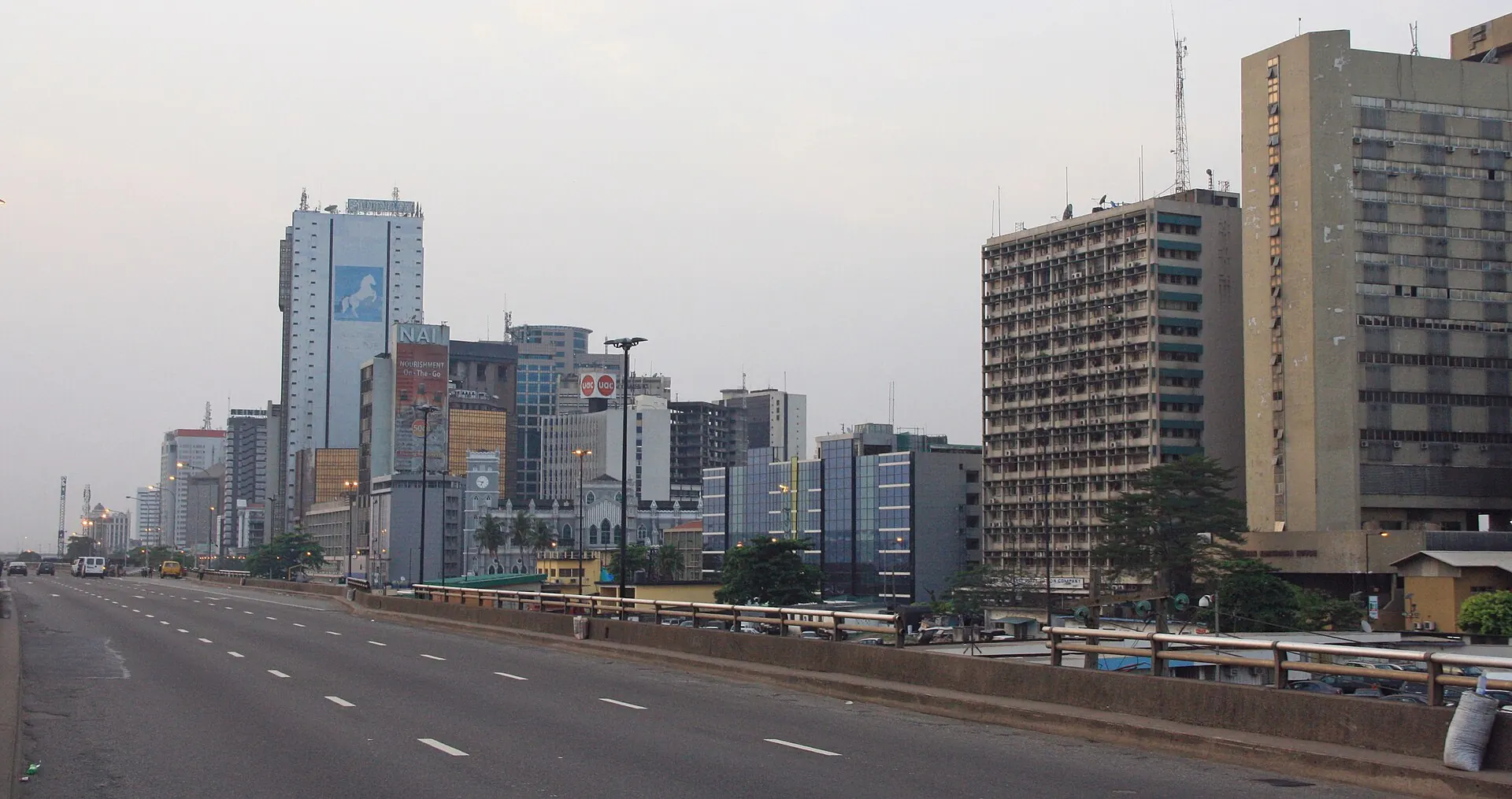
Lagos
Code NI · 4 walking zones
Lagos is a car-with-a-driver city: base yourself on Victoria Island or Ikoyi, move between neighbourhoods by pre-arranged car, keep each trip to one cluster, and be back before dark and before the evening traffic.
Our quick read of Lagos, scored 1–5 (friction is out of 100). Cash need: how often you still need notes. Heat risk: how hot days get. Stroller: how easy wheels are. Friction: overall effort for a first visit. Desk judgements, so check before relying on them.
- Local time
- --:--
- Weather
- forecast below
- Currency
- NGN
- Best months
- Jan · Feb · Mar · Nov
- Airport
- Murtala Muhammed (LOS)
Walking zones: the 4 areas this guide plans a day around. Each is a district you can cover on foot, so you do one zone per half-day and ride the train between them. The code (NI 01, NI 02…) is just the zone's number on the Lagos line; the line under each name says how bags fare there and how much time it needs.
Map of Lagos
Use the switches to show or hide each kind of pin. A switch that is on shows its pins on the map; tap it again to hide them. "Show only" keeps just the pins that match (for example, places that fit a suitcase). Tap any pin for its name and a link to its page.
- Where to sleep
- Places
- Eat
- Walking clusters
- Rest stops
From the airport Murtala Muhammed (LOS) to your bed
Tap a pin for its card. Places without their own coordinates are shown by their walking cluster.
Why Lagos
Lagos is huge, loud and slow to cross. The trips that go wrong are the ones that treat it like a walkable city: an unbooked taxi from the airport, a cross-town run at rush hour that takes three hours, and a phone in hand on Lagos Island. Four clusters, each reached by a pre-arranged car and visited on its own, make a first visit workable. Your government may advise against parts of Nigeria: read its advice and keep to the areas and routes it allows.
See first
- 1
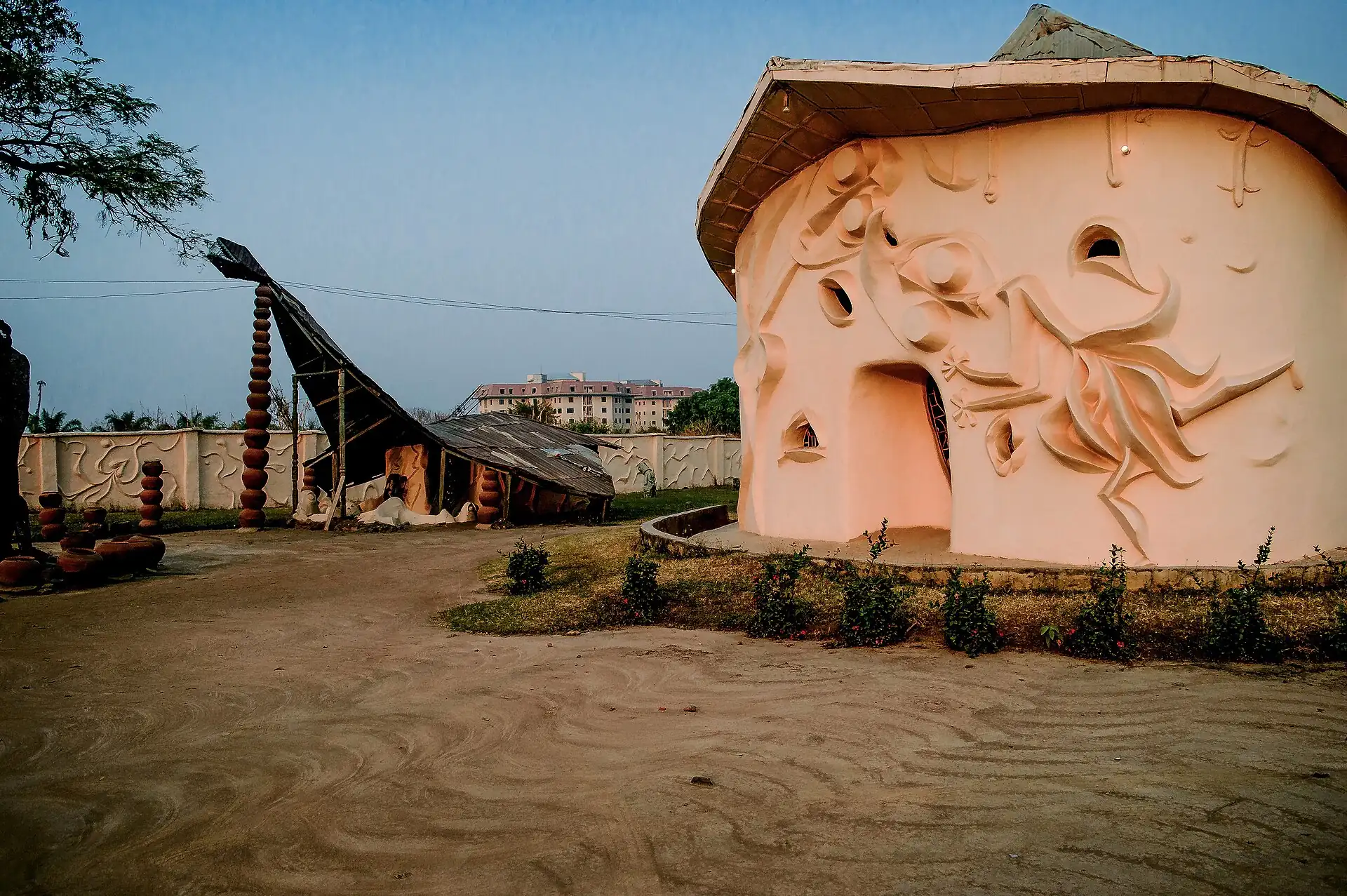 Nike Art Gallery, Lekki · 60–90 min
- 2
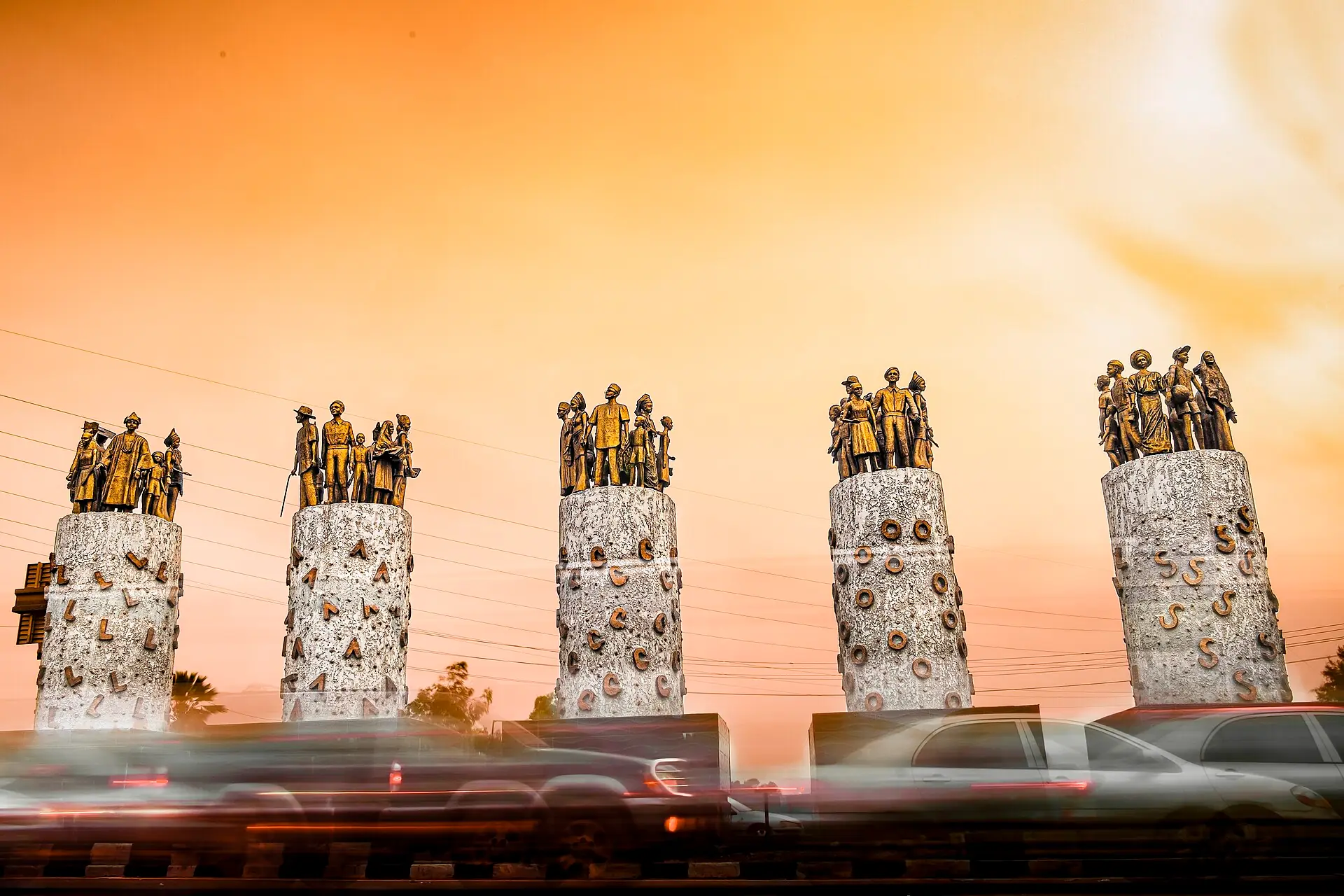 Terra Kulture, Victoria Island · 60–90 min
- 3
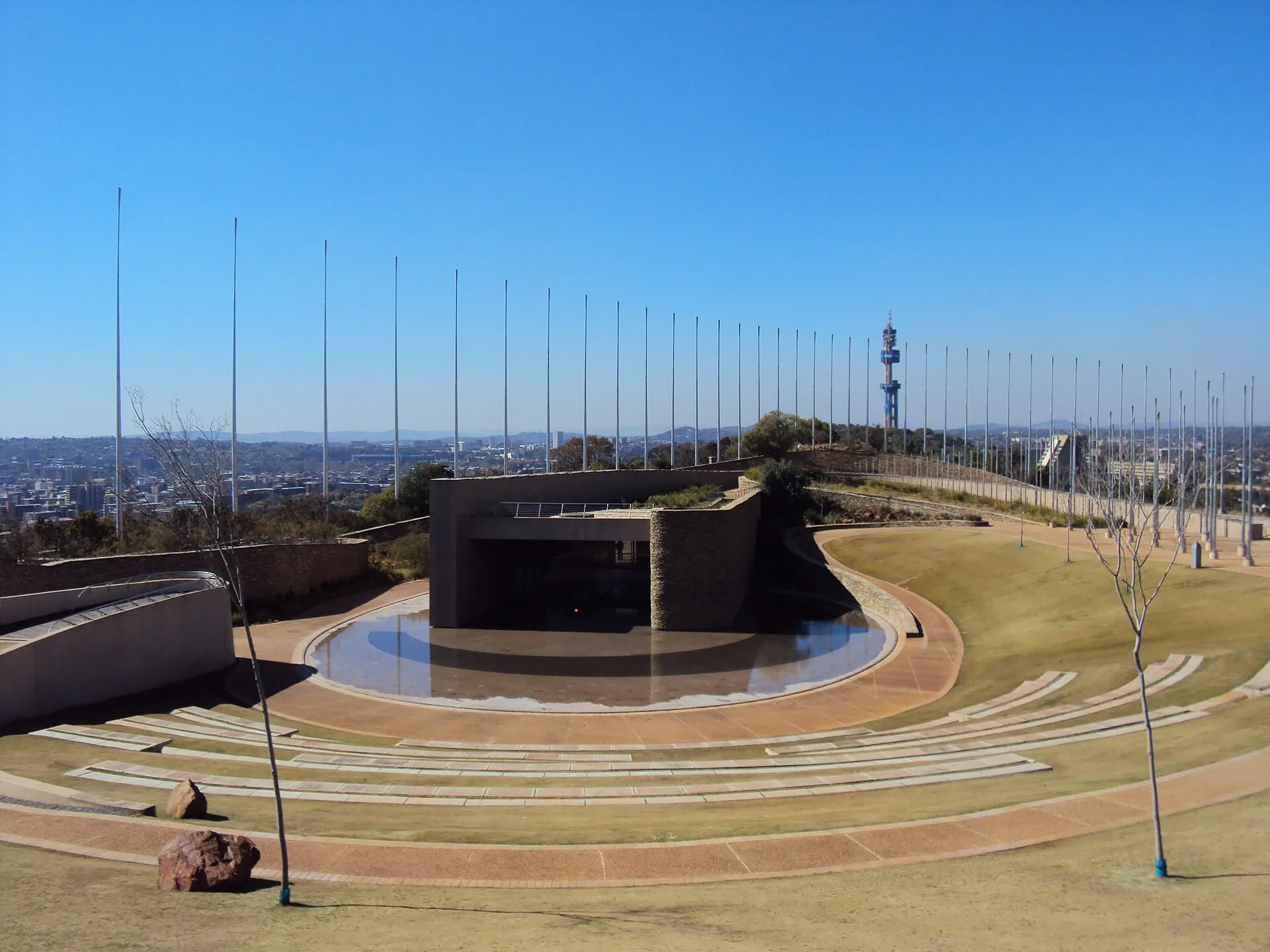 Freedom Park, Lagos Island · 45–75 min
- 4National Museum, Onikan · 60 min
- 5Lekki Conservation Centre · 90 min
Fits
- Arts and music trips
- Business travellers with free half-days
- Food trips with a driver
Does not fit
- Walkers and public-transport travellers
- Strollers and wheelchairs (pavements)
- Anyone who wants to move around at rush hour
How long
- 2 daysVictoria Island arts and lunch; Lagos Island morning by car
- 3 daysThree clusters by pre-arranged car, one per morning
- 4 daysLagos 3 + a beach or Lekki day if your advice and your driver agree
Good for
- First timers
- Art lovers
- Music fans
- Solo
- Families
About Lagos
Lagos began as Eko, a settlement on an island in a lagoon, ruled from the 17th century as a vassal of the Kingdom of Benin. Portuguese traders named the place for the town of Lagos in the Algarve, and for two centuries the port shipped enslaved people across the Atlantic.
Britain bombarded Lagos in 1851 to end the slave trade, and in 1861 the Oba Dosunmu signed a treaty of cession. Lagos became the colony's capital and, from 1914, the capital of the merged Nigeria, which won independence in 1960.
Lagos remained the capital until 1991, when the federal government moved to Abuja. It is still the country's business, media and music centre, and one of the largest cities in Africa; estimates of its population run from about 15 to over 20 million, depending on where the edge is drawn.
Good to know
- Lagos is both a city and a state; Lagos Island is the historic centre, Victoria Island and Ikoyi are the business and hotel areas, and Lekki is the coast to the east. The mainland (Ikeja) is where the airport sits.
- No walk-in tourist office worth relying on; your hotel concierge or the Lagos State Ministry of Tourism site are the practical sources.
- Book tours, drivers and gallery visits a day ahead through your hotel or a named operator.
Go deeper 10 min read · 6 chapters
Lagos is a city of islands, a lagoon and bridges, built on a slave-trade port, a colonial capital and an oil-era boom, and now the loudest cultural engine in West Africa. This deep dive reads it through its past, its districts, its buildings, its music and its food, and ends with the practical rhythm that decides how a visit goes.
1History2 min
Lagos began as Eko, a settlement of Awori fishing and farming people on an island in a lagoon. From the 17th century Eko was tied to the Kingdom of Benin, whose rulers installed a line of local kings, the Oba of Lagos, who governed under Benin's overlordship. Portuguese sailors gave the place its European name, from the town of Lagos in the Algarve, and from the 17th to the 19th century the lagoon port became a busy point in the Atlantic slave trade, sending enslaved people from the interior and from the Yoruba wars across the ocean to Brazil and the Caribbean.
Britain changed the arrangement by force. In 1851 the Royal Navy bombarded Lagos to end the trade and to replace the ruler Kosoko with his rival Akitoye, and in 1861 Oba Dosunmu signed a treaty ceding Lagos to Britain. Lagos became a colony, then the capital of the Colony and Protectorate of Southern Nigeria, and in 1914 the capital of the newly amalgamated Nigeria. Its harbour, railway link to the interior and export trade in palm oil, cocoa and groundnuts made it the economic centre of the country.
Two returning communities shaped the colonial city: Saro (Sierra Leonean Creoles) and Brazilian returnees, freed people and their descendants who came back from Freetown and from Bahia and built Lagos Island in their own idiom, with churches, mosques, tailoring and carpentry that still mark the old streets. Nigeria became independent on 1 October 1960, and the independence ceremonies were held on the former race course that is now Tafawa Balewa Square.
Lagos stayed the capital until December 1991, when the federal government formally moved to Abuja, a purpose-built city near the middle of the country. The move took away the ministries but not the economy: Lagos kept the ports, the banks, the media houses and the music industry, and grew from a few million people in the 1970s to a metropolis often estimated at 15 to 20 million today, depending on where the edge is drawn. That growth, largely unplanned, explains most of what a visitor notices: the traffic, the generators, the informal markets and the astonishing energy.
- Ruled from Benin
- From the 17th century, as Eko
- Bombardment of Lagos
- 1851
- Cession to Britain
- 1861, Treaty signed by Oba Dosunmu
- Capital of amalgamated Nigeria
- 1914
- Independence
- 1 October 1960
- Federal capital moved to Abuja
- December 1991
2Neighbourhood stories2 min
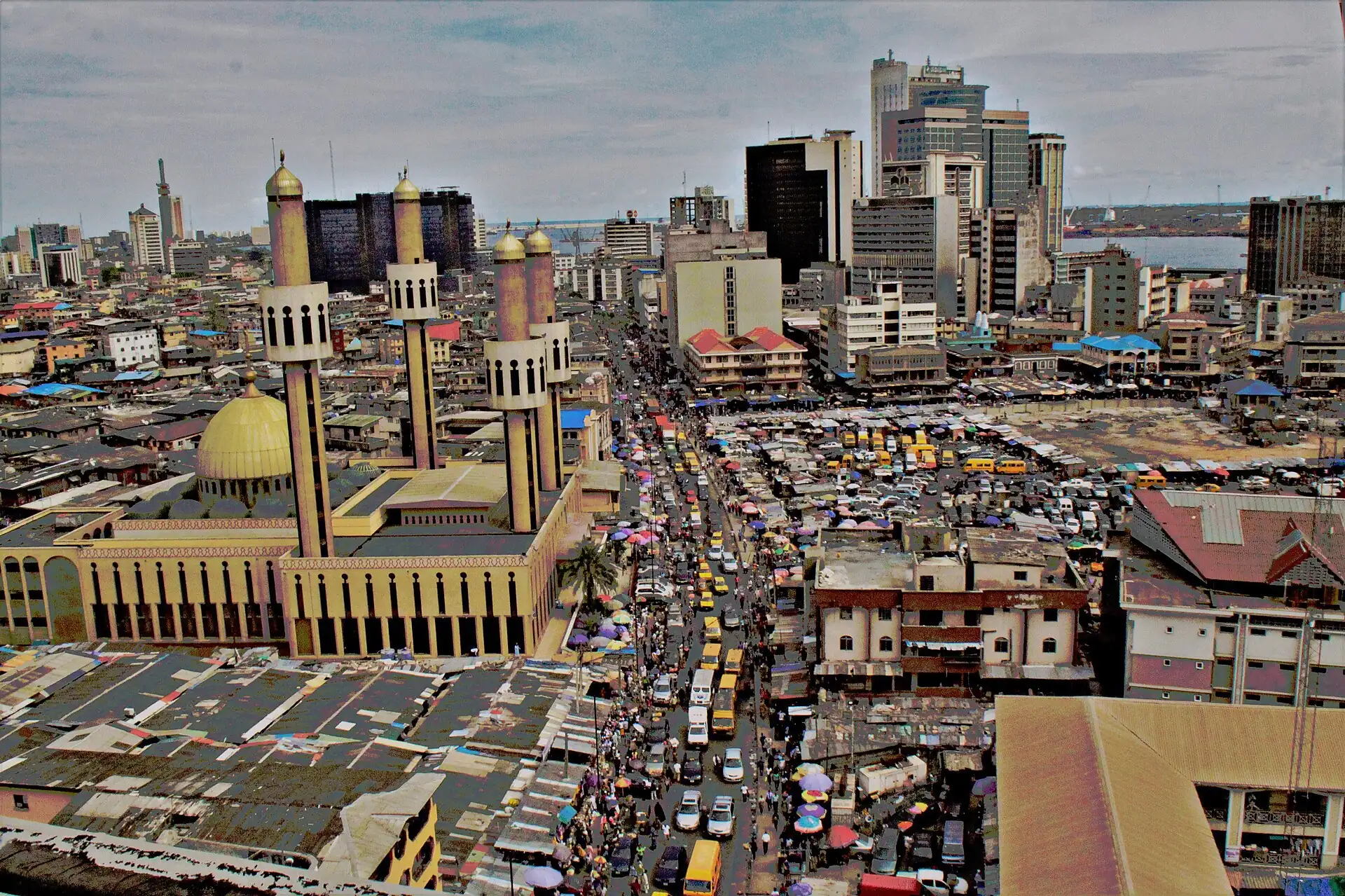
Lagos makes sense once you see it as a chain of islands and peninsulas beside a lagoon, joined to the mainland by bridges. Lagos Island is the historic centre: the Marina waterfront with its old banks and cathedral, Broad Street, the dense and noisy trading streets around Balogun Market, and the old Brazilian quarter in the Popo Aguda area. It is where the city's commerce began and where the crowds are thickest.
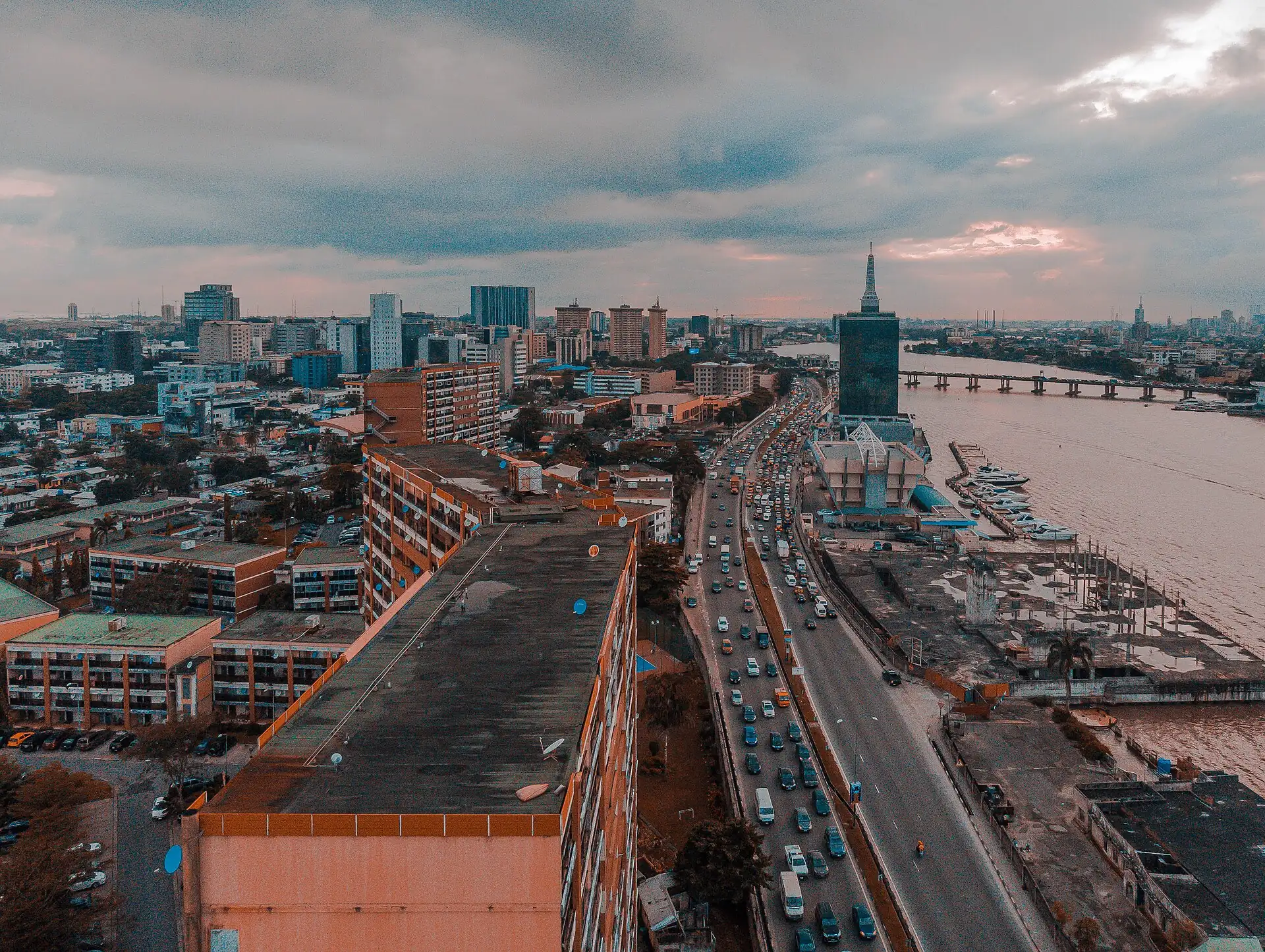
Victoria Island, named for the British queen, was built up after independence as the place for banks, oil companies, embassies and hotels, and it is now the business and restaurant district that visitors tend to sleep in. Ikoyi, next door, began as a colonial residential quarter, and its gated streets, clubs and old trees still make it the quietest and greenest part of the island group. Between them and the ocean, land reclamation has produced Eko Atlantic, a planned district of towers on former beach.
East along the coast lies Lekki, a long peninsula of new estates, malls, galleries and beaches reached by the Lekki–Ikoyi Link Bridge and the expressway; its growth is the story of the last twenty years and its congestion is the price. On the mainland, Ikeja holds the airport, offices and the New Afrika Shrine; Yaba, home to universities, has become the country's technology district; Surulere is a large residential and football-loving quarter; Apapa is the container port. Makoko, a community built on stilts on the lagoon, is often photographed, but residents have faced repeated evictions, so a boat visit should be arranged with care and respect.
For a visitor the working rule is to treat each district as its own day: cross the bridges off-peak, and do not try to combine Lagos Island with Lekki in one morning. The distances are short on a map and long in the traffic.
A useful test of where you are is the water. Islands and lagoon shores tend to hold the older, wealthier or more planned districts, while the mainland's inner suburbs are denser and more improvised. That is why hotel choice matters more here than in most cities: a bed on Victoria Island or Ikoyi puts restaurants, banks and a booked car within a few minutes, and keeps the airport run as the only long journey of the trip.
- Districts of a first visit
- Victoria Island, Ikoyi, Lagos Island, Lekki
- Airport
- Murtala Muhammed, Ikeja (mainland)
- Tech district
- Yaba, on the mainland
3Architecture2 min
The oldest layer of Lagos architecture is the work of returnee builders: two-storey houses with verandas, wooden shutters and decorated plasterwork on Lagos Island, showing Brazilian and West African craft traditions side by side. Few survive in good repair, but the surviving examples in the old streets are the best clue to how the 19th-century city looked. Alongside them stand colonial-era institutions along the Marina and Broad Street, among them the Cathedral Church of Christ and the old commercial banks.
The independence and oil-boom decades added concrete ambition. Tafawa Balewa Square, laid out on the old race course, was designed for national ceremonies, and the National Theatre at Iganmu, built in the 1970s for the FESTAC 77 arts festival in the shape of a military cap, remains the most recognisable modern building in the city; it has been renovated as a creative hub in recent years. The Third Mainland Bridge, opened in 1990 and around 11 kilometres long, is the longest of the three bridges linking the island to the mainland and a landmark in its own right.
More recent Lagos is glass and reclaimed land. Victoria Island's banks and hotels, the Lekki–Ikoyi Link Bridge with its cable-stayed spans, and the towers planned for Eko Atlantic show a city that builds upward and outward at speed, often ahead of drains, pavements and power. Alongside it, buildings such as Freedom Park have repurposed the old: it stands on the site of a colonial-era prison and was reworked as a memorial, garden and performance space.
For a short visit, the architecture worth planning around is the memorial and museum kind. Freedom Park and the National Museum at Onikan are both on Lagos Island and can be seen in a single morning by car, and the contrast between the old prison walls and the glass towers a few kilometres away is the clearest short lesson in how fast the city has changed. Ask before photographing any building, and never photograph government or security buildings, bridges or airports.
- National Theatre
- Built in the 1970s for FESTAC 77, shaped like a military cap
- Third Mainland Bridge
- Opened 1990, about 11 km (6.8 mi) longOpened 1990, about 6.8 mi (11 km) long
- Lekki–Ikoyi Link Bridge
- Cable-stayed, opened in 2013
4Music, film and art2 min
Lagos is where a great deal of modern West African music was made. Highlife and juju, two dance-band styles built on guitars, percussion and Yoruba praise singing, filled its clubs in the 1950s and 1960s. In the 1970s Fela Kuti fused these with funk and jazz into Afrobeat, and he performed at his Afrika Shrine in Ikeja and lived at the Kalakuta Republic compound, which was raided by soldiers in 1977. His political songs, his band and his defiance made him a symbol, and his birthday week in October, Felabration, still draws crowds to the New Afrika Shrine.
Today's Afrobeats, with an s, is a different and younger sound, a blend of Nigerian pop, hip-hop, dancehall and R&B. Artists from Lagos have taken it into global charts, and the city's studios, producers and clubs remain the centre of the scene. In December the diaspora returns for concerts and parties in a season nicknamed Detty December, when flights, hotels and roads are at their busiest.
Film is another Lagos industry. Nollywood, often dated from the 1992 video film Living in Bondage, grew out of the city's traders and video shops and is now among the world's largest film producers by number of titles. Visual art is strong too: the Nike Art Gallery, founded by the batik artist Nike Davies-Okundaye, holds thousands of works over five floors, galleries and cultural centres such as Terra Kulture host exhibitions, theatre and readings, and events like Art X Lagos and the Lagos Photo Festival fill the autumn calendar. A gallery morning with a driver is the simplest way to meet the city's creative side.
Live music is best approached with a plan. The New Afrika Shrine in Ikeja is the spiritual home of Afrobeat, and event nights there are loud, late and crowded, so go with a guide or a group and book the car both ways. Hotel and rooftop venues on Victoria Island are easier for a first evening, and cultural centres such as Terra Kulture combine theatre, readings and a bar with a car waiting outside. Check what is on before you go: schedules change and nothing is printed reliably.
- Fela Kuti
- Created Afrobeat in Lagos in the 1970s
- Felabration
- Music week around his birthday in October
- Nollywood
- Often dated to the 1992 video film Living in Bondage
5Food history2 min
Lagos eats the whole of Nigeria and adds its own rules. The Yoruba kitchen of the south-west is the base: swallows such as amala (yam or plantain flour dough) and pounded yam, eaten by hand with soups such as ewedu (jute leaf), gbegiri (bean), egusi (ground melon seeds) and efo riro (spinach stew), all cooked with palm oil, peppers and locust-bean condiment. Bukas, small canteens with pots on the counter, serve them at lunch and are the best-value meal in the city.
Jollof rice, cooked in a spiced tomato and pepper base, is the dish every Nigerian will argue about with a Ghanaian; the Lagos version is often a smoky party jollof, cooked over firewood. Ofada rice, a local unpolished rice served with a fierce green pepper sauce, is another Lagos staple, and moi moi (steamed bean pudding), akara (bean fritters) and puff-puff (fried dough) make up breakfast and snacks.
Suya, thin slices of beef, chicken or ram rubbed in a dry mix of ground peanuts and chilli called yaji and grilled over charcoal, comes from the Hausa north and is the city's favourite evening street food. Pepper soup, a thin, hot broth of fish or goat, is the standard bar food, often with a cold Star or Gulder. Drinks include zobo (hibiscus), chapman (a fruity non-alcoholic cocktail) and palm wine. Eat at busy places where the pots are full, ask for pepper on the side, and remember that tap water is not for drinking.
A practical way to eat well is to mix three formats. Start with a sit-down Nigerian restaurant on Victoria Island for a first meal, a buka on Lagos Island for lunch with a driver waiting, and a suya stand at dusk. Ask for prices before anything is weighed or grilled, carry small notes, and keep bottled water in the car. Spice levels are high, so say small pepper or pepper on the side.
- Everyday swallow
- Amala with ewedu and gbegiri
- Party dish
- Jollof rice
- Street food
- Suya, from the Hausa north
6Traffic and how the city moves2 min
Lagos runs on a rhythm that a visitor has to learn quickly. The morning rush builds from about 06:00 and the evening rush from about 15:00, and both can last until late evening. Locals call it the go-slow: a trip that takes 25 minutes at night can take two hours at rush hour. The three main bridges between the mainland and the islands, and the Lekki–Epe expressway, are the choke points. Rain makes it worse, because drains overflow and low roads flood.
Because of this, the best trips are built around districts rather than sights. Pick one area per morning, leave early, use a booked car or a ride-hailing app with the plate checked, and be back at the hotel before the evening peak. Yellow danfo minibuses and BRT buses carry millions of people every day but are confusing for visitors; motorbike taxis (okadas) are banned in much of the city. A light-rail Blue Line opened in 2023, but its stations are far from most sights.
Power is the other rhythm. The public grid fails often, so hotels, shops and homes run diesel or petrol generators, and the hum is part of the soundscape. Carry a power bank and a torch. Do not walk on the street after dark, keep phones out of sight, and treat the hotel's car service as a safety tool, not a luxury. The reward for planning around all this is a city with real depth: art, food, music and an energy that most visitors remember long after the traffic is forgotten.
Timing is the whole strategy. Build each day around one district, start before 07:30, take lunch in air-conditioning, and plan the last cross-town trip before 15:00. For departures, leave for the airport at least four hours before an international flight, and arrange the ride the night before. Visitors who do this find Lagos far more manageable than its reputation suggests.
- Rush hours
- About 06:00–10:00 and 15:00–20:00About 6:00 AM–10:00 AM and 3:00 PM–8:00 PM
- Bridges to the mainland
- Third Mainland, Carter and Eko
- Blue Line light rail
- Opened 2023; limited routes
Rules in force · 8Nine African countries on this site have no trip line bec…Carry an original yellow fever vaccination certificate on…
- Africa ↗When a route touches a yellow-fever country — even a transit of 12 hours or more — keep the original yellow card (ICVP) in your hand luggage; health desks and airlines can refuse boarding or entry without it.
- Africa ↗Nine African countries on this site have no trip line because governments advise against travel; several others have no-go regions. Read your government's advice for every country on the route before paying deposits.
- West Africa ↗Carry an original yellow fever vaccination certificate on any West African trip: several countries on the coast road demand it of every arrival, and the rest demand it after you have passed through a neighbour.
- West Africa ↗Cross land borders and drive between cities in daylight only; plan each crossing as a full travel day with cash for fees and passport copies for checkpoints.
- Nigeria ↗Check visa and entry rules for your passport with the Nigeria Immigration Service or a Nigerian mission; most visitors need a visa arranged before travel.
- Nigeria ↗Governments advise against all or all but essential travel to a number of Nigerian states; check your own government's advice for each state on your route.
- Nigeria ↗Check the yellow-fever vaccination certificate rules for Nigeria before you fly; carry the certificate with your passport.
- Lagos area ↗Check your government’s advice on Lagos State and on the roads you plan to use; keep to the areas and routes it allows.
Entry rules depend on your passport. Full visa guide
Emergency numbers for Lagos112 ▾
- National emergency112
- Hotel front desksave on arrival
Tap a number to call from your phone. These are the numbers listed in this guide; a row marked check has not been verified.
Planning is the full guide. I'm here keeps what is open and the cheat card.
Right now
Checking the weather…
Working out what is open near you…
What is open nowclock, closures, places open
Now in Lagos
Local time in Lagos
--:--
Loads in your browser · Africa/Lagos
This month
Month verdict appears here.
Closed today
See the weekly grid below.
If today is a closure day: Check your government's advice for Nigeria and for Lagos state on the morning you plan to go out; conditions, protests and road closures can change fast and are not tracked live here.
This page gives a first-visit structure, not live status. Fuel, power and exchange-rate conditions can shift quickly: check locally.
Cheat cardthe pocket version
Cheat card
The essentials on one card: save it as an image for your phone, share it, or print it.
Lagos
- Money
- Keep ₦20,000 in small notes for tips and small purchases; withdraw at ATMs inside banks…
- SIM
- Buy a SIM (MTN, Airtel, Glo) at a shop or mall counter with your passport…
- Ride app
- Uber, Bolt, inDrive
- Emergency
- 112 National emergency · save on arrival Hotel front desk (not 911, 999 or 000)
- Plugs
- Sockets D/G. US/Canada (A/B): adapter · UK/Ireland (G): fits · Australia/NZ (I): adapter. 230 V: US 120 V-only devices (hair dryers) need a converter; most chargers are dual-voltage.
Say it
- Thank you: Thank you o / I dey appreciate (thank you oh)
Top 5
- Nike Art Gallery, Lekki
- Terra Kulture, Victoria Island
- Freedom Park, Lagos Island
- National Museum, Onikan
- Lekki Conservation Centre
EssentialsQuick answers, what things cost and how to get around
Essentials
Quick answers, what things cost and how to get around
Quick answers
The questions people ask first about Lagos, one line each. Tap a card for the full answer.
- Cash or card?Naira cash for markets, bukas and small tips; cards work at hotels, malls and larger restaurants but terminals go offline.
- SIM or eSIMBuy a SIM (MTN, Airtel, Glo) at a shop or mall counter with your passport; registration is required and some counters ask for extra ID.
- Ride-hailing appUber, Bolt, inDrive.
- Tap waterDo not drink tap water; use sealed bottled or filtered water.
- TippingNot fixed.
- Plugs & powerSockets D/G. US/Canada (A/B): adapter · UK/Ireland (G): fits · Australia/NZ (I): adapter. 230 V: US 120 V-only devices (hair dryers) need a converter; most chargers are dual-voltage.
Show all 14 answers
- Safe at night?Take more care after dark in Victoria Island, Ikoyi, Lagos Island and more.
- What to wearNeat and modest is the norm; cover shoulders and knees in religious spaces and markets.
- Emergency numbers112 National emergency · save on arrival Hotel front desk (not 911, 999 or 000)
- Your embassycheckUK, US embassies listed with addresses (check before you go).
- Sundays & holidaysIndependence Day: Public holiday; parades and road closures on Lagos Island.
- Late at nightBars and restaurants stay open late, but movement after dark is the limit.
- Rainy-day planHeavy rain (May–October) floods roads within the hour: plan outdoor stops before noon, keep a gallery or hotel as a fallback…
- Landing lateLOS: pre-booked hotel car with a named driver to the door runs all night.
Cost cheat-sheetwhat everyday things cost
Cost cheat-sheet
Typical prices for the everyday things, as ranges. Change the currency right here; the local price stays first.
2026 desk estimate · check
- Sit-down mealJollof rice with chicken at a sit-down restaurantNGN 6,000–12,000
- BeerLocal beer, barNGN 1,500–3,500
- Taxi, about 5 km (3 mi)Taxi, about 3 mi (5 km)Ride-hailing across Victoria IslandNGN 4,000–12,000
- SIM or eSIM, a weekLocal SIM with data, about a weekNGN 4,000–10,000
- Museum or sight ticketGallery or museum entryNGN 1,000–5,000
- Budget bedFamily or larger room, a night, per roomNGN 90,000
- Mid-range bedHotel double room, a night, per roomNGN 140,000
- High-end bedHotel double room, a night, per roomNGN 350,000
A day, not counting the bed: Budget NGN 30,000 · Mid NGN 70,000 · High NGN 160,000
Local prices, with USD next to them (rates 2026-09 (approximate); change it in the header). Ranges are desk estimates: check locally. Every price and the budget calculator →
Source: Prices in Lagos
Draft
Written from desk research. Not yet compared with the official source.
No official source is recorded for this figure.
Prices are 2026 desk estimates, not yet compared with an official source. Check on the day.
Not checked in the last 12 months (no check date on file).
DecideWho it suits, the trade-offs and when to go
Decide
Who it suits, the trade-offs and when to go
Best months at a glance
The guide's verdict for each month
Jan
Best
32°C (90°F)90°F (32°C)
Feb
Best
33°C (91°F)91°F (33°C)
Mar
Best
33°C (91°F)91°F (33°C)
Apr
Care
32°C (90°F)90°F (32°C)
May
Avoid
31°C (88°F)88°F (31°C)
Jun
Avoid
29°C (84°F)84°F (29°C)
Jul
Avoid
28°C (82°F)82°F (28°C)
Aug
Care
28°C (82°F)82°F (28°C)
Sep
Care
29°C (84°F)84°F (29°C)
Oct
Care
30°C (86°F)86°F (30°C)
Nov
Best
32°C (90°F)90°F (32°C)
Dec
Care
32°C (90°F)90°F (32°C)
Best: Jan–Mar, Nov. Mixed: Apr, Aug–Oct, Dec. Avoid: May–Jul. Month by month →
Warmest Feb (33°C (91°F)91°F (33°C)), coolest Jul (23°C (73°F)73°F (23°C) low), wettest Jun (17 rain days), driest Jan (3). Averages, not a forecast.
Lagos across the year
Best-looking months for Lagos: Jan, Feb, Mar. Rated avoid: May, Jun, Jul.
| Measure | Jan | Feb | Mar | Apr | May | Jun | Jul | Aug | Sep | Oct | Nov | Dec |
|---|---|---|---|---|---|---|---|---|---|---|---|---|
| Weather | Great (good) | Great (good) | Good (good) | Mixed (care) | Avoid (avoid) | Avoid (avoid) | Avoid (avoid) | Mixed (care) | Mixed (care) | Mixed (care) | Good (good) | Mixed (care) |
| Crowds | Medium (ok) | Medium (ok) | Low (good) | Low (good) | Low (good) | Low (good) | Low (good) | Medium (ok) | Low (good) | Low (good) | Medium (ok) | High (care) |
| Prices | High (care) | Medium (ok) | Medium (ok) | Low (good) | Low (good) | Low (good) | Low (good) | Medium (ok) | Low (good) | Medium (ok) | Medium (ok) | High (care) |
| Events | None listed (ok) | None listed (ok) | None listed (ok) | None listed (ok) | None listed (ok) | 1 event (ok) | None listed (ok) | None listed (ok) | None listed (ok) | 3 events (ok) | 1 event (ok) | 3 events (care) |
Green is good news, amber needs planning, red is a month to avoid; dashed grey with a question mark means our data does not say. Open the year heatmap →
Not checked in the last 12 months (no check date on file).
Source: Months, temperatures and crowds
Draft
Written from desk research. Not yet compared with the official source.
Monthly highs, rain and crowd levels are climate averages and desk estimates for the city, not a forecast.
Understand the cityUnderstand · Districts
Orientation & districts
Lagos Island is the old centre and the business and government district. Victoria Island and Ikoyi, on the seaward side, hold most hotels, embassies, restaurants and galleries. Lekki runs east along the coast. The airport is on the mainland at Ikeja, across bridges from all of these.
Distances mislead: two points 8 km (5 mi) apart can be two hours apart at rush hour. Group each day in one district and cross between them off-peak.Distances mislead: two points 5 mi (8 km) apart can be two hours apart at rush hour. Group each day in one district and cross between them off-peak.
Shaded shapes: walking areas (click one). Black pins: sleep areas. Grey dots: places. Round badges: arrivals. Click the map to turn on scroll-wheel zoom.
Hover, tap or tab to an area to see what it is like. Pins are sleep areas; arrows at the edge point to the airport.
Not drawn yet (no coordinates in this guide): Ikeja and the mainland. They are in the neighbourhood cards below.
Where’s what, as a list:
- Victoria Island: Hotels, banks, restaurants, Terra Kulture and the beaches' road; the easiest base for a short stay. Suits: First visit, hotel-based stays. Price band $$$.
- Ikoyi: Leafy, gated and calm, with clubs, cafés and serviced apartments; a car for everything. Suits: Quiet nights, longer stays. Price band $$$.
- Lagos Island: Freedom Park, Tafawa Balewa Square, the National Museum at Onikan and the old markets; crowded, so go early and keep phones away. Suits: One morning by car.
- Lekki: Nike Art Gallery, the arts and crafts market and the beaches; the road there is the slowest part. Suits: A morning of art and craft.
- Ikeja and the mainland: Airport, business and the New Afrika Shrine; not a first-visit base. Suits: Airport, and the Fela Shrine for music fans.
- Sleep area Ikoyi: suits Quiet nights, longer stays, price band $$$.
- Sleep area Victoria Island: suits First visit, hotel-based stays, price band $$$.
- Murtala Muhammed International Airport (LOS), about 19 km (12 mi)12 mi (19 km) from the centre, 75–150 min by the usual route.
Neighbourhoods at a glance
One tab per area, pulled together from this guide’s districts table, area notes, sleep-area scores and place pages. Scores are desk judgements (1–5); prices are estimates, check before you book.
Victoria Island
$$$Hotels, banks, restaurants, Terra Kulture and the beaches' road; the easiest base for a short stay.
- Suits:
- First visit, hotel-based stays
- Best time:
- Morning to early evening
- Rooms:
- NGN 90,000–200,000 (from the sleep guide)
Pick this if: First-time visitors, business travellers
Watch out for: Walking along the road at rush hour.
- Quiet nights3/5 Medium
- Nightlife4/5 High
- Families3/5 Medium
- Late arrival4/5 High
Why these scores
- Quiet nights: Busy by day and generator hum at night; good hotels are well insulated.
- Nightlife: Most restaurants, bars and rooftop venues are here.
- Families: Hotel pools and malls; outings need a car.
- Late arrival: 24-hour desks and hotel-arranged cars.
Getting around from here
- 40–60 min walk to Ikoyi
- Car west: about 40 min to Lagos Island (Freedom Park)
- LOS: about 20 km (12 mi) in a straight line (arrival ride 75–150 min)LOS: about 12 mi (20 km) in a straight line (arrival ride 75–150 min)
Ikoyi
$$$Leafy, gated and calm, with clubs, cafés and serviced apartments; a car for everything.
- Suits:
- Quiet nights, longer stays
- Best time:
- Any daytime
- Rooms:
- NGN 250,000+ (from the sleep guide)
Pick this if: A calm base or a slow lunch
Watch out for: Walking after dark.
- Quiet nights5/5 Very high
- Nightlife3/5 Medium
- Families4/5 High
- Late arrival3/5 Medium
Why these scores
- Quiet nights: Green, gated streets and the calmest nights in the city.
- Nightlife: A few restaurants and clubs, fewer than Victoria Island.
- Families: Space and calm; the safest feel for a longer stay.
- Late arrival: Hotel desks are staffed; confirm your ride back.
Getting around from here
- 45–70 min walk to Victoria Island (Terra Kulture)
- LOS: about 19 km (12 mi) in a straight line (arrival ride 75–150 min)LOS: about 12 mi (19 km) in a straight line (arrival ride 75–150 min)
Lagos Island
Freedom Park, Tafawa Balewa Square, the National Museum at Onikan and the old markets; crowded, so go early and keep phones away.
- Suits:
- One morning by car
- Best time:
- 07:00–11:007:00 AM–11:00 AM
Pick this if: One early morning by car
Watch out for: Midday crowds and afternoon traffic.
Getting around from here
- Car east: about 40 min to Victoria Island (Terra Kulture)
- LOS: about 17 km (11 mi) in a straight line (arrival ride 75–150 min)LOS: about 11 mi (17 km) in a straight line (arrival ride 75–150 min)
Lekki
Nike Art Gallery, the arts and crafts market and the beaches; the road there is the slowest part.
- Best time:
- Weekday mornings
Pick this if: A morning of art and craft
Watch out for: Weekend afternoons, when the road jams.
Getting around from here
- Car west: about 45 min to Victoria Island (Terra Kulture)
- LOS: about 25 km (16 mi) in a straight line (arrival ride 75–150 min)LOS: about 16 mi (25 km) in a straight line (arrival ride 75–150 min)
Ikeja and the mainland
Airport, business and the New Afrika Shrine; not a first-visit base.
- Suits:
- Airport, and the Fela Shrine for music fans
Decide
The honest trade-off: what you will enjoy, what will wear you down.
You will like
- Art galleries and live music
- Nigerian food
- A busy, warm city
You will hate
- Long traffic jams
- Flooded streets in the rains
- Heat and humidity
Similar citiesif this one is not quite right
Similar cities
If Lagos does not fit your dates or budget, these match it on season, cost and feel.
When
Best months: Jan, Feb, Mar, Nov. Month-by-month verdicts below, with the live forecast first. When to go, month by month →
Lagos: next 7 days
Loading forecast…
Forecast: Open-Meteo (CC BY 4.0), model data for this point.
Air quality
Loading…
Model estimate (CAMS via Open-Meteo), not a street-level station; readings near busy roads run higher.
Month by month, all 12best Jan, Feb, Mar, Nov
Dry; harmattan haze and dust some weeks.
Dry and hot; the driest month.
Hot, humid; first rains late in the month.
Rains begin; flooding on some roads.
Heavy rain and flooded streets.
Wettest month; floods and long delays.
Heavy rain.
A short drier spell, still wet.
Rain returns.
Rain easing.
Dry season starts; best walking-free travel window.
Dry, but concerts and holidays make flights, hotels and roads very busy.
Climate, calendar and eventsClimate · Calendar · Events · Packing by season
Climate
| Jan | Feb | Mar | Apr | May | Jun | Jul | Aug | Sep | Oct | Nov | Dec | |
|---|---|---|---|---|---|---|---|---|---|---|---|---|
| High | 32°C (90°F)90°F (32°C) | 33°C (91°F)91°F (33°C) | 33°C (91°F)91°F (33°C) | 32°C (90°F)90°F (32°C) | 31°C (88°F)88°F (31°C) | 29°C (84°F)84°F (29°C) | 28°C (82°F)82°F (28°C) | 28°C (82°F)82°F (28°C) | 29°C (84°F)84°F (29°C) | 30°C (86°F)86°F (30°C) | 32°C (90°F)90°F (32°C) | 32°C (90°F)90°F (32°C) |
| Low | 24°C (75°F)75°F (24°C) | 25°C (77°F)77°F (25°C) | 25°C (77°F)77°F (25°C) | 25°C (77°F)77°F (25°C) | 24°C (75°F)75°F (24°C) | 24°C (75°F)75°F (24°C) | 23°C (73°F)73°F (23°C) | 23°C (73°F)73°F (23°C) | 23°C (73°F)73°F (23°C) | 24°C (75°F)75°F (24°C) | 24°C (75°F)75°F (24°C) | 24°C (75°F)75°F (24°C) |
| Rain days | 3 | 4 | 8 | 10 | 14 | 17 | 13 | 9 | 13 | 12 | 6 | 3 |
| Verdict |
- November to March is the dry season: best for getting around, hot and humid, with harmattan dust some weeks.
- May to July brings the heaviest rain: flooded roads turn a 30-minute ride into a long wait.
- Humidity stays high all year, so plan AC stops and keep midday for indoors.
Events by month
Democracy Day
holiday12 June · Citywide
Public holiday; some road and office closures.
Independence Day
holiday1 October · Lagos Island and citywide
Public holiday; parades and road closures.
Felabration
festivalAround Fela Kuti's birthday, mid-October (check) · The New Afrika Shrine, Ikeja(check dates)
Music week; heavy night traffic around the Shrine.
Art X Lagos and Lagos Photo Festival
festivalTypically October–November (check) · Galleries and venues across the island(check dates)
Openings and busy evenings.
Detty December
festivalMost of December · Citywide(check dates)
Concerts and parties; flights, hotels and roads are at their busiest and dearest.
Festivals and events that change the plan
| When | What | Effect on your plan |
|---|---|---|
| 1 October | Independence Day | Public holiday; parades and road closures on Lagos Island. |
| 12 June | Democracy Day | Public holiday; some roads and offices closed. |
| Mid-October | Felabration (Fela Kuti's birthday week) | Week of concerts around the New Afrika Shrine in Ikeja; roads there are jammed at night. |
| October–November | Art X Lagos and Lagos Photo Festival | Gallery openings across Victoria Island and Lagos Island; dates move, check the organisers. |
| December | Detty December | Concerts, parties and returning diaspora: flights, hotels and roads are at their most expensive and slowest. |
| Irregular | Eyo Festival (Adamu Orisha play) | White-robed masquerades walk Lagos Island streets; roads close. Held on occasion, confirm the date. |
What to pack, by season
From Lagos’s own climate table: the coldest, warmest and wettest three months, and what to bring for each.
Coldest months
Jul–Sep
23° to 28°
Light layers; evenings can still feel cool.
Warmest months
Feb–Apr
25° to 33°
Light, breathable clothes, a sun hat and sunscreen; plan midday indoors and carry water.
Wettest months
May–Jul
15 rain days a month
A compact umbrella or rain jacket and shoes that can get wet.
Arrive & moveGetting in, getting around, and your bags
Arrive & move
Getting in, getting around, and your bags
I land at…
Enter your landing time: what still runs from the airport, where you can eat when you get in, and which areas let you check in that late.
Murtala Muhammed International Airport (LOS)
Out of the airport about 00:10 (next day)12:10 AM (next day) (01:55 (next day)1:55 AM (next day) if immigration and bags are slow); in town about 01:25 (next day)1:25 AM (next day).
Transport from the airport
- Any hourPre-booked hotel car with a named driver to the door. Runs all night.
- Last resortOvernight at an airport hotel. If nothing else works.
Places to eat open when you get in
We have no confirmed hours for the places to eat here yet. Plan on a convenience store or your hotel. What is open late →
Where to sleep with a late arrival
- Lets you inIkoyi 24-hour desk. Hotel desks are staffed; confirm your ride back.
- Lets you inVictoria Island 24-hour desk. 24-hour desks and hotel-arranged cars.
Typical times from our airport data, not a timetable: check the last departure on the day. Full airport-to-bed plan for Murtala Muhammed International Airport (LOS) →
Arrive
Each gateway has its own airport-to-bed page with timings and the last safe connection.
Getting in, in detailGet in
Get in by rail and road
| Station | Mode | Serves | Where | To the centre |
|---|---|---|---|---|
| Murtala Muhammed International Airport (LOS)Ikejause | Air | International and domestic flights | About 20 km north of Victoria Island, on the mainland | Pre-booked car 1–3 h to Victoria Island depending on trafficUse a hotel-arranged pickup with a named driver; do not accept unbooked offers. |
| Mobolaji Johnson railway stationlimited | Train | Train to Ibadan (standard-gauge) | Ebute Metta, mainland | Car; long at rush hour(check) |
| Ferry terminals (lagoon)check | Ferry | Lagoon routes such as Ikorodu and Badagry | Victoria Island and Lagos Island jetties | Car to the jettyNot a first-visit option; check the operator and safety record.(check) |
- Arrange your airport pickup in advance and confirm the driver's name and plate.
- Land in daylight if you can; the road from the airport is slow and dark.
Move
The default way around, when a pass pays off, and when the last trains go.
- Default
- Pre-arranged car or ride-hailing between clusters; walk only inside a hotel or gallery compound in daylight.
- Passes
- No pass. Agree the day rate with a hotel-arranged driver or use the ride-hailing fare shown in the app.
- Last trains
- No metro to plan around; the car is the only sensible option, and it runs all night at higher fares.desk estimate
- Other modes
- Other modes (Rome2Rio) ↗
Getting around, in detailGet around · Connect
Get around
Ride only in booked cars or through an app between districts, walk only inside a compound in daylight, and group each day in one district.
| Mode | Verdict | Fare | Use it for | What breaks |
|---|---|---|---|---|
| Booked car or hotel driver | use | NGN 50,000–100,000 a day, or per trip | Everything between districts | Agree hours and the fare in writing. |
| Ride-hailing (Uber, Bolt, inDrive) | use | NGN 4,000–12,000 across Victoria Island | Short hops in daylight | Check the plate and share the trip; surge pricing at rush hour. |
| Lagos Blue Line light rail | maybe | Low fares | Mainland corridors from Marina | Opened in 2023; routes are limited and stations are far from most sights: check the current timetable. |
| BRT buses and danfo minibuses | skip | Cheap | Locals only | Crowded and confusing; not for visitors with bags. |
| Okada (motorbike taxi) | skip | — | — | Banned in much of the city and dangerous; do not use. |
More on getting around
Traffic is the rule of the city: locals call it "go-slow". A trip that takes 25 minutes at 21:00 can take two hours at 08:00 or 17:00. Ask your driver for the time to leave rather than the time to arrive, and never schedule a flight home within four hours of a cross-town trip.
Connect
| Option | Verdict | What breaks |
|---|---|---|
| Airport or mall counters (MTN, Airtel, Glo) | use | Passport and registration needed; buy data on the spot. |
| Hotel-arranged SIM | ok | Convenient but often marked up. |
Uber, Bolt, inDrive
Ride-hailing
Use the in-app fare and share the plate; hotels still add a driver for cross-town days.
Hotels, drivers, guides
The default channel: get a number for your driver before you need it.
Google Maps
Orientation and traffic
Live traffic is the best guide to when to leave; expect estimates to run over.
- Wi-Fi
- Reliable in hotels, malls and cafés; drops with power cuts.
Luggage
Where big bags are a problem, and how to get rid of them for the day.
Rule
- Lockers
- No public lockers; hotels hold bags after check-out.
- Forwarding
- No forwarding culture; keep the big bag at the hotel between trips.
- Dead zone
- Late flights: keep a hotel room or ask the hotel to hold bags; leave for the airport at least 4 hours before departure in traffic.
Bags, area by area
4 walking areas rated
- Bags forbidden
- Bags painful
Victoria Island (Terra Kulture)IkoyiLekki (Nike Art Gallery)
Lockers, forwarding and the gap between check-out and check-in are covered once, under Luggage.
See & doWalking clusters, day plans and the places worth the time
See & do
Walking clusters, day plans and the places worth the time
Clusters
Plan by cluster: each is a walkable area with a rescue point and a bag rule.
Daytime cluster: Victoria Island’s arts centre, hotels and restaurants around Ahmadu Bello Way; one hotel-arranged car in and out; 3 hours.
rescue 99% · max p90 6.9′ · half
Quiet cluster: leafy residential streets, clubs and cafés; a pre-arranged car in and out; walk only within a compound in daylight.
rescue 100% · max p90 6.5′ · 90m
Morning-only cluster: Freedom Park and Tafawa Balewa Square on the island; go with a driver before 10:00 to miss traffic; do not walk beyond the square.
rescue 100% · max p90 6.7′ · 90m
Half-day cluster: the Nike Art Gallery in Lekki Phase 1; go by car with a fixed return time; traffic on the Lekki road makes it a morning-only trip.
rescue 100% · max p90 6.1′ · 90m
Days
Ready-made day plans, timed against opening hours and walking distances.
How long are you staying?
Loose outlines: one district per morning by car, indoors in the heat and back before evening traffic.
1 day
A stopover with a long layover
- 09:00Terra Kulture — Terra Kulture and its bookshop
- 12:00Restaurant at Terra Kulture — Nigerian lunch at the centre's restaurant
- 14:30Rest at the hotel through the worst of the traffic
- 17:30Early dinner at the hotel, with the car booked home
Skip: Lagos Island and Lekki on a one-day stop: the traffic makes them a separate morning.
Lagos in 3 days
3 daysOne neighbourhood per morning by pre-arranged car, lunch or the hotel lounge in the heat, and a last day that ends with the bags already in the car and four hours in hand.
Day by day
Day 1 — Terra Kulture and a 13:00 lunch
- 10:00Terra Kulture
- Restaurant at Terra Kulture (optional)
- 13:00Lunch table 13:00 (Victoria Island)
Day 2 — Lagos Island by car, back before midday traffic
Day 3 — Nike Art Gallery, car to the airport at 14:00
- 08:00Nike Art Gallery
- Lekki Arts and Crafts Market (optional)
- 14:00Car to the airport at 14:00
Places
“Best time” is when to arrive for the fewest crowds, for example “before 08:30”; “Go any time” means the hour makes little difference. More sights follow under “More sights and museums”.
7 places. Filters use the guide’s own ratings; a place with no rating is left out when a filter is on.
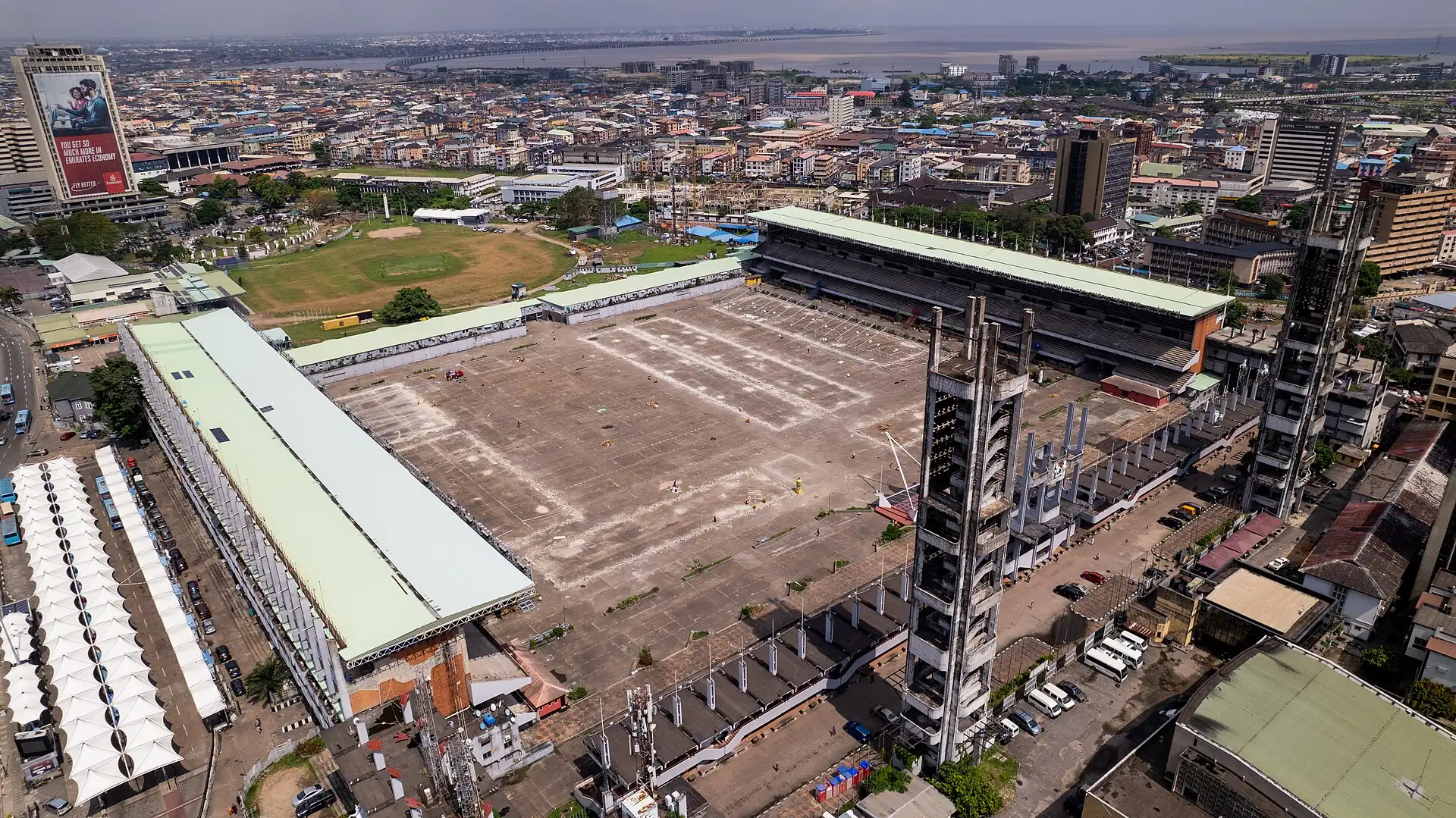
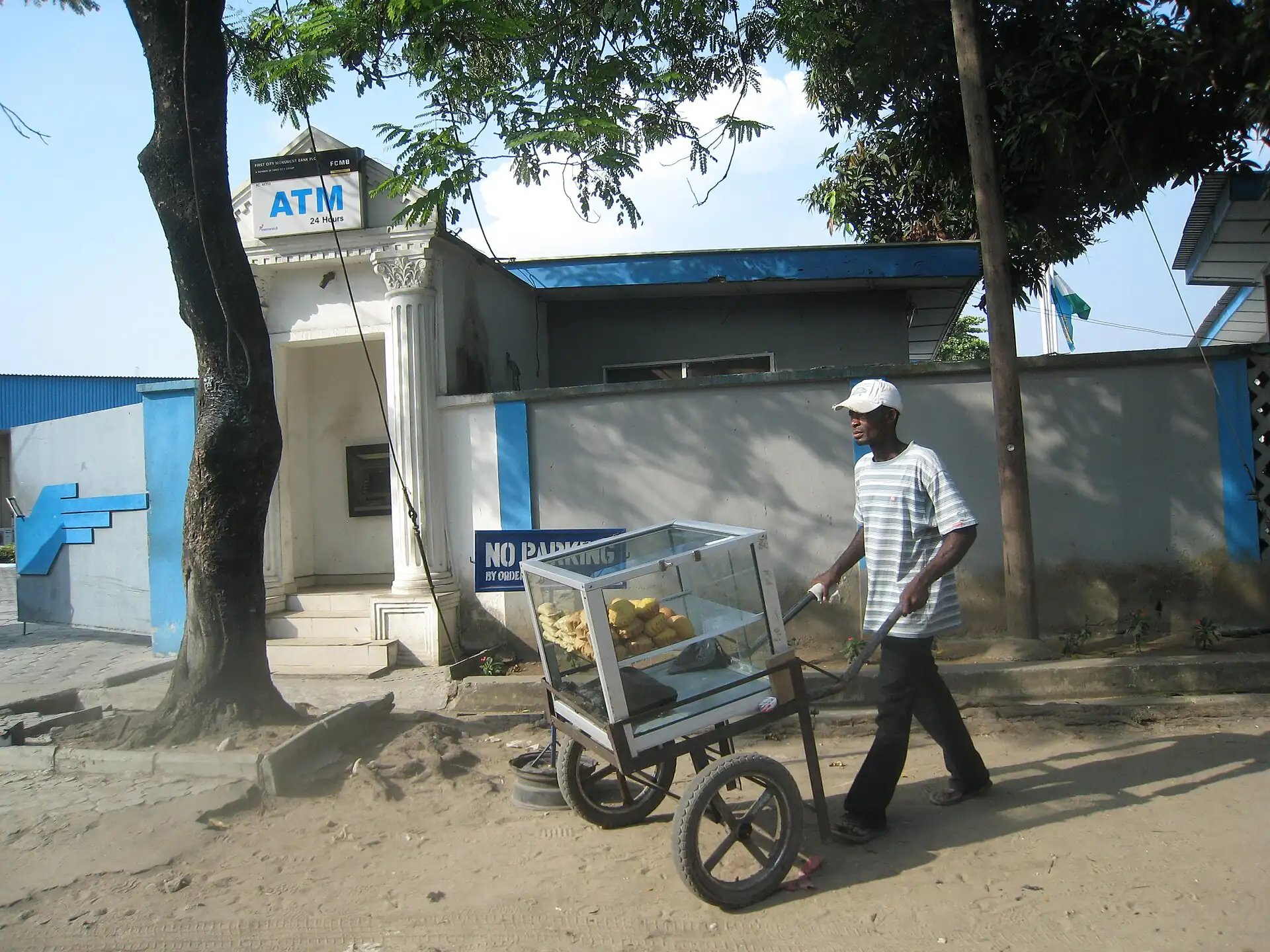
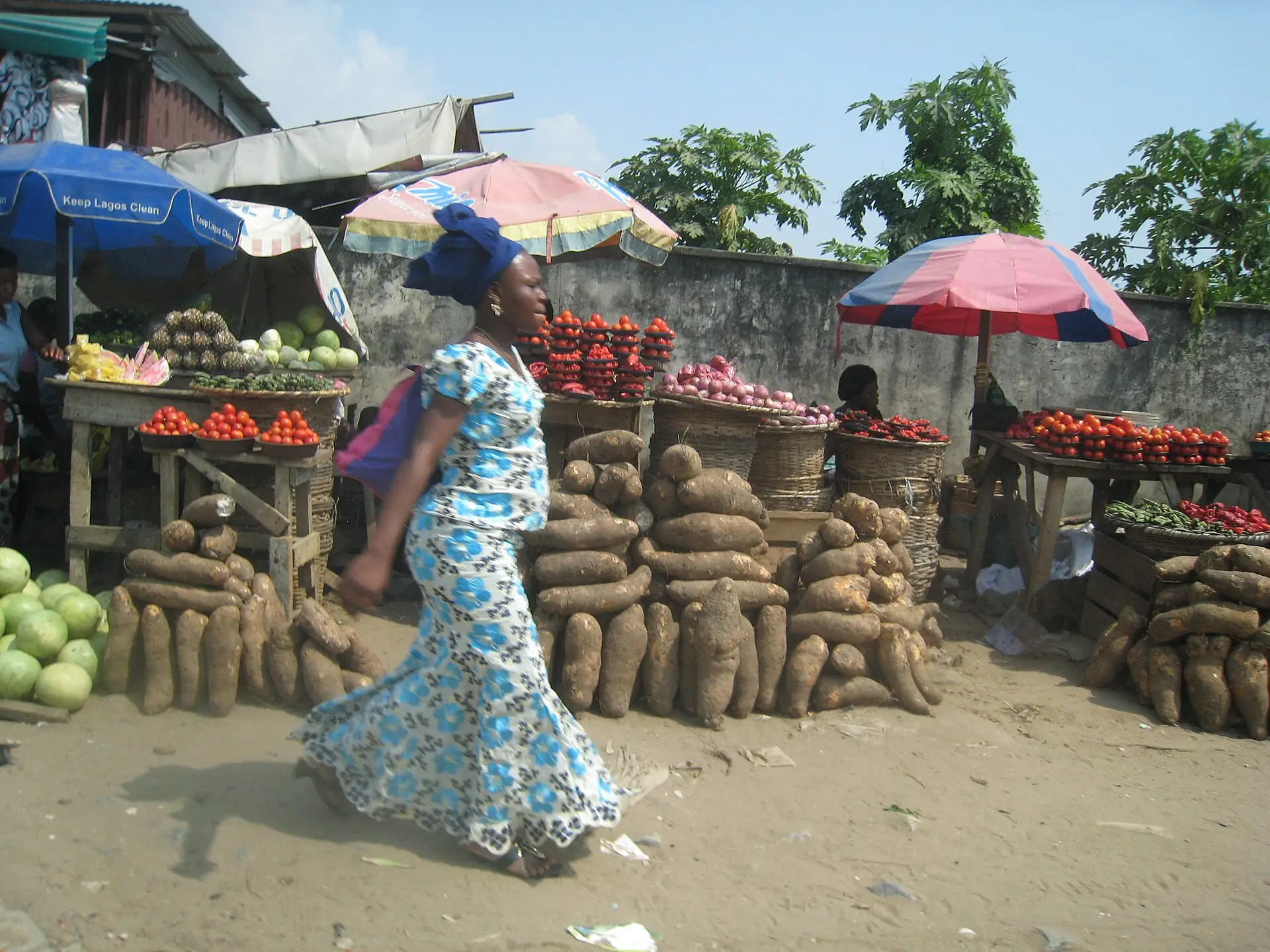
If you do ten things in Lagos
Ranked for a first visit of 2–3 days. Prices are 2026 estimates in naira; hours marked (check) still need confirmation.
- 1
Five floors of Nigerian art and textiles: the best single indoor stop.
- Time
- 60–90 min
- Best
- Morning
- Cost
- Free–NGN 2,000
- 2
Terra Kulture, Victoria Island
A gallery, bookshop, theatre and Nigerian restaurant in one building.
- Time
- 60–90 min
- Best
- Late morning
- Cost
- Free–NGN 3,000
- 3
A colonial prison turned memorial, garden and performance space.
- Time
- 45–75 min
- Best
- Morning
- Cost
- About NGN 1,000–3,000
- 4
Nok terracottas and Nigerian art history in one visit.
- Time
- 60 min
- Best
- Morning
- Cost
- About NGN 1,000–3,000
- 5
A canopy walkway and a break from concrete.
- Time
- 90 min
- Best
- Early morning
- Cost
- About NGN 3,000–6,000
- 6
The easiest place to see and buy Nigerian crafts.
- Time
- 45–60 min
- Best
- Morning
- Cost
- Free to browse
- 7
The city's signature street food, with a driver waiting.
- Time
- 30–40 min
- Best
- Early evening
- Cost
- NGN 3,000–6,000
- 8
Nigerian lunch at Terra Kulture
A gentle introduction to pounded yam, egusi and ofada rice.
- Time
- 60–90 min
- Best
- Lunch
- Cost
- NGN 7,000–14,000
Good for…
Verdict is how well Lagos works for that traveller, not how good the city is.
Rewarding with a booked car and one district per day; hard to improvise.
- 1Terra Kulture — an easy, air-conditioned first stop.
- 2A hotel driver for the whole stay — solves traffic, safety and navigation.
Galleries, craft markets and a strong contemporary scene.
- 1Nike Art Gallery — five floors of Nigerian art.
- 2Terra Kulture — exhibitions, books and theatre in one place.
Afrobeat, highlife and today's Afrobeats all live here.
- 1The New Afrika Shrine, Ikeja — on event nights, with a guide.
Manageable with a booked car and a plan; not a city for improvising after dark.
Heat, traffic and few safe public spaces make it a poor family stop.
Tours and classes: book or skip
Book through your hotel or a named operator; get the price and what is included in writing.
| Tour or class | Verdict | Typical price | Why | Check before paying |
|---|---|---|---|---|
| Full-day city tour with driver-guide | book | NGN 80,000–160,000 | Solves traffic, safety and photography rules in one booking. | That the price covers the car for the whole day and any entry fees. |
| Badagry heritage day trip | book | NGN 100,000–200,000 | The best slave-trade heritage in the region, with a guide who knows the sites. | Departure time (before 06:30) and the road plan.Departure time (before 6:30 AM) and the road plan. |
| Lagoon or Makoko boat visit | maybe | Varies | A view of the lagoon and the water communities. | That the operator is licensed and the visit is respectful of residents; do not photograph people without asking. |
What each season brings
Dry season
Nov–Mar
The easiest months to move around; clear evenings.
Watch: Heat, humidity and harmattan dust some weeks; December is the busiest month.
First rains
Apr–Jul
Greener, cooler days between storms.
Watch: Flooded roads and long delays, especially May–July.
August break and second rains
Aug–Oct
A short drier spell in August; fewer visitors.
Watch: Rain returns in September and October.
Photo spots and the light
Never photograph police, soldiers, airports, bridges or government buildings, even from these spots.
| Spot | Best light | Tip |
|---|---|---|
| Nike Art Gallery's atrium and textile floors | Morning | Ask before photographing works; the staff are helpful if you buy something. |
| Freedom Park courtyards | Morning | The old prison walls make good backgrounds; ask before photographing people. |
| Lekki canopy walkway | Early morning | A tripod is not allowed on the narrow walkway; keep the phone strap on. |
Lagos travel FAQ
Answers are 2026 desk estimates; facts marked (check) still need confirmation.
Is Lagos safe for visitors?
It is manageable with a booked car, a hotel base and a plan for each day. The main risks are traffic, theft from cars and crowds, and scams, not violence. Read your government's advice and do not walk after dark.
Can I use ride-hailing?
Yes: Uber, Bolt and inDrive work in most areas. Check the plate, share the trip, and use your hotel's car for airport runs and cross-town days.
How much time do I need?
Two to three days covers Victoria Island, Lagos Island and Lekki at an easy pace; add a day for Badagry.
Do I need cash?
Yes, in small naira notes for markets, bukas and tips. Cards work at hotels and malls, but terminals go offline.
When is the best time?
November to March is drier and easier; December is the busiest and most expensive. May to July is the wettest and slowest.
More to see and doSee & do · Learn & work · Rain & heat · Wheelchair and stroller
Wheelchair and stroller, place by place
How each place in this guide works for wheels, from its own page. Ratings are desk estimates unless a page says it was checked on the ground.
| Place | Step-free | Wheelchair | Stroller | What to know |
|---|---|---|---|---|
| Freedom Park | partial | check | check | Paved paths but some steps and cobbles; ask at the gate. |
| Lekki Arts and Crafts Market | no | check | check | Uneven ground and narrow rows; not step-free. |
| Lekki Conservation Centre | no | check | check | The walkway involves steps and narrow boards; not suitable for wheelchairs. |
| National Museum, Onikan | partial | check | check | Ground-floor galleries are the main route; check with staff for ramps and upper floors. |
| Nike Art Gallery | partial | check | check | Multi-floor building; ask about a lift and step-free route (check). |
| Tafawa Balewa Square | partial | check | check | Flat paved areas; long distances in the sun. |
| Terra Kulture | yes | check | check | Ground-floor entrance and lifts in the building (check). |
See & do
10 of 10
- gallery
An arts and culture centre with a gallery, bookshop, theatre and Nigerian restaurant.
Victoria Island · Free–NGN 3,000(check)
- gallery
Five floors of Nigerian art and textiles from a leading batik artist's collection.
Lekki · Free–NGN 2,000(check)
- memorial
A park and performance space on the site of a colonial prison.
Lagos Island · About NGN 1,000–3,000(check)
- Museums
Nok terracottas, Benin and Ife works and a craft village on the grounds.
Lagos Island · About NGN 1,000–3,000(check)
A canopy walkway and wetland trail on the edge of the city.
Lekki · About NGN 3,000–6,000(check)
- Markets
Rows of carvers, bead sellers and fabric stalls in one place.
Lekki · Free to browse(check)
- landmark
The independence-era square and cenotaph; a short stop, no photos of security posts.
Lagos Island · Free to view(check)
Gallery morning on Victoria Island and Lekki
cultureTerra Kulture and Nike Art Gallery are the two stops that repay a driver.
Victoria Island / Lekki · Morning · Free–NGN 5,000
Live music in the evening
NightAfrobeat and highlife nights; book a car both ways and go with someone.
Ikeja / Victoria Island · Evening · Varies
Canopy walk at Lekki Conservation Centre
natureA shaded walk above the trees, away from the traffic.
Lekki · Morning · About NGN 3,000–6,000
- Booking
- Arrange drivers and tours through your hotel a day ahead, and confirm hours by phone; websites are often out of date.
Learn & work
| What | Where | Cost | Note |
|---|---|---|---|
| Nigerian art and craft | Nike Art Gallery runs workshops in adire and batik dyeing | Check current fees | Ask ahead; classes are short and practical.(check) |
| Yoruba and Pidgin basics | Best learned informally from a driver or guide | Free–small tip | A few Pidgin phrases open doors in markets. |
Working here
- Tourist entry
- Most visitors need a visa arranged in advance; it does not permit paid work.
- Work permit
- Legal work needs an employer-sponsored permit; expect a slow, paperwork-heavy process.
- Remote work
- Good Wi-Fi in hotels, co-working spaces and cafés in Victoria Island, Yaba and Lekki; power cuts and traffic set the real limit.
Rain-day and heat-day plan
Rain day
Heavy rain (May–October) floods roads within the hour: plan outdoor stops before noon, keep a gallery or hotel as a fallback, and add an hour to every transfer.
- 01Nike Art Gallery — Five floors of indoor art; about 90 minutes.
- 02Terra Kulture — Gallery, bookshop and a restaurant under one roof.
- 03Hotel lobby lounge — AC and a table while a storm passes.
Heat day
Midday is hot and humid all year: keep outdoor time to the morning and rest in AC from noon.
- 08:00Freedom Park — Shaded courtyards before the sun is high.
- 13:00Terra Kulture — AC, food and a bookshop for the hottest stretch.
Day-trips and nearby
Places you can reach from Lagos in a day or with one night away, with the route and what it costs. Door to door, not ride time.
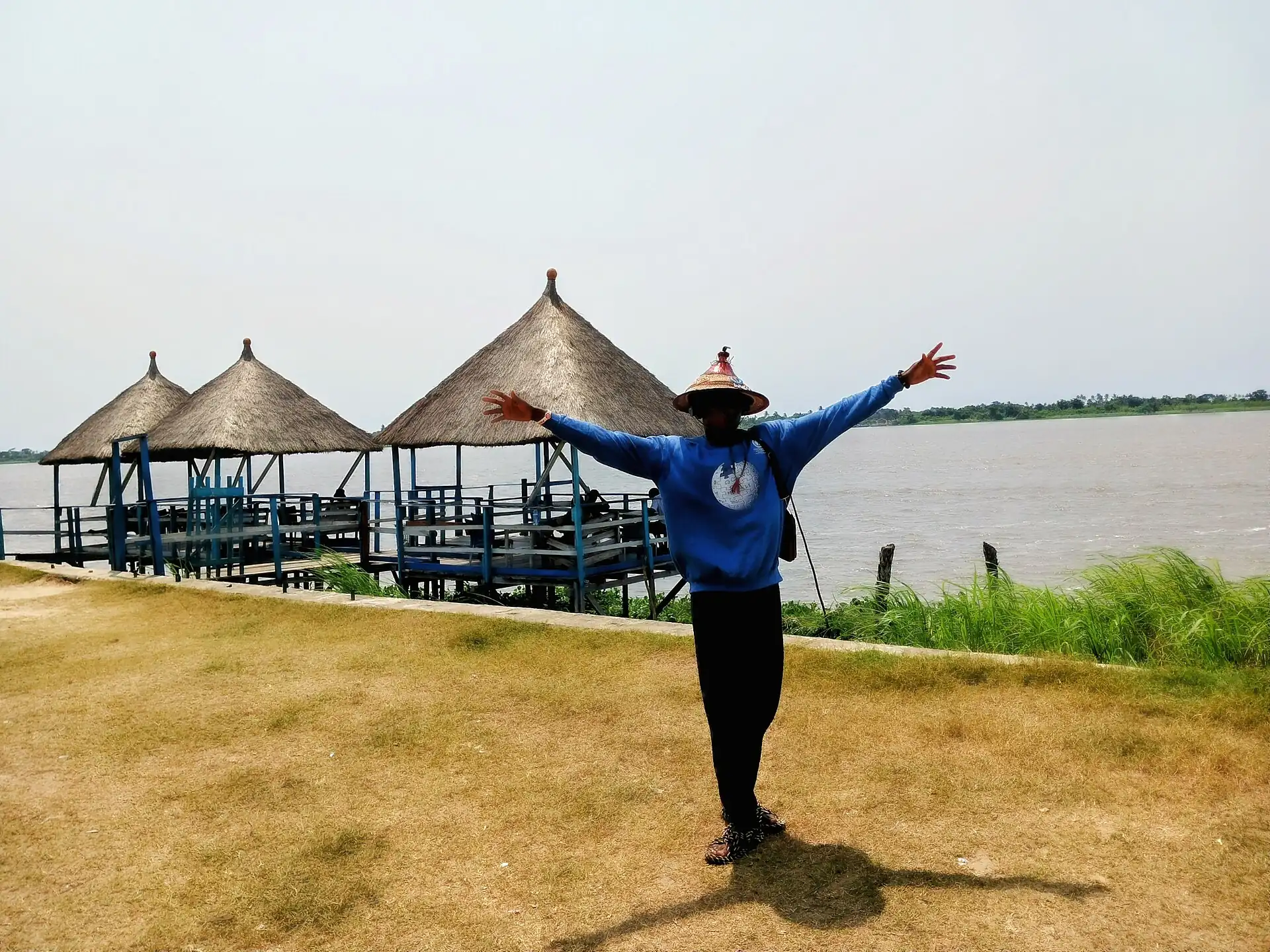 Photo: ABORISADEADETONA, CC0
Badagry
goCar with driver about 60 km (37 mi) westCar with driver about 37 mi (60 km) west
Slave-trade heritage sites, a museum and the Point of No Return; traffic on the Badagry expressway makes it a long day: ask the driver about the road first.
- Time
- Full day, start before 06:30Full day, start before 6:30 AM
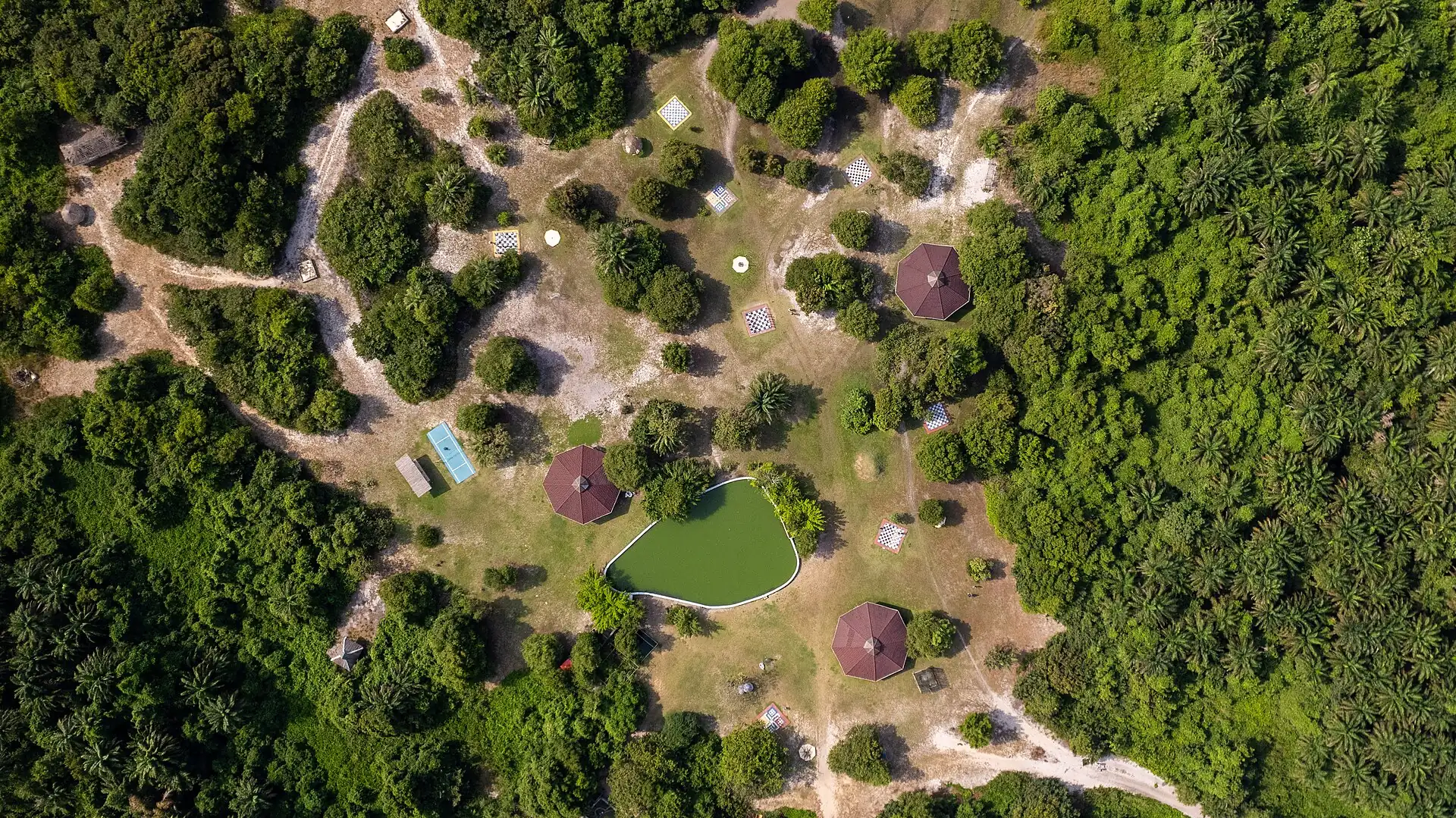 Photo: Isaacayodele32, CC BY-SA 4.0
Lekki Conservation Centre
goCar east on the Lekki–Epe expressway
A nature reserve with a canopy walkway; leave early and check the road.
- Time
- Half day
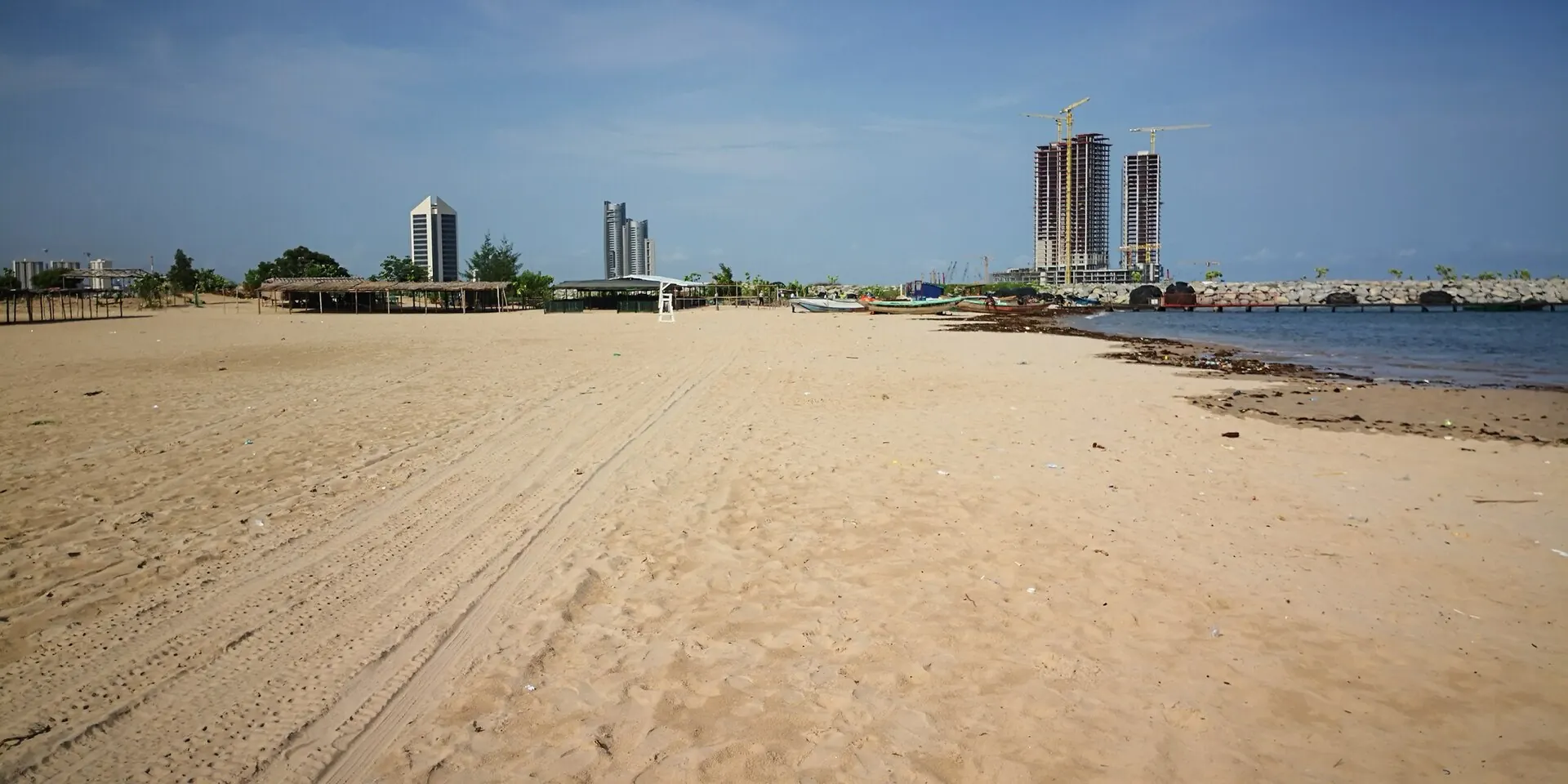 Photo: Liesel81, CC BY-SA 4.0
Tarkwa Bay beach
maybeBoat from a jetty near the Lagos harbour
A sheltered beach reached by boat; go with a licensed operator and check current conditions.
- Time
- Half to full day
Go next
Abuja
goDoor to door: About 4–5 h with airport transfers
Flight about 1 h 10 min from Ikeja
The federal capital; fly rather than drive.
Accra
goDoor to door: About 5–6 h with transfers
Flight about 1 h 30 min
The usual onward hop along the coast; road travel through Benin and Togo is long and uneven.
Ibadan
checkDoor to door: About 3–4 h
Standard-gauge train from Mobolaji Johnson station, Ebute Metta, or car
Check the current timetable; the terminal is on the mainland.
Eat & sleepWhere to eat and which area to sleep in
Eat & sleep
Where to eat and which area to sleep in
Eat
A short list of places worth crossing the city for, each with how to get a seat.
Restaurant finder: filter every place to eat in Lagos →
Vegetarian-friendly score
1.5 / 5 · Hard work
- Country diet noteOur country guide rates vegetarian eating as mixed.0.75 / 2
- Places to eat in this guide0 of 5 places with a known answer are vegetarian-friendly, 5 partly.0.75 / 1.5
- Budget eating lines0 vegetarian lines in "Eat by budget".0 / 0.6
- Meat-free national dishes2 meat-free dishes in the country food list.0.2 / 0.4
- Dedicated vegetarian kitchens0 mentions of vegetarian restaurants, Buddhist or fasting kitchens.0 / 0.5
Country note: Beans, plantain, yam and akara are easy; soups almost always contain meat, fish or stockfish.
Vegetarian places near me →Make a diet card →
How we score
- Country diet note (up to 2): easy 2, workable 1, mixed 0.75, hard 0; no note 0.5.
- City places to eat (up to 1.5): 1.5 × (vegetarian-friendly + half of partly friendly) ÷ places with a known answer; needs 3 or more known places.
- Budget eating lines marked vegetarian (up to 0.6): 0.2 each.
- Meat-free national dishes (up to 0.4): 0.1 each.
- Dedicated vegetarian kitchens mentioned — Buddhist chay, shōjin ryōri, Jain, fasting food, vegan cafés (up to 0.5): 0.1 each.
- Total rounded to the nearest half point, 0 to 5. Built from our own pages only, not from reviews.
Eating and drinking guideEat by budget · Drink
Before you sit down to eat
Short version; full text linked
Eat by budget
Under NGN 5,000 a meal
| Where | Order | Area | Price | Note |
|---|---|---|---|---|
| Amala buka on Lagos Island | Amala with ewedu, gbegiri and meat | Lagos Island | NGN 3,500–7,000 | |
| Suya stand near Ikoyi | Suya with onion and yaji spice | Ikoyi | NGN 3,000–6,000 | |
| Akara, moi moi and puff-puff | Bean fritters, steamed bean pudding, fried dough | Street stalls and cafés | NGN 500–2,000 |
Dishes to know
| Dish | What it is | Where to look | When | Price |
|---|---|---|---|---|
| Jollof rice | Rice cooked in a spiced tomato and pepper base, often smoky from party-style pots | Restaurants and parties | Lunch, dinner | NGN 3,000–8,000 |
| Suya | Thin-sliced grilled beef, chicken or ram with a peanut-chilli spice mix | Street stands | Evening | NGN 3,000–6,000 |
| Amala with ewedu and gbegiri | Yam-flour swallow with jute-leaf soup and bean soup | Bukas | Lunch | NGN 3,500–7,000 |
| Pounded yam with egusi | Pounded yam with melon-seed soup | Restaurants | Lunch, dinner | NGN 5,000–10,000 |
| Moi moi and akara | Steamed bean pudding and fried bean cakes | Cafés, stalls | Breakfast | NGN 500–2,000 |
| Pepper soup | Thin, hot broth of fish or goat with spices | Bars, beach grills | Evening | NGN 3,000–7,000 |
- Eat where the food is cooked in front of you and turnover is fast.
- Ask for pepper on the side: 'small pepper' is often hotter than expected.
Drink & nightlife
| Where | What | Until | Note |
|---|---|---|---|
| Hotel and rooftop bars (Victoria Island, Ikoyi) | Cocktails, live sets and views | Late | The easier evening option; the hotel arranges the car. |
| Terra Kulture evenings | Theatre, readings and a bar | Evening | A cultural night out with a car booked both ways. |
| The New Afrika Shrine (Ikeja) | Afrobeat live music | Late | For music fans, on event nights; go with a guide or group and a car, not alone. |
By style
| Style | What | Where | Price | Until |
|---|---|---|---|---|
| Local lager | Star, Gulder, Heineken (brewed locally)Served very cold. | Bars and restaurants | NGN 1,500–3,500 | Late |
| Palm wine | Fermented palm sap, mildly alcoholicFreshness and cleanliness vary; skip it at unlit roadside stands. | Local bars and roadside stalls | Cheap | — |
| Zobo and chapman | Hibiscus drink; fruity non-alcoholic cocktailGood non-alcohol options. | Restaurants and bars | NGN 1,500–3,500 | Late |
Rules that bite
- Do not walk between venues; the car waits at the door.
- Watch your drink and keep your phone out of sight on the way in and out.
Sleep
Pick the area first: it decides your walk home at night and your first morning.
Which neighborhood fits you
Three questions, one recommendation, with the reasons.
Your best fit
- Terra Kulture is a short ride; Lagos Island and Lekki need a car.
- 24-hour desks and hotel-arranged cars.
Watch out: Mostly mid-range and high; few budget rooms.
Next best: Ikoyi
Built from our 1–5 desk scores per area; your answers stay in this browser.
More on sleepingSleep by budget · Your area · With kids
Sleep by budget
| Band | Price | Where | Room types | What to expect |
|---|---|---|---|---|
| budget | NGN 40,000–80,000 | Victoria Island side streets, Ikeja near the airport | Guesthouses and business hotels | AC, a generator, basic breakfast; check the lock and the Wi-Fi. |
| mid | NGN 90,000–200,000 | Victoria Island, Ikoyi | Mid-range hotels | AC, pool or gym, a 24-hour desk and airport pickup. |
| splurge | NGN 250,000+ | Victoria Island, Ikoyi | International hotels and serviced apartments | Pool, restaurants, backup power and security. |
Booking checks
- Ask about generator power, Wi-Fi reliability and airport pickup before booking.
- Book hotels with their own car service: it removes the biggest risk of the trip.
Which area is yours
| If you are | Sleep in | Because |
|---|---|---|
| First visit, 2–3 nights | Victoria Island | Closest to restaurants and Terra Kulture, and the easiest car pickups. |
| Longer stay or a quiet base | Ikoyi | The calmest streets and serviced apartments, with a car for outings. |
First-timers: hotels with 24h desks, secure drives and short rides to Terra Kulture, Ikoyi and the Lekki road; the best base for the pre-arranged car pattern.
02Ikoyi
Quieter, greener nights in hotels and serviced apartments; a car to Victoria Island in 20–30 minutes off-peak.
Areas are in our default order until you tick a priority.
Scores are 1–5 desk judgements per priority (2026).
With kids
- Lagos is hard on small children: heat, traffic and few safe public spaces. It works for older children on short cultural stops.
- Lekki Conservation Centre's canopy walkway and Freedom Park are the easiest outings; hotel pools are the main way to cool off.
- Bring a car seat if you need one; hotel cars rarely carry them.
- Malls in Victoria Island and Lekki have play areas and food courts that make an easy indoor afternoon.
PracticalMoney, essentials, safety and the pocket card
Practical
Money, essentials, safety and the pocket card
Money
What a day costs at three comfort levels, and how to pay.
- Budget
- ₦20,000–40,000 excl. bed / day
- Mid
- ₦40,000–100,000 excl. bed / day
- High
- ₦100,000+ excl. bed / day
- Transit card
- No transit card: pre-booked cars and ride-hailing; a driver by the day is common.
- Cash rule
- Keep ₦20,000 in small notes for tips and small purchases; withdraw at ATMs inside banks, hotels or malls in daylight and check exchange rates, which have moved sharply.
More on moneyCosts · Budget · Buy
What things cost
- Suya (grilled spiced beef) portion at a standNGN 3,000–6,000
- Amala with ewedu and meat at a bukaNGN 3,500–7,000
- Bottled water, 1.5 LNGN 500–1,200
- Ride-hailing fare across Victoria IslandNGN 4,000–12,000
- Airport (Ikeja) to Victoria Island, pre-booked carNGN 25,000–60,000
Trip budget
| Hotel double room1 × 3 nights × NGN 140,000 | NGN 420,000 |
| Food, local transport, entries2 × 3 days × NGN 70,000 | NGN 420,000 |
| Airport car, both ways1 × NGN 90,000 · one pre-booked car | NGN 90,000 |
| Driver and car for a day1 × NGN 75,000 | NGN 75,000 |
| Local SIM with data2 × NGN 7,000 | NGN 14,000 |
| Buffer 20%Price creep, a taxi you did not plan, one splurge | NGN 203,800 |
| Trip total≈ NGN 203,800 per person per day, bed included | NGN 1,222,800 |
2026 estimate in naira; flights and visas excluded. Your choices stay in this browser.
Prices of common things
| Bottled water, 1.5 L | NGN 500–1,200 |
| Jollof rice with chicken | NGN 6,000–12,000 |
| Suya portion | NGN 3,000–6,000 |
2026 estimate; check locally.
Buy
- Bargaining
- In markets and craft stalls the first price to a visitor is high: counter at about half, settle around two-thirds, and be friendly about it. Do not bargain in malls or where prices are posted.
- Fixed-price check
- Malls, supermarkets and gallery shops post fixed prices, a useful ceiling before you bargain.
Markets and shopping streets
| Where | What | When | Haggle | Note |
|---|---|---|---|---|
| Lekki Arts and Crafts Market | Carvings, beads, bronzes, fabrics | Daytime, roughly 09:00–18:00Daytime, roughly 9:00 AM–6:00 PM | hard | The easiest craft shopping for a visitor; go with a driver who waits. |
| Balogun Market (Lagos Island) | Fabric, clothing, household goods | Daytime | hard | Very crowded and not for a first visit without a local guide; keep bags and phones out of sight. |
| Nike Art Gallery shop | Textiles, batik, paintings | Gallery hours | light | Fixed-price pieces and a fair sense of what things cost. |
Shops by what they sell
| For | Where | Hours | Note |
|---|---|---|---|
| Adire (indigo resist-dyed cloth) and Ankara fabric | Lekki craft market, Terra Kulture, Nike | Shop hours | Ask whether it is hand-dyed; machine prints are cheaper. |
| Books and Nigerian writing | Terra Kulture bookshop | Shop hours | One of the better selections of Nigerian authors on the island. |
| Supermarkets and malls | Victoria Island and Lekki malls | Roughly 09:00–21:00 | Fixed prices, AC and the most reliable card acceptance. |
Changing money
| Where | Verdict | Why |
|---|---|---|
| Bank branches | use | Official rate and a receipt; passport needed; weekday hours only. |
| Hotel front desk | ok | Convenient; check the rate against the bank. |
| Street money-changers | avoid | Counterfeit and short-change risk; not worth it. |
ATMs
- Availability
- ATMs inside banks, hotels and malls are the safest; machines run out of cash on weekends and holidays.
- Limits
- Daily withdrawal limits are low: plan a few smaller withdrawals and keep a reserve in US dollars or euros in cash.
- Cards
- Cards work at hotels, malls and larger restaurants; terminals fail, so keep a cash buffer.
Essentials and accessEssentials · Access
Essentials
- Tipping
- Not fixed. Round up for drivers; 5–10% in restaurants if no service charge is shown; a small note for hotel porters and guards.
- Plugs & power
- 230 V, 50 Hz; types D and G sockets. Bring a universal adapter and a power bank: outages are common and hotels run generators.
- Toilets
- Hotels, malls, galleries and larger restaurants; nothing public worth relying on.
- Opening hours
- Shops and banks run about 08:00–17:00 on weekdays; markets open early and thin out by late afternoon. Bars and restaurants stay open late, but movement after dark is the limit.Shops and banks run about 8:00 AM–5:00 PM on weekdays; markets open early and thin out by late afternoon. Bars and restaurants stay open late, but movement after dark is the limit.
- Health
- Malaria risk year-round: take prophylaxis and use repellent. Yellow fever vaccination is required by many entry rules: carry your certificate. Bring your own medicines and check the current typhoid and cholera notes for your date.
- Accessibility
- Pavements are broken, blocked or absent across most of the city; step-free access exists in newer hotels and malls. Plan door to door by car.
- Laundry
- Hotels offer laundry by the piece; independent dry cleaners exist in Ikoyi and Victoria Island.
- Emergency numbers
- 112 is the national emergency number and may not always connect. Save your hotel's, driver's and insurer's numbers before you go.
Pack
- Light clothes for heat, a rain jacket for April–October
- Copies of your passport, visa and yellow fever certificate, kept apart from the originals
- Repellent, a power bank and a torch for outages
- Small naira notes, and a cheap second phone if you do not want your main one on show
Accessibility
Lagos is hard on wheels: pavements are broken or missing, and step-free access exists mainly inside newer hotels, malls and galleries. Plan every outing by car.
- Pavements
- Uneven, blocked or absent outside compounds.
- Getting around
- A booked car is the only reliable step-free option; public buses and minibuses are not adapted.
- Hotels
- Larger international hotels confirm lifts and adapted rooms; ask before booking.
- Toilets
- Accessible toilets are rare outside hotels and malls.
Survive
Safety basics, the lines not to cross, and practical habits that save the day.
Safety
- Arrange every ride through the hotel or a ride-hailing app; do not use unbooked taxis or hail cars on the street.
- Do not walk in the street after dark; keep phones, cameras and jewellery out of sight.
- Check your government’s advice on Lagos and the roads you plan to use; some advice covers parts of the state and the routes out of the city.
- Emergency: 112 is the national emergency number and may not always connect; also save your hotel’s, driver’s and insurer’s numbers.
Red lines
- Do not photograph police, soldiers, airports, bridges or government buildings.
- Ask before photographing people, and do not photograph in markets without permission.
Practical
- Toilets: hotels, malls and galleries.
- Drink bottled or filtered water; tap water is not for drinking.
- Carry a power bank: outages are common.
More on staying safeStay safe · Stay healthy · Safety map · Solo & women · Etiquette · Cope · Scams
After dark, by area
5 flagged areas
- Avoid after dark
- Take care
- Take care
- Take care
Mainland (Ikeja and beyond)
Not checked
Day = roughly 07:00–18:00. What to watch in each area, day and night →
Scams and red flags
Walk away if you see these
- Unbooked airport taxis: drivers who offer a ride before you reach the hotel car quote a fixed price and change it, or take you elsewhere. Wait for your named driver.
- Fake officials at traffic stops or checkpoints asking for a payment: ask for a name and ID and say you will settle it at the station, or call your hotel.
- Money-changers and 'helpful' people near banks and ATMs who watch your PIN: use ATMs inside banks or hotels, in daylight.
- The fake-emergency or advance-fee message by email or on a dating app, which is common in Nigeria: never send money to someone you have not met.
- Hotel or apartment listings that ask for a full transfer before a viewing: pay through the platform or the hotel.
Stay safe
Crossing the road
- 01Drivers do not always stop: cross only where a guard or a crowd is crossing, or better, do not walk on main roads.
Hustles specific to this city
| Hustle | Where | The tell | What to do |
|---|---|---|---|
| Unbooked airport taxis | Airport arrivals | A driver quotes a low price or grabs your bag | Wait for your named driver, or use a booked car. |
| Fake fines or checkpoints | Roads in and out of the city | A request for cash with no paperwork | Stay calm, ask for a name and ID, and call your hotel. |
| Card and ATM tricks | Machines outside banks | A helper watches your PIN, or the card is swapped | Use machines inside banks or hotels, in daylight, and cover the keypad. |
- Photography
- Never photograph police, soldiers, airports, bridges or government buildings; ask before photographing people.
- After dark
- Do not walk after dark; use a booked car door to door.
- Government advice
- Some governments advise against travel to parts of Nigeria: read your own advice for Lagos state and your route out.
Stay healthy
- Malaria
- Risk year-round; take prophylaxis as advised by a travel clinic and use repellent and AC.
- Yellow fever
- A vaccination certificate is required for entry in many cases and recommended in any case; carry it.
- Food and water
- Bottled water only; eat hot, freshly cooked food at busy places.
- Air and heat
- Traffic fumes and harmattan dust can affect asthma; carry medicine and stay hydrated.
- Medical evacuation
- Facilities vary; travel insurance with medical evacuation cover is strongly recommended.
Hospitals and clinics: see Cope.
Safety by area and hour
| Area | Day | Night | What to watch |
|---|---|---|---|
| Victoria Island | fine | caution | Car door to door after dark; phones out of sight on the street. |
| Ikoyi | fine | caution | Calm, but not for walking after dark; some streets are dark and uneven. |
| Lagos Island | caution | avoid | Crowds, pickpockets and traffic; go early with a driver who waits and leave before midday. |
| Lekki | fine | caution | Road conditions and traffic are the main issue; flooding in the rains. |
| Mainland (Ikeja and beyond) | check | check | Check current advice and go with a guide; not a first-visit base. |
- Ride only in cars arranged by your hotel or through an app; check the plate.
- Keep phones and cameras out of sight in traffic and in crowds: snatch theft through car windows happens.
Solo, women and LGBTQ+ travellers
Solo
- Manageable with a booked car and a plan made before you leave your room; do not walk alone after dark.
- Share your itinerary and the car's plate with someone each day.
Women
- Dress modestly outside your hotel; expect attention and the odd comment. Sit in the back of ride-hail cars and share your trip.
- Avoid walking alone after dark; use a driver you trust.
LGBTQ+
- Same-sex relations are criminalised under Nigerian law, and public attitudes are hostile: keep a low profile, and do not use dating apps to arrange meetings with strangers.
Etiquette in Lagos
- Greetings
- Greet before you ask; a handshake and 'good morning' matter more than speed.
- Right hand
- Give, take and eat with the right hand.
- Photos
- Ask before photographing people; never photograph police, soldiers, airports, bridges or government buildings.
- Dress
- Neat and modest is the norm; cover shoulders and knees in religious spaces and markets.
- Money
- Keep cash out of sight, and do not show a full wallet at a market or ATM.
Cope
Hospitals and clinics that handle foreigners
| Where | Area | Use it for |
|---|---|---|
| Private hospitals in Victoria Island and Ikoyi | Victoria Island / Ikoyi | The better-equipped private facilities; pay upfront and claim later. |
| Lagos University Teaching Hospital (LUTH) | Idi-Araba, mainland | The main public teaching hospital; for anything serious, contact your insurer about evacuation. |
Visa extensions
- Office
- Nigeria Immigration Service handles visa and stay questions; ask your hotel for the current Lagos office address and hours.
- Visas
- Most visitors need a visa arranged before travel, often through an e-visa portal; check the official requirements well ahead.
- Overstay
- Fix any visa problem before your flight; airport fines and delays are reported.
Embassies and consulates
| Country | Address | Phone | Note |
|---|---|---|---|
| United Kingdom | Consulate on the mainland or Victoria Island | — | (check) |
| United States | Consulate on Victoria Island | — | (check) |
| France | Consulate in Lagos | — | (check) |
- Lost passport
- Report to the police, then your consulate; expect several working days for an emergency document.
- Pharmacies
- Common in Victoria Island and Ikoyi; check expiry dates and stick to well-known brands.
Apps and offline kitOffline kit
Offline kit
Set up before you leave, so Lagos still works with no signal or a dead roaming plan.
On your phone
- Maps: open the city in Google Maps, tap the place name, then Download offline map (or use an offline-maps app).
- Data: install an eSIM or buy a local SIM before the first taxi; the apps in this guide depend on it.
- Translation: download the local language for camera translation.
- Screenshots: booking confirmations, hotel address in the local script, and the emergency numbers.
This guide
Save the Lagos guide and its pages on this device; it opens without a connection.
Phrases that do the work
Greeting
Hello, good morning
Good morning
English is widely spoken: greet first, then ask
Greeting (Yoruba)
Welcome / thank you
Ẹ kú àbọ̀ / Ẹ ṣé
eh koo ah-baw / eh sheh
Market
How much is this?
How much be this one?
Pidgin: how much be dis wan
Market
Reduce the price
Abeg, reduce am small
ah-beg, ree-dyoos am smawl
Food
Not too spicy
No put plenty pepper
no poot plen-tee peh-per
Taxi
Please stop here
Please stop here
then check the plate against the app
Thanks (Pidgin)
Thank you
Thank you o / I dey appreciate
thank you oh
Trouble
I need help
Please, I need help
then go to a hotel, bank or mall guard
Pocket card
Fill in, then print or save as PDF
Stays in this browser only; nothing is sent anywhere.
LagosLagos
Pocket card · Voykit
My bed tonight
—
—
—
Please take me to this addressPlease take me to this address
Emergency
- National emergency112
- Hotel front desksave on arrival
Embassy
Confirm your own consulate's address and 24-hour line before you travel.
My embassy: —
Fare anchors (2026 estimate)
- Airport → Victoria Island, pre-booked car: NGN 25,000–60,000, 1–3 h depending on traffic
- Ride-hail across Victoria Island: NGN 4,000–12,000
Say or show
- Thank you o / I dey appreciate — Thank you (thank you oh)
Emergency numbers can fail: your hotel and driver's numbers are your real safety net.
Deep diveHistory, reading, photos and every source
Deep dive
History, reading, photos and every source
Sources
- officialNigeria Immigration Service
- officialLagos State Government
- officialUK FCDO foreign travel advice: Nigeria
- secondaryWikivoyage — Lagos
Ask about Lagos
Loading…
Was this useful?