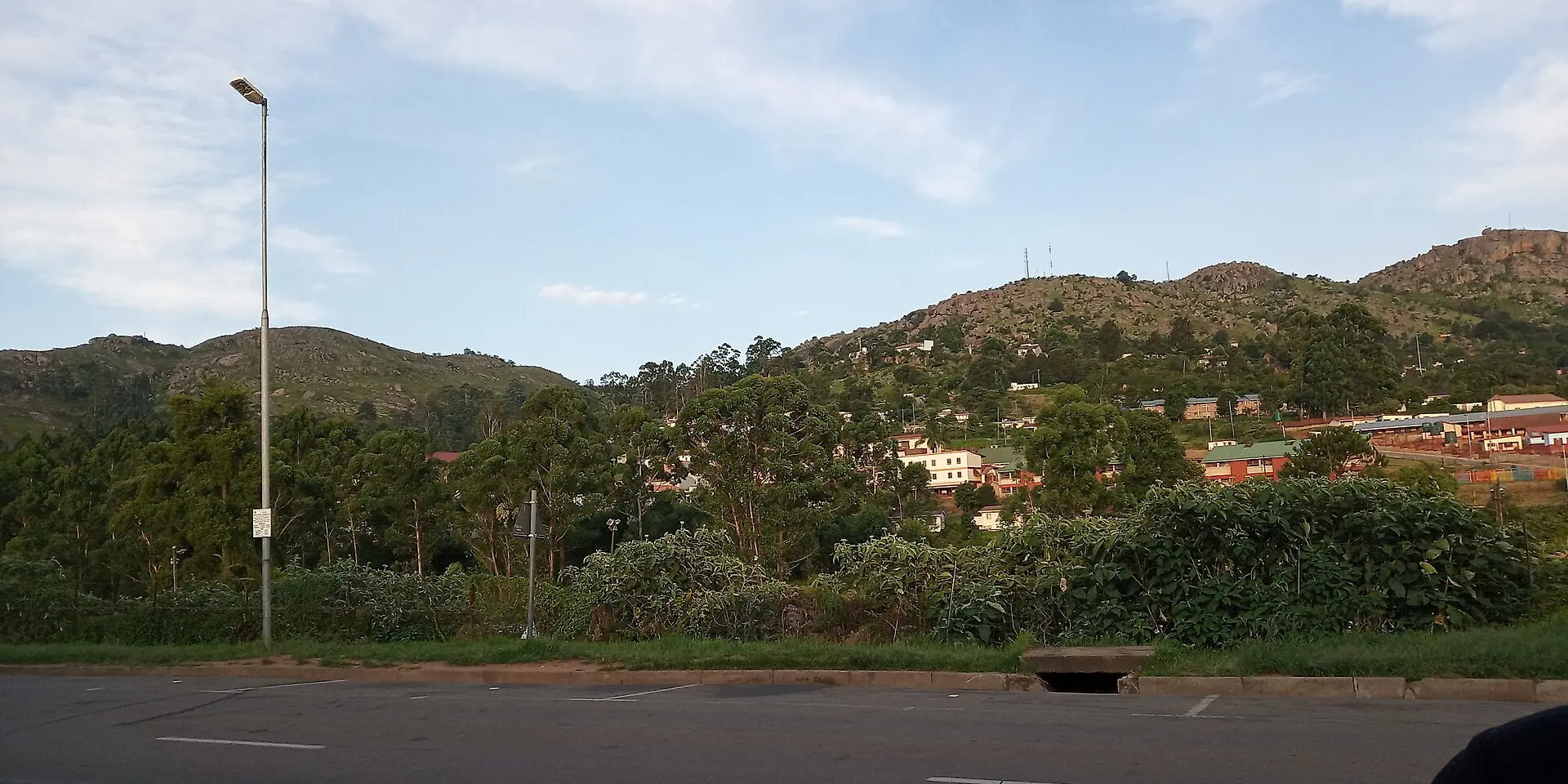
Mbabane
Code ES · 4 walking zones
Mbabane is a small hill-town capital and the head of the Ezulwini Valley: one day covers the market and Allister Miller Street, and most visitors sleep here or in the valley and use it as a base for Mlilwane and the craft markets.
Our quick read of Mbabane, scored 1–5 (friction is out of 100). Cash need: how often you still need notes. Heat risk: how hot days get. Stroller: how easy wheels are. Friction: overall effort for a first visit. Desk judgements, so check before relying on them.
- Local time
- --:--
- Weather
- forecast below
- Currency
- SZL
- Best months
- Mar · Apr · May · Jun · Jul · Aug · Sep · Oct
- Airport
- King Mswati III (SHO)
Walking zones: the 4 areas this guide plans a day around. Each is a district you can cover on foot, so you do one zone per half-day and ride the train between them. The code (ES 01, ES 02…) is just the zone's number on the Mbabane line; the line under each name says how bags fare there and how much time it needs.
Map of Mbabane
Use the switches to show or hide each kind of pin. A switch that is on shows its pins on the map; tap it again to hide them. "Show only" keeps just the pins that match (for example, places that fit a suitcase). Tap any pin for its name and a link to its page.
- Where to sleep
- Places
- Eat
- Walking clusters
- Rest stops
From the airport Mswati III (SHO) to your bed
Tap a pin for its card. Places without their own coordinates are shown by their walking cluster.
Why Mbabane
Mbabane is not a sightseeing city: it is a practical base. The market, the main street and Swazi Plaza fit in half a day, and the valley's wildlife sanctuary and craft stalls are short drives away. The trips that go wrong are the road ones: the long transfer from King Mswati III International or from Johannesburg, night driving with animals on the road, and cash-only stalls. Sleep here, keep a car or driver, and plan the valley as day trips.
See first
- 1
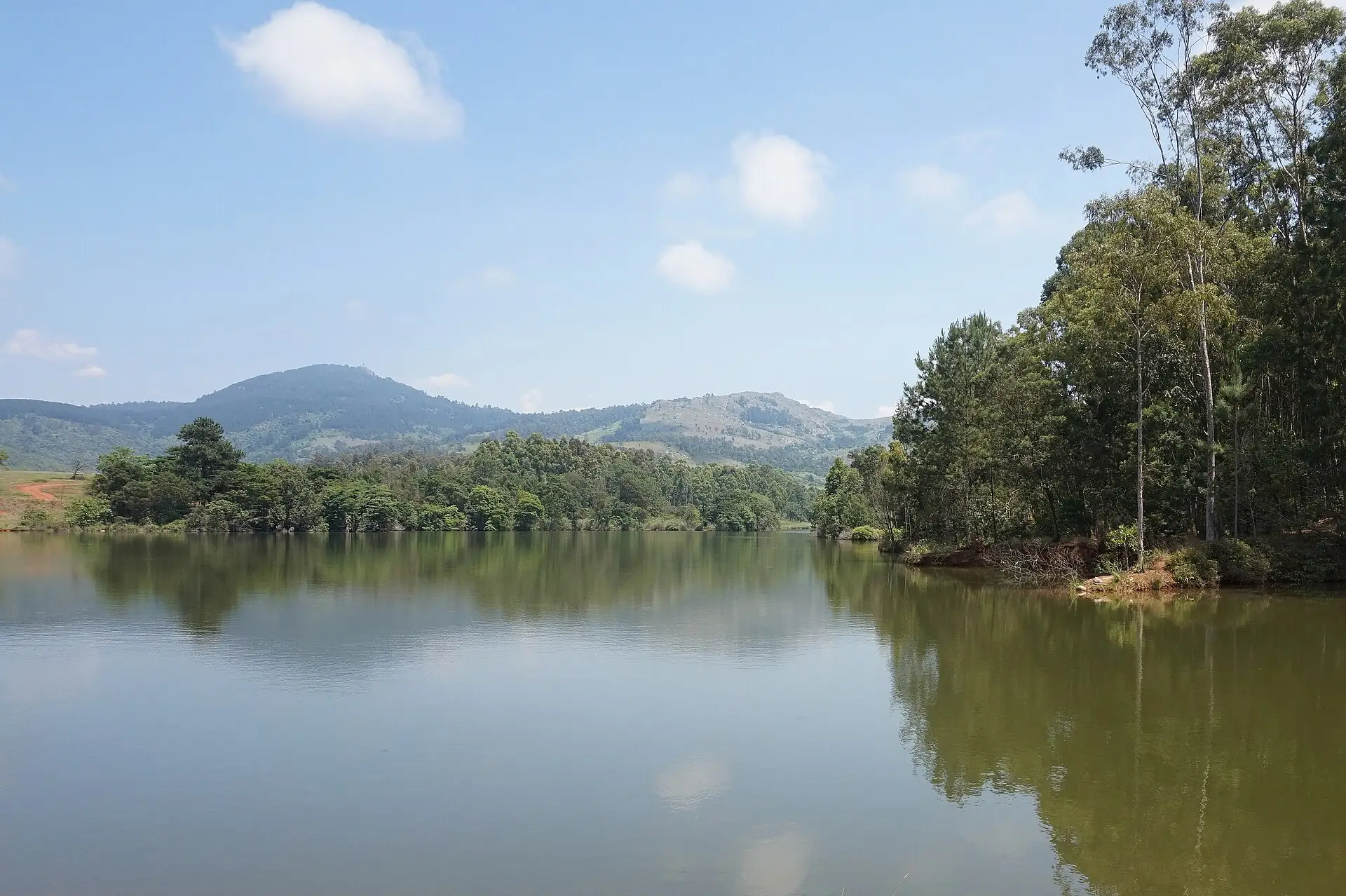 Mlilwane Wildlife Sanctuary · Half or full day
- 2
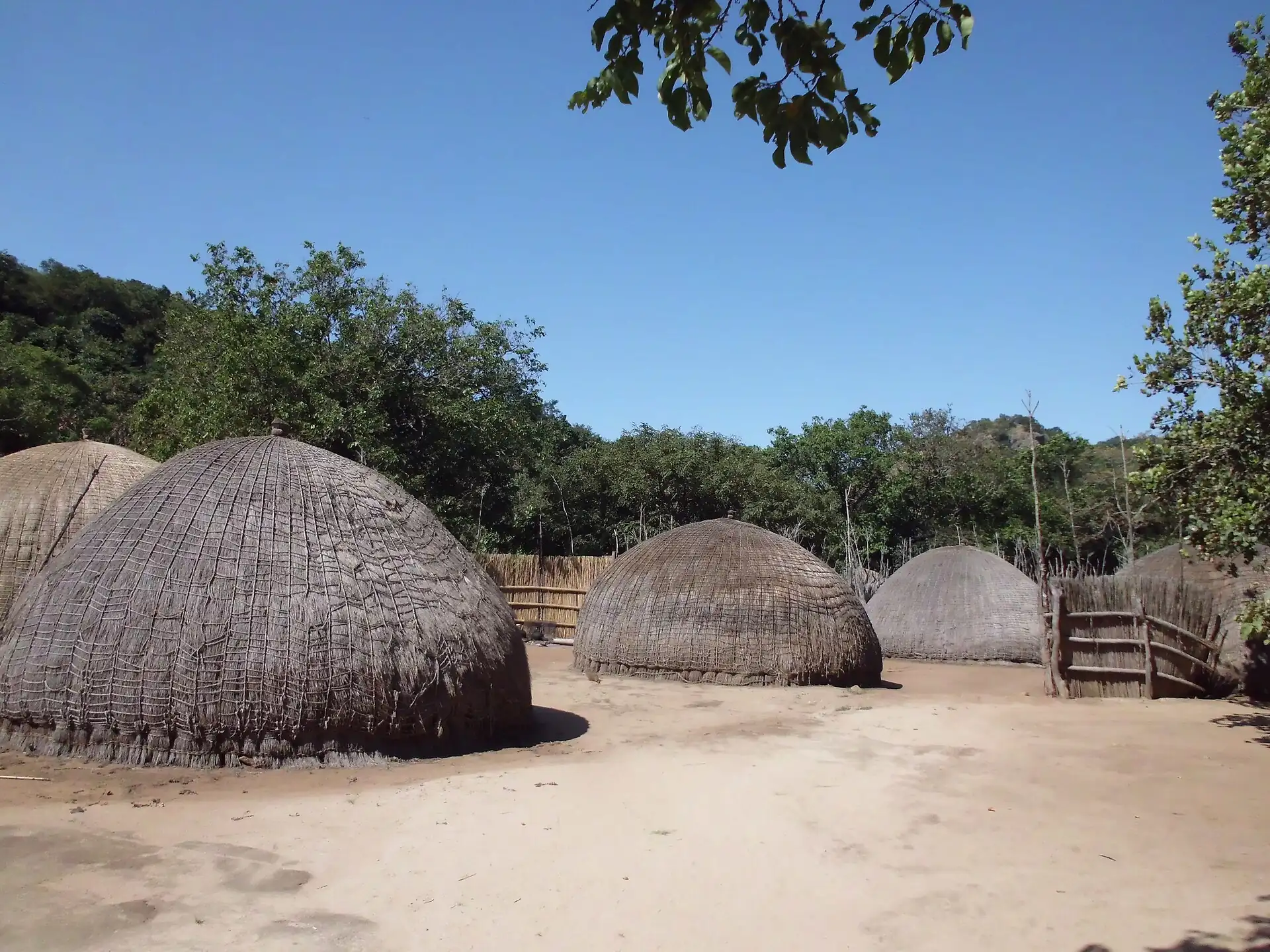 Mantenga Cultural Village · 2–3 h
- 3Ngwenya Glass · 1–2 h
- 4Sibebe Rock · Half day
- 5Swazi National Museum · 45–60 min
Fits
- A base for the Ezulwini Valley
- Road trips through southern Africa
- Craft and market stops
Does not fit
- Nightlife seekers
- Travellers without a car or driver
- Anyone expecting a long list of sights
How long
- 1 daysMarket, Allister Miller Street and Swazi Plaza on a half-day
- 2 daysMbabane half-day + Mlilwane Wildlife Sanctuary in the Ezulwini Valley
- 4 daysMbabane 2 + Ezulwini and Mlilwane 1 + a spare day for weather and roads
Good for
- First timers
- Foodies
- Budget
- Couples
- Families
- Luxury
About Mbabane
Mbabane sits in the Highveld, at about 1,200 m on the western side of Eswatini, in a broad valley of hills and pine and eucalyptus plantations. It was a small British administrative post in the early 20th century and has been the executive capital since about 1902 (check the exact year), while Lobamba, in the Ezulwini Valley below, is the legislative and royal capital.
Eswatini was known as Swaziland until 2018. It became independent from Britain on 6 September 1968 under King Sobhuza II, whose 61-year reign was one of the longest of any monarch in modern times. His son, King Mswati III, has ruled since 1986. The country is an absolute monarchy, and political parties are not allowed to contest elections. Public life is shaped by the royal family, the Swazi Nation Land system and the ceremonies of the calendar.
Good to know
- Mbabane is the administrative capital; Lobamba, in the valley below, is the legislative and royal capital, and Manzini is the main commercial town.
- The Eswatini Tourism Authority publishes lists of accommodation, activities and events; hotel desks and licensed operators are the practical first stop for drivers and park bookings.
- Compare a written quote from at least two operators before paying a deposit.
Go deeper 11 min read · 7 chapters
Mbabane is a small hill-town capital in one of Africa's last absolute monarchies. It is less a sight than a base, and its value is in what surrounds it: a kingdom with a living royal calendar, granite hills and lowveld game parks, and craft made from grass, glass and wax. This deep dive follows how the Swazi kingdom took shape, how the monarchy and its ceremonies still frame the year, how the land steps down from the Highveld to the lowveld, what people make and eat, and how to visit as a guest.
1History2 min
The Swazi nation grew from the Ngwane people, who moved into the area in the 18th century under a leader named Ngwane III. Under later kings, especially Sobhuza I and Mswati II, the kingdom absorbed neighbouring chiefdoms and drew the boundaries that are broadly recognisable today. The name Swazi comes from Mswati II, and the name Swaziland was used for the country until 2018. The mountains and the rivers gave the kingdom natural defences, and it managed to survive the Zulu expansion of the early 19th century and the European scramble that followed.
In the late 19th century, concessions granted to European prospectors and traders complicated land and authority, and after the Anglo-Boer War the territory became a British protectorate in 1903. Mbabane developed as the colonial administrative centre and, from about the early 1900s, as the capital; the exact year is worth checking if you need to quote it. Lobamba, in the Ezulwini Valley, remained the royal and ceremonial centre, which is why the country has two capitals.
Swaziland became independent on 6 September 1968 under King Sobhuza II. His reign, dated from 1921, lasted 61 years and is often cited as one of the longest in modern history. In 1973 he suspended the constitution and banned political parties, and the country has been governed under a system called Tinkhundla ever since, in which candidates stand as individuals. King Mswati III has reigned since 1986. In 2018, on the 50th anniversary of independence, he announced that the country would be called Eswatini, meaning the land of the Swazi.
Modern Eswatini has faced real strain: some of the world's highest HIV rates, pressure for political reform and unrest in 2021 that led to curfews and disruption. Visitors are rarely affected, but it is worth reading your government's travel advice and checking the news before you travel.
- Protectorate begins
- 1903
- Independence
- 6 September 1968
- Name changes to Eswatini
- 2018
- King since 1986
- Mswati III
- Capitals
- Mbabane (administrative), Lobamba (royal and legislative)
2The monarchy and the ceremonial year2 min
The Swazi monarchy is dual. The king, called Ngwenyama, meaning the lion, and the Queen Mother, called Ndlovukati, meaning the she-elephant, share the symbolic role of the nation, and the balance between them is part of how Swazi society understands itself. The king's residence and the Queen Mother's residence at Ludzidzini are in the Lobamba area, and the royal villages are among the few places where the calendar of ceremonies is still central to public life.
Two ceremonies dominate the year. Umhlanga, the Reed Dance, takes place in late August or September. Tens of thousands of young unmarried women cut reeds and carry them to the Queen Mother's residence, where they dance and are received by the king. It is a national event, not a performance staged for visitors, and it has also drawn criticism from some observers. Incwala, the first-fruits ceremony, takes place around the turn of the year. It is a sacred kingship ritual with parts that are closed to outsiders, and the dates depend on the phases of the moon.
If you attend, or if your visit falls near, behave as a guest at someone else's ritual. Dress modestly, follow the rules on photography and never point a camera at a royal person or building without permission. Ask your hotel or the Eswatini Tourism Authority which parts are open to visitors and how to attend, and expect road closures and crowds near Lobamba. Independence Day, on 6 September, brings its own parades and crowds.
The Marula Festival and the Bushfire arts festival show other sides of the calendar. Marula celebrates a fruit that is loved by people and elephants, with juice, drinks and dance. Bushfire, near Malkerns, is a large contemporary festival of music, poetry and art that draws visitors from across the region. Dates change each year, so check before you plan around them, and book accommodation early.
- King (Ngwenyama)
- The lion
- Queen Mother (Ndlovukati)
- The she-elephant
- Reed Dance
- Late August or September
- First-fruits ceremony
- Around December or January
3Land, hills and highlands2 min
Eswatini is small, about the size of Wales or New Jersey, but it packs four distinct zones into a short distance. The Highveld in the west, where Mbabane sits at about 1,200 m, is cool and green, with pine and eucalyptus plantations and mist in the wet season. Below it the Middleveld holds the Ezulwini Valley and the country's main towns. The Lowveld is hot, flat and dry, with sugar cane and big game reserves, and the Lubombo range forms the eastern edge along the border with Mozambique.
Granite gives the Highveld its shape. Sibebe Rock, north of Mbabane, is a huge dome of very old granite that is often described as one of the largest in the world; it is worth checking the claim before you repeat it, but there is no doubt about its size. Climbing it is a real effort, with steep slopes and exposed rock, and it is not for wet weather. Nearby, the Ngwenya area contains the Bomvu Ridge, where archaeologists have identified prehistoric iron-ore mining that some place among the oldest known in the world.
The land is also a working landscape. The Swazi Nation Land system places a large share of the country under traditional chiefs, while plantations, sugar estates and mines shape much of the rest. As you drive from Mbabane down to the valley, you cross from cool hill air into warmer, drier country in less than an hour. That change is why a short trip feels like a longer one, and why the weather in Mbabane is a poor guide to the weather in the lowveld.
Practically, this means layers. Bring a warm jacket for Mbabane's cold winter nights and a hat and sunscreen for the lowveld. Storms and mist in the wet season can close hill roads, so start early and keep the afternoons flexible.
- Mbabane elevation
- About 1,200 m
- Four zones
- Highveld, Middleveld, Lowveld, Lubombo
- Sibebe Rock
- A huge granite dome north of the town
- Hill-town climate
- Cool winters, warm wet summers
4Craft: grass, glass and wax2 min
Eswatini has a strong craft tradition, and much of it is made for sale to visitors as well as for use at home. Baskets and mats are woven from lutindzi grass, coiled tightly and decorated with natural dyes, in patterns that can be geometric or simple. They are sturdy and functional, and a well-made one will last for years. Ask who made it and how long it took, and compare a few before buying.
Two workshops in the hills have become known beyond the country. Ngwenya Glass, north-west of Mbabane, collects used bottles and glass and melts them in a furnace to make animal figures, vases and bowls. Visitors can watch the glassblowers, and the shop has fixed prices. Swazi Candles, in the Malkerns area, makes animal-shaped and patterned candles by hand in a craft complex that also houses other studios and shops. Batik, wood carving and beadwork complete the picture.
Craft is a source of income for many households, and the way you buy matters. Prefer places where the makers are named and paid fairly. Do not haggle at fixed-price workshops, and bargain politely at market stalls. Ask about packing and shipping if you buy something big, and check the rules on wood and animal products before you carry them across a border.
Traditional dress is also a craft. Lihiya cloth, in bright patterns, is worn as a wrap on formal days, and beadwork and headdresses appear at ceremonies. Do not treat these as costumes; ask before photographing people and follow the rules at events. If you want to take part, some community projects and workshops in the valley offer short lessons in weaving or cooking, and they are a better way to spend money and time than a quick shopping stop. Whatever you buy, keep the maker's name if you can, because a handmade object that you can trace is worth more than one you cannot.
- Basket grass
- Lutindzi
- Glass
- Made from recycled bottles at Ngwenya
- Candles
- Hand-made in the Malkerns area
- Cloth
- Lihiya, a wrap in bright patterns
5Food and drink2 min
The base of Swazi cooking is maize. Sishwala, a stiff porridge, is eaten with meat, beans or a relish, and it is the equivalent of pap in South Africa or ugali in East Africa. Beef and chicken are the usual meats, and a braai, meat grilled over coals, is the social meal at any occasion. Relishes are made from greens such as pumpkin leaves, sometimes cooked with ground peanuts, in a dish called umbidvo.
Dairy and sour flavours are part of the tradition. Emasi is soured milk, drunk or eaten with porridge, and incwancwa is a soured porridge that is eaten or drunk. Sidvudvu is a sweet pumpkin porridge. Dried, spiced meat, called mncweba, is a popular snack. Tinkhobe, boiled maize kernels and beans, is a common home dish and is the sort of meal that is rarely on a tourist menu, so it is worth asking about.
Drinks range from tea and instant coffee to bottled lager. Sibebe Premium Lager is the local beer. Traditional maize or sorghum beer, called tjwala, is brewed at home and shared at gatherings, and if you are offered some, take a small sip, thank your host and do not feel obliged to finish it. Marula fruit, a tart, juicy fruit that ripens in summer, is made into juice and liqueur, and the marula tree is the source of the Marula Festival and, indirectly, of a well-known cream liqueur made across the border.
In town, eat at canteens near the market for a filling lunch, at stalls for a quick braai, and at café-restaurants on Allister Miller Street or in the mall for a familiar sit-down meal. In the valley, craft-centre cafés and lodges offer salads, grills and cake. Cash is normal at stalls and canteens, and cards work at larger places. Eat where the food is hot and busy, drink bottled water and wash your hands first.
- Staple
- Sishwala, stiff maize porridge
- Relish
- Umbidvo, greens with ground peanuts
- Sour dairy
- Emasi
- Local beer
- Sibebe Premium Lager
6Wildlife and reserves2 min
For a small country, Eswatini has a strong record in protecting wildlife. The Big Game Parks organisation runs three reserves that are commonly visited: Mlilwane in the Ezulwini Valley, Hlane Royal National Park in the northern lowveld, and Mkhaya Game Reserve in the south. Mlilwane, set up in the 1960s on a private farm, was the country's first protected area, and its name means little fire.
Mlilwane is the easy one. It has hippos, zebra, giraffe, wildebeest and many antelope, and visitors can walk, cycle or ride on marked routes, which is unusual in southern Africa. It has no lions or elephants, so it feels relaxed. Hlane is larger and wilder, with lion, elephant and white rhino, while Mkhaya is known for its black rhino and its small, guided game drives. Both are best done with a night in a lodge rather than as a rushed day trip.
Wildlife conservation here has been shaped by poaching pressure, especially on rhino, and by heavy security and patrols. Guides will explain that the animals' whereabouts are watched closely. Visitors can help by choosing licensed operators, following rules, not feeding or approaching animals and asking how the reserve supports neighbouring communities.
Malaria risk is low on the Highveld and higher in the lowveld reserves, so ask a travel clinic about your route. Take repellent, wear neutral clothes, and bring binoculars. Mornings are best for animals, and midday is for shade. A day at Mlilwane makes a good first taste; if you have more time, plan a night in the lowveld. Book park entry and activities a day ahead, carry small notes for fees and tips, and ask reception where animals were seen that morning, since that can save an hour of searching. Keep windows up and voices low near animals, and never leave food visible in a parked car.
- Big Game Parks reserves
- Mlilwane, Hlane and Mkhaya
- Mlilwane
- The country's first protected area, set up in the 1960s
- Mlilwane activities
- Walking, cycling and horse riding
- Big game country
- Hlane and Mkhaya in the lowveld
7Visiting well2 min
Mbabane works best as a base for two to four days. Arrive with cash in small notes, arrange your airport or border transfer ahead, and keep your evenings short and by car. The airport is about 90 minutes from the town, and the border crossings to South Africa and Mozambique have set opening hours. Drive on the left, avoid night driving on rural roads and watch for animals and pedestrians.
Greet people, ask before you photograph them, and remember that respect for the monarchy is expected. Do not criticise the king in public, and do not photograph royal residences, vehicles or officials without permission. Political unrest has occurred in recent years, so keep an eye on the news, avoid gatherings and follow your government's advice.
Choose experiences that share income locally. A guide at Sibebe Rock, a lesson in weaving, a craft purchase at a workshop and a meal at a canteen all put money into local hands. Use registered operators, agree prices first and keep receipts. If you are offered a homemade drink or a seat at someone's table, accept politely. Hospitality is part of the culture. Leave a little slack in your plan as well: hill roads can be slow after rain, minibus taxis leave when full, and small offices keep short hours, so an unhurried day gets more done than a crowded one.
Health advice matters too. Eswatini has one of the highest HIV rates in the world, so use protection and follow local health guidance. Drink bottled or filtered water, use sunscreen at altitude and carry insurance that covers medical evacuation. With a little preparation, a short stay here gives you a rare look at a small kingdom in the hills, and a much better sense of the country than the road to somewhere else ever could. Keep notes of the names of people and places you meet, because the details are what you will remember later.
- Airport distance
- About 90 minutes by road
- Driving side
- Left
- Currency
- Lilangeni (SZL), pegged one-to-one to the rand
- Languages
- SiSwati and English
Read, watch, wordsReading · Glossary · Sources
Reading
- The Swazi, a South African Kingdom — Hilda KuperA classic anthropological study of Swazi society, kingship and ceremony by a scholar who lived among the royal family.
- Sobhuza II, Ngwenyama and King of Swaziland — Hilda KuperA biography of the long-reigning king who led the country to independence.
Glossary
| Term | Local | Meaning |
|---|---|---|
| Ngwenyama | Ngwenyama | The king, called the lion. |
| Ndlovukati | Ndlovukati | The Queen Mother, called the she-elephant. |
| Umhlanga | Umhlanga | The Reed Dance, held in late August or September. |
| Incwala | Incwala | The first-fruits ceremony, a sacred kingship ritual. |
| Tinkhundla | Tinkhundla | The local constituency system through which candidates stand as individuals. |
| Sishwala | Sishwala | Stiff maize porridge, the staple. |
| Umbidvo | Umbidvo | A relish of greens, often with ground peanuts. |
| Emasi | Emasi | Soured milk. |
| Lihiya | Lihiya | A wrap of brightly patterned cloth worn on formal days. |
| Lutindzi | Lutindzi | The grass used to weave baskets and mats. |
| Kombi | Kombi | A minibus taxi. |
Read for this deep dive
Background reading only: the text above is written by Voykit, not copied from these pages.
Photos
Mbabane park Photo: Umkhaya, CC BY-SA 4.0
Rules in force · 8Nine African countries on this site have no trip line bec…Across the subregion, plan every road leg to arrive befor…
- Africa ↗When a route touches a yellow-fever country — even a transit of 12 hours or more — keep the original yellow card (ICVP) in your hand luggage; health desks and airlines can refuse boarding or entry without it.
- Africa ↗Nine African countries on this site have no trip line because governments advise against travel; several others have no-go regions. Read your government's advice for every country on the route before paying deposits.
- Southern Africa ↗A rental car may leave its home country only with the rental company's cross-border letter, the registration papers and paid road taxes at each post; driving into Zambia, Zimbabwe, Mozambique or Angola without them ends at the border.
- Southern Africa ↗Across the subregion, plan every road leg to arrive before sunset: livestock, wildlife, pedestrians and unlit trucks make night driving the main cause of serious visitor accidents.
- Eswatini ↗Check visa and entry rules for your passport on official Eswatini government sources before booking.
- Eswatini ↗Taking a South African rental car into Eswatini needs a cross-border letter from the rental company.
- Eswatini ↗Eswatini is a monarchy: be respectful when discussing the king and royal family.
- Ezulwini Valley ↗Avoid driving after dark: animals, pedestrians and unlit vehicles are common on rural roads.
Entry rules depend on your passport. Full visa guide
Emergency numbers for Mbabaneopen ▾
- Police999 (check)
- AmbulanceAsk your hotel (check)
- FireAsk your hotel (check)
Tap a number to call from your phone. These are the numbers listed in this guide; a row marked check has not been verified.
Planning is the full guide. I'm here keeps what is open and the cheat card.
Right now
Checking the weather…
Working out what is open near you…
What is open nowclock, closures, places open
Now in Mbabane
Local time in Mbabane
--:--
Loads in your browser · Africa/Mbabane
This month
Month verdict appears here.
Closed today
See the weekly grid below.
If today is a closure day: Give Mbabane a half day, then base yourself on the valley for wildlife and craft; keep evenings short and travel by hotel car after dark.
Weekly closures come from our place pages; public holidays, royal ceremonies and occasional unrest can add closures not shown here. Check your government's travel advice before you go.
Cheat cardthe pocket version
Cheat card
The essentials on one card: save it as an image for your phone, share it, or print it.
Mbabane
- Money
- ATMs are in town and at Swazi Plaza; withdraw in daylight and inside a bank or mall.
- SIM
- MTN Eswatini and Eswatini Mobile sell SIMs at branded shops, including in Swazi Plaza…
- Ride app
- Ride-hailing apps
- Emergency
- 999 (check) police · Ask your hotel (check) ambulance · Ask your hotel (check) fire (not 911, 999 or 000)
- Plugs
- Sockets M. US/Canada (A/B): adapter · UK/Ireland (G): adapter · Australia/NZ (I): adapter. 230 V: US 120 V-only devices (hair dryers) need a converter; most chargers are dual-voltage.
Top 5
- Mlilwane Wildlife Sanctuary
- Mantenga Cultural Village
- Ngwenya Glass
- Sibebe Rock
- Swazi National Museum
EssentialsQuick answers, what things cost and how to get around
Essentials
Quick answers, what things cost and how to get around
Quick answers
The questions people ask first about Mbabane, one line each. Tap a card for the full answer.
- Cash or card?Cash (SZL or rand) for taxis, market stalls and craft sellers; cards at hotels, malls, larger restaurants and park gates.
- SIM or eSIMMTN Eswatini and Eswatini Mobile sell SIMs at branded shops, including in Swazi Plaza; bring your passport for registration.
- Ride-hailing appRide-hailing apps.
- Tap waterDrink bottled or filtered water; hotels and lodges offer a filtered refill.
- TippingAbout 10% in restaurants if service is not added; small notes for a taxi driver, a porter or a guide.
- Plugs & powerSockets M. US/Canada (A/B): adapter · UK/Ireland (G): adapter · Australia/NZ (I): adapter. 230 V: US 120 V-only devices (hair dryers) need a converter; most chargers are dual-voltage.
Show all 14 answers
- Safe at night?Take more care after dark in Allister Miller Street, Market and bus rank, Swazi Plaza and mall and more.
- What to wearUmhlanga and Incwala are cultural ceremonies, not shows: follow the rules on dress, photography and access.
- RestroomsMalls, cafés and hotels; carry tissues.
- Emergency numberscheck999 (check) police · Ask your hotel (check) ambulance · Ask your hotel (check) fire (not 911, 999 or 000)
- Your embassycheckUK, US embassies listed with addresses (check before you go).
- Sundays & holidaysShops roughly 08:00–17:00 on weekdays and 08:00–13:00 on Saturday; most close early on Sunday.Shops roughly 8:00 AM–5:00 PM on weekdays and 8:00 AM–1:00 PM on Saturday; most close early on Sunday.
- Rainy-day planNov–Mar afternoons often bring storms and mist: do outdoor stops before noon, then go indoors.
- Landing lateSHO: pre-booked car or shuttle to the hotel runs all night.
Cost cheat-sheetwhat everyday things cost
Cost cheat-sheet
Typical prices for the everyday things, as ranges. Change the currency right here; the local price stays first.
2026 desk estimate · check
- CoffeeCoffee (café or hotel)SZL 25–55
- Sit-down mealMain course in a sit-down restaurantSZL 100–220
- Street or quick mealGrilled meat and pap from a market braai stallSZL 50–100
- BeerBeer (Sibebe Premium Lager), bar or restaurantSZL 25–45
- Taxi, about 5 km (3 mi)Taxi, about 3 mi (5 km)Short taxi rideAgree first; night rides cost more.SZL 50–120
- SIM or eSIM, a weekTourist SIM, about a weekSZL 50–200
- Museum or sight ticketMlilwane entryCheck at the gate.SZL 100–200
- Budget bedBackpacker bed, a night, per personSZL 200
- Mid-range bedHotel double room, a night, per roomSZL 1,400
- High-end bedHotel double room, a night, per roomSZL 3,000
A day, not counting the bed: Budget SZL 450 · Mid SZL 900 · High SZL 2,000
Local prices, with USD next to them (rates 2026-09 (approximate); change it in the header). Ranges are desk estimates: check locally. Every price and the budget calculator →
Source: Prices in Mbabane
Draft
Written from desk research. Not yet compared with the official source.
No official source is recorded for this figure.
Prices are 2026 desk estimates, not yet compared with an official source. Check on the day.
Not checked in the last 12 months (no check date on file).
DecideWho it suits, the trade-offs and when to go
Decide
Who it suits, the trade-offs and when to go
Best months at a glance
The guide's verdict for each month
Jan
Care
26°C (79°F)79°F (26°C)
Feb
Care
26°C (79°F)79°F (26°C)
Mar
Best
25°C (77°F)77°F (25°C)
Apr
Best
23°C (73°F)73°F (23°C)
May
Best
21°C (70°F)70°F (21°C)
Jun
Best
19°C (66°F)66°F (19°C)
Jul
Best
19°C (66°F)66°F (19°C)
Aug
Best
21°C (70°F)70°F (21°C)
Sep
Best
23°C (73°F)73°F (23°C)
Oct
Best
24°C (75°F)75°F (24°C)
Nov
Care
24°C (75°F)75°F (24°C)
Dec
Care
25°C (77°F)77°F (25°C)
Best: Mar–Oct. Mixed: Nov–Feb. Month by month →
Warmest Jan (26°C (79°F)79°F (26°C)), coolest Jun (5°C (41°F)41°F (5°C) low), wettest Jan (13 rain days), driest Jun (2). Averages, not a forecast.
Mbabane across the year
Best-looking months for Mbabane: Apr, May, Oct.
| Measure | Jan | Feb | Mar | Apr | May | Jun | Jul | Aug | Sep | Oct | Nov | Dec |
|---|---|---|---|---|---|---|---|---|---|---|---|---|
| Weather | Mixed (care) | Mixed (care) | Good (good) | Great (good) | Great (good) | Good (good) | Good (good) | Great (good) | Great (good) | Great (good) | Mixed (care) | Mixed (care) |
| Crowds | Medium (ok) | Low (good) | Low (good) | Medium (ok) | Low (good) | Medium (ok) | High (care) | High (care) | Medium (ok) | Low (good) | Low (good) | High (care) |
| Prices | Medium (ok) | Low (good) | Low (good) | Medium (ok) | Medium (ok) | Medium (ok) | High (care) | High (care) | Medium (ok) | Medium (ok) | Medium (ok) | High (care) |
| Events | 1 event (ok) | 1 event (ok) | 1 event (ok) | 1 event (ok) | 1 event (ok) | 1 event (ok) | None listed (ok) | 2 events (care) | 3 events (care) | None listed (ok) | None listed (ok) | 2 events (ok) |
Green is good news, amber needs planning, red is a month to avoid; dashed grey with a question mark means our data does not say. Open the year heatmap →
Not checked in the last 12 months (no check date on file).
Source: Months, temperatures and crowds
Draft
Written from desk research. Not yet compared with the official source.
Monthly highs, rain and crowd levels are climate averages and desk estimates for the city, not a forecast.
Understand the cityUnderstand · Districts
Orientation & districts
Mbabane is a small hilltown. The market and bus rank are in the east, Allister Miller Street runs through the middle, Swazi Plaza and the shops are south-east, and the residential Msunduza hill is to the north-west. The Ezulwini Valley starts about 15–20 minutes' drive to the south-east.
Streets are steep and pavements are patchy: give the driver a landmark, and expect to take a car or a taxi between areas.
Shaded shapes: walking areas (click one). Black pins: sleep areas. Grey dots: places. Round badges: arrivals. Click the map to turn on scroll-wheel zoom.
Hover, tap or tab to an area to see what it is like. Pins are sleep areas; arrows at the edge point to the airport.
Off the map: King Mswati III International Airport (SHO) (90–130 min by the usual route).
Not drawn yet (no coordinates in this guide): Ngwenya and Sibebe area (north). They are in the neighbourhood cards below.
Where’s what, as a list:
- Allister Miller Street: The main commercial street with banks, cafés and restaurants; the practical centre. Suits: Hotels, cafés and a first evening. Price band $$.
- Market and bus rank: The busiest area by day, with a market, minibus taxis and food stalls. Suits: Local life, craft and street food.
- Swazi Plaza and the mall area: The main shopping mall and supermarkets, plus a food court. Suits: Cash, SIM, supplies and a rainy day.
- Msunduza: Residential slopes north-west of the centre; go by car in daylight. Suits: Quiet hillside stays and a local church area. Price band $.
- Ezulwini Valley: Mlilwane, Mantenga, craft markets and hotels, 15–30 minutes south-east. Suits: Wildlife, craft, culture and longer stays.
- Ngwenya and Sibebe area (north): Ngwenya Glass and the Sibebe granite dome, on the roads north and north-west (check distances). Suits: Glass, hiking and views.
- Sleep area Allister Miller Street (town centre): suits Hotels, cafés and a first evening, price band $$.
- Sleep area Msunduza side (hillside): suits Quiet hillside stays and a local church area, price band $.
- King Mswati III International Airport (SHO), 90–130 min by the usual route.
Neighbourhoods at a glance
One tab per area, pulled together from this guide’s districts table, area notes, sleep-area scores and place pages. Scores are desk judgements (1–5); prices are estimates, check before you book.
Allister Miller Street
$$The main commercial street with banks, cafés and restaurants; the practical centre.
- Suits:
- Hotels, cafés and a first evening
- Best time:
- 08:00–17:00 weekdays8:00 AM–5:00 PM weekdays
- Rooms:
- SZL 900–1,800 (from the sleep guide)
Pick this if: A base for a night or two
Watch out for: Walking after dark.
- Quiet nights3/5 Medium
- Nightlife2/5 Low
- Families3/5 Medium
- Late arrival4/5 High
Why these scores
- Quiet nights: Traffic noise by day, quiet at night.
- Nightlife: A few restaurants and bars; the real options are a ride away.
- Families: Fewer green spaces; close to Swazi Plaza.
- Late arrival: Hotels keep desks staffed.
Getting around from here
- 14–20 min walk to Mbabane Market & bus rank
- 17–25 min walk to Swazi Plaza
- 15–22 min walk to Msunduza
Market and bus rank
The busiest area by day, with a market, minibus taxis and food stalls.
- Suits:
- Local life, craft and street food
- Best time:
- Morning
Pick this if: Local life and cheap food
Watch out for: Carrying valuables loosely.
Getting around from here
- Walk: about 14 min to Allister Miller Street
- Walk: about 14 min to Swazi Plaza
- Short taxi ride: about 13 min to Msunduza
Swazi Plaza and the mall area
The main shopping mall and supermarkets, plus a food court.
- Suits:
- Cash, SIM, supplies and a rainy day
- Best time:
- Weekday mornings
Pick this if: Errands and a rainy afternoon
Watch out for: Expecting a sight.
Getting around from here
- Walk: about 14 min to Mbabane Market & bus rank
- Walk: about 16 min to Allister Miller Street
- Short taxi ride: about 15 min to Msunduza
Msunduza
$Residential slopes north-west of the centre; go by car in daylight.
- Suits:
- Quiet hillside stays and a local church area
- Best time:
- Morning, by car
- Rooms:
- SZL 350–800 (from the sleep guide)
Pick this if: A slower look and views
Watch out for: Walking alone after dark.
- Quiet nights5/5 Very high
- Nightlife1/5 Very low
- Families3/5 Medium
- Late arrival3/5 Medium
Why these scores
- Quiet nights: Residential hillside; the quietest option.
- Nightlife: None nearby.
- Families: Space and gardens at some places.
- Late arrival: Arrange late arrivals with the host.
Getting around from here
- 24–35 min walk to Mbabane Market & bus rank
- 15–23 min walk to Allister Miller Street
- 31–44 min walk to Swazi Plaza
Ezulwini Valley
Mlilwane, Mantenga, craft markets and hotels, 15–30 minutes south-east.
- Suits:
- Wildlife, craft, culture and longer stays
- Best time:
- Weekday mornings
Pick this if: Errands and a rainy afternoon
Watch out for: Expecting a sight.
Getting around from here
- Walk: about 14 min to Mbabane Market & bus rank
- Walk: about 16 min to Allister Miller Street
- Short taxi ride: about 15 min to Msunduza
Ngwenya and Sibebe area (north)
Ngwenya Glass and the Sibebe granite dome, on the roads north and north-west (check distances).
- Suits:
- Glass, hiking and views
Decide
The honest trade-off: what you will enjoy, what will wear you down.
You will like
- Cool hill air
- Craft markets
- Short drives to wildlife
You will hate
- Long transfers
- Limited public transport
- Few evening options
Similar citiesif this one is not quite right
Similar cities
If Mbabane does not fit your dates or budget, these match it on season, cost and feel.
- Buenos Aires
Argentina
- Good in the same months: Mar, Apr, May, Jun and 4 more
- Works well for couples
- A similar climate through the year
- Avarua
Cook Islands
- Good in the same months: Apr, May, Jun, Jul and 3 more
- Works well for couples
- Sydney
Australia
- Good in the same months: Mar, Apr, May, Jun and 4 more
- Works well for families
- A similar climate through the year
When
Best months: Mar, Apr, May, Jun, Jul, Aug, Sep, Oct. Month-by-month verdicts below, with the live forecast first. When to go, month by month →
Mbabane: next 7 days
Loading forecast…
Forecast: Open-Meteo (CC BY 4.0), model data for this point.
Air quality
Loading…
Model estimate (CAMS via Open-Meteo), not a street-level station; readings near busy roads run higher.
Month by month, all 12best Mar, Apr, May, Jun, Jul, Aug, Sep, Oct
Hot, humid, thunderstorms most afternoons.
Hot and wet; rivers can rise.
Rains ease; green and warm.
Warm days, drier.
Dry and mild; good hiking.
Dry, cool nights, clear days.
Dry, cold mornings; pack a layer.
Dry; Umhlanga Reed Dance is usually late Aug or Sep.
Warming; dry and dusty.
First rains and heat build.
Hot; storms begin.
Hot, wet; busy with holiday travel and Incwala dates.
Climate, calendar and eventsClimate · Calendar · Events · Packing by season
Climate
| Jan | Feb | Mar | Apr | May | Jun | Jul | Aug | Sep | Oct | Nov | Dec | |
|---|---|---|---|---|---|---|---|---|---|---|---|---|
| High | 26°C (79°F)79°F (26°C) | 26°C (79°F)79°F (26°C) | 25°C (77°F)77°F (25°C) | 23°C (73°F)73°F (23°C) | 21°C (70°F)70°F (21°C) | 19°C (66°F)66°F (19°C) | 19°C (66°F)66°F (19°C) | 21°C (70°F)70°F (21°C) | 23°C (73°F)73°F (23°C) | 24°C (75°F)75°F (24°C) | 24°C (75°F)75°F (24°C) | 25°C (77°F)77°F (25°C) |
| Low | 16°C (61°F)61°F (16°C) | 16°C (61°F)61°F (16°C) | 14°C (57°F)57°F (14°C) | 11°C (52°F)52°F (11°C) | 8°C (46°F)46°F (8°C) | 5°C (41°F)41°F (5°C) | 5°C (41°F)41°F (5°C) | 7°C (45°F)45°F (7°C) | 10°C (50°F)50°F (10°C) | 12°C (54°F)54°F (12°C) | 14°C (57°F)57°F (14°C) | 15°C (59°F)59°F (15°C) |
| Rain days | 13 | 11 | 10 | 6 | 3 | 2 | 2 | 3 | 6 | 10 | 12 | 13 |
| Verdict |
- May to August is dry with clear days and cold nights: bring a warm layer, and expect near-frost on the coldest mornings.
- November to March is warm and wet, with storms most afternoons and mist on the hills; plan outdoor stops in the morning.
- September and October are drier and warming, with fires and dust in the air on some days; a good shoulder period.
Events by month
Umhlanga (Reed Dance)
festivalLate Aug or Sep, set yearly · Ludzidzini, Lobamba(check dates)
Large crowds near Lobamba; roads close; a cultural event, not a show.
Independence Day
holiday6 September · Somhlolo stadium and nationwide
Public holiday; parades.
Incwala (first-fruits ceremony)
festivalLate Dec or Jan, set yearly · Royal villages(check dates)
A sacred ceremony with controlled access.
Marula Festival
festivalFeb, varies · Various(check dates)
A celebration of the marula fruit; check the year's dates.
Bushfire festival
festivalMay or Jun, varies · Malkerns(check dates)
A large arts and music festival; accommodation fills.
Easter
religiousMoves yearly · Nationwide(check dates)
Public holidays; travel is heavy.
Christmas and Boxing Day
holiday25–26 December · Nationwide
Public holidays; many businesses close.
Festivals and events that change the plan
| When | What | Effect on your plan |
|---|---|---|
| 6 Sep | Independence Day | Public holiday; parades and crowds at the Somhlolo stadium near Lobamba. |
| Late Aug or Sep (dates vary by year) | Umhlanga (Reed Dance) | Thousands of young women bring reeds to the Queen Mother at Ludzidzini; roads near Lobamba are crowded and some are closed. |
| Late Dec or Jan (dates vary by year) | Incwala (first-fruits ceremony) | A sacred royal ceremony; access is controlled and visitors should check what is open to them. |
| Feb (dates vary) | Marula Festival | A celebration of the marula fruit and its drink; check the year's dates. |
| May or Jun (dates vary) | Bushfire festival, Malkerns | A large arts and music festival near Malkerns; accommodation fills, and roads around Mbabane and the valley are busy. |
| Easter (moves yearly) | Good Friday to Easter Monday | Public holidays; shops close and travel is heavy. |
| 25–26 Dec | Christmas and Boxing Day | Public holidays; many businesses close for a week. |
What to pack, by season
From Mbabane’s own climate table: the coldest, warmest and wettest three months, and what to bring for each.
Coldest months
Jun–Aug
6° to 20°
A warm coat and layers.
Warmest months
Dec–Feb
16° to 26°
Light clothes, sunglasses and sunscreen; a thin layer for air conditioning.
Wettest months
Nov–Jan
13 rain days a month
A compact umbrella or rain jacket and shoes that can get wet.
Arrive & moveGetting in, getting around, and your bags
Arrive & move
Getting in, getting around, and your bags
I land at…
Enter your landing time: what still runs from the airport, where you can eat when you get in, and which areas let you check in that late.
King Mswati III International Airport (SHO)
Out of the airport about 23:4811:48 PM (00:50 (next day)12:50 AM (next day) if immigration and bags are slow); in town about 01:18 (next day)1:18 AM (next day).
Transport from the airport
- Any hourPre-booked car or shuttle to the hotel. Runs all night.
- Any hourSecond vehicle or licensed taxi arranged through your hotel. Any hour.
Places to eat open when you get in
We have no confirmed hours for the places to eat here yet. Plan on a convenience store or your hotel. What is open late →
Where to sleep with a late arrival
- Lets you inAllister Miller Street (town centre) 24-hour desk. Hotels keep desks staffed.
- Call aheadMsunduza side (hillside) Desk hours not confirmed: message the hotel with your flight number. Arrange late arrivals with the host.
Typical times from our airport data, not a timetable: check the last departure on the day. Full airport-to-bed plan for King Mswati III International Airport (SHO) →
Arrive
Each gateway has its own airport-to-bed page with timings and the last safe connection.
Getting in, in detailGet in
Get in by rail and road
| Station | Mode | Serves | Where | To the centre |
|---|---|---|---|---|
| Mbabane Bus RankMbabane bus stationcaution | Bus | Minibus taxis and coaches to Manzini, the Ezulwini Valley, Piggs Peak and the border towns | Eastern end of town (check) | Walk or taxi 10 minChaotic and crowded; go to a marked rank and keep your bag in front. |
| Long-distance coach operators (Johannesburg and Maputo, check)ok | Coach | Cross-border coaches to Johannesburg and other South African cities (check operators) | Town centre (check) | Already thereA cheap but long ride; confirm the timetable and the border rules. |
| Hotel or operator pick-upsuse | Coach | Mlilwane, Mantenga, Ngwenya and Hlane tours | Your hotel door | Already thereThe easiest way for day trips: book through the hotel or a registered operator. |
- Minibus taxis (kombis) leave when full rather than on a fixed timetable: build in slack.
- For the valley and reserves, a hired car with a driver for a day is often simpler than public transport.
- Border crossings to South Africa and Mozambique have set opening hours; check before you set out.
Move
The default way around, when a pass pays off, and when the last trains go.
- Default
- Walk inside a cluster; private car or taxi between clusters and to the valley.
- Passes
- No pass. Minibus taxis are cheap on fixed routes but hard to read; ask your hotel.
- Last trains
- No rail: minibus taxis thin out after about 18:00, so a hotel driver is your last-service plan.desk estimate
- Other modes
- Other modes (Rome2Rio) ↗
Getting around, in detailGet around · Connect
Get around
Walk short distances near Allister Miller Street by day; use a taxi or a hotel car between areas, especially uphill and at night. Minibus taxis are cheap but hard to read. A private car or a driver is the easiest way to see the valley.
| Mode | Verdict | Fare | Use it for | What breaks |
|---|---|---|---|---|
| Walking | caution | Free | Short hops on Allister Miller Street by day | Steep hills, uneven pavements and traffic; not after dark. |
| Taxi | use | SZL 50–120 in town | Between areas and at night | Agree the fare first; ask your hotel for a trusted driver. |
| Minibus taxi (kombi) | caution | SZL 8–20 | Local routes if you know them | Crowded, informal and hard to read; watch your bag. |
| Rented car or car with driver | use | SZL 500–1,000 a day (check) | The valley, Mlilwane and Ngwenya | Drive on the left; do not drive after dark on rural roads. |
| Long-distance coach | ok | Varies | Cross-border trips | Check timetables and border times. |
Taxis and ride-hailing
Hotel and lodge cars
hotel
The safe default for night and airport transfers.
Local taxis at ranks
street
Agree the fare first.
On foot and car-free hours
| Where | When | Note |
|---|---|---|
| Allister Miller Street and the shops | Weekday morning | Short, hilly blocks; watch the traffic. |
| Swazi Plaza and its car park | Daytime | Level ground; keep bags secure. |
More on getting around
Roads outside the towns are single-carriageway and animals cross them, especially at dusk. Drive on the left. Speed limits are enforced, and police checkpoints are common.
Give a landmark or hotel name to a driver. Take a photo of the vehicle's plate before you set off, and keep your phone charged.
Connect
| Option | Verdict | What breaks |
|---|---|---|
| MTN Eswatini or Eswatini Mobile shop, Swazi Plaza or town | use | Passport needed for registration; data bundles are cheap. |
| Airport kiosk | ok | Handy on arrival; choose a data bundle and check it works. |
| Street SIM sellers | avoid | Registration is required; unregistered SIMs can be cut off. |
Google Maps
Town roads and the valley
Works in Mbabane and along the main valley road; save an offline map for rural roads.
Hotels, drivers, park bookings
The normal way to confirm pick-ups.
Ride-hailing apps
Cars
Do not rely on an app in Mbabane (check); use hotel cars and known taxis.
- Wi-Fi
- Available at hotels, cafés and malls; slower in market areas.
- Signal
- Good in the towns and the valley, patchy in hills and reserves.
Luggage
Where big bags are a problem, and how to get rid of them for the day.
Rule
- Lockers
- No public lockers; hotels hold bags after check-out.
- Forwarding
- No luggage forwarding; leave a bag at the hotel and take a day pack to the valley.
- Dead zone
- Early flights or border crossings: check out the night before and arrange the car.
Bags, area by area
4 walking areas rated
- Bags forbidden
- Bags painful
Lockers, forwarding and the gap between check-out and check-in are covered once, under Luggage.
See & doWalking clusters, day plans and the places worth the time
See & do
Walking clusters, day plans and the places worth the time
Clusters
Plan by cluster: each is a walkable area with a rescue point and a bag rule.
Morning cluster: the municipal market and the bus rank; go early, keep phones and bags out of sight, and use a taxi both ways.
rescue 100% · max p90 5.2′ · 90m
Evening cluster: the main street, its cafés and shops; one gentle uphill walk, and the easiest place to start.
rescue 100% · max p90 5.2′ · half
Half-day cluster: the shopping centre with banks, ATMs, cafés and some craft stalls; the practical stop for cash and supplies.
rescue 100% · max p90 5.2′ · half
Quiet residential hillside north-west of the centre; a taxi trip in daylight, not a walking area.
rescue 100% · max p90 5.2′ · 90m
Days
Ready-made day plans, timed against opening hours and walking distances.
How long are you staying?
Loose outlines in the town's rhythm: outdoors in the cooler morning, indoors or resting at midday, and no night driving.
1 day
A transit day or a stop on a road trip
- 08:00Mbabane Market — Market and Allister Miller Street
- 12:00Café-restaurant on Allister Miller Street (field-verify) — Lunch on the main street
- 14:00Swazi Plaza — Swazi Plaza for cash and supplies
- 16:00Coffee and a rest, then a car back
Skip: The valley and Mlilwane: they need their own day.
Mbabane in 3 days
3 daysA slow first morning at the market, Mlilwane on day two with Swazi Plaza for cash and coffee on the way back, and the last day ends with the bags already in the car.
Day by day
Day 1 — Market, Allister Miller Street, a 12:30 lunch
- 08:00Mbabane Market
- 12:30Lunch 12:30 (Allister Miller Street)
Day 2 — Mlilwane Wildlife Sanctuary, then Swazi Plaza
Day 3 — Msunduza hill streets, car onward
- 09:30Car onward 09:30 (your flight or border time decides; leave 4 h before a flight at SHO)
Places
“Best time” is when to arrive for the fewest crowds, for example “before 08:30”; “Go any time” means the hour makes little difference. More sights follow under “More sights and museums”.
7 places. Filters use the guide’s own ratings; a place with no rating is left out when a filter is on.
Tours, classes and shows in Mbabane →
If you do ten things in Mbabane
Ranked for a 2–3 day stay based in Mbabane or the valley. Prices are 2026 estimates in SZL.
- 1
Easy wildlife close to town: hippos, zebra and antelope with walking and cycling options.
- Time
- Half or full day
- Best
- Early morning
- Cost
- SZL 100–200 plus activities
- 2
A short introduction to Swazi homes, dance and customs, with a waterfall walk nearby.
- Time
- 2–3 h
- Best
- Morning show
- Cost
- SZL 150–300
- 3
Recycled-glass workshop and shops; a good craft stop on the road north.
- Time
- 1–2 h
- Best
- Weekday morning
- Cost
- Free to browse
- 4
A huge granite dome with views over the Highveld.
- Time
- Half day
- Best
- Dry weather, morning
- Cost
- SZL 200–500 with a guide
- 5
Local history and culture in the royal capital area.
- Time
- 45–60 min
- Best
- Weekday morning
- Cost
- SZL 30–80
- 6
Where the town shops: vegetables, fabric and street food.
- Time
- 45–60 min
- Best
- Morning
- Cost
- Free to browse
- 7
Cash, a SIM and supplies in one place.
- Time
- 45–60 min
- Best
- Weekday morning
- Cost
- Free to browse
- 8
- 9
A slow stop between craft stalls and a café.
- Time
- 1–1.5 h
- Best
- Late morning
- Cost
- SZL 90–200
- 10
Hlane day trip or overnight
The lowveld's lion, elephant and rhino country.
- Time
- Full day
- Best
- Jun–Oct
- Cost
- Driver or tour, ask your hotel
Good for…
Verdict is how well Mbabane works for that traveller, not how nice it is.
A quiet base that rewards a car or a driver; not a city break by itself.
- 1Mlilwane Wildlife Sanctuary — wildlife within 30 minutes.
- 2A hotel-booked driver — removes the transport guesswork.
Simple, filling food: braai, sishwala and stews.
- 1Sishwala and stew lunch, local canteen — the staple at a fair price.
- 2Market braai stalls, meat and pap — grilled meat with pap.
Local food and transport are cheap; park fees and car hire add up.
- 1Swazi Plaza food court — cheap and air-conditioned.
- 2Free sights — the market, Ngwenya browsing and the streets cost nothing.
- 1Mlilwane Wildlife Sanctuary — a quiet day with animals and a picnic.
- 2Craft-centre café, Ezulwini Valley — an unhurried lunch.
Easy wildlife, short cultural stops and mild weather.
- 1Mlilwane Wildlife Sanctuary — hippos and zebra close to the road.
- 2Mantenga Cultural Village — dance and a waterfall walk.
- 1A valley lodge — pool, spa and quiet.
- 2A private driver — smooth days between valley stops.
Hilly streets, kerbs and few ramps; plan by car.
- 1Larger hotels and malls — confirmed accessible rooms and level floors.
Tours and classes: book or skip
Book through the park, your hotel or a registered operator with written inclusions and a cancellation policy. Prices per person, group tour unless stated.
| Tour or class | Verdict | Typical price | Why | Check before paying |
|---|---|---|---|---|
| Valley day tour with driver (Mlilwane, Mantenga, craft stops) | book | SZL 800–1,800 (check) | Solves the transport in one booking and shows the valley's best. | Which entries are included and how long you have at each stop. |
| Guided Sibebe Rock hike | maybe | SZL 200–500 (check) | A steep hike is safer with a guide. | Group size, water, and the weather policy. |
| Hlane and Mkhaya safari (day or overnight) | maybe | SZL 1,500–4,000 (check) | Lion, elephant and rhino country beyond the valley. | Transport, entries, meals and cancellation terms. |
| Cultural evening with dinner and dance | maybe | SZL 400–900 (check) | A structured cultural experience. | Whether it is run by the community and where the money goes. |
What each season brings
Dry winter
May–Aug
Clear skies, cool days, and good wildlife viewing as animals gather at water.
Watch: Cold nights and few heated budget rooms.
Spring build-up
Sep–Oct
Warming, first rains, fewer visitors and lower prices.
Watch: Fires and dust on some days; storms start in October.
Wet summer
Nov–Mar
Green hills, birds and low prices.
Watch: Afternoon storms, mist and humid days.
Shoulder
Apr
Post-rain green, comfortable temperatures.
Watch: Easter crowds and holidays.
Photo spots and the light
Light times are for clear days; mist on the hills in the wet season softens contrast.
| Spot | Best light | Tip |
|---|---|---|
| Sibebe Rock summit and slopes | Morning and late afternoon | Wide shots from the ridge; keep both hands free on the granite. |
| Hippo pool and rest camp | Early morning | Stay back; a long lens helps. |
| Glassblowing workshop | Any time | Ask before photographing workers; no flash near the furnace. |
| Ezulwini Valley from the road | Golden hour | Stop only at safe pull-outs; watch traffic and animals. |
Mbabane travel FAQ
Answers are 2026 desk estimates; fares and rules marked (check) change.
Is Mbabane worth a visit?
As a base, yes: the market, Allister Miller Street and Swazi Plaza fit in a half day, and the valley's wildlife and craft are 20–35 minutes away.
Is Mbabane safe?
Generally yes by day. The main risks are petty theft, night driving and occasional unrest; use hotel cars after dark and check your government's advice.
Do I need a visa?
Many visitors need no visa for short stays and others need one; check current requirements for your passport.
Is Eswatini the same as Swaziland?
Yes. The country changed its official name to Eswatini in 2018.
What currency should I use?
The lilangeni (SZL), pegged one-to-one to the South African rand; rand is widely accepted, but lilangeni is not accepted in South Africa.
How far is the airport?
King Mswati III International Airport is about 90 minutes by road; book the transfer before you fly.
Can I self-drive?
Yes: drive on the left, do not drive at night on rural roads, and watch for animals and pedestrians.
What is Umhlanga?
The Reed Dance, a royal ceremony in late Aug or Sep where young women bring reeds to the Queen Mother; a cultural event, not a show.
Do I need malaria tablets?
The highlands are low risk; the lowveld and border areas are higher. Ask a travel clinic about your route.
Can I drink the tap water?
Bottled or filtered water is the safe choice for visitors.
More to see and doSee & do · Learn & work · Rain & heat · Free things · Wheelchair and stroller
Free things to do
Sights in Mbabane that cost nothing to enter. Each is described under Places or More sights; extra costs inside are marked there.
Wheelchair and stroller, place by place
How each place in this guide works for wheels, from its own page. Ratings are desk estimates unless a page says it was checked on the ground.
| Place | Step-free | Wheelchair | Stroller | What to know |
|---|---|---|---|---|
| Mantenga Cultural Village | partial | caution | caution | Steps and slopes; the main show area may have step-free access (check). |
| Mbabane Market | partial | poor | poor | Uneven ground and narrow aisles. |
| Mlilwane Wildlife Sanctuary | partial | caution | caution | A car can reach the rest camp and hippo pool; walking trails are rough. |
| Ngwenya Glass | yes | ok | ok | Level floors in the shop and viewing area (check). |
| Sibebe Rock | no | poor | poor | A steep granite hike; no step-free option. |
| Swazi National Museum, Lobamba | partial | caution | ok | Steps at the entrance (check); galleries mostly level. |
| Swazi Plaza | yes | ok | ok | Level mall floors; check the entrances. |
See & do
12 of 12
Hippos, zebra, giraffe and antelope, with walking, cycling and horse riding; the easiest wildlife day from Mbabane.
Ezulwini Valley · Daytime; gate hours (check) · SZL 100–200(check)
- culture
A recreated traditional homestead with a dance performance and a walk to the falls.
Ezulwini Valley · Daytime; dance shows at set times (check) · SZL 150–300(check)
A small museum of Swazi history and culture near the royal and legislative capital.
Lobamba · Weekday day hours (check) · SZL 30–80(check)
- Crafts
A glass workshop that turns recycled bottles into animals and vases; watch the blowers and shop.
Ngwenya · Daytime (check) · Free to browse(check)
- Views
A huge granite dome with a summit hike and a view over the Highveld; dry weather only.
North of Mbabane · Daylight; guided hikes by arrangement (check) · SZL 200–500 with a guide(check)
- Markets
The town's busiest market: vegetables, fabric and street food; go early.
Market · Morning to mid-afternoon (check) · Free to browse
- shopping
The main mall for cash, a SIM and supplies; a good rainy-day stop.
Plaza · About 08:00–18:00 (check)About 8:00 AM–6:00 PM (check) · Free to browse
Mlilwane game day
natureWalk, cycle or ride among hippos and antelope; book a guide for horseback or a night walk.
Ezulwini Valley · Early start · SZL 100–200 plus activities
Swazi dance and culture at Mantenga
cultureA short, well-run cultural experience; go for the morning show.
Ezulwini Valley · Set show times (check) · SZL 150–300
Watch glassblowing at Ngwenya
CraftsSee how recycled glass becomes gifts; buy at fixed prices.
Ngwenya · Weekday daytime (check) · Free to browse
Sibebe Rock hike
ActiveA steep granite hike with a guide; bring water and leave in dry weather.
North of Mbabane · Morning start · SZL 200–500 (check)
Craft market browse in the valley
shoppingBaskets, batik and candles; look at several stalls.
Ezulwini and Malkerns · Daytime (check) · Free to browse
- Booking
- Mlilwane activities, guided hikes and driver days are best booked a day or two ahead through your hotel or the park.
Learn & work
| What | Where | Cost | Note |
|---|---|---|---|
| SiSwati basics | Short lessons through hotels and language tutors (check) | Check current fees | A few phrases go a long way; greetings matter most. |
| Basket weaving and craft workshops | Craft centres in the valley (check) | SZL 150–400 (check) | Ask about a short lesson with a maker. |
| Swazi cooking | Some lodges and community projects (check) | SZL 250–600 (check) | Learn sishwala, umbidvo and braai basics. |
Working here
- Tourist entry
- Many visitors need no visa for short stays and others need one; check current requirements for your passport. Tourist entry does not allow paid work.
- Work permit
- Legal work needs an employer-sponsored permit and residence formalities.
- Remote work
- No digital-nomad visa is confirmed; remote work on a tourist entry is a grey area, so check current rules before relying on it.
Rain-day and heat-day plan
Rain day
Nov–Mar afternoons often bring storms and mist: do outdoor stops before noon, then go indoors.
- 01Swazi Plaza — Covered mall with cafés; about an hour.
- 02Swazi National Museum, Lobamba — Indoor exhibits; allow 45 minutes.
- 03Swazi Plaza food court — A covered meal while the storm passes.
Heat day
From Dec to Feb midday heat can be humid: outdoor stops before 11:00 and after 16:00, shade or AC in between.
- 08:00Mlilwane Wildlife Sanctuary — Cool air and active animals.
- 11:00Mantenga Cultural Village — Shade and a dance performance.
- 13:00 — Lunch and a break in a café or lodge.
- 16:30Ngwenya Glass — Workshop and shops under cover.
Day-trips and nearby
Places you can reach from Mbabane in a day or with one night away, with the route and what it costs. Door to door, not ride time.
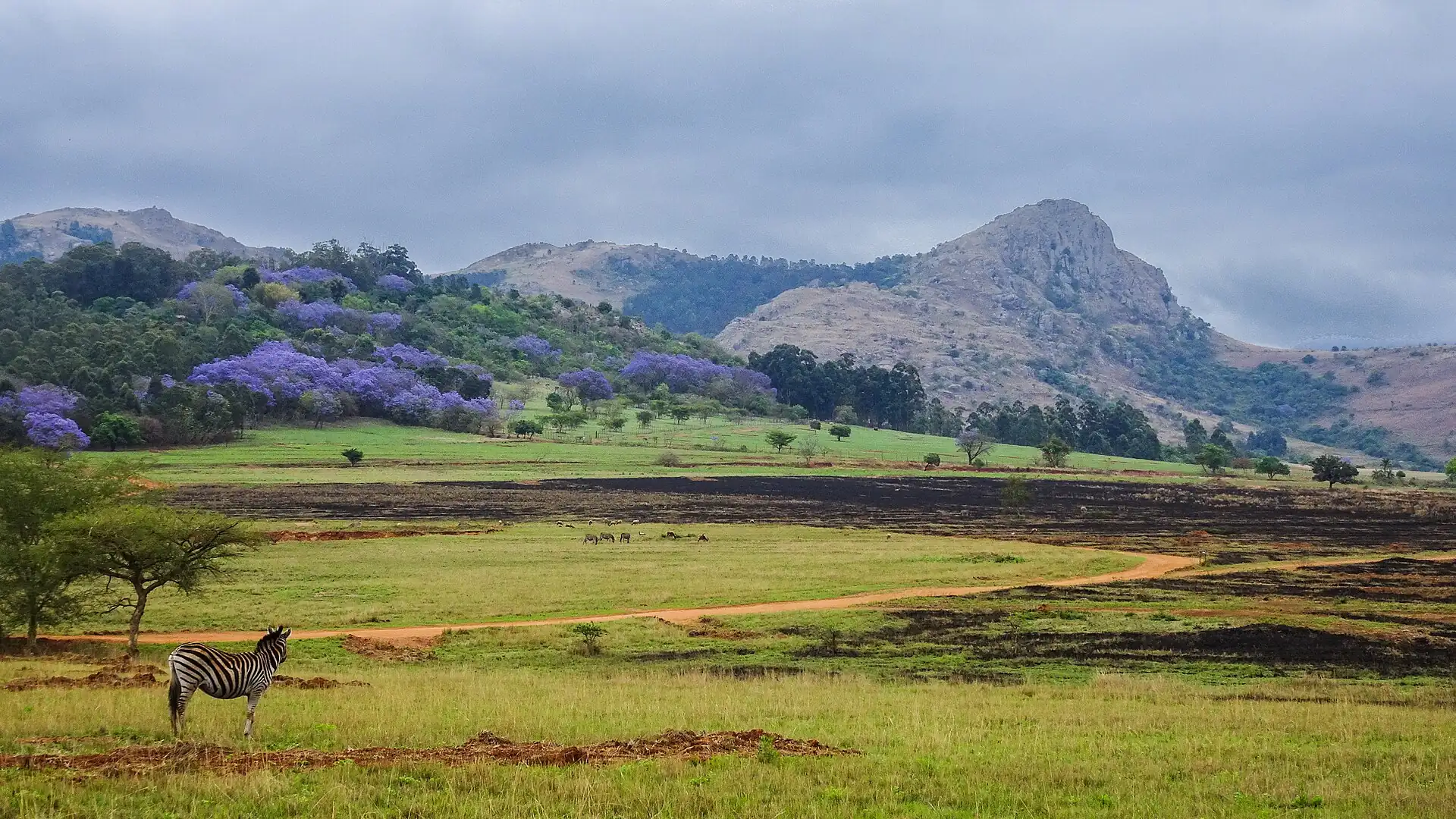 Photo: Jean-Marc Astesana from Voisins le Bretonneux, France, CC BY-SA 2.0
Mlilwane Wildlife Sanctuary
goCar about 25–35 min
Hippos, zebra, giraffe and antelope, plus walking and cycling; the easiest wildlife day from Mbabane.
- Time
- Half or full day
Mantenga Cultural Village and Falls
goCar about 25–30 min
A recreated traditional homestead with a dance performance, and a waterfall walk nearby.
- Time
- 2–3 h
Ngwenya Glass and the Ngwenya craft village
goCar about 25–35 min
Recycled-glass workshop and shops on the road to the Oshoek border.
- Time
- 1–2 h
Sibebe Rock
cautionCar about 25–35 min
A huge granite dome to hike with a guide; not for wet weather or poor fitness.
- Time
- Half day
Hlane Royal National Park and Mkhaya Game Reserve
overnightCar about 1.5–2 h
Lion, elephant and rhino country in the lowveld; a night turns a rushed day into a proper safari.
- Time
- Full day or overnight
Go next
Ezulwini Valley and Mlilwane
goDoor to door: 20–35 min
Car 20–35 min
The main wildlife and craft area; a strong day trip.
Piggs Peak and the northern highlands
goDoor to door: 1–1.5 h
Car about 1–1.5 h
Craft, viewpoints and forest; a scenic drive (check).
Johannesburg
cautionDoor to door: 4.5–5 h by road
Road about 4.5–5 h, or a flight from King Mswati III airport
Border delays and long drives; plan a daylight arrival.
Maputo (Mozambique)
cautionDoor to door: 5–6 h plus border
Road about 5–6 h via the Lomahasha border
Check visas and border hours before you go.
Eat & sleepWhere to eat and which area to sleep in
Eat & sleep
Where to eat and which area to sleep in
Eat
A short list of places worth crossing the city for, each with how to get a seat.
Restaurant finder: filter every place to eat in Mbabane →
Vegetarian-friendly score
2.0 / 5 · Workable
- Country diet noteOur country guide rates vegetarian eating as mixed.0.75 / 2
- Places to eat in this guide1 of 5 places with a known answer are vegetarian-friendly, 4 partly.0.9 / 1.5
- Budget eating lines0 vegetarian lines in "Eat by budget".0 / 0.6
- Meat-free national dishes6 meat-free dishes in the country food list.0.4 / 0.4
- Dedicated vegetarian kitchens0 mentions of vegetarian restaurants, Buddhist or fasting kitchens.0 / 0.5
Country note: Porridges, samp, greens and pumpkin are easy; lodges cater well.
Vegetarian places near me →Make a diet card →
How we score
- Country diet note (up to 2): easy 2, workable 1, mixed 0.75, hard 0; no note 0.5.
- City places to eat (up to 1.5): 1.5 × (vegetarian-friendly + half of partly friendly) ÷ places with a known answer; needs 3 or more known places.
- Budget eating lines marked vegetarian (up to 0.6): 0.2 each.
- Meat-free national dishes (up to 0.4): 0.1 each.
- Dedicated vegetarian kitchens mentioned — Buddhist chay, shōjin ryōri, Jain, fasting food, vegan cafés (up to 0.5): 0.1 each.
- Total rounded to the nearest half point, 0 to 5. Built from our own pages only, not from reviews.
Eating and drinking guideEat by budget · Drink
Before you sit down to eat
Short version; full text linked
- Queues and hours
- Per person, one dish or one meal, 2026 estimate. More →
Eat by budget
Under SZL 100 a meal
| Where | Order | Area | Price | Note |
|---|---|---|---|---|
| Sishwala and stew lunch, local canteen | Sishwala with beef stew and greens | Market area | SZL 45–90 | Go at lunch; the pot empties. |
| Market braai stalls, meat and pap | Grilled meat with pap and relish | Market and bus rank | SZL 50–100 | Pick busy stalls; agree the price first. |
| Swazi Plaza food court | Fast-food and canteen counters | Swazi Plaza | SZL 40–100 | Air-conditioned and easy in rain. |
Dishes to know
| Dish | What it is | Where to look | When | Price |
|---|---|---|---|---|
| Sishwala | Stiff maize porridge, the staple, eaten with meat or relish | Canteens, homes and lodges | Lunch, dinner | SZL 20–50 |
| Beef, goat or chicken stew | Slow-cooked meat in a tomato or gravy sauce | Canteens and restaurants | Lunch, dinner | SZL 40–90 |
| Umbidvo | A relish of greens (such as pumpkin leaves) cooked with ground peanuts or groundnut paste | Homes and traditional restaurants | Lunch, dinner | SZL 20–50 |
| Emasi | Soured milk, eaten with porridge or drunk | Homes and shops | Breakfast, snack | SZL 10–25 |
| Braai (barbecue) | Grilled beef, chicken and sausage | Stalls, bars and lodges | Lunch, dinner | SZL 50–150 |
| Sidvudvu | Sweet pumpkin porridge | Homes and some cafés | Breakfast, dessert | SZL 20–50 |
| Mncweba | Dried, spiced meat similar to biltong | Shops and markets | Snack | SZL 30–80 |
| Marula fruit and marula drinks | Tart, juicy fruit made into juice and liqueur | Shops and lodges | Season and evenings | SZL 30–90 |
- Eat where the turnover is fast and the food is hot and freshly cooked.
- Where there is no posted menu, ask the price before you order.
- Cash only at most canteens and stalls; carry small notes.
Drink & nightlife
| Where | What | Until | Note |
|---|---|---|---|
| Hotel and valley lounges | Bars, terraces, restaurants | About 22:00–midnightAbout 10:00 PM–midnight | The main evening options for visitors; go by hotel car. |
| Town bars and shebeens | Local drinking spots | Late | Go with a local contact or a driver; keep valuables out of sight. |
| Live music venues in the Malkerns area (check) | Arts and music venues | Late on event nights | Check the programme and arrange a return ride. |
By style
| Style | What | Where | Price | Until |
|---|---|---|---|---|
| Beer and braai | Sibebe Premium Lager with grilled meatThe default evening out. | Bars, restaurants and braai stalls | SZL 25–45 a beer | Late on weekends |
| Marula drinks | Marula liqueur and juice from the marula fruitA local flavour; watch the strength. | Bars, shops and lodges | SZL 30–90 | Evening |
| Tea and coffee | Hot drinks in a caféA calm start to the day. | Allister Miller Street and Swazi Plaza | SZL 20–50 | Daytime |
Rules that bite
- Do not walk in town after dark; take a hotel car or a known taxi.
- Do not drive after dark on rural roads: animals and pedestrians are common.
- Do not drink and drive; checkpoints are common.
Sleep
Pick the area first: it decides your walk home at night and your first morning.
Which neighborhood fits you
Three questions, one recommendation, with the reasons.
Next best: Msunduza side (hillside)
Built from our 1–5 desk scores per area; your answers stay in this browser.
More on sleepingSleep by budget · Your area · With kids
Sleep by budget
| Band | Price | Where | Room types | What to expect |
|---|---|---|---|---|
| budget | SZL 350–800 | Town and hill guesthouses | Guesthouses, backpackers and self-catering | Simple rooms, fan or heater, limited breakfast. |
| mid | SZL 900–1,800 | Allister Miller Street and the valley | 3-star hotels and lodges | Lift, breakfast, AC or heating, backup power. |
| splurge | SZL 2,500+ | Ezulwini Valley lodges and casino hotels (check) | Upmarket hotels and safari lodges | Pools, spas, restaurants and meals included at some. |
Booking checks
- Ask about backup power: load-shedding and outages can happen.
- Confirm airport transfers in advance; the airport is about 90 minutes away.
- Winter nights are cold and few budget rooms are heated: ask for a heater or extra blankets.
Which area is yours
| If you are | Sleep in | Because |
|---|---|---|
| First night, short stay | Allister Miller Street (town centre) | A desk, cafés and a car close by. |
| Quiet base, longer stay | Msunduza side (hillside) | A hillside bed with a garden; budget a car for outings. |
| Wildlife and craft trip | Allister Miller Street (town centre) | Easy road access to the valley in the morning. |
First-timers: a hotel within a short walk of the main street and the market, with a staffed desk and a road-side door a car can reach.
Quieter hillside guesthouses north-west of the centre; a car or taxi for every evening out.
Areas are in our default order until you tick a priority.
Scores are 1–5 desk judgements per priority (2026).
With kids
- Mlilwane is easy with children: hippos, zebra and giraffe close to the road, and a chance to walk or cycle.
- Mantenga's dance performance and waterfall walk suit older children; steps are steep in places.
- Hilly, uneven pavements make strollers hard in town; a carrier works better.
- Sun and malaria advice apply in the lowveld: ask a clinic about travel with young children.
PracticalMoney, essentials, safety and the pocket card
Practical
Money, essentials, safety and the pocket card
Money
What a day costs at three comfort levels, and how to pay.
- Budget
- SZL 300–600 excl. bed / day
- Mid
- SZL 600–1,200 excl. bed / day
- High
- SZL 1,200+ excl. bed / day
- Transit card
- No transit card: shared minibus taxis, private cars and walking. Pay in cash for stalls and taxis.
- Cash rule
- ATMs are in town and at Swazi Plaza; withdraw in daylight and inside a bank or mall. Carry small notes for craft stalls and tips.
More on moneyCosts · Budget · Buy
What things cost
- Sishwala (pap) with beef stew, canteen plateSZL 45–90
- Large bottle of water, supermarketSZL 12–25
- Hire car, small, per day (check)SZL 500–1,000
- Mantenga Cultural Village with dance performance (check)SZL 150–300
Trip budget
| Hotel double room1 × 3 nights × SZL 1,400 | SZL 4,200 |
| Food, local transport, entries2 × 3 days × SZL 900 | SZL 5,400 |
| Airport transfer, both ways1 × SZL 2,500 · one car per 4 people | SZL 2,500 |
| Mlilwane entry2 × SZL 150 | SZL 300 |
| Tourist SIM, about a week2 × SZL 120 | SZL 240 |
| Buffer 15%Price creep, a taxi you did not plan, one splurge | SZL 1,896 |
| Trip total≈ SZL 2,423 per person per day, bed included | SZL 14,536 |
2026 estimate in SZL; flights, visas and tours excluded. Your choices stay in this browser.
Prices of common things
| Sishwala and stew plate | SZL 45–90 |
| Airport transfer to MbabaneAbout 90 minutes; book ahead. | SZL 700–1,200 |
2026 estimate; check locally.
Buy
- Bargaining
- Shops and malls have fixed prices. At markets and craft stalls the first price to a visitor is often higher than the local price: counter at about two-thirds, settle around 70–80%, and walk away politely if it does not move.
- Fixed-price check
- Check the price of a basket, a mat or a candle in a craft shop with tags before you buy the same item at a stall; that is your ceiling.
Markets and shopping streets
| Where | What | When | Haggle | Note |
|---|---|---|---|---|
| Mbabane Market | Vegetables, fruit, fabric, clothes and small crafts | Morning to mid-afternoon (check) | light | Busy and cash-based; keep bags in front and small notes ready. |
| Swazi Plaza (mall) | Supermarkets, pharmacies, SIM shops, banks, clothes | About 08:00–18:00 (check)About 8:00 AM–6:00 PM (check) | no | Your fixed-price reference and an easy rainy-day stop. |
| Ezulwini Valley craft markets (check) | Grass baskets, wood carvings, batik, beadwork | Daytime (check) | light | Good quality in several places; look at more than one stall. |
| Ngwenya craft village (check) | Glass, candles, weaving and gifts | Daytime (check) | no | Fixed-price shops near the glass workshop. |
Shops by what they sell
| For | Where | Hours | Note |
|---|---|---|---|
| Swazi grass baskets and mats (lutindzi weaving) | Craft markets and shops in the Ezulwini Valley | Shop hours | Tightly coiled baskets in natural dyes; ask who made it. |
| Recycled-glass animals and vases | Ngwenya Glass | — | Made by hand from recycled bottles; fixed prices. |
| Candles, batik and wood carvings | Malkerns and Ezulwini craft centres (check) | — | Compare prices and check that woods are legal to export. |
Changing money
| Where | Verdict | Why |
|---|---|---|
| Bank branches (Standard Bank, FNB, Nedbank; check) | use | Fair rate; passport needed; weekday and Saturday-morning hours. |
| Hotel front desk | ok | Small amounts only; weaker rate. |
| Airport or bureau desks | ok | Enough for the first day; then use a bank or ATM. |
| Street changers | avoid | Not licensed; counterfeit and short-change risk. |
ATMs
- Per withdrawal
- ATMs cap withdrawals per transaction and per day; the screen shows the limit.
- Fees
- A local fee plus your own bank's foreign fee; take a larger amount rather than several small ones.
- Where
- Machines inside Swazi Plaza or bank branches, in daylight; avoid street-side machines after dark.
- Conversion
- If a terminal offers to charge you in your home currency, decline and pay in SZL.
Essentials and accessEssentials · Access
Essentials
- Plugs & power
- 230 V, 50 Hz; sockets are type M (three round pins), as in South Africa. Bring an adapter.
- Health
- Malaria risk is low in the highlands but present in the lowveld and on the border areas; ask a travel clinic about your route. HIV prevalence is among the highest in the world, so use protection. Travel insurance with medical evacuation cover is advised.
- Accessibility
- Hilly streets, broken kerbs and few ramps; hotels and malls are the practical step-free options.
- Laundry
- Hotels charge by the item; independent laundries exist in town.
- Emergency numbers
- 999 for police (check); ask your hotel for ambulance and fire numbers on arrival.
Pack
- Layers: Mbabane sits on a hill at about 1,200 m and evenings are cool, with mist and cold snaps in winter
- A rain jacket for the Nov–Mar afternoon storms
- Sturdy shoes for Sibebe Rock, Mlilwane and Mantenga trails
- Modest clothes for royal events and village visits: knees covered, shoulders covered
- Sun hat, sunscreen and repellent; a small torch for power cuts
Accessibility
Mbabane is hilly, with broken kerbs and few ramps. Step-free access exists mainly in malls and newer hotels. Plan door-to-door car rides and pick a hotel with a lift.
- Pavements
- Uneven, steep in places; short flat stretches near Swazi Plaza.
- Getting around
- Cars and taxis are the step-free option; minibuses are not.
- Hotels
- Larger hotels have lifts and accessible rooms on request.
- Toilets
- Accessible toilets in malls and some hotels; rare elsewhere.
- Parks
- Mlilwane's roads suit a car; walking trails are rough.
Sights, step-free or not
| Swazi Plaza | step-free | Level mall floors; ramps at the entrances. |
| Mbabane Market | hard | Crowded and uneven. |
| Swazi National Museum, Lobamba | with help | Steps at the entrance (check). |
| Mlilwane Wildlife Sanctuary | with help | A car can reach the rest camp and hippo pool; trails are rough. |
| Sibebe Rock | hard | A steep granite hike. |
Survive
Safety basics, the lines not to cross, and practical habits that save the day.
Safety
- Do not walk in town after dark; take a taxi or a hotel car.
- Keep phones and bags out of sight in the market and at bus ranks.
- Malaria risk is low in the highlands but higher in the lowveld: ask a travel clinic before you go.
- Emergency: 999 for police; ask your hotel for ambulance and fire numbers on arrival.
Red lines
- Do not photograph royal residences, government buildings or officials without permission.
- Ask before photographing people.
- Dress modestly when visiting royal or cultural events.
Practical
- Toilets: malls, cafés and hotels; carry tissues.
- Tap water: bottled or filtered water is safer.
- SiSwati and English are both official; English is widely spoken.
More on staying safeStay safe · Stay healthy · Safety map · Solo & women · Etiquette · Cope · Scams
After dark, by area
4 flagged areas
- Avoid after dark
- Avoid after dark
- Take care
- Take care
Day = about 07:00–18:30. What to watch in each area, day and night →
Scams and red flags
Walk away if you see these
- Unlicensed guides at viewpoints or craft villages who ask for cash before the walk: agree the price first, or book through the park or your hotel.
- Taxi drivers who quote a special foreigner price: agree the fare first, or ask your hotel to call a driver.
- Money-changers or people selling 'rand at a better rate': use a bank or ATM; short-changing and fake notes are possible.
- Requests for a 'donation' at a roadside or a cultural site: pay fees only at the gate or office and keep the receipt.
- Strangers who offer to withdraw cash for you or watch your PIN at an ATM: cover the keypad and use machines inside a mall or bank.
Stay safe
Crossing the road
- 01Traffic drives on the left and drivers are fast: look both ways and cross at a clear gap.
- 02Steep roads have blind bends; walk on the side facing traffic where there is no pavement.
Hustles specific to this city
| Hustle | Where | The tell | What to do |
|---|---|---|---|
| Unlicensed guide | Viewpoints and craft areas | A person insists on guiding you and asks for cash | Book through the park or your hotel and agree the price first. |
| Taxi price change | Airport, bus rank | A fare quoted or changed once you are moving | Agree the price first or ask your hotel for a car. |
| ATM helper | Malls and streets | Someone offers to help with the machine | Decline and cover the keypad; use machines inside a bank. |
- Police
- Report thefts at the nearest police station with your passport; insurers need the written report.
- Unrest
- Protests and unrest have occurred in recent years, with curfews and disruption; check the news and your government's advice.
- Wildlife
- Follow park rules and keep your distance; do not walk in reserves without a guide.
- Night travel
- Avoid driving after dark: animals, people and unlit vehicles are on the road.
Stay healthy
- Malaria
- Low in the highlands and higher in the lowveld and border areas; ask a travel clinic about your route and prophylaxis.
- HIV and sexual health
- Eswatini has one of the highest HIV rates in the world; use protection and follow local health advice.
- Sun and altitude
- Strong sun at about 1,200 m; hat, sunscreen and water.
- Food and water
- Bottled or filtered water; eat hot, fresh food; wash hands before eating.
- Bilharzia
- Some fresh water carries bilharzia; do not swim in rivers and dams of unknown status (ask a guide).
- Medical care
- Basic care in Mbabane; serious cases mean transfer to South Africa. Travel insurance with medical evacuation cover is advised.
Hospitals and clinics: see Cope.
Safety by area and hour
| Area | Day | Night | What to watch |
|---|---|---|---|
| Allister Miller Street | fine | caution | Quiet at night; use a car. |
| Market and bus rank | caution | avoid | Crowded; pickpockets and touts; go by day and keep bags in front. |
| Swazi Plaza and mall | fine | caution | Watch ATMs and car parks; use a car after dark. |
| Msunduza | fine | avoid | Steep, unlit roads; take a taxi both ways. |
- Keep phones and bags out of sight in the market and at the bus rank.
- Use a hotel-booked car or a known taxi at night; avoid walking.
Solo, women and LGBTQ+ travellers
Solo
- Manageable with care: use hotel cars after dark, keep valuables out of sight and tell your host where you are going.
- Hotel desks and licensed guides are the safer route to a driver or a park visit.
Women
- Verbal attention is common in busy areas; a polite, firm response and continuing to walk usually ends it. Dress modestly in towns and at cultural events.
- Travel by car after dark; sexual violence is a concern in the country, so use standard precautions.
LGBTQ+
- Same-sex sexual conduct is illegal under common law and social attitudes are conservative; discretion is essential and public displays of affection are best avoided.
- Check your government's travel advice before you go.
Etiquette in Mbabane
- Greetings
- Say sawubona and ask how someone is before any question; skipping the greeting reads as rude.
- Respect for the monarchy
- Do not criticise the king or royal family in public; do not photograph royal residences, vehicles or officials without permission.
- Royal ceremonies
- Umhlanga and Incwala are cultural ceremonies, not shows: follow the rules on dress, photography and access.
- Dress
- Modest in towns and villages: shoulders and knees covered; beachwear stays at the pool.
- Photos
- Ask before photographing people; never photograph police, soldiers or government buildings.
- Hands
- Give and receive with the right hand, or both, and a slight nod to elders.
- Bargaining
- Counter politely at market stalls; never in shops with price tags.
Cope
Hospitals and clinics that handle foreigners
| Where | Area | Use it for |
|---|---|---|
| Mbabane Government Hospital | Mbabane | The main public hospital in the capital; check services and arrangements for foreign patients. |
| Mbabane Clinic (private) | Mbabane | A private clinic used by residents and visitors; pay upfront and claim later; check services. |
| Pharmacies in Swazi Plaza and along Allister Miller Street | Town | Basic medicines and advice; hours vary. |
Visa extensions
- Office
- The Immigration Department is in Mbabane; weekday hours. Check the address and hours before going.
- Extending
- Extensions and residence questions go through the immigration department or a licensed agent.
- Overstay
- Overstaying can lead to fines or worse: resolve it before you leave.
Embassies and consulates
| Country | Address | Phone | Note |
|---|---|---|---|
| United Kingdom | High Commission, Mbabane area (check) | — | (check) |
| United States | Embassy, Mbabane area (check) | — | (check) |
| South Africa | High Commission, Mbabane (check) | — | (check) |
| Germany | Pretoria (covers Eswatini; check) | — | (check) |
- Lost passport
- Police report from the local station, then your embassy or high commission for an emergency document; budget several working days.
- Pharmacies
- In Swazi Plaza and on the main street; pharmacies have long hours on weekdays.
- Gyms and pools
- Day passes at some hotels in the valley, roughly SZL 100–250 (2026 estimate).
- Co-working
- A few hotel lounges and cafés accept laptops; no established co-working space to rely on (check).
- Laundry
- Hotels charge by the item; ask reception for a local laundry.
Apps and offline kitOffline kit
Offline kit
Set up before you leave, so Mbabane still works with no signal or a dead roaming plan.
On your phone
- Maps: open the city in Google Maps, tap the place name, then Download offline map (or use an offline-maps app).
- Data: install an eSIM or buy a local SIM before the first taxi; the apps in this guide depend on it.
- Translation: download the local language for camera translation.
- Screenshots: booking confirmations, hotel address in the local script, and the emergency numbers.
This guide
Save the Mbabane guide and its pages on this device; it opens without a connection.
Phrases that do the work
Greeting
Hello (to one person)
Sawubona
sa-woo-bo-na
Greeting
Hello (to more than one person)
Sanibonani
sa-nee-bo-na-nee
Greeting
How are you?
Unjani?
oon-ja-nee
Thanks
Thank you
Ngiyabonga
ngee-ya-bong-ga
Thanks
Thank you very much
Ngiyabonga kakhulu
ngee-ya-bong-ga ka-koo-loo
Everyday
Yes
Yebo
yeh-bo
Everyday
No
Cha
cha
Market
How much is it?
Malini?
ma-lee-nee
Farewell
Go well / stay well
Hamba kahle / Sala kahle
ham-ba ka-hleh / sa-la ka-hleh
Food
Water, please
Ngicela emanti
ngee-che-la eh-man-tee
Pocket card
Fill in, then print or save as PDF
Stays in this browser only; nothing is sent anywhere.
MbabaneMbabane
Pocket card · Voykit
My bed tonight
—
—
—
Ngicela ungiyise kule dilesiPlease take me to this address
Emergency
- Police999 (check)
- AmbulanceAsk your hotel (check)
- FireAsk your hotel (check)
Embassy
Most embassies are in Mbabane or Pretoria; write your own embassy's 24-hour line below.
My embassy: —
Fare anchors (2026 estimate)
- Airport to Mbabane, hotel car or taxi: SZL 700–1,200, about 90 minutes
- Short taxi ride in town: SZL 50–120
- Mbabane to Mlilwane: SZL 250–500, 25–35 min
Give the driver the hotel name and a landmark, not just a street.
Deep diveHistory, reading, photos and every source
Deep dive
History, reading, photos and every source
Sources
- officialUK FCDO travel advice — Eswatini
- officialEswatini Tourism Authority
- officialBig Game Parks (Mlilwane, Hlane, Mkhaya)
- secondaryWikivoyage — Mbabane
Ask about Mbabane
Loading…
Was this useful?