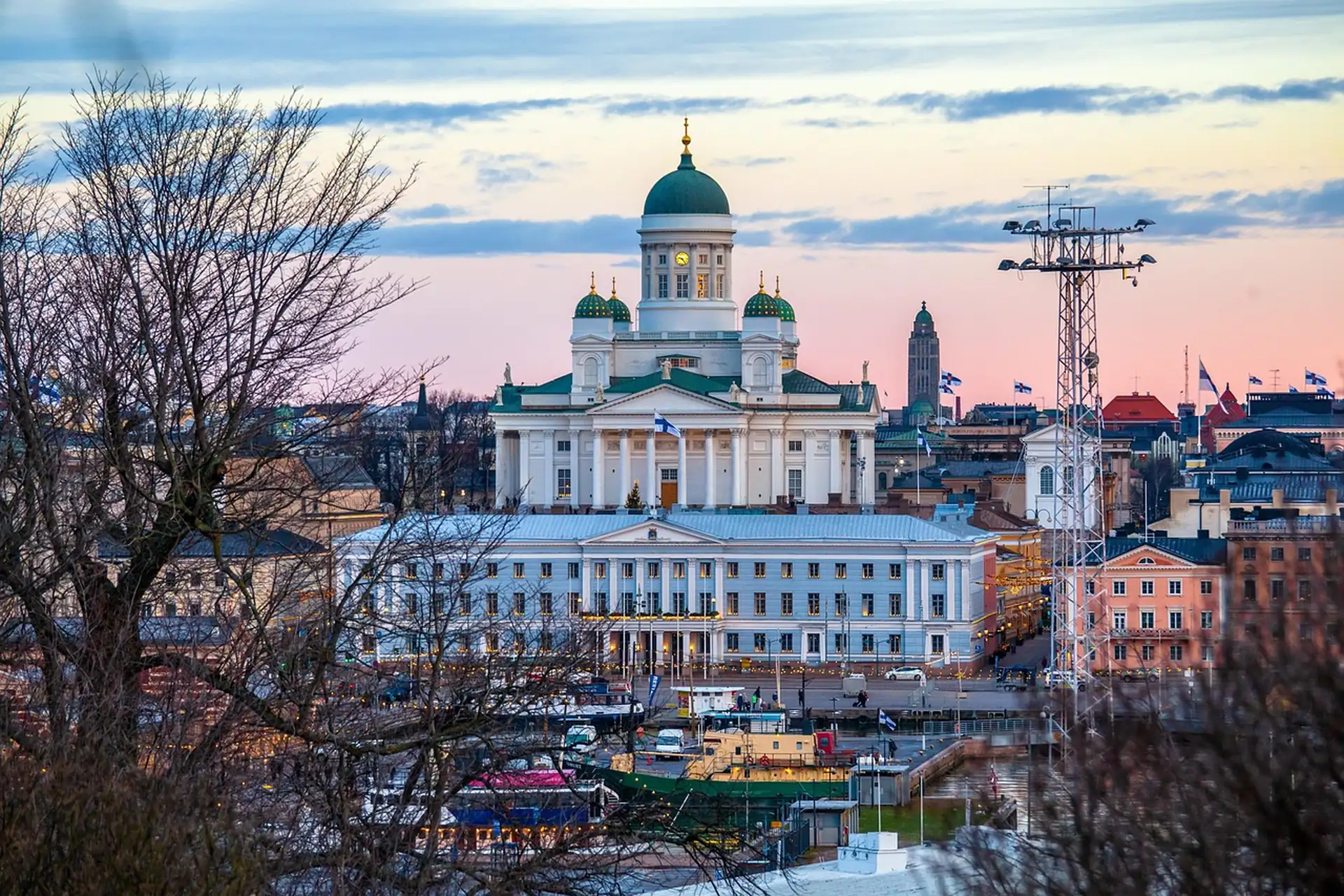
Helsinki
Helsinki (Helsingfors)
Code FI · 4 walking zones
Helsinki is a compact harbour city: do Senate Square and the market before lunch, a library or museum when it rains, and finish the day in a public sauna — book the sauna slot before you land.
Our quick read of Helsinki, scored 1–5 (friction is out of 100). Cash need: how often you still need notes. Heat risk: how hot days get. Stroller: how easy wheels are. Friction: overall effort for a first visit. Desk judgements, so check before relying on them.
- Local time
- --:--
- Weather
- forecast below
- Currency
- EUR
- Best months
- May · Jun · Jul · Aug · Sep
- Airport
- Helsinki-Vantaa (HEL)
Walking zones: the 4 areas this guide plans a day around. Each is a district you can cover on foot, so you do one zone per half-day and ride the train between them. The code (FI 01, FI 02…) is just the zone's number on the Helsinki line; the line under each name says how bags fare there and how much time it needs.
Map of Helsinki
Use the switches to show or hide each kind of pin. A switch that is on shows its pins on the map; tap it again to hide them. "Show only" keeps just the pins that match (for example, places that fit a suitcase). Tap any pin for its name and a link to its page.
- Where to sleep
- Places
- Eat
- Walking clusters
- Rest stops
From the airport Helsinki-Vantaa (HEL) to your bed
Tap a pin for its card. Places without their own coordinates are shown by their walking cluster.
Why Helsinki
Helsinki's sights sit within about two kilometres of the Central Station, so distance is not the problem; light and weather are. December gives around six hours of daylight, June barely gets dark, and wind on the harbour turns the Suomenlinna ferry into a cold ride outside summer. Trams reach everywhere. Four clusters cover a first visit, and Porvoo or Tallinn are day trips from one kept bed.
See first
- 1
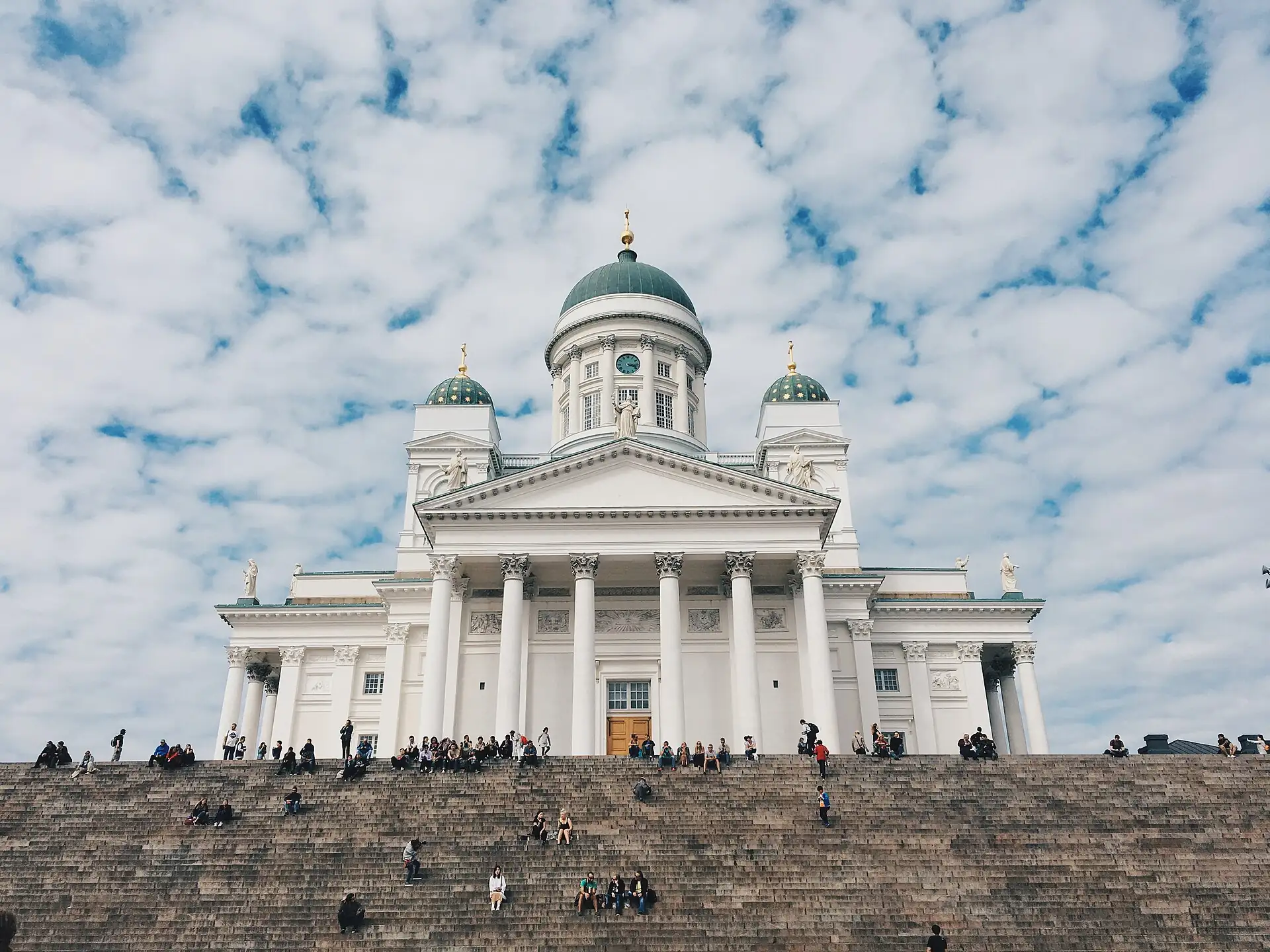 Senate Square and the cathedral · 30–60 min
- 2
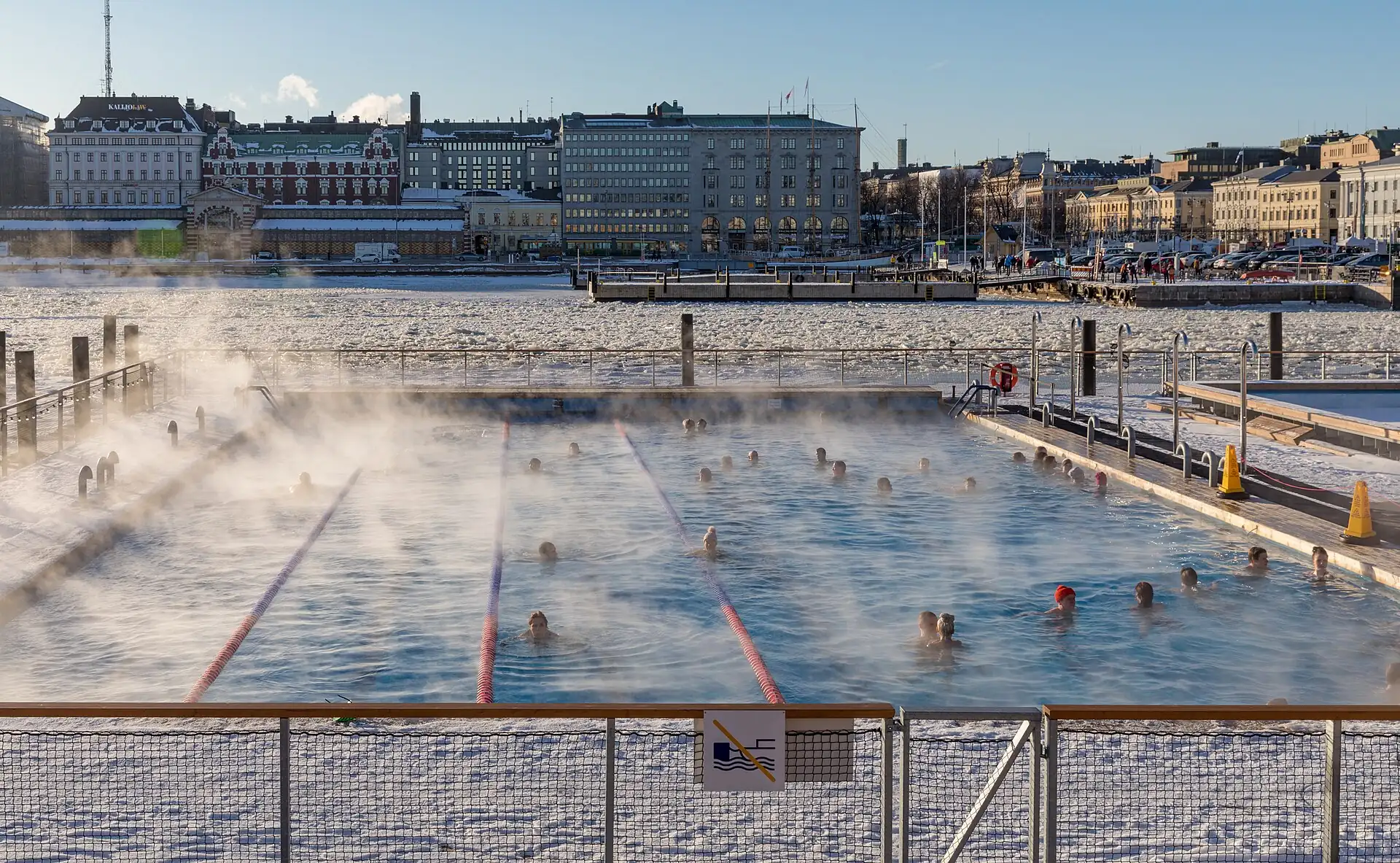 Allas Sea Pool and a sauna · 2–3 h
- 3Löyly sauna and sea swim · 2–3 h
- 4
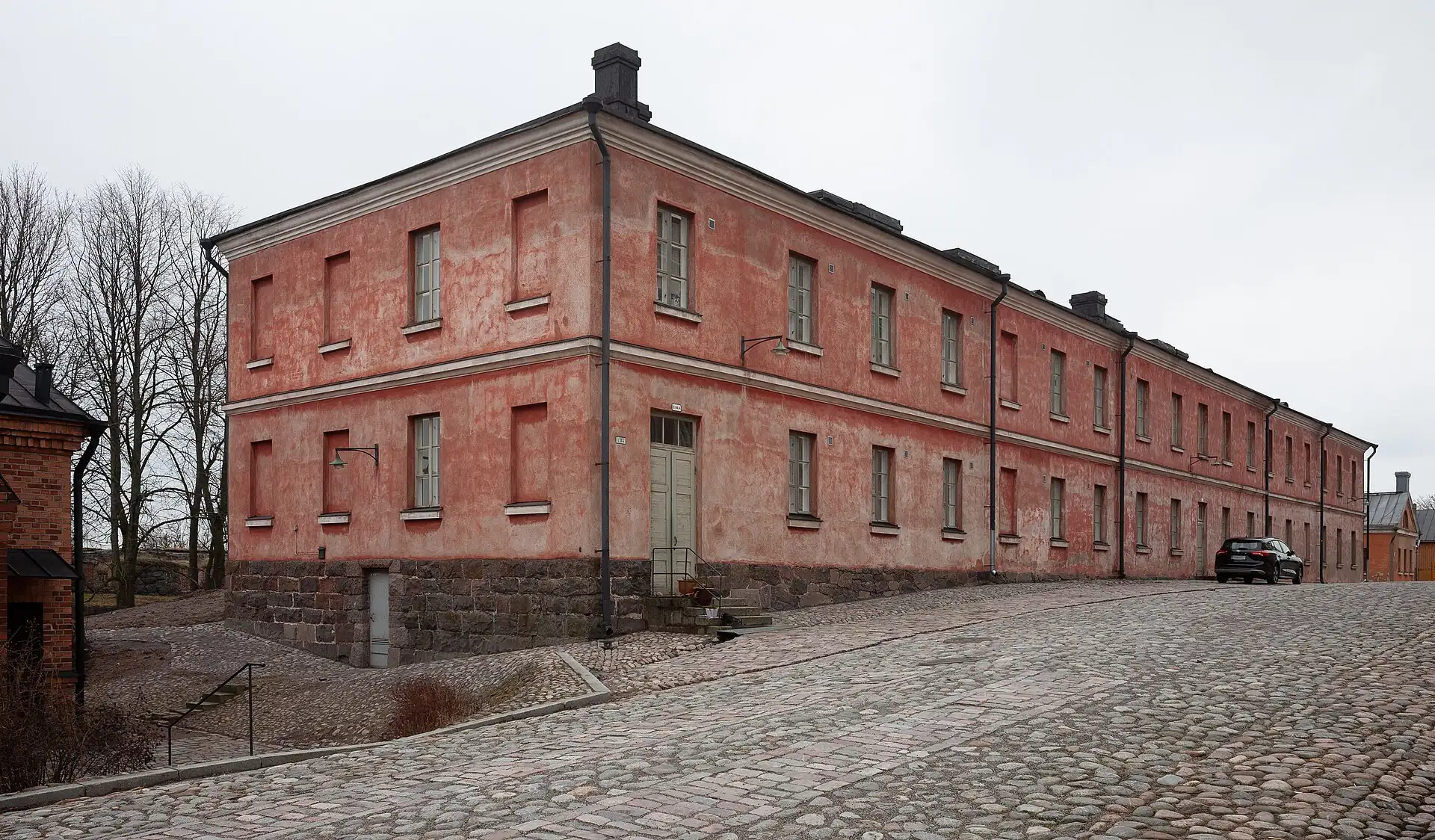 Suomenlinna by ferry · 3–4 h
- 5
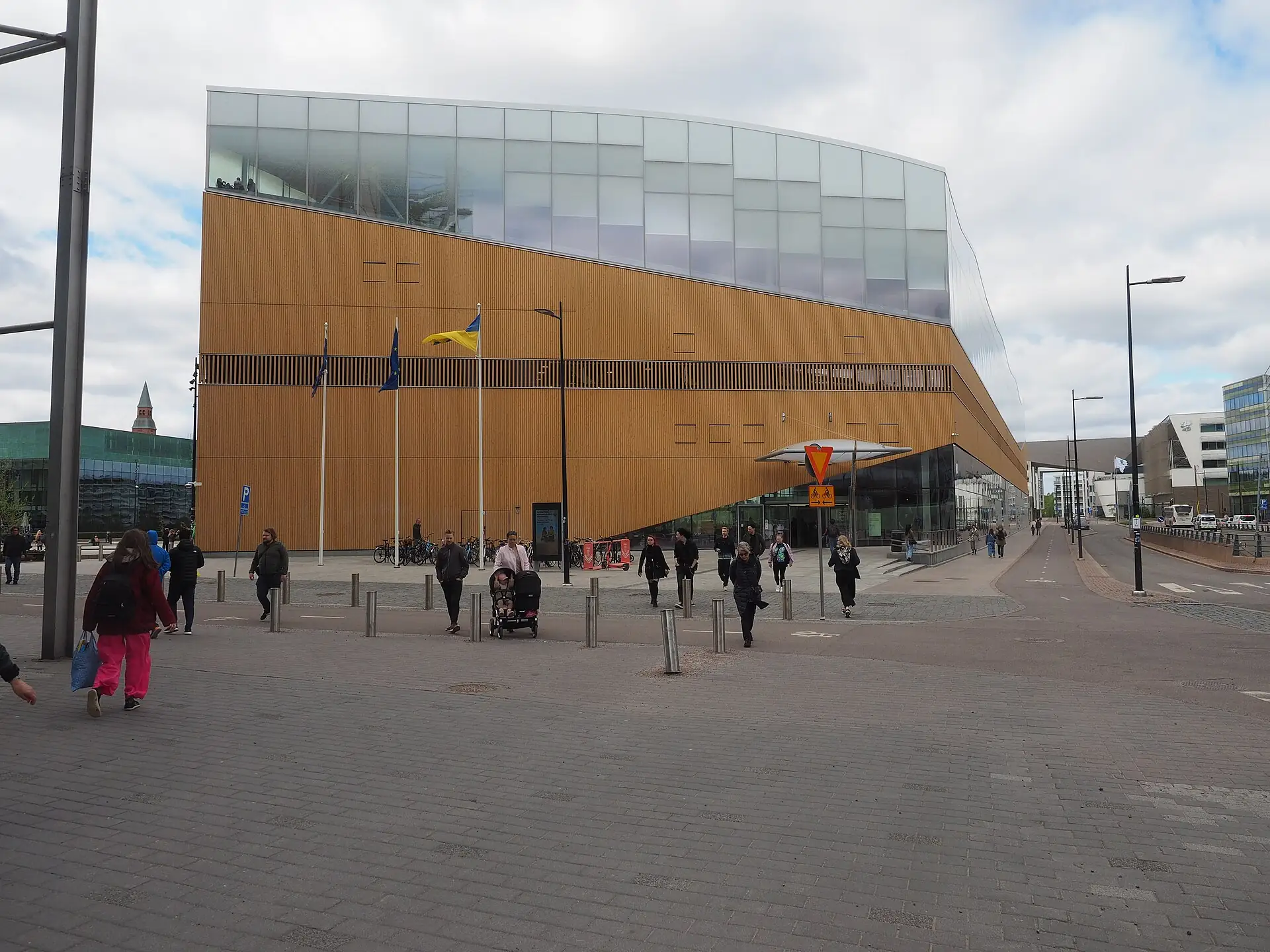 Oodi Central Library · 1–2 h
Fits
- Design and architecture trips
- Sauna and swimming lovers
- Short city breaks with a day trip to Tallinn or Porvoo
Does not fit
- Travellers on a tight budget
- Anyone who needs late-night dining after 22:00Anyone who needs late-night dining after 10:00 PM
- Winter visitors who expect long daylight
How long
- 2 daysSenate Square + market, Central Station cluster, one sauna evening
- 3 daysFour clusters, Suomenlinna on the last morning
- 5 daysFour clusters + Porvoo or Tallinn day trip + one slow day
Good for
- First timers
- Foodies
- Budget
- Families
- Solo
- Luxury
About Helsinki
Helsinki is young for a European capital. Sweden founded a small trading town on the coast in 1550, but it stayed minor until 1748, when Sweden began building the sea fortress of Suomenlinna (Sveaborg) on islands off the shore. In 1809 Sweden lost Finland to Russia, and in 1812 Tsar Alexander I moved the capital of the new Grand Duchy from Turku to Helsinki, closer to St Petersburg.
The neoclassical centre is the result: the German architect Carl Ludvig Engel drew Senate Square, the Cathedral, the University and the Government Palace in the 1820s to 1840s as a stage-set for a Russian-ruled capital. Finland declared independence on 6 December 1917 and Helsinki became the capital of a country that had never had one of its own.
Good to know
- Helsinki-Vantaa is the airport in Vantaa, 30 minutes north by train; Suomenlinna is a fortress island reached by ferry, not a suburb.
- Helsinki Info at Pohjoisesplanadi 19 by Market Square has maps, ferry and tour information (check current hours).
- The Visit Helsinki site lists events and opening hours; the HSL app is the source for tickets and live departures.
Go deeper 9 min read · 5 chapters
Helsinki is a capital built to order. It was moved, designed and dressed as a stage-set in the 1810s, and it has kept reinventing itself around the sea, the sauna and Finnish design ever since. This deep dive reads the city through its founding, its architecture, its saunas, its food and its long winters, so a short visit makes sense of what you see.
1From Swedish outpost to national capital2 min
Helsinki was founded in 1550 by King Gustav Vasa of Sweden, who wanted a trading town on the Gulf of Finland to compete with Tallinn across the water. The first site, at the mouth of the Vantaa river, was poor: the harbour was shallow, the town was small and plague and fires kept it weak. In the 1640s it was moved to the peninsula where the city centre stands today.
The real turning point was military. In 1748 Sweden began to build the Sveaborg fortress on islands off the coast to guard against Russia, and Helsinki became a garrison town. The fortress did not hold: in 1808 to 1809 Russia took Finland after a war, and Sveaborg surrendered. Finland became a Grand Duchy inside the Russian Empire, with its own laws and Lutheran church.
In 1812 Tsar Alexander I moved the capital from Turku, in the south-west, to Helsinki. The reason was politics: Turku was too close to Sweden and Helsinki was closer to St Petersburg. A great fire in Turku in 1827 helped, because it destroyed the university's home; the university moved to Helsinki in 1828. The tsar commissioned the German-born architect Carl Ludvig Engel to design a new centre.
Finland declared independence on 6 December 1917, in the turmoil after the Russian Revolution. A civil war followed in 1918 between the Reds and the Whites, and Helsinki was held by the Reds for a period before the Whites took it back. The city was bombed in the Winter War of 1939 to 1940 and again in 1944, but escaped the heavy destruction that hit other European capitals. It hosted the 1952 Olympic Games, the first in the Nordic country, and rebuilt itself in the postwar decades into a design-minded, high-tech capital.
Today Helsinki has about 690,000 residents and around 1.5 million in the metropolitan area. Finnish and Swedish are both official languages, which is why every street sign carries two names. The city ranks among the safest and most liveable capitals, and it is still small enough to cross on foot in half an hour.
- Founded
- 1550, by King Gustav Vasa of Sweden
- Sveaborg fortress begun
- 1748
- Capital of the Grand Duchy
- 1812, moved from Turku
- Independence
- 6 December 1917
- Olympic Games
- 1952
- Population
- About 690,000 (city), about 1.5 million (region)
2Neoclassical stage-set, Art Nouveau and functionalism2 min
Carl Ludvig Engel designed the centre from the 1820s. Senate Square is the core: the Senate building on the east side, the university on the west, the Cathedral on the north, and a broad flight of steps rising to it. Engel wanted a city that looked like St Petersburg in miniature. The yellow, white and grey facades, the wide squares and the straight streets come from that plan and it is still the reason the centre feels so orderly.
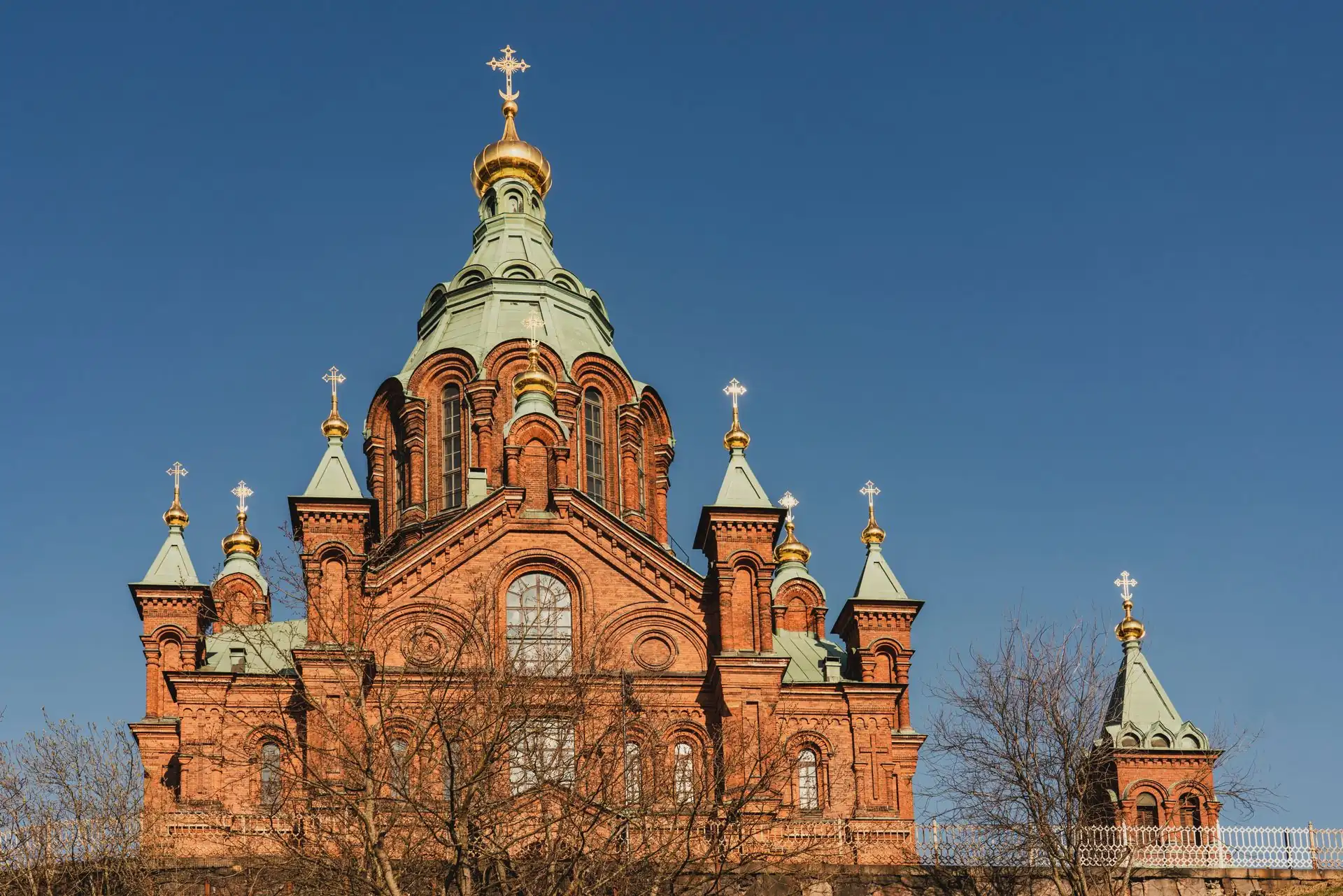
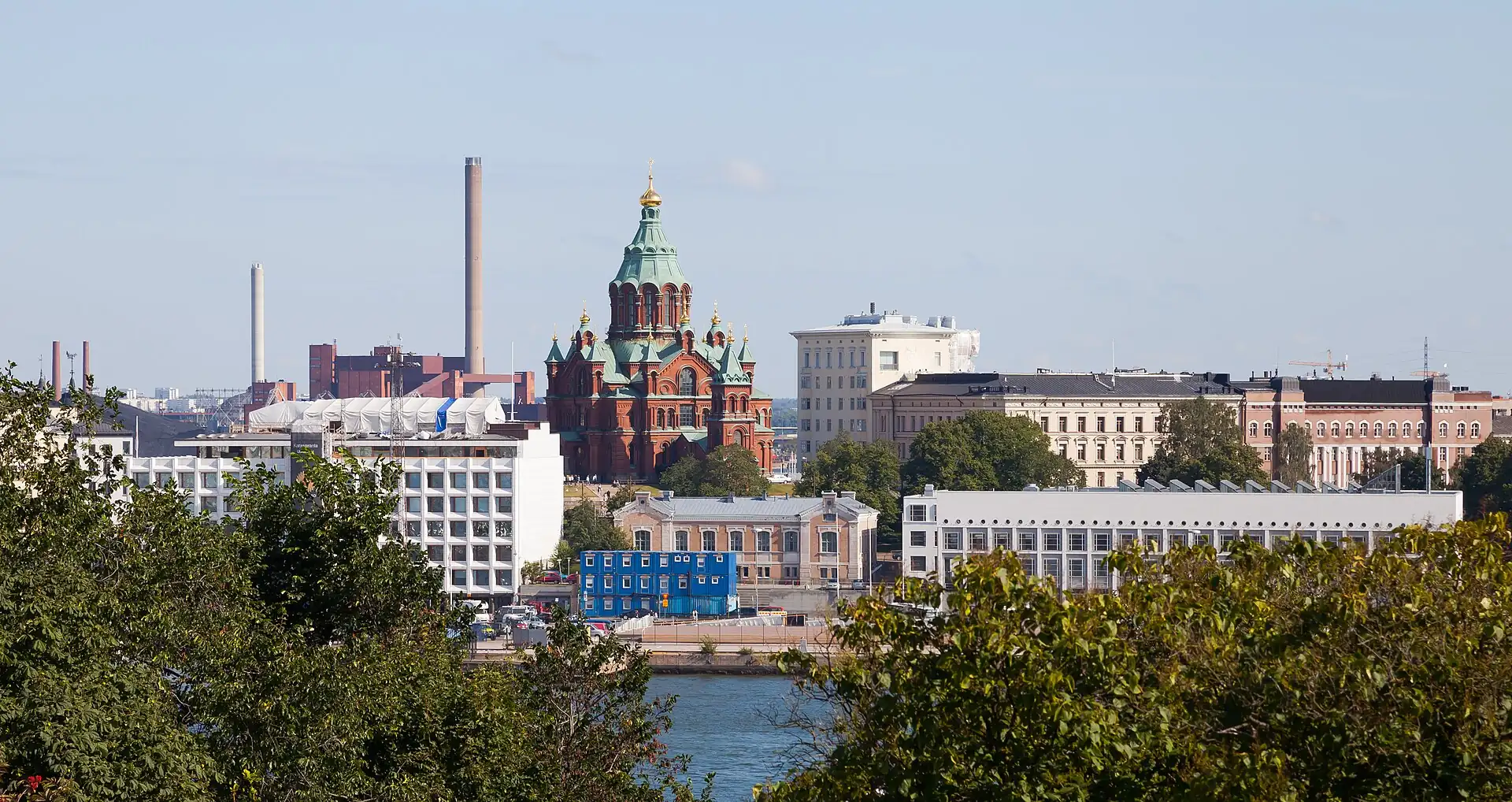
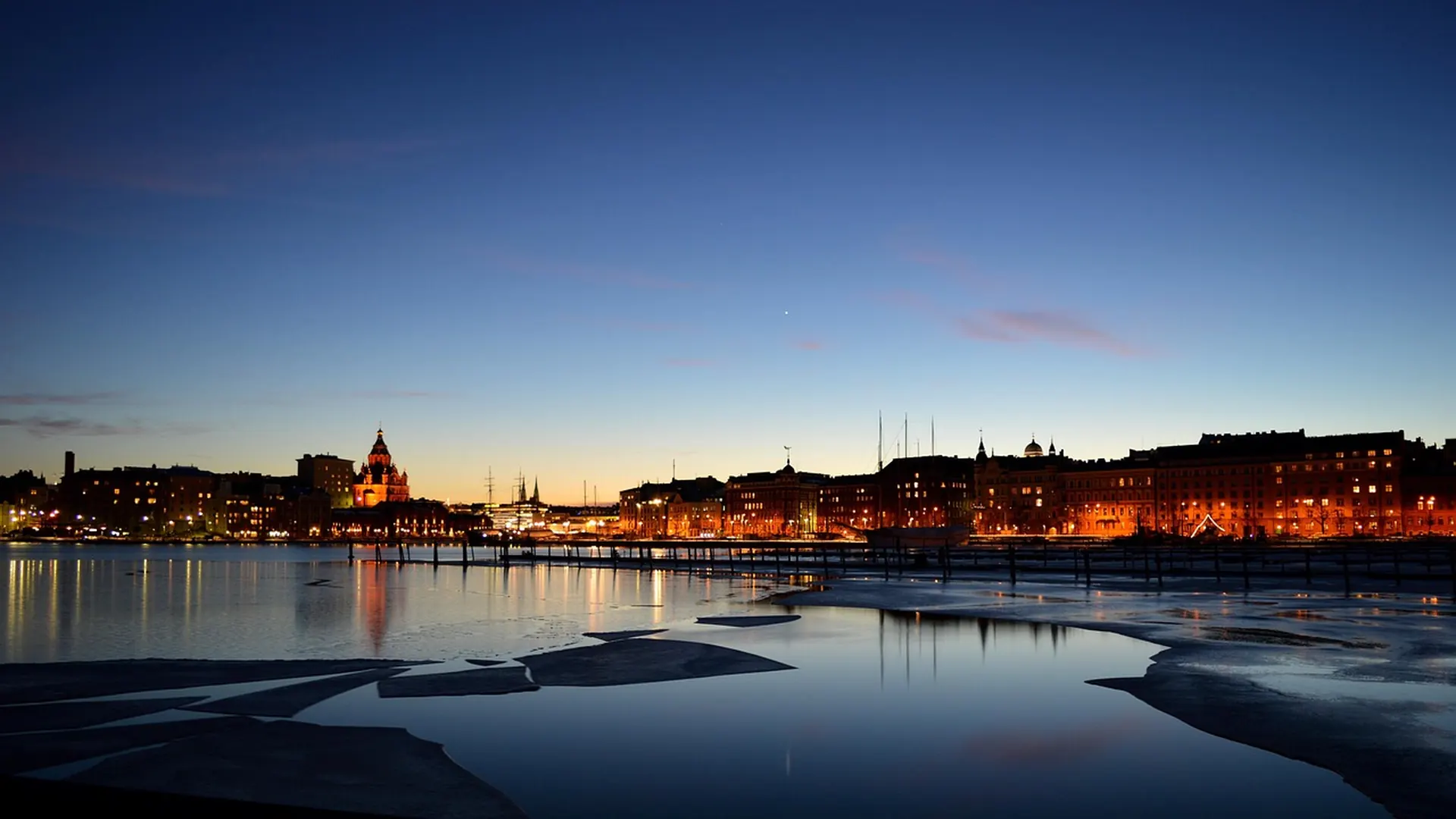
The Helsinki Cathedral, finished in 1852 after Engel's death, is a white Lutheran building with a green dome and twelve apostle statues on the roof. The contrast beside it is the Uspenski Cathedral, a red-brick Orthodox church on Katajanokka finished in 1868, with gold onion domes. Together they mark the two churches of Finnish history: Lutheran Sweden and Orthodox Russia.
The next wave was National Romanticism and Art Nouveau (Jugend) around 1900. Architects such as Eliel Saarinen, Herman Gesellius and Armas Lindgren built blocks with granite, dragon-like ornament and Finnish myth in stone. The Central Station, designed by Saarinen and completed in 1919, is the best-known example, with its giant lamp-bearing statues at the entrance and a clock tower. Katajanokka and the Eira district hold rows of Jugend apartments.
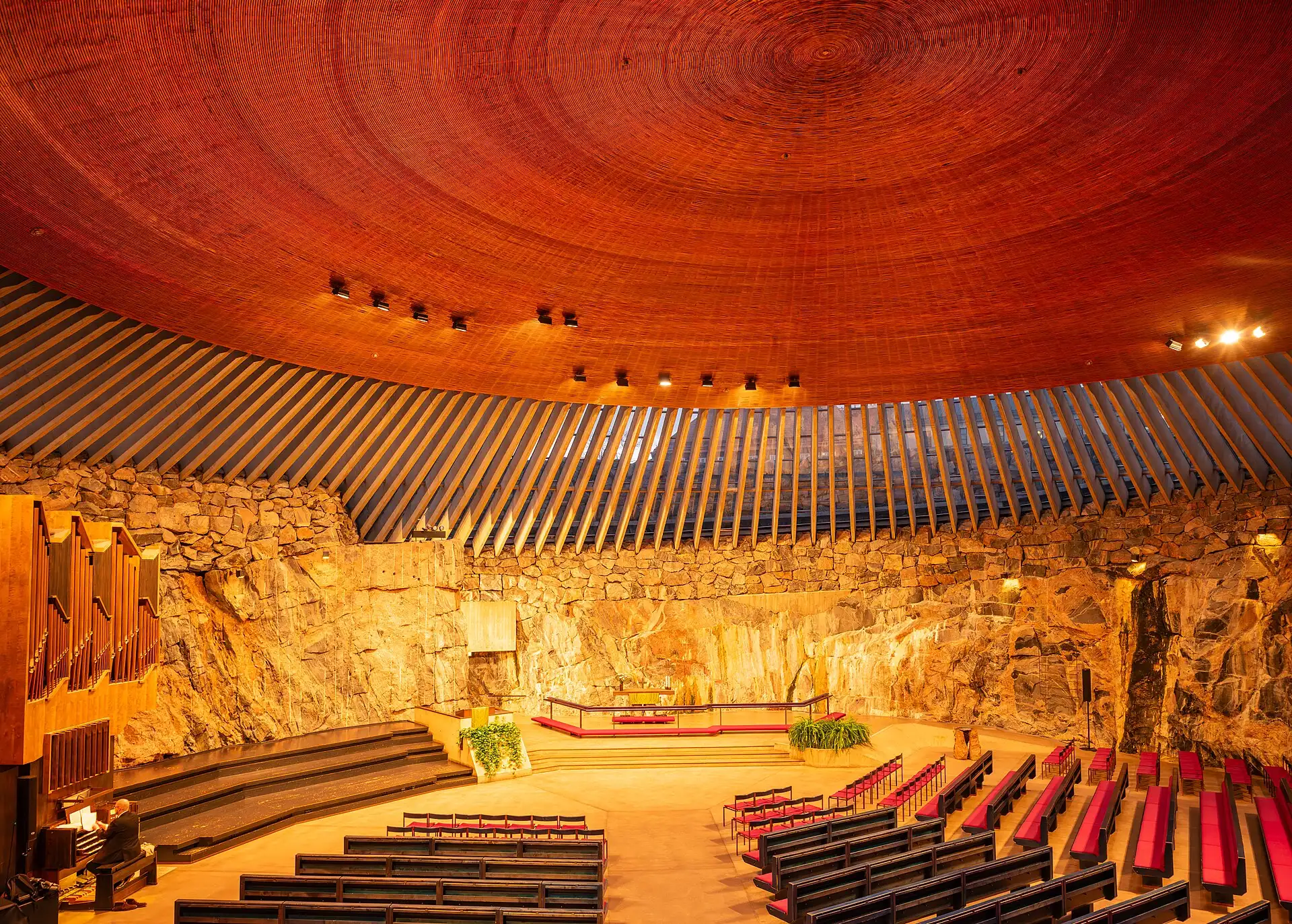
Functionalism came in the 1930s, and Alvar Aalto is the name to know: his Finlandia Hall, Academic Bookstore and National Pensions Institute show his mix of white marble, brick and daylight. From the 1960s came the Temppeliaukio Church, blasted into a granite outcrop by the Suomalainen brothers, and, more recently, Kiasma museum (1998), Oodi library (2018) and the wooden Löyly sauna (2016).
The result is a compact tour of a century of architecture in a city you can walk in an afternoon. If you are short of time, take a tram past the Jugend blocks in Eira, walk Senate Square to Uspenski, and finish with a look at Oodi's wooden curve.
- Senate Square designed by
- Carl Ludvig Engel, 1820s to 1840s
- Helsinki Cathedral
- Completed 1852
- Uspenski Cathedral
- Completed 1868
- Central Station
- Eliel Saarinen, completed 1919
- Rock Church
- Timo and Tuomo Suomalainen, 1969
- Oodi library
- Opened 2018
3The sauna: a way of life2 min
There are roughly three million saunas in Finland for about five and a half million people. The sauna is where Finns wash, recover, negotiate and celebrate. Historically it was also where they gave birth and where the dead were prepared, a place treated with quiet respect. That is why the rules of behaviour are gentle but firm: keep your voice low, be naked or follow the venue's swimsuit rule, and never treat it as a party.
The classic Finnish sauna is heated to about 70 to 100 degrees with a wood or electric stove. You sit on a bench, throw water on the hot stones to make a burst of steam (löyly), stay until you are hot, then cool off in the sea, in a lake, under a cold shower or in snow. Then you rest, drink water or a beer, and repeat. Three rounds over an hour or two is normal.
In Helsinki you can try three types. The modern public sauna, such as Löyly or Allas Sea Pool, is built for visitors and needs a booking. The old workers' sauna, such as Kotiharju in Kallio (wood-heated, dating from 1928), is a local place with separate sessions and a plain look. The smoke sauna (savusauna) has no chimney: the room is smoked, aired and then used, and the air is soft and slightly sweet.
Winter swimming in a hole in the sea ice (avanto) is common. Many Finns swear it makes them healthier; scientists say the evidence is modest, but it is a ritual that people love. If you try it, get warm first, keep your dip to a minute or two, do not drink alcohol beforehand and have a warm room ready.
For a visitor the sauna is also the best way to meet the country at its calmest. Take a swimsuit and a small towel in your bag, check the venue's rule for swimwear and for gender, and book the evening slot before you land.
One practical point: rules differ by venue and by session. Some sessions are mixed with swimwear, some are separate for women and men, and a few older saunas expect you to go without. Check the rule on the booking page, bring a swimsuit as a backup, and never take photographs inside a sauna.
- Saunas in Finland
- About 3 million
- Typical temperature
- About 70–100 °C (158–212 °F)About 158–212 °F (70–100 °C)
- Kotiharju public sauna
- Opened 1928, wood-heated
- Typical visit
- Two to three hours
- Rule
- Shower first; follow the swimwear rule
4Food: fish, rye and coffee2 min
Finnish food rests on what the land and sea provide: fish, rye, potatoes, berries, dairy and game. Salmon soup (lohikeitto) is the everyday lunch, made with cream, potato and dill. Baltic herring (silakka) is grilled or pickled and sold fresh at the Market Square in the autumn fair. Reindeer, sautéed with lingonberries and mashed potato, is the dish most visitors try once.
Bread is dark rye, and the Karelian pie (karjalanpiirakka) is a rye crust with rice porridge, eaten with egg butter. The cinnamon-and-cardamom bun (korvapuusti) is a national institution, along with the doughnut (munkki) at Vappu. Leipäjuusto, or "bread cheese", is a mild baked cheese served warm with cloudberry jam.
Coffee is central: Finland is at or near the top of the world for coffee drunk per head. Coffee breaks at work are taken seriously, and a kahvi with a pulla (sweet bun) is the standard afternoon stop. Chocolate is Fazer, the local firm that started in 1891, and the salty liquorice (salmiakki) is an acquired taste.
The eating day is early: lunch about 11:00 to 14:00, dinner about 17:00 to 20:30, and most kitchens close by 21:00 or 22:00. The lunch buffet (lounas) is the best-value meal of the day, often with a salad, soup, main and bread for €12 to €18. Markets and market halls, including the Old Market Hall and Hakaniemi, are the best places to sample.
Restaurants have moved towards a New Nordic approach, using local, seasonal produce and simple methods. It is expensive, but a set lunch at a good restaurant is a route in. For a cheaper approach, a picnic of fish, cheese, rye bread and berries from Hakaniemi, eaten on a park bench, is one of the best-value meals in the city.
Two habits help a visitor: eat your main meal at lunch, when the buffet price is lowest, and treat the afternoon coffee and bun as a proper meal. Check opening hours on Sundays and public holidays, when the market halls and many restaurants close or shorten their hours.
- Everyday lunch
- Lohikeitto, salmon soup
- National bun
- Korvapuusti, cinnamon-cardamom
- Cheese
- Leipäjuusto with cloudberry jam
- Chocolate
- Fazer, founded 1891
- Lunch buffet
- About €12–18
5Light, dark and the seasons2 min
The year is a swing between two extremes. In late December the sun rises after 09:00 and sets before 15:15, so you get about six hours of daylight. In late June the sun sets after 22:45 and never gets fully dark: the Finnish summer night is a long twilight. The change is fast, gaining about six minutes of light a day in spring.
This is why the seasons shape the city more than in most capitals. Winter is a time for saunas, cafés with candles, Christmas markets and museums, and Finns light candles and lamps in every window. Snow is common from December to March, and when the sea freezes near the shore, people walk and ski on it. Bring boots with grip, a windproof shell and a hat.
Spring arrives quickly. By April the light is bright, the snow melts, and the first terraces open. On 1 May (Vappu) the students celebrate in the parks and the city throws a picnic; it is one of the biggest days of the year. May and early June are among the best times to visit, with long days and few crowds.
Summer is short but generous. Locals leave the city at Midsummer, going to summer cottages by lakes, and for a few days Helsinki is nearly empty. July is warm, sometimes 25 degrees or more, and terraces, sea swimming and island ferries all run. Some restaurants close for the summer holidays.
Autumn brings the colours (ruska) in September and the Baltic Herring Fair in October. Then the light drops quickly, and November is dark and damp, often the least attractive month for visitors. The best times to come are May to September, or December if you want a Christmas market and a sauna.
A last practical note on packing: layers matter more than a single heavy coat, because trams, shops and museums are well heated and the wind on the harbour is cold. Add a small towel and swimsuit for saunas, boots with grip in winter, and a light rain jacket for autumn and summer showers.
- Daylight, late December
- About 6 hours
- Daylight, late June
- About 19 hours
- Winter temperature
- About −3 to −9 °C (27 to 16 °F)About 27 to 16 °F (−3 to −9 °C)
- Summer temperature
- About 19–22 °C (66–72 °F)About 66–72 °F (19–22 °C)
- Best months
- May to September
Read, watch, wordsReading · Glossary · Sources
Reading
- Wikivoyage — Helsinki — Wikivoyage contributorsA practical overview and a good checklist for what to see and eat.
- Visit Helsinki guides — City of Helsinki tourism officeCurrent events, opening hours and seasonal information.
Glossary
| Term | Local | Meaning |
|---|---|---|
| Sauna | Sauna | A wood- or electric-heated room for steam and heat |
| Löyly | Löyly | The steam that rises when you throw water on the stones |
| Lounas | Lounas | A weekday lunch buffet |
| Kahvi | Kahvi | Coffee |
| Kiitos | Kiitos | Thank you |
| Juhannus | Juhannus | Midsummer |
Read for this deep dive
Background reading only: the text above is written by Voykit, not copied from these pages.
Rules in force · 8Non-EU visitors get 90 days in any rolling 180-day window…
- Europe ↗Non-EU visitors get 90 days in any rolling 180-day window, counted across all 29 Schengen states together — not per country; the Entry/Exit System now logs each crossing, so an overstay is detected automatically.
- Europe ↗On the first Schengen entry since EES began, non-EU travellers give four fingerprints and a face photo at the border instead of a passport stamp; there is nothing to apply for or pay in advance.
- Nordic countries ↗Decide light or dark before anything else: summer trips (June–August) and aurora trips (September–March in the Arctic) need different countries, clothes and bases.
- Nordic countries ↗Sweden, Norway, Finland, Iceland and the Faroes sell stronger alcohol only in state shops with short hours; buy before evening and before Sundays and holidays.
- Finland ↗Finland is in the EU and the Schengen area. Check the entry rules for your passport on official sources; the EU's Entry/Exit System registers non-EU visitors at the first Schengen border.
- Finland ↗The land border with Russia is closed to travellers; do not plan a route across it.
- Finland ↗Everyman's rights let you walk, camp for a night and pick berries on most land, but not near homes, and not to make fires without permission.
- Helsinki and the South Coast ↗The Helsinki–Tallinn ferry is a border crossing for many passports: carry your passport or national ID card and check the rules for your citizenship.
Entry rules depend on your passport. Full visa guide
Emergency numbers for Helsinki112 ▾
- Emergency (police, fire, ambulance) check112
- Non-emergency police check0295 470 111
Tap a number to call from your phone. These are the numbers listed in this guide; a row marked check has not been verified.
Planning is the full guide. I'm here keeps what is open and the cheat card.
Right now
Checking the weather…
Working out what is open near you…
What is open nowclock, closures, places open
Now in Helsinki
Local time in Helsinki
--:--
Loads in your browser · Europe/Helsinki
This month
Month verdict appears here.
Closed today
See the weekly grid below.
| Weekly closure | Mon | Tue | Wed | Thu | Fri | Sat | Sun |
|---|---|---|---|---|---|---|---|
| Many Helsinki museumscheckSome open on Monday in summer; confirm on the museum site. | ✕ | · | · | · | · | · | · |
| Old Market HallClosed on Sundays. | · | · | · | · | · | · | ✕ |
If today is a closure day: Monday: many museums close, so do Senate Square, the market and the harbour walk, then a public sauna in the evening.
Open every day: Löyly public sauna and restaurant, Temppeliaukio Church (Rock Church).
Weekly closures come from our place pages; Midsummer, Christmas and Independence Day change opening hours nationally.
Cheat cardthe pocket version
Cheat card
The essentials on one card: save it as an image for your phone, share it, or print it.
Helsinki
Helsinki (Helsingfors)
- Money
- Cards and phone payment work almost everywhere, including kiosks and small cafés; carry a little cash only for lockers…
- SIM
- Install an eSIM before you fly, or buy a prepaid SIM at the airport or a kiosk (passport may be needed).
- Ride app
- Bolt and Uber
- Emergency
- 112 emergency (police, fire, ambulance) · 0295 470 111 Non-emergency police (not 911, 999 or 000)
- Plugs
- Sockets F. US/Canada (A/B): adapter · UK/Ireland (G): adapter · Australia/NZ (I): adapter. 230 V: US 120 V-only devices (hair dryers) need a converter; most chargers are dual-voltage.
Top 5
- Senate Square and the cathedral
- Allas Sea Pool and a sauna
- Löyly sauna and sea swim
- Suomenlinna by ferry
- Oodi Central Library
EssentialsQuick answers, what things cost and how to get around
Essentials
Quick answers, what things cost and how to get around
Quick answers
The questions people ask first about Helsinki, one line each. Tap a card for the full answer.
- Cash or card?Cards and phone payment are accepted almost everywhere, including small kiosks; cash is rarely needed.
- SIM or eSIMInstall an eSIM before you fly, or buy a prepaid SIM at the airport or a kiosk (passport may be needed).
- Ride-hailing appBolt and Uber.
- Tap waterTap water is safe to drink and very good.
- TippingNot expected: service is included.
- Plugs & powerSockets F. US/Canada (A/B): adapter · UK/Ireland (G): adapter · Australia/NZ (I): adapter. 230 V: US 120 V-only devices (hair dryers) need a converter; most chargers are dual-voltage.
Show all 14 answers
- Safe at night?Take more care after dark in Suomenlinna, Kallio.
- What to wearShower first; no street clothes in the steam room; follow the swimwear rule of the venue; speak softly.
- Emergency numbers112 emergency (police, fire, ambulance) · 0295 470 111 Non-emergency police (not 911, 999 or 000)
- Your embassycheckUS, UK, Australia, Canada embassies listed with addresses (check before you go).
- Closed which day?Mon: 1 on our list shut · Sun: 1 on our list shut.
- Sundays & holidaysJuhannus: Most shops and restaurants close and Finns leave the city; plan food and transport in advance.
- Rainy-day planRain is light and frequent in autumn: do the outdoor sight in the morning and put a museum, Oodi or a sauna in the afternoon.
- Landing latecheckHEL: last airport train I or P to Helsinki Central about 23:30, then taxi from the airport rank to the door (metered or fixed price; check before you get in).HEL: last airport train I or P to Helsinki Central about 11:30 PM, then taxi from the airport rank to the door (metered or fixed price; check before you get in).
Cost cheat-sheetwhat everyday things cost
Cost cheat-sheet
Typical prices for the everyday things, as ranges. Change the currency right here; the local price stays first.
2026 desk estimate · check
- CoffeeCoffee at a café€3–5 (≈ US$4–6)
- Sit-down mealSit-down dinner main course€20–35 (≈ US$25–45)
- BeerPint of beer€7–9 (≈ US$9–11)
- Taxi, about 5 km (3 mi)Taxi, about 3 mi (5 km)Taxi, 5 km (3.1 mi) in the cityTaxi, 3.1 mi (5 km) in the city€15–25 (≈ US$18–30)
- Metro or bus rideTram single ticket€3–4 (≈ US$4–5)
- SIM or eSIM, a weekTourist eSIM, about a week of data€8–20 (≈ US$10–25)
- Museum or sight ticketPublic sauna entry€15–30 (≈ US$18–35)
- Budget bedHostel dorm bed, a night, per person€35 (≈ US$45)
- Mid-range bedDouble room, mid-range hotel, a night, per room€170 (≈ US$200)
- High-end bedDouble room, mid-range hotel, a night, per room€280 (≈ US$350)
A day, not counting the bed: Budget €70 (≈ US$85) · Mid €130 (≈ US$160) · High €250 (≈ US$300)
Local prices, with USD next to them (rates 2026-09 (approximate); change it in the header). Ranges are desk estimates: check locally. Every price and the budget calculator →
Source: Prices in Helsinki
Draft
Written from desk research. Not yet compared with the official source.
No official source is recorded for this figure.
Prices are 2026 desk estimates, not yet compared with an official source. Check on the day.
Not checked in the last 12 months (no check date on file).
DecideWho it suits, the trade-offs and when to go
Decide
Who it suits, the trade-offs and when to go
Best months at a glance
The guide's verdict for each month
Jan
Care
−3°C (27°F)27°F (−3°C)
Feb
Care
−3°C (27°F)27°F (−3°C)
Mar
Care
1°C (34°F)34°F (1°C)
Apr
Care
8°C (46°F)46°F (8°C)
May
Best
14°C (57°F)57°F (14°C)
Jun
Best
19°C (66°F)66°F (19°C)
Jul
Best
22°C (72°F)72°F (22°C)
Aug
Best
20°C (68°F)68°F (20°C)
Sep
Best
15°C (59°F)59°F (15°C)
Oct
Care
9°C (48°F)48°F (9°C)
Nov
Avoid
4°C (39°F)39°F (4°C)
Dec
Care
0°C (32°F)32°F (0°C)
Best: May–Sep. Mixed: Oct, Dec–Apr. Avoid: Nov. Month by month →
Warmest Jul (22°C (72°F)72°F (22°C)), coolest Feb (−9°C (16°F)16°F (−9°C) low), wettest Nov (16 rain days), driest Apr (9). Averages, not a forecast.
Helsinki across the year
Best-looking months for Helsinki: May, Jun, Aug. Rated avoid: Nov.
| Measure | Jan | Feb | Mar | Apr | May | Jun | Jul | Aug | Sep | Oct | Nov | Dec |
|---|---|---|---|---|---|---|---|---|---|---|---|---|
| Weather | Mixed (care) | Mixed (care) | Mixed (care) | Mixed (care) | Great (good) | Great (good) | Great (good) | Great (good) | Good (good) | Mixed (care) | Avoid (avoid) | Mixed (care) |
| Crowds | Medium (ok) | Medium (ok) | Medium (ok) | Low (good) | Low (good) | Medium (ok) | High (care) | Medium (ok) | Medium (ok) | Low (good) | Low (good) | High (care) |
| Prices | Medium (ok) | High (care) | High (care) | Medium (ok) | Medium (ok) | Medium (ok) | Medium (ok) | Medium (ok) | Medium (ok) | Low (good) | Low (good) | High (care) |
| Events | 1 event (ok) | None listed (ok) | None listed (ok) | 1 event (ok) | 1 event (ok) | 3 events (care) | 1 event (ok) | 1 event (ok) | 1 event (ok) | 1 event (ok) | None listed (ok) | 4 events (ok) |
Green is good news, amber needs planning, red is a month to avoid; dashed grey with a question mark means our data does not say. Open the year heatmap →
Not checked in the last 12 months (no check date on file).
Source: Months, temperatures and crowds
Draft
Written from desk research. Not yet compared with the official source.
Monthly highs, rain and crowd levels are climate averages and desk estimates for the city, not a forecast.
Understand the cityUnderstand · Districts
Orientation & districts
Almost everything a first visit needs sits inside a 2 km box around the Central Station: Kamppi to the west, Senate Square and the harbour to the east, Punavuori and the design shops to the south-west.
Addresses follow the street name plus number; many streets have a Swedish name as well (for example Aleksanterinkatu and Alexandersgatan).
Shaded shapes: walking areas (click one). Black pins: sleep areas. Grey dots: places. Round badges: arrivals. Click the map to turn on scroll-wheel zoom.
Hover, tap or tab to an area to see what it is like. Pins are sleep areas; arrows at the edge point to the airport.
Not drawn yet (no coordinates in this guide): Kallio. They are in the neighbourhood cards below.
Where’s what, as a list:
- Kamppi and Central Station (Kamppi, Rautatientori): Everything is a tram or a walk; busy and less quiet than the side streets. Suits: First visit, 2–4 nights, easy airport train. Price band $$$.
- Senate Square and the harbour (Kruununhaka, Kauppatori): The postcard centre; crowded at cruise-ship times. Suits: Cathedral, market and the sea pool on day one.
- Punavuori and the Design District (Punavuori): Tram or walk from the station; evenings are lively on weekends. Suits: Design shops, cafés and a quieter bed than Kamppi. Price band $$$.
- Suomenlinna (Suomenlinna (Sveaborg)): A residential island as well as a monument. Suits: A half-day on the sea fortress by ferry.
- Kallio (Kallio): Working-class roots, now a nightlife district; loud on weekend nights. Suits: A local, less polished evening and old-style sauna.
- Töölö (Töölö): Residential; reach it by tram from the centre. Suits: The rock church, Sibelius Monument and lakeside walks.
- Sleep area Kamppi and Central Station: suits First visit, 2–4 nights, easy airport train, price band $$$.
- Sleep area Punavuori and the Design District: suits Design shops, cafés and a quieter bed than Kamppi, price band $$$.
- Helsinki-Vantaa Airport (HEL), about 17 km (11 mi)11 mi (17 km) from the centre, 30–40 min by the usual route.
Neighbourhoods at a glance
One tab per area, pulled together from this guide’s districts table, area notes, sleep-area scores and place pages. Scores are desk judgements (1–5); prices are estimates, check before you book.
Kamppi and Central Station
$$$Kamppi, Rautatientori
Everything is a tram or a walk; busy and less quiet than the side streets.
- Suits:
- First visit, 2–4 nights, easy airport train · Rain plans and arrivals
- Best time:
- Any time
- Rooms:
- €130–230 per room per night (mid-range); more in summer and on trade-fair weeks
Pick this if: First visits, airport train, day trips
Skip this if: You want quiet nights or a room away from weekend crowds
- Quiet nights2/5 Low
- Nightlife3/5 Medium
- Families4/5 High
- Late arrival5/5 Very high
Why these scores
- Quiet nights: Busy around the station and Kamppi; ask for an inside room.
- Nightlife: Bars nearby, but the main nightlife is in Kallio and Punavuori.
- Families: Stroller-friendly with trams; parks and museums nearby.
- Late arrival: Big hotels have 24-hour desks and the airport train runs late.
Getting around from here
- 15–20 min walk to Senate Square, Market Square & harbour
- Walk south: about 15 min to Design District & Punavuori
- HEL: about 17 km (11 mi) in a straight line (arrival ride 30–40 min)HEL: about 11 mi (17 km) in a straight line (arrival ride 30–40 min)
Senate Square and the harbour
Kruununhaka, Kauppatori
The postcard centre; crowded at cruise-ship times.
- Suits:
- Cathedral, market and the sea pool on day one
- Best time:
- Morning
Pick this if: First visits
Watch out for: Cruise-ship crowds at midday.
Getting around from here
- Walk west or tram: about 15 min to Central Station, Oodi & Kiasma
- Tram south-west: about 15 min to Design District & Punavuori
- HSL ferry from Market Square: about 20 min to Suomenlinna Sea Fortress
Suomenlinna
Suomenlinna (Sveaborg)
A residential island as well as a monument.
- Suits:
- A half-day on the sea fortress by ferry
- Best time:
- Morning
Pick this if: Half-day escape
Watch out for: Winter wind without a proper coat.
Getting around from here
- HSL ferry to Market Square: about 20 min to Senate Square, Market Square & harbour
Kallio
Kallio
Working-class roots, now a nightlife district; loud on weekend nights.
- Suits:
- A local, less polished evening and old-style sauna
Töölö
Töölö
Residential; reach it by tram from the centre.
- Suits:
- The rock church, Sibelius Monument and lakeside walks
- Best time:
- Any time
Pick this if: Rain plans and arrivals
Watch out for: Late at night near the station.
Getting around from here
- Walk east: about 15 min to Senate Square, Market Square & harbour
- Walk south: about 15 min to Design District & Punavuori
- HEL: about 16 km (9.9 mi) in a straight line (arrival ride 30–40 min)HEL: about 9.9 mi (16 km) in a straight line (arrival ride 30–40 min)
Ward by ward
8 area guides. Open one for the short answer, the key facts and what the area is like; the full guide is linked inside. Prices marked (check) are estimates.
CentralBest for: First visits, short stays, car-free trips, museum and shopping days
Yes — stay in Central if you want to walk to the railway station, Esplanadi, Ateneum and Kiasma, and reach the airport by train in about 30 minutes. Choose it for a first visit of 2–4 nights; pick Kamppi or Kruununhaka instead if you want quieter nights or cheaper rooms.
- Best for:
- First visits, short stays, car-free trips, museum and shopping days
- Walk to Central Railway Station:
- Most Central addresses are 5–15 minutes on foot
- Airport transfer:
- I or P commuter train to Helsinki Central, roughly 30 minutes (check)
- Room prices:
- Mid-range doubles from about €120–180 a night in summer (2026 estimate)
- Quietest nights:
- Side streets off Aleksanterinkatu and around Kaisaniemi, away from Kaivokatu
- Main drawback:
- Street noise, few budget rooms, and Kaisaniemi Park after dark
- Tram and metro:
- Single AB-zone ticket, valid about 80 minutes (check)
What the area is like
Central Helsinki is the commercial downtown: the blocks east of Mannerheimintie, south of Pitkäsilta, west of Unioninkatu and north of Esplanadi. It is the busiest part of the city and the one where most first-time visitors end up, because the railway station, the main shopping streets and several museums sit inside it.
The core is compact. Kaivokatu runs along the station front, Aleksanterinkatu one block south is the main shopping street with department stores and small shops, and Esplanadinpuisto — the Esplanade park — is one block further south, busy with picnics and free summer concerts on the stage near Kauppatori. North-east of the station, Kaisaniemi Park holds the university botanical garden and hosts events such as the first of May morning and the late-May Maailma kylässä festival.
Architecture ranges from the granite Central Railway Station, designed by Eliel Saarinen and opened in 1919, to modern buildings such as Oodi library, Sanomatalo and the Citycenter complex. Ateneum, the national art museum, and Kiasma, the contemporary art museum, both sit within a few minutes of the station.
Full Central guideShould you stay here or not
Stay in Central if your trip is short, you plan to use trains and trams, and you would rather walk to dinner than commute. Almost all local bus and rail lines end in or pass through the centre, so day trips to Porvoo, Tampere or the airport are simple. The trade-off is noise and price: Kaivokatu and the station surroundings stay busy late, and summer room rates in the core are the highest in the city.
Skip it if you want quiet evenings, cheaper accommodation or a residential feel. Kamppi and the southwest side, across Mannerheimintie, has the bus station and similar access with slightly calmer streets. Kruununhaka and Katajanokka, east of Unioninkatu, are quieter and closer to the harbour. Kruununhaka and Katajanokka → /helsinki-kruununhaka-and-katajanokka and Kamppi and Southwest neighborhood guide → /helsinki-kamppi-and-southwest cover those alternatives.
For families and longer stays, the Inner East and the western districts give more space for the same tram or metro ride into the centre.
Eastern suburbsBest for: Families, longer stays, budget rooms, beach and nature days
Stay in the eastern suburbs only if you want cheaper, quieter nights with metro access and are happy to ride 15–25 minutes into the centre. Itäkeskus and Herttoniemi work for families and long stays; most first-time visitors should base centrally and visit for Korkeasaari zoo or the Vuosaari beaches.
- Best for:
- Families, longer stays, budget rooms, beach and nature days
- Not for:
- First-timers who want sights, bars and restaurants on the doorstep
- Metro to centre:
- Itäkeskus to Central Railway Station about 20 minutes (check)
- Airport bus:
- Bus 561 links the airport with Itäkeskus
- Zoo:
- Korkeasaari, reached by bus 16 or summer ferry from Hakaniemi and Market Square
- Beaches:
- Aurinkolahti in Vuosaari; Porvariskuningas in Jollas
- Ferry port:
- Vuosaari harbour handles ferries from Germany
- Tap water:
- Safe to drink across Finland
What the area is like
Eastern Helsinki is the city's residential east: a string of districts from Kulosaari and Herttoniemi out through Itäkeskus, Myllypuro, Roihuvuori and Vartiokylä to Vuosaari on the coast. It is not a sightseeing district. It is where a large share of Helsinki residents actually live, in apartment blocks from the 1960s onward, with shopping centres, libraries, sports halls and schools rather than museums and design shops.
The metro runs through the middle of it, which is the main reason to consider staying here. Itäkeskus is the biggest interchange and the commercial hub, with the Itis shopping centre, the Stoa cultural centre and a bus terminal. Vuosaari is newer and greener, with the sea, a marina and the ferry harbour at its edge. Roihuvuori has the cherry park and Japanese-style garden, a spring event rather than a year-round draw.
Distances are longer than the map suggests. Between metro stations there are stretches of forest, rock and allotment gardens, and the shoreline is broken by bays. Plan on walking more than you would in the centre, and on using the metro or a bus for almost every trip.
Full Eastern suburbs guideShould you stay here or not
Stay here if you want a cheaper room, a quiet night, easy parking and a base for the zoo, the eastern beaches or a ferry from Vuosaari. Families do well: apartments are bigger, supermarkets are close to the metro, and the beaches at Aurinkolahti and Jollas are calm and shallow.
Do not stay here if this is your first visit and you want to walk out to cafés, the harbour, Design District shops and the main sights. The centre, Kamppi and Kallio give you that. From the eastern suburbs you will spend 15–25 minutes each way on the metro, and late evenings mean checking the last train rather than strolling home.
A middle option: stay near a metro station in Herttoniemi or Kulosaari, which cuts the ride and still keeps prices below the centre. If you are here mainly for Korkeasaari zoo, note that the zoo sits on its own island and is reached from the centre side, not from the eastern metro line.
Inner EastBest for: Budget and mid-range stays, bars and casual food, rail connections at Pasila
Stay in Inner East if you want cheaper rooms, real neighborhood life and fast metro or tram links to the centre — Kallio and Hakaniemi suit nightlife and food, Pasila suits rail connections. Skip it if you want the harbour, Design District or Esplanadi on your doorstep; the centre is 10–15 minutes away by metro or tram.
- Best for:
- Budget and mid-range stays, bars and casual food, rail connections at Pasila
- Less good for:
- Harbour views, Design District shopping, first-night convenience on foot
- Metro stops:
- Hakaniemi, Sörnäinen, Kalasatama (plus Pasila on the main line)
- Trams:
- 1, 3, 6, 7, 9 from the centre; 2 and 8 from Töölö
- Centre to Hakaniemi:
- About 5–10 minutes by metro or tram (check)
- Airport bus 615:
- Runs along Hämeentie through the district (check)
- Old wooden houses:
- Käpylä and Vallila
- 1970s concrete districts:
- Itä-Pasila and Merihaka
- Tap water:
- Drinkable across Finland
- Tipping:
- Not expected
What the area is like
Inner East covers the part of Helsinki east of the railway line, north of Pitkäsilta, south of the main motorways and west of Kulosaari. It is not one district but several with different personalities, which is why it works better as a place to sleep and eat than as a sightseeing zone.
Kallio and Hakaniemi are the liveliest parts: grid streets of early-1900s stone buildings, bars, bakeries and cheap lunch places, with Kallio church on its granite hill as the landmark. Vallila and Käpylä keep pockets of old wooden houses, Käpylä the most complete garden-town feel. East of Pasila station, Itä-Pasila and Merihaka are the blocky concrete districts built in the 1970s as models of the future city — interesting if you like that era of planning, plain if you do not.
Further out, Vanhakaupunki marks where Helsinki was founded in 1550 at the mouth of the Vantaa river, with rapids beside it. Kalasatama is a newer seafront quarter with a brick-edged look and a growing cluster of bars and restaurants. The district is residential and working, not polished for visitors, and that is the point.
Full Inner East guideShould you stay here or not
Stay here if price and transit matter more than postcard views. Hotels and apartments in Kallio, Hakaniemi and Pasila cost less than the centre for the same standard, and the metro puts you at the central railway station in a few stops. Kallio is the pick for evening food and bars; Hakaniemi for market halls and tram lines; Pasila if you arrive or leave by train, including the airport train.
Do not stay here if you want to step out of your hotel into the Esplanadi, the Market Square or the Design District. You will be commuting for that, short but daily. The area is also hilly in places and quieter at night away from Kallio, so check the exact address against a metro or tram stop before booking.
For a first trip of three or four nights, the centre is simpler. For a longer stay, a repeat visit or a tight budget, Inner East is a good trade: you get more space and better food value for a few minutes on the metro.
Kamppi and SouthwestBest for: First-timers who want walkable centre access, transport links and evening food
Stay in Kamppi if you want to walk to the centre, use the metro and buses from the Kamppi terminal, and eat and drink late without crossing town. Skip it if you want a quiet, low-rise, old-Helsinki feel — Kruununhaka or Katajanokka suits that better. Ruoholahti and Lauttasaari are calmer and cheaper, but add 10–20 minutes each way.
- Best for:
- First-timers who want walkable centre access, transport links and evening food
- Not for:
- Travellers wanting wooden old-town streets or a village feel
- Walk to Central Railway Station:
- About 10–15 minutes from Kamppi (approximate) (check)
- Metro:
- Kamppi and Ruoholahti are on the westbound metro line; Lauttasaari is served by the metro extension (check current HSL routes) (check)
- Trams:
- Tram 9 serves Ruoholahti and tram 8 links Töölö (check current HSL routes) (check)
- Ferry terminals:
- West Harbour (Länsisatama) in Jätkäsaari handles Tallinn ferries; check your operator's terminal (check)
- Quietest nights:
- Lauttasaari and western Ruoholahti; loudest around Kamppi and Hietalahti (check)
- Price level:
- Mid to high; Helsinki hotel rates are seasonal (2026 estimate) (check)
What the area is like
Kamppi and the southwest run from the city core out along highway 51 to the Espoo border. The eastern edge, along Mannerheimintie, is shopping-centre Helsinki: Kamppi and Forum, offices, and the busiest pedestrian streets. A block or two west it turns residential — courtyards, corner cafés, and a grid of 19th- and early 20th-century blocks.
Ruoholahti was a rough industrial quarter in the 1980s and is now glass-and-steel offices and apartments, partly built on reclaimed sea floor. The old cable factory is a cultural centre, and the Salmisaari power plant and shipyard still mark the industrial past. A bridge crosses west to Lauttasaari, a mostly residential island and the second-most-populous island in Finland after Fasta Åland.
For sightseeing, the district is modest: the wooden Old Church in its park, the functionalist Lasipalatsi by Mannerheimintie, the Alexander Theatre, and the Hietalahti market hall and square. The real draw is practical — you are inside the transport network and a short ride from everything else in Helsinki.
Full Kamppi and Southwest guideShould you stay here?
Yes, if your trip is a first visit to Helsinki and you want to walk to the centre, eat late, and reach the airport, Espoo or the Tallinn ferries without long transfers. Kamppi is the strongest choice for a short stay of two to four nights.
No, if you want quiet, low buildings and sea views. Look at Kruununhaka and Katajanokka for old-Helsinki streets, or the Inner East for cheaper rooms and a bar district. Ruoholahti and Lauttasaari inside this district are the compromise: calmer, at the cost of 10–20 minutes each way (approximate).
Book early for June–August and December; Helsinki fills up in both. Winter visitors should note that pavements ice over and walking times stretch.
Kruununhaka and KatajanokkaBest for: First-time visitors, architecture, short city breaks, ferry passengers
Stay here if you want Helsinki's 19th-century centre, the cathedral and Market Square within a 10-minute walk and a quiet residential evening. Skip it if you want nightlife, cheap beds or a metro at the door. It suits first-timers and short city breaks; book early in summer.
- Best for:
- First-time visitors, architecture, short city breaks, ferry passengers
- Walk to Market Square:
- 5–15 minutes from most addresses
- Trams:
- Lines run along Aleksanterinkatu and Unioninkatu; tram 4 and 7 serve Katajanokka (check)
- Ferry terminal:
- Katajanokka terminal: Viking Line to Stockholm and Tallinn (check)
- Evening character:
- Quiet and residential; bars and restaurants cluster downtown and in Kallio
- Typical hotel night:
- €120–250 in summer, 2026 estimate
- Book ahead:
- Jun–Aug and early December fill up fast
What the area is like
Kruununhaka (Kronohagen) and Katajanokka (Skatudden) sit immediately east of central Helsinki, roughly from Unioninkatu to the Market Hall and the ferry quay. This is where the modern city began: after Helsinki became capital of the Grand Duchy of Finland, Carl Ludwig Engel laid out a unified neoclassical centre around Senate Square in the early 19th century.
The southern edge is monumental and busy with visitors by day — Senate Square, the Lutheran cathedral, the presidential palace, city hall and the Swedish embassy face the water. North of that, and across the canal in Katajanokka, the streets turn residential: apartment blocks, embassies, a few hotels and the ferry terminal.
Katajanokka is almost an island, joined to the mainland by a short bridge and the canal. Its southern half holds the Orthodox Uspenski Cathedral and the old prison that became a hotel; the northern half is quiet waterfront living. Expect a calm evening, not a night out.
Full Kruununhaka and Katajanokka guideShould you stay here
Yes, if your trip is about seeing Helsinki on foot and you value a quiet base. You can reach Senate Square, Market Square, the Design District and the Esplanadi park in 5–15 minutes without touching transport, and the ferry terminal is on your doorstep if you are crossing to Stockholm or Tallinn.
No, if you want cheap dorm beds, late bars or quick metro access. Hostels and nightlife concentrate around Kamppi and Kallio, and the metro does not run through these districts — you rely on trams and walking. Hotel rates here are mid-to-high, and summer demand is strong.
It also works well for a one-night stop before or after a ferry, or for travellers who prefer older architecture to new-build districts.
Northern suburbsBest for: Cheaper accommodation, Central Park trails, suburban everyday Helsinki
Skip it as a base unless you have a specific reason: no major sights, mostly apartments and industry, 20–30 minutes by train from Central. Stay here only for cheaper rooms near Malmi or the Ring Rail Line, or if you want Helsinki's Central Park for running and cycling.
- Best for:
- Cheaper accommodation, Central Park trails, suburban everyday Helsinki
- Not for:
- First-time sightseeing, nightlife, walkable old-town atmosphere
- Getting in:
- Local trains and buses from Central; tram 15 (Raide-Jokeri) links east–west
- To Central:
- About 20–30 minutes by local train from Malmi or Oulunkylä (check)
- From the airport:
- Ring Rail Line trains stop in several northern suburbs
- Central Park:
- Runs through the area; good for running and cycling
- Tap water:
- Safe to drink (check)
What the area is like
Helsinki's northern suburbs are the northernmost part of the city, forming a continuum toward Vantaa. For this guide the area is roughly northwest of motorway 4 and north of Käpylä, Hakamäentie and the Haaga roundabout — in other words, north of the tram line termini.
Like much of the outer capital region, it is dominated by apartment blocks, industrial areas and a couple of malls. There are no major attractions here. What it does have is Helsinki's own Central Park, a long green corridor that is genuinely useful if you like running, walking or cycling.
Districts you may see named include Malmi, Tapanila, Kannelmäki, Maununneva, Haaga and Tuomarinkylä. Malmi is the area's main transport and commercial hub, with a railway station and shopping services.
Full Northern suburbs guideShould you stay here or not
For a first trip to Helsinki, no. The sights, the harbour, the design district and most restaurants are in the centre or south, and you would spend 40–60 minutes a day commuting. Stay central or in Kamppi and Southwest instead.
There are two cases where the northern suburbs make sense. First, budget: rooms here are often priced below central Helsinki, though you should compare current rates yourself (check). Second, a car or an early flight: if you are driving north or leaving from Helsinki Airport, the Ring Rail Line and the northern road exits are convenient.
If you do stay, pick a place within walking distance of a station on the main north line (Oulunkylä, Malmi) or the Ring Rail Line, not a bus-only pocket.
SouthBest for: Design shopping, cafés, parks, Suomenlinna ferry, quiet nights
Stay in South Helsinki if you want calm, leafy streets, embassies, design shops and the ferry to Suomenlinna within walking distance of the centre. It suits couples, design-focused travellers and summer visitors; pick Kamppi or Central instead if you want nightlife, cheaper beds or a station on your doorstep.
- Best for:
- Design shopping, cafés, parks, Suomenlinna ferry, quiet nights
- Less good for:
- Budget beds, late nightlife, anyone who wants a metro or train at the door
- Walk to Central Railway Station:
- 20–30 min from most of the district
- Trams:
- 1, 3, 6 and 10 serve the area; line 3 loops through it
- Suomenlinna ferry:
- From Market Square (Kauppatori), HSL ticket valid (check)
- Price level:
- Helsinki's most expensive residential district; hotels priced accordingly (2026 estimate)
- Quiet at night:
- Yes — this is a residential and embassy district
What the area is like
South Helsinki here means everything south of Esplanadi and Bulevardi, plus the islands offshore. It is the southern tip of the Helsinki peninsula: Eira, Punavuori, Kaivopuisto, Ullanlinna and the waterfront, with Suomenlinna out in the harbour.
This is the wealthiest, quietest corner of central Helsinki. Eira and Kaivopuisto hold the most expensive housing in the city, and more than half of Helsinki's embassies and consulates sit on these streets, which tells you what the evenings are like: calm, well-lit and short on bars.
The character splits in two. The eastern and southern parts are parks, Jugend-style apartment blocks, design boutiques and cafés. The western corner around Punavuori and the shipyard end is more industrial, with warehouses and old workers' canteens still serving traditional Finnish food.
In summer the coastline fills with yachts and the Kaivopuisto promenade becomes the city's outdoor living room. In winter it is dark, icy and very quiet — pleasant if you want that, dull if you do not.
Full South guideShould you stay here
Yes if your trip is about design, food, walking and a calm base. You can reach Market Square, Esplanadi and the Design District on foot, and the Suomenlinna ferry is a short walk from most hotels. Couples and solo travellers on a mid to upper budget get the most out of it.
No if you want cheap dorm beds, a metro or tram stop at the door, or bars open past midnight. Kamppi and Central are better for transport and nightlife; Kallio and the inner east are better for budget. Families often prefer Kamppi for the same reason: shorter walks with luggage and children.
One practical point: this district is hilly in places, especially around Observatory Hill, and winter pavements are icy. If anyone in your group has mobility issues, stay closer to Esplanadi or pick a hotel on a tram line.
WestBest for: Museums, functionalist architecture, parks, families, quiet nights
Stay in West if you want quiet residential Helsinki with fast tram and train links to the centre, plus Seurasaari and Töölö's museums on the doorstep. Skip it if you want nightlife or a walkable old-town feel. Base in Töölö or Munkkiniemi for 2–3 nights; Pasila works for rail connections.
- Best for:
- Museums, functionalist architecture, parks, families, quiet nights
- Worst for:
- Nightlife, bar-hopping, a medieval old-town feel
- Tram to centre:
- Trams 2, 4 and 10 from Mannerheimintie, roughly 10–20 minutes
- Train:
- Pasila station: all trains to Helsinki stop here except the St Petersburg service
- Airport bus:
- Finnair's bus stops at Scandic Continental on Mannerheimintie
- Seurasaari museum entry:
- €6, €5 concession (2026 estimate); park entry free (check)
- Seurasaari 2025 season:
- Closed for the 2025 season due to budget cuts; check before you go (check)
- Winter Garden entry:
- Free; closed Mondays
What the area is like
Western Helsinki covers everything west of the railway line and northwest of the Baana walking and cycling corridor, running past Munkkiniemi and Munkkivuori to the Haaga roundabout. It is mostly where Helsinki lives rather than where it performs: apartment blocks, embassies, offices, sports grounds and a lot of water and green space.
The two districts visitors actually use are Töölö (Etu-Töölö and Taka-Töölö) and Munkkiniemi. Töölö is the dense, early-20th-century part next to the centre, and it is one of Finland's best places to see functionalist architecture on foot. Munkkiniemi, further west along Mannerheimintie, is quieter and greener, with the tram 4 running to its centre.
The area's anchors are cultural and outdoor: the National Museum of Finland, the Finlandia Concert Hall and National Opera around Töölönlahti bay, the Sibelius Monument in Sibelius Park, the Olympic stadium cluster at Eläintarha, and Seurasaari island with its open-air museum of relocated Finnish buildings. Töölönlahti itself is partly in a natural state, which is unusual this close to a capital's core, and walking or jogging around the bay is a local habit.
Practical note: this is a spread-out district, not a single square. Two addresses in "West" can be 4 km (2.5 mi) apart, so check which tram or bus serves your hotel before booking.Practical note: this is a spread-out district, not a single square. Two addresses in "West" can be 2.5 mi (4 km) apart, so check which tram or bus serves your hotel before booking.
Full West guideShould you stay here or not
Stay in West if your trip is about museums, architecture, saunas, parks and an easy tram ride into the centre, and you value a quiet night over a bar strip. It suits families, older travellers, and anyone arriving by train who wants Pasila's connections without the price of the core.
Skip it if you want to step out of your door into restaurants and nightlife, or if you are in Helsinki for one night and want everything within walking distance. The centre and Kallio do that better.
Within West, Töölö is the compromise: 15–25 minutes on foot or a short tram ride from the central railway station, with the museums and the bay right there. Munkkiniemi and the islands (Lehtisaari, Kuusisaari) are for people who want calm and do not mind a longer ride in. Pasila is the choice if you are using Helsinki as a rail hub for Tampere, Turku or the north.
Decide
The honest trade-off: what you will enjoy, what will wear you down.
You will like
- Walkable harbour centre
- Saunas and sea swimming
- Design shops and cafés
- Clean, reliable trams
You will hate
- Dark winter afternoons
- High prices
- Early closing times
Similar citiesif this one is not quite right
Similar cities
If Helsinki does not fit your dates or budget, these match it on season, cost and feel.
- Stockholm
Sweden
- Good in the same months: May, Jun, Jul, Aug, Sep
- A mid-range day costs about the same (≈US$158 vs US$151, excl. bed)
- Works well for first-timers, families, solo travel
- A similar climate through the year
- Toronto
Canada
- Good in the same months: May, Jun, Jul, Aug, Sep
- A mid-range day costs about the same (≈US$152 vs US$151, excl. bed)
- Works well for first-timers, families
- Oslo
Norway
- Good in the same months: May, Jun, Aug, Sep
- A mid-range day costs about the same (≈US$129 vs US$151, excl. bed)
- Works well for first-timers, families, solo travel
- A similar climate through the year
When
Best months: May, Jun, Jul, Aug, Sep. Month-by-month verdicts below, with the live forecast first. When to go, month by month →
Helsinki: next 7 days
Loading forecast…
Forecast: Open-Meteo (CC BY 4.0), model data for this point.
Air quality
Loading…
Model estimate (CAMS via Open-Meteo), not a street-level station; readings near busy roads run higher.
Month by month, all 12best May, Jun, Jul, Aug, Sep
Dark, about −5 to −10°C (23 to 14°F), icy paths; saunas and museums shine.Dark, about 23 to 14°F (−5 to −10°C), icy paths; saunas and museums shine.
Cold and snowy; daylight returns quickly.
Slush and wind; days lengthen fast.
Cool and changeable; terraces not yet open.
Bright and fresh; ferries and terraces start.
Very long evenings; Midsummer weekend empties the city.
Warmest month; some restaurants shut for summer break.
Warm, first dark evenings, busy sea.
Cool, clear, quieter; autumn colours.
Wet and dark early.
Dark, cold, damp; short daylight.
Christmas markets; about six hours of daylight; check Christmas Eve closures.
Climate, calendar and eventsClimate · Calendar · Events · Packing by season
Climate
| Jan | Feb | Mar | Apr | May | Jun | Jul | Aug | Sep | Oct | Nov | Dec | |
|---|---|---|---|---|---|---|---|---|---|---|---|---|
| High | −3°C (27°F)27°F (−3°C) | −3°C (27°F)27°F (−3°C) | 1°C (34°F)34°F (1°C) | 8°C (46°F)46°F (8°C) | 14°C (57°F)57°F (14°C) | 19°C (66°F)66°F (19°C) | 22°C (72°F)72°F (22°C) | 20°C (68°F)68°F (20°C) | 15°C (59°F)59°F (15°C) | 9°C (48°F)48°F (9°C) | 4°C (39°F)39°F (4°C) | 0°C (32°F)32°F (0°C) |
| Low | −8°C (18°F)18°F (−8°C) | −9°C (16°F)16°F (−9°C) | −5°C (23°F)23°F (−5°C) | 1°C (34°F)34°F (1°C) | 6°C (43°F)43°F (6°C) | 11°C (52°F)52°F (11°C) | 14°C (57°F)57°F (14°C) | 13°C (55°F)55°F (13°C) | 9°C (48°F)48°F (9°C) | 4°C (39°F)39°F (4°C) | 0°C (32°F)32°F (0°C) | −4°C (25°F)25°F (−4°C) |
| Rain days | 15 | 12 | 11 | 9 | 9 | 10 | 11 | 12 | 13 | 15 | 16 | 16 |
| Verdict |
- Daylight is the big swing: about 6 hours in late December and nearly 19 hours in late June.
- Wind off the sea makes the same temperature feel colder on the harbour and on the ferries.
- Snow cover and ice are usual from December to March; bring boots with grip.
Events by month
Lux Helsinki
festivalEarly January · Central Helsinki(check dates)
Light installations in dark evenings
Vappu (May Day)
festival30 April to 1 May · Esplanadi and Kaivopuisto
Student celebrations; shops close early; noisy
Helsinki Day
festival12 June · Central Helsinki(check dates)
Free events and concerts
Juhannus (Midsummer)
holidayThe weekend closest to 24 June · Nationwide
The city empties; most shops and restaurants close
Flow Festival
festivalMid-August · Suvilahti(check dates)
Music festival; hotels fill and prices rise
Helsinki Design Week
festivalSeptember · Design District and across the city(check dates)
Pop-ups, shows and crowded design streets
Baltic Herring Fair
festivalFirst full week of October · Market Square
Fishing boats sell herring and traditional food
Independence Day
holiday6 December · Senate Square and nationwide
Shops and museums close; a torchlight parade
Christmas market
festivalEarly to late December · Senate Square
Crowded evenings; hot glögi and crafts
Festivals and events that change the plan
| When | What | Effect on your plan |
|---|---|---|
| Around Jun 21 (Midsummer weekend) | Juhannus | Most shops and restaurants close and Finns leave the city; plan food and transport in advance. |
| Dec 24–26 | Christmas | Shops, restaurants and many museums close on Christmas Eve and Christmas Day; trams run a reduced timetable. |
| Early Dec–Dec 23 | Helsinki Christmas Market on Senate Square | Senate Square and the surrounding streets are crowded in the evenings. |
| Every May 1 | Vappu | Large student celebrations in Esplanadi and Kaivopuisto; alcohol-heavy and noisy, shops close early. |
What to pack, by season
From Helsinki’s own climate table: the coldest, warmest and wettest three months, and what to bring for each.
Coldest months
Jan–Mar
-7° to -2°
Warm coat, hat, gloves and a thermal layer.
Warmest months
Jun–Aug
13° to 20°
Layers: warm days, cooler evenings.
Wettest months
Oct–Dec
16 rain days a month
A compact umbrella or rain jacket and shoes that can get wet.
Arrive & moveGetting in, getting around, and your bags
Arrive & move
Getting in, getting around, and your bags
I land at…
Enter your landing time: what still runs from the airport, where you can eat when you get in, and which areas let you check in that late.
Helsinki-Vantaa Airport (HEL)
Out of the airport about 23:4311:43 PM (00:40 (next day)12:40 AM (next day) if immigration and bags are slow); in town about 00:08 (next day)12:08 AM (next day).
Transport from the airport
- GoneAirport train I or P to Helsinki Central. Last one about 23:30: gone by the time you are out.
- Any hourTaxi from the airport rank to the door (metered or fixed price; check before you get in). Any hour.
- GoneBus to the centre (check the HSL or Finnair City Bus timetable for late services). Stops about 23:00.Stops about 11:00 PM.
Places to eat open when you get in
We have no confirmed hours for the places to eat here yet. Plan on a convenience store or your hotel. What is open late →
Where to sleep with a late arrival
- Lets you inKamppi and Central Station 24-hour desk. Big hotels have 24-hour desks and the airport train runs late.
- Lets you inPunavuori and the Design District 24-hour desk. Smaller places may not have a night desk; confirm check-in.
Typical times from our airport data, not a timetable: check the last departure on the day. Full airport-to-bed plan for Helsinki-Vantaa Airport (HEL) →
Arrive
Each gateway has its own airport-to-bed page with timings and the last safe connection.
Getting in, in detailGet in
Get in by rail and road
| Station | Mode | Serves | Where | To the centre |
|---|---|---|---|---|
| Helsinki Central StationHelsingin päärautatieasemause | Train | Long-distance trains to Turku, Tampere, Rovaniemi and St Petersburg (check) | City centre · Kamppi / Rautatientori | You are in the centre; trams and metro are inside the buildingBuy on VR.fi or in the VR app; book long-distance seats early. |
| West Harbour (Länsisatama)Länsisatamause | Ferry | Tallinn ferries (Tallink) | 2–3 km south-west of the centre · Jätkäsaari | Tram 6 or 9 about 15–20 minCheck which terminal your ferry uses. |
| South Harbour (Eteläsatama)Eteläsatamause | Ferry | Ferries to Tallinn (Viking, Eckerö), boats to Suomenlinna | By Market Square · Kaartinkaupunki | Walk from the centreAlso the departure point for the Suomenlinna ferry. |
| Kamppi Bus TerminalKampin linja-autoasemause | Bus | Long-distance and regional buses, including Porvoo | Beside Kamppi shopping centre · Kamppi | Walk or tramTickets from Matkahuolto or the operator apps. |
| Helsinki-Vantaa Airport (HEL)Helsinki-Vantaan lentoasemause | Air | International and domestic flights | About 20 km north · Vantaa | Train P or I about 30 min, taxi 25–35 minSee the gateway page for the arrival plan. |
- Buy your HSL ticket before boarding; inspectors fine on the spot.
- Ferries fill up on summer weekends: book the Tallinn crossing in advance.
- Night buses replace trams after about midnight on main routes (check).
Move
The default way around, when a pass pays off, and when the last trains go.
- Default
- Walk inside a cluster; tram or metro between clusters; HSL ferry to Suomenlinna.
- Passes
- A day ticket pays back after about three rides; the Helsinki Card or a day ticket is only worth it if you take the ferry, a tram loop and the airport train in one day. Check current prices on hsl.fi.
- Last trains
- Trams and metro run until around midnight or later; after that night buses run on main lines. Check the HSL app for the last departure.desk estimate
- Other modes
- Other modes (Rome2Rio) ↗
Getting around, in detailGet around · Connect
Get around
Walk inside a cluster, tram or metro between them, ferry to Suomenlinna. Cycling is easy in summer. HSL tickets cover trams, metro, buses, commuter trains and the Suomenlinna ferry within the zones.
| Mode | Verdict | Fare | Use it for | What breaks |
|---|---|---|---|---|
| Walking | use | Free | Senate Square, the harbour, Kamppi and Punavuori | Most central sights are within 2 km (1.2 mi).Most central sights are within 1.2 mi (2 km). |
| Tram | use | HSL AB ticket, about €3–4 (≈ US$4–5) | Central sights and Punavuori | Low-floor, frequent and easy; trams 2 and 3 are classic sightseeing loops (check the current routes). |
| Metro | use | HSL AB ticket | Kamppi, Central Station, Kallio and the west towards Espoo | Runs about 05:30 to about 00:00 with extended nights on weekends (check).Runs about 5:30 AM to about 12:00 AM with extended nights on weekends (check). |
| Commuter train | use | HSL ABC/D ticket for the airport | Airport and the suburbs | The airport trains P and I run from Central Station. |
| HSL ferry | use | HSL AB ticket | Suomenlinna | About 15 minutes; also seasonal boats to other islands. |
| City bikes | use | Seasonal pass, about €5–35 (≈ US$6–45) (check) | Short hops in summer | Available roughly April to October; sign up on the app. |
| Taxi and ride-hailing | caution | Meter plus surcharges | Late nights, bags, the airport | Expensive; check the price in the app first. |
Metro and rail lines
Two lines in the network, M1 and M2, with the west extension to Espoo; check the HSL map for the current layout.
M1 Vuosaari to Matinkylä (or Kivenlahti)
openEast to west via Central Station (Rautatientori)
- Rautatientori — Central Station and Senate Square (15 min walk)
- Kamppi — Kamppi shopping centre and bus terminal
- Hakaniemi — Market hall and Kallio
Runs about every 5–10 minutes in the day (check).
City buses a visitor actually uses
| Bus | Route | Useful for | Fare | Note |
|---|---|---|---|---|
| P and I trains | Central Station to Helsinki Airport | Airport | About €4–5 (≈ US$5–6) | The fastest and cheapest airport link; about 30 minutes.(check) |
Taxis and ride-hailing
Bolt
app
Price shown before you ride.
Uber
app
Available in Helsinki (check).
Taxi Helsinki rank
street
Use the rank at the station or airport.
On foot and car-free hours
| Where | When | Note |
|---|---|---|
| Esplanadi park | Year-round | A green strip between the market and Mannerheimintie, with cafés in summer. |
| Katajanokka and the harbour | Year-round | Art Nouveau blocks and the Uspenski Cathedral. |
More on getting around
Addresses use street name plus number; Swedish names appear on signs beside the Finnish ones. Trams show the final stop, not the route number, on the front.
Connect
| Option | Verdict | What breaks |
|---|---|---|
| Tourist eSIM bought before you fly | use | No counter, no queue; data only on most plans. |
| Prepaid SIM at the airport or an R-kioski shop | use | Passport may be needed; 15 minutes to register. |
| EU roaming | use | An EU SIM works here at home rates; other SIMs check roaming charges. |
HSL
Tickets, live tram and ferry times
Buy the ticket before you board.
Google Maps
Walking and transit
Reliable across the region.
Bolt and Uber
Taxis when you are late or carrying bags
Check the price shown before you confirm.
Wolt
Food delivery
Useful for a late meal when kitchens close early.
- Wi-Fi
- Free in most cafés, the library, the Central Station and on many trams; the password is on the wall or the receipt.
- Mobile coverage
- Very good in the city and on the ferries; patchier in Nuuksio.
Luggage
Where big bags are a problem, and how to get rid of them for the day.
Rule
- Lockers
- Paid lockers at Central Station and the airport; hotels hold bags after check-out.
- Forwarding
- No forwarding culture; keep the big bag at the Helsinki hotel for a day trip.
- Dead zone
- Late-afternoon flights: lockers at Central Station let you walk light, then take the airport train from the same building.
Bags, area by area
4 walking areas rated
- Bags forbidden
- Bags painful
- Bags ok
Lockers, forwarding and the gap between check-out and check-in are covered once, under Luggage.
See & doWalking clusters, day plans and the places worth the time
See & do
Walking clusters, day plans and the places worth the time
Clusters
Plan by cluster: each is a walkable area with a rescue point and a bag rule.
Morning cluster: the cathedral steps at opening, Uspenski Cathedral above the harbour, then lunch at the Old Market Hall and the sea-pool sauna; flat, cobbled and windy near the water.
rescue 100% · max p90 4.7′ · half
Rain-proof cluster: Oodi library, Ateneum and Kiasma are all indoors within ten minutes of the station; use it whenever the harbour is windy or wet.
rescue 100% · max p90 4.7′ · half
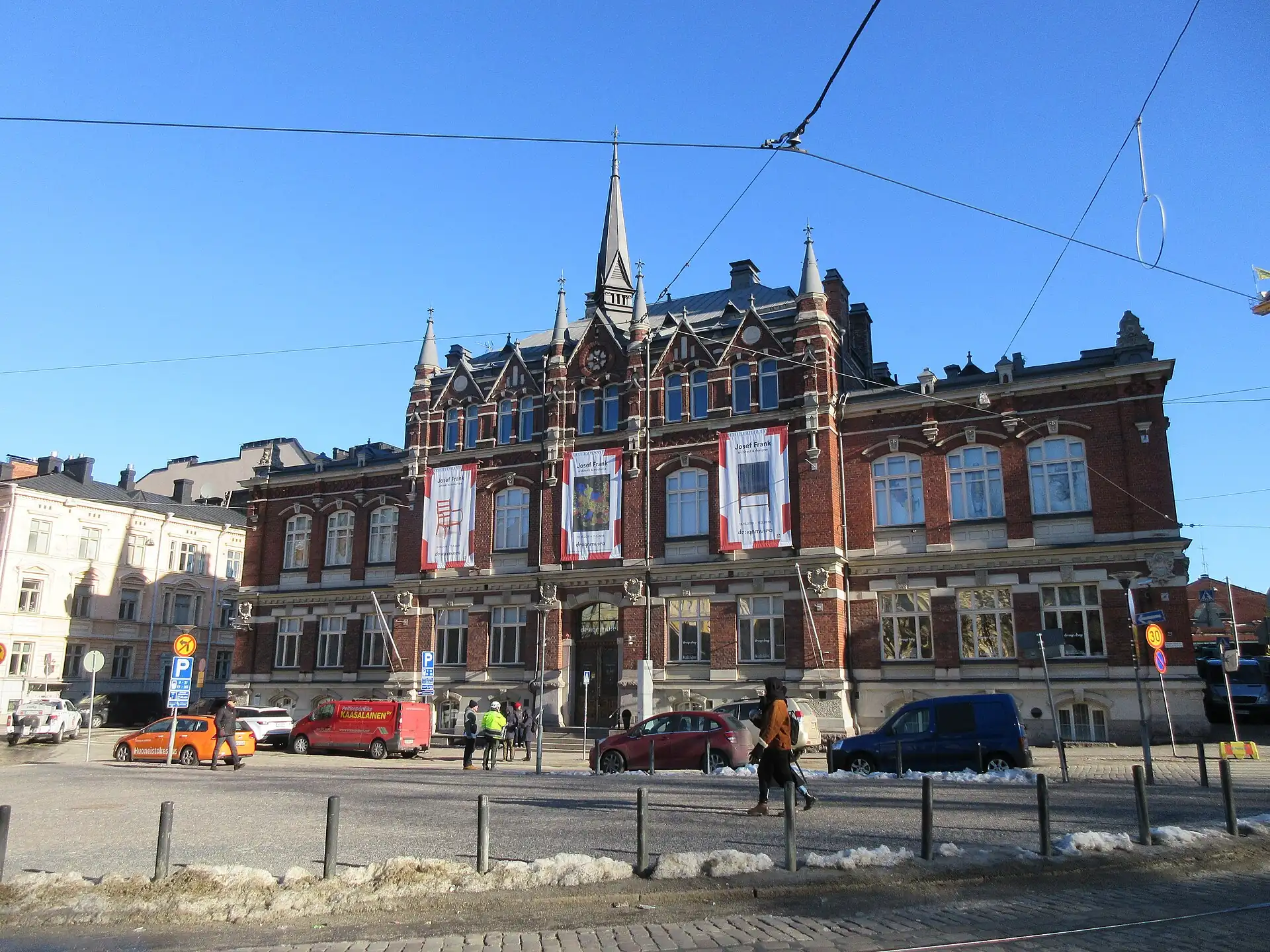
Afternoon cluster: the Design Museum, independent design shops and cafés on Fredrikinkatu and Bulevardi; quiet on Sundays, when many shops close.
rescue 100% · max p90 4.6′ · half
Half-day island: the ferry from Market Square takes about 15 minutes, then 2–3 hours on foot over cobbles, grass and old ramparts; bring wind and rain layers.
rescue 100% · max p90 4.2′ · half
Days
Ready-made day plans, timed against opening hours and walking distances.
How long are you staying?
Loose outlines in the city's rhythm: outdoors in the morning, museums when it rains, sauna in the evening.
1 day
A stopover or a Tallinn day-return
- 09:00Helsinki Cathedral — Senate Square and the cathedral
- 11:00Uspenski Cathedral — Uspenski Cathedral
- 12:30Old Market Hall — Lunch at the Old Market Hall
- 14:00Oodi Central Library — Oodi or the Ateneum
- 18:00Allas Sea Pool — Sauna at Allas
Skip: Suomenlinna: it needs half a day.
Helsinki in 3 days
3 daysHarbour and sauna on day 1, museums on day 2, Suomenlinna on the last morning with the airport train from a station you already know.
Day by day
Day 1 — Senate Square, Uspenski, Market Square lunch
- 09:30Helsinki Cathedral
- Uspenski Cathedral (optional)
- Hakaniemi Market Hall (optional)
- Allas Sea Pool (optional)
- 12:30Lunch table 12:30 (Market Square)
Day 2 — Oodi, the Ateneum and the design district
Day 3 — Suomenlinna, airport train at 14:30
- 09:00Suomenlinna Sea Fortress
- 14:30Airport train from Central Station 14:30
Places
“Best time” is when to arrive for the fewest crowds, for example “before 08:30”; “Go any time” means the hour makes little difference. More sights follow under “More sights and museums”.
9 places. Filters use the guide’s own ratings; a place with no rating is left out when a filter is on.
Show 3 more placesShow fewer
Tours, classes and shows in Helsinki →
If you do ten things in Helsinki
Ranked for a first visit of 2–4 days. Prices are 2026 estimates in euros.
- 1
Senate Square and the cathedral
The postcard centre; free to walk, quietest early.
- Time
- 30–60 min
- Best
- 08:30–10:00
- Cost
- Square free; cathedral free (check)
- 2
The easiest sauna with a sea view.
- Time
- 2–3 h
- Best
- Late afternoon or evening
- Cost
- About €20–30 (≈ US$25–35)
- 3
The best-known public sauna, with a smoke sauna and a sea ladder.
- Time
- 2–3 h
- Best
- Booked evening slot
- Cost
- About €20–30 (≈ US$25–35)
- 4
A fortress on islands, 15 minutes by ferry.
- Time
- 3–4 h
- Best
- Morning
- Cost
- HSL ticket plus optional museum fee
- 5
Free, warm and a good look at Finnish public life.
- Time
- 1–2 h
- Best
- Any time
- Cost
- Free
- 6
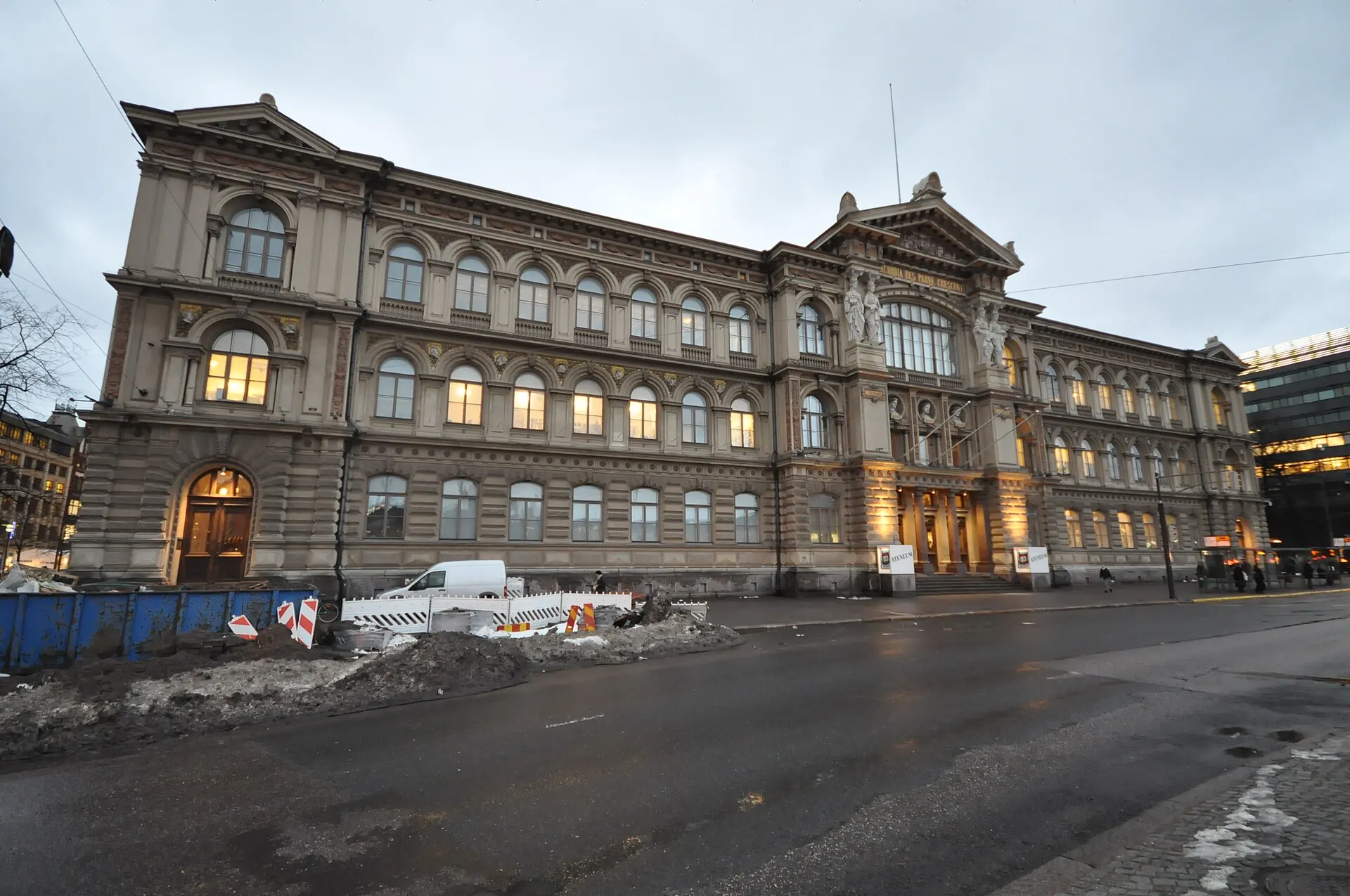
The best Finnish art in one building.
- Time
- 1.5–2 h
- Best
- Weekday morning
- Cost
- About €17–20 (≈ US$20–25)
- 7
Design Museum and the Design District
Finnish design in the shops and the museum.
- Time
- 1.5–3 h
- Best
- Weekday
- Cost
- About €15–20 (≈ US$18–25)
- 8
Red brick, gold domes and a different Helsinki.
- Time
- 20–30 min
- Best
- Morning
- Cost
- Free (check)
- 9
Fish, cheese and coffee under an 1889 roof.
- Time
- 45–60 min
- Best
- 11:00–13:00
- Cost
- €12–25 (≈ US$14–30)
- 10
Good for…
Verdict is how well Helsinki works for that traveller, not how nice it is.
Compact, safe and easy to navigate.
- 1Senate Square — The obvious start, walkable from the station.
- 2Suomenlinna — A half-day island trip inside the city ticket.
Good markets and cafés; restaurants are pricey and close early.
- 1Old Market Hall — Fish and cheese in one place.
One of the pricier European capitals; lunch buffets and market halls help.
- 1Hakaniemi Market Hall — Cheaper, local lunches.
Step-free transport, playgrounds, sea pool and museums.
- 1Suomenlinna — Space to run and a ferry ride.
Safe, quiet and easy alone.
- 1Oodi Library — A comfortable place to rest and plan.
Design hotels and tasting menus exist, but there are few grand-hotel options.
- 1Löyly — A well-built sauna experience.
Step-free trams and ferries; cobbles and ice are the obstacles.
- 1Oodi Library — Fully accessible.
Tours and classes: book or skip
Book through the hotel or an operator with written inclusions and a cancellation policy.
| Tour or class | Verdict | Typical price | Why | Check before paying |
|---|---|---|---|---|
| Harbour cruise | book | €20–35 (≈ US$25–45) | A first look at the islands from the water. | Season and departure times. |
| Walking tour of the centre | optional | Free tip-based or €20–35 (≈ US$25–45) | A useful orientation on day one. | Group size and language. |
| Tallinn day trip | book | €40–90 (≈ US$50–110) return (ferry) or €120 (≈ US$140)+ with a guide | A medieval old town within a morning ferry. | Ferry times and passport rules. |
| Nuuksio hike | book | Free (self) or €60–100 (≈ US$70–120) guided | Forest and lakes near the city. | Transport and gear. |
| Sauna and ice-swim guide | optional | €40–80 (≈ US$50–95) | A guided first sauna. | Swimwear rules and language. |
What each season brings
Winter
Dec–Feb
Snow, ice swimming, Lux Helsinki, cosy cafés and saunas
Watch: Six hours of daylight; slippery pavements.
Spring
Mar–May
Light returns quickly; Vappu in May
Watch: Slush and wind; some terraces still shut.
Summer
Jun–Aug
Long light, terraces, sea swimming, Flow in August
Watch: Midsummer weekend shuts the city; some restaurants close in July.
Autumn
Sep–Nov
Colours in September; Baltic Herring Fair in October
Watch: Dark and wet from late October.
Photo spots and the light
Light times are for clear days; winter light is low and soft.
| Spot | Best light | Tip |
|---|---|---|
| Senate Square from the steps | Early morning or blue hour | Shoot from the bottom of the stairs looking up. |
| Uspenski Cathedral from the harbour side | Afternoon | Walk down to the water for a clean angle. |
| Suomenlinna gate and the King's Gate | Morning | Arrive before the tour groups. |
| Löyly sunset from the terrace | Golden hour | Book a late slot in summer. |
| Rock Church dome | Midday sun through the skylight | No flash; be quiet. |
Helsinki travel FAQ
Answers are 2026 desk estimates; fares and rules marked (check) change.
Is Helsinki expensive?
Yes by European standards: lunch buffets, market halls and tap water help.
Do I need a visa?
Depends on your passport; Helsinki is in the Schengen area (check).
Can I pay by card everywhere?
Almost everywhere, including small kiosks.
How do I buy a tram ticket?
Use the HSL app or tap a contactless card at a machine before you board.
Do I need to book a sauna?
Book evening slots at Löyly and Allas; walk-ins are fine on quiet weekday afternoons.
Are swimsuits required?
In mixed public saunas yes; check the venue rule for your slot.
How far is the airport?
About 30 minutes by train from Central Station.
Can I visit in winter?
Yes: saunas, museums and Christmas markets shine; bring proper boots and a warm coat.
Is Helsinki safe at night?
Yes; the usual risks are ice and drunk crowds on weekends.
Is English spoken?
Very widely.
What is the best day trip?
Tallinn by ferry or Porvoo by bus.
What should I eat?
Salmon soup, cinnamon buns, herring, reindeer and rye pastries.
What time do restaurants close?
Kitchens close about 21:00–22:00.Kitchens close about 9:00 PM–10:00 PM.
Is tap water safe?
Yes.
Do shops open on Sunday?
Many do from noon; some close, especially outside the centre (check).
More to see and doSee & do · Learn & work · Rain & heat · Free things
Free things to do
Sights in Helsinki that cost nothing to enter. Each is described under Places or More sights; extra costs inside are marked there.
See & do
22 of 22
- church
The white Lutheran cathedral above Senate Square, finished in 1852.
Senate Square
- church
The largest Orthodox church in western Europe, red brick above the harbour.
Katajanokka
- Museums
The main Finnish art museum, 19th- and early 20th-century paintings.
Central Station
- library
A public library with a rooftop terrace, cafés and free events.
Central Station
- Museums
Finnish design from furniture to everyday objects.
Design District
- fortress
A sea fortress on islands, a UNESCO site, reached by ferry.
Suomenlinna
A church cut into granite, with a copper dome.
Töölö
Kiasma Museum of Contemporary ArtKiasma
MuseumsFinnish and international contemporary art in a curved steel building.
Central Station · Tue–Sun, closed Monday (check) · about €18 (≈ US$25) (2026 estimate)(check)
National Museum of FinlandKansallismuseo
MuseumsFinnish history from the Stone Age to today, in a national-romantic building.
Töölö · Tue–Sun (check) · about €14–18 (≈ US$17–25) (2026 estimate)(check)
Sibelius MonumentSibelius-monumentti
monumentSteel organ-pipe sculpture in a park near the sea.
Töölö · Open air · Free(check)
Sea fortress ferries and the harbour
walkWalk the harbour and take the ferry for a sea view of the city.
Market Square · Daily · HSL ticket(check)
Seurasaari Open-Air MuseumSeurasaaren ulkomuseo
open-airOld wooden buildings from across Finland on a wooded island.
Seurasaari · Summer season (check) · about €12–15 (≈ US$14–18) (2026 estimate)(check)
Linnanmäki amusement parkLinnanmäki
familyA historic amusement park run for children's charity; open in summer.
Alppila · Seasonal (check) · Entry plus rides (check)(check)
Hietaniemi CemeteryHietaniemen hautausmaa
walkA wooded cemetery with statesmen and artists; quiet and green.
Töölö · Open daily · Free(check)
Kallio and Kotiharju SaunaKotiharjun sauna
saunaA wood-heated public sauna from 1928, unchanged and local.
Kallio · Several days a week (check) · about €14–16 (≈ US$17–19) (2026 estimate)(check)
- Active
Heated sea pools, saunas and a terrace by the harbour.
Market Square · Daily, seasonal (check) · about €20–30 (≈ US$25–35) (2026 estimate)(check)
Public sauna, smoke sauna and sea swim; book ahead.
Hernesaari · Daily slots (check) · about €20–30 (≈ US$25–35) (2026 estimate)(check)
Public sauna evening
ActiveThe classic local ritual: heat, cold, rest, repeat.
Kallio, Punavuori or the harbour · Evening slots · about €15–30 (≈ US$18–35)(check)
Harbour boat cruise
tourA 1-hour trip among the islands in summer; check the sailing schedule.
Market Square · Seasonal (check) · about €20–35 (≈ US$25–45)(check)
Nuuksio National Park hike
day tripForest and lake trails within an hour of the city.
Espoo · Open all day · Free (entry) plus transport(check)
Ice swimming, winter
ActiveA quick plunge through a hole in the ice between sauna rounds.
Kallio, Allas or Löyly · Winter only · Included with sauna entry(check)
Cycling the waterfront
ActiveFlat coastal paths from the centre towards Kaivopuisto and Töölö.
Seafront · Roughly April to October · City bike pass, about €5–35 (≈ US$6–45) (check)(check)
- Booking
- Book saunas, boat cruises and Tallinn ferries in advance for summer weekends and December.
- Sundays
- Museums and shops keep shorter hours; check in advance.
Learn & work
| What | Where | Cost | Note |
|---|---|---|---|
| Finnish language course | Adult education centres such as the Helsinki Adult Education Centre | Course fees vary (check) | A small phrasebook goes a long way; most Finns speak English well.(check) |
| Design and architecture walks | Design District and Design Museum programmes | About €15–40 (≈ US$18–50) | Book ahead in Design Week.(check) |
| Sauna culture introductions | Some public saunas offer beginner guides | Varies | Ask about English-language sessions.(check) |
Working here
- Short-stay entry
- Helsinki is in the Schengen area: a short stay is allowed for many nationalities without a visa (up to 90 days in 180). Check your own passport rules.
- Remote work
- Cafés, libraries and Oodi have fast free Wi-Fi; rules on working while visiting depend on your nationality and your employer.
- Long stay
- Longer stays need a permit from the Finnish Immigration Service (Migri).
Rain-day and heat-day plan
Rain day
Rain is light and frequent in autumn: do the outdoor sight in the morning and put a museum, Oodi or a sauna in the afternoon.
- 01Oodi Central Library — Indoors, warm, free; 1–2 hours.
- 02Ateneum Art Museum — Finnish and European art; 1.5–2 hours.
- 03Design Museum — Finnish design, indoors; about an hour.
- 04Temppeliaukio Church (Rock Church) — A 30-minute indoor stop.
- 05Allas Sea Pool — Heated pools and saunas, comfortable in rain.
Heat day
Helsinki rarely gets hot, but late July can reach 28–30 °C: go to the sea pool or Löyly for a swim, and take shade breaks in the parks.
- 08:00Market Square before the crowds — Cool and quiet.
- 12:00Sea swim at Allas or Löyly — The best way to cool down.
- 19:00Kaivopuisto picnic on a warm evening — Light until late in summer.
Day-trips and nearby
Places you can reach from Helsinki in a day or with one night away, with the route and what it costs. Door to door, not ride time.
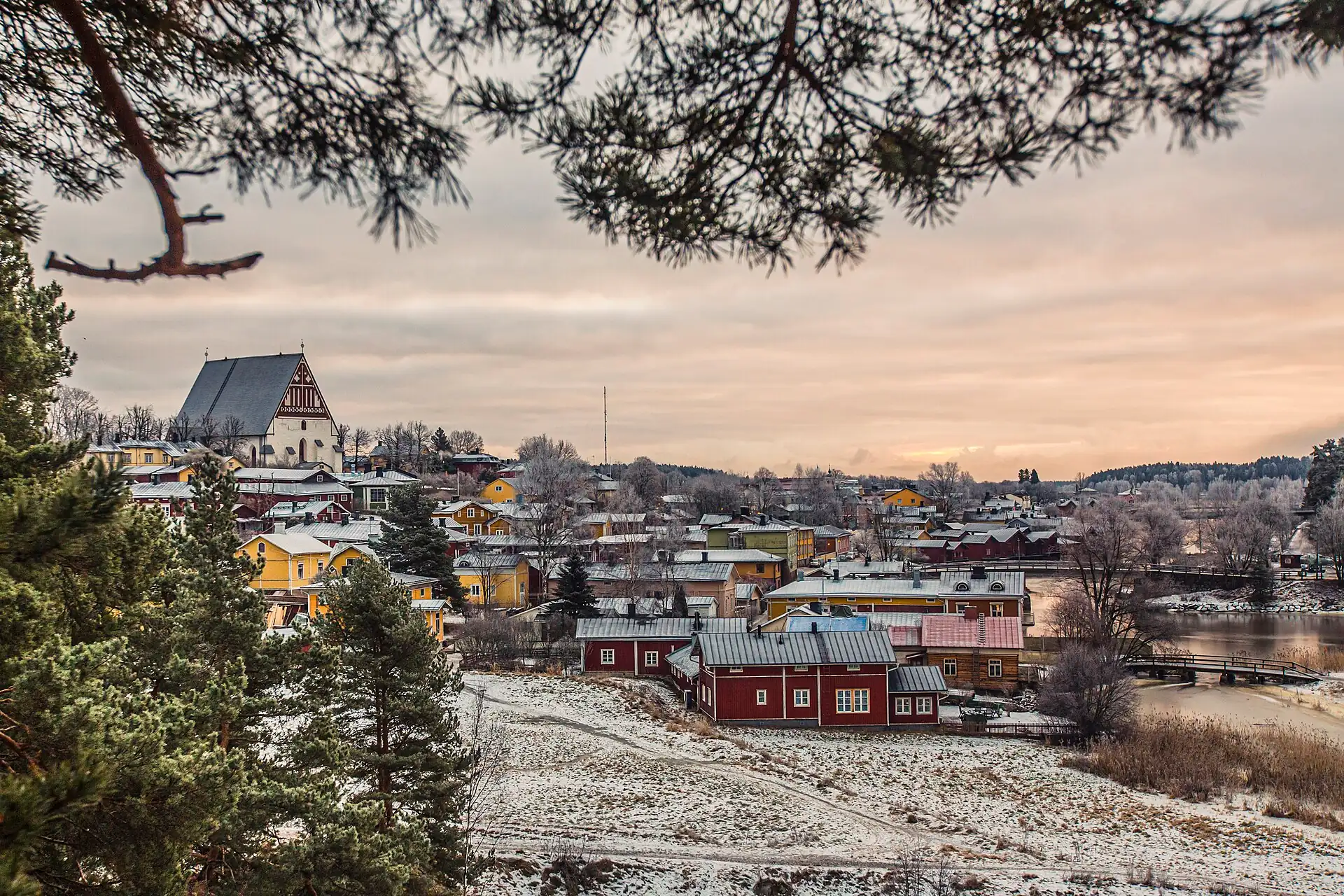 Photo: Katja Kapanen, CC BY-SA 4.0
Porvoo (old town)
goBus from Kamppi about 1 h each way, or a boat in summer
Red riverside warehouses and a small old town; quiet on Mondays.
- Time
- Half day
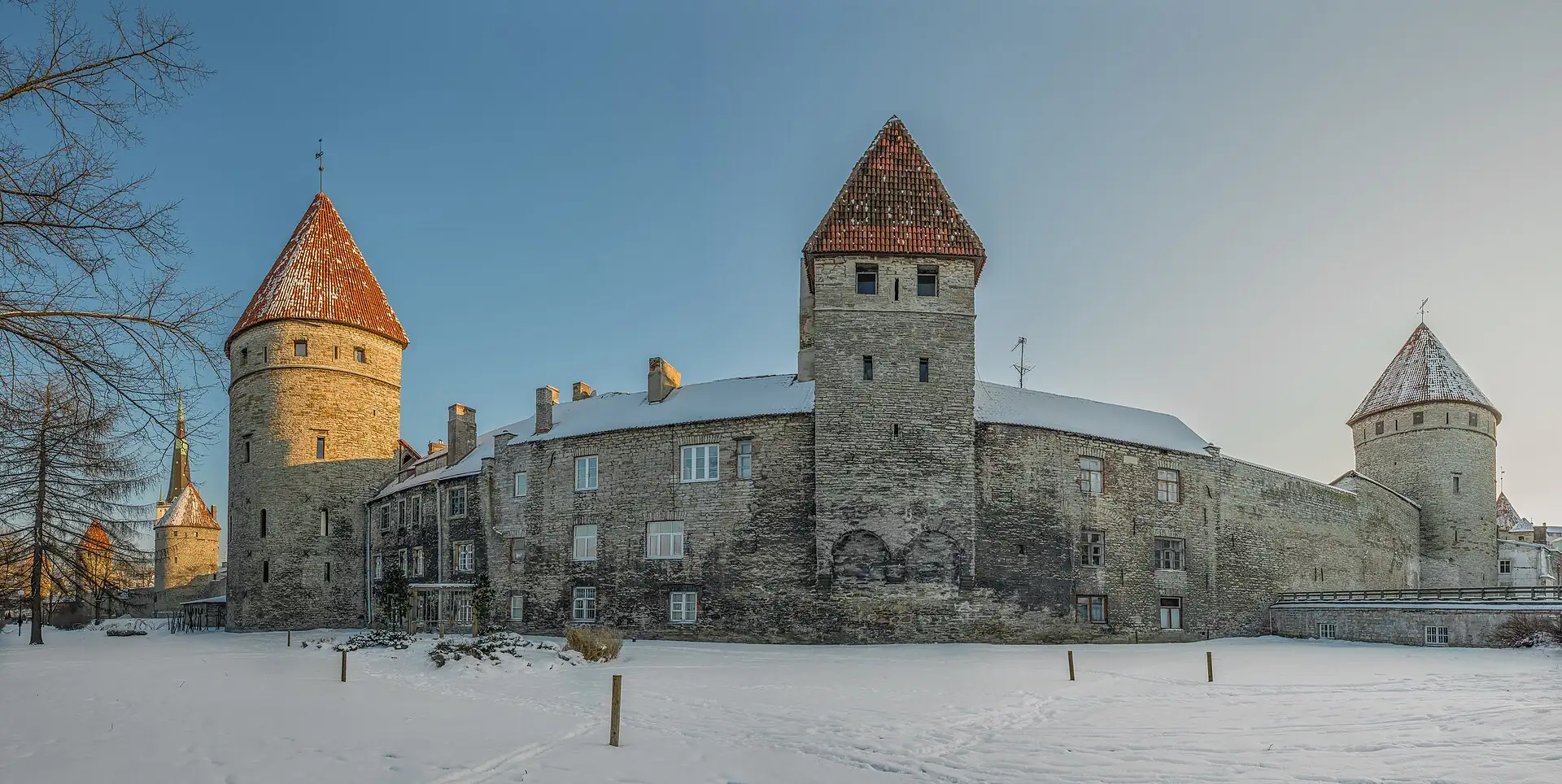 Photo: Abrget47j, CC BY-SA 3.0
Tallinn, Estonia
goFerry about 2–2.5 h each way; bring your passport or ID
Pre-book for summer weekends; check border rules for your passport.
- Time
- Full day
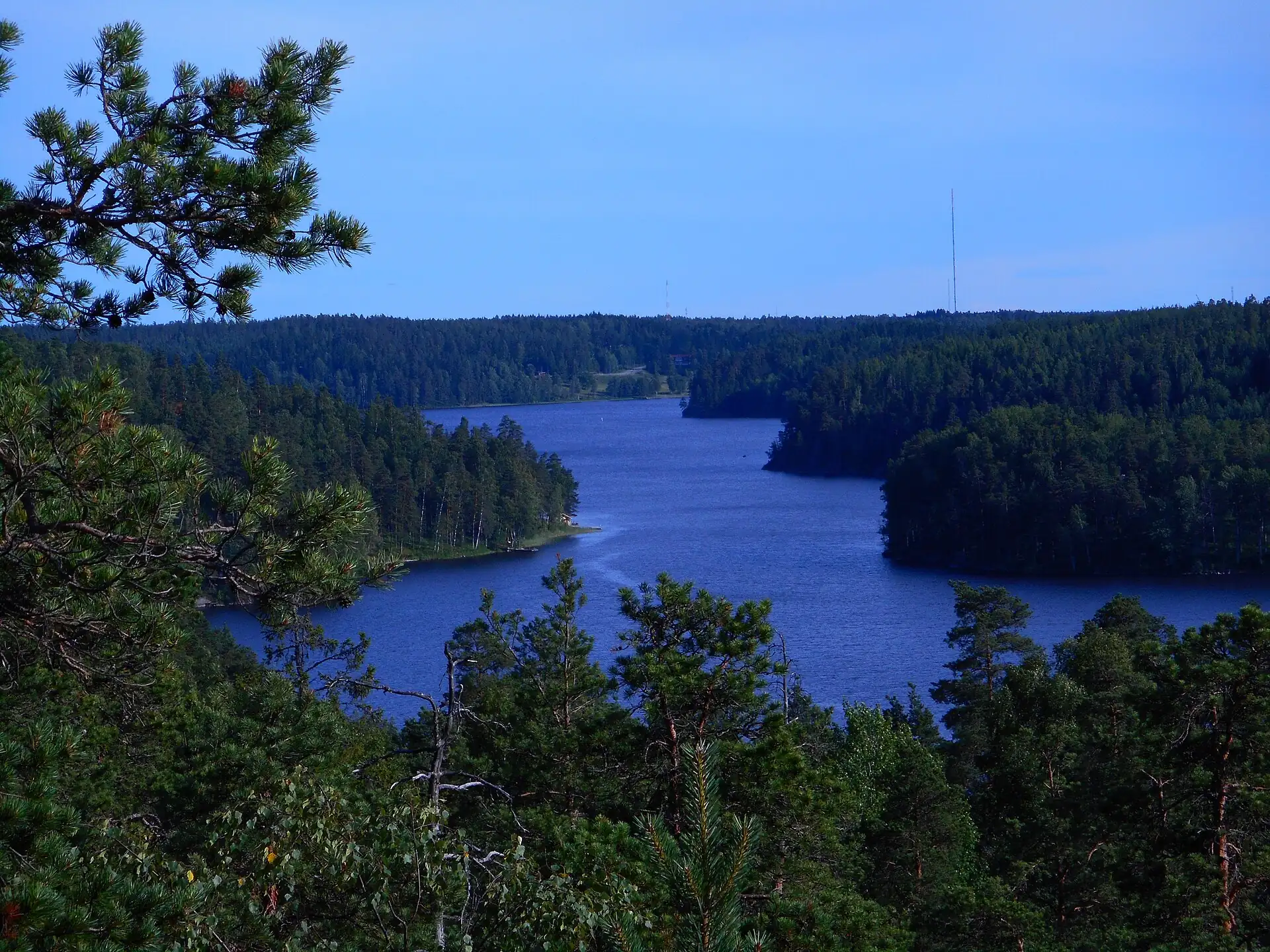 Photo: LomiTravels, CC BY-SA 4.0
Nuuksio National Park
goTrain and bus, about 1 h each way
Forest trails and lakes; good in winter with snow gear.
- Time
- Half day
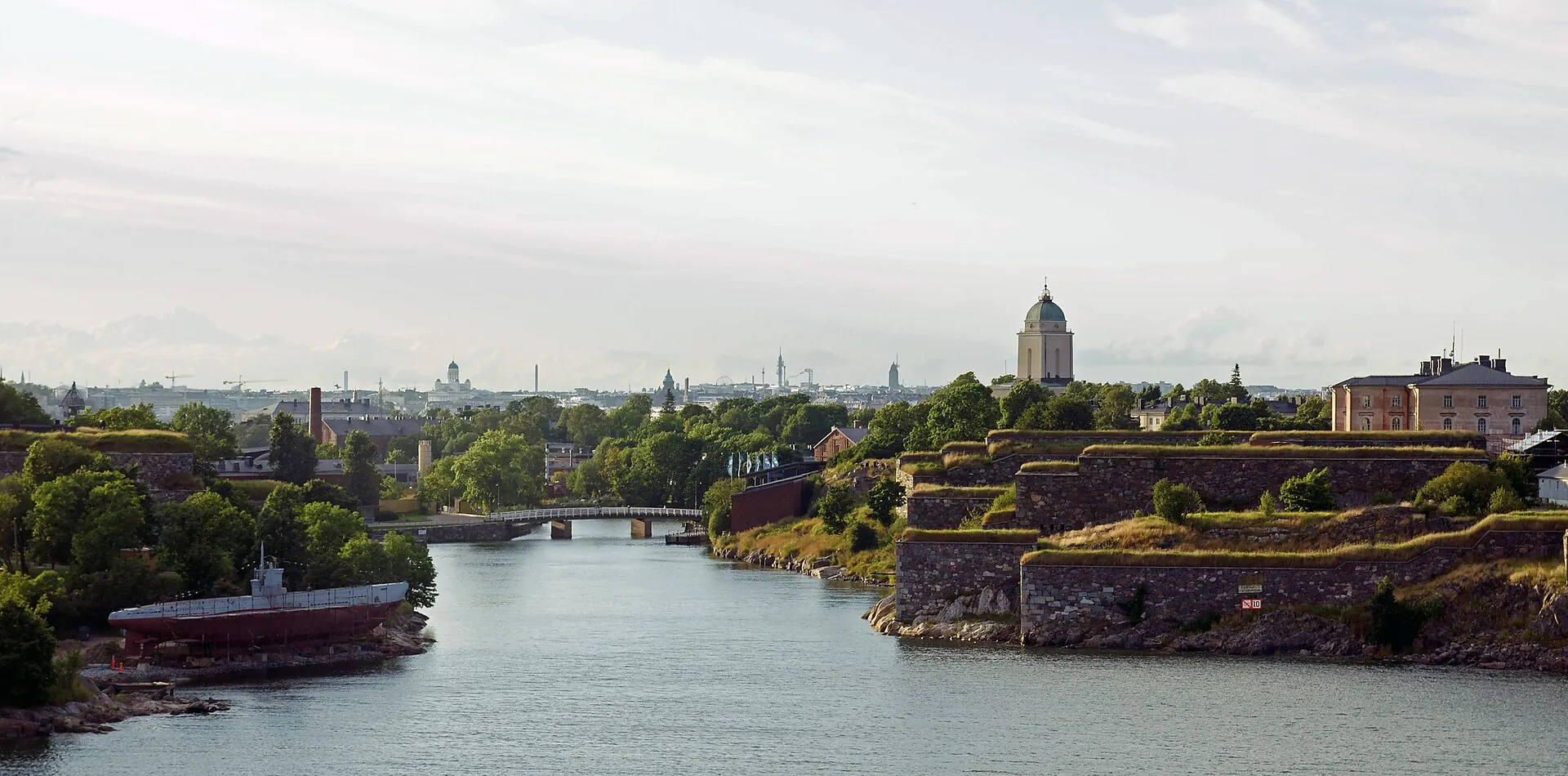 Photo: kallerna, CC BY-SA 3.0
Suomenlinna
goHSL ferry, about 15 min from Market Square
Inside the city ticket zone; covered on the last morning in the days plan.
- Time
- Half day
Go next
Turku and the archipelago
goDoor to door: About 2–2.5 h
Train about 2 h
Finland's old capital; a base for the archipelago in summer.
Tampere
goDoor to door: About 2 h
Train about 1.5–2 h
Lakes, museums and a strong sauna culture; an easy day return.
Lapland or Rovaniemi
overnightDoor to door: About 2–3 h by air
Flight about 1.5 h, or overnight train
For northern lights and snow; a separate trip, not a day out.
Stockholm
overnightDoor to door: About 17 h
Overnight ferry about 16–17 h
A cabin ferry; book a cabin, not a seat.
Eat & sleepWhere to eat and which area to sleep in
Eat & sleep
Where to eat and which area to sleep in
Eat
A short list of places worth crossing the city for, each with how to get a seat.
Restaurant finder: filter every place to eat in Helsinki →
Vegetarian-friendly score
2.5 / 5 · Workable
- Country diet noteOur country guide rates vegetarian eating as easy.2 / 2
- Places to eat in this guideToo few places with a known answer (2) to judge; 3 not yet checked.0 / 1.5
- Budget eating lines0 vegetarian lines in "Eat by budget".0 / 0.6
- Meat-free national dishes6 meat-free dishes in the country food list.0.4 / 0.4
- Dedicated vegetarian kitchens0 mentions of vegetarian restaurants, Buddhist or fasting kitchens.0 / 0.5
Country note: Easy: lunch buffets always have a vegetarian option.
Vegetarian places near me →Make a diet card →
How we score
- Country diet note (up to 2): easy 2, workable 1, mixed 0.75, hard 0; no note 0.5.
- City places to eat (up to 1.5): 1.5 × (vegetarian-friendly + half of partly friendly) ÷ places with a known answer; needs 3 or more known places.
- Budget eating lines marked vegetarian (up to 0.6): 0.2 each.
- Meat-free national dishes (up to 0.4): 0.1 each.
- Dedicated vegetarian kitchens mentioned — Buddhist chay, shōjin ryōri, Jain, fasting food, vegan cafés (up to 0.5): 0.1 each.
- Total rounded to the nearest half point, 0 to 5. Built from our own pages only, not from reviews.
Eating and drinking guideEat by budget · Drink
Before you sit down to eat
Short version; full text linked
Eat by budget
Under €15 (≈ US$18) a meal
| Where | Order | Area | Price | Note |
|---|---|---|---|---|
| Hakaniemi Market Hall | Salmon soup or a lunch counter dish | Hakaniemi | €10–16 (≈ US$12–19) | Go before 14:00.Go before 2:00 PM. |
| Weekday lunch buffet (lounas) | Soup, salad, main and bread | Anywhere in the centre | €12–15 (≈ US$14–18) | Served roughly 11:00–14:00.Served roughly 11:00 AM–2:00 PM. |
| Kiosk sausage and bun | Grilled sausage in bread | Market Square and the station | €5–8 (≈ US$6–10) | A cheap and fast lunch. |
Dishes to know
| Dish | What it is | Where to look | When | Price |
|---|---|---|---|---|
| LohikeittoLohikeitto | Creamy salmon and potato soup | Market halls and cafés | Lunch | €11–16 (≈ US$13–19) |
| KarjalanpiirakkaKarjalanpiirakka | A rye pastry with rice porridge, topped with egg butter | Cafés and markets | Breakfast or snack | €2–4 (≈ US$3–5) |
| KorvapuustiKorvapuusti | A cinnamon-cardamom bun | Cafés | Coffee time | €3–5 (≈ US$4–6) |
| PoronkäristysPoronkäristys | Sautéed reindeer with mashed potato and lingonberries | Restaurants | Dinner | €25–35 (≈ US$30–45) |
| SilakkaSilakka | Baltic herring, grilled or pickled | Market Square in autumn | Lunch | €8–14 (≈ US$10–17) |
| LeipäjuustoLeipäjuusto | A squeaky baked cheese with cloudberry jam | Market halls | Snack or dessert | €4–8 (≈ US$5–10) |
| MunkkiMunkki | A fried doughnut, especially around Vappu | Market Square in May | Snack | €2–4 (≈ US$3–5) |
- Look for the "lounas" sign and go before 14:00.Look for the "lounas" sign and go before 2:00 PM.
- Tap water is free and good: ask for "vesi" and skip bottled water.
- Kitchens close at 21:00–22:00; go earlier or you will eat at a bar.Kitchens close at 9:00 PM–10:00 PM; go earlier or you will eat at a bar.
Drink & nightlife
| Where | What | Until | Note |
|---|---|---|---|
| Kallio bar streets (Vaasankatu, Fleminginkatu) | Local bars and craft-beer rooms | About 02:00 on weekendsAbout 2:00 AM on weekends | Loud on Friday and Saturday nights. |
| Punavuori (Iso-Roobertinkatu, Fredrikinkatu) | Cocktail and wine bars | About 01:00–02:00About 1:00 AM–2:00 AM | Many tables need a booking on weekends. |
| Kaivopuisto seafront in summer | Outdoor picnics and drinks | Late in summer light | Drinking in public parks is tolerated if orderly; keep it quiet. |
By style
| Style | What | Where | Price | Until |
|---|---|---|---|---|
| Finnish beer and cider | Lager and craft ales from small Finnish breweriesAsk for a "keskiolut" or a tap list. | Bars and restaurants | €7–9 (≈ US$9–11) a pint (2026 estimate) | Closing time |
| Salmiakki koskenkorva (salmiakki shot) | Salty liquorice liqueurAn acquired taste; try one small glass. | Some bars | €6–9 (≈ US$7–11) a shot | — |
| Coffee | Finns drink more coffee per head than almost anyoneFilter coffee is the default; the refill is often free or cheap. | Cafés everywhere | €3–5 (≈ US$4–6) a cup | — |
Rules that bite
- Drinking in public is allowed in many parks but not on trams or in some squares; check local signs.
- Zero tolerance for drink-driving: use trams, taxis or ride-hailing.
Sleep
Pick the area first: it decides your walk home at night and your first morning.
Which neighborhood fits you
Three questions, one recommendation, with the reasons.
Your best fit
- Oodi, Kiasma and the Ateneum are on the doorstep; Senate Square is a 15-minute walk.
- Big hotels have 24-hour desks and the airport train runs late.
Watch out: Busy around the station and Kamppi; ask for an inside room.
Next best: Punavuori and the Design District
Built from our 1–5 desk scores per area; your answers stay in this browser.
More on sleepingSleep by budget · Your area · With kids
Sleep by budget
| Band | Price | Where | Room types | What to expect |
|---|---|---|---|---|
| budget | €30–60 (≈ US$35–70) dorm bed · €80–130 (≈ US$95–160) double | Central Station, Kamppi, Kallio | Hostels, budget hotels | Small, clean rooms; shared bathrooms in hostels. |
| mid | €130–230 (≈ US$160–300) | Kamppi, Punavuori, Katajanokka | Design hotels and city chains | Compact rooms, breakfast usually included. |
| splurge | €250 (≈ US$300)+ | Esplanadi, Kaartinkaupunki, the harbour | Historic and boutique hotels | Bigger rooms, restaurants and a sauna in some. |
Booking checks
- Book early for Flow Festival (August), Design Week (September) and December.
- Ask if the hotel has a sauna: many do, sometimes free.
- Check breakfast is included; it is often a large buffet.
- Ask about check-in after 22:00 for late flights.Ask about check-in after 10:00 PM for late flights.
- A room facing a courtyard is quieter than one on a tram street.
Which area is yours
| If you are | Sleep in | Because |
|---|---|---|
| First visit, 2–4 nights, airport train | Kamppi and Central Station | Everything is a tram or a walk, and the train leaves from the same building. |
| Design and café lovers, longer stay | Punavuori and the Design District | A calmer street, close to the design shops and Löyly. |
First night: a hotel within a ten-minute walk of the station means the airport train, trams, buses and ferries are all a short trip away; noisy on weekend nights.
Quieter nights near cafés and design shops; ten minutes' tram ride from the station and a walk to the harbour.
Areas are in our default order until you tick a priority.
Scores are 1–5 desk judgements per priority (2026).
With kids
- Suomenlinna, the sea pool and the Linnanmäki amusement park are the classic family picks; check Linnanmäki's season before you plan around it.
- Trams and metro are step-free and stroller-friendly; children under a set age ride free with an adult (check the HSL rule for your child's age).
- Museums have family sections; Oodi library has a children's area and free play space.
- Restaurants serve family lunches and most cafés have a kids' menu; kitchens close early, so eat by 19:30.Restaurants serve family lunches and most cafés have a kids' menu; kitchens close early, so eat by 7:30 PM.
- Public saunas usually have family hours: check the age rule before you go.
PracticalMoney, essentials, safety and the pocket card
Practical
Money, essentials, safety and the pocket card
Money
What a day costs at three comfort levels, and how to pay.
- Budget
- €45–75 (≈ US$55–90) excl. bed / day
- Mid
- €75–150 (≈ US$90–180) excl. bed / day
- High
- €150 (≈ US$180)+ excl. bed / day
- Transit card
- No transit card needed: buy HSL tickets in the HSL app or tap a contactless bank card at ticket machines.
- Cash rule
- Cards and phone payment work almost everywhere, including kiosks and small cafés; carry a little cash only for lockers, flea markets and public toilets.
More on moneyCosts · Budget · Buy
What things cost
- Weekday lunch buffet (lounas)€12–18 (≈ US$14–25)
- Bottle of water, kiosk€2–3 (≈ US$3–4)
- Airport train to the city€4–5 (≈ US$5–6)
Trip budget
| Double room, mid-range hotel1 × 3 nights × €170 | €510 |
| Food, local transport, entries2 × 3 days × €130 | €780 |
| Airport train, both ways2 × €9 · Check the current HSL fare | €18 |
| Day ticket, HSL6 × €9 · Only if you ride more than three times a day | €54 |
| Public sauna evening2 × €25 | €50 |
| Buffer 10%Price creep, a taxi you did not plan, one splurge | €141 |
| Trip total≈ €259 per person per day, bed included | €1,553≈ US$1,900 |
2026 estimate in euros; flights excluded. Your choices start from these defaults.
Prices of common things
| Cinnamon bun | €3–5 (≈ US$4–6) |
| Lunch buffet (lounas) | €12–18 (≈ US$14–25) |
2026 estimate; check locally.
Buy
- Bargaining
- Prices are fixed in shops, markets and stalls; do not haggle, except at a flea market where a small friendly discount is sometimes possible.
- Fixed-price check
- Check the tax-free rules in the shop: non-EU residents can reclaim VAT on qualifying purchases over a minimum amount, with the paperwork stamped at departure (check the current threshold).
Markets and shopping streets
| Where | What | When | Haggle | Note |
|---|---|---|---|---|
| Old Market Hall (Vanha Kauppahalli) | Smoked and fresh fish, cheese, coffee, lunch counters | Weekdays and Saturday; closed Sunday (check) | no | A tourist favourite; better before noon. |
| Hakaniemi Market Hall and Square | Cheese, fish, vegetables, crafts on the square | Weekday and Saturday daytime | no | More local and often cheaper. |
| Hietalahti Flea Market | Second-hand design, glass, textiles, tools | Daily in summer, weekends in winter (check) | light | Bring small cash; card use varies by stall. |
| Market Square (Kauppatori) | Fish stalls, berries in season, souvenirs | Mornings to afternoon, longer in summer | no | Check unit prices, especially for fish sold by weight. |
Shops by what they sell
| For | Where | Hours | Note |
|---|---|---|---|
| Design and homeware | Punavuori and Design District streets (Fredrikinkatu, Bulevardi) | About 10:00–18:00 weekdays, shorter Saturday | Finnish glass, ceramics and textiles; ask about shipping abroad. |
| Fazer chocolate and salmiakki | Supermarkets and Fazer café shops | Shop hours | The cheapest place is a supermarket, not the tourist shops. |
| Outdoor and wool clothing | Central Helsinki shops | Shop hours | Price-check the tax-free rules before you buy. |
Changing money
| Where | Verdict | Why |
|---|---|---|
| Banks and ATMs (cash machines) | use | The euro is used here; a bank card works nearly everywhere. |
| Exchange offices at the station and harbour | caution | Poor rates and fees: use a card and skip changing cash. |
| Airport exchange counters | caution | Convenient but expensive; carry a card instead. |
ATMs
- Cards
- Contactless card and phone payment are accepted almost everywhere, including small kiosks.
- Cash
- Carry €10–20 (≈ US$12–25) in coins and notes for lockers, toilets and flea markets.
Essentials and accessEssentials · Access
Essentials
- Plugs & power
- 230 V; two-pin sockets (type F). Bring an adapter if you use type A, B or G plugs.
- Toilets
- Central Station, shopping centres, museums and cafés; public toilets may charge a small fee.
- Opening hours
- Shops open around 09:00–18:00 on weekdays, shorter on Saturday; many restaurants close their kitchens around 21:00–22:00. Museums often close on Monday.Shops open around 9:00 AM–6:00 PM on weekdays, shorter on Saturday; many restaurants close their kitchens around 9:00 PM–10:00 PM. Museums often close on Monday.
- Health
- Cold-weather care in winter (frostbite, ice falls); ticks in woods and archipelago grass in summer; travel insurance with medical cover.
- Accessibility
- Trams, metro, ferries and most museums are step-free; cobbled streets around Senate Square and Suomenlinna are hard for wheelchairs.
- Laundry
- Hotels and self-service laundries; not usual for tourists to need them on a short trip.
- Emergency numbers
- 112 for police, fire and ambulance.
Pack
- Layers and a windproof shell in every season
- Boots with grip in winter; a swimsuit and a small towel for saunas
- A power bank for cold days that drain your phone
- A rain jacket for autumn and summer showers
Accessibility
Helsinki works well for most mobility needs: step-free trams, metro and ferries, level pavements. Cobbles around Senate Square and Suomenlinna and winter ice are the exceptions.
- Trams and metro
- Low-floor trams and step-free metro with lifts; ask for the ramp on ferries.
- Pavements
- Good, with kerb cuts; heated pavements in some central streets in winter, ice elsewhere.
- Toilets
- Accessible toilets in Oodi, the station and museums; some public toilets need a coin or card.
Sights, step-free or not
| Helsinki Cathedral | step-free | The steps up are steep; there is a side ramp (check). |
| Oodi Library | step-free | Step-free, lifts and accessible toilets. |
| Suomenlinna | hard | Cobbles and long paths; the ferry is step-free but the island is rough. |
| Löyly | check | Ask about accessible sauna and sea access. |
Survive
Safety basics, the lines not to cross, and practical habits that save the day.
Safety
- Winter: pavements and the harbour ice can be slick; wear boots with grip and stay off sea ice unless the marked route is open.
- Cycle lanes run alongside pavements: look both ways before stepping onto them.
- Petty theft is low but real in Central Station, on crowded trams and at the Suomenlinna ferry: keep bags closed.
- Emergency: 112 for police, fire and ambulance.
Red lines
- Uspenski and Helsinki Cathedral are working churches: keep voices low and follow the signs about photography during services.
- Public saunas: shower first, no street clothes in the steam room, and follow the venue's rule on swimwear.
- Suomenlinna is a residential island as well as a fortress: stay on marked paths and off private yards.
Practical
- Toilets: at Central Station, shopping centres and museums; some public toilets charge a small fee, card or coin.
- Tap water is safe to drink.
- Many shops close early on Saturday and stay closed on some Sundays; check hours in summer and on public holidays.
More on staying safeStay safe · Stay healthy · Safety map · Solo & women · Etiquette · Cope · Scams
After dark, by area
2 flagged areas
- Take care
Kallio
Take care
Day = about 07:00–19:00. What to watch in each area, day and night →
Scams and red flags
Walk away if you see these
- Taxi drivers who refuse the meter or quote a flat fare at the rank: use the airport taxi rank or an app and check the price first.
- Card-skimming and fake payment terminals are rare; still cover your PIN and keep contactless enabled only on your own device.
- Fake or unmarked 'taxis' at the airport and station: use the marked rank or a booking app.
Stay safe
Crossing the road
- 01Look for cycle lanes beside the pavement before stepping off a kerb.
- 02Trams have priority; do not cross tracks in front of one.
- 03In winter, ice on the pavement and ramps: walk slowly and use handrails.
Hustles specific to this city
| Hustle | Where | The tell | What to do |
|---|---|---|---|
| Fake or unmarked taxi | Airport and station | A driver without a roof light or a meter | Use the marked rank or a booking app and check the fare. |
| Pickpocketing | Station, trams, the market | A crowd pushing or a distraction | Keep bags closed and zipped in front. |
| Card terminals with extra fees | Rare | A surprise surcharge | Check the total before tapping. |
- Police
- Call 112 in an emergency; the non-emergency line is 0295 470 111 (check).
- Lost items
- Report a theft to the police the same day for your insurance.
- Winter safety
- Do not walk on sea ice unless a route is marked open.
Stay healthy
- Cold
- Layer in winter, protect hands, ears and feet; frostbite is possible below about −15 °C (5 °F).Layer in winter, protect hands, ears and feet; frostbite is possible below about 5 °F (−15 °C).
- Ticks
- Ticks in woods and archipelago grass in summer; wear long trousers and check skin after a walk.
- Sun
- Long summer days: sun protection still matters even when it is cool.
- Tap water
- Drink from the tap; it is very good.
- Insurance
- Travel insurance with medical cover; non-EU visitors pay full private rates.
Hospitals and clinics: see Cope.
Safety by area and hour
| Area | Day | Night | What to watch |
|---|---|---|---|
| Central Station and Kamppi | fine | fine | Pickpockets in the station and on crowded trams; drunk crowds late at night. |
| Senate Square and the harbour | fine | fine | Cruise-ship crowds and opportunistic theft at the market. |
| Punavuori and Design District | fine | fine | Loud weekend nights; standard bag care. |
| Suomenlinna | fine | caution | Last ferries end the day; unlit paths after dark. |
| Kallio | fine | caution | Rowdy bars on weekend nights; avoid confrontations. |
- In winter, pavements and ferry ramps are slippery; wear boots with grip.
- Bike lanes run beside pavements: look both ways before crossing.
Solo, women and LGBTQ+ travellers
Solo
- Very safe and easy alone: cafés and saunas are used to solo visitors.
- Book a sauna in advance if you go alone; some sessions are gender-separated.
- Restaurants serve a solo lunch counter at market halls; dinner for one is normal.
Women
- Helsinki is among the safest capitals for women travelling alone at any hour.
- Late-night trams are used by everyone; stay with other passengers if you feel unsure.
- Keep an eye on drinks in bars as anywhere.
LGBTQ+
- Same-sex marriage is legal and Helsinki is open and relaxed; Pride is a large public event in June.
- Public displays of affection are common and not remarked upon.
- Trans and non-binary visitors: the law recognises legal gender, check current rules at the venue for gendered saunas.
Etiquette in Helsinki
- Personal space
- Finns value quiet and personal space; do not sit next to a stranger when there are empty seats, and keep small talk short.
- Sauna
- Shower first; no street clothes in the steam room; follow the swimwear rule of the venue; speak softly.
- Queues
- Take a number where there is a ticket machine and keep a comfortable distance.
- Punctuality
- Be on time; a table or a sauna slot is held for only a few minutes.
- Tipping
- Not expected; rounding up is polite for good service.
- Alcohol in public
- Fine in parks in moderation; drunkenness on trams draws stares.
Cope
Hospitals and clinics that handle foreigners
| Where | Area | Use it for |
|---|---|---|
| Meilahti Hospital (HUS) emergency | Meilahti | Main public hospital emergency; call 112 in an emergency and ask your insurer about direct billing. |
| Mehiläinen or Terveystalo private clinics | Central Helsinki | Private clinics for non-emergency visits; prices are high, so keep receipts for insurance. |
Visa extensions
- Entry
- Helsinki is in the Schengen area; entry rules depend on your passport. Check your nationality on the Finnish Immigration Service (Migri) site before you fly.
- Extensions
- Short-stay visa extensions are handled by Migri; apply before your permitted stay ends.
Embassies and consulates
| Country | Address | Phone | Note |
|---|---|---|---|
| United States | Itäinen Puistotie 14 B, Kaivopuisto | +358 9 616 250 | (check) |
| United Kingdom | Itäinen Puistotie 17, Kaivopuisto | +358 9 2286 5100 | (check) |
| Australia | Museokatu 25 | +358 9 2947 500 | (check) |
| Canada | Pohjoisesplanadi 25 B | +358 9 228 530 | (check) |
- Lost passport
- Report to the police (call 112 in an emergency, or use the non-emergency line), then contact your embassy; a police report helps with insurance.
- Pharmacies
- Apteekki pharmacies are common; hours vary, and some in the centre are open late (check).
- Lost items
- HSL lost-property office and the police handle items left on transport; report on the day.
Apps and offline kitOffline kit
Offline kit
Set up before you leave, so Helsinki still works with no signal or a dead roaming plan.
On your phone
- Maps: open the city in Google Maps, tap the place name, then Download offline map (or use an offline-maps app).
- Data: install an eSIM or buy a local SIM before the first taxi; the apps in this guide depend on it.
- Translation: download the local language for camera translation.
- Screenshots: booking confirmations, hotel address in the local script, and the emergency numbers.
This guide
Save the Helsinki guide and its pages on this device; it opens without a connection.
Phrases that do the work
Greeting
Hello
Hei
hay
Thanks
Thank you
Kiitos
KEE-toss
Polite
Excuse me / sorry
Anteeksi
AHN-tayk-see
Help
Do you speak English?
Puhutteko englantia?
POO-hoot-teh-ko ENG-lahn-tee-ah
Shop
How much is this?
Paljonko tämä maksaa?
PAHL-yon-ko TA-ma MAHK-sah
Café
The bill, please
Saisinko laskun?
SIGH-sin-ko LAHS-koon
Bar
Cheers
Kippis
KIP-piss
Tram
Does this go to the Central Station?
Meneekö tämä rautatieasemalle?
MEH-neh-ko TA-ma ROW-tah-tee-ah-seh-mahl-leh
Pocket card
Fill in, then print or save as PDF
Stays in this browser only; nothing is sent anywhere.
HelsinkiHelsinki (Helsingfors)
Pocket card · Voykit
My bed tonight
—
—
—
Voitteko viedä minut tähän osoitteeseenPlease take me to this address
Emergency
- Emergency (police, fire, ambulance)112
- Non-emergency police0295 470 111
Embassy
Most embassies are in Kaivopuisto and Eira; check your own embassy address before you fly.
My embassy: —
Fare anchors (2026 estimate)
- Airport train to Central Station: About €4–5 (≈ US$5–6), about 30 min (check)
- Taxi from the airport to the centre: About €40–60 (≈ US$50–70), about 30 min (check)
- HSL tram or metro ticket, AB: About €3–4 (≈ US$4–5) (check)
Show the street name and number; Swedish street names are printed beside the Finnish ones.
Deep diveHistory, reading, photos and every source
Deep dive
History, reading, photos and every source
Sources
- officialVisit Helsinki (official)
- officialHSL (Helsinki Region Transport)
- secondaryWikivoyage — Helsinki
Ask about Helsinki
Loading…
Was this useful?