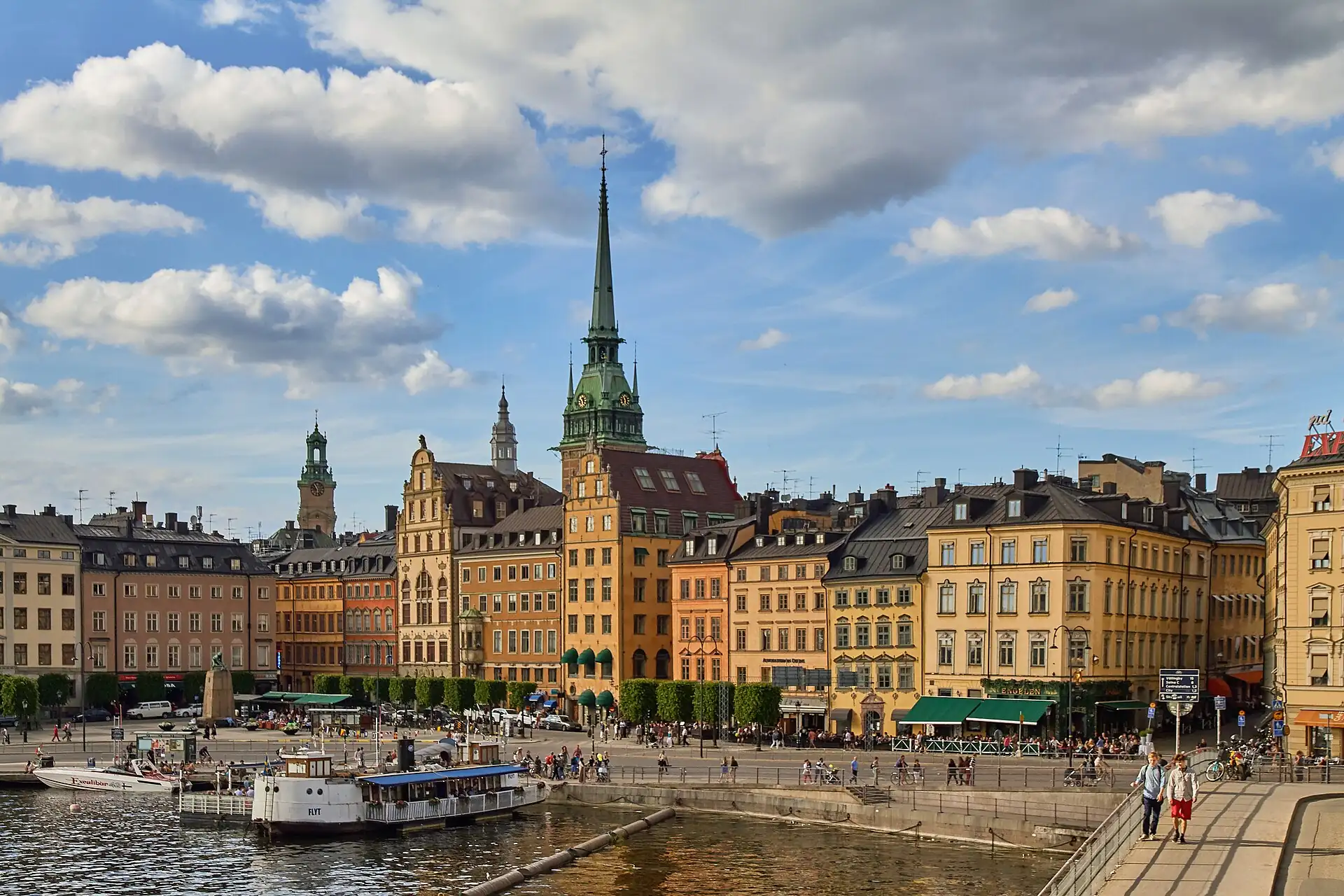
Stockholm
Code SW · 4 walking zones
Stockholm is an island city: do Gamla Stan and the Djurgården museums by day, watch the light (dark in winter, near-white nights in June) — and pay by card, because cash is barely used.
Our quick read of Stockholm, scored 1–5 (friction is out of 100). Cash need: how often you still need notes. Heat risk: how hot days get. Stroller: how easy wheels are. Friction: overall effort for a first visit. Desk judgements, so check before relying on them.
- Local time
- --:--
- Weather
- forecast below
- Currency
- SEK
- Best months
- Apr · May · Jun · Jul · Aug · Sep
- Airport
- Stockholm Arlanda (ARN)
Walking zones: the 4 areas this guide plans a day around. Each is a district you can cover on foot, so you do one zone per half-day and ride the train between them. The code (SW 01, SW 02…) is just the zone's number on the Stockholm line; the line under each name says how bags fare there and how much time it needs.
Map of Stockholm
Use the switches to show or hide each kind of pin. A switch that is on shows its pins on the map; tap it again to hide them. "Show only" keeps just the pins that match (for example, places that fit a suitcase). Tap any pin for its name and a link to its page.
- Where to sleep
- Eat
- Walking clusters
- Rest stops
From the airport Stockholm Arlanda (ARN) to your bed
Tap a pin for its card. Places without their own coordinates are shown by their walking cluster.
Why Stockholm
Stockholm's sights sit on a handful of islands that are close on the map and separated by water, so the trips that go wrong are the ones that pack Gamla Stan, Djurgården and Södermalm into one day, arrive at a museum on a closed Monday, or bring only cash to a city where many places take cards only. Daylight matters: six hours in December, nearly all night in June. Four walking clusters cover a first visit; the archipelago and Uppsala are trips away from one kept bed.
Fits
- Museum trips
- Water and archipelago trips
- Cashless, orderly city breaks
Does not fit
- Travellers on a very tight budget
- Winter visitors who need daylight for sightseeing
- Anyone who wants to pay in cash
How long
- 2 daysGamla Stan morning, Djurgården museums next day
- 3 daysFour clusters, one island per day
- 5 daysFour clusters + an archipelago boat + Uppsala or Sigtuna day-trip
Good for
- First timers
- Foodies
- Families
- Couples
- Solo
- Budget
About Stockholm
Stockholm grew on a strait where Lake Mälaren meets the Baltic. The first written mention of the town is from 1252, and the medieval core is the small island now called Gamla Stan; the name simply means Old Town.
The city spreads over 14 islands joined by about 50 bridges, so 'close on the map' often means a bridge, a ferry or a hill. Plan by island, not by distance.
Sweden is not in the euro area: prices are in kronor (SEK), and cash is nearly obsolete. Cards and phone payments run everything from bus tickets to church-hall cafés.
Good to know
- Stockholm is both the city and the county; Gamla Stan is one small island, not the whole centre.
- Visit Stockholm publishes a visitor guide and event list at visitstockholm.com; the Stockholm Tourist Centre inside Kulturhuset on Sergels torg has staff and maps (check hours).
- SL's app is the ticket, timetable and journey planner in one; a staffed SL Center sits at Stockholm Central (check hours).
Go deeper 10 min read · 6 chapters
Stockholm is a capital built on water: fourteen islands, a lake that meets the sea, and an archipelago of about 30,000 islands beyond. This deep dive reads the city through its history, its water, its palaces and prizes, its daily habits, its districts and its light, so a walk from Gamla Stan to Södermalm becomes a way to read the place.
1History2 min
Stockholm sits where Lake Mälaren drains into the Baltic Sea, and that is the whole reason for the city. The first written mention of the town dates to 1252, and the name is traditionally credited to the regent Birger Jarl, who is said to have fortified the small island now called Stadsholmen, the core of Gamla Stan. Control of the narrow channel meant control of trade between the lake, with its iron and farmland, and the sea. Ships were taxed and inspected here, and a chain or boom could close the strait. The old town is a medieval street plan on a small island: crooked lanes, a central square, a church, and a castle on the highest ground.
The city is best known in Swedish history for one bad day. In November 1520 the Danish king Christian II took the city and, after a promise of amnesty, had dozens of Swedish nobles and clergy executed in and around Stortorget, the square that today holds the Nobel Prize Museum. The killings, called the Stockholm Bloodbath, drove a revolt led by Gustav Vasa, who entered Stockholm in 1523 and was elected king. Sweden left the Kalmar Union with Denmark and Norway, and Gustav’s family ruled for more than a century.
The seventeenth century is the age of the Swedish empire, and the city grew to match. Sweden fought wars across the Baltic and northern Germany, and Stockholm became a capital of stone palaces and shipyards. The warship Vasa, built to show off that power, sank in Stockholm harbour in 1628 within minutes of leaving the quay. In 1697 the old castle, Tre Kronor, burned. A new palace by the architect Nicodemus Tessin the Younger and his successors rose on the same ground and took decades to finish; it is the Royal Palace you can visit today.
From 1814 Sweden has not been at war, and the city’s modern story is about industry, a strong welfare state and design. The 1912 Olympic Games were held here, the metro opened in 1950, and the neighbourhood of Södermalm changed from a working-class district to the creative quarter. Sweden joined the European Union in 1995 and became a member of NATO in 2024, ending a long period of formal non-alignment. Today the city has about a million residents, and the region around it about two and a half million.
- First written record
- 1252 (traditional founding date)
- Bloodbath
- November 1520, Stortorget
- Vasa sank
- 10 August 1628
- Palace rebuilt
- After the 1697 fire
2Water and islands2 min
Stockholm is a city of water in a way most capitals are not. It is built across fourteen islands and part of the mainland, and inside the centre you cross a bridge or take a ferry almost every day. Fresh water from Lake Mälaren meets the brackish Baltic at Slussen, on the edge of Södermalm, and the water on either side of the city is clean enough that people swim in the city centre in summer. Tap water is safe and good.
East of the city lies the archipelago, the Skärgården: around 30,000 islands, islets and skerries running out towards Finland. The inner islands are wooded and have year-round residents; the outer skerries are bare granite with a lighthouse or a summer cabin. Waxholmsbolaget boats run from Strömkajen to Vaxholm and much further, and a day trip on a public boat costs a fraction of a private tour. On the water, plan for wind, take a layer even in July, and check the last boat back: outer islands can have one return sailing.
The water also shapes how you use the city day to day. The Djurgården ferry crosses from Slussen and Gamla Stan; the tram runs to the museums; the ship-shaped Vasa Museum sits on the quay that used to be a naval dockyard. In winter the inner bays freeze, and skaters and walkers use the ice when it is officially declared safe; do not step onto it on your own judgement, since ice thickness varies with currents and inflows and accidents are reported every year. In summer the same bays fill with kayaks and small boats.
Swedish law adds a further layer: allemansrätten, the right of public access. You can walk, swim and camp for a night on most land, including on many archipelago islands, if you keep your distance from houses, take your rubbish and leave nothing damaged. The rule is “do not disturb, do not destroy”. It explains why the shoreline paths and forest trails on the edge of the city are open and unfenced, and why you may meet people picking berries or mushrooms.
- Islands in the archipelago
- Around 30,000
- City islands
- 14, joined by bridges
- Water
- Tap water is safe; many people swim in summer
- Boats
- Waxholmsbolaget from Strömkajen (check timetable)
3Palaces and prizes2 min
For a small country Sweden has an outsized set of symbols, and Stockholm holds most of them. The Royal Palace has some 600 rooms and is one of the largest palaces in Europe still used for its original purpose, though the royal family lives at Drottningholm, west of the city, and uses the palace for state occasions. Visitors can enter the state apartments, the Treasury with the regalia, and the medieval vaults. The changing of the guard is a daily crowd-puller, and the courtyard fills at noon; decide whether you want the show or the quiet rooms and time your visit around it.
The Nobel Prizes belong to the city in a more personal way. Alfred Nobel, an inventor born in Stockholm in 1833, left most of his fortune in his will of 1895 to found prizes in physics, chemistry, medicine, literature and peace. He died in 1896, and the first prizes were awarded in 1901. Every year on 10 December, the anniversary of his death, the laureates receive their medals in the Concert Hall and dine at a banquet in the Blue Hall of the City Hall, which was completed in 1923 and hosts the banquet from 1930. The peace prize is awarded in Oslo, not Stockholm; an economics prize was added in 1968 by the Swedish central bank.
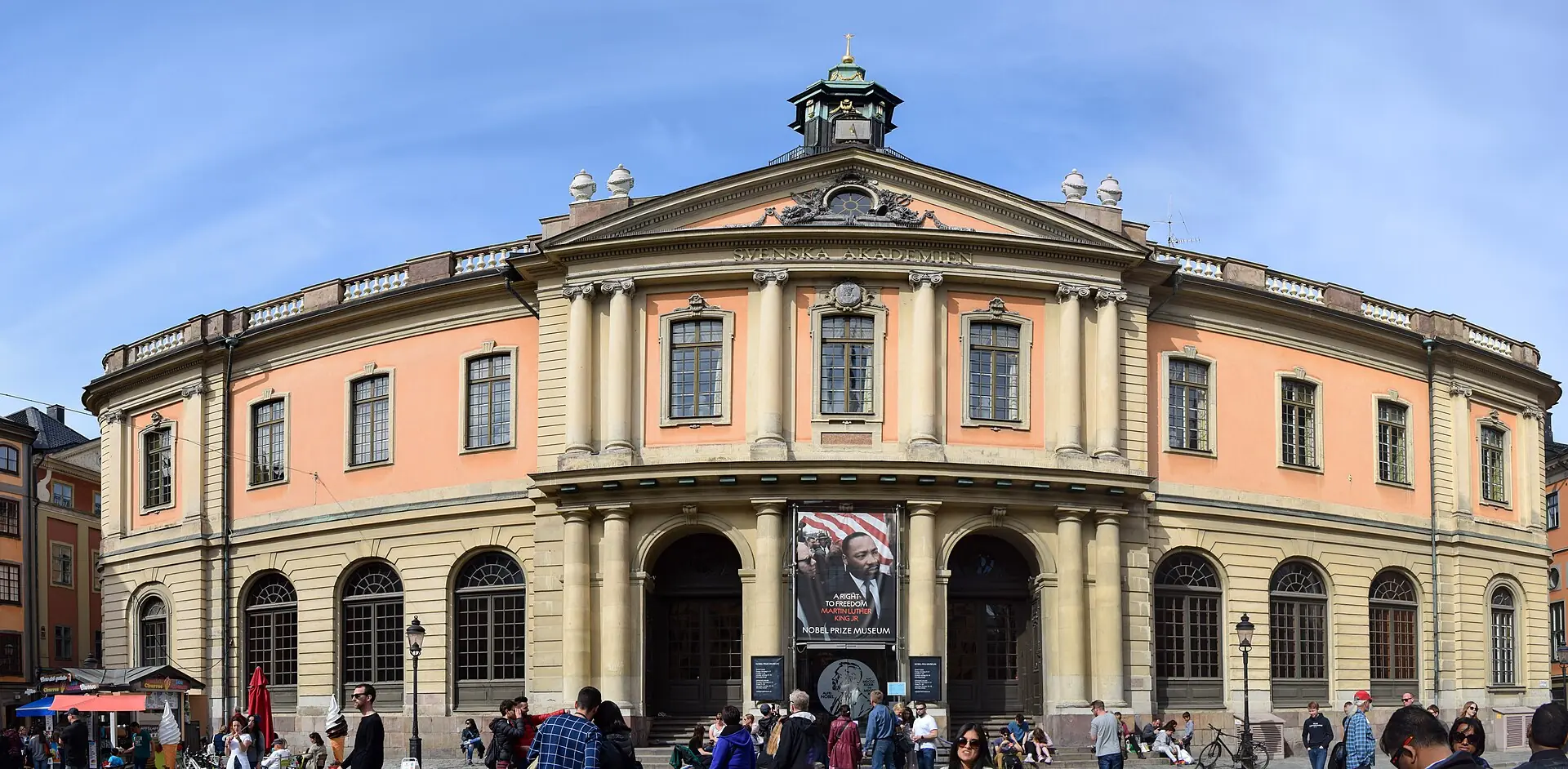
The Nobel Prize Museum stands on Stortorget in the old Stock Exchange building, which also houses the Swedish Academy. The museum is small, and its best feature is the personal detail: things laureates left behind, and short biographies that show the ideas behind the medals. The City Hall can be visited on a guided tour, and in summer you can climb the tower. Both are easy to add to a Gamla Stan morning.
One more Swedish institution to know about is the pop-music export. ABBA formed in Stockholm in 1972 and won Eurovision in 1974 with “Waterloo”. The ABBA Museum on Djurgården is interactive, with a stage where visitors can perform with holograms. It is a modern counterpart to the Vasa next door: two very different attempts to sell a country to the world.
- Prizes
- First awarded 1901; ceremony on 10 December
- City Hall
- Finished 1923; hosts the Nobel banquet
- Royal Palace
- About 600 rooms; state apartments open to visitors
- ABBA
- Formed 1972; museum on Djurgården
4Everyday Stockholm1 min
The daily rhythm of Stockholm is easy to learn and hard to fake. Offices start early, lunch is a set menu at a fixed price (dagens lunch) between roughly 11:00 and 14:00, and the afternoon break called fika, a coffee with something sweet, is a social rule more than a snack. A fika is not a coffee to go: you sit, you talk, you stay for a while. Cardamom and cinnamon buns are the standard order, and Vetekatten and Kaffekoppen on this site are two easy places to start.
Swedes queue in an orderly way, and the queue is often a numbered ticket: at a pharmacy, a bank or a bakery counter, look for the ticket machine before you stand in line. Speaking English is normal, almost everyone does, and staff switch as soon as they see you struggle. Being on time matters; being loud does not. Tipping is a choice rather than an expectation, and rounding up is generous.
Cash has almost vanished. Buses and many cafés take cards or phones only, and some places refuse cash. Bring a card that works abroad, set a PIN, and add a phone wallet as a backup. The SL app sells public-transport tickets, and a contactless bank card can be used at the gates in many cases; check the SL site for the current rule.
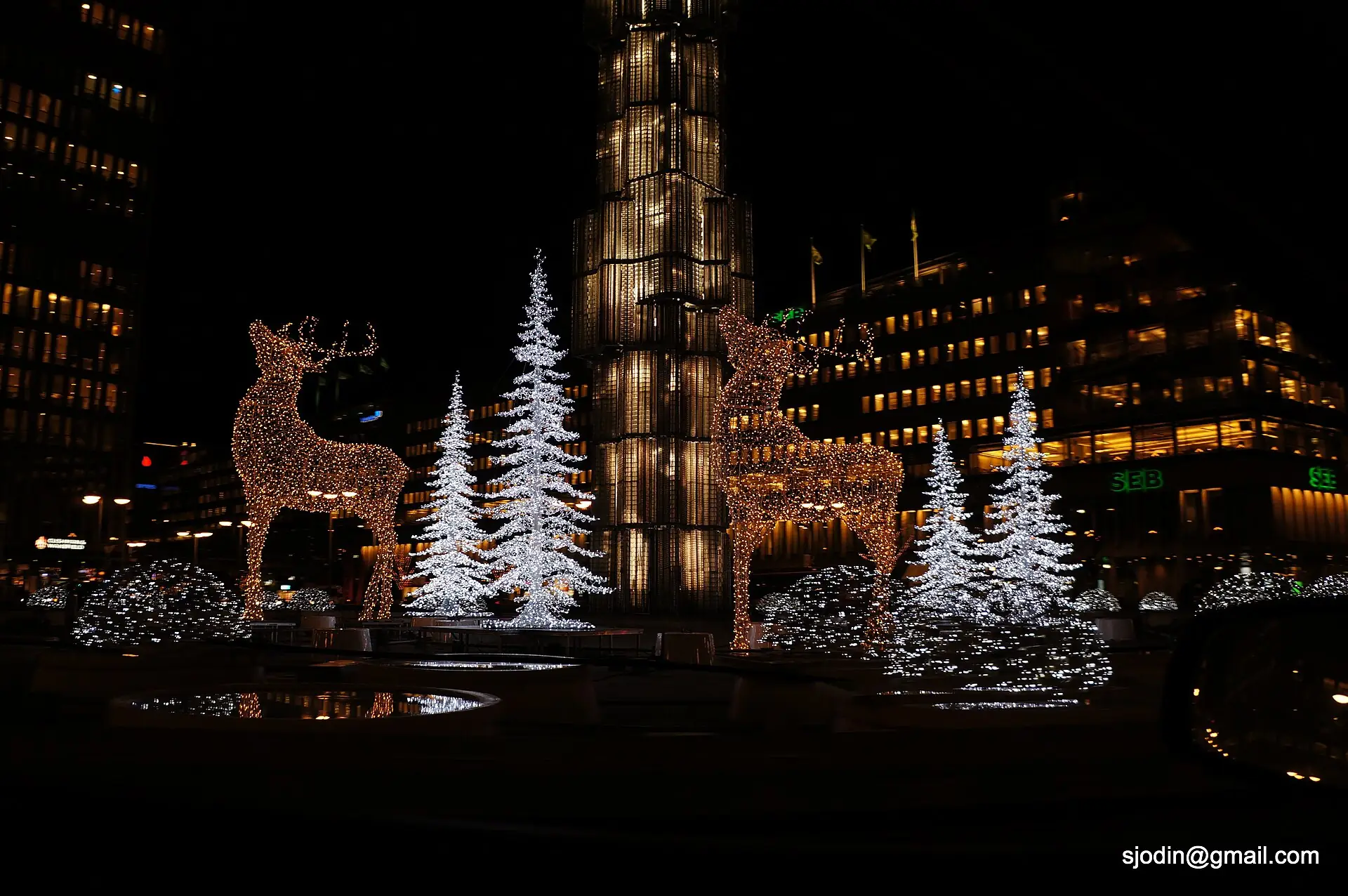
Housing and weather shape the year. In June the sun sets after 22:00 and the sky does not fully darken; in December there are about six hours of daylight, and candles and lamps fill every window. This is why light, cafés and indoor culture matter so much here. It is also why Midsummer, on the Friday and Saturday around 20–26 June, is the biggest holiday of the year: shops close, trains thin out, and the city empties into the archipelago.
- Fika
- A coffee and something sweet, usually mid-morning or mid-afternoon
- Payment
- Card or phone almost everywhere
- Language
- English is widely spoken
- Lunch
- Dagens lunch, about 11:00–14:00Dagens lunch, about 11:00 AM–2:00 PM
5How the districts work1 min
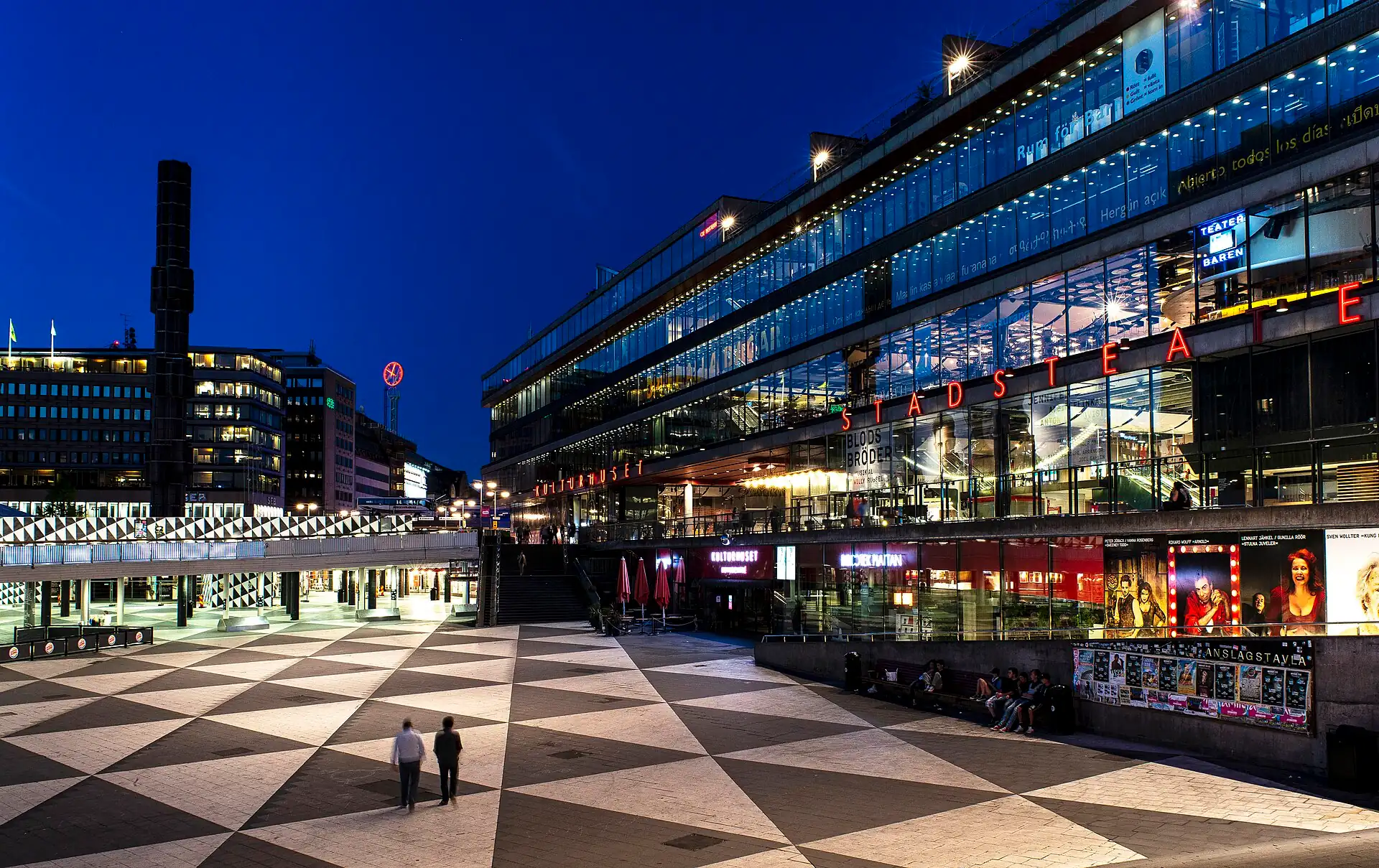
A first visit is easiest to understand as four areas, each on its own island or edge. Gamla Stan is the medieval core: cobbled lanes, the palace, the Nobel museum and souvenir shops. Come at opening or after 19:00; the main street, Västerlånggatan, is a slow crowd at midday in summer. Norrmalm is the modern centre: Central Station, department stores, Sergels torg and Kulturhuset. It is practical, busy in the daytime and less pleasant late at night around the square.
Djurgården is the green island east of the centre, and holds a large share of the city’s museums: Vasa, ABBA, Skansen, and a run of smaller ones. It is car-light and flat, and a full museum day needs a plan: book timed tickets, start at opening, and use the tram or the ferry rather than walking the length of the island in the rain.
Södermalm is the hilly island south of Slussen. Once a working-class district, it now has independent shops, bars, and restaurants, especially around Medborgarplatsen and the SoFo area. Its cliff-top street, Fjällgatan, has the best free view of the old town. Östermalm, east of Norrmalm, is the traditional wealthy district, with the Saluhall and expensive shops; Kungsholmen, west of the centre, holds City Hall and quiet waterside paths.
Moving between them is straightforward. The metro (T-bana) has three colour groups and meets at T-Centralen; tram 7 and the Djurgården ferry cover the museum island; trains and buses run from Central. A Stockholm day works when you keep it to one island or two neighbours. Trying to see Gamla Stan, Djurgården and Södermalm in a single day is possible but tiring and wastes time on transit.
- Old Town
- Gamla Stan on Stadsholmen
- Museum island
- Djurgården
- Creative district
- Södermalm
- Transport
- SL metro, tram, buses and ferries
6Light and seasons1 min
Stockholm sits at about 59 degrees north, and the year is defined by light. In late June the sun rises before 04:00 and sets after 22:00, with a long blue twilight between. In late December it rises around 08:45 and sets a little after 15:00. Temperatures follow: average highs are around 22 degrees Celsius in July and around zero in January, with snow and ice common between December and March. Rain is spread through the year, so a shell jacket is useful in any month.
Summer is the season for boats, terraces and open-air museums. Skansen, the archipelago and the parks are at their best, but July is also the Swedish holiday month, and some restaurants and small shops close for a week or more. Hotels in Gamla Stan fill for Midsummer and Pride, so book early. Spring arrives late: cherry blossom in Kungsträdgården usually falls in late April or early May, and Walpurgis Night on 30 April brings bonfires.
Autumn is a quiet, cheaper season, with colour in the Djurgården oaks and crisp weather for walking. Days shorten quickly, and by November the city is grey. Winter is for Christmas markets in Gamla Stan and Skansen, for Lucia on 13 December with candlelit processions, and for museums. Bring boots with grip, and be careful on frozen paths such as the stairs of Fjällgatan.
For most first visits the best window is June to early September for light and open boats, or September for calm and fewer tourists. If you have only a few days in December, use them well: most museums keep the same hours, but the daylight is short, so start early and put outdoor things in the middle of the day.
- Daylight
- About 18 h in late June, about 6 h in late December
- Midsummer
- Friday and Saturday around 20–26 June
- Lucia
- 13 December
- Best window
- June to early September, or September
Read, watch, wordsGlossary · Sources
Glossary
| Term | Local | Meaning |
|---|---|---|
| Fika | fika | A coffee break with something sweet, taken sitting down. |
| Allemansrätten | allemansrätten | The right of public access to walk and swim across most land. |
| Husmanskost | husmanskost | Swedish home cooking: meatballs, pytt i panna, herring. |
| Dagens lunch | dagens lunch | The weekday set lunch. |
| T-bana | tunnelbana | The Stockholm metro. |
| Skärgården | skärgården | The archipelago east of the city. |
Read for this deep dive
Background reading only: the text above is written by Voykit, not copied from these pages.
Photos
Stockholm aerial view Photo: Arild Vågen, CC BY-SA 4.0
House of Geosciences, Stockholm University, Sweden Photo: Calle Eklund, CC BY 4.0
Old building at Utö island, Haninge Municipality, Stockholm archipelago Photo: Arild Vågen, CC BY-SA 3.0
Stockholm street scene Photo: OleNeitzel, CC BY 4.0
Street in Sickla udde, Södra Hammarbyhamnen, Stockholm Photo: Arild Vågen, CC BY-SA 3.0
Stockholm street scene Photo: I99pema, CC BY-SA 3.0
Rules in force · 9Non-EU visitors get 90 days in any rolling 180-day window…
- Europe ↗Non-EU visitors get 90 days in any rolling 180-day window, counted across all 29 Schengen states together — not per country; the Entry/Exit System now logs each crossing, so an overstay is detected automatically.
- Europe ↗On the first Schengen entry since EES began, non-EU travellers give four fingerprints and a face photo at the border instead of a passport stamp; there is nothing to apply for or pay in advance.
- Nordic countries ↗Decide light or dark before anything else: summer trips (June–August) and aurora trips (September–March in the Arctic) need different countries, clothes and bases.
- Nordic countries ↗Sweden, Norway, Finland, Iceland and the Faroes sell stronger alcohol only in state shops with short hours; buy before evening and before Sundays and holidays.
- Sweden ↗Sweden is in the EU and the Schengen area. Check the entry rules for your passport on official sources; the EU's Entry/Exit System registers non-EU visitors at the first Schengen border.
- Sweden ↗Many shops, cafés, buses and even toilets do not accept cash: bring a card that works with PIN and contactless.
- Sweden ↗The right of public access (allemansrätten) lets you walk and camp for a night on most land; keep away from homes and leave no trace.
- Sweden ↗Drinks stronger than light beer are sold only at the state Systembolaget shops, which close in the evenings and on Sundays.
- Stockholm and the Archipelago ↗Archipelago ferries run on seasonal timetables and fewer sailings in winter: check the last boat back before you set out.
Entry rules depend on your passport. Full visa guide
Emergency numbers for Stockholm112 ▾
Tap a number to call from your phone. These are the numbers listed in this guide; a row marked check has not been verified.
Planning is the full guide. I'm here keeps what is open and the cheat card.
Right now
Checking the weather…
Working out what is open near you…
What is open nowclock, closures, places open
Now in Stockholm
Local time in Stockholm
--:--
Loads in your browser · Europe/Stockholm
This month
Month verdict appears here.
Closed today
See the weekly grid below.
| Weekly closure | Mon | Tue | Wed | Thu | Fri | Sat | Sun |
|---|---|---|---|---|---|---|---|
| Östermalms SaluhallcheckShorter hours on Saturday. | · | · | · | · | · | · | ✕ |
| Systembolaget (wine and spirits)Weekday evenings close about 19:00; earlier Saturday. | · | · | · | · | · | · | ✕ |
If today is a closure day: Monday: many museums close, so put Gamla Stan, Södermalm and the archipelago on Monday and keep Djurgården for Tuesday to Sunday. Sunday: Systembolaget and Östermalms Saluhall are shut.
- check Vasa Museum: Usually open daily; hours vary by season.
Opening days come from place pages; museums often change hours by season, so check the official site the day before.
Cheat cardthe pocket version
Cheat card
The essentials on one card: save it as an image for your phone, share it, or print it.
Stockholm
- Money
- Cash is rarely needed.
- SIM
- Install an eSIM before you fly; EU roaming applies to EU SIMs.
- Ride app
- Bolt or Uber
- Emergency
- 112 police, fire, ambulance · 1177 Non-emergency health advice (not 911, 999 or 000)
- Plugs
- Sockets C/F. US/Canada (A/B): adapter · UK/Ireland (G): adapter · Australia/NZ (I): adapter. 230 V: US 120 V-only devices (hair dryers) need a converter; most chargers are dual-voltage.
Say it
- Thank you: Tack (tack)
Top 5
- Vasa Museum
- Royal Palace
- Skansen open-air museum
- Fjällgatan viewpoint
- Nobel Prize Museum
EssentialsQuick answers, what things cost and how to get around
Essentials
Quick answers, what things cost and how to get around
Quick answers
The questions people ask first about Stockholm, one line each. Tap a card for the full answer.
- Cash or card?Cards and phone payments work almost everywhere; many places do not take cash at all.
- SIM or eSIMInstall an eSIM before you fly; EU roaming applies to EU SIMs.
- Ride-hailing appBolt or Uber.
- Tap waterTap water is safe and good.
- TippingNot expected; round up or add 5–10% for good service in a restaurant.
- Plugs & powerSockets C/F. US/Canada (A/B): adapter · UK/Ireland (G): adapter · Australia/NZ (I): adapter. 230 V: US 120 V-only devices (hair dryers) need a converter; most chargers are dual-voltage.
Show all 14 answers
- Safe at night?Take more care after dark in Central Station and Sergels torg.
- Emergency numbers112 police, fire, ambulance · 1177 Non-emergency health advice (not 911, 999 or 000)
- Your embassycheckUS, UK, Australia embassies listed with addresses (check before you go).
- Closed which day?Sun: 2 on our list shut.
- Sundays & holidaysShops open 10:00–18:00 on weekdays, shorter on Saturday and Sunday; museums often close on Monday.Shops open 10:00 AM–6:00 PM on weekdays, shorter on Saturday and Sunday; museums often close on Monday.
- Late at nightBars close between 01:00 and 03:00; the metro runs later at weekends.Bars close between 1:00 AM and 3:00 AM; the metro runs later at weekends.
- Rainy-day planRain moves you to museums and covered arcades: Vasa, Nobel Prize Museum, Kulturhuset and Central Station's arcades.
- Landing lateARN: taxi (stated fare) or ride-hailing car to the door runs all night.
Cost cheat-sheetwhat everyday things cost
Cost cheat-sheet
Typical prices for the everyday things, as ranges. Change the currency right here; the local price stays first.
2026 desk estimate · check
- CoffeeCoffee and a cinnamon bun (fika)SEK 60–100 (≈ US$7–11)
- Sit-down mealSit-down dinner, per personSEK 300–600 (≈ US$35–65)
- BeerHalf-litre beer in a barSEK 80–110 (≈ US$9–12)
- Taxi, about 5 km (3 mi)Taxi, about 3 mi (5 km)Taxi across the centreSEK 150–300 (≈ US$16–35)
- Metro or bus rideSL single ticket (75 minutes)SEK 42 (≈ US$5)
- SIM or eSIM, a weekTourist eSIM, about a week of dataSEK 100–250 (≈ US$11–30)
- Museum or sight ticketMuseum ticket (Vasa or ABBA)SEK 190–290 (≈ US$20–35)
- Budget bedHostel dorm bed, a night, per personSEK 350 (≈ US$40)
- Mid-range bedHotel double room, a night, per roomSEK 1,800 (≈ US$190)
- High-end bedHotel double room, a night, per roomSEK 3,200 (≈ US$350)
A day, not counting the bed: Budget SEK 800 (≈ US$85) · Mid SEK 1,500 (≈ US$160) · High SEK 3,000 (≈ US$350)
Local prices, with USD next to them (rates 2026-09 (approximate); change it in the header). Ranges are desk estimates: check locally. Every price and the budget calculator →
Source: Prices in Stockholm
Draft
Written from desk research. Not yet compared with the official source.
No official source is recorded for this figure.
Prices are 2026 desk estimates, not yet compared with an official source. Check on the day.
Not checked in the last 12 months (no check date on file).
DecideWho it suits, the trade-offs and when to go
Decide
Who it suits, the trade-offs and when to go
Best months at a glance
The guide's verdict for each month
Jan
Care
0°C (32°F)32°F (0°C)
Feb
Care
1°C (34°F)34°F (1°C)
Mar
Care
6°C (43°F)43°F (6°C)
Apr
Best
12°C (54°F)54°F (12°C)
May
Best
18°C (64°F)64°F (18°C)
Jun
Best
22°C (72°F)72°F (22°C)
Jul
Best
24°C (75°F)75°F (24°C)
Aug
Best
22°C (72°F)72°F (22°C)
Sep
Best
17°C (63°F)63°F (17°C)
Oct
Care
10°C (50°F)50°F (10°C)
Nov
Avoid
5°C (41°F)41°F (5°C)
Dec
Care
2°C (36°F)36°F (2°C)
Best: Apr–Sep. Mixed: Oct, Dec–Mar. Avoid: Nov. Month by month →
Warmest Jul (24°C (75°F)75°F (24°C)), coolest Jan (−4°C (25°F)25°F (−4°C) low), wettest Nov (10 rain days), driest Apr (6). Averages, not a forecast.
Stockholm across the year
Best-looking months for Stockholm: May, Jul, Aug. Rated avoid: Nov.
| Measure | Jan | Feb | Mar | Apr | May | Jun | Jul | Aug | Sep | Oct | Nov | Dec |
|---|---|---|---|---|---|---|---|---|---|---|---|---|
| Weather | Mixed (care) | Mixed (care) | Mixed (care) | Good (good) | Great (good) | Great (good) | Great (good) | Great (good) | Good (good) | Mixed (care) | Avoid (avoid) | Mixed (care) |
| Crowds | Low (good) | Medium (ok) | Medium (ok) | Low (good) | Medium (ok) | High (care) | High (care) | High (care) | Medium (ok) | Low (good) | Low (good) | Medium (ok) |
| Prices | Low (good) | Medium (ok) | Medium (ok) | Medium (ok) | Medium (ok) | High (care) | Medium (ok) | Medium (ok) | Medium (ok) | Low (good) | Low (good) | Medium (ok) |
| Events | None listed (ok) | 1 event (ok) | None listed (ok) | 1 event (ok) | None listed (ok) | 2 events (ok) | 1 event (ok) | 2 events (ok) | None listed (ok) | None listed (ok) | None listed (ok) | 2 events (ok) |
Green is good news, amber needs planning, red is a month to avoid; dashed grey with a question mark means our data does not say. Open the year heatmap →
Not checked in the last 12 months (no check date on file).
Source: Months, temperatures and crowds
Draft
Written from desk research. Not yet compared with the official source.
Monthly highs, rain and crowd levels are climate averages and desk estimates for the city, not a forecast.
Understand the cityUnderstand · Districts
Orientation & districts
Centre is Norrmalm around Central Station and Sergels torg. Gamla Stan is the small island south of it, Södermalm the big hilly island south of that, and Djurgården the green museum island to the east. Östermalm is the smart residential district north-east of Norrmalm.
Cluster names match the day plans. Östermalm and Kungsholmen have no cluster page but are good places to eat.
Shaded shapes: walking areas (click one). Black pins: sleep areas. Grey dots: places. Round badges: arrivals. Click the map to turn on scroll-wheel zoom.
Hover, tap or tab to an area to see what it is like. Pins are sleep areas; arrows at the edge point to the airport.
Off the map: Stockholm Arlanda Airport (ARN) (35–60 min by the usual route).
Not drawn yet (no coordinates in this guide): Östermalm. They are in the neighbourhood cards below.
Where’s what, as a list:
- Norrmalm and Central Station (Norrmalm): The Arlanda Express ends here and every metro line meets under the station. Busy and less pretty than the islands. Suits: First nights, late arrivals, rain days. Price band $$$.
- Gamla Stan (Gamla stan): Cobbles, stairs and no cars: rooms are small and bags are a chore. Crowded from 10:00 to 17:00 in summer.Cobbles, stairs and no cars: rooms are small and bags are a chore. Crowded from 10:00 AM to 5:00 PM in summer. Suits: Short stays, atmosphere at night. Price band $$$.
- Djurgården (Djurgården): Vasa, Skansen, ABBA, Junibacken and a park. No beds to speak of; go by tram, ferry or on foot. Suits: Museum days, families, walkers.
- Södermalm (Södermalm): Hills, bars and vintage shops; Fjällgatan and Mosebacke look over the water. A short metro ride from Central. Suits: Evenings, cafés, views.
- Östermalm (Östermalm): Östermalms Saluhall and the smart streets around Stureplan; pricey, quiet at night. Suits: Food hall, design shops.
- Sleep area Gamla Stan: suits Short stays, atmosphere at night, price band $$$.
- Sleep area Norrmalm and Central Station: suits First nights, late arrivals, rain days, price band $$$.
- Stockholm Arlanda Airport (ARN), 35–60 min by the usual route.
Neighbourhoods at a glance
One tab per area, pulled together from this guide’s districts table, area notes, sleep-area scores and place pages. Scores are desk judgements (1–5); prices are estimates, check before you book.
Norrmalm and Central Station
$$$Norrmalm
The Arlanda Express ends here and every metro line meets under the station. Busy and less pretty than the islands.
- Suits:
- First nights, late arrivals, rain days · Shopping, rain days
- Best time:
- Weekday afternoons
- Rooms:
- SEK 1,300–2,600 per room per night (mid-range); more in summer and during events
Pick this if: Late arrivals, the Arlanda Express, rail links
Skip this if: You want a historic street or a quiet island at night
- Quiet nights2/5 Low
- Nightlife3/5 Medium
- Families4/5 High
- Late arrival5/5 Very high
Why these scores
- Quiet nights: Traffic and station noise; ask for an inner room.
- Nightlife: Bars on Drottninggatan and a metro to Södermalm.
- Families: Family rooms and step-free access; less atmosphere.
- Late arrival: 24-hour desks and the last airport trains.
Getting around from here
- 14–20 min walk to Gamla Stan & the Royal Palace
- 25–35 min walk to Södermalm: Mosebacke & Fjällgatan
- Tram or taxi east: about 18 min to Djurgården museums
Gamla Stan
$$$Gamla stan
Cobbles, stairs and no cars: rooms are small and bags are a chore. Crowded from 10:00 to 17:00 in summer.Cobbles, stairs and no cars: rooms are small and bags are a chore. Crowded from 10:00 AM to 5:00 PM in summer.
- Suits:
- Short stays, atmosphere at night · Atmosphere, first-time visitors
- Best time:
- Before 09:30 or after 19:00Before 9:30 AM or after 7:00 PM
- Rooms:
- SEK 1,500–3,000 per room per night (mid-range)
Pick this if: Atmosphere, sights on the doorstep
Skip this if: You have large bags, mobility limits, or arrive after midnight
- Quiet nights3/5 Medium
- Nightlife4/5 High
- Families3/5 Medium
- Late arrival3/5 Medium
Why these scores
- Quiet nights: Quiet after 22:00 in side lanes, noisy on Västerlånggatan.
- Nightlife: Cellar pubs and wine bars within a minute.
- Families: Lanes are safe, but stairs and no lifts in old buildings.
- Late arrival: Many small hotels have a fixed desk time; ask before you book.
Getting around from here
- 14–20 min walk to Norrmalm & Sergels torg
- 12–18 min walk to Södermalm: Mosebacke & Fjällgatan
Djurgården
Djurgården
Vasa, Skansen, ABBA, Junibacken and a park. No beds to speak of; go by tram, ferry or on foot.
- Suits:
- Museum days, families, walkers
- Best time:
- Weekday mornings
Pick this if: Families, museum lovers
Watch out for: Summer weekends at ABBA.
Getting around from here
- Tram west: about 18 min to Norrmalm & Sergels torg
- Ferry or tram: about 25 min to Gamla Stan & the Royal Palace
Södermalm
Södermalm
Hills, bars and vintage shops; Fjällgatan and Mosebacke look over the water. A short metro ride from Central.
- Suits:
- Evenings, cafés, views
- Best time:
- Evening
Pick this if: Evenings, cafés
Watch out for: Slussen construction zones at rush hour.
Getting around from here
- Walk north over Slussen: about 12 min to Gamla Stan & the Royal Palace
- Metro north: about 12 min to Norrmalm & Sergels torg
Östermalm
Östermalm
Östermalms Saluhall and the smart streets around Stureplan; pricey, quiet at night.
- Suits:
- Food hall, design shops
Ward by ward
9 area guides. Open one for the short answer, the key facts and what the area is like; the full guide is linked inside. Prices marked (check) are estimates.
DjurgårdenBest for: Museums, families, green space, quiet nights
Stay in Djurgården only if museums and green space are your priority and you accept a quiet evening scene; most visitors should sleep in Norrmalm, Södermalm or Gamla stan and visit Djurgården as a day. Switch to a Djurgården hotel if you want Skansen and the Vasa at opening time, or you are travelling with children.
- Best for:
- Museums, families, green space, quiet nights
- Not for:
- Nightlife, late restaurants, budget beds
- Getting there:
- Tram 7 from Central Station, bus 67, or the Djurgården ferry from Slussen and Skeppsholmen
- Cars:
- Private cars are not allowed on the island in summer (check)
- Walk across the island:
- About 2 km (1.2 mi) west to east; Skansen alone is roughly 700 m acrossAbout 1.2 mi (2 km) west to east; Skansen alone is roughly 700 m across
- Typical visit:
- A full day for Skansen; 1–2 hours for the Vasa Museum
- Evening food:
- Limited on the island; most travellers eat back in the city centre
- Coordinates:
- 59.3250, 18.1167 (approximate island centre)
What the area is like
Djurgården is an island park in the Östermalm borough, and most of it sits inside the National City Park. It has been royal property for centuries and was used as a zoological garden from the 16th century; the north-western edge was a shipyard from the 18th century until the 1970s. The name means roughly "the animal garden".
The island holds Sweden's densest cluster of museums and venues, almost all on the western half and within walking distance of each other. Skansen, founded in 1891, was the first open-air museum of its kind; the 1897 exhibition left the Nordiska Museet as its largest surviving building. The Vasa Museum displays the warship that sank in Stockholm harbour in 1628 and was salvaged in 1961.
Away from the museums, the eastern and southern parts are woodland, canals and waterside paths, with some of Stockholm's most expensive private houses behind the trees. The environment is protected by strict laws, so it stays green rather than built-up. Expect a daytime place: after the museums close, the island empties and the city centre takes over.
Full Djurgården guideShould you stay here or not
Stay on Djurgården if your trip is built around Skansen, the Vasa Museum and the other museums, if you are travelling with children and want short walks and open space, or if you value quiet nights over a bar within 100 m. Hotels here are limited and lean mid-range to upscale; there is no hostel strip and no late-night restaurant row.
Do not stay here if you want nightlife, a wide choice of restaurants after 21:00, or the cheapest beds in Stockholm. The island is also a dead end for transit: you reach the rest of the city by tram, bus or ferry, and in summer private cars are not allowed on the island, so a car-based stay makes little sense.Do not stay here if you want nightlife, a wide choice of restaurants after 9:00 PM, or the cheapest beds in Stockholm. The island is also a dead end for transit: you reach the rest of the city by tram, bus or ferry, and in summer private cars are not allowed on the island, so a car-based stay makes little sense.
The practical middle path for most travellers: sleep in Norrmalm for transport, Södermalm for food and bars, or Gamla stan for the postcard setting, then give Djurgården one full day. If you do stay, book early for summer and check whether your hotel is on the island itself or across the water in Östermalm.
Gamla stanBest for: First-timers who want the postcard old town within walking distance, and short stays of 1–2 nights
Stay in Gamla stan for one or two nights if you want medieval lanes, the Royal Palace and the cathedral on your doorstep, and accept higher prices, tourist menus and cobblestones. Skip it as a base for a longer Stockholm trip: Södermalm or Norrmalm gives better value and easier transport, and Gamla stan is a 10–15 minute walk or one T-bana stop away.
- Best for:
- First-timers who want the postcard old town within walking distance, and short stays of 1–2 nights
- Not for:
- Budget travellers, anyone with mobility issues (uneven cobblestones), light sleepers on the main lanes
- Walk to Central Station:
- About 15 minutes over Norrbro or Vasabron
- Metro:
- Gamla stan station (green and red lines) at the southeast edge of the district
- Cars:
- Banned in the inner old town; bring good walking shoes
- Population:
- About 3,000 residents; the district covers Stadsholmen, Helgeandsholmen and Riddarholmen
- Typical hotel price:
- Mid-range double from around 1,500–2,500 SEK per night in summer (2026 estimate, check)
What the area is like
Gamla stan is Stockholm's old town, built on the island of Stadsholmen plus the small islands of Helgeandsholmen, which holds the Swedish Parliament, and Riddarholmen with its palaces and government offices. The name means "the old town"; locals also call the core Staden mellan broarna, the town between the bridges.
The street plan is medieval and the buildings are low and tightly packed around the main square, Stortorget. Most of what you see dates from the 17th to 19th centuries, though masonry cellars from the Middle Ages survive under later houses. In the mid-19th century the district was run down and full demolition was considered; restoration instead turned it into the polished, expensive neighbourhood it is today.
The result is a place with two faces. Around Västerlånggatan and Stortorget you get souvenir shops, tour groups and restaurants with photographed menus. One or two lanes away, on streets such as Stora Nygatan and the lanes off it, you get quiet courtyards, small galleries and craft workshops. The Royal Palace and the cathedral sit at the northern end, so the district is also a sightseeing stop in its own right, not just a place to sleep.
Full Gamla stan guideShould you stay here or not
Stay if your trip is short, your budget is comfortable and you want to step out of your hotel into the old town. It is also a good choice for a first visit of one or two nights, or for a special-occasion stay where the setting matters more than the room rate.
Do not stay if you are counting kronor, if you need step-free access, or if you want a local neighbourhood feel with everyday shops and cheap food. The old town has few supermarkets and its restaurant prices are aimed at visitors. Light sleepers should avoid rooms on the busiest lanes in summer, when crowds and late bars run on.
A practical compromise: base yourself in Södermalm or Norrmalm and walk or ride one metro stop into Gamla stan. You keep the sightseeing and lose the premium.
KungsholmenBest for: Quiet nights, waterfront walks, City Hall, metro access to the rest of inner Stockholm
Stay on Kungsholmen if you want quiet, residential Stockholm with fast metro links and the City Hall on your doorstep; skip it if you want nightlife or sightseeing within a five-minute walk. Base near Fridhemsplan or Stadshagen, and treat the island as a calm place to sleep rather than a place to sightsee.
- Best for:
- Quiet nights, waterfront walks, City Hall, metro access to the rest of inner Stockholm
- Not for:
- Nightlife, dense sightseeing, first-trip stays where you want Gamla stan or Djurgården on foot
- Metro:
- Fridhemsplan, Stadshagen, Kristineberg and Thorildsplan on the green and blue lines
- Walk to City Hall:
- About 10–15 minutes from Fridhemsplan
- Walk to Gamla stan:
- About 25–30 minutes over Vasabron, or 2 metro stops
- Beaches:
- Smedsuddsbadet and Fredhällsbadet, both free and open in summer
- City Hall tours:
- Public tours daily, 110 kr; tower about 50 kr, May–September, same-day tickets only (check)
What Kungsholmen is like
Kungsholmen is the island that forms the western part of inner Stockholm. The eastern half is dense and institutional: the City Hall, the district court, the police board and county offices sit among apartment blocks. The north-west, around Stadshagen and Hornsberg, is newer, with offices, hotels and waterfront housing built over the last two decades.
For a visitor the island is calm rather than eventful. There are few headline attractions beyond the City Hall, but the waterfront is walkable around most of the island, and the parks and beaches on the south and west shores are where Stockholmers actually swim in summer. Stora Essingen and Lilla Essingen belong to the same borough and are reached by tram or bus.
Distances are short. From Fridhemsplan you can walk to the City Hall in about 15 minutes, cross Vasabron to Gamla stan in about 25–30 minutes, or take the metro and be anywhere in inner Stockholm in a few stops.
Full Kungsholmen guideShould you stay here?
Yes, if you want a quiet base with good transport and are happy to travel to the sights. No, if this is your first trip and you want to step out of your hotel into the old town, or if you want bars and restaurants on the same block.
Kungsholmen suits longer stays, families, and travellers who have seen Stockholm before. It also works well for anyone arriving by car from the west, since the E4/E20 crosses the island. The trade-off is atmosphere: evenings here are residential, and the interesting food and drink is mostly a metro ride away in Södermalm, Norrmalm or Vasastan.
NorrmalmBest for: First trips, short stays, train and airport transfers, museums and shopping on foot
Yes — stay in Norrmalm if you want to walk to Gamla stan, catch early trains and have every metro line under your hotel. It suits short first trips and rail connections; skip it if you want quiet streets, old wooden houses or a local neighborhood feel, and book Södermalm or Vasastan instead.
- Best for:
- First trips, short stays, train and airport transfers, museums and shopping on foot
- Not for:
- Quiet evenings, historic lanes, budget sleeps — Gamla stan and Södermalm do those better
- Walk to Gamla stan:
- 10–15 min from Sergels torg over Vasabron or Strömbron
- Main station:
- Stockholm Central (spår 1–19) plus Cityterminalen buses and T-Centralen metro
- Metro:
- T-Centralen is the hub for all three lines; most Norrmalm addresses are 5–10 min from a stop
- Typical room:
- 1,200–2,500 kr per night for a double in 2026; hostels from about 400 kr per bed (check)
- Quietest streets:
- North of Tegnérgatan toward Vasastan, and around Skeppsholmen (check)
What Norrmalm is like
Norrmalm is Stockholm's City: the central business district, the transport hub and the government quarter, all on the same few blocks. Stockholm Central Station sits at its western edge, with Cityterminalen for buses and T-Centralen for the metro directly alongside. Sergels torg, Drottninggatan and the NK department store are the commercial heart; the Royal Opera, the concert hall and several stages are within a few minutes' walk.
The district was rebuilt twice, in the 1880s and again in the 1960s, so the streets are wide and the buildings mostly modern. Two low ridges survive as the raised streets Malmskillnadsgatan and Regeringsgatan, which give the area its only real slope. Since the 1990s the city has added housing and pedestrian space and calmed traffic; Sergels torg and its surroundings were redone in 2018.
Skeppsholmen, a small island reached by bridge, was a naval base until the mid-20th century. Its old buildings now hold museums and venues, and almost nobody lives there. Norrmalm also carries the city's darker history: the assassinations of Gustav III in 1792, Olof Palme in 1986 and Anna Lindh in 2003 all happened here, and the 1973 Norrmalmstorg hostage crisis gave the world the term Stockholm Syndrome.
Full Norrmalm guideShould you stay in Norrmalm
Stay here if your trip is short and your time is tight. You can leave your bags, walk to Gamla stan in about 15 minutes, and be back at Central for a 07:00 train without a taxi. Every metro line meets at T-Centralen, so Djurgården, Södermalm and the archipelago boats at Strömkajen are all one short ride or walk away. It is also the obvious base for a one-night stop between trains.Stay here if your trip is short and your time is tight. You can leave your bags, walk to Gamla stan in about 15 minutes, and be back at Central for a 7:00 AM train without a taxi. Every metro line meets at T-Centralen, so Djurgården, Södermalm and the archipelago boats at Strömkajen are all one short ride or walk away. It is also the obvious base for a one-night stop between trains.
Skip it if you want atmosphere after dark. Norrmalm empties in the evening, hotel rates run higher than in Södermalm or Vasastan, and the blocks around Sergels torg are the least attractive in central Stockholm. Families and light sleepers should look north of Tegnérgatan, toward Vasastan, where the streets are calmer but the station is still walkable.
Book early for summer and for the first week of December: this is the most in-demand district in the city, and the good mid-range rooms sell out first.
ÖstermalmBest for: Couples, families, museum-goers, cruise passengers docking at Värtahamnen or Frihamnen
Stay in Östermalm if you want quiet, upmarket streets, museums and the Djurgården tram within a 10–15 minute walk, and you do not mind higher hotel prices. Choose Södermalm or Norrmalm instead if you want nightlife, hostels or cheaper rooms. It suits couples, families and first-time visitors who value calm over buzz.
- Best for:
- Couples, families, museum-goers, cruise passengers docking at Värtahamnen or Frihamnen
- Less good for:
- Budget backpackers and late-night bar crowds — Södermalm and Norrmalm are better
- Metro:
- Red line: Östermalmstorg, Karlaplan, Stadion, Tekniska högskolan, Gärdet
- Tram:
- Spårväg City from Central Station along Strandvägen to Djurgården
- Walk to Gamla stan:
- About 20–25 minutes from Stureplan
- Walk to Djurgården:
- About 15 minutes from Karlaplan via the bridge
- Typical hotel price:
- 1,200–2,500 kr per night for a double, 2026 estimate (check)
- Quiet at night:
- Yes, except around Stureplan's club strip
What Östermalm is like
Östermalm is the north-eastern borough of central Stockholm, running from Birger Jarlsgatan — the long street that separates it from Norrmalm and Vasastan — east to the harbour and the edge of Djurgården. The core is 19th-century apartment blocks along wide, tree-lined boulevards, with upmarket shopping around Stureplan and Östermalmstorg and palatial waterfront buildings on Strandvägen.
The name means "the eastern malm" and came into use in the late 19th century, when the middle class built grand residence blocks along the water. Before that the land was royal farms, then army quarters and a drill field called Gärdet, which is still open ground today. The plain 1930s apartment rows on part of that field influenced housing projects elsewhere.
The outer part of the borough is different in feel: Stockholm University and the Royal Institute of Technology (KTH) sit in Norra Djurgården, and the harbour area — Värtahamnen, Frihamnen and Loudden — handles Baltic ferries and cruise ships. Part of the old warehouse district now holds film and television studios.
Full Östermalm guideShould you stay in Östermalm?
Yes, if your trip is about museums, architecture, the waterfront and easy access to Djurgården, and you are happy to pay for a calm, central address. Östermalmstorg and Stureplan put you on the red line with Gamla stan two stops away, and the Spårväg City tram runs from Central Station along Strandvägen to Djurgården — a practical and pleasant way to reach the Vasa Museum and Skansen without changing trains.
No, if you want cheap dorm beds, late bars or a younger crowd. Södermalm has the nightlife and the hostel supply; Norrmalm is the transport and shopping hub with more mid-range hotels; Vasastan and Hagastaden is quieter still and often cheaper. Gamla stan is central but tourist-heavy and short on everyday shops.
Within Östermalm, the choice matters. Around Stureplan you get clubs, bars and noise until late. Around Karlaplan and Gärdet you get embassies, parks and near silence. Near Östermalmstorg you get the market hall, metro and shops. If you are arriving by cruise, Värtahamnen and Frihamnen are in the borough but a walk of roughly 15–25 minutes from Gärdet metro with bags — take a taxi with a visible price tag rather than an unmarked car.
SödermalmBest for: Nightlife, cafés, budget-to-mid hotels, viewpoints, a local feel
Yes — stay in Södermalm if you want Stockholm's best bar and café density, viewpoints over the water, and a 10–15 minute walk or metro ride to Gamla stan. Skip it if you want quiet streets, easy parking or a hotel next to the Central Station. Prices run lower than Östermalm for the same standard.
- Best for:
- Nightlife, cafés, budget-to-mid hotels, viewpoints, a local feel
- Not for:
- Quiet nights, driving and parking, travellers who want to be beside Central Station
- Walk to Gamla stan:
- 10–15 minutes over Slussen or via the metro
- Metro:
- Red and green lines cross the island; Slussen is the main interchange
- Typical hotel:
- Mid-range doubles roughly 1,200–2,200 SEK per night (2026 estimate) — check
- Population:
- About 105,000 in the borough
- Coordinates:
- 59.3136, 18.0711
What Södermalm is like
Södermalm — Söder to locals — is the big island south of Gamla stan, reached by a short walk over Slussen or one metro stop. It is the largest of Stockholm's central districts by population and the one with the strongest everyday character: long shopping streets, small squares, coffee bars, second-hand shops and a bar scene that runs later than anywhere else in the city.
The island rises to a rocky ridge. From the viewpoints at Monteliusvägen, Skinnarviksberget and the Katarina lift you look straight across the water at the City Hall, Gamla stan and Djurgården — the classic Stockholm photo, and free apart from the lift.
Two smaller islands hang off the west side, Långholmen and Reimersholme, both green and quiet with swimming rocks and walking paths. East of the island, across Hammarby Sjö, sits Hammarby Sjöstad, a former industrial harbour rebuilt as a low-rise waterfront district with its own tram link. It is calm, modern and a different trip from Söder proper.
Södermalm is a residential district first. Streets are busy with people going to work, school and the supermarket, which is exactly why it feels less like a museum than Gamla stan and less formal than Östermalm.
Full Södermalm guideShould you stay here?
Stay in Södermalm if you want to walk out of your hotel into bars, bakeries and viewpoints, and you are happy to reach the rest of the city by metro or on foot. It suits couples, solo travellers and friends on a city break, and it is the easiest central district for a mid-range budget.
Look elsewhere if you want silence after 22:00, if you are travelling by car, or if your plan is built around early trains — Norrmalm puts you beside the Central Station, and Gamla stan puts you inside the postcard. Families often prefer the quieter edges of Söder, Kungsholmen or Vasastan.Look elsewhere if you want silence after 10:00 PM, if you are travelling by car, or if your plan is built around early trains — Norrmalm puts you beside the Central Station, and Gamla stan puts you inside the postcard. Families often prefer the quieter edges of Söder, Kungsholmen or Vasastan.
Within Södermalm, the choice matters. Götgatan and Medborgarplatsen are the busiest and noisiest. The streets around Mariatorget and the western ridge are calmer but still central. Hammarby Sjöstad is quiet and modern, with fewer restaurants and a longer ride to the old town.
SöderortBest for: Longer stays, families, event visitors at Globen or Stockholmsmässan; cheaper beds than inner Stockholm
Stay in Söderort only if you want cheaper, quieter lodging with fast metro links to Södermalm and the centre — not for sightseeing on foot. It suits longer stays, families and Globen or Stockholmsmässan event visitors; skip it for a 2–3 night first trip, when Södermalm or Norrmalm saves you time.
- Best for:
- Longer stays, families, event visitors at Globen or Stockholmsmässan; cheaper beds than inner Stockholm
- Skip if:
- You have 2–3 nights and want museums, Gamla stan and nightlife on foot
- Metro to the centre:
- About 15–25 minutes from Gullmarsplan, Liljeholmen or Skärholmen to T-Centralen (check)
- Main sight:
- Skogskyrkogården, a UNESCO World Heritage cemetery; free entry, English tours Sundays 10:30 June–September, 100 kr (2026 estimate)Skogskyrkogården, a UNESCO World Heritage cemetery; free entry, English tours Sundays 10:30 AM June–September, 100 kr (2026 estimate)
- Character:
- Mid-20th-century apartment blocks and row houses built alongside the subway
- Getting around:
- Metro plus commuter trains at Älvsjö; SL tickets cover both (check)
- Where it is:
- Stockholm municipality south of Södermalm; includes Hammarby Sjöstad, Liljeholmen, Älvsjö and Skärholmen
What Söderort is like
Söderort is the southern half of Stockholm municipality, everything below Södermalm. It is not one neighbourhood but a string of districts — Liljeholmen and Midsommarkransen near the water, Hägersten and Älvsjö further out, Skärholmen and Farsta to the south-west and south. Most of it was built in the mid-20th century at the same time as the subway, so you get 2–5 storey apartment blocks and row houses, wide streets, squares with a supermarket and a few cafés, and a lot of green space between them.
The trade is straightforward: lower prices and larger rooms for a metro ride. Söderort has no old town, no royal palace and no museum cluster. What it does have is everyday Stockholm — swimming rocks at Vinterviken, forest at Nackareservatet on the Nacka side, and Skogskyrkogården, the Woodland Cemetery, which is the one sight here that draws travellers from outside the city.
Note the naming: some people use Söderort for all southern suburbs including Huddinge, Botkyrka and Haninge. Those lie outside Stockholm municipality and are covered elsewhere.
Full Söderort guideShould you stay in Söderort?
Yes if your trip is four nights or more, if you are travelling with children, or if you are in town for an event at Globen or Stockholmsmässan in Älvsjö. Hotel and apartment prices run below Södermalm and Norrmalm, and the metro is frequent from early morning to around 1am on weekdays, later on Friday and Saturday (check).
No if this is a first visit of two or three nights. The sights you came for — Gamla stan, the Vasa Museum on Djurgården, the bars of Södermalm — sit 15–30 minutes away by metro plus walking, and you will spend the trip commuting. For that length of stay, base yourself in Södermalm or Norrmalm and visit Söderort as a half-day.
A middle option: pick the northern edge. Liljeholmen, Midsommarkransen and the parts of Hägersten closest to Södermalm cut the ride to the centre to a few stops, and Hammarby Sjöstad is walkable to Södermalm's eastern end.
Vasastan and HagastadenBest for: Quiet residential streets, second-hand and vinyl shopping, art galleries, families
Stay in Vasastan if you want a calm, residential Stockholm base with metro and commuter rail at Odenplan, 10–15 minutes from the centre. Skip it if you want nightlife or Gamla stan at your door. Hagastaden is a construction zone until around 2030, so book there only for Karolinska or Norra tornen.
- Best for:
- Quiet residential streets, second-hand and vinyl shopping, art galleries, families
- Not for:
- Nightlife, first-trip sightseeing on foot from the door
- Main transport hub:
- Odenplan: metro green line, commuter rail (pendeltåg), buses
- To Gamla stan:
- Metro from Odenplan, about 10–15 minutes with a change at T-Centralen
- To Arlanda:
- Commuter rail or Arlanda Express from Odenplan / T-Centralen — check times
- Walkability:
- Most sights within 20 minutes on foot; parking is available but costly
- Congestion tax:
- Cars pay when crossing between Stockholm and Solna — check
- Hagastaden status:
- Under construction, scheduled to finish around 2030
What the area is like
Vasastan (formally Vasastaden) is the northern part of the Norrmalm borough, about 3 km² (1 sq mi) with roughly 60,000 residents. It was built from the 1880s onward, so the classical street plan is largely intact and the buildings show Swedish Grace and early modernist architecture. It is noticeably quieter than Norrmalm south of it.Vasastan (formally Vasastaden) is the northern part of the Norrmalm borough, about 1 sq mi (3 km²) with roughly 60,000 residents. It was built from the 1880s onward, so the classical street plan is largely intact and the buildings show Swedish Grace and early modernist architecture. It is noticeably quieter than Norrmalm south of it.
Odenplan is the working heart: an underground commuter rail station opened in 2017 with contemporary art, plus metro and buses. The area's draw is small-scale shopping — alternative and second-hand stores, most of Stockholm's remaining vinyl record shops, and a cluster of contemporary art galleries around Hudiksvallsgatan near S:t Eriksplan.
Hagastaden is a different thing: a neighbourhood still under construction, scheduled to be finished around 2030. It replaced the demolished Norra station, and its landmarks are Karolinska University Hospital and the Karolinska Institute, plus the Norra tornen towers at about 120 m. Parts of Karolinska sit in neighbouring Solna municipality.
South-west of Vasastan, Karlberg Palace (1632) houses the Swedish Military Academy; the interior is usually closed, but the palace park is open and busy by the water in summer.
Full Vasastan and Hagastaden guideShould you stay here?
Yes, if you want a residential Stockholm base with fast transport and lower noise. Odenplan puts you on the green metro line and the commuter rail, so the centre, Gamla stan and Arlanda are straightforward. It suits families, longer stays, and travellers who have seen the main sights and want ordinary city life.
No, if this is your first short trip and you want to walk out into the old town or nightlife. Vasastan is a 10–15 minute metro ride from the core, and evenings here are quiet. Hagastaden is a construction site for now: stay there only if you have business at Karolinska or want the Norra tornen views, and expect rerouted traffic and building work.
VästerortBest for: Lower hotel prices, Hagaparken, Karolinska and Bromma airport (BMA) flights
Stay here only if you want cheaper beds, Hagaparken or a Bromma flight — not for a first Stockholm visit. Solna and Sundbyberg sit 10–20 minutes by metro or commuter rail from the centre, with royal parkland and a small-town main street. Most sightseeing travellers should sleep in Södermalm, Norrmalm or Vasastan instead.
- Best for:
- Lower hotel prices, Hagaparken, Karolinska and Bromma airport (BMA) flights
- Not for:
- First-trip sightseeing on foot; Gamla stan and Djurgården are 20–30 minutes away
- Travel time to T-Centralen:
- Solna centrum about 10 min by metro; Sundbyberg about 10 min by commuter rail (check)
- Airport:
- Stockholm-Bromma (BMA), short-range flights, close to Bromma and Sundbyberg
- Transport pass:
- SL tickets cover metro, commuter rail, Tvärbanan and buses; 75-minute single fare, 2026 estimate (check)
- Congestion tax:
- Suburbs exempt; toll stations on Tranebergsbron and Solna–inner city roads
- Quiet hours:
- Residential blocks; keep noise down after 22:00Residential blocks; keep noise down after 10:00 PM (check)
What the area is like
Västerort is the western half of Stockholm municipality, a spread of garden suburbs, 20th-century housing estates and a high-tech business cluster that wraps around two independent towns, Solna and Sundbyberg. It is not one neighbourhood but several, and the differences matter when you pick a bed.
Bromma and Spånga are green, low-rise and affluent, with villas, gardens and the old Bromma airport. Vällingby was built in 1954 as one of the world's first planned multi-purpose suburbs and still works as a small city centre with its own square and metro stop. Blackeberg is a modernist suburb on the lake shore, known for the vampire film Let the Right One In. Kista, further north, is a business and telecom cluster that rivals central Stockholm for offices.
Solna is a separate municipality holding Hagaparken, a royal park with three palaces, and the Karolinska Institute, which selects the Nobel Prize in medicine. Sundbyberg, nicknamed Sumpan, is Sweden's smallest municipality by land area, grown along the railway with rectangular blocks and a compact main street.
The Järvafältet estates — Rinkeby, Tensta, Hjulsta — were built in the 1960s and 1970s as part of the Million Programme and have a reputation for social problems. They are residential, not tourist areas; there is no reason to book there, and no reason to avoid passing through on the metro.
Full Västerort guideShould you stay here?
For a first visit to Stockholm, no. The sights you came for — Gamla stan, the Vasa Museum, Djurgården, the waterfront — are in the inner city or on its islands, and Västerort adds 15–30 minutes each way on every trip. You will spend your holiday on the Tunnelbana.
The case for staying is price and a specific reason. Hotel and apartment rates in Solna and Sundbyberg are usually lower than Södermalm or Norrmalm for the same standard, and both have fast rail links. If you are visiting Karolinska hospital, flying from Bromma, attending an event at Friends Arena in Solna, or staying a week and want a kitchen and a quieter street, it works well.
Sundbyberg is the better base of the two for a visitor: commuter trains and the Tvärbanan light rail meet there, the centre has cafés and shops, and the ride over lake Mälaren on the Tvärbanan is a genuine sight in itself. Solna suits anyone whose trip revolves around Hagaparken or the stadium. Bromma is fine if you have an early flight from BMA. Skip Rinkeby, Tensta and Hjulsta for accommodation.
If you are unsure, book two nights in the inner city first and move out only if you want the lower rate.
Decide
The honest trade-off: what you will enjoy, what will wear you down.
You will like
- Water views and ferries
- Big museums
- Safe, clean walking
You will hate
- High prices
- Winter darkness
- Museums closed on Mondays
Similar citiesif this one is not quite right
Similar cities
If Stockholm does not fit your dates or budget, these match it on season, cost and feel.
- Helsinki
Finland
- Good in the same months: May, Jun, Jul, Aug, Sep
- A mid-range day costs about the same (≈US$151 vs US$158, excl. bed)
- Works well for first-timers, families, solo travel
- A similar climate through the year
- Oslo
Norway
- Good in the same months: Apr, May, Jun, Aug, Sep
- A mid-range day costs about the same (≈US$129 vs US$158, excl. bed)
- Works well for first-timers, families, couples
- A similar climate through the year
- Copenhagen
Denmark
- Good in the same months: Apr, May, Jun, Jul and 2 more
- A mid-range day costs about the same (≈US$125 vs US$158, excl. bed)
- Works well for first-timers, families, couples
- A similar climate through the year
When
Best months: Apr, May, Jun, Jul, Aug, Sep. Month-by-month verdicts below, with the live forecast first. When to go, month by month →
Stockholm: next 7 days
Loading forecast…
Forecast: Open-Meteo (CC BY 4.0), model data for this point.
Air quality
Loading…
Model estimate (CAMS via Open-Meteo), not a street-level station; readings near busy roads run higher.
Month by month, all 12best Apr, May, Jun, Jul, Aug, Sep
Cold and dark; about 6 hours of light, snow some years.
Cold; light returns slowly.
Cool; longer days, some ice.
Cool, bright; ferries begin.
Long days, green; Djurgården is pleasant.
Near-white nights; Midsummer closes shops around Jun 20–21.
Warm; archipelago at its best; some places close for holiday.
Warm evenings; crowds ease late in the month.
Crisp, colourful; good walking.
Cool and damp; days shorten.
Cold, dark and wet.
Dark; Christmas markets and lights; check Dec 24–26 closures.
Climate, calendar and eventsClimate · Calendar · Events · Packing by season
Climate
| Jan | Feb | Mar | Apr | May | Jun | Jul | Aug | Sep | Oct | Nov | Dec | |
|---|---|---|---|---|---|---|---|---|---|---|---|---|
| High | 0°C (32°F)32°F (0°C) | 1°C (34°F)34°F (1°C) | 6°C (43°F)43°F (6°C) | 12°C (54°F)54°F (12°C) | 18°C (64°F)64°F (18°C) | 22°C (72°F)72°F (22°C) | 24°C (75°F)75°F (24°C) | 22°C (72°F)72°F (22°C) | 17°C (63°F)63°F (17°C) | 10°C (50°F)50°F (10°C) | 5°C (41°F)41°F (5°C) | 2°C (36°F)36°F (2°C) |
| Low | −4°C (25°F)25°F (−4°C) | −4°C (25°F)25°F (−4°C) | −1°C (30°F)30°F (−1°C) | 2°C (36°F)36°F (2°C) | 7°C (45°F)45°F (7°C) | 11°C (52°F)52°F (11°C) | 14°C (57°F)57°F (14°C) | 13°C (55°F)55°F (13°C) | 9°C (48°F)48°F (9°C) | 5°C (41°F)41°F (5°C) | 1°C (34°F)34°F (1°C) | −2°C (28°F)28°F (−2°C) |
| Rain days | 9 | 7 | 7 | 6 | 7 | 8 | 9 | 9 | 8 | 9 | 10 | 10 |
| Verdict |
- Daylight is the real season: about 6 hours in late December and about 18 in late June, with a twilight that never fully darkens around Midsummer.
- May to September is easy walking weather; July is warm rather than hot. Pack a rain layer in every month.
- November to February brings ice on cobbles and paths: shoes with grip matter more than a heavy coat.
Events by month
Stockholm Fashion Week
cultureLate Jan or early Feb · Various venues(check dates)
Busy hotels at the top end.
Walpurgis Night
culture30 April · Parks and hilltops
Bonfires and singing; many shops close on 1 May.
National Day
holiday6 June · Skansen and Royal Palace
Public holiday; some sights close.
Midsummer
holidayFriday and Saturday around 20–26 June · City-wide
Shops close, transport is reduced and the city empties.
Stockholm Pride
cultureLate July or early August · Central parade route(check dates)
Street closures; book hotels ahead.
Kulturfestivalen
cultureMid to late August · Sergels torg and the waterfront(check dates)
Free concerts; crowds by the water.
Lucia
culture13 December · Churches and concert halls
Evening processions with candles.
Christmas
holiday24–26 December · City-wide
Shops and restaurants close on Christmas Eve and Day.
Festivals and events that change the plan
| When | What | Effect on your plan |
|---|---|---|
| Dec 24–26 | Christmas | Shops and many restaurants close on Dec 24–26; Christmas markets end before. |
| Dec 13 | Lucia | Processions and concerts in the evening. |
| Jun 19–21 | Midsummer | Shops and public transport are reduced; the city empties. |
| Jun 6 | National Day | Public holiday; some sights close. |
| Late Aug | Kulturfestivalen | Free concerts around Sergels torg and the waterfront. |
| Last week of Apr | Walpurgis Night (Apr 30) | Bonfires and singing; some closures on May 1. |
What to pack, by season
From Stockholm’s own climate table: the coldest, warmest and wettest three months, and what to bring for each.
Coldest months
Dec–Feb
-3° to 1°
Warm coat, hat, gloves and a thermal layer.
Warmest months
Jun–Aug
13° to 23°
Layers: warm days, cooler evenings.
Wettest months
Oct–Dec
10 rain days a month
A compact umbrella.
Arrive & moveGetting in, getting around, and your bags
Arrive & move
Getting in, getting around, and your bags
I land at…
Enter your landing time: what still runs from the airport, where you can eat when you get in, and which areas let you check in that late.
Stockholm Arlanda Airport (ARN)
Out of the airport about 23:5311:53 PM (01:01 (next day)1:01 AM (next day) if immigration and bags are slow); in town about 00:28 (next day)12:28 AM (next day).
Transport from the airport
- Any hourTaxi (stated fare) or ride-hailing car to the door. Runs all night.
- RunningArlanda Express train to Stockholm Central, then a short walk or taxi. Until about 00:00.Until about 12:00 AM.
- Last resortSleep at a hotel at or next to Arlanda. If nothing else works.
Places to eat open when you get in
We have no confirmed hours for the places to eat here yet. Plan on a convenience store or your hotel. What is open late →
Where to sleep with a late arrival
- Lets you inNorrmalm and Central Station 24-hour desk. 24-hour desks and the last airport trains.
- Call aheadGamla Stan Desk hours not confirmed: message the hotel with your flight number. Many small hotels have a fixed desk time; ask before you book.
Typical times from our airport data, not a timetable: check the last departure on the day. Full airport-to-bed plan for Stockholm Arlanda Airport (ARN) →
Arrive
Each gateway has its own airport-to-bed page with timings and the last safe connection.
Getting in, in detailGet in
Get in by rail and road
| Station | Mode | Serves | Where | To the centre |
|---|---|---|---|---|
| Stockholm CentralStockholms centralstationuse | Train | SJ long-distance and regional trains, Arlanda Express, commuter trains, metro | Norrmalm · Norrmalm | It is the centreLockers and staffed help desks; the metro entrance is signed inside. |
| CityterminalenCityterminalenuse | Bus | Long-distance coaches and airport buses (Flygbussarna) | Next to Central Station · Norrmalm | Walk 3 minutes to CentralCoaches are cheaper than trains but slower. |
- SJ trains are cheapest booked early; the SJ app holds the ticket.
- Regional trains to Uppsala run every 15–30 minutes; SL tickets do not cover them (check).
Move
The default way around, when a pass pays off, and when the last trains go.
- Default
- Walk inside a cluster; Tunnelbana (metro), tram or ferry between islands.
- Passes
- Buy an SL 24- or 72-hour ticket on the SL app: it covers metro, trains, buses, trams and the Djurgården ferry, and pays back after about three rides a day.
- Last trains
- The metro runs until about 01:00 at weekends and later on some lines; night buses run after that. Taxis and ride-hailing run all night.desk estimate
- Other modes
- Other modes (Rome2Rio) ↗
Getting around, in detailGet around · Connect
Get around
The metro (T-bana), trams, buses and ferries share one SL ticket. Walk inside a cluster; use the metro between islands and a ferry for the fun of it.
| Mode | Verdict | Fare | Use it for | What breaks |
|---|---|---|---|---|
| SL metro (T-bana) | use | SEK 42 (≈ US$5) single; 24 h about SEK 175 (≈ US$19), 72 h about SEK 350 (≈ US$40) (check) | Between islands and to the suburbs | Three colour groups (red, green, blue); the app shows the platform. |
| Djurgården tram and ferry | use | SL ticket | Vasa, Skansen, ABBA | The tram ends near Vasa; a ferry links Slussen to Djurgården in season. |
| Taxi | ok | SEK 150–300 (≈ US$16–35) across the centre | Bags, late nights, groups | Look for a posted price per km and book through an app to avoid surprises. |
| Walking | use | Free | Inside a cluster and across bridges | Stadsholmen to Södermalm is a 10-minute bridge walk; carry a rain layer. |
Metro and rail lines
Three colour groups meet at T-Centralen. Each line is a number; follow the platform sign with the end station.
Green line (17, 18, 19)
openHässelby strand to Skarpnäck / Farsta strand / Hagsätra via T-Centralen and Slussen
- T-Centralen — Central Station, Sergels torg
- Gamla stan — Old Town
- Slussen — Södermalm, ferries
- Medborgarplatsen — SoFo bars
Runs through Södermalm.
Red line (13, 14)
openRopsten/Mörby centrum to Norsborg/Fruängen via T-Centralen
- Östermalmstorg — Saluhall
- T-Centralen — Central
- Gamla stan — Old Town
Serves Östermalmstorg for the Saluhall.
Blue line (10, 11)
openKungsträdgården to Akalla/Hjulsta via T-Centralen
- Kungsträdgården — Park and Nobel Museum area
- T-Centralen — Central
Kungsträdgården station has art worth a look.
City buses a visitor actually uses
| Bus | Route | Useful for | Fare | Note |
|---|---|---|---|---|
| 69 | Central Station – Djurgården | Vasa, ABBA and Skansen | SL ticket | (check) |
Taxis and ride-hailing
Taxi Stockholm and other operators
Licensed taxis
Prices are per-operator; check the price sign on the door.
On foot and car-free hours
| Where | When | Note |
|---|---|---|
| Central Station to Gamla Stan | Any time | About 15 minutes on flat streets over Stadsholmen bridge. |
| Slussen to Fjällgatan | Dry weather | Steep stairs; wear shoes with grip. |
More on getting around
The SL app and the Rome2Rio link on this page list the full network.
Connect
| Option | Verdict | What breaks |
|---|---|---|
| Tourist eSIM installed before you fly | use | Works on landing; no Swedish number needed. |
| EU SIM with roaming | use | EU roaming rules apply to EU-issued SIMs; check your plan's fair-use limit. |
SL app
Tickets and journey planner for metro, buses, trains, trams and ferries
Buy a single, 24-hour or 72-hour ticket in the app; a contactless bank card may also work at gates (check current rules).
Swish
Local mobile payments
Needs a Swedish bank account; visitors use a card instead.
Bolt or Uber
Late-night rides
Compare with a taxi that shows its price sign.
- Free Wi-Fi
- Cafés, libraries, Kulturhuset, Central Station and many hotels; the SL metro stations have limited coverage in tunnels.
- Power
- Type C and F sockets, 230 V. Trains and cafés often have USB or wall sockets.
Luggage
Where big bags are a problem, and how to get rid of them for the day.
Rule
- Lockers
- Lockers at Stockholm Central Station and some ferry terminals; hotels hold bags after check-out.
- Forwarding
- No forwarding culture: keep the big bag at the Stockholm hotel for an archipelago or Uppsala day trip.
- Dead zone
- Late check-out flights: hotels usually hold bags free; ask for a shower room.
Bags, area by area
4 walking areas rated
- Bags forbidden
- Bags painful
Gamla Stan & the Royal PalaceSödermalm: Mosebacke & Fjällgatan
- Bags ok
Lockers, forwarding and the gap between check-out and check-in are covered once, under Luggage.
See & doWalking clusters, day plans and the places worth the time
See & do
Walking clusters, day plans and the places worth the time
Clusters
Plan by cluster: each is a walkable area with a rescue point and a bag rule.
The medieval island: Stortorget, the Royal Palace and the lanes around them; go early or late to avoid the day-tripper crowds.
rescue 98% · max p90 7′ · half
The modern centre: Central Station, Sergels torg and the pedestrian streets; a rain-day cluster for shopping and Kulturhuset.
rescue 97% · max p90 7′ · half
The museum island: Vasa, ABBA, the Nordic Museum and Skansen; give it a whole day and book the big ones ahead.
rescue 98% · max p90 6.7′ · full
The south island: the view from Fjällgatan, Mosebacke square and the old lanes; an evening cluster with restaurants and bars.
rescue 99% · max p90 7′ · half
Days
Ready-made day plans, timed against opening hours and walking distances.
How long are you staying?
Each day stays on one island. The timed day plans handle opening days and bags.
1 day
A layover or a short stop
- 09:30Royal Palace — Royal Palace at opening
- 11:30Nobel Prize Museum — Nobel Prize Museum and Stortorget
- 13:00Kaffekoppen — Lunch in Gamla Stan
- 15:00Fjällgatan viewpoint — Fjällgatan for the view
Skip: Djurgården and the archipelago; they cost the whole day.
Stockholm in 3 days
3 daysOne island per day, museums early, a fika at 15:00; the last day ends with the bags already in the car.
Day by day
Day 1 — Royal Palace and Gamla Stan, a 12:30 lunch table
- 09:30Royal Palace
- Nobel Prize Museum (optional)
- 12:30Lunch table 12:30 (Gamla Stan)
Day 2 — Djurgården: Vasa, Skansen and ABBA
Day 3 — Fjällgatan and Kulturhuset, car to Arlanda at 12:00
- 08:30Fjällgatan viewpoint
- Kulturhuset (Sergels torg) (optional)
- 12:00Car to Arlanda at 12:00
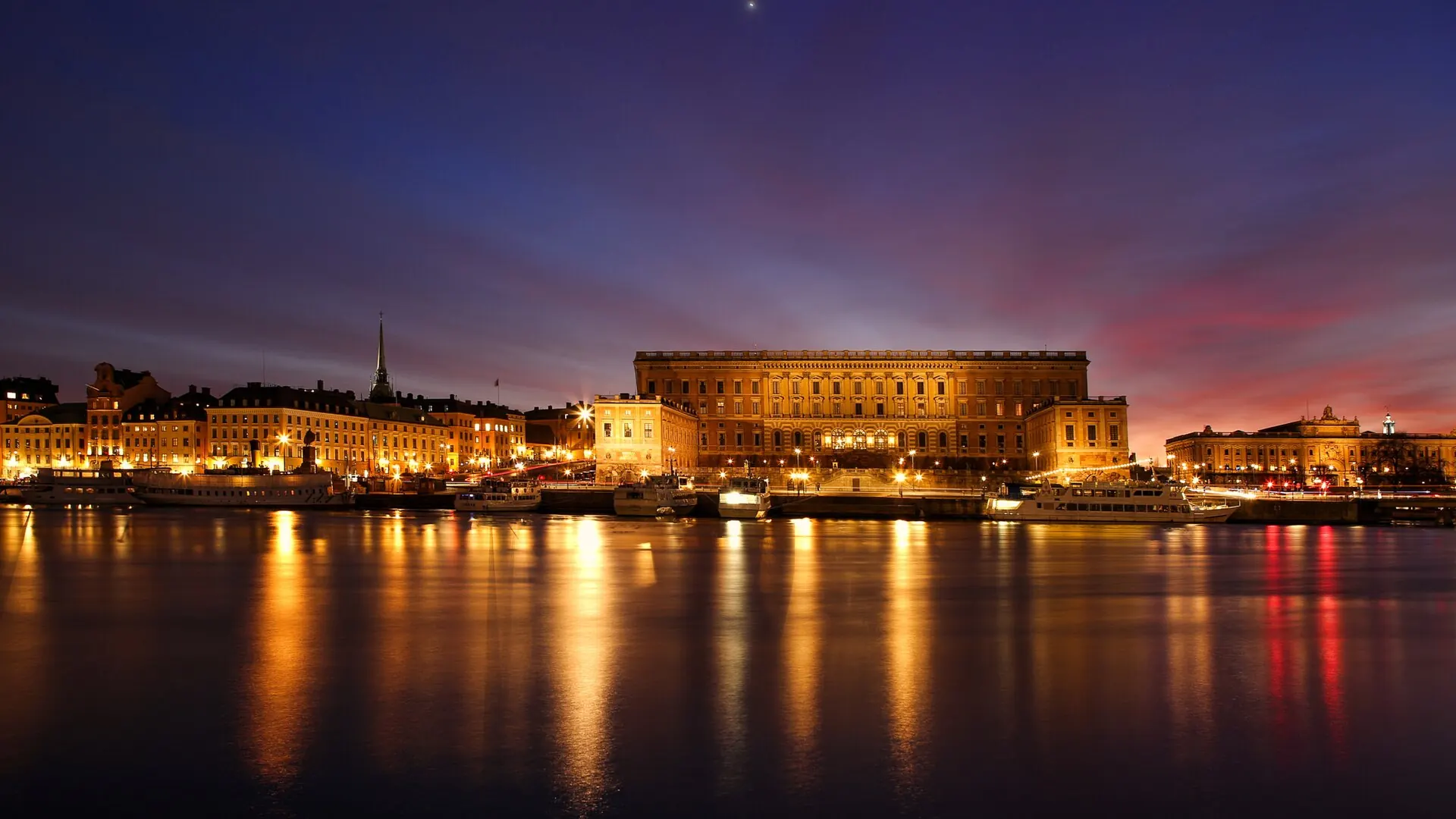
Places
“Best time” is when to arrive for the fewest crowds, for example “before 08:30”; “Go any time” means the hour makes little difference. More sights follow under “More sights and museums”.
7 places. Filters use the guide’s own ratings; a place with no rating is left out when a filter is on.
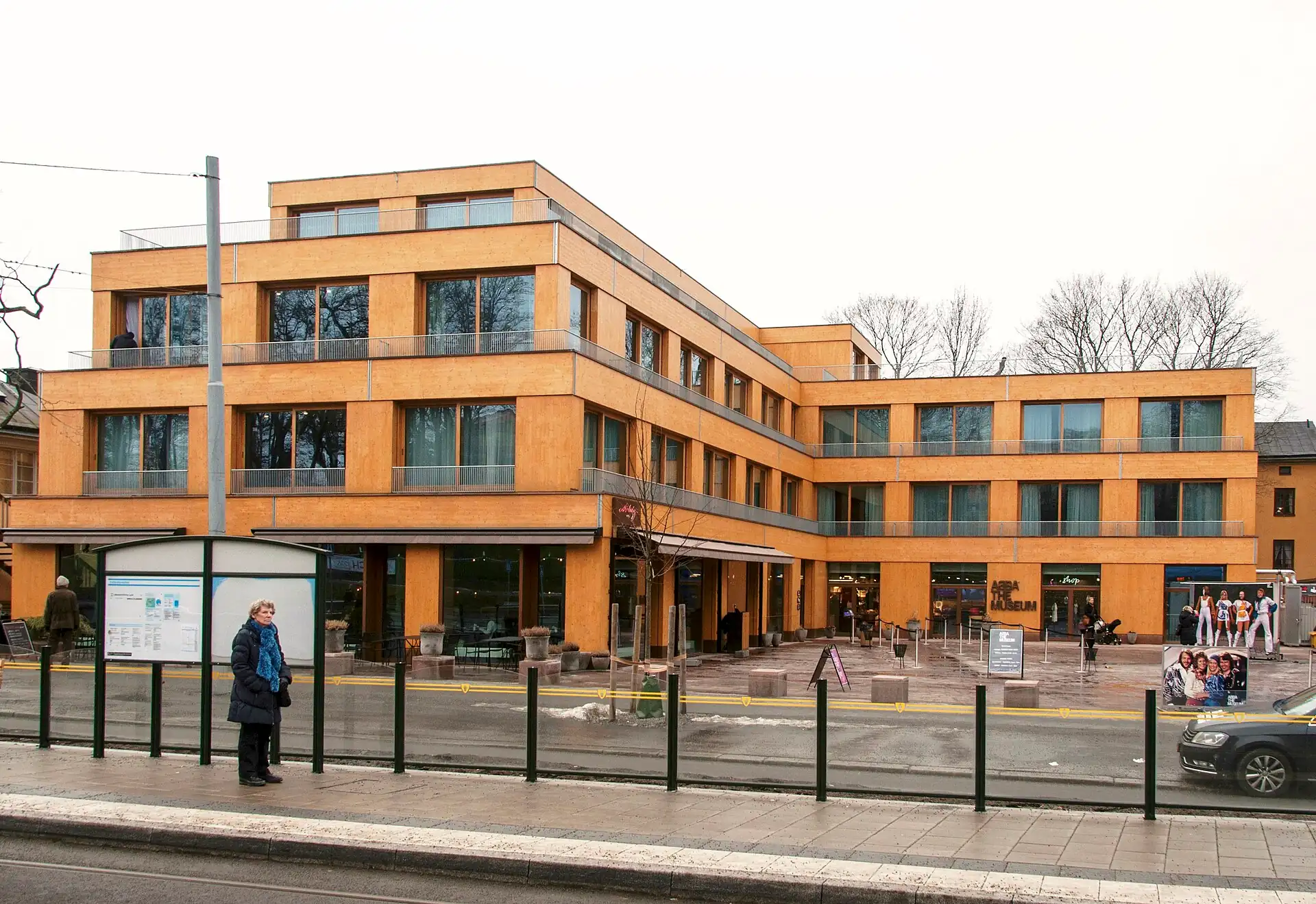
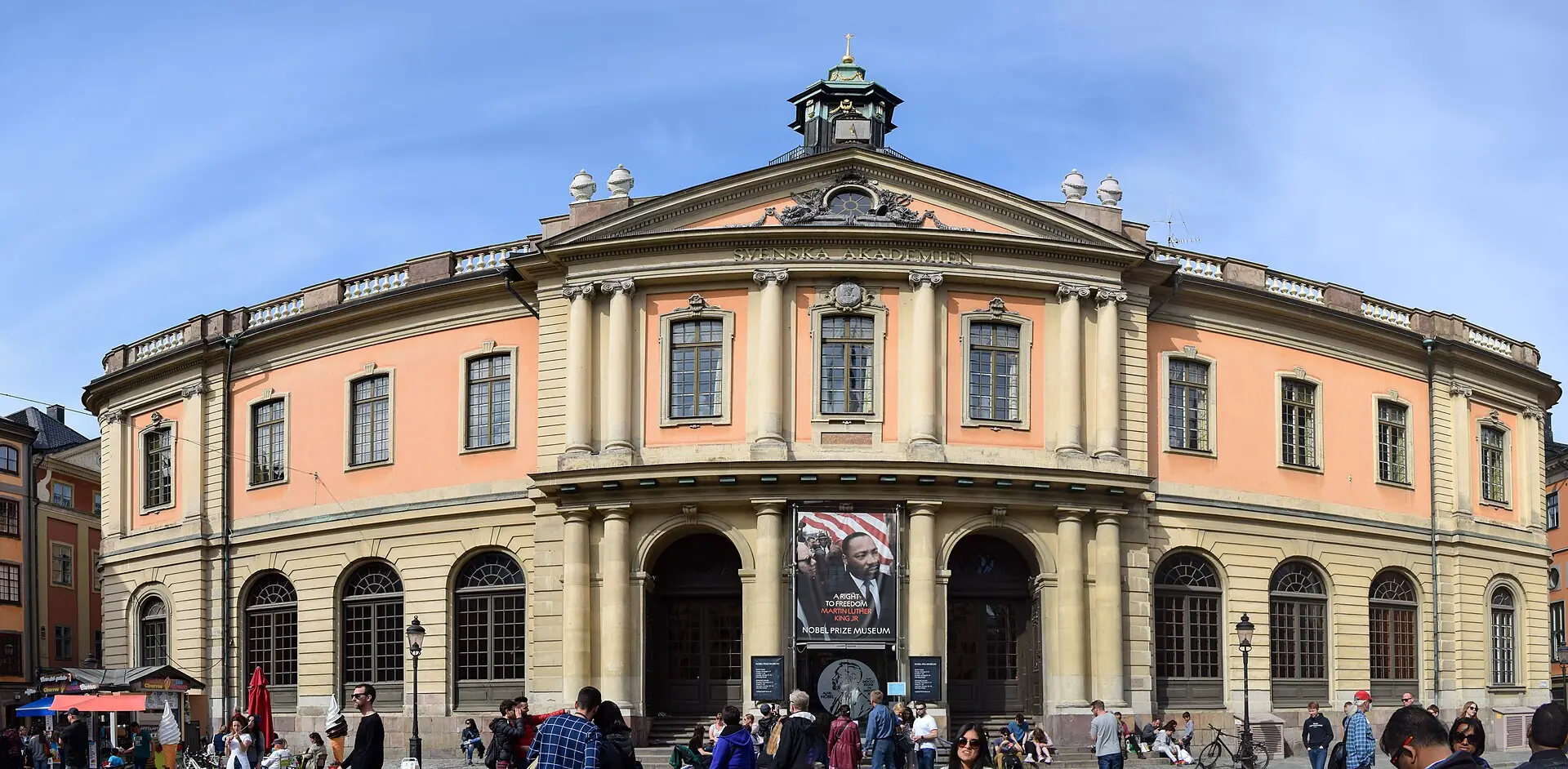
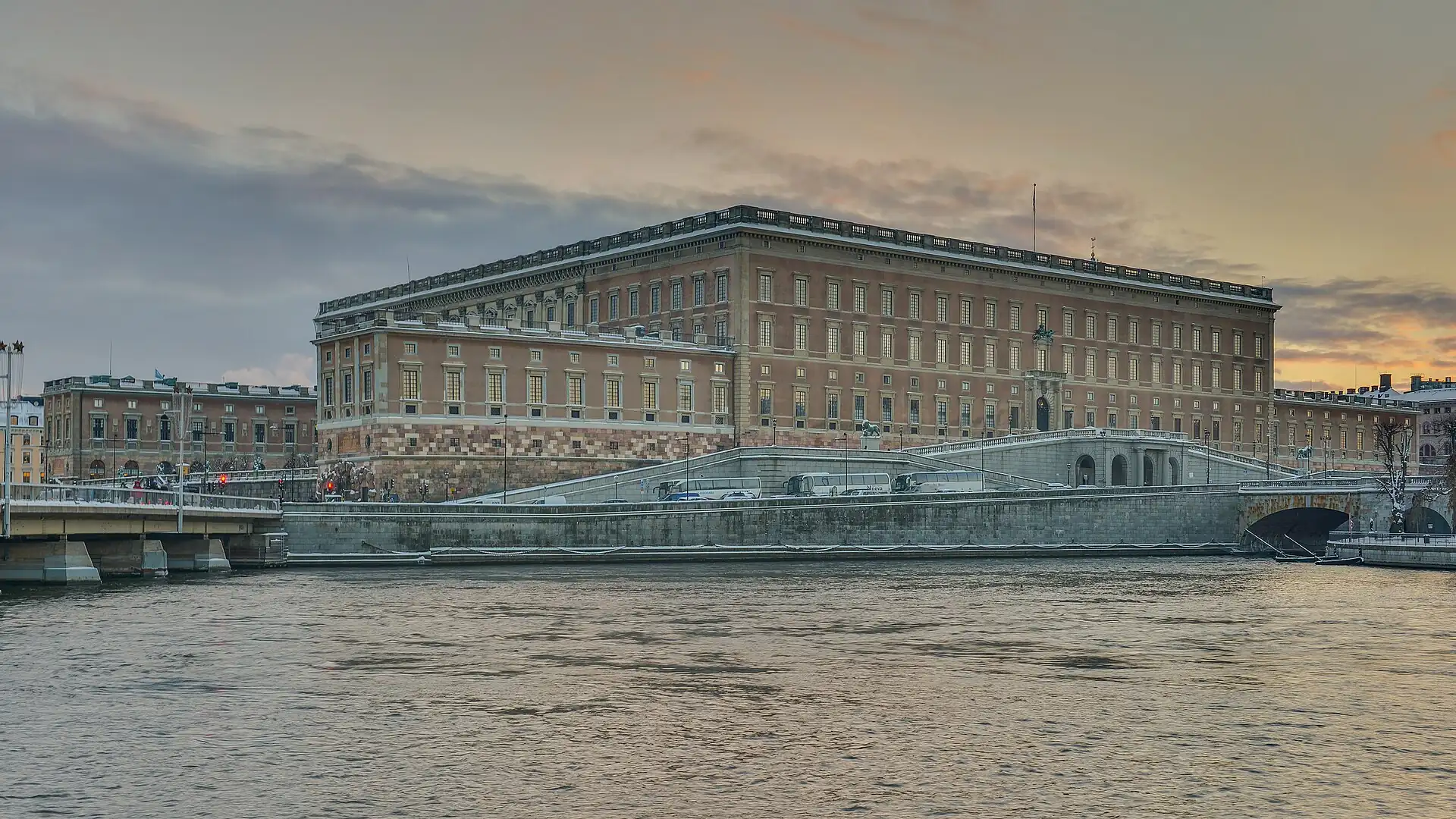
Tours, classes and shows in Stockholm →
Things to do in Stockholm: shows, nightlife and activities →
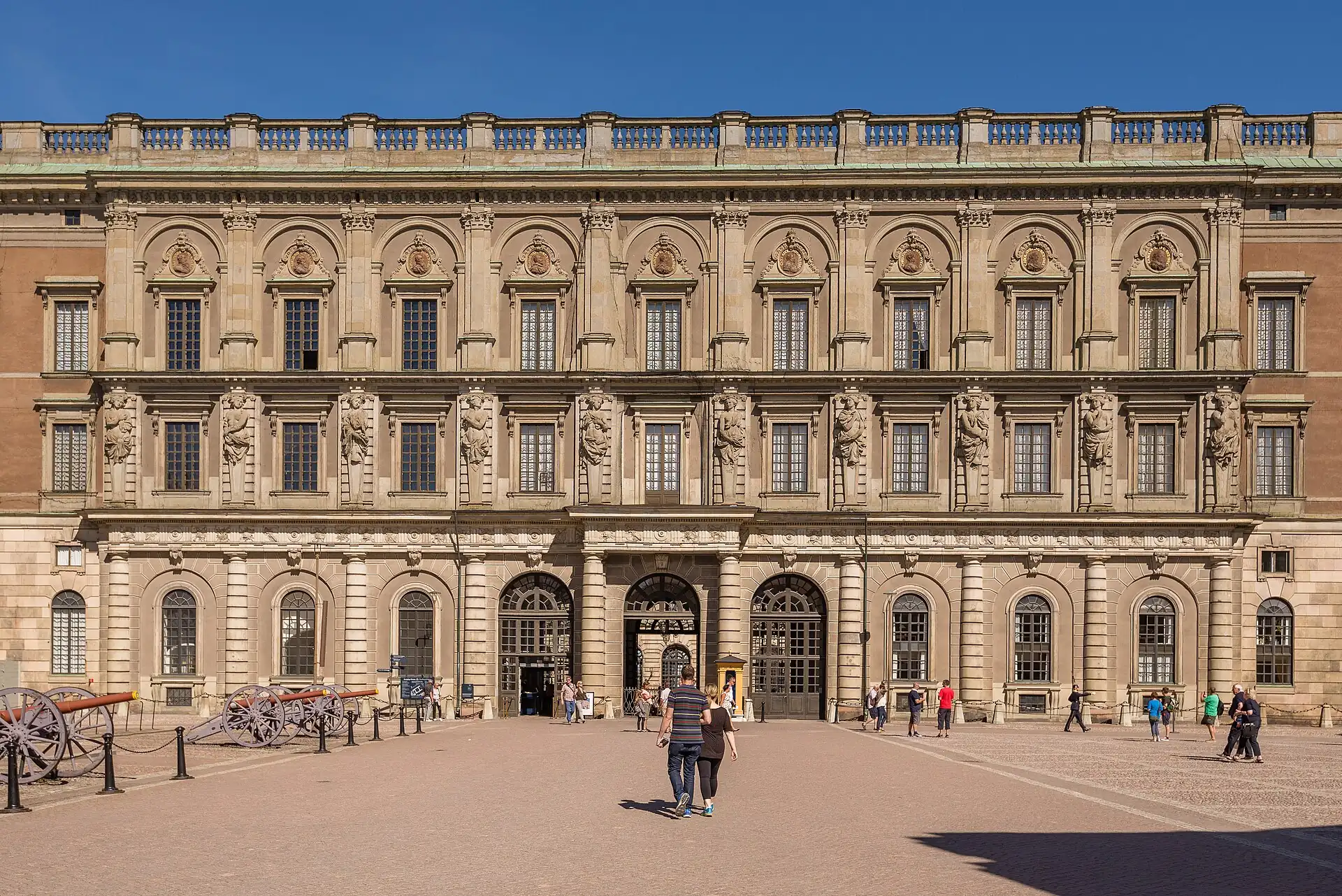
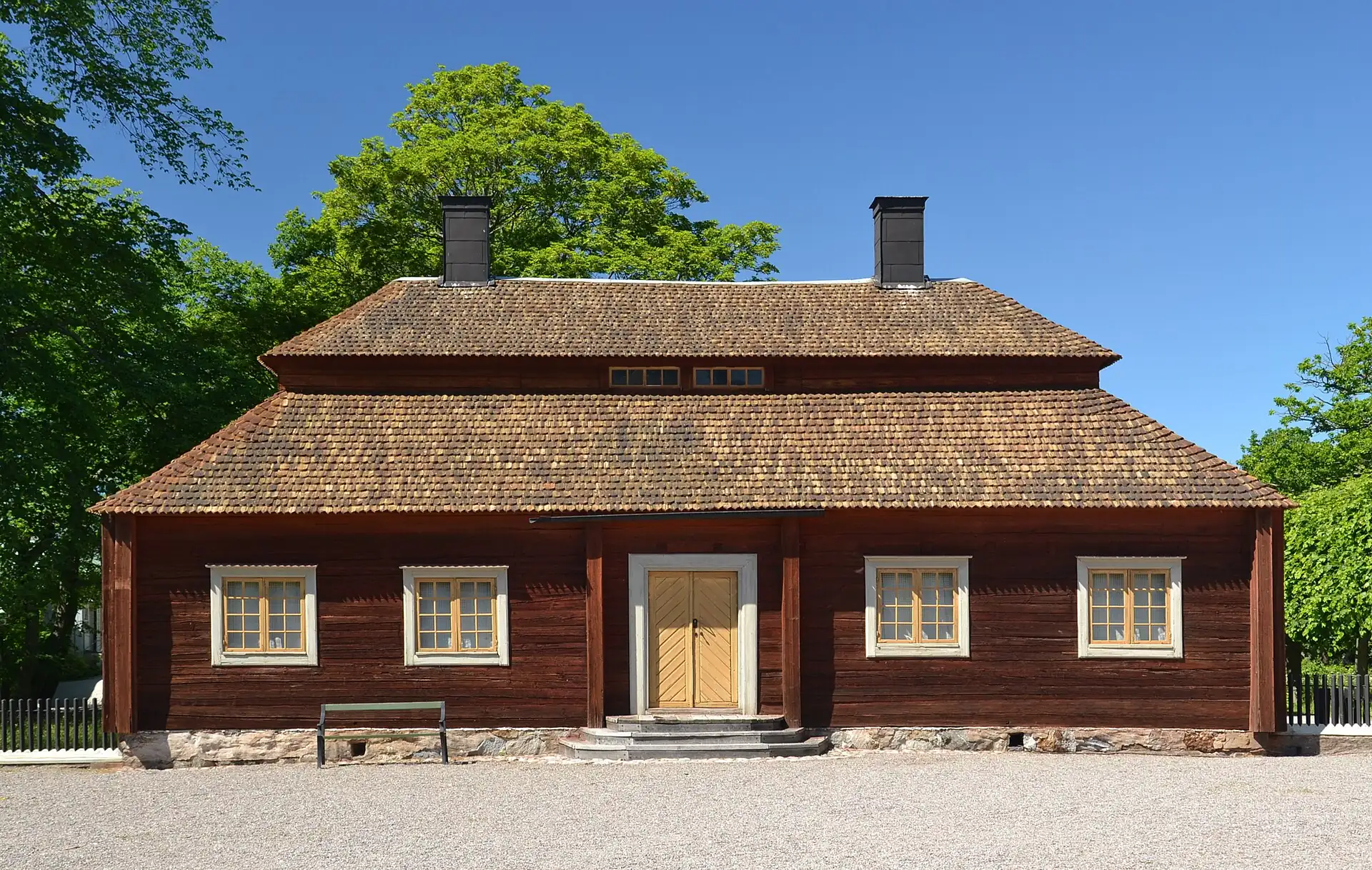
If you do ten things in Stockholm
Ranked for a first visit of 3 days, one island per half-day. Prices are 2026 estimates in SEK.
- 1
The ship that sank in 1628 and was raised in 1961; the best museum in the city.
- Time
- 1.5–2 h
- Best
- At opening
- Cost
- SEK 190–230 (≈ US$20–25)
- 2
The state apartments and the Treasury in one of Europe's largest palaces.
- Time
- 1–1.5 h
- Best
- At opening
- Cost
- SEK 180–220 (≈ US$19–25)
- 3
Old houses, animals and a view of the city on one hill.
- Time
- 2–3 h
- Best
- Dry day, morning
- Cost
- SEK 160–220 (≈ US$17–25)
- 4
A cliff-top street with the classic view of Gamla Stan and the water.
- Time
- 30 min
- Best
- Dusk or clear morning
- Cost
- Free
- 5
A small, dense museum on Stortorget about prize winners and ideas.
- Time
- 45–60 min
- Best
- Rain or heat
- Cost
- About SEK 150–190 (≈ US$16–20)
- 6
An interactive pop museum with a stage you can step on.
- Time
- 1.5–2 h
- Best
- Weekday morning
- Cost
- SEK 250–290 (≈ US$30–35)
- 7
A free public culture house with a rooftop café and reading rooms.
- Time
- 30–45 min
- Best
- Rain
- Cost
- Free
- 8
A cinnamon bun and coffee under the old houses.
- Time
- 30 min
- Best
- 10:00 or 15:00
- Cost
- SEK 60–160 (≈ US$7–17)
Good for…
Verdict is how well Stockholm works for that traveller, not how nice it is.
Compact, safe and easy to read; the museums do the heavy lifting.
- 1Vasa Museum — The one museum you should not skip.
- 2Stockholm in 3 days — One island per day.
Excellent produce and bakeries, high prices; lunch menus save money.
- 1Östermalms Saluhall — A counter lunch among the stalls.
- 2Vetekatten — The classic cardamom bun.
Skansen, Junibacken and parks; the metro is stroller-friendly.
- 1
 Skansen open-air museum — Animals and open space.
Ferries, Gamla Stan lanes and Södermalm terraces.
- 1Fjällgatan viewpoint — A view at dusk.
Safe, orderly and easy to navigate alone.
- 1
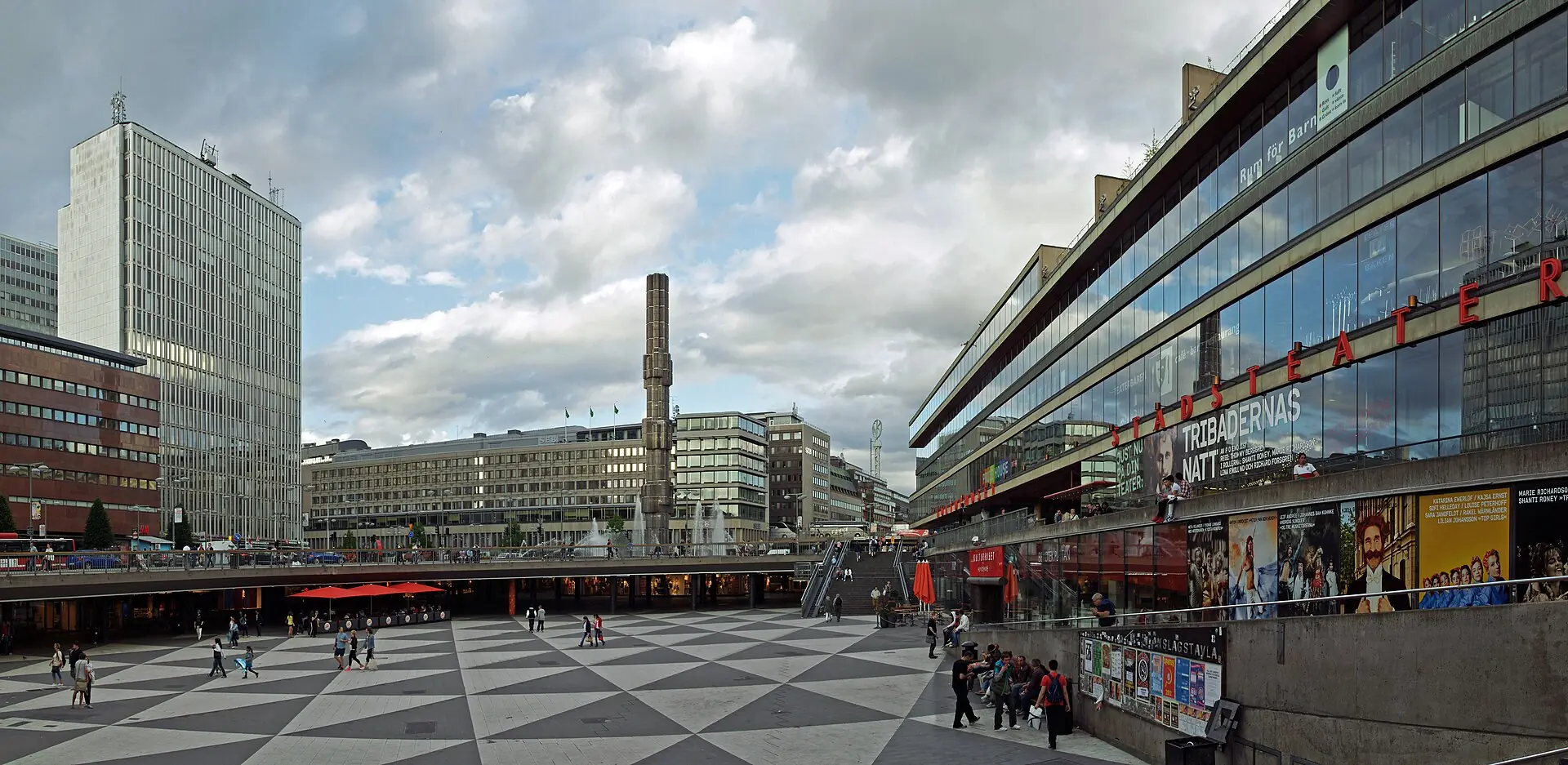 Kulturhuset (Sergels torg) — A free place to sit and read.
Expensive; hostels, dagens lunch and free museums help.
- 1Kulturhuset (Sergels torg) — Free entry.
Trams and lifts work; Gamla Stan is steep and cobbled.
- 1
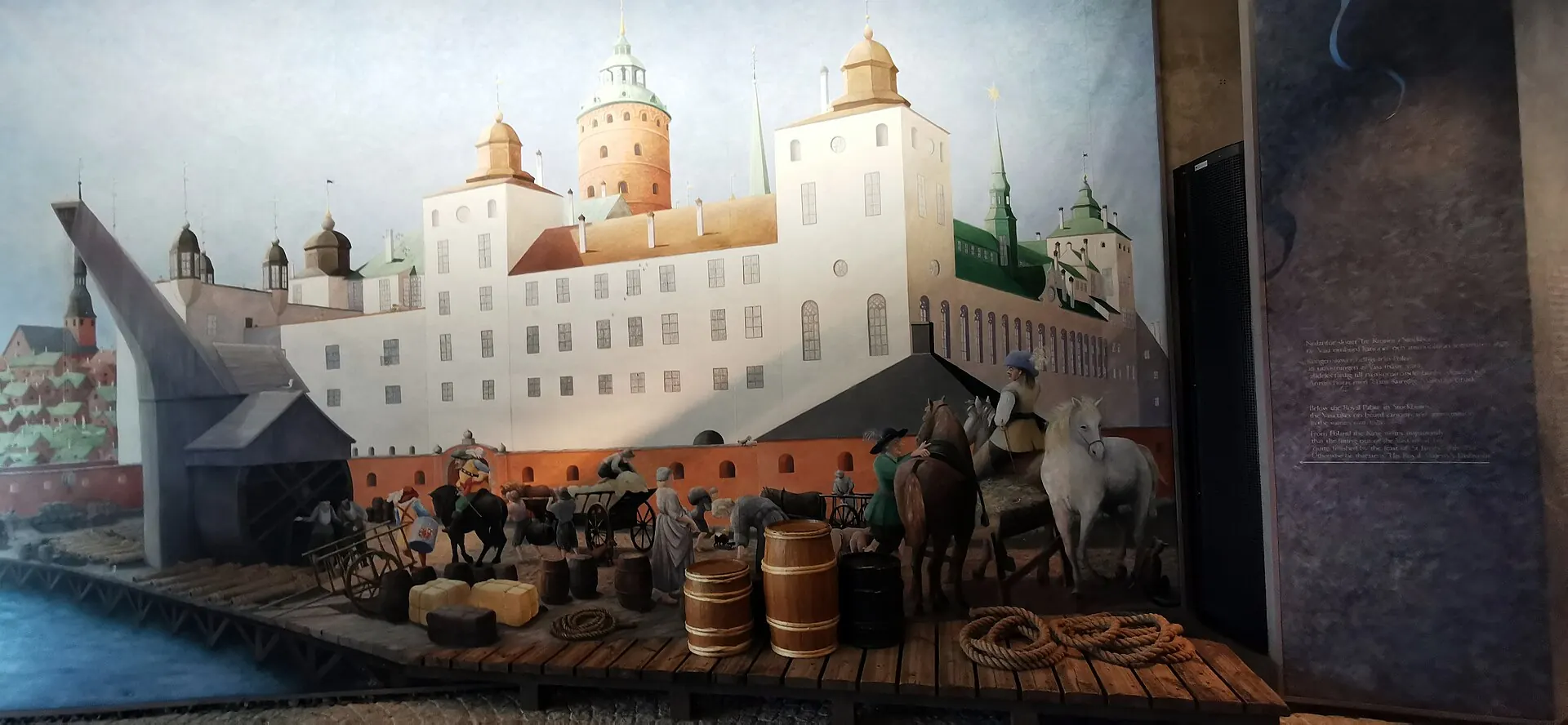 Vasa Museum — Step-free and seated.
Good transport access; Gamla Stan is difficult.
- 1Vasa Museum — Step-free.
Tours and classes: book or skip
Prices per person, 2026 estimates. Stockholm is easy on your own; pay for access or the archipelago.
| Tour or class | Verdict | Typical price | Why | Check before paying |
|---|---|---|---|---|
| Gamla Stan walking tour | maybe | SEK 150–300 (≈ US$16–35) | Useful for history; the lanes are easy to walk alone. | Group size, language, meeting point. |
| Archipelago boat tour | book | SEK 200–600 (≈ US$25–65) | Islands and lighthouses that a public boat does not reach. | Season, last return, whether food is included. |
| City Hall guided tour | book | SEK 130–200 (≈ US$14–25) | The only way to see the Blue Hall and Golden Hall inside. | Language slots and season. |
| Bike or kayak rental | maybe | SEK 250–500 (≈ US$30–55) | Flat routes and open water in summer. | Helmet, lock and return time. |
What each season brings
Spring
Mar–May
Cherry blossom in Kungsträdgården in late April or early May; Walpurgis bonfires.
Watch: Cold snaps and closures on 1 May.
Summer
Jun–Aug
Long light, archipelago boats and open-air museums.
Watch: Midsummer closures; holiday-week closures in July.
Autumn
Sep–Nov
Crisp days and colour in Djurgården.
Watch: Days shorten fast; November is grey.
Winter
Dec–Feb
Christmas markets in Gamla Stan and Skansen; Lucia in December.
Watch: Six hours of light and icy pavements.
Photo spots and the light
Clear-day times; winter light is low all day.
| Spot | Best light | Tip |
|---|---|---|
| Fjällgatan viewpoint | Golden hour or dusk | The view over Gamla Stan and Djurgården from the railing. |
| Royal Palace | Morning | The palace front from the north with the water behind you. |
| Vasa Museum | Any time | The ship is lit; use the upper level for a wide shot without flash. |
Stockholm travel FAQ
Answers are 2026 desk estimates; fares and rules marked (check) change.
Is Stockholm expensive?
Yes, by European standards. Lunch menus (dagens lunch), free entry to Kulturhuset and public parks, and SL day tickets help keep costs down.
How many days do I need?
Three days cover four clusters; two if you skip Djurgården's second museum. Add a day for the archipelago or Uppsala.
Do I need cash?
Almost never. Many places are card-only, including buses, cafés and some toilets. Carry a card and a phone payment.
What is the best month?
June to August for light and boats, or September for crisp walking. December has lights but six hours of daylight.
How do I get from Arlanda?
Arlanda Express reaches Central in 20 minutes for about SEK 300–350 (≈ US$35–40); regional trains and coaches are cheaper and take 35–45 minutes (check).
Is Stockholm safe?
Yes. Watch for pickpockets in crowds and use taxis with posted prices.
Which museums close on Monday?
Many do. Check each site; Vasa and ABBA are usually open daily but with seasonal hours.
Can I drink the tap water?
Yes, tap water is safe and good; refill a bottle at any fountain.
Is Gamla Stan good with a stroller or wheelchair?
Only partly: lanes are cobbled and steep. Plan the route with the fewest stairs and use a taxi for the last stretch.
More to see and doSee & do · Learn & work · Rain & heat
See & do
11 of 11
- Royal Stockholm
The state apartments and Treasury; go at opening.
Gamla Stan · About 10:00–17:00; closes for state events (check)About 10:00 AM–5:00 PM; closes for state events (check) · SEK 180–220 (≈ US$19–25)
- Museums
The stories behind the prizes, in the old Stock Exchange building.
Gamla Stan · About 11:00–17:00 (check)About 11:00 AM–5:00 PM (check) · About SEK 150–190 (≈ US$16–20)
- Museums
The raised warship, best seen at opening.
Djurgården · About 08:30–17:00 (check)About 8:30 AM–5:00 PM (check) · SEK 190–230 (≈ US$20–25)
- Museums
Old houses, animals and a view; a full afternoon.
Djurgården · Season-dependent (check) · SEK 160–220 (≈ US$17–25)
- Museums
Interactive; book timed tickets for weekends.
Djurgården · About 10:00–18:00 (check)About 10:00 AM–6:00 PM (check) · SEK 250–290 (≈ US$30–35)
- Views
Cliff-top street with the classic view; go at dusk.
Södermalm · Open all day · Free
- Museums
Reading rooms, exhibitions and a rooftop café.
Norrmalm · Varies by floor (check) · Free
Archipelago boat trip
waterWaxholmsbolaget boats to Vaxholm and beyond; check the last boat back.
Strömkajen · Daily in summer; fewer sailings in winter (check) · About SEK 150–400 (≈ US$16–45)(check)
City Hall tower and tour
ViewsWhere the Nobel banquet is held; timed tour.
Kungsholmen · Tours daily, tower in season (check) · About SEK 130–200 (≈ US$14–25)(check)
Fika in a café
foodA coffee and a cinnamon bun is the daily ritual; Vetekatten is a good start.
Everywhere · About 08:00–18:00About 8:00 AM–6:00 PM · SEK 60–100 (≈ US$7–11)
Kayak or rent a bike
ActivePaths are flat and marked; wear a helmet on bikes.
Djurgården and Södermalm · Summer (check) · About SEK 250–500 (≈ US$30–55)(check)
- Timed tickets
- Vasa, ABBA and the palace sell timed slots; the popular ones go days ahead in summer.
- Monday
- Many museums are shut; put Gamla Stan, Södermalm and boats on Monday.
Learn & work
| What | Where | Cost | Note |
|---|---|---|---|
| Swedish for Immigrants (SFI) | Municipal schools | Free for residents | For residents, not visitors.(check) |
| Short Swedish classes | Private schools and community centres | About SEK 200–400 (≈ US$25–45) an hour (check) | Some offer drop-in evening classes.(check) |
Working here
- Temporary visitor
- The Schengen 90-in-180-day rule applies; paid work needs a work permit, and remote work for a Swedish employer is not allowed on a visitor stay.
- Work permit
- Employer-sponsored, through Migrationsverket; processing takes months. Not for short visits.
Rain-day and heat-day plan
Rain day
Rain moves you to museums and covered arcades: Vasa, Nobel Prize Museum, Kulturhuset and Central Station's arcades.
- 01Vasa Museum — Two hours inside; book a timed slot.
- 02Kulturhuset — Free rooms, exhibitions and a café; a rain stop.
- 03Nobel Prize Museum — A small museum with a café and a shop.
Heat day
Above 25 °C is rare; pick shade and water anyway. Winter ice and dark matter more than heat.
- 08:00Royal Palace — Quiet before the day-tripper crowds.
- 12:00Vasa Museum — Indoors and cool.
Day-trips and nearby
Places you can reach from Stockholm in a day or with one night away, with the route and what it costs. Door to door, not ride time.
Archipelago boat (Vaxholm or Fjäderholmarna)
goFerry from the city piers, about 20–60 min
Ferry times depend on the season; check the last boat back.
- Time
- Half day or full day
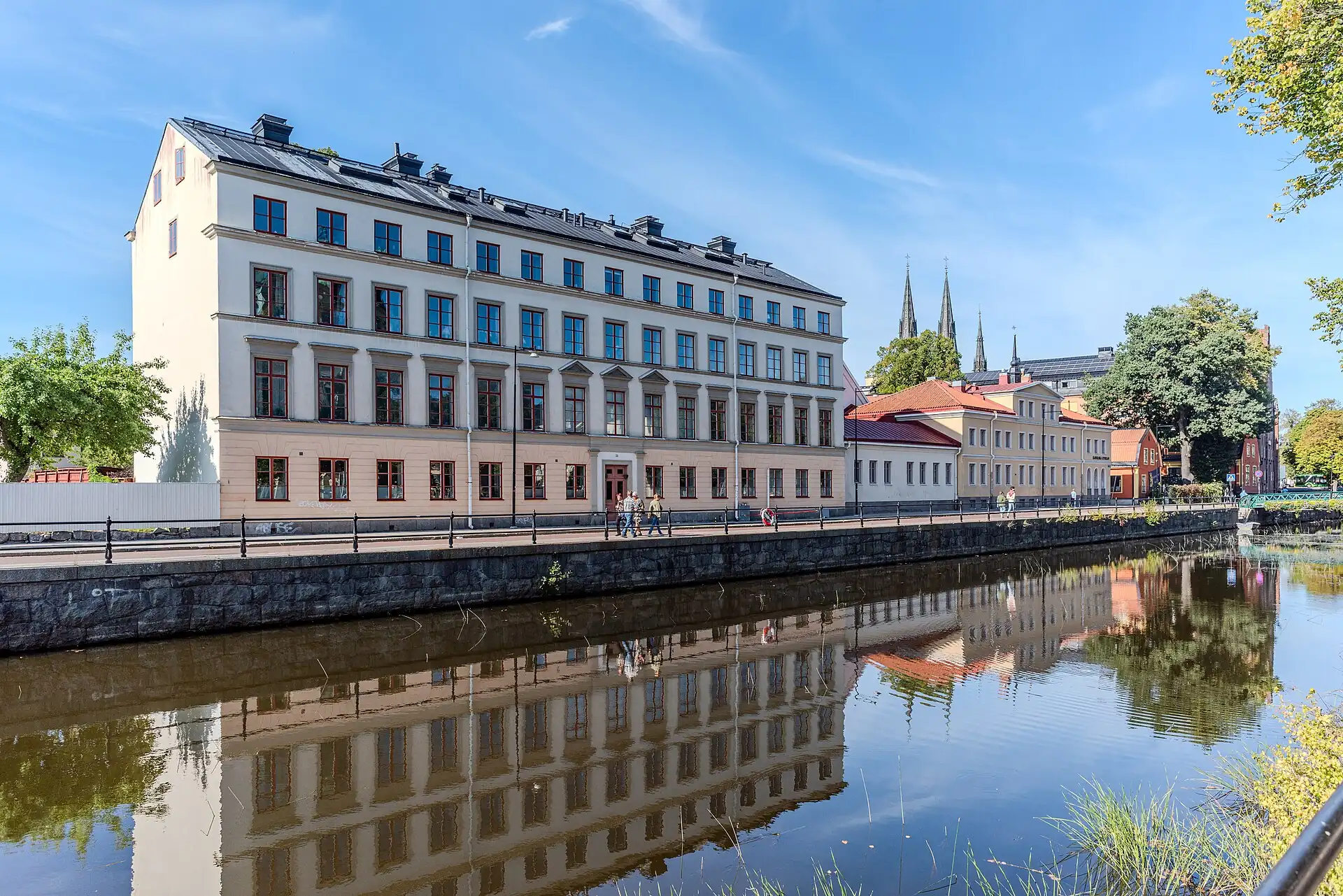 Photo: ArildV, CC BY-SA 4.0
Uppsala
goTrain, about 40 minutes each way
Cathedral and the old university town; fast trains all day.
- Time
- Full day
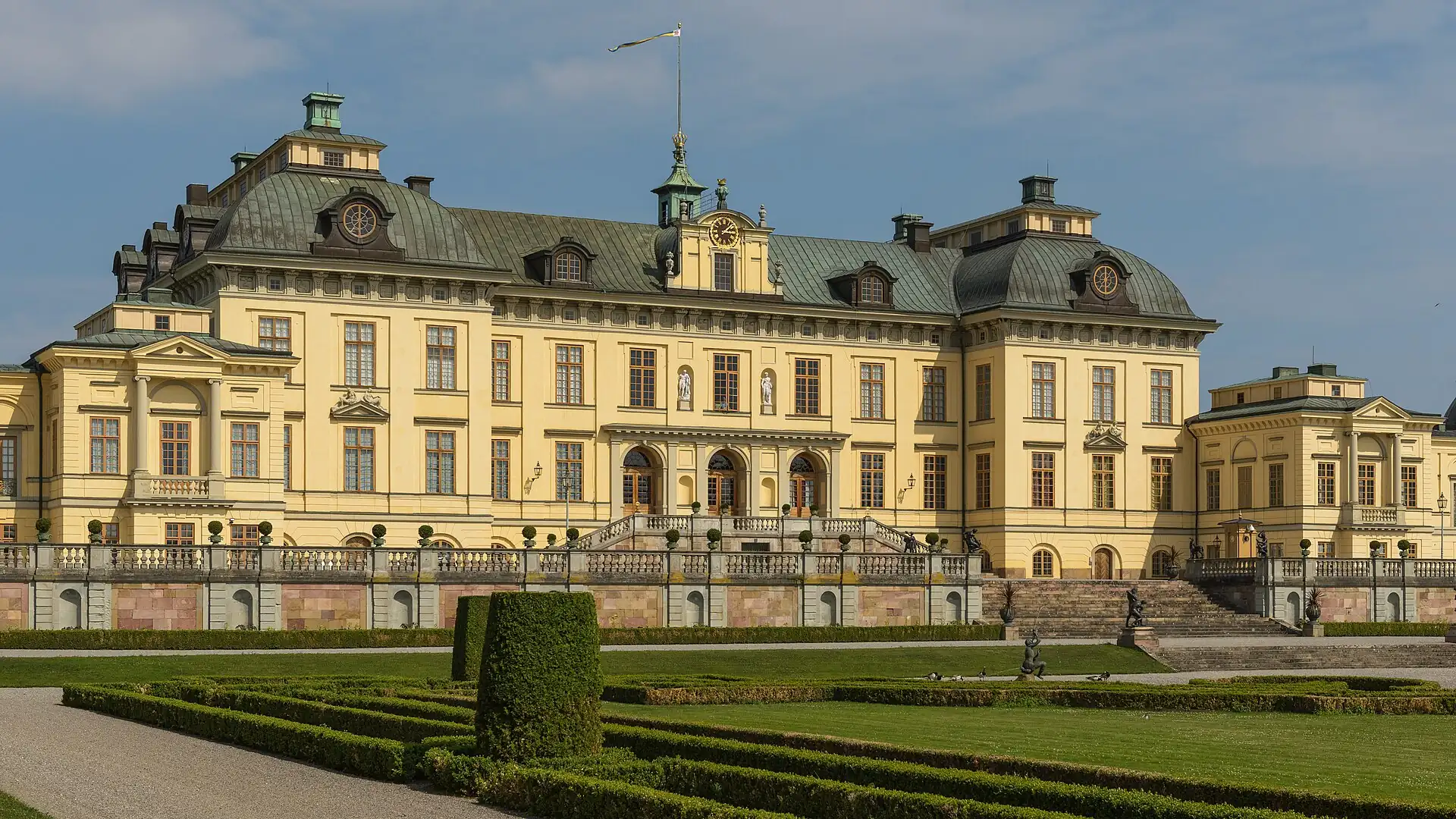 Photo: Arild Vågen, CC BY-SA 3.0
Drottningholm Palace
goBoat or metro and bus, about 30–45 min
Royal palace and gardens; check opening hours.
- Time
- Half day
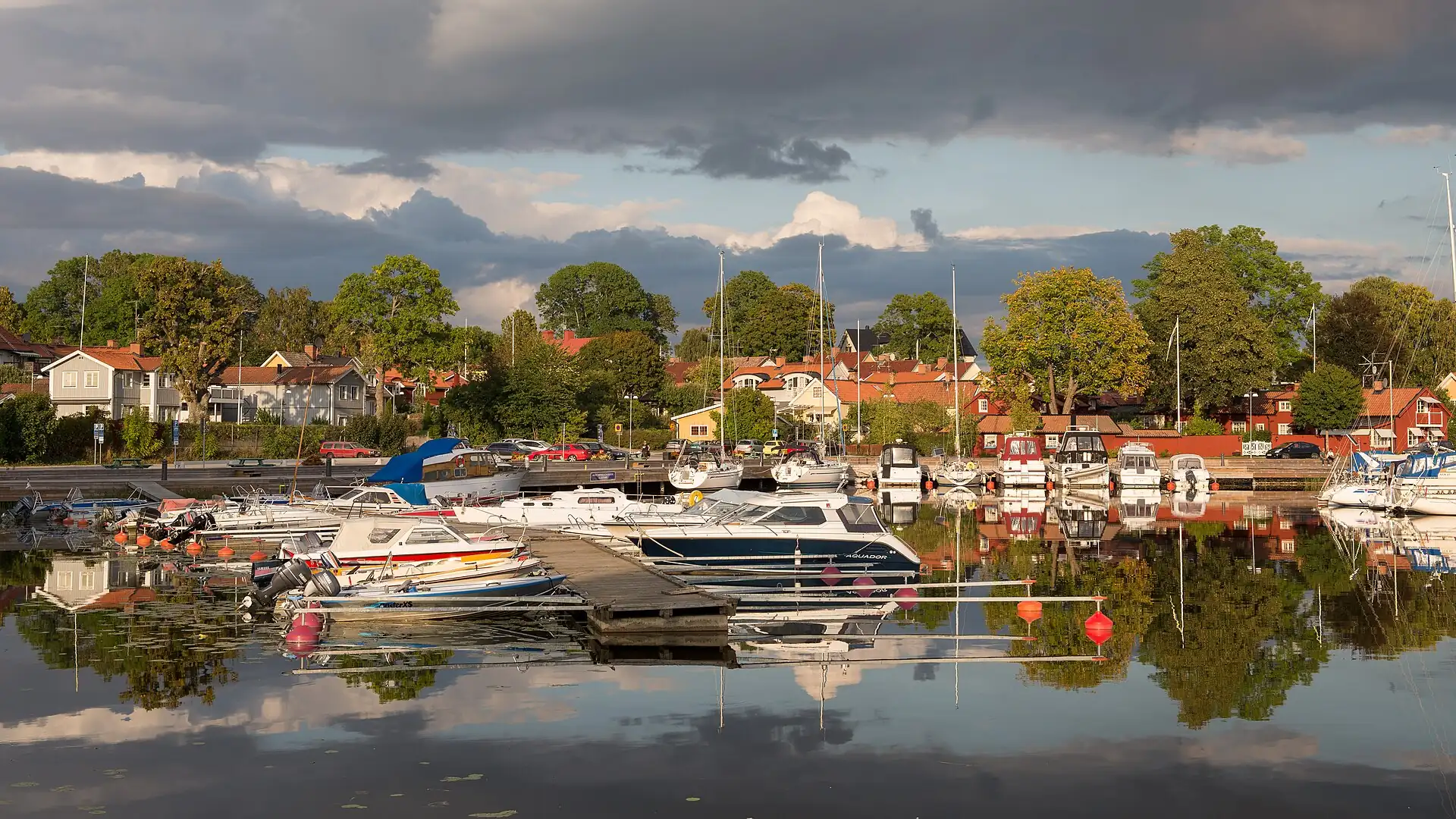 Photo: Arild Vågen, CC BY-SA 3.0
Sigtuna
goTrain and bus, about 1 h each way
Old town and the runestones; easy from Arlanda.
- Time
- Half day
Go next
Vaxholm and the archipelago
goDoor to door: About 1–1.5 h
Waxholmsbolaget boat from Strömkajen, or bus
Fortress town on an island; check the last boat back and the season.
Gothenburg
maybeDoor to door: About 3–3.5 h
SJ high-speed train
A different city; only if you are extending the trip, not a day trip.
Eat & sleepWhere to eat and which area to sleep in
Eat & sleep
Where to eat and which area to sleep in
Eat
A short list of places worth crossing the city for, each with how to get a seat.
Restaurant finder: filter every place to eat in Stockholm →
Vegetarian-friendly score
3.5 / 5 · Good
- Country diet noteOur country guide rates vegetarian eating as easy.2 / 2
- Places to eat in this guide2 of 5 places with a known answer are vegetarian-friendly, 3 partly.1.05 / 1.5
- Budget eating lines0 vegetarian lines in "Eat by budget".0 / 0.6
- Meat-free national dishes4 meat-free dishes in the country food list.0.4 / 0.4
- Dedicated vegetarian kitchens0 mentions of vegetarian restaurants, Buddhist or fasting kitchens.0 / 0.5
Country note: Easy; plant-based options on almost every menu and in supermarkets.
Vegetarian places near me →Make a diet card →
How we score
- Country diet note (up to 2): easy 2, workable 1, mixed 0.75, hard 0; no note 0.5.
- City places to eat (up to 1.5): 1.5 × (vegetarian-friendly + half of partly friendly) ÷ places with a known answer; needs 3 or more known places.
- Budget eating lines marked vegetarian (up to 0.6): 0.2 each.
- Meat-free national dishes (up to 0.4): 0.1 each.
- Dedicated vegetarian kitchens mentioned — Buddhist chay, shōjin ryōri, Jain, fasting food, vegan cafés (up to 0.5): 0.1 each.
- Total rounded to the nearest half point, 0 to 5. Built from our own pages only, not from reviews.
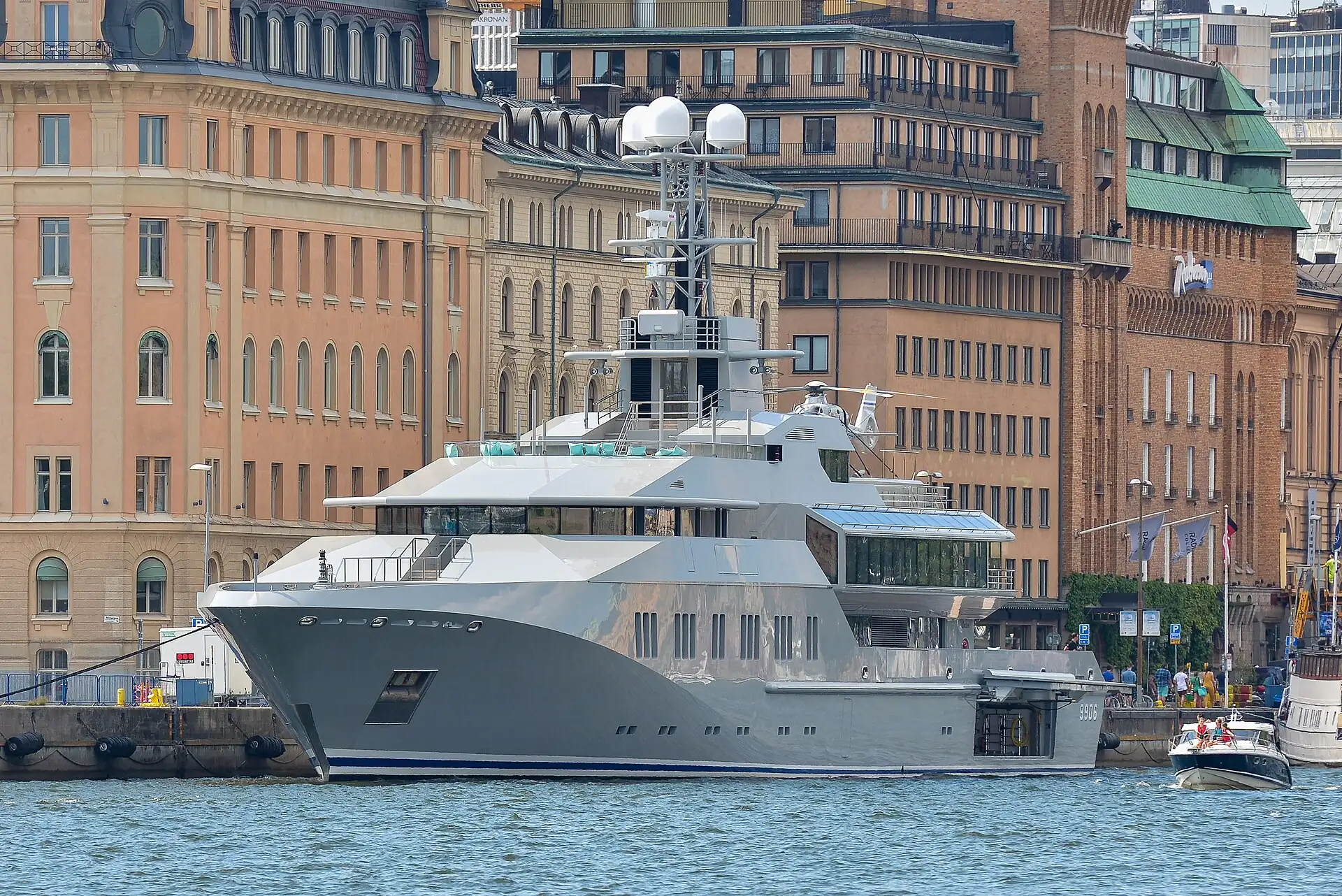
Eating and drinking guideEat by budget · Drink
Before you sit down to eat
Short version; full text linked
Eat by budget
Under SEK 150 (≈ US$16) a meal
| Where | Order | Area | Price | Note |
|---|---|---|---|---|
| Vetekatten | Cardamom bun and coffee | Norrmalm | SEK 60–100 (≈ US$7–11) | Since 1928 (check); queues at 15:00.Since 1928 (check); queues at 3:00 PM. |
Dishes to know
| Dish | What it is | Where to look | When | Price |
|---|---|---|---|---|
| Köttbullar (meatballs)Köttbullar | Small meatballs with gravy, potatoes and lingonberry jam | Södermalm restaurants, Ikea copies excluded | Lunch and dinner | SEK 150–300 (≈ US$16–35) |
| Kanelbullar (cinnamon bun)Kanelbulle | A spiral yeast bun with cinnamon and sugar | Every café | Fika | SEK 40–70 (≈ US$5–8) |
| Räksmörgås (prawn sandwich)Räksmörgås | Open sandwich piled with prawns, mayonnaise and dill | Cafés and food halls | Lunch | SEK 120–220 (≈ US$13–25) |
| GravlaxGravad lax | Cured salmon with dill and mustard sauce | Restaurants and food halls | Lunch or starters | SEK 150–280 (≈ US$16–30) |
- Lunch (dagens lunch) is the cheapest way to eat well: a set main with salad, bread and coffee on weekdays.
- Cards are the norm; some places do not take cash at all.
- Tip is not expected; round up or leave 5–10% for good service.
Drink & nightlife
| Where | What | Until | Note |
|---|---|---|---|
| Mosebacke and Södermalm's Götgatan | Bars and terraces | Until about 01:00Until about 1:00 AM | A view from Mosebacke terrace on summer evenings; queue for the popular ones after 21:00.A view from Mosebacke terrace on summer evenings; queue for the popular ones after 9:00 PM. |
| Stureplan | Clubs and cocktail bars | Until about 03:00Until about 3:00 AM | Dress-code and door policy; expensive. |
| Gamla Stan pubs | Cellar pubs and wine bars | Until about 01:00Until about 1:00 AM | Tourist prices in the main lanes; side streets are cheaper. |
By style
| Style | What | Where | Price | Until |
|---|---|---|---|---|
| Craft beer bar | Local breweries on tapAsk for the smaller pour if you want to taste several. | Södermalm, Vasastan | SEK 80–110 (≈ US$9–12) for 40 cl | About 00:00–01:00 |
| Fika café | Coffee and a cinnamon bun, the daytime social ritualNot a drink stop but the most local one. | Everywhere | SEK 60–100 (≈ US$7–11) | About 18:00 |
Rules that bite
- Legal drinking age is 18 in bars and restaurants, 20 in Systembolaget.
- Carry photo ID; door staff check age and turn away intoxicated guests.
- Drinking in most public places is fine only if you are quiet; open drinking in the metro is not.
Sleep
Pick the area first: it decides your walk home at night and your first morning.
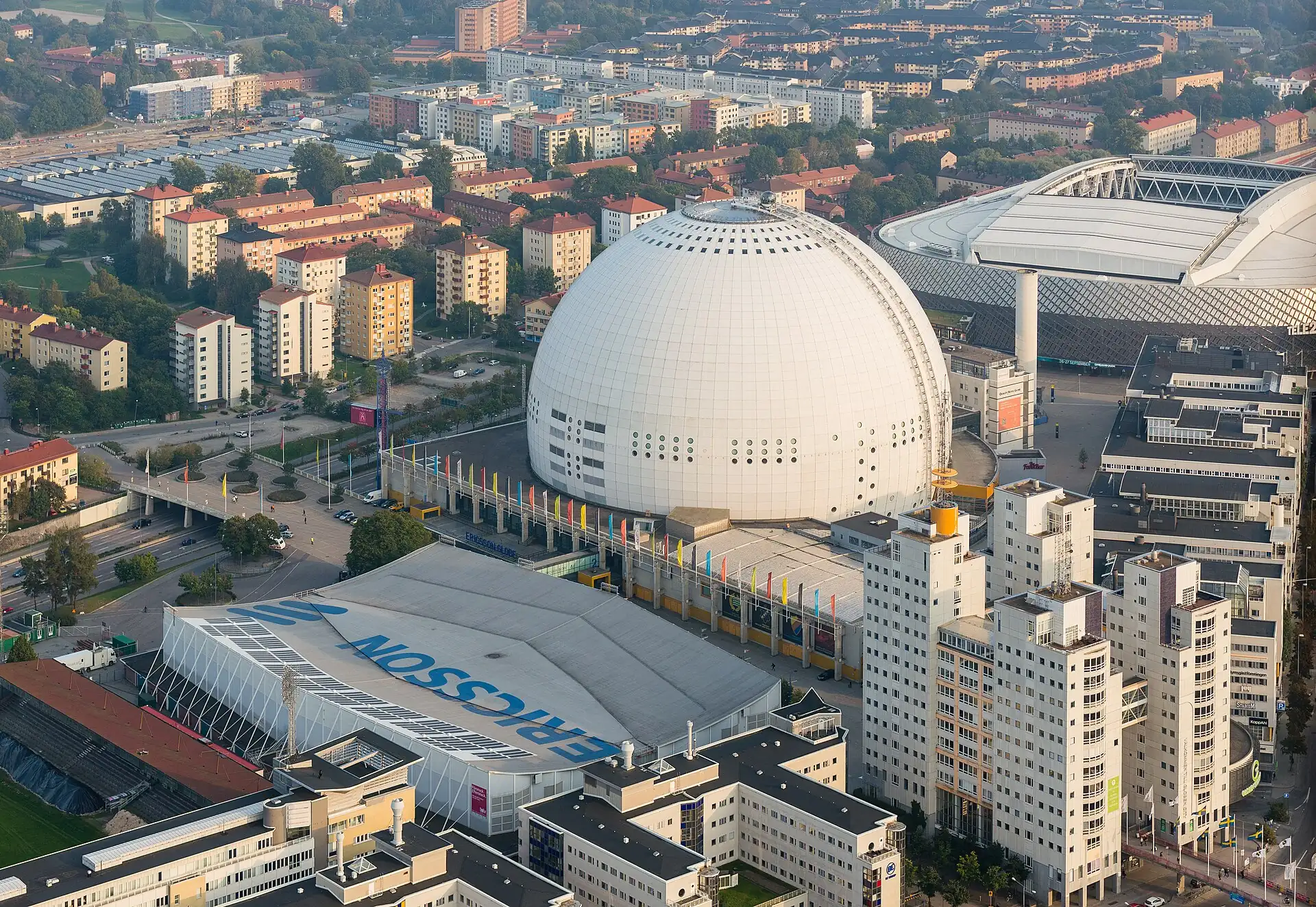
Which neighborhood fits you
Three questions, one recommendation, with the reasons.
Your best fit
- Palace, Nobel Museum and Stortorget on your doorstep.
Watch out: Small rooms at high prices.
Next best: Norrmalm and Central Station
Built from our 1–5 desk scores per area; your answers stay in this browser.
More on sleepingSleep by budget · Your area · With kids
Sleep by budget
| Band | Price | Where | Room types | What to expect |
|---|---|---|---|---|
| budget | SEK 300–550 (≈ US$35–60) dorm bed; SEK 900–1,300 (≈ US$95–140) double | Norrmalm, Södermalm | Hostels and small hotels | Shared bathrooms, lockers, breakfast often extra. |
| mid | SEK 1,300–2,600 (≈ US$140–300) | Norrmalm, Gamla Stan | Chain hotels | Small rooms, good breakfasts, 24-hour desk. |
| high | SEK 2,600 (≈ US$300)+ | Gamla Stan, Blasieholmen | Boutique and historic hotels | Old buildings, few lifts, high prices in summer. |
Booking checks
- Book Gamla Stan early for Midsummer and December.
- Check the walk from the station or ferry: Gamla Stan lanes are steep with bags.
- Breakfast is often included; check before you book.
Which area is yours
| If you are | Sleep in | Because |
|---|---|---|
| First night after a late flight | Norrmalm and Central Station | One train from the airport and a 24-hour desk. |
| Atmosphere and short stay | Gamla Stan | You are inside the old town; travel light. |
First-timers and late arrivals: hotels with a 24h desk by the station, the Arlanda Express at the door, and the metro to every island.
A medieval island hotel is atmospheric, but the lanes are cobbled and cars cannot reach every door; choose one with a lift and a clear drop-off point.
Areas are in our default order until you tick a priority.
Scores are 1-5 desk judgements per priority (2026). Only Norrmalm and Gamla Stan have sleep-area pages.
With kids
- Skansen, Junibacken (Astrid Lindgren's stories) and the Vasa Museum are strong with children; book ahead on rainy days.
- Cafés, museums and department stores have changing rooms; metro and buses are step-free for strollers, with a place near the door.
- Children under 7 ride SL free with an adult; ages 7–19 have a reduced fare (check current age rules).
PracticalMoney, essentials, safety and the pocket card
Practical
Money, essentials, safety and the pocket card
Money
What a day costs at three comfort levels, and how to pay.
- Budget
- SEK 600–1,000 (≈ US$65–110) excl. bed / day
- Mid
- SEK 1,000–2,000 (≈ US$110–250) excl. bed / day
- High
- SEK 2,000 (≈ US$250)+ excl. bed / day
- Transit card
- Buy travel with the SL app or a contactless bank card at the gate; a 24-hour or 72-hour ticket pays back after three rides a day.
- Cash rule
- Cash is rarely needed. If you want some, use a bank ATM (Bankomat) and decline the machine's currency conversion; carry a card and a phone payment app.
More on moneyCosts · Budget · Buy
What things cost
- Lunch of the day (dagens lunch)SEK 120–170 (≈ US$13–18)
- Bottle of water, shopSEK 15–25 (≈ US$2–3)
- Arlanda Express to the centreSEK 300–350 (≈ US$35–40)
- Royal Palace ticketSEK 180–220 (≈ US$19–25)
Trip budget
| Hotel double room1 × 3 nights × SEK 1,800 | SEK 5,400 |
| Food, local transport, entries2 × 3 days × SEK 1,500 | SEK 9,000 |
| Arlanda Express, both ways2 × SEK 700 · Regional trains and buses are cheaper but slower. | SEK 1,400 |
| Buffer 10%Price creep, a taxi you did not plan, one splurge | SEK 1,580 |
| Trip total≈ SEK 2,897 per person per day, bed included | SEK 17,380≈ US$1,900 |
2026 estimate in SEK; flights excluded. Your choices stay in this browser.
Prices of common things
| Dagens lunch (weekday lunch of the day) | SEK 120–170 (≈ US$13–18) |
2026 estimate; check locally.
Buy
- Bargaining
- Prices are fixed. Nobody haggles in shops, markets or taxis; a posted price is the price.
- Fixed-price check
- Non-EU visitors can claim VAT back on goods above a spend threshold with a tax-free form and passport at the shop, then stamp it at the airport (check current threshold and rules).
Markets and shopping streets
| Where | What | When | Haggle | Note |
|---|---|---|---|---|
| Östermalms Saluhall | Food hall: fish, cheese, cured meats, cafés | About 10:00–18:00 weekdays, shorter Saturday, closed Sunday (check)About 10:00 AM–6:00 PM weekdays, shorter Saturday, closed Sunday (check) | no | Come for a counter lunch, not for cheap groceries. |
| Hötorgshallen | Food hall under Hötorget: international grocers and snack counters | About 10:00–18:00, shorter weekends (check)About 10:00 AM–6:00 PM, shorter weekends (check) | no | Cheaper and less polished than Östermalm; central. |
Shops by what they sell
| For | Where | Hours | Note |
|---|---|---|---|
| Design and homeware | Södermalm, Biblioteksgatan, NK department store | About 10:00–18:00, shorter at weekends | Swedish glass, textiles and candles make good light gifts. |
| Vintage and second-hand | Södermalm (Nytorget, SoFo) | About 11:00–18:00 | Many shops close early on Sunday or all day. |
| Wine and spirits | Systembolaget only, for anything above 3.5% ABV | About 10:00–19:00 weekdays, Saturday shorter, closed Sunday | Bring ID; queues on Friday afternoon. |
Changing money
| Where | Verdict | Why |
|---|---|---|
| Bank ATM (Bankomat) or shop card payment | use | Fair rate: decline any 'convert to home currency' offer and pay in SEK. |
| Exchange booths in the centre | skip | Poor rates and fees; you rarely need cash at all. |
Essentials and accessEssentials · Access
Essentials
- Plugs & power
- 230 V; two-round-pin sockets (types C and F). Non-EU visitors need an adapter.
- Toilets
- Museums, cafés, shopping centres and stations; some public toilets take cards only.
- Health
- Cold and dark in winter, mosquitoes and tick bites in summer forests; pharmacies (apotek) give first advice. Bring travel insurance and, for EU citizens, the EHIC/GHIC.
- Accessibility
- Metro and buses are largely step-free; Gamla Stan is cobbled and steep in places.
- Laundry
- Hotel laundry or self-service tvättstuga near hostels; costly per item.
- Emergency numbers
- 112.
Pack
- A warm coat and layers from October to April
- Waterproof shoes with grip for ice and rain
- A hat and sunscreen for June and July
- A sleep mask for the light summer nights
Accessibility
Metro, buses, trams and the Djurgården ferry are mostly step-free; Gamla Stan is cobbled with steep lanes and many old buildings have no lift.
- Metro
- Most stations have lifts; at a few stations the lift is far from the platform (check SL's step-free map).
- Buses and trams
- Low floors and ramps; the driver deploys the ramp on request.
- Museums
- Vasa, ABBA and Skansen have step-free routes; Skansen's hill is steep in places.
Sights, step-free or not
| Vasa Museum | step-free | Step-free; lifts to the upper levels. |
| Royal Palace | step-free | Step-free entrance; some rooms have steps (ask). |
| Fjällgatan viewpoint | hard | Steep lane; the view is best reached by taxi. |
Survive
Safety basics, the lines not to cross, and practical habits that save the day.
Safety
- Pickpockets work Central Station, the metro and Gamla Stan in summer: keep bags zipped and in front.
- Ice and dark from November to March: wear shoes with grip and carry a light.
- Emergency: 112 (police, fire, ambulance).
Red lines
- Churches: cover shoulders and keep quiet during services.
- Cyclists and scooters share the paths: keep to the pedestrian side.
Practical
- Toilets: museums, cafés, shopping centres and stations; some public toilets charge SEK 5–10 by card.
- Tap water is safe and good.
More on staying safeStay safe · Stay healthy · Safety map · Solo & women · Etiquette · Cope · Scams
After dark, by area
1 flagged area
Central Station and Sergels torg
Take care
Day is about 07:00–19:00. What to watch in each area, day and night →
Scams and red flags
Walk away if you see these
- Taxi drivers without a visible price sign or with an unmarked car: use a booked ride or a taxi with the displayed rate.
- Airport 'private drivers' in the arrivals hall: use the official taxi rank or your own app booking.
- Shops that add a currency-conversion charge when you pay by card: choose to pay in SEK.
- Fake ticket sellers at ferry piers: buy on the SL app or at the official counter.
Stay safe
Hustles specific to this city
| Hustle | Where | The tell | What to do |
|---|---|---|---|
| Unlicensed taxi | Arlanda and Central Station | A driver offers a lift without a price sign or meter. | Use the official rank or an app; agree the price before you get in. |
| Currency conversion on card | Shops and restaurants | The terminal offers to charge in your home currency. | Choose SEK; the rate is better. |
| Pickpockets | Central Station, Gamla Stan, the metro | Crowds, a stranger who bumps or asks a question. | Zip bags and keep phones in front pockets. |
- Police
- 112 for emergencies; 114 14 for non-emergency reports.
- Bikes
- Bike theft is common; lock with two locks if you rent.
Stay healthy
Air quality by month
| Jan | Feb | Mar | Apr | May | Jun | Jul | Aug | Sep | Oct | Nov | Dec |
|---|---|---|---|---|---|---|---|---|---|---|---|
| ok | — | — | mixed | mixed | ok | — | — | — | — | — | — |
Air is clean. Pollen is high in spring for some visitors.
- Water
- Tap water is safe and good; refill bottles anywhere.
- Sun
- UV is strong in June and July; use sunscreen at the beach.
- Ticks
- Tick bites are possible in grass and forest in summer; check skin after walks in the archipelago.
- Pharmacies
- Apotek staff give first advice; medicines for common complaints are sold over the counter.
- Doctors
- Use 1177 for advice or call a hospital; visitors pay for care (EU visitors: bring your EHIC or GHIC).
Hospitals and clinics: see Cope.
Safety by area and hour
| Area | Day | Night | What to watch |
|---|---|---|---|
| Central Station and Sergels torg | fine | caution | Pickpockets and drug dealing at night around Sergels torg; keep bags closed and stay in lit areas. |
| Gamla Stan | fine | fine | Summer pickpockets in crowds; rowdy weekends on Västerlånggatan. |
| Södermalm nightlife streets | fine | fine | Late-night fights outside clubs near Slussen; stay in groups after 02:00.Late-night fights outside clubs near Slussen; stay in groups after 2:00 AM. |
- Use licensed taxis with a visible price sign, or book in an app; agree the price at the door for the airport.
- Cycle and e-scooter lanes look like pavement: check before you step.
Solo, women and LGBTQ+ travellers
Solo
- Safe and easy: fika counters, food halls and museum cafés are comfortable for one.
- Book a museum slot online and go alone; queues are short in the morning.
Women
- Walking alone at night is generally fine; the main risk is petty theft.
- Ask staff at the station for the safest exit late at night.
LGBTQ+
- Sweden is one of the most open countries; Stockholm Pride is usually in late July or early August.
- Södermalm has the main LGBTQ+ bars.
Etiquette in Stockholm
- Queues
- Take a ticket or queue quietly; jumping a queue is rude.
- Homes
- Shoes off at the door if invited; bring flowers or a small gift.
- Fika
- A coffee break with a bun is a social ritual; take your time.
- Nature
- The right of public access lets you walk and camp on open land, but keep noise low and leave no trace.
Cope
Hospitals and clinics that handle foreigners
| Where | Area | Use it for |
|---|---|---|
| Södersjukhuset | Södermalm | Large hospital with an emergency department; expect a wait for non-urgent cases. |
| St Göran Hospital | Kungsholmen | Emergency department in the west of the centre (check hours for walk-ins). |
| Apotek | Everywhere | Pharmacies give first advice for minor complaints; Apotek Hjärtat at Central Station is long-hours (check). |
Visa extensions
- Schengen stay
- Sweden is in the Schengen area: a short visit follows the 90-in-180-day rule for most nationalities. Check entry and ETIAS rules for your passport.
- Extending a stay
- Apply to the Swedish Migration Agency (Migrationsverket) before your permitted stay ends; extensions are given only for exceptional reasons.
Embassies and consulates
| Country | Address | Phone | Note |
|---|---|---|---|
| United States | Dag Hammarskjölds väg 31, Djurgården area | +46 8 783 5300 | (check) |
| United Kingdom | Skarpögatan 6-8, Djurgården | +46 8 671 3000 | (check) |
| Australia | Klarabergsviadukten 63 | +46 8 613 2900 | (check) |
- Emergency
- 112 for police, fire and ambulance. 1177 is the non-emergency health advice line (Swedish, some English).
- Lost property
- SL keeps a lost-property office; ask the operator first and report theft at a police station (polisen.se, book online for non-urgent reports).
Apps and offline kitOffline kit
Offline kit
Set up before you leave, so Stockholm still works with no signal or a dead roaming plan.
On your phone
- Maps: open the city in Google Maps, tap the place name, then Download offline map (or use an offline-maps app).
- Data: install an eSIM or buy a local SIM before the first taxi; the apps in this guide depend on it.
- Translation: download the local language for camera translation.
- Screenshots: booking confirmations, hotel address in the local script, and the emergency numbers.
This guide
Save the Stockholm guide and its pages on this device; it opens without a connection.
Phrases that do the work
Greeting
Hello
Hej
hay
Thanks
Thank you
Tack
tack
Please
Please / you're welcome
Varsågod
VAR-sha-good
Café
A coffee, please
En kaffe, tack
en KAH-feh tack
Shop
How much is it?
Hur mycket kostar det?
hoor MEE-kuh KOS-tar deh
Café
The bill, please
Notan, tack
NOO-tan tack
Taxi
To this address, please
Till den här adressen, tack
til den hair ah-DRES-en tack
Help
I need help
Jag behöver hjälp
yah beh-HUV-er yelp
Pocket card
Fill in, then print or save as PDF
Stays in this browser only; nothing is sent anywhere.
StockholmStockholm
Pocket card · Voykit
My bed tonight
—
—
—
Till den här adressen, tackTo this address, please
Emergency
- Police, fire, ambulance112
- Non-emergency health advice1177
Embassy
Most embassies are in Norrmalm, Östermalm or Djurgården. Write your embassy's 24-hour number below.
My embassy: —
Fare anchors (2026 estimate)
- Arlanda Express to Central: SEK 300–350 (≈ US$35–40), 20 minutes
- SL single ticket: SEK 42 (≈ US$5), 75 minutes
Say or show
- Tack — Thank you (tack)
Save your hotel's address and a phone number on your phone; drivers use them.
Deep diveHistory, reading, photos and every source
Deep dive
History, reading, photos and every source
Sources
- officialVisit Sweden
- officialVisit Stockholm
- secondaryWikivoyage — Stockholm
Ask about Stockholm
Loading…
Was this useful?